ℹ️ Skipped - page is already crawled
| Filter | Status | Condition | Details |
|---|---|---|---|
| HTTP status | PASS | download_http_code = 200 | HTTP 200 |
| Age cutoff | PASS | download_stamp > now() - 6 MONTH | 0 months ago |
| History drop | PASS | isNull(history_drop_reason) | No drop reason |
| Spam/ban | PASS | fh_dont_index != 1 AND ml_spam_score = 0 | ml_spam_score=0 |
| Canonical | PASS | meta_canonical IS NULL OR = '' OR = src_unparsed | Not set |
| Property | Value |
|---|---|
| URL | https://www.bankrate.com/investing/how-to-invest-in-cryptocurrency-beginners-guide/ |
| Last Crawled | 2026-04-20 20:26:51 (7 hours ago) |
| First Indexed | 2021-09-01 09:07:51 (4 years ago) |
| HTTP Status Code | 200 |
| Meta Title | Investing In Cryptocurrency: 5 Tips For Beginners | Bankrate |
| Meta Description | Experienced traders have been speculating on crypto for years, but what if you’re new to the market? Here’s how to start investing in crypto., Experienced traders have been speculating on crypto for years, but what if you’re new to the market? Here’s how to start investing in crypto. |
| Meta Canonical | null |
| Boilerpipe Text | Key takeaways
Cryptocurrencies are a highly volatile digital asset that can offer outsized gains — and losses.
If you want to invest in crypto, you should do your research, consider volatility and never invest more than you can afford to lose.
You can invest directly in crypto, but you can also buy Bitcoin futures, crypto ETFs or crypto exchange stocks to get exposure.
Cryptocurrencies are enormously volatile, but that volatility can create opportunities for profit if you’re looking to invest in these digital assets. Cryptos such as Bitcoin and
Ethereum
have risen a lot since their debut — but they’ve also experienced tremendous boom-bust cycles along the way. Experienced traders have been speculating on cryptocurrencies for years, but how can you get started if you’re new to the crypto market?
First things first, if you’re looking to invest in crypto, you need to have all your finances in order. That means having an emergency fund in place, a manageable level of debt and ideally, a
diversified portfolio of investments
. Your crypto investments can become one more part of your portfolio, one that helps raise your total returns, hopefully.
Pay attention to these five key things as you’re starting to invest in cryptocurrencies.
1. Understand what you’re potentially investing in
As you would for any investment, understand exactly what you’re investing in. If you’re buying stocks, it’s important to read the annual report and other
SEC filings
to analyze the companies thoroughly. Plan to
do the same with any cryptocurrencies
. Since there are literally thousands of them, they all function differently and new ones are being created every day. You need to understand the investment case for each trade.
In the case of many
cryptocurrencies
, they’re backed by nothing at all, neither hard assets nor cash flow of an underlying entity. That’s the case for
Bitcoin
, for example, where investors rely exclusively on someone paying more for the asset than they paid for it. In other words, unlike stock, where a company can grow its profits and drive returns for you that way, many crypto assets must rely on the market becoming more optimistic and bullish for you to profit.
Some of the
most popular coins
include Bitcoin, Ethereum,
Solana
,
Dogecoin
and
Tether (a stablecoin)
. So before investing, understand the potential upside and downside. If your financial investment is not backed by an asset or cash flow, it could end up being worth nothing.
2. Remember, past performance does not guarantee future results
A mistake that many new investors make is looking at the past and extrapolating that to the future. Yes, Bitcoin used to be worth pennies, but
now is worth much more
. The key question, however, is “Will that growth continue into the future, even if it’s not at quite that meteoric rate?”
Investors look to the future, not to what an asset has done in the past. What will drive future returns? Traders buying a cryptocurrency today need tomorrow’s gains, not yesterday’s.
3. Expect high volatility
The prices of cryptocurrencies are about as volatile as an asset can get. They could drop quickly in seconds on nothing more than a rumor that ends up proving baseless. That can be great for sophisticated investors who can execute trades rapidly or who have a solid grasp of the market’s fundamentals, how the market is trending and where it could go. For new investors without these skills — or the high-powered algorithms that direct these trades — it’s a minefield.
Volatility is a game for high-powered Wall Street traders, each of whom is trying to outgun other deep-pocketed investors. A new investor, or
those who are more risk-averse
, can easily get crushed or spooked by the volatility.
That’s because volatility shakes out traders, especially beginners, who get scared. Meanwhile, other traders may step in and buy on the cheap. In short, volatility can help sophisticated traders “buy low and sell high” while inexperienced investors “buy high and sell low.”
4. Manage your risk carefully
If you’re trading any asset on a short-term basis, you need to
manage your risk
, and that can be especially true with volatile assets such as cryptocurrency. So as a newer trader, you’ll need to understand how best to manage risk and develop a process that helps you mitigate losses. And that process can vary from individual to individual:
Risk management for a long-term investor
might simply be never selling, regardless of the price. The long-term mentality allows the investor to stick with the position.
Risk management for a short-term trader
, however, might be setting strict rules on when to sell, such as when an investment has fallen 10 percent. The trader then strictly follows the rule so that a relatively small decline doesn’t become a crushing loss later.
Newer traders should consider setting aside a certain amount of trading money and then using only a portion of it, at least at first. If a position moves against them, they’ll still have money in reserve to trade with later. The ultimate point is that you can’t trade if you don’t have any money. So keeping some cash in reserve means you’ll always have a bankroll to fund your trading.
It’s important to manage risk, but that will come at an emotional cost. Selling a losing position hurts, but doing so can help you avoid worse losses later.
5. Don’t invest more than you can afford to lose
Finally, it’s important to avoid putting money that you need into speculative assets. If you can’t afford to lose it — all of it — you can’t afford to put it into risky assets such as cryptocurrency, or other speculative assets, for that matter.
Whether it’s a down payment for a house or an important upcoming purchase, money that you need in the next few years should be kept in safe accounts so that it’s there when you need it. And if you’re looking for an absolutely sure return, your best option is to
pay off high-interest debt
. You’re guaranteed to earn (or save) whatever interest rate you’re paying on the debt. You can’t lose there.
Finally, don’t overlook the security of any exchange or broker you’re using. You may own the assets legally, but someone still has to secure them, and their security needs to be tight. If they don’t think their cryptocurrency is properly secured, some traders choose to invest in a
crypto wallet
to hold their coins offline so they’re inaccessible to hackers or others.
Remember that investing in cryptocurrency can be part of a broader investment strategy, but shouldn’t be your only one.
Other ways to invest in cryptocurrency
While investing directly in cryptocurrency is popular, traders have other ways to get into the crypto game, some more directly than others.
Crypto futures:
Futures are another way to wager on the price swings in Bitcoin, and
futures allow you to use the power of leverage
to generate massive returns (or losses). Futures are a fast-moving market and exacerbate the already volatile moves in crypto.
Bitcoin or Ethereum ETFs:
Spot
Bitcoin
and
Ethereum ETFs
are available through most online brokers who offer traditional securities like stocks and bonds. So these ETFs can be an easy way to buy crypto through a fund-like product. (These are the best
Ethereum
and
Bitcoin ETFs
.)
Crypto exchange or broker stocks:
Buying stock in a company that’s poised to profit on the rise of cryptocurrency regardless of the winner could be an interesting option, too. And that’s the potential in an exchange such as
Coinbase
or a broker such as
Robinhood
, which derives a huge chunk of its revenues from crypto trading.
Blockchain ETFs:
A blockchain ETF allows you to invest in the companies that may profit from the emergence of blockchain technology. The
top blockchain ETFs
give you exposure to some of the key publicly traded companies in the space. But it’s important to note that these companies often do much more than crypto-related business, meaning your exposure to cryptocurrency is diluted, reducing your potential upside and downside.
Each of these methods varies in its riskiness and exposure to cryptocurrency, so you’ll want to understand exactly what you’re buying and whether it fits your needs.
Crypto investing FAQs
Bottom line
Cryptocurrency is a highly speculative area of the market, and many smart investors have decided to put their money elsewhere. For beginners who want to get started trading crypto, however, the best advice is to start small and only use money that you can afford to lose.
— Bankrate’s
Brian Baker
contributed to an update of this story.
Editorial Disclaimer: All investors are advised to conduct their own independent research into investment strategies before making an investment decision. In addition, investors are advised that past investment product performance is no guarantee of future price appreciation.
Did you find this page helpful?
Info Icon
Help us improve our content |
| Markdown | [Skip to Main Content](https://www.bankrate.com/investing/how-to-invest-in-cryptocurrency-beginners-guide/#main-content)
- [Banking](https://www.bankrate.com/banking/)
All
Banking
Checking & savings
CDs
Money market
Banks
[Explore all banking resources](https://www.bankrate.com/banking/)
Banking
Compare accounts
- [Best high-yield savings accounts](https://www.bankrate.com/banking/savings/best-high-yield-interests-savings-accounts/)
- [Best checking accounts](https://www.bankrate.com/banking/checking/best-checking-accounts/)
- [Best free checking accounts](https://www.bankrate.com/banking/checking/best-free-checking-accounts/)
Get guidance
- [Savings calculator](https://www.bankrate.com/banking/savings/simple-savings-calculator/)
- [All savings calculators](https://www.bankrate.com/banking/calculators/)
- [Savings rate trends](https://www.bankrate.com/banking/savings/average-savings-interest-rates/)
- [Savings resources](https://www.bankrate.com/banking/savings/)
- [:format\(webp\)) Savings basics 5 min read](https://www.bankrate.com/banking/savings/how-to-open-a-savings-account/)
- [:format\(webp\)) How to start saving 4 min read](https://www.bankrate.com/banking/savings/start-saving-from-scratch/)
Compare accounts
- [Best CD rates](https://www.bankrate.com/banking/cds/cd-rates/)
- [Best 6-month CD rates](https://www.bankrate.com/banking/cds/best-6-month-cd-rates/)
- [Best 1-year CD rates](https://www.bankrate.com/banking/cds/best-1-year-cd-rates/)
- [Best 5-year CD rates](https://www.bankrate.com/banking/cds/best-5-year-cd-rates/)
Get guidance
- [CD calculator](https://www.bankrate.com/banking/cds/cd-calculator/)
- [CD ladder calculator](https://www.bankrate.com/banking/cds/cd-ladder-calculator/)
- [CD resources](https://www.bankrate.com/banking/cds/)
- [:format\(webp\)) CD basics 7 min read](https://www.bankrate.com/banking/cds/what-is-a-cd/)
- [:format\(webp\)) How to invest with CDs 6 min read](https://www.bankrate.com/banking/cds/how-to-invest-in-cds/)
Money market accounts
Money market accounts are similar to savings accounts, but offer some checking features as well.
[View MMA rates](https://www.bankrate.com/banking/money-market/rates/)
Get guidance
- [Money market basics](https://www.bankrate.com/banking/mma/what-is-a-money-market-account/)
- [Money market vs savings accounts](https://www.bankrate.com/banking/money-market-account-vs-savings-account/)
- [How to open an MMA](https://www.bankrate.com/banking/mma/how-to-open-a-money-market-account/)
- [MMA resources](https://www.bankrate.com/banking/mma/)
Banking
Unlock financial rewards by signing up for a savings or checking account with a bonus offer.
[Best bank bonuses](https://www.bankrate.com/banking/best-bank-account-bonuses-and-promotions/)
Get guidance
- [Best online banks](https://www.bankrate.com/banking/best-online-banks/)
- [Best credit unions](https://www.bankrate.com/banking/best-credit-unions/)
- [Bank reviews](https://www.bankrate.com/banking/reviews/)
- [Federal Reserve news](https://www.bankrate.com/banking/federal-reserve/)
- [:format\(webp\)) Capital One review Our take on Capital One Bank](https://www.bankrate.com/banking/reviews/capital-one/)
- [:format\(webp\)) Marcus review Our take on Marcus by Goldman Sachs](https://www.bankrate.com/banking/reviews/marcus/)
[Explore all banking resources](https://www.bankrate.com/banking/)
- [Mortgages](https://www.bankrate.com/mortgages/)
All
Mortgages
Purchase
Refinance
Real estate
[Explore all mortgages resources](https://www.bankrate.com/mortgages/)
Mortgages
Compare rates
- [Mortgage rates](https://www.bankrate.com/mortgages/mortgage-rates/)
- [30-year mortgage rates](https://www.bankrate.com/mortgages/30-year-mortgage-rates/?disablePre=1)
- [15-year mortgage rates](https://www.bankrate.com/mortgages/15-year-mortgage-rates/?disablePre=1)
- [VA loan rates](https://www.bankrate.com/mortgages/va-loan-rates/)
Get guidance
- [Mortgage calculator](https://www.bankrate.com/mortgages/mortgage-calculator/)
- [Amortization calculator](https://www.bankrate.com/mortgages/amortization-calculator/)
- [Mortgage rate news](https://www.bankrate.com/mortgages/analysis/)
- [Daily mortgage rates archive](https://www.bankrate.com/mortgages/todays-rates/)
- [Read lender reviews](https://www.bankrate.com/mortgages/reviews/)
- [:format\(webp\)) How to get a mortgage 11 min read](https://www.bankrate.com/mortgages/how-to-get-a-mortgage/)
- [:format\(webp\)) First-time homebuyer programs 11 min read](https://www.bankrate.com/mortgages/first-time-homebuyer-loans-and-programs/)
Compare rates
- [Refinance rates](https://www.bankrate.com/mortgages/refinance-rates/)
- [Cash-out refinance rates](https://www.bankrate.com/mortgages/cash-out-refinance-rates/)
- [30-year refinance rates](https://www.bankrate.com/mortgages/30-year-refinance-rates/?disablePre=1)
- [15-year refinance rates](https://www.bankrate.com/mortgages/15-year-refinance-rates/?disablePre=1)
Get guidance
- [Mortgage refinance calculator](https://www.bankrate.com/mortgages/refinance-calculator/)
- [Best refinance lenders](https://www.bankrate.com/mortgages/best-lenders/refinance-mortgage-lenders/)
- [Best cash-out refinance lenders](https://www.bankrate.com/mortgages/best-lenders/cash-out-refinance-lenders/)
- [Mortgage refinance resources](https://www.bankrate.com/mortgages/refinancing/)
- [:format\(webp\)) How to refinance your mortgage 12 min read](https://www.bankrate.com/mortgages/how-does-refinancing-a-mortgage-work/)
- [:format\(webp\)) Cash-out refinancing guide 9 min read](https://www.bankrate.com/mortgages/cash-out-refinancing/)
Buying & selling
Knowing what to look for in a real estate agent is critical. Here's how to choose the best fit for your needs.
[Choosing an agent](https://www.bankrate.com/mortgages/finding-best-real-estate-agent/)
Get guidance
- [Home affordability calculator](https://www.bankrate.com/mortgages/home-affordability-calculator/)
- [Cost of living calculator](https://www.bankrate.com/personal-finance/cost-of-living-calculator/)
- [:format\(webp\)) Buying a home 12 min read](https://www.bankrate.com/mortgages/how-to-buy-a-house/)
- [:format\(webp\)) Selling a home 10 min read](https://www.bankrate.com/mortgages/how-to-sell-your-house/)
[Explore all mortgages resources](https://www.bankrate.com/mortgages/)
- [Investing](https://www.bankrate.com/investing/)
All
Investing
Investing
Retirement
Financial advising
[Explore all investing resources](https://www.bankrate.com/investing/)
Investing
Compare investments
- [Best investments](https://www.bankrate.com/investing/best-investments/)
- [Best index funds](https://www.bankrate.com/investing/best-index-funds/)
- [Best long-term investments](https://www.bankrate.com/investing/best-long-term-investments/)
- [Best short-term investments](https://www.bankrate.com/investing/best-short-term-investments/)
Get guidance
- [All investing calculators](https://www.bankrate.com/investing/calculators/)
- [Brokerage reviews](https://www.bankrate.com/investing/brokerage-reviews/)
- [Robo-advisor reviews](https://www.bankrate.com/investing/roboadvisor-reviews/)
- [Low risk investments](https://www.bankrate.com/investing/low-risk-investments/)
- [:format\(webp\)) Passive income ideas 26 min read](https://www.bankrate.com/investing/passive-income-ideas/)
- [:format\(webp\)) How to start investing 7 min read](https://www.bankrate.com/investing/how-to-start-investing/)
Compare plans
- [Best retirement plans](https://www.bankrate.com/retirement/best-retirement-plans/)
- [Best IRA accounts](https://www.bankrate.com/retirement/best-ira-accounts/)
- [Best Roth IRA accounts](https://www.bankrate.com/investing/best-roth-ira/)
- [Best 401(k) rollover options](https://www.bankrate.com/retirement/best-places-to-rollover-401k/)
Get guidance
- [401(k) calculator](https://www.bankrate.com/retirement/401-k-calculator/)
- [Retirement plan calculator](https://www.bankrate.com/retirement/retirement-plan-calculator/)
- [Roth IRA calculator](https://www.bankrate.com/retirement/roth-ira-plan-calculator/)
- [All retirement calculators](https://www.bankrate.com/retirement/calculators/)
- [Retirement resources](https://www.bankrate.com/retirement/)
- [:format\(webp\)) Best & worst states for retirement 6 min read](https://www.bankrate.com/retirement/best-and-worst-states-for-retirement/)
- [:format\(webp\)) How to save for retirement 15 min read](https://www.bankrate.com/retirement/how-to-save-for-retirement/)
Finding an advisor
- [Find a financial advisor](https://www.bankrate.com/investing/financial-advisors/financial-advisor-matching/)
- [Best financial advisors](https://www.bankrate.com/investing/financial-advisors/best-financial-advisors/)
- [How to choose a financial advisor](https://www.bankrate.com/investing/financial-advisors/how-to-choose-a-financial-advisor/)
- [Financial planner vs advisor](https://www.bankrate.com/investing/financial-advisors/financial-advisor-vs-financial-planner/)
Get guidance
- [What is financial planning?](https://www.bankrate.com/investing/financial-advisors/what-is-financial-planning/)
- [What is a fiduciary?](https://www.bankrate.com/investing/financial-advisors/what-is-a-fiduciary/)
- [What is a CFP?](https://www.bankrate.com/investing/financial-advisors/what-is-a-certified-financial-planner/)
- [What is wealth management?](https://www.bankrate.com/investing/financial-advisors/what-is-wealth-management/)
- [Financial advisor resources](https://www.bankrate.com/investing/financial-advisors/)
- [:format\(webp\)) When to get an advisor 4 min read](https://www.bankrate.com/investing/financial-advisors/when-to-get-a-financial-advisor/)
- [:format\(webp\)) Pros & cons of financial advising 7 min read](https://www.bankrate.com/investing/financial-advisors/pros-cons-financial-advisor/)
[Explore all investing resources](https://www.bankrate.com/investing/)
- [Credit cards](https://www.bankrate.com/credit-cards/)
All
Credit cards
Cards by category
Cards by credit
Tools & reviews
Guides & resources
[Explore all credit cards resources](https://www.bankrate.com/credit-cards/)
Credit cards
Compare cards
- [Best cards of 2026](https://www.bankrate.com/credit-cards/best-credit-cards/)
- [Best cash back cards](https://www.bankrate.com/credit-cards/cash-back/best-cash-back-cards/)
- [Best balance transfer cards](https://www.bankrate.com/credit-cards/balance-transfer/best-balance-transfer-cards/)
- [Best 0% APR cards](https://www.bankrate.com/credit-cards/zero-interest/best-zero-interest-cards/)
- [Best travel cards](https://www.bankrate.com/credit-cards/travel/best-travel-cards/)
- [Best rewards cards](https://www.bankrate.com/credit-cards/rewards/best-rewards-cards/)
- [Best business cards](https://www.bankrate.com/credit-cards/business/best-business-cards/)
- [Best sign up bonus cards](https://www.bankrate.com/credit-cards/rewards/best-bonus-offer-cards/)
Find my matches
- [:format\(webp\)) CardMatch™ Get personalized card recommendations](https://www.bankrate.com/credit-cards/tools/cardmatch/)
- [:format\(webp\)) Card comparison tool Compare credit cards side-by-side](https://www.bankrate.com/credit-cards/tools/compare/)
See your card matches
Answer a few quick questions and we’ll show you your top credit card options.
[Find my matches](https://www.bankrate.com/credit-cards/tools/cardmatch/)
Compare cards
- [Excellent credit](https://www.bankrate.com/credit-cards/rewards/best-for-excellent-credit/)
- [Good credit](https://www.bankrate.com/credit-cards/building-credit/best-for-good-credit/)
- [Fair credit](https://www.bankrate.com/credit-cards/building-credit/best-for-fair-credit/)
- [Bad credit](https://www.bankrate.com/credit-cards/bad-credit/best-for-bad-credit/)
- [:format\(webp\)) How to build credit 7 min read](https://www.bankrate.com/personal-finance/credit/how-to-build-credit-fast/)
- [:format\(webp\)) Best cards for building credit Find out which credit cards could help](https://www.bankrate.com/credit-cards/building-credit/best-for-no-credit-history/)
See what the experts say
Read in-depth credit card reviews to find out which cards have the best perks and more.
[Read card reviews](https://www.bankrate.com/credit-cards/reviews/)
Get guidance
- [Credit card payoff calculator](https://www.bankrate.com/credit-cards/tools/credit-card-payoff-calculator/)
- [Balance transfer calculator](https://www.bankrate.com/credit-cards/tools/credit-card-balance-transfer-calculator/)
- [Credit utilization calculator](https://www.bankrate.com/credit-cards/tools/credit-utilization-calculator/)
- [Points and miles calculator](https://www.bankrate.com/credit-cards/tools/points-and-miles-calculator/)
- [All credit card calculators](https://www.bankrate.com/credit-cards/tools/)
- [:format\(webp\)) Spender type tool Find cards that fit your needs](https://www.bankrate.com/credit-cards/tools/spender-type-tool/)
Get advice
- [Credit cards 101](https://www.bankrate.com/credit-cards/advice/)
- [Balance transfer advice](https://www.bankrate.com/credit-cards/balance-transfer/)
- [Zero interest credit cards](https://www.bankrate.com/credit-cards/zero-interest/)
- [Rewards credit card advice](https://www.bankrate.com/credit-cards/rewards/)
- [Cash back credit card advice](https://www.bankrate.com/credit-cards/cash-back/)
- [Travel credit card advice](https://www.bankrate.com/credit-cards/travel/)
- [Business credit card advice](https://www.bankrate.com/credit-cards/business/)
Build credit
- [Advice for bad credit](https://www.bankrate.com/credit-cards/bad-credit/)
- [Rebuilding credit score](https://www.bankrate.com/credit-cards/building-credit/)
[Explore all credit cards resources](https://www.bankrate.com/credit-cards/)
- [Loans](https://www.bankrate.com/loans/)
All
Loans
Personal loans
Auto loans
Student loans
Small business loans
[Explore all loans resources](https://www.bankrate.com/loans/)
Loans
Compare lenders
- [Best personal loans](https://www.bankrate.com/loans/personal-loans/rates/)
- [Best personal loans for bad credit](https://www.bankrate.com/loans/personal-loans/bad-credit-loans/)
- [Best debt consolidation loans](https://www.bankrate.com/loans/personal-loans/debt-consolidation-loans/)
- [Best home improvement loans](https://www.bankrate.com/loans/home-improvement/rates/)
Get guidance
- [Personal loan resources](https://www.bankrate.com/loans/personal-loans/)
- [Personal loan lender reviews](https://www.bankrate.com/loans/personal-loans/reviews/)
- [Personal loans calculator](https://www.bankrate.com/loans/personal-loans/personal-loan-calculator/)
- [Average personal loan interest rates](https://www.bankrate.com/loans/personal-loans/average-personal-loan-rates/)
- [:format\(webp\)) Personal loan basics 9 min read](https://www.bankrate.com/loans/personal-loans/what-is-a-personal-loan/)
- [:format\(webp\)) How to get a personal loan 11 min read](https://www.bankrate.com/loans/personal-loans/how-to-get-personal-loan/)
Compare lenders
- [Best auto loans](https://www.bankrate.com/loans/auto-loans/rates/)
- [Best auto loan refinance rates](https://www.bankrate.com/loans/auto-loans/refinance-rates/)
- [Best car loans for bad credit](https://www.bankrate.com/loans/auto-loans/bad-credit-loans/)
Get guidance
- [Auto loan resources](https://www.bankrate.com/loans/auto-loans/)
- [Auto loan lender reviews](https://www.bankrate.com/loans/auto-loans/reviews/)
- [Auto loan calculator](https://www.bankrate.com/loans/auto-loans/auto-loan-calculator/)
- [Auto loan refinancing guide](https://www.bankrate.com/loans/auto-loans/how-to-refinance-car-loan/)
- [:format\(webp\)) How to get the best auto loan rate 10 min read](https://www.bankrate.com/loans/auto-loans/how-to-get-the-best-auto-loan-rate/)
- [:format\(webp\)) Auto loan basics 5 min read](https://www.bankrate.com/loans/auto-loans/what-is-an-auto-loan/)
Compare lenders
- [Student loan rates](https://www.bankrate.com/loans/student-loans/rates/)
- [Student loan refinancing rates](https://www.bankrate.com/loans/student-loans/refinance-rates/)
- [Best bad credit student loans](https://www.bankrate.com/loans/student-loans/bad-credit-loans/)
Get guidance
- [Student loan resources](https://www.bankrate.com/loans/student-loans/)
- [Student loan lender reviews](https://www.bankrate.com/loans/student-loans/reviews/)
- [Student loan calculator](https://www.bankrate.com/loans/student-loans/student-loan-calculator/)
- [Student loan refinance calculator](https://www.bankrate.com/loans/student-loans/student-loan-refinance-calculator/)
- [:format\(webp\)) Private student loan basics 10 min read](https://www.bankrate.com/loans/student-loans/private-student-loans-guide/)
- [:format\(webp\)) How to get a student loan 11 min read](https://www.bankrate.com/loans/student-loans/how-to-get-student-loan/)
Compare lenders
- [Best small business loans](https://www.bankrate.com/loans/small-business/best-small-business-loans/)
- [Bad credit small business loans](https://www.bankrate.com/loans/small-business/bad-credit-business-loans/)
- [Business lines of credit](https://www.bankrate.com/loans/small-business/business-line-of-credit/)
- [Small business loan banks](https://www.bankrate.com/loans/small-business/best-banks-for-small-business-loans/)
Get guidance
- [Small business loans resources](https://www.bankrate.com/loans/small-business/)
- [Small business loan reviews](https://www.bankrate.com/loans/small-business/reviews/)
- [Small business loan calculator](https://www.bankrate.com/loans/small-business/business-loan-calculator/)
- [:format\(webp\)) How small business loans work 9 min read](https://www.bankrate.com/loans/small-business/how-do-small-business-loans-work/)
- [:format\(webp\)) How to get a business loan 9 min read](https://www.bankrate.com/loans/small-business/how-to-get-a-business-loan/)
[Explore all loans resources](https://www.bankrate.com/loans/)
- [Home equity](https://www.bankrate.com/home-equity/)
All
Home equity
HELOC
Home equity loans
[Explore all home equity resources](https://www.bankrate.com/home-equity/)
Home equity
HELOC
A HELOC is a variable-rate line of credit that lets you borrow funds for a set period and repay them later.
[HELOC Rates](https://www.bankrate.com/home-equity/heloc-rates/)
Home equity basics
- [Best HELOC lenders](https://www.bankrate.com/home-equity/heloc-lenders/)
- [HELOC calculator](https://www.bankrate.com/home-equity/heloc-calculator/)
- [What is a HELOC?](https://www.bankrate.com/home-equity/what-is-heloc/)
- [Pros and cons of HELOCs](https://www.bankrate.com/home-equity/pros-cons-of-home-equity-lines/)
- [Home equity lender reviews](https://www.bankrate.com/home-equity/reviews/)
- [:format\(webp\)) What is home equity? 8 min read](https://www.bankrate.com/home-equity/what-is-home-equity/)
- [:format\(webp\)) How to calculate home equity 6 min read](https://www.bankrate.com/home-equity/how-to-calculate-equity-in-your-home/)
Home equity loans
Home equity loans let you borrow a lump sum at a fixed rate, based on how much of the home you own outright.
[Home equity loan rates](https://www.bankrate.com/home-equity/home-equity-loan-rates/)
Get guidance
- [What is a home equity loan?](https://www.bankrate.com/home-equity/what-is-home-equity-loan/)
- [Home equity loan pros and cons](https://www.bankrate.com/home-equity/pros-cons-home-equity-loan/)
- [Home equity loan requirements](https://www.bankrate.com/home-equity/requirements-to-borrow-from-home-equity/)
- [HELOC vs home equity loan](https://www.bankrate.com/home-equity/home-equity-loan-vs-line-of-credit/)
- [How to build home equity](https://www.bankrate.com/home-equity/how-to-build-equity-in-your-home/)
- [:format\(webp\)) Best home equity loan lenders Compare top home equity lenders](https://www.bankrate.com/home-equity/home-equity-loan-lenders/)
- [:format\(webp\)) Home equity calculator Calculate how much you can borrow](https://www.bankrate.com/home-equity/home-equity-calculator/)
[Explore all home equity resources](https://www.bankrate.com/home-equity/)
- [Insurance](https://www.bankrate.com/insurance/)
All
Insurance
Auto insurance
Home insurance
Tools & reviews
[Explore all insurance resources](https://www.bankrate.com/insurance/)
Insurance
Compare rates
- [Car insurance quotes](https://www.bankrate.com/insurance/car/car-insurance-quotes/)
- [Best car insurance companies](https://www.bankrate.com/insurance/car/best-car-insurance-companies/)
- [Cheapest car insurance companies](https://www.bankrate.com/insurance/car/cheap-car-insurance-companies/)
- [Compare car insurance rates](https://www.bankrate.com/insurance/car/average-cost-of-car-insurance/)
Popular states
- [California](https://www.bankrate.com/insurance/car/california/)
- [Florida](https://www.bankrate.com/insurance/car/florida/)
- [Texas](https://www.bankrate.com/insurance/car/texas/)
- [Ohio](https://www.bankrate.com/insurance/car/ohio/)
- [Auto insurance by state](https://www.bankrate.com/insurance/car/states/)
- [:format\(webp\)) How much is car insurance? Average cost of car insurance](https://www.bankrate.com/insurance/car/average-cost-of-car-insurance/)
- [:format\(webp\)) Car insurance resources Learn more about car insurance](https://www.bankrate.com/insurance/car/)
Compare rates
- [Home insurance quotes](https://www.bankrate.com/insurance/homeowners-insurance/home-insurance-quotes/)
- [Best home insurance companies](https://www.bankrate.com/insurance/homeowners-insurance/best-home-insurance-companies/)
- [Cheapest home insurance companies](https://www.bankrate.com/insurance/homeowners-insurance/cheap-homeowners-insurance/)
- [Best home and auto bundles](https://www.bankrate.com/insurance/car-and-home-insurance-bundle/)
Popular states
- [California](https://www.bankrate.com/insurance/homeowners-insurance/california/)
- [Florida](https://www.bankrate.com/insurance/homeowners-insurance/florida/)
- [Texas](https://www.bankrate.com/insurance/homeowners-insurance/texas/)
- [New Jersey](https://www.bankrate.com/insurance/homeowners-insurance/new-jersey/)
- [Home insurance by state](https://www.bankrate.com/insurance/homeowners-insurance/states/)
- [:format\(webp\)) Home insurance cost Average cost of home insurance](https://www.bankrate.com/insurance/homeowners-insurance/homeowners-insurance-cost/)
- [:format\(webp\)) Home insurance resources Learn more about home insurance](https://www.bankrate.com/insurance/homeowners-insurance/)
Calculators
- [Car insurance calculator](https://www.bankrate.com/insurance/car/car-insurance-calculator/)
- [Home insurance calculator](https://www.bankrate.com/insurance/homeowners-insurance/home-insurance-calculator/)
Get guidance
- [Allstate insurance review](https://www.bankrate.com/insurance/reviews/allstate/)
- [Progressive insurance review](https://www.bankrate.com/insurance/reviews/progressive/)
- [State Farm insurance review](https://www.bankrate.com/insurance/reviews/state-farm/)
- [Travelers insurance review](https://www.bankrate.com/insurance/reviews/travelers/)
- [Lemonade insurance review](https://www.bankrate.com/insurance/reviews/lemonade/)
- [:format\(webp\)) All insurance company reviews Browse insurance carrier reviews](https://www.bankrate.com/insurance/reviews/)
[Explore all insurance resources](https://www.bankrate.com/insurance/)
[Log in Log in or sign up](https://www.bankrate.com/member/auth/login?returnTo=https%3A%2F%2Fwww.bankrate.com%2Fauth%2Freturn%3Fpath%3D%252Finvesting%252Fhow-to-invest-in-cryptocurrency-beginners-guide%252F)
**Popular searches**
- [Mortgage rates](https://www.bankrate.com/mortgages/mortgage-rates/)
- [Balance transfer credit cards](https://www.bankrate.com/credit-cards/balance-transfer/best-balance-transfer-cards/)
- [Car insurance quotes](https://www.bankrate.com/insurance/car/car-insurance-quotes/)
**Tools**
- [Mortgage calculator](https://www.bankrate.com/mortgages/mortgage-calculator/)
- [Loan calculator](https://www.bankrate.com/loans/loan-calculator/)
- [CD calculator](https://www.bankrate.com/banking/cds/cd-calculator/)
1. [Investing](https://www.bankrate.com/investing/) ›
2. How to start investing in cryptocurrency: 5 tips for beginners
Advertiser Disclosure
# How to start investing in cryptocurrency: 5 tips for beginners
 
Written by
James Royal, Ph.D.
,

[James Royal, Ph.D.](https://www.bankrate.com/authors/james-royal/)
Former Principal Writer, Investing and Wealth Management
Expertise
- • Investing
- • Wealth management
Former Bankrate principal writer and editor James F. Royal, Ph.D., covers investing and wealth management. His work has been cited by CNBC, the Washington Post, The New York Times and more.
[Read more](https://www.bankrate.com/authors/james-royal/)
- [Connect with James Royal, Ph.D. on Twitter](https://twitter.com/JimRoyalPhD)
- [Connect with James Royal, Ph.D. on LinkedIn](https://www.linkedin.com/in/james-royal-phd-809b929/)
- [Get in contact with James Royal, Ph.D. via Email](mailto:jroyal@redventures.com)
Close
[James Royal, Ph.D.](https://www.bankrate.com/authors/james-royal/),
Edited by
Johna Strickland

[Johna Strickland](https://www.bankrate.com/authors/johna-strickland/)
Former Editor, Investing
Expertise
- • Investing for beginners
- • Retirement
Former Bankrate investing editor Johna Strickland has explained complicated topics to everyday people for more than 15 years. As an editor and journalist, she has touched on nearly every aspect of personal finance.
[Read more](https://www.bankrate.com/authors/johna-strickland/)
- [Connect with Johna Strickland on LinkedIn](https://www.linkedin.com/in/johna-strickland/)
Close
[Johna Strickland](https://www.bankrate.com/authors/johna-strickland/)
Published on July 14, 2025 \| 6 min read
Bankrate is always editorially independent. While we adhere to strict editorial integrity , this post may contain references to products from our partners. Here's an explanation for how we make money . Our Bankrate promise is to ensure everything we publish is objective, accurate and trustworthy.
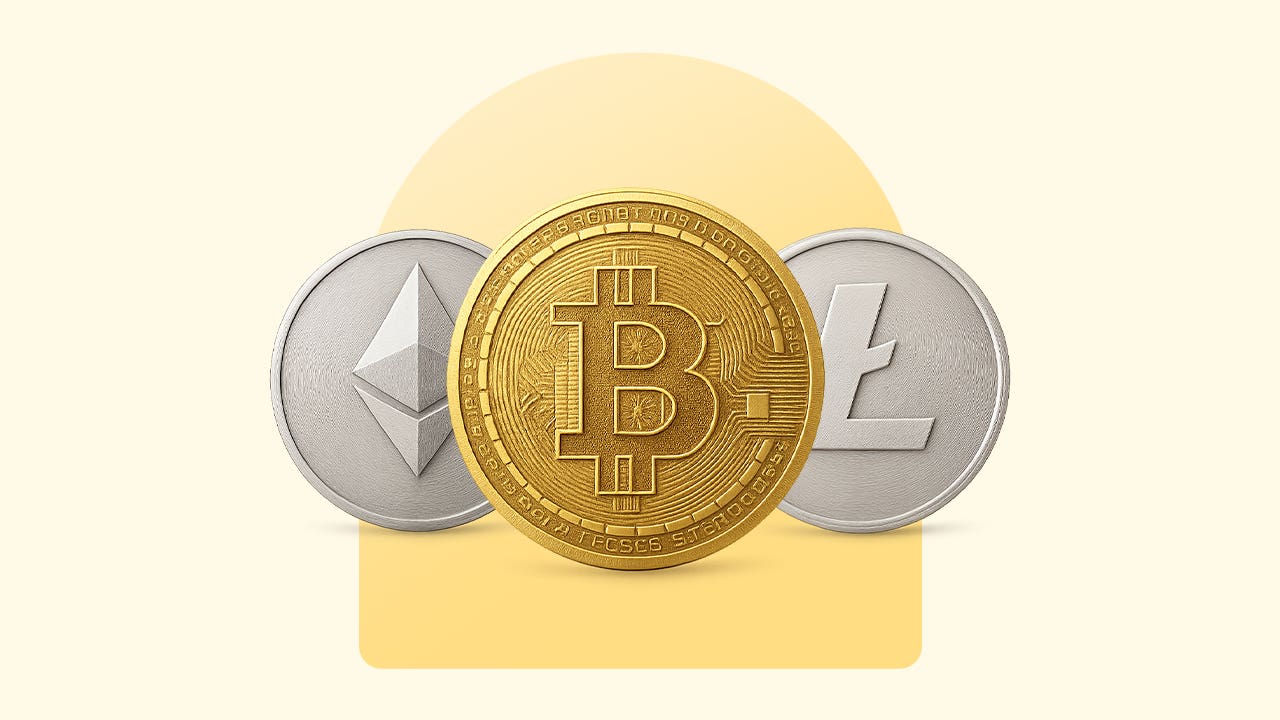
Table of contents
- [Other ways to invest in cryptocurrency](https://www.bankrate.com/investing/how-to-invest-in-cryptocurrency-beginners-guide/#other-ways)
- [Cryptocurrency investing FAQs](https://www.bankrate.com/investing/how-to-invest-in-cryptocurrency-beginners-guide/#faqs)
Table of contents
Back to top
## Key takeaways
- Cryptocurrencies are a highly volatile digital asset that can offer outsized gains — and losses.
- If you want to invest in crypto, you should do your research, consider volatility and never invest more than you can afford to lose.
- You can invest directly in crypto, but you can also buy Bitcoin futures, crypto ETFs or crypto exchange stocks to get exposure.
Cryptocurrencies are enormously volatile, but that volatility can create opportunities for profit if you’re looking to invest in these digital assets. Cryptos such as Bitcoin and [Ethereum](https://www.bankrate.com/investing/what-is-ethereum/) have risen a lot since their debut — but they’ve also experienced tremendous boom-bust cycles along the way. Experienced traders have been speculating on cryptocurrencies for years, but how can you get started if you’re new to the crypto market?
First things first, if you’re looking to invest in crypto, you need to have all your finances in order. That means having an emergency fund in place, a manageable level of debt and ideally, a [diversified portfolio of investments](https://www.bankrate.com/investing/diversification-is-important-in-investing/). Your crypto investments can become one more part of your portfolio, one that helps raise your total returns, hopefully.
Pay attention to these five key things as you’re starting to invest in cryptocurrencies.
## 1\. Understand what you’re potentially investing in
As you would for any investment, understand exactly what you’re investing in. If you’re buying stocks, it’s important to read the annual report and other [SEC filings](https://www.bankrate.com/investing/important-questions-before-buying-stock/) to analyze the companies thoroughly. Plan to [do the same with any cryptocurrencies](https://www.bankrate.com/investing/researching-and-analyzing-crypto/). Since there are literally thousands of them, they all function differently and new ones are being created every day. You need to understand the investment case for each trade.
In the case of many [cryptocurrencies](https://www.bankrate.com/investing/what-is-cryptocurrency/), they’re backed by nothing at all, neither hard assets nor cash flow of an underlying entity. That’s the case for [Bitcoin](https://www.bankrate.com/investing/what-is-bitcoin/), for example, where investors rely exclusively on someone paying more for the asset than they paid for it. In other words, unlike stock, where a company can grow its profits and drive returns for you that way, many crypto assets must rely on the market becoming more optimistic and bullish for you to profit.
Some of the [most popular coins](https://www.bankrate.com/investing/types-of-cryptocurrency/) include Bitcoin, Ethereum, [Solana](https://www.bankrate.com/investing/what-is-cryptocurrency/), [Dogecoin](https://www.bankrate.com/investing/what-is-cryptocurrency/) and [Tether (a stablecoin)](https://www.bankrate.com/investing/what-is-tether-stablecoin/). So before investing, understand the potential upside and downside. If your financial investment is not backed by an asset or cash flow, it could end up being worth nothing.
## 2\. Remember, past performance does not guarantee future results
A mistake that many new investors make is looking at the past and extrapolating that to the future. Yes, Bitcoin used to be worth pennies, but [now is worth much more](https://www.bankrate.com/investing/bitcoin-investment-worth-now/). The key question, however, is “Will that growth continue into the future, even if it’s not at quite that meteoric rate?”
Investors look to the future, not to what an asset has done in the past. What will drive future returns? Traders buying a cryptocurrency today need tomorrow’s gains, not yesterday’s.
## 3\. Expect high volatility
The prices of cryptocurrencies are about as volatile as an asset can get. They could drop quickly in seconds on nothing more than a rumor that ends up proving baseless. That can be great for sophisticated investors who can execute trades rapidly or who have a solid grasp of the market’s fundamentals, how the market is trending and where it could go. For new investors without these skills — or the high-powered algorithms that direct these trades — it’s a minefield.
Volatility is a game for high-powered Wall Street traders, each of whom is trying to outgun other deep-pocketed investors. A new investor, or [those who are more risk-averse](https://www.bankrate.com/investing/americans-remain-uncomfortable-with-crypto/), can easily get crushed or spooked by the volatility.
That’s because volatility shakes out traders, especially beginners, who get scared. Meanwhile, other traders may step in and buy on the cheap. In short, volatility can help sophisticated traders “buy low and sell high” while inexperienced investors “buy high and sell low.”
## 4\. Manage your risk carefully
If you’re trading any asset on a short-term basis, you need to [manage your risk](https://www.bankrate.com/investing/what-is-risk-tolerance/), and that can be especially true with volatile assets such as cryptocurrency. So as a newer trader, you’ll need to understand how best to manage risk and develop a process that helps you mitigate losses. And that process can vary from individual to individual:
- **Risk management for a long-term investor** might simply be never selling, regardless of the price. The long-term mentality allows the investor to stick with the position.
- **Risk management for a short-term trader**, however, might be setting strict rules on when to sell, such as when an investment has fallen 10 percent. The trader then strictly follows the rule so that a relatively small decline doesn’t become a crushing loss later.
Newer traders should consider setting aside a certain amount of trading money and then using only a portion of it, at least at first. If a position moves against them, they’ll still have money in reserve to trade with later. The ultimate point is that you can’t trade if you don’t have any money. So keeping some cash in reserve means you’ll always have a bankroll to fund your trading.
It’s important to manage risk, but that will come at an emotional cost. Selling a losing position hurts, but doing so can help you avoid worse losses later.
## 5\. Don’t invest more than you can afford to lose
Finally, it’s important to avoid putting money that you need into speculative assets. If you can’t afford to lose it — all of it — you can’t afford to put it into risky assets such as cryptocurrency, or other speculative assets, for that matter.
Whether it’s a down payment for a house or an important upcoming purchase, money that you need in the next few years should be kept in safe accounts so that it’s there when you need it. And if you’re looking for an absolutely sure return, your best option is to [pay off high-interest debt](https://www.bankrate.com/personal-finance/debt/how-to-pay-off-debt/). You’re guaranteed to earn (or save) whatever interest rate you’re paying on the debt. You can’t lose there.
Finally, don’t overlook the security of any exchange or broker you’re using. You may own the assets legally, but someone still has to secure them, and their security needs to be tight. If they don’t think their cryptocurrency is properly secured, some traders choose to invest in a [crypto wallet](https://www.bankrate.com/investing/what-is-a-crypto-wallet/) to hold their coins offline so they’re inaccessible to hackers or others.
Remember that investing in cryptocurrency can be part of a broader investment strategy, but shouldn’t be your only one.
##
## Other ways to invest in cryptocurrency
While investing directly in cryptocurrency is popular, traders have other ways to get into the crypto game, some more directly than others.
- **Crypto futures:** Futures are another way to wager on the price swings in Bitcoin, and [futures allow you to use the power of leverage](https://www.bankrate.com/investing/what-are-futures/) to generate massive returns (or losses). Futures are a fast-moving market and exacerbate the already volatile moves in crypto.
- **Bitcoin or Ethereum ETFs:** Spot [Bitcoin](https://www.bankrate.com/investing/bitcoin-etfs/) and [Ethereum ETFs](https://www.bankrate.com/investing/what-are-etfs/) are available through most online brokers who offer traditional securities like stocks and bonds. So these ETFs can be an easy way to buy crypto through a fund-like product. (These are the best [Ethereum](https://www.bankrate.com/investing/best-etfs/) and [Bitcoin ETFs](https://www.bankrate.com/investing/best-etfs/).)
- **Crypto exchange or broker stocks:** Buying stock in a company that’s poised to profit on the rise of cryptocurrency regardless of the winner could be an interesting option, too. And that’s the potential in an exchange such as [Coinbase](https://www.bankrate.com/investing/coinbase-review/) or a broker such as [Robinhood](https://www.bankrate.com/investing/brokerage-reviews/robinhood/), which derives a huge chunk of its revenues from crypto trading.
- **Blockchain ETFs:** A blockchain ETF allows you to invest in the companies that may profit from the emergence of blockchain technology. The [top blockchain ETFs](https://www.bankrate.com/investing/best-etfs/) give you exposure to some of the key publicly traded companies in the space. But it’s important to note that these companies often do much more than crypto-related business, meaning your exposure to cryptocurrency is diluted, reducing your potential upside and downside.
Each of these methods varies in its riskiness and exposure to cryptocurrency, so you’ll want to understand exactly what you’re buying and whether it fits your needs.
##
## Crypto investing FAQs
- ### How much money do I need to start investing in cryptocurrency?
In theory, it takes only a few dollars to invest in cryptocurrency. Most crypto exchanges, for example, have a minimum trade that might be \$5 or \$10. Other [crypto trading apps](https://www.bankrate.com/investing/best-cryptocurrency-trading-apps/) might have a minimum that’s even lower.
However, it’s important to understand that some trading platforms will [take a huge chunk of your investment as a fee](https://www.bankrate.com/investing/binance-vs-coinbase/) if you’re trading small amounts of cryptocurrency. So it’s important to look for a broker or exchange that minimizes your fees. In fact, many so-called “free” brokers embed fees — called spread mark-ups — in the price you pay for your cryptocurrency.
- ### How can I invest in Bitcoin?
If you’re looking to invest in Bitcoin, you have a variety of ways to do so, and you can work with a number of companies.
- **Crypto exchanges:** Exchanges have some of the widest selection of cryptocurrencies, and they tend to be the most competitive on price. Top players include Coinbase, [Kraken](https://www.bankrate.com/investing/kraken-review/) and [Binance](https://www.bankrate.com/investing/binance-review/), but there are literally dozens of others.
- **Traditional brokers:** Many traditional brokers also allow you to trade Bitcoin in addition to stocks and other financial assets, though they have a relatively limited selection of other cryptocurrencies. Some of the [top online brokers for beginners](https://www.bankrate.com/investing/best-online-brokers-for-beginners/) let users trade crypto, including [Interactive Brokers](https://www.bankrate.com/investing/brokerage-reviews/interactive-brokers/) and Robinhood.
- **Financial apps:** Many financial apps now allow you to trade Bitcoin and a few other cryptos. Top players here include Robinhood and [Webull](https://www.bankrate.com/investing/brokerage-reviews/webull/) as well as payment apps such as PayPal, Venmo and Cash App.
If you’re looking to buy Bitcoin, pay particular attention to the fees that you’re paying. Here are other key things to watch out for as [you’re buying Bitcoin](https://www.bankrate.com/investing/how-to-buy-bitcoins/).
- ### What are altcoins?
An altcoin is an alternative to Bitcoin. Many years ago, traders would use the term pejoratively. Since Bitcoin was the largest and most popular cryptocurrency, everything else was defined in relation to it. So, whatever was not Bitcoin was lumped into a catch-all category called [altcoins](https://www.bankrate.com/investing/what-are-altcoins/) and now that category has expanded to include [memecoins](https://www.bankrate.com/investing/what-are-memecoins-in-crypto/) — the crypto born of memes and trends.
While Bitcoin is still the largest cryptocurrency by market capitalization by far, it’s no longer the only game in town. Other altcoins such as Ethereum and Solana have grown in popularity, making the term altcoin somewhat outmoded. Now with a reported 18 million or more cryptocurrencies in existence, according to CoinMarketCap, it makes less sense than ever to define the industry as “Bitcoin and then everything else.”
## Bottom line
Cryptocurrency is a highly speculative area of the market, and many smart investors have decided to put their money elsewhere. For beginners who want to get started trading crypto, however, the best advice is to start small and only use money that you can afford to lose.
*— Bankrate’s* [*Brian Baker*](https://www.bankrate.com/authors/brian-baker-cfa/) *contributed to an update of this story.*
*Editorial Disclaimer: All investors are advised to conduct their own independent research into investment strategies before making an investment decision. In addition, investors are advised that past investment product performance is no guarantee of future price appreciation.*
Did you find this page helpful?
**Why we ask for feedback** Your feedback helps us improve our content and services. It takes less than a minute to complete.
Your responses are anonymous and will only be used for improving our website.
Help us improve our content
Yes
No
Thank you for your feedback\!
Your input helps us improve our content and services.
Cite us
Share this article
Share this article
Close

Written by
[James Royal, Ph.D.](https://www.bankrate.com/authors/james-royal/)
Former Principal Writer, Investing and Wealth Management
- [Connect with James Royal, Ph.D. on Twitter](https://twitter.com/JimRoyalPhD)
- [Connect with James Royal, Ph.D. on LinkedIn](https://www.linkedin.com/in/james-royal-phd-809b929/)
- [Get in contact with James Royal, Ph.D. via Email](mailto:jroyal@redventures.com)
[Read more from James](https://www.bankrate.com/authors/james-royal/)
Former Bankrate principal writer and editor James F. Royal, Ph.D., covers investing and wealth management. His work has been cited by CNBC, the Washington Post, The New York Times and more.

Bankrate is always editorially independent. While we adhere to strict editorial integrity , this post may contain references to products from our partners. Here's an explanation for how we make money . Our Bankrate promise is to ensure everything we publish is objective, accurate and trustworthy.
Table of contents
- [Other ways to invest in cryptocurrency](https://www.bankrate.com/investing/how-to-invest-in-cryptocurrency-beginners-guide/#other-ways)
- [Cryptocurrency investing FAQs](https://www.bankrate.com/investing/how-to-invest-in-cryptocurrency-beginners-guide/#faqs)
Back to top
## Up next
Part of Introduction to Cryptocurrency Investing
[Cryptocurrency taxes: A guide to tax rules for Bitcoin, Ethereum and more](https://www.bankrate.com/investing/crypto-taxes-guide-bitcoin-ethereum/?series=introduction-to-cryptocurrency-investing)
Investing
By [James Royal, Ph.D.](https://www.bankrate.com/authors/james-royal/)
7 min read
[Bitcoin mining: A beginner’s guide to how it works](https://www.bankrate.com/investing/what-is-bitcoin-mining/?series=introduction-to-cryptocurrency-investing)
Investing
By [Brian Baker, CFA](https://www.bankrate.com/authors/brian-baker-cfa/)
5 min read

[Best online brokers for buying and selling cryptocurrency](https://www.bankrate.com/investing/best-online-brokers-cryptocurrency-trading/?series=introduction-to-cryptocurrency-investing)
Investing
By [James Royal, Ph.D.](https://www.bankrate.com/authors/james-royal/)
5 min read
## [Bankrate logo](https://www.bankrate.com/)
### About
- [About us](https://www.bankrate.com/about/)
- [Leadership](https://www.bankrate.com/leadership/)
- [Press room](https://www.bankrate.com/press-releases/)
- [Bankrate Data Center](https://www.bankrate.com/data-center/)
- [Careers](https://www.bankrate.com/careers/)
- [Site map](https://www.bankrate.com/corporate/site-map/)
### Help
- [Compare rates](https://www.bankrate.com/compare-rates/)
- [Latest news](https://www.bankrate.com/news/)
- [Popular topics](https://www.bankrate.com/popular-finance-topics/)
- [Advertise with us](https://www.bankrate.com/media-kit/)
### Legal
- [Privacy policy](https://www.bankrate.com/privacy/)
- Cookie settings
- [Do Not Sell or Share My Personal Information](https://www.bankrate.com/do-not-sell-or-share-my-personal-information/)
- [Consumer Health Information Privacy Policy](https://www.bankrate.com/consumer-health-information-privacy-policy/)
- [Understanding Bankrate’s averages](https://www.bankrate.com/understanding-bankrates-rate-averages/)
- [Terms of use](https://www.bankrate.com/terms/)
- [GLBA annual notice](https://www.bankrate.com/glba-notice/)
- [California Consumer Financial Privacy Notice](https://www.bankrate.com/2022/02/15094901/california-notice.pdf)
- [Licenses](https://www.bankrate.com/licenses/)
### How we make money
Bankrate.com is an independent, advertising-supported publisher and comparison service. Our websites may earn compensation when a customer clicks on a link, when an application is approved, or when an account is opened. Therefore, this compensation may impact what products appear and how, where, and in what order they appear within listing categories, except where prohibited by law for our mortgage, home equity and other home lending products. Other factors, such as our proprietary website rules and whether a product is offered in your area or at your self-selected credit score range, can also impact how and where products appear on this site. While we strive to provide a wide range of offers, Bankrate does not include information about every financial or credit product or service.
Bankrate, LLC NMLS ID\# 1427381 \| [NMLS Consumer Access](http://www.nmlsconsumeraccess.org/EntityDetails.aspx/COMPANY/1427381)
BR Tech Services, Inc. NMLS ID \#1743443 \| [NMLS Consumer Access](http://www.nmlsconsumeraccess.org/EntityDetails.aspx/COMPANY/1743443)
© 2026 Bankrate, LLC. A Red Ventures company. All Rights Reserved.
### Advertiser Disclosure
We are an independent, advertising-supported comparison service. Our goal is to help you make smarter financial decisions by providing you with interactive tools and financial calculators, publishing original and objective content, by enabling you to conduct research and compare information for free - so that you can make financial decisions with confidence.
Our articles, interactive tools, and hypothetical examples contain information to help you conduct research but are not intended to serve as investment advice, and we cannot guarantee that this information is applicable or accurate to your personal circumstances. Any estimates based on past performance do not a guarantee future performance, and prior to making any investment you should discuss your specific investment needs or seek advice from a qualified professional.
### How We Make Money
The offers that appear on this site are from companies that compensate us. This compensation may impact how and where products appear on this site, including, for example, the order in which they may appear within the listing categories, except where prohibited by law for our mortgage, home equity and other home lending products. But this compensation does not influence the information we publish, or the reviews that you see on this site. We do not include the universe of companies or financial offers that may be available to you.
### Editorial disclosure
All reviews are prepared by our staff. Opinions expressed are solely those of the reviewer and have not been reviewed or approved by any advertiser. The information, including any rates, terms and fees associated with financial products, presented in the review is accurate as of the date of publication.
## The Bankrate promise
Founded in 1976, Bankrate has a long track record of helping people make smart financial choices. We’ve maintained this reputation for over four decades by demystifying the financial decision-making process and giving people confidence in which actions to take next.
Bankrate follows a strict [editorial policy](https://www.bankrate.com/editorial-guidelines/ "editorial policy"), so you can trust that we’re putting your interests first. All of our content is authored by [highly qualified professionals](https://www.bankrate.com/authors/ "highly qualified professionals") and edited by [subject matter experts](https://www.bankrate.com/financial-review-board/ "subject matter experts"), who ensure everything we publish is objective, accurate and trustworthy.
Our investing reporters and editors focus on the points consumers care about most — how to get started, the best brokers, types of investment accounts, how to choose investments and more — so you can feel confident when investing your money.
**Investing disclosure:**
The investment information provided in this table is for informational and general educational purposes only and should not be construed as investment or financial advice. Bankrate does not offer advisory or brokerage services, nor does it provide individualized recommendations or personalized investment advice. Investment decisions should be based on an evaluation of your own personal financial situation, needs, risk tolerance and investment objectives. Investing involves risk including the potential loss of principal.
## Editorial integrity
Bankrate follows a strict [editorial policy](https://www.bankrate.com/editorial-guidelines/ "editorial policy"), so you can trust that we’re putting your interests first. Our award-winning editors and reporters create honest and accurate content to help you make the right financial decisions.
### Key Principles
We value your trust. Our mission is to provide readers with accurate and unbiased information, and we have editorial standards in place to ensure that happens. Our editors and reporters thoroughly fact-check editorial content to ensure the information you’re reading is accurate. We maintain a firewall between our advertisers and our editorial team. Our editorial team does not receive direct compensation from our advertisers.
### Editorial Independence
Bankrate’s editorial team writes on behalf of YOU – the reader. Our goal is to give you the best advice to help you make smart personal finance decisions. We follow strict guidelines to ensure that our editorial content is not influenced by advertisers. Our editorial team receives no direct compensation from advertisers, and our content is thoroughly fact-checked to ensure accuracy. So, whether you’re reading an article or a review, you can trust that you’re getting credible and dependable information.
## How we make money
You have money questions. Bankrate has answers. Our experts have been helping you master your money for over four decades. We continually strive to provide consumers with the expert advice and tools needed to succeed throughout life’s financial journey.
Bankrate follows a strict [editorial policy](https://www.bankrate.com/editorial-guidelines/ "editorial policy"), so you can trust that our content is honest and accurate. Our award-winning editors and reporters create honest and accurate content to help you make the right financial decisions. The content created by our editorial staff is objective, factual, and not influenced by our advertisers.
We’re transparent about how we are able to bring quality content, competitive rates, and useful tools to you by explaining how we make money.
Bankrate.com is an independent, advertising-supported publisher and comparison service. We are compensated in exchange for placement of sponsored products and services, or by you clicking on certain links posted on our site. Therefore, this compensation may impact how, where and in what order products appear within listing categories, except where prohibited by law for our mortgage, home equity and other home lending products. Other factors, such as our own proprietary website rules and whether a product is offered in your area or at your self-selected credit score range, can also impact how and where products appear on this site. While we strive to provide a wide range of offers, Bankrate does not include information about every financial or credit product or service.
Table of contents
- [Other ways to invest in cryptocurrency](https://www.bankrate.com/investing/how-to-invest-in-cryptocurrency-beginners-guide/#other-ways)
- [Cryptocurrency investing FAQs](https://www.bankrate.com/investing/how-to-invest-in-cryptocurrency-beginners-guide/#faqs)
**Quick citation guide** Select a citation to automatically copy to clipboard.
**APA:** Royal, J. (2025, July 14). *How to start investing in cryptocurrency: 5 tips for beginners.* Bankrate. Retrieved April 20, 2026, from https://www.bankrate.com/investing/how-to-invest-in-cryptocurrency-beginners-guide/
Copied to clipboard\!
**MLA:** Royal, James. "How to start investing in cryptocurrency: 5 tips for beginners." *Bankrate*. 14 July 2025, https://www.bankrate.com/investing/how-to-invest-in-cryptocurrency-beginners-guide/.
Copied to clipboard\!
**Chicago:** Royal, James. "How to start investing in cryptocurrency: 5 tips for beginners." Bankrate. July 14, 2025. https://www.bankrate.com/investing/how-to-invest-in-cryptocurrency-beginners-guide/.
Copied to clipboard\!

 |
| Readable Markdown | ## Key takeaways
- Cryptocurrencies are a highly volatile digital asset that can offer outsized gains — and losses.
- If you want to invest in crypto, you should do your research, consider volatility and never invest more than you can afford to lose.
- You can invest directly in crypto, but you can also buy Bitcoin futures, crypto ETFs or crypto exchange stocks to get exposure.
Cryptocurrencies are enormously volatile, but that volatility can create opportunities for profit if you’re looking to invest in these digital assets. Cryptos such as Bitcoin and [Ethereum](https://www.bankrate.com/investing/what-is-ethereum/) have risen a lot since their debut — but they’ve also experienced tremendous boom-bust cycles along the way. Experienced traders have been speculating on cryptocurrencies for years, but how can you get started if you’re new to the crypto market?
First things first, if you’re looking to invest in crypto, you need to have all your finances in order. That means having an emergency fund in place, a manageable level of debt and ideally, a [diversified portfolio of investments](https://www.bankrate.com/investing/diversification-is-important-in-investing/). Your crypto investments can become one more part of your portfolio, one that helps raise your total returns, hopefully.
Pay attention to these five key things as you’re starting to invest in cryptocurrencies.
## 1\. Understand what you’re potentially investing in
As you would for any investment, understand exactly what you’re investing in. If you’re buying stocks, it’s important to read the annual report and other [SEC filings](https://www.bankrate.com/investing/important-questions-before-buying-stock/) to analyze the companies thoroughly. Plan to [do the same with any cryptocurrencies](https://www.bankrate.com/investing/researching-and-analyzing-crypto/). Since there are literally thousands of them, they all function differently and new ones are being created every day. You need to understand the investment case for each trade.
In the case of many [cryptocurrencies](https://www.bankrate.com/investing/what-is-cryptocurrency/), they’re backed by nothing at all, neither hard assets nor cash flow of an underlying entity. That’s the case for [Bitcoin](https://www.bankrate.com/investing/what-is-bitcoin/), for example, where investors rely exclusively on someone paying more for the asset than they paid for it. In other words, unlike stock, where a company can grow its profits and drive returns for you that way, many crypto assets must rely on the market becoming more optimistic and bullish for you to profit.
Some of the [most popular coins](https://www.bankrate.com/investing/types-of-cryptocurrency/) include Bitcoin, Ethereum, [Solana](https://www.bankrate.com/investing/what-is-cryptocurrency/), [Dogecoin](https://www.bankrate.com/investing/what-is-cryptocurrency/) and [Tether (a stablecoin)](https://www.bankrate.com/investing/what-is-tether-stablecoin/). So before investing, understand the potential upside and downside. If your financial investment is not backed by an asset or cash flow, it could end up being worth nothing.
## 2\. Remember, past performance does not guarantee future results
A mistake that many new investors make is looking at the past and extrapolating that to the future. Yes, Bitcoin used to be worth pennies, but [now is worth much more](https://www.bankrate.com/investing/bitcoin-investment-worth-now/). The key question, however, is “Will that growth continue into the future, even if it’s not at quite that meteoric rate?”
Investors look to the future, not to what an asset has done in the past. What will drive future returns? Traders buying a cryptocurrency today need tomorrow’s gains, not yesterday’s.
## 3\. Expect high volatility
The prices of cryptocurrencies are about as volatile as an asset can get. They could drop quickly in seconds on nothing more than a rumor that ends up proving baseless. That can be great for sophisticated investors who can execute trades rapidly or who have a solid grasp of the market’s fundamentals, how the market is trending and where it could go. For new investors without these skills — or the high-powered algorithms that direct these trades — it’s a minefield.
Volatility is a game for high-powered Wall Street traders, each of whom is trying to outgun other deep-pocketed investors. A new investor, or [those who are more risk-averse](https://www.bankrate.com/investing/americans-remain-uncomfortable-with-crypto/), can easily get crushed or spooked by the volatility.
That’s because volatility shakes out traders, especially beginners, who get scared. Meanwhile, other traders may step in and buy on the cheap. In short, volatility can help sophisticated traders “buy low and sell high” while inexperienced investors “buy high and sell low.”
## 4\. Manage your risk carefully
If you’re trading any asset on a short-term basis, you need to [manage your risk](https://www.bankrate.com/investing/what-is-risk-tolerance/), and that can be especially true with volatile assets such as cryptocurrency. So as a newer trader, you’ll need to understand how best to manage risk and develop a process that helps you mitigate losses. And that process can vary from individual to individual:
- **Risk management for a long-term investor** might simply be never selling, regardless of the price. The long-term mentality allows the investor to stick with the position.
- **Risk management for a short-term trader**, however, might be setting strict rules on when to sell, such as when an investment has fallen 10 percent. The trader then strictly follows the rule so that a relatively small decline doesn’t become a crushing loss later.
Newer traders should consider setting aside a certain amount of trading money and then using only a portion of it, at least at first. If a position moves against them, they’ll still have money in reserve to trade with later. The ultimate point is that you can’t trade if you don’t have any money. So keeping some cash in reserve means you’ll always have a bankroll to fund your trading.
It’s important to manage risk, but that will come at an emotional cost. Selling a losing position hurts, but doing so can help you avoid worse losses later.
## 5\. Don’t invest more than you can afford to lose
Finally, it’s important to avoid putting money that you need into speculative assets. If you can’t afford to lose it — all of it — you can’t afford to put it into risky assets such as cryptocurrency, or other speculative assets, for that matter.
Whether it’s a down payment for a house or an important upcoming purchase, money that you need in the next few years should be kept in safe accounts so that it’s there when you need it. And if you’re looking for an absolutely sure return, your best option is to [pay off high-interest debt](https://www.bankrate.com/personal-finance/debt/how-to-pay-off-debt/). You’re guaranteed to earn (or save) whatever interest rate you’re paying on the debt. You can’t lose there.
Finally, don’t overlook the security of any exchange or broker you’re using. You may own the assets legally, but someone still has to secure them, and their security needs to be tight. If they don’t think their cryptocurrency is properly secured, some traders choose to invest in a [crypto wallet](https://www.bankrate.com/investing/what-is-a-crypto-wallet/) to hold their coins offline so they’re inaccessible to hackers or others.
Remember that investing in cryptocurrency can be part of a broader investment strategy, but shouldn’t be your only one.
## Other ways to invest in cryptocurrency
While investing directly in cryptocurrency is popular, traders have other ways to get into the crypto game, some more directly than others.
- **Crypto futures:** Futures are another way to wager on the price swings in Bitcoin, and [futures allow you to use the power of leverage](https://www.bankrate.com/investing/what-are-futures/) to generate massive returns (or losses). Futures are a fast-moving market and exacerbate the already volatile moves in crypto.
- **Bitcoin or Ethereum ETFs:** Spot [Bitcoin](https://www.bankrate.com/investing/bitcoin-etfs/) and [Ethereum ETFs](https://www.bankrate.com/investing/what-are-etfs/) are available through most online brokers who offer traditional securities like stocks and bonds. So these ETFs can be an easy way to buy crypto through a fund-like product. (These are the best [Ethereum](https://www.bankrate.com/investing/best-etfs/) and [Bitcoin ETFs](https://www.bankrate.com/investing/best-etfs/).)
- **Crypto exchange or broker stocks:** Buying stock in a company that’s poised to profit on the rise of cryptocurrency regardless of the winner could be an interesting option, too. And that’s the potential in an exchange such as [Coinbase](https://www.bankrate.com/investing/coinbase-review/) or a broker such as [Robinhood](https://www.bankrate.com/investing/brokerage-reviews/robinhood/), which derives a huge chunk of its revenues from crypto trading.
- **Blockchain ETFs:** A blockchain ETF allows you to invest in the companies that may profit from the emergence of blockchain technology. The [top blockchain ETFs](https://www.bankrate.com/investing/best-etfs/) give you exposure to some of the key publicly traded companies in the space. But it’s important to note that these companies often do much more than crypto-related business, meaning your exposure to cryptocurrency is diluted, reducing your potential upside and downside.
Each of these methods varies in its riskiness and exposure to cryptocurrency, so you’ll want to understand exactly what you’re buying and whether it fits your needs.
## Crypto investing FAQs
## Bottom line
Cryptocurrency is a highly speculative area of the market, and many smart investors have decided to put their money elsewhere. For beginners who want to get started trading crypto, however, the best advice is to start small and only use money that you can afford to lose.
*— Bankrate’s* [*Brian Baker*](https://www.bankrate.com/authors/brian-baker-cfa/) *contributed to an update of this story.*
*Editorial Disclaimer: All investors are advised to conduct their own independent research into investment strategies before making an investment decision. In addition, investors are advised that past investment product performance is no guarantee of future price appreciation.*
Did you find this page helpful?
Help us improve our content |
| Shard | 148 (laksa) |
| Root Hash | 16841441868536461148 |
| Unparsed URL | com,bankrate!www,/investing/how-to-invest-in-cryptocurrency-beginners-guide/ s443 |