ℹ️ Skipped - page is already crawled
| Filter | Status | Condition | Details |
|---|---|---|---|
| HTTP status | PASS | download_http_code = 200 | HTTP 200 |
| Age cutoff | PASS | download_stamp > now() - 6 MONTH | 0 months ago |
| History drop | PASS | isNull(history_drop_reason) | No drop reason |
| Spam/ban | PASS | fh_dont_index != 1 AND ml_spam_score = 0 | ml_spam_score=0 |
| Canonical | PASS | meta_canonical IS NULL OR = '' OR = src_unparsed | Not set |
| Property | Value | |||||||||
|---|---|---|---|---|---|---|---|---|---|---|
| URL | https://www.bankrate.com/investing/crypto-vs-stocks/ | |||||||||
| Last Crawled | 2026-04-23 09:35:01 (4 hours ago) | |||||||||
| First Indexed | 2021-10-22 18:31:14 (4 years ago) | |||||||||
| HTTP Status Code | 200 | |||||||||
| Content | ||||||||||
| Meta Title | Cryptocurrency Vs. Stocks: Which Is The Better Choice For You? | Bankrate | |||||||||
| Meta Description | Crypto’s rapid rise has investors questioning the role of stocks in their portfolios. Learn from Bankrate the difference between stocks and crypto., Crypto’s rapid rise has investors questioning the role of stocks in their portfolios. Learn from Bankrate the difference between stocks and crypto. | |||||||||
| Meta Canonical | null | |||||||||
| Boilerpipe Text | Cryptocurrency’s rapid appreciation has many investors questioning the place of stocks in their portfolios. But there are numerous differences between stocks and
cryptocurrencies
. The most important is that a stock is an ownership interest in a business (backed by the company’s assets and cash flow), whereas cryptocurrency, in most cases, is not backed by anything at all.
If you’re buying cryptocurrencies, it’s important to understand what you’re purchasing and how they compare to traditional investments such as stocks, which have a solid long-term track record.
Cryptocurrency vs. stocks: How they compare
Any savvy investor needs to know exactly what they’re investing in. It’s crucial to weigh the risks and rewards of investing, and what will drive the investment’s success. If they don’t have this kind of information, they can’t make the calculation. In this case, it’s more like gambling than investing.
Here are the key things investors need to know about stocks and cryptocurrency.
Stocks
A stock is a fractional ownership interest in a business. It’s easy to lose sight of this, if you become overwhelmed by the wiggling stock prices — and the potential for profit. As a legal ownership stake in the business, the stock gives shareholders a claim on the assets and cash flow of the business. These back your investment and provide a basis for its valuation.
Why stocks rise and fall
A stock price moves as investors assess the future success of the company. While investors may become overly optimistic about the stock in the short term, the stock price ultimately depends on the company’s ability to grow its profits over the long term. That is, a stock rises in the long term
due to the success of the underlying company
.
For a stock to be a successful investment, the underlying company must perform well over time. (Here’s a
step-by-step guide on how to invest in stocks
.)
Cryptocurrency
Cryptocurrency has taken the world by storm, especially during the last few years. After having topped out around $3 trillion in 2021 and falling in 2022, the total value of all these digital currencies now sits at about $3.4 trillion as of July 2025, according to CoinMarketCap.com. Of these,
Bitcoin
is the most popular, worth more than $2.1 trillion itself. Investors have swarmed to this digital gold rush, often with little knowledge and a lot of hope.
Generally, cryptocurrency is backed by no hard assets (specialized
stablecoins
being an exception), and that’s the case for the
most popular crypto coins
such as Bitcoin and
Ethereum
. A cryptocurrency may allow you to perform certain functions, such as sending money to another person or using smart contracts that automatically execute after specific conditions are met.
Why cryptocurrencies rise and fall
Because cryptocurrency is not backed by assets or cash flow, the only thing moving crypto prices is speculation driven by sentiment. As sentiment changes, prices shift — sometimes drastically. So cryptocurrency is driven only by the hope that someone will buy it for more in the future — what’s called the “greater fool theory of investing.”
For a cryptocurrency to be a successful investment, you must get someone to buy it from you for more than you paid for it. That is, the market must be more optimistic about it than you are.
Pros and cons of investing in cryptocurrency vs. stocks
Pros of investing in cryptocurrency
Possible hedge against fiat currency:
For some investors, one of the biggest appeals of cryptocurrency is its decentralized nature. It’s not controlled by central banks or governments who like to print money and generate inflation in fiat currencies such as the U.S. dollar or the euro. Cryptocurrency has been called “digital gold” by some investors who hold it because they think it will protect them from inflation.
Potential for outsized returns:
Buying cryptocurrencies creates the potential for large gains on your investment. Several cryptocurrencies have seen their prices skyrocket since first being introduced. These gains are the main reason people are attracted to cryptocurrencies, but the potential for price appreciation comes with significant risk.
Growing number of coins:
In the early days of cryptocurrencies, there were just a few coins that could be invested in, but speculative interest has changed that.
New coins are introduced regularly
and there are now thousands to choose from.
Wide interest in digital currencies:
There seems to be a growing interest in cryptocurrencies from investors, companies and governments. Tesla holds Bitcoin on its balance sheet and briefly accepted the digital currency as payment before reversing course. El Salvador adopted Bitcoin as legal tender in 2021, though the International Monetary Fund has urged the country to reverse its decision. Increasing acceptance of digital currencies could be positive for investors.
Possible hedge against fiat currency:
For some investors, one of the biggest appeals of cryptocurrency is its decentralized nature. It’s not controlled by central banks or governments who like to print money and generate inflation in fiat currencies such as the U.S. dollar or the euro. Cryptocurrency has been called “digital gold” by some investors who hold it because they think it will protect them from inflation.
Potential for outsized returns:
Buying cryptocurrencies creates the potential for large gains on your investment. Several cryptocurrencies have seen their prices skyrocket since first being introduced. These gains are the main reason people are attracted to cryptocurrencies, but the potential for price appreciation comes with significant risk.
Growing number of coins:
In the early days of cryptocurrencies, there were just a few coins that could be invested in, but speculative interest has changed that.
New coins are introduced regularly
and there are now thousands to choose from.
Wide interest in digital currencies:
There seems to be a growing interest in cryptocurrencies from investors, companies and governments. Tesla holds Bitcoin on its balance sheet and briefly accepted the digital currency as payment before reversing course. El Salvador adopted Bitcoin as legal tender in 2021, though the International Monetary Fund has urged the country to reverse its decision. Increasing acceptance of digital currencies could be positive for investors.
Cons of investing in cryptocurrency
Extreme volatility:
Cryptocurrencies have been extremely volatile so far in their relatively young existence. They aren’t backed by anything, so the price they trade at is determined by the whims of traders. Fortunes can be made and lost quickly and there’s no telling where a coin might trade next.
Cybersecurity risks:
Despite cryptocurrency enthusiasts touting the security benefits of digital coins, there have been notable hacks involving cryptocurrencies. It is often difficult to recover stolen funds.
No intrinsic value:
Cryptocurrencies have no intrinsic value, which means they aren’t backed by underlying assets or earnings the way that stocks are. Stocks have value because of their future earnings power and what they will return for their owners, while cryptocurrencies offer nothing of the sort.
Regulatory risks:
While El Salvador has embraced Bitcoin, many governments are much more skeptical about cryptocurrencies. China has banned them altogether, other countries could follow and the
U.S. is regulating them
, though President-elect Trump is expected to have a crypto-friendly administration.
Extreme volatility:
Cryptocurrencies have been extremely volatile so far in their relatively young existence. They aren’t backed by anything, so the price they trade at is determined by the whims of traders. Fortunes can be made and lost quickly and there’s no telling where a coin might trade next.
Cybersecurity risks:
Despite cryptocurrency enthusiasts touting the security benefits of digital coins, there have been notable hacks involving cryptocurrencies. It is often difficult to recover stolen funds.
No intrinsic value:
Cryptocurrencies have no intrinsic value, which means they aren’t backed by underlying assets or earnings the way that stocks are. Stocks have value because of their future earnings power and what they will return for their owners, while cryptocurrencies offer nothing of the sort.
Regulatory risks:
While El Salvador has embraced Bitcoin, many governments are much more skeptical about cryptocurrencies. China has banned them altogether, other countries could follow and the
U.S. is regulating them
, though President-elect Trump is expected to have a crypto-friendly administration.
Pros of investing in stocks
Long history of solid returns:
Stocks have a long track record of producing solid investment returns, with the S&P 500 stock index returning about 10 percent over the long-term. Though
stocks can be volatile
in the short term, they have generally been safe to hold over long periods of time.
Have intrinsic value:
A stock represents an ownership interest in a company and its value over time depends on the success of the underlying company. Companies own assets that produce earnings and cash flow for investors, creating what’s known as intrinsic value.
Accessible:
It is easier than ever to invest in stocks these days with many
online brokers
cutting trading fees to zero. You can invest in individual stocks or choose to purchase a diversified basket of stocks through an index fund. Index funds help keep costs low and you can build a diversified portfolio even if you don’t have much money to start with.
Stronger regulation:
Stock exchanges, brokers and companies are all heavily regulated through various government agencies. Companies are required to
provide certain information to investors
through the Securities and Exchange Commission. No regulatory body is perfect, but stocks have been around for a long time and there are certain important investor protections in place.
Cons of investing in stocks
Volatile:
When you hold a broad basket of stocks through
index funds
, stocks are less volatile than cryptocurrencies. Individual stocks can be more volatile, but typically less so than cryptocurrencies. Because of this volatility, stocks are best held as part of a long-term investment plan, so you have time to recover from any short-term losses.
Lower potential for extreme gains:
Broad stock indexes such as the
S&P 500
likely have less potential for the extreme gains that can sometimes be found among cryptocurrencies. Stocks have returned about 10 percent per year over the long term, whereas it’s not uncommon for cryptocurrencies to move 10 percent in a single day.
Other considerations when investing in stocks vs. crypto
Time horizon
Your time horizon — when you need the money from an investment — is a key criterion. The shorter your timeline, the safer your asset should be, so that it’s there when you need it. The more volatile an asset, the less suited it is for those with a short timeline. Generally, experts suggest investors in risky assets such as stocks need at least three years to ride out volatility.
Stocks
Stocks are often volatile, but they tend to be less volatile than crypto. Individual stocks are more volatile than a portfolio of stocks, which tends to benefit from
diversification
.
Stocks are better suited to investors who can leave their money alone and don’t need to access it. Generally, the longer you can leave it invested, the better.
Some stocks can be more volatile than others. For example, growth stocks tend to fluctuate much more than value stocks or
dividend stocks
.
Investors may shift from more aggressive stocks (growth stocks) to safer ones (dividend stocks) as they need to tap their money, such as when they approach retirement.
Cryptocurrency
While stocks are volatile, cryptocurrency is ridiculously volatile. For example, during 2021, Bitcoin lost more than half its value in a few months and later gained 100 percent. Such volatility makes crypto unsuited for short-term investors.
Crypto is better suited to traders who can leave their money tied up and wait for it to recover. Think years rather than weeks.
Portfolio management
As you’re thinking about constructing your portfolio, you don’t have to make an either-or choice between cryptocurrency and stocks — or other kinds of asset such as
bonds
or funds, either. It’s all about weighting your portfolio in a way that fits your risk and time horizon.
Cryptocurrency
Given its inherent risks, cryptocurrency works better with a small allocation in your overall portfolio. Think 5 percent or less.
Even a small allocation could do wonders for your portfolio if cryptocurrency really takes off. Also, limiting to a small allocation protects you against a complete loss if crypto prices collapse.
If crypto grows to be a significant portion of your portfolio, you can re-allocate more of your money to stocks to lower your portfolio’s overall risk.
Stocks
Given stocks’ strong long-term record, a diversified collection of stocks should make up the majority of your portfolio, especially if you have decades until you need to tap it.
If you’re investing in individual stocks, you’ll need to research your stocks carefully to achieve good returns.
If you’re investing in funds, you can buy a broadly diversified fund such as
an S&P 500 index fund
without significant research and enjoy the potential for high returns.
Which is safer, stocks or crypto?
When it comes to safety, both stocks and cryptocurrencies present their unique set of risks. Stocks, backed by a company’s assets and cash flow, have a long history of delivering solid returns. They are regulated by government bodies and have investor protections in place. However, market volatility, business decisions, and international events can impact stock investments.
On the other hand, cryptocurrencies, while offering the potential for substantial gains, are highly volatile and lack the backing of tangible assets. They also pose risks such as cybersecurity threats and regulatory uncertainties. Therefore, the safety of these investments largely depends on your personal risk tolerance and financial goals.
A broadly diversified stock portfolio generally presents a safer option than cryptocurrencies because of their intrinsic value and history of delivering solid long-term returns. Cryptocurrencies may hold greater potential for outsized gains, but come with significant risk.
Bottom line
Some cryptocurrencies have soared in price since being introduced over the past few years, but investors need to understand what they’re investing in, instead of just rushing in because other traders are, a symptom of FOMO syndrome (fear of missing out). If you decide to take a stake in crypto, consider how it fits with your own risk tolerance and financial needs. Investors can earn good returns without investing in cryptocurrency, and some investors, including legends such as
Warren Buffett, won’t touch cryptocurrency
.
—
Bankrate’s
Brian Baker, CFA
, contributed to an update of this article.
Editorial Disclaimer: All investors are advised to conduct their own independent research into investment strategies before making an investment decision. In addition, investors are advised that past investment product performance is no guarantee of future price appreciation.
Did you find this page helpful?
Info Icon
Help us improve our content | |||||||||
| Markdown | [Skip to Main Content](https://www.bankrate.com/investing/crypto-vs-stocks/#main-content)
- [Banking](https://www.bankrate.com/banking/)
All
Banking
Checking & savings
CDs
Money market
Banks
[Explore all banking resources](https://www.bankrate.com/banking/)
Banking
Compare accounts
- [Best high-yield savings accounts](https://www.bankrate.com/banking/savings/best-high-yield-interests-savings-accounts/)
- [Best checking accounts](https://www.bankrate.com/banking/checking/best-checking-accounts/)
- [Best free checking accounts](https://www.bankrate.com/banking/checking/best-free-checking-accounts/)
Get guidance
- [Savings calculator](https://www.bankrate.com/banking/savings/simple-savings-calculator/)
- [All savings calculators](https://www.bankrate.com/banking/calculators/)
- [Savings rate trends](https://www.bankrate.com/banking/savings/average-savings-interest-rates/)
- [Savings resources](https://www.bankrate.com/banking/savings/)
- [:format\(webp\)) Savings basics 5 min read](https://www.bankrate.com/banking/savings/how-to-open-a-savings-account/)
- [:format\(webp\)) How to start saving 4 min read](https://www.bankrate.com/banking/savings/start-saving-from-scratch/)
Compare accounts
- [Best CD rates](https://www.bankrate.com/banking/cds/cd-rates/)
- [Best 6-month CD rates](https://www.bankrate.com/banking/cds/best-6-month-cd-rates/)
- [Best 1-year CD rates](https://www.bankrate.com/banking/cds/best-1-year-cd-rates/)
- [Best 5-year CD rates](https://www.bankrate.com/banking/cds/best-5-year-cd-rates/)
Get guidance
- [CD calculator](https://www.bankrate.com/banking/cds/cd-calculator/)
- [CD ladder calculator](https://www.bankrate.com/banking/cds/cd-ladder-calculator/)
- [CD resources](https://www.bankrate.com/banking/cds/)
- [:format\(webp\)) CD basics 7 min read](https://www.bankrate.com/banking/cds/what-is-a-cd/)
- [:format\(webp\)) How to invest with CDs 6 min read](https://www.bankrate.com/banking/cds/how-to-invest-in-cds/)
Money market accounts
Money market accounts are similar to savings accounts, but offer some checking features as well.
[View MMA rates](https://www.bankrate.com/banking/money-market/rates/)
Get guidance
- [Money market basics](https://www.bankrate.com/banking/mma/what-is-a-money-market-account/)
- [Money market vs savings accounts](https://www.bankrate.com/banking/money-market-account-vs-savings-account/)
- [How to open an MMA](https://www.bankrate.com/banking/mma/how-to-open-a-money-market-account/)
- [MMA resources](https://www.bankrate.com/banking/mma/)
Banking
Unlock financial rewards by signing up for a savings or checking account with a bonus offer.
[Best bank bonuses](https://www.bankrate.com/banking/best-bank-account-bonuses-and-promotions/)
Get guidance
- [Best online banks](https://www.bankrate.com/banking/best-online-banks/)
- [Best credit unions](https://www.bankrate.com/banking/best-credit-unions/)
- [Bank reviews](https://www.bankrate.com/banking/reviews/)
- [Federal Reserve news](https://www.bankrate.com/banking/federal-reserve/)
- [:format\(webp\)) Capital One review Our take on Capital One Bank](https://www.bankrate.com/banking/reviews/capital-one/)
- [:format\(webp\)) Marcus review Our take on Marcus by Goldman Sachs](https://www.bankrate.com/banking/reviews/marcus/)
[Explore all banking resources](https://www.bankrate.com/banking/)
- [Mortgages](https://www.bankrate.com/mortgages/)
All
Mortgages
Purchase
Refinance
Real estate
[Explore all mortgages resources](https://www.bankrate.com/mortgages/)
Mortgages
Compare rates
- [Mortgage rates](https://www.bankrate.com/mortgages/mortgage-rates/)
- [30-year mortgage rates](https://www.bankrate.com/mortgages/30-year-mortgage-rates/?disablePre=1)
- [15-year mortgage rates](https://www.bankrate.com/mortgages/15-year-mortgage-rates/?disablePre=1)
- [VA loan rates](https://www.bankrate.com/mortgages/va-loan-rates/)
Get guidance
- [Mortgage calculator](https://www.bankrate.com/mortgages/mortgage-calculator/)
- [Amortization calculator](https://www.bankrate.com/mortgages/amortization-calculator/)
- [Mortgage rate news](https://www.bankrate.com/mortgages/analysis/)
- [Daily mortgage rates archive](https://www.bankrate.com/mortgages/todays-rates/)
- [Read lender reviews](https://www.bankrate.com/mortgages/reviews/)
- [:format\(webp\)) How to get a mortgage 11 min read](https://www.bankrate.com/mortgages/how-to-get-a-mortgage/)
- [:format\(webp\)) First-time homebuyer programs 11 min read](https://www.bankrate.com/mortgages/first-time-homebuyer-loans-and-programs/)
Compare rates
- [Refinance rates](https://www.bankrate.com/mortgages/refinance-rates/)
- [Cash-out refinance rates](https://www.bankrate.com/mortgages/cash-out-refinance-rates/)
- [30-year refinance rates](https://www.bankrate.com/mortgages/30-year-refinance-rates/?disablePre=1)
- [15-year refinance rates](https://www.bankrate.com/mortgages/15-year-refinance-rates/?disablePre=1)
Get guidance
- [Mortgage refinance calculator](https://www.bankrate.com/mortgages/refinance-calculator/)
- [Best refinance lenders](https://www.bankrate.com/mortgages/best-lenders/refinance-mortgage-lenders/)
- [Best cash-out refinance lenders](https://www.bankrate.com/mortgages/best-lenders/cash-out-refinance-lenders/)
- [Mortgage refinance resources](https://www.bankrate.com/mortgages/refinancing/)
- [:format\(webp\)) How to refinance your mortgage 12 min read](https://www.bankrate.com/mortgages/how-does-refinancing-a-mortgage-work/)
- [:format\(webp\)) Cash-out refinancing guide 9 min read](https://www.bankrate.com/mortgages/cash-out-refinancing/)
Buying & selling
Knowing what to look for in a real estate agent is critical. Here's how to choose the best fit for your needs.
[Choosing an agent](https://www.bankrate.com/mortgages/finding-best-real-estate-agent/)
Get guidance
- [Home affordability calculator](https://www.bankrate.com/mortgages/home-affordability-calculator/)
- [Cost of living calculator](https://www.bankrate.com/personal-finance/cost-of-living-calculator/)
- [:format\(webp\)) Buying a home 12 min read](https://www.bankrate.com/mortgages/how-to-buy-a-house/)
- [:format\(webp\)) Selling a home 10 min read](https://www.bankrate.com/mortgages/how-to-sell-your-house/)
[Explore all mortgages resources](https://www.bankrate.com/mortgages/)
- [Investing](https://www.bankrate.com/investing/)
All
Investing
Investing
Retirement
Financial advising
[Explore all investing resources](https://www.bankrate.com/investing/)
Investing
Compare investments
- [Best investments](https://www.bankrate.com/investing/best-investments/)
- [Best index funds](https://www.bankrate.com/investing/best-index-funds/)
- [Best long-term investments](https://www.bankrate.com/investing/best-long-term-investments/)
- [Best short-term investments](https://www.bankrate.com/investing/best-short-term-investments/)
Get guidance
- [All investing calculators](https://www.bankrate.com/investing/calculators/)
- [Brokerage reviews](https://www.bankrate.com/investing/brokerage-reviews/)
- [Robo-advisor reviews](https://www.bankrate.com/investing/roboadvisor-reviews/)
- [Low risk investments](https://www.bankrate.com/investing/low-risk-investments/)
- [:format\(webp\)) Passive income ideas 26 min read](https://www.bankrate.com/investing/passive-income-ideas/)
- [:format\(webp\)) How to start investing 7 min read](https://www.bankrate.com/investing/how-to-start-investing/)
Compare plans
- [Best retirement plans](https://www.bankrate.com/retirement/best-retirement-plans/)
- [Best IRA accounts](https://www.bankrate.com/retirement/best-ira-accounts/)
- [Best Roth IRA accounts](https://www.bankrate.com/investing/best-roth-ira/)
- [Best 401(k) rollover options](https://www.bankrate.com/retirement/best-places-to-rollover-401k/)
Get guidance
- [401(k) calculator](https://www.bankrate.com/retirement/401-k-calculator/)
- [Retirement plan calculator](https://www.bankrate.com/retirement/retirement-plan-calculator/)
- [Roth IRA calculator](https://www.bankrate.com/retirement/roth-ira-plan-calculator/)
- [All retirement calculators](https://www.bankrate.com/retirement/calculators/)
- [Retirement resources](https://www.bankrate.com/retirement/)
- [:format\(webp\)) Best & worst states for retirement 6 min read](https://www.bankrate.com/retirement/best-and-worst-states-for-retirement/)
- [:format\(webp\)) How to save for retirement 15 min read](https://www.bankrate.com/retirement/how-to-save-for-retirement/)
Finding an advisor
- [Find a financial advisor](https://www.bankrate.com/investing/financial-advisors/financial-advisor-matching/)
- [Best financial advisors](https://www.bankrate.com/investing/financial-advisors/best-financial-advisors/)
- [How to choose a financial advisor](https://www.bankrate.com/investing/financial-advisors/how-to-choose-a-financial-advisor/)
- [Financial planner vs advisor](https://www.bankrate.com/investing/financial-advisors/financial-advisor-vs-financial-planner/)
Get guidance
- [What is financial planning?](https://www.bankrate.com/investing/financial-advisors/what-is-financial-planning/)
- [What is a fiduciary?](https://www.bankrate.com/investing/financial-advisors/what-is-a-fiduciary/)
- [What is a CFP?](https://www.bankrate.com/investing/financial-advisors/what-is-a-certified-financial-planner/)
- [What is wealth management?](https://www.bankrate.com/investing/financial-advisors/what-is-wealth-management/)
- [Financial advisor resources](https://www.bankrate.com/investing/financial-advisors/)
- [:format\(webp\)) When to get an advisor 4 min read](https://www.bankrate.com/investing/financial-advisors/when-to-get-a-financial-advisor/)
- [:format\(webp\)) Pros & cons of financial advising 7 min read](https://www.bankrate.com/investing/financial-advisors/pros-cons-financial-advisor/)
[Explore all investing resources](https://www.bankrate.com/investing/)
- [Credit cards](https://www.bankrate.com/credit-cards/)
All
Credit cards
Cards by category
Cards by credit
Tools & reviews
Guides & resources
[Explore all credit cards resources](https://www.bankrate.com/credit-cards/)
Credit cards
Compare cards
- [Best cards of 2026](https://www.bankrate.com/credit-cards/best-credit-cards/)
- [Best cash back cards](https://www.bankrate.com/credit-cards/cash-back/best-cash-back-cards/)
- [Best balance transfer cards](https://www.bankrate.com/credit-cards/balance-transfer/best-balance-transfer-cards/)
- [Best 0% APR cards](https://www.bankrate.com/credit-cards/zero-interest/best-zero-interest-cards/)
- [Best travel cards](https://www.bankrate.com/credit-cards/travel/best-travel-cards/)
- [Best rewards cards](https://www.bankrate.com/credit-cards/rewards/best-rewards-cards/)
- [Best business cards](https://www.bankrate.com/credit-cards/business/best-business-cards/)
- [Best sign up bonus cards](https://www.bankrate.com/credit-cards/rewards/best-bonus-offer-cards/)
Find my matches
- [:format\(webp\)) CardMatch™ Get personalized card recommendations](https://www.bankrate.com/credit-cards/tools/cardmatch/)
- [:format\(webp\)) Card comparison tool Compare credit cards side-by-side](https://www.bankrate.com/credit-cards/tools/compare/)
See your card matches
Answer a few quick questions and we’ll show you your top credit card options.
[Find my matches](https://www.bankrate.com/credit-cards/tools/cardmatch/)
Compare cards
- [Excellent credit](https://www.bankrate.com/credit-cards/rewards/best-for-excellent-credit/)
- [Good credit](https://www.bankrate.com/credit-cards/building-credit/best-for-good-credit/)
- [Fair credit](https://www.bankrate.com/credit-cards/building-credit/best-for-fair-credit/)
- [Bad credit](https://www.bankrate.com/credit-cards/bad-credit/best-for-bad-credit/)
- [:format\(webp\)) How to build credit 7 min read](https://www.bankrate.com/personal-finance/credit/how-to-build-credit-fast/)
- [:format\(webp\)) Best cards for building credit Find out which credit cards could help](https://www.bankrate.com/credit-cards/building-credit/best-for-no-credit-history/)
See what the experts say
Read in-depth credit card reviews to find out which cards have the best perks and more.
[Read card reviews](https://www.bankrate.com/credit-cards/reviews/)
Get guidance
- [Credit card payoff calculator](https://www.bankrate.com/credit-cards/tools/credit-card-payoff-calculator/)
- [Balance transfer calculator](https://www.bankrate.com/credit-cards/tools/credit-card-balance-transfer-calculator/)
- [Credit utilization calculator](https://www.bankrate.com/credit-cards/tools/credit-utilization-calculator/)
- [Points and miles calculator](https://www.bankrate.com/credit-cards/tools/points-and-miles-calculator/)
- [All credit card calculators](https://www.bankrate.com/credit-cards/tools/)
- [:format\(webp\)) Spender type tool Find cards that fit your needs](https://www.bankrate.com/credit-cards/tools/spender-type-tool/)
Get advice
- [Credit cards 101](https://www.bankrate.com/credit-cards/advice/)
- [Balance transfer advice](https://www.bankrate.com/credit-cards/balance-transfer/)
- [Zero interest credit cards](https://www.bankrate.com/credit-cards/zero-interest/)
- [Rewards credit card advice](https://www.bankrate.com/credit-cards/rewards/)
- [Cash back credit card advice](https://www.bankrate.com/credit-cards/cash-back/)
- [Travel credit card advice](https://www.bankrate.com/credit-cards/travel/)
- [Business credit card advice](https://www.bankrate.com/credit-cards/business/)
Build credit
- [Advice for bad credit](https://www.bankrate.com/credit-cards/bad-credit/)
- [Rebuilding credit score](https://www.bankrate.com/credit-cards/building-credit/)
[Explore all credit cards resources](https://www.bankrate.com/credit-cards/)
- [Loans](https://www.bankrate.com/loans/)
All
Loans
Personal loans
Auto loans
Student loans
Small business loans
[Explore all loans resources](https://www.bankrate.com/loans/)
Loans
Compare lenders
- [Best personal loans](https://www.bankrate.com/loans/personal-loans/rates/)
- [Best personal loans for bad credit](https://www.bankrate.com/loans/personal-loans/bad-credit-loans/)
- [Best debt consolidation loans](https://www.bankrate.com/loans/personal-loans/debt-consolidation-loans/)
- [Best home improvement loans](https://www.bankrate.com/loans/home-improvement/rates/)
Get guidance
- [Personal loan resources](https://www.bankrate.com/loans/personal-loans/)
- [Personal loan lender reviews](https://www.bankrate.com/loans/personal-loans/reviews/)
- [Personal loans calculator](https://www.bankrate.com/loans/personal-loans/personal-loan-calculator/)
- [Average personal loan interest rates](https://www.bankrate.com/loans/personal-loans/average-personal-loan-rates/)
- [:format\(webp\)) Personal loan basics 9 min read](https://www.bankrate.com/loans/personal-loans/what-is-a-personal-loan/)
- [:format\(webp\)) How to get a personal loan 11 min read](https://www.bankrate.com/loans/personal-loans/how-to-get-personal-loan/)
Compare lenders
- [Best auto loans](https://www.bankrate.com/loans/auto-loans/rates/)
- [Best auto loan refinance rates](https://www.bankrate.com/loans/auto-loans/refinance-rates/)
- [Best car loans for bad credit](https://www.bankrate.com/loans/auto-loans/bad-credit-loans/)
Get guidance
- [Auto loan resources](https://www.bankrate.com/loans/auto-loans/)
- [Auto loan lender reviews](https://www.bankrate.com/loans/auto-loans/reviews/)
- [Auto loan calculator](https://www.bankrate.com/loans/auto-loans/auto-loan-calculator/)
- [Auto loan refinancing guide](https://www.bankrate.com/loans/auto-loans/how-to-refinance-car-loan/)
- [:format\(webp\)) How to get the best auto loan rate 10 min read](https://www.bankrate.com/loans/auto-loans/how-to-get-the-best-auto-loan-rate/)
- [:format\(webp\)) Auto loan basics 5 min read](https://www.bankrate.com/loans/auto-loans/what-is-an-auto-loan/)
Compare lenders
- [Student loan rates](https://www.bankrate.com/loans/student-loans/rates/)
- [Student loan refinancing rates](https://www.bankrate.com/loans/student-loans/refinance-rates/)
- [Best bad credit student loans](https://www.bankrate.com/loans/student-loans/bad-credit-loans/)
Get guidance
- [Student loan resources](https://www.bankrate.com/loans/student-loans/)
- [Student loan lender reviews](https://www.bankrate.com/loans/student-loans/reviews/)
- [Student loan calculator](https://www.bankrate.com/loans/student-loans/student-loan-calculator/)
- [Student loan refinance calculator](https://www.bankrate.com/loans/student-loans/student-loan-refinance-calculator/)
- [:format\(webp\)) Private student loan basics 10 min read](https://www.bankrate.com/loans/student-loans/private-student-loans-guide/)
- [:format\(webp\)) How to get a student loan 11 min read](https://www.bankrate.com/loans/student-loans/how-to-get-student-loan/)
Compare lenders
- [Best small business loans](https://www.bankrate.com/loans/small-business/best-small-business-loans/)
- [Bad credit small business loans](https://www.bankrate.com/loans/small-business/bad-credit-business-loans/)
- [Business lines of credit](https://www.bankrate.com/loans/small-business/business-line-of-credit/)
- [Small business loan banks](https://www.bankrate.com/loans/small-business/best-banks-for-small-business-loans/)
Get guidance
- [Small business loans resources](https://www.bankrate.com/loans/small-business/)
- [Small business loan reviews](https://www.bankrate.com/loans/small-business/reviews/)
- [Small business loan calculator](https://www.bankrate.com/loans/small-business/business-loan-calculator/)
- [:format\(webp\)) How small business loans work 9 min read](https://www.bankrate.com/loans/small-business/how-do-small-business-loans-work/)
- [:format\(webp\)) How to get a business loan 9 min read](https://www.bankrate.com/loans/small-business/how-to-get-a-business-loan/)
[Explore all loans resources](https://www.bankrate.com/loans/)
- [Home equity](https://www.bankrate.com/home-equity/)
All
Home equity
HELOC
Home equity loans
[Explore all home equity resources](https://www.bankrate.com/home-equity/)
Home equity
HELOC
A HELOC is a variable-rate line of credit that lets you borrow funds for a set period and repay them later.
[HELOC Rates](https://www.bankrate.com/home-equity/heloc-rates/)
Home equity basics
- [Best HELOC lenders](https://www.bankrate.com/home-equity/heloc-lenders/)
- [HELOC calculator](https://www.bankrate.com/home-equity/heloc-calculator/)
- [What is a HELOC?](https://www.bankrate.com/home-equity/what-is-heloc/)
- [Pros and cons of HELOCs](https://www.bankrate.com/home-equity/pros-cons-of-home-equity-lines/)
- [Home equity lender reviews](https://www.bankrate.com/home-equity/reviews/)
- [:format\(webp\)) What is home equity? 8 min read](https://www.bankrate.com/home-equity/what-is-home-equity/)
- [:format\(webp\)) How to calculate home equity 6 min read](https://www.bankrate.com/home-equity/how-to-calculate-equity-in-your-home/)
Home equity loans
Home equity loans let you borrow a lump sum at a fixed rate, based on how much of the home you own outright.
[Home equity loan rates](https://www.bankrate.com/home-equity/home-equity-loan-rates/)
Get guidance
- [What is a home equity loan?](https://www.bankrate.com/home-equity/what-is-home-equity-loan/)
- [Home equity loan pros and cons](https://www.bankrate.com/home-equity/pros-cons-home-equity-loan/)
- [Home equity loan requirements](https://www.bankrate.com/home-equity/requirements-to-borrow-from-home-equity/)
- [HELOC vs home equity loan](https://www.bankrate.com/home-equity/home-equity-loan-vs-line-of-credit/)
- [How to build home equity](https://www.bankrate.com/home-equity/how-to-build-equity-in-your-home/)
- [:format\(webp\)) Best home equity loan lenders Compare top home equity lenders](https://www.bankrate.com/home-equity/home-equity-loan-lenders/)
- [:format\(webp\)) Home equity calculator Calculate how much you can borrow](https://www.bankrate.com/home-equity/home-equity-calculator/)
[Explore all home equity resources](https://www.bankrate.com/home-equity/)
- [Insurance](https://www.bankrate.com/insurance/)
All
Insurance
Auto insurance
Home insurance
Tools & reviews
[Explore all insurance resources](https://www.bankrate.com/insurance/)
Insurance
Compare rates
- [Car insurance quotes](https://www.bankrate.com/insurance/car/car-insurance-quotes/)
- [Best car insurance companies](https://www.bankrate.com/insurance/car/best-car-insurance-companies/)
- [Cheapest car insurance companies](https://www.bankrate.com/insurance/car/cheap-car-insurance-companies/)
- [Compare car insurance rates](https://www.bankrate.com/insurance/car/average-cost-of-car-insurance/)
Popular states
- [California](https://www.bankrate.com/insurance/car/california/)
- [Florida](https://www.bankrate.com/insurance/car/florida/)
- [Texas](https://www.bankrate.com/insurance/car/texas/)
- [Ohio](https://www.bankrate.com/insurance/car/ohio/)
- [Auto insurance by state](https://www.bankrate.com/insurance/car/states/)
- [:format\(webp\)) How much is car insurance? Average cost of car insurance](https://www.bankrate.com/insurance/car/average-cost-of-car-insurance/)
- [:format\(webp\)) Car insurance resources Learn more about car insurance](https://www.bankrate.com/insurance/car/)
Compare rates
- [Home insurance quotes](https://www.bankrate.com/insurance/homeowners-insurance/home-insurance-quotes/)
- [Best home insurance companies](https://www.bankrate.com/insurance/homeowners-insurance/best-home-insurance-companies/)
- [Cheapest home insurance companies](https://www.bankrate.com/insurance/homeowners-insurance/cheap-homeowners-insurance/)
- [Best home and auto bundles](https://www.bankrate.com/insurance/car-and-home-insurance-bundle/)
Popular states
- [California](https://www.bankrate.com/insurance/homeowners-insurance/california/)
- [Florida](https://www.bankrate.com/insurance/homeowners-insurance/florida/)
- [Texas](https://www.bankrate.com/insurance/homeowners-insurance/texas/)
- [New Jersey](https://www.bankrate.com/insurance/homeowners-insurance/new-jersey/)
- [Home insurance by state](https://www.bankrate.com/insurance/homeowners-insurance/states/)
- [:format\(webp\)) Home insurance cost Average cost of home insurance](https://www.bankrate.com/insurance/homeowners-insurance/homeowners-insurance-cost/)
- [:format\(webp\)) Home insurance resources Learn more about home insurance](https://www.bankrate.com/insurance/homeowners-insurance/)
Calculators
- [Car insurance calculator](https://www.bankrate.com/insurance/car/car-insurance-calculator/)
- [Home insurance calculator](https://www.bankrate.com/insurance/homeowners-insurance/home-insurance-calculator/)
Get guidance
- [Allstate insurance review](https://www.bankrate.com/insurance/reviews/allstate/)
- [Progressive insurance review](https://www.bankrate.com/insurance/reviews/progressive/)
- [State Farm insurance review](https://www.bankrate.com/insurance/reviews/state-farm/)
- [Travelers insurance review](https://www.bankrate.com/insurance/reviews/travelers/)
- [Lemonade insurance review](https://www.bankrate.com/insurance/reviews/lemonade/)
- [:format\(webp\)) All insurance company reviews Browse insurance carrier reviews](https://www.bankrate.com/insurance/reviews/)
[Explore all insurance resources](https://www.bankrate.com/insurance/)
[Log in Log in or sign up](https://www.bankrate.com/member/auth/login?returnTo=https%3A%2F%2Fwww.bankrate.com%2Fauth%2Freturn%3Fpath%3D%252Finvesting%252Fcrypto-vs-stocks%252F)
**Popular searches**
- [Mortgage rates](https://www.bankrate.com/mortgages/mortgage-rates/)
- [Balance transfer credit cards](https://www.bankrate.com/credit-cards/balance-transfer/best-balance-transfer-cards/)
- [Car insurance quotes](https://www.bankrate.com/insurance/car/car-insurance-quotes/)
**Tools**
- [Mortgage calculator](https://www.bankrate.com/mortgages/mortgage-calculator/)
- [Loan calculator](https://www.bankrate.com/loans/loan-calculator/)
- [CD calculator](https://www.bankrate.com/banking/cds/cd-calculator/)
1. [Investing](https://www.bankrate.com/investing/) ›
2. Crypto vs. stocks: What’s the better choice for you?
Advertiser Disclosure
# Crypto vs. stocks: What’s the better choice for you?
 
Written by
James Royal, Ph.D.
,

[James Royal, Ph.D.](https://www.bankrate.com/authors/james-royal/)
Former Principal Writer, Investing and Wealth Management
Expertise
- • Investing
- • Wealth management
Former Bankrate principal writer and editor James F. Royal, Ph.D., covers investing and wealth management. His work has been cited by CNBC, the Washington Post, The New York Times and more.
[Read more](https://www.bankrate.com/authors/james-royal/)
- [Connect with James Royal, Ph.D. on Twitter](https://twitter.com/JimRoyalPhD)
- [Connect with James Royal, Ph.D. on LinkedIn](https://www.linkedin.com/in/james-royal-phd-809b929/)
- [Get in contact with James Royal, Ph.D. via Email](mailto:jroyal@redventures.com)
Close
[James Royal, Ph.D.](https://www.bankrate.com/authors/james-royal/),
Edited by
Lisa Dammeyer

[Lisa Dammeyer](https://www.bankrate.com/authors/lisa-dammeyer/)
Former Editor, Investing
Expertise
- • Investing
- • Retirement planning
Lisa Dammeyer is a former investing editor at Bankrate. She has more than six years of experience distilling down complex topics for everyday people.
[Read more](https://www.bankrate.com/authors/lisa-dammeyer/)
Close
[Lisa Dammeyer](https://www.bankrate.com/authors/lisa-dammeyer/)
Published on July 15, 2025 \| 5 min read
Bankrate is always editorially independent. While we adhere to strict editorial integrity , this post may contain references to products from our partners. Here's an explanation for how we make money . Our Bankrate promise is to ensure everything we publish is objective, accurate and trustworthy.
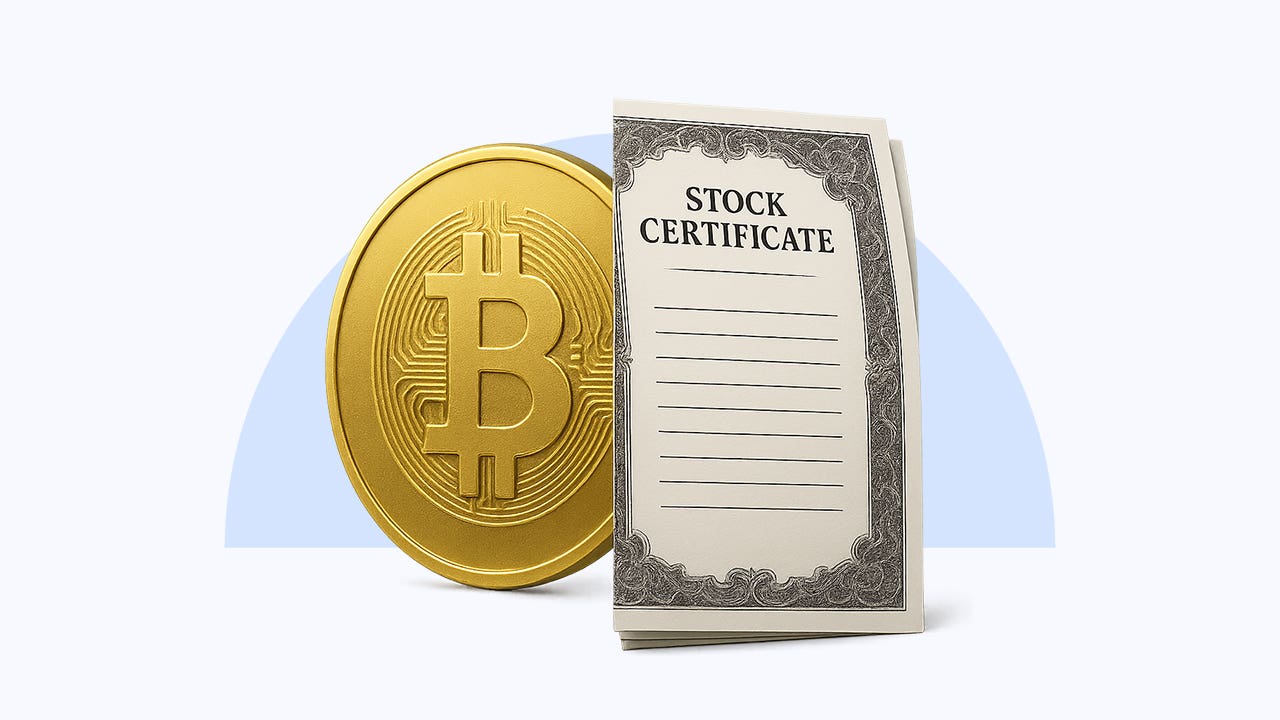
Illustration by Bankrate
Table of contents
- [Cryptocurrency vs. stocks: How they compare](https://www.bankrate.com/investing/crypto-vs-stocks/#should-you-invest-in-cryptocurrency-or-stocks)
- [Pros and cons of investing in cryptocurrency vs. stocks](https://www.bankrate.com/investing/crypto-vs-stocks/#pros-and-cons-of-investing-in-cryptocurrency-vs-stocks)
- [Other considerations when investing in stocks vs. crypto](https://www.bankrate.com/investing/crypto-vs-stocks/#other-considerations-when-investing-in-stocks-vs-crypto)
- [Which is safer, stocks or crypto?](https://www.bankrate.com/investing/crypto-vs-stocks/#which-is-safer-stocks-or-crypto)
Table of contents
Back to top
Cryptocurrency’s rapid appreciation has many investors questioning the place of stocks in their portfolios. But there are numerous differences between stocks and [cryptocurrencies](https://www.bankrate.com/investing/what-is-cryptocurrency/). The most important is that a stock is an ownership interest in a business (backed by the company’s assets and cash flow), whereas cryptocurrency, in most cases, is not backed by anything at all.
If you’re buying cryptocurrencies, it’s important to understand what you’re purchasing and how they compare to traditional investments such as stocks, which have a solid long-term track record.
Compare advisors: [Bankrate's list of the best financial advisors](https://www.bankrate.com/investing/financial-advisors/best-financial-advisors/)
## Cryptocurrency vs. stocks: How they compare
Any savvy investor needs to know exactly what they’re investing in. It’s crucial to weigh the risks and rewards of investing, and what will drive the investment’s success. If they don’t have this kind of information, they can’t make the calculation. In this case, it’s more like gambling than investing.
Here are the key things investors need to know about stocks and cryptocurrency.
### Stocks
A stock is a fractional ownership interest in a business. It’s easy to lose sight of this, if you become overwhelmed by the wiggling stock prices — and the potential for profit. As a legal ownership stake in the business, the stock gives shareholders a claim on the assets and cash flow of the business. These back your investment and provide a basis for its valuation.
### Why stocks rise and fall
A stock price moves as investors assess the future success of the company. While investors may become overly optimistic about the stock in the short term, the stock price ultimately depends on the company’s ability to grow its profits over the long term. That is, a stock rises in the long term [due to the success of the underlying company](https://www.bankrate.com/investing/what-makes-a-stock-go-up-in-price/).
For a stock to be a successful investment, the underlying company must perform well over time. (Here’s a [step-by-step guide on how to invest in stocks](https://www.bankrate.com/investing/how-to-invest-in-stocks/).)
### Cryptocurrency
Cryptocurrency has taken the world by storm, especially during the last few years. After having topped out around \$3 trillion in 2021 and falling in 2022, the total value of all these digital currencies now sits at about \$3.4 trillion as of July 2025, according to CoinMarketCap.com. Of these, [Bitcoin](https://www.bankrate.com/investing/what-is-bitcoin/) is the most popular, worth more than \$2.1 trillion itself. Investors have swarmed to this digital gold rush, often with little knowledge and a lot of hope.
Generally, cryptocurrency is backed by no hard assets (specialized [stablecoins](https://www.bankrate.com/investing/stablecoin-cryptocurrency/) being an exception), and that’s the case for the [most popular crypto coins](https://www.bankrate.com/investing/types-of-cryptocurrency/) such as Bitcoin and [Ethereum](https://www.bankrate.com/investing/what-is-ethereum/). A cryptocurrency may allow you to perform certain functions, such as sending money to another person or using smart contracts that automatically execute after specific conditions are met.
### Why cryptocurrencies rise and fall
Because cryptocurrency is not backed by assets or cash flow, the only thing moving crypto prices is speculation driven by sentiment. As sentiment changes, prices shift — sometimes drastically. So cryptocurrency is driven only by the hope that someone will buy it for more in the future — what’s called the “greater fool theory of investing.”
For a cryptocurrency to be a successful investment, you must get someone to buy it from you for more than you paid for it. That is, the market must be more optimistic about it than you are.
Learn more: [Bankrate's beginner guide to investing in cryptocurrency](https://www.bankrate.com/investing/how-to-invest-in-cryptocurrency-beginners-guide/)

## Pros and cons of investing in cryptocurrency vs. stocks
### Pros of investing in cryptocurrency
- **Possible hedge against fiat currency:** For some investors, one of the biggest appeals of cryptocurrency is its decentralized nature. It’s not controlled by central banks or governments who like to print money and generate inflation in fiat currencies such as the U.S. dollar or the euro. Cryptocurrency has been called “digital gold” by some investors who hold it because they think it will protect them from inflation.
- **Potential for outsized returns:** Buying cryptocurrencies creates the potential for large gains on your investment. Several cryptocurrencies have seen their prices skyrocket since first being introduced. These gains are the main reason people are attracted to cryptocurrencies, but the potential for price appreciation comes with significant risk.
- **Growing number of coins:** In the early days of cryptocurrencies, there were just a few coins that could be invested in, but speculative interest has changed that. [New coins are introduced regularly](https://www.bankrate.com/investing/what-are-altcoins/) and there are now thousands to choose from.
- **Wide interest in digital currencies:** There seems to be a growing interest in cryptocurrencies from investors, companies and governments. Tesla holds Bitcoin on its balance sheet and briefly accepted the digital currency as payment before reversing course. El Salvador adopted Bitcoin as legal tender in 2021, though the International Monetary Fund has urged the country to reverse its decision. Increasing acceptance of digital currencies could be positive for investors.
- **Possible hedge against fiat currency:** For some investors, one of the biggest appeals of cryptocurrency is its decentralized nature. It’s not controlled by central banks or governments who like to print money and generate inflation in fiat currencies such as the U.S. dollar or the euro. Cryptocurrency has been called “digital gold” by some investors who hold it because they think it will protect them from inflation.
- **Potential for outsized returns:** Buying cryptocurrencies creates the potential for large gains on your investment. Several cryptocurrencies have seen their prices skyrocket since first being introduced. These gains are the main reason people are attracted to cryptocurrencies, but the potential for price appreciation comes with significant risk.
- **Growing number of coins:** In the early days of cryptocurrencies, there were just a few coins that could be invested in, but speculative interest has changed that. [New coins are introduced regularly](https://www.bankrate.com/investing/what-are-altcoins/) and there are now thousands to choose from.
- **Wide interest in digital currencies:** There seems to be a growing interest in cryptocurrencies from investors, companies and governments. Tesla holds Bitcoin on its balance sheet and briefly accepted the digital currency as payment before reversing course. El Salvador adopted Bitcoin as legal tender in 2021, though the International Monetary Fund has urged the country to reverse its decision. Increasing acceptance of digital currencies could be positive for investors.
### Cons of investing in cryptocurrency
- **Extreme volatility:** Cryptocurrencies have been extremely volatile so far in their relatively young existence. They aren’t backed by anything, so the price they trade at is determined by the whims of traders. Fortunes can be made and lost quickly and there’s no telling where a coin might trade next.
- **Cybersecurity risks:** Despite cryptocurrency enthusiasts touting the security benefits of digital coins, there have been notable hacks involving cryptocurrencies. It is often difficult to recover stolen funds.
- **No intrinsic value:** Cryptocurrencies have no intrinsic value, which means they aren’t backed by underlying assets or earnings the way that stocks are. Stocks have value because of their future earnings power and what they will return for their owners, while cryptocurrencies offer nothing of the sort.
- **Regulatory risks:** While El Salvador has embraced Bitcoin, many governments are much more skeptical about cryptocurrencies. China has banned them altogether, other countries could follow and the [U.S. is regulating them](https://www.bankrate.com/investing/president-biden-executive-order-on-crypto-what-it-means-for-you/), though President-elect Trump is expected to have a crypto-friendly administration.
- **Extreme volatility:** Cryptocurrencies have been extremely volatile so far in their relatively young existence. They aren’t backed by anything, so the price they trade at is determined by the whims of traders. Fortunes can be made and lost quickly and there’s no telling where a coin might trade next.
- **Cybersecurity risks:** Despite cryptocurrency enthusiasts touting the security benefits of digital coins, there have been notable hacks involving cryptocurrencies. It is often difficult to recover stolen funds.
- **No intrinsic value:** Cryptocurrencies have no intrinsic value, which means they aren’t backed by underlying assets or earnings the way that stocks are. Stocks have value because of their future earnings power and what they will return for their owners, while cryptocurrencies offer nothing of the sort.
- **Regulatory risks:** While El Salvador has embraced Bitcoin, many governments are much more skeptical about cryptocurrencies. China has banned them altogether, other countries could follow and the [U.S. is regulating them](https://www.bankrate.com/investing/president-biden-executive-order-on-crypto-what-it-means-for-you/), though President-elect Trump is expected to have a crypto-friendly administration.
### Pros of investing in stocks
- **Long history of solid returns:** Stocks have a long track record of producing solid investment returns, with the S\&P 500 stock index returning about 10 percent over the long-term. Though [stocks can be volatile](https://www.bankrate.com/investing/best-performing-stocks/) in the short term, they have generally been safe to hold over long periods of time.
- **Have intrinsic value:** A stock represents an ownership interest in a company and its value over time depends on the success of the underlying company. Companies own assets that produce earnings and cash flow for investors, creating what’s known as intrinsic value.
- **Accessible:** It is easier than ever to invest in stocks these days with many [online brokers](https://www.bankrate.com/investing/best-online-brokers-for-stock-trading/) cutting trading fees to zero. You can invest in individual stocks or choose to purchase a diversified basket of stocks through an index fund. Index funds help keep costs low and you can build a diversified portfolio even if you don’t have much money to start with.
- **Stronger regulation:** Stock exchanges, brokers and companies are all heavily regulated through various government agencies. Companies are required to [provide certain information to investors](https://www.bankrate.com/investing/sec-filings-stock-investors-should-know/) through the Securities and Exchange Commission. No regulatory body is perfect, but stocks have been around for a long time and there are certain important investor protections in place.
### Cons of investing in stocks
- **Volatile:** When you hold a broad basket of stocks through [index funds](https://www.bankrate.com/investing/low-cost-index-funds-guide/), stocks are less volatile than cryptocurrencies. Individual stocks can be more volatile, but typically less so than cryptocurrencies. Because of this volatility, stocks are best held as part of a long-term investment plan, so you have time to recover from any short-term losses.
- **Lower potential for extreme gains:** Broad stock indexes such as the [S\&P 500](https://www.bankrate.com/investing/what-is-sp-500/) likely have less potential for the extreme gains that can sometimes be found among cryptocurrencies. Stocks have returned about 10 percent per year over the long term, whereas it’s not uncommon for cryptocurrencies to move 10 percent in a single day.
Get started: [Match with an advisor who can help you achieve your financial goals](https://advisormatch.bankrate.com/questionnaire?am_type=BR&%3Butm_source=BRarticle)

## Other considerations when investing in stocks vs. crypto
### Time horizon
Your time horizon — when you need the money from an investment — is a key criterion. The shorter your timeline, the safer your asset should be, so that it’s there when you need it. The more volatile an asset, the less suited it is for those with a short timeline. Generally, experts suggest investors in risky assets such as stocks need at least three years to ride out volatility.
#### Stocks
- Stocks are often volatile, but they tend to be less volatile than crypto. Individual stocks are more volatile than a portfolio of stocks, which tends to benefit from [diversification](https://www.bankrate.com/investing/diversification-is-important-in-investing/).
- Stocks are better suited to investors who can leave their money alone and don’t need to access it. Generally, the longer you can leave it invested, the better.
- Some stocks can be more volatile than others. For example, growth stocks tend to fluctuate much more than value stocks or [dividend stocks](https://www.bankrate.com/investing/how-to-invest-in-dividend-stocks/).
- Investors may shift from more aggressive stocks (growth stocks) to safer ones (dividend stocks) as they need to tap their money, such as when they approach retirement.
#### Cryptocurrency
- While stocks are volatile, cryptocurrency is ridiculously volatile. For example, during 2021, Bitcoin lost more than half its value in a few months and later gained 100 percent. Such volatility makes crypto unsuited for short-term investors.
- Crypto is better suited to traders who can leave their money tied up and wait for it to recover. Think years rather than weeks.
### Portfolio management
As you’re thinking about constructing your portfolio, you don’t have to make an either-or choice between cryptocurrency and stocks — or other kinds of asset such as [bonds](https://www.bankrate.com/investing/how-to-invest-in-bonds/) or funds, either. It’s all about weighting your portfolio in a way that fits your risk and time horizon.
#### Cryptocurrency
- Given its inherent risks, cryptocurrency works better with a small allocation in your overall portfolio. Think 5 percent or less.
- Even a small allocation could do wonders for your portfolio if cryptocurrency really takes off. Also, limiting to a small allocation protects you against a complete loss if crypto prices collapse.
- If crypto grows to be a significant portion of your portfolio, you can re-allocate more of your money to stocks to lower your portfolio’s overall risk.
#### Stocks
- Given stocks’ strong long-term record, a diversified collection of stocks should make up the majority of your portfolio, especially if you have decades until you need to tap it.
- If you’re investing in individual stocks, you’ll need to research your stocks carefully to achieve good returns.
- If you’re investing in funds, you can buy a broadly diversified fund such as [an S\&P 500 index fund](https://www.bankrate.com/investing/how-to-buy-sp-500-index-fund/) without significant research and enjoy the potential for high returns.
## Which is safer, stocks or crypto?
When it comes to safety, both stocks and cryptocurrencies present their unique set of risks. Stocks, backed by a company’s assets and cash flow, have a long history of delivering solid returns. They are regulated by government bodies and have investor protections in place. However, market volatility, business decisions, and international events can impact stock investments.
On the other hand, cryptocurrencies, while offering the potential for substantial gains, are highly volatile and lack the backing of tangible assets. They also pose risks such as cybersecurity threats and regulatory uncertainties. Therefore, the safety of these investments largely depends on your personal risk tolerance and financial goals.
A broadly diversified stock portfolio generally presents a safer option than cryptocurrencies because of their intrinsic value and history of delivering solid long-term returns. Cryptocurrencies may hold greater potential for outsized gains, but come with significant risk.
Learn more: [How to build a financial plan for you and your family](https://www.bankrate.com/investing/financial-advisors/what-is-financial-planning/)
## Bottom line
Some cryptocurrencies have soared in price since being introduced over the past few years, but investors need to understand what they’re investing in, instead of just rushing in because other traders are, a symptom of FOMO syndrome (fear of missing out). If you decide to take a stake in crypto, consider how it fits with your own risk tolerance and financial needs. Investors can earn good returns without investing in cryptocurrency, and some investors, including legends such as [Warren Buffett, won’t touch cryptocurrency](https://www.bankrate.com/investing/good-investment-advice-to-follow/).
— *Bankrate’s [Brian Baker, CFA](https://www.bankrate.com/authors/brian-baker-cfa/), contributed to an update of this article.*
*Editorial Disclaimer: All investors are advised to conduct their own independent research into investment strategies before making an investment decision. In addition, investors are advised that past investment product performance is no guarantee of future price appreciation.*
Did you find this page helpful?
**Why we ask for feedback** Your feedback helps us improve our content and services. It takes less than a minute to complete.
Your responses are anonymous and will only be used for improving our website.
Help us improve our content
Yes
No
Thank you for your feedback\!
Your input helps us improve our content and services.
Cite us
Share this article
Share this article
Close

Written by
[James Royal, Ph.D.](https://www.bankrate.com/authors/james-royal/)
Former Principal Writer, Investing and Wealth Management
- [Connect with James Royal, Ph.D. on Twitter](https://twitter.com/JimRoyalPhD)
- [Connect with James Royal, Ph.D. on LinkedIn](https://www.linkedin.com/in/james-royal-phd-809b929/)
- [Get in contact with James Royal, Ph.D. via Email](mailto:jroyal@redventures.com)
[Read more from James](https://www.bankrate.com/authors/james-royal/)
Former Bankrate principal writer and editor James F. Royal, Ph.D., covers investing and wealth management. His work has been cited by CNBC, the Washington Post, The New York Times and more.

Illustration by Bankrate
Bankrate is always editorially independent. While we adhere to strict editorial integrity , this post may contain references to products from our partners. Here's an explanation for how we make money . Our Bankrate promise is to ensure everything we publish is objective, accurate and trustworthy.
Table of contents
- [Cryptocurrency vs. stocks: How they compare](https://www.bankrate.com/investing/crypto-vs-stocks/#should-you-invest-in-cryptocurrency-or-stocks)
- [Pros and cons of investing in cryptocurrency vs. stocks](https://www.bankrate.com/investing/crypto-vs-stocks/#pros-and-cons-of-investing-in-cryptocurrency-vs-stocks)
- [Other considerations when investing in stocks vs. crypto](https://www.bankrate.com/investing/crypto-vs-stocks/#other-considerations-when-investing-in-stocks-vs-crypto)
- [Which is safer, stocks or crypto?](https://www.bankrate.com/investing/crypto-vs-stocks/#which-is-safer-stocks-or-crypto)
Back to top
## You may also like

[Home equity loan or HELOC vs. reverse mortgage: Which is right for you?](https://www.bankrate.com/home-equity/home-equity-loan-heloc-vs-reverse-mortgage/)
Home Equity
By [Erik J. Martin](https://www.bankrate.com/authors/erik-j-martin/)
9 min read
[Bitcoin ETFs: What they are and how to invest in them](https://www.bankrate.com/investing/bitcoin-etfs/)
Investing
By [Brian Baker, CFA](https://www.bankrate.com/authors/brian-baker-cfa/)
3 min read

[ETF vs. mutual fund: Which is the better investment?](https://www.bankrate.com/investing/mutual-fund-vs-etf-which-is-better/)
Investing
By [James Royal, Ph.D.](https://www.bankrate.com/authors/james-royal/)
10 min read

[Day trading crypto: 9 essential things to know before starting to buy and sell](https://www.bankrate.com/investing/day-trading-crypto/)
Investing
By [James Royal, Ph.D.](https://www.bankrate.com/authors/james-royal/)
6 min read
## [Bankrate logo](https://www.bankrate.com/)
### About
- [About us](https://www.bankrate.com/about/)
- [Leadership](https://www.bankrate.com/leadership/)
- [Press room](https://www.bankrate.com/press-releases/)
- [Bankrate Data Center](https://www.bankrate.com/data-center/)
- [Careers](https://www.bankrate.com/careers/)
- [Site map](https://www.bankrate.com/corporate/site-map/)
### Help
- [Compare rates](https://www.bankrate.com/compare-rates/)
- [Latest news](https://www.bankrate.com/news/)
- [Popular topics](https://www.bankrate.com/popular-finance-topics/)
- [Advertise with us](https://www.bankrate.com/media-kit/)
### Legal
- [Privacy policy](https://www.bankrate.com/privacy/)
- Cookie settings
- [Do Not Sell or Share My Personal Information](https://www.bankrate.com/do-not-sell-or-share-my-personal-information/)
- [Consumer Health Information Privacy Policy](https://www.bankrate.com/consumer-health-information-privacy-policy/)
- [Understanding Bankrate’s averages](https://www.bankrate.com/understanding-bankrates-rate-averages/)
- [Terms of use](https://www.bankrate.com/terms/)
- [GLBA annual notice](https://www.bankrate.com/glba-notice/)
- [California Consumer Financial Privacy Notice](https://www.bankrate.com/2022/02/15094901/california-notice.pdf)
- [Licenses](https://www.bankrate.com/licenses/)
### How we make money
Bankrate.com is an independent, advertising-supported publisher and comparison service. Our websites may earn compensation when a customer clicks on a link, when an application is approved, or when an account is opened. Therefore, this compensation may impact what products appear and how, where, and in what order they appear within listing categories, except where prohibited by law for our mortgage, home equity and other home lending products. Other factors, such as our proprietary website rules and whether a product is offered in your area or at your self-selected credit score range, can also impact how and where products appear on this site. While we strive to provide a wide range of offers, Bankrate does not include information about every financial or credit product or service.
Bankrate, LLC NMLS ID\# 1427381 \| [NMLS Consumer Access](http://www.nmlsconsumeraccess.org/EntityDetails.aspx/COMPANY/1427381)
BR Tech Services, Inc. NMLS ID \#1743443 \| [NMLS Consumer Access](http://www.nmlsconsumeraccess.org/EntityDetails.aspx/COMPANY/1743443)
© 2026 Bankrate, LLC. A Red Ventures company. All Rights Reserved.
### Advertiser Disclosure
We are an independent, advertising-supported comparison service. Our goal is to help you make smarter financial decisions by providing you with interactive tools and financial calculators, publishing original and objective content, by enabling you to conduct research and compare information for free - so that you can make financial decisions with confidence.
Our articles, interactive tools, and hypothetical examples contain information to help you conduct research but are not intended to serve as investment advice, and we cannot guarantee that this information is applicable or accurate to your personal circumstances. Any estimates based on past performance do not a guarantee future performance, and prior to making any investment you should discuss your specific investment needs or seek advice from a qualified professional.
### How We Make Money
The offers that appear on this site are from companies that compensate us. This compensation may impact how and where products appear on this site, including, for example, the order in which they may appear within the listing categories, except where prohibited by law for our mortgage, home equity and other home lending products. But this compensation does not influence the information we publish, or the reviews that you see on this site. We do not include the universe of companies or financial offers that may be available to you.
### Editorial disclosure
All reviews are prepared by our staff. Opinions expressed are solely those of the reviewer and have not been reviewed or approved by any advertiser. The information, including any rates, terms and fees associated with financial products, presented in the review is accurate as of the date of publication.
## The Bankrate promise
Founded in 1976, Bankrate has a long track record of helping people make smart financial choices. We’ve maintained this reputation for over four decades by demystifying the financial decision-making process and giving people confidence in which actions to take next.
Bankrate follows a strict [editorial policy](https://www.bankrate.com/editorial-guidelines/ "editorial policy"), so you can trust that we’re putting your interests first. All of our content is authored by [highly qualified professionals](https://www.bankrate.com/authors/ "highly qualified professionals") and edited by [subject matter experts](https://www.bankrate.com/financial-review-board/ "subject matter experts"), who ensure everything we publish is objective, accurate and trustworthy.
Our investing reporters and editors focus on the points consumers care about most — how to get started, the best brokers, types of investment accounts, how to choose investments and more — so you can feel confident when investing your money.
**Investing disclosure:**
The investment information provided in this table is for informational and general educational purposes only and should not be construed as investment or financial advice. Bankrate does not offer advisory or brokerage services, nor does it provide individualized recommendations or personalized investment advice. Investment decisions should be based on an evaluation of your own personal financial situation, needs, risk tolerance and investment objectives. Investing involves risk including the potential loss of principal.
## Editorial integrity
Bankrate follows a strict [editorial policy](https://www.bankrate.com/editorial-guidelines/ "editorial policy"), so you can trust that we’re putting your interests first. Our award-winning editors and reporters create honest and accurate content to help you make the right financial decisions.
### Key Principles
We value your trust. Our mission is to provide readers with accurate and unbiased information, and we have editorial standards in place to ensure that happens. Our editors and reporters thoroughly fact-check editorial content to ensure the information you’re reading is accurate. We maintain a firewall between our advertisers and our editorial team. Our editorial team does not receive direct compensation from our advertisers.
### Editorial Independence
Bankrate’s editorial team writes on behalf of YOU – the reader. Our goal is to give you the best advice to help you make smart personal finance decisions. We follow strict guidelines to ensure that our editorial content is not influenced by advertisers. Our editorial team receives no direct compensation from advertisers, and our content is thoroughly fact-checked to ensure accuracy. So, whether you’re reading an article or a review, you can trust that you’re getting credible and dependable information.
## How we make money
You have money questions. Bankrate has answers. Our experts have been helping you master your money for over four decades. We continually strive to provide consumers with the expert advice and tools needed to succeed throughout life’s financial journey.
Bankrate follows a strict [editorial policy](https://www.bankrate.com/editorial-guidelines/ "editorial policy"), so you can trust that our content is honest and accurate. Our award-winning editors and reporters create honest and accurate content to help you make the right financial decisions. The content created by our editorial staff is objective, factual, and not influenced by our advertisers.
We’re transparent about how we are able to bring quality content, competitive rates, and useful tools to you by explaining how we make money.
Bankrate.com is an independent, advertising-supported publisher and comparison service. We are compensated in exchange for placement of sponsored products and services, or by you clicking on certain links posted on our site. Therefore, this compensation may impact how, where and in what order products appear within listing categories, except where prohibited by law for our mortgage, home equity and other home lending products. Other factors, such as our own proprietary website rules and whether a product is offered in your area or at your self-selected credit score range, can also impact how and where products appear on this site. While we strive to provide a wide range of offers, Bankrate does not include information about every financial or credit product or service.
Table of contents
- [Cryptocurrency vs. stocks: How they compare](https://www.bankrate.com/investing/crypto-vs-stocks/#should-you-invest-in-cryptocurrency-or-stocks)
- [Pros and cons of investing in cryptocurrency vs. stocks](https://www.bankrate.com/investing/crypto-vs-stocks/#pros-and-cons-of-investing-in-cryptocurrency-vs-stocks)
- [Other considerations when investing in stocks vs. crypto](https://www.bankrate.com/investing/crypto-vs-stocks/#other-considerations-when-investing-in-stocks-vs-crypto)
- [Which is safer, stocks or crypto?](https://www.bankrate.com/investing/crypto-vs-stocks/#which-is-safer-stocks-or-crypto)
**Quick citation guide** Select a citation to automatically copy to clipboard.
**APA:** Royal, J. (2025, July 15). *Crypto vs. stocks: What’s the better choice for you?* Bankrate. Retrieved April 23, 2026, from https://www.bankrate.com/investing/crypto-vs-stocks/
Copied to clipboard\!
**MLA:** Royal, James. "Crypto vs. stocks: What’s the better choice for you?" *Bankrate*. 15 July 2025, https://www.bankrate.com/investing/crypto-vs-stocks/.
Copied to clipboard\!
**Chicago:** Royal, James. "Crypto vs. stocks: What’s the better choice for you?" Bankrate. July 15, 2025. https://www.bankrate.com/investing/crypto-vs-stocks/.
Copied to clipboard\!

 | |||||||||
| Readable Markdown | Cryptocurrency’s rapid appreciation has many investors questioning the place of stocks in their portfolios. But there are numerous differences between stocks and [cryptocurrencies](https://www.bankrate.com/investing/what-is-cryptocurrency/). The most important is that a stock is an ownership interest in a business (backed by the company’s assets and cash flow), whereas cryptocurrency, in most cases, is not backed by anything at all.
If you’re buying cryptocurrencies, it’s important to understand what you’re purchasing and how they compare to traditional investments such as stocks, which have a solid long-term track record.
## Cryptocurrency vs. stocks: How they compare
Any savvy investor needs to know exactly what they’re investing in. It’s crucial to weigh the risks and rewards of investing, and what will drive the investment’s success. If they don’t have this kind of information, they can’t make the calculation. In this case, it’s more like gambling than investing.
Here are the key things investors need to know about stocks and cryptocurrency.
### Stocks
A stock is a fractional ownership interest in a business. It’s easy to lose sight of this, if you become overwhelmed by the wiggling stock prices — and the potential for profit. As a legal ownership stake in the business, the stock gives shareholders a claim on the assets and cash flow of the business. These back your investment and provide a basis for its valuation.
### Why stocks rise and fall
A stock price moves as investors assess the future success of the company. While investors may become overly optimistic about the stock in the short term, the stock price ultimately depends on the company’s ability to grow its profits over the long term. That is, a stock rises in the long term [due to the success of the underlying company](https://www.bankrate.com/investing/what-makes-a-stock-go-up-in-price/).
For a stock to be a successful investment, the underlying company must perform well over time. (Here’s a [step-by-step guide on how to invest in stocks](https://www.bankrate.com/investing/how-to-invest-in-stocks/).)
### Cryptocurrency
Cryptocurrency has taken the world by storm, especially during the last few years. After having topped out around \$3 trillion in 2021 and falling in 2022, the total value of all these digital currencies now sits at about \$3.4 trillion as of July 2025, according to CoinMarketCap.com. Of these, [Bitcoin](https://www.bankrate.com/investing/what-is-bitcoin/) is the most popular, worth more than \$2.1 trillion itself. Investors have swarmed to this digital gold rush, often with little knowledge and a lot of hope.
Generally, cryptocurrency is backed by no hard assets (specialized [stablecoins](https://www.bankrate.com/investing/stablecoin-cryptocurrency/) being an exception), and that’s the case for the [most popular crypto coins](https://www.bankrate.com/investing/types-of-cryptocurrency/) such as Bitcoin and [Ethereum](https://www.bankrate.com/investing/what-is-ethereum/). A cryptocurrency may allow you to perform certain functions, such as sending money to another person or using smart contracts that automatically execute after specific conditions are met.
### Why cryptocurrencies rise and fall
Because cryptocurrency is not backed by assets or cash flow, the only thing moving crypto prices is speculation driven by sentiment. As sentiment changes, prices shift — sometimes drastically. So cryptocurrency is driven only by the hope that someone will buy it for more in the future — what’s called the “greater fool theory of investing.”
For a cryptocurrency to be a successful investment, you must get someone to buy it from you for more than you paid for it. That is, the market must be more optimistic about it than you are.
## Pros and cons of investing in cryptocurrency vs. stocks
### Pros of investing in cryptocurrency
- **Possible hedge against fiat currency:** For some investors, one of the biggest appeals of cryptocurrency is its decentralized nature. It’s not controlled by central banks or governments who like to print money and generate inflation in fiat currencies such as the U.S. dollar or the euro. Cryptocurrency has been called “digital gold” by some investors who hold it because they think it will protect them from inflation.
- **Potential for outsized returns:** Buying cryptocurrencies creates the potential for large gains on your investment. Several cryptocurrencies have seen their prices skyrocket since first being introduced. These gains are the main reason people are attracted to cryptocurrencies, but the potential for price appreciation comes with significant risk.
- **Growing number of coins:** In the early days of cryptocurrencies, there were just a few coins that could be invested in, but speculative interest has changed that. [New coins are introduced regularly](https://www.bankrate.com/investing/what-are-altcoins/) and there are now thousands to choose from.
- **Wide interest in digital currencies:** There seems to be a growing interest in cryptocurrencies from investors, companies and governments. Tesla holds Bitcoin on its balance sheet and briefly accepted the digital currency as payment before reversing course. El Salvador adopted Bitcoin as legal tender in 2021, though the International Monetary Fund has urged the country to reverse its decision. Increasing acceptance of digital currencies could be positive for investors.
- **Possible hedge against fiat currency:** For some investors, one of the biggest appeals of cryptocurrency is its decentralized nature. It’s not controlled by central banks or governments who like to print money and generate inflation in fiat currencies such as the U.S. dollar or the euro. Cryptocurrency has been called “digital gold” by some investors who hold it because they think it will protect them from inflation.
- **Potential for outsized returns:** Buying cryptocurrencies creates the potential for large gains on your investment. Several cryptocurrencies have seen their prices skyrocket since first being introduced. These gains are the main reason people are attracted to cryptocurrencies, but the potential for price appreciation comes with significant risk.
- **Growing number of coins:** In the early days of cryptocurrencies, there were just a few coins that could be invested in, but speculative interest has changed that. [New coins are introduced regularly](https://www.bankrate.com/investing/what-are-altcoins/) and there are now thousands to choose from.
- **Wide interest in digital currencies:** There seems to be a growing interest in cryptocurrencies from investors, companies and governments. Tesla holds Bitcoin on its balance sheet and briefly accepted the digital currency as payment before reversing course. El Salvador adopted Bitcoin as legal tender in 2021, though the International Monetary Fund has urged the country to reverse its decision. Increasing acceptance of digital currencies could be positive for investors.
### Cons of investing in cryptocurrency
- **Extreme volatility:** Cryptocurrencies have been extremely volatile so far in their relatively young existence. They aren’t backed by anything, so the price they trade at is determined by the whims of traders. Fortunes can be made and lost quickly and there’s no telling where a coin might trade next.
- **Cybersecurity risks:** Despite cryptocurrency enthusiasts touting the security benefits of digital coins, there have been notable hacks involving cryptocurrencies. It is often difficult to recover stolen funds.
- **No intrinsic value:** Cryptocurrencies have no intrinsic value, which means they aren’t backed by underlying assets or earnings the way that stocks are. Stocks have value because of their future earnings power and what they will return for their owners, while cryptocurrencies offer nothing of the sort.
- **Regulatory risks:** While El Salvador has embraced Bitcoin, many governments are much more skeptical about cryptocurrencies. China has banned them altogether, other countries could follow and the [U.S. is regulating them](https://www.bankrate.com/investing/president-biden-executive-order-on-crypto-what-it-means-for-you/), though President-elect Trump is expected to have a crypto-friendly administration.
- **Extreme volatility:** Cryptocurrencies have been extremely volatile so far in their relatively young existence. They aren’t backed by anything, so the price they trade at is determined by the whims of traders. Fortunes can be made and lost quickly and there’s no telling where a coin might trade next.
- **Cybersecurity risks:** Despite cryptocurrency enthusiasts touting the security benefits of digital coins, there have been notable hacks involving cryptocurrencies. It is often difficult to recover stolen funds.
- **No intrinsic value:** Cryptocurrencies have no intrinsic value, which means they aren’t backed by underlying assets or earnings the way that stocks are. Stocks have value because of their future earnings power and what they will return for their owners, while cryptocurrencies offer nothing of the sort.
- **Regulatory risks:** While El Salvador has embraced Bitcoin, many governments are much more skeptical about cryptocurrencies. China has banned them altogether, other countries could follow and the [U.S. is regulating them](https://www.bankrate.com/investing/president-biden-executive-order-on-crypto-what-it-means-for-you/), though President-elect Trump is expected to have a crypto-friendly administration.
### Pros of investing in stocks
- **Long history of solid returns:** Stocks have a long track record of producing solid investment returns, with the S\&P 500 stock index returning about 10 percent over the long-term. Though [stocks can be volatile](https://www.bankrate.com/investing/best-performing-stocks/) in the short term, they have generally been safe to hold over long periods of time.
- **Have intrinsic value:** A stock represents an ownership interest in a company and its value over time depends on the success of the underlying company. Companies own assets that produce earnings and cash flow for investors, creating what’s known as intrinsic value.
- **Accessible:** It is easier than ever to invest in stocks these days with many [online brokers](https://www.bankrate.com/investing/best-online-brokers-for-stock-trading/) cutting trading fees to zero. You can invest in individual stocks or choose to purchase a diversified basket of stocks through an index fund. Index funds help keep costs low and you can build a diversified portfolio even if you don’t have much money to start with.
- **Stronger regulation:** Stock exchanges, brokers and companies are all heavily regulated through various government agencies. Companies are required to [provide certain information to investors](https://www.bankrate.com/investing/sec-filings-stock-investors-should-know/) through the Securities and Exchange Commission. No regulatory body is perfect, but stocks have been around for a long time and there are certain important investor protections in place.
### Cons of investing in stocks
- **Volatile:** When you hold a broad basket of stocks through [index funds](https://www.bankrate.com/investing/low-cost-index-funds-guide/), stocks are less volatile than cryptocurrencies. Individual stocks can be more volatile, but typically less so than cryptocurrencies. Because of this volatility, stocks are best held as part of a long-term investment plan, so you have time to recover from any short-term losses.
- **Lower potential for extreme gains:** Broad stock indexes such as the [S\&P 500](https://www.bankrate.com/investing/what-is-sp-500/) likely have less potential for the extreme gains that can sometimes be found among cryptocurrencies. Stocks have returned about 10 percent per year over the long term, whereas it’s not uncommon for cryptocurrencies to move 10 percent in a single day.
## Other considerations when investing in stocks vs. crypto
### Time horizon
Your time horizon — when you need the money from an investment — is a key criterion. The shorter your timeline, the safer your asset should be, so that it’s there when you need it. The more volatile an asset, the less suited it is for those with a short timeline. Generally, experts suggest investors in risky assets such as stocks need at least three years to ride out volatility.
#### Stocks
- Stocks are often volatile, but they tend to be less volatile than crypto. Individual stocks are more volatile than a portfolio of stocks, which tends to benefit from [diversification](https://www.bankrate.com/investing/diversification-is-important-in-investing/).
- Stocks are better suited to investors who can leave their money alone and don’t need to access it. Generally, the longer you can leave it invested, the better.
- Some stocks can be more volatile than others. For example, growth stocks tend to fluctuate much more than value stocks or [dividend stocks](https://www.bankrate.com/investing/how-to-invest-in-dividend-stocks/).
- Investors may shift from more aggressive stocks (growth stocks) to safer ones (dividend stocks) as they need to tap their money, such as when they approach retirement.
#### Cryptocurrency
- While stocks are volatile, cryptocurrency is ridiculously volatile. For example, during 2021, Bitcoin lost more than half its value in a few months and later gained 100 percent. Such volatility makes crypto unsuited for short-term investors.
- Crypto is better suited to traders who can leave their money tied up and wait for it to recover. Think years rather than weeks.
### Portfolio management
As you’re thinking about constructing your portfolio, you don’t have to make an either-or choice between cryptocurrency and stocks — or other kinds of asset such as [bonds](https://www.bankrate.com/investing/how-to-invest-in-bonds/) or funds, either. It’s all about weighting your portfolio in a way that fits your risk and time horizon.
#### Cryptocurrency
- Given its inherent risks, cryptocurrency works better with a small allocation in your overall portfolio. Think 5 percent or less.
- Even a small allocation could do wonders for your portfolio if cryptocurrency really takes off. Also, limiting to a small allocation protects you against a complete loss if crypto prices collapse.
- If crypto grows to be a significant portion of your portfolio, you can re-allocate more of your money to stocks to lower your portfolio’s overall risk.
#### Stocks
- Given stocks’ strong long-term record, a diversified collection of stocks should make up the majority of your portfolio, especially if you have decades until you need to tap it.
- If you’re investing in individual stocks, you’ll need to research your stocks carefully to achieve good returns.
- If you’re investing in funds, you can buy a broadly diversified fund such as [an S\&P 500 index fund](https://www.bankrate.com/investing/how-to-buy-sp-500-index-fund/) without significant research and enjoy the potential for high returns.
## Which is safer, stocks or crypto?
When it comes to safety, both stocks and cryptocurrencies present their unique set of risks. Stocks, backed by a company’s assets and cash flow, have a long history of delivering solid returns. They are regulated by government bodies and have investor protections in place. However, market volatility, business decisions, and international events can impact stock investments.
On the other hand, cryptocurrencies, while offering the potential for substantial gains, are highly volatile and lack the backing of tangible assets. They also pose risks such as cybersecurity threats and regulatory uncertainties. Therefore, the safety of these investments largely depends on your personal risk tolerance and financial goals.
A broadly diversified stock portfolio generally presents a safer option than cryptocurrencies because of their intrinsic value and history of delivering solid long-term returns. Cryptocurrencies may hold greater potential for outsized gains, but come with significant risk.
## Bottom line
Some cryptocurrencies have soared in price since being introduced over the past few years, but investors need to understand what they’re investing in, instead of just rushing in because other traders are, a symptom of FOMO syndrome (fear of missing out). If you decide to take a stake in crypto, consider how it fits with your own risk tolerance and financial needs. Investors can earn good returns without investing in cryptocurrency, and some investors, including legends such as [Warren Buffett, won’t touch cryptocurrency](https://www.bankrate.com/investing/good-investment-advice-to-follow/).
— *Bankrate’s [Brian Baker, CFA](https://www.bankrate.com/authors/brian-baker-cfa/), contributed to an update of this article.*
*Editorial Disclaimer: All investors are advised to conduct their own independent research into investment strategies before making an investment decision. In addition, investors are advised that past investment product performance is no guarantee of future price appreciation.*
Did you find this page helpful?
Help us improve our content | |||||||||
| ML Classification | ||||||||||
| ML Categories |
Raw JSON{
"/Finance": 999,
"/Finance/Investing": 998,
"/Finance/Investing/Stocks_and_Bonds": 915
} | |||||||||
| ML Page Types |
Raw JSON{
"/Article": 996,
"/Article/Comparisons": 979
} | |||||||||
| ML Intent Types |
Raw JSON{
"Informational": 988
} | |||||||||
| Content Metadata | ||||||||||
| Language | en-us | |||||||||
| Author | James Royal | |||||||||
| Publish Time | 2025-07-15 17:47:44 (9 months ago) | |||||||||
| Original Publish Time | 2021-10-22 18:31:14 (4 years ago) | |||||||||
| Republished | Yes | |||||||||
| Word Count (Total) | 6,931 | |||||||||
| Word Count (Content) | 2,422 | |||||||||
| Links | ||||||||||
| External Links | 15 | |||||||||
| Internal Links | 271 | |||||||||
| Technical SEO | ||||||||||
| Meta Nofollow | No | |||||||||
| Meta Noarchive | No | |||||||||
| JS Rendered | Yes | |||||||||
| Redirect Target | null | |||||||||
| Performance | ||||||||||
| Download Time (ms) | 289 | |||||||||
| TTFB (ms) | 268 | |||||||||
| Download Size (bytes) | 114,934 | |||||||||
| Shard | 148 (laksa) | |||||||||
| Root Hash | 16841441868536461148 | |||||||||
| Unparsed URL | com,bankrate!www,/investing/crypto-vs-stocks/ s443 | |||||||||