ℹ️ Skipped - page is already crawled
| Filter | Status | Condition | Details |
|---|---|---|---|
| HTTP status | PASS | download_http_code = 200 | HTTP 200 |
| Age cutoff | PASS | download_stamp > now() - 6 MONTH | 0.9 months ago |
| History drop | PASS | isNull(history_drop_reason) | No drop reason |
| Spam/ban | PASS | fh_dont_index != 1 AND ml_spam_score = 0 | ml_spam_score=0 |
| Canonical | PASS | meta_canonical IS NULL OR = '' OR = src_unparsed | Not set |
| Property | Value |
|---|---|
| URL | https://www.autozone.com/diy/tire-wheel/how-to-check-tire-tread-depth |
| Last Crawled | 2026-03-24 14:52:01 (27 days ago) |
| First Indexed | not set |
| HTTP Status Code | 200 |
| Meta Title | How to Check Tire Tread Depth - AutoZone |
| Meta Description | Learn the easy steps to measure tire tread depth, see if your tires needs to be replaced and ensure the safety of your vehicle with AutoZone. |
| Meta Canonical | null |
| Boilerpipe Text | Why Tread Depth is Important
The difference in handling between new tires and only 2/32nds of an inch of tread remaining can be significant. New tires have a full depth of tread, often between 8/32nds and 12/32nds, which provides excellent traction and grip on the road. This means that they will handle better in wet or slippery conditions, and will have better braking performance.
Tires with 2/32nds of tread, on the other hand, have reduced traction and grip on the road, especially in wet or slippery conditions. Braking performance is affected as the tires will can’t displace as much water as new tires, leading to longer stopping distances. Tires with less tread will also generate more heat which can lead to increased wear and tear on the tires, and potentially even
cause a blowout.
The reduced handling and traction of worn tires also increase the risk of hydroplaning because the channels between the tread blocks as well as the sipes are much smaller. Water or snow gets trapped between the tire and the ground, creating a slippery barrier that prevents contact.
It’s important to have tires with enough tread depth to ensure the vehicle’s safety on the road. That’s why it’s recommended to replace tires when the tread depth reaches 4/32nds of an inch. They’re completely worn out when there’s just 2/32nds of an inch of tread depth remaining or when the tread wear indicator is visible.
How to Measure Tire Tread Depth
There are a few common and free or inexpensive methods for checking how much tread depth remains. Two of the three tests only involve pocket change.
1. Perform the Penny Test
The penny test is a simple and easy method to check the tread depth of your tires to determine if your tires need to be replaced or if they are still safe to drive on. The test is done by inserting a penny between the tread blocks.
To perform the penny test, start by finding the tread wear indicator on your tires. These are small raised bumps that are located in the grooves of the tread. They are usually located at the base of the tread and are designed to let you know when your tires are worn down to the minimum legal limit.
Once you have located the tread wear indicator, take a penny and insert it into the groove of the tread with Lincoln’s head facing down. If the top of Lincoln’s head is visible, then your tread depth is less than 2/32 of an inch, which means it’s time to replace your tires. If the top of Lincoln’s head is not visible, then your tread depth is greater than 2/32 of an inch, and your tires would likely pass a state inspection.
The penny test should be done on multiple locations of the tire, both in the center and at the edges, as the tread depth can vary across the tire.
2. Perform the Quarter Test
The quarter test is another simple and easy method to check tread depth. Similar to the penny test, it is a quick way to determine if your tires need to be replaced or if they are still safe to drive on using a quarter.
To perform the quarter test, take a quarter and insert it into the groove of the tread with George Washington’s head facing down. If the top of George Washington’s head is visible, then your tread depth is less than 4/32 of an inch, which means it’s time to replace your tires. If the top of George Washington’s head is not visible, then your tread depth is greater than 4/32 of an inch and your tires are safe to drive on.
3. Use a Tread Depth Gauge
Tread depth gauges are a cost-effective tool for measuring the remaining tread depth. They’re usually equipped with measurements in both fractions of an inch or millimeters, whichever you prefer. A t-shaped frame has a small measuring stick like a caliper that can be extended for extremely accurate measurements, and it’s the best way to check tread on all tires, especially newer ones with plenty of depth remaining.
Place the flat section against the tread, spanning two tread blocks, then press the stick downward until it presses against the tire. Read the measurement and repeat in several spots around the tire.
If one or more tires have less than 4/32nds of an inch of tread depth remaining, it’s time to
consider changing them
. Replace tires in pairs, and be sure to match the size, type, and speed rating of your old tires. You can get the parts you need at your local
AutoZone
Store. If the job is too big for you, seek out one of our
Preferred Shops
to help you do the job.
FAQ/People Also Ask
You can measure tread depth using a penny or a quarter, but the most accurate measurement is by using a tread depth gauge.
Insert a quarter between the tread blocks with Washington’s head pointed downward. If you can see the top of his head, the tread is less than 4/32nds remaining.
The penny test is accurate for determining the depth related to 2/32nds of an inch. However, it can’t tell you how much more (or less) there might be.
You can check your tread at home with a tread depth gauge, or use the penny test or quarter test to assess the depth.
If your tires have 2/32nds of an inch or more, they will pass most state inspections. However, the general rule is that you need 4/32nds of tread depth remaining for safe driving. |
| Markdown | 
For the most optimal experience please enable JavaScript and refresh your browser.
[Get help enabling JavaScript](https://www.whatismybrowser.com/guides/how-to-enable-javascript/chrome)
[skip to main content](https://www.autozone.com/diy/tire-wheel/how-to-check-tire-tread-depth#main-content)
[**20% off orders over \$100****\*** **\+ Free Ground Shipping****\*\*** Eligible Ship-To-Home Items Only. Use Code: SHOPINSPRING](https://www.autozone.com/lp/autozone-savings?intcmp=GLO:PEN:1:20260315:20260328:GEN:SHOPINSPRING)

Menu
[](https://www.autozone.com/)
[Sign In](https://www.autozone.com/signin)

Sign In

[Cart](https://www.autozone.com/cart)

Menu

add vehicle


add vehicle


Select Store

- [Batteries](https://www.autozone.com/batteries-starting-and-charging/battery)
- [Engine Oil](https://www.autozone.com/motor-oil-and-transmission-fluid/engine-oil)
- [Brake Pads](https://www.autozone.com/brakes-and-traction-control/brake-pads)
- [Oil Filter](https://www.autozone.com/filters-and-pcv/oil-filter)
- [Air Filter](https://www.autozone.com/filters-and-pcv/air-filter)
- [Spark Plug](https://www.autozone.com/external-engine/spark-plug)
- [Wiper Blades](https://www.autozone.com/ignition-tune-up-and-routine-maintenance/wiper-blade-windshield)
- [Headlight Bulb](https://www.autozone.com/collision-body-parts-and-hardware/headlight)
- [Car Wash and Detailing](https://www.autozone.com/fluids-and-chemicals/car-wash-and-detailing)
- [Clearance](https://www.autozone.com/deals/clearance)
- [Deals, Discounts, and Coupons](https://www.autozone.com/lp/deals)
- [Oil Change Specials](https://www.autozone.com/lp/oil-change-specials)
- [Local Store Ad](https://www.autozone.com/circular)
- [Rebates](https://www.autozone.com/deals/rebates)
- [Shop by Make](https://www.autozone.com/shopbymake)
- [Shop by Model](https://www.autozone.com/shopbymodel)
- [Shop by Brand](https://www.autozone.com/brands)
- [Advice & How-To's](https://www.autozone.com/diy)
- [Battery Guide](https://www.autozone.com/lp/car-battery-guide)
- [Fix Finder](https://www.autozone.com/lp/fix-finder)
- [Loan-A-Tool](https://www.autozone.com/tools-and-equipment/loan-a-tools)
- [ALLDATA DIY Repair Help](https://www.autozone.com/lp/alldatadiy)
- [Find a Repair Shop](https://www.autozone.com/lp/find-a-repair-shop)
- [Repair Help](https://www.autozone.com/lp/repair-help)
- [Custom Accessories](https://www.autozone.com/lp/custom-accessories)
- [All Services](https://www.autozone.com/lp/store-services)

Contact Us
Most Popular Categories
Trending Topics
[Advice & How-To's](https://www.autozone.com/diy)∕[Tire & Wheel](https://www.autozone.com/diy/tire-wheel)
# How to Check Tire Tread Depth
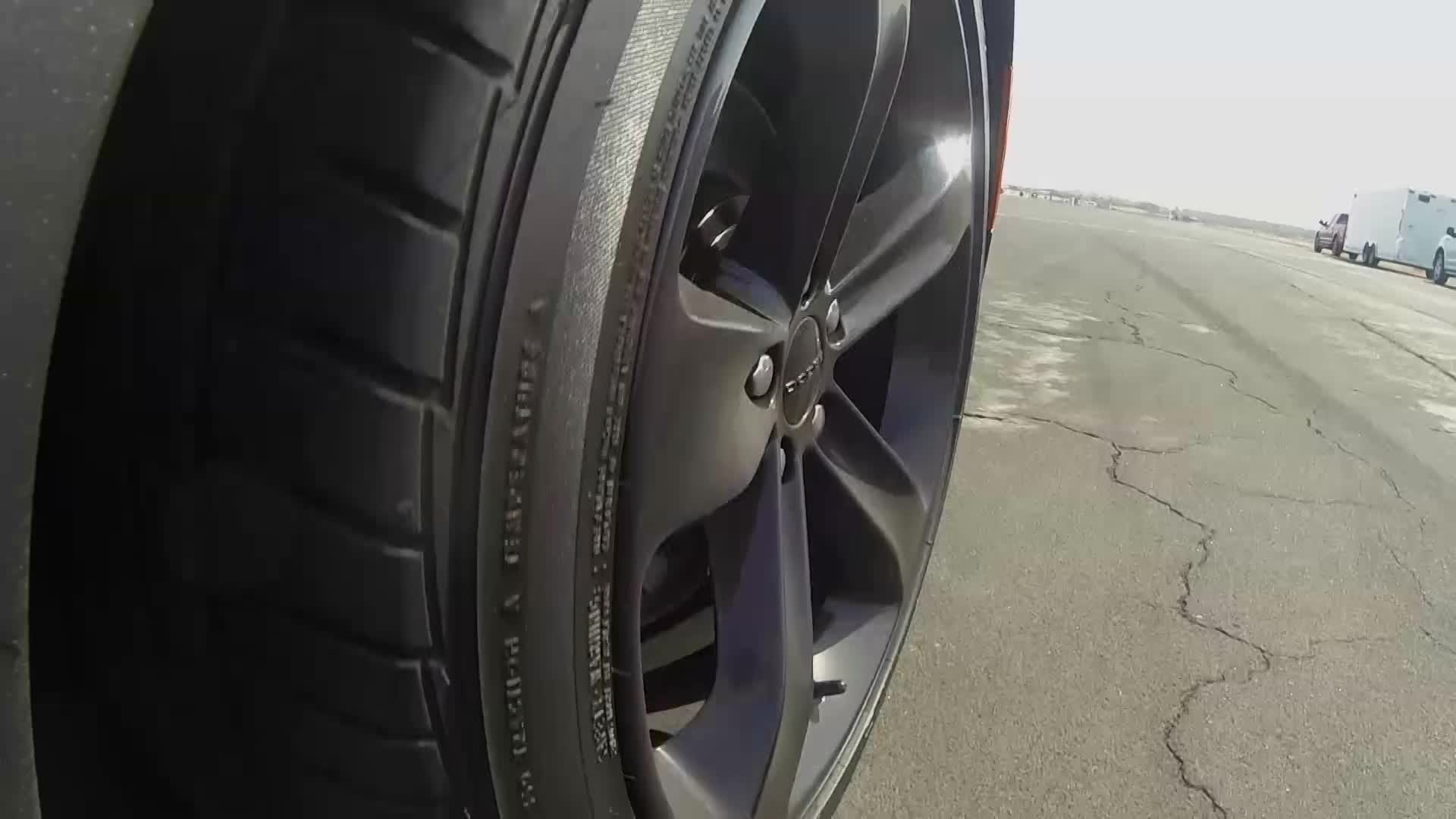
Safe braking, accelerating, and steering all require traction between the tires and the road surface. And in the US, around one in four vehicles on the road has at least one tire that’s worn out and needs to be replaced. It’s a concern that could lead to an accident or harrowing blowout.
Tires aren’t the least expensive parts to replace, and it’s understandable that you might want to prolong that expense as long as possible However, it’s important to know how to check tire tread depth. It serves a few purposes:
- To identify worn-out tires that need to be replaced
- Uneven wear helps identify potential steering or suspension problems
- To know when to rotate the tires and the best position to put them in
For either no cost at all or for the minimal cost of a tread depth gauge, you can keep an eye on your tires.
In this article
Why Tread Depth is Important
How to Measure Tire Tread Depth
1\. Perform the Penny Test
2\. Perform the Quarter Test
3\. Use a Tread Depth Gauge
FAQ/People Also Ask
[Tire Tread Depth Gauge](https://www.autozone.com/tire-repair-and-tire-wheel/tire-tread-depth-gauge?intcmp=BLG:BDY:1:20230202:00000000:GEN:how-to)
[Buy Now](https://www.autozone.com/tire-repair-and-tire-wheel/tire-tread-depth-gauge?intcmp=BLG:BDY:1:20230202:00000000:GEN:how-to "Buy Now")
## Why Tread Depth is Important
The difference in handling between new tires and only 2/32nds of an inch of tread remaining can be significant. New tires have a full depth of tread, often between 8/32nds and 12/32nds, which provides excellent traction and grip on the road. This means that they will handle better in wet or slippery conditions, and will have better braking performance.
Tires with 2/32nds of tread, on the other hand, have reduced traction and grip on the road, especially in wet or slippery conditions. Braking performance is affected as the tires will can’t displace as much water as new tires, leading to longer stopping distances. Tires with less tread will also generate more heat which can lead to increased wear and tear on the tires, and potentially even [cause a blowout.](https://www.autozone.com/diy/tire-wheel/tire-sidewall-blowout-how-to-address-holes-in-the-tire-sidewall)
The reduced handling and traction of worn tires also increase the risk of hydroplaning because the channels between the tread blocks as well as the sipes are much smaller. Water or snow gets trapped between the tire and the ground, creating a slippery barrier that prevents contact.
It’s important to have tires with enough tread depth to ensure the vehicle’s safety on the road. That’s why it’s recommended to replace tires when the tread depth reaches 4/32nds of an inch. They’re completely worn out when there’s just 2/32nds of an inch of tread depth remaining or when the tread wear indicator is visible.
**Related: [Tire Removal Tools](https://www.autozone.com/diy/tire-wheel/best-tire-changing-tools)**
## How to Measure Tire Tread Depth
There are a few common and free or inexpensive methods for checking how much tread depth remains. Two of the three tests only involve pocket change.
### 1\. Perform the Penny Test
The penny test is a simple and easy method to check the tread depth of your tires to determine if your tires need to be replaced or if they are still safe to drive on. The test is done by inserting a penny between the tread blocks.
To perform the penny test, start by finding the tread wear indicator on your tires. These are small raised bumps that are located in the grooves of the tread. They are usually located at the base of the tread and are designed to let you know when your tires are worn down to the minimum legal limit.
Once you have located the tread wear indicator, take a penny and insert it into the groove of the tread with Lincoln’s head facing down. If the top of Lincoln’s head is visible, then your tread depth is less than 2/32 of an inch, which means it’s time to replace your tires. If the top of Lincoln’s head is not visible, then your tread depth is greater than 2/32 of an inch, and your tires would likely pass a state inspection.
The penny test should be done on multiple locations of the tire, both in the center and at the edges, as the tread depth can vary across the tire.
### 2\. Perform the Quarter Test
The quarter test is another simple and easy method to check tread depth. Similar to the penny test, it is a quick way to determine if your tires need to be replaced or if they are still safe to drive on using a quarter.
To perform the quarter test, take a quarter and insert it into the groove of the tread with George Washington’s head facing down. If the top of George Washington’s head is visible, then your tread depth is less than 4/32 of an inch, which means it’s time to replace your tires. If the top of George Washington’s head is not visible, then your tread depth is greater than 4/32 of an inch and your tires are safe to drive on.
### 3\. Use a Tread Depth Gauge
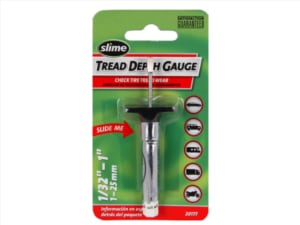
Tread depth gauges are a cost-effective tool for measuring the remaining tread depth. They’re usually equipped with measurements in both fractions of an inch or millimeters, whichever you prefer. A t-shaped frame has a small measuring stick like a caliper that can be extended for extremely accurate measurements, and it’s the best way to check tread on all tires, especially newer ones with plenty of depth remaining.
Place the flat section against the tread, spanning two tread blocks, then press the stick downward until it presses against the tire. Read the measurement and repeat in several spots around the tire.
If one or more tires have less than 4/32nds of an inch of tread depth remaining, it’s time to [consider changing them](https://www.autozone.com/diy/tire-wheel/when-to-replace-your-tires?intcmp=BLG:BDY:1:20230202:00000000:GEN:how-to). Replace tires in pairs, and be sure to match the size, type, and speed rating of your old tires. You can get the parts you need at your local [AutoZone](https://www.autozone.com/locations/?intcmp=BLG:BDY:1:20230202:00000000:GEN:how-to) Store. If the job is too big for you, seek out one of our [Preferred Shops](https://www.autozone.com/lp/find-a-repair-shop) to help you do the job.
**Related: [When To Replace Your Tires](https://www.autozone.com/diy/tire-wheel/when-to-replace-your-tires)**
## FAQ/People Also Ask
How to measure tire tread depth
You can measure tread depth using a penny or a quarter, but the most accurate measurement is by using a tread depth gauge.
How do I know if my tire tread is 4/32nds?
Insert a quarter between the tread blocks with Washington’s head pointed downward. If you can see the top of his head, the tread is less than 4/32nds remaining.
Is the penny test for tires accurate?
The penny test is accurate for determining the depth related to 2/32nds of an inch. However, it can’t tell you how much more (or less) there might be.
How do you check your tire tread at home?
You can check your tread at home with a tread depth gauge, or use the penny test or quarter test to assess the depth.
How do I know if my tire tread is good?
If your tires have 2/32nds of an inch or more, they will pass most state inspections. However, the general rule is that you need 4/32nds of tread depth remaining for safe driving.
## Related Posts
[](https://www.autozone.com/diy/truck-and-towing/tire-repair-kit-buying-guide)
Tire Repair Kit Buying Guide
Don't let a flat tire slow you down. Check out our Tire Repair Kit Buying Guide on repairing your tire quickly and efficiently.
[Read MoreTire Repair Kit Buying Guide](https://www.autozone.com/diy/truck-and-towing/tire-repair-kit-buying-guide)
[](https://www.autozone.com/diy/tire-wheel/best-snow-tire-chains)
Best Snow Tire Chains: Buyer's Guide for 2026
Drive safely in winter with our 2026 Snow Tire Chains Buyer's Guide. Discover key factors for selection and top recommendations with AutoZone.
[Read MoreBest Snow Tire Chains: Buyer's Guide for 2026](https://www.autozone.com/diy/tire-wheel/best-snow-tire-chains)
[](https://www.autozone.com/diy/tire-wheel/how-to-replace-a-tire-pressure-sensor)
How to Replace a Tire Pressure Sensor
Discover how to replace a faulty tire pressure sensor with help from AutoZone. Get the right TPMS tools, parts, and expert tips to restore accurate tire pressure readings.
[Read MoreHow to Replace a Tire Pressure Sensor](https://www.autozone.com/diy/tire-wheel/how-to-replace-a-tire-pressure-sensor)
[](https://www.autozone.com/diy/tire-wheel/how-often-do-i-need-a-wheel-alignment)
How Often Do I Need a Wheel Alignment?
Learn how often you need a wheel alignment, why it’s important, and the signs your car may be out of alignment. Keep your tires lasting longer and your drive smoother.
[Read MoreHow Often Do I Need a Wheel Alignment?](https://www.autozone.com/diy/tire-wheel/how-often-do-i-need-a-wheel-alignment)
[](https://www.autozone.com/diy/tire-wheel/how-do-wheel-locks-works)
How Do Wheel Locks Work and Do I Need It?
Learn how wheel locks work, what the wheel lock key does, and whether they’re worth it for your car. Explore the pros, cons, and what to do if you lose your wheel lock key.
[Read MoreHow Do Wheel Locks Work and Do I Need It?](https://www.autozone.com/diy/tire-wheel/how-do-wheel-locks-works)
[](https://www.autozone.com/diy/tire-wheel/spare-tire-emergency-jack-maintenance)
Why Maintaining Your Spare Tire & Emergency Jack is Crucial
[Read MoreWhy Maintaining Your Spare Tire & Emergency Jack is Crucial](https://www.autozone.com/diy/tire-wheel/spare-tire-emergency-jack-maintenance)

locate a store
[ track my order](https://www.autozone.com/trackOrder)
[ we're hiring!Opens a new window](https://careers.autozone.com/)
***
- [Opens a new window](https://facebook.com/autozone)
- [Opens a new window](https://twitter.com/autozone)
- [Opens a new window](https://www.youtube.com/user/AutoZone)
- [Opens a new window](https://www.instagram.com/autozone)
***
- ## SHOP
- [AutoZone LocationsOpens a new window](https://www.autozone.com/locations/)
- [Vehicle Make](https://www.autozone.com/shopbymake)
- [Vehicle Model](https://www.autozone.com/shopbymodel)
- [Shop All Brands](https://www.autozone.com/brands)
- [Vehicle VIN Lookup](https://www.autozone.com/vin-decoder)
- [Gift Cards](https://www.autozone.com/giftCard)
- [Discounts & Coupons](https://www.autozone.com/lp/deals)
- [Local Store Ad](https://www.autozone.com/circular)
- [Clearance](https://www.autozone.com/deals/clearance)
- ## PRODUCTS
- [Batteries](https://www.autozone.com/batteries-starting-and-charging/battery)
- [Engine Oil](https://www.autozone.com/motor-oil-and-transmission-fluid/engine-oil)
- [Brake Pads](https://www.autozone.com/brakes-and-traction-control/brake-pads)
- [Oil Filter](https://www.autozone.com/filters-and-pcv/oil-filter)
- [Air Filter](https://www.autozone.com/filters-and-pcv/air-filter)
- [Spark Plug](https://www.autozone.com/external-engine/spark-plug)
- [Wiper Blades](https://www.autozone.com/ignition-tune-up-and-routine-maintenance/wiper-blade-windshield)
- [Headlight Bulb](https://www.autozone.com/collision-body-parts-and-hardware/headlight)
- [Car Wash and Detailing](https://www.autozone.com/fluids-and-chemicals/car-wash-and-detailing)
- ## HELP
- [Track My Order](https://www.autozone.com/trackOrder)
- [Contact Us](https://www.autozone.com/contactus)
- [My Account](https://www.autozone.com/user/myAccount)
- [FAQs](https://www.autozone.com/lp/faqs)
- [Return Policies](https://www.autozone.com/lp/termsAndConditions#Return-Policy)
- [Product Recalls](https://www.autozone.com/lp/product-recalls)
- [Product Ingredient Disclosures](https://www.autozone.com/lp/product-ingredient-disclosure)
- [Web Accessibility](https://www.autozone.com/lp/ada)
- ## ABOUT US
- [CareersOpens a new window](https://careers.autozone.com/)
- [About AutoZoneOpens a new window](https://about.autozone.com/)
- [Investor RelationsOpens a new window](https://about.autozone.com/investor-overview)
- [Vendor InformationOpens a new window](https://www.autozone.com/company/vendor-info/)
- [Corporate ResponsibilityOpens a new window](https://www.autozone.com/company/corporate-social-responsibility/)
- [National Account/FleetOpens a new window](https://www.autozonepro.com/ui/landing/national-accounts)
- ## SERVICES
- [Buy Online, Pick Up in Store](https://www.autozone.com/lp/store-pick-up)
- [Loan-A-Tool](https://www.autozone.com/lp/loan-a-tool)
- [In-Store Services](https://www.autozone.com/lp/store-services)
- [Repair Help](https://www.autozone.com/lp/repair-help)
- [Mobile App](https://www.autozone.com/lp/mobile-app)
- [Find a Repair Shop](https://www.autozone.com/lp/find-a-repair-shop)
- [AutoZone Rewards](https://www.autozone.com/rewards)
- [Sign Up for Text Messages](https://www.autozone.com/sms)
## OTHER AUTOZONE SITES
- [AutoZoner ServicesOpens a new window](https://autozoners.sharecare.com/)
- [AutoZone ProOpens a new window](https://www.autozonepro.com/)
- [ALLDATA diyOpens a new window](https://www.alldata.com/diy-us/en)
- [ALLDATA RepairOpens a new window](https://www.alldata.com/us/en)
- [DuralastOpens a new window](https://www.duralastparts.com/?cmpid=AFF:US:EN:AD:NL:AZSITE_:DUR:FooterLink)
- [AutoZone MXOpens a new window](https://www.autozone.com.mx/)
- [AutoZone BROpens a new window](https://www.autozone.com.br/)
***
[Opens a new window](https://seal.digicert.com/seals/popup/?tag=SKRaW98y&lang=en&url=www.autozone.com)
- [Terms & Conditions](https://www.autozone.com/lp/termsAndConditions)
- [Privacy Policy](https://www.autozone.com/lp/termsAndConditions#Privacy-Policy)
- [Notice at Collection](https://www.autozone.com/lp/termsAndConditions#PP-notice-at-collection)
- [Return Policy](https://www.autozone.com/lp/termsAndConditions#Return-Policy)
- [CA Supply Chain Disclosure](https://www.autozone.com/lp/termsAndConditions#CA-Supply-Chain-Disclosure)
- [Your California and Other State Law Privacy Rights](https://www.autozone.com/lp/termsAndConditions#PP-state-policies)
- [Insurance & Risk ManagementOpens a new window](https://www.autozone.com/company/casualty-and-property-insurance/)
- [Sitemap](https://www.autozone.com/sitemap)
© 2001-2026 AutoZone, Inc. All Rights Reserved
[Opens a new window](https://apps.apple.com/us/app/autozone/id375381161)
[Opens a new window](https://play.google.com/store/apps/details?id=com.autozone.mobile&hl=en_US)
- [Opens a new window](https://facebook.com/autozone)
- [Opens a new window](https://twitter.com/autozone)
- [Opens a new window](https://www.youtube.com/user/AutoZone)
- [Opens a new window](https://www.instagram.com/autozone) |
| Readable Markdown | Why Tread Depth is Important
The difference in handling between new tires and only 2/32nds of an inch of tread remaining can be significant. New tires have a full depth of tread, often between 8/32nds and 12/32nds, which provides excellent traction and grip on the road. This means that they will handle better in wet or slippery conditions, and will have better braking performance.
Tires with 2/32nds of tread, on the other hand, have reduced traction and grip on the road, especially in wet or slippery conditions. Braking performance is affected as the tires will can’t displace as much water as new tires, leading to longer stopping distances. Tires with less tread will also generate more heat which can lead to increased wear and tear on the tires, and potentially even [cause a blowout.](https://www.autozone.com/diy/tire-wheel/tire-sidewall-blowout-how-to-address-holes-in-the-tire-sidewall)
The reduced handling and traction of worn tires also increase the risk of hydroplaning because the channels between the tread blocks as well as the sipes are much smaller. Water or snow gets trapped between the tire and the ground, creating a slippery barrier that prevents contact.
It’s important to have tires with enough tread depth to ensure the vehicle’s safety on the road. That’s why it’s recommended to replace tires when the tread depth reaches 4/32nds of an inch. They’re completely worn out when there’s just 2/32nds of an inch of tread depth remaining or when the tread wear indicator is visible.
How to Measure Tire Tread Depth
There are a few common and free or inexpensive methods for checking how much tread depth remains. Two of the three tests only involve pocket change.
### 1\. Perform the Penny Test
The penny test is a simple and easy method to check the tread depth of your tires to determine if your tires need to be replaced or if they are still safe to drive on. The test is done by inserting a penny between the tread blocks. To perform the penny test, start by finding the tread wear indicator on your tires. These are small raised bumps that are located in the grooves of the tread. They are usually located at the base of the tread and are designed to let you know when your tires are worn down to the minimum legal limit. Once you have located the tread wear indicator, take a penny and insert it into the groove of the tread with Lincoln’s head facing down. If the top of Lincoln’s head is visible, then your tread depth is less than 2/32 of an inch, which means it’s time to replace your tires. If the top of Lincoln’s head is not visible, then your tread depth is greater than 2/32 of an inch, and your tires would likely pass a state inspection. The penny test should be done on multiple locations of the tire, both in the center and at the edges, as the tread depth can vary across the tire.
### 2\. Perform the Quarter Test
The quarter test is another simple and easy method to check tread depth. Similar to the penny test, it is a quick way to determine if your tires need to be replaced or if they are still safe to drive on using a quarter. To perform the quarter test, take a quarter and insert it into the groove of the tread with George Washington’s head facing down. If the top of George Washington’s head is visible, then your tread depth is less than 4/32 of an inch, which means it’s time to replace your tires. If the top of George Washington’s head is not visible, then your tread depth is greater than 4/32 of an inch and your tires are safe to drive on.
### 3\. Use a Tread Depth Gauge
Tread depth gauges are a cost-effective tool for measuring the remaining tread depth. They’re usually equipped with measurements in both fractions of an inch or millimeters, whichever you prefer. A t-shaped frame has a small measuring stick like a caliper that can be extended for extremely accurate measurements, and it’s the best way to check tread on all tires, especially newer ones with plenty of depth remaining. Place the flat section against the tread, spanning two tread blocks, then press the stick downward until it presses against the tire. Read the measurement and repeat in several spots around the tire.
If one or more tires have less than 4/32nds of an inch of tread depth remaining, it’s time to [consider changing them](https://www.autozone.com/diy/tire-wheel/when-to-replace-your-tires?intcmp=BLG:BDY:1:20230202:00000000:GEN:how-to). Replace tires in pairs, and be sure to match the size, type, and speed rating of your old tires. You can get the parts you need at your local [AutoZone](https://www.autozone.com/locations/?intcmp=BLG:BDY:1:20230202:00000000:GEN:how-to) Store. If the job is too big for you, seek out one of our [Preferred Shops](https://www.autozone.com/lp/find-a-repair-shop) to help you do the job.
FAQ/People Also Ask
You can measure tread depth using a penny or a quarter, but the most accurate measurement is by using a tread depth gauge.
Insert a quarter between the tread blocks with Washington’s head pointed downward. If you can see the top of his head, the tread is less than 4/32nds remaining.
The penny test is accurate for determining the depth related to 2/32nds of an inch. However, it can’t tell you how much more (or less) there might be.
You can check your tread at home with a tread depth gauge, or use the penny test or quarter test to assess the depth.
If your tires have 2/32nds of an inch or more, they will pass most state inspections. However, the general rule is that you need 4/32nds of tread depth remaining for safe driving. |
| Shard | 75 (laksa) |
| Root Hash | 2388973813234627475 |
| Unparsed URL | com,autozone!www,/diy/tire-wheel/how-to-check-tire-tread-depth s443 |