ℹ️ Skipped - page is already crawled
| Filter | Status | Condition | Details |
|---|---|---|---|
| HTTP status | PASS | download_http_code = 200 | HTTP 200 |
| Age cutoff | PASS | download_stamp > now() - 6 MONTH | 0.2 months ago |
| History drop | PASS | isNull(history_drop_reason) | No drop reason |
| Spam/ban | PASS | fh_dont_index != 1 AND ml_spam_score = 0 | ml_spam_score=0 |
| Canonical | PASS | meta_canonical IS NULL OR = '' OR = src_unparsed | Not set |
| Property | Value |
|---|---|
| URL | https://www.artsy.net/article/artsy-editorial-5-oil-painting-tips-beginners |
| Last Crawled | 2026-04-14 22:57:02 (5 days ago) |
| First Indexed | 2018-08-02 12:31:28 (7 years ago) |
| HTTP Status Code | 200 |
| Meta Title | How Entertainment Exec Hassan Smith Built an Art Collection Championing Black Artists | Artsy |
| Meta Description | Want to try oil painting? Here, we share some advice and insights from artists on how to begin using the storied, six-century-old medium. |
| Meta Canonical | null |
| Boilerpipe Text | Creativity
Aug 2, 2018 12:00PM. Updated Jun 10, 2019 9:24PM.
If you’ve never learned how to play music, sitting with a group of musicians using technical terms to describe their work can be a whirlwind of confusing, beautiful language. A similar situation can occur when speaking with artists who paint with oils: suddenly you’re in a conversation where they’re debating the finer points of pigments, discussing the benefits of canvas versus linen, or sharing recipes for homemade gesso, brush recommendations, and a technique called “wet-on-wet.” The abundance of language that goes along with oil painting may feel overwhelming at first, but if you take the time to familiarize yourself with its terms and best practices, you’ll be on your way to using with the centuries-old medium with ease.
If you’re just starting out though, don’t expect Old Masters realness from your first few artworks. Whether you’re new to paint, or an artist who typically works in another medium, like acrylics or watercolors, it will take some time to learn oil paint’s specific qualities––most notably its slow drying time and strict rules for layering. As with any medium, it’s best to alleviate yourself of high expectations, and afford yourself room for experimentation and discovery.
To help bright-eyed artists eager to try oils, we spoke with two artists who also teach painting and compiled five tips for familiarizing yourself with the medium.
1. Paint Safely
Photo by Heather Moore, via Flickr.
David Shrigley
Untitled (Fire in my studio)
, 2014
Galleri Nicolai Wallner
Before you begin, it is extremely important to consider where you will paint. Many mediums, like turpentine, emit toxic fumes that can cause dizziness, fainting, and over time, respiratory problems. Turpentine is also highly flammable, and even rags that have absorbed the medium can self-ignite if not properly thrown away. It is of utmost importance that you work in a ventilated space that has access to a safe means of disposal. If you don’t have the ability to work in such a space, try
painting with acrylics
, which can easily take on some of oil paints qualities with the help of special mediums.
The pigments in oil paint often contain
hazardous chemicals
that can be absorbed through the skin, so you should wear protective gloves and clothing. Many professional artists will reserve certain articles of clothing for when they work, and slowly develop a wardrobe for the studio. In addition, artists usually purchase latex gloves in bulk, but if you have a latex allergy, nitrile gloves can take their place. Lastly, if you ever find yourself working with loose pigments, make sure to wear a respirator. These steps may seem small or obvious, but they can
prevent chronic exposure
to toxic materials, and lifelong health concerns.
2. Take time to get to know your materials
Photo via Flickr.
Once you’ve secured your safety precautions, you can begin to
slowly
find out which materials and tools you like best. Typically, an artist just starting to work in oil paint will want to gather a selection of brushes, rags, a palette, surfaces to paint on (commonly called supports), a primer, turpentine, a medium, and a few tubes of paint.
For
Margaux Valengin
, a painter who’s taught across the U.K. at schools like the Manchester School of Art and the London’s Slade School of Fine Art, the most important tool is the brush. “If you take good care of your brushes, they're going to last for your whole life,” she noted. Start off with a variety of different kinds, looking for variation in shape––round, square, and fan shapes are some examples––and material, like sable or bristle hairs. Valengin advises to buy them in-person at a store,
not
online. This way you can physically observe the qualities and differences in the brushes before you purchase them.
As for paints, Valengin recommends investing in less-expensive paints if you’re a beginner. A 37 ml tube of high-quality oil paint can run upwards of $40, so it’s best to buy cheaper paints while you’re still practicing and experimenting. And as you continue to paint, you’ll find which brands and colors you prefer. “You might end up liking this red in this brand, and then you find you prefer this blue in another brand,” Valengin offered. “Once you know a little bit more about colors, then you can invest in proper pigments.”
To supplement your brushes and paint, make sure to buy a palette knife to mix your colors with—doing so with a brush instead could end up damaging your bristles over time. For a palette, many artists invest in a large piece of glass, but Valengin notes that if you happen to find a spare piece of glass lying around, you can use it by simply wrapping it’s edges with duct tape.
To prime canvas or other supports, many artists use acrylic gesso—a thick white primer—but you can also use rabbit-skin glue, which dries clear. You’ll also need a solvent, like turpentine, to thin your paint, and most artists usually keep a couple different kinds of oil-based mediums on hand. Some mediums, like linseed oil, will help your paint dry slightly faster, while others, like stand oil, will elongate it’s drying time.
Oil paint dries
extremely
slowly, and even if the surface feels dry, the paint underneath might still be wet. When using oil-based paint, you should always keep these two rules in mind: 1) paint lean to thick (or “fat over lean”), and 2) never layer acrylics over oil. To paint “lean to thick” means you should begin your paintings with thin washes of paint, and as you progressively layer, you should add less turpentine and more oil-based medium; otherwise, the layers of paint will dry unevenly, and over time, the surface of your artwork will crack. The same goes for layering acrylics and oils––if you don’t want your paint to crack, always put oils on top of acrylics.
3. Limit your palette
Photo by Art Crimes, via Flickr.
When you go to buy paint, you’ll most likely be met with a wall-sized rainbow of colors. Instead of purchasing every color you’d like to include in your painting, start with just a few—carefully choose the tubes. “The most productive method for starting out is to limit your palette,” noted
Sedrick Chisom
, an artist who teaches at Virginia Commonwealth University. “Usually, a cadmium orange or ultramarine blue combo is a favored choice when first beginning,” he added. When you work with two opposite colors, like blue and orange, it forces you to focus on value––how light or dark your color is––instead of intensity or chroma.
If you add one more tube to your palette, such as cadmium yellow light (a pale yellow), or alizarin crimson (a magenta color), you’ll see how few colors you need to create every other hue. “In the store, they sell all types of greens that you can actually make with yellows and blues,” said Valengin. “It's good practice to try to make your own colors.”
If you’re not attuned to color theory, try making a chart to see how your colors mix: start by drawing a grid, then place each of your colors along the top and bottom. For each square, mix equal amounts of the colors until you have filled in the chart with all of the possible color combinations.
4. Try painting with a palette knife
Photo by Jonathan Gelber.
The number one exercise Chisom recommends for new painters is to create a painting using a palette knife instead of brushes. “One of the most basic problems that arises has to do with the presumption that drawing skills translate to painting,” said Chisom. “Students get fixated on ideas of drawing and quickly get overwhelmed by the concerns specific to oil paint––that the material isn’t dry media, that color can structure an image better than line most of the time, that the material surface is half of a painting, etc.”
Using a palette knife forces you away from ideas of precision and line, and makes you focus on how the push and pull of color and shapes can create an image. Chisom recommends working on a surface that is at least 9-by-13 inches, as a larger space may encourage you to make larger, more confident marks.
5. Paint the same subject again and again
William Theophilus Brown
Male Model in Studio
, 1964
Brian Gross Fine Art
During my first oil painting class as an art student at The Cooper Union, I was irked by one project in particular: We had to paint the same still life, over and over, for three months. But looking back, I now see how important it was to have a fixed subject matter while learning the technical craft of painting.
If you stick to painting the same subject for a long period of time, you will be relieved of the pressure to “choose” what goes into your image, and instead, your creative thinking will shine through in the application of your paint. If your attention is focused on the techniques of oil painting, you can begin to pay particular attention to every brushstroke––how it directs light, how thick or thin it is applied, or what it signifies. “When we look at a painting, we can see the brush marks, we can see what kind of brushes the painter used, and sometimes painters try to erase the brushmark. Some people use rags,” said Valengin. “The gesture the painter performs on the canvas really gives it a unique thing.”
A painter’s style can be as conceptually complex as the subject they’re painting. This is often the case when artists work “wet-on-wet”––a technique where wet paint is applied into a previous layer of paint, which is not yet dry. When you work in this style, it is difficult to layer paint to create the illusion of a realistic picture, so the tactility and fluidity of paint becomes a central idea. Or sometimes, as in Color Field painting, an artwork will use large planes of color to create an emotional or atmospheric effect. Sometimes, instead of expressing narrative through images, it’s the way that a painting is made that tells a story. |
| Markdown | [Skip to Main Content](https://www.artsy.net/article/artsy-editorial-5-oil-painting-tips-beginners#main)
When autocomplete results are available use up and down arrows to review and enter to select. Touch device users, explore by touch or with swipe gestures.
[Buy](https://www.artsy.net/collect)
[Artsy for Galleries](https://partners.artsy.net/gallery-partnerships/?utm_medium=internal-banner&utm_source=artsy&utm_campaign=b2b-2025-gallery-partnerships-application-banner-link&utm_sfc=701Hu000001jeLjIAI)[Price Database](https://www.artsy.net/price-database)
[Editorial](https://www.artsy.net/articles)
Log In
Sign Up
What’s New
Artists
Artworks
[Auctions](https://www.artsy.net/auctions)[Viewing Rooms](https://www.artsy.net/viewing-rooms)[Galleries](https://www.artsy.net/galleries)[Fairs & Events](https://www.artsy.net/art-fairs)[Shows](https://www.artsy.net/shows)[Museums](https://www.artsy.net/institutions)[Collecting 101](https://www.artsy.net/feature/how-to-buy-art)
Manage Cookies
Advertisement
Creativity
[5 Oil Painting Tips for Beginners](https://www.artsy.net/article/artsy-editorial-5-oil-painting-tips-beginners)
[Eli Hill](https://www.artsy.net/articles/author/eli-hill)
Aug 2, 2018 12:00PM. Updated Jun 10, 2019 9:24PM.
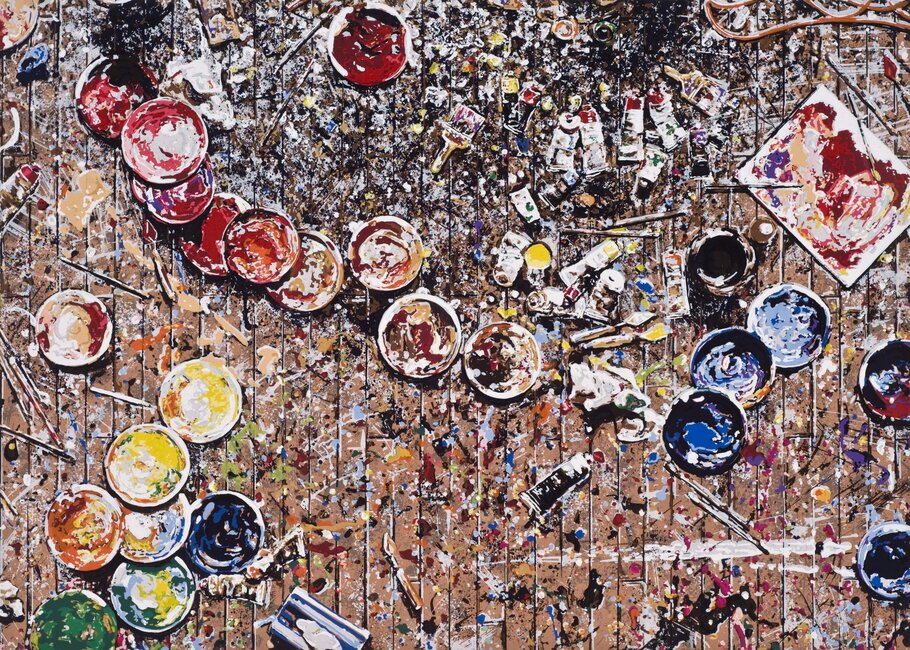
[Joe Fig *Inka's Floor*, 2008 Lower East Side Printshop US\$1,350](https://www.artsy.net/artwork/joe-fig-inkas-floor)
If you’ve never learned how to play music, sitting with a group of musicians using technical terms to describe their work can be a whirlwind of confusing, beautiful language. A similar situation can occur when speaking with artists who paint with oils: suddenly you’re in a conversation where they’re debating the finer points of pigments, discussing the benefits of canvas versus linen, or sharing recipes for homemade gesso, brush recommendations, and a technique called “wet-on-wet.” The abundance of language that goes along with oil painting may feel overwhelming at first, but if you take the time to familiarize yourself with its terms and best practices, you’ll be on your way to using with the centuries-old medium with ease.
If you’re just starting out though, don’t expect Old Masters realness from your first few artworks. Whether you’re new to paint, or an artist who typically works in another medium, like acrylics or watercolors, it will take some time to learn oil paint’s specific qualities––most notably its slow drying time and strict rules for layering. As with any medium, it’s best to alleviate yourself of high expectations, and afford yourself room for experimentation and discovery.
To help bright-eyed artists eager to try oils, we spoke with two artists who also teach painting and compiled five tips for familiarizing yourself with the medium.
## 1\. Paint Safely
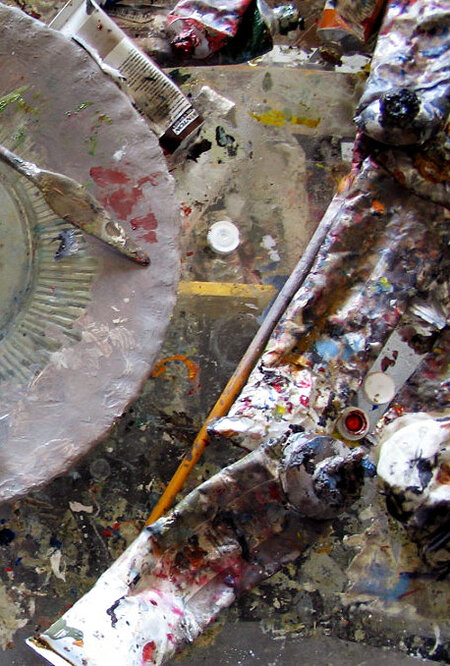
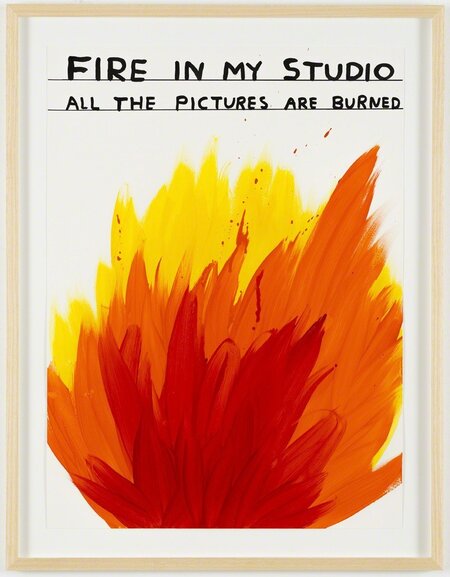
Photo by Heather Moore, via Flickr.
David Shrigley
*Untitled (Fire in my studio)*, 2014
Galleri Nicolai Wallner
Manage Cookies
Advertisement
Before you begin, it is extremely important to consider where you will paint. Many mediums, like turpentine, emit toxic fumes that can cause dizziness, fainting, and over time, respiratory problems. Turpentine is also highly flammable, and even rags that have absorbed the medium can self-ignite if not properly thrown away. It is of utmost importance that you work in a ventilated space that has access to a safe means of disposal. If you don’t have the ability to work in such a space, try [painting with acrylics](https://www.artsy.net/article/artsy-editorial-5-reasons-painting-acrylics-oils), which can easily take on some of oil paints qualities with the help of special mediums.
The pigments in oil paint often contain [hazardous chemicals](http://www.williamsburgoils.com/pdf_viewer?file=http://www.williamsburgoils.com/admin/image/get_assets/oil-colors-sds.pdf) that can be absorbed through the skin, so you should wear protective gloves and clothing. Many professional artists will reserve certain articles of clothing for when they work, and slowly develop a wardrobe for the studio. In addition, artists usually purchase latex gloves in bulk, but if you have a latex allergy, nitrile gloves can take their place. Lastly, if you ever find yourself working with loose pigments, make sure to wear a respirator. These steps may seem small or obvious, but they can [prevent chronic exposure](https://www.artistsnetwork.com/art-techniques/beginner-artist/beginner-oil-learning-to-paint-safely/) to toxic materials, and lifelong health concerns.
## 2\. Take time to get to know your materials
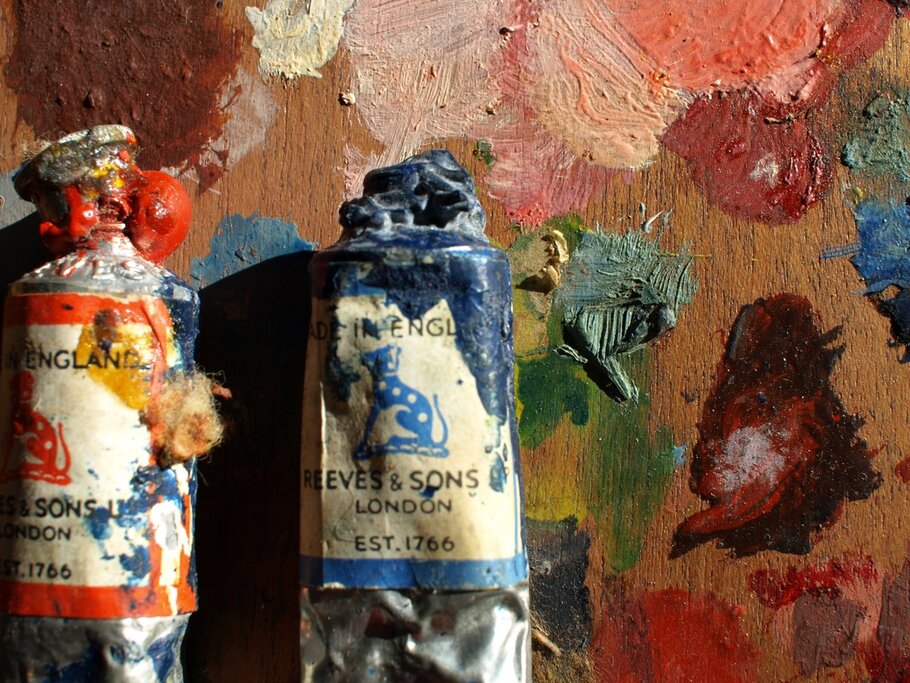
Photo via Flickr.
Once you’ve secured your safety precautions, you can begin to *slowly* find out which materials and tools you like best. Typically, an artist just starting to work in oil paint will want to gather a selection of brushes, rags, a palette, surfaces to paint on (commonly called supports), a primer, turpentine, a medium, and a few tubes of paint.
For [Margaux Valengin](https://www.artsy.net/artist/margaux-valengin), a painter who’s taught across the U.K. at schools like the Manchester School of Art and the London’s Slade School of Fine Art, the most important tool is the brush. “If you take good care of your brushes, they're going to last for your whole life,” she noted. Start off with a variety of different kinds, looking for variation in shape––round, square, and fan shapes are some examples––and material, like sable or bristle hairs. Valengin advises to buy them in-person at a store, *not* online. This way you can physically observe the qualities and differences in the brushes before you purchase them.
As for paints, Valengin recommends investing in less-expensive paints if you’re a beginner. A 37 ml tube of high-quality oil paint can run upwards of \$40, so it’s best to buy cheaper paints while you’re still practicing and experimenting. And as you continue to paint, you’ll find which brands and colors you prefer. “You might end up liking this red in this brand, and then you find you prefer this blue in another brand,” Valengin offered. “Once you know a little bit more about colors, then you can invest in proper pigments.”
To supplement your brushes and paint, make sure to buy a palette knife to mix your colors with—doing so with a brush instead could end up damaging your bristles over time. For a palette, many artists invest in a large piece of glass, but Valengin notes that if you happen to find a spare piece of glass lying around, you can use it by simply wrapping it’s edges with duct tape.
To prime canvas or other supports, many artists use acrylic gesso—a thick white primer—but you can also use rabbit-skin glue, which dries clear. You’ll also need a solvent, like turpentine, to thin your paint, and most artists usually keep a couple different kinds of oil-based mediums on hand. Some mediums, like linseed oil, will help your paint dry slightly faster, while others, like stand oil, will elongate it’s drying time.
Oil paint dries *extremely* slowly, and even if the surface feels dry, the paint underneath might still be wet. When using oil-based paint, you should always keep these two rules in mind: 1) paint lean to thick (or “fat over lean”), and 2) never layer acrylics over oil. To paint “lean to thick” means you should begin your paintings with thin washes of paint, and as you progressively layer, you should add less turpentine and more oil-based medium; otherwise, the layers of paint will dry unevenly, and over time, the surface of your artwork will crack. The same goes for layering acrylics and oils––if you don’t want your paint to crack, always put oils on top of acrylics.
## 3\. Limit your palette
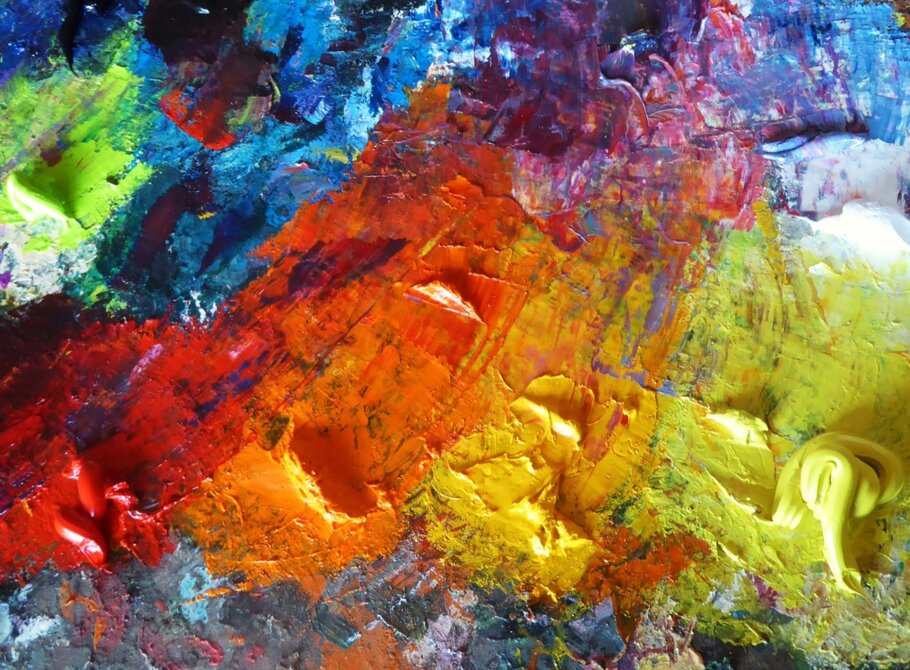
Photo by Art Crimes, via Flickr.
When you go to buy paint, you’ll most likely be met with a wall-sized rainbow of colors. Instead of purchasing every color you’d like to include in your painting, start with just a few—carefully choose the tubes. “The most productive method for starting out is to limit your palette,” noted [Sedrick Chisom](https://www.artsy.net/artist/sedrick-chisom), an artist who teaches at Virginia Commonwealth University. “Usually, a cadmium orange or ultramarine blue combo is a favored choice when first beginning,” he added. When you work with two opposite colors, like blue and orange, it forces you to focus on value––how light or dark your color is––instead of intensity or chroma.
If you add one more tube to your palette, such as cadmium yellow light (a pale yellow), or alizarin crimson (a magenta color), you’ll see how few colors you need to create every other hue. “In the store, they sell all types of greens that you can actually make with yellows and blues,” said Valengin. “It's good practice to try to make your own colors.”
If you’re not attuned to color theory, try making a chart to see how your colors mix: start by drawing a grid, then place each of your colors along the top and bottom. For each square, mix equal amounts of the colors until you have filled in the chart with all of the possible color combinations.
## 4\. Try painting with a palette knife
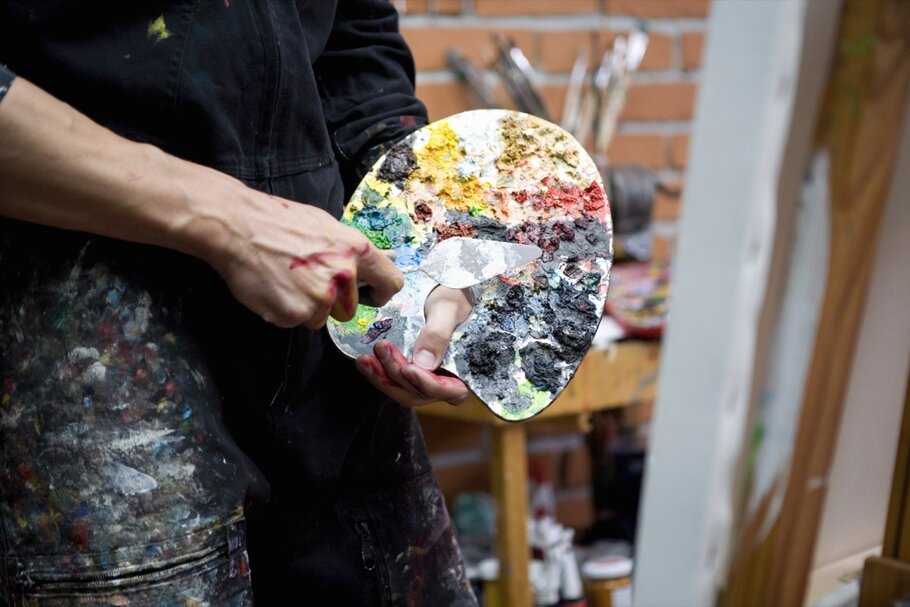
Photo by Jonathan Gelber.
The number one exercise Chisom recommends for new painters is to create a painting using a palette knife instead of brushes. “One of the most basic problems that arises has to do with the presumption that drawing skills translate to painting,” said Chisom. “Students get fixated on ideas of drawing and quickly get overwhelmed by the concerns specific to oil paint––that the material isn’t dry media, that color can structure an image better than line most of the time, that the material surface is half of a painting, etc.”
Using a palette knife forces you away from ideas of precision and line, and makes you focus on how the push and pull of color and shapes can create an image. Chisom recommends working on a surface that is at least 9-by-13 inches, as a larger space may encourage you to make larger, more confident marks.
## 5\. Paint the same subject again and again
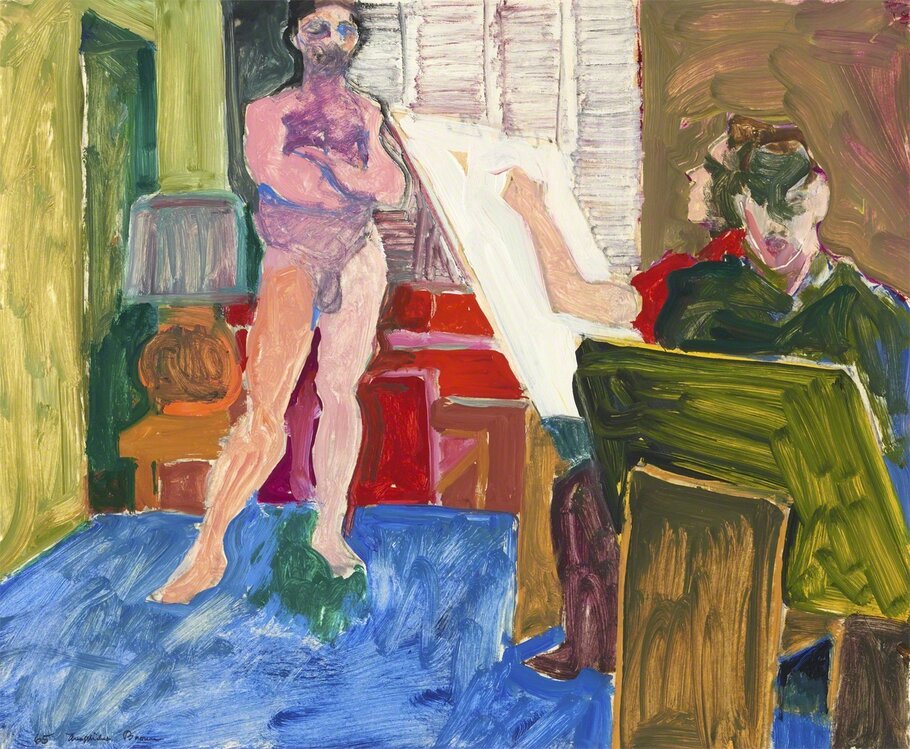
William Theophilus Brown
*Male Model in Studio*, 1964
Brian Gross Fine Art
During my first oil painting class as an art student at The Cooper Union, I was irked by one project in particular: We had to paint the same still life, over and over, for three months. But looking back, I now see how important it was to have a fixed subject matter while learning the technical craft of painting.
If you stick to painting the same subject for a long period of time, you will be relieved of the pressure to “choose” what goes into your image, and instead, your creative thinking will shine through in the application of your paint. If your attention is focused on the techniques of oil painting, you can begin to pay particular attention to every brushstroke––how it directs light, how thick or thin it is applied, or what it signifies. “When we look at a painting, we can see the brush marks, we can see what kind of brushes the painter used, and sometimes painters try to erase the brushmark. Some people use rags,” said Valengin. “The gesture the painter performs on the canvas really gives it a unique thing.”
A painter’s style can be as conceptually complex as the subject they’re painting. This is often the case when artists work “wet-on-wet”––a technique where wet paint is applied into a previous layer of paint, which is not yet dry. When you work in this style, it is difficult to layer paint to create the illusion of a realistic picture, so the tactility and fluidity of paint becomes a central idea. Or sometimes, as in Color Field painting, an artwork will use large planes of color to create an emotional or atmospheric effect. Sometimes, instead of expressing narrative through images, it’s the way that a painting is made that tells a story.
[Eli Hill](https://www.artsy.net/articles/author/eli-hill)
Related Stories
[5 Simple Tips for Improving Your Figure Drawing Skills Eli Hill](https://www.artsy.net/article/artsy-editorial-5-simple-tips-improving-figure-drawing-skills)
[3 Tried-and-True Drawing Lessons for Beginners Claire Watson Garcia](https://www.artsy.net/article/artsy-editorial-3-tried-and-true-drawing-lessons-beginners)
[5 Reasons Why You Should Try Painting with Acrylics Instead of Oils Eli Hill](https://www.artsy.net/article/artsy-editorial-5-reasons-painting-acrylics-oils)
Manage Cookies
Advertisement
Further Reading in Creativity
- [CreativityHow to Improve Your Figure Drawing SkillsBy Eli HillJul 3, 2018](https://www.artsy.net/article/artsy-editorial-5-simple-tips-improving-figure-drawing-skills)
- [CreativityHow to Improve Your Drawing SkillsBy Claire Watson GarciaJun 4, 2018](https://www.artsy.net/article/artsy-editorial-3-tried-and-true-drawing-lessons-beginners)
- [Creativity5 Reasons Why You Should Try Painting with Acrylics Instead of OilsBy Eli HillJul 25, 2018](https://www.artsy.net/article/artsy-editorial-5-reasons-painting-acrylics-oils)
- [CreativityThe Imperfect but Invaluable Experience of Virtual Figure-Drawing ClassesBy Angelica FreyMay 26, 2020](https://www.artsy.net/article/artsy-editorial-imperfect-invaluable-experience-virtual-figure-drawing-classes)
- [Creativity5 Embroidery Tips from Leading Contemporary ArtistsBy Alina CohenMay 19, 2020](https://www.artsy.net/article/artsy-editorial-5-embroidery-tips-leading-contemporary-artists)
- [Creativity7 Artists on the Self-Care Rituals that Keep Them CreativeBy Alina CohenMay 3, 2020](https://www.artsy.net/article/artsy-editorial-7-artists-self-care-rituals-creative)
- [CreativityHow to Make Art from Your Screenshots According to Gina BeaversBy Sarah Urist GreenApr 21, 2020](https://www.artsy.net/article/artsy-editorial-art-screenshots-gina-beavers)
- [CreativityHow to Turn Your Complaints into Art According to the Guerrilla GirlsBy Sarah Urist GreenApr 14, 2020](https://www.artsy.net/article/artsy-editorial-turn-complaints-art-guerrilla-girls)
Manage Cookies
Advertisement
Art Market
[How Entertainment Exec Hassan Smith Built an Art Collection Championing Black Artists](https://www.artsy.net/article/artsy-editorial-entertainment-exec-hassan-smith-built-art-collection-championing-black-artists)
[Maxwell Rabb](https://www.artsy.net/articles/author/maxwell-rabb)
Apr 14, 2026 7:54AM

Portrait of Hassan Smith. Photo by Walker Bankson. Courtesy of Hassan Smith.
The first thing visitors to Hassan Smith’s home notice is the [Jean-Michel Basquiat](https://www.artsy.net/artist/jean-michel-basquiat)–style [crown](https://www.artsy.net/artist-series/jean-michel-basquiat-crowns) beneath their feet.
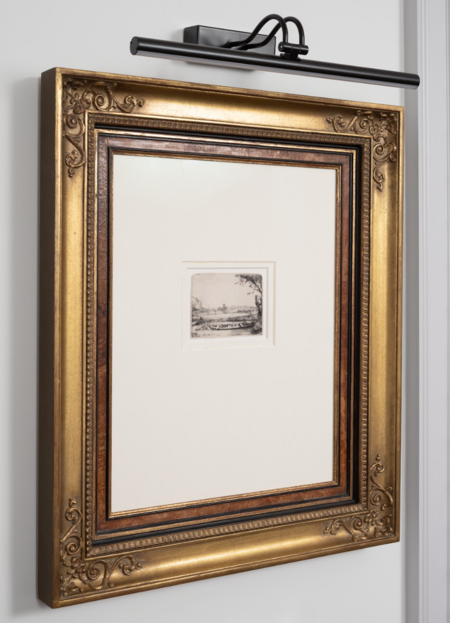
The doormat of Smith’s North Atlanta home signals what awaits inside: a house where art is not just displayed, but lived with. Works from [Gordon Parks](https://www.artsy.net/artist/gordon-parks)’s iconic “Harlem” series line the hall outside his children’s bedrooms; in the kitchen, a small [Rembrandt](https://www.artsy.net/artist/rembrandt-van-rijn) drawing, *Canal with a Large Boat and a Bridge* (1650), presides over the breakfast table. Smith, an entertainment executive best known as the senior advisor for John Legend and the founder of private equity firm Ellaby Holdings LLC, has built a collection steeped in cultural history that balances the canonical with the personal.
Smith sees his collection as a long-term investment, but not in purely market terms. He invests in people and perspectives. “I collect for legacy,” he told me in his home office, where photos of Smith with the likes of President Barack Obama sit on the bookshelf, and a monumental [Tony Lewis](https://www.artsy.net/artist/tony-lewis) painting anchors the wall. “I always had my children in mind…that I wanted to create something for them to grow up around.”
That long view runs through everything that Smith does. He met Legend in 2004, just before the Grammy Award–winning singer released his debut album, *Get Lifted,* and has remained his trusted right hand ever since. He approaches collecting with the same instinct for what will last, building personal relationships with artists, including [Patrick Eugène](https://www.artsy.net/artist/patrick-eugene) and [Rashid Johnson](https://www.artsy.net/artist/rashid-johnson), along the way.
## How Hassan Smith made the leap from art lover to collector
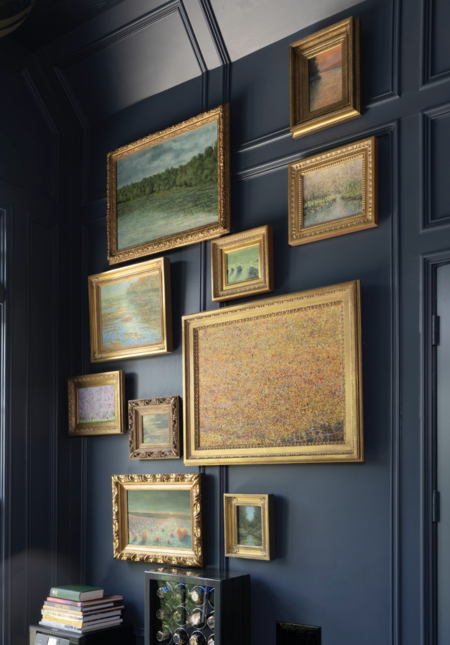
Interior view of works by Toshimasa. Photo by Walker Bankson. Courtesy of Hassan Smith.
Rembrandt Van Rijn, *Canal with a Large Boat and a Bridge*, 1650. Photo by Walker Bankson. Courtesy of Hassan Smith.
Manage Cookies
Advertisement
Smith traces his love of art back to his parents’ record collection and childhood museum visits. But he points to a Yoruba mask he bought in Lagos in 2000—now sitting on his desk—as his first “collecting” purchase. When friends who collected art praised the mask, he said, “it gave me my confidence that I was selecting great, great works.”
Even so, Smith said he did not feel truly exposed to contemporary Black artists until he entered the music industry. Until then, his knowledge of the art world had been shaped largely by [Old Masters](https://www.artsy.net/gene/old-masters). That changed when he began visiting friends’ homes, including those of cultural figures like Jay-Z and Swizz Beatz, both known for championing Black artists. “I got to see that there are artists who create at this level that look like me,” he said.
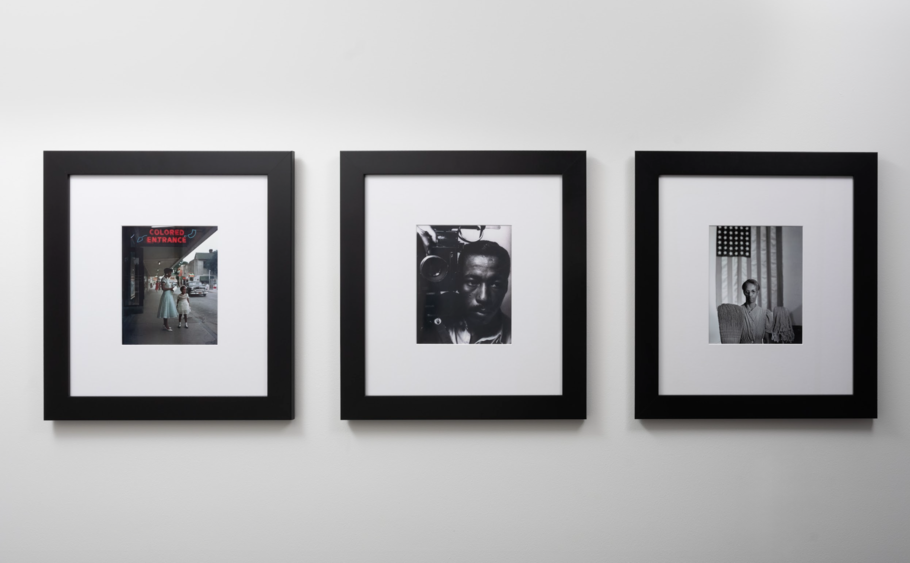
Interior view of works by Gordon Parks. Photo by Walker Banskson. Courtesy of Hassan Smith.
A decade after purchasing the Yoruba mask, Smith stepped more fully into the art world. He attended an auction at the Gordon Parks Foundation, where he bid on works from Parks’s “Harlem” series of portraits taken in the New York district. Some 16 photographs by Parks—including a portrait of Malcolm X and scenes of the Civil Rights Movement—line the upstairs hallway near the children’s bedrooms. “I put it upstairs purposefully, where their rooms are, so they can see it every day, and they can understand some of the things that are going on in this world today are subjects and works that were going on in the ’50s and ’60s,” Smith said.
Because living with the art is central to Smith’s philosophy, it feels especially fitting that South African artist [Esther Mahlangu](https://www.artsy.net/artist/dr-esther-mahlangu)’s massive, four-panel geometric painting *Untitled* (2024) hangs in the living room. Smith is among the artist’s most vocal advocates and owns 30 of her works. What drew him in, beyond the work’s “vibrancy,” was its connection to Mahlangu’s ancestry. “The history of where that practice comes from was astounding to me,” he said.
## A collection that champions Black artists across generations
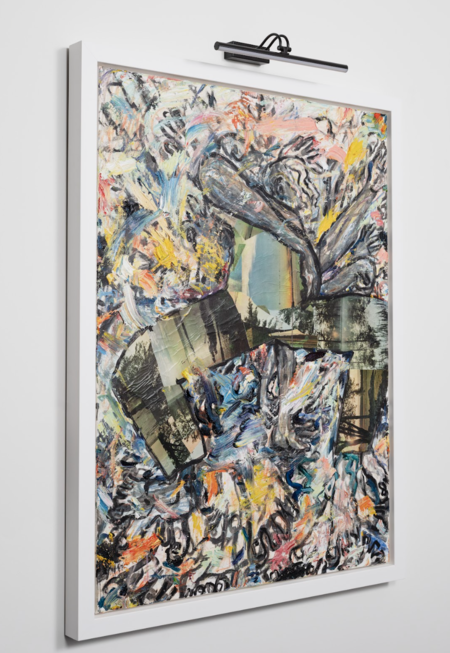
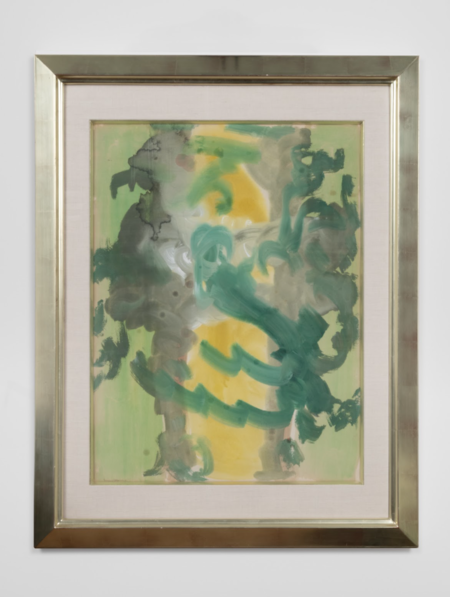
Mario Joyce, *In the Form Of*, 2023. Photo by Walker Banskon. Courtesy of Hassan Smith.
Beauford Delaney, *Untitled*, 1961. Photo of Walker Banskon. Courtesy of Hassan Smith.
Curiosity, more than anything, drives Smith’s collecting. It is also what compels him to meet as many artists as he can. “I like to live with my works, and most artists that are in this home, if they’re living, I have a robust relationship with,” Smith said. Eugene, for instance, came onto Smith’s radar when a friend urged the collector to meet the artist, his cousin.
Before he considered acquiring a work, he wanted to make a personal connection. They clicked immediately. Today, two of Eugene’s works live in Smith’s house: a portrait in the living room and a giant commission, *Untitled* (2024), in the collector’s sunroom, an airy, gallery-like space where Smith hosts parties and fundraisers.

Installation view of Esther Mahlangu, *Untitled*, 2024. Photo of Walker Banskon. Courtesy of Hassan Smith.
That sunroom, in many ways, captures the intergenerational dialogue and community-building that define his collection. Lined with windows and hovering above the driveway, the room brings together works that span from [Betye Saar](https://www.artsy.net/artist/betye-saar)’s *Lovers with Twilight Birds* (1964) to [Hank Willis Thomas](https://www.artsy.net/artist/hank-willis-thomas)’s *The Only Bond Worth Anything Between Human Beings is Their Humanness* (2024). “I love having the contemporaries of today with the legacy artists of tomorrow,” he said. Just as important are his children, who are growing up surrounded by art. “I’m proud that they’re growing up with…and really engaging with art throughout their entire life.”
The home gallery also doubles as a meeting place. As an active board member at museums, including the [High Museum of Art](https://www.artsy.net/partner/high-museum-of-art) and the [Hirshhorn Museum](https://www.artsy.net/partner/hirshhorn-museum-and-sculpture-garden), Smith regularly hosts parties and fundraising events there.
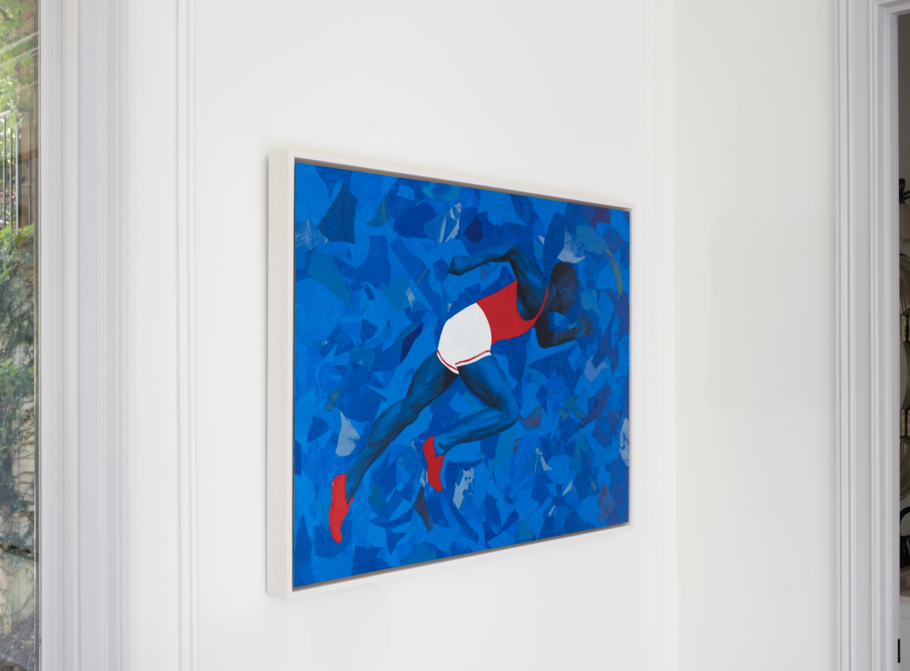
Hank Willis Thomas, *The Only Bond Worth Anything Between Human Beings is Their Humanness*, 2024. Photo of Walker Banskon. Courtesy of Hassan Smith.
Community is central to his work, which is why he co-founded Collector X, a convening platform with private equity businessman Dale Burnett that creates space for Black collectors at art fairs. “We were trying to connect with our great friend group…and we just found it super hard to connect and convene…in the VIP lounge, just trying to pull chairs together,” he explained.
Ultimately, Smith hopes to pass on not just his love for art, but a way of looking: one rooted in education, personal connection, and care. He leads by example. For Smith, collecting is less about acquisition than legacy and preserving lived experience through art.
“The energy is carried within the work,” Smith said. “That’s what people feel when they love something, or they don’t like something. It’s the energy out of the work—where and how it was created.”
[MRMaxwell Rabb Maxwell Rabb (Max) is a writer. Before joining Artsy in October 2023, he obtained an MFA from the School of the Art Institute of Chicago and a BA from the University of Georgia. Outside of Artsy, his bylines include the Washington Post, i-D, and the Chicago Reader. He lives in New York City, by way of Atlanta, New Orleans, and Chicago.](https://www.artsy.net/articles/author/maxwell-rabb)
Related Stories
[How a Louise Bourgeois Print Inspired Eden Xu-Martinez’s Intimate Collection Maxwell Rabb](https://www.artsy.net/article/artsy-editorial-louise-bourgeois-print-inspired-eden-xu-martinezs-intimate-collection)
[These 5 Gen Z Collectors Are Rewriting the Rules of the Art World Rachel Kubrick](https://www.artsy.net/article/artsy-editorial-5-gen-collectors-rewriting-rules-art)
[How This Cannabis CEO Brings an Edge to Art Collecting Vittoria Benzine](https://www.artsy.net/article/artsy-editorial-cannabis-ceo-brings-edge-art-collecting)
Manage Cookies
Advertisement
███████ ███████ ██ ████████
- ████████
███ ███████ ███████ █████ ██████ ████ ███ ████
██ ███████ ████
███ ██ ████
- ████████
███ ███████ ███████ █████ ██████ ████ ███ ████
██ ███████ ████
███ ██ ████
- ████████
███ ███████ ███████ █████ ██████ ████ ███ ████
██ ███████ ████
███ ██ ████
- ████████
███ ███████ ███████ █████ ██████ ████ ███ ████
██ ███████ ████
███ ██ ████
- ████████
███ ███████ ███████ █████ ██████ ████ ███ ████
██ ███████ ████
███ ██ ████
- ████████
███ ███████ ███████ █████ ██████ ████ ███ ████
██ ███████ ████
███ ██ ████
- ████████
███ ███████ ███████ █████ ██████ ████ ███ ████
██ ███████ ████
███ ██ ████
- ████████
███ ███████ ███████ █████ ██████ ████ ███ ████
██ ███████ ████
███ ██ ████
Discover and Buy Art that Moves You
Sign Up
About us
[About](https://www.artsy.net/about)[Jobs](https://www.artsy.net/jobs)[Press](https://www.artsy.net/press/press-releases)[Contact](https://www.artsy.net/contact)
Resources
[Open Source](https://artsy.github.io/open-source)[Editorial](https://www.artsy.net/articles)[The Art Genome Project](https://www.artsy.net/categories)
Partnerships
[Artsy for Galleries](https://partners.artsy.net/)[Artsy for Museums](https://www.artsy.net/institution-partnerships)[Artsy for Benefits](https://partners.artsy.net/auction-partnerships)[Artsy for Fairs](https://partners.artsy.net/artsy-fair-partnerships/)
Support
[Visit our Help Center](https://support.artsy.net/)[Buying on Artsy](https://support.artsy.net/s/topic/0TO3b000000UessGAC/buy)
Get the App
[iOS App](https://apps.apple.com/us/app/artsy-buy-sell-original-art/id703796080)[Android App](https://play.google.com/store/apps/details?id=net.artsy.app)
© 2026 Artsy
[Terms and Conditions](https://www.artsy.net/terms)[Auction Supplement](https://www.artsy.net/supplemental-cos)[Buyer Guarantee](https://www.artsy.net/buyer-guarantee)[Privacy Policy](https://www.artsy.net/privacy)[Security](https://www.artsy.net/security)
Do not sell my personal information
[Accessibility](https://www.artsy.net/artsy-accessibility-statement)
Theme
© 2026 Artsy
[Terms and Conditions](https://www.artsy.net/terms)[Auction Supplement](https://www.artsy.net/supplemental-cos)[Buyer Guarantee](https://www.artsy.net/buyer-guarantee)[Privacy Policy](https://www.artsy.net/privacy)[Security](https://www.artsy.net/security)
Do not sell my personal information
[Accessibility](https://www.artsy.net/artsy-accessibility-statement)
Theme
Cookie Consent
We use cookies to improve your experience and personalize marketing. By clicking “Accept All,” you agree to our [cookie policy.](https://www.artsy.net/privacy#cookie-policy)
Manage Cookies
Accept All
What’s New
[New This Week](https://www.artsy.net/collection/new-this-week)[Art under \$1,000](https://www.artsy.net/collection/art-under-1000-dollars)[Art under \$2,500](https://www.artsy.net/collection/art-under-2500-dollars)[Most Loved](https://www.artsy.net/collection/most-loved)[New from Small Galleries](https://www.artsy.net/collection/new-from-small-galleries)
Current Events
[Art Düsseldorf](https://www.artsy.net/fair/art-dusseldorf-2026)[Dallas Art Fair](https://www.artsy.net/fair/dallas-art-fair-2026)[miart](https://www.artsy.net/miart-2026)[San Francisco Art Fair](https://www.artsy.net/fair/san-francisco-art-fair-2026)
Our Picks
[Curators’ Picks](https://www.artsy.net/collection/curators-picks)[Blue-Chip Icons](https://www.artsy.net/collection/icons)[Street Art Edit](https://www.artsy.net/collection/street-art-edit)[Best Bids](https://www.artsy.net/collection/best-bids)
Trending Now
[Women-Led Galleries Now](https://www.artsy.net/fair/women-led-galleries-now)[Black-Owned Galleries Now](https://www.artsy.net/fair/black-owned-galleries-now)[The Artsy Edition Shop](https://www.artsy.net/fair/the-artsy-edition-shop)
What’s Next
[Best of Prints and EditionsShop Now](https://www.artsy.net/collection/best-of-prints-and-editions)
Browse by Identity
[AAPI Artists](https://www.artsy.net/collection/aapi-artists-to-know)[Black Artists](https://www.artsy.net/collection/black-artists-to-know)[Queer Artists](https://www.artsy.net/collection/queer-artists-to-know)[Women Artists](https://www.artsy.net/collection/women-artists-to-know)
Artists on Our Radar
[Linus Borgo](https://www.artsy.net/artist/linus-borgo)[Diane Chappalley](https://www.artsy.net/artist/diane-chappalley)[Omyo Cho](https://www.artsy.net/artist/omyo-cho)[Sylvia Fernandez](https://www.artsy.net/artist/sylvia-fernandez)[Christian Franzen](https://www.artsy.net/artist/christian-franzen)
Browse by Nationality
[American](https://www.artsy.net/collect?artist_nationalities%5B0%5D=American)[Brazilian](https://www.artsy.net/collect?artist_nationalities%5B0%5D=Brazilian)[British](https://www.artsy.net/collect?artist_nationalities%5B0%5D=British)[Chinese](https://www.artsy.net/collect?artist_nationalities%5B0%5D=Chinese)[French](https://www.artsy.net/collect?artist_nationalities%5B0%5D=French)[Indian](https://www.artsy.net/collect?artist_nationalities%5B0%5D=Indian)[Japanese](https://www.artsy.net/collect?artist_nationalities%5B0%5D=Japanese)
In-Demand Artists
[Louis Fratino](https://www.artsy.net/artist/louis-fratino)[André Butzer](https://www.artsy.net/artist/andre-butzer)[Karel Appel](https://www.artsy.net/artist/karel-appel)[Antoni Tàpies](https://www.artsy.net/artist/antoni-tapies)[Man Ray](https://www.artsy.net/artist/man-ray)
[View All Artists](https://www.artsy.net/artists)
Browse by name
[A](https://www.artsy.net/artists/artists-starting-with-a "View artists starting with \"A\"")[B](https://www.artsy.net/artists/artists-starting-with-b "View artists starting with \"B\"")[C](https://www.artsy.net/artists/artists-starting-with-c "View artists starting with \"C\"")[D](https://www.artsy.net/artists/artists-starting-with-d "View artists starting with \"D\"")[E](https://www.artsy.net/artists/artists-starting-with-e "View artists starting with \"E\"")[F](https://www.artsy.net/artists/artists-starting-with-f "View artists starting with \"F\"")[G](https://www.artsy.net/artists/artists-starting-with-g "View artists starting with \"G\"")[H](https://www.artsy.net/artists/artists-starting-with-h "View artists starting with \"H\"")[I](https://www.artsy.net/artists/artists-starting-with-i "View artists starting with \"I\"")[J](https://www.artsy.net/artists/artists-starting-with-j "View artists starting with \"J\"")[K](https://www.artsy.net/artists/artists-starting-with-k "View artists starting with \"K\"")[L](https://www.artsy.net/artists/artists-starting-with-l "View artists starting with \"L\"")[M](https://www.artsy.net/artists/artists-starting-with-m "View artists starting with \"M\"")[N](https://www.artsy.net/artists/artists-starting-with-n "View artists starting with \"N\"")[O](https://www.artsy.net/artists/artists-starting-with-o "View artists starting with \"O\"")[P](https://www.artsy.net/artists/artists-starting-with-p "View artists starting with \"P\"")[Q](https://www.artsy.net/artists/artists-starting-with-q "View artists starting with \"Q\"")[R](https://www.artsy.net/artists/artists-starting-with-r "View artists starting with \"R\"")[S](https://www.artsy.net/artists/artists-starting-with-s "View artists starting with \"S\"")[T](https://www.artsy.net/artists/artists-starting-with-t "View artists starting with \"T\"")[U](https://www.artsy.net/artists/artists-starting-with-u "View artists starting with \"U\"")[V](https://www.artsy.net/artists/artists-starting-with-v "View artists starting with \"V\"")[W](https://www.artsy.net/artists/artists-starting-with-w "View artists starting with \"W\"")[X](https://www.artsy.net/artists/artists-starting-with-x "View artists starting with \"X\"")[Y](https://www.artsy.net/artists/artists-starting-with-y "View artists starting with \"Y\"")[Z](https://www.artsy.net/artists/artists-starting-with-z "View artists starting with \"Z\"")
Artists to Discover
[Contemporary Latinx VoicesBrowse Works](https://www.artsy.net/collection/contemporary-latinx-voices)
The Home Edit
[Art for Small Spaces](https://www.artsy.net/collection/art-for-small-spaces)[Art for Large Spaces](https://www.artsy.net/collection/art-for-large-spaces)[Table Lamps](https://www.artsy.net/collection/table-lamps)[Furniture and Design](https://www.artsy.net/gene/contemporary-furniture-and-design)
Shop by Scenery
[Landscapes](https://www.artsy.net/collection/contemporary-landscapes)[Cityscapes](https://www.artsy.net/collection/cityscapes)[Beaches & Seascapes](https://www.artsy.net/collection/beaches-and-seascapes)[Interiors](https://www.artsy.net/collection/contemporary-interiors)
Shop by Mood
[Calm](https://www.artsy.net/collection/understated)[Bold](https://www.artsy.net/collection/statement-pieces)[Romantic](https://www.artsy.net/collection/romantic)[Transcendent](https://www.artsy.net/collection/transcendent)
Shop by Medium
[Painting](https://www.artsy.net/collection/painting)[Photography](https://www.artsy.net/collection/photography)[Sculpture](https://www.artsy.net/collection/sculpture)[Prints](https://www.artsy.net/collection/prints)[Works on Paper](https://www.artsy.net/collection/works-on-paper)[Textile Art](https://www.artsy.net/collection/textile-art)[Ceramics](https://www.artsy.net/collection/ceramics)[Design](https://www.artsy.net/collection/design)
[View All Artworks](https://www.artsy.net/collect)
Get Inspired
[MoonscapesShop Now](https://www.artsy.net/collection/moonscapes) |
| Readable Markdown | Creativity
Aug 2, 2018 12:00PM. Updated Jun 10, 2019 9:24PM.
If you’ve never learned how to play music, sitting with a group of musicians using technical terms to describe their work can be a whirlwind of confusing, beautiful language. A similar situation can occur when speaking with artists who paint with oils: suddenly you’re in a conversation where they’re debating the finer points of pigments, discussing the benefits of canvas versus linen, or sharing recipes for homemade gesso, brush recommendations, and a technique called “wet-on-wet.” The abundance of language that goes along with oil painting may feel overwhelming at first, but if you take the time to familiarize yourself with its terms and best practices, you’ll be on your way to using with the centuries-old medium with ease.
If you’re just starting out though, don’t expect Old Masters realness from your first few artworks. Whether you’re new to paint, or an artist who typically works in another medium, like acrylics or watercolors, it will take some time to learn oil paint’s specific qualities––most notably its slow drying time and strict rules for layering. As with any medium, it’s best to alleviate yourself of high expectations, and afford yourself room for experimentation and discovery.
To help bright-eyed artists eager to try oils, we spoke with two artists who also teach painting and compiled five tips for familiarizing yourself with the medium.
1\. Paint Safely
Photo by Heather Moore, via Flickr.
David Shrigley
*Untitled (Fire in my studio)*, 2014
Galleri Nicolai Wallner
Before you begin, it is extremely important to consider where you will paint. Many mediums, like turpentine, emit toxic fumes that can cause dizziness, fainting, and over time, respiratory problems. Turpentine is also highly flammable, and even rags that have absorbed the medium can self-ignite if not properly thrown away. It is of utmost importance that you work in a ventilated space that has access to a safe means of disposal. If you don’t have the ability to work in such a space, try [painting with acrylics](https://www.artsy.net/article/artsy-editorial-5-reasons-painting-acrylics-oils), which can easily take on some of oil paints qualities with the help of special mediums.
The pigments in oil paint often contain [hazardous chemicals](http://www.williamsburgoils.com/pdf_viewer?file=http://www.williamsburgoils.com/admin/image/get_assets/oil-colors-sds.pdf) that can be absorbed through the skin, so you should wear protective gloves and clothing. Many professional artists will reserve certain articles of clothing for when they work, and slowly develop a wardrobe for the studio. In addition, artists usually purchase latex gloves in bulk, but if you have a latex allergy, nitrile gloves can take their place. Lastly, if you ever find yourself working with loose pigments, make sure to wear a respirator. These steps may seem small or obvious, but they can [prevent chronic exposure](https://www.artistsnetwork.com/art-techniques/beginner-artist/beginner-oil-learning-to-paint-safely/) to toxic materials, and lifelong health concerns.
2\. Take time to get to know your materials
Photo via Flickr.
Once you’ve secured your safety precautions, you can begin to *slowly* find out which materials and tools you like best. Typically, an artist just starting to work in oil paint will want to gather a selection of brushes, rags, a palette, surfaces to paint on (commonly called supports), a primer, turpentine, a medium, and a few tubes of paint.
For [Margaux Valengin](https://www.artsy.net/artist/margaux-valengin), a painter who’s taught across the U.K. at schools like the Manchester School of Art and the London’s Slade School of Fine Art, the most important tool is the brush. “If you take good care of your brushes, they're going to last for your whole life,” she noted. Start off with a variety of different kinds, looking for variation in shape––round, square, and fan shapes are some examples––and material, like sable or bristle hairs. Valengin advises to buy them in-person at a store, *not* online. This way you can physically observe the qualities and differences in the brushes before you purchase them.
As for paints, Valengin recommends investing in less-expensive paints if you’re a beginner. A 37 ml tube of high-quality oil paint can run upwards of \$40, so it’s best to buy cheaper paints while you’re still practicing and experimenting. And as you continue to paint, you’ll find which brands and colors you prefer. “You might end up liking this red in this brand, and then you find you prefer this blue in another brand,” Valengin offered. “Once you know a little bit more about colors, then you can invest in proper pigments.”
To supplement your brushes and paint, make sure to buy a palette knife to mix your colors with—doing so with a brush instead could end up damaging your bristles over time. For a palette, many artists invest in a large piece of glass, but Valengin notes that if you happen to find a spare piece of glass lying around, you can use it by simply wrapping it’s edges with duct tape.
To prime canvas or other supports, many artists use acrylic gesso—a thick white primer—but you can also use rabbit-skin glue, which dries clear. You’ll also need a solvent, like turpentine, to thin your paint, and most artists usually keep a couple different kinds of oil-based mediums on hand. Some mediums, like linseed oil, will help your paint dry slightly faster, while others, like stand oil, will elongate it’s drying time.
Oil paint dries *extremely* slowly, and even if the surface feels dry, the paint underneath might still be wet. When using oil-based paint, you should always keep these two rules in mind: 1) paint lean to thick (or “fat over lean”), and 2) never layer acrylics over oil. To paint “lean to thick” means you should begin your paintings with thin washes of paint, and as you progressively layer, you should add less turpentine and more oil-based medium; otherwise, the layers of paint will dry unevenly, and over time, the surface of your artwork will crack. The same goes for layering acrylics and oils––if you don’t want your paint to crack, always put oils on top of acrylics.
3\. Limit your palette
Photo by Art Crimes, via Flickr.
When you go to buy paint, you’ll most likely be met with a wall-sized rainbow of colors. Instead of purchasing every color you’d like to include in your painting, start with just a few—carefully choose the tubes. “The most productive method for starting out is to limit your palette,” noted [Sedrick Chisom](https://www.artsy.net/artist/sedrick-chisom), an artist who teaches at Virginia Commonwealth University. “Usually, a cadmium orange or ultramarine blue combo is a favored choice when first beginning,” he added. When you work with two opposite colors, like blue and orange, it forces you to focus on value––how light or dark your color is––instead of intensity or chroma.
If you add one more tube to your palette, such as cadmium yellow light (a pale yellow), or alizarin crimson (a magenta color), you’ll see how few colors you need to create every other hue. “In the store, they sell all types of greens that you can actually make with yellows and blues,” said Valengin. “It's good practice to try to make your own colors.”
If you’re not attuned to color theory, try making a chart to see how your colors mix: start by drawing a grid, then place each of your colors along the top and bottom. For each square, mix equal amounts of the colors until you have filled in the chart with all of the possible color combinations.
4\. Try painting with a palette knife
Photo by Jonathan Gelber.
The number one exercise Chisom recommends for new painters is to create a painting using a palette knife instead of brushes. “One of the most basic problems that arises has to do with the presumption that drawing skills translate to painting,” said Chisom. “Students get fixated on ideas of drawing and quickly get overwhelmed by the concerns specific to oil paint––that the material isn’t dry media, that color can structure an image better than line most of the time, that the material surface is half of a painting, etc.”
Using a palette knife forces you away from ideas of precision and line, and makes you focus on how the push and pull of color and shapes can create an image. Chisom recommends working on a surface that is at least 9-by-13 inches, as a larger space may encourage you to make larger, more confident marks.
5\. Paint the same subject again and again
William Theophilus Brown
*Male Model in Studio*, 1964
Brian Gross Fine Art
During my first oil painting class as an art student at The Cooper Union, I was irked by one project in particular: We had to paint the same still life, over and over, for three months. But looking back, I now see how important it was to have a fixed subject matter while learning the technical craft of painting.
If you stick to painting the same subject for a long period of time, you will be relieved of the pressure to “choose” what goes into your image, and instead, your creative thinking will shine through in the application of your paint. If your attention is focused on the techniques of oil painting, you can begin to pay particular attention to every brushstroke––how it directs light, how thick or thin it is applied, or what it signifies. “When we look at a painting, we can see the brush marks, we can see what kind of brushes the painter used, and sometimes painters try to erase the brushmark. Some people use rags,” said Valengin. “The gesture the painter performs on the canvas really gives it a unique thing.”
A painter’s style can be as conceptually complex as the subject they’re painting. This is often the case when artists work “wet-on-wet”––a technique where wet paint is applied into a previous layer of paint, which is not yet dry. When you work in this style, it is difficult to layer paint to create the illusion of a realistic picture, so the tactility and fluidity of paint becomes a central idea. Or sometimes, as in Color Field painting, an artwork will use large planes of color to create an emotional or atmospheric effect. Sometimes, instead of expressing narrative through images, it’s the way that a painting is made that tells a story. |
| Shard | 147 (laksa) |
| Root Hash | 14620083788337609147 |
| Unparsed URL | net,artsy!www,/article/artsy-editorial-5-oil-painting-tips-beginners s443 |