ℹ️ Skipped - page is already crawled
| Filter | Status | Condition | Details |
|---|---|---|---|
| HTTP status | PASS | download_http_code = 200 | HTTP 200 |
| Age cutoff | PASS | download_stamp > now() - 6 MONTH | 0.1 months ago |
| History drop | PASS | isNull(history_drop_reason) | No drop reason |
| Spam/ban | PASS | fh_dont_index != 1 AND ml_spam_score = 0 | ml_spam_score=0 |
| Canonical | PASS | meta_canonical IS NULL OR = '' OR = src_unparsed | Not set |
| Property | Value | |||||||||||||||
|---|---|---|---|---|---|---|---|---|---|---|---|---|---|---|---|---|
| URL | https://www.aljazeera.com/news/2021/9/6/timeline-how-september-11-2001-led-to-uss-longest-war | |||||||||||||||
| Last Crawled | 2026-04-19 17:29:36 (3 days ago) | |||||||||||||||
| First Indexed | 2021-09-06 13:49:20 (4 years ago) | |||||||||||||||
| HTTP Status Code | 200 | |||||||||||||||
| Content | ||||||||||||||||
| Meta Title | Timeline: How September 11, 2001 led to US’s longest war | Taliban News | Al Jazeera | |||||||||||||||
| Meta Description | How the 9/11 attacks led to the US’s 20-year deployment in Afghanistan and its chaotic withdrawal. | |||||||||||||||
| Meta Canonical | null | |||||||||||||||
| Boilerpipe Text | The September 11, 2001 attacks on the United States set off a series of events that would see Washington – in just a month – begin the longest war in the country’s history.
Twenty years later, the US will mark the anniversary of the attacks less than two weeks after
completing a chaotic withdrawal
from the now Taliban-controlled country.
Recommended Stories
list of 3 items
list 1 of 3
Has the US conceded defeat in Afghanistan?
list 2 of 3
Putin says US achieved ‘zero’ in Afghanistan
list 3 of 3
US looking at land routes to continue Afghanistan evacuations
end of list
The 20-year conflict left about 69,000 Afghan security forces and at least 51,000 Afghan civilians dead, according to research by Brown University. About 2,500 members of the US military and 1,144 members of allied-NATO militaries died during the fighting.
Below is a timeline of how events unfolded.
September 11, 2001: US attacked
Nineteen members of al-Qaeda, a group granted sanctuary in by Taliban-controlled Afghanistan, hijack four commercial airliners in the US.
Two of the planes are flown into the World Trade Center in New York City, collapsing both towers.
One plane is flown into the Pentagon, the seat of the US Department of Defense, in Virginia.
The fourth plane crashes into a field in Pennsylvania, after passengers on board hearing of the other attacks, storm the cockpit.
A total of 2,977 people were killed in the attacks.
Smoke pours from the twin towers of the World Trade Center after they were hit by two hijacked airliners on September 11, 2001, in New York City [File: Robert Giroux/Getty Images]
September 18, 2001: AUMF approved
Then-President George W Bush signs the 2001 Authorisation of Use of Military Force (AUMF).
The resolution, which was passed by Congress with only one legislator objecting,
legally permits the US president
, without further congressional approval, to use military action against a wide array of people or groups that “planned, authorised, committed, or aided the terrorist attacks that occurred on September 11, 2001 or harbored such organizations or persons”.
October 7, 2001: ‘Enduring Freedom’ launched
Less than a month after the September 11 attacks, US President George W Bush launches “Operation Enduring Freedom” in Afghanistan, after the Taliban refuses to hand over al-Qaeda leader Osama bin Laden.
Sign up for Al Jazeera
Americas Coverage Newsletter
US politics, Canada’s multiculturalism, South America’s geopolitical rise—we bring you the stories that matter.
In a matter of weeks, the US-led forces overthrow the Taliban, which had been in power since 1996.
Apart from air raids, the US also gives backing to the Afghan Northern Alliance, which had been fighting the Taliban, contributing paramilitary teams from the CIA and special forces.
Some 1,000 American soldiers are deployed on the ground in November, rising to 10,000 the year after.
US Marines survey the area from an armoured vehicle near Kandahar, Afghanistan [File: EPA]
April 17, 2002: Transitional Afghan govt
A transitional government led by Hamid Karzai is established in Kabul.
US Congress approves $38bn in spending as part of Bush’s plan to rebuild Afghanistan.
October 10, 2002: Iraq AUMF approved
Congress passes the 2002 Iraq AUMF after the Bush administration warns the Baghdad is developing “weapons of mass destruction”.
Bush signs the resolution into law on October 16.
The resolution sets the US on track for the invasion of Iraq, although no evidence would be found to substantiate the Bush administration’s claims.
2003-2008: Taliban regroups, Bush sends more troops
Attention is diverted from Afghanistan as US forces in 2003 mount an invasion of Iraq.
As attention turns to Iraq, the Taliban and other armed groups regroup in their strongholds in the south and east of Afghanistan, from where they can easily travel to and from Pakistani tribal areas.
In 2008, the US command on the ground calls for more manpower to carry out an effective strategy against the Taliban.
Bush agrees to send additional soldiers and by mid-2008 there are 48,500 US troops in the country.
Video Duration 40 minutes 05 seconds
40:05
Now Playing
Video Duration 40 minutes 05 seconds
40:05
US: Pentagon delivers first remarks since end of Afghan mission
Next
Video Duration 27 minutes 25 seconds
27:25
Who will shape the global agenda — the left or far right?
Video Duration 04 minutes 38 seconds
04:38
Iranian source to Al Jazeera: Tehran feels deceived as US, Iran on verge of escalation
Video Duration 03 minutes 01 seconds
03:01
Netanyahu requests to cancel corruption trial testimony: Israeli media
Video Duration 03 minutes 21 seconds
03:21
Israeli army reports casualties in southern Lebanon despite ceasefire
2009: Number of soldiers peaks under Obama
In 2009, in the first months of the presidency of Barack Obama – elected on campaign promises to end the two wars in Iraq and Afghanistan – there is a surge in the number of American soldiers in Afghanistan to about 68,000.
In December, Obama raises the strength of US forces in Afghanistan to approximately 100,000.
The objective, the US says, is to halt the Taliban militarily and to strengthen Afghan institutions.
In announcing the increase, Obama also set a deadline, saying US forces would begin to reduce US force numbers in 2011.
May 2, 2011: Bin Laden killed in Pakistan
Al-Qaeda leader Osama bin Laden, who the US has identified as the mastermind behind the 9/11 attack, is killed on May 2, 2011, during an operation by US special forces in Pakistan, where he is in hiding.
People walk past Osama Bin Laden’s compound, where he was killed during a raid by US special forces in Abbottabad, Pakistan [Getty Images]
June 2011: Obama announces troop withdrawal
Obama announces the US will begin withdrawing troops from Afghanistan, as the first attempts to negotiate between the US, Taliban and the Afghan government begin.
By December, the US completely withdraws troops from Iraq.
2014: End of Afghanistan combat operations
In September 2014, Afghanistan signs a bilateral security accord with the US and a similar agreement with NATO: 12,500 foreign soldiers, of which 9,800 are Americans, will remain in the country in 2015, after the end of the NATO combat mission at the end of 2014.
From the beginning of 2015, American troops will be charged with two missions: “anti-terrorist” operations against al-Qaeda and training Afghan forces.
In late December, the NATO combat mission ends, and is replaced by an assistance mission dubbed, “Resolute Support”.
However, the security situation deteriorates.
2015: US bombs MSF clinic
On October 3, 2015, at the height of combat between armed groups and the Afghan army, backed by NATO special forces, a US air raid bombs a hospital run by Doctors Without Borders ( Medecins Sans Frontiers, MSF) in northern Kunduz province, killing 42, including 24 patients and 14 members of the NGO.
An employee of Doctors Without Borders, MSF, walks inside the charred remains of the organisation’s hospital after it was hit by a US air raid in Kunduz, Afghanistan [File: Najim Rahim/The Associated Press]
July 6, 2016: Obama slows withdrawal
Obama again slows down the pace of US troop withdrawal, saying that 8,400 US troops will remain in Afghanistan into 2017.
2017: Trump increases troops
On February 1, 2017, a US government report says that losses of Afghan security forces have climbed by 35 percent in 2016 compared with the previous year.
On February 9, the US general in command of the NATO forces, General John Nicholson, warns that he needs thousands more troops, telling Congress: “I believe we’re in a stalemate.”
On August 21, newly elected President Donald Trump clears the way for the deployment of thousands more US troops to Afghanistan in his first formal address.
Trump later deploys about 3,000 more troops to Afghanistan, bringing the total US troops in the country to about 14,000.
January 28, 2019: US, Taliban agree on ‘framework’
US officials announce negotiators in Doha, Qatar and a Taliban delegation have agreed in principle to a “framework” for an eventual US withdrawal.
Under the framework, which was established in talks that did not include the Afghan government, the Taliban would guarantee the territory they controlled would not become “a platform for international terrorist groups or individuals” in exchange for peace talks with the Taliban and Afghan government.
Video Duration 02 minutes 25 seconds
02:25
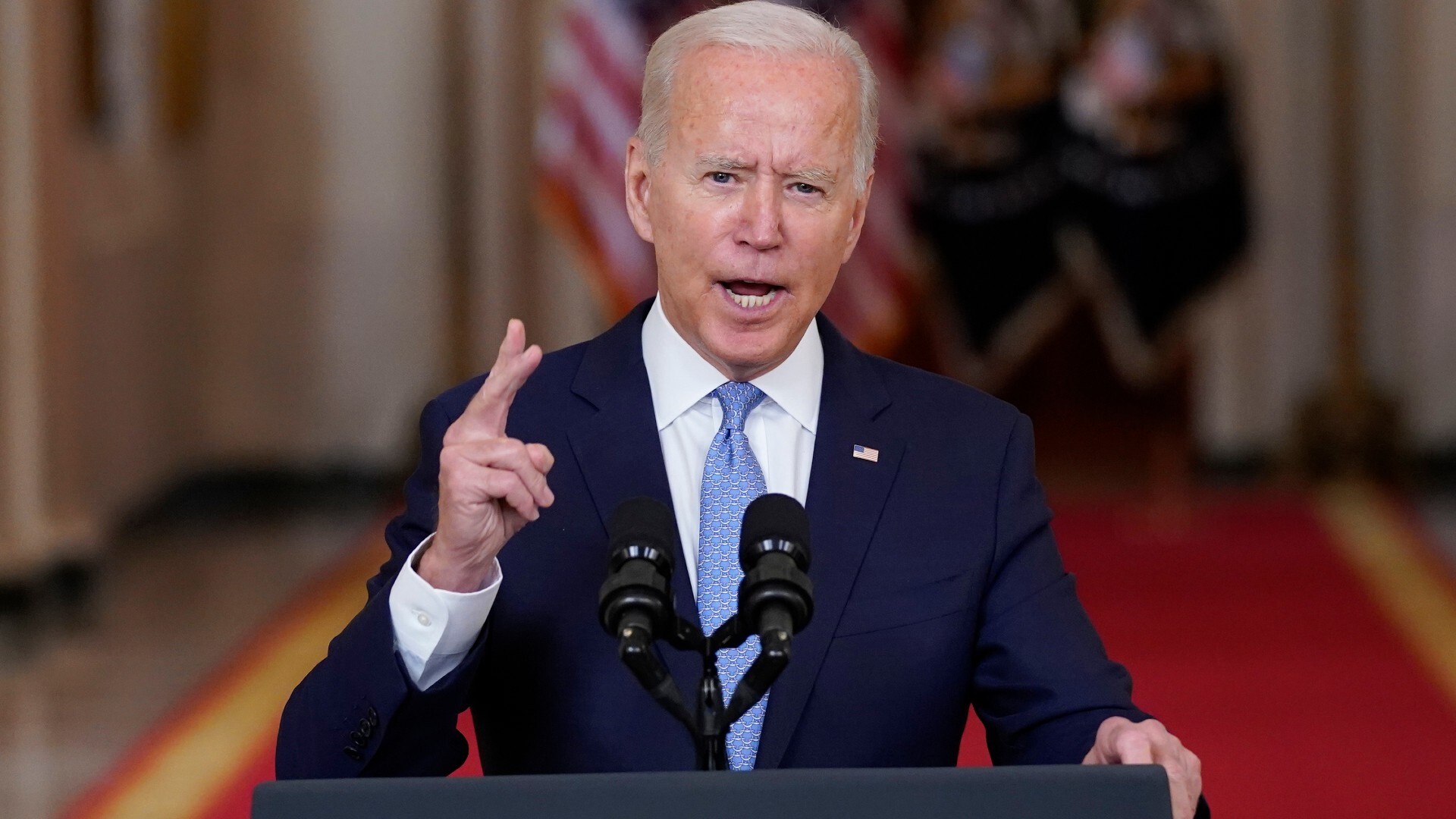
Biden says Afghanistan exit marks end of US nation-building
February 29, 2020: US, Taliban reach withdrawal agreement
The Taliban and the Trump administration reach an agreement for US troops to withdraw by May 1, 2021, in exchange for stopping attacks against US forces and cutting ties with al-Qaeda.
January 15, 2021: Trump draws down troops
In its final days in office, the Trump administration announces that US forces in Afghanistan have been reduced to 2,500.
April 14, 2021: Biden continues withdrawal
President Joe Biden says he will continue with Trump’s withdrawal agreement, but pushes back the deadline.
He says all US troops will be out of Afghanistan by September 11, 2021 – the 20th anniversary of the 9/11 attacks.
Video Duration 25 minutes 00 seconds
25:00
Has the US conceded defeat in Afghanistan? | Inside Story
July 8, 2021: Biden moves up deadline
Two days after US forces leave the Bagram Airfield, its largest military installation in Afghanistan, Biden announces that US troops will completely withdraw from Afghanistan by August 31.
He says recent advances by the Taliban will not change the withdrawal timeframe.
August 6, 2021: Taliban offensive
The Taliban’s
lightning-fast advance
, launched in May, sees the group on August 6 take its first provincial capital, Zaranj, since the offensive began.
At least 17 more provinces fall to the Taliban in the coming days, as the group poises itself to take Kabul.
August 15, 2021: Taliban enter Kabul
The Taliban enter Kabul with no resistance as President Ashraf Ghani flees the country.
The speed of the fall of the Afghan government upends even the least optimistic assessments from Western intelligence agencies, and sends countries scrambling to evacuate citizens and vulnerable Afghans through the Kabul airport, which comes under US military control.
Video Duration 02 minutes 38 seconds
02:38
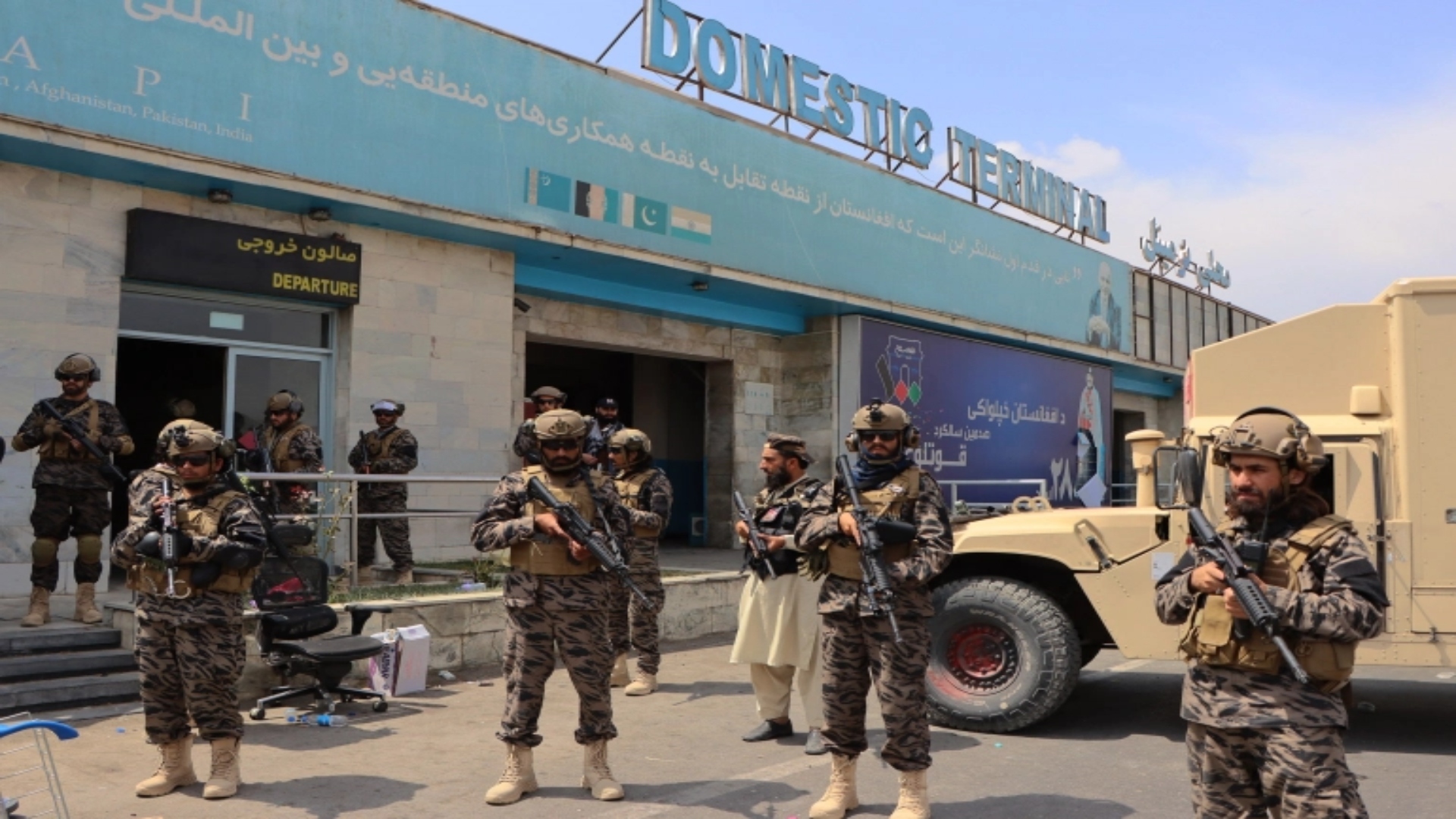
Taliban says Afghanistan ‘free nation’ as it hails US exit
August 26, 2021: ISKP attacks airport
As chaotic evacuation efforts continue, The Islamic State in Khorasan Province, or ISKP (ISIS-K), attacks the Kabul airport in a bombing that kills nearly 200 Afghans and 13 members of the US military.
The attack proves one of the deadliest for US forces since they first entered Afghanistan.
A resulting
US drone raid
kills several civilians, including children, in Kabul.
August 30, 2021: All US Troops leave Afghanistan
The Pentagon announces that
all US troops have left Afghanistan
– With the last plane lifting off just before midnight, ahead of the August 31 deadline.
At least 100 US citizens remain in Afghanistan, as well as an untold number of Afghans who worked for the US government.
The Taliban seize Kabul airport, which has not been operational since, as the US moves its Afghanistan diplomatic team to Doha, Qatar. | |||||||||||||||
| Markdown | Advertisement
Skip links[Skip to Content](https://www.aljazeera.com/news/2021/9/6/timeline-how-september-11-2001-led-to-uss-longest-war#main-content-area)
[Live](https://www.aljazeera.com/video/live)
Sign up
Navigation menu
- [News](https://www.aljazeera.com/news/)
Show more news sections
- [Africa](https://www.aljazeera.com/africa/)
- [Asia](https://www.aljazeera.com/asia/)
- [US & Canada](https://www.aljazeera.com/us-canada/)
- [Latin America](https://www.aljazeera.com/latin-america/)
- [Europe](https://www.aljazeera.com/europe/)
- [Asia Pacific](https://www.aljazeera.com/asia-pacific/)
- [Middle East](https://www.aljazeera.com/middle-east/)
- [Explained](https://www.aljazeera.com/tag/explainer/)
- [Opinion](https://www.aljazeera.com/opinion/)
- [Sport](https://www.aljazeera.com/sports/)
- [Video](https://www.aljazeera.com/videos/)
- More
Show more sections
- [Features](https://www.aljazeera.com/features/)
- [Economy](https://www.aljazeera.com/economy/)
- [Human Rights](https://www.aljazeera.com/tag/human-rights/)
- [Climate Crisis](https://www.aljazeera.com/climate-crisis)
- [Investigations](https://www.aljazeera.com/investigations/)
- [Interactives](https://www.aljazeera.com/interactives/)
- [In Pictures](https://www.aljazeera.com/gallery/)
- [Science & Technology](https://www.aljazeera.com/tag/science-and-technology/)
- [Podcasts](https://www.aljazeera.com/audio/podcasts)
- [Travel](https://www.aljazeera.com/travel)
[Live](https://www.aljazeera.com/video/live)
Click here to search
Sign up
Navigation menu
- [**Donald Trump**](https://www.aljazeera.com/tag/donald-trump/)
- [What to know about the SAVE Act](https://www.aljazeera.com/news/2026/4/15/what-is-trump-backed-save-america-act-and-what-could-it-mean-for-us-vote)
- [Trump’s midterm strategy](https://www.aljazeera.com/news/longform/2026/2/27/like-its-2024-again-trump-takes-centre-stage-in-2026-midterm-elections)
- [Why did Trump fire Pam Bondi?](https://www.aljazeera.com/news/2026/4/3/why-did-trump-fire-pam-bondi-from-justice-department-who-is-todd-blanche)
- [Could the US oil blockade snuff out the Cuban cigar?](https://www.aljazeera.com/news/longform/2026/4/15/could-the-us-oil-blockade-snuff-out-the-cuban-cigar)
[News](https://www.aljazeera.com/news/)\|[Taliban](https://www.aljazeera.com/tag/taliban/)
# Timeline: How September 11, 2001 led to US’s longest war
*How the 9/11 attacks led to the US’s 20-year deployment in Afghanistan and its chaotic withdrawal.*
Save
Click here to share on social media
Share
Add Al Jazeera on Google

The US withdrew from Afghanistan on August 30, ending its 20-year involvement in the conflict \[File: Omar Sobhani/Reuters\]
Published On 6 Sep 20216 Sep 2021
The September 11, 2001 attacks on the United States set off a series of events that would see Washington – in just a month – begin the longest war in the country’s history.
Twenty years later, the US will mark the anniversary of the attacks less than two weeks after [completing a chaotic withdrawal](https://www.aljazeera.com/news/2021/8/31/defiant-biden-defends-afghanistan-withdrawal-as-criticism-mounts) from the now Taliban-controlled country.
## Recommended Stories
list of 3 items
- list 1 of 3[Has the US conceded defeat in Afghanistan?](https://www.aljazeera.com/video/inside-story/2021/9/1/has-the-us-conceded-defeat-in-afghanistan)
- list 2 of 3[Putin says US achieved ‘zero’ in Afghanistan](https://www.aljazeera.com/news/2021/9/1/putin-says-us-achieved-zero-in-afghanistan)
- list 3 of 3[US looking at land routes to continue Afghanistan evacuations](https://www.aljazeera.com/news/2021/9/1/us-looking-at-land-routes-to-continue-afghanistan-evacuations)
end of list
The 20-year conflict left about 69,000 Afghan security forces and at least 51,000 Afghan civilians dead, according to research by Brown University. About 2,500 members of the US military and 1,144 members of allied-NATO militaries died during the fighting.
Below is a timeline of how events unfolded.
## September 11, 2001: US attacked
Nineteen members of al-Qaeda, a group granted sanctuary in by Taliban-controlled Afghanistan, hijack four commercial airliners in the US.
Two of the planes are flown into the World Trade Center in New York City, collapsing both towers.
One plane is flown into the Pentagon, the seat of the US Department of Defense, in Virginia.
The fourth plane crashes into a field in Pennsylvania, after passengers on board hearing of the other attacks, storm the cockpit.
A total of 2,977 people were killed in the attacks.

Smoke pours from the twin towers of the World Trade Center after they were hit by two hijacked airliners on September 11, 2001, in New York City \[File: Robert Giroux/Getty Images\]
## September 18, 2001: AUMF approved
Then-President George W Bush signs the 2001 Authorisation of Use of Military Force (AUMF).
The resolution, which was passed by Congress with only one legislator objecting, [legally permits the US president](https://www.aljazeera.com/news/2021/3/24/why-it-is-bidens-call-on-the-future-of-us-troops-in-afghanistan), without further congressional approval, to use military action against a wide array of people or groups that “planned, authorised, committed, or aided the terrorist attacks that occurred on September 11, 2001 or harbored such organizations or persons”.
Advertisement
## October 7, 2001: ‘Enduring Freedom’ launched
Less than a month after the September 11 attacks, US President George W Bush launches “Operation Enduring Freedom” in Afghanistan, after the Taliban refuses to hand over al-Qaeda leader Osama bin Laden.
### Sign up for Al Jazeera
#### Americas Coverage Newsletter
protected by **reCAPTCHA**
In a matter of weeks, the US-led forces overthrow the Taliban, which had been in power since 1996.
Apart from air raids, the US also gives backing to the Afghan Northern Alliance, which had been fighting the Taliban, contributing paramilitary teams from the CIA and special forces.
Some 1,000 American soldiers are deployed on the ground in November, rising to 10,000 the year after.

US Marines survey the area from an armoured vehicle near Kandahar, Afghanistan \[File: EPA\]
## April 17, 2002: Transitional Afghan govt
A transitional government led by Hamid Karzai is established in Kabul.
US Congress approves \$38bn in spending as part of Bush’s plan to rebuild Afghanistan.
## October 10, 2002: Iraq AUMF approved
Congress passes the 2002 Iraq AUMF after the Bush administration warns the Baghdad is developing “weapons of mass destruction”.
Bush signs the resolution into law on October 16.
The resolution sets the US on track for the invasion of Iraq, although no evidence would be found to substantiate the Bush administration’s claims.
## 2003-2008: Taliban regroups, Bush sends more troops
Attention is diverted from Afghanistan as US forces in 2003 mount an invasion of Iraq.
As attention turns to Iraq, the Taliban and other armed groups regroup in their strongholds in the south and east of Afghanistan, from where they can easily travel to and from Pakistani tribal areas.
In 2008, the US command on the ground calls for more manpower to carry out an effective strategy against the Taliban.
Bush agrees to send additional soldiers and by mid-2008 there are 48,500 US troops in the country.
Video Player is loading.
Play Video
Play
Skip Backward
Skip Forward
Mute
Current Time 0:00
/
Duration 0:00
Loaded: 0\.00%
0:00
Stream Type LIVE
Seek to live, currently behind liveLIVE
Remaining Time \-0:00
1x
Playback Rate
- 2x
- 1\.75x
- 1\.5x
- 1\.25x
- 1x, selected
- 0\.75x
- 0\.5x
Chapters
- Chapters
Descriptions
- descriptions off, selected
Captions
- captions settings, opens captions settings dialog
- captions off, selected
Quality Levels
Audio Track
Fullscreen
This is a modal window.
Beginning of dialog window. Escape will cancel and close the window.
Text
Color
Opacity
Text Background
Color
Opacity
Caption Area Background
Color
Opacity
Font Size
Text Edge Style
Font Family
Reset
Done
Close Modal Dialog
End of dialog window.
Close Modal Dialog
This is a modal window. This modal can be closed by pressing the Escape key or activating the close button.
Video Duration 40 minutes 05 seconds
40:05
- Now Playing
Video Duration 40 minutes 05 seconds
40:05
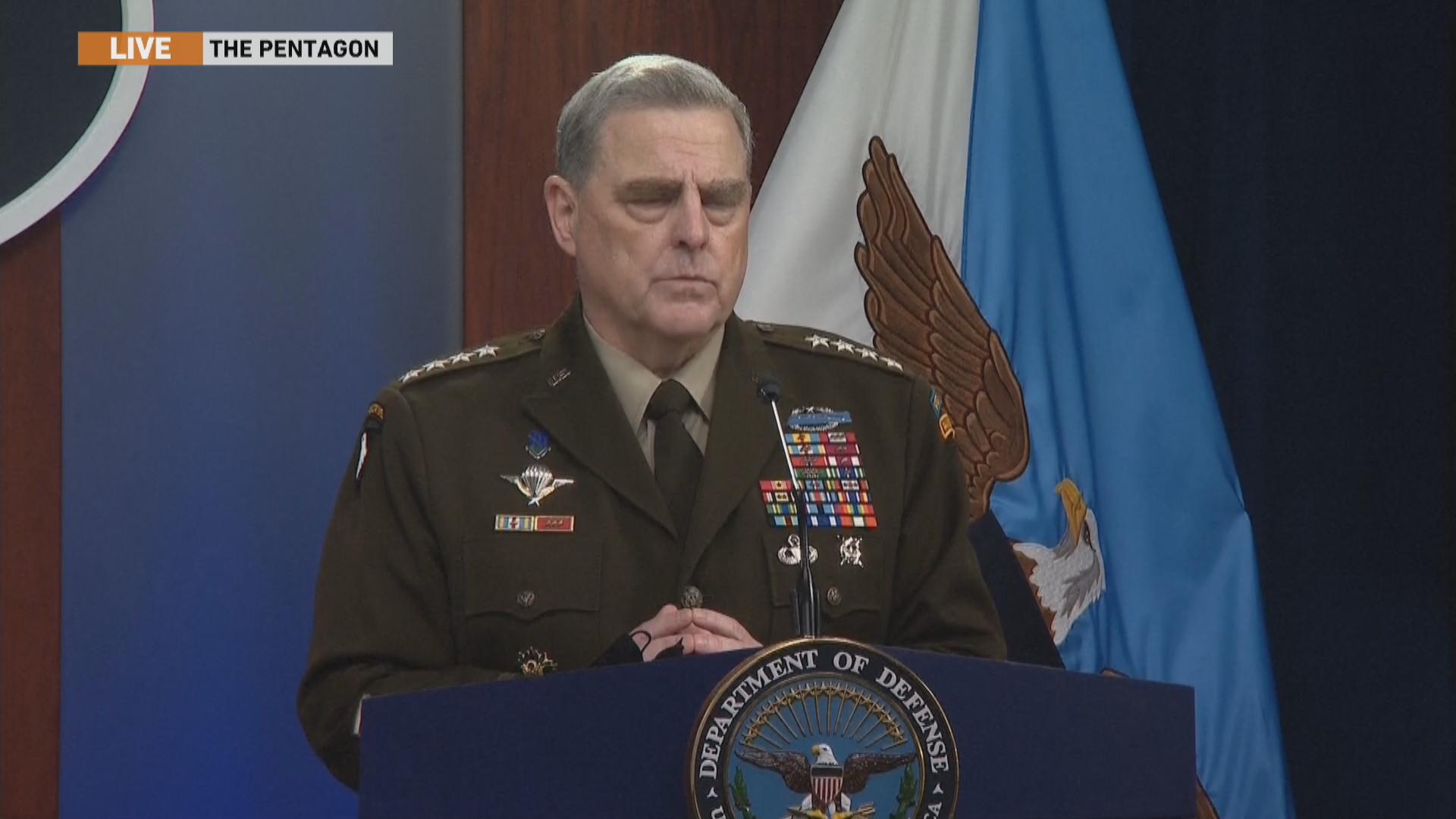
### US: Pentagon delivers first remarks since end of Afghan mission
- Next
Video Duration 27 minutes 25 seconds
27:25

### Who will shape the global agenda — the left or far right?
- Video Duration 04 minutes 38 seconds
04:38
### Iranian source to Al Jazeera: Tehran feels deceived as US, Iran on verge of escalation
- Video Duration 03 minutes 01 seconds
03:01
### Netanyahu requests to cancel corruption trial testimony: Israeli media
- Video Duration 03 minutes 21 seconds
03:21
### Israeli army reports casualties in southern Lebanon despite ceasefire
Show more videos
## 2009: Number of soldiers peaks under Obama
In 2009, in the first months of the presidency of Barack Obama – elected on campaign promises to end the two wars in Iraq and Afghanistan – there is a surge in the number of American soldiers in Afghanistan to about 68,000.
In December, Obama raises the strength of US forces in Afghanistan to approximately 100,000.
The objective, the US says, is to halt the Taliban militarily and to strengthen Afghan institutions.
In announcing the increase, Obama also set a deadline, saying US forces would begin to reduce US force numbers in 2011.
## May 2, 2011: Bin Laden killed in Pakistan
Al-Qaeda leader Osama bin Laden, who the US has identified as the mastermind behind the 9/11 attack, is killed on May 2, 2011, during an operation by US special forces in Pakistan, where he is in hiding.

People walk past Osama Bin Laden’s compound, where he was killed during a raid by US special forces in Abbottabad, Pakistan \[Getty Images\]
## June 2011: Obama announces troop withdrawal
Obama announces the US will begin withdrawing troops from Afghanistan, as the first attempts to negotiate between the US, Taliban and the Afghan government begin.
Advertisement
By December, the US completely withdraws troops from Iraq.
## 2014: End of Afghanistan combat operations
In September 2014, Afghanistan signs a bilateral security accord with the US and a similar agreement with NATO: 12,500 foreign soldiers, of which 9,800 are Americans, will remain in the country in 2015, after the end of the NATO combat mission at the end of 2014.
From the beginning of 2015, American troops will be charged with two missions: “anti-terrorist” operations against al-Qaeda and training Afghan forces.
In late December, the NATO combat mission ends, and is replaced by an assistance mission dubbed, “Resolute Support”.
However, the security situation deteriorates.
## 2015: US bombs MSF clinic
On October 3, 2015, at the height of combat between armed groups and the Afghan army, backed by NATO special forces, a US air raid bombs a hospital run by Doctors Without Borders ( Medecins Sans Frontiers, MSF) in northern Kunduz province, killing 42, including 24 patients and 14 members of the NGO.

An employee of Doctors Without Borders, MSF, walks inside the charred remains of the organisation’s hospital after it was hit by a US air raid in Kunduz, Afghanistan \[File: Najim Rahim/The Associated Press\]
## July 6, 2016: Obama slows withdrawal
Obama again slows down the pace of US troop withdrawal, saying that 8,400 US troops will remain in Afghanistan into 2017.
## 2017: Trump increases troops
On February 1, 2017, a US government report says that losses of Afghan security forces have climbed by 35 percent in 2016 compared with the previous year.
On February 9, the US general in command of the NATO forces, General John Nicholson, warns that he needs thousands more troops, telling Congress: “I believe we’re in a stalemate.”
On August 21, newly elected President Donald Trump clears the way for the deployment of thousands more US troops to Afghanistan in his first formal address.
Trump later deploys about 3,000 more troops to Afghanistan, bringing the total US troops in the country to about 14,000.
## January 28, 2019: US, Taliban agree on ‘framework’
US officials announce negotiators in Doha, Qatar and a Taliban delegation have agreed in principle to a “framework” for an eventual US withdrawal.
Under the framework, which was established in talks that did not include the Afghan government, the Taliban would guarantee the territory they controlled would not become “a platform for international terrorist groups or individuals” in exchange for peace talks with the Taliban and Afghan government.
Video Player is loading.
Play Video
Play
Skip Backward
Skip Forward
Mute
Current Time 0:00
/
Duration 0:00
Loaded: 0\.00%
0:00
Stream Type LIVE
Seek to live, currently behind liveLIVE
Remaining Time \-0:00
1x
Playback Rate
- 2x
- 1\.75x
- 1\.5x
- 1\.25x
- 1x, selected
- 0\.75x
- 0\.5x
Chapters
- Chapters
Descriptions
- descriptions off, selected
Captions
- captions settings, opens captions settings dialog
- captions off, selected
Quality Levels
Audio Track
Fullscreen
This is a modal window.
Beginning of dialog window. Escape will cancel and close the window.
Text
Color
Opacity
Text Background
Color
Opacity
Caption Area Background
Color
Opacity
Font Size
Text Edge Style
Font Family
Reset
Done
Close Modal Dialog
End of dialog window.
Close Modal Dialog
This is a modal window. This modal can be closed by pressing the Escape key or activating the close button.
Video Duration 02 minutes 25 seconds
02:25
Biden says Afghanistan exit marks end of US nation-building
## February 29, 2020: US, Taliban reach withdrawal agreement
The Taliban and the Trump administration reach an agreement for US troops to withdraw by May 1, 2021, in exchange for stopping attacks against US forces and cutting ties with al-Qaeda.
## January 15, 2021: Trump draws down troops
In its final days in office, the Trump administration announces that US forces in Afghanistan have been reduced to 2,500.
## April 14, 2021: Biden continues withdrawal
President Joe Biden says he will continue with Trump’s withdrawal agreement, but pushes back the deadline.
Advertisement
He says all US troops will be out of Afghanistan by September 11, 2021 – the 20th anniversary of the 9/11 attacks.
Video Player is loading.
Play Video
Play
Skip Backward
Skip Forward
Mute
Current Time 0:00
/
Duration 0:00
Loaded: 0\.00%
0:00
Stream Type LIVE
Seek to live, currently behind liveLIVE
Remaining Time \-0:00
1x
Playback Rate
- 2x
- 1\.75x
- 1\.5x
- 1\.25x
- 1x, selected
- 0\.75x
- 0\.5x
Chapters
- Chapters
Descriptions
- descriptions off, selected
Captions
- captions settings, opens captions settings dialog
- captions off, selected
Quality Levels
Audio Track
Fullscreen
This is a modal window.
Beginning of dialog window. Escape will cancel and close the window.
Text
Color
Opacity
Text Background
Color
Opacity
Caption Area Background
Color
Opacity
Font Size
Text Edge Style
Font Family
Reset
Done
Close Modal Dialog
End of dialog window.
Close Modal Dialog
This is a modal window. This modal can be closed by pressing the Escape key or activating the close button.
Video Duration 25 minutes 00 seconds
25:00
Has the US conceded defeat in Afghanistan? \| Inside Story
## July 8, 2021: Biden moves up deadline
Two days after US forces leave the Bagram Airfield, its largest military installation in Afghanistan, Biden announces that US troops will completely withdraw from Afghanistan by August 31.
He says recent advances by the Taliban will not change the withdrawal timeframe.
## August 6, 2021: Taliban offensive
The Taliban’s [lightning-fast advance](https://www.aljazeera.com/news/2021/8/12/timeline-taliban-advance-afghanistan-capitals-provinces), launched in May, sees the group on August 6 take its first provincial capital, Zaranj, since the offensive began.
At least 17 more provinces fall to the Taliban in the coming days, as the group poises itself to take Kabul.
## August 15, 2021: Taliban enter Kabul
The Taliban enter Kabul with no resistance as President Ashraf Ghani flees the country.
The speed of the fall of the Afghan government upends even the least optimistic assessments from Western intelligence agencies, and sends countries scrambling to evacuate citizens and vulnerable Afghans through the Kabul airport, which comes under US military control.
Video Player is loading.
Play Video
Play
Skip Backward
Skip Forward
Mute
Current Time 0:00
/
Duration 0:00
Loaded: 0\.00%
0:00
Stream Type LIVE
Seek to live, currently behind liveLIVE
Remaining Time \-0:00
1x
Playback Rate
- 2x
- 1\.75x
- 1\.5x
- 1\.25x
- 1x, selected
- 0\.75x
- 0\.5x
Chapters
- Chapters
Descriptions
- descriptions off, selected
Captions
- captions settings, opens captions settings dialog
- captions off, selected
Quality Levels
Audio Track
Fullscreen
This is a modal window.
Beginning of dialog window. Escape will cancel and close the window.
Text
Color
Opacity
Text Background
Color
Opacity
Caption Area Background
Color
Opacity
Font Size
Text Edge Style
Font Family
Reset
Done
Close Modal Dialog
End of dialog window.
Close Modal Dialog
This is a modal window. This modal can be closed by pressing the Escape key or activating the close button.
Video Duration 02 minutes 38 seconds
02:38
Taliban says Afghanistan ‘free nation’ as it hails US exit
August 26, 2021: ISKP attacks airport
As chaotic evacuation efforts continue, The Islamic State in Khorasan Province, or ISKP (ISIS-K), attacks the Kabul airport in a bombing that kills nearly 200 Afghans and 13 members of the US military.
The attack proves one of the deadliest for US forces since they first entered Afghanistan.
A resulting [US drone raid](https://www.aljazeera.com/news/2021/8/30/afghanistan-children-among-civilians-killed-in-us-drone-strike) kills several civilians, including children, in Kabul.
## August 30, 2021: All US Troops leave Afghanistan
The Pentagon announces that [all US troops have left Afghanistan](https://www.aljazeera.com/news/2021/8/30/white-house-confirms-kabul-airport-rocket-attack-live-news) – With the last plane lifting off just before midnight, ahead of the August 31 deadline.
At least 100 US citizens remain in Afghanistan, as well as an untold number of Afghans who worked for the US government.
The Taliban seize Kabul airport, which has not been operational since, as the US moves its Afghanistan diplomatic team to Doha, Qatar.
***
Advertisement
***
- ## About
About
Show more
- [About Us](https://www.aljazeera.com/about-us)
- [Code of Ethics](https://www.aljazeera.com/code-of-ethics/)
- [Terms and Conditions](https://www.aljazeera.com/terms-and-conditions/)
- [EU/EEA Regulatory Notice](https://www.aljazeera.com/eu-eea-regulatory/)
- [Privacy Policy](https://privacy.aljazeera.net/)
- [Cookie Policy](https://privacy.aljazeera.net/cookie/)
- [Cookie PreferencesManage preferences](https://www.aljazeera.com/)
- [Accessibility Statement](https://trust.aljazeera.net/accessibility/)
- [Sitemap](https://www.aljazeera.com/sitemap)
- [Work for us](https://careers.aljazeera.net/)
- ## Connect
Connect
Show more
- [Contact Us](https://network.aljazeera.net/en/contact?tid=6)
- [User Accounts Help](https://www.aljazeera.com/user-accounts-help)
- [Advertise with us](https://commercial.aljazeera.net/)
- [Stay Connected](https://www.aljazeera.com/stay-connected)
- [Newsletters](https://www.aljazeera.com/newsletters)
- [Channel Finder](https://sat.aljazeera.net/en)
- [TV Schedule](https://www.aljazeera.com/schedule/)
- [Podcasts](https://www.aljazeera.com/podcasts/)
- [Submit a Tip](https://webapps.aljazeera.net/aje/tips/)
- [Paid Partner Content](https://www.aljazeera.com/sponsored)
- ## Our Channels
Our Channels
Show more
- [Al Jazeera Arabic](http://aljazeera.net/)
- [Al Jazeera English](https://www.aljazeera.com/)
- [Al Jazeera Investigative Unit](https://www.ajiunit.com/)
- [Al Jazeera Mubasher](https://www.aljazeeramubasher.net/)
- [Al Jazeera Documentary](http://doc.aljazeera.net/)
- [Al Jazeera Balkans](http://balkans.aljazeera.net/)
- [AJ+](http://ajplus.net/)
- ## Our Network
Our Network
Show more
- [Al Jazeera Centre for Studies](http://studies.aljazeera.net/en/)
- [Al Jazeera Media Institute](http://training.aljazeera.net/)
- [Learn Arabic](http://learning.aljazeera.net/)
- [Al Jazeera Centre for Public Liberties & Human Rights](http://liberties.aljazeera.com/en)
- [Al Jazeera Forum](http://forum.aljazeera.net/)
- [Al Jazeera Hotel Partners](https://hotels.aljazeera.net/en)
Follow Al Jazeera English:

© 2026 Al Jazeera Media Network
Your browser does not support the audio element.
***
## You rely on Al Jazeera for truth and transparency
We and our 999 partners store and access personal data, like browsing data or unique identifiers, on your device. Selecting Allow all enables tracking technologies to support the purposes shown under we and our partners process data to provide. Selecting Reject all or withdrawing your consent will disable them. If trackers are disabled, some content and ads you see may not be as relevant to you. You can resurface this menu to change your choices or withdraw consent at any time by clicking the Manage preferences link on the bottom of the webpage. Your choices will have effect within our Website. For more details, refer to our Privacy Policy.[To learn more, please view our Cookie Policy.](https://privacy.aljazeera.net/cookie/)
### We and our partners process data to provide:
Use precise geolocation data. Actively scan device characteristics for identification. Store and/or access information on a device. Personalised advertising and content, advertising and content measurement, audience research and services development. List of Partners (vendors)
Allow all
Reject all
Manage preferences | |||||||||||||||
| Readable Markdown | The September 11, 2001 attacks on the United States set off a series of events that would see Washington – in just a month – begin the longest war in the country’s history.
Twenty years later, the US will mark the anniversary of the attacks less than two weeks after [completing a chaotic withdrawal](https://www.aljazeera.com/news/2021/8/31/defiant-biden-defends-afghanistan-withdrawal-as-criticism-mounts) from the now Taliban-controlled country.
## Recommended Stories
list of 3 items
- list 1 of 3[Has the US conceded defeat in Afghanistan?](https://www.aljazeera.com/video/inside-story/2021/9/1/has-the-us-conceded-defeat-in-afghanistan)
- list 2 of 3[Putin says US achieved ‘zero’ in Afghanistan](https://www.aljazeera.com/news/2021/9/1/putin-says-us-achieved-zero-in-afghanistan)
- list 3 of 3[US looking at land routes to continue Afghanistan evacuations](https://www.aljazeera.com/news/2021/9/1/us-looking-at-land-routes-to-continue-afghanistan-evacuations)
end of list
The 20-year conflict left about 69,000 Afghan security forces and at least 51,000 Afghan civilians dead, according to research by Brown University. About 2,500 members of the US military and 1,144 members of allied-NATO militaries died during the fighting.
Below is a timeline of how events unfolded.
## September 11, 2001: US attacked
Nineteen members of al-Qaeda, a group granted sanctuary in by Taliban-controlled Afghanistan, hijack four commercial airliners in the US.
Two of the planes are flown into the World Trade Center in New York City, collapsing both towers.
One plane is flown into the Pentagon, the seat of the US Department of Defense, in Virginia.
The fourth plane crashes into a field in Pennsylvania, after passengers on board hearing of the other attacks, storm the cockpit.
A total of 2,977 people were killed in the attacks.

Smoke pours from the twin towers of the World Trade Center after they were hit by two hijacked airliners on September 11, 2001, in New York City \[File: Robert Giroux/Getty Images\]
## September 18, 2001: AUMF approved
Then-President George W Bush signs the 2001 Authorisation of Use of Military Force (AUMF).
The resolution, which was passed by Congress with only one legislator objecting, [legally permits the US president](https://www.aljazeera.com/news/2021/3/24/why-it-is-bidens-call-on-the-future-of-us-troops-in-afghanistan), without further congressional approval, to use military action against a wide array of people or groups that “planned, authorised, committed, or aided the terrorist attacks that occurred on September 11, 2001 or harbored such organizations or persons”.
## October 7, 2001: ‘Enduring Freedom’ launched
Less than a month after the September 11 attacks, US President George W Bush launches “Operation Enduring Freedom” in Afghanistan, after the Taliban refuses to hand over al-Qaeda leader Osama bin Laden.
Sign up for Al JazeeraAmericas Coverage Newsletter
In a matter of weeks, the US-led forces overthrow the Taliban, which had been in power since 1996.
Apart from air raids, the US also gives backing to the Afghan Northern Alliance, which had been fighting the Taliban, contributing paramilitary teams from the CIA and special forces.
Some 1,000 American soldiers are deployed on the ground in November, rising to 10,000 the year after.

US Marines survey the area from an armoured vehicle near Kandahar, Afghanistan \[File: EPA\]
## April 17, 2002: Transitional Afghan govt
A transitional government led by Hamid Karzai is established in Kabul.
US Congress approves \$38bn in spending as part of Bush’s plan to rebuild Afghanistan.
## October 10, 2002: Iraq AUMF approved
Congress passes the 2002 Iraq AUMF after the Bush administration warns the Baghdad is developing “weapons of mass destruction”.
Bush signs the resolution into law on October 16.
The resolution sets the US on track for the invasion of Iraq, although no evidence would be found to substantiate the Bush administration’s claims.
## 2003-2008: Taliban regroups, Bush sends more troops
Attention is diverted from Afghanistan as US forces in 2003 mount an invasion of Iraq.
As attention turns to Iraq, the Taliban and other armed groups regroup in their strongholds in the south and east of Afghanistan, from where they can easily travel to and from Pakistani tribal areas.
In 2008, the US command on the ground calls for more manpower to carry out an effective strategy against the Taliban.
Bush agrees to send additional soldiers and by mid-2008 there are 48,500 US troops in the country.
Video Duration 40 minutes 05 seconds
40:05
- Now Playing
Video Duration 40 minutes 05 seconds
40:05
### US: Pentagon delivers first remarks since end of Afghan mission
- Next
Video Duration 27 minutes 25 seconds
27:25
### Who will shape the global agenda — the left or far right?
- Video Duration 04 minutes 38 seconds
04:38
### Iranian source to Al Jazeera: Tehran feels deceived as US, Iran on verge of escalation
- Video Duration 03 minutes 01 seconds
03:01
### Netanyahu requests to cancel corruption trial testimony: Israeli media
- Video Duration 03 minutes 21 seconds
03:21
### Israeli army reports casualties in southern Lebanon despite ceasefire
## 2009: Number of soldiers peaks under Obama
In 2009, in the first months of the presidency of Barack Obama – elected on campaign promises to end the two wars in Iraq and Afghanistan – there is a surge in the number of American soldiers in Afghanistan to about 68,000.
In December, Obama raises the strength of US forces in Afghanistan to approximately 100,000.
The objective, the US says, is to halt the Taliban militarily and to strengthen Afghan institutions.
In announcing the increase, Obama also set a deadline, saying US forces would begin to reduce US force numbers in 2011.
## May 2, 2011: Bin Laden killed in Pakistan
Al-Qaeda leader Osama bin Laden, who the US has identified as the mastermind behind the 9/11 attack, is killed on May 2, 2011, during an operation by US special forces in Pakistan, where he is in hiding.

People walk past Osama Bin Laden’s compound, where he was killed during a raid by US special forces in Abbottabad, Pakistan \[Getty Images\]
## June 2011: Obama announces troop withdrawal
Obama announces the US will begin withdrawing troops from Afghanistan, as the first attempts to negotiate between the US, Taliban and the Afghan government begin.
By December, the US completely withdraws troops from Iraq.
## 2014: End of Afghanistan combat operations
In September 2014, Afghanistan signs a bilateral security accord with the US and a similar agreement with NATO: 12,500 foreign soldiers, of which 9,800 are Americans, will remain in the country in 2015, after the end of the NATO combat mission at the end of 2014.
From the beginning of 2015, American troops will be charged with two missions: “anti-terrorist” operations against al-Qaeda and training Afghan forces.
In late December, the NATO combat mission ends, and is replaced by an assistance mission dubbed, “Resolute Support”.
However, the security situation deteriorates.
## 2015: US bombs MSF clinic
On October 3, 2015, at the height of combat between armed groups and the Afghan army, backed by NATO special forces, a US air raid bombs a hospital run by Doctors Without Borders ( Medecins Sans Frontiers, MSF) in northern Kunduz province, killing 42, including 24 patients and 14 members of the NGO.

An employee of Doctors Without Borders, MSF, walks inside the charred remains of the organisation’s hospital after it was hit by a US air raid in Kunduz, Afghanistan \[File: Najim Rahim/The Associated Press\]
## July 6, 2016: Obama slows withdrawal
Obama again slows down the pace of US troop withdrawal, saying that 8,400 US troops will remain in Afghanistan into 2017.
## 2017: Trump increases troops
On February 1, 2017, a US government report says that losses of Afghan security forces have climbed by 35 percent in 2016 compared with the previous year.
On February 9, the US general in command of the NATO forces, General John Nicholson, warns that he needs thousands more troops, telling Congress: “I believe we’re in a stalemate.”
On August 21, newly elected President Donald Trump clears the way for the deployment of thousands more US troops to Afghanistan in his first formal address.
Trump later deploys about 3,000 more troops to Afghanistan, bringing the total US troops in the country to about 14,000.
## January 28, 2019: US, Taliban agree on ‘framework’
US officials announce negotiators in Doha, Qatar and a Taliban delegation have agreed in principle to a “framework” for an eventual US withdrawal.
Under the framework, which was established in talks that did not include the Afghan government, the Taliban would guarantee the territory they controlled would not become “a platform for international terrorist groups or individuals” in exchange for peace talks with the Taliban and Afghan government.
Video Duration 02 minutes 25 seconds
02:25
Biden says Afghanistan exit marks end of US nation-building
## February 29, 2020: US, Taliban reach withdrawal agreement
The Taliban and the Trump administration reach an agreement for US troops to withdraw by May 1, 2021, in exchange for stopping attacks against US forces and cutting ties with al-Qaeda.
## January 15, 2021: Trump draws down troops
In its final days in office, the Trump administration announces that US forces in Afghanistan have been reduced to 2,500.
## April 14, 2021: Biden continues withdrawal
President Joe Biden says he will continue with Trump’s withdrawal agreement, but pushes back the deadline.
He says all US troops will be out of Afghanistan by September 11, 2021 – the 20th anniversary of the 9/11 attacks.
Video Duration 25 minutes 00 seconds
25:00
Has the US conceded defeat in Afghanistan? \| Inside Story
## July 8, 2021: Biden moves up deadline
Two days after US forces leave the Bagram Airfield, its largest military installation in Afghanistan, Biden announces that US troops will completely withdraw from Afghanistan by August 31.
He says recent advances by the Taliban will not change the withdrawal timeframe.
## August 6, 2021: Taliban offensive
The Taliban’s [lightning-fast advance](https://www.aljazeera.com/news/2021/8/12/timeline-taliban-advance-afghanistan-capitals-provinces), launched in May, sees the group on August 6 take its first provincial capital, Zaranj, since the offensive began.
At least 17 more provinces fall to the Taliban in the coming days, as the group poises itself to take Kabul.
## August 15, 2021: Taliban enter Kabul
The Taliban enter Kabul with no resistance as President Ashraf Ghani flees the country.
The speed of the fall of the Afghan government upends even the least optimistic assessments from Western intelligence agencies, and sends countries scrambling to evacuate citizens and vulnerable Afghans through the Kabul airport, which comes under US military control.
Video Duration 02 minutes 38 seconds
02:38
Taliban says Afghanistan ‘free nation’ as it hails US exit
August 26, 2021: ISKP attacks airport
As chaotic evacuation efforts continue, The Islamic State in Khorasan Province, or ISKP (ISIS-K), attacks the Kabul airport in a bombing that kills nearly 200 Afghans and 13 members of the US military.
The attack proves one of the deadliest for US forces since they first entered Afghanistan.
A resulting [US drone raid](https://www.aljazeera.com/news/2021/8/30/afghanistan-children-among-civilians-killed-in-us-drone-strike) kills several civilians, including children, in Kabul.
## August 30, 2021: All US Troops leave Afghanistan
The Pentagon announces that [all US troops have left Afghanistan](https://www.aljazeera.com/news/2021/8/30/white-house-confirms-kabul-airport-rocket-attack-live-news) – With the last plane lifting off just before midnight, ahead of the August 31 deadline.
At least 100 US citizens remain in Afghanistan, as well as an untold number of Afghans who worked for the US government.
The Taliban seize Kabul airport, which has not been operational since, as the US moves its Afghanistan diplomatic team to Doha, Qatar. | |||||||||||||||
| ML Classification | ||||||||||||||||
| ML Categories |
Raw JSON{
"/News": 874,
"/News/World_News": 448,
"/Law_and_Government": 176,
"/Law_and_Government/Military": 165,
"/Law_and_Government/Military/Other": 132
} | |||||||||||||||
| ML Page Types |
Raw JSON{
"/Article": 988,
"/Article/News_Update": 825
} | |||||||||||||||
| ML Intent Types |
Raw JSON{
"Informational": 999
} | |||||||||||||||
| Content Metadata | ||||||||||||||||
| Language | en | |||||||||||||||
| Author | null | |||||||||||||||
| Publish Time | not set | |||||||||||||||
| Original Publish Time | 2021-09-06 13:49:20 (4 years ago) | |||||||||||||||
| Republished | No | |||||||||||||||
| Word Count (Total) | 3,173 | |||||||||||||||
| Word Count (Content) | 1,832 | |||||||||||||||
| Links | ||||||||||||||||
| External Links | 43 | |||||||||||||||
| Internal Links | 63 | |||||||||||||||
| Technical SEO | ||||||||||||||||
| Meta Nofollow | No | |||||||||||||||
| Meta Noarchive | No | |||||||||||||||
| JS Rendered | Yes | |||||||||||||||
| Redirect Target | null | |||||||||||||||
| Performance | ||||||||||||||||
| Download Time (ms) | 1,368 | |||||||||||||||
| TTFB (ms) | 1,359 | |||||||||||||||
| Download Size (bytes) | 60,832 | |||||||||||||||
| Shard | 165 (laksa) | |||||||||||||||
| Root Hash | 11003203525177986165 | |||||||||||||||
| Unparsed URL | com,aljazeera!www,/news/2021/9/6/timeline-how-september-11-2001-led-to-uss-longest-war s443 | |||||||||||||||