ℹ️ Skipped - page is already crawled
| Filter | Status | Condition | Details |
|---|---|---|---|
| HTTP status | PASS | download_http_code = 200 | HTTP 200 |
| Age cutoff | PASS | download_stamp > now() - 6 MONTH | 0.1 months ago |
| History drop | PASS | isNull(history_drop_reason) | No drop reason |
| Spam/ban | PASS | fh_dont_index != 1 AND ml_spam_score = 0 | ml_spam_score=0 |
| Canonical | PASS | meta_canonical IS NULL OR = '' OR = src_unparsed | Not set |
| Property | Value | |||||||||
|---|---|---|---|---|---|---|---|---|---|---|
| URL | https://www.ace.aaa.com/publications/auto/drive-smart/how-often-should-you-change-engine-oil.html | |||||||||
| Last Crawled | 2026-04-22 04:53:29 (1 day ago) | |||||||||
| First Indexed | 2021-02-05 23:10:11 (5 years ago) | |||||||||
| HTTP Status Code | 200 | |||||||||
| Content | ||||||||||
| Meta Title | How Often Should you Change Your Car’s Engine Oil? | |||||||||
| Meta Description | Years ago, the rule of thumb was to change the oil and filter about every 3,000 miles, but today, that standard is woefully out of date., Years ago, the rule of thumb was to change the oil and filter about every 3,000 miles, but today, that standard is woefully out of date. | |||||||||
| Meta Canonical | null | |||||||||
| Boilerpipe Text | By Peter Bohr
May 19, 2020
This is among motorists' most frequently asked questions.
Years ago, the prevailing wisdom was to change the oil and filter about every 3,000 miles. That advice—accurate at the time—was gospel for decades. For most of today’s cars, however, that standard is woefully out of date. The fact is, unnecessary oil changes do damage to the environment and your wallet.
Environmental aspects
Although most motor oil is collected after use, a significant amount—40 percent of the oil pollution in the nation’s harbors and waterways—makes its way into lakes, streams, oceans, and groundwater. There, toxic elements like arsenic, cadmium, and lead endanger waterfowl, insects, and fish. A gallon of the stuff can foul a million gallons of drinking water. So the less often oil is changed, the smaller the chance it might inadvertently spill onto the ground or end up running into a storm drain.
Budget considerations
If being green doesn’t cause you to reconsider how often you change your oil, the idea of saving green might. Too-frequent oil changes won’t damage your engine, but they won’t do it any good, either. Today, automakers typically recommend oil-change intervals of between 5,000 and 10,000 miles—if they recommend set intervals at all. Depending on how many quarts your engine holds and the type of oil it requires, you’re tossing away up to $100 for the oil, filter, and disposal fees every time you order an unnecessary oil change.
Better oil, better engines
Why are 3,000-mile oil-change intervals no longer the best practice? In a nutshell, because of improvements to motor oil and car engines. Oil is essential because it lubricates an engine’s moving parts, reducing friction between, say, the pistons and cylinders as they move against each other.
The problem is that oil degrades over time. Byproducts of the combustion process—moisture and unburned fuel—dirty it. Heat causes some of it to evaporate, leaving it thicker. Fast-moving engine parts whip it into foam. Yucky, gelatinous sludge forms in cooler parts of the engine.
The oil filter removes some contaminants—until it becomes overwhelmed. And motor-oil makers add various potions to inhibit such things as foam and sludge. But the additives dissipate over time.
Thankfully, motor-oil makers continue to get better at their craft. Engine oils are more thermally stable and less volatile, primarily because of the wider use of synthetic and semisynthetic base stocks. But at some point, you still need to change it—just not as frequently as before, in most cases.
On the automakers’ side, the simple carburetor in 20th-century cars has been replaced by sophisticated computer-controlled fuel-injection systems that have nearly eliminated fuel dilution. That’s just one example of engineering advances that have enhanced motor-oil life. Others include low-friction coatings inside the engine and better management of oil pressures and oil cooling.
Factors that will influence your decision
As the above information makes clear, how often you need to change your oil is likely to be at much greater intervals than every 3,000 miles. Here are some things that should influence your decision:
First, if your vehicle is new or still under warranty, it’s a no-brainer. Simply follow the mileage and time guidelines in your car’s owner’s manual. When you take your vehicle to a dealership for required inspections and maintenance—which keeps your powertrain warranty in force—oil changes at specified intervals will be a part of that procedure.
After your vehicle is out of warranty, you might choose to stay on the same service schedule. In fact, these days many dealerships sell prepaid maintenance plans that enable customers to continue following the same service intervals—including oil changes—as when their vehicles were under warranty.
Regardless of whether or not you purchase a prepaid service plan, if you have a newer car, there’s a good chance your vehicle will automatically remind you, via a visual alert on the instrument panel, that it’s time to schedule a service appointment, which sometimes includes an oil change. Such alerts typically occur every 5,000 to 10,000 miles.
Other vehicles—mainly high-end ones—sometimes have advanced oil-monitoring systems that identify when the engine oil begins to degrade. They accomplish this by analyzing your driving history and your vehicle’s operating conditions—such items as engine revs and speed, driving temperatures, number of cold starts, and overall mileage, for example.
Under favorable conditions, a car might travel up to 16,000 miles before a monitor indicates that an oil change is needed. But if the oil-monitoring system detects heavy-duty operation, it shortens the oil-change interval.
To that point, assuming your vehicle doesn’t have an advanced oil-monitoring system, there’s one other important factor to consider: your driving environment. In the maintenance section of your owner’s manual, you might find two recommended maintenance schedules: one for cars driven in "normal operating conditions” and another for those used in "severe service.” The latter is defined as operating your car under one or more of the following conditions:
Mainly short trips (5 miles or less)
Very hot, cold, or dusty climates
Sustained stop-and-go driving
Carrying heavy loads or towing a trailer.
If the way you use your vehicle falls under the severe service definition, it’s best to maintain it with the more rigorous schedule, which might mean more frequent oil changes.
The bottom line
To sum up, there’s no hard-and-fast rule for determining how often to change your vehicle’s oil. Any decision you make should take into account a number of factors: the carmaker’s requirements and recommendations, the car’s age, its accumulated mileage, your driving habits, and the environment you drive in, among others. (And FYI, virtually every manufacturer recommends changing the oil at least once a year, regardless of mileage.)
Those things being said, a sensible approach to oil changes should start with the following:
Crack open your owner’s manual and review its guidelines.
If your car has an oil-life monitor, heed it.
Seek out advice from your trusted mechanic or service adviser.
And regardless of how often you change your car’s oil, be sure to check the oil level monthly and top it up as needed, especially as the car gets older and (perhaps) burns some oil between oil changes. (If you don’t know where the dipstick is, your owner’s manual will help you locate it.) If you aren’t careful, your car can run out of oil—with catastrophic consequences.
AAA Automotive Correspondent Peter Bohr has been writing about cars for more than four decades. | |||||||||
| Markdown | Get Roadside Assistance
[Contact us](https://www.ace.aaa.com/information/contact-us.html?intcmp=nav:contactus)[Join AAA](https://app.ace.aaa.com/membership/newjoin/landing?campaigncode=0033801&intcmp=nav:joinaaa)
All products
Become a member
Insurance & claims
Go travel
Find discounts
Find more
Manage account

AAA MagazinesHow often should you change your car’s engine oil?
Photo by Joe Belanger / Alamy Stock Photo
By Peter BohrMay 19, 2020
***
## **This is among motorists' most frequently asked questions.**
Years ago, the prevailing wisdom was to change the oil and filter about every 3,000 miles. That advice—accurate at the time—was gospel for decades. For most of today’s cars, however, that standard is woefully out of date. The fact is, unnecessary oil changes do damage to the environment and your wallet.
## **Environmental aspects**
Although most motor oil is collected after use, a significant amount—40 percent of the oil pollution in the nation’s harbors and waterways—makes its way into lakes, streams, oceans, and groundwater. There, toxic elements like arsenic, cadmium, and lead endanger waterfowl, insects, and fish. A gallon of the stuff can foul a million gallons of drinking water. So the less often oil is changed, the smaller the chance it might inadvertently spill onto the ground or end up running into a storm drain.
## **Budget considerations**
If being green doesn’t cause you to reconsider how often you change your oil, the idea of saving green might. Too-frequent oil changes won’t damage your engine, but they won’t do it any good, either. Today, automakers typically recommend oil-change intervals of between 5,000 and 10,000 miles—if they recommend set intervals at all. Depending on how many quarts your engine holds and the type of oil it requires, you’re tossing away up to \$100 for the oil, filter, and disposal fees every time you order an unnecessary oil change.
## **Better oil, better engines**
Why are 3,000-mile oil-change intervals no longer the best practice? In a nutshell, because of improvements to motor oil and car engines. Oil is essential because it lubricates an engine’s moving parts, reducing friction between, say, the pistons and cylinders as they move against each other.
The problem is that oil degrades over time. Byproducts of the combustion process—moisture and unburned fuel—dirty it. Heat causes some of it to evaporate, leaving it thicker. Fast-moving engine parts whip it into foam. Yucky, gelatinous sludge forms in cooler parts of the engine.
The oil filter removes some contaminants—until it becomes overwhelmed. And motor-oil makers add various potions to inhibit such things as foam and sludge. But the additives dissipate over time.
Thankfully, motor-oil makers continue to get better at their craft. Engine oils are more thermally stable and less volatile, primarily because of the wider use of synthetic and semisynthetic base stocks. But at some point, you still need to change it—just not as frequently as before, in most cases.
On the automakers’ side, the simple carburetor in 20th-century cars has been replaced by sophisticated computer-controlled fuel-injection systems that have nearly eliminated fuel dilution. That’s just one example of engineering advances that have enhanced motor-oil life. Others include low-friction coatings inside the engine and better management of oil pressures and oil cooling.
## **Factors that will influence your decision**
As the above information makes clear, how often you need to change your oil is likely to be at much greater intervals than every 3,000 miles. Here are some things that should influence your decision:
First, if your vehicle is new or still under warranty, it’s a no-brainer. Simply follow the mileage and time guidelines in your car’s owner’s manual. When you take your vehicle to a dealership for required inspections and maintenance—which keeps your powertrain warranty in force—oil changes at specified intervals will be a part of that procedure.
After your vehicle is out of warranty, you might choose to stay on the same service schedule. In fact, these days many dealerships sell prepaid maintenance plans that enable customers to continue following the same service intervals—including oil changes—as when their vehicles were under warranty.
Regardless of whether or not you purchase a prepaid service plan, if you have a newer car, there’s a good chance your vehicle will automatically remind you, via a visual alert on the instrument panel, that it’s time to schedule a service appointment, which sometimes includes an oil change. Such alerts typically occur every 5,000 to 10,000 miles.
Other vehicles—mainly high-end ones—sometimes have advanced oil-monitoring systems that identify when the engine oil begins to degrade. They accomplish this by analyzing your driving history and your vehicle’s operating conditions—such items as engine revs and speed, driving temperatures, number of cold starts, and overall mileage, for example.
Under favorable conditions, a car might travel up to 16,000 miles before a monitor indicates that an oil change is needed. But if the oil-monitoring system detects heavy-duty operation, it shortens the oil-change interval.
To that point, assuming your vehicle doesn’t have an advanced oil-monitoring system, there’s one other important factor to consider: your driving environment. In the maintenance section of your owner’s manual, you might find two recommended maintenance schedules: one for cars driven in "normal operating conditions” and another for those used in "severe service.” The latter is defined as operating your car under one or more of the following conditions:
- Mainly short trips (5 miles or less)
- Very hot, cold, or dusty climates
- Sustained stop-and-go driving
- Carrying heavy loads or towing a trailer.
If the way you use your vehicle falls under the severe service definition, it’s best to maintain it with the more rigorous schedule, which might mean more frequent oil changes.
## **The bottom line**
To sum up, there’s no hard-and-fast rule for determining how often to change your vehicle’s oil. Any decision you make should take into account a number of factors: the carmaker’s requirements and recommendations, the car’s age, its accumulated mileage, your driving habits, and the environment you drive in, among others. (And FYI, virtually every manufacturer recommends changing the oil at least once a year, regardless of mileage.)
Those things being said, a sensible approach to oil changes should start with the following:
1. Crack open your owner’s manual and review its guidelines.
2. If your car has an oil-life monitor, heed it.
3. Seek out advice from your trusted mechanic or service adviser.
And regardless of how often you change your car’s oil, be sure to check the oil level monthly and top it up as needed, especially as the car gets older and (perhaps) burns some oil between oil changes. (If you don’t know where the dipstick is, your owner’s manual will help you locate it.) If you aren’t careful, your car can run out of oil—with catastrophic consequences.
***
*AAA Automotive Correspondent Peter Bohr has been writing about cars for more than four decades.*
Top automotive stories
[The 2024 AAA Car Guide: Find a vehicle that works for you](https://www.ace.aaa.com/automotive/advocacy/aaa-car-guide.html?intcmp=automotive-sidebar:aaa-car-guide&glintcmp=regular_sectiontitle_cardtitle_the2024aaacarguidefindavehiclethatworksforyou)
[10 things for older drivers to look for when buying a new car](https://www.ace.aaa.com/publications/auto/cars-for-older-drivers.html?intcmp=automotive-sidebar:older-drivers-buying-car&glintcmp=regular_sectiontitle_cardtitle_10thingsforolderdriverstolookforwhenbuyinganewcar)
[How to maximize the life of your car's battery](https://www.ace.aaa.com/automotive/advocacy/how-to-maximize-car-battery-life.html?intcmp=automotive-sidebar:maximize-battery-life&glintcmp=regular_sectiontitle_cardtitle_howtomaximizethelifeofyourcarsbattery)
[Navigating the latest high-tech features in cars](https://www.ace.aaa.com/publications/auto/drive-smart/high-tech-features.html?intcmp=automotive-sidebar:latest-high-tech-features&glintcmp=regular_sectiontitle_cardtitle_navigatingthelatesthightechfeaturesincars)
[A guide to road-tripping in an electric car](https://www.ace.aaa.com/automotive/advocacy/guide-to-road-tripping-in-electric-car.html?intcmp=automotive-sidebar:ev-road-tripping-guide&glintcmp=regular_sectiontitle_cardtitle_aguidetoroadtrippinginanelectriccar)
[Could the color of your car affect its resale value?](https://www.ace.aaa.com/publications/auto/drive-smart/vehicle-colors.html?intcmp=automotive-sidebar:car-color-resale-value&glintcmp=regular_sectiontitle_cardtitle_couldthecolorofyourcaraffectitsresalevalue)
[Browse all automotive articles](https://www.ace.aaa.com/aaa-insider/auto.html?intcmp=automotive-sidebar:browse-all&glintcmp=regular_sectiontitle_cardtitle_browseallautomotivearticles)
***

Follow us on Instagram
**[Follow @AAAAutoClubEnterprises](https://www.instagram.com/AAAAutoClubEnterprises)** for the latest from AAA.
Read more articles
You'll find more of the articles you love to read at **[AAA Insider](https://www.ace.aaa.com/aaa-insider.html?glintcmp=inline_sectiontitle_readmorearticles_aaainsider)**.
***
## Automotive services & discounts

Automotive services
See how we can help with Roadside Assistance, car buying, auto repair, driver education, and more.
[Learn more](https://www.ace.aaa.com/automotive.html?glintcmp=regular_sectiontitle_automotiveservices_learnmore)

AAA Approved Auto Repair
Search approximately 7,000 AAA-approved facilities throughout the U.S. and Canada.
[Find a facility](https://www.ace.aaa.com/automotive/approved-auto-repair.html?glintcmp=regular_sectiontitle_aaaapprovedautorepair_findafacility)
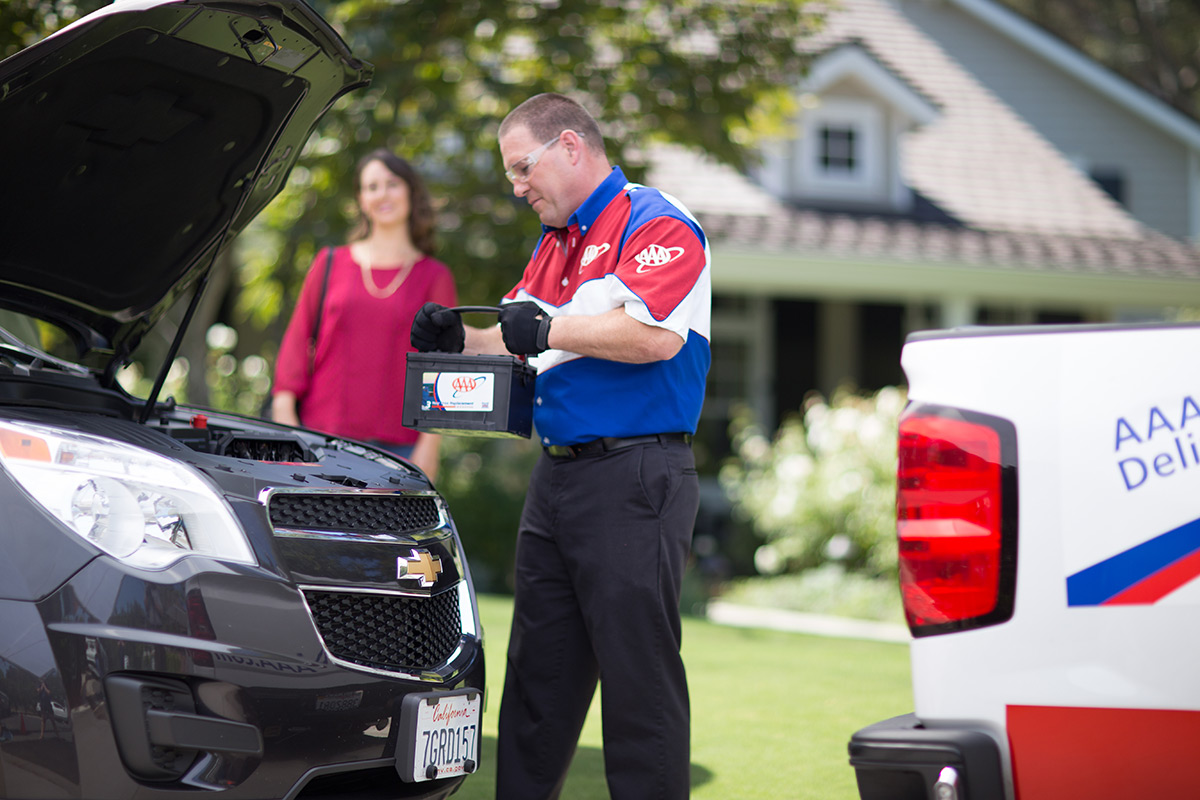
AAA Mobile Battery Service
AAA provides a convenient testing and replacement service that comes to you.
[Request service](https://www.ace.aaa.com/automotive/roadside-assistance/aaa-mobile-battery-service.html?glintcmp=regular_sectiontitle_aaamobilebatteryservice_requestservice)

Automotive discounts
Get member deals on gas, tires, auto parts, and other vehicle services and accessories.
[Browse discounts](https://www.ace.aaa.com/discounts/category/automotive.html?glintcmp=regular_sectiontitle_automotivediscounts_browsediscounts)
- # Legal
- [Privacy](https://www.ace.aaa.com/legal/privacy.html)
- [Do not sell or share my personal information](https://www.ace.aaa.com/legal/privacy.html#ccpaOptOut)
- [Service Provider Data Processing Addendum Notice](https://www.ace.aaa.com/legal/dpa.html)
- [Accessibility](https://www.ace.aaa.com/digital-accessibility.html)
- [Ad Choices](https://www.ace.aaa.com/legal/privacy.html#optOut)
- [Terms of Use](https://www.ace.aaa.com/legal/terms-of-use.html)
- [AAA Vacations/AAA Travel Best Price Guarantee](https://www.ace.aaa.com/travel/aaa-vacations-best-price-guarantee.html)
- # Discover AAA
- [Our history](https://www.ace.aaa.com/information/auto-club-history.html)
- [AAA in the community](https://www.ace.aaa.com/information/aaa-in-the-community.html)
- [Careers](https://careers.ace.aaa.com/)
- [Auto Club App](https://www.ace.aaa.com/automotive/driver-resources/auto-club-app/download.html)
- [Member guide](https://www.ace.aaa.com/content/dam/ace-assets/aaa-brand/membership/member-guides/CA-MemberGuide.pdf)
- [Sponsorship requests](https://www.ace.aaa.com/discounts/sponsorship-proposal-guidelines.html)
- [Become a participating business](https://www.ace.aaa.com/discounts/become-a-participating-business.html)
- [Become a AAA Approved Auto Repair facility](https://www.ace.aaa.com/automotive/approved-auto-repair/become-an-approved-facility.html)
- [Become a roadside assistance provider](https://www.ace.aaa.com/automotive/independent-service-provider.html)
- [Roadside Assistance feedback](https://www.ace.aaa.com/information/forms/ers-inquiry.html)
- [Membership forms](https://www.ace.aaa.com/information/membership-forms.html)
- [Suppliers: diversity and travel supplier disclosures](https://www.ace.aaa.com/information/supplier-diversity-and-disclosures.html)
- # Keep in touch
- [Contact us](https://www.ace.aaa.com/information/contact-us.html)
- [AAA magazines](https://www.ace.aaa.com/publications.html)
- [Newsroom](http://news.aaa-calif.com/)
- [Online customer service](https://www.ace.aaa.com/information/support-forms.html)
- [Find a different AAA club](https://www.aaa.com/stop/)
- Follow us:
***
CST 1016202-80 Copyright © 2026 Automobile Club of Southern California. All Rights Reserved.
The Automobile Club of Southern California is a member club affiliated with the American Automobile Association (AAA) national federation and serves members in the following California counties: Inyo, Imperial, Kern, Los Angeles, Mono, Orange, Riverside, San Bernardino, San Diego, San Luis Obispo, Santa Barbara, Tulare, and Ventura. | |||||||||
| Readable Markdown | By Peter BohrMay 19, 2020
***
**This is among motorists' most frequently asked questions.** Years ago, the prevailing wisdom was to change the oil and filter about every 3,000 miles. That advice—accurate at the time—was gospel for decades. For most of today’s cars, however, that standard is woefully out of date. The fact is, unnecessary oil changes do damage to the environment and your wallet.**Environmental aspects** Although most motor oil is collected after use, a significant amount—40 percent of the oil pollution in the nation’s harbors and waterways—makes its way into lakes, streams, oceans, and groundwater. There, toxic elements like arsenic, cadmium, and lead endanger waterfowl, insects, and fish. A gallon of the stuff can foul a million gallons of drinking water. So the less often oil is changed, the smaller the chance it might inadvertently spill onto the ground or end up running into a storm drain.**Budget considerations** If being green doesn’t cause you to reconsider how often you change your oil, the idea of saving green might. Too-frequent oil changes won’t damage your engine, but they won’t do it any good, either. Today, automakers typically recommend oil-change intervals of between 5,000 and 10,000 miles—if they recommend set intervals at all. Depending on how many quarts your engine holds and the type of oil it requires, you’re tossing away up to \$100 for the oil, filter, and disposal fees every time you order an unnecessary oil change.**Better oil, better engines** Why are 3,000-mile oil-change intervals no longer the best practice? In a nutshell, because of improvements to motor oil and car engines. Oil is essential because it lubricates an engine’s moving parts, reducing friction between, say, the pistons and cylinders as they move against each other. The problem is that oil degrades over time. Byproducts of the combustion process—moisture and unburned fuel—dirty it. Heat causes some of it to evaporate, leaving it thicker. Fast-moving engine parts whip it into foam. Yucky, gelatinous sludge forms in cooler parts of the engine. The oil filter removes some contaminants—until it becomes overwhelmed. And motor-oil makers add various potions to inhibit such things as foam and sludge. But the additives dissipate over time. Thankfully, motor-oil makers continue to get better at their craft. Engine oils are more thermally stable and less volatile, primarily because of the wider use of synthetic and semisynthetic base stocks. But at some point, you still need to change it—just not as frequently as before, in most cases. On the automakers’ side, the simple carburetor in 20th-century cars has been replaced by sophisticated computer-controlled fuel-injection systems that have nearly eliminated fuel dilution. That’s just one example of engineering advances that have enhanced motor-oil life. Others include low-friction coatings inside the engine and better management of oil pressures and oil cooling.**Factors that will influence your decision** As the above information makes clear, how often you need to change your oil is likely to be at much greater intervals than every 3,000 miles. Here are some things that should influence your decision: First, if your vehicle is new or still under warranty, it’s a no-brainer. Simply follow the mileage and time guidelines in your car’s owner’s manual. When you take your vehicle to a dealership for required inspections and maintenance—which keeps your powertrain warranty in force—oil changes at specified intervals will be a part of that procedure. After your vehicle is out of warranty, you might choose to stay on the same service schedule. In fact, these days many dealerships sell prepaid maintenance plans that enable customers to continue following the same service intervals—including oil changes—as when their vehicles were under warranty. Regardless of whether or not you purchase a prepaid service plan, if you have a newer car, there’s a good chance your vehicle will automatically remind you, via a visual alert on the instrument panel, that it’s time to schedule a service appointment, which sometimes includes an oil change. Such alerts typically occur every 5,000 to 10,000 miles. Other vehicles—mainly high-end ones—sometimes have advanced oil-monitoring systems that identify when the engine oil begins to degrade. They accomplish this by analyzing your driving history and your vehicle’s operating conditions—such items as engine revs and speed, driving temperatures, number of cold starts, and overall mileage, for example. Under favorable conditions, a car might travel up to 16,000 miles before a monitor indicates that an oil change is needed. But if the oil-monitoring system detects heavy-duty operation, it shortens the oil-change interval. To that point, assuming your vehicle doesn’t have an advanced oil-monitoring system, there’s one other important factor to consider: your driving environment. In the maintenance section of your owner’s manual, you might find two recommended maintenance schedules: one for cars driven in "normal operating conditions” and another for those used in "severe service.” The latter is defined as operating your car under one or more of the following conditions: Mainly short trips (5 miles or less) Very hot, cold, or dusty climates Sustained stop-and-go driving Carrying heavy loads or towing a trailer. If the way you use your vehicle falls under the severe service definition, it’s best to maintain it with the more rigorous schedule, which might mean more frequent oil changes.**The bottom line** To sum up, there’s no hard-and-fast rule for determining how often to change your vehicle’s oil. Any decision you make should take into account a number of factors: the carmaker’s requirements and recommendations, the car’s age, its accumulated mileage, your driving habits, and the environment you drive in, among others. (And FYI, virtually every manufacturer recommends changing the oil at least once a year, regardless of mileage.) Those things being said, a sensible approach to oil changes should start with the following: Crack open your owner’s manual and review its guidelines. If your car has an oil-life monitor, heed it. Seek out advice from your trusted mechanic or service adviser. And regardless of how often you change your car’s oil, be sure to check the oil level monthly and top it up as needed, especially as the car gets older and (perhaps) burns some oil between oil changes. (If you don’t know where the dipstick is, your owner’s manual will help you locate it.) If you aren’t careful, your car can run out of oil—with catastrophic consequences.
***
*AAA Automotive Correspondent Peter Bohr has been writing about cars for more than four decades.* | |||||||||
| ML Classification | ||||||||||
| ML Categories |
Raw JSON{
"/Autos_and_Vehicles": 993,
"/Autos_and_Vehicles/Vehicle_Parts_and_Services": 938,
"/Autos_and_Vehicles/Vehicle_Parts_and_Services/Vehicle_Repair_and_Maintenance": 852
} | |||||||||
| ML Page Types |
Raw JSON{
"/Article": 999,
"/Article/How_to": 832
} | |||||||||
| ML Intent Types |
Raw JSON{
"Informational": 999
} | |||||||||
| Content Metadata | ||||||||||
| Language | en | |||||||||
| Author | null | |||||||||
| Publish Time | not set | |||||||||
| Original Publish Time | 2021-02-05 23:10:11 (5 years ago) | |||||||||
| Republished | No | |||||||||
| Word Count (Total) | 1,435 | |||||||||
| Word Count (Content) | 1,061 | |||||||||
| Links | ||||||||||
| External Links | 9 | |||||||||
| Internal Links | 56 | |||||||||
| Technical SEO | ||||||||||
| Meta Nofollow | No | |||||||||
| Meta Noarchive | No | |||||||||
| JS Rendered | Yes | |||||||||
| Redirect Target | null | |||||||||
| Performance | ||||||||||
| Download Time (ms) | 1,411 | |||||||||
| TTFB (ms) | 1,408 | |||||||||
| Download Size (bytes) | 4,280 | |||||||||
| Shard | 199 (laksa) | |||||||||
| Root Hash | 2469515251739517399 | |||||||||
| Unparsed URL | com,aaa!ace,www,/publications/auto/drive-smart/how-often-should-you-change-engine-oil.html s443 | |||||||||