ℹ️ Skipped - page is already crawled
| Filter | Status | Condition | Details |
|---|---|---|---|
| HTTP status | PASS | download_http_code = 200 | HTTP 200 |
| Age cutoff | PASS | download_stamp > now() - 6 MONTH | 1.3 months ago |
| History drop | PASS | isNull(history_drop_reason) | No drop reason |
| Spam/ban | PASS | fh_dont_index != 1 AND ml_spam_score = 0 | ml_spam_score=0 |
| Canonical | PASS | meta_canonical IS NULL OR = '' OR = src_unparsed | Not set |
| Property | Value | ||||||||||||
|---|---|---|---|---|---|---|---|---|---|---|---|---|---|
| URL | https://writing.vcu.edu/student-resources/active-voice-vs-passive-voice/ | ||||||||||||
| Last Crawled | 2026-03-16 19:19:15 (1 month ago) | ||||||||||||
| First Indexed | 2022-09-16 04:27:26 (3 years ago) | ||||||||||||
| HTTP Status Code | 200 | ||||||||||||
| Content | |||||||||||||
| Meta Title | Active Voice vs. Passive Voice - Writing Center - Virginia Commonwealth University | ||||||||||||
| Meta Description | null | ||||||||||||
| Meta Canonical | null | ||||||||||||
| Boilerpipe Text | Home
Student resources
Active Voice vs. Passive Voice
The showdown
Start here
Most of us have heard the order from teachers:
“Make your sentences active!
,” they say, or
“Don’t use the passive voice!”
But what exactly is the passive voice? What does that even mean?
Grammatically, “passive sentences” are sentences that use forms of “to be” as their main verb –things like be, am, is, are, was, were, being, and been. Here’s an example of two sentences that say the same thing but in passive versus active voice:
Passive:
Passive sentences were discouraged by the teacher.
Active:
The teacher discouraged passive sentences.
Both sentences say the same thing, right? So why do teachers forbid the passive voice?
In general, teachers recommend avoiding “to be” verbs and using more specific verbs because this makes writing more active and more concise. Look back at those two sentences. While the first sentence doesn’t break any rules, its meaning is more vague—you have to read to the very end of the sentence before you know who discouraged the passive sentences. The second sentence tells you right away who discouraged the passive sentences, which helps the reader immediately understand what the sentence is about.
In most writing, you’ll want to use active verbs because they are more energetic and specific. However, the
“don’t use passive voice ever!”
rule is also misleading, since there are times that it is appropriate. Keep reading to find out when to use active voice and when to use passive voice –and, even more importantly, why.
Decisions, decisions
So now you know that you shouldn’t automatically trust the “Don’t use passive voice EVER!” rule, but how do you decide which style to use in a given situation?
In general, the main difference between passive and active sentences is what you want to emphasize. Look at the two sentences below and think about what is being emphasized in each one:
The earthquake displaced over 250 families within a twenty mile radius.
Over 250 families within in a twenty mile radius were displaced by yesterday’s earthquake.
In the first sentence, the earthquake is the center of attention. Since it is the subject of the sentence, the reader pays more attention to that than the families mentioned later. In the second sentence—the passive one—the families are placed in the spotlight instead. Both of these sentences are equally correct — it’s up to you, the writer, to decide where the emphasis should go and craft a sentence that does that.
Arts or sciences?
There are also disciplinary preferences for active versus passive voice. The humanities (disciplines like English, history, and philosophy) tend to prefer the active style. The sciences and social sciences (think: biology, chemistry, psychology) usually prefer the passive style. While this might seem like an arbitrary choice, these preferences actually make sense. Here’s why:
Imagine writing a lab report this way:
I analyzed my results to see if I had made any errors in the data collection or calculations.
What’s emphasized here? The “I”, right? But the researcher isn’t the important part of that sentence; the results are. So what you should write is this:
The results were analyzed for possible errors in the data collection and calculations.
Notice that the second sentence is better even though it’s written in the passive voice — because it’s putting the emphasis on the right part. The passive voice is usually a good rule of thumb for scientific writing because the sciences want to de-emphasize the one doing the research and emphasize the research itself.
The humanities, on the other hand, privilege individual interpretation and argument, so writing for these fields should nearly always be written in the active voice. Thus, a strong sentence in a history paper about the turning point of the Civil War might be something like:
The Battle of Antietam dissuaded the English from entering the Civil War on the side of the Confederacy
Instead of:
The English were dissuaded from entering the Civil War on the side of the Confederacy by the Battle of Antietam.
Revisions, revisions
Okay, so let’s say you’ve decided that you do need to use active voice and you need to revise some sentences to make them more active. How do you do that?
To change a passive sentence into an active one, look at the sentence and ask yourself who or what is doing the action.
Let’s start with this:
At last week’s Human Resources meeting, a proposal about changing the hiring policy was made by the Committee for Staff Equity and Non-Discrimination.
Who’s doing the action there? Who proposed the change? The Committee for yada-yada-yada, right? But we don’t find that out until the very end of the sentence, which makes the reader feel like he’s doing a lot of work to get that piece of information. So let’s rewrite the sentence to make things more clear:
At last week’s Human Resources meeting, the Committee for Staff Equity and Non-Discrimination proposed changing the hiring policy.
Ta-da! A clear, active sentence! To do this in your own writing, start with who or what is doing the action, and then specify the action with a real verb — “we decided to...” versus “it was decided by us to…”. | ||||||||||||
| Markdown | [](https://www.vcu.edu/) [](https://www.vcu.edu/)
[Virginia Commonwealth University](https://www.vcu.edu/)
[Give](https://unlocking.vcu.edu/?a=10841889&utm_source=brandbar&utm_medium=navigation&utm_campaign=brandingbar&utm_content=givebutton)
[Skip to header](https://writing.vcu.edu/student-resources/active-voice-vs-passive-voice/#cwf-header--417486) [Skip to main navigation](https://writing.vcu.edu/student-resources/active-voice-vs-passive-voice/#cwf-nav--417487) [Skip to sub navigation](https://writing.vcu.edu/student-resources/active-voice-vs-passive-voice/#cwf-nav--417491) [Skip to main content](https://writing.vcu.edu/student-resources/active-voice-vs-passive-voice/#cwf-content) [Skip to footer](https://writing.vcu.edu/student-resources/active-voice-vs-passive-voice/#cwf-footer--417489)
# [Writing Center](https://writing.vcu.edu/)
## [Strategic Enrollment Management and Student Success](https://semss.vcu.edu/)
Search
Close
Menu
- [Our services](https://writing.vcu.edu/our-services/)
- [Appointments](https://writing.vcu.edu/appointments/)
- [Online consultations](https://writing.vcu.edu/appointments/online-consultations/)
- [Online drop-in consultations](https://writing.vcu.edu/appointments/online-drop-in-consultations/)
- [English Language Resources](https://writing.vcu.edu/appointments/english-language-resources/)
- [Student resources](https://writing.vcu.edu/student-resources/)
- [Active Voice vs. Passive Voice](https://writing.vcu.edu/student-resources/active-voice-vs-passive-voice/)
- [AI Prompt Crafting Basics](https://docs.google.com/document/d/e/2PACX-1vT2v9KRNz9S8EyZEf_yfNXUsOcr4zrHV5fsGfB2WFclbebP7HcyaDniC9X8U66ZEj-lh4AYQ-mJ0Fmi/pub)
- [APA Citations](https://writing.vcu.edu/student-resources/apa-citations/)
- [Argumentative writing](https://writing.vcu.edu/student-resources/argumentative-writing/)
- [Art Major Application](https://writing.vcu.edu/student-resources/art-major-application/)
- [Artist Statement](https://writing.vcu.edu/student-resources/artist-statement/)
- [Brainstorming Topics](https://writing.vcu.edu/student-resources/brainstorming-topics/)
- [Chicago (CMOS) Citations](https://writing.vcu.edu/student-resources/chicago-cmos-citations/)
- [Conclusions and Why They Matter](https://writing.vcu.edu/student-resources/conclusions-and-why-they-matter/)
- [Creating a Research Roadmap](https://writing.vcu.edu/student-resources/creating-a-research-roadmap/)
- [ELL Language and Grammar Guide](https://docs.google.com/document/d/e/2PACX-1vQR8fjxfK5op38pmO75dq_Kes-o3fClJFmTZhAoGMIsAvB5K6HklIGg--3snlE1QtZxrRD-7nopnqew/pub)
- [Introductions](https://writing.vcu.edu/student-resources/introductions/)
- [Introduction to AI in the Writing Center](https://docs.google.com/document/d/e/2PACX-1vQt4nyLQ1gphevZaawvwZ2nZgQdh12nLAHrisyMnsdUUXeab7ciEeJzWaC_me8gLXQzaMBWOxlmWq2V/pub)
- [Lab Report](https://docs.google.com/document/d/e/2PACX-1vR3UybwDSUFfNku9dBMNKuEpw1oQT_ASlmllaUg-nimdyn0Mo_x21chKQpwGPR14fxegv3ZQ9v_iKlP/pub)
- [Literature Review](https://drive.google.com/file/d/1mYzLYPn9r3pgVhjvAMXoc75L7wK--998/view)
- [MLA Citations](https://writing.vcu.edu/student-resources/mla-citations/)
- [Not All Sources Are Created Equal](https://writing.vcu.edu/student-resources/not-all-sources-are-created-equal/)
- [Paraphrasing: Express It in Your Own Words](https://writing.vcu.edu/student-resources/paraphrasing-express-it-in-your-own-words/)
- [Personal Narrative](https://writing.vcu.edu/student-resources/personal-narrative/)
- [Personal Statements](https://writing.vcu.edu/student-resources/personal-statements/)
- [Putting the Search Back in Research](https://writing.vcu.edu/student-resources/putting-the-search-back-in-research/)
- [Quotations in Context](https://writing.vcu.edu/student-resources/quotations-in-context/)
- [Reading and Incorporating Academic Sources into Your Work](https://writing.vcu.edu/student-resources/reading-and-incorporating-academic-sources-into-your-work/)
- [Reflective Writing](https://writing.vcu.edu/student-resources/reflective-writing/)
- [Research Question](https://writing.vcu.edu/student-resources/research-question/)
- [Stages of the Writing Process](https://writing.vcu.edu/student-resources/stages-of-the-writing-process/)
- [Writing About Art](https://writing.vcu.edu/student-resources/writing-about-art/)
- [Workshops and Events Calendar](https://writing.vcu.edu/calendar/)
- [For faculty](https://writing.vcu.edu/for-faculty/)
- [Our staff](https://writing.vcu.edu/our-staff/)
- [Work for us](https://writing.vcu.edu/our-staff/work-for-us/)
- [Blog](https://vcuwritingcenterblog.home.blog/)
- [Active Voice vs. Passive Voice](https://writing.vcu.edu/student-resources/active-voice-vs-passive-voice/)
- [AI Prompt Crafting Basics](https://docs.google.com/document/d/e/2PACX-1vT2v9KRNz9S8EyZEf_yfNXUsOcr4zrHV5fsGfB2WFclbebP7HcyaDniC9X8U66ZEj-lh4AYQ-mJ0Fmi/pub)
- [APA Citations](https://writing.vcu.edu/student-resources/apa-citations/)
- [Argumentative writing](https://writing.vcu.edu/student-resources/argumentative-writing/)
- [Art Major Application](https://writing.vcu.edu/student-resources/art-major-application/)
- [Artist Statement](https://writing.vcu.edu/student-resources/artist-statement/)
- [Brainstorming Topics](https://writing.vcu.edu/student-resources/brainstorming-topics/)
- [Chicago (CMOS) Citations](https://writing.vcu.edu/student-resources/chicago-cmos-citations/)
- [Conclusions and Why They Matter](https://writing.vcu.edu/student-resources/conclusions-and-why-they-matter/)
- [Creating a Research Roadmap](https://writing.vcu.edu/student-resources/creating-a-research-roadmap/)
- [ELL Language and Grammar Guide](https://docs.google.com/document/d/e/2PACX-1vQR8fjxfK5op38pmO75dq_Kes-o3fClJFmTZhAoGMIsAvB5K6HklIGg--3snlE1QtZxrRD-7nopnqew/pub)
- [Introductions](https://writing.vcu.edu/student-resources/introductions/)
- [Introduction to AI in the Writing Center](https://docs.google.com/document/d/e/2PACX-1vQt4nyLQ1gphevZaawvwZ2nZgQdh12nLAHrisyMnsdUUXeab7ciEeJzWaC_me8gLXQzaMBWOxlmWq2V/pub)
- [Lab Report](https://docs.google.com/document/d/e/2PACX-1vR3UybwDSUFfNku9dBMNKuEpw1oQT_ASlmllaUg-nimdyn0Mo_x21chKQpwGPR14fxegv3ZQ9v_iKlP/pub)
- [Literature Review](https://drive.google.com/file/d/1mYzLYPn9r3pgVhjvAMXoc75L7wK--998/view)
- [MLA Citations](https://writing.vcu.edu/student-resources/mla-citations/)
- [Not All Sources Are Created Equal](https://writing.vcu.edu/student-resources/not-all-sources-are-created-equal/)
- [Paraphrasing: Express It in Your Own Words](https://writing.vcu.edu/student-resources/paraphrasing-express-it-in-your-own-words/)
- [Personal Narrative](https://writing.vcu.edu/student-resources/personal-narrative/)
- [Personal Statements](https://writing.vcu.edu/student-resources/personal-statements/)
- [Putting the Search Back in Research](https://writing.vcu.edu/student-resources/putting-the-search-back-in-research/)
- [Quotations in Context](https://writing.vcu.edu/student-resources/quotations-in-context/)
- [Reading and Incorporating Academic Sources into Your Work](https://writing.vcu.edu/student-resources/reading-and-incorporating-academic-sources-into-your-work/)
- [Reflective Writing](https://writing.vcu.edu/student-resources/reflective-writing/)
- [Research Question](https://writing.vcu.edu/student-resources/research-question/)
- [Stages of the Writing Process](https://writing.vcu.edu/student-resources/stages-of-the-writing-process/)
- [Writing About Art](https://writing.vcu.edu/student-resources/writing-about-art/)
1. [Home](https://writing.vcu.edu/ "Writing Center")
2. [Student resources](https://writing.vcu.edu/student-resources/)
3. Active Voice vs. Passive Voice
# Active vs. passive voice
## The showdown

## Start here
Most of us have heard the order from teachers: **“Make your sentences active\!**,” they say, or **“Don’t use the passive voice!”** But what exactly is the passive voice? What does that even mean?
Grammatically, “passive sentences” are sentences that use forms of “to be” as their main verb –things like be, am, is, are, was, were, being, and been. Here’s an example of two sentences that say the same thing but in passive versus active voice:
- **Passive:** *Passive sentences were discouraged by the teacher.*
- **Active:** *The teacher discouraged passive sentences.*
Both sentences say the same thing, right? So why do teachers forbid the passive voice?
In general, teachers recommend avoiding “to be” verbs and using more specific verbs because this makes writing more active and more concise. Look back at those two sentences. While the first sentence doesn’t break any rules, its meaning is more vague—you have to read to the very end of the sentence before you know who discouraged the passive sentences. The second sentence tells you right away who discouraged the passive sentences, which helps the reader immediately understand what the sentence is about.
In most writing, you’ll want to use active verbs because they are more energetic and specific. However, the **“don’t use passive voice ever!”** rule is also misleading, since there are times that it is appropriate. Keep reading to find out when to use active voice and when to use passive voice –and, even more importantly, why.
## Decisions, decisions
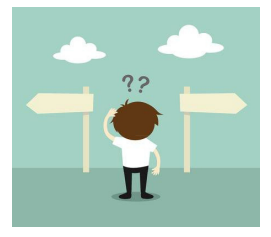
So now you know that you shouldn’t automatically trust the “Don’t use passive voice EVER!” rule, but how do you decide which style to use in a given situation?
In general, the main difference between passive and active sentences is what you want to emphasize. Look at the two sentences below and think about what is being emphasized in each one:
- *The earthquake displaced over 250 families within a twenty mile radius.*
- Over 250 families within in a twenty mile radius were displaced by yesterday’s earthquake.
In the first sentence, the earthquake is the center of attention. Since it is the subject of the sentence, the reader pays more attention to that than the families mentioned later. In the second sentence—the passive one—the families are placed in the spotlight instead. Both of these sentences are equally correct — it’s up to you, the writer, to decide where the emphasis should go and craft a sentence that does that.
## Arts or sciences?
There are also disciplinary preferences for active versus passive voice. The humanities (disciplines like English, history, and philosophy) tend to prefer the active style. The sciences and social sciences (think: biology, chemistry, psychology) usually prefer the passive style. While this might seem like an arbitrary choice, these preferences actually make sense. Here’s why:
Imagine writing a lab report this way:
- *I analyzed my results to see if I had made any errors in the data collection or calculations.*
What’s emphasized here? The “I”, right? But the researcher isn’t the important part of that sentence; the results are. So what you should write is this:
- *The results were analyzed for possible errors in the data collection and calculations.*
Notice that the second sentence is better even though it’s written in the passive voice — because it’s putting the emphasis on the right part. The passive voice is usually a good rule of thumb for scientific writing because the sciences want to de-emphasize the one doing the research and emphasize the research itself.
The humanities, on the other hand, privilege individual interpretation and argument, so writing for these fields should nearly always be written in the active voice. Thus, a strong sentence in a history paper about the turning point of the Civil War might be something like:
- *The Battle of Antietam dissuaded the English from entering the Civil War on the side of the Confederacy*
Instead of:
- *The English were dissuaded from entering the Civil War on the side of the Confederacy by the Battle of Antietam.*
## Revisions, revisions
Okay, so let’s say you’ve decided that you do need to use active voice and you need to revise some sentences to make them more active. How do you do that?
To change a passive sentence into an active one, look at the sentence and ask yourself who or what is doing the action.
Let’s start with this:
- *At last week’s Human Resources meeting, a proposal about changing the hiring policy was made by the Committee for Staff Equity and Non-Discrimination.*
Who’s doing the action there? Who proposed the change? The Committee for yada-yada-yada, right? But we don’t find that out until the very end of the sentence, which makes the reader feel like he’s doing a lot of work to get that piece of information. So let’s rewrite the sentence to make things more clear:
- *At last week’s Human Resources meeting, the Committee for Staff Equity and Non-Discrimination proposed changing the hiring policy.*
Ta-da! A clear, active sentence! To do this in your own writing, start with who or what is doing the action, and then specify the action with a real verb — “we decided to...” versus “it was decided by us to…”.
[Virginia Commonwealth University](https://www.vcu.edu/ "Virginia Commonwealth University")
[Division of Strategic Enrollment Management and Student Success](https://semss.vcu.edu/)
[Writing Center](https://writing.vcu.edu/)
1000 Floyd Avenue
Box 842042
Richmond, Virginia 23284
[(804) 828-4851](tel:8048284851 "Contact us by telephone")
[writingctr1@vcu.edu](mailto:writingctr1@vcu.edu "Contact us by email")
[*WC-Tumblr*](https://vcuwritingcenter.tumblr.com/ "WC-Tumblr")
[*WC-Twitter*](https://twitter.com/VCUWritingCtr "WC-Twitter")
[Privacy](https://www.vcu.edu/privacy-statement/ "VCU privacy statement")
[Accessibility](https://accessibility.vcu.edu/ "Accessibility at VCU")
[Webmaster](mailto:webmaster@vcu.edu "Contact the VCU webmaster")
[Compass: The University Web Framework](https://compass.vcu.edu/)
[Updated](https://t4.vcu.edu/terminalfour/page/directEdit#edit/919/en/106078): 08/09/2022
Virginia Commonwealth University is a nationally renowned public research institution dedicated to the success and well-being of all members of its community. VCU student, faculty and staff groups and associations are open without regard to any characteristic or identity protected by law.
[We are the UNcommon. ](https://www.vcu.edu/uncommon "We are the UNcommon.") | ||||||||||||
| Readable Markdown | 1. [Home](https://writing.vcu.edu/ "Writing Center")
2. [Student resources](https://writing.vcu.edu/student-resources/)
3. Active Voice vs. Passive Voice
## The showdown

## Start here
Most of us have heard the order from teachers: **“Make your sentences active\!**,” they say, or **“Don’t use the passive voice!”** But what exactly is the passive voice? What does that even mean?
Grammatically, “passive sentences” are sentences that use forms of “to be” as their main verb –things like be, am, is, are, was, were, being, and been. Here’s an example of two sentences that say the same thing but in passive versus active voice:
- **Passive:** *Passive sentences were discouraged by the teacher.*
- **Active:** *The teacher discouraged passive sentences.*
Both sentences say the same thing, right? So why do teachers forbid the passive voice?
In general, teachers recommend avoiding “to be” verbs and using more specific verbs because this makes writing more active and more concise. Look back at those two sentences. While the first sentence doesn’t break any rules, its meaning is more vague—you have to read to the very end of the sentence before you know who discouraged the passive sentences. The second sentence tells you right away who discouraged the passive sentences, which helps the reader immediately understand what the sentence is about.
In most writing, you’ll want to use active verbs because they are more energetic and specific. However, the **“don’t use passive voice ever!”** rule is also misleading, since there are times that it is appropriate. Keep reading to find out when to use active voice and when to use passive voice –and, even more importantly, why.
## Decisions, decisions

So now you know that you shouldn’t automatically trust the “Don’t use passive voice EVER!” rule, but how do you decide which style to use in a given situation?
In general, the main difference between passive and active sentences is what you want to emphasize. Look at the two sentences below and think about what is being emphasized in each one:
- *The earthquake displaced over 250 families within a twenty mile radius.*
- Over 250 families within in a twenty mile radius were displaced by yesterday’s earthquake.
In the first sentence, the earthquake is the center of attention. Since it is the subject of the sentence, the reader pays more attention to that than the families mentioned later. In the second sentence—the passive one—the families are placed in the spotlight instead. Both of these sentences are equally correct — it’s up to you, the writer, to decide where the emphasis should go and craft a sentence that does that.
## Arts or sciences?
There are also disciplinary preferences for active versus passive voice. The humanities (disciplines like English, history, and philosophy) tend to prefer the active style. The sciences and social sciences (think: biology, chemistry, psychology) usually prefer the passive style. While this might seem like an arbitrary choice, these preferences actually make sense. Here’s why:
Imagine writing a lab report this way:
- *I analyzed my results to see if I had made any errors in the data collection or calculations.*
What’s emphasized here? The “I”, right? But the researcher isn’t the important part of that sentence; the results are. So what you should write is this:
- *The results were analyzed for possible errors in the data collection and calculations.*
Notice that the second sentence is better even though it’s written in the passive voice — because it’s putting the emphasis on the right part. The passive voice is usually a good rule of thumb for scientific writing because the sciences want to de-emphasize the one doing the research and emphasize the research itself.
The humanities, on the other hand, privilege individual interpretation and argument, so writing for these fields should nearly always be written in the active voice. Thus, a strong sentence in a history paper about the turning point of the Civil War might be something like:
- *The Battle of Antietam dissuaded the English from entering the Civil War on the side of the Confederacy*
Instead of:
- *The English were dissuaded from entering the Civil War on the side of the Confederacy by the Battle of Antietam.*
## Revisions, revisions
Okay, so let’s say you’ve decided that you do need to use active voice and you need to revise some sentences to make them more active. How do you do that?
To change a passive sentence into an active one, look at the sentence and ask yourself who or what is doing the action.
Let’s start with this:
- *At last week’s Human Resources meeting, a proposal about changing the hiring policy was made by the Committee for Staff Equity and Non-Discrimination.*
Who’s doing the action there? Who proposed the change? The Committee for yada-yada-yada, right? But we don’t find that out until the very end of the sentence, which makes the reader feel like he’s doing a lot of work to get that piece of information. So let’s rewrite the sentence to make things more clear:
- *At last week’s Human Resources meeting, the Committee for Staff Equity and Non-Discrimination proposed changing the hiring policy.*
Ta-da! A clear, active sentence! To do this in your own writing, start with who or what is doing the action, and then specify the action with a real verb — “we decided to...” versus “it was decided by us to…”. | ||||||||||||
| ML Classification | |||||||||||||
| ML Categories |
Raw JSON{
"/Jobs_and_Education": 905,
"/Jobs_and_Education/Education": 905,
"/Jobs_and_Education/Education/Colleges_and_Universities": 402,
"/People_and_Society": 108
} | ||||||||||||
| ML Page Types |
Raw JSON{
"/Article": 896,
"/Article/Tutorial_or_Guide": 734
} | ||||||||||||
| ML Intent Types |
Raw JSON{
"Informational": 999
} | ||||||||||||
| Content Metadata | |||||||||||||
| Language | en | ||||||||||||
| Author | null | ||||||||||||
| Publish Time | not set | ||||||||||||
| Original Publish Time | 2022-09-16 04:27:26 (3 years ago) | ||||||||||||
| Republished | No | ||||||||||||
| Word Count (Total) | 1,232 | ||||||||||||
| Word Count (Content) | 872 | ||||||||||||
| Links | |||||||||||||
| External Links | 9 | ||||||||||||
| Internal Links | 45 | ||||||||||||
| Technical SEO | |||||||||||||
| Meta Nofollow | No | ||||||||||||
| Meta Noarchive | No | ||||||||||||
| JS Rendered | Yes | ||||||||||||
| Redirect Target | null | ||||||||||||
| Performance | |||||||||||||
| Download Time (ms) | 88 | ||||||||||||
| TTFB (ms) | 87 | ||||||||||||
| Download Size (bytes) | 7,287 | ||||||||||||
| Shard | 192 (laksa) | ||||||||||||
| Root Hash | 10774011314925087392 | ||||||||||||
| Unparsed URL | edu,vcu!writing,/student-resources/active-voice-vs-passive-voice/ s443 | ||||||||||||