ℹ️ Skipped - page is already crawled
| Filter | Status | Condition | Details |
|---|---|---|---|
| HTTP status | PASS | download_http_code = 200 | HTTP 200 |
| Age cutoff | PASS | download_stamp > now() - 6 MONTH | 0.9 months ago |
| History drop | PASS | isNull(history_drop_reason) | No drop reason |
| Spam/ban | PASS | fh_dont_index != 1 AND ml_spam_score = 0 | ml_spam_score=0 |
| Canonical | PASS | meta_canonical IS NULL OR = '' OR = src_unparsed | Not set |
| Property | Value |
|---|---|
| URL | https://womenonthestand.substack.com/p/when-sovereignty-becomes-holy-disruption |
| Last Crawled | 2026-03-15 19:48:45 (27 days ago) |
| First Indexed | not set |
| HTTP Status Code | 200 |
| Meta Title | When Sovereignty Becomes Holy Disruption |
| Meta Description | From The Sovereign Women Project, written by Heather Ruth Pack |
| Meta Canonical | null |
| Boilerpipe Text | The Sovereign Women’s Project explores what it means for women to stand fully in their spiritual and creative authority. Through essays, art, and poetry, it examines personal revelation, divine identity, and the courage to trust what God has made known. Rooted in discipleship, it envisions women building Zion as equal partners, exercising agency, and becoming ever more like their Heavenly Parents.
In Luke 18:1-8, Jesus tells the parable of the persistent widow. She repeatedly comes before an unjust judge, pleading for justice. Initially, the judge ignores her pleas. Yet, she does not stop appealing her case. He eventually concedes just to be rid of her. This parable is often told as a lesson on the power of prayer.
I see a different lesson. She had no status, no money, no power, but she did have something to bring with her to meet the judge: her inner authority. She knew what was rightfully hers, and she would not stop until her wrong was made right. She was not passive, nor did she wait for permission. Her faith propelled her to act. I see her as a holy disruptor.
A disrupt
o
r should not be confused with a disrupt
e
r. Disrupters are considered to be those who create chaos by breaking systems. While technically just an alternative spelling, disruptors are viewed positively. They are ones who challenge accepted norms and seek long-term solutions. This widow didn’t break a working system; she fixed a broken system by pleading for what was rightfully hers. Where do we find such holy disruptors? We find them among sovereign women. Like the persistent widow, they are clear-eyed, steadfast, and unafraid.
What does it mean to be sovereign within the context of the gospel of Jesus Christ? A sovereign woman trusts her personal revelation and embraces sacred self-authorship. Sovereignty is not walking away from covenants but binding herself to them. Her sovereignty is not a withdrawal from discipleship but its fullest expression. She exercises her agency with both courage and humility to become a co-creator in Zion.
The sovereign woman does not accept invisibility. She does not submit to injustices hoping God one day might change His mind. She does not wait for permission to act. She knows her divine nature has already authorized her to participate.
Darcy Brown, If Children, Then Heirs
Can we find holy disruptors in the scriptures? Of course! Their stories are not just parables or hypotheticals–they are real women who stood up to those in power. Five sisters, Mahlah, Noah, Hoglah, Milcah, and Tirzah faced the loss of their inheritance after the death of their father, Zelophehad, simply because they had no brothers. Under the law, land passed only through male heirs, which meant they would lose everything. Sounds like the beginning of
Pride and Prejudice
, doesn’t it?
Yet unlike the Bennet sisters, who waited for someone else to change their circumstances, these five claimed what was theirs. They sought to have the law changed. Bravely, they stood before Moses, the high priest, the leaders, and the congregation. They said, “Why should the name of our father be done away from among his family, because he hath no son? Give unto us a possession among the brethren of our father” (Numbers 27:4).
This was no small request. In ancient Israel, women rarely stood in public to argue a case. Yet they did not shrink back. They knew their plea was righteous. And God agreed. The Lord said to Moses, “The daughters of Zelophehad speak right” (Numbers 27:7). Their boldness changed the law of inheritance for all of Israel from that time forward. What began as a disruption became part of God’s revealed will.
The daughters were not acting for themselves alone. Their resolve opened a new path for every woman in Israel who might face the same injustice. Their disruption did not dismantle God’s law but expanded it, showing that revelation can clarify, correct, and create greater equity. In doing so, they set an example for future generations, demonstrating how to be holy disruptors.
Sadly, the story of Zelophehad’s daughters is rarely told, yet their influence runs like a hidden thread woven through the tapestry of scripture. I think of Rahab, a harlot who resisted the king’s command and hid the spies on her roof (Joshua 2), or Abigail, who, without her husband’s knowledge and against his wishes, brought food to David and persuaded him not to exact revenge (1 Samuel 25). I’m also reminded of two unnamed women in the New Testament who defied men in power and sought Christ for healing (Matthew 15 and Luke 8).
Every sovereign act builds on those before it. Sovereign women show that faithful courage of one generation will pave the way for the next. A brave woman never acts for herself alone. Her choices remove barriers for those who come after her. By insisting on what is just, she ensures future sisters benefit, fortifying the fabric of Zion itself.
As sovereign women today, we can weave our own threads into Zion’s tapestry–not through criticism for the sake of division or change born of bitterness, but by listening to the Spirit’s whisper, urging us to be brave and to persist.
Jesus ends the parable of the persistent widow with a promise. If even an unjust judge can yield to repeated petitions, how much more will a just God respond to His daughters who cry out day and night? Christ teaches that holy disruption is not destructive. It aligns us more deeply with our Heavenly Parents, who want us to fulfill the measure of our creation.
We live in a world that often asks us to wait, to soften our voices, or to be satisfied with less. Christ’s parable rejects that logic. He does not praise the widow for being silent, but because of her persistence. The door of heaven is not closed; it is open. Jesus is inviting us not just to knock at the door, but to walk through it. In doing so, we honor the persistent widow, the daughters of Zelophehad, Rahab, Abigail, and all the women who came before us.
Every act of holy disruption–every prayer, petition, every step of faithful persistence–is how we yoke ourselves to Him in the unfolding of Heavenly Father and Heavenly Mother’s kingdom. Once we successfully advocate for ourselves, inevitably we become more aware of the injustices of others. By honoring our sovereignty, we can build a Zion that is whole for everyone, not only ourselves.
Heather Ruth Pack is an online Institute instructor and creator of Times of Faith where she looks at stories of Jesus with a fresh perspective. Follow on Instagram: @
times.of.faith |
| Markdown | [](https://womenonthestand.substack.com/)
# [Women on the Stand](https://womenonthestand.substack.com/)
Subscribe
Sign in
# When Sovereignty Becomes Holy Disruption
### From The Sovereign Women Project, written by Heather Ruth Pack
[](https://substack.com/@packofkids)
[Heather Ruth Pack](https://substack.com/@packofkids)
Mar 08, 2026
21
3
4
Share
***
*The Sovereign Women’s Project explores what it means for women to stand fully in their spiritual and creative authority. Through essays, art, and poetry, it examines personal revelation, divine identity, and the courage to trust what God has made known. Rooted in discipleship, it envisions women building Zion as equal partners, exercising agency, and becoming ever more like their Heavenly Parents.*
***
#### **When Sovereignty Wears No Crown**
In Luke 18:1-8, Jesus tells the parable of the persistent widow. She repeatedly comes before an unjust judge, pleading for justice. Initially, the judge ignores her pleas. Yet, she does not stop appealing her case. He eventually concedes just to be rid of her. This parable is often told as a lesson on the power of prayer.
I see a different lesson. She had no status, no money, no power, but she did have something to bring with her to meet the judge: her inner authority. She knew what was rightfully hers, and she would not stop until her wrong was made right. She was not passive, nor did she wait for permission. Her faith propelled her to act. I see her as a holy disruptor.
A disrupt**o**r should not be confused with a disrupt**e**r. Disrupters are considered to be those who create chaos by breaking systems. While technically just an alternative spelling, disruptors are viewed positively. They are ones who challenge accepted norms and seek long-term solutions. This widow didn’t break a working system; she fixed a broken system by pleading for what was rightfully hers. Where do we find such holy disruptors? We find them among sovereign women. Like the persistent widow, they are clear-eyed, steadfast, and unafraid.
#### **When Sovereignty Requires Action**
What does it mean to be sovereign within the context of the gospel of Jesus Christ? A sovereign woman trusts her personal revelation and embraces sacred self-authorship. Sovereignty is not walking away from covenants but binding herself to them. Her sovereignty is not a withdrawal from discipleship but its fullest expression. She exercises her agency with both courage and humility to become a co-creator in Zion.
The sovereign woman does not accept invisibility. She does not submit to injustices hoping God one day might change His mind. She does not wait for permission to act. She knows her divine nature has already authorized her to participate.
[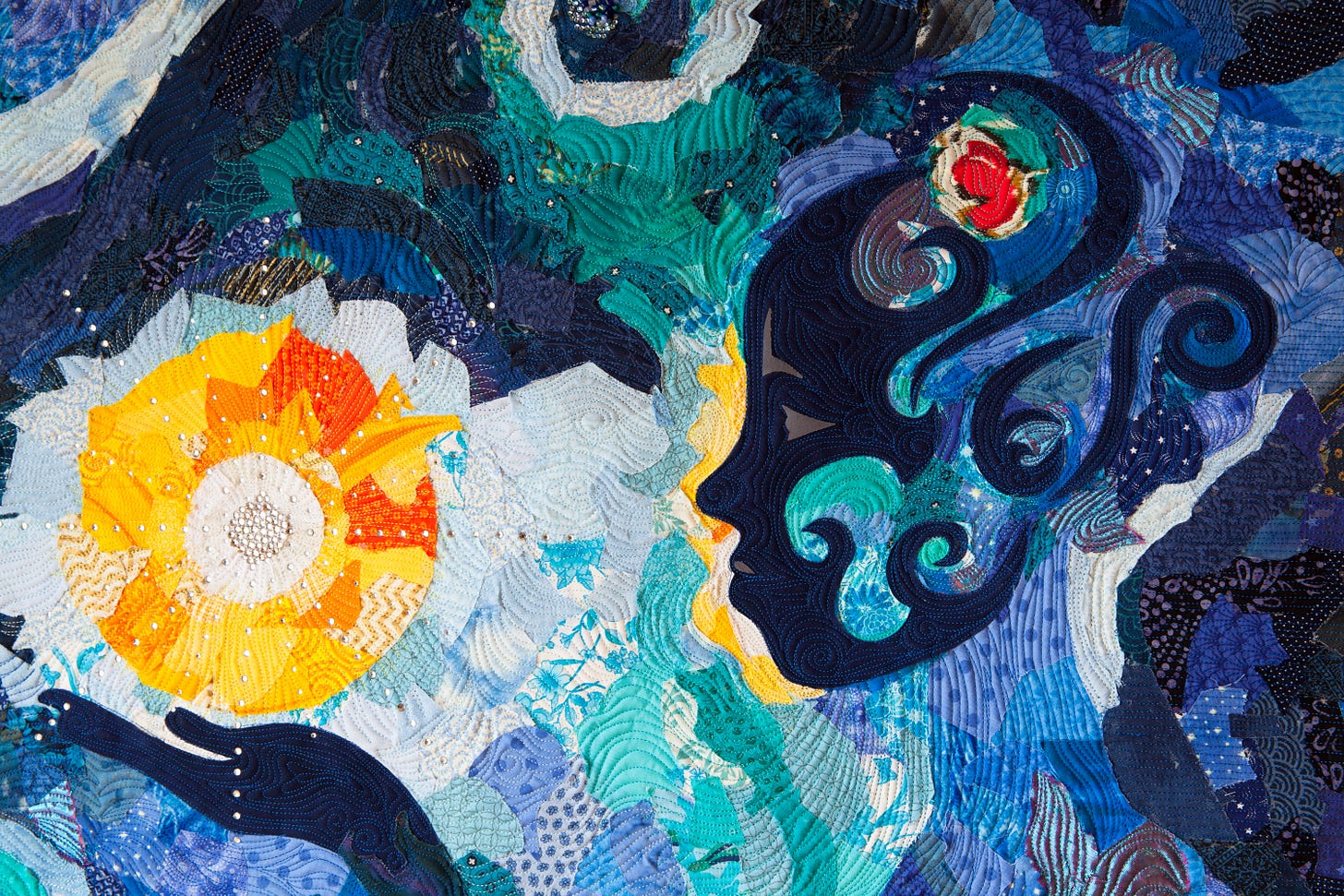](https://substackcdn.com/image/fetch/$s_!0qbU!,f_auto,q_auto:good,fl_progressive:steep/https%3A%2F%2Fsubstack-post-media.s3.amazonaws.com%2Fpublic%2Fimages%2F28be6332-5073-4939-b552-033e91c7ecd6_3000x2000.jpeg)
Darcy Brown, If Children, Then Heirs
#### **When Five Women Became Holy Disruptors**
Can we find holy disruptors in the scriptures? Of course! Their stories are not just parables or hypotheticals–they are real women who stood up to those in power. Five sisters, Mahlah, Noah, Hoglah, Milcah, and Tirzah faced the loss of their inheritance after the death of their father, Zelophehad, simply because they had no brothers. Under the law, land passed only through male heirs, which meant they would lose everything. Sounds like the beginning of *Pride and Prejudice*, doesn’t it?
Yet unlike the Bennet sisters, who waited for someone else to change their circumstances, these five claimed what was theirs. They sought to have the law changed. Bravely, they stood before Moses, the high priest, the leaders, and the congregation. They said, “Why should the name of our father be done away from among his family, because he hath no son? Give unto us a possession among the brethren of our father” (Numbers 27:4).
This was no small request. In ancient Israel, women rarely stood in public to argue a case. Yet they did not shrink back. They knew their plea was righteous. And God agreed. The Lord said to Moses, “The daughters of Zelophehad speak right” (Numbers 27:7). Their boldness changed the law of inheritance for all of Israel from that time forward. What began as a disruption became part of God’s revealed will.
The daughters were not acting for themselves alone. Their resolve opened a new path for every woman in Israel who might face the same injustice. Their disruption did not dismantle God’s law but expanded it, showing that revelation can clarify, correct, and create greater equity. In doing so, they set an example for future generations, demonstrating how to be holy disruptors.
#### **When Disruption Creates a Legacy**
Sadly, the story of Zelophehad’s daughters is rarely told, yet their influence runs like a hidden thread woven through the tapestry of scripture. I think of Rahab, a harlot who resisted the king’s command and hid the spies on her roof (Joshua 2), or Abigail, who, without her husband’s knowledge and against his wishes, brought food to David and persuaded him not to exact revenge (1 Samuel 25). I’m also reminded of two unnamed women in the New Testament who defied men in power and sought Christ for healing (Matthew 15 and Luke 8).
Every sovereign act builds on those before it. Sovereign women show that faithful courage of one generation will pave the way for the next. A brave woman never acts for herself alone. Her choices remove barriers for those who come after her. By insisting on what is just, she ensures future sisters benefit, fortifying the fabric of Zion itself.
#### **When Disruption Builds Zion**
As sovereign women today, we can weave our own threads into Zion’s tapestry–not through criticism for the sake of division or change born of bitterness, but by listening to the Spirit’s whisper, urging us to be brave and to persist.
Jesus ends the parable of the persistent widow with a promise. If even an unjust judge can yield to repeated petitions, how much more will a just God respond to His daughters who cry out day and night? Christ teaches that holy disruption is not destructive. It aligns us more deeply with our Heavenly Parents, who want us to fulfill the measure of our creation.
We live in a world that often asks us to wait, to soften our voices, or to be satisfied with less. Christ’s parable rejects that logic. He does not praise the widow for being silent, but because of her persistence. The door of heaven is not closed; it is open. Jesus is inviting us not just to knock at the door, but to walk through it. In doing so, we honor the persistent widow, the daughters of Zelophehad, Rahab, Abigail, and all the women who came before us.
Every act of holy disruption–every prayer, petition, every step of faithful persistence–is how we yoke ourselves to Him in the unfolding of Heavenly Father and Heavenly Mother’s kingdom. Once we successfully advocate for ourselves, inevitably we become more aware of the injustices of others. By honoring our sovereignty, we can build a Zion that is whole for everyone, not only ourselves.
***
*Heather Ruth Pack is an online Institute instructor and creator of Times of Faith where she looks at stories of Jesus with a fresh perspective. Follow on Instagram: @[times.of.faith](https://www.instagram.com/times.of.faith/)*
### Read more from The Sovereign Women Project
[](https://womenonthestand.substack.com/p/my-mother-up-there)
[My Mother Up ThereMar 8](https://womenonthestand.substack.com/p/my-mother-up-there)
[Read full story](https://womenonthestand.substack.com/p/my-mother-up-there)
[](https://womenonthestand.substack.com/p/the-golden-woman)
[The Golden WomanMar 8](https://womenonthestand.substack.com/p/the-golden-woman)
[Read full story](https://womenonthestand.substack.com/p/the-golden-woman)
[](https://womenonthestand.substack.com/p/what-a-swedish-rock-band-taught-me)
[What a Swedish Rock Band Taught Me About Personal Revelation](https://womenonthestand.substack.com/p/what-a-swedish-rock-band-taught-me)
[Hailey Spencer](https://substack.com/profile/313067667-hailey-spencer)
·
Mar 8
[Read full story](https://womenonthestand.substack.com/p/what-a-swedish-rock-band-taught-me)
[](https://womenonthestand.substack.com/p/her-majesty)
[Her Majesty](https://womenonthestand.substack.com/p/her-majesty)
[Amy Nic Robbins](https://substack.com/profile/384819964-amy-nic-robbins)
·
Mar 8
[Read full story](https://womenonthestand.substack.com/p/her-majesty)
21
3
4
Share
Previous
Next
| | |
|---|---|
| [](https://substack.com/@packofkids?utm_source=byline) | |
| | |
| [Heather Ruth Pack](https://substack.com/@packofkids?utm_campaign=guest_post_bio&utm_medium=web)Online religious instructor who loves to study the cultural, social, and religious context of ancient Palestine. Creator of Times of Faith. | |
#### Discussion about this post
Comments
Restacks
[](https://substack.com/profile/39806550-scott-jones?utm_source=comment)
[Scott Jones](https://substack.com/profile/39806550-scott-jones?utm_source=substack-feed-item)
[7d](https://womenonthestand.substack.com/p/when-sovereignty-becomes-holy-disruption/comment/224810934 "Mar 8, 2026, 3:06 PM")
Liked by Heather Ruth Pack, Women On The Stand
My church needs many more disruptors... both women and men. Frankly, I think women lead out in this, and that is why I turn to them to find some hope for change. After 45 years of Priesthood Leadership, I couldn't do it any longer when asked to be Bishop. Being a disruptor does not fit the mold of "grooming" you for the next position. Too many men do fall for the "grooming" and the result is what we see today. We need women to stand en masse and be disruptors. The Brethren will not know how to handle that... because it is righteous.
[Reply]()
[Share]()
[](https://substack.com/profile/142405759-kristen-ridge?utm_source=comment)
[Kristen Ridge](https://substack.com/profile/142405759-kristen-ridge?utm_source=substack-feed-item)
[7d](https://womenonthestand.substack.com/p/when-sovereignty-becomes-holy-disruption/comment/224992340 "Mar 8, 2026, 10:18 PM")
Liked by Heather Ruth Pack, Women On The Stand
Thank you for this—it’s so inspiring and solidly written.
[Reply]()
[Share]()
[1 more comment...](https://womenonthestand.substack.com/p/when-sovereignty-becomes-holy-disruption/comments)
Top
Latest
Discussions
No posts
### Ready for more?
© 2026 Women on the Stand · [Privacy](https://substack.com/privacy) ∙ [Terms](https://substack.com/tos) ∙ [Collection notice](https://substack.com/ccpa#personal-data-collected)
[Start your Substack](https://substack.com/signup?utm_source=substack&utm_medium=web&utm_content=footer)
[Get the app](https://substack.com/app/app-store-redirect?utm_campaign=app-marketing&utm_content=web-footer-button)
[Substack](https://substack.com/) is the home for great culture
This site requires JavaScript to run correctly. Please [turn on JavaScript](https://enable-javascript.com/) or unblock scripts |
| Readable Markdown | *The Sovereign Women’s Project explores what it means for women to stand fully in their spiritual and creative authority. Through essays, art, and poetry, it examines personal revelation, divine identity, and the courage to trust what God has made known. Rooted in discipleship, it envisions women building Zion as equal partners, exercising agency, and becoming ever more like their Heavenly Parents.*
In Luke 18:1-8, Jesus tells the parable of the persistent widow. She repeatedly comes before an unjust judge, pleading for justice. Initially, the judge ignores her pleas. Yet, she does not stop appealing her case. He eventually concedes just to be rid of her. This parable is often told as a lesson on the power of prayer.
I see a different lesson. She had no status, no money, no power, but she did have something to bring with her to meet the judge: her inner authority. She knew what was rightfully hers, and she would not stop until her wrong was made right. She was not passive, nor did she wait for permission. Her faith propelled her to act. I see her as a holy disruptor.
A disrupt**o**r should not be confused with a disrupt**e**r. Disrupters are considered to be those who create chaos by breaking systems. While technically just an alternative spelling, disruptors are viewed positively. They are ones who challenge accepted norms and seek long-term solutions. This widow didn’t break a working system; she fixed a broken system by pleading for what was rightfully hers. Where do we find such holy disruptors? We find them among sovereign women. Like the persistent widow, they are clear-eyed, steadfast, and unafraid.
What does it mean to be sovereign within the context of the gospel of Jesus Christ? A sovereign woman trusts her personal revelation and embraces sacred self-authorship. Sovereignty is not walking away from covenants but binding herself to them. Her sovereignty is not a withdrawal from discipleship but its fullest expression. She exercises her agency with both courage and humility to become a co-creator in Zion.
The sovereign woman does not accept invisibility. She does not submit to injustices hoping God one day might change His mind. She does not wait for permission to act. She knows her divine nature has already authorized her to participate.
[](https://substackcdn.com/image/fetch/$s_!0qbU!,f_auto,q_auto:good,fl_progressive:steep/https%3A%2F%2Fsubstack-post-media.s3.amazonaws.com%2Fpublic%2Fimages%2F28be6332-5073-4939-b552-033e91c7ecd6_3000x2000.jpeg)
Darcy Brown, If Children, Then Heirs
Can we find holy disruptors in the scriptures? Of course! Their stories are not just parables or hypotheticals–they are real women who stood up to those in power. Five sisters, Mahlah, Noah, Hoglah, Milcah, and Tirzah faced the loss of their inheritance after the death of their father, Zelophehad, simply because they had no brothers. Under the law, land passed only through male heirs, which meant they would lose everything. Sounds like the beginning of *Pride and Prejudice*, doesn’t it?
Yet unlike the Bennet sisters, who waited for someone else to change their circumstances, these five claimed what was theirs. They sought to have the law changed. Bravely, they stood before Moses, the high priest, the leaders, and the congregation. They said, “Why should the name of our father be done away from among his family, because he hath no son? Give unto us a possession among the brethren of our father” (Numbers 27:4).
This was no small request. In ancient Israel, women rarely stood in public to argue a case. Yet they did not shrink back. They knew their plea was righteous. And God agreed. The Lord said to Moses, “The daughters of Zelophehad speak right” (Numbers 27:7). Their boldness changed the law of inheritance for all of Israel from that time forward. What began as a disruption became part of God’s revealed will.
The daughters were not acting for themselves alone. Their resolve opened a new path for every woman in Israel who might face the same injustice. Their disruption did not dismantle God’s law but expanded it, showing that revelation can clarify, correct, and create greater equity. In doing so, they set an example for future generations, demonstrating how to be holy disruptors.
Sadly, the story of Zelophehad’s daughters is rarely told, yet their influence runs like a hidden thread woven through the tapestry of scripture. I think of Rahab, a harlot who resisted the king’s command and hid the spies on her roof (Joshua 2), or Abigail, who, without her husband’s knowledge and against his wishes, brought food to David and persuaded him not to exact revenge (1 Samuel 25). I’m also reminded of two unnamed women in the New Testament who defied men in power and sought Christ for healing (Matthew 15 and Luke 8).
Every sovereign act builds on those before it. Sovereign women show that faithful courage of one generation will pave the way for the next. A brave woman never acts for herself alone. Her choices remove barriers for those who come after her. By insisting on what is just, she ensures future sisters benefit, fortifying the fabric of Zion itself.
As sovereign women today, we can weave our own threads into Zion’s tapestry–not through criticism for the sake of division or change born of bitterness, but by listening to the Spirit’s whisper, urging us to be brave and to persist.
Jesus ends the parable of the persistent widow with a promise. If even an unjust judge can yield to repeated petitions, how much more will a just God respond to His daughters who cry out day and night? Christ teaches that holy disruption is not destructive. It aligns us more deeply with our Heavenly Parents, who want us to fulfill the measure of our creation.
We live in a world that often asks us to wait, to soften our voices, or to be satisfied with less. Christ’s parable rejects that logic. He does not praise the widow for being silent, but because of her persistence. The door of heaven is not closed; it is open. Jesus is inviting us not just to knock at the door, but to walk through it. In doing so, we honor the persistent widow, the daughters of Zelophehad, Rahab, Abigail, and all the women who came before us.
Every act of holy disruption–every prayer, petition, every step of faithful persistence–is how we yoke ourselves to Him in the unfolding of Heavenly Father and Heavenly Mother’s kingdom. Once we successfully advocate for ourselves, inevitably we become more aware of the injustices of others. By honoring our sovereignty, we can build a Zion that is whole for everyone, not only ourselves.
*Heather Ruth Pack is an online Institute instructor and creator of Times of Faith where she looks at stories of Jesus with a fresh perspective. Follow on Instagram: @[times.of.faith](https://www.instagram.com/times.of.faith/)*
[](https://womenonthestand.substack.com/p/my-mother-up-there)
[](https://womenonthestand.substack.com/p/the-golden-woman)
[](https://womenonthestand.substack.com/p/what-a-swedish-rock-band-taught-me)
[](https://womenonthestand.substack.com/p/her-majesty) |
| Shard | 76 (laksa) |
| Root Hash | 14862242593741677076 |
| Unparsed URL | com,substack!womenonthestand,/p/when-sovereignty-becomes-holy-disruption s443 |