ℹ️ Skipped - page is already crawled
| Filter | Status | Condition | Details |
|---|---|---|---|
| HTTP status | PASS | download_http_code = 200 | HTTP 200 |
| Age cutoff | PASS | download_stamp > now() - 6 MONTH | 0.1 months ago |
| History drop | PASS | isNull(history_drop_reason) | No drop reason |
| Spam/ban | PASS | fh_dont_index != 1 AND ml_spam_score = 0 | ml_spam_score=0 |
| Canonical | PASS | meta_canonical IS NULL OR = '' OR = src_unparsed | Not set |
| Property | Value |
|---|---|
| URL | https://usahello.org/immigration/visas-and-residency/green-card/ |
| Last Crawled | 2026-04-16 04:43:53 (4 days ago) |
| First Indexed | 2020-04-10 07:19:18 (6 years ago) |
| HTTP Status Code | 200 |
| Meta Title | Learn How To Get A Green Card | USAHello |
| Meta Description | Learn how to get a Green Card — eligibility, application steps, interview tips, and timelines. Get information for current Green Card holders. |
| Meta Canonical | null |
| Boilerpipe Text | Skip to content
A checkmark indicating success
Link copied
What is a Green Card?
A Green Card allows people who are not U.S. citizens to live and work in the USA. It is an identity document with your name and photo. A Green Card is proof of your immigration status as a
lawful permanent resident (LPR)
.
Green Cards are issued by the U.S. Citizenship and Immigration Services (USCIS). Most Green Cards are valid for 10 years. If you are a conditional resident, it is valid for 2 years.
A Green Card is also called a
permanent resident card
.
Benefits of having a Green Card
If you have permanent resident status, you can:
live and work in the USA permanently
travel outside the USA for up to 12 months
receive federal benefits, such as help paying for education and housing
apply to bring your spouse and unmarried children of any age to the USA
apply for U.S. citizenship after 5 years (or 3 years if married to a U.S. citizen)
Find legal help
Learn how to find free or low-cost help from trusted immigration lawyers and legal representatives.
Who can apply for a Green Card?
There are different ways you can become a lawful permanent resident. You can apply if you are in an eligible category:
Family members of U.S. citizens or Green Card holders
U.S. citizens
can sponsor their parents, spouse,
fiancé
, children of any age or marital status, and brothers or sisters. Someone who is a widow(er) of a U.S. citizen can also apply.
Green Card holders
can sponsor their spouse and unmarried children for permanent residency.
U.S. citizens and Green Card holders
cannot
sponsor extended family members such as cousins, aunts, uncles, and grandparents.
Certain workers
A Green Card for employment-based immigrants is available to certain
workers
,
physicians
, and investors.
Special immigrants
Religious workers
,
special immigrant juveniles
,
Afghan or Iraqi translators or interpreters
who worked for the U.S. government,
members of the media
, and
members of international organizations
can apply.
Refugee and asylees
Refugees
and
asylees
can apply for a Green Card after getting their status. Refugees must apply within 1 year of arriving. Asylees can apply at any time. But both must live in the U.S. for 1 year before their Green Card can be approved.
Victim of abuse, crime, and human trafficking
Certain victims of abuse can apply under
VAWA
, Special Immigrant Juvenile Status, Cuban Adjustment Act, and Haitian Refugee Immigrant Fairness Act.
Victims of human trafficking
and
other crime victims
can also apply.
Long-term residents
If you have lived in the U.S. since January 1, 1972, you can apply. This is called a
Green Card through registry
. This is an option even if you are undocumented or have been in the U.S. illegally.
Other nonimmigrants
Certain people can apply for a Green Card under
other programs
including:
Liberian Refugee Immigration Fairness (LRIF)
Diversity Immigrant Visa Program (Green Card lottery)
Cuban Adjustment Act
Dependent status under the HRIFA
Lautenberg parolee
Indochinese Parole Adjustment Act of 2000
American Indian born in Canada
Diplomat or person born in the U.S. to a foreign diplomat
Requirements
Each
Green Card eligibility category
has specific requirements you must meet.
If you are in the USA
An immigration officer must have inspected and admitted you upon entering the United States. Applying inside the United States is officially called adjustment of status.
If you are abroad
You must
apply for an immigrant visa
with your local consulate to come to the United States. This process is officially called consular processing.
The public charge rule
does not allow people who will depend on certain government assistance to get a Green Card through a family-based petition. Asylees, refugees, humanitarian parolees, TPS holders, and victims of human trafficking and crime are exempt from this rule.
How to apply
Now that you have reviewed the different categories, here are your next steps to apply:
Step 1: Check if you are eligible to apply
for a Green Card
Each Green Card category has specific requirements.
Step 2: Get legal help if you can
It is always helpful to get legal help when you are trying to adjust your immigration status. There are many organizations and
lawyers who offer help for free or at a low cost
.
Step 3: Find out if you need to petition for a visa
Your family member may have to file
Form I-130
with USCIS.
Your employer may have to file
Form I-140
with USCIS.
Step 4: File your Green Card application
If you are abroad, you must apply for an immigrant visa with your local embassy to come to the United States.
If you are in the United States, you must file
Form I-485
with USCIS. Make sure you are eligible to file Form I-485 before applying.
Be sure to use the latest edition of the form, edition 1/20/25. If you do not use the correct form, USCIS will not accept your application.
Your family member may have to file an
affidavit of support
with USCIS.
You must also get a medical examination. If you are in the U.S., include
Form I-693
with your Green Card application.
Follow
tips for filing
your Green Card application.
Pay your filing fees. They vary by age. Use the
USCIS fee calculator
.
Note: you can also apply for a social security number at the same time.
Step 5: Your biometrics appointment
Green Card applicants in the United States who are between the ages of 14 and 78 are required to give biometrics. Learn about
what to expect at your appointment
.
Step 6: Your Green Card interview
Most people who apply for a Green Card in the United States will be required to
interview
at a local USCIS office. An immigration officer will review the answers to your application. They may also ask other questions to decide whether you are eligible for a Green Card.
If you are abroad, you will be interviewed by a consular official at a U.S. Embassy or Consulate in your country of residence. The consular official will review your visa application and ask questions to decide whether you are eligible for an immigrant visa.
Step 7: Get a decision
An immigration officer or consular official will make a decision in your case at the end of your interview. In some cases, the officer may ask for more evidence before they can issue a decision.
If your application is approved, and you are in the United States, you will receive an approval notice followed by your Green Card.
If your application is approved, and you are outside the United States, you will receive an immigrant visa in your passport to allow you to enter the U.S. After you enter and pay the Immigrant Fee, you will receive your Green Card.
If your application or visa is denied, you will get information about whether you can appeal it.
Step 8: Obtaining your Green Card
The wait time for a Green Card depends on the category and location you are applying from. You can
search estimated processing times
online.
You can check the status of your application online or by calling the
USCIS Contact Center
.
Avoid immigration scams
Know how to protect yourself from notarios and fake websites. Learn what to do if you have been a victim of fraud.
Green Card interview
There are a few things you can do to prepare for the interview.
Review your application
before your interview. Prepare with an attorney, resettlement agency, family, or friend.
Bring a copy of your application
.
Bring originals of all supporting documents
including your passport, travel document, and Form I-94.
Be prepared to answer all questions truthfully
.
For interviews at USCIS, you must bring your own interpreter if you need one
and complete
Form G-1256.
Your interpreter must be at least 18, speak your language and English fluently, and not be involved in your case.
Information for Green Card holders
The U.S. government plans to review approved Green Cards for
refugees
and people from the
travel ban countries
who were approved between January 20, 2021, and February 20, 2025.
You can file a petition to remove conditions on your 2-year Green Card 90 days before it expires.
If you have a family-based Green Card, file
Form I-751
. You will have to prove that you married in good faith, meaning that your marriage is genuine.
If you have a work-based Green Card, file
Form I-829
. You will have to prove that you invested or are investing $1,050,000 in a new business and 10 full-time jobs.
If you file either of these forms, your Green Card will continue to be valid for 48 months beyond the card’s expiration date.
You should renew your card six months before it expires. If your card has been lost, stolen, or damaged, you can replace your card.
File
Form I-90
to renew or replace your card. You can submit your application online or via mail.
Do NOT file Form I-90 if you have a 2-year Green Card that is expiring. You must instead file a Form I-751 (see above).
If you file Form I-90 to renew an expiring or expired Green Card, your Green Card will continue to be valid for 36 months as USCIS processes your application. You can use your receipt notice and expired Green Card as temporary evidence of your lawful permanent resident status and employment authorization.
If you are waiting for a replacement Green Card, you can contact your local USCIS office to request proof of your Green Card status.
Public charge does
not
apply to you if you are applying to renew your Green Card. You may have to go through another public charge inadmissibility determination if you return to the U.S. after being absent for over 180 days.
You will need to show a passport or travel document when you leave the United States. You will need to show your Green Card when you return to the U.S. If you travel abroad for over one year, you must apply for a reentry permit to return to the U.S. You can file
Form I-131
.
Note that some countries may have travel restrictions. Learn how to plan your travel safely in
our guide on travel documents
.
More from USAHello
Looking for specific information?
The information on this page comes from USCIS and other trusted sources. We aim to offer easy to understand information that is updated regularly. This information is not legal advice.
Feedback
Was this information helpful?
Illustration of a frowning, sad face
Yes
Illustration of a frowning, sad face
No
Thank you very much!
We really appreciate you taking the time to give us your opinions about our website. If you are willing to send us your email address or phone number we would like to contact you to ask some follow up questions. Your name and information will not be shared with anyone, we will only use it to contact you to ask about our website. |
| Markdown | [Skip to content](https://usahello.org/immigration/visas-and-residency/green-card/#content)
[Learn about current and expected immigration changes here.](https://usahello.org/safety/)
[English](https://usahello.org/immigration/visas-and-residency/green-card/)
- [How to help](https://usahello.org/how-to-help/)
- [About USAHello](https://usahello.org/about-us/)
- [Donate](https://usahello.org/donate/)
toggle menu
[English](https://usahello.org/immigration/visas-and-residency/green-card/)
[Home](https://usahello.org/)
Topics
- [Life in the USA](https://usahello.org/life-in-usa/)
- [View all Life in the USA](https://usahello.org/life-in-usa/)
[American culture](https://usahello.org/life-in-usa/culture/)
[U.S. law](https://usahello.org/life-in-usa/laws/)
[Money](https://usahello.org/life-in-usa/money/)
[Daily life](https://usahello.org/life-in-usa/daily-life/)
[Family life](https://usahello.org/life-in-usa/family/)
[FindHello](https://usahello.org/findhello/)
[See all pages](https://usahello.org/life-in-usa/life-in-usa-sitemap/)
- [Education](https://usahello.org/education/)
- [View all Education](https://usahello.org/education/)
[Education for children](https://usahello.org/education/children/)
[University and adult education](https://usahello.org/education/university-adult-education/)
[Learn English](https://usahello.org/education/learn-english-language/)
[Get your GED®](https://usahello.org/education/ged/)
[USAHello classroom](https://classroom.usahello.org/)
[See all pages](https://usahello.org/education/education-sitemap/)
- [Work](https://usahello.org/work/)
- [View all Work](https://usahello.org/work/)
[Find a job](https://usahello.org/work/find-a-job/)
[At your job](https://usahello.org/work/at-your-job/)
[See all pages](https://usahello.org/work/work-sitemap/)
- [Immigration](https://usahello.org/immigration/)
- [View all Immigration](https://usahello.org/immigration/)
[Immigration guide](https://usahello.org/safety/)
[TPS and DED](https://usahello.org/immigration/temporary-protected-status/)
[Immigration tools](https://usahello.org/immigration/tools/)
[International help](https://usahello.org/immigration/international-help/)
[For Afghans](https://usahello.org/afghan-resource-center/)
[See all pages](https://usahello.org/immigration/immigration-sitemap/)
- [Citizenship](https://usahello.org/citizenship/)
- [View all Citizenship](https://usahello.org/citizenship/)
[U.S. Citizenship Guide](https://usahello.org/citizenship/prepare/)
[Information for new U.S. citizens](https://usahello.org/citizenship/for-citizens/)
[Free citizenship class](https://classroom.usahello.org/programs/us-citizenship-test-preparation/)
[See all pages](https://usahello.org/citizenship/citizenship-sitemap/)
- [Health](https://usahello.org/health/)
- [View all Health](https://usahello.org/health/)
[Medical help](https://usahello.org/health/doctors-medicine/)
[Mental Health](https://usahello.org/health/mental-health/)
[See all pages](https://usahello.org/health/health-sitemap/)
- [Classroom](https://classroom.usahello.org/)
Link copied
Choose your language
Read this page in:
[English](https://usahello.org/immigration/visas-and-residency/green-card/)
[Español (Spanish)](https://usahello.org/es/inmigracion/visas-y-residencia/tarjeta-verde/)
[العربية (Arabic)](https://usahello.org/ar/%D8%A7%D9%84%D9%87%D8%AC%D8%B1%D8%A9/%D8%A7%D9%84%D8%AA%D8%A3%D8%B4%D9%8A%D8%B1%D8%A7%D8%AA-%D9%88-%D8%A7%D9%84%D8%A5%D9%82%D8%A7%D9%85%D8%A9/%D8%A7%D9%84%D8%A8%D8%B7%D8%A7%D9%82%D8%A9-%D8%A7%D9%84%D8%AE%D8%B6%D8%B1%D8%A7%D8%A1/)
[Français (French)](https://usahello.org/fr/limmigration/visas-et-residences/carte-verte/)
[简体中文 (Simplified Chinese)](https://usahello.org/zh-hans/%E7%A7%BB%E6%B0%91/%E7%BE%8E%E5%9B%BD%E7%AD%BE%E8%AF%81%E5%92%8C%E5%B1%85%E7%95%99%E6%9D%83/%E7%BB%BF%E5%8D%A1/)
[Kreyòl Ayisyen (Haitian Creole)](https://usahello.org/ht/imigrasyon/viza-ak-rezidans/green-card/)
[Kiswahili (Swahili)](https://usahello.org/sw/uhamiaji/visa-na-ukazi/jinsi-ya-kupata-green-card/)
[فارسی/دری (Persian/Dari)](https://usahello.org/fa/%D9%85%D9%87%D8%A7%D8%AC%D8%B1%D8%AA/%D9%88%DB%8C%D8%B2%D8%A7-%D9%88-%D8%A7%D9%82%D8%A7%D9%85%D8%AA/%DA%A9%D8%A7%D8%B1%D8%AA-%D8%B3%D8%A8%D8%B2/)
[Русский (Russian)](https://usahello.org/ru/%D0%B8%D0%BC%D0%BC%D0%B8%D0%B3%D1%80%D0%B0%D1%86%D0%B8%D1%8F/%D0%B2%D0%B8%D0%B7%D1%8B-%D0%B8-%D0%BF%D1%80%D0%BE%D0%B6%D0%B8%D0%B2%D0%B0%D0%BD%D0%B8%D0%B5/%D0%B3%D1%80%D0%B8%D0%BD-%D0%BA%D0%B0%D1%80%D1%82%D0%B0/)
[Українська (Ukrainian)](https://usahello.org/uk/%D1%96%D0%BC%D0%BC%D1%96%D0%B3%D1%80%D0%B0%D1%86%D1%96%D1%8F/%D0%B2%D1%96%D0%B7%D0%B8-%D1%82%D0%B0-%D0%BF%D1%80%D0%BE%D0%B6%D0%B8%D0%B2%D0%B0%D0%BD%D0%BD%D1%8F/%D0%B7%D0%B5%D0%BB%D0%B5%D0%BD%D0%B0-%D0%BA%D0%B0%D1%80%D1%82%D0%BA%D0%B0/)
[Tiếng Việt (Vietnamese)](https://usahello.org/vi/nhap-cu/thi-thuc-va-cu-tru-o-hoa-ky/the-xanh/)
Other pages in:
한국어 (Korean)
Ikinyarwanda (Kinyarwanda)
አማርኛ (Amharic)
پښتو (Pashto)
Af Soomaali (Somali)
اُردُو (Urdu)
Português (Portuguese)
မြန်မာစာ (Burmese)
हिन्दी (Hindi)
नेपाली (Nepali)
ਪੰਜਾਬੀ (Punjabi)
Tagalog (Tagalog)
###
No, stay here
[Yes, show me](https://usahello.org/)
[Immigration](https://usahello.org/immigration/) \> [USA visas and residency](https://usahello.org/immigration/visas-and-residency/)
# How to get a Green Card
Updated January 9, 2026
A Green Card, also known as a permanent resident card, allows you to live and work in the USA permanently. Find information on the ways to get a Green Card. Learn about the steps to apply and how to prepare for your interview.
[Share](https://usahello.org/immigration/visas-and-residency/green-card/)
- [Copy link](https://usahello.org/immigration/visas-and-residency/green-card/ "Copy link")
- [Email](mailto:?subject=How%20to%20get%20a%20Green%20Card&body=Check%20out%20USAHello%27s%20post%3A%0D%0Ahttps%3A%2F%2Fusahello.org%2Fimmigration%2Fvisas-and-residency%2Fgreen-card%2F "Email")
- [SMS](sms:?body=https%3A%2F%2Fusahello.org%2Fimmigration%2Fvisas-and-residency%2Fgreen-card%2F "SMS")
- [Share on Facebook](https://www.facebook.com/sharer/sharer.php?u=https%3A%2F%2Fusahello.org%2Fimmigration%2Fvisas-and-residency%2Fgreen-card%2F "Share on Facebook")
- [Share on WhatsApp](https://api.whatsapp.com/send?text=https%3A%2F%2Fusahello.org%2Fimmigration%2Fvisas-and-residency%2Fgreen-card%2F "Share on WhatsApp")
- [Share on LinkedIn](https://www.linkedin.com/shareArticle?mini=true&url=https%3A%2F%2Fusahello.org%2Fimmigration%2Fvisas-and-residency%2Fgreen-card%2F "Share on LinkedIn")
[Print](https://usahello.org/immigration/visas-and-residency/green-card/)
## **What is a Green Card?**
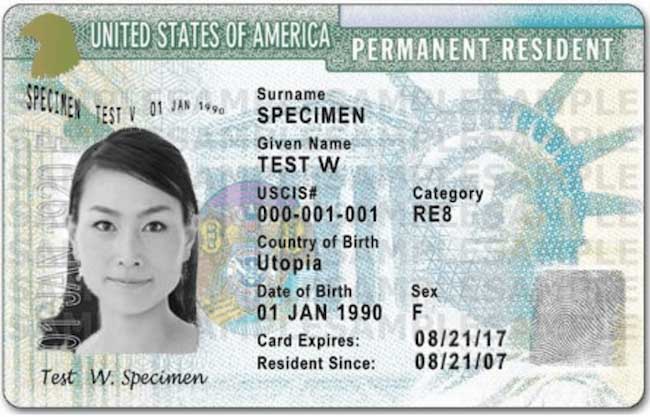
A Green Card allows people who are not U.S. citizens to live and work in the USA. It is an identity document with your name and photo. A Green Card is proof of your immigration status as a **lawful permanent resident (LPR)**.
Green Cards are issued by the U.S. Citizenship and Immigration Services (USCIS). Most Green Cards are valid for 10 years. If you are a conditional resident, it is valid for 2 years.
A Green Card is also called a **permanent resident card**.
### **Benefits of having a Green Card**
If you have permanent resident status, you can:
- live and work in the USA permanently
- travel outside the USA for up to 12 months
- receive federal benefits, such as help paying for education and housing
- apply to bring your spouse and unmarried children of any age to the USA
- apply for U.S. citizenship after 5 years (or 3 years if married to a U.S. citizen)

Find legal help
Learn how to find free or low-cost help from trusted immigration lawyers and legal representatives.
[Get started](https://usahello.org/immigration/your-rights/legal-help-for-immigrants/)
## **Who can apply for a Green Card?**
There are different ways you can become a lawful permanent resident. You can apply if you are in an eligible category:
#### Family members of U.S. citizens or Green Card holders
- [U.S. citizens](https://www.uscis.gov/green-card/green-card-eligibility/green-card-for-immediate-relatives-of-us-citizen) can sponsor their parents, spouse, [fiancé](https://www.uscis.gov/green-card/green-card-eligibility/green-card-for-fiancee-of-us-citizen), children of any age or marital status, and brothers or sisters. Someone who is a widow(er) of a U.S. citizen can also apply.
- [Green Card holders](https://www.uscis.gov/green-card/green-card-eligibility/green-card-for-family-preference-immigrants) can sponsor their spouse and unmarried children for permanent residency.
- U.S. citizens and Green Card holders *cannot* sponsor extended family members such as cousins, aunts, uncles, and grandparents.
#### Certain workers
A Green Card for employment-based immigrants is available to certain [workers](https://www.uscis.gov/green-card/green-card-eligibility/green-card-for-employment-based-immigrants), [physicians](https://www.uscis.gov/green-card/green-card-eligibility/green-card-through-a-physician-national-interest-waiver-niw), and investors.
#### Special immigrants
[Religious workers](https://www.uscis.gov/green-card/green-card-eligibility/green-card-for-a-religious-worker-minister-or-nonminister), [special immigrant juveniles](https://www.uscis.gov/green-card/green-card-eligibility/green-card-based-on-special-immigrant-juvenile-classification), [Afghan or Iraqi translators or interpreters](https://www.uscis.gov/green-card/green-card-eligibility/green-card-for-an-afghan-or-iraqi-translator-or-interpreter) who worked for the U.S. government, [members of the media](https://www.uscis.gov/green-card/green-card-eligibility/green-card-for-a-broadcaster), and [members of international organizations](https://www.uscis.gov/green-card/green-card-eligibility/green-card-for-international-organization-employees) can apply.
#### Refugee and asylees
[Refugees](https://www.uscis.gov/green-card/green-card-eligibility/green-card-for-refugees) and [asylees](https://www.uscis.gov/green-card/green-card-eligibility/green-card-for-asylees) can apply for a Green Card after getting their status. Refugees must apply within 1 year of arriving. Asylees can apply at any time. But both must live in the U.S. for 1 year before their Green Card can be approved.
#### Victim of abuse, crime, and human trafficking
Certain victims of abuse can apply under [VAWA](https://www.uscis.gov/green-card/green-card-eligibility/green-card-for-vawa-self-petitioner), Special Immigrant Juvenile Status, Cuban Adjustment Act, and Haitian Refugee Immigrant Fairness Act. [Victims of human trafficking](https://www.uscis.gov/green-card/green-card-eligibility/green-card-for-a-victim-of-trafficking-t-nonimmigrant) and [other crime victims](https://www.uscis.gov/green-card/green-card-eligibility/green-card-for-a-victim-of-a-crime-u-nonimmigrant) can also apply.
#### Long-term residents
If you have lived in the U.S. since January 1, 1972, you can apply. This is called a [Green Card through registry](https://www.uscis.gov/green-card/green-card-eligibility/green-card-through-registry). This is an option even if you are undocumented or have been in the U.S. illegally.
#### Other nonimmigrants
Certain people can apply for a Green Card under [other programs](https://www.uscis.gov/green-card/green-card-eligibility-categories) including:
- Liberian Refugee Immigration Fairness (LRIF)
- Diversity Immigrant Visa Program (Green Card lottery)
- Cuban Adjustment Act
- Dependent status under the HRIFA
- Lautenberg parolee
- Indochinese Parole Adjustment Act of 2000
- American Indian born in Canada
- Diplomat or person born in the U.S. to a foreign diplomat
USCIS has **paused decisions** on Green Card applications for [**refugees**](https://usahello.org/immigration/asylum-refugees/usa-resettlement/) and [**people from travel ban countries**](https://usahello.org/immigration/travel-ban/). This does not include Green Card renewals or replacements.
Important to know
## Requirements
Each [Green Card eligibility category](https://www.uscis.gov/green-card/green-card-eligibility-categories) has specific requirements you must meet.
**If you are in the USA**
An immigration officer must have inspected and admitted you upon entering the United States. Applying inside the United States is officially called adjustment of status.
**If you are abroad**
You must [apply for an immigrant visa](https://usahello.org/immigration/visas-and-residency/us-visa/) with your local consulate to come to the United States. This process is officially called consular processing.
[The public charge rule](https://usahello.org/immigration/visas-and-residency/public-charge-rule/) does not allow people who will depend on certain government assistance to get a Green Card through a family-based petition. Asylees, refugees, humanitarian parolees, TPS holders, and victims of human trafficking and crime are exempt from this rule.
## How to apply
Now that you have reviewed the different categories, here are your next steps to apply:
#### **Step 1: Check if you are eligible to apply** for a Green Card
- Each Green Card category has specific requirements.
#### **Step 2: Get legal help if you can**
- It is always helpful to get legal help when you are trying to adjust your immigration status. There are many organizations and [lawyers who offer help for free or at a low cost](https://usahello.org/immigration/your-rights/legal-help-for-immigrants/).
#### **Step 3: Find out if you need to petition for a visa**
- Your family member may have to file [Form I-130](https://travel.state.gov/content/travel/en/us-visas/immigrate/the-immigrant-visa-process/step-1-submit-a-petition.html#ExternalPopup) with USCIS.
- Your employer may have to file [Form I-140](https://www.uscis.gov/i-140) with USCIS.
#### **Step 4: File your Green Card application**
- If you are abroad, you must apply for an immigrant visa with your local embassy to come to the United States.
- If you are in the United States, you must file [Form I-485](https://www.uscis.gov/i-485) with USCIS. Make sure you are eligible to file Form I-485 before applying.
- Be sure to use the latest edition of the form, edition 1/20/25. If you do not use the correct form, USCIS will not accept your application.
- Your family member may have to file an [affidavit of support](https://www.uscis.gov/green-card/green-card-processes-and-procedures/affidavit-of-support) with USCIS.
- You must also get a medical examination. If you are in the U.S., include [Form I-693](https://www.uscis.gov/i-693) with your Green Card application.
- Follow [tips for filing](https://www.uscis.gov/forms/filing-guidance/form-filing-tips) your Green Card application.
- Pay your filing fees. They vary by age. Use the [USCIS fee calculator](https://usahello.org/immigration/visas-and-residency/uscis-fees/).
- Note: you can also apply for a social security number at the same time.
#### **Step 5: Your biometrics appointment**
- Green Card applicants in the United States who are between the ages of 14 and 78 are required to give biometrics. Learn about [what to expect at your appointment](https://usahello.org/immigration/visas-and-residency/uscis-biometrics-appointment/).
#### **Step 6: Your Green Card interview**
- Most people who apply for a Green Card in the United States will be required to [interview](https://citizenpath.com/adjustment-of-status-interview-checklist/) at a local USCIS office. An immigration officer will review the answers to your application. They may also ask other questions to decide whether you are eligible for a Green Card.
- If you are abroad, you will be interviewed by a consular official at a U.S. Embassy or Consulate in your country of residence. The consular official will review your visa application and ask questions to decide whether you are eligible for an immigrant visa.
#### **Step 7: Get a decision**
- An immigration officer or consular official will make a decision in your case at the end of your interview. In some cases, the officer may ask for more evidence before they can issue a decision.
- If your application is approved, and you are in the United States, you will receive an approval notice followed by your Green Card.
- If your application is approved, and you are outside the United States, you will receive an immigrant visa in your passport to allow you to enter the U.S. After you enter and pay the Immigrant Fee, you will receive your Green Card.
- If your application or visa is denied, you will get information about whether you can appeal it.
#### **Step 8: Obtaining your Green Card**
- The wait time for a Green Card depends on the category and location you are applying from. You can [search estimated processing times](https://egov.uscis.gov/processing-times/) online.
- You can check the status of your application online or by calling the [USCIS Contact Center](https://www.uscis.gov/contactcenter).

Avoid immigration scams
Know how to protect yourself from notarios and fake websites. Learn what to do if you have been a victim of fraud.
[Learn more](https://usahello.org/immigration/your-rights/immigration-scams/)
## Green Card interview
There are a few things you can do to prepare for the interview.
- **Review your application** before your interview. Prepare with an attorney, resettlement agency, family, or friend.
- **Bring a copy of your application**.
- **Bring originals of all supporting documents** including your passport, travel document, and Form I-94.
- **Be prepared to answer all questions truthfully**.
- **For interviews at USCIS, you must bring your own interpreter if you need one** and complete [Form G-1256.](https://www.uscis.gov/g-1256) Your interpreter must be at least 18, speak your language and English fluently, and not be involved in your case.
## **Information for Green Card holders**
### Can the government review my Green Card again?
The U.S. government plans to review approved Green Cards for [refugees](https://usahello.org/immigration/asylum-refugees/usa-resettlement/) and people from the [travel ban countries](https://usahello.org/immigration/travel-ban/) who were approved between January 20, 2021, and February 20, 2025.
### How can I remove the conditions on my Green Card?
You can file a petition to remove conditions on your 2-year Green Card 90 days before it expires.
- If you have a family-based Green Card, file [Form I-751](https://www.uscis.gov/i-751). You will have to prove that you married in good faith, meaning that your marriage is genuine.
- If you have a work-based Green Card, file [Form I-829](https://www.uscis.gov/i-829). You will have to prove that you invested or are investing \$1,050,000 in a new business and 10 full-time jobs.
- If you file either of these forms, your Green Card will continue to be valid for 48 months beyond the card’s expiration date.
### How can I renew or replace my Green Card?
You should renew your card six months before it expires. If your card has been lost, stolen, or damaged, you can replace your card.
File [Form I-90](https://www.uscis.gov/i-90) to renew or replace your card. You can submit your application online or via mail.
Do NOT file Form I-90 if you have a 2-year Green Card that is expiring. You must instead file a Form I-751 (see above).
If you file Form I-90 to renew an expiring or expired Green Card, your Green Card will continue to be valid for 36 months as USCIS processes your application. You can use your receipt notice and expired Green Card as temporary evidence of your lawful permanent resident status and employment authorization.
If you are waiting for a replacement Green Card, you can contact your local USCIS office to request proof of your Green Card status.
### Does public charge apply if I renew my Green Card?
Public charge does **not** apply to you if you are applying to renew your Green Card. You may have to go through another public charge inadmissibility determination if you return to the U.S. after being absent for over 180 days.
### How can I travel with a Green Card?
You will need to show a passport or travel document when you leave the United States. You will need to show your Green Card when you return to the U.S. If you travel abroad for over one year, you must apply for a reentry permit to return to the U.S. You can file [Form I-131](https://www.uscis.gov/i-131).
Note that some countries may have travel restrictions. Learn how to plan your travel safely in [our guide on travel documents](https://usahello.org/immigration/your-rights/refugee-travel-document/).
More from USAHello
Looking for specific information?
[Immigration Guide  Immigration Guide This guide is here to help you stay informed and safe as immigration policies change under the new Trump administration. Find regularly updated information. Learn about programs ending and how to apply for available benefits. Know your rights and how to get help.](https://usahello.org/safety/)
[How to find a free immigration lawyer and low-cost legal help  How to find a free immigration lawyer and low-cost legal help It is important to get legal advice when applying for an immigration benefit or if you are detained. Many organizations offer free or low-cost legal help with an immigration lawyer or accredited representative. Learn how to find trustworthy help and how you can represent yourself.](https://usahello.org/immigration/your-rights/legal-help-for-immigrants/)
[Your guide to U.S. visas: types and requirements 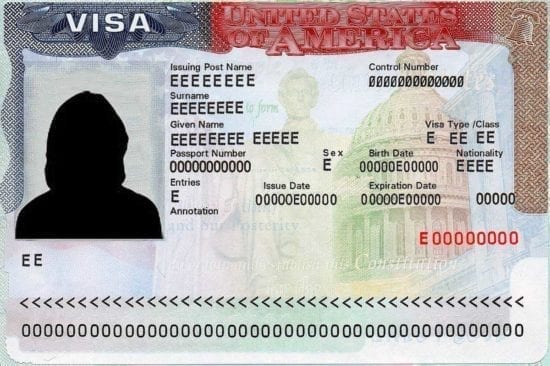 Your guide to U.S. visas: types and requirements You may need a visa to travel to the USA. Learn about the types of U.S. visas that are available and which one you will need. Read about how to apply and prepare for your interview.](https://usahello.org/immigration/visas-and-residency/us-visa/)
[Family immigration for U.S. citizens and Green Card holders  Family immigration for U.S. citizens and Green Card holders If you are a U.S. citizen or lawful permanent resident, you can petition for some of your family members to join you in the USA. Learn about the types of family immigration visas that are available and how to apply for a green card for a family member.](https://usahello.org/immigration/visas-and-residency/family-immigration/)
[What is EAD? A guide to U.S. Work Authorization 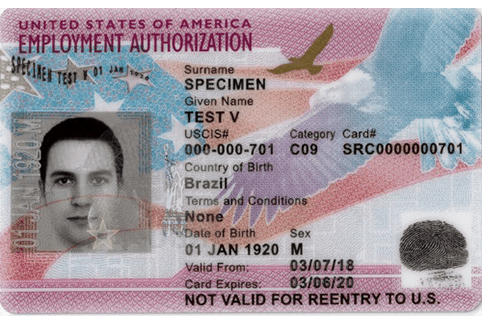 What is EAD? A guide to U.S. Work Authorization Many immigrants come to the USA to work. If you are not a U.S. citizen, Green Card holder, or asylee, you must have an Employment Authorization Document (EAD). Find information on how to apply for a work permit and renew it.](https://usahello.org/immigration/your-rights/what-is-ead/)
[How to apply for a U.S. travel document  How to apply for a U.S. travel document If you plan to travel outside the USA, you may need a U.S.-issued travel document to return. Learn who needs a travel document and how to apply. Know what to consider when deciding if it is safe to travel abroad.](https://usahello.org/immigration/your-rights/refugee-travel-document/)
***
The information on this page comes from USCIS and other trusted sources. We aim to offer easy to understand information that is updated regularly. This information is not legal advice.
A Green Card, also known as a permanent resident card, allows you to live and work in the USA permanently. Find information on the ways to get a Green Card. Learn about the steps to apply and how to prepare for your interview.
**Explore USAHello**
- [Classroom](https://classroom.usahello.org/)
- [About USAHello](https://usahello.org/about-us/)
- [How to help](https://usahello.org/how-to-help/)
- [Careers at USAHello](https://usahello.org/about-us/careers/)
- [Donate](https://usahello.org/donate/)
[hello@usahello.org](mailto:hello@usahello.org)
***
[Privacy policy](https://usahello.org/about-us/privacy-policy/)
GED® is a registered trademark owned by the American Council on Education and administered by GED Testing Service LLC under license. For more information, visit [ged.com](https://www.ged.com/)
You are welcome to copy and redistribute [USAHello](https://usahello.org/) materials under Creative Commons license [CC BY-NC-SA 4.0](https://creativecommons.org/licenses/by-nc-sa/4.0/). As part of giving appropriate credit, we request you link to our website when using our content.

Feedback
#### Was this information helpful?
Yes No
#### What did you find helpful? (Choose all that apply)
Easy to understand
Good information
Other
Please choose an option or write something in the box provided
Submit your responses
#### How can we improve this information? (Choose all that apply)
I was looking for other information
Make it easier to understand
Translate this information
Other
Please choose an option or write something in the box provided
Submit your responses
#### Thank you very much\!
We really appreciate you taking the time to give us your opinions about our website. If you are willing to send us your email address or phone number we would like to contact you to ask some follow up questions. Your name and information will not be shared with anyone, we will only use it to contact you to ask about our website.
Please enter your name.
Are you in the USA?
Please enter a valid email address or phone number.
Submit
We have received your information and will contact you soon.
Something went wrong.

Loading... |
| Readable Markdown | [Skip to content](https://usahello.org/immigration/visas-and-residency/green-card/#content)
Link copied
## **What is a Green Card?**
A Green Card allows people who are not U.S. citizens to live and work in the USA. It is an identity document with your name and photo. A Green Card is proof of your immigration status as a **lawful permanent resident (LPR)**.
Green Cards are issued by the U.S. Citizenship and Immigration Services (USCIS). Most Green Cards are valid for 10 years. If you are a conditional resident, it is valid for 2 years.
A Green Card is also called a **permanent resident card**.

### **Benefits of having a Green Card**
If you have permanent resident status, you can:
- live and work in the USA permanently
- travel outside the USA for up to 12 months
- receive federal benefits, such as help paying for education and housing
- apply to bring your spouse and unmarried children of any age to the USA
- apply for U.S. citizenship after 5 years (or 3 years if married to a U.S. citizen)

Find legal help
Learn how to find free or low-cost help from trusted immigration lawyers and legal representatives.
## **Who can apply for a Green Card?**
There are different ways you can become a lawful permanent resident. You can apply if you are in an eligible category:
#### Family members of U.S. citizens or Green Card holders
- [U.S. citizens](https://www.uscis.gov/green-card/green-card-eligibility/green-card-for-immediate-relatives-of-us-citizen) can sponsor their parents, spouse, [fiancé](https://www.uscis.gov/green-card/green-card-eligibility/green-card-for-fiancee-of-us-citizen), children of any age or marital status, and brothers or sisters. Someone who is a widow(er) of a U.S. citizen can also apply.
- [Green Card holders](https://www.uscis.gov/green-card/green-card-eligibility/green-card-for-family-preference-immigrants) can sponsor their spouse and unmarried children for permanent residency.
- U.S. citizens and Green Card holders *cannot* sponsor extended family members such as cousins, aunts, uncles, and grandparents.
#### Certain workers
A Green Card for employment-based immigrants is available to certain [workers](https://www.uscis.gov/green-card/green-card-eligibility/green-card-for-employment-based-immigrants), [physicians](https://www.uscis.gov/green-card/green-card-eligibility/green-card-through-a-physician-national-interest-waiver-niw), and investors.
#### Special immigrants
[Religious workers](https://www.uscis.gov/green-card/green-card-eligibility/green-card-for-a-religious-worker-minister-or-nonminister), [special immigrant juveniles](https://www.uscis.gov/green-card/green-card-eligibility/green-card-based-on-special-immigrant-juvenile-classification), [Afghan or Iraqi translators or interpreters](https://www.uscis.gov/green-card/green-card-eligibility/green-card-for-an-afghan-or-iraqi-translator-or-interpreter) who worked for the U.S. government, [members of the media](https://www.uscis.gov/green-card/green-card-eligibility/green-card-for-a-broadcaster), and [members of international organizations](https://www.uscis.gov/green-card/green-card-eligibility/green-card-for-international-organization-employees) can apply.
#### Refugee and asylees
[Refugees](https://www.uscis.gov/green-card/green-card-eligibility/green-card-for-refugees) and [asylees](https://www.uscis.gov/green-card/green-card-eligibility/green-card-for-asylees) can apply for a Green Card after getting their status. Refugees must apply within 1 year of arriving. Asylees can apply at any time. But both must live in the U.S. for 1 year before their Green Card can be approved.
#### Victim of abuse, crime, and human trafficking
Certain victims of abuse can apply under [VAWA](https://www.uscis.gov/green-card/green-card-eligibility/green-card-for-vawa-self-petitioner), Special Immigrant Juvenile Status, Cuban Adjustment Act, and Haitian Refugee Immigrant Fairness Act. [Victims of human trafficking](https://www.uscis.gov/green-card/green-card-eligibility/green-card-for-a-victim-of-trafficking-t-nonimmigrant) and [other crime victims](https://www.uscis.gov/green-card/green-card-eligibility/green-card-for-a-victim-of-a-crime-u-nonimmigrant) can also apply.
#### Long-term residents
If you have lived in the U.S. since January 1, 1972, you can apply. This is called a [Green Card through registry](https://www.uscis.gov/green-card/green-card-eligibility/green-card-through-registry). This is an option even if you are undocumented or have been in the U.S. illegally.
#### Other nonimmigrants
Certain people can apply for a Green Card under [other programs](https://www.uscis.gov/green-card/green-card-eligibility-categories) including:
- Liberian Refugee Immigration Fairness (LRIF)
- Diversity Immigrant Visa Program (Green Card lottery)
- Cuban Adjustment Act
- Dependent status under the HRIFA
- Lautenberg parolee
- Indochinese Parole Adjustment Act of 2000
- American Indian born in Canada
- Diplomat or person born in the U.S. to a foreign diplomat
## Requirements
Each [Green Card eligibility category](https://www.uscis.gov/green-card/green-card-eligibility-categories) has specific requirements you must meet.
**If you are in the USA**
An immigration officer must have inspected and admitted you upon entering the United States. Applying inside the United States is officially called adjustment of status.
**If you are abroad**
You must [apply for an immigrant visa](https://usahello.org/immigration/visas-and-residency/us-visa/) with your local consulate to come to the United States. This process is officially called consular processing.
[The public charge rule](https://usahello.org/immigration/visas-and-residency/public-charge-rule/) does not allow people who will depend on certain government assistance to get a Green Card through a family-based petition. Asylees, refugees, humanitarian parolees, TPS holders, and victims of human trafficking and crime are exempt from this rule.
## How to apply
Now that you have reviewed the different categories, here are your next steps to apply:
#### **Step 1: Check if you are eligible to apply** for a Green Card
- Each Green Card category has specific requirements.
#### **Step 2: Get legal help if you can**
- It is always helpful to get legal help when you are trying to adjust your immigration status. There are many organizations and [lawyers who offer help for free or at a low cost](https://usahello.org/immigration/your-rights/legal-help-for-immigrants/).
#### **Step 3: Find out if you need to petition for a visa**
- Your family member may have to file [Form I-130](https://travel.state.gov/content/travel/en/us-visas/immigrate/the-immigrant-visa-process/step-1-submit-a-petition.html#ExternalPopup) with USCIS.
- Your employer may have to file [Form I-140](https://www.uscis.gov/i-140) with USCIS.
#### **Step 4: File your Green Card application**
- If you are abroad, you must apply for an immigrant visa with your local embassy to come to the United States.
- If you are in the United States, you must file [Form I-485](https://www.uscis.gov/i-485) with USCIS. Make sure you are eligible to file Form I-485 before applying.
- Be sure to use the latest edition of the form, edition 1/20/25. If you do not use the correct form, USCIS will not accept your application.
- Your family member may have to file an [affidavit of support](https://www.uscis.gov/green-card/green-card-processes-and-procedures/affidavit-of-support) with USCIS.
- You must also get a medical examination. If you are in the U.S., include [Form I-693](https://www.uscis.gov/i-693) with your Green Card application.
- Follow [tips for filing](https://www.uscis.gov/forms/filing-guidance/form-filing-tips) your Green Card application.
- Pay your filing fees. They vary by age. Use the [USCIS fee calculator](https://usahello.org/immigration/visas-and-residency/uscis-fees/).
- Note: you can also apply for a social security number at the same time.
#### **Step 5: Your biometrics appointment**
- Green Card applicants in the United States who are between the ages of 14 and 78 are required to give biometrics. Learn about [what to expect at your appointment](https://usahello.org/immigration/visas-and-residency/uscis-biometrics-appointment/).
#### **Step 6: Your Green Card interview**
- Most people who apply for a Green Card in the United States will be required to [interview](https://citizenpath.com/adjustment-of-status-interview-checklist/) at a local USCIS office. An immigration officer will review the answers to your application. They may also ask other questions to decide whether you are eligible for a Green Card.
- If you are abroad, you will be interviewed by a consular official at a U.S. Embassy or Consulate in your country of residence. The consular official will review your visa application and ask questions to decide whether you are eligible for an immigrant visa.
#### **Step 7: Get a decision**
- An immigration officer or consular official will make a decision in your case at the end of your interview. In some cases, the officer may ask for more evidence before they can issue a decision.
- If your application is approved, and you are in the United States, you will receive an approval notice followed by your Green Card.
- If your application is approved, and you are outside the United States, you will receive an immigrant visa in your passport to allow you to enter the U.S. After you enter and pay the Immigrant Fee, you will receive your Green Card.
- If your application or visa is denied, you will get information about whether you can appeal it.
#### **Step 8: Obtaining your Green Card**
- The wait time for a Green Card depends on the category and location you are applying from. You can [search estimated processing times](https://egov.uscis.gov/processing-times/) online.
- You can check the status of your application online or by calling the [USCIS Contact Center](https://www.uscis.gov/contactcenter).

Avoid immigration scams
Know how to protect yourself from notarios and fake websites. Learn what to do if you have been a victim of fraud.
## Green Card interview
There are a few things you can do to prepare for the interview.
- **Review your application** before your interview. Prepare with an attorney, resettlement agency, family, or friend.
- **Bring a copy of your application**.
- **Bring originals of all supporting documents** including your passport, travel document, and Form I-94.
- **Be prepared to answer all questions truthfully**.
- **For interviews at USCIS, you must bring your own interpreter if you need one** and complete [Form G-1256.](https://www.uscis.gov/g-1256) Your interpreter must be at least 18, speak your language and English fluently, and not be involved in your case.
## **Information for Green Card holders**
###
The U.S. government plans to review approved Green Cards for [refugees](https://usahello.org/immigration/asylum-refugees/usa-resettlement/) and people from the [travel ban countries](https://usahello.org/immigration/travel-ban/) who were approved between January 20, 2021, and February 20, 2025.
###
You can file a petition to remove conditions on your 2-year Green Card 90 days before it expires.
- If you have a family-based Green Card, file [Form I-751](https://www.uscis.gov/i-751). You will have to prove that you married in good faith, meaning that your marriage is genuine.
- If you have a work-based Green Card, file [Form I-829](https://www.uscis.gov/i-829). You will have to prove that you invested or are investing \$1,050,000 in a new business and 10 full-time jobs.
- If you file either of these forms, your Green Card will continue to be valid for 48 months beyond the card’s expiration date.
###
You should renew your card six months before it expires. If your card has been lost, stolen, or damaged, you can replace your card.
File [Form I-90](https://www.uscis.gov/i-90) to renew or replace your card. You can submit your application online or via mail.
Do NOT file Form I-90 if you have a 2-year Green Card that is expiring. You must instead file a Form I-751 (see above).
If you file Form I-90 to renew an expiring or expired Green Card, your Green Card will continue to be valid for 36 months as USCIS processes your application. You can use your receipt notice and expired Green Card as temporary evidence of your lawful permanent resident status and employment authorization.
If you are waiting for a replacement Green Card, you can contact your local USCIS office to request proof of your Green Card status.
###
Public charge does **not** apply to you if you are applying to renew your Green Card. You may have to go through another public charge inadmissibility determination if you return to the U.S. after being absent for over 180 days.
###
You will need to show a passport or travel document when you leave the United States. You will need to show your Green Card when you return to the U.S. If you travel abroad for over one year, you must apply for a reentry permit to return to the U.S. You can file [Form I-131](https://www.uscis.gov/i-131).
Note that some countries may have travel restrictions. Learn how to plan your travel safely in [our guide on travel documents](https://usahello.org/immigration/your-rights/refugee-travel-document/).
More from USAHello
Looking for specific information?
***
The information on this page comes from USCIS and other trusted sources. We aim to offer easy to understand information that is updated regularly. This information is not legal advice.
Feedback
#### Was this information helpful?
Yes No
#### Thank you very much\!
We really appreciate you taking the time to give us your opinions about our website. If you are willing to send us your email address or phone number we would like to contact you to ask some follow up questions. Your name and information will not be shared with anyone, we will only use it to contact you to ask about our website. |
| Shard | 141 (laksa) |
| Root Hash | 13751317593209567141 |
| Unparsed URL | org,usahello!/immigration/visas-and-residency/green-card/ s443 |