ℹ️ Skipped - page is already crawled
| Filter | Status | Condition | Details |
|---|---|---|---|
| HTTP status | PASS | download_http_code = 200 | HTTP 200 |
| Age cutoff | PASS | download_stamp > now() - 6 MONTH | 0.1 months ago |
| History drop | PASS | isNull(history_drop_reason) | No drop reason |
| Spam/ban | PASS | fh_dont_index != 1 AND ml_spam_score = 0 | ml_spam_score=0 |
| Canonical | PASS | meta_canonical IS NULL OR = '' OR = src_unparsed | Not set |
| Property | Value |
|---|---|
| URL | https://time.com/7267212/how-trump-and-xi-can-stop-trade-war/ |
| Last Crawled | 2026-04-11 20:17:44 (3 days ago) |
| First Indexed | 2025-03-13 04:08:37 (1 year ago) |
| HTTP Status Code | 200 |
| Meta Title | How Both Trump and Xi Can Stop a Trade War |
| Meta Description | A trade policy expert explains why Trump and Xi should refrain from a trade war and breaks down how they can strike a bigger deal. |
| Meta Canonical | null |
| Boilerpipe Text | I just returned from Beijing, where government and business leaders warned of rising tensions with the United States but remained hopeful that a deal is still within reach. There’s no doubt that if negotiations fail, we are on the verge of another
full-blown trade war
. And no one wins in this scenario, especially China.
I’ve spent 30 years engaging with Chinese leaders on trade, and this moment feels different. China’s
economy
is weaker than at any point in the past two decades—
youth unemployment
is stubbornly high, the
property market
is slumping, and
frustration is mounting
among the middle class. Few in China will acknowledge Xi Jinping’s political vulnerability, but his ability to manage these pressures is being closely watched. Meanwhile, China is hedging against U.S. pressure by
strengthening trade ties
with Russia and the Global South. Some African and Latin American leaders are seeing their countries flooded with Chinese goods and are pushing back against this effort. While diversifying into other export markets may work in the long term for China, in the short run, there's no substitute for the U.S.
President Donald Trump, while holding a strong negotiating hand, also has reasons to avoid a breakdown in U.S.-China ties. His growth-focused agenda could be undermined if
tariffs fuel inflation
and weaken demand for U.S. exports. Trump has already ratcheted up tariffs on Chinese goods in the last few weeks, and Beijing has responded with countermeasures. With trade battles also unfolding with
Canada
and
Mexico
, a bitter protracted fight with China could further strain global supply chains. The impact wouldn’t stop at the U.S. and China—markets across Europe, Asia, and beyond, which depend on trade with both economies, would feel the strain. The world’s two largest economies cannot afford to let this spiral out of control.
One reason for optimism is that both leaders are keeping channels open even as they exchange trade-war volleys.
The just-concluded annual meetings of China's legislature and top government advisory body approved stronger, if modest measures to shore up the lackluster Chinese economy by raising consumer spending and boosting confidence in the private sector. Steadier ties with the U.S. would help China focus on domestic restructuring. If Xi signals a real willingness to negotiate, Trump should seize the moment.
There is a path forward, if both sides are pragmatic. Trade barriers and technology controls top both countries’ agendas. To increase the chances for success, negotiations should also be time-bound—six months, no more, to prevent talks from getting bogged down. Beijing has a
history
of dragging out negotiations or canceling them when pushed into a corner. A firm deadline keeps pressure on both sides to act in good faith. If talks stall, tariff increases should be back on the table.
At the top of the agenda must be fentanyl.
The Justice Department
has determined that Chinese firms have supplied the chemicals Mexican cartels use to make the deadly opioid, and Chinese networks are
suspected
of laundering drug profits. Trump has made clear that any meaningful engagement with China must include stronger enforcement on fentanyl trafficking—and he’s counting on his good relationship with Xi to elicit China’s help. A trade war won’t solve the problem, but a pragmatic, results-driven deal might. Given bipartisan political pressure in Washington to get tough on China over fentanyl, addressing this issue before formal trade negotiations would be tactically smart. Either way, Beijing must be willing to crack down at home to cut off supply—and it can, if serious.
Trade commitments must be the next priority. During Trump’s first term, Beijing pledged to purchase U.S. aircraft, agricultural goods, and energy, yet its follow-through has
fallen short
. If China expects the U.S. to retreat on tariffs, it must demonstrate good faith by fulfilling prior commitments. A trade deal that lacks enforceability is meaningless.
As a show of faith, further escalation of tariffs should be suspended during negotiations. Neither side benefits from the uncertainty caused by continuously increasing duties. Markets react negatively to instability, and businesses on both sides are forced to rethink supply chains and investment strategies. A temporary pause on new tariffs would create the breathing room necessary for real negotiations to take place. This suspension, however, must be conditional—if China is found to be undermining talks or retaliating unfairly, the U.S. should reserve the right to reimpose penalties.
Restrictions on technologies
have been at the center of U.S.-China tensions in recent years and must also be part of the discussion. U.S. concerns that exports of advanced semiconductors or other leading-edge technologies could benefit the Chinese military are legitimate—and the U.S. must protect intellectual property. At the same time, excessive restrictions risk stifling investment and innovation. Washington and Beijing must find a way to set clear, enforceable guardrails that prevent national security risks while allowing most trade and investment in the technology sector to continue unimpeded.
China’s overproduction of industrial goods, electric vehicle exports, and investment restrictions are also fueling disputes with the European Union and other trading partners, who are weighing trade barriers against China. A U.S.-China agreement that removes the uncertainty of a trade war would generate positive ripples across the global economy. By engaging in a broader economic dialogue, Washington and Beijing can help prevent a wider fragmentation of global trade.
In his first term, Trump reshaped U.S. policy toward China, rightly calling out its unfair trade practices and framing it as a geopolitical competitor. That more hawkish stance is now entrenched in Washington, but the shift toward confrontation and economic nationalism has gone too far.
We are on the precipice of a Cold War-style divide, with each side viewing the other as an existential threat. It will take strong political leadership on both sides to pull back from the brink.
I’ve seen U.S.-China relations shift dramatically over the years. One thing remains true: when both sides choose pragmatism over confrontation, deals happen. President Trump has an opening to strike a meaningful agreement—and he should take it. |
| Markdown | [Skip to Content](https://time.com/7267212/how-trump-and-xi-can-stop-trade-war/#maincontent)
- Menu
Close
[Subscribe](https://time.com/subscribe-header-time/)
- [Ideas](https://time.com/section/ideas/)
- [politics](https://time.com/tag/politics/)
# How Both Trump and Xi Can Stop a Trade War
[ADD TIME ON GOOGLE](https://www.google.com/preferences/source?q=https://time.com)
Show me more content from TIME on Google Search
by
[Myron Brilliant](https://time.com/author/myron-brilliant/)
Contributor
Myron Brilliant is Founder of Brilliant Impact Group, Senior Counselor at DGA-ASG Group, and former Executive Vice President and Head of International Affairs at the U.S. Chamber of Commerce.
Mar 12, 2025 5:37 PM CUT
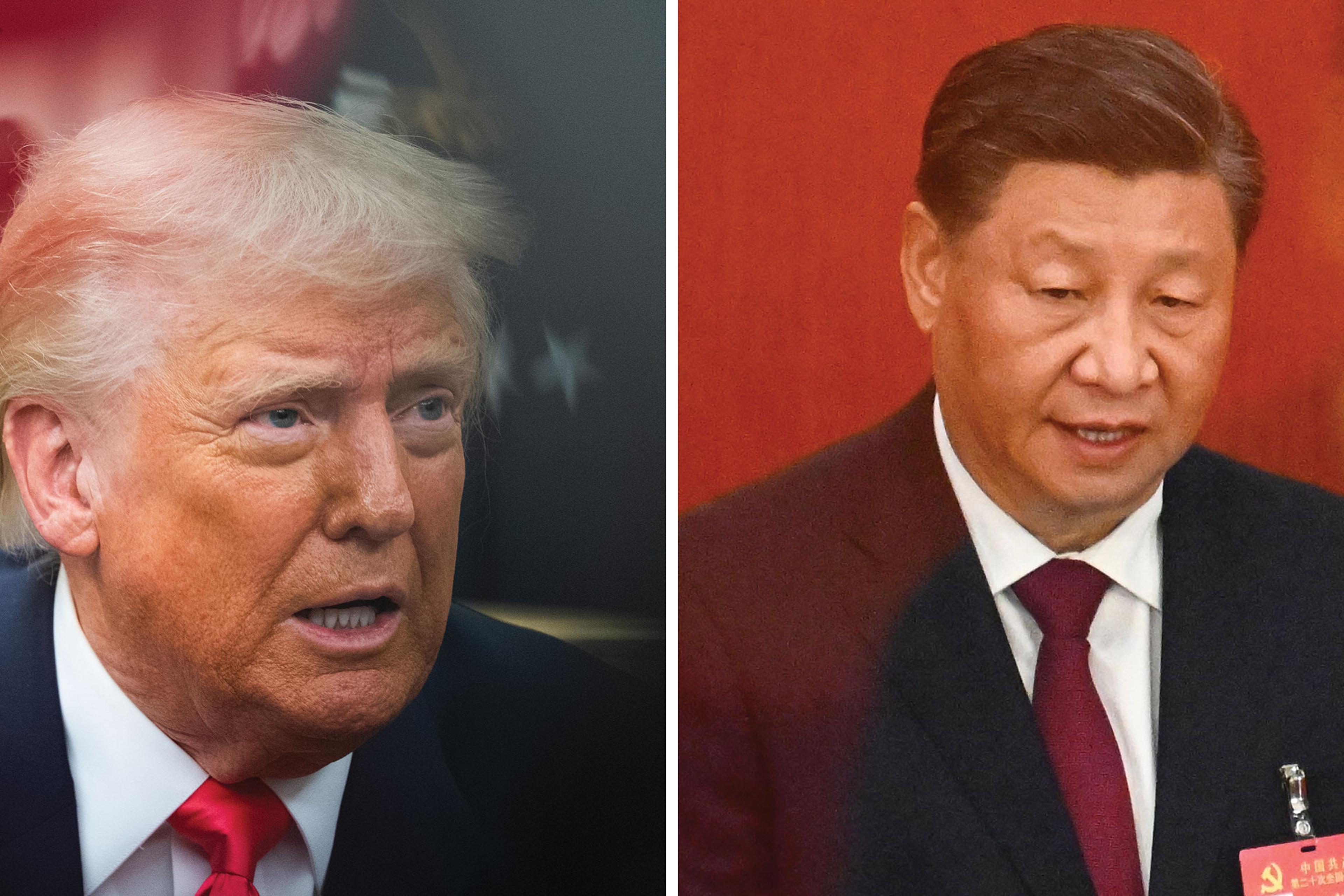
From left: President Donald Trump by Allison Robbert—The Washington Post/Getty Images; Xi Jinping by Noel Celis—AFP/Getty Images
by
[Myron Brilliant](https://time.com/author/myron-brilliant/)
Contributor
Myron Brilliant is Founder of Brilliant Impact Group, Senior Counselor at DGA-ASG Group, and former Executive Vice President and Head of International Affairs at the U.S. Chamber of Commerce.
Mar 12, 2025 5:37 PM CUT
I just returned from Beijing, where government and business leaders warned of rising tensions with the United States but remained hopeful that a deal is still within reach. There’s no doubt that if negotiations fail, we are on the verge of another [full-blown trade war](https://time.com/7266112/trump-trade-war-timeline-of-how-we-got-here/ "undefined"). And no one wins in this scenario, especially China.
I’ve spent 30 years engaging with Chinese leaders on trade, and this moment feels different. China’s [economy](https://www.npr.org/2024/10/19/nx-s1-5155945/chinas-economy-is-set-to-have-its-slowest-year-of-growth-in-decades "undefined") is weaker than at any point in the past two decades—[youth unemployment](https://www.latimes.com/world-nation/story/2024-09-25/chinas-youth-unemployment "undefined") is stubbornly high, the [property market](https://www.bloomberg.com/news/articles/2025-02-11/china-property-crisis-why-market-is-still-a-mess-what-government-is-doing "undefined") is slumping, and [frustration is mounting](https://www.economist.com/china/2024/09/23/a-new-class-struggle-is-brewing-in-china "undefined") among the middle class. Few in China will acknowledge Xi Jinping’s political vulnerability, but his ability to manage these pressures is being closely watched. Meanwhile, China is hedging against U.S. pressure by [strengthening trade ties](https://www.brookings.edu/articles/china-and-russias-strategic-relationship-amid-a-shifting-geopolitical-landscape/ "undefined") with Russia and the Global South. Some African and Latin American leaders are seeing their countries flooded with Chinese goods and are pushing back against this effort. While diversifying into other export markets may work in the long term for China, in the short run, there's no substitute for the U.S.
President Donald Trump, while holding a strong negotiating hand, also has reasons to avoid a breakdown in U.S.-China ties. His growth-focused agenda could be undermined if [tariffs fuel inflation](https://www.cnbc.com/2025/03/04/inflation-from-trump-tariffs-will-hit-soon-says-shipping-giant-maersk.html "undefined") and weaken demand for U.S. exports. Trump has already ratcheted up tariffs on Chinese goods in the last few weeks, and Beijing has responded with countermeasures. With trade battles also unfolding with [Canada](https://time.com/7266999/trump-tariffs-canada-steel-aluminum-electricity-price-hike-ontario/ "undefined") and [Mexico](https://time.com/7265281/trump-delays-tariffs-mexico/ "undefined"), a bitter protracted fight with China could further strain global supply chains. The impact wouldn’t stop at the U.S. and China—markets across Europe, Asia, and beyond, which depend on trade with both economies, would feel the strain. The world’s two largest economies cannot afford to let this spiral out of control.
One reason for optimism is that both leaders are keeping channels open even as they exchange trade-war volleys.
The just-concluded annual meetings of China's legislature and top government advisory body approved stronger, if modest measures to shore up the lackluster Chinese economy by raising consumer spending and boosting confidence in the private sector. Steadier ties with the U.S. would help China focus on domestic restructuring. If Xi signals a real willingness to negotiate, Trump should seize the moment.
Advertisement
There is a path forward, if both sides are pragmatic. Trade barriers and technology controls top both countries’ agendas. To increase the chances for success, negotiations should also be time-bound—six months, no more, to prevent talks from getting bogged down. Beijing has a [history](https://www.nytimes.com/2019/07/29/us/politics/trade-china-trump.html "undefined") of dragging out negotiations or canceling them when pushed into a corner. A firm deadline keeps pressure on both sides to act in good faith. If talks stall, tariff increases should be back on the table.
At the top of the agenda must be fentanyl. [The Justice Department](http://justice.gov/archives/opa/pr/justice-department-announces-eight-indictments-against-china-based-chemical-manufacturing "undefined") has determined that Chinese firms have supplied the chemicals Mexican cartels use to make the deadly opioid, and Chinese networks are [suspected](https://www.dea.gov/press-releases/2024/10/24/china-based-chemical-manufacturing-companies-and-employees-indicted#:~:text=The%20indictments%20unsealed%20today%20in,indictments%20also%20charge%20money%20laundering. "undefined") of laundering drug profits. Trump has made clear that any meaningful engagement with China must include stronger enforcement on fentanyl trafficking—and he’s counting on his good relationship with Xi to elicit China’s help. A trade war won’t solve the problem, but a pragmatic, results-driven deal might. Given bipartisan political pressure in Washington to get tough on China over fentanyl, addressing this issue before formal trade negotiations would be tactically smart. Either way, Beijing must be willing to crack down at home to cut off supply—and it can, if serious.
Advertisement
Trade commitments must be the next priority. During Trump’s first term, Beijing pledged to purchase U.S. aircraft, agricultural goods, and energy, yet its follow-through has [fallen short](https://www.nytimes.com/2022/02/08/business/china-us-trade.html "undefined"). If China expects the U.S. to retreat on tariffs, it must demonstrate good faith by fulfilling prior commitments. A trade deal that lacks enforceability is meaningless.
As a show of faith, further escalation of tariffs should be suspended during negotiations. Neither side benefits from the uncertainty caused by continuously increasing duties. Markets react negatively to instability, and businesses on both sides are forced to rethink supply chains and investment strategies. A temporary pause on new tariffs would create the breathing room necessary for real negotiations to take place. This suspension, however, must be conditional—if China is found to be undermining talks or retaliating unfairly, the U.S. should reserve the right to reimpose penalties.
Advertisement
[Restrictions on technologies](https://time.com/7206500/biden-ai-chip-export-restrictions/ "undefined") have been at the center of U.S.-China tensions in recent years and must also be part of the discussion. U.S. concerns that exports of advanced semiconductors or other leading-edge technologies could benefit the Chinese military are legitimate—and the U.S. must protect intellectual property. At the same time, excessive restrictions risk stifling investment and innovation. Washington and Beijing must find a way to set clear, enforceable guardrails that prevent national security risks while allowing most trade and investment in the technology sector to continue unimpeded.
China’s overproduction of industrial goods, electric vehicle exports, and investment restrictions are also fueling disputes with the European Union and other trading partners, who are weighing trade barriers against China. A U.S.-China agreement that removes the uncertainty of a trade war would generate positive ripples across the global economy. By engaging in a broader economic dialogue, Washington and Beijing can help prevent a wider fragmentation of global trade.
Advertisement
In his first term, Trump reshaped U.S. policy toward China, rightly calling out its unfair trade practices and framing it as a geopolitical competitor. That more hawkish stance is now entrenched in Washington, but the shift toward confrontation and economic nationalism has gone too far.
We are on the precipice of a Cold War-style divide, with each side viewing the other as an existential threat. It will take strong political leadership on both sides to pull back from the brink.
I’ve seen U.S.-China relations shift dramatically over the years. One thing remains true: when both sides choose pragmatism over confrontation, deals happen. President Trump has an opening to strike a meaningful agreement—and he should take it.
## Must-Reads from TIME
- [What to Know About the 25th Amendment as Lawmakers Call for Trump’s Removal](https://time.com/article/2026/04/06/25th-amendment-constitution-trump-war-iran-threat-insanity/?utm_rs=IL_GNBazf4RR9GSs3N-N37Btw)
- [American Men Are Set to Be Automatically Registered for the Draft. Here’s What to Know](https://time.com/article/2026/04/09/us-men-automatic-military-draft-change/?utm_rs=IL_GNBazf4RR9GSs3N-N37Btw)
- [‘Safe and sound’: How a U.S. Airman Shot Down in Iran Was Rescued From a Mountain Crevice](https://time.com/article/2026/04/05/-safe-and-sound-how-a-u-s-airman-shot-down-in-iran-was-rescued-from-a-mountain-crevice/?utm_rs=IL_GNBazf4RR9GSs3N-N37Btw)
- [How NASA Achieved the Historic Artemis II Splashdown](https://time.com/article/2026/04/10/artemis-ii-historic-splashdown/?utm_rs=IL_GNBazf4RR9GSs3N-N37Btw)
- [Starmer Says He's 'Fed Up' With Trump as Europe Splinters From U.S. Over Iran War](https://time.com/article/2026/04/10/european-leaders-criticize-trump-over-iran-war-starmer-energy-prices/?utm_rs=IL_GNBazf4RR9GSs3N-N37Btw)
- [What to Know About the Army Chief Hegseth Ousted—and the General Who’s Taking Over](https://time.com/article/2026/04/03/hegseth-army-firings-chief-of-staff/?utm_rs=IL_GNBazf4RR9GSs3N-N37Btw)
- [What to Know About the 25th Amendment as Lawmakers Call for Trump’s Removal](https://time.com/article/2026/04/06/25th-amendment-constitution-trump-war-iran-threat-insanity/?utm_rs=IL_GNBazf4RR9GSs3N-N37Btw)
- [American Men Are Set to Be Automatically Registered for the Draft. Here’s What to Know](https://time.com/article/2026/04/09/us-men-automatic-military-draft-change/?utm_rs=IL_GNBazf4RR9GSs3N-N37Btw)
- [‘Safe and sound’: How a U.S. Airman Shot Down in Iran Was Rescued From a Mountain Crevice](https://time.com/article/2026/04/05/-safe-and-sound-how-a-u-s-airman-shot-down-in-iran-was-rescued-from-a-mountain-crevice/?utm_rs=IL_GNBazf4RR9GSs3N-N37Btw)
Read More
## Sections
- [Home](https://time.com/)
- [Politics](https://time.com/section/politics/)
- [Health](https://time.com/section/health/)
- [AI](https://time.com/tag/ai/)
- [World](https://time.com/section/world/)
- [Business](https://time.com/section/business/)
- [Science](https://time.com/section/science/)
- [Climate](https://time.com/section/climate/)
- [Ideas](https://time.com/section/ideas/)
- [Entertainment](https://time.com/section/entertainment/)
- [Sports](https://time.com/section/sports/)
- [Technology](https://time.com/tag/technology/)
- [Newsletters](https://time.com/newsletters/?source=TD_Footer_Link&utm_source_pg=web&utm_medium_pg=footer&utm_campaign_pg=footer&utm_content_pg=footer-inside-time)
## More
- [The TIME Vault](https://time.com/vault/)
- [TIME Africa](https://africa.time.com/)
- [TIME France](https://www.timefrance.fr/)
- [TIME For Kids](https://www.timeforkids.com/)
- [TIME Futures](https://time.com/collection/time-co2-futures/)
- [TIME Studios](https://studios.time.com/)
- [Video](https://time.com/collections/time-video/)
- [Red Border](https://redborder.time.com/)
- [Supplied Partner Content](https://partnercontent.time.com/)
## About Us
- [Our Mission](https://time.com/about-time/)
- [Contact the Editors](mailto:feedback@time.com)
- [Press Room](https://time.com/section/press-room/)
- [Media Kit](https://time.com/mediakit/)
- [Reprints & Permissions](https://www.parsintl.com/publication/time)
- [Masthead](https://time.com/time-masthead/)
- [Careers](https://time.com/join-time/)
- [Site Map](https://time.com/sitemap.xml)
- [Modern Slavery Statement](https://time.com/modern-slavery-statement/)
## Your Subscriptions
- [Subscribe](https://time.com/subscribe-footer-time/)
- [Access My Digital Magazine](https://geo.ema.gs/time_digital)
- [Manage My Subscription](https://support.time.com/)
- [Global Help Center](https://support.time.com/)
- [Buy an Issue](https://magazineshop.us/collections/time-magazine/)
- [Shop the Cover Store](https://timecoverstore.com/)
- [Give a Gift](https://time.com/giveagift/)
© 2026 TIME USA, LLC. All Rights Reserved. Use of this site constitutes acceptance of our [Terms of Service](https://legal.time.com/terms-of-service), [Privacy Policy (Your Privacy Rights)](https://legal.time.com/us-privacy-policy) and Do Not Sell or Share My Personal Information.
TIME may receive compensation for some links to products and services on this website. Offers may be subject to change without notice.
Edit
 |
| Readable Markdown | I just returned from Beijing, where government and business leaders warned of rising tensions with the United States but remained hopeful that a deal is still within reach. There’s no doubt that if negotiations fail, we are on the verge of another [full-blown trade war](https://time.com/7266112/trump-trade-war-timeline-of-how-we-got-here/ "undefined"). And no one wins in this scenario, especially China.
I’ve spent 30 years engaging with Chinese leaders on trade, and this moment feels different. China’s [economy](https://www.npr.org/2024/10/19/nx-s1-5155945/chinas-economy-is-set-to-have-its-slowest-year-of-growth-in-decades "undefined") is weaker than at any point in the past two decades—[youth unemployment](https://www.latimes.com/world-nation/story/2024-09-25/chinas-youth-unemployment "undefined") is stubbornly high, the [property market](https://www.bloomberg.com/news/articles/2025-02-11/china-property-crisis-why-market-is-still-a-mess-what-government-is-doing "undefined") is slumping, and [frustration is mounting](https://www.economist.com/china/2024/09/23/a-new-class-struggle-is-brewing-in-china "undefined") among the middle class. Few in China will acknowledge Xi Jinping’s political vulnerability, but his ability to manage these pressures is being closely watched. Meanwhile, China is hedging against U.S. pressure by [strengthening trade ties](https://www.brookings.edu/articles/china-and-russias-strategic-relationship-amid-a-shifting-geopolitical-landscape/ "undefined") with Russia and the Global South. Some African and Latin American leaders are seeing their countries flooded with Chinese goods and are pushing back against this effort. While diversifying into other export markets may work in the long term for China, in the short run, there's no substitute for the U.S.
President Donald Trump, while holding a strong negotiating hand, also has reasons to avoid a breakdown in U.S.-China ties. His growth-focused agenda could be undermined if [tariffs fuel inflation](https://www.cnbc.com/2025/03/04/inflation-from-trump-tariffs-will-hit-soon-says-shipping-giant-maersk.html "undefined") and weaken demand for U.S. exports. Trump has already ratcheted up tariffs on Chinese goods in the last few weeks, and Beijing has responded with countermeasures. With trade battles also unfolding with [Canada](https://time.com/7266999/trump-tariffs-canada-steel-aluminum-electricity-price-hike-ontario/ "undefined") and [Mexico](https://time.com/7265281/trump-delays-tariffs-mexico/ "undefined"), a bitter protracted fight with China could further strain global supply chains. The impact wouldn’t stop at the U.S. and China—markets across Europe, Asia, and beyond, which depend on trade with both economies, would feel the strain. The world’s two largest economies cannot afford to let this spiral out of control.
One reason for optimism is that both leaders are keeping channels open even as they exchange trade-war volleys.
The just-concluded annual meetings of China's legislature and top government advisory body approved stronger, if modest measures to shore up the lackluster Chinese economy by raising consumer spending and boosting confidence in the private sector. Steadier ties with the U.S. would help China focus on domestic restructuring. If Xi signals a real willingness to negotiate, Trump should seize the moment.
There is a path forward, if both sides are pragmatic. Trade barriers and technology controls top both countries’ agendas. To increase the chances for success, negotiations should also be time-bound—six months, no more, to prevent talks from getting bogged down. Beijing has a [history](https://www.nytimes.com/2019/07/29/us/politics/trade-china-trump.html "undefined") of dragging out negotiations or canceling them when pushed into a corner. A firm deadline keeps pressure on both sides to act in good faith. If talks stall, tariff increases should be back on the table.
At the top of the agenda must be fentanyl. [The Justice Department](http://justice.gov/archives/opa/pr/justice-department-announces-eight-indictments-against-china-based-chemical-manufacturing "undefined") has determined that Chinese firms have supplied the chemicals Mexican cartels use to make the deadly opioid, and Chinese networks are [suspected](https://www.dea.gov/press-releases/2024/10/24/china-based-chemical-manufacturing-companies-and-employees-indicted#:~:text=The%20indictments%20unsealed%20today%20in,indictments%20also%20charge%20money%20laundering. "undefined") of laundering drug profits. Trump has made clear that any meaningful engagement with China must include stronger enforcement on fentanyl trafficking—and he’s counting on his good relationship with Xi to elicit China’s help. A trade war won’t solve the problem, but a pragmatic, results-driven deal might. Given bipartisan political pressure in Washington to get tough on China over fentanyl, addressing this issue before formal trade negotiations would be tactically smart. Either way, Beijing must be willing to crack down at home to cut off supply—and it can, if serious.
Trade commitments must be the next priority. During Trump’s first term, Beijing pledged to purchase U.S. aircraft, agricultural goods, and energy, yet its follow-through has [fallen short](https://www.nytimes.com/2022/02/08/business/china-us-trade.html "undefined"). If China expects the U.S. to retreat on tariffs, it must demonstrate good faith by fulfilling prior commitments. A trade deal that lacks enforceability is meaningless.
As a show of faith, further escalation of tariffs should be suspended during negotiations. Neither side benefits from the uncertainty caused by continuously increasing duties. Markets react negatively to instability, and businesses on both sides are forced to rethink supply chains and investment strategies. A temporary pause on new tariffs would create the breathing room necessary for real negotiations to take place. This suspension, however, must be conditional—if China is found to be undermining talks or retaliating unfairly, the U.S. should reserve the right to reimpose penalties.
[Restrictions on technologies](https://time.com/7206500/biden-ai-chip-export-restrictions/ "undefined") have been at the center of U.S.-China tensions in recent years and must also be part of the discussion. U.S. concerns that exports of advanced semiconductors or other leading-edge technologies could benefit the Chinese military are legitimate—and the U.S. must protect intellectual property. At the same time, excessive restrictions risk stifling investment and innovation. Washington and Beijing must find a way to set clear, enforceable guardrails that prevent national security risks while allowing most trade and investment in the technology sector to continue unimpeded.
China’s overproduction of industrial goods, electric vehicle exports, and investment restrictions are also fueling disputes with the European Union and other trading partners, who are weighing trade barriers against China. A U.S.-China agreement that removes the uncertainty of a trade war would generate positive ripples across the global economy. By engaging in a broader economic dialogue, Washington and Beijing can help prevent a wider fragmentation of global trade.
In his first term, Trump reshaped U.S. policy toward China, rightly calling out its unfair trade practices and framing it as a geopolitical competitor. That more hawkish stance is now entrenched in Washington, but the shift toward confrontation and economic nationalism has gone too far.
We are on the precipice of a Cold War-style divide, with each side viewing the other as an existential threat. It will take strong political leadership on both sides to pull back from the brink.
I’ve seen U.S.-China relations shift dramatically over the years. One thing remains true: when both sides choose pragmatism over confrontation, deals happen. President Trump has an opening to strike a meaningful agreement—and he should take it. |
| Shard | 39 (laksa) |
| Root Hash | 9797552172251460839 |
| Unparsed URL | com,time!/7267212/how-trump-and-xi-can-stop-trade-war/ s443 |