ℹ️ Skipped - page is already crawled
| Filter | Status | Condition | Details |
|---|---|---|---|
| HTTP status | PASS | download_http_code = 200 | HTTP 200 |
| Age cutoff | PASS | download_stamp > now() - 6 MONTH | 0 months ago |
| History drop | PASS | isNull(history_drop_reason) | No drop reason |
| Spam/ban | PASS | fh_dont_index != 1 AND ml_spam_score = 0 | ml_spam_score=0 |
| Canonical | PASS | meta_canonical IS NULL OR = '' OR = src_unparsed | Not set |
| Property | Value |
|---|---|
| URL | https://time.com/68381/life-beyond-death-the-science-of-the-afterlife-2/ |
| Last Crawled | 2026-04-15 12:45:11 (21 hours ago) |
| First Indexed | 2016-05-18 01:03:28 (9 years ago) |
| HTTP Status Code | 200 |
| Meta Title | Beyond Death: The Science of the Afterlife |
| Meta Description | If you’ve seen heaven, does that mean it exists? |
| Meta Canonical | null |
| Boilerpipe Text | This question is more than a mind-bender. For thousands of years, certain people have claimed to have actually visited the place that, Saint Paul promised, “no eye has seen … and no human mind has conceived,” and their stories very often follow the same narrative arc.
A skeptic, a rogue or an innocent suffers hardship or injury: he is hit on the head, he suffers a stroke, he sustains damage in a car crash or on the operating table. A feeling of disconnection comes over him, a sense of being “outside” himself. Perhaps he encounters an opening: a gate, a door, a tunnel. And then, all at once, he is being guided through other worlds that look and feel to him more “real” than the world in which he once existed. These realms are both familiar and strange, containing music that doesn’t sound like music and light brighter than any light, and creatures that may or may not be angels, and the familiar faces of loved ones lost as well as figures from history and sometimes—depending on the narrator—even Jesus himself. The tourist is agape. Words fail. He leaves reluctantly to reoccupy his body and this earth. But the experience changes him forever. Convinced as he is of a wholly different reality, he is calmer, more self-assured, determined to persuade the world of heaven’s truth. He tells his story to the masses. “Heaven is real!” he proclaims.
The Book of Enoch
, written hundreds of years before the birth of Jesus, tells a version of this story and so does the Book of Revelation, Christianity’s most foundational description of the sights and sounds of heaven. So do the medieval visionaries whose accounts were to the Middle Ages what reality TV is to the 21st century: “real” events marketed as popular entertainment (with an edifying Christian message thrown in). And despite—or perhaps because of—the increasing rationalism of our times, this narrative genre thrives today.
Ninety Minutes in Heaven
(2004), about a Christian pastor who ascended to God after a car wreck;
Heaven Is for Real
(2010), about a child who sees heaven during surgery; and
Proof of Heaven
, by a Duke-trained neurosurgeon who traveled to heaven in 2012, have all been bestsellers, all following the same storyline. The neurosurgeon, Eben Alexander, said in
Newsweek
in 2012 that his experience convinced him that his consciousness (the soul, or the self) exists somehow separate from or outside the mind and can travel to other dimensions on its own. “This world of consciousness beyond the body,” he wrote, “is the true new frontier, not just of science but of humankind itself, and it is my profound hope that what happened to me will bring the world one step closer to accepting it.”
Tales like these are thrilling in part because their tellers hold the passionate conviction of religious converts: I saw it, so it must be true. According to a Gallup poll, about 8 million Americans claim to have had a near-death experience (NDE), and many of them regard this experience as proof of an afterlife—a parallel, spiritual realm, more real, many say, than this one. Raymond Moody, who wrote
Life After Life
in 1975, one of the first popular books about NDEs, told CNN in 2013 that among people who have had such experiences, conviction about an afterlife transcends the particulars of religion. “A lot of people talk about encountering a being of light,” he said. “Christians call it Christ. Jewish people say it’s an angel. I’ve gone to different continents, and you can hear the same thing in China, India and Japan about meeting a being of complete love and compassion.” Moody was one of the founders of the International Association for Near-Death Studies, a group devoted to building global understanding of such experiences.
It’s an inversion, almost, of the old philosophical puzzle: If a tree falls in the forest and there’s no one there to hear it, does it make a sound? If you are certain that you saw something (or felt something or heard something), does it mean that it’s empirically proven? And if you are predisposed to want to see something, are you likelier to see it, the way Harry Potter saw his dear departed mother in Hogwarts’s magic mirror? And finally, if you see something while you are stressed or unconscious or traumatized in some way, does that circumstance delegitimize the veracity of your vision? This is the trouble with NDEs as a field of scientific study: you can’t have a control group. Most people on the brink of dying do die (and so cannot describe what that process is like), and those who survive approach the brink in such different ways—car accident, stroke, heart attack—that it’s impossible to compare their experiences empirically. But over the years, science has posited a number of theories about the connection between visions of heaven and the chemical and physical processes that occur at death.
Andrew Newberg is a neuroscientist and professor at Thomas Jefferson University and Hospital and has made his reputation studying the brain scans of religious people (nuns and monks) who have ecstatic experiences as they meditate. He believes the “tunnel” and the “light” that NDE-ers so frequently describe can be easily explained. As your eyesight fades, you lose the peripheral areas first, he points out. “That’s why you’d have a tunnel sensation.” If you see a bright light, that could be the central part of the visual system shutting down last.
Newberg puts forward the following scenario, which he emphasizes is guesswork: When people die, two parts of the brain that usually work in opposition to each other act cooperatively. The sympathetic nervous system—a web of nerves and neurons that run through the spinal cord and spread to virtually every organ in the body—is responsible for arousal or excitement. It gets you ready for action. The parasympathetic system, with which the sympathetic system is entwined, calms you down and rejuvenates you. In life, the turning on of one system promotes the shutting down of the other. The sympathetic nervous system kicks in when a car cuts you off on the highway; the parasympathetic system is in charge as you’re falling asleep. But in the brains of people having mystical experiences, and perhaps in death, both systems are fully “on,” giving a person a sensation both of slowing down, being “out of body,” and of seeing things vividly, including memories of important people and past events. It is possible, Newberg asserts—though not at all certain—that visions of heaven are merely chemical and neurological events that occur during death.
Since at least the 1980s, scientists have theorized that NDEs occur as a kind of physiological defense mechanism. In order to guard against damage during trauma, the brain releases protective chemicals that also happen to trigger intense hallucinations. This theory gained traction after scientists realized that virtually all of the features of an NDE—a sense of moving through a tunnel, an out-of-body feeling, spiritual awe, visual hallucinations, intense memories—can be reproduced with a stiff dose of ketamine, a horse tranquilizer frequently used as a party drug. In 2000 a psychiatrist named Karl Jansen wrote a book called
Ketamine: Dreams and Realities
, in which he interviewed a number of recreational users. One of them described a drug trip in a way that might be familiar to Dante, or the author of Revelation. “I came out into a golden Light. I rose into the Light and found myself having an unspoken exchange with the Light, which I believed to be God … I didn’t believe in God, which made the experience even more startling. Afterwards, I walked around the house for hours saying ‘Mine eyes have seen the glory of the coming of the Lord.’ ”
For some scientists, however, purely scientific explanations of heavenly visions do not suffice. Emily Williams Kelly is a psychologist who works at the University of Virginia’s Division of Perceptual Studies, which treats the study of NDEs as legitimate science. Her résumé is impressive: she has degrees from Duke, the University of Virginia and the University of Edinburgh—not institutions one usually associates with the study of the supernatural or paranormal. Kelly has spent her career researching, as she puts it, “the interface between the brain and the mind.” Practically speaking, she interviews dying people and tries to find patterns among their similarities. Kelly believes the experiences of people who have had near-death visions demonstrate that consciousness exists even after normal brain function ceases. (She would seem to provide some corroboration for Eben Alexander’s claims.) This theory, she argues, could suggest explanations for the afterlife: “If our conscious experience totally depends on the brain, then there can’t be an afterlife—when the brain is gone, the mind is gone. But it’s not that simple. Even when the brain seems to be virtually disabled, people are still having these experiences.”
What is she saying? That upon death, people really go to another realm? And that science can prove it? Kelly shrugs. NDEs “tell us to open our minds and think there may be a great deal more to mind and consciousness—that’s as far as I’m willing to go.”
When Alexander published his book in 2012, drawing on the work of Kelly and her husband, Edward, he drew derision, as he knew he would, from broad segments of the rationalist and scientific communities. Having fallen into a coma after contracting bacterial meningitis, he saw incredible things. “I was a speck on a beautiful butterfly wing,” he said in an interview, “millions of other butterflies around us. We were flying through blooming flowers, blossoms on trees, and they were all coming out as we flew through them…[There were] waterfalls, pools of water, indescribable colors, and above there were these arcs of silver and gold light and beautiful hymns coming down from them. Indescribably gorgeous hymns. I later came to call them ‘angels,’ those arcs of light in the sky.” This experience convinced him beyond any doubt of the existence of a loving God and the ability of souls to travel to the realms where God lives. The idea of a godless universe “now lies broken at our feet, ” he wrote in his book. “What happened to me destroyed it, and I intend to spend the rest of my life investigating the true nature of consciousness and making the fact that we are more, much more than our physical brains as clear as I can.”
The rationalist author Sam Harris, who is also a neuroscientist, aimed a fierce critique at Alexander’s account of his NDE. On his blog, Harris wrote that while he had no particular convictions about the essence or origins of consciousness, he was quite sure Alexander’s argument was specious. No one’s cerebral cortex shuts down entirely during coma, Harris pointed out. Additionally, the doctor showed no understanding of the kinds of neurotransmitters that can be released by the brain during trauma, including one called DMT, which produces hallucinations. “Let me suggest that, whether or not heaven exists, Alexander sounds precisely how a scientist should not sound when he doesn’t know what he is talking about, ” Harris concluded.
My own concern is somewhat different, relating back to the tree-in-the-forest conundrum. I believe Alexander (and all the others who testify to having visited heaven) saw what he says he saw, but one person’s vision, seen during trauma, does not add up to proof. Further all the emphasis on Alexander’s scientific credentials that accompanied the marketing of his book is disingenuous and entirely beside the point: the veracity of a vision of heaven would have nothing to do with where one went to medical school.
Adapted from
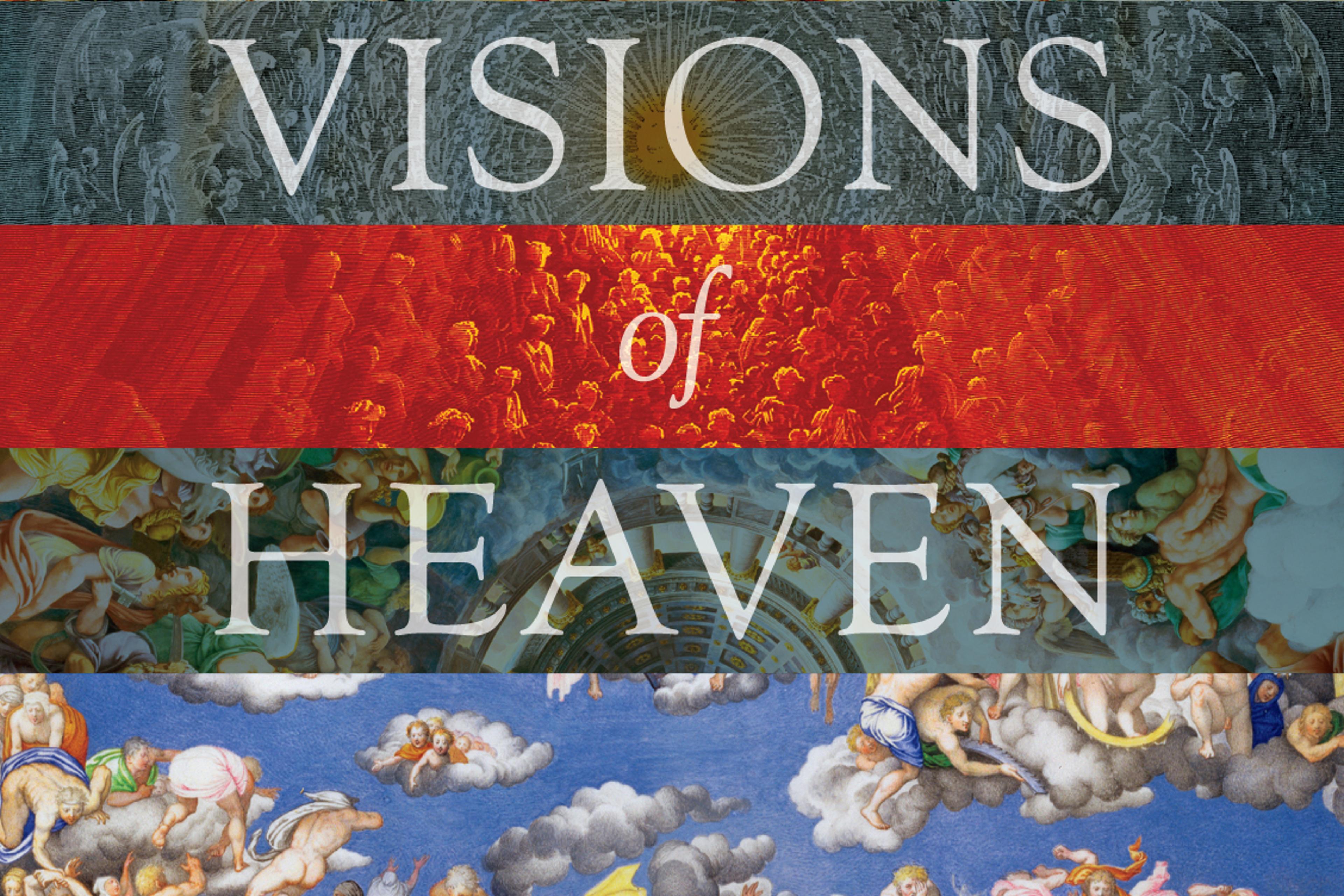
Visions of Heaven: A Journey Through the Afterlife
, available wherever books are sold. |
| Markdown | [Skip to Content](https://time.com/68381/life-beyond-death-the-science-of-the-afterlife-2/#maincontent)
- Menu
Close
[Subscribe](https://time.com/subscribe-header-time/)
- [Ideas](https://time.com/section/ideas/)
- [faith](https://time.com/tag/faith/)
# Beyond Death: The Science of the Afterlife
[ADD TIME ON GOOGLE](https://www.google.com/preferences/source?q=https://time.com)
Show me more content from TIME on Google Search
by
[Lisa Miller](https://time.com/author/lisa-miller/)
Apr 20, 2014 4:01 AM CUT
TIME Inc.
by
[Lisa Miller](https://time.com/author/lisa-miller/)
Apr 20, 2014 4:01 AM CUT
This question is more than a mind-bender. For thousands of years, certain people have claimed to have actually visited the place that, Saint Paul promised, “no eye has seen … and no human mind has conceived,” and their stories very often follow the same narrative arc.
A skeptic, a rogue or an innocent suffers hardship or injury: he is hit on the head, he suffers a stroke, he sustains damage in a car crash or on the operating table. A feeling of disconnection comes over him, a sense of being “outside” himself. Perhaps he encounters an opening: a gate, a door, a tunnel. And then, all at once, he is being guided through other worlds that look and feel to him more “real” than the world in which he once existed. These realms are both familiar and strange, containing music that doesn’t sound like music and light brighter than any light, and creatures that may or may not be angels, and the familiar faces of loved ones lost as well as figures from history and sometimes—depending on the narrator—even Jesus himself. The tourist is agape. Words fail. He leaves reluctantly to reoccupy his body and this earth. But the experience changes him forever. Convinced as he is of a wholly different reality, he is calmer, more self-assured, determined to persuade the world of heaven’s truth. He tells his story to the masses. “Heaven is real!” he proclaims.
*The Book of Enoch*, written hundreds of years before the birth of Jesus, tells a version of this story and so does the Book of Revelation, Christianity’s most foundational description of the sights and sounds of heaven. So do the medieval visionaries whose accounts were to the Middle Ages what reality TV is to the 21st century: “real” events marketed as popular entertainment (with an edifying Christian message thrown in). And despite—or perhaps because of—the increasing rationalism of our times, this narrative genre thrives today. *Ninety Minutes in Heaven* (2004), about a Christian pastor who ascended to God after a car wreck; *Heaven Is for Real* (2010), about a child who sees heaven during surgery; and *Proof of Heaven*, by a Duke-trained neurosurgeon who traveled to heaven in 2012, have all been bestsellers, all following the same storyline. The neurosurgeon, Eben Alexander, said in *Newsweek* in 2012 that his experience convinced him that his consciousness (the soul, or the self) exists somehow separate from or outside the mind and can travel to other dimensions on its own. “This world of consciousness beyond the body,” he wrote, “is the true new frontier, not just of science but of humankind itself, and it is my profound hope that what happened to me will bring the world one step closer to accepting it.”
Advertisement
Tales like these are thrilling in part because their tellers hold the passionate conviction of religious converts: I saw it, so it must be true. According to a Gallup poll, about 8 million Americans claim to have had a near-death experience (NDE), and many of them regard this experience as proof of an afterlife—a parallel, spiritual realm, more real, many say, than this one. Raymond Moody, who wrote *Life After Life* in 1975, one of the first popular books about NDEs, told CNN in 2013 that among people who have had such experiences, conviction about an afterlife transcends the particulars of religion. “A lot of people talk about encountering a being of light,” he said. “Christians call it Christ. Jewish people say it’s an angel. I’ve gone to different continents, and you can hear the same thing in China, India and Japan about meeting a being of complete love and compassion.” Moody was one of the founders of the International Association for Near-Death Studies, a group devoted to building global understanding of such experiences.
Advertisement
It’s an inversion, almost, of the old philosophical puzzle: If a tree falls in the forest and there’s no one there to hear it, does it make a sound? If you are certain that you saw something (or felt something or heard something), does it mean that it’s empirically proven? And if you are predisposed to want to see something, are you likelier to see it, the way Harry Potter saw his dear departed mother in Hogwarts’s magic mirror? And finally, if you see something while you are stressed or unconscious or traumatized in some way, does that circumstance delegitimize the veracity of your vision? This is the trouble with NDEs as a field of scientific study: you can’t have a control group. Most people on the brink of dying do die (and so cannot describe what that process is like), and those who survive approach the brink in such different ways—car accident, stroke, heart attack—that it’s impossible to compare their experiences empirically. But over the years, science has posited a number of theories about the connection between visions of heaven and the chemical and physical processes that occur at death.
Advertisement
Andrew Newberg is a neuroscientist and professor at Thomas Jefferson University and Hospital and has made his reputation studying the brain scans of religious people (nuns and monks) who have ecstatic experiences as they meditate. He believes the “tunnel” and the “light” that NDE-ers so frequently describe can be easily explained. As your eyesight fades, you lose the peripheral areas first, he points out. “That’s why you’d have a tunnel sensation.” If you see a bright light, that could be the central part of the visual system shutting down last.
Newberg puts forward the following scenario, which he emphasizes is guesswork: When people die, two parts of the brain that usually work in opposition to each other act cooperatively. The sympathetic nervous system—a web of nerves and neurons that run through the spinal cord and spread to virtually every organ in the body—is responsible for arousal or excitement. It gets you ready for action. The parasympathetic system, with which the sympathetic system is entwined, calms you down and rejuvenates you. In life, the turning on of one system promotes the shutting down of the other. The sympathetic nervous system kicks in when a car cuts you off on the highway; the parasympathetic system is in charge as you’re falling asleep. But in the brains of people having mystical experiences, and perhaps in death, both systems are fully “on,” giving a person a sensation both of slowing down, being “out of body,” and of seeing things vividly, including memories of important people and past events. It is possible, Newberg asserts—though not at all certain—that visions of heaven are merely chemical and neurological events that occur during death.
Advertisement
Since at least the 1980s, scientists have theorized that NDEs occur as a kind of physiological defense mechanism. In order to guard against damage during trauma, the brain releases protective chemicals that also happen to trigger intense hallucinations. This theory gained traction after scientists realized that virtually all of the features of an NDE—a sense of moving through a tunnel, an out-of-body feeling, spiritual awe, visual hallucinations, intense memories—can be reproduced with a stiff dose of ketamine, a horse tranquilizer frequently used as a party drug. In 2000 a psychiatrist named Karl Jansen wrote a book called *Ketamine: Dreams and Realities*, in which he interviewed a number of recreational users. One of them described a drug trip in a way that might be familiar to Dante, or the author of Revelation. “I came out into a golden Light. I rose into the Light and found myself having an unspoken exchange with the Light, which I believed to be God … I didn’t believe in God, which made the experience even more startling. Afterwards, I walked around the house for hours saying ‘Mine eyes have seen the glory of the coming of the Lord.’ ”
Advertisement
For some scientists, however, purely scientific explanations of heavenly visions do not suffice. Emily Williams Kelly is a psychologist who works at the University of Virginia’s Division of Perceptual Studies, which treats the study of NDEs as legitimate science. Her résumé is impressive: she has degrees from Duke, the University of Virginia and the University of Edinburgh—not institutions one usually associates with the study of the supernatural or paranormal. Kelly has spent her career researching, as she puts it, “the interface between the brain and the mind.” Practically speaking, she interviews dying people and tries to find patterns among their similarities. Kelly believes the experiences of people who have had near-death visions demonstrate that consciousness exists even after normal brain function ceases. (She would seem to provide some corroboration for Eben Alexander’s claims.) This theory, she argues, could suggest explanations for the afterlife: “If our conscious experience totally depends on the brain, then there can’t be an afterlife—when the brain is gone, the mind is gone. But it’s not that simple. Even when the brain seems to be virtually disabled, people are still having these experiences.”
Advertisement
What is she saying? That upon death, people really go to another realm? And that science can prove it? Kelly shrugs. NDEs “tell us to open our minds and think there may be a great deal more to mind and consciousness—that’s as far as I’m willing to go.”
When Alexander published his book in 2012, drawing on the work of Kelly and her husband, Edward, he drew derision, as he knew he would, from broad segments of the rationalist and scientific communities. Having fallen into a coma after contracting bacterial meningitis, he saw incredible things. “I was a speck on a beautiful butterfly wing,” he said in an interview, “millions of other butterflies around us. We were flying through blooming flowers, blossoms on trees, and they were all coming out as we flew through them…\[There were\] waterfalls, pools of water, indescribable colors, and above there were these arcs of silver and gold light and beautiful hymns coming down from them. Indescribably gorgeous hymns. I later came to call them ‘angels,’ those arcs of light in the sky.” This experience convinced him beyond any doubt of the existence of a loving God and the ability of souls to travel to the realms where God lives. The idea of a godless universe “now lies broken at our feet, ” he wrote in his book. “What happened to me destroyed it, and I intend to spend the rest of my life investigating the true nature of consciousness and making the fact that we are more, much more than our physical brains as clear as I can.”
Advertisement
The rationalist author Sam Harris, who is also a neuroscientist, aimed a fierce critique at Alexander’s account of his NDE. On his blog, Harris wrote that while he had no particular convictions about the essence or origins of consciousness, he was quite sure Alexander’s argument was specious. No one’s cerebral cortex shuts down entirely during coma, Harris pointed out. Additionally, the doctor showed no understanding of the kinds of neurotransmitters that can be released by the brain during trauma, including one called DMT, which produces hallucinations. “Let me suggest that, whether or not heaven exists, Alexander sounds precisely how a scientist should not sound when he doesn’t know what he is talking about, ” Harris concluded.
My own concern is somewhat different, relating back to the tree-in-the-forest conundrum. I believe Alexander (and all the others who testify to having visited heaven) saw what he says he saw, but one person’s vision, seen during trauma, does not add up to proof. Further all the emphasis on Alexander’s scientific credentials that accompanied the marketing of his book is disingenuous and entirely beside the point: the veracity of a vision of heaven would have nothing to do with where one went to medical school.
Advertisement
*Adapted from* Visions of Heaven: A Journey Through the Afterlife*, available wherever books are sold.*
## Must-Reads from TIME
- [American Men Are Set to Be Automatically Registered for the Draft. Here’s What to Know](https://time.com/article/2026/04/09/us-men-automatic-military-draft-change/?utm_rs=IL_GNBazf4RR9GSs3N-N37Btw)
- [Catholic Vance Breaks Silence on Trump's Jesus-Like Image Amid Outcry From Other Conservatives](https://time.com/article/2026/04/14/catholic-vance-breaks-silence-on-deleted-trump-jesus-image-amid-outcry/?utm_rs=IL_GNBazf4RR9GSs3N-N37Btw)
- [How NASA Achieved the Historic Artemis II Splashdown](https://time.com/article/2026/04/10/artemis-ii-historic-splashdown/?utm_rs=IL_GNBazf4RR9GSs3N-N37Btw)
- [Starmer Says He's 'Fed Up' With Trump as Europe Splinters From U.S. Over Iran War](https://time.com/article/2026/04/10/european-leaders-criticize-trump-over-iran-war-starmer-energy-prices/?utm_rs=IL_GNBazf4RR9GSs3N-N37Btw)
- [White House: Strait of Hormuz Closure 'Completely Unacceptable' Under Ceasefire](https://time.com/article/2026/04/08/white-house-strait-of-hormuz-closure-would-be-completely-unacceptable-under-ceasefire/?utm_rs=IL_GNBazf4RR9GSs3N-N37Btw)
- [U.S. and Iran Fail To Reach Deal on Ending War After Marathon Talks](https://time.com/article/2026/04/11/strait-of-hormuz-iran-peace-talks/?utm_rs=IL_GNBazf4RR9GSs3N-N37Btw)
- [American Men Are Set to Be Automatically Registered for the Draft. Here’s What to Know](https://time.com/article/2026/04/09/us-men-automatic-military-draft-change/?utm_rs=IL_GNBazf4RR9GSs3N-N37Btw)
- [Catholic Vance Breaks Silence on Trump's Jesus-Like Image Amid Outcry From Other Conservatives](https://time.com/article/2026/04/14/catholic-vance-breaks-silence-on-deleted-trump-jesus-image-amid-outcry/?utm_rs=IL_GNBazf4RR9GSs3N-N37Btw)
- [How NASA Achieved the Historic Artemis II Splashdown](https://time.com/article/2026/04/10/artemis-ii-historic-splashdown/?utm_rs=IL_GNBazf4RR9GSs3N-N37Btw)
Read More
## Sections
- [Home](https://time.com/)
- [Politics](https://time.com/section/politics/)
- [Health](https://time.com/section/health/)
- [AI](https://time.com/tag/ai/)
- [World](https://time.com/section/world/)
- [Business](https://time.com/section/business/)
- [Science](https://time.com/section/science/)
- [Climate](https://time.com/section/climate/)
- [Ideas](https://time.com/section/ideas/)
- [Entertainment](https://time.com/section/entertainment/)
- [Sports](https://time.com/section/sports/)
- [Technology](https://time.com/tag/technology/)
- [Newsletters](https://time.com/newsletters/?source=TD_Footer_Link&utm_source_pg=web&utm_medium_pg=footer&utm_campaign_pg=footer&utm_content_pg=footer-inside-time)
## More
- [The TIME Vault](https://time.com/vault/)
- [TIME Africa](https://africa.time.com/)
- [TIME France](https://www.timefrance.fr/)
- [TIME For Kids](https://www.timeforkids.com/)
- [TIME Futures](https://time.com/collection/time-co2-futures/)
- [TIME Studios](https://studios.time.com/)
- [Video](https://time.com/collections/time-video/)
- [Red Border](https://redborder.time.com/)
- [Supplied Partner Content](https://partnercontent.time.com/)
## About Us
- [Our Mission](https://time.com/about-time/)
- [Contact the Editors](mailto:feedback@time.com)
- [Press Room](https://time.com/section/press-room/)
- [Media Kit](https://time.com/mediakit/)
- [Reprints & Permissions](https://www.parsintl.com/publication/time)
- [Masthead](https://time.com/time-masthead/)
- [Careers](https://time.com/join-time/)
- [Site Map](https://time.com/sitemap.xml)
- [Modern Slavery Statement](https://time.com/modern-slavery-statement/)
## Your Subscriptions
- [Subscribe](https://time.com/subscribe-footer-time/)
- [Access My Digital Magazine](https://geo.ema.gs/time_digital)
- [Manage My Subscription](https://support.time.com/)
- [Global Help Center](https://support.time.com/)
- [Buy an Issue](https://magazineshop.us/collections/time-magazine/)
- [Shop the Cover Store](https://timecoverstore.com/)
- [Give a Gift](https://time.com/giveagift/)
© 2026 TIME USA, LLC. All Rights Reserved. Use of this site constitutes acceptance of our [Terms of Service](https://legal.time.com/terms-of-service), [Privacy Policy (Your Privacy Rights)](https://legal.time.com/us-privacy-policy) and Do Not Sell or Share My Personal Information.
TIME may receive compensation for some links to products and services on this website. Offers may be subject to change without notice.
Edit
 |
| Readable Markdown | This question is more than a mind-bender. For thousands of years, certain people have claimed to have actually visited the place that, Saint Paul promised, “no eye has seen … and no human mind has conceived,” and their stories very often follow the same narrative arc.
A skeptic, a rogue or an innocent suffers hardship or injury: he is hit on the head, he suffers a stroke, he sustains damage in a car crash or on the operating table. A feeling of disconnection comes over him, a sense of being “outside” himself. Perhaps he encounters an opening: a gate, a door, a tunnel. And then, all at once, he is being guided through other worlds that look and feel to him more “real” than the world in which he once existed. These realms are both familiar and strange, containing music that doesn’t sound like music and light brighter than any light, and creatures that may or may not be angels, and the familiar faces of loved ones lost as well as figures from history and sometimes—depending on the narrator—even Jesus himself. The tourist is agape. Words fail. He leaves reluctantly to reoccupy his body and this earth. But the experience changes him forever. Convinced as he is of a wholly different reality, he is calmer, more self-assured, determined to persuade the world of heaven’s truth. He tells his story to the masses. “Heaven is real!” he proclaims.
*The Book of Enoch*, written hundreds of years before the birth of Jesus, tells a version of this story and so does the Book of Revelation, Christianity’s most foundational description of the sights and sounds of heaven. So do the medieval visionaries whose accounts were to the Middle Ages what reality TV is to the 21st century: “real” events marketed as popular entertainment (with an edifying Christian message thrown in). And despite—or perhaps because of—the increasing rationalism of our times, this narrative genre thrives today. *Ninety Minutes in Heaven* (2004), about a Christian pastor who ascended to God after a car wreck; *Heaven Is for Real* (2010), about a child who sees heaven during surgery; and *Proof of Heaven*, by a Duke-trained neurosurgeon who traveled to heaven in 2012, have all been bestsellers, all following the same storyline. The neurosurgeon, Eben Alexander, said in *Newsweek* in 2012 that his experience convinced him that his consciousness (the soul, or the self) exists somehow separate from or outside the mind and can travel to other dimensions on its own. “This world of consciousness beyond the body,” he wrote, “is the true new frontier, not just of science but of humankind itself, and it is my profound hope that what happened to me will bring the world one step closer to accepting it.”
Tales like these are thrilling in part because their tellers hold the passionate conviction of religious converts: I saw it, so it must be true. According to a Gallup poll, about 8 million Americans claim to have had a near-death experience (NDE), and many of them regard this experience as proof of an afterlife—a parallel, spiritual realm, more real, many say, than this one. Raymond Moody, who wrote *Life After Life* in 1975, one of the first popular books about NDEs, told CNN in 2013 that among people who have had such experiences, conviction about an afterlife transcends the particulars of religion. “A lot of people talk about encountering a being of light,” he said. “Christians call it Christ. Jewish people say it’s an angel. I’ve gone to different continents, and you can hear the same thing in China, India and Japan about meeting a being of complete love and compassion.” Moody was one of the founders of the International Association for Near-Death Studies, a group devoted to building global understanding of such experiences.
It’s an inversion, almost, of the old philosophical puzzle: If a tree falls in the forest and there’s no one there to hear it, does it make a sound? If you are certain that you saw something (or felt something or heard something), does it mean that it’s empirically proven? And if you are predisposed to want to see something, are you likelier to see it, the way Harry Potter saw his dear departed mother in Hogwarts’s magic mirror? And finally, if you see something while you are stressed or unconscious or traumatized in some way, does that circumstance delegitimize the veracity of your vision? This is the trouble with NDEs as a field of scientific study: you can’t have a control group. Most people on the brink of dying do die (and so cannot describe what that process is like), and those who survive approach the brink in such different ways—car accident, stroke, heart attack—that it’s impossible to compare their experiences empirically. But over the years, science has posited a number of theories about the connection between visions of heaven and the chemical and physical processes that occur at death.
Andrew Newberg is a neuroscientist and professor at Thomas Jefferson University and Hospital and has made his reputation studying the brain scans of religious people (nuns and monks) who have ecstatic experiences as they meditate. He believes the “tunnel” and the “light” that NDE-ers so frequently describe can be easily explained. As your eyesight fades, you lose the peripheral areas first, he points out. “That’s why you’d have a tunnel sensation.” If you see a bright light, that could be the central part of the visual system shutting down last.
Newberg puts forward the following scenario, which he emphasizes is guesswork: When people die, two parts of the brain that usually work in opposition to each other act cooperatively. The sympathetic nervous system—a web of nerves and neurons that run through the spinal cord and spread to virtually every organ in the body—is responsible for arousal or excitement. It gets you ready for action. The parasympathetic system, with which the sympathetic system is entwined, calms you down and rejuvenates you. In life, the turning on of one system promotes the shutting down of the other. The sympathetic nervous system kicks in when a car cuts you off on the highway; the parasympathetic system is in charge as you’re falling asleep. But in the brains of people having mystical experiences, and perhaps in death, both systems are fully “on,” giving a person a sensation both of slowing down, being “out of body,” and of seeing things vividly, including memories of important people and past events. It is possible, Newberg asserts—though not at all certain—that visions of heaven are merely chemical and neurological events that occur during death.
Since at least the 1980s, scientists have theorized that NDEs occur as a kind of physiological defense mechanism. In order to guard against damage during trauma, the brain releases protective chemicals that also happen to trigger intense hallucinations. This theory gained traction after scientists realized that virtually all of the features of an NDE—a sense of moving through a tunnel, an out-of-body feeling, spiritual awe, visual hallucinations, intense memories—can be reproduced with a stiff dose of ketamine, a horse tranquilizer frequently used as a party drug. In 2000 a psychiatrist named Karl Jansen wrote a book called *Ketamine: Dreams and Realities*, in which he interviewed a number of recreational users. One of them described a drug trip in a way that might be familiar to Dante, or the author of Revelation. “I came out into a golden Light. I rose into the Light and found myself having an unspoken exchange with the Light, which I believed to be God … I didn’t believe in God, which made the experience even more startling. Afterwards, I walked around the house for hours saying ‘Mine eyes have seen the glory of the coming of the Lord.’ ”
For some scientists, however, purely scientific explanations of heavenly visions do not suffice. Emily Williams Kelly is a psychologist who works at the University of Virginia’s Division of Perceptual Studies, which treats the study of NDEs as legitimate science. Her résumé is impressive: she has degrees from Duke, the University of Virginia and the University of Edinburgh—not institutions one usually associates with the study of the supernatural or paranormal. Kelly has spent her career researching, as she puts it, “the interface between the brain and the mind.” Practically speaking, she interviews dying people and tries to find patterns among their similarities. Kelly believes the experiences of people who have had near-death visions demonstrate that consciousness exists even after normal brain function ceases. (She would seem to provide some corroboration for Eben Alexander’s claims.) This theory, she argues, could suggest explanations for the afterlife: “If our conscious experience totally depends on the brain, then there can’t be an afterlife—when the brain is gone, the mind is gone. But it’s not that simple. Even when the brain seems to be virtually disabled, people are still having these experiences.”
What is she saying? That upon death, people really go to another realm? And that science can prove it? Kelly shrugs. NDEs “tell us to open our minds and think there may be a great deal more to mind and consciousness—that’s as far as I’m willing to go.”
When Alexander published his book in 2012, drawing on the work of Kelly and her husband, Edward, he drew derision, as he knew he would, from broad segments of the rationalist and scientific communities. Having fallen into a coma after contracting bacterial meningitis, he saw incredible things. “I was a speck on a beautiful butterfly wing,” he said in an interview, “millions of other butterflies around us. We were flying through blooming flowers, blossoms on trees, and they were all coming out as we flew through them…\[There were\] waterfalls, pools of water, indescribable colors, and above there were these arcs of silver and gold light and beautiful hymns coming down from them. Indescribably gorgeous hymns. I later came to call them ‘angels,’ those arcs of light in the sky.” This experience convinced him beyond any doubt of the existence of a loving God and the ability of souls to travel to the realms where God lives. The idea of a godless universe “now lies broken at our feet, ” he wrote in his book. “What happened to me destroyed it, and I intend to spend the rest of my life investigating the true nature of consciousness and making the fact that we are more, much more than our physical brains as clear as I can.”
The rationalist author Sam Harris, who is also a neuroscientist, aimed a fierce critique at Alexander’s account of his NDE. On his blog, Harris wrote that while he had no particular convictions about the essence or origins of consciousness, he was quite sure Alexander’s argument was specious. No one’s cerebral cortex shuts down entirely during coma, Harris pointed out. Additionally, the doctor showed no understanding of the kinds of neurotransmitters that can be released by the brain during trauma, including one called DMT, which produces hallucinations. “Let me suggest that, whether or not heaven exists, Alexander sounds precisely how a scientist should not sound when he doesn’t know what he is talking about, ” Harris concluded.
My own concern is somewhat different, relating back to the tree-in-the-forest conundrum. I believe Alexander (and all the others who testify to having visited heaven) saw what he says he saw, but one person’s vision, seen during trauma, does not add up to proof. Further all the emphasis on Alexander’s scientific credentials that accompanied the marketing of his book is disingenuous and entirely beside the point: the veracity of a vision of heaven would have nothing to do with where one went to medical school.
*Adapted from* Visions of Heaven: A Journey Through the Afterlife*, available wherever books are sold.* |
| Shard | 39 (laksa) |
| Root Hash | 9797552172251460839 |
| Unparsed URL | com,time!/68381/life-beyond-death-the-science-of-the-afterlife-2/ s443 |