ℹ️ Skipped - page is already crawled
| Filter | Status | Condition | Details |
|---|---|---|---|
| HTTP status | PASS | download_http_code = 200 | HTTP 200 |
| Age cutoff | PASS | download_stamp > now() - 6 MONTH | 0.3 months ago |
| History drop | PASS | isNull(history_drop_reason) | No drop reason |
| Spam/ban | PASS | fh_dont_index != 1 AND ml_spam_score = 0 | ml_spam_score=0 |
| Canonical | PASS | meta_canonical IS NULL OR = '' OR = src_unparsed | Not set |
| Property | Value | |||||||||
|---|---|---|---|---|---|---|---|---|---|---|
| URL | https://time.com/6122130/house-of-gucci-true-story/ | |||||||||
| Last Crawled | 2026-04-14 11:03:21 (8 days ago) | |||||||||
| First Indexed | 2021-11-24 17:10:20 (4 years ago) | |||||||||
| HTTP Status Code | 200 | |||||||||
| Content | ||||||||||
| Meta Title | The Outrageous True Story Behind the Film House of Gucci | |||||||||
| Meta Description | Here's what's fact and fiction in 'House of Gucci,' Ridley Scott's new film inspired by the true story of the Gucci family. | |||||||||
| Meta Canonical | null | |||||||||
| Boilerpipe Text | The explosive family drama at the center of Ridley Scott’s
House of Gucci
is so over-the-top that it’s reasonable to assume the film is the result of a very active imagination. In the film, out Nov. 24, the marriage of Patrizia Reggiani (
Lady Gaga
) and Maurizio Gucci (Adam Driver) implodes as the family business, the House of Gucci, begins to crumble under the pressure of in-fighting and cultural shifts, culminating in the shocking murder of Maurizio.
But in the case of
House of Gucci
, the truth is truly stranger than fiction. The film was adapted from journalist Sara Gay Forden’s 2001 nonfiction book of the same name, which chronicled the sensational real-life story of the fabulously wealthy Gucci family’s rise and fall as one of fashion’s most prominent dynasties. The tale, which includes
Succession
-esque rivalries between family members, multiple lawsuits, tax evasion, incarceration and, of course, murder, provided ample creative fodder for Scott and screenwriters Roberto Bentivegna and Becky Johnston.
While the story is based on real people and events, a few elements were changed for the film—intentional choices on the part of Bentivegna, who drew inspiration for the screenplay from flashy films like
Sunset Boulevard, Scarface
and
The Godfather.
“I always wanted with this to feel like the audience was watching a movie,” he tells TIME. “I didn’t want it to feel like it was in any way a near realistic or sort of kitchen sink drama, I really wanted to feel heightened, and really bold and operatic.”
To do this, Bentivegna supplemented his use of Forden’s text with Italian articles from the time about the Gucci family’s public dramas, which he said took on a “tabloid sensationalism” especially surrounding Maurizio’s murder, which was later revealed to be a crime of passion, organized by Patrizia herself.
The element of sensationalism isn’t lost on Forden, who began writing about the Gucci family’s drama as the chief business correspondent for
WWD,
later drawing on her years of reporting to write her book.
“If I had made the story up like a novel, nobody would have believed it,” she tells TIME. “But it was all true. It’s a timeless story. There are lessons in it, like blood should be thicker than water. And unfortunately, in this case, it wasn’t.”
Here’s what to know about the true story behind
House of Gucci.
Jared Leto, Florence Andrews, Adam Driver, Lady Gaga and Al Pacino in House of Gucci
Courtesy of MGM
What to know about the Gucci family
The Gucci fashion house began as a luxury luggage brand founded in 1921 by Guccio Gucci. Guccio was inspired to create his business after a stint working as a bellhop at The Savoy Hotel in London and a gig working for an upscale train travel company. Guccio opened his first shop in Florence in 1921, offering fine leather luggage and accessories, as well as leather goods for horsemen. Guccio’s small shop soon blossomed into a booming family business with many shops in different cities and countries, especially after four of his sons (Vasco, Aldo, Rodolfo and Ugo, who was Guccio’s adopted stepson from his wife’s previous relationship) began working with him. Following Guccio’s death in 1953, shares of the business were left to his three biological sons, Vasco, Rodolfo and Aldo. Looming sibling rivalries between the brothers turned into full-on feuds that continued into the next generation, which helped lead to the downfall of the Gucci family in the fashion industry.
Conflict came to a head after Rodolfo Gucci died in 1983, leaving his son Maurizio a majority stake in the company, which was floundering under the leadership of Aldo. Maurizio, who felt Aldo’s approach of championing the mass production of Gucci products cheapened Gucci’s identity as a luxury brand, spent the majority of the 1980s trying to push him out of the business through legal battles and take over the company. The familial strife during this time was ugly and in the public eye: Aldo served a year in prison for tax evasion and Maurizio fled to Switzerland after being accused of forging his father’s signature to avoid paying inheritance taxes (while he was originally found guilty, he was later acquitted). By 1989, Maurizio had succeeded in taking control of the company and was strongly determined to revamp its image. However, by 1993, Maurizio’s excessive spending and the company’s outstanding debts
forced him to sell his 50% percent stake
to the business’ investors, ending the Gucci family’s ownership and control of the brand.
Forden says that while the end of the Gucci family dynasty in fashion may be one of the more dramatic incidents in the industry’s history, it was part of a larger trend for Italian fashion during the time, which also affected family companies like Prada, Versace and Armani, which were struggling with transitioning their respective small family boutique businesses into internationally recognized mega brands.
“Gucci tells the story of many family companies that were struggling to kind of get to the next level and wrestling with these questions of succession,” she says. “Obviously, they were challenges in the transformation to the next level and Gucci exemplified that in the most extreme and dramatic way. But I was really touched and compelled by Maurizio Gucci himself, who was on this mission to relaunch his family company to restore it to the top tier of the luxury market.”
Forden also noted that while Maurizio was unable to retain control or ownership of Gucci, he foretold the future of many of these fashion brands, becoming the first to bring in a financial shareholder in order to elevate the brand to the next level.
Lady Gaga in House of Gucci
Courtesy of MGM
What to know about Patrizia Reggiani
While Patrizia Reggiani was not born a Gucci, her name looms large in the history of the family. Born Patrizia Martinelli, the future “Lady Gucci” as she would be dubbed during her heyday, grew up poor and not knowing her biological father. When she was 12, her mother married Ferdinando Reggiani, a wealthy entrepreneur, who adopted Patrizia as his own. When she came of age, Patrizia was a socialite in Milan, but despite her stepfather’s wealth, she was not necessarily part of Milan’s high society. According to Forden, Patrizia’s mother was hopeful that her daughter could gain the family entry into these social circles.
Patrizia found an opportunity to join the elite circles of Milan after she met Maurizio at a party in 1970, where he was allegedly impressed with her resemblance to Elizabeth Taylor.
“I met Maurizio at a party and he fell madly in love with me,” Reggiani told
The Guardian
in a 2016 interview. “I was exciting and different.”
Adam Driver and Lady Gaga in House of Gucci
Courtesy of MGM
What to know about Patrizia and Maurizio’s marriage and divorce
Maurizio and Patrizia got married in 1972, after two years of courtship, but the union caused a rift in the family. Maurizio’s father, Rodolfo, did not approve of Reggiani’s social background and believed she was a social climber and opted not to attend the couple’s wedding. Rodolfo later reconciled with both his son and daughter-in-law after the birth of their first daughter, Alessandra, in 1976 (the couple had a second daughter, Allegra, in 1981) and even gifted them a luxury penthouse in New York City’s Olympic Tower, where they lived while Maurizio worked for the family business with Aldo.
During the early years of their marriage, Maurizio and Patrizia were active in the New York social scene, often socializing with the likes of Jackie Kennedy Onassis and known for their ostentatious, extravagant lifestyle—the pair were notorious for being chauffeured around Manhattan in a car with a personalized vanity plate with their amalgamated couple’s name, “Mauizia,” and had a yacht and vacation homes Saint Moritz, Acapulco and Connecticut.
Patrizia had an outsize influence on Maurizio in all things, including his dealings with Gucci. According to Bentivegna, Maurizio may have craved Patrizia’s guidance because he grew up as an only child whose mother died when he was very young; by all accounts, Patrizia was well aware that Maurizio’s personality was more timid than hers.
“[Patrizia] famously said that he was like a chair that takes the shape of whoever sits on it,” he says. “So, she as an incredibly sharp and cynical manipulator knew that she had putty in her hands, and she could really mold and play with, but I think it came out of a place of love.”
The couple’s marital problems began in 1983, after Maurizio received a majority stake in the company following the death of his father and attempted to take over the company by launching a legal war to oust his uncles. In an interview with
The Guardian
, Patrizia claimed that during this time, “Maurizio got crazy. Until then I was his chief adviser about all Gucci matters. But he wanted to be the best, and he stopped listening to me.”
Amid the strife with the family business, Maurizio suddenly severed his relationship with Patrizia. In 1985, after the family had relocated to Milan, Maurizio went on a business trip to Florence, then sent a friend to tell Patrizia that he would not be returning and that their marriage was over. Maurizio began living with Paola Franchi, a childhood friend, in 1991, inciting Patrizia’s jealousy. In 1994, the couple officially divorced, with Patrizia receiving a €2.5 million divorce settlement and a yearly alimony payment of €650,000, which she memorably compared to
“a mere bowl of lentils.”
Though she lost her legal right to use the surname Gucci in the divorce, Patrizia continued to do so anyway; in an interview with
La Republica
, she glibly noted: “I still feel like a Gucci—in fact, the most Gucci of them all.”
Adam Driver in House of Gucci
Courtesy of MGM
What actually happened to Maurizio Gucci?
On the morning of March 27, 1995, Maurizio was shot multiple times outside of his office in Milan. He died on the steps of the building in the arms of Giuseppe Onorato, the doorman and only witness to the shooting, who himself was shot. Patrizia was not arrested until 1997, two years after his murder, after police detectives received an
anonymous tip.
It was later discovered that on the day of Maurizio’s murder, Patrizia wrote one word in her diary, “paradeisos,” Greek for paradise.
Lady Gaga in House of Gucci
Courtesy of MGM
What happened at Patrizia’s trial and sentencing?
Patrizia’s trial was a flashy and highly publicized affair, thanks to the Gucci family’s high profile in Italy. She was dubbed the “Black Widow,” a moniker that held more weight once her trial was underway. During the trial, where Patrizia vehemently claimed that she was innocent, the prosecution played tapes of menacing and threatening voicemails that Patrizia had sent Maurizio and Paola, while the defense contended that Patrizia was mentally unstable because of a 1992 operation to remove a brain tumor, which they alleged altered her personality. However, three of the people involved in the scheme (Pina Auriemma, Patrizia’s friend and personal astrologer; Orazio Cicala, the getaway driver; and Ivano Savioni, the man who hired the hitman and driver) confessed to not only their involvement in the murder, but Patrizia’s role in organizing it. Both Patrizia and the hitman who shot Maurizio, Benedetto Ceraulo, denied their charges.
In November 1998, Patrizia was convicted of premeditated murder and sentenced to 29 years in prison, although she only ended up serving 18. Patrizia could have had a shorter tenure in Milan’s San Vittore prison, where she notably was
allowed to have a pet ferret
, and was eligible for parole in 2011, but she refused, opting to stay in jail, as opposed to joining a work-release program.
Patrizia was released in 2016 for good behavior and now works as a consultant for a jewelry company in Milan, where she has been spotted shopping with a parrot on her shoulder. She has since acknowledged her role in the murder of Maurizio,
telling an Italian reality TV show
when queried why she didn’t shoot her ex-husband herself: “My eyesight is not so good. I didn’t want to miss.”
As for Patrizia’s thoughts on the big screen adaptation of her life, she’s miffed that she was not consulted by Lady Gaga for the film.
“I am rather annoyed at the fact that Lady Gaga is playing me in the new Ridley Scott film without having had the consideration and sensibility to come and meet me,” she told
ANSA
, an Italian wire service. However, Bentivegna is not convinced that Patrizia isn’t somewhat impressed that the film was made.
“I think Patrizia is going to love the movie and I think she’s thrilled that it’s being made,” he says. “I think she’s incredibly flattered that Lady Gaga is playing her, because she is, to put it mildly, self-absorbed.”
What the Gucci family has to say about
House of Gucci
film adaptation
Following the release of the film, the family of Aldo Gucci released a statement in
ANSA
,
slamming the movie for showing “one narrative that is far from accurate.” In the statement, the Gucci family called out the film’s production for not consulting them before portraying Aldo and the rest of the family on-screen; they also took issue with the film’s depiction of Patrizia Reggiani as a sort of feminist foil to the male leadership of the company.
Variety
reported via an anonymous source that despite the severe statement, the Gucci family is not seeking legal action against Scott’s production company or Warner Bros.
Read the full statement, translated from Italian, below.
The Gucci family takes note of the release of the film “House of Gucci” with some bewilderment
because, although the work claims to want to tell the “true story” of the family, the fears
aroused by the trailers and interviews released so far, are confirmed: the film carries one
narrative that is far from accurate.
The production of the film did not bother to consult the heirs before describing Aldo Gucci
– president of the company for 30 years – and the members of the Gucci family as thugs,
ignorant and insensitive to the world around them, attributing notes to the protagonists,
events, tones and attitudes that never belonged to them. This is extremely painful
from a human point of view and an insult to the legacy on which the brand is built today.
Even more censurable is the reconstruction that becomes mystifying on the edge of the paradox
when it comes to suggesting indulgent tones towards a woman who, definitively
convicted of having been the instigator of the murder of Maurizio Gucci, is not painted
only in the film, but also in the statements of the cast members, as a victim that
was trying to survive in a masculine and macho corporate culture.
This couldn’t be further from the truth. Moreover, in the 70 years of history in which
it was a family business, Gucci was an inclusive company. Indeed, precisely in the 1980s
– the historical context in which the film is set – women were in different
top positions: whether they were members of the family or extraneous to it, they included th
e president of Gucci America, the Head of Global PR & Communication, and a member of the
board of directors of Gucci America.
Gucci is a family that lives honoring the work of its ancestors, whose memory
does not deserve to be bothered to stage a film that is not true and that d
oes not do justice to its protagonists.
The members of the Gucci family reserves every right to protect the name, image and
the dignity of their loved ones. | |||||||||
| Markdown | [Skip to Content](https://time.com/6122130/house-of-gucci-true-story/#maincontent)
- Menu
Close
[Subscribe](https://time.com/subscribe-header-time/)
- [Entertainment](https://time.com/section/entertainment/)
- [movies](https://time.com/tag/movies/)
# The Outrageous True Story Behind *House of Gucci*
[ADD TIME ON GOOGLE](https://www.google.com/preferences/source?q=https://time.com)
Show me more content from TIME on Google Search

by
[Cady Lang](https://time.com/author/cady-lang/)
Nov 24, 2021 5:10 PM CUT
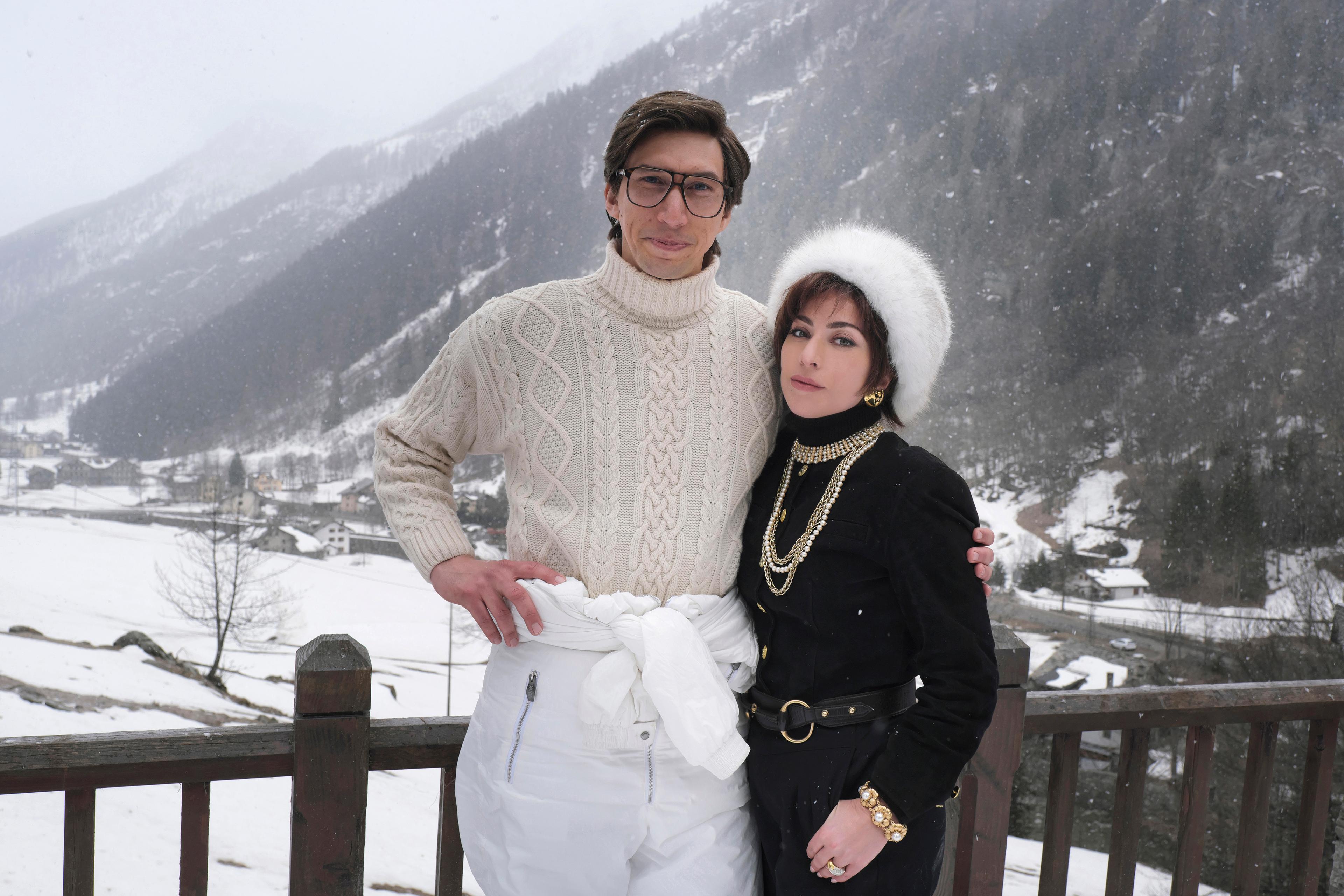
G\_00338\_R Adam Driver stars as Maurizio Gucci and Lady Gaga stars as Patrizia Reggiani in Ridley Scott’s HOUSE OF GUCCI A Metro Goldwyn Mayer Pictures film Photo credit: Fabio Lovino © 2021 Metro-Goldwyn-Mayer Pictures Inc. All Rights Reserved.
G\_00338\_R Adam Driver stars as Maurizio Gucci and Lady Gaga stars as Patrizia Reggiani in Ridley Scott’s HOUSE OF GUCCI A Metro Goldwyn Mayer Pictures film Photo credit: Fabio Lovino © 2021 Metro-Goldwyn-Mayer Pictures Inc. All Rights Reserved.Courtesy of MGM

by
[Cady Lang](https://time.com/author/cady-lang/)
Nov 24, 2021 5:10 PM CUT
The explosive family drama at the center of Ridley Scott’s [*House of Gucci*](https://time.com/6092652/fall-movies-2021/ "undefined") is so over-the-top that it’s reasonable to assume the film is the result of a very active imagination. In the film, out Nov. 24, the marriage of Patrizia Reggiani ([Lady Gaga](https://time.com/6122537/lady-gaga-house-of-gucci/ "undefined")) and Maurizio Gucci (Adam Driver) implodes as the family business, the House of Gucci, begins to crumble under the pressure of in-fighting and cultural shifts, culminating in the shocking murder of Maurizio.
But in the case of *House of Gucci*, the truth is truly stranger than fiction. The film was adapted from journalist Sara Gay Forden’s 2001 nonfiction book of the same name, which chronicled the sensational real-life story of the fabulously wealthy Gucci family’s rise and fall as one of fashion’s most prominent dynasties. The tale, which includes [*Succession*](https://time.com/6105831/succession-season-3-recap/ "undefined")**\-esque rivalries between family members, multiple lawsuits, tax evasion, incarceration and, of course, murder, provided ample creative fodder for Scott and screenwriters Roberto Bentivegna and Becky Johnston.
While the story is based on real people and events, a few elements were changed for the film—intentional choices on the part of Bentivegna, who drew inspiration for the screenplay from flashy films like *Sunset Boulevard, Scarface* and *The Godfather.*
“I always wanted with this to feel like the audience was watching a movie,” he tells TIME. “I didn’t want it to feel like it was in any way a near realistic or sort of kitchen sink drama, I really wanted to feel heightened, and really bold and operatic.”
Advertisement
To do this, Bentivegna supplemented his use of Forden’s text with Italian articles from the time about the Gucci family’s public dramas, which he said took on a “tabloid sensationalism” especially surrounding Maurizio’s murder, which was later revealed to be a crime of passion, organized by Patrizia herself.
The element of sensationalism isn’t lost on Forden, who began writing about the Gucci family’s drama as the chief business correspondent for *WWD,* later drawing on her years of reporting to write her book.
“If I had made the story up like a novel, nobody would have believed it,” she tells TIME. “But it was all true. It’s a timeless story. There are lessons in it, like blood should be thicker than water. And unfortunately, in this case, it wasn’t.”
Here’s what to know about the true story behind *House of Gucci.*
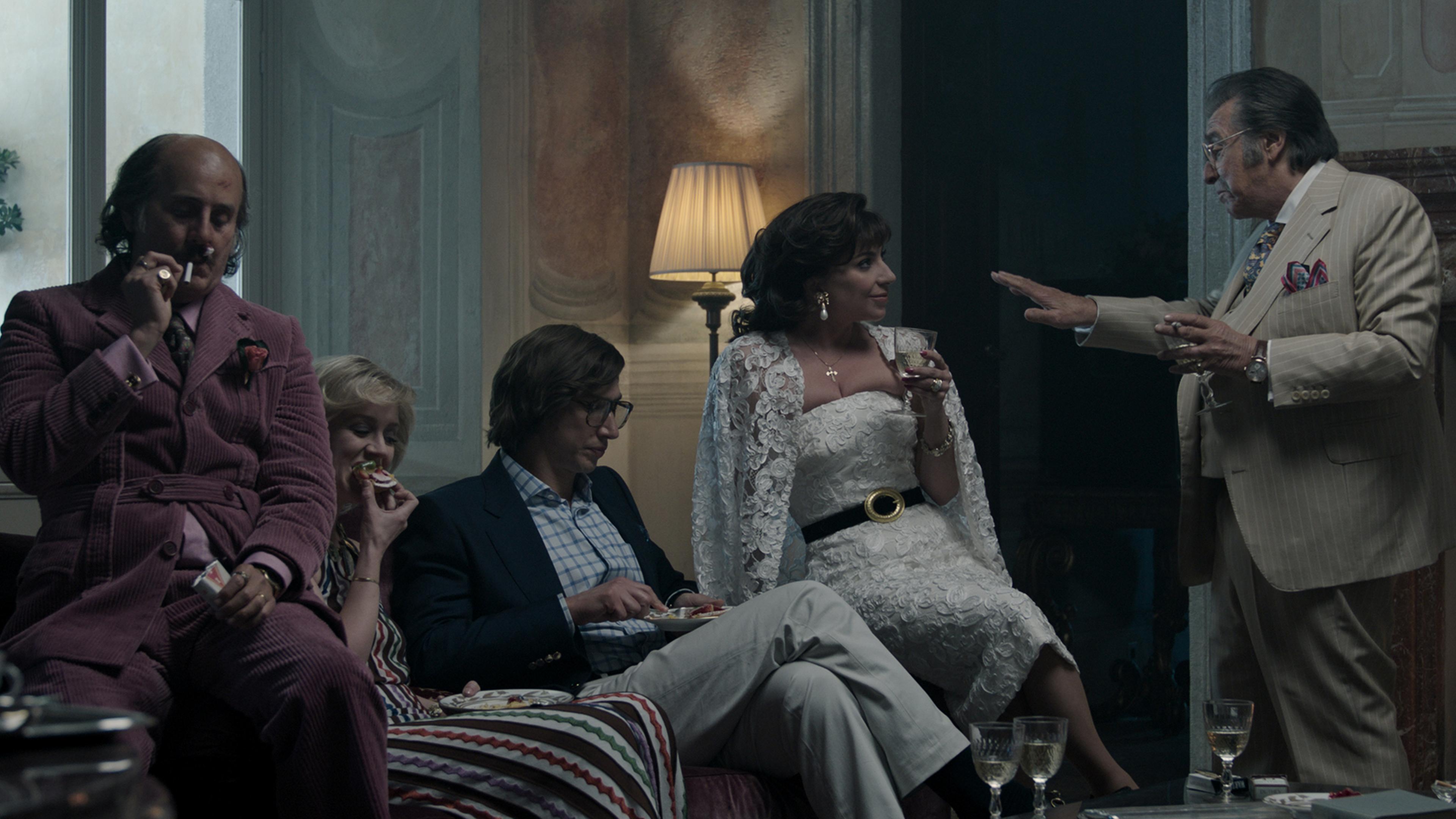
Jared Leto, Florence Andrews, Adam Driver, Lady Gaga and Al Pacino in House of Gucci Courtesy of MGM
Advertisement
## What to know about the Gucci family
The Gucci fashion house began as a luxury luggage brand founded in 1921 by Guccio Gucci. Guccio was inspired to create his business after a stint working as a bellhop at The Savoy Hotel in London and a gig working for an upscale train travel company. Guccio opened his first shop in Florence in 1921, offering fine leather luggage and accessories, as well as leather goods for horsemen. Guccio’s small shop soon blossomed into a booming family business with many shops in different cities and countries, especially after four of his sons (Vasco, Aldo, Rodolfo and Ugo, who was Guccio’s adopted stepson from his wife’s previous relationship) began working with him. Following Guccio’s death in 1953, shares of the business were left to his three biological sons, Vasco, Rodolfo and Aldo. Looming sibling rivalries between the brothers turned into full-on feuds that continued into the next generation, which helped lead to the downfall of the Gucci family in the fashion industry.
Advertisement
Conflict came to a head after Rodolfo Gucci died in 1983, leaving his son Maurizio a majority stake in the company, which was floundering under the leadership of Aldo. Maurizio, who felt Aldo’s approach of championing the mass production of Gucci products cheapened Gucci’s identity as a luxury brand, spent the majority of the 1980s trying to push him out of the business through legal battles and take over the company. The familial strife during this time was ugly and in the public eye: Aldo served a year in prison for tax evasion and Maurizio fled to Switzerland after being accused of forging his father’s signature to avoid paying inheritance taxes (while he was originally found guilty, he was later acquitted). By 1989, Maurizio had succeeded in taking control of the company and was strongly determined to revamp its image. However, by 1993, Maurizio’s excessive spending and the company’s outstanding debts [forced him to sell his 50% percent stake](https://wwd.com/fashion-news/fashion-features/article-1131352/ "undefined") to the business’ investors, ending the Gucci family’s ownership and control of the brand.
Advertisement
Forden says that while the end of the Gucci family dynasty in fashion may be one of the more dramatic incidents in the industry’s history, it was part of a larger trend for Italian fashion during the time, which also affected family companies like Prada, Versace and Armani, which were struggling with transitioning their respective small family boutique businesses into internationally recognized mega brands.
“Gucci tells the story of many family companies that were struggling to kind of get to the next level and wrestling with these questions of succession,” she says. “Obviously, they were challenges in the transformation to the next level and Gucci exemplified that in the most extreme and dramatic way. But I was really touched and compelled by Maurizio Gucci himself, who was on this mission to relaunch his family company to restore it to the top tier of the luxury market.”
Forden also noted that while Maurizio was unable to retain control or ownership of Gucci, he foretold the future of many of these fashion brands, becoming the first to bring in a financial shareholder in order to elevate the brand to the next level.
Advertisement
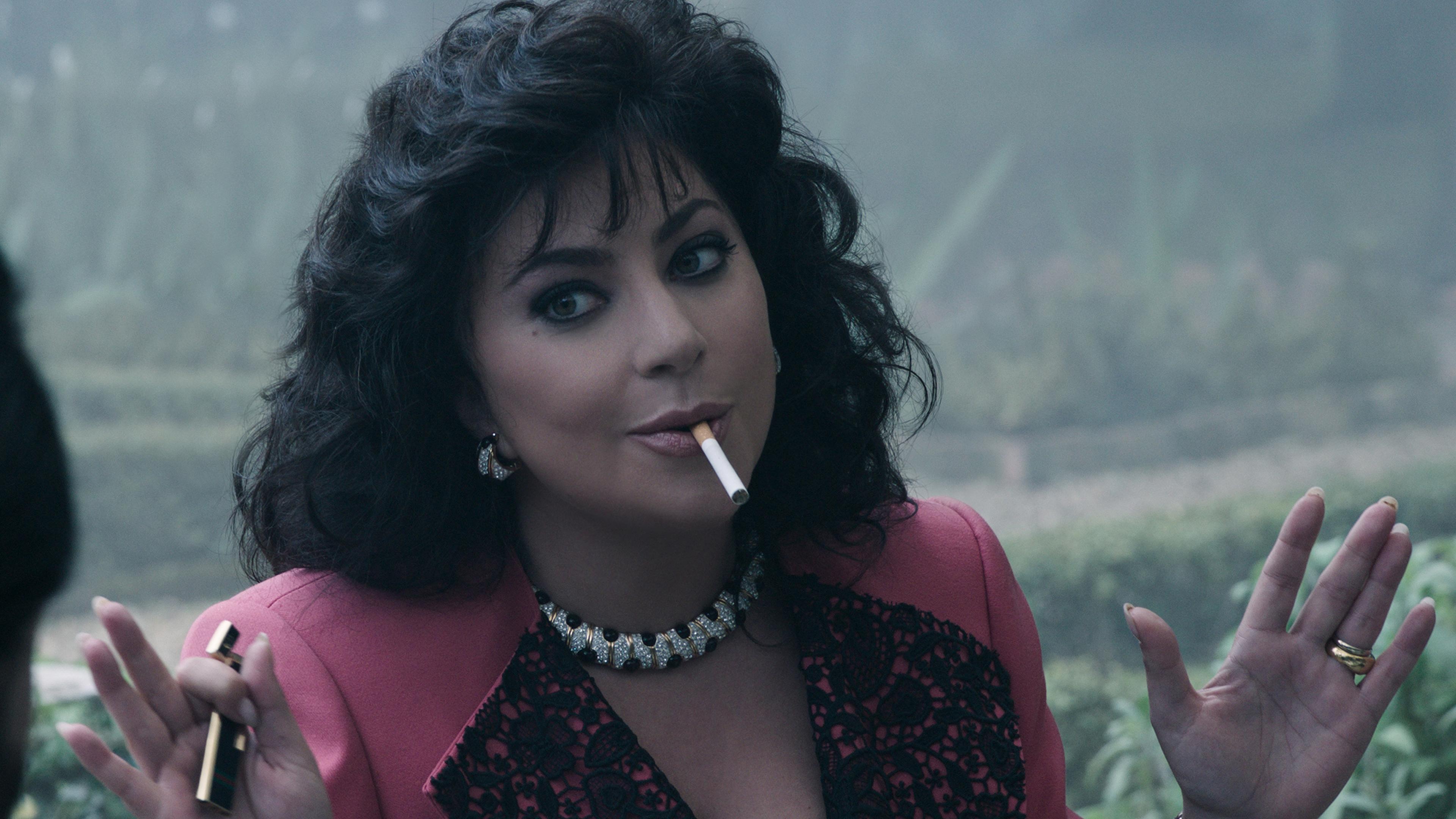
Lady Gaga in House of Gucci Courtesy of MGM
## What to know about Patrizia Reggiani
While Patrizia Reggiani was not born a Gucci, her name looms large in the history of the family. Born Patrizia Martinelli, the future “Lady Gucci” as she would be dubbed during her heyday, grew up poor and not knowing her biological father. When she was 12, her mother married Ferdinando Reggiani, a wealthy entrepreneur, who adopted Patrizia as his own. When she came of age, Patrizia was a socialite in Milan, but despite her stepfather’s wealth, she was not necessarily part of Milan’s high society. According to Forden, Patrizia’s mother was hopeful that her daughter could gain the family entry into these social circles.
Advertisement
Patrizia found an opportunity to join the elite circles of Milan after she met Maurizio at a party in 1970, where he was allegedly impressed with her resemblance to Elizabeth Taylor.
“I met Maurizio at a party and he fell madly in love with me,” Reggiani told [*The Guardian*](https://www.theguardian.com/fashion/2016/jul/24/the-gucci-wife-and-the-hitman-fashions-darkest-tale "undefined") in a 2016 interview. “I was exciting and different.”
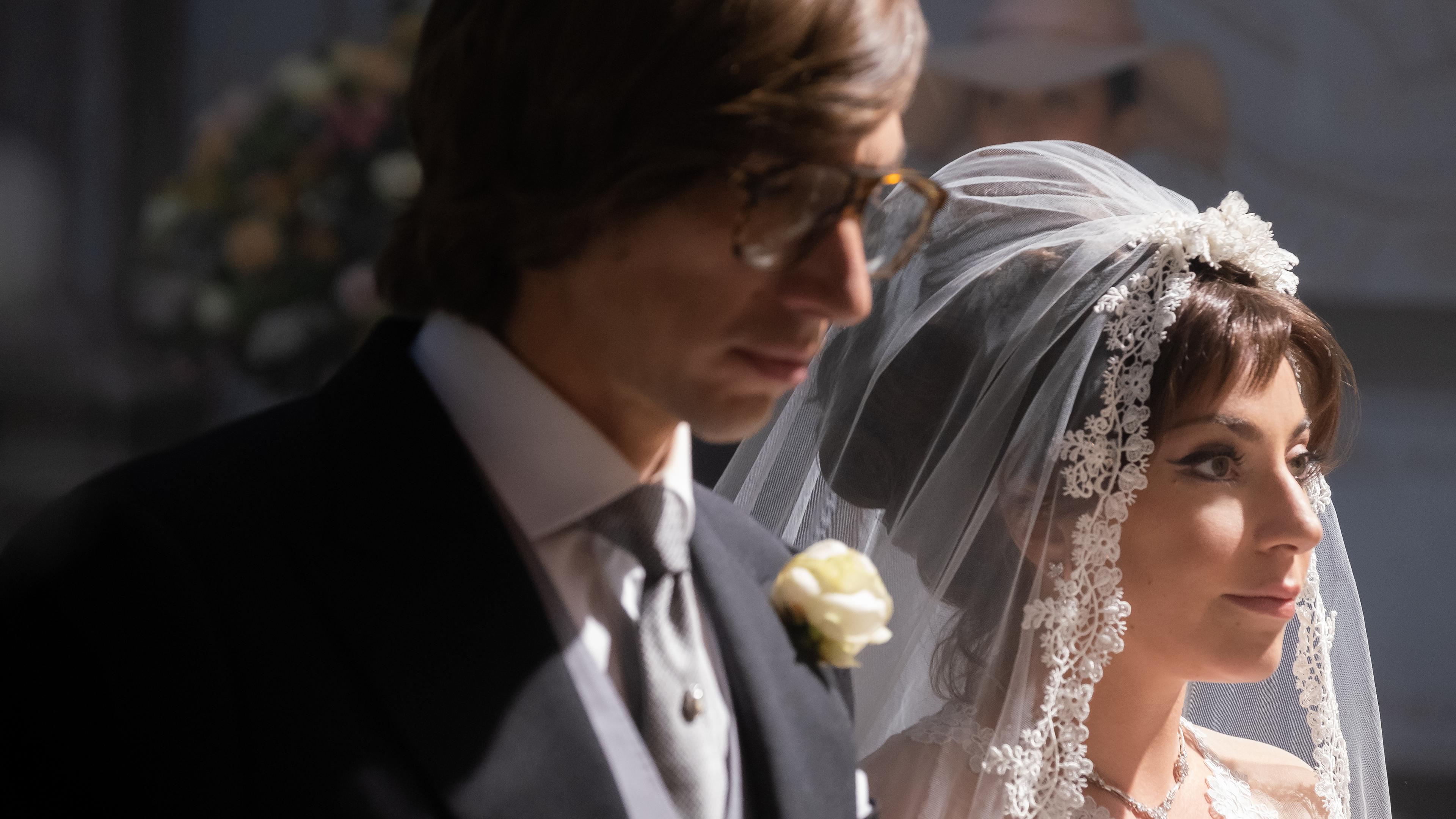
Adam Driver and Lady Gaga in House of Gucci Courtesy of MGM
## What to know about Patrizia and Maurizio’s marriage and divorce
Maurizio and Patrizia got married in 1972, after two years of courtship, but the union caused a rift in the family. Maurizio’s father, Rodolfo, did not approve of Reggiani’s social background and believed she was a social climber and opted not to attend the couple’s wedding. Rodolfo later reconciled with both his son and daughter-in-law after the birth of their first daughter, Alessandra, in 1976 (the couple had a second daughter, Allegra, in 1981) and even gifted them a luxury penthouse in New York City’s Olympic Tower, where they lived while Maurizio worked for the family business with Aldo.
Advertisement
During the early years of their marriage, Maurizio and Patrizia were active in the New York social scene, often socializing with the likes of Jackie Kennedy Onassis and known for their ostentatious, extravagant lifestyle—the pair were notorious for being chauffeured around Manhattan in a car with a personalized vanity plate with their amalgamated couple’s name, “Mauizia,” and had a yacht and vacation homes Saint Moritz, Acapulco and Connecticut.
Patrizia had an outsize influence on Maurizio in all things, including his dealings with Gucci. According to Bentivegna, Maurizio may have craved Patrizia’s guidance because he grew up as an only child whose mother died when he was very young; by all accounts, Patrizia was well aware that Maurizio’s personality was more timid than hers.
“\[Patrizia\] famously said that he was like a chair that takes the shape of whoever sits on it,” he says. “So, she as an incredibly sharp and cynical manipulator knew that she had putty in her hands, and she could really mold and play with, but I think it came out of a place of love.”
Advertisement
The couple’s marital problems began in 1983, after Maurizio received a majority stake in the company following the death of his father and attempted to take over the company by launching a legal war to oust his uncles. In an interview with *The Guardian*, Patrizia claimed that during this time, “Maurizio got crazy. Until then I was his chief adviser about all Gucci matters. But he wanted to be the best, and he stopped listening to me.”
Amid the strife with the family business, Maurizio suddenly severed his relationship with Patrizia. In 1985, after the family had relocated to Milan, Maurizio went on a business trip to Florence, then sent a friend to tell Patrizia that he would not be returning and that their marriage was over. Maurizio began living with Paola Franchi, a childhood friend, in 1991, inciting Patrizia’s jealousy. In 1994, the couple officially divorced, with Patrizia receiving a €2.5 million divorce settlement and a yearly alimony payment of €650,000, which she memorably compared to [“a mere bowl of lentils.”](https://www.theguardian.com/fashion/2016/jul/24/the-gucci-wife-and-the-hitman-fashions-darkest-tale "undefined") Though she lost her legal right to use the surname Gucci in the divorce, Patrizia continued to do so anyway; in an interview with *La Republica*, she glibly noted: “I still feel like a Gucci—in fact, the most Gucci of them all.”
Advertisement

Adam Driver in House of Gucci Courtesy of MGM
## What actually happened to Maurizio Gucci?
On the morning of March 27, 1995, Maurizio was shot multiple times outside of his office in Milan. He died on the steps of the building in the arms of Giuseppe Onorato, the doorman and only witness to the shooting, who himself was shot. Patrizia was not arrested until 1997, two years after his murder, after police detectives received an [anonymous tip.](https://www.forbes.com/sites/sofialottopersio/2019/12/20/murder-in-the-house-of-gucci/?sh=12bcc202f0a6 "undefined") It was later discovered that on the day of Maurizio’s murder, Patrizia wrote one word in her diary, “paradeisos,” Greek for paradise.
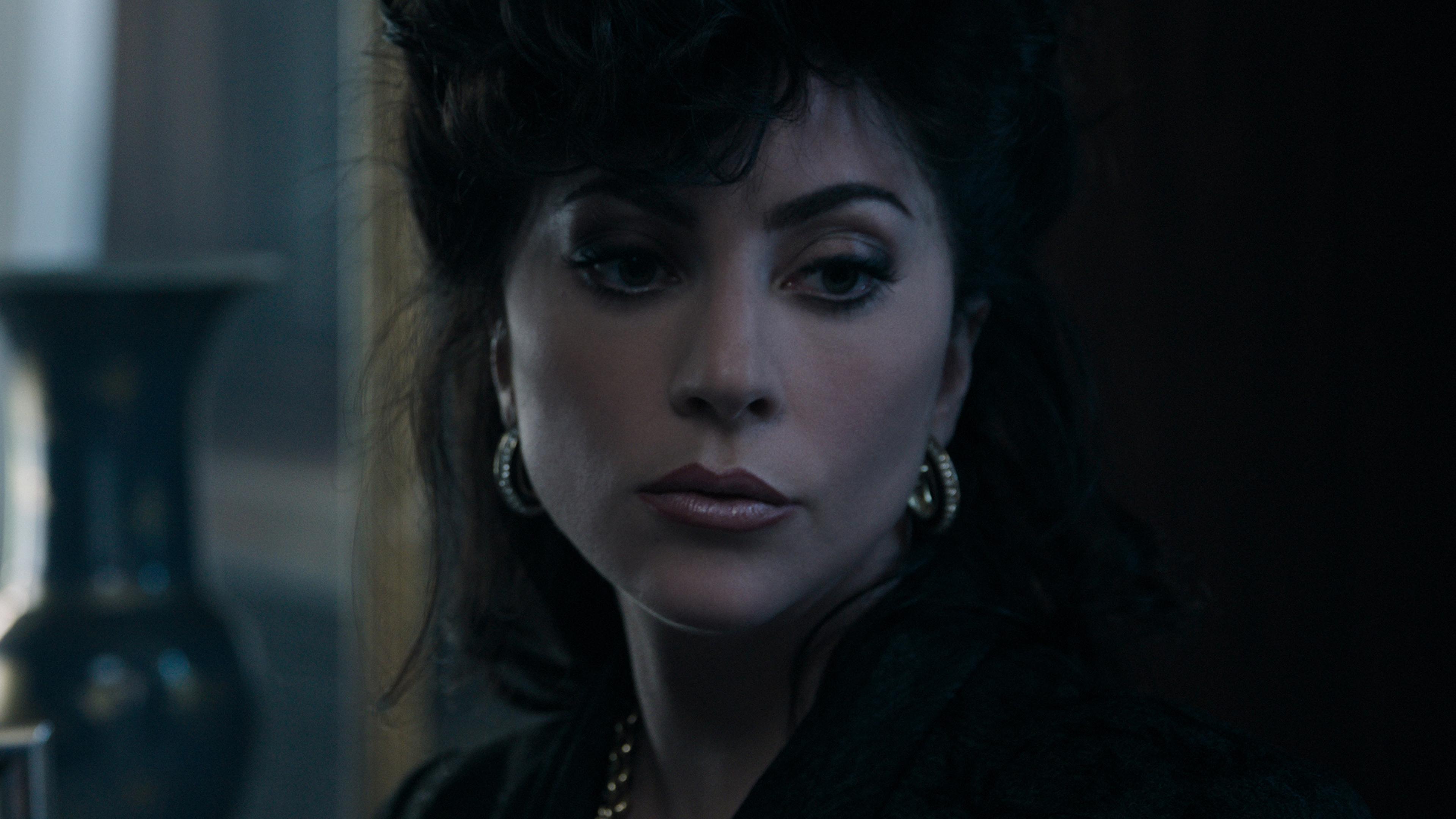
Lady Gaga in House of Gucci Courtesy of MGM
Advertisement
## What happened at Patrizia’s trial and sentencing?
Patrizia’s trial was a flashy and highly publicized affair, thanks to the Gucci family’s high profile in Italy. She was dubbed the “Black Widow,” a moniker that held more weight once her trial was underway. During the trial, where Patrizia vehemently claimed that she was innocent, the prosecution played tapes of menacing and threatening voicemails that Patrizia had sent Maurizio and Paola, while the defense contended that Patrizia was mentally unstable because of a 1992 operation to remove a brain tumor, which they alleged altered her personality. However, three of the people involved in the scheme (Pina Auriemma, Patrizia’s friend and personal astrologer; Orazio Cicala, the getaway driver; and Ivano Savioni, the man who hired the hitman and driver) confessed to not only their involvement in the murder, but Patrizia’s role in organizing it. Both Patrizia and the hitman who shot Maurizio, Benedetto Ceraulo, denied their charges.
Advertisement
In November 1998, Patrizia was convicted of premeditated murder and sentenced to 29 years in prison, although she only ended up serving 18. Patrizia could have had a shorter tenure in Milan’s San Vittore prison, where she notably was [allowed to have a pet ferret](https://www.theguardian.com/fashion/2016/jul/24/the-gucci-wife-and-the-hitman-fashions-darkest-tale "undefined"), and was eligible for parole in 2011, but she refused, opting to stay in jail, as opposed to joining a work-release program.
“I’ve never worked in my life,” she was [reported stating in court](https://www.lastampa.it/esteri/la-stampa-in-english/2011/10/19/news/ex-wife-killer-of-slain-gucci-heir-would-rather-stay-in-prison-than-have-to-work-br-1.36925781 "undefined"). “I won’t start now.”
Patrizia was released in 2016 for good behavior and now works as a consultant for a jewelry company in Milan, where she has been spotted shopping with a parrot on her shoulder. She has since acknowledged her role in the murder of Maurizio, [telling an Italian reality TV show](https://www.theguardian.com/fashion/2016/jul/24/the-gucci-wife-and-the-hitman-fashions-darkest-tale "undefined") when queried why she didn’t shoot her ex-husband herself: “My eyesight is not so good. I didn’t want to miss.”
As for Patrizia’s thoughts on the big screen adaptation of her life, she’s miffed that she was not consulted by Lady Gaga for the film.
Advertisement
“I am rather annoyed at the fact that Lady Gaga is playing me in the new Ridley Scott film without having had the consideration and sensibility to come and meet me,” she told [*ANSA*](https://magtheweekly.com/detail/13752-lady-gaga-reacts-to-patrizia-reggianis-criticism-over-her-house-of-gucci-role "undefined"), an Italian wire service. However, Bentivegna is not convinced that Patrizia isn’t somewhat impressed that the film was made.
“I think Patrizia is going to love the movie and I think she’s thrilled that it’s being made,” he says. “I think she’s incredibly flattered that Lady Gaga is playing her, because she is, to put it mildly, self-absorbed.”
## What the Gucci family has to say about *House of Gucci* film adaptation
Following the release of the film, the family of Aldo Gucci released a statement in [*ANSA*](https://variety.com/2021/film/news/gucci-family-statement-house-of-gucci-ridley-scott-1235121226/#recipient_hashed=3b97744c9bc8d1f40e513ca59576a7374f35aae59fb7d7c6b6f3b9c0a2eef562 "undefined")*,* slamming the movie for showing “one narrative that is far from accurate.” In the statement, the Gucci family called out the film’s production for not consulting them before portraying Aldo and the rest of the family on-screen; they also took issue with the film’s depiction of Patrizia Reggiani as a sort of feminist foil to the male leadership of the company. [*Variety*](https://variety.com/2021/film/news/gucci-family-statement-house-of-gucci-ridley-scott-1235121226/ "undefined") reported via an anonymous source that despite the severe statement, the Gucci family is not seeking legal action against Scott’s production company or Warner Bros.
Advertisement
Read the full statement, translated from Italian, below.
*The Gucci family takes note of the release of the film “House of Gucci” with some bewilderment* *because, although the work claims to want to tell the “true story” of the family, the fears* *aroused by the trailers and interviews released so far, are confirmed: the film carries one* *narrative that is far from accurate.*
*The production of the film did not bother to consult the heirs before describing Aldo Gucci* *– president of the company for 30 years – and the members of the Gucci family as thugs,* *ignorant and insensitive to the world around them, attributing notes to the protagonists,* *events, tones and attitudes that never belonged to them. This is extremely painful* *from a human point of view and an insult to the legacy on which the brand is built today.*
*Even more censurable is the reconstruction that becomes mystifying on the edge of the paradox* *when it comes to suggesting indulgent tones towards a woman who, definitively* *convicted of having been the instigator of the murder of Maurizio Gucci, is not painted* *only in the film, but also in the statements of the cast members, as a victim that* *was trying to survive in a masculine and macho corporate culture.*
Advertisement
*This couldn’t be further from the truth. Moreover, in the 70 years of history in which* *it was a family business, Gucci was an inclusive company. Indeed, precisely in the 1980s* *– the historical context in which the film is set – women were in different* *top positions: whether they were members of the family or extraneous to it, they included th**e president of Gucci America, the Head of Global PR & Communication, and a member of the* *board of directors of Gucci America.*
*Gucci is a family that lives honoring the work of its ancestors, whose memory* *does not deserve to be bothered to stage a film that is not true and that d**oes not do justice to its protagonists.*
*The members of the Gucci family reserves every right to protect the name, image and* *the dignity of their loved ones.*
## Must-Reads from TIME
- [American Men Are Set to Be Automatically Registered for the Draft. Here’s What to Know](https://time.com/article/2026/04/09/us-men-automatic-military-draft-change/?utm_rs=IL_GNBazf4RR9GSs3N-N37Btw)
- [How NASA Achieved the Historic Artemis II Splashdown](https://time.com/article/2026/04/10/artemis-ii-historic-splashdown/?utm_rs=IL_GNBazf4RR9GSs3N-N37Btw)
- [Starmer Says He's 'Fed Up' With Trump as Europe Splinters From U.S. Over Iran War](https://time.com/article/2026/04/10/european-leaders-criticize-trump-over-iran-war-starmer-energy-prices/?utm_rs=IL_GNBazf4RR9GSs3N-N37Btw)
- [White House: Strait of Hormuz Closure 'Completely Unacceptable' Under Ceasefire](https://time.com/article/2026/04/08/white-house-strait-of-hormuz-closure-would-be-completely-unacceptable-under-ceasefire/?utm_rs=IL_GNBazf4RR9GSs3N-N37Btw)
- [U.S. and Iran Fail To Reach Deal on Ending War After Marathon Talks](https://time.com/article/2026/04/11/strait-of-hormuz-iran-peace-talks/?utm_rs=IL_GNBazf4RR9GSs3N-N37Btw)
- [Ray Dalio: We May Be Entering a World War](https://time.com/article/2026/04/09/ray-dalio-we-may-be-entering-a-world-war/?utm_rs=IL_GNBazf4RR9GSs3N-N37Btw)
- [American Men Are Set to Be Automatically Registered for the Draft. Here’s What to Know](https://time.com/article/2026/04/09/us-men-automatic-military-draft-change/?utm_rs=IL_GNBazf4RR9GSs3N-N37Btw)
- [How NASA Achieved the Historic Artemis II Splashdown](https://time.com/article/2026/04/10/artemis-ii-historic-splashdown/?utm_rs=IL_GNBazf4RR9GSs3N-N37Btw)
- [Starmer Says He's 'Fed Up' With Trump as Europe Splinters From U.S. Over Iran War](https://time.com/article/2026/04/10/european-leaders-criticize-trump-over-iran-war-starmer-energy-prices/?utm_rs=IL_GNBazf4RR9GSs3N-N37Btw)
Read More
## Sections
- [Home](https://time.com/)
- [Politics](https://time.com/section/politics/)
- [Health](https://time.com/section/health/)
- [AI](https://time.com/tag/ai/)
- [World](https://time.com/section/world/)
- [Business](https://time.com/section/business/)
- [Science](https://time.com/section/science/)
- [Climate](https://time.com/section/climate/)
- [Ideas](https://time.com/section/ideas/)
- [Entertainment](https://time.com/section/entertainment/)
- [Sports](https://time.com/section/sports/)
- [Technology](https://time.com/tag/technology/)
- [Newsletters](https://time.com/newsletters/?source=TD_Footer_Link&utm_source_pg=web&utm_medium_pg=footer&utm_campaign_pg=footer&utm_content_pg=footer-inside-time)
## More
- [The TIME Vault](https://time.com/vault/)
- [TIME Africa](https://africa.time.com/)
- [TIME France](https://www.timefrance.fr/)
- [TIME For Kids](https://www.timeforkids.com/)
- [TIME Futures](https://time.com/collection/time-co2-futures/)
- [TIME Studios](https://studios.time.com/)
- [Video](https://time.com/collections/time-video/)
- [Red Border](https://redborder.time.com/)
- [Supplied Partner Content](https://partnercontent.time.com/)
## About Us
- [Our Mission](https://time.com/about-time/)
- [Contact the Editors](mailto:feedback@time.com)
- [Press Room](https://time.com/section/press-room/)
- [Media Kit](https://time.com/mediakit/)
- [Reprints & Permissions](https://www.parsintl.com/publication/time)
- [Masthead](https://time.com/time-masthead/)
- [Careers](https://time.com/join-time/)
- [Site Map](https://time.com/sitemap.xml)
- [Modern Slavery Statement](https://time.com/modern-slavery-statement/)
## Your Subscriptions
- [Subscribe](https://time.com/subscribe-footer-time/)
- [Access My Digital Magazine](https://geo.ema.gs/time_digital)
- [Manage My Subscription](https://support.time.com/)
- [Global Help Center](https://support.time.com/)
- [Buy an Issue](https://magazineshop.us/collections/time-magazine/)
- [Shop the Cover Store](https://timecoverstore.com/)
- [Give a Gift](https://time.com/giveagift/)
© 2026 TIME USA, LLC. All Rights Reserved. Use of this site constitutes acceptance of our [Terms of Service](https://legal.time.com/terms-of-service), [Privacy Policy (Your Privacy Rights)](https://legal.time.com/us-privacy-policy) and Do Not Sell or Share My Personal Information.
TIME may receive compensation for some links to products and services on this website. Offers may be subject to change without notice. | |||||||||
| Readable Markdown | The explosive family drama at the center of Ridley Scott’s [*House of Gucci*](https://time.com/6092652/fall-movies-2021/ "undefined") is so over-the-top that it’s reasonable to assume the film is the result of a very active imagination. In the film, out Nov. 24, the marriage of Patrizia Reggiani ([Lady Gaga](https://time.com/6122537/lady-gaga-house-of-gucci/ "undefined")) and Maurizio Gucci (Adam Driver) implodes as the family business, the House of Gucci, begins to crumble under the pressure of in-fighting and cultural shifts, culminating in the shocking murder of Maurizio.
But in the case of *House of Gucci*, the truth is truly stranger than fiction. The film was adapted from journalist Sara Gay Forden’s 2001 nonfiction book of the same name, which chronicled the sensational real-life story of the fabulously wealthy Gucci family’s rise and fall as one of fashion’s most prominent dynasties. The tale, which includes [*Succession*](https://time.com/6105831/succession-season-3-recap/ "undefined")**\-esque rivalries between family members, multiple lawsuits, tax evasion, incarceration and, of course, murder, provided ample creative fodder for Scott and screenwriters Roberto Bentivegna and Becky Johnston.
While the story is based on real people and events, a few elements were changed for the film—intentional choices on the part of Bentivegna, who drew inspiration for the screenplay from flashy films like *Sunset Boulevard, Scarface* and *The Godfather.*
“I always wanted with this to feel like the audience was watching a movie,” he tells TIME. “I didn’t want it to feel like it was in any way a near realistic or sort of kitchen sink drama, I really wanted to feel heightened, and really bold and operatic.”
To do this, Bentivegna supplemented his use of Forden’s text with Italian articles from the time about the Gucci family’s public dramas, which he said took on a “tabloid sensationalism” especially surrounding Maurizio’s murder, which was later revealed to be a crime of passion, organized by Patrizia herself.
The element of sensationalism isn’t lost on Forden, who began writing about the Gucci family’s drama as the chief business correspondent for *WWD,* later drawing on her years of reporting to write her book.
“If I had made the story up like a novel, nobody would have believed it,” she tells TIME. “But it was all true. It’s a timeless story. There are lessons in it, like blood should be thicker than water. And unfortunately, in this case, it wasn’t.”
Here’s what to know about the true story behind *House of Gucci.*

Jared Leto, Florence Andrews, Adam Driver, Lady Gaga and Al Pacino in House of Gucci Courtesy of MGM
What to know about the Gucci family
The Gucci fashion house began as a luxury luggage brand founded in 1921 by Guccio Gucci. Guccio was inspired to create his business after a stint working as a bellhop at The Savoy Hotel in London and a gig working for an upscale train travel company. Guccio opened his first shop in Florence in 1921, offering fine leather luggage and accessories, as well as leather goods for horsemen. Guccio’s small shop soon blossomed into a booming family business with many shops in different cities and countries, especially after four of his sons (Vasco, Aldo, Rodolfo and Ugo, who was Guccio’s adopted stepson from his wife’s previous relationship) began working with him. Following Guccio’s death in 1953, shares of the business were left to his three biological sons, Vasco, Rodolfo and Aldo. Looming sibling rivalries between the brothers turned into full-on feuds that continued into the next generation, which helped lead to the downfall of the Gucci family in the fashion industry.
Conflict came to a head after Rodolfo Gucci died in 1983, leaving his son Maurizio a majority stake in the company, which was floundering under the leadership of Aldo. Maurizio, who felt Aldo’s approach of championing the mass production of Gucci products cheapened Gucci’s identity as a luxury brand, spent the majority of the 1980s trying to push him out of the business through legal battles and take over the company. The familial strife during this time was ugly and in the public eye: Aldo served a year in prison for tax evasion and Maurizio fled to Switzerland after being accused of forging his father’s signature to avoid paying inheritance taxes (while he was originally found guilty, he was later acquitted). By 1989, Maurizio had succeeded in taking control of the company and was strongly determined to revamp its image. However, by 1993, Maurizio’s excessive spending and the company’s outstanding debts [forced him to sell his 50% percent stake](https://wwd.com/fashion-news/fashion-features/article-1131352/ "undefined") to the business’ investors, ending the Gucci family’s ownership and control of the brand.
Forden says that while the end of the Gucci family dynasty in fashion may be one of the more dramatic incidents in the industry’s history, it was part of a larger trend for Italian fashion during the time, which also affected family companies like Prada, Versace and Armani, which were struggling with transitioning their respective small family boutique businesses into internationally recognized mega brands.
“Gucci tells the story of many family companies that were struggling to kind of get to the next level and wrestling with these questions of succession,” she says. “Obviously, they were challenges in the transformation to the next level and Gucci exemplified that in the most extreme and dramatic way. But I was really touched and compelled by Maurizio Gucci himself, who was on this mission to relaunch his family company to restore it to the top tier of the luxury market.”
Forden also noted that while Maurizio was unable to retain control or ownership of Gucci, he foretold the future of many of these fashion brands, becoming the first to bring in a financial shareholder in order to elevate the brand to the next level.

Lady Gaga in House of Gucci Courtesy of MGM
What to know about Patrizia Reggiani
While Patrizia Reggiani was not born a Gucci, her name looms large in the history of the family. Born Patrizia Martinelli, the future “Lady Gucci” as she would be dubbed during her heyday, grew up poor and not knowing her biological father. When she was 12, her mother married Ferdinando Reggiani, a wealthy entrepreneur, who adopted Patrizia as his own. When she came of age, Patrizia was a socialite in Milan, but despite her stepfather’s wealth, she was not necessarily part of Milan’s high society. According to Forden, Patrizia’s mother was hopeful that her daughter could gain the family entry into these social circles.
Patrizia found an opportunity to join the elite circles of Milan after she met Maurizio at a party in 1970, where he was allegedly impressed with her resemblance to Elizabeth Taylor.
“I met Maurizio at a party and he fell madly in love with me,” Reggiani told [*The Guardian*](https://www.theguardian.com/fashion/2016/jul/24/the-gucci-wife-and-the-hitman-fashions-darkest-tale "undefined") in a 2016 interview. “I was exciting and different.”

Adam Driver and Lady Gaga in House of Gucci Courtesy of MGM
What to know about Patrizia and Maurizio’s marriage and divorce
Maurizio and Patrizia got married in 1972, after two years of courtship, but the union caused a rift in the family. Maurizio’s father, Rodolfo, did not approve of Reggiani’s social background and believed she was a social climber and opted not to attend the couple’s wedding. Rodolfo later reconciled with both his son and daughter-in-law after the birth of their first daughter, Alessandra, in 1976 (the couple had a second daughter, Allegra, in 1981) and even gifted them a luxury penthouse in New York City’s Olympic Tower, where they lived while Maurizio worked for the family business with Aldo.
During the early years of their marriage, Maurizio and Patrizia were active in the New York social scene, often socializing with the likes of Jackie Kennedy Onassis and known for their ostentatious, extravagant lifestyle—the pair were notorious for being chauffeured around Manhattan in a car with a personalized vanity plate with their amalgamated couple’s name, “Mauizia,” and had a yacht and vacation homes Saint Moritz, Acapulco and Connecticut.
Patrizia had an outsize influence on Maurizio in all things, including his dealings with Gucci. According to Bentivegna, Maurizio may have craved Patrizia’s guidance because he grew up as an only child whose mother died when he was very young; by all accounts, Patrizia was well aware that Maurizio’s personality was more timid than hers.
“\[Patrizia\] famously said that he was like a chair that takes the shape of whoever sits on it,” he says. “So, she as an incredibly sharp and cynical manipulator knew that she had putty in her hands, and she could really mold and play with, but I think it came out of a place of love.”
The couple’s marital problems began in 1983, after Maurizio received a majority stake in the company following the death of his father and attempted to take over the company by launching a legal war to oust his uncles. In an interview with *The Guardian*, Patrizia claimed that during this time, “Maurizio got crazy. Until then I was his chief adviser about all Gucci matters. But he wanted to be the best, and he stopped listening to me.”
Amid the strife with the family business, Maurizio suddenly severed his relationship with Patrizia. In 1985, after the family had relocated to Milan, Maurizio went on a business trip to Florence, then sent a friend to tell Patrizia that he would not be returning and that their marriage was over. Maurizio began living with Paola Franchi, a childhood friend, in 1991, inciting Patrizia’s jealousy. In 1994, the couple officially divorced, with Patrizia receiving a €2.5 million divorce settlement and a yearly alimony payment of €650,000, which she memorably compared to [“a mere bowl of lentils.”](https://www.theguardian.com/fashion/2016/jul/24/the-gucci-wife-and-the-hitman-fashions-darkest-tale "undefined") Though she lost her legal right to use the surname Gucci in the divorce, Patrizia continued to do so anyway; in an interview with *La Republica*, she glibly noted: “I still feel like a Gucci—in fact, the most Gucci of them all.”

Adam Driver in House of Gucci Courtesy of MGM
What actually happened to Maurizio Gucci?
On the morning of March 27, 1995, Maurizio was shot multiple times outside of his office in Milan. He died on the steps of the building in the arms of Giuseppe Onorato, the doorman and only witness to the shooting, who himself was shot. Patrizia was not arrested until 1997, two years after his murder, after police detectives received an [anonymous tip.](https://www.forbes.com/sites/sofialottopersio/2019/12/20/murder-in-the-house-of-gucci/?sh=12bcc202f0a6 "undefined") It was later discovered that on the day of Maurizio’s murder, Patrizia wrote one word in her diary, “paradeisos,” Greek for paradise.

Lady Gaga in House of Gucci Courtesy of MGM
What happened at Patrizia’s trial and sentencing?
Patrizia’s trial was a flashy and highly publicized affair, thanks to the Gucci family’s high profile in Italy. She was dubbed the “Black Widow,” a moniker that held more weight once her trial was underway. During the trial, where Patrizia vehemently claimed that she was innocent, the prosecution played tapes of menacing and threatening voicemails that Patrizia had sent Maurizio and Paola, while the defense contended that Patrizia was mentally unstable because of a 1992 operation to remove a brain tumor, which they alleged altered her personality. However, three of the people involved in the scheme (Pina Auriemma, Patrizia’s friend and personal astrologer; Orazio Cicala, the getaway driver; and Ivano Savioni, the man who hired the hitman and driver) confessed to not only their involvement in the murder, but Patrizia’s role in organizing it. Both Patrizia and the hitman who shot Maurizio, Benedetto Ceraulo, denied their charges.
In November 1998, Patrizia was convicted of premeditated murder and sentenced to 29 years in prison, although she only ended up serving 18. Patrizia could have had a shorter tenure in Milan’s San Vittore prison, where she notably was [allowed to have a pet ferret](https://www.theguardian.com/fashion/2016/jul/24/the-gucci-wife-and-the-hitman-fashions-darkest-tale "undefined"), and was eligible for parole in 2011, but she refused, opting to stay in jail, as opposed to joining a work-release program.
Patrizia was released in 2016 for good behavior and now works as a consultant for a jewelry company in Milan, where she has been spotted shopping with a parrot on her shoulder. She has since acknowledged her role in the murder of Maurizio, [telling an Italian reality TV show](https://www.theguardian.com/fashion/2016/jul/24/the-gucci-wife-and-the-hitman-fashions-darkest-tale "undefined") when queried why she didn’t shoot her ex-husband herself: “My eyesight is not so good. I didn’t want to miss.”
As for Patrizia’s thoughts on the big screen adaptation of her life, she’s miffed that she was not consulted by Lady Gaga for the film.
“I am rather annoyed at the fact that Lady Gaga is playing me in the new Ridley Scott film without having had the consideration and sensibility to come and meet me,” she told [*ANSA*](https://magtheweekly.com/detail/13752-lady-gaga-reacts-to-patrizia-reggianis-criticism-over-her-house-of-gucci-role "undefined"), an Italian wire service. However, Bentivegna is not convinced that Patrizia isn’t somewhat impressed that the film was made.
“I think Patrizia is going to love the movie and I think she’s thrilled that it’s being made,” he says. “I think she’s incredibly flattered that Lady Gaga is playing her, because she is, to put it mildly, self-absorbed.”
What the Gucci family has to say about *House of Gucci* film adaptation
Following the release of the film, the family of Aldo Gucci released a statement in [*ANSA*](https://variety.com/2021/film/news/gucci-family-statement-house-of-gucci-ridley-scott-1235121226/#recipient_hashed=3b97744c9bc8d1f40e513ca59576a7374f35aae59fb7d7c6b6f3b9c0a2eef562 "undefined")*,* slamming the movie for showing “one narrative that is far from accurate.” In the statement, the Gucci family called out the film’s production for not consulting them before portraying Aldo and the rest of the family on-screen; they also took issue with the film’s depiction of Patrizia Reggiani as a sort of feminist foil to the male leadership of the company. [*Variety*](https://variety.com/2021/film/news/gucci-family-statement-house-of-gucci-ridley-scott-1235121226/ "undefined") reported via an anonymous source that despite the severe statement, the Gucci family is not seeking legal action against Scott’s production company or Warner Bros.
Read the full statement, translated from Italian, below.
*The Gucci family takes note of the release of the film “House of Gucci” with some bewilderment* *because, although the work claims to want to tell the “true story” of the family, the fears* *aroused by the trailers and interviews released so far, are confirmed: the film carries one* *narrative that is far from accurate.*
*The production of the film did not bother to consult the heirs before describing Aldo Gucci* *– president of the company for 30 years – and the members of the Gucci family as thugs,* *ignorant and insensitive to the world around them, attributing notes to the protagonists,* *events, tones and attitudes that never belonged to them. This is extremely painful* *from a human point of view and an insult to the legacy on which the brand is built today.*
*Even more censurable is the reconstruction that becomes mystifying on the edge of the paradox* *when it comes to suggesting indulgent tones towards a woman who, definitively* *convicted of having been the instigator of the murder of Maurizio Gucci, is not painted* *only in the film, but also in the statements of the cast members, as a victim that* *was trying to survive in a masculine and macho corporate culture.*
*This couldn’t be further from the truth. Moreover, in the 70 years of history in which* *it was a family business, Gucci was an inclusive company. Indeed, precisely in the 1980s* *– the historical context in which the film is set – women were in different* *top positions: whether they were members of the family or extraneous to it, they included th**e president of Gucci America, the Head of Global PR & Communication, and a member of the* *board of directors of Gucci America.*
*Gucci is a family that lives honoring the work of its ancestors, whose memory* *does not deserve to be bothered to stage a film that is not true and that d**oes not do justice to its protagonists.*
*The members of the Gucci family reserves every right to protect the name, image and* *the dignity of their loved ones.* | |||||||||
| ML Classification | ||||||||||
| ML Categories |
Raw JSON{
"/Arts_and_Entertainment": 943,
"/Arts_and_Entertainment/Movies": 935,
"/Arts_and_Entertainment/Movies/Drama_Films": 889
} | |||||||||
| ML Page Types |
Raw JSON{
"/Article": 999,
"/Article/Story": 931
} | |||||||||
| ML Intent Types |
Raw JSON{
"Informational": 999
} | |||||||||
| Content Metadata | ||||||||||
| Language | en | |||||||||
| Author | Cady Lang | |||||||||
| Publish Time | 2021-11-24 17:10:13 (4 years ago) | |||||||||
| Original Publish Time | 2021-11-24 17:10:13 (4 years ago) | |||||||||
| Republished | No | |||||||||
| Word Count (Total) | 3,042 | |||||||||
| Word Count (Content) | 2,626 | |||||||||
| Links | ||||||||||
| External Links | 25 | |||||||||
| Internal Links | 59 | |||||||||
| Technical SEO | ||||||||||
| Meta Nofollow | No | |||||||||
| Meta Noarchive | No | |||||||||
| JS Rendered | No | |||||||||
| Redirect Target | null | |||||||||
| Performance | ||||||||||
| Download Time (ms) | 32 | |||||||||
| TTFB (ms) | 30 | |||||||||
| Download Size (bytes) | 87,069 | |||||||||
| Shard | 39 (laksa) | |||||||||
| Root Hash | 9797552172251460839 | |||||||||
| Unparsed URL | com,time!/6122130/house-of-gucci-true-story/ s443 | |||||||||