ℹ️ Skipped - page is already crawled
| Filter | Status | Condition | Details |
|---|---|---|---|
| HTTP status | PASS | download_http_code = 200 | HTTP 200 |
| Age cutoff | PASS | download_stamp > now() - 6 MONTH | 0.1 months ago |
| History drop | PASS | isNull(history_drop_reason) | No drop reason |
| Spam/ban | PASS | fh_dont_index != 1 AND ml_spam_score = 0 | ml_spam_score=0 |
| Canonical | PASS | meta_canonical IS NULL OR = '' OR = src_unparsed | Not set |
| Property | Value |
|---|---|
| URL | https://time.com/5857023/karen-meme-history-meaning/ |
| Last Crawled | 2026-04-06 20:29:40 (2 days ago) |
| First Indexed | 2020-06-25 20:55:38 (5 years ago) |
| HTTP Status Code | 200 |
| Meta Title | How the Karen Meme Confronts History of White Womanhood |
| Meta Description | The Karen meme follows in a long and troubling legacy of white women in the United States weaponizing their victimhood. |
| Meta Canonical | null |
| Boilerpipe Text | When you look up the
hashtag #Karen on Instagram
, a search that yields over 773,000 posts, the featured image on the page is a screenshot of a white woman staring intensely into the camera, pursing her lips into a smile as she touches a finger to her chin, a movement that’s at once condescending and cloying.
The woman’s name is Lisa Alexander, but on the Internet, she’s most recognized as the
“San Francisco Karen,”
after a clip went viral of her last week, in which she demands to know if James Juanillo, who was stenciling “Black Lives Matter” in chalk on the front of his own home, was defacing private property. The video showed Juanillo, who identified himself in a social media caption as a person of color, telling Alexander and her partner that they should call the police if they felt he was breaking the law. He later told
ABC7 News
that the couple called the police, who he says recognized him as the resident instantly. While Juanillo was fortunate to have been recognized and unharmed, calls like this could result in injury or worse, death.
For Alexander, however, going viral as a Karen brought major consequences; she and her partner were both identified by their full names by online sleuths, which resulted in her skincare business being boycotted and her partner getting fired from his job. Both Alexander and her partner released
apology statements to
ABC7 News;
in Alexander’s apology, she expresses regret for her behavior: “When I watch the video I am shocked and sad that I behaved the way I did. It was disrespectful to Mr. Juanillo and I am deeply sorry for that.”
The video of Alexander is one of a myriad of other videos, images and memes that have emerged in the last few months of “Karens,” a slang term for middle-aged white women (which seems to have stemmed from the popular
“Can I speak to a manager?”
meme,) who have become infamous online for their shameless displays of entitlement, privilege, and racism — and their tendency to call the police when they don’t get what they want.
And perhaps most notably, there’s Amy Cooper, the “Central Park Karen,” who elevated a national discourse about the dangers associated when Black people are falsely accused when she called the police on Christian Cooper (no relation,) a Black man who merely asked her to leash her dog in a part of Central Park that required it, invoking his race on the call. Within days after the video of Cooper was shared to Twitter, Cooper was
fired from her job
and
temporarily lost custody of her dog
; on July 6 the Manhattan DA said she would be charged for filing a false report
.
In comments shared after the incident with
CNN
,
Cooper said that she wanted to “publicly apologize to everyone” and claimed that she was “not a racist” and “did not mean to harm that man in any way.” In an interview with
ABC7 News
, Christian Cooper accepted her apology, but urged for viewers to focus on not just the viral clip, but the “underlying current of racism and racial perceptions.”
Visuals of Karens exploiting their privilege when things don’t go their way have become Internet shorthand of late for a particular kind of racial violence white women have instigated for centuries — following a long and troubling legacy of white women in the country weaponizing their victimhood.
A reckoning begins in Central Park and Minneapolis
“One of the things that has worked throughout American history is finding a way to project whiteness in need of defense or protection,” says Dr. André Brock, associate professor of Black digital culture at Georgia Tech whose research is leading the conversation on the impact of Black Twitter. “For men, it’s a fight; for women, it’s calling men to help on their behalf or demonstrating that they are so frail that they cannot handle the weight. So in this moment
,
where we’ve been trapped in our house for six weeks with nothing to do but feel, [so] when you see these videos, you have nothing else to do but watch them and see people’s reactions to them
.
..
a grievance for white women and white people, but also an anger by people that even if they are white, can see the injustice of the situation.”
Keep up to date with our daily coronavirus newsletter by clicking
here
.
Brock said that the viral widespread resonance of
“
Karen” footage now is the result of an interest convergence where the coronavirus pandemic intersected with collective outrage over police brutality. The weekend that the video of Amy Cooper in Central Park went viral was the same weekend that
George Floyd was killed after now-former Minneapolis police officer Derek Chauvin
knelt on his neck, suffocating him. The Central Park video only highlighted the extreme violence — and potentially fatal consequences — of a white woman selfishly calling the cops out of spite and professed fear.
Karens take
on a new meaning during a global health crisis
The Cooper incident and Floyd’s death came in the wake of a couple months’ worth of Karen memes and videos that were already trending thanks to the new restrictions instituted because of the coronavirus pandemic. The clips documented the many encounters people had with
white women who openly flouted COVID-19 health and safety measures
like wearing a mask or
social distancing
.
The extreme pertinence of the Karen meme right now is significant, given that the meme had already been making the rounds online for quite some time. Although the Karen meme appears to have existed since at least 2017 on Reddit, according to Adam Downer, associate editor at Know Your Meme
,
the current iteration of the meme is taking on a new meaning that speaks to the sobering real-life consequences of what began as just a joke on the Internet
about bad haircuts and entitlement.
“When it got to the protests and the avalanche of incidents where white ladies were calling the cops, that’s where it began to get a bit more menacing,” Downer says. “I think when people started pointing out who a Karen in real life was, like the ‘Can I speak to the manager?’ figure and starting to zero in on the exact kind of person they were talking about, it became a lot easier to see those types of people in real life.”
How the Karen meme relates to the violent history of white women
The historical narrative of white women’s victimhood goes back to myths that were constructed during the era of American slavery. Black slaves were posited as sexual threats to the white women, the wives of slave owners; in reality, slave masters were the ones raping their slaves. This ideology, however, perpetuated the idea that white women, who represented the good and the moral in American society, needed to be protected by white men at all costs, thus justifying racial violence towards Black men or anyone that posed a threat to their power
.
This narrative that was the overarching theme of
Birth of a Nation
, the 1915 film that was the first movie to be shown at the White House, and is often
cited as the inspiration for the rebirth of the KKK
.
“If we’re thinking about this in a historical context where white women are given the power over Black men, that their word will be valued over a Black man, that makes it particularly dangerous and that’s the problem,” says Dr. Apryl Williams, an assistant professor in communications and media at the University of Michigan and a Fellow at the Berkman Klein Center for Internet & Society at Harvard who focuses on race, gender and community in digital spaces.
“White women are positioned as the virtue of society because they hold that position as the mother, as the keepers of virtuosity, all these ideologies that we associate with white motherhood and white women in particular, their certain role in society gives them power and when you couple that with this racist history, where white women are afraid of black men and black men are hypersexualized and seen as dangerous, then that’s really a volatile combination.”
Williams says the exposure is challenging this position. “That’s part of what people aren’t seeing is that white women do have this power and they’re exercising that power when they call or threaten to call the police.”
As might be expected, the Internet has found a way to jest about this power dynamic, but the very nature of a humorous approach presents a risk by downplaying the threat
.
The violent history is why Williams cautions against letting the at-times humorous nature of Karen memes minimize the ways in which white womanhood has long posed danger to Black and brown lives.
“On the one hand, the humor is a way of dealing with the pain of the violence, so in that way it’s helpful
,
but on the other hand, the cutesy-ness or the laughability sort of minimizes or masks the fact that these women are essentially engaging in violence,” she says. “The fact that Amy Cooper is saying, ‘I’m going to call the police and tell them that a African-American man is threatening my life’ is a very racially violent statement and a racially violent act, especially if you look at it in a larger, broader historical context, and think about the way that Emmett Till’s accuser [Carolyn Bryant] did the same exact thing and it resulted in his death.”
That’s not to say that memes aren’t ultimately beneficial, however. According to Williams, Karen memes can serve different purposes for different audiences. For white people, it can help them recognize a pattern of behavior that they don’t want to be a part of it, but might be complicit in and can be an easier way to have a conversation about white fragility, entitlement and privilege; it also holds them accountable for racism. For Black people, the memes can act as a news source, evidence, and an archive of the injustices, the attempts to control bodies and situations, or as Brock puts it, “microaggressions that often scale to macroagressions when the police are called in.”
How the Karen meme is pushing for change offline
“Memes have power above and beyond just humor,” says Brock. “We often use metaphor, which is often at the heart of memes, and emotion or affect to make shorthand of things which deeply affect us. A lot of times, it’s funny; a lot of times, it’s cathartic; and other times, it’s racist. I try to push back on the idea that memes are frivolous way of articulating a particular phenomenon because in many ways, it’s much more potent shorthand than me trying to explain to you exactly the way people are reacting to a certain situation.
..
Social media is a platform for communicating feelings and the stronger the feeling, the more viral things go.”
Brock’s belief that memes have lasting power beyond the breakneck speed of going viral is echoed by Williams, who makes the case that along with the popular alliterative memes like
“BBQ Becky”
and
“Permit Patty”
that call out white people for calling 911 or the police on innocent Black civilians who just want to grill in the park in peace or 8-year-old Black girls selling water on the sidewalk, Karen memes can be seen as part of a genre that she calls “Black activist memes.”
Williams said the accounts of the real people who have experienced the racism documented in these memes and the hashtag, #LivingWhileBlack, are helping to demand accountability and are actually helping to push forward legislation, like the
Oregon bill that was passed in 2019 that punishes racist 911 callers
. She likens them to a stand-in for Black-owned newspapers and Black presses, commenting on racial inequality in a way that might not be covered otherwise.
“These memes are actually doing logical and political work of helping us get to legal changes or legislative changes, which is really something to be said,” says Williams. “While of course, they aren’t a standalone movement on their own, they actively call out white supremacy and call for restitution. They really do that work of highlighting and sort of commenting on the racial inequality in a way that mainstream news doesn’t capture.”
Please send any tips, leads, and stories to
virus@time.com
. |
| Markdown | [Skip to Content](https://time.com/5857023/karen-meme-history-meaning/#maincontent)
- Menu
Close
[Subscribe](https://time.com/subscribe-header-time/)
- [viral](https://time.com/tag/viral/)
# How the 'Karen Meme' Confronts the Violent History of White Womanhood
[ADD TIME ON GOOGLE](https://www.google.com/preferences/source?q=https://time.com)
Show me more content from TIME on Google Search
by
[Cady Lang](https://time.com/author/cady-lang/)
Updated:
Dec 12, 2023 5:59 PM CUT
Published:
Jun 25, 2020 4:53 PM CUT
Twitter

by
[Cady Lang](https://time.com/author/cady-lang/)
Updated:
Dec 12, 2023 5:59 PM CUT
Published:
Jun 25, 2020 4:53 PM CUT
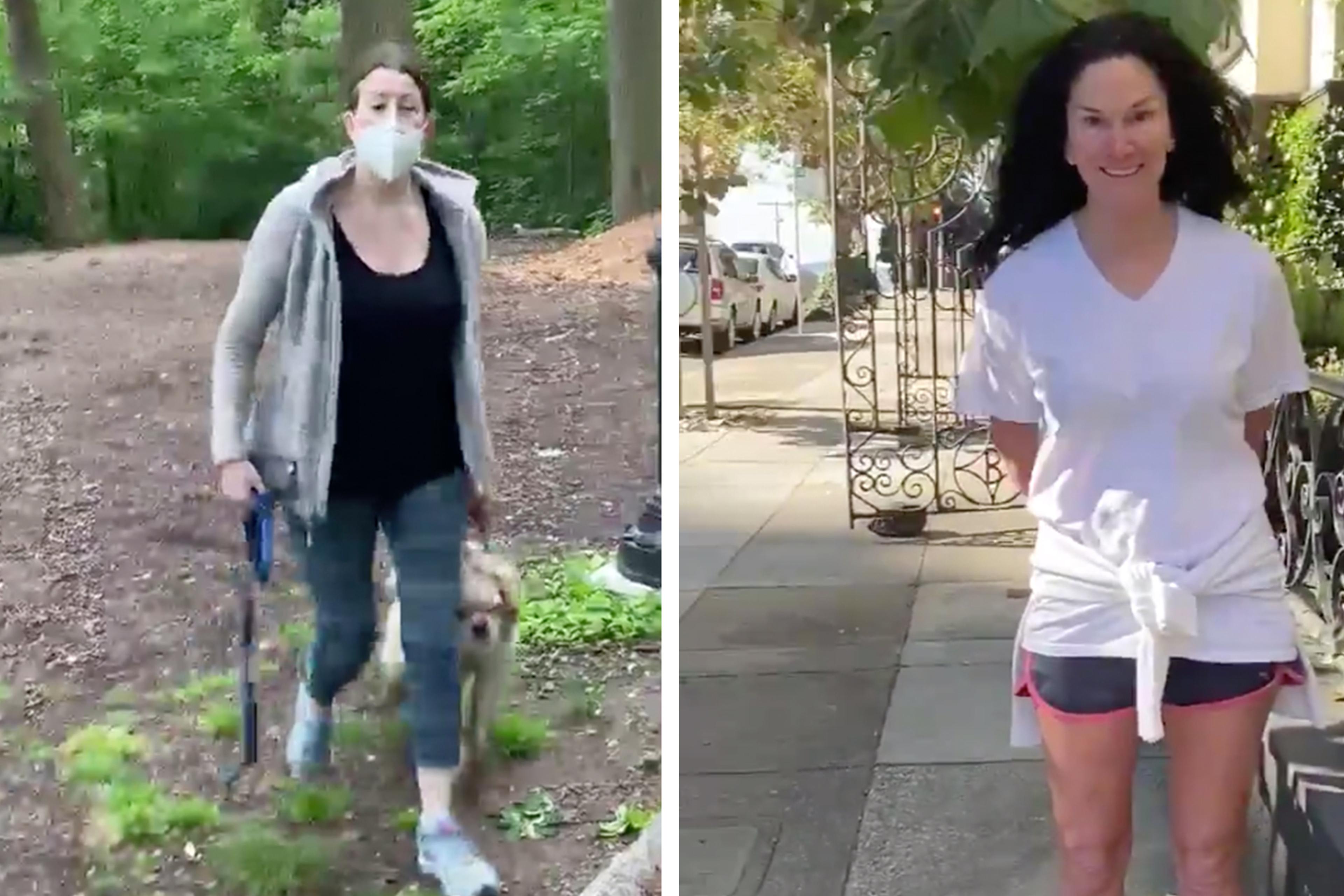
When you look up the [hashtag \#Karen on Instagram](https://www.instagram.com/explore/tags/karen/ "undefined"), a search that yields over 773,000 posts, the featured image on the page is a screenshot of a white woman staring intensely into the camera, pursing her lips into a smile as she touches a finger to her chin, a movement that’s at once condescending and cloying.
The woman’s name is Lisa Alexander, but on the Internet, she’s most recognized as the [“San Francisco Karen,”](https://twitter.com/jaimetoons/status/1271300265170186240 "undefined") after a clip went viral of her last week, in which she demands to know if James Juanillo, who was stenciling “Black Lives Matter” in chalk on the front of his own home, was defacing private property. The video showed Juanillo, who identified himself in a social media caption as a person of color, telling Alexander and her partner that they should call the police if they felt he was breaking the law. He later told [ABC7 News](https://abc7news.com/lisa-alexander-san-francisco-james-juanillo-black-lives-matter/6249319/ "undefined") that the couple called the police, who he says recognized him as the resident instantly. While Juanillo was fortunate to have been recognized and unharmed, calls like this could result in injury or worse, death.
For Alexander, however, going viral as a Karen brought major consequences; she and her partner were both identified by their full names by online sleuths, which resulted in her skincare business being boycotted and her partner getting fired from his job. Both Alexander and her partner released [apology statements to](https://twitter.com/LuzPenaABC7/status/1272258758207397888?ref_src=twsrc%5Etfw%7Ctwcamp%5Etweetembed%7Ctwterm%5E1272258758207397888&ref_url=https%3A%2F%2Fabc7news.com%2Flisa-alexander-san-francisco-james-juanillo-black-lives-matter%2F6247494%2F "undefined") *ABC7 News;* in Alexander’s apology, she expresses regret for her behavior: “When I watch the video I am shocked and sad that I behaved the way I did. It was disrespectful to Mr. Juanillo and I am deeply sorry for that.”
The video of Alexander is one of a myriad of other videos, images and memes that have emerged in the last few months of “Karens,” a slang term for middle-aged white women (which seems to have stemmed from the popular [“Can I speak to a manager?”](https://time.com/5683398/tropical-storm-karen-memes/ "undefined") meme,) who have become infamous online for their shameless displays of entitlement, privilege, and racism — and their tendency to call the police when they don’t get what they want.
Advertisement
The archetype of the Karen has risen to outstanding levels of notoriety in recent weeks, thanks to a flood of footage that’s become increasingly more violent and disturbing. There’s the [Karen who was recorded spewing multiple racist tirades against Asian Americans in a park in Torrance, Calif.](https://twitter.com/mynamegangg/status/1270835634224001024 "undefined"), upon which the Internet discovered that she had a history of discriminatory outbursts, earning her the title of “Ultra Karen.” There’s the [Karen in Los Angeles who used two hammers to damage her neighbors’ car as she told them to “get the f**–**ck out of this neighborhood.](https://twitter.com/TMZ/status/1272171944448843776 "undefined")” There’s the Karen who [purposely coughed on someone who called her out for not wearing a mask](https://www.instagram.com/p/CBWKjH5gaoq/ "undefined") while at a coffee shop in New York City.
Advertisement
And perhaps most notably, there’s Amy Cooper, the “Central Park Karen,” who elevated a national discourse about the dangers associated when Black people are falsely accused when she called the police on Christian Cooper (no relation,) a Black man who merely asked her to leash her dog in a part of Central Park that required it, invoking his race on the call. Within days after the video of Cooper was shared to Twitter, Cooper was [fired from her job](https://www.marketwatch.com/story/franklin-templeton-worker-placed-on-leave-after-viral-altercation-in-central-park-2020-05-26 "undefined") and [temporarily lost custody of her dog](https://www.facebook.com/AbandonedAngels/posts/10157503306378723 "undefined"); on July 6 the Manhattan DA said she would be charged for filing a false report**.** In comments shared after the incident with [*CNN*](https://edition.cnn.com/2020/05/26/us/central-park-video-dog-video-african-american-trnd/index.html?utm_medium=social&utm_term=link&utm_content=2020-05-26T09%3A10%3A04&utm_source=twCNN "undefined")*,* Cooper said that she wanted to “publicly apologize to everyone” and claimed that she was “not a racist” and “did not mean to harm that man in any way.” In an interview with [*ABC7 News*](https://abcnews.go.com/US/christian-cooper-accepts-apology-woman-center-central-park/story?id=70926679 "undefined"), Christian Cooper accepted her apology, but urged for viewers to focus on not just the viral clip, but the “underlying current of racism and racial perceptions.”
Advertisement
Visuals of Karens exploiting their privilege when things don’t go their way have become Internet shorthand of late for a particular kind of racial violence white women have instigated for centuries — following a long and troubling legacy of white women in the country weaponizing their victimhood.
## A reckoning begins in Central Park and Minneapolis
“One of the things that has worked throughout American history is finding a way to project whiteness in need of defense or protection,” says Dr. André Brock, associate professor of Black digital culture at Georgia Tech whose research is leading the conversation on the impact of Black Twitter. “For men, it’s a fight; for women, it’s calling men to help on their behalf or demonstrating that they are so frail that they cannot handle the weight. So in this moment*,* where we’ve been trapped in our house for six weeks with nothing to do but feel, \[so\] when you see these videos, you have nothing else to do but watch them and see people’s reactions to them**.***..*a grievance for white women and white people, but also an anger by people that even if they are white, can see the injustice of the situation.”
Advertisement
*Keep up to date with our daily coronavirus newsletter by clicking* [*here*](https://cloud.newsletters.time.com/coronavirus?source=article "undefined")*.*
Brock said that the viral widespread resonance of **“**Karen” footage now is the result of an interest convergence where the coronavirus pandemic intersected with collective outrage over police brutality. The weekend that the video of Amy Cooper in Central Park went viral was the same weekend that [George Floyd was killed after now-former Minneapolis police officer Derek Chauvin](https://time.com/5847967/george-floyd-protests-trump/ "undefined") knelt on his neck, suffocating him. The Central Park video only highlighted the extreme violence — and potentially fatal consequences — of a white woman selfishly calling the cops out of spite and professed fear.
In a larger sense, the mainstreaming of calling out the danger that white women and their tears pose has been building up to this moment. There’s the oft-cited stat that [52% of white women voted for Donald Trump](https://time.com/5422644/trump-white-women-2016/ "undefined") in the 2016 election. Meanwhile, [the constant lies of white women like Kellyanne Conway and Sarah Huckabee Sanders](https://www.latimes.com/opinion/op-ed/la-oe-heffernan-kellyanne-conway-sarah-huckabee-sanders-20190615-story.html "undefined") in service of the Trump Administration have made it abundantly clear that [white women can and are often complicit in oppressive systems](https://www.nytimes.com/2020/05/27/opinion/racism-white-women.html "undefined"). Coupled with the rise of social media and the smartphone camera, the longtime narrative of white women as helpless victims in need of protection is now being challenged by video evidence of them as instigators of not only conflict, but violence.
Advertisement
## Karens take **on a new meaning during a global health crisis**
The Cooper incident and Floyd’s death came in the wake of a couple months’ worth of Karen memes and videos that were already trending thanks to the new restrictions instituted because of the coronavirus pandemic. The clips documented the many encounters people had with [white women who openly flouted COVID-19 health and safety measures](https://www.theatlantic.com/technology/archive/2020/05/coronavirus-karen-memes-reddit-twitter-carolyn-goodman/611104/ "undefined") like wearing a mask or [social distancing](https://twitter.com/ziwe/status/1267118447902830592 "undefined").
The extreme pertinence of the Karen meme right now is significant, given that the meme had already been making the rounds online for quite some time. Although the Karen meme appears to have existed since at least 2017 on Reddit, according to Adam Downer, associate editor at Know Your Meme*,* the current iteration of the meme is taking on a new meaning that speaks to the sobering real-life consequences of what began as just a joke on the Internet [about bad haircuts and entitlement.](https://www.vox.com/2020/2/5/21079162/karen-name-insult-meme-manager "undefined")
Advertisement
“When it got to the protests and the avalanche of incidents where white ladies were calling the cops, that’s where it began to get a bit more menacing,” Downer says. “I think when people started pointing out who a Karen in real life was, like the ‘Can I speak to the manager?’ figure and starting to zero in on the exact kind of person they were talking about, it became a lot easier to see those types of people in real life.”
## How the Karen meme relates to the violent history of white women
The historical narrative of white women’s victimhood goes back to myths that were constructed during the era of American slavery. Black slaves were posited as sexual threats to the white women, the wives of slave owners; in reality, slave masters were the ones raping their slaves. This ideology, however, perpetuated the idea that white women, who represented the good and the moral in American society, needed to be protected by white men at all costs, thus justifying racial violence towards Black men or anyone that posed a threat to their power*.* This narrative that was the overarching theme of [*Birth of a Nation*](https://time.com/3729807/d-w-griffiths-the-birth-of-a-nation-10/ "undefined"), the 1915 film that was the first movie to be shown at the White House, and is often [cited as the inspiration for the rebirth of the KKK](https://www.history.com/news/kkk-birth-of-a-nation-film "undefined").
Advertisement
“If we’re thinking about this in a historical context where white women are given the power over Black men, that their word will be valued over a Black man, that makes it particularly dangerous and that’s the problem,” says Dr. Apryl Williams, an assistant professor in communications and media at the University of Michigan and a Fellow at the Berkman Klein Center for Internet & Society at Harvard who focuses on race, gender and community in digital spaces.
“White women are positioned as the virtue of society because they hold that position as the mother, as the keepers of virtuosity, all these ideologies that we associate with white motherhood and white women in particular, their certain role in society gives them power and when you couple that with this racist history, where white women are afraid of black men and black men are hypersexualized and seen as dangerous, then that’s really a volatile combination.”
Advertisement
Williams says the exposure is challenging this position. “That’s part of what people aren’t seeing is that white women do have this power and they’re exercising that power when they call or threaten to call the police.”
As might be expected, the Internet has found a way to jest about this power dynamic, but the very nature of a humorous approach presents a risk by downplaying the threat*.* The violent history is why Williams cautions against letting the at-times humorous nature of Karen memes minimize the ways in which white womanhood has long posed danger to Black and brown lives.
“On the one hand, the humor is a way of dealing with the pain of the violence, so in that way it’s helpful*,* but on the other hand, the cutesy-ness or the laughability sort of minimizes or masks the fact that these women are essentially engaging in violence,” she says. “The fact that Amy Cooper is saying, ‘I’m going to call the police and tell them that a African-American man is threatening my life’ is a very racially violent statement and a racially violent act, especially if you look at it in a larger, broader historical context, and think about the way that Emmett Till’s accuser \[Carolyn Bryant\] did the same exact thing and it resulted in his death.”
Advertisement
That’s not to say that memes aren’t ultimately beneficial, however. According to Williams, Karen memes can serve different purposes for different audiences. For white people, it can help them recognize a pattern of behavior that they don’t want to be a part of it, but might be complicit in and can be an easier way to have a conversation about white fragility, entitlement and privilege; it also holds them accountable for racism. For Black people, the memes can act as a news source, evidence, and an archive of the injustices, the attempts to control bodies and situations, or as Brock puts it, “microaggressions that often scale to macroagressions when the police are called in.”
## How the Karen meme is pushing for change offline
“Memes have power above and beyond just humor,” says Brock. “We often use metaphor, which is often at the heart of memes, and emotion or affect to make shorthand of things which deeply affect us. A lot of times, it’s funny; a lot of times, it’s cathartic; and other times, it’s racist. I try to push back on the idea that memes are frivolous way of articulating a particular phenomenon because in many ways, it’s much more potent shorthand than me trying to explain to you exactly the way people are reacting to a certain situation.*..*Social media is a platform for communicating feelings and the stronger the feeling, the more viral things go.”
Advertisement
Brock’s belief that memes have lasting power beyond the breakneck speed of going viral is echoed by Williams, who makes the case that along with the popular alliterative memes like [“BBQ Becky”](https://www.sfchronicle.com/bayarea/article/Barbecuers-take-back-Oakland-s-communal-12929602.php "undefined") and [“Permit Patty”](https://time.com/5320939/permit-patty-alison-ettel-threats/ "undefined") that call out white people for calling 911 or the police on innocent Black civilians who just want to grill in the park in peace or 8-year-old Black girls selling water on the sidewalk, Karen memes can be seen as part of a genre that she calls “Black activist memes.”
Williams said the accounts of the real people who have experienced the racism documented in these memes and the hashtag, \#LivingWhileBlack, are helping to demand accountability and are actually helping to push forward legislation, like the [Oregon bill that was passed in 2019 that punishes racist 911 callers](https://www.vox.com/identities/2019/6/5/18654140/oregon-911-call-legislation-racism-living-while-black "undefined"). She likens them to a stand-in for Black-owned newspapers and Black presses, commenting on racial inequality in a way that might not be covered otherwise.
Advertisement
“These memes are actually doing logical and political work of helping us get to legal changes or legislative changes, which is really something to be said,” says Williams. “While of course, they aren’t a standalone movement on their own, they actively call out white supremacy and call for restitution. They really do that work of highlighting and sort of commenting on the racial inequality in a way that mainstream news doesn’t capture.”
*Please send any tips, leads, and stories to* [*virus@time.com*](mailto:virus@time.com "undefined")*.*
## Must-Reads from TIME
- [‘Safe and sound’: How a U.S. Airman Shot Down in Iran Was Rescued From a Mountain Crevice](https://time.com/article/2026/04/05/-safe-and-sound-how-a-u-s-airman-shot-down-in-iran-was-rescued-from-a-mountain-crevice/?utm_rs=IL_GNBazf4RR9GSs3N-N37Btw)
- [Iranian President Pens Open Letter to American People](https://time.com/article/2026/04/01/iran-war-president-open-letter-american-people/?utm_rs=IL_GNBazf4RR9GSs3N-N37Btw)
- [What to Know About the Army Chief Hegseth Ousted—and the General Who’s Taking Over](https://time.com/article/2026/04/03/hegseth-army-firings-chief-of-staff/?utm_rs=IL_GNBazf4RR9GSs3N-N37Btw)
- [What to Know About the 25th Amendment as Lawmakers Call for Trump’s Removal](https://time.com/article/2026/04/06/25th-amendment-constitution-trump-war-iran-threat-insanity/?utm_rs=IL_GNBazf4RR9GSs3N-N37Btw)
- [Inside Trump's Search for a Way Out of the Iran War](https://time.com/article/2026/04/02/trump-iran-off-ramp/?utm_rs=IL_GNBazf4RR9GSs3N-N37Btw)
- [Trump Calls Vance the ‘Fraud Czar.’ Here’s What We Know About the Role](https://time.com/article/2026/04/03/trump-vance-fraud-czar/?utm_rs=IL_GNBazf4RR9GSs3N-N37Btw)
- [‘Safe and sound’: How a U.S. Airman Shot Down in Iran Was Rescued From a Mountain Crevice](https://time.com/article/2026/04/05/-safe-and-sound-how-a-u-s-airman-shot-down-in-iran-was-rescued-from-a-mountain-crevice/?utm_rs=IL_GNBazf4RR9GSs3N-N37Btw)
- [Iranian President Pens Open Letter to American People](https://time.com/article/2026/04/01/iran-war-president-open-letter-american-people/?utm_rs=IL_GNBazf4RR9GSs3N-N37Btw)
- [What to Know About the Army Chief Hegseth Ousted—and the General Who’s Taking Over](https://time.com/article/2026/04/03/hegseth-army-firings-chief-of-staff/?utm_rs=IL_GNBazf4RR9GSs3N-N37Btw)
Read More
## Sections
- [Home](https://time.com/)
- [Politics](https://time.com/section/politics/)
- [Health](https://time.com/section/health/)
- [AI](https://time.com/tag/ai/)
- [World](https://time.com/section/world/)
- [Business](https://time.com/section/business/)
- [Science](https://time.com/section/science/)
- [Climate](https://time.com/section/climate/)
- [Ideas](https://time.com/section/ideas/)
- [Entertainment](https://time.com/section/entertainment/)
- [Sports](https://time.com/section/sports/)
- [Technology](https://time.com/tag/technology/)
- [Newsletters](https://time.com/newsletters/?source=TD_Footer_Link&utm_source_pg=web&utm_medium_pg=footer&utm_campaign_pg=footer&utm_content_pg=footer-inside-time)
## More
- [The TIME Vault](https://time.com/vault/)
- [TIME Africa](https://africa.time.com/)
- [TIME France](https://www.timefrance.fr/)
- [TIME For Kids](https://www.timeforkids.com/)
- [TIME Futures](https://time.com/collection/time-co2-futures/)
- [TIME Studios](https://studios.time.com/)
- [Video](https://time.com/collections/time-video/)
- [Red Border](https://redborder.time.com/)
- [Supplied Partner Content](https://partnercontent.time.com/)
## About Us
- [Our Mission](https://time.com/about-time/)
- [Contact the Editors](mailto:feedback@time.com)
- [Press Room](https://time.com/section/press-room/)
- [Media Kit](https://time.com/mediakit/)
- [Reprints & Permissions](https://www.parsintl.com/publication/time)
- [Masthead](https://time.com/time-masthead/)
- [Careers](https://time.com/join-time/)
- [Site Map](https://time.com/sitemap.xml)
- [Modern Slavery Statement](https://time.com/modern-slavery-statement/)
## Your Subscriptions
- [Subscribe](https://time.com/subscribe-footer-time/)
- [Access My Digital Magazine](https://geo.ema.gs/time_digital)
- [Manage My Subscription](https://support.time.com/)
- [Global Help Center](https://support.time.com/)
- [Buy an Issue](https://magazineshop.us/collections/time-magazine/)
- [Shop the Cover Store](https://timecoverstore.com/)
- [Give a Gift](https://time.com/giveagift/)
© 2026 TIME USA, LLC. All Rights Reserved. Use of this site constitutes acceptance of our [Terms of Service](https://legal.time.com/terms-of-service), [Privacy Policy (Your Privacy Rights)](https://legal.time.com/us-privacy-policy) and Do Not Sell or Share My Personal Information.
TIME may receive compensation for some links to products and services on this website. Offers may be subject to change without notice.
Edit
 |
| Readable Markdown | When you look up the [hashtag \#Karen on Instagram](https://www.instagram.com/explore/tags/karen/ "undefined"), a search that yields over 773,000 posts, the featured image on the page is a screenshot of a white woman staring intensely into the camera, pursing her lips into a smile as she touches a finger to her chin, a movement that’s at once condescending and cloying.
The woman’s name is Lisa Alexander, but on the Internet, she’s most recognized as the [“San Francisco Karen,”](https://twitter.com/jaimetoons/status/1271300265170186240 "undefined") after a clip went viral of her last week, in which she demands to know if James Juanillo, who was stenciling “Black Lives Matter” in chalk on the front of his own home, was defacing private property. The video showed Juanillo, who identified himself in a social media caption as a person of color, telling Alexander and her partner that they should call the police if they felt he was breaking the law. He later told [ABC7 News](https://abc7news.com/lisa-alexander-san-francisco-james-juanillo-black-lives-matter/6249319/ "undefined") that the couple called the police, who he says recognized him as the resident instantly. While Juanillo was fortunate to have been recognized and unharmed, calls like this could result in injury or worse, death.
For Alexander, however, going viral as a Karen brought major consequences; she and her partner were both identified by their full names by online sleuths, which resulted in her skincare business being boycotted and her partner getting fired from his job. Both Alexander and her partner released [apology statements to](https://twitter.com/LuzPenaABC7/status/1272258758207397888?ref_src=twsrc%5Etfw%7Ctwcamp%5Etweetembed%7Ctwterm%5E1272258758207397888&ref_url=https%3A%2F%2Fabc7news.com%2Flisa-alexander-san-francisco-james-juanillo-black-lives-matter%2F6247494%2F "undefined") *ABC7 News;* in Alexander’s apology, she expresses regret for her behavior: “When I watch the video I am shocked and sad that I behaved the way I did. It was disrespectful to Mr. Juanillo and I am deeply sorry for that.”
The video of Alexander is one of a myriad of other videos, images and memes that have emerged in the last few months of “Karens,” a slang term for middle-aged white women (which seems to have stemmed from the popular [“Can I speak to a manager?”](https://time.com/5683398/tropical-storm-karen-memes/ "undefined") meme,) who have become infamous online for their shameless displays of entitlement, privilege, and racism — and their tendency to call the police when they don’t get what they want.
And perhaps most notably, there’s Amy Cooper, the “Central Park Karen,” who elevated a national discourse about the dangers associated when Black people are falsely accused when she called the police on Christian Cooper (no relation,) a Black man who merely asked her to leash her dog in a part of Central Park that required it, invoking his race on the call. Within days after the video of Cooper was shared to Twitter, Cooper was [fired from her job](https://www.marketwatch.com/story/franklin-templeton-worker-placed-on-leave-after-viral-altercation-in-central-park-2020-05-26 "undefined") and [temporarily lost custody of her dog](https://www.facebook.com/AbandonedAngels/posts/10157503306378723 "undefined"); on July 6 the Manhattan DA said she would be charged for filing a false report**.** In comments shared after the incident with [*CNN*](https://edition.cnn.com/2020/05/26/us/central-park-video-dog-video-african-american-trnd/index.html?utm_medium=social&utm_term=link&utm_content=2020-05-26T09%3A10%3A04&utm_source=twCNN "undefined")*,* Cooper said that she wanted to “publicly apologize to everyone” and claimed that she was “not a racist” and “did not mean to harm that man in any way.” In an interview with [*ABC7 News*](https://abcnews.go.com/US/christian-cooper-accepts-apology-woman-center-central-park/story?id=70926679 "undefined"), Christian Cooper accepted her apology, but urged for viewers to focus on not just the viral clip, but the “underlying current of racism and racial perceptions.”
Visuals of Karens exploiting their privilege when things don’t go their way have become Internet shorthand of late for a particular kind of racial violence white women have instigated for centuries — following a long and troubling legacy of white women in the country weaponizing their victimhood.
A reckoning begins in Central Park and Minneapolis
“One of the things that has worked throughout American history is finding a way to project whiteness in need of defense or protection,” says Dr. André Brock, associate professor of Black digital culture at Georgia Tech whose research is leading the conversation on the impact of Black Twitter. “For men, it’s a fight; for women, it’s calling men to help on their behalf or demonstrating that they are so frail that they cannot handle the weight. So in this moment*,* where we’ve been trapped in our house for six weeks with nothing to do but feel, \[so\] when you see these videos, you have nothing else to do but watch them and see people’s reactions to them**.***..*a grievance for white women and white people, but also an anger by people that even if they are white, can see the injustice of the situation.”
*Keep up to date with our daily coronavirus newsletter by clicking* [*here*](https://cloud.newsletters.time.com/coronavirus?source=article "undefined")*.*
Brock said that the viral widespread resonance of **“**Karen” footage now is the result of an interest convergence where the coronavirus pandemic intersected with collective outrage over police brutality. The weekend that the video of Amy Cooper in Central Park went viral was the same weekend that [George Floyd was killed after now-former Minneapolis police officer Derek Chauvin](https://time.com/5847967/george-floyd-protests-trump/ "undefined") knelt on his neck, suffocating him. The Central Park video only highlighted the extreme violence — and potentially fatal consequences — of a white woman selfishly calling the cops out of spite and professed fear.
Karens take **on a new meaning during a global health crisis**
The Cooper incident and Floyd’s death came in the wake of a couple months’ worth of Karen memes and videos that were already trending thanks to the new restrictions instituted because of the coronavirus pandemic. The clips documented the many encounters people had with [white women who openly flouted COVID-19 health and safety measures](https://www.theatlantic.com/technology/archive/2020/05/coronavirus-karen-memes-reddit-twitter-carolyn-goodman/611104/ "undefined") like wearing a mask or [social distancing](https://twitter.com/ziwe/status/1267118447902830592 "undefined").
The extreme pertinence of the Karen meme right now is significant, given that the meme had already been making the rounds online for quite some time. Although the Karen meme appears to have existed since at least 2017 on Reddit, according to Adam Downer, associate editor at Know Your Meme*,* the current iteration of the meme is taking on a new meaning that speaks to the sobering real-life consequences of what began as just a joke on the Internet [about bad haircuts and entitlement.](https://www.vox.com/2020/2/5/21079162/karen-name-insult-meme-manager "undefined")
“When it got to the protests and the avalanche of incidents where white ladies were calling the cops, that’s where it began to get a bit more menacing,” Downer says. “I think when people started pointing out who a Karen in real life was, like the ‘Can I speak to the manager?’ figure and starting to zero in on the exact kind of person they were talking about, it became a lot easier to see those types of people in real life.”
How the Karen meme relates to the violent history of white women
The historical narrative of white women’s victimhood goes back to myths that were constructed during the era of American slavery. Black slaves were posited as sexual threats to the white women, the wives of slave owners; in reality, slave masters were the ones raping their slaves. This ideology, however, perpetuated the idea that white women, who represented the good and the moral in American society, needed to be protected by white men at all costs, thus justifying racial violence towards Black men or anyone that posed a threat to their power*.* This narrative that was the overarching theme of [*Birth of a Nation*](https://time.com/3729807/d-w-griffiths-the-birth-of-a-nation-10/ "undefined"), the 1915 film that was the first movie to be shown at the White House, and is often [cited as the inspiration for the rebirth of the KKK](https://www.history.com/news/kkk-birth-of-a-nation-film "undefined").
“If we’re thinking about this in a historical context where white women are given the power over Black men, that their word will be valued over a Black man, that makes it particularly dangerous and that’s the problem,” says Dr. Apryl Williams, an assistant professor in communications and media at the University of Michigan and a Fellow at the Berkman Klein Center for Internet & Society at Harvard who focuses on race, gender and community in digital spaces.
“White women are positioned as the virtue of society because they hold that position as the mother, as the keepers of virtuosity, all these ideologies that we associate with white motherhood and white women in particular, their certain role in society gives them power and when you couple that with this racist history, where white women are afraid of black men and black men are hypersexualized and seen as dangerous, then that’s really a volatile combination.”
Williams says the exposure is challenging this position. “That’s part of what people aren’t seeing is that white women do have this power and they’re exercising that power when they call or threaten to call the police.”
As might be expected, the Internet has found a way to jest about this power dynamic, but the very nature of a humorous approach presents a risk by downplaying the threat*.* The violent history is why Williams cautions against letting the at-times humorous nature of Karen memes minimize the ways in which white womanhood has long posed danger to Black and brown lives.
“On the one hand, the humor is a way of dealing with the pain of the violence, so in that way it’s helpful*,* but on the other hand, the cutesy-ness or the laughability sort of minimizes or masks the fact that these women are essentially engaging in violence,” she says. “The fact that Amy Cooper is saying, ‘I’m going to call the police and tell them that a African-American man is threatening my life’ is a very racially violent statement and a racially violent act, especially if you look at it in a larger, broader historical context, and think about the way that Emmett Till’s accuser \[Carolyn Bryant\] did the same exact thing and it resulted in his death.”
That’s not to say that memes aren’t ultimately beneficial, however. According to Williams, Karen memes can serve different purposes for different audiences. For white people, it can help them recognize a pattern of behavior that they don’t want to be a part of it, but might be complicit in and can be an easier way to have a conversation about white fragility, entitlement and privilege; it also holds them accountable for racism. For Black people, the memes can act as a news source, evidence, and an archive of the injustices, the attempts to control bodies and situations, or as Brock puts it, “microaggressions that often scale to macroagressions when the police are called in.”
How the Karen meme is pushing for change offline
“Memes have power above and beyond just humor,” says Brock. “We often use metaphor, which is often at the heart of memes, and emotion or affect to make shorthand of things which deeply affect us. A lot of times, it’s funny; a lot of times, it’s cathartic; and other times, it’s racist. I try to push back on the idea that memes are frivolous way of articulating a particular phenomenon because in many ways, it’s much more potent shorthand than me trying to explain to you exactly the way people are reacting to a certain situation.*..*Social media is a platform for communicating feelings and the stronger the feeling, the more viral things go.”
Brock’s belief that memes have lasting power beyond the breakneck speed of going viral is echoed by Williams, who makes the case that along with the popular alliterative memes like [“BBQ Becky”](https://www.sfchronicle.com/bayarea/article/Barbecuers-take-back-Oakland-s-communal-12929602.php "undefined") and [“Permit Patty”](https://time.com/5320939/permit-patty-alison-ettel-threats/ "undefined") that call out white people for calling 911 or the police on innocent Black civilians who just want to grill in the park in peace or 8-year-old Black girls selling water on the sidewalk, Karen memes can be seen as part of a genre that she calls “Black activist memes.”
Williams said the accounts of the real people who have experienced the racism documented in these memes and the hashtag, \#LivingWhileBlack, are helping to demand accountability and are actually helping to push forward legislation, like the [Oregon bill that was passed in 2019 that punishes racist 911 callers](https://www.vox.com/identities/2019/6/5/18654140/oregon-911-call-legislation-racism-living-while-black "undefined"). She likens them to a stand-in for Black-owned newspapers and Black presses, commenting on racial inequality in a way that might not be covered otherwise.
“These memes are actually doing logical and political work of helping us get to legal changes or legislative changes, which is really something to be said,” says Williams. “While of course, they aren’t a standalone movement on their own, they actively call out white supremacy and call for restitution. They really do that work of highlighting and sort of commenting on the racial inequality in a way that mainstream news doesn’t capture.”
*Please send any tips, leads, and stories to* [*virus@time.com*](mailto:virus@time.com "undefined")*.* |
| Shard | 39 (laksa) |
| Root Hash | 9797552172251460839 |
| Unparsed URL | com,time!/5857023/karen-meme-history-meaning/ s443 |