ℹ️ Skipped - page is already crawled
| Filter | Status | Condition | Details |
|---|---|---|---|
| HTTP status | PASS | download_http_code = 200 | HTTP 200 |
| Age cutoff | PASS | download_stamp > now() - 6 MONTH | 1 months ago |
| History drop | PASS | isNull(history_drop_reason) | No drop reason |
| Spam/ban | PASS | fh_dont_index != 1 AND ml_spam_score = 0 | ml_spam_score=0 |
| Canonical | PASS | meta_canonical IS NULL OR = '' OR = src_unparsed | Not set |
| Property | Value |
|---|---|
| URL | https://thoughtfulthreads.substack.com/p/guccis-la-primavera-and-the-high |
| Last Crawled | 2026-03-12 04:55:46 (1 month ago) |
| First Indexed | not set |
| HTTP Status Code | 200 |
| Meta Title | Gucci’s 'La Primavera' and the High Cost of Desperation: Why Hype Won’t Save Kering |
| Meta Description | Pulling from the archives is safe, but is it profitable? |
| Meta Canonical | null |
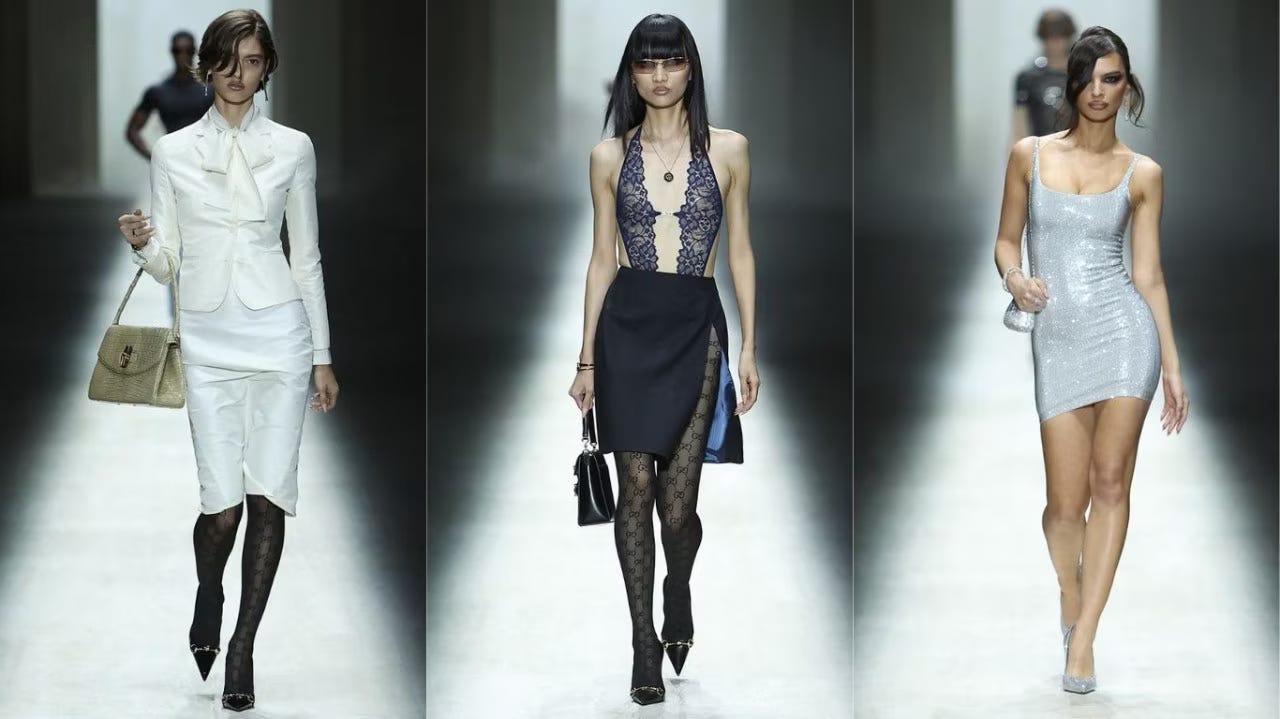
| Boilerpipe Text | image c/o domusweb.it
Fashion is emotional. We buy luxury because of how it makes us
feel
, not because we need another black mesh T-shirt. But today, I’m putting my emotions in a box. I want to talk about the only thing that matters when you’re a multi-billion dollar conglomerate:
Are we doing everything we can to make money?
After watching Demna’s first full collection for Gucci,
La Primavera
, walk in Milan, my professional opinion is:
No.
In fact, I think Kering is currently making a series of desperate bets that ignore the very women who keep the lights on. Let’s look at the numbers.
To understand why this collection matters, we have to look at the “Gucci-dependence” of the Kering Group.
The Revenue Engine:
In 2025, Gucci generated approximately
41% of Kering’s total revenue
. Simply put: There is no Kering Group without a profitable Gucci.
The Red Flag:
2025 was a bloodbath. Annual revenue dropped 22%. Sales from direct boutiques dropped 18%.
The “No Confidence” Vote:
Wholesale revenue plummeted
34%
.
As a former buyer, that 34% number is the one that keeps me up at night. It means retailers across the globe have lost faith. They don’t believe Gucci can sell at full price, so they aren’t writing the orders.
I’ve said it before and I’ll say it again: Letting Alessandro Michele go was the worst business decision Kering could have made. He and his team built the “Cinderella Story” of the 2010s.
Yes, there was a dip during the pandemic—but that was an unprecedented global event, not a creative failure. Instead of watching the KPIs like a hawk and staying the course, Kering panicked. They did a complete about-face, ousted the man who brought them back to stardom, and they have been in a financial free-fall ever since.
After the Sabato De Sarno era failed to resonate (mostly because “ultra-minimalism” at an aggressive price hike is a hard sell in a recession), Kering reached for the most “hyped” person in their portfolio: Demna.
Demna is a genius at
Hype and Mania
. He proved that at Vetements and Balenciaga. But Gucci is a different beast. Gucci is the house that lives and dies by its performance.
The Strategy:
Demna and his team are clearly “chronically online.” They see the TikTok obsession with Tom Ford’s Gucci era. So, they served up internet discourse on a platter. They gave us the greatest hits: the 90s minimalism, the Kate Moss closer, the reprisal of the Gucci thong (now diamond encrusted!).
The Problem:
Reprising the greatest hits might get you clicks, but does it make up 40% of a conglomerate’s revenue? I don’t think so.
“Desperation is not aspirational. When a luxury brand does an immediate about-face every two years, it looks like they’re throwing things at the wall to see what sticks. To a luxury customer, that is a repellent.”
The biggest issue with
La Primavera
is the demographic shift. The collection skewed incredibly young. We’re talking “Lady of the Night” silhouettes, hip cutouts, and club-kid aesthetic.
The Alienated Customer:
Where is the 45-year-old woman with deep pockets and high discretionary income? She isn’t wearing a mesh T-shirt to the boardroom.
The Cultural Blindspot:
Most of what walked the runway is culturally inappropriate for the Middle Eastern market—a key region for luxury today.
The “Cost Per Wear” Crisis:
Young people today don’t have the discretionary income to spend thousands on a “mesh shirt” they can only wear to a club.
Kering is playing it safe by pulling from the archives and putting a “hype-man” at the front. But even for a “safe” move, it misses the mark.
When you make things that are easily replicated (like unbranded 90s basics) and sell them for 10x the price of a contemporary brand, you have to give the customer a reason to believe. Right now, Gucci feels like it’s grasping at straws.
I’d love to be proven wrong. I’d love to see a massive surge in transactions. But if I were a betting woman? I’d be looking for a time machine to bring back the maximalist magic of the 2010s.
Is Gucci’s reliance on "Hype and Mania" a sustainable business model or a multi-billion dollar volatility trap?
By 2028, the "Thought Daughter" demographic—the women with the actual discretionary income—will have completed their pivot away from "Vibes" and back toward "Value." My latest forecast analyzes the
"Post-Logo Correction"
and explains why Demna’s youth-centric strategy for Gucci might be alienating the only market that matters right now: the high-net-worth individual.
The “Post-Logo” Correction Era (2026–2030)
For Kering, the next 24 months are a “restructuring” phase. Because the group is
40%+ dependent on Gucci
, their stock performance will remain highly sensitive to Demna’s retail sell-through.
The Wholesale Reckoning:
Following the
34% drop
you noted in 2025, expect Kering to aggressively pull back from multi-brand retailers to protect brand equity. This “scorched earth” strategy on wholesale will lead to short-term revenue pain (est. -5% to -8% CAGR through 2027) in hopes of long-term “exclusivity” gains.
The Demna Risk:
If
La Primavera
doesn’t hit a 60% full-price sell-through rate by Q4 2026, internal pressure for a third Creative Director shift in five years will become deafening.
Source Insight:
Bernstein Research
has noted that Kering’s “turnaround” cycles are getting shorter, which historically dilutes brand heritage. |
| Markdown | [](https://thoughtfulthreads.substack.com/)
# [](https://thoughtfulthreads.substack.com/)
Subscribe
Sign in
# Gucci’s 'La Primavera' and the High Cost of Desperation: Why Hype Won’t Save Kering
### Pulling from the archives is safe, but is it profitable?
Mar 07, 2026
∙ Paid
1
Share
[](https://substackcdn.com/image/fetch/$s_!C2r-!,f_auto,q_auto:good,fl_progressive:steep/https%3A%2F%2Fsubstack-post-media.s3.amazonaws.com%2Fpublic%2Fimages%2Fb711ba9b-b9e0-4c96-9082-ab1660674237_1280x719.avif)
image c/o domusweb.it
### From a 34% wholesale drop to the Tom Ford reprisal—as a former buyer and current analyst, I’m looking past the Kate Moss cameo to the brutal math of Kering’s biggest gamble yet.
***
Fashion is emotional. We buy luxury because of how it makes us *feel*, not because we need another black mesh T-shirt. But today, I’m putting my emotions in a box. I want to talk about the only thing that matters when you’re a multi-billion dollar conglomerate: **Are we doing everything we can to make money?**
After watching Demna’s first full collection for Gucci, *La Primavera*, walk in Milan, my professional opinion is: **No.**
In fact, I think Kering is currently making a series of desperate bets that ignore the very women who keep the lights on. Let’s look at the numbers.
### The Math: Why Gucci is a “Must-Win”
To understand why this collection matters, we have to look at the “Gucci-dependence” of the Kering Group.
- **The Revenue Engine:** In 2025, Gucci generated approximately **41% of Kering’s total revenue**. Simply put: There is no Kering Group without a profitable Gucci.
- **The Red Flag:** 2025 was a bloodbath. Annual revenue dropped 22%. Sales from direct boutiques dropped 18%.
- **The “No Confidence” Vote:** Wholesale revenue plummeted **34%**.
As a former buyer, that 34% number is the one that keeps me up at night. It means retailers across the globe have lost faith. They don’t believe Gucci can sell at full price, so they aren’t writing the orders.
### The Alessandro Sized Hole in the Strategy
I’ve said it before and I’ll say it again: Letting Alessandro Michele go was the worst business decision Kering could have made. He and his team built the “Cinderella Story” of the 2010s.
Yes, there was a dip during the pandemic—but that was an unprecedented global event, not a creative failure. Instead of watching the KPIs like a hawk and staying the course, Kering panicked. They did a complete about-face, ousted the man who brought them back to stardom, and they have been in a financial free-fall ever since.
### Enter Demna: Hype, Mania, and 90s Replays
After the Sabato De Sarno era failed to resonate (mostly because “ultra-minimalism” at an aggressive price hike is a hard sell in a recession), Kering reached for the most “hyped” person in their portfolio: Demna.
Demna is a genius at **Hype and Mania**. He proved that at Vetements and Balenciaga. But Gucci is a different beast. Gucci is the house that lives and dies by its performance.
**The Strategy:** Demna and his team are clearly “chronically online.” They see the TikTok obsession with Tom Ford’s Gucci era. So, they served up internet discourse on a platter. They gave us the greatest hits: the 90s minimalism, the Kate Moss closer, the reprisal of the Gucci thong (now diamond encrusted!).
**The Problem:** Reprising the greatest hits might get you clicks, but does it make up 40% of a conglomerate’s revenue? I don’t think so.
> **“Desperation is not aspirational. When a luxury brand does an immediate about-face every two years, it looks like they’re throwing things at the wall to see what sticks. To a luxury customer, that is a repellent.”**
### Who is this for? (Hint: Not the woman with the money)
The biggest issue with *La Primavera* is the demographic shift. The collection skewed incredibly young. We’re talking “Lady of the Night” silhouettes, hip cutouts, and club-kid aesthetic.
- **The Alienated Customer:** Where is the 45-year-old woman with deep pockets and high discretionary income? She isn’t wearing a mesh T-shirt to the boardroom.
- **The Cultural Blindspot:** Most of what walked the runway is culturally inappropriate for the Middle Eastern market—a key region for luxury today.
- **The “Cost Per Wear” Crisis:** Young people today don’t have the discretionary income to spend thousands on a “mesh shirt” they can only wear to a club.
### The Bottom Line
Kering is playing it safe by pulling from the archives and putting a “hype-man” at the front. But even for a “safe” move, it misses the mark.
When you make things that are easily replicated (like unbranded 90s basics) and sell them for 10x the price of a contemporary brand, you have to give the customer a reason to believe. Right now, Gucci feels like it’s grasping at straws.
I’d love to be proven wrong. I’d love to see a massive surge in transactions. But if I were a betting woman? I’d be looking for a time machine to bring back the maximalist magic of the 2010s.
### **Kering vs. LVMH: One is building a Fortress, the other is building a Stage.**
Is Gucci’s reliance on "Hype and Mania" a sustainable business model or a multi-billion dollar volatility trap?
By 2028, the "Thought Daughter" demographic—the women with the actual discretionary income—will have completed their pivot away from "Vibes" and back toward "Value." My latest forecast analyzes the **"Post-Logo Correction"** and explains why Demna’s youth-centric strategy for Gucci might be alienating the only market that matters right now: the high-net-worth individual.
***
## 📊 The 5-Year Forecast: Diversification vs. Dependence
**The “Post-Logo” Correction Era (2026–2030)**
### 1\. Kering: The Volatility Trap (2026–2028)
For Kering, the next 24 months are a “restructuring” phase. Because the group is **40%+ dependent on Gucci**, their stock performance will remain highly sensitive to Demna’s retail sell-through.
- **The Wholesale Reckoning:** Following the **34% drop** you noted in 2025, expect Kering to aggressively pull back from multi-brand retailers to protect brand equity. This “scorched earth” strategy on wholesale will lead to short-term revenue pain (est. -5% to -8% CAGR through 2027) in hopes of long-term “exclusivity” gains.
- **The Demna Risk:** If *La Primavera* doesn’t hit a 60% full-price sell-through rate by Q4 2026, internal pressure for a third Creative Director shift in five years will become deafening.
- **Source Insight:** *Bernstein Research* has noted that Kering’s “turnaround” cycles are getting shorter, which historically dilutes brand heritage.

## Continue reading this post for free, courtesy of Thoughtful Threads.
[Claim my free post]()
[Or purchase a paid subscription.](https://thoughtfulthreads.substack.com/subscribe?simple=true&next=https%3A%2F%2Fthoughtfulthreads.substack.com%2Fp%2Fguccis-la-primavera-and-the-high&utm_source=paywall&utm_medium=web&utm_content=190161451&just_signed_up=falsesimple=true&utm_source=paywall&utm_medium=email&utm_content=190161451&next=https://thoughtfulthreads.substack.com/p/guccis-la-primavera-and-the-high)
© 2026 Thoughtful Threads · [Privacy](https://substack.com/privacy) ∙ [Terms](https://substack.com/tos) ∙ [Collection notice](https://substack.com/ccpa#personal-data-collected)
[Start your Substack](https://substack.com/signup?utm_source=substack&utm_medium=web&utm_content=footer)
[Get the app](https://substack.com/app/app-store-redirect?utm_campaign=app-marketing&utm_content=web-footer-button)
[Substack](https://substack.com/) is the home for great culture
This site requires JavaScript to run correctly. Please [turn on JavaScript](https://enable-javascript.com/) or unblock scripts |
| Readable Markdown | [](https://substackcdn.com/image/fetch/$s_!C2r-!,f_auto,q_auto:good,fl_progressive:steep/https%3A%2F%2Fsubstack-post-media.s3.amazonaws.com%2Fpublic%2Fimages%2Fb711ba9b-b9e0-4c96-9082-ab1660674237_1280x719.avif)
image c/o domusweb.it
Fashion is emotional. We buy luxury because of how it makes us *feel*, not because we need another black mesh T-shirt. But today, I’m putting my emotions in a box. I want to talk about the only thing that matters when you’re a multi-billion dollar conglomerate: **Are we doing everything we can to make money?**
After watching Demna’s first full collection for Gucci, *La Primavera*, walk in Milan, my professional opinion is: **No.**
In fact, I think Kering is currently making a series of desperate bets that ignore the very women who keep the lights on. Let’s look at the numbers.
To understand why this collection matters, we have to look at the “Gucci-dependence” of the Kering Group.
- **The Revenue Engine:** In 2025, Gucci generated approximately **41% of Kering’s total revenue**. Simply put: There is no Kering Group without a profitable Gucci.
- **The Red Flag:** 2025 was a bloodbath. Annual revenue dropped 22%. Sales from direct boutiques dropped 18%.
- **The “No Confidence” Vote:** Wholesale revenue plummeted **34%**.
As a former buyer, that 34% number is the one that keeps me up at night. It means retailers across the globe have lost faith. They don’t believe Gucci can sell at full price, so they aren’t writing the orders.
I’ve said it before and I’ll say it again: Letting Alessandro Michele go was the worst business decision Kering could have made. He and his team built the “Cinderella Story” of the 2010s.
Yes, there was a dip during the pandemic—but that was an unprecedented global event, not a creative failure. Instead of watching the KPIs like a hawk and staying the course, Kering panicked. They did a complete about-face, ousted the man who brought them back to stardom, and they have been in a financial free-fall ever since.
After the Sabato De Sarno era failed to resonate (mostly because “ultra-minimalism” at an aggressive price hike is a hard sell in a recession), Kering reached for the most “hyped” person in their portfolio: Demna.
Demna is a genius at **Hype and Mania**. He proved that at Vetements and Balenciaga. But Gucci is a different beast. Gucci is the house that lives and dies by its performance.
**The Strategy:** Demna and his team are clearly “chronically online.” They see the TikTok obsession with Tom Ford’s Gucci era. So, they served up internet discourse on a platter. They gave us the greatest hits: the 90s minimalism, the Kate Moss closer, the reprisal of the Gucci thong (now diamond encrusted!).
**The Problem:** Reprising the greatest hits might get you clicks, but does it make up 40% of a conglomerate’s revenue? I don’t think so.
> **“Desperation is not aspirational. When a luxury brand does an immediate about-face every two years, it looks like they’re throwing things at the wall to see what sticks. To a luxury customer, that is a repellent.”**
The biggest issue with *La Primavera* is the demographic shift. The collection skewed incredibly young. We’re talking “Lady of the Night” silhouettes, hip cutouts, and club-kid aesthetic.
- **The Alienated Customer:** Where is the 45-year-old woman with deep pockets and high discretionary income? She isn’t wearing a mesh T-shirt to the boardroom.
- **The Cultural Blindspot:** Most of what walked the runway is culturally inappropriate for the Middle Eastern market—a key region for luxury today.
- **The “Cost Per Wear” Crisis:** Young people today don’t have the discretionary income to spend thousands on a “mesh shirt” they can only wear to a club.
Kering is playing it safe by pulling from the archives and putting a “hype-man” at the front. But even for a “safe” move, it misses the mark.
When you make things that are easily replicated (like unbranded 90s basics) and sell them for 10x the price of a contemporary brand, you have to give the customer a reason to believe. Right now, Gucci feels like it’s grasping at straws.
I’d love to be proven wrong. I’d love to see a massive surge in transactions. But if I were a betting woman? I’d be looking for a time machine to bring back the maximalist magic of the 2010s.
Is Gucci’s reliance on "Hype and Mania" a sustainable business model or a multi-billion dollar volatility trap?
By 2028, the "Thought Daughter" demographic—the women with the actual discretionary income—will have completed their pivot away from "Vibes" and back toward "Value." My latest forecast analyzes the **"Post-Logo Correction"** and explains why Demna’s youth-centric strategy for Gucci might be alienating the only market that matters right now: the high-net-worth individual.
**The “Post-Logo” Correction Era (2026–2030)**
For Kering, the next 24 months are a “restructuring” phase. Because the group is **40%+ dependent on Gucci**, their stock performance will remain highly sensitive to Demna’s retail sell-through.
- **The Wholesale Reckoning:** Following the **34% drop** you noted in 2025, expect Kering to aggressively pull back from multi-brand retailers to protect brand equity. This “scorched earth” strategy on wholesale will lead to short-term revenue pain (est. -5% to -8% CAGR through 2027) in hopes of long-term “exclusivity” gains.
- **The Demna Risk:** If *La Primavera* doesn’t hit a 60% full-price sell-through rate by Q4 2026, internal pressure for a third Creative Director shift in five years will become deafening.
- **Source Insight:** *Bernstein Research* has noted that Kering’s “turnaround” cycles are getting shorter, which historically dilutes brand heritage. |
| Shard | 76 (laksa) |
| Root Hash | 14862242593741677076 |
| Unparsed URL | com,substack!thoughtfulthreads,/p/guccis-la-primavera-and-the-high s443 |