ℹ️ Skipped - page is already crawled
| Filter | Status | Condition | Details |
|---|---|---|---|
| HTTP status | PASS | download_http_code = 200 | HTTP 200 |
| Age cutoff | PASS | download_stamp > now() - 6 MONTH | 0.3 months ago |
| History drop | PASS | isNull(history_drop_reason) | No drop reason |
| Spam/ban | PASS | fh_dont_index != 1 AND ml_spam_score = 0 | ml_spam_score=0 |
| Canonical | PASS | meta_canonical IS NULL OR = '' OR = src_unparsed | Not set |
| Property | Value |
|---|---|
| URL | https://theweek.com/business/economy/trade-wars-explained |
| Last Crawled | 2026-04-01 04:39:22 (8 days ago) |
| First Indexed | 2025-02-16 07:45:18 (1 year ago) |
| HTTP Status Code | 200 |
| Meta Title | Trade wars, explained | The Week |
| Meta Description | Free trade is almost always good for any economy – so why is it so unpopular? |
| Meta Canonical | null |
| Boilerpipe Text | "Trade wars are good, and easy to win,"
Donald Trump
said in 2018 – and he has begun his second term
launching one against China
. But until relatively recently, most of the world was in a continuous state of trade war.
How old are trade wars?
Until the 19th century, mercantilism was dominant in Europe. Mercantilist thinkers posited, roughly, that power came from wealth, and that wealth could be best accumulated by minimising imports and maximising exports. To this end, most nations imposed high
tariffs
– taxes on imported goods – not least because tariffs made up a very large part of government revenue (smugglers were known as "free traders").
It was a zero-sum view of the world: rival powers all tried to accumulate trade surpluses at once. It led to real wars, such as the Anglo-Dutch wars of the 17th century, and to
colonial expansion
, as nations vied to dominate trade and to control resources and captive markets for their goods.
Article continues below
The Week
Escape your echo chamber. Get the facts behind the news, plus analysis from multiple perspectives.
SUBSCRIBE & SAVE
Sign up for The Week's Free Newsletters
From our morning news briefing to a weekly Good News Newsletter, get the best of The Week delivered directly to your inbox.
From our morning news briefing to a weekly Good News Newsletter, get the best of The Week delivered directly to your inbox.
Latest Videos From The Week
And how did that situation change?
The discipline of economics was invented essentially to challenge mercantilism. Adam Smith argued that nations got rich not by trying to accumulate surpluses, but by exploiting comparative advantages by specialisation, and by the division of labour to increase productivity: crudely, Scotland should produce its own wool, and buy France's wine. By allowing free trade without tariffs, nations make citizens shift resources towards industries in which they have an advantage. After years of debate, in 1846 MPs repealed the Corn Laws (which, at the behest of landlords, had imposed duties on grain imports), initiating the era of
free trade
.
Has free trade made the world richer?
Yes, massively. Since 1820, GDP per capita has increased from around $1,100 to more than $16,600. Much of this is down to free trade: different nations giving up the attempt to be self-sufficient, buying from others what they need, and specialising in what they do best.
Economists have often been accused of failing to reach clear conclusions, but they very consistently assert that free trade is almost always good for any economy – as a whole. It can, though, be very bad for industries and workers that lose out to global competition. Hence, as Thomas Babington Macaulay put it: "Free trade, one of the greatest blessings which a government can confer on a people, is in almost every country unpopular."
Why is it so unpopular?
It is counterintuitive. As Abraham Lincoln inferred: "I don't know much about the tariff, but I do know if I buy a coat in America, I have a coat and America has the money – if I buy a coat in England, I have the coat and England has the money." In rich countries, people fear being undercut by cheaper foreign workers. In poor countries, they fear being outcompeted by better technology.
A free daily email with the biggest news stories of the day – and the best features from TheWeek.com
Free trade also offers "dispersed gains" and "concentrated losses". Letting in cheap Chinese steel to the UK, for instance, makes many groups, from carmakers to consumers, better off. But it's very bad for
UK steel
workers.
So how did free trade advance?
Broadly, free trade has been pushed by dominant manufacturing powers that thought they could benefit from it: first Britain, then the US. (This is why Karl Marx called it "naked, shameless, direct, brutal exploitation".)
The first era of free trade came to an end when, after the shock of the
1929 crash
, US farmers and industry demanded protection. The US, at that point still a reluctant free trader, passed the Smoot-Hawley Tariff Act in 1930, raising the average tariff by some 20%. Other countries retaliated and world trade crumbled.
This is the textbook case for the folly of trade wars: not only does it raise costs for consumers, it also encourages a tit-for-tat response from other nations, causing yet more damage.
When did progress resume?
In 1947, the US and its allies established the General Agreement on Tariffs and Trade (Gatt), instituting a series of elaborate horse-trading negotiations ("rounds"), during which nations mutually lowered tariffs. Gatt and the World Trade Organisation (WTO), its successor, succeeded in bringing tariffs down across most of the world – ushering in the era of
globalisation
. In addition, most developed nations belong to regional free-trade areas, such as the EU, Nafta in North America, Mercosur in South America.
How free is trade today?
Not that free. The WTO system keeps tariffs low, but allows governments to suspend normal rules to protect their economies in certain cases: market disruption (a sudden surge of imports),
national security
(protecting defence industries), unfair practices (where other nations' exports are subsidised), and dumping (where firms export goods below cost to destroy foreign competitors). Agriculture remains subsidised and protected in much of the world, to help farmers.
There are so many ways of distorting free trade that low-level trade wars are constantly erupting. And most successful exporting nations, from the US and South Korea to China, have used protectionism to allow key industries to develop.
Are Trump's grievances justified?
When it comes to China, yes. Beijing has ruthlessly exploited the free-trade system, benefitting from lowered trade barriers while keeping its internal market one of the most closed in the world. China heavily subsidises strategic industries (steel,
microchips
,
electric vehicles
) to gain dominance; it artificially deflates its currency to cheapen its exports; and steals foreign technology on a vast scale.
Even so, trade with China has benefitted the US overall, leading to lower consumer prices and higher corporate profits. But the "concentrated losses" have been brutal. One study found roughly two million jobs in national industry had been lost in the US between 1997 and 2011, either directly or indirectly, because of Chinese trade. It's no surprise that Trump has found strong supporters in "rust belt" areas where so many jobs were lost. |
| Markdown | 
[ The Week](https://theweek.com/)
US Edition
[ US](https://theweek.com/business/economy/trade-wars-explained)
[ UK](https://theweek.com/business/economy/trade-wars-explained)
[ SUBSCRIBE & SAVE Less than \$3 per week](https://subscribe.theweek.com/servlet/OrdersGateway?cds_mag_code=TWE&cds_page_id=275740&cds_response_key=I4BRBKSW1&utm_medium=referral&utm_source=theweek.com&utm_campaign=wku-all-digital_referral-202401-sub-none-fbk24&utm_content=us-header-block)
×
Sign in
- View Profile
- Sign out
- [The Explainer](https://theweek.com/the-explainer)
- [The Week Recommends](https://theweek.com/the-week-recommends)
- [Newsletters](https://theweek.com/newsletters)
- [Cartoons](https://theweek.com/cartoons)
- [From the Magazine](https://usmagazine.theweek.com/t/storefront/storefront)
- More
- [The Week Junior](https://theweekjunior.com/?utm_source=theweek.com&utm_medium=referral&utm_campaign=theweekus_menu_link)
- [Student Offers](https://subscribe.theweek.com/pubs/W0/TWE/studentbeans_promo.jsp?cds_mag_code=TWE&cds_page_id=285040)
- [Politics](https://theweek.com/politics)
- [World News](https://theweek.com/tag/world-news)
- [Business](https://theweek.com/business)
- [Health](https://theweek.com/health)
- [Science](https://theweek.com/science)
- [Food & Drink](https://theweek.com/culture-life/food-drink)
- [Travel](https://theweek.com/culture-life/travel)
- [Culture](https://theweek.com/culture-life)
- [History](https://theweek.com/history)
- [Personal Finance](https://theweek.com/personal-finance)
- [Puzzles](https://theweek.com/puzzles)
- [Photos](https://theweek.com/photos)
- [The Blend](https://theblendjournal.com/)
- [All Categories](https://theweek.com/digest/round-up/all-categories)
[Newsletter sign up Newsletter](https://theweek.com/newsletters)
Don't miss these
[ Politics What is the Jones Act and why is it controversial?](https://theweek.com/politics/jones-act-shipping-controversy-trump-waiver "What is the Jones Act and why is it controversial?")
[ World News How does the ‘Tehran tollbooth’ upend Trump’s shifting Iran war plans?](https://theweek.com/world-news/tehran-toll-booth-trump-iran-war-hormuz "How does the ‘Tehran tollbooth’ upend Trump’s shifting Iran war plans?")
[ World News Could the Iran war finally pop the AI bubble?](https://theweek.com/world-news/iran-war-ai-artificial-intelligence-bubble-collapse "Could the Iran war finally pop the AI bubble?")
[ Economy Will Iran war trigger a global recession?](https://theweek.com/business/economy/iran-war-oil-trigger-global-recession "Will Iran war trigger a global recession?")
[ World News Donald Trump’s talks: is the Iran war really ‘winding down’?](https://theweek.com/world-news/donald-trumps-talks-is-the-iran-war-really-winding-down "Donald Trump’s talks: is the Iran war really ‘winding down’?")
[ Economy Energy shock: How bad could it get?](https://theweek.com/business/economy/energy-shock-iran-war "Energy shock: How bad could it get?")
[ Economy Pros and cons of tariffs](https://theweek.com/business/economy/pros-and-cons-of-tariffs "Pros and cons of tariffs")
[ World News Will China invade Taiwan?](https://theweek.com/news/world-news/asia-pacific/954343/what-would-happen-china-attempt-invade-taiwan "Will China invade Taiwan?")
[ Politics What is Donald Trump's net worth?](https://theweek.com/politics/donald-trump-net-worth "What is Donald Trump's net worth?")
[ Politics How will the Iran war end?](https://theweek.com/politics/how-will-the-iran-war-end "How will the Iran war end?")
[ World News China’s role in the US-Israeli war on Iran](https://theweek.com/world-news/china-iran-ties-us-israeli-strikes-help-trump-oil "China’s role in the US-Israeli war on Iran")
[ World News Donald Trump’s mistakes in Iran](https://theweek.com/world-news/donald-trump-mistakes-iran "Donald Trump’s mistakes in Iran")
[ Politics War in Iran: does Trump have an endgame?](https://theweek.com/politics/war-in-iran-does-trump-have-an-endgame "War in Iran: does Trump have an endgame?")
[ Politics Can anyone stop Donald Trump?](https://theweek.com/politics/can-anyone-stop-donald-trump "Can anyone stop Donald Trump?")
[ Politics EU Nordic expansion: why would Iceland and Norway want in?](https://theweek.com/politics/eu-expansion-iceland-norway-joining-eu-trump "EU Nordic expansion: why would Iceland and Norway want in?")
1. [Home](https://theweek.com/)
2. [Business](https://theweek.com/business)
3. [Economy](https://theweek.com/business/economy)
[the explainer](https://theweek.com/the-explainer)
# Trade wars, explained
Free trade is almost always good for any economy – so why is it so unpopular?
By [The Week UK](https://theweek.com/author/the-week-uk)
published
February 16, 2025
There are so many ways of distorting free trade that low-level trade wars are constantly erupting
(Image credit: Mark Ralston / AFP / Getty Images)
Share
- Copy link
- [Facebook](https://www.facebook.com/sharer/sharer.php?u=https%3A%2F%2Ftheweek.com%2Fbusiness%2Feconomy%2Ftrade-wars-explained)
- [X](https://twitter.com/intent/tweet?text=Trade+wars%2C+explained&url=https%3A%2F%2Ftheweek.com%2Fbusiness%2Feconomy%2Ftrade-wars-explained)
- [Linkedin](https://www.linkedin.com/shareArticle?mini=true&url=https%3A%2F%2Ftheweek.com%2Fbusiness%2Feconomy%2Ftrade-wars-explained&title=Trade+wars%2C+explained&source=theweek.com)
- [Whatsapp](whatsapp://send?text=Trade+wars%2C+explained+https%3A%2F%2Ftheweek.com%2Fbusiness%2Feconomy%2Ftrade-wars-explained?fwa)
- [Pinterest](https://pinterest.com/pin/create/button/?url=https%3A%2F%2Ftheweek.com%2Fbusiness%2Feconomy%2Ftrade-wars-explained&media=https%3A%2F%2Fcdn.mos.cms.futurecdn.net%2FCXwKBWt9LabLBSYXFZbmLd.jpg)
Share this article
Join the conversation
[Follow us](https://google.com/preferences/source?q=theweek.com)
Add us as a preferred source on Google
Newsletter
Sign up for Today's Best Articles in your inbox
A free daily email with the biggest news stories of the day – and the best features from TheWeek.com
***
By signing up, you agree to our [Terms of services](https:\/\/futureplc.com\/terms-conditions\/) and acknowledge that you have read our [Privacy Notice](https:\/\/futureplc.com\/privacy-policy\/). You also agree to receive marketing emails from us that may include promotions from our trusted partners and sponsors, which you can unsubscribe from at any time.
You are now subscribed
Your newsletter sign-up was successful
***
An account already exists for this email address, please log in.
Subscribe to our newsletter
"Trade wars are good, and easy to win," [Donald Trump](https://theweek.com/tag/donald-trump) said in 2018 – and he has begun his second term [launching one against China](https://theweek.com/politics/us-china-trade-war-trump-tariff-battle). But until relatively recently, most of the world was in a continuous state of trade war.
## How old are trade wars?
Until the 19th century, mercantilism was dominant in Europe. Mercantilist thinkers posited, roughly, that power came from wealth, and that wealth could be best accumulated by minimising imports and maximising exports. To this end, most nations imposed high [tariffs](https://theweek.com/business/economy/pros-and-cons-of-tariffs) – taxes on imported goods – not least because tariffs made up a very large part of government revenue (smugglers were known as "free traders").
It was a zero-sum view of the world: rival powers all tried to accumulate trade surpluses at once. It led to real wars, such as the Anglo-Dutch wars of the 17th century, and to [colonial expansion](https://theweek.com/history/93820/british-empire-how-big-was-it-and-why-did-it-collapse), as nations vied to dominate trade and to control resources and captive markets for their goods.
Article continues below
You may like
- [ Pros and cons of tariffs](https://theweek.com/business/economy/pros-and-cons-of-tariffs)
- [ Did markets’ ‘Sell America’ trade force Trump to TACO on Greenland?](https://theweek.com/business/economy/markets-sell-america-trade-trump-taco-greenland)
- [ Is the American era officially over?](https://theweek.com/politics/american-era-over-trump-trade-greenland-world-order-influence)
## The Week
Escape your echo chamber. Get the facts behind the news, plus analysis from multiple perspectives.
[SUBSCRIBE & SAVE](https://subscribe.theweek.com/servlet/OrdersGateway?cds_mag_code=TWE&cds_page_id=275740&cds_response_key=I4BRBKSW1&utm_medium=referral&utm_source=theweek.com&utm_campaign=wku-all-digital_referral-202401-sub-none-fbk24&utm_content=us-in-article)

## Sign up for The Week's Free Newsletters
From our morning news briefing to a weekly Good News Newsletter, get the best of The Week delivered directly to your inbox.
From our morning news briefing to a weekly Good News Newsletter, get the best of The Week delivered directly to your inbox.
[Sign up](https://theweek.com/newsletters)
Latest Videos From The Week
## And how did that situation change?
The discipline of economics was invented essentially to challenge mercantilism. Adam Smith argued that nations got rich not by trying to accumulate surpluses, but by exploiting comparative advantages by specialisation, and by the division of labour to increase productivity: crudely, Scotland should produce its own wool, and buy France's wine. By allowing free trade without tariffs, nations make citizens shift resources towards industries in which they have an advantage. After years of debate, in 1846 MPs repealed the Corn Laws (which, at the behest of landlords, had imposed duties on grain imports), initiating the era of [free trade](https://theweek.com/business/economy/is-this-the-end-of-the-free-trade-era).
## Has free trade made the world richer?
Yes, massively. Since 1820, GDP per capita has increased from around \$1,100 to more than \$16,600. Much of this is down to free trade: different nations giving up the attempt to be self-sufficient, buying from others what they need, and specialising in what they do best.
Economists have often been accused of failing to reach clear conclusions, but they very consistently assert that free trade is almost always good for any economy – as a whole. It can, though, be very bad for industries and workers that lose out to global competition. Hence, as Thomas Babington Macaulay put it: "Free trade, one of the greatest blessings which a government can confer on a people, is in almost every country unpopular."
## Why is it so unpopular?
It is counterintuitive. As Abraham Lincoln inferred: "I don't know much about the tariff, but I do know if I buy a coat in America, I have a coat and America has the money – if I buy a coat in England, I have the coat and England has the money." In rich countries, people fear being undercut by cheaper foreign workers. In poor countries, they fear being outcompeted by better technology.
Sign up for Today's Best Articles in your inbox
A free daily email with the biggest news stories of the day – and the best features from TheWeek.com
By signing up, you agree to our [Terms of services](https:\/\/futureplc.com\/terms-conditions\/) and acknowledge that you have read our [Privacy Notice](https:\/\/futureplc.com\/privacy-policy\/). You also agree to receive marketing emails from us that may include promotions from our trusted partners and sponsors, which you can unsubscribe from at any time.
Free trade also offers "dispersed gains" and "concentrated losses". Letting in cheap Chinese steel to the UK, for instance, makes many groups, from carmakers to consumers, better off. But it's very bad for [UK steel](https://theweek.com/politics/tata-steel-closure-port-talbot) workers.
## So how did free trade advance?
Broadly, free trade has been pushed by dominant manufacturing powers that thought they could benefit from it: first Britain, then the US. (This is why Karl Marx called it "naked, shameless, direct, brutal exploitation".)
The first era of free trade came to an end when, after the shock of the [1929 crash](https://theweek.com/93407/the-great-depression-when-was-it-and-how-did-it-start), US farmers and industry demanded protection. The US, at that point still a reluctant free trader, passed the Smoot-Hawley Tariff Act in 1930, raising the average tariff by some 20%. Other countries retaliated and world trade crumbled.
What to read next
- [ Trump’s tariff loss at Supreme Court roils trade](https://theweek.com/politics/trump-administration-tariffs-supreme-court-loss)
- [ EU and India clinch trade pact amid US tariff war](https://theweek.com/world-news/eu-india-trade-deal-tariff-war)
- [ Supreme Court tariff ruling: a welter of new uncertainties](https://theweek.com/business/economy/return-of-tariff-turmoil-trump)
This is the textbook case for the folly of trade wars: not only does it raise costs for consumers, it also encourages a tit-for-tat response from other nations, causing yet more damage.
## When did progress resume?
In 1947, the US and its allies established the General Agreement on Tariffs and Trade (Gatt), instituting a series of elaborate horse-trading negotiations ("rounds"), during which nations mutually lowered tariffs. Gatt and the World Trade Organisation (WTO), its successor, succeeded in bringing tariffs down across most of the world – ushering in the era of [globalisation](https://theweek.com/business/globalization-pros-cons-economy). In addition, most developed nations belong to regional free-trade areas, such as the EU, Nafta in North America, Mercosur in South America.
## How free is trade today?
Not that free. The WTO system keeps tariffs low, but allows governments to suspend normal rules to protect their economies in certain cases: market disruption (a sudden surge of imports), [national security](https://theweek.com/tag/national-security) (protecting defence industries), unfair practices (where other nations' exports are subsidised), and dumping (where firms export goods below cost to destroy foreign competitors). Agriculture remains subsidised and protected in much of the world, to help farmers.
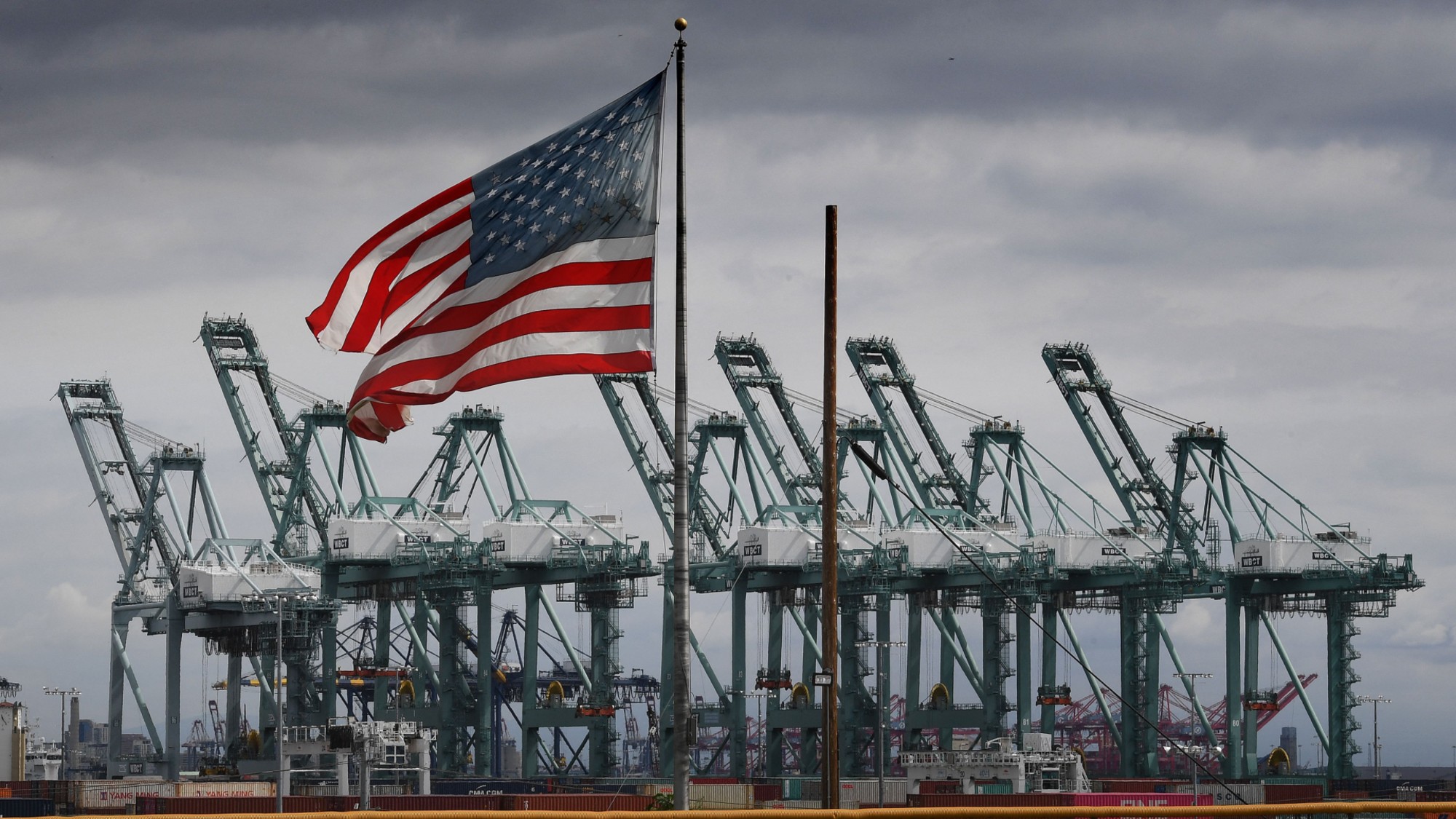
There are so many ways of distorting free trade that low-level trade wars are constantly erupting. And most successful exporting nations, from the US and South Korea to China, have used protectionism to allow key industries to develop.
## Are Trump's grievances justified?
When it comes to China, yes. Beijing has ruthlessly exploited the free-trade system, benefitting from lowered trade barriers while keeping its internal market one of the most closed in the world. China heavily subsidises strategic industries (steel, [microchips](https://theweek.com/tech/winning-us-china-chip-war), [electric vehicles](https://theweek.com/business/China-electric-vehicles-threaten-Detroit-Big-Three)) to gain dominance; it artificially deflates its currency to cheapen its exports; and steals foreign technology on a vast scale.
Even so, trade with China has benefitted the US overall, leading to lower consumer prices and higher corporate profits. But the "concentrated losses" have been brutal. One study found roughly two million jobs in national industry had been lost in the US between 1997 and 2011, either directly or indirectly, because of Chinese trade. It's no surprise that Trump has found strong supporters in "rust belt" areas where so many jobs were lost.
Explore More
[From the magazine](https://theweek.com/tag/from-the-magazine) [Donald Trump](https://theweek.com/tag/donald-trump) [Trade](https://theweek.com/tag/trade) [Trade War](https://theweek.com/tag/trade-war) [china trade war](https://theweek.com/tag/china-trade-war)
[The Week UK](https://theweek.com/author/the-week-uk)
Social Links Navigation
Read more
[ Economy Pros and cons of tariffs](https://theweek.com/business/economy/pros-and-cons-of-tariffs "Pros and cons of tariffs")
[ Economy Did markets’ ‘Sell America’ trade force Trump to TACO on Greenland?](https://theweek.com/business/economy/markets-sell-america-trade-trump-taco-greenland "Did markets’ ‘Sell America’ trade force Trump to TACO on Greenland?")
[ Politics Is the American era officially over?](https://theweek.com/politics/american-era-over-trump-trade-greenland-world-order-influence "Is the American era officially over?")
[ Politics Trump’s tariff loss at Supreme Court roils trade](https://theweek.com/politics/trump-administration-tariffs-supreme-court-loss "Trump’s tariff loss at Supreme Court roils trade
")
Latest in Economy
[ Economy Energy shock: How bad could it get?](https://theweek.com/business/economy/energy-shock-iran-war "Energy shock: How bad could it get?")
[ Economy Private credit’s very public problem](https://theweek.com/business/economy/private-credit-economy-market "Private credit’s very public problem")
[ Economy The gilt shock: why Britain was worst hit by the global bond market sell-off](https://theweek.com/business/economy/the-gilt-shock-why-britain-was-worst-hit-by-the-global-bond-market-sell-off "The gilt shock: why Britain was worst hit by the global bond market sell-off")
[ Economy Will Iran war trigger a global recession?](https://theweek.com/business/economy/iran-war-oil-trigger-global-recession "Will Iran war trigger a global recession?")
Latest in The explainer
[ Personal Finance Will your tax refund actually be bigger this season?](https://theweek.com/personal-finance/irs-tax-refund-one-big-beautiful-bill "Will your tax refund actually be bigger this season?
")
[ World News The 5 waterways that control global trade](https://theweek.com/world-news/five-waterways-control-global-trade "The 5 waterways that control global trade")
[ Economy Private credit’s very public problem](https://theweek.com/business/economy/private-credit-economy-market "Private credit’s very public problem")
[ Health How the UK’s transplant system deteriorated](https://theweek.com/health/nhs-organ-transplant-donor-system-donation "How the UK’s transplant system deteriorated")
- [About Us](https://theweek.com/about-us)
- [Contact Future's experts](https://futureplc.com/contact/)
- [Terms and Conditions](https://futureplc.com/terms-conditions/)
- [Privacy Policy](https://futureplc.com/privacy-policy/)
- [Cookie Policy](https://futureplc.com/cookies-policy/)
- [Advertise With Us](https://go.future-advertising.com/The-Week-Media-Kit.html)
- [FAQ](https://theweek.com/faq)
- [Do not sell or share my personal information](https://theweek.com/privacy-portal)
[ Add as a preferred source on Google](https://google.com/preferences/source?q=theweek.com)
The Week is part of Future US Inc, an international media group and leading digital publisher. [Visit our corporate site](https://futureplc.com/).
© Future US, Inc. Full 7th Floor, 130 West 42nd Street, New York, NY 10036. |
| Readable Markdown | "Trade wars are good, and easy to win," [Donald Trump](https://theweek.com/tag/donald-trump) said in 2018 – and he has begun his second term [launching one against China](https://theweek.com/politics/us-china-trade-war-trump-tariff-battle). But until relatively recently, most of the world was in a continuous state of trade war.
## How old are trade wars?
Until the 19th century, mercantilism was dominant in Europe. Mercantilist thinkers posited, roughly, that power came from wealth, and that wealth could be best accumulated by minimising imports and maximising exports. To this end, most nations imposed high [tariffs](https://theweek.com/business/economy/pros-and-cons-of-tariffs) – taxes on imported goods – not least because tariffs made up a very large part of government revenue (smugglers were known as "free traders").
It was a zero-sum view of the world: rival powers all tried to accumulate trade surpluses at once. It led to real wars, such as the Anglo-Dutch wars of the 17th century, and to [colonial expansion](https://theweek.com/history/93820/british-empire-how-big-was-it-and-why-did-it-collapse), as nations vied to dominate trade and to control resources and captive markets for their goods.
Article continues below
## The Week
Escape your echo chamber. Get the facts behind the news, plus analysis from multiple perspectives.
[SUBSCRIBE & SAVE](https://subscribe.theweek.com/servlet/OrdersGateway?cds_mag_code=TWE&cds_page_id=275740&cds_response_key=I4BRBKSW1&utm_medium=referral&utm_source=theweek.com&utm_campaign=wku-all-digital_referral-202401-sub-none-fbk24&utm_content=us-in-article)
## Sign up for The Week's Free Newsletters
From our morning news briefing to a weekly Good News Newsletter, get the best of The Week delivered directly to your inbox.
From our morning news briefing to a weekly Good News Newsletter, get the best of The Week delivered directly to your inbox.
Latest Videos From The Week
## And how did that situation change?
The discipline of economics was invented essentially to challenge mercantilism. Adam Smith argued that nations got rich not by trying to accumulate surpluses, but by exploiting comparative advantages by specialisation, and by the division of labour to increase productivity: crudely, Scotland should produce its own wool, and buy France's wine. By allowing free trade without tariffs, nations make citizens shift resources towards industries in which they have an advantage. After years of debate, in 1846 MPs repealed the Corn Laws (which, at the behest of landlords, had imposed duties on grain imports), initiating the era of [free trade](https://theweek.com/business/economy/is-this-the-end-of-the-free-trade-era).
## Has free trade made the world richer?
Yes, massively. Since 1820, GDP per capita has increased from around \$1,100 to more than \$16,600. Much of this is down to free trade: different nations giving up the attempt to be self-sufficient, buying from others what they need, and specialising in what they do best.
Economists have often been accused of failing to reach clear conclusions, but they very consistently assert that free trade is almost always good for any economy – as a whole. It can, though, be very bad for industries and workers that lose out to global competition. Hence, as Thomas Babington Macaulay put it: "Free trade, one of the greatest blessings which a government can confer on a people, is in almost every country unpopular."
## Why is it so unpopular?
It is counterintuitive. As Abraham Lincoln inferred: "I don't know much about the tariff, but I do know if I buy a coat in America, I have a coat and America has the money – if I buy a coat in England, I have the coat and England has the money." In rich countries, people fear being undercut by cheaper foreign workers. In poor countries, they fear being outcompeted by better technology.
A free daily email with the biggest news stories of the day – and the best features from TheWeek.com
Free trade also offers "dispersed gains" and "concentrated losses". Letting in cheap Chinese steel to the UK, for instance, makes many groups, from carmakers to consumers, better off. But it's very bad for [UK steel](https://theweek.com/politics/tata-steel-closure-port-talbot) workers.
## So how did free trade advance?
Broadly, free trade has been pushed by dominant manufacturing powers that thought they could benefit from it: first Britain, then the US. (This is why Karl Marx called it "naked, shameless, direct, brutal exploitation".)
The first era of free trade came to an end when, after the shock of the [1929 crash](https://theweek.com/93407/the-great-depression-when-was-it-and-how-did-it-start), US farmers and industry demanded protection. The US, at that point still a reluctant free trader, passed the Smoot-Hawley Tariff Act in 1930, raising the average tariff by some 20%. Other countries retaliated and world trade crumbled.
This is the textbook case for the folly of trade wars: not only does it raise costs for consumers, it also encourages a tit-for-tat response from other nations, causing yet more damage.
## When did progress resume?
In 1947, the US and its allies established the General Agreement on Tariffs and Trade (Gatt), instituting a series of elaborate horse-trading negotiations ("rounds"), during which nations mutually lowered tariffs. Gatt and the World Trade Organisation (WTO), its successor, succeeded in bringing tariffs down across most of the world – ushering in the era of [globalisation](https://theweek.com/business/globalization-pros-cons-economy). In addition, most developed nations belong to regional free-trade areas, such as the EU, Nafta in North America, Mercosur in South America.
## How free is trade today?
Not that free. The WTO system keeps tariffs low, but allows governments to suspend normal rules to protect their economies in certain cases: market disruption (a sudden surge of imports), [national security](https://theweek.com/tag/national-security) (protecting defence industries), unfair practices (where other nations' exports are subsidised), and dumping (where firms export goods below cost to destroy foreign competitors). Agriculture remains subsidised and protected in much of the world, to help farmers.
There are so many ways of distorting free trade that low-level trade wars are constantly erupting. And most successful exporting nations, from the US and South Korea to China, have used protectionism to allow key industries to develop.
## Are Trump's grievances justified?
When it comes to China, yes. Beijing has ruthlessly exploited the free-trade system, benefitting from lowered trade barriers while keeping its internal market one of the most closed in the world. China heavily subsidises strategic industries (steel, [microchips](https://theweek.com/tech/winning-us-china-chip-war), [electric vehicles](https://theweek.com/business/China-electric-vehicles-threaten-Detroit-Big-Three)) to gain dominance; it artificially deflates its currency to cheapen its exports; and steals foreign technology on a vast scale.
Even so, trade with China has benefitted the US overall, leading to lower consumer prices and higher corporate profits. But the "concentrated losses" have been brutal. One study found roughly two million jobs in national industry had been lost in the US between 1997 and 2011, either directly or indirectly, because of Chinese trade. It's no surprise that Trump has found strong supporters in "rust belt" areas where so many jobs were lost. |
| Shard | 139 (laksa) |
| Root Hash | 5471547289642633339 |
| Unparsed URL | com,theweek!/business/economy/trade-wars-explained s443 |