ℹ️ Skipped - page is already crawled
| Filter | Status | Condition | Details |
|---|---|---|---|
| HTTP status | PASS | download_http_code = 200 | HTTP 200 |
| Age cutoff | PASS | download_stamp > now() - 6 MONTH | 0.1 months ago |
| History drop | PASS | isNull(history_drop_reason) | No drop reason |
| Spam/ban | PASS | fh_dont_index != 1 AND ml_spam_score = 0 | ml_spam_score=0 |
| Canonical | PASS | meta_canonical IS NULL OR = '' OR = src_unparsed | Not set |
| Property | Value |
|---|---|
| URL | https://theweek.com/articles/844566/chernobyl-historically-accurate-about-things-that-matter |
| Last Crawled | 2026-04-14 22:01:40 (2 days ago) |
| First Indexed | 2019-06-03 09:53:06 (6 years ago) |
| HTTP Status Code | 200 |
| Meta Title | Is HBO's Chernobyl historically accurate? | The Week |
| Meta Description | The HBO mini-series is painstakingly accurate about certain historical details, but also takes a number of narrative liberties |
| Meta Canonical | null |
| Boilerpipe Text | "We live in a time where people seem to be re-embracing the corrosive notion that what we want to be true is more important than what is true," Craig Mazin, the writer and creator of HBO's Chernobyl,
told the
Moscow Times
; "This is why this story is more relevant than ever." And in many ways, his show is unbelievably painstaking in its fidelity to historical truth: Most of the actors play real people — saying and doing the things they are reported to have said and done — while everything from
the graphite debris
to
the buckets used to take out the trash
are scrupulous reproductions of the real thing. Entire scenes and storylines are lifted directly from Svetlana Alexievich's Voices from Chernobyl: The Oral History of a Nuclear Disaster.
However, like Nobel laureate Alexievich — whose work is less oral history or journalism than a kind of
creative adaptation of both
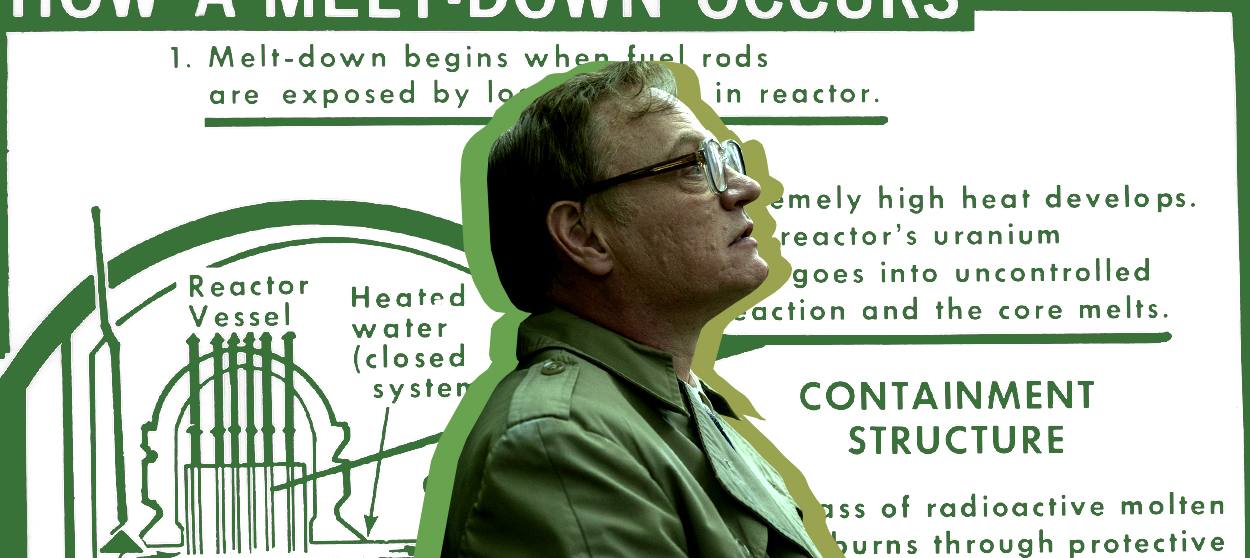
— the show alters, omits, condenses, and even invents much more than viewers might realize. The show's main protagonist, Valery Legasov, was a real person, and he really did do most — or at least many — of the things that we see actor Jared Harris doing: leading the disaster recovery effort, spearheading a much more open (and critical) account of Soviet nuclear science, and wearing those blocky, unflattering glasses. But although he
dictated
a suicide note almost exactly two years after the disaster — albeit not exactly on the anniversary, as the opening prologue of the miniseries shows him doing — he never asked "What is the cost of lies?" nor dramatically answered that "It's not that we'll mistake them for the truth. The real danger is that we'll hear enough lies, then we no longer recognize the truth at all."
Article continues below
The Week
Escape your echo chamber. Get the facts behind the news, plus analysis from multiple perspectives.
SUBSCRIBE & SAVE
Sign up for The Week's Free Newsletters
From our morning news briefing to a weekly Good News Newsletter, get the best of The Week delivered directly to your inbox.
From our morning news briefing to a weekly Good News Newsletter, get the best of The Week delivered directly to your inbox.
Latest Videos From The Week
Because that monologue sets the tone for the entire mini-series, framing and shaping the story it tells, does it matter that the HBO showrunners wrote those words, not Valery Legasov? Does that lie make the mini-series an example of exactly the thing it warns us against?
Most critics and viewers have largely excused the mini-series its departures from fact, its choices between facts — when no consensus is available — and its willingness to imagine scenes to fill in narrative gaps.
Business Insider
runs down some of the show's inaccuracies — Emily Watts' Ulana Khomyuk is a composite character, the possibility of a second steam explosion would not likely have been anything like the apocalypse described in the second episode, and the details of the helicopter crash (also in episode two) are significantly altered — but still concludes that the show, as a whole, is "an exercise in unburying the truth." And as Yegor Moskvitin generously
puts it
for the English-language Meduza, "A plethora of historic inaccuracies enhance rather than detract from the series's impressive narrative power." "The accident did not actually produce thick black smoke over the plant," Moskvitin allows, but "the invented use of smoke in the show ... provides a logical atmospheric cue."
The thing is, the black smoke bothered me. It's one of the most striking images in the first and second episodes, something everyone sees but which no one, yet, understands, a massive, belching pillar of black smoke apparently rising a mile into the air, visible from many miles in every direction. That image tells a story, crystalizing the innocent ignorance of the surrounding towns and villagers: everyone could see something had happened, but because no one had yet been told how serious the disaster was — because the party was keeping it secret, or lying about it—innocent villagers gathered on a railway bridge to watch the beautiful spectacle, in the process exposing themselves to deadly radioactive fallout.
But Legasov's
own recollection
was "a column of white smoke several hundred metres high," and the first people to view the wreckage from a helicopter
saw
only "a thin trail of white smoke." By then, the firefighters had put out the more conventional ash and carbon-spewing building fires in the night, leaving the much less dramatic but vastly more dangerous reactor fire, which was spewing a "cloud of gaseous xenon 133, microscopic fragments of irradiated graphite, and particles composed of pure radioactive isotopes," as Adam Higginbotham
describes it
, in his just-published Midnight in Chernobyl.
A free daily email with the biggest news stories of the day – and the best features from TheWeek.com
That cloud was invisible and would not so dramatically tell a story about official lies and denial. And yet, wouldn't it also dramatize something true about nuclear radiation to show an invisible cloud? The reality of nuclear disasters is that radiation is hard to trace, detect, and predict, and the damage it does is often unseen. Even today, the true accounting of the dead can only really be apprehended statistically.
Many of the changes were unavoidable, since an HBO drama is not, and cannot be, a documentary. The actors are all British, and speak British-accented English, for example; as Mazin explains in the show's
accompanying podcast
, Russian-accented English becomes cartoonish too easily, too "Boris-and-Natasha," and he wanted the actors to concentrate on their performances rather than their accents. But since the story of Chernobyl is only imperfectly known, and imperfectly knowable, accounts necessarily vary about crucial events, which meant Mazin and company had to choose which account of the facts to put on camera. In
interviews
, and on the podcast, Mazin has insisted that, when presented with a disagreement in the historical sources, "I always went for the less crazy one, I always defaulted to the less dramatic because the things that we know for sure happened are so inherently dramatic."
But that doesn't, to put it mildly, seem true to me. In the second episode of the podcast, to pick one of many, many examples, Mazin acknowledges that the "suicide squad" of divers — who helped avert a second explosion by draining accumulated water from underneath the melting reactor — "didn't quite happen in that Spartacus way"; we see three volunteers dramatically stand up and offer their lives to the motherland, a stirring and dramatic scene that makes for better television than a strict historical re-enactment would. (In fact, one of the largest compilations of the miniseries' many inaccuracies and distortions can be found at the website
TV tropes
, which also tracks how those distortions hew towards television and film clichés).
But if it's strange to hear a screenwriter contradict his own guiding principle — and it is weird to hear Mazin describe writing a scene more dramatically than what really happened, only a few minutes after saying he always chose not to do that — it's worth asking whether "less dramatic" could ever serve as the guiding principle for what is, after all, literally a dramatization of history. Those divers didn't, in the end, give their lives for their country, but does using a cinematic shorthand for their bravery do history a disservice? Might it now serve a deeper truth than a more literal representation of what "really" happened?
The critical consensus would seem to be that the show is good because it's true, or it fails because it distorts history. Most of the show's positive critics gloss over its distortions, therefore, or excuse them (praising, instead, its truly praiseworthy attention to detail). One of the few deeply negative reviews it received, in the
New York Times
, attacks both its "Soviet approach to telling the tale" and "propensity toward Hollywood inflation," noting that "the techniques of Soviet propaganda bore a lot of similarity to the techniques of Hollywood" and faulting "the imposition of a simple narrative on history, the twisting of events to create one-dimensional heroes and villains, [and] the broad-brush symbolism."
I find that I can't agree with either position. Is it possible to dramatize a historical event without imposing a narrative on it, without twisting it to make a point or sketch out larger themes? After all, emphasizing the accuracy of small details can cause the audience to overlook how the show distorts larger ones, but fetishizing "truth" can also lead viewers to overlook that the show, fundamentally, does have a perspective and a message. ("It's a story of the Soviet system," Mazin said,
in a more candid moment
, "which was terrible.")
Whether it's a bad thing to have a message and a narrative, might depend on whether you agree with it. While Mazin invented the ancient, cane-tapping communist party leader who advises that the people need to be forcibly protected from themselves, the KGB did order phone lines cut and closed the roads in and out of the disaster area. And if the show's creators have a tendency to downplay how much they created and fictionalized in their interpretation of the Chernobyl disaster, I blame them less for doing what they had to do than for pretending it's possible to have avoided taking a position.
Where the show falls short, I think, is where the message does. For example, was it only the Soviet system that was terrible, and for specifically Soviet reasons? It's worth noting that while Three Mile Island was a very different kind of nuclear disaster than Chernobyl, we were also much luckier. The engineers at Three Mile Island had more time to discover the problem, and they found it, but if it had taken them a few hours longer than it did — and that's a very plausible scenario — the resulting disaster could easily have been something like the scale of Chernobyl. Our political systems couldn't have been more different, but the accidents have a great deal in common: rapidly cascading failures of complexly overlapping systems imperfectly comprehended by the human beings managing them. The same is true of the aftermath: in both cases, plant managers were slow to alert the authorities and downplayed the disaster's severity; in both cases, evacuations were ordered about a day later, after officials had told nearby residents that the danger was minimal; in both cases, politicians were far more leery of provoking excess panic in the public than they should have been, given the gravity of the situations.
Does it matter that our industrial disasters are caused (or facilitated) by the profit motive, rather than party ideology? That our governmental dysfunctions stem from different sources? At its best, the show emphasizes the layered venality of careerist buck-passing and the hopeful denialism of those who will refuse to think the unthinkable; at its worst, it suggests that these are specifically Soviet characteristics.
They are not
.
And this, far more than the color of smoke or the text of a suicide note, is where Chernobyl fails to recognize the truth. |
| Markdown | 
[ The Week](https://theweek.com/)
US Edition

[ US](https://theweek.com/articles/844566/chernobyl-historically-accurate-about-things-that-matter)
[ UK](https://theweek.com/articles/844566/chernobyl-historically-accurate-about-things-that-matter)
[ SUBSCRIBE & SAVE Less than \$3 per week](https://subscribe.theweek.com/servlet/OrdersGateway?cds_mag_code=TWE&cds_page_id=275740&cds_response_key=I4BRBKSW1&utm_medium=referral&utm_source=theweek.com&utm_campaign=wku-all-digital_referral-202401-sub-none-fbk24&utm_content=us-header-block)
×
Sign in
- View Profile
- Sign out
- [The Explainer](https://theweek.com/the-explainer)
- [The Week Recommends](https://theweek.com/the-week-recommends)
- [Newsletters](https://theweek.com/newsletters)
- [Cartoons](https://theweek.com/cartoons)
- [From the Magazine](https://usmagazine.theweek.com/t/storefront/storefront)
- More
- [The Week Junior](https://theweekjunior.com/?utm_source=theweek.com&utm_medium=referral&utm_campaign=theweekus_menu_link)
- [Student Offers](https://subscribe.theweek.com/pubs/W0/TWE/studentbeans_promo.jsp?cds_mag_code=TWE&cds_page_id=285040)
- [Politics](https://theweek.com/politics)
- [World News](https://theweek.com/tag/world-news)
- [Business](https://theweek.com/business)
- [Health](https://theweek.com/health)
- [Science](https://theweek.com/science)
- [Food & Drink](https://theweek.com/culture-life/food-drink)
- [Travel](https://theweek.com/culture-life/travel)
- [Culture](https://theweek.com/culture-life)
- [History](https://theweek.com/history)
- [Personal Finance](https://theweek.com/personal-finance)
- [Puzzles](https://theweek.com/puzzles)
- [Photos](https://theweek.com/photos)
- [The Blend](https://theblendjournal.com/)
- [All Categories](https://theweek.com/digest/round-up/all-categories)
[Newsletter sign up Newsletter](https://theweek.com/newsletters)
Don't miss these
[ Culture & Life The best true crime podcasts to binge now](https://theweek.com/arts-life/culture/955048/best-true-crime-podcasts "The best true crime podcasts to binge now ")
[ Film The biggest box office flops of the 21st century](https://theweek.com/culture-life/film/biggest-box-office-flops-21st-century-pluto-nash-stealth-mortal-engines "The biggest box office flops of the 21st century")
[ Film Film reviews: ‘The Drama’ and ‘Alpha’](https://theweek.com/culture-life/film/reviews-the-drama-alpha "Film reviews: ‘The Drama’ and ‘Alpha’")
[ TV The Testaments: return to Gilead is a ‘magnificent coming-of-age’ story](https://theweek.com/culture-life/tv-radio/the-testaments-return-to-gilead-is-a-magnificent-coming-of-age-story "The Testaments: return to Gilead is a ‘magnificent coming-of-age’ story")
[ TV The best podcasts to keep you entertained](https://theweek.com/culture-life/tv-radio/best-podcasts "The best podcasts to keep you entertained")
[ TV The 8 best horror series of all time](https://theweek.com/culture-life/tv-radio/best-tv-horror-series-evil-the-terror-midnight-mass-servant-outsider "The 8 best horror series of all time")
[ Film The 8 best spy movies of all time](https://theweek.com/culture-life/film/best-spy-movies-39-steps-manchurian-candidate-three-days-condor-black-bag "The 8 best spy movies of all time")
[ Film The 8 best biopic movies of the 21st century (so far!)](https://theweek.com/culture-life/film/best-biopic-movies-oppenheimer-walk-the-line-maestro-selma-lincoln "The 8 best biopic movies of the 21st century (so far!)")
[ TV The 8 best sports TV shows of all time](https://theweek.com/culture-life/tv-radio/best-sports-tv-shows-brockmire-ted-lasso-glow-sports-night "The 8 best sports TV shows of all time")
[ Politics ‘Blaming the conduct of companies may provide some comfort’](https://theweek.com/politics/instant-opinion-meta-google-texas-hungary-smoking "‘Blaming the conduct of companies may provide some comfort’")
[ TV The Pitt: ‘prestige’ medical drama in the mould of ER](https://theweek.com/culture-life/tv-radio/the-pitt-prestige-medical-drama-in-the-mould-of-er "The Pitt: ‘prestige’ medical drama in the mould of ER")
[ TV The 8 best hospital dramas of all time](https://theweek.com/culture-life/tv-radio/best-hospital-dramas-er-mash-house-nurse-jackie-the-pitt "The 8 best hospital dramas of all time")
[ Books Book reviews: ‘Stay Alive: Berlin, 1939-1945’ and ‘Adult Braces’](https://theweek.com/culture-life/books/reviews-stay-alive-berlin-adult-braces "Book reviews: ‘Stay Alive: Berlin, 1939-1945’ and ‘Adult Braces’")
[ TV The 8 best TV shows of the 1960s](https://theweek.com/culture-life/tv-radio/best-tv-shows-1960s-that-girl-star-trek-doctor-who-bonanza "The 8 best TV shows of the 1960s")
[ Tv Radio How does A Knight of the Seven Kingdoms compare to Game of Thrones?](https://theweek.com/culture-life/tv-radio/how-does-a-knight-of-the-seven-kingdoms-compare-to-game-of-thrones "How does A Knight of the Seven Kingdoms compare to Game of Thrones?")
1. [Home](https://theweek.com/)
2. [Culture & Life](https://theweek.com/culture-life)
[Features](https://theweek.com/features)
# Is Chernobyl historically accurate about the things that matter?
The HBO mini-series is painstakingly accurate about certain historical details, but also takes a number of narrative liberties
By [Aaron Bady](https://theweek.com/author/aaron-bady)
last updated
June 3, 2019
(Image credit: Illustrated \| Liam Daniel/HBO, AP Photo)
Share
- Copy link
- [Facebook](https://www.facebook.com/sharer/sharer.php?u=https%3A%2F%2Ftheweek.com%2Farticles%2F844566%2Fchernobyl-historically-accurate-about-things-that-matter)
- [X](https://twitter.com/intent/tweet?text=Is+Chernobyl+historically+accurate+about+the+things+that+matter%3F&url=https%3A%2F%2Ftheweek.com%2Farticles%2F844566%2Fchernobyl-historically-accurate-about-things-that-matter)
- [Linkedin](https://www.linkedin.com/shareArticle?mini=true&url=https%3A%2F%2Ftheweek.com%2Farticles%2F844566%2Fchernobyl-historically-accurate-about-things-that-matter&title=Is+Chernobyl+historically+accurate+about+the+things+that+matter%3F&source=theweek.com)
- [Whatsapp](whatsapp://send?text=Is+Chernobyl+historically+accurate+about+the+things+that+matter%3F+https%3A%2F%2Ftheweek.com%2Farticles%2F844566%2Fchernobyl-historically-accurate-about-things-that-matter?fwa)
- [Pinterest](https://pinterest.com/pin/create/button/?url=https%3A%2F%2Ftheweek.com%2Farticles%2F844566%2Fchernobyl-historically-accurate-about-things-that-matter&media=https%3A%2F%2Fcdn.mos.cms.futurecdn.net%2FfdnN7MHajhsW82g2oEtbNj.jpg)
Share this article
Join the conversation
[Follow us](https://google.com/preferences/source?q=theweek.com)
Add us as a preferred source on Google
Newsletter
Sign up for Today's Best Articles in your inbox
A free daily email with the biggest news stories of the day – and the best features from TheWeek.com
***
By signing up, you agree to our [Terms of services](https:\/\/futureplc.com\/terms-conditions\/) and acknowledge that you have read our [Privacy Notice](https:\/\/futureplc.com\/privacy-policy\/). You also agree to receive marketing emails from us that may include promotions from our trusted partners and sponsors, which you can unsubscribe from at any time.
You are now subscribed
Your newsletter sign-up was successful
***
An account already exists for this email address, please log in.
Subscribe to our newsletter
"We live in a time where people seem to be re-embracing the corrosive notion that what we want to be true is more important than what is true," Craig Mazin, the writer and creator of HBO's Chernobyl, [told the *Moscow Times*](https://www.themoscowtimes.com/2019/05/18/the-heroic-bitter-land-of-chernobyl-a65639); "This is why this story is more relevant than ever." And in many ways, his show is unbelievably painstaking in its fidelity to historical truth: Most of the actors play real people — saying and doing the things they are reported to have said and done — while everything from [the graphite debris](https://twitter.com/PGPImages/status/1131639958937198592) to [the buckets used to take out the trash](https://twitter.com/SlavaMalamud/status/1132032859957583872) are scrupulous reproductions of the real thing. Entire scenes and storylines are lifted directly from Svetlana Alexievich's Voices from Chernobyl: The Oral History of a Nuclear Disaster.
However, like Nobel laureate Alexievich — whose work is less oral history or journalism than a kind of [creative adaptation of both](https://newrepublic.com/article/135719/witness-tampering) — the show alters, omits, condenses, and even invents much more than viewers might realize. The show's main protagonist, Valery Legasov, was a real person, and he really did do most — or at least many — of the things that we see actor Jared Harris doing: leading the disaster recovery effort, spearheading a much more open (and critical) account of Soviet nuclear science, and wearing those blocky, unflattering glasses. But although he [dictated](https://www.neimagazine.com/features/featurelegasov-suicide-leaves-unanswered-questions) a suicide note almost exactly two years after the disaster — albeit not exactly on the anniversary, as the opening prologue of the miniseries shows him doing — he never asked "What is the cost of lies?" nor dramatically answered that "It's not that we'll mistake them for the truth. The real danger is that we'll hear enough lies, then we no longer recognize the truth at all."
This monologue more closely resembles passages in Grigori Medvedev's The Truth About Chernobyl — a former nuclear engineer who wrote that "this horrible tragedy summons us forcefully to Truth — to tell the truth, the whole truth, and nothing but the truth" — as well as to the broader atmosphere of the glasnost era which the Chernobyl disaster did, indeed, help forcefully summon. It's truth-adjacent: faithful to a historical moment, and to a type of person who, like Legasov, sought to grapple with the meaning of the disaster. But if we're going to be sticklers about truth, the real Legasov was a zealous party man, and he was likely chosen for his job — like Stellan Skarsgård's Boris Shcherbina — because of his lifelong reputation as a dutiful servant of the Communist party. As a result, when we see Jared Harris talk back to Gorbachev, aggressively challenge the head of the KGB, and show unrestrained contempt for the Soviet system — that he seems implausibly to have remained ignorant of for the first 50 years of his life — we are seeing a real, historical human being transformed into the "naïve idiot" (as Scherbina calls him) that the showrunners wanted to portray him as: a scientist whose ignorance of Soviet life has left him innocent, and who can therefore have his eyes opened to the truth by the Chernobyl disaster.
Article continues below
You may like
- [ Dirty Business: powerful docu-drama about the water scandal](https://theweek.com/culture-life/tv-radio/dirty-business-powerful-docu-drama-about-the-water-scandal)
- [ The 8 best hospital dramas of all time](https://theweek.com/culture-life/tv-radio/best-hospital-dramas-er-mash-house-nurse-jackie-the-pitt)
- [ The 8 best biopic movies of the 21st century (so far!)](https://theweek.com/culture-life/film/best-biopic-movies-oppenheimer-walk-the-line-maestro-selma-lincoln)
## The Week
Escape your echo chamber. Get the facts behind the news, plus analysis from multiple perspectives.
[SUBSCRIBE & SAVE](https://subscribe.theweek.com/servlet/OrdersGateway?cds_mag_code=TWE&cds_page_id=275740&cds_response_key=I4BRBKSW1&utm_medium=referral&utm_source=theweek.com&utm_campaign=wku-all-digital_referral-202401-sub-none-fbk24&utm_content=us-in-article)

## Sign up for The Week's Free Newsletters
From our morning news briefing to a weekly Good News Newsletter, get the best of The Week delivered directly to your inbox.
From our morning news briefing to a weekly Good News Newsletter, get the best of The Week delivered directly to your inbox.
[Sign up](https://theweek.com/newsletters)
Latest Videos From The Week
Because that monologue sets the tone for the entire mini-series, framing and shaping the story it tells, does it matter that the HBO showrunners wrote those words, not Valery Legasov? Does that lie make the mini-series an example of exactly the thing it warns us against?
Most critics and viewers have largely excused the mini-series its departures from fact, its choices between facts — when no consensus is available — and its willingness to imagine scenes to fill in narrative gaps. [Business Insider](https://www.businessinsider.com/chernobyl-hbo-whats-true-myths-2019-5?IR=T&utm_content=buffer0beb6&utm_medium=social&utm_source=facebook.com&utm_campaign=buffer-ti&fbclid=IwAR3ShNQQhJWONRimxyYWnInQcQVbEu81_avkDe5IPG29GmghZN11MXKv8UM#myth-the-chernobyl-fire-gave-off-nearly-twice-the-radiation-of-hiroshima-every-hour-1) runs down some of the show's inaccuracies — Emily Watts' Ulana Khomyuk is a composite character, the possibility of a second steam explosion would not likely have been anything like the apocalypse described in the second episode, and the details of the helicopter crash (also in episode two) are significantly altered — but still concludes that the show, as a whole, is "an exercise in unburying the truth." And as Yegor Moskvitin generously [puts it](https://meduza.io/en/feature/2019/05/14/chernobyl-yegor-moskvitin-reviews-hbo-s-poignant-depiction-of-a-soviet-disaster) for the English-language Meduza, "A plethora of historic inaccuracies enhance rather than detract from the series's impressive narrative power." "The accident did not actually produce thick black smoke over the plant," Moskvitin allows, but "the invented use of smoke in the show ... provides a logical atmospheric cue."
The thing is, the black smoke bothered me. It's one of the most striking images in the first and second episodes, something everyone sees but which no one, yet, understands, a massive, belching pillar of black smoke apparently rising a mile into the air, visible from many miles in every direction. That image tells a story, crystalizing the innocent ignorance of the surrounding towns and villagers: everyone could see something had happened, but because no one had yet been told how serious the disaster was — because the party was keeping it secret, or lying about it—innocent villagers gathered on a railway bridge to watch the beautiful spectacle, in the process exposing themselves to deadly radioactive fallout.
But Legasov's [own recollection](https://www.neimagazine.com/features/featurelegasov-suicide-leaves-unanswered-questions) was "a column of white smoke several hundred metres high," and the first people to view the wreckage from a helicopter [saw](https://books.google.com/books?id=3ICADwAAQBAJ&lpg=PP1&dq=chernobyl&pg=PA145#v=onepage&q&f=false) only "a thin trail of white smoke." By then, the firefighters had put out the more conventional ash and carbon-spewing building fires in the night, leaving the much less dramatic but vastly more dangerous reactor fire, which was spewing a "cloud of gaseous xenon 133, microscopic fragments of irradiated graphite, and particles composed of pure radioactive isotopes," as Adam Higginbotham [describes it](https://books.google.com/books?id=3ICADwAAQBAJ&lpg=PP1&dq=chernobyl&pg=PA169#v=onepage&q&f=false), in his just-published Midnight in Chernobyl.
Sign up for Today's Best Articles in your inbox
A free daily email with the biggest news stories of the day – and the best features from TheWeek.com
By signing up, you agree to our [Terms of services](https:\/\/futureplc.com\/terms-conditions\/) and acknowledge that you have read our [Privacy Notice](https:\/\/futureplc.com\/privacy-policy\/). You also agree to receive marketing emails from us that may include promotions from our trusted partners and sponsors, which you can unsubscribe from at any time.
That cloud was invisible and would not so dramatically tell a story about official lies and denial. And yet, wouldn't it also dramatize something true about nuclear radiation to show an invisible cloud? The reality of nuclear disasters is that radiation is hard to trace, detect, and predict, and the damage it does is often unseen. Even today, the true accounting of the dead can only really be apprehended statistically.
Many of the changes were unavoidable, since an HBO drama is not, and cannot be, a documentary. The actors are all British, and speak British-accented English, for example; as Mazin explains in the show's [accompanying podcast](https://go.redirectingat.com/?id=92X1679923&xcust=theweek_us_1058760080797584008&xs=1&url=https%3A%2F%2Fpodcasts.apple.com%2Fus%2Fpodcast%2Fthe-chernobyl-podcast%2Fid1459712981&sref=https%3A%2F%2Ftheweek.com), Russian-accented English becomes cartoonish too easily, too "Boris-and-Natasha," and he wanted the actors to concentrate on their performances rather than their accents. But since the story of Chernobyl is only imperfectly known, and imperfectly knowable, accounts necessarily vary about crucial events, which meant Mazin and company had to choose which account of the facts to put on camera. In [interviews](https://variety.com/2019/tv/news/listen-chernobyl-ep-craig-mazin-on-making-a-non-traditional-disaster-show-1203204493), and on the podcast, Mazin has insisted that, when presented with a disagreement in the historical sources, "I always went for the less crazy one, I always defaulted to the less dramatic because the things that we know for sure happened are so inherently dramatic."
But that doesn't, to put it mildly, seem true to me. In the second episode of the podcast, to pick one of many, many examples, Mazin acknowledges that the "suicide squad" of divers — who helped avert a second explosion by draining accumulated water from underneath the melting reactor — "didn't quite happen in that Spartacus way"; we see three volunteers dramatically stand up and offer their lives to the motherland, a stirring and dramatic scene that makes for better television than a strict historical re-enactment would. (In fact, one of the largest compilations of the miniseries' many inaccuracies and distortions can be found at the website [TV tropes](https://tvtropes.org/pmwiki/pmwiki.php/Series/Chernobyl), which also tracks how those distortions hew towards television and film clichés).
What to read next
- [ ‘The takeaway here is much more sobering than those of cinema’s other big animal fantasies’](https://theweek.com/politics/instant-opinion-hoppers-ai-dating-golden-dome)
- [ ‘Television and film can help model these safety measures’](https://theweek.com/politics/instant-opinion-scream-guns-kamala-harris-trump-work)
- [ A Pale View of Hills: lacks ‘haunted spirit’ of Kazuo Ishiguro’s book](https://theweek.com/culture-life/film/a-pale-view-of-hills-lacks-haunted-spirit-of-kazuo-ishiguros-book)
But if it's strange to hear a screenwriter contradict his own guiding principle — and it is weird to hear Mazin describe writing a scene more dramatically than what really happened, only a few minutes after saying he always chose not to do that — it's worth asking whether "less dramatic" could ever serve as the guiding principle for what is, after all, literally a dramatization of history. Those divers didn't, in the end, give their lives for their country, but does using a cinematic shorthand for their bravery do history a disservice? Might it now serve a deeper truth than a more literal representation of what "really" happened?
The critical consensus would seem to be that the show is good because it's true, or it fails because it distorts history. Most of the show's positive critics gloss over its distortions, therefore, or excuse them (praising, instead, its truly praiseworthy attention to detail). One of the few deeply negative reviews it received, in the [New York Times](https://www.nytimes.com/2019/05/03/arts/television/review-chernobyl-hbo.html), attacks both its "Soviet approach to telling the tale" and "propensity toward Hollywood inflation," noting that "the techniques of Soviet propaganda bore a lot of similarity to the techniques of Hollywood" and faulting "the imposition of a simple narrative on history, the twisting of events to create one-dimensional heroes and villains, \[and\] the broad-brush symbolism."
I find that I can't agree with either position. Is it possible to dramatize a historical event without imposing a narrative on it, without twisting it to make a point or sketch out larger themes? After all, emphasizing the accuracy of small details can cause the audience to overlook how the show distorts larger ones, but fetishizing "truth" can also lead viewers to overlook that the show, fundamentally, does have a perspective and a message. ("It's a story of the Soviet system," Mazin said, [in a more candid moment](https://www.indiewire.com/2019/05/chernobyl-episode-1-craig-mazin-johan-renck-hbo-1202131596), "which was terrible.")
Whether it's a bad thing to have a message and a narrative, might depend on whether you agree with it. While Mazin invented the ancient, cane-tapping communist party leader who advises that the people need to be forcibly protected from themselves, the KGB did order phone lines cut and closed the roads in and out of the disaster area. And if the show's creators have a tendency to downplay how much they created and fictionalized in their interpretation of the Chernobyl disaster, I blame them less for doing what they had to do than for pretending it's possible to have avoided taking a position.
Where the show falls short, I think, is where the message does. For example, was it only the Soviet system that was terrible, and for specifically Soviet reasons? It's worth noting that while Three Mile Island was a very different kind of nuclear disaster than Chernobyl, we were also much luckier. The engineers at Three Mile Island had more time to discover the problem, and they found it, but if it had taken them a few hours longer than it did — and that's a very plausible scenario — the resulting disaster could easily have been something like the scale of Chernobyl. Our political systems couldn't have been more different, but the accidents have a great deal in common: rapidly cascading failures of complexly overlapping systems imperfectly comprehended by the human beings managing them. The same is true of the aftermath: in both cases, plant managers were slow to alert the authorities and downplayed the disaster's severity; in both cases, evacuations were ordered about a day later, after officials had told nearby residents that the danger was minimal; in both cases, politicians were far more leery of provoking excess panic in the public than they should have been, given the gravity of the situations.
Does it matter that our industrial disasters are caused (or facilitated) by the profit motive, rather than party ideology? That our governmental dysfunctions stem from different sources? At its best, the show emphasizes the layered venality of careerist buck-passing and the hopeful denialism of those who will refuse to think the unthinkable; at its worst, it suggests that these are specifically Soviet characteristics. [They are not](https://thinkprogress.org/nuclear-plants-flood-risk-trump-2eb58bc654a7).
And this, far more than the color of smoke or the text of a suicide note, is where Chernobyl fails to recognize the truth.
[Aaron Bady](https://theweek.com/author/aaron-bady)
Social Links Navigation
Aaron Bady is a founding editor at *Popula*. He was an editor at *The New Inquiry* and his writing has appeared in *The New Yorker*, *The New Republic*, *The Nation*, *Pacific Standard*, *The Los Angeles Review of Books*, and elsewhere. He lives in Oakland, California.
Read more
[ TV Dirty Business: powerful docu-drama about the water scandal](https://theweek.com/culture-life/tv-radio/dirty-business-powerful-docu-drama-about-the-water-scandal "Dirty Business: powerful docu-drama about the water scandal")
[ TV The 8 best hospital dramas of all time](https://theweek.com/culture-life/tv-radio/best-hospital-dramas-er-mash-house-nurse-jackie-the-pitt "The 8 best hospital dramas of all time")
[ Film The 8 best biopic movies of the 21st century (so far!)](https://theweek.com/culture-life/film/best-biopic-movies-oppenheimer-walk-the-line-maestro-selma-lincoln "The 8 best biopic movies of the 21st century (so far!)")
[ Politics ‘The takeaway here is much more sobering than those of cinema’s other big animal fantasies’](https://theweek.com/politics/instant-opinion-hoppers-ai-dating-golden-dome "‘The takeaway here is much more sobering than those of cinema’s other big animal fantasies’")
Latest in Culture & Life
[ Property Why the super-rich are swapping Dubai for Milan](https://theweek.com/culture-life/property/why-the-super-rich-are-swapping-dubai-for-milan "Why the super-rich are swapping Dubai for Milan")
[ Books Enough Said: latest volume of Alan Bennett’s ‘punctiliously kept’ diaries](https://theweek.com/culture-life/books/enough-said-latest-volume-of-alan-bennetts-punctiliously-kept-diaries "Enough Said: latest volume of Alan Bennett’s ‘punctiliously kept’ diaries")
[ Film The Drama: ‘compulsively watchable’ romcom with a dark twist](https://theweek.com/culture-life/film/the-drama-compulsively-watchable-romcom-with-a-dark-twist "The Drama: ‘compulsively watchable’ romcom with a dark twist ")
[ Theatre Romeo & Juliet: an ‘outlandishly joyful’ take on the Shakespearean classic](https://theweek.com/culture-life/theatre/romeo-and-juliet-an-outlandishly-joyful-take-on-the-shakespearean-classic "Romeo & Juliet: an ‘outlandishly joyful’ take on the Shakespearean classic")
Latest in Feature
[ Business Jet fuel: The other energy crisis hitting your wallet](https://theweek.com/business/jet-fuel-energy-crisis-hitting-wallet "Jet fuel: The other energy crisis hitting your wallet")
[ Property 6 truly one-of-a-kind homes](https://theweek.com/culture-life/property/6-truly-one-of-a-kind-homes "6 truly one-of-a-kind homes")
[ Film Film reviews: ‘The Drama’ and ‘Alpha’](https://theweek.com/culture-life/film/reviews-the-drama-alpha "Film reviews: ‘The Drama’ and ‘Alpha’")
[ Music Music reviews: Ye, Raye, and Flea](https://theweek.com/culture-life/music/ye-raye-flea "Music reviews: Ye, Raye, and Flea")
- [About Us](https://theweek.com/about-us)
- [Contact Future's experts](https://futureplc.com/contact/)
- [Terms and Conditions](https://futureplc.com/terms-conditions/)
- [Privacy Policy](https://futureplc.com/privacy-policy/)
- [Cookie Policy](https://futureplc.com/cookies-policy/)
- [Advertise With Us](https://go.future-advertising.com/The-Week-Media-Kit.html)
- [FAQ](https://theweek.com/faq)
- [Do not sell or share my personal information](https://theweek.com/privacy-portal)
[ Add as a preferred source on Google](https://google.com/preferences/source?q=theweek.com)
The Week is part of Future US Inc, an international media group and leading digital publisher. [Visit our corporate site](https://futureplc.com/).
© Future US, Inc. Full 7th Floor, 130 West 42nd Street, New York, NY 10036. |
| Readable Markdown | "We live in a time where people seem to be re-embracing the corrosive notion that what we want to be true is more important than what is true," Craig Mazin, the writer and creator of HBO's Chernobyl, [told the *Moscow Times*](https://www.themoscowtimes.com/2019/05/18/the-heroic-bitter-land-of-chernobyl-a65639); "This is why this story is more relevant than ever." And in many ways, his show is unbelievably painstaking in its fidelity to historical truth: Most of the actors play real people — saying and doing the things they are reported to have said and done — while everything from [the graphite debris](https://twitter.com/PGPImages/status/1131639958937198592) to [the buckets used to take out the trash](https://twitter.com/SlavaMalamud/status/1132032859957583872) are scrupulous reproductions of the real thing. Entire scenes and storylines are lifted directly from Svetlana Alexievich's Voices from Chernobyl: The Oral History of a Nuclear Disaster.
However, like Nobel laureate Alexievich — whose work is less oral history or journalism than a kind of [creative adaptation of both](https://newrepublic.com/article/135719/witness-tampering) — the show alters, omits, condenses, and even invents much more than viewers might realize. The show's main protagonist, Valery Legasov, was a real person, and he really did do most — or at least many — of the things that we see actor Jared Harris doing: leading the disaster recovery effort, spearheading a much more open (and critical) account of Soviet nuclear science, and wearing those blocky, unflattering glasses. But although he [dictated](https://www.neimagazine.com/features/featurelegasov-suicide-leaves-unanswered-questions) a suicide note almost exactly two years after the disaster — albeit not exactly on the anniversary, as the opening prologue of the miniseries shows him doing — he never asked "What is the cost of lies?" nor dramatically answered that "It's not that we'll mistake them for the truth. The real danger is that we'll hear enough lies, then we no longer recognize the truth at all."
Article continues below
## The Week
Escape your echo chamber. Get the facts behind the news, plus analysis from multiple perspectives.
[SUBSCRIBE & SAVE](https://subscribe.theweek.com/servlet/OrdersGateway?cds_mag_code=TWE&cds_page_id=275740&cds_response_key=I4BRBKSW1&utm_medium=referral&utm_source=theweek.com&utm_campaign=wku-all-digital_referral-202401-sub-none-fbk24&utm_content=us-in-article)
## Sign up for The Week's Free Newsletters
From our morning news briefing to a weekly Good News Newsletter, get the best of The Week delivered directly to your inbox.
From our morning news briefing to a weekly Good News Newsletter, get the best of The Week delivered directly to your inbox.
Latest Videos From The Week
Because that monologue sets the tone for the entire mini-series, framing and shaping the story it tells, does it matter that the HBO showrunners wrote those words, not Valery Legasov? Does that lie make the mini-series an example of exactly the thing it warns us against?
Most critics and viewers have largely excused the mini-series its departures from fact, its choices between facts — when no consensus is available — and its willingness to imagine scenes to fill in narrative gaps. [Business Insider](https://www.businessinsider.com/chernobyl-hbo-whats-true-myths-2019-5?IR=T&utm_content=buffer0beb6&utm_medium=social&utm_source=facebook.com&utm_campaign=buffer-ti&fbclid=IwAR3ShNQQhJWONRimxyYWnInQcQVbEu81_avkDe5IPG29GmghZN11MXKv8UM#myth-the-chernobyl-fire-gave-off-nearly-twice-the-radiation-of-hiroshima-every-hour-1) runs down some of the show's inaccuracies — Emily Watts' Ulana Khomyuk is a composite character, the possibility of a second steam explosion would not likely have been anything like the apocalypse described in the second episode, and the details of the helicopter crash (also in episode two) are significantly altered — but still concludes that the show, as a whole, is "an exercise in unburying the truth." And as Yegor Moskvitin generously [puts it](https://meduza.io/en/feature/2019/05/14/chernobyl-yegor-moskvitin-reviews-hbo-s-poignant-depiction-of-a-soviet-disaster) for the English-language Meduza, "A plethora of historic inaccuracies enhance rather than detract from the series's impressive narrative power." "The accident did not actually produce thick black smoke over the plant," Moskvitin allows, but "the invented use of smoke in the show ... provides a logical atmospheric cue."
The thing is, the black smoke bothered me. It's one of the most striking images in the first and second episodes, something everyone sees but which no one, yet, understands, a massive, belching pillar of black smoke apparently rising a mile into the air, visible from many miles in every direction. That image tells a story, crystalizing the innocent ignorance of the surrounding towns and villagers: everyone could see something had happened, but because no one had yet been told how serious the disaster was — because the party was keeping it secret, or lying about it—innocent villagers gathered on a railway bridge to watch the beautiful spectacle, in the process exposing themselves to deadly radioactive fallout.
But Legasov's [own recollection](https://www.neimagazine.com/features/featurelegasov-suicide-leaves-unanswered-questions) was "a column of white smoke several hundred metres high," and the first people to view the wreckage from a helicopter [saw](https://books.google.com/books?id=3ICADwAAQBAJ&lpg=PP1&dq=chernobyl&pg=PA145#v=onepage&q&f=false) only "a thin trail of white smoke." By then, the firefighters had put out the more conventional ash and carbon-spewing building fires in the night, leaving the much less dramatic but vastly more dangerous reactor fire, which was spewing a "cloud of gaseous xenon 133, microscopic fragments of irradiated graphite, and particles composed of pure radioactive isotopes," as Adam Higginbotham [describes it](https://books.google.com/books?id=3ICADwAAQBAJ&lpg=PP1&dq=chernobyl&pg=PA169#v=onepage&q&f=false), in his just-published Midnight in Chernobyl.
A free daily email with the biggest news stories of the day – and the best features from TheWeek.com
That cloud was invisible and would not so dramatically tell a story about official lies and denial. And yet, wouldn't it also dramatize something true about nuclear radiation to show an invisible cloud? The reality of nuclear disasters is that radiation is hard to trace, detect, and predict, and the damage it does is often unseen. Even today, the true accounting of the dead can only really be apprehended statistically.
Many of the changes were unavoidable, since an HBO drama is not, and cannot be, a documentary. The actors are all British, and speak British-accented English, for example; as Mazin explains in the show's [accompanying podcast](https://go.redirectingat.com/?id=92X1679923&xcust=theweek_us_1058760080797584008&xs=1&url=https%3A%2F%2Fpodcasts.apple.com%2Fus%2Fpodcast%2Fthe-chernobyl-podcast%2Fid1459712981&sref=https%3A%2F%2Ftheweek.com), Russian-accented English becomes cartoonish too easily, too "Boris-and-Natasha," and he wanted the actors to concentrate on their performances rather than their accents. But since the story of Chernobyl is only imperfectly known, and imperfectly knowable, accounts necessarily vary about crucial events, which meant Mazin and company had to choose which account of the facts to put on camera. In [interviews](https://variety.com/2019/tv/news/listen-chernobyl-ep-craig-mazin-on-making-a-non-traditional-disaster-show-1203204493), and on the podcast, Mazin has insisted that, when presented with a disagreement in the historical sources, "I always went for the less crazy one, I always defaulted to the less dramatic because the things that we know for sure happened are so inherently dramatic."
But that doesn't, to put it mildly, seem true to me. In the second episode of the podcast, to pick one of many, many examples, Mazin acknowledges that the "suicide squad" of divers — who helped avert a second explosion by draining accumulated water from underneath the melting reactor — "didn't quite happen in that Spartacus way"; we see three volunteers dramatically stand up and offer their lives to the motherland, a stirring and dramatic scene that makes for better television than a strict historical re-enactment would. (In fact, one of the largest compilations of the miniseries' many inaccuracies and distortions can be found at the website [TV tropes](https://tvtropes.org/pmwiki/pmwiki.php/Series/Chernobyl), which also tracks how those distortions hew towards television and film clichés).
But if it's strange to hear a screenwriter contradict his own guiding principle — and it is weird to hear Mazin describe writing a scene more dramatically than what really happened, only a few minutes after saying he always chose not to do that — it's worth asking whether "less dramatic" could ever serve as the guiding principle for what is, after all, literally a dramatization of history. Those divers didn't, in the end, give their lives for their country, but does using a cinematic shorthand for their bravery do history a disservice? Might it now serve a deeper truth than a more literal representation of what "really" happened?
The critical consensus would seem to be that the show is good because it's true, or it fails because it distorts history. Most of the show's positive critics gloss over its distortions, therefore, or excuse them (praising, instead, its truly praiseworthy attention to detail). One of the few deeply negative reviews it received, in the [New York Times](https://www.nytimes.com/2019/05/03/arts/television/review-chernobyl-hbo.html), attacks both its "Soviet approach to telling the tale" and "propensity toward Hollywood inflation," noting that "the techniques of Soviet propaganda bore a lot of similarity to the techniques of Hollywood" and faulting "the imposition of a simple narrative on history, the twisting of events to create one-dimensional heroes and villains, \[and\] the broad-brush symbolism."
I find that I can't agree with either position. Is it possible to dramatize a historical event without imposing a narrative on it, without twisting it to make a point or sketch out larger themes? After all, emphasizing the accuracy of small details can cause the audience to overlook how the show distorts larger ones, but fetishizing "truth" can also lead viewers to overlook that the show, fundamentally, does have a perspective and a message. ("It's a story of the Soviet system," Mazin said, [in a more candid moment](https://www.indiewire.com/2019/05/chernobyl-episode-1-craig-mazin-johan-renck-hbo-1202131596), "which was terrible.")
Whether it's a bad thing to have a message and a narrative, might depend on whether you agree with it. While Mazin invented the ancient, cane-tapping communist party leader who advises that the people need to be forcibly protected from themselves, the KGB did order phone lines cut and closed the roads in and out of the disaster area. And if the show's creators have a tendency to downplay how much they created and fictionalized in their interpretation of the Chernobyl disaster, I blame them less for doing what they had to do than for pretending it's possible to have avoided taking a position.
Where the show falls short, I think, is where the message does. For example, was it only the Soviet system that was terrible, and for specifically Soviet reasons? It's worth noting that while Three Mile Island was a very different kind of nuclear disaster than Chernobyl, we were also much luckier. The engineers at Three Mile Island had more time to discover the problem, and they found it, but if it had taken them a few hours longer than it did — and that's a very plausible scenario — the resulting disaster could easily have been something like the scale of Chernobyl. Our political systems couldn't have been more different, but the accidents have a great deal in common: rapidly cascading failures of complexly overlapping systems imperfectly comprehended by the human beings managing them. The same is true of the aftermath: in both cases, plant managers were slow to alert the authorities and downplayed the disaster's severity; in both cases, evacuations were ordered about a day later, after officials had told nearby residents that the danger was minimal; in both cases, politicians were far more leery of provoking excess panic in the public than they should have been, given the gravity of the situations.
Does it matter that our industrial disasters are caused (or facilitated) by the profit motive, rather than party ideology? That our governmental dysfunctions stem from different sources? At its best, the show emphasizes the layered venality of careerist buck-passing and the hopeful denialism of those who will refuse to think the unthinkable; at its worst, it suggests that these are specifically Soviet characteristics. [They are not](https://thinkprogress.org/nuclear-plants-flood-risk-trump-2eb58bc654a7).
And this, far more than the color of smoke or the text of a suicide note, is where Chernobyl fails to recognize the truth. |
| Shard | 139 (laksa) |
| Root Hash | 5471547289642633339 |
| Unparsed URL | com,theweek!/articles/844566/chernobyl-historically-accurate-about-things-that-matter s443 |