ℹ️ Skipped - page is already crawled
| Filter | Status | Condition | Details |
|---|---|---|---|
| HTTP status | PASS | download_http_code = 200 | HTTP 200 |
| Age cutoff | PASS | download_stamp > now() - 6 MONTH | 0.4 months ago |
| History drop | PASS | isNull(history_drop_reason) | No drop reason |
| Spam/ban | PASS | fh_dont_index != 1 AND ml_spam_score = 0 | ml_spam_score=0 |
| Canonical | PASS | meta_canonical IS NULL OR = '' OR = src_unparsed | Not set |
| Property | Value | ||||||||||||||||||||||||
|---|---|---|---|---|---|---|---|---|---|---|---|---|---|---|---|---|---|---|---|---|---|---|---|---|---|
| URL | https://thediplomat.com/2024/07/how-is-huawei-growing-despite-heavy-us-sanctions/ | ||||||||||||||||||||||||
| Last Crawled | 2026-04-10 23:35:34 (12 days ago) | ||||||||||||||||||||||||
| First Indexed | 2024-07-01 18:01:45 (1 year ago) | ||||||||||||||||||||||||
| HTTP Status Code | 200 | ||||||||||||||||||||||||
| Content | |||||||||||||||||||||||||
| Meta Title | How Is Huawei Growing, Despite Heavy US Sanctions? – The Diplomat | ||||||||||||||||||||||||
| Meta Description | Huawei seems to be pivoting toward expanding its product portfolio and venturing into areas that could challenge the United States’ dominance in the global ICT industry. | ||||||||||||||||||||||||
| Meta Canonical | null | ||||||||||||||||||||||||
| Boilerpipe Text | Hardly a day goes by without Huawei, the Chinese telecom and technology giant, making the news. The firm has been explicitly targeted by U.S. sanctions for over five years, making its continued success in the marketplace a story of both economic and geopolitical significance.
U.S. sanctions on the Shenzhen-based conglomerate intensified in 2018 when it was added to the Department of Commerce
Entity List.
Given its heavy reliance on Western technology, the United States anticipated Huawei’s demise. Indeed, facing significant revenue losses and a technology crunch, CEO Ren Zhengfei noted in an internal meeting, “Huawei is fighting for its life… we have a future if we survive.”
Ren’s military background has instilled a revolutionary spirit in the company since its inception. In military terms,
he said,
“It’s time to pick up the guns, mount the horses, and go into battle.”
Despite Washington tightening its grip on export controls over the past five years, Huawei is said to have risen from the ashes, boasting of supply chain independence and technological self-sufficiency. In fact, despite the heavy restrictions, Huawei seems to be pivoting toward expanding its product portfolio and venturing into areas that could challenge the United States’ dominance in the global ICT industry.
Huawei’s Investment Spree
Huawei’s renewed strategy is predominantly driven by its Hubble investment arm, which aims to acquire small equity stakes in top suppliers focusing on emerging technologies that hold the potential to advance Huawei’s in-house R&D and reduce its dependence on Western companies. Since its launch in 2021, Hubble has
invested
in about 107 tech start-ups.
Hubble’s investments in Focuslight Technologies (a photolithography equipment maker) and Suzhou Everbright Photonics (a gallium-nitride chipmaker) are expected to support China’s quest to reduce reliance on the West and its allies. Hubble’s significant investments in Xuzhou Chemicals are enabling the company to make strides in photoresist technologies (used in lithography) and reduce its reliance on Japanese firms.
Another technology where Huawei is making strides is silicon carbide (SiC) chips, an area that remains untouched by U.S. sanctions. Hubble has invested in four leading firms manufacturing materials for SiC chips. These startups have acquired about 32 percent of the
market share
for SiC wafers, previously dominated by the German firm Infineon Technologies. This also aids China’s plan to achieve supply chain independence, as both SiC and gallium nitride chips are crucial for supporting China’s drive to become a leader in electric vehicles and renewable energy grid supply.
As Chinese firms gear up with essential chipmaking instruments, global prices for such hardware are expected to decline due to China’s market-distorting cheap pricing policies. The aim of gaining control over the supply chain of chip technologies that fall outside U.S. sanctions also indicates Huawei’s proactive strategy of dodging any future restrictions on these chips.
Huawei’s Venture Into Uncharted Territory
The software domain, China’s weak link and a key area of dependence on the West, appears to be shaping Huawei’s remarkable resurgence. Huawei’s homegrown mobile operating system, Harmony OS, exceeded Apple iOS’s
market share
in China in the first quarter of 2024. According to Huawei, it has sold 900 million consumer devices with Harmony OS. The much-hyped OS has now become the world’s second-largest, with a
17 percent
market share, just behind Android.
Richard Yu,
who heads Huawei’s consumer business, boasted that “Harmony has made major breakthroughs. You can say in 10 years we’ve achieved what it took our European and American counterparts more than 30 years to do.”
The popularity of Harmony OS is demonstrated by record sales of Huawei’s new flagship smartphone, Pura 70, as Huawei’s smartphone sales
rose by 72 percent
in the first five months of 2024. Huawei has since incorporated Harmony OS into several other devices, including tablets, TVs, and watches. Huawei’s most recent version, “pure” Harmony OS, claims to be devoid of any source code derived from Android.
It is often argued that the United States’ restrictions on China’s tech industry are counterproductive as it boosts Chinese domestic demand for homegrown products. Huawei’s resurgence is a fitting demonstration of this. Huawei has reportedly
increased
its smartphone market share in China from 9.3 percent to 15.5 percent in 2023, causing Apple to slip to the third spot in the first quarter of 2024 with only a 20 percent share. Apple was forced to cut its prices for Chinese buyers to maintain its sales record.
As more domestic firms work in synergy to fight the tech battle, domestic sales of Huawei’s products are expected to rise. With its own indigenously built OS, Huawei is looking forward to ending the reliance of Chinese smartphone markers on Google’s Android. With its growing popularity at home, there is no doubt that Huawei will push Harmony OS internationally with customization and lower costs, threatening Android’s dominance.
To support its drive to strengthen capabilities in cloud technologies, Huawei has made significant strides in enhancing its managerial system through innovative solutions. Early this year, Huawei launched the
Meta ERP system,
an in-house enterprise resource planning software over which it has full control. This heightened focus on cloud technologies is also reflected in its
Developer Advocates Program
, which aims to cultivate 3,000 developers while promoting ecosystems such as Kunpeng, Ascend, HarmonyOS, and Huawei Cloud. Additionally, Huawei introduced a new
Mainframe Modernization Solution
that provides cloud-hardware synergy and scenario-specific solutions, helping establish an open architecture for modern core systems.
Catching up in the Hardware Game?
The United States’ favorite segment to cripple China is the hardware that Huawei cannot take for granted. Huawei’s new smartphone Pura 70, an iPhone challenger, is based on the same 7 nm (N+2) processor as the Huawei Mate 60 Pro, which made
headlines
the previous year for breaking free of U.S. sanctions. Unlike the Mate 60 series, which used the NAND Flash memory chip provided by SK Hynix, Pura’s NAND Flash memory chip is said to be
put together
by Huawei’s in-house design unit Hi-Silicon.
Highlighting the progress in the de-Americanization drive, Ren
claimed
that in the last two years, the firm has replaced 13,000 foreign-made parts with Chinese ones. Huawei’s top leadership asserts that the company’s products are faring better than its competitors. Yu
claimed
that its Ascend processor has proven to be 1.1 times more efficient than others in training large language models and its AI infrastructure lies just behind Nvidia. Unintentionally recognizing the rising domestic demand, Nvidia’s CEO recently
announced
Huawei as its biggest competitor.
Undoubtedly, Huawei’s policies represent the Chinese government’s latest thinking on technology policy. Huawei’s excessive focus on cloud technologies showcases the rising importance of data in the ongoing war on AI technologies. With Huawei’s partially successful venture into previously uncharted territory – cloud and mobile OS – Huawei’s strategy is apparently aggressive and aimed at wiping out U.S. tech leaders from the Chinese market.
As China looks forward to commercializing these technologies further, the long-term vision is to present a Chinese alternative to global ICT products and services. Huawei’s success also emerges as a model and path for China’s indigenous innovation drive. | ||||||||||||||||||||||||
| Markdown | All Sections
Search
[ Read The Diplomat, Know The Asia-Pacific](https://thediplomat.com/)
| | | | | | | | | | | | | | | | |
|---|---|---|---|---|---|---|---|---|---|---|---|---|---|---|---|
| [Central Asia](https://thediplomat.com/regions/central-asia/) | [East Asia](https://thediplomat.com/regions/east-asia/) | [Oceania](https://thediplomat.com/regions/oceania-region/) | [South Asia](https://thediplomat.com/regions/south-asia/) | [Southeast Asia](https://thediplomat.com/regions/southeast-asia/) | \| | [Security](https://thediplomat.com/topics/security/) | [Politics](https://thediplomat.com/topics/politics/) | [Diplomacy](https://thediplomat.com/topics/diplomacy/) | [Economy](https://thediplomat.com/topics/economy/) | [Society](https://thediplomat.com/topics/society/) | [Environment](https://thediplomat.com/topics/environment/) | [Opinion](https://thediplomat.com/topics/opinion/) | [Features](https://thediplomat.com/category/features/) | \| | All |
Regions
- [Central Asia](https://thediplomat.com/regions/central-asia/)
- [East Asia](https://thediplomat.com/regions/east-asia/)
- [Oceania](https://thediplomat.com/regions/oceania-region/)
- [South Asia](https://thediplomat.com/regions/south-asia/)
- [Southeast Asia](https://thediplomat.com/regions/southeast-asia/)
Topics
- [Diplomacy](https://thediplomat.com/topics/diplomacy/)
- [Economy](https://thediplomat.com/topics/economy/)
- [Environment](https://thediplomat.com/topics/environment/)
- [Opinion](https://thediplomat.com/topics/opinion/)
- [Politics](https://thediplomat.com/topics/politics/)
- [Security](https://thediplomat.com/topics/security/)
- [Society](https://thediplomat.com/topics/society/)
Blogs
- [ASEAN Beat](https://thediplomat.com/category/asean-beat/)
- [Asia Defense](https://thediplomat.com/category/asia-defense/)
- [China Power](https://thediplomat.com/category/china-power/)
- [Crossroads Asia](https://thediplomat.com/category/crossroads-asia/)
- [Flashpoints](https://thediplomat.com/category/flashpoints/)
- [Oceania](https://thediplomat.com/category/oceania/)
- [Pacific Money](https://thediplomat.com/category/pacific-money/)
- [The Debate](https://thediplomat.com/category/the-debate/)
- [The Koreas](https://thediplomat.com/category/the-koreas/)
- [The Pulse](https://thediplomat.com/category/the-pulse/)
- [Tokyo Report](https://thediplomat.com/category/tokyo-report/)
- [Trans-Pacific View](https://thediplomat.com/category/trans-pacific-view/)
More
- [Features](https://thediplomat.com/category/features/)
- [Interviews](https://thediplomat.com/category/interviews/)
- [Photo Essays](https://thediplomat.com/category/photo-essays/)
- [Podcasts](https://thediplomat.com/category/podcasts/)
- [Videos](https://thediplomat.com/category/videos/)
Newsletter
[**Diplomat Brief** Weekly Newsletter](https://thediplomat.com/newsletter/)
The Diplomat
- [Home Page](https://thediplomat.com/)
- [About Us](https://thediplomat.com/the-diplomat/)
- [Contact Us](https://thediplomat.com/contact-us/)
- [Write for Us](https://thediplomat.com/write-for-us/)
- [Advertise](https://thediplomat.com/about-us/advertise/)
- [Syndicate](https://thediplomat.com/syndication/)
- [Privacy](https://thediplomat.com/privacy-policy/)
- [Newsletter](https://thediplomat.com/newsletter/)
- [Subscriptions](https://thediplomat.com/subscriptions/)
##### China Power
#### How Is Huawei Growing, Despite Heavy US Sanctions?
### Recent Features
[EnvironmentIndia’s Worrying Plans for Dams on Transboundary Rivers Shared with Bangladesh](https://thediplomat.com/2026/04/indias-worrying-plans-for-dams-on-transboundary-rivers-shared-with-bangladesh/)
[PoliticsCan Uchral Hold On? Beyond Mongolia’s Leadership Shake-Up](https://thediplomat.com/2026/04/can-uchral-hold-on-beyond-mongolias-leadership-shake-up/)
[EconomyWelcome to Cryptostan: Kyrgyzstan and the Emerging Crypto Corridor](https://thediplomat.com/2026/04/welcome-to-cryptostan-kyrgyzstan-and-the-emerging-crypto-corridor/)
[EnvironmentTaiwan and the Formosa Disaster in Vietnam: The Sound of Silence](https://thediplomat.com/2026/04/taiwan-and-the-formosa-disaster-in-vietnam-the-sound-of-silence/)
[VideosRemembering Vietnam’s Worst Environmental Disaster – and the Ongoing Cover-up](https://thediplomat.com/2026/04/remembering-vietnams-worst-environmental-disaster-and-the-ongoing-cover-up/)
[DiplomacyRevisiting Donald Trump and Kim Jong Un’s Last Meeting](https://thediplomat.com/2026/04/revisiting-donald-trump-and-kim-jong-uns-last-meeting/)
[SocietyForgotten Faces in the Contested South China Sea](https://thediplomat.com/2026/04/forgotten-faces-in-the-contested-south-china-sea/)
[DiplomacyWhen Trump Goes to China: It’s the Strategy That Matters](https://thediplomat.com/2026/04/when-trump-goes-to-china-its-the-strategy-that-matters/)
[SecurityChina, the Philippines, and the Real Lesson of Second Thomas Shoal](https://thediplomat.com/2026/04/china-the-philippines-and-the-real-lesson-of-second-thomas-shoal/)
[SocietyThe Rise of Chinese Organized Crime in Chile](https://thediplomat.com/2026/03/the-rise-of-chinese-organized-crime-in-chile/)
[VideosIs South Korea About to Finally Get Full Control of Its Own Military?](https://thediplomat.com/2026/03/is-south-korea-about-to-finally-get-full-control-of-its-own-military/)
[SecurityWhat the West Misses About China’s Nuclear Build-up](https://thediplomat.com/2026/03/what-the-west-misses-about-chinas-nuclear-build-up/)
### [China Power](https://thediplomat.com/category/china-power/) \| [Economy](https://thediplomat.com/topics/economy/) \| [East Asia](https://thediplomat.com/regions/east-asia/)
# How Is Huawei Growing, Despite Heavy US Sanctions?
Huawei seems to be pivoting toward expanding its product portfolio and venturing into areas that could challenge the United States’ dominance in the global ICT industry.
By **Megha Shrivastava**
July 02, 2024
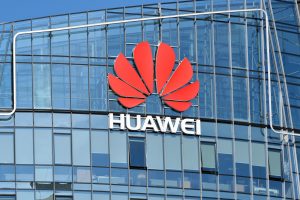
Credit: [Depositphotos](https://depositphotos.com/189913044/stock-photo-huawei-logo-on-a-building.html)
Hardly a day goes by without Huawei, the Chinese telecom and technology giant, making the news. The firm has been explicitly targeted by U.S. sanctions for over five years, making its continued success in the marketplace a story of both economic and geopolitical significance.
U.S. sanctions on the Shenzhen-based conglomerate intensified in 2018 when it was added to the Department of Commerce [Entity List.](https://www.bis.doc.gov/index.php/federal-register-notices/17-regulations/1541-federal-register-notices-2019#:~:text=Effective%20May%2016%2C%202019%2C%20the,Huawei\)%20to%20the%20Entity%20List.) Given its heavy reliance on Western technology, the United States anticipated Huawei’s demise. Indeed, facing significant revenue losses and a technology crunch, CEO Ren Zhengfei noted in an internal meeting, “Huawei is fighting for its life… we have a future if we survive.”
Ren’s military background has instilled a revolutionary spirit in the company since its inception. In military terms, [he said,](https://www.economist.com/briefing/2024/06/13/americas-assassination-attempt-on-huawei-is-backfiring) “It’s time to pick up the guns, mount the horses, and go into battle.”
Despite Washington tightening its grip on export controls over the past five years, Huawei is said to have risen from the ashes, boasting of supply chain independence and technological self-sufficiency. In fact, despite the heavy restrictions, Huawei seems to be pivoting toward expanding its product portfolio and venturing into areas that could challenge the United States’ dominance in the global ICT industry.
**Huawei’s Investment Spree**
Huawei’s renewed strategy is predominantly driven by its Hubble investment arm, which aims to acquire small equity stakes in top suppliers focusing on emerging technologies that hold the potential to advance Huawei’s in-house R\&D and reduce its dependence on Western companies. Since its launch in 2021, Hubble has [invested](https://thechinaproject.com/2023/09/22/huaweis-made-in-china-smartphone-has-washington-scratching-its-head/) in about 107 tech start-ups.
Hubble’s investments in Focuslight Technologies (a photolithography equipment maker) and Suzhou Everbright Photonics (a gallium-nitride chipmaker) are expected to support China’s quest to reduce reliance on the West and its allies. Hubble’s significant investments in Xuzhou Chemicals are enabling the company to make strides in photoresist technologies (used in lithography) and reduce its reliance on Japanese firms.
Another technology where Huawei is making strides is silicon carbide (SiC) chips, an area that remains untouched by U.S. sanctions. Hubble has invested in four leading firms manufacturing materials for SiC chips. These startups have acquired about 32 percent of the [market share](https://merics.org/en/report/huawei-quietly-dominating-chinas-semiconductor-supply-chain) for SiC wafers, previously dominated by the German firm Infineon Technologies. This also aids China’s plan to achieve supply chain independence, as both SiC and gallium nitride chips are crucial for supporting China’s drive to become a leader in electric vehicles and renewable energy grid supply.
As Chinese firms gear up with essential chipmaking instruments, global prices for such hardware are expected to decline due to China’s market-distorting cheap pricing policies. The aim of gaining control over the supply chain of chip technologies that fall outside U.S. sanctions also indicates Huawei’s proactive strategy of dodging any future restrictions on these chips.
**Huawei’s Venture Into Uncharted Territory**
The software domain, China’s weak link and a key area of dependence on the West, appears to be shaping Huawei’s remarkable resurgence. Huawei’s homegrown mobile operating system, Harmony OS, exceeded Apple iOS’s [market share](https://english.news.cn/20240621/66928cb9ac124e7fb167d0af22bea1eb/c.html#:~:text=A%20report%20from%20market%20research,share%20dropped%20to%2016%20percent.) in China in the first quarter of 2024. According to Huawei, it has sold 900 million consumer devices with Harmony OS. The much-hyped OS has now become the world’s second-largest, with a [17 percent](https://www.thehindu.com/sci-tech/technology/huawei-says-it-has-made-huge-strides-operating-systems-to-ai/article68315728.ece) market share, just behind Android.
[Richard Yu,](https://economictimes.indiatimes.com/tech/technology/huawei-says-it-has-made-huge-strides-from-operating-systems-to-ai/articleshow/111161903.cms?from=mdr) who heads Huawei’s consumer business, boasted that “Harmony has made major breakthroughs. You can say in 10 years we’ve achieved what it took our European and American counterparts more than 30 years to do.”
The popularity of Harmony OS is demonstrated by record sales of Huawei’s new flagship smartphone, Pura 70, as Huawei’s smartphone sales [rose by 72 percent](https://www.techtimes.com/articles/305945/20240621/huawei-approaches-1-billion-devices-challenging-apple-globally-premium-phone.htm) in the first five months of 2024. Huawei has since incorporated Harmony OS into several other devices, including tablets, TVs, and watches. Huawei’s most recent version, “pure” Harmony OS, claims to be devoid of any source code derived from Android.
It is often argued that the United States’ restrictions on China’s tech industry are counterproductive as it boosts Chinese domestic demand for homegrown products. Huawei’s resurgence is a fitting demonstration of this. Huawei has reportedly [increased](https://fortune.com/asia/2024/04/24/apple-iphone-china-sales-drops-huawei-honor/) its smartphone market share in China from 9.3 percent to 15.5 percent in 2023, causing Apple to slip to the third spot in the first quarter of 2024 with only a 20 percent share. Apple was forced to cut its prices for Chinese buyers to maintain its sales record.
As more domestic firms work in synergy to fight the tech battle, domestic sales of Huawei’s products are expected to rise. With its own indigenously built OS, Huawei is looking forward to ending the reliance of Chinese smartphone markers on Google’s Android. With its growing popularity at home, there is no doubt that Huawei will push Harmony OS internationally with customization and lower costs, threatening Android’s dominance.
To support its drive to strengthen capabilities in cloud technologies, Huawei has made significant strides in enhancing its managerial system through innovative solutions. Early this year, Huawei launched the [Meta ERP system,](https://www.huawei.com/en/news/2023/4/metaerp-press-release) an in-house enterprise resource planning software over which it has full control. This heightened focus on cloud technologies is also reflected in its [Developer Advocates Program](https://www.huawei.com/en/news/2024/6/huawei-advocate-program), which aims to cultivate 3,000 developers while promoting ecosystems such as Kunpeng, Ascend, HarmonyOS, and Huawei Cloud. Additionally, Huawei introduced a new [Mainframe Modernization Solution](https://www.huaweicloud.com/intl/en-us/about/info/2024/202406060001.html) that provides cloud-hardware synergy and scenario-specific solutions, helping establish an open architecture for modern core systems.
**Catching up in the Hardware Game?**
The United States’ favorite segment to cripple China is the hardware that Huawei cannot take for granted. Huawei’s new smartphone Pura 70, an iPhone challenger, is based on the same 7 nm (N+2) processor as the Huawei Mate 60 Pro, which made [headlines](https://techhq.com/2023/09/did-huawei-defy-us-sanctions-with-its-mate-60-pro/) the previous year for breaking free of U.S. sanctions. Unlike the Mate 60 series, which used the NAND Flash memory chip provided by SK Hynix, Pura’s NAND Flash memory chip is said to be [put together](https://www.reuters.com/technology/what-is-huaweis-new-pura-70-smartphones-2024-05-09/) by Huawei’s in-house design unit Hi-Silicon.
Highlighting the progress in the de-Americanization drive, Ren [claimed](https://www.scmp.com/tech/article/3214059/huawei-has-replaced-more-13000-parts-redesigned-4000-circuit-boards-overcome-us-tech-sanctions#:~:text=Huawei%20Technologies%20Co%20has%20replaced,overcome%20years%20of%20US%20sanctions.) that in the last two years, the firm has replaced 13,000 foreign-made parts with Chinese ones. Huawei’s top leadership asserts that the company’s products are faring better than its competitors. Yu [claimed](https://ktvz.com/money/cnn-business-consumer/2024/06/24/huawei-isnt-just-back-from-the-dead-its-a-force-to-be-reckoned-with/) that its Ascend processor has proven to be 1.1 times more efficient than others in training large language models and its AI infrastructure lies just behind Nvidia. Unintentionally recognizing the rising domestic demand, Nvidia’s CEO recently [announced](https://edition.cnn.com/2024/02/23/business/china-nvidia-huawei-competitor-ai-chips-intl-hnk/index.html#:~:text=The%20naming%20of%20Huawei%20came,according%20to%20a%20Reuters%20report.) Huawei as its biggest competitor.
Undoubtedly, Huawei’s policies represent the Chinese government’s latest thinking on technology policy. Huawei’s excessive focus on cloud technologies showcases the rising importance of data in the ongoing war on AI technologies. With Huawei’s partially successful venture into previously uncharted territory – cloud and mobile OS – Huawei’s strategy is apparently aggressive and aimed at wiping out U.S. tech leaders from the Chinese market.
As China looks forward to commercializing these technologies further, the long-term vision is to present a Chinese alternative to global ICT products and services. Huawei’s success also emerges as a model and path for China’s indigenous innovation drive.
Authors
##### Guest Author
#### Megha Shrivastava
Megha Shrivastava is a doctoral candidate and Dr. TMA Pai Fellow at the Department of Geopolitics and International Relations, Manipal Academy of Higher Education, India. Her research focuses on China’s ICT industry.
Tags
- [China Power](https://thediplomat.com/category/china-power/)
- [Economy](https://thediplomat.com/topics/economy/)
- [East Asia](https://thediplomat.com/regions/east-asia/)
- [China](https://thediplomat.com/countries/china/)
- [Australia Huawei ban](https://thediplomat.com/tag/australia-huawei-ban/)
- [China semiconductors](https://thediplomat.com/tag/china-semiconductors/)
- [Harmony OS](https://thediplomat.com/tag/harmony-os/)
- [Huawei](https://thediplomat.com/tag/huawei/)
- [Huawei smartphones](https://thediplomat.com/tag/huawei-smartphones/)
- [Huawei US China](https://thediplomat.com/tag/huawei-us-china/)
- [Pura 70](https://thediplomat.com/tag/pura-70/)
- [U.S. Huawei ban](https://thediplomat.com/tag/u-s-huawei-ban/)
### [Latest Stories](https://thediplomat.com/category/blogs/)
[Friendly Strangers: How Two Peoples Across the Taiwan Strait Are Drifting Apart](https://thediplomat.com/2026/04/friendly-strangers-how-two-peoples-across-the-taiwan-strait-are-drifting-apart/)
[China-US Trade Relations: Between Engagement and Decoupling](https://thediplomat.com/2026/04/china-us-trade-relations-between-engagement-and-decoupling/)
[The Middle Corridor in an Era of Supply Chain Disruption](https://thediplomat.com/2026/04/the-middle-corridor-in-an-era-of-supply-chain-disruption/)
[The Price of Strategic Autonomy: India and the Iran Conflict](https://thediplomat.com/2026/04/the-price-of-strategic-autonomy-india-and-the-iran-conflict/)
### Diplomat Brief
#### Weekly Newsletter
Get briefed on the story of the week, and developing stories to watch across the Asia-Pacific.
[Get the Newsletter](https://thediplomat.com/newsletter/)
### Related
[Can Huawei Defy Geopolitical Gravity This Time?By Lyu Jiaran and Dingding ChenThe White House is considering blocking Huawei's access to items below the 5G level, a move that would have a far-reaching impact on the Chinese tech giant.](https://thediplomat.com/2023/02/can-huawei-defy-geopolitical-gravity-this-time/)
[Taiwan Adds New Export Controls on China’s Chip IndustryBy Megha ShrivastavaThe blacklisting of Huawei and SMIC signifies a conscious shift in Taiwan’s role from a neutral supplier in the tech ecosystem to an assertive actor.](https://thediplomat.com/2025/06/taiwan-adds-new-export-controls-on-chinas-chip-industry/)
[China’s Huawei Warns More US Pressure May Spur RetaliationBy Associated Press“I think the Chinese government will not just stand by and watch Huawei be slaughtered,” Huawei's chairman said.](https://thediplomat.com/2020/04/chinas-huawei-warns-more-us-pressure-may-spur-retaliation/)
[China’s 5-Year Plan Has Moved Beyond the Chip War. Washington Hasn’t Noticed.By Russ WilcoxPrimary-source analysis of the 15th Five-Year Plan reveals a computing infrastructure strategy already being deployed in Southeast Asia, with explicit military-civil fusion mandates that current export controls do not address.](https://thediplomat.com/2026/03/chinas-5-year-plan-has-moved-beyond-the-chip-war-washington-hasnt-noticed/)
### Most Read
[Is South Korea About to Finally Get Full Control of Its Own Military?OPCON transition would have major implications not just for the Korean Peninsula, but for the broader geopolitical struggle in the Indo-Pacific.](https://thediplomat.com/2026/03/is-south-korea-about-to-finally-get-full-control-of-its-own-military/)
[Has the Iran War Revealed a Shift in India’s Grand Strategy?By Sandeep BhardwajWhatever happened to India’s promotion of a multipolar world?](https://thediplomat.com/2026/03/has-the-iran-war-revealed-a-shift-in-indias-grand-strategy/)
[How an Indonesian Pulp Giant Built a Carbon Project to Save a Forest From ItselfBy Adi RenaldiA months-long investigation into APRIL Group’s flagship Riau Ecosytem Restoration reveals how its carbon project was built on a hypothetical deforestation threat that is unlikely to materialize.](https://thediplomat.com/2026/03/how-an-indonesian-pulp-giant-built-a-carbon-project-to-save-a-forest-from-itself/)
[Indian Government Cracks Down on Video Reels Lampooning PM ModiBy Kavita ChowdhuryAuthorities took down a video that mocked Prime Minister Narendra Modi’s undignified behavior while meeting foreign leaders.](https://thediplomat.com/2026/03/indian-government-cracks-down-on-video-reels-lampooning-pm-modi/)
### [Features](https://thediplomat.com/category/features/)
[India’s Worrying Plans for Dams on Transboundary Rivers Shared with BangladeshBy Snigdhendu BhattacharyaAt least seven hydroelectric projects on two transboundary river systems are in the pipeline in the northeast Indian state of Meghalaya.](https://thediplomat.com/2026/04/indias-worrying-plans-for-dams-on-transboundary-rivers-shared-with-bangladesh/)
[Can Uchral Hold On? Beyond Mongolia’s Leadership Shake-UpBy Sumiya ChuluunbaatarThe young leader's sudden rise raises questions about the future of Mongolia's democracy and its balanced approach to foreign policy.](https://thediplomat.com/2026/04/can-uchral-hold-on-beyond-mongolias-leadership-shake-up/)
[Welcome to Cryptostan: Kyrgyzstan and the Emerging Crypto CorridorBy Aigerim TurgunbaevaKyrgyzstan has become a de facto “crypto corridor” linking sanctioned Russian flows with trade in Central Asia and supply chains from China.](https://thediplomat.com/2026/04/welcome-to-cryptostan-kyrgyzstan-and-the-emerging-crypto-corridor/)
[Taiwan and the Formosa Disaster in Vietnam: The Sound of SilenceBy Christelle NguyenTen years after a toxic waste dump poisoned Vietnam’s coast, the Taiwanese company responsible, both governments, and even the victims themselves have maintained a stunning silence.](https://thediplomat.com/2026/04/taiwan-and-the-formosa-disaster-in-vietnam-the-sound-of-silence/)
### [Latest Stories](https://thediplomat.com/category/blogs/)
[Friendly Strangers: How Two Peoples Across the Taiwan Strait Are Drifting ApartBy Peter ChaiThe populations of China and Taiwan are drifting apart in ways that will be structurally hard to reverse.](https://thediplomat.com/2026/04/friendly-strangers-how-two-peoples-across-the-taiwan-strait-are-drifting-apart/)
[China-US Trade Relations: Between Engagement and DecouplingBy Timothy S. RichSurvey findings complicate the notion that U.S.-China economic policy presents a binary choice between the two options.](https://thediplomat.com/2026/04/china-us-trade-relations-between-engagement-and-decoupling/)
[The Middle Corridor in an Era of Supply Chain DisruptionBy Magsud MammadovThe route has proven its value in times of crisis. Can it evolve into a primary artery of Eurasian trade?](https://thediplomat.com/2026/04/the-middle-corridor-in-an-era-of-supply-chain-disruption/)
[The Price of Strategic Autonomy: India and the Iran ConflictBy Naisha KhanIn a world where conflicts are increasingly interconnected, and expectations of alignment are growing, the space for sustained ambiguity is shrinking.](https://thediplomat.com/2026/04/the-price-of-strategic-autonomy-india-and-the-iran-conflict/)
Regions
- [Central Asia](https://thediplomat.com/regions/central-asia/)
- [East Asia](https://thediplomat.com/regions/east-asia/)
- [Oceania](https://thediplomat.com/regions/oceania-region/)
- [South Asia](https://thediplomat.com/regions/south-asia/)
- [Southeast Asia](https://thediplomat.com/regions/southeast-asia/)
Topics
- [Diplomacy](https://thediplomat.com/topics/diplomacy/)
- [Economy](https://thediplomat.com/topics/economy/)
- [Environment](https://thediplomat.com/topics/environment/)
- [Opinion](https://thediplomat.com/topics/opinion/)
- [Politics](https://thediplomat.com/topics/politics/)
- [Security](https://thediplomat.com/topics/security/)
- [Society](https://thediplomat.com/topics/society/)
Blogs
- [ASEAN Beat](https://thediplomat.com/category/asean-beat/)
- [Asia Defense](https://thediplomat.com/category/asia-defense/)
- [China Power](https://thediplomat.com/category/china-power/)
- [Crossroads Asia](https://thediplomat.com/category/crossroads-asia/)
- [Flashpoints](https://thediplomat.com/category/flashpoints/)
- [Oceania](https://thediplomat.com/category/oceania/)
- [Pacific Money](https://thediplomat.com/category/pacific-money/)
- [The Debate](https://thediplomat.com/category/the-debate/)
- [The Koreas](https://thediplomat.com/category/the-koreas/)
- [The Pulse](https://thediplomat.com/category/the-pulse/)
- [Tokyo Report](https://thediplomat.com/category/tokyo-report/)
- [Trans-Pacific View](https://thediplomat.com/category/trans-pacific-view/)
More
- [Features](https://thediplomat.com/category/features/)
- [Interviews](https://thediplomat.com/category/interviews/)
- [Photo Essays](https://thediplomat.com/category/photo-essays/)
- [Podcasts](https://thediplomat.com/category/podcasts/)
- [Videos](https://thediplomat.com/category/videos/)
Archives
- [Magazine](https://magazine.thediplomat.com/)
- [A New Japan](https://thediplomat.com/category/a-new-japan/)
- [By Other Means](https://thediplomat.com/category/by-other-means/)
- [APAC Insider](https://thediplomat.com/category/apac-insider/)
- [Asia Life](https://thediplomat.com/category/asia-life/)
- [Asia Scope](https://thediplomat.com/category/asia-scope/)
- [China, What's Next?](https://thediplomat.com/category/whats-next-china/)
- [Indian Decade](https://thediplomat.com/category/indian-decade/)
- [James Holmes](https://thediplomat.com/category/james-holmes/)
- [New Emissary](https://thediplomat.com/category/new-emissary/)
- [New Leaders Forum](https://thediplomat.com/category/new-leaders-forum/)
- [Sport & Culture](https://thediplomat.com/category/sport-culture/)
- [Tech Biz](https://thediplomat.com/category/tech-biz/)
- [Tokyo Notes](https://thediplomat.com/category/tokyo-notes/)
- [Zachary Keck](https://thediplomat.com/category/zachary-keck/)
The Diplomat
- [About Us](https://thediplomat.com/the-diplomat/)
- [Contact Us](https://thediplomat.com/contact-us/)
- [Write for Us](https://thediplomat.com/write-for-us/)
- [Advertise](https://thediplomat.com/about-us/advertise/)
- [Syndicate](https://thediplomat.com/syndication/)
- [Terms of Use](https://thediplomat.com/terms-of-use/)
- [Privacy Policy](https://thediplomat.com/privacy-policy/)
- [Newsletters](https://thediplomat.com/newsletter/)
- [Subscriptions](https://thediplomat.com/subscriptions/)
Newsletter
[**Diplomat Brief** Weekly Newsletter](https://thediplomat.com/newsletter/)
© 2026 Diplomat Media Inc. All Rights Reserved. | ||||||||||||||||||||||||
| Readable Markdown | Hardly a day goes by without Huawei, the Chinese telecom and technology giant, making the news. The firm has been explicitly targeted by U.S. sanctions for over five years, making its continued success in the marketplace a story of both economic and geopolitical significance.
U.S. sanctions on the Shenzhen-based conglomerate intensified in 2018 when it was added to the Department of Commerce [Entity List.](https://www.bis.doc.gov/index.php/federal-register-notices/17-regulations/1541-federal-register-notices-2019#:~:text=Effective%20May%2016%2C%202019%2C%20the,Huawei\)%20to%20the%20Entity%20List.) Given its heavy reliance on Western technology, the United States anticipated Huawei’s demise. Indeed, facing significant revenue losses and a technology crunch, CEO Ren Zhengfei noted in an internal meeting, “Huawei is fighting for its life… we have a future if we survive.”
Ren’s military background has instilled a revolutionary spirit in the company since its inception. In military terms, [he said,](https://www.economist.com/briefing/2024/06/13/americas-assassination-attempt-on-huawei-is-backfiring) “It’s time to pick up the guns, mount the horses, and go into battle.”
Despite Washington tightening its grip on export controls over the past five years, Huawei is said to have risen from the ashes, boasting of supply chain independence and technological self-sufficiency. In fact, despite the heavy restrictions, Huawei seems to be pivoting toward expanding its product portfolio and venturing into areas that could challenge the United States’ dominance in the global ICT industry.
**Huawei’s Investment Spree**
Huawei’s renewed strategy is predominantly driven by its Hubble investment arm, which aims to acquire small equity stakes in top suppliers focusing on emerging technologies that hold the potential to advance Huawei’s in-house R\&D and reduce its dependence on Western companies. Since its launch in 2021, Hubble has [invested](https://thechinaproject.com/2023/09/22/huaweis-made-in-china-smartphone-has-washington-scratching-its-head/) in about 107 tech start-ups.
Hubble’s investments in Focuslight Technologies (a photolithography equipment maker) and Suzhou Everbright Photonics (a gallium-nitride chipmaker) are expected to support China’s quest to reduce reliance on the West and its allies. Hubble’s significant investments in Xuzhou Chemicals are enabling the company to make strides in photoresist technologies (used in lithography) and reduce its reliance on Japanese firms.
Another technology where Huawei is making strides is silicon carbide (SiC) chips, an area that remains untouched by U.S. sanctions. Hubble has invested in four leading firms manufacturing materials for SiC chips. These startups have acquired about 32 percent of the [market share](https://merics.org/en/report/huawei-quietly-dominating-chinas-semiconductor-supply-chain) for SiC wafers, previously dominated by the German firm Infineon Technologies. This also aids China’s plan to achieve supply chain independence, as both SiC and gallium nitride chips are crucial for supporting China’s drive to become a leader in electric vehicles and renewable energy grid supply.
As Chinese firms gear up with essential chipmaking instruments, global prices for such hardware are expected to decline due to China’s market-distorting cheap pricing policies. The aim of gaining control over the supply chain of chip technologies that fall outside U.S. sanctions also indicates Huawei’s proactive strategy of dodging any future restrictions on these chips.
**Huawei’s Venture Into Uncharted Territory**
The software domain, China’s weak link and a key area of dependence on the West, appears to be shaping Huawei’s remarkable resurgence. Huawei’s homegrown mobile operating system, Harmony OS, exceeded Apple iOS’s [market share](https://english.news.cn/20240621/66928cb9ac124e7fb167d0af22bea1eb/c.html#:~:text=A%20report%20from%20market%20research,share%20dropped%20to%2016%20percent.) in China in the first quarter of 2024. According to Huawei, it has sold 900 million consumer devices with Harmony OS. The much-hyped OS has now become the world’s second-largest, with a [17 percent](https://www.thehindu.com/sci-tech/technology/huawei-says-it-has-made-huge-strides-operating-systems-to-ai/article68315728.ece) market share, just behind Android.
[Richard Yu,](https://economictimes.indiatimes.com/tech/technology/huawei-says-it-has-made-huge-strides-from-operating-systems-to-ai/articleshow/111161903.cms?from=mdr) who heads Huawei’s consumer business, boasted that “Harmony has made major breakthroughs. You can say in 10 years we’ve achieved what it took our European and American counterparts more than 30 years to do.”
The popularity of Harmony OS is demonstrated by record sales of Huawei’s new flagship smartphone, Pura 70, as Huawei’s smartphone sales [rose by 72 percent](https://www.techtimes.com/articles/305945/20240621/huawei-approaches-1-billion-devices-challenging-apple-globally-premium-phone.htm) in the first five months of 2024. Huawei has since incorporated Harmony OS into several other devices, including tablets, TVs, and watches. Huawei’s most recent version, “pure” Harmony OS, claims to be devoid of any source code derived from Android.
It is often argued that the United States’ restrictions on China’s tech industry are counterproductive as it boosts Chinese domestic demand for homegrown products. Huawei’s resurgence is a fitting demonstration of this. Huawei has reportedly [increased](https://fortune.com/asia/2024/04/24/apple-iphone-china-sales-drops-huawei-honor/) its smartphone market share in China from 9.3 percent to 15.5 percent in 2023, causing Apple to slip to the third spot in the first quarter of 2024 with only a 20 percent share. Apple was forced to cut its prices for Chinese buyers to maintain its sales record.
As more domestic firms work in synergy to fight the tech battle, domestic sales of Huawei’s products are expected to rise. With its own indigenously built OS, Huawei is looking forward to ending the reliance of Chinese smartphone markers on Google’s Android. With its growing popularity at home, there is no doubt that Huawei will push Harmony OS internationally with customization and lower costs, threatening Android’s dominance.
To support its drive to strengthen capabilities in cloud technologies, Huawei has made significant strides in enhancing its managerial system through innovative solutions. Early this year, Huawei launched the [Meta ERP system,](https://www.huawei.com/en/news/2023/4/metaerp-press-release) an in-house enterprise resource planning software over which it has full control. This heightened focus on cloud technologies is also reflected in its [Developer Advocates Program](https://www.huawei.com/en/news/2024/6/huawei-advocate-program), which aims to cultivate 3,000 developers while promoting ecosystems such as Kunpeng, Ascend, HarmonyOS, and Huawei Cloud. Additionally, Huawei introduced a new [Mainframe Modernization Solution](https://www.huaweicloud.com/intl/en-us/about/info/2024/202406060001.html) that provides cloud-hardware synergy and scenario-specific solutions, helping establish an open architecture for modern core systems.
**Catching up in the Hardware Game?**
The United States’ favorite segment to cripple China is the hardware that Huawei cannot take for granted. Huawei’s new smartphone Pura 70, an iPhone challenger, is based on the same 7 nm (N+2) processor as the Huawei Mate 60 Pro, which made [headlines](https://techhq.com/2023/09/did-huawei-defy-us-sanctions-with-its-mate-60-pro/) the previous year for breaking free of U.S. sanctions. Unlike the Mate 60 series, which used the NAND Flash memory chip provided by SK Hynix, Pura’s NAND Flash memory chip is said to be [put together](https://www.reuters.com/technology/what-is-huaweis-new-pura-70-smartphones-2024-05-09/) by Huawei’s in-house design unit Hi-Silicon.
Highlighting the progress in the de-Americanization drive, Ren [claimed](https://www.scmp.com/tech/article/3214059/huawei-has-replaced-more-13000-parts-redesigned-4000-circuit-boards-overcome-us-tech-sanctions#:~:text=Huawei%20Technologies%20Co%20has%20replaced,overcome%20years%20of%20US%20sanctions.) that in the last two years, the firm has replaced 13,000 foreign-made parts with Chinese ones. Huawei’s top leadership asserts that the company’s products are faring better than its competitors. Yu [claimed](https://ktvz.com/money/cnn-business-consumer/2024/06/24/huawei-isnt-just-back-from-the-dead-its-a-force-to-be-reckoned-with/) that its Ascend processor has proven to be 1.1 times more efficient than others in training large language models and its AI infrastructure lies just behind Nvidia. Unintentionally recognizing the rising domestic demand, Nvidia’s CEO recently [announced](https://edition.cnn.com/2024/02/23/business/china-nvidia-huawei-competitor-ai-chips-intl-hnk/index.html#:~:text=The%20naming%20of%20Huawei%20came,according%20to%20a%20Reuters%20report.) Huawei as its biggest competitor.
Undoubtedly, Huawei’s policies represent the Chinese government’s latest thinking on technology policy. Huawei’s excessive focus on cloud technologies showcases the rising importance of data in the ongoing war on AI technologies. With Huawei’s partially successful venture into previously uncharted territory – cloud and mobile OS – Huawei’s strategy is apparently aggressive and aimed at wiping out U.S. tech leaders from the Chinese market.
As China looks forward to commercializing these technologies further, the long-term vision is to present a Chinese alternative to global ICT products and services. Huawei’s success also emerges as a model and path for China’s indigenous innovation drive. | ||||||||||||||||||||||||
| ML Classification | |||||||||||||||||||||||||
| ML Categories |
Raw JSON{
"/Business_and_Industrial": 891,
"/Computers_and_Electronics": 504,
"/Business_and_Industrial/Business_Operations": 468,
"/Computers_and_Electronics/Enterprise_Technology": 385,
"/Business_and_Industrial/Business_Operations/Business_Plans_and_Presentations": 320,
"/Computers_and_Electronics/Enterprise_Technology/Enterprise_Resource_Planning_(ERP)": 171,
"/Internet_and_Telecom": 160,
"/Finance": 120
} | ||||||||||||||||||||||||
| ML Page Types |
Raw JSON{
"/Article": 999,
"/Article/News_Update": 795
} | ||||||||||||||||||||||||
| ML Intent Types |
Raw JSON{
"Informational": 998
} | ||||||||||||||||||||||||
| Content Metadata | |||||||||||||||||||||||||
| Language | en-us | ||||||||||||||||||||||||
| Author | Megha Shrivastava | ||||||||||||||||||||||||
| Publish Time | not set | ||||||||||||||||||||||||
| Original Publish Time | 2024-07-01 18:01:45 (1 year ago) | ||||||||||||||||||||||||
| Republished | No | ||||||||||||||||||||||||
| Word Count (Total) | 2,263 | ||||||||||||||||||||||||
| Word Count (Content) | 1,166 | ||||||||||||||||||||||||
| Links | |||||||||||||||||||||||||
| External Links | 30 | ||||||||||||||||||||||||
| Internal Links | 90 | ||||||||||||||||||||||||
| Technical SEO | |||||||||||||||||||||||||
| Meta Nofollow | No | ||||||||||||||||||||||||
| Meta Noarchive | No | ||||||||||||||||||||||||
| JS Rendered | No | ||||||||||||||||||||||||
| Redirect Target | null | ||||||||||||||||||||||||
| Performance | |||||||||||||||||||||||||
| Download Time (ms) | 352 | ||||||||||||||||||||||||
| TTFB (ms) | 352 | ||||||||||||||||||||||||
| Download Size (bytes) | 25,366 | ||||||||||||||||||||||||
| Shard | 76 (laksa) | ||||||||||||||||||||||||
| Root Hash | 7372117259343613076 | ||||||||||||||||||||||||
| Unparsed URL | com,thediplomat!/2024/07/how-is-huawei-growing-despite-heavy-us-sanctions/ s443 | ||||||||||||||||||||||||