ℹ️ Skipped - page is already crawled
| Filter | Status | Condition | Details |
|---|---|---|---|
| HTTP status | PASS | download_http_code = 200 | HTTP 200 |
| Age cutoff | PASS | download_stamp > now() - 6 MONTH | 0.4 months ago |
| History drop | PASS | isNull(history_drop_reason) | No drop reason |
| Spam/ban | PASS | fh_dont_index != 1 AND ml_spam_score = 0 | ml_spam_score=0 |
| Canonical | PASS | meta_canonical IS NULL OR = '' OR = src_unparsed | Not set |
| Property | Value | |||||||||||||||
|---|---|---|---|---|---|---|---|---|---|---|---|---|---|---|---|---|
| URL | https://simplymusic.com/the-war-of-art-by-steven-pressfield-book-review/ | |||||||||||||||
| Last Crawled | 2026-04-12 08:50:18 (12 days ago) | |||||||||||||||
| First Indexed | 2023-03-09 07:27:12 (3 years ago) | |||||||||||||||
| HTTP Status Code | 200 | |||||||||||||||
| Content | ||||||||||||||||
| Meta Title | The War of Art By Steven Pressfield – Book Review – Simply Music | |||||||||||||||
| Meta Description | null | |||||||||||||||
| Meta Canonical | null | |||||||||||||||
| Boilerpipe Text | Written by
Guest Contributor
on
Mar 8, 2023
|
Miscellany & Merriment
Reviews
I looked everywhere for the enemy and failed to see it right in front of my face.
Sometimes things that should be obvious aren’t.
Sometimes an obvious thing only becomes obvious
after
someone states it in such an articulate and relatable manner that its essence – its core truth – is cracked open and put out on display for everyone to gawk at. At the intersection of creativity and education is
revelation
, and Steven Pressfield’s
War of Art
is exactly that.
Caption: The War of Art By Steven Pressfield
I’m writing this review after reading this book for the second time. And despite the impact it had on me after my first reading, I’m now feeling a bit like the man who lost his glasses and then grew accustomed to being half blind. After stumbling around in a blurry world of fuzzy shapes, I’m happy to report (albeit a little embarrassed) that I’ve found my glasses again! 🤓 This entire experience raises a question that has had me stumped for some time as an educator:
What is it that makes someone “lose their glasses” in the first place (or second)?
Perhaps it wasn’t such an innocent gaffe as my clever euphemism makes it sound. In fact, one could argue that it was a form of
self-sabotage
– even willful ignorance. Yet it is as common as dust. Human progress is supposed to be the story of how people learn and grow. Our survival depends on it. And yet one of the most predictable tendencies of human nature is to get stuck – or even backslide – and, thus, NOT learn and NOT grow. This fact has plagued educators for as long as people have been around.
I first encountered
The War of Art
while completing an online course on “mastering creativity.” Much of the book’s wisdom was referenced and applied practically to the art and technique of electronic music production – a fascinating hybrid of bleeding edge technological tools, innovative musicianship, and sound design. Although, I’d been drawn to this unique chimera of musical expression since before it became the ubiquitous sound and acronym controversially dubbed “EDM,” I was having a problem that I’d never really experienced so acutely before –
writer’s block
. So, I had sought out the help of someone who was not only an expert at the art and technique that I aspired to create, but also a respected life coach, specializing in productivity and creative flow.
It’s not the writing part that’s hard. What’s hard is sitting down to write.
The War of Art
is written in three “books”. In Book One,
Pressfield
lays out the problem that every creative endeavor ever has encountered at some point; and he does it from the practicality and work ethic of a seasoned writer and the unyielding tenacity of an ex-marine. When the book was first published in 2002, the author was already 59 years old. Before this Pressfield wrote for 27 years before his first novel was published (
The Legend of Bagger Vance
, 1995).
During that time I worked 21 different jobs in eleven states. I taught school, I drove tractor-trailers, I worked in advertising and as a screenwriter in Hollywood, I worked on offshore oil rigs, I picked fruit as a migrant worker …
Pressfield writes from a place of deep wisdom and experience. He knows about this business of creativity because he has lived in the trenches of battle. He is a veteran of the eponymous war, and he is intimately familiar with the enemy. Most people believe they are fighting deadlines, depression, disease, and demons…well, maybe they are partially right. For Pressfield, the devil has a name, and it is RESISTANCE.
BOOK ONE
Most of us have two lives. The life we live, and the unlived life within us. Between the two stands Resistance.
It was easier for Hitler to start World War II than it was for him to face a blank square of canvas.
As it turns out, I didn’t have writer’s block. The problem was much worse, but less complicated. I was in the grip of an invisible opposing force so powerful, and yet so insidious, that I had actually convinced myself that I needed help “learning to become more creative.” What I learned from
The War of Art
is that creativity was never the issue. Pressfield’s meager definition of creativity is that every one of us has a “genius” inside of them.
Genius is a Latin word; the Romans used it to denote an inner spirit, holy and inviolable, which watches over us, guiding us to our calling…everyone who creates operates from this sacramental center.
Author, Steven Pressfield, Photo credit: Ciro612
In the author’s world, talent is not the distinguishing factor where creativity is concerned. What makes someone creative is the fact that they CREATE something. In other words, they do the work, and they deliver.
Someone once asked Somerset Maugham if he wrote on a schedule or only when struck by inspiration. “I write only when inspiration strikes,” he replied. “Fortunately it strikes every morning at nine o’clock sharp.” That’s a pro.
…by performing the mundane physical act of sitting down and starting to work, he set in motion a mysterious but infallible sequence of events that would produce inspiration, as surely as if the goddess had synchronized her watch with his.
[T]he “war of art” is not about genius, it’s about work. We can’t control the level of talent we’ve been given. We have no control over the nature of our gift. What we can control is our self-motivation, our self-discipline, our self-validation, and our self-reinforcement. We can control how hard and how smart we work. From
Steven Pressfield’s Website
🙂
In my current work as an educator, this relationship between creativity and peripheral topics like inspiration and motivation is a really big deal. Creativity is a trending topic right now, but it is also a bit of a lightning rod, distracting us from the real issues at the heart of what it takes to create.
So many people (talented people included) have made gigantic assertions based on nothing short of what I consider a
prevailing myth
. In our culture, that myth is then perpetuated by celebrity worship, high-performing athletes in competitive sports, standardized tests and admission requirements at higher educational institutions, and (ironically) the creative marketing strategies that drive our capitalistic economy.
Many educators and creatives have tried dismantling the myth of innate talent, but still many cling to a misconception about what is actually required. There is something fundamentally wrong with the world’s perception of this, and the most glaring omission that
The War of Art
addresses head on is that genius is something that everyone already has; but, even under this definition, only becomes accessible on the other side of a battle. Although anyone is capable, they must journey over the boundary-line of safety and bring the fight to the enemy. Creativity then is only viable once Resistance is … well,
resisted
…and defeated.
All that counts is that, for this day, for this session, I have overcome Resistance.
As artists and professionals it is our obligation to enact our own internal revolution, a private insurrection inside our own skulls. In this uprising we free ourselves from the tyranny of consumer culture.
More than one third of the book is dedicated to defining this enemy. Pressfield names and describes the many layers and faces of Resistance in a way that disabuses the reader of any notion that they are somehow immune to it. He lists Resistance’s characteristics with startling clarity, then describes the symptoms and inevitable consequences of its influence, expounding on a list that sounds more like something lifted from the DSM guidebook of psychology or the Big Book of AA:
Procrastination, Sex, Trouble, Self-Dramatization, Self-Medication, Victimhood, Choice of Mate, Unhappiness, Fundamentalism, Criticism, Self-Doubt, Fear, Love, Stardom, Isolation, Healing, Support, Rationalization.
Of all these characteristics and “symptoms” some of the most disturbing to me are the ones that are aspects of life that I would normally suppose to be very noble and good. One’s fundamental reasoning behind their Choice of Mate, for example, is usually more complicated than just “love” per se. However, Pressfield cautions that Resistance can cause someone to unconsciously “disfigure love” by affecting that very choice. Some may choose a mate that is more successfully combating Resistance in an attempt to rationalize and ignore their own lack of success in that arena.
Maybe we believe (or wish we could) that some of our spouse’s power will rub off on us, if we just hang around it long enough.
Others may actually be making headway in their own creative endeavors, choosing a partner who is very supportive (financially or otherwise) but for the wrong reasons. In this scenario the supportive partner is the one overcome by Resistance.
…shouldn’t we step out from the glow of our loved one’s adoration and instead encourage him to let his own light shine?
Troubling as it is, Pressfield’s observations in this instance are actually in alignment with other creativity experts like Julia Cameron who suggested in
The Artist’s Way
that many creatives attach themselves to other successful artists or, conversely, “shadow artists” for very similar reasons.
Resistance’s ability to distort and disfigure love is just one example of an advantage it appears to gain where human social interaction is possible. The book first introduces this phenomenon in a section with the heading “Recruits Allies.” By extending its reach from self-sabotage to sabotage by others, a familiar pattern emerges that is known by many names, such as
tall poppy syndrome and crab mentality
. But it doesn’t stop there. Resistance spreads like a weed (or a virus), getting workshopped in conferences,
Have you ever been to a workshop?…What better way of avoiding work than going to a workshop?
seeking support from friends and family,
Any support we get from persons of flesh and blood is like Monopoly money; it’s not legal tender in that sphere where we have to do our work.
And infecting entire families through the magic of “self-dramatization.”
Sometimes I think of Resistance as a sort of evil twin to Santa Claus, who makes his rounds house-to-house, making sure that everything’s taken care of. When he comes to a house that’s hooked on self-dramatization, his ruddy cheeks glow and he giddy-ups away behind his eight tiny reindeer. He knows there’ll be no work done in that house.
There’s another “symptom” of Resistance in this part of the book that will probably come across as controversial to anyone who participates in that greatest of social interactions – going to church. I say this half joking. But religious gatherings do account for some of the largest and most regular assemblies of people in the United States apart from music concerts, professional sporting events, and political rallies. While I cannot broadly apply the label of “fundamentalism” to these gatherings, a large portion of religious organizations do adhere to belief systems that fall within the parameters of that label. And Pressfield manages to draw some of the most insightful comparisons and distinctions between artists and fundamentalists that I’ve ever read.
The artist and the fundamentalist both confront the same issue, the mystery of their existence as individuals. Each asks the same questions…
Already, the problem has surfaced: if Resistance is so adept at utilizing groups of people in relationship to each other, then the key to its defeat must have something to do with isolating our battle with it as individuals.
the human being isn’t wired to function as an individual. We’re wired tribally…as part of a group…We know what the clan is; we know how to fit into the band and the tribe…What we don’t know is how to be alone. We don’t know how to be free individuals.
…fundamentalism ascends from the… landscape of despair… the despair of freedom.
The fundamentalist (or, more accurately, the beleaguered individual who comes to embrace fundamentalism) cannot stand freedom
Contrasting this worldview is that of an artist, a creative mind, open to new insights and connections.
one looks forward, hoping to create a better world, the other looks backward, seeking to return to a purer world from which he and all have fallen.
The artist and the fundamentalist arise from societies at differing stages of development. The artist is the advanced model…grounded in freedom. He is not afraid of it…He has a core of self-confidence, of hope for the future. He believes in progress and evolution.
One last aspect worth mentioning in this section of the book is that of what some might call the “artistic temperament” and its connection to mental illness. To his credit, Pressfield never mentions that age-old stereotype about “crazy artists.” Nonetheless, he does cross over into mental health territory, and some of his insinuations can be almost anachronistic in their
seeming
insensitivity to those with real conditions:
Attention Deficit Disorder, Seasonal Affect Disorder, Social Anxiety Disorder. These aren’t diseases, they’re marketing ploys…
However, it must be stated that the existence of psychosomatic symptoms
is a reality
actual doctors and mental health experts acknowledge and deal with on a regular basis; and Pressfield allows room for the possibility that both mental and physical illness does exist independently from Resistance. He also makes a convincing case for why some might use their condition as an excuse, even when it is real.
Depression and anxiety may be real. But they can also be Resistance.
The acquisition of a condition lends significance to one’s existence. The condition becomes a work of art in itself, a shadow version of the real creative act the victim is avoiding by expending so much care cultivating his condition…
The bottom line is that Resistance will use whatever it can to keep a potential creative from doing the work. If anxiety or depression or some other issue is affecting your quality of life, you can bet that Resistance will leverage that. The interesting thing to me is that people I know personally who have dealt with this first-hand DO NOT like using their mental or physical ailments to justify or rationalize compromising their work ethic. I’ve actually found myself having to check my own excuses at the door when I interact with those friends. It’s both inspiring and a little annoying at times, if I’m honest.
Trouble is a faux form of fame…Ill health is a form of trouble, as are alcoholism and drug addiction, proneness to accidents, all neurosis including compulsive screwing up…The working artist will not tolerate trouble in her life because she knows trouble prevents her from doing her work.
By the time we arrive at the end of this exhaustive (and exhausting) list on a page with the heading of “Defeat,” I half expected the author to wash his hands of the entire thing and say something to the effect of, “Look, Resistance is everywhere, and fighting such a beast is futile. So let’s all just accept defeat and go home.” But, as I previously mentioned, Pressfield is not the kind of guy that gives up…
ever
. So, instead, he reminds us that, however powerful and intimidating such a force may appear, winning is possible.
Defeating Resistance is like giving birth. It seems absolutely impossible until you remember that women have been pulling it off successfully, with support and without, for fifty million years…If Resistance couldn’t be beaten, there would be no Fifth Symphony, no Romeo and Juliet, no Golden Gate Bridge.
BOOK TWO
In Book Two, the author contrasts the multifaceted foe of the previous book with the characteristics of someone who has
Turned Pro
. Although “The Professional” at first appears to be a literal description of someone who has turned avocation into vocation, it becomes clearer as the book progresses that what is more important, even for the pros that ARE paid, is to maintain the
mindset
of a Professional. The characteristics described herein read a bit like the “love” passage from 1 Corinthians 13. You know the one that is read at so many weddings right after Canon in D ushers in the bride?
Love is patient, love is kind. It does not envy, it does not boast, it is not proud…Acts in the face of fear, accepts no excuses, is prepared, dedicates himself to mastering technique, does not hesitate to ask for help, distances herself from her instrument, does not take failure (or success) personally, endures adversity, recognizes their limitations…
Maybe the reason so many of these qualities fall in line with the biblical description of love is that love really is at the center of a Professional’s motivation. And not the shallow version of love either. That is for amateurs.
The conventional interpretation is that the amateur pursues his calling out of love, while the pro does it for money…In my view, the amateur does not love the game enough…The professional, though he accepts money, does his work out of love. He has to love it. Otherwise he wouldn’t devote his life to it of his own free will.
If Resistance is the disease, the epochal mental shift of “turning pro” is the cure. It is a rebirth and reinforcement of the artist’s identity, akin to the transformation of a hero at the end of his journey. Only in this case, it is just the beginning. Nothing could be more evident of this than the title of Pressfield’s next book
Turning Pro
, which is singularly focused on how to make a deeper and more practical transition from amateur to professional. Here, in this book, we see The Professional in context. But the story is still incomplete, because, as it turns out, there is still an even more surprising and transcendent twist left to reveal.
BOOK THREE
If you believe in God (and I do) you must declare Resistance evil, for it prevents us from achieving the life God intended when He endowed each of us with our own unique genius…
…The last thing I do before I sit down to work is say my prayer to the Muse. I say it out loud, in absolute earnest. Only then do I get down to business.
At this point in the book, the author has made a very convincing case for his title. He’s revealed an invisible enemy and painted a picture of our hero with all their attributes. All that is left to reveal are the hero’s allies. And this is where things take an unexpected turn, with Pressfield making a surprisingly philosophical connection. Counterpoised against Resistance, he argues, are opposing powers that can best be described as “angels.”…ANGELS 👀
I suppose it is not such a great leap. Resistance, after all, has already been characterized as a force many would describe as demonic, even satanic – EVIL. So why wouldn’t one view the opposing force as the ultimate representative of Good? But this is a tricky area to navigate for a number of reasons, and Pressfield even anticipates this at the beginning of the section with a caveat:
The next few chapters are going to be about those invisible psychic forces that support and sustain us in our journey toward ourselves. I plan on using terms like muses and angels. Does that make you uncomfortable?
He then leaves it up to the reader to decide if they prefer to view these forces from a more mystical perspective or in the abstract.
the call to growth can be conceptualized as personal (a daimon or genius, an angel or a muse) or as impersonal, like the tides or the transiting of Venus. Either way works, as long as we’re comfortable with it.
What is striking to me, especially upon a second reading, is how hard he works in this section to seem ambivalent about which perspective he’s coming from personally; when, really, he has already made his stance very clear in previous chapters (remember the section on Fundamentalism?). At first this comes across more as contradiction than ambiguity. There’s more to say about it but let’s first take a moment to focus on a slightly different inconsistency that arises from the same passage:
if extra-dimensionality doesn’t sit well with you in any form, think of it as “talent,” programmed into our genes by evolution.
In the Foreword to this book, Robert McKee says much about Book Three, and contrasts his own beliefs regarding the “source of creativity” with Pressfield’s attribution to “a higher realm.”
I, on the other hand, believe that the source of creativity is found on the same plane of reality as Resistance. It, too, is genetic. It’s called talent: the innate power to discover the hidden connection between two things…Like our IQ, talent is a gift from our ancestors. If we’re lucky, we inherit it. In the fortunate talented few, the dark dimension of their natures will first resist the labor that creativity demands, but once they commit to the task, their talented side stirs to action and rewards them with astonishing feats…if the Muse exists, she does not whisper to the untalented.
It’s odd to me, because Pressfield’s stated allowance to the reader to “think of it as talent” is in complete harmony with McKee’s supposedly “contrary opinion.” Again, we find a very “talented” and influential person (McKee is somewhat of a hero and advisor to many famous writers) making the bizarre assertion that creativity is somehow locked inside some ivory castle through arguably superior genetics – it’s the specious idea of innate talent redux! And here, Pressfield
almost
gives in to it. But as I said, the author’s allowance is really more of a Trojan horse. He’s anticipating the reader’s skepticism and allowing an alternative explanation for the sake of continuing without debate. But he doesn’t really take issue with it himself. It’s apparent to me in previous chapters, and he makes it even more salient in the remainder of Book Three.
And yet…the author’s concept of creativity’s source is NOT actually
supernatural
in the way that his use of mythological and religious language would suggest. It is mysterious though, just as anything related to eternity and the spiritual realm is not fully known (if at all). It is that realm of the unknown that Pressfield makes an attempt at describing. So, where to begin? And how can we make use of such a thing, even while holding it in awe and reverence of its mystery? Pressfield begins with humility – which is the only place to start when dealing with forces beyond one’s full understanding.
There is magic to effacing our human arrogance and humbly entreating help from a source we cannot see, hear, touch, or smell.
If your life is a wreck, your self-confidence in shambles, and you know in your gut that the only person to blame is yourself, but you can’t quite pinpoint WHY…well, humility really is the best place to make a new beginning. And this is not hypothetical. Pressfield shares much of his autobiography in this part of the book, in an effort to drive home his earlier treatise on Resistance and to explain how Resistance led to his own humiliation. But it also led to the discovery of the higher realm.
This is why artists are modest. They know they’re not doing the work; they’re just taking dictation. It’s also why “noncreative people” hate “creative people.” Because they’re jealous. They sense that artists and writers are tapped into some grid of energy and inspiration that they themselves cannot connect with. Of course, this is nonsense. We’re all creative. We all have the same psyche. The same everyday miracles are happening in all our heads day by day, minute by minute.
In an effort to further describe this realm, Pressfield uses two resources as workable models for his theory. The first one is
Ancient Greek philosophy and mythology
. To the ancients, these two fields were much more intertwined than our modern notions of the same subjects.
The Greek way of apprehending the mystery was to personify it.
The Muses were people – daughters of Zeus. And the gods themselves were personifications of
…powerful primordial forces in the world. To make them approachable, they gave them human faces.
What follows is a summary lesson on Greek mythology and how that mythology impacted what Ancient Greece thought and believed and went to war for and built an entire culture around. The great ideas of Plato and Aristotle, the Stoics, and the origins of so-called Western Civilization – its art and poetry and drama and music – all stem from the Ancient Greek way of tying human effort to divine purpose and collaboration.
The contemporary view is that all this is charming but preposterous. Is it? Then answer this. Where did Hamlet come from? Where did the Parthenon come from?
The second model that Pressfield heavily relies upon for apprehending knowledge of the higher realm is none other than
Jungian archetypes
. He begins by analyzing some of his own dreams that were important to his personal growth and development.
Where did this dream come from? Plainly its intent was benevolent. What was its source? And what does it say about the workings of the universe that such things happen at all? Again, we’ve all had dreams like that. Again, they’re common as dirt. So is the sunrise. That doesn’t make it any less a miracle.
He recounts the story of Tom Laughlin, a famous actor in the 60s and 70s who later became an author and lecturer, and how he applied Jungian psychology to a kind of therapy for cancer patients.
Faced with our imminent extinction, Tom Laughlin believes, all assumptions are called into question…What happens in that instant when we learn we may soon die…is that the seat of our consciousness shifts…from the Ego to the Self.
The Ego, Jung tells us, is that part of the psyche that we think of as “I.” Our conscious intelligence. Our everyday brain that thinks, plans and runs the show of our day-to-day life. The Self…is a greater entity, which includes the Ego but also incorporates the Personal and Collective Unconscious. Dreams and intuitions come from the Self. The archetypes of the unconscious dwell there.
Laughlin counsels patients to do what they need to do to live out their unlived lives. According to him,
miraculously, cancers go into remission. People recover. Is it possible…that the disease itself evolved as a consequence of actions taken (or not taken) in our lives? Could our unlived lives have exacted their vengeance upon us in the form of cancer? And if they did, can we cure ourselves, now, by living these lives out?
This is all an interesting aside, and connects to my earlier thoughts about the effects of Resistance on physical and mental health. But what on earth does it have to do with creativity, and accessing the higher realm? Pressfield doesn’t really say. But Tom Laughlin’s story serves as a good backdrop for how Pressfield was exposed to the works of Jung (he attended at least one of Laughlin’s lectures), and it’s an example of just how IMPORTANT the “seat of consciousness” can be to human fulfillment and potential.
From this backstory, comes the author’s very well organized “job description” and mission statement of the Ego and the Self, with a clear illustration of just how these parts of us become a “back door” for either angels or Resistance.
In a nutshell, the Ego is tethered to the material world and thinks only in terms of its immediate gratification and survival. Naturally, this throws the door wide open to Resistance in all of its forms.
The Self transcends the Ego and therefore is able to perceive beyond the material world into the interconnectedness of dimensions beyond time and space. Eternity, love, unified consciousness, immortality, and God are all at home in this state.
The Ego doesn’t want us to evolve… It likes things just the way they are…The instinct that pulls us toward art is the impulse to … learn, to heighten and elevate our consciousness. The Ego hates this. Because the more awake we become, the less we need the Ego…so the Ego produces Resistance and attacks the awakening artist.
It all comes back to evolution and growth. If an artist wishes to participate in the act of creation, they will inevitably learn and grow from the experience. And the Ego literally RESISTS the changes involved in that learning process. Why?
Resistance feeds on fear. We experience Resistance as fear. But fear of what?…the Master Fear, the Mother of all Fears that’s so close to us that even when we verbalize it we don’t believe it. Fear That We Will Succeed…This is the most terrifying prospect a human being can face, because it ejects him at one go (he imagines) from all the tribal inclusions his psyche is wired for and has been for fifty million years…We fear this because, if it’s true, then we become estranged from all we know.
And, so we have come full circle, back to the idea of the individual. Pressfield believes that we are all destined (he uses that word) in a uniquely personal way to become this SELF that he has been describing, and that we must spend our lives discovering who that is.
…none of us are born as passive generic blobs waiting for the world to stamp its imprint on us. Instead we show up possessing already a highly refined and individuated soul…with…a job to do, a calling to enact, a self to become. We are who we are from the cradle, and we’re stuck with it.
The problem with this line of thinking is that many people have such a limited view of what they THINK they are “supposed to be doing” that they get caught up in a game of comparison. This is a setup for failure from the beginning for a couple different reasons.
The comparison game leads us right back into the fallacious line of thinking I discussed regarding the innate talent myth. If you’re comparing yourself to a top performer, who holds a superior advantage at the genetic level, what chance did you ever have of succeeding (unless you delude yourself into thinking that you are in fact more “gifted” than they are)?
The comparison game is attached to a thinking model that we are bombarded with pretty much our whole lives, but makes for some pretty skewed results when trying to make fair comparisons in the first place.
Most of us define ourselves hierarchically and don’t even know it. It’s hard not to…the entire materialist culture drills us from birth to define ourselves by others’ opinions…High school is the ultimate hierarchy…in a pond that small, the hierarchical orientation succeeds…There’s a problem with the hierarchical orientation, though. When the numbers get too big, the thing breaks down. A pecking order can hold only so many chickens.
If an artist attempts to gain validation based on a hierarchy – comparison – he will just be overwhelmed. The numbers are just too vast. And, in the exercise, he will lose himself and any chance at finding fulfillment in the art itself. Instead, he will either become a “hack” finding temporary fulfillment from the money, or a politician pandering for votes after consulting the polls. Either way, they will be haunted by the specter of their Muse. On the other hand,
territory sustains us without any external input. A territory is a closed feedback loop. Our role is to put in effort and love; the territory absorbs this and gives it back to us in the form of well-being. When experts tell us that exercise (or any other effort-requiring activity) banishes depression, this is what they mean.
So, rather than orienting ourselves hierarchically, we should seek out a territory that is uniquely ours.
The sustenance they get comes from the act itself, not from the impression it makes on others.
After a bit more defining of that territory, Pressfield wraps up the book with an admonishment from the Bhagavad-Gita to make our artistic work an “offering” to the gods, to the world, and to ourselves.
In the end, we arrive at a kind of model of the artist’s world, and that model is that there exist other, higher planes of reality, about which we can prove nothing, but from which arise our lives, our work and our art. These spheres are trying to communicate with ours.
Creative work is not a selfish act or a bid for attention on the part of the actor. It’s a gift to the world and every being in it. Don’t cheat us of your contribution. Give us what you’ve got.
Let me just wrap this up by saying that
The War Of Art
is a fascinating book. But I don’t think it’s for everyone. It’s an illuminating book if you are caught up in the grip of Resistance. If you’re making excuses for not doing your work, or you’re on the fence about whether to “turn pro” or not, it’s a paradigm shift. It’s an inspiring book for the
struggling
artist. When I read this the first time, that is how I identified. Now, I have some concerns about viewing my art in terms of personal destiny, offering things to gods I don’t believe in, or as a battle I must wage and win in order to proceed. All of those are just complications and they seem a bit grandiose, although grandiosity certainly appeals to my ego 😉. How useful you will find this book will ultimately come down to what you already believe about destiny, your purpose, and that previously mentioned higher realm. If such things motivate you to get on with CREATING something, then my advice would be to go do that. But returning once more to the question of creativity’s source, you don’t need any of that. Pressfield and a thousand other creatives are telling you that you are ONE OF THEM. You can create, and you don’t need a reason to do it other than for the sheer joy of it. Whether it’s your destiny or just a good way to spend an afternoon, find your reason, or find a way to create that becomes your territory – a reason in itself. For me, I think that’s as good a place as any to stop writing, and get back to work.
About the Author:
Ian Belloso, Simply Music Piano Teacher
Ian Belloso is a classically trained pianist 🎹, composer 🎶, and electronic music producer 🎛 🎧. He’s also a licensed Simply Music teacher who is dedicated to teaching full time. When he is not making music, he loves reading, listening to podcasts, and writing about the intersection of creativity, education, and technology. You can find out more about him by visiting his website:
pianobelloso.com | |||||||||||||||
| Markdown | [Skip to content](https://simplymusic.com/the-war-of-art-by-steven-pressfield-book-review/#content)
[](https://simplymusic.com/)
- [Teachers](https://simplymusic.com/teachers/)
- [Students](https://simplymusic.com/students/)
- [Self-study](https://simplymusic.com/self-study/)
- [Special Needs](https://simplymusic.com/special-needs/)
- [Locate](https://simplymusic.com/map/)
- [About](https://simplymusic.com/about/)
- [Blog](https://simplymusic.com/blog/)
- [Login](https://simplymusic.com/the-war-of-art-by-steven-pressfield-book-review/)
- [Teachers](https://teachers.simplymusic.com/)
- [Students](https://students.simplymusic.com/)
Menu
- [Teachers](https://simplymusic.com/teachers/)
- [Students](https://simplymusic.com/students/)
- [Self-study](https://simplymusic.com/self-study/)
- [Special Needs](https://simplymusic.com/special-needs/)
- [Locate](https://simplymusic.com/map/)
- [About](https://simplymusic.com/about/)
- [Blog](https://simplymusic.com/blog/)
- [Login](https://simplymusic.com/the-war-of-art-by-steven-pressfield-book-review/)
- [Teachers](https://teachers.simplymusic.com/)
- [Students](https://students.simplymusic.com/)
# The War of Art By Steven Pressfield – Book Review
-  Written by **Guest Contributor** on **Mar 8, 2023** \| [Miscellany & Merriment](https://simplymusic.com/category/miscellany-and-merriment/) [Reviews](https://simplymusic.com/category/reviews/)
Sometimes things that should be obvious aren’t.
Sometimes an obvious thing only becomes obvious **after** someone states it in such an articulate and relatable manner that its essence – its core truth – is cracked open and put out on display for everyone to gawk at. At the intersection of creativity and education is **revelation**, and Steven Pressfield’s *[**War of Art**](https://www.amazon.com/War-Art-Through-Creative-Battles/dp/1936891026/ref=sr_1_1?gclid=Cj0KCQiAxbefBhDfARIsAL4XLRpROS0brtuH_Q00z3TsdhoMcABBGrh2XYBwr47HGxQgxsBrrvED7XsaArJIEALw_wcB&hvadid=616931649982&hvdev=c&hvlocphy=9032523&hvnetw=g&hvqmt=e&hvrand=18294776472384091067&hvtargid=kwd-12727008147&hydadcr=24656_13611721&keywords=the+war+of+art+book&qid=1676595184&sr=8-1)* is exactly that.
[](https://www.amazon.com/War-Art-Through-Creative-Battles/dp/1936891026/ref=sr_1_1?gclid=Cj0KCQiAxbefBhDfARIsAL4XLRpROS0brtuH_Q00z3TsdhoMcABBGrh2XYBwr47HGxQgxsBrrvED7XsaArJIEALw_wcB&hvadid=616931649982&hvdev=c&hvlocphy=9032523&hvnetw=g&hvqmt=e&hvrand=18294776472384091067&hvtargid=kwd-12727008147&hydadcr=24656_13611721&keywords=the+war+of+art+book&qid=1676595184&sr=8-1)
Caption: The War of Art By Steven Pressfield
I’m writing this review after reading this book for the second time. And despite the impact it had on me after my first reading, I’m now feeling a bit like the man who lost his glasses and then grew accustomed to being half blind. After stumbling around in a blurry world of fuzzy shapes, I’m happy to report (albeit a little embarrassed) that I’ve found my glasses again! 🤓 This entire experience raises a question that has had me stumped for some time as an educator:
**What is it that makes someone “lose their glasses” in the first place (or second)?**
Perhaps it wasn’t such an innocent gaffe as my clever euphemism makes it sound. In fact, one could argue that it was a form of **self-sabotage** – even willful ignorance. Yet it is as common as dust. Human progress is supposed to be the story of how people learn and grow. Our survival depends on it. And yet one of the most predictable tendencies of human nature is to get stuck – or even backslide – and, thus, NOT learn and NOT grow. This fact has plagued educators for as long as people have been around.
I first encountered *The War of Art* while completing an online course on “mastering creativity.” Much of the book’s wisdom was referenced and applied practically to the art and technique of electronic music production – a fascinating hybrid of bleeding edge technological tools, innovative musicianship, and sound design. Although, I’d been drawn to this unique chimera of musical expression since before it became the ubiquitous sound and acronym controversially dubbed “EDM,” I was having a problem that I’d never really experienced so acutely before – **writer’s block**. So, I had sought out the help of someone who was not only an expert at the art and technique that I aspired to create, but also a respected life coach, specializing in productivity and creative flow.
*The War of Art* is written in three “books”. In Book One, [**Pressfield**](https://stevenpressfield.com/home/) lays out the problem that every creative endeavor ever has encountered at some point; and he does it from the practicality and work ethic of a seasoned writer and the unyielding tenacity of an ex-marine. When the book was first published in 2002, the author was already 59 years old. Before this Pressfield wrote for 27 years before his first novel was published (*The Legend of Bagger Vance*, 1995).
Pressfield writes from a place of deep wisdom and experience. He knows about this business of creativity because he has lived in the trenches of battle. He is a veteran of the eponymous war, and he is intimately familiar with the enemy. Most people believe they are fighting deadlines, depression, disease, and demons…well, maybe they are partially right. For Pressfield, the devil has a name, and it is RESISTANCE.
## BOOK ONE
As it turns out, I didn’t have writer’s block. The problem was much worse, but less complicated. I was in the grip of an invisible opposing force so powerful, and yet so insidious, that I had actually convinced myself that I needed help “learning to become more creative.” What I learned from *The War of Art* is that creativity was never the issue. Pressfield’s meager definition of creativity is that every one of us has a “genius” inside of them.
[](https://www.amazon.com/War-Art-Through-Creative-Battles/dp/1936891026/ref=tmm_pap_swatch_0?_encoding=UTF8&qid=&sr=)
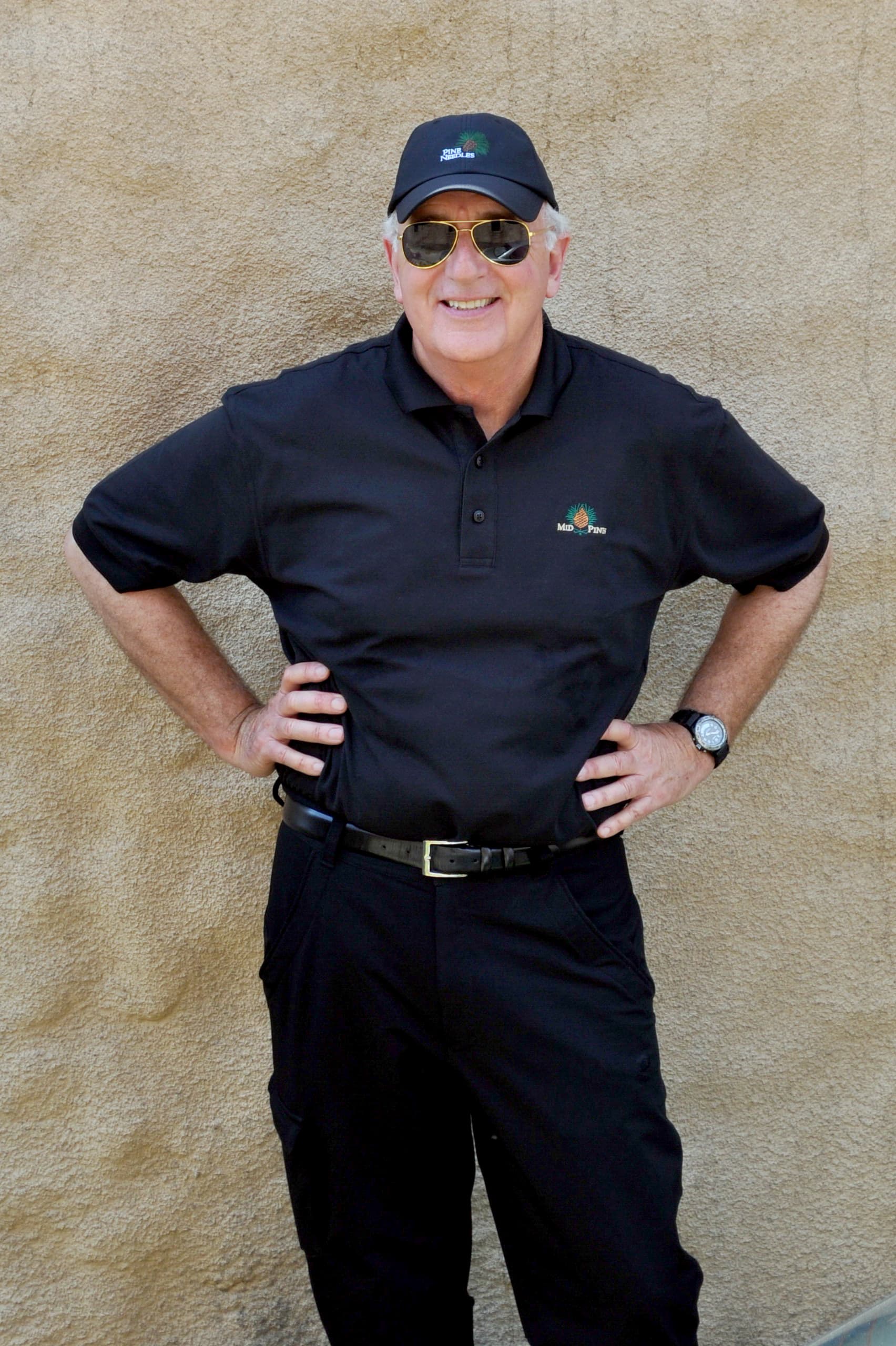
Author, Steven Pressfield, Photo credit: Ciro612
In the author’s world, talent is not the distinguishing factor where creativity is concerned. What makes someone creative is the fact that they CREATE something. In other words, they do the work, and they deliver.
In my current work as an educator, this relationship between creativity and peripheral topics like inspiration and motivation is a really big deal. Creativity is a trending topic right now, but it is also a bit of a lightning rod, distracting us from the real issues at the heart of what it takes to create.
So many people (talented people included) have made gigantic assertions based on nothing short of what I consider a **[prevailing myth](https://www.scientificamerican.com/article/is-innate-talent-a-myth/)**. In our culture, that myth is then perpetuated by celebrity worship, high-performing athletes in competitive sports, standardized tests and admission requirements at higher educational institutions, and (ironically) the creative marketing strategies that drive our capitalistic economy.
Many educators and creatives have tried dismantling the myth of innate talent, but still many cling to a misconception about what is actually required. There is something fundamentally wrong with the world’s perception of this, and the most glaring omission that *The War of Art* addresses head on is that genius is something that everyone already has; but, even under this definition, only becomes accessible on the other side of a battle. Although anyone is capable, they must journey over the boundary-line of safety and bring the fight to the enemy. Creativity then is only viable once Resistance is … well, *resisted*…and defeated.
More than one third of the book is dedicated to defining this enemy. Pressfield names and describes the many layers and faces of Resistance in a way that disabuses the reader of any notion that they are somehow immune to it. He lists Resistance’s characteristics with startling clarity, then describes the symptoms and inevitable consequences of its influence, expounding on a list that sounds more like something lifted from the DSM guidebook of psychology or the Big Book of AA:
Procrastination, Sex, Trouble, Self-Dramatization, Self-Medication, Victimhood, Choice of Mate, Unhappiness, Fundamentalism, Criticism, Self-Doubt, Fear, Love, Stardom, Isolation, Healing, Support, Rationalization.
Of all these characteristics and “symptoms” some of the most disturbing to me are the ones that are aspects of life that I would normally suppose to be very noble and good. One’s fundamental reasoning behind their Choice of Mate, for example, is usually more complicated than just “love” per se. However, Pressfield cautions that Resistance can cause someone to unconsciously “disfigure love” by affecting that very choice. Some may choose a mate that is more successfully combating Resistance in an attempt to rationalize and ignore their own lack of success in that arena.
Others may actually be making headway in their own creative endeavors, choosing a partner who is very supportive (financially or otherwise) but for the wrong reasons. In this scenario the supportive partner is the one overcome by Resistance.
Troubling as it is, Pressfield’s observations in this instance are actually in alignment with other creativity experts like Julia Cameron who suggested in *The Artist’s Way* that many creatives attach themselves to other successful artists or, conversely, “shadow artists” for very similar reasons.
Resistance’s ability to distort and disfigure love is just one example of an advantage it appears to gain where human social interaction is possible. The book first introduces this phenomenon in a section with the heading “Recruits Allies.” By extending its reach from self-sabotage to sabotage by others, a familiar pattern emerges that is known by many names, such as **[tall poppy syndrome and crab mentality](https://en.wikipedia.org/w/index.php?title=Crab_mentality)**. But it doesn’t stop there. Resistance spreads like a weed (or a virus), getting workshopped in conferences,
seeking support from friends and family,
And infecting entire families through the magic of “self-dramatization.”
There’s another “symptom” of Resistance in this part of the book that will probably come across as controversial to anyone who participates in that greatest of social interactions – going to church. I say this half joking. But religious gatherings do account for some of the largest and most regular assemblies of people in the United States apart from music concerts, professional sporting events, and political rallies. While I cannot broadly apply the label of “fundamentalism” to these gatherings, a large portion of religious organizations do adhere to belief systems that fall within the parameters of that label. And Pressfield manages to draw some of the most insightful comparisons and distinctions between artists and fundamentalists that I’ve ever read.
Already, the problem has surfaced: if Resistance is so adept at utilizing groups of people in relationship to each other, then the key to its defeat must have something to do with isolating our battle with it as individuals.
Contrasting this worldview is that of an artist, a creative mind, open to new insights and connections.
One last aspect worth mentioning in this section of the book is that of what some might call the “artistic temperament” and its connection to mental illness. To his credit, Pressfield never mentions that age-old stereotype about “crazy artists.” Nonetheless, he does cross over into mental health territory, and some of his insinuations can be almost anachronistic in their *seeming* insensitivity to those with real conditions:
However, it must be stated that the existence of psychosomatic symptoms [**is a reality**](https://www.betterhelp.com/advice/therapy/what-are-psychosomatic-symptoms-and-why-are-they-harmful/) actual doctors and mental health experts acknowledge and deal with on a regular basis; and Pressfield allows room for the possibility that both mental and physical illness does exist independently from Resistance. He also makes a convincing case for why some might use their condition as an excuse, even when it is real.
The bottom line is that Resistance will use whatever it can to keep a potential creative from doing the work. If anxiety or depression or some other issue is affecting your quality of life, you can bet that Resistance will leverage that. The interesting thing to me is that people I know personally who have dealt with this first-hand DO NOT like using their mental or physical ailments to justify or rationalize compromising their work ethic. I’ve actually found myself having to check my own excuses at the door when I interact with those friends. It’s both inspiring and a little annoying at times, if I’m honest.
By the time we arrive at the end of this exhaustive (and exhausting) list on a page with the heading of “Defeat,” I half expected the author to wash his hands of the entire thing and say something to the effect of, “Look, Resistance is everywhere, and fighting such a beast is futile. So let’s all just accept defeat and go home.” But, as I previously mentioned, Pressfield is not the kind of guy that gives up…**ever**. So, instead, he reminds us that, however powerful and intimidating such a force may appear, winning is possible.
## BOOK TWO
In Book Two, the author contrasts the multifaceted foe of the previous book with the characteristics of someone who has **Turned Pro**. Although “The Professional” at first appears to be a literal description of someone who has turned avocation into vocation, it becomes clearer as the book progresses that what is more important, even for the pros that ARE paid, is to maintain the **mindset** of a Professional. The characteristics described herein read a bit like the “love” passage from 1 Corinthians 13. You know the one that is read at so many weddings right after Canon in D ushers in the bride?
Maybe the reason so many of these qualities fall in line with the biblical description of love is that love really is at the center of a Professional’s motivation. And not the shallow version of love either. That is for amateurs.
If Resistance is the disease, the epochal mental shift of “turning pro” is the cure. It is a rebirth and reinforcement of the artist’s identity, akin to the transformation of a hero at the end of his journey. Only in this case, it is just the beginning. Nothing could be more evident of this than the title of Pressfield’s next book *Turning Pro*, which is singularly focused on how to make a deeper and more practical transition from amateur to professional. Here, in this book, we see The Professional in context. But the story is still incomplete, because, as it turns out, there is still an even more surprising and transcendent twist left to reveal.
## BOOK THREE
At this point in the book, the author has made a very convincing case for his title. He’s revealed an invisible enemy and painted a picture of our hero with all their attributes. All that is left to reveal are the hero’s allies. And this is where things take an unexpected turn, with Pressfield making a surprisingly philosophical connection. Counterpoised against Resistance, he argues, are opposing powers that can best be described as “angels.”…ANGELS 👀
I suppose it is not such a great leap. Resistance, after all, has already been characterized as a force many would describe as demonic, even satanic – EVIL. So why wouldn’t one view the opposing force as the ultimate representative of Good? But this is a tricky area to navigate for a number of reasons, and Pressfield even anticipates this at the beginning of the section with a caveat:
He then leaves it up to the reader to decide if they prefer to view these forces from a more mystical perspective or in the abstract.
What is striking to me, especially upon a second reading, is how hard he works in this section to seem ambivalent about which perspective he’s coming from personally; when, really, he has already made his stance very clear in previous chapters (remember the section on Fundamentalism?). At first this comes across more as contradiction than ambiguity. There’s more to say about it but let’s first take a moment to focus on a slightly different inconsistency that arises from the same passage:
In the Foreword to this book, Robert McKee says much about Book Three, and contrasts his own beliefs regarding the “source of creativity” with Pressfield’s attribution to “a higher realm.”
It’s odd to me, because Pressfield’s stated allowance to the reader to “think of it as talent” is in complete harmony with McKee’s supposedly “contrary opinion.” Again, we find a very “talented” and influential person (McKee is somewhat of a hero and advisor to many famous writers) making the bizarre assertion that creativity is somehow locked inside some ivory castle through arguably superior genetics – it’s the specious idea of innate talent redux! And here, Pressfield *almost* gives in to it. But as I said, the author’s allowance is really more of a Trojan horse. He’s anticipating the reader’s skepticism and allowing an alternative explanation for the sake of continuing without debate. But he doesn’t really take issue with it himself. It’s apparent to me in previous chapters, and he makes it even more salient in the remainder of Book Three.
And yet…the author’s concept of creativity’s source is NOT actually **supernatural** in the way that his use of mythological and religious language would suggest. It is mysterious though, just as anything related to eternity and the spiritual realm is not fully known (if at all). It is that realm of the unknown that Pressfield makes an attempt at describing. So, where to begin? And how can we make use of such a thing, even while holding it in awe and reverence of its mystery? Pressfield begins with humility – which is the only place to start when dealing with forces beyond one’s full understanding.
If your life is a wreck, your self-confidence in shambles, and you know in your gut that the only person to blame is yourself, but you can’t quite pinpoint WHY…well, humility really is the best place to make a new beginning. And this is not hypothetical. Pressfield shares much of his autobiography in this part of the book, in an effort to drive home his earlier treatise on Resistance and to explain how Resistance led to his own humiliation. But it also led to the discovery of the higher realm.
In an effort to further describe this realm, Pressfield uses two resources as workable models for his theory. The first one is **Ancient Greek philosophy and mythology**. To the ancients, these two fields were much more intertwined than our modern notions of the same subjects.
The Muses were people – daughters of Zeus. And the gods themselves were personifications of
What follows is a summary lesson on Greek mythology and how that mythology impacted what Ancient Greece thought and believed and went to war for and built an entire culture around. The great ideas of Plato and Aristotle, the Stoics, and the origins of so-called Western Civilization – its art and poetry and drama and music – all stem from the Ancient Greek way of tying human effort to divine purpose and collaboration.
The second model that Pressfield heavily relies upon for apprehending knowledge of the higher realm is none other than **Jungian archetypes**. He begins by analyzing some of his own dreams that were important to his personal growth and development.
He recounts the story of Tom Laughlin, a famous actor in the 60s and 70s who later became an author and lecturer, and how he applied Jungian psychology to a kind of therapy for cancer patients.
Laughlin counsels patients to do what they need to do to live out their unlived lives. According to him,
This is all an interesting aside, and connects to my earlier thoughts about the effects of Resistance on physical and mental health. But what on earth does it have to do with creativity, and accessing the higher realm? Pressfield doesn’t really say. But Tom Laughlin’s story serves as a good backdrop for how Pressfield was exposed to the works of Jung (he attended at least one of Laughlin’s lectures), and it’s an example of just how IMPORTANT the “seat of consciousness” can be to human fulfillment and potential.
From this backstory, comes the author’s very well organized “job description” and mission statement of the Ego and the Self, with a clear illustration of just how these parts of us become a “back door” for either angels or Resistance.
In a nutshell, the Ego is tethered to the material world and thinks only in terms of its immediate gratification and survival. Naturally, this throws the door wide open to Resistance in all of its forms.
The Self transcends the Ego and therefore is able to perceive beyond the material world into the interconnectedness of dimensions beyond time and space. Eternity, love, unified consciousness, immortality, and God are all at home in this state.
It all comes back to evolution and growth. If an artist wishes to participate in the act of creation, they will inevitably learn and grow from the experience. And the Ego literally RESISTS the changes involved in that learning process. Why?
And, so we have come full circle, back to the idea of the individual. Pressfield believes that we are all destined (he uses that word) in a uniquely personal way to become this SELF that he has been describing, and that we must spend our lives discovering who that is.
The problem with this line of thinking is that many people have such a limited view of what they THINK they are “supposed to be doing” that they get caught up in a game of comparison. This is a setup for failure from the beginning for a couple different reasons.
1. The comparison game leads us right back into the fallacious line of thinking I discussed regarding the innate talent myth. If you’re comparing yourself to a top performer, who holds a superior advantage at the genetic level, what chance did you ever have of succeeding (unless you delude yourself into thinking that you are in fact more “gifted” than they are)?
2. The comparison game is attached to a thinking model that we are bombarded with pretty much our whole lives, but makes for some pretty skewed results when trying to make fair comparisons in the first place.
If an artist attempts to gain validation based on a hierarchy – comparison – he will just be overwhelmed. The numbers are just too vast. And, in the exercise, he will lose himself and any chance at finding fulfillment in the art itself. Instead, he will either become a “hack” finding temporary fulfillment from the money, or a politician pandering for votes after consulting the polls. Either way, they will be haunted by the specter of their Muse. On the other hand,
So, rather than orienting ourselves hierarchically, we should seek out a territory that is uniquely ours.
After a bit more defining of that territory, Pressfield wraps up the book with an admonishment from the Bhagavad-Gita to make our artistic work an “offering” to the gods, to the world, and to ourselves.
Let me just wrap this up by saying that *The War Of Art* is a fascinating book. But I don’t think it’s for everyone. It’s an illuminating book if you are caught up in the grip of Resistance. If you’re making excuses for not doing your work, or you’re on the fence about whether to “turn pro” or not, it’s a paradigm shift. It’s an inspiring book for the *struggling* artist. When I read this the first time, that is how I identified. Now, I have some concerns about viewing my art in terms of personal destiny, offering things to gods I don’t believe in, or as a battle I must wage and win in order to proceed. All of those are just complications and they seem a bit grandiose, although grandiosity certainly appeals to my ego 😉. How useful you will find this book will ultimately come down to what you already believe about destiny, your purpose, and that previously mentioned higher realm. If such things motivate you to get on with CREATING something, then my advice would be to go do that. But returning once more to the question of creativity’s source, you don’t need any of that. Pressfield and a thousand other creatives are telling you that you are ONE OF THEM. You can create, and you don’t need a reason to do it other than for the sheer joy of it. Whether it’s your destiny or just a good way to spend an afternoon, find your reason, or find a way to create that becomes your territory – a reason in itself. For me, I think that’s as good a place as any to stop writing, and get back to work.
***
### About the Author:
[](https://pianobelloso.com/about-me)
Ian Belloso, Simply Music Piano Teacher
Ian Belloso is a classically trained pianist 🎹, composer 🎶, and electronic music producer 🎛 🎧. He’s also a licensed Simply Music teacher who is dedicated to teaching full time. When he is not making music, he loves reading, listening to podcasts, and writing about the intersection of creativity, education, and technology. You can find out more about him by visiting his website: [**pianobelloso.com**](https://pianobelloso.com/)
***
- [Facebook](https://www.facebook.com/sharer/sharer.php?u=https%3A%2F%2Fsimplymusic.com%2Fthe-war-of-art-by-steven-pressfield-book-review%2F&t=The%20War%20of%20Art%20By%20Steven%20Pressfield%20-%20Book%20Review "Share on Facebook")
- [Twitter](https://twitter.com/intent/tweet?text=The%20War%20of%20Art%20By%20Steven%20Pressfield%20-%20Book%20Review&url=https%3A%2F%2Fsimplymusic.com%2Fthe-war-of-art-by-steven-pressfield-book-review%2F "Share on Twitter")
- Pinterest
- [Email](mailto:?subject=https%3A%2F%2Fsimplymusic.com%2Fthe-war-of-art-by-steven-pressfield-book-review%2F&body=The%20War%20of%20Art%20By%20Steven%20Pressfield%20-%20Book%20Review "Send over email")
Tagged [book review](https://simplymusic.com/tag/book-review/)[Creativity](https://simplymusic.com/tag/creativity/)[music](https://simplymusic.com/tag/music/)[music education](https://simplymusic.com/tag/music-education/)[music neurology](https://simplymusic.com/tag/music-neurology/)[piano](https://simplymusic.com/tag/piano/)[playing-based](https://simplymusic.com/tag/playing-based/)[simply music](https://simplymusic.com/tag/simply-music/)[Steven Pressfield](https://simplymusic.com/tag/steven-pressfield/)[the playground](https://simplymusic.com/tag/the-playground/)[The War of Art](https://simplymusic.com/tag/the-war-of-art/)
[](https://simplymusic.com/book "Download 'Music and The Art of Long-Term Relationships' by Neil Moore")
[](https://simplymusic.com/teachers "Learn more about becoming a teacher")
[](https://facebook.com/simplymusic "Simply Music on Facebook") [](https://twitter.com/simplymusic "Simply Music on Twitter") [](https://bit.ly/22fAvth "Simply Music on LinkedIn") [](https://youtube.com/user/simplymusic "Simply Music on YouTube") [](https://soundcloud.com/simply_music_playground "Simply Music on SoundCloud") [](https://instagram.com/simplymusic "Simply Music on Instagram")
#### Contact Us
- USA Global Headquarters
- Sacramento, CA
- [\+1 916 646 0581](<tel:+1 916 646 0581>)
- [support@simplymusic.com](mailto:support@simplymusic.com)
#### Info
- [Teacher Training Program](https://simplymusic.com/teachers/)
- [Learn with a Teacher](https://simplymusic.com/students/)
- [Self-Study Program](https://simplymusic.com/self-study/)
- [Special Needs Program](https://simplymusic.com/special-needs/)
- [Locate a Teacher](https://simplymusic.com/map/)
- [About Simply Music](https://simplymusic.com/about/)
- [Teacher Training Program](https://simplymusic.com/teachers/)
- [Learn with a Teacher](https://simplymusic.com/students/)
- [Self-Study Program](https://simplymusic.com/self-study/)
- [Special Needs Program](https://simplymusic.com/special-needs/)
- [Locate a Teacher](https://simplymusic.com/map/)
- [About Simply Music](https://simplymusic.com/about/)
#### Social
[Facebook](https://facebook.com/simplymusic)
[Youtube](https://youtube.com/user/simplymusic)
[Twitter](https://twitter.com/simplymusic)
[Instagram](https://instagram.com/simplymusic)
[RSS](https://simplymusic.com/blog)
[Icon-LinkedIn](https://www.linkedin.com/company/simply-music-llc/)
#### Stay Tuned
Subscribe to The Playground, The Simply Music blog, to receive news and more.
© 2026 Simply Music LLC
- [Contact Support](https://simplymusic.com/contact-support/)
- [Terms & conditions](https://simplymusic.com/terms-conditions/)
- [Privacy Policy](https://simplymusic.com/privacy-policy/)
- [Contact Support](https://simplymusic.com/contact-support/)
- [Terms & conditions](https://simplymusic.com/terms-conditions/)
- [Privacy Policy](https://simplymusic.com/privacy-policy/) | |||||||||||||||
| Readable Markdown | -  Written by **Guest Contributor** on **Mar 8, 2023** \| [Miscellany & Merriment](https://simplymusic.com/category/miscellany-and-merriment/) [Reviews](https://simplymusic.com/category/reviews/)
Sometimes things that should be obvious aren’t.
Sometimes an obvious thing only becomes obvious **after** someone states it in such an articulate and relatable manner that its essence – its core truth – is cracked open and put out on display for everyone to gawk at. At the intersection of creativity and education is **revelation**, and Steven Pressfield’s *[**War of Art**](https://www.amazon.com/War-Art-Through-Creative-Battles/dp/1936891026/ref=sr_1_1?gclid=Cj0KCQiAxbefBhDfARIsAL4XLRpROS0brtuH_Q00z3TsdhoMcABBGrh2XYBwr47HGxQgxsBrrvED7XsaArJIEALw_wcB&hvadid=616931649982&hvdev=c&hvlocphy=9032523&hvnetw=g&hvqmt=e&hvrand=18294776472384091067&hvtargid=kwd-12727008147&hydadcr=24656_13611721&keywords=the+war+of+art+book&qid=1676595184&sr=8-1)* is exactly that.
[](https://www.amazon.com/War-Art-Through-Creative-Battles/dp/1936891026/ref=sr_1_1?gclid=Cj0KCQiAxbefBhDfARIsAL4XLRpROS0brtuH_Q00z3TsdhoMcABBGrh2XYBwr47HGxQgxsBrrvED7XsaArJIEALw_wcB&hvadid=616931649982&hvdev=c&hvlocphy=9032523&hvnetw=g&hvqmt=e&hvrand=18294776472384091067&hvtargid=kwd-12727008147&hydadcr=24656_13611721&keywords=the+war+of+art+book&qid=1676595184&sr=8-1)
Caption: The War of Art By Steven Pressfield
I’m writing this review after reading this book for the second time. And despite the impact it had on me after my first reading, I’m now feeling a bit like the man who lost his glasses and then grew accustomed to being half blind. After stumbling around in a blurry world of fuzzy shapes, I’m happy to report (albeit a little embarrassed) that I’ve found my glasses again! 🤓 This entire experience raises a question that has had me stumped for some time as an educator:
**What is it that makes someone “lose their glasses” in the first place (or second)?**
Perhaps it wasn’t such an innocent gaffe as my clever euphemism makes it sound. In fact, one could argue that it was a form of **self-sabotage** – even willful ignorance. Yet it is as common as dust. Human progress is supposed to be the story of how people learn and grow. Our survival depends on it. And yet one of the most predictable tendencies of human nature is to get stuck – or even backslide – and, thus, NOT learn and NOT grow. This fact has plagued educators for as long as people have been around.
I first encountered *The War of Art* while completing an online course on “mastering creativity.” Much of the book’s wisdom was referenced and applied practically to the art and technique of electronic music production – a fascinating hybrid of bleeding edge technological tools, innovative musicianship, and sound design. Although, I’d been drawn to this unique chimera of musical expression since before it became the ubiquitous sound and acronym controversially dubbed “EDM,” I was having a problem that I’d never really experienced so acutely before – **writer’s block**. So, I had sought out the help of someone who was not only an expert at the art and technique that I aspired to create, but also a respected life coach, specializing in productivity and creative flow.
*The War of Art* is written in three “books”. In Book One, [**Pressfield**](https://stevenpressfield.com/home/) lays out the problem that every creative endeavor ever has encountered at some point; and he does it from the practicality and work ethic of a seasoned writer and the unyielding tenacity of an ex-marine. When the book was first published in 2002, the author was already 59 years old. Before this Pressfield wrote for 27 years before his first novel was published (*The Legend of Bagger Vance*, 1995).
Pressfield writes from a place of deep wisdom and experience. He knows about this business of creativity because he has lived in the trenches of battle. He is a veteran of the eponymous war, and he is intimately familiar with the enemy. Most people believe they are fighting deadlines, depression, disease, and demons…well, maybe they are partially right. For Pressfield, the devil has a name, and it is RESISTANCE.
## BOOK ONE
As it turns out, I didn’t have writer’s block. The problem was much worse, but less complicated. I was in the grip of an invisible opposing force so powerful, and yet so insidious, that I had actually convinced myself that I needed help “learning to become more creative.” What I learned from *The War of Art* is that creativity was never the issue. Pressfield’s meager definition of creativity is that every one of us has a “genius” inside of them.
[](https://www.amazon.com/War-Art-Through-Creative-Battles/dp/1936891026/ref=tmm_pap_swatch_0?_encoding=UTF8&qid=&sr=)
Author, Steven Pressfield, Photo credit: Ciro612
In the author’s world, talent is not the distinguishing factor where creativity is concerned. What makes someone creative is the fact that they CREATE something. In other words, they do the work, and they deliver.
In my current work as an educator, this relationship between creativity and peripheral topics like inspiration and motivation is a really big deal. Creativity is a trending topic right now, but it is also a bit of a lightning rod, distracting us from the real issues at the heart of what it takes to create.
So many people (talented people included) have made gigantic assertions based on nothing short of what I consider a **[prevailing myth](https://www.scientificamerican.com/article/is-innate-talent-a-myth/)**. In our culture, that myth is then perpetuated by celebrity worship, high-performing athletes in competitive sports, standardized tests and admission requirements at higher educational institutions, and (ironically) the creative marketing strategies that drive our capitalistic economy.
Many educators and creatives have tried dismantling the myth of innate talent, but still many cling to a misconception about what is actually required. There is something fundamentally wrong with the world’s perception of this, and the most glaring omission that *The War of Art* addresses head on is that genius is something that everyone already has; but, even under this definition, only becomes accessible on the other side of a battle. Although anyone is capable, they must journey over the boundary-line of safety and bring the fight to the enemy. Creativity then is only viable once Resistance is … well, *resisted*…and defeated.
More than one third of the book is dedicated to defining this enemy. Pressfield names and describes the many layers and faces of Resistance in a way that disabuses the reader of any notion that they are somehow immune to it. He lists Resistance’s characteristics with startling clarity, then describes the symptoms and inevitable consequences of its influence, expounding on a list that sounds more like something lifted from the DSM guidebook of psychology or the Big Book of AA:
Procrastination, Sex, Trouble, Self-Dramatization, Self-Medication, Victimhood, Choice of Mate, Unhappiness, Fundamentalism, Criticism, Self-Doubt, Fear, Love, Stardom, Isolation, Healing, Support, Rationalization.
Of all these characteristics and “symptoms” some of the most disturbing to me are the ones that are aspects of life that I would normally suppose to be very noble and good. One’s fundamental reasoning behind their Choice of Mate, for example, is usually more complicated than just “love” per se. However, Pressfield cautions that Resistance can cause someone to unconsciously “disfigure love” by affecting that very choice. Some may choose a mate that is more successfully combating Resistance in an attempt to rationalize and ignore their own lack of success in that arena.
Others may actually be making headway in their own creative endeavors, choosing a partner who is very supportive (financially or otherwise) but for the wrong reasons. In this scenario the supportive partner is the one overcome by Resistance.
Troubling as it is, Pressfield’s observations in this instance are actually in alignment with other creativity experts like Julia Cameron who suggested in *The Artist’s Way* that many creatives attach themselves to other successful artists or, conversely, “shadow artists” for very similar reasons.
Resistance’s ability to distort and disfigure love is just one example of an advantage it appears to gain where human social interaction is possible. The book first introduces this phenomenon in a section with the heading “Recruits Allies.” By extending its reach from self-sabotage to sabotage by others, a familiar pattern emerges that is known by many names, such as **[tall poppy syndrome and crab mentality](https://en.wikipedia.org/w/index.php?title=Crab_mentality)**. But it doesn’t stop there. Resistance spreads like a weed (or a virus), getting workshopped in conferences,
seeking support from friends and family,
And infecting entire families through the magic of “self-dramatization.”
There’s another “symptom” of Resistance in this part of the book that will probably come across as controversial to anyone who participates in that greatest of social interactions – going to church. I say this half joking. But religious gatherings do account for some of the largest and most regular assemblies of people in the United States apart from music concerts, professional sporting events, and political rallies. While I cannot broadly apply the label of “fundamentalism” to these gatherings, a large portion of religious organizations do adhere to belief systems that fall within the parameters of that label. And Pressfield manages to draw some of the most insightful comparisons and distinctions between artists and fundamentalists that I’ve ever read.
Already, the problem has surfaced: if Resistance is so adept at utilizing groups of people in relationship to each other, then the key to its defeat must have something to do with isolating our battle with it as individuals.
Contrasting this worldview is that of an artist, a creative mind, open to new insights and connections.
One last aspect worth mentioning in this section of the book is that of what some might call the “artistic temperament” and its connection to mental illness. To his credit, Pressfield never mentions that age-old stereotype about “crazy artists.” Nonetheless, he does cross over into mental health territory, and some of his insinuations can be almost anachronistic in their *seeming* insensitivity to those with real conditions:
However, it must be stated that the existence of psychosomatic symptoms [**is a reality**](https://www.betterhelp.com/advice/therapy/what-are-psychosomatic-symptoms-and-why-are-they-harmful/) actual doctors and mental health experts acknowledge and deal with on a regular basis; and Pressfield allows room for the possibility that both mental and physical illness does exist independently from Resistance. He also makes a convincing case for why some might use their condition as an excuse, even when it is real.
The bottom line is that Resistance will use whatever it can to keep a potential creative from doing the work. If anxiety or depression or some other issue is affecting your quality of life, you can bet that Resistance will leverage that. The interesting thing to me is that people I know personally who have dealt with this first-hand DO NOT like using their mental or physical ailments to justify or rationalize compromising their work ethic. I’ve actually found myself having to check my own excuses at the door when I interact with those friends. It’s both inspiring and a little annoying at times, if I’m honest.
By the time we arrive at the end of this exhaustive (and exhausting) list on a page with the heading of “Defeat,” I half expected the author to wash his hands of the entire thing and say something to the effect of, “Look, Resistance is everywhere, and fighting such a beast is futile. So let’s all just accept defeat and go home.” But, as I previously mentioned, Pressfield is not the kind of guy that gives up…**ever**. So, instead, he reminds us that, however powerful and intimidating such a force may appear, winning is possible.
## BOOK TWO
In Book Two, the author contrasts the multifaceted foe of the previous book with the characteristics of someone who has **Turned Pro**. Although “The Professional” at first appears to be a literal description of someone who has turned avocation into vocation, it becomes clearer as the book progresses that what is more important, even for the pros that ARE paid, is to maintain the **mindset** of a Professional. The characteristics described herein read a bit like the “love” passage from 1 Corinthians 13. You know the one that is read at so many weddings right after Canon in D ushers in the bride?
Maybe the reason so many of these qualities fall in line with the biblical description of love is that love really is at the center of a Professional’s motivation. And not the shallow version of love either. That is for amateurs.
If Resistance is the disease, the epochal mental shift of “turning pro” is the cure. It is a rebirth and reinforcement of the artist’s identity, akin to the transformation of a hero at the end of his journey. Only in this case, it is just the beginning. Nothing could be more evident of this than the title of Pressfield’s next book *Turning Pro*, which is singularly focused on how to make a deeper and more practical transition from amateur to professional. Here, in this book, we see The Professional in context. But the story is still incomplete, because, as it turns out, there is still an even more surprising and transcendent twist left to reveal.
## BOOK THREE
At this point in the book, the author has made a very convincing case for his title. He’s revealed an invisible enemy and painted a picture of our hero with all their attributes. All that is left to reveal are the hero’s allies. And this is where things take an unexpected turn, with Pressfield making a surprisingly philosophical connection. Counterpoised against Resistance, he argues, are opposing powers that can best be described as “angels.”…ANGELS 👀
I suppose it is not such a great leap. Resistance, after all, has already been characterized as a force many would describe as demonic, even satanic – EVIL. So why wouldn’t one view the opposing force as the ultimate representative of Good? But this is a tricky area to navigate for a number of reasons, and Pressfield even anticipates this at the beginning of the section with a caveat:
He then leaves it up to the reader to decide if they prefer to view these forces from a more mystical perspective or in the abstract.
What is striking to me, especially upon a second reading, is how hard he works in this section to seem ambivalent about which perspective he’s coming from personally; when, really, he has already made his stance very clear in previous chapters (remember the section on Fundamentalism?). At first this comes across more as contradiction than ambiguity. There’s more to say about it but let’s first take a moment to focus on a slightly different inconsistency that arises from the same passage:
In the Foreword to this book, Robert McKee says much about Book Three, and contrasts his own beliefs regarding the “source of creativity” with Pressfield’s attribution to “a higher realm.”
It’s odd to me, because Pressfield’s stated allowance to the reader to “think of it as talent” is in complete harmony with McKee’s supposedly “contrary opinion.” Again, we find a very “talented” and influential person (McKee is somewhat of a hero and advisor to many famous writers) making the bizarre assertion that creativity is somehow locked inside some ivory castle through arguably superior genetics – it’s the specious idea of innate talent redux! And here, Pressfield *almost* gives in to it. But as I said, the author’s allowance is really more of a Trojan horse. He’s anticipating the reader’s skepticism and allowing an alternative explanation for the sake of continuing without debate. But he doesn’t really take issue with it himself. It’s apparent to me in previous chapters, and he makes it even more salient in the remainder of Book Three.
And yet…the author’s concept of creativity’s source is NOT actually **supernatural** in the way that his use of mythological and religious language would suggest. It is mysterious though, just as anything related to eternity and the spiritual realm is not fully known (if at all). It is that realm of the unknown that Pressfield makes an attempt at describing. So, where to begin? And how can we make use of such a thing, even while holding it in awe and reverence of its mystery? Pressfield begins with humility – which is the only place to start when dealing with forces beyond one’s full understanding.
If your life is a wreck, your self-confidence in shambles, and you know in your gut that the only person to blame is yourself, but you can’t quite pinpoint WHY…well, humility really is the best place to make a new beginning. And this is not hypothetical. Pressfield shares much of his autobiography in this part of the book, in an effort to drive home his earlier treatise on Resistance and to explain how Resistance led to his own humiliation. But it also led to the discovery of the higher realm.
In an effort to further describe this realm, Pressfield uses two resources as workable models for his theory. The first one is **Ancient Greek philosophy and mythology**. To the ancients, these two fields were much more intertwined than our modern notions of the same subjects.
The Muses were people – daughters of Zeus. And the gods themselves were personifications of
What follows is a summary lesson on Greek mythology and how that mythology impacted what Ancient Greece thought and believed and went to war for and built an entire culture around. The great ideas of Plato and Aristotle, the Stoics, and the origins of so-called Western Civilization – its art and poetry and drama and music – all stem from the Ancient Greek way of tying human effort to divine purpose and collaboration.
The second model that Pressfield heavily relies upon for apprehending knowledge of the higher realm is none other than **Jungian archetypes**. He begins by analyzing some of his own dreams that were important to his personal growth and development.
He recounts the story of Tom Laughlin, a famous actor in the 60s and 70s who later became an author and lecturer, and how he applied Jungian psychology to a kind of therapy for cancer patients.
Laughlin counsels patients to do what they need to do to live out their unlived lives. According to him,
This is all an interesting aside, and connects to my earlier thoughts about the effects of Resistance on physical and mental health. But what on earth does it have to do with creativity, and accessing the higher realm? Pressfield doesn’t really say. But Tom Laughlin’s story serves as a good backdrop for how Pressfield was exposed to the works of Jung (he attended at least one of Laughlin’s lectures), and it’s an example of just how IMPORTANT the “seat of consciousness” can be to human fulfillment and potential.
From this backstory, comes the author’s very well organized “job description” and mission statement of the Ego and the Self, with a clear illustration of just how these parts of us become a “back door” for either angels or Resistance.
In a nutshell, the Ego is tethered to the material world and thinks only in terms of its immediate gratification and survival. Naturally, this throws the door wide open to Resistance in all of its forms.
The Self transcends the Ego and therefore is able to perceive beyond the material world into the interconnectedness of dimensions beyond time and space. Eternity, love, unified consciousness, immortality, and God are all at home in this state.
It all comes back to evolution and growth. If an artist wishes to participate in the act of creation, they will inevitably learn and grow from the experience. And the Ego literally RESISTS the changes involved in that learning process. Why?
And, so we have come full circle, back to the idea of the individual. Pressfield believes that we are all destined (he uses that word) in a uniquely personal way to become this SELF that he has been describing, and that we must spend our lives discovering who that is.
The problem with this line of thinking is that many people have such a limited view of what they THINK they are “supposed to be doing” that they get caught up in a game of comparison. This is a setup for failure from the beginning for a couple different reasons.
1. The comparison game leads us right back into the fallacious line of thinking I discussed regarding the innate talent myth. If you’re comparing yourself to a top performer, who holds a superior advantage at the genetic level, what chance did you ever have of succeeding (unless you delude yourself into thinking that you are in fact more “gifted” than they are)?
2. The comparison game is attached to a thinking model that we are bombarded with pretty much our whole lives, but makes for some pretty skewed results when trying to make fair comparisons in the first place.
If an artist attempts to gain validation based on a hierarchy – comparison – he will just be overwhelmed. The numbers are just too vast. And, in the exercise, he will lose himself and any chance at finding fulfillment in the art itself. Instead, he will either become a “hack” finding temporary fulfillment from the money, or a politician pandering for votes after consulting the polls. Either way, they will be haunted by the specter of their Muse. On the other hand,
So, rather than orienting ourselves hierarchically, we should seek out a territory that is uniquely ours.
After a bit more defining of that territory, Pressfield wraps up the book with an admonishment from the Bhagavad-Gita to make our artistic work an “offering” to the gods, to the world, and to ourselves.
Let me just wrap this up by saying that *The War Of Art* is a fascinating book. But I don’t think it’s for everyone. It’s an illuminating book if you are caught up in the grip of Resistance. If you’re making excuses for not doing your work, or you’re on the fence about whether to “turn pro” or not, it’s a paradigm shift. It’s an inspiring book for the *struggling* artist. When I read this the first time, that is how I identified. Now, I have some concerns about viewing my art in terms of personal destiny, offering things to gods I don’t believe in, or as a battle I must wage and win in order to proceed. All of those are just complications and they seem a bit grandiose, although grandiosity certainly appeals to my ego 😉. How useful you will find this book will ultimately come down to what you already believe about destiny, your purpose, and that previously mentioned higher realm. If such things motivate you to get on with CREATING something, then my advice would be to go do that. But returning once more to the question of creativity’s source, you don’t need any of that. Pressfield and a thousand other creatives are telling you that you are ONE OF THEM. You can create, and you don’t need a reason to do it other than for the sheer joy of it. Whether it’s your destiny or just a good way to spend an afternoon, find your reason, or find a way to create that becomes your territory – a reason in itself. For me, I think that’s as good a place as any to stop writing, and get back to work.
***
### About the Author:
[](https://pianobelloso.com/about-me)
Ian Belloso, Simply Music Piano Teacher
Ian Belloso is a classically trained pianist 🎹, composer 🎶, and electronic music producer 🎛 🎧. He’s also a licensed Simply Music teacher who is dedicated to teaching full time. When he is not making music, he loves reading, listening to podcasts, and writing about the intersection of creativity, education, and technology. You can find out more about him by visiting his website: [**pianobelloso.com**](https://pianobelloso.com/)
*** | |||||||||||||||
| ML Classification | ||||||||||||||||
| ML Categories |
Raw JSON{
"/Books_and_Literature": 810,
"/Arts_and_Entertainment": 638,
"/Books_and_Literature/Literary_Classics": 361,
"/Arts_and_Entertainment/Music_and_Audio": 329,
"/Arts_and_Entertainment/Music_and_Audio/Music_Education_and_Instruction": 150
} | |||||||||||||||
| ML Page Types |
Raw JSON{
"/Article": 999,
"/Article/Product_or_Brand_Review": 985
} | |||||||||||||||
| ML Intent Types |
Raw JSON{
"Informational": 998
} | |||||||||||||||
| Content Metadata | ||||||||||||||||
| Language | en-us | |||||||||||||||
| Author | null | |||||||||||||||
| Publish Time | 2023-03-08 21:42:13 (3 years ago) | |||||||||||||||
| Original Publish Time | 2023-03-08 21:42:13 (3 years ago) | |||||||||||||||
| Republished | No | |||||||||||||||
| Word Count (Total) | 5,994 | |||||||||||||||
| Word Count (Content) | 5,825 | |||||||||||||||
| Links | ||||||||||||||||
| External Links | 18 | |||||||||||||||
| Internal Links | 33 | |||||||||||||||
| Technical SEO | ||||||||||||||||
| Meta Nofollow | No | |||||||||||||||
| Meta Noarchive | No | |||||||||||||||
| JS Rendered | No | |||||||||||||||
| Redirect Target | null | |||||||||||||||
| Performance | ||||||||||||||||
| Download Time (ms) | 825 | |||||||||||||||
| TTFB (ms) | 748 | |||||||||||||||
| Download Size (bytes) | 47,717 | |||||||||||||||
| Shard | 42 (laksa) | |||||||||||||||
| Root Hash | 14799482781550511842 | |||||||||||||||
| Unparsed URL | com,simplymusic!/the-war-of-art-by-steven-pressfield-book-review/ s443 | |||||||||||||||