ℹ️ Skipped - page is already crawled
| Filter | Status | Condition | Details |
|---|---|---|---|
| HTTP status | PASS | download_http_code = 200 | HTTP 200 |
| Age cutoff | PASS | download_stamp > now() - 6 MONTH | 0 months ago |
| History drop | PASS | isNull(history_drop_reason) | No drop reason |
| Spam/ban | PASS | fh_dont_index != 1 AND ml_spam_score = 0 | ml_spam_score=0 |
| Canonical | PASS | meta_canonical IS NULL OR = '' OR = src_unparsed | Not set |
| Property | Value |
|---|---|
| URL | https://science.nasa.gov/universe/black-holes/ |
| Last Crawled | 2026-04-08 03:11:49 (44 minutes ago) |
| First Indexed | 2023-09-29 01:30:09 (2 years ago) |
| HTTP Status Code | 200 |
| Meta Title | Black Holes - NASA Science |
| Meta Description | Black holes are among the most mysterious cosmic objects, much studied but not fully understood. These objects aren’t really holes. They’re huge |
| Meta Canonical | null |
| Boilerpipe Text | Black holes are among the most mysterious cosmic objects, much studied but not fully understood. These objects aren’t really holes. They’re huge concentrations of matter packed into very tiny spaces. A black hole is so dense that gravity just beneath its surface, the event horizon, is strong enough that nothing – not even light – can escape. The event horizon isn’t a surface like Earth’s or even the Sun’s. It’s a boundary that contains all the matter that makes up the black hole.
There is much we don’t know about black holes, like what matter looks like inside their event horizons. However, there is a lot that scientists
do
know about black holes.
Finding Black Holes
Black holes don’t emit or reflect light, making them effectively invisible to telescopes. Scientists primarily detect and study them based on how they affect their surroundings:
Black holes can be surrounded by rings of gas and dust, called accretion disks, that emit light across many wavelengths, including X-rays.
A supermassive black hole’s intense gravity can cause stars to orbit around it in a particular way. Astronomers tracked the orbits of several stars near the center of the Milky Way to prove it houses a supermassive black hole, a discovery that won the 2020 Nobel Prize.
When very massive objects accelerate through space, they create ripples in the fabric of space-time called gravitational waves. Scientists can detect some of these by the ripples’ effect on detectors.
Massive objects like black holes can bend and distort light from more distant objects. This effect, called gravitational lensing, can be used to find isolated black holes that are otherwise invisible.
Black Holes Are Not ...
Wormholes. They don’t provide shortcuts between different points in space, or portals to other dimensions or universes.
Cosmic vacuum cleaners. Black holes don’t suck in other matter. From far enough away, their gravitational effects are just like those of other objects of the same mass.
Black holes - what are they really? Learn this and more with “Astro-Investigates,” the video series that explores and explains big astrophysics topics with the help of NASA scientists.
NASA
Essential Black Hole Facts
01
Closest
The nearest known black hole, called Gaia BH1, is about 1,500 light-years away.
02
Farthest
The most distant black hole detected, at the center of a galaxy called QSO J0313-1806, is around 13 billion light-years away.
03
Biggest
The most massive black hole observed, TON 618, tips the scales at 66 billion times the Sun’s mass.
04
Smallest
The lightest-known black hole is only 3.8 times the Sun’s mass. It’s paired up with a star.
05
Spaghettification
A real term that describes what happens when matter gets too close to a black hole. It’s squeezed horizontally and stretched vertically, resembling a noodle.
06
Spin
All black holes spin. The fastest-known – named GRS 1915+105 – clocks in at over 1,000 rotations per second.
07
Particle accelerators
Monster black holes at the centers of galaxies can launch particles to near light speed.
08
Gravity's the same
If you replaced the Sun with a black hole of the same mass, the solar system would get a lot colder, but the planets would stay in their orbits.
09
Star booms
One type of black hole is born when massive stars run out of fuel and explode in supernovae.
10
Not so rare
Most Milky Way-sized galaxies have monster black holes at their centers. Our is called Sagittarius A* (pronounced ey-star), and it’s 4 million times the Sun’s mass.
Keep Exploring
Discover More Topics From NASA |
| Markdown | [](https://www.nasa.gov/)
- Explore
[](https://www.nasa.gov/)
- News & Events
- [Recently Published](https://www.nasa.gov/news/recently-published/)
- [Video Series on NASA+](https://www.nasa.gov/plus/)
- [Podcasts & Audio](https://www.nasa.gov/podcasts-and-audio/)
- [Blogs](https://www.nasa.gov/nasa-blogs/)
- [Newsletters](https://www.nasa.gov/newsletters/)
- [Social Media](https://www.nasa.gov/socialmedia/)
- [Media Resources](https://www.nasa.gov/news/nasa-media-contacts/)
- Multimedia
- [Images](https://www.nasa.gov/images/)
- [Videos on NASA+](https://www.nasa.gov/plus/)
- [Interactives](https://www.nasa.gov/nasa-interactive-features/)
- [NASA Apps](https://www.nasa.gov/apps/)
- [Podcasts](https://www.nasa.gov/podcasts/)
- [e-Books](https://www.nasa.gov/ebooks/)
- [STEM Multimedia](https://www.nasa.gov/learning-resources/search/?terms=8058%2C8059%2C8061%2C8062%2C8068)
- [NASA+](https://plus.nasa.gov/)
## Suggested Searches
- [Climate Change](https://science.nasa.gov/?search=Climate%20Change)
- [Artemis](https://science.nasa.gov/?search=Artemis)
- [Expedition 64](https://science.nasa.gov/?search=Expedition%2064)
- [Mars perseverance](https://science.nasa.gov/?search=Mars%20perseverance)
- [SpaceX Crew-2](https://science.nasa.gov/?search=SpaceX%20Crew-2)
- [International Space Station](https://science.nasa.gov/?search=International%20Space%20Station)
- [View All Topics A-Z](https://science.nasa.gov/a-to-z-topics-listing/)
- [Home](https://science.nasa.gov/)
- [Missions](https://science.nasa.gov/nasa-missions/)
- [Humans in Space](https://science.nasa.gov/humans-in-space/)
- [Earth](https://science.nasa.gov/earth/)
- [The Solar System](https://science.nasa.gov/solar-system/)
- [The Universe](https://science.nasa.gov/universe/)
- [Science](https://science.nasa.gov/)
- [Aeronautics](https://science.nasa.gov/aeronautics/)
- [Technology](https://science.nasa.gov/technology/)
- [Learning Resources](https://science.nasa.gov/learning-resources/)
- [About NASA](https://science.nasa.gov/about/)
- [Español](https://science.nasa.gov/es/)
- [News & Events](https://science.nasa.gov/universe/black-holes/)
- [Multimedia](https://science.nasa.gov/universe/black-holes/)
- [NASA+](https://plus.nasa.gov/)
### Highlights
[11 min read NASA Answers Your Most Pressing Artemis II Questions article 3 days ago](https://www.nasa.gov/missions/nasa-answers-your-most-pressing-artemis-ii-questions/)
[11 min read NASA’s Artemis II Moon Mission Daily Agenda article 4 weeks ago](https://www.nasa.gov/missions/artemis/nasas-artemis-ii-moon-mission-daily-agenda/)
[3 min read Track NASA’s Artemis II Mission in Real Time article 1 month ago](https://www.nasa.gov/missions/artemis/artemis-2/track-nasas-artemis-ii-mission-in-real-time/)
Back
***
[Missions](https://science.nasa.gov/nasa-missions/)
- [Search All NASA Missions](https://www.nasa.gov/missions/)
- [A to Z List of Missions](https://www.nasa.gov/a-to-z-of-nasa-missions/)
- [Upcoming Launches and Landings](https://www.nasa.gov/events/)
- [Spaceships and Rockets](https://www.nasa.gov/humans-in-space/spaceships-and-rockets/)
- [Communicating with Missions](https://www.nasa.gov/communicating-with-missions/)
- [Artemis](https://www.nasa.gov/humans-in-space/artemis/)
- [James Webb Space Telescope](https://science.nasa.gov/mission/webb/)
- [Hubble Space Telescope](https://science.nasa.gov/mission/hubble/)
- [International Space Station](https://www.nasa.gov/international-space-station/)
- [OSIRIS-REx](https://science.nasa.gov/mission/osiris-rex/)
[Humans in Space](https://science.nasa.gov/humans-in-space/)
- [Why Go to Space](https://www.nasa.gov/humans-in-space/why-go-to-space/)
- [Astronauts](https://www.nasa.gov/humans-in-space/astronauts/)
- [Commercial Space](https://www.nasa.gov/humans-in-space/commercial-space/)
- [Destinations](https://www.nasa.gov/humans-in-space/destinations/)
- [Spaceships and Rockets](https://www.nasa.gov/humans-in-space/spaceships-and-rockets/)
- [Living in Space](https://www.nasa.gov/humans-in-space/living-in-space/)
[Earth](https://science.nasa.gov/earth/)
- [Explore Earth Science](https://science.nasa.gov/earth/explore/)
- [Climate Change](https://science.nasa.gov/climate-change/)
- [Earth, Our Planet](https://science.nasa.gov/earth/facts/)
- [Earth Science in Action](https://science.nasa.gov/earth/in-action/)
- [Earth Multimedia](https://science.nasa.gov/earth/multimedia/)
- [Earth Data](https://science.nasa.gov/earth/data/)
- [Earth Science Researchers](https://science.nasa.gov/earth-science/)
[The Solar System](https://science.nasa.gov/solar-system/)
- [The Sun](https://science.nasa.gov/sun/)
- [Mercury](https://science.nasa.gov/mercury/)
- [Venus](https://science.nasa.gov/venus/)
- [Earth](https://science.nasa.gov/earth/)
- [The Moon](https://science.nasa.gov/moon/)
- [Mars](https://science.nasa.gov/mars/)
- [Jupiter](https://science.nasa.gov/jupiter/)
- [Saturn](https://science.nasa.gov/saturn/)
- [Uranus](https://science.nasa.gov/uranus/)
- [Neptune](https://science.nasa.gov/neptune/)
- [Pluto & Dwarf Planets](https://science.nasa.gov/dwarf-planets/)
- [Asteroids, Comets & Meteors](https://science.nasa.gov/asteroids-comets-meteors/)
- [The Kuiper Belt](https://science.nasa.gov/solar-system/kuiper-belt/)
- [The Oort Cloud](https://science.nasa.gov/solar-system/oort-cloud/)
- [Skywatching](https://science.nasa.gov/skywatching/)
[The Universe](https://science.nasa.gov/universe/)
- [Exoplanets](https://science.nasa.gov/exoplanets/)
- [The Search for Life in the Universe](https://science.nasa.gov/universe/search-for-life/)
- [Stars](https://science.nasa.gov/universe/stars/)
- [Galaxies](https://science.nasa.gov/universe/galaxies/)
- [Black Holes](https://science.nasa.gov/universe/black-holes/)
- [The Big Bang](https://science.nasa.gov/universe/the-big-bang/)
- [Dark Matter](https://science.nasa.gov/dark-matter/)
- [Dark Energy](https://science.nasa.gov/dark-energy/)
[Science](https://science.nasa.gov/)
- [Earth Science](https://science.nasa.gov/earth-science/)
- [Planetary Science](https://science.nasa.gov/planetary-science/)
- [Astrophysics & Space Science](https://science.nasa.gov/astrophysics/)
- [The Sun & Heliophysics](https://science.nasa.gov/heliophysics/)
- [Biological & Physical Sciences](https://science.nasa.gov/biological-physical/)
- [Lunar Science](https://science.nasa.gov/lunar-science/)
- [Citizen Science](https://science.nasa.gov/citizen-science/)
- [Astromaterials](https://science.nasa.gov/astromaterials/)
- [Aeronautics Research](https://www.nasa.gov/aeronautics-research/)
- [Human Space Travel Research](https://www.nasa.gov/human-space-travel-research/)
[Aeronautics](https://science.nasa.gov/aeronautics/)
- [Science in the Air](https://www.nasa.gov/aeronautics/science-in-the-air/)
- [NASA Aircraft](https://www.nasa.gov/aeronautics/aircraft/)
- [Flight Innovation](https://www.nasa.gov/aeronautics/flight-innovation/)
- [Supersonic Flight](https://www.nasa.gov/aeronautics/supersonic-flight/)
- [Air Traffic Solutions](https://www.nasa.gov/aeronautics/air-traffic-solutions/)
- [Green Aviation Tech](https://www.nasa.gov/aeronautics/green-aero-tech/)
- [Drones & You](https://www.nasa.gov/aeronautics/drones-and-you/)
[Technology](https://science.nasa.gov/technology/)
- [Technology Transfer & Spinoffs](https://www.nasa.gov/technology-transfer-spinoffs/)
- [Space Travel Technology](https://www.nasa.gov/space-travel-technology/)
- [Technology Living in Space](https://www.nasa.gov/space-living-technology/)
- [Manufacturing and Materials](https://www.nasa.gov/manufacturing-and-materials/)
- [Robotics](https://www.nasa.gov/robotics/)
- [Science Instruments](https://www.nasa.gov/science-instruments/)
- [Computing](https://www.nasa.gov/computing/)
[Learning Resources](https://science.nasa.gov/learning-resources/)
- [For Kids and Students](https://www.nasa.gov/learning-resources/for-kids-and-students/)
- [For Educators](https://www.nasa.gov/learning-resources/for-educators/)
- [For Colleges and Universities](https://www.nasa.gov/learning-resources/colleges-and-universities/)
- [For Professionals](https://www.nasa.gov/learning-resources/for-professionals/)
- [Science for Everyone](https://science.nasa.gov/for-everyone/)
- [Requests for Exhibits, Artifacts, or Speakers](https://www.nasa.gov/learning-resources/requests-for-exhibits-artifacts-or-speakers/)
- [STEM Engagement at NASA](https://www.nasa.gov/learning-resources/stem-engagement-at-nasa/)
[About NASA](https://science.nasa.gov/about/)
- [NASA's Impacts](https://www.nasa.gov/nasa-impacts/)
- [Centers and Facilities](https://www.nasa.gov/nasa-centers-and-facilities/)
- [Directorates](https://www.nasa.gov/nasa-directorates/)
- [Organizations](https://www.nasa.gov/nasa-organization/)
- [People of NASA](https://www.nasa.gov/people-of-nasa/)
- [Careers](https://www.nasa.gov/careers/)
- [Internships](https://www.nasa.gov/learning-resources/nasa-internship-programs/)
- [Our History](https://www.nasa.gov/history/)
- [Doing Business with NASA](https://www.nasa.gov/doing-business-with-nasa/)
- [Get Involved](https://www.nasa.gov/get-involved/)
- [Contact](https://www.nasa.gov/contact-nasa/)
[NASA en Español](https://science.nasa.gov/es/)
- [Ciencia](https://ciencia.nasa.gov/)
- [Aeronáutica](https://www.nasa.gov/espanol/aeronautica-en-espanol/)
- [Ciencias Terrestres](https://ciencia.nasa.gov/tierra)
- [Sistema Solar](https://ciencia.nasa.gov/sistema-solar)
- [Universo](https://ciencia.nasa.gov/universo)
[News & Events](https://science.nasa.gov/news/)
- [Recently Published](https://www.nasa.gov/news/recently-published/)
- [Video Series on NASA+](https://www.nasa.gov/plus/)
- [Podcasts & Audio](https://www.nasa.gov/podcasts-and-audio/)
- [Blogs](https://www.nasa.gov/nasa-blogs/)
- [Newsletters](https://www.nasa.gov/newsletters/)
- [Social Media](https://www.nasa.gov/socialmedia/)
- [Media Resources](https://www.nasa.gov/news/nasa-media-contacts/)
[Multimedia](https://science.nasa.gov/multimedia/)
- [Images](https://www.nasa.gov/images/)
- [Videos on NASA+](https://www.nasa.gov/plus/)
- [Interactives](https://www.nasa.gov/nasa-interactive-features/)
- [NASA Apps](https://www.nasa.gov/apps/)
- [Podcasts](https://www.nasa.gov/podcasts/)
- [e-Books](https://www.nasa.gov/ebooks/)
- [STEM Multimedia](https://www.nasa.gov/learning-resources/search/?terms=8058%2C8059%2C8061%2C8062%2C8068)
### Highlights
[ 11 min read NASA Answers Your Most Pressing Artemis II Questions article 3 days ago](https://www.nasa.gov/missions/nasa-answers-your-most-pressing-artemis-ii-questions/)
[ 11 min read NASA’s Artemis II Moon Mission Daily Agenda article 4 weeks ago](https://www.nasa.gov/missions/artemis/nasas-artemis-ii-moon-mission-daily-agenda/)
[ 3 min read Track NASA’s Artemis II Mission in Real Time article 1 month ago](https://www.nasa.gov/missions/artemis/artemis-2/track-nasas-artemis-ii-mission-in-real-time/)
### Highlights
[ 11 min read NASA Answers Your Most Pressing Artemis II Questions article 3 days ago](https://www.nasa.gov/missions/nasa-answers-your-most-pressing-artemis-ii-questions/)
[ 1 min read Artemis II Podcast Series article 2 weeks ago](https://www.nasa.gov/artemispodcast/)
[ 7 min read NASA Releases Artemis II Moon Mission Launch Countdown article 2 weeks ago](https://www.nasa.gov/general/nasa-releases-artemis-ii-moon-mission-launch-countdown/)
### Highlights
[ 4 min read Drought Parches Florida article 23 hours ago](https://science.nasa.gov/earth/earth-observatory/drought-parches-florida/)
[ 4 min read Barents Sea Tied to Low Arctic Sea Ice article 5 days ago](https://science.nasa.gov/earth/earth-observatory/barents-sea-tied-to-low-arctic-sea-ice/)
[ 3 min read Réunion Island Lava Reaches the Sea article 6 days ago](https://science.nasa.gov/earth/earth-observatory/reunion-island-lava-reaches-the-sea/)
### Highlights
[ 1 min read Night Sky Network Celebrates Artemis II article 1 day ago](https://science.nasa.gov/solar-system/skywatching/night-sky-network/night-sky-network-celebrates-artemis-ii/)
[ 5 min read Meet NASA’s New Artemis II Science Officers article 4 days ago](https://science.nasa.gov/missions/artemis/meet-nasas-new-artemis-ii-science-officers/)
[ 1 min read Impact Flash! article 6 days ago](https://science.nasa.gov/citizen-science/impact-flash/)
### Highlights
[ 6 min read NASA Webb, Hubble Share Most Comprehensive View of Saturn to Date article 2 weeks ago](https://science.nasa.gov/missions/webb/nasa-webb-hubble-share-most-comprehensive-view-of-saturn-to-date/)
[ 5 min read NASA-JAXA’s XRISM Telescope Clocks Hot Wind of Galaxy M82 article 2 weeks ago](https://science.nasa.gov/missions/xrism/nasa-jaxas-xrism-telescope-clocks-hot-wind-of-galaxy-m82/)
[ 4 min read NASA’s Hubble Revisits Crab Nebula to Track 25 Years of Expansion article 2 weeks ago](https://science.nasa.gov/missions/hubble/nasas-hubble-revisits-crab-nebula-to-track-25-years-of-expansion/)
### Highlights
[ 5 min read Meet NASA’s New Artemis II Science Officers article 4 days ago](https://science.nasa.gov/missions/artemis/meet-nasas-new-artemis-ii-science-officers/)
[ 4 min read Barents Sea Tied to Low Arctic Sea Ice article 5 days ago](https://science.nasa.gov/earth/earth-observatory/barents-sea-tied-to-low-arctic-sea-ice/)
[ 2 min read Georgia Peterson article 6 days ago](https://www.nasa.gov/people/georgia-peterson/)
### Highlights
[ 4 min read NASA Selects Finalists in Student Aircraft Maintenance Competition article 2 weeks ago](https://www.nasa.gov/aeronautics/nasa-selects-finalists-in-student-aircraft-maintenance-competition/)
[ 2 min read NASA’s X-59 Experimental Supersonic Aircraft Makes Second Flight article 3 weeks ago](https://www.nasa.gov/missions/quesst/nasas-x-59-experimental-supersonic-aircraft-makes-second-flight/)
[ 2 min read NASA Simulations Improve Artemis II Launch Environment article 3 weeks ago](https://www.nasa.gov/aeronautics/artemis-sls-launch-sim/)
### Highlights
[ 3 min read Fires Tear Through Nebraska Grasslands article 1 week ago](https://science.nasa.gov/earth/earth-observatory/fires-tear-through-nebraska-grasslands/)
[ 3 min read I Am Artemis: Erik Richards article 2 weeks ago](https://www.nasa.gov/missions/artemis/i-am-artemis/i-am-artemis-erik-richards/)
[ 6 min read NASA Tech and Science Bound for Low Earth Orbit on Commercial Launch article 2 weeks ago](https://www.nasa.gov/directorates/stmd/nasa-tech-and-science-bound-for-low-earth-orbit-on-commercial-launch/)
### Highlights
[ 1 min read Join the Artemis Mission to the Moon article 5 months ago](https://www.nasa.gov/learning-resources/join-artemis/)
### Highlights
[ 4 min read Preparing for Artemis II: Training for a Mission Around the Moon article 2 months ago](https://www.nasa.gov/centers-and-facilities/johnson/preparing-for-artemis-ii-training-for-a-mission-around-the-moon/)
[ 5 min read Meet NASA’s New Artemis II Science Officers article 4 days ago](https://science.nasa.gov/missions/artemis/meet-nasas-new-artemis-ii-science-officers/)
[ 3 min read Get In, We’re Going Moonbound: Meet NASA’s Artemis Closeout Crew article 4 months ago](https://www.nasa.gov/centers-and-facilities/kennedy/get-in-were-going-to-the-moon-meet-nasas-artemis-closeout-crew/)
### Highlights
[ 11 min read La NASA anuncia la cobertura de la misión lunar Artemis II article 2 weeks ago](https://www.nasa.gov/es/la-nasa-anuncia-la-cobertura-de-la-mision-lunar-artemis-ii/)
[ 15 min read Agenda diaria de la misión a la Luna de Artemis II de la NASA article 4 weeks ago](https://www.nasa.gov/es/agenda-diaria-de-la-mision-a-la-luna-de-artemis-ii-de-la-nasa/)
[ 6 min read La NASA refuerza Artemis: añade una misión y perfecciona su arquitectura general article 1 month ago](https://www.nasa.gov/humans-in-space/astronauts/la-nasa-refuerza-artemis-anade-una-mision-y-perfecciona-su-arquitectura-general/)
Explore the Universe
- [Universe Home](https://science.nasa.gov/universe/)
- Basics
- [Cosmic History](https://science.nasa.gov/universe/overview/)
- [Building Blocks](https://science.nasa.gov/universe/overview/building-blocks/)
- [Forces](https://science.nasa.gov/universe/overview/forces/)
- Galaxies
- [Overview](https://science.nasa.gov/universe/galaxies/)
- [Types](https://science.nasa.gov/universe/galaxies/types/)
- [Evolution](https://science.nasa.gov/universe/galaxies/evolution/)
- [Large Scale Structures](https://science.nasa.gov/universe/galaxies/large-scale-structures/)
- Black Holes
- [Overview](https://science.nasa.gov/universe/black-holes/)
- [Types](https://science.nasa.gov/universe/black-holes/types/)
- [Anatomy](https://science.nasa.gov/universe/black-holes/anatomy/)
- [Black Hole Week](https://science.nasa.gov/universe/black-holes/black-hole-week/)
- Stars
- [Overview](https://science.nasa.gov/universe/stars/)
- [Types](https://science.nasa.gov/universe/stars/types/)
- [Multiple Star Systems](https://science.nasa.gov/universe/stars/multiple-star-systems/)
- [Planetary Systems](https://science.nasa.gov/universe/stars/planetary-system/)
- [Exoplanets](https://science.nasa.gov/exoplanets/)
- Exploration
- [Sensing the Universe](https://science.nasa.gov/universe/sensing-the-universe/)
- [Telescopes 101](https://science.nasa.gov/universe/telescopes-101/)
- [Observatories](https://science.nasa.gov/universe/observatories/)
- More
- [News](https://science.nasa.gov/stories-srjhx/)
- [Deep Dives](https://science.nasa.gov/universe/stories/deep-dives/)
- [Quick Reads](https://science.nasa.gov/universe/stories/quick-reads/)
- [Graphics](https://science.nasa.gov/universe/graphics/)
- [Glossary](https://science.nasa.gov/universe/glossary/)
- [Fun & Learning](https://science.nasa.gov/universe/fun-exploring-the-universe/)
# Black Hole Basics
## Black Holes
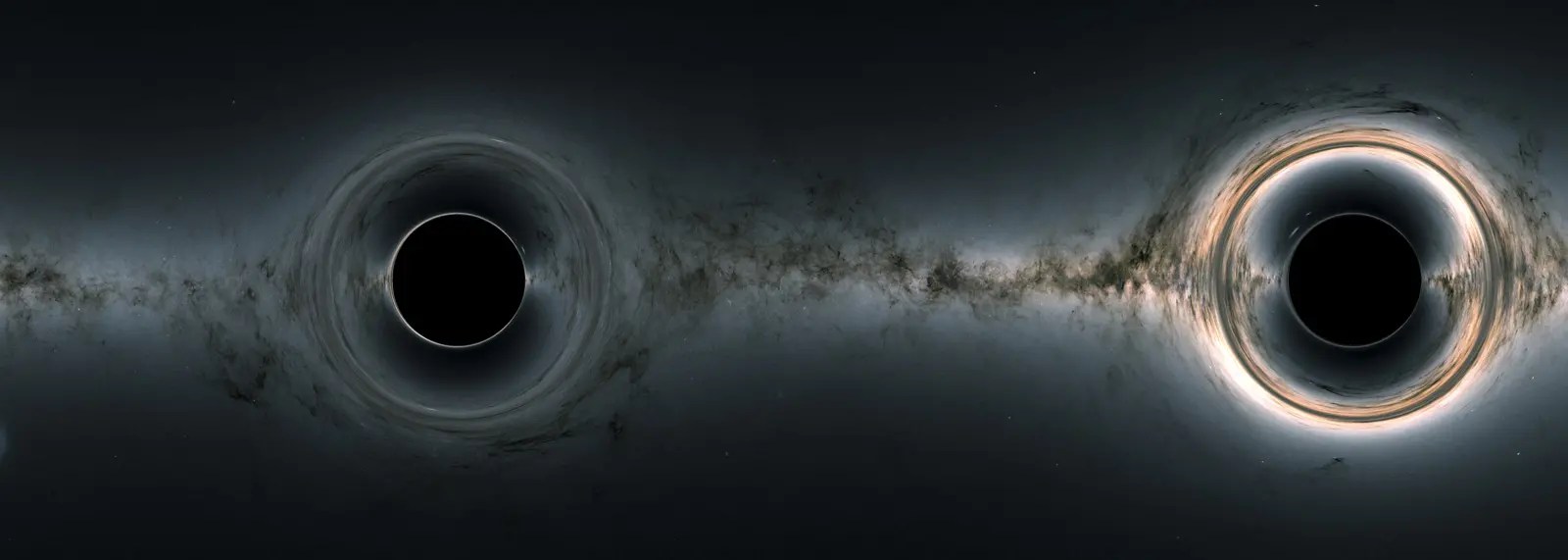
Black holes are among the most mysterious cosmic objects, much studied but not fully understood. These objects aren’t really holes. They’re huge concentrations of matter packed into very tiny spaces. A black hole is so dense that gravity just beneath its surface, the event horizon, is strong enough that nothing – not even light – can escape. The event horizon isn’t a surface like Earth’s or even the Sun’s. It’s a boundary that contains all the matter that makes up the black hole.
There is much we don’t know about black holes, like what matter looks like inside their event horizons. However, there is a lot that scientists *do* know about black holes.
[](https://assets.science.nasa.gov/dynamicimage/assets/science/missions/webb/science/2025/webb-STScI-01JKREFYNJE7MT5SG2H0FBYG75-2K.png?w=1920&h=1080&fit=clip&crop=faces%2Cfocalpoint)
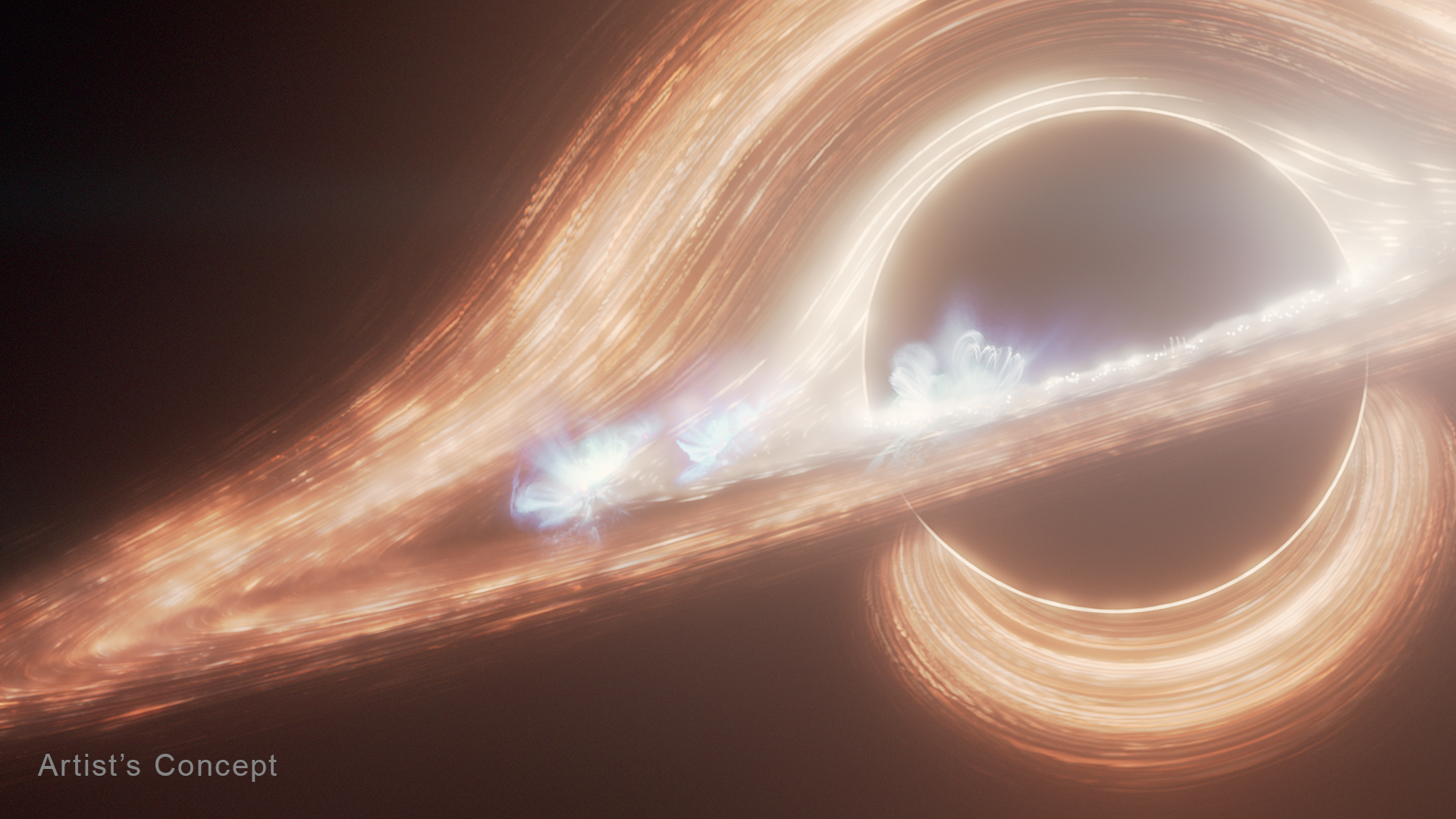
This artist’s concept portrays the supermassive black hole at the center of the Milky Way galaxy, known as Sagittarius A\* (A-star). It’s surrounded by a swirling accretion disk of hot gas. The black hole’s gravity bends light from the far side of the disk, making it appear to wrap above and below the black hole. Several flaring hot spots that resemble solar flares, but on a more energetic scale, are seen in the disk. NASA’s James Webb Space Telescope has detected both bright flares and fainter flickers coming from Sagittarius A\*. The flickers are so rapid they must originate very close to the black hole.
Illustration: NASA, ESA, CSA, Ralf Crawford (STScI)
## Finding Black Holes
Black holes don’t emit or reflect light, making them effectively invisible to telescopes. Scientists primarily detect and study them based on how they affect their surroundings:
- Black holes can be surrounded by rings of gas and dust, called accretion disks, that emit light across many wavelengths, including X-rays.
- A supermassive black hole’s intense gravity can cause stars to orbit around it in a particular way. Astronomers tracked the orbits of several stars near the center of the Milky Way to prove it houses a supermassive black hole, a discovery that won the 2020 Nobel Prize.
- When very massive objects accelerate through space, they create ripples in the fabric of space-time called gravitational waves. Scientists can detect some of these by the ripples’ effect on detectors.
- Massive objects like black holes can bend and distort light from more distant objects. This effect, called gravitational lensing, can be used to find isolated black holes that are otherwise invisible.
## Black Holes Are Not ...
- Wormholes. They don’t provide shortcuts between different points in space, or portals to other dimensions or universes.
- Cosmic vacuum cleaners. Black holes don’t suck in other matter. From far enough away, their gravitational effects are just like those of other objects of the same mass.
Black holes - what are they really? Learn this and more with “Astro-Investigates,” the video series that explores and explains big astrophysics topics with the help of NASA scientists.
**NASA**
## Essential Black Hole Facts
- 01
### Closest
The nearest known black hole, called Gaia BH1, is about 1,500 light-years away.
- 02
### Farthest
The most distant black hole detected, at the center of a galaxy called QSO J0313-1806, is around 13 billion light-years away.
- 03
### Biggest
The most massive black hole observed, TON 618, tips the scales at 66 billion times the Sun’s mass.
- 04
### Smallest
The lightest-known black hole is only 3.8 times the Sun’s mass. It’s paired up with a star.
- 05
### Spaghettification
A real term that describes what happens when matter gets too close to a black hole. It’s squeezed horizontally and stretched vertically, resembling a noodle.
- 06
### Spin
All black holes spin. The fastest-known – named GRS 1915+105 – clocks in at over 1,000 rotations per second.
- 07
### Particle accelerators
Monster black holes at the centers of galaxies can launch particles to near light speed.
- 08
### Gravity's the same
If you replaced the Sun with a black hole of the same mass, the solar system would get a lot colder, but the planets would stay in their orbits.
- 09
### Star booms
One type of black hole is born when massive stars run out of fuel and explode in supernovae.
- 10
### Not so rare
Most Milky Way-sized galaxies have monster black holes at their centers. Our is called Sagittarius A\* (pronounced ey-star), and it’s 4 million times the Sun’s mass.
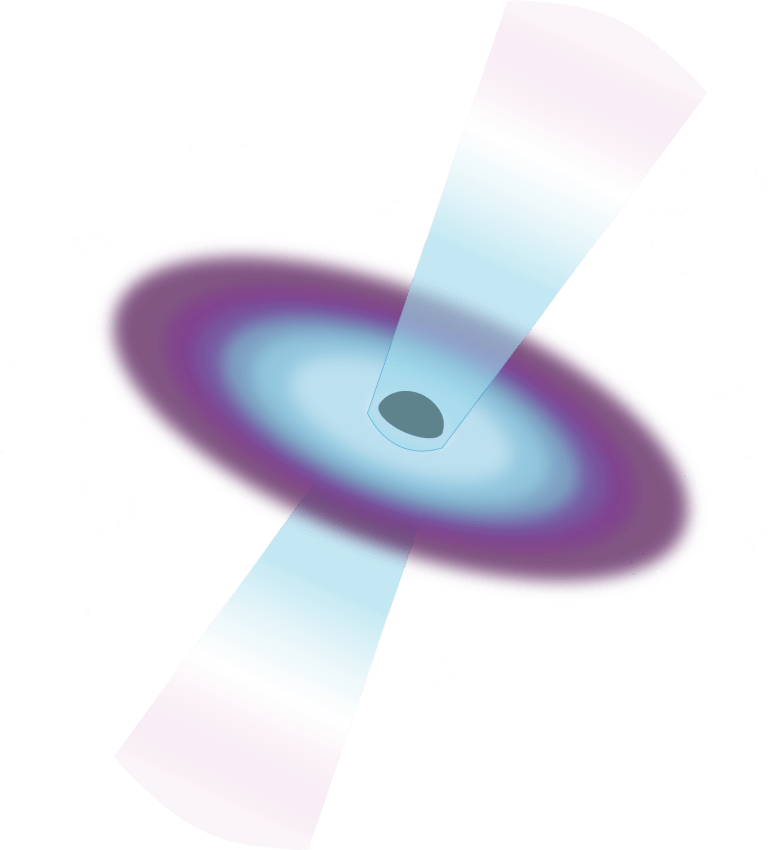
An illustration of a quasar. The colors depicted in this illustration are for artistic purposes only.
NASA
## Black Hole News
[Explore All Black Hole News](https://science.nasa.gov/astrophysics/focus-areas/black-holes/stories/)
[Blog 2 Min Read Archival Data From NASA’s NEOWISE Tracks Star Turning Into Black Hole 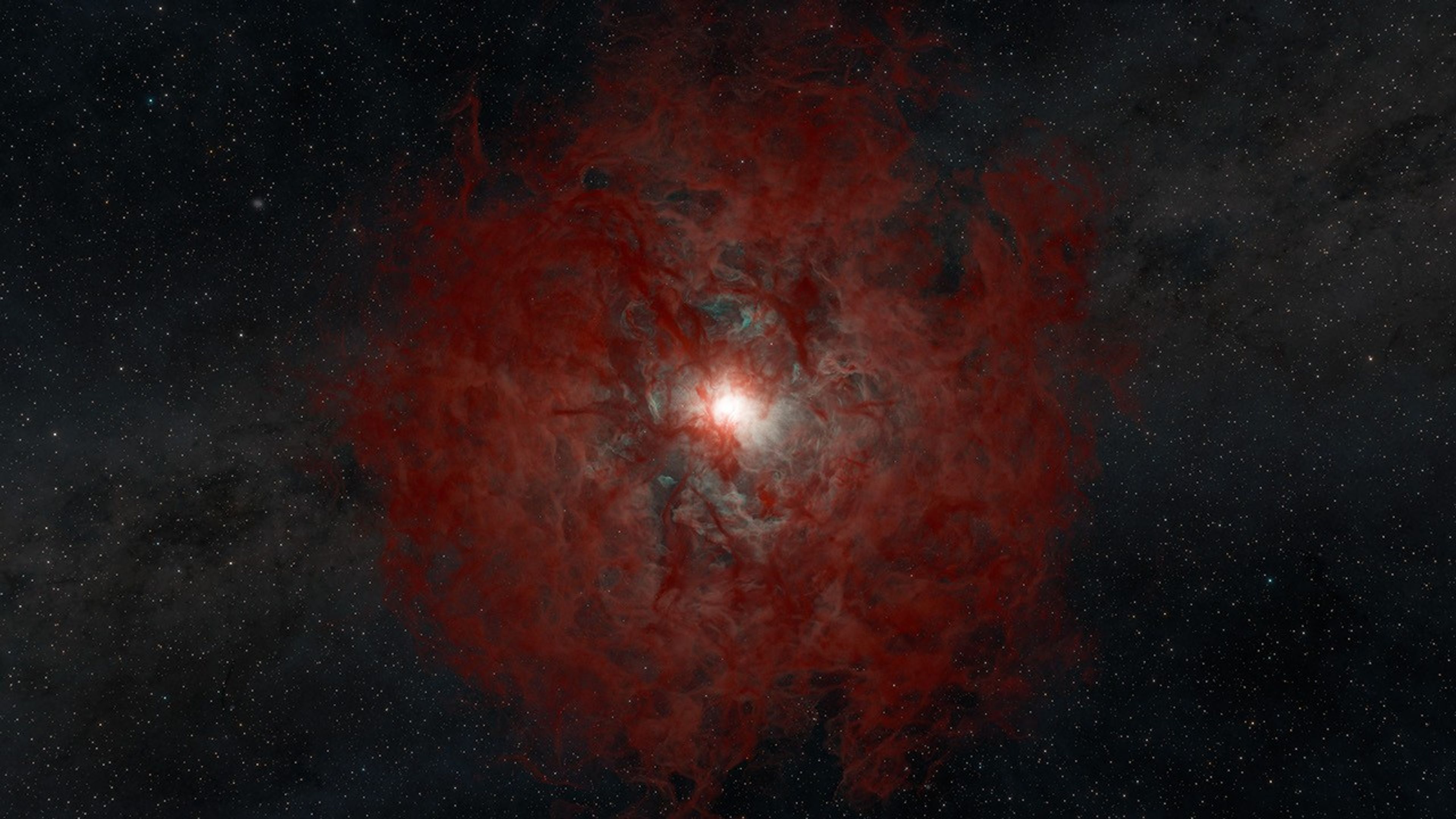](https://science.nasa.gov/blogs/science-news/2026/02/12/archival-data-from-nasas-neowise-tracks-star-turning-into-black-hole/)
[Article 3 Min Read NASA, Partners Advance LISA Prototype Hardware ](https://science.nasa.gov/missions/lisa/nasa-partners-advance-lisa-prototype-hardware/)
[ 7 Min Read NASA’s Webb Delivers Unprecedented Look Into Heart of Circinus Galaxy Article](https://science.nasa.gov/missions/webb/nasas-webb-delivers-unprecedented-look-into-heart-of-circinus-galaxy/)
[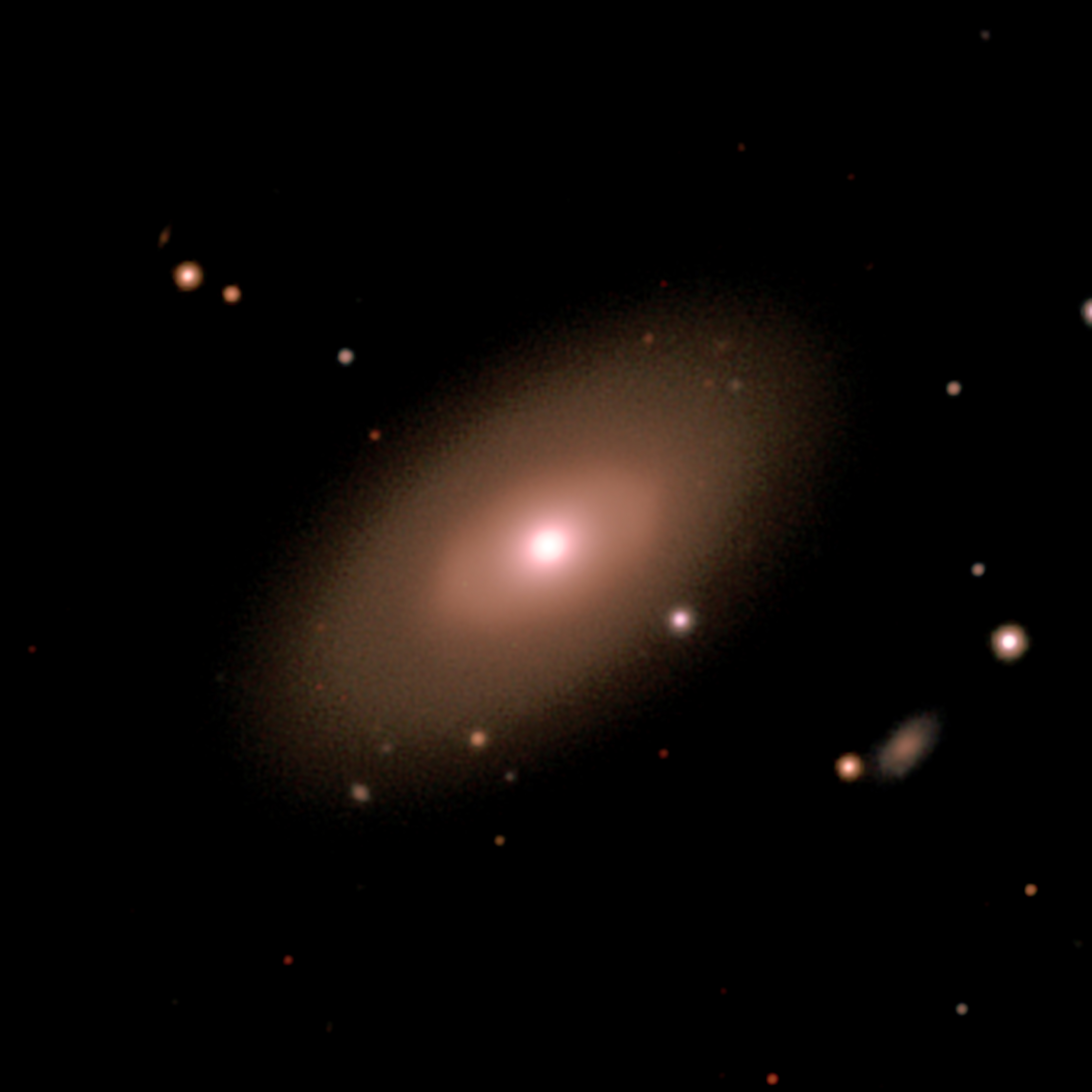 5 Min Read NASA’s Chandra Finds Small Galaxies May Buck the Black Hole Trend Article](https://www.nasa.gov/missions/chandra/nasas-chandra-finds-small-galaxies-may-buck-the-black-hole-trend/)
[ 11 Min Read Black Hole Eats Star: NASA Missions Discover Record-Setting Blast Article](https://science.nasa.gov/science-research/black-hole-eats-star/)
Keep Exploring
## Discover More Topics From NASA
[Universe ](https://science.nasa.gov/universe/)
[Galaxies ](https://science.nasa.gov/universe/galaxies/)
[Stars ](https://science.nasa.gov/universe/stars/)
[Exoplanets ](https://science.nasa.gov/exoplanets/)

### National Aeronautics and Space Administration
NASA explores the unknown in air and space, innovates for the benefit of humanity, and inspires the world through discovery.
- [About NASA's Mission](https://www.nasa.gov/about/)
[Join Us](https://www.nasa.gov/get-involved/)
- [Home](https://www.nasa.gov/)
- [News & Events](https://www.nasa.gov/news/)
- [Multimedia](https://www.nasa.gov/multimedia/)
- [NASA+](https://plus.nasa.gov/)
- [Missions](https://www.nasa.gov/nasa-missions/)
- [Humans in Space](https://www.nasa.gov/humans-in-space/)
- [Earth](https://science.nasa.gov/earth/)
- [The Solar System](https://science.nasa.gov/solar-system/)
- [The Universe](https://science.nasa.gov/universe/)
- [Science](https://science.nasa.gov/)
- [Aeronautics](https://www.nasa.gov/aeronautics/)
- [Technology](https://www.nasa.gov/technology/)
- [Learning Resources](https://www.nasa.gov/learning-resources/)
- [About NASA](https://www.nasa.gov/about/)
- [NASA en Español](https://www.nasa.gov/es/)
### Follow NASA
- [More NASA Social Accounts](https://www.nasa.gov/social-media/)
- [NASA Newsletters](https://www.nasa.gov/nasa-newsletters/)
- [Sitemap](https://www.nasa.gov/sitemap/)
- [For Media](https://www.nasa.gov/news/nasa-media-contacts/)
- [Privacy Policy](https://www.nasa.gov/nasa-web-privacy-policy-and-important-notices/)
- [FOIA](https://www.nasa.gov/foia/)
- [No FEAR Act](https://www.nasa.gov/no-fear-act/)
- [Office of the IG](http://oig.nasa.gov/)
- [Budget & Annual Reports](https://www.nasa.gov/budgets-plans-and-reports/)
- [Agency Financial Reports](https://www.nasa.gov/organizations/budget-annual-reports/agency-financial-reports/)
- [Contact NASA](https://www.nasa.gov/contact-nasa/)
- [Accessibility](https://www.nasa.gov/accessibility/)
- Page Last Updated:
Mar 11, 2026
- Page Editor:
Jeanette Kazmierczak
- Responsible NASA Official for Science:
Diana Logreira
×
Notifications |
| Readable Markdown | Black holes are among the most mysterious cosmic objects, much studied but not fully understood. These objects aren’t really holes. They’re huge concentrations of matter packed into very tiny spaces. A black hole is so dense that gravity just beneath its surface, the event horizon, is strong enough that nothing – not even light – can escape. The event horizon isn’t a surface like Earth’s or even the Sun’s. It’s a boundary that contains all the matter that makes up the black hole.
There is much we don’t know about black holes, like what matter looks like inside their event horizons. However, there is a lot that scientists *do* know about black holes.
## Finding Black Holes
Black holes don’t emit or reflect light, making them effectively invisible to telescopes. Scientists primarily detect and study them based on how they affect their surroundings:
- Black holes can be surrounded by rings of gas and dust, called accretion disks, that emit light across many wavelengths, including X-rays.
- A supermassive black hole’s intense gravity can cause stars to orbit around it in a particular way. Astronomers tracked the orbits of several stars near the center of the Milky Way to prove it houses a supermassive black hole, a discovery that won the 2020 Nobel Prize.
- When very massive objects accelerate through space, they create ripples in the fabric of space-time called gravitational waves. Scientists can detect some of these by the ripples’ effect on detectors.
- Massive objects like black holes can bend and distort light from more distant objects. This effect, called gravitational lensing, can be used to find isolated black holes that are otherwise invisible.
## Black Holes Are Not ...
- Wormholes. They don’t provide shortcuts between different points in space, or portals to other dimensions or universes.
- Cosmic vacuum cleaners. Black holes don’t suck in other matter. From far enough away, their gravitational effects are just like those of other objects of the same mass.
Black holes - what are they really? Learn this and more with “Astro-Investigates,” the video series that explores and explains big astrophysics topics with the help of NASA scientists.
**NASA**
## Essential Black Hole Facts
- 01
### Closest
The nearest known black hole, called Gaia BH1, is about 1,500 light-years away.
- 02
### Farthest
The most distant black hole detected, at the center of a galaxy called QSO J0313-1806, is around 13 billion light-years away.
- 03
### Biggest
The most massive black hole observed, TON 618, tips the scales at 66 billion times the Sun’s mass.
- 04
### Smallest
The lightest-known black hole is only 3.8 times the Sun’s mass. It’s paired up with a star.
- 05
### Spaghettification
A real term that describes what happens when matter gets too close to a black hole. It’s squeezed horizontally and stretched vertically, resembling a noodle.
- 06
### Spin
All black holes spin. The fastest-known – named GRS 1915+105 – clocks in at over 1,000 rotations per second.
- 07
### Particle accelerators
Monster black holes at the centers of galaxies can launch particles to near light speed.
- 08
### Gravity's the same
If you replaced the Sun with a black hole of the same mass, the solar system would get a lot colder, but the planets would stay in their orbits.
- 09
### Star booms
One type of black hole is born when massive stars run out of fuel and explode in supernovae.
- 10
### Not so rare
Most Milky Way-sized galaxies have monster black holes at their centers. Our is called Sagittarius A\* (pronounced ey-star), and it’s 4 million times the Sun’s mass.
Keep Exploring
## Discover More Topics From NASA |
| Shard | 175 (laksa) |
| Root Hash | 12871711242003294575 |
| Unparsed URL | gov,nasa!science,/universe/black-holes/ s443 |