ℹ️ Skipped - page is already crawled
| Filter | Status | Condition | Details |
|---|---|---|---|
| HTTP status | PASS | download_http_code = 200 | HTTP 200 |
| Age cutoff | PASS | download_stamp > now() - 6 MONTH | 0.1 months ago |
| History drop | PASS | isNull(history_drop_reason) | No drop reason |
| Spam/ban | PASS | fh_dont_index != 1 AND ml_spam_score = 0 | ml_spam_score=0 |
| Canonical | PASS | meta_canonical IS NULL OR = '' OR = src_unparsed | Not set |
| Property | Value |
|---|---|
| URL | https://runrepeat.com/nike-structure-plus |
| Last Crawled | 2026-04-05 18:54:06 (4 days ago) |
| First Indexed | 2026-03-10 03:38:03 (1 month ago) |
| HTTP Status Code | 200 |
| Meta Title | Cut in half: Nike Structure Plus Review (2026) | RunRepeat |
| Meta Description | Nike Structure Plus review: The Nike Structure Plus delivers a very unusual mix, combining a stability-focused platform with a street-ready design and a ZoomX layer of foam. Based on our lab tests and running sessions, we found it dependable for easy runs and very comfortable for everyday wear. The midsole feels soft and protective, which we really appreciated during relaxed miles. However, the ride feels muted for a ZoomX shoe, and the heavier build together with the premium price makes it less appealing for runners seeking a more versatile daily trainer. |
| Meta Canonical | null |
| Boilerpipe Text | Who should buy
In our opinion, the Nike Structure Plus is a compelling option for:
Runners loyal to Nike who want the brand’s most advanced stability trainer so far.
Those who prefer stability shoes with a classic geometry instead of aggressive rocker designs.
Anyone looking for a daily trainer that blends sneaker-style looks with amazing support.
Long-time Structure fans who want a step up in tech and comfort. The added ZoomX layer and new upper bring a more premium feel compared to previous versions.
Who should NOT buy
The main drawback of the Nike Structure Plus is its high price. In our view, many runners will struggle to justify that cost for simple daily mileage. We think beginners especially may hesitate too, particularly when more affordable options like the
Nike Structure 26
or the
ASICS GT 2000 14
deliver reliable support and similar versatility.
Your browser does not support the video tag.
We also believe the shoe’s weight hurts its overall experience. During our runs it felt noticeably bottom-heavy and far from a fast-paced trainer when pushing the pace. From our perspective, lighter stability options like the
Saucony Tempus 2
or the
HOKA Arahi 8
offer a more agile feel and can even handle some tempo sessions.
Cushioning
Shock absorption
The midsole of the Structure Plus is clearly thick, so we expected above-average results in our shock absorption test. After completing all procedures, we measured 140 SA in the heel and 110 SA in the forefoot, which is solid for everyday runs but not especially impressive.
However, for runners seeking a bit more cushioning than the regular Structure 26 (132 SA / 99 SA), Nike delivers.
Heel
Forefoot
Structure Plus
140 SA
Average
130 SA
Compared to 341 running shoes
Number of shoes
52 SA
Shock absorption
173 SA
Energy return
The ZoomX logo looked promising, yet during our runs the shoe felt far from pogo-stick bouncy, if anything the opposite. Indeed, our lab results confirmed this impression, showing just 58.2% energy return in the heel and 65.2% in the forefoot.
The forefoot contains more ZoomX relative to ReactX, so the difference between both measurements makes sense. Consequently, with these numbers the shoe will feel a tiny bit energetic but only for midfoot and forefoot strikers.
Heel
Forefoot
Structure Plus
58.2%
Average
58.6%
Compared to 338 running shoes
Number of shoes
38.0%
Energy return
83.0%
Heel stack
At 40.9 mm, Nike went fully maximalist with the Structure Plus, and that is exactly how the shoe feels underfoot. As soon as we started running in it, we immediately noticed how elevated our feet sit above the ground.
However, do not be misled by the massive sidewalls that Nike designed to help prevent the arch from collapsing. The platform is tall, but not
that
tall.
Structure Plus
40.9 mm
Average
35.0 mm
Compared to 533 running shoes
Number of shoes
22.5 mm
Heel stack
48.1 mm
Forefoot stack
The forefoot rises 29.7 mm from the ground, offering plenty of foam for easy runs and delivering the solid cushioning as we observed earlier in our shock absorption test.
Structure Plus
29.7 mm
Average
26.4 mm
Compared to 533 running shoes
Number of shoes
13.7 mm
Forefoot stack
38.5 mm
Drop
Most runners are used to Nike deploying a high drop in its
daily running shoes
, and we found that the Structure Plus follows that same steep geometry. With 11.2 mm of actual heel-to-toe drop, it's clear to us that rearfoot strikers will feel right at home in this shoe.
Structure Plus
11.2 mm
Average
8.6 mm
Compared to 533 running shoes
Number of shoes
-0.1 mm
Drop
16.1 mm
Midsole softness
Updated
Note: Low measurement: softer. High measurement: firmer.
The ZoomX logo is not as impressive today as it once was. Nike has adjusted the formula using a TPE foam instead of Pebax for training shoes, and many other brands now use premium foams in their trainers.
Your browser does not support the video tag.
However, after testing the shoe ourselves we still found that this version of ZoomX performs well for the Structure Plus, delivering a plush and forgiving ride underfoot. Our Asker C durometer measured 29.5 AC for the top layer, which is clearly softer than the average.
Structure Plus
29.5 AC
Average
36.1 AC
Compared to 191 running shoes
Number of shoes
19.6 AC
Midsole softness (soft to firm)
54.0 AC
Secondary foam
Updated
Note: Low measurement: softer. High measurement: firmer.
The dual-foam design of the Nike Structure Plus places ReactX beneath ZoomX, and that positioning is no coincidence. ZoomX brings softness and energy return, while ReactX adds stability and durability.
However, ReactX also makes the ride feel more muted and less lively. In our durometer test it measured 37.7 AC, confirming its firmer nature, which is expected in a stability-focused shoe anyway.
Structure Plus
37.7 AC
Average
39.4 AC
Compared to 82 running shoes
Number of shoes
23.6 AC
Secondary foam (soft to firm)
64.0 AC
Rocker
Some brands are moving toward highly rockered designs on every shoe, but Nike avoids that approach with the Structure Plus. In our view, that is a sensible decision for a stability daily trainer.
This design makes the shoe a strong option for runners who prefer a more classic midsole geometry. It also feels more natural when walking or wearing the shoe casually, which seems like something Nike clearly considered when creating this sneaker-friendly design.
Size and fit
Nike Structure Plus fits
true to size
(29 votes).
Small
True to size
Large
Internal length
Note: Our testing shows that internal length is not a great measure of fit. But, as many users have requested this specific test, we've decided to add it for those interested.
Structure Plus
272.9 mm
Average
269.5 mm
Compared to 276 running shoes
Number of shoes
259.5 mm
Internal length
277.6 mm
Width / Fit
As with every shoe we test, we purchased the Nike Structure Plus in US 9 with standard width. It is also worth noting that Nike offers this model in a Wide version, although availability may vary by market.
Your browser does not support the video tag.
That said, we began taking measurements on our pair. With 93.4 mm in our first reading, it shows a classic Nike fit that likely will not suit wide feet well, though we still needed to complete the rest of our measurements.
Structure Plus
93.4 mm
Average
95.2 mm
Compared to 288 running shoes
Number of shoes
88.5 mm
Width / Fit
101.4 mm
Toebox width
The second measurement also came in slightly below average at 72.5 mm, though only by a small margin. We consider it a very standard fit, and we believe anyone who has worn Nike shoes before will find the feel familiar on foot.
Structure Plus
72.5 mm
Average
73.3 mm
Compared to 288 running shoes
Number of shoes
66.7 mm
Toebox width
82.6 mm
Toebox height
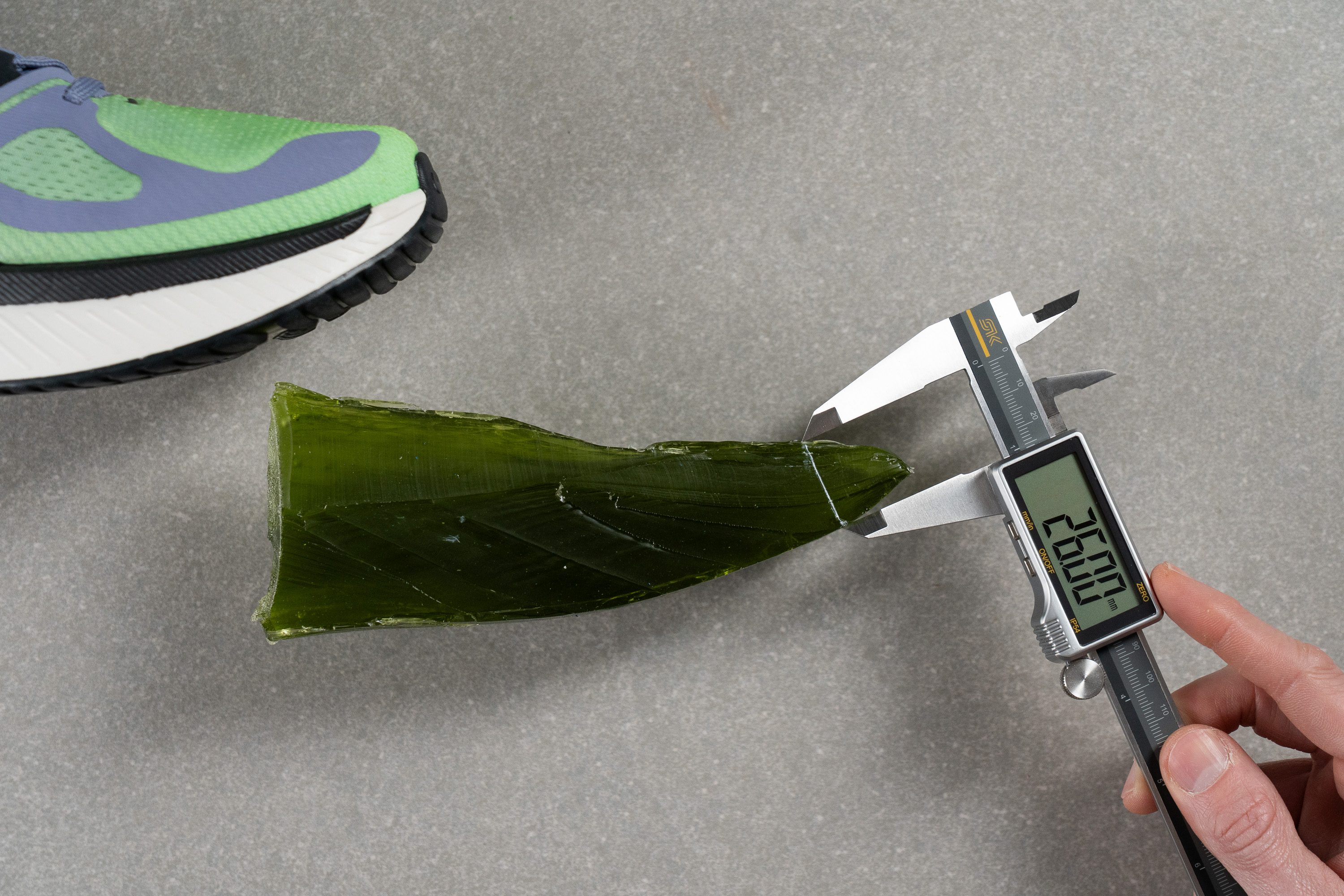
Toebox height follows the same pattern as the previous two measurements, so there are no surprises here.
Your browser does not support the video tag.
At 26.0 mm, the figure feels reasonable to us, especially since stability shoes often benefit from a slightly snugger fit to help contain lateral forces and improve support.
Structure Plus
26.0 mm
Average
27.0 mm
Compared to 288 running shoes
Number of shoes
22.0 mm
Toebox height
34.1 mm
Traction / Grip
Traction test
One area that needed improvement from the regular Structure was traction. We previously measured 0.37, and fortunately the Plus version raises that figure to a more acceptable 0.51.
It is still not impressive, but it now delivers dependable grip, even when running in the rain.
Structure Plus
0.51
Average
0.50
Compared to 332 running shoes
Number of shoes
0.11
Forefoot traction
0.89
Outsole design
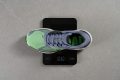
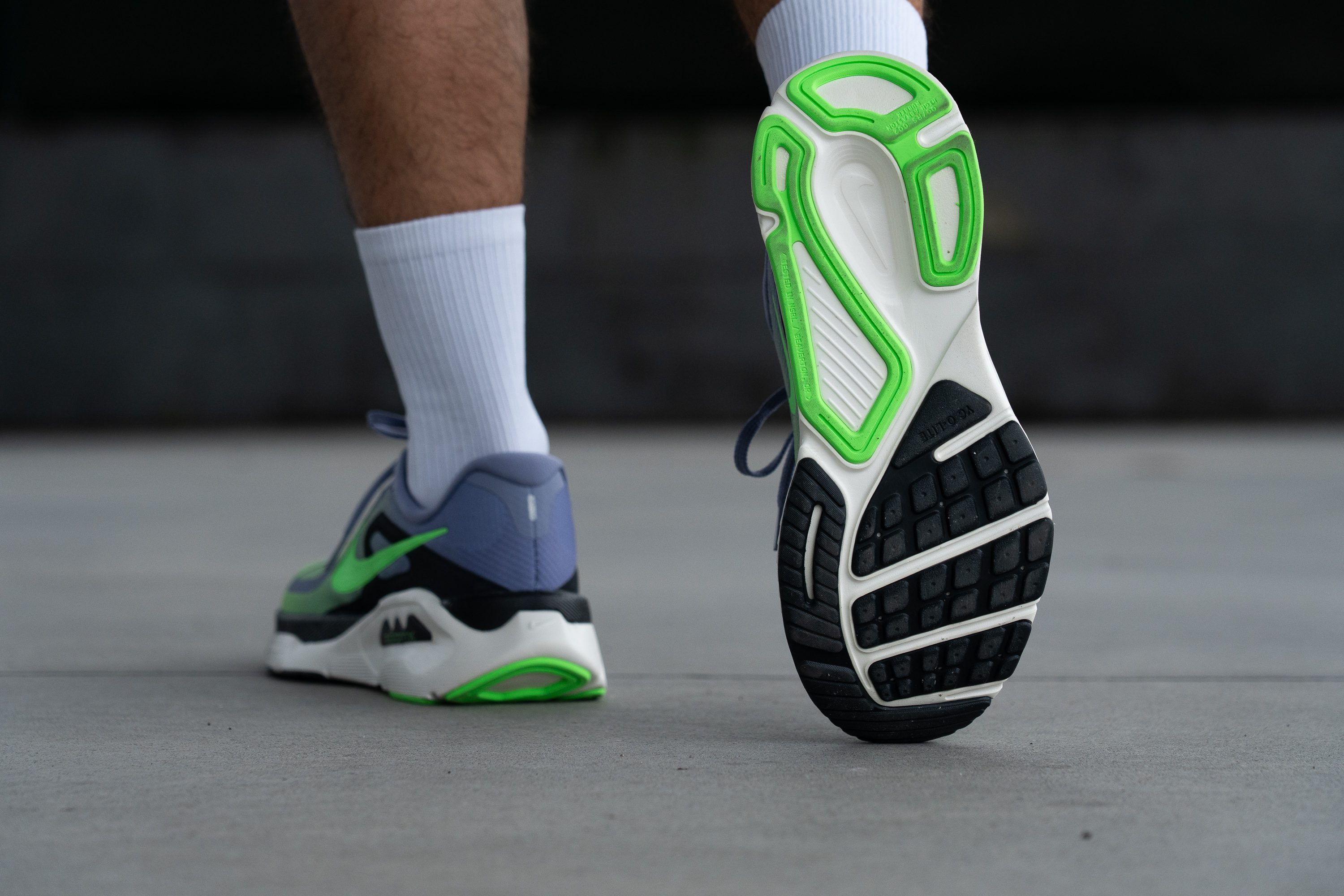
The outsole keeps a very similar layout to the Structure 26, preserving most of its design DNA with only small visual tweaks. It combines black "YC O-LITE" rubber in the forefoot with bright green "OG/RS 002" high abrasion rubber panels across the midfoot and heel.
The rearfoot and midfoot rubber provide solid protection, especially because the rubber sits clearly higher than the exposed foam. We also noted a very deep cutout in the center of the heel that helps with foam compression too.
Flexibility / Stiffness
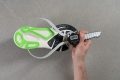
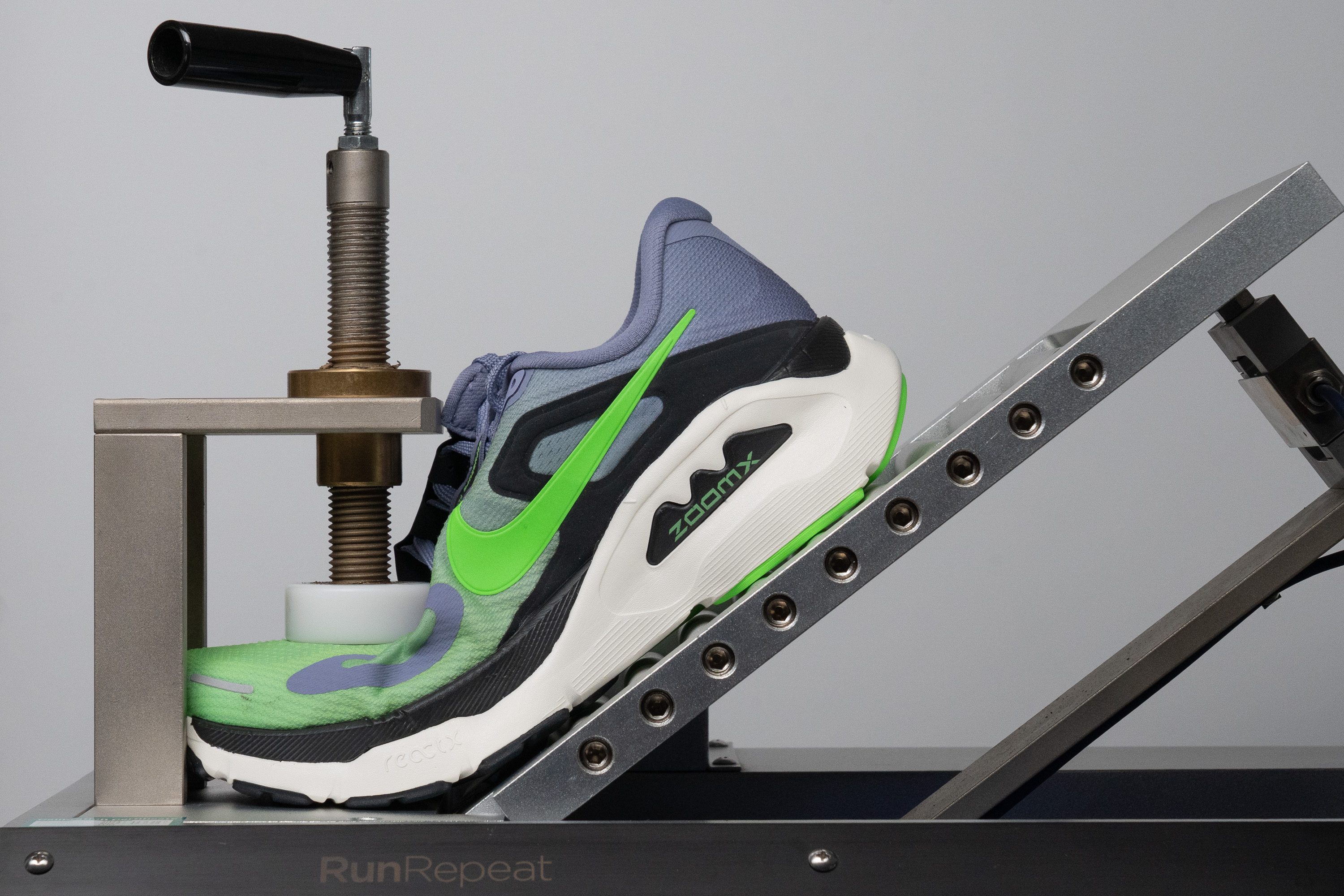
To enjoy the Nike Structure Plus, you definitely need to be a fan of longitudinally stiff shoes. With 19.3N in our lab test, it quickly becomes a no-go for runners who prefer a more flexible feel underfoot.
Structure Plus
19.3N
Average
15.5N
Compared to 335 running shoes
Number of shoes
3.9N
Flexibility
Stiffness
28.5N
Weight
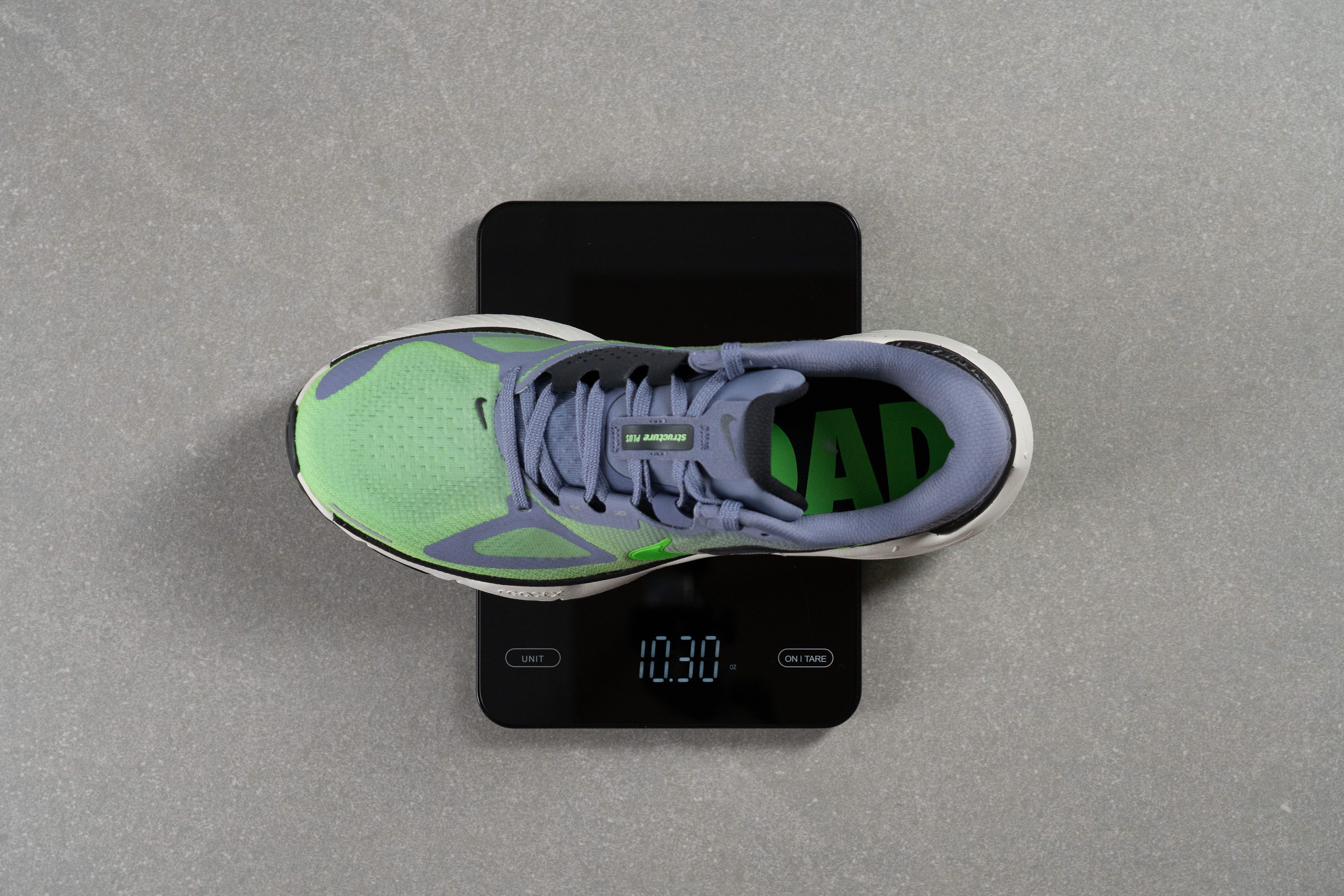
The Nike Structure Plus is only 1% lighter than the Structure 26, coming in at 10.3 oz or 292g. That small reduction hardly changes the experience, and the shoe still sits on the heavier side of the current market.
For daily mileage it can work, yet during our testing the shoe felt somewhat bottom heavy. In our opinion, this is a missed opportunity for
Nike
to gain ground against strong rivals like the
ASICS Gel Kayano 32
.
Structure Plus
10.3 oz (292g)
Average
9.3 oz (264g)
Compared to 534 running shoes
Number of shoes
5.3 oz (149g)
Weight
12.9 oz (366g)
Breathability
One thing we all should demand from Nike is amazing materials in the Plus and Premium versions of its daily trainers. In this case, we think the Structure Plus delivers on that expectation.
Your browser does not support the video tag.
The upper feels noticeably better than the one found in the regular version. It improves breathability to a 4 out of 5 score while maintaining the same comfortable overall feel.
Your browser does not support the video tag.
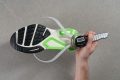
Nike organizes the upper into three clear zones: a well-ventilated forefoot, a very dense heel designed for stability, and a balanced construction through the midfoot area.
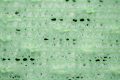
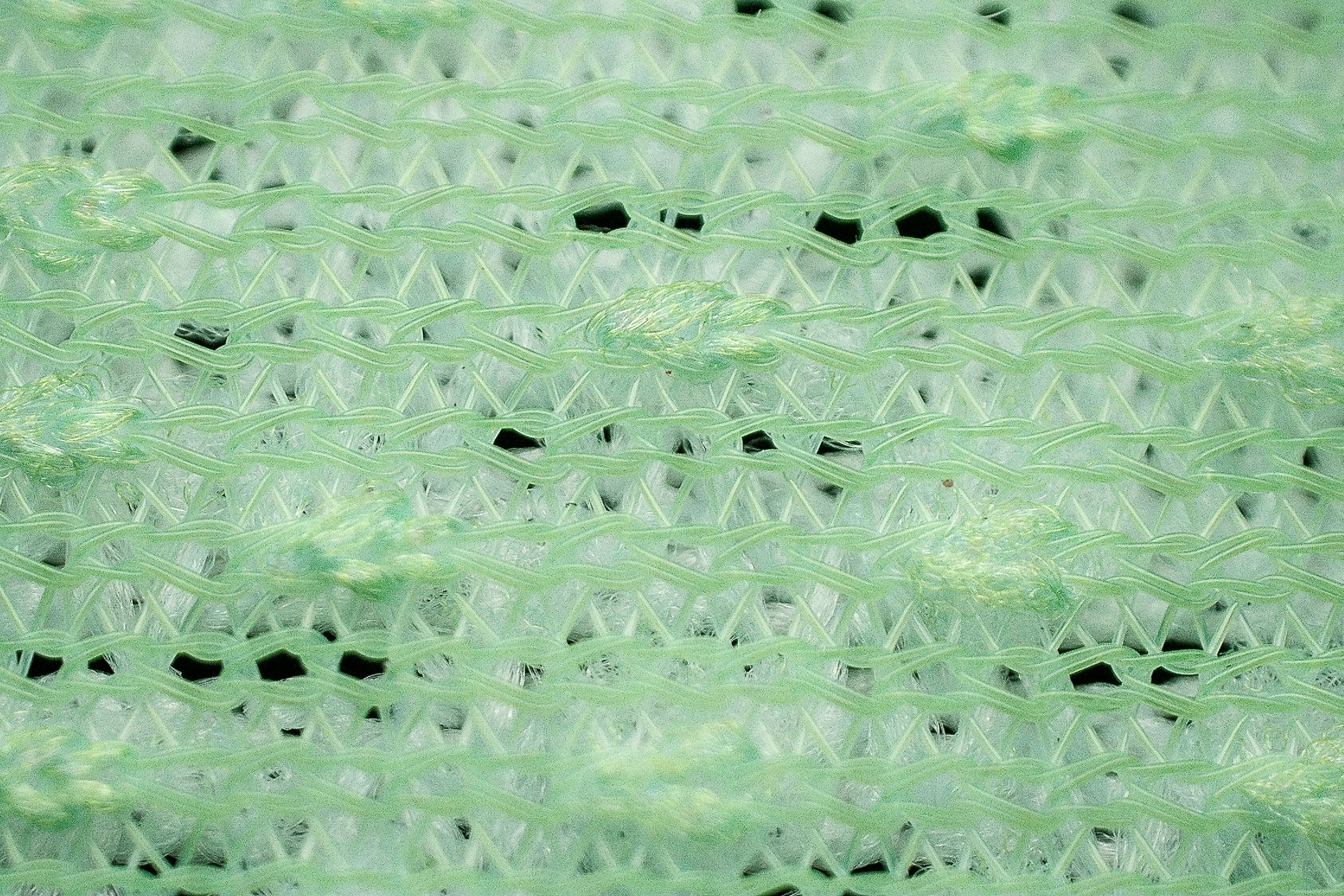
When we examined the upper with our digital microscope, the jump in quality became clear. The mesh looks softer and more refined, and the ventilation holes appear well distributed.
Handling the shoe confirms that comfort was a clear priority here. The heel padding is extremely generous, and all the materials feel soft and pleasant to the touch.
Your browser does not support the video tag.
Structure Plus
4
Average
3.6
Compared to 463 running shoes
Number of shoes
1
Breathability
5
Stability
Lateral stability test
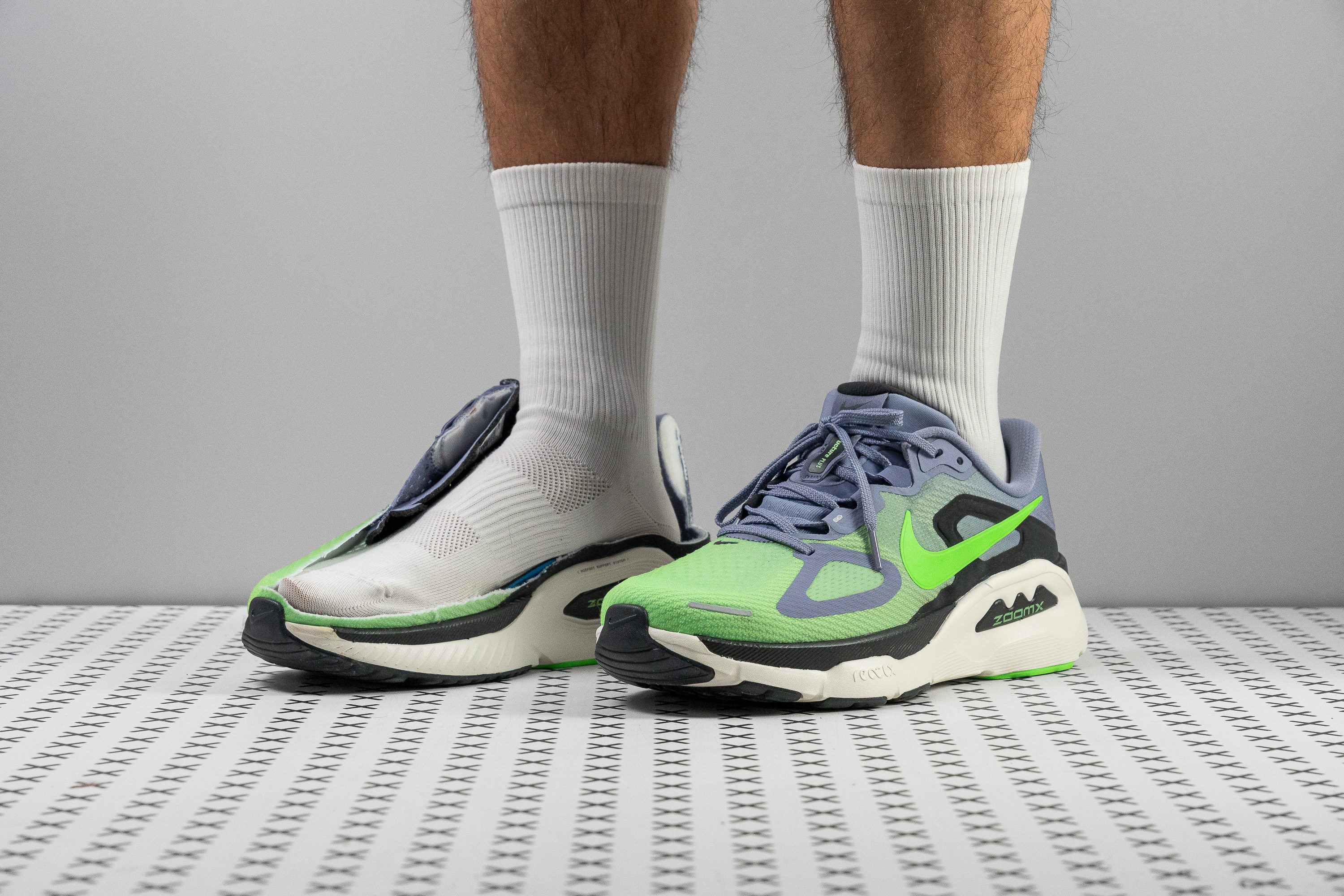
The Nike Structure Plus continues to use Nike’s Midfoot Support System to help stabilize the ride and limit pronation. It worked well on the regular Structure, and here Nike made it more pronounced to match the higher stack height of this version.
The support feels unobtrusive, and it's a good option for those who overpronate as well as neutral runners seeking a more controlled ride, without the harsh feel of older stability shoes. Oh, and we also really liked how Nike integrated support into the upper in a subtle and visually clean way.
Torsional rigidity
The Structure Plus has a more flexible structure than many stability shoes, which also makes it more comfortable for everyday wear as a sneaker. We rated it 4/5.
Structure Plus
4
Average
3.5
Compared to 512 running shoes
Number of shoes
1
Torsional rigidity
5
Heel counter stiffness
The heel counter also scored 4/5 instead of the maximum rating, which is uncommon for this type of shoe. We appreciate having an alternative like this in the market, offering solid stability without that overly stiff feel on foot.
Structure Plus
4
Average
3
Compared to 496 running shoes
Number of shoes
1
Heel counter stiffness
5
Midsole width - forefoot
The midsole width follows the same pattern we saw in previous tests, showing a moderate rather than extreme design.
Your browser does not support the video tag.
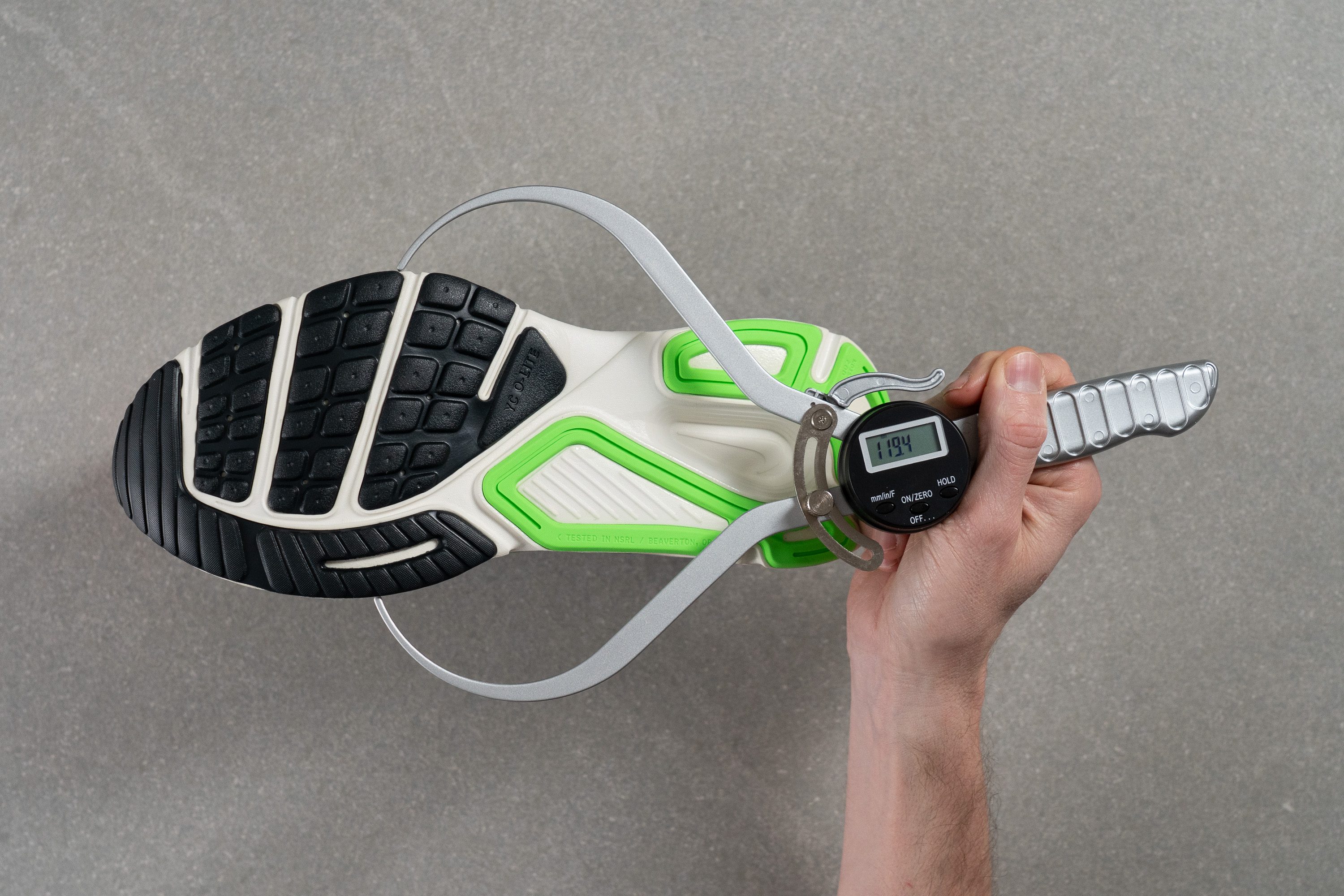
We measured 119.4 mm, which is clearly wider than a neutral trainer but still narrower than some max-stack stability options.
Structure Plus
119.4 mm
Average
114.5 mm
Compared to 534 running shoes
Number of shoes
102.2 mm
Midsole width - forefoot
127.9 mm
Midsole width - heel
Moving our calipers to the heel, we measured 94.7 mm. Once again, this reflects what we consistently observed in this shoe, a less aggressive and more beginner-friendly approach to stability.
Structure Plus
94.7 mm
Average
90.7 mm
Compared to 534 running shoes
Number of shoes
70.8 mm
Midsole width - heel
106.6 mm
Durability
Toebox durability
After evaluating the breathability of the Structure Plus, we moved to the durability section of our lab to see how the upper holds up under stress. Ventilated uppers like this often struggle here, and this one followed that pattern with a modest 2/5 result.
Structure Plus
2
Average
2.6
Compared to 397 running shoes
Number of shoes
1
Toebox durability
5
Heel padding durability
Fortunately, the super-plush heel padding performed much better in our test. This time it earned a solid 4 out of 5.
Structure Plus
4
Average
3.3
Compared to 391 running shoes
Number of shoes
1
Heel padding durability
5
Outsole durability
Nike has rarely been a market leader in outsole grip or durability when relying on its own compounds... and yes, Vibram-equipped trail models like the
Ultrafly
do not count here. With the Structure Plus, however, we were satisfied, as our test showed solid durability with only 0.9 mm of rubber worn away.
Structure Plus
0.9 mm
Average
1.1 mm
Compared to 375 running shoes
Number of shoes
0.0 mm
Outsole wear
2.0 mm
Outsole thickness
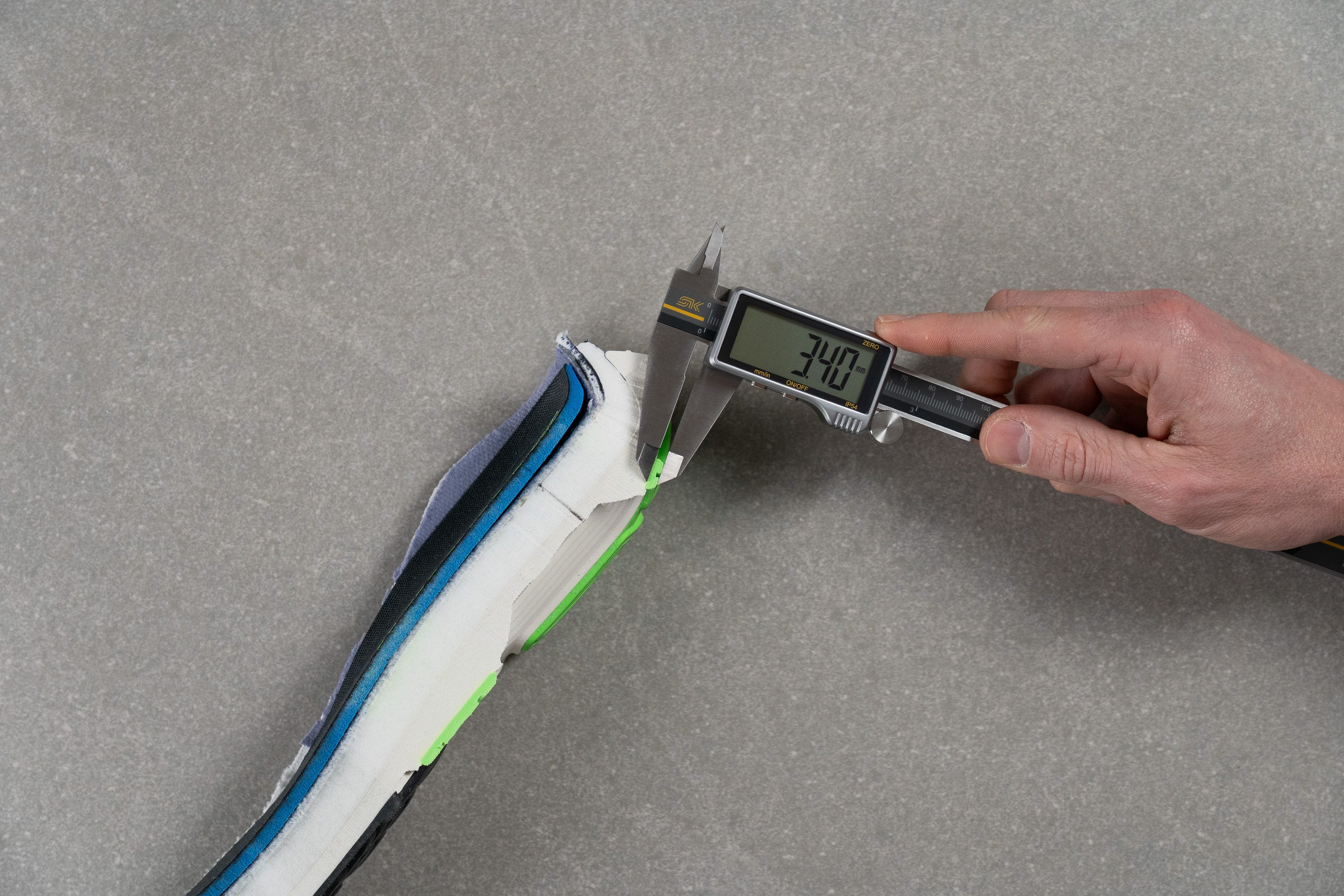
The outsole also offers a generous thickness of 3.4 mm. Combined with the durability result we observed, we believe runners can feel confident about the long-term wear of the shoe.
Structure Plus
3.4 mm
Average
3.2 mm
Compared to 530 running shoes
Number of shoes
0.5 mm
Outsole thickness
6.1 mm
Misc
Insole thickness
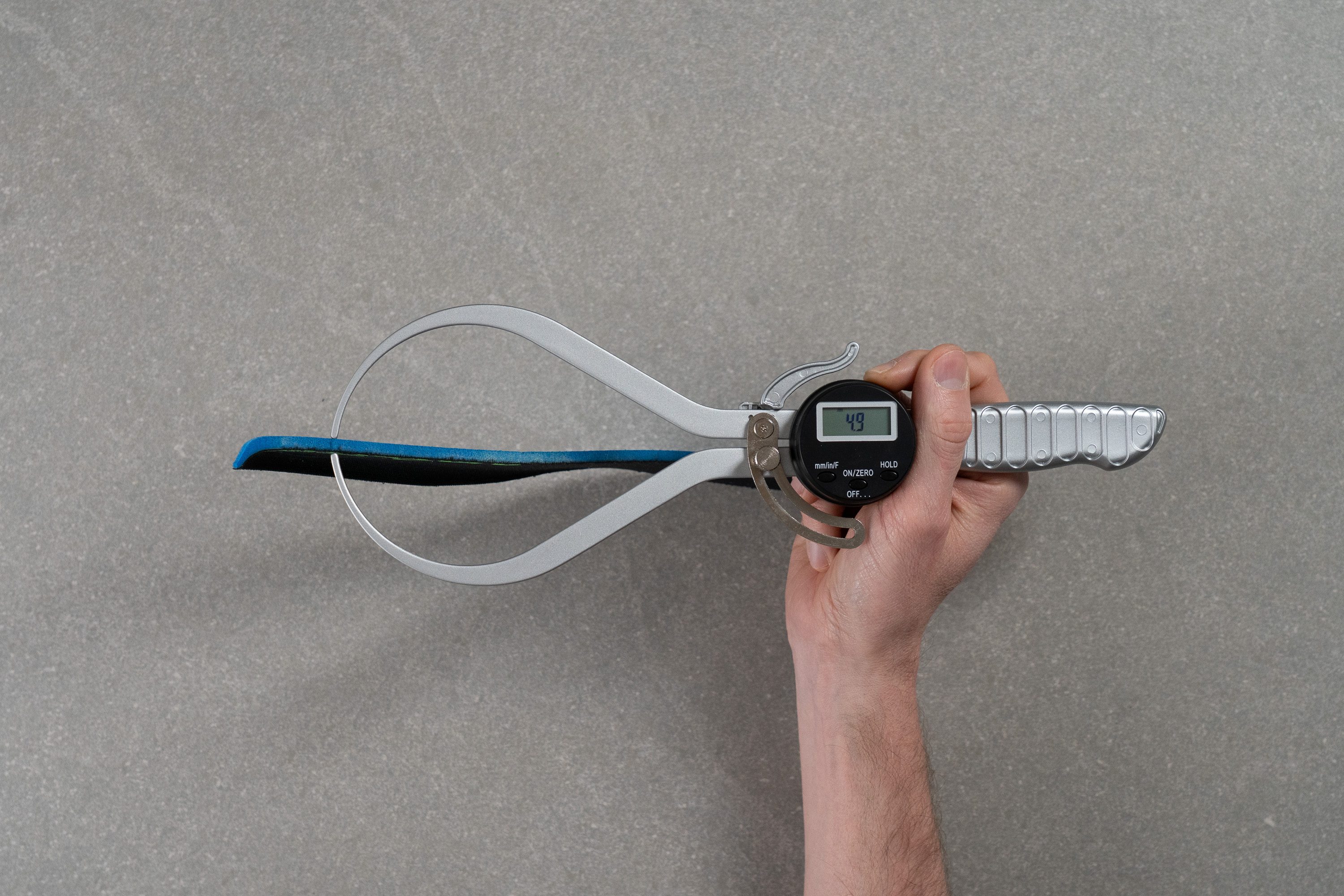
The insole is quite basic, made from EVA foam, and adds 4.9 mm of cushioning to the Structure Plus.
Structure Plus
4.9 mm
Average
4.5 mm
Compared to 528 running shoes
Number of shoes
1.5 mm
Insole thickness
7.8 mm
Removable insole
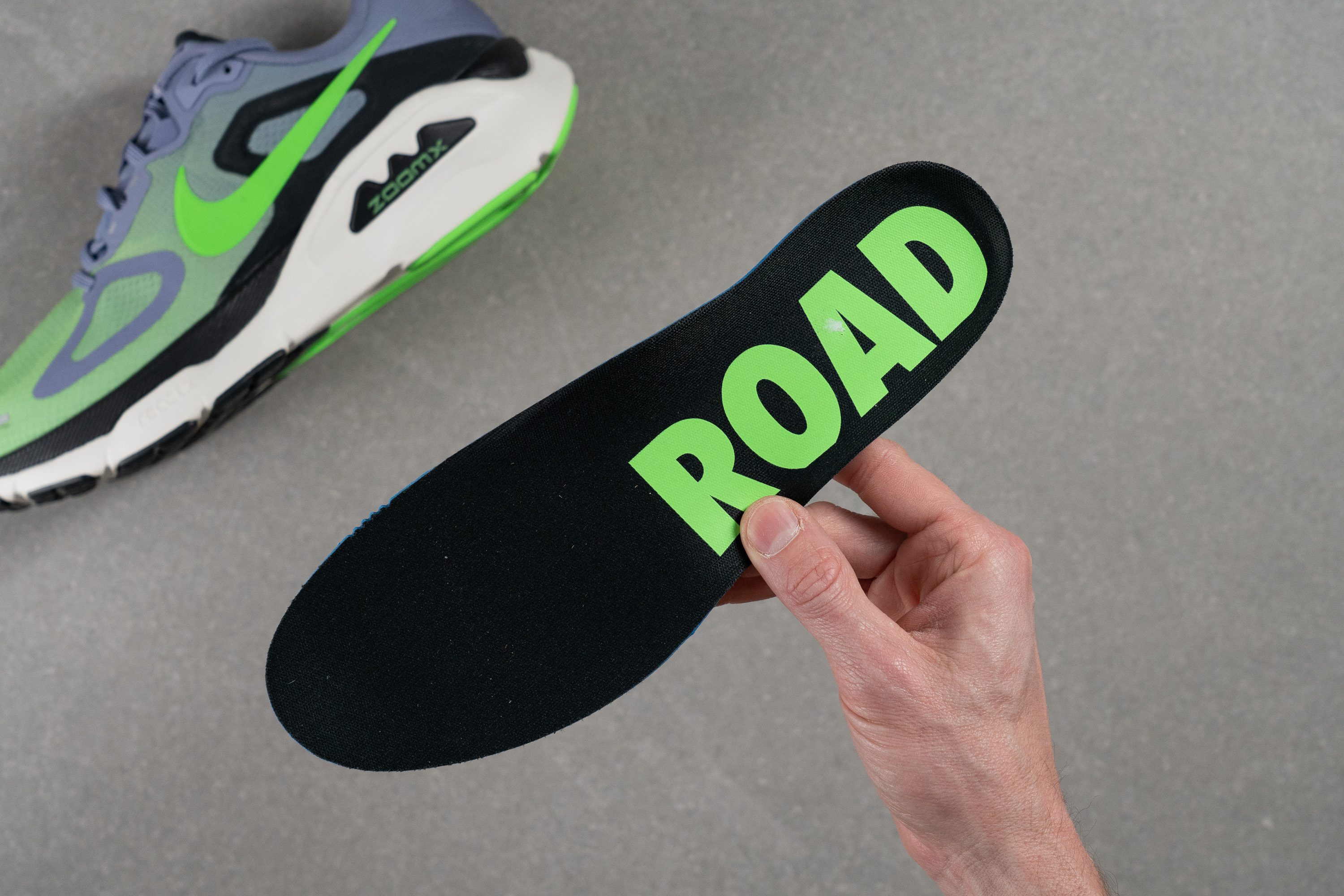
Removing the insole from the Structure Plus is quick and easy. And yes, we know it is a road shoe, thanks Nike!
Structure Plus
Yes
Midsole softness in cold (%)
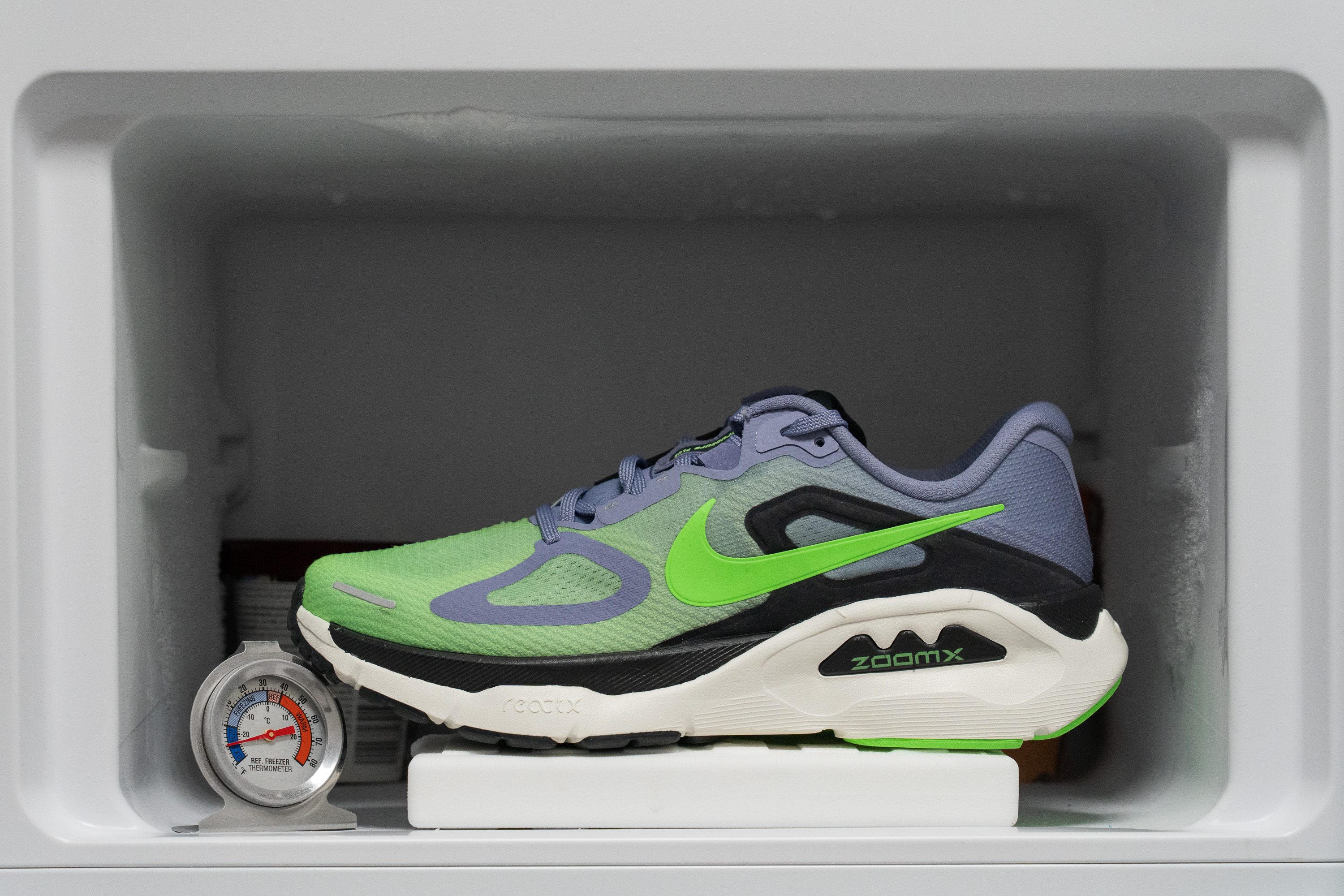
Runners planning to use the Structure Plus in very cold weather will appreciate this lab result. It became only 2% firmer after spending 20 minutes in our freezer.
Structure Plus
2%
Average
23%
Compared to 458 running shoes
Number of shoes
0%
Midsole softness in cold
63%
Reflective elements
Nike includes reflective elements on the heel, but we did not find them particularly impressive. If anything, they felt rather underwhelming.
Structure Plus
Yes
Tongue padding
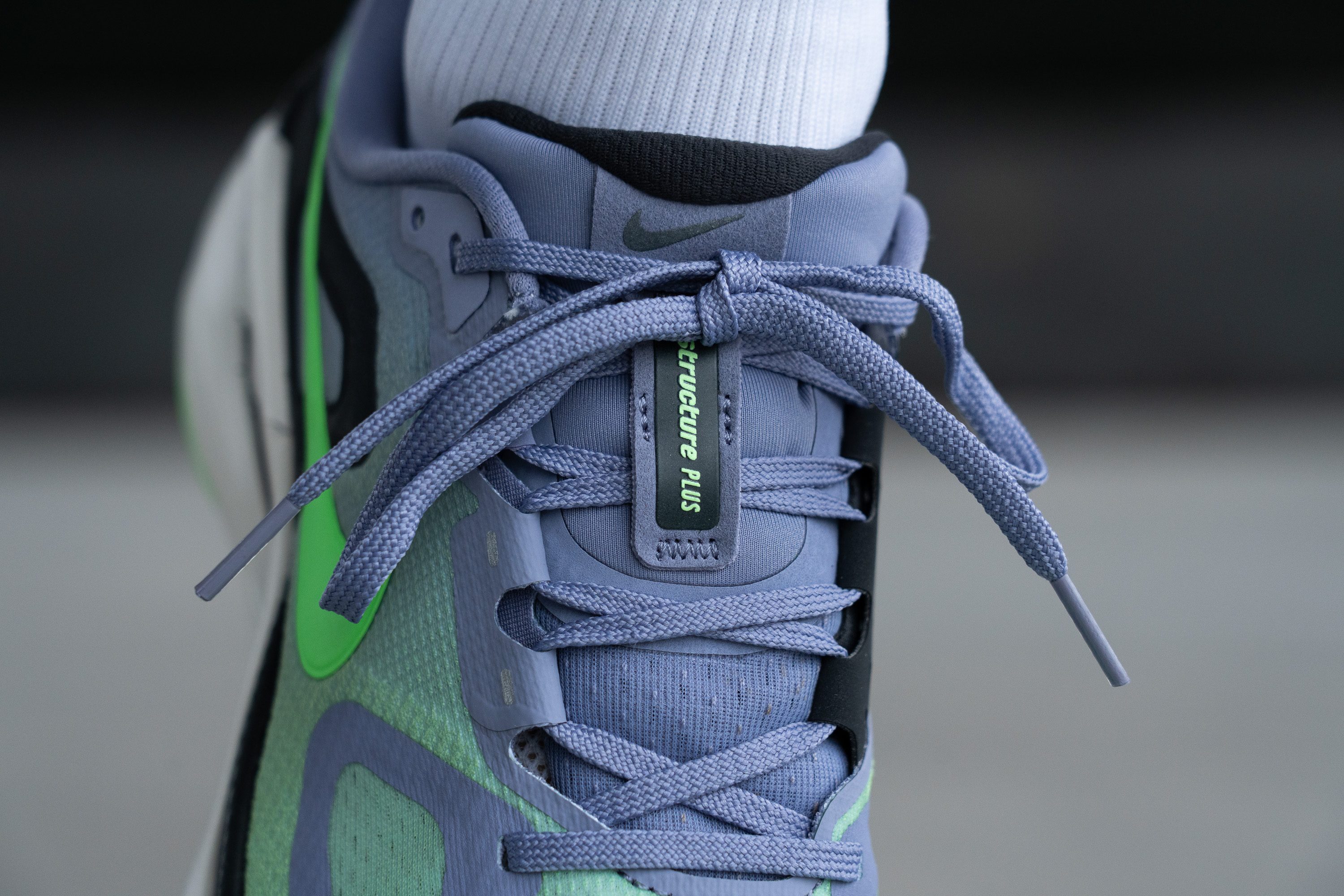
We noticed that Nike slightly updated the lacing system compared to the regular Structure, yet the overall fit feels very similar. The laces also pass twice under a central tongue loop, helping reduce unwanted tongue movement during runs.
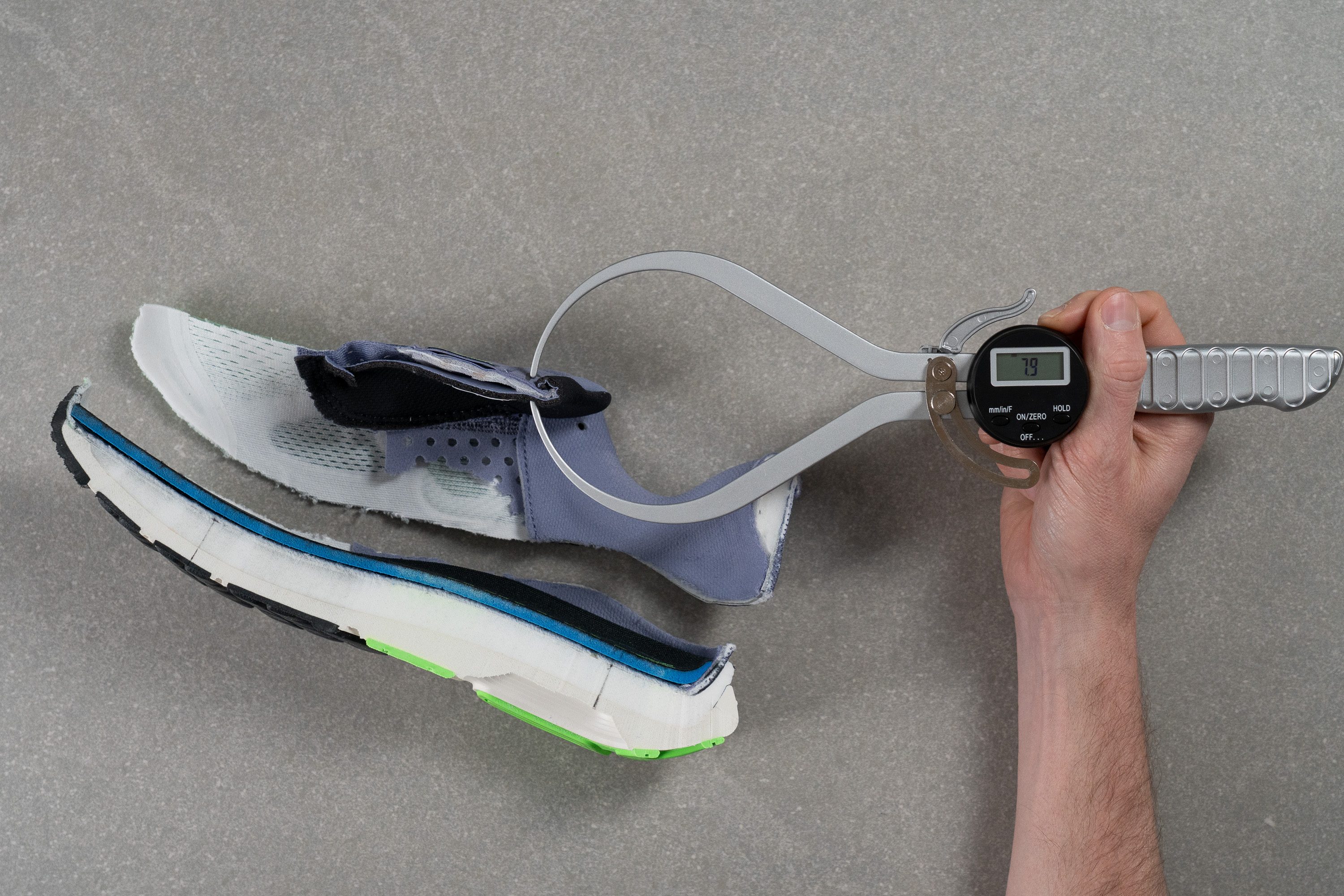
The step-in feel is comfortable thanks to a thick tongue with 7.9 mm of padding, which feels more than sufficient for running and everyday wear. Considering the already high weight of the shoe, adding more padding looks like a bad idea.
Structure Plus
7.9 mm
Average
5.7 mm
Compared to 531 running shoes
Number of shoes
0.4 mm
Tongue padding
14.2 mm
Tongue: gusset type
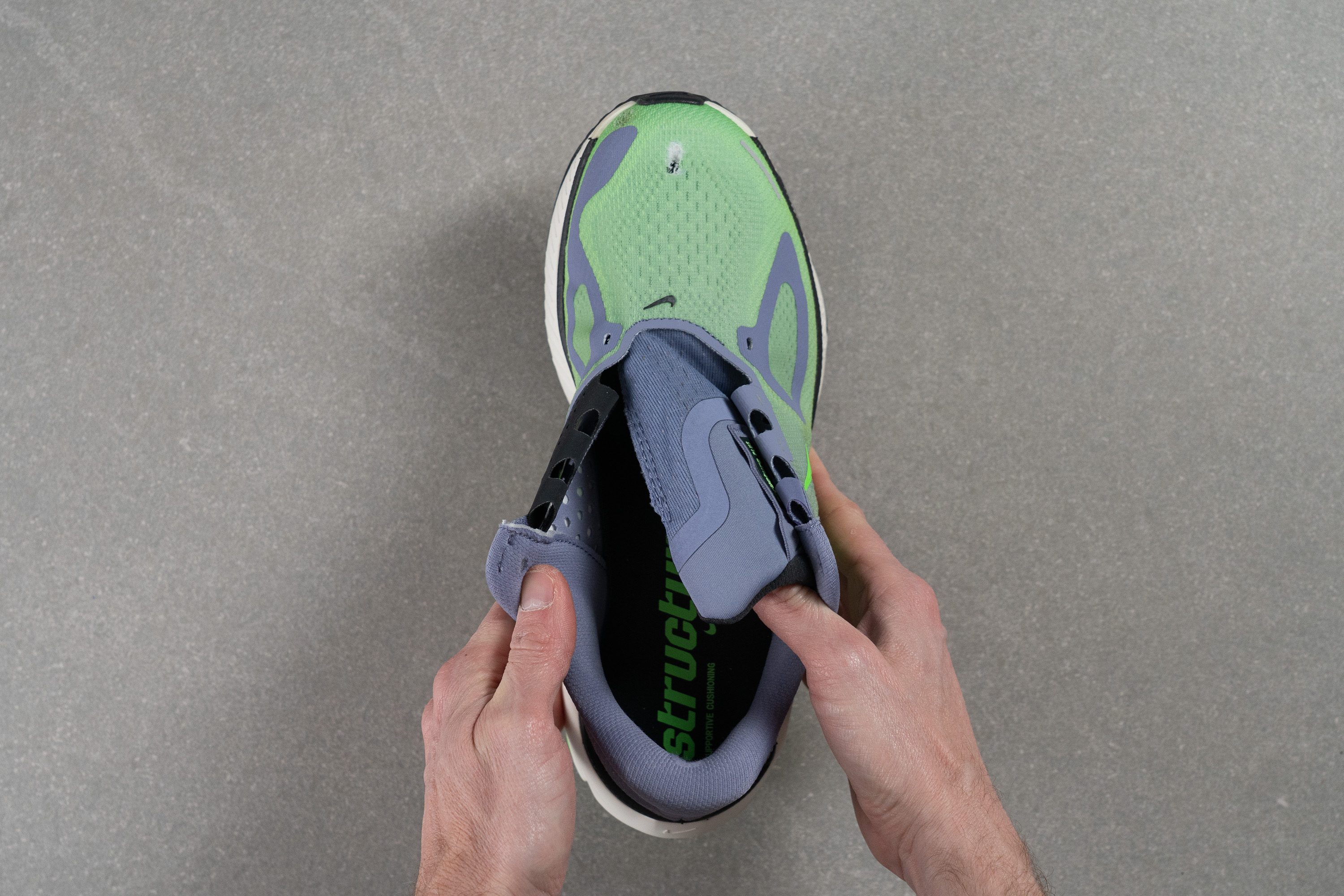
The tongue is not gusseted to the sides, which feels disappointing for a shoe at this price point. It is a tough pill to swallow.
Structure Plus
None
Heel tab
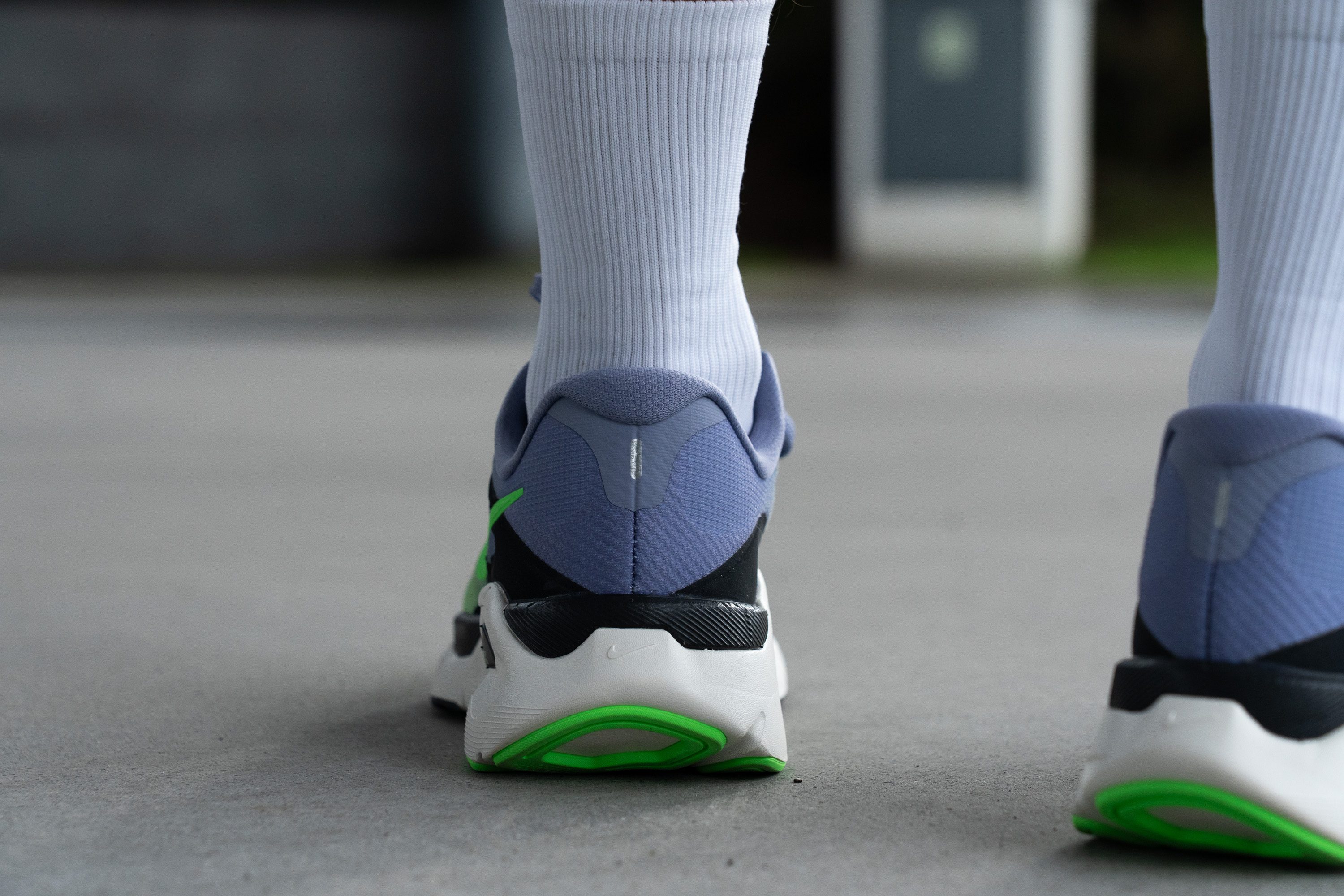
The heel collar curves inward with plush padding, delivering secure ankle lockdown while skipping the a finger loop tab.
Structure Plus
None
Price
The Plus label in the Structure name does not bring encouraging news for the price, just as we saw with the
Pegasus Plus
. Consequently, the cost can feel quite steep given its performance and relatively muted ride.
However, it can be a worthwhile upgrade for runners seeking the next step beyond the regular Structure, as it introduces an approach to stability that Nike has not offered before with the use of ZoomX foam. And the fact that the shoe also works so easily as a sneaker helps with the high price too.
Structure Plus
C$290
Compared to 534 running shoes
Number of shoes
$60
Price
$300 |
| Markdown | [Hiring remote: Content writer / review specialist in](https://runrepeat.com/hiring)
- Reviews
- - Back
- [Running](https://runrepeat.com/catalog/running-shoes)
- [Hiking](https://runrepeat.com/catalog/hiking-footwear)
- [Track and XC](https://runrepeat.com/catalog/track-spikes-and-xc)
- [Walking](https://runrepeat.com/catalog/walking-shoes)
- - [Training](https://runrepeat.com/catalog/training-shoes)
- [Tennis](https://runrepeat.com/catalog/tennis-shoes)
- [Basketball](https://runrepeat.com/catalog/basketball-shoes)
- [Sneakers](https://runrepeat.com/catalog/sneakers)
- [Buying guides](https://runrepeat.com/guides)
- Deals
- - Back
- [Running](https://runrepeat.com/deals/running-shoes)
- [Hiking boots](https://runrepeat.com/deals/hiking-boots)
- [Hiking shoes](https://runrepeat.com/deals/hiking-shoes)
- [Hiking sandals](https://runrepeat.com/deals/hiking-sandals)
- [Track spikes](https://runrepeat.com/deals/track-spikes)
- [Cross country](https://runrepeat.com/deals/cross-country-shoes)
- - [Walking](https://runrepeat.com/deals/walking-shoes)
- [Training](https://runrepeat.com/deals/training-shoes)
- [Tennis](https://runrepeat.com/deals/tennis-shoes)
- [Basketball](https://runrepeat.com/deals/basketball-shoes)
- [Sneakers](https://runrepeat.com/deals/sneakers)
- [Running shoes](https://runrepeat.com/catalog/running-shoes)
- [Nike](https://runrepeat.com/catalog/nike-running-shoes)
- Nike Structure Plus
# Nike Structure Plus review
New
[](https://runrepeat.com/author/carlos-sanchez "Carlos Sánchez")
[Carlos Sánchez](https://runrepeat.com/author/carlos-sanchez) on Mar 9, 2026
\| Reviewed using [methodology 2.2](https://runrepeat.com/testing-methodology)

























## Our verdict
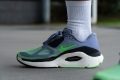
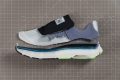
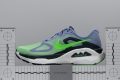
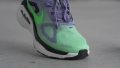
The Nike Structure Plus delivers a very unusual mix, combining a stability-focused platform with a street-ready design and a ZoomX layer of foam. Based on our lab tests and running sessions, we found it dependable for easy runs and very comfortable for everyday wear. The midsole feels soft and protective, which we really appreciated during relaxed miles. However, the ride feels muted for a ZoomX shoe, and the heavier build together with the premium price makes it less appealing for runners seeking a more versatile daily trainer.
- Top pick in [best long distance Nike running shoes](https://runrepeat.com/guides/best-nike-long-distance-running-shoes)
- Top pick in [best Nike road running shoes](https://runrepeat.com/guides/best-nike-road-running-shoes)
### Pros
- Finally some plush ZoomX in the Structure
- Good shock absorption
- Doubles as a sneaker and looks super cool
- HIgh drop suits heel strikers
- Improved traction
- Premium upper with solid ventilation
- Durable outsole
- Smooth, non-intrusive stability system
- Excellent step-in comfort
### Cons
- Heavy
- Still feels muted despite ZoomX
- Non-gusseted tongue
### Audience verdict
90
Superb\!
- Top 10% in [road running shoes](https://runrepeat.com/catalog/road-running-shoes)
- Top 13% in [Nike running shoes](https://runrepeat.com/catalog/nike-running-shoes)
- Top 14% most popular running shoes
## Comparison
The most similar running shoes compared
Words (e.g. "High")
Numbers (e.g. "73%")
| | [ Nike Structure Plus](https://runrepeat.com/nike-structure-plus) | [ Nike Structure 26](https://runrepeat.com/nike-structure-26) | [ Brooks Glycerin GTS 22](https://runrepeat.com/brooks-glycerin-gts-22) | [ New Balance Fresh Foam X 860 v14](https://runrepeat.com/new-balance-fresh-foam-x-860-v14) | \+ \+ Add a shoe |
|---|---|---|---|---|---|
| Audience score | 90 Superb\! | 85 Good\! | 79 Good\! | 85 Good\! | |
| Price | \$170 | \$145 | \$165 | \$140 | |
| Pace | Daily running | Daily running | Daily running | Daily running | |
| Shock absorption | High | High | Moderate | Moderate | |
| Energy return | Moderate | Moderate | Low | Moderate | |
| Traction | High | Moderate | Moderate | High | |
| Arch support | Stability | Stability | Stability | Stability | |
| Weight lab Weight brand | 10\.3 oz / 292g 10\.9 oz / 309g | 10\.4 oz / 296g 10\.5 oz / 298g | 10\.8 oz / 305g 10\.7 oz / 303g | 10\.4 oz / 295g 10\.5 oz / 298g | |
| Drop lab Drop brand | 11\.2 mm 10\.0 mm | 10\.1 mm 10\.0 mm | 10\.1 mm 10\.0 mm | 9\.3 mm 8\.0 mm | |
| Strike pattern | Heel | Heel | Heel | HeelMid/forefoot | |
| Size | True to size | Slightly small | True to size | Slightly small | |
| Midsole softness | Soft | Balanced | Balanced | Soft | |
| Difference in midsole softness in cold | Small | Small | Normal | Big | |
| Toebox durability | Decent | Decent | Decent | Decent | |
| Heel padding durability | Good | Good | Good | Bad | |
| Outsole durability | Good | Good | Good | Decent | |
| Breathability | Moderate | Moderate | Breathable | Moderate | |
| Width / fit | Medium | Medium | Medium | Medium | |
| Toebox width | Medium | Medium | Medium | Medium | |
| Stiffness | Stiff | Moderate | Moderate | Moderate | |
| Torsional rigidity | Stiff | Stiff | Stiff | Moderate | |
| Heel counter stiffness | Stiff | Moderate | Moderate | Stiff | |
| Heel lab Heel brand | 40\.9 mm 42\.0 mm | 36\.1 mm 38\.0 mm | 37\.8 mm 39\.0 mm | 36\.8 mm 38\.0 mm | |
| Forefoot lab Forefoot brand | 29\.7 mm 32\.0 mm | 26\.0 mm 28\.0 mm | 27\.7 mm 29\.0 mm | 27\.5 mm 30\.0 mm | |
| Widths available | NormalWide | NormalWideX-Wide | NormalWideX-Wide | NarrowNormalWideX-Wide | |
| Orthotic friendly | � | � | � | � | |
| Season | All seasons | All seasons | SummerAll seasons | All seasons | |
| Removable insole | � | � | � | � | |
| Ranking | \#32 Top 9% | \#251 Bottom 36% | \#330 Bottom 16% | \#220 Bottom 44% | |
| Popularity | \#55 Top 14% | \#49 Top 13% | \#51 Top 13% | \#27 Top 7% | |
See more
## Who should buy
In our opinion, the Nike Structure Plus is a compelling option for:
- Runners loyal to Nike who want the brand’s most advanced stability trainer so far.
- Those who prefer stability shoes with a classic geometry instead of aggressive rocker designs.
- Anyone looking for a daily trainer that blends sneaker-style looks with amazing support.
- Long-time Structure fans who want a step up in tech and comfort. The added ZoomX layer and new upper bring a more premium feel compared to previous versions.
## Who should NOT buy
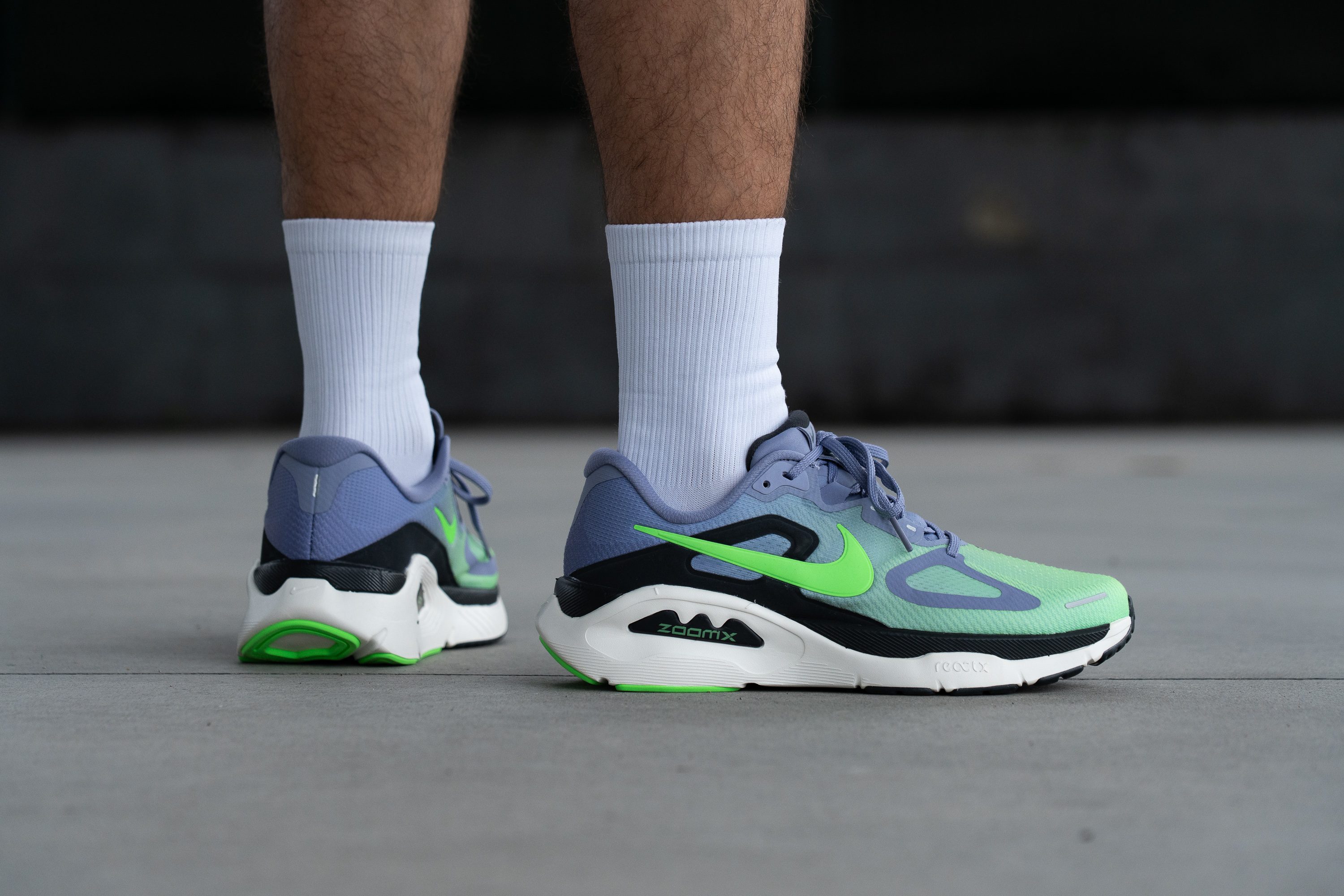
The main drawback of the Nike Structure Plus is its high price. In our view, many runners will struggle to justify that cost for simple daily mileage. We think beginners especially may hesitate too, particularly when more affordable options like the [Nike Structure 26](https://runrepeat.com/nike-structure-26) or the [ASICS GT 2000 14](https://runrepeat.com/asics-gt-2000-14) deliver reliable support and similar versatility.
Your browser does not support the video tag.
We also believe the shoe’s weight hurts its overall experience. During our runs it felt noticeably bottom-heavy and far from a fast-paced trainer when pushing the pace. From our perspective, lighter stability options like the [Saucony Tempus 2](https://runrepeat.com/saucony-tempus-2) or the [HOKA Arahi 8](https://runrepeat.com/hoka-arahi-8) offer a more agile feel and can even handle some tempo sessions.
## Cushioning
### Shock absorption
The midsole of the Structure Plus is clearly thick, so we expected above-average results in our shock absorption test. After completing all procedures, we measured 140 SA in the heel and 110 SA in the forefoot, which is solid for everyday runs but not especially impressive.
However, for runners seeking a bit more cushioning than the regular Structure 26 (132 SA / 99 SA), Nike delivers.
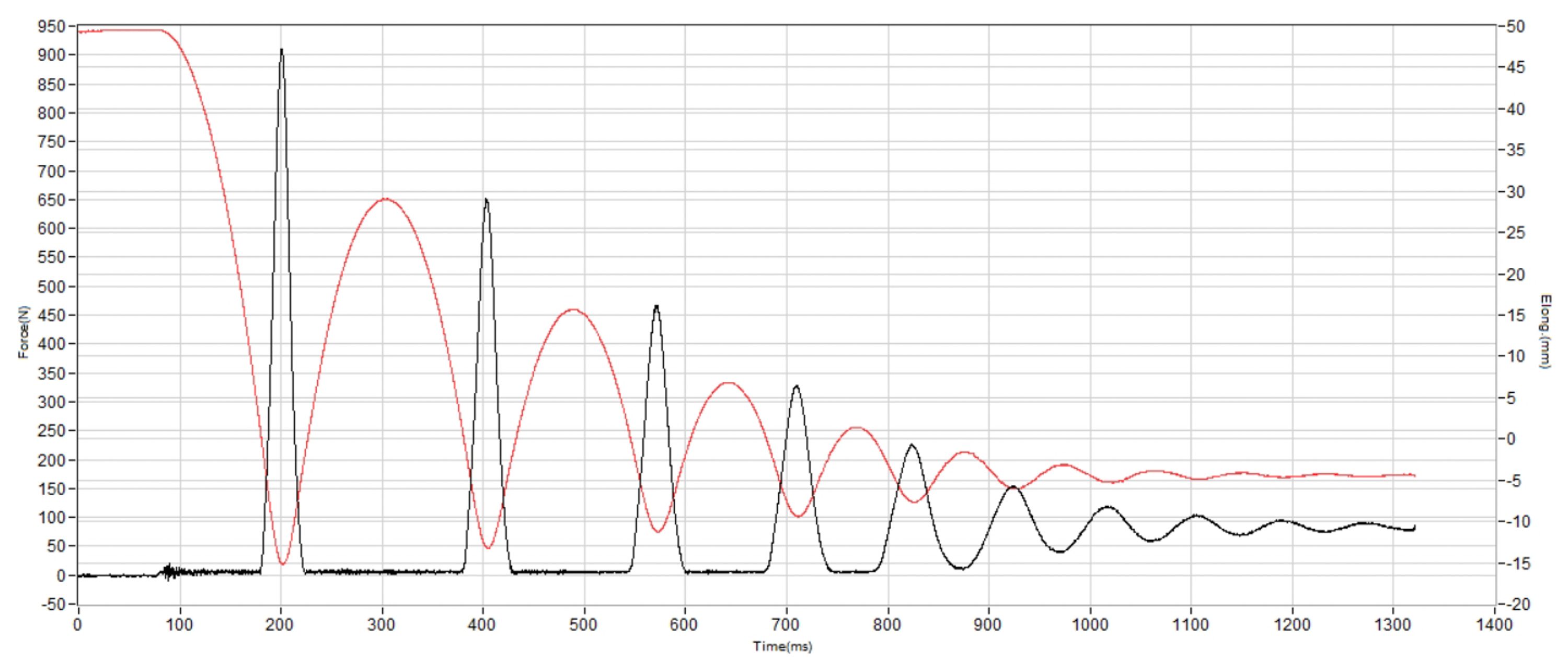
Heel
Forefoot
Test results
| | |
|---|---|
| Structure Plus | 140 SA |
| Average | 130 SA |
Compared to 341 running shoes
Number of shoes
52 SA
Shock absorption
173 SA
### Energy return
The ZoomX logo looked promising, yet during our runs the shoe felt far from pogo-stick bouncy, if anything the opposite. Indeed, our lab results confirmed this impression, showing just 58.2% energy return in the heel and 65.2% in the forefoot.
The forefoot contains more ZoomX relative to ReactX, so the difference between both measurements makes sense. Consequently, with these numbers the shoe will feel a tiny bit energetic but only for midfoot and forefoot strikers.
Heel
Forefoot
Test results
| | |
|---|---|
| Structure Plus | 58\.2% |
| Average | 58\.6% |
Compared to 338 running shoes
Number of shoes
38\.0%
Energy return
83\.0%
### Heel stack
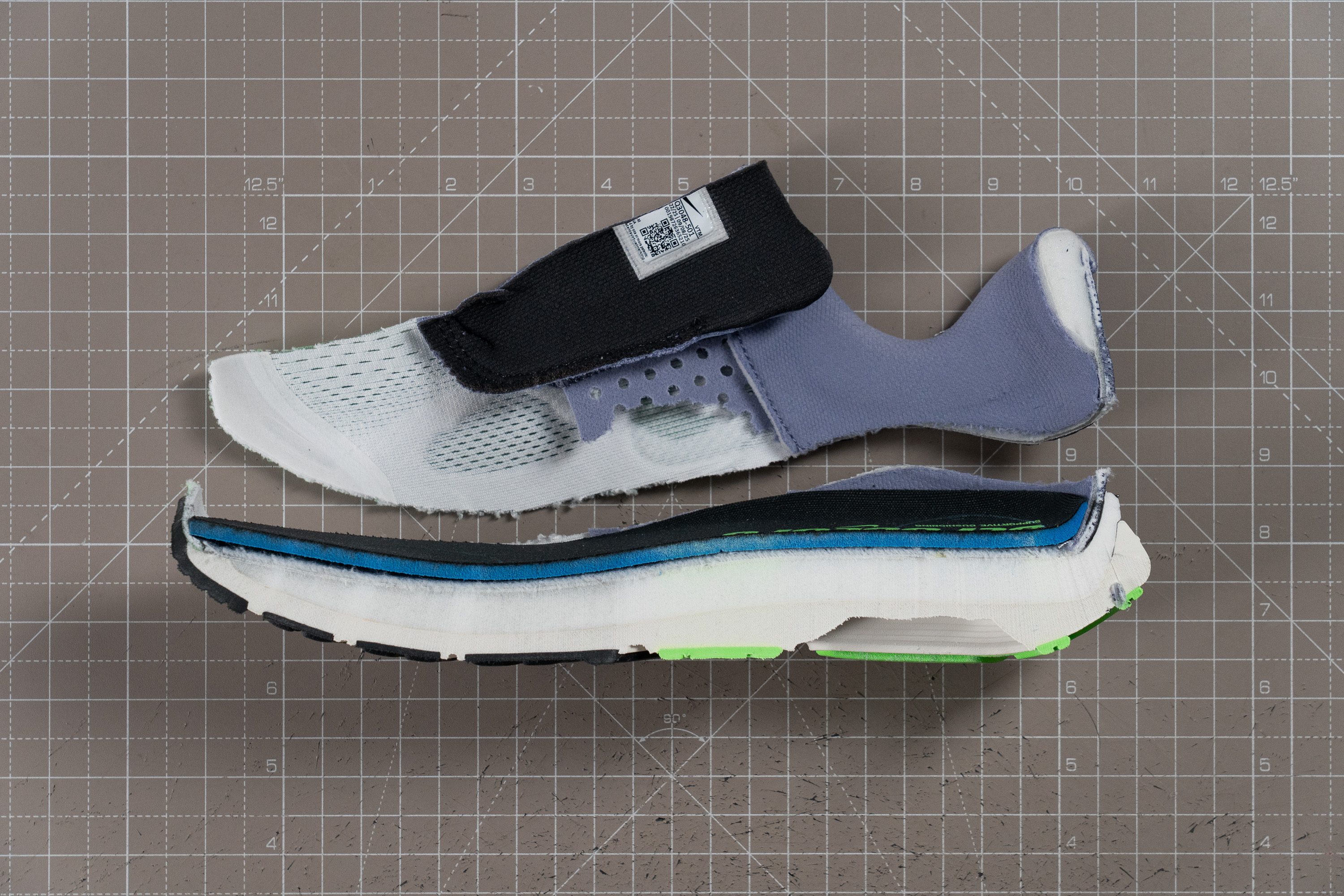
At 40.9 mm, Nike went fully maximalist with the Structure Plus, and that is exactly how the shoe feels underfoot. As soon as we started running in it, we immediately noticed how elevated our feet sit above the ground.
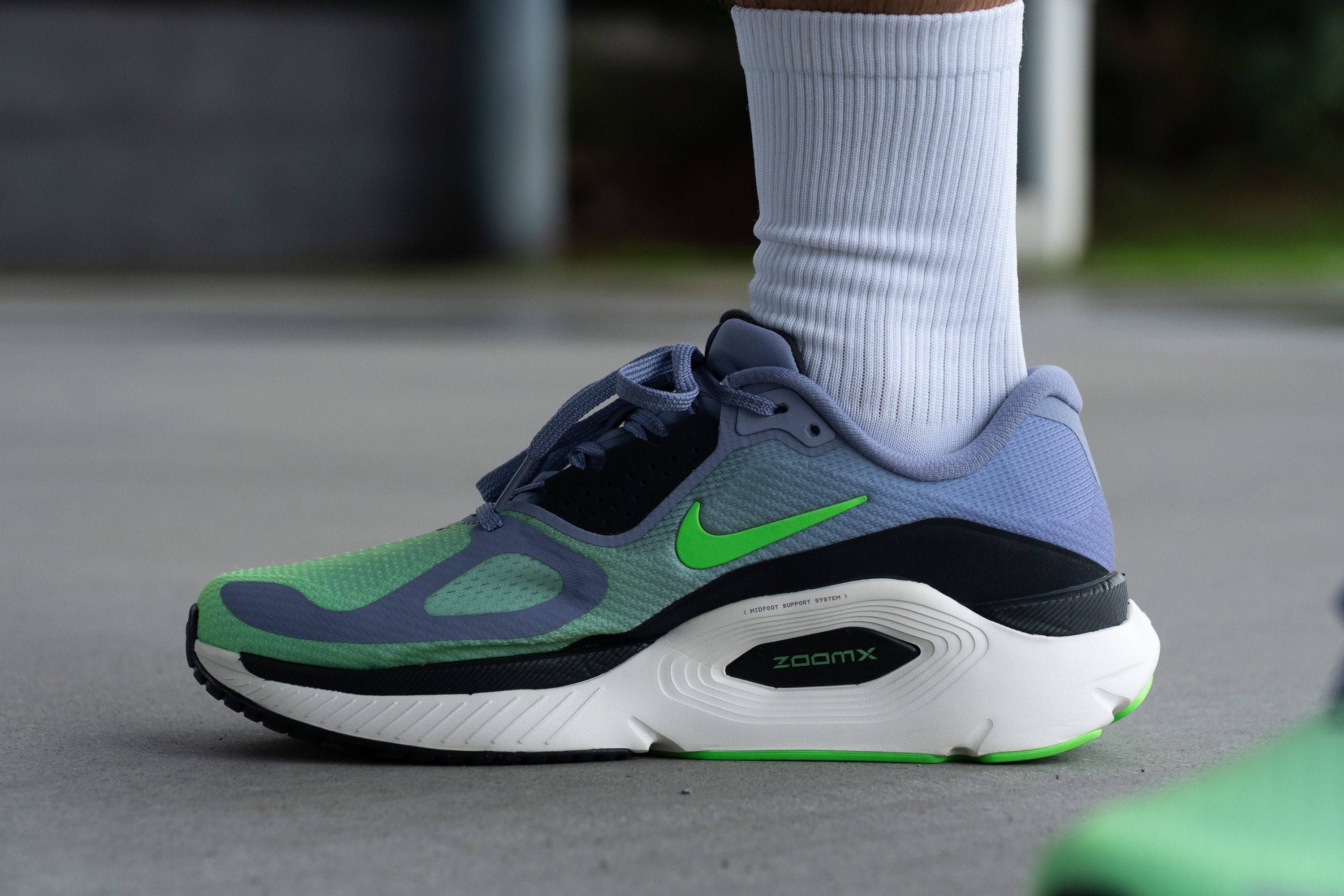
However, do not be misled by the massive sidewalls that Nike designed to help prevent the arch from collapsing. The platform is tall, but not *that* tall.
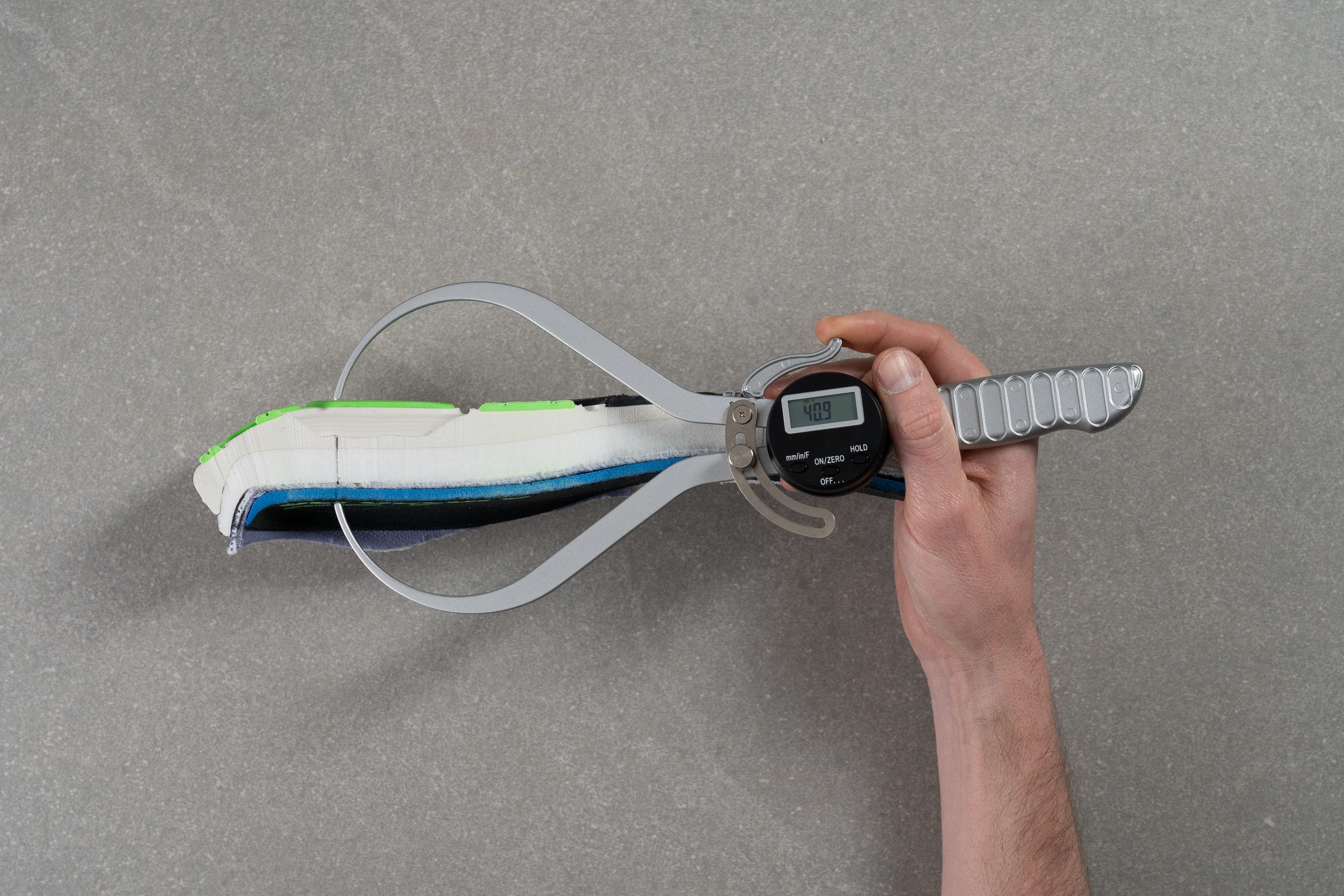
Test results
| | |
|---|---|
| Structure Plus | 40\.9 mm |
| Average | 35\.0 mm |
Compared to 533 running shoes
Number of shoes
22\.5 mm
Heel stack
48\.1 mm
### Forefoot stack
The forefoot rises 29.7 mm from the ground, offering plenty of foam for easy runs and delivering the solid cushioning as we observed earlier in our shock absorption test.
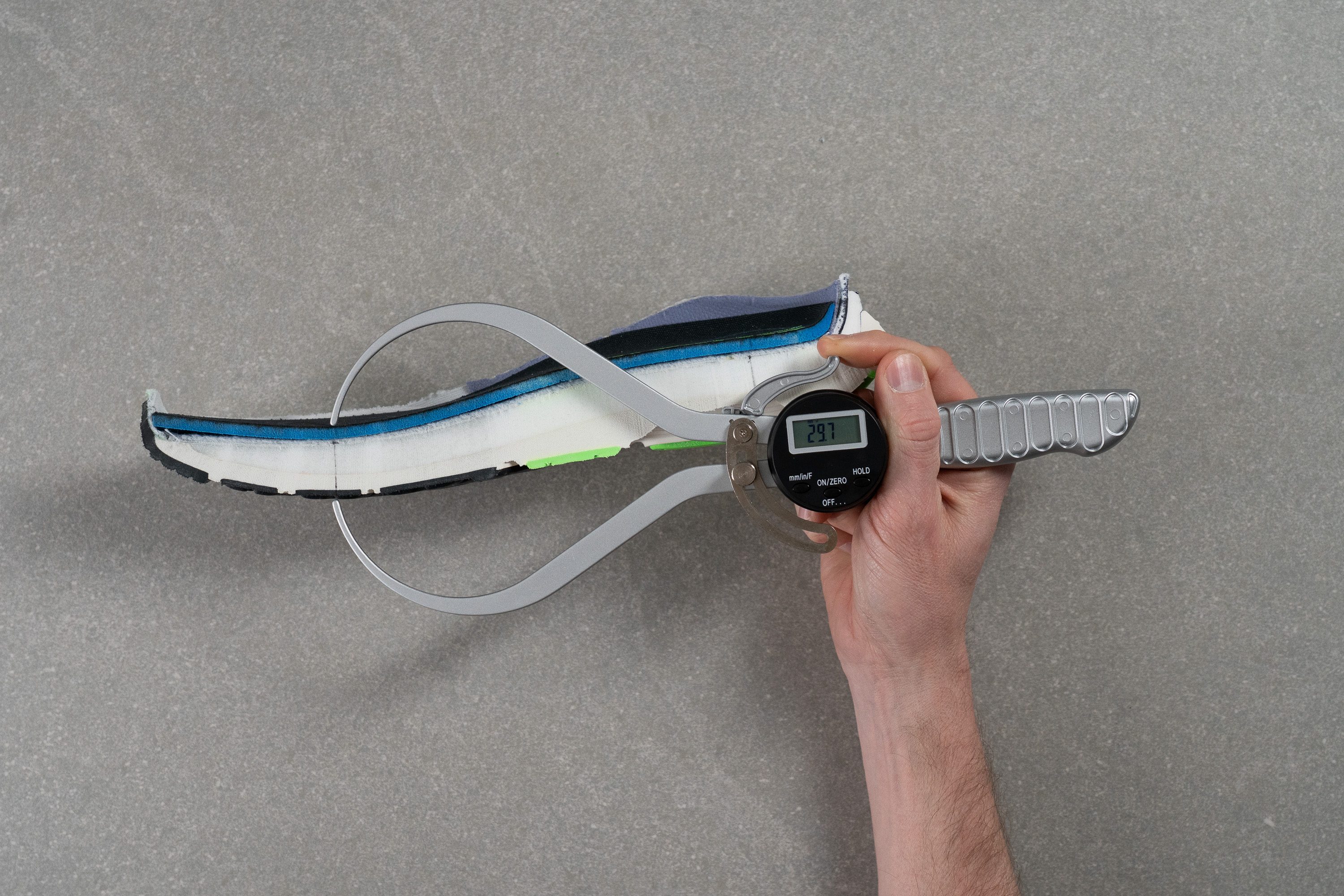
Test results
| | |
|---|---|
| Structure Plus | 29\.7 mm |
| Average | 26\.4 mm |
Compared to 533 running shoes
Number of shoes
13\.7 mm
Forefoot stack
38\.5 mm
### Drop
Most runners are used to Nike deploying a high drop in its [daily running shoes](https://runrepeat.com/catalog/daily-running-running-shoes), and we found that the Structure Plus follows that same steep geometry. With 11.2 mm of actual heel-to-toe drop, it's clear to us that rearfoot strikers will feel right at home in this shoe.
Test results
| | |
|---|---|
| Structure Plus | 11\.2 mm |
| Average | 8\.6 mm |
Compared to 533 running shoes
Number of shoes
\-0.1 mm
Drop
16\.1 mm
### Midsole softness
Updated
Note: Low measurement: softer. High measurement: firmer.
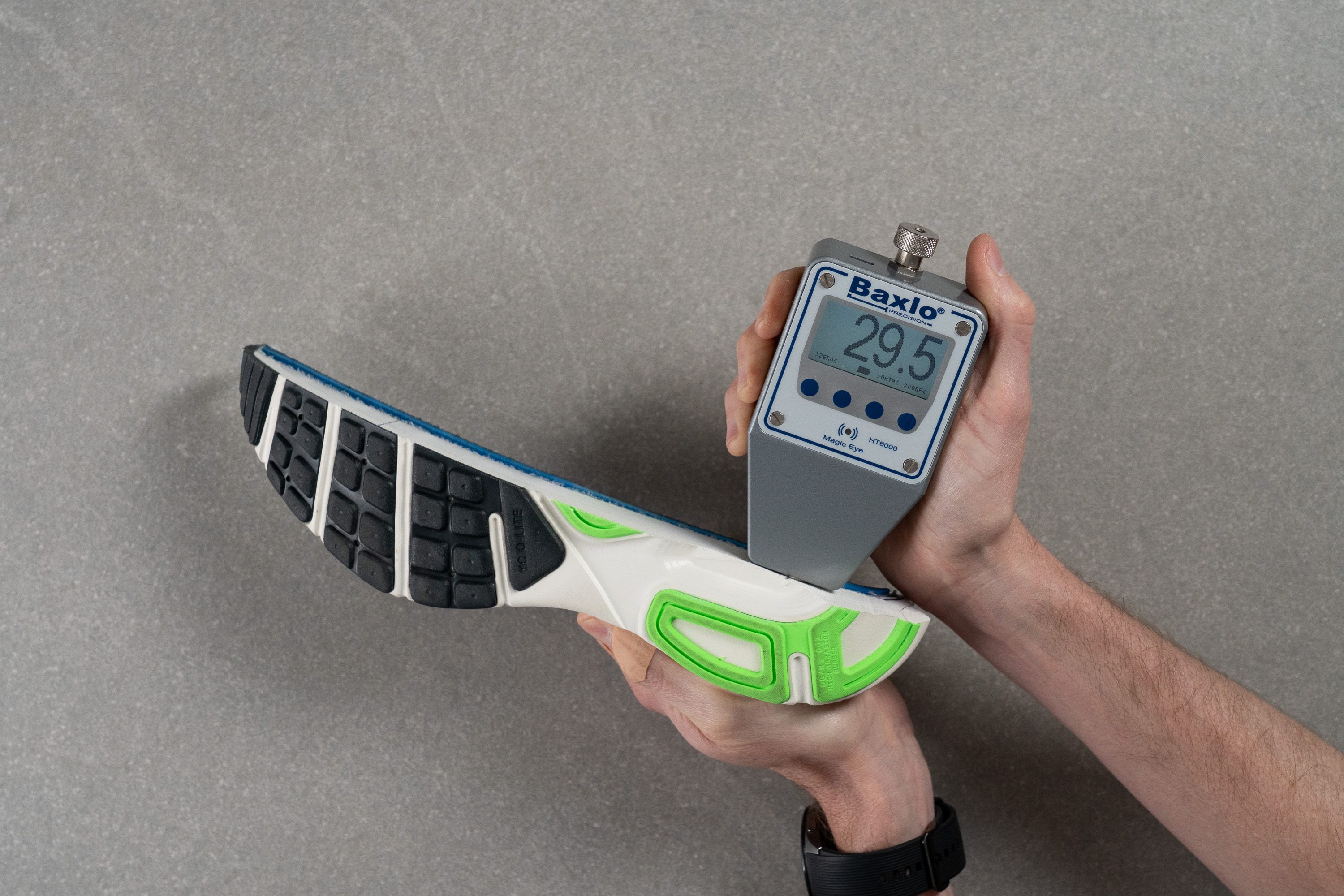
The ZoomX logo is not as impressive today as it once was. Nike has adjusted the formula using a TPE foam instead of Pebax for training shoes, and many other brands now use premium foams in their trainers.
Your browser does not support the video tag.
However, after testing the shoe ourselves we still found that this version of ZoomX performs well for the Structure Plus, delivering a plush and forgiving ride underfoot. Our Asker C durometer measured 29.5 AC for the top layer, which is clearly softer than the average.
Test results
| | |
|---|---|
| Structure Plus | 29\.5 AC |
| Average | 36\.1 AC |
Compared to 191 running shoes
Number of shoes
19\.6 AC
Midsole softness (soft to firm)
54\.0 AC
### Secondary foam
Updated
Note: Low measurement: softer. High measurement: firmer.
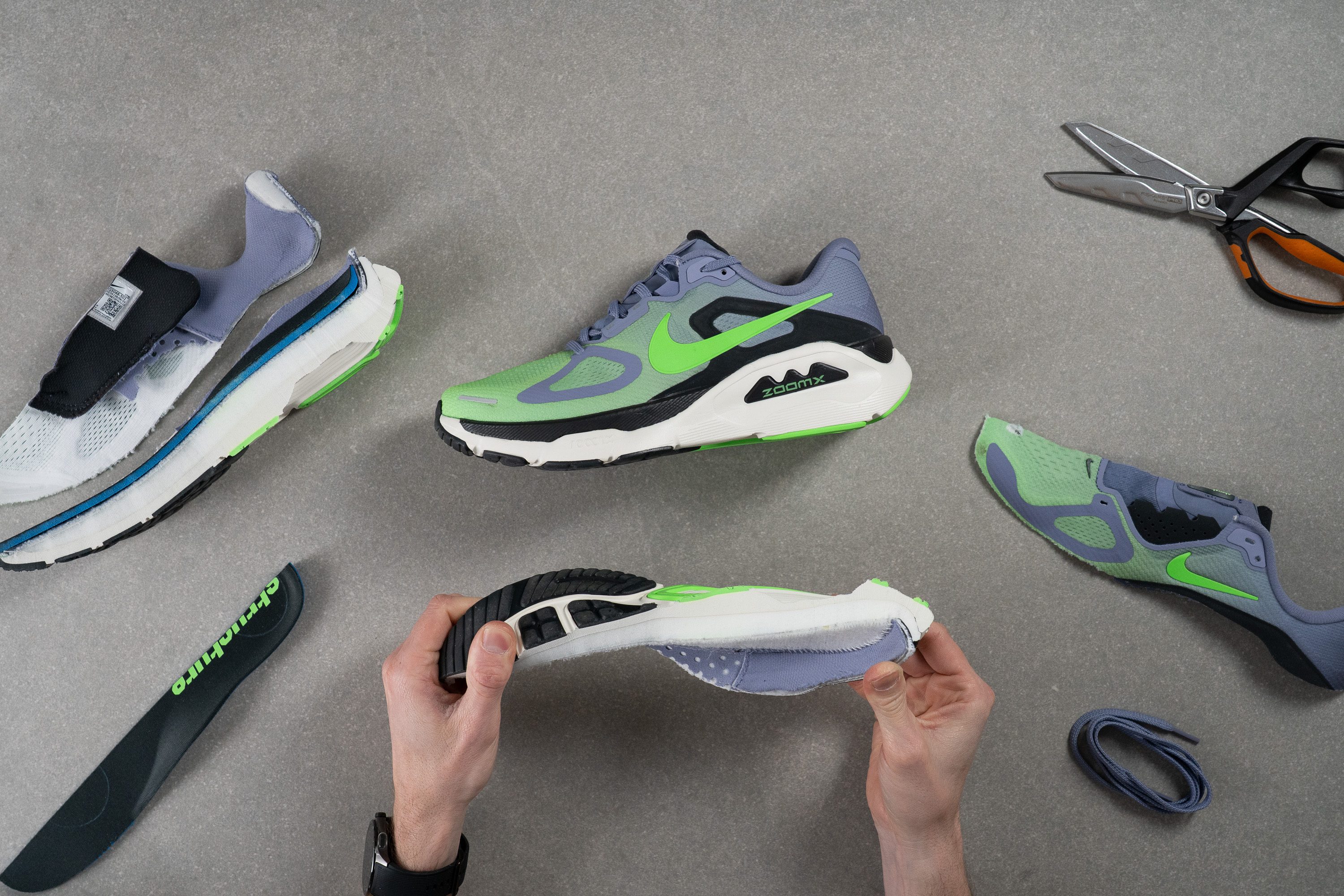
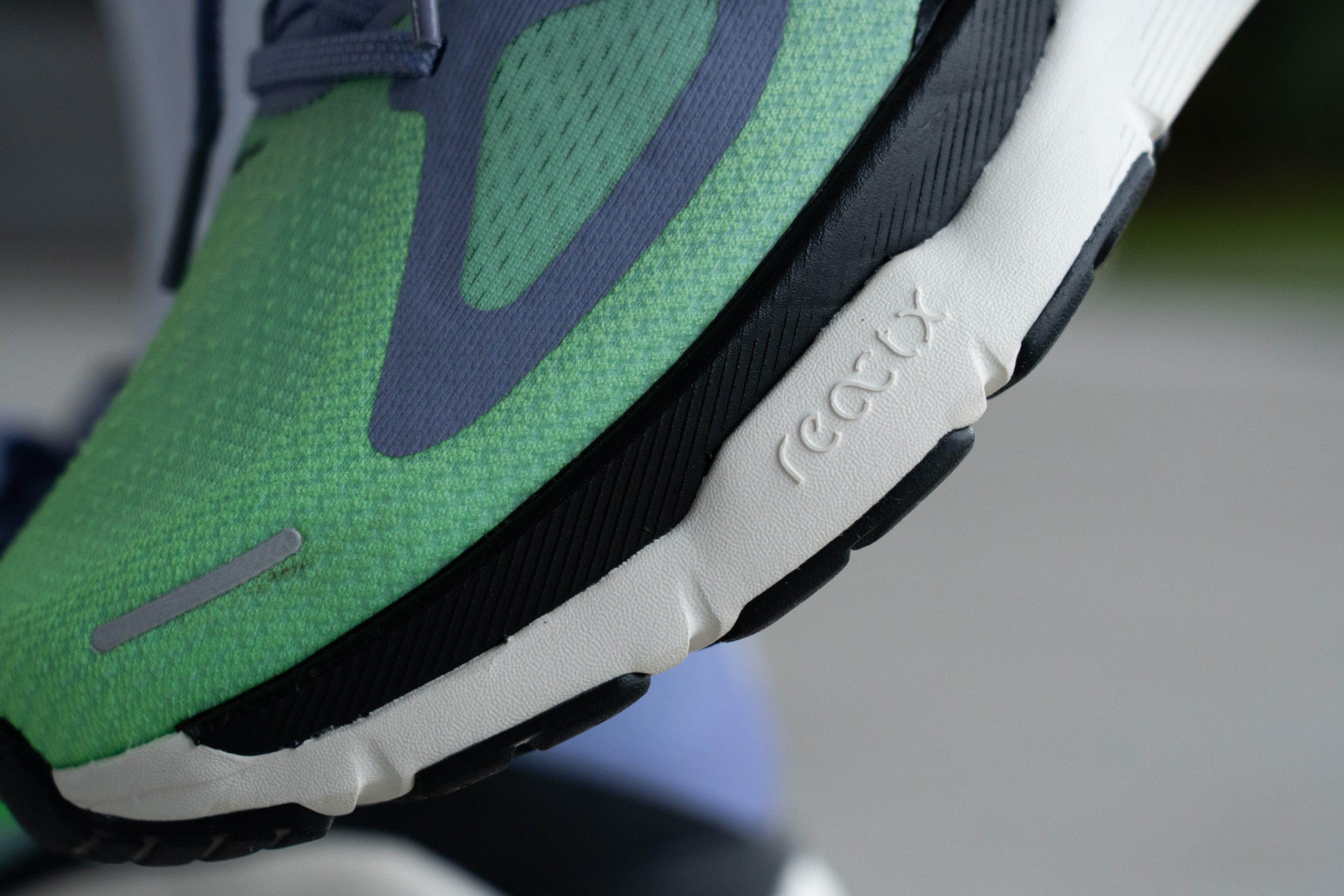
The dual-foam design of the Nike Structure Plus places ReactX beneath ZoomX, and that positioning is no coincidence. ZoomX brings softness and energy return, while ReactX adds stability and durability.
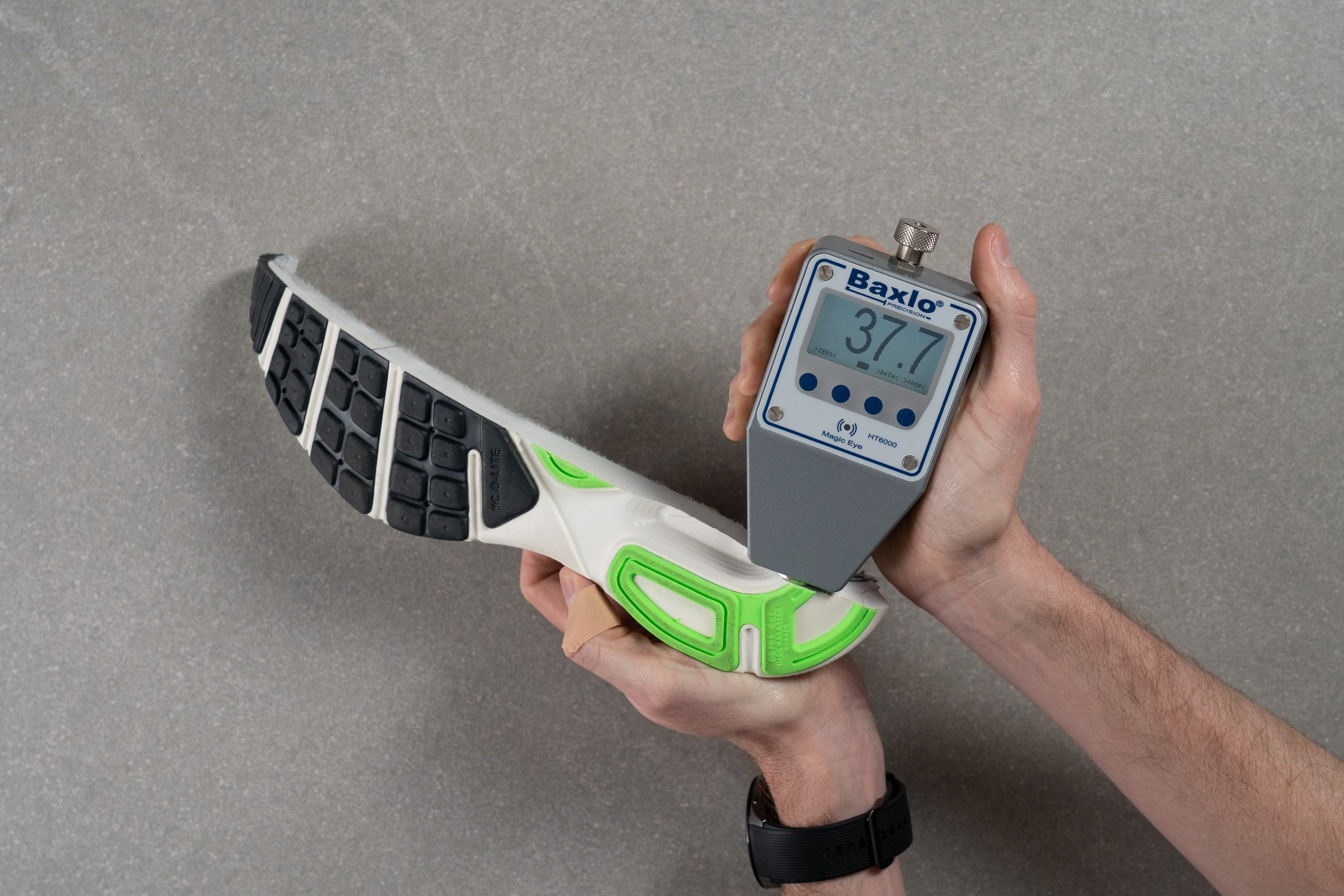
However, ReactX also makes the ride feel more muted and less lively. In our durometer test it measured 37.7 AC, confirming its firmer nature, which is expected in a stability-focused shoe anyway.
Test results
| | |
|---|---|
| Structure Plus | 37\.7 AC |
| Average | 39\.4 AC |
Compared to 82 running shoes
Number of shoes
23\.6 AC
Secondary foam (soft to firm)
64\.0 AC
### Rocker
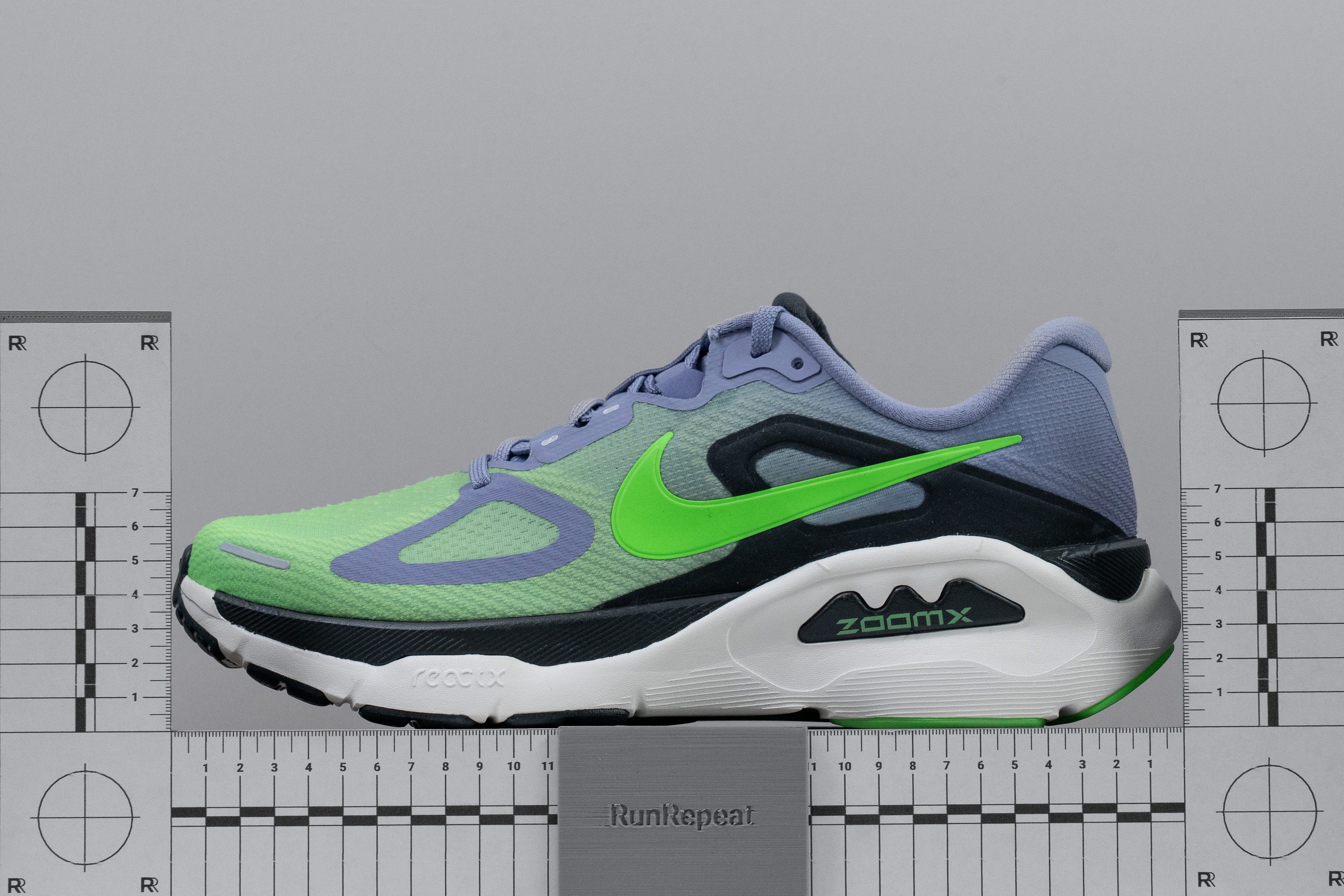
Some brands are moving toward highly rockered designs on every shoe, but Nike avoids that approach with the Structure Plus. In our view, that is a sensible decision for a stability daily trainer.
This design makes the shoe a strong option for runners who prefer a more classic midsole geometry. It also feels more natural when walking or wearing the shoe casually, which seems like something Nike clearly considered when creating this sneaker-friendly design.
## Size and fit
### Size
Nike Structure Plus fits **true to size** (29 votes).
Small
True to size
Large
### Internal length
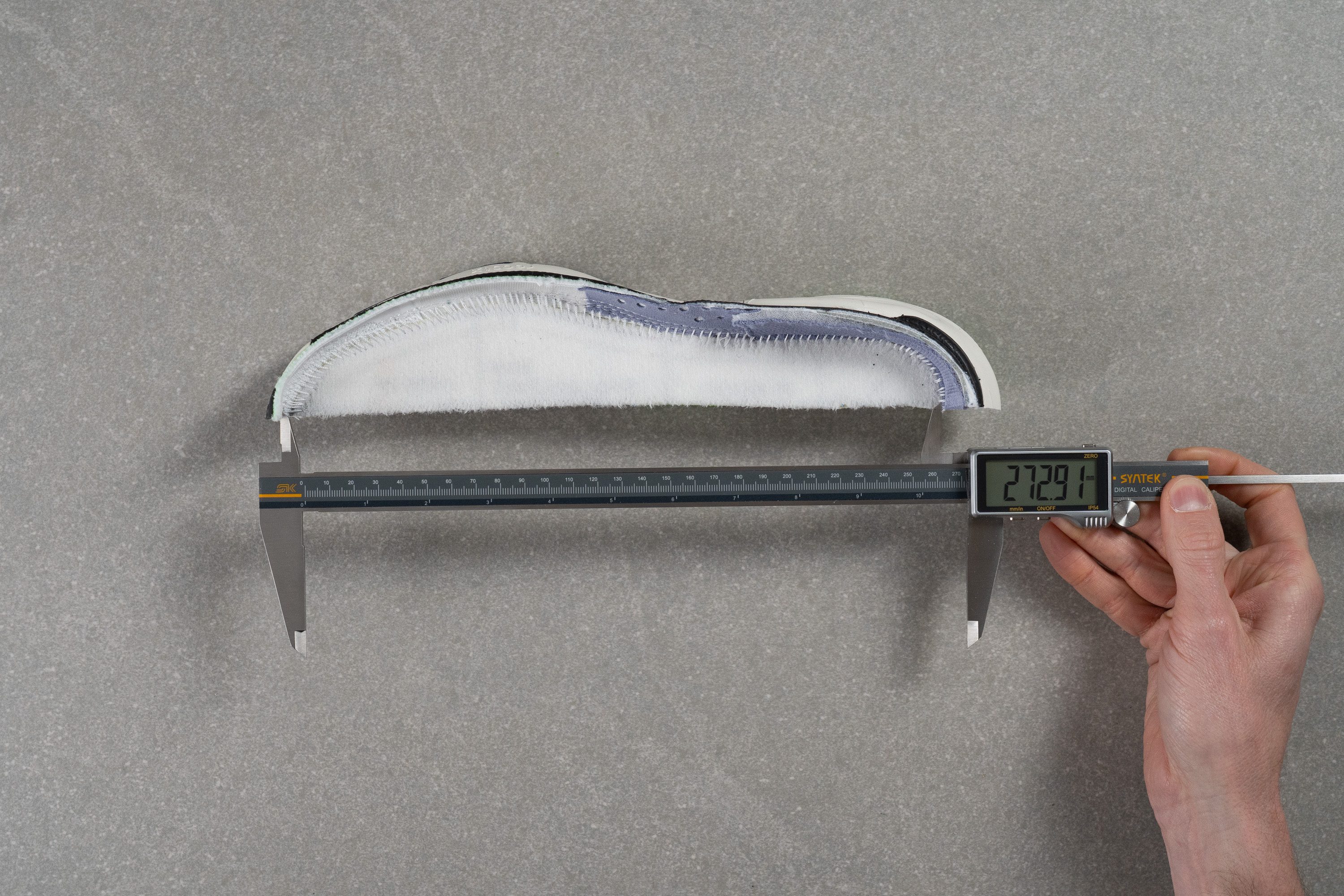
Note: Our testing shows that internal length is not a great measure of fit. But, as many users have requested this specific test, we've decided to add it for those interested.
Test results
| | |
|---|---|
| Structure Plus | 272\.9 mm |
| Average | 269\.5 mm |
Compared to 276 running shoes
Number of shoes
259\.5 mm
Internal length
277\.6 mm
### Width / Fit
As with every shoe we test, we purchased the Nike Structure Plus in US 9 with standard width. It is also worth noting that Nike offers this model in a Wide version, although availability may vary by market.
Your browser does not support the video tag.
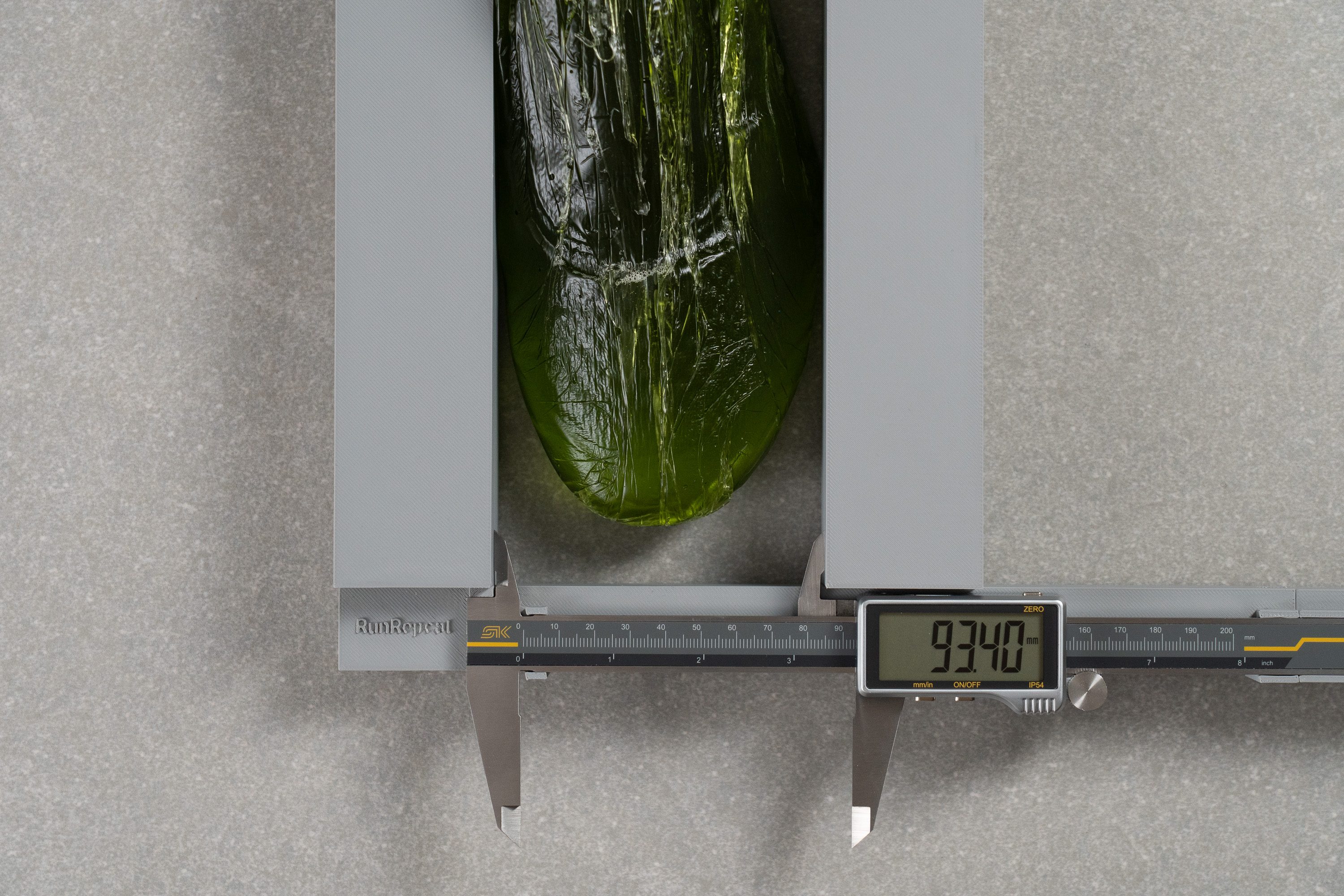
That said, we began taking measurements on our pair. With 93.4 mm in our first reading, it shows a classic Nike fit that likely will not suit wide feet well, though we still needed to complete the rest of our measurements.
Test results
| | |
|---|---|
| Structure Plus | 93\.4 mm |
| Average | 95\.2 mm |
Compared to 288 running shoes
Number of shoes
88\.5 mm
Width / Fit
101\.4 mm
### Toebox width
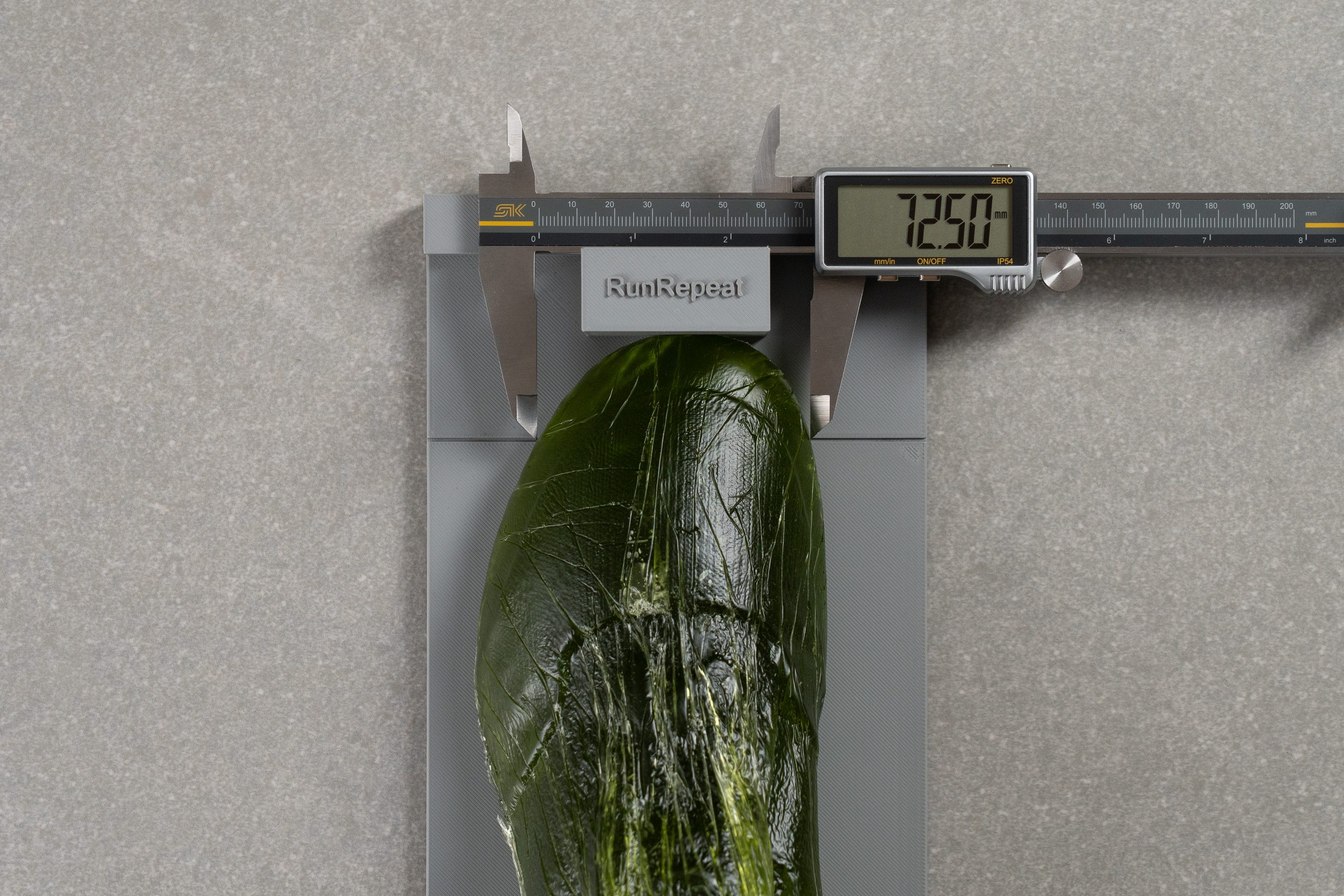
The second measurement also came in slightly below average at 72.5 mm, though only by a small margin. We consider it a very standard fit, and we believe anyone who has worn Nike shoes before will find the feel familiar on foot.
Test results
| | |
|---|---|
| Structure Plus | 72\.5 mm |
| Average | 73\.3 mm |
Compared to 288 running shoes
Number of shoes
66\.7 mm
Toebox width
82\.6 mm
### Toebox height
Toebox height follows the same pattern as the previous two measurements, so there are no surprises here.
Your browser does not support the video tag.
At 26.0 mm, the figure feels reasonable to us, especially since stability shoes often benefit from a slightly snugger fit to help contain lateral forces and improve support.
Test results
| | |
|---|---|
| Structure Plus | 26\.0 mm |
| Average | 27\.0 mm |
Compared to 288 running shoes
Number of shoes
22\.0 mm
Toebox height
34\.1 mm
## Traction / Grip
### Traction test
One area that needed improvement from the regular Structure was traction. We previously measured 0.37, and fortunately the Plus version raises that figure to a more acceptable 0.51.
It is still not impressive, but it now delivers dependable grip, even when running in the rain.
Test results
| | |
|---|---|
| Structure Plus | 0\.51 |
| Average | 0\.50 |
Compared to 332 running shoes
Number of shoes
0\.11
Forefoot traction
0\.89
### Outsole design
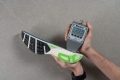
The outsole keeps a very similar layout to the Structure 26, preserving most of its design DNA with only small visual tweaks. It combines black "YC O-LITE" rubber in the forefoot with bright green "OG/RS 002" high abrasion rubber panels across the midfoot and heel.
The rearfoot and midfoot rubber provide solid protection, especially because the rubber sits clearly higher than the exposed foam. We also noted a very deep cutout in the center of the heel that helps with foam compression too.
## Flexibility / Stiffness
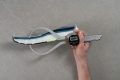
To enjoy the Nike Structure Plus, you definitely need to be a fan of longitudinally stiff shoes. With 19.3N in our lab test, it quickly becomes a no-go for runners who prefer a more flexible feel underfoot.
Test results
| | |
|---|---|
| Structure Plus | 19\.3N |
| Average | 15\.5N |
Compared to 335 running shoes
Number of shoes
3\.9N
Flexibility
Stiffness
28\.5N
## Weight
The Nike Structure Plus is only 1% lighter than the Structure 26, coming in at 10.3 oz or 292g. That small reduction hardly changes the experience, and the shoe still sits on the heavier side of the current market.
For daily mileage it can work, yet during our testing the shoe felt somewhat bottom heavy. In our opinion, this is a missed opportunity for [Nike](https://runrepeat.com/catalog/nike-running-shoes) to gain ground against strong rivals like the [ASICS Gel Kayano 32](https://runrepeat.com/asics-gel-kayano-32).
Test results
| | |
|---|---|
| Structure Plus | 10\.3 oz (292g) |
| Average | 9\.3 oz (264g) |
Compared to 534 running shoes
Number of shoes
5\.3 oz (149g)
Weight
12\.9 oz (366g)
## Breathability
One thing we all should demand from Nike is amazing materials in the Plus and Premium versions of its daily trainers. In this case, we think the Structure Plus delivers on that expectation.
Your browser does not support the video tag.
The upper feels noticeably better than the one found in the regular version. It improves breathability to a 4 out of 5 score while maintaining the same comfortable overall feel.
Your browser does not support the video tag.
Nike organizes the upper into three clear zones: a well-ventilated forefoot, a very dense heel designed for stability, and a balanced construction through the midfoot area.
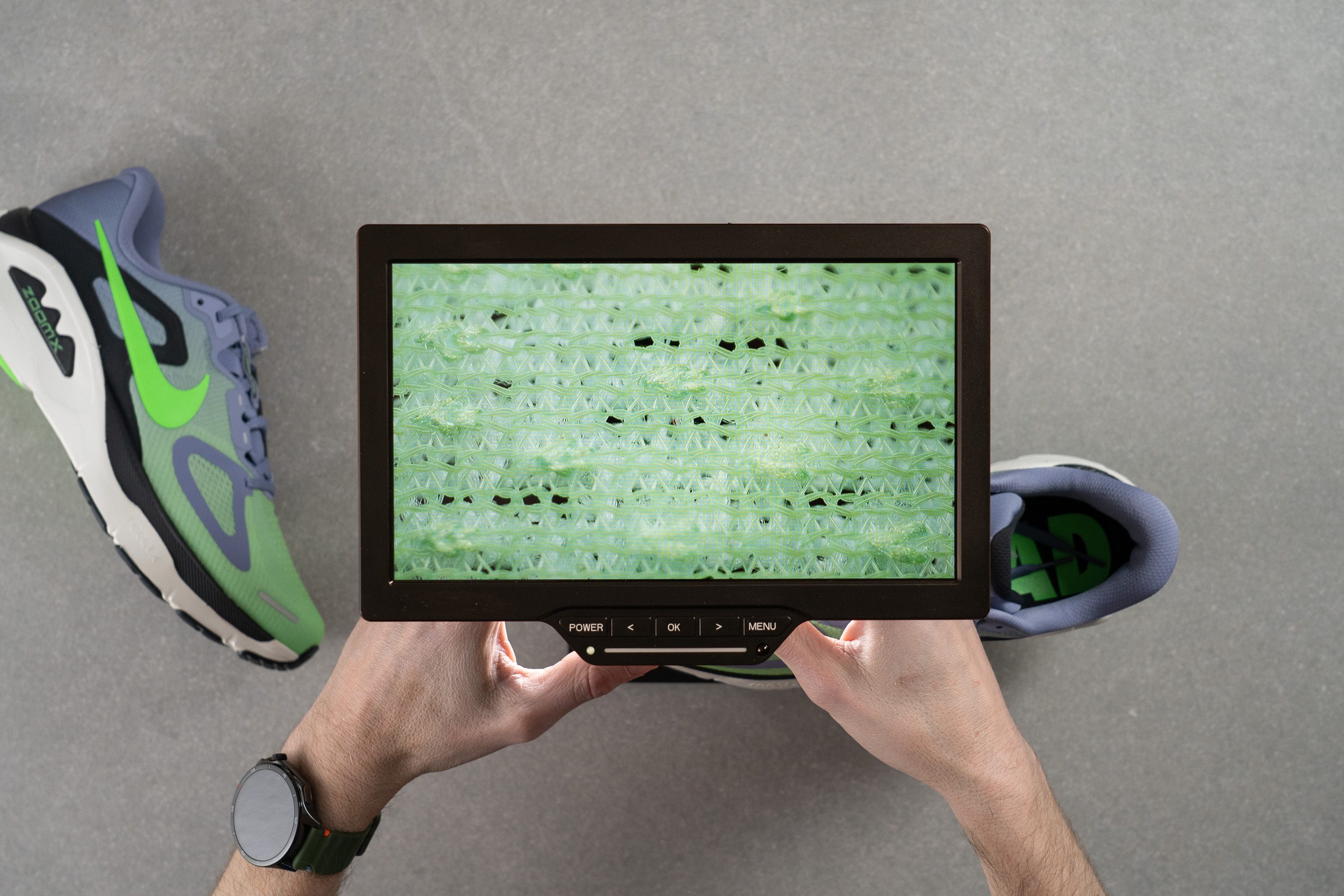
When we examined the upper with our digital microscope, the jump in quality became clear. The mesh looks softer and more refined, and the ventilation holes appear well distributed.
Handling the shoe confirms that comfort was a clear priority here. The heel padding is extremely generous, and all the materials feel soft and pleasant to the touch.
Your browser does not support the video tag.
Test results
| | |
|---|---|
| Structure Plus | 4 |
| Average | 3\.6 |
Compared to 463 running shoes
Number of shoes
1
Breathability
5
## Stability
### Lateral stability test
The Nike Structure Plus continues to use Nike’s Midfoot Support System to help stabilize the ride and limit pronation. It worked well on the regular Structure, and here Nike made it more pronounced to match the higher stack height of this version.
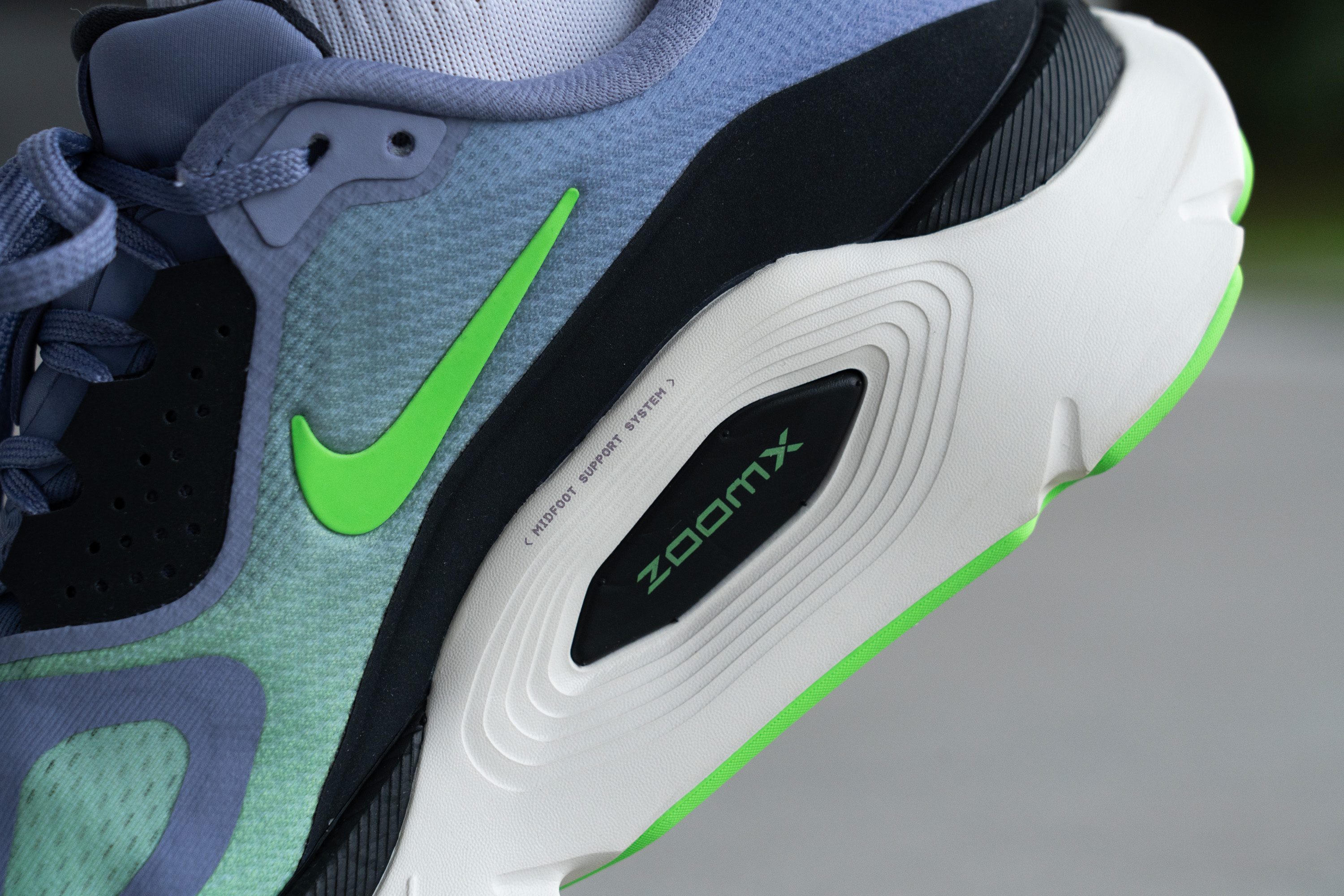
The support feels unobtrusive, and it's a good option for those who overpronate as well as neutral runners seeking a more controlled ride, without the harsh feel of older stability shoes. Oh, and we also really liked how Nike integrated support into the upper in a subtle and visually clean way.
### Torsional rigidity
The Structure Plus has a more flexible structure than many stability shoes, which also makes it more comfortable for everyday wear as a sneaker. We rated it 4/5.
Test results
| | |
|---|---|
| Structure Plus | 4 |
| Average | 3\.5 |
Compared to 512 running shoes
Number of shoes
1
Torsional rigidity
5
### Heel counter stiffness
The heel counter also scored 4/5 instead of the maximum rating, which is uncommon for this type of shoe. We appreciate having an alternative like this in the market, offering solid stability without that overly stiff feel on foot.
Test results
| | |
|---|---|
| Structure Plus | 4 |
| Average | 3 |
Compared to 496 running shoes
Number of shoes
1
Heel counter stiffness
5
### Midsole width - forefoot
The midsole width follows the same pattern we saw in previous tests, showing a moderate rather than extreme design.
Your browser does not support the video tag.
We measured 119.4 mm, which is clearly wider than a neutral trainer but still narrower than some max-stack stability options.
Test results
| | |
|---|---|
| Structure Plus | 119\.4 mm |
| Average | 114\.5 mm |
Compared to 534 running shoes
Number of shoes
102\.2 mm
Midsole width - forefoot
127\.9 mm
### Midsole width - heel
Moving our calipers to the heel, we measured 94.7 mm. Once again, this reflects what we consistently observed in this shoe, a less aggressive and more beginner-friendly approach to stability.
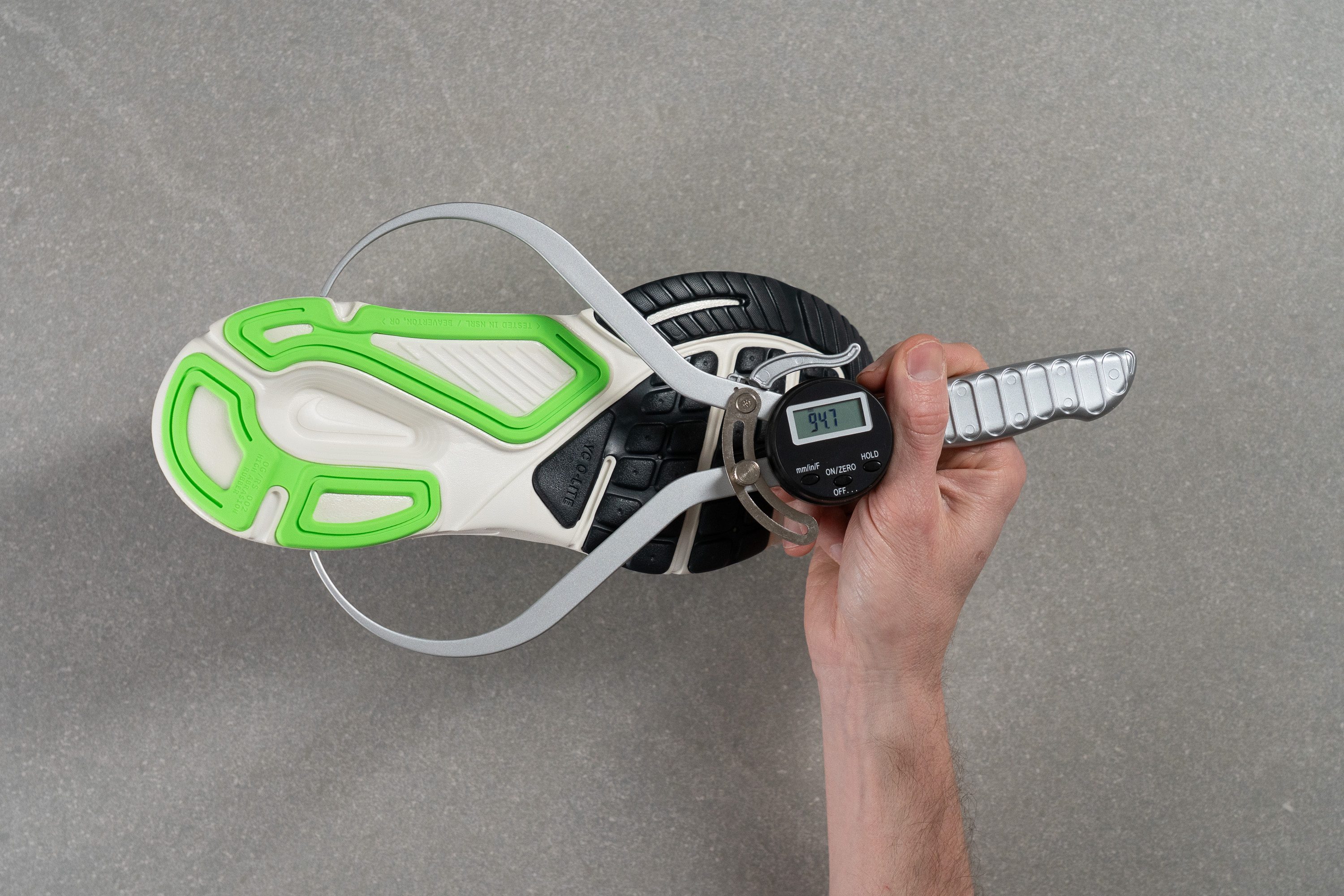
Test results
| | |
|---|---|
| Structure Plus | 94\.7 mm |
| Average | 90\.7 mm |
Compared to 534 running shoes
Number of shoes
70\.8 mm
Midsole width - heel
106\.6 mm
## Durability
### Toebox durability
After evaluating the breathability of the Structure Plus, we moved to the durability section of our lab to see how the upper holds up under stress. Ventilated uppers like this often struggle here, and this one followed that pattern with a modest 2/5 result.
Test results
| | |
|---|---|
| Structure Plus | 2 |
| Average | 2\.6 |
Compared to 397 running shoes
Number of shoes
1
Toebox durability
5
### Heel padding durability
Fortunately, the super-plush heel padding performed much better in our test. This time it earned a solid 4 out of 5.
Test results
| | |
|---|---|
| Structure Plus | 4 |
| Average | 3\.3 |
Compared to 391 running shoes
Number of shoes
1
Heel padding durability
5
### Outsole durability
Nike has rarely been a market leader in outsole grip or durability when relying on its own compounds... and yes, Vibram-equipped trail models like the [Ultrafly](https://runrepeat.com/nike-ultrafly) do not count here. With the Structure Plus, however, we were satisfied, as our test showed solid durability with only 0.9 mm of rubber worn away.
Test results
| | |
|---|---|
| Structure Plus | 0\.9 mm |
| Average | 1\.1 mm |
Compared to 375 running shoes
Number of shoes
0\.0 mm
Outsole wear
2\.0 mm
### Outsole thickness
The outsole also offers a generous thickness of 3.4 mm. Combined with the durability result we observed, we believe runners can feel confident about the long-term wear of the shoe.
Test results
| | |
|---|---|
| Structure Plus | 3\.4 mm |
| Average | 3\.2 mm |
Compared to 530 running shoes
Number of shoes
0\.5 mm
Outsole thickness
6\.1 mm
## Misc
### Insole thickness
The insole is quite basic, made from EVA foam, and adds 4.9 mm of cushioning to the Structure Plus.
Test results
| | |
|---|---|
| Structure Plus | 4\.9 mm |
| Average | 4\.5 mm |
Compared to 528 running shoes
Number of shoes
1\.5 mm
Insole thickness
7\.8 mm
### Removable insole
Removing the insole from the Structure Plus is quick and easy. And yes, we know it is a road shoe, thanks Nike\!
Test results
| | |
|---|---|
| Structure Plus | Yes |
### Midsole softness in cold (%)
Runners planning to use the Structure Plus in very cold weather will appreciate this lab result. It became only 2% firmer after spending 20 minutes in our freezer.
Test results
| | |
|---|---|
| Structure Plus | 2% |
| Average | 23% |
Compared to 458 running shoes
Number of shoes
0%
Midsole softness in cold
63%
### Reflective elements
Nike includes reflective elements on the heel, but we did not find them particularly impressive. If anything, they felt rather underwhelming.
Test results
| | |
|---|---|
| Structure Plus | Yes |
### Tongue padding
We noticed that Nike slightly updated the lacing system compared to the regular Structure, yet the overall fit feels very similar. The laces also pass twice under a central tongue loop, helping reduce unwanted tongue movement during runs.
The step-in feel is comfortable thanks to a thick tongue with 7.9 mm of padding, which feels more than sufficient for running and everyday wear. Considering the already high weight of the shoe, adding more padding looks like a bad idea.
Test results
| | |
|---|---|
| Structure Plus | 7\.9 mm |
| Average | 5\.7 mm |
Compared to 531 running shoes
Number of shoes
0\.4 mm
Tongue padding
14\.2 mm
### Tongue: gusset type
The tongue is not gusseted to the sides, which feels disappointing for a shoe at this price point. It is a tough pill to swallow.
Test results
| | |
|---|---|
| Structure Plus | None |
### Heel tab
The heel collar curves inward with plush padding, delivering secure ankle lockdown while skipping the a finger loop tab.
Test results
| | |
|---|---|
| Structure Plus | None |
### Price
The Plus label in the Structure name does not bring encouraging news for the price, just as we saw with the [Pegasus Plus](https://runrepeat.com/nike-pegasus-plus). Consequently, the cost can feel quite steep given its performance and relatively muted ride.
However, it can be a worthwhile upgrade for runners seeking the next step beyond the regular Structure, as it introduces an approach to stability that Nike has not offered before with the use of ZoomX foam. And the fact that the shoe also works so easily as a sneaker helps with the high price too.
Test results
| | |
|---|---|
| Structure Plus | C\$290 |
Compared to 534 running shoes
Number of shoes
\$60
Price
\$300
## Lab test results
| Lab test | Nike Structure Plus | Average |
|---|---|---|
| Cushioning | | |
| Shock absorption heel | 140 SA | 130 SA |
| Energy return heel | 58\.2% | 58\.6% |
| Heel stack | 40\.9 mm | 35\.0 mm |
| Forefoot stack | 29\.7 mm | 26\.4 mm |
| Drop | 11\.2 mm | 8\.6 mm |
| Midsole softness (new method) | 29\.5 AC | 36\.1 AC |
| Secondary foam softness (new method) | 37\.7 AC | 39\.4 AC |
| Size and fit | | |
| Size | True to size | True to size |
| Internal length | 272\.9 mm | 269\.5 mm |
| Width / Fit (new method) | 93\.4 mm | 95\.2 mm |
| Toebox width (new method) | 72\.5 mm | 73\.3 mm |
| Toebox height | 26\.0 mm | 27\.0 mm |
| Traction / Grip | | |
| Forefoot traction | 0\.51 | 0\.50 |
| Flexibility / Stiffness | | |
| Flexibility / Stiffness (new method) | 19\.3N | 15\.5N |
| Weight | | |
| Weight | 10\.3 oz (292g) | 9\.3 oz (264g) |
| Breathability | | |
| Breathability | 4 | 3\.6 |
| Stability | | |
| Torsional rigidity (old method) | 4 | 3\.5 |
| Heel counter stiffness | 4 | 3 |
| Midsole width - forefoot | 119\.4 mm | 114\.5 mm |
| Midsole width - heel | 94\.7 mm | 90\.7 mm |
| Durability | | |
| Toebox durability | 2 | 2\.6 |
| Heel padding durability | 4 | 3\.3 |
| Outsole durability | 0\.9 mm | 1\.1 mm |
| Outsole thickness | 3\.4 mm | 3\.2 mm |
| Misc | | |
| Insole thickness | 4\.9 mm | 4\.5 mm |
| Removable insole | Yes | |
| Midsole softness in cold (new method) | 30\.2 HA | 37\.1 HA |
| Midsole softness in cold (%) | 2% | 23% |
| Reflective elements | Yes | |
| Tongue padding | 7\.9 mm | 5\.7 mm |
| Tongue: gusset type | None | |
| Heel tab | None | |
| Price | C\$290 | |
## Specs (brand)
| | |
|---|---|
| Terrain: | [Road](https://runrepeat.com/catalog/road-running-shoes) |
| Arch support: | [Stability](https://runrepeat.com/catalog/stability-running-shoes) |
| Heel height: | 42 mm |
| Forefoot height: | 32 mm |
| Collection: | Nike Structure, [Nike Zoomx](https://runrepeat.com/catalog/nike-zoomx-running-shoes) |
| Weight: | Men: 10\.9 oz / 309g \| Women: 8\.7 oz / 248g |
| Drop: | 10 mm |
| Pronation: | [Overpronation](https://runrepeat.com/catalog/overpronation-running-shoes) |
| Arch type: | [Low arch](https://runrepeat.com/catalog/low-arch-running-shoes) |
| Use: | Jogging \| [Treadmill](https://runrepeat.com/catalog/treadmill-running-shoes) \| [Walking](https://runrepeat.com/catalog/walking-running-shoes) \| All-day wear |
| Material: | Mesh \| Reflective |
| Features: | [Orthotic friendly](https://runrepeat.com/catalog/orthotic-friendly-running-shoes) \| [Cushioned](https://runrepeat.com/catalog/cushioned-running-shoes) \| Removable insole |
| Strike Pattern: | [Heel strike](https://runrepeat.com/catalog/heel-strike-running-shoes) |
| Condition: | [Flat feet](https://runrepeat.com/catalog/flat-feet-running-shoes) |
| Season: | All seasons |
| BRAND Brand: | [Nike](https://runrepeat.com/catalog/nike-running-shoes) |
| Type: | [Breathable](https://runrepeat.com/catalog/breathable-running-shoes) \| [Comfortable](https://runrepeat.com/catalog/comfortable-running-shoes) \| [Maximalist](https://runrepeat.com/catalog/maximalist-running-shoes) |
| Widths available: | Normal, [Wide](https://runrepeat.com/catalog/wide-running-shoes) |
| Pace: | [Daily running](https://runrepeat.com/catalog/daily-running-running-shoes) |
| SKUs: | HQ3048001 , HQ3048003 , HQ3048101 , HQ3048400 , HQ3048500 , HQ3048501 , HQ3049100 , HQ3049101 , HQ3049500 , HQ3049502 |
## Compare popularity Interactive
Compare the popularity of another shoe to Nike Structure Plus:
Author
[](https://runrepeat.com/author/carlos-sanchez "Carlos Sánchez")
[Carlos Sánchez](https://runrepeat.com/author/carlos-sanchez)
Each week, Carlos conquers over 100K, navigating through the beaches and trails of Málaga. He’s not just passionate about running—he’s obsessed with the technology behind it, burning through 50 pairs of shoes annually, constantly exploring the latest advancements in modern materials. Recently, he conquered the Six Marathon Majors and recorded sub-3-hour finishes in each of his last 5 marathons.
[All articles and reviews](https://runrepeat.com/author/carlos-sanchez)
#### Partnerships
[Footwear testing / Prototype testing](https://runrepeat.com/footwear-testing-services)
[Lab data for academic use](https://runrepeat.com/science-use)
[Retailer Data Access (API)](https://runrepeat.com/retailers)
[Affiliate](https://runrepeat.com/partnerships)
#### Content
[Shoe pipeline](https://runrepeat.com/shoe-pipeline)
[Guides](https://runrepeat.com/news/guide)
[Size charts](https://runrepeat.com/size-charts)
[News](https://runrepeat.com/news)
#### About
[About RunRepeat](https://runrepeat.com/about)
[How we test](https://runrepeat.com/testing-methodology)
[Legal disclaimer](https://runrepeat.com/legal-disclaimer)
[Privacy policy](https://runrepeat.com/privacy-policy)
[Sitemap](https://runrepeat.com/sitemap)
[English](https://runrepeat.com/nike-structure-plus) \| [Español](https://runrepeat.com/es/nike-structure-plus)
Copyright © 2026 [RunRepeat.com](https://runrepeat.com/) |
| Readable Markdown | Who should buy
In our opinion, the Nike Structure Plus is a compelling option for:
- Runners loyal to Nike who want the brand’s most advanced stability trainer so far.
- Those who prefer stability shoes with a classic geometry instead of aggressive rocker designs.
- Anyone looking for a daily trainer that blends sneaker-style looks with amazing support.
- Long-time Structure fans who want a step up in tech and comfort. The added ZoomX layer and new upper bring a more premium feel compared to previous versions.

Who should NOT buy
The main drawback of the Nike Structure Plus is its high price. In our view, many runners will struggle to justify that cost for simple daily mileage. We think beginners especially may hesitate too, particularly when more affordable options like the [Nike Structure 26](https://runrepeat.com/nike-structure-26) or the [ASICS GT 2000 14](https://runrepeat.com/asics-gt-2000-14) deliver reliable support and similar versatility.
Your browser does not support the video tag.
We also believe the shoe’s weight hurts its overall experience. During our runs it felt noticeably bottom-heavy and far from a fast-paced trainer when pushing the pace. From our perspective, lighter stability options like the [Saucony Tempus 2](https://runrepeat.com/saucony-tempus-2) or the [HOKA Arahi 8](https://runrepeat.com/hoka-arahi-8) offer a more agile feel and can even handle some tempo sessions.

Cushioning
Shock absorption
The midsole of the Structure Plus is clearly thick, so we expected above-average results in our shock absorption test. After completing all procedures, we measured 140 SA in the heel and 110 SA in the forefoot, which is solid for everyday runs but not especially impressive.
However, for runners seeking a bit more cushioning than the regular Structure 26 (132 SA / 99 SA), Nike delivers.

Heel
Forefoot
| | |
|---|---|
| Structure Plus | 140 SA |
| Average | 130 SA |
Compared to 341 running shoes
Number of shoes
52 SA
Shock absorption
173 SA
Energy return
The ZoomX logo looked promising, yet during our runs the shoe felt far from pogo-stick bouncy, if anything the opposite. Indeed, our lab results confirmed this impression, showing just 58.2% energy return in the heel and 65.2% in the forefoot.
The forefoot contains more ZoomX relative to ReactX, so the difference between both measurements makes sense. Consequently, with these numbers the shoe will feel a tiny bit energetic but only for midfoot and forefoot strikers.
Heel
Forefoot
| | |
|---|---|
| Structure Plus | 58\.2% |
| Average | 58\.6% |
Compared to 338 running shoes
Number of shoes
38\.0%
Energy return
83\.0%
Heel stack
At 40.9 mm, Nike went fully maximalist with the Structure Plus, and that is exactly how the shoe feels underfoot. As soon as we started running in it, we immediately noticed how elevated our feet sit above the ground.

However, do not be misled by the massive sidewalls that Nike designed to help prevent the arch from collapsing. The platform is tall, but not *that* tall.

| | |
|---|---|
| Structure Plus | 40\.9 mm |
| Average | 35\.0 mm |
Compared to 533 running shoes
Number of shoes
22\.5 mm
Heel stack
48\.1 mm
Forefoot stack
The forefoot rises 29.7 mm from the ground, offering plenty of foam for easy runs and delivering the solid cushioning as we observed earlier in our shock absorption test.

| | |
|---|---|
| Structure Plus | 29\.7 mm |
| Average | 26\.4 mm |
Compared to 533 running shoes
Number of shoes
13\.7 mm
Forefoot stack
38\.5 mm
Drop
Most runners are used to Nike deploying a high drop in its [daily running shoes](https://runrepeat.com/catalog/daily-running-running-shoes), and we found that the Structure Plus follows that same steep geometry. With 11.2 mm of actual heel-to-toe drop, it's clear to us that rearfoot strikers will feel right at home in this shoe.

| | |
|---|---|
| Structure Plus | 11\.2 mm |
| Average | 8\.6 mm |
Compared to 533 running shoes
Number of shoes
\-0.1 mm
Drop
16\.1 mm
### Midsole softness
Updated
Note: Low measurement: softer. High measurement: firmer.
The ZoomX logo is not as impressive today as it once was. Nike has adjusted the formula using a TPE foam instead of Pebax for training shoes, and many other brands now use premium foams in their trainers.
Your browser does not support the video tag.
However, after testing the shoe ourselves we still found that this version of ZoomX performs well for the Structure Plus, delivering a plush and forgiving ride underfoot. Our Asker C durometer measured 29.5 AC for the top layer, which is clearly softer than the average.

| | |
|---|---|
| Structure Plus | 29\.5 AC |
| Average | 36\.1 AC |
Compared to 191 running shoes
Number of shoes
19\.6 AC
Midsole softness (soft to firm)
54\.0 AC
### Secondary foam
Updated
Note: Low measurement: softer. High measurement: firmer.
The dual-foam design of the Nike Structure Plus places ReactX beneath ZoomX, and that positioning is no coincidence. ZoomX brings softness and energy return, while ReactX adds stability and durability.

However, ReactX also makes the ride feel more muted and less lively. In our durometer test it measured 37.7 AC, confirming its firmer nature, which is expected in a stability-focused shoe anyway.

| | |
|---|---|
| Structure Plus | 37\.7 AC |
| Average | 39\.4 AC |
Compared to 82 running shoes
Number of shoes
23\.6 AC
Secondary foam (soft to firm)
64\.0 AC
Rocker
Some brands are moving toward highly rockered designs on every shoe, but Nike avoids that approach with the Structure Plus. In our view, that is a sensible decision for a stability daily trainer.
This design makes the shoe a strong option for runners who prefer a more classic midsole geometry. It also feels more natural when walking or wearing the shoe casually, which seems like something Nike clearly considered when creating this sneaker-friendly design.

Size and fit
Nike Structure Plus fits **true to size** (29 votes).
Small
True to size
Large
Internal length
Note: Our testing shows that internal length is not a great measure of fit. But, as many users have requested this specific test, we've decided to add it for those interested.

| | |
|---|---|
| Structure Plus | 272\.9 mm |
| Average | 269\.5 mm |
Compared to 276 running shoes
Number of shoes
259\.5 mm
Internal length
277\.6 mm
Width / Fit
As with every shoe we test, we purchased the Nike Structure Plus in US 9 with standard width. It is also worth noting that Nike offers this model in a Wide version, although availability may vary by market.
Your browser does not support the video tag.
That said, we began taking measurements on our pair. With 93.4 mm in our first reading, it shows a classic Nike fit that likely will not suit wide feet well, though we still needed to complete the rest of our measurements.

| | |
|---|---|
| Structure Plus | 93\.4 mm |
| Average | 95\.2 mm |
Compared to 288 running shoes
Number of shoes
88\.5 mm
Width / Fit
101\.4 mm
Toebox width
The second measurement also came in slightly below average at 72.5 mm, though only by a small margin. We consider it a very standard fit, and we believe anyone who has worn Nike shoes before will find the feel familiar on foot.

| | |
|---|---|
| Structure Plus | 72\.5 mm |
| Average | 73\.3 mm |
Compared to 288 running shoes
Number of shoes
66\.7 mm
Toebox width
82\.6 mm
Toebox height
Toebox height follows the same pattern as the previous two measurements, so there are no surprises here.
Your browser does not support the video tag.
At 26.0 mm, the figure feels reasonable to us, especially since stability shoes often benefit from a slightly snugger fit to help contain lateral forces and improve support.

| | |
|---|---|
| Structure Plus | 26\.0 mm |
| Average | 27\.0 mm |
Compared to 288 running shoes
Number of shoes
22\.0 mm
Toebox height
34\.1 mm
Traction / Grip
Traction test
One area that needed improvement from the regular Structure was traction. We previously measured 0.37, and fortunately the Plus version raises that figure to a more acceptable 0.51.
It is still not impressive, but it now delivers dependable grip, even when running in the rain.
| | |
|---|---|
| Structure Plus | 0\.51 |
| Average | 0\.50 |
Compared to 332 running shoes
Number of shoes
0\.11
Forefoot traction
0\.89
Outsole design
The outsole keeps a very similar layout to the Structure 26, preserving most of its design DNA with only small visual tweaks. It combines black "YC O-LITE" rubber in the forefoot with bright green "OG/RS 002" high abrasion rubber panels across the midfoot and heel.
The rearfoot and midfoot rubber provide solid protection, especially because the rubber sits clearly higher than the exposed foam. We also noted a very deep cutout in the center of the heel that helps with foam compression too.

Flexibility / Stiffness
To enjoy the Nike Structure Plus, you definitely need to be a fan of longitudinally stiff shoes. With 19.3N in our lab test, it quickly becomes a no-go for runners who prefer a more flexible feel underfoot.

| | |
|---|---|
| Structure Plus | 19\.3N |
| Average | 15\.5N |
Compared to 335 running shoes
Number of shoes
3\.9N
Flexibility
Stiffness
28\.5N
Weight
The Nike Structure Plus is only 1% lighter than the Structure 26, coming in at 10.3 oz or 292g. That small reduction hardly changes the experience, and the shoe still sits on the heavier side of the current market.
For daily mileage it can work, yet during our testing the shoe felt somewhat bottom heavy. In our opinion, this is a missed opportunity for [Nike](https://runrepeat.com/catalog/nike-running-shoes) to gain ground against strong rivals like the [ASICS Gel Kayano 32](https://runrepeat.com/asics-gel-kayano-32).

| | |
|---|---|
| Structure Plus | 10\.3 oz (292g) |
| Average | 9\.3 oz (264g) |
Compared to 534 running shoes
Number of shoes
5\.3 oz (149g)
Weight
12\.9 oz (366g)
Breathability
One thing we all should demand from Nike is amazing materials in the Plus and Premium versions of its daily trainers. In this case, we think the Structure Plus delivers on that expectation.
Your browser does not support the video tag.
The upper feels noticeably better than the one found in the regular version. It improves breathability to a 4 out of 5 score while maintaining the same comfortable overall feel.
Your browser does not support the video tag.
Nike organizes the upper into three clear zones: a well-ventilated forefoot, a very dense heel designed for stability, and a balanced construction through the midfoot area.

When we examined the upper with our digital microscope, the jump in quality became clear. The mesh looks softer and more refined, and the ventilation holes appear well distributed.

Handling the shoe confirms that comfort was a clear priority here. The heel padding is extremely generous, and all the materials feel soft and pleasant to the touch.
Your browser does not support the video tag.
| | |
|---|---|
| Structure Plus | 4 |
| Average | 3\.6 |
Compared to 463 running shoes
Number of shoes
1
Breathability
5
Stability
Lateral stability test
The Nike Structure Plus continues to use Nike’s Midfoot Support System to help stabilize the ride and limit pronation. It worked well on the regular Structure, and here Nike made it more pronounced to match the higher stack height of this version.

The support feels unobtrusive, and it's a good option for those who overpronate as well as neutral runners seeking a more controlled ride, without the harsh feel of older stability shoes. Oh, and we also really liked how Nike integrated support into the upper in a subtle and visually clean way.
Torsional rigidity
The Structure Plus has a more flexible structure than many stability shoes, which also makes it more comfortable for everyday wear as a sneaker. We rated it 4/5.
| | |
|---|---|
| Structure Plus | 4 |
| Average | 3\.5 |
Compared to 512 running shoes
Number of shoes
1
Torsional rigidity
5
Heel counter stiffness
The heel counter also scored 4/5 instead of the maximum rating, which is uncommon for this type of shoe. We appreciate having an alternative like this in the market, offering solid stability without that overly stiff feel on foot.
| | |
|---|---|
| Structure Plus | 4 |
| Average | 3 |
Compared to 496 running shoes
Number of shoes
1
Heel counter stiffness
5
Midsole width - forefoot
The midsole width follows the same pattern we saw in previous tests, showing a moderate rather than extreme design.
Your browser does not support the video tag.
We measured 119.4 mm, which is clearly wider than a neutral trainer but still narrower than some max-stack stability options.

| | |
|---|---|
| Structure Plus | 119\.4 mm |
| Average | 114\.5 mm |
Compared to 534 running shoes
Number of shoes
102\.2 mm
Midsole width - forefoot
127\.9 mm
Midsole width - heel
Moving our calipers to the heel, we measured 94.7 mm. Once again, this reflects what we consistently observed in this shoe, a less aggressive and more beginner-friendly approach to stability.

| | |
|---|---|
| Structure Plus | 94\.7 mm |
| Average | 90\.7 mm |
Compared to 534 running shoes
Number of shoes
70\.8 mm
Midsole width - heel
106\.6 mm
Durability
Toebox durability
After evaluating the breathability of the Structure Plus, we moved to the durability section of our lab to see how the upper holds up under stress. Ventilated uppers like this often struggle here, and this one followed that pattern with a modest 2/5 result.
| | |
|---|---|
| Structure Plus | 2 |
| Average | 2\.6 |
Compared to 397 running shoes
Number of shoes
1
Toebox durability
5
Heel padding durability
Fortunately, the super-plush heel padding performed much better in our test. This time it earned a solid 4 out of 5.
| | |
|---|---|
| Structure Plus | 4 |
| Average | 3\.3 |
Compared to 391 running shoes
Number of shoes
1
Heel padding durability
5
Outsole durability
Nike has rarely been a market leader in outsole grip or durability when relying on its own compounds... and yes, Vibram-equipped trail models like the [Ultrafly](https://runrepeat.com/nike-ultrafly) do not count here. With the Structure Plus, however, we were satisfied, as our test showed solid durability with only 0.9 mm of rubber worn away.
| | |
|---|---|
| Structure Plus | 0\.9 mm |
| Average | 1\.1 mm |
Compared to 375 running shoes
Number of shoes
0\.0 mm
Outsole wear
2\.0 mm
Outsole thickness
The outsole also offers a generous thickness of 3.4 mm. Combined with the durability result we observed, we believe runners can feel confident about the long-term wear of the shoe.

| | |
|---|---|
| Structure Plus | 3\.4 mm |
| Average | 3\.2 mm |
Compared to 530 running shoes
Number of shoes
0\.5 mm
Outsole thickness
6\.1 mm
Misc
Insole thickness
The insole is quite basic, made from EVA foam, and adds 4.9 mm of cushioning to the Structure Plus.

| | |
|---|---|
| Structure Plus | 4\.9 mm |
| Average | 4\.5 mm |
Compared to 528 running shoes
Number of shoes
1\.5 mm
Insole thickness
7\.8 mm
Removable insole
Removing the insole from the Structure Plus is quick and easy. And yes, we know it is a road shoe, thanks Nike\!

| | |
|---|---|
| Structure Plus | Yes |
Midsole softness in cold (%)
Runners planning to use the Structure Plus in very cold weather will appreciate this lab result. It became only 2% firmer after spending 20 minutes in our freezer.

| | |
|---|---|
| Structure Plus | 2% |
| Average | 23% |
Compared to 458 running shoes
Number of shoes
0%
Midsole softness in cold
63%
Reflective elements
Nike includes reflective elements on the heel, but we did not find them particularly impressive. If anything, they felt rather underwhelming.
| | |
|---|---|
| Structure Plus | Yes |
Tongue padding
We noticed that Nike slightly updated the lacing system compared to the regular Structure, yet the overall fit feels very similar. The laces also pass twice under a central tongue loop, helping reduce unwanted tongue movement during runs.

The step-in feel is comfortable thanks to a thick tongue with 7.9 mm of padding, which feels more than sufficient for running and everyday wear. Considering the already high weight of the shoe, adding more padding looks like a bad idea.

| | |
|---|---|
| Structure Plus | 7\.9 mm |
| Average | 5\.7 mm |
Compared to 531 running shoes
Number of shoes
0\.4 mm
Tongue padding
14\.2 mm
Tongue: gusset type
The tongue is not gusseted to the sides, which feels disappointing for a shoe at this price point. It is a tough pill to swallow.

| | |
|---|---|
| Structure Plus | None |
Heel tab
The heel collar curves inward with plush padding, delivering secure ankle lockdown while skipping the a finger loop tab.

| | |
|---|---|
| Structure Plus | None |
Price
The Plus label in the Structure name does not bring encouraging news for the price, just as we saw with the [Pegasus Plus](https://runrepeat.com/nike-pegasus-plus). Consequently, the cost can feel quite steep given its performance and relatively muted ride.
However, it can be a worthwhile upgrade for runners seeking the next step beyond the regular Structure, as it introduces an approach to stability that Nike has not offered before with the use of ZoomX foam. And the fact that the shoe also works so easily as a sneaker helps with the high price too.
| | |
|---|---|
| Structure Plus | C\$290 |
Compared to 534 running shoes
Number of shoes
\$60
Price
\$300 |
| Shard | 109 (laksa) |
| Root Hash | 17533309727837234909 |
| Unparsed URL | com,runrepeat!/nike-structure-plus s443 |