ℹ️ Skipped - page is already crawled
| Filter | Status | Condition | Details |
|---|---|---|---|
| HTTP status | PASS | download_http_code = 200 | HTTP 200 |
| Age cutoff | PASS | download_stamp > now() - 6 MONTH | 0.1 months ago |
| History drop | PASS | isNull(history_drop_reason) | No drop reason |
| Spam/ban | PASS | fh_dont_index != 1 AND ml_spam_score = 0 | ml_spam_score=0 |
| Canonical | PASS | meta_canonical IS NULL OR = '' OR = src_unparsed | Not set |
| Property | Value | |||||||||
|---|---|---|---|---|---|---|---|---|---|---|
| URL | https://playswellwithbutter.com/how-to-cook-pasta-properly/ | |||||||||
| Last Crawled | 2026-04-20 10:42:19 (2 days ago) | |||||||||
| First Indexed | 2021-10-17 10:22:48 (4 years ago) | |||||||||
| HTTP Status Code | 200 | |||||||||
| Content | ||||||||||
| Meta Title | How to Cook Pasta Perfectly (Every Single Time!) - Plays Well With Butter | |||||||||
| Meta Description | Simple tips & tricks to Learn How to Cook Pasta Properly – your comprehensive guide to cooking a restaurant-worthy pasta dish at home! | |||||||||
| Meta Canonical | null | |||||||||
| Boilerpipe Text | Pasta 101 – A Comprehensive Guide for How to Cook Pasta Like a Pro!
If you’ve been around PWWB for a while, you know that my truest culinary love in life is pasta. I
looooooove
pasta. I love to cook with pasta, I love to order pasta at restaurants, I love to develop
pasta recipes
to share here on PWWB, & I especially love to eat pasta. In fact, I love pasta so much that Chris & I served a dedicated pasta course at our wedding dinner. (It was
kiiinda
over the top, but I still stand by that decision 100%!)
& the really fun thing? You seem to love them just as much as I do! Italian pasta dishes like my
Best-Ever Bolognese
,
Braised Lamb Ragu
, &
Creamy Marsala Pasta
are not only some of my personal favorite recipes here on PWWB, but they’re also some of the most popular, well-loved recipes within the PWWB community.
At its surface, this passion for pasta may seem silly but, to me, a pasta dish is more than just a meal. Pasta is inherently comforting & communal – that’s what food & cooking is all about! & the cool thing about pasta specifically? With a good understanding of what constitutes a properly cooked pasta dish,
anyone
can cook damn good, restaurant-quality pasta at home.
Easy Ways to Make Your Pasta Dinner Taste As Good As Any Trattoria 🍝
Get 5 days of pasta tips learned from my years in a fine-dining Italian restaurant.
The Key Principle of Cooking Pasta – Cohesion!
Understanding the characteristics of a well-executed pasta dish is an absolute game-changer when it comes to learning how to cook pasta perfectly. There’s a simple underlying principle that informs just about every decision you make & every step you take in cooking a pasta dish properly –
cohesion
.
Always cook pasta
with
sauce for a few minutes, creating a cohesive pasta dish.
The end goal of executing a properly cooked pasta dish is creating a single, cohesive dish.
Think about your favorite pasta dish to order at an Italian restaurant. I’d be willing to bet that when it’s set down in front of you, the pasta & the sauce are already combined, creating a single, cohesive dish.
The #1 mistake I see home chefs make when they serve a pasta dish is treating its two key elements separately.
Rather than aiming for creating a single, cohesive dish, they cook the pasta entirely separately from the sauce, only bringing them together during serving by plopping the prepared sauce atop a pile of pasta.
With an overarching goal of creating cohesion in mind, you’ll learn to prepare a killer pasta dish effortlessly every single time.
How to Choose the Right Pasta for Your Pasta Recipe:
You may think there’s no wrong type or shape of pasta for a particular pasta dish, but it’s a little more nuanced than that. It’s easy to assume that all pasta tastes the same – at the surface there’s definitely some truth to that assumption! However,
a pasta’s weight, texture, & shape all have an impact on how it interacts with the sauce.
Choosing the right pasta for a particular recipe will only enhance your pasta dish further!
Choosing the Right Pasta Shape for Your Pasta Recipe:
When choosing what shape to use in a pasta dish, think about the nature of the sauce & choose pasta that will complement it.
As general rule of thumb, the heartier the sauce, the heartier the pasta:
Fine pasta is great to pair with light sauces.
For texturally lighter pasta dishes like a simple
pomodoro
,
aglio olio
,
pesto
, or something with a light cream sauce, you can get away with using really delicate pasta like capellini, linguine, or casarecce.
Short pasta is great to pair with chunky or extra creamy sauces
since its nooks & crannies capture the sauce, making each bite of pasta more flavorful. For dishes like
mac & cheese
,
marsala pasta with mushrooms
, or
classic sausage & peppers pasta
, choose shapes that will really capture everything in the sauce. Examples include rigatoni, shellbows, cavatappi, or oreccheitte.
Wide, hearty pasta is great to pair with rich, hearty sauces
since its weight can really stand up to the weight & richness of the sauce. For dishes like
bolognese
or
ragu
, choose hearty pasta like bucatini, fettuccine, or pappardelle.
When choosing what shape to use, think about the nature of the sauce & choose pasta that will complement it – the heartier the sauce, the heartier the pasta!
Fresh Pasta vs Dried Pasta:
To add a little more complexity to this conversation, there are also a few important differences between fresh pasta vs dried pasta.
It’s easy to assume that fresh is always best, but in reality each has its pros & cons depending on the pasta dish.
Here too, it’s best to choose pasta that complements the nature of the overall pasta dish. Some things to consider:
Fresh Pasta
Why choose fresh pasta? ⇢
Fresh pasta is most commonly made with egg, resulting in a pasta that’s generally more richly flavored & tender than dried pasta.
Because of its tender texture, fresh pasta typically pairs best with lighter sauces, often creamy or dairy-based.
(The one exception? Bolognese or ragu, which pairs beautifully with a wide-cut pappardelle!) As a bonus, since it’s not dehydrated, fresh pasta also cooks up
very
quickly, in just a couple of minutes or less.
Making fresh pasta at home is a great kitchen project – it’s a lot easier than you likely think it is! Earlier this year we shared
our
go-to Fresh Pasta recipe
– think of it as a comprehensive guide to making homemade pasta for beginners
.
If you’re a pasta lover, I especially suggest checking it out & trying your hand at making homemade pasta sometime soon! One of the advantages of making it yourself is that you have complete control of the pasta’s texture, flavor, & shape from the very start. You can use different flours to create very delicate pasta or super hearty pasta. You can add in extra fat for extra flavor & richness. Or, add in other ingredients, like herbs or spinach, to introduce a new flavor.
Dried Pasta
While I
love
treating myself to fresh pasta every now & then, if I’m being completely honest with you, you’ll typically find me reaching for my favorite dried pasta on pasta night.
Why choose dried pasta? ⇢
Dried pasta is typically made with just 2 main ingredients – flour & water. This results in a pasta dough with
much
firmer structure, ideal for creating a perfect
al dente
bite.
This hearty, firm texture makes dried pasta a great pairing for heavier sauces or heartier pasta dishes that have several ingredients in the mix.
Dried pasta takes much less time & effort to whip up than fresh (with no kneading or fancy equipment required!). Plus, we’re fortunate to live in times in which an abundance of amazing dried pasta is readily available to us, in just about every shape imaginable!
Key characteristics to look for in high-quality dried pasta:
Quality ingredients:
Great pasta starts with high-quality ingredients. Look for a minimal ingredients list – durum wheat flour, water, &
mayyybe
salt. Durum, a special variety of wheat indigenous to Italy, is often used in dried pasta. Its high gluten & protein content creates pasta with beautiful, hearty texture.
Traditional Italian craftsmanship – bronze-cut pasta:
Dry pasta is typically formed by extruding the pasta dough through a die to create the shapes that we all know & love – rigatoni, penne, orecchiette, etc. Traditionally, these molds or dies are made of bronze. While it’s a little more expensive & slower than modern technology, bronze die extrusion results in a truly superior pasta – this
isn’t just gimmicky marketing!
Here’s why ⇢
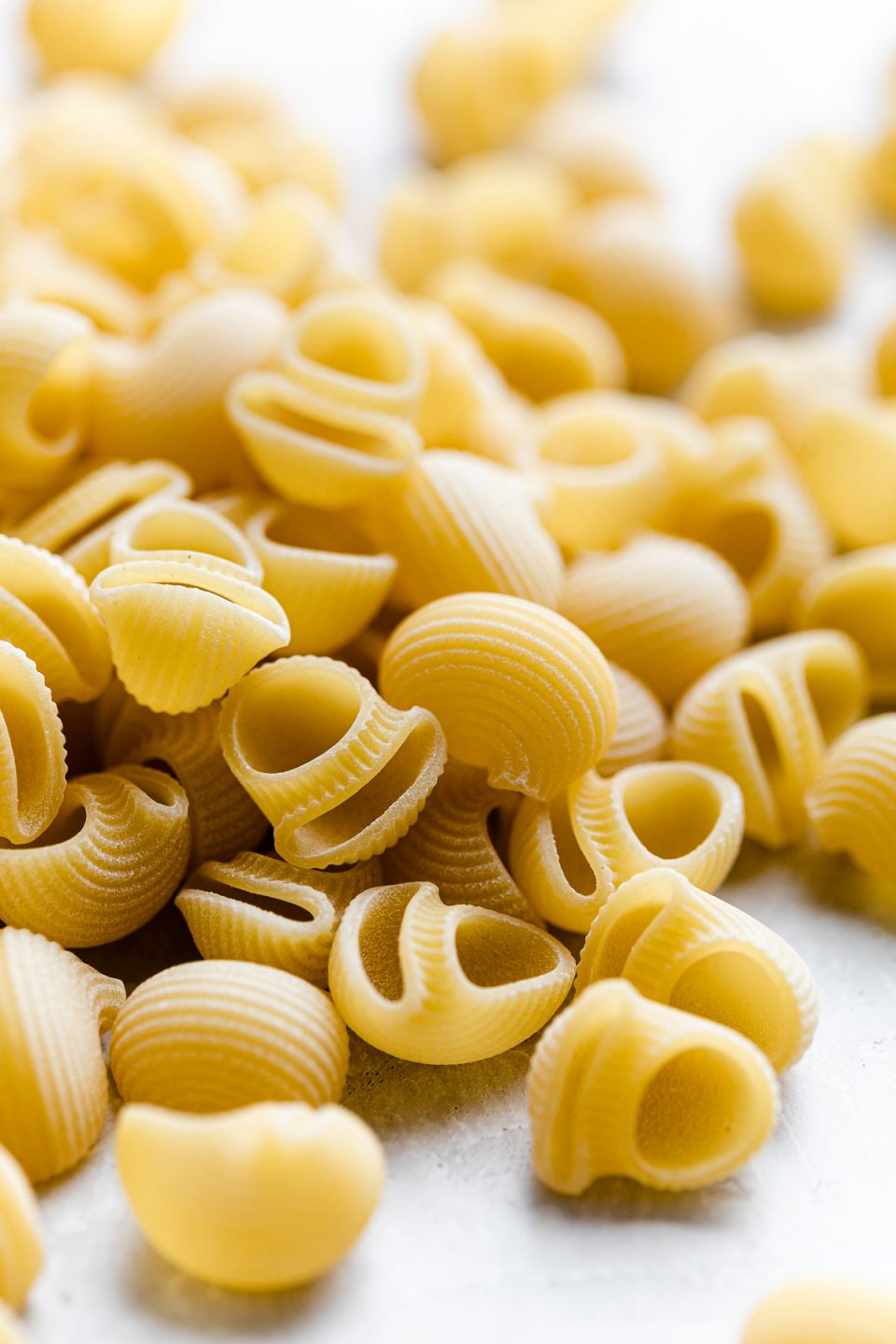
Bronze die extrusion gives the pasta a rougher texture & creates a built-in porous surface on the pasta.
With
cohesion
in mind, these are both really good things – the pasta’s rough texture gives the sauce something to cling to & its porous surface soaks up the sauce, creating cohesive, flavorful bites of pasta.
Determining whether a dry pasta is bronze-cut or not is pretty easy – bronze extruded pasta has a matte surface with rough texture (vs cheaper pastas that appear smooth & shiny). Additionally, because it creates a superior product, brands will be quick to call this out on their packaging – look for a label that indicates the pasta is “bronze die extruded.”
All of DeLallo’s pastas are crafted in Italy with high-quality ingredients & traditional Italian methods – they’re my favorite!
Bronze-cut pasta has a rough surface with a matte texture.
Because they cover both of these key characteristics (& then some!), my long-time go-to for all things pasta is
DeLallo
! They offer more than 30 different shapes of pasta, all of which are made with just 2 ingredients – expertly milled Italian wheat & Italian spring water. Their pastas are also all crafted in Italy – in an area near the Amalfi Coast where pasta was born – using artisanal bronze dies. Check, check, check!!! I absolutely love them – you will too!
How to Cook Pasta
While making pasta is a fairly straightforward process, there are a few simple steps that take at-home pasta dishes from good to great. Once you try this easy technique, you’ll never cook pasta another way!
Cook pasta in a large, heavy-bottomed pot, like a Dutch oven. Aim for 3-4 quarts boiling water per pound of pasta.
First, Choose Your Vessel Wisely.
Be sure to use a pot that’s large enough to fully submerge the pasta in the boiling water with enough room for it to move around as it cooks to prevent sticking.
As a general rule of thumb, you should use 3-4 quarts of water per pound of pasta
– keep this in mind when you pick your pot!
To take it a step further, I like to boil pasta in a heavyweight enamel cast iron Dutch oven. While it does take a little bit longer for the water to reach a boil, a heavyweight pot retains its heat much better than a more lightweight pot, meaning the water returns to a boil more quickly once the pasta is added.
My go-to pot for boiling pasta is a 5-quart Dutch oven – Staub’s cocotte Dutch ovens are forever my favorite! – like
this one
, which has extra tall sides that are great for boiling long pasta, like spaghetti or bucatini.
Always Salt Your Pasta Water!
Have you ever heard that pasta water should taste like the ocean? You should always cook your pasta in generously salted water!
Why do you add salt to pasta water? ⇢
Salting the water is the only opportunity you have to season the pasta itself. Well-seasoned pasta lends to a well-seasoned final pasta dish.
How much salt should you add to pasta water? ⇢
As a general rule of thumb, use 1 – 1 1/2 tablespoons of salt per pound of pasta.
A few tips for salting your pasta water…
What kind of salt is best for pasta water?
While Italian nonnas swear by using coarse sea salt for pasta water, I typically use kosher salt as it’s what I keep on hand in my kitchen – it works just fine!
Salt your pasta water
after
it has come to a boil.
This will help ensure the salt dissolves completely in the water & will properly season your pasta noodles as they cook.
Always season pasta water with a generous amount of salt, about 1 – 1.5 tablespoons per pound of pasta.
Stir often to prevent sticking – Do
NOT
Add Oil!
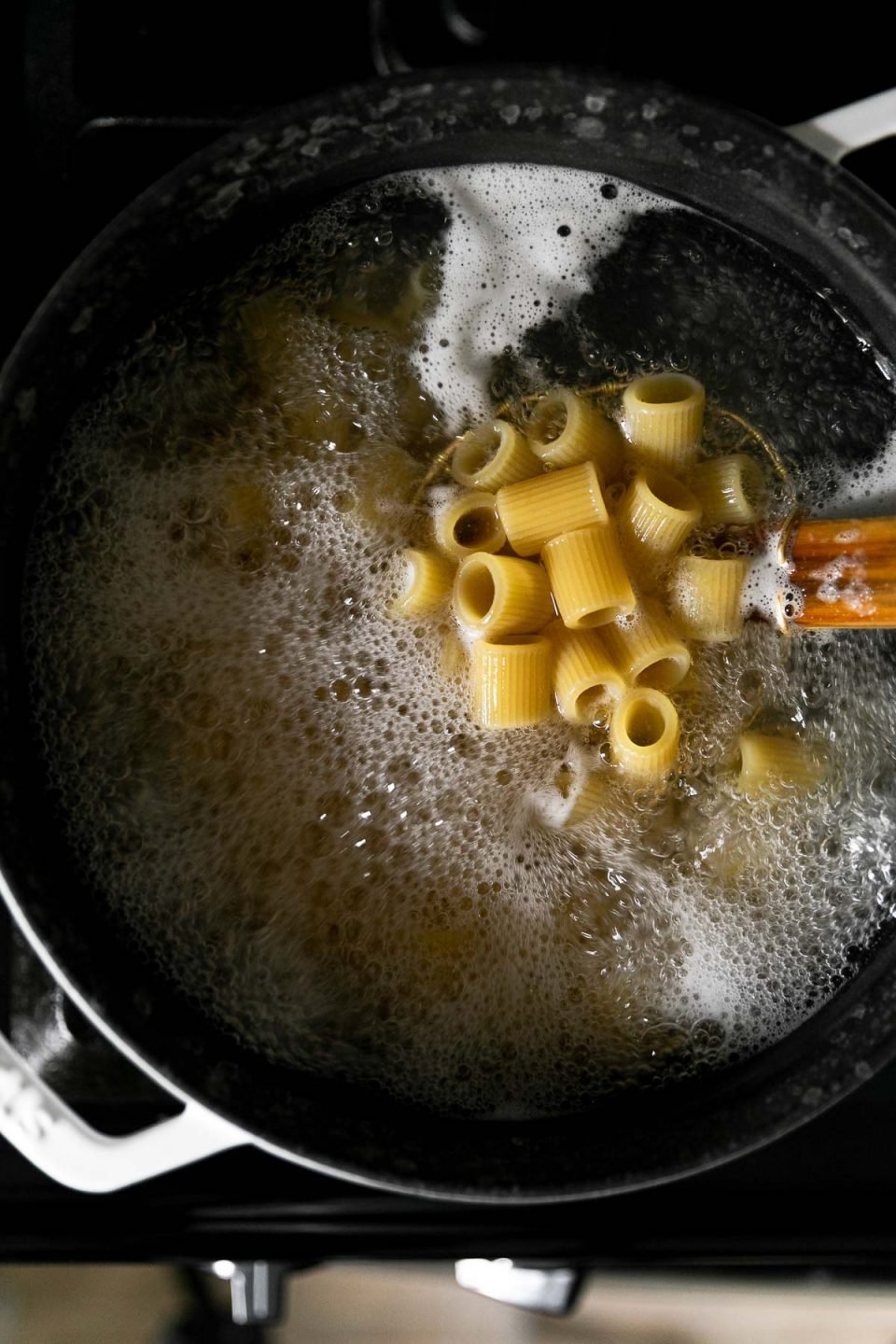
Once the water reaches a full, rolling boil, it’s pasta time! Add your pasta & let it cook, stirring occasionally as it cooks to prevent sticking & boil-overs.
Never
oil your pasta water!
Why? ⇢
Oil coats the surface of the pasta, preventing the pasta from clinging to the sauce. Again, the end goal is a single, cohesive dish – we want our pasta & sauce to come together beautifully!
Rather than adding oil to the pasta water, use a wooden spoon to stir the pasta often as it cooks to prevent sticking.
Cook to
Al Dente
.
When it comes to cooking pasta perfectly, timing is
everything
. Undercooked pasta is crunchy & maybe even a bit chalky, overcooked pasta is mushy & soft, so the goal is a perfect happy medium – al dente.
Al dente is an Italian term translating to “
to the tooth
” – the texture that’s considered the gold standard for perfectly cooked pasta.
How do I know my pasta is
al dente
?
⇢ Simple, taste it! Al dente pasta has great texture – it’ll be a little firm in the center (not hard or crunchy) & it’ll have beautiful chewiness (not sticky or mushy).
How long do you cook pasta to reach al dente?
⇢ Honestly, it depends! Different types of pasta have different cook times. While the package directions will often provide a good estimate, the best way to check pasta for doneness is to taste it!
That said, here are some general guidelines for how long to cook pasta:
Dry pasta
– On average dry pasta cooks in 8-10 minutes. However, depending on the shape of the pasta and the amount you are making, cook times will vary! Our recommendation? Cook dried pasta according to the packaging directions, checking for doneness a few minutes earlier than the indicated “al dente” cook time.
Fresh pasta
– The nice thing about fresh pasta is that it cooks
very
quickly! Check for doneness after 1 minute, cooking the pasta no more than 2-3 minutes.
Stuffed pasta & gnocchi
– Stuffed pasta, like ravioli or tortellini, or gnocchi are typically prepared fresh, so they have a quick cook time, too. You’ll know they are done when they appear puffy or swollen & they float to the surface of the boiling water.
Baked pasta
– If you’re cooking pasta to use in a baked pasta dish, like
creamy mac & cheese
, be sure to par-cook it since the pasta will continue to cook in the oven. Aim for 1-2 minutes under al dente.
Al dente
pasta is firm with beautiful chewiness, it’s neither too hard nor too mushy.
Always Reserve Pasta Water Prior to Draining!
Once your pasta has reached al dente, you’re almost at the finish line! Just before draining the pasta, carefully dip a liquid measuring cup into the pot, reserving about 1 cup of the starchy pasta water.
Why? ⇢
Pasta water is liquid gold! Its starchiness helps us create the single, cohesive dish that we’re after once we combine the cooked pasta with the sauce – more on that in a minute!
Always reserve starchy pasta water prior to draining pasta.
Lastly, Do Not Rinse Your Pasta!
Lastly, drain the pasta, but do NOT rinse it!
Why? ⇢
Rinsing washes the starchy goodness off the surface of the pasta, preventing it from absorbing & clinging to the pasta sauce.
The only exception to this rule is pasta salad, which is typically tossed with room temperature ingredients & served cold. Rinsing pasta for pasta salad shocks the pasta, preventing it from continuing to cook & wilting the other ingredients in the pasta salad.
Do not rinse drained pasta, as rinsing washes away the starches off the surface of the pasta that help the pasta cling to its sauce.
Tossing Together Your Restaurant Quality Pasta Dish!
Once the pasta is cooked to al dente perfection, the last step to creating a restaurant-worthy pasta dish at home is finishing the pasta with the sauce. Yes,
al dente pasta should always cook
with
sauce for a couple of minutes on the stovetop
.
Remember our overarching goal of cohesion?
The #1 mistake I see home chefs make when they serve a pasta dish at home is opting to simply plop the prepared sauce atop a pile of pasta – please don’t do this!
By finishing the pasta
with
the sauce, the two separate components come together as one cohesive dish. If you feel like your pasta never turns out as good as it does in a restaurant, this simple step helps tremendously!
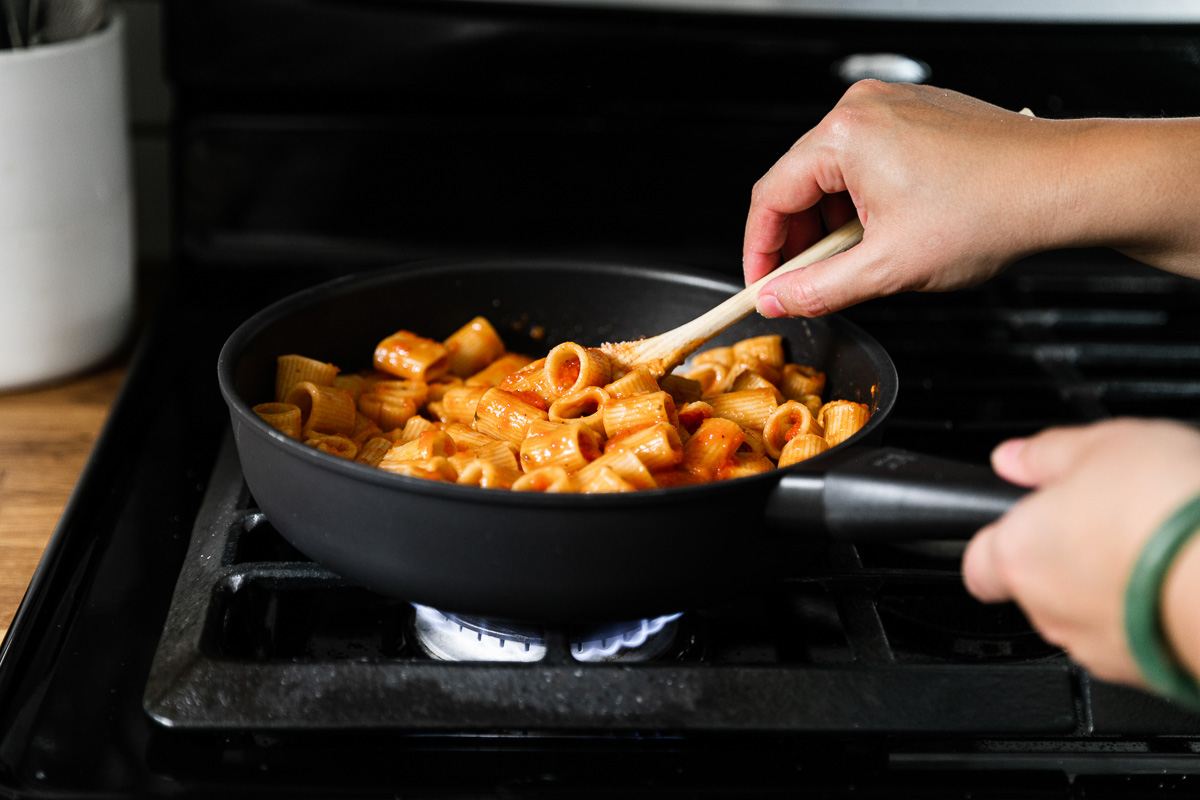
Finishing pasta with the sauce creates a perfectly cohesive, restaurant-quality pasta dish.
Bring your sauce to simmer on stovetop. Timing is key here – it’s ideal to have your sauce ready & simmering just before you drain the pasta. Add the al dente pasta to the sauce immediately, tossing to combine. Let the pasta & sauce cook for a minute or two, allowing the pasta to meld with & absorb some of the sauce.
During these last few minutes, you can also make micro-adjustments as needed to create the perfect pasta dish:
If the sauce is too thick, toss in a little of your magic reserved pasta water to thin it out.
If the sauce is too loose, increase the heat to create a more vigorous simmer or toss in a handful of parmesan to thicken it up.
If the sauce is too thick, use reserved pasta water to loosen it up.
If the sauce is too loose, sprinkle in some parmesan to help tighten it up.
Adjust as needed to achieve the perfect pasta dish!
Voila – the BEST pasta you’ve ever made at home! 🙌🏼
Try it Out! Our Favorite Pasta Dishes to Make at Home:
Best-Ever Pasta Bolognese with Bucatini
Braised Short Rib Ragu with Pappardelle
Scallop Pesto Pasta with Spaghetti
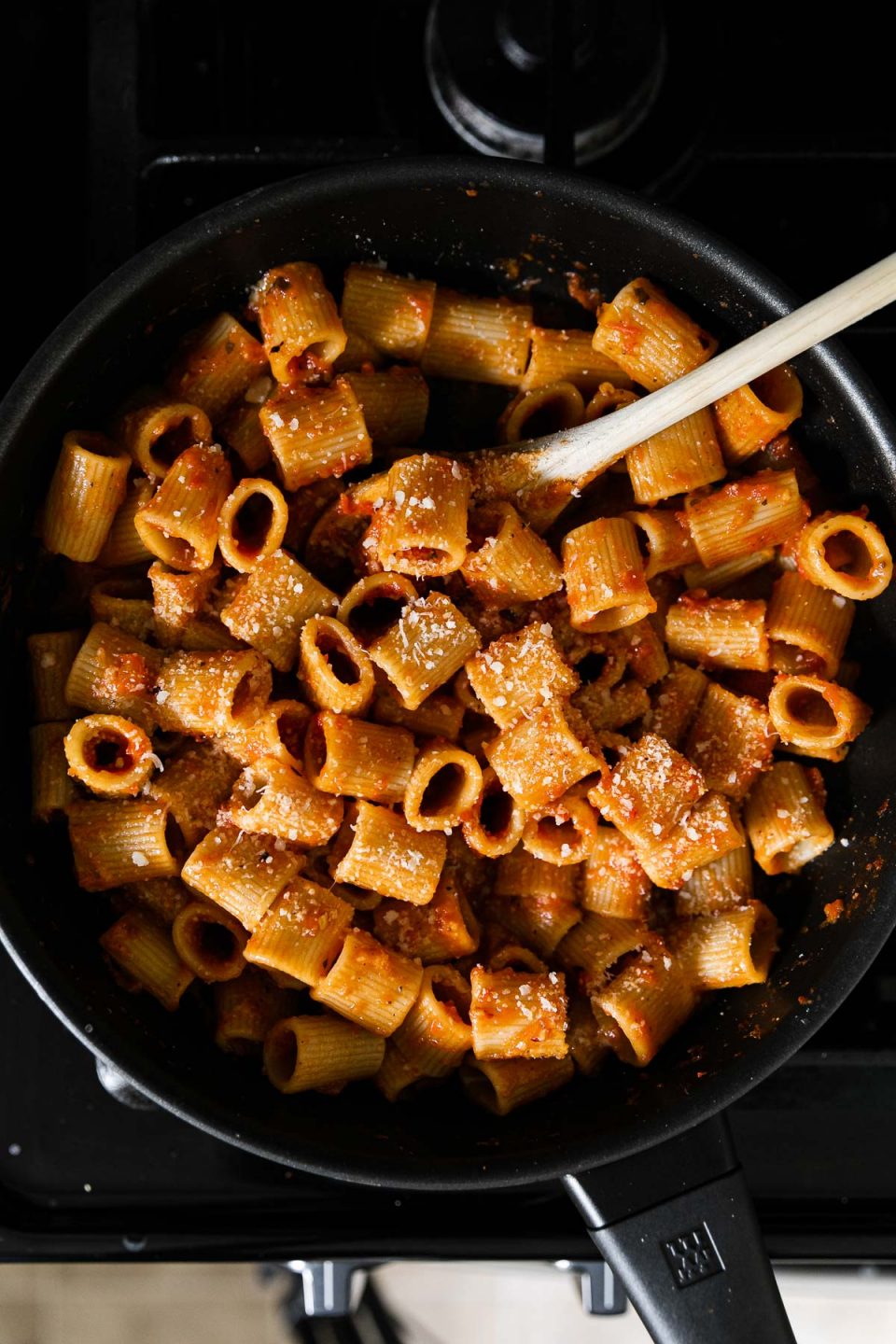
Sausage & Peppers Pasta with Rigatoni
I can’t wait for you to try these tips & see how your pasta turns out, you won’t believe the difference! If you do give them a try, be sure to let me know!
Leave a comment with a star rating below
. You can also
snap a photo & tag
@playswellwithbutter
on
Instagram
. I LOVE hearing about & seeing your PWWB creations! Happy cooking!
♡
Print
How to Cook Pasta Perfectly (Every Single Time!)
5 Stars
4 Stars
3 Stars
2 Stars
1 Star
No reviews
Author:
Jess Larson
Prep Time:
10 minutes
Cook Time:
15 minutes
Total Time:
25 minutes
Yield:
serves 4
Category:
Pasta Recipes, Main Dishes
Method:
Boiling, Stovetop
Cuisine:
Italian
Description
Whether you’re head-over-heels for all things Italian or you simply love pasta for its quickness, versatility, & affordability, there are a few simple tips & tricks that will take your at-home pasta nights to the next level. Learn how to cook pasta perfectly – every single time! – & be sure to check out the Blog Post, above, for more tips & tricks.
Ingredients
Scale
8 ounces
pasta of choice
1/2
– 1 cup
pasta sauce of choice
kosher salt
&
ground black pepper
, to season
optional:
1/4 cup
grated parmesan
for serving, as desired: grated
parmesan
or
pecorino romano
, finely chopped
basil
or
parsley
,
crushed red pepper flakes
, etc.
Instructions
Boil the pasta:
Bring a large pot of water to a boil. Once boiling, generously salt the water. As a general rule of thumb, use 3-4 quarts of water & 1-1 1/2 tablespoons salt per pound of pasta. Add the pasta and cook to al dente according to package directions. Just before draining, reserve 1 cup of the starchy pasta water. Drain the pasta and set aside – do
not
rinse the pasta.
Simmer the sauce:
Meanwhile, as the pasta boils, heat your pasta sauce of choice in a large skillet – either use your favorite pre-made sauce or follow Recipe Directions of the specific pasta dish you’re making. As a general rule of thumb, use 1 1/2 cups of tomato-based sauces per pound of pasta or 1 cup of oil-based sauces per pound of pasta. Bring the sauce to a simmer, then reduce heat until you’re ready to add the pasta.
Finish the pasta:
Add the drained pasta to the skillet with the sauce. Toss to coat with the simmering pasta sauce. Cook, stirring & tossing occasionally, over medium heat for 1-2 minutes, allowing the pasta to meld with & absorb some of the sauce. Adjust as needed so the pasta sauce evenly coats the pasta – if the mixture is too thick, toss in a little reserved pasta water; if the mixture is too loose, increase the heat or toss in an extra handful of parmesan cheese, etc. Remove from the heat & serve immediately. Enjoy!
Follow along with Plays Well With Butter on
Instagram
,
YouTube
,
Facebook
, and
Pinterest
for more unfussy recipes that pack a big punch of flavor! | |||||||||
| Markdown | 
Get ad-free recipes! [Join the PWWB Cooking Club](https://playswellwithbutter.com/how-to-cook-pasta-properly/#memberships-open)
- [About Plays Well With Butter](https://playswellwithbutter.com/about/)
- [Weeknight Recipes](https://playswellwithbutter.com/occasion/weeknight-recipes/)
- [Sunday Suppers](https://playswellwithbutter.com/occasion/comfort-food-recipes/)
- [Hawaiian](https://playswellwithbutter.com/cuisine/hawaiian/)
- [Pasta](https://playswellwithbutter.com/category/recipes/main-dishes/pasta-recipes/)
- [All Recipes](https://playswellwithbutter.com/recipes/)
- [Mains](https://playswellwithbutter.com/category/recipes/main-dishes/)
- [Sides](https://playswellwithbutter.com/category/recipes/side-dish-recipes/)
- [Appetizers](https://playswellwithbutter.com/category/recipes/appetizer-recipes/)
- [Desserts](https://playswellwithbutter.com/category/recipes/dessert-recipes/)
- [Drinks & Cocktails](https://playswellwithbutter.com/category/recipes/beverages/)
- [Recipe Index](https://playswellwithbutter.com/recipe-index/)
- [All Recipes](https://playswellwithbutter.com/recipes/)
- [Lifestyle](https://playswellwithbutter.com/category/lifestyle/)
- [Membership](https://playswellwithbutter.com/membership/)
- [About Plays Well With Butter](https://playswellwithbutter.com/about/)
- [Weeknight Recipes](https://playswellwithbutter.com/occasion/weeknight-recipes/)
- [Sunday Suppers](https://playswellwithbutter.com/occasion/comfort-food-recipes/)
- [Hawaiian](https://playswellwithbutter.com/cuisine/hawaiian/)
- [Pasta](https://playswellwithbutter.com/category/recipes/main-dishes/pasta-recipes/)
- [All Recipes](https://playswellwithbutter.com/recipes/)
- [Mains](https://playswellwithbutter.com/category/recipes/main-dishes/)
- [Sides](https://playswellwithbutter.com/category/recipes/side-dish-recipes/)
- [Appetizers](https://playswellwithbutter.com/category/recipes/appetizer-recipes/)
- [Desserts](https://playswellwithbutter.com/category/recipes/dessert-recipes/)
- [Drinks & Cocktails](https://playswellwithbutter.com/category/recipes/beverages/)
- [Recipe Index](https://playswellwithbutter.com/recipe-index/)
- [All Recipes](https://playswellwithbutter.com/recipes/)
- [Lifestyle](https://playswellwithbutter.com/category/lifestyle/)
- [Membership](https://playswellwithbutter.com/membership/)
- [Instagram](https://www.instagram.com/playswellwithbutter/)
- [Facebook](https://www.facebook.com/playswellwithbutter/)
- [Pinterest](https://www.pinterest.com/playswithbutter/)
- [Bloglovin](https://www.bloglovin.com/blogs/plays-well-with-butter-18161039)
- [Search](https://playswellwithbutter.com/how-to-cook-pasta-properly/)
[Skip to content](https://playswellwithbutter.com/how-to-cook-pasta-properly/#content)
- [About Plays Well With Butter](https://playswellwithbutter.com/about/)
- [Weeknight Recipes](https://playswellwithbutter.com/occasion/weeknight-recipes/)
- [Sunday Suppers](https://playswellwithbutter.com/occasion/comfort-food-recipes/)
- [Hawaiian](https://playswellwithbutter.com/cuisine/hawaiian/)
- [Pasta](https://playswellwithbutter.com/category/recipes/main-dishes/pasta-recipes/)
- [All Recipes](https://playswellwithbutter.com/recipes/)
- [Mains](https://playswellwithbutter.com/category/recipes/main-dishes/)
- [Sides](https://playswellwithbutter.com/category/recipes/side-dish-recipes/)
- [Appetizers](https://playswellwithbutter.com/category/recipes/appetizer-recipes/)
- [Desserts](https://playswellwithbutter.com/category/recipes/dessert-recipes/)
- [Drinks & Cocktails](https://playswellwithbutter.com/category/recipes/beverages/)
- [Recipe Index](https://playswellwithbutter.com/recipe-index/)
- [All Recipes](https://playswellwithbutter.com/recipes/)
- [Lifestyle](https://playswellwithbutter.com/category/lifestyle/)
- [Membership](https://playswellwithbutter.com/membership/)
[ Plays Well With Butter](https://playswellwithbutter.com/)
- [Home](https://playswellwithbutter.com/)
- [About Plays Well With Butter](https://playswellwithbutter.com/about/)
- [Lifestyle](https://playswellwithbutter.com/category/lifestyle/)
- [contact](https://playswellwithbutter.com/about/contact/)
- [Membership](https://playswellwithbutter.com/membership/)
- [Instagram](https://www.instagram.com/playswellwithbutter/)
- [Facebook](https://www.facebook.com/playswellwithbutter/)
- [Pinterest](https://www.pinterest.com/playswithbutter/)
- [Bloglovin](https://www.bloglovin.com/blogs/plays-well-with-butter-18161039)
- [Search](https://playswellwithbutter.com/how-to-cook-pasta-properly/)
[Jump to Recipe](https://playswellwithbutter.com/how-to-cook-pasta-properly/#tasty-recipes-22312-jump-target)
[Pin Recipe]()
[](https://playswellwithbutter.com/)
- [Weeknight Recipes](https://playswellwithbutter.com/occasion/weeknight-recipes/)
- [Sunday Suppers](https://playswellwithbutter.com/occasion/comfort-food-recipes/)
- [Hawaiian](https://playswellwithbutter.com/cuisine/hawaiian/)
- [Pasta](https://playswellwithbutter.com/category/recipes/main-dishes/pasta-recipes/)
- [All Recipes](https://playswellwithbutter.com/recipes/)
- [Appetizers](https://playswellwithbutter.com/category/recipes/appetizer-recipes/)
- [Breakfast](https://playswellwithbutter.com/category/recipes/breakfast/)
- [Desserts](https://playswellwithbutter.com/category/recipes/dessert-recipes/)
- [Drinks & Cocktails](https://playswellwithbutter.com/category/recipes/beverages/)
- [Main Dishes](https://playswellwithbutter.com/category/recipes/main-dishes/)
- [Sauces & Condiments](https://playswellwithbutter.com/category/recipes/sauces-condiments/)
- [Side Dishes](https://playswellwithbutter.com/category/recipes/side-dish-recipes/)
- [Snacks](https://playswellwithbutter.com/category/recipes/snack-recipes/)
- [Recipe Index](https://playswellwithbutter.com/recipe-index/)
- [All Recipes](https://playswellwithbutter.com/recipes/)
- [Search](https://playswellwithbutter.com/how-to-cook-pasta-properly/)
[Home](https://playswellwithbutter.com/) » [Recipes](https://playswellwithbutter.com/recipes/) » [Techniques & How-Tos](https://playswellwithbutter.com/category/recipes/techniques-how-tos/)
[Leave a Review](https://playswellwithbutter.com/how-to-cook-pasta-properly/#respond)
## [How to Cook Pasta Perfectly (Every Single Time!)](https://playswellwithbutter.com/how-to-cook-pasta-properly/)
Posted by [Jess Larson](https://playswellwithbutter.com/jess-larson/) on October 17th, 2021 (Updated March 9, 2024)
THIS POST MAY CONTAIN AFFILIATE SALES LINKS. PLEASE SEE MY [FULL DISCLAIMER POLICY](https://playswellwithbutter.com/disclaimer/) FOR DETAILS.
Learn **How to Cook Pasta Properly**, every single time! Whether you're head-over-heels for all things Italian or you simply love pasta for its quickness, versatility, & affordability, there are a few simple tips & tricks that will take your at-home pasta nights to the next level. Covering everything from how to salt pasta to how to know when pasta is done, consider this post your **comprehensive guide to cooking a restaurant-worthy pasta dish at home**.
[Jump to Recipe](https://playswellwithbutter.com/how-to-cook-pasta-properly/#tasty-recipes-22312-jump-target)
[Pin Recipe]()
Featured In Pasta Series
Photography by Rachel Cook
**Prep:** 10 min
**Cook:** 15 min
**Serves:** 4
## **Pasta 101 – A Comprehensive Guide for How to Cook Pasta Like a Pro\!**
If you’ve been around PWWB for a while, you know that my truest culinary love in life is pasta. I *looooooove* pasta. I love to cook with pasta, I love to order pasta at restaurants, I love to develop **[pasta recipes](https://playswellwithbutter.com/category/recipes/main-dishes/pasta-recipes/)** to share here on PWWB, & I especially love to eat pasta. In fact, I love pasta so much that Chris & I served a dedicated pasta course at our wedding dinner. (It was *kiiinda* over the top, but I still stand by that decision 100%!)
& the really fun thing? You seem to love them just as much as I do! Italian pasta dishes like my **[Best-Ever Bolognese](https://playswellwithbutter.com/bolognese-sauce-recipe/)**, **[Braised Lamb Ragu](https://playswellwithbutter.com/braised-lamb-ragu/)**, & **[Creamy Marsala Pasta](https://playswellwithbutter.com/marsala-pasta/)** are not only some of my personal favorite recipes here on PWWB, but they’re also some of the most popular, well-loved recipes within the PWWB community.
At its surface, this passion for pasta may seem silly but, to me, a pasta dish is more than just a meal. Pasta is inherently comforting & communal – that’s what food & cooking is all about! & the cool thing about pasta specifically? With a good understanding of what constitutes a properly cooked pasta dish, *anyone* can cook damn good, restaurant-quality pasta at home.
[]()
[this Recipe for Later\!]()


## ****Easy Ways to Make Your Pasta Dinner Taste As Good As Any Trattoria 🍝****
Get 5 days of pasta tips learned from my years in a fine-dining Italian restaurant.
## **The Key Principle of Cooking Pasta – Cohesion\!**
Understanding the characteristics of a well-executed pasta dish is an absolute game-changer when it comes to learning how to cook pasta perfectly. There’s a simple underlying principle that informs just about every decision you make & every step you take in cooking a pasta dish properly – **cohesion**.
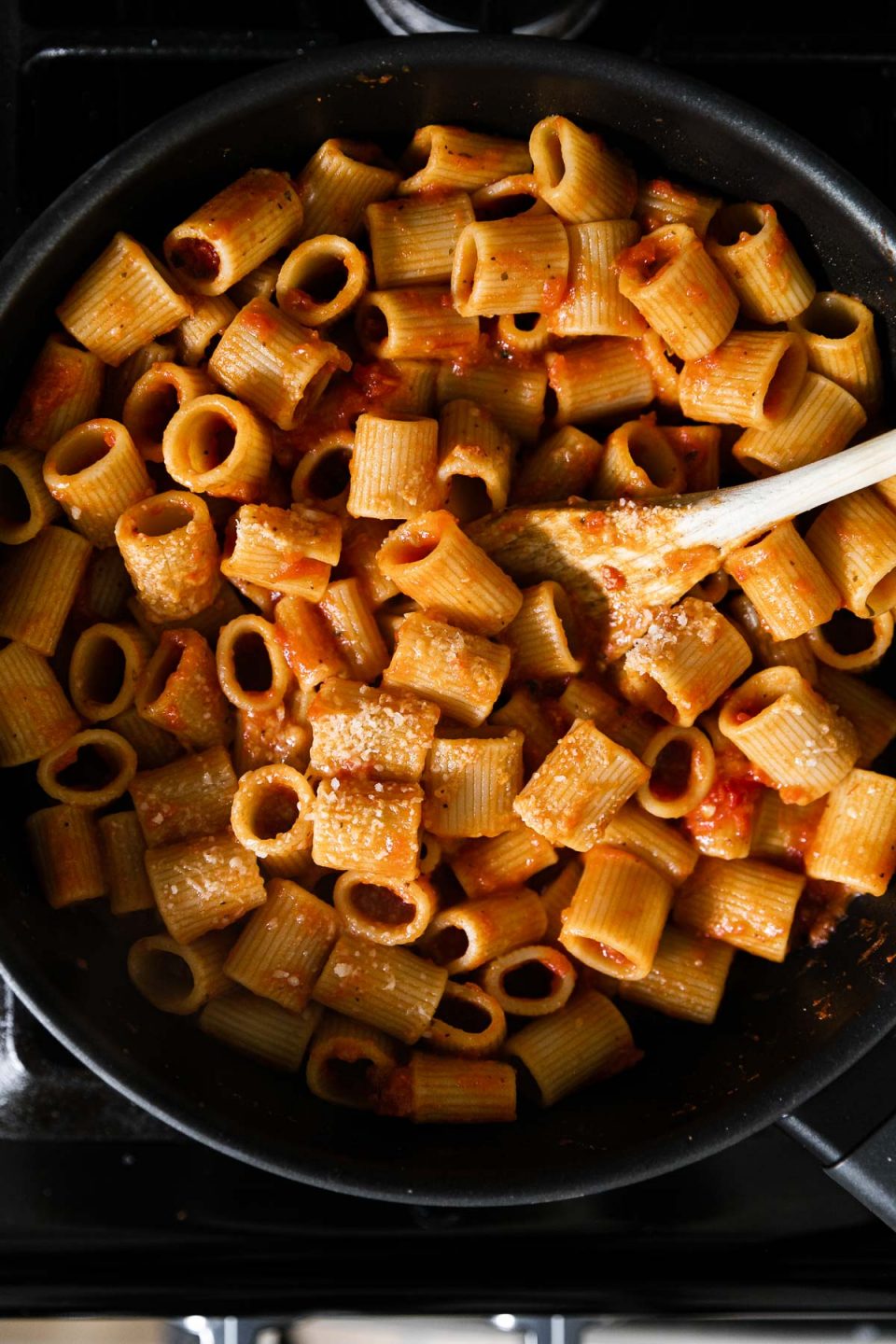

Always cook pasta *with* sauce for a few minutes, creating a cohesive pasta dish.
**The end goal of executing a properly cooked pasta dish is creating a single, cohesive dish.** Think about your favorite pasta dish to order at an Italian restaurant. I’d be willing to bet that when it’s set down in front of you, the pasta & the sauce are already combined, creating a single, cohesive dish.
**The \#1 mistake I see home chefs make when they serve a pasta dish is treating its two key elements separately.** Rather than aiming for creating a single, cohesive dish, they cook the pasta entirely separately from the sauce, only bringing them together during serving by plopping the prepared sauce atop a pile of pasta.
With an overarching goal of creating cohesion in mind, you’ll learn to prepare a killer pasta dish effortlessly every single time.
## **How to Choose the Right Pasta for Your Pasta Recipe:**
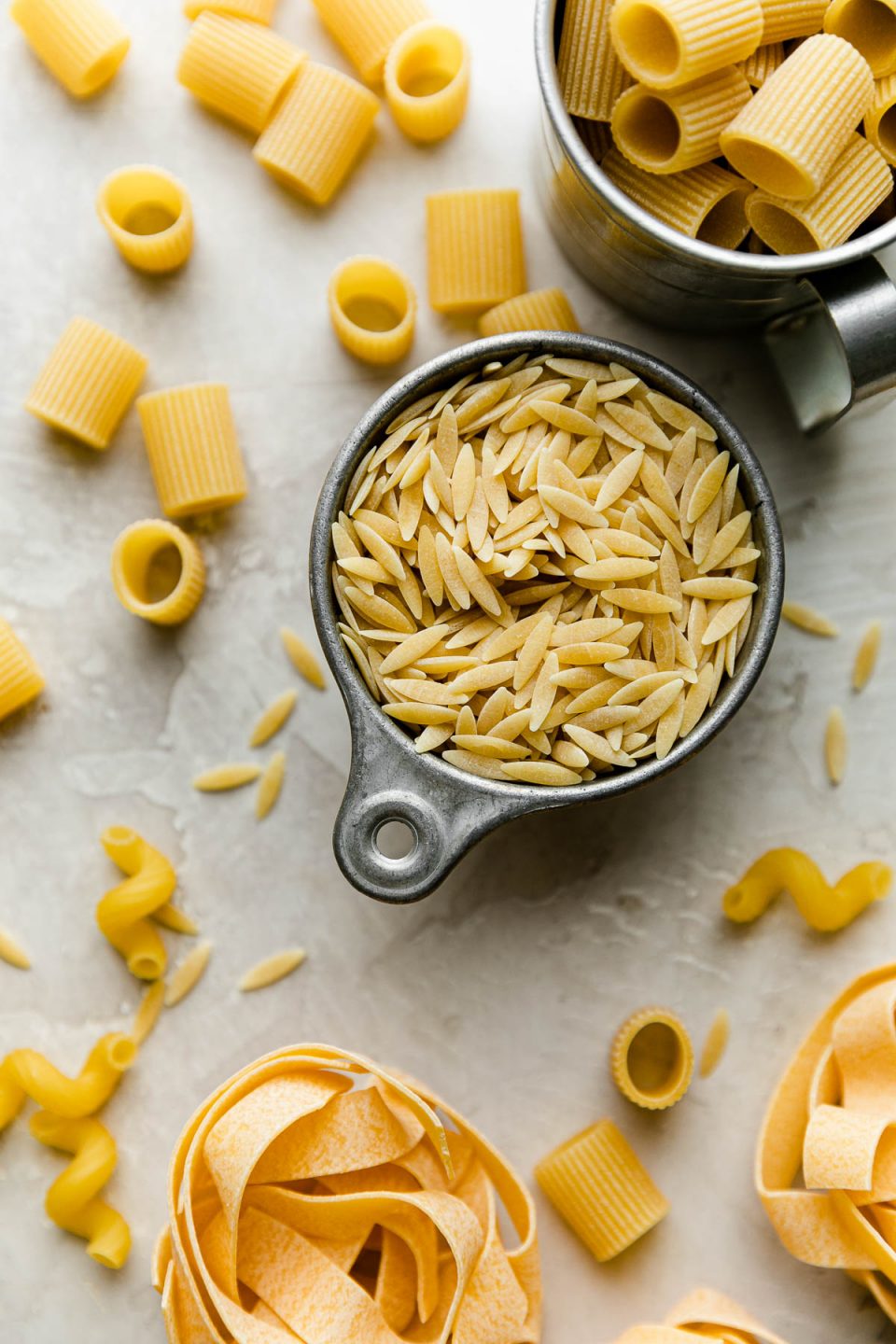
You may think there’s no wrong type or shape of pasta for a particular pasta dish, but it’s a little more nuanced than that. It’s easy to assume that all pasta tastes the same – at the surface there’s definitely some truth to that assumption! However, **a pasta’s weight, texture, & shape all have an impact on how it interacts with the sauce.** Choosing the right pasta for a particular recipe will only enhance your pasta dish further\!
#### Choosing the Right Pasta Shape for Your Pasta Recipe:
When choosing what shape to use in a pasta dish, think about the nature of the sauce & choose pasta that will complement it. **As general rule of thumb, the heartier the sauce, the heartier the pasta:**
- **Fine pasta is great to pair with light sauces.** For texturally lighter pasta dishes like a simple [pomodoro](https://playswellwithbutter.com/easy-pasta-pomodoro-with-chicken-goat-cheese-recipe/), [aglio olio](https://playswellwithbutter.com/aglio-olio-zoodles-vegetables-shrimp/), [pesto](https://playswellwithbutter.com/kale-pesto/), or something with a light cream sauce, you can get away with using really delicate pasta like capellini, linguine, or casarecce.
- **Short pasta is great to pair with chunky or extra creamy sauces** since its nooks & crannies capture the sauce, making each bite of pasta more flavorful. For dishes like [mac & cheese](https://playswellwithbutter.com/pumpkin-mac-and-cheese/), [marsala pasta with mushrooms](https://playswellwithbutter.com/marsala-pasta/), or [classic sausage & peppers pasta](https://playswellwithbutter.com/sausage-and-peppers-pasta-recipe/), choose shapes that will really capture everything in the sauce. Examples include rigatoni, shellbows, cavatappi, or oreccheitte.
- **Wide, hearty pasta is great to pair with rich, hearty sauces** since its weight can really stand up to the weight & richness of the sauce. For dishes like [bolognese](https://playswellwithbutter.com/bolognese-sauce-recipe/) or [ragu](https://playswellwithbutter.com/braised-lamb-ragu/), choose hearty pasta like bucatini, fettuccine, or pappardelle.
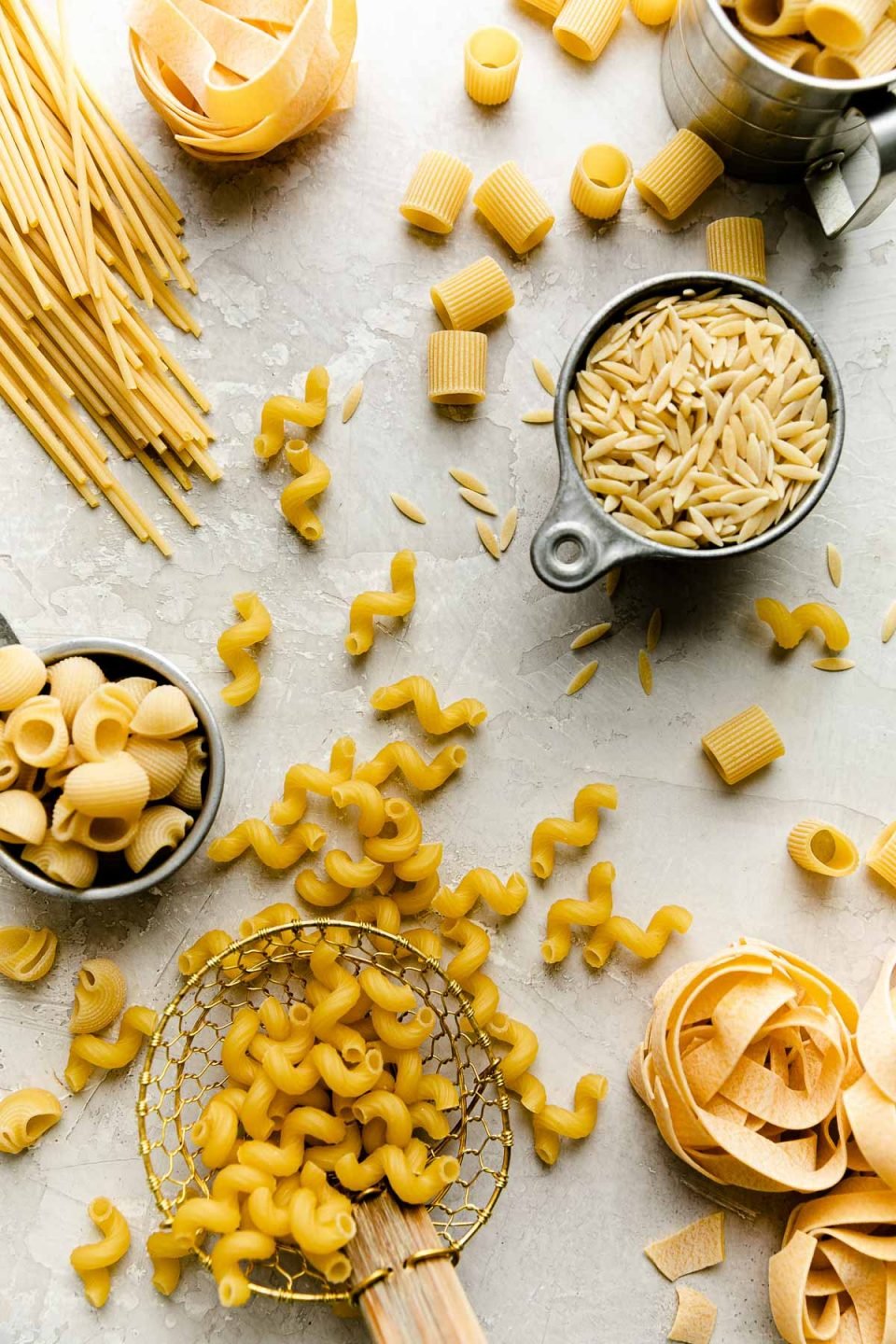

When choosing what shape to use, think about the nature of the sauce & choose pasta that will complement it – the heartier the sauce, the heartier the pasta\!
#### **Fresh Pasta vs Dried Pasta:**
To add a little more complexity to this conversation, there are also a few important differences between fresh pasta vs dried pasta. **It’s easy to assume that fresh is always best, but in reality each has its pros & cons depending on the pasta dish.** Here too, it’s best to choose pasta that complements the nature of the overall pasta dish. Some things to consider:
#### **Fresh Pasta**
**Why choose fresh pasta? ⇢** Fresh pasta is most commonly made with egg, resulting in a pasta that’s generally more richly flavored & tender than dried pasta. **Because of its tender texture, fresh pasta typically pairs best with lighter sauces, often creamy or dairy-based.** (The one exception? Bolognese or ragu, which pairs beautifully with a wide-cut pappardelle!) As a bonus, since it’s not dehydrated, fresh pasta also cooks up *very* quickly, in just a couple of minutes or less.
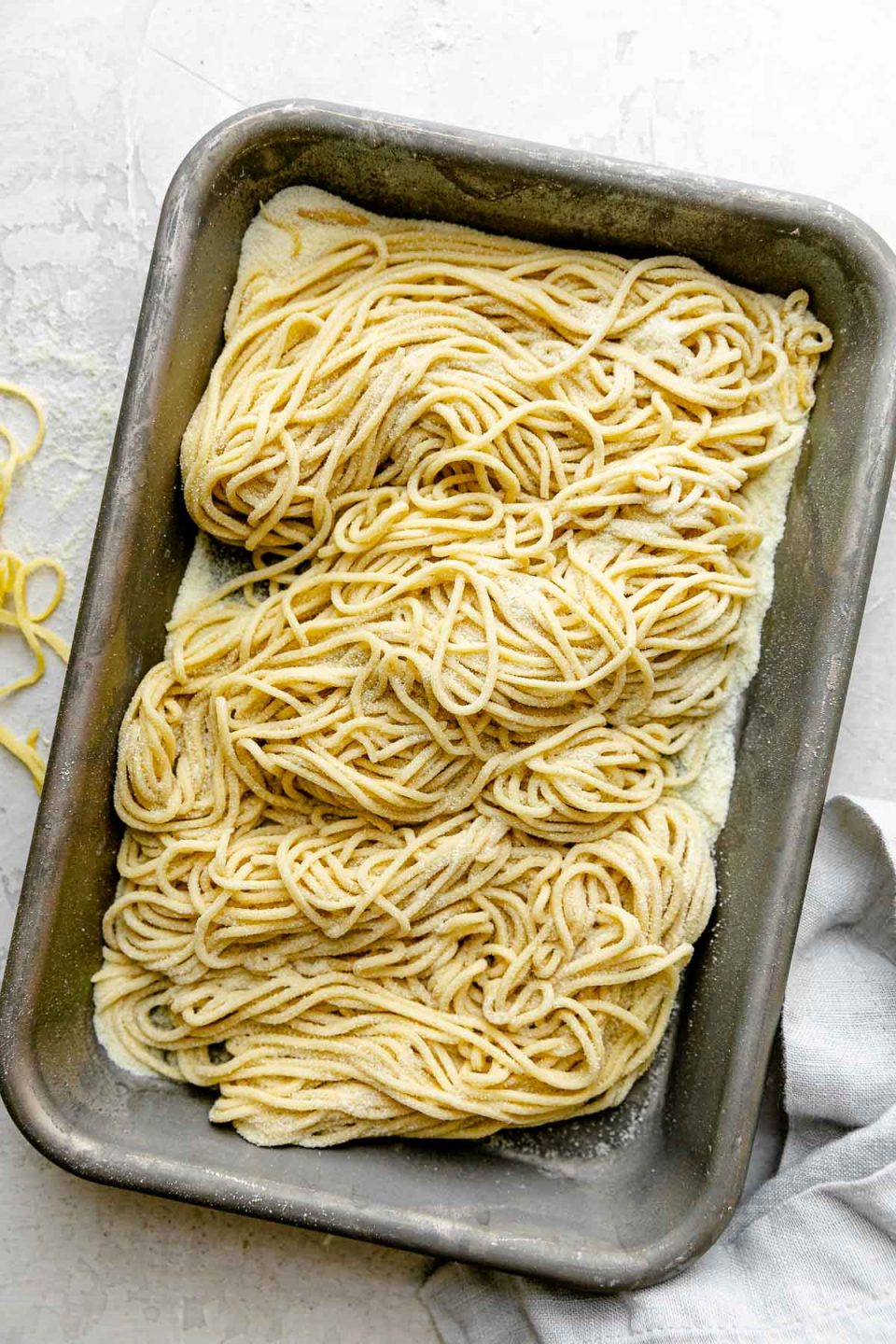

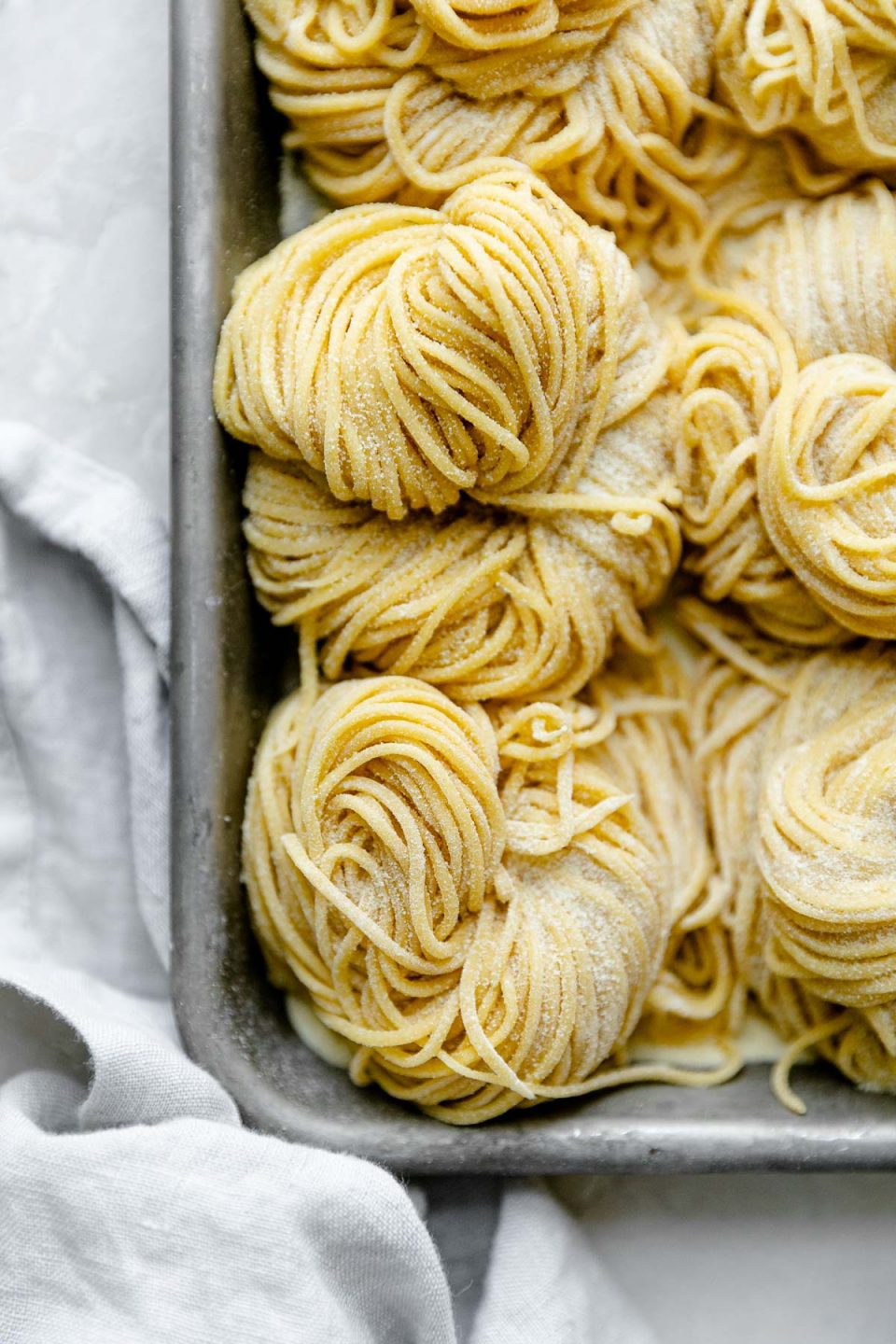

Making fresh pasta at home is a great kitchen project – it’s a lot easier than you likely think it is! Earlier this year we shared **our [go-to Fresh Pasta recipe](https://playswellwithbutter.com/how-to-make-homemade-pasta/) – think of it as a comprehensive guide to making homemade pasta for beginners**.
If you’re a pasta lover, I especially suggest checking it out & trying your hand at making homemade pasta sometime soon! One of the advantages of making it yourself is that you have complete control of the pasta’s texture, flavor, & shape from the very start. You can use different flours to create very delicate pasta or super hearty pasta. You can add in extra fat for extra flavor & richness. Or, add in other ingredients, like herbs or spinach, to introduce a new flavor.
#### **Dried Pasta**
While I *love* treating myself to fresh pasta every now & then, if I’m being completely honest with you, you’ll typically find me reaching for my favorite dried pasta on pasta night.
**Why choose dried pasta? ⇢** Dried pasta is typically made with just 2 main ingredients – flour & water. This results in a pasta dough with *much* firmer structure, ideal for creating a perfect *al dente* bite. **This hearty, firm texture makes dried pasta a great pairing for heavier sauces or heartier pasta dishes that have several ingredients in the mix.** Dried pasta takes much less time & effort to whip up than fresh (with no kneading or fancy equipment required!). Plus, we’re fortunate to live in times in which an abundance of amazing dried pasta is readily available to us, in just about every shape imaginable\!
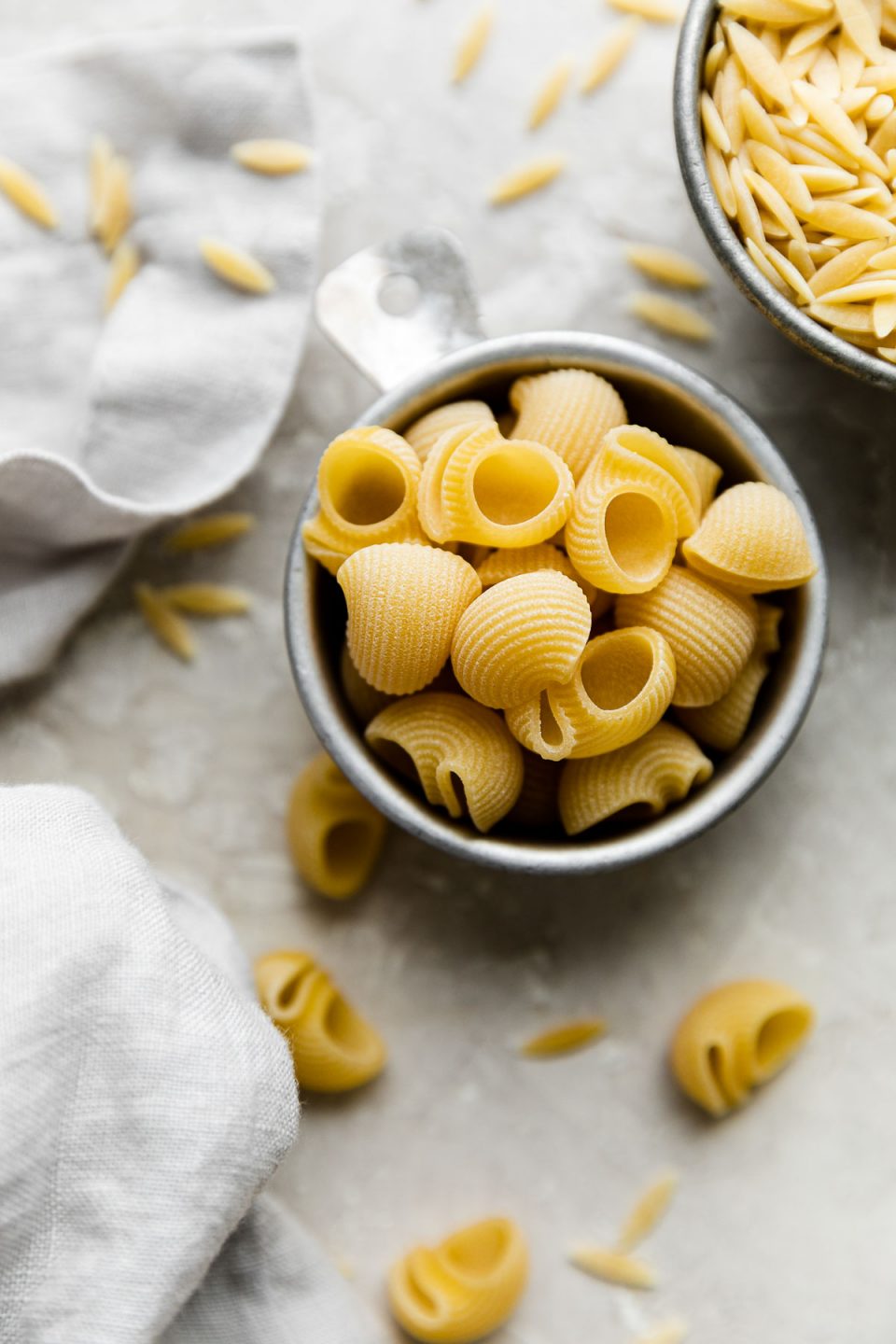

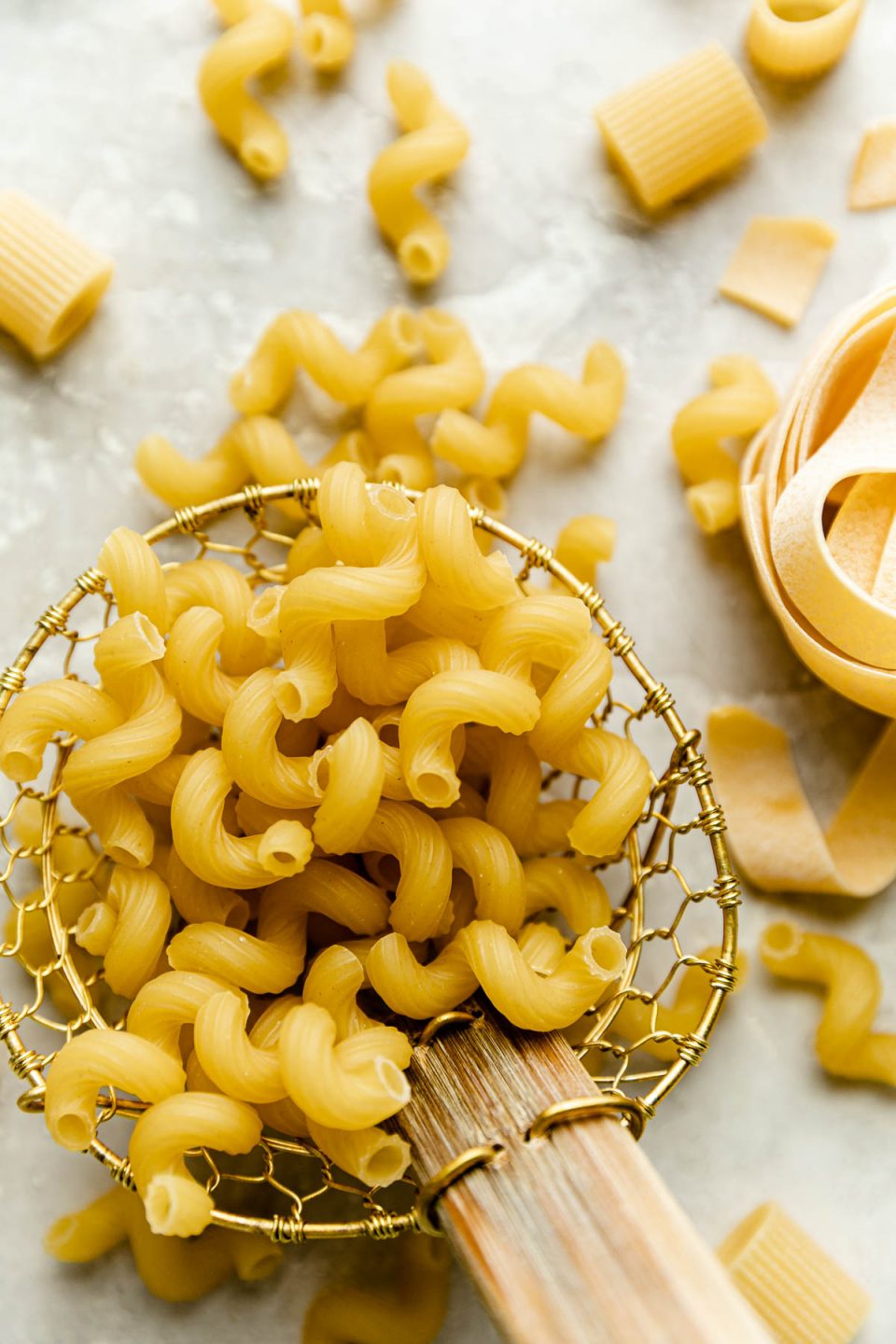

#### **Key characteristics to look for in high-quality dried pasta:**
- **Quality ingredients:** Great pasta starts with high-quality ingredients. Look for a minimal ingredients list – durum wheat flour, water, & *mayyybe* salt. Durum, a special variety of wheat indigenous to Italy, is often used in dried pasta. Its high gluten & protein content creates pasta with beautiful, hearty texture.
- **Traditional Italian craftsmanship – bronze-cut pasta:** Dry pasta is typically formed by extruding the pasta dough through a die to create the shapes that we all know & love – rigatoni, penne, orecchiette, etc. Traditionally, these molds or dies are made of bronze. While it’s a little more expensive & slower than modern technology, bronze die extrusion results in a truly superior pasta – thisisn’t just gimmicky marketing! **Here’s why ⇢** Bronze die extrusion gives the pasta a rougher texture & creates a built-in porous surface on the pasta. **With *cohesion* in mind, these are both really good things – the pasta’s rough texture gives the sauce something to cling to & its porous surface soaks up the sauce, creating cohesive, flavorful bites of pasta.** Determining whether a dry pasta is bronze-cut or not is pretty easy – bronze extruded pasta has a matte surface with rough texture (vs cheaper pastas that appear smooth & shiny). Additionally, because it creates a superior product, brands will be quick to call this out on their packaging – look for a label that indicates the pasta is “bronze die extruded.”
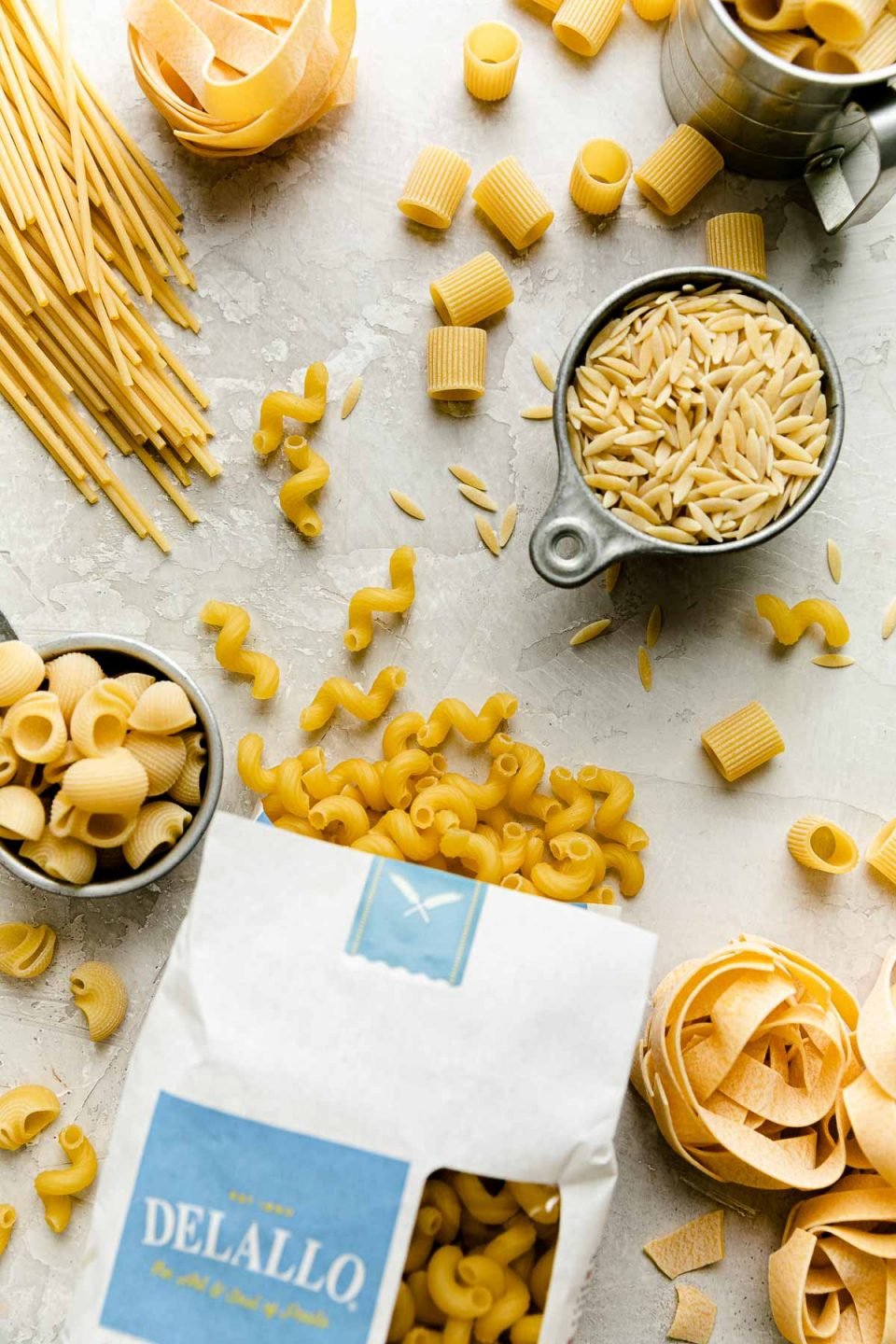

All of DeLallo’s pastas are crafted in Italy with high-quality ingredients & traditional Italian methods – they’re my favorite\!
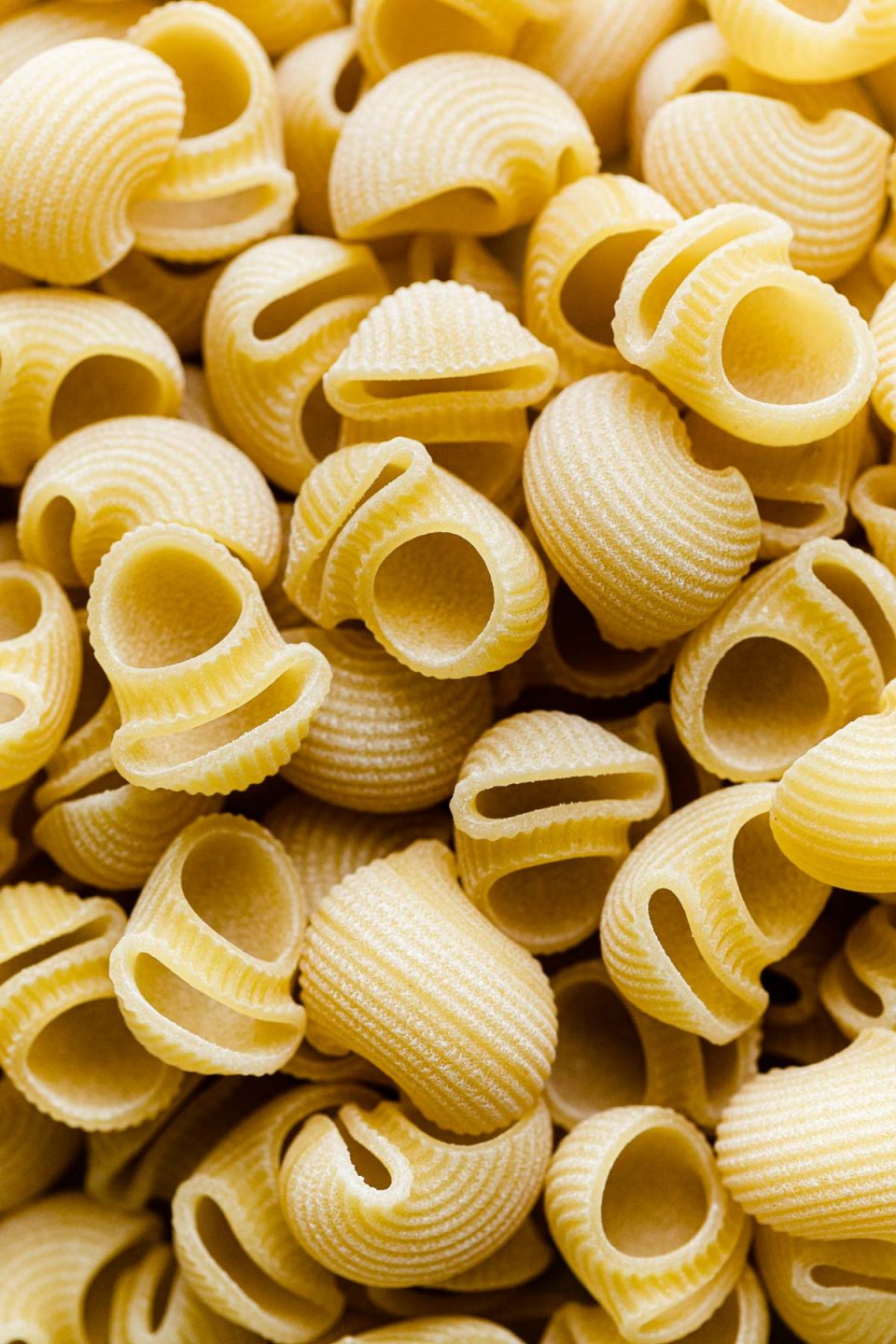

Bronze-cut pasta has a rough surface with a matte texture.
Because they cover both of these key characteristics (& then some!), my long-time go-to for all things pasta is **[DeLallo](https://www.delallo.com/specialty-foods/pasta/semolina-pasta/)**! They offer more than 30 different shapes of pasta, all of which are made with just 2 ingredients – expertly milled Italian wheat & Italian spring water. Their pastas are also all crafted in Italy – in an area near the Amalfi Coast where pasta was born – using artisanal bronze dies. Check, check, check!!! I absolutely love them – you will too\!
## **How to Cook Pasta**
While making pasta is a fairly straightforward process, there are a few simple steps that take at-home pasta dishes from good to great. Once you try this easy technique, you’ll never cook pasta another way\!
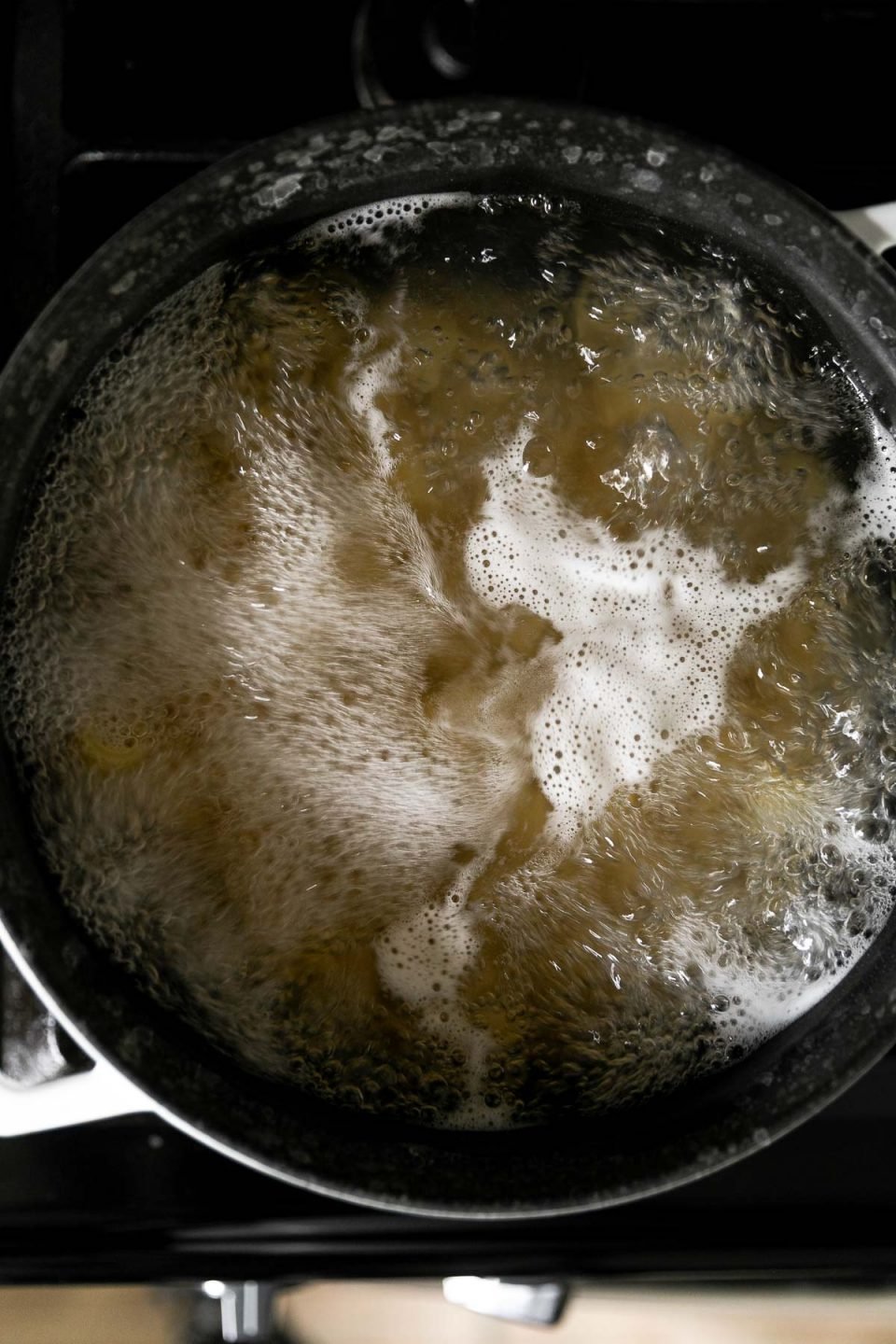

Cook pasta in a large, heavy-bottomed pot, like a Dutch oven. Aim for 3-4 quarts boiling water per pound of pasta.
#### **First, Choose Your Vessel Wisely.**
Be sure to use a pot that’s large enough to fully submerge the pasta in the boiling water with enough room for it to move around as it cooks to prevent sticking. **As a general rule of thumb, you should use 3-4 quarts of water per pound of pasta** – keep this in mind when you pick your pot\!
To take it a step further, I like to boil pasta in a heavyweight enamel cast iron Dutch oven. While it does take a little bit longer for the water to reach a boil, a heavyweight pot retains its heat much better than a more lightweight pot, meaning the water returns to a boil more quickly once the pasta is added.
My go-to pot for boiling pasta is a 5-quart Dutch oven – Staub’s cocotte Dutch ovens are forever my favorite! – like **[this one](https://rstyle.me/+TUEESzOaicLXG85k_41OMA)**, which has extra tall sides that are great for boiling long pasta, like spaghetti or bucatini.
#### **Always Salt Your Pasta Water\!**
Have you ever heard that pasta water should taste like the ocean? You should always cook your pasta in generously salted water! **Why do you add salt to pasta water? ⇢** Salting the water is the only opportunity you have to season the pasta itself. Well-seasoned pasta lends to a well-seasoned final pasta dish.
**How much salt should you add to pasta water? ⇢** As a general rule of thumb, use 1 – 1 1/2 tablespoons of salt per pound of pasta.
**A few tips for salting your pasta water…**
- **What kind of salt is best for pasta water?** While Italian nonnas swear by using coarse sea salt for pasta water, I typically use kosher salt as it’s what I keep on hand in my kitchen – it works just fine\!
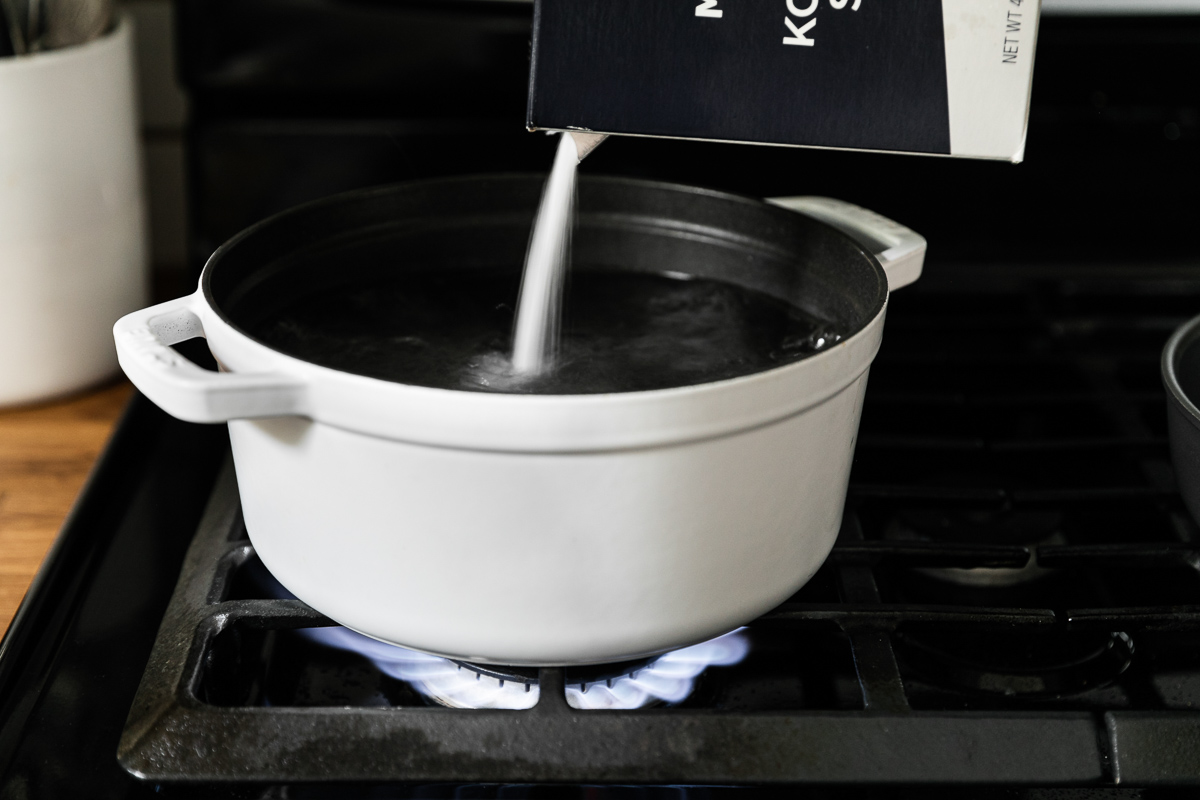
- **Salt your pasta water *after* it has come to a boil.** This will help ensure the salt dissolves completely in the water & will properly season your pasta noodles as they cook.
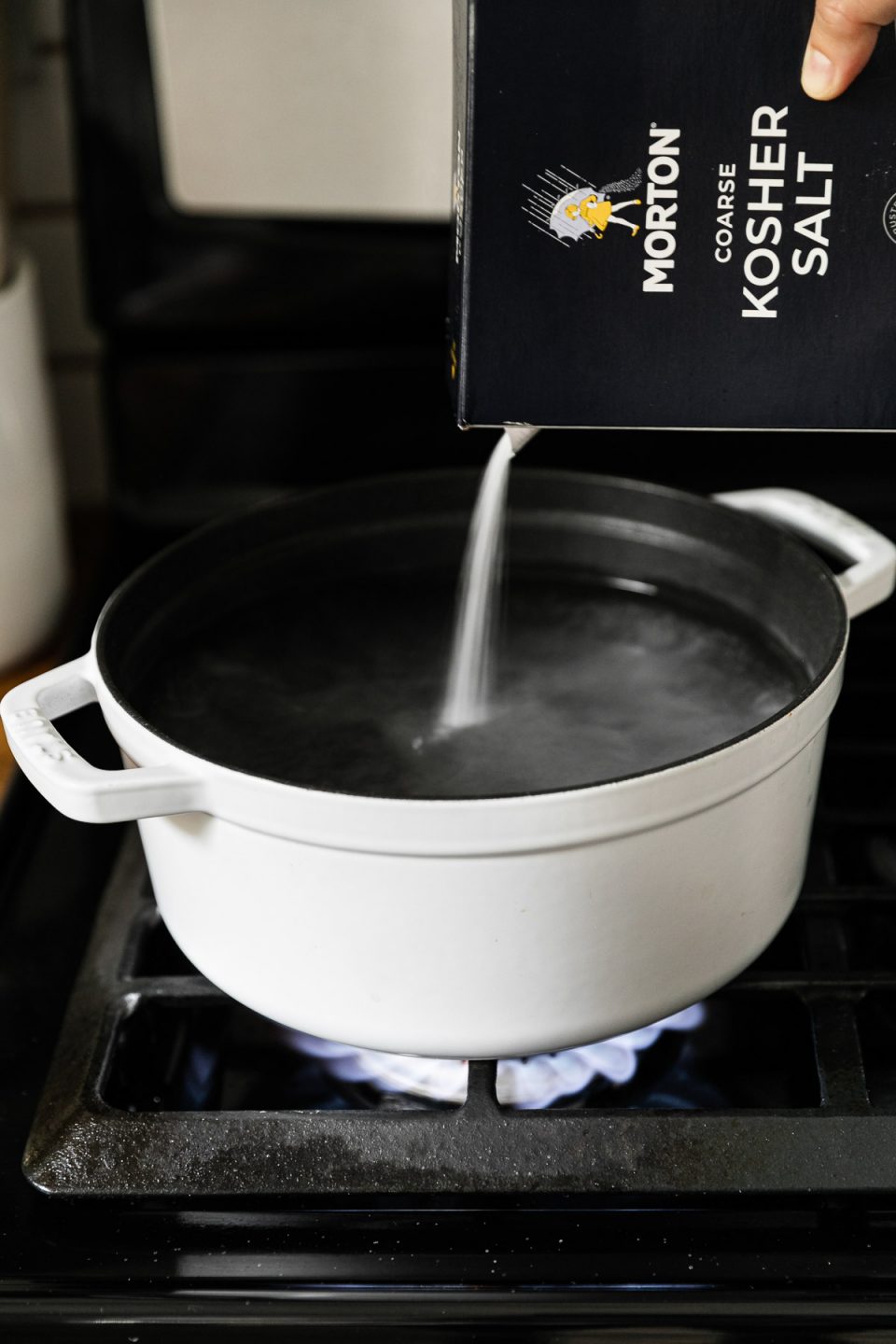

Always season pasta water with a generous amount of salt, about 1 – 1.5 tablespoons per pound of pasta.
#### **Stir often to prevent sticking – Do *NOT* Add Oil\!**
Once the water reaches a full, rolling boil, it’s pasta time! Add your pasta & let it cook, stirring occasionally as it cooks to prevent sticking & boil-overs. *Never* oil your pasta water! **Why? ⇢** Oil coats the surface of the pasta, preventing the pasta from clinging to the sauce. Again, the end goal is a single, cohesive dish – we want our pasta & sauce to come together beautifully\!
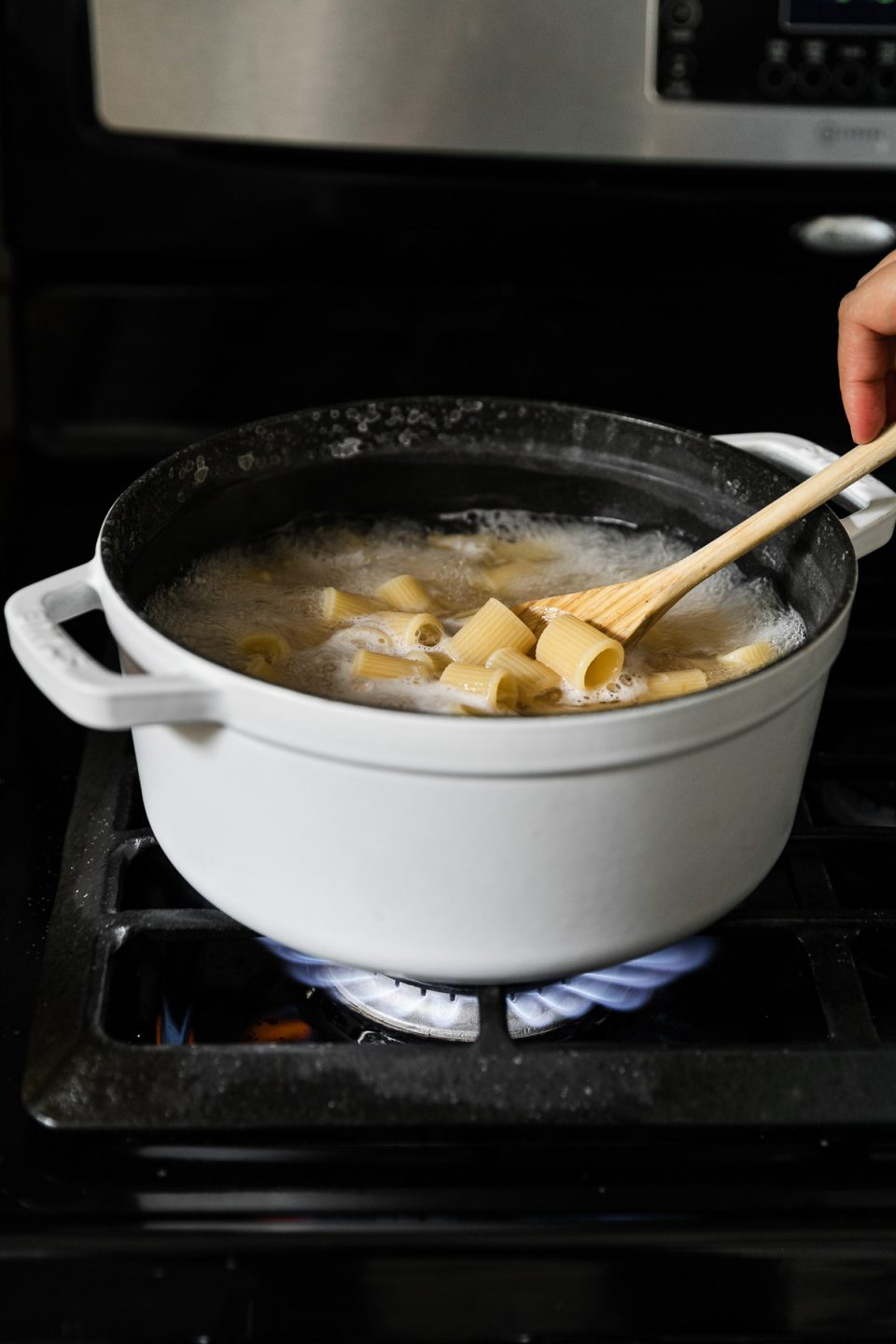

Rather than adding oil to the pasta water, use a wooden spoon to stir the pasta often as it cooks to prevent sticking.
#### **Cook to *Al Dente*.**
When it comes to cooking pasta perfectly, timing is *everything*. Undercooked pasta is crunchy & maybe even a bit chalky, overcooked pasta is mushy & soft, so the goal is a perfect happy medium – al dente.
Al dente is an Italian term translating to “*to the tooth*” – the texture that’s considered the gold standard for perfectly cooked pasta. **How do I know my pasta is *al dente*?** ⇢ Simple, taste it! Al dente pasta has great texture – it’ll be a little firm in the center (not hard or crunchy) & it’ll have beautiful chewiness (not sticky or mushy).
**How long do you cook pasta to reach al dente?** ⇢ Honestly, it depends! Different types of pasta have different cook times. While the package directions will often provide a good estimate, the best way to check pasta for doneness is to taste it\!
#### **That said, here are some general guidelines for how long to cook pasta:**
- **Dry pasta** – On average dry pasta cooks in 8-10 minutes. However, depending on the shape of the pasta and the amount you are making, cook times will vary! Our recommendation? Cook dried pasta according to the packaging directions, checking for doneness a few minutes earlier than the indicated “al dente” cook time.
- **Fresh pasta** – The nice thing about fresh pasta is that it cooks *very* quickly! Check for doneness after 1 minute, cooking the pasta no more than 2-3 minutes.
- **Stuffed pasta & gnocchi** – Stuffed pasta, like ravioli or tortellini, or gnocchi are typically prepared fresh, so they have a quick cook time, too. You’ll know they are done when they appear puffy or swollen & they float to the surface of the boiling water.
- **Baked pasta** – If you’re cooking pasta to use in a baked pasta dish, like **[creamy mac & cheese](https://playswellwithbutter.com/pumpkin-mac-and-cheese/)**, be sure to par-cook it since the pasta will continue to cook in the oven. Aim for 1-2 minutes under al dente.
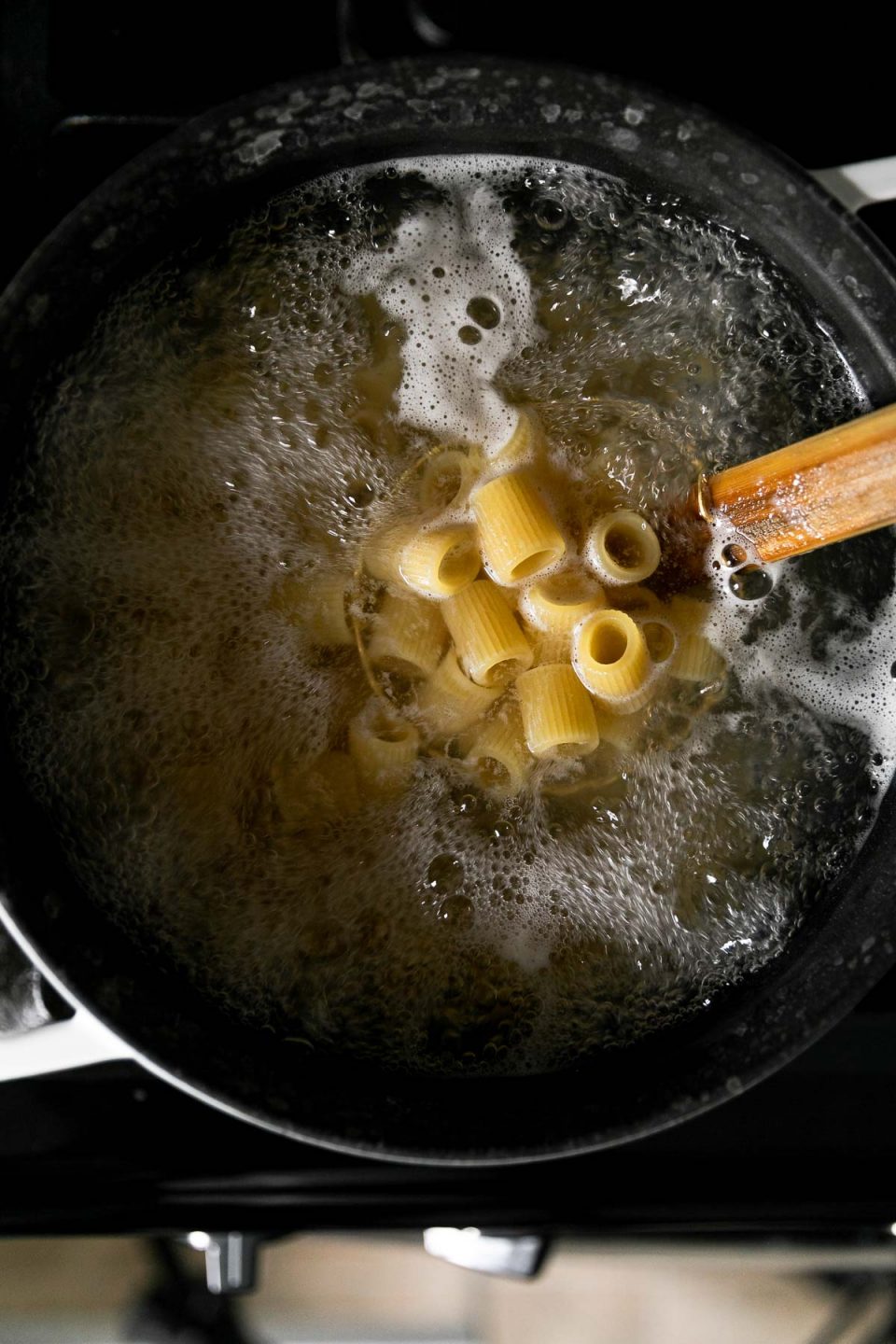

*Al dente* pasta is firm with beautiful chewiness, it’s neither too hard nor too mushy.
#### **Always Reserve Pasta Water Prior to Draining\!**
Once your pasta has reached al dente, you’re almost at the finish line! Just before draining the pasta, carefully dip a liquid measuring cup into the pot, reserving about 1 cup of the starchy pasta water. **Why? ⇢** Pasta water is liquid gold! Its starchiness helps us create the single, cohesive dish that we’re after once we combine the cooked pasta with the sauce – more on that in a minute\!
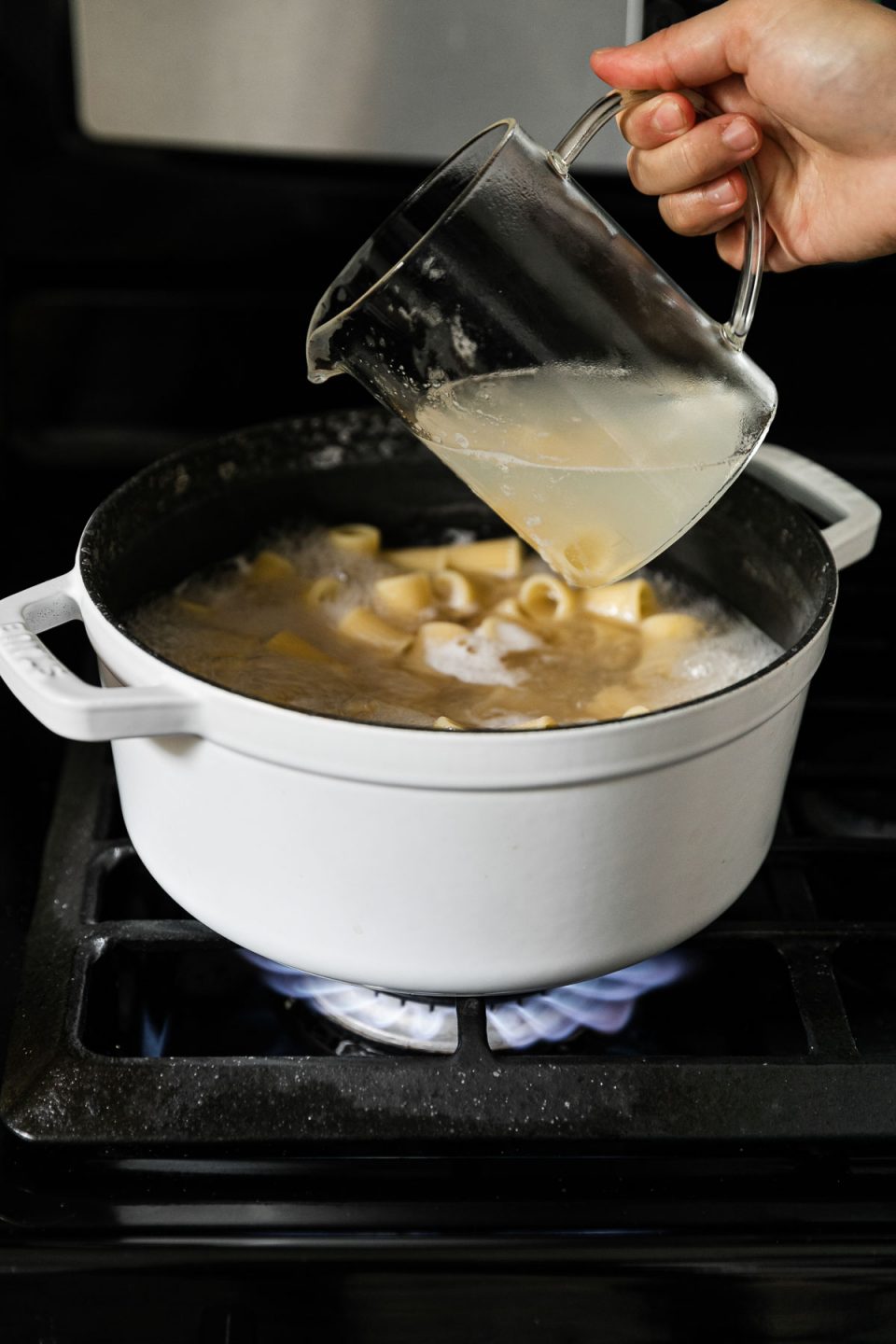

Always reserve starchy pasta water prior to draining pasta.
#### **Lastly, Do Not Rinse Your Pasta\!**
Lastly, drain the pasta, but do NOT rinse it! **Why? ⇢** Rinsing washes the starchy goodness off the surface of the pasta, preventing it from absorbing & clinging to the pasta sauce.
The only exception to this rule is pasta salad, which is typically tossed with room temperature ingredients & served cold. Rinsing pasta for pasta salad shocks the pasta, preventing it from continuing to cook & wilting the other ingredients in the pasta salad.
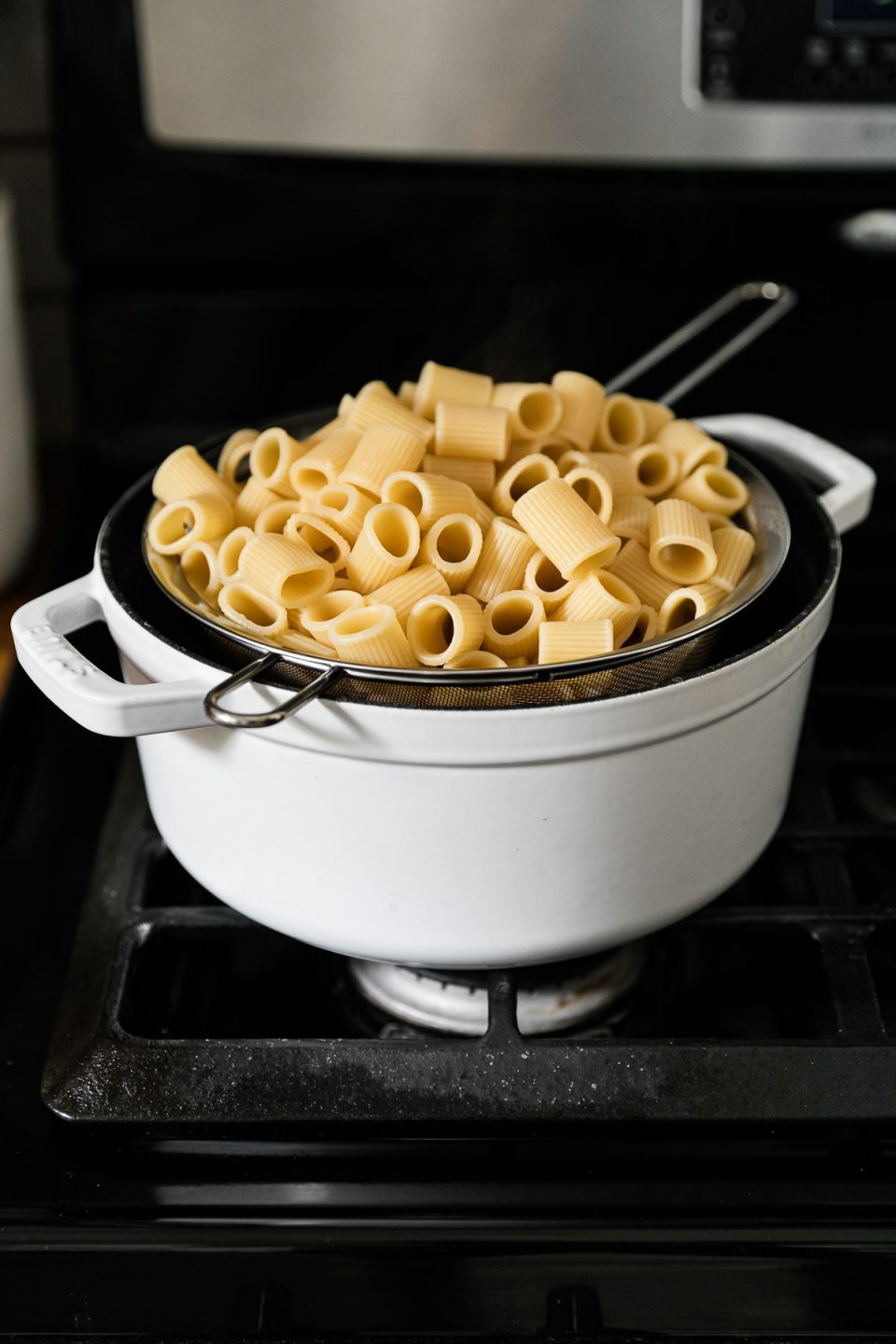

Do not rinse drained pasta, as rinsing washes away the starches off the surface of the pasta that help the pasta cling to its sauce.
## Tossing Together Your Restaurant Quality Pasta Dish\!
Once the pasta is cooked to al dente perfection, the last step to creating a restaurant-worthy pasta dish at home is finishing the pasta with the sauce. Yes, **al dente pasta should always cook *with* sauce for a couple of minutes on the stovetop**.
Remember our overarching goal of cohesion? **The \#1 mistake I see home chefs make when they serve a pasta dish at home is opting to simply plop the prepared sauce atop a pile of pasta – please don’t do this\!** By finishing the pasta *with* the sauce, the two separate components come together as one cohesive dish. If you feel like your pasta never turns out as good as it does in a restaurant, this simple step helps tremendously\!
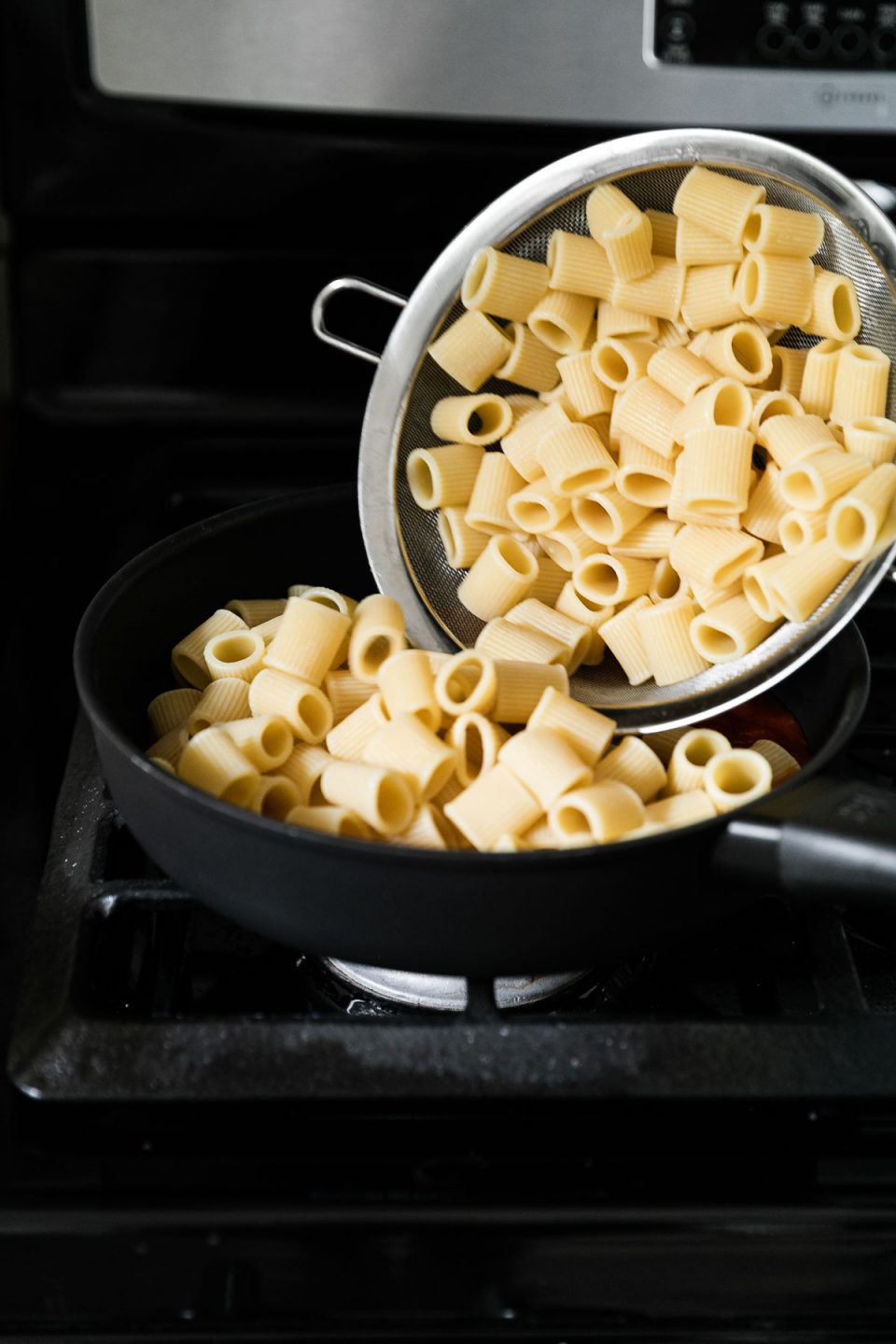

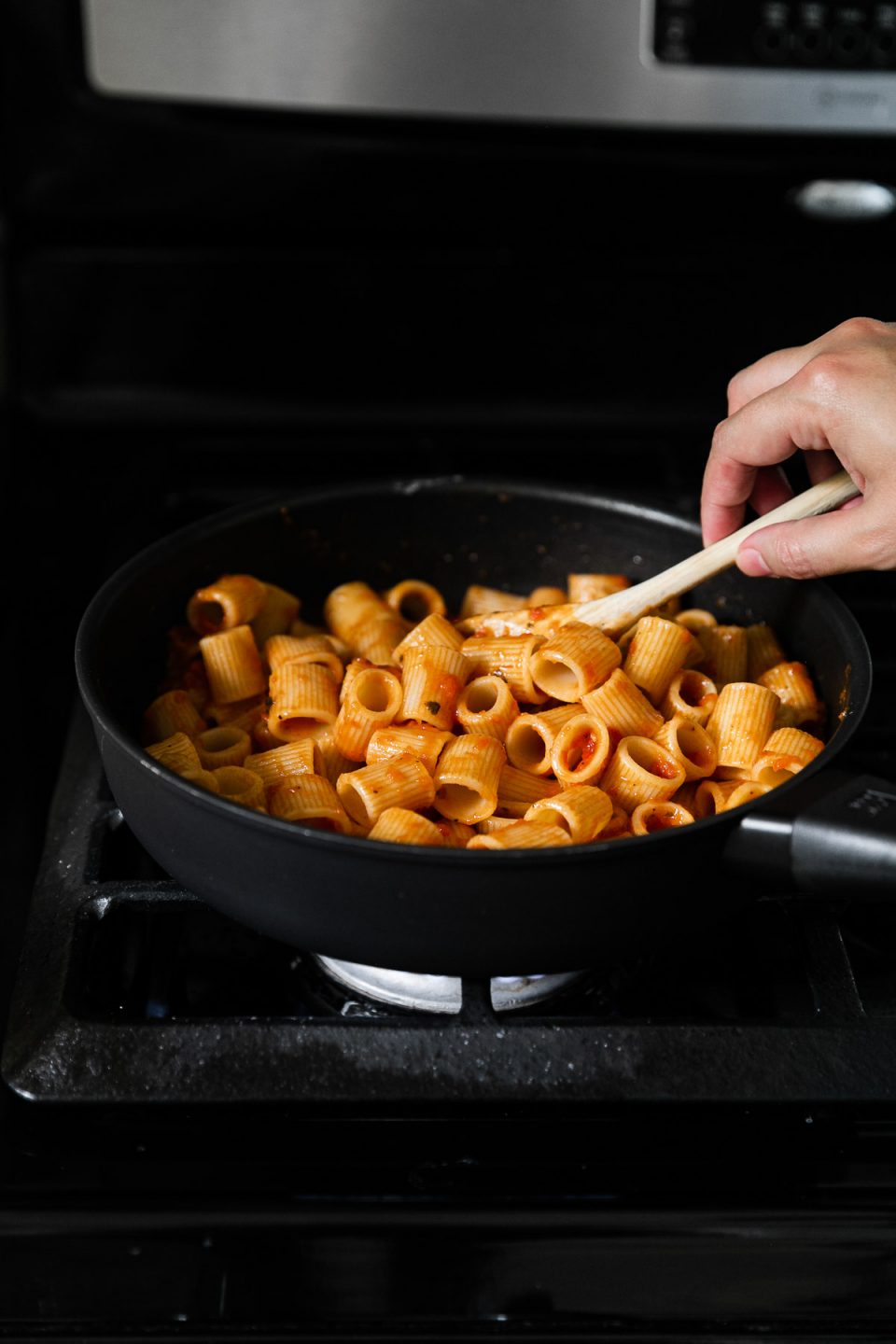

Finishing pasta with the sauce creates a perfectly cohesive, restaurant-quality pasta dish.
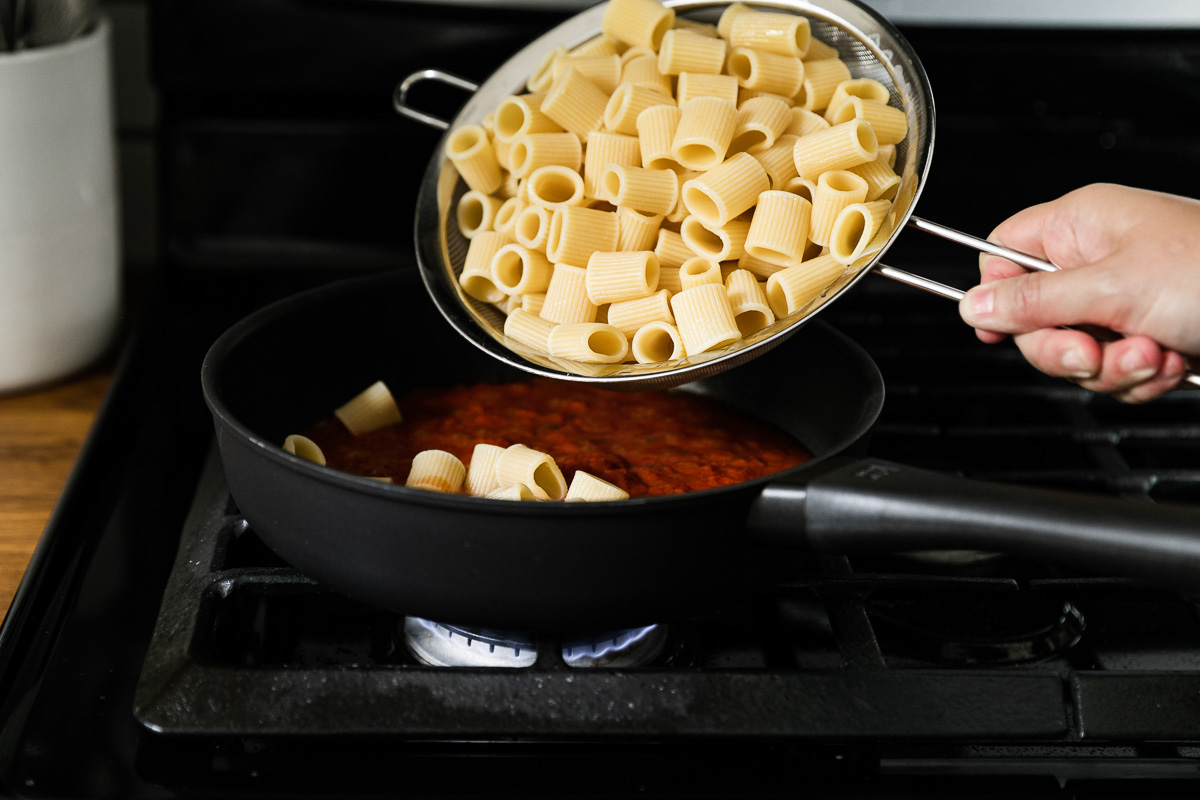
Bring your sauce to simmer on stovetop. Timing is key here – it’s ideal to have your sauce ready & simmering just before you drain the pasta. Add the al dente pasta to the sauce immediately, tossing to combine. Let the pasta & sauce cook for a minute or two, allowing the pasta to meld with & absorb some of the sauce.
During these last few minutes, you can also make micro-adjustments as needed to create the perfect pasta dish:
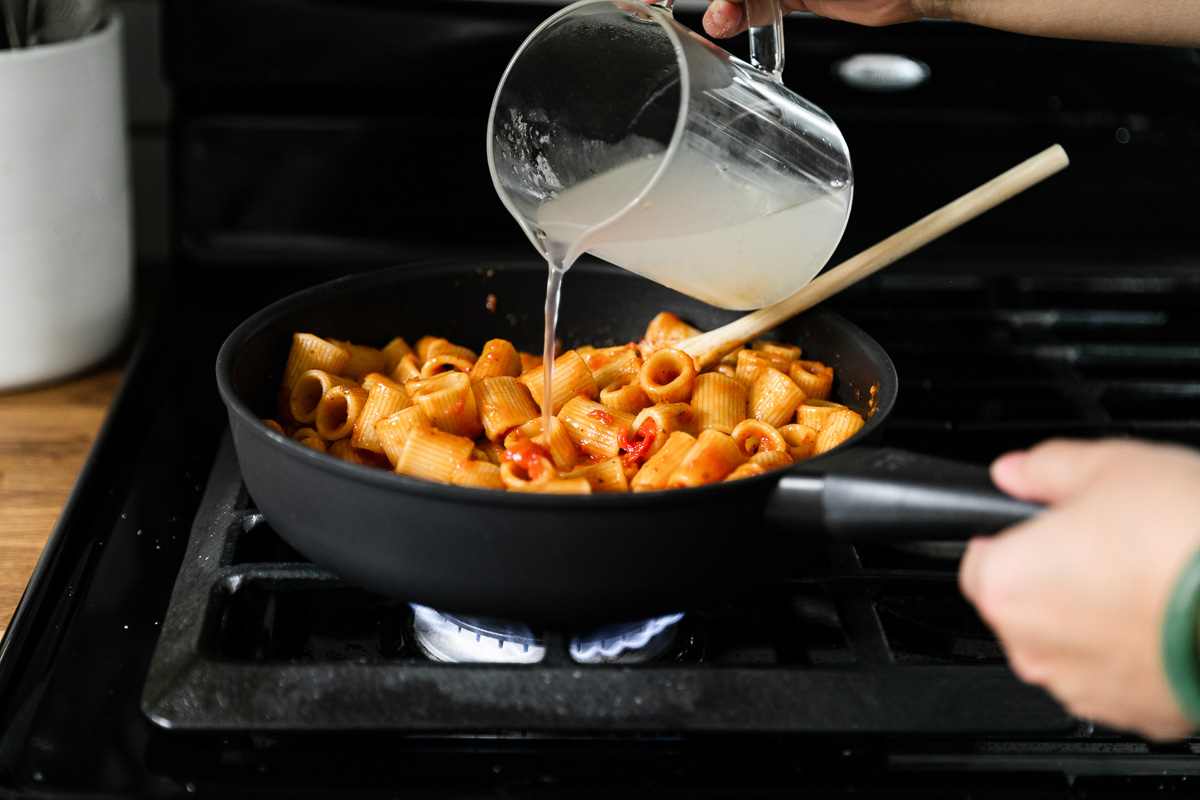
- If the sauce is too thick, toss in a little of your magic reserved pasta water to thin it out.
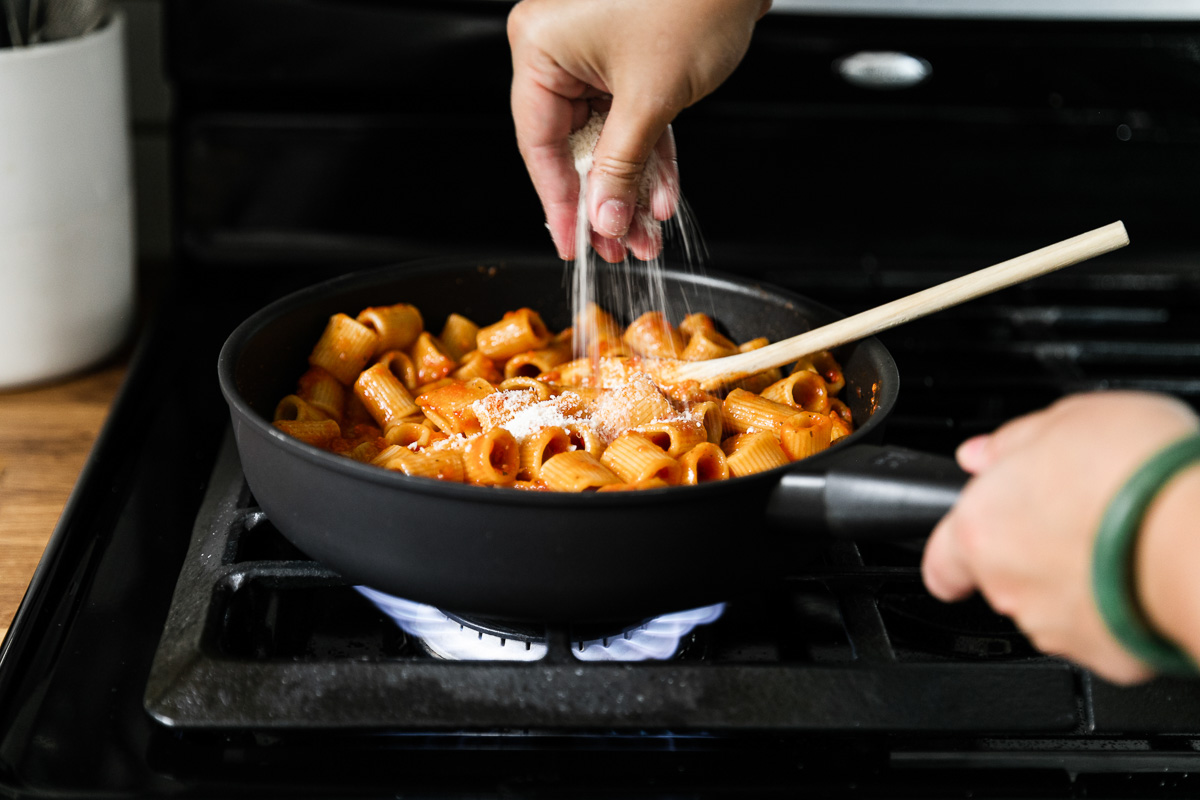
- If the sauce is too loose, increase the heat to create a more vigorous simmer or toss in a handful of parmesan to thicken it up.
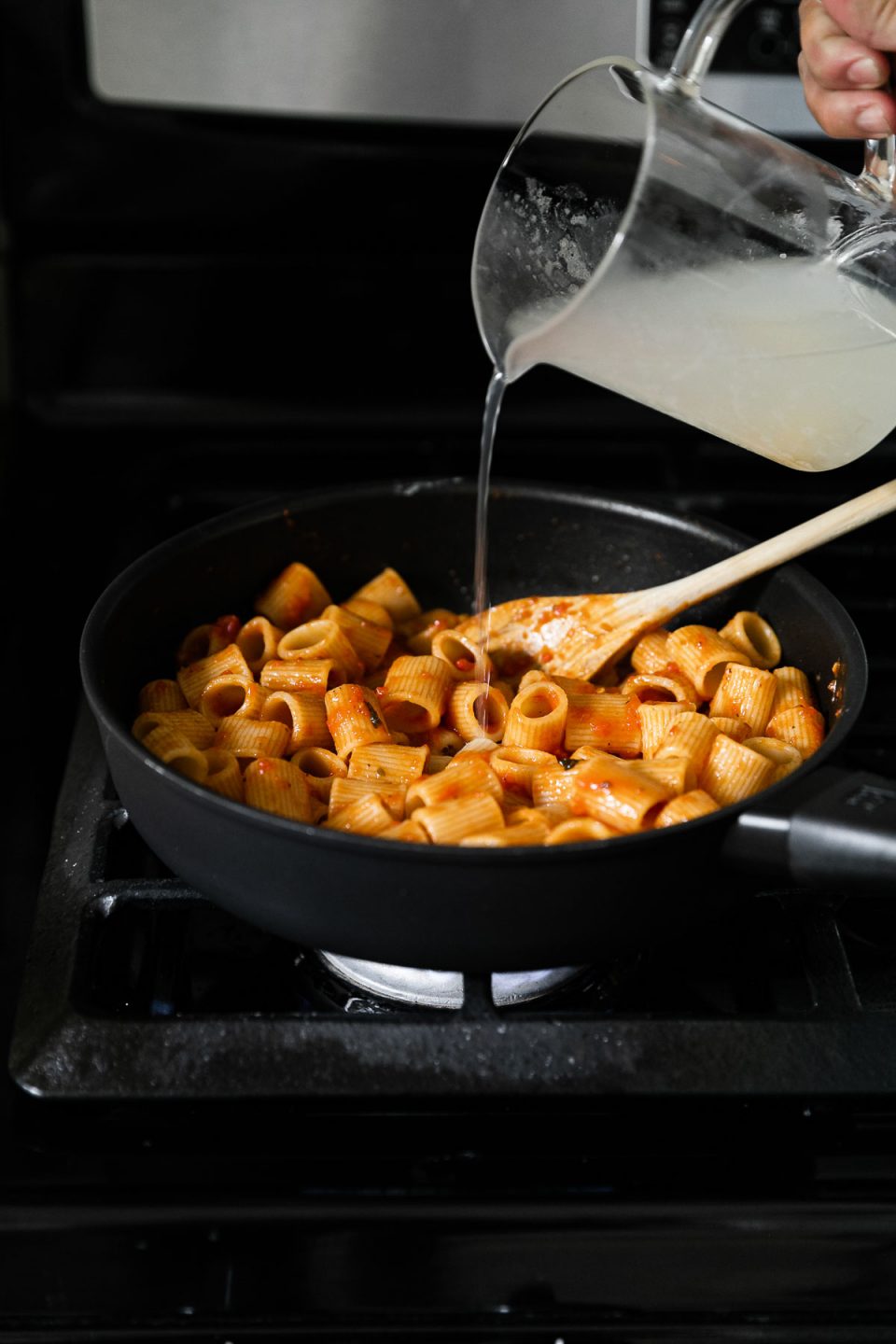

If the sauce is too thick, use reserved pasta water to loosen it up.
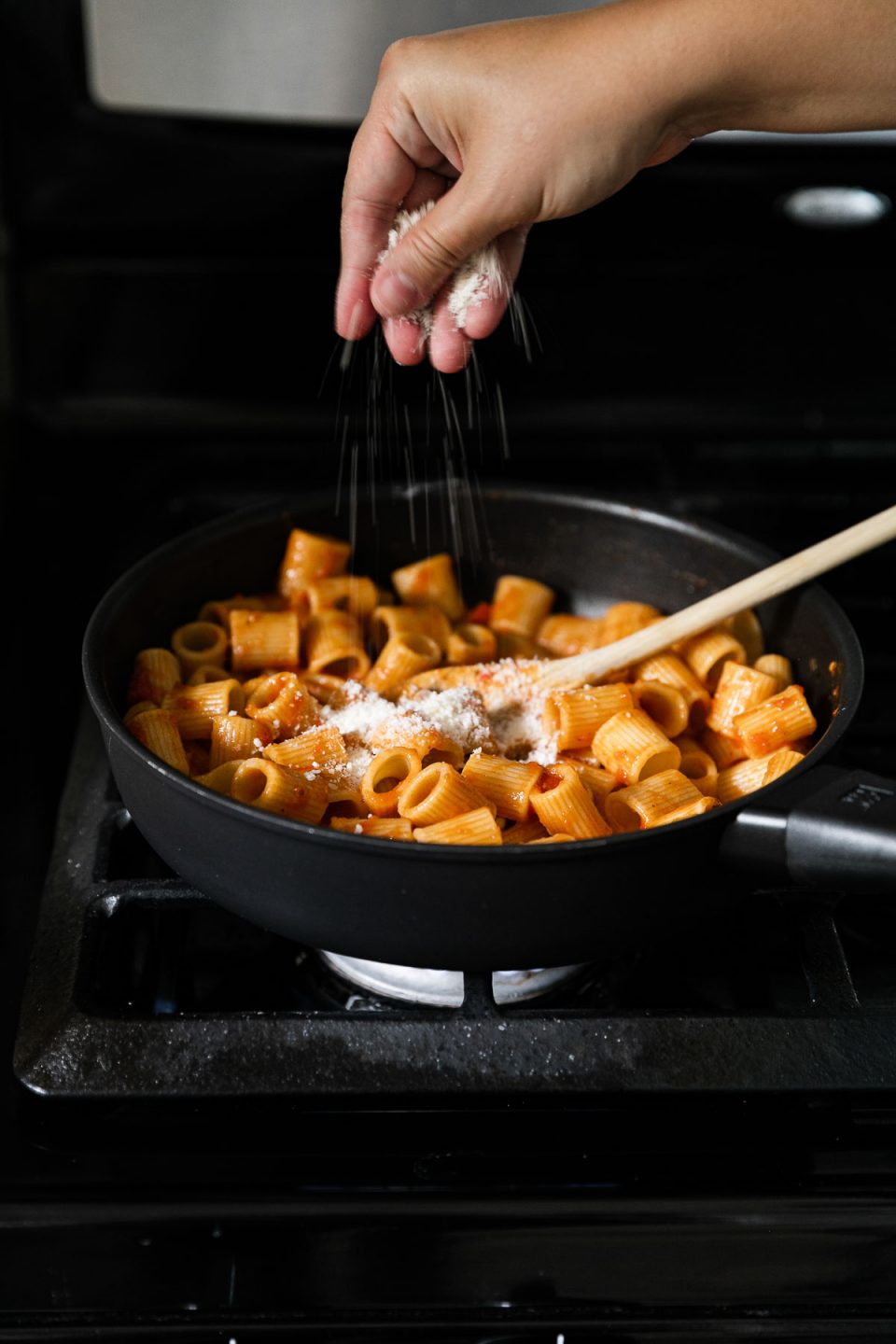

If the sauce is too loose, sprinkle in some parmesan to help tighten it up.
Adjust as needed to achieve the perfect pasta dish\!
Voila – the BEST pasta you’ve ever made at home! 🙌🏼

## **Try it Out! Our Favorite Pasta Dishes to Make at Home:**
Are you ready to make your best pasta yet? Be sure to try out this pasta cooking technique with any of our PWWB pasta recipes…
- **[PWWB Best-Ever Bolognese](https://playswellwithbutter.com/bolognese-sauce-recipe/)** – A recipe I’ve tweaked & perfected over 10+ years, this is my personal favorite recipe on PWWB. Seriously the best bolognese sauce ever\!
- **[Weeknight Bolognese](https://playswellwithbutter.com/weeknight-bolognese/)** – A slightly easier & quicker bolognese sauce recipe.
- **Ragu** – AKA slowly simmered Italian goodness, ragu is a hearty meat sauce perfect for pairing with fresh pasta. Try my **[Slowly Braised Lamb Ragu](https://playswellwithbutter.com/braised-lamb-ragu/)** or my **[Slowly Braised Pork Ragu](https://playswellwithbutter.com/pork-ragu-recipe/)**.
- **[Lasagna](https://playswellwithbutter.com/christmas-eve-lasagna/)**
- **The Classics** – **[Creamy Marsala Pasta with Sausage](https://playswellwithbutter.com/marsala-pasta/)**, **[Spicy Italian Sausage and Peppers Pasta](https://playswellwithbutter.com/sausage-and-peppers-pasta-recipe/)**, or **[Pasta all’Amatriciana](https://playswellwithbutter.com/gnocchi-amatriciana-recipe/)**
- **Something New** – **[Seared Scallop Pasta with Kale Pesto](https://playswellwithbutter.com/scallop-pesto-pasta/)** or **[Mascarpone Pasta with Chicken](https://playswellwithbutter.com/mascarpone-pasta/)**
- **[All PWWB Pasta Recipes](https://playswellwithbutter.com/category/recipes/main-dishes/pasta-recipes/)**
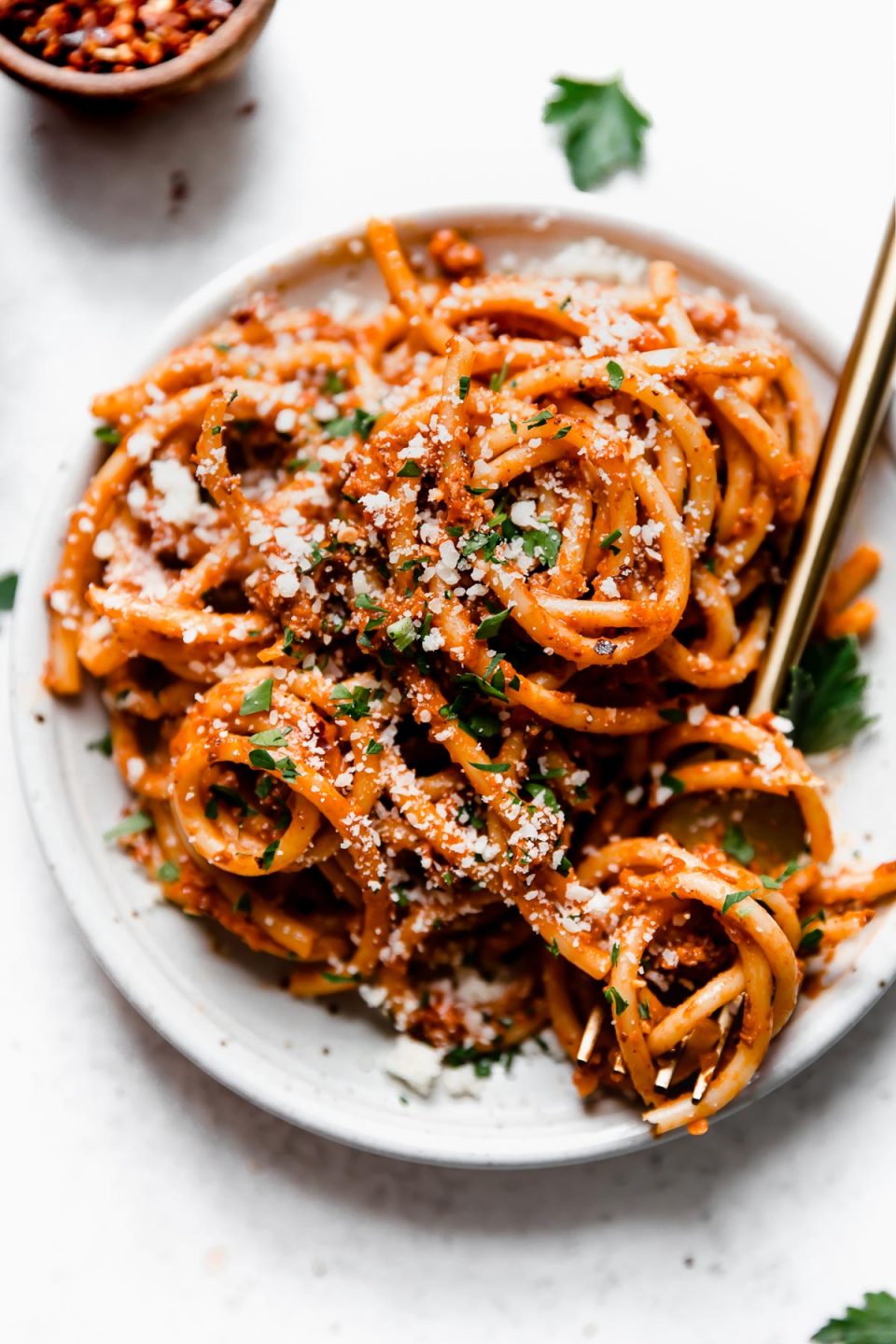

Best-Ever Pasta Bolognese with Bucatini
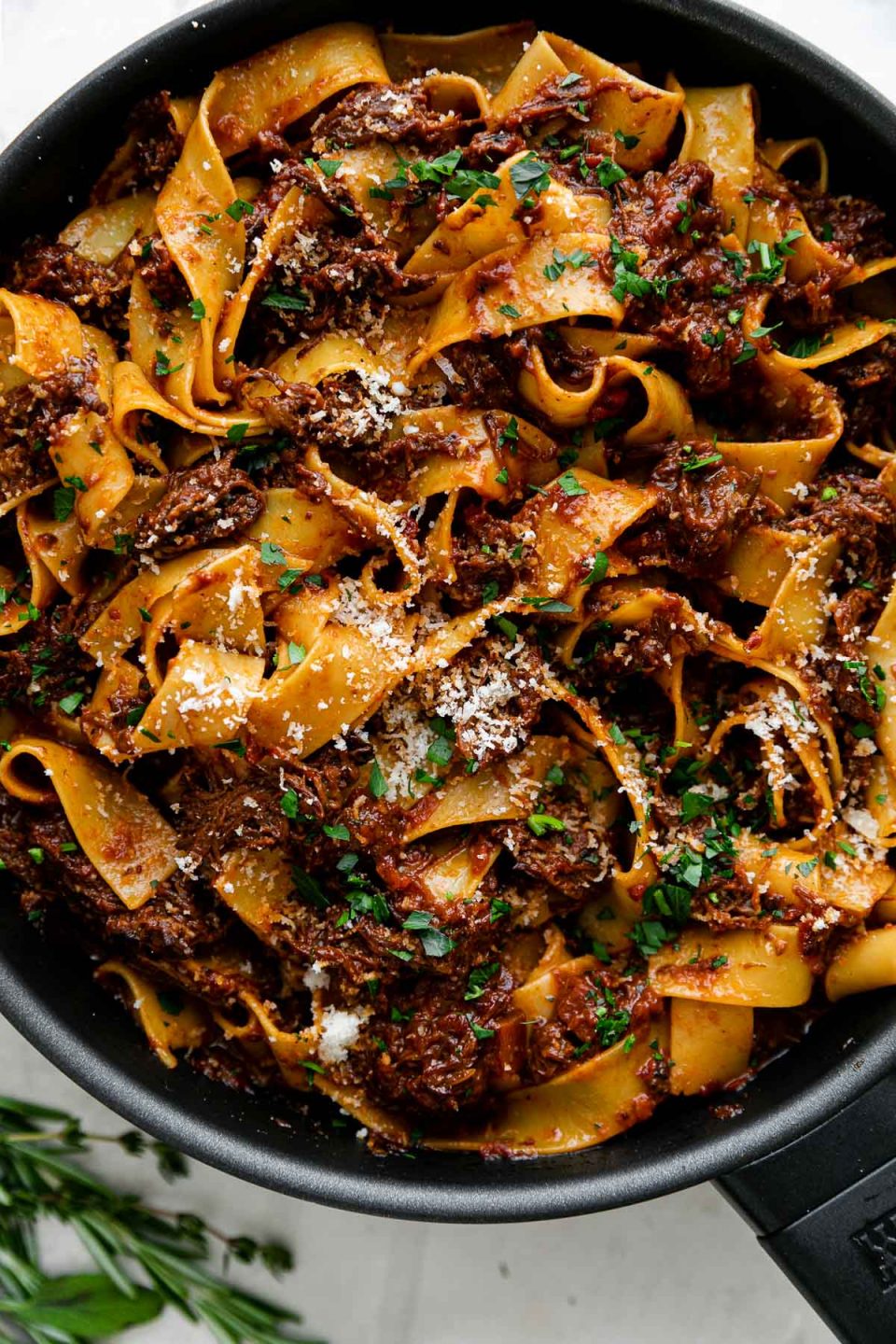

Braised Short Rib Ragu with Pappardelle
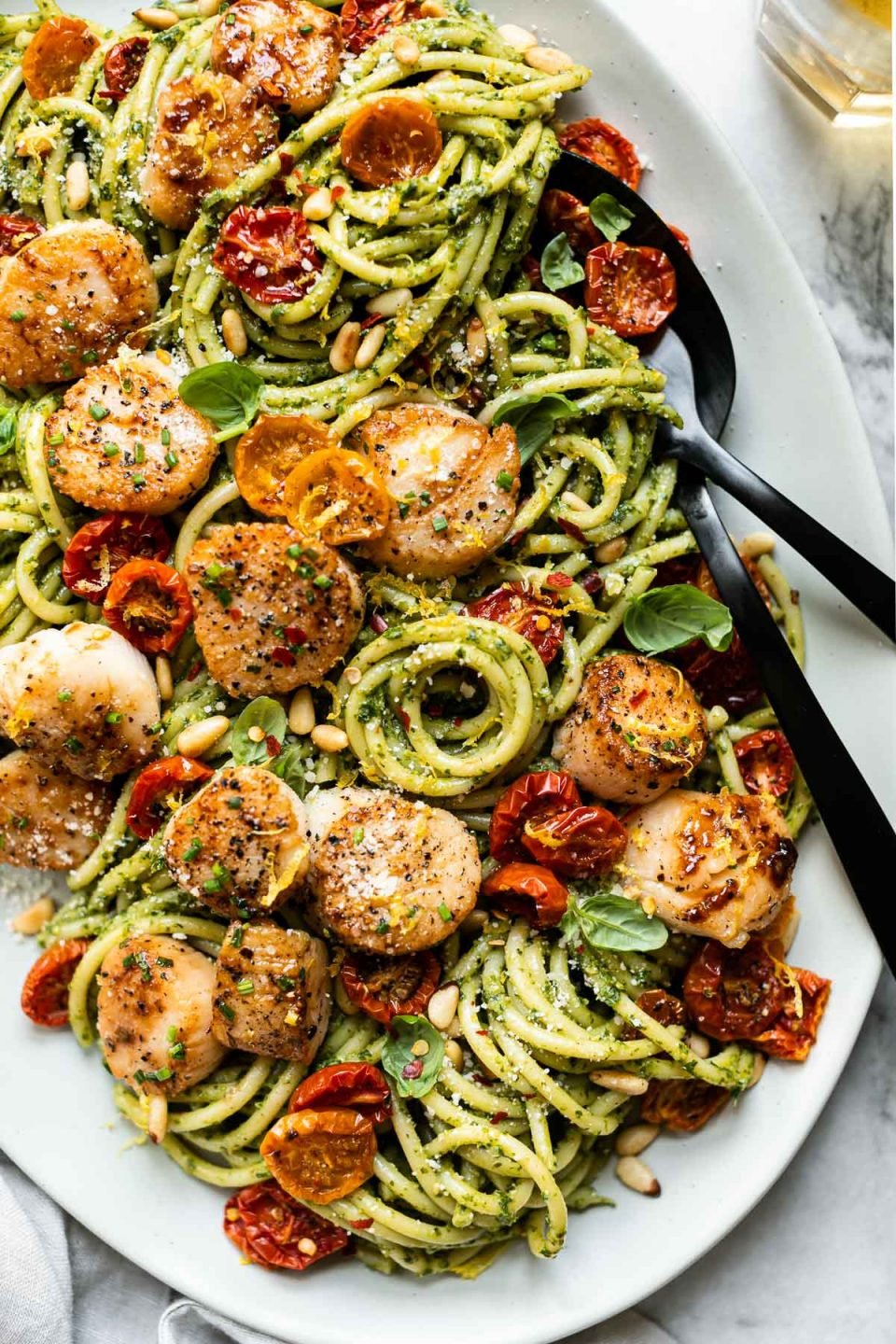

Scallop Pesto Pasta with Spaghetti
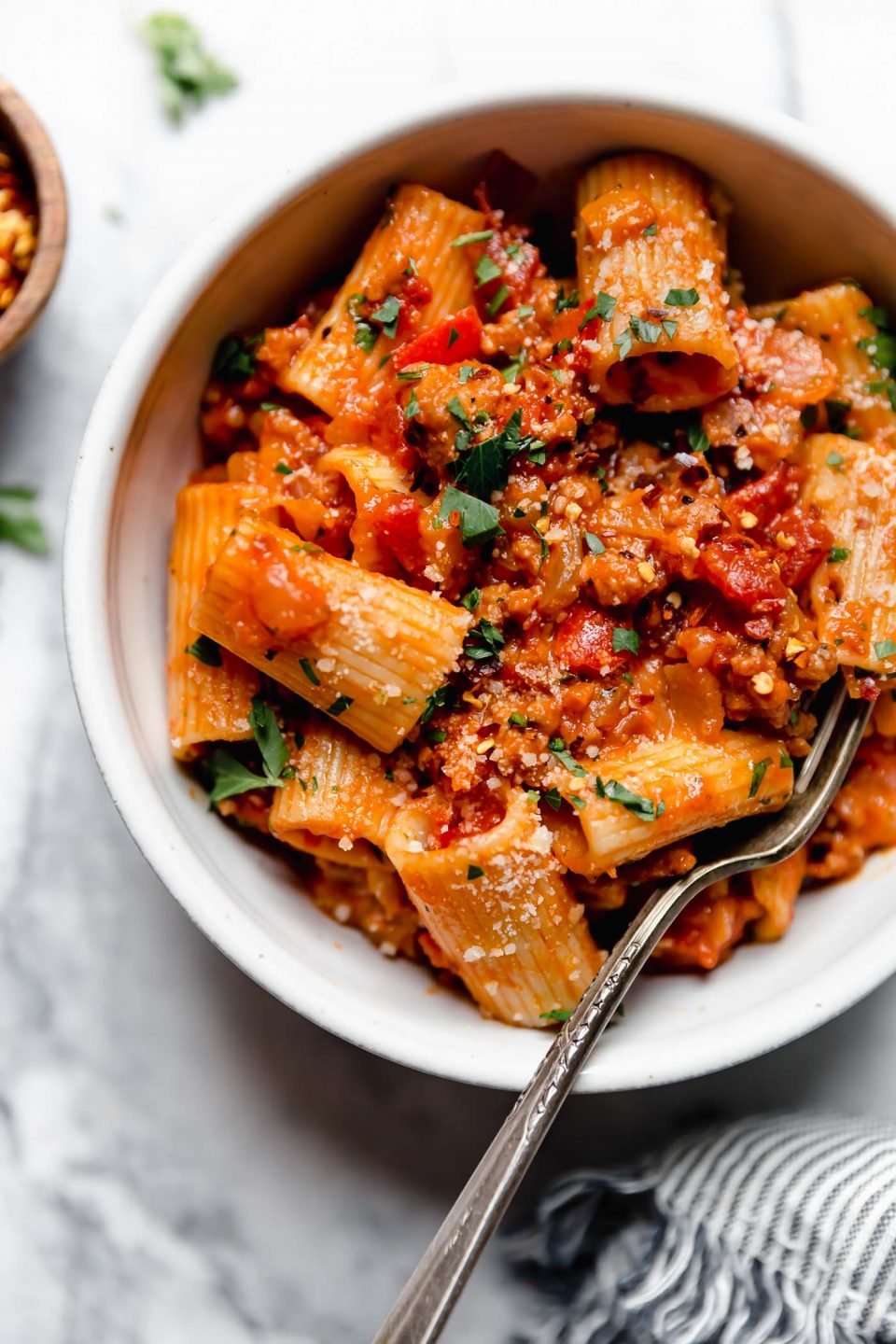

Sausage & Peppers Pasta with Rigatoni
I can’t wait for you to try these tips & see how your pasta turns out, you won’t believe the difference! If you do give them a try, be sure to let me know! **Leave a comment with a star rating below**. You can also **snap a photo & tag [@playswellwithbutter](https://instagram.com/playswellwithbutter/?hl=en) on [Instagram](https://instagram.com/playswellwithbutter/?hl=en)**. I LOVE hearing about & seeing your PWWB creations! Happy cooking! ♡
[Print](https://playswellwithbutter.com/how-to-cook-pasta-properly/print/22312/)
clock icon
cutlery icon
flag icon
folder icon
instagram icon
pinterest icon
facebook icon
print icon
squares icon
heart icon
heart solid icon


## How to Cook Pasta Perfectly (Every Single Time!)
*5 Stars* *4 Stars* *3 Stars* *2 Stars* *1 Star* No reviews
- Author: [Jess Larson](https://playswellwithbutter.com/jess-larson/)
- Prep Time:
10 minutes
- Cook Time:
15 minutes
- Total Time:
25 minutes
- Yield:
serves 4
- Category:
Pasta Recipes, Main Dishes
- Method:
Boiling, Stovetop
- Cuisine:
Italian
[Print Recipe](https://playswellwithbutter.com/how-to-cook-pasta-properly/print/22312/)
[Pin Recipe]()
***
### Description
Whether you’re head-over-heels for all things Italian or you simply love pasta for its quickness, versatility, & affordability, there are a few simple tips & tricks that will take your at-home pasta nights to the next level. Learn how to cook pasta perfectly – every single time! – & be sure to check out the Blog Post, above, for more tips & tricks.
***
### Ingredients
Scale
1x
2x
3x
- 8 ounces **pasta of choice**
- 1/2 – 1 cup **pasta sauce of choice**
- **[kosher salt](https://rstyle.me/n/dddgmtcd5e7)** & **ground black pepper**, to season
- *optional:* 1/4 cup **grated parmesan**
- for serving, as desired: grated **parmesan** or **pecorino romano**, finely chopped **basil** or **parsley**, **crushed red pepper flakes**, etc.
***
### Instructions
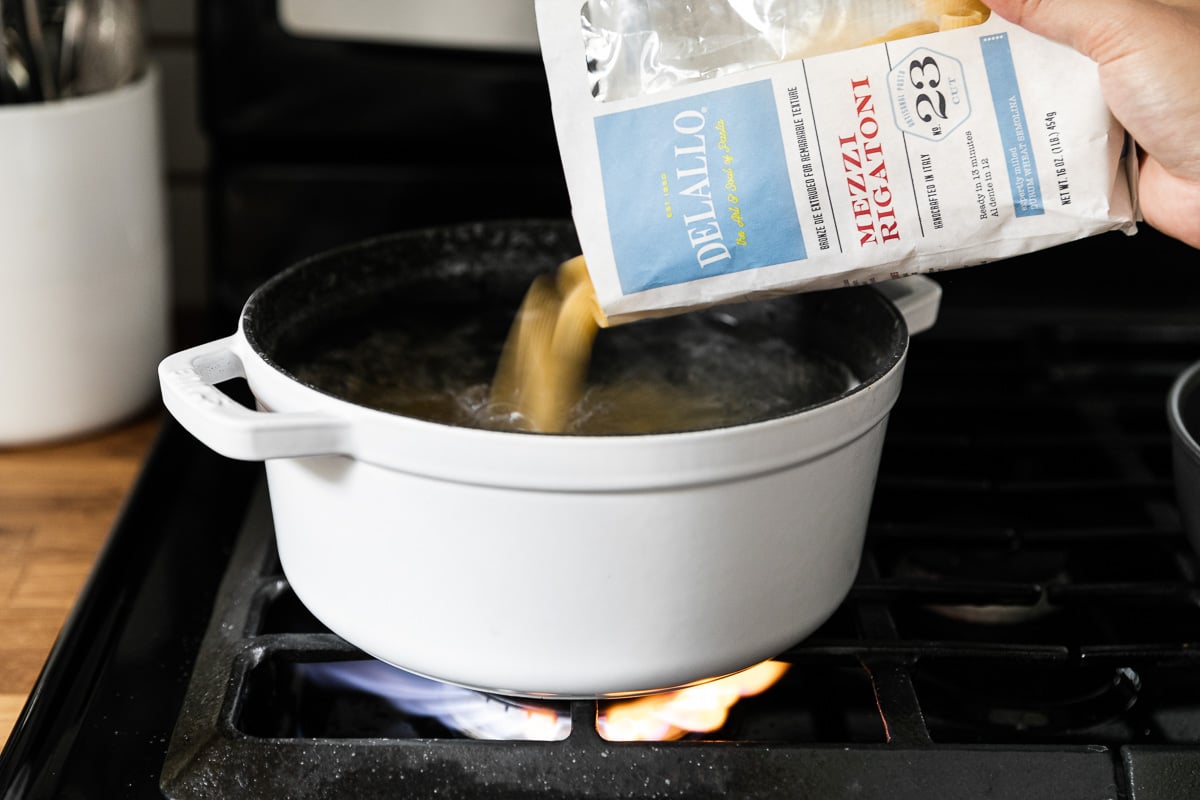
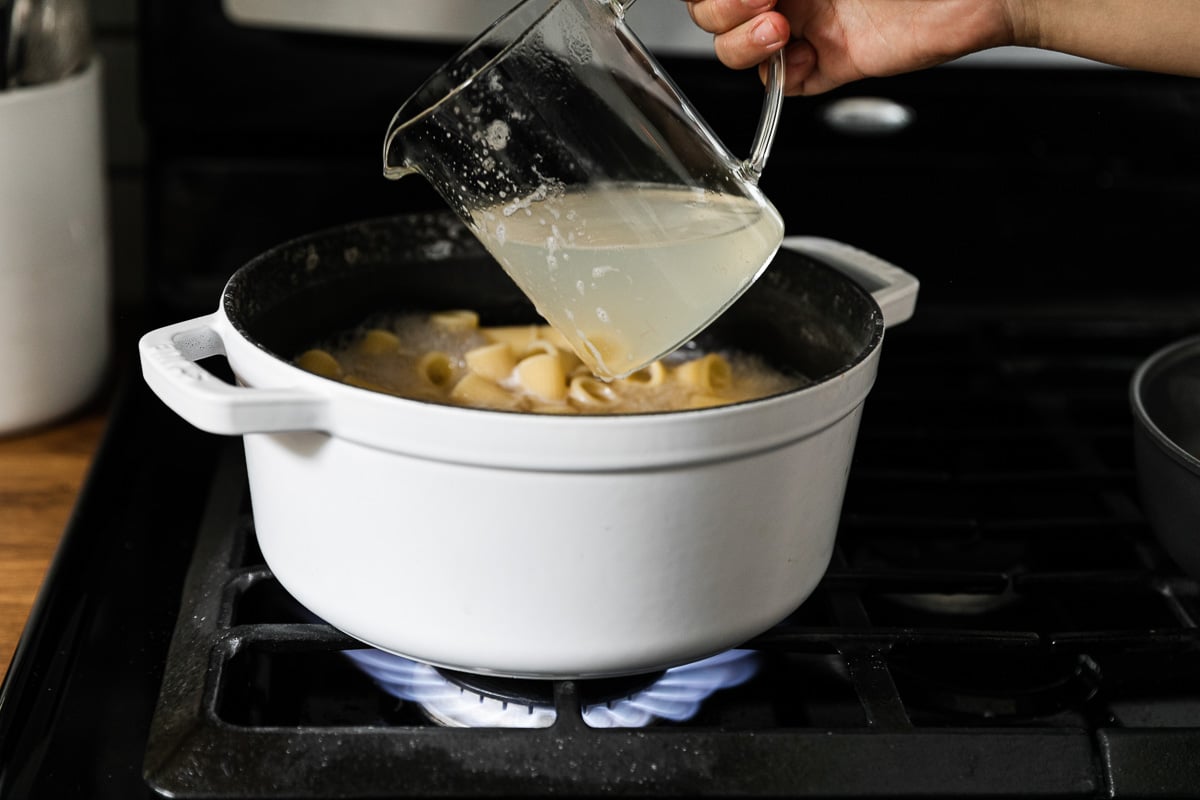
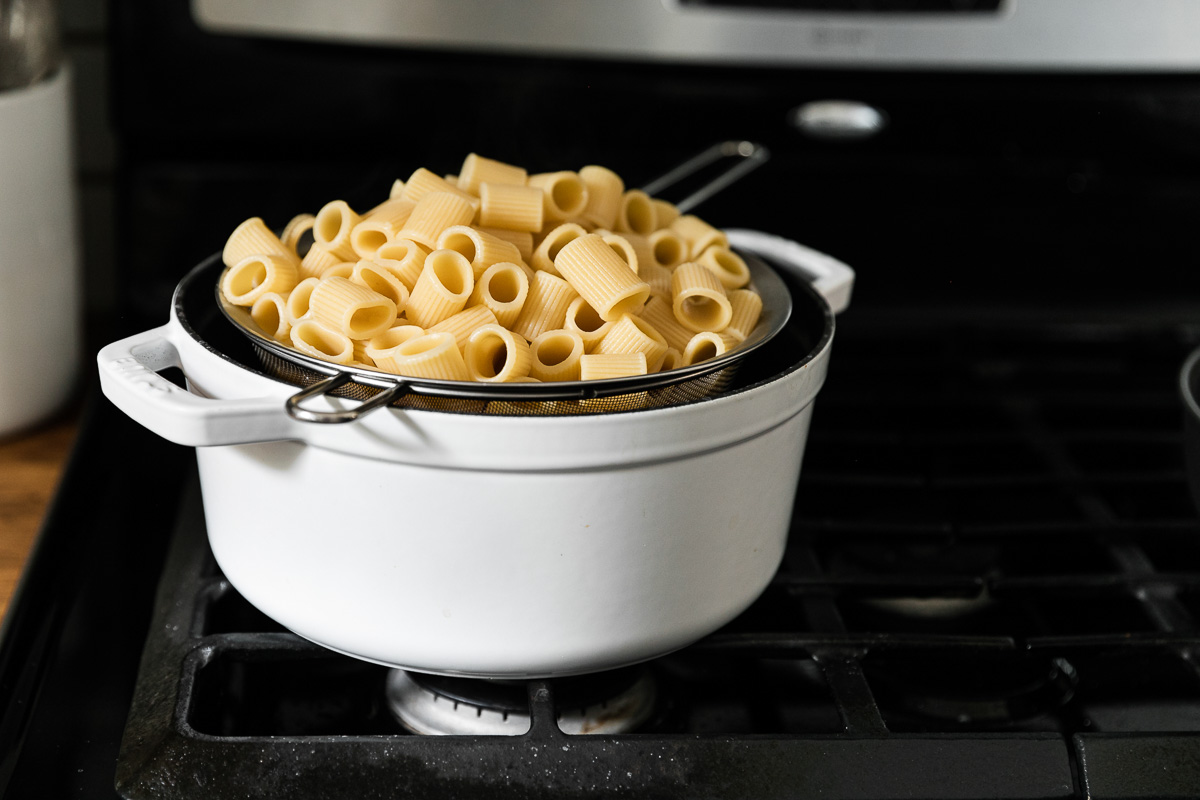
1. **Boil the pasta:** Bring a large pot of water to a boil. Once boiling, generously salt the water. As a general rule of thumb, use 3-4 quarts of water & 1-1 1/2 tablespoons salt per pound of pasta. Add the pasta and cook to al dente according to package directions. Just before draining, reserve 1 cup of the starchy pasta water. Drain the pasta and set aside – do *not* rinse the pasta.
[](https://playswellwithbutter.com/how-to-cook-pasta-perfectly-12/)
[](https://playswellwithbutter.com/how-to-cook-pasta-perfectly-9/)
[](https://playswellwithbutter.com/how-to-cook-pasta-perfectly-19/)
[](https://playswellwithbutter.com/how-to-cook-pasta-perfectly-20/)
2. **Simmer the sauce:** Meanwhile, as the pasta boils, heat your pasta sauce of choice in a large skillet – either use your favorite pre-made sauce or follow Recipe Directions of the specific pasta dish you’re making. As a general rule of thumb, use 1 1/2 cups of tomato-based sauces per pound of pasta or 1 cup of oil-based sauces per pound of pasta. Bring the sauce to a simmer, then reduce heat until you’re ready to add the pasta.
[](https://playswellwithbutter.com/how-to-cook-pasta-perfectly-22/)
3. **Finish the pasta:** Add the drained pasta to the skillet with the sauce. Toss to coat with the simmering pasta sauce. Cook, stirring & tossing occasionally, over medium heat for 1-2 minutes, allowing the pasta to meld with & absorb some of the sauce. Adjust as needed so the pasta sauce evenly coats the pasta – if the mixture is too thick, toss in a little reserved pasta water; if the mixture is too loose, increase the heat or toss in an extra handful of parmesan cheese, etc. Remove from the heat & serve immediately. Enjoy\!
[](https://playswellwithbutter.com/how-to-cook-pasta-perfectly-29/)
[](https://playswellwithbutter.com/how-to-cook-pasta-perfectly-30/)
[](https://playswellwithbutter.com/how-to-cook-pasta-properly/how-to-cook-pasta-perfectly-28/)
***
### Equipment
[](https://www.delallo.com/delallo-mezzi-rigatoni-pasta-1-lb/)
[DeLallo Mezzi Rigatoni](https://www.delallo.com/delallo-mezzi-rigatoni-pasta-1-lb/)
[Buy Now →](https://www.delallo.com/delallo-mezzi-rigatoni-pasta-1-lb/)
[](https://rstyle.me/+TUEESzOaicLXG85k_41OMA)
[Staub Tall Cocotte](https://rstyle.me/+TUEESzOaicLXG85k_41OMA)
[Buy Now →](https://rstyle.me/+TUEESzOaicLXG85k_41OMA)
***
### Did you make this recipe?
Tag [@playswellwithbutter](https://www.instagram.com/playswellwithbutter) on Instagram and hashtag it [\#playswellwithbutter](https://www.instagram.com/explore/tags/playswellwithbutter)\!



*Follow along with Plays Well With Butter on* *[Instagram](https://www.instagram.com/playswellwithbutter/?hl=en),* [*YouTube*](https://www.youtube.com/channel/UCcZCuk0iDntFarxA-zLLHmQ), *[Facebook](https://www.facebook.com/playswellwithbutter/), and* *[Pinterest](https://www.pinterest.com/playswithbutter/)* *for more unfussy recipes that pack a big punch of flavor\!*
- Pin
- [Share](https://www.facebook.com/sharer/sharer.php?u=https%3A%2F%2Fplayswellwithbutter.com%2Fhow-to-cook-pasta-properly%2F&t=How%20to%20Cook%20Pasta%20Perfectly%20%28Every%20Single%20Time%21%29 "Share on Facebook")
- [Tweet](https://x.com/intent/tweet?text=How%20to%20Cook%20Pasta%20Perfectly%20%28Every%20Single%20Time%21%29&url=https%3A%2F%2Fplayswellwithbutter.com%2Fhow-to-cook-pasta-properly%2F "Share on X")
- [Pasta Recipes](https://playswellwithbutter.com/category/recipes/main-dishes/pasta-recipes/)
- [Techniques & How-Tos](https://playswellwithbutter.com/category/recipes/techniques-how-tos/)
- [Italian](https://playswellwithbutter.com/cuisine/italian-recipes/)
- [Stovetop](https://playswellwithbutter.com/method/stovetop-recipes/)
- [5 Ingredients or Less](https://playswellwithbutter.com/recipe-length/5-ingredients/)
[](https://playswellwithbutter.com/jess-larson/)
## Hi there, I'm Jess\!
If there’s 1 thing to know about me, it’s this: I am head-over-heels in love with food. I’m on a mission to make weeknight cooking flavorful, fast, & fun for other foodies, & PWWB is where I share foolproof recipes that deliver major flavor with minimal effort. Other true loves: pretty shoes, puppies, Grey’s Anatomy, & my cozy kitchen in Minneapolis, MN.
- [About](https://playswellwithbutter.com/jess-larson/)
- [Contact](https://playswellwithbutter.com/about/contact/)
## Topics
- [](https://playswellwithbutter.com/category/recipes/main-dishes/)
- [](https://playswellwithbutter.com/category/recipes/side-dish-recipes/)


## Sign up for our newsletter
### Leave a Rating & Comment
This site uses Akismet to reduce spam. [Learn how your comment data is processed.](https://akismet.com/privacy/)
### Comments
1. 11\.14.25
Jerry Swallow said:
My wife, who’s always right, sets aside some of the sauce to then add on top of the pasta once it’s plated. That’s very important to her and I enjoy it every time.
[Reply](https://playswellwithbutter.com/how-to-cook-pasta-properly/#comment-29589)
2. 8\.8.22
rajiul14 said:
I honestly cannot believe how easy to make and delicious this recipe is. I followed the direction exactly. Weighed the eggs and flour and used my Kitchenaid mixer and pasta accessories. The techniques are also important in the ease of clean-up. Usually (and rarely) when I made pasta it was a mess everywhere but watching how it’s done really made a difference so I will make homemade pasta regularly from now on. The Fettucine blew us away
[Reply](https://playswellwithbutter.com/how-to-cook-pasta-properly/#comment-6604)
- 8\.8.22
Erin @ Plays Well With Butter said:
Thank you so much! We’re so glad you enjoyed the [homemade fresh pasta](https://playswellwithbutter.com/how-to-make-homemade-pasta/). If you are looking for a new project recipe – try this [Homemade Sweet Potato Gnocchi](https://playswellwithbutter.com/sweet-potato-gnocchi-with-herb-brown-butter/) next! 🙂
[Reply](https://playswellwithbutter.com/how-to-cook-pasta-properly/#comment-6609)
## Post navigation
[Older Post](https://playswellwithbutter.com/butternut-squash-pasta-with-bacon/)
[Newer Post](https://playswellwithbutter.com/short-rib-ragu-recipe/)


## Welcome to PWWB\!
I am the recipe developer & food photographer behind Plays Well With Butter. If there's one thing you should know about me it's that I’m majorly head-over-heels in love with food, & I'm on a mission to make weeknight cooking effortless & flavor-filled for other food lovers. Here on PWWB you'll find trusted, kitchen-tested recipes that deliver craveable flavors for any night of the week. I'm so glad you're here - deliciousness is in store\!
- [More About Jess](https://playswellwithbutter.com/about/)
## Top Recipes
- [](https://playswellwithbutter.com/bolognese-sauce-recipe/)
## [Truly, The Best-Ever Bolognese Sauce (Slowly Simmered Perfection)](https://playswellwithbutter.com/bolognese-sauce-recipe/)
- [](https://playswellwithbutter.com/hearty-minestrone-soup-with-sausage/)
## [Bold and Hearty Minestrone Soup with Italian Sausage](https://playswellwithbutter.com/hearty-minestrone-soup-with-sausage/)
- [](https://playswellwithbutter.com/hummus-bowls-recipe/)
## [Easy Hummus Bowls with Chicken Shawarma (or Veggie Shawarma!)](https://playswellwithbutter.com/hummus-bowls-recipe/)
- [](https://playswellwithbutter.com/lemony-basil-creamy-vegan-pasta/)
## [Veggie-Loaded Vegan Pasta with Lemon Basil Cashew Cream Sauce](https://playswellwithbutter.com/lemony-basil-creamy-vegan-pasta/)
- [](https://playswellwithbutter.com/roasted-sweet-potato-cauliflower-tacos/)
## [Roasted Sweet Potato and Cauliflower Tacos with Smoky Chipotle Cashew Crema](https://playswellwithbutter.com/roasted-sweet-potato-cauliflower-tacos/)

## Maximum Flavor with Minimal Effort
Get my 3 foolproof secrets to low-fuss, flavor-packed dinners, learned from years working in restaurants.
## Follow Along
- [Instagram](https://www.instagram.com/playswellwithbutter/)
- [Facebook](https://www.facebook.com/playswellwithbutter/)
- [Pinterest](https://www.pinterest.com/playswithbutter/)
- [Bloglovin](https://www.bloglovin.com/blogs/plays-well-with-butter-18161039)
## Top Pasta Recipes
- [Short Rib Ragu](https://playswellwithbutter.com/short-rib-ragu-recipe/)
- [Lamb Ragu](https://playswellwithbutter.com/braised-lamb-ragu/)
- [Pasta Bolognese](https://playswellwithbutter.com/bolognese-sauce-recipe/)
- [Turkey Bolognese](https://playswellwithbutter.com/turkey-bolognese/)
- [Vegan Pasta](https://playswellwithbutter.com/lemony-basil-creamy-vegan-pasta/)
- [Butternut Squash Pasta](https://playswellwithbutter.com/butternut-squash-pasta-with-bacon/)
- [Lasagna Roll-ups](https://playswellwithbutter.com/pesto-lasagna-rolls-with-spinach-cottage-cheese/)
## Reader Favorite Dinners
- [Spam Musubi](https://playswellwithbutter.com/spam-musubi-recipe/)
- [Hawaiian Poke](https://playswellwithbutter.com/ahi-poke/)
- [Cast Iron Steak](https://playswellwithbutter.com/cast-iron-steak-recipe/)
- [Individual Beef Wellington](https://playswellwithbutter.com/individual-beef-wellington-recipe/)
- [Chicken al Pastor](https://playswellwithbutter.com/chicken-al-pastor/)
- [Beer Brats Recipe](https://playswellwithbutter.com/beer-brats-recipe/)
- [Sweet and Sour Pork](https://playswellwithbutter.com/sweet-and-sour-pork-recipe/)
## Staple Salads
- [Hawaiian Mac Salad](https://playswellwithbutter.com/hawaiian-macaroni-salad-recipe/)
- [Greek Farro Salad](https://playswellwithbutter.com/greek-farro-salad/)
- [Lobster Salad](https://playswellwithbutter.com/lobster-salad-with-old-bay-buttermilk-dressing-toasted-brioche-croutons/)
- [Grilled Panzanella Salad](https://playswellwithbutter.com/grilled-panzanella-salad/)
- [Grilled Chicken Salad](https://playswellwithbutter.com/grilled-chicken-and-asparagus-salad/)
- [Orzo Pasta Salad](https://playswellwithbutter.com/greek-orzo-pasta-salad-with-tzatziki-dressing/)
- [Strawberry Salad](https://playswellwithbutter.com/strawberry-chicken-salad-with-balsamic-vinaigrette/)
- [home](https://playswellwithbutter.com/)
- [About Plays Well With Butter](https://playswellwithbutter.com/about/)
- [contact](https://playswellwithbutter.com/about/contact/)
- [Privacy Policy](https://playswellwithbutter.com/privacy-policy/)
- [disclaimer](https://playswellwithbutter.com/disclaimer/)
- [Design by Weller Smith Design](https://wellersmithdesign.com/)
Copyright 2026
## What are you searching for?
[X Close](https://playswellwithbutter.com/how-to-cook-pasta-properly/) | |||||||||
| Readable Markdown | ## **Pasta 101 – A Comprehensive Guide for How to Cook Pasta Like a Pro\!**
If you’ve been around PWWB for a while, you know that my truest culinary love in life is pasta. I *looooooove* pasta. I love to cook with pasta, I love to order pasta at restaurants, I love to develop **[pasta recipes](https://playswellwithbutter.com/category/recipes/main-dishes/pasta-recipes/)** to share here on PWWB, & I especially love to eat pasta. In fact, I love pasta so much that Chris & I served a dedicated pasta course at our wedding dinner. (It was *kiiinda* over the top, but I still stand by that decision 100%!)
& the really fun thing? You seem to love them just as much as I do! Italian pasta dishes like my **[Best-Ever Bolognese](https://playswellwithbutter.com/bolognese-sauce-recipe/)**, **[Braised Lamb Ragu](https://playswellwithbutter.com/braised-lamb-ragu/)**, & **[Creamy Marsala Pasta](https://playswellwithbutter.com/marsala-pasta/)** are not only some of my personal favorite recipes here on PWWB, but they’re also some of the most popular, well-loved recipes within the PWWB community.
At its surface, this passion for pasta may seem silly but, to me, a pasta dish is more than just a meal. Pasta is inherently comforting & communal – that’s what food & cooking is all about! & the cool thing about pasta specifically? With a good understanding of what constitutes a properly cooked pasta dish, *anyone* can cook damn good, restaurant-quality pasta at home.

## ****Easy Ways to Make Your Pasta Dinner Taste As Good As Any Trattoria 🍝****
Get 5 days of pasta tips learned from my years in a fine-dining Italian restaurant.
## **The Key Principle of Cooking Pasta – Cohesion\!**
Understanding the characteristics of a well-executed pasta dish is an absolute game-changer when it comes to learning how to cook pasta perfectly. There’s a simple underlying principle that informs just about every decision you make & every step you take in cooking a pasta dish properly – **cohesion**.

Always cook pasta *with* sauce for a few minutes, creating a cohesive pasta dish.
**The end goal of executing a properly cooked pasta dish is creating a single, cohesive dish.** Think about your favorite pasta dish to order at an Italian restaurant. I’d be willing to bet that when it’s set down in front of you, the pasta & the sauce are already combined, creating a single, cohesive dish.
**The \#1 mistake I see home chefs make when they serve a pasta dish is treating its two key elements separately.** Rather than aiming for creating a single, cohesive dish, they cook the pasta entirely separately from the sauce, only bringing them together during serving by plopping the prepared sauce atop a pile of pasta.
With an overarching goal of creating cohesion in mind, you’ll learn to prepare a killer pasta dish effortlessly every single time.
## **How to Choose the Right Pasta for Your Pasta Recipe:**
You may think there’s no wrong type or shape of pasta for a particular pasta dish, but it’s a little more nuanced than that. It’s easy to assume that all pasta tastes the same – at the surface there’s definitely some truth to that assumption! However, **a pasta’s weight, texture, & shape all have an impact on how it interacts with the sauce.** Choosing the right pasta for a particular recipe will only enhance your pasta dish further\!
#### Choosing the Right Pasta Shape for Your Pasta Recipe:
When choosing what shape to use in a pasta dish, think about the nature of the sauce & choose pasta that will complement it. **As general rule of thumb, the heartier the sauce, the heartier the pasta:**
- **Fine pasta is great to pair with light sauces.** For texturally lighter pasta dishes like a simple [pomodoro](https://playswellwithbutter.com/easy-pasta-pomodoro-with-chicken-goat-cheese-recipe/), [aglio olio](https://playswellwithbutter.com/aglio-olio-zoodles-vegetables-shrimp/), [pesto](https://playswellwithbutter.com/kale-pesto/), or something with a light cream sauce, you can get away with using really delicate pasta like capellini, linguine, or casarecce.
- **Short pasta is great to pair with chunky or extra creamy sauces** since its nooks & crannies capture the sauce, making each bite of pasta more flavorful. For dishes like [mac & cheese](https://playswellwithbutter.com/pumpkin-mac-and-cheese/), [marsala pasta with mushrooms](https://playswellwithbutter.com/marsala-pasta/), or [classic sausage & peppers pasta](https://playswellwithbutter.com/sausage-and-peppers-pasta-recipe/), choose shapes that will really capture everything in the sauce. Examples include rigatoni, shellbows, cavatappi, or oreccheitte.
- **Wide, hearty pasta is great to pair with rich, hearty sauces** since its weight can really stand up to the weight & richness of the sauce. For dishes like [bolognese](https://playswellwithbutter.com/bolognese-sauce-recipe/) or [ragu](https://playswellwithbutter.com/braised-lamb-ragu/), choose hearty pasta like bucatini, fettuccine, or pappardelle.

When choosing what shape to use, think about the nature of the sauce & choose pasta that will complement it – the heartier the sauce, the heartier the pasta\!
#### **Fresh Pasta vs Dried Pasta:**
To add a little more complexity to this conversation, there are also a few important differences between fresh pasta vs dried pasta. **It’s easy to assume that fresh is always best, but in reality each has its pros & cons depending on the pasta dish.** Here too, it’s best to choose pasta that complements the nature of the overall pasta dish. Some things to consider:
#### **Fresh Pasta**
**Why choose fresh pasta? ⇢** Fresh pasta is most commonly made with egg, resulting in a pasta that’s generally more richly flavored & tender than dried pasta. **Because of its tender texture, fresh pasta typically pairs best with lighter sauces, often creamy or dairy-based.** (The one exception? Bolognese or ragu, which pairs beautifully with a wide-cut pappardelle!) As a bonus, since it’s not dehydrated, fresh pasta also cooks up *very* quickly, in just a couple of minutes or less.


Making fresh pasta at home is a great kitchen project – it’s a lot easier than you likely think it is! Earlier this year we shared **our [go-to Fresh Pasta recipe](https://playswellwithbutter.com/how-to-make-homemade-pasta/) – think of it as a comprehensive guide to making homemade pasta for beginners**.
If you’re a pasta lover, I especially suggest checking it out & trying your hand at making homemade pasta sometime soon! One of the advantages of making it yourself is that you have complete control of the pasta’s texture, flavor, & shape from the very start. You can use different flours to create very delicate pasta or super hearty pasta. You can add in extra fat for extra flavor & richness. Or, add in other ingredients, like herbs or spinach, to introduce a new flavor.
#### **Dried Pasta**
While I *love* treating myself to fresh pasta every now & then, if I’m being completely honest with you, you’ll typically find me reaching for my favorite dried pasta on pasta night.
**Why choose dried pasta? ⇢** Dried pasta is typically made with just 2 main ingredients – flour & water. This results in a pasta dough with *much* firmer structure, ideal for creating a perfect *al dente* bite. **This hearty, firm texture makes dried pasta a great pairing for heavier sauces or heartier pasta dishes that have several ingredients in the mix.** Dried pasta takes much less time & effort to whip up than fresh (with no kneading or fancy equipment required!). Plus, we’re fortunate to live in times in which an abundance of amazing dried pasta is readily available to us, in just about every shape imaginable\!


#### **Key characteristics to look for in high-quality dried pasta:**
- **Quality ingredients:** Great pasta starts with high-quality ingredients. Look for a minimal ingredients list – durum wheat flour, water, & *mayyybe* salt. Durum, a special variety of wheat indigenous to Italy, is often used in dried pasta. Its high gluten & protein content creates pasta with beautiful, hearty texture.
- **Traditional Italian craftsmanship – bronze-cut pasta:** Dry pasta is typically formed by extruding the pasta dough through a die to create the shapes that we all know & love – rigatoni, penne, orecchiette, etc. Traditionally, these molds or dies are made of bronze. While it’s a little more expensive & slower than modern technology, bronze die extrusion results in a truly superior pasta – thisisn’t just gimmicky marketing! **Here’s why ⇢** Bronze die extrusion gives the pasta a rougher texture & creates a built-in porous surface on the pasta. **With *cohesion* in mind, these are both really good things – the pasta’s rough texture gives the sauce something to cling to & its porous surface soaks up the sauce, creating cohesive, flavorful bites of pasta.** Determining whether a dry pasta is bronze-cut or not is pretty easy – bronze extruded pasta has a matte surface with rough texture (vs cheaper pastas that appear smooth & shiny). Additionally, because it creates a superior product, brands will be quick to call this out on their packaging – look for a label that indicates the pasta is “bronze die extruded.”

All of DeLallo’s pastas are crafted in Italy with high-quality ingredients & traditional Italian methods – they’re my favorite\!

Bronze-cut pasta has a rough surface with a matte texture.
Because they cover both of these key characteristics (& then some!), my long-time go-to for all things pasta is **[DeLallo](https://www.delallo.com/specialty-foods/pasta/semolina-pasta/)**! They offer more than 30 different shapes of pasta, all of which are made with just 2 ingredients – expertly milled Italian wheat & Italian spring water. Their pastas are also all crafted in Italy – in an area near the Amalfi Coast where pasta was born – using artisanal bronze dies. Check, check, check!!! I absolutely love them – you will too\!
## **How to Cook Pasta**
While making pasta is a fairly straightforward process, there are a few simple steps that take at-home pasta dishes from good to great. Once you try this easy technique, you’ll never cook pasta another way\!

Cook pasta in a large, heavy-bottomed pot, like a Dutch oven. Aim for 3-4 quarts boiling water per pound of pasta.
#### **First, Choose Your Vessel Wisely.**
Be sure to use a pot that’s large enough to fully submerge the pasta in the boiling water with enough room for it to move around as it cooks to prevent sticking. **As a general rule of thumb, you should use 3-4 quarts of water per pound of pasta** – keep this in mind when you pick your pot\!
To take it a step further, I like to boil pasta in a heavyweight enamel cast iron Dutch oven. While it does take a little bit longer for the water to reach a boil, a heavyweight pot retains its heat much better than a more lightweight pot, meaning the water returns to a boil more quickly once the pasta is added.
My go-to pot for boiling pasta is a 5-quart Dutch oven – Staub’s cocotte Dutch ovens are forever my favorite! – like **[this one](https://rstyle.me/+TUEESzOaicLXG85k_41OMA)**, which has extra tall sides that are great for boiling long pasta, like spaghetti or bucatini.
#### **Always Salt Your Pasta Water\!**
Have you ever heard that pasta water should taste like the ocean? You should always cook your pasta in generously salted water! **Why do you add salt to pasta water? ⇢** Salting the water is the only opportunity you have to season the pasta itself. Well-seasoned pasta lends to a well-seasoned final pasta dish.
**How much salt should you add to pasta water? ⇢** As a general rule of thumb, use 1 – 1 1/2 tablespoons of salt per pound of pasta.
**A few tips for salting your pasta water…**
- **What kind of salt is best for pasta water?** While Italian nonnas swear by using coarse sea salt for pasta water, I typically use kosher salt as it’s what I keep on hand in my kitchen – it works just fine\!
- **Salt your pasta water *after* it has come to a boil.** This will help ensure the salt dissolves completely in the water & will properly season your pasta noodles as they cook.

Always season pasta water with a generous amount of salt, about 1 – 1.5 tablespoons per pound of pasta.
#### **Stir often to prevent sticking – Do *NOT* Add Oil\!**
Once the water reaches a full, rolling boil, it’s pasta time! Add your pasta & let it cook, stirring occasionally as it cooks to prevent sticking & boil-overs. *Never* oil your pasta water! **Why? ⇢** Oil coats the surface of the pasta, preventing the pasta from clinging to the sauce. Again, the end goal is a single, cohesive dish – we want our pasta & sauce to come together beautifully\!

Rather than adding oil to the pasta water, use a wooden spoon to stir the pasta often as it cooks to prevent sticking.
#### **Cook to *Al Dente*.**
When it comes to cooking pasta perfectly, timing is *everything*. Undercooked pasta is crunchy & maybe even a bit chalky, overcooked pasta is mushy & soft, so the goal is a perfect happy medium – al dente.
Al dente is an Italian term translating to “*to the tooth*” – the texture that’s considered the gold standard for perfectly cooked pasta. **How do I know my pasta is *al dente*?** ⇢ Simple, taste it! Al dente pasta has great texture – it’ll be a little firm in the center (not hard or crunchy) & it’ll have beautiful chewiness (not sticky or mushy).
**How long do you cook pasta to reach al dente?** ⇢ Honestly, it depends! Different types of pasta have different cook times. While the package directions will often provide a good estimate, the best way to check pasta for doneness is to taste it\!
#### **That said, here are some general guidelines for how long to cook pasta:**
- **Dry pasta** – On average dry pasta cooks in 8-10 minutes. However, depending on the shape of the pasta and the amount you are making, cook times will vary! Our recommendation? Cook dried pasta according to the packaging directions, checking for doneness a few minutes earlier than the indicated “al dente” cook time.
- **Fresh pasta** – The nice thing about fresh pasta is that it cooks *very* quickly! Check for doneness after 1 minute, cooking the pasta no more than 2-3 minutes.
- **Stuffed pasta & gnocchi** – Stuffed pasta, like ravioli or tortellini, or gnocchi are typically prepared fresh, so they have a quick cook time, too. You’ll know they are done when they appear puffy or swollen & they float to the surface of the boiling water.
- **Baked pasta** – If you’re cooking pasta to use in a baked pasta dish, like **[creamy mac & cheese](https://playswellwithbutter.com/pumpkin-mac-and-cheese/)**, be sure to par-cook it since the pasta will continue to cook in the oven. Aim for 1-2 minutes under al dente.

*Al dente* pasta is firm with beautiful chewiness, it’s neither too hard nor too mushy.
#### **Always Reserve Pasta Water Prior to Draining\!**
Once your pasta has reached al dente, you’re almost at the finish line! Just before draining the pasta, carefully dip a liquid measuring cup into the pot, reserving about 1 cup of the starchy pasta water. **Why? ⇢** Pasta water is liquid gold! Its starchiness helps us create the single, cohesive dish that we’re after once we combine the cooked pasta with the sauce – more on that in a minute\!

Always reserve starchy pasta water prior to draining pasta.
#### **Lastly, Do Not Rinse Your Pasta\!**
Lastly, drain the pasta, but do NOT rinse it! **Why? ⇢** Rinsing washes the starchy goodness off the surface of the pasta, preventing it from absorbing & clinging to the pasta sauce.
The only exception to this rule is pasta salad, which is typically tossed with room temperature ingredients & served cold. Rinsing pasta for pasta salad shocks the pasta, preventing it from continuing to cook & wilting the other ingredients in the pasta salad.

Do not rinse drained pasta, as rinsing washes away the starches off the surface of the pasta that help the pasta cling to its sauce.
## Tossing Together Your Restaurant Quality Pasta Dish\!
Once the pasta is cooked to al dente perfection, the last step to creating a restaurant-worthy pasta dish at home is finishing the pasta with the sauce. Yes, **al dente pasta should always cook *with* sauce for a couple of minutes on the stovetop**.
Remember our overarching goal of cohesion? **The \#1 mistake I see home chefs make when they serve a pasta dish at home is opting to simply plop the prepared sauce atop a pile of pasta – please don’t do this\!** By finishing the pasta *with* the sauce, the two separate components come together as one cohesive dish. If you feel like your pasta never turns out as good as it does in a restaurant, this simple step helps tremendously\!


Finishing pasta with the sauce creates a perfectly cohesive, restaurant-quality pasta dish.
Bring your sauce to simmer on stovetop. Timing is key here – it’s ideal to have your sauce ready & simmering just before you drain the pasta. Add the al dente pasta to the sauce immediately, tossing to combine. Let the pasta & sauce cook for a minute or two, allowing the pasta to meld with & absorb some of the sauce.
During these last few minutes, you can also make micro-adjustments as needed to create the perfect pasta dish:
- If the sauce is too thick, toss in a little of your magic reserved pasta water to thin it out.
- If the sauce is too loose, increase the heat to create a more vigorous simmer or toss in a handful of parmesan to thicken it up.

If the sauce is too thick, use reserved pasta water to loosen it up.

If the sauce is too loose, sprinkle in some parmesan to help tighten it up.
Adjust as needed to achieve the perfect pasta dish\!
Voila – the BEST pasta you’ve ever made at home! 🙌🏼

## **Try it Out! Our Favorite Pasta Dishes to Make at Home:**

Best-Ever Pasta Bolognese with Bucatini

Braised Short Rib Ragu with Pappardelle

Scallop Pesto Pasta with Spaghetti

Sausage & Peppers Pasta with Rigatoni
I can’t wait for you to try these tips & see how your pasta turns out, you won’t believe the difference! If you do give them a try, be sure to let me know! **Leave a comment with a star rating below**. You can also **snap a photo & tag [@playswellwithbutter](https://instagram.com/playswellwithbutter/?hl=en) on [Instagram](https://instagram.com/playswellwithbutter/?hl=en)**. I LOVE hearing about & seeing your PWWB creations! Happy cooking! ♡
[Print](https://playswellwithbutter.com/how-to-cook-pasta-properly/print/22312/)

## How to Cook Pasta Perfectly (Every Single Time!)
*5 Stars* *4 Stars* *3 Stars* *2 Stars* *1 Star* No reviews
- Author: [Jess Larson](https://playswellwithbutter.com/jess-larson/)
- Prep Time: 10 minutes
- Cook Time: 15 minutes
- Total Time: 25 minutes
- Yield: serves 4
- Category: Pasta Recipes, Main Dishes
- Method: Boiling, Stovetop
- Cuisine: Italian
***
### Description
Whether you’re head-over-heels for all things Italian or you simply love pasta for its quickness, versatility, & affordability, there are a few simple tips & tricks that will take your at-home pasta nights to the next level. Learn how to cook pasta perfectly – every single time! – & be sure to check out the Blog Post, above, for more tips & tricks.
***
Ingredients
Scale
- 8 ounces **pasta of choice**
- 1/2 – 1 cup **pasta sauce of choice**
- **[kosher salt](https://rstyle.me/n/dddgmtcd5e7)** & **ground black pepper**, to season
- *optional:* 1/4 cup **grated parmesan**
- for serving, as desired: grated **parmesan** or **pecorino romano**, finely chopped **basil** or **parsley**, **crushed red pepper flakes**, etc.
***
Instructions
1. **Boil the pasta:** Bring a large pot of water to a boil. Once boiling, generously salt the water. As a general rule of thumb, use 3-4 quarts of water & 1-1 1/2 tablespoons salt per pound of pasta. Add the pasta and cook to al dente according to package directions. Just before draining, reserve 1 cup of the starchy pasta water. Drain the pasta and set aside – do *not* rinse the pasta.
[](https://playswellwithbutter.com/how-to-cook-pasta-perfectly-12/)
[](https://playswellwithbutter.com/how-to-cook-pasta-perfectly-9/)
[](https://playswellwithbutter.com/how-to-cook-pasta-perfectly-19/)
[](https://playswellwithbutter.com/how-to-cook-pasta-perfectly-20/)
2. **Simmer the sauce:** Meanwhile, as the pasta boils, heat your pasta sauce of choice in a large skillet – either use your favorite pre-made sauce or follow Recipe Directions of the specific pasta dish you’re making. As a general rule of thumb, use 1 1/2 cups of tomato-based sauces per pound of pasta or 1 cup of oil-based sauces per pound of pasta. Bring the sauce to a simmer, then reduce heat until you’re ready to add the pasta.
[](https://playswellwithbutter.com/how-to-cook-pasta-perfectly-22/)
3. **Finish the pasta:** Add the drained pasta to the skillet with the sauce. Toss to coat with the simmering pasta sauce. Cook, stirring & tossing occasionally, over medium heat for 1-2 minutes, allowing the pasta to meld with & absorb some of the sauce. Adjust as needed so the pasta sauce evenly coats the pasta – if the mixture is too thick, toss in a little reserved pasta water; if the mixture is too loose, increase the heat or toss in an extra handful of parmesan cheese, etc. Remove from the heat & serve immediately. Enjoy\!
[](https://playswellwithbutter.com/how-to-cook-pasta-perfectly-29/)
[](https://playswellwithbutter.com/how-to-cook-pasta-perfectly-30/)
[](https://playswellwithbutter.com/how-to-cook-pasta-properly/how-to-cook-pasta-perfectly-28/)
***
***


*Follow along with Plays Well With Butter on* *[Instagram](https://www.instagram.com/playswellwithbutter/?hl=en),* [*YouTube*](https://www.youtube.com/channel/UCcZCuk0iDntFarxA-zLLHmQ), *[Facebook](https://www.facebook.com/playswellwithbutter/), and* *[Pinterest](https://www.pinterest.com/playswithbutter/)* *for more unfussy recipes that pack a big punch of flavor\!* | |||||||||
| ML Classification | ||||||||||
| ML Categories |
Raw JSON{
"/Food_and_Drink": 999,
"/Food_and_Drink/Cooking_and_Recipes": 988,
"/Food_and_Drink/Cooking_and_Recipes/Cuisines": 666
} | |||||||||
| ML Page Types |
Raw JSON{
"/Article": 997,
"/Article/How_to": 488
} | |||||||||
| ML Intent Types |
Raw JSON{
"Informational": 996
} | |||||||||
| Content Metadata | ||||||||||
| Language | en-us | |||||||||
| Author | Jess Larson | |||||||||
| Publish Time | 2021-10-17 04:30:00 (4 years ago) | |||||||||
| Original Publish Time | 2021-10-17 04:30:00 (4 years ago) | |||||||||
| Republished | No | |||||||||
| Word Count (Total) | 4,587 | |||||||||
| Word Count (Content) | 3,468 | |||||||||
| Links | ||||||||||
| External Links | 20 | |||||||||
| Internal Links | 86 | |||||||||
| Technical SEO | ||||||||||
| Meta Nofollow | No | |||||||||
| Meta Noarchive | No | |||||||||
| JS Rendered | Yes | |||||||||
| Redirect Target | null | |||||||||
| Performance | ||||||||||
| Download Time (ms) | 388 | |||||||||
| TTFB (ms) | 257 | |||||||||
| Download Size (bytes) | 119,120 | |||||||||
| Shard | 118 (laksa) | |||||||||
| Root Hash | 15095185437894839318 | |||||||||
| Unparsed URL | com,playswellwithbutter!/how-to-cook-pasta-properly/ s443 | |||||||||