ℹ️ Skipped - page is already crawled
| Filter | Status | Condition | Details |
|---|---|---|---|
| HTTP status | PASS | download_http_code = 200 | HTTP 200 |
| Age cutoff | PASS | download_stamp > now() - 6 MONTH | 1 months ago |
| History drop | PASS | isNull(history_drop_reason) | No drop reason |
| Spam/ban | PASS | fh_dont_index != 1 AND ml_spam_score = 0 | ml_spam_score=0 |
| Canonical | PASS | meta_canonical IS NULL OR = '' OR = src_unparsed | Not set |
| Property | Value |
|---|---|
| URL | https://plantsforallseasons.com/a-basic-guide-to-watering-plants/ |
| Last Crawled | 2026-03-07 18:38:23 (29 days ago) |
| First Indexed | 2019-06-26 08:11:09 (6 years ago) |
| HTTP Status Code | 200 |
| Meta Title | A Basic Guide to Watering Plants – Plants For All Seasons |
| Meta Description | null |
| Meta Canonical | null |
| Boilerpipe Text | Tips for Properly Watering Plants
Watering Plants with Automated Systems
Watering Plants with Soaker Hoses
Sprinkler Systems for Watering Plants
Watering Plants Through Drip Irrigation
Keeping your lawn and garden plants well hydrated is more important than ever during these scorching hot summer months. Just like us, they get extra thirsty after a long day of sunbathing. Keep things lush ‘n’ green by following these simple guidelines for watering plants.
How Often Should I be Watering Plants?
Figuring out
how much water
your plants need can be tricky because there’s no all-encompassing rule that covers everything. Every different plant has different preferences, and the environment it’s grown in will affect moisture absorption as well. Here in southeast Texas, the weather is pretty hot and dry, and the soil tends to be all over the place as far as texture goes. Some areas are sandy, and some areas are solid clay. Know your soil type, sandy soils drain faster and will need more frequent water than a heavy clay soil that holds water.
When it comes to determining how much water your specific plants need, there are a few different plant characteristics that will give you a good idea of how much they’ll require. Typically, plants with thinner, larger leaves need to be watered more generously, whereas plants with thick, fleshy leaves like succulents don’t need as much water because they’re able to store a lot of it internally. Many tropical plants need lots of water because they’re used to the moist climate of the rainforest, and desert dwellers like
cacti
need much less. In the winter when plants go dormant, they’ll need way less water than during the sunny growing season.
Tips for Properly Watering Plants
Navigating the delicate balance between too much or too little watering can be a little puzzling, particularly when you’re dealing with our super-hot Houston weather or an unexpected bout of heavy rain. Follow these simple guidelines to eliminate the guesswork:
Let the soil dry out before watering again.
When you waterlog the soil, that’s a recipe for root rot, and your plants won’t stand a chance at recovery once that bacteria starts to attack. An easy way to test if the soil is dry is by sticking your finger in about 3 inches deep—if it’s all dry, your plants are thirsty!
Water deeply and infrequently.
Plants prefer this over frequent, sparse
watering
because it reaches their roots more efficiently.
Early morning or late evening is the best time to water.
Soil is cooler at this time because the sun isn’t as intense, which helps the soil to retain moisture better. During peak sunlight hours, not only will the moisture evaporate quicker, but you could end up cooking the foliage if water collects on the leaves and heats up in the sun.
Also, try to avoid getting water on the leaves if you can.
Water at the base of the plant so it can soak up the water easily through its roots, avoiding the stem and leaves. When moisture collects on leaves, this could quickly become a breeding ground for bacteria, especially if your plants have dense foliage and less-than-ideal air circulation.
Watch out for signs and symptoms of shoddy watering.
Overwatering definitely claims more plant lives than underwatering, so if you notice wilting, discolored leaves or stunted growth, chill out on the watering for a bit and let your plant recover.
Watering Plants with Automated Systems
If you tend to travel a lot or spend your summers at the cabin, an automatic plant watering system will save you loads of trouble. Just set it up, relax, and enjoy the sun while the water system does its thing.
Watering Plants with Soaker Hoses
A lot of automated systems for watering plants will mimic manual watering or rainfall by distributing
water
right at ground level. They usually come in the form of a garden hose that hooks up to a soaker hose you can snake through the lawn or garden. Many run on automatic timers that you can adjust in case there’s a ton of rainfall. They’re great for saving time as well as water, because a lot of the systems are equipped with special sensors that measure the level of moisture in the soil, and only turn on when the soil is getting too dry. If you’re the type who gets anxious from over-analyzing your watering techniques, just set up a soaker hose and let it do its thing.
Sprinkler Systems for Watering Plants
Gotta love sprinklers— they keep our lawns hydrated, and our kids thoroughly entertained during our sunny Houston summers. The best garden sprinkler will mimic rainfall pretty well, as they shoot water upwards, breaking up into little droplets that scatter across the surface. So long as you have well-draining soil in your lawn, you should be safe from overwatering, and if your lawn is particularly big, maybe set up a couple of sprinklers across the property to keep moisture levels even throughout.
Watering Plants Through Drip Irrigation
Also known as micro-irrigation, this is by far the most effective method for watering plants. A steady trickle of water is applied directly to your plants’ roots through a system of tubes, pipes and emitters installed underground. Some use drip lines or soaker hoses, whereas others use micro-sprayers or emitters. Since the water gets sent to the roots directly, way less water evaporates, and you save a ton in the long run. It may seem kind of complex, but don’t let that sway you from trying one out— there are loads of different systems in all different sizes to suit whatever your landscape requires.
Whether you want to go old school with the classic plant watering can or install a robo-system that Jane Jetson would highly approve of, watering your plants doesn’t have to be a chore. Remember: water thoroughly, infrequently, and you’ll be left with a healthy green garden that’s sufficiently hydrated. |
| Markdown | [Search](https://plantsforallseasons.com/a-basic-guide-to-watering-plants/)
[](https://plantsforallseasons.com/ "Plants For All Seasons - Get Your Green On!")
[Call Us: 281.376.1646](tel:+12813761646)
- [About](https://plantsforallseasons.com/#About)
- [Products](https://plantsforallseasons.com/products/)
- [Services](https://plantsforallseasons.com/services/)
- [Gift Cards](https://plantsforallseasons.com/gift-cards/)
- [Gift Shop](https://plantsforallseasons.com/gift-shop/)
- [Resources](https://plantsforallseasons.com/resources/)
- [Blog](https://plantsforallseasons.com/blog/)
- [Videos](https://plantsforallseasons.com/videos/)
- [Instruction Guides](https://plantsforallseasons.com/instruction-guides/)
- [Soil Calculator](https://plantsforallseasons.com/soil-calculator/)
- [Contact](https://plantsforallseasons.com/contact/)
- [About](https://plantsforallseasons.com/#About)
- [Products](https://plantsforallseasons.com/products/)
- [Services](https://plantsforallseasons.com/services/)
- [Gift Cards](https://plantsforallseasons.com/gift-cards/)
- [Gift Shop](https://plantsforallseasons.com/gift-shop/)
- [Resources](https://plantsforallseasons.com/resources/)
- [Blog](https://plantsforallseasons.com/blog/)
- [Videos](https://plantsforallseasons.com/videos/)
- [Instruction Guides](https://plantsforallseasons.com/instruction-guides/)
- [Soil Calculator](https://plantsforallseasons.com/soil-calculator/)
- [Contact](https://plantsforallseasons.com/contact/)
- [Resources](https://plantsforallseasons.com/a-basic-guide-to-watering-plants/)
## **A Basic Guide to Watering Plants**
**[Tips for Properly Watering Plants](https://plantsforallseasons.com/a-basic-guide-to-watering-plants/#heading1)**
**[Watering Plants with Automated Systems](https://plantsforallseasons.com/a-basic-guide-to-watering-plants/#heading2) [Watering Plants with Soaker Hoses](https://plantsforallseasons.com/a-basic-guide-to-watering-plants/#heading3) [Sprinkler Systems for Watering Plants](https://plantsforallseasons.com/a-basic-guide-to-watering-plants/#heading4) [Watering Plants Through Drip Irrigation](https://plantsforallseasons.com/a-basic-guide-to-watering-plants/#heading5)**
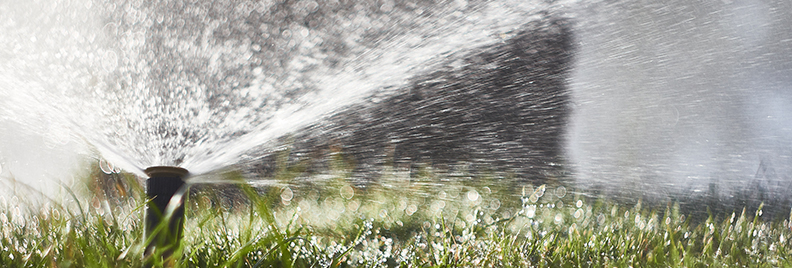
Keeping your lawn and garden plants well hydrated is more important than ever during these scorching hot summer months. Just like us, they get extra thirsty after a long day of sunbathing. Keep things lush ‘n’ green by following these simple guidelines for watering plants.
**How Often Should I be Watering Plants?**
Figuring out [how much water](https://plantsforallseasons.com/container-gardening-103-moisture/) your plants need can be tricky because there’s no all-encompassing rule that covers everything. Every different plant has different preferences, and the environment it’s grown in will affect moisture absorption as well. Here in southeast Texas, the weather is pretty hot and dry, and the soil tends to be all over the place as far as texture goes. Some areas are sandy, and some areas are solid clay. Know your soil type, sandy soils drain faster and will need more frequent water than a heavy clay soil that holds water.
When it comes to determining how much water your specific plants need, there are a few different plant characteristics that will give you a good idea of how much they’ll require. Typically, plants with thinner, larger leaves need to be watered more generously, whereas plants with thick, fleshy leaves like succulents don’t need as much water because they’re able to store a lot of it internally. Many tropical plants need lots of water because they’re used to the moist climate of the rainforest, and desert dwellers like [cacti](https://plantsforallseasons.com/holiday-favorites-christmas-cactus-poinsettias-and-more/) need much less. In the winter when plants go dormant, they’ll need way less water than during the sunny growing season.
## **[Tips for Properly Watering Plants]()**
Navigating the delicate balance between too much or too little watering can be a little puzzling, particularly when you’re dealing with our super-hot Houston weather or an unexpected bout of heavy rain. Follow these simple guidelines to eliminate the guesswork:
- **Let the soil dry out before watering again.** When you waterlog the soil, that’s a recipe for root rot, and your plants won’t stand a chance at recovery once that bacteria starts to attack. An easy way to test if the soil is dry is by sticking your finger in about 3 inches deep—if it’s all dry, your plants are thirsty\!
- **Water deeply and infrequently.** Plants prefer this over frequent, sparse [watering](https://plantsforallseasons.com/low-maintenance-gardening/) because it reaches their roots more efficiently.
- **Early morning or late evening is the best time to water.** Soil is cooler at this time because the sun isn’t as intense, which helps the soil to retain moisture better. During peak sunlight hours, not only will the moisture evaporate quicker, but you could end up cooking the foliage if water collects on the leaves and heats up in the sun.
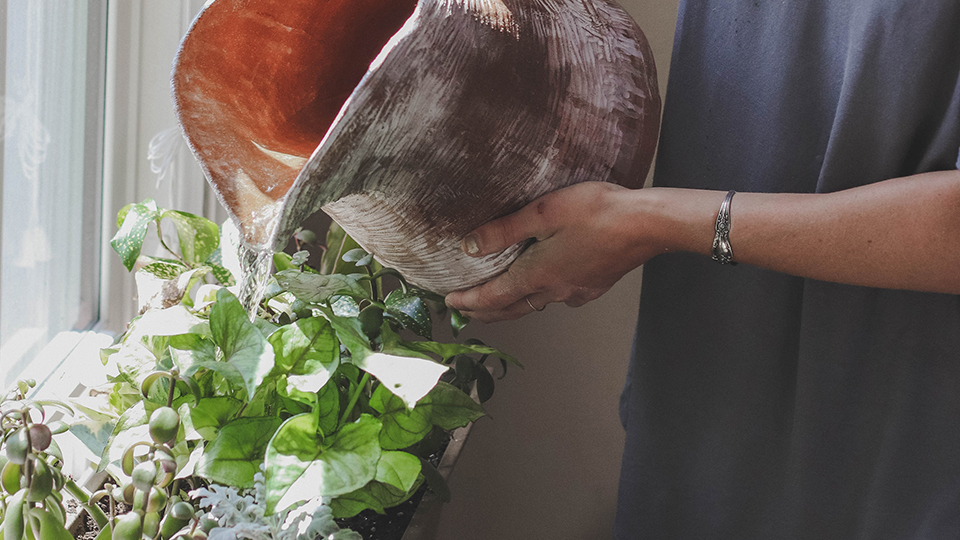
- **Also, try to avoid getting water on the leaves if you can.** Water at the base of the plant so it can soak up the water easily through its roots, avoiding the stem and leaves. When moisture collects on leaves, this could quickly become a breeding ground for bacteria, especially if your plants have dense foliage and less-than-ideal air circulation.
- **Watch out for signs and symptoms of shoddy watering.** Overwatering definitely claims more plant lives than underwatering, so if you notice wilting, discolored leaves or stunted growth, chill out on the watering for a bit and let your plant recover.
[](https://dig-digital.us19.list-manage.com/subscribe?u=9fe2c039d0f2fd2ff9d6bb4b2&id=7254483636)
## **[Watering Plants with Automated Systems]()**
If you tend to travel a lot or spend your summers at the cabin, an automatic plant watering system will save you loads of trouble. Just set it up, relax, and enjoy the sun while the water system does its thing.
## **[Watering Plants with Soaker Hoses]()**
A lot of automated systems for watering plants will mimic manual watering or rainfall by distributing [water](https://plantsforallseasons.com/lawn-care-calendar/) right at ground level. They usually come in the form of a garden hose that hooks up to a soaker hose you can snake through the lawn or garden. Many run on automatic timers that you can adjust in case there’s a ton of rainfall. They’re great for saving time as well as water, because a lot of the systems are equipped with special sensors that measure the level of moisture in the soil, and only turn on when the soil is getting too dry. If you’re the type who gets anxious from over-analyzing your watering techniques, just set up a soaker hose and let it do its thing.
## **[Sprinkler Systems for Watering Plants]()**
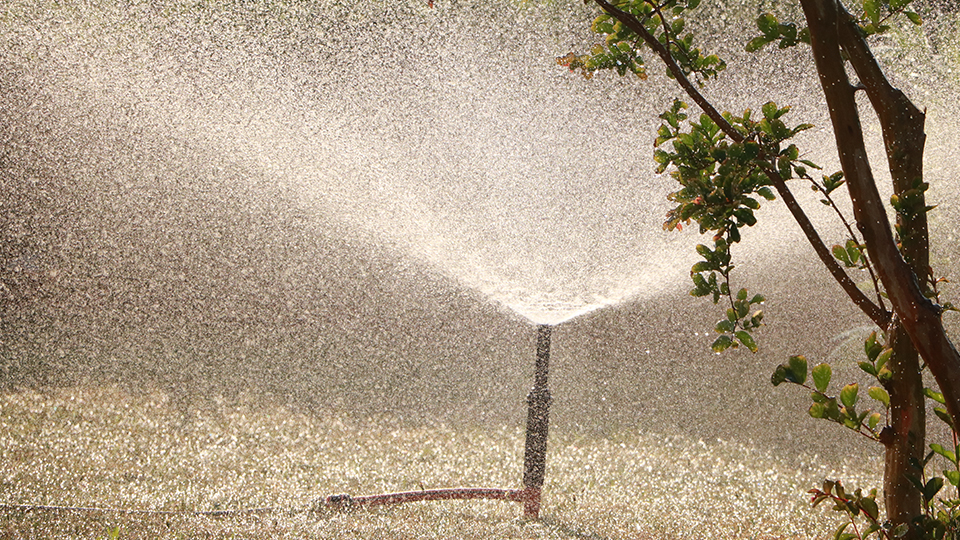
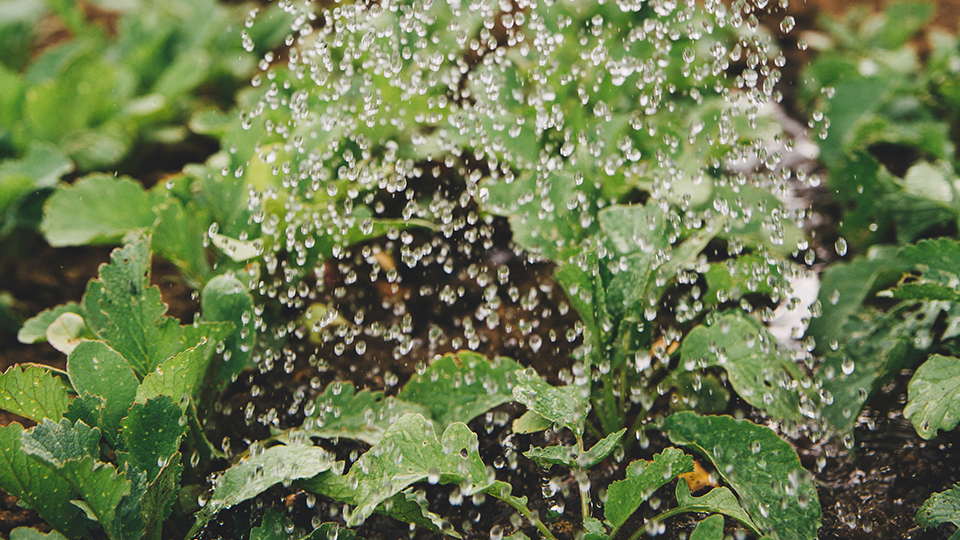
Gotta love sprinklers— they keep our lawns hydrated, and our kids thoroughly entertained during our sunny Houston summers. The best garden sprinkler will mimic rainfall pretty well, as they shoot water upwards, breaking up into little droplets that scatter across the surface. So long as you have well-draining soil in your lawn, you should be safe from overwatering, and if your lawn is particularly big, maybe set up a couple of sprinklers across the property to keep moisture levels even throughout.
## **[Watering Plants Through Drip Irrigation]()**
Also known as micro-irrigation, this is by far the most effective method for watering plants. A steady trickle of water is applied directly to your plants’ roots through a system of tubes, pipes and emitters installed underground. Some use drip lines or soaker hoses, whereas others use micro-sprayers or emitters. Since the water gets sent to the roots directly, way less water evaporates, and you save a ton in the long run. It may seem kind of complex, but don’t let that sway you from trying one out— there are loads of different systems in all different sizes to suit whatever your landscape requires.
Whether you want to go old school with the classic plant watering can or install a robo-system that Jane Jetson would highly approve of, watering your plants doesn’t have to be a chore. Remember: water thoroughly, infrequently, and you’ll be left with a healthy green garden that’s sufficiently hydrated.
### Author

**[Kelly Kock](https://plantsforallseasons.com/author/plants-for-all-seasons/ "Posts by Kelly Kock")**
### About The Blog
Lorem ipsum dolor sit amet, conse elit porta. Vestibulum ante justo, volutpat quis porta diam.
### Recent Posts
- [Why Your Soil Absolutely Needs Compost](https://plantsforallseasons.com/why-your-soil-absolutely-needs-compost/) December 31, 2024
- [We Predict These 6 Garden and Houseplant Trends for 2025\!](https://plantsforallseasons.com/we-predict-these-6-garden-and-houseplant-trends-for-2025/) December 28, 2024
- [Camellias: How To Grow These Fabulous Flowers](https://plantsforallseasons.com/camellias-how-to-grow-these-fabulous-flowers/) December 20, 2024
### Recent Comments
### Categories
- [Animals](https://plantsforallseasons.com/category/animals/) (8)
- [Backyard Ideas](https://plantsforallseasons.com/category/backyard-ideas/) (13)
- [Christmas Trees](https://plantsforallseasons.com/category/christmas-trees/) (3)
- [Composting](https://plantsforallseasons.com/category/composting/) (2)
- [Gardening Tips](https://plantsforallseasons.com/category/gardening-tips/) (105)
- [Holiday Recipes](https://plantsforallseasons.com/category/holiday-recipes/) (2)
- [Holidays](https://plantsforallseasons.com/category/holidays/) (6)
- [Lawncare](https://plantsforallseasons.com/category/lawncare/) (12)
- [Pest Control](https://plantsforallseasons.com/category/pest-control/) (12)
- [Recipes from the Garden](https://plantsforallseasons.com/category/recipes-from-the-garden/) (5)
- [Seasonal Ideas](https://plantsforallseasons.com/category/seasonal-ideas/) (24)
- [Soils & Mulch](https://plantsforallseasons.com/category/soils-mulch/) (4)
- [Trees & Shrubs](https://plantsforallseasons.com/category/trees-shrubs/) (4)
- [Watering](https://plantsforallseasons.com/category/watering/) (6)
- [Winterizing](https://plantsforallseasons.com/category/winterizing/) (6)
[](https://plantsforallseasons.com/)
### Inside Plants For All Seasons
[About](https://plantsforallseasons.com/#About) [Services](https://plantsforallseasons.com/services/) [Products](https://plantsforallseasons.com/products/) [Gift Cards](https://plantsforallseasons.com/gift-cards/) [Gift Shop](https://plantsforallseasons.com/gift-shop/) [Resources](https://plantsforallseasons.com/resources/) [Contact Us](https://plantsforallseasons.com/contact/)
### Hours
Mon – Sat: 8:30 am – 5:30 pm
Sun: 9:00 am – 5:00 pm
### Location
[21328 State Highway 249](https://maps.app.goo.gl/mJwaiXLwJxu6UVKn7)
Houston, TX 77070
### Phone
[281\.376.1646](tel:+12813761646)
### Follow Us
© 2025 Plants For All Seasons. All Rights Reserved. [Website Marketing by TRUELL](https://truell.us/). |
| Readable Markdown | **[Tips for Properly Watering Plants](https://plantsforallseasons.com/a-basic-guide-to-watering-plants/#heading1)**
**[Watering Plants with Automated Systems](https://plantsforallseasons.com/a-basic-guide-to-watering-plants/#heading2) [Watering Plants with Soaker Hoses](https://plantsforallseasons.com/a-basic-guide-to-watering-plants/#heading3) [Sprinkler Systems for Watering Plants](https://plantsforallseasons.com/a-basic-guide-to-watering-plants/#heading4) [Watering Plants Through Drip Irrigation](https://plantsforallseasons.com/a-basic-guide-to-watering-plants/#heading5)**
Keeping your lawn and garden plants well hydrated is more important than ever during these scorching hot summer months. Just like us, they get extra thirsty after a long day of sunbathing. Keep things lush ‘n’ green by following these simple guidelines for watering plants.
**How Often Should I be Watering Plants?**
Figuring out [how much water](https://plantsforallseasons.com/container-gardening-103-moisture/) your plants need can be tricky because there’s no all-encompassing rule that covers everything. Every different plant has different preferences, and the environment it’s grown in will affect moisture absorption as well. Here in southeast Texas, the weather is pretty hot and dry, and the soil tends to be all over the place as far as texture goes. Some areas are sandy, and some areas are solid clay. Know your soil type, sandy soils drain faster and will need more frequent water than a heavy clay soil that holds water.
When it comes to determining how much water your specific plants need, there are a few different plant characteristics that will give you a good idea of how much they’ll require. Typically, plants with thinner, larger leaves need to be watered more generously, whereas plants with thick, fleshy leaves like succulents don’t need as much water because they’re able to store a lot of it internally. Many tropical plants need lots of water because they’re used to the moist climate of the rainforest, and desert dwellers like [cacti](https://plantsforallseasons.com/holiday-favorites-christmas-cactus-poinsettias-and-more/) need much less. In the winter when plants go dormant, they’ll need way less water than during the sunny growing season.

## **[Tips for Properly Watering Plants]()**
Navigating the delicate balance between too much or too little watering can be a little puzzling, particularly when you’re dealing with our super-hot Houston weather or an unexpected bout of heavy rain. Follow these simple guidelines to eliminate the guesswork:
- **Let the soil dry out before watering again.** When you waterlog the soil, that’s a recipe for root rot, and your plants won’t stand a chance at recovery once that bacteria starts to attack. An easy way to test if the soil is dry is by sticking your finger in about 3 inches deep—if it’s all dry, your plants are thirsty\!
- **Water deeply and infrequently.** Plants prefer this over frequent, sparse [watering](https://plantsforallseasons.com/low-maintenance-gardening/) because it reaches their roots more efficiently.
- **Early morning or late evening is the best time to water.** Soil is cooler at this time because the sun isn’t as intense, which helps the soil to retain moisture better. During peak sunlight hours, not only will the moisture evaporate quicker, but you could end up cooking the foliage if water collects on the leaves and heats up in the sun.
- **Also, try to avoid getting water on the leaves if you can.** Water at the base of the plant so it can soak up the water easily through its roots, avoiding the stem and leaves. When moisture collects on leaves, this could quickly become a breeding ground for bacteria, especially if your plants have dense foliage and less-than-ideal air circulation.
- **Watch out for signs and symptoms of shoddy watering.** Overwatering definitely claims more plant lives than underwatering, so if you notice wilting, discolored leaves or stunted growth, chill out on the watering for a bit and let your plant recover.

[](https://dig-digital.us19.list-manage.com/subscribe?u=9fe2c039d0f2fd2ff9d6bb4b2&id=7254483636)
## **[Watering Plants with Automated Systems]()**
If you tend to travel a lot or spend your summers at the cabin, an automatic plant watering system will save you loads of trouble. Just set it up, relax, and enjoy the sun while the water system does its thing.
## **[Watering Plants with Soaker Hoses]()**
A lot of automated systems for watering plants will mimic manual watering or rainfall by distributing [water](https://plantsforallseasons.com/lawn-care-calendar/) right at ground level. They usually come in the form of a garden hose that hooks up to a soaker hose you can snake through the lawn or garden. Many run on automatic timers that you can adjust in case there’s a ton of rainfall. They’re great for saving time as well as water, because a lot of the systems are equipped with special sensors that measure the level of moisture in the soil, and only turn on when the soil is getting too dry. If you’re the type who gets anxious from over-analyzing your watering techniques, just set up a soaker hose and let it do its thing.

## **[Sprinkler Systems for Watering Plants]()**
Gotta love sprinklers— they keep our lawns hydrated, and our kids thoroughly entertained during our sunny Houston summers. The best garden sprinkler will mimic rainfall pretty well, as they shoot water upwards, breaking up into little droplets that scatter across the surface. So long as you have well-draining soil in your lawn, you should be safe from overwatering, and if your lawn is particularly big, maybe set up a couple of sprinklers across the property to keep moisture levels even throughout.
## **[Watering Plants Through Drip Irrigation]()**
Also known as micro-irrigation, this is by far the most effective method for watering plants. A steady trickle of water is applied directly to your plants’ roots through a system of tubes, pipes and emitters installed underground. Some use drip lines or soaker hoses, whereas others use micro-sprayers or emitters. Since the water gets sent to the roots directly, way less water evaporates, and you save a ton in the long run. It may seem kind of complex, but don’t let that sway you from trying one out— there are loads of different systems in all different sizes to suit whatever your landscape requires.
Whether you want to go old school with the classic plant watering can or install a robo-system that Jane Jetson would highly approve of, watering your plants doesn’t have to be a chore. Remember: water thoroughly, infrequently, and you’ll be left with a healthy green garden that’s sufficiently hydrated. |
| Shard | 193 (laksa) |
| Root Hash | 1900036222070205393 |
| Unparsed URL | com,plantsforallseasons!/a-basic-guide-to-watering-plants/ s443 |