ℹ️ Skipped - page is already crawled
| Filter | Status | Condition | Details |
|---|---|---|---|
| HTTP status | PASS | download_http_code = 200 | HTTP 200 |
| Age cutoff | PASS | download_stamp > now() - 6 MONTH | 0 months ago |
| History drop | PASS | isNull(history_drop_reason) | No drop reason |
| Spam/ban | PASS | fh_dont_index != 1 AND ml_spam_score = 0 | ml_spam_score=0 |
| Canonical | PASS | meta_canonical IS NULL OR = '' OR = src_unparsed | Not set |
| Property | Value | ||||||||||||||||||
|---|---|---|---|---|---|---|---|---|---|---|---|---|---|---|---|---|---|---|---|
| URL | https://ondato.com/blog/tax-evasion-vs-tax-avoidance/ | ||||||||||||||||||
| Last Crawled | 2026-04-23 11:14:26 (6 hours ago) | ||||||||||||||||||
| First Indexed | 2025-05-13 17:27:14 (11 months ago) | ||||||||||||||||||
| HTTP Status Code | 200 | ||||||||||||||||||
| Content | |||||||||||||||||||
| Meta Title | Tax Evasion vs Tax Avoidance: What Businesses Need to Know | Ondato Blog | ||||||||||||||||||
| Meta Description | The difference between tax evasion and tax avoidance deals with the legality of the practices, with one being illegal while the other is completely fine. | ||||||||||||||||||
| Meta Canonical | null | ||||||||||||||||||
| Boilerpipe Text | Content Manager
Navigating the world of income tax obligations can be complicated for businesses. Understanding the difference between legal tax avoidance and illegal tax evasion is critical not only for compliance but also for maintaining your reputation. Missteps can lead to allegations of criminal tax evasion, investigations by the Internal Revenue Service (IRS), and heavy penalties.
In this guide, we’ll break down the distinctions, warning signs, and compliance strategies your business needs to manage tax returns responsibly and legally.
What Is Tax Evasion and Tax Avoidance?
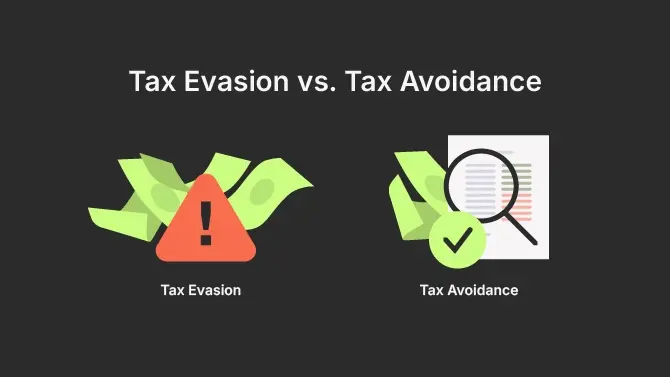
Tax avoidance refers to the legal practice of minimizing federal income tax burden by taking advantage of allowable tax deductions, tax credits, and other strategies permitted under the tax code. Businesses may reduce their tax assessment by properly accounting for business expenses, leveraging retirement contributions, or restructuring operations to maximize legal benefits.
Tax evasion, by contrast, involves intentionally misrepresenting or concealing information from tax authorities to avoid paying taxes altogether. Common tactics include underreporting gross income, inflating business expenses, or concealing taxable assets through offshore accounts or hidden entities.
While tax avoidance operates within the legal framework, criminal tax evasion is a deliberate violation of tax laws that carries significant civil and criminal penalties.
How to Differentiate Between Tax Avoidance and Tax Evasion
Although tax avoidance and tax evasion both reduce tax liabilities, the difference comes down to transparency and intent. Tax avoidance involves strategies that are openly reported on income tax returns and comply with the tax code. Businesses that claim legitimate tax deductions and tax credits or properly document business expenses are engaging in lawful practices.
On the other hand, tax evasion involves deception, such as falsifying income reports, inflating deductions without proof, or hiding financial activity altogether. When businesses attempt to avoid paying taxes altogether by concealing taxable assets or misreporting gross income, they cross the line into criminal tax evasion. This can include offshore tax havens, false income tax returns, hiding income altogether and more.
Regulatory bodies like the Internal Revenue Service treat such offenses very seriously, often classifying them under tax crimes that carry significant legal consequences.
Tax Fraud vs Tax Evasion: Are They the Same?
Although often used interchangeably, tax fraud and tax evasion are distinct concepts. Tax evasion is a specific form of tax fraud focused on unlawfully reducing or eliminating a tax assessment by misrepresenting information on tax returns.
Tax fraud, however, covers a broader range of misconduct, including forging documents, submitting false claims for tax credits, or stealing identities to fraudulently obtain tax refunds. While all tax evasion qualifies as tax fraud, not all tax fraud involves evasion.
In either case, businesses found guilty of violating the tax code may face serious consequences, including investigations by the Internal Revenue Service, financial penalties, and even imprisonment for engaging in tax crimes.
Examples and Types of Tax Evasion in Business
There are numerous ways businesses engage in tax evasion, sometimes knowingly and sometimes through poor oversight. Underreporting income by failing to declare all sales or service earnings on an income tax return is one of the most common examples. Some businesses may attempt to reduce their federal income tax liability by inflating business expenses, claiming costs unrelated to actual business operations.
Other forms include hiding profits in offshore accounts to avoid a legitimate tax assessment or paying employees under the table to reduce payroll taxes. Each of these actions violates established tax rules and exposes the business to potential charges of criminal tax evasion.
The
Internal Revenue Service
also closely monitors activities like phantom employees, unreported cash transactions, and shell companies used to obscure taxable income or assets.
Penalties for Tax Evasion and Small Business Risks
Failing to properly pay taxes exposes businesses to a range of serious risks. Civil penalties can amount to 75% of the unpaid federal income tax. In more severe cases, individuals and businesses can be charged with criminal tax evasion, facing up to five years in prison along with substantial fines.
Beyond the financial burden, businesses may also suffer reputational damage that can hurt client relationships, investor confidence, and future opportunities. Once a business is flagged by the Internal Revenue Service, future income tax returns may receive heightened scrutiny, leading to
ongoing audits
and further tax assessments.
Small businesses are particularly vulnerable, as they often lack robust compliance structures. Poor documentation of business expenses, failure to understand legitimate tax deductions, and reliance on informal accounting practices can all increase the risk of crossing into criminal territory.
Is Tax Evasion a Federal Crime or Money Laundering?
Tax evasion is indeed classified as a federal crime in the United States. Intentionally avoiding a legitimate tax assessment, underreporting gross income, or concealing taxable assets can lead to felony charges.
In more complex cases, criminal tax evasion may intersect with
money laundering activities
, especially when businesses use offshore entities, multiple accounts, or fake invoices to disguise the movement of illicit funds. Both crimes are treated very seriously and can result in long prison sentences and hefty financial penalties.
The Internal Revenue Service actively investigates such activities, ensuring that individuals and businesses who avoid paying taxes altogether through fraudulent means are held accountable under federal law.
How to Detect Tax Evasion: KYB, UBO, and AML
Businesses today must actively manage compliance risk to avoid becoming entangled in tax crimes, regulatory penalties, and reputational damage. As global enforcement efforts intensify, regulators expect companies not only to comply with tax rules themselves but also to vet the businesses they work with. Effective prevention starts with three critical layers of
due diligence
: KYB, UBO verification, and AML monitoring.
Know Your Business (KYB)
protocols form the first line of defense.
Business verification
involves
verifying the legitimacy of business partners
and customers before establishing a commercial relationship. By collecting and validating information such as company registration details, ownership structures, and operational histories, businesses ensure that gross income is properly reported and that no concealment of taxable assets occurs. Comprehensive KYB checks can expose
shell companies
, dormant businesses used for money movement, and entities engaged in inflating business expenses to fraudulently claim tax deductions.
Ultimate Beneficial Ownership (UBO)
checks go deeper by identifying the real individuals who ultimately control or benefit from a company’s earnings. Without visibility into
ultimate beneficial owners
, businesses risk interacting with entities set up to avoid paying taxes altogether through layered ownership structures. Verifying UBO information helps detect hidden relationships, undisclosed controlling parties, and suspicious beneficiaries who might otherwise exploit tax credits or deductions under false pretenses.
Anti-Money Laundering (AML)
monitoring adds yet another critical layer.
AML software
tracks financial behavior over time, flagging patterns that may indicate criminal tax evasion, such as sudden spikes in transactions, inconsistencies in revenue reporting, or frequent dealings with high-risk jurisdictions. Effective
AML compliance
also picks up discrepancies between declared business activities and actual financial flows, helping businesses catch early signs of tax crimes like gross income underreporting or the use of offshore accounts to conceal taxable assets.
This is where
Ondato
plays a key role. Ondato provides a comprehensive suite of digital compliance solutions, allowing businesses to streamline KYB verification, conduct thorough UBO checks, and enhance AML monitoring in a single integrated platform. With Ondato, companies can automate the onboarding of business partners, maintain up-to-date compliance records, and continuously monitor for risk signals—all essential steps in defending against exposure to criminal tax evasion.
By combining robust KYB, UBO, and AML practices—supported by technology partners like Ondato—organizations can build a proactive compliance framework. Not only does this help businesses meet their legal obligations, but it also protects against reputational harm, financial loss, and the very real threat of becoming implicated in tax crimes through negligence.
Last Thoughts
Understanding and respecting the tax code is non-negotiable for modern businesses. Properly filing tax returns, transparently reporting gross income, and carefully documenting legitimate business expenses ensures that your company stays on the right side of the law.
Avoiding taxes altogether by concealing taxable assets or misrepresenting income can lead to devastating financial and criminal consequences. It’s critical to seek advice from licensed tax professionals, maintain detailed financial records, and implement internal controls that align with current tax rules.
The risks associated with criminal tax evasion far outweigh the perceived short-term benefits, making transparency and compliance the best strategy for sustainable business success.
FAQ
Is tax evasion a felony or a federal crime?
Yes, tax evasion is classified as a federal crime in the United States. Filing false income tax returns, hiding gross income, or attempting to manipulate a tax assessment can result in felony charges.
What’s the minimum sentence for tax evasion?
Although outcomes vary, convictions for criminal tax evasion can lead to up to five years in prison along with significant fines. Even civil violations can result in severe financial penalties.
Can tax avoidance become tax evasion?
Yes. If a business uses deceptive practices under the guise of tax avoidance—such as inflating tax deductions or misclassifying business expenses—it can easily cross the line into tax evasion, with serious legal consequences.
What are common signs of tax evasion?
Common signs include unreported income, false expense claims, offshore accounts used to hide assets, and intentionally incorrect financial statements. Regular audits and compliance checks can help detect these red flags early.
How can small businesses avoid unintentional tax evasion?
Small businesses can avoid accidental tax evasion by keeping accurate records, using certified accountants, staying informed about local tax laws, and filing returns on time. Transparency and compliance tools also reduce risk. | ||||||||||||||||||
| Markdown | [Skip to main content](https://ondato.com/blog/tax-evasion-vs-tax-avoidance/#main-content)
[](https://ondato.com/)
Solutions
[Identity Verification (KYC) Onboard new users remotely](https://ondato.com/identity-verification/)
[Business Onboarding (KYB) Onboard business clients remotely](https://ondato.com/business-verification-services/)
[Age Verification Software Document-free age authentication](https://ondato.com/age-verification/)
[AML Software Cover all AML compliance needs](https://ondato.com/aml-software/)
[Identity Authentication Services Streamline returning user’s journeys](https://ondato.com/authentication-solutions/)
[Transaction Monitoring Solutions (KYT) Transaction monitoring from our partners](https://ondato.com/transaction-monitoring-solutions/)
Modules
[Assisted Identity Verification Video-based IDV](https://ondato.com/identity-verification/video-identity-verification/)
[NFC Identity Verification NFC-based Identity Verification](https://ondato.com/identity-verification/nfc-identity-verification/)
[OnAge Reusable Age Verification](https://ondato.com/age-verification/reusable-age-verification/)
[Customer Due Diligence Solutions PEP, sanctions and adverse media checks](https://ondato.com/customer-due-diligence/)
[Sanctions Screening Services Sanctions compliance checks](https://ondato.com/sanctions-screening-and-monitoring/)
[Electronic Signature Authentication Confirm identity via e-signature](https://ondato.com/authentication-solutions/e-signature-authentication/)
[Secure Meetings Safe online conferencing](https://ondato.com/authentication-solutions/secure-remote-meetings/)
[Biometric Authentication Facial biometrics scan](https://ondato.com/authentication-solutions/biometric-authentication/)
[SMS Signature Sign docs via SMS](https://ondato.com/authentication-solutions/sms-signature/)
[Virtual Branch Services Interact with clients remotely](https://ondato.com/virtual-branch/)
Resources
[Blog All the latest news](https://ondato.com/blog/)
[FAQ How can we help?](https://ondato.com/faq/)
[Case studies Find more about our customer’s success stories.](https://ondato.com/case-studies/)
[Security Certificates that assure security](https://ondato.com/security/)
Company
[About us Know your Ondato](https://ondato.com/about-us/)
[Partnerships Let’s team up\!](https://ondato.com/partnerships/)
[Press Page Download our media](https://ondato.com/press-kit/)
[Careers We’re hiring\!](https://ondato.com/careers/)
[Contact Reach out to us](https://ondato.com/contact/)
Pricing
[Identity Verification Pricing Range from €1,40 – €0,50](https://ondato.com/identity-verification-pricing/)
[Know Your Business Pricing Start from €600](https://ondato.com/know-your-business-pricing/)
[Age Verification Pricing Range from €0,30 – €0,01](https://ondato.com/age-verification-pricing/)
English
[English](https://ondato.com/blog/tax-evasion-vs-tax-avoidance/)
[Polski](https://ondato.com/pl/)
[Back to Blog](https://ondato.com/blog/)
# Tax Evasion vs Tax Avoidance: What Businesses Need to Know


[Aistė Jokšaitė](https://ondato.com/author/aiste-joksaite/)
Content Manager
Navigating the world of income tax obligations can be complicated for businesses. Understanding the difference between legal tax avoidance and illegal tax evasion is critical not only for compliance but also for maintaining your reputation. Missteps can lead to allegations of criminal tax evasion, investigations by the Internal Revenue Service (IRS), and heavy penalties.
In this guide, we’ll break down the distinctions, warning signs, and compliance strategies your business needs to manage tax returns responsibly and legally.
## **What Is Tax Evasion and Tax Avoidance?**

Tax avoidance refers to the legal practice of minimizing federal income tax burden by taking advantage of allowable tax deductions, tax credits, and other strategies permitted under the tax code. Businesses may reduce their tax assessment by properly accounting for business expenses, leveraging retirement contributions, or restructuring operations to maximize legal benefits.
Tax evasion, by contrast, involves intentionally misrepresenting or concealing information from tax authorities to avoid paying taxes altogether. Common tactics include underreporting gross income, inflating business expenses, or concealing taxable assets through offshore accounts or hidden entities.
While tax avoidance operates within the legal framework, criminal tax evasion is a deliberate violation of tax laws that carries significant civil and criminal penalties.
## **How to Differentiate Between Tax Avoidance and Tax Evasion**
Although tax avoidance and tax evasion both reduce tax liabilities, the difference comes down to transparency and intent. Tax avoidance involves strategies that are openly reported on income tax returns and comply with the tax code. Businesses that claim legitimate tax deductions and tax credits or properly document business expenses are engaging in lawful practices.
On the other hand, tax evasion involves deception, such as falsifying income reports, inflating deductions without proof, or hiding financial activity altogether. When businesses attempt to avoid paying taxes altogether by concealing taxable assets or misreporting gross income, they cross the line into criminal tax evasion. This can include offshore tax havens, false income tax returns, hiding income altogether and more.
Regulatory bodies like the Internal Revenue Service treat such offenses very seriously, often classifying them under tax crimes that carry significant legal consequences.
### Tax Fraud vs Tax Evasion: Are They the Same?
Although often used interchangeably, tax fraud and tax evasion are distinct concepts. Tax evasion is a specific form of tax fraud focused on unlawfully reducing or eliminating a tax assessment by misrepresenting information on tax returns.
Tax fraud, however, covers a broader range of misconduct, including forging documents, submitting false claims for tax credits, or stealing identities to fraudulently obtain tax refunds. While all tax evasion qualifies as tax fraud, not all tax fraud involves evasion.
In either case, businesses found guilty of violating the tax code may face serious consequences, including investigations by the Internal Revenue Service, financial penalties, and even imprisonment for engaging in tax crimes.
## **Examples and Types of Tax Evasion in Business**
There are numerous ways businesses engage in tax evasion, sometimes knowingly and sometimes through poor oversight. Underreporting income by failing to declare all sales or service earnings on an income tax return is one of the most common examples. Some businesses may attempt to reduce their federal income tax liability by inflating business expenses, claiming costs unrelated to actual business operations.
Other forms include hiding profits in offshore accounts to avoid a legitimate tax assessment or paying employees under the table to reduce payroll taxes. Each of these actions violates established tax rules and exposes the business to potential charges of criminal tax evasion.
The [Internal Revenue Service](https://www.irs.gov/) also closely monitors activities like phantom employees, unreported cash transactions, and shell companies used to obscure taxable income or assets.
## **Penalties for Tax Evasion and Small Business Risks**
Failing to properly pay taxes exposes businesses to a range of serious risks. Civil penalties can amount to 75% of the unpaid federal income tax. In more severe cases, individuals and businesses can be charged with criminal tax evasion, facing up to five years in prison along with substantial fines.
Beyond the financial burden, businesses may also suffer reputational damage that can hurt client relationships, investor confidence, and future opportunities. Once a business is flagged by the Internal Revenue Service, future income tax returns may receive heightened scrutiny, leading to [ongoing audits](https://ondato.com/blog/aml-audit-explained/) and further tax assessments.
Small businesses are particularly vulnerable, as they often lack robust compliance structures. Poor documentation of business expenses, failure to understand legitimate tax deductions, and reliance on informal accounting practices can all increase the risk of crossing into criminal territory.
## **Is Tax Evasion a Federal Crime or Money Laundering?**
Tax evasion is indeed classified as a federal crime in the United States. Intentionally avoiding a legitimate tax assessment, underreporting gross income, or concealing taxable assets can lead to felony charges.
In more complex cases, criminal tax evasion may intersect with [money laundering activities](https://ondato.com/blog/examples-of-money-laundering/), especially when businesses use offshore entities, multiple accounts, or fake invoices to disguise the movement of illicit funds. Both crimes are treated very seriously and can result in long prison sentences and hefty financial penalties.
The Internal Revenue Service actively investigates such activities, ensuring that individuals and businesses who avoid paying taxes altogether through fraudulent means are held accountable under federal law.
## **How to Detect Tax Evasion: KYB, UBO, and AML**

Businesses today must actively manage compliance risk to avoid becoming entangled in tax crimes, regulatory penalties, and reputational damage. As global enforcement efforts intensify, regulators expect companies not only to comply with tax rules themselves but also to vet the businesses they work with. Effective prevention starts with three critical layers of [due diligence](https://ondato.com/blog/what-is-cdd/): KYB, UBO verification, and AML monitoring.
**Know Your Business (KYB)** protocols form the first line of defense. [Business verification](https://ondato.com/business-verification-services/) involves [verifying the legitimacy of business partners](https://ondato.com/blog/how-to-check-if-a-company-is-legit/) and customers before establishing a commercial relationship. By collecting and validating information such as company registration details, ownership structures, and operational histories, businesses ensure that gross income is properly reported and that no concealment of taxable assets occurs. Comprehensive KYB checks can expose [shell companies](https://ondato.com/blog/shell-companies/), dormant businesses used for money movement, and entities engaged in inflating business expenses to fraudulently claim tax deductions.
**Ultimate Beneficial Ownership (UBO)** checks go deeper by identifying the real individuals who ultimately control or benefit from a company’s earnings. Without visibility into [ultimate beneficial owners](https://ondato.com/blog/ultimate-beneficial-ownership/), businesses risk interacting with entities set up to avoid paying taxes altogether through layered ownership structures. Verifying UBO information helps detect hidden relationships, undisclosed controlling parties, and suspicious beneficiaries who might otherwise exploit tax credits or deductions under false pretenses.
**Anti-Money Laundering (AML)** monitoring adds yet another critical layer. [AML software](https://ondato.com/aml-software/) tracks financial behavior over time, flagging patterns that may indicate criminal tax evasion, such as sudden spikes in transactions, inconsistencies in revenue reporting, or frequent dealings with high-risk jurisdictions. Effective [AML compliance](https://ondato.com/blog/anti-money-laundering-compliance/) also picks up discrepancies between declared business activities and actual financial flows, helping businesses catch early signs of tax crimes like gross income underreporting or the use of offshore accounts to conceal taxable assets.
This is where **Ondato** plays a key role. Ondato provides a comprehensive suite of digital compliance solutions, allowing businesses to streamline KYB verification, conduct thorough UBO checks, and enhance AML monitoring in a single integrated platform. With Ondato, companies can automate the onboarding of business partners, maintain up-to-date compliance records, and continuously monitor for risk signals—all essential steps in defending against exposure to criminal tax evasion.
By combining robust KYB, UBO, and AML practices—supported by technology partners like Ondato—organizations can build a proactive compliance framework. Not only does this help businesses meet their legal obligations, but it also protects against reputational harm, financial loss, and the very real threat of becoming implicated in tax crimes through negligence.
## **Last Thoughts**
Understanding and respecting the tax code is non-negotiable for modern businesses. Properly filing tax returns, transparently reporting gross income, and carefully documenting legitimate business expenses ensures that your company stays on the right side of the law.
Avoiding taxes altogether by concealing taxable assets or misrepresenting income can lead to devastating financial and criminal consequences. It’s critical to seek advice from licensed tax professionals, maintain detailed financial records, and implement internal controls that align with current tax rules.
The risks associated with criminal tax evasion far outweigh the perceived short-term benefits, making transparency and compliance the best strategy for sustainable business success.
## FAQ
### Is tax evasion a felony or a federal crime?
Yes, tax evasion is classified as a federal crime in the United States. Filing false income tax returns, hiding gross income, or attempting to manipulate a tax assessment can result in felony charges.
### What’s the minimum sentence for tax evasion?
Although outcomes vary, convictions for criminal tax evasion can lead to up to five years in prison along with significant fines. Even civil violations can result in severe financial penalties.
### Can tax avoidance become tax evasion?
Yes. If a business uses deceptive practices under the guise of tax avoidance—such as inflating tax deductions or misclassifying business expenses—it can easily cross the line into tax evasion, with serious legal consequences.
### What are common signs of tax evasion?
Common signs include unreported income, false expense claims, offshore accounts used to hide assets, and intentionally incorrect financial statements. Regular audits and compliance checks can help detect these red flags early.
### How can small businesses avoid unintentional tax evasion?
Small businesses can avoid accidental tax evasion by keeping accurate records, using certified accountants, staying informed about local tax laws, and filing returns on time. Transparency and compliance tools also reduce risk.
Detect Financial Crime Faster
Strengthen AML monitoring and identify suspicious activity with advanced compliance tools.

[Learn more](https://ondato.com/aml-software/)
Published May 12, 2025
Share article
[](https://www.linkedin.com/cws/share?url=https://ondato.com/blog/tax-evasion-vs-tax-avoidance/) [](https://www.facebook.com/sharer/sharer.php?u=https://ondato.com/blog/tax-evasion-vs-tax-avoidance/) [](https://twitter.com/intent/tweet?text=https://ondato.com/blog/tax-evasion-vs-tax-avoidance/)
Detect Financial Crime Faster
Strengthen AML monitoring and identify suspicious activity with advanced compliance tools.

[Learn more](https://ondato.com/aml-software/)
Published May 12, 2025
Share article
[](https://www.linkedin.com/cws/share?url=https://ondato.com/blog/tax-evasion-vs-tax-avoidance/) [](https://www.facebook.com/sharer/sharer.php?u=https://ondato.com/blog/tax-evasion-vs-tax-avoidance/) [](https://twitter.com/intent/tweet?text=https://ondato.com/blog/tax-evasion-vs-tax-avoidance/)
## Related articles
[ October 13, 2025 AML Risk Assessment: Definition, Process, and Key Risks](https://ondato.com/blog/tax-evasion-vs-tax-avoidance/%20https://ondato.com/blog/aml-risk-assessment/%20)

[Zarema Plaksij](https://ondato.com/author/zarema-plaksij/)
Copywriter
[ September 6, 2023 AML in Healthcare: Protecting the Sector from Financial Crime](https://ondato.com/blog/tax-evasion-vs-tax-avoidance/%20https://ondato.com/blog/enhancing-healthcare-anti-money-laundering-procedures/%20)

[Aistė Jokšaitė](https://ondato.com/author/aiste-joksaite/)
Content Manager
[ March 8, 2023 eKYC Meaning, How it Works, and Benefits](https://ondato.com/blog/tax-evasion-vs-tax-avoidance/%20https://ondato.com/blog/ekyc-explained/%20)

[Aistė Jokšaitė](https://ondato.com/author/aiste-joksaite/)
Content Manager
[Go to Blog](https://ondato.com/blog/)
#### Ensure Anti-Money Laundering Compliance
[Get in touch](https://ondato.com/book)
[](https://ondato.com/blog/tax-evasion-vs-tax-avoidance/)
Ondato is a global provider of digital identity and age verification solutions, dedicated to delivering secure, efficient, and user-friendly services across a wide range of industries.
[](https://ondato.com/blog/ft1000-2026/)
[](https://www.linkedin.com/company/ondato/) [](https://www.facebook.com/OndatoKYC/) [](https://x.com/ondatokyc) [](https://www.youtube.com/channel/UC4eMJhSGAf5hRO4YxnzrFFw)
[](https://ondato.com/blog/ft1000-2026/)
Solutions
[Identity Verification (KYC)](https://ondato.com/identity-verification/)
[Business Onboarding (KYB)](https://ondato.com/business-verification-services/)
[Age Verification Software](https://ondato.com/age-verification/)
[AML Software](https://ondato.com/aml-software/)
[Identity Authentication Services](https://ondato.com/authentication-solutions/)
[Transaction Monitoring Solutions (KYT)](https://ondato.com/transaction-monitoring-solutions/)
Modules
[Video Identity Verification](https://ondato.com/identity-verification/video-identity-verification/)
[NFC Identity Verification](https://ondato.com/identity-verification/nfc-identity-verification/)
[Reusable Age Verification](https://ondato.com/age-verification/reusable-age-verification/)
[Customer Due Diligence Solutions](https://ondato.com/customer-due-diligence/)
[Sanctions Screening Services](https://ondato.com/sanctions-screening-and-monitoring/)
[Electronic Signature Authentication](https://ondato.com/authentication-solutions/e-signature-authentication/)
[Secure Meetings](https://ondato.com/authentication-solutions/secure-remote-meetings/)
[Biometric Authentication](https://ondato.com/authentication-solutions/biometric-authentication/)
[SMS Signature](https://ondato.com/authentication-solutions/sms-signature/)
[Virtual Branch Services](https://ondato.com/virtual-branch/)
Resources
[Blog](https://ondato.com/blog/)
[FAQ](https://ondato.com/faq/)
[Case studies](https://ondato.com/case-studies/)
[Why Ondato](https://ondato.com/why-ondato/)
[Security](https://ondato.com/security/)
Pricing
[Identity Verification Pricing](https://ondato.com/identity-verification-pricing/)
[Know Your Business Pricing](https://ondato.com/know-your-business-pricing/)
[Age Verification Pricing](https://ondato.com/age-verification-pricing/)
Company
[About us](https://ondato.com/about-us/)
[Partnerships](https://ondato.com/partnerships/)
[Careers](https://ondato.com/careers/)
[Press Page](https://ondato.com/press-kit/)
[Contact](https://ondato.com/contact/)
©2026 Ondato. All rights reserved
[Privacy Policy](https://ondato.com/privacy-policy/) | ||||||||||||||||||
| Readable Markdown | 

Content Manager
Navigating the world of income tax obligations can be complicated for businesses. Understanding the difference between legal tax avoidance and illegal tax evasion is critical not only for compliance but also for maintaining your reputation. Missteps can lead to allegations of criminal tax evasion, investigations by the Internal Revenue Service (IRS), and heavy penalties.
In this guide, we’ll break down the distinctions, warning signs, and compliance strategies your business needs to manage tax returns responsibly and legally.
## **What Is Tax Evasion and Tax Avoidance?**
Tax avoidance refers to the legal practice of minimizing federal income tax burden by taking advantage of allowable tax deductions, tax credits, and other strategies permitted under the tax code. Businesses may reduce their tax assessment by properly accounting for business expenses, leveraging retirement contributions, or restructuring operations to maximize legal benefits.
Tax evasion, by contrast, involves intentionally misrepresenting or concealing information from tax authorities to avoid paying taxes altogether. Common tactics include underreporting gross income, inflating business expenses, or concealing taxable assets through offshore accounts or hidden entities.
While tax avoidance operates within the legal framework, criminal tax evasion is a deliberate violation of tax laws that carries significant civil and criminal penalties.
## **How to Differentiate Between Tax Avoidance and Tax Evasion**
Although tax avoidance and tax evasion both reduce tax liabilities, the difference comes down to transparency and intent. Tax avoidance involves strategies that are openly reported on income tax returns and comply with the tax code. Businesses that claim legitimate tax deductions and tax credits or properly document business expenses are engaging in lawful practices.
On the other hand, tax evasion involves deception, such as falsifying income reports, inflating deductions without proof, or hiding financial activity altogether. When businesses attempt to avoid paying taxes altogether by concealing taxable assets or misreporting gross income, they cross the line into criminal tax evasion. This can include offshore tax havens, false income tax returns, hiding income altogether and more.
Regulatory bodies like the Internal Revenue Service treat such offenses very seriously, often classifying them under tax crimes that carry significant legal consequences.
### Tax Fraud vs Tax Evasion: Are They the Same?
Although often used interchangeably, tax fraud and tax evasion are distinct concepts. Tax evasion is a specific form of tax fraud focused on unlawfully reducing or eliminating a tax assessment by misrepresenting information on tax returns.
Tax fraud, however, covers a broader range of misconduct, including forging documents, submitting false claims for tax credits, or stealing identities to fraudulently obtain tax refunds. While all tax evasion qualifies as tax fraud, not all tax fraud involves evasion.
In either case, businesses found guilty of violating the tax code may face serious consequences, including investigations by the Internal Revenue Service, financial penalties, and even imprisonment for engaging in tax crimes.
## **Examples and Types of Tax Evasion in Business**
There are numerous ways businesses engage in tax evasion, sometimes knowingly and sometimes through poor oversight. Underreporting income by failing to declare all sales or service earnings on an income tax return is one of the most common examples. Some businesses may attempt to reduce their federal income tax liability by inflating business expenses, claiming costs unrelated to actual business operations.
Other forms include hiding profits in offshore accounts to avoid a legitimate tax assessment or paying employees under the table to reduce payroll taxes. Each of these actions violates established tax rules and exposes the business to potential charges of criminal tax evasion.
The [Internal Revenue Service](https://www.irs.gov/) also closely monitors activities like phantom employees, unreported cash transactions, and shell companies used to obscure taxable income or assets.
## **Penalties for Tax Evasion and Small Business Risks**
Failing to properly pay taxes exposes businesses to a range of serious risks. Civil penalties can amount to 75% of the unpaid federal income tax. In more severe cases, individuals and businesses can be charged with criminal tax evasion, facing up to five years in prison along with substantial fines.
Beyond the financial burden, businesses may also suffer reputational damage that can hurt client relationships, investor confidence, and future opportunities. Once a business is flagged by the Internal Revenue Service, future income tax returns may receive heightened scrutiny, leading to [ongoing audits](https://ondato.com/blog/aml-audit-explained/) and further tax assessments.
Small businesses are particularly vulnerable, as they often lack robust compliance structures. Poor documentation of business expenses, failure to understand legitimate tax deductions, and reliance on informal accounting practices can all increase the risk of crossing into criminal territory.
## **Is Tax Evasion a Federal Crime or Money Laundering?**
Tax evasion is indeed classified as a federal crime in the United States. Intentionally avoiding a legitimate tax assessment, underreporting gross income, or concealing taxable assets can lead to felony charges.
In more complex cases, criminal tax evasion may intersect with [money laundering activities](https://ondato.com/blog/examples-of-money-laundering/), especially when businesses use offshore entities, multiple accounts, or fake invoices to disguise the movement of illicit funds. Both crimes are treated very seriously and can result in long prison sentences and hefty financial penalties.
The Internal Revenue Service actively investigates such activities, ensuring that individuals and businesses who avoid paying taxes altogether through fraudulent means are held accountable under federal law.
## **How to Detect Tax Evasion: KYB, UBO, and AML**

Businesses today must actively manage compliance risk to avoid becoming entangled in tax crimes, regulatory penalties, and reputational damage. As global enforcement efforts intensify, regulators expect companies not only to comply with tax rules themselves but also to vet the businesses they work with. Effective prevention starts with three critical layers of [due diligence](https://ondato.com/blog/what-is-cdd/): KYB, UBO verification, and AML monitoring.
**Know Your Business (KYB)** protocols form the first line of defense. [Business verification](https://ondato.com/business-verification-services/) involves [verifying the legitimacy of business partners](https://ondato.com/blog/how-to-check-if-a-company-is-legit/) and customers before establishing a commercial relationship. By collecting and validating information such as company registration details, ownership structures, and operational histories, businesses ensure that gross income is properly reported and that no concealment of taxable assets occurs. Comprehensive KYB checks can expose [shell companies](https://ondato.com/blog/shell-companies/), dormant businesses used for money movement, and entities engaged in inflating business expenses to fraudulently claim tax deductions.
**Ultimate Beneficial Ownership (UBO)** checks go deeper by identifying the real individuals who ultimately control or benefit from a company’s earnings. Without visibility into [ultimate beneficial owners](https://ondato.com/blog/ultimate-beneficial-ownership/), businesses risk interacting with entities set up to avoid paying taxes altogether through layered ownership structures. Verifying UBO information helps detect hidden relationships, undisclosed controlling parties, and suspicious beneficiaries who might otherwise exploit tax credits or deductions under false pretenses.
**Anti-Money Laundering (AML)** monitoring adds yet another critical layer. [AML software](https://ondato.com/aml-software/) tracks financial behavior over time, flagging patterns that may indicate criminal tax evasion, such as sudden spikes in transactions, inconsistencies in revenue reporting, or frequent dealings with high-risk jurisdictions. Effective [AML compliance](https://ondato.com/blog/anti-money-laundering-compliance/) also picks up discrepancies between declared business activities and actual financial flows, helping businesses catch early signs of tax crimes like gross income underreporting or the use of offshore accounts to conceal taxable assets.
This is where **Ondato** plays a key role. Ondato provides a comprehensive suite of digital compliance solutions, allowing businesses to streamline KYB verification, conduct thorough UBO checks, and enhance AML monitoring in a single integrated platform. With Ondato, companies can automate the onboarding of business partners, maintain up-to-date compliance records, and continuously monitor for risk signals—all essential steps in defending against exposure to criminal tax evasion.
By combining robust KYB, UBO, and AML practices—supported by technology partners like Ondato—organizations can build a proactive compliance framework. Not only does this help businesses meet their legal obligations, but it also protects against reputational harm, financial loss, and the very real threat of becoming implicated in tax crimes through negligence.
## **Last Thoughts**
Understanding and respecting the tax code is non-negotiable for modern businesses. Properly filing tax returns, transparently reporting gross income, and carefully documenting legitimate business expenses ensures that your company stays on the right side of the law.
Avoiding taxes altogether by concealing taxable assets or misrepresenting income can lead to devastating financial and criminal consequences. It’s critical to seek advice from licensed tax professionals, maintain detailed financial records, and implement internal controls that align with current tax rules.
The risks associated with criminal tax evasion far outweigh the perceived short-term benefits, making transparency and compliance the best strategy for sustainable business success.
FAQ
Is tax evasion a felony or a federal crime?
Yes, tax evasion is classified as a federal crime in the United States. Filing false income tax returns, hiding gross income, or attempting to manipulate a tax assessment can result in felony charges.
What’s the minimum sentence for tax evasion?
Although outcomes vary, convictions for criminal tax evasion can lead to up to five years in prison along with significant fines. Even civil violations can result in severe financial penalties.
Can tax avoidance become tax evasion?
Yes. If a business uses deceptive practices under the guise of tax avoidance—such as inflating tax deductions or misclassifying business expenses—it can easily cross the line into tax evasion, with serious legal consequences.
What are common signs of tax evasion?
Common signs include unreported income, false expense claims, offshore accounts used to hide assets, and intentionally incorrect financial statements. Regular audits and compliance checks can help detect these red flags early.
How can small businesses avoid unintentional tax evasion?
Small businesses can avoid accidental tax evasion by keeping accurate records, using certified accountants, staying informed about local tax laws, and filing returns on time. Transparency and compliance tools also reduce risk. | ||||||||||||||||||
| ML Classification | |||||||||||||||||||
| ML Categories |
Raw JSON{
"/Finance": 797,
"/Law_and_Government": 662,
"/Law_and_Government/Legal": 661,
"/Law_and_Government/Legal/Business_and_Corporate_Law": 633,
"/Finance/Accounting_and_Auditing": 520,
"/Finance/Accounting_and_Auditing/Tax_Preparation_and_Planning": 518
} | ||||||||||||||||||
| ML Page Types |
Raw JSON{
"/Article": 999,
"/Article/Definitions": 365
} | ||||||||||||||||||
| ML Intent Types |
Raw JSON{
"Informational": 999
} | ||||||||||||||||||
| Content Metadata | |||||||||||||||||||
| Language | en-us | ||||||||||||||||||
| Author | Aistė Jokšaitė | ||||||||||||||||||
| Publish Time | 2025-05-12 08:07:00 (11 months ago) | ||||||||||||||||||
| Original Publish Time | 2025-05-12 08:07:00 (11 months ago) | ||||||||||||||||||
| Republished | No | ||||||||||||||||||
| Word Count (Total) | 2,000 | ||||||||||||||||||
| Word Count (Content) | 1,577 | ||||||||||||||||||
| Links | |||||||||||||||||||
| External Links | 7 | ||||||||||||||||||
| Internal Links | 48 | ||||||||||||||||||
| Technical SEO | |||||||||||||||||||
| Meta Nofollow | No | ||||||||||||||||||
| Meta Noarchive | No | ||||||||||||||||||
| JS Rendered | No | ||||||||||||||||||
| Redirect Target | null | ||||||||||||||||||
| Performance | |||||||||||||||||||
| Download Time (ms) | 55 | ||||||||||||||||||
| TTFB (ms) | 54 | ||||||||||||||||||
| Download Size (bytes) | 45,312 | ||||||||||||||||||
| Shard | 167 (laksa) | ||||||||||||||||||
| Root Hash | 17983341449678028567 | ||||||||||||||||||
| Unparsed URL | com,ondato!/blog/tax-evasion-vs-tax-avoidance/ s443 | ||||||||||||||||||