ℹ️ Skipped - page is already crawled
| Filter | Status | Condition | Details |
|---|---|---|---|
| HTTP status | PASS | download_http_code = 200 | HTTP 200 |
| Age cutoff | PASS | download_stamp > now() - 6 MONTH | 0.7 months ago |
| History drop | PASS | isNull(history_drop_reason) | No drop reason |
| Spam/ban | PASS | fh_dont_index != 1 AND ml_spam_score = 0 | ml_spam_score=0 |
| Canonical | PASS | meta_canonical IS NULL OR = '' OR = src_unparsed | Not set |
| Property | Value | |||||||||||||||
|---|---|---|---|---|---|---|---|---|---|---|---|---|---|---|---|---|
| URL | https://odp.idaho.gov/issues-trends/marijuana/ | |||||||||||||||
| Last Crawled | 2026-04-06 19:10:13 (21 days ago) | |||||||||||||||
| First Indexed | 2025-08-01 05:37:32 (8 months ago) | |||||||||||||||
| HTTP Status Code | 200 | |||||||||||||||
| Content | ||||||||||||||||
| Meta Title | Marijuana | Idaho Office of Drug Policy | |||||||||||||||
| Meta Description | The Idaho Office of Drug Policy leads Idaho’s drug and substance abuse policy and prevention efforts by developing and implementing strategic action plans and collaborative partnerships to reduce drug and substance abuse and related consequences. | |||||||||||||||
| Meta Canonical | null | |||||||||||||||
| Boilerpipe Text | Home
Issues & Trends
Marijuana
On this Page
Overview
Symptoms
Health Impacts
Marijuana as Medicine
Policy and Legal Classification
Resources & Fast Facts
Prevention
Sources
Marijuana/Cannabis Overview
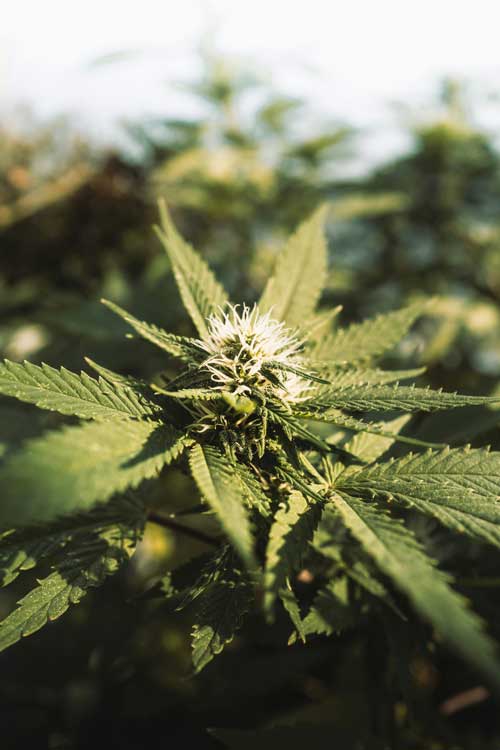
Cannabis refers to the entire plant, including the leaves, flowers, stems, and seeds, from species such as
Cannabis sativa
,
Cannabis indica
, and
Cannabis ruderalis
. The cannabis plant contains over 480 chemical compounds, including tetrahydrocannabinol (THC), which is responsible for its mind-altering effects. Marijuana specifically refers to the psychoactive parts of the cannabis plant, primarily from
Cannabis sativa
and
Cannabis indica
, that are used for recreational or medicinal purposes. Marijuana is commonly smoked in the form of a cigarette (known as a joint), a pipe, or a bong. It can also be smoked in blunts—cigars emptied of tobacco and refilled with marijuana, sometimes mixed with other substances. Additionally, marijuana can be infused into foods or brewed as tea. Under the Controlled Substances Act (CSA), marijuana is classified as a Schedule I substance. Per the CSA and the US Drug Enforcement Administration, this means it has a high potential for abuse, no currently accepted medical use for treatment in the United State, and no recognized safety for use under medical supervision.
1
Marijuana is the most commonly used illicit drug in the United States. According to the 2022 National Survey on Drug Use and Health (NSDUH), approximately 62 million Americans (22%) ages 12 and older used marijuana in the past year. In 2022, the percentage of people who used marijuana in the past year was highest among young adults aged 18 to 25 (37%) compared with 19% of adults aged 26 or older and 11% of adolescents aged 12 to 17.
Common Street Names:
Ganja, Grass, Hash, Herb, Hydro, Indo, Joint, Kif, Mary Jane, Mota, Pot, Reefer, Sinsemilla, Skunk, Smoke, Weed, and Yerba.
Symptoms Associated with Use²
Anxiety
Confusion
Fast heart rate
Increased blood pressure
Nausea and vomiting
Paranoia
Possible Health Consequences
2,3,4
Cannabinoid Hyperemesis Syndrome
Cannabis Use Disorder
Negative impacts on lung health
Negative impacts on mental health
Marijuana as Medicine
5
Drugs containing cannabinoids may be helpful in treating certain rare forms of epilepsy, nausea and vomiting associated with cancer chemotherapy, and loss of appetite and weight loss associated with HIV/AIDS. In addition, some evidence suggests modest benefits of cannabis or cannabinoids for chronic pain and multiple sclerosis symptoms. Research on cannabis or cannabinoids for other conditions is in its early stages. The FDA has not approved the cannabis plant for any medical use. However, the FDA has approved several drugs that contain individual cannabinoids.
Epidiolex, which contains a purified form of CBD derived from cannabis, was approved for the treatment of seizures associated with Lennox-Gastaut syndrome or Dravet syndrome, two rare and severe forms of epilepsy.
Marinol and Syndros, which contain dronabinol (synthetic THC), and Cesamet, which contains nabilone (a synthetic substance similar to THC), are approved by the FDA. Dronabinol and nabilone are used to treat nausea and vomiting caused by cancer chemotherapy. Dronabinol is also used to treat loss of appetite and weight loss in people with HIV/AIDS.
Policy and Legal Classification
Marijuana is a Schedule 1 controlled substance under the Controlled Substances Act and Idaho law. As such, the use and sale of marijuana for any purpose is illegal in Idaho. It is illegal for any person to manufacture, deliver, possess with intent to manufacture or deliver, or possess marijuana, which refers to all parts of the plants of the genus cannabis, including or any preparation of cannabis which contains tetrahydrocannabinol. Additionally, it is illegal to publicly use or be under the influence of marijuana. Specific penalties for these acts can be found in Sections
37-2732
and
37-2732C
of the Uniform Controlled Substances Act.
Agency policy statements and guidance documents shall not have the force and effect of law pursuant to section 67-5207A, Idaho Code.
Idaho Legislation & Ballot Initiatives
Current Ballot Initiatives
As of November 2024
Kind Idaho, a cannabis activism group, has launched a ballot initiative to decriminalize the personal use of marijuana. The measure would allow the possession of up to one ounce of marijuana flower or 1,000 milligrams of THC in products such as oils, tinctures, and edibles. It would also permit the home cultivation of up to 12 plants, with adults allowed to securely store up to eight ounces of marijuana harvested from those plants at home or on private property, as long as it remains inaccessible to minors. Consumption in public or open settings would be prohibited. The Idaho Secretary of State has approved the initiative for signature collection, which will require a total of 70,725 signatures from at least 6% of registered voters in 18 of Idaho’s 35 legislative districts in order to qualify for the 2026 ballot. All signatures must be collected by April of 2026 for the measure to be included on the ballot.
You can find updates on Idaho substance-related legislative activities on the
ODP Legislative Bill Tracker
.
Policy Statements
Idaho Office of Drug Policy
ODP Policy Statement on Marijuana Legalization
Declaración de políticas sobre la legalización de la marihuana
Public Health Organizations
American Medical Association
American Academy of Pediatrics – Impact of Marijuana Policies on Youth
American Epilepsy Society – Position on Cannabis as Possible Treatment for Epileptic Seizures
American Society of Addiction Medicine – Public Policy Statement on Marijuana, Cannabinoids, and Legalization
American Public Health Association – A public Health Approach to Regulating Commercially Legalized Cannabis
CDC Cannabis Strategic Plan
Resources and Fast Facts
Fast Facts
Marijuana Legalization Fact Sheet
Idaho Marijuana Use Fact Sheet
Marijuana Use and Teens
National Institute on Drug Abuse: Cannabis
La Marihuana en Español
Resources for Prevention Providers
SAMHSA Resource Guide: Preventing Marijuana Use Among Youth
Resources for Parents & Caregivers
Parent Infographic –
Do you know about marijuana? Talk with your kids about the facts
Parent Brochure –
Talking with your child about marijuana: Keeping your kids safe
Partnership to End Addiction –
Marijuana: What you need to know to help protect children, teens, and young adults
ODP’s BeTheParents campaign provides parents and caregivers with resources and information to help start and maintain communication with children and teens about the dangers of alcohol and drug use. Visit
betheparents.org
The Partnership for Drug Free Kids has a helpful guide for parents.
Download it here.
Prevention
The risk of drug use, including marijuana, greatly increases during times of transition. The transition from childhood to adolescence presents new and challenging social, family, and academic situations at the same time they may be exposed to substances like alcohol and marijuana for the first time. Early use of drugs increases a person’s chance of becoming addicted and alters the brain, therefore preventing early use is important. The Substance Abuse and Mental Health Services Administration notes that approximately 1 in 10 people who use marijuana will become addicted. When they start before age 18, the rate of addiction rises to 1 in 6.
6
Prevention strategies for the prevention of marijuana use include enforcement of laws, maintain marijuana as a Schedule I substance, media campaigns targeting youth and adults, especially parents of youth, reducing youth exposure to marijuana advertising in states where it is legal, and implementation of evidenced-based prevention programs. Additional information and resources to support parents and prevention providers in preventing youth marijuana use are available above under the ‘
Resources and Fast Facts
’
section.
Sources
Department of Justice/Drug Enforcement Administration Marijuana/Cannabis Drug Fact Sheet
Cannabis Health Effects. U.S. Centers for Disease Control and Prevention
Cannabinoid Hyperemesis Syndrome – Current Drug Abuse Reviews
Cannabis and Mental Health. U.S. Centers for Disease Control and Prevention
Cannabis (Marijuana) and Cannabinoids: What You Need To Know. National Center for Complementary and Integrative Health
Know the Risks of Marijuana. Substance Abuse and Mental Health Services Administration | |||||||||||||||
| Markdown | [Skip to main content](https://odp.idaho.gov/issues-trends/marijuana/#main)
 Official Government Website
- [Contact Us](https://odp.idaho.gov/contact-us/)
A
A
A
- [About ODP](https://odp.idaho.gov/issues-trends/marijuana/)
- [Statue, Mission, and Vision](https://odp.idaho.gov/statute-and-mission/)
- [Publications and Data Sources](https://prevention.odp.idaho.gov/data-sources/)
- [Contact Us](https://odp.idaho.gov/contact-us/)
- [Primary Prevention Initiatives](https://odp.idaho.gov/issues-trends/marijuana/)
- - - [Prescription Drug Take Back Programs](https://odp.idaho.gov/issues-trends/marijuana/)
- [Year-Round Prescription Drug Disposal Locations](https://odp.idaho.gov/prescription-drug-take-back-program/)
- [National Prescription Drug Take Back Day](https://odp.idaho.gov/take-back-day/)
- - [Youth Substance Use Prevention](https://odp.idaho.gov/issues-trends/marijuana/)
- [Be the Parents](https://betheparents.org/)
- [Eat Together Idaho](https://betheparents.org/eat-together-idaho/)
- - [ODP Grant Recipients](https://odp.idaho.gov/grant-recipients/)
- [Issues & Trends](https://odp.idaho.gov/issues-trends/)
- [Cannabidiol (CBD)](https://odp.idaho.gov/issues-trends/cbd/)
- [E-cigarettes and Vaping](https://odp.idaho.gov/issues-trends/e-cigarettes-and-vaping/)
- [Marijuana](https://odp.idaho.gov/issues-trends/marijuana/)
- [Opioids](https://odp.idaho.gov/issues-trends/stimulants/)
- [Alcohol](https://odp.idaho.gov/issues-trends/alcohol/)
- [Additional Issues and Trends](https://odp.idaho.gov/issues-trends/additional-issues/)
- [Resources](https://odp.idaho.gov/resources/)
- - - [ODP Resource Handout](https://odp.idaho.gov/wp-content/uploads/2025/05/ODP-Resource-Handout.pdf)
- [Crisis Resources](https://healthandwelfare.idaho.gov/services-programs/behavioral-health/behavioral-health-crisis-resources)
- [Resources for Parents](https://odp.idaho.gov/resources-for-parents/)
- [Resources for Prevention Professionals](https://prevention.odp.idaho.gov/)
- - [Legislative Bill Tracker](https://odp.idaho.gov/billtracker/)
- [Resources for Everyone](https://odp.idaho.gov/resources/)
- [Naloxone Information](https://prevention.odp.idaho.gov/naloxone/)
- [Prevention Training & Event Calendar](https://prevention.odp.idaho.gov/training-calendar/)
- - [Resources for Educators](https://odp.idaho.gov/issues-trends/marijuana/)
- [Act, Listen, Learn](https://asklistenlearn.org/teachers/)
- [NIDA Classroom Resources](https://nida.nih.gov/research-topics/parents-educators/lesson-plans-and-activities)
- [Tobacco Prevention Toolkit](https://med.stanford.edu/tobaccopreventiontoolkit.html)
- [Social-Emotional Learning Center](https://app.discoveryeducation.com/learn/channels/channel/ba9bb59a-761e-4ac4-8f28-4355d7b7be26)
- [News and Updates](https://odp.idaho.gov/news/)
[](https://odp.idaho.gov/ "Idaho Office of Drug Policy")
What can we help you find?
# Marijuana
1. [Home](https://odp.idaho.gov/ "home")
2. [Issues & Trends](https://odp.idaho.gov/issues-trends/)
3. Marijuana
### On this Page
[Overview](https://odp.idaho.gov/issues-trends/marijuana/#overview)
[Symptoms](https://odp.idaho.gov/issues-trends/marijuana/#symptoms)
[Health Impacts](https://odp.idaho.gov/issues-trends/marijuana/#health)
[Marijuana as Medicine](https://odp.idaho.gov/issues-trends/marijuana/#med)
[Policy and Legal Classification](https://odp.idaho.gov/issues-trends/marijuana/#policy)
[Resources & Fast Facts](https://odp.idaho.gov/issues-trends/marijuana/#resources)
[Prevention](https://odp.idaho.gov/issues-trends/marijuana/#prev)
[Sources](https://odp.idaho.gov/issues-trends/marijuana/#sources)
## Marijuana/Cannabis Overview
Cannabis refers to the entire plant, including the leaves, flowers, stems, and seeds, from species such as *Cannabis sativa*, *Cannabis indica*, and *Cannabis ruderalis*. The cannabis plant contains over 480 chemical compounds, including tetrahydrocannabinol (THC), which is responsible for its mind-altering effects. Marijuana specifically refers to the psychoactive parts of the cannabis plant, primarily from *Cannabis sativa* and *Cannabis indica*, that are used for recreational or medicinal purposes. Marijuana is commonly smoked in the form of a cigarette (known as a joint), a pipe, or a bong. It can also be smoked in blunts—cigars emptied of tobacco and refilled with marijuana, sometimes mixed with other substances. Additionally, marijuana can be infused into foods or brewed as tea. Under the Controlled Substances Act (CSA), marijuana is classified as a Schedule I substance. Per the CSA and the US Drug Enforcement Administration, this means it has a high potential for abuse, no currently accepted medical use for treatment in the United State, and no recognized safety for use under medical supervision.1
Marijuana is the most commonly used illicit drug in the United States. According to the 2022 National Survey on Drug Use and Health (NSDUH), approximately 62 million Americans (22%) ages 12 and older used marijuana in the past year. In 2022, the percentage of people who used marijuana in the past year was highest among young adults aged 18 to 25 (37%) compared with 19% of adults aged 26 or older and 11% of adolescents aged 12 to 17.
**Common Street Names:** Ganja, Grass, Hash, Herb, Hydro, Indo, Joint, Kif, Mary Jane, Mota, Pot, Reefer, Sinsemilla, Skunk, Smoke, Weed, and Yerba.
## Symptoms Associated with Use²
- Anxiety
- Confusion
- Fast heart rate
- Increased blood pressure
- Nausea and vomiting
- Paranoia
## Possible Health Consequences2,3,4
- Cannabinoid Hyperemesis Syndrome
- Cannabis Use Disorder
- Negative impacts on lung health
- Negative impacts on mental health
## Marijuana as Medicine5
Drugs containing cannabinoids may be helpful in treating certain rare forms of epilepsy, nausea and vomiting associated with cancer chemotherapy, and loss of appetite and weight loss associated with HIV/AIDS. In addition, some evidence suggests modest benefits of cannabis or cannabinoids for chronic pain and multiple sclerosis symptoms. Research on cannabis or cannabinoids for other conditions is in its early stages. The FDA has not approved the cannabis plant for any medical use. However, the FDA has approved several drugs that contain individual cannabinoids.
Epidiolex, which contains a purified form of CBD derived from cannabis, was approved for the treatment of seizures associated with Lennox-Gastaut syndrome or Dravet syndrome, two rare and severe forms of epilepsy.
Marinol and Syndros, which contain dronabinol (synthetic THC), and Cesamet, which contains nabilone (a synthetic substance similar to THC), are approved by the FDA. Dronabinol and nabilone are used to treat nausea and vomiting caused by cancer chemotherapy. Dronabinol is also used to treat loss of appetite and weight loss in people with HIV/AIDS.
## Policy and Legal Classification
Marijuana is a Schedule 1 controlled substance under the Controlled Substances Act and Idaho law. As such, the use and sale of marijuana for any purpose is illegal in Idaho. It is illegal for any person to manufacture, deliver, possess with intent to manufacture or deliver, or possess marijuana, which refers to all parts of the plants of the genus cannabis, including or any preparation of cannabis which contains tetrahydrocannabinol. Additionally, it is illegal to publicly use or be under the influence of marijuana. Specific penalties for these acts can be found in Sections [37-2732](https://legislature.idaho.gov/statutesrules/idstat/Title37/T37CH27/SECT37-2732/) and [37-2732C](https://legislature.idaho.gov/statutesrules/idstat/Title37/T37CH27/SECT37-2732C/) of the Uniform Controlled Substances Act.
***Agency policy statements and guidance documents shall not have the force and effect of law pursuant to section 67-5207A, Idaho Code.***
Idaho Legislation & Ballot Initiatives
### Current Ballot Initiatives
***As of November 2024***
Kind Idaho, a cannabis activism group, has launched a ballot initiative to decriminalize the personal use of marijuana. The measure would allow the possession of up to one ounce of marijuana flower or 1,000 milligrams of THC in products such as oils, tinctures, and edibles. It would also permit the home cultivation of up to 12 plants, with adults allowed to securely store up to eight ounces of marijuana harvested from those plants at home or on private property, as long as it remains inaccessible to minors. Consumption in public or open settings would be prohibited. The Idaho Secretary of State has approved the initiative for signature collection, which will require a total of 70,725 signatures from at least 6% of registered voters in 18 of Idaho’s 35 legislative districts in order to qualify for the 2026 ballot. All signatures must be collected by April of 2026 for the measure to be included on the ballot.
You can find updates on Idaho substance-related legislative activities on the [ODP Legislative Bill Tracker](https://odp.idaho.gov/billtracker/).
Policy Statements
**Idaho Office of Drug Policy**
- [ODP Policy Statement on Marijuana Legalization](https://odp.idaho.gov/wp-content/uploads/2025/04/Marijuana-Policy-Statement_11.2024-Update.pdf)
- [Declaración de políticas sobre la legalización de la marihuana](https://odp.idaho.gov/wp-content/uploads/2025/04/Marijuana-Policy-Statement_11.2024-Update_Spanish.pdf)
**Public Health Organizations**
- [American Medical Association](https://assets.ama-assn.org/sub/meeting/documents/i16-resolution-907.pdf)
- [American Academy of Pediatrics – Impact of Marijuana Policies on Youth](https://pediatrics.aappublications.org/content/135/3/584)
- [American Epilepsy Society – Position on Cannabis as Possible Treatment for Epileptic Seizures](https://www.aesnet.org/about/about-aes/position-statements/aes-position-statement-on-cannabis-as-a-treatment-for-patients-with-epileptic-seizures)
- [American Society of Addiction Medicine – Public Policy Statement on Marijuana, Cannabinoids, and Legalization](https://www.asam.org/advocacy/public-policy-statements/details/public-policy-statements/2020/10/10/cannabis)
- [American Public Health Association – A public Health Approach to Regulating Commercially Legalized Cannabis](https://www.apha.org/policies-and-advocacy/public-health-policy-statements/policy-database/2021/01/13/a-public-health-approach-to-regulating-commercially-legalized-cannabis)
- [CDC Cannabis Strategic Plan](https://www.cdc.gov/cannabis/media/pdfs/2024/05/Cannabis-Strategic-Plan_FINALVersion.pdf)
## Resources and Fast Facts
**Fast Facts**
- [Marijuana Legalization Fact Sheet](https://odp.idaho.gov/wp-content/uploads/2025/04/Marijuana-Legalization-Fact-Sheet.pdf)
- [Idaho Marijuana Use Fact Sheet](https://odp.idaho.gov/wp-content/uploads/2025/06/2023-Marijuana-Fact-Sheet-FINAL.pdf)
- [Marijuana Use and Teens](https://www.cdc.gov/cannabis/health-effects/cannabis-and-teens.html)
- [National Institute on Drug Abuse: Cannabis](https://nida.nih.gov/es/areas-de-investigacion/cannabis-marihuana)
- [La Marihuana en Español](https://odp.idaho.gov/wp-content/uploads/2025/06/NIDA-2019-Marijuana-Fact-Sheet-Spanish.pdf)
**Resources for Prevention Providers**
- [SAMHSA Resource Guide: Preventing Marijuana Use Among Youth](https://store.samhsa.gov/product/preventing-marijuana-use-among-youth/PEP21-06-01-001?referer=from_search_result)
**Resources for Parents & Caregivers**
- Parent Infographic – [Do you know about marijuana? Talk with your kids about the facts](https://store.samhsa.gov/product/Talk-They-Hear-You-Do-You-Know-About-Marijuana-Talk-With-Your-Kids-About-the-Facts-Infographic/SMA18-5077?referer=from_search_result)
- Parent Brochure – [Talking with your child about marijuana: Keeping your kids safe](https://store.samhsa.gov/product/Talk-They-Hear-You-Talking-With-Your-Child-About-Marijuana-Keeping-Your-Kids-Safe-Parent-Brochure/SMA18-5081?referer=from_search_result)
- Partnership to End Addiction – [Marijuana: What you need to know to help protect children, teens, and young adults](https://drugfree.org/article/marijuana-what-you-need-to-know/?gclid=Cj0KCQiAweaNBhDEARIsAJ5hwbeCuUuuGBo83I7TdQEFjfjyQkihKWj2X8essergvCl25HFAUU5lR6UaAminEALw_wcB)
- ODP’s BeTheParents campaign provides parents and caregivers with resources and information to help start and maintain communication with children and teens about the dangers of alcohol and drug use. Visit [betheparents.org](https://betheparents.org/)
- The Partnership for Drug Free Kids has a helpful guide for parents. [Download it here.](https://drugfree.org/article/how-to-talk-about-marijuana/)
## Prevention
The risk of drug use, including marijuana, greatly increases during times of transition. The transition from childhood to adolescence presents new and challenging social, family, and academic situations at the same time they may be exposed to substances like alcohol and marijuana for the first time. Early use of drugs increases a person’s chance of becoming addicted and alters the brain, therefore preventing early use is important. The Substance Abuse and Mental Health Services Administration notes that approximately 1 in 10 people who use marijuana will become addicted. When they start before age 18, the rate of addiction rises to 1 in 6.6
Prevention strategies for the prevention of marijuana use include enforcement of laws, maintain marijuana as a Schedule I substance, media campaigns targeting youth and adults, especially parents of youth, reducing youth exposure to marijuana advertising in states where it is legal, and implementation of evidenced-based prevention programs. Additional information and resources to support parents and prevention providers in preventing youth marijuana use are available above under the ‘*[Resources and Fast Facts](https://odp.idaho.gov/issues-trends/marijuana/#resources)’* section.
## Sources
1. [Department of Justice/Drug Enforcement Administration Marijuana/Cannabis Drug Fact Sheet](https://www.dea.gov/sites/default/files/2020-06/Marijuana-Cannabis-2020_0.pdf)
2. [Cannabis Health Effects. U.S. Centers for Disease Control and Prevention](https://www.cdc.gov/cannabis/health-effects/index.html)
3. [Cannabinoid Hyperemesis Syndrome – Current Drug Abuse Reviews](https://pubmed.ncbi.nlm.nih.gov/22150623/)
4. [Cannabis and Mental Health. U.S. Centers for Disease Control and Prevention](https://www.cdc.gov/cannabis/health-effects/mental-health.html)
5. [Cannabis (Marijuana) and Cannabinoids: What You Need To Know. National Center for Complementary and Integrative Health](https://www.nccih.nih.gov/health/cannabis-marijuana-and-cannabinoids-what-you-need-to-know)
6. [Know the Risks of Marijuana. Substance Abuse and Mental Health Services Administration](https://www.samhsa.gov/marijuana)


#### Office of Drug Policy
PO Box 83720
Boise, ID 83720
[Newsletter Sign-up](https://visitor.constantcontact.com/manage/optin?v=0019SXlHaK_7KDzAcLdxQ0aJBL3YFdozkZDW3rHFYHp6BafZb9_lzyLBixe6TZOjEhrTzSsz_4fqNV0K3Hd8vlrbnzhGcBrSY7s)
#### Contact
(208) 854-3040
Fax: (208) 854-3041
[Contact ODP](https://odp.idaho.gov/contact-us)
[Twitter Icon](https://twitter.com/idahodrugpolicy)[YouTube Icon](https://youtube.com/IdODP)
[idaho.gov](https://idaho.gov/) [Accessibility](https://idaho.gov/about-us/accessibility/) [Cybersecurity](https://cybersecurity.idaho.gov/) [Privacy](https://idaho.gov/about-us/privacy-policy/) [Legal Notices](https://www.idaho.gov/about-us/legal-notices/) [Security](https://idaho.gov/about-us/security-policy/)
#### What can we help you find?
×
##### Popular Topics
- [Marijuana](https://odp.idaho.gov/issues-trends/marijuana/)
- [Fentanyl](https://odp.idaho.gov/issues-trends/stimulants/)
- [Alcohol](https://odp.idaho.gov/issues-trends/alcohol/)
- [Drug Take Back Locations](https://odp.idaho.gov/prescription-drug-take-back-program/)
Close
ver: 4.1.6 \| last updated:
June 4, 2025 at 08:15 pm
[Jump back to top of page button](https://odp.idaho.gov/issues-trends/marijuana/ "Back to top") | |||||||||||||||
| Readable Markdown | 1. [Home](https://odp.idaho.gov/ "home")
2. [Issues & Trends](https://odp.idaho.gov/issues-trends/)
3. Marijuana
### On this Page
[Overview](https://odp.idaho.gov/issues-trends/marijuana/#overview)
[Symptoms](https://odp.idaho.gov/issues-trends/marijuana/#symptoms)
[Health Impacts](https://odp.idaho.gov/issues-trends/marijuana/#health)
[Marijuana as Medicine](https://odp.idaho.gov/issues-trends/marijuana/#med)
[Policy and Legal Classification](https://odp.idaho.gov/issues-trends/marijuana/#policy)
[Resources & Fast Facts](https://odp.idaho.gov/issues-trends/marijuana/#resources)
[Prevention](https://odp.idaho.gov/issues-trends/marijuana/#prev)
[Sources](https://odp.idaho.gov/issues-trends/marijuana/#sources)

## Marijuana/Cannabis Overview
Cannabis refers to the entire plant, including the leaves, flowers, stems, and seeds, from species such as *Cannabis sativa*, *Cannabis indica*, and *Cannabis ruderalis*. The cannabis plant contains over 480 chemical compounds, including tetrahydrocannabinol (THC), which is responsible for its mind-altering effects. Marijuana specifically refers to the psychoactive parts of the cannabis plant, primarily from *Cannabis sativa* and *Cannabis indica*, that are used for recreational or medicinal purposes. Marijuana is commonly smoked in the form of a cigarette (known as a joint), a pipe, or a bong. It can also be smoked in blunts—cigars emptied of tobacco and refilled with marijuana, sometimes mixed with other substances. Additionally, marijuana can be infused into foods or brewed as tea. Under the Controlled Substances Act (CSA), marijuana is classified as a Schedule I substance. Per the CSA and the US Drug Enforcement Administration, this means it has a high potential for abuse, no currently accepted medical use for treatment in the United State, and no recognized safety for use under medical supervision.1
Marijuana is the most commonly used illicit drug in the United States. According to the 2022 National Survey on Drug Use and Health (NSDUH), approximately 62 million Americans (22%) ages 12 and older used marijuana in the past year. In 2022, the percentage of people who used marijuana in the past year was highest among young adults aged 18 to 25 (37%) compared with 19% of adults aged 26 or older and 11% of adolescents aged 12 to 17.
**Common Street Names:** Ganja, Grass, Hash, Herb, Hydro, Indo, Joint, Kif, Mary Jane, Mota, Pot, Reefer, Sinsemilla, Skunk, Smoke, Weed, and Yerba.
## Symptoms Associated with Use²
- Anxiety
- Confusion
- Fast heart rate
- Increased blood pressure
- Nausea and vomiting
- Paranoia
## Possible Health Consequences2,3,4
- Cannabinoid Hyperemesis Syndrome
- Cannabis Use Disorder
- Negative impacts on lung health
- Negative impacts on mental health
## Marijuana as Medicine5
Drugs containing cannabinoids may be helpful in treating certain rare forms of epilepsy, nausea and vomiting associated with cancer chemotherapy, and loss of appetite and weight loss associated with HIV/AIDS. In addition, some evidence suggests modest benefits of cannabis or cannabinoids for chronic pain and multiple sclerosis symptoms. Research on cannabis or cannabinoids for other conditions is in its early stages. The FDA has not approved the cannabis plant for any medical use. However, the FDA has approved several drugs that contain individual cannabinoids.
Epidiolex, which contains a purified form of CBD derived from cannabis, was approved for the treatment of seizures associated with Lennox-Gastaut syndrome or Dravet syndrome, two rare and severe forms of epilepsy.
Marinol and Syndros, which contain dronabinol (synthetic THC), and Cesamet, which contains nabilone (a synthetic substance similar to THC), are approved by the FDA. Dronabinol and nabilone are used to treat nausea and vomiting caused by cancer chemotherapy. Dronabinol is also used to treat loss of appetite and weight loss in people with HIV/AIDS.
## Policy and Legal Classification
Marijuana is a Schedule 1 controlled substance under the Controlled Substances Act and Idaho law. As such, the use and sale of marijuana for any purpose is illegal in Idaho. It is illegal for any person to manufacture, deliver, possess with intent to manufacture or deliver, or possess marijuana, which refers to all parts of the plants of the genus cannabis, including or any preparation of cannabis which contains tetrahydrocannabinol. Additionally, it is illegal to publicly use or be under the influence of marijuana. Specific penalties for these acts can be found in Sections [37-2732](https://legislature.idaho.gov/statutesrules/idstat/Title37/T37CH27/SECT37-2732/) and [37-2732C](https://legislature.idaho.gov/statutesrules/idstat/Title37/T37CH27/SECT37-2732C/) of the Uniform Controlled Substances Act.
***Agency policy statements and guidance documents shall not have the force and effect of law pursuant to section 67-5207A, Idaho Code.***
Idaho Legislation & Ballot Initiatives
### Current Ballot Initiatives
***As of November 2024***
Kind Idaho, a cannabis activism group, has launched a ballot initiative to decriminalize the personal use of marijuana. The measure would allow the possession of up to one ounce of marijuana flower or 1,000 milligrams of THC in products such as oils, tinctures, and edibles. It would also permit the home cultivation of up to 12 plants, with adults allowed to securely store up to eight ounces of marijuana harvested from those plants at home or on private property, as long as it remains inaccessible to minors. Consumption in public or open settings would be prohibited. The Idaho Secretary of State has approved the initiative for signature collection, which will require a total of 70,725 signatures from at least 6% of registered voters in 18 of Idaho’s 35 legislative districts in order to qualify for the 2026 ballot. All signatures must be collected by April of 2026 for the measure to be included on the ballot.
You can find updates on Idaho substance-related legislative activities on the [ODP Legislative Bill Tracker](https://odp.idaho.gov/billtracker/).
Policy Statements
**Idaho Office of Drug Policy**
- [ODP Policy Statement on Marijuana Legalization](https://odp.idaho.gov/wp-content/uploads/2025/04/Marijuana-Policy-Statement_11.2024-Update.pdf)
- [Declaración de políticas sobre la legalización de la marihuana](https://odp.idaho.gov/wp-content/uploads/2025/04/Marijuana-Policy-Statement_11.2024-Update_Spanish.pdf)
**Public Health Organizations**
- [American Medical Association](https://assets.ama-assn.org/sub/meeting/documents/i16-resolution-907.pdf)
- [American Academy of Pediatrics – Impact of Marijuana Policies on Youth](https://pediatrics.aappublications.org/content/135/3/584)
- [American Epilepsy Society – Position on Cannabis as Possible Treatment for Epileptic Seizures](https://www.aesnet.org/about/about-aes/position-statements/aes-position-statement-on-cannabis-as-a-treatment-for-patients-with-epileptic-seizures)
- [American Society of Addiction Medicine – Public Policy Statement on Marijuana, Cannabinoids, and Legalization](https://www.asam.org/advocacy/public-policy-statements/details/public-policy-statements/2020/10/10/cannabis)
- [American Public Health Association – A public Health Approach to Regulating Commercially Legalized Cannabis](https://www.apha.org/policies-and-advocacy/public-health-policy-statements/policy-database/2021/01/13/a-public-health-approach-to-regulating-commercially-legalized-cannabis)
- [CDC Cannabis Strategic Plan](https://www.cdc.gov/cannabis/media/pdfs/2024/05/Cannabis-Strategic-Plan_FINALVersion.pdf)
Resources and Fast Facts
**Fast Facts**
- [Marijuana Legalization Fact Sheet](https://odp.idaho.gov/wp-content/uploads/2025/04/Marijuana-Legalization-Fact-Sheet.pdf)
- [Idaho Marijuana Use Fact Sheet](https://odp.idaho.gov/wp-content/uploads/2025/06/2023-Marijuana-Fact-Sheet-FINAL.pdf)
- [Marijuana Use and Teens](https://www.cdc.gov/cannabis/health-effects/cannabis-and-teens.html)
- [National Institute on Drug Abuse: Cannabis](https://nida.nih.gov/es/areas-de-investigacion/cannabis-marihuana)
- [La Marihuana en Español](https://odp.idaho.gov/wp-content/uploads/2025/06/NIDA-2019-Marijuana-Fact-Sheet-Spanish.pdf)
**Resources for Prevention Providers**
- [SAMHSA Resource Guide: Preventing Marijuana Use Among Youth](https://store.samhsa.gov/product/preventing-marijuana-use-among-youth/PEP21-06-01-001?referer=from_search_result)
**Resources for Parents & Caregivers**
- Parent Infographic – [Do you know about marijuana? Talk with your kids about the facts](https://store.samhsa.gov/product/Talk-They-Hear-You-Do-You-Know-About-Marijuana-Talk-With-Your-Kids-About-the-Facts-Infographic/SMA18-5077?referer=from_search_result)
- Parent Brochure – [Talking with your child about marijuana: Keeping your kids safe](https://store.samhsa.gov/product/Talk-They-Hear-You-Talking-With-Your-Child-About-Marijuana-Keeping-Your-Kids-Safe-Parent-Brochure/SMA18-5081?referer=from_search_result)
- Partnership to End Addiction – [Marijuana: What you need to know to help protect children, teens, and young adults](https://drugfree.org/article/marijuana-what-you-need-to-know/?gclid=Cj0KCQiAweaNBhDEARIsAJ5hwbeCuUuuGBo83I7TdQEFjfjyQkihKWj2X8essergvCl25HFAUU5lR6UaAminEALw_wcB)
- ODP’s BeTheParents campaign provides parents and caregivers with resources and information to help start and maintain communication with children and teens about the dangers of alcohol and drug use. Visit [betheparents.org](https://betheparents.org/)
- The Partnership for Drug Free Kids has a helpful guide for parents. [Download it here.](https://drugfree.org/article/how-to-talk-about-marijuana/)
## Prevention
The risk of drug use, including marijuana, greatly increases during times of transition. The transition from childhood to adolescence presents new and challenging social, family, and academic situations at the same time they may be exposed to substances like alcohol and marijuana for the first time. Early use of drugs increases a person’s chance of becoming addicted and alters the brain, therefore preventing early use is important. The Substance Abuse and Mental Health Services Administration notes that approximately 1 in 10 people who use marijuana will become addicted. When they start before age 18, the rate of addiction rises to 1 in 6.6
Prevention strategies for the prevention of marijuana use include enforcement of laws, maintain marijuana as a Schedule I substance, media campaigns targeting youth and adults, especially parents of youth, reducing youth exposure to marijuana advertising in states where it is legal, and implementation of evidenced-based prevention programs. Additional information and resources to support parents and prevention providers in preventing youth marijuana use are available above under the ‘*[Resources and Fast Facts](https://odp.idaho.gov/issues-trends/marijuana/#resources)’* section.
## Sources
1. [Department of Justice/Drug Enforcement Administration Marijuana/Cannabis Drug Fact Sheet](https://www.dea.gov/sites/default/files/2020-06/Marijuana-Cannabis-2020_0.pdf)
2. [Cannabis Health Effects. U.S. Centers for Disease Control and Prevention](https://www.cdc.gov/cannabis/health-effects/index.html)
3. [Cannabinoid Hyperemesis Syndrome – Current Drug Abuse Reviews](https://pubmed.ncbi.nlm.nih.gov/22150623/)
4. [Cannabis and Mental Health. U.S. Centers for Disease Control and Prevention](https://www.cdc.gov/cannabis/health-effects/mental-health.html)
5. [Cannabis (Marijuana) and Cannabinoids: What You Need To Know. National Center for Complementary and Integrative Health](https://www.nccih.nih.gov/health/cannabis-marijuana-and-cannabinoids-what-you-need-to-know)
6. [Know the Risks of Marijuana. Substance Abuse and Mental Health Services Administration](https://www.samhsa.gov/marijuana) | |||||||||||||||
| ML Classification | ||||||||||||||||
| ML Categories |
Raw JSON{
"/Health": 955,
"/Health/Substance_Abuse": 868,
"/Health/Substance_Abuse/Drug_and_Alcohol_Treatment": 818,
"/Law_and_Government": 396,
"/Law_and_Government/Legal": 226
} | |||||||||||||||
| ML Page Types |
Raw JSON{
"/Article": 858,
"/Article/Definitions": 478
} | |||||||||||||||
| ML Intent Types |
Raw JSON{
"Informational": 999
} | |||||||||||||||
| Content Metadata | ||||||||||||||||
| Language | en-us | |||||||||||||||
| Author | State of Idaho | |||||||||||||||
| Publish Time | 2025-04-29 21:57:06 (12 months ago) | |||||||||||||||
| Original Publish Time | 2025-04-29 21:57:06 (12 months ago) | |||||||||||||||
| Republished | No | |||||||||||||||
| Word Count (Total) | 1,467 | |||||||||||||||
| Word Count (Content) | 1,294 | |||||||||||||||
| Links | ||||||||||||||||
| External Links | 41 | |||||||||||||||
| Internal Links | 44 | |||||||||||||||
| Technical SEO | ||||||||||||||||
| Meta Nofollow | No | |||||||||||||||
| Meta Noarchive | No | |||||||||||||||
| JS Rendered | Yes | |||||||||||||||
| Redirect Target | null | |||||||||||||||
| Performance | ||||||||||||||||
| Download Time (ms) | 693 | |||||||||||||||
| TTFB (ms) | 628 | |||||||||||||||
| Download Size (bytes) | 30,117 | |||||||||||||||
| Shard | 12 (laksa) | |||||||||||||||
| Root Hash | 16545348678295096612 | |||||||||||||||
| Unparsed URL | gov,idaho!odp,/issues-trends/marijuana/ s443 | |||||||||||||||