ℹ️ Skipped - page is already crawled
| Filter | Status | Condition | Details |
|---|---|---|---|
| HTTP status | PASS | download_http_code = 200 | HTTP 200 |
| Age cutoff | PASS | download_stamp > now() - 6 MONTH | 0.1 months ago |
| History drop | PASS | isNull(history_drop_reason) | No drop reason |
| Spam/ban | PASS | fh_dont_index != 1 AND ml_spam_score = 0 | ml_spam_score=0 |
| Canonical | PASS | meta_canonical IS NULL OR = '' OR = src_unparsed | Not set |
| Property | Value |
|---|---|
| URL | https://nicenews.com/health-and-wellness/where-confidence-comes-from-and-how-to-build-more/ |
| Last Crawled | 2026-04-14 11:25:31 (3 days ago) |
| First Indexed | 2024-08-18 05:32:59 (1 year ago) |
| HTTP Status Code | 200 |
| Meta Title | Where Confidence Comes From and How to Build More of It |
| Meta Description | Is confidence innate, fostered through experience, or increased through intentional practice? The answer is a bit of everything. |
| Meta Canonical | null |
| Boilerpipe Text | For those who yearn to stroll smiling into a party with the certainty they’ll make a good impression, or assuredly share their ideas in an important meeting, confidence can be the most coveted of psychological states.
But it’s also a tricky subject to break down. On the one hand, confidence has been associated with increased
mental health and job satisfaction
; on the other, there’s the
Dunning-Kruger Effect
, a cognitive bias in which the least-skilled people tend to overestimate their capabilities the most.
Suggestions for cultivating more confidence can come with caveats, too. Take
power posing
, for example, developed by social psychologist and former Harvard professor Amy Cuddy and made popular by her
2012 TED Talk
. A kind of physical incarnation of the “fake it until you make it” mentality, power posing is based on the idea that when we assume certain “powerful” stances (like hands on our hips a la Wonder Woman), the brain takes a cue from the body, so to speak.
However, it frequently seems that as soon as an exciting concept like this gains traction, other research comes along to refute it. Cuddy and her team’s small initial experiment proved
difficult to replicate
, and in 2019, the topic was taken on by Iowa State University researcher Marcus Credé, who
reviewed 40 studies
on power posing and determined it had no actual effect.
And what of those who seemingly need not concern themselves with power poses or other life hacks of the sort; who’ve never experienced
imposter syndrome
, that feeling of being a phony despite having undeniable skills in a certain field; who merely are and always will be confident?
While our perceptions of these individuals may be colored by our own desire to be as self-assured as they appear, and, in fact, speak little to what’s actually going on in another person’s mind, it’s certainly true that some are more confident than others.
So where does self-confidence — or the “trust in one’s abilities, capacities, and judgment,” per the American Psychological Association — come from? Is it innate? Fostered through experience? Increased through intentional practice? The answer is a bit of everything.
andreswd/iStock
Genetics
According to psychologist Barbara Markway, author of
The Self-Confidence Workbook: A Guide to Overcoming Self-Doubt and Improving Self-Esteem
, between 25%-50% of personality traits linked with confidence may be inherited. Writing for
Psychology Today
, she cited the neurotransmitters serotonin and oxytocin as being involved in boosting confidence and noted that the amount of each our brain can access is influenced by our genetic makeup. She also pointed to temperament as something that influences our behavior, making us more or less inclined to act in an uninhibited manner.
In a
2009 study
out of King’s College London, 3,785 pairs of twins between the ages of 7 and 10 were asked to rate their abilities on several academic subjects.
Researchers determined
that the children’s levels of self-confidence were influenced 50% by nature and 50% by nurture — also known as life experience.
“The specific genes involved in academic self-confidence remain to be identified, but we expect them to be many genes of small effect size, and their effects will be probabilistic rather than deterministic,” lead author Corina Greven said at the time. “That is, just because self-confidence is partly genetic, it does not mean that self-confidence cannot be changed by environmental influences.”
Life Experience
Beginning in our youth, everything we experience — from traumatic events to
gender-based societal conditioning
— can impact the people we become.
“Scores of studies show women are socialized to worry more about how they’re perceived and, therefore, to take fewer risks,” Markway explained in
PT
. “Racial and cultural background and sexual orientation can make a difference, too. If you’ve been on the receiving end of discrimination, you may have internalized some negative, untrue messages about your potential and whether you ‘belong.’”
It’s not all bad, of course. Life experience includes the positive relationships we’ve built, whether with parents who heaped on positive encouragement and created safe spaces for us to try new things, or with friends who cheer us on.
Confidence is also born from our past achievements, times we’ve set out to do something and succeeded, particularly when the task involved overcoming obstacles.
How to Get More of It
monkeybusinessimages/ iStock
Though the idea of power posing as an elixir for self-assurance may have conflicting data behind it, there are some more general ways to help cultivate confidence even if you feel like neither nature nor nurture is on your side.
Mastery Experiences
Self-efficacy is a closely related concept to confidence: Per the APA, it “reflects confidence in the ability to exert control over one’s own motivation, behavior, and social environment.”
Stanford social cognitive psychologist Albert Bandura developed our definition and understanding of self-efficacy and elucidated the
important role
it plays in our lives. He also enumerated
four essential ways of building it
, the first and foremost being “mastery experiences.”
“The most effective way of creating a strong sense of efficacy is through
mastery experiences
,” Bandura wrote in his 1995 book
Self-Efficacy in Changing Societies
. “They provide the most authentic evidence of whether one can muster whatever it takes to succeed.”
One way to tap into the power of mastery experiences is to set goals for yourself that require some effort and hardwork but are overall attainable and realistic. Using the SMART goal system is a great way to do this. Learn about it and other science-backed methods
here
.
Learn Something New
Going hand-in-hand with the former entry, learning a new skill offers the opportunity to watch yourself evolve and accomplish something. Choose an activity that speaks to your interests or curiosity rather than one you think you should do, and then enjoy the process.
“Being a beginner again is tough, but it shows you can still accomplish new things and find enjoyment in them,” Fred Silverstone, founder of the Successful Aging through Group Engagement program at Harvard-affiliated McLean Hospital, explained in a
Harvard Medical School blog post
. “This also reminds you that it’s OK to make mistakes, so you can improve and grow, which helps build self-confidence.”
… Or Do More of What You’re Already Good at
We feel good about ourselves when we’re doing things that showcase our skills or talents, things that we already possess some degree of self-assurance in. So if you’re stuck in a daily routine that doesn’t involve many of your strengths, it stands to reason that an overall sense of self-confidence may start to evade you.
Make sure you’re partaking in the activities in which you shine, be that playing trivia at a pub or baking treats for your friends and coworkers. On a larger scale, it may be helpful to take stock of whether or not you’re in a job that utilizes your gifts to the highest degree.
Additionally,
doing good for others can boost self-esteem
, another closely related concept to self-confidence. It could also prove to be a way of discovering new talents or building new skills. Take a look on
SamaritanScout.org
or
VolunteerMatch.org
to find opportunities near you.
Practice Mindfulness
It sometimes seems like mindfulness is being offered up as a cure-all for everything these days, but it may be helpful in this arena insofar as
not
being mindful could impede the self-confidence you’re trying to build. When you’re focusing on the present moment, you’re not focusing on
negative self-talk
— the last thing you need during a presentation or a social event you’re nervous about.
A mindfulness meditation practice can help you learn to disengage from your inner critic by acknowledging that those thoughts are simply thoughts, and do not dictate or define who you are.
Learn about improving self-esteem via mindfulness
, and
try this three-step meditation for countering negative thoughts
.
Spend Time With Positive People
As we discussed previously, relationships contribute to our life experiences, and our life experiences contribute to our levels of self-confidence. Ask yourself if the people you surround yourself with are boosting your feelings of joy and sense of self-worth or doing the opposite.
“The people you spend time with can influence your thoughts and attitudes about yourself, perhaps more than you realize,” writes licensed clinical social worker Amy Morin for
Verywell Mind
. “So, pay attention to how others make you feel. If you feel bad about yourself after hanging out with a particular person, it may be time to say goodbye.”
As we get older, it can be harder and harder to find new friends we connect with. If you’re looking for more positive vibes, consider joining a running group or book club, taking part in a volunteer opportunity, getting involved in your religious community, or
downloading a friendship app
to meet new people.
Remember: Although it can be uncomfortable to try something new and expand our circles of connection, it’s in these moments that we grow confidence and prove to ourselves just how capable we are of accomplishing hard things.
RELATED:
From Close to Convenient: The 7 Types of Friendships Everyone Needs |
| Markdown | 
[Skip to content](https://nicenews.com/health-and-wellness/where-confidence-comes-from-and-how-to-build-more/#content "Skip to content")
Main Menu
[](https://nicenews.com/home)
[Subscribe](https://nicenews.com/health-and-wellness/where-confidence-comes-from-and-how-to-build-more/#ck-popup)
[Subscribe](https://nicenews.com/health-and-wellness/where-confidence-comes-from-and-how-to-build-more/#ck-popup)
- [Culture](https://nicenews.com/category/culture/)
- [Environment](https://nicenews.com/category/environment/)
- [Health](https://nicenews.com/category/health-and-wellness/)
- [Humanity](https://nicenews.com/category/humanity/)
- [Lifestyle](https://nicenews.com/category/lifestyle/)
- [Science](https://nicenews.com/category/science/)
- [Sports](https://nicenews.com/category/sports/)
- [Tech](https://nicenews.com/category/innovation/)
[](https://nicenews.com/home)
Main Menu
- [Culture](https://nicenews.com/category/culture/)
- [Environment](https://nicenews.com/category/environment/)
- [Health](https://nicenews.com/category/health-and-wellness/)
- [Humanity](https://nicenews.com/category/humanity/)
- [Lifestyle](https://nicenews.com/category/lifestyle/)
- [Science](https://nicenews.com/category/science/)
- [Sports](https://nicenews.com/category/sports/)
- [Tech](https://nicenews.com/category/innovation/)
Advertisement
[Health](https://nicenews.com/category/health-and-wellness/) • 7 min. read
# Where Does Confidence Come From — And How Do You Build More of It?

vatrushka67/Getty Images

- [Rebekah Brandes](https://nicenews.com/author/rebekah-brandes/)
08\.17.24
For those who yearn to stroll smiling into a party with the certainty they’ll make a good impression, or assuredly share their ideas in an important meeting, confidence can be the most coveted of psychological states.
But it’s also a tricky subject to break down. On the one hand, confidence has been associated with increased [mental health and job satisfaction](https://positivepsychology.com/self-confidence/); on the other, there’s the [Dunning-Kruger Effect](https://www.verywellmind.com/an-overview-of-the-dunning-kruger-effect-4160740), a cognitive bias in which the least-skilled people tend to overestimate their capabilities the most.
Suggestions for cultivating more confidence can come with caveats, too. Take [power posing](https://faculty.haas.berkeley.edu/dana_carney/power.poses.PS.2010.pdf), for example, developed by social psychologist and former Harvard professor Amy Cuddy and made popular by her [2012 TED Talk](https://www.ted.com/talks/amy_cuddy_your_body_language_may_shape_who_you_are?subtitle=en). A kind of physical incarnation of the “fake it until you make it” mentality, power posing is based on the idea that when we assume certain “powerful” stances (like hands on our hips a la Wonder Woman), the brain takes a cue from the body, so to speak.
However, it frequently seems that as soon as an exciting concept like this gains traction, other research comes along to refute it. Cuddy and her team’s small initial experiment proved [difficult to replicate](https://www.bps.org.uk/psychologist/decade-power-posing-where-do-we-stand), and in 2019, the topic was taken on by Iowa State University researcher Marcus Credé, who [reviewed 40 studies](https://www.sciencedaily.com/releases/2019/10/191001110824.htm) on power posing and determined it had no actual effect.
Advertisement
And what of those who seemingly need not concern themselves with power poses or other life hacks of the sort; who’ve never experienced [imposter syndrome](https://www.verywellmind.com/imposter-syndrome-and-social-anxiety-disorder-4156469), that feeling of being a phony despite having undeniable skills in a certain field; who merely are and always will be confident?
While our perceptions of these individuals may be colored by our own desire to be as self-assured as they appear, and, in fact, speak little to what’s actually going on in another person’s mind, it’s certainly true that some are more confident than others.
So where does self-confidence — or the “trust in one’s abilities, capacities, and judgment,” per the American Psychological Association — come from? Is it innate? Fostered through experience? Increased through intentional practice? The answer is a bit of everything.
## **Where Confidence Comes From**
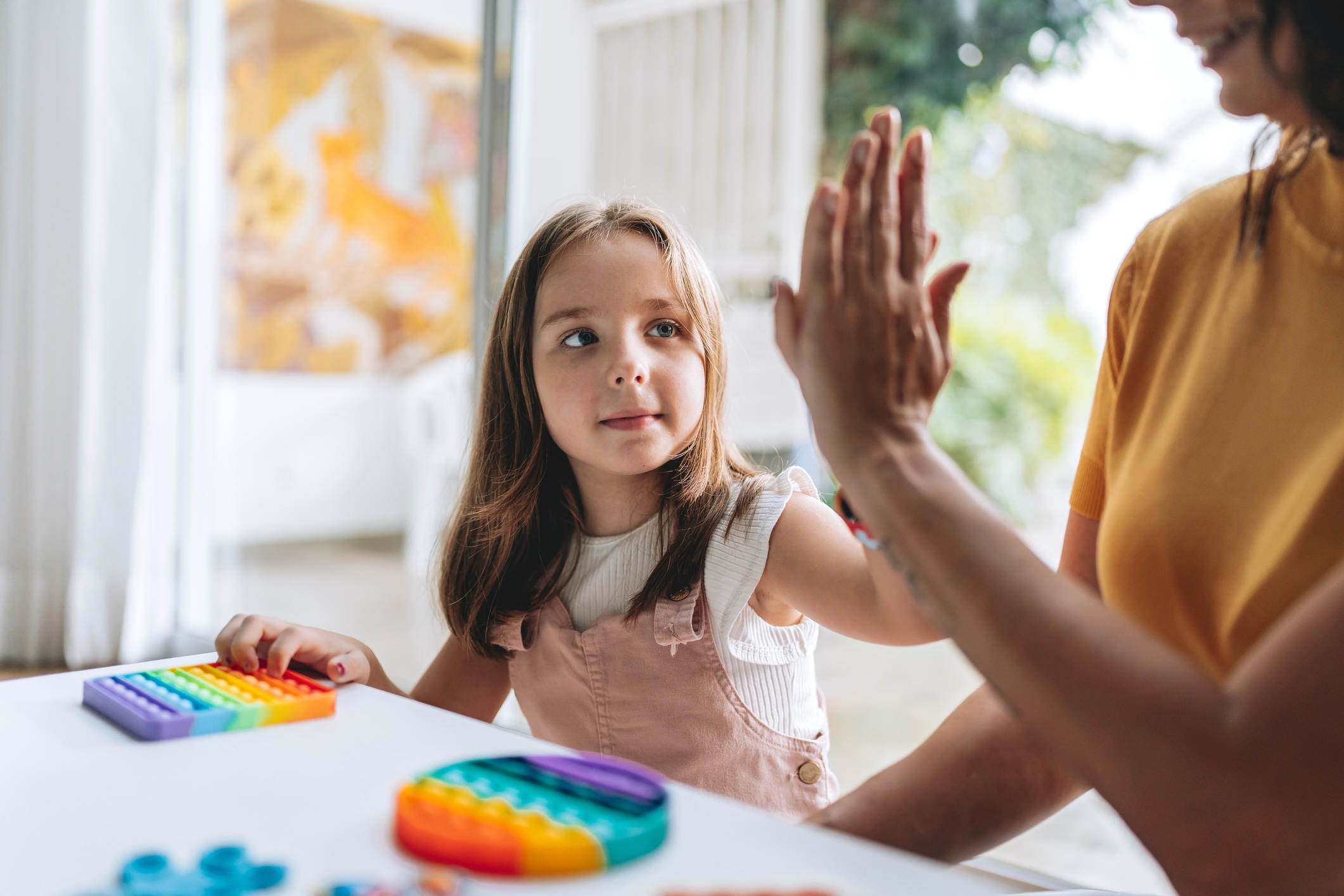
andreswd/iStock
### **Genetics**
According to psychologist Barbara Markway, author of [*The Self-Confidence Workbook: A Guide to Overcoming Self-Doubt and Improving Self-Esteem*](https://amzn.to/3WN2Zja), between 25%-50% of personality traits linked with confidence may be inherited. Writing for [*Psychology Today*](https://www.psychologytoday.com/us/blog/shyness-is-nice/201812/5-reasons-people-have-low-self-confidence), she cited the neurotransmitters serotonin and oxytocin as being involved in boosting confidence and noted that the amount of each our brain can access is influenced by our genetic makeup. She also pointed to temperament as something that influences our behavior, making us more or less inclined to act in an uninhibited manner.
Advertisement
In a [2009 study](https://pubmed.ncbi.nlm.nih.gov/19470122/) out of King’s College London, 3,785 pairs of twins between the ages of 7 and 10 were asked to rate their abilities on several academic subjects. [Researchers determined](https://www.kcl.ac.uk/archive/news/ioppn/records/2009/06june/academicself-confidence50natureand50nurture) that the children’s levels of self-confidence were influenced 50% by nature and 50% by nurture — also known as life experience.
“The specific genes involved in academic self-confidence remain to be identified, but we expect them to be many genes of small effect size, and their effects will be probabilistic rather than deterministic,” lead author Corina Greven said at the time. “That is, just because self-confidence is partly genetic, it does not mean that self-confidence cannot be changed by environmental influences.”
### **Life Experience**
Beginning in our youth, everything we experience — from traumatic events to [gender-based societal conditioning](https://www.theatlantic.com/magazine/archive/2014/05/the-confidence-gap/359815/?gift=HllIzWZmAiZyIJ5BDlPYijiWBEelCnLunxKC3_QaVUI&utm_source=copy-link&utm_medium=social&utm_campaign=share) — can impact the people we become.
“Scores of studies show women are socialized to worry more about how they’re perceived and, therefore, to take fewer risks,” Markway explained in *PT*. “Racial and cultural background and sexual orientation can make a difference, too. If you’ve been on the receiving end of discrimination, you may have internalized some negative, untrue messages about your potential and whether you ‘belong.’”
Advertisement
It’s not all bad, of course. Life experience includes the positive relationships we’ve built, whether with parents who heaped on positive encouragement and created safe spaces for us to try new things, or with friends who cheer us on.
Confidence is also born from our past achievements, times we’ve set out to do something and succeeded, particularly when the task involved overcoming obstacles.
## **How to Get More of It**
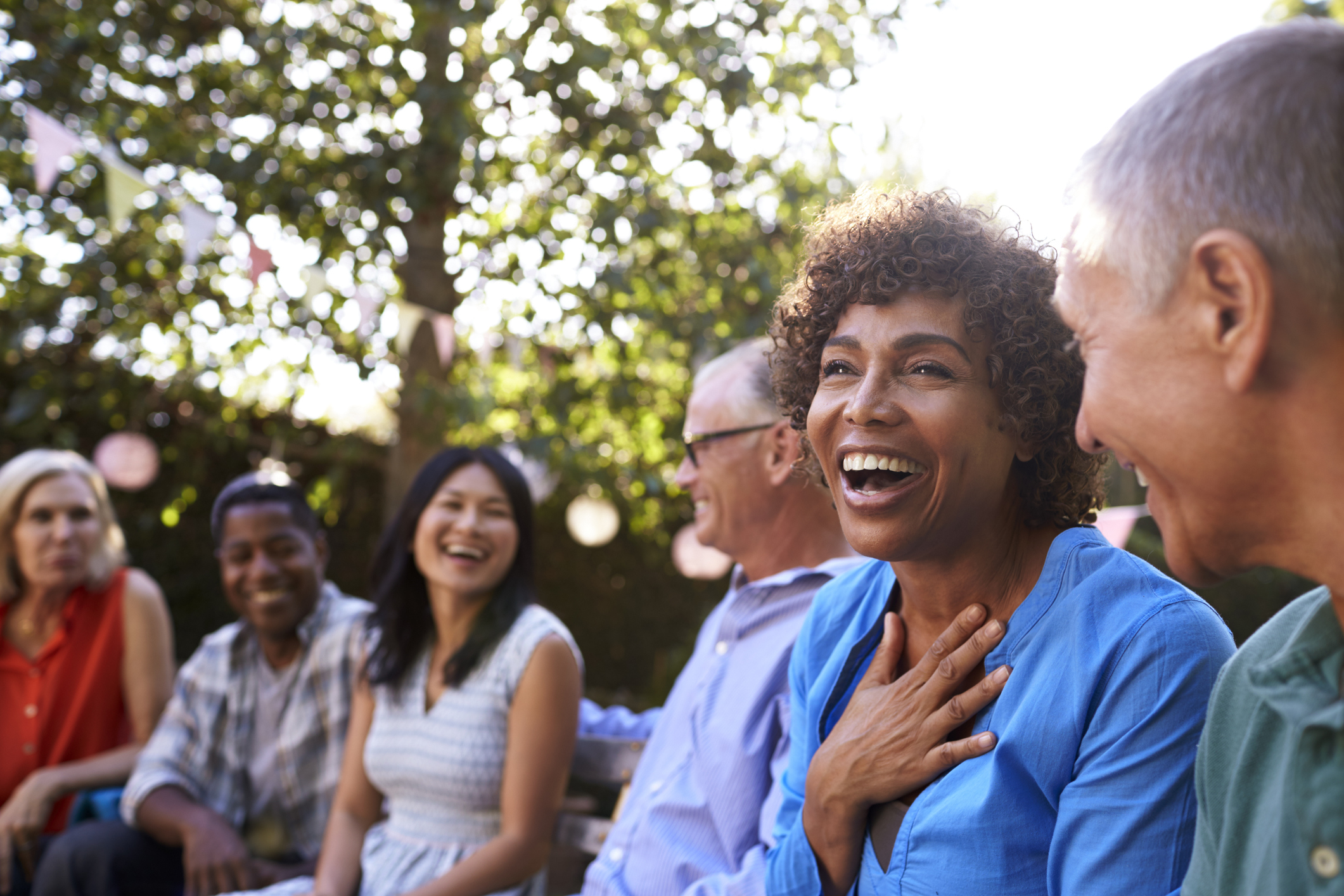
monkeybusinessimages/ iStock
Though the idea of power posing as an elixir for self-assurance may have conflicting data behind it, there are some more general ways to help cultivate confidence even if you feel like neither nature nor nurture is on your side.
### **Mastery Experiences**
Self-efficacy is a closely related concept to confidence: Per the APA, it “reflects confidence in the ability to exert control over one’s own motivation, behavior, and social environment.”
Stanford social cognitive psychologist Albert Bandura developed our definition and understanding of self-efficacy and elucidated the [important role](https://www.verywellmind.com/what-is-self-efficacy-2795954) it plays in our lives. He also enumerated [four essential ways of building it](https://positivepsychology.com/3-ways-build-self-efficacy/), the first and foremost being “mastery experiences.”
“The most effective way of creating a strong sense of efficacy is through *mastery experiences*,” Bandura wrote in his 1995 book *Self-Efficacy in Changing Societies*. “They provide the most authentic evidence of whether one can muster whatever it takes to succeed.”
Advertisement
One way to tap into the power of mastery experiences is to set goals for yourself that require some effort and hardwork but are overall attainable and realistic. Using the SMART goal system is a great way to do this. Learn about it and other science-backed methods [here](https://positivepsychology.com/goal-setting-psychology/).
### **Learn Something New**
Going hand-in-hand with the former entry, learning a new skill offers the opportunity to watch yourself evolve and accomplish something. Choose an activity that speaks to your interests or curiosity rather than one you think you should do, and then enjoy the process.
“Being a beginner again is tough, but it shows you can still accomplish new things and find enjoyment in them,” Fred Silverstone, founder of the Successful Aging through Group Engagement program at Harvard-affiliated McLean Hospital, explained in a [Harvard Medical School blog post](https://www.health.harvard.edu/staying-healthy/regain-your-confidence). “This also reminds you that it’s OK to make mistakes, so you can improve and grow, which helps build self-confidence.”
### **… Or Do More of What You’re Already Good at**
We feel good about ourselves when we’re doing things that showcase our skills or talents, things that we already possess some degree of self-assurance in. So if you’re stuck in a daily routine that doesn’t involve many of your strengths, it stands to reason that an overall sense of self-confidence may start to evade you.
Make sure you’re partaking in the activities in which you shine, be that playing trivia at a pub or baking treats for your friends and coworkers. On a larger scale, it may be helpful to take stock of whether or not you’re in a job that utilizes your gifts to the highest degree.
Advertisement
Additionally, [doing good for others can boost self-esteem](https://health.clevelandclinic.org/why-giving-is-good-for-your-health), another closely related concept to self-confidence. It could also prove to be a way of discovering new talents or building new skills. Take a look on [SamaritanScout.org](http://samaritanscout.org/) or [VolunteerMatch.org](http://volunteermatch.org/) to find opportunities near you.
### **Practice Mindfulness**
It sometimes seems like mindfulness is being offered up as a cure-all for everything these days, but it may be helpful in this arena insofar as *not* being mindful could impede the self-confidence you’re trying to build. When you’re focusing on the present moment, you’re not focusing on [negative self-talk](https://www.calm.com/blog/negative-self-talk) — the last thing you need during a presentation or a social event you’re nervous about.
A mindfulness meditation practice can help you learn to disengage from your inner critic by acknowledging that those thoughts are simply thoughts, and do not dictate or define who you are. [Learn about improving self-esteem via mindfulness](https://www.calm.com/blog/how-to-improve-your-self-esteem-with-mindfulness), and [try this three-step meditation for countering negative thoughts](https://www.cnbc.com/2023/08/11/use-this-3-step-meditation-to-counter-negative-thoughts.html).
### **Spend Time With Positive People**
As we discussed previously, relationships contribute to our life experiences, and our life experiences contribute to our levels of self-confidence. Ask yourself if the people you surround yourself with are boosting your feelings of joy and sense of self-worth or doing the opposite.
Advertisement
“The people you spend time with can influence your thoughts and attitudes about yourself, perhaps more than you realize,” writes licensed clinical social worker Amy Morin for [Verywell Mind](https://www.verywellmind.com/how-to-boost-your-self-confidence-4163098). “So, pay attention to how others make you feel. If you feel bad about yourself after hanging out with a particular person, it may be time to say goodbye.”
As we get older, it can be harder and harder to find new friends we connect with. If you’re looking for more positive vibes, consider joining a running group or book club, taking part in a volunteer opportunity, getting involved in your religious community, or [downloading a friendship app](https://www.cosmopolitan.com/sex-love/a24799641/best-friendship-apps/) to meet new people.
Remember: Although it can be uncomfortable to try something new and expand our circles of connection, it’s in these moments that we grow confidence and prove to ourselves just how capable we are of accomplishing hard things.
RELATED: [From Close to Convenient: The 7 Types of Friendships Everyone Needs](https://nicenews.com/humanity/friendship-types-everyone-needs/)
[](https://nicenews.com/author/rebekah/)
- [Rebekah Brandes](https://nicenews.com/author/rebekah-brandes/)
- [August 17, 2024](https://nicenews.com/2024/08/17/)
Share to:
Facebook
Twitter
Advertisement
#### Related News
[](https://nicenews.com/health-and-wellness/research-suggests-humor-plays-important-parenting-role/)
##### [Cracking Jokes at the Dinner Table? Keep It Up, Parenting Study Suggests](https://nicenews.com/health-and-wellness/research-suggests-humor-plays-important-parenting-role/)
[](https://nicenews.com/health-and-wellness/parkinsons-disease-monitoring-at-home-device/)
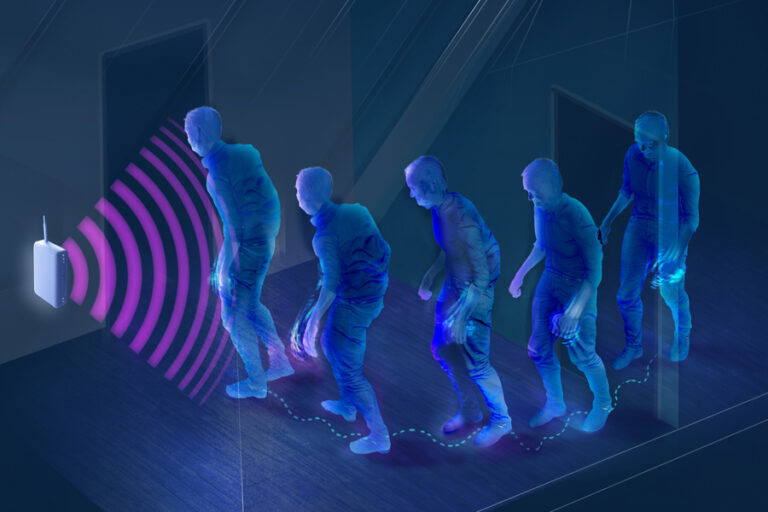
##### [At-Home Radio Sensors Could Improve Care for Patients With Parkinson’s Disease](https://nicenews.com/health-and-wellness/parkinsons-disease-monitoring-at-home-device/)
[](https://nicenews.com/health-and-wellness/how-to-keep-microbiome-youthful/)
##### [Your Gut Microbes Can Be Anti-Aging — Scientists Are Uncovering How to Keep Your Microbiome Youthful](https://nicenews.com/health-and-wellness/how-to-keep-microbiome-youthful/)
[](https://nicenews.com/health-and-wellness/conductor-forms-orchestra-people-with-mental-illness/)
##### [Award-Winning Conductor Starts Orchestra for People With Mental Illness to Help Erase Stigma](https://nicenews.com/health-and-wellness/conductor-forms-orchestra-people-with-mental-illness/)
[](https://nicenews.com/health-and-wellness/screen-break-tips-use-phone-more-intentionally/)
##### [Need a Screen Break? 8 Tips to Use Your Phone More Intentionally](https://nicenews.com/health-and-wellness/screen-break-tips-use-phone-more-intentionally/)
#### Other Stories
[](https://nicenews.com/humanity/agreeing-to-disagree-hurts-relationships-do-this-instead/)
#### [“Agreeing to Disagree” Is Hurting Your Relationships – Here’s What to Do Instead](https://nicenews.com/humanity/agreeing-to-disagree-hurts-relationships-do-this-instead/)
[](https://nicenews.com/culture/worlds-longest-immersed-tunnel-europe/)
#### [World’s Longest Immersed Tunnel Promises 10-Minute Driving Time From Denmark to Germany](https://nicenews.com/culture/worlds-longest-immersed-tunnel-europe/)
[](https://nicenews.com/culture/mom-has-no-friends-essay-becoming-tv-series/)
#### [Woman’s Viral Essay on Helping Her “Vivacious” Mom, 81, Make Friends Is Becoming TV Series: Inside the Story](https://nicenews.com/culture/mom-has-no-friends-essay-becoming-tv-series/)
[](https://nicenews.com/culture/sony-world-photography-awards-2023/)
#### [Life in Pictures: See the Incredible Images That Won the 2023 Sony World Photography Awards](https://nicenews.com/culture/sony-world-photography-awards-2023/)
[](https://nicenews.com/culture/composer-james-horner-personal-archive-donated-ucla/)
#### [Wife of James Horner, Late Composer of “Titanic” and “Apollo 13,” Donates His Personal Archive to UCLA](https://nicenews.com/culture/composer-james-horner-personal-archive-donated-ucla/)
[](https://nicenews.com/humanity/mindfulness-expert-case-kenny-self-improvement/)
#### [With Uplifting, Handwritten Notes, Mindfulness Expert Case Kenny Helps Renew People’s Faith in Themselves](https://nicenews.com/humanity/mindfulness-expert-case-kenny-self-improvement/)
- [Today’s Edition](https://nice-news.ck.page/posts/newest)
- [Mission](https://nicenews.com/about/)
- [Merch](https://becauseweekend.com/collections/nice-news)
- [Submit a Story](https://airtable.com/shr3P0L2iDwl8Z7UO)
- [Advertise With Us](https://nicenews.com/advertise-with-us/)
- [Contact Us](https://nicenews.com/contact/)
[Subscribe](https://nicenews.com/health-and-wellness/where-confidence-comes-from-and-how-to-build-more/#ck-popup)
[Subscribe](https://nicenews.com/health-and-wellness/where-confidence-comes-from-and-how-to-build-more/#ck-popup)
- [Today’s Edition](https://nice-news.ck.page/posts/newest)
- [Mission](https://nicenews.com/about/)
- [Merch](https://becauseweekend.com/collections/nice-news)
- [Submit a Story](https://airtable.com/shr3P0L2iDwl8Z7UO)
- [Advertise With Us](https://nicenews.com/advertise-with-us/)
- [Contact Us](https://nicenews.com/contact/)

## Topics
- [Culture](https://nicenews.com/category/culture/)
- [Environment](https://nicenews.com/category/environment/)
- [Health](https://nicenews.com/category/health-and-wellness/)
- [Humanity](https://nicenews.com/category/humanity/)
- [Lifestyle](https://nicenews.com/category/lifestyle/)
- [Science](https://nicenews.com/category/science/)
- [Sports](https://nicenews.com/category/sports/)
- [Tech](https://nicenews.com/category/innovation/)
## Company
- [Daily Edition](https://nice-news.ck.page/profile)
- [Mission](https://nicenews.com/about/)
- [Submit a Story](https://airtable.com/appDSyiS8B8wEDvM8/shr3P0L2iDwl8Z7UO)
- [Advertise With Us](https://nicenews.com/advertise-with-us/)
## More
- [Contact Us](https://nicenews.com/contact/)
- [Terms of Use](https://nicenews.com/terms/)
- [Do Not Sell My Info](https://forms.gle/F77Jfc1dSRfLfyAt9)
- [Privacy Policy](https://nicenews.com/privacy-policy/)
- [Your Privacy Rights](https://nicenews.com/health-and-wellness/where-confidence-comes-from-and-how-to-build-more/#cmpscreen)
## About
Our mission at Nice News is to re-imagine how we engage with news so that each of us can view the world through a more optimistic lens. It's time to expand what we consider newsworthy. [Learn more](https://nicenews.com/about).
Copyright © 2026 Nice News
### Start typing and press enter to search
Scroll to Top |
| Readable Markdown | For those who yearn to stroll smiling into a party with the certainty they’ll make a good impression, or assuredly share their ideas in an important meeting, confidence can be the most coveted of psychological states.
But it’s also a tricky subject to break down. On the one hand, confidence has been associated with increased [mental health and job satisfaction](https://positivepsychology.com/self-confidence/); on the other, there’s the [Dunning-Kruger Effect](https://www.verywellmind.com/an-overview-of-the-dunning-kruger-effect-4160740), a cognitive bias in which the least-skilled people tend to overestimate their capabilities the most.
Suggestions for cultivating more confidence can come with caveats, too. Take [power posing](https://faculty.haas.berkeley.edu/dana_carney/power.poses.PS.2010.pdf), for example, developed by social psychologist and former Harvard professor Amy Cuddy and made popular by her [2012 TED Talk](https://www.ted.com/talks/amy_cuddy_your_body_language_may_shape_who_you_are?subtitle=en). A kind of physical incarnation of the “fake it until you make it” mentality, power posing is based on the idea that when we assume certain “powerful” stances (like hands on our hips a la Wonder Woman), the brain takes a cue from the body, so to speak.
However, it frequently seems that as soon as an exciting concept like this gains traction, other research comes along to refute it. Cuddy and her team’s small initial experiment proved [difficult to replicate](https://www.bps.org.uk/psychologist/decade-power-posing-where-do-we-stand), and in 2019, the topic was taken on by Iowa State University researcher Marcus Credé, who [reviewed 40 studies](https://www.sciencedaily.com/releases/2019/10/191001110824.htm) on power posing and determined it had no actual effect.
And what of those who seemingly need not concern themselves with power poses or other life hacks of the sort; who’ve never experienced [imposter syndrome](https://www.verywellmind.com/imposter-syndrome-and-social-anxiety-disorder-4156469), that feeling of being a phony despite having undeniable skills in a certain field; who merely are and always will be confident?
While our perceptions of these individuals may be colored by our own desire to be as self-assured as they appear, and, in fact, speak little to what’s actually going on in another person’s mind, it’s certainly true that some are more confident than others.
So where does self-confidence — or the “trust in one’s abilities, capacities, and judgment,” per the American Psychological Association — come from? Is it innate? Fostered through experience? Increased through intentional practice? The answer is a bit of everything.

andreswd/iStock
### **Genetics**
According to psychologist Barbara Markway, author of [*The Self-Confidence Workbook: A Guide to Overcoming Self-Doubt and Improving Self-Esteem*](https://amzn.to/3WN2Zja), between 25%-50% of personality traits linked with confidence may be inherited. Writing for [*Psychology Today*](https://www.psychologytoday.com/us/blog/shyness-is-nice/201812/5-reasons-people-have-low-self-confidence), she cited the neurotransmitters serotonin and oxytocin as being involved in boosting confidence and noted that the amount of each our brain can access is influenced by our genetic makeup. She also pointed to temperament as something that influences our behavior, making us more or less inclined to act in an uninhibited manner.
In a [2009 study](https://pubmed.ncbi.nlm.nih.gov/19470122/) out of King’s College London, 3,785 pairs of twins between the ages of 7 and 10 were asked to rate their abilities on several academic subjects. [Researchers determined](https://www.kcl.ac.uk/archive/news/ioppn/records/2009/06june/academicself-confidence50natureand50nurture) that the children’s levels of self-confidence were influenced 50% by nature and 50% by nurture — also known as life experience.
“The specific genes involved in academic self-confidence remain to be identified, but we expect them to be many genes of small effect size, and their effects will be probabilistic rather than deterministic,” lead author Corina Greven said at the time. “That is, just because self-confidence is partly genetic, it does not mean that self-confidence cannot be changed by environmental influences.”
### **Life Experience**
Beginning in our youth, everything we experience — from traumatic events to [gender-based societal conditioning](https://www.theatlantic.com/magazine/archive/2014/05/the-confidence-gap/359815/?gift=HllIzWZmAiZyIJ5BDlPYijiWBEelCnLunxKC3_QaVUI&utm_source=copy-link&utm_medium=social&utm_campaign=share) — can impact the people we become.
“Scores of studies show women are socialized to worry more about how they’re perceived and, therefore, to take fewer risks,” Markway explained in *PT*. “Racial and cultural background and sexual orientation can make a difference, too. If you’ve been on the receiving end of discrimination, you may have internalized some negative, untrue messages about your potential and whether you ‘belong.’”
It’s not all bad, of course. Life experience includes the positive relationships we’ve built, whether with parents who heaped on positive encouragement and created safe spaces for us to try new things, or with friends who cheer us on.
Confidence is also born from our past achievements, times we’ve set out to do something and succeeded, particularly when the task involved overcoming obstacles.
## **How to Get More of It**

monkeybusinessimages/ iStock
Though the idea of power posing as an elixir for self-assurance may have conflicting data behind it, there are some more general ways to help cultivate confidence even if you feel like neither nature nor nurture is on your side.
### **Mastery Experiences**
Self-efficacy is a closely related concept to confidence: Per the APA, it “reflects confidence in the ability to exert control over one’s own motivation, behavior, and social environment.”
Stanford social cognitive psychologist Albert Bandura developed our definition and understanding of self-efficacy and elucidated the [important role](https://www.verywellmind.com/what-is-self-efficacy-2795954) it plays in our lives. He also enumerated [four essential ways of building it](https://positivepsychology.com/3-ways-build-self-efficacy/), the first and foremost being “mastery experiences.”
“The most effective way of creating a strong sense of efficacy is through *mastery experiences*,” Bandura wrote in his 1995 book *Self-Efficacy in Changing Societies*. “They provide the most authentic evidence of whether one can muster whatever it takes to succeed.”
One way to tap into the power of mastery experiences is to set goals for yourself that require some effort and hardwork but are overall attainable and realistic. Using the SMART goal system is a great way to do this. Learn about it and other science-backed methods [here](https://positivepsychology.com/goal-setting-psychology/).
### **Learn Something New**
Going hand-in-hand with the former entry, learning a new skill offers the opportunity to watch yourself evolve and accomplish something. Choose an activity that speaks to your interests or curiosity rather than one you think you should do, and then enjoy the process.
“Being a beginner again is tough, but it shows you can still accomplish new things and find enjoyment in them,” Fred Silverstone, founder of the Successful Aging through Group Engagement program at Harvard-affiliated McLean Hospital, explained in a [Harvard Medical School blog post](https://www.health.harvard.edu/staying-healthy/regain-your-confidence). “This also reminds you that it’s OK to make mistakes, so you can improve and grow, which helps build self-confidence.”
### **… Or Do More of What You’re Already Good at**
We feel good about ourselves when we’re doing things that showcase our skills or talents, things that we already possess some degree of self-assurance in. So if you’re stuck in a daily routine that doesn’t involve many of your strengths, it stands to reason that an overall sense of self-confidence may start to evade you.
Make sure you’re partaking in the activities in which you shine, be that playing trivia at a pub or baking treats for your friends and coworkers. On a larger scale, it may be helpful to take stock of whether or not you’re in a job that utilizes your gifts to the highest degree.
Additionally, [doing good for others can boost self-esteem](https://health.clevelandclinic.org/why-giving-is-good-for-your-health), another closely related concept to self-confidence. It could also prove to be a way of discovering new talents or building new skills. Take a look on [SamaritanScout.org](http://samaritanscout.org/) or [VolunteerMatch.org](http://volunteermatch.org/) to find opportunities near you.
### **Practice Mindfulness**
It sometimes seems like mindfulness is being offered up as a cure-all for everything these days, but it may be helpful in this arena insofar as *not* being mindful could impede the self-confidence you’re trying to build. When you’re focusing on the present moment, you’re not focusing on [negative self-talk](https://www.calm.com/blog/negative-self-talk) — the last thing you need during a presentation or a social event you’re nervous about.
A mindfulness meditation practice can help you learn to disengage from your inner critic by acknowledging that those thoughts are simply thoughts, and do not dictate or define who you are. [Learn about improving self-esteem via mindfulness](https://www.calm.com/blog/how-to-improve-your-self-esteem-with-mindfulness), and [try this three-step meditation for countering negative thoughts](https://www.cnbc.com/2023/08/11/use-this-3-step-meditation-to-counter-negative-thoughts.html).
### **Spend Time With Positive People**
As we discussed previously, relationships contribute to our life experiences, and our life experiences contribute to our levels of self-confidence. Ask yourself if the people you surround yourself with are boosting your feelings of joy and sense of self-worth or doing the opposite.
“The people you spend time with can influence your thoughts and attitudes about yourself, perhaps more than you realize,” writes licensed clinical social worker Amy Morin for [Verywell Mind](https://www.verywellmind.com/how-to-boost-your-self-confidence-4163098). “So, pay attention to how others make you feel. If you feel bad about yourself after hanging out with a particular person, it may be time to say goodbye.”
As we get older, it can be harder and harder to find new friends we connect with. If you’re looking for more positive vibes, consider joining a running group or book club, taking part in a volunteer opportunity, getting involved in your religious community, or [downloading a friendship app](https://www.cosmopolitan.com/sex-love/a24799641/best-friendship-apps/) to meet new people.
Remember: Although it can be uncomfortable to try something new and expand our circles of connection, it’s in these moments that we grow confidence and prove to ourselves just how capable we are of accomplishing hard things.
RELATED: [From Close to Convenient: The 7 Types of Friendships Everyone Needs](https://nicenews.com/humanity/friendship-types-everyone-needs/) |
| Shard | 75 (laksa) |
| Root Hash | 6153851786718926475 |
| Unparsed URL | com,nicenews!/health-and-wellness/where-confidence-comes-from-and-how-to-build-more/ s443 |