ℹ️ Skipped - page is already crawled
| Filter | Status | Condition | Details |
|---|---|---|---|
| HTTP status | PASS | download_http_code = 200 | HTTP 200 |
| Age cutoff | PASS | download_stamp > now() - 6 MONTH | 0.9 months ago |
| History drop | PASS | isNull(history_drop_reason) | No drop reason |
| Spam/ban | PASS | fh_dont_index != 1 AND ml_spam_score = 0 | ml_spam_score=0 |
| Canonical | PASS | meta_canonical IS NULL OR = '' OR = src_unparsed | Not set |
| Property | Value |
|---|---|
| URL | https://news.northeastern.edu/2022/06/09/covid-19-twice-within-90-days/ |
| Last Crawled | 2026-03-24 23:27:00 (28 days ago) |
| First Indexed | 2022-06-17 10:40:53 (3 years ago) |
| HTTP Status Code | 200 |
| Meta Title | Northeastern experts say it's more likely than ever to get COVID-19 twice |
| Meta Description | Northeastern health experts explain why even with fewer barriers against COVID-19, the virus continues to evolve. |
| Meta Canonical | null |
| Boilerpipe Text | When looking at the state of COVID-19 in the United States,
Mansoor Amiji
, distinguished professor in the Department of Pharmaceutical Sciences at Northeastern, invites you to think from the perspective of a virus. What does it want? What does it need to do to find new hosts, or to reinfect old ones?
The answer, he says, lies in spike proteins, the part of a virus that attaches to the receptor on a host cell. Under pressure from natural immunity and other countermeasures to its survival, the COVID-19 virus mutates these spike proteins at random, creating new variants that are more transmissible than previous ones.
This evolution makes COVID-19 similar to other viruses we’ve seen. “That’s really the natural course of a virus,” Amiji says.
Neil Maniar, director of the Master of Public Health program and a professor of the practice in the Bouvé College of Health Sciences, and Mansoor Amiji, Distinguished Professor and Chair of the Department of Pharmaceutical Sciences. Photos by Matthew Modoono/Northeastern University
It’s also the reason you’re more likely to get COVID-19 twice now than you were just
four months ago
. New variants like BA-4 or BA-5, which were unheard of earlier this year, are now
circulating
in the United States, and they may not be prevented by vaccines, boosters, or the antibodies that you develop when you’re infected by another variant.
For example, if you became infected from the BA-2 subvariant, this doesn’t prevent you from getting infected with BA-4 or BA-5, says
Neil Maniar
, professor of practice in the Department of Health Sciences. Maniar says each subvariant of COVID-19 tends to be more transmissible than the last, and that protection from one does not guarantee protection from another.
“It doesn’t mean that we have to fear reinfection,” Maniar says, “but it does mean we have to keep in mind that just because you got COVID once, it doesn’t mean you won’t get it again within a month or two months or three months, because there are these different subvariants that are circulating.”
Despite this development, the Centers for Disease Control and Prevention still
does not recommend
that you test for COVID-19 within 90 days of recovering from infection.
“If you tested positive for COVID-19 with a viral test within the previous 90 days and subsequently recovered and remain asymptomatic, you do not need to quarantine or get tested after close contact,” reads the CDC’s
website
.
The reason for this, Maniar says, is that a PCR test can still detect trace amounts of the virus even after someone is no longer symptomatic or infectious. This can lead to a false positive, even when an antigen (or, “rapid”) test will come back negative.
“Those viral particles can be detected as far as two or three months out,” he says.
The thinking when the recommendation was written was also that the antibodies developed during the infection could protect you from getting reinfected within 90 days. But that’s not really the case, Maniar says.
“The idea that if you are infected, that you don’t necessarily have to worry about reinfection for three months, doesn’t necessarily apply anymore,” he says.
The return to the “new normal”—maskless workspaces and airplanes, for example—may increase the probability of reinfections from different variants.
“We’re really starting to return to a much more normal pace of life relative to earlier this year,” Maniar says. “That’s a really good thing.”
It means that we have resources at our disposal, like vaccines and masks, to gather in relative safety, he says. Still, “the likelihood of being exposed increases.”
Fortunately, as variants tend to become more infectious, they also tend to become less powerful. Amiji says COVID-19’s subvariants typically cause more upper respiratory issues than lower, making the symptoms less serious. And for those who have been vaccinated and received booster shots, symptoms tend to be even less severe, or even nonexistent. This reinforces the importance of getting vaccinated and boosted. Amiji hopes that one day COVID-19 boosters will combine with flu shots, and that it can be easy to get both at the same time each year.
But hospitalizations still happen, especially among subsets of the population that are at higher risk, so it is still important to take preventative measures even as we start to move into what Amiji calls an “endemic” phase of the pandemic.
To help stop the spread, Amiji recommends getting tested if you have symptoms, and if a rapid test—which is less sensitive than a PCR test—is positive, you should isolate and wear a mask indoors. The amount of time it takes to test negative after being infected varies from person to person, he says, but it’s important to keep testing in order to make informed decisions. “It’s the time when you start to test negative that you could potentially be less infective,” he says.
Maniar compares measures like these to wearing a seatbelt every time you get in a car. “We all do need to continue to think about others around us, and think about what we need to do to protect ourselves.”
For media inquiries
, please contact
media@northeastern.edu
. |
| Markdown | [Skip to content](https://news.northeastern.edu/2022/06/09/covid-19-twice-within-90-days/#site-content)
- [Contact Us](https://news.northeastern.edu/contact/)
- [Faculty Experts](https://news.northeastern.edu/faculty-experts)
- [In the Press](https://news.northeastern.edu/in-the-media)
- [Media Inquiries](https://news.northeastern.edu/media-inquiries)
- [Newsletter](https://mailchi.mp/northeastern/sign-up-form)
- [Parents & Families](https://news.northeastern.edu/parents)
- [Faculty & Staff](https://news.northeastern.edu/faculty-staff/)
- [Facebook](https://www.facebook.com/northeastern)
- [Instagram](https://www.instagram.com/northeasternglobalnews)
- [LinkedIn](https://www.linkedin.com/school/northeastern-university/)
- [Tiktok](https://www.tiktok.com/@northeasternu)
- [X (Twitter)](https://x.com/northeastern)
- [Youtube](https://www.youtube.com/user/Northeastern/featured)
- [NU & MMC Merger FAQ](https://news.northeastern.edu/marymount-manhatten-college-merger-faq/)
- [Safe Campuses, Civil Discourse FAQ](https://news.northeastern.edu/safe-campuses-civil-discourse-faq/)
- [Federal Landscape FAQ](https://news.northeastern.edu/federal-landscape-faq/)
March 24, 2026
# [Can you get COVID-19 twice within 90 days? Here’s why it’s more likely now than ever.](https://news.northeastern.edu/)
## Editor's Picks
[What is the Strait of Hormuz, and why does it matter?](https://news.northeastern.edu/2026/03/19/what-is-the-straight-of-hormuz/)
[Motivated employees get tasked with more work, study finds](https://news.northeastern.edu/2026/03/18/intrinsic-motivation-at-work-burnout-research/)
## Recent Stories
[Will the Mayweather-Pacquiao sequel on Netflix pack a punch?](https://news.northeastern.edu/2026/03/24/pacquiao-vs-mayweather-sequel-netflix/)
[Nature report links wildlife trends to human well-being](https://news.northeastern.edu/2026/03/24/us-nature-report/)
- [University News](https://news.northeastern.edu/category/university-news/)
- [World & National News](https://news.northeastern.edu/category/world-news/)
- [Science & Technology](https://news.northeastern.edu/category/science-technology/)
- [Arts & Entertainment](https://news.northeastern.edu/category/arts-entertainment/)
- [Business](https://news.northeastern.edu/category/business/)
- [Health](https://news.northeastern.edu/category/health/)
- [Law](https://news.northeastern.edu/category/law/)
- [Lifestyle](https://news.northeastern.edu/category/lifestyle/)
- [Society & Culture](https://news.northeastern.edu/category/society-culture/)
- [Sports](https://news.northeastern.edu/category/sports/)
- [Research](https://news.northeastern.edu/research/)
- [NU & MMC Merger FAQ](https://news.northeastern.edu/marymount-manhatten-college-merger-faq/)
- [Safe Campuses, Civil Discourse FAQ](https://news.northeastern.edu/safe-campuses-civil-discourse-faq/)
- [Federal Landscape FAQ](https://news.northeastern.edu/federal-landscape-faq/)
- [Contact Us](https://news.northeastern.edu/contact/)
- [Faculty Experts](https://news.northeastern.edu/faculty-experts)
- [In the Press](https://news.northeastern.edu/in-the-media)
- [Media Inquiries](https://news.northeastern.edu/media-inquiries)
- [Newsletter](https://mailchi.mp/northeastern/sign-up-form)
- [Parents & Families](https://news.northeastern.edu/parents)
- [Faculty & Staff](https://news.northeastern.edu/faculty-staff/)
- [University News](https://news.northeastern.edu/category/university-news/)
- [World & National News](https://news.northeastern.edu/category/world-news/)
- [Science & Technology](https://news.northeastern.edu/category/science-technology/)
- [Arts & Entertainment](https://news.northeastern.edu/category/arts-entertainment/)
- [Business](https://news.northeastern.edu/category/business/)
- [Health](https://news.northeastern.edu/category/health/)
- [Law](https://news.northeastern.edu/category/law/)
- [Lifestyle](https://news.northeastern.edu/category/lifestyle/)
- [Society & Culture](https://news.northeastern.edu/category/society-culture/)
- [Sports](https://news.northeastern.edu/category/sports/)
- [Research](https://news.northeastern.edu/research/)
# Can you get COVID-19 twice within 90 days? Here’s why it’s more likely now than ever.

by **[Jessica Taylor Price - Contributor](https://news.northeastern.edu/author/jprice/)**
June 9, 2022
## Share
- [Facebook](https://www.facebook.com/sharer.php?u=https://news.northeastern.edu/2022/06/09/covid-19-twice-within-90-days/)
- [LinkedIn](https://www.linkedin.com/shareArticle?url=https://news.northeastern.edu/2022/06/09/covid-19-twice-within-90-days/&title=Can%20you%20get%20COVID-19%20twice%20within%2090%20days?%20Here%E2%80%99s%20why%20it%E2%80%99s%20more%20likely%20now%20than%20ever.)
- [Twitter](https://twitter.com/intent/tweet?text=Can%20you%20get%20COVID-19%20twice%20within%2090%20days?%20Here%E2%80%99s%20why%20it%E2%80%99s%20more%20likely%20now%20than%20ever.%20https://news.northeastern.edu/2022/06/09/covid-19-twice-within-90-days/%20via%20Northeastern%20Global%20News)
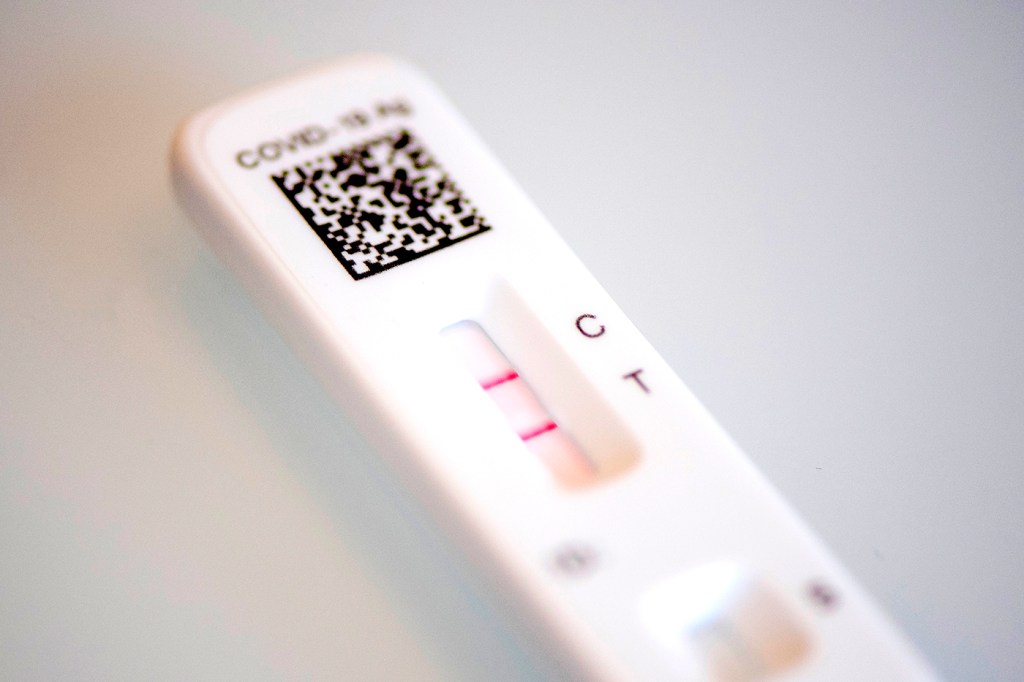
Even as we erect more and more barriers against COVID-19, the virus evolves to break them. Northeastern experts explain why this happens, and what it means for your health. Photo by Matthew Modoono/Northeastern University
When looking at the state of COVID-19 in the United States, [Mansoor Amiji](https://web.northeastern.edu/amijilab/people/prof-amiji/), distinguished professor in the Department of Pharmaceutical Sciences at Northeastern, invites you to think from the perspective of a virus. What does it want? What does it need to do to find new hosts, or to reinfect old ones?
The answer, he says, lies in spike proteins, the part of a virus that attaches to the receptor on a host cell. Under pressure from natural immunity and other countermeasures to its survival, the COVID-19 virus mutates these spike proteins at random, creating new variants that are more transmissible than previous ones.
This evolution makes COVID-19 similar to other viruses we’ve seen. “That’s really the natural course of a virus,” Amiji says.

Neil Maniar, director of the Master of Public Health program and a professor of the practice in the Bouvé College of Health Sciences, and Mansoor Amiji, Distinguished Professor and Chair of the Department of Pharmaceutical Sciences. Photos by Matthew Modoono/Northeastern University
It’s also the reason you’re more likely to get COVID-19 twice now than you were just [four months ago](https://news.northeastern.edu/2022/02/03/can-you-get-covid-twice/). New variants like BA-4 or BA-5, which were unheard of earlier this year, are now [circulating](https://www.nbcnews.com/health/health-news/two-omicron-subvariants-gain-bigger-foothold-us-rcna32410) in the United States, and they may not be prevented by vaccines, boosters, or the antibodies that you develop when you’re infected by another variant.
For example, if you became infected from the BA-2 subvariant, this doesn’t prevent you from getting infected with BA-4 or BA-5, says [Neil Maniar](https://bouve.northeastern.edu/bchs/directory/neil-maniar/), professor of practice in the Department of Health Sciences. Maniar says each subvariant of COVID-19 tends to be more transmissible than the last, and that protection from one does not guarantee protection from another.
“It doesn’t mean that we have to fear reinfection,” Maniar says, “but it does mean we have to keep in mind that just because you got COVID once, it doesn’t mean you won’t get it again within a month or two months or three months, because there are these different subvariants that are circulating.”
Despite this development, the Centers for Disease Control and Prevention still [does not recommend](https://www.cdc.gov/coronavirus/2019-ncov/your-health/quarantine-isolation.html) that you test for COVID-19 within 90 days of recovering from infection.
“If you tested positive for COVID-19 with a viral test within the previous 90 days and subsequently recovered and remain asymptomatic, you do not need to quarantine or get tested after close contact,” reads the CDC’s [website](https://www.cdc.gov/coronavirus/2019-ncov/your-health/quarantine-isolation.html).
The reason for this, Maniar says, is that a PCR test can still detect trace amounts of the virus even after someone is no longer symptomatic or infectious. This can lead to a false positive, even when an antigen (or, “rapid”) test will come back negative.
[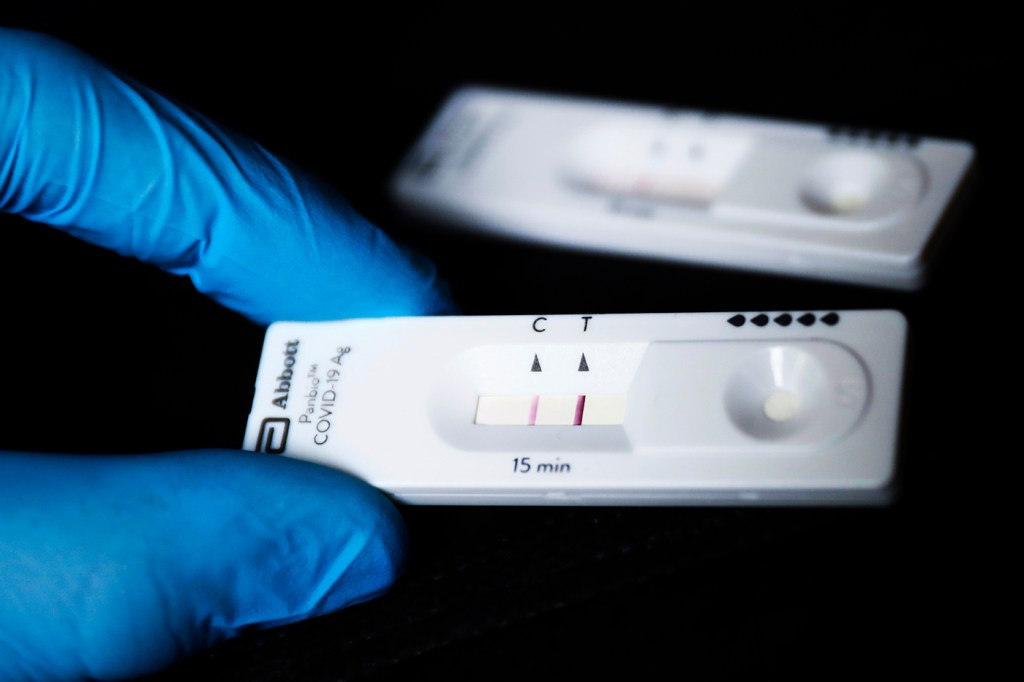](https://news.northeastern.edu/2022/02/03/can-you-get-covid-twice/)
[You’ve had COVID-19. Do you get a free pass for a while?](https://news.northeastern.edu/2022/06/09/covid-19-twice-within-90-days/)
“Those viral particles can be detected as far as two or three months out,” he says.
The thinking when the recommendation was written was also that the antibodies developed during the infection could protect you from getting reinfected within 90 days. But that’s not really the case, Maniar says.
“The idea that if you are infected, that you don’t necessarily have to worry about reinfection for three months, doesn’t necessarily apply anymore,” he says.
The return to the “new normal”—maskless workspaces and airplanes, for example—may increase the probability of reinfections from different variants.
“We’re really starting to return to a much more normal pace of life relative to earlier this year,” Maniar says. “That’s a really good thing.”
It means that we have resources at our disposal, like vaccines and masks, to gather in relative safety, he says. Still, “the likelihood of being exposed increases.”
Fortunately, as variants tend to become more infectious, they also tend to become less powerful. Amiji says COVID-19’s subvariants typically cause more upper respiratory issues than lower, making the symptoms less serious. And for those who have been vaccinated and received booster shots, symptoms tend to be even less severe, or even nonexistent. This reinforces the importance of getting vaccinated and boosted. Amiji hopes that one day COVID-19 boosters will combine with flu shots, and that it can be easy to get both at the same time each year.
But hospitalizations still happen, especially among subsets of the population that are at higher risk, so it is still important to take preventative measures even as we start to move into what Amiji calls an “endemic” phase of the pandemic.
To help stop the spread, Amiji recommends getting tested if you have symptoms, and if a rapid test—which is less sensitive than a PCR test—is positive, you should isolate and wear a mask indoors. The amount of time it takes to test negative after being infected varies from person to person, he says, but it’s important to keep testing in order to make informed decisions. “It’s the time when you start to test negative that you could potentially be less infective,” he says.
Maniar compares measures like these to wearing a seatbelt every time you get in a car. “We all do need to continue to think about others around us, and think about what we need to do to protect ourselves.”
[***For media inquiries***](https://news.northeastern.edu/media-inquiries/)*, please contact* *media@northeastern.edu**.*

by **[Jessica Taylor Price - Contributor](https://news.northeastern.edu/author/jprice/)**
June 9, 2022
## Share
- [Facebook](https://www.facebook.com/sharer.php?u=https://news.northeastern.edu/2022/06/09/covid-19-twice-within-90-days/)
- [LinkedIn](https://www.linkedin.com/shareArticle?url=https://news.northeastern.edu/2022/06/09/covid-19-twice-within-90-days/&title=Can%20you%20get%20COVID-19%20twice%20within%2090%20days?%20Here’s%20why%20it’s%20more%20likely%20now%20than%20ever.)
- [Twitter](https://twitter.com/intent/tweet?text=Can%20you%20get%20COVID-19%20twice%20within%2090%20days?%20Here’s%20why%20it’s%20more%20likely%20now%20than%20ever.%20https://news.northeastern.edu/2022/06/09/covid-19-twice-within-90-days/%20via%20Northeastern%20Global%20News)
## More by Jessica Taylor Price
[From medieval times to the present, London’s migrant history celebrated in new book](https://news.northeastern.edu/2024/01/11/london-migration-history-book/)
[London’s underground theater scene takes center stage in new Northeastern mapping project](https://news.northeastern.edu/?post_type=post&p=207383)
[How does daylight saving time affect sleep and mental health?](https://news.northeastern.edu/?post_type=post&p=158693)
## Editor's Picks
[What is the Strait of Hormuz, and why does it matter?](https://news.northeastern.edu/2026/03/19/what-is-the-straight-of-hormuz/)
[Motivated employees get tasked with more work, study finds](https://news.northeastern.edu/2026/03/18/intrinsic-motivation-at-work-burnout-research/)
[Research into great-grandfather’s past reveals Holocaust history](https://news.northeastern.edu/2026/03/17/melina-coy-holocaust-history-gideon-klein-lecture/)
[What an abandoned monkey and his IKEA orangutan tell us about humans](https://news.northeastern.edu/2026/03/13/punch-the-monkey/)
[Nobles go, bishops stay. Changes in Parliament’s House of Lords](https://news.northeastern.edu/2026/03/13/house-of-lords-uk/)
## Featured Posts
[Officials capture Nicolás Maduro, strike Caracas: Is the U.S. at war?](https://news.northeastern.edu/2026/01/03/us-captures-nicolas-maduro-regime-change/)
[Was the death of Shakespeare’s son Hamnet inspiration for Hamlet?](https://news.northeastern.edu/2026/01/02/hamnet-movie/)
[No red blood cells? No problem. Icefish, meet the Asian noodlefish](https://news.northeastern.edu/2026/01/01/asian-noodlefish-red-blood-cells/)
[Why we get — and how to beat — the ‘holiday blues’](https://news.northeastern.edu/2025/12/19/holiday-blues/)
[Reiner killings an ‘unusual form’ of family violence](https://news.northeastern.edu/2025/12/19/reiner-murder-patricide-matricide/)
## Health
[Early life adversity can increase cardiovascular risks, research shows](https://news.northeastern.edu/2026/03/23/cardiac-risk-early-life-stress/)
[Bacterial meningitis can turn deadly quickly – prompt treatment is key](https://news.northeastern.edu/2026/03/20/meningitis-outbreak-uk/)
[Here’s what you need to know about cancer vaccine development](https://news.northeastern.edu/2026/03/13/cancer-vaccine-development-research/)
## Recent Stories
[Will the Mayweather-Pacquiao sequel on Netflix pack a punch?](https://news.northeastern.edu/2026/03/24/pacquiao-vs-mayweather-sequel-netflix/)
[Nature report links wildlife trends to human well-being](https://news.northeastern.edu/2026/03/24/us-nature-report/)
[One million new satellites could soon transform night into day on Earth](https://news.northeastern.edu/2026/03/24/space-mirrors-satellites-sunlight-earth/)
# [Can you get COVID-19 twice within 90 days? Here’s why it’s more likely now than ever.](https://news.northeastern.edu/)
- [University News](https://news.northeastern.edu/category/university-news/)
- [World & National News](https://news.northeastern.edu/category/world-news/)
- [Science & Technology](https://news.northeastern.edu/category/science-technology/)
- [Arts & Entertainment](https://news.northeastern.edu/category/arts-entertainment/)
- [Business](https://news.northeastern.edu/category/business/)
- [Health](https://news.northeastern.edu/category/health/)
- [Law](https://news.northeastern.edu/category/law/)
- [Lifestyle](https://news.northeastern.edu/category/lifestyle/)
- [Society & Culture](https://news.northeastern.edu/category/society-culture/)
- [Sports](https://news.northeastern.edu/category/sports/)
- [Contact Us](https://news.northeastern.edu/contact/)
- [Faculty Experts](https://news.northeastern.edu/faculty-experts)
- [In the Press](https://news.northeastern.edu/in-the-media)
- [Media Inquiries](https://news.northeastern.edu/media-inquiries)
- [Newsletter](https://mailchi.mp/northeastern/sign-up-form)
- [News Hubs](https://news.northeastern.edu/)
- [Parents & Families](https://news.northeastern.edu/parents)
- [NGN Research](https://news.northeastern.edu/research/)
- [Faculty & Staff](https://news.northeastern.edu/faculty-staff)
[Large N with "Lux, Veritas, Virtus" overlayed](https://northeastern.edu/)
© 2026 [Northeastern University](https://www.northeastern.edu/)
[Privacy Policy](https://northeastern.edu/privacy-information)
[Cookie Preferences]()
- [Facebook](https://www.facebook.com/northeastern)
- [Instagram](https://www.instagram.com/northeasternglobalnews)
- [LinkedIn](https://www.linkedin.com/school/northeastern-university/)
- [Tiktok](https://www.tiktok.com/@northeasternu)
- [X (Twitter)](https://x.com/northeastern)
- [Youtube](https://www.youtube.com/user/Northeastern/featured) |
| Readable Markdown | When looking at the state of COVID-19 in the United States, [Mansoor Amiji](https://web.northeastern.edu/amijilab/people/prof-amiji/), distinguished professor in the Department of Pharmaceutical Sciences at Northeastern, invites you to think from the perspective of a virus. What does it want? What does it need to do to find new hosts, or to reinfect old ones?
The answer, he says, lies in spike proteins, the part of a virus that attaches to the receptor on a host cell. Under pressure from natural immunity and other countermeasures to its survival, the COVID-19 virus mutates these spike proteins at random, creating new variants that are more transmissible than previous ones.
This evolution makes COVID-19 similar to other viruses we’ve seen. “That’s really the natural course of a virus,” Amiji says.

Neil Maniar, director of the Master of Public Health program and a professor of the practice in the Bouvé College of Health Sciences, and Mansoor Amiji, Distinguished Professor and Chair of the Department of Pharmaceutical Sciences. Photos by Matthew Modoono/Northeastern University
It’s also the reason you’re more likely to get COVID-19 twice now than you were just [four months ago](https://news.northeastern.edu/2022/02/03/can-you-get-covid-twice/). New variants like BA-4 or BA-5, which were unheard of earlier this year, are now [circulating](https://www.nbcnews.com/health/health-news/two-omicron-subvariants-gain-bigger-foothold-us-rcna32410) in the United States, and they may not be prevented by vaccines, boosters, or the antibodies that you develop when you’re infected by another variant.
For example, if you became infected from the BA-2 subvariant, this doesn’t prevent you from getting infected with BA-4 or BA-5, says [Neil Maniar](https://bouve.northeastern.edu/bchs/directory/neil-maniar/), professor of practice in the Department of Health Sciences. Maniar says each subvariant of COVID-19 tends to be more transmissible than the last, and that protection from one does not guarantee protection from another.
“It doesn’t mean that we have to fear reinfection,” Maniar says, “but it does mean we have to keep in mind that just because you got COVID once, it doesn’t mean you won’t get it again within a month or two months or three months, because there are these different subvariants that are circulating.”
Despite this development, the Centers for Disease Control and Prevention still [does not recommend](https://www.cdc.gov/coronavirus/2019-ncov/your-health/quarantine-isolation.html) that you test for COVID-19 within 90 days of recovering from infection.
“If you tested positive for COVID-19 with a viral test within the previous 90 days and subsequently recovered and remain asymptomatic, you do not need to quarantine or get tested after close contact,” reads the CDC’s [website](https://www.cdc.gov/coronavirus/2019-ncov/your-health/quarantine-isolation.html).
The reason for this, Maniar says, is that a PCR test can still detect trace amounts of the virus even after someone is no longer symptomatic or infectious. This can lead to a false positive, even when an antigen (or, “rapid”) test will come back negative.
“Those viral particles can be detected as far as two or three months out,” he says.
The thinking when the recommendation was written was also that the antibodies developed during the infection could protect you from getting reinfected within 90 days. But that’s not really the case, Maniar says.
“The idea that if you are infected, that you don’t necessarily have to worry about reinfection for three months, doesn’t necessarily apply anymore,” he says.
The return to the “new normal”—maskless workspaces and airplanes, for example—may increase the probability of reinfections from different variants.
“We’re really starting to return to a much more normal pace of life relative to earlier this year,” Maniar says. “That’s a really good thing.”
It means that we have resources at our disposal, like vaccines and masks, to gather in relative safety, he says. Still, “the likelihood of being exposed increases.”
Fortunately, as variants tend to become more infectious, they also tend to become less powerful. Amiji says COVID-19’s subvariants typically cause more upper respiratory issues than lower, making the symptoms less serious. And for those who have been vaccinated and received booster shots, symptoms tend to be even less severe, or even nonexistent. This reinforces the importance of getting vaccinated and boosted. Amiji hopes that one day COVID-19 boosters will combine with flu shots, and that it can be easy to get both at the same time each year.
But hospitalizations still happen, especially among subsets of the population that are at higher risk, so it is still important to take preventative measures even as we start to move into what Amiji calls an “endemic” phase of the pandemic.
To help stop the spread, Amiji recommends getting tested if you have symptoms, and if a rapid test—which is less sensitive than a PCR test—is positive, you should isolate and wear a mask indoors. The amount of time it takes to test negative after being infected varies from person to person, he says, but it’s important to keep testing in order to make informed decisions. “It’s the time when you start to test negative that you could potentially be less infective,” he says.
Maniar compares measures like these to wearing a seatbelt every time you get in a car. “We all do need to continue to think about others around us, and think about what we need to do to protect ourselves.”
[***For media inquiries***](https://news.northeastern.edu/media-inquiries/)*, please contact* *media@northeastern.edu**.* |
| Shard | 0 (laksa) |
| Root Hash | 12761418857983855600 |
| Unparsed URL | edu,northeastern!news,/2022/06/09/covid-19-twice-within-90-days/ s443 |