ℹ️ Skipped - page is already crawled
| Filter | Status | Condition | Details |
|---|---|---|---|
| HTTP status | PASS | download_http_code = 200 | HTTP 200 |
| Age cutoff | PASS | download_stamp > now() - 6 MONTH | 0.6 months ago |
| History drop | PASS | isNull(history_drop_reason) | No drop reason |
| Spam/ban | PASS | fh_dont_index != 1 AND ml_spam_score = 0 | ml_spam_score=0 |
| Canonical | PASS | meta_canonical IS NULL OR = '' OR = src_unparsed | Not set |
| Property | Value |
|---|---|
| URL | https://news.mit.edu/2022/study-sheds-light-antibiotics-associated-diarrhea-0228 |
| Last Crawled | 2026-04-02 11:46:50 (18 days ago) |
| First Indexed | 2022-02-28 18:09:04 (4 years ago) |
| HTTP Status Code | 200 |
| Meta Title | Study sheds light on antibiotics-associated diarrhea | MIT News | Massachusetts Institute of Technology |
| Meta Description | A joint study conducted by the Singapore-MIT Alliance for Research and Technology (SMART) and Singapore General Hospital may have found the reason why some patients may experience diarrhea after taking amoxicillin-clavulanate. |
| Meta Canonical | null |
| Boilerpipe Text | A joint study by the Singapore General Hospital (SGH) and Singapore-MIT Alliance for Research and Technology (SMART), MIT’s research enterprise in Singapore, may have found the reason some patients experience diarrhea after taking the antibiotic amoxicillin-clavulanate, commonly known as Augmentin. It is a widely prescribed antibiotic used to treat many infections, including pneumonia and urinary tract infections.
The team of researchers found that the level of gut
Ruminococcaceae
, a family of bacteria that plays an important role in maintaining an individual’s gut health, strongly impacts diarrheal outcomes following antibiotic treatment.
“The problem is very real for patients who are unable to take amoxicillin-clavulanate because it gives them diarrhea, even though it is an effective and affordable antibiotic for their infection. Knowing why may help us identify those at risk of antibiotic-associated diarrhea, and devise treatment strategies in the future to minimize or avoid such adverse effects,” says Shirin Kalimuddin, consultant, SGH Department of Infectious Diseases, the principal investigator of the study.
A total of 30 healthy volunteers were recruited for the study. They each received a three-day oral course of amoxicillin-clavulanate. Their stool samples were collected on stipulated days over a period of four weeks and analyzed using gene sequencing to look for changes in the gut microbiome during the study period.
Results showed that
Ruminococcaceae
levels in the stools of study volunteers who developed diarrhea were significantly lower when compared to those who did not, both before and during treatment with amoxicillin-clavulanate. This suggests that individuals may, depending on their gut composition, be predisposed to antibiotic-associated diarrhea. The team further devised a simple polymerase chain reaction test based on levels of
Faecalibacterium prausnitzii
, a species within the
Ruminococcaceae
family, that could potentially be used in clinical settings to quickly determine an individual’s risk of developing diarrhea with amoxicillin-clavulanate treatment.
“People respond differently to medication. Understanding this response and the ability to predict those at risk will help guide the development of point-of-care diagnostics,” says Eric J. Alm, professor of biological engineering at MIT, principal investigator at SMART Antimicrobial Resistance (AMR) interdisciplinary research group, and co-corresponding author of the study.
“While a lot of attention has been paid to how DNA influences a person’s response to medication, the impact of the gut microbiome on the human drug response has not been widely researched. Our findings provide evidence that an individual’s gut microbial composition can influence the risk of developing antibiotics-associated diarrhea. Tested against amoxicillin-clavulanate, the study provides a framework to identify other potential causes of antibiotic-associated diarrhea in relation to other classes of antibiotics,” adds Alm.
Globally, one in three patients prescribed amoxicillin-clavulanate will develop diarrhea. In some cases, their diarrhea may be so severe that doctors have to stop the antibiotic prematurely, resulting in inadequate treatment of the infection, or the need to switch to another antibiotic that may be more costly or can only be given intravenously. The diarrhea could also prolong patients’ hospital stays, leading to an increased risk of other infections as a result.
Building upon what is now known, the team now hopes to conduct a clinical trial to see if certain species of bacteria within the
Ruminococcaceae
family could be used as a probiotic to prevent diarrhea in patients receiving antibiotics.
The study findings were published in the peer-reviewed scientific journal
iScience
in January.
Singapore General Hospital
, a member of Singapore Health Services, is the public sector's flagship hospital. Established in 1821, SGH is Singapore's largest acute tertiary hospital with 1,700 beds and a national referral center offering a comprehensive range of more than 40 clinical specialties on its campus. Every year, about 1 million Singaporeans benefit from medical care delivered by its 800 specialists. As an academic health-care institution and the bedrock of medical education, SGH plays a key role in nurturing doctors, nurses, and allied health professionals, and is committed to innovative translational and clinical research in her continual strive to provide the best care and outcomes to her patients.
SMART
was established by MIT in partnership with the National Research Foundation of Singapore (NRF) in 2007. SMART is the first entity in the Campus for Research Excellence and Technological Enterprise (CREATE) developed by NRF. SMART serves as an intellectual and innovation hub for research interactions between MIT and Singapore, undertaking cutting-edge research projects in areas of interest to both Singapore and MIT. SMART currently comprises an Innovation Center and five interdisciplinary research groups (IRGs): AMR, Critical Analytics for Manufacturing Personalized-Medicine, Disruptive & Sustainable Technologies for Agricultural Precision, Future Urban Mobility, and Low Energy Electronic Systems.
SMART research is funded by the NRF under the CREATE program.
The
AMR
IRG is a translational research and entrepreneurship program that tackles the growing threat of antimicrobial resistance. By leveraging talent and convergent technologies across Singapore and MIT, they tackle AMR head-on by developing multiple innovative and disruptive approaches to identify, respond to, and treat drug-resistant microbial infections. Through strong scientific and clinical collaborations, AMR provides transformative, holistic solutions for Singapore and the world. |
| Markdown | [Skip to content ↓](https://news.mit.edu/2022/study-sheds-light-antibiotics-associated-diarrhea-0228#main)
[Massachusetts Institute of Technology](http://web.mit.edu/)
[MIT Top Menu↓](https://news.mit.edu/2022/study-sheds-light-antibiotics-associated-diarrhea-0228#tle-nav--menu)
- [Education](http://web.mit.edu/education)
- [Research](http://web.mit.edu/research)
- [Innovation](http://web.mit.edu/innovation)
- [Admissions + Aid](http://web.mit.edu/admissions-aid)
- [Campus Life](http://web.mit.edu/campus-life)
- [News](https://news.mit.edu/)
- [Alumni](http://web.mit.edu/alumni)
- [About MIT](http://web.mit.edu/about)
- More ↓
- [News](https://news.mit.edu/)
- [Alumni](http://web.mit.edu/alumni)
- [About MIT](http://web.mit.edu/about)
[Search MIT](http://web.mit.edu/search/)
See More Results
[Suggestions or feedback?](http://web.mit.edu/feedback)
## [MIT News \| Massachusetts Institute of Technology - On Campus and Around the world](https://news.mit.edu/)
[Subscribe to MIT News newsletter](http://web.mit.edu/mit-daily-weekly/)
[Search news](https://news.mit.edu/2022/study-sheds-light-antibiotics-associated-diarrhea-0228#site-nav--browse)
## Browse By
### Topics
[View All](https://news.mit.edu/topics) →
Explore:
- [Machine learning](https://news.mit.edu/topic/machine-learning)
- [Sustainability](https://news.mit.edu/topic/sustainability)
- [Startups](https://news.mit.edu/topic/startups)
- [Black holes](https://news.mit.edu/topic/black-holes)
- [Classes and programs](https://news.mit.edu/topic/classes-and-programs)
### Departments
[View All](https://news.mit.edu/departments) →
Explore:
- [Aeronautics and Astronautics](https://news.mit.edu/department/aeronautics-and-astronautics)
- [Brain and Cognitive Sciences](https://news.mit.edu/department/brain-and-cognitive-sciences)
- [Architecture](https://news.mit.edu/department/architecture)
- [Political Science](https://news.mit.edu/department/political-science)
- [Mechanical Engineering](https://news.mit.edu/department/mechanical-engineering)
### Centers, Labs, & Programs
[View All](https://news.mit.edu/centers-labs-programs) →
Explore:
- [Abdul Latif Jameel Poverty Action Lab (J-PAL)](https://news.mit.edu/clp/abdul-latif-jameel-poverty-action-lab-j-pal)
- [Picower Institute for Learning and Memory](https://news.mit.edu/clp/picower-institute)
- [Media Lab](https://news.mit.edu/clp/media-lab)
- [Lincoln Laboratory](https://news.mit.edu/clp/lincoln-laboratory)
### Schools
- [School of Architecture + Planning](https://news.mit.edu/school/architecture-and-planning)
- [School of Engineering](https://news.mit.edu/school/engineering)
- [School of Humanities, Arts, and Social Sciences](https://news.mit.edu/school/humanities-arts-and-social-sciences)
- [Sloan School of Management](https://news.mit.edu/school/management)
- [School of Science](https://news.mit.edu/school/science)
- [MIT Schwarzman College of Computing](https://news.mit.edu/school/mit-schwarzman-college-computing)
[View all news coverage of MIT in the media](https://news.mit.edu/in-the-media) →
[Listen to audio content from MIT News](https://news.mit.edu/podcasts) →
[Subscribe to MIT newsletter](http://web.mit.edu/subscribe/) →
[Close](https://news.mit.edu/2022/study-sheds-light-antibiotics-associated-diarrhea-0228)
#### Breadcrumb
1. [MIT News](https://news.mit.edu/)
2. Study sheds light on antibiotics-associated diarrhea
# Study sheds light on antibiotics-associated diarrhea
SMART researchers find explanation for why some patients might experience diarrhea after taking amoxicillin-clavulanate.
Singapore-MIT Alliance for Research and Technology
Publication Date:
February 28, 2022
[Press Inquiries](https://news.mit.edu/2022/study-sheds-light-antibiotics-associated-diarrhea-0228#press-inquiries)
### Press Contact:
Linda Zahka-Stockdale
Email: [lindas@mit.edu](mailto:lindas@mit.edu)
Phone: 617-253-0522
Singapore-MIT Alliance for Research and Technology
[Close](https://news.mit.edu/2022/study-sheds-light-antibiotics-associated-diarrhea-0228)
Caption:
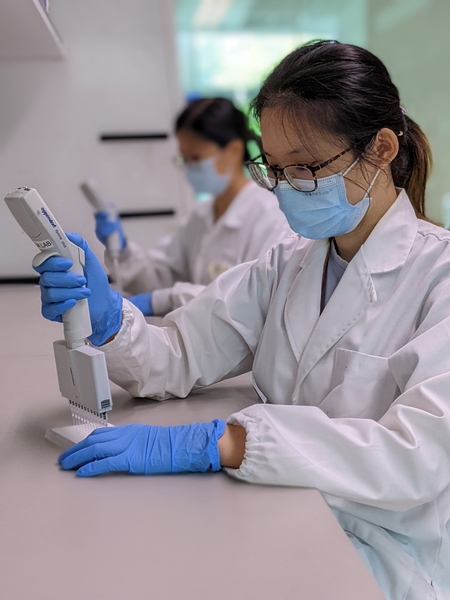
SMART researchers Xiaoqiong Gu (right) and Wei Lin Lee set up assays for measuring the levels of gut bacteria Ruminococcaceae in a stool sample.
Credits:
Photo courtesy of the Singapore-MIT Alliance for Research and Technology
Previous image Next image
A joint study by the Singapore General Hospital (SGH) and Singapore-MIT Alliance for Research and Technology (SMART), MIT’s research enterprise in Singapore, may have found the reason some patients experience diarrhea after taking the antibiotic amoxicillin-clavulanate, commonly known as Augmentin. It is a widely prescribed antibiotic used to treat many infections, including pneumonia and urinary tract infections.
The team of researchers found that the level of gut *Ruminococcaceae*, a family of bacteria that plays an important role in maintaining an individual’s gut health, strongly impacts diarrheal outcomes following antibiotic treatment.
“The problem is very real for patients who are unable to take amoxicillin-clavulanate because it gives them diarrhea, even though it is an effective and affordable antibiotic for their infection. Knowing why may help us identify those at risk of antibiotic-associated diarrhea, and devise treatment strategies in the future to minimize or avoid such adverse effects,” says Shirin Kalimuddin, consultant, SGH Department of Infectious Diseases, the principal investigator of the study.
A total of 30 healthy volunteers were recruited for the study. They each received a three-day oral course of amoxicillin-clavulanate. Their stool samples were collected on stipulated days over a period of four weeks and analyzed using gene sequencing to look for changes in the gut microbiome during the study period.
Results showed that *Ruminococcaceae* levels in the stools of study volunteers who developed diarrhea were significantly lower when compared to those who did not, both before and during treatment with amoxicillin-clavulanate. This suggests that individuals may, depending on their gut composition, be predisposed to antibiotic-associated diarrhea. The team further devised a simple polymerase chain reaction test based on levels of *Faecalibacterium prausnitzii*, a species within the *Ruminococcaceae* family, that could potentially be used in clinical settings to quickly determine an individual’s risk of developing diarrhea with amoxicillin-clavulanate treatment.
“People respond differently to medication. Understanding this response and the ability to predict those at risk will help guide the development of point-of-care diagnostics,” says Eric J. Alm, professor of biological engineering at MIT, principal investigator at SMART Antimicrobial Resistance (AMR) interdisciplinary research group, and co-corresponding author of the study.
“While a lot of attention has been paid to how DNA influences a person’s response to medication, the impact of the gut microbiome on the human drug response has not been widely researched. Our findings provide evidence that an individual’s gut microbial composition can influence the risk of developing antibiotics-associated diarrhea. Tested against amoxicillin-clavulanate, the study provides a framework to identify other potential causes of antibiotic-associated diarrhea in relation to other classes of antibiotics,” adds Alm.
Globally, one in three patients prescribed amoxicillin-clavulanate will develop diarrhea. In some cases, their diarrhea may be so severe that doctors have to stop the antibiotic prematurely, resulting in inadequate treatment of the infection, or the need to switch to another antibiotic that may be more costly or can only be given intravenously. The diarrhea could also prolong patients’ hospital stays, leading to an increased risk of other infections as a result.
Building upon what is now known, the team now hopes to conduct a clinical trial to see if certain species of bacteria within the *Ruminococcaceae* family could be used as a probiotic to prevent diarrhea in patients receiving antibiotics.
The study findings were published in the peer-reviewed scientific journal *iScience* in January.
[Singapore General Hospital](http://www.sgh.com.sg/), a member of Singapore Health Services, is the public sector's flagship hospital. Established in 1821, SGH is Singapore's largest acute tertiary hospital with 1,700 beds and a national referral center offering a comprehensive range of more than 40 clinical specialties on its campus. Every year, about 1 million Singaporeans benefit from medical care delivered by its 800 specialists. As an academic health-care institution and the bedrock of medical education, SGH plays a key role in nurturing doctors, nurses, and allied health professionals, and is committed to innovative translational and clinical research in her continual strive to provide the best care and outcomes to her patients.
[SMART](http://smart.mit.edu/) was established by MIT in partnership with the National Research Foundation of Singapore (NRF) in 2007. SMART is the first entity in the Campus for Research Excellence and Technological Enterprise (CREATE) developed by NRF. SMART serves as an intellectual and innovation hub for research interactions between MIT and Singapore, undertaking cutting-edge research projects in areas of interest to both Singapore and MIT. SMART currently comprises an Innovation Center and five interdisciplinary research groups (IRGs): AMR, Critical Analytics for Manufacturing Personalized-Medicine, Disruptive & Sustainable Technologies for Agricultural Precision, Future Urban Mobility, and Low Energy Electronic Systems.
SMART research is funded by the NRF under the CREATE program.
The [AMR](http://amr.smart.mit.edu/#home) IRG is a translational research and entrepreneurship program that tackles the growing threat of antimicrobial resistance. By leveraging talent and convergent technologies across Singapore and MIT, they tackle AMR head-on by developing multiple innovative and disruptive approaches to identify, respond to, and treat drug-resistant microbial infections. Through strong scientific and clinical collaborations, AMR provides transformative, holistic solutions for Singapore and the world.
### Share this news article on:
- [X](https://twitter.com/share?url=https://news.mit.edu/2022/study-sheds-light-antibiotics-associated-diarrhea-0228)
- [Facebook](https://www.facebook.com/sharer/sharer.php?u=https://news.mit.edu/2022/study-sheds-light-antibiotics-associated-diarrhea-0228)
- [LinkedIn](https://www.linkedin.com/sharing/share-offsite/?url=https://news.mit.edu/2022/study-sheds-light-antibiotics-associated-diarrhea-0228)
- [Reddit](http://www.reddit.com/submit?url=https://news.mit.edu/2022/study-sheds-light-antibiotics-associated-diarrhea-0228&title=Study%20sheds%20light%20on%20antibiotics-associated%20diarrhea%20%20%20%20%20%20)
- [Print](https://news.mit.edu/2022/study-sheds-light-antibiotics-associated-diarrhea-0228)
## Paper
[Paper: "Gut Ruminococcaceae levels at baseline correlate with risk of antibiotic-associated diarrhea"](https://www.cell.com/iscience/pdf/S2589-0042\(21\)01614-X.pdf)
## Related Links
- [Eric J. Alm](https://be.mit.edu/directory/eric-alm)
- [Antimicrobial Resistance Group](https://smart.mit.edu/research/amr/about-amr)
- [Singapore-MIT Alliance for Research and Technology](https://smart.mit.edu/)
- [Department of Biological Engineering](https://be.mit.edu/)
- [School of Engineering](https://engineering.mit.edu/)
## Related Topics
- [School of Engineering](https://news.mit.edu/topic/school-engineering)
- [Singapore-MIT Alliance for Research and Technology (SMART)](https://news.mit.edu/topic/singapore-mit-alliance-research-and-technology-smart-0)
- [Microbes](https://news.mit.edu/topic/microbes)
- [Microbiome](https://news.mit.edu/topic/microbiome)
- [Antibiotics](https://news.mit.edu/topic/antibiotics)
- [Medicine](https://news.mit.edu/topic/medicine)
- [Research](https://news.mit.edu/topic/research)
- [Health care](https://news.mit.edu/topic/health-care)
- [Biological engineering](https://news.mit.edu/topic/biological-engineering)
## Related Articles
[](https://news.mit.edu/2021/change-water-labs-toilet-0223)
### [Improving sanitation for the world’s most vulnerable people](https://news.mit.edu/2021/change-water-labs-toilet-0223)
[![“The biology \[around gut bacteria’s influence on health\] is fairly complex, and we’re still in the early days of unravelling it, but there have been a number of clinical studies that have reported benefits to restoring gut health, and that’s our north star: the clinical data,” Finch co-founder and Chief Executive Officer Mark Smith PhD ’14 says.](https://news.mit.edu/sites/default/files/styles/news_article__archive/public/images/202007/MIT-Finch-01.jpg?itok=nMuVS-Q9)](https://news.mit.edu/2020/finch-therapeutics-gut-microbiome-0723)
### [Finch Therapeutics unleashes the power of the gut](https://news.mit.edu/2020/finch-therapeutics-gut-microbiome-0723)
[](https://news.mit.edu/2016/startup-synlogic-reprogramming-gut-bacteria-living-therapeutics-0405)
### [Reprogramming gut bacteria as “living therapeutics”](https://news.mit.edu/2016/startup-synlogic-reprogramming-gut-bacteria-living-therapeutics-0405)
Previous item Next item
## More MIT News
[](https://news.mit.edu/2026/mit-researchers-measure-traffic-emissions-block-real-time-0402)
### [MIT researchers measure traffic emissions, to the block, in real-time](https://news.mit.edu/2026/mit-researchers-measure-traffic-emissions-block-real-time-0402)
A new study pieces together existing data sources in order to develop a detailed, dynamic picture of auto emissions.
[Read full story](https://news.mit.edu/2026/mit-researchers-measure-traffic-emissions-block-real-time-0402) →
[](https://news.mit.edu/2026/evaluating-autonomous-systems-ethics-0402)
### [Evaluating the ethics of autonomous systems](https://news.mit.edu/2026/evaluating-autonomous-systems-ethics-0402)
MIT researchers developed a testing framework that pinpoints situations where AI decision-support systems are not treating people and communities fairly.
[Read full story](https://news.mit.edu/2026/evaluating-autonomous-systems-ethics-0402) →
[](https://news.mit.edu/2026/preview-tool-helps-makers-visualize-3d-printed-objects-0401)
### [Preview tool helps makers visualize 3D-printed objects](https://news.mit.edu/2026/preview-tool-helps-makers-visualize-3d-printed-objects-0401)
By quickly generating aesthetically accurate previews of fabricated objects, the VisiPrint system could make prototyping faster and less wasteful.
[Read full story](https://news.mit.edu/2026/preview-tool-helps-makers-visualize-3d-printed-objects-0401) →
[](https://news.mit.edu/2026/two-physicists-and-curious-host-walk-studio)
### [Two physicists and a curious host walk into a studio…](https://news.mit.edu/2026/two-physicists-and-curious-host-walk-studio)
On GBH’s new show The Curiosity Desk, MIT LIGO researchers revel in the beauties of fundamental discovery science and MIT astronomers talk planetary defense.
[Read full story](https://news.mit.edu/2026/two-physicists-and-curious-host-walk-studio) →
[](https://news.mit.edu/2026/building-blocks-of-life-sergei-kotelnikov-0331)
### [Building the blocks of life](https://news.mit.edu/2026/building-blocks-of-life-sergei-kotelnikov-0331)
Computational biologist Sergei Kotelnikov is working to develop new methods in protein modeling as part of the School of Science Dean’s Postdoctoral Fellowship.
[Read full story](https://news.mit.edu/2026/building-blocks-of-life-sergei-kotelnikov-0331) →
[](https://news.mit.edu/2026/tomas-palacios-named-director-institute-soldier-nanotechnologies-0331)
### [Tomás Palacios named director of the Institute for Soldier Nanotechnologies](https://news.mit.edu/2026/tomas-palacios-named-director-institute-soldier-nanotechnologies-0331)
The electrical engineering and nanotechnology leader will guide the US Army-sponsored research center as it advances next-generation materials, electronics, and photonics for national security.
[Read full story](https://news.mit.edu/2026/tomas-palacios-named-director-institute-soldier-nanotechnologies-0331) →
- [More news on MIT News homepage](https://news.mit.edu/) →
## [More about MIT News at Massachusetts Institute of Technology](https://news.mit.edu/)
This website is managed by the MIT News Office, part of the [Institute Office of Communications](http://comms.mit.edu/).
### News by Schools/College:
- [School of Architecture and Planning](https://news.mit.edu/school/architecture-and-planning)
- [School of Engineering](https://news.mit.edu/school/engineering)
- [School of Humanities, Arts, and Social Sciences](https://news.mit.edu/school/humanities-arts-and-social-sciences)
- [MIT Sloan School of Management](https://news.mit.edu/school/management)
- [School of Science](https://news.mit.edu/school/science)
- [MIT Schwarzman College of Computing](https://news.mit.edu/school/mit-schwarzman-college-computing)
### Resources:
- [About the MIT News Office](https://news.mit.edu/mit-news-office/about)
- [MIT News Press Center](https://news.mit.edu/press)
- [Terms of Use](https://news.mit.edu/terms-of-use)
- [Press Inquiries](https://news.mit.edu/press/inquiries)
- [Filming Guidelines](https://news.mit.edu/press/filming-guidelines)
- [RSS Feeds](https://news.mit.edu/rss)
### Tools:
- [Subscribe to MIT Daily/Weekly](http://web.mit.edu/mit-daily-weekly/)
- [Subscribe to press releases](https://news.mit.edu/press/subscribe-to-press-releases)
- [Submit campus news](https://news.mit.edu/user/login?destination=news-submission)
- [Guidelines for campus news contributors](https://news.mit.edu/resources-for-campus-news-contributors)
- [Guidelines on generative AI](https://news.mit.edu/guidelines-generative-ai)
[Massachusetts Institute of Technology](http://web.mit.edu/)
MIT Top Level Links:
- [Education](http://web.mit.edu/education)
- [Research](http://web.mit.edu/research)
- [Innovation](http://web.mit.edu/innovation)
- [Admissions + Aid](http://web.mit.edu/admissions-aid)
- [Campus Life](http://web.mit.edu/campus-life)
- [News](https://news.mit.edu/)
- [Alumni](http://web.mit.edu/alumni)
- [About MIT](http://web.mit.edu/about)
- [Join us in building a better world.](http://web.mit.edu/building-a-better-world/)
[Massachusetts Institute of Technology](http://web.mit.edu/)
77 Massachusetts Avenue, Cambridge, MA, USA
Recommended Links:
- [Visit](http://web.mit.edu/visitmit)
- [Map (opens in new window)](http://whereis.mit.edu/)
- [Events (opens in new window)](http://calendar.mit.edu/)
- [People (opens in new window)](http://web.mit.edu/people.html)
- [Careers (opens in new window)](http://careers.mit.edu/)
- [Contact](http://web.mit.edu/contact)
- [Privacy](http://web.mit.edu/privacy)
- [Accessibility](http://web.mit.edu/accessibility)
- - [Social Media Hub](http://socialmediahub.mit.edu/)
- [MIT on X](https://twitter.com/mit)
- [MIT on Facebook](https://www.facebook.com/MITnews)
- [MIT on YouTube](https://www.youtube.com/mit)
- [MIT on Instagram](https://www.instagram.com/mit) |
| Readable Markdown | A joint study by the Singapore General Hospital (SGH) and Singapore-MIT Alliance for Research and Technology (SMART), MIT’s research enterprise in Singapore, may have found the reason some patients experience diarrhea after taking the antibiotic amoxicillin-clavulanate, commonly known as Augmentin. It is a widely prescribed antibiotic used to treat many infections, including pneumonia and urinary tract infections.
The team of researchers found that the level of gut *Ruminococcaceae*, a family of bacteria that plays an important role in maintaining an individual’s gut health, strongly impacts diarrheal outcomes following antibiotic treatment.
“The problem is very real for patients who are unable to take amoxicillin-clavulanate because it gives them diarrhea, even though it is an effective and affordable antibiotic for their infection. Knowing why may help us identify those at risk of antibiotic-associated diarrhea, and devise treatment strategies in the future to minimize or avoid such adverse effects,” says Shirin Kalimuddin, consultant, SGH Department of Infectious Diseases, the principal investigator of the study.
A total of 30 healthy volunteers were recruited for the study. They each received a three-day oral course of amoxicillin-clavulanate. Their stool samples were collected on stipulated days over a period of four weeks and analyzed using gene sequencing to look for changes in the gut microbiome during the study period.
Results showed that *Ruminococcaceae* levels in the stools of study volunteers who developed diarrhea were significantly lower when compared to those who did not, both before and during treatment with amoxicillin-clavulanate. This suggests that individuals may, depending on their gut composition, be predisposed to antibiotic-associated diarrhea. The team further devised a simple polymerase chain reaction test based on levels of *Faecalibacterium prausnitzii*, a species within the *Ruminococcaceae* family, that could potentially be used in clinical settings to quickly determine an individual’s risk of developing diarrhea with amoxicillin-clavulanate treatment.
“People respond differently to medication. Understanding this response and the ability to predict those at risk will help guide the development of point-of-care diagnostics,” says Eric J. Alm, professor of biological engineering at MIT, principal investigator at SMART Antimicrobial Resistance (AMR) interdisciplinary research group, and co-corresponding author of the study.
“While a lot of attention has been paid to how DNA influences a person’s response to medication, the impact of the gut microbiome on the human drug response has not been widely researched. Our findings provide evidence that an individual’s gut microbial composition can influence the risk of developing antibiotics-associated diarrhea. Tested against amoxicillin-clavulanate, the study provides a framework to identify other potential causes of antibiotic-associated diarrhea in relation to other classes of antibiotics,” adds Alm.
Globally, one in three patients prescribed amoxicillin-clavulanate will develop diarrhea. In some cases, their diarrhea may be so severe that doctors have to stop the antibiotic prematurely, resulting in inadequate treatment of the infection, or the need to switch to another antibiotic that may be more costly or can only be given intravenously. The diarrhea could also prolong patients’ hospital stays, leading to an increased risk of other infections as a result.
Building upon what is now known, the team now hopes to conduct a clinical trial to see if certain species of bacteria within the *Ruminococcaceae* family could be used as a probiotic to prevent diarrhea in patients receiving antibiotics.
The study findings were published in the peer-reviewed scientific journal *iScience* in January.
[Singapore General Hospital](http://www.sgh.com.sg/), a member of Singapore Health Services, is the public sector's flagship hospital. Established in 1821, SGH is Singapore's largest acute tertiary hospital with 1,700 beds and a national referral center offering a comprehensive range of more than 40 clinical specialties on its campus. Every year, about 1 million Singaporeans benefit from medical care delivered by its 800 specialists. As an academic health-care institution and the bedrock of medical education, SGH plays a key role in nurturing doctors, nurses, and allied health professionals, and is committed to innovative translational and clinical research in her continual strive to provide the best care and outcomes to her patients.
[SMART](http://smart.mit.edu/) was established by MIT in partnership with the National Research Foundation of Singapore (NRF) in 2007. SMART is the first entity in the Campus for Research Excellence and Technological Enterprise (CREATE) developed by NRF. SMART serves as an intellectual and innovation hub for research interactions between MIT and Singapore, undertaking cutting-edge research projects in areas of interest to both Singapore and MIT. SMART currently comprises an Innovation Center and five interdisciplinary research groups (IRGs): AMR, Critical Analytics for Manufacturing Personalized-Medicine, Disruptive & Sustainable Technologies for Agricultural Precision, Future Urban Mobility, and Low Energy Electronic Systems.
SMART research is funded by the NRF under the CREATE program.
The [AMR](http://amr.smart.mit.edu/#home) IRG is a translational research and entrepreneurship program that tackles the growing threat of antimicrobial resistance. By leveraging talent and convergent technologies across Singapore and MIT, they tackle AMR head-on by developing multiple innovative and disruptive approaches to identify, respond to, and treat drug-resistant microbial infections. Through strong scientific and clinical collaborations, AMR provides transformative, holistic solutions for Singapore and the world. |
| Shard | 180 (laksa) |
| Root Hash | 10722954425220430980 |
| Unparsed URL | edu,mit!news,/2022/study-sheds-light-antibiotics-associated-diarrhea-0228 s443 |