ℹ️ Skipped - page is already crawled
| Filter | Status | Condition | Details |
|---|---|---|---|
| HTTP status | PASS | download_http_code = 200 | HTTP 200 |
| Age cutoff | PASS | download_stamp > now() - 6 MONTH | 0.2 months ago |
| History drop | PASS | isNull(history_drop_reason) | No drop reason |
| Spam/ban | PASS | fh_dont_index != 1 AND ml_spam_score = 0 | ml_spam_score=0 |
| Canonical | PASS | meta_canonical IS NULL OR = '' OR = src_unparsed | Not set |
| Property | Value |
|---|---|
| URL | https://neurosciencenews.com/viral-infection-cognitive-decline-30250/ |
| Last Crawled | 2026-04-14 22:16:08 (6 days ago) |
| First Indexed | 2026-03-05 19:11:43 (1 month ago) |
| HTTP Status Code | 200 |
| Meta Title | Chronic Inflammation Rewires the Brain’s Cognitive Center - Neuroscience News |
| Meta Description | Researchers identify specific immune markers, like activated monocytes and cytokines, that drive cognitive decline after viral infections across various diseases. |
| Meta Canonical | null |
| Boilerpipe Text | Summary:
From “Brain Fog” in Long COVID to the cognitive decline seen in HIV and Hepatitis, viral infections leave a lasting mark on our mental faculties. A massive meta-analysis by researchers, reviewing over 900 scientific papers, has mapped the “immune signatures” that dictate whether our brains recover or decline after an infection.
The study reveals that the battle between the immune system and a virus isn’t just happening in our lungs or blood; it creates a specific chemical environment in the brain that can either protect or degrade our memory, attention, and processing speed.
Key Facts
The “Bad” Signature:
High levels of
activated monocytes
(white blood cells) and
pro-inflammatory cytokines
(signaling proteins) are directly correlated with a decline in episodic memory and slow information processing.
The “Good” Signature:
Conversely,
activated CD4+ T cells
and
anti-inflammatory cytokines
appear to protect the brain, acting as markers for the preservation of cognitive abilities.
The Balance Factor:
Cognitive stability depends on the delicate balance between these inflammatory and anti-inflammatory signals rather than the presence of a single virus.
Cross-Disciplinary Discovery:
By comparing SARS-CoV-2, HIV, Herpes, and Hepatitis, researchers found that these cognitive “scars” are remarkably similar across different viral families.
Future Framework:
This research provides a biological roadmap for treating “Long COVID” and other post-infectious syndromes by focusing on rebalancing the immune response.
Source:
University of Geneva
What impact does a viral infection have on our memory, attention, and concentration? The COVID-19 pandemic has reignited interest in this question, which has now been extended to other infections such as HIV, herpes, and hepatitis.
A team from the University of Geneva (UNIGE) and Geneva University Hospital (HUG) reviewed over 900 scientific articles exploring the links between the immune system and cognitive functions.
This analysis, published in
Neuroscience & Biobehavioral Reviews
, has identified several biological markers associated with cognitive decline in the context of infection. It also provides a solid foundation for future research.
Researchers have identified a link between persistent inflammatory markers and a decline in memory and information processing speed following viral infections. Credit: Neuroscience News
Despite decades of research, the effects of viral infections on cognitive functions—such as memory, concentration, and attention—remain poorly understood. Most studies rely on comprehensive screening tools, applied individually to each disease. However, the emergence of the SARS-CoV-2 virus, along with the frequency and persistence of post-infectious cognitive sequelae, has reignited interest in this area of research.
In a new study, a team from UNIGE and HUG compiled and analysed the results of 931 scientific articles examining the links between the immune system and cognitive functions across various viral infections, including SARS-CoV-2, HIV, herpes, and hepatitis.
”Our goal was to take a cross-disciplinary approach to move beyond the fragmented perspective that prevails in this field,” explains Julie Péron, associate professor at the Laboratory of Clinical and Experimental Neuropsychology, Faculty of Psychology and Educational Sciences, and at the Interfaculty Center for Affective Sciences, UNIGE, as well as a consulting neuropsychologist in the Neurology Service, Department of Clinical Neurosciences, HUG.”
Several Biological ”Signatures” Identified
This analysis confirms that persistent inflammation—initially a natural response by the body to an attack—could be linked to memory and concentration problems. More importantly, it highlights certain biological markers of the immune system associated with variations in cognitive performance.
“High levels of white blood cells called ‘activated monocytes’ and pro-inflammatory cytokines—proteins that enable the immune system to communicate—are correlated with a decline in episodic memory and information processing speed, ” says Anthony Nuber-Champier, a PhD student at the Laboratory of Clinical and Experimental Neuropsychology, Faculty of Psychology and Educational Sciences, and at the Interfaculty Center for Affective Sciences, UNIGE, as well as the lead author of the study.”
Conversely, certain markers, such as activated CD4+ T cells—also white blood cells—or anti-inflammatory cytokines, seem to be associated with better preservation of cognitive abilities. ”However, immune responses vary from person to person. What appears to be decisive is the balance between these different inflammatory signals in maintaining long-term cognitive stability,” the researcher points out.
A Solid Foundation for Future Research
These findings contribute to a better understanding of the cognitive disorders observed after certain infections and lay the groundwork for further investigation.
They also confirm the conclusions of several clinical studies conducted in the context of long COVID, including the COVID Cog and Trajectory projects, in which UNIGE and HUG are actively involved.
Funded by the Swiss National Science Foundation (SNSF), these projects aim to identify neuropsychological and neuropsychiatric deficits in post-COVID-19 patients.
Key Questions Answered:
Q: Why does a virus in my body affect my memory?
A:
When your immune system fights a virus, it releases “pro-inflammatory cytokines.” If these stay high for too long (chronic inflammation), they can cross into the brain or trigger brain-specific immune cells. This “smoldering fire” disrupts the delicate connections between neurons needed for memory and focus.
Q: Can “Brain Fog” become permanent after a virus?
A:
The study suggests that cognitive decline is linked to the
persistence
of specific immune markers. While many people recover, those whose immune systems stay in an “activated” state (specifically with high activated monocytes) are at higher risk for long-term issues. The goal of new research is to find ways to “switch off” this chronic response.
Q: Is “Long COVID” the only virus that does this?
A:
No. This research shows that HIV, Hepatitis, and even Herpes can leave similar biological signatures. COVID-19 simply brought these long-hidden links between the immune system and the brain into the global spotlight.
Editorial Notes:
This article was edited by a Neuroscience News editor.
Journal paper reviewed in full.
Additional context added by our staff.
About this neurology research news
Author:
Antoine Guenot
Source:
University of Geneva
Contact:
Antoine Guenot – University of Geneva
Image:
The image is credited to Neuroscience News
Original Research:
Open access.
“
Immune-cognitive relationships across viral infections: A transnosological systematic review
” by Anthony Nuber-Champier, Gautier Bréville, Patrice H. Lalive, Frédéric Assal, and Julie A. Péron.
Neuroscience & Biobehavioral Reviews
DOI:10.1016/j.neubiorev.2026.106588
Abstract
Immune-cognitive relationships across viral infections: A transnosological systematic review
The emergence of SARS-CoV-2 has renewed interest in the relationship between immunity and cognition.
Despite decades of work, the impact of viral exposure, mainly in the field of HIV, herpes and hepatitis infections, on distinct cognitive processes remains unclear, as most studies use global screening tools (e.g., MoCA) in isolation in each infectious context.
This systematic narrative review adopts a transnosological approach, summarizing previously reported immune–cognition relationships across viral infections. Of 931 studies, 32 met inclusion criteria (
N
= 25,325) spanning SARS-CoV-2, HIV, herpes, hepatitis, Epstein-Barr virus, and multiple infections.
Reported studies on immuno-cognitive relationships reveal several consistent findings. Elevated circulating CD14
+
CD16
+
intermediate monocytes correlated with slower processing speed, reduced episodic memory and mental flexibility.
Higher CD4
+
T cells were associated with better processing speed, while reduced T cells and B cells levels together with elevated IgG predicted deficits in memory and attention.
Most proinflammatory cytokines (e.g., IL-6, TNF-α, IFN-γ) were associated with impairments in overlapping cognitive domains (e.g., memory), whereas IL-10, an anti-inflammatory cytokine, consistently supported executive and memory performance. |
| Markdown | [](https://neurosciencenews.com/)
[](https://neurosciencenews.com/)
# Chronic Inflammation Rewires the Brain’s Cognitive Center
[Featured](https://neurosciencenews.com/neuroscience-topics/featured/)[Neurology](https://neurosciencenews.com/neuroscience-topics/neurology/)[Neuroscience](https://neurosciencenews.com/neuroscience-topics/neuroscience/)
·
March 5, 2026
**Summary:** From “Brain Fog” in Long COVID to the cognitive decline seen in HIV and Hepatitis, viral infections leave a lasting mark on our mental faculties. A massive meta-analysis by researchers, reviewing over 900 scientific papers, has mapped the “immune signatures” that dictate whether our brains recover or decline after an infection.
The study reveals that the battle between the immune system and a virus isn’t just happening in our lungs or blood; it creates a specific chemical environment in the brain that can either protect or degrade our memory, attention, and processing speed.
**Key Facts**
- **The “Bad” Signature:** High levels of **activated monocytes** (white blood cells) and **pro-inflammatory cytokines** (signaling proteins) are directly correlated with a decline in episodic memory and slow information processing.
- **The “Good” Signature:** Conversely, **activated CD4+ T cells** and **anti-inflammatory cytokines** appear to protect the brain, acting as markers for the preservation of cognitive abilities.
- **The Balance Factor:** Cognitive stability depends on the delicate balance between these inflammatory and anti-inflammatory signals rather than the presence of a single virus.
- **Cross-Disciplinary Discovery:** By comparing SARS-CoV-2, HIV, Herpes, and Hepatitis, researchers found that these cognitive “scars” are remarkably similar across different viral families.
- **Future Framework:** This research provides a biological roadmap for treating “Long COVID” and other post-infectious syndromes by focusing on rebalancing the immune response.
**Source:** University of Geneva
**What impact does a viral infection have on our memory, attention, and concentration? The COVID-19 pandemic has reignited interest in this question, which has now been extended to other infections such as HIV, herpes, and hepatitis.**
A team from the University of Geneva (UNIGE) and Geneva University Hospital (HUG) reviewed over 900 scientific articles exploring the links between the immune system and cognitive functions.
This analysis, published in *Neuroscience & Biobehavioral Reviews*, has identified several biological markers associated with cognitive decline in the context of infection. It also provides a solid foundation for future research.
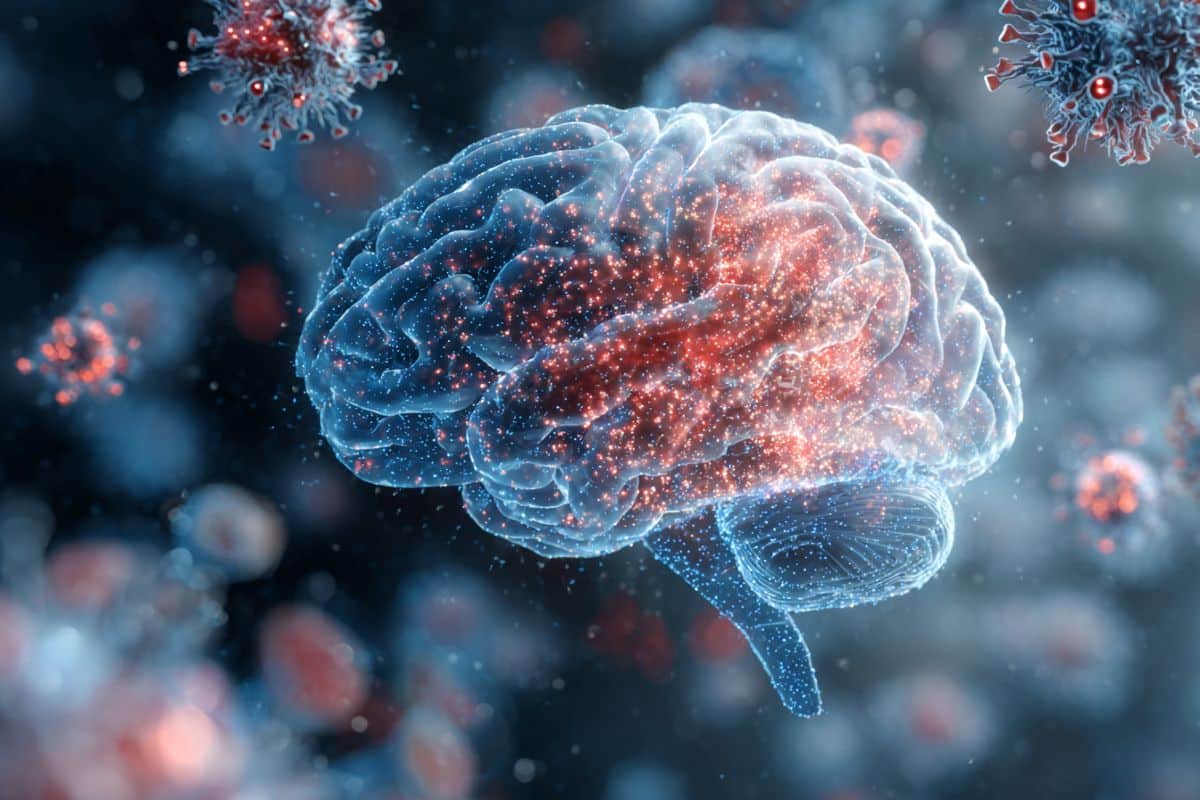
Researchers have identified a link between persistent inflammatory markers and a decline in memory and information processing speed following viral infections. Credit: Neuroscience News
Despite decades of research, the effects of viral infections on cognitive functions—such as memory, concentration, and attention—remain poorly understood. Most studies rely on comprehensive screening tools, applied individually to each disease. However, the emergence of the SARS-CoV-2 virus, along with the frequency and persistence of post-infectious cognitive sequelae, has reignited interest in this area of research.
In a new study, a team from UNIGE and HUG compiled and analysed the results of 931 scientific articles examining the links between the immune system and cognitive functions across various viral infections, including SARS-CoV-2, HIV, herpes, and hepatitis.
”Our goal was to take a cross-disciplinary approach to move beyond the fragmented perspective that prevails in this field,” explains Julie Péron, associate professor at the Laboratory of Clinical and Experimental Neuropsychology, Faculty of Psychology and Educational Sciences, and at the Interfaculty Center for Affective Sciences, UNIGE, as well as a consulting neuropsychologist in the Neurology Service, Department of Clinical Neurosciences, HUG.”
**Several Biological ”Signatures” Identified**
This analysis confirms that persistent inflammation—initially a natural response by the body to an attack—could be linked to memory and concentration problems. More importantly, it highlights certain biological markers of the immune system associated with variations in cognitive performance.
“High levels of white blood cells called ‘activated monocytes’ and pro-inflammatory cytokines—proteins that enable the immune system to communicate—are correlated with a decline in episodic memory and information processing speed, ” says Anthony Nuber-Champier, a PhD student at the Laboratory of Clinical and Experimental Neuropsychology, Faculty of Psychology and Educational Sciences, and at the Interfaculty Center for Affective Sciences, UNIGE, as well as the lead author of the study.”
Conversely, certain markers, such as activated CD4+ T cells—also white blood cells—or anti-inflammatory cytokines, seem to be associated with better preservation of cognitive abilities. ”However, immune responses vary from person to person. What appears to be decisive is the balance between these different inflammatory signals in maintaining long-term cognitive stability,” the researcher points out.
**A Solid Foundation for Future Research**
These findings contribute to a better understanding of the cognitive disorders observed after certain infections and lay the groundwork for further investigation.
They also confirm the conclusions of several clinical studies conducted in the context of long COVID, including the COVID Cog and Trajectory projects, in which UNIGE and HUG are actively involved.
Funded by the Swiss National Science Foundation (SNSF), these projects aim to identify neuropsychological and neuropsychiatric deficits in post-COVID-19 patients.
### Key Questions Answered:
**Q: Why does a virus in my body affect my memory?**
**A:** When your immune system fights a virus, it releases “pro-inflammatory cytokines.” If these stay high for too long (chronic inflammation), they can cross into the brain or trigger brain-specific immune cells. This “smoldering fire” disrupts the delicate connections between neurons needed for memory and focus.
**Q: Can “Brain Fog” become permanent after a virus?**
**A:** The study suggests that cognitive decline is linked to the *persistence* of specific immune markers. While many people recover, those whose immune systems stay in an “activated” state (specifically with high activated monocytes) are at higher risk for long-term issues. The goal of new research is to find ways to “switch off” this chronic response.
**Q: Is “Long COVID” the only virus that does this?**
**A:** No. This research shows that HIV, Hepatitis, and even Herpes can leave similar biological signatures. COVID-19 simply brought these long-hidden links between the immune system and the brain into the global spotlight.
### Editorial Notes:
- This article was edited by a Neuroscience News editor.
- Journal paper reviewed in full.
- Additional context added by our staff.
## About this neurology research news
**Author:** [Antoine Guenot](https://neurosciencenews.com/cdn-cgi/l/email-protection#7d1c130912141318531a08181312093d0813141a18531e15)
**Source:** [University of Geneva](https://unige.ch/)
**Contact:** Antoine Guenot – University of Geneva
**Image:** The image is credited to Neuroscience News
**Original Research:** Open access.
“[Immune-cognitive relationships across viral infections: A transnosological systematic review](https://dx.doi.org/10.1016/j.neubiorev.2026.106588)” by Anthony Nuber-Champier, Gautier Bréville, Patrice H. Lalive, Frédéric Assal, and Julie A. Péron.*Neuroscience & Biobehavioral Reviews*
**DOI:10.1016/j.neubiorev.2026.106588**
***
**Abstract**
**Immune-cognitive relationships across viral infections: A transnosological systematic review**
The emergence of SARS-CoV-2 has renewed interest in the relationship between immunity and cognition.
Despite decades of work, the impact of viral exposure, mainly in the field of HIV, herpes and hepatitis infections, on distinct cognitive processes remains unclear, as most studies use global screening tools (e.g., MoCA) in isolation in each infectious context.
This systematic narrative review adopts a transnosological approach, summarizing previously reported immune–cognition relationships across viral infections. Of 931 studies, 32 met inclusion criteria (*N* = 25,325) spanning SARS-CoV-2, HIV, herpes, hepatitis, Epstein-Barr virus, and multiple infections.
Reported studies on immuno-cognitive relationships reveal several consistent findings. Elevated circulating CD14\+CD16\+ intermediate monocytes correlated with slower processing speed, reduced episodic memory and mental flexibility.
Higher CD4\+ T cells were associated with better processing speed, while reduced T cells and B cells levels together with elevated IgG predicted deficits in memory and attention.
Most proinflammatory cytokines (e.g., IL-6, TNF-α, IFN-γ) were associated with impairments in overlapping cognitive domains (e.g., memory), whereas IL-10, an anti-inflammatory cytokine, consistently supported executive and memory performance.
Tags
[brain fog](https://neurosciencenews.com/neuroscience-terms/brain-fog/)[cognitive decline](https://neurosciencenews.com/neuroscience-terms/cognitive-decline/)[cytokines](https://neurosciencenews.com/neuroscience-terms/cytokines/)[long COVID](https://neurosciencenews.com/neuroscience-terms/long-covid/)[monocytes](https://neurosciencenews.com/neuroscience-terms/monocytes/)[neuroinflammation](https://neurosciencenews.com/neuroscience-terms/neuroinflammation/)[Neurology](https://neurosciencenews.com/neuroscience-terms/neurology/)[Neuroscience](https://neurosciencenews.com/neuroscience-terms/neuroscience/)[University of Geneva](https://neurosciencenews.com/neuroscience-terms/university-of-geneva/)[viral infection](https://neurosciencenews.com/neuroscience-terms/viral-infection/)
[Share](https://www.facebook.com/sharer/sharer.php?u=https%3A%2F%2Fneurosciencenews.com%2Fviral-infection-cognitive-decline-30250%2F)[Tweet](https://twitter.com/intent/tweet?via=neurosciencenew&text=Chronic%20Inflammation%20Rewires%20the%20Brain%E2%80%99s%20Cognitive%20Center%20-%20https%3A%2F%2Fneurosciencenews.com%2Fviral-infection-cognitive-decline-30250%2F)[Share](https://www.linkedin.com/shareArticle?url=https%3A%2F%2Fneurosciencenews.com%2Fviral-infection-cognitive-decline-30250%2F)[Share](https://share.flipboard.com/bookmarklet/popout?v=2&title=Chronic%20Inflammation%20Rewires%20the%20Brain%E2%80%99s%20Cognitive%20Center&url=https%3A%2F%2Fneurosciencenews.com%2Fviral-infection-cognitive-decline-30250%2F)[Submit](https://reddit.com/submit?url=https%3A%2F%2Fneurosciencenews.com%2Fviral-infection-cognitive-decline-30250%2F)[Email](https://neurosciencenews.com/cdn-cgi/l/email-protection#d0efb2bfb4a9edb8a4a4a0a3f5e391f5e296f5e296beb5a5a2bfa3b3b9b5beb3b5beb5a7a3feb3bfbdf5e296a6b9a2b1bcfdb9beb6b5b3a4b9bfbefdb3bfb7beb9a4b9a6b5fdb4b5b3bcb9beb5fde3e0e2e5e0f5e296)
[](https://neurosciencenews.com/author/neurosciencenew/)
[Neuroscience News](https://neurosciencenews.com/author/neurosciencenew/)
Neuroscience News posts science research news from labs, universities, hospitals and news departments around the world. Science articles cover neuroscience, psychology, AI, robotics, neurology, brain cancer, mental health, machine learning, autism, Parkinson's, Alzheimer's, brain research, depression and other sciences.
Related
[](https://neurosciencenews.com/neural-crest-early-commitment-development-30527/)
### [Discovery Overturns Longstanding Biology of Human Development](https://neurosciencenews.com/neural-crest-early-commitment-development-30527/)
[](https://neurosciencenews.com/rett-syndrome-organoid-30526/)
### [Minibrains Reveal Personalized Paths for Rett Syndrome](https://neurosciencenews.com/rett-syndrome-organoid-30526/)
[](https://neurosciencenews.com/olfactory-bulb-50ms-odor-30525/)
### [50-Millisecond Brain Filter That Decodes Odors](https://neurosciencenews.com/olfactory-bulb-50ms-odor-30525/)
### Leave a Reply [Cancel reply](https://neurosciencenews.com/viral-infection-cognitive-decline-30250/#respond)
[](https://neurosciencenews.com/)
- [Facebook](https://facebook.com/NeuroscienceNews)
- [X](https://twitter.com/neurosciencenew)
- [Instagram](https://instagram.com/neurosciencenew)
- [YouTube](https://youtube.com/Neuroscience)
- [Linkedin](https://linkedin.com/company/neuroscience-news)
[Neuroscience News Sitemap](https://neurosciencenews.com/neuroscience-news-sitemap/)
[Neuroscience Graduate and Undergraduate Programs](https://neurosciencenews.com/neuroscience-programs/)
[Free Neuroscience MOOCs](https://neurosciencenews.com/free-neuroscience-moocs/)
[About](https://neurosciencenews.com/about-neuroscience-news/)
[Contact Us](https://neurosciencenews.com/contact-neuroscience-news/)
[Privacy Policy](https://neurosciencenews.com/neuroscience-news-privacy-policy/)
[Submit Neuroscience News](https://neurosciencenews.com/submit-neuroscience-news/)
[Subscribe for Emails](https://neurosciencenews.com/neuroscience-newsletters/)
[Neuroscience Research](https://neurosciencenews.com/neuroscience-topics/neuroscience/)
[Psychology News](https://neurosciencenews.com/neuroscience-topics/psychology/)
[Brain Cancer Research](https://neurosciencenews.com/neuroscience-topics/brain-cancer/)
[Alzheimer’s Disease](https://neurosciencenews.com/neuroscience-terms/alzheimers-disease/)
[Parkinson’s News](https://neurosciencenews.com/neuroscience-terms/parkinsons-disease/)
[Autism / ASD News](https://neurosciencenews.com/neuroscience-topics/autism/)
[Neurotechnology News](https://neurosciencenews.com/neuroscience-topics/neurotech/)
[Artificial Intelligence News](https://neurosciencenews.com/neuroscience-topics/artificial-intelligence/)
[Robotics News](https://neurosciencenews.com/neuroscience-topics/robotics/)
### Search Neuroscience News
Neuroscience News is an online science magazine offering free to read research articles about neuroscience, neurology, psychology, artificial intelligence, neurotechnology, robotics, deep learning, neurosurgery, mental health and more.
Neuroscience News
- [Neuroscience](https://neurosciencenews.com/neuroscience-topics/neuroscience/ "Neuroscience Research")
- [Featured](https://neurosciencenews.com/neuroscience-topics/featured/ "Featured Neuroscience")
- [Neuroscience Videos](https://neurosciencenews.com/neuroscience-topics/neuroscience-videos/)
- [Neuro Web Stories](https://neurosciencenews.com/web-stories/)
- [Open Access Neuroscience](https://neurosciencenews.com/neuroscience-topics/open-neuroscience-articles/ "Open Access Neuroscience Articles")
- [Electrophysiology](https://neurosciencenews.com/neuroscience-topics/electrophysiology/ "Electrophysiology Research Articles")
- [Genetics](https://neurosciencenews.com/neuroscience-topics/genetics/)
- [Neuroscience Programs](https://neurosciencenews.com/neuroscience-programs/)
- [Neurology](https://neurosciencenews.com/neuroscience-topics/neurology/ "Neurology Research Articles")
- [Alzheimer’s Disease](https://neurosciencenews.com/neuroscience-terms/alzheimers-disease/)
- [Brain Research](https://neurosciencenews.com/neuroscience-terms/brain-research/)
- [Brain Cancer](https://neurosciencenews.com/neuroscience-topics/brain-cancer/)
- [Autism](https://neurosciencenews.com/neuroscience-topics/autism/ "Autism/ ASD")
- [Epilepsy](https://neurosciencenews.com/neuroscience-terms/epilepsy/)
- [Traumatic Brain Injuries](https://neurosciencenews.com/neuroscience-terms/traumatic-brain-injury/ "Traumatic Brain Injury Research")
- [Parkinson’s Disease](https://neurosciencenews.com/neuroscience-terms/parkinsons-disease/)
- [Psychology](https://neurosciencenews.com/neuroscience-topics/psychology/ "Psychology Research Articles")
- [Schizophrenia](https://neurosciencenews.com/neuroscience-terms/schizophrenia/)
- [Depression](https://neurosciencenews.com/neuroscience-terms/depression/)
- [Bipolar Disorder](https://neurosciencenews.com/neuroscience-terms/bipolar-disorder/)
- [Mental Health](https://neurosciencenews.com/neuroscience-terms/mental-health/)
- [AI](https://neurosciencenews.com/neuroscience-topics/artificial-intelligence/ "Artificial Intelligence Research")
- [Neural Networks](https://neurosciencenews.com/neuroscience-terms/neural-networks/ "Artificial Neural Networks")
- [Deep Learning](https://neurosciencenews.com/neuroscience-topics/deep-learning/)
- [Machine Learning](https://neurosciencenews.com/neuroscience-topics/machine-learning/)
- [Robotics](https://neurosciencenews.com/neuroscience-topics/robotics/ "Robotics News")
- [Neurotech](https://neurosciencenews.com/neuroscience-topics/neurotech/ "Neurotechnology News")
- [Brain Computer Interfaces](https://neurosciencenews.com/neuroscience-terms/brain-computer-interface/)
- [Neuroprosthetics](https://neurosciencenews.com/neuroscience-terms/neuroprosthetics/)
- [About](https://neurosciencenews.com/about-neuroscience-news/ "Learn more about Neuroscience News")
- [Neuroscience Newsletters](https://neurosciencenews.com/neuroscience-newsletters/ "Neuroscience Newsletters Signup Form")
- [Submit Neuroscience News](https://neurosciencenews.com/submit-neuroscience-news/)
- [Privacy Policy](https://neurosciencenews.com/neuroscience-news-privacy-policy/ "Neuroscience News Privacty Policy")
- [Neuroscience News Sitemap](https://neurosciencenews.com/neuroscience-news-sitemap/)
- [Contact Neuroscience News](https://neurosciencenews.com/contact-neuroscience-news/ "Contact Us at Neuroscience News")
- [Advertise on Neuroscience News](https://neurosciencenews.com/advertise-on-neuroscience-news/)
[](https://neurosciencenews.com/)
- [Neuroscience](https://neurosciencenews.com/neuroscience-topics/neuroscience/ "Neuroscience Research")
- [Featured](https://neurosciencenews.com/neuroscience-topics/featured/ "Featured Neuroscience")
- [Neuroscience Videos](https://neurosciencenews.com/neuroscience-topics/neuroscience-videos/)
- [Neuro Web Stories](https://neurosciencenews.com/web-stories/)
- [Open Access Neuroscience](https://neurosciencenews.com/neuroscience-topics/open-neuroscience-articles/ "Open Access Neuroscience Articles")
- [Electrophysiology](https://neurosciencenews.com/neuroscience-topics/electrophysiology/ "Electrophysiology Research Articles")
- [Genetics](https://neurosciencenews.com/neuroscience-topics/genetics/)
- [Neuroscience Programs](https://neurosciencenews.com/neuroscience-programs/)
- [Neurology](https://neurosciencenews.com/neuroscience-topics/neurology/ "Neurology Research Articles")
- [Alzheimer’s Disease](https://neurosciencenews.com/neuroscience-terms/alzheimers-disease/)
- [Brain Research](https://neurosciencenews.com/neuroscience-terms/brain-research/)
- [Brain Cancer](https://neurosciencenews.com/neuroscience-topics/brain-cancer/)
- [Autism](https://neurosciencenews.com/neuroscience-topics/autism/ "Autism/ ASD")
- [Epilepsy](https://neurosciencenews.com/neuroscience-terms/epilepsy/)
- [Traumatic Brain Injuries](https://neurosciencenews.com/neuroscience-terms/traumatic-brain-injury/ "Traumatic Brain Injury Research")
- [Parkinson’s Disease](https://neurosciencenews.com/neuroscience-terms/parkinsons-disease/)
- [Psychology](https://neurosciencenews.com/neuroscience-topics/psychology/ "Psychology Research Articles")
- [Schizophrenia](https://neurosciencenews.com/neuroscience-terms/schizophrenia/)
- [Depression](https://neurosciencenews.com/neuroscience-terms/depression/)
- [Bipolar Disorder](https://neurosciencenews.com/neuroscience-terms/bipolar-disorder/)
- [Mental Health](https://neurosciencenews.com/neuroscience-terms/mental-health/)
- [AI](https://neurosciencenews.com/neuroscience-topics/artificial-intelligence/ "Artificial Intelligence Research")
- [Neural Networks](https://neurosciencenews.com/neuroscience-terms/neural-networks/ "Artificial Neural Networks")
- [Deep Learning](https://neurosciencenews.com/neuroscience-topics/deep-learning/)
- [Machine Learning](https://neurosciencenews.com/neuroscience-topics/machine-learning/)
- [Robotics](https://neurosciencenews.com/neuroscience-topics/robotics/ "Robotics News")
- [Neurotech](https://neurosciencenews.com/neuroscience-topics/neurotech/ "Neurotechnology News")
- [Brain Computer Interfaces](https://neurosciencenews.com/neuroscience-terms/brain-computer-interface/)
- [Neuroprosthetics](https://neurosciencenews.com/neuroscience-terms/neuroprosthetics/)
- [About](https://neurosciencenews.com/about-neuroscience-news/ "Learn more about Neuroscience News")
- [Neuroscience Newsletters](https://neurosciencenews.com/neuroscience-newsletters/ "Neuroscience Newsletters Signup Form")
- [Submit Neuroscience News](https://neurosciencenews.com/submit-neuroscience-news/)
- [Privacy Policy](https://neurosciencenews.com/neuroscience-news-privacy-policy/ "Neuroscience News Privacty Policy")
- [Neuroscience News Sitemap](https://neurosciencenews.com/neuroscience-news-sitemap/)
- [Contact Neuroscience News](https://neurosciencenews.com/contact-neuroscience-news/ "Contact Us at Neuroscience News")
- [Advertise on Neuroscience News](https://neurosciencenews.com/advertise-on-neuroscience-news/)
### Categories
- [Artificial Intelligence](https://neurosciencenews.com/neuroscience-terms/artificial-intelligence/)
- [Auditory Neuroscience](https://neurosciencenews.com/neuroscience-topics/neuroscience/auditory-neuroscience/)
- [Autism](https://neurosciencenews.com/neuroscience-topics/autism/)
- [Brain Cancer](https://neurosciencenews.com/neuroscience-topics/brain-cancer/)
- [Deep Learning](https://neurosciencenews.com/neuroscience-terms/deep-learning/)
- [Electrophysiology](https://neurosciencenews.com/neuroscience-topics/electrophysiology/)
- [Events](https://neurosciencenews.com/neuroscience-topics/events/)
- [Featured](https://neurosciencenews.com/neuroscience-topics/featured/)
- [Featured Articles](https://neurosciencenews.com/neuroscience-topics/featured-articles/)
- [Genetics](https://neurosciencenews.com/neuroscience-topics/genetics/)
- [Machine Learning](https://neurosciencenews.com/neuroscience-terms/machine-learning/)
- [Most Popular](https://neurosciencenews.com/neuroscience-topics/most-popular/)
- [Neuroethics](https://neurosciencenews.com/neuroscience-topics/neuroethics/)
- [Neurology](https://neurosciencenews.com/neuroscience-topics/neurology/)
- [Neuroscience](https://neurosciencenews.com/neuroscience-topics/neuroscience/)
- [Neuroscience Abstracts](https://neurosciencenews.com/neuroscience-topics/neuroscience-abstracts/)
- [Neuroscience Book Reviews](https://neurosciencenews.com/neuroscience-topics/neuroscience-book-reviews/)
- [Neuroscience Business](https://neurosciencenews.com/neuroscience-topics/neuroscience-business/)
- [Neuroscience Intros](https://neurosciencenews.com/neuroscience-topics/neuroscience-intros/)
- [Neuroscience News](https://neurosciencenews.com/neuroscience-terms/neuroscience-news/)
- [Neuroscience News.com](https://neurosciencenews.com/neuroscience-topics/neurosciencenews-com/)
- [Neuroscience Opinions](https://neurosciencenews.com/neuroscience-topics/neuroscience-opinions/)
- [Neuroscience Videos](https://neurosciencenews.com/neuroscience-topics/neuroscience-videos/)
- [Neurotech](https://neurosciencenews.com/neuroscience-terms/neurotech/)
- [Open Neuroscience Articles](https://neurosciencenews.com/neuroscience-topics/open-neuroscience-articles/)
- [Pain](https://neurosciencenews.com/neuroscience-topics/neurology/pain/)
- [Psychology](https://neurosciencenews.com/neuroscience-topics/psychology/)
- [Robotics](https://neurosciencenews.com/neuroscience-terms/robotics/)
- [Sponsored Neuroscience News](https://neurosciencenews.com/neuroscience-topics/sponsored-neuroscience-news/)
- [Visual Neuroscience](https://neurosciencenews.com/neuroscience-topics/neuroscience/visual-neuroscience/)
[Neuroscience News](https://neurosciencenews.com/)
[](https://neurosciencenews.com/rett-syndrome-organoid-30526/)
### [Minibrains Reveal Personalized Paths for Rett Syndrome](https://neurosciencenews.com/rett-syndrome-organoid-30526/)
[](https://neurosciencenews.com/olfactory-bulb-50ms-odor-30525/)
### [50-Millisecond Brain Filter That Decodes Odors](https://neurosciencenews.com/olfactory-bulb-50ms-odor-30525/)
[](https://neurosciencenews.com/inhibitory-neurons-rhythmic-movement-30524/)
### [Inhibitory Neurons Drive Rhythmic Movement](https://neurosciencenews.com/inhibitory-neurons-rhythmic-movement-30524/)
[](https://neurosciencenews.com/somatic-mutations-autoimmune-disease-30523/)
### [Somatic Evolution Revealed as a Primary Driver of Autoimmune Disease](https://neurosciencenews.com/somatic-mutations-autoimmune-disease-30523/)
Start typing to see results or hit ESC to close
[Neuroscience](https://neurosciencenews.com/neuroscience-terms/neuroscience/) [neurobiology](https://neurosciencenews.com/neuroscience-terms/neurobiology/) [brain research](https://neurosciencenews.com/neuroscience-terms/brain-research/) [Psychology](https://neurosciencenews.com/neuroscience-terms/psychology/) [Neurology](https://neurosciencenews.com/neuroscience-terms/neurology/)
[See all results](https://neurosciencenews.com/viral-infection-cognitive-decline-30250/)
## Subscribe
Neuroscience News Daily Emails
Go to Appearance \> Customize \> Subscribe Pop-up to set this up. |
| Readable Markdown | **Summary:** From “Brain Fog” in Long COVID to the cognitive decline seen in HIV and Hepatitis, viral infections leave a lasting mark on our mental faculties. A massive meta-analysis by researchers, reviewing over 900 scientific papers, has mapped the “immune signatures” that dictate whether our brains recover or decline after an infection.
The study reveals that the battle between the immune system and a virus isn’t just happening in our lungs or blood; it creates a specific chemical environment in the brain that can either protect or degrade our memory, attention, and processing speed.
**Key Facts**
- **The “Bad” Signature:** High levels of **activated monocytes** (white blood cells) and **pro-inflammatory cytokines** (signaling proteins) are directly correlated with a decline in episodic memory and slow information processing.
- **The “Good” Signature:** Conversely, **activated CD4+ T cells** and **anti-inflammatory cytokines** appear to protect the brain, acting as markers for the preservation of cognitive abilities.
- **The Balance Factor:** Cognitive stability depends on the delicate balance between these inflammatory and anti-inflammatory signals rather than the presence of a single virus.
- **Cross-Disciplinary Discovery:** By comparing SARS-CoV-2, HIV, Herpes, and Hepatitis, researchers found that these cognitive “scars” are remarkably similar across different viral families.
- **Future Framework:** This research provides a biological roadmap for treating “Long COVID” and other post-infectious syndromes by focusing on rebalancing the immune response.
**Source:** University of Geneva
**What impact does a viral infection have on our memory, attention, and concentration? The COVID-19 pandemic has reignited interest in this question, which has now been extended to other infections such as HIV, herpes, and hepatitis.**
A team from the University of Geneva (UNIGE) and Geneva University Hospital (HUG) reviewed over 900 scientific articles exploring the links between the immune system and cognitive functions.
This analysis, published in *Neuroscience & Biobehavioral Reviews*, has identified several biological markers associated with cognitive decline in the context of infection. It also provides a solid foundation for future research.

Researchers have identified a link between persistent inflammatory markers and a decline in memory and information processing speed following viral infections. Credit: Neuroscience News
Despite decades of research, the effects of viral infections on cognitive functions—such as memory, concentration, and attention—remain poorly understood. Most studies rely on comprehensive screening tools, applied individually to each disease. However, the emergence of the SARS-CoV-2 virus, along with the frequency and persistence of post-infectious cognitive sequelae, has reignited interest in this area of research.
In a new study, a team from UNIGE and HUG compiled and analysed the results of 931 scientific articles examining the links between the immune system and cognitive functions across various viral infections, including SARS-CoV-2, HIV, herpes, and hepatitis.
”Our goal was to take a cross-disciplinary approach to move beyond the fragmented perspective that prevails in this field,” explains Julie Péron, associate professor at the Laboratory of Clinical and Experimental Neuropsychology, Faculty of Psychology and Educational Sciences, and at the Interfaculty Center for Affective Sciences, UNIGE, as well as a consulting neuropsychologist in the Neurology Service, Department of Clinical Neurosciences, HUG.”
**Several Biological ”Signatures” Identified**
This analysis confirms that persistent inflammation—initially a natural response by the body to an attack—could be linked to memory and concentration problems. More importantly, it highlights certain biological markers of the immune system associated with variations in cognitive performance.
“High levels of white blood cells called ‘activated monocytes’ and pro-inflammatory cytokines—proteins that enable the immune system to communicate—are correlated with a decline in episodic memory and information processing speed, ” says Anthony Nuber-Champier, a PhD student at the Laboratory of Clinical and Experimental Neuropsychology, Faculty of Psychology and Educational Sciences, and at the Interfaculty Center for Affective Sciences, UNIGE, as well as the lead author of the study.”
Conversely, certain markers, such as activated CD4+ T cells—also white blood cells—or anti-inflammatory cytokines, seem to be associated with better preservation of cognitive abilities. ”However, immune responses vary from person to person. What appears to be decisive is the balance between these different inflammatory signals in maintaining long-term cognitive stability,” the researcher points out.
**A Solid Foundation for Future Research**
These findings contribute to a better understanding of the cognitive disorders observed after certain infections and lay the groundwork for further investigation.
They also confirm the conclusions of several clinical studies conducted in the context of long COVID, including the COVID Cog and Trajectory projects, in which UNIGE and HUG are actively involved.
Funded by the Swiss National Science Foundation (SNSF), these projects aim to identify neuropsychological and neuropsychiatric deficits in post-COVID-19 patients.
### Key Questions Answered:
**Q: Why does a virus in my body affect my memory?**
**A:** When your immune system fights a virus, it releases “pro-inflammatory cytokines.” If these stay high for too long (chronic inflammation), they can cross into the brain or trigger brain-specific immune cells. This “smoldering fire” disrupts the delicate connections between neurons needed for memory and focus.
**Q: Can “Brain Fog” become permanent after a virus?**
**A:** The study suggests that cognitive decline is linked to the *persistence* of specific immune markers. While many people recover, those whose immune systems stay in an “activated” state (specifically with high activated monocytes) are at higher risk for long-term issues. The goal of new research is to find ways to “switch off” this chronic response.
**Q: Is “Long COVID” the only virus that does this?**
**A:** No. This research shows that HIV, Hepatitis, and even Herpes can leave similar biological signatures. COVID-19 simply brought these long-hidden links between the immune system and the brain into the global spotlight.
### Editorial Notes:
- This article was edited by a Neuroscience News editor.
- Journal paper reviewed in full.
- Additional context added by our staff.
## About this neurology research news
**Author:** [Antoine Guenot](https://neurosciencenews.com/cdn-cgi/l/email-protection#7d1c130912141318531a08181312093d0813141a18531e15)
**Source:** [University of Geneva](https://unige.ch/)
**Contact:** Antoine Guenot – University of Geneva
**Image:** The image is credited to Neuroscience News
**Original Research:** Open access.
“[Immune-cognitive relationships across viral infections: A transnosological systematic review](https://dx.doi.org/10.1016/j.neubiorev.2026.106588)” by Anthony Nuber-Champier, Gautier Bréville, Patrice H. Lalive, Frédéric Assal, and Julie A. Péron.*Neuroscience & Biobehavioral Reviews*
**DOI:10.1016/j.neubiorev.2026.106588**
***
**Abstract**
**Immune-cognitive relationships across viral infections: A transnosological systematic review**
The emergence of SARS-CoV-2 has renewed interest in the relationship between immunity and cognition.
Despite decades of work, the impact of viral exposure, mainly in the field of HIV, herpes and hepatitis infections, on distinct cognitive processes remains unclear, as most studies use global screening tools (e.g., MoCA) in isolation in each infectious context.
This systematic narrative review adopts a transnosological approach, summarizing previously reported immune–cognition relationships across viral infections. Of 931 studies, 32 met inclusion criteria (*N* = 25,325) spanning SARS-CoV-2, HIV, herpes, hepatitis, Epstein-Barr virus, and multiple infections.
Reported studies on immuno-cognitive relationships reveal several consistent findings. Elevated circulating CD14\+CD16\+ intermediate monocytes correlated with slower processing speed, reduced episodic memory and mental flexibility.
Higher CD4\+ T cells were associated with better processing speed, while reduced T cells and B cells levels together with elevated IgG predicted deficits in memory and attention.
Most proinflammatory cytokines (e.g., IL-6, TNF-α, IFN-γ) were associated with impairments in overlapping cognitive domains (e.g., memory), whereas IL-10, an anti-inflammatory cytokine, consistently supported executive and memory performance. |
| Shard | 137 (laksa) |
| Root Hash | 5108634008265956737 |
| Unparsed URL | com,neurosciencenews!/viral-infection-cognitive-decline-30250/ s443 |