ℹ️ Skipped - page is already crawled
| Filter | Status | Condition | Details |
|---|---|---|---|
| HTTP status | PASS | download_http_code = 200 | HTTP 200 |
| Age cutoff | PASS | download_stamp > now() - 6 MONTH | 1.1 months ago |
| History drop | PASS | isNull(history_drop_reason) | No drop reason |
| Spam/ban | PASS | fh_dont_index != 1 AND ml_spam_score = 0 | ml_spam_score=0 |
| Canonical | PASS | meta_canonical IS NULL OR = '' OR = src_unparsed | Not set |
| Property | Value |
|---|---|
| URL | https://mariolarosario.substack.com/p/the-eternal-return |
| Last Crawled | 2026-03-04 23:03:54 (1 month ago) |
| First Indexed | not set |
| HTTP Status Code | 200 |
| Meta Title | The Eternal Return - by Mariola Rosario |
| Meta Description | reflections while being eclipsed and retrograded |
| Meta Canonical | null |
| Boilerpipe Text | ANNOUNCEMENTS:
The Radical Book Club for Underworld Readers
meets again on Monday, March 16th 12pm ET/5pm Paris time. JOIN US to talk about
Girls Against God by Jenny Hval
. The book club access is part of the substack subscription.
Don’t wake me up
, collage on paper by Mariola Rosario (2026)
On my eighteenth birthday, a friend gave me a copy of
The Unbearable Lightness of Being
by Milan Kundera. I do not remember much about that evening except having this book in my hands and my friend being so excited for me to read it. I love this kind of excitement. You know the one, it’s that excitement when you have no doubt that whatever piece of art you are handing over, will fuck up the person you are giving it to in beautiful and important ways. I don’t remember the cake but I remember the book. In fact, I never forgot this book. Indeed it fucked me up in beautiful and important ways and opened many doors of inquiry. Some of which I am still traversing today, so many years later.
In this book, Milan Kundera resurrects Friedrich Nietzsche’s proposition of the eternal return: what if this life, exactly as it has unfolded, must recur infinitely, in the same order, without revision? The same loves. The same humiliations. The same conversations. Oh the horror!
Nietzsche stages it almost as a ghostly visitation. A demon leans in and informs you that every detail will return, innumerable times. No editing and therefore no redemption. The question is precise: could you endure it? Better yet, could you accept it?
“What, if some day or night a demon were to steal after you into your loneliest loneliness and say to you: ‘This life as you now live it and have lived it, you will have to live once more and innumerable times more; and there will be nothing new in it, but every pain and every joy and every thought and sigh and everything unutterably small or great in your life will have to return to you, all in the same succession and sequence.”
- Nietzsche, The Gay Science
Sisyphus
by Franz von Stuck (1920) According to Greek mythology, Sisyphus was punished by the gods for murder and cheating death twice, bound to roll a boulder up a steep hill for eternity only for it to roll back down each time it neared the top.
The idea is horrendous and fascinating: horrifying because it abolishes progress and intoxicating because it abolishes progress. It opens existential doors and closes others. Identical recurrence leaves no margin for improvement and at the same time removes the fantasy that we are progressing toward a cleaner and better version of ourselves. In Nietzsche’s severe framing, it suggests that the present is already final, that what was, what is, and what will be stand together already set in stone. We are perpetually looping back. No origin. No beginning. No end.
As an astrologer I find this endlessly enticing. When I think of this now, I think of it as freedom and of new forms of being in relationship to time and to the supposed linearity of it. But when I first encountered this proposal at 18, it felt like a prison. Not unlike Nietzsche himself, who thought of this concept as something that could crush you, that could make you
gnash your teeth and curse the demon
who speaks it. This is existential dread is real.
Astrology is, amongst many things, a discipline of returns
. It seems to me that we are always returning to something. Finding a degree, calculating a moment of connection, scanning the horizon for a point we have already crossed and most importantly, gathering the stories, remembering the stories, and writing new ones. Like standing on a vast open landscape with binoculars, waiting for a shadow to move.
We are always returning.
The Sun reaches its natal degree each year: the solar return. Saturn circles back roughly every twenty-nine years: Saturn’s return. Jupiter every twelve: the Jupiter return. The sky repeats coordinates with incredible punctuality. As astrologers and sky observers, we can calculate these moments down to the minute. At the same time we also know that a return is never an exact replica of what was. By the time something “returns,” the field has already shifted. Bodies get older, the context is altered, the conditions have changed. Nothing is truly fixed. Not even the fixed stars are fixed. To me, this tastes like freedom. May we keep returning and keep changing in these returns.
The field of return is always a volatile one
. The fact that we have traversed it before will certainly give us vital tools and pattern recognition but it will not walk through the fire for us. It is predictable and also completely unpredictable at the same time. Astrology, from my perspective, also works like this.
What returns when we return? Or better: who returns?
Who stands on the other side of the door when we open it. Will we recognize them? Is it the same self, or the echo of one?
Right now, we are in eclipse season. We have been here before. Shadowy ghosts tend to enter through these strange portals of light. I wonder which version of myself awaits me at the other side. And will I recognize her? No matter what, I look forward to the encounter. If we are lucky to be alive then we must keep returning to ourselves.
Today, as I write this, we are approaching a lunar South Node eclipse in Virgo, ruled by Mercury retrograde in Pisces.
Virgo’s sharp blade
wades into the fog. Categories may dissolve and open up new ways for a much-needed stripping down. An emptying out. A digestive moment of release.
Nietzsche’s demon asks whether you could endure infinite repetition, eclipses like this one hint at something similar: what are you repeating out of habit rather than true embodiment and alignment? And do you even have a choice?
When the light returns, what patterns will have emerged? This is the work. And what, precisely, are you willing to repeat?
Thank you for reading.
I am endlessly fascinated by the concept of
eternal recurrence
as proposed by Nietzsche and revisited by so many others across philosophy, literature, and myth. From Kundera’s existential weight to Mircea Eliade’s meditation on sacred time and the terror of history.
This reflection is the beginning of a longer inquiry. I hope to write more about repetition, the center, ritual time, the geopgraphies that shape how we understand past and future and origin. If you are interested in this kind of work, please consider supporting it by subscribing.
Our next book club gathering, which is part of the subscription, will continue exploring these questions of myth, recurrence, and historical consciousness. We meet again on March 16th to discuss
Girls Against God by Jenny Hval
. Do not hesitate to reach out if you are interested or have any questions.
The heaviest of burdens crushes us, we sink beneath it, it pins us to the ground. But in the love poetry of every age, the woman longs to be weighed down by the man’s body. The heaviest of burdens is therefore simultaneously an image of life’s most intense fulfillment. The heavier the burden, the closer our lives come to the earth, the more real and truthful they become.
Conversely, the absolute absence of a burden causes man to be lighter than air, to soar into the heights, take leave of the earth and his earthly being, and become only half real, his movements as free as they are insignificant.
-Milan Kundera, The Unbearable Lightness of Being (1984)
No posts |
| Markdown | [](https://mariolarosario.substack.com/)
# [](https://mariolarosario.substack.com/)
Subscribe
Sign in
# The Eternal Return
### reflections while being eclipsed and retrograded
[](https://substack.com/@mariolarosario)
[Mariola Rosario](https://substack.com/@mariolarosario)
Mar 03, 2026
9
1
Share
ANNOUNCEMENTS:
- **[The Radical Book Club for Underworld Readers](https://open.substack.com/pub/mariolarosario/p/the-radical-book-club-for-underworld?utm_campaign=post-expanded-share&utm_medium=web)** meets again on Monday, March 16th 12pm ET/5pm Paris time. JOIN US to talk about [Girls Against God by Jenny Hval](https://www.versobooks.com/products/1003-girls-against-god?srsltid=AfmBOooHUYAvVILgZoSPLox2XN7jQzsczbj_LvD4ax4M8iXPdG50hvmw). The book club access is part of the substack subscription.
***
***
[](https://substackcdn.com/image/fetch/$s_!vosE!,f_auto,q_auto:good,fl_progressive:steep/https%3A%2F%2Fsubstack-post-media.s3.amazonaws.com%2Fpublic%2Fimages%2F40f99e88-bb6a-4186-be6d-bd5f3006b9ab_1080x1080.jpeg)
*Don’t wake me up*, collage on paper by Mariola Rosario (2026)
Las Flores del Mar is a reader-supported publication. To receive new posts and support my work, consider becoming a free or paid subscriber.
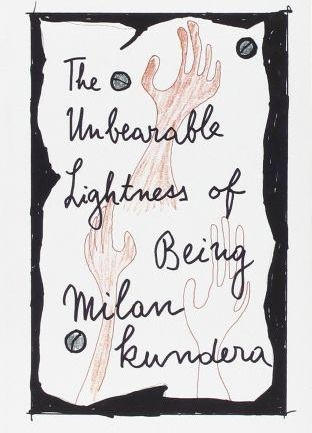
On my eighteenth birthday, a friend gave me a copy of *The Unbearable Lightness of Being* by Milan Kundera. I do not remember much about that evening except having this book in my hands and my friend being so excited for me to read it. I love this kind of excitement. You know the one, it’s that excitement when you have no doubt that whatever piece of art you are handing over, will fuck up the person you are giving it to in beautiful and important ways. I don’t remember the cake but I remember the book. In fact, I never forgot this book. Indeed it fucked me up in beautiful and important ways and opened many doors of inquiry. Some of which I am still traversing today, so many years later.
[](https://substackcdn.com/image/fetch/$s_!r2We!,f_auto,q_auto:good,fl_progressive:steep/https%3A%2F%2Fsubstack-post-media.s3.amazonaws.com%2Fpublic%2Fimages%2F9fc2d4d4-1c9b-4c7b-857a-c373a6536bac_312x433.jpeg)
In this book, Milan Kundera resurrects Friedrich Nietzsche’s proposition of the eternal return: what if this life, exactly as it has unfolded, must recur infinitely, in the same order, without revision? The same loves. The same humiliations. The same conversations. Oh the horror\!
Nietzsche stages it almost as a ghostly visitation. A demon leans in and informs you that every detail will return, innumerable times. No editing and therefore no redemption. The question is precise: could you endure it? Better yet, could you accept it?
“What, if some day or night a demon were to steal after you into your loneliest loneliness and say to you: ‘This life as you now live it and have lived it, you will have to live once more and innumerable times more; and there will be nothing new in it, but every pain and every joy and every thought and sigh and everything unutterably small or great in your life will have to return to you, all in the same succession and sequence.” *\- Nietzsche, The Gay Science*
[](https://substackcdn.com/image/fetch/$s_!Nzu9!,f_auto,q_auto:good,fl_progressive:steep/https%3A%2F%2Fsubstack-post-media.s3.amazonaws.com%2Fpublic%2Fimages%2Ff437843e-87b8-4b20-9be5-9884a52653d6_960x1109.jpeg)
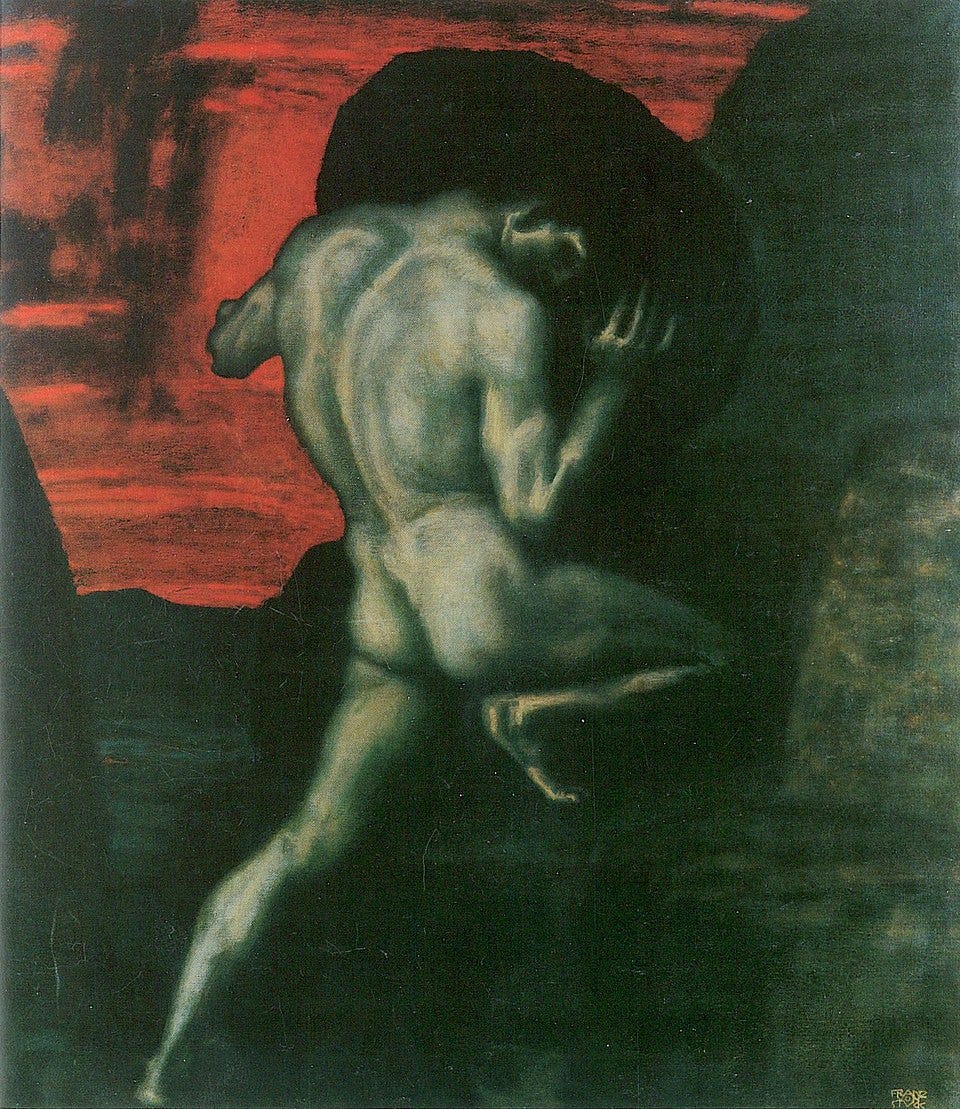
*Sisyphus* by Franz von Stuck (1920) According to Greek mythology, Sisyphus was punished by the gods for murder and cheating death twice, bound to roll a boulder up a steep hill for eternity only for it to roll back down each time it neared the top.
The idea is horrendous and fascinating: horrifying because it abolishes progress and intoxicating because it abolishes progress. It opens existential doors and closes others. Identical recurrence leaves no margin for improvement and at the same time removes the fantasy that we are progressing toward a cleaner and better version of ourselves. In Nietzsche’s severe framing, it suggests that the present is already final, that what was, what is, and what will be stand together already set in stone. We are perpetually looping back. No origin. No beginning. No end.
As an astrologer I find this endlessly enticing. When I think of this now, I think of it as freedom and of new forms of being in relationship to time and to the supposed linearity of it. But when I first encountered this proposal at 18, it felt like a prison. Not unlike Nietzsche himself, who thought of this concept as something that could crush you, that could make you *gnash your teeth and curse the demon* who speaks it. This is existential dread is real.
***
[](https://substackcdn.com/image/fetch/$s_!ZbLL!,f_auto,q_auto:good,fl_progressive:steep/https%3A%2F%2Fsubstack-post-media.s3.amazonaws.com%2Fpublic%2Fimages%2Ff622ed35-844c-462a-8c4c-7ff9fd27986f_806x416.png)
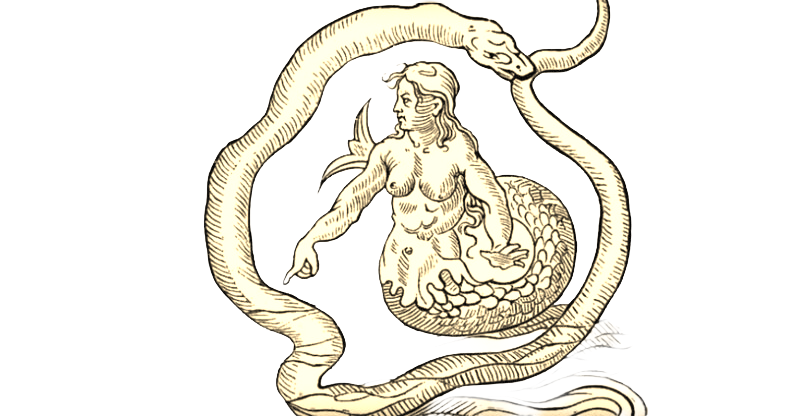
**Astrology is, amongst many things, a discipline of returns**. It seems to me that we are always returning to something. Finding a degree, calculating a moment of connection, scanning the horizon for a point we have already crossed and most importantly, gathering the stories, remembering the stories, and writing new ones. Like standing on a vast open landscape with binoculars, waiting for a shadow to move.
**We are always returning.** The Sun reaches its natal degree each year: the solar return. Saturn circles back roughly every twenty-nine years: Saturn’s return. Jupiter every twelve: the Jupiter return. The sky repeats coordinates with incredible punctuality. As astrologers and sky observers, we can calculate these moments down to the minute. At the same time we also know that a return is never an exact replica of what was. By the time something “returns,” the field has already shifted. Bodies get older, the context is altered, the conditions have changed. Nothing is truly fixed. Not even the fixed stars are fixed. To me, this tastes like freedom. May we keep returning and keep changing in these returns.
**The field of return is always a volatile one**. The fact that we have traversed it before will certainly give us vital tools and pattern recognition but it will not walk through the fire for us. It is predictable and also completely unpredictable at the same time. Astrology, from my perspective, also works like this.
**What returns when we return? Or better: who returns?**
Who stands on the other side of the door when we open it. Will we recognize them? Is it the same self, or the echo of one?
Right now, we are in eclipse season. We have been here before. Shadowy ghosts tend to enter through these strange portals of light. I wonder which version of myself awaits me at the other side. And will I recognize her? No matter what, I look forward to the encounter. If we are lucky to be alive then we must keep returning to ourselves.
Today, as I write this, we are approaching a lunar South Node eclipse in Virgo, ruled by Mercury retrograde in Pisces. [Virgo’s sharp blade](https://open.substack.com/pub/mariolarosario/p/virgos-sharp-blade?utm_campaign=post-expanded-share&utm_medium=web) wades into the fog. Categories may dissolve and open up new ways for a much-needed stripping down. An emptying out. A digestive moment of release.
Nietzsche’s demon asks whether you could endure infinite repetition, eclipses like this one hint at something similar: what are you repeating out of habit rather than true embodiment and alignment? And do you even have a choice?
When the light returns, what patterns will have emerged? This is the work. And what, precisely, are you willing to repeat?
[](https://substackcdn.com/image/fetch/$s_!k5eB!,f_auto,q_auto:good,fl_progressive:steep/https%3A%2F%2Fsubstack-post-media.s3.amazonaws.com%2Fpublic%2Fimages%2F5e42895d-d0a6-47da-94ab-ef3c8670a96c_439x450.png)
***
***
Thank you for reading.
I am endlessly fascinated by the concept of *eternal recurrence* as proposed by Nietzsche and revisited by so many others across philosophy, literature, and myth. From Kundera’s existential weight to Mircea Eliade’s meditation on sacred time and the terror of history.
This reflection is the beginning of a longer inquiry. I hope to write more about repetition, the center, ritual time, the geopgraphies that shape how we understand past and future and origin. If you are interested in this kind of work, please consider supporting it by subscribing.
Our next book club gathering, which is part of the subscription, will continue exploring these questions of myth, recurrence, and historical consciousness. We meet again on March 16th to discuss [Girls Against God by Jenny Hval](https://www.versobooks.com/products/1003-girls-against-god?srsltid=AfmBOooHUYAvVILgZoSPLox2XN7jQzsczbj_LvD4ax4M8iXPdG50hvmw). Do not hesitate to reach out if you are interested or have any questions.
***
The heaviest of burdens crushes us, we sink beneath it, it pins us to the ground. But in the love poetry of every age, the woman longs to be weighed down by the man’s body. The heaviest of burdens is therefore simultaneously an image of life’s most intense fulfillment. The heavier the burden, the closer our lives come to the earth, the more real and truthful they become.
Conversely, the absolute absence of a burden causes man to be lighter than air, to soar into the heights, take leave of the earth and his earthly being, and become only half real, his movements as free as they are insignificant.
\-Milan Kundera, The Unbearable Lightness of Being (1984)
Las Flores del Mar is a reader-supported publication. To receive new posts and support my work, consider becoming a free or paid subscriber.
9
1
Share
#### Discussion about this post
Comments
Restacks
Top
Latest
Discussions
No posts
### Ready for more?
© 2026 Mariola Rosario · [Privacy](https://substack.com/privacy) ∙ [Terms](https://substack.com/tos) ∙ [Collection notice](https://substack.com/ccpa#personal-data-collected)
[Start your Substack](https://substack.com/signup?utm_source=substack&utm_medium=web&utm_content=footer)
[Get the app](https://substack.com/app/app-store-redirect?utm_campaign=app-marketing&utm_content=web-footer-button)
[Substack](https://substack.com/) is the home for great culture
This site requires JavaScript to run correctly. Please [turn on JavaScript](https://enable-javascript.com/) or unblock scripts |
| Readable Markdown | ANNOUNCEMENTS:
- **[The Radical Book Club for Underworld Readers](https://open.substack.com/pub/mariolarosario/p/the-radical-book-club-for-underworld?utm_campaign=post-expanded-share&utm_medium=web)** meets again on Monday, March 16th 12pm ET/5pm Paris time. JOIN US to talk about [Girls Against God by Jenny Hval](https://www.versobooks.com/products/1003-girls-against-god?srsltid=AfmBOooHUYAvVILgZoSPLox2XN7jQzsczbj_LvD4ax4M8iXPdG50hvmw). The book club access is part of the substack subscription.
[](https://substackcdn.com/image/fetch/$s_!vosE!,f_auto,q_auto:good,fl_progressive:steep/https%3A%2F%2Fsubstack-post-media.s3.amazonaws.com%2Fpublic%2Fimages%2F40f99e88-bb6a-4186-be6d-bd5f3006b9ab_1080x1080.jpeg)
*Don’t wake me up*, collage on paper by Mariola Rosario (2026)
On my eighteenth birthday, a friend gave me a copy of *The Unbearable Lightness of Being* by Milan Kundera. I do not remember much about that evening except having this book in my hands and my friend being so excited for me to read it. I love this kind of excitement. You know the one, it’s that excitement when you have no doubt that whatever piece of art you are handing over, will fuck up the person you are giving it to in beautiful and important ways. I don’t remember the cake but I remember the book. In fact, I never forgot this book. Indeed it fucked me up in beautiful and important ways and opened many doors of inquiry. Some of which I am still traversing today, so many years later.
[](https://substackcdn.com/image/fetch/$s_!r2We!,f_auto,q_auto:good,fl_progressive:steep/https%3A%2F%2Fsubstack-post-media.s3.amazonaws.com%2Fpublic%2Fimages%2F9fc2d4d4-1c9b-4c7b-857a-c373a6536bac_312x433.jpeg)
In this book, Milan Kundera resurrects Friedrich Nietzsche’s proposition of the eternal return: what if this life, exactly as it has unfolded, must recur infinitely, in the same order, without revision? The same loves. The same humiliations. The same conversations. Oh the horror\!
Nietzsche stages it almost as a ghostly visitation. A demon leans in and informs you that every detail will return, innumerable times. No editing and therefore no redemption. The question is precise: could you endure it? Better yet, could you accept it?
“What, if some day or night a demon were to steal after you into your loneliest loneliness and say to you: ‘This life as you now live it and have lived it, you will have to live once more and innumerable times more; and there will be nothing new in it, but every pain and every joy and every thought and sigh and everything unutterably small or great in your life will have to return to you, all in the same succession and sequence.” *\- Nietzsche, The Gay Science*
[](https://substackcdn.com/image/fetch/$s_!Nzu9!,f_auto,q_auto:good,fl_progressive:steep/https%3A%2F%2Fsubstack-post-media.s3.amazonaws.com%2Fpublic%2Fimages%2Ff437843e-87b8-4b20-9be5-9884a52653d6_960x1109.jpeg)
*Sisyphus* by Franz von Stuck (1920) According to Greek mythology, Sisyphus was punished by the gods for murder and cheating death twice, bound to roll a boulder up a steep hill for eternity only for it to roll back down each time it neared the top.
The idea is horrendous and fascinating: horrifying because it abolishes progress and intoxicating because it abolishes progress. It opens existential doors and closes others. Identical recurrence leaves no margin for improvement and at the same time removes the fantasy that we are progressing toward a cleaner and better version of ourselves. In Nietzsche’s severe framing, it suggests that the present is already final, that what was, what is, and what will be stand together already set in stone. We are perpetually looping back. No origin. No beginning. No end.
As an astrologer I find this endlessly enticing. When I think of this now, I think of it as freedom and of new forms of being in relationship to time and to the supposed linearity of it. But when I first encountered this proposal at 18, it felt like a prison. Not unlike Nietzsche himself, who thought of this concept as something that could crush you, that could make you *gnash your teeth and curse the demon* who speaks it. This is existential dread is real.
[](https://substackcdn.com/image/fetch/$s_!ZbLL!,f_auto,q_auto:good,fl_progressive:steep/https%3A%2F%2Fsubstack-post-media.s3.amazonaws.com%2Fpublic%2Fimages%2Ff622ed35-844c-462a-8c4c-7ff9fd27986f_806x416.png)
**Astrology is, amongst many things, a discipline of returns**. It seems to me that we are always returning to something. Finding a degree, calculating a moment of connection, scanning the horizon for a point we have already crossed and most importantly, gathering the stories, remembering the stories, and writing new ones. Like standing on a vast open landscape with binoculars, waiting for a shadow to move.
**We are always returning.** The Sun reaches its natal degree each year: the solar return. Saturn circles back roughly every twenty-nine years: Saturn’s return. Jupiter every twelve: the Jupiter return. The sky repeats coordinates with incredible punctuality. As astrologers and sky observers, we can calculate these moments down to the minute. At the same time we also know that a return is never an exact replica of what was. By the time something “returns,” the field has already shifted. Bodies get older, the context is altered, the conditions have changed. Nothing is truly fixed. Not even the fixed stars are fixed. To me, this tastes like freedom. May we keep returning and keep changing in these returns.
**The field of return is always a volatile one**. The fact that we have traversed it before will certainly give us vital tools and pattern recognition but it will not walk through the fire for us. It is predictable and also completely unpredictable at the same time. Astrology, from my perspective, also works like this.
**What returns when we return? Or better: who returns?**
Who stands on the other side of the door when we open it. Will we recognize them? Is it the same self, or the echo of one?
Right now, we are in eclipse season. We have been here before. Shadowy ghosts tend to enter through these strange portals of light. I wonder which version of myself awaits me at the other side. And will I recognize her? No matter what, I look forward to the encounter. If we are lucky to be alive then we must keep returning to ourselves.
Today, as I write this, we are approaching a lunar South Node eclipse in Virgo, ruled by Mercury retrograde in Pisces. [Virgo’s sharp blade](https://open.substack.com/pub/mariolarosario/p/virgos-sharp-blade?utm_campaign=post-expanded-share&utm_medium=web) wades into the fog. Categories may dissolve and open up new ways for a much-needed stripping down. An emptying out. A digestive moment of release.




Nietzsche’s demon asks whether you could endure infinite repetition, eclipses like this one hint at something similar: what are you repeating out of habit rather than true embodiment and alignment? And do you even have a choice?
When the light returns, what patterns will have emerged? This is the work. And what, precisely, are you willing to repeat?
[](https://substackcdn.com/image/fetch/$s_!k5eB!,f_auto,q_auto:good,fl_progressive:steep/https%3A%2F%2Fsubstack-post-media.s3.amazonaws.com%2Fpublic%2Fimages%2F5e42895d-d0a6-47da-94ab-ef3c8670a96c_439x450.png)
Thank you for reading.
I am endlessly fascinated by the concept of *eternal recurrence* as proposed by Nietzsche and revisited by so many others across philosophy, literature, and myth. From Kundera’s existential weight to Mircea Eliade’s meditation on sacred time and the terror of history.
This reflection is the beginning of a longer inquiry. I hope to write more about repetition, the center, ritual time, the geopgraphies that shape how we understand past and future and origin. If you are interested in this kind of work, please consider supporting it by subscribing.
Our next book club gathering, which is part of the subscription, will continue exploring these questions of myth, recurrence, and historical consciousness. We meet again on March 16th to discuss [Girls Against God by Jenny Hval](https://www.versobooks.com/products/1003-girls-against-god?srsltid=AfmBOooHUYAvVILgZoSPLox2XN7jQzsczbj_LvD4ax4M8iXPdG50hvmw). Do not hesitate to reach out if you are interested or have any questions.
The heaviest of burdens crushes us, we sink beneath it, it pins us to the ground. But in the love poetry of every age, the woman longs to be weighed down by the man’s body. The heaviest of burdens is therefore simultaneously an image of life’s most intense fulfillment. The heavier the burden, the closer our lives come to the earth, the more real and truthful they become.
Conversely, the absolute absence of a burden causes man to be lighter than air, to soar into the heights, take leave of the earth and his earthly being, and become only half real, his movements as free as they are insignificant.
\-Milan Kundera, The Unbearable Lightness of Being (1984)
No posts |
| Shard | 76 (laksa) |
| Root Hash | 14862242593741677076 |
| Unparsed URL | com,substack!mariolarosario,/p/the-eternal-return s443 |