ℹ️ Skipped - page is already crawled
| Filter | Status | Condition | Details |
|---|---|---|---|
| HTTP status | PASS | download_http_code = 200 | HTTP 200 |
| Age cutoff | PASS | download_stamp > now() - 6 MONTH | 0 months ago |
| History drop | PASS | isNull(history_drop_reason) | No drop reason |
| Spam/ban | PASS | fh_dont_index != 1 AND ml_spam_score = 0 | ml_spam_score=0 |
| Canonical | PASS | meta_canonical IS NULL OR = '' OR = src_unparsed | Not set |
| Property | Value |
|---|---|
| URL | https://louisiananursery.com/trees/ |
| Last Crawled | 2026-04-10 16:58:36 (14 hours ago) |
| First Indexed | 2025-01-20 17:46:19 (1 year ago) |
| HTTP Status Code | 200 |
| Meta Title | Buy Flowering, Shade & Fruit Trees Near You | Louisiana Nursery |
| Meta Description | Discover a wide selection of flowering, shade, and fruit trees at Louisiana Nursery in Greater Baton Rouge. Visit us for your perfect tree today! |
| Meta Canonical | null |
| Boilerpipe Text | Find The Perfect Tree at Louisiana Nursery
Trees—the anchors of your landscaping.
The backbone of your landscaping.
Growing a tree from a barely-rooted sapling is an incredibly rewarding experience, and can be the longest-term project you’ll ever attempt in your landscape. While
annuals
are constantly replaced and
perennials
go dormant, your tree will be left standing tall regardless of the season. All that is to say we understand the great responsibility and trust you place in us to find healthy, ready to plant trees. Whether you’re looking for fruiting, flowering, ornamental, evergreen, or shade trees,
Louisiana Nursery
works with the best growers and handpicks only the healthiest stock for our stores.
Contact Us
Crepe Myrtle
What will it be? Flowering trees for color? Evergreen or deciduous for shade? Or maybe a fruit tree like lemon, lime, orange or satsuma? Ask one of our experts for advice and remember to check here before you begin.
Did you know fall and winter are the best seasons to plant a tree in Louisiana? This time period allows for the establishment of a good root system so it’s ready to grow during spring.
Magnolia
A tree of the South, the magnolia is fast growing and an all-around favorite in Louisiana. With so many different varieties - some growing as short as 10 ft. and others as tall as 50 ft. - you're sure to find something that fits your space without compromising on the classic magnolia look. Check out all of our magnolia varieties below:
D.D. Blanchard Southern Magnolia
D.D. Blanchard is the largest growing magnolia variety we stock. They’re tuned to our climate, resistant to common diseases, and perfectly fit the aesthetic of any southern landscape. Though most magnolias are deciduous, Southern magnolias tend to behave like evergreens. This means they’ll keep their leaves through most winters and only drop old leaves sparsely throughout the year.
D.D. Blanchard will grow about 50 ft. tall with a spread of 35 ft. Showy, fragrant blooms appear from May to June.
Kay Parris Magnolia (Dwarf)
Kay Parris Magnolia can be thought of as a miniature version of the original cultivar, the southern magnolia. However, this smaller footprint did the opposite for its flowers; Large, extremely fragrant blooms are thought to be some of the best in the magnolia family. An added bonus, this is one of the few magnolias considered to be evergreen.
Grows about 20 ft. tall with a spread of 10 ft. Blooms from June – August.
Little Gem Magnolia (Dwarf)
Not as small as Kay Parris, but has slightly smaller blooms. In this regard, Kay Parris could be seen as more ornamental than the Little Gem. However, Little Gem will usually bloom twice a year as compared to once, and is still very fragrant while having smaller flowers. Little gem is also considered evergreen, especially in Louisiana.
Grows about 20-25 ft. tall, with a spread of 10-15 ft. Blooms in early summer and again in late summer / early fall.
Teddy Bear Magnolia (Dwarf)
The Teddy Bear is slightly smaller than the Little Gem, but its growth habit tends to be tighter. This means more branches and leaves in a more compact space. That growth habit makes it a dream to prune and shape, and works perfectly in smaller landscapes.
Grows about 16-20 ft. tall, with spread of around 10-12 ft. Blooms profusely in late spring, many note the unique citrus-like fragrance.
Sweetbay Magnolia
Probably the smallest magnolia you’ll see in the landscape, the sweet bay is unique for the color and shape of its leaf. Ditching the iconic green, wax-leafed with a brown underside, Sweetbay Magnolias have a silvery, almost frosted looking underside.
Grows anywhere from 10-20 ft. tall and around. Sometimes comes in shrub form, but can be shaped and sold in topiary or tree form. Blooms May – June. Flowers are relatively large for its size.
Fuscata Magnolia (Banana Shrub, Extremely Fragrant)
Technically a magnolia, but commonly known as a banana shrub. This dense growing, relatively small shrub is famous for its banana scented fragrant flowers. You’ve likely been hit with this signature smell if you’ve ever walked around LSU or South Eastern campus, where they are peppered around just about anywhere with room.
Grows about 6-8 ft. tall and around. Blooms heavily in the spring.
Japanese Magnolias
Similar to the magnolia tree, however, the Japanese magnolia is deciduous and drops its leaves in the winter, making its beautiful blooms stand out.
Alexandria Japanese Magnolia
Large, beautiful pink & purple flowers make this tree the center-piece of the landscape! Leaves fall in winter, blooms appear soon after.
Grows about 20-25 ft. tall and spread of 15-20 ft.
Ann Japanese Magnolia
Large, purplish – red flowers that strongly resemble a tulip. Will usually bloom in mid-spring, but our warm climate often induces blooms as early as March or even February.
Grows 8-10 ft. tall, with a spread of 10 ft.
Betty Japanese Magnolia
Large reddish – purple flowers with white interiors. Could be called a shrub or multi-trunk tree depending on your preference. Blooms appear later in season, about April – May.
Grows from 10-15 ft. tall and around, adding to its shrub-like appearance.
Jane Japanese Magnolia
Jane Magnolia is one of the most popular Japanese magnolia selections. Has vibrant purple flowers that appear in late winter after leaves have fallen. Tried and tested, relatively easy to grow.
Grows about 10-15 ft. tall with a spread 8-10 ft.
Crepe Myrtle
Crepe Myrtles are so popular in Louisiana you'd think they were native! The varieties available in our stores have acclimated to our climate, are resistant to our diseases and pests, and can fill any space from big to small with an array of colorful flowers and foliage. There is always a crepe myrtle that works in your space. Check out some of our varieties below:
Acoma
A popular cultivar of the crepe myrtle tree, known for its compact growth habit and stunning white flowers. Flowers appear in clusters, typically in summer from July-September. Can attract pollinators. Leaves will fall in Winter.
Grows about 8-10 ft. tall with a spread of 6-8 ft.
Arapaho
The Arapaho is a hardy, resilient tree that has built-in resistances to many common diseases and pests. Beautiful, almost cherry red flowers appear in clusters from July – September. Many growers note the attractive bark as unique, which peels to reveal a smooth, cinnamon-colored surface. Will lose leaves in the winter.
Grows about 20 ft. tall and has a spread of 15 ft.
Basham Pink
The Basham Pink Crape Myrtle is a hardy and disease-resistant tree that can tolerate a wide range of soil types and growing conditions. Large clusters of pink blooms appear from July – September. Glossy green leaves will fall in the winter. It is also known for its attractive bark, which peels to reveal a smooth, light gray surface. Overall, the Basham Pink Crape Myrtle is a stunning and low-maintenance tree that can add vibrant color and interest to any landscape.
Grows about 30 ft. tall and has a spread of 20 ft.
Biloxi
Produces large clusters of lavender pink blooms from July – September. Glossy green foliage that falls in the winter. Hardy and disease resistant.
Grows about 25 ft. tall and has a spread of 20 ft. Great for larger landscapes.
Colorama Scarlet
Produces large clusters of red flowers that bloom from July – September. Dark green leaves that turn to a beautiful orange until falling in the winter.
Grows about 20 ft. tall with a spread of 15 ft.
Dynamite
Dynamite crepe murtle produces large clusters of bright red flowers, blooms from July – September. Dark green leaves that fall in the winter. Disease and pest resistant, very hardy for Louisiana yards.
Grows about 20 ft. tall with a spread of about 15 ft.
Ebony Ivory
Produces stunning white flowers that are meant to contrast with the deep purple and black foliage. Striking visual combination. Blooms appear July – September. Resistant to diseases and pests, and known as a relatively quick to mature tree. Foliage will fall in the winter.
Grows about 12-15 ft. tall with a spread of 8-12 ft.
Ebony Flame
Stunning, deep red flowers contrasted by almost-black foliage. Extremely rare color combination, have to see it in-person! Blooms appear in clusters from July – September, leaves will fall in winter.
Grows about 12-15 ft. tall with a spread of 8-12 ft.
Muskogee
Produces clusters of lavender blooms with a medium to dark-green foliage. Foliage turns orange until falling in the winter. Resistant to common diseases and pests, and grows fast. Perfect for large projects that need to be filled in quickly.
Grows about 20-30 ft. tall with a spread of 15-25 ft.
Natchez
Blooms large clusters of pure-white flowers, dark green foliage will shift to red during the fall until eventually dropping in the winter. Natchez are extremely popular, and one of the easiest of the already easy-to-grow crepe myrtle family. Fast growing disease and pest resistant, a great all-around miniature tree!
Grows about 20-30 ft tall with a spread of 15-25 ft.
Petite Plum
Glossy green foliage with beautiful plum-pink blooms in the summer. “Petite” crepe myrtles are dwarfed, and the petite plum is no different, perfect for fitting tighter spots in your landscape.
Grows about 4-5ft tall and around.
Pink Velour
Color-changing foliage: Deep red transitions to a green with dark-purple hue in the summer. Has almost hot-pink / magenta blooms you’ve come to love from crepe myrtles.
Grows about 8-10ft tall and around.
Red Rocket
The fastest growing crepe myrtle we have (up to 5ft a year!), great for mass-planting! Glossy-green foliage with vibrant red blooms stand out in the landscape.
Grows about 12-15ft tall, with a canopy 10-12ft around.
Rhapsody in Pink
Fast-growing (3ft per year), more rounded variety with beautiful pink blooms with a white hue. Foliage on new-growth branches is a deep purple, transitioning to classic glossy-green as growth matures.
Grows about 10-12ft tall and around.
Rikki Tikki Pink
Unique foliage: New-growth leaves appear purple, maturing to a silvery-green. Blooms classic magenta. Since it is dwarfed, the Rikki Tikki can be grown as a small tree or rounded shrub.
Grows about 4-5ft tall and around.
Sioux
Dark, glossy-green foliage with light pink blooms. After blooms are spent, leaves transition to a purplish-red, before falling.
Grows about 12-15ft tall with a canopy of 10-12ft around.
Thunderstruck Coral Boom
One of the best contrasts of any crepe myrtle foliage / bloom combinations. Leaves are near-black, the perfect background for the bright-coral clusters of flowers. Slightly up-right growth, makes for easy-shaping.
Grows about 12-15ft tall, with a canopy of 8-10ft around.
Thunderstruck Lavender Blast
Lavender blooms and striking black foliage make this another great contrasting color-combination. The fast growth-rate you’ve come to love from crepe myrtles. A perfect accent piece without over-taking the other bright-colors in your landscape. Easy to shape.
Grows about 12-15ft tall with a canopy of 10-12ft around.
Thunderstruck Rumblin' Red
Bright-red bloom come in large clusters, accented by the almost black, ruffled-foliage. Quick-growing, beautiful contrasting colors, and the hardiness we’ve come to love from thunderstruck.
Grows about 12-15ft tall with a canopy of 8-12ft around.
Thunderstruck Scarlet Red
Very similar to Ebony Flame but in a full-size tree-form. The darkest, near-black foliage on the market, with Scarlet red clusters of blooms. Fast-growing, hardy in so many various conditions.
Grows about 15-20ft tall, with a canopy of 10-15ft around. Shape to your heart’s content!
Thunderstruck White Lightening
The darkest foliage with the whitest blooms on the market, amazing contrast without overpowering the other colors in your landscape.
Grows about 12-15ft tall with a canopy of 8-12ft around. Shape to your heart’s content!
Tonto
Beautiful, fuchsia-red clusters of blooms on classic glossy-green foliage. This variety is dwarfed, and has a much more rounded growth-habit than most. This makes it perfect for even small holes in the landscape or garden.
Grows about 8-10ft. tall, with a canopy of 6-8ft around. Shape as necessary!
Tropical Purple
Classic glossy-green foliage, turns deep red before dropping in the winter. Blooms in large clusters of dark-pinks and purples. One of the larger-growing crepe myrtles on our list, with an up-right habit. Great for filling large holes in the landscape or garden.
Grows about 20-25ft tall with a canopy of 6-8ft around.
Tuscarora
Classic coral-pink blooms with uniquely bright-green foliage. Light-brown bark adds color even after leaves and flowers have dropped for the winter.
Grows about 16-20ft tall, with a canopy of 15ft around
Twilight
The largest tree on the list. Glossy-green foliage is slightly brighter than most. Profuse-bloomer, with clusters of purplish-pink flowers lasting until late summer, sometimes into mid-fall. Fast-growing, disease resistant, and everything else we love about crepe myrtles.
Grows about 20-30ft tall, with a canopy of 10-15ft around.
Shade Trees
Oak Trees
The low-hanging, sprawling branches of the live oak tree is an iconic fixture of southern landscapes. Almost any park, nature-walk, or college campus in Louisiana is bound to have a few of these majestic trees giving shade and usually a place to sit. Here are just a few of the varieties we stock:
Southern Live Oak
Distinct in that it doesn’t lose leaves nor change color in the fall. Will briefly shed leaves in early spring. Often called Southern Oak or Live Oak.
The largest Southern Live Oaks have been recorded with a crown of 150-ft. However, the average tends to be a bit more reasonable.
Grows about 40-80 ft. tall with a 60-100 ft. spread, perfect for providing shade.
Empire Live Oak
Faster growing than the live oak, Empire oaks have denser branching habits that end up being easier to maintain in certain scenarios. Only shed leaves briefly in the spring with no winter color-change.
Grows about 40-80 ft. tall, spread of 60-100 ft.
Nuttall Oak
A deciduous variety of oak with large leaves that will change from green – yellow – orange – red in the fall until dropping them in the winter. Smaller spread, great for smaller spaces.
Grows about 40-60 ft. tall, spread of 35-50 ft.
Shumard Oak
A more rounded growth-habit than other oaks, the Shumard is fast-growing and best known for its vibrant color changing leaves as it moves from fall to winter. Many see this as a counter-part to the Nuttall, with the Shumard preferring higher spots in the landscape and Nuttall preferring lower.
Grows about 60 ft. tall and spread of 50-60 ft.
Pin Oak
Pin Oak leaves change from green to scarlet red noticeably later in the season, usually still hanging on until mid-winter. Also known as the Swamp Spanish Oak, this tree will grow moderate quickly and without issue in high or low lying areas.
Grows about 60-70 ft. tall, with a small spread of 25-40 ft.
Willow Oak
Another great deciduous oak of Louisiana, has beautiful color change in the fall. Known for their disease and pest resistances in the south, and loves the high moisture / humidity of our climate.
Grows relatively slowly, about 40-60 ft. tall, with a spread of 30-40 ft.
Elm
An adaptable tree, the elm is also fast-growing, making it a great choice for many environments.
Maple
Prized for their beautiful leaves in the fall, maples make a great addition to any yard.
Red Maple
The iconic fall tree, colors change usually after labor day when days shorten and temperature drop. Fairly hardy for Louisiana, but be sure to create a proper mound and plan for the eventual size of tree.
Grows about 40-60 ft. tall, spreads nearly 40 ft.
Florida Flame Red Maple
Sometimes called the “swamp” maple, Florida Flame is a great choice to add color on a large scale in areas that tend to be washed with green. This variety can handle poor irrigation and low-spots unbelievably well. Foliage turns in fall.
Grows about 40-ft tall, with a spread of 30-40 ft.
Fruit Trees (Citrus)
Introduction to Citrus
Nothing compares to the fruits of hard-labor: Grab a healthy tree from our wide selection of citrus varieties today!
Our varieties are listed below with information regarding the tree, a description of the fruit, and other notable characteristics. Availability varies from season to season, year to year. Most of our fruit trees are available in dwarf varieties (noted by a purple "dwarf" tag on the tree), which will change the estimated height and width significantly. Citrus tree flowers produce both male and female parts, meaning you'll only technically need one to produce fruit. Some varieties will (tangerine and tangelo) greatly benefit from more trees, and we recommend getting at least two. Lastly, all blooming / fruiting time-frames are estimates.
Grapefruit - Chandler Pummelo
The Chandler Pummelo Grapefruit is a variety of grapefruit known for its large size and sweet flavor. It grows on a medium-sized evergreen tree with glossy leaves and can reach a height of up to 20 feet. The fruit of the Chandler Pummelo is characterized by its juiciness, vibrant pink flesh, and a well-balanced taste that leans more towards sweetness than tartness compared to other grapefruit varieties.
Grapefruit - Rio Red
The Rio Red Grapefruit is a popular variety of grapefruit that is known for its rich flavor and deep red flesh. It grows on a medium-sized evergreen tree with glossy green leaves and can reach a height of up to 25 feet. The fruit of the Rio Red Grapefruit is characterized by its juiciness, vibrant red color, and a unique blend of sweetness and tartness that creates a refreshing taste experience. It is considered one of the sweetest and juiciest grapefruit varieties available.
Grapefruit - Ruby Red
The Ruby Red Grapefruit is a well-known and highly sought-after variety of grapefruit. It grows on a medium-sized evergreen tree with glossy leaves and can reach a height of up to 20 feet. The fruit of the Ruby Red Grapefruit is characterized by its vibrant red or pink flesh, which is exceptionally juicy and sweet. It has a delightful balance of sweetness and tartness, making it a refreshing and flavorful choice among grapefruit varieties. The Ruby Red Grapefruit is often praised for its luscious taste and high juice content, making it a popular choice for eating fresh or juicing.
Kumquat - Sweet Meiwa
The Sweet Meiwa Kumquat is a variety of kumquat known for its exceptionally sweet and delicious flavor. It grows on a small evergreen tree with dark green foliage and can reach a height of up to 10 feet. The fruit of the Sweet Meiwa Kumquat is characterized by its small size and round shape, with a thin, edible skin that is sweet and fragrant. Unlike other kumquat varieties that tend to be more tart, the Sweet Meiwa Kumquat stands out for its lack of tartness and its delightful balance of sweetness, making it a popular choice for eating fresh or using in culinary applications.
Kumquat - Sour Nagami
The Sour Nagami Kumquat is a distinctive variety of kumquat known for its tart flavor profile. It grows on a small evergreen tree with dark green leaves and can reach a height of up to 10 feet. The fruit of the Sour Nagami Kumquat is characterized by its small, oval shape and bright orange color. Its most notable characteristic is its intense sour taste, which sets it apart from other kumquat varieties. The Sour Nagami Kumquat’s tangy flavor makes it a unique addition to recipes and beverages, and it is often used to add a burst of acidity and zestiness to culinary creations.
Lemon - Lisbon
The Lisbon Lemon is a widely cultivated lemon variety, notable for its tart and tangy flavor. Compared to other lemon varieties like the Meyer Lemon, the Lisbon Lemon has a more pronounced acidity and a stronger, classic lemon taste. It grows on a medium-sized evergreen tree with thorny branches and can reach a height of up to 20 feet. The fruit of the Lisbon Lemon features a bright yellow color, a smooth and thick skin, and juicy acidic flesh. Its high juice content makes it a popular choice for culinary purposes, lending its bold lemon flavor to a variety of dishes, desserts, and beverages.
Lemon - Meyer
Meyer Lemons are a unique variety of citrus fruit known for their smaller size, thin and smooth golden-yellow skin, and fragrant aroma. They grow on small to medium-sized evergreen trees with thorny branches and can reach a height of up to 10 feet. Meyer Lemons are distinguished by their flavor, which is less tart and more sweet and floral compared to other lemon varieties. They have a subtle hint of mandarin orange, making them exceptionally flavorful and versatile in both sweet and savory dishes. Meyer Lemons are cherished for their smooth and mild taste, which sets them apart from the traditional tangy and acidic flavor of other lemons.
Lemon - Ponderosa
The Ponderosa Lemon is a unique and distinct variety of lemon known for its exceptionally large size. It grows on a medium to large-sized evergreen tree with thorny branches and can reach a height of up to 20 feet. The fruit of the Ponderosa Lemon is characterized by its thick and bumpy yellow skin, which is rougher compared to other lemon varieties. The taste of the Ponderosa Lemon is tart and acidic, with a strong and tangy flavor. Its notable characteristic is its size, as Ponderosa Lemons can grow to be as large as a grapefruit, making them stand out among other lemon varieties.
Lemon - Variegated
The Variegated Lemon is a unique and visually striking lemon variety known for its variegated foliage and fruit. It grows on a medium-sized evergreen tree with variegated leaves that have a mix of green and yellow colors. The fruit of the Variegated Lemon is characterized by its small to medium size and a thin, smooth, and yellow skin with green stripes or patches. In terms of taste, Variegated Lemons are tart and acidic, similar to other lemon varieties, but they also have a slightly sweeter and milder flavor. The variegated appearance of both the leaves and fruit makes the Variegated Lemon an attractive and ornamental addition to gardens or landscapes.
Lime - Kaffir
The Kaffir Lime is a distinctive citrus fruit known for its aromatic leaves and unique flavor. It grows on a small to medium-sized evergreen tree with dark green, glossy leaves that have a bumpy texture. The fruit of the Kaffir Lime is small and green, with a rough, wrinkled skin. The flavor of the Kaffir Lime is highly aromatic and tangy, with a strong citrusy taste. However, it is the leaves of the Kaffir Lime that are particularly prized and widely used in cooking. The leaves have a strong, zesty fragrance and add a distinct citrusy and floral flavor to various dishes, especially in Thai and Southeast Asian cuisines.
Lime - Key
Key Limes, also known as Mexican limes or West Indian limes, are a small and round citrus fruit with a thin, smooth, and bright yellow-green skin. They grow on small evergreen trees with thorny branches. Key Limes are renowned for their intense and tart flavor, offering a uniquely acidic and tangy taste. They are often associated with classic dishes such as Key Lime pie and are a staple ingredient in Mexican, Caribbean, and Latin American cuisines. Key Limes have a strong and aromatic citrus fragrance, making them a popular choice for adding a refreshing and zesty kick to both sweet and savory recipes.
Lime - Persian
The Persian Lime, also known as the Tahiti Lime, is a popular lime variety with a medium to large size and a smooth, bright green skin. It grows on a small to medium-sized evergreen tree with thornless branches. Persian Limes are known for their juicy and acidic flavor, which is less tart compared to Key Limes. They have a slightly sweeter taste, making them a versatile ingredient in both sweet and savory dishes. Persian Limes are commonly used in beverages, cocktails, dressings, and desserts, and their vibrant green color adds a visually appealing element to culinary creations. They have a refreshing and tangy citrus flavor that is widely enjoyed.
Orange - Ambersweet
The Ambersweet Orange is a unique variety of citrus fruit that combines the characteristics of both sweet oranges and grapefruits. It is a relatively new hybrid variety created by crossing a sweet orange with a grapefruit. The Ambersweet Orange has a medium to large size, a smooth and glossy orange skin, and juicy, flavorful flesh. It is known for its exceptional sweetness, with a rich and complex flavor profile that has hints of both oranges and grapefruits. The Ambersweet Orange is often praised for its low acidity and lack of bitterness, making it a popular choice for those who prefer a milder and sweeter citrus experience.
Orange - Blood
The Blood Orange is a distinct and visually striking citrus fruit with a deep crimson or burgundy-colored flesh. It grows on various types of orange trees and has a similar appearance to regular oranges on the outside, with a bright orange skin. However, it is the unique color of the flesh that sets the Blood Orange apart. The taste of the Blood Orange can vary, but it is generally sweeter than regular oranges and has a distinctive berry-like flavor with hints of raspberry or strawberry. The Blood Orange’s vibrant color and complex flavor make it a popular choice for fresh consumption, juicing, and culinary applications where its unique appearance and taste can add a vibrant twist to dishes and beverages.
Orange - Calamondin
The Calamondin Orange, also known as Calamansi, is a small citrus fruit that is believed to be a hybrid between a mandarin orange and a kumquat. It grows on a small, compact evergreen tree with glossy leaves and can reach a height of up to 10 feet. The fruit of the Calamondin Orange is small, round, and bright orange when ripe. Unlike traditional oranges, the Calamondin has a sour and tart flavor that is similar to a lime or a sour mandarin. It is often used in culinary applications as a souring agent or as a flavoring for sauces, marinades, beverages, and desserts. Additionally, the Calamondin Orange is highly prized for its aromatic rind, which is often used for its zest in cooking and baking.
Orange - Clementine Mandarin
The Clementine Mandarin Orange is a small, seedless citrus fruit that is a hybrid between a mandarin orange and a sweet orange. It is known for its easy-to-peel thin skin and juicy, sweet flavor. The Clementine Mandarin Orange is smaller in size compared to other oranges and has a deep orange color. Its taste is characterized by a delightful balance of sweetness and acidity, with a distinct and aromatic citrus fragrance. Clementines are often enjoyed as a snack, used in salads, or incorporated into desserts due to their vibrant flavor and convenient segmented structure. They are beloved for their refreshing and tangy-sweet taste, making them a popular choice among citrus lovers.
Orange - Louisiana Sweet
Known for their sweet, rounded fruit and extreme cold-hardiness, this Louisiana favorite has grown in popularity over the years. Fruit will mature around December, a unique quality among citrus trees.
Orange - Page Mandarin
The Page Mandarin Orange, also known as Page Tangor, is a hybrid citrus fruit that is a cross between a tangerine and a grapefruit. The fruit is small to medium in size with a slightly flattened shape, and it has a thin, smooth, and bright orange skin. Page Mandarin Oranges are known for their sweet and juicy flavor, with a delightful balance of sweetness and tartness. The flesh is typically deep orange and easily segmented. The Page Mandarin Orange is often enjoyed fresh, used in salads, or juiced for its refreshing and tangy-sweet taste. It is a popular choice among citrus enthusiasts due to its unique flavor profile and versatility.
Orange - Pineapple Navel
The Pineapple Navel Orange is a distinctive citrus variety, boasting a bright, attractive orange skin and a unique, richly sweet flavor that has hints of pineapple, thus making it sweeter than many other oranges. The tree it grows on is medium-sized, reaching 10-15 feet, and is admired for its glossy, dark green leaves and the delightful citrus blossom aroma that accompanies the flowering period. A standout among the orange family, the Pineapple Navel Orange is recognized for its seedless nature and the characteristic “navel” at the apex of the fruit, which is more pronounced than in other navel oranges.
Orange - Ponkin Mandarin
The Ponkin Mandarin Orange is a small, globe-shaped citrus fruit that stands out for its easy-to-peel, bright orange skin and exceptionally sweet, almost honey-like flavor, distinguishing it as one of the sweetest members of the orange family. The tree it grows on is relatively compact, typically reaching 6-8 feet in height, and is renowned for its dense, deep green foliage and the production of highly aromatic blossoms. Unique to the Ponkin Mandarin is its notably small seeds and early ripening period, providing a welcome, sweet-tasting harvest at a time when many other mandarin varieties are not yet ripe.
Orange - Red Navel
The Red Navel Orange, often referred to as Cara Cara, is a unique citrus fruit known for its vibrant, pink-red flesh that offers a complex flavor profile, blending sweetness with a subtle hint of raspberry — a distinctive taste that sets it apart within the orange family. The tree it grows on is of medium size, typically reaching 10-15 feet in height, characterized by its glossy green leaves and the aromatic, white blossoms it produces. What makes the Red Navel Orange stand out is its higher levels of anthocyanins which give it the unique red color, as well as its lower acidity compared to other navel oranges, resulting in a sweeter, more nuanced flavor.
Orange - Valencia
The Valencia Orange is a popular citrus fruit, famed for its thin, bright orange skin and juicy, well-balanced sweet-tart flavor, which is considered one of the most refreshing among the orange varieties. The tree it grows on typically attains a height of 20-30 feet, characterized by its dense canopy of dark green leaves and fragrant white blossoms. Uniquely, the Valencia Orange is recognized for its late-season ripening, often holding onto the tree into the summer months, which distinguishes it from other oranges that typically ripen in winter or spring. This late ripening has earned it the nickname “summer orange.”
Washington Navel Orange
The Washington Navel Orange is a prized citrus variety, recognized for its medium to large size, easy-to-peel, vibrant orange skin, and seedless, sweet, and tangy flesh, offering a classic orange flavor that is often considered the standard among the orange family. The tree on which it grows usually reaches about 15-20 feet, characterized by its broad, dark green leaves and the sweet-scented white blossoms it produces. What sets the Washington Navel Orange apart is its distinctive “navel” at the base of the fruit — a secondary fruit embedded in the peel — a feature more pronounced and consistent in this variety than in other navel oranges.
Satsuma - Brown Select
The Brown Select Satsuma is a cherished variety of mandarin, noted for its small to medium size, deep orange skin that is loose and easy to peel, and seedless, incredibly sweet flesh, setting a high standard for sweetness among the satsuma family. The tree it grows on is fairly small, often reaching about 10-12 feet, and is known for its glossy, evergreen leaves and fragrant white blossoms. Distinguished from other satsumas, the Brown Select exhibits a hardy nature with enhanced cold tolerance, and its fruit typically ripens earlier, often ready for harvest from late fall.
Louisiana Early Satsuma
The Louisiana Early Satsuma is a delightful variety of mandarin, distinguished by its medium-sized fruit with a bright, easy-to-peel skin and seedless, juicy, and sweet flesh, making it one of the earliest maturing and sweetest members of the satsuma family. The tree it grows on is relatively small, usually reaching about 8-10 feet, adorned with glossy green leaves and white, sweet-scented blossoms. What sets the LA Early Satsuma apart is its early ripening, with fruits typically ready for harvest as early as late summer or early fall, significantly earlier than many other satsuma varieties.
Satsuma - Miho
The Miho Satsuma is a popular mandarin variety, appreciated for its medium-sized, seedless fruits with a vibrant, easy-to-peel skin and a supremely sweet, tangy flesh, placing it among the sweetest in the satsuma family. The tree it grows on usually attains a height of about 8-12 feet, characterized by its deep green, glossy leaves and fragrant white blossoms. Notably, the Miho Satsuma is distinguished by its early ripening season, often ready for harvest in early to mid-fall, ahead of many other satsuma varieties.
Satsuma - Owari
The Owari Satsuma is a highly valued mandarin variety, renowned for its small to medium-sized, seedless fruits with a loose, easy-to-peel skin and a delightfully sweet, slightly tart flesh, making it a classic flavor benchmark within the satsuma family. The tree it grows on is compact, typically reaching about 6-8 feet, and is known for its dense canopy of glossy green leaves and aromatic white blossoms. Unique to the Owari Satsuma is its exceptional cold tolerance, allowing it to thrive in cooler climates where other satsuma varieties may struggle, and its fruit ripens in the late fall to early winter, providing a sweet treat when many other citrus fruits have finished their season.
Satsuma - Seto
The Seto Satsuma is a cherished mandarin variety, notable for its medium-sized, seedless fruits with bright, easy-to-peel skin and a delightfully sweet, slightly tangy flesh, marking it as one of the more flavorful satsumas. The tree it grows on is moderately sized, often reaching about 10-12 feet, characterized by its glossy green leaves and fragrant white blossoms. What sets the Seto Satsuma apart is its early ripening season, with fruits typically ready for harvest in early to mid-fall, ahead of many other satsuma varieties, and its fruit is known for holding well on the tree, allowing for an extended harvesting period.
Tangelo - Orlando
The Orlando Tangelo is an enticing citrus hybrid, renowned for its medium to large size, slightly pear-shaped fruit with a deep orange, slightly pebbled skin and a juicy, richly sweet-tart flesh that offers a more complex flavor compared to traditional tangerines or oranges. The tree it grows on is moderately large, often reaching about 15-20 feet, notable for its lush, dark green leaves and the production of highly fragrant blossoms. Unique among its tangelo kin, the Orlando Tangelo is recognized for its cold hardiness relative to other citrus and its mildly seedy nature, as well as the distinct collar or neck at the stem end of the fruit, setting it apart in appearance and taste.
Tangerine - Dancy
The Dancy Tangerine is a classic citrus variety, celebrated for its small to medium size, deep orange, easy-to-peel skin and a juicy, richly sweet and slightly tart flesh, offering a full-bodied flavor that sets a high standard among the tangerine family. The tree it grows on is moderately sized, typically reaching about 10-15 feet, characterized by its glossy green leaves and the production of intensely fragrant white blossoms. Unique to the Dancy Tangerine is its late-season ripening, often ready for harvest in late winter when few other citrus varieties are in season, and its tendency to bear a small number of seeds in each fruit, unlike many other seedless tangerine varieties.
Tangerine - Sunburst
The Sunburst Tangerine is a highly admired citrus variety, recognized for its medium-sized, vibrant orange, easy-to-peel skin and a juicy, incredibly sweet flesh, which is among the sweetest in the tangerine family. The tree it grows on is of medium size, often reaching 10-15 feet, notable for its shiny, dark green leaves and the clusters of sweet-smelling white blossoms it produces. Distinguishing the Sunburst Tangerine from other tangerines is its early to mid-season ripening, typically ready for harvest in early winter, and its virtually seedless nature, making it a convenient and delectable choice for fresh eating.
Join Our Garden Club
It's FREE and easy!
Sign Me Up |
| Markdown | [Skip to content](https://louisiananursery.com/trees/#content)
- [contact@louisiananursery.com](mailto:contact@louisiananursery.com)
- 9am-5pm
[Facebook-f](https://www.facebook.com/LouisianaNurseryHomeAndGardenShowplace) [Instagram](https://www.instagram.com/louisiana_nursery/) [Youtube](https://www.youtube.com/user/LouisianaNursery)
[](https://louisiananursery.com/)
- [Home](https://louisiananursery.com/)
- [About](https://louisiananursery.com/about/)
- [In-Person Events](https://louisiananursery.com/events/)
- [About](https://louisiananursery.com/about/)
- [Our Team](https://louisiananursery.com/staff/)
- [Community](https://louisiananursery.com/community/)
- [Jobs and Careers](https://louisiananursery.com/careers/)
- [Special Offers](https://louisiananursery.com/offers/)
- [The Garden Club Newsletter](https://louisiananursery.com/garden-club/)
- [Vote Garden of the Month](https://louisiananursery.com/garden-of-the-month-voting/)
- [Nominate Garden of the Month](https://louisiananursery.com/garden-of-the-month/)
- [Garden Center](https://louisiananursery.com/garden-center/)
- [Garden Center](https://louisiananursery.com/garden-center/)
- [Advice Before You Begin](https://louisiananursery.com/advice-before-you-begin/)
- [Perennial Plants & Annual Plants](https://louisiananursery.com/annuals-perennials/)
- [Trees](https://louisiananursery.com/trees/)
- [Shrubs](https://louisiananursery.com/shrubs/)
- [House Plants](https://louisiananursery.com/house-plants/)
- [Soil and Mulch](https://louisiananursery.com/soil-and-mulch/)
- [Garden Calculator](https://louisiananursery.com/soil-and-mulch/garden-calculator/)
- [Pots and Containers](https://louisiananursery.com/pots-and-containers/)
- [Gardening Supplies and Tools](https://louisiananursery.com/gardening-supplies-and-tools/)
- [Fountains, Statuary and More](https://louisiananursery.com/fountains-and-garden-art/)
- [Gifts and More](https://louisiananursery.com/gifts-and-more/)
- [Christmas](https://louisiananursery.com/christmas/)
- [Seasonal](https://louisiananursery.com/seasonal/)
- [Gardening Blog](https://louisiananursery.com/blog/)
- [FAQs](https://louisiananursery.com/gardening-faqs/)
- [Locations](https://louisiananursery.com/locations/)
- [Louisiana Nursery – Coursey Boulevard](https://louisiananursery.com/locations/louisiana-nursery-coursey-blvd/)
- [Louisiana Nursery – Perkins Road](https://louisiananursery.com/locations/louisiana-nursery-perkins-road/)
- [Louisiana Nursery – Prairieville](https://louisiananursery.com/locations/louisiana-nursery-prairieville/)
- [Contact](https://louisiananursery.com/contact/)
- [Home](https://louisiananursery.com/)
- [About](https://louisiananursery.com/about/)
- [In-Person Events](https://louisiananursery.com/events/)
- [About](https://louisiananursery.com/about/)
- [Our Team](https://louisiananursery.com/staff/)
- [Community](https://louisiananursery.com/community/)
- [Jobs and Careers](https://louisiananursery.com/careers/)
- [Special Offers](https://louisiananursery.com/offers/)
- [The Garden Club Newsletter](https://louisiananursery.com/garden-club/)
- [Vote Garden of the Month](https://louisiananursery.com/garden-of-the-month-voting/)
- [Nominate Garden of the Month](https://louisiananursery.com/garden-of-the-month/)
- [Garden Center](https://louisiananursery.com/garden-center/)
- [Garden Center](https://louisiananursery.com/garden-center/)
- [Advice Before You Begin](https://louisiananursery.com/advice-before-you-begin/)
- [Perennial Plants & Annual Plants](https://louisiananursery.com/annuals-perennials/)
- [Trees](https://louisiananursery.com/trees/)
- [Shrubs](https://louisiananursery.com/shrubs/)
- [House Plants](https://louisiananursery.com/house-plants/)
- [Soil and Mulch](https://louisiananursery.com/soil-and-mulch/)
- [Garden Calculator](https://louisiananursery.com/soil-and-mulch/garden-calculator/)
- [Pots and Containers](https://louisiananursery.com/pots-and-containers/)
- [Gardening Supplies and Tools](https://louisiananursery.com/gardening-supplies-and-tools/)
- [Fountains, Statuary and More](https://louisiananursery.com/fountains-and-garden-art/)
- [Gifts and More](https://louisiananursery.com/gifts-and-more/)
- [Christmas](https://louisiananursery.com/christmas/)
- [Seasonal](https://louisiananursery.com/seasonal/)
- [Gardening Blog](https://louisiananursery.com/blog/)
- [FAQs](https://louisiananursery.com/gardening-faqs/)
- [Locations](https://louisiananursery.com/locations/)
- [Louisiana Nursery – Coursey Boulevard](https://louisiananursery.com/locations/louisiana-nursery-coursey-blvd/)
- [Louisiana Nursery – Perkins Road](https://louisiananursery.com/locations/louisiana-nursery-perkins-road/)
- [Louisiana Nursery – Prairieville](https://louisiananursery.com/locations/louisiana-nursery-prairieville/)
- [Contact](https://louisiananursery.com/contact/)
# Find The Perfect Tree at Louisiana Nursery
### Trees—the anchors of your landscaping.
## The backbone of your landscaping.
Growing a tree from a barely-rooted sapling is an incredibly rewarding experience, and can be the longest-term project you’ll ever attempt in your landscape. While [annuals](https://louisiananursery.com/annuals-perennials/) are constantly replaced and [perennials](https://louisiananursery.com/annuals-perennials/) go dormant, your tree will be left standing tall regardless of the season. All that is to say we understand the great responsibility and trust you place in us to find healthy, ready to plant trees. Whether you’re looking for fruiting, flowering, ornamental, evergreen, or shade trees, [Louisiana Nursery](https://louisiananursery.com/) works with the best growers and handpicks only the healthiest stock for our stores.
[Contact Us](https://louisiananursery.com/contact/)
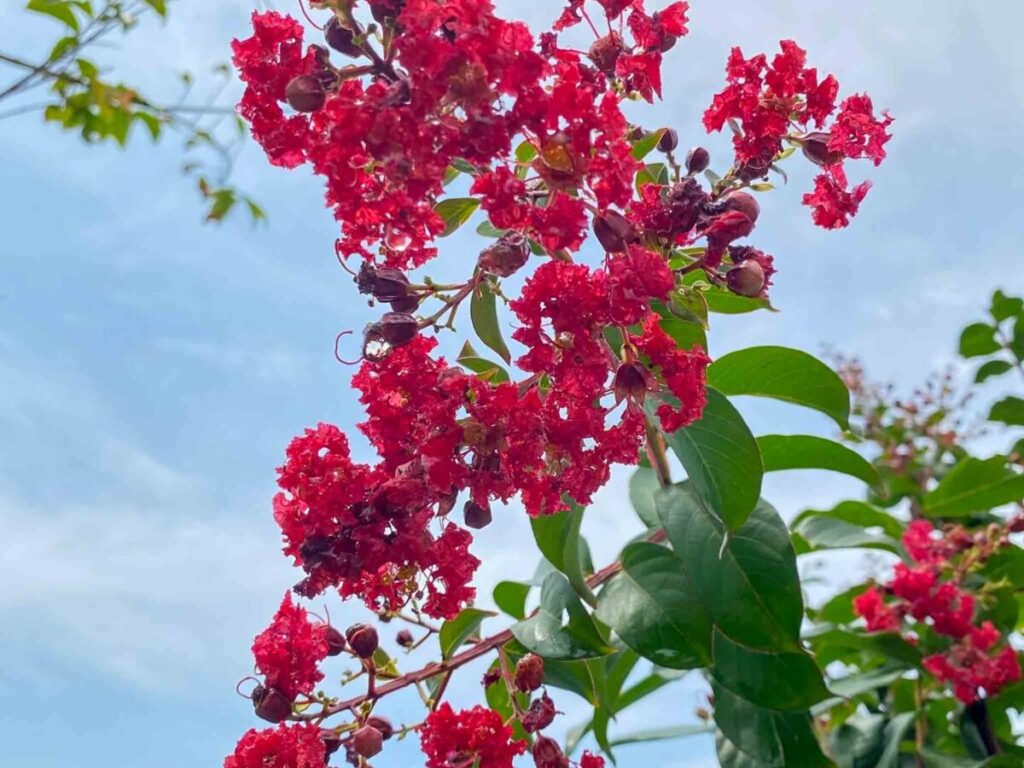
Crepe Myrtle
What will it be? Flowering trees for color? Evergreen or deciduous for shade? Or maybe a fruit tree like lemon, lime, orange or satsuma? Ask one of our experts for advice and remember to check here before you begin.
Did you know fall and winter are the best seasons to plant a tree in Louisiana? This time period allows for the establishment of a good root system so it’s ready to grow during spring.
## Flowering Trees
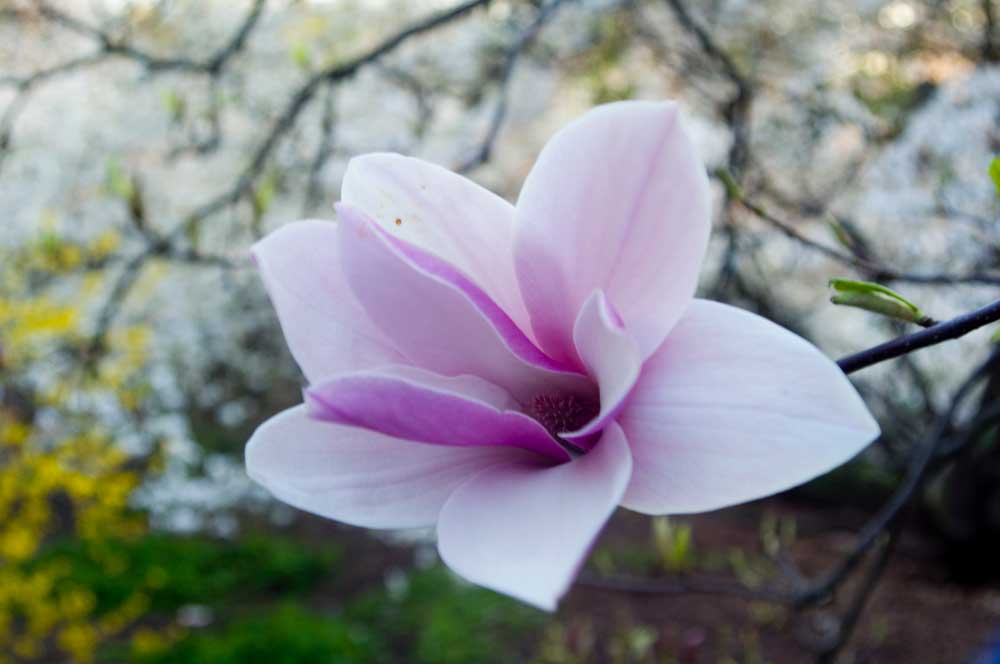
### Magnolia
A tree of the South, the magnolia is fast growing and an all-around favorite in Louisiana. With so many different varieties - some growing as short as 10 ft. and others as tall as 50 ft. - you're sure to find something that fits your space without compromising on the classic magnolia look. Check out all of our magnolia varieties below:
[D.D. Blanchard Southern Magnolia]()
D.D. Blanchard is the largest growing magnolia variety we stock. They’re tuned to our climate, resistant to common diseases, and perfectly fit the aesthetic of any southern landscape. Though most magnolias are deciduous, Southern magnolias tend to behave like evergreens. This means they’ll keep their leaves through most winters and only drop old leaves sparsely throughout the year.
D.D. Blanchard will grow about 50 ft. tall with a spread of 35 ft. Showy, fragrant blooms appear from May to June.
[Kay Parris Magnolia (Dwarf)]()
Kay Parris Magnolia can be thought of as a miniature version of the original cultivar, the southern magnolia. However, this smaller footprint did the opposite for its flowers; Large, extremely fragrant blooms are thought to be some of the best in the magnolia family. An added bonus, this is one of the few magnolias considered to be evergreen.
Grows about 20 ft. tall with a spread of 10 ft. Blooms from June – August.
[Little Gem Magnolia (Dwarf)]()
Not as small as Kay Parris, but has slightly smaller blooms. In this regard, Kay Parris could be seen as more ornamental than the Little Gem. However, Little Gem will usually bloom twice a year as compared to once, and is still very fragrant while having smaller flowers. Little gem is also considered evergreen, especially in Louisiana.
Grows about 20-25 ft. tall, with a spread of 10-15 ft. Blooms in early summer and again in late summer / early fall.
[Teddy Bear Magnolia (Dwarf)]()
The Teddy Bear is slightly smaller than the Little Gem, but its growth habit tends to be tighter. This means more branches and leaves in a more compact space. That growth habit makes it a dream to prune and shape, and works perfectly in smaller landscapes.
Grows about 16-20 ft. tall, with spread of around 10-12 ft. Blooms profusely in late spring, many note the unique citrus-like fragrance.
[Sweetbay Magnolia]()
Probably the smallest magnolia you’ll see in the landscape, the sweet bay is unique for the color and shape of its leaf. Ditching the iconic green, wax-leafed with a brown underside, Sweetbay Magnolias have a silvery, almost frosted looking underside.
Grows anywhere from 10-20 ft. tall and around. Sometimes comes in shrub form, but can be shaped and sold in topiary or tree form. Blooms May – June. Flowers are relatively large for its size.
[Fuscata Magnolia (Banana Shrub, Extremely Fragrant)]()
Technically a magnolia, but commonly known as a banana shrub. This dense growing, relatively small shrub is famous for its banana scented fragrant flowers. You’ve likely been hit with this signature smell if you’ve ever walked around LSU or South Eastern campus, where they are peppered around just about anywhere with room.
Grows about 6-8 ft. tall and around. Blooms heavily in the spring.
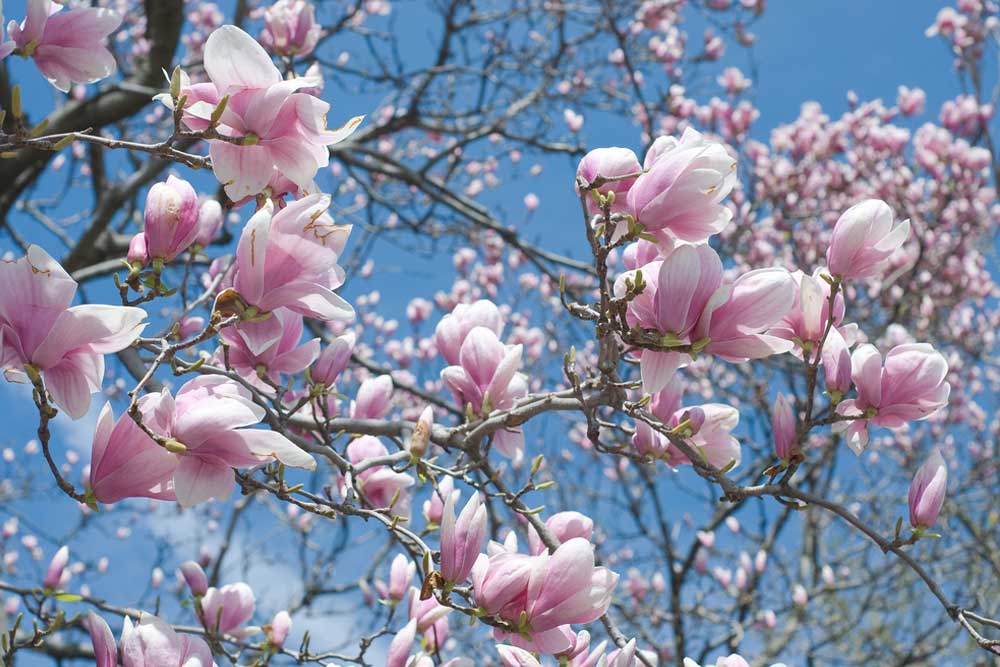
### Japanese Magnolias
Similar to the magnolia tree, however, the Japanese magnolia is deciduous and drops its leaves in the winter, making its beautiful blooms stand out.
[Alexandria Japanese Magnolia]()
Large, beautiful pink & purple flowers make this tree the center-piece of the landscape! Leaves fall in winter, blooms appear soon after.
Grows about 20-25 ft. tall and spread of 15-20 ft.
[Ann Japanese Magnolia]()
Large, purplish – red flowers that strongly resemble a tulip. Will usually bloom in mid-spring, but our warm climate often induces blooms as early as March or even February.
Grows 8-10 ft. tall, with a spread of 10 ft.
[Betty Japanese Magnolia]()
Large reddish – purple flowers with white interiors. Could be called a shrub or multi-trunk tree depending on your preference. Blooms appear later in season, about April – May.
Grows from 10-15 ft. tall and around, adding to its shrub-like appearance.
[Jane Japanese Magnolia]()
Jane Magnolia is one of the most popular Japanese magnolia selections. Has vibrant purple flowers that appear in late winter after leaves have fallen. Tried and tested, relatively easy to grow.
Grows about 10-15 ft. tall with a spread 8-10 ft.

### Crepe Myrtle
Crepe Myrtles are so popular in Louisiana you'd think they were native! The varieties available in our stores have acclimated to our climate, are resistant to our diseases and pests, and can fill any space from big to small with an array of colorful flowers and foliage. There is always a crepe myrtle that works in your space. Check out some of our varieties below:
[Acoma]()
A popular cultivar of the crepe myrtle tree, known for its compact growth habit and stunning white flowers. Flowers appear in clusters, typically in summer from July-September. Can attract pollinators. Leaves will fall in Winter.
Grows about 8-10 ft. tall with a spread of 6-8 ft.

[Arapaho]()
The Arapaho is a hardy, resilient tree that has built-in resistances to many common diseases and pests. Beautiful, almost cherry red flowers appear in clusters from July – September. Many growers note the attractive bark as unique, which peels to reveal a smooth, cinnamon-colored surface. Will lose leaves in the winter.
Grows about 20 ft. tall and has a spread of 15 ft.

[Basham Pink]()
The Basham Pink Crape Myrtle is a hardy and disease-resistant tree that can tolerate a wide range of soil types and growing conditions. Large clusters of pink blooms appear from July – September. Glossy green leaves will fall in the winter. It is also known for its attractive bark, which peels to reveal a smooth, light gray surface. Overall, the Basham Pink Crape Myrtle is a stunning and low-maintenance tree that can add vibrant color and interest to any landscape.
Grows about 30 ft. tall and has a spread of 20 ft.

[Biloxi]()
Produces large clusters of lavender pink blooms from July – September. Glossy green foliage that falls in the winter. Hardy and disease resistant.
Grows about 25 ft. tall and has a spread of 20 ft. Great for larger landscapes.

[Colorama Scarlet]()
Produces large clusters of red flowers that bloom from July – September. Dark green leaves that turn to a beautiful orange until falling in the winter.
Grows about 20 ft. tall with a spread of 15 ft.

[Dynamite]()
Dynamite crepe murtle produces large clusters of bright red flowers, blooms from July – September. Dark green leaves that fall in the winter. Disease and pest resistant, very hardy for Louisiana yards.
Grows about 20 ft. tall with a spread of about 15 ft.

[Ebony Ivory]()
Produces stunning white flowers that are meant to contrast with the deep purple and black foliage. Striking visual combination. Blooms appear July – September. Resistant to diseases and pests, and known as a relatively quick to mature tree. Foliage will fall in the winter.
Grows about 12-15 ft. tall with a spread of 8-12 ft.
[Ebony Flame]()
Stunning, deep red flowers contrasted by almost-black foliage. Extremely rare color combination, have to see it in-person! Blooms appear in clusters from July – September, leaves will fall in winter.
Grows about 12-15 ft. tall with a spread of 8-12 ft.
[Muskogee]()
Produces clusters of lavender blooms with a medium to dark-green foliage. Foliage turns orange until falling in the winter. Resistant to common diseases and pests, and grows fast. Perfect for large projects that need to be filled in quickly.
Grows about 20-30 ft. tall with a spread of 15-25 ft.
[Natchez]()
Blooms large clusters of pure-white flowers, dark green foliage will shift to red during the fall until eventually dropping in the winter. Natchez are extremely popular, and one of the easiest of the already easy-to-grow crepe myrtle family. Fast growing disease and pest resistant, a great all-around miniature tree\!
Grows about 20-30 ft tall with a spread of 15-25 ft.
[Petite Plum]()
Glossy green foliage with beautiful plum-pink blooms in the summer. “Petite” crepe myrtles are dwarfed, and the petite plum is no different, perfect for fitting tighter spots in your landscape.
Grows about 4-5ft tall and around.
[Pink Velour]()
Color-changing foliage: Deep red transitions to a green with dark-purple hue in the summer. Has almost hot-pink / magenta blooms you’ve come to love from crepe myrtles.
Grows about 8-10ft tall and around.
[Red Rocket]()
The fastest growing crepe myrtle we have (up to 5ft a year!), great for mass-planting! Glossy-green foliage with vibrant red blooms stand out in the landscape.
Grows about 12-15ft tall, with a canopy 10-12ft around.
[Rhapsody in Pink]()
Fast-growing (3ft per year), more rounded variety with beautiful pink blooms with a white hue. Foliage on new-growth branches is a deep purple, transitioning to classic glossy-green as growth matures.
Grows about 10-12ft tall and around.
[Rikki Tikki Pink]()
Unique foliage: New-growth leaves appear purple, maturing to a silvery-green. Blooms classic magenta. Since it is dwarfed, the Rikki Tikki can be grown as a small tree or rounded shrub.
Grows about 4-5ft tall and around.
[Sioux]()
Dark, glossy-green foliage with light pink blooms. After blooms are spent, leaves transition to a purplish-red, before falling.
Grows about 12-15ft tall with a canopy of 10-12ft around.
[Thunderstruck Coral Boom]()
One of the best contrasts of any crepe myrtle foliage / bloom combinations. Leaves are near-black, the perfect background for the bright-coral clusters of flowers. Slightly up-right growth, makes for easy-shaping.
Grows about 12-15ft tall, with a canopy of 8-10ft around.
[Thunderstruck Lavender Blast]()
Lavender blooms and striking black foliage make this another great contrasting color-combination. The fast growth-rate you’ve come to love from crepe myrtles. A perfect accent piece without over-taking the other bright-colors in your landscape. Easy to shape.
Grows about 12-15ft tall with a canopy of 10-12ft around.
[Thunderstruck Rumblin' Red]()
Bright-red bloom come in large clusters, accented by the almost black, ruffled-foliage. Quick-growing, beautiful contrasting colors, and the hardiness we’ve come to love from thunderstruck.
Grows about 12-15ft tall with a canopy of 8-12ft around.
[Thunderstruck Scarlet Red]()
Very similar to Ebony Flame but in a full-size tree-form. The darkest, near-black foliage on the market, with Scarlet red clusters of blooms. Fast-growing, hardy in so many various conditions.
Grows about 15-20ft tall, with a canopy of 10-15ft around. Shape to your heart’s content\!
[Thunderstruck White Lightening]()
The darkest foliage with the whitest blooms on the market, amazing contrast without overpowering the other colors in your landscape.
Grows about 12-15ft tall with a canopy of 8-12ft around. Shape to your heart’s content\!
[Tonto]()
Beautiful, fuchsia-red clusters of blooms on classic glossy-green foliage. This variety is dwarfed, and has a much more rounded growth-habit than most. This makes it perfect for even small holes in the landscape or garden.
Grows about 8-10ft. tall, with a canopy of 6-8ft around. Shape as necessary\!
[Tropical Purple]()
Classic glossy-green foliage, turns deep red before dropping in the winter. Blooms in large clusters of dark-pinks and purples. One of the larger-growing crepe myrtles on our list, with an up-right habit. Great for filling large holes in the landscape or garden.
Grows about 20-25ft tall with a canopy of 6-8ft around.
[Tuscarora]()
Classic coral-pink blooms with uniquely bright-green foliage. Light-brown bark adds color even after leaves and flowers have dropped for the winter.
Grows about 16-20ft tall, with a canopy of 15ft around
[Twilight]()
The largest tree on the list. Glossy-green foliage is slightly brighter than most. Profuse-bloomer, with clusters of purplish-pink flowers lasting until late summer, sometimes into mid-fall. Fast-growing, disease resistant, and everything else we love about crepe myrtles.
Grows about 20-30ft tall, with a canopy of 10-15ft around.
## Shade Trees

### Oak Trees
The low-hanging, sprawling branches of the live oak tree is an iconic fixture of southern landscapes. Almost any park, nature-walk, or college campus in Louisiana is bound to have a few of these majestic trees giving shade and usually a place to sit. Here are just a few of the varieties we stock:
[Southern Live Oak]()
Distinct in that it doesn’t lose leaves nor change color in the fall. Will briefly shed leaves in early spring. Often called Southern Oak or Live Oak.
The largest Southern Live Oaks have been recorded with a crown of 150-ft. However, the average tends to be a bit more reasonable.
Grows about 40-80 ft. tall with a 60-100 ft. spread, perfect for providing shade.
[Empire Live Oak]()
Faster growing than the live oak, Empire oaks have denser branching habits that end up being easier to maintain in certain scenarios. Only shed leaves briefly in the spring with no winter color-change.
Grows about 40-80 ft. tall, spread of 60-100 ft.
[Nuttall Oak]()
A deciduous variety of oak with large leaves that will change from green – yellow – orange – red in the fall until dropping them in the winter. Smaller spread, great for smaller spaces.
Grows about 40-60 ft. tall, spread of 35-50 ft.
[Shumard Oak]()
A more rounded growth-habit than other oaks, the Shumard is fast-growing and best known for its vibrant color changing leaves as it moves from fall to winter. Many see this as a counter-part to the Nuttall, with the Shumard preferring higher spots in the landscape and Nuttall preferring lower.
Grows about 60 ft. tall and spread of 50-60 ft.
[Pin Oak]()
Pin Oak leaves change from green to scarlet red noticeably later in the season, usually still hanging on until mid-winter. Also known as the Swamp Spanish Oak, this tree will grow moderate quickly and without issue in high or low lying areas.
Grows about 60-70 ft. tall, with a small spread of 25-40 ft.
[Willow Oak]()
Another great deciduous oak of Louisiana, has beautiful color change in the fall. Known for their disease and pest resistances in the south, and loves the high moisture / humidity of our climate.
Grows relatively slowly, about 40-60 ft. tall, with a spread of 30-40 ft.

### Elm
An adaptable tree, the elm is also fast-growing, making it a great choice for many environments.

### Maple
Prized for their beautiful leaves in the fall, maples make a great addition to any yard.
[Red Maple]()
The iconic fall tree, colors change usually after labor day when days shorten and temperature drop. Fairly hardy for Louisiana, but be sure to create a proper mound and plan for the eventual size of tree.
Grows about 40-60 ft. tall, spreads nearly 40 ft.
[Florida Flame Red Maple]()
Sometimes called the “swamp” maple, Florida Flame is a great choice to add color on a large scale in areas that tend to be washed with green. This variety can handle poor irrigation and low-spots unbelievably well. Foliage turns in fall.
Grows about 40-ft tall, with a spread of 30-40 ft.
## Fruit Trees (Citrus)

### Introduction to Citrus
Nothing compares to the fruits of hard-labor: Grab a healthy tree from our wide selection of citrus varieties today! Our varieties are listed below with information regarding the tree, a description of the fruit, and other notable characteristics. Availability varies from season to season, year to year. Most of our fruit trees are available in dwarf varieties (noted by a purple "dwarf" tag on the tree), which will change the estimated height and width significantly. Citrus tree flowers produce both male and female parts, meaning you'll only technically need one to produce fruit. Some varieties will (tangerine and tangelo) greatly benefit from more trees, and we recommend getting at least two. Lastly, all blooming / fruiting time-frames are estimates.
[Grapefruit - Chandler Pummelo]()
The Chandler Pummelo Grapefruit is a variety of grapefruit known for its large size and sweet flavor. It grows on a medium-sized evergreen tree with glossy leaves and can reach a height of up to 20 feet. The fruit of the Chandler Pummelo is characterized by its juiciness, vibrant pink flesh, and a well-balanced taste that leans more towards sweetness than tartness compared to other grapefruit varieties.
[Grapefruit - Rio Red]()
The Rio Red Grapefruit is a popular variety of grapefruit that is known for its rich flavor and deep red flesh. It grows on a medium-sized evergreen tree with glossy green leaves and can reach a height of up to 25 feet. The fruit of the Rio Red Grapefruit is characterized by its juiciness, vibrant red color, and a unique blend of sweetness and tartness that creates a refreshing taste experience. It is considered one of the sweetest and juiciest grapefruit varieties available.
[Grapefruit - Ruby Red]()
The Ruby Red Grapefruit is a well-known and highly sought-after variety of grapefruit. It grows on a medium-sized evergreen tree with glossy leaves and can reach a height of up to 20 feet. The fruit of the Ruby Red Grapefruit is characterized by its vibrant red or pink flesh, which is exceptionally juicy and sweet. It has a delightful balance of sweetness and tartness, making it a refreshing and flavorful choice among grapefruit varieties. The Ruby Red Grapefruit is often praised for its luscious taste and high juice content, making it a popular choice for eating fresh or juicing.
[Kumquat - Sweet Meiwa]()
The Sweet Meiwa Kumquat is a variety of kumquat known for its exceptionally sweet and delicious flavor. It grows on a small evergreen tree with dark green foliage and can reach a height of up to 10 feet. The fruit of the Sweet Meiwa Kumquat is characterized by its small size and round shape, with a thin, edible skin that is sweet and fragrant. Unlike other kumquat varieties that tend to be more tart, the Sweet Meiwa Kumquat stands out for its lack of tartness and its delightful balance of sweetness, making it a popular choice for eating fresh or using in culinary applications.
[Kumquat - Sour Nagami]()
The Sour Nagami Kumquat is a distinctive variety of kumquat known for its tart flavor profile. It grows on a small evergreen tree with dark green leaves and can reach a height of up to 10 feet. The fruit of the Sour Nagami Kumquat is characterized by its small, oval shape and bright orange color. Its most notable characteristic is its intense sour taste, which sets it apart from other kumquat varieties. The Sour Nagami Kumquat’s tangy flavor makes it a unique addition to recipes and beverages, and it is often used to add a burst of acidity and zestiness to culinary creations.
[Lemon - Lisbon]()
The Lisbon Lemon is a widely cultivated lemon variety, notable for its tart and tangy flavor. Compared to other lemon varieties like the Meyer Lemon, the Lisbon Lemon has a more pronounced acidity and a stronger, classic lemon taste. It grows on a medium-sized evergreen tree with thorny branches and can reach a height of up to 20 feet. The fruit of the Lisbon Lemon features a bright yellow color, a smooth and thick skin, and juicy acidic flesh. Its high juice content makes it a popular choice for culinary purposes, lending its bold lemon flavor to a variety of dishes, desserts, and beverages.
[Lemon - Meyer]()
Meyer Lemons are a unique variety of citrus fruit known for their smaller size, thin and smooth golden-yellow skin, and fragrant aroma. They grow on small to medium-sized evergreen trees with thorny branches and can reach a height of up to 10 feet. Meyer Lemons are distinguished by their flavor, which is less tart and more sweet and floral compared to other lemon varieties. They have a subtle hint of mandarin orange, making them exceptionally flavorful and versatile in both sweet and savory dishes. Meyer Lemons are cherished for their smooth and mild taste, which sets them apart from the traditional tangy and acidic flavor of other lemons.
[Lemon - Ponderosa]()
The Ponderosa Lemon is a unique and distinct variety of lemon known for its exceptionally large size. It grows on a medium to large-sized evergreen tree with thorny branches and can reach a height of up to 20 feet. The fruit of the Ponderosa Lemon is characterized by its thick and bumpy yellow skin, which is rougher compared to other lemon varieties. The taste of the Ponderosa Lemon is tart and acidic, with a strong and tangy flavor. Its notable characteristic is its size, as Ponderosa Lemons can grow to be as large as a grapefruit, making them stand out among other lemon varieties.
[Lemon - Variegated]()
The Variegated Lemon is a unique and visually striking lemon variety known for its variegated foliage and fruit. It grows on a medium-sized evergreen tree with variegated leaves that have a mix of green and yellow colors. The fruit of the Variegated Lemon is characterized by its small to medium size and a thin, smooth, and yellow skin with green stripes or patches. In terms of taste, Variegated Lemons are tart and acidic, similar to other lemon varieties, but they also have a slightly sweeter and milder flavor. The variegated appearance of both the leaves and fruit makes the Variegated Lemon an attractive and ornamental addition to gardens or landscapes.
[Lime - Kaffir]()
The Kaffir Lime is a distinctive citrus fruit known for its aromatic leaves and unique flavor. It grows on a small to medium-sized evergreen tree with dark green, glossy leaves that have a bumpy texture. The fruit of the Kaffir Lime is small and green, with a rough, wrinkled skin. The flavor of the Kaffir Lime is highly aromatic and tangy, with a strong citrusy taste. However, it is the leaves of the Kaffir Lime that are particularly prized and widely used in cooking. The leaves have a strong, zesty fragrance and add a distinct citrusy and floral flavor to various dishes, especially in Thai and Southeast Asian cuisines.
[Lime - Key]()
Key Limes, also known as Mexican limes or West Indian limes, are a small and round citrus fruit with a thin, smooth, and bright yellow-green skin. They grow on small evergreen trees with thorny branches. Key Limes are renowned for their intense and tart flavor, offering a uniquely acidic and tangy taste. They are often associated with classic dishes such as Key Lime pie and are a staple ingredient in Mexican, Caribbean, and Latin American cuisines. Key Limes have a strong and aromatic citrus fragrance, making them a popular choice for adding a refreshing and zesty kick to both sweet and savory recipes.
[Lime - Persian]()
The Persian Lime, also known as the Tahiti Lime, is a popular lime variety with a medium to large size and a smooth, bright green skin. It grows on a small to medium-sized evergreen tree with thornless branches. Persian Limes are known for their juicy and acidic flavor, which is less tart compared to Key Limes. They have a slightly sweeter taste, making them a versatile ingredient in both sweet and savory dishes. Persian Limes are commonly used in beverages, cocktails, dressings, and desserts, and their vibrant green color adds a visually appealing element to culinary creations. They have a refreshing and tangy citrus flavor that is widely enjoyed.
[Orange - Ambersweet]()
The Ambersweet Orange is a unique variety of citrus fruit that combines the characteristics of both sweet oranges and grapefruits. It is a relatively new hybrid variety created by crossing a sweet orange with a grapefruit. The Ambersweet Orange has a medium to large size, a smooth and glossy orange skin, and juicy, flavorful flesh. It is known for its exceptional sweetness, with a rich and complex flavor profile that has hints of both oranges and grapefruits. The Ambersweet Orange is often praised for its low acidity and lack of bitterness, making it a popular choice for those who prefer a milder and sweeter citrus experience.
[Orange - Blood]()
The Blood Orange is a distinct and visually striking citrus fruit with a deep crimson or burgundy-colored flesh. It grows on various types of orange trees and has a similar appearance to regular oranges on the outside, with a bright orange skin. However, it is the unique color of the flesh that sets the Blood Orange apart. The taste of the Blood Orange can vary, but it is generally sweeter than regular oranges and has a distinctive berry-like flavor with hints of raspberry or strawberry. The Blood Orange’s vibrant color and complex flavor make it a popular choice for fresh consumption, juicing, and culinary applications where its unique appearance and taste can add a vibrant twist to dishes and beverages.
[Orange - Calamondin]()
The Calamondin Orange, also known as Calamansi, is a small citrus fruit that is believed to be a hybrid between a mandarin orange and a kumquat. It grows on a small, compact evergreen tree with glossy leaves and can reach a height of up to 10 feet. The fruit of the Calamondin Orange is small, round, and bright orange when ripe. Unlike traditional oranges, the Calamondin has a sour and tart flavor that is similar to a lime or a sour mandarin. It is often used in culinary applications as a souring agent or as a flavoring for sauces, marinades, beverages, and desserts. Additionally, the Calamondin Orange is highly prized for its aromatic rind, which is often used for its zest in cooking and baking.
[Orange - Clementine Mandarin]()
The Clementine Mandarin Orange is a small, seedless citrus fruit that is a hybrid between a mandarin orange and a sweet orange. It is known for its easy-to-peel thin skin and juicy, sweet flavor. The Clementine Mandarin Orange is smaller in size compared to other oranges and has a deep orange color. Its taste is characterized by a delightful balance of sweetness and acidity, with a distinct and aromatic citrus fragrance. Clementines are often enjoyed as a snack, used in salads, or incorporated into desserts due to their vibrant flavor and convenient segmented structure. They are beloved for their refreshing and tangy-sweet taste, making them a popular choice among citrus lovers.
[Orange - Louisiana Sweet]()
Known for their sweet, rounded fruit and extreme cold-hardiness, this Louisiana favorite has grown in popularity over the years. Fruit will mature around December, a unique quality among citrus trees.
[Orange - Page Mandarin]()
The Page Mandarin Orange, also known as Page Tangor, is a hybrid citrus fruit that is a cross between a tangerine and a grapefruit. The fruit is small to medium in size with a slightly flattened shape, and it has a thin, smooth, and bright orange skin. Page Mandarin Oranges are known for their sweet and juicy flavor, with a delightful balance of sweetness and tartness. The flesh is typically deep orange and easily segmented. The Page Mandarin Orange is often enjoyed fresh, used in salads, or juiced for its refreshing and tangy-sweet taste. It is a popular choice among citrus enthusiasts due to its unique flavor profile and versatility.
[Orange - Pineapple Navel]()
The Pineapple Navel Orange is a distinctive citrus variety, boasting a bright, attractive orange skin and a unique, richly sweet flavor that has hints of pineapple, thus making it sweeter than many other oranges. The tree it grows on is medium-sized, reaching 10-15 feet, and is admired for its glossy, dark green leaves and the delightful citrus blossom aroma that accompanies the flowering period. A standout among the orange family, the Pineapple Navel Orange is recognized for its seedless nature and the characteristic “navel” at the apex of the fruit, which is more pronounced than in other navel oranges.
[Orange - Ponkin Mandarin]()
The Ponkin Mandarin Orange is a small, globe-shaped citrus fruit that stands out for its easy-to-peel, bright orange skin and exceptionally sweet, almost honey-like flavor, distinguishing it as one of the sweetest members of the orange family. The tree it grows on is relatively compact, typically reaching 6-8 feet in height, and is renowned for its dense, deep green foliage and the production of highly aromatic blossoms. Unique to the Ponkin Mandarin is its notably small seeds and early ripening period, providing a welcome, sweet-tasting harvest at a time when many other mandarin varieties are not yet ripe.
[Orange - Red Navel]()
The Red Navel Orange, often referred to as Cara Cara, is a unique citrus fruit known for its vibrant, pink-red flesh that offers a complex flavor profile, blending sweetness with a subtle hint of raspberry — a distinctive taste that sets it apart within the orange family. The tree it grows on is of medium size, typically reaching 10-15 feet in height, characterized by its glossy green leaves and the aromatic, white blossoms it produces. What makes the Red Navel Orange stand out is its higher levels of anthocyanins which give it the unique red color, as well as its lower acidity compared to other navel oranges, resulting in a sweeter, more nuanced flavor.
[Orange - Valencia]()
The Valencia Orange is a popular citrus fruit, famed for its thin, bright orange skin and juicy, well-balanced sweet-tart flavor, which is considered one of the most refreshing among the orange varieties. The tree it grows on typically attains a height of 20-30 feet, characterized by its dense canopy of dark green leaves and fragrant white blossoms. Uniquely, the Valencia Orange is recognized for its late-season ripening, often holding onto the tree into the summer months, which distinguishes it from other oranges that typically ripen in winter or spring. This late ripening has earned it the nickname “summer orange.”
[Washington Navel Orange]()
The Washington Navel Orange is a prized citrus variety, recognized for its medium to large size, easy-to-peel, vibrant orange skin, and seedless, sweet, and tangy flesh, offering a classic orange flavor that is often considered the standard among the orange family. The tree on which it grows usually reaches about 15-20 feet, characterized by its broad, dark green leaves and the sweet-scented white blossoms it produces. What sets the Washington Navel Orange apart is its distinctive “navel” at the base of the fruit — a secondary fruit embedded in the peel — a feature more pronounced and consistent in this variety than in other navel oranges.
[Satsuma - Brown Select]()
The Brown Select Satsuma is a cherished variety of mandarin, noted for its small to medium size, deep orange skin that is loose and easy to peel, and seedless, incredibly sweet flesh, setting a high standard for sweetness among the satsuma family. The tree it grows on is fairly small, often reaching about 10-12 feet, and is known for its glossy, evergreen leaves and fragrant white blossoms. Distinguished from other satsumas, the Brown Select exhibits a hardy nature with enhanced cold tolerance, and its fruit typically ripens earlier, often ready for harvest from late fall.
[Louisiana Early Satsuma]()
The Louisiana Early Satsuma is a delightful variety of mandarin, distinguished by its medium-sized fruit with a bright, easy-to-peel skin and seedless, juicy, and sweet flesh, making it one of the earliest maturing and sweetest members of the satsuma family. The tree it grows on is relatively small, usually reaching about 8-10 feet, adorned with glossy green leaves and white, sweet-scented blossoms. What sets the LA Early Satsuma apart is its early ripening, with fruits typically ready for harvest as early as late summer or early fall, significantly earlier than many other satsuma varieties.
[Satsuma - Miho]()
The Miho Satsuma is a popular mandarin variety, appreciated for its medium-sized, seedless fruits with a vibrant, easy-to-peel skin and a supremely sweet, tangy flesh, placing it among the sweetest in the satsuma family. The tree it grows on usually attains a height of about 8-12 feet, characterized by its deep green, glossy leaves and fragrant white blossoms. Notably, the Miho Satsuma is distinguished by its early ripening season, often ready for harvest in early to mid-fall, ahead of many other satsuma varieties.
[Satsuma - Owari]()
The Owari Satsuma is a highly valued mandarin variety, renowned for its small to medium-sized, seedless fruits with a loose, easy-to-peel skin and a delightfully sweet, slightly tart flesh, making it a classic flavor benchmark within the satsuma family. The tree it grows on is compact, typically reaching about 6-8 feet, and is known for its dense canopy of glossy green leaves and aromatic white blossoms. Unique to the Owari Satsuma is its exceptional cold tolerance, allowing it to thrive in cooler climates where other satsuma varieties may struggle, and its fruit ripens in the late fall to early winter, providing a sweet treat when many other citrus fruits have finished their season.
[Satsuma - Seto]()
The Seto Satsuma is a cherished mandarin variety, notable for its medium-sized, seedless fruits with bright, easy-to-peel skin and a delightfully sweet, slightly tangy flesh, marking it as one of the more flavorful satsumas. The tree it grows on is moderately sized, often reaching about 10-12 feet, characterized by its glossy green leaves and fragrant white blossoms. What sets the Seto Satsuma apart is its early ripening season, with fruits typically ready for harvest in early to mid-fall, ahead of many other satsuma varieties, and its fruit is known for holding well on the tree, allowing for an extended harvesting period.
[Tangelo - Orlando]()
The Orlando Tangelo is an enticing citrus hybrid, renowned for its medium to large size, slightly pear-shaped fruit with a deep orange, slightly pebbled skin and a juicy, richly sweet-tart flesh that offers a more complex flavor compared to traditional tangerines or oranges. The tree it grows on is moderately large, often reaching about 15-20 feet, notable for its lush, dark green leaves and the production of highly fragrant blossoms. Unique among its tangelo kin, the Orlando Tangelo is recognized for its cold hardiness relative to other citrus and its mildly seedy nature, as well as the distinct collar or neck at the stem end of the fruit, setting it apart in appearance and taste.
[Tangerine - Dancy]()
The Dancy Tangerine is a classic citrus variety, celebrated for its small to medium size, deep orange, easy-to-peel skin and a juicy, richly sweet and slightly tart flesh, offering a full-bodied flavor that sets a high standard among the tangerine family. The tree it grows on is moderately sized, typically reaching about 10-15 feet, characterized by its glossy green leaves and the production of intensely fragrant white blossoms. Unique to the Dancy Tangerine is its late-season ripening, often ready for harvest in late winter when few other citrus varieties are in season, and its tendency to bear a small number of seeds in each fruit, unlike many other seedless tangerine varieties.
[Tangerine - Sunburst]()
The Sunburst Tangerine is a highly admired citrus variety, recognized for its medium-sized, vibrant orange, easy-to-peel skin and a juicy, incredibly sweet flesh, which is among the sweetest in the tangerine family. The tree it grows on is of medium size, often reaching 10-15 feet, notable for its shiny, dark green leaves and the clusters of sweet-smelling white blossoms it produces. Distinguishing the Sunburst Tangerine from other tangerines is its early to mid-season ripening, typically ready for harvest in early winter, and its virtually seedless nature, making it a convenient and delectable choice for fresh eating.
## Join Our Garden Club
### It's FREE and easy\!
[Sign Me Up](https://louisiananursery.com/garden-club/)

Louisiana Nursery is a family-owned business that opened in February 1983 when Roger Mayes found himself job hunting for the first time in his professional career. Learn more about our company history [here](https://web.archive.org/web/20231218152245/https://lanursery.wpenginepowered.com/about/).
[Instagram](https://www.instagram.com/louisiana_nursery/) [Facebook](https://www.facebook.com/LouisianaNurseryHomeAndGardenShowplace) [Youtube](https://www.youtube.com/@LouisianaNursery) [Twitter](https://twitter.com/Louisianagarden)
### Garden Center
- [Gardening FAQs](https://louisiananursery.com/gardening-faqs/)
- [Advice Before You Begin](https://louisiananursery.com/advice-before-you-begin/)
- [Perennial Plants & Annual Plants](https://louisiananursery.com/annuals-perennials/)
- [Shrubs](https://louisiananursery.com/shrubs/)
- [House Plants](https://louisiananursery.com/house-plants/)
- [Soils and Mulches](https://louisiananursery.com/soil-and-mulch/)
- [Pots and Containers](https://louisiananursery.com/pots-and-containers/)
- [Types of Sod](https://louisiananursery.com/garden-center/sod-varieties-centipede-staugustine/)
- [Gardening Supplies and Tools](https://louisiananursery.com/gardening-supplies-and-tools/)
- [Fountains and Garden Art](https://louisiananursery.com/fountains-and-garden-art/)
- [Gifts and More](https://louisiananursery.com/gifts-and-more/)
- [Christmas](https://louisiananursery.com/christmas/)
- [Seasonal](https://louisiananursery.com/seasonal/)
- [Gardening FAQs](https://louisiananursery.com/gardening-faqs/)
- [Advice Before You Begin](https://louisiananursery.com/advice-before-you-begin/)
- [Perennial Plants & Annual Plants](https://louisiananursery.com/annuals-perennials/)
- [Shrubs](https://louisiananursery.com/shrubs/)
- [House Plants](https://louisiananursery.com/house-plants/)
- [Soils and Mulches](https://louisiananursery.com/soil-and-mulch/)
- [Pots and Containers](https://louisiananursery.com/pots-and-containers/)
- [Types of Sod](https://louisiananursery.com/garden-center/sod-varieties-centipede-staugustine/)
- [Gardening Supplies and Tools](https://louisiananursery.com/gardening-supplies-and-tools/)
- [Fountains and Garden Art](https://louisiananursery.com/fountains-and-garden-art/)
- [Gifts and More](https://louisiananursery.com/gifts-and-more/)
- [Christmas](https://louisiananursery.com/christmas/)
- [Seasonal](https://louisiananursery.com/seasonal/)
#### About
- [About](https://louisiananursery.com/about/)
- [Our Team](https://louisiananursery.com/staff/)
- [Community](https://louisiananursery.com/community/)
- [Careers](https://louisiananursery.com/careers/)
- [The Garden Club Newsletter](https://louisiananursery.com/garden-club/)
- [Gardening Blog](https://louisiananursery.com/blog/)
- [Contact](https://louisiananursery.com/contact/)
- [Sitemap](https://louisiananursery.com/sitemap/)
- [Privacy Policy](https://louisiananursery.com/privacy-policy/)
- [About](https://louisiananursery.com/about/)
- [Our Team](https://louisiananursery.com/staff/)
- [Community](https://louisiananursery.com/community/)
- [Careers](https://louisiananursery.com/careers/)
- [The Garden Club Newsletter](https://louisiananursery.com/garden-club/)
- [Gardening Blog](https://louisiananursery.com/blog/)
- [Contact](https://louisiananursery.com/contact/)
- [Sitemap](https://louisiananursery.com/sitemap/)
- [Privacy Policy](https://louisiananursery.com/privacy-policy/)
#### Locations
- [LA Nursery – Prairieville](https://louisiananursery.com/locations/louisiana-nursery-prairieville/)
- [LA Nursery – Perkins Road](https://louisiananursery.com/locations/louisiana-nursery-perkins-road/)
- [LA Nursery – Coursey Blvd](https://louisiananursery.com/locations/louisiana-nursery-coursey-blvd/)
- [Contact](https://louisiananursery.com/contact/)
- [LA Nursery – Prairieville](https://louisiananursery.com/locations/louisiana-nursery-prairieville/)
- [LA Nursery – Perkins Road](https://louisiananursery.com/locations/louisiana-nursery-perkins-road/)
- [LA Nursery – Coursey Blvd](https://louisiananursery.com/locations/louisiana-nursery-coursey-blvd/)
- [Contact](https://louisiananursery.com/contact/)
Copyright 2024 © Louisiana Nursery \| All Rights Reserved
Scroll to Top
 |
| Readable Markdown | Find The Perfect Tree at Louisiana Nursery
Trees—the anchors of your landscaping.
The backbone of your landscaping.
Growing a tree from a barely-rooted sapling is an incredibly rewarding experience, and can be the longest-term project you’ll ever attempt in your landscape. While [annuals](https://louisiananursery.com/annuals-perennials/) are constantly replaced and [perennials](https://louisiananursery.com/annuals-perennials/) go dormant, your tree will be left standing tall regardless of the season. All that is to say we understand the great responsibility and trust you place in us to find healthy, ready to plant trees. Whether you’re looking for fruiting, flowering, ornamental, evergreen, or shade trees, [Louisiana Nursery](https://louisiananursery.com/) works with the best growers and handpicks only the healthiest stock for our stores.
[Contact Us](https://louisiananursery.com/contact/)

Crepe Myrtle
What will it be? Flowering trees for color? Evergreen or deciduous for shade? Or maybe a fruit tree like lemon, lime, orange or satsuma? Ask one of our experts for advice and remember to check here before you begin.
Did you know fall and winter are the best seasons to plant a tree in Louisiana? This time period allows for the establishment of a good root system so it’s ready to grow during spring.

### Magnolia
A tree of the South, the magnolia is fast growing and an all-around favorite in Louisiana. With so many different varieties - some growing as short as 10 ft. and others as tall as 50 ft. - you're sure to find something that fits your space without compromising on the classic magnolia look. Check out all of our magnolia varieties below:
[D.D. Blanchard Southern Magnolia]()
D.D. Blanchard is the largest growing magnolia variety we stock. They’re tuned to our climate, resistant to common diseases, and perfectly fit the aesthetic of any southern landscape. Though most magnolias are deciduous, Southern magnolias tend to behave like evergreens. This means they’ll keep their leaves through most winters and only drop old leaves sparsely throughout the year.
D.D. Blanchard will grow about 50 ft. tall with a spread of 35 ft. Showy, fragrant blooms appear from May to June.
[Kay Parris Magnolia (Dwarf)]()
Kay Parris Magnolia can be thought of as a miniature version of the original cultivar, the southern magnolia. However, this smaller footprint did the opposite for its flowers; Large, extremely fragrant blooms are thought to be some of the best in the magnolia family. An added bonus, this is one of the few magnolias considered to be evergreen.
Grows about 20 ft. tall with a spread of 10 ft. Blooms from June – August.
[Little Gem Magnolia (Dwarf)]()
Not as small as Kay Parris, but has slightly smaller blooms. In this regard, Kay Parris could be seen as more ornamental than the Little Gem. However, Little Gem will usually bloom twice a year as compared to once, and is still very fragrant while having smaller flowers. Little gem is also considered evergreen, especially in Louisiana.
Grows about 20-25 ft. tall, with a spread of 10-15 ft. Blooms in early summer and again in late summer / early fall.
[Teddy Bear Magnolia (Dwarf)]()
The Teddy Bear is slightly smaller than the Little Gem, but its growth habit tends to be tighter. This means more branches and leaves in a more compact space. That growth habit makes it a dream to prune and shape, and works perfectly in smaller landscapes.
Grows about 16-20 ft. tall, with spread of around 10-12 ft. Blooms profusely in late spring, many note the unique citrus-like fragrance.
[Sweetbay Magnolia]()
Probably the smallest magnolia you’ll see in the landscape, the sweet bay is unique for the color and shape of its leaf. Ditching the iconic green, wax-leafed with a brown underside, Sweetbay Magnolias have a silvery, almost frosted looking underside.
Grows anywhere from 10-20 ft. tall and around. Sometimes comes in shrub form, but can be shaped and sold in topiary or tree form. Blooms May – June. Flowers are relatively large for its size.
[Fuscata Magnolia (Banana Shrub, Extremely Fragrant)]()
Technically a magnolia, but commonly known as a banana shrub. This dense growing, relatively small shrub is famous for its banana scented fragrant flowers. You’ve likely been hit with this signature smell if you’ve ever walked around LSU or South Eastern campus, where they are peppered around just about anywhere with room.
Grows about 6-8 ft. tall and around. Blooms heavily in the spring.

### Japanese Magnolias
Similar to the magnolia tree, however, the Japanese magnolia is deciduous and drops its leaves in the winter, making its beautiful blooms stand out.
[Alexandria Japanese Magnolia]()
Large, beautiful pink & purple flowers make this tree the center-piece of the landscape! Leaves fall in winter, blooms appear soon after.
Grows about 20-25 ft. tall and spread of 15-20 ft.
[Ann Japanese Magnolia]()
Large, purplish – red flowers that strongly resemble a tulip. Will usually bloom in mid-spring, but our warm climate often induces blooms as early as March or even February.
Grows 8-10 ft. tall, with a spread of 10 ft.
[Betty Japanese Magnolia]()
Large reddish – purple flowers with white interiors. Could be called a shrub or multi-trunk tree depending on your preference. Blooms appear later in season, about April – May.
Grows from 10-15 ft. tall and around, adding to its shrub-like appearance.
[Jane Japanese Magnolia]()
Jane Magnolia is one of the most popular Japanese magnolia selections. Has vibrant purple flowers that appear in late winter after leaves have fallen. Tried and tested, relatively easy to grow.
Grows about 10-15 ft. tall with a spread 8-10 ft.
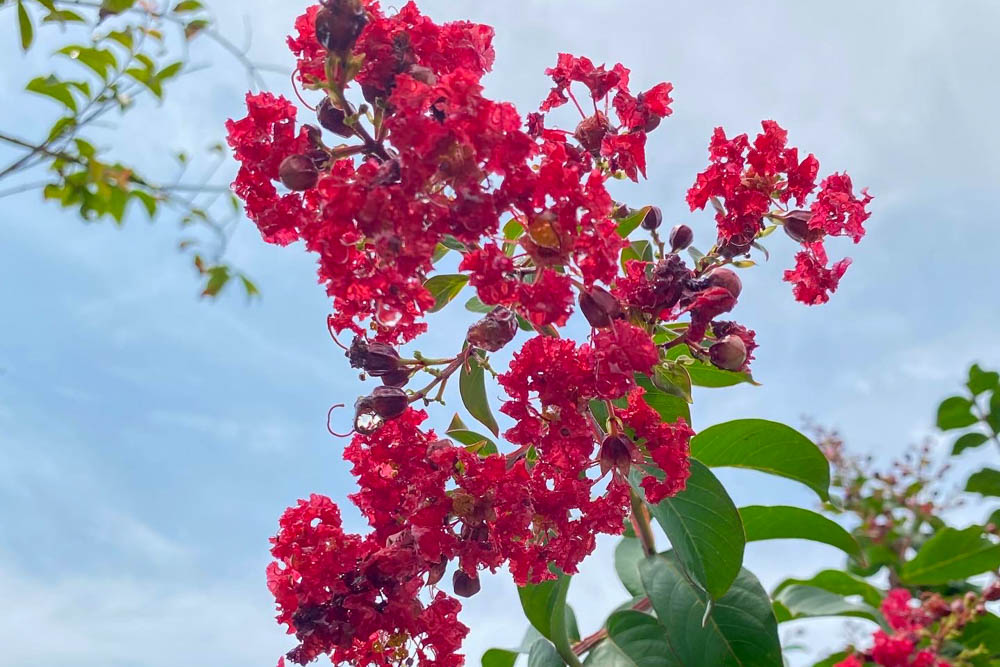
### Crepe Myrtle
Crepe Myrtles are so popular in Louisiana you'd think they were native! The varieties available in our stores have acclimated to our climate, are resistant to our diseases and pests, and can fill any space from big to small with an array of colorful flowers and foliage. There is always a crepe myrtle that works in your space. Check out some of our varieties below:
[Acoma]()
A popular cultivar of the crepe myrtle tree, known for its compact growth habit and stunning white flowers. Flowers appear in clusters, typically in summer from July-September. Can attract pollinators. Leaves will fall in Winter.
Grows about 8-10 ft. tall with a spread of 6-8 ft.
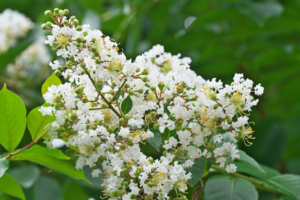
[Arapaho]()
The Arapaho is a hardy, resilient tree that has built-in resistances to many common diseases and pests. Beautiful, almost cherry red flowers appear in clusters from July – September. Many growers note the attractive bark as unique, which peels to reveal a smooth, cinnamon-colored surface. Will lose leaves in the winter.
Grows about 20 ft. tall and has a spread of 15 ft.
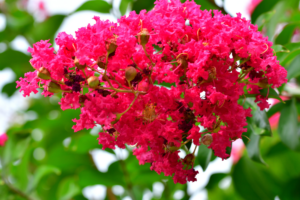
[Basham Pink]()
The Basham Pink Crape Myrtle is a hardy and disease-resistant tree that can tolerate a wide range of soil types and growing conditions. Large clusters of pink blooms appear from July – September. Glossy green leaves will fall in the winter. It is also known for its attractive bark, which peels to reveal a smooth, light gray surface. Overall, the Basham Pink Crape Myrtle is a stunning and low-maintenance tree that can add vibrant color and interest to any landscape.
Grows about 30 ft. tall and has a spread of 20 ft.
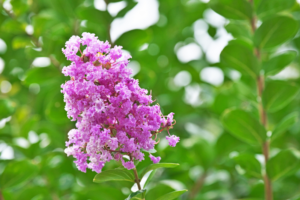
[Biloxi]()
Produces large clusters of lavender pink blooms from July – September. Glossy green foliage that falls in the winter. Hardy and disease resistant.
Grows about 25 ft. tall and has a spread of 20 ft. Great for larger landscapes.
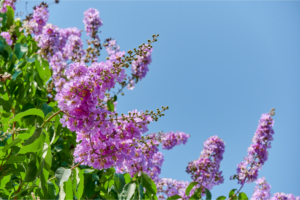
[Colorama Scarlet]()
Produces large clusters of red flowers that bloom from July – September. Dark green leaves that turn to a beautiful orange until falling in the winter.
Grows about 20 ft. tall with a spread of 15 ft.
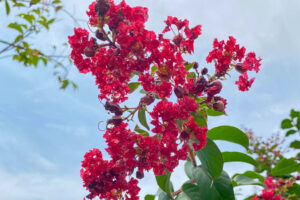
[Dynamite]()
Dynamite crepe murtle produces large clusters of bright red flowers, blooms from July – September. Dark green leaves that fall in the winter. Disease and pest resistant, very hardy for Louisiana yards.
Grows about 20 ft. tall with a spread of about 15 ft.
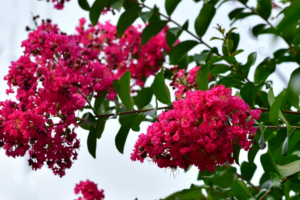
[Ebony Ivory]()
Produces stunning white flowers that are meant to contrast with the deep purple and black foliage. Striking visual combination. Blooms appear July – September. Resistant to diseases and pests, and known as a relatively quick to mature tree. Foliage will fall in the winter.
Grows about 12-15 ft. tall with a spread of 8-12 ft.
[Ebony Flame]()
Stunning, deep red flowers contrasted by almost-black foliage. Extremely rare color combination, have to see it in-person! Blooms appear in clusters from July – September, leaves will fall in winter.
Grows about 12-15 ft. tall with a spread of 8-12 ft.
[Muskogee]()
Produces clusters of lavender blooms with a medium to dark-green foliage. Foliage turns orange until falling in the winter. Resistant to common diseases and pests, and grows fast. Perfect for large projects that need to be filled in quickly.
Grows about 20-30 ft. tall with a spread of 15-25 ft.
[Natchez]()
Blooms large clusters of pure-white flowers, dark green foliage will shift to red during the fall until eventually dropping in the winter. Natchez are extremely popular, and one of the easiest of the already easy-to-grow crepe myrtle family. Fast growing disease and pest resistant, a great all-around miniature tree\!
Grows about 20-30 ft tall with a spread of 15-25 ft.
[Petite Plum]()
Glossy green foliage with beautiful plum-pink blooms in the summer. “Petite” crepe myrtles are dwarfed, and the petite plum is no different, perfect for fitting tighter spots in your landscape.
Grows about 4-5ft tall and around.
[Pink Velour]()
Color-changing foliage: Deep red transitions to a green with dark-purple hue in the summer. Has almost hot-pink / magenta blooms you’ve come to love from crepe myrtles.
Grows about 8-10ft tall and around.
[Red Rocket]()
The fastest growing crepe myrtle we have (up to 5ft a year!), great for mass-planting! Glossy-green foliage with vibrant red blooms stand out in the landscape.
Grows about 12-15ft tall, with a canopy 10-12ft around.
[Rhapsody in Pink]()
Fast-growing (3ft per year), more rounded variety with beautiful pink blooms with a white hue. Foliage on new-growth branches is a deep purple, transitioning to classic glossy-green as growth matures.
Grows about 10-12ft tall and around.
[Rikki Tikki Pink]()
Unique foliage: New-growth leaves appear purple, maturing to a silvery-green. Blooms classic magenta. Since it is dwarfed, the Rikki Tikki can be grown as a small tree or rounded shrub.
Grows about 4-5ft tall and around.
[Sioux]()
Dark, glossy-green foliage with light pink blooms. After blooms are spent, leaves transition to a purplish-red, before falling.
Grows about 12-15ft tall with a canopy of 10-12ft around.
[Thunderstruck Coral Boom]()
One of the best contrasts of any crepe myrtle foliage / bloom combinations. Leaves are near-black, the perfect background for the bright-coral clusters of flowers. Slightly up-right growth, makes for easy-shaping.
Grows about 12-15ft tall, with a canopy of 8-10ft around.
[Thunderstruck Lavender Blast]()
Lavender blooms and striking black foliage make this another great contrasting color-combination. The fast growth-rate you’ve come to love from crepe myrtles. A perfect accent piece without over-taking the other bright-colors in your landscape. Easy to shape.
Grows about 12-15ft tall with a canopy of 10-12ft around.
[Thunderstruck Rumblin' Red]()
Bright-red bloom come in large clusters, accented by the almost black, ruffled-foliage. Quick-growing, beautiful contrasting colors, and the hardiness we’ve come to love from thunderstruck.
Grows about 12-15ft tall with a canopy of 8-12ft around.
[Thunderstruck Scarlet Red]()
Very similar to Ebony Flame but in a full-size tree-form. The darkest, near-black foliage on the market, with Scarlet red clusters of blooms. Fast-growing, hardy in so many various conditions.
Grows about 15-20ft tall, with a canopy of 10-15ft around. Shape to your heart’s content\!
[Thunderstruck White Lightening]()
The darkest foliage with the whitest blooms on the market, amazing contrast without overpowering the other colors in your landscape.
Grows about 12-15ft tall with a canopy of 8-12ft around. Shape to your heart’s content\!
[Tonto]()
Beautiful, fuchsia-red clusters of blooms on classic glossy-green foliage. This variety is dwarfed, and has a much more rounded growth-habit than most. This makes it perfect for even small holes in the landscape or garden.
Grows about 8-10ft. tall, with a canopy of 6-8ft around. Shape as necessary\!
[Tropical Purple]()
Classic glossy-green foliage, turns deep red before dropping in the winter. Blooms in large clusters of dark-pinks and purples. One of the larger-growing crepe myrtles on our list, with an up-right habit. Great for filling large holes in the landscape or garden.
Grows about 20-25ft tall with a canopy of 6-8ft around.
[Tuscarora]()
Classic coral-pink blooms with uniquely bright-green foliage. Light-brown bark adds color even after leaves and flowers have dropped for the winter.
Grows about 16-20ft tall, with a canopy of 15ft around
[Twilight]()
The largest tree on the list. Glossy-green foliage is slightly brighter than most. Profuse-bloomer, with clusters of purplish-pink flowers lasting until late summer, sometimes into mid-fall. Fast-growing, disease resistant, and everything else we love about crepe myrtles.
Grows about 20-30ft tall, with a canopy of 10-15ft around.
Shade Trees
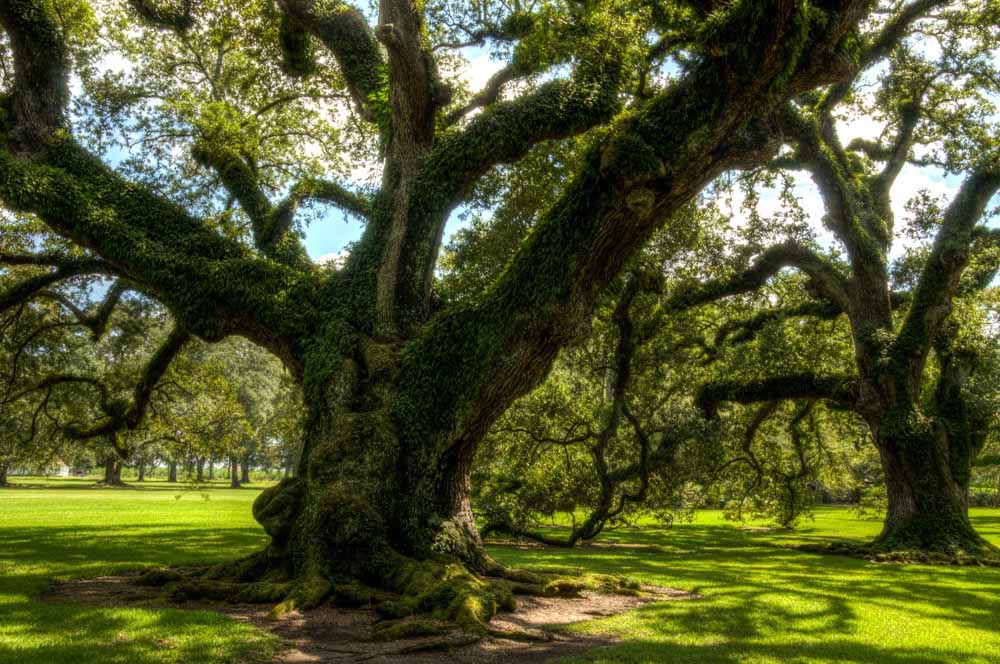
### Oak Trees
The low-hanging, sprawling branches of the live oak tree is an iconic fixture of southern landscapes. Almost any park, nature-walk, or college campus in Louisiana is bound to have a few of these majestic trees giving shade and usually a place to sit. Here are just a few of the varieties we stock:
[Southern Live Oak]()
Distinct in that it doesn’t lose leaves nor change color in the fall. Will briefly shed leaves in early spring. Often called Southern Oak or Live Oak.
The largest Southern Live Oaks have been recorded with a crown of 150-ft. However, the average tends to be a bit more reasonable.
Grows about 40-80 ft. tall with a 60-100 ft. spread, perfect for providing shade.
[Empire Live Oak]()
Faster growing than the live oak, Empire oaks have denser branching habits that end up being easier to maintain in certain scenarios. Only shed leaves briefly in the spring with no winter color-change.
Grows about 40-80 ft. tall, spread of 60-100 ft.
[Nuttall Oak]()
A deciduous variety of oak with large leaves that will change from green – yellow – orange – red in the fall until dropping them in the winter. Smaller spread, great for smaller spaces.
Grows about 40-60 ft. tall, spread of 35-50 ft.
[Shumard Oak]()
A more rounded growth-habit than other oaks, the Shumard is fast-growing and best known for its vibrant color changing leaves as it moves from fall to winter. Many see this as a counter-part to the Nuttall, with the Shumard preferring higher spots in the landscape and Nuttall preferring lower.
Grows about 60 ft. tall and spread of 50-60 ft.
[Pin Oak]()
Pin Oak leaves change from green to scarlet red noticeably later in the season, usually still hanging on until mid-winter. Also known as the Swamp Spanish Oak, this tree will grow moderate quickly and without issue in high or low lying areas.
Grows about 60-70 ft. tall, with a small spread of 25-40 ft.
[Willow Oak]()
Another great deciduous oak of Louisiana, has beautiful color change in the fall. Known for their disease and pest resistances in the south, and loves the high moisture / humidity of our climate.
Grows relatively slowly, about 40-60 ft. tall, with a spread of 30-40 ft.

### Elm
An adaptable tree, the elm is also fast-growing, making it a great choice for many environments.
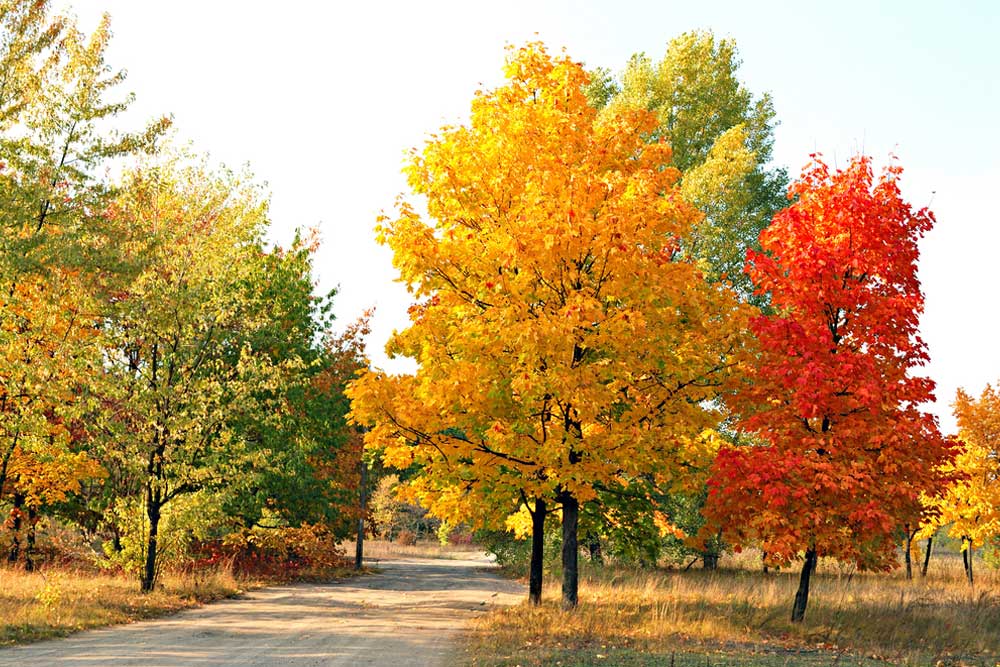
### Maple
Prized for their beautiful leaves in the fall, maples make a great addition to any yard.
[Red Maple]()
The iconic fall tree, colors change usually after labor day when days shorten and temperature drop. Fairly hardy for Louisiana, but be sure to create a proper mound and plan for the eventual size of tree.
Grows about 40-60 ft. tall, spreads nearly 40 ft.
[Florida Flame Red Maple]()
Sometimes called the “swamp” maple, Florida Flame is a great choice to add color on a large scale in areas that tend to be washed with green. This variety can handle poor irrigation and low-spots unbelievably well. Foliage turns in fall.
Grows about 40-ft tall, with a spread of 30-40 ft.
Fruit Trees (Citrus)
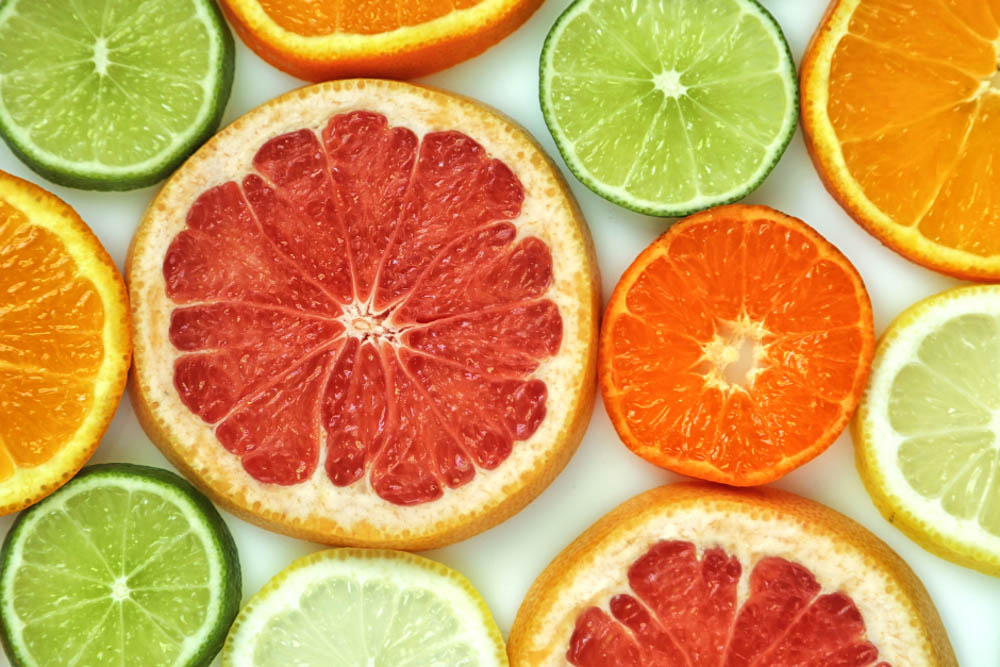
### Introduction to Citrus
Nothing compares to the fruits of hard-labor: Grab a healthy tree from our wide selection of citrus varieties today! Our varieties are listed below with information regarding the tree, a description of the fruit, and other notable characteristics. Availability varies from season to season, year to year. Most of our fruit trees are available in dwarf varieties (noted by a purple "dwarf" tag on the tree), which will change the estimated height and width significantly. Citrus tree flowers produce both male and female parts, meaning you'll only technically need one to produce fruit. Some varieties will (tangerine and tangelo) greatly benefit from more trees, and we recommend getting at least two. Lastly, all blooming / fruiting time-frames are estimates.
[Grapefruit - Chandler Pummelo]()
The Chandler Pummelo Grapefruit is a variety of grapefruit known for its large size and sweet flavor. It grows on a medium-sized evergreen tree with glossy leaves and can reach a height of up to 20 feet. The fruit of the Chandler Pummelo is characterized by its juiciness, vibrant pink flesh, and a well-balanced taste that leans more towards sweetness than tartness compared to other grapefruit varieties.
[Grapefruit - Rio Red]()
The Rio Red Grapefruit is a popular variety of grapefruit that is known for its rich flavor and deep red flesh. It grows on a medium-sized evergreen tree with glossy green leaves and can reach a height of up to 25 feet. The fruit of the Rio Red Grapefruit is characterized by its juiciness, vibrant red color, and a unique blend of sweetness and tartness that creates a refreshing taste experience. It is considered one of the sweetest and juiciest grapefruit varieties available.
[Grapefruit - Ruby Red]()
The Ruby Red Grapefruit is a well-known and highly sought-after variety of grapefruit. It grows on a medium-sized evergreen tree with glossy leaves and can reach a height of up to 20 feet. The fruit of the Ruby Red Grapefruit is characterized by its vibrant red or pink flesh, which is exceptionally juicy and sweet. It has a delightful balance of sweetness and tartness, making it a refreshing and flavorful choice among grapefruit varieties. The Ruby Red Grapefruit is often praised for its luscious taste and high juice content, making it a popular choice for eating fresh or juicing.
[Kumquat - Sweet Meiwa]()
The Sweet Meiwa Kumquat is a variety of kumquat known for its exceptionally sweet and delicious flavor. It grows on a small evergreen tree with dark green foliage and can reach a height of up to 10 feet. The fruit of the Sweet Meiwa Kumquat is characterized by its small size and round shape, with a thin, edible skin that is sweet and fragrant. Unlike other kumquat varieties that tend to be more tart, the Sweet Meiwa Kumquat stands out for its lack of tartness and its delightful balance of sweetness, making it a popular choice for eating fresh or using in culinary applications.
[Kumquat - Sour Nagami]()
The Sour Nagami Kumquat is a distinctive variety of kumquat known for its tart flavor profile. It grows on a small evergreen tree with dark green leaves and can reach a height of up to 10 feet. The fruit of the Sour Nagami Kumquat is characterized by its small, oval shape and bright orange color. Its most notable characteristic is its intense sour taste, which sets it apart from other kumquat varieties. The Sour Nagami Kumquat’s tangy flavor makes it a unique addition to recipes and beverages, and it is often used to add a burst of acidity and zestiness to culinary creations.
[Lemon - Lisbon]()
The Lisbon Lemon is a widely cultivated lemon variety, notable for its tart and tangy flavor. Compared to other lemon varieties like the Meyer Lemon, the Lisbon Lemon has a more pronounced acidity and a stronger, classic lemon taste. It grows on a medium-sized evergreen tree with thorny branches and can reach a height of up to 20 feet. The fruit of the Lisbon Lemon features a bright yellow color, a smooth and thick skin, and juicy acidic flesh. Its high juice content makes it a popular choice for culinary purposes, lending its bold lemon flavor to a variety of dishes, desserts, and beverages.
[Lemon - Meyer]()
Meyer Lemons are a unique variety of citrus fruit known for their smaller size, thin and smooth golden-yellow skin, and fragrant aroma. They grow on small to medium-sized evergreen trees with thorny branches and can reach a height of up to 10 feet. Meyer Lemons are distinguished by their flavor, which is less tart and more sweet and floral compared to other lemon varieties. They have a subtle hint of mandarin orange, making them exceptionally flavorful and versatile in both sweet and savory dishes. Meyer Lemons are cherished for their smooth and mild taste, which sets them apart from the traditional tangy and acidic flavor of other lemons.
[Lemon - Ponderosa]()
The Ponderosa Lemon is a unique and distinct variety of lemon known for its exceptionally large size. It grows on a medium to large-sized evergreen tree with thorny branches and can reach a height of up to 20 feet. The fruit of the Ponderosa Lemon is characterized by its thick and bumpy yellow skin, which is rougher compared to other lemon varieties. The taste of the Ponderosa Lemon is tart and acidic, with a strong and tangy flavor. Its notable characteristic is its size, as Ponderosa Lemons can grow to be as large as a grapefruit, making them stand out among other lemon varieties.
[Lemon - Variegated]()
The Variegated Lemon is a unique and visually striking lemon variety known for its variegated foliage and fruit. It grows on a medium-sized evergreen tree with variegated leaves that have a mix of green and yellow colors. The fruit of the Variegated Lemon is characterized by its small to medium size and a thin, smooth, and yellow skin with green stripes or patches. In terms of taste, Variegated Lemons are tart and acidic, similar to other lemon varieties, but they also have a slightly sweeter and milder flavor. The variegated appearance of both the leaves and fruit makes the Variegated Lemon an attractive and ornamental addition to gardens or landscapes.
[Lime - Kaffir]()
The Kaffir Lime is a distinctive citrus fruit known for its aromatic leaves and unique flavor. It grows on a small to medium-sized evergreen tree with dark green, glossy leaves that have a bumpy texture. The fruit of the Kaffir Lime is small and green, with a rough, wrinkled skin. The flavor of the Kaffir Lime is highly aromatic and tangy, with a strong citrusy taste. However, it is the leaves of the Kaffir Lime that are particularly prized and widely used in cooking. The leaves have a strong, zesty fragrance and add a distinct citrusy and floral flavor to various dishes, especially in Thai and Southeast Asian cuisines.
[Lime - Key]()
Key Limes, also known as Mexican limes or West Indian limes, are a small and round citrus fruit with a thin, smooth, and bright yellow-green skin. They grow on small evergreen trees with thorny branches. Key Limes are renowned for their intense and tart flavor, offering a uniquely acidic and tangy taste. They are often associated with classic dishes such as Key Lime pie and are a staple ingredient in Mexican, Caribbean, and Latin American cuisines. Key Limes have a strong and aromatic citrus fragrance, making them a popular choice for adding a refreshing and zesty kick to both sweet and savory recipes.
[Lime - Persian]()
The Persian Lime, also known as the Tahiti Lime, is a popular lime variety with a medium to large size and a smooth, bright green skin. It grows on a small to medium-sized evergreen tree with thornless branches. Persian Limes are known for their juicy and acidic flavor, which is less tart compared to Key Limes. They have a slightly sweeter taste, making them a versatile ingredient in both sweet and savory dishes. Persian Limes are commonly used in beverages, cocktails, dressings, and desserts, and their vibrant green color adds a visually appealing element to culinary creations. They have a refreshing and tangy citrus flavor that is widely enjoyed.
[Orange - Ambersweet]()
The Ambersweet Orange is a unique variety of citrus fruit that combines the characteristics of both sweet oranges and grapefruits. It is a relatively new hybrid variety created by crossing a sweet orange with a grapefruit. The Ambersweet Orange has a medium to large size, a smooth and glossy orange skin, and juicy, flavorful flesh. It is known for its exceptional sweetness, with a rich and complex flavor profile that has hints of both oranges and grapefruits. The Ambersweet Orange is often praised for its low acidity and lack of bitterness, making it a popular choice for those who prefer a milder and sweeter citrus experience.
[Orange - Blood]()
The Blood Orange is a distinct and visually striking citrus fruit with a deep crimson or burgundy-colored flesh. It grows on various types of orange trees and has a similar appearance to regular oranges on the outside, with a bright orange skin. However, it is the unique color of the flesh that sets the Blood Orange apart. The taste of the Blood Orange can vary, but it is generally sweeter than regular oranges and has a distinctive berry-like flavor with hints of raspberry or strawberry. The Blood Orange’s vibrant color and complex flavor make it a popular choice for fresh consumption, juicing, and culinary applications where its unique appearance and taste can add a vibrant twist to dishes and beverages.
[Orange - Calamondin]()
The Calamondin Orange, also known as Calamansi, is a small citrus fruit that is believed to be a hybrid between a mandarin orange and a kumquat. It grows on a small, compact evergreen tree with glossy leaves and can reach a height of up to 10 feet. The fruit of the Calamondin Orange is small, round, and bright orange when ripe. Unlike traditional oranges, the Calamondin has a sour and tart flavor that is similar to a lime or a sour mandarin. It is often used in culinary applications as a souring agent or as a flavoring for sauces, marinades, beverages, and desserts. Additionally, the Calamondin Orange is highly prized for its aromatic rind, which is often used for its zest in cooking and baking.
[Orange - Clementine Mandarin]()
The Clementine Mandarin Orange is a small, seedless citrus fruit that is a hybrid between a mandarin orange and a sweet orange. It is known for its easy-to-peel thin skin and juicy, sweet flavor. The Clementine Mandarin Orange is smaller in size compared to other oranges and has a deep orange color. Its taste is characterized by a delightful balance of sweetness and acidity, with a distinct and aromatic citrus fragrance. Clementines are often enjoyed as a snack, used in salads, or incorporated into desserts due to their vibrant flavor and convenient segmented structure. They are beloved for their refreshing and tangy-sweet taste, making them a popular choice among citrus lovers.
[Orange - Louisiana Sweet]()
Known for their sweet, rounded fruit and extreme cold-hardiness, this Louisiana favorite has grown in popularity over the years. Fruit will mature around December, a unique quality among citrus trees.
[Orange - Page Mandarin]()
The Page Mandarin Orange, also known as Page Tangor, is a hybrid citrus fruit that is a cross between a tangerine and a grapefruit. The fruit is small to medium in size with a slightly flattened shape, and it has a thin, smooth, and bright orange skin. Page Mandarin Oranges are known for their sweet and juicy flavor, with a delightful balance of sweetness and tartness. The flesh is typically deep orange and easily segmented. The Page Mandarin Orange is often enjoyed fresh, used in salads, or juiced for its refreshing and tangy-sweet taste. It is a popular choice among citrus enthusiasts due to its unique flavor profile and versatility.
[Orange - Pineapple Navel]()
The Pineapple Navel Orange is a distinctive citrus variety, boasting a bright, attractive orange skin and a unique, richly sweet flavor that has hints of pineapple, thus making it sweeter than many other oranges. The tree it grows on is medium-sized, reaching 10-15 feet, and is admired for its glossy, dark green leaves and the delightful citrus blossom aroma that accompanies the flowering period. A standout among the orange family, the Pineapple Navel Orange is recognized for its seedless nature and the characteristic “navel” at the apex of the fruit, which is more pronounced than in other navel oranges.
[Orange - Ponkin Mandarin]()
The Ponkin Mandarin Orange is a small, globe-shaped citrus fruit that stands out for its easy-to-peel, bright orange skin and exceptionally sweet, almost honey-like flavor, distinguishing it as one of the sweetest members of the orange family. The tree it grows on is relatively compact, typically reaching 6-8 feet in height, and is renowned for its dense, deep green foliage and the production of highly aromatic blossoms. Unique to the Ponkin Mandarin is its notably small seeds and early ripening period, providing a welcome, sweet-tasting harvest at a time when many other mandarin varieties are not yet ripe.
[Orange - Red Navel]()
The Red Navel Orange, often referred to as Cara Cara, is a unique citrus fruit known for its vibrant, pink-red flesh that offers a complex flavor profile, blending sweetness with a subtle hint of raspberry — a distinctive taste that sets it apart within the orange family. The tree it grows on is of medium size, typically reaching 10-15 feet in height, characterized by its glossy green leaves and the aromatic, white blossoms it produces. What makes the Red Navel Orange stand out is its higher levels of anthocyanins which give it the unique red color, as well as its lower acidity compared to other navel oranges, resulting in a sweeter, more nuanced flavor.
[Orange - Valencia]()
The Valencia Orange is a popular citrus fruit, famed for its thin, bright orange skin and juicy, well-balanced sweet-tart flavor, which is considered one of the most refreshing among the orange varieties. The tree it grows on typically attains a height of 20-30 feet, characterized by its dense canopy of dark green leaves and fragrant white blossoms. Uniquely, the Valencia Orange is recognized for its late-season ripening, often holding onto the tree into the summer months, which distinguishes it from other oranges that typically ripen in winter or spring. This late ripening has earned it the nickname “summer orange.”
[Washington Navel Orange]()
The Washington Navel Orange is a prized citrus variety, recognized for its medium to large size, easy-to-peel, vibrant orange skin, and seedless, sweet, and tangy flesh, offering a classic orange flavor that is often considered the standard among the orange family. The tree on which it grows usually reaches about 15-20 feet, characterized by its broad, dark green leaves and the sweet-scented white blossoms it produces. What sets the Washington Navel Orange apart is its distinctive “navel” at the base of the fruit — a secondary fruit embedded in the peel — a feature more pronounced and consistent in this variety than in other navel oranges.
[Satsuma - Brown Select]()
The Brown Select Satsuma is a cherished variety of mandarin, noted for its small to medium size, deep orange skin that is loose and easy to peel, and seedless, incredibly sweet flesh, setting a high standard for sweetness among the satsuma family. The tree it grows on is fairly small, often reaching about 10-12 feet, and is known for its glossy, evergreen leaves and fragrant white blossoms. Distinguished from other satsumas, the Brown Select exhibits a hardy nature with enhanced cold tolerance, and its fruit typically ripens earlier, often ready for harvest from late fall.
[Louisiana Early Satsuma]()
The Louisiana Early Satsuma is a delightful variety of mandarin, distinguished by its medium-sized fruit with a bright, easy-to-peel skin and seedless, juicy, and sweet flesh, making it one of the earliest maturing and sweetest members of the satsuma family. The tree it grows on is relatively small, usually reaching about 8-10 feet, adorned with glossy green leaves and white, sweet-scented blossoms. What sets the LA Early Satsuma apart is its early ripening, with fruits typically ready for harvest as early as late summer or early fall, significantly earlier than many other satsuma varieties.
[Satsuma - Miho]()
The Miho Satsuma is a popular mandarin variety, appreciated for its medium-sized, seedless fruits with a vibrant, easy-to-peel skin and a supremely sweet, tangy flesh, placing it among the sweetest in the satsuma family. The tree it grows on usually attains a height of about 8-12 feet, characterized by its deep green, glossy leaves and fragrant white blossoms. Notably, the Miho Satsuma is distinguished by its early ripening season, often ready for harvest in early to mid-fall, ahead of many other satsuma varieties.
[Satsuma - Owari]()
The Owari Satsuma is a highly valued mandarin variety, renowned for its small to medium-sized, seedless fruits with a loose, easy-to-peel skin and a delightfully sweet, slightly tart flesh, making it a classic flavor benchmark within the satsuma family. The tree it grows on is compact, typically reaching about 6-8 feet, and is known for its dense canopy of glossy green leaves and aromatic white blossoms. Unique to the Owari Satsuma is its exceptional cold tolerance, allowing it to thrive in cooler climates where other satsuma varieties may struggle, and its fruit ripens in the late fall to early winter, providing a sweet treat when many other citrus fruits have finished their season.
[Satsuma - Seto]()
The Seto Satsuma is a cherished mandarin variety, notable for its medium-sized, seedless fruits with bright, easy-to-peel skin and a delightfully sweet, slightly tangy flesh, marking it as one of the more flavorful satsumas. The tree it grows on is moderately sized, often reaching about 10-12 feet, characterized by its glossy green leaves and fragrant white blossoms. What sets the Seto Satsuma apart is its early ripening season, with fruits typically ready for harvest in early to mid-fall, ahead of many other satsuma varieties, and its fruit is known for holding well on the tree, allowing for an extended harvesting period.
[Tangelo - Orlando]()
The Orlando Tangelo is an enticing citrus hybrid, renowned for its medium to large size, slightly pear-shaped fruit with a deep orange, slightly pebbled skin and a juicy, richly sweet-tart flesh that offers a more complex flavor compared to traditional tangerines or oranges. The tree it grows on is moderately large, often reaching about 15-20 feet, notable for its lush, dark green leaves and the production of highly fragrant blossoms. Unique among its tangelo kin, the Orlando Tangelo is recognized for its cold hardiness relative to other citrus and its mildly seedy nature, as well as the distinct collar or neck at the stem end of the fruit, setting it apart in appearance and taste.
[Tangerine - Dancy]()
The Dancy Tangerine is a classic citrus variety, celebrated for its small to medium size, deep orange, easy-to-peel skin and a juicy, richly sweet and slightly tart flesh, offering a full-bodied flavor that sets a high standard among the tangerine family. The tree it grows on is moderately sized, typically reaching about 10-15 feet, characterized by its glossy green leaves and the production of intensely fragrant white blossoms. Unique to the Dancy Tangerine is its late-season ripening, often ready for harvest in late winter when few other citrus varieties are in season, and its tendency to bear a small number of seeds in each fruit, unlike many other seedless tangerine varieties.
[Tangerine - Sunburst]()
The Sunburst Tangerine is a highly admired citrus variety, recognized for its medium-sized, vibrant orange, easy-to-peel skin and a juicy, incredibly sweet flesh, which is among the sweetest in the tangerine family. The tree it grows on is of medium size, often reaching 10-15 feet, notable for its shiny, dark green leaves and the clusters of sweet-smelling white blossoms it produces. Distinguishing the Sunburst Tangerine from other tangerines is its early to mid-season ripening, typically ready for harvest in early winter, and its virtually seedless nature, making it a convenient and delectable choice for fresh eating.
Join Our Garden Club
It's FREE and easy\!
[Sign Me Up](https://louisiananursery.com/garden-club/) |
| Shard | 6 (laksa) |
| Root Hash | 1676313092920132406 |
| Unparsed URL | com,louisiananursery!/trees/ s443 |