ℹ️ Skipped - page is already crawled
| Filter | Status | Condition | Details |
|---|---|---|---|
| HTTP status | PASS | download_http_code = 200 | HTTP 200 |
| Age cutoff | PASS | download_stamp > now() - 6 MONTH | 1 months ago |
| History drop | PASS | isNull(history_drop_reason) | No drop reason |
| Spam/ban | PASS | fh_dont_index != 1 AND ml_spam_score = 0 | ml_spam_score=0 |
| Canonical | PASS | meta_canonical IS NULL OR = '' OR = src_unparsed | Not set |
| Property | Value | ||||||||||||||||||
|---|---|---|---|---|---|---|---|---|---|---|---|---|---|---|---|---|---|---|---|
| URL | https://legal.thomsonreuters.com/blog/california-labor-and-employment-laws/ | ||||||||||||||||||
| Last Crawled | 2026-03-23 22:46:55 (29 days ago) | ||||||||||||||||||
| First Indexed | 2024-10-17 12:17:57 (1 year ago) | ||||||||||||||||||
| HTTP Status Code | 200 | ||||||||||||||||||
| Content | |||||||||||||||||||
| Meta Title | California labor laws with research how-to resources | ||||||||||||||||||
| Meta Description | California's employment laws are stringent and strongly enforced. Learn about the key aspects of California's labor laws and where to find out more. | ||||||||||||||||||
| Meta Canonical | null | ||||||||||||||||||
| Boilerpipe Text | Overview with research and how-to resources
California laws
• California labor and employment laws
California has exceptionally strong legal protections for employees in areas including:
minimum wage
overtime pay
required meal and rest breaks
workplace safety and health
paid sick leave
family and medical leave
worker’s compensation
and protection against discrimination, harassment, and wrongful termination
In many of these areas, California employment law is more favorable to workers than the equivalent provisions under federal law.
This content provides an overview of California labor laws and a reliable starting place for attorneys to perform further research.
Employers and employees may use the State Bar of California’s
Certified Lawyer Referral Services
that maintains a list of lawyer referral services that are certified by the State Bar.
Jump to ↓
Minimum wage
Family and medical leave
Overtime pay
Workers’ compensation
Meal and rest breaks
At-Will employment
Workplace safety and health
Wrongful termination
Discrimination and harassment
Research and how-to resources
Paid sick leave
Minimum wage
As of January 1, 2024, California’s
minimum wage
is $16 per hour. However, the minimum wage is higher for workers in some industries and in some locations. For example, the minimum hourly rate for
fast food workers
in California is $20 per hour, as of April 1, 2024. About 40 California
cities and counties
have higher minimum wages than the state’s rate. As of July 1, 2024, the city of Emeryville has the highest rate at $19.36 per hour. The California Labor Commissioner considers paying employees less than the minimum to be a form of
wage theft
.
Date
Minimum wage for employers with 25 employees or less
Minimum wage for employers with 26 employees or more
January 1, 2017
$10.00/hour
$10.50/hour
January 1, 2018
$10.50/hour
$11.00/hour
January 1, 2019
$11.00/hour
$12.00/hour
January 1, 2020
$12.00/hour
$13.00/hour
January 1, 2021
$13.00/hour
$14.00/hour
January 1, 2022
$14.00/hour
$15.00/hour
January 1, 2023
$15.50/hour
$15.50/hour
January 1, 2024
$16.00/hour
$16.00/hour
Source: Adapted from the
State of California Department of Industrial Relations
Can an employee voluntarily work for less than the minimum wage?
No. Employers are required to pay minimum wage. Agreements between employers and employees cannot violate laws, including the minimum wage laws, that are designed to protect employees.
Will the California minimum wage keep on going higher?
Although the minimum wage has passed the end of the
phase-in period
, it will continue to be adjusted for inflation every year, with a maximum annual increase of 3.5 percent. Increases are based on the national consumer price index (CPI) for urban and clerical workers. The rate will never go down, even if the CPI for a particular year is negative.
Are employers with 25 or fewer employees still able to pay a lower minimum wage?
No. Since January 1, 2023, the California minimum wage has been the same for employers of all sizes.
Overtime pay
With
some exemptions
, nonexempt employees
must be paid overtime
in California if they work more than eight hours in a workday, more than 40 hours in a workweek, or more than six days per workweek.
What is the maximum number of hours an employee can work in a week under California labor laws?
For workers aged 18 and up, there is no maximum, as long as nonexempt employees are paid the required overtime rates. For minors, however, there are
limits
on how many hours they can work based on their age.
What are the overtime pay requirements in California?
Nonexempt employees must be paid one-and-a-half times their regular rate of pay for hours worked:
More than eight hours and up to 12 hours in a day
More than 40 hours in a workweek
For the first eight hours on the seventh day of work in a workweek
A nonexempt employee must be paid at least two times the employee’s regular pay rate for work that is:
More than 12 hours in a day
More than eight hours on the seventh day of work in a workweek
Are salaried employees always exempt from overtime?
No. Salaried employees can be either exempt or nonexempt. If nonexempt, they must be paid overtime.
Meal and rest breaks
Employment law in California requires workers be provided with unpaid 30-minute
meal breaks
and paid 10-minute
rest breaks
if they work a certain number of hours in a day. They must receive one meal break if they work more than five hours in a day and a second meal break for more than 10 hours of work in a day. They’re entitled to one rest break for every four hours worked. California employees working outdoors also have the right to take
additional rest breaks
in the shade when needed to cool down.
Do California labor laws permit employees to voluntarily waive their right to take meal breaks?
If the employee and employer both consent:
Employees who work no more than six hours in a day can waive their first meal break.
Employees who work more than 10 but no more than 12 hours and have taken their first meal break can waive their second.
Are employers ever required to pay for meal breaks?
Yes. Employers must pay wages at a worker’s regular rate of pay for meal breaks if, due to the nature of the work, the employee is not relieved of all duty during the entire 30-minute period and is not free to leave the premises.
Can the break time in a 10-minute rest break be split into two five-minute breaks?
No. The 10 minutes in a paid rest break must be taken consecutively.
Workplace safety and health
California’s
Division of Occupational Safety and Health (DOSH)
protects the health and safety of non-federal workers in California through the
Cal/OSHA
program.
Employer responsibilities
include establishing an illness and injury prevention program, providing and maintaining safe tools and equipment, warning about potential hazards, and immediately
reporting to Cal/OSHA
any work-related serious injuries or illnesses, or deaths.
Do California workers have the right to refuse to do hazardous work?
Yes, but only if doing the work would
violate a Cal/OSHA regulation
and would create a hazard for the worker or their coworkers.
How much health and safety training are California employers required to provide for their employees?
All employers in California are required to provide health and safety training following the requirements in
Title 8
. These include training for all new employees.
Additional requirements
for training topics and frequency depend on the type of work that employees are doing.
Do California labor laws require California employers to do anything to help prevent violence in the workplace?
Yes. Effective July 1, 2024, most California employers must create and implement a written
workplace violence prevention plan
.
Discrimination and harassment
The California Fair Employment and Housing Act (FEHA) and associated regulations prohibit harassment and discrimination against employees on the basis of
protected characteristics
. They also prohibit retaliation against employees for asserting their rights. The
California Equal Pay Act
prohibits employers from paying employees less than employees of a different sex, race, or ethnicity for substantially similar work.
Are all California employers subject to the anti-harassment and anti-discrimination provisions of the FEHA?
The FEHA applies to all California employers except the federal government and non-profit religious organizations. However, only employers with
five or more employees
are subject to the anti-discrimination provisions. This limitation does not apply to anti-harassment provisions, which apply to employers with as few as one employee or independent contractor.
Is it illegal to harass volunteers?
Yes. In addition to employees and job applicants, other workers are also protected against harassment in California: volunteers, unpaid interns, and independent contractors.
Do employers have to provide sexual harassment training?
California employers with five or more employees and public employers must provide sexual harassment training, which includes harassment based on sexual orientation, gender expression, and gender identity.
Paid sick leave
As of January 1, 2024, most employees in California are entitled to 40 hours or five days —whichever is more — of
paid sick leave
per year to take care of themselves or a family member.
Before 2024
, the previous employment law only required California employers to provide 24 hours or three days paid sick leave per year. Paid sick leave can be used for preventative care, diagnoses, healthcare for an existing condition, or for specified purposes for victims of sexual assault, stalking, or domestic violence.
Who is eligible for paid sick leave?
Full-time, part-time, and temporary workers who have worked for the same employer for 30 days in a year and have completed 90 days of employment for the same employer are entitled to paid sick leave.
Are California employees entitled to use all of their sick leave days at the beginning of the year?
California employers can choose whether to provide all sick leave days at once or to use an accrual system, where employees earn
California laws
for every 30 days they work.
Does the requirement for employers to provide 40 hours or five days of paid sick leave per year refer to a calendar year?
The “per year” requirement can be any 12-month period. It can be a calendar year, fiscal year, or a 12-month period based on an employee’s start date.
Family and medical leave
Eligible California employees are entitled to
up to 12 weeks of unpaid leave
to care for their own or a family member’s serious health condition or to bond with a new child and up to five days of
bereavement leave
. The California Family Rights Act (CFRA) provides these rights, and the Civil Rights Department (CRD) enforces them. California workers are also covered by the federal Family Medical Leave Act (FMLA).
How long does an employee have to work to be eligible to take CFRA leave?
To be eligible,
an employee must
:
Work for an employer that has five or more employees
Have worked for that employer for more than 12 months
Have worked at least 1,250 hours for that employer in the 12 months prior to the start of the leave
Do California labor laws give employees the right to return to their jobs after their leave?
Yes. CFRA leave is job-protected. If an employee’s original job is no longer available, employers must offer a comparable position where possible.
Can employees use their CFRA leave to take care of a friend?
As of January 1, 2023, employees can use their CFRA leave to take care of a “
designated person
.” This can be a blood relative or someone who is like family, such as a close friend or unmarried partner.
Workers’ compensation
All California employers
are required to have workers’ compensation insurance that provides benefits for employees’ work-related injuries and illnesses. Employers must cover the cost of the insurance coverage and
cannot ask employees
to help pay for premiums.
Benefits for eligible employees
are for medical care, temporary disability, permanent disability, retraining, and death.
Who is entitled to death benefits?
If an employee dies from a work-related injury or illness, their spouse, children, or other dependents are entitled to
death benefits
, including reasonable burial expenses, based on the number of dependents.
What types of treatments are covered by workers’ compensation in California?
Medical treatments must be
evidence-based
. The state has guidelines, including a medical treatment utilization schedule (MTUS), that covers the type, frequency, intensity, and duration of treatments for specific injuries.
Where do I file petitions for reconsideration, removal, or disqualification?
Petitions
must be filed
using the
Electronic Adjudication Management System (EAMS)
or with the applicable district office.
To use EAMS
, you’ll need to complete an e-form agreement and take an introductory training program.
At-Will employment
California is an at-will state. That means that employers can fire employees, and employees can quit, for any reason, including a bad reason or no reason, as long as it’s not an illegal reason.
Giving advance notice is not required
unless there was a prior agreement to the contrary between the employer and employee. Keep in mind, though, that Labor Code sections 201 and 227.3 require that terminated employees receive their final paycheck, including accrued vacation time,
immediately at the time they are terminated
and not have it held until the end of the pay period.
If there is a union contract, how does that affect at-will employment?
There’s an exception to at-will employment for employees covered by a collective bargaining agreement. The terms of the agreement control when and for what reasons employees can be terminated.
When is terminating an employee unlawful discrimination?
It’s unlawful to fire an employee if there is a discriminatory motive based on
California’s protected classes
.
What are other situations where it’s unlawful to fire an employee in California?
Under California labor laws, termination is unlawful if:
It’s done as
retaliation
for employees asserting their protected rights. This includes whistleblowing, engaging in collective bargaining activities, filing a complaint with the Labor Commissioner, serving on a jury or otherwise requesting time off that employees are entitled to take.
Employees are fired for their political beliefs.
They are terminated for trivial or pretextual reasons if they have an express or implied employment contract that specifies that employees can only be terminated for good cause.
Wrongful termination
Although California is an at-will state, state labor laws specifically prohibit certain reasons for termination. These include discriminating against employees based on their
protected characteristics
or as
retaliation
for employees engaging in activities protected by the California Labor Code or asserting their legally protected rights.
What are the remedies for discriminatory wrongful termination in California?
Remedies may include
payment of past and future lost earnings, reinstatement in the lost job, reasonable accommodations, promotion, damages for emotional distress, punitive damages, and attorney’s fees and costs.
What are examples of activities protected by California labor laws?
It is illegal to fire employees in California for engaging in
protected activities
that include:
Complaining about workplace safety conditions
Engaging in political activities
Serving on a jury or appearing as a witness in court
Filing a claim with the California Labor Commissioner or threatening to do so
Talking with coworkers about pay or working conditions
Joining with coworkers to talk to the media about working conditions
When is whistleblowing protected?
Employers may not terminate employees because of
whistleblowing
activity. This includes employees disclosing information that they reasonably believe shows a violation of state or federal law, rules, or regulations or unsafe working conditions in the employee’s workplace. Protected whistleblowing also includes employees refusing to engage in activities that would violate laws, rules, or regulations.
Further research and resources
Do you need to perform further research on any of these topics? Use the curated content below featuring practices notes, templates, toolkits, and guides from Practical Law.
Practical Law’s resources are written and maintained by over 650 dedicated full-time attorney-editors globally. They’re highly qualified, having practiced at the world’s leading law firms, corporate law departments, and government agencies.
Practice Notes
California Employment Law Practice Notes
Practice Note: Employee Benefits Law: Overview
Practice Note: California Employment Laws More Favorable to Employee Plaintiffs
Employment Law Issues for Startups, Entrepreneurs, and Growing Businesses: Overview
California Employment Law Practice Notes
Practice Note: Employee Benefits Law: Overview
Practice Note: California Employment Laws More Favorable to Employee Plaintiffs
Employment Law Issues for Startups, Entrepreneurs, and Growing Businesses: Overview
Templates
Practical Law Standard Documents
Founder’s Stock Purchase Agreement (Startups)
Technology Assignment Agreement (Short Form; Startups)
Proprietary Information and Inventions Agreement (Startups)
Toolkits and guides
A Q&A guide to release of claims agreements for private employers in California. This Q&A addresses statutory and common law claims that may be released in a valid and enforceable written agreement, as well as employment claims or specific contract language that should be included or excluded. Federal, local, or municipal law may impose additional or different requirements. Answers to questions can be compared across a number of jurisdictions (see Employment Claims in Release Agreements: State Q&A Tool).
California employment law guide and toolkit
Employment Claims in Release Agreements: California
California Employee Handbook Toolkit | ||||||||||||||||||
| Markdown | [Skip to content](https://legal.thomsonreuters.com/blog/california-labor-and-employment-laws/#body)
- [Global directoryGlobal directory](https://www.thomsonreuters.com/en/global-gateway.html)
- [Product loginsProduct logins](https://legal.thomsonreuters.com/content/ewp-marketing-websites/legal/gl/en/product-logins.html)
- [Contact usContact us](https://legal.thomsonreuters.com/content/ewp-marketing-websites/legal/gl/en/support/contact-us.html)
[Thomson Reuters](https://legal.thomsonreuters.com/en)
[LEGAL](https://legal.thomsonreuters.com/en)
- [Products](https://legal.thomsonreuters.com/blog/california-labor-and-employment-laws/)
Products
### Top products
- [Westlaw](https://legal.thomsonreuters.com/en/products/westlaw)
- [Practical Law](https://legal.thomsonreuters.com/en/products/practical-law)
- [Panoramic](https://legal.thomsonreuters.com/en/products/panoramic)
- [CLEAR](https://legal.thomsonreuters.com/en/products/clear-investigation-software)
- [Law books](https://legal.thomsonreuters.com/en/products/law-books)
- [All products](https://legal.thomsonreuters.com/en/products)
###

Featured
#### **Law firm management software**
3E is a SaaS practice and financial management platform that connects all critical areas of a law firm to streamline tasks and provide timely information.
[Learn more](https://legal.thomsonreuters.com/en/products/3e)
- [Solutions](https://legal.thomsonreuters.com/blog/california-labor-and-employment-laws/)
Solutions
### Solutions
- [Streamline legal research](https://legal.thomsonreuters.com/en/solutions/streamline-legal-research)
- [Legal guidance](https://legal.thomsonreuters.com/en/solutions/legal-guidance)
- [Investigate and mitigate risk](https://legal.thomsonreuters.com/en/solutions/fraud-investigations-software)
- [Simplify litigation](https://legal.thomsonreuters.com/en/solutions/simplify-litigation)
- [Fast-track drafting and contracts](https://legal.thomsonreuters.com/en/solutions/fast-track-drafting)
- [Regulation & compliance management](https://legal.thomsonreuters.com/en/solutions/regulation-and-compliance-management)
- [All solutions](https://legal.thomsonreuters.com/en/solutions)
###
Featured
#### **Small law firm software and solutions**
Practice law, manage your law firm, and grow your practice with our complete suite of products.
[Learn more](https://legal.thomsonreuters.com/en/solutions/small-law-firm?trkcode=Nav_Sol_I-19s_na_sl&trktype=internal)
- [Insights](https://legal.thomsonreuters.com/blog/california-labor-and-employment-laws/)
Insights
### Insights
- [Articles](https://legal.thomsonreuters.com/en/insights/articles)
- [White papers](https://legal.thomsonreuters.com/en/insights/white-papers)
- [Case studies](https://legal.thomsonreuters.com/en/insights/case-studies)
- [Blog](https://legal.thomsonreuters.com/blog/)
- [Featured insights](https://legal.thomsonreuters.com/en/insights)
### Popular topics
- [Artificial intelligence](https://legal.thomsonreuters.com/en/insights/artificial-intelligence)
- [Big data](https://legal.thomsonreuters.com/en/insights/big-data)
- [Data privacy](https://legal.thomsonreuters.com/en/insights/data-privacy)
- [Legal operations](https://legal.thomsonreuters.com/en/insights/legal-operations)
- [Legal news](https://legal.thomsonreuters.com/en/insights/legal-news)
- [Law firm management](https://legal.thomsonreuters.com/en/insights/law-firm-management)
- [Support center](https://legal.thomsonreuters.com/en/support)
Support center
- [Try and buy](https://legal.thomsonreuters.com/en/try-buy)
Try and buy

[Legal Topics](https://legal.thomsonreuters.com/blog/topic/legal-topics/)
# California labor and employment laws
[Marjorie Richter J.D.](https://legal.thomsonreuters.com/blog/authors/marjorie-richter-j-d/)
October 16, 2024 · 16 minute read
Share
- Facebook
- Twitter
- Linkedin
- [Email](mailto:?body=https%3A%2F%2Flegal.thomsonreuters.com%2Fblog%2Fcalifornia-labor-and-employment-laws%2F&subject=California%20labor%20and%20employment%20laws%20%7C%20Thomson%20Reuters%20Law%20Blog "Email")
[Marjorie Richter J.D.](https://legal.thomsonreuters.com/blog/authors/marjorie-richter-j-d/)
October 16, 2024 · 16 minute read
Share
- Facebook
- Twitter
- Linkedin
- [Email](mailto:?body=https%3A%2F%2Flegal.thomsonreuters.com%2Fblog%2Fcalifornia-labor-and-employment-laws%2F&subject=California%20labor%20and%20employment%20laws%20%7C%20Thomson%20Reuters%20Law%20Blog "Email")
Overview with research and how-to resources
[California laws](https://www.dir.ca.gov/dlse/California-Paid-Sick-Leave.html#main-content) • California labor and employment laws
California has exceptionally strong legal protections for employees in areas including:
- minimum wage
- overtime pay
- required meal and rest breaks
- workplace safety and health
- paid sick leave
- family and medical leave
- worker’s compensation
- and protection against discrimination, harassment, and wrongful termination
In many of these areas, California employment law is more favorable to workers than the equivalent provisions under federal law.
This content provides an overview of California labor laws and a reliable starting place for attorneys to perform further research.
Employers and employees may use the State Bar of California’s [Certified Lawyer Referral Services](https://www.calbar.ca.gov/Public/Need-Legal-Help/Certified-Lawyer-Referral-Services-Directory "Certified Lawyer Referral Services") that maintains a list of lawyer referral services that are certified by the State Bar.
Jump to ↓
| | | | |
|---|---|---|---|
| | | | [Family and medical leave](https://legal.thomsonreuters.com/blog/california-labor-and-employment-laws/#family-and-medical-leave) |
| | | | |
| [Minimum wage](https://legal.thomsonreuters.com/blog/california-labor-and-employment-laws/#minimum-wage) | | | |
| | [Overtime pay](https://legal.thomsonreuters.com/blog/california-labor-and-employment-laws/#overtime-pay) | | [Workers’ compensation](https://legal.thomsonreuters.com/blog/california-labor-and-employment-laws/#workers-compensation) |
| | [Meal and rest breaks](https://legal.thomsonreuters.com/blog/california-labor-and-employment-laws/#meal-and-rest-breaks) | | [At-Will employment](https://legal.thomsonreuters.com/blog/california-labor-and-employment-laws/#at-will-employment) |
| | [Workplace safety and health](https://legal.thomsonreuters.com/blog/california-labor-and-employment-laws/#workplace-safety-and-health) | | [Wrongful termination](https://legal.thomsonreuters.com/blog/california-labor-and-employment-laws/#wrongful-termination) |
| | [Discrimination and harassment](https://legal.thomsonreuters.com/blog/california-labor-and-employment-laws/#discrimination-and-harassment) | | [Research and how-to resources](https://legal.thomsonreuters.com/blog/california-labor-and-employment-laws/#how-to-resources) |
| | [Paid sick leave](https://legal.thomsonreuters.com/blog/california-labor-and-employment-laws/#paid-sick-leave) | | |
[](https://content.next.westlaw.com/practical-law/california/california-labor-employment?transitionType=ListViewType&contextData=\(sc.Default\)&navId=1547F84F82AC0F711BA1FE97A5EF4F11&contentType=KNOWHOW&querySubmissionGuid=i0a89c3bf0000019295fca138f3fe3d3d&sortType=DATE_DESCENDING&categoryPageUrl=Home%2FPracticalLaw%2FPracticalLawCalifornia%2FCaliforniaLaborEmployment)
## Practical Law
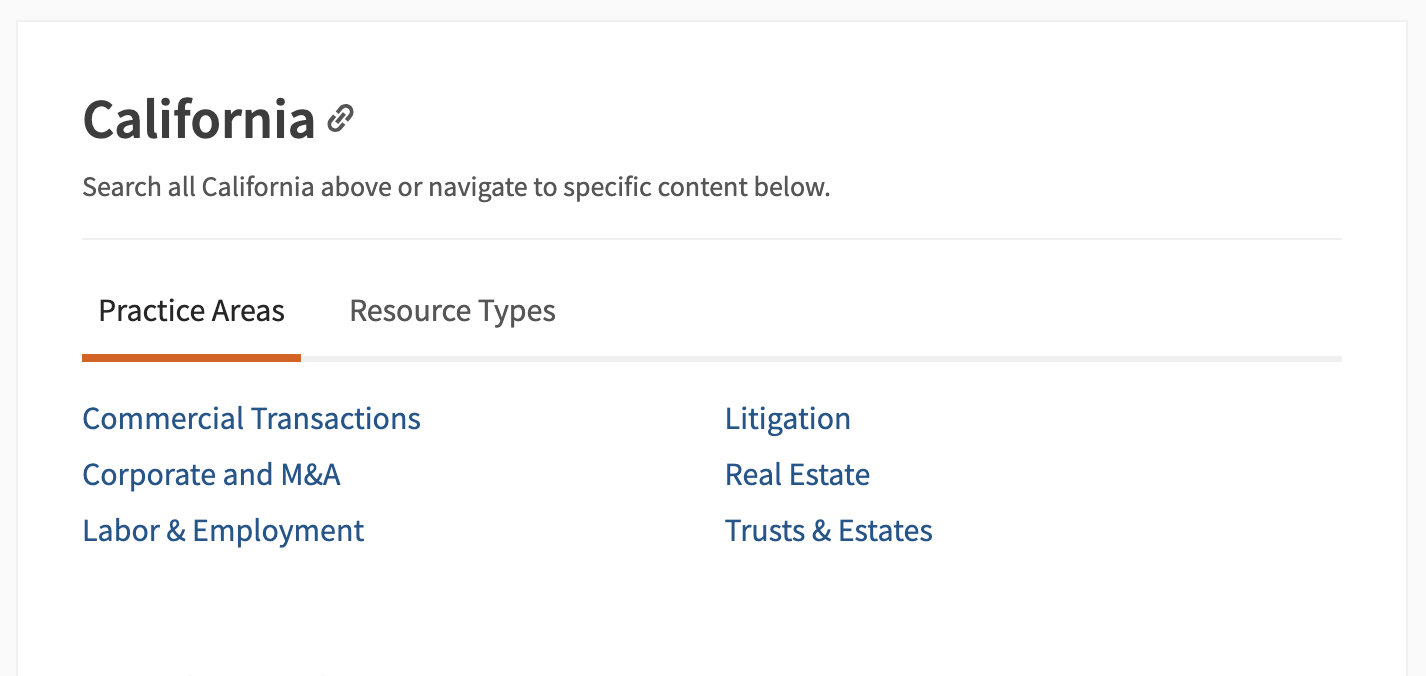
California labor and employment law content
[View resources ↗](https://content.next.westlaw.com/practical-law/california/california-labor-employment?transitionType=ListViewType&contextData=\(sc.Default\)&navId=1547F84F82AC0F711BA1FE97A5EF4F11&contentType=KNOWHOW&querySubmissionGuid=i0a89c3bf0000019295fca138f3fe3d3d&sortType=DATE_DESCENDING&categoryPageUrl=Home%2FPracticalLaw%2FPracticalLawCalifornia%2FCaliforniaLaborEmployment)
## Minimum wage
As of January 1, 2024, California’s [minimum wage](https://www.dir.ca.gov/dlse/faq_minimumwage.htm) is \$16 per hour. However, the minimum wage is higher for workers in some industries and in some locations. For example, the minimum hourly rate for [fast food workers](https://www.dir.ca.gov/dlse/Fast-Food-Minimum-Wage-FAQ.htm) in California is \$20 per hour, as of April 1, 2024. About 40 California [cities and counties](https://laborcenter.berkeley.edu/inventory-of-us-city-and-county-minimum-wage-ordinances/#s-2) have higher minimum wages than the state’s rate. As of July 1, 2024, the city of Emeryville has the highest rate at \$19.36 per hour. The California Labor Commissioner considers paying employees less than the minimum to be a form of [wage theft](https://www.dir.ca.gov/dlse/Examples_of_Wage_Theft.html).
| Date | Minimum wage for employers with 25 employees or less | Minimum wage for employers with 26 employees or more |
|---|---|---|
| January 1, 2017 | \$10.00/hour | \$10.50/hour |
| January 1, 2018 | \$10.50/hour | \$11.00/hour |
| January 1, 2019 | \$11.00/hour | \$12.00/hour |
| January 1, 2020 | \$12.00/hour | \$13.00/hour |
| January 1, 2021 | \$13.00/hour | \$14.00/hour |
| January 1, 2022 | \$14.00/hour | \$15.00/hour |
| January 1, 2023 | \$15.50/hour | \$15.50/hour |
| January 1, 2024 | \$16.00/hour | \$16.00/hour |
Source: Adapted from the [State of California Department of Industrial Relations](https://www.dir.ca.gov/dlse/faq_minimumwage.htm)
###
### Can an employee voluntarily work for less than the minimum wage?
No. Employers are required to pay minimum wage. Agreements between employers and employees cannot violate laws, including the minimum wage laws, that are designed to protect employees.
### Will the California minimum wage keep on going higher?
Although the minimum wage has passed the end of the [phase-in period](https://www.dir.ca.gov/dlse/sb3_faq.htm), it will continue to be adjusted for inflation every year, with a maximum annual increase of 3.5 percent. Increases are based on the national consumer price index (CPI) for urban and clerical workers. The rate will never go down, even if the CPI for a particular year is negative.
### Are employers with 25 or fewer employees still able to pay a lower minimum wage?
No. Since January 1, 2023, the California minimum wage has been the same for employers of all sizes.
## Overtime pay
With [some exemptions](https://www.dir.ca.gov/dlse/faq_overtimeexemptions.htm), nonexempt employees [must be paid overtime](https://www.dir.ca.gov/dlse/faq_overtime.htm) in California if they work more than eight hours in a workday, more than 40 hours in a workweek, or more than six days per workweek.
### What is the maximum number of hours an employee can work in a week under California labor laws?
For workers aged 18 and up, there is no maximum, as long as nonexempt employees are paid the required overtime rates. For minors, however, there are [limits](https://www.dir.ca.gov/dlse/minorssummarycharts.pdf) on how many hours they can work based on their age.
### What are the overtime pay requirements in California?
Nonexempt employees must be paid one-and-a-half times their regular rate of pay for hours worked:
- More than eight hours and up to 12 hours in a day
- More than 40 hours in a workweek
- For the first eight hours on the seventh day of work in a workweek
A nonexempt employee must be paid at least two times the employee’s regular pay rate for work that is:
- More than 12 hours in a day
- More than eight hours on the seventh day of work in a workweek
### Are salaried employees always exempt from overtime?
No. Salaried employees can be either exempt or nonexempt. If nonexempt, they must be paid overtime.
## Meal and rest breaks
Employment law in California requires workers be provided with unpaid 30-minute [meal breaks](https://www.dir.ca.gov/dlse/FAQ_MealPeriods.htm) and paid 10-minute [rest breaks](https://www.dir.ca.gov/dlse/FAQ_RestPeriods.htm) if they work a certain number of hours in a day. They must receive one meal break if they work more than five hours in a day and a second meal break for more than 10 hours of work in a day. They’re entitled to one rest break for every four hours worked. California employees working outdoors also have the right to take [additional rest breaks](https://www.99calor.org/Prevent-Heat-Illness.html) in the shade when needed to cool down.
### Do California labor laws permit employees to voluntarily waive their right to take meal breaks?
If the employee and employer both consent:
- Employees who work no more than six hours in a day can waive their first meal break.
- Employees who work more than 10 but no more than 12 hours and have taken their first meal break can waive their second.
### Are employers ever required to pay for meal breaks?
Yes. Employers must pay wages at a worker’s regular rate of pay for meal breaks if, due to the nature of the work, the employee is not relieved of all duty during the entire 30-minute period and is not free to leave the premises.
### Can the break time in a 10-minute rest break be split into two five-minute breaks?
No. The 10 minutes in a paid rest break must be taken consecutively.
## Workplace safety and health
California’s [Division of Occupational Safety and Health (DOSH)](https://www.dir.ca.gov/occupational_safety.html) protects the health and safety of non-federal workers in California through the [Cal/OSHA](https://www.dir.ca.gov/dosh/) program. [Employer responsibilities](https://www.dir.ca.gov/dosh/EmployerInformation.htm "Employer responsibilities") include establishing an illness and injury prevention program, providing and maintaining safe tools and equipment, warning about potential hazards, and immediately [reporting to Cal/OSHA](https://www.dir.ca.gov/dosh/report-accident-or-injury.html) any work-related serious injuries or illnesses, or deaths.
### Do California workers have the right to refuse to do hazardous work?
Yes, but only if doing the work would [violate a Cal/OSHA regulation](https://www.dir.ca.gov/dosh/documents/health-and-safety-rights-for-workers.pdf) and would create a hazard for the worker or their coworkers.
### How much health and safety training are California employers required to provide for their employees?
All employers in California are required to provide health and safety training following the requirements in [Title 8](https://www.dir.ca.gov/title8/3203.html). These include training for all new employees. [Additional requirements](https://www.dir.ca.gov/dosh/etools/09-002/whatrequired.htm) for training topics and frequency depend on the type of work that employees are doing.
### Do California labor laws require California employers to do anything to help prevent violence in the workplace?
Yes. Effective July 1, 2024, most California employers must create and implement a written [workplace violence prevention plan](https://www.dir.ca.gov/dosh/workplace-violence.html).
[](https://legal.thomsonreuters.com/en/insights/white-papers/practical-law-resources-for-employment-attorneys/form)
## Employment Law resources
Practical Law resources from Thomson Reuters attorney-editors
[Discover expert insights ↗](https://legal.thomsonreuters.com/en/insights/white-papers/practical-law-resources-for-employment-attorneys/form)
###
## Discrimination and harassment
The California Fair Employment and Housing Act (FEHA) and associated regulations prohibit harassment and discrimination against employees on the basis of [protected characteristics](https://calcivilrights.ca.gov/wp-content/uploads/sites/32/2023/01/Workplace-Discrimination-Poster_ENG.pdf). They also prohibit retaliation against employees for asserting their rights. The [California Equal Pay Act](https://www.dir.ca.gov/dlse/california_equal_pay_act.htm) prohibits employers from paying employees less than employees of a different sex, race, or ethnicity for substantially similar work.
### Are all California employers subject to the anti-harassment and anti-discrimination provisions of the FEHA?
The FEHA applies to all California employers except the federal government and non-profit religious organizations. However, only employers with [five or more employees](https://calcivilrights.ca.gov/employment/#faqABody) are subject to the anti-discrimination provisions. This limitation does not apply to anti-harassment provisions, which apply to employers with as few as one employee or independent contractor.
### Is it illegal to harass volunteers?
Yes. In addition to employees and job applicants, other workers are also protected against harassment in California: volunteers, unpaid interns, and independent contractors.
### Do employers have to provide sexual harassment training?
California employers with five or more employees and public employers must provide sexual harassment training, which includes harassment based on sexual orientation, gender expression, and gender identity.
## Paid sick leave
As of January 1, 2024, most employees in California are entitled to 40 hours or five days —whichever is more — of [paid sick leave](https://legal.thomsonreuters.com/blog/paid-sick-leave-laws-and-the-family-and-medical-leave-act/) per year to take care of themselves or a family member. [Before 2024](https://www.dir.ca.gov/dlse/Paid_Sick_Leave.htm), the previous employment law only required California employers to provide 24 hours or three days paid sick leave per year. Paid sick leave can be used for preventative care, diagnoses, healthcare for an existing condition, or for specified purposes for victims of sexual assault, stalking, or domestic violence.
### Who is eligible for paid sick leave?
Full-time, part-time, and temporary workers who have worked for the same employer for 30 days in a year and have completed 90 days of employment for the same employer are entitled to paid sick leave.
### Are California employees entitled to use all of their sick leave days at the beginning of the year?
California employers can choose whether to provide all sick leave days at once or to use an accrual system, where employees earn [California laws](https://www.dir.ca.gov/dlse/California-Paid-Sick-Leave.html#main-content) for every 30 days they work.
### Does the requirement for employers to provide 40 hours or five days of paid sick leave per year refer to a calendar year?
The “per year” requirement can be any 12-month period. It can be a calendar year, fiscal year, or a 12-month period based on an employee’s start date.
## Family and medical leave
Eligible California employees are entitled to [up to 12 weeks of unpaid leave](https://calcivilrights.ca.gov/family-medical-pregnancy-leave/) to care for their own or a family member’s serious health condition or to bond with a new child and up to five days of [bereavement leave](https://calcivilrights.ca.gov/wp-content/uploads/sites/32/2023/04/Bereavement-Leave_AB-1949_FAQ_ENG.pdf). The California Family Rights Act (CFRA) provides these rights, and the Civil Rights Department (CRD) enforces them. California workers are also covered by the federal Family Medical Leave Act (FMLA).
### How long does an employee have to work to be eligible to take CFRA leave?
To be eligible, [an employee must](https://calcivilrights.ca.gov/wp-content/uploads/sites/32/2022/12/Family-Care-and-Medical-Leave-Fact-Sheet_ENG.pdf):
- Work for an employer that has five or more employees
- Have worked for that employer for more than 12 months
- Have worked at least 1,250 hours for that employer in the 12 months prior to the start of the leave
### Do California labor laws give employees the right to return to their jobs after their leave?
Yes. CFRA leave is job-protected. If an employee’s original job is no longer available, employers must offer a comparable position where possible.
### Can employees use their CFRA leave to take care of a friend?
As of January 1, 2023, employees can use their CFRA leave to take care of a “[designated person](https://calcivilrights.ca.gov/wp-content/uploads/sites/32/2023/02/Expanded-Family-And-Medical-Leave_ENG.pdf).” This can be a blood relative or someone who is like family, such as a close friend or unmarried partner.
## Workers’ compensation
[All California employers](https://www.dir.ca.gov/dwc/Employer.htm) are required to have workers’ compensation insurance that provides benefits for employees’ work-related injuries and illnesses. Employers must cover the cost of the insurance coverage and [cannot ask employees](https://www.dir.ca.gov/dwc/faqs.html) to help pay for premiums. [Benefits for eligible employees](https://www.dir.ca.gov/dwc/WCFaqIW.html) are for medical care, temporary disability, permanent disability, retraining, and death.
### Who is entitled to death benefits?
If an employee dies from a work-related injury or illness, their spouse, children, or other dependents are entitled to [death benefits](https://www.dir.ca.gov/dwc/WorkersCompensationBenefits.htm#DeathBenefits "death benefits"), including reasonable burial expenses, based on the number of dependents.
### What types of treatments are covered by workers’ compensation in California?
Medical treatments must be [evidence-based](https://www.dir.ca.gov/dwc/Attorney.htm). The state has guidelines, including a medical treatment utilization schedule (MTUS), that covers the type, frequency, intensity, and duration of treatments for specific injuries.
### Where do I file petitions for reconsideration, removal, or disqualification?
Petitions [must be filed](https://www.dir.ca.gov/wcab/WCAB_PetitionforReconsideration.htm) using the [Electronic Adjudication Management System (EAMS)](https://www.dir.ca.gov/dwc/eams/EAMS_EformsFilers.html) or with the applicable district office. [To use EAMS](https://www.dir.ca.gov/dwc/eams/EAMS_EformsFilers.html), you’ll need to complete an e-form agreement and take an introductory training program.
## At-Will employment
California is an at-will state. That means that employers can fire employees, and employees can quit, for any reason, including a bad reason or no reason, as long as it’s not an illegal reason. [Giving advance notice is not required](https://www.dir.ca.gov/dlse/TerminationOfEmployment.pdf) unless there was a prior agreement to the contrary between the employer and employee. Keep in mind, though, that Labor Code sections 201 and 227.3 require that terminated employees receive their final paycheck, including accrued vacation time, [immediately at the time they are terminated](https://www.dir.ca.gov/dlse/faq_paydays.htm) and not have it held until the end of the pay period.
### If there is a union contract, how does that affect at-will employment?
There’s an exception to at-will employment for employees covered by a collective bargaining agreement. The terms of the agreement control when and for what reasons employees can be terminated.
### When is terminating an employee unlawful discrimination?
It’s unlawful to fire an employee if there is a discriminatory motive based on [California’s protected classes](https://www.senate.ca.gov/protected-classes).
### What are other situations where it’s unlawful to fire an employee in California?
Under California labor laws, termination is unlawful if:
- It’s done as [retaliation](https://www.dir.ca.gov/dlse/howtofilelinkcodesections.htm) for employees asserting their protected rights. This includes whistleblowing, engaging in collective bargaining activities, filing a complaint with the Labor Commissioner, serving on a jury or otherwise requesting time off that employees are entitled to take.
- Employees are fired for their political beliefs.
- They are terminated for trivial or pretextual reasons if they have an express or implied employment contract that specifies that employees can only be terminated for good cause.
## Wrongful termination
Although California is an at-will state, state labor laws specifically prohibit certain reasons for termination. These include discriminating against employees based on their [protected characteristics](https://calcivilrights.ca.gov/employment/) or as [retaliation](https://www.dir.ca.gov/dlse/howtofilelinkcodesections.htm) for employees engaging in activities protected by the California Labor Code or asserting their legally protected rights.
### What are the remedies for discriminatory wrongful termination in California?
[Remedies may include](https://calcivilrights.ca.gov/employment/#remediesBody) payment of past and future lost earnings, reinstatement in the lost job, reasonable accommodations, promotion, damages for emotional distress, punitive damages, and attorney’s fees and costs.
### What are examples of activities protected by California labor laws?
It is illegal to fire employees in California for engaging in [protected activities](https://www.dir.ca.gov/dlse/Glossary.asp?Button1=P#protected%20activity) that include:
- Complaining about workplace safety conditions
- Engaging in political activities
- Serving on a jury or appearing as a witness in court
- Filing a claim with the California Labor Commissioner or threatening to do so
- Talking with coworkers about pay or working conditions
- Joining with coworkers to talk to the media about working conditions
### When is whistleblowing protected?
Employers may not terminate employees because of [whistleblowing](https://www.dir.ca.gov/dlse/whistleblowersnotice.pdf) activity. This includes employees disclosing information that they reasonably believe shows a violation of state or federal law, rules, or regulations or unsafe working conditions in the employee’s workplace. Protected whistleblowing also includes employees refusing to engage in activities that would violate laws, rules, or regulations.
## Further research and resources
Do you need to perform further research on any of these topics? Use the curated content below featuring practices notes, templates, toolkits, and guides from Practical Law.
Practical Law’s resources are written and maintained by over 650 dedicated full-time attorney-editors globally. They’re highly qualified, having practiced at the world’s leading law firms, corporate law departments, and government agencies.
[](https://content.next.westlaw.com/practical-law/state-qa?transitionType=Default&contextData=\(sc.Default\))
## Practical Law
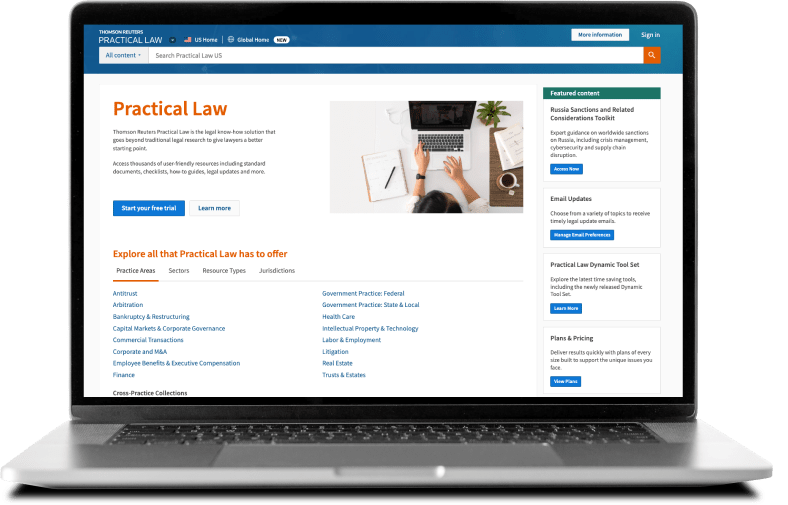
Review and compare state law across multiple practice areas.
[State Q\&A Comparison Tool ↗](https://content.next.westlaw.com/practical-law/state-qa?transitionType=Default&contextData=\(sc.Default\))
### Practice Notes
California Employment Law Practice Notes
- - [Practice Note: Employee Benefits Law: Overview](https://content.next.westlaw.com/practical-law/document/Icf4a7201ef0a11e28578f7ccc38dcbee/Employee-Benefits-Law-Overview?viewType=FullText&transitionType=Default&contextData=\(sc.)
- [Practice Note: California Employment Laws More Favorable to Employee Plaintiffs](https://content.next.westlaw.com/practical-law/document/I59fa51dc5cd711e79bef99c0ee06c731/California-Employment-Laws-More-Favorable-to-Employee-Plaintiffs?viewType=FullText&transitionType=Default&contextData=\(sc.Default\))
- [Employment Law Issues for Startups, Entrepreneurs, and Growing Businesses: Overview](https://content.next.westlaw.com/practical-law/document/Ic131d2442f9f11e498db8b09b4f043e0/Employment-Law-Issues-for-Startups-Entrepreneurs-and-Growing-Businesses-Overview?viewType=FullText&transitionType=Default&contextData=\(sc.Default\))
California Employment Law Practice Notes
- - [Practice Note: Employee Benefits Law: Overview](https://content.next.westlaw.com/practical-law/document/Icf4a7201ef0a11e28578f7ccc38dcbee/Employee-Benefits-Law-Overview?viewType=FullText&transitionType=Default&contextData=\(sc.)
- [Practice Note: California Employment Laws More Favorable to Employee Plaintiffs](https://content.next.westlaw.com/practical-law/document/I59fa51dc5cd711e79bef99c0ee06c731/California-Employment-Laws-More-Favorable-to-Employee-Plaintiffs?viewType=FullText&transitionType=Default&contextData=\(sc.Default\))
- [Employment Law Issues for Startups, Entrepreneurs, and Growing Businesses: Overview](https://content.next.westlaw.com/practical-law/document/Ic131d2442f9f11e498db8b09b4f043e0/Employment-Law-Issues-for-Startups-Entrepreneurs-and-Growing-Businesses-Overview?viewType=FullText&transitionType=Default&contextData=\(sc.Default\))
### Templates
Practical Law Standard Documents
- - [Founder’s Stock Purchase Agreement (Startups)](https://content.next.westlaw.com/practical-law/document/I7d424e8d515111ec9f24ec7b211d8087/Founder-s-Stock-Purchase-Agreement-Startups?viewType=FullText&transitionType=Default&contextData=\(sc.Default\)#:~:text=\(National%2FFederal\)-,A%20form%20of%20founder's%20stock%20purchase%20agreement%20to%20be%20used,important%20explanations%20and%20drafting%20tips.)
- [Technology Assignment Agreement (Short Form; Startups)](https://content.next.westlaw.com/practical-law/document/I90c43c1930fd11ecbea4f0dc9fb69570/Technology-Assignment-Agreement-Short-Form-Startups?viewType=FullText&transitionType=Default&contextData=\(sc.Default\))
- [Proprietary Information and Inventions Agreement (Startups)](https://content.next.westlaw.com/practical-law/document/I2678d41122ff11ed9f24ec7b211d8087/Proprietary-Information-and-Inventions-Agreement-Startups?viewType=FullText&originationContext=document&transitionType=DocumentItem&ppcid=e7a7686d710548ba9d5b7b16b7ce59c8&contextData=\(sc.DocLink\))
### Toolkits and guides
A Q\&A guide to release of claims agreements for private employers in California. This Q\&A addresses statutory and common law claims that may be released in a valid and enforceable written agreement, as well as employment claims or specific contract language that should be included or excluded. Federal, local, or municipal law may impose additional or different requirements. Answers to questions can be compared across a number of jurisdictions (see Employment Claims in Release Agreements: State Q\&A Tool).
California employment law guide and toolkit
- - [Employment Claims in Release Agreements: California](https://content.next.westlaw.com/practical-law/document/Id16946bdef2911e28578f7ccc38dcbee/Employment-Claims-in-Release-Agreements-California?viewType=FullText&transitionType=Default&contextData=\(sc.Default\))
- [California Employee Handbook Toolkit](https://content.next.westlaw.com/practical-law/document/I712ffa49997611e8a5b3e3d9e23d7429/California-Employee-Handbook-Toolkit?viewType=FullText&transitionType=Default&contextData=\(sc.Default\) "California Employee Handbook Toolkit")
- Facebook
- Twitter
- Linkedin
- [Email](mailto:?body=https%3A%2F%2Flegal.thomsonreuters.com%2Fblog%2Fcalifornia-labor-and-employment-laws%2F&subject=California%20labor%20laws%20with%20research%20how-to%20resources "Email")
- [Glossary](https://legal.thomsonreuters.com/blog/topic/glossary/)
- [Labor & Employment](https://legal.thomsonreuters.com/blog/topic/labor-and-employment/)
- [Legal Topics](https://legal.thomsonreuters.com/blog/topic/legal-topics/)
- [Practical Law](https://legal.thomsonreuters.com/blog/topic/practical-law/)
[← Back to blog](https://legal.thomsonreuters.com/blog/)
***
[](https://www.thomsonreuters.com/en-us/posts/innovation/building-trust-in-agentic-ai/)
### [Trust in AI Alliance](https://www.thomsonreuters.com/en-us/posts/innovation/building-trust-in-agentic-ai/)
As AI becomes more agentic and autonomous, trust is becoming a pressing practical issue. The Trust in AI Alliance unites experts to develop shared approaches for building trustworthy agentic AI.
[Learn more](https://www.thomsonreuters.com/en-us/posts/innovation/building-trust-in-agentic-ai/)
[](https://legal.thomsonreuters.com/en/c/practical-law/quick-expert-answers "Practical Law product on laptop")
### [Practical Law \| Quick, expert answers to your ‘how do I’ legal questions](https://legal.thomsonreuters.com/en/c/practical-law/quick-expert-answers)
Get up to speed faster with Practical Law’s expertly created and maintained resources combined with powerful generative AI capabilities
[Learn more](https://legal.thomsonreuters.com/en/c/practical-law/quick-expert-answers)
[](https://legal.thomsonreuters.com/en/c/westlaw/plans-and-pricing?cid=5817439&chl=eb&sfdccampaignid=701PA00000ObvHdYAJ "TR5744934_05A_370x250")
### [Buy Westlaw online](https://legal.thomsonreuters.com/en/c/westlaw/plans-and-pricing?cid=5817439&chl=eb&sfdccampaignid=701PA00000ObvHdYAJ)
The easy, no-hassle way to get quick access to industry-leading legal content.
[View pricing](https://legal.thomsonreuters.com/en/c/westlaw/plans-and-pricing?cid=5817439&chl=eb&sfdccampaignid=701PA00000ObvHdYAJ)
### Related posts
[](https://legal.thomsonreuters.com/blog/canada-why-89-of-legal-professionals-are-racing-toward-technology-theyre-still-concerned-about/)
### [Canada: Why 89% of legal professionals are racing toward technology they’re still concerned about](https://legal.thomsonreuters.com/blog/canada-why-89-of-legal-professionals-are-racing-toward-technology-theyre-still-concerned-about/)
March 20, 2026 · 5 minute read
Share
- Facebook
- Twitter
- Linkedin
- [Email](mailto:?body=https%3A%2F%2Flegal.thomsonreuters.com%2Fblog%2Fcanada-why-89-of-legal-professionals-are-racing-toward-technology-theyre-still-concerned-about%2F&subject=Canada%3A%20Why%2089%25%20of%20legal%20professionals%20are%20racing%20toward%20technology%20they%E2%80%99re%20still%20concerned%20about%20%7C%20Thomson%20Reuters%20Law%20Blog "Email")
[](https://legal.thomsonreuters.com/blog/the-ai-security-standard-a-must-read-for-government-legal-teams/)
### [The AI security standard: A must-read for government legal teams](https://legal.thomsonreuters.com/blog/the-ai-security-standard-a-must-read-for-government-legal-teams/)
March 19, 2026 · 5 minute read
Share
- Facebook
- Twitter
- Linkedin
- [Email](mailto:?body=https%3A%2F%2Flegal.thomsonreuters.com%2Fblog%2Fthe-ai-security-standard-a-must-read-for-government-legal-teams%2F&subject=The%20AI%20security%20standard%3A%20A%20must-read%20for%20government%20legal%20teams%20%7C%20Thomson%20Reuters%20Law%20Blog "Email")
[](https://legal.thomsonreuters.com/blog/trusted-answers-for-the-most-complex-government-legal-questions/ "Adobe Stock")
### [Trusted answers for the most complex government legal questions](https://legal.thomsonreuters.com/blog/trusted-answers-for-the-most-complex-government-legal-questions/)
March 16, 2026 · 6 minute read
Share
- Facebook
- Twitter
- Linkedin
- [Email](mailto:?body=https%3A%2F%2Flegal.thomsonreuters.com%2Fblog%2Ftrusted-answers-for-the-most-complex-government-legal-questions%2F&subject=Trusted%20answers%20for%20the%20most%20complex%20government%20legal%20questions%20%7C%20Thomson%20Reuters%20Law%20Blog "Email")
### More answers
[](https://legal.thomsonreuters.com/blog/meet-westlaw-advantage-canada-the-next-generation-ai-legal-research-solution/)
### [Meet Westlaw Advantage Canada: The next generation AI legal research solution](https://legal.thomsonreuters.com/blog/meet-westlaw-advantage-canada-the-next-generation-ai-legal-research-solution/)
February 11, 2026 · 5 minute read
Share
- Facebook
- Twitter
- Linkedin
- [Email](mailto:?body=https%3A%2F%2Flegal.thomsonreuters.com%2Fblog%2Fmeet-westlaw-advantage-canada-the-next-generation-ai-legal-research-solution%2F&subject=Meet%20Westlaw%20Advantage%20Canada%3A%20The%20next%20generation%20AI%20legal%20research%20solution%20%7C%20Thomson%20Reuters%20Law%20Blog "Email")
[](https://legal.thomsonreuters.com/blog/genai-in-government-workflows-risk-vs-reward/)
### [GenAI in government workflows: Risk vs reward](https://legal.thomsonreuters.com/blog/genai-in-government-workflows-risk-vs-reward/)
July 17, 2025 · 6 minute read
Share
- Facebook
- Twitter
- Linkedin
- [Email](mailto:?body=https%3A%2F%2Flegal.thomsonreuters.com%2Fblog%2Fgenai-in-government-workflows-risk-vs-reward%2F&subject=GenAI%20in%20government%20workflows%3A%20Risk%20vs%20reward%20%7C%20Thomson%20Reuters%20Law%20Blog "Email")
[](https://legal.thomsonreuters.com/blog/financial-risk-management-101/)
### [Financial risk management 101](https://legal.thomsonreuters.com/blog/financial-risk-management-101/)
June 16, 2025 · 7 minute read
Share
- Facebook
- Twitter
- Linkedin
- [Email](mailto:?body=https%3A%2F%2Flegal.thomsonreuters.com%2Fblog%2Ffinancial-risk-management-101%2F&subject=Financial%20risk%20management%20101%20%7C%20Thomson%20Reuters%20Law%20Blog "Email")
- Legal products
- [Westlaw](https://legal.thomsonreuters.com/en/products/westlaw)
- [Practical Law](https://legal.thomsonreuters.com/en/products/practical-law)
- [Practical Law Connect](https://legal.thomsonreuters.com/en/products/practical-law/connect)
- [CLEAR](https://legal.thomsonreuters.com/en/products/clear-investigation-software)
- [Law Books](https://legal.thomsonreuters.com/en/products/law-books)
- [See all products](https://legal.thomsonreuters.com/en/products)
- Solutions
- [Legal research](https://legal.thomsonreuters.com/en/solutions/streamline-legal-research)
- [Legal know-how](https://legal.thomsonreuters.com/en/solutions/legal-guidance)
- [Management and growth](https://legal.thomsonreuters.com/en/solutions/legal-department-management)
- [Litigation](https://legal.thomsonreuters.com/en/solutions/simplify-litigation)
- [Drafting and contracts](https://legal.thomsonreuters.com/en/solutions/fast-track-drafting)
- [Risk and investigation](https://legal.thomsonreuters.com/en/solutions/fraud-investigations-software)
- Insights
- [Latest](https://legal.thomsonreuters.com/en/insights)
- [Case studies](https://legal.thomsonreuters.com/en/insights/case-studies)
- [Artificial intelligence](https://legal.thomsonreuters.com/en/insights/artificial-intelligence)
- [Big Data](https://legal.thomsonreuters.com/en/insights/big-data)
- [Data privacy](https://legal.thomsonreuters.com/en/insights/data-privacy)
- [FinTech](https://legal.thomsonreuters.com/en/insights/fintech)
- Support
- [Support center](https://legal.thomsonreuters.com/en/support)
- [Reference attorneys](https://legal.thomsonreuters.com/en/support/reference-attorneys)
- [Legal notices](https://legal.thomsonreuters.com/en/legal-notices)
- [About us](https://legal.thomsonreuters.com/en/about)
- [Contact us](https://legal.thomsonreuters.com/en/support/contact-us)
- Connect
- [Facebook](http://www.facebook.com/Westlaw1)
- [Twitter](http://twitter.com/westlaw)
- [LinkedIn](https://www.linkedin.com/showcase/thomson-reuters-westlaw/)
- [YouTube](https://www.youtube.com/user/ThomsonReutersLegal)
[Thomson Reuters](https://www.thomsonreuters.com/en.html)
- - [Cookie policy](https://www.thomsonreuters.com/en/privacy-statement.html#cookies)
- [Cookie settings]()
- [Terms of use](https://www.thomsonreuters.com/en/terms-of-use.html)
- [Privacy statement](https://www.thomsonreuters.com/en/privacy-statement.html)
- [For CA: Do Not Sell My Info.](https://privacyportal-cdn.onetrust.com/dsarwebform/dbf5ae8a-0a6a-4f4b-b527-7f94d0de6bbc/5dc91c0f-f1b7-4b6e-9d42-76043adaf72d.html)
- [Copyright](https://www.thomsonreuters.com/en/policies/copyright.html)
- [Accessibility](https://legal.thomsonreuters.com/en/legal-notices/accessibility) | ||||||||||||||||||
| Readable Markdown | Overview with research and how-to resources
[California laws](https://www.dir.ca.gov/dlse/California-Paid-Sick-Leave.html#main-content) • California labor and employment laws
California has exceptionally strong legal protections for employees in areas including:
- minimum wage
- overtime pay
- required meal and rest breaks
- workplace safety and health
- paid sick leave
- family and medical leave
- worker’s compensation
- and protection against discrimination, harassment, and wrongful termination
In many of these areas, California employment law is more favorable to workers than the equivalent provisions under federal law.
This content provides an overview of California labor laws and a reliable starting place for attorneys to perform further research.
Employers and employees may use the State Bar of California’s [Certified Lawyer Referral Services](https://www.calbar.ca.gov/Public/Need-Legal-Help/Certified-Lawyer-Referral-Services-Directory "Certified Lawyer Referral Services") that maintains a list of lawyer referral services that are certified by the State Bar.
Jump to ↓
| | | | |
|---|---|---|---|
| | [Minimum wage](https://legal.thomsonreuters.com/blog/california-labor-and-employment-laws/#minimum-wage) | | [Family and medical leave](https://legal.thomsonreuters.com/blog/california-labor-and-employment-laws/#family-and-medical-leave) |
| | [Overtime pay](https://legal.thomsonreuters.com/blog/california-labor-and-employment-laws/#overtime-pay) | | [Workers’ compensation](https://legal.thomsonreuters.com/blog/california-labor-and-employment-laws/#workers-compensation) |
| | [Meal and rest breaks](https://legal.thomsonreuters.com/blog/california-labor-and-employment-laws/#meal-and-rest-breaks) | | [At-Will employment](https://legal.thomsonreuters.com/blog/california-labor-and-employment-laws/#at-will-employment) |
| | [Workplace safety and health](https://legal.thomsonreuters.com/blog/california-labor-and-employment-laws/#workplace-safety-and-health) | | [Wrongful termination](https://legal.thomsonreuters.com/blog/california-labor-and-employment-laws/#wrongful-termination) |
| | [Discrimination and harassment](https://legal.thomsonreuters.com/blog/california-labor-and-employment-laws/#discrimination-and-harassment) | | [Research and how-to resources](https://legal.thomsonreuters.com/blog/california-labor-and-employment-laws/#how-to-resources) |
| | [Paid sick leave](https://legal.thomsonreuters.com/blog/california-labor-and-employment-laws/#paid-sick-leave) | | |
## Minimum wage
As of January 1, 2024, California’s [minimum wage](https://www.dir.ca.gov/dlse/faq_minimumwage.htm) is \$16 per hour. However, the minimum wage is higher for workers in some industries and in some locations. For example, the minimum hourly rate for [fast food workers](https://www.dir.ca.gov/dlse/Fast-Food-Minimum-Wage-FAQ.htm) in California is \$20 per hour, as of April 1, 2024. About 40 California [cities and counties](https://laborcenter.berkeley.edu/inventory-of-us-city-and-county-minimum-wage-ordinances/#s-2) have higher minimum wages than the state’s rate. As of July 1, 2024, the city of Emeryville has the highest rate at \$19.36 per hour. The California Labor Commissioner considers paying employees less than the minimum to be a form of [wage theft](https://www.dir.ca.gov/dlse/Examples_of_Wage_Theft.html).
| Date | Minimum wage for employers with 25 employees or less | Minimum wage for employers with 26 employees or more |
|---|---|---|
| January 1, 2017 | \$10.00/hour | \$10.50/hour |
| January 1, 2018 | \$10.50/hour | \$11.00/hour |
| January 1, 2019 | \$11.00/hour | \$12.00/hour |
| January 1, 2020 | \$12.00/hour | \$13.00/hour |
| January 1, 2021 | \$13.00/hour | \$14.00/hour |
| January 1, 2022 | \$14.00/hour | \$15.00/hour |
| January 1, 2023 | \$15.50/hour | \$15.50/hour |
| January 1, 2024 | \$16.00/hour | \$16.00/hour |
Source: Adapted from the [State of California Department of Industrial Relations](https://www.dir.ca.gov/dlse/faq_minimumwage.htm)
### Can an employee voluntarily work for less than the minimum wage?
No. Employers are required to pay minimum wage. Agreements between employers and employees cannot violate laws, including the minimum wage laws, that are designed to protect employees.
### Will the California minimum wage keep on going higher?
Although the minimum wage has passed the end of the [phase-in period](https://www.dir.ca.gov/dlse/sb3_faq.htm), it will continue to be adjusted for inflation every year, with a maximum annual increase of 3.5 percent. Increases are based on the national consumer price index (CPI) for urban and clerical workers. The rate will never go down, even if the CPI for a particular year is negative.
### Are employers with 25 or fewer employees still able to pay a lower minimum wage?
No. Since January 1, 2023, the California minimum wage has been the same for employers of all sizes.
## Overtime pay
With [some exemptions](https://www.dir.ca.gov/dlse/faq_overtimeexemptions.htm), nonexempt employees [must be paid overtime](https://www.dir.ca.gov/dlse/faq_overtime.htm) in California if they work more than eight hours in a workday, more than 40 hours in a workweek, or more than six days per workweek.
### What is the maximum number of hours an employee can work in a week under California labor laws?
For workers aged 18 and up, there is no maximum, as long as nonexempt employees are paid the required overtime rates. For minors, however, there are [limits](https://www.dir.ca.gov/dlse/minorssummarycharts.pdf) on how many hours they can work based on their age.
### What are the overtime pay requirements in California?
Nonexempt employees must be paid one-and-a-half times their regular rate of pay for hours worked:
- More than eight hours and up to 12 hours in a day
- More than 40 hours in a workweek
- For the first eight hours on the seventh day of work in a workweek
A nonexempt employee must be paid at least two times the employee’s regular pay rate for work that is:
- More than 12 hours in a day
- More than eight hours on the seventh day of work in a workweek
### Are salaried employees always exempt from overtime?
No. Salaried employees can be either exempt or nonexempt. If nonexempt, they must be paid overtime.
## Meal and rest breaks
Employment law in California requires workers be provided with unpaid 30-minute [meal breaks](https://www.dir.ca.gov/dlse/FAQ_MealPeriods.htm) and paid 10-minute [rest breaks](https://www.dir.ca.gov/dlse/FAQ_RestPeriods.htm) if they work a certain number of hours in a day. They must receive one meal break if they work more than five hours in a day and a second meal break for more than 10 hours of work in a day. They’re entitled to one rest break for every four hours worked. California employees working outdoors also have the right to take [additional rest breaks](https://www.99calor.org/Prevent-Heat-Illness.html) in the shade when needed to cool down.
### Do California labor laws permit employees to voluntarily waive their right to take meal breaks?
If the employee and employer both consent:
- Employees who work no more than six hours in a day can waive their first meal break.
- Employees who work more than 10 but no more than 12 hours and have taken their first meal break can waive their second.
### Are employers ever required to pay for meal breaks?
Yes. Employers must pay wages at a worker’s regular rate of pay for meal breaks if, due to the nature of the work, the employee is not relieved of all duty during the entire 30-minute period and is not free to leave the premises.
### Can the break time in a 10-minute rest break be split into two five-minute breaks?
No. The 10 minutes in a paid rest break must be taken consecutively.
## Workplace safety and health
California’s [Division of Occupational Safety and Health (DOSH)](https://www.dir.ca.gov/occupational_safety.html) protects the health and safety of non-federal workers in California through the [Cal/OSHA](https://www.dir.ca.gov/dosh/) program. [Employer responsibilities](https://www.dir.ca.gov/dosh/EmployerInformation.htm "Employer responsibilities") include establishing an illness and injury prevention program, providing and maintaining safe tools and equipment, warning about potential hazards, and immediately [reporting to Cal/OSHA](https://www.dir.ca.gov/dosh/report-accident-or-injury.html) any work-related serious injuries or illnesses, or deaths.
### Do California workers have the right to refuse to do hazardous work?
Yes, but only if doing the work would [violate a Cal/OSHA regulation](https://www.dir.ca.gov/dosh/documents/health-and-safety-rights-for-workers.pdf) and would create a hazard for the worker or their coworkers.
### How much health and safety training are California employers required to provide for their employees?
All employers in California are required to provide health and safety training following the requirements in [Title 8](https://www.dir.ca.gov/title8/3203.html). These include training for all new employees. [Additional requirements](https://www.dir.ca.gov/dosh/etools/09-002/whatrequired.htm) for training topics and frequency depend on the type of work that employees are doing.
### Do California labor laws require California employers to do anything to help prevent violence in the workplace?
Yes. Effective July 1, 2024, most California employers must create and implement a written [workplace violence prevention plan](https://www.dir.ca.gov/dosh/workplace-violence.html).
## Discrimination and harassment
The California Fair Employment and Housing Act (FEHA) and associated regulations prohibit harassment and discrimination against employees on the basis of [protected characteristics](https://calcivilrights.ca.gov/wp-content/uploads/sites/32/2023/01/Workplace-Discrimination-Poster_ENG.pdf). They also prohibit retaliation against employees for asserting their rights. The [California Equal Pay Act](https://www.dir.ca.gov/dlse/california_equal_pay_act.htm) prohibits employers from paying employees less than employees of a different sex, race, or ethnicity for substantially similar work.
### Are all California employers subject to the anti-harassment and anti-discrimination provisions of the FEHA?
The FEHA applies to all California employers except the federal government and non-profit religious organizations. However, only employers with [five or more employees](https://calcivilrights.ca.gov/employment/#faqABody) are subject to the anti-discrimination provisions. This limitation does not apply to anti-harassment provisions, which apply to employers with as few as one employee or independent contractor.
### Is it illegal to harass volunteers?
Yes. In addition to employees and job applicants, other workers are also protected against harassment in California: volunteers, unpaid interns, and independent contractors.
### Do employers have to provide sexual harassment training?
California employers with five or more employees and public employers must provide sexual harassment training, which includes harassment based on sexual orientation, gender expression, and gender identity.
## Paid sick leave
As of January 1, 2024, most employees in California are entitled to 40 hours or five days —whichever is more — of [paid sick leave](https://legal.thomsonreuters.com/blog/paid-sick-leave-laws-and-the-family-and-medical-leave-act/) per year to take care of themselves or a family member. [Before 2024](https://www.dir.ca.gov/dlse/Paid_Sick_Leave.htm), the previous employment law only required California employers to provide 24 hours or three days paid sick leave per year. Paid sick leave can be used for preventative care, diagnoses, healthcare for an existing condition, or for specified purposes for victims of sexual assault, stalking, or domestic violence.
### Who is eligible for paid sick leave?
Full-time, part-time, and temporary workers who have worked for the same employer for 30 days in a year and have completed 90 days of employment for the same employer are entitled to paid sick leave.
### Are California employees entitled to use all of their sick leave days at the beginning of the year?
California employers can choose whether to provide all sick leave days at once or to use an accrual system, where employees earn [California laws](https://www.dir.ca.gov/dlse/California-Paid-Sick-Leave.html#main-content) for every 30 days they work.
### Does the requirement for employers to provide 40 hours or five days of paid sick leave per year refer to a calendar year?
The “per year” requirement can be any 12-month period. It can be a calendar year, fiscal year, or a 12-month period based on an employee’s start date.
## Family and medical leave
Eligible California employees are entitled to [up to 12 weeks of unpaid leave](https://calcivilrights.ca.gov/family-medical-pregnancy-leave/) to care for their own or a family member’s serious health condition or to bond with a new child and up to five days of [bereavement leave](https://calcivilrights.ca.gov/wp-content/uploads/sites/32/2023/04/Bereavement-Leave_AB-1949_FAQ_ENG.pdf). The California Family Rights Act (CFRA) provides these rights, and the Civil Rights Department (CRD) enforces them. California workers are also covered by the federal Family Medical Leave Act (FMLA).
### How long does an employee have to work to be eligible to take CFRA leave?
To be eligible, [an employee must](https://calcivilrights.ca.gov/wp-content/uploads/sites/32/2022/12/Family-Care-and-Medical-Leave-Fact-Sheet_ENG.pdf):
- Work for an employer that has five or more employees
- Have worked for that employer for more than 12 months
- Have worked at least 1,250 hours for that employer in the 12 months prior to the start of the leave
### Do California labor laws give employees the right to return to their jobs after their leave?
Yes. CFRA leave is job-protected. If an employee’s original job is no longer available, employers must offer a comparable position where possible.
### Can employees use their CFRA leave to take care of a friend?
As of January 1, 2023, employees can use their CFRA leave to take care of a “[designated person](https://calcivilrights.ca.gov/wp-content/uploads/sites/32/2023/02/Expanded-Family-And-Medical-Leave_ENG.pdf).” This can be a blood relative or someone who is like family, such as a close friend or unmarried partner.
## Workers’ compensation
[All California employers](https://www.dir.ca.gov/dwc/Employer.htm) are required to have workers’ compensation insurance that provides benefits for employees’ work-related injuries and illnesses. Employers must cover the cost of the insurance coverage and [cannot ask employees](https://www.dir.ca.gov/dwc/faqs.html) to help pay for premiums. [Benefits for eligible employees](https://www.dir.ca.gov/dwc/WCFaqIW.html) are for medical care, temporary disability, permanent disability, retraining, and death.
### Who is entitled to death benefits?
If an employee dies from a work-related injury or illness, their spouse, children, or other dependents are entitled to [death benefits](https://www.dir.ca.gov/dwc/WorkersCompensationBenefits.htm#DeathBenefits "death benefits"), including reasonable burial expenses, based on the number of dependents.
### What types of treatments are covered by workers’ compensation in California?
Medical treatments must be [evidence-based](https://www.dir.ca.gov/dwc/Attorney.htm). The state has guidelines, including a medical treatment utilization schedule (MTUS), that covers the type, frequency, intensity, and duration of treatments for specific injuries.
### Where do I file petitions for reconsideration, removal, or disqualification?
Petitions [must be filed](https://www.dir.ca.gov/wcab/WCAB_PetitionforReconsideration.htm) using the [Electronic Adjudication Management System (EAMS)](https://www.dir.ca.gov/dwc/eams/EAMS_EformsFilers.html) or with the applicable district office. [To use EAMS](https://www.dir.ca.gov/dwc/eams/EAMS_EformsFilers.html), you’ll need to complete an e-form agreement and take an introductory training program.
## At-Will employment
California is an at-will state. That means that employers can fire employees, and employees can quit, for any reason, including a bad reason or no reason, as long as it’s not an illegal reason. [Giving advance notice is not required](https://www.dir.ca.gov/dlse/TerminationOfEmployment.pdf) unless there was a prior agreement to the contrary between the employer and employee. Keep in mind, though, that Labor Code sections 201 and 227.3 require that terminated employees receive their final paycheck, including accrued vacation time, [immediately at the time they are terminated](https://www.dir.ca.gov/dlse/faq_paydays.htm) and not have it held until the end of the pay period.
### If there is a union contract, how does that affect at-will employment?
There’s an exception to at-will employment for employees covered by a collective bargaining agreement. The terms of the agreement control when and for what reasons employees can be terminated.
### When is terminating an employee unlawful discrimination?
It’s unlawful to fire an employee if there is a discriminatory motive based on [California’s protected classes](https://www.senate.ca.gov/protected-classes).
### What are other situations where it’s unlawful to fire an employee in California?
Under California labor laws, termination is unlawful if:
- It’s done as [retaliation](https://www.dir.ca.gov/dlse/howtofilelinkcodesections.htm) for employees asserting their protected rights. This includes whistleblowing, engaging in collective bargaining activities, filing a complaint with the Labor Commissioner, serving on a jury or otherwise requesting time off that employees are entitled to take.
- Employees are fired for their political beliefs.
- They are terminated for trivial or pretextual reasons if they have an express or implied employment contract that specifies that employees can only be terminated for good cause.
## Wrongful termination
Although California is an at-will state, state labor laws specifically prohibit certain reasons for termination. These include discriminating against employees based on their [protected characteristics](https://calcivilrights.ca.gov/employment/) or as [retaliation](https://www.dir.ca.gov/dlse/howtofilelinkcodesections.htm) for employees engaging in activities protected by the California Labor Code or asserting their legally protected rights.
### What are the remedies for discriminatory wrongful termination in California?
[Remedies may include](https://calcivilrights.ca.gov/employment/#remediesBody) payment of past and future lost earnings, reinstatement in the lost job, reasonable accommodations, promotion, damages for emotional distress, punitive damages, and attorney’s fees and costs.
### What are examples of activities protected by California labor laws?
It is illegal to fire employees in California for engaging in [protected activities](https://www.dir.ca.gov/dlse/Glossary.asp?Button1=P#protected%20activity) that include:
- Complaining about workplace safety conditions
- Engaging in political activities
- Serving on a jury or appearing as a witness in court
- Filing a claim with the California Labor Commissioner or threatening to do so
- Talking with coworkers about pay or working conditions
- Joining with coworkers to talk to the media about working conditions
### When is whistleblowing protected?
Employers may not terminate employees because of [whistleblowing](https://www.dir.ca.gov/dlse/whistleblowersnotice.pdf) activity. This includes employees disclosing information that they reasonably believe shows a violation of state or federal law, rules, or regulations or unsafe working conditions in the employee’s workplace. Protected whistleblowing also includes employees refusing to engage in activities that would violate laws, rules, or regulations.
## Further research and resources
Do you need to perform further research on any of these topics? Use the curated content below featuring practices notes, templates, toolkits, and guides from Practical Law.
Practical Law’s resources are written and maintained by over 650 dedicated full-time attorney-editors globally. They’re highly qualified, having practiced at the world’s leading law firms, corporate law departments, and government agencies.
### Practice Notes
California Employment Law Practice Notes
- - [Practice Note: Employee Benefits Law: Overview](https://content.next.westlaw.com/practical-law/document/Icf4a7201ef0a11e28578f7ccc38dcbee/Employee-Benefits-Law-Overview?viewType=FullText&transitionType=Default&contextData=\(sc.)
- [Practice Note: California Employment Laws More Favorable to Employee Plaintiffs](https://content.next.westlaw.com/practical-law/document/I59fa51dc5cd711e79bef99c0ee06c731/California-Employment-Laws-More-Favorable-to-Employee-Plaintiffs?viewType=FullText&transitionType=Default&contextData=\(sc.Default\))
- [Employment Law Issues for Startups, Entrepreneurs, and Growing Businesses: Overview](https://content.next.westlaw.com/practical-law/document/Ic131d2442f9f11e498db8b09b4f043e0/Employment-Law-Issues-for-Startups-Entrepreneurs-and-Growing-Businesses-Overview?viewType=FullText&transitionType=Default&contextData=\(sc.Default\))
California Employment Law Practice Notes
- - [Practice Note: Employee Benefits Law: Overview](https://content.next.westlaw.com/practical-law/document/Icf4a7201ef0a11e28578f7ccc38dcbee/Employee-Benefits-Law-Overview?viewType=FullText&transitionType=Default&contextData=\(sc.)
- [Practice Note: California Employment Laws More Favorable to Employee Plaintiffs](https://content.next.westlaw.com/practical-law/document/I59fa51dc5cd711e79bef99c0ee06c731/California-Employment-Laws-More-Favorable-to-Employee-Plaintiffs?viewType=FullText&transitionType=Default&contextData=\(sc.Default\))
- [Employment Law Issues for Startups, Entrepreneurs, and Growing Businesses: Overview](https://content.next.westlaw.com/practical-law/document/Ic131d2442f9f11e498db8b09b4f043e0/Employment-Law-Issues-for-Startups-Entrepreneurs-and-Growing-Businesses-Overview?viewType=FullText&transitionType=Default&contextData=\(sc.Default\))
### Templates
Practical Law Standard Documents
- - [Founder’s Stock Purchase Agreement (Startups)](https://content.next.westlaw.com/practical-law/document/I7d424e8d515111ec9f24ec7b211d8087/Founder-s-Stock-Purchase-Agreement-Startups?viewType=FullText&transitionType=Default&contextData=\(sc.Default\)#:~:text=\(National%2FFederal\)-,A%20form%20of%20founder's%20stock%20purchase%20agreement%20to%20be%20used,important%20explanations%20and%20drafting%20tips.)
- [Technology Assignment Agreement (Short Form; Startups)](https://content.next.westlaw.com/practical-law/document/I90c43c1930fd11ecbea4f0dc9fb69570/Technology-Assignment-Agreement-Short-Form-Startups?viewType=FullText&transitionType=Default&contextData=\(sc.Default\))
- [Proprietary Information and Inventions Agreement (Startups)](https://content.next.westlaw.com/practical-law/document/I2678d41122ff11ed9f24ec7b211d8087/Proprietary-Information-and-Inventions-Agreement-Startups?viewType=FullText&originationContext=document&transitionType=DocumentItem&ppcid=e7a7686d710548ba9d5b7b16b7ce59c8&contextData=\(sc.DocLink\))
### Toolkits and guides
A Q\&A guide to release of claims agreements for private employers in California. This Q\&A addresses statutory and common law claims that may be released in a valid and enforceable written agreement, as well as employment claims or specific contract language that should be included or excluded. Federal, local, or municipal law may impose additional or different requirements. Answers to questions can be compared across a number of jurisdictions (see Employment Claims in Release Agreements: State Q\&A Tool).
California employment law guide and toolkit
- - [Employment Claims in Release Agreements: California](https://content.next.westlaw.com/practical-law/document/Id16946bdef2911e28578f7ccc38dcbee/Employment-Claims-in-Release-Agreements-California?viewType=FullText&transitionType=Default&contextData=\(sc.Default\))
- [California Employee Handbook Toolkit](https://content.next.westlaw.com/practical-law/document/I712ffa49997611e8a5b3e3d9e23d7429/California-Employee-Handbook-Toolkit?viewType=FullText&transitionType=Default&contextData=\(sc.Default\) "California Employee Handbook Toolkit") | ||||||||||||||||||
| ML Classification | |||||||||||||||||||
| ML Categories |
Raw JSON{
"/Law_and_Government": 960,
"/Law_and_Government/Legal": 958,
"/Law_and_Government/Legal/Labor_and_Employment_Law": 957,
"/Jobs_and_Education": 207,
"/Jobs_and_Education/Jobs": 201,
"/Jobs_and_Education/Jobs/Career_Resources_and_Planning": 186
} | ||||||||||||||||||
| ML Page Types |
Raw JSON{
"/Article": 970,
"/Article/Tutorial_or_Guide": 449
} | ||||||||||||||||||
| ML Intent Types |
Raw JSON{
"Informational": 998
} | ||||||||||||||||||
| Content Metadata | |||||||||||||||||||
| Language | en-us | ||||||||||||||||||
| Author | Robert DiGiacomo | ||||||||||||||||||
| Publish Time | 2024-10-16 23:06:14 (1 year ago) | ||||||||||||||||||
| Original Publish Time | 2024-10-16 23:06:14 (1 year ago) | ||||||||||||||||||
| Republished | No | ||||||||||||||||||
| Word Count (Total) | 3,207 | ||||||||||||||||||
| Word Count (Content) | 2,660 | ||||||||||||||||||
| Links | |||||||||||||||||||
| External Links | 62 | ||||||||||||||||||
| Internal Links | 91 | ||||||||||||||||||
| Technical SEO | |||||||||||||||||||
| Meta Nofollow | No | ||||||||||||||||||
| Meta Noarchive | No | ||||||||||||||||||
| JS Rendered | Yes | ||||||||||||||||||
| Redirect Target | null | ||||||||||||||||||
| Performance | |||||||||||||||||||
| Download Time (ms) | 1,093 | ||||||||||||||||||
| TTFB (ms) | 1,072 | ||||||||||||||||||
| Download Size (bytes) | 116,112 | ||||||||||||||||||
| Shard | 9 (laksa) | ||||||||||||||||||
| Root Hash | 18308515929879315809 | ||||||||||||||||||
| Unparsed URL | com,thomsonreuters!legal,/blog/california-labor-and-employment-laws/ s443 | ||||||||||||||||||