ℹ️ Skipped - page is already crawled
| Filter | Status | Condition | Details |
|---|---|---|---|
| HTTP status | PASS | download_http_code = 200 | HTTP 200 |
| Age cutoff | PASS | download_stamp > now() - 6 MONTH | 1.5 months ago |
| History drop | PASS | isNull(history_drop_reason) | No drop reason |
| Spam/ban | PASS | fh_dont_index != 1 AND ml_spam_score = 0 | ml_spam_score=0 |
| Canonical | PASS | meta_canonical IS NULL OR = '' OR = src_unparsed | Not set |
| Property | Value |
|---|---|
| URL | https://journalofabsolutetruth.substack.com/p/a-necessary-simple-immutable-eternal |
| Last Crawled | 2026-03-04 02:25:07 (1 month ago) |
| First Indexed | not set |
| HTTP Status Code | 200 |
| Meta Title | A Necessary, Simple, Immutable, Eternal God’s Contingent Creation, Part 1 |
| Meta Description | Dr. Tim Pawl helps us think through a tricky question in Theology-land |
| Meta Canonical | null |
| Boilerpipe Text | Note from the editor:
The following is a guest post by Dr.
Tim Pawl
.
If you’re interested in contributing to The Journal of Absolute Truth, please see our
contributor info page
.
- Pat
There’s a tricky question out there in Theology-land. Probably more than one. But today, I just want to consider one of them. It’s the question of the relation between God’s will and creation.
I intend to discuss this question in two posts. This post will consider the question, a recommendation for steering the dialectic, and a few thoughts in light of that recommendation. The next post, in about a week’s time, will draw an analogy between human freedom and divine freedom, arguing that what we say about humans with respect to free will gives us a ready answer to what we should say about this tricky question.
My thanks to Pat for hosting these two posts on
The Journal of Absolute Truth
. I think they might be a bit too “high octane” metaphysics to fit with the feel of
Pawline Epistles
, but who knows. Maybe my readers will demand more of this and less of all that virtue stuff over there?
In any case, off we go!
On the traditional view, one preferred both by Aquinas and our host here, God is wholly simple, eternal, and immutable. There’s no composition in God. No bits, bobs, doodads, accidents, etc., as constituent metaphysical parts of God.
1
And God is outside of time, with no temporal “before” or “after.” And, closely related to those claims, God doesn’t change, doesn’t go from being one way to being another way. Indeed,
couldn’t
change across time
or
differ across different possible situations. Maybe you are thinking, “But what of the Christian doctrine of the Incarnation?” Great thought, dear reader! Here I’m referring only to the divine in Christ, not his human nature, which did change, was composite, was in time. How does that all work? I’m not going to write about it here. But believe me, I’ve thought a lot about it and
have
written
a
good
deal
on
it
.
Instead, we are going to focus on the tricky question. Get a piece of paper and draw an artist’s reverent representation of a wholly simple, immutable God. I prefer a single small dot, since I don’t know how to draw infinite actuality and love, but let your imagination be your guide. Put a square around that representation. Now, get a theological buzzer. Hover your hand over the buzzer. If Aquinas or Pat or I say something that requires anything
inside
that box to differ, hit the buzzer. All differing, on the view we want to give, will be outside the box:
Now, given this set up, how do we explain God’s free choice to create, which is also part of the traditional view of God? God is exactly the same simple being whether he creates or not. What’s inside the box is the same, whether there’s more stuff added to the page outside of it or not.
Whether existence is like the left side, where it is just God, or like the right side, where there’s God and some created x, all the stuff within the box is exactly the same. How can that be?
A few questions present themselves. What is the
origin story
of his creating? How does that stuff get there? And what explains God’s
motivation
to create, given that he might not have created and yet still been exactly the same? Since we know that he actually does create, and we know, given simplicity, that he couldn’t be otherwise than he is, how could it be contingent that he creates?
I’d like to offer a recommendation that I think would be helpful in thinking through this line of reasoning, then show how that recommendation plays out here.
This is a general recommendation. I find it helps me see if I’ve got a good question on my hands.
Write out your main question in a paragraph. Then write two answers that you would find satisfactory
prescinding from the issues that you think cause the bind
. In this case, those are the traditional attributes of God. If you weren’t bound by divine simplicity, eternity, and immutability, how would
you
answer the Tricky Question in a manner that satisfies you.
Next, try to push parody arguments against these two solutions, where you run analogous worries to the ones that cause you concern for the initial view under fire. That is, test the allegedly satisfactory answers against the problems you previously saw, to make sure that the allegedly satisfactory answers really answer the questions at hand. It is embarrassing to have a clever conversational partner point out that you are knee-deep in the very quicksand you pointed out around his ankles.
And what if you are? What if you and he both run afoul to the very same sorts of difficulties? Maybe you are both bringing a treacherous assumption. Maybe, in this case, contingency in the world is the problem, the poolslide to the quicksand. But it could be that you’ve got a defective question, too. After all, if even
the objector
doesn’t know what would count as a good answer, or he knows the conditions but has never seen
anyone
or any theory satisfy them (even his own), I wonder whether what we have here is a good line of questioning. Even if it is a good line of questioning, it isn’t going to be particularly telling in a contrastive judgment between contenders if our own theory joins the rest in failure. The score, in that case, would be -1 all around. We’d all be neck deep.
My hypothesis in this case is that you’ll find that the alternative solutions don’t really get around the main problem after all.
By way of example, consider an attempted solution to the question of how we explain the contingency of God’s creative choice. Let’s consider a solution that says that God has intrinsic contingent features, call them
accidents
, and that it is
those
that play a role in answering the question (what role they play depends on how you express the question that is confusticating you). If God can have accidents, the allegedly satisfactory response says, then we can explain how a necessary God only contingently creates.
On such a view, you’ve got a few more things in the box, of course, but then the proponent of the alternative solution, that scofflaw, doesn’t accept the occupancy limitations that the fire marshal set for the box.
Is such a solution really any better equipped to answer the Tricky Question? Let’s ask some questions parallel to the questions we ask of the traditional view. Ask, for instance, the
origin story
of those accidents. They are contingent – after all, we are trying to explain how a contingent thing (creation) arises from a necessary cause (the simple God), and if a necessary accident were able to explain that contingency, we’d have no reason to posit an
additional
necessary thing beside the divine nature to do that work. So we aren’t using necessary accidents to explain contingent creation.
Since the accidents are contingent, they stand in need of some sort of explanation for why they are there. But then we haven’t yet explained the initial move from necessary creator to contingent thing. We’ve just moved their location from outside the box to within it. Indeed, we’ve
presupposed
an initial bit of contingent things to explain contingent things! Not a particularly winsome beginning.
I suspect that you’ll find that other allegedly better solutions fall prey to similar worries. To name just a few other routes of objection to such views that involve contingent doodads
in God
(somehow) to explain contingent creation:
1. There’s a regress worry of how the first thing that didn’t need a previous contingent doodad to explain the step from necessity to contingency is
caused to be
. For instance, the opponent says that God has an accident in virtue of which he creates in this world, but he has a different accident in other possible situations, and that accident isn’t itself explained by God’s having a previous contingent accident. (If it were explained by a prior contingency, it wouldn’t be “the first thing that didn’t need a previous contingent doodad…”). Once the opponent posits the step where a previous contingent thing is not needed to give rise to a contingent thing, the game is afoot to get him to show why the step must be a contingent thing inside God, in that box on your sheet, as an accident, and not with the contingent stuff
outside
of God and that box. “You’re saying that a necessary God can primarily cause a contingent
internal
state of his, this doodad, without recourse to any prior contingent thing, but cannot primarily cause a contingent
external
state, this horse or photon or whatever, without recourse to a prior contingent thing – why is that?”
2. The worry of
divine
reason
is pushed back a single step. The objector wanted to know why God in this world creates and in another does not. But now we have the same question about why he produces these contingent internal states of his, not those. Whatever story he gives, I’m ready to parody it with parallel maneuvers outside the box. Don’t you touch that buzzer!
3. There’s a worry of
divine power
, since the opponent might feel pushed into the corner of claiming that these contingent things are just there with God, darn it!, without being caused by God. God’s stuck with them, and they are contingent things
in God
.
This brute-existence-of-contingent-accidents-in-God view answers the question of divine reason – since that question presupposed that God had some minimal say in the existence of those the internal accidents, and he has no say on this view – but it constrains God’s activities arbitrarily. God’s just contingently stuck being extroverted in this world, so he created.
Question: Was he able, “prior to creation,” to kick these contingencies about himself out of existence? If he couldn’t, that seems like a lack of power. There’s a contingent way he is, completely internal to himself, which he has no control over. He might have been introverted, and he knows this, and he sees the different choices that he could have made had he been, but he lacks the power to bring the introversion about. And had he been introverted, he would have lacked the power to bring his possible extroversion about. On the other hand, if he could change his starting contingent set of accidents “prior to creating,” on this view,” then these doodads
don’t
explain why he created, as he could have kicked his contingent extrovertedness to the curb. Why didn’t he do that?
So, adding more necessary things into the box is no help; if the questioner grants that a necessary thing can bring about a contingent thing, then Pat and Aquinas will help themselves to that claim, too, and say that the necessary thing in question is God, not some internal accident of God.
Moreover, adding contingent things into the box is of no help, since those things still need an origin story and an account of divine motivation. On those fronts, they seem just as problematic as contingent things outside the box are. The location of the contingency, whether in or out of the box, doesn’t help explain the contingency itself.
Finally, questions arise about the relation between God’s power and his contingent features. Is he arbitrarily stuck with the contingent internal features he has? If he is, what explains which he has, and how does that sit with his omnipotence? And if he isn’t stuck, if he can change them, then how do they explain the origin of contingency? Aren’t they too late to the contingency party to explain how contingency got into existence?
Next time, I turn to an analogy between human freedom and divine freedom in the hopes of de-trickifying the question at hand. Stay tuned!
Timothy J. Pawl is Professor of Philosophy at the University of St. Thomas in St. Paul, Minnesota, and holds a Ph.D. from Saint Louis University in philosophy, with specializations in Thomistic philosophy, analytic theology, and virtue theory.
His books include
In Defense of Conciliar Christology
(Oxford, 2016),
In Defense of Extended Conciliar Christology
(Oxford, 2019),
The Incarnation
(Cambridge, 2020), and
Jesus and the Genome: The Intersection of Christology and Biology
(Cambridge, 2024; co-authored with Philosopher of Science, Dr. Michael Peterson, and Evolutionary Biologist, Dr. Ben Brammell). He co-edited
The Cambridge Companion to Christology
with Michael Peterson (Cambridge, 2025).
In addition, he has published over fifty academic articles or book chapters in his areas of expertise and given more than 140 academic or popular-level talks or interviews about his work, including a series of interviews for the PBS show
Closer to Truth
. He is the husband of another philosopher, Faith Glavey Pawl, with whom he writes a Substack,
Pawline Epistles
, and the proud father of one son and four daughters.
1
What of the Trinity?! Check-to-the-mate, Aquinas! In reply, the persons are not bits or bobs or constituents or parts of God, so the Trinity is no counterexample to the traditional doctrine of divine simplicity. Also, come on, you think you can snag Aquinas in a contradiction just like that, between sips of coffee? He’s a pretty clever fellow. Even if you think his answer is eventually unsatisfactory, his theology of God isn’t immediately, blatantly idiotic. Give him more credit than that.
No posts |
| Markdown | [](https://journalofabsolutetruth.substack.com/)
# [The Journal of Absolute Truth](https://journalofabsolutetruth.substack.com/)
Subscribe
Sign in
# A Necessary, Simple, Immutable, Eternal God’s Contingent Creation, Part 1
### Dr. Tim Pawl helps us think through a tricky question in Theology-land.
[](https://substack.com/@journalofabsolutetruth)
[](https://substack.com/@timpawl)
[Patrick Flynn](https://substack.com/@journalofabsolutetruth) and [Tim Pawl](https://substack.com/@timpawl)
Mar 03, 2026
9
4
3
Share
> ***Note from the editor:** The following is a guest post by Dr.* [Tim Pawl](https://open.substack.com/users/189375679-tim-pawl?utm_source=mentions).
>
> *If you’re interested in contributing to The Journal of Absolute Truth, please see our [contributor info page](https://journalofabsolutetruth.substack.com/p/get-paid-to-write-philosophy-submissions).*
>
> *\- Pat*
There’s a tricky question out there in Theology-land. Probably more than one. But today, I just want to consider one of them. It’s the question of the relation between God’s will and creation.
I intend to discuss this question in two posts. This post will consider the question, a recommendation for steering the dialectic, and a few thoughts in light of that recommendation. The next post, in about a week’s time, will draw an analogy between human freedom and divine freedom, arguing that what we say about humans with respect to free will gives us a ready answer to what we should say about this tricky question.
My thanks to Pat for hosting these two posts on [The Journal of Absolute Truth](https://journalofabsolutetruth.substack.com/). I think they might be a bit too “high octane” metaphysics to fit with the feel of [Pawline Epistles](https://pawlineepistles.substack.com/), but who knows. Maybe my readers will demand more of this and less of all that virtue stuff over there?
In any case, off we go\!
## The Tricky Question
On the traditional view, one preferred both by Aquinas and our host here, God is wholly simple, eternal, and immutable. There’s no composition in God. No bits, bobs, doodads, accidents, etc., as constituent metaphysical parts of God.[1](https://journalofabsolutetruth.substack.com/p/a-necessary-simple-immutable-eternal#footnote-1-189724510) And God is outside of time, with no temporal “before” or “after.” And, closely related to those claims, God doesn’t change, doesn’t go from being one way to being another way. Indeed, *couldn’t* change across time *or* differ across different possible situations. Maybe you are thinking, “But what of the Christian doctrine of the Incarnation?” Great thought, dear reader! Here I’m referring only to the divine in Christ, not his human nature, which did change, was composite, was in time. How does that all work? I’m not going to write about it here. But believe me, I’ve thought a lot about it and [have](https://www.amazon.com/Defense-Conciliar-Christology-Philosophical-Analytic/dp/0198765924) [written](http://dx.doi.org/10.4324/9781003202172-19) [a](https://jat-ojs-baylor.tdl.org/jat/index.php/jat/article/view/jat.2014-1.190824150011a) [good](https://muse.jhu.edu/article/715124) [deal](https://philarchive.org/rec/PAWCCA) [on](https://academic.oup.com/book/32558/chapter-abstract/270342657?redirectedFrom=fulltext&login=false) [it](https://www.amazon.com/Defense-Extended-Conciliar-Christology-Philosophical/dp/0198834144).
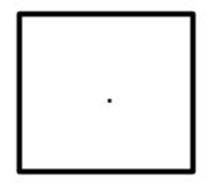
Instead, we are going to focus on the tricky question. Get a piece of paper and draw an artist’s reverent representation of a wholly simple, immutable God. I prefer a single small dot, since I don’t know how to draw infinite actuality and love, but let your imagination be your guide. Put a square around that representation. Now, get a theological buzzer. Hover your hand over the buzzer. If Aquinas or Pat or I say something that requires anything *inside* that box to differ, hit the buzzer. All differing, on the view we want to give, will be outside the box:
[](https://substackcdn.com/image/fetch/$s_!TQhj!,f_auto,q_auto:good,fl_progressive:steep/https%3A%2F%2Fsubstack-post-media.s3.amazonaws.com%2Fpublic%2Fimages%2Fdd2c56cf-6538-486e-b7c4-bc225d236d43_219x195.png)
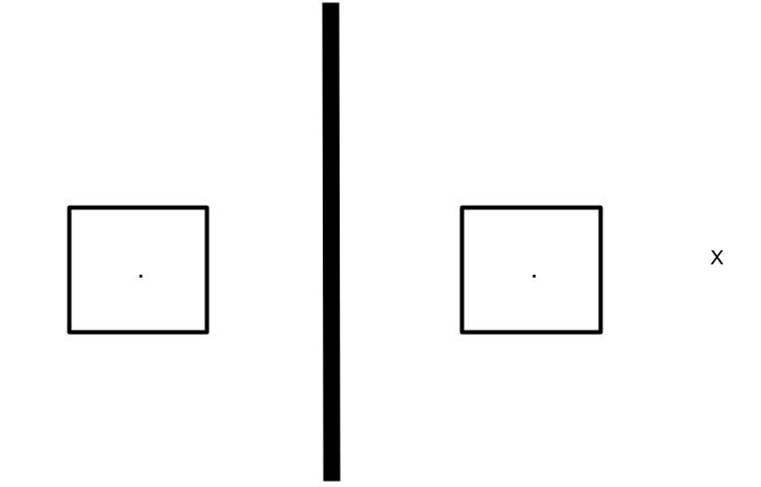
Now, given this set up, how do we explain God’s free choice to create, which is also part of the traditional view of God? God is exactly the same simple being whether he creates or not. What’s inside the box is the same, whether there’s more stuff added to the page outside of it or not.
[](https://substackcdn.com/image/fetch/$s_!Y3BC!,f_auto,q_auto:good,fl_progressive:steep/https%3A%2F%2Fsubstack-post-media.s3.amazonaws.com%2Fpublic%2Fimages%2F0cf9d2f5-af99-4b0c-9700-f5c99abf4417_761x487.png)
Whether existence is like the left side, where it is just God, or like the right side, where there’s God and some created x, all the stuff within the box is exactly the same. How can that be?
A few questions present themselves. What is the **origin story** of his creating? How does that stuff get there? And what explains God’s **motivation** to create, given that he might not have created and yet still been exactly the same? Since we know that he actually does create, and we know, given simplicity, that he couldn’t be otherwise than he is, how could it be contingent that he creates?
I’d like to offer a recommendation that I think would be helpful in thinking through this line of reasoning, then show how that recommendation plays out here.
## The Recommendation
This is a general recommendation. I find it helps me see if I’ve got a good question on my hands.
Write out your main question in a paragraph. Then write two answers that you would find satisfactory *prescinding from the issues that you think cause the bind*. In this case, those are the traditional attributes of God. If you weren’t bound by divine simplicity, eternity, and immutability, how would *you* answer the Tricky Question in a manner that satisfies you.
Next, try to push parody arguments against these two solutions, where you run analogous worries to the ones that cause you concern for the initial view under fire. That is, test the allegedly satisfactory answers against the problems you previously saw, to make sure that the allegedly satisfactory answers really answer the questions at hand. It is embarrassing to have a clever conversational partner point out that you are knee-deep in the very quicksand you pointed out around his ankles.
And what if you are? What if you and he both run afoul to the very same sorts of difficulties? Maybe you are both bringing a treacherous assumption. Maybe, in this case, contingency in the world is the problem, the poolslide to the quicksand. But it could be that you’ve got a defective question, too. After all, if even *the objector* doesn’t know what would count as a good answer, or he knows the conditions but has never seen *anyone* or any theory satisfy them (even his own), I wonder whether what we have here is a good line of questioning. Even if it is a good line of questioning, it isn’t going to be particularly telling in a contrastive judgment between contenders if our own theory joins the rest in failure. The score, in that case, would be -1 all around. We’d all be neck deep.
My hypothesis in this case is that you’ll find that the alternative solutions don’t really get around the main problem after all.
## The Alternative Solutions
By way of example, consider an attempted solution to the question of how we explain the contingency of God’s creative choice. Let’s consider a solution that says that God has intrinsic contingent features, call them *accidents*, and that it is *those* that play a role in answering the question (what role they play depends on how you express the question that is confusticating you). If God can have accidents, the allegedly satisfactory response says, then we can explain how a necessary God only contingently creates.
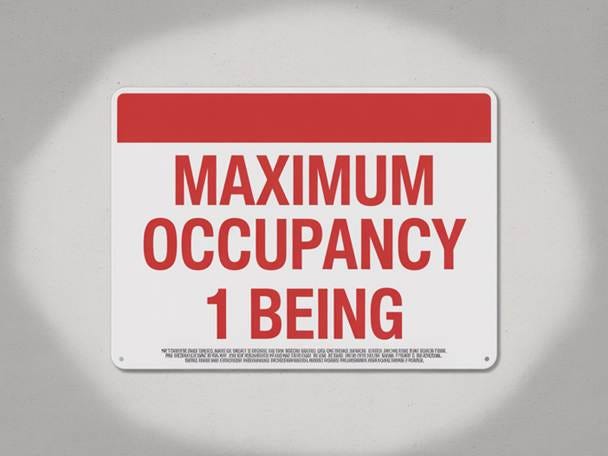
On such a view, you’ve got a few more things in the box, of course, but then the proponent of the alternative solution, that scofflaw, doesn’t accept the occupancy limitations that the fire marshal set for the box.
[](https://substackcdn.com/image/fetch/$s_!gXwJ!,f_auto,q_auto:good,fl_progressive:steep/https%3A%2F%2Fsubstack-post-media.s3.amazonaws.com%2Fpublic%2Fimages%2Fea5020a1-c86e-442f-9f6d-37ee4a53b3a2_608x456.png)
Is such a solution really any better equipped to answer the Tricky Question? Let’s ask some questions parallel to the questions we ask of the traditional view. Ask, for instance, the **origin story** of those accidents. They are contingent – after all, we are trying to explain how a contingent thing (creation) arises from a necessary cause (the simple God), and if a necessary accident were able to explain that contingency, we’d have no reason to posit an *additional* necessary thing beside the divine nature to do that work. So we aren’t using necessary accidents to explain contingent creation.
Since the accidents are contingent, they stand in need of some sort of explanation for why they are there. But then we haven’t yet explained the initial move from necessary creator to contingent thing. We’ve just moved their location from outside the box to within it. Indeed, we’ve *presupposed* an initial bit of contingent things to explain contingent things! Not a particularly winsome beginning.
I suspect that you’ll find that other allegedly better solutions fall prey to similar worries. To name just a few other routes of objection to such views that involve contingent doodads *in God* (somehow) to explain contingent creation:
> 1\. There’s a regress worry of how the first thing that didn’t need a previous contingent doodad to explain the step from necessity to contingency is **caused to be**. For instance, the opponent says that God has an accident in virtue of which he creates in this world, but he has a different accident in other possible situations, and that accident isn’t itself explained by God’s having a previous contingent accident. (If it were explained by a prior contingency, it wouldn’t be “the first thing that didn’t need a previous contingent doodad…”). Once the opponent posits the step where a previous contingent thing is not needed to give rise to a contingent thing, the game is afoot to get him to show why the step must be a contingent thing inside God, in that box on your sheet, as an accident, and not with the contingent stuff *outside* of God and that box. “You’re saying that a necessary God can primarily cause a contingent *internal* state of his, this doodad, without recourse to any prior contingent thing, but cannot primarily cause a contingent *external* state, this horse or photon or whatever, without recourse to a prior contingent thing – why is that?”
>
> 2\. The worry of **divine** ***reason*** is pushed back a single step. The objector wanted to know why God in this world creates and in another does not. But now we have the same question about why he produces these contingent internal states of his, not those. Whatever story he gives, I’m ready to parody it with parallel maneuvers outside the box. Don’t you touch that buzzer\!
>
> 3\. There’s a worry of **divine power**, since the opponent might feel pushed into the corner of claiming that these contingent things are just there with God, darn it!, without being caused by God. God’s stuck with them, and they are contingent things *in God*.
This brute-existence-of-contingent-accidents-in-God view answers the question of divine reason – since that question presupposed that God had some minimal say in the existence of those the internal accidents, and he has no say on this view – but it constrains God’s activities arbitrarily. God’s just contingently stuck being extroverted in this world, so he created.
Question: Was he able, “prior to creation,” to kick these contingencies about himself out of existence? If he couldn’t, that seems like a lack of power. There’s a contingent way he is, completely internal to himself, which he has no control over. He might have been introverted, and he knows this, and he sees the different choices that he could have made had he been, but he lacks the power to bring the introversion about. And had he been introverted, he would have lacked the power to bring his possible extroversion about. On the other hand, if he could change his starting contingent set of accidents “prior to creating,” on this view,” then these doodads *don’t* explain why he created, as he could have kicked his contingent extrovertedness to the curb. Why didn’t he do that?
## Tying it All up in a Bow
So, adding more necessary things into the box is no help; if the questioner grants that a necessary thing can bring about a contingent thing, then Pat and Aquinas will help themselves to that claim, too, and say that the necessary thing in question is God, not some internal accident of God.
Moreover, adding contingent things into the box is of no help, since those things still need an origin story and an account of divine motivation. On those fronts, they seem just as problematic as contingent things outside the box are. The location of the contingency, whether in or out of the box, doesn’t help explain the contingency itself.
Finally, questions arise about the relation between God’s power and his contingent features. Is he arbitrarily stuck with the contingent internal features he has? If he is, what explains which he has, and how does that sit with his omnipotence? And if he isn’t stuck, if he can change them, then how do they explain the origin of contingency? Aren’t they too late to the contingency party to explain how contingency got into existence?
Next time, I turn to an analogy between human freedom and divine freedom in the hopes of de-trickifying the question at hand. Stay tuned\!
## About Dr. Timothy Pawl
[](https://substackcdn.com/image/fetch/$s_!kfHs!,f_auto,q_auto:good,fl_progressive:steep/https%3A%2F%2Fsubstack-post-media.s3.amazonaws.com%2Fpublic%2Fimages%2F48215a3f-726b-4fa8-a933-a5ccb7160af2_1984x2976.jpeg)
Timothy J. Pawl is Professor of Philosophy at the University of St. Thomas in St. Paul, Minnesota, and holds a Ph.D. from Saint Louis University in philosophy, with specializations in Thomistic philosophy, analytic theology, and virtue theory.
His books include *In Defense of Conciliar Christology* (Oxford, 2016), *In Defense of Extended Conciliar Christology* (Oxford, 2019), *The Incarnation* (Cambridge, 2020), and *Jesus and the Genome: The Intersection of Christology and Biology* (Cambridge, 2024; co-authored with Philosopher of Science, Dr. Michael Peterson, and Evolutionary Biologist, Dr. Ben Brammell). He co-edited *The Cambridge Companion to Christology* with Michael Peterson (Cambridge, 2025).
In addition, he has published over fifty academic articles or book chapters in his areas of expertise and given more than 140 academic or popular-level talks or interviews about his work, including a series of interviews for the PBS show *Closer to Truth*. He is the husband of another philosopher, Faith Glavey Pawl, with whom he writes a Substack, *Pawline Epistles*, and the proud father of one son and four daughters.
[1](https://journalofabsolutetruth.substack.com/p/a-necessary-simple-immutable-eternal#footnote-anchor-1-189724510)
What of the Trinity?! Check-to-the-mate, Aquinas! In reply, the persons are not bits or bobs or constituents or parts of God, so the Trinity is no counterexample to the traditional doctrine of divine simplicity. Also, come on, you think you can snag Aquinas in a contradiction just like that, between sips of coffee? He’s a pretty clever fellow. Even if you think his answer is eventually unsatisfactory, his theology of God isn’t immediately, blatantly idiotic. Give him more credit than that.
9
4
3
Share
| | |
|---|---|
| [](https://substack.com/@timpawl?utm_source=byline) | |
| | |
| [Tim Pawl](https://substack.com/@timpawl?utm_campaign=guest_post_bio&utm_medium=web)I am a Philosophy Professor, focusing on the intersections of metaphysics & theology and virtue theory & psychology. I am the husband of another philosopher and the proud father of one son and four daughters. We enjoy life in the Twin Cities. | [Subscribe to Tim](https://pawlineepistles.substack.com/subscribe) |
#### Discussion about this post
Comments
Restacks
[](https://substack.com/profile/26889972-zach-ryan?utm_source=comment)
[Zach Ryan](https://substack.com/profile/26889972-zach-ryan?utm_source=substack-feed-item)
[7h](https://journalofabsolutetruth.substack.com/p/a-necessary-simple-immutable-eternal/comment/222520414 "Mar 3, 2026, 7:08 PM")
Liked by Tim Pawl
To clarify, are you aiming to try and solve the problem while remaining within the “box” of classical theism?
[Reply]()
[Share]()
[1 reply](https://journalofabsolutetruth.substack.com/p/a-necessary-simple-immutable-eternal/comment/222520414)
[](https://substack.com/profile/265504993-mary-m?utm_source=comment)
[Mary M.](https://substack.com/profile/265504993-mary-m?utm_source=substack-feed-item)
[10h](https://journalofabsolutetruth.substack.com/p/a-necessary-simple-immutable-eternal/comment/222442388 "Mar 3, 2026, 4:34 PM")
Liked by Tim Pawl
Cliffhanger! Excited for your answer! 🤓
[Reply]()
[Share]()
[2 more comments...](https://journalofabsolutetruth.substack.com/p/a-necessary-simple-immutable-eternal/comments)
Top
Latest
Discussions
No posts
### Ready for more?
© 2026 Patrick Flynn · [Privacy](https://substack.com/privacy) ∙ [Terms](https://substack.com/tos) ∙ [Collection notice](https://substack.com/ccpa#personal-data-collected)
[Start your Substack](https://substack.com/signup?utm_source=substack&utm_medium=web&utm_content=footer)
[Get the app](https://substack.com/app/app-store-redirect?utm_campaign=app-marketing&utm_content=web-footer-button)
[Substack](https://substack.com/) is the home for great culture
This site requires JavaScript to run correctly. Please [turn on JavaScript](https://enable-javascript.com/) or unblock scripts |
| Readable Markdown | > ***Note from the editor:** The following is a guest post by Dr.* [Tim Pawl](https://open.substack.com/users/189375679-tim-pawl?utm_source=mentions).
>
> *If you’re interested in contributing to The Journal of Absolute Truth, please see our [contributor info page](https://journalofabsolutetruth.substack.com/p/get-paid-to-write-philosophy-submissions).*
>
> *\- Pat*
There’s a tricky question out there in Theology-land. Probably more than one. But today, I just want to consider one of them. It’s the question of the relation between God’s will and creation.
I intend to discuss this question in two posts. This post will consider the question, a recommendation for steering the dialectic, and a few thoughts in light of that recommendation. The next post, in about a week’s time, will draw an analogy between human freedom and divine freedom, arguing that what we say about humans with respect to free will gives us a ready answer to what we should say about this tricky question.
My thanks to Pat for hosting these two posts on [The Journal of Absolute Truth](https://journalofabsolutetruth.substack.com/). I think they might be a bit too “high octane” metaphysics to fit with the feel of [Pawline Epistles](https://pawlineepistles.substack.com/), but who knows. Maybe my readers will demand more of this and less of all that virtue stuff over there?
In any case, off we go\!
On the traditional view, one preferred both by Aquinas and our host here, God is wholly simple, eternal, and immutable. There’s no composition in God. No bits, bobs, doodads, accidents, etc., as constituent metaphysical parts of God.[1](https://journalofabsolutetruth.substack.com/p/a-necessary-simple-immutable-eternal#footnote-1-189724510) And God is outside of time, with no temporal “before” or “after.” And, closely related to those claims, God doesn’t change, doesn’t go from being one way to being another way. Indeed, *couldn’t* change across time *or* differ across different possible situations. Maybe you are thinking, “But what of the Christian doctrine of the Incarnation?” Great thought, dear reader! Here I’m referring only to the divine in Christ, not his human nature, which did change, was composite, was in time. How does that all work? I’m not going to write about it here. But believe me, I’ve thought a lot about it and [have](https://www.amazon.com/Defense-Conciliar-Christology-Philosophical-Analytic/dp/0198765924) [written](http://dx.doi.org/10.4324/9781003202172-19) [a](https://jat-ojs-baylor.tdl.org/jat/index.php/jat/article/view/jat.2014-1.190824150011a) [good](https://muse.jhu.edu/article/715124) [deal](https://philarchive.org/rec/PAWCCA) [on](https://academic.oup.com/book/32558/chapter-abstract/270342657?redirectedFrom=fulltext&login=false) [it](https://www.amazon.com/Defense-Extended-Conciliar-Christology-Philosophical/dp/0198834144).
Instead, we are going to focus on the tricky question. Get a piece of paper and draw an artist’s reverent representation of a wholly simple, immutable God. I prefer a single small dot, since I don’t know how to draw infinite actuality and love, but let your imagination be your guide. Put a square around that representation. Now, get a theological buzzer. Hover your hand over the buzzer. If Aquinas or Pat or I say something that requires anything *inside* that box to differ, hit the buzzer. All differing, on the view we want to give, will be outside the box:
[](https://substackcdn.com/image/fetch/$s_!TQhj!,f_auto,q_auto:good,fl_progressive:steep/https%3A%2F%2Fsubstack-post-media.s3.amazonaws.com%2Fpublic%2Fimages%2Fdd2c56cf-6538-486e-b7c4-bc225d236d43_219x195.png)
Now, given this set up, how do we explain God’s free choice to create, which is also part of the traditional view of God? God is exactly the same simple being whether he creates or not. What’s inside the box is the same, whether there’s more stuff added to the page outside of it or not.
[](https://substackcdn.com/image/fetch/$s_!Y3BC!,f_auto,q_auto:good,fl_progressive:steep/https%3A%2F%2Fsubstack-post-media.s3.amazonaws.com%2Fpublic%2Fimages%2F0cf9d2f5-af99-4b0c-9700-f5c99abf4417_761x487.png)
Whether existence is like the left side, where it is just God, or like the right side, where there’s God and some created x, all the stuff within the box is exactly the same. How can that be?
A few questions present themselves. What is the **origin story** of his creating? How does that stuff get there? And what explains God’s **motivation** to create, given that he might not have created and yet still been exactly the same? Since we know that he actually does create, and we know, given simplicity, that he couldn’t be otherwise than he is, how could it be contingent that he creates?
I’d like to offer a recommendation that I think would be helpful in thinking through this line of reasoning, then show how that recommendation plays out here.
This is a general recommendation. I find it helps me see if I’ve got a good question on my hands.
Write out your main question in a paragraph. Then write two answers that you would find satisfactory *prescinding from the issues that you think cause the bind*. In this case, those are the traditional attributes of God. If you weren’t bound by divine simplicity, eternity, and immutability, how would *you* answer the Tricky Question in a manner that satisfies you.
Next, try to push parody arguments against these two solutions, where you run analogous worries to the ones that cause you concern for the initial view under fire. That is, test the allegedly satisfactory answers against the problems you previously saw, to make sure that the allegedly satisfactory answers really answer the questions at hand. It is embarrassing to have a clever conversational partner point out that you are knee-deep in the very quicksand you pointed out around his ankles.
And what if you are? What if you and he both run afoul to the very same sorts of difficulties? Maybe you are both bringing a treacherous assumption. Maybe, in this case, contingency in the world is the problem, the poolslide to the quicksand. But it could be that you’ve got a defective question, too. After all, if even *the objector* doesn’t know what would count as a good answer, or he knows the conditions but has never seen *anyone* or any theory satisfy them (even his own), I wonder whether what we have here is a good line of questioning. Even if it is a good line of questioning, it isn’t going to be particularly telling in a contrastive judgment between contenders if our own theory joins the rest in failure. The score, in that case, would be -1 all around. We’d all be neck deep.
My hypothesis in this case is that you’ll find that the alternative solutions don’t really get around the main problem after all.
By way of example, consider an attempted solution to the question of how we explain the contingency of God’s creative choice. Let’s consider a solution that says that God has intrinsic contingent features, call them *accidents*, and that it is *those* that play a role in answering the question (what role they play depends on how you express the question that is confusticating you). If God can have accidents, the allegedly satisfactory response says, then we can explain how a necessary God only contingently creates.
On such a view, you’ve got a few more things in the box, of course, but then the proponent of the alternative solution, that scofflaw, doesn’t accept the occupancy limitations that the fire marshal set for the box.
[](https://substackcdn.com/image/fetch/$s_!gXwJ!,f_auto,q_auto:good,fl_progressive:steep/https%3A%2F%2Fsubstack-post-media.s3.amazonaws.com%2Fpublic%2Fimages%2Fea5020a1-c86e-442f-9f6d-37ee4a53b3a2_608x456.png)
Is such a solution really any better equipped to answer the Tricky Question? Let’s ask some questions parallel to the questions we ask of the traditional view. Ask, for instance, the **origin story** of those accidents. They are contingent – after all, we are trying to explain how a contingent thing (creation) arises from a necessary cause (the simple God), and if a necessary accident were able to explain that contingency, we’d have no reason to posit an *additional* necessary thing beside the divine nature to do that work. So we aren’t using necessary accidents to explain contingent creation.
Since the accidents are contingent, they stand in need of some sort of explanation for why they are there. But then we haven’t yet explained the initial move from necessary creator to contingent thing. We’ve just moved their location from outside the box to within it. Indeed, we’ve *presupposed* an initial bit of contingent things to explain contingent things! Not a particularly winsome beginning.
I suspect that you’ll find that other allegedly better solutions fall prey to similar worries. To name just a few other routes of objection to such views that involve contingent doodads *in God* (somehow) to explain contingent creation:
> 1\. There’s a regress worry of how the first thing that didn’t need a previous contingent doodad to explain the step from necessity to contingency is **caused to be**. For instance, the opponent says that God has an accident in virtue of which he creates in this world, but he has a different accident in other possible situations, and that accident isn’t itself explained by God’s having a previous contingent accident. (If it were explained by a prior contingency, it wouldn’t be “the first thing that didn’t need a previous contingent doodad…”). Once the opponent posits the step where a previous contingent thing is not needed to give rise to a contingent thing, the game is afoot to get him to show why the step must be a contingent thing inside God, in that box on your sheet, as an accident, and not with the contingent stuff *outside* of God and that box. “You’re saying that a necessary God can primarily cause a contingent *internal* state of his, this doodad, without recourse to any prior contingent thing, but cannot primarily cause a contingent *external* state, this horse or photon or whatever, without recourse to a prior contingent thing – why is that?”
>
> 2\. The worry of **divine** ***reason*** is pushed back a single step. The objector wanted to know why God in this world creates and in another does not. But now we have the same question about why he produces these contingent internal states of his, not those. Whatever story he gives, I’m ready to parody it with parallel maneuvers outside the box. Don’t you touch that buzzer\!
>
> 3\. There’s a worry of **divine power**, since the opponent might feel pushed into the corner of claiming that these contingent things are just there with God, darn it!, without being caused by God. God’s stuck with them, and they are contingent things *in God*.
This brute-existence-of-contingent-accidents-in-God view answers the question of divine reason – since that question presupposed that God had some minimal say in the existence of those the internal accidents, and he has no say on this view – but it constrains God’s activities arbitrarily. God’s just contingently stuck being extroverted in this world, so he created.
Question: Was he able, “prior to creation,” to kick these contingencies about himself out of existence? If he couldn’t, that seems like a lack of power. There’s a contingent way he is, completely internal to himself, which he has no control over. He might have been introverted, and he knows this, and he sees the different choices that he could have made had he been, but he lacks the power to bring the introversion about. And had he been introverted, he would have lacked the power to bring his possible extroversion about. On the other hand, if he could change his starting contingent set of accidents “prior to creating,” on this view,” then these doodads *don’t* explain why he created, as he could have kicked his contingent extrovertedness to the curb. Why didn’t he do that?
So, adding more necessary things into the box is no help; if the questioner grants that a necessary thing can bring about a contingent thing, then Pat and Aquinas will help themselves to that claim, too, and say that the necessary thing in question is God, not some internal accident of God.
Moreover, adding contingent things into the box is of no help, since those things still need an origin story and an account of divine motivation. On those fronts, they seem just as problematic as contingent things outside the box are. The location of the contingency, whether in or out of the box, doesn’t help explain the contingency itself.
Finally, questions arise about the relation between God’s power and his contingent features. Is he arbitrarily stuck with the contingent internal features he has? If he is, what explains which he has, and how does that sit with his omnipotence? And if he isn’t stuck, if he can change them, then how do they explain the origin of contingency? Aren’t they too late to the contingency party to explain how contingency got into existence?
Next time, I turn to an analogy between human freedom and divine freedom in the hopes of de-trickifying the question at hand. Stay tuned\!
[](https://substackcdn.com/image/fetch/$s_!kfHs!,f_auto,q_auto:good,fl_progressive:steep/https%3A%2F%2Fsubstack-post-media.s3.amazonaws.com%2Fpublic%2Fimages%2F48215a3f-726b-4fa8-a933-a5ccb7160af2_1984x2976.jpeg)
Timothy J. Pawl is Professor of Philosophy at the University of St. Thomas in St. Paul, Minnesota, and holds a Ph.D. from Saint Louis University in philosophy, with specializations in Thomistic philosophy, analytic theology, and virtue theory.
His books include *In Defense of Conciliar Christology* (Oxford, 2016), *In Defense of Extended Conciliar Christology* (Oxford, 2019), *The Incarnation* (Cambridge, 2020), and *Jesus and the Genome: The Intersection of Christology and Biology* (Cambridge, 2024; co-authored with Philosopher of Science, Dr. Michael Peterson, and Evolutionary Biologist, Dr. Ben Brammell). He co-edited *The Cambridge Companion to Christology* with Michael Peterson (Cambridge, 2025).
In addition, he has published over fifty academic articles or book chapters in his areas of expertise and given more than 140 academic or popular-level talks or interviews about his work, including a series of interviews for the PBS show *Closer to Truth*. He is the husband of another philosopher, Faith Glavey Pawl, with whom he writes a Substack, *Pawline Epistles*, and the proud father of one son and four daughters.
[1](https://journalofabsolutetruth.substack.com/p/a-necessary-simple-immutable-eternal#footnote-anchor-1-189724510)
What of the Trinity?! Check-to-the-mate, Aquinas! In reply, the persons are not bits or bobs or constituents or parts of God, so the Trinity is no counterexample to the traditional doctrine of divine simplicity. Also, come on, you think you can snag Aquinas in a contradiction just like that, between sips of coffee? He’s a pretty clever fellow. Even if you think his answer is eventually unsatisfactory, his theology of God isn’t immediately, blatantly idiotic. Give him more credit than that.
No posts |
| Shard | 76 (laksa) |
| Root Hash | 14862242593741677076 |
| Unparsed URL | com,substack!journalofabsolutetruth,/p/a-necessary-simple-immutable-eternal s443 |