ℹ️ Skipped - page is already crawled
| Filter | Status | Condition | Details |
|---|---|---|---|
| HTTP status | PASS | download_http_code = 200 | HTTP 200 |
| Age cutoff | PASS | download_stamp > now() - 6 MONTH | 0.1 months ago |
| History drop | PASS | isNull(history_drop_reason) | No drop reason |
| Spam/ban | PASS | fh_dont_index != 1 AND ml_spam_score = 0 | ml_spam_score=0 |
| Canonical | PASS | meta_canonical IS NULL OR = '' OR = src_unparsed | Not set |
| Property | Value |
|---|---|
| URL | https://intpolicydigest.org/the-brexit-reset-that-isn-t-resetting/ |
| Last Crawled | 2026-04-12 02:40:44 (1 day ago) |
| First Indexed | 2026-03-05 23:27:34 (1 month ago) |
| HTTP Status Code | 200 |
| Meta Title | The Brexit Reset That Isn’t Resetting |
| Meta Description | Ten years after Brexit, mounting geopolitical pressures are driving calls for the UK and EU to deepen cooperation and accelerate their stalled reset. |
| Meta Canonical | null |
| Boilerpipe Text | The world of 2026 bears little resemblance to the world of 2016, when the United Kingdom voted to leave the European Union.
In the years since, a succession of crises—ranging from a global pandemic and economic turbulence to multiple wars—has pushed
Brexit
down the political agenda. For many observers, Britain’s departure from the EU has been quietly consigned to the long grass of recent history.
Yet some argue that both the UK and the EU have failed to grasp how dramatically the global landscape has shifted since that referendum.
That perception has prompted calls in some quarters, including from members of the European Parliament, for the much-discussed EU–UK “reset” to be accelerated. The timing is hardly accidental: 2026 marks ten years since the United Kingdom voted to leave the bloc.
The anniversary has revived debate across Europe about whether the post-Brexit relationship remains fit for purpose.
The president of the European Parliament,
Roberta Metsola
, recently traveled to London for a high-profile visit widely interpreted as a signal that Brussels remains open to deepening cooperation.
The so-called “reset,” launched by the UK’s Labour government after taking office in July 2024, is broadly viewed as an attempt to stabilize and expand ties between the two sides. One of its principal goals is to reduce post-Brexit trade barriers while stopping short of returning Britain to the EU’s single market, customs union, or freedom of movement.
Instead, policymakers have focused on more targeted initiatives, including a veterinary agreement to smooth agricultural trade, closer security cooperation, and new arrangements for youth mobility.
In recent months, there have been some tangible steps toward restoring ties. Britain has rejoined the Erasmus student-exchange scheme and the Horizon research program—two flagship EU initiatives that symbolize the practical benefits of cooperation.
For some European lawmakers, however, these measures do not go far enough.
French MEP Sandro Gozi, co-chair of the EU–UK Parliamentary Partnership Assembly, has urged both sides to intensify their efforts.
“Brexit meant Brexit,” said the Renew Europe lawmaker, “but ten years is a long time in politics, and the geopolitical landscape has changed beyond recognition. It is time for the UK government to recognize that the EU is Britain’s closest ally and its strongest partner for sustainable economic growth in this new world order.”
In Gozi’s view, progress toward repairing relations has been too slow.
“The EU–UK reset must now be supercharged,” he said.
His assessment is echoed, at least in part, by Irish MEP Barry Cowen, a member of the European Parliament’s delegation for relations with the United Kingdom and shadow rapporteur on Parliament’s report examining implementation of the EU–UK Trade and Cooperation Agreement.
Cowen, also a member of Renew Europe, argues that the reset must match the scale of the geopolitical challenges facing Europe as a whole.
“Ireland, Europe, and the UK all stand to benefit from greater ambition and from reducing trade barriers that remain unnecessarily high,” he said.
“Ten years after the Brexit decision, the British people increasingly want a closer relationship with Europe. It is time to supercharge the reset.”
To gauge how relations might evolve in the coming years, I spoke with several senior former British members of the European Parliament.
Edward McMillan-Scott, a former vice-president of the European Parliament, points to recent polling by YouGov showing that 54 percent of Britons surveyed now favor a closer relationship with the EU, compared with 34 percent who oppose it.
“And remember,” McMillan-Scott said, “this is against a background in which 58 percent say Britain was wrong to leave the EU, while only 30 percent disagree.”
Pat Cox, a former MEP and president of the European Parliament, likewise believes the geopolitical environment has shifted dramatically since Brexit.
“There has been a dramatic change in geopolitical realities,” he said, invoking the economist John Maynard Keynes: “When the facts change, I change my mind.”
“The time has come,” Cox added, “to confront the new realities and act accordingly.”
Further commentary came from Lord Richard Balfe, a member of the UK House of Lords. He argues that a British political party willing to endorse a second referendum reversing the 2016 vote could attract significant support.
“If one of our political parties in the UK is prepared at the next election to endorse another referendum to reverse the 2016 vote,” he said, “they would receive a huge amount of support from the sort of Middle England that lives around Cambridge, where I live, and across the rest of the Home Counties.”
If either Labour or the Conservatives were to take such a step, Balfe suggested, the move could reshape Britain’s political landscape.
“They could once again make the Liberal Democrats the party of aspirant Middle England and the main opposition,” he said.
Former UK Europe Minister Denis MacShane also believes the current moment demands bolder leadership.
Britain, he notes, now faces the highest level of youth unemployment in Europe, while economic growth lags behind countries such as Spain and Poland.
“That surely shows the time has come for stronger leadership from both sides,” he said.
MacShane, who served as a government minister under Tony Blair, offered a particularly colorful metaphor to describe the current state of EU–UK relations.
“Right now, London and Brussels look like two elephants side by side in the same bed but with no idea how to have sex.”
In his view, public opinion in Britain is steadily shifting.
“Every opinion poll in the UK shows that a growing majority now sees the Boris Johnson–Nigel Farage Brexit adventure—funded and supported by Vladimir Putin—as a disastrous wrong turning for the country,” he said.
Prime Minister Sir Keir Starmer, MacShane added, is widely known for his cautious approach to politics.
“He is famous for being an ultra-cautious, one-step-at-a-time lawyer,” MacShane said.
“But in politics, lawyerly caution sometimes needs to be replaced by leadership.”
The debate over the future of EU–UK relations is also the focus of a new joint policy paper produced by the Centre for European Reform and the Konrad-Adenauer-Stiftung UK and Ireland.
The paper poses a pointed question: Will 2026 be the year to “reset the reset”?
Its authors argue that the EU and the UK must undertake a fundamental rethink of how they cooperate in an increasingly unstable global environment.
Ian Bond, deputy director of the Brussels-based Centre for European Reform and author of the paper, says the geopolitical context surrounding Brexit has changed dramatically.
“Since the UK voted for Brexit, Europeans have had to deal with Russia’s war against Ukraine, Donald Trump’s aggressive trade policy and threats to annex Greenland, and China’s willingness to use its near-monopoly on critical minerals to pressure other countries,” Bond said.
“In turbulent times, both the EU and the UK would benefit from overcoming the lack of trust that the Brexit process created.”
According to Bond, cooperation between London and Brussels should focus particularly on shared economic and security interests, including strengthening European strategic autonomy.
The policy brief—produced as part of a three-paper project titled “Navigating Stormy Waters: UK–EU Cooperation in a Shifting Global Landscape”—draws on a detailed assessment of progress following the first–ever EU–UK summit, held in May 2025.
That meeting appeared, at the time, to signal a new chapter in relations.
At the summit, European Commission President Ursula von der Leyen described the EU and the UK as “historical and natural partners standing side by side on the global stage, facing the same challenges, pursuing the same objectives, like-minded and sharing the same values.”
Yet eight months later, the report concludes, momentum has faded.
Part of the slowdown, the authors argue, stems from the British government’s reluctance during much of 2025 to confront eurosceptic voices in the media and political opposition.
“Labour in 2025 remained disappointingly willing to tolerate the well-documented economic damage caused by being outside the EU,” the paper states.
But the EU, the report notes, also bears responsibility.
“There is still a sense among EU officials and member states that the UK should be made to pay a price for Brexit.”
That sentiment surfaced during negotiations over Britain’s participation in the EU’s Security Action for Europe program, which aims to promote joint procurement of weapons and munitions for European defense.
Talks stalled after the EU demanded a large upfront financial contribution from the UK.
The May 2025 summit produced a “Common Understanding” outlining twenty areas of cooperation and numerous additional topics. Yet even initiatives that appeared straightforward—such as collaboration on international development assistance or health security—have proved difficult to implement.
There have been a few notable successes. Britain is set to rejoin the Erasmus+ program for educational and training exchanges, at least temporarily.
But overall, the policy paper suggests, progress has been slower than many hoped.
The broader geopolitical environment may ultimately force closer cooperation.
The authors argue that the UK–U.S. special relationship has been significantly damaged and that the rules-based international order has, in many respects, begun to disintegrate.
Against that backdrop, the EU and the UK must rethink how they can strengthen both security and prosperity through deeper collaboration.
“President Trump’s behavior is likely to be one of the forces shaping the EU–UK relationship in 2026,” the paper warns.
Neither side, it argues, has fully grasped the scale of the emerging threats.
“The UK is clinging to a special relationship with the United States that has been gravely, perhaps irreparably, damaged,” the report states.
At the same time, Europe risks geopolitical marginalization if it fails to coordinate more closely.
“Europe as a whole needs to work together more closely if it does not want to be reduced to a group of vassals of one or another great power.”
For the authors, the implication is clear.
If the first reset has stalled, then 2026 may need to become the year that Europe resets the reset.
If you're interested in writing for International Policy Digest - please send us an email via
submissions@intpolicydigest.org |
| Markdown | - [About Us](https://intpolicydigest.org/about-us/)
- [Write for Us](https://intpolicydigest.org/write-for-us/)
- [Contact Us](https://intpolicydigest.org/contact-us/)
- [Support Us](https://intpolicydigest.org/support-us/)
- [Advertise](https://intpolicydigest.org/advertise/)
- [Newsletter](https://intpolicydigest.org/newsletter/)
# [INTERNATIONAL POLICY DIGEST](https://intpolicydigest.org/)
- [World](https://intpolicydigest.org/world/)
- [Politics](https://intpolicydigest.org/politics/)
- [U.S. News](https://intpolicydigest.org/u-s-news/)
- [Entertainment](https://intpolicydigest.org/entertainment/)
- [Tech](https://intpolicydigest.org/tech/)
- [Media](https://intpolicydigest.org/media/)
- [Books](https://intpolicydigest.org/books/)
- [The Platform](https://intpolicydigest.org/the-platform/)
[INTERNATIONAL POLICY DIGEST](https://intpolicydigest.org/)
- [World](https://intpolicydigest.org/world/)
- [Politics](https://intpolicydigest.org/politics/)
- [U.S. News](https://intpolicydigest.org/u-s-news/)
- [Entertainment](https://intpolicydigest.org/entertainment/)
- [Tech](https://intpolicydigest.org/tech/)
- [Media](https://intpolicydigest.org/media/)
- [Books](https://intpolicydigest.org/books/)
- [The Platform](https://intpolicydigest.org/the-platform/)
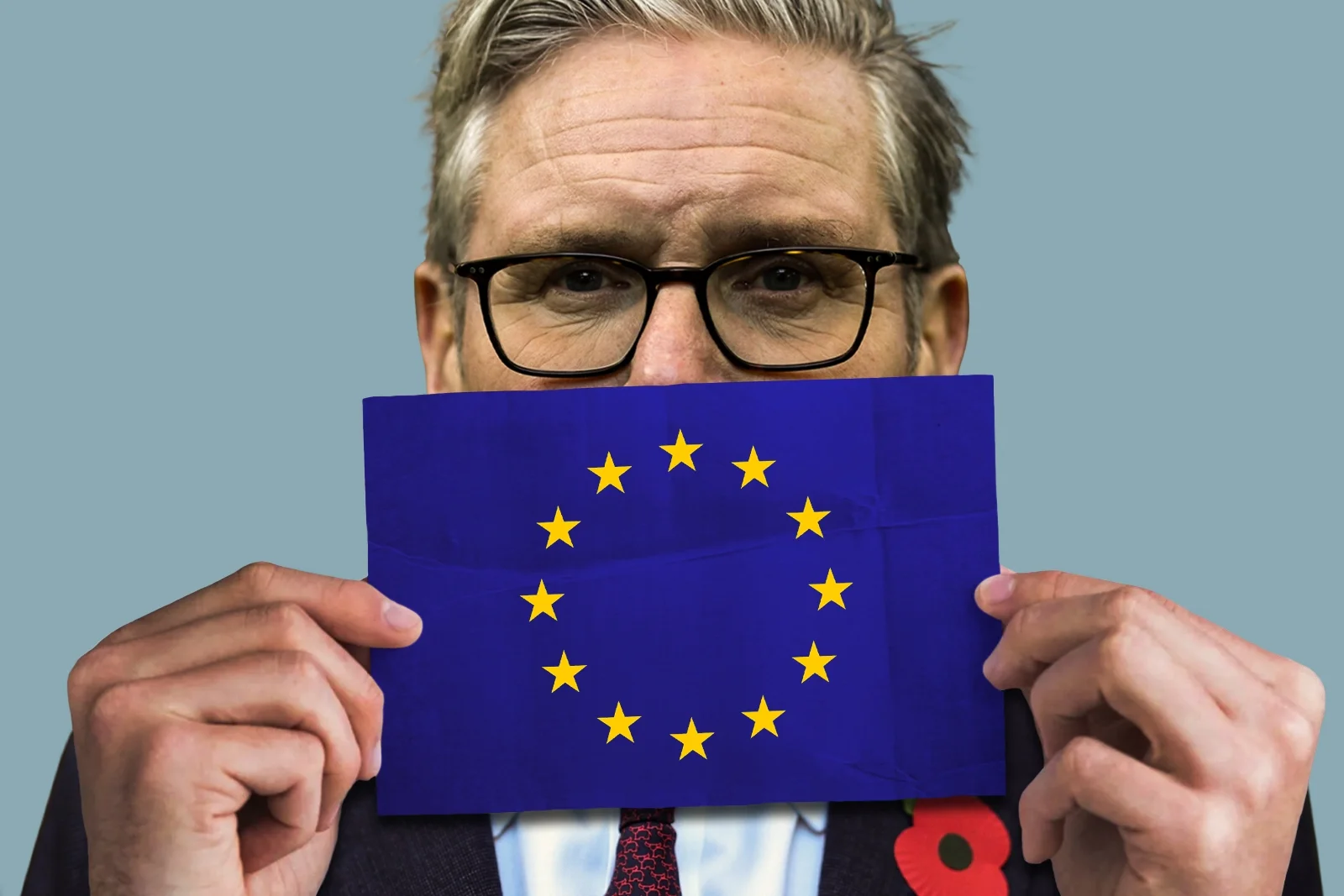
*Photo illustration by John Lyman*
#### [World News](https://intpolicydigest.org/world)
/
March 5, 2026

[Martin Banks](https://intpolicydigest.org/author/martin-banks/ "Posts by Martin Banks")
# The Brexit Reset That Isn’t Resetting
[Share on Facebook](https://intpolicydigest.org/the-brexit-reset-that-isn-t-resetting/ "Share on Facebook")
[Tweet](https://intpolicydigest.org/the-brexit-reset-that-isn-t-resetting/ "Tweet")
[Share on LinkedIn](https://intpolicydigest.org/the-brexit-reset-that-isn-t-resetting/ "Share on LinkedIn")
[Share this article by email](mailto:?subject=The%20Brexit%20Reset%20That%20Isn%E2%80%99t%20Resetting&body=https%3A%2F%2Fintpolicydigest.org%2Fthe-brexit-reset-that-isn-t-resetting%2F "Share this article by email")
The world of 2026 bears little resemblance to the world of 2016, when the United Kingdom voted to leave the European Union.
In the years since, a succession of crises—ranging from a global pandemic and economic turbulence to multiple wars—has pushed [Brexit](https://intpolicydigest.org/nearly-nine-years-on-brexit-still-feels-like-a-misstep/) down the political agenda. For many observers, Britain’s departure from the EU has been quietly consigned to the long grass of recent history.
Yet some argue that both the UK and the EU have failed to grasp how dramatically the global landscape has shifted since that referendum.
That perception has prompted calls in some quarters, including from members of the European Parliament, for the much-discussed EU–UK “reset” to be accelerated. The timing is hardly accidental: 2026 marks ten years since the United Kingdom voted to leave the bloc.
The anniversary has revived debate across Europe about whether the post-Brexit relationship remains fit for purpose.
The president of the European Parliament, [Roberta Metsola](https://intpolicydigest.org/brussels-gears-up-for-its-most-important-elections-yet/), recently traveled to London for a high-profile visit widely interpreted as a signal that Brussels remains open to deepening cooperation.
The so-called “reset,” launched by the UK’s Labour government after taking office in July 2024, is broadly viewed as an attempt to stabilize and expand ties between the two sides. One of its principal goals is to reduce post-Brexit trade barriers while stopping short of returning Britain to the EU’s single market, customs union, or freedom of movement.
Instead, policymakers have focused on more targeted initiatives, including a veterinary agreement to smooth agricultural trade, closer security cooperation, and new arrangements for youth mobility.
In recent months, there have been some tangible steps toward restoring ties. Britain has rejoined the Erasmus student-exchange scheme and the Horizon research program—two flagship EU initiatives that symbolize the practical benefits of cooperation.
For some European lawmakers, however, these measures do not go far enough.
French MEP Sandro Gozi, co-chair of the EU–UK Parliamentary Partnership Assembly, has urged both sides to intensify their efforts.
“Brexit meant Brexit,” said the Renew Europe lawmaker, “but ten years is a long time in politics, and the geopolitical landscape has changed beyond recognition. It is time for the UK government to recognize that the EU is Britain’s closest ally and its strongest partner for sustainable economic growth in this new world order.”
In Gozi’s view, progress toward repairing relations has been too slow.
“The EU–UK reset must now be supercharged,” he said.
His assessment is echoed, at least in part, by Irish MEP Barry Cowen, a member of the European Parliament’s delegation for relations with the United Kingdom and shadow rapporteur on Parliament’s report examining implementation of the EU–UK Trade and Cooperation Agreement.
Cowen, also a member of Renew Europe, argues that the reset must match the scale of the geopolitical challenges facing Europe as a whole.
“Ireland, Europe, and the UK all stand to benefit from greater ambition and from reducing trade barriers that remain unnecessarily high,” he said.
“Ten years after the Brexit decision, the British people increasingly want a closer relationship with Europe. It is time to supercharge the reset.”
To gauge how relations might evolve in the coming years, I spoke with several senior former British members of the European Parliament.
Edward McMillan-Scott, a former vice-president of the European Parliament, points to recent polling by YouGov showing that 54 percent of Britons surveyed now favor a closer relationship with the EU, compared with 34 percent who oppose it.
“And remember,” McMillan-Scott said, “this is against a background in which 58 percent say Britain was wrong to leave the EU, while only 30 percent disagree.”
Pat Cox, a former MEP and president of the European Parliament, likewise believes the geopolitical environment has shifted dramatically since Brexit.
“There has been a dramatic change in geopolitical realities,” he said, invoking the economist John Maynard Keynes: “When the facts change, I change my mind.”
“The time has come,” Cox added, “to confront the new realities and act accordingly.”
Further commentary came from Lord Richard Balfe, a member of the UK House of Lords. He argues that a British political party willing to endorse a second referendum reversing the 2016 vote could attract significant support.
“If one of our political parties in the UK is prepared at the next election to endorse another referendum to reverse the 2016 vote,” he said, “they would receive a huge amount of support from the sort of Middle England that lives around Cambridge, where I live, and across the rest of the Home Counties.”
If either Labour or the Conservatives were to take such a step, Balfe suggested, the move could reshape Britain’s political landscape.
“They could once again make the Liberal Democrats the party of aspirant Middle England and the main opposition,” he said.
Former UK Europe Minister Denis MacShane also believes the current moment demands bolder leadership.
Britain, he notes, now faces the highest level of youth unemployment in Europe, while economic growth lags behind countries such as Spain and Poland.
“That surely shows the time has come for stronger leadership from both sides,” he said.
MacShane, who served as a government minister under Tony Blair, offered a particularly colorful metaphor to describe the current state of EU–UK relations.
“Right now, London and Brussels look like two elephants side by side in the same bed but with no idea how to have sex.”
In his view, public opinion in Britain is steadily shifting.
“Every opinion poll in the UK shows that a growing majority now sees the Boris Johnson–Nigel Farage Brexit adventure—funded and supported by Vladimir Putin—as a disastrous wrong turning for the country,” he said.
Prime Minister Sir Keir Starmer, MacShane added, is widely known for his cautious approach to politics.
“He is famous for being an ultra-cautious, one-step-at-a-time lawyer,” MacShane said.
“But in politics, lawyerly caution sometimes needs to be replaced by leadership.”
The debate over the future of EU–UK relations is also the focus of a new joint policy paper produced by the Centre for European Reform and the Konrad-Adenauer-Stiftung UK and Ireland.
The paper poses a pointed question: Will 2026 be the year to “reset the reset”?
Its authors argue that the EU and the UK must undertake a fundamental rethink of how they cooperate in an increasingly unstable global environment.
Ian Bond, deputy director of the Brussels-based Centre for European Reform and author of the paper, says the geopolitical context surrounding Brexit has changed dramatically.
“Since the UK voted for Brexit, Europeans have had to deal with Russia’s war against Ukraine, Donald Trump’s aggressive trade policy and threats to annex Greenland, and China’s willingness to use its near-monopoly on critical minerals to pressure other countries,” Bond said.
“In turbulent times, both the EU and the UK would benefit from overcoming the lack of trust that the Brexit process created.”
According to Bond, cooperation between London and Brussels should focus particularly on shared economic and security interests, including strengthening European strategic autonomy.
The policy brief—produced as part of a three-paper project titled “Navigating Stormy Waters: UK–EU Cooperation in a Shifting Global Landscape”—draws on a detailed assessment of progress following the first–ever EU–UK summit, held in May 2025.
That meeting appeared, at the time, to signal a new chapter in relations.
At the summit, European Commission President Ursula von der Leyen described the EU and the UK as “historical and natural partners standing side by side on the global stage, facing the same challenges, pursuing the same objectives, like-minded and sharing the same values.”
Yet eight months later, the report concludes, momentum has faded.
Part of the slowdown, the authors argue, stems from the British government’s reluctance during much of 2025 to confront eurosceptic voices in the media and political opposition.
“Labour in 2025 remained disappointingly willing to tolerate the well-documented economic damage caused by being outside the EU,” the paper states.
But the EU, the report notes, also bears responsibility.
“There is still a sense among EU officials and member states that the UK should be made to pay a price for Brexit.”
That sentiment surfaced during negotiations over Britain’s participation in the EU’s Security Action for Europe program, which aims to promote joint procurement of weapons and munitions for European defense.
Talks stalled after the EU demanded a large upfront financial contribution from the UK.
The May 2025 summit produced a “Common Understanding” outlining twenty areas of cooperation and numerous additional topics. Yet even initiatives that appeared straightforward—such as collaboration on international development assistance or health security—have proved difficult to implement.
There have been a few notable successes. Britain is set to rejoin the Erasmus+ program for educational and training exchanges, at least temporarily.
But overall, the policy paper suggests, progress has been slower than many hoped.
The broader geopolitical environment may ultimately force closer cooperation.
The authors argue that the UK–U.S. special relationship has been significantly damaged and that the rules-based international order has, in many respects, begun to disintegrate.
Against that backdrop, the EU and the UK must rethink how they can strengthen both security and prosperity through deeper collaboration.
“President Trump’s behavior is likely to be one of the forces shaping the EU–UK relationship in 2026,” the paper warns.
Neither side, it argues, has fully grasped the scale of the emerging threats.
“The UK is clinging to a special relationship with the United States that has been gravely, perhaps irreparably, damaged,” the report states.
At the same time, Europe risks geopolitical marginalization if it fails to coordinate more closely.
“Europe as a whole needs to work together more closely if it does not want to be reduced to a group of vassals of one or another great power.”
For the authors, the implication is clear.
If the first reset has stalled, then 2026 may need to become the year that Europe resets the reset.
If you're interested in writing for International Policy Digest - please send us an email via [submissions@intpolicydigest.org](mailto:submissions@intpolicydigest.org)
[Share on Facebook](https://intpolicydigest.org/the-brexit-reset-that-isn-t-resetting/ "Share on Facebook")
[Tweet](https://intpolicydigest.org/the-brexit-reset-that-isn-t-resetting/ "Tweet")
[Share on LinkedIn](https://intpolicydigest.org/the-brexit-reset-that-isn-t-resetting/ "Share on LinkedIn")
[Share this article by email](mailto:?subject=The%20Brexit%20Reset%20That%20Isn%E2%80%99t%20Resetting&body=https%3A%2F%2Fintpolicydigest.org%2Fthe-brexit-reset-that-isn-t-resetting%2F "Share this article by email")
Read Next Latest Article
## Latest Articles
### 1
[Ceasefire Exemptions and Quarries of Death: Israel’s War on Lebanon](https://intpolicydigest.org/ceasefire-exemptions-and-quarries-of-death-israel-s-war-on-lebanon/)
by [Binoy Kampmark](https://intpolicydigest.org/author/binoy-kampmark/ "Posts by Binoy Kampmark")
### 2
[Iran’s Resistance Endures, Even as the World Looks Away](https://intpolicydigest.org/iran-s-resistance-endures-even-as-the-world-looks-away/)
by [Struan Stevenson](https://intpolicydigest.org/author/struan-stevenson/ "Posts by Struan Stevenson")
### 3
[Gypsy Punk’s Reckoning with War, Identity, and Russia](https://intpolicydigest.org/gypsy-punk-s-reckoning-with-war-identity-and-russia/)
by [Kacper Grass](https://intpolicydigest.org/author/kacper-grass/ "Posts by Kacper Grass")
### 4
[The Limits of Normalization in the Middle East](https://intpolicydigest.org/the-limits-of-normalization-in-the-middle-east/)
by [Hande Ortay](https://intpolicydigest.org/author/hande-ortay/ "Posts by Hande Ortay")
### 5
[Trump, Hegseth and the Language of War Crimes](https://intpolicydigest.org/trump-hegseth-and-the-language-of-war-crimes/)
by [Binoy Kampmark](https://intpolicydigest.org/author/binoy-kampmark/ "Posts by Binoy Kampmark")
- [Home](https://intpolicydigest.org/)
- [About Us](https://intpolicydigest.org/about-us/)
- [Write for Us](https://intpolicydigest.org/write-for-us/)
- [Contact Us](https://intpolicydigest.org/contact-us/)
- [Advertise](https://intpolicydigest.org/advertise/)
- [Newsletter](https://intpolicydigest.org/newsletter/)
- [Disclaimer](https://intpolicydigest.org/disclaimer/)
- [Cookie Policy](https://intpolicydigest.org/cookie-policy/)
- [Privacy Policy](https://intpolicydigest.org/privacy-policy/)
- [\#](https://intpolicydigest.org/wp-content/uploads/2025/09/4160556364823.jpg)
© 2026 Int Policy Digest LLC
We are using cookies to give you the best experience on our website.
You can find out more about which cookies we are using or switch them off in settings.
Close GDPR Cookie Banner
Accept
Reject
Settings
Close GDPR Cookie Banner
[](https://get.surfshark.net/aff_c?offer_id=1278&aff_id=44546&aff_sub=banner)
Close GDPR Cookie Settings
- Privacy Overview
- Strictly Necessary Cookies
- Cookie Policy
Privacy Overview

This website uses cookies so that we can provide you with the best user experience possible. Cookie information is stored in your browser and performs functions such as recognising you when you return to our website and helping our team to understand which sections of the website you find most interesting and useful.
Strictly Necessary Cookies
Strictly Necessary Cookie should be enabled at all times so that we can save your preferences for cookie settings.
Enable or Disable Cookies
Enabled Disabled
Cookie Policy
More information about our [Cookie Policy](https://intpolicydigest.org/privacy-policy/)
Enable All
Save Changes |
| Readable Markdown | The world of 2026 bears little resemblance to the world of 2016, when the United Kingdom voted to leave the European Union.
In the years since, a succession of crises—ranging from a global pandemic and economic turbulence to multiple wars—has pushed [Brexit](https://intpolicydigest.org/nearly-nine-years-on-brexit-still-feels-like-a-misstep/) down the political agenda. For many observers, Britain’s departure from the EU has been quietly consigned to the long grass of recent history.
Yet some argue that both the UK and the EU have failed to grasp how dramatically the global landscape has shifted since that referendum.
That perception has prompted calls in some quarters, including from members of the European Parliament, for the much-discussed EU–UK “reset” to be accelerated. The timing is hardly accidental: 2026 marks ten years since the United Kingdom voted to leave the bloc.
The anniversary has revived debate across Europe about whether the post-Brexit relationship remains fit for purpose.
The president of the European Parliament, [Roberta Metsola](https://intpolicydigest.org/brussels-gears-up-for-its-most-important-elections-yet/), recently traveled to London for a high-profile visit widely interpreted as a signal that Brussels remains open to deepening cooperation.
The so-called “reset,” launched by the UK’s Labour government after taking office in July 2024, is broadly viewed as an attempt to stabilize and expand ties between the two sides. One of its principal goals is to reduce post-Brexit trade barriers while stopping short of returning Britain to the EU’s single market, customs union, or freedom of movement.
Instead, policymakers have focused on more targeted initiatives, including a veterinary agreement to smooth agricultural trade, closer security cooperation, and new arrangements for youth mobility.
In recent months, there have been some tangible steps toward restoring ties. Britain has rejoined the Erasmus student-exchange scheme and the Horizon research program—two flagship EU initiatives that symbolize the practical benefits of cooperation.
For some European lawmakers, however, these measures do not go far enough.
French MEP Sandro Gozi, co-chair of the EU–UK Parliamentary Partnership Assembly, has urged both sides to intensify their efforts.
“Brexit meant Brexit,” said the Renew Europe lawmaker, “but ten years is a long time in politics, and the geopolitical landscape has changed beyond recognition. It is time for the UK government to recognize that the EU is Britain’s closest ally and its strongest partner for sustainable economic growth in this new world order.”
In Gozi’s view, progress toward repairing relations has been too slow.
“The EU–UK reset must now be supercharged,” he said.
His assessment is echoed, at least in part, by Irish MEP Barry Cowen, a member of the European Parliament’s delegation for relations with the United Kingdom and shadow rapporteur on Parliament’s report examining implementation of the EU–UK Trade and Cooperation Agreement.
Cowen, also a member of Renew Europe, argues that the reset must match the scale of the geopolitical challenges facing Europe as a whole.
“Ireland, Europe, and the UK all stand to benefit from greater ambition and from reducing trade barriers that remain unnecessarily high,” he said.
“Ten years after the Brexit decision, the British people increasingly want a closer relationship with Europe. It is time to supercharge the reset.”
To gauge how relations might evolve in the coming years, I spoke with several senior former British members of the European Parliament.
Edward McMillan-Scott, a former vice-president of the European Parliament, points to recent polling by YouGov showing that 54 percent of Britons surveyed now favor a closer relationship with the EU, compared with 34 percent who oppose it.
“And remember,” McMillan-Scott said, “this is against a background in which 58 percent say Britain was wrong to leave the EU, while only 30 percent disagree.”
Pat Cox, a former MEP and president of the European Parliament, likewise believes the geopolitical environment has shifted dramatically since Brexit.
“There has been a dramatic change in geopolitical realities,” he said, invoking the economist John Maynard Keynes: “When the facts change, I change my mind.”
“The time has come,” Cox added, “to confront the new realities and act accordingly.”
Further commentary came from Lord Richard Balfe, a member of the UK House of Lords. He argues that a British political party willing to endorse a second referendum reversing the 2016 vote could attract significant support.
“If one of our political parties in the UK is prepared at the next election to endorse another referendum to reverse the 2016 vote,” he said, “they would receive a huge amount of support from the sort of Middle England that lives around Cambridge, where I live, and across the rest of the Home Counties.”
If either Labour or the Conservatives were to take such a step, Balfe suggested, the move could reshape Britain’s political landscape.
“They could once again make the Liberal Democrats the party of aspirant Middle England and the main opposition,” he said.
Former UK Europe Minister Denis MacShane also believes the current moment demands bolder leadership.
Britain, he notes, now faces the highest level of youth unemployment in Europe, while economic growth lags behind countries such as Spain and Poland.
“That surely shows the time has come for stronger leadership from both sides,” he said.
MacShane, who served as a government minister under Tony Blair, offered a particularly colorful metaphor to describe the current state of EU–UK relations.
“Right now, London and Brussels look like two elephants side by side in the same bed but with no idea how to have sex.”
In his view, public opinion in Britain is steadily shifting.
“Every opinion poll in the UK shows that a growing majority now sees the Boris Johnson–Nigel Farage Brexit adventure—funded and supported by Vladimir Putin—as a disastrous wrong turning for the country,” he said.
Prime Minister Sir Keir Starmer, MacShane added, is widely known for his cautious approach to politics.
“He is famous for being an ultra-cautious, one-step-at-a-time lawyer,” MacShane said.
“But in politics, lawyerly caution sometimes needs to be replaced by leadership.”
The debate over the future of EU–UK relations is also the focus of a new joint policy paper produced by the Centre for European Reform and the Konrad-Adenauer-Stiftung UK and Ireland.
The paper poses a pointed question: Will 2026 be the year to “reset the reset”?
Its authors argue that the EU and the UK must undertake a fundamental rethink of how they cooperate in an increasingly unstable global environment.
Ian Bond, deputy director of the Brussels-based Centre for European Reform and author of the paper, says the geopolitical context surrounding Brexit has changed dramatically.
“Since the UK voted for Brexit, Europeans have had to deal with Russia’s war against Ukraine, Donald Trump’s aggressive trade policy and threats to annex Greenland, and China’s willingness to use its near-monopoly on critical minerals to pressure other countries,” Bond said.
“In turbulent times, both the EU and the UK would benefit from overcoming the lack of trust that the Brexit process created.”
According to Bond, cooperation between London and Brussels should focus particularly on shared economic and security interests, including strengthening European strategic autonomy.
The policy brief—produced as part of a three-paper project titled “Navigating Stormy Waters: UK–EU Cooperation in a Shifting Global Landscape”—draws on a detailed assessment of progress following the first–ever EU–UK summit, held in May 2025.
That meeting appeared, at the time, to signal a new chapter in relations.
At the summit, European Commission President Ursula von der Leyen described the EU and the UK as “historical and natural partners standing side by side on the global stage, facing the same challenges, pursuing the same objectives, like-minded and sharing the same values.”
Yet eight months later, the report concludes, momentum has faded.
Part of the slowdown, the authors argue, stems from the British government’s reluctance during much of 2025 to confront eurosceptic voices in the media and political opposition.
“Labour in 2025 remained disappointingly willing to tolerate the well-documented economic damage caused by being outside the EU,” the paper states.
But the EU, the report notes, also bears responsibility.
“There is still a sense among EU officials and member states that the UK should be made to pay a price for Brexit.”
That sentiment surfaced during negotiations over Britain’s participation in the EU’s Security Action for Europe program, which aims to promote joint procurement of weapons and munitions for European defense.
Talks stalled after the EU demanded a large upfront financial contribution from the UK.
The May 2025 summit produced a “Common Understanding” outlining twenty areas of cooperation and numerous additional topics. Yet even initiatives that appeared straightforward—such as collaboration on international development assistance or health security—have proved difficult to implement.
There have been a few notable successes. Britain is set to rejoin the Erasmus+ program for educational and training exchanges, at least temporarily.
But overall, the policy paper suggests, progress has been slower than many hoped.
The broader geopolitical environment may ultimately force closer cooperation.
The authors argue that the UK–U.S. special relationship has been significantly damaged and that the rules-based international order has, in many respects, begun to disintegrate.
Against that backdrop, the EU and the UK must rethink how they can strengthen both security and prosperity through deeper collaboration.
“President Trump’s behavior is likely to be one of the forces shaping the EU–UK relationship in 2026,” the paper warns.
Neither side, it argues, has fully grasped the scale of the emerging threats.
“The UK is clinging to a special relationship with the United States that has been gravely, perhaps irreparably, damaged,” the report states.
At the same time, Europe risks geopolitical marginalization if it fails to coordinate more closely.
“Europe as a whole needs to work together more closely if it does not want to be reduced to a group of vassals of one or another great power.”
For the authors, the implication is clear.
If the first reset has stalled, then 2026 may need to become the year that Europe resets the reset.
If you're interested in writing for International Policy Digest - please send us an email via [submissions@intpolicydigest.org](mailto:submissions@intpolicydigest.org) |
| Shard | 147 (laksa) |
| Root Hash | 301213062971768947 |
| Unparsed URL | org,intpolicydigest!/the-brexit-reset-that-isn-t-resetting/ s443 |