ℹ️ Skipped - page is already crawled
| Filter | Status | Condition | Details |
|---|---|---|---|
| HTTP status | PASS | download_http_code = 200 | HTTP 200 |
| Age cutoff | PASS | download_stamp > now() - 6 MONTH | 0.4 months ago |
| History drop | PASS | isNull(history_drop_reason) | No drop reason |
| Spam/ban | PASS | fh_dont_index != 1 AND ml_spam_score = 0 | ml_spam_score=0 |
| Canonical | PASS | meta_canonical IS NULL OR = '' OR = src_unparsed | Not set |
| Property | Value | ||||||||||||||||||
|---|---|---|---|---|---|---|---|---|---|---|---|---|---|---|---|---|---|---|---|
| URL | https://hub.jhu.edu/2021/09/03/mrna-vax-effectiveness-side-effects/ | ||||||||||||||||||
| Last Crawled | 2026-04-12 01:08:16 (11 days ago) | ||||||||||||||||||
| First Indexed | 2021-09-03 12:29:02 (4 years ago) | ||||||||||||||||||
| HTTP Status Code | 200 | ||||||||||||||||||
| Content | |||||||||||||||||||
| Meta Title | Lack of side effects after COVID-19 vaccination doesn't mean it isn't working | Hub | ||||||||||||||||||
| Meta Description | Pfizer, Moderna mRNA vaccines are effective even without post-shot symptoms or prior infection, Johns Hopkins study finds | ||||||||||||||||||
| Meta Canonical | null | ||||||||||||||||||
| Boilerpipe Text | Pfizer, Moderna mRNA vaccines are effective even without post-shot symptoms or prior infection, Johns Hopkins study finds
By
Published
Sep 3, 2021
When the two messenger RNA vaccines for COVID-19 first became readily available, many people were talking about side effects—everything from headaches to chills to feeling exhausted for a couple days. Yet plenty of others seemed to take the shots in stride, barely registering much beyond a sore arm.
It was popular to assume that feeling lousy was a good thing, a sign that your body was working overtime to develop its defenses against COVID. But researchers at Johns Hopkins Medicine say that the mRNA vaccines yield a robust antibody response even when people don't develop significant symptoms following vaccination.
"The findings suggest that either spike mRNA vaccine will work well against SARS-CoV-2, even if a person doesn't experience symptoms after vaccination or if they had a prior infection by the virus."
Amanda Debes
Assistant scientist, Bloomberg School of Public Health
That's the key finding from a recent study of nearly 1,000 health care workers in the Johns Hopkins Health System who received two doses of either the vaccine manufactured by Pfizer/BioNTech or Moderna. The Johns Hopkins Medicine study is
described in a research letter published Aug. 16 in
JAMA Internal Medicine
.
The two mRNA vaccines evaluated in the study introduce the body's immune system to S1, a protein subunit that's a component of the spikes found on the surface of SARS-CoV-2. The spikes enable the virus to latch onto healthy cells and infect them. Immunoglobulin G (IgG) antibodies elicited by S1 from the vaccines stimulating the immune system neutralize the virus particles, preventing infection by SARS-CoV-2, or at least reducing the severity of the disease.
"It wasn't known if a lack of symptoms following vaccination or prior SARS-CoV-2 infection would indicate a less-than-adequate antibody response in people who received either the Pfizer/BioNTech or Moderna vaccines, so we studied an available group of staff from our hospital to see if there were any connections," says study senior author Aaron Milstone, associate hospital epidemiologist at Johns Hopkins Hospital.
The researchers recruited 954 Johns Hopkins Medicine health care workers who had received both doses of either the Pfizer or Moderna vaccines, including some who had a known prior SARS-CoV-2 infection. Infection was defined as having a positive SARS-CoV-2 PCR test result prior to 14 days after a second vaccine dose or a high IgG antibody count against S1 prior to vaccination. Participants self-reported symptoms following vaccination as none, mild (injection site pain, mild fatigue, or headache), or clinically significant (fatigue, fever, or chills).
Clinically significant symptoms were reported by 52 (5%) of the participants after the first vaccine dose and by 407 (43%) after the second shot. After adjusting for prior SARS-CoV-2 infection, age, and sex, the odds of clinically significant symptoms following either dose were higher among those who received the Moderna vaccine. Prior SARS-CoV-2 infection was associated with increased odds of clinically significant symptoms following one dose but not two.
Regardless of symptoms, nearly all participants (953 of 954, or 99.9%) developed spike IgG antibodies 14 or more days following the administration of the second dose. The one person who did not have IgG antibodies was taking an immunosuppressant medication.
Factors that were independently associated with higher median IgG levels (after adjusting for time following the second vaccine dose) were reporting of clinically significant symptoms, age younger than 60, being female, receipt of the Moderna vaccine, and prior SARS-CoV-2 exposure.
"The findings suggest that either spike mRNA vaccine will work well against SARS-CoV-2, even if a person doesn't experience symptoms after vaccination or if they had a prior infection by the virus," says study lead author Amanda Debes, assistant scientist in international health at the Johns Hopkins Bloomberg School of Public Health. "This should help reduce anxieties that the vaccines will be less effective in either situation." | ||||||||||||||||||
| Markdown | [Skip to main content](https://hub.jhu.edu/2021/09/03/mrna-vax-effectiveness-side-effects/#main)
[Johns Hopkins UniversityEst. 1876 America’s First Research University](https://150.jhu.edu/)
- [Menu](https://hub.jhu.edu/2021/09/03/mrna-vax-effectiveness-side-effects/#footer-nav "Menu")
- [Hub](https://hub.jhu.edu/)
Open Hub
- [About the Hub](https://hub.jhu.edu/about/)
- [Announcements](https://hub.jhu.edu/announcements/)
- [For Media](https://hub.jhu.edu/media/)
- [Faculty Experts Guide](https://hub.jhu.edu/experts/)
- [Subscribe to the newsletter](http://eepurl.com/pa10H)
- ###### Explore by Topic
- [Arts+Culture](https://hub.jhu.edu/arts-culture/)
- [Athletics](https://hub.jhu.edu/athletics/)
- [Health](https://hub.jhu.edu/health/)
- [Politics+Society](https://hub.jhu.edu/politics-society/)
- [Science+Technology](https://hub.jhu.edu/science-technology/)
- [Student Life](https://hub.jhu.edu/student-life/)
- [University News](https://hub.jhu.edu/university-news/)
- [Voices+Opinion](https://hub.jhu.edu/voices-opinion/)
- [Events](https://hub.jhu.edu/events/)
- [At Work](https://hub.jhu.edu/at-work/)
Open At Work
- [About Hub at Work](https://hub.jhu.edu/at-work/about/)
- [Gazette Archive](https://hub.jhu.edu/gazette/archive/)
- ###### Explore by Topic
- [News+Info](https://hub.jhu.edu/at-work/news-info/)
- [Benefits+Perks](https://hub.jhu.edu/at-work/benefits-perks/)
- [Health+Well-Being](https://hub.jhu.edu/at-work/health-well-being/)
- [Tools+Tech](https://hub.jhu.edu/at-work/tools-tech/)
- [Happenings](https://hub.jhu.edu/at-work/happenings/)
- [Johns Hopkins Magazine](https://hub.jhu.edu/magazine/)
Open Johns Hopkins Magazine
- [Current Issue](https://hub.jhu.edu/magazine/2025/fall/)
- [About the Magazine](https://hub.jhu.edu/magazine/about/)
- [Past Issues](https://hub.jhu.edu/magazine/past-issues/)
- [Contact](https://hub.jhu.edu/magazine/contact/)
- [Support Johns Hopkins Magazine](https://hub.jhu.edu/magazine/giving/)
- [Subscribe to the Magazine](https://hub.jhu.edu/magazine/subscribe/)
- [jhu.edu](https://www.jhu.edu/)
- [Search](https://hub.jhu.edu/search/)
[ ](https://hub.jhu.edu/) [ ](https://www.jhu.edu/ "Johns Hopkins University")
Credit: Getty Images
# Lack of side effects after COVID-19 vaccination doesn't mean it isn't working
## Pfizer, Moderna mRNA vaccines are effective even without post-shot symptoms or prior infection, Johns Hopkins study finds
By Michael E. Newman
/ Published
Sep 3, 2021
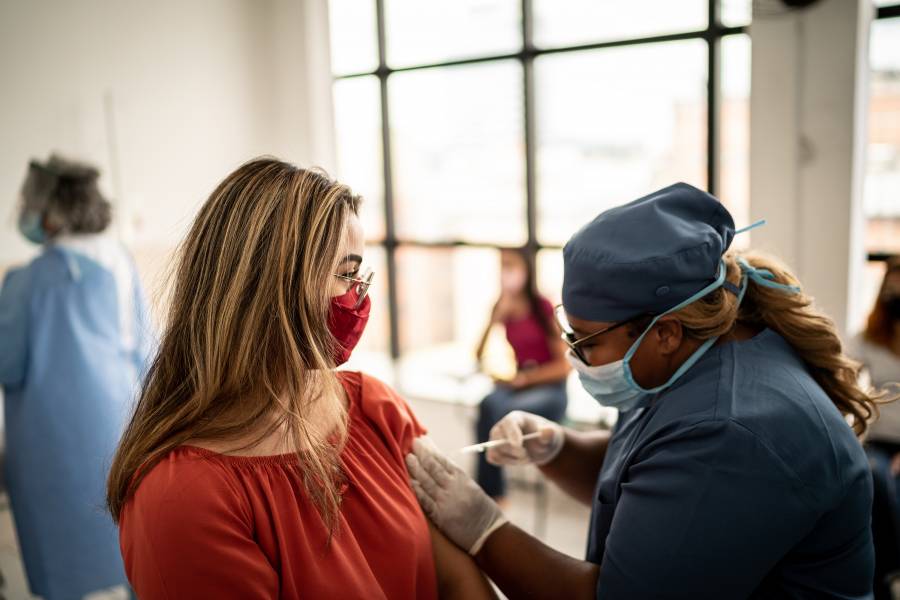
When the two messenger RNA vaccines for COVID-19 first became readily available, many people were talking about side effects—everything from headaches to chills to feeling exhausted for a couple days. Yet plenty of others seemed to take the shots in stride, barely registering much beyond a sore arm.
It was popular to assume that feeling lousy was a good thing, a sign that your body was working overtime to develop its defenses against COVID. But researchers at Johns Hopkins Medicine say that the mRNA vaccines yield a robust antibody response even when people don't develop significant symptoms following vaccination.
"The findings suggest that either spike mRNA vaccine will work well against SARS-CoV-2, even if a person doesn't experience symptoms after vaccination or if they had a prior infection by the virus."
Amanda Debes
Assistant scientist, Bloomberg School of Public Health
That's the key finding from a recent study of nearly 1,000 health care workers in the Johns Hopkins Health System who received two doses of either the vaccine manufactured by Pfizer/BioNTech or Moderna. The Johns Hopkins Medicine study is [described in a research letter published Aug. 16 in *JAMA Internal Medicine*](https://doi.org/10.1001/jamainternmed.2021.4580).
The two mRNA vaccines evaluated in the study introduce the body's immune system to S1, a protein subunit that's a component of the spikes found on the surface of SARS-CoV-2. The spikes enable the virus to latch onto healthy cells and infect them. Immunoglobulin G (IgG) antibodies elicited by S1 from the vaccines stimulating the immune system neutralize the virus particles, preventing infection by SARS-CoV-2, or at least reducing the severity of the disease.
"It wasn't known if a lack of symptoms following vaccination or prior SARS-CoV-2 infection would indicate a less-than-adequate antibody response in people who received either the Pfizer/BioNTech or Moderna vaccines, so we studied an available group of staff from our hospital to see if there were any connections," says study senior author Aaron Milstone, associate hospital epidemiologist at Johns Hopkins Hospital.
The researchers recruited 954 Johns Hopkins Medicine health care workers who had received both doses of either the Pfizer or Moderna vaccines, including some who had a known prior SARS-CoV-2 infection. Infection was defined as having a positive SARS-CoV-2 PCR test result prior to 14 days after a second vaccine dose or a high IgG antibody count against S1 prior to vaccination. Participants self-reported symptoms following vaccination as none, mild (injection site pain, mild fatigue, or headache), or clinically significant (fatigue, fever, or chills).
Clinically significant symptoms were reported by 52 (5%) of the participants after the first vaccine dose and by 407 (43%) after the second shot. After adjusting for prior SARS-CoV-2 infection, age, and sex, the odds of clinically significant symptoms following either dose were higher among those who received the Moderna vaccine. Prior SARS-CoV-2 infection was associated with increased odds of clinically significant symptoms following one dose but not two.
Regardless of symptoms, nearly all participants (953 of 954, or 99.9%) developed spike IgG antibodies 14 or more days following the administration of the second dose. The one person who did not have IgG antibodies was taking an immunosuppressant medication.
Factors that were independently associated with higher median IgG levels (after adjusting for time following the second vaccine dose) were reporting of clinically significant symptoms, age younger than 60, being female, receipt of the Moderna vaccine, and prior SARS-CoV-2 exposure.
"The findings suggest that either spike mRNA vaccine will work well against SARS-CoV-2, even if a person doesn't experience symptoms after vaccination or if they had a prior infection by the virus," says study lead author Amanda Debes, assistant scientist in international health at the Johns Hopkins Bloomberg School of Public Health. "This should help reduce anxieties that the vaccines will be less effective in either situation."
Posted in [Health](https://hub.jhu.edu/health/)
Tagged [coronavirus](https://hub.jhu.edu/tags/coronavirus/articles/), [covid-19 vaccine](https://hub.jhu.edu/tags/covid-19-vaccine/articles/), [mrna](https://hub.jhu.edu/tags/mrna/articles/)
[Share on X](https://twitter.com/intent/tweet?url=https%3A%2F%2Fhub.jhu.edu%2F2021%2F09%2F03%2Fmrna-vax-effectiveness-side-effects%2F&text=Lack%20of%20side%20effects%20after%20COVID-19%20vaccination%20doesn%27t%20mean%20it%20isn%27t%20working&via=HubJHU&related=JohnsHopkins)
[Share on Facebook](https://www.facebook.com/sharer/sharer.php?u=https%3A%2F%2Fhub.jhu.edu%2F2021%2F09%2F03%2Fmrna-vax-effectiveness-side-effects%2F&display=page)
[Pin it on Pinterest](https://pinterest.com/pin/create/button/?url=https%3A%2F%2Fhub.jhu.edu%2F2021%2F09%2F03%2Fmrna-vax-effectiveness-side-effects%2F&description=Pfizer%2C%20Moderna%20mRNA%20vaccines%20are%20effective%20even%20without%20post-shot%20symptoms%20or%20prior%20infection%2C%20Johns%20Hopkins%20study%20finds&media=https%3A%2F%2Fapi.hub.jhu.edu%2Ffactory%2Fsites%2Fdefault%2Ffiles%2Fstyles%2Fhub_large%2Fpublic%2Fvaccine_covid_thumb.jpg)
Email
More social media options
[Share on LinkedIn](https://www.linkedin.com/shareArticle?url=https%3A%2F%2Fhub.jhu.edu%2F2021%2F09%2F03%2Fmrna-vax-effectiveness-side-effects%2F&title=Lack%20of%20side%20effects%20after%20COVID-19%20vaccination%20doesn%27t%20mean%20it%20isn%27t%20working&summary=Pfizer%2C%20Moderna%20mRNA%20vaccines%20are%20effective%20even%20without%20post-shot%20symptoms%20or%20prior%20infection%2C%20Johns%20Hopkins%20study%20finds&source=The%20Hub&mini=true)
[Share on Reddit](http://www.reddit.com/submit?url=https%3A%2F%2Fhub.jhu.edu%2F2021%2F09%2F03%2Fmrna-vax-effectiveness-side-effects%2F&title=Lack%20of%20side%20effects%20after%20COVID-19%20vaccination%20doesn%27t%20mean%20it%20isn%27t%20working)
[Share on Tumblr](https://www.tumblr.com/widgets/share/tool?canonicalUrl=https%3A%2F%2Fhub.jhu.edu%2F2021%2F09%2F03%2Fmrna-vax-effectiveness-side-effects%2F)
[Share on X](https://twitter.com/intent/tweet?url=https%3A%2F%2Fhub.jhu.edu%2F2021%2F09%2F03%2Fmrna-vax-effectiveness-side-effects%2F&text=Lack%20of%20side%20effects%20after%20COVID-19%20vaccination%20doesn%27t%20mean%20it%20isn%27t%20working&via=HubJHU&related=JohnsHopkins)
[Share on Facebook](https://www.facebook.com/sharer/sharer.php?u=https%3A%2F%2Fhub.jhu.edu%2F2021%2F09%2F03%2Fmrna-vax-effectiveness-side-effects%2F&display=page)
[Pin it on Pinterest](https://pinterest.com/pin/create/button/?url=https%3A%2F%2Fhub.jhu.edu%2F2021%2F09%2F03%2Fmrna-vax-effectiveness-side-effects%2F&description=Pfizer%2C%20Moderna%20mRNA%20vaccines%20are%20effective%20even%20without%20post-shot%20symptoms%20or%20prior%20infection%2C%20Johns%20Hopkins%20study%20finds&media=https%3A%2F%2Fapi.hub.jhu.edu%2Ffactory%2Fsites%2Fdefault%2Ffiles%2Fstyles%2Fhub_large%2Fpublic%2Fvaccine_covid_thumb.jpg)
Email
More social media options
[Share on LinkedIn](https://www.linkedin.com/shareArticle?url=https%3A%2F%2Fhub.jhu.edu%2F2021%2F09%2F03%2Fmrna-vax-effectiveness-side-effects%2F&title=Lack%20of%20side%20effects%20after%20COVID-19%20vaccination%20doesn%27t%20mean%20it%20isn%27t%20working&summary=Pfizer%2C%20Moderna%20mRNA%20vaccines%20are%20effective%20even%20without%20post-shot%20symptoms%20or%20prior%20infection%2C%20Johns%20Hopkins%20study%20finds&source=The%20Hub&mini=true)
[Share on Reddit](http://www.reddit.com/submit?url=https%3A%2F%2Fhub.jhu.edu%2F2021%2F09%2F03%2Fmrna-vax-effectiveness-side-effects%2F&title=Lack%20of%20side%20effects%20after%20COVID-19%20vaccination%20doesn%27t%20mean%20it%20isn%27t%20working)
[Share on Tumblr](https://www.tumblr.com/widgets/share/tool?canonicalUrl=https%3A%2F%2Fhub.jhu.edu%2F2021%2F09%2F03%2Fmrna-vax-effectiveness-side-effects%2F)
###### Related Content
[](https://hub.jhu.edu/2021/08/20/vaccine-booster-shots-bill-moss/)
Q\+A
##### [What's behind Biden's booster vaccine plan?](https://hub.jhu.edu/2021/08/20/vaccine-booster-shots-bill-moss/)
Published Aug 20, 2021
Vaccine expert Bill Moss discusses the national vaccine booster plan announced by President Joe Biden and beginning in late September
[](https://hub.jhu.edu/2021/08/19/vaccinating-kids-against-covid-19/)
COVID-19
##### [An expert look at back-to-school vaccinations for teens and kids](https://hub.jhu.edu/2021/08/19/vaccinating-kids-against-covid-19/)
Published Aug 19, 2021
As the new school year approaches, vaccine expert Kawsar Talaat and education policy expert Odis Johnson Jr. discuss the benefits of vaccine mandates for school-age kids
[](https://hub.jhu.edu/2021/07/22/how-to-update-mrna-vaccines/)
COVID-19
##### [How to update an mRNA vaccine](https://hub.jhu.edu/2021/07/22/how-to-update-mrna-vaccines/)
Published Jul 22, 2021
Confronted with SARS-CoV-2 variants that could weaken mRNA vaccines? No problem.
[](https://researchsaveslives.jhu.edu/)
###### You might also like
[](https://hub.jhu.edu/2025/10/08/jason-mclellan-macarthur-fellowship/)
##### [Alum Jason McLellan named MacArthur Fellow](https://hub.jhu.edu/2025/10/08/jason-mclellan-macarthur-fellowship/)
Oct 8, 2025 Video
McLellan, who earned a PhD from the School of Medicine in 2009, has transformed vaccine design with his work on viral fusion proteins
[](https://hub.jhu.edu/2025/04/30/nih-funding-hai-quan-mao/)
Research matters
##### [Transformative patient care begins in the lab](https://hub.jhu.edu/2025/04/30/nih-funding-hai-quan-mao/)
Apr 30, 2025
Hai-Quan Mao and his collaborators at Johns Hopkins conduct materials science research using mRNA and other advances to address medical challenges like cancer, malaria, and nerve and tissue damage
[](https://hub.jhu.edu/2025/04/15/the-disease-fighting-promise-of-mrna/)
Q\+A
##### [The promise of mRNA](https://hub.jhu.edu/2025/04/15/the-disease-fighting-promise-of-mrna/)
Apr 16, 2025 Video
Three Johns Hopkins experts discuss the potential of mRNA-powered therapeutics to produce lifesaving treatments and cures for a range of diseases, and why federal research cuts risk undermining U.S. scientific leadership in this emerging area
[](https://hub.jhu.edu/2025/03/19/nih-funding-jeff-coller-investment-in-research/)
Voices
##### [America's support for research is a smart investment](https://hub.jhu.edu/2025/03/19/nih-funding-jeff-coller-investment-in-research/)
Mar 19, 2025
Federal funding for biomedical research pays off by enabling basic discoveries that lead to lifesaving treatments, writes Hopkins biologist Jeff Coller
###### Trending
[](https://hub.jhu.edu/2026/04/07/best-graduate-program-rankings/)
'U.S. News' rankings
##### [JHU graduate programs among nation's best](https://hub.jhu.edu/2026/04/07/best-graduate-program-rankings/)
Apr 7
'U.S. News & World Report' includes 39 JHU programs among the top 10 in the U.S. in its annual rankings, including No. 1-ranked programs in biomedical engineering, nursing, and public health
[](https://hub.jhu.edu/2026/02/23/will-ai-make-human-workers-obsolete/)
Q\+A
##### [Is AI coming for our jobs?](https://hub.jhu.edu/2026/02/23/will-ai-make-human-workers-obsolete/)
Feb 23
Carey Business School experts Ritu Agarwal and Rick Smith share insights ahead of the latest installment of the Hopkins Forum, a conversation about AI and labor on Feb. 25
[](https://hub.jhu.edu/2026/04/08/johns-hopkins-commencement-speaker-katalin-kariko/)
Commencement 2026
##### [mRNA pioneer Katalin Karikó to give Commencement address](https://hub.jhu.edu/2026/04/08/johns-hopkins-commencement-speaker-katalin-kariko/)
Apr 8 Video
Hungarian immigrant toiled in obscurity before her COVID-19 vaccine work led to Nobel Prize
[](https://hub.jhu.edu/2026/03/18/white-rot-fungi-pharmaceutical-residues/)
Environmental health
##### [White-rot fungi may keep chemicals from reaching soil, crops, and people](https://hub.jhu.edu/2026/03/18/white-rot-fungi-pharmaceutical-residues/)
Mar 18
Johns Hopkins researchers use oyster and turkey tail mushrooms to break down psychoactive drugs commonly found in wastewater treatment byproducts
[](https://hub.jhu.edu/2026/04/03/neuroscientist-ilya-monosov-joins-johns-hopkins-faculty/)
Faculty news
##### [Neuroscientist joins faculty as Bloomberg Distinguished Professor](https://hub.jhu.edu/2026/04/03/neuroscientist-ilya-monosov-joins-johns-hopkins-faculty/)
Apr 3
Ilya Monosov focuses on how the brain regulates decision-making, learning, curiosity, and cognitive control, as well as their breakpoints in psychiatric disorders such as in obsessive-compulsive disorder and depression
[](https://hub.jhu.edu/2026/04/08/clark-scholars-books-for-jamaica/)
Book drive
##### [Clark Scholars bring donated books to Jamaica](https://hub.jhu.edu/2026/04/08/clark-scholars-books-for-jamaica/)
Apr 8
Jamaica lost 32,000 library books in Hurricane Melissa. The Clark Scholars Program is stepping up to help.
[](https://hub.jhu.edu/2026/04/01/digital-twin-hearts-arrhythmia-trial/)
Cardiac health
##### [Digital twin hearts deliver 100% success in arrhythmia trial](https://hub.jhu.edu/2026/04/01/digital-twin-hearts-arrhythmia-trial/)
Apr 1 Video
Novel technology outperforms clinical standard for life-threatening condition
[](https://hub.jhu.edu/2026/03/10/hepatitis-b-cure-consortium-award/)
##### [Hopkins leads effort to find hepatitis B cure](https://hub.jhu.edu/2026/03/10/hepatitis-b-cure-consortium-award/)
Mar 10
With \$24M in NIH funding, the group will pursue research and patient care approaches for a disease that affects more than 250 million people around the globe
###### News Network
- [The Hub](https://hub.jhu.edu/)
- [At Work](https://hub.jhu.edu/at-work/)
- [Johns Hopkins Magazine](https://hub.jhu.edu/magazine/)
- [Search](https://hub.jhu.edu/search/)
###### Explore by Topic
- [Health](https://hub.jhu.edu/health/)
- [Science+Technology](https://hub.jhu.edu/science-technology/)
- [Arts+Culture](https://hub.jhu.edu/arts-culture/)
- [Politics+Society](https://hub.jhu.edu/politics-society/)
- [University News](https://hub.jhu.edu/university-news/)
- [Student Life](https://hub.jhu.edu/student-life/)
- [Athletics](https://hub.jhu.edu/athletics/)
- [Voices+Opinion](https://hub.jhu.edu/voices-opinion/)
###### Resources
- [About the Hub](https://hub.jhu.edu/about/)
- [Get Email Updates](http://eepurl.com/pa10H)
- [Events](https://hub.jhu.edu/events/)
- [Submit an Announcement](https://hub.jhu.edu/vip/submit-announcement/)
- [Submit an Event](https://hub.jhu.edu/vip/submit-event/)
- [For Media](https://hub.jhu.edu/media/)
- [Faculty Experts Guide](https://hub.jhu.edu/experts/)
- [Privacy Statement](https://www.jhu.edu/privacystatement)
- [Accessibility](http://accessibility.jhu.edu/)
- [Contact Us](https://hub.jhu.edu/about/)
###### Discover JHU
- [jhu.edu](https://www.jhu.edu/)
- [About the University](https://www.jhu.edu/about/)
- [Schools & Divisions](https://www.jhu.edu/schools/)
- [Academic Programs](https://www.jhu.edu/academics/)
- [Admissions](https://www.jhu.edu/admissions/)
- [Plan a Visit](https://www.jhu.edu/admissions/visit/)
- [Employment](https://hr.jhu.edu/jobs-jhu/)
- [my.JohnsHopkins.edu](https://my.jh.edu/portal/web/jhupub)
[   ](https://www.jhu.edu/)
- © 2026 [Johns Hopkins University](https://www.jhu.edu/). All rights reserved.
- [University Communications](http://universitycommunications.jhu.edu/)
- 3910 Keswick Rd., Suite N2600, Baltimore, MD
- [X](http://www.twitter.com/JohnsHopkins) [Facebook](http://www.facebook.com/johnshopkinsuniversity) [LinkedIn](https://www.linkedin.com/edu/the-johns-hopkins-university-18560) [YouTube](http://www.youtube.com/johnshopkins) [Instagram](http://instagram.com/johnshopkinsu)
Press the escape key to close the dialog.
### Email this article | ||||||||||||||||||
| Readable Markdown | Pfizer, Moderna mRNA vaccines are effective even without post-shot symptoms or prior infection, Johns Hopkins study finds
By
Published
Sep 3, 2021
When the two messenger RNA vaccines for COVID-19 first became readily available, many people were talking about side effects—everything from headaches to chills to feeling exhausted for a couple days. Yet plenty of others seemed to take the shots in stride, barely registering much beyond a sore arm.
It was popular to assume that feeling lousy was a good thing, a sign that your body was working overtime to develop its defenses against COVID. But researchers at Johns Hopkins Medicine say that the mRNA vaccines yield a robust antibody response even when people don't develop significant symptoms following vaccination.
"The findings suggest that either spike mRNA vaccine will work well against SARS-CoV-2, even if a person doesn't experience symptoms after vaccination or if they had a prior infection by the virus."
Amanda Debes
Assistant scientist, Bloomberg School of Public Health
That's the key finding from a recent study of nearly 1,000 health care workers in the Johns Hopkins Health System who received two doses of either the vaccine manufactured by Pfizer/BioNTech or Moderna. The Johns Hopkins Medicine study is [described in a research letter published Aug. 16 in *JAMA Internal Medicine*](https://doi.org/10.1001/jamainternmed.2021.4580).
The two mRNA vaccines evaluated in the study introduce the body's immune system to S1, a protein subunit that's a component of the spikes found on the surface of SARS-CoV-2. The spikes enable the virus to latch onto healthy cells and infect them. Immunoglobulin G (IgG) antibodies elicited by S1 from the vaccines stimulating the immune system neutralize the virus particles, preventing infection by SARS-CoV-2, or at least reducing the severity of the disease.
"It wasn't known if a lack of symptoms following vaccination or prior SARS-CoV-2 infection would indicate a less-than-adequate antibody response in people who received either the Pfizer/BioNTech or Moderna vaccines, so we studied an available group of staff from our hospital to see if there were any connections," says study senior author Aaron Milstone, associate hospital epidemiologist at Johns Hopkins Hospital.
The researchers recruited 954 Johns Hopkins Medicine health care workers who had received both doses of either the Pfizer or Moderna vaccines, including some who had a known prior SARS-CoV-2 infection. Infection was defined as having a positive SARS-CoV-2 PCR test result prior to 14 days after a second vaccine dose or a high IgG antibody count against S1 prior to vaccination. Participants self-reported symptoms following vaccination as none, mild (injection site pain, mild fatigue, or headache), or clinically significant (fatigue, fever, or chills).
Clinically significant symptoms were reported by 52 (5%) of the participants after the first vaccine dose and by 407 (43%) after the second shot. After adjusting for prior SARS-CoV-2 infection, age, and sex, the odds of clinically significant symptoms following either dose were higher among those who received the Moderna vaccine. Prior SARS-CoV-2 infection was associated with increased odds of clinically significant symptoms following one dose but not two.
Regardless of symptoms, nearly all participants (953 of 954, or 99.9%) developed spike IgG antibodies 14 or more days following the administration of the second dose. The one person who did not have IgG antibodies was taking an immunosuppressant medication.
Factors that were independently associated with higher median IgG levels (after adjusting for time following the second vaccine dose) were reporting of clinically significant symptoms, age younger than 60, being female, receipt of the Moderna vaccine, and prior SARS-CoV-2 exposure.
"The findings suggest that either spike mRNA vaccine will work well against SARS-CoV-2, even if a person doesn't experience symptoms after vaccination or if they had a prior infection by the virus," says study lead author Amanda Debes, assistant scientist in international health at the Johns Hopkins Bloomberg School of Public Health. "This should help reduce anxieties that the vaccines will be less effective in either situation." | ||||||||||||||||||
| ML Classification | |||||||||||||||||||
| ML Categories |
Raw JSON{
"/Health": 940,
"/Science": 520,
"/Science/Biological_Sciences": 519,
"/Health/Public_Health": 485,
"/Health/Public_Health/Health_Policy": 468,
"/Science/Biological_Sciences/Genetics": 333
} | ||||||||||||||||||
| ML Page Types |
Raw JSON{
"/Article": 999,
"/Article/Study_or_Research_Findings": 781
} | ||||||||||||||||||
| ML Intent Types |
Raw JSON{
"Informational": 999
} | ||||||||||||||||||
| Content Metadata | |||||||||||||||||||
| Language | en | ||||||||||||||||||
| Author | Michael E. Newman | ||||||||||||||||||
| Publish Time | 2021-09-03 12:00:00 (4 years ago) | ||||||||||||||||||
| Original Publish Time | 2021-09-03 12:00:00 (4 years ago) | ||||||||||||||||||
| Republished | No | ||||||||||||||||||
| Word Count (Total) | 1,465 | ||||||||||||||||||
| Word Count (Content) | 649 | ||||||||||||||||||
| Links | |||||||||||||||||||
| External Links | 24 | ||||||||||||||||||
| Internal Links | 68 | ||||||||||||||||||
| Technical SEO | |||||||||||||||||||
| Meta Nofollow | No | ||||||||||||||||||
| Meta Noarchive | No | ||||||||||||||||||
| JS Rendered | Yes | ||||||||||||||||||
| Redirect Target | null | ||||||||||||||||||
| Performance | |||||||||||||||||||
| Download Time (ms) | 2,798 | ||||||||||||||||||
| TTFB (ms) | 2,797 | ||||||||||||||||||
| Download Size (bytes) | 29,857 | ||||||||||||||||||
| Shard | 179 (laksa) | ||||||||||||||||||
| Root Hash | 6599457417117746179 | ||||||||||||||||||
| Unparsed URL | edu,jhu!hub,/2021/09/03/mrna-vax-effectiveness-side-effects/ s443 | ||||||||||||||||||