ℹ️ Skipped - page is already crawled
| Filter | Status | Condition | Details |
|---|---|---|---|
| HTTP status | PASS | download_http_code = 200 | HTTP 200 |
| Age cutoff | PASS | download_stamp > now() - 6 MONTH | 0 months ago |
| History drop | PASS | isNull(history_drop_reason) | No drop reason |
| Spam/ban | PASS | fh_dont_index != 1 AND ml_spam_score = 0 | ml_spam_score=0 |
| Canonical | PASS | meta_canonical IS NULL OR = '' OR = src_unparsed | Not set |
| Property | Value | |||||||||
|---|---|---|---|---|---|---|---|---|---|---|
| URL | https://health.mo.gov/living/healthcondiseases/hypothermia/ | |||||||||
| Last Crawled | 2026-04-27 11:17:32 (1 day ago) | |||||||||
| First Indexed | 2018-10-13 01:10:16 (7 years ago) | |||||||||
| HTTP Status Code | 200 | |||||||||
| Content | ||||||||||
| Meta Title | Hypothermia | Health & Senior Services | |||||||||
| Meta Description | Department of Health and Senior Services Hypothermia web pages | |||||||||
| Meta Canonical | null | |||||||||
| Boilerpipe Text | Hypothermia (hi-poe-THUR-me-uh) is defined as a drop in body temperature to less than 95 degrees Fahrenheit (°F) or 35 degrees Celsius (°C) as result of exposure to cold weather or a natural environment. Hypothermia occurs when the body loses heat faster than it’s produced. Hypothermia is dangerous and can quickly become life threatening. Don’t wait - call 911 first if you or someone else is showing signs of hypothermia!
Body temperature can drop when a person spends a long period of time exposed to cold temperatures. Loss of body heat can also occur when a person becomes wet with water or sweat, even in milder temperatures. It is important to note this condition can happen indoors as well as outdoors, especially when someone isn’t properly clothed or lives in a poorly heated home. Factors that contribute to hypothermia include:
substance influence or abuse (alcohol and drugs),
underlying medical condition (such as heart disease, diabetes, dementia or other mental health condition; sometimes the medications used to treat them),
accidental falls, immersion in water, and motor vehicle accidents,
outdoor work or hobbies,
lack of resources (food, clothing and shelter), and
age (infants and young children, and older adults are especially vulnerable).
AVOID. SPOT. TREAT. Frostbite and Hypothermia
Hypothermia can happen to anyone; however, some people are at greater risk and may need assistance to stay safe in cold weather.
Download cold weather graphics for social media.
Be Safe, Aware and Prepared for Cold Weather
Find additional information on protecting older adults and adults with disabilities due to
cold weather
.
Find a Warming Center
Locate nearest
warming centers
in Missouri for a place to warm up. For overnight shelter from cold, call United Way 2-1-1 or contact local emergency management.
Be added to our map.
Best Practices Guide – Establishment of a Warming Center
Protect Adults in Need
Report older adults and adults with disabilities in need of assistance due to cold temperatures.
You can make a report 24/7 online
or call the state's toll-free number 1-800-392-0210. Operators are available 7:00 a.m. to 8:00 p.m. seven days a week.
View Hypothermia Data
View data
and information on hypothermia deaths and associated risk factors in Missouri, vulnerable populations, and resources to stay safe in cold weather.
Data Release Policy
Healthy Winter
Find additional tips to
stay safe and warm this winter.
Are you or someone you know in need of help with home utility costs? Visit the Department of Social Services’
Low Income Home Energy Assistance Program
to learn more.
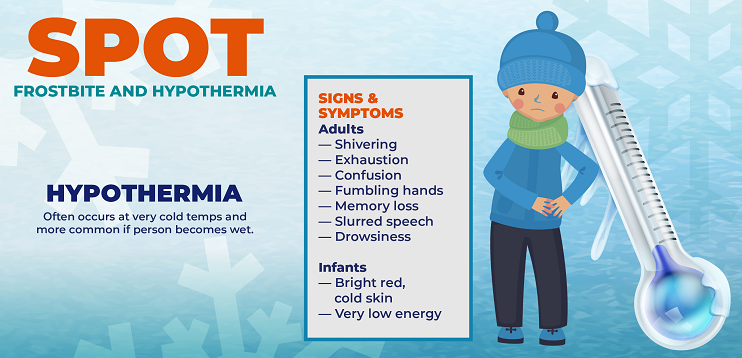
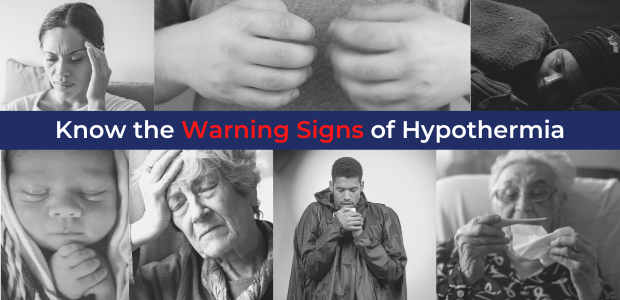
Warning Signs of Hypothermia
Warning signs of hypothermia may include:
Uncontrollable shivering. In severe cases of hypothermia, shivering stops
Numbness
Glassy stare
Apathy
Weakness
Impaired judgment
Drowsiness
Slow or slurred speech
Exhaustion
Loss of consciousness
Bright red skin and very low energy level in infants
What to Do Until Help Arrives
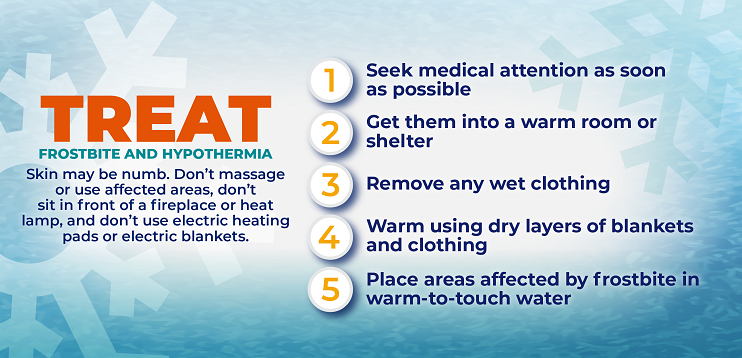
After calling 911 for immediate medical assistance,
Gently move the victim to a warm place
Monitor the victim’s blood pressure and breathing
If needed, give rescue breathing and CPR
Remove wet clothing
Dry off the victim
Take the victim’s temperature
Warm the body core first, NOT the extremities. Warming the extremities first can cause shock. It can also drive cold blood toward the heart and lead to heart failure
DO NOT warm the victim too fast. Rapid warming may cause heart arrhythmias
How to Prevent Hypothermia
Be aware of the warning signs of cold-related illness, such as uncontrollable shivering, sleepiness, confusion, changes in skin color, slurred speech and loss of consciousness.
Stay indoors and in a warm area. If heat is not available, consider a visit to a shopping mall, public library, movie theater, church, community building or shelter.
Increase your fluid intake – regardless of your activity level. Don’t wait until you feel thirsty to drink fluids. Ensure infants and children drink adequate amounts of liquids.
Avoid drinks containing caffeine and alcohol because they affect how your body reacts to the cold. Warm fluids such as broth or juice are good, as well as sports drinks.
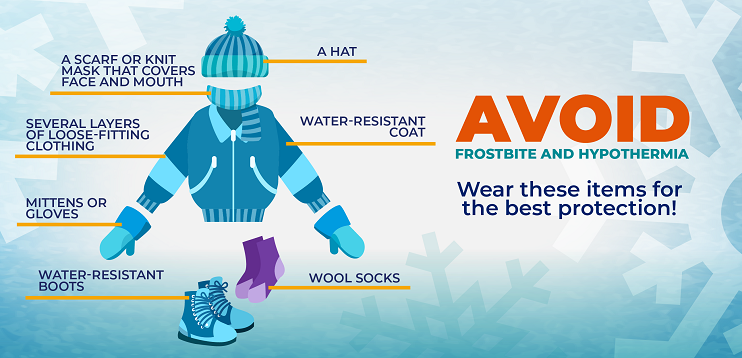
Wear something on your head. Fifty percent of all body heat is lost through the head so wearing a hat will keep your whole body warmer.
Protect the ears and face. Wear a scarf to protect your lungs from cold air – it will also protect your ears and face.
Wear waterproof boots.
Several layers of clothing is better than a single heavy layer. The space between the layers works as insulation to help keep you warmer.
Check with your doctor or pharmacist if you are taking prescription drugs. Some drugs can affect the way your body reacts to the cold.
Minimize sitting or squatting in the cold for prolonged periods of time. These activities can hinder circulation.
While outdoors, take frequent breaks in a warm place.
If you have to be outdoors, schedule outdoor activities during the warmest part of the day, usually 10 a.m. to 3 p.m.
Adjust to outdoor activity. Stretch and do a few exercises before going outside to work to avoid muscle strain. Extreme cold puts extra strain on the heart – no matter what your age or physical condition.
Use the buddy system. Monitor the condition of your co-workers and have someone do the same for you. The buddy system can be used to inspect for signs of frostbite. Just before freezing, the skin, especially on the face, becomes bright red. Then small patches of white appear, as freezing actually occurs.
Prevent chapped skin by frequent application of protective lotions.
Carry extra clothes with you such as socks, gloves, hats and jacket so you can change them if you get wet.
Frostbite
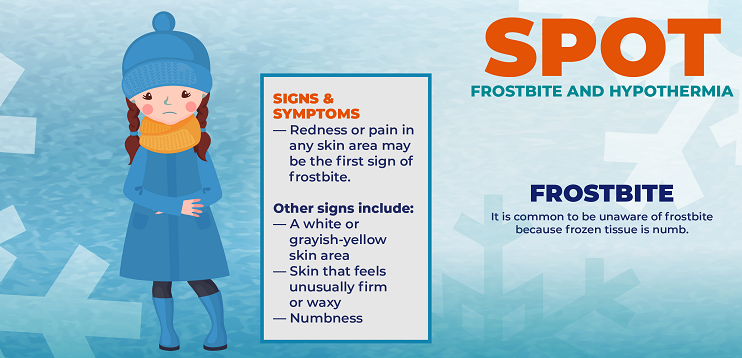
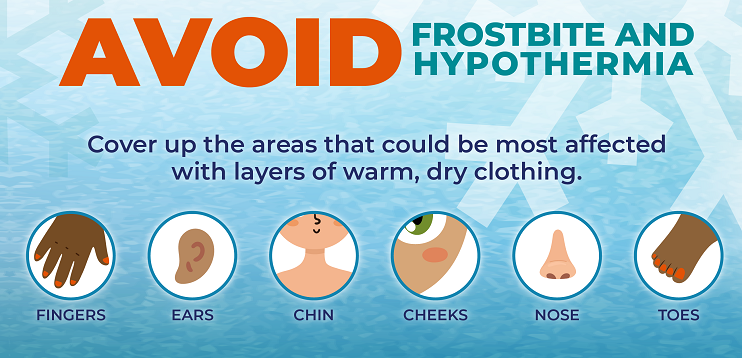
Frostbite is the actual freezing of the tissue or a body part. It often affects the ears, nose, fingers and toes. Warning signs of frostbite include:
Pale or waxy white or grey skin
Numbness
Tingling or stinging sensation in the affected body part
Aching in the affected body part
Reduced blood flow
If frostbite is detected, seek medical care. If there is frostbite but no sign of
hypothermia
and
immediate medical care is not available, do the following:
Move to a warm dry area
Remove wet or tight fitting clothes
Avoid walking on frostbitten toes or feet
Gently place affected area in warm water – DO NOT use water any hotter than 105°F
DO NOT use a heating pad, heat lamp or stove, fireplace or radiator for warming
DO NOT rub affected area, this can cause more damage
After warming, the injured area should be wrapped in sterile gauze, keeping the affected fingers and toes separated
If normal sensations haven’t returned in 30 minutes, seek medical attention
How to Prevent Frostbite
Be aware of the warning signs of cold-related illness, such as uncontrollable shivering, sleepiness, confusion, changes in skin color, slurred speech and loss of consciousness.
Stay indoors and in a warm area. If heat is not available, consider a visit to a shopping mall, public library, movie theatre, church, community building or shelter.
Increase your fluid intake – regardless of your activity level. Don’t wait until you feel thirsty to drink fluids. Ensure infants and children drink adequate amounts of liquids.
Avoid drinks containing caffeine and alcohol because they affect how your body reacts to the cold. Warm fluids such as broth or juice are good, as well as sports drinks.
Wear something on your head. Fifty percent of all body heat is lost through the head, so wearing a hat will keep your whole body warmer.
Protect the ears and face. Wear a scarf to protect your lungs from cold air – it will also protect your ears and face.
Boots should be waterproof.
Several layers of clothing are better than a single heavy layer. The space between the layers works as insulation to help keep you warmer.
Check with your doctor or pharmacist if you are taking any prescription drugs. Some drugs affect the way your body reacts to the cold.
Minimize sitting or squatting in the cold for prolonged periods of time. These positions can hinder circulation.
While outdoors, take frequent breaks in a warm place.
If you have to be outdoors, schedule outdoor activities during the warmest part of the day, usually 10 a.m. to 3 p.m.
Adjust to outdoor activity. avoid muscle strain by stretching and doing a few exercises before going outside to work. Extreme cold puts extra strain on the heart – no matter what your age or physical condition.
Use the buddy system. Monitor the condition of your co-workers and have someone do the same for you. The buddy system can be used to inspect for signs of frostbite. Just before freezing, the skin, especially the face, becomes bright red. Then small patches of white appear, as freezing actually occurs.
Prevent chapped skin by frequent application of protective lotions.
Carry extra clothes with you such as socks, gloves, hats and jackets so that you can change them if you get wet.
Snow Blindness
Snow blindness is a sun burn of the eyes caused by the reflection of sunlight off snow or water.; It can be prevented by wearing good sunglasses with side shields or goggles. Eye protection from the sun is just as necessary on cloudy or overcast days as it is in full sunlight. Snow blindness can occur during a snow storm, if the cloud cover is thin. Symptoms occur within 8-12 hours of exposure. They include eyes feeling dry and irritated then as if they are full of sand. Moving or blinking the eyes becomes painful. Exposure to light hurts, the eyelids may swell, excessive tearing occurs and eyes appear very red. Mild cases will heal in a few days. Relief can be obtained by using cold compresses and light proof bandaging. Ophthalmic ointment can be used to relieve the pain and reduce swelling. DO NOT rub the eyes.
Trenchfoot
Trench Foot is also known as Immersion Foot and can occur at temps as high as 60°F. It is a condition that occurs if the feet are constantly wet. Wet feet lose heat 25 times faster than dry feet. It is characterized by vascular damage. Symptoms include reddening of the skin, numbness, leg cramps, swelling, tingling pain, blisters or ulcers, bleeding under the skin and gangrene. To prevent heat loss, the body constricts blood vessels to shut down circulation in the feet. The skin dies due to a lack of oxygen and nutrients. It can cause permanent damage to the circulatory system. Treatment is similar to frostbite – move the victim to a warm, dry area; remove wet shoes and socks; use warm (105°F) water and seek medical assistance as soon as possible.
Related Resources
DHSS Frigid with a Chance of Frostbite
(
flier
or
brochure
)
CDC - Winter Weather: Before, During, and After
American Red Cross – Winter Storm Preparedness
Missouri State Emergency Management Agency – Severe Winter Weather
National Weather Service - Central Region
National Weather Service – Cold Weather Safety
CDC - Working in the Cold
Occupational Safety and Health Administration - Winter Weather
Healthy Living
Related Links
Contact Information
Bureau of Environmental Epidemiology
Missouri Department of Health and Senior Services
PO Box 570
Jefferson City, MO 65102
Telephone: 573-751-6102 or
(toll-free) 866-628-9891
Fax: 573-526-6946
Email:
info@health.mo.gov | |||||||||
| Markdown | [Missouri Department of Health & Senior Services](https://health.mo.gov/)
# Quick Navigation
- [Skip to Main Content](https://health.mo.gov/living/healthcondiseases/hypothermia/#main-content)
- [MO.gov](https://www.mo.gov/)
- [Governor Kehoe](https://governor.mo.gov/)
- [Find an Agency](https://www.mo.gov/search-results?mode=state_agencies)
- [Online Services](https://www.mo.gov/search-results?mode=online_services)
Mobile Menu Button
## Toolbar Links
- [Email us](mailto:info@health.mo.gov "Email us")
- [Flickr](http://www.flickr.com/photos/49879968@N04/ "View photos on Flickr")
- [Watch Videos on Youtube](http://www.youtube.com/user/MODHSS "Watch videos on Youtube")
- [Follow us on Twitter](http://twitter.com/HealthyLivingMo "Follow us on Twitter")
- [Follow us on Instagram](https://www.instagram.com/healthylivingmo/ "Follow us on Instagram")
- [Like us on Facebook](https://www.facebook.com/HealthyLivingMo "Like us on Facebook")
- [Home](https://health.mo.gov/)
- [Healthy Living](https://health.mo.gov/living/)
- [Senior & Disability Services](https://health.mo.gov/seniors/)
- [Licensing & Regulations](https://health.mo.gov/safety/)
- [Disaster & Emergency Planning](https://health.mo.gov/emergencies/)
- [Data & Statistics](https://health.mo.gov/data/)
# Hypothermia
- 
- 
- 
- 
- 
- 
- 
- [](https://health.mo.gov/living/healthcondiseases/hypothermia/#warning)
- [](https://experience.arcgis.com/experience/3e73164b32444925819fd83fb8209088/page/Map/?views=Map)
- [](https://storymaps.arcgis.com/stories/5b575e3a854245ada5ce8ee812a8079c)
- [](https://health.mo.gov/winter)
- [](https://ephtn.dhss.mo.gov/EPHTN_Data_Portal/index.php)
Hypothermia (hi-poe-THUR-me-uh) is defined as a drop in body temperature to less than 95 degrees Fahrenheit (°F) or 35 degrees Celsius (°C) as result of exposure to cold weather or a natural environment. Hypothermia occurs when the body loses heat faster than it’s produced. Hypothermia is dangerous and can quickly become life threatening. Don’t wait - call 911 first if you or someone else is showing signs of hypothermia\!
Body temperature can drop when a person spends a long period of time exposed to cold temperatures. Loss of body heat can also occur when a person becomes wet with water or sweat, even in milder temperatures. It is important to note this condition can happen indoors as well as outdoors, especially when someone isn’t properly clothed or lives in a poorly heated home. Factors that contribute to hypothermia include:
- substance influence or abuse (alcohol and drugs),
- underlying medical condition (such as heart disease, diabetes, dementia or other mental health condition; sometimes the medications used to treat them),
- accidental falls, immersion in water, and motor vehicle accidents,
- outdoor work or hobbies,
- lack of resources (food, clothing and shelter), and
- age (infants and young children, and older adults are especially vulnerable).
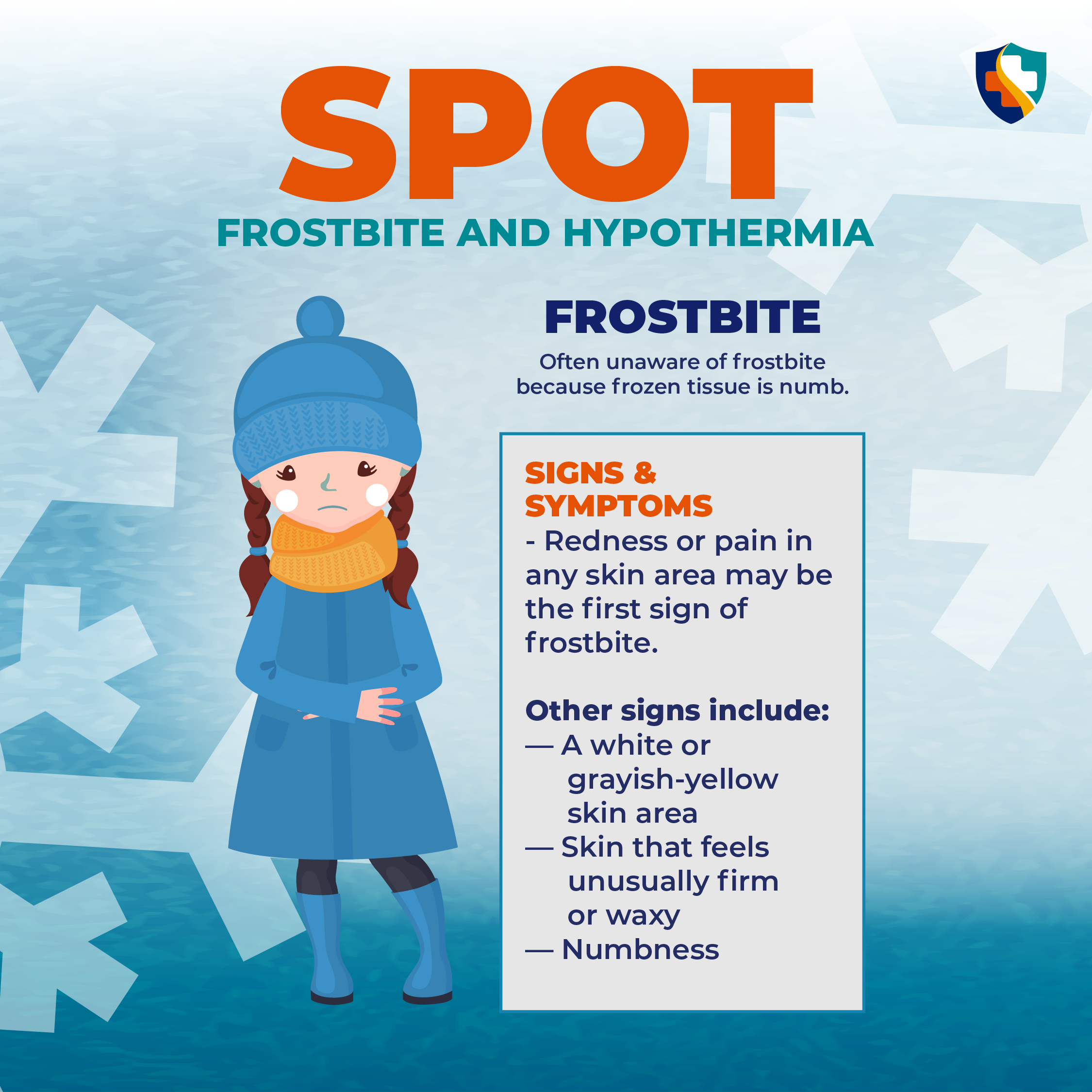
## AVOID. SPOT. TREAT. Frostbite and Hypothermia
Hypothermia can happen to anyone; however, some people are at greater risk and may need assistance to stay safe in cold weather.
[](https://health.mo.gov/living/healthcondiseases/hypothermia/avoid-spot-treat.php)
[Download cold weather graphics for social media.](https://health.mo.gov/living/healthcondiseases/hypothermia/avoid-spot-treat.php)
## Be Safe, Aware and Prepared for Cold Weather
Find additional information on protecting older adults and adults with disabilities due to [cold weather](https://health.mo.gov/seniors/abuse.php).
### Find a Warming Center
[](https://experience.arcgis.com/experience/3e73164b32444925819fd83fb8209088)
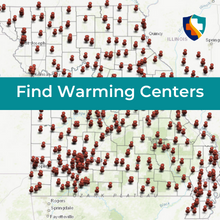
Locate nearest [warming centers](https://experience.arcgis.com/experience/3e73164b32444925819fd83fb8209088) in Missouri for a place to warm up. For overnight shelter from cold, call United Way 2-1-1 or contact local emergency management.
[Be added to our map.](https://health.mo.gov/living/healthcondiseases/hypothermia/pdf/warming-center-instructions.pdf)
[Best Practices Guide – Establishment of a Warming Center](https://health.mo.gov/living/healthcondiseases/hypothermia/pdf/best-practices.pdf)
### Protect Adults in Need
[](https://health.mo.gov/safety/abuse/)
Report older adults and adults with disabilities in need of assistance due to cold temperatures.
[You can make a report 24/7 online](https://health.mo.gov/safety/abuse/) or call the state's toll-free number 1-800-392-0210. Operators are available 7:00 a.m. to 8:00 p.m. seven days a week.
### View Hypothermia Data
[](https://storymaps.arcgis.com/stories/5b575e3a854245ada5ce8ee812a8079c)
[View data](https://storymaps.arcgis.com/stories/5b575e3a854245ada5ce8ee812a8079c) and information on hypothermia deaths and associated risk factors in Missouri, vulnerable populations, and resources to stay safe in cold weather.
[Data Release Policy](https://health.mo.gov/living/healthcondiseases/hypothermia/datareleasepolicy.php)
### Healthy Winter
[](https://ephtn.dhss.mo.gov/EPHTN_Data_Portal/healthywinter/)
Find additional tips to [stay safe and warm this winter.](https://ephtn.dhss.mo.gov/EPHTN_Data_Portal/healthywinter/)
Are you or someone you know in need of help with home utility costs? Visit the Department of Social Services’ [Low Income Home Energy Assistance Program](https://mydss.mo.gov/utility-assistance) to learn more.
## Warning Signs of Hypothermia
Warning signs of hypothermia may include:
- Uncontrollable shivering. In severe cases of hypothermia, shivering stops
- Numbness
- Glassy stare
- Apathy
- Weakness
- Impaired judgment
- Drowsiness
- Slow or slurred speech
- Exhaustion
- Loss of consciousness
- Bright red skin and very low energy level in infants
## What to Do Until Help Arrives
After calling 911 for immediate medical assistance,
- Gently move the victim to a warm place
- Monitor the victim’s blood pressure and breathing
- If needed, give rescue breathing and CPR
- Remove wet clothing
- Dry off the victim
- Take the victim’s temperature
- Warm the body core first, NOT the extremities. Warming the extremities first can cause shock. It can also drive cold blood toward the heart and lead to heart failure
- DO NOT warm the victim too fast. Rapid warming may cause heart arrhythmias
## How to Prevent Hypothermia
- Be aware of the warning signs of cold-related illness, such as uncontrollable shivering, sleepiness, confusion, changes in skin color, slurred speech and loss of consciousness.
- Stay indoors and in a warm area. If heat is not available, consider a visit to a shopping mall, public library, movie theater, church, community building or shelter.
- Increase your fluid intake – regardless of your activity level. Don’t wait until you feel thirsty to drink fluids. Ensure infants and children drink adequate amounts of liquids.
- Avoid drinks containing caffeine and alcohol because they affect how your body reacts to the cold. Warm fluids such as broth or juice are good, as well as sports drinks.
- Wear something on your head. Fifty percent of all body heat is lost through the head so wearing a hat will keep your whole body warmer.
- Protect the ears and face. Wear a scarf to protect your lungs from cold air – it will also protect your ears and face.
- Wear waterproof boots.
- Several layers of clothing is better than a single heavy layer. The space between the layers works as insulation to help keep you warmer.
- Check with your doctor or pharmacist if you are taking prescription drugs. Some drugs can affect the way your body reacts to the cold.
- Minimize sitting or squatting in the cold for prolonged periods of time. These activities can hinder circulation.
- While outdoors, take frequent breaks in a warm place.
- If you have to be outdoors, schedule outdoor activities during the warmest part of the day, usually 10 a.m. to 3 p.m.
- Adjust to outdoor activity. Stretch and do a few exercises before going outside to work to avoid muscle strain. Extreme cold puts extra strain on the heart – no matter what your age or physical condition.
- Use the buddy system. Monitor the condition of your co-workers and have someone do the same for you. The buddy system can be used to inspect for signs of frostbite. Just before freezing, the skin, especially on the face, becomes bright red. Then small patches of white appear, as freezing actually occurs.
- Prevent chapped skin by frequent application of protective lotions.
- Carry extra clothes with you such as socks, gloves, hats and jacket so you can change them if you get wet.
## Frostbite
Frostbite is the actual freezing of the tissue or a body part. It often affects the ears, nose, fingers and toes. Warning signs of frostbite include:
- Pale or waxy white or grey skin
- Numbness
- Tingling or stinging sensation in the affected body part
- Aching in the affected body part
- Reduced blood flow
If frostbite is detected, seek medical care. If there is frostbite but no sign of **[hypothermia](https://health.mo.gov/living/healthcondiseases/hypothermia/index.php)** *and* immediate medical care is not available, do the following:
- Move to a warm dry area
- Remove wet or tight fitting clothes
- Avoid walking on frostbitten toes or feet
- Gently place affected area in warm water – DO NOT use water any hotter than 105°F
- DO NOT use a heating pad, heat lamp or stove, fireplace or radiator for warming
- DO NOT rub affected area, this can cause more damage
- After warming, the injured area should be wrapped in sterile gauze, keeping the affected fingers and toes separated
- If normal sensations haven’t returned in 30 minutes, seek medical attention
### How to Prevent Frostbite
- Be aware of the warning signs of cold-related illness, such as uncontrollable shivering, sleepiness, confusion, changes in skin color, slurred speech and loss of consciousness.
- Stay indoors and in a warm area. If heat is not available, consider a visit to a shopping mall, public library, movie theatre, church, community building or shelter.
- Increase your fluid intake – regardless of your activity level. Don’t wait until you feel thirsty to drink fluids. Ensure infants and children drink adequate amounts of liquids.
- Avoid drinks containing caffeine and alcohol because they affect how your body reacts to the cold. Warm fluids such as broth or juice are good, as well as sports drinks.
- Wear something on your head. Fifty percent of all body heat is lost through the head, so wearing a hat will keep your whole body warmer.
- Protect the ears and face. Wear a scarf to protect your lungs from cold air – it will also protect your ears and face.
- Boots should be waterproof.
- Several layers of clothing are better than a single heavy layer. The space between the layers works as insulation to help keep you warmer.
- Check with your doctor or pharmacist if you are taking any prescription drugs. Some drugs affect the way your body reacts to the cold.
- Minimize sitting or squatting in the cold for prolonged periods of time. These positions can hinder circulation.
- While outdoors, take frequent breaks in a warm place.
- If you have to be outdoors, schedule outdoor activities during the warmest part of the day, usually 10 a.m. to 3 p.m.
- Adjust to outdoor activity. avoid muscle strain by stretching and doing a few exercises before going outside to work. Extreme cold puts extra strain on the heart – no matter what your age or physical condition.
- Use the buddy system. Monitor the condition of your co-workers and have someone do the same for you. The buddy system can be used to inspect for signs of frostbite. Just before freezing, the skin, especially the face, becomes bright red. Then small patches of white appear, as freezing actually occurs.
- Prevent chapped skin by frequent application of protective lotions.
- Carry extra clothes with you such as socks, gloves, hats and jackets so that you can change them if you get wet.
## Snow Blindness
Snow blindness is a sun burn of the eyes caused by the reflection of sunlight off snow or water.; It can be prevented by wearing good sunglasses with side shields or goggles. Eye protection from the sun is just as necessary on cloudy or overcast days as it is in full sunlight. Snow blindness can occur during a snow storm, if the cloud cover is thin. Symptoms occur within 8-12 hours of exposure. They include eyes feeling dry and irritated then as if they are full of sand. Moving or blinking the eyes becomes painful. Exposure to light hurts, the eyelids may swell, excessive tearing occurs and eyes appear very red. Mild cases will heal in a few days. Relief can be obtained by using cold compresses and light proof bandaging. Ophthalmic ointment can be used to relieve the pain and reduce swelling. DO NOT rub the eyes.
## Trenchfoot
Trench Foot is also known as Immersion Foot and can occur at temps as high as 60°F. It is a condition that occurs if the feet are constantly wet. Wet feet lose heat 25 times faster than dry feet. It is characterized by vascular damage. Symptoms include reddening of the skin, numbness, leg cramps, swelling, tingling pain, blisters or ulcers, bleeding under the skin and gangrene. To prevent heat loss, the body constricts blood vessels to shut down circulation in the feet. The skin dies due to a lack of oxygen and nutrients. It can cause permanent damage to the circulatory system. Treatment is similar to frostbite – move the victim to a warm, dry area; remove wet shoes and socks; use warm (105°F) water and seek medical assistance as soon as possible.
## Related Resources
- **DHSS Frigid with a Chance of Frostbite** ([flier](https://health.mo.gov/living/healthcondiseases/hypothermia/pdf/frigidflyer.pdf) or [brochure](https://health.mo.gov/living/healthcondiseases/hypothermia/pdf/frigidweatherbrochure.pdf))
- [CDC - Winter Weather: Before, During, and After](https://www.cdc.gov/winter-weather/about/index.html)
- [American Red Cross – Winter Storm Preparedness](https://www.redcross.org/get-help/how-to-prepare-for-emergencies/types-of-emergencies/winter-storm.html)
- [Missouri State Emergency Management Agency – Severe Winter Weather](https://sema.dps.mo.gov/plan_and_prepare/winter_weather.php)
- [National Weather Service - Central Region](http://www.weather.gov/crh)
- [National Weather Service – Cold Weather Safety](https://www.weather.gov/safety/cold)
- [CDC - Working in the Cold](https://www.cdc.gov/niosh/cold-stress/about/?CDC_AAref_Val=https://www.cdc.gov/niosh/topics/coldstress/)
- [Occupational Safety and Health Administration - Winter Weather](https://www.osha.gov/dts/weather/winter_weather/index.html)
## Healthy Living
[Chronic Diseases](https://health.mo.gov/living/healthcondiseases/chronic/) [Communicable Diseases](https://health.mo.gov/living/healthcondiseases/communicable/) [Environmental Factors](https://health.mo.gov/living/environment/) [Food Programs](https://health.mo.gov/living/wellness/nutrition/foodprograms/) [Genetic Disease & Early Childhood](https://health.mo.gov/living/families/genetics/) [Healthy Families](https://health.mo.gov/living/families/) [Healthy Moms, Healthy Babies](https://healthymomsbabies.mo.gov/) [Immunizations](https://health.mo.gov/living/wellness/immunizations/) [Local Public Health Agencies](https://health.mo.gov/living/lpha/) [Organ/Tissue Donation and Registry](https://health.mo.gov/living/organdonor/) [Overdose Prevention & Response](https://health.mo.gov/living/families/more/%20) [Wellness & Prevention](https://health.mo.gov/living/wellness/) [Women, Infants & Children (WIC)](https://health.mo.gov/living/families/wic/)
## Related Links
[Environmental Public Health Tracking](https://ephtn.dhss.mo.gov/EPHTN_Data_Portal/) [Health Conditions & Diseases](https://health.mo.gov/living/healthcondiseases/) [Hyperthermia](https://health.mo.gov/living/healthcondiseases/hyperthermia/index.php) [Hypothermia](https://health.mo.gov/living/healthcondiseases/hypothermia/index.php)
## Contact Information
**Bureau of Environmental Epidemiology**
Missouri Department of Health and Senior Services
PO Box 570
Jefferson City, MO 65102
Telephone: 573-751-6102 or
(toll-free) 866-628-9891
Fax: 573-526-6946
Email: [info@health.mo.gov](https://health.mo.gov/askus.php)
## About DHSS
- [Office of the Director](https://health.mo.gov/about/director.php)
- [Boards and Commissions](https://health.mo.gov/information/boards/)
- [Employment Opportunities](https://health.mo.gov/information/employment/)
- [Department Brochure](https://health.mo.gov/about/pdf/departmentbrochure.pdf)
- [ADA, FMLA and Civil Rights](https://health.mo.gov/information/appsforms/)
- [HIPAA](https://health.mo.gov/information/hipaa/)
- [Recent News and Public Notices](https://health.mo.gov/information/news/)
- [Contact Information](https://health.mo.gov/about/contact.php)
- [Nondiscrimination Notice (Translations Available)](https://health.mo.gov/about/nondiscrimination-notice.php)
## Useful Links
- [Site A to Z](https://health.mo.gov/atoz/)
- [Proposed Rules](https://health.mo.gov/about/proposedrules/)
- [State Public Health Laboratory](https://health.mo.gov/lab/)
- [Local Public Health Agencies](https://health.mo.gov/living/lpha/)
- [Birth and Death Records](https://health.mo.gov/data/vitalrecords/)
- [Child Care Information](https://health.mo.gov/safety/childcare/)
- [Family Care Safety Registry](https://health.mo.gov/safety/fcsr/)
- [Sunshine and Records Requests](https://health.mo.gov/about/sunshine-requests.php)
- [Programs & Services](https://health.mo.gov/programs.php)
- [Narcotics & Dangerous Drugs](https://health.mo.gov/safety/bndd/)
- [WIC Clinics](https://health.mo.gov/living/families/wic/)
- [Food & Drug Recalls](https://health.mo.gov/safety/foodrecalls/)
- [Contractor Resources](https://health.mo.gov/information/contractorresources/)
- [Email the Department](https://health.mo.gov/askus.php)
- [Media Requests](https://health.mo.gov/about/press-inquiry.php)
- [Employee Email Web Access](https://webmail.mo.gov/)
## Connect With Us
- [Facebook](https://www.facebook.com/HealthyLivingMo "Like us on Facebook")
- [Instagram](https://www.instagram.com/healthylivingmo/ "Follow us on Instagram")
- [Twitter](https://twitter.com/HealthyLivingMo "Follow us on Twitter")
- [LinkedIn](https://www.linkedin.com/company/missouri-department-of-health-&-senior-services "Connect with us on LinkedIn")
- [YouTube](https://www.youtube.com/user/MODHSS "Subscribe to our YouTube channel")
- [Flickr](http://www.flickr.com/photos/49879968@N04/ "View our photos on Flickr")
- [RSS](https://health.mo.gov/information/news/rss.xml "Subscribe to our newsfeed")
[Click Here to Save a Life](https://donatelifemissouri.org/ "Heart and ribbon logo: Donate Life Missouri Registry, Click here to save a life")
[Public Health Accreditation Board](https://phaboard.org/ "phaboard.org | Public Health Accreditation Board")
[Governor Mike Kehoe](https://governor.mo.gov/ "Official Website of Governor Mike Kehoe")
[Mo.gov State of Missouri](https://www.mo.gov/ "Mo.gov | Official State of Missouri Website")
[Director Sarah Willson](https://health.mo.gov/about/director.php "Missouri Department of Health and Senior Services Office")
## State of Missouri Navigation
- [Privacy Policy](https://www.mo.gov/privacy-policy/ "State of Missouri Privacy Policy Disclosure")
- [Accessibility](https://www.mo.gov/accessibility/ "Web Accessibility Standards Statement")
- [Contact Us](https://health.mo.gov/askus.php "Contact DHSS")
- [Data Policy](https://www.mo.gov/data-policy/ "Missouri Data Policy Conditions")
- [State Agencies](https://www.mo.gov/search-results?mode=state_agencies "Missouri State Agencies")
- [Online Services](https://www.mo.gov/search-results?mode=online_services "Online Services")
- [Proposed Rules](https://health.mo.gov/about/proposedrules/ "Department of Health and Senior Services Proposed Rules")
### Google Translate Disclaimer
**PLEASE READ THIS DISCLAIMER CAREFULLY BEFORE USING THE SERVICE**
Some State of Missouri websites can be translated into many different languages using Google™ Translate, a third party service (the "Service") that provides automated computer translations of web pages. The Google™ Translate Service is offered as a convenience and is subject to applicable Google Terms of Service. Providing the service as a convenience is not an endorsement of the product or the results generated and nothing herein should be construed as such an approval or endorsement.
The content of State of Missouri websites originate in English. If there are differences between the English content and its translation, the English content is always the most accurate. By selecting a language from the Google Translate menu, the user accepts the legal implications of any misinterpretations or differences in the translation.
As Google's translation is an automated service it may display interpretations that are an approximation of the website's original content. You should not rely on Google™ Translate to provide an exact translation of the website. There are circumstances where the service does not translate correctly and/or where translations may not be possible, such as with certain file types, video content, and images. In addition, some applications and/or services may not work as expected when translated.
The State of Missouri has no control over the nature, content, and availability of the service, and accordingly, cannot guarantee the accuracy, reliability, or timeliness of the translation. Neither the State of Missouri nor its employees accept liability for any inaccuracies or errors in the translation or liability for any loss, damage, or other problem, including without limitation, indirect or consequential loss or damage arising from or in connection with use of the Google™ Translate Service.
Google Translate will not translate all applications.
If assistance is needed, please call **1-573-751-6400.**
Accept
Decline | |||||||||
| Readable Markdown | 
Hypothermia (hi-poe-THUR-me-uh) is defined as a drop in body temperature to less than 95 degrees Fahrenheit (°F) or 35 degrees Celsius (°C) as result of exposure to cold weather or a natural environment. Hypothermia occurs when the body loses heat faster than it’s produced. Hypothermia is dangerous and can quickly become life threatening. Don’t wait - call 911 first if you or someone else is showing signs of hypothermia\!
Body temperature can drop when a person spends a long period of time exposed to cold temperatures. Loss of body heat can also occur when a person becomes wet with water or sweat, even in milder temperatures. It is important to note this condition can happen indoors as well as outdoors, especially when someone isn’t properly clothed or lives in a poorly heated home. Factors that contribute to hypothermia include:
- substance influence or abuse (alcohol and drugs),
- underlying medical condition (such as heart disease, diabetes, dementia or other mental health condition; sometimes the medications used to treat them),
- accidental falls, immersion in water, and motor vehicle accidents,
- outdoor work or hobbies,
- lack of resources (food, clothing and shelter), and
- age (infants and young children, and older adults are especially vulnerable).
## AVOID. SPOT. TREAT. Frostbite and Hypothermia
Hypothermia can happen to anyone; however, some people are at greater risk and may need assistance to stay safe in cold weather.
[](https://health.mo.gov/living/healthcondiseases/hypothermia/avoid-spot-treat.php)
[Download cold weather graphics for social media.](https://health.mo.gov/living/healthcondiseases/hypothermia/avoid-spot-treat.php)
## Be Safe, Aware and Prepared for Cold Weather
Find additional information on protecting older adults and adults with disabilities due to [cold weather](https://health.mo.gov/seniors/abuse.php).
### Find a Warming Center
[](https://experience.arcgis.com/experience/3e73164b32444925819fd83fb8209088)
Locate nearest [warming centers](https://experience.arcgis.com/experience/3e73164b32444925819fd83fb8209088) in Missouri for a place to warm up. For overnight shelter from cold, call United Way 2-1-1 or contact local emergency management.
[Be added to our map.](https://health.mo.gov/living/healthcondiseases/hypothermia/pdf/warming-center-instructions.pdf)
[Best Practices Guide – Establishment of a Warming Center](https://health.mo.gov/living/healthcondiseases/hypothermia/pdf/best-practices.pdf)
### Protect Adults in Need
[](https://health.mo.gov/safety/abuse/)
Report older adults and adults with disabilities in need of assistance due to cold temperatures.
[You can make a report 24/7 online](https://health.mo.gov/safety/abuse/) or call the state's toll-free number 1-800-392-0210. Operators are available 7:00 a.m. to 8:00 p.m. seven days a week.
### View Hypothermia Data
[](https://storymaps.arcgis.com/stories/5b575e3a854245ada5ce8ee812a8079c)
[View data](https://storymaps.arcgis.com/stories/5b575e3a854245ada5ce8ee812a8079c) and information on hypothermia deaths and associated risk factors in Missouri, vulnerable populations, and resources to stay safe in cold weather.
[Data Release Policy](https://health.mo.gov/living/healthcondiseases/hypothermia/datareleasepolicy.php)
### Healthy Winter
[](https://ephtn.dhss.mo.gov/EPHTN_Data_Portal/healthywinter/)
Find additional tips to [stay safe and warm this winter.](https://ephtn.dhss.mo.gov/EPHTN_Data_Portal/healthywinter/)
Are you or someone you know in need of help with home utility costs? Visit the Department of Social Services’ [Low Income Home Energy Assistance Program](https://mydss.mo.gov/utility-assistance) to learn more.
## Warning Signs of Hypothermia
Warning signs of hypothermia may include:
- Uncontrollable shivering. In severe cases of hypothermia, shivering stops
- Numbness
- Glassy stare
- Apathy
- Weakness
- Impaired judgment
- Drowsiness
- Slow or slurred speech
- Exhaustion
- Loss of consciousness
- Bright red skin and very low energy level in infants
## What to Do Until Help Arrives
After calling 911 for immediate medical assistance,
- Gently move the victim to a warm place
- Monitor the victim’s blood pressure and breathing
- If needed, give rescue breathing and CPR
- Remove wet clothing
- Dry off the victim
- Take the victim’s temperature
- Warm the body core first, NOT the extremities. Warming the extremities first can cause shock. It can also drive cold blood toward the heart and lead to heart failure
- DO NOT warm the victim too fast. Rapid warming may cause heart arrhythmias
## How to Prevent Hypothermia
- Be aware of the warning signs of cold-related illness, such as uncontrollable shivering, sleepiness, confusion, changes in skin color, slurred speech and loss of consciousness.
- Stay indoors and in a warm area. If heat is not available, consider a visit to a shopping mall, public library, movie theater, church, community building or shelter.
- Increase your fluid intake – regardless of your activity level. Don’t wait until you feel thirsty to drink fluids. Ensure infants and children drink adequate amounts of liquids.
- Avoid drinks containing caffeine and alcohol because they affect how your body reacts to the cold. Warm fluids such as broth or juice are good, as well as sports drinks.
- Wear something on your head. Fifty percent of all body heat is lost through the head so wearing a hat will keep your whole body warmer.
- Protect the ears and face. Wear a scarf to protect your lungs from cold air – it will also protect your ears and face.
- Wear waterproof boots.
- Several layers of clothing is better than a single heavy layer. The space between the layers works as insulation to help keep you warmer.
- Check with your doctor or pharmacist if you are taking prescription drugs. Some drugs can affect the way your body reacts to the cold.
- Minimize sitting or squatting in the cold for prolonged periods of time. These activities can hinder circulation.
- While outdoors, take frequent breaks in a warm place.
- If you have to be outdoors, schedule outdoor activities during the warmest part of the day, usually 10 a.m. to 3 p.m.
- Adjust to outdoor activity. Stretch and do a few exercises before going outside to work to avoid muscle strain. Extreme cold puts extra strain on the heart – no matter what your age or physical condition.
- Use the buddy system. Monitor the condition of your co-workers and have someone do the same for you. The buddy system can be used to inspect for signs of frostbite. Just before freezing, the skin, especially on the face, becomes bright red. Then small patches of white appear, as freezing actually occurs.
- Prevent chapped skin by frequent application of protective lotions.
- Carry extra clothes with you such as socks, gloves, hats and jacket so you can change them if you get wet.
## Frostbite
Frostbite is the actual freezing of the tissue or a body part. It often affects the ears, nose, fingers and toes. Warning signs of frostbite include:
- Pale or waxy white or grey skin
- Numbness
- Tingling or stinging sensation in the affected body part
- Aching in the affected body part
- Reduced blood flow
If frostbite is detected, seek medical care. If there is frostbite but no sign of **[hypothermia](https://health.mo.gov/living/healthcondiseases/hypothermia/index.php)** *and* immediate medical care is not available, do the following:
- Move to a warm dry area
- Remove wet or tight fitting clothes
- Avoid walking on frostbitten toes or feet
- Gently place affected area in warm water – DO NOT use water any hotter than 105°F
- DO NOT use a heating pad, heat lamp or stove, fireplace or radiator for warming
- DO NOT rub affected area, this can cause more damage
- After warming, the injured area should be wrapped in sterile gauze, keeping the affected fingers and toes separated
- If normal sensations haven’t returned in 30 minutes, seek medical attention
### How to Prevent Frostbite
- Be aware of the warning signs of cold-related illness, such as uncontrollable shivering, sleepiness, confusion, changes in skin color, slurred speech and loss of consciousness.
- Stay indoors and in a warm area. If heat is not available, consider a visit to a shopping mall, public library, movie theatre, church, community building or shelter.
- Increase your fluid intake – regardless of your activity level. Don’t wait until you feel thirsty to drink fluids. Ensure infants and children drink adequate amounts of liquids.
- Avoid drinks containing caffeine and alcohol because they affect how your body reacts to the cold. Warm fluids such as broth or juice are good, as well as sports drinks.
- Wear something on your head. Fifty percent of all body heat is lost through the head, so wearing a hat will keep your whole body warmer.
- Protect the ears and face. Wear a scarf to protect your lungs from cold air – it will also protect your ears and face.
- Boots should be waterproof.
- Several layers of clothing are better than a single heavy layer. The space between the layers works as insulation to help keep you warmer.
- Check with your doctor or pharmacist if you are taking any prescription drugs. Some drugs affect the way your body reacts to the cold.
- Minimize sitting or squatting in the cold for prolonged periods of time. These positions can hinder circulation.
- While outdoors, take frequent breaks in a warm place.
- If you have to be outdoors, schedule outdoor activities during the warmest part of the day, usually 10 a.m. to 3 p.m.
- Adjust to outdoor activity. avoid muscle strain by stretching and doing a few exercises before going outside to work. Extreme cold puts extra strain on the heart – no matter what your age or physical condition.
- Use the buddy system. Monitor the condition of your co-workers and have someone do the same for you. The buddy system can be used to inspect for signs of frostbite. Just before freezing, the skin, especially the face, becomes bright red. Then small patches of white appear, as freezing actually occurs.
- Prevent chapped skin by frequent application of protective lotions.
- Carry extra clothes with you such as socks, gloves, hats and jackets so that you can change them if you get wet.
## Snow Blindness
Snow blindness is a sun burn of the eyes caused by the reflection of sunlight off snow or water.; It can be prevented by wearing good sunglasses with side shields or goggles. Eye protection from the sun is just as necessary on cloudy or overcast days as it is in full sunlight. Snow blindness can occur during a snow storm, if the cloud cover is thin. Symptoms occur within 8-12 hours of exposure. They include eyes feeling dry and irritated then as if they are full of sand. Moving or blinking the eyes becomes painful. Exposure to light hurts, the eyelids may swell, excessive tearing occurs and eyes appear very red. Mild cases will heal in a few days. Relief can be obtained by using cold compresses and light proof bandaging. Ophthalmic ointment can be used to relieve the pain and reduce swelling. DO NOT rub the eyes.
## Trenchfoot
Trench Foot is also known as Immersion Foot and can occur at temps as high as 60°F. It is a condition that occurs if the feet are constantly wet. Wet feet lose heat 25 times faster than dry feet. It is characterized by vascular damage. Symptoms include reddening of the skin, numbness, leg cramps, swelling, tingling pain, blisters or ulcers, bleeding under the skin and gangrene. To prevent heat loss, the body constricts blood vessels to shut down circulation in the feet. The skin dies due to a lack of oxygen and nutrients. It can cause permanent damage to the circulatory system. Treatment is similar to frostbite – move the victim to a warm, dry area; remove wet shoes and socks; use warm (105°F) water and seek medical assistance as soon as possible.
## Related Resources
- **DHSS Frigid with a Chance of Frostbite** ([flier](https://health.mo.gov/living/healthcondiseases/hypothermia/pdf/frigidflyer.pdf) or [brochure](https://health.mo.gov/living/healthcondiseases/hypothermia/pdf/frigidweatherbrochure.pdf))
- [CDC - Winter Weather: Before, During, and After](https://www.cdc.gov/winter-weather/about/index.html)
- [American Red Cross – Winter Storm Preparedness](https://www.redcross.org/get-help/how-to-prepare-for-emergencies/types-of-emergencies/winter-storm.html)
- [Missouri State Emergency Management Agency – Severe Winter Weather](https://sema.dps.mo.gov/plan_and_prepare/winter_weather.php)
- [National Weather Service - Central Region](http://www.weather.gov/crh)
- [National Weather Service – Cold Weather Safety](https://www.weather.gov/safety/cold)
- [CDC - Working in the Cold](https://www.cdc.gov/niosh/cold-stress/about/?CDC_AAref_Val=https://www.cdc.gov/niosh/topics/coldstress/)
- [Occupational Safety and Health Administration - Winter Weather](https://www.osha.gov/dts/weather/winter_weather/index.html)
Healthy Living
Related Links
Contact Information
**Bureau of Environmental Epidemiology**
Missouri Department of Health and Senior Services
PO Box 570
Jefferson City, MO 65102
Telephone: 573-751-6102 or
(toll-free) 866-628-9891
Fax: 573-526-6946
Email: [info@health.mo.gov](https://health.mo.gov/askus.php) | |||||||||
| ML Classification | ||||||||||
| ML Categories |
Raw JSON{
"/Health": 985,
"/Health/Public_Health": 366,
"/Health/Public_Health/Health_Policy": 173
} | |||||||||
| ML Page Types |
Raw JSON{
"/Core_Page": 581,
"/Core_Page/Services_Page": 536
} | |||||||||
| ML Intent Types |
Raw JSON{
"Informational": 999
} | |||||||||
| Content Metadata | ||||||||||
| Language | en | |||||||||
| Author | null | |||||||||
| Publish Time | not set | |||||||||
| Original Publish Time | 2018-10-13 01:10:16 (7 years ago) | |||||||||
| Republished | No | |||||||||
| Word Count (Total) | 2,429 | |||||||||
| Word Count (Content) | 1,870 | |||||||||
| Links | ||||||||||
| External Links | 19 | |||||||||
| Internal Links | 82 | |||||||||
| Technical SEO | ||||||||||
| Meta Nofollow | No | |||||||||
| Meta Noarchive | No | |||||||||
| JS Rendered | No | |||||||||
| Redirect Target | null | |||||||||
| Performance | ||||||||||
| Download Time (ms) | 168 | |||||||||
| TTFB (ms) | 153 | |||||||||
| Download Size (bytes) | 15,060 | |||||||||
| Shard | 115 (laksa) | |||||||||
| Root Hash | 6872186064140367715 | |||||||||
| Unparsed URL | gov,mo!health,/living/healthcondiseases/hypothermia/ s443 | |||||||||