ℹ️ Skipped - page is already crawled
| Filter | Status | Condition | Details |
|---|---|---|---|
| HTTP status | PASS | download_http_code = 200 | HTTP 200 |
| Age cutoff | PASS | download_stamp > now() - 6 MONTH | 0.2 months ago |
| History drop | PASS | isNull(history_drop_reason) | No drop reason |
| Spam/ban | PASS | fh_dont_index != 1 AND ml_spam_score = 0 | ml_spam_score=0 |
| Canonical | PASS | meta_canonical IS NULL OR = '' OR = src_unparsed | Not set |
| Property | Value |
|---|---|
| URL | https://health.clevelandclinic.org/can-you-get-covid-19-more-than-once |
| Last Crawled | 2026-04-13 19:39:26 (6 days ago) |
| First Indexed | 2021-08-23 20:35:20 (4 years ago) |
| HTTP Status Code | 200 |
| Meta Title | Can You Get COVID-19 Twice? |
| Meta Description | Experts say you’re not in the clear just because you’ve already contracted and recovered from the virus. You can get it more than once. |
| Meta Canonical | null |
| Boilerpipe Text | You made it through COVID-19 once and now you’re feeling invincible. Surely, you’re not going to get it again, right? Especially after you got vaccinated?
Sorry to be the bearer of bad news, but that’s not exactly true. Experts say you’re not in the clear just because you’ve already contracted and recovered from the virus. Breakthrough cases are possible even in previously ill people who are fully vaccinated — and, if you’ve had COVID-19 already but are
not
vaccinated, you may be at an even higher risk of getting sick again.
Pediatric infectious disease specialist
Frank Esper, MD
, answers your questions about COVID-19 reinfection, including how you can best protect yourself from getting the virus again.
Why you can get COVID-19 more than once
You can get
COVID-19
more than once. In fact, doctors continue to see COVID-19 infections because
vaccine immunity decreases over time
, we’ve stopped being as careful as we once were and new variants are coming in stronger than previous waves of coronavirus.
“You put all four of those things together, and it’s not too surprising that we’re seeing more and more people becoming infected multiple times,” says Dr. Esper.
Here’s why those four facts matter:
The pandemic has been happening for a while.
In early January 2023, the U.S.
surpassed
101 million cases of COVID-19 since the start of the pandemic. “At this point, many of those infections happened months ago or more than a year ago,” Dr. Esper says. “The immunity from those initial infections begins to wane over time.”
Vaccine immunity diminishes with time, too.
For Americans who got vaccinated as early as winter 2021, immunity may be starting to wane, as well. This is one reason why it’s critical to receive your third booster dose.
We’ve stopped being as careful.
Gone are the early days of mass vigilance around safety precautions like
masking
, handwashing and social distancing — all the things that initially kept the virus at bay.
New variants are extra-contagious.
COVID-19 variants
are more infectious than the first wave of coronavirus. “These variants are able to overcome some of the existing immunity people developed via vaccination or a previous infection,” Dr. Esper states.
Are variants to blame for reinfections?
The U.S. Centers for Disease and Prevention (CDC) reports that the delta variant was at least twice as contagious as previous variants, and
omicron
was even more contagious than delta as the dominant variant in the U.S. in 2021. Now, doctors are preparing for a
new dominant strain XBB.1.5
.
But you may be surprised to learn that the coronavirus actually doesn’t mutate nearly as much as
influenza
, which changes nearly everything about its appearance from one year to the next. Rather, Dr. Esper says, it’s COVID-19’s contagiousness that makes it so, well,
contagious
.
“This variant’s infectiousness — including its ability to evade immune systems and prevent long-lasting immunity for those people who are infected with it — is one of the reasons why it’s been able to persist and come back,” he explains.
How soon after a COVID-19 infection can you get it again?
Research on when you can be reinfected with COVID-19 is mixed. Some studies have suggested that after you’ve been infected with COVID-19, you may be protected from reinfection for
up to a year or more
. Others say immunity following recovery from COVID-19
only lasts a few weeks
, if even that.
The CDC says research is ongoing to better understand how soon people can be reinfected. The good news is that if you get COVID-19 again, it’s likely to be less severe than your first time around. In fact, the general rule of viral infections is that your first time is your worst time, and that’s especially true if you’ve been vaccinated.
Can you get COVID-19 twice in a month?
While not likely, it’s possible to get COVID-19 twice within a 90-day period.
According to the CDC
, early reinfection within the first 90 days of initial infection is possible, though most reinfections occur after 90 days.
“It is very unlikely that someone will get re-infected within the same month. However, we do see two situations where people think they are re-infected,” says Dr. Esper. “First, some people have persistent positive covid tests. This is due to the fact that covid testing is now so highly sensitive that they can detect residual particles of covid genes/proteins even after the infection itself has gone.
Second, there are a small number of individuals who have a prolonged infection with COVID-19. We see this situation most often with people who have weakened immune systems. They can have a persistent infection with the same strain of covid for months.”
New strains can also completely replace an existing COVID-19 variant. If this happens, you can get infected with the new emergent strain soon after infection with the previous variant.
If you get COVID-19 twice, are the symptoms the same?
Symptoms can be the same or different from one infection to the next and even between variants. Because of the wide array of symptoms associated with COVID-19 and its many variants, your symptoms can include a mix of any or all of the following:
Fever
or chills.
Cough.
Shortness of breath or difficulty breathing.
Extreme
fatigue
or prolonged tiredness.
Brain fog
.
Muscle or body aches.
Headaches.
New loss of taste or smell.
Sore throat.
Congestion or runny nose.
Nausea or vomiting
.
Diarrhea
.
“
Not everyone gets sick the same way
. In fact, you may feel differently even when you become infected with the same germ at different times during your life. This is because it’s not just the infecting organism that causes your symptoms but also your immune response,” says Dr. Esper. “Your immune system is constantly in flux, rising and recovering as it fights off numerous pathogens we experience daily. Symptoms and severity with infections may differ based on what state our immune system is in when the next infection occurs.”
Who’s at risk of COVID-19 reinfection?
By now, we know that anyone can get COVID-19 — the vaccinated and unvaccinated, those who’ve had it already and those who haven’t. In the same vein, anyone can get COVID-19 again.
“It’s important to note that we’re still learning a lot about reinfections and who’s at risk for those reinfections,” Dr. Esper states. But doctors do know that some people are at higher risk than others.
Reinfection in people who are unvaccinated
Think you don’t need to get vaccinated because you’ve already had COVID-19? Think again. One
study
shows that unvaccinated people are 2.34 times more likely to be reinfected with COVID-19 than those who are fully vaccinated — which drives home the importance of being vaccinated, even if you’ve already had the virus.
“Reports indicate that vaccination provides longer protection than natural infection,” says Dr. Esper. “This virus can overcome a person’s host immunity and cause a second infection. Almost all the severe cases that we’re seeing right now are people who have not been vaccinated.”
Reinfection in people who are immunocompromised
People with immune issues are at an even higher risk for COVID-19 reinfection than the general public, prompting the U.S. Food and Drug Administration (FDA) to authorize booster shots of Pfizer-BioNTech’s and Moderna’s COVID-19 vaccines starting with
immunocompromised individuals
.
“We always knew that people with immune problems were more likely to have less of a response to the vaccine and more likely to get a second infection after they got the vaccine,” Dr. Esper says. Booster shots are designed to help reduce that likelihood.
COVID-19 vaccines work to decrease the seriousness of illness
Breakthrough cases
of COVID-19, including cases of reinfection in people who are vaccinated, aren’t a sign that the vaccine doesn’t work. Vaccines are designed to prevent an illness from reaching its worst stages should you get infected. You can think of vaccines a lot like wearing a coat of armor: Without it, you leave yourself exposed to any and all attacks at full force. With a vaccine, you’re giving your body the extra protection it needs.
“There is a very coordinated and concise effort against vaccines, and those people want to amplify breakthrough infections as a reason not to get vaccinated,” Dr. Esper notes. “But the safety and benefit of getting vaccinated is very, very strong, and they far outweigh the risks of getting vaccinated, which are very, very small.”
In short? Vaccination is still critical. If you’re not yet vaccinated, now is the time to get it done — for your safety and for the safety of those around you. |
| Markdown | Locations:
[Abu Dhabi](https://www.clevelandclinicabudhabi.ae/)\|[Canada](https://my.clevelandclinic.org/canada)\|[Florida](https://my.clevelandclinic.org/florida)\|[London](https://clevelandcliniclondon.uk/)\|[Nevada](https://my.clevelandclinic.org/locations/nevada)\|[Ohio](https://my.clevelandclinic.org/)\|

- [Health Essentials](https://health.clevelandclinic.org/)
- [Health Library](https://my.clevelandclinic.org/health)
- [Find a Provider](https://my.clevelandclinic.org/providers)
- [Make an Appointment](https://my.clevelandclinic.org/patients/information/access)
- [News](https://newsroom.clevelandclinic.org/)
- [Careers](https://jobs.clevelandclinic.org/)
- [Contact Us](https://health.clevelandclinic.org/contact-us)
[](https://my.clevelandclinic.org/)[](https://my.clevelandclinic.org/)
[](https://health.clevelandclinic.org/)


Search
Advertisement
Advertisement
January 27, 2023/[Health Conditions](https://health.clevelandclinic.org/health-conditions)/[Infectious Disease](https://health.clevelandclinic.org/health-conditions/infectious-disease)
# Yes, You Can Get COVID-19 Twice (and Even More)
Despite what you’ve heard or hoped, no one is 100% protected
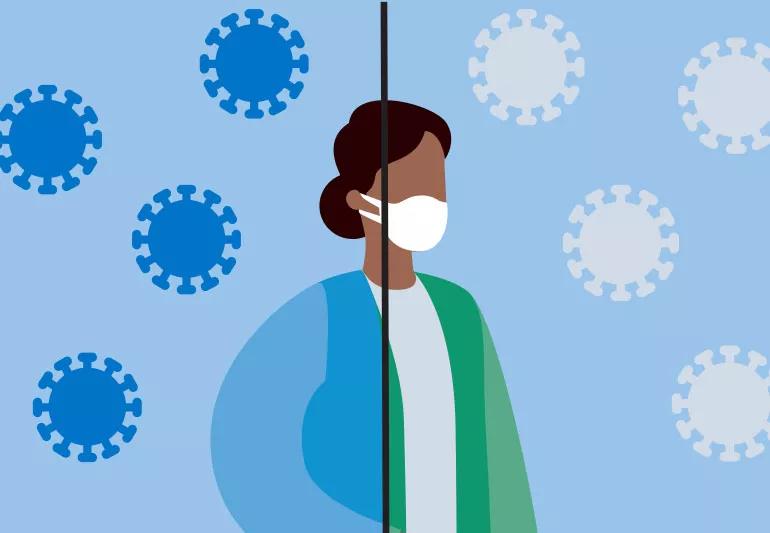
**Image content:** This image is available to view online.
View image online (https://assets.clevelandclinic.org/transform/8d197355-fabb-4383-930a-f138d1c6a6bf/getCovidTwice1-1219183600-770x533-1\_jpg)
person getting sick with covid twice
You made it through COVID-19 once and now you’re feeling invincible. Surely, you’re not going to get it again, right? Especially after you got vaccinated?
Advertisement
Cleveland Clinic is a non-profit academic medical center. Advertising on our site helps support our mission. We do not endorse non-Cleveland Clinic products or services. [Policy](https://health.clevelandclinic.org/advertising)
Sorry to be the bearer of bad news, but that’s not exactly true. Experts say you’re not in the clear just because you’ve already contracted and recovered from the virus. Breakthrough cases are possible even in previously ill people who are fully vaccinated — and, if you’ve had COVID-19 already but are *not* vaccinated, you may be at an even higher risk of getting sick again.
Pediatric infectious disease specialist [Frank Esper, MD](https://my.clevelandclinic.org/staff/22314-frank-esper?_ga=2.115050191.958318824.1606143668-1510721700.1590679053), answers your questions about COVID-19 reinfection, including how you can best protect yourself from getting the virus again.
## Why you can get COVID-19 more than once
You can get [COVID-19](https://my.clevelandclinic.org/health/diseases/21214-coronavirus-covid-19) more than once. In fact, doctors continue to see COVID-19 infections because [vaccine immunity decreases over time](https://health.clevelandclinic.org/covid-immunity), we’ve stopped being as careful as we once were and new variants are coming in stronger than previous waves of coronavirus.
“You put all four of those things together, and it’s not too surprising that we’re seeing more and more people becoming infected multiple times,” says Dr. Esper.
Here’s why those four facts matter:
- **The pandemic has been happening for a while.** In early January 2023, the U.S. [surpassed](https://www.cdc.gov/covid/) 101 million cases of COVID-19 since the start of the pandemic. “At this point, many of those infections happened months ago or more than a year ago,” Dr. Esper says. “The immunity from those initial infections begins to wane over time.”
- **Vaccine immunity diminishes with time, too.** For Americans who got vaccinated as early as winter 2021, immunity may be starting to wane, as well. This is one reason why it’s critical to receive your third booster dose.
- **We’ve stopped being as careful.** Gone are the early days of mass vigilance around safety precautions like [masking](https://health.clevelandclinic.org/a-comprehensive-guide-to-face-masks/), handwashing and social distancing — all the things that initially kept the virus at bay.
- **New variants are extra-contagious.** [COVID-19 variants](https://health.clevelandclinic.org/what-does-it-mean-that-the-coronavirus-is-mutating/) are more infectious than the first wave of coronavirus. “These variants are able to overcome some of the existing immunity people developed via vaccination or a previous infection,” Dr. Esper states.
Advertisement
### Are variants to blame for reinfections?
The U.S. Centers for Disease and Prevention (CDC) reports that the delta variant was at least twice as contagious as previous variants, and [omicron](https://health.clevelandclinic.org/omicron-covid-19-variant/) was even more contagious than delta as the dominant variant in the U.S. in 2021. Now, doctors are preparing for a [new dominant strain XBB.1.5](https://covid.cdc.gov/covid-data-tracker/#variant-proportions).
But you may be surprised to learn that the coronavirus actually doesn’t mutate nearly as much as [influenza](https://my.clevelandclinic.org/health/diseases/4335-influenza-flu), which changes nearly everything about its appearance from one year to the next. Rather, Dr. Esper says, it’s COVID-19’s contagiousness that makes it so, well, *contagious*.
“This variant’s infectiousness — including its ability to evade immune systems and prevent long-lasting immunity for those people who are infected with it — is one of the reasons why it’s been able to persist and come back,” he explains.
### How soon after a COVID-19 infection can you get it again?
Research on when you can be reinfected with COVID-19 is mixed. Some studies have suggested that after you’ve been infected with COVID-19, you may be protected from reinfection for [up to a year or more](https://pubmed.ncbi.nlm.nih.gov/35904405/). Others say immunity following recovery from COVID-19 [only lasts a few weeks](https://pubmed.ncbi.nlm.nih.gov/33589297/), if even that.
The CDC says research is ongoing to better understand how soon people can be reinfected. The good news is that if you get COVID-19 again, it’s likely to be less severe than your first time around. In fact, the general rule of viral infections is that your first time is your worst time, and that’s especially true if you’ve been vaccinated.
#### Can you get COVID-19 twice in a month?
While not likely, it’s possible to get COVID-19 twice within a 90-day period. [According to the CDC](https://www.cdc.gov/coronavirus/2019-nCoV/index.html), early reinfection within the first 90 days of initial infection is possible, though most reinfections occur after 90 days.
“It is very unlikely that someone will get re-infected within the same month. However, we do see two situations where people think they are re-infected,” says Dr. Esper. “First, some people have persistent positive covid tests. This is due to the fact that covid testing is now so highly sensitive that they can detect residual particles of covid genes/proteins even after the infection itself has gone.
Second, there are a small number of individuals who have a prolonged infection with COVID-19. We see this situation most often with people who have weakened immune systems. They can have a persistent infection with the same strain of covid for months.”
New strains can also completely replace an existing COVID-19 variant. If this happens, you can get infected with the new emergent strain soon after infection with the previous variant.
### If you get COVID-19 twice, are the symptoms the same?
Symptoms can be the same or different from one infection to the next and even between variants. Because of the wide array of symptoms associated with COVID-19 and its many variants, your symptoms can include a mix of any or all of the following:
Advertisement
- [Fever](https://my.clevelandclinic.org/health/symptoms/10880-fever) or chills.
- Cough.
- Shortness of breath or difficulty breathing.
- Extreme [fatigue](https://my.clevelandclinic.org/health/symptoms/21206-fatigue) or prolonged tiredness.
- [Brain fog](https://health.clevelandclinic.org/brain-fog/).
- Muscle or body aches.
- Headaches.
- New loss of taste or smell.
- Sore throat.
- Congestion or runny nose.
- [Nausea or vomiting](https://my.clevelandclinic.org/health/symptoms/8106-nausea--vomiting).
- [Diarrhea](https://my.clevelandclinic.org/health/diseases/4108-diarrhea).
“[Not everyone gets sick the same way](https://health.clevelandclinic.org/asymptomatic-covid). In fact, you may feel differently even when you become infected with the same germ at different times during your life. This is because it’s not just the infecting organism that causes your symptoms but also your immune response,” says Dr. Esper. “Your immune system is constantly in flux, rising and recovering as it fights off numerous pathogens we experience daily. Symptoms and severity with infections may differ based on what state our immune system is in when the next infection occurs.”
## Who’s at risk of COVID-19 reinfection?
By now, we know that anyone can get COVID-19 — the vaccinated and unvaccinated, those who’ve had it already and those who haven’t. In the same vein, anyone can get COVID-19 again.
“It’s important to note that we’re still learning a lot about reinfections and who’s at risk for those reinfections,” Dr. Esper states. But doctors do know that some people are at higher risk than others.
### Reinfection in people who are unvaccinated
Think you don’t need to get vaccinated because you’ve already had COVID-19? Think again. One [study](https://www.cdc.gov/mmwr/volumes/70/wr/mm7032e1.htm) shows that unvaccinated people are 2.34 times more likely to be reinfected with COVID-19 than those who are fully vaccinated — which drives home the importance of being vaccinated, even if you’ve already had the virus.
Advertisement
“Reports indicate that vaccination provides longer protection than natural infection,” says Dr. Esper. “This virus can overcome a person’s host immunity and cause a second infection. Almost all the severe cases that we’re seeing right now are people who have not been vaccinated.”
### Reinfection in people who are immunocompromised
People with immune issues are at an even higher risk for COVID-19 reinfection than the general public, prompting the U.S. Food and Drug Administration (FDA) to authorize booster shots of Pfizer-BioNTech’s and Moderna’s COVID-19 vaccines starting with [immunocompromised individuals](https://health.clevelandclinic.org/can-immunocompromised-get-vaccines).
“We always knew that people with immune problems were more likely to have less of a response to the vaccine and more likely to get a second infection after they got the vaccine,” Dr. Esper says. Booster shots are designed to help reduce that likelihood.
## COVID-19 vaccines work to decrease the seriousness of illness
[Breakthrough cases](https://health.clevelandclinic.org/breakthrough-covid-cases/) of COVID-19, including cases of reinfection in people who are vaccinated, aren’t a sign that the vaccine doesn’t work. Vaccines are designed to prevent an illness from reaching its worst stages should you get infected. You can think of vaccines a lot like wearing a coat of armor: Without it, you leave yourself exposed to any and all attacks at full force. With a vaccine, you’re giving your body the extra protection it needs.
Advertisement
“There is a very coordinated and concise effort against vaccines, and those people want to amplify breakthrough infections as a reason not to get vaccinated,” Dr. Esper notes. “But the safety and benefit of getting vaccinated is very, very strong, and they far outweigh the risks of getting vaccinated, which are very, very small.”
In short? Vaccination is still critical. If you’re not yet vaccinated, now is the time to get it done — for your safety and for the safety of those around you.
[](https://my.clevelandclinic.org/)[](https://my.clevelandclinic.org/)
[](https://health.clevelandclinic.org/)

## Better health starts here
Sign up for our Health Essentials emails for expert guidance on nutrition, fitness, sleep, skin care and more.
[Example email](https://assets.clevelandclinic.org/transform/2ff943a2-abb1-4a1c-8ede-f8848703e789/HealthEssentials-SampleEmail-2026)[Sign up](https://my.clevelandclinic.org/health-essentials-sign-up)
[Sign up](https://my.clevelandclinic.org/health-essentials-sign-up)[Example email](https://assets.clevelandclinic.org/transform/2ff943a2-abb1-4a1c-8ede-f8848703e789/HealthEssentials-SampleEmail-2026)
Learn more about our [editorial process](https://my.clevelandclinic.org/about/website/editorial-policy).
Health Library
COVID-19 (Coronavirus)
[What Is COVID-19?](https://my.clevelandclinic.org/health/diseases/21214-coronavirus-covid-19#what-is-covid-19)
[Symptoms and Causes](https://my.clevelandclinic.org/health/diseases/21214-coronavirus-covid-19#symptoms-and-causes)
[Diagnosis and Tests](https://my.clevelandclinic.org/health/diseases/21214-coronavirus-covid-19#diagnosis-and-tests)
[Management and Treatment](https://my.clevelandclinic.org/health/diseases/21214-coronavirus-covid-19#management-and-treatment)
[Outlook / Prognosis](https://my.clevelandclinic.org/health/diseases/21214-coronavirus-covid-19#outlook-prognosis)
Health Library
COVID-19 (Coronavirus)
[What Is COVID-19?](https://my.clevelandclinic.org/health/diseases/21214-coronavirus-covid-19#what-is-covid-19)
[Symptoms and Causes](https://my.clevelandclinic.org/health/diseases/21214-coronavirus-covid-19#symptoms-and-causes)
[Diagnosis and Tests](https://my.clevelandclinic.org/health/diseases/21214-coronavirus-covid-19#diagnosis-and-tests)
[Management and Treatment](https://my.clevelandclinic.org/health/diseases/21214-coronavirus-covid-19#management-and-treatment)
[Outlook / Prognosis](https://my.clevelandclinic.org/health/diseases/21214-coronavirus-covid-19#outlook-prognosis)
Advertisement
## Related Articles
[](https://health.clevelandclinic.org/covid-rashes)
February 5, 2026/[Infectious Disease](https://health.clevelandclinic.org/health-conditions/infectious-disease)
### [COVID Toes, COVID Rashes and Other Skin Complications: A Quick Guide](https://health.clevelandclinic.org/covid-rashes)
https://health.clevelandclinic.org/covid-rashes
Chilblain-like skin lesions and rashes are mild (and rare) complications of many viral infections, not just COVID-19
[](https://health.clevelandclinic.org/covid-guidelines)
October 3, 2025/[Infectious Disease](https://health.clevelandclinic.org/health-conditions/infectious-disease)
### [Understanding COVID-19 Guidelines](https://health.clevelandclinic.org/covid-guidelines)
https://health.clevelandclinic.org/covid-guidelines
Most can return to work or school when they’re symptom-free for 24 hours
[](https://health.clevelandclinic.org/coronavirus-tips-prevention-and-safety-for-everyday-life)
June 30, 2025/[Infectious Disease](https://health.clevelandclinic.org/health-conditions/infectious-disease)
### [Coronavirus Tips: Prevention and Safety for Everyday Life](https://health.clevelandclinic.org/coronavirus-tips-prevention-and-safety-for-everyday-life)
https://health.clevelandclinic.org/coronavirus-tips-prevention-and-safety-for-everyday-life
Covering your mouth when you cough and staying home when you’re sick are a couple ways to help keep yourself and others COVID-free
[](https://health.clevelandclinic.org/can-vitamin-d-prevent-covid-19)
May 13, 2025/[Infectious Disease](https://health.clevelandclinic.org/health-conditions/infectious-disease)
### [What To Know About Vitamin D and COVID-19](https://health.clevelandclinic.org/can-vitamin-d-prevent-covid-19)
https://health.clevelandclinic.org/can-vitamin-d-prevent-covid-19
This vital nutrient supports your health, but its role in COVID-19 prevention and treatment isn’t proven
[](https://health.clevelandclinic.org/can-melatonin-help-treat-covid-19)
November 27, 2024/[Infectious Disease](https://health.clevelandclinic.org/health-conditions/infectious-disease)
### [Can Melatonin Help Treat COVID-19?](https://health.clevelandclinic.org/can-melatonin-help-treat-covid-19)
https://health.clevelandclinic.org/can-melatonin-help-treat-covid-19
Studies have shown promising results, but additional research is needed
[](https://health.clevelandclinic.org/what-is-covid-19-voice-and-what-causes-it)
November 21, 2024/[Infectious Disease](https://health.clevelandclinic.org/health-conditions/infectious-disease)
### [How Laryngitis and COVID-19 Can Impact Your Voice](https://health.clevelandclinic.org/what-is-covid-19-voice-and-what-causes-it)
https://health.clevelandclinic.org/what-is-covid-19-voice-and-what-causes-it
Infection and inflammation can cause you to lose your voice and have other voice changes until you’re fully healed
[](https://health.clevelandclinic.org/the-link-between-covid-and-depression)
November 18, 2024/[Cold, Flu & Respiratory Illnesses](https://health.clevelandclinic.org/health-conditions/cold-flu-respiratory-illnesses)
### [Having COVID-19 May Increase Your Risk of Depression](https://health.clevelandclinic.org/the-link-between-covid-and-depression)
https://health.clevelandclinic.org/the-link-between-covid-and-depression
A COVID-19 infection can bring on depression or anxiety months after physical symptoms go away
[](https://health.clevelandclinic.org/what-does-it-mean-that-the-coronavirus-is-mutating)
November 14, 2024/[Infectious Disease](https://health.clevelandclinic.org/health-conditions/infectious-disease)
### [COVID-19 Variants: What’s New and Why We’re Still Concerned](https://health.clevelandclinic.org/what-does-it-mean-that-the-coronavirus-is-mutating)
https://health.clevelandclinic.org/what-does-it-mean-that-the-coronavirus-is-mutating
Just like the flu, COVID-19 continues to evolve every year with new and smarter variants
## Trending Topics
[](https://health.clevelandclinic.org/what-is-cali-sober)
[Mental Health](https://health.clevelandclinic.org/health-conditions/mental-health)
### [What Does It Mean To Be ‘California Sober’?](https://health.clevelandclinic.org/what-is-cali-sober)
https://health.clevelandclinic.org/what-is-cali-sober
This ‘harm reduction’ approach to sobriety involves subbing one substance for another — a method that isn’t backed by research
[](https://health.clevelandclinic.org/does-your-child-want-to-wear-makeup-5-things-you-should-know)
[Children’s Health](https://health.clevelandclinic.org/living-healthy/childrens-health)
### [Is It OK for Your Kid To Wear Makeup? 5 Things To Consider](https://health.clevelandclinic.org/does-your-child-want-to-wear-makeup-5-things-you-should-know)
https://health.clevelandclinic.org/does-your-child-want-to-wear-makeup-5-things-you-should-know
Educate your child about body image, expectations and skin care first
[](https://health.clevelandclinic.org/chlorine-rash)
[Skin Care & Beauty](https://health.clevelandclinic.org/health-conditions/skin-care-beauty)
### [Is That a Chlorine Rash? What Your Skin Is Telling You](https://health.clevelandclinic.org/chlorine-rash)
https://health.clevelandclinic.org/chlorine-rash
A true chlorine allergy is extremely rare — it’s far more likely that you have a damaged skin barrier
## Health Categories To Explore
[](https://health.clevelandclinic.org/health-conditions/brain-nervous-system)[Brain & Nervous System](https://health.clevelandclinic.org/health-conditions/brain-nervous-system)
[](https://health.clevelandclinic.org/living-healthy/childrens-health)[Children’s Health](https://health.clevelandclinic.org/living-healthy/childrens-health)
[](https://health.clevelandclinic.org/diet-food-fitness/exercise-fitness)[Exercise & Fitness](https://health.clevelandclinic.org/diet-food-fitness/exercise-fitness)
[](https://health.clevelandclinic.org/health-conditions/heart-health)[Heart Health](https://health.clevelandclinic.org/health-conditions/heart-health)
[](https://health.clevelandclinic.org/living-healthy/mens-health)[Men’s Health](https://health.clevelandclinic.org/living-healthy/mens-health)
[](https://health.clevelandclinic.org/health-conditions/mental-health)[Mental Health](https://health.clevelandclinic.org/health-conditions/mental-health)
[](https://health.clevelandclinic.org/diet-food-fitness/nutrition)[Nutrition](https://health.clevelandclinic.org/diet-food-fitness/nutrition)
[](https://health.clevelandclinic.org/health-conditions/orthopaedics)[Orthopaedics](https://health.clevelandclinic.org/health-conditions/orthopaedics)
[](https://health.clevelandclinic.org/living-healthy/primary-care)[Primary Care](https://health.clevelandclinic.org/living-healthy/primary-care)
[](https://health.clevelandclinic.org/health-conditions/skin-care-beauty)[Skin Care & Beauty](https://health.clevelandclinic.org/health-conditions/skin-care-beauty)
[](https://health.clevelandclinic.org/living-healthy/wellness)[Wellness](https://health.clevelandclinic.org/living-healthy/wellness)
[](https://health.clevelandclinic.org/living-healthy/womens-health)[Women’s Health](https://health.clevelandclinic.org/living-healthy/womens-health)
### Other Popular Categories
[Aging Well](https://health.clevelandclinic.org/living-healthy/aging-well)[Allergies](https://health.clevelandclinic.org/health-conditions/allergies)[Cancer Care & Prevention](https://health.clevelandclinic.org/health-conditions/cancer-care-prevention)[Chronic Pain](https://health.clevelandclinic.org/health-conditions/chronic-pain)[Cold, Flu & Respiratory Illnesses](https://health.clevelandclinic.org/health-conditions/cold-flu-respiratory-illnesses)[Diabetes & Endocrinology](https://health.clevelandclinic.org/health-conditions/diabetes-endocrinology)[Digestive](https://health.clevelandclinic.org/health-conditions/digestive-health)[Ear, Nose & Throat](https://health.clevelandclinic.org/health-conditions/ear-nose-throat)[Eye Care](https://health.clevelandclinic.org/health-conditions/eye-care)[Infectious Disease](https://health.clevelandclinic.org/health-conditions/infectious-disease)[Lung](https://health.clevelandclinic.org/health-conditions/lung-health)[Oral Health](https://health.clevelandclinic.org/health-conditions/oral-health)[Parenting](https://health.clevelandclinic.org/living-healthy/parenting-category)[Pregnancy & Childbirth](https://health.clevelandclinic.org/living-healthy/pregnancy-childbirth)[Recipes](https://health.clevelandclinic.org/diet-food-fitness/recipes)[Rheumatology & Immunology](https://health.clevelandclinic.org/health-conditions/rheumatology-immunology)[Senior Health](https://health.clevelandclinic.org/living-healthy/senior-health)[Sex & Relationships](https://health.clevelandclinic.org/living-healthy/sex-relationships)[Sleep](https://health.clevelandclinic.org/living-healthy/sleep)[Urinary & Kidney Health](https://health.clevelandclinic.org/health-conditions/urinary-kidney-health)[Weight Loss](https://health.clevelandclinic.org/diet-food-fitness/weight-loss)
Ad
Rendered: Mon Apr 13 2026 19:39:27 GMT+0000 (Coordinated Universal Time)
#### Cleveland Clinic
[Home](https://my.clevelandclinic.org/)[About Cleveland Clinic](https://my.clevelandclinic.org/about)[Careers at Cleveland Clinic](https://jobs.clevelandclinic.org/)[Giving](https://my.clevelandclinic.org/giving)[Community Outreach](https://my.clevelandclinic.org/about/community/government-relations)[Research & Innovations](https://my.clevelandclinic.org/research)[Health Library](https://my.clevelandclinic.org/health)[Free Health eNewsletters](https://my.clevelandclinic.org/health-essentials-newsletter?utm_medium=email&utm_source=jotform&utm_campaign=he&utm_content=signuppage)[Resources for Medical Professionals](https://my.clevelandclinic.org/professionals)[Media Relations](https://newsroom.clevelandclinic.org/)
#### Site Information & Policies
[Send Us Feedback](https://my.clevelandclinic.org/webmail)[About this Website](https://my.clevelandclinic.org/about/website)[Advertising Policy](https://health.clevelandclinic.org/advertising/)[Social Media Policy](https://my.clevelandclinic.org/about/website/social-media)[Copyright, Reprints & Licensing](https://my.clevelandclinic.org/about/website/reprints-licensing)[Website Terms of Use](https://my.clevelandclinic.org/about/website/terms-of-use)[Website Privacy Policy](https://my.clevelandclinic.org/about/website/privacy-security)[Notice of Privacy Practices](https://my.clevelandclinic.org/about/website/privacy-practices)[Non-Discrimination and Availability](https://my.clevelandclinic.org/about/website/non-discrimination-notice)
#### Resources
[Mobile Apps](https://my.clevelandclinic.org/mobile-apps)[Podcasts](https://my.clevelandclinic.org/podcasts/health-essentials)
9500 Euclid Avenue, Cleveland, Ohio 44195 \| [800\.223.2273](tel:8002232273) \| © 2026 Cleveland Clinic. All Rights Reserved. |
| Readable Markdown | You made it through COVID-19 once and now you’re feeling invincible. Surely, you’re not going to get it again, right? Especially after you got vaccinated?
Sorry to be the bearer of bad news, but that’s not exactly true. Experts say you’re not in the clear just because you’ve already contracted and recovered from the virus. Breakthrough cases are possible even in previously ill people who are fully vaccinated — and, if you’ve had COVID-19 already but are *not* vaccinated, you may be at an even higher risk of getting sick again.
Pediatric infectious disease specialist [Frank Esper, MD](https://my.clevelandclinic.org/staff/22314-frank-esper?_ga=2.115050191.958318824.1606143668-1510721700.1590679053), answers your questions about COVID-19 reinfection, including how you can best protect yourself from getting the virus again.
## Why you can get COVID-19 more than once
You can get [COVID-19](https://my.clevelandclinic.org/health/diseases/21214-coronavirus-covid-19) more than once. In fact, doctors continue to see COVID-19 infections because [vaccine immunity decreases over time](https://health.clevelandclinic.org/covid-immunity), we’ve stopped being as careful as we once were and new variants are coming in stronger than previous waves of coronavirus.
“You put all four of those things together, and it’s not too surprising that we’re seeing more and more people becoming infected multiple times,” says Dr. Esper.
Here’s why those four facts matter:
- **The pandemic has been happening for a while.** In early January 2023, the U.S. [surpassed](https://www.cdc.gov/covid/) 101 million cases of COVID-19 since the start of the pandemic. “At this point, many of those infections happened months ago or more than a year ago,” Dr. Esper says. “The immunity from those initial infections begins to wane over time.”
- **Vaccine immunity diminishes with time, too.** For Americans who got vaccinated as early as winter 2021, immunity may be starting to wane, as well. This is one reason why it’s critical to receive your third booster dose.
- **We’ve stopped being as careful.** Gone are the early days of mass vigilance around safety precautions like [masking](https://health.clevelandclinic.org/a-comprehensive-guide-to-face-masks/), handwashing and social distancing — all the things that initially kept the virus at bay.
- **New variants are extra-contagious.** [COVID-19 variants](https://health.clevelandclinic.org/what-does-it-mean-that-the-coronavirus-is-mutating/) are more infectious than the first wave of coronavirus. “These variants are able to overcome some of the existing immunity people developed via vaccination or a previous infection,” Dr. Esper states.
### Are variants to blame for reinfections?
The U.S. Centers for Disease and Prevention (CDC) reports that the delta variant was at least twice as contagious as previous variants, and [omicron](https://health.clevelandclinic.org/omicron-covid-19-variant/) was even more contagious than delta as the dominant variant in the U.S. in 2021. Now, doctors are preparing for a [new dominant strain XBB.1.5](https://covid.cdc.gov/covid-data-tracker/#variant-proportions).
But you may be surprised to learn that the coronavirus actually doesn’t mutate nearly as much as [influenza](https://my.clevelandclinic.org/health/diseases/4335-influenza-flu), which changes nearly everything about its appearance from one year to the next. Rather, Dr. Esper says, it’s COVID-19’s contagiousness that makes it so, well, *contagious*.
“This variant’s infectiousness — including its ability to evade immune systems and prevent long-lasting immunity for those people who are infected with it — is one of the reasons why it’s been able to persist and come back,” he explains.
### How soon after a COVID-19 infection can you get it again?
Research on when you can be reinfected with COVID-19 is mixed. Some studies have suggested that after you’ve been infected with COVID-19, you may be protected from reinfection for [up to a year or more](https://pubmed.ncbi.nlm.nih.gov/35904405/). Others say immunity following recovery from COVID-19 [only lasts a few weeks](https://pubmed.ncbi.nlm.nih.gov/33589297/), if even that.
The CDC says research is ongoing to better understand how soon people can be reinfected. The good news is that if you get COVID-19 again, it’s likely to be less severe than your first time around. In fact, the general rule of viral infections is that your first time is your worst time, and that’s especially true if you’ve been vaccinated.
#### Can you get COVID-19 twice in a month?
While not likely, it’s possible to get COVID-19 twice within a 90-day period. [According to the CDC](https://www.cdc.gov/coronavirus/2019-nCoV/index.html), early reinfection within the first 90 days of initial infection is possible, though most reinfections occur after 90 days.
“It is very unlikely that someone will get re-infected within the same month. However, we do see two situations where people think they are re-infected,” says Dr. Esper. “First, some people have persistent positive covid tests. This is due to the fact that covid testing is now so highly sensitive that they can detect residual particles of covid genes/proteins even after the infection itself has gone.
Second, there are a small number of individuals who have a prolonged infection with COVID-19. We see this situation most often with people who have weakened immune systems. They can have a persistent infection with the same strain of covid for months.”
New strains can also completely replace an existing COVID-19 variant. If this happens, you can get infected with the new emergent strain soon after infection with the previous variant.
### If you get COVID-19 twice, are the symptoms the same?
Symptoms can be the same or different from one infection to the next and even between variants. Because of the wide array of symptoms associated with COVID-19 and its many variants, your symptoms can include a mix of any or all of the following:
- [Fever](https://my.clevelandclinic.org/health/symptoms/10880-fever) or chills.
- Cough.
- Shortness of breath or difficulty breathing.
- Extreme [fatigue](https://my.clevelandclinic.org/health/symptoms/21206-fatigue) or prolonged tiredness.
- [Brain fog](https://health.clevelandclinic.org/brain-fog/).
- Muscle or body aches.
- Headaches.
- New loss of taste or smell.
- Sore throat.
- Congestion or runny nose.
- [Nausea or vomiting](https://my.clevelandclinic.org/health/symptoms/8106-nausea--vomiting).
- [Diarrhea](https://my.clevelandclinic.org/health/diseases/4108-diarrhea).
“[Not everyone gets sick the same way](https://health.clevelandclinic.org/asymptomatic-covid). In fact, you may feel differently even when you become infected with the same germ at different times during your life. This is because it’s not just the infecting organism that causes your symptoms but also your immune response,” says Dr. Esper. “Your immune system is constantly in flux, rising and recovering as it fights off numerous pathogens we experience daily. Symptoms and severity with infections may differ based on what state our immune system is in when the next infection occurs.”
## Who’s at risk of COVID-19 reinfection?
By now, we know that anyone can get COVID-19 — the vaccinated and unvaccinated, those who’ve had it already and those who haven’t. In the same vein, anyone can get COVID-19 again.
“It’s important to note that we’re still learning a lot about reinfections and who’s at risk for those reinfections,” Dr. Esper states. But doctors do know that some people are at higher risk than others.
### Reinfection in people who are unvaccinated
Think you don’t need to get vaccinated because you’ve already had COVID-19? Think again. One [study](https://www.cdc.gov/mmwr/volumes/70/wr/mm7032e1.htm) shows that unvaccinated people are 2.34 times more likely to be reinfected with COVID-19 than those who are fully vaccinated — which drives home the importance of being vaccinated, even if you’ve already had the virus.
“Reports indicate that vaccination provides longer protection than natural infection,” says Dr. Esper. “This virus can overcome a person’s host immunity and cause a second infection. Almost all the severe cases that we’re seeing right now are people who have not been vaccinated.”
### Reinfection in people who are immunocompromised
People with immune issues are at an even higher risk for COVID-19 reinfection than the general public, prompting the U.S. Food and Drug Administration (FDA) to authorize booster shots of Pfizer-BioNTech’s and Moderna’s COVID-19 vaccines starting with [immunocompromised individuals](https://health.clevelandclinic.org/can-immunocompromised-get-vaccines).
“We always knew that people with immune problems were more likely to have less of a response to the vaccine and more likely to get a second infection after they got the vaccine,” Dr. Esper says. Booster shots are designed to help reduce that likelihood.
## COVID-19 vaccines work to decrease the seriousness of illness
[Breakthrough cases](https://health.clevelandclinic.org/breakthrough-covid-cases/) of COVID-19, including cases of reinfection in people who are vaccinated, aren’t a sign that the vaccine doesn’t work. Vaccines are designed to prevent an illness from reaching its worst stages should you get infected. You can think of vaccines a lot like wearing a coat of armor: Without it, you leave yourself exposed to any and all attacks at full force. With a vaccine, you’re giving your body the extra protection it needs.
“There is a very coordinated and concise effort against vaccines, and those people want to amplify breakthrough infections as a reason not to get vaccinated,” Dr. Esper notes. “But the safety and benefit of getting vaccinated is very, very strong, and they far outweigh the risks of getting vaccinated, which are very, very small.”
In short? Vaccination is still critical. If you’re not yet vaccinated, now is the time to get it done — for your safety and for the safety of those around you. |
| Shard | 143 (laksa) |
| Root Hash | 9889140825964526943 |
| Unparsed URL | org,clevelandclinic!health,/can-you-get-covid-19-more-than-once s443 |