ℹ️ Skipped - page is already crawled
| Filter | Status | Condition | Details |
|---|---|---|---|
| HTTP status | PASS | download_http_code = 200 | HTTP 200 |
| Age cutoff | PASS | download_stamp > now() - 6 MONTH | 0.1 months ago |
| History drop | PASS | isNull(history_drop_reason) | No drop reason |
| Spam/ban | PASS | fh_dont_index != 1 AND ml_spam_score = 0 | ml_spam_score=0 |
| Canonical | PASS | meta_canonical IS NULL OR = '' OR = src_unparsed | Not set |
| Property | Value |
|---|---|
| URL | https://health.clevelandclinic.org/body-temperature-what-is-and-isnt-normal |
| Last Crawled | 2026-04-17 18:16:24 (3 days ago) |
| First Indexed | 2020-12-17 02:45:49 (5 years ago) |
| HTTP Status Code | 200 |
| Meta Title | What a Normal Body Temperature Is |
| Meta Description | What’s a “normal” human body temperature? That’s a little more complicated than you might think. A family medicine physician explains what can cause temperature fluctuations and when they are cause for concern. |
| Meta Canonical | null |
| Boilerpipe Text | What is a normal body temperature? That question is harder to answer than you might think.
The reality is that there isn’t one exact “normal” body temperature. Everyone has their own ordinary — and even that is more of a sliding scale than one set number throughout your lifetime.
But there are ranges and trends to body temperature and times when you need to pay close attention to the reading on a thermometer. Let’s get the details from family medicine physician
Donald Ford, MD, MBA
.
Normal body temperature range
Most people probably grew up being told a body’s normal temperature was 98.6 degrees Fahrenheit (or 37 degrees Celsius). That widely accepted number originated from a study done in the mid-1800s.
But newer studies suggest the average person today actually runs a little cooler than that — somewhere between
97.5 F
(36.4 C) and
97.9 F
(36.6 C).
So, which number is correct? Well, probably all of them, says Dr. Ford. The truth is that your body temperature can move up and down and all around — though, it usually stays within a certain window.
“Typically, anything in the range of 97 to 99 degrees Fahrenheit is considered normal,” he says. “But there are times when a perfectly healthy person might have a body temperature that’s slightly higher or slightly lower than that.”
Age and average body temperature
Your “normal” body temperature changes throughout your life. It often rises from childhood into adulthood before dipping during the later years of life. By stages, it looks like this:
For younger children
The typical body temperature range for children between birth and 10 years old goes from 95.9 F (35.5 C) to 99.5 F (37.5 C). This would be a temperature measured through an oral reading.
For adults and older children
The typical body temperature range for people ages 11 to 65 is 97.6 F (36.4 C) to 99.6 F (37.6 C).
For older adults
The typical body temperature range for people older than 65 is 96.4 F (35.8 C) to 98.5 F (36.9 C).
What makes your body temperature rise?
A temperature that’s higher than 100.4 F (or 38 C) is considered
a fever
, and it’s usually something you should bring to your doctor’s attention — especially if it lingers for more than two days, Dr. Ford says.
Oftentimes, a fever is your body’s reaction to an infection or virus (like influenza). A fever itself doesn’t require any specific treatment, other than trying to bring the temperature down for your comfort.
Persistent low-grade or high-grade fevers could signal that something else is going on in your body. A number of medical conditions, including hyperthyroidism and other endocrine disorders, can raise your body’s core temperature.
As for that gray area between a fever and the high end of a healthy temperature?
“We generally call this a ‘low-grade’ temperature,” Dr. Ford explains. “It’s certainly something to watch, but it’s hard to know the significance of this.”
Fevers in children
Young kids generally tend to push
thermometer readings
higher than adults. Their bodies haven’t yet mastered the art of regulating their body temperature, so they’re also more likely to spike fevers — and severe ones, at that.
“You may see a child that goes up to 103, 104, 105 degrees,” Dr. Ford says. “We recommend acetaminophen to try to prevent a rapid spike in temperature, which can induce some other problems.”
If your
child’s fever
doesn’t come down with fever reducers, or if an infant younger than 3 months develops a fever, call your pediatrician.
Is a low body temp bad?
Studies
show that core body temperature decreases with age.
Hypothyroidism
, or an underactive thyroid, can also slow down metabolism, which can lead to a drop in body temperature.
If your core body temperature dips down to 95 F (35 C) or lower, that’s considered
hypothermia
. It’s often caused by exposure to cold weather, but there are
other factors
that can put you at risk for hypothermia, such as age and certain medications.
Hypothermia is a medical emergency, so call 911 if you suspect you or someone has hypothermia.
The best way to take your temperature
If you take your temperature with three
different kinds of thermometers
, you might get three different results.
A thermometer that goes under the tongue will likely give you a slightly higher reading than a forehead thermometer or one that goes under your armpit. (But those kinds may be easier to use with young kids.)
Which is the most accurate? That would be a thermometer that goes under your tongue. “Testing an internal temperature is going to be more accurate than testing an external temperature,” states Dr. Ford.
A rectal thermometer, typically used with young children, would be more accurate for the same reason. A thermometer used rectally should never be used orally to avoid spreading bacteria. Keep thermometers used orally and rectally separate and clearly marked.
When should you take your temperature?
There’s usually a reason why you head to the medicine cabinet to
grab your thermometer
: Someone in the house doesn’t feel well.
“Consider that the ideal time to take your temperature given the important information the reading provides,” says Dr. Ford. “Temperature is one of your vital signs, and it’s an important indicator of your health.”
But know this: Body temperatures typically run a little lower in the morning and a bit higher in the afternoon. It also can fluctuate with menstrual cycles.
Takeaways on temperature
A healthy body is generally pretty good at keeping its temperature at a comfortable level.
“For example, if you go outside on a very cold day, you will notice that your skin temperature is going to go down but your core temperature inside will stay in the normal range,” explains Dr. Ford.
A part of your brain called the hypothalamus is responsible for this. When you get too cold, it signals your body to preserve heat by shrinking the blood vessels, and to produce heat by shivering. And when you get too hot, it signals your body to make sweat to cool off.
That’s why it’s normal for your temperature to change within a healthy range as you move through your day and your life.
“‘Normal’ is a range, and people shouldn’t get worried if their temperature is varying a little bit within that range,” Dr. Ford advises. “That doesn’t necessarily mean anything good, bad or otherwise.”
But if you have any questions or concerns about your temperature, don’t hesitate to call your healthcare provider. |
| Markdown | Locations:
[Abu Dhabi](https://www.clevelandclinicabudhabi.ae/)\|[Canada](https://my.clevelandclinic.org/canada)\|[Florida](https://my.clevelandclinic.org/florida)\|[London](https://clevelandcliniclondon.uk/)\|[Nevada](https://my.clevelandclinic.org/locations/nevada)\|[Ohio](https://my.clevelandclinic.org/)\|

- [Health Essentials](https://health.clevelandclinic.org/)
- [Health Library](https://my.clevelandclinic.org/health)
- [Find a Provider](https://my.clevelandclinic.org/providers)
- [Make an Appointment](https://my.clevelandclinic.org/patients/information/access)
- [News](https://newsroom.clevelandclinic.org/)
- [Careers](https://jobs.clevelandclinic.org/)
- [Contact Us](https://health.clevelandclinic.org/contact-us)
[](https://my.clevelandclinic.org/)[](https://my.clevelandclinic.org/)
[](https://health.clevelandclinic.org/)


Search
Advertisement
Advertisement
February 21, 2023/[Living Healthy](https://health.clevelandclinic.org/living-healthy)/[Primary Care](https://health.clevelandclinic.org/living-healthy/primary-care)
# What Is a Normal Body Temperature?
There’s no one answer, as your temperature fluctuates throughout the day and your life
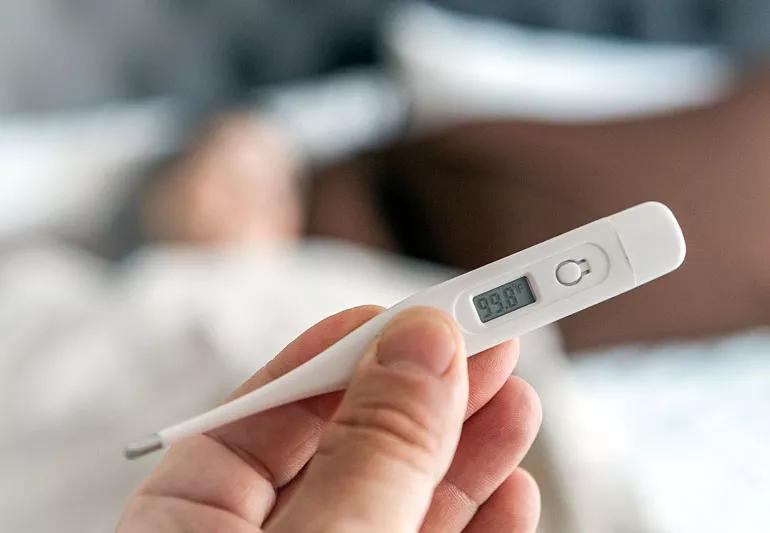
**Image content:** This image is available to view online.
View image online (https://assets.clevelandclinic.org/transform/72806642-3c54-4bd4-971d-0fb0fdba42ea/bodyTempNormal-marty-033020-770x533-1\_jpg)
checking temperature with a digital thermometer
What is a normal body temperature? That question is harder to answer than you might think.
Advertisement
Cleveland Clinic is a non-profit academic medical center. Advertising on our site helps support our mission. We do not endorse non-Cleveland Clinic products or services. [Policy](https://health.clevelandclinic.org/advertising)
The reality is that there isn’t one exact “normal” body temperature. Everyone has their own ordinary — and even that is more of a sliding scale than one set number throughout your lifetime.
But there are ranges and trends to body temperature and times when you need to pay close attention to the reading on a thermometer. Let’s get the details from family medicine physician [Donald Ford, MD, MBA](https://my.clevelandclinic.org/staff/3025-donald-ford).
## Normal body temperature range
Most people probably grew up being told a body’s normal temperature was 98.6 degrees Fahrenheit (or 37 degrees Celsius). That widely accepted number originated from a study done in the mid-1800s.
But newer studies suggest the average person today actually runs a little cooler than that — somewhere between [97\.5 F](https://elifesciences.org/articles/49555) (36.4 C) and [97\.9 F](https://www.ncbi.nlm.nih.gov/pmc/articles/PMC6456186/) (36.6 C).
So, which number is correct? Well, probably all of them, says Dr. Ford. The truth is that your body temperature can move up and down and all around — though, it usually stays within a certain window.
“Typically, anything in the range of 97 to 99 degrees Fahrenheit is considered normal,” he says. “But there are times when a perfectly healthy person might have a body temperature that’s slightly higher or slightly lower than that.”
### Age and average body temperature
Your “normal” body temperature changes throughout your life. It often rises from childhood into adulthood before dipping during the later years of life. By stages, it looks like this:
Advertisement
#### For younger children
The typical body temperature range for children between birth and 10 years old goes from 95.9 F (35.5 C) to 99.5 F (37.5 C). This would be a temperature measured through an oral reading.
#### For adults and older children
The typical body temperature range for people ages 11 to 65 is 97.6 F (36.4 C) to 99.6 F (37.6 C).
#### For older adults
The typical body temperature range for people older than 65 is 96.4 F (35.8 C) to 98.5 F (36.9 C).
## What makes your body temperature rise?
A temperature that’s higher than 100.4 F (or 38 C) is considered [a fever](https://my.clevelandclinic.org/health/symptoms/10880-fever), and it’s usually something you should bring to your doctor’s attention — especially if it lingers for more than two days, Dr. Ford says.
Oftentimes, a fever is your body’s reaction to an infection or virus (like influenza). A fever itself doesn’t require any specific treatment, other than trying to bring the temperature down for your comfort.
Persistent low-grade or high-grade fevers could signal that something else is going on in your body. A number of medical conditions, including hyperthyroidism and other endocrine disorders, can raise your body’s core temperature.
As for that gray area between a fever and the high end of a healthy temperature?
“We generally call this a ‘low-grade’ temperature,” Dr. Ford explains. “It’s certainly something to watch, but it’s hard to know the significance of this.”
### Fevers in children
Young kids generally tend to push [thermometer readings](https://health.clevelandclinic.org/thermometers-how-to-take-your-temperature/) higher than adults. Their bodies haven’t yet mastered the art of regulating their body temperature, so they’re also more likely to spike fevers — and severe ones, at that.
“You may see a child that goes up to 103, 104, 105 degrees,” Dr. Ford says. “We recommend acetaminophen to try to prevent a rapid spike in temperature, which can induce some other problems.”
If your [child’s fever](https://health.clevelandclinic.org/kids-fevers-when-to-worry-when-to-relax/) doesn’t come down with fever reducers, or if an infant younger than 3 months develops a fever, call your pediatrician.
## Is a low body temp bad?
[Studies](https://www.ncbi.nlm.nih.gov/pubmed/18705705) show that core body temperature decreases with age. [Hypothyroidism](https://my.clevelandclinic.org/health/diseases/12120-hypothyroidism), or an underactive thyroid, can also slow down metabolism, which can lead to a drop in body temperature.
If your core body temperature dips down to 95 F (35 C) or lower, that’s considered [hypothermia](https://my.clevelandclinic.org/health/diseases/21164-hypothermia-low-body-temperature). It’s often caused by exposure to cold weather, but there are [other factors](https://health.clevelandclinic.org/hypothermia-can-happen-indoors-surprising-facts/) that can put you at risk for hypothermia, such as age and certain medications.
Hypothermia is a medical emergency, so call 911 if you suspect you or someone has hypothermia.
## The best way to take your temperature
If you take your temperature with three [different kinds of thermometers](https://health.clevelandclinic.org/which-thermometer-is-best-for-taking-your-childs-temperature/), you might get three different results.
Advertisement
A thermometer that goes under the tongue will likely give you a slightly higher reading than a forehead thermometer or one that goes under your armpit. (But those kinds may be easier to use with young kids.)
Which is the most accurate? That would be a thermometer that goes under your tongue. “Testing an internal temperature is going to be more accurate than testing an external temperature,” states Dr. Ford.
A rectal thermometer, typically used with young children, would be more accurate for the same reason. A thermometer used rectally should never be used orally to avoid spreading bacteria. Keep thermometers used orally and rectally separate and clearly marked.
### When should you take your temperature?
There’s usually a reason why you head to the medicine cabinet to [grab your thermometer](https://my.clevelandclinic.org/health/articles/9959-thermometers-how-to-take-your-temperature): Someone in the house doesn’t feel well.
“Consider that the ideal time to take your temperature given the important information the reading provides,” says Dr. Ford. “Temperature is one of your vital signs, and it’s an important indicator of your health.”
But know this: Body temperatures typically run a little lower in the morning and a bit higher in the afternoon. It also can fluctuate with menstrual cycles.
## Takeaways on temperature
A healthy body is generally pretty good at keeping its temperature at a comfortable level.
Advertisement
“For example, if you go outside on a very cold day, you will notice that your skin temperature is going to go down but your core temperature inside will stay in the normal range,” explains Dr. Ford.
A part of your brain called the hypothalamus is responsible for this. When you get too cold, it signals your body to preserve heat by shrinking the blood vessels, and to produce heat by shivering. And when you get too hot, it signals your body to make sweat to cool off.
That’s why it’s normal for your temperature to change within a healthy range as you move through your day and your life.
“‘Normal’ is a range, and people shouldn’t get worried if their temperature is varying a little bit within that range,” Dr. Ford advises. “That doesn’t necessarily mean anything good, bad or otherwise.”
But if you have any questions or concerns about your temperature, don’t hesitate to call your healthcare provider.
Advertisement
[](https://my.clevelandclinic.org/)[](https://my.clevelandclinic.org/)
[](https://health.clevelandclinic.org/)

## Better health starts here
Sign up for our Health Essentials emails for expert guidance on nutrition, fitness, sleep, skin care and more.
[Example email](https://assets.clevelandclinic.org/transform/2ff943a2-abb1-4a1c-8ede-f8848703e789/HealthEssentials-SampleEmail-2026)[Sign up](https://my.clevelandclinic.org/health-essentials-sign-up)
[Sign up](https://my.clevelandclinic.org/health-essentials-sign-up)[Example email](https://assets.clevelandclinic.org/transform/2ff943a2-abb1-4a1c-8ede-f8848703e789/HealthEssentials-SampleEmail-2026)
Learn more about our [editorial process](https://my.clevelandclinic.org/about/website/editorial-policy).
Health Library
Basal Body Temperature
[Overview](https://my.clevelandclinic.org/health/articles/21065-basal-body-temperature#overview)
Health Library
Basal Body Temperature
[Overview](https://my.clevelandclinic.org/health/articles/21065-basal-body-temperature#overview)
Advertisement
## Related Articles
[](https://health.clevelandclinic.org/why-am-i-always-hot)
June 13, 2023/[Primary Care](https://health.clevelandclinic.org/living-healthy/primary-care)
### [Why Am I Always Hot?](https://health.clevelandclinic.org/why-am-i-always-hot)
https://health.clevelandclinic.org/why-am-i-always-hot
The not-so-sweet heat could be from a medical condition, menopause or even spicy foods
[](https://health.clevelandclinic.org/thermometers-how-to-take-your-temperature)
April 11, 2023/[Primary Care](https://health.clevelandclinic.org/living-healthy/primary-care)
### [Heat Check: How To Take Your Temperature](https://health.clevelandclinic.org/thermometers-how-to-take-your-temperature)
https://health.clevelandclinic.org/thermometers-how-to-take-your-temperature
You can use a digital, tympanic or temporal artery thermometer
[](https://health.clevelandclinic.org/which-thermometer-is-best-for-taking-your-childs-temperature)
September 12, 2022/[Children’s Health](https://health.clevelandclinic.org/living-healthy/childrens-health)
### [Most Accurate Thermometers for Kids](https://health.clevelandclinic.org/which-thermometer-is-best-for-taking-your-childs-temperature)
https://health.clevelandclinic.org/which-thermometer-is-best-for-taking-your-childs-temperature
Use a digital oral, rectal, axillary, ear or forehead thermometer based on your child’s age
[](https://health.clevelandclinic.org/why-does-your-body-temperature-change-as-you-age)
November 24, 2020/[Senior Health](https://health.clevelandclinic.org/living-healthy/senior-health)
### [Why Does Your Body Temperature Change as You Age?](https://health.clevelandclinic.org/why-does-your-body-temperature-change-as-you-age)
https://health.clevelandclinic.org/why-does-your-body-temperature-change-as-you-age
And 4 things you can do to combat heat and cold intolerances
[](https://health.clevelandclinic.org/are-infrared-thermometers-accurate)
June 5, 2020/[Primary Care](https://health.clevelandclinic.org/living-healthy/primary-care)
### [Are Infrared Thermometers Accurate?](https://health.clevelandclinic.org/are-infrared-thermometers-accurate)
https://health.clevelandclinic.org/are-infrared-thermometers-accurate
The short answer from a family medicine specialist
[](https://health.clevelandclinic.org/teething-signs-and-symptoms)
February 25, 2026/[Children’s Health](https://health.clevelandclinic.org/living-healthy/childrens-health)
### [Teething Doesn’t Cause Fevers — and Other Myths To Sink Your Teeth Into](https://health.clevelandclinic.org/teething-signs-and-symptoms)
https://health.clevelandclinic.org/teething-signs-and-symptoms
Most teething symptoms are mild — fevers and other major symptoms are likely something else
[](https://health.clevelandclinic.org/why-cancer-patients-should-take-fevers-seriously)
November 20, 2025/[Cancer Care & Prevention](https://health.clevelandclinic.org/health-conditions/cancer-care-prevention)
### [When You Have Cancer, Take a Fever Seriously](https://health.clevelandclinic.org/why-cancer-patients-should-take-fevers-seriously)
https://health.clevelandclinic.org/why-cancer-patients-should-take-fevers-seriously
Any fever, especially one of 100.5 degrees Fahrenheit or higher, should trigger a call to your oncologist — and maybe a trip to the ER
[](https://health.clevelandclinic.org/breaking-a-fever)
October 29, 2025/[Primary Care](https://health.clevelandclinic.org/living-healthy/primary-care)
### [Hot Tips: How To Break a Fever](https://health.clevelandclinic.org/breaking-a-fever)
https://health.clevelandclinic.org/breaking-a-fever
A combination of rest, fluids and over-the-counter medications can help you feel better fast
## Trending Topics
[](https://health.clevelandclinic.org/what-is-cali-sober)
[Mental Health](https://health.clevelandclinic.org/health-conditions/mental-health)
### [What Does It Mean To Be ‘California Sober’?](https://health.clevelandclinic.org/what-is-cali-sober)
https://health.clevelandclinic.org/what-is-cali-sober
This ‘harm reduction’ approach to sobriety involves subbing one substance for another — a method that isn’t backed by research
[](https://health.clevelandclinic.org/does-your-child-want-to-wear-makeup-5-things-you-should-know)
[Children’s Health](https://health.clevelandclinic.org/living-healthy/childrens-health)
### [Is It OK for Your Kid To Wear Makeup? 5 Things To Consider](https://health.clevelandclinic.org/does-your-child-want-to-wear-makeup-5-things-you-should-know)
https://health.clevelandclinic.org/does-your-child-want-to-wear-makeup-5-things-you-should-know
Educate your child about body image, expectations and skin care first
[](https://health.clevelandclinic.org/chlorine-rash)
[Skin Care & Beauty](https://health.clevelandclinic.org/health-conditions/skin-care-beauty)
### [Is That a Chlorine Rash? What Your Skin Is Telling You](https://health.clevelandclinic.org/chlorine-rash)
https://health.clevelandclinic.org/chlorine-rash
A true chlorine allergy is extremely rare — it’s far more likely that you have a damaged skin barrier
## Health Categories To Explore
[](https://health.clevelandclinic.org/health-conditions/brain-nervous-system)[Brain & Nervous System](https://health.clevelandclinic.org/health-conditions/brain-nervous-system)
[](https://health.clevelandclinic.org/living-healthy/childrens-health)[Children’s Health](https://health.clevelandclinic.org/living-healthy/childrens-health)
[](https://health.clevelandclinic.org/diet-food-fitness/exercise-fitness)[Exercise & Fitness](https://health.clevelandclinic.org/diet-food-fitness/exercise-fitness)
[](https://health.clevelandclinic.org/health-conditions/heart-health)[Heart Health](https://health.clevelandclinic.org/health-conditions/heart-health)
[](https://health.clevelandclinic.org/living-healthy/mens-health)[Men’s Health](https://health.clevelandclinic.org/living-healthy/mens-health)
[](https://health.clevelandclinic.org/health-conditions/mental-health)[Mental Health](https://health.clevelandclinic.org/health-conditions/mental-health)
[](https://health.clevelandclinic.org/diet-food-fitness/nutrition)[Nutrition](https://health.clevelandclinic.org/diet-food-fitness/nutrition)
[](https://health.clevelandclinic.org/health-conditions/orthopaedics)[Orthopaedics](https://health.clevelandclinic.org/health-conditions/orthopaedics)
[](https://health.clevelandclinic.org/living-healthy/primary-care)[Primary Care](https://health.clevelandclinic.org/living-healthy/primary-care)
[](https://health.clevelandclinic.org/health-conditions/skin-care-beauty)[Skin Care & Beauty](https://health.clevelandclinic.org/health-conditions/skin-care-beauty)
[](https://health.clevelandclinic.org/living-healthy/wellness)[Wellness](https://health.clevelandclinic.org/living-healthy/wellness)
[](https://health.clevelandclinic.org/living-healthy/womens-health)[Women’s Health](https://health.clevelandclinic.org/living-healthy/womens-health)
### Other Popular Categories
[Aging Well](https://health.clevelandclinic.org/living-healthy/aging-well)[Allergies](https://health.clevelandclinic.org/health-conditions/allergies)[Cancer Care & Prevention](https://health.clevelandclinic.org/health-conditions/cancer-care-prevention)[Chronic Pain](https://health.clevelandclinic.org/health-conditions/chronic-pain)[Cold, Flu & Respiratory Illnesses](https://health.clevelandclinic.org/health-conditions/cold-flu-respiratory-illnesses)[Diabetes & Endocrinology](https://health.clevelandclinic.org/health-conditions/diabetes-endocrinology)[Digestive](https://health.clevelandclinic.org/health-conditions/digestive-health)[Ear, Nose & Throat](https://health.clevelandclinic.org/health-conditions/ear-nose-throat)[Eye Care](https://health.clevelandclinic.org/health-conditions/eye-care)[Infectious Disease](https://health.clevelandclinic.org/health-conditions/infectious-disease)[Lung](https://health.clevelandclinic.org/health-conditions/lung-health)[Oral Health](https://health.clevelandclinic.org/health-conditions/oral-health)[Parenting](https://health.clevelandclinic.org/living-healthy/parenting-category)[Pregnancy & Childbirth](https://health.clevelandclinic.org/living-healthy/pregnancy-childbirth)[Recipes](https://health.clevelandclinic.org/diet-food-fitness/recipes)[Rheumatology & Immunology](https://health.clevelandclinic.org/health-conditions/rheumatology-immunology)[Senior Health](https://health.clevelandclinic.org/living-healthy/senior-health)[Sex & Relationships](https://health.clevelandclinic.org/living-healthy/sex-relationships)[Sleep](https://health.clevelandclinic.org/living-healthy/sleep)[Urinary & Kidney Health](https://health.clevelandclinic.org/health-conditions/urinary-kidney-health)[Weight Loss](https://health.clevelandclinic.org/diet-food-fitness/weight-loss)
Ad
Rendered: Wed Apr 15 2026 14:03:23 GMT+0000 (Coordinated Universal Time)
#### Cleveland Clinic
[Home](https://my.clevelandclinic.org/)[About Cleveland Clinic](https://my.clevelandclinic.org/about)[Careers at Cleveland Clinic](https://jobs.clevelandclinic.org/)[Giving](https://my.clevelandclinic.org/giving)[Community Outreach](https://my.clevelandclinic.org/about/community/government-relations)[Research & Innovations](https://my.clevelandclinic.org/research)[Health Library](https://my.clevelandclinic.org/health)[Free Health eNewsletters](https://my.clevelandclinic.org/health-essentials-newsletter?utm_medium=email&utm_source=jotform&utm_campaign=he&utm_content=signuppage)[Resources for Medical Professionals](https://my.clevelandclinic.org/professionals)[Media Relations](https://newsroom.clevelandclinic.org/)
#### Site Information & Policies
[Send Us Feedback](https://my.clevelandclinic.org/webmail)[About this Website](https://my.clevelandclinic.org/about/website)[Advertising Policy](https://health.clevelandclinic.org/advertising/)[Social Media Policy](https://my.clevelandclinic.org/about/website/social-media)[Copyright, Reprints & Licensing](https://my.clevelandclinic.org/about/website/reprints-licensing)[Website Terms of Use](https://my.clevelandclinic.org/about/website/terms-of-use)[Website Privacy Policy](https://my.clevelandclinic.org/about/website/privacy-security)[Notice of Privacy Practices](https://my.clevelandclinic.org/about/website/privacy-practices)[Non-Discrimination and Availability](https://my.clevelandclinic.org/about/website/non-discrimination-notice)
#### Resources
[Mobile Apps](https://my.clevelandclinic.org/mobile-apps)[Podcasts](https://my.clevelandclinic.org/podcasts/health-essentials)
9500 Euclid Avenue, Cleveland, Ohio 44195 \| [800\.223.2273](tel:8002232273) \| © 2026 Cleveland Clinic. All Rights Reserved. |
| Readable Markdown | What is a normal body temperature? That question is harder to answer than you might think.
The reality is that there isn’t one exact “normal” body temperature. Everyone has their own ordinary — and even that is more of a sliding scale than one set number throughout your lifetime.
But there are ranges and trends to body temperature and times when you need to pay close attention to the reading on a thermometer. Let’s get the details from family medicine physician [Donald Ford, MD, MBA](https://my.clevelandclinic.org/staff/3025-donald-ford).
## Normal body temperature range
Most people probably grew up being told a body’s normal temperature was 98.6 degrees Fahrenheit (or 37 degrees Celsius). That widely accepted number originated from a study done in the mid-1800s.
But newer studies suggest the average person today actually runs a little cooler than that — somewhere between [97\.5 F](https://elifesciences.org/articles/49555) (36.4 C) and [97\.9 F](https://www.ncbi.nlm.nih.gov/pmc/articles/PMC6456186/) (36.6 C).
So, which number is correct? Well, probably all of them, says Dr. Ford. The truth is that your body temperature can move up and down and all around — though, it usually stays within a certain window.
“Typically, anything in the range of 97 to 99 degrees Fahrenheit is considered normal,” he says. “But there are times when a perfectly healthy person might have a body temperature that’s slightly higher or slightly lower than that.”
### Age and average body temperature
Your “normal” body temperature changes throughout your life. It often rises from childhood into adulthood before dipping during the later years of life. By stages, it looks like this:
#### For younger children
The typical body temperature range for children between birth and 10 years old goes from 95.9 F (35.5 C) to 99.5 F (37.5 C). This would be a temperature measured through an oral reading.
#### For adults and older children
The typical body temperature range for people ages 11 to 65 is 97.6 F (36.4 C) to 99.6 F (37.6 C).
#### For older adults
The typical body temperature range for people older than 65 is 96.4 F (35.8 C) to 98.5 F (36.9 C).
## What makes your body temperature rise?
A temperature that’s higher than 100.4 F (or 38 C) is considered [a fever](https://my.clevelandclinic.org/health/symptoms/10880-fever), and it’s usually something you should bring to your doctor’s attention — especially if it lingers for more than two days, Dr. Ford says.
Oftentimes, a fever is your body’s reaction to an infection or virus (like influenza). A fever itself doesn’t require any specific treatment, other than trying to bring the temperature down for your comfort.
Persistent low-grade or high-grade fevers could signal that something else is going on in your body. A number of medical conditions, including hyperthyroidism and other endocrine disorders, can raise your body’s core temperature.
As for that gray area between a fever and the high end of a healthy temperature?
“We generally call this a ‘low-grade’ temperature,” Dr. Ford explains. “It’s certainly something to watch, but it’s hard to know the significance of this.”
### Fevers in children
Young kids generally tend to push [thermometer readings](https://health.clevelandclinic.org/thermometers-how-to-take-your-temperature/) higher than adults. Their bodies haven’t yet mastered the art of regulating their body temperature, so they’re also more likely to spike fevers — and severe ones, at that.
“You may see a child that goes up to 103, 104, 105 degrees,” Dr. Ford says. “We recommend acetaminophen to try to prevent a rapid spike in temperature, which can induce some other problems.”
If your [child’s fever](https://health.clevelandclinic.org/kids-fevers-when-to-worry-when-to-relax/) doesn’t come down with fever reducers, or if an infant younger than 3 months develops a fever, call your pediatrician.
## Is a low body temp bad?
[Studies](https://www.ncbi.nlm.nih.gov/pubmed/18705705) show that core body temperature decreases with age. [Hypothyroidism](https://my.clevelandclinic.org/health/diseases/12120-hypothyroidism), or an underactive thyroid, can also slow down metabolism, which can lead to a drop in body temperature.
If your core body temperature dips down to 95 F (35 C) or lower, that’s considered [hypothermia](https://my.clevelandclinic.org/health/diseases/21164-hypothermia-low-body-temperature). It’s often caused by exposure to cold weather, but there are [other factors](https://health.clevelandclinic.org/hypothermia-can-happen-indoors-surprising-facts/) that can put you at risk for hypothermia, such as age and certain medications.
Hypothermia is a medical emergency, so call 911 if you suspect you or someone has hypothermia.
## The best way to take your temperature
If you take your temperature with three [different kinds of thermometers](https://health.clevelandclinic.org/which-thermometer-is-best-for-taking-your-childs-temperature/), you might get three different results.
A thermometer that goes under the tongue will likely give you a slightly higher reading than a forehead thermometer or one that goes under your armpit. (But those kinds may be easier to use with young kids.)
Which is the most accurate? That would be a thermometer that goes under your tongue. “Testing an internal temperature is going to be more accurate than testing an external temperature,” states Dr. Ford.
A rectal thermometer, typically used with young children, would be more accurate for the same reason. A thermometer used rectally should never be used orally to avoid spreading bacteria. Keep thermometers used orally and rectally separate and clearly marked.
### When should you take your temperature?
There’s usually a reason why you head to the medicine cabinet to [grab your thermometer](https://my.clevelandclinic.org/health/articles/9959-thermometers-how-to-take-your-temperature): Someone in the house doesn’t feel well.
“Consider that the ideal time to take your temperature given the important information the reading provides,” says Dr. Ford. “Temperature is one of your vital signs, and it’s an important indicator of your health.”
But know this: Body temperatures typically run a little lower in the morning and a bit higher in the afternoon. It also can fluctuate with menstrual cycles.
## Takeaways on temperature
A healthy body is generally pretty good at keeping its temperature at a comfortable level.
“For example, if you go outside on a very cold day, you will notice that your skin temperature is going to go down but your core temperature inside will stay in the normal range,” explains Dr. Ford.
A part of your brain called the hypothalamus is responsible for this. When you get too cold, it signals your body to preserve heat by shrinking the blood vessels, and to produce heat by shivering. And when you get too hot, it signals your body to make sweat to cool off.
That’s why it’s normal for your temperature to change within a healthy range as you move through your day and your life.
“‘Normal’ is a range, and people shouldn’t get worried if their temperature is varying a little bit within that range,” Dr. Ford advises. “That doesn’t necessarily mean anything good, bad or otherwise.”
But if you have any questions or concerns about your temperature, don’t hesitate to call your healthcare provider. |
| Shard | 143 (laksa) |
| Root Hash | 9889140825964526943 |
| Unparsed URL | org,clevelandclinic!health,/body-temperature-what-is-and-isnt-normal s443 |