ℹ️ Skipped - page is already crawled
| Filter | Status | Condition | Details |
|---|---|---|---|
| HTTP status | PASS | download_http_code = 200 | HTTP 200 |
| Age cutoff | PASS | download_stamp > now() - 6 MONTH | 0.1 months ago |
| History drop | PASS | isNull(history_drop_reason) | No drop reason |
| Spam/ban | PASS | fh_dont_index != 1 AND ml_spam_score = 0 | ml_spam_score=0 |
| Canonical | PASS | meta_canonical IS NULL OR = '' OR = src_unparsed | Not set |
| Property | Value |
|---|---|
| URL | https://familystylefood.com/how-to-cook-pasta/ |
| Last Crawled | 2026-04-13 00:53:42 (3 days ago) |
| First Indexed | 2022-06-30 19:03:18 (3 years ago) |
| HTTP Status Code | 200 |
| Meta Title | Masterclass: How to Cook Pasta Like a Pro - Familystyle Food |
| Meta Description | Learn the three basic steps for how to cook pasta start to finish, with pro techniques for cooking times, salting pasta water and pot size. |
| Meta Canonical | null |
| Boilerpipe Text | This post may contain affiliate links. Please read
my disclosure policy.
Welcome to cooking pasta 101! Read on to learn the three basic steps for cooking pasta start to finish, and my tried-and-true pro techniques for how to cook perfect pasta at home, every time!
Learn the best basic technique for cooking perfect pasta.
You might assume that cooking pasta doesn’t require a whole tutorial. I mean it’s basically boiling water, right?! The truth is that it’s
not
complicated to master the art of cooking pasta. But like anything, if you want awesome results, it’s all about the details!
I’m sharing
my easy-to-execute “secrets” because I believe
everyone
should know the basics of cooking dried pasta correctly. It’s a life skill, right up there with riding a bike.
Pasta was a cornerstone dish in my Italian-American family. The process of properly cooking pasta is totally ingrained in me, passed on from my mother and grandmothers. My first baby food was a tiny type of pasta (pastina) that was mixed with milk and butter to make a creamy cereal.
In other words, pasta is my life. I worked in Italian restaurants, and the draft of my first cookbook focused on pantry pasta dishes.
Fresh versus dried pasta
This tutorial is about cooking extruded, dried pasta, including
long pasta shapes
or
short types of pasta
made with durum wheat flour and water. On the other hand, fresh pasta is made with eggs and the cooking steps are different.
Tip:
Buy
high-quality dried pasta
. Pasta that has been cut with bronze dies has a wonderful rough texture, which is the BEST for catching sauce. Good pasta in hand, you’re already halfway to making the best pasta ever.
Look for dried pasta that’s bronze cut and made from durum semolina flour.
Cook perfect pasta with these 3 golden rules
Water volume:
The ideal amount of water for cooking pasta
Salt quantity:
The best salt ratio for tasty pasta
Cooking time:
Time chart for different pasta shapes
#1: Use the correct amount of water
No matter the pasta shape, to cook up to a pound of pasta, you need lots of water — at least 4 quarts (1 gallon).
Pick a large, deep pot that holds 4-6 quarts.
Pot size
The best type of pot for cooking pasta is large and deep. The size matters because there needs to be enough capacity to allow the pasta to submerge fully and move freely in the pot while it cooks. This prevents the pasta from clumping and sticking together, ensuring each piece of pasta cooks evenly.
The perfect size large pot to use to cook pasta is 5-6 quarts for every pound of pasta
. This amount serves 4-6 people. If you’re doubling a recipe or regularly cooking for a larger crowd, an 8-10 quart pot will work best.
Use a
basic stainless steel pot
or coated aluminum pot with a lid that has at least a 5-quart capacity. Add 4 quarts of cold tap water and bring to a full rolling bowl over high heat.
I don’t recommend using a heavy pot like a Dutch oven
to boil pasta. Not only does it take twice as long to bring water to a boil in a cast iron pot, but when it’s full of water AND pasta the pot is very heavy (exceeding 20 pounds)! You could sprain your wrists lugging that thing to the sink to drain :-O
Save your beautiful pot for cooking an old-school pasta sauce or making
slow-cooked red wine short ribs.
Properly salting pasta cooking water is key!
#2: Salting Pasta Water
Salt is the
absolute key
to delicious, perfectly cooked pasta. You might have heard that you should salt your pasta water so that it tastes like the sea, which is only a slight exaggeration.
For cooking pasta, the perfect ratio of salt to water
is 1 tablespoon kosher salt or coarse sea salt per quart of water. *Note that if you have regular table salt, reduce the total amount to 2 teaspoons per quart — it’s
a “saltier” salt
compared to kosher salt.
It might seem like a lot of sodium, but just enough salt is absorbed into the pasta, which makes it taste good. Restaurant chefs often use
double
that amount. Remember that you’re not actually consuming all that salt — it’s diluted with water, most of which is drained off.
Another thing to remember is that a portion of the starchy pasta water often becomes part of your finished sauce, so you want it to taste seasoned and full of flavor.
Bring the pot of water to a full boil
before
adding salt. It will dissolve faster and you’ll avoid damaging your pot. If you add salt before the water reaches a boil, the grains of salt can settle in the bottom and cause pitting in the metal.
Perfectly cooked pasta is delicious with simply butter and cheese.
#3: Pasta Cooking Time
Different pasta shapes and brands will have different cooking times — it’s not one size fits all. What you’re going for is that all-important al dente texture.
Cooking directions on the box can be inaccurate, so instead of setting a clock and walking away, I encourage you to follow your senses. Taste early (about 3 minutes into cooking time) and often.
Basic Pasta Cooking Times:
Check package directions and be sure to taste-test! Refer to this
chart of common pasta types
to get a general guideline of pasta cooking times:
Spaghetti + Linguine
: 8-10 minutes
Bucatini
: 10-12 minutes
Angel Hair + Capellini:
4-6 minutes
Penne + Ziti:
6-8 minutes
Farfalle (Bowties) + Shells
: 8-10 minutes
Rigatoni:
11-13 minutes
Orecchiette
: 12-15 minutes
Fusilli + Rotini Noodles:
8-10 minutes
Pappardelle + Fettuccine:
6-8 minutes
Al dente pasta,
which literally means “to the tooth,” has a springy texture when you take a bite. If you break open a piece of perfectly cooked pasta, you should see a core of lighter yellow inside.
The trick to achieving that elusive al dente doneness is to taste the pasta as it cooks. Practice slightly undercooking pasta because it will continue to cook in the moments after you drain it and add your sauce.
I often take the pot off the heat a minute or two before it’s done, allowing the pasta to finish cooking in the the hot water while I multitask in the kitchen.
Karen Tedesco
How to cook pasta, 101! Learn the basic steps for cooking pasta from start to finish, with pro techniques for cooking times, salting pasta water and equipment.
Cook Time
15
minutes
Total Time
15
minutes
Course
Pasta
Cuisine
Italian
Servings
6
servings
Yield: One pound pasta, enough for 4-6 people as a main course
▢
4
quarts
cold tap water
▢
¼
cup
kosher salt
,
use half the amount (2 tablespoons) if using table salt
▢
1
pound
dried pasta
Bring the water to a rolling boil in a 5-6 quart tall pot. Add the salt and stir it in to dissolve.
Add the pasta to the pot and stir. Bring the water back to a boil, then adjust the heat to a lively simmer. Cook the pasta uncovered until al dente (use the time chart above as a guideline), stirring it frequently. Use a slotted spoon to sample the pasta for doneness as it cooks.
Before draining, scoop out some of the pasta cooking water and reserve for your sauce recipe, if needed. The starchy water helps "marry" the pasta with the sauce.
Transfer the pasta to a pan or serving bowl and combine with your sauce. Serve hot pasta right away!
Before draining, scoop out and reserve the pasta water to add to your sauce recipe.
Toss hot pasta with sauce (such as
Easy Homemade Marinara
) and serve immediately.
If you’re prepping pasta for a baked dish such as mac and cheese, parboil the pasta, which means partially cooking it by reducing the cook time by half.
To use cooked pasta in a cold pasta salad, cook as directed. Drain (don’t rinse) and spread the pasta on a sheet pan or baking dish. Drizzle with enough olive oil to coat, and allow to cool, stirring it occasionally to keep it from sticking together. Transfer to a container, add the salad dressing and refrigerate.
Don’t rinse cooked pasta. All that precious starch that binds or “marries” the pasta with the sauce should not go down the drain.
Do you need to add oil to boiling pasta to keep it from getting sticky? No, please don’t! Oil creates a slick layer that prevents sauce from sticking to the surface of the pasta. If anything it’s a waste of good olive oil. Just use enough boiling water as directed and stir, stir.
If you’re cooking for guests or dinner party, have your sauce ready, then cook the pasta just before serving. Hot pasta waits for no one!
Calories:
280
kcal
Carbohydrates:
56
g
Protein:
10
g
Fat:
1
g
Sodium:
400
mg
Fiber:
2
g
Sugar:
2
g
Nutrition facts are calculated by third-party software. If you have specific dietary needs, please refer to your favorite calculator. |
| Markdown | [Skip to content](https://familystylefood.com/how-to-cook-pasta/#main)
[](https://familystylefood.com/)
- [Dinner Recipes](https://familystylefood.com/recipe-index/)
- [Dinner](https://familystylefood.com/category/dinner/)
- [Chicken](https://familystylefood.com/category/dinner/chicken-recipes/)
- [Turkey](https://familystylefood.com/category/turkey/)
- [Meat](https://familystylefood.com/category/dinner/meat-recipes/)
- [Pasta](https://familystylefood.com/category/dinner/pasta-recipes/)
- [Vegetarian and Vegan](https://familystylefood.com/category/diet/vegetarian-vegan/)
- [30 Minute Recipes](https://familystylefood.com/category/quick-recipes/)
- [Salad](https://familystylefood.com/category/salad-recipes/)
- [Soup and Stew](https://familystylefood.com/category/soup-recipes/)
- [About Familystyle Food](https://familystylefood.com/about/)
- [Meet Karen](https://familystylefood.com/karen-tedesco/)
- [Press](https://familystylefood.com/about/media/)
- [Contact](https://familystylefood.com/contact/)
- [My Cookbook](https://familystylefood.com/the-family-style-cookbook/)
- [Shop](https://www.amazon.com/shop/familystylefood)
[](https://familystylefood.com/)
[Home](https://familystylefood.com/) - [Dinner](https://familystylefood.com/category/dinner/) - [Pasta](https://familystylefood.com/category/dinner/pasta-recipes/) - How to Cook Dried Pasta
# How to Cook Dried Pasta
By [Karen Tedesco](https://familystylefood.com/karen-tedesco/ "Visit Karen Tedesco’s website") — Updated September 27, 2025
5 from 10 ratings
[Jump to Recipe](https://familystylefood.com/how-to-cook-pasta/#wprm-recipe-container-87027)[How to make](https://familystylefood.com/how-to-cook-pasta/#step-by-step)
*This post may contain affiliate links. Please read [my disclosure policy.](https://familystylefood.com/about/privacy-policy/)*

Welcome to cooking pasta 101! Read on to learn the three basic steps for cooking pasta start to finish, and my tried-and-true pro techniques for how to cook perfect pasta at home, every time\!

Learn the best basic technique for cooking perfect pasta.
You might assume that cooking pasta doesn’t require a whole tutorial. I mean it’s basically boiling water, right?! The truth is that it’s *not* complicated to master the art of cooking pasta. But like anything, if you want awesome results, it’s all about the details\!
**I’m sharing** my easy-to-execute “secrets” because I believe *everyone* should know the basics of cooking dried pasta correctly. It’s a life skill, right up there with riding a bike.
Pasta was a cornerstone dish in my Italian-American family. The process of properly cooking pasta is totally ingrained in me, passed on from my mother and grandmothers. My first baby food was a tiny type of pasta (pastina) that was mixed with milk and butter to make a creamy cereal.
In other words, pasta is my life. I worked in Italian restaurants, and the draft of my first cookbook focused on pantry pasta dishes.
## Fresh versus dried pasta
This tutorial is about cooking extruded, dried pasta, including [**long pasta shapes**](https://familystylefood.com/12-long-types-of-pasta-to-try/) or [**short types of pasta**](https://familystylefood.com/best-short-pasta-shapes/) made with durum wheat flour and water. On the other hand, fresh pasta is made with eggs and the cooking steps are different.
**Tip:** Buy **high-quality dried pasta**. Pasta that has been cut with bronze dies has a wonderful rough texture, which is the BEST for catching sauce. Good pasta in hand, you’re already halfway to making the best pasta ever.

Look for dried pasta that’s bronze cut and made from durum semolina flour.
## Cook perfect pasta with these 3 golden rules
1. **Water volume:** The ideal amount of water for cooking pasta
2. **Salt quantity:** The best salt ratio for tasty pasta
3. **Cooking time:** Time chart for different pasta shapes
## \#1: Use the correct amount of water
- No matter the pasta shape, to cook up to a pound of pasta, you need lots of water — at least 4 quarts (1 gallon).

Pick a large, deep pot that holds 4-6 quarts.
## Pot size
The best type of pot for cooking pasta is large and deep. The size matters because there needs to be enough capacity to allow the pasta to submerge fully and move freely in the pot while it cooks. This prevents the pasta from clumping and sticking together, ensuring each piece of pasta cooks evenly.
- **The perfect size large pot to use to cook pasta is 5-6 quarts for every pound of pasta**. This amount serves 4-6 people. If you’re doubling a recipe or regularly cooking for a larger crowd, an 8-10 quart pot will work best.
Use a **[basic stainless steel pot](https://amzn.to/3NAk73r)** or coated aluminum pot with a lid that has at least a 5-quart capacity. Add 4 quarts of cold tap water and bring to a full rolling bowl over high heat.
**I don’t recommend using a heavy pot like a Dutch oven** to boil pasta. Not only does it take twice as long to bring water to a boil in a cast iron pot, but when it’s full of water AND pasta the pot is very heavy (exceeding 20 pounds)! You could sprain your wrists lugging that thing to the sink to drain :-O
Save your beautiful pot for cooking an old-school pasta sauce or making [**slow-cooked red wine short ribs.**](https://familystylefood.com/simplest-red-wine-braised-beef-short-ribs-creamy-polenta/)

Properly salting pasta cooking water is key\!
## \#2: Salting Pasta Water
Salt is the *absolute key* to delicious, perfectly cooked pasta. You might have heard that you should salt your pasta water so that it tastes like the sea, which is only a slight exaggeration.
**For cooking pasta, the perfect ratio of salt to water** is 1 tablespoon kosher salt or coarse sea salt per quart of water. \*Note that if you have regular table salt, reduce the total amount to 2 teaspoons per quart — it’s [**a “saltier” salt**](https://familystylefood.com/resources/pantry-flavors/#salt) compared to kosher salt.
- It might seem like a lot of sodium, but just enough salt is absorbed into the pasta, which makes it taste good. Restaurant chefs often use *double* that amount. Remember that you’re not actually consuming all that salt — it’s diluted with water, most of which is drained off.
- Another thing to remember is that a portion of the starchy pasta water often becomes part of your finished sauce, so you want it to taste seasoned and full of flavor.
- Bring the pot of water to a full boil **before** adding salt. It will dissolve faster and you’ll avoid damaging your pot. If you add salt before the water reaches a boil, the grains of salt can settle in the bottom and cause pitting in the metal.

Perfectly cooked pasta is delicious with simply butter and cheese.
## \#3: Pasta Cooking Time
- Different pasta shapes and brands will have different cooking times — it’s not one size fits all. What you’re going for is that all-important al dente texture.
- Cooking directions on the box can be inaccurate, so instead of setting a clock and walking away, I encourage you to follow your senses. Taste early (about 3 minutes into cooking time) and often.
# Basic Pasta Cooking Times:
Check package directions and be sure to taste-test! Refer to this **chart of common pasta types** to get a general guideline of pasta cooking times:
- **Spaghetti + Linguine**: 8-10 minutes
- **Bucatini**: 10-12 minutes
- **Angel Hair + Capellini:** 4-6 minutes
- **Penne + Ziti:** 6-8 minutes
- **Farfalle (Bowties) + Shells**: 8-10 minutes
- **Rigatoni:** 11-13 minutes
- **Orecchiette**: 12-15 minutes
- **Fusilli + Rotini Noodles:** 8-10 minutes
- **Pappardelle + Fettuccine:** 6-8 minutes
**Al dente pasta,** which literally means “to the tooth,” has a springy texture when you take a bite. If you break open a piece of perfectly cooked pasta, you should see a core of lighter yellow inside.
The trick to achieving that elusive al dente doneness is to taste the pasta as it cooks. Practice slightly undercooking pasta because it will continue to cook in the moments after you drain it and add your sauce.
I often take the pot off the heat a minute or two before it’s done, allowing the pasta to finish cooking in the the hot water while I multitask in the kitchen.


## How to Cook Pasta Like a Pro
[Karen Tedesco](https://familystylefood.com/karen-tedesco/)
How to cook pasta, 101! Learn the basic steps for cooking pasta from start to finish, with pro techniques for cooking times, salting pasta water and equipment.
[Print](https://familystylefood.com/wprm_print/how-to-cook-pasta-like-a-pro) [Save](https://familystylefood.com/how-to-cook-pasta/)[Saved](https://familystylefood.com/how-to-cook-pasta/)
5 from 10 ratings
Cook Time 15 minutes mins
Total Time 15 minutes mins
Course Pasta
Cuisine Italian
Servings 6 servings
Cook Mode
Prevent your screen from going dark
## Equipment
[Colander](https://amzn.to/3OAAHBU)
[5-6 quart pot](https://amzn.to/3NAk73r)
## Recipe Video
## Ingredients
#### Yield: One pound pasta, enough for 4-6 people as a main course
- ▢
4 quarts cold tap water
- ▢
¼ cup kosher salt, use half the amount (2 tablespoons) if using table salt
- ▢
1 pound dried pasta
## Instructions
- Bring the water to a rolling boil in a 5-6 quart tall pot. Add the salt and stir it in to dissolve.
- Add the pasta to the pot and stir. Bring the water back to a boil, then adjust the heat to a lively simmer. Cook the pasta uncovered until al dente (use the time chart above as a guideline), stirring it frequently. Use a slotted spoon to sample the pasta for doneness as it cooks.
- Before draining, scoop out some of the pasta cooking water and reserve for your sauce recipe, if needed. The starchy water helps "marry" the pasta with the sauce.
- Transfer the pasta to a pan or serving bowl and combine with your sauce. Serve hot pasta right away\!
## Karen’s Notes and Tips
- Before draining, scoop out and reserve the pasta water to add to your sauce recipe.
- Toss hot pasta with sauce (such as [**Easy Homemade Marinara**](https://familystylefood.com/make-easy-homemade-marinara-sauce/)) and serve immediately.
- If you’re prepping pasta for a baked dish such as mac and cheese, parboil the pasta, which means partially cooking it by reducing the cook time by half.
- To use cooked pasta in a cold pasta salad, cook as directed. Drain (don’t rinse) and spread the pasta on a sheet pan or baking dish. Drizzle with enough olive oil to coat, and allow to cool, stirring it occasionally to keep it from sticking together. Transfer to a container, add the salad dressing and refrigerate.
- Don’t rinse cooked pasta. All that precious starch that binds or “marries” the pasta with the sauce should not go down the drain.
- Do you need to add oil to boiling pasta to keep it from getting sticky? No, please don’t! Oil creates a slick layer that prevents sauce from sticking to the surface of the pasta. If anything it’s a waste of good olive oil. Just use enough boiling water as directed and stir, stir.
- If you’re cooking for guests or dinner party, have your sauce ready, then cook the pasta just before serving. Hot pasta waits for no one\!
## Nutrition per serving
Calories: 280kcal Carbohydrates: 56g Protein: 10g Fat: 1g Sodium: 400mg Fiber: 2g Sugar: 2g
Nutrition facts are calculated by third-party software. If you have specific dietary needs, please refer to your favorite calculator.
[Save to Pinterest](https://www.pinterest.com/pin/create/bookmarklet/?url=https%3A%2F%2Ffamilystylefood.com%2Fhow-to-cook-pasta%2F&media=https%3A%2F%2Ffamilystylefood.com%2Fwp-content%2Fuploads%2F2022%2F06%2FHow-to-cook-pasta-.jpg&description=How+to+Cook+Pasta+Like+a+Pro&is_video=false)
[Email](mailto:?subject=Check%20out%20this%20recipe%21&body=I%20found%20this%20recipe%20you%20might%20like%3A%0A%0AHow%20to%20Cook%20Pasta%20Like%20a%20Pro%0Ahttps%3A%2F%2Ffamilystylefood.com%2Fhow-to-cook-pasta%2F)
- [Pasta](https://familystylefood.com/category/dinner/pasta-recipes/)

## Hey, I’m Karen
##### Creator of Familystyle Food
***
I’m a food obsessed super-taster and professionally trained cook ALL about creating elevated dinners with everyday ingredients. Find [**simplified recipes made from scratch**](https://familystylefood.com/recipe-index/) and enjoy incredibly tasty food! [**Read more about me here**.](https://familystylefood.com/karen-tedesco/)
## Post navigation
[PreviousZesty Puttanesca Pasta Sauce](https://familystylefood.com/puttanesca-sauce-recipe/)
[NextFresh Raw Tomato Sauce](https://familystylefood.com/easy-fresh-tomato-sauce/)
5 from 10 votes ([8 ratings without comment](https://familystylefood.com/how-to-cook-pasta/))
### Leave a comment and star rating [Cancel reply](https://familystylefood.com/how-to-cook-pasta/#respond)
This site uses Akismet to reduce spam. [Learn how your comment data is processed.](https://akismet.com/privacy/)
## 3 Comments
1. **Jeff Hansen** says:
[at](https://familystylefood.com/how-to-cook-pasta/#comment-198112)

Why not use a plastic collander?
[Reply](https://familystylefood.com/how-to-cook-pasta/#comment-198112)
1. **[Karen Tedesco](https://familystylefood.com/about)** says:
[at](https://familystylefood.com/how-to-cook-pasta/#comment-198113)
Hi Jeff: That’s a great question! I don’t recommend plastic colanders to drain pasta because depending on the quality, the plastic can melt from the high temperature of the boiling water and become degraded.
[Reply](https://familystylefood.com/how-to-cook-pasta/#comment-198113)
2. **Liza** says:
[at](https://familystylefood.com/how-to-cook-pasta/#comment-174355)

This is SOOOOO helpful — all the things I TRY to remember when making pasta, all in one place. I am bookmarking this one! Thank you\!
[Reply](https://familystylefood.com/how-to-cook-pasta/#comment-174355)
##
- [](https://familystylefood.com/ricotta-cheese-lasagna/)
[Classic Cheese Lasagna](https://familystylefood.com/ricotta-cheese-lasagna/)
- [](https://familystylefood.com/luscious-homemade-fettuccine-alfredo/)
[My Best Fettuccine Alfredo](https://familystylefood.com/luscious-homemade-fettuccine-alfredo/)
- [](https://familystylefood.com/classic-italian-meatballs-2/)
[Classic Italian Meatballs](https://familystylefood.com/classic-italian-meatballs-2/)
- [](https://familystylefood.com/sauteed-oyster-mushrooms/)
[Sautéed Oyster Mushrooms](https://familystylefood.com/sauteed-oyster-mushrooms/)
- [](https://familystylefood.com/baked-boneless-chicken-thighs/)
[Baked Chicken Thighs](https://familystylefood.com/baked-boneless-chicken-thighs/)
- [](https://familystylefood.com/provencal-beef-stew-slow-food-french-style/)
[French Beef Stew](https://familystylefood.com/provencal-beef-stew-slow-food-french-style/)
- [Editorial Policy](https://familystylefood.com/editorial-policy/)
- [Privacy Policy](https://familystylefood.com/about/privacy-policy/)
- [Permissions](https://familystylefood.com/resources/photography/permissions-and-copyright/)
- [About Familystyle Food](https://familystylefood.com/about/)
[Facebook](https://www.facebook.com/familystylefood/)
[Instagram](https://www.instagram.com/familystylefood/)
[Pinterest](https://pin.it/3rx7lFf)
[YouTube](https://www.youtube.com/channel/UCsDuW_dQNN1yqk7BMXO7Gew)
© 2026 Familystyle Food. All Rights Reserved.
Familystyle Food is a registered trademark of Dinnerstyle LLC.
As an Amazon affiliate I earn from qualifying purchases
- [Dinner Recipes](https://familystylefood.com/recipe-index/)
Toggle child menu
- [Dinner](https://familystylefood.com/category/dinner/)
Toggle child menu
- [Chicken](https://familystylefood.com/category/dinner/chicken-recipes/)
- [Turkey](https://familystylefood.com/category/turkey/)
- [Meat](https://familystylefood.com/category/dinner/meat-recipes/)
- [Pasta](https://familystylefood.com/category/dinner/pasta-recipes/)
- [Vegetarian and Vegan](https://familystylefood.com/category/diet/vegetarian-vegan/)
- [30 Minute Recipes](https://familystylefood.com/category/quick-recipes/)
- [Salad](https://familystylefood.com/category/salad-recipes/)
- [Soup and Stew](https://familystylefood.com/category/soup-recipes/)
- [About Familystyle Food](https://familystylefood.com/about/)
Toggle child menu
- [Meet Karen](https://familystylefood.com/karen-tedesco/)
- [Press](https://familystylefood.com/about/media/)
- [Contact](https://familystylefood.com/contact/)
- [My Cookbook](https://familystylefood.com/the-family-style-cookbook/)
- [Shop](https://www.amazon.com/shop/familystylefood)
## Rate This Recipe
## Recipe Ratings without Comment
Something went wrong. Please try again. |
| Readable Markdown | *This post may contain affiliate links. Please read [my disclosure policy.](https://familystylefood.com/about/privacy-policy/)*
Welcome to cooking pasta 101! Read on to learn the three basic steps for cooking pasta start to finish, and my tried-and-true pro techniques for how to cook perfect pasta at home, every time\!

Learn the best basic technique for cooking perfect pasta.
You might assume that cooking pasta doesn’t require a whole tutorial. I mean it’s basically boiling water, right?! The truth is that it’s *not* complicated to master the art of cooking pasta. But like anything, if you want awesome results, it’s all about the details\!
**I’m sharing** my easy-to-execute “secrets” because I believe *everyone* should know the basics of cooking dried pasta correctly. It’s a life skill, right up there with riding a bike.
Pasta was a cornerstone dish in my Italian-American family. The process of properly cooking pasta is totally ingrained in me, passed on from my mother and grandmothers. My first baby food was a tiny type of pasta (pastina) that was mixed with milk and butter to make a creamy cereal.
In other words, pasta is my life. I worked in Italian restaurants, and the draft of my first cookbook focused on pantry pasta dishes.
## Fresh versus dried pasta
This tutorial is about cooking extruded, dried pasta, including [**long pasta shapes**](https://familystylefood.com/12-long-types-of-pasta-to-try/) or [**short types of pasta**](https://familystylefood.com/best-short-pasta-shapes/) made with durum wheat flour and water. On the other hand, fresh pasta is made with eggs and the cooking steps are different.
**Tip:** Buy **high-quality dried pasta**. Pasta that has been cut with bronze dies has a wonderful rough texture, which is the BEST for catching sauce. Good pasta in hand, you’re already halfway to making the best pasta ever.
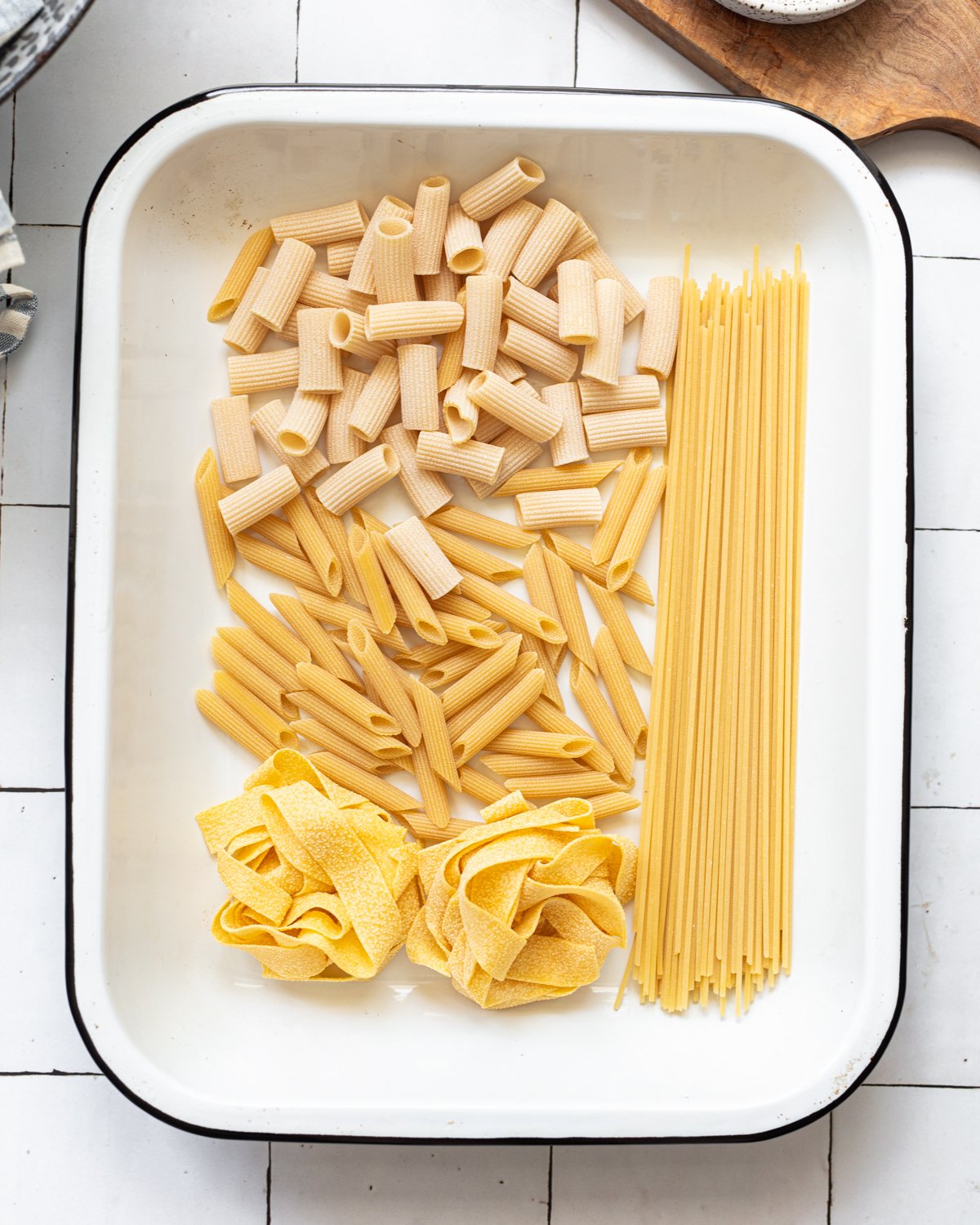
Look for dried pasta that’s bronze cut and made from durum semolina flour.
## Cook perfect pasta with these 3 golden rules
1. **Water volume:** The ideal amount of water for cooking pasta
2. **Salt quantity:** The best salt ratio for tasty pasta
3. **Cooking time:** Time chart for different pasta shapes
## \#1: Use the correct amount of water
- No matter the pasta shape, to cook up to a pound of pasta, you need lots of water — at least 4 quarts (1 gallon).

Pick a large, deep pot that holds 4-6 quarts.
## Pot size
The best type of pot for cooking pasta is large and deep. The size matters because there needs to be enough capacity to allow the pasta to submerge fully and move freely in the pot while it cooks. This prevents the pasta from clumping and sticking together, ensuring each piece of pasta cooks evenly.
- **The perfect size large pot to use to cook pasta is 5-6 quarts for every pound of pasta**. This amount serves 4-6 people. If you’re doubling a recipe or regularly cooking for a larger crowd, an 8-10 quart pot will work best.
Use a **[basic stainless steel pot](https://amzn.to/3NAk73r)** or coated aluminum pot with a lid that has at least a 5-quart capacity. Add 4 quarts of cold tap water and bring to a full rolling bowl over high heat.
**I don’t recommend using a heavy pot like a Dutch oven** to boil pasta. Not only does it take twice as long to bring water to a boil in a cast iron pot, but when it’s full of water AND pasta the pot is very heavy (exceeding 20 pounds)! You could sprain your wrists lugging that thing to the sink to drain :-O
Save your beautiful pot for cooking an old-school pasta sauce or making [**slow-cooked red wine short ribs.**](https://familystylefood.com/simplest-red-wine-braised-beef-short-ribs-creamy-polenta/)
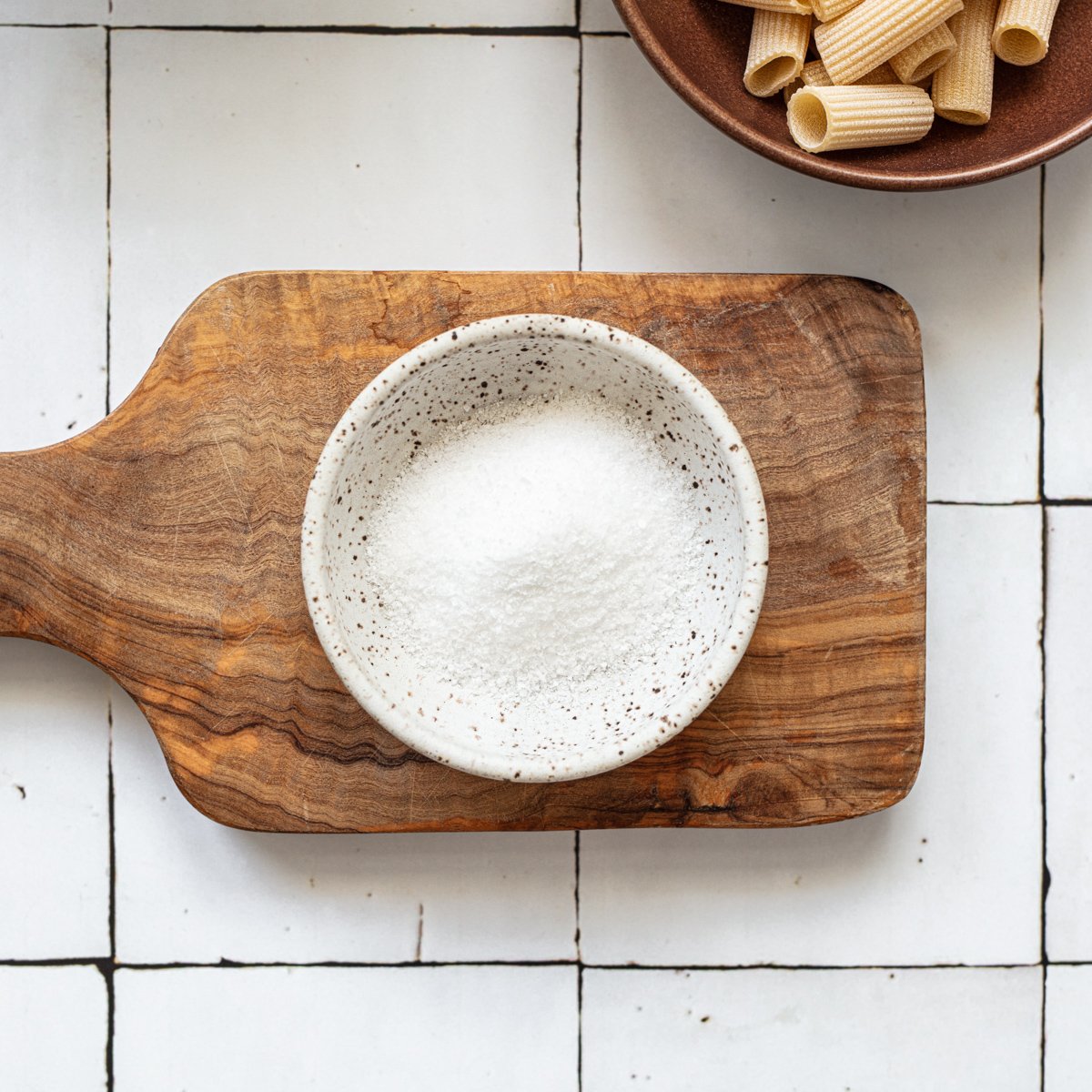
Properly salting pasta cooking water is key\!
## \#2: Salting Pasta Water
Salt is the *absolute key* to delicious, perfectly cooked pasta. You might have heard that you should salt your pasta water so that it tastes like the sea, which is only a slight exaggeration.
**For cooking pasta, the perfect ratio of salt to water** is 1 tablespoon kosher salt or coarse sea salt per quart of water. \*Note that if you have regular table salt, reduce the total amount to 2 teaspoons per quart — it’s [**a “saltier” salt**](https://familystylefood.com/resources/pantry-flavors/#salt) compared to kosher salt.
- It might seem like a lot of sodium, but just enough salt is absorbed into the pasta, which makes it taste good. Restaurant chefs often use *double* that amount. Remember that you’re not actually consuming all that salt — it’s diluted with water, most of which is drained off.
- Another thing to remember is that a portion of the starchy pasta water often becomes part of your finished sauce, so you want it to taste seasoned and full of flavor.
- Bring the pot of water to a full boil **before** adding salt. It will dissolve faster and you’ll avoid damaging your pot. If you add salt before the water reaches a boil, the grains of salt can settle in the bottom and cause pitting in the metal.

Perfectly cooked pasta is delicious with simply butter and cheese.
## \#3: Pasta Cooking Time
- Different pasta shapes and brands will have different cooking times — it’s not one size fits all. What you’re going for is that all-important al dente texture.
- Cooking directions on the box can be inaccurate, so instead of setting a clock and walking away, I encourage you to follow your senses. Taste early (about 3 minutes into cooking time) and often.
## Basic Pasta Cooking Times:
Check package directions and be sure to taste-test! Refer to this **chart of common pasta types** to get a general guideline of pasta cooking times:
- **Spaghetti + Linguine**: 8-10 minutes
- **Bucatini**: 10-12 minutes
- **Angel Hair + Capellini:** 4-6 minutes
- **Penne + Ziti:** 6-8 minutes
- **Farfalle (Bowties) + Shells**: 8-10 minutes
- **Rigatoni:** 11-13 minutes
- **Orecchiette**: 12-15 minutes
- **Fusilli + Rotini Noodles:** 8-10 minutes
- **Pappardelle + Fettuccine:** 6-8 minutes
**Al dente pasta,** which literally means “to the tooth,” has a springy texture when you take a bite. If you break open a piece of perfectly cooked pasta, you should see a core of lighter yellow inside.
The trick to achieving that elusive al dente doneness is to taste the pasta as it cooks. Practice slightly undercooking pasta because it will continue to cook in the moments after you drain it and add your sauce.
I often take the pot off the heat a minute or two before it’s done, allowing the pasta to finish cooking in the the hot water while I multitask in the kitchen.
[Karen Tedesco](https://familystylefood.com/karen-tedesco/)
How to cook pasta, 101! Learn the basic steps for cooking pasta from start to finish, with pro techniques for cooking times, salting pasta water and equipment.
Cook Time 15 minutes
Total Time 15 minutes
Course Pasta
Cuisine Italian
Servings 6 servings
#### Yield: One pound pasta, enough for 4-6 people as a main course
- ▢
4 quarts cold tap water
- ▢
¼ cup kosher salt, use half the amount (2 tablespoons) if using table salt
- ▢
1 pound dried pasta
- Bring the water to a rolling boil in a 5-6 quart tall pot. Add the salt and stir it in to dissolve.
- Add the pasta to the pot and stir. Bring the water back to a boil, then adjust the heat to a lively simmer. Cook the pasta uncovered until al dente (use the time chart above as a guideline), stirring it frequently. Use a slotted spoon to sample the pasta for doneness as it cooks.
- Before draining, scoop out some of the pasta cooking water and reserve for your sauce recipe, if needed. The starchy water helps "marry" the pasta with the sauce.
- Transfer the pasta to a pan or serving bowl and combine with your sauce. Serve hot pasta right away\!
- Before draining, scoop out and reserve the pasta water to add to your sauce recipe.
- Toss hot pasta with sauce (such as [**Easy Homemade Marinara**](https://familystylefood.com/make-easy-homemade-marinara-sauce/)) and serve immediately.
- If you’re prepping pasta for a baked dish such as mac and cheese, parboil the pasta, which means partially cooking it by reducing the cook time by half.
- To use cooked pasta in a cold pasta salad, cook as directed. Drain (don’t rinse) and spread the pasta on a sheet pan or baking dish. Drizzle with enough olive oil to coat, and allow to cool, stirring it occasionally to keep it from sticking together. Transfer to a container, add the salad dressing and refrigerate.
- Don’t rinse cooked pasta. All that precious starch that binds or “marries” the pasta with the sauce should not go down the drain.
- Do you need to add oil to boiling pasta to keep it from getting sticky? No, please don’t! Oil creates a slick layer that prevents sauce from sticking to the surface of the pasta. If anything it’s a waste of good olive oil. Just use enough boiling water as directed and stir, stir.
- If you’re cooking for guests or dinner party, have your sauce ready, then cook the pasta just before serving. Hot pasta waits for no one\!
Calories: 280kcal Carbohydrates: 56g Protein: 10g Fat: 1g Sodium: 400mg Fiber: 2g Sugar: 2g
Nutrition facts are calculated by third-party software. If you have specific dietary needs, please refer to your favorite calculator.
 |
| Shard | 143 (laksa) |
| Root Hash | 9017933683460506143 |
| Unparsed URL | com,familystylefood!/how-to-cook-pasta/ s443 |