ℹ️ Skipped - page is already crawled
| Filter | Status | Condition | Details |
|---|---|---|---|
| HTTP status | PASS | download_http_code = 200 | HTTP 200 |
| Age cutoff | PASS | download_stamp > now() - 6 MONTH | 0 months ago |
| History drop | PASS | isNull(history_drop_reason) | No drop reason |
| Spam/ban | PASS | fh_dont_index != 1 AND ml_spam_score = 0 | ml_spam_score=0 |
| Canonical | PASS | meta_canonical IS NULL OR = '' OR = src_unparsed | Not set |
| Property | Value | |||||||||
|---|---|---|---|---|---|---|---|---|---|---|
| URL | https://explorerspassage.com/chronicles/everest-base-camp-trek/ | |||||||||
| Last Crawled | 2026-04-22 03:25:07 (21 hours ago) | |||||||||
| First Indexed | 2021-12-07 21:45:49 (4 years ago) | |||||||||
| HTTP Status Code | 200 | |||||||||
| Content | ||||||||||
| Meta Title | Everest Base Camp Trek Guide (2026) Cost, Itinerary, Difficulty | |||||||||
| Meta Description | Answers to top questions about the Everest Base Camp Trek - one of the most iconic treks in Asia. Prepare for your Himalayan trip in 2025! | |||||||||
| Meta Canonical | null | |||||||||
| Boilerpipe Text | The Everest Base Camp Trek is one of the most famous trekking adventures in the world, and just the mention of it is usually enough to stir the soul of hikers all over the world. For many travelers, reaching Everest Base Camp is a once-in-a-lifetime bucket-list adventure
.
Located in Nepal’s Khumbu region, the trek takes hikers through Sherpa villages, Himalayan valleys, and Sagarmatha National Park to Everest Base Camp at 5,364 meters (17,598 feet) beneath the world’s highest mountain.
The journey typically takes 12–14 days and covers about 130 kilometers (80 miles) round-trip from the mountain town of Lukla. Along the way, trekkers pass iconic stops like
Namche Bazaar
,
Tengboche Monastery
,
Dingboche
,
and
Lobuche
, while acclimatizing to the high altitude and enjoying some of the most spectacular mountain scenery on Earth.
The trek doesn’t require technical climbing skills, but the combination of high altitude, long hiking days, and rugged terrain makes preparation important.
In this complete guide to the Everest Base Camp trek, you’ll learn:
The difficulty of the Everest Base Camp trek
The best time of year to go
The full trekking itinerary
Costs, permits, and logistics
What gear to pack
How to train and prepare for high altitude
Whether you’re planning your first Himalayan adventure or researching the world’s most iconic trekking route, this guide covers everything you need to know before
hiking to Everest Base Camp
.
Everest Base Camp Trek: Quick Facts
Location:
Khumbu Region, Nepal
Altitude:
5,364 m (17,598 ft)
Trek length:
~130 km (80 miles) round trip
Typical duration:
12–14 trekking days
Best time to visit:
March–May and September–November
Difficulty:
Moderate to challenging (high altitude)
Our experience on the Everest Base Camp Trek
I still remember my first arrival in Kathmandu nearly 15 years ago. As cliché as it sounds, it really felt like stepping into an entirely different world. The moment I left the airport, everything shifted. The rhythm of the streets, the sounds of motorbikes and rickshaws, the scent of incense and spices in the air. It was sensory overload in the best possible way.
By chance, there was a Buddhist festival taking place in the city during my arrival. Monks in deep red robes moved through the streets, prayer flags fluttered overhead, and temples were alive with chanting and ceremony. Kathmandu is a place where spirituality is not something you seek out, it is everywhere around you. That first experience grounded the entire journey for me. The Everest trek is not just about mountains, it begins with culture, and Nepal is incredibly rich in both Hindu and Buddhist traditions that shape everyday life.
What surprised me most about Nepal is that the mountains are only part of the story. Of course, the Himalayas are staggering. The scale is difficult to comprehend until you are standing beneath them. But what stays with you just as much are the people, the villages, and the slow rhythm of life along the trail.
The trek teaches patience. You move slowly, you adjust to altitude, and you begin to notice things you would normally rush past. It becomes less about reaching Base Camp and more about the experience along the way.
One of the biggest lessons is that this journey is as much mental as it is physical. The altitude humbles you quickly. You cannot rush it, and the mountain does not care about your plans.
Another realization is how deeply spiritual the region is. You pass prayer wheels, mani stones, and monasteries throughout the trek, and over time, you begin to feel the intention behind them. This is not just a trekking route. It is a living cultural landscape shaped by centuries of belief and tradition.
Looking back, I would spend more time in Kathmandu at the beginning. It is easy to treat it as a gateway, but it deserves more attention. Taking an extra day or two to explore the temples, absorb the culture, and adjust to the environment makes a meaningful difference before heading into the mountains.
On the trail itself, I would also build in more time to simply pause. Some of the most memorable moments were not the major milestones, but the quiet ones. Sitting outside a teahouse, watching the clouds move across the peaks, or sharing stories with fellow trekkers.
If there is one thing I would emphasize, it is this: go in with an open mindset. The Everest Base Camp trek is not just a physical challenge or a box to check. It is an immersive experience that blends culture, landscape, and personal reflection in a way that few places in the world can.
For me, Nepal is unlike any country I have visited. On my visit to this culturally rich and diverse nation I felt like I had entered into a new world. With the influences of both Buddhism and Hindi, the capital city of Kathmandu provides a window into the beautiful culture and history of the Nepalese people and bags you to explore more of this remarkable country.
What’s in this guide?
Who Should Do the Everest Base Camp Trek?
Where is Everest Base Camp (EBC)?
How long is the trek to EBC?
Is it worth it? Things to see & costs
Is the Everest Base Camp Trek Safe?
How hard is the trek? Terrain, elevation, and altitude
Food on the Everest Base Camp Trek
Accommodations on Everest Base Camp
When’s the best time to go? Temperatures & weather
What gear and equipment should I pack?
Should I use a porter service?
Travel visas and permits
A typical Everest Base Camp Trek itinerary
Other Variations of the EBC Trek
Everest Base Camp Trek FAQ
1. Who Should Do the Everest Base Camp Trek?
This trek is ideal for:
Experienced hikers
Adventure travelers visiting Nepal
Mountaineering enthusiasts
Photographers and nature lovers
Not recommended for:
Travelers with serious altitude sensitivity
People without hiking experience
The Everest Base Camp Trek is well suited for travelers who are looking for a physically engaging journey without requiring technical climbing skills. It appeals to hikers who are comfortable walking for multiple hours per day over varied terrain. Individuals with a moderate fitness level and a willingness to adapt to high altitude conditions often find the trek achievable. It is also a strong choice for those interested in cultural experiences, as the route passes through Sherpa communities and historic sites. With proper preparation and realistic expectations, a wide range of travelers can successfully complete the trek.
2. Where is Everest Base Camp (EBC)?
There are actually two base camps for the Everest trek: the North Base Camp in Tibet and the South Base Camp in Nepal. The Nepalese camp in the Khumbu region is the Everest Base Camp that most people talk about, and the endpoint of this legendary trek. It’s tucked away at the end of a long valley that carves through the Himalayas after splitting at the Sherpa village of Dingboche. The formidable
Khumbu Icefall
– the first obstacle for those attempting a summit push to Everest – begins right on the doorstep of the camp, leading up to the Western Cwm (also known as the Valley of Silence) and the peaks of Lhotse and Nuptse.
Getting to Mount Everest
So now you know what this infamous excursion holds and you cannot wait another moment to go, how will you get there? The trip to the start of EBC is a journey in itself. You will first jet into Kathmandu, the heady, rickshaw rattling capital of Nepal. It is an amazing place, filled with UNESCO temples and the aromatic spices of Nepalese curry houses. We usually recommend that travelers arrive at least a couple of days before they are due to set off for the trek, not really to help with altitude acclimatization, as Kathmandu sits at a relatively modest 4,500 feet (1,372m), but more for cultural acclimatization.
Doing that means you’ll have time to score any last-minute gear you might have forgotten for the hike itself. Kathmandu has plenty of decent outfitters that offer good deals on key items like down sleeping bags and thermals. It also means you’ll get to see some of the great cultural treasures of the country, including the tower-topped temples of Durbar Square and the colossal Boudhanath Stupa, which is usually writhed in prayer flags dancing in the wind.
3. How long is the trek to EBC?
The Everest Base Camp Trek may be the single most famous trek in Asia, and arguably the world. Some say its booming popularity is the trek’s own worst enemy, and it’s true that the trail has suffered from overcrowding and some pollution in recent years. However, nothing can take away from the thrilling sense of adventure that comes with climbing towards the edge of the world’s highest peak. That reaches a fever pitch in the early days of your hike, when you’ll catch a jaw-dropping broadside of Mount Everest from a lookout on the south side of Ama Dablam.
Distance
The rewards of the trek don’t come so easily. EBC is a high-altitude path that requires considerable acclimatization over a good distance. You’ll typically need 12-14 days of full-on trekking (that’s right, your “rest days” involve walking too!) to complete the 80-mile (130km) roundtrip that starts from Lukla.
This distance is roughly divided into individual daily sections of 8-10 miles (13-16km), but the reason the whole adventure takes so many days is because it needs to be broken down into bite-sized chunks due to the altitude with acclimatization and rest days mixed in. Most itineraries will leave enough time to complete each leg on any given day at well below the average trekking pace.
Route Section
Distance
Typical Hiking Time
Lukla → Phakding
~8 km
3–4 hours
Phakding → Namche Bazaar
~11 km
5–6 hours
Namche Bazaar → Tengboche
~10 km
5–6 hours
Tengboche → Dingboche
~11 km
5–6 hours
Dingboche → Lobuche
~8 km
4–5 hours
Lobuche → Everest Base Camp
~15 km
7–8 hours
Walking times
Most walkers find that they hike a maximum of 8 hours each day, though that can go up a little when you reach the higher altitude sections of the route – not just because of the physical challenge, but because you’ll be stopping often to take in all the breathtaking views
.
Walking times on the Everest Base Camp Trek can vary depending on elevation and terrain, but the journey offers constant visual rewards. Hikers pass through forests, suspension bridges, and open valleys with views of towering peaks. As the trek progresses, the landscape becomes more rugged and expansive. Some days may feel long, especially at higher elevations, but the scenery continues to change and provide motivation. Staying focused on the surroundings can help hikers maintain a steady pace and enjoy the experience.
4. Is the Everest Base Camp Trek Safe?
The Everest Base Camp Trek is generally considered safe for well-prepared hikers, and thousands of travelers successfully complete the trek every year. However, like any high-altitude adventure, there are some risks that trekkers should understand before heading into the Himalayas.
The most significant challenge on the Everest Base Camp trek is altitude. The trail gradually climbs from Lukla at 2,860 meters (9,383 feet) to Everest Base Camp at 5,364 meters (17,598 feet). At these elevations, the air contains significantly less oxygen, which can lead to Altitude Sickness, also known as Acute Mountain Sickness (AMS). (I’ll talk more about this later in the blog post.) Symptoms may include headaches, dizziness, nausea, fatigue, and difficulty sleeping.
Fortunately, most Everest Base Camp itineraries are designed with proper acclimatization days built in, usually in Namche Bazaar and Dingboche. These rest days allow your body time to adjust to the altitude and significantly reduce the risk of serious altitude illness. Trekking slowly, staying hydrated, and listening to your body are the best ways to stay safe.
Aside from altitude, other factors to consider include weather conditions and the physical demands of the trek. Temperatures can drop well below freezing at higher elevations, particularly at night, and weather in the mountains can change quickly. Proper clothing, layering, and good trekking gear are essential for staying comfortable. (Again, I’ll dive deeper into this later in the blog.)
The trail itself is well-established and heavily traveled, with teahouses, lodges, and small villages located throughout the route. This makes the Everest Base Camp trek much safer than remote expeditions where infrastructure is limited. In addition, many trekkers choose to travel with experienced guides and porters, who can assist with navigation, logistics, and monitoring altitude symptoms.
Medical clinics are available in several villages along the trail, including Namche Bazaar and Pheriche, where the Himalayan Rescue Association operates a well-known altitude clinic. Helicopter evacuations are also possible in emergency situations if needed.
With proper preparation, a sensible trekking pace, and awareness of altitude symptoms, the Everest Base Camp trek is a safe and achievable adventure for most healthy hikers. Careful planning and respect for the mountain environment go a long way toward ensuring a rewarding and memorable journey in the Himalayas.
5. Is it worth it? Everest Base Camp trip highlights & costs
The joy is in the journey here, as you trek further up to gaze from the roof of the world. Some of the best sightings of the famous Everest arguably come during the Everest Base Camp Trek itself, from various lookout points along the way. These magnificent views combined with mystical monasteries and Sherpa villages offer a host of intriguing trip attractions en route. For me, the best highlights of the trek are:
Kala Patthar (Kalapathar)
– Roughly translates to “Black Rock”. Detour to this soaring lookout point that’s 18,208 feet (5,550m) up on the ridges above
Gorak Shep
. It’s a real challenge (think a 1,640-feet / 500-meter ascent in 2 hours) but is hailed by many as
the
best view over Everest, with the Khumbu Icefall crashing through the valley below.
Gorak Shep (Gorakshep)
– A settlement that seems at the end of the world, this tiny town is the heartland of the Sherpa people and sits at the base of Kala Patthar.
Sagarmatha National Park Museum
– You’ll encounter this one very early on in the trek during your rest day in Namche Bazaar. It’s worth the climb to its perch above the village, mainly because the forecourt has incredible views of Everest and Nuptse – your first glimpse of the great mountain. Inside, you can learn all about the unique culture of the Khumbu
Sherpa people
.
Tengboche Monastery (Thyangboche Monastery or Dawa Choling Gompa)
– The largest Buddhist
gompa
in the valley of Everest, Tengboche Monastery is a pitstop for determined trekkers bound for the summit. They come to light candles and ask for blessings.
Nangkar Tsang / Dingboche Viewpoint
– Above the town of Dingboche, this detour off the main route is good acclimatization trekking and offers a panorama that takes in the Khumbu Glacier and the whole Imja Khola Valley.
Pricing
With so much natural beauty to be experienced, how much will it set you back? When it comes to pricing, costs of the Everest Base Camp Trek can range widely but
the best all-inclusive tour packages start at around US$4,295
. If this number is giving you sticker shock, don’t let it deter you from the trip of a lifetime to Nepal, because my team at The Explorer’s Passage is always here to work with you and your preferences to
craft a trip that fits your needs
.
Another important cost factor is
altitude logistics and remoteness. The Everest region is only accessible by air or multi-day trekking routes, which means many supplies must be flown into Lukla or carried by porters and pack animals. As trekkers move higher into the mountains, food, fuel, and supplies become more expensive due to the difficulty of transporting goods to remote villages. This is why meals and accommodations typically cost more the farther you travel along the trail.
It’s also wise to budget for additional expenses that are often overlooked. These can include travel insurance that covers high-altitude trekking, gear rental or purchases, charging electronic devices at teahouses, hot showers, snacks, and tips for guides and porters. While these individual costs may seem small, they can add several hundred dollars to the total cost of the trip.
Despite these expenses, many travelers find that the Everest Base Camp trek offers excellent value for a once-in-a-lifetime adventure. The experience of walking through the Himalayas, visiting traditional Sherpa villages, and standing at the base of the world’s tallest mountain is truly unforgettable.
Ways to Save Money on the Everest Base Camp Trek
The Everest Base Camp trek is often considered a once-in-a-lifetime adventure, but the good news is that there are several ways to reduce costs without sacrificing the experience. With careful planning and smart choices, trekkers can keep their budget manageable while still enjoying everything the Himalayas have to offer.
Travel During the Shoulder Season
Trekking during the shoulder seasons such as early spring (March) or late autumn (November) can also help reduce costs. During these periods, flights, accommodations, and trekking services may be slightly cheaper because there are fewer visitors compared to peak months like April and October. You will still enjoy great mountain views while avoiding the busiest crowds.
Rent or Buy Gear in Kathmandu
Instead of purchasing all your trekking equipment at home, consider renting or buying gear in Kathmandu. The Thamel district is filled with trekking shops offering affordable gear rentals, including sleeping bags, down jackets, and trekking poles. This can save hundreds of dollars compared to buying new equipment before your trip.
Porters can make the trek much easier, but they also add to the overall cost. If you are comfortable carrying your own gear, packing efficiently and keeping your load light can help reduce or eliminate porter expenses. Many trekkers aim to carry a daypack weighing around 5–7 kg (11–15 lbs) with essentials such as water, snacks, extra layers, and camera gear.
Finally, plan ahead for small costs that can add up during the trek. Items like charging electronics, hot showers, Wi-Fi access, snacks, and bottled water may require additional fees at teahouses. Bringing items like a reusable water bottle with purification tablets, a power bank, and personal snacks can help reduce these daily expenses.
With thoughtful planning and budgeting, it is entirely possible to complete the Everest Base Camp trek without spending a fortune while still enjoying one of the most extraordinary trekking experiences in the world.
6. How hard is the trek? Terrain, elevation, and altitude
So just how difficult is the trek to Everest Base Camp? To answer this, you’ll have to consider the terrain and heights of EBC. Your physical fitness also plays a factor in the perceived difficulty of this adventure. Based on our
Trip Activity Level Guide
, we classify this trek as an advanced level, but you may be glad to know that no technical training or mountaineering experience is required.
Not sure if this Himalayan adventure is right for you?
Contact us
and we’ll walk you through details on the physical demands, recommended training, and more so you can make an informed decision.
Terrain
The Everest Base Camp hike graduates from the alpine surroundings at the south end of the
Sagarmatha National Park
to the scree-covered ridges of ancient moraines in the final push towards the trekking finish line. The first sections are easier in terms of terrain but more difficult because they are constantly steep. You’ll notice this in the ascent from Lukla to Namche Bazaar, and then again from Namche Bazaar to Tengboche. The path there is largely shaded by pine and ironwood forests, muddy when wet but also interspersed with rocks wedged into the ground. You’ll stroll across suspension bridges to cross most rivers.
After the first few days of your trip, you’ll see that the trekking path levels a little as it skirts a wide, flat valley with the mighty Himalayas looming on all sides. This is where you lose the tree cover for good, so be sure to have the sunscreen handy. It’s rock and grit underfoot until you near Gorak Shep. There, the route sort of merges with the great pebble and rock moraine at the end of the Khumbu Icefall. It’s normal to find snow coverage in those parts, especially if you’re trekking between November and March.
The terrain along the Everest Base Camp trail changes with the seasons, so it’s important to know what to expect. During the dry season, the trail is generally clearer, with less mud to contend with. However, rocky sections can still be slippery, so tread carefully. In the winter months, snow and ice can make parts of the trail, especially near the Khumbu Icefall, much more challenging. By understanding how the conditions vary, you can make sure you’re ready for whatever nature throws your way.
Elevation and altitude
How high is Everest Base Camp? Well, altitude is commonly travelers’ biggest challenge on this tall trek. As mentioned before, you’re going to have to clock up a hefty 17,598 feet (5,364m) above sea level. You’ll manage 9,400 feet (2,865m) at the EBC trailhead, which is taken care of by the flight from Kathmandu to Lukla. The rest is up to your legs. You’ll knock out about 1,800 feet (549m) by climbing to Namche Bazaar. After that, days on the trail (not including acclimatization days) average around 1,200-1,600 feet (366-488m) in elevation gain, though it’s on less-steep paths once you cross the tree line around Tengboche. Everest Base Camp elevation is no joke and can be difficult for some.
Acute Mountain Sickness (AMS) – the mildest form of altitude sickness – is certainly a risk here. It can affect anyone over altitudes of 8,000 feet (2,438m), but usually has severe impacts at higher levels. Since the EBC Trek reaches altitudes of more than double the height where AMS can possibly kick in, there are usually two full acclimatization days planned in – one in Namche Bazaar and the another in Dingboche or Lobuche. These days aren’t for resting but instead used to climb high and then descend to sleep at lower altitudes, a common practice that’s known to help the body acclimate to conditions at higher elevations.
Don’t be surprised if your Everest Base Camp Trek guide constantly reminds you to drink enough water as it’s another way to combat AMS. Once you hit the higher altitude parts of the path, you can typically expect your guide to be prepared with a supply of oxygen, should you need it. You might also want to consider packing an AMS medication like Diamox on your trip to Nepal.
Even seasoned alpinists find the trip a challenge and lots of climbers struggle with Acute Mountain Sickness. Just remember: no pain, no gain on this most incredible of trails! On this trip, you’ll see the sheer majesty of the Nepalese Himalayas up close and scale to viewpoints that are simply some of the best you’ll ever hike to.
How to Prepare for the Trek
The Everest Base Camp Trek is not a technical climb, but it is physically demanding due to long hiking days, steep terrain, and high altitude. Most trekkers walk 6–8 hours per day while gradually ascending to 5,364 meters (17,598 feet).
Preparing with a structured training plan will make the trek safer, more enjoyable, and significantly increase your chances of reaching base camp.
How Fit Do You Need to Be for the Everest Base Camp Trek?
You don’t need mountaineering experience to complete the trek, but you should have:
Good cardiovascular fitness
Strong legs for long uphill hikes
Endurance for multi-day trekking
Experience carrying a daypack
If you can comfortably hike 10–15 km (6–9 miles) in mountainous terrain, you’re on the right track.
When Should You Start Training?
Most trekkers should begin training at least 16–20 weeks before the trek.
Ideal preparation timeline:
4 months before trek:
Start cardio and strength training
3 months before trek:
Increase hiking distance and elevation gain
2 month before trek:
Practice long hikes with a backpack
Everest Base Camp 16-Week Training Plan
Weeks 1–4: Build Your Fitness Base
Focus on cardio and basic strength.
Training goals:
Cardio workouts 1–2 times per week
30–45 minutes of activity
Recommended exercises:
Hiking
Stair climbing
Running or jogging
Cycling
Swimming
Strength exercises:
Squats
Lunges
Step-ups
Core exercises (planks)
Weekend goal:
One hike of
6–8 km (4–5 miles)
.
Weeks 5–10: Increase Endurance
Now start simulating trekking conditions.
Training goals:
Cardio workouts 2–3 times per week
45–60 minutes per session
Add:
Hills or stair workouts
Longer hikes
Strength training:
Weighted squats
Step-ups with backpack
Calf raises
Core workouts
Weekend goal:
Hikes of
10–12 km (6–8 miles)
with
300–600 m elevation gain
.
Weeks 10–16: Simulate Trek Conditions
This phase prepares your body for real trekking days.
Training goals:
2-3 workouts per week
Carry a 5–7 kg (10–15 lb) backpack
Exercises:
Long uphill hikes
Stair climbs with backpack
Interval cardio workouts
Weekend goal:
15 km (9 miles) hike
Back-to-back hiking days if possible
This mimics multiple trekking days in the Himalayas.
Best Exercises for Everest Base Camp Training
Stair Climbing
One of the best ways to simulate trekking uphill.
Try:
20–40 minutes
With a weighted backpack
Hiking
Real hiking is the best training.
Focus on:
Elevation gain
Long distances
Carrying a daypack
Strength Training
Strong legs prevent fatigue and injury.
Key exercises:
Squats
Lunges
Step-ups
Deadlifts
Core workouts
Cardio Training
Cardio improves endurance at high altitude.
Good options:
Running
Cycling
Rowing
Swimming
Incline treadmill walking
Training with a Backpack
During the final weeks of training, hike with a backpack similar to what you’ll carry on the trek. Typically the weight of a daypack for a Everest Base Camp daypack hike is 5–7 kg (11–15 lbs) This will help your body adapt to carrying weight for long periods.
Altitude Training Tips
Altitude is the biggest challenge of the Everest Base Camp trek.
While you cannot fully simulate high altitude, you can improve endurance by:
Increasing cardiovascular fitness
Training on hills
Staying well hydrated
Learning proper pacing
Remember: slow and steady trekking wins the race and is key at high altitude.
Mental Preparation for the Trek
The Everest Base Camp trek is also a mental challenge so we must not forget that apart from being physically prepared, you need to be mentally prepared. Maintaining a positive mindset and steady pace makes a huge difference.
Prepare for:
Cold weather
Basic accommodations
Long trekking days
High altitude fatigue
Signs You’re Ready for the Everest Base Camp Trek
You’re well prepared if you can:
Hike 15 km (9 miles) comfortably
Walk 6–8 hours in a day
Carry a backpack uphill
Complete back-to-back hiking days
If you can do this, you’re likely ready for the trek.
7. Food on the Everest Base Camp Trek
All that trekking is going to work up a serious appetite, you can be sure of that. Thankfully, EBC teahouses tout some decent grub for when it’s time to refuel. Don’t be surprised to find that the menus are virtually identical the whole way along, even if the dishes themselves vary greatly with the whims of different chefs up and down the trip route.
Common dishes include:
Dal bhat
– The most popular EBC meal of all. Every hiker who’s done the route has warmed up with this spicy lentil stew at least once. It’s usually served with rice and chapati flatbread.
Egg and fries
– A hearty option for those feeling really hungry, this one includes hand-cut, fried potatoes and a double-egg omelette.
Shyakpa
(
Sherpa stew
)
– A classic favorite of sherpas in Nepal and a great vegetarian option that’s basically broth with cut potatoes, carrots, and other root vegetables.
Pizza
– Some teahouses try their hand at pizza. We’ll let you be the judge of whether or not the Italians would be proud.
Is your mouth watering yet? These dishes will surely give you the energy you need to power through the trek.
8. Accommodations on Everest Base Camp
Apart from the hotels in Kathmandu at the start and at the end of your quest, all of your accommodations on the Everest Base Camp Trek route are likely to be teahouses. Don’t let the name fool you – these aren’t just places to stop for a hot drink. They’re actually full-fledged bed and breakfast lodges purposely designed to host travelers.
EBC teahouse accommodations in Nepal are simple, clean, and comfortable. The general rule is that the quality is better towards the start of the trek, where the teahouses are both larger and better supplied. Rooms are usually minimally decorated. They have wood-paneled or plastered walls and, for the most part, a single window, along with low-rise beds with foam mattress pads. Some have in-room heating, while other teahouses are warmed by a central stove that’s kept alight in the evenings. Some places offer hot showers, but most only offer cold. Electrical charging of devices is on offer at most places, though that could come at an extra cost.
For more details on accommodations, check out our
Everest Base Camp tour page
.
9. Best time to trek to Everest Base Camp
There are
two main seasons
for trekking to Everest Base Camp in Nepal. The first is in the
spring (late March to May)
and the second comes in the
autumn (late September to November)
. Both high seasons essentially straddle the main monsoon season, offering more dryness and clearer skies without too much precipitation. Although, it’s important to note that zero rain can never be guaranteed this high up.
Here’s a breakdown of the best months to go:
March –
Marks the beginning of the trekking season proper but it’s not its peak. That means a good balance of smaller crowds, availability in teahouses and affordability. Most of the ground snow has melted by this point, but rising temperatures do mean there can be some heat haze to obscure the views.
April
– The busiest time of all on the Mount Everest Base Camp Trek, but for good reason: Clear skies abound, the views are wonderful, and temperatures are comfortable. You can also come in April if you’re keen to see the hardcore mountaineers prepping for a summit push up Mount Everest itself.
May
– The hottest month on the trail with less harsh conditions in the evening. Downsides include heat haze that can obstruct the views and the potential for some early-monsoon rains.
September
– The first month after the monsoon can see some rains stick around. However, that also means the lower-altitude parts of the trek between Lukla and Namche Bazaar are wonderfully lush with flower blooms and vivid greenery.
October
– Second only to April in terms of crowds of travelers. Lots of people hit the EBC trail at this time because there’s a great balance between comfortable temperatures and clear skies. In fact, I’d say that this is the clearest time of all, so it’s perfect for those wanting uninterrupted views of Everest.
November
– Cold winter conditions can start to set in by November. It’s not unusual to encounter snow at higher altitudes and you’ll need proper thermal gear to get through the nights. The payoff is super-clear skies and way fewer hikers on the trail.
December to February is the low season
for one main reason: Snow. Temperatures during these colder days drop to an average of 25 degrees fahrenheit (-4℃) in the middle of the winter season, and that’s in Namche Bazaar, one of the lowest points on the trek. It’s not ideal for overnight hikes that rely on teahouses made of plywood walls. That said however, completing the EBC certainly isn’t impossible at this time, it just presents unique challenges. You’ll need way more thermal layering, special trekking equipment to handle the snowdrifts, and probably extra days to complete the trek. The upside is that winter days offer very clear skies and there’s rarely a big crowd on the trail.
10. What gear and equipment should I pack?
When considering what to pack for your trip, it’s good to know there are strict limits on the weight each passenger can take on that initial flight from Kathmandu to Lukla. What’s more, there are limits on the size and weight of bags that you can ask porters to shuttle up and back to EBC for you. Due to these limits, you’ll want to think very carefully about what to bring for this once-in-a-lifetime trek. As a general rule, it’s good to stick to about 22-33 pounds (10-15kg) in your main pack, with a small 30-litre day pack on the side to carry the things you’ll need on the trail.
Layers are always key
in the Nepalese mountains, as temperatures can warm up considerably during the day and drop suddenly at night. You’ll want to be able to add and remove fleeces and thermals on the upper body to match the fluctuating temperatures. For the lower body, I’d recommend bringing both shorts (mainly for the lower elevations of the trek where it can be positively balmy) and sturdy trekking pants (for higher elevations), backed up by good thermal-rated underlayers.
Waterproofs are also essential
for your trip. Rain and snowfall can come without warning in the high Himalayas, and
weather patterns on the EBC Trek
have little respect for the so-called high season, so inclement weather can happen any time of the year. Winter trekkers will need to plan a little more, though, in order to deal with all that ground ice and much colder conditions.
On top of that, you’ll need to think about all those hiking essentials. Good boots, a pair of hiking poles you feel comfortable with, both a wool hat and a sun hat, strong sweat-resistant sunscreen, headlamps, and a decent-capacity water bottle should all be on your packing list.
Essential Clothing for the Everest Base Camp Trek
Layering is key for trekking in the Himalayas.
Base Layers
Moisture-wicking thermal tops (2–3)
Thermal leggings or long underwear (2 pairs)
Lightweight trekking shirts (2–3)
Mid Layers
Fleece jacket
Lightweight insulated jacket
Softshell hiking jacket
Outer Layers
Waterproof jacket (Gore-Tex recommended)
Waterproof pants
Down jacket (essential for cold evenings)
Trekking Bottoms
Trekking pants (2 pairs)
Hiking shorts (1 pair)
Warm hiking leggings
Footwear
Your boots are the most important piece of trekking gear.
Broken-in trekking boots (waterproof)
Camp shoes or sandals
Hiking socks (4–5 pairs)
Thermal socks (2 pairs)
Gaiters (optional but useful in snow)
Trekking Gear
These items help with comfort and safety on the Everest Base Camp trail.
Trekking poles
30–40L daypack
Duffel bag for porter (if using one)
Sleeping bag rated to -10°C to -20°C (14°F to -4°F)
Headlamp with extra batteries
Sunglasses with UV protection
Water bottles or hydration bladder (2L capacity)
Health and Safety Items
Altitude and weather can be challenging at high elevations.
Basic first aid kit
Diamox (altitude sickness medication) – Speak to your doctor to see if this is a good option for you.
Pain relievers
Blister treatment
Hand sanitizer
Wet wipes
Sunscreen SPF 50+
Lip balm with SPF
Personal medications
Toiletries and Personal Items
Teahouse accommodations along the trek are basic, so bring essentials.
Toothbrush and toothpaste
Small quick-dry towel
Travel soap or body wash
Shampoo
Toilet paper
Nail clippers
Deodorant
Electronics
Electricity is available at some teahouses but charging may cost extra.
Smartphone
Camera
Power bank
Charging cables
Universal travel adapter
Documents and Travel Essentials
Always keep these items in your daypack.
Passport
Nepal tourist visa
Travel insurance documents
Sagarmatha National Park permit
Khumbu region permit
Cash (Nepalese rupees)
Optional but Helpful Items
These can make the trek more comfortable.
Neck gaiter or buff
Ear plugs
Playing cards or small game
Journal
Snacks or energy bars
Reusable shopping bag
What Not to Pack
Avoid bringing unnecessary weight.
Do NOT bring:
Too many clothes
Heavy books
Large electronics
Excess toiletries
Remember: every kilogram matters at high altitude.
Recommended Packing Weight
Most Everest Base Camp trekkers carry:
Daypack:
5–7 kg (11–15 lbs)
Duffel with porter:
10–15 kg (22–33 lbs)
Keeping your pack light helps conserve energy during long trekking days.
That’s just scratching the surface, but The Explorer’s Passage will
make sure you’re fully prepared
for your chosen season on the EBC route when you plan with us
–
just ask us for a full packing list
!
11. Should I use a porter service?
Put simply, porters are essential on the trek to Everest Base Camp. They’re very much the superheroes of the expedition, transporting the bulk of most trekkers’ gear and equipment from camp to camp outside of Lukla or Namche Bazaar. For larger groups of trekkers, some operators will utilize animal support for transport assistance. Porters will carry one standard rucksack or duffle bag per hiker. Usually, that’s limited to a weight of between 22-33 pounds (10-15kg) per person, though it can be lower or higher depending on the Everest Base Camp tour you pick. That leaves you to only carry what you need for the day. As mentioned above, a 30-litre pack typically works best, just enough for water, snacks, fleece and waterproof layers, your camera, and sunscreen.
I do, occasionally, see people who choose not to engage a porter but that’s a tough task. Ultimately, when you’re deciding whether or not porter service is right for you, remember that the Mt. Everest Base Camp hike involves several days of walking at altitudes over 12,000 feet (3,658m) above sea level, on tricky terrain to boot. It’s a challenge even without 44 pounds (20kg) of gear strapped to your back!
After Kathmandu, most flights to Lukla now depart from Ramechhap Airport, which requires an early morning drive of approximately 4 to 5 hours from the city. From there, you will board a short haul flight to Lukla, the gateway to the Everest Base Camp trek. The flight itself is relatively quick, about 20 minutes, and quite thrilling, especially as the landing strip in Lukla sits at approximately 9,300 feet (2,835 meters) above sea level on a steep mountain plateau. It is not a journey you will forget anytime soon.
12. Travel visas and permits
Some nationals of specific countries can enter Nepal without a visa, but most travelers will require one. For those who do, entry visas for tourists traveling into Nepal are generally available in advance or upon arrival at Tribhuvan International Airport and various land borders. If you’re unsure of which category you fall into, use this
easy tool to double check your entry and health requirements
.
When it comes to permits, there are no permits for the Everest Base Camp Trek itself, at least not like there are for the Inca Trail and some other bucket-list hikes elsewhere on the planet. However, there are limits to the number of guests teahouses can host (so it’s important to book early) and you will be passing through some regions and conservation areas that require visitors to obtain special passes, but no need to worry as The Explorer’s Passage will handle all of these details for you. Just make sure your
travel documents and essentials
are still valid.
For the route to Everest Base Camp from Lukla, there are two key documents that we will secure for you:
Khumbu Pasang Lhamu Rural Municipality Entrance Permit
– This is a pass for access to the whole Khumbu region.
Sagarmatha National Park Entry Permit
–
This is your pass to enter the national park that contains Mt. Everest.
It is important to note, those looking to do the longer, 20-day extension to the EBC Trek, going from Kathmandu by road and then onwards by foot from Jiri, will also need a pass for access to the Gaurishankar Conservation Area.
Why Do You Need Permits for the Everest Base Camp Trek?
Trekkers must obtain several Everest Base Camp Trek permits before hiking in Nepal’s Khumbu region. These permits are required to protect the environment, support local communities, and ensure the safety of travelers exploring the Himalayas.
The Everest Base Camp trail passes through Sagarmatha National Park, a UNESCO World Heritage Site known for its fragile alpine ecosystem and rich Sherpa culture. To preserve this unique environment, the Nepalese government and local authorities require trekkers to carry official permits when entering the region.
Permits help regulate tourism and reduce environmental impact on the mountain trails. They also provide funding for conservation efforts, infrastructure improvements, and emergency services along the trekking route.
The permit system plays an important role in maintaining the sustainability of the Everest region. Key benefits include:
Protecting Sagarmatha National Park’s ecosystem and wildlife
Maintaining trekking trails and infrastructure throughout the Khumbu region
Supporting Sherpa communities and local development projects
Providing emergency rescue and safety services for trekkers
Monitoring and managing the number of visitors on popular trekking routes
Permit fees collected from trekkers are reinvested directly into the region. This funding helps maintain trails, improve facilities in remote villages, and support conservation programs that protect the Himalayan environment.
By purchasing the required Everest Base Camp trekking permits, visitors contribute to preserving one of the world’s most famous trekking destinations while helping local communities thrive.
13. A typical Everest Base Camp Trek itinerary
The temple-topped, bazaar-busting city of Kathmandu is likely to be where you enter Nepal. You’ll definitely want to take some time out of your trip to explore this amazing city first. Then, it’s time to head northeast to start your Everest Base Camp hike. Most travelers do that with a flight to Lukla and then walk from there, but it’s also possible to trek all the way if you have the time. Still, most Everest Base Camp Trek itineraries officially start at Lukla airport.
For a customized itinerary,
connect with us
to craft your ideal trip.
Day 1:
Namaste and welcome to Kathmandu! Get ready to experience one of the most awe-inspiring journeys our planet has to offer. You’ll arrive in Kathmandu and explore the dynamism, scenery, and history the city has to offer.
Day 2:
Today will be filled with cultural immersion. Begin by exploring three UNESCO World Heritage Sites. The first is Boudhanath, one of the largest stupas in Nepal. Next is Pashupatinath, a sacred Hindu temple located on the banks of the Bagmati River. Finally, you’ll visit Durbar Square, which sits in front of the old royal palace. Finish your day with one of the most classic walks through the old narrow streets of Kathmandu. In the heart of this city, soak up the buzzing atmosphere of the local markets and stores, before heading back to the hotel.
Day 3: Kathmandu to Phakding (8,562 ft / 2,610 m)
– After a short flight to Lukla, it’s a
pleasant hike through dense pine forests and steep gorges traversed by swinging suspension bridges.
There’s a real bustle about this part of the path, with oodles of hikers fresh onto the trail to chat to. It’s also the lushest part of the trail, with wildflowers and roaring riverways, more Alps than Himalaya.
Day 4: Phakding to Namche Bazaar (11,286 ft / 3,440 m)
– Today you’ll go up to the main hub of EBC: Namche Bazaar. This is a good place to stock up on any essentials you may have forgotten to bring on your trip. Enjoy the town that’s abuzz with hiker cafes and lodges, and comes with stunning views of the jagged Mount Khumbu Yül-Lha (Khumbila), loosely translated as “God of Khumbu” peak, to the north.
Day 5: Namche Bazaar (11,286 ft / 3,440 m)
– This is your first official acclimatization day. The best way to prepare for the altitude is to hike high during the day and return to lower altitudes in the evening to sleep. The Khunde and Khumjung Loop is the perfect option for that, taking you to long-lost Sherpa villages with mystical Buddhist stupas.
Day 6: Namche Bazaar to Tengboche (12,664 ft / 3,860 m)
– Your first steps on the Everest Base Camp Trek proper begin with a steep incline that takes you almost out of the treeline. The path levels and then emerges into a lunar-like world of big brown rocks where the Himalayas draw ever closer. The destination? The rhododendron forest, where you’ll stay for the evening.
Day 7: Tengboche to Dingboche (14,470 ft / 4,410 m)
– Expect exposed trekking except for some sections through high-altitude pine woods. Later in the day, the trail wiggles across the sides of Ama Dablam peak and you’ll get to appreciate the Everest massif in all its glory looming overhead.
Day 8: Dingboche (14,470 ft / 4,410 m)
– A second acclimatization day is needed at this stage of the trip. Perhapstake some time to experience Chukhung (15,518 feet / 4,730 meters), a place traditionally used to raise yak. Lodges rise up amongst the peaks, making it a perfect spot for relaxation, observation and absorbing the scenery and local life.
Day 9: Dingboche to Lobuche (16,210 ft / 4,941 m) –
You’re now onto the penultimate push towards Everest Base Camp. Welcome to the high Himalayas. Trees are long gone in this land of rugged rocks and the cascading tongues of glaciers. The day includes some amazing visions of the approaching Everest massif, especially the closer face of Nuptse.
Day 10: Lobuche to Everest Base Camp (17,598 ft / 5,364 m)
– The final part of the trail starts by weaving over rocky highland terrain and then passes through the Gorak Shep village, where a small trekking lodge clutches the edge of the Khumbu Icefall. There’s a chance of a small rest there, but not for long, because EBC is only another 1.5 hours up the valley!
Day 11: Everest Base Camp to Pheriche (14,340 ft / 4,371 m)
– Today you’ll retrace your steps towards Pheriche, hiking first towards Kala Patthar. Oxygen begins to increase and much of this portion is downhill, and you’ll have the chance to take in the panoramic views with an easier trek.
Day 12: Pheriche to Debouche (12,533 ft / 3,820 m)
– You’ll work back via Deboche, passing the Old Nunnery. Follow the river back towards Debouche, a campsite, not far from the Tengboche Monastery.
Day 13: Debouche to Namche Bazaar (11,286 ft / 3,440 m)
– Today you’ll double back towards Namche Bazaar, the Sherpa village that is the hub of activity and local culture. Here you’ll see many porters like Norgay, who aid climbers and know this terrain better than anyone. Observe the local mountain life, as you continue on tomorrow towards Phakding.
Day 14: Namche Bazaar to Phakding (8,562 ft / 2,610 m)
– As you continue downhill towards Phakding, observe the local agriculture and yak pastures as you pass by the majesty of the Himalayan peaks. You’ll spend the evening alongside the Dudh Kosi River, and take in the sights and sounds of the crystalline waters.
Day 15: Phakding to Lukla
– From Phakding, you’ll make our approach towards Lukla. Gather your new memories from the trip and enjoy your last days amongst unparalleled natural views in Nepal. You’ll stop for lunch in Lukla, with plenty of time to appreciate the clear landscape.
Day 16: Lukla to Kathmandu
– Returning to Kathmandu, you’ll have time and space to explore after having a chance to refresh and recuperate in your hotel. The Thamel district is a great place to wander with its many winding streets lined with souvenir shops, bars, restaurants, and more. There’s plenty to see and to try on the final day of your trip in Kathmandu. Soak up as much of the city’s offerings as you can as the end of our trip approaches.
Day 17:
Today is your final day as an intrepid traveler exploring Nepal. You might have time to see some live music in Lazimpat or venture to Patan, which was originally known as Lalitpur, or the “City of Beauty”. Stop off at Newa Chen to add a visit to a 350-year-old Newari home, restored to its former glory and open to the public, to your trip. Be sure to experience as much of Kathmandu as you can, before you reluctantly head back home from this exhilarating adventure trip!
Day 18:
Depart from Kathmandu. Today you’ll return home having retraced many of Hillary and Norgay’s historic steps. You’re officially one of the lucky few who have witnessed the majesty of Everest up close!
14.
Other Variations of the EBC Trek
The main up-and-back EBC Trek outlined above is by far the most popular route to the fabled camp on the slopes of Mount Everest, but there are also other options. Take the Three Passes Trek. It’s a circular romp that encompasses a trio of the highest traversable passes immediately around Everest itself, starting with Kongma La (18,175 feet) before pushing on through Cho La (17,782 feet) and then Renjo La (17,585 feet).
This is a considerably more challenging undertaking than the classic Everest Base Camp Trek, usually reserved for hikers with high-altitude experience. The reason? You spend multiple days walking at heights of over 16,400 feet. There’s also more chance you’ll have to contend with snowpacks – especially late and early in the main trekking seasons (April and November). The reward is a chance to explore all the nooks and crannies of the Khumbu Region, with visions of the gleaming Gokyo Lakes and remote Sherpa hill villages along the way.
Other variations include the dedicated Gokyo Lakes Trek, which involves portions of the Three Passes Trek at Cho La to offer a fuller visit of the Gokyo Valley before re-joining the route to base camp at Lobuche.
This trip guide is just a taste of what you should know before embarking on the remarkable trek to Everest Base Camp.
For more details on general trip costs, accommodations, and more, check out the specifics on our
Everest Base Camp tour page
.
Better yet, if you have more questions on hiking to Everest Base Camp or need help planning your trip to the Himalayas, let’s connect! Our knowledgeable Adventure Consultants would love to hear from you so
contact us and let us show you what’s possible
.
How difficult is the Everest Base Camp trek?
The Everest Base Camp trek is considered
moderately difficult to challenging
due to the high altitude, long trekking days, and steep terrain. Trekkers typically walk
6–8 hours per day
over a period of
12–14 days
, reaching an altitude of
5,364 meters (17,598 feet)
. No technical climbing skills are required, but good physical fitness and endurance are important.
How long does the Everest Base Camp trek take?
Most Everest Base Camp itineraries take 12–14 days of trekking, not including travel days to and from Nepal. The trek covers roughly 130 km (80 miles) round trip, starting from Lukla and passing through villages like Namche Bazaar, Tengboche, Dingboche, and Lobuche.
What is the altitude of Everest Base Camp?
Everest Base Camp sits at 5,364 meters (17,598 feet) above sea level in Nepal’s Khumbu region inside
Sagarmatha National Park.
Many trekkers also hike to Kala Patthar (5,545 m / 18,192 ft) for the best panoramic views of Mount Everest.
What is the best time to trek to Everest Base Camp?
The best seasons for trekking to Everest Base Camp are:
Spring:
March to May
Autumn:
September to November
These months offer clear skies, stable weather, and moderate temperatures, making them the most popular times to trek in the Himalayas.
How much does the Everest Base Camp trek cost?
The cost of the Everest Base Camp trek varies depending on the type of trip and tour operator.
Typical costs include:
Budget trek:
$2,000–$3,000
Standard guided trek:
$3,500–$4,500
Luxury trek:
$5,000+
Costs usually include guides, accommodations, permits, meals, and flights between Kathmandu and Lukla.
Do you need a guide for the Everest Base Camp trek?
As of 2023, Nepal requires most foreign trekkers to hire a licensed guide for trekking in national parks and remote regions, including the Everest region. Hiring a guide also improves safety, navigation, and cultural insight during the trek.
What permits are required for the Everest Base Camp trek?
Trekkers typically need two permits:
Sagarmatha National Park Entry Permit
Khumbu Pasang Lhamu Rural Municipality Permit
These permits allow access to the Everest region and help support conservation and local communities.
Can beginners do the Everest Base Camp trek?
Yes, beginners can complete the Everest Base Camp trek if they have
good physical fitness and prepare properly
. The trek does not require technical climbing skills, but altitude and long trekking days make training and acclimatization important.
What is the biggest challenge of the Everest Base Camp trek?
The biggest challenge is high altitude. As trekkers ascend above 4,000 meters, the risk of Acute Mountain Sickness (AMS) increases. Proper acclimatization days, hydration, and a slow trekking pace help reduce the risk.
Where does the Everest Base Camp trek start?
Most Everest Base Camp treks start in Lukla, a small mountain town with an airport at 2,860 meters (9,383 feet). Trekkers typically fly from Kathmandu to Lukla before beginning the trek.
What accommodation is available on the trek?
Most trekkers stay in teahouses, which are small lodges along the trekking route. Teahouses provide:
Simple bedrooms
Shared bathrooms
Hot meals
Common dining areas
Accommodations become more basic as you move higher in altitude.
Is the Everest Base Camp trek worth it?
For many travelers, the Everest Base Camp trek is considered one of the greatest trekking adventures in the world, so the short answer is yes! The journey offers:
Close views of Mount Everest
Himalayan mountain landscapes
Sherpa culture and monasteries
High-altitude trekking experience
Why travel with The Explorer’s Passage?
Experience the Everest Base Camp Trek with the best tour operator in Nepal. Our guides have been leading adventure trips in the Himalayas for over 30 years and are experts of trekking to Mount Everest Base Camp. They are also native to the Khumbu region of Nepal, the home of the Sherpa community, so you know you’ll enjoy an authentic experience.
We pride ourselves on delivering extraordinary tours based on travelers’ needs and are humbled by
our guests’ testimonials
. In fact, our dedication has earned us a
5-star rating on Tripadvisor
, and awards by Travel+Leisure Magazine and Newsweek.
Check us out and
discover why so many travelers worldwide choose us
. My team and I would love for you to join us on the trek to Everest Base Camp or any of
our many other adventure trips
!
I hope to go exploring with you soon!
Cheers,
Jeff
Jeff Bonaldi
Founder & CEO
The Explorer’s Passage
About Jeff Bonaldi
Jeff Bonaldi is the Founder and CEO of The Explorer’s Passage, a premier adventure travel company. His mission is to provide travelers with the opportunity to transform their lives and the planet through the power of adventure.
Learn more about Jeff’s story and his company
HERE
.
Share this amazing location! | |||||||||
| Markdown | [Skip to content](https://explorerspassage.com/chronicles/everest-base-camp-trek/#main)
[](https://explorerspassage.com/)
[(201) 523-9900](tel:2015239900)
[Contact Us](https://explorerspassage.com/cdn-cgi/l/email-protection#066e727276753c2929637e766a6974637475766775756761632865696b29656968726765722b7375)
Mon-Fri: 9AM-5PM EST
- [Destinations](https://explorerspassage.com/adventures/)
- [Africa]()
- [Egypt]()
- [Egypt Tours](https://explorerspassage.com/egypt-tours/)
- [Kenya Overview](https://explorerspassage.com/kenya-tours/)
- [Morocco Overview](https://explorerspassage.com/morocco-tours/)
- [South Africa]()
- [South Africa Overview](https://explorerspassage.com/south-africa-tours/)
- [Kapama Game Reserve](https://explorerspassage.com/kapama-game-reserve/)
- [Tanzania]()
- [Tanzania Overview](https://explorerspassage.com/tanzania-tours/)
- [Mount Kilimanjaro](https://explorerspassage.com/mount-kilimanjaro/)
- [Asia]()
- [India Overview](https://explorerspassage.com/india-tours/)
- [Japan Overview](https://explorerspassage.com/japan-tours/)
- [Mongolia]()
- [Mongolia Overview](https://explorerspassage.com/mongolia-tours/)
- [Mongolia Adventure](https://explorerspassage.com/mongolia-adventure-tour/)
- [Nepal]()
- [Nepal Overview](https://explorerspassage.com/nepal-tours/)
- [Everest Base Camp Trek](https://explorerspassage.com/everest-base-camp-trek/)
- [The Annapurna Circuit](https://explorerspassage.com/annapurna-circuit-trek/)
- [Upper Mustang Trek](https://explorerspassage.com/upper-mustang-trek/)
- [Thailand](https://explorerspassage.com/chronicles/everest-base-camp-trek/)
- [Thailand Tours](https://explorerspassage.com/thailand-tours/)
- [Vietnam Overview](https://explorerspassage.com/vietnam-tours/)
- [Central America]()
- [Costa Rica](https://explorerspassage.com/costa-rica-main-page/)
- [Costa Rica Overview](https://explorerspassage.com/costa-rica-tours/)
- [Arenal, Costa Rica](https://explorerspassage.com/arenal-costa-rica-tour/)
- [Guanacaste, Costa Rica](https://explorerspassage.com/guanacaste-costa-rica-tour/)
- [Panama Overview](https://explorerspassage.com/panama-tours/)
- [Europe]()
- [Croatia]()
- [Croatia Luxury Yacht](https://explorerspassage.com/croatia-luxury-yacht/)
- [England Overview](https://explorerspassage.com/england-tours/)
- [Greece Overview](https://explorerspassage.com/greece-overview/)
- [Iceland]()
- [Iceland Overview](https://explorerspassage.com/iceland-tours/)
- [Laugavegur Trek](https://explorerspassage.com/laugavegur-trail/)
- [Italy Overview](https://explorerspassage.com/italy-tours/)
- [France]()
- [Mont Blanc](https://explorerspassage.com/tour-du-mont-blanc-trek/)
- [Portugal Overview](https://explorerspassage.com/portugal-tours/)
- [Scotland Overview](https://explorerspassage.com/scotland-tours/)
- [Middle East]()
- [Jordan]()
- [Jordan Adventure Tour](https://explorerspassage.com/jordan-adventure-tour/)
- [North America]()
- [United States Overview](https://explorerspassage.com/united-states-overview/)
- [U.S. National Parks](https://explorerspassage.com/us-national-parks-overview/)
- [Oceania]()
- [New Zealand Overview](https://explorerspassage.com/new-zealand-tours/)
- [Polar Regions]()
- [Antarctica Cruise](https://explorerspassage.com/antarctica-cruise)
- [Arctic Cruise](https://explorerspassage.com/arctic-cruise/)
- [South America]()
- [Argentina]()
- [Argentina Overview](https://explorerspassage.com/argentina-tours/)
- [Patagonia Tour Options](https://explorerspassage.com/patagonia-tours/)
- [Bolivia Overview](https://explorerspassage.com/bolivia-tours/)
- [Brazil Overview](https://explorerspassage.com/brazil-tours/)
- [Chile]()
- [Chile Overview](https://explorerspassage.com/chile-tours/)
- [Patagonia Tour Options](https://explorerspassage.com/patagonia-tours/)
- [Atacama](https://explorerspassage.com/atacama)
- [Easter Island](https://explorerspassage.com/easter-island-tour/)
- [W Trek](https://explorerspassage.com/w-trek-tour/)
- [Colombia]()
- [Lost City Trek](https://explorerspassage.com/the-lost-city-trek)
- [Ecuador]()
- [Galapagos Island Cruise](https://explorerspassage.com/galapagos-islands-cruise/)
- [Galapagos Safari Camp](https://explorerspassage.com/galapagos-safari-camp/)
- [Peru](https://explorerspassage.com/peru-tours/)
- [Peru Tour Options](https://explorerspassage.com/peru-tours/)
- [Travel Types](https://explorerspassage.com/custom-private-travel/)
- [Custom Travel](https://explorerspassage.com/custom-travel/)
- [Group Travel](https://explorerspassage.com/group-travel/)
- [Solo Travel](https://explorerspassage.com/solo-travel/)
- [Spiritual Retreats](https://explorerspassage.com/spiritual-retreats/)
- [Corporate Retreat Planning](https://explorerspassage.com/corporate-retreat-planning/)
- [Cruise Ship Management Services](https://explorerspassage.com/cruise-ship-management-services/)
- [Why Us](https://explorerspassage.com/why-tep)
- [Why Us](https://explorerspassage.com/why-tep/)
- [Our Founder](https://explorerspassage.com/our-founder/)
- [Our Team](https://explorerspassage.com/our-team/)
- [Testimonials](https://explorerspassage.com/testimonials/)
- [Sustainability](https://explorerspassage.com/sustainability/)
- [Brochure Download](https://explorerspassage.com/brochure-download/)
- [Resources](https://explorerspassage.com/trip-support/)
- [Trip Support](https://explorerspassage.com/trip-support/)
- [Travel Insurance](https://explorerspassage.com/travel-insurance/)
- [Travel Documents](https://explorerspassage.com/travel-documents/)
- [Trip Activity Levels](https://explorerspassage.com/activity-guide/)
- [FAQs](https://explorerspassage.com/faqs/)
- [In the News](https://explorerspassage.com/in-the-news/)
- [Blog](https://explorerspassage.com/chronicles/)
[](https://explorerspassage.com/)

[Chronicles](https://explorerspassage.com/chronicles/category/chronicles/)
# Everest Base Camp Trek Guide (2026) Cost, Itinerary, Difficulty
By[Jeff Bonaldi](https://explorerspassage.com/chronicles/author/jeff/)
February 21, 2025
April 19, 2026
The Everest Base Camp Trek is one of the most famous trekking adventures in the world, and just the mention of it is usually enough to stir the soul of hikers all over the world. For many travelers, reaching Everest Base Camp is a once-in-a-lifetime bucket-list adventure**.** Located in Nepal’s Khumbu region, the trek takes hikers through Sherpa villages, Himalayan valleys, and Sagarmatha National Park to Everest Base Camp at 5,364 meters (17,598 feet) beneath the world’s highest mountain.
The journey typically takes 12–14 days and covers about 130 kilometers (80 miles) round-trip from the mountain town of Lukla. Along the way, trekkers pass iconic stops like [Namche Bazaar](https://en.wikipedia.org/wiki/Namche_Bazaar)**,** [Tengboche Monastery](https://en.wikipedia.org/wiki/Tengboche_Monastery)**,** [Dingboche](https://en.wikipedia.org/wiki/Dingboche)**,** and[Lobuche](https://www.google.com/search?q=Lobuche&sca_esv=bb692e0fdf80bd80&biw=1470&bih=835&sxsrf=ANbL-n41eLeQ6HECO-IEpSY1-0Fcv9EL0w%3A1773247693213&ei=zZyxaaPJDNLs0PEPxrPXmAk&ved=0ahUKEwjj4-i2ppiTAxVSNjQIHcbZFZMQ4dUDCBE&uact=5&oq=Lobuche&gs_lp=Egxnd3Mtd2l6LXNlcnAiB0xvYnVjaGUyCxAuGIAEGJECGIoFMgUQLhiABDIFEAAYgAQyCxAuGIAEGMcBGK8BMgUQABiABDIKEAAYgAQYQxiKBTIKEAAYgAQYQxiKBTIKEAAYgAQYQxiKBTIKEAAYgAQYQxiKBTIFEAAYgAQyGhAuGIAEGJECGIoFGJcFGNwEGN4EGOAE2AEBSIoLUN0HWN0HcAJ4AZABAJgBkwGgAZMBqgEDMC4xuAEDyAEA-AEC-AEBmAIDoAKhAcICChAAGLADGNYEGEfCAg0QABiABBiwAxhDGIoFwgINEC4YgAQYsAMYQxiKBcICDhAAGLADGOQCGNYE2AEBwgITEC4YgAQYsAMYQxjIAxiKBdgBAZgDAIgGAZAGEroGBggBEAEYCZIHAzIuMaAH2AyyBwMwLjG4B5cBwgcDMi0zyAcLgAgA&sclient=gws-wiz-serp#:~:text=things%20to%20do-,1,https%3A//en.wikipedia.org%22), while acclimatizing to the high altitude and enjoying some of the most spectacular mountain scenery on Earth.
The trek doesn’t require technical climbing skills, but the combination of high altitude, long hiking days, and rugged terrain makes preparation important.
In this complete guide to the Everest Base Camp trek, you’ll learn:
- The difficulty of the Everest Base Camp trek
- The best time of year to go
- The full trekking itinerary
- Costs, permits, and logistics
- What gear to pack
- How to train and prepare for high altitude
Whether you’re planning your first Himalayan adventure or researching the world’s most iconic trekking route, this guide covers everything you need to know beforehiking to Everest Base Camp**.**
## **Everest Base Camp Trek: Quick Facts**
- **Location:** Khumbu Region, Nepal
- **Altitude:** 5,364 m (17,598 ft)
- **Trek length:** ~130 km (80 miles) round trip
- **Typical duration:** 12–14 trekking days
- **Best time to visit:** March–May and September–November
- **Difficulty:** Moderate to challenging (high altitude)
## **Our experience on the Everest Base Camp Trek**
I still remember my first arrival in Kathmandu nearly 15 years ago. As cliché as it sounds, it really felt like stepping into an entirely different world. The moment I left the airport, everything shifted. The rhythm of the streets, the sounds of motorbikes and rickshaws, the scent of incense and spices in the air. It was sensory overload in the best possible way.
By chance, there was a Buddhist festival taking place in the city during my arrival. Monks in deep red robes moved through the streets, prayer flags fluttered overhead, and temples were alive with chanting and ceremony. Kathmandu is a place where spirituality is not something you seek out, it is everywhere around you. That first experience grounded the entire journey for me. The Everest trek is not just about mountains, it begins with culture, and Nepal is incredibly rich in both Hindu and Buddhist traditions that shape everyday life.
What surprised me most about Nepal is that the mountains are only part of the story. Of course, the Himalayas are staggering. The scale is difficult to comprehend until you are standing beneath them. But what stays with you just as much are the people, the villages, and the slow rhythm of life along the trail.
The trek teaches patience. You move slowly, you adjust to altitude, and you begin to notice things you would normally rush past. It becomes less about reaching Base Camp and more about the experience along the way.
One of the biggest lessons is that this journey is as much mental as it is physical. The altitude humbles you quickly. You cannot rush it, and the mountain does not care about your plans.
Another realization is how deeply spiritual the region is. You pass prayer wheels, mani stones, and monasteries throughout the trek, and over time, you begin to feel the intention behind them. This is not just a trekking route. It is a living cultural landscape shaped by centuries of belief and tradition.
Looking back, I would spend more time in Kathmandu at the beginning. It is easy to treat it as a gateway, but it deserves more attention. Taking an extra day or two to explore the temples, absorb the culture, and adjust to the environment makes a meaningful difference before heading into the mountains.
On the trail itself, I would also build in more time to simply pause. Some of the most memorable moments were not the major milestones, but the quiet ones. Sitting outside a teahouse, watching the clouds move across the peaks, or sharing stories with fellow trekkers.
If there is one thing I would emphasize, it is this: go in with an open mindset. The Everest Base Camp trek is not just a physical challenge or a box to check. It is an immersive experience that blends culture, landscape, and personal reflection in a way that few places in the world can.

For me, Nepal is unlike any country I have visited. On my visit to this culturally rich and diverse nation I felt like I had entered into a new world. With the influences of both Buddhism and Hindi, the capital city of Kathmandu provides a window into the beautiful culture and history of the Nepalese people and bags you to explore more of this remarkable country.
## **What’s in this guide?**
1. [Who Should Do the Everest Base Camp Trek?](https://explorerspassage.com/chronicles/everest-base-camp-trek/#1)
2. [Where is Everest Base Camp (EBC)?](https://explorerspassage.com/chronicles/everest-base-camp-trek/#2)
3. [How long is the trek to EBC?](https://explorerspassage.com/chronicles/everest-base-camp-trek/#3)
4. [Is it worth it? Things to see & costs](https://explorerspassage.com/chronicles/everest-base-camp-trek/#4)
5. [Is the Everest Base Camp Trek Safe?](https://explorerspassage.com/chronicles/everest-base-camp-trek/#5)
6. [How hard is the trek? Terrain, elevation, and altitude](https://explorerspassage.com/chronicles/everest-base-camp-trek/#6)
7. [Food on the Everest Base Camp Trek](https://explorerspassage.com/chronicles/everest-base-camp-trek/#7)
8. [Accommodations on Everest Base Camp](https://explorerspassage.com/chronicles/everest-base-camp-trek/#8)
9. [When’s the best time to go? Temperatures & weather](https://explorerspassage.com/chronicles/everest-base-camp-trek/#9)
10. [What gear and equipment should I pack?](https://explorerspassage.com/chronicles/everest-base-camp-trek/#10)
11. [Should I use a porter service?](https://explorerspassage.com/chronicles/everest-base-camp-trek/#11)
12. [Travel visas and permits](https://explorerspassage.com/chronicles/everest-base-camp-trek/#12)
13. [A typical Everest Base Camp Trek itinerary](https://explorerspassage.com/chronicles/everest-base-camp-trek/#13)
14. [Other Variations of the EBC Trek](https://explorerspassage.com/chronicles/everest-base-camp-trek/#14)
15. [Everest Base Camp Trek FAQ](http://h-15-everest-base-camp-trek-faq/)
## 1\. Who Should Do the Everest Base Camp Trek?
This trek is ideal for:
- Experienced hikers
- Adventure travelers visiting Nepal
- Mountaineering enthusiasts
- Photographers and nature lovers
Not recommended for:
- Travelers with serious altitude sensitivity
- People without hiking experience
The Everest Base Camp Trek is well suited for travelers who are looking for a physically engaging journey without requiring technical climbing skills. It appeals to hikers who are comfortable walking for multiple hours per day over varied terrain. Individuals with a moderate fitness level and a willingness to adapt to high altitude conditions often find the trek achievable. It is also a strong choice for those interested in cultural experiences, as the route passes through Sherpa communities and historic sites. With proper preparation and realistic expectations, a wide range of travelers can successfully complete the trek.
## 2\. Where is Everest Base Camp (EBC)?
There are actually two base camps for the Everest trek: the North Base Camp in Tibet and the South Base Camp in Nepal. The Nepalese camp in the Khumbu region is the Everest Base Camp that most people talk about, and the endpoint of this legendary trek. It’s tucked away at the end of a long valley that carves through the Himalayas after splitting at the Sherpa village of Dingboche. The formidable [**Khumbu Icefall**](https://en.wikipedia.org/wiki/Khumbu_Icefall)– the first obstacle for those attempting a summit push to Everest – begins right on the doorstep of the camp, leading up to the Western Cwm (also known as the Valley of Silence) and the peaks of Lhotse and Nuptse.
### **Getting to Mount Everest**

So now you know what this infamous excursion holds and you cannot wait another moment to go, how will you get there? The trip to the start of EBC is a journey in itself. You will first jet into Kathmandu, the heady, rickshaw rattling capital of Nepal. It is an amazing place, filled with UNESCO temples and the aromatic spices of Nepalese curry houses. We usually recommend that travelers arrive at least a couple of days before they are due to set off for the trek, not really to help with altitude acclimatization, as Kathmandu sits at a relatively modest 4,500 feet (1,372m), but more for cultural acclimatization.
Doing that means you’ll have time to score any last-minute gear you might have forgotten for the hike itself. Kathmandu has plenty of decent outfitters that offer good deals on key items like down sleeping bags and thermals. It also means you’ll get to see some of the great cultural treasures of the country, including the tower-topped temples of Durbar Square and the colossal Boudhanath Stupa, which is usually writhed in prayer flags dancing in the wind.
## **3\. How long is the trek to EBC?**
The Everest Base Camp Trek may be the single most famous trek in Asia, and arguably the world. Some say its booming popularity is the trek’s own worst enemy, and it’s true that the trail has suffered from overcrowding and some pollution in recent years. However, nothing can take away from the thrilling sense of adventure that comes with climbing towards the edge of the world’s highest peak. That reaches a fever pitch in the early days of your hike, when you’ll catch a jaw-dropping broadside of Mount Everest from a lookout on the south side of Ama Dablam.

### **Distance**
The rewards of the trek don’t come so easily. EBC is a high-altitude path that requires considerable acclimatization over a good distance. You’ll typically need 12-14 days of full-on trekking (that’s right, your “rest days” involve walking too!) to complete the 80-mile (130km) roundtrip that starts from Lukla.
This distance is roughly divided into individual daily sections of 8-10 miles (13-16km), but the reason the whole adventure takes so many days is because it needs to be broken down into bite-sized chunks due to the altitude with acclimatization and rest days mixed in. Most itineraries will leave enough time to complete each leg on any given day at well below the average trekking pace.
| **Route Section** | **Distance** | **Typical Hiking Time** |
|---|---|---|
| Lukla → Phakding | ~8 km | 3–4 hours |
| Phakding → Namche Bazaar | ~11 km | 5–6 hours |
| Namche Bazaar → Tengboche | ~10 km | 5–6 hours |
| Tengboche → Dingboche | ~11 km | 5–6 hours |
| Dingboche → Lobuche | ~8 km | 4–5 hours |
| Lobuche → Everest Base Camp | ~15 km | 7–8 hours |
### **Walking times**
Most walkers find that they hike a maximum of 8 hours each day, though that can go up a little when you reach the higher altitude sections of the route – not just because of the physical challenge, but because you’ll be stopping often to take in all the breathtaking views.
Walking times on the Everest Base Camp Trek can vary depending on elevation and terrain, but the journey offers constant visual rewards. Hikers pass through forests, suspension bridges, and open valleys with views of towering peaks. As the trek progresses, the landscape becomes more rugged and expansive. Some days may feel long, especially at higher elevations, but the scenery continues to change and provide motivation. Staying focused on the surroundings can help hikers maintain a steady pace and enjoy the experience.
## **4\. Is the Everest Base Camp Trek Safe?**
The Everest Base Camp Trek is generally considered safe for well-prepared hikers, and thousands of travelers successfully complete the trek every year. However, like any high-altitude adventure, there are some risks that trekkers should understand before heading into the Himalayas.
The most significant challenge on the Everest Base Camp trek is altitude. The trail gradually climbs from Lukla at 2,860 meters (9,383 feet) to Everest Base Camp at 5,364 meters (17,598 feet). At these elevations, the air contains significantly less oxygen, which can lead to Altitude Sickness, also known as Acute Mountain Sickness (AMS). (I’ll talk more about this later in the blog post.) Symptoms may include headaches, dizziness, nausea, fatigue, and difficulty sleeping.
Fortunately, most Everest Base Camp itineraries are designed with proper acclimatization days built in, usually in Namche Bazaar and Dingboche. These rest days allow your body time to adjust to the altitude and significantly reduce the risk of serious altitude illness. Trekking slowly, staying hydrated, and listening to your body are the best ways to stay safe.
Aside from altitude, other factors to consider include weather conditions and the physical demands of the trek. Temperatures can drop well below freezing at higher elevations, particularly at night, and weather in the mountains can change quickly. Proper clothing, layering, and good trekking gear are essential for staying comfortable. (Again, I’ll dive deeper into this later in the blog.)
The trail itself is well-established and heavily traveled, with teahouses, lodges, and small villages located throughout the route. This makes the Everest Base Camp trek much safer than remote expeditions where infrastructure is limited. In addition, many trekkers choose to travel with experienced guides and porters, who can assist with navigation, logistics, and monitoring altitude symptoms.
Medical clinics are available in several villages along the trail, including Namche Bazaar and Pheriche, where the Himalayan Rescue Association operates a well-known altitude clinic. Helicopter evacuations are also possible in emergency situations if needed.
With proper preparation, a sensible trekking pace, and awareness of altitude symptoms, the Everest Base Camp trek is a safe and achievable adventure for most healthy hikers. Careful planning and respect for the mountain environment go a long way toward ensuring a rewarding and memorable journey in the Himalayas.
## **5\. Is it worth it? Everest Base Camp trip highlights & costs**
The joy is in the journey here, as you trek further up to gaze from the roof of the world. Some of the best sightings of the famous Everest arguably come during the Everest Base Camp Trek itself, from various lookout points along the way. These magnificent views combined with mystical monasteries and Sherpa villages offer a host of intriguing trip attractions en route. For me, the best highlights of the trek are:
- **Kala Patthar (Kalapathar)** – Roughly translates to “Black Rock”. Detour to this soaring lookout point that’s 18,208 feet (5,550m) up on the ridges above [**Gorak Shep**](https://en.wikipedia.org/wiki/Gorakshep). It’s a real challenge (think a 1,640-feet / 500-meter ascent in 2 hours) but is hailed by many as *the* best view over Everest, with the Khumbu Icefall crashing through the valley below.

- **Gorak Shep (Gorakshep)** – A settlement that seems at the end of the world, this tiny town is the heartland of the Sherpa people and sits at the base of Kala Patthar.
- **Sagarmatha National Park Museum** – You’ll encounter this one very early on in the trek during your rest day in Namche Bazaar. It’s worth the climb to its perch above the village, mainly because the forecourt has incredible views of Everest and Nuptse – your first glimpse of the great mountain. Inside, you can learn all about the unique culture of the Khumbu [**Sherpa people**](https://www.britannica.com/topic/Sherpa-people).

- **Tengboche Monastery (Thyangboche Monastery or Dawa Choling Gompa)** – The largest Buddhist [**gompa**](https://www.worldatlas.com/articles/what-is-a-gompa.html) in the valley of Everest, Tengboche Monastery is a pitstop for determined trekkers bound for the summit. They come to light candles and ask for blessings.

- **Nangkar Tsang / Dingboche Viewpoint** – Above the town of Dingboche, this detour off the main route is good acclimatization trekking and offers a panorama that takes in the Khumbu Glacier and the whole Imja Khola Valley.

### **Pricing**
With so much natural beauty to be experienced, how much will it set you back? When it comes to pricing, costs of the Everest Base Camp Trek can range widely but [**the best all-inclusive tour packages start at around US\$4,295**](https://explorerspassage.com/mount-everest-base-camp/). If this number is giving you sticker shock, don’t let it deter you from the trip of a lifetime to Nepal, because my team at The Explorer’s Passage is always here to work with you and your preferences to [**craft a trip that fits your needs**](https://explorerspassage.com/private-travel/).
Another important cost factor isaltitude logistics and remoteness. The Everest region is only accessible by air or multi-day trekking routes, which means many supplies must be flown into Lukla or carried by porters and pack animals. As trekkers move higher into the mountains, food, fuel, and supplies become more expensive due to the difficulty of transporting goods to remote villages. This is why meals and accommodations typically cost more the farther you travel along the trail.
It’s also wise to budget for additional expenses that are often overlooked. These can include travel insurance that covers high-altitude trekking, gear rental or purchases, charging electronic devices at teahouses, hot showers, snacks, and tips for guides and porters. While these individual costs may seem small, they can add several hundred dollars to the total cost of the trip.
Despite these expenses, many travelers find that the Everest Base Camp trek offers excellent value for a once-in-a-lifetime adventure. The experience of walking through the Himalayas, visiting traditional Sherpa villages, and standing at the base of the world’s tallest mountain is truly unforgettable.
### **Ways to Save Money on the Everest Base Camp Trek**
The Everest Base Camp trek is often considered a once-in-a-lifetime adventure, but the good news is that there are several ways to reduce costs without sacrificing the experience. With careful planning and smart choices, trekkers can keep their budget manageable while still enjoying everything the Himalayas have to offer.
#### **Travel During the Shoulder Season**
Trekking during the shoulder seasons such as early spring (March) or late autumn (November) can also help reduce costs. During these periods, flights, accommodations, and trekking services may be slightly cheaper because there are fewer visitors compared to peak months like April and October. You will still enjoy great mountain views while avoiding the busiest crowds.
#### **Rent or Buy Gear in Kathmandu**
Instead of purchasing all your trekking equipment at home, consider renting or buying gear in Kathmandu. The Thamel district is filled with trekking shops offering affordable gear rentals, including sleeping bags, down jackets, and trekking poles. This can save hundreds of dollars compared to buying new equipment before your trip.
#### **Pack Smart to Avoid Extra Porter Fees**
Porters can make the trek much easier, but they also add to the overall cost. If you are comfortable carrying your own gear, packing efficiently and keeping your load light can help reduce or eliminate porter expenses. Many trekkers aim to carry a daypack weighing around 5–7 kg (11–15 lbs) with essentials such as water, snacks, extra layers, and camera gear.
#### **Budget for Small Extras**
Finally, plan ahead for small costs that can add up during the trek. Items like charging electronics, hot showers, Wi-Fi access, snacks, and bottled water may require additional fees at teahouses. Bringing items like a reusable water bottle with purification tablets, a power bank, and personal snacks can help reduce these daily expenses.
With thoughtful planning and budgeting, it is entirely possible to complete the Everest Base Camp trek without spending a fortune while still enjoying one of the most extraordinary trekking experiences in the world.
## **6\. How hard is the trek? Terrain, elevation, and altitude**
So just how difficult is the trek to Everest Base Camp? To answer this, you’ll have to consider the terrain and heights of EBC. Your physical fitness also plays a factor in the perceived difficulty of this adventure. Based on our [**Trip Activity Level Guide**](https://explorerspassage.com/activity-guide/), we classify this trek as an advanced level, but you may be glad to know that no technical training or mountaineering experience is required.
Not sure if this Himalayan adventure is right for you? [**Contact us**](https://explorerspassage.com/contact/) and we’ll walk you through details on the physical demands, recommended training, and more so you can make an informed decision.
### **Terrain**
The Everest Base Camp hike graduates from the alpine surroundings at the south end of the [**Sagarmatha National Park**](https://whc.unesco.org/en/list/120/) to the scree-covered ridges of ancient moraines in the final push towards the trekking finish line. The first sections are easier in terms of terrain but more difficult because they are constantly steep. You’ll notice this in the ascent from Lukla to Namche Bazaar, and then again from Namche Bazaar to Tengboche. The path there is largely shaded by pine and ironwood forests, muddy when wet but also interspersed with rocks wedged into the ground. You’ll stroll across suspension bridges to cross most rivers.

After the first few days of your trip, you’ll see that the trekking path levels a little as it skirts a wide, flat valley with the mighty Himalayas looming on all sides. This is where you lose the tree cover for good, so be sure to have the sunscreen handy. It’s rock and grit underfoot until you near Gorak Shep. There, the route sort of merges with the great pebble and rock moraine at the end of the Khumbu Icefall. It’s normal to find snow coverage in those parts, especially if you’re trekking between November and March.
The terrain along the Everest Base Camp trail changes with the seasons, so it’s important to know what to expect. During the dry season, the trail is generally clearer, with less mud to contend with. However, rocky sections can still be slippery, so tread carefully. In the winter months, snow and ice can make parts of the trail, especially near the Khumbu Icefall, much more challenging. By understanding how the conditions vary, you can make sure you’re ready for whatever nature throws your way.
### **Elevation and altitude**
How high is Everest Base Camp? Well, altitude is commonly travelers’ biggest challenge on this tall trek. As mentioned before, you’re going to have to clock up a hefty 17,598 feet (5,364m) above sea level. You’ll manage 9,400 feet (2,865m) at the EBC trailhead, which is taken care of by the flight from Kathmandu to Lukla. The rest is up to your legs. You’ll knock out about 1,800 feet (549m) by climbing to Namche Bazaar. After that, days on the trail (not including acclimatization days) average around 1,200-1,600 feet (366-488m) in elevation gain, though it’s on less-steep paths once you cross the tree line around Tengboche. Everest Base Camp elevation is no joke and can be difficult for some.
Acute Mountain Sickness (AMS) – the mildest form of altitude sickness – is certainly a risk here. It can affect anyone over altitudes of 8,000 feet (2,438m), but usually has severe impacts at higher levels. Since the EBC Trek reaches altitudes of more than double the height where AMS can possibly kick in, there are usually two full acclimatization days planned in – one in Namche Bazaar and the another in Dingboche or Lobuche. These days aren’t for resting but instead used to climb high and then descend to sleep at lower altitudes, a common practice that’s known to help the body acclimate to conditions at higher elevations.
Don’t be surprised if your Everest Base Camp Trek guide constantly reminds you to drink enough water as it’s another way to combat AMS. Once you hit the higher altitude parts of the path, you can typically expect your guide to be prepared with a supply of oxygen, should you need it. You might also want to consider packing an AMS medication like Diamox on your trip to Nepal.
Even seasoned alpinists find the trip a challenge and lots of climbers struggle with Acute Mountain Sickness. Just remember: no pain, no gain on this most incredible of trails! On this trip, you’ll see the sheer majesty of the Nepalese Himalayas up close and scale to viewpoints that are simply some of the best you’ll ever hike to.
### **How to Prepare for the Trek**
The Everest Base Camp Trek is not a technical climb, but it is physically demanding due to long hiking days, steep terrain, and high altitude. Most trekkers walk 6–8 hours per day while gradually ascending to 5,364 meters (17,598 feet).
Preparing with a structured training plan will make the trek safer, more enjoyable, and significantly increase your chances of reaching base camp.
### **How Fit Do You Need to Be for the Everest Base Camp Trek?**
You don’t need mountaineering experience to complete the trek, but you should have:
- Good cardiovascular fitness
- Strong legs for long uphill hikes
- Endurance for multi-day trekking
- Experience carrying a daypack
If you can comfortably hike 10–15 km (6–9 miles) in mountainous terrain, you’re on the right track.
#### **When Should You Start Training?**
Most trekkers should begin training at least 16–20 weeks before the trek.
Ideal preparation timeline:
- **4 months before trek:** Start cardio and strength training
- **3 months before trek:** Increase hiking distance and elevation gain
- **2 month before trek:** Practice long hikes with a backpack
#### **Everest Base Camp 16-Week Training Plan**
**Weeks 1–4: Build Your Fitness Base**
Focus on cardio and basic strength.
Training goals:
- Cardio workouts 1–2 times per week
- 30–45 minutes of activity
Recommended exercises:
- Hiking
- Stair climbing
- Running or jogging
- Cycling
- Swimming
Strength exercises:
- Squats
- Lunges
- Step-ups
- Core exercises (planks)
Weekend goal:
- One hike of **6–8 km (4–5 miles)**.
**Weeks 5–10: Increase Endurance**
Now start simulating trekking conditions.
Training goals:
- Cardio workouts 2–3 times per week
- 45–60 minutes per session
Add:
- Hills or stair workouts
- Longer hikes
Strength training:
- Weighted squats
- Step-ups with backpack
- Calf raises
- Core workouts
Weekend goal:
- Hikes of **10–12 km (6–8 miles)** with **300–600 m elevation gain**.
**Weeks 10–16: Simulate Trek Conditions**
This phase prepares your body for real trekking days.
Training goals:
- 2-3 workouts per week
- Carry a 5–7 kg (10–15 lb) backpack
Exercises:
- Long uphill hikes
- Stair climbs with backpack
- Interval cardio workouts
Weekend goal:
- 15 km (9 miles) hike
- Back-to-back hiking days if possible
This mimics multiple trekking days in the Himalayas.
#### **Best Exercises for Everest Base Camp Training**
**Stair Climbing**
One of the best ways to simulate trekking uphill.
Try:
- 20–40 minutes
- With a weighted backpack
**Hiking**
Real hiking is the best training.
Focus on:
- Elevation gain
- Long distances
- Carrying a daypack
**Strength Training**
Strong legs prevent fatigue and injury.
Key exercises:
- Squats
- Lunges
- Step-ups
- Deadlifts
- Core workouts
**Cardio Training**
Cardio improves endurance at high altitude.
Good options:
- Running
- Cycling
- Rowing
- Swimming
- Incline treadmill walking
**Training with a Backpack**
During the final weeks of training, hike with a backpack similar to what you’ll carry on the trek. Typically the weight of a daypack for a Everest Base Camp daypack hike is 5–7 kg (11–15 lbs) This will help your body adapt to carrying weight for long periods.
#### **Altitude Training Tips**
Altitude is the biggest challenge of the Everest Base Camp trek.
While you cannot fully simulate high altitude, you can improve endurance by:
- Increasing cardiovascular fitness
- Training on hills
- Staying well hydrated
- Learning proper pacing
Remember: slow and steady trekking wins the race and is key at high altitude.
#### **Mental Preparation for the Trek**
The Everest Base Camp trek is also a mental challenge so we must not forget that apart from being physically prepared, you need to be mentally prepared. Maintaining a positive mindset and steady pace makes a huge difference.
Prepare for:
- Cold weather
- Basic accommodations
- Long trekking days
- High altitude fatigue
**Signs You’re Ready for the Everest Base Camp Trek**
You’re well prepared if you can:
- Hike 15 km (9 miles) comfortably
- Walk 6–8 hours in a day
- Carry a backpack uphill
- Complete back-to-back hiking days
If you can do this, you’re likely ready for the trek.
## **7\. Food on the Everest Base Camp Trek**
All that trekking is going to work up a serious appetite, you can be sure of that. Thankfully, EBC teahouses tout some decent grub for when it’s time to refuel. Don’t be surprised to find that the menus are virtually identical the whole way along, even if the dishes themselves vary greatly with the whims of different chefs up and down the trip route.

Common dishes include:
- **Dal bhat** – The most popular EBC meal of all. Every hiker who’s done the route has warmed up with this spicy lentil stew at least once. It’s usually served with rice and chapati flatbread.
- **Egg and fries** – A hearty option for those feeling really hungry, this one includes hand-cut, fried potatoes and a double-egg omelette.
- **Shyakpa** (**Sherpa stew**) – A classic favorite of sherpas in Nepal and a great vegetarian option that’s basically broth with cut potatoes, carrots, and other root vegetables.
- **Pizza** – Some teahouses try their hand at pizza. We’ll let you be the judge of whether or not the Italians would be proud.
Is your mouth watering yet? These dishes will surely give you the energy you need to power through the trek.
## **8\. Accommodations on Everest Base Camp**
Apart from the hotels in Kathmandu at the start and at the end of your quest, all of your accommodations on the Everest Base Camp Trek route are likely to be teahouses. Don’t let the name fool you – these aren’t just places to stop for a hot drink. They’re actually full-fledged bed and breakfast lodges purposely designed to host travelers.
EBC teahouse accommodations in Nepal are simple, clean, and comfortable. The general rule is that the quality is better towards the start of the trek, where the teahouses are both larger and better supplied. Rooms are usually minimally decorated. They have wood-paneled or plastered walls and, for the most part, a single window, along with low-rise beds with foam mattress pads. Some have in-room heating, while other teahouses are warmed by a central stove that’s kept alight in the evenings. Some places offer hot showers, but most only offer cold. Electrical charging of devices is on offer at most places, though that could come at an extra cost.
For more details on accommodations, check out our [**Everest Base Camp tour page**](https://explorerspassage.com/mount-everest-base-camp/).
## **9\. Best time to trek to Everest Base Camp**
There are **two main seasons** for trekking to Everest Base Camp in Nepal. The first is in the **spring (late March to May)** and the second comes in the **autumn (late September to November)**. Both high seasons essentially straddle the main monsoon season, offering more dryness and clearer skies without too much precipitation. Although, it’s important to note that zero rain can never be guaranteed this high up.

Here’s a breakdown of the best months to go:
- **March –** Marks the beginning of the trekking season proper but it’s not its peak. That means a good balance of smaller crowds, availability in teahouses and affordability. Most of the ground snow has melted by this point, but rising temperatures do mean there can be some heat haze to obscure the views.
- **April** – The busiest time of all on the Mount Everest Base Camp Trek, but for good reason: Clear skies abound, the views are wonderful, and temperatures are comfortable. You can also come in April if you’re keen to see the hardcore mountaineers prepping for a summit push up Mount Everest itself.
- **May** – The hottest month on the trail with less harsh conditions in the evening. Downsides include heat haze that can obstruct the views and the potential for some early-monsoon rains.
- **September** – The first month after the monsoon can see some rains stick around. However, that also means the lower-altitude parts of the trek between Lukla and Namche Bazaar are wonderfully lush with flower blooms and vivid greenery.
- **October** – Second only to April in terms of crowds of travelers. Lots of people hit the EBC trail at this time because there’s a great balance between comfortable temperatures and clear skies. In fact, I’d say that this is the clearest time of all, so it’s perfect for those wanting uninterrupted views of Everest.
- **November** – Cold winter conditions can start to set in by November. It’s not unusual to encounter snow at higher altitudes and you’ll need proper thermal gear to get through the nights. The payoff is super-clear skies and way fewer hikers on the trail.
**December to February is the low season** for one main reason: Snow. Temperatures during these colder days drop to an average of 25 degrees fahrenheit (-4℃) in the middle of the winter season, and that’s in Namche Bazaar, one of the lowest points on the trek. It’s not ideal for overnight hikes that rely on teahouses made of plywood walls. That said however, completing the EBC certainly isn’t impossible at this time, it just presents unique challenges. You’ll need way more thermal layering, special trekking equipment to handle the snowdrifts, and probably extra days to complete the trek. The upside is that winter days offer very clear skies and there’s rarely a big crowd on the trail.
## **10\. What gear and equipment should I pack?**
When considering what to pack for your trip, it’s good to know there are strict limits on the weight each passenger can take on that initial flight from Kathmandu to Lukla. What’s more, there are limits on the size and weight of bags that you can ask porters to shuttle up and back to EBC for you. Due to these limits, you’ll want to think very carefully about what to bring for this once-in-a-lifetime trek. As a general rule, it’s good to stick to about 22-33 pounds (10-15kg) in your main pack, with a small 30-litre day pack on the side to carry the things you’ll need on the trail.

**Layers are always key** in the Nepalese mountains, as temperatures can warm up considerably during the day and drop suddenly at night. You’ll want to be able to add and remove fleeces and thermals on the upper body to match the fluctuating temperatures. For the lower body, I’d recommend bringing both shorts (mainly for the lower elevations of the trek where it can be positively balmy) and sturdy trekking pants (for higher elevations), backed up by good thermal-rated underlayers.
**Waterproofs are also essential** for your trip. Rain and snowfall can come without warning in the high Himalayas, and [**weather patterns on the EBC Trek**](https://www.timeanddate.com/weather/@1283416/ext) have little respect for the so-called high season, so inclement weather can happen any time of the year. Winter trekkers will need to plan a little more, though, in order to deal with all that ground ice and much colder conditions.
On top of that, you’ll need to think about all those hiking essentials. Good boots, a pair of hiking poles you feel comfortable with, both a wool hat and a sun hat, strong sweat-resistant sunscreen, headlamps, and a decent-capacity water bottle should all be on your packing list.
### **Essential Clothing for the Everest Base Camp Trek**
Layering is key for trekking in the Himalayas.
**Base Layers**
- Moisture-wicking thermal tops (2–3)
- Thermal leggings or long underwear (2 pairs)
- Lightweight trekking shirts (2–3)
**Mid Layers**
- Fleece jacket
- Lightweight insulated jacket
- Softshell hiking jacket
**Outer Layers**
- Waterproof jacket (Gore-Tex recommended)
- Waterproof pants
- Down jacket (essential for cold evenings)
**Trekking Bottoms**
- Trekking pants (2 pairs)
- Hiking shorts (1 pair)
- Warm hiking leggings
**Footwear**
Your boots are the most important piece of trekking gear.
- Broken-in trekking boots (waterproof)
- Camp shoes or sandals
- Hiking socks (4–5 pairs)
- Thermal socks (2 pairs)
- Gaiters (optional but useful in snow)
**Trekking Gear**
These items help with comfort and safety on the Everest Base Camp trail.
- Trekking poles
- 30–40L daypack
- Duffel bag for porter (if using one)
- Sleeping bag rated to -10°C to -20°C (14°F to -4°F)
- Headlamp with extra batteries
- Sunglasses with UV protection
- Water bottles or hydration bladder (2L capacity)
**Health and Safety Items**
Altitude and weather can be challenging at high elevations.
- Basic first aid kit
- Diamox (altitude sickness medication) – Speak to your doctor to see if this is a good option for you.
- Pain relievers
- Blister treatment
- Hand sanitizer
- Wet wipes
- Sunscreen SPF 50+
- Lip balm with SPF
- Personal medications
**Toiletries and Personal Items**
Teahouse accommodations along the trek are basic, so bring essentials.
- Toothbrush and toothpaste
- Small quick-dry towel
- Travel soap or body wash
- Shampoo
- Toilet paper
- Nail clippers
- Deodorant
**Electronics**
Electricity is available at some teahouses but charging may cost extra.
- Smartphone
- Camera
- Power bank
- Charging cables
- Universal travel adapter
**Documents and Travel Essentials**
Always keep these items in your daypack.
- Passport
- Nepal tourist visa
- Travel insurance documents
- Sagarmatha National Park permit
- Khumbu region permit
- Cash (Nepalese rupees)
**Optional but Helpful Items**
These can make the trek more comfortable.
- Neck gaiter or buff
- Ear plugs
- Playing cards or small game
- Journal
- Snacks or energy bars
- Reusable shopping bag
**What Not to Pack**
Avoid bringing unnecessary weight.
Do NOT bring:
- Too many clothes
- Heavy books
- Large electronics
- Excess toiletries
Remember: every kilogram matters at high altitude.
**Recommended Packing Weight**
Most Everest Base Camp trekkers carry:
- **Daypack:** 5–7 kg (11–15 lbs)
- **Duffel with porter:** 10–15 kg (22–33 lbs)
Keeping your pack light helps conserve energy during long trekking days.
That’s just scratching the surface, but The Explorer’s Passage will make sure you’re fully prepared for your chosen season on the EBC route when you plan with us – [**just ask us for a full packing list**](https://explorerspassage.com/contact/)\!
## **11\. Should I use a porter service?**
Put simply, porters are essential on the trek to Everest Base Camp. They’re very much the superheroes of the expedition, transporting the bulk of most trekkers’ gear and equipment from camp to camp outside of Lukla or Namche Bazaar. For larger groups of trekkers, some operators will utilize animal support for transport assistance. Porters will carry one standard rucksack or duffle bag per hiker. Usually, that’s limited to a weight of between 22-33 pounds (10-15kg) per person, though it can be lower or higher depending on the Everest Base Camp tour you pick. That leaves you to only carry what you need for the day. As mentioned above, a 30-litre pack typically works best, just enough for water, snacks, fleece and waterproof layers, your camera, and sunscreen.

I do, occasionally, see people who choose not to engage a porter but that’s a tough task. Ultimately, when you’re deciding whether or not porter service is right for you, remember that the Mt. Everest Base Camp hike involves several days of walking at altitudes over 12,000 feet (3,658m) above sea level, on tricky terrain to boot. It’s a challenge even without 44 pounds (20kg) of gear strapped to your back\!

After Kathmandu, most flights to Lukla now depart from Ramechhap Airport, which requires an early morning drive of approximately 4 to 5 hours from the city. From there, you will board a short haul flight to Lukla, the gateway to the Everest Base Camp trek. The flight itself is relatively quick, about 20 minutes, and quite thrilling, especially as the landing strip in Lukla sits at approximately 9,300 feet (2,835 meters) above sea level on a steep mountain plateau. It is not a journey you will forget anytime soon.
## **12\. Travel visas and permits**
Some nationals of specific countries can enter Nepal without a visa, but most travelers will require one. For those who do, entry visas for tourists traveling into Nepal are generally available in advance or upon arrival at Tribhuvan International Airport and various land borders. If you’re unsure of which category you fall into, use this [**easy tool to double check your entry and health requirements**](https://cibtvisas.com/?login=tep).
When it comes to permits, there are no permits for the Everest Base Camp Trek itself, at least not like there are for the Inca Trail and some other bucket-list hikes elsewhere on the planet. However, there are limits to the number of guests teahouses can host (so it’s important to book early) and you will be passing through some regions and conservation areas that require visitors to obtain special passes, but no need to worry as The Explorer’s Passage will handle all of these details for you. Just make sure your [**travel documents and essentials**](https://explorerspassage.com/support/documents/) are still valid.
For the route to Everest Base Camp from Lukla, there are two key documents that we will secure for you:
- **Khumbu Pasang Lhamu Rural Municipality Entrance Permit** – This is a pass for access to the whole Khumbu region.
- **Sagarmatha National Park Entry Permit** – This is your pass to enter the national park that contains Mt. Everest.
It is important to note, those looking to do the longer, 20-day extension to the EBC Trek, going from Kathmandu by road and then onwards by foot from Jiri, will also need a pass for access to the Gaurishankar Conservation Area.
### **Why Do You Need Permits for the Everest Base Camp Trek?**
Trekkers must obtain several Everest Base Camp Trek permits before hiking in Nepal’s Khumbu region. These permits are required to protect the environment, support local communities, and ensure the safety of travelers exploring the Himalayas.
The Everest Base Camp trail passes through Sagarmatha National Park, a UNESCO World Heritage Site known for its fragile alpine ecosystem and rich Sherpa culture. To preserve this unique environment, the Nepalese government and local authorities require trekkers to carry official permits when entering the region.
Permits help regulate tourism and reduce environmental impact on the mountain trails. They also provide funding for conservation efforts, infrastructure improvements, and emergency services along the trekking route.
The permit system plays an important role in maintaining the sustainability of the Everest region. Key benefits include:
- Protecting Sagarmatha National Park’s ecosystem and wildlife
- Maintaining trekking trails and infrastructure throughout the Khumbu region
- Supporting Sherpa communities and local development projects
- Providing emergency rescue and safety services for trekkers
- Monitoring and managing the number of visitors on popular trekking routes
Permit fees collected from trekkers are reinvested directly into the region. This funding helps maintain trails, improve facilities in remote villages, and support conservation programs that protect the Himalayan environment.
By purchasing the required Everest Base Camp trekking permits, visitors contribute to preserving one of the world’s most famous trekking destinations while helping local communities thrive.
## **13\. A typical Everest Base Camp Trek itinerary**
The temple-topped, bazaar-busting city of Kathmandu is likely to be where you enter Nepal. You’ll definitely want to take some time out of your trip to explore this amazing city first. Then, it’s time to head northeast to start your Everest Base Camp hike. Most travelers do that with a flight to Lukla and then walk from there, but it’s also possible to trek all the way if you have the time. Still, most Everest Base Camp Trek itineraries officially start at Lukla airport.

For a customized itinerary, [**connect with us**](https://explorerspassage.com/contact/) to craft your ideal trip.
- **Day 1:** Namaste and welcome to Kathmandu! Get ready to experience one of the most awe-inspiring journeys our planet has to offer. You’ll arrive in Kathmandu and explore the dynamism, scenery, and history the city has to offer.
- **Day 2:** Today will be filled with cultural immersion. Begin by exploring three UNESCO World Heritage Sites. The first is Boudhanath, one of the largest stupas in Nepal. Next is Pashupatinath, a sacred Hindu temple located on the banks of the Bagmati River. Finally, you’ll visit Durbar Square, which sits in front of the old royal palace. Finish your day with one of the most classic walks through the old narrow streets of Kathmandu. In the heart of this city, soak up the buzzing atmosphere of the local markets and stores, before heading back to the hotel.

- **Day 3: Kathmandu to Phakding (8,562 ft / 2,610 m)** – After a short flight to Lukla, it’s a pleasant hike through dense pine forests and steep gorges traversed by swinging suspension bridges. There’s a real bustle about this part of the path, with oodles of hikers fresh onto the trail to chat to. It’s also the lushest part of the trail, with wildflowers and roaring riverways, more Alps than Himalaya.

- **Day 4: Phakding to Namche Bazaar (11,286 ft / 3,440 m)** – Today you’ll go up to the main hub of EBC: Namche Bazaar. This is a good place to stock up on any essentials you may have forgotten to bring on your trip. Enjoy the town that’s abuzz with hiker cafes and lodges, and comes with stunning views of the jagged Mount Khumbu Yül-Lha (Khumbila), loosely translated as “God of Khumbu” peak, to the north.
- **Day 5: Namche Bazaar (11,286 ft / 3,440 m)** – This is your first official acclimatization day. The best way to prepare for the altitude is to hike high during the day and return to lower altitudes in the evening to sleep. The Khunde and Khumjung Loop is the perfect option for that, taking you to long-lost Sherpa villages with mystical Buddhist stupas.

- **Day 6: Namche Bazaar to Tengboche (12,664 ft / 3,860 m)** – Your first steps on the Everest Base Camp Trek proper begin with a steep incline that takes you almost out of the treeline. The path levels and then emerges into a lunar-like world of big brown rocks where the Himalayas draw ever closer. The destination? The rhododendron forest, where you’ll stay for the evening.
- **Day 7: Tengboche to Dingboche (14,470 ft / 4,410 m)** – Expect exposed trekking except for some sections through high-altitude pine woods. Later in the day, the trail wiggles across the sides of Ama Dablam peak and you’ll get to appreciate the Everest massif in all its glory looming overhead.

- **Day 8: Dingboche (14,470 ft / 4,410 m)** – A second acclimatization day is needed at this stage of the trip. Perhapstake some time to experience Chukhung (15,518 feet / 4,730 meters), a place traditionally used to raise yak. Lodges rise up amongst the peaks, making it a perfect spot for relaxation, observation and absorbing the scenery and local life.


- **Day 9: Dingboche to Lobuche (16,210 ft / 4,941 m) –** You’re now onto the penultimate push towards Everest Base Camp. Welcome to the high Himalayas. Trees are long gone in this land of rugged rocks and the cascading tongues of glaciers. The day includes some amazing visions of the approaching Everest massif, especially the closer face of Nuptse.
- **Day 10: Lobuche to Everest Base Camp (17,598 ft / 5,364 m)** – The final part of the trail starts by weaving over rocky highland terrain and then passes through the Gorak Shep village, where a small trekking lodge clutches the edge of the Khumbu Icefall. There’s a chance of a small rest there, but not for long, because EBC is only another 1.5 hours up the valley\!

- **Day 11: Everest Base Camp to Pheriche (14,340 ft / 4,371 m)** – Today you’ll retrace your steps towards Pheriche, hiking first towards Kala Patthar. Oxygen begins to increase and much of this portion is downhill, and you’ll have the chance to take in the panoramic views with an easier trek.
- **Day 12: Pheriche to Debouche (12,533 ft / 3,820 m)** – You’ll work back via Deboche, passing the Old Nunnery. Follow the river back towards Debouche, a campsite, not far from the Tengboche Monastery.
- **Day 13: Debouche to Namche Bazaar (11,286 ft / 3,440 m)** – Today you’ll double back towards Namche Bazaar, the Sherpa village that is the hub of activity and local culture. Here you’ll see many porters like Norgay, who aid climbers and know this terrain better than anyone. Observe the local mountain life, as you continue on tomorrow towards Phakding.

- **Day 14: Namche Bazaar to Phakding (8,562 ft / 2,610 m)** – As you continue downhill towards Phakding, observe the local agriculture and yak pastures as you pass by the majesty of the Himalayan peaks. You’ll spend the evening alongside the Dudh Kosi River, and take in the sights and sounds of the crystalline waters.

- **Day 15: Phakding to Lukla** – From Phakding, you’ll make our approach towards Lukla. Gather your new memories from the trip and enjoy your last days amongst unparalleled natural views in Nepal. You’ll stop for lunch in Lukla, with plenty of time to appreciate the clear landscape.
- **Day 16: Lukla to Kathmandu** – Returning to Kathmandu, you’ll have time and space to explore after having a chance to refresh and recuperate in your hotel. The Thamel district is a great place to wander with its many winding streets lined with souvenir shops, bars, restaurants, and more. There’s plenty to see and to try on the final day of your trip in Kathmandu. Soak up as much of the city’s offerings as you can as the end of our trip approaches.

- **Day 17:** Today is your final day as an intrepid traveler exploring Nepal. You might have time to see some live music in Lazimpat or venture to Patan, which was originally known as Lalitpur, or the “City of Beauty”. Stop off at Newa Chen to add a visit to a 350-year-old Newari home, restored to its former glory and open to the public, to your trip. Be sure to experience as much of Kathmandu as you can, before you reluctantly head back home from this exhilarating adventure trip\!

- **Day 18:** Depart from Kathmandu. Today you’ll return home having retraced many of Hillary and Norgay’s historic steps. You’re officially one of the lucky few who have witnessed the majesty of Everest up close\!
## 14\. **Other Variations of the EBC Trek**
The main up-and-back EBC Trek outlined above is by far the most popular route to the fabled camp on the slopes of Mount Everest, but there are also other options. Take the Three Passes Trek. It’s a circular romp that encompasses a trio of the highest traversable passes immediately around Everest itself, starting with Kongma La (18,175 feet) before pushing on through Cho La (17,782 feet) and then Renjo La (17,585 feet).
This is a considerably more challenging undertaking than the classic Everest Base Camp Trek, usually reserved for hikers with high-altitude experience. The reason? You spend multiple days walking at heights of over 16,400 feet. There’s also more chance you’ll have to contend with snowpacks – especially late and early in the main trekking seasons (April and November). The reward is a chance to explore all the nooks and crannies of the Khumbu Region, with visions of the gleaming Gokyo Lakes and remote Sherpa hill villages along the way.
Other variations include the dedicated Gokyo Lakes Trek, which involves portions of the Three Passes Trek at Cho La to offer a fuller visit of the Gokyo Valley before re-joining the route to base camp at Lobuche.
This trip guide is just a taste of what you should know before embarking on the remarkable trek to Everest Base Camp. **For more details on general trip costs, accommodations, and more, check out the specifics on our** [**Everest Base Camp tour page**](https://explorerspassage.com/mount-everest-base-camp/).
Better yet, if you have more questions on hiking to Everest Base Camp or need help planning your trip to the Himalayas, let’s connect! Our knowledgeable Adventure Consultants would love to hear from you so [**contact us and let us show you what’s possible**](https://explorerspassage.com/contact/).

## 15\. **Everest Base Camp Trek FAQ**
### **How difficult is the Everest Base Camp trek?**
The Everest Base Camp trek is considered **moderately difficult to challenging** due to the high altitude, long trekking days, and steep terrain. Trekkers typically walk **6–8 hours per day** over a period of **12–14 days**, reaching an altitude of **5,364 meters (17,598 feet)**. No technical climbing skills are required, but good physical fitness and endurance are important.
### **How long does the Everest Base Camp trek take?**
Most Everest Base Camp itineraries take 12–14 days of trekking, not including travel days to and from Nepal. The trek covers roughly 130 km (80 miles) round trip, starting from Lukla and passing through villages like Namche Bazaar, Tengboche, Dingboche, and Lobuche.
### **What is the altitude of Everest Base Camp?**
Everest Base Camp sits at 5,364 meters (17,598 feet) above sea level in Nepal’s Khumbu region inside [Sagarmatha National Park.](https://whc.unesco.org/en/list/120/) Many trekkers also hike to Kala Patthar (5,545 m / 18,192 ft) for the best panoramic views of Mount Everest.
### **What is the best time to trek to Everest Base Camp?**
The best seasons for trekking to Everest Base Camp are:
- **Spring:** March to May
- **Autumn:** September to November
These months offer clear skies, stable weather, and moderate temperatures, making them the most popular times to trek in the Himalayas.
### **How much does the Everest Base Camp trek cost?**
The cost of the Everest Base Camp trek varies depending on the type of trip and tour operator.
Typical costs include:
- **Budget trek:** \$2,000–\$3,000
- **Standard guided trek:** \$3,500–\$4,500
- **Luxury trek:** \$5,000+
Costs usually include guides, accommodations, permits, meals, and flights between Kathmandu and Lukla.
### **Do you need a guide for the Everest Base Camp trek?**
As of 2023, Nepal requires most foreign trekkers to hire a licensed guide for trekking in national parks and remote regions, including the Everest region. Hiring a guide also improves safety, navigation, and cultural insight during the trek.
### **What permits are required for the Everest Base Camp trek?**
Trekkers typically need two permits:
- Sagarmatha National Park Entry Permit
- Khumbu Pasang Lhamu Rural Municipality Permit
These permits allow access to the Everest region and help support conservation and local communities.
### **Can beginners do the Everest Base Camp trek?**
Yes, beginners can complete the Everest Base Camp trek if they have **good physical fitness and prepare properly**. The trek does not require technical climbing skills, but altitude and long trekking days make training and acclimatization important.
### **What is the biggest challenge of the Everest Base Camp trek?**
The biggest challenge is high altitude. As trekkers ascend above 4,000 meters, the risk of Acute Mountain Sickness (AMS) increases. Proper acclimatization days, hydration, and a slow trekking pace help reduce the risk.
### **Where does the Everest Base Camp trek start?**
Most Everest Base Camp treks start in Lukla, a small mountain town with an airport at 2,860 meters (9,383 feet). Trekkers typically fly from Kathmandu to Lukla before beginning the trek.
### **What accommodation is available on the trek?**
Most trekkers stay in teahouses, which are small lodges along the trekking route. Teahouses provide:
- Simple bedrooms
- Shared bathrooms
- Hot meals
- Common dining areas
Accommodations become more basic as you move higher in altitude.
### **Is the Everest Base Camp trek worth it?**
For many travelers, the Everest Base Camp trek is considered one of the greatest trekking adventures in the world, so the short answer is yes! The journey offers:
- Close views of Mount Everest
- Himalayan mountain landscapes
- Sherpa culture and monasteries
- High-altitude trekking experience
### **Why travel with The Explorer’s Passage?**
Experience the Everest Base Camp Trek with the best tour operator in Nepal. Our guides have been leading adventure trips in the Himalayas for over 30 years and are experts of trekking to Mount Everest Base Camp. They are also native to the Khumbu region of Nepal, the home of the Sherpa community, so you know you’ll enjoy an authentic experience.
We pride ourselves on delivering extraordinary tours based on travelers’ needs and are humbled by [**our guests’ testimonials**](https://explorerspassage.com/testimonials/). In fact, our dedication has earned us a [**5-star rating on Tripadvisor**](https://www.tripadvisor.com/Attraction_Review-g60763-d9851125-Reviews-The_Explorer_s_Passage-New_York_City_New_York.html), and awards by Travel+Leisure Magazine and Newsweek. Check us out and [**discover why so many travelers worldwide choose us**](https://explorerspassage.com/why-tep/). My team and I would love for you to join us on the trek to Everest Base Camp or any of [**our many other adventure trips**](https://explorerspassage.com/adventures/)\!
I hope to go exploring with you soon\!
Cheers,
*Jeff*
Jeff Bonaldi
Founder & CEO
The Explorer’s Passage
**About Jeff Bonaldi**
Jeff Bonaldi is the Founder and CEO of The Explorer’s Passage, a premier adventure travel company. His mission is to provide travelers with the opportunity to transform their lives and the planet through the power of adventure.
Learn more about Jeff’s story and his company **[HERE](https://explorerspassage.com/founder-jeff-bonaldi/)**.
**Share this amazing location\!**
- [Share on Facebook](https://www.facebook.com/TheExplorersPassage/)
- [Share on Instagram](https://www.instagram.com/theexplorerspassage/)
- [Share on Twitter](https://x.com/XplorersPassage)
- [Share on LinkedIn](https://www.linkedin.com/company/108284070/admin/dashboard/)
## Similar Posts
- [](https://explorerspassage.com/chronicles/hiking-high-altitude/)
[Chronicles](https://explorerspassage.com/chronicles/category/chronicles/)
### [Hiking at High Altitudes: 6 Things to Consider](https://explorerspassage.com/chronicles/hiking-high-altitude/)
By[Jeff Bonaldi](https://explorerspassage.com/chronicles/author/jeff/)
In February 2016, my adventure buddy David said he’d be in Colorado for a few weeks and asked if I wanted to join him for some Rocky Mountain high altitude climbing. Never one to turn down an adventure, I jumped at the opportunity and booked my flights. The focus quickly turned to which mountain to…
[Read More Hiking at High Altitudes: 6 Things to Consider](https://explorerspassage.com/chronicles/hiking-high-altitude/)
- [](https://explorerspassage.com/chronicles/adventure-photographers/)
[Chronicles](https://explorerspassage.com/chronicles/category/chronicles/)
### [The 10 Top Adventure Photographers on Instagram](https://explorerspassage.com/chronicles/adventure-photographers/)
By[Jeff Bonaldi](https://explorerspassage.com/chronicles/author/jeff/)
A picture is worth a thousand words… I have always admired the brave photographers who travel the globe to show us back home how amazing our planet is. Adventure photographers are not just adventure lovers, but they are artists who capture breathtaking views and the beauty of nature for us to enjoy. Each day I…
[Read More The 10 Top Adventure Photographers on Instagram](https://explorerspassage.com/chronicles/adventure-photographers/)
- [](https://explorerspassage.com/chronicles/arenal-costa-rica/)
[Chronicles](https://explorerspassage.com/chronicles/category/chronicles/)
### [The Ultimate Travel Guide to Arenal in Costa Rica](https://explorerspassage.com/chronicles/arenal-costa-rica/)
By[Jeff Bonaldi](https://explorerspassage.com/chronicles/author/jeff/)
Get a glimpse of the natural beauty of Arenal in Costa Rica with our expert travel guide. Rainforests, hot springs, and adventure await. Plan your trip to La Fortuna today\!
[Read More The Ultimate Travel Guide to Arenal in Costa Rica](https://explorerspassage.com/chronicles/arenal-costa-rica/)
- [](https://explorerspassage.com/chronicles/visiting-argentine-patagonia/)
[Chronicles](https://explorerspassage.com/chronicles/category/chronicles/)
### [What I Wish I Knew Before Visiting Argentine Patagonia](https://explorerspassage.com/chronicles/visiting-argentine-patagonia/)
By[Jeff Bonaldi](https://explorerspassage.com/chronicles/author/jeff/)
Discover the top attractions, best hikes, and more before visiting Argentine Patagonia – one of the Earth’s most dramatic landscapes and popular destinations for trekkers worldwide.
[Read More What I Wish I Knew Before Visiting Argentine Patagonia](https://explorerspassage.com/chronicles/visiting-argentine-patagonia/)
- [](https://explorerspassage.com/chronicles/globetrotter-contest/)
[Chronicles](https://explorerspassage.com/chronicles/category/chronicles/)
### [The Adventure Travel Globetrotter Sweepstakes](https://explorerspassage.com/chronicles/globetrotter-contest/)
By[Jeff Bonaldi](https://explorerspassage.com/chronicles/author/jeff/)
Hi Explorers! Guess what? We’re giving away over \$1,000 in prizes! Enter ‘The Adventure Travel Globetrotter Sweepstakes‘ below and you could win a GoPro Hero4 Silver, a \$350 trip voucher which you can use towards one of our international Adventures, and up to three FREE spots on The General’s Fortress tour! There are a number…
[Read More The Adventure Travel Globetrotter Sweepstakes](https://explorerspassage.com/chronicles/globetrotter-contest/)
- [](https://explorerspassage.com/chronicles/appalachian-trail-hiking/)
[Chronicles](https://explorerspassage.com/chronicles/category/chronicles/)
### [An Appalachian Trail Hiking Adventure that Almost Turned Deadly](https://explorerspassage.com/chronicles/appalachian-trail-hiking/)
By[Jeff Bonaldi](https://explorerspassage.com/chronicles/author/jeff/)
For anyone who knows me, one of my favorite things to do is to go running trails in the mountains. If I don’t get in a good trail run at least every other week, I start to go a little crazy. Sometimes I do a short 4- or 5-mile (6-8 km) run while other times…
[Read More An Appalachian Trail Hiking Adventure that Almost Turned Deadly](https://explorerspassage.com/chronicles/appalachian-trail-hiking/)

**The Explorer’s Passage**
300 Witherspoon Street
Princeton, NJ 08542
[*\[email protected\]*](https://explorerspassage.com/cdn-cgi/l/email-protection#a7cec9c1c8e7c2dfd7cbc8d5c2d5d4d7c6d4d4c6c0c289c4c8ca)
[(201) 523-9900](tel:2015239900)
### Find us on Social

### Site Navigation

- [Adventures](https://explorerspassage.com/adventures/)
- [Custom Travel](https://explorerspassage.com/custom-private-travel/)
- [Why Us](https://explorerspassage.com/why-tep/)
- [Travel Styles](https://explorerspassage.com/travel-styles/)
- [Blog](https://explorerspassage.com/chronicles/)
- [Travel Agents](https://explorerspassage.com/travel-agents/)
- [Careers](https://explorerspassage.com/careers/)
- [Terms & Conditions](https://explorerspassage.com/terms/)
- [Contact Us](https://explorerspassage.com/contact/)
### We Proudly Support


© 2026 The Explorer's Passage \| [Terms of Use](https://explorerspassage.com/terms-of-use/) \| [Privacy Policy](https://explorerspassage.com/privacy/) \| [Sitemap](https://explorerspassage.com/site-map/)
[Website by WiDABi](http://widabi.com/)
- [Share on Facebook](https://www.facebook.com/TheExplorersPassage/)
- [Share on Instagram](https://www.instagram.com/theexplorerspassage/)
- [Share on Twitter](https://x.com/XplorersPassage)
- [Share on LinkedIn](https://www.linkedin.com/company/108284070/admin/dashboard/)
- [Destinations](https://explorerspassage.com/adventures/)
Toggle child menu
- [Africa]()
Toggle child menu
- [Egypt]()
Toggle child menu
- [Egypt Tours](https://explorerspassage.com/egypt-tours/)
- [Kenya Overview](https://explorerspassage.com/kenya-tours/)
- [Morocco Overview](https://explorerspassage.com/morocco-tours/)
- [South Africa]()
Toggle child menu
- [South Africa Overview](https://explorerspassage.com/south-africa-tours/)
- [Kapama Game Reserve](https://explorerspassage.com/kapama-game-reserve/)
- [Tanzania]()
Toggle child menu
- [Tanzania Overview](https://explorerspassage.com/tanzania-tours/)
- [Mount Kilimanjaro](https://explorerspassage.com/mount-kilimanjaro/)
- [Asia]()
Toggle child menu
- [India Overview](https://explorerspassage.com/india-tours/)
- [Japan Overview](https://explorerspassage.com/japan-tours/)
- [Mongolia]()
Toggle child menu
- [Mongolia Overview](https://explorerspassage.com/mongolia-tours/)
- [Mongolia Adventure](https://explorerspassage.com/mongolia-adventure-tour/)
- [Nepal]()
Toggle child menu
- [Nepal Overview](https://explorerspassage.com/nepal-tours/)
- [Everest Base Camp Trek](https://explorerspassage.com/everest-base-camp-trek/)
- [The Annapurna Circuit](https://explorerspassage.com/annapurna-circuit-trek/)
- [Upper Mustang Trek](https://explorerspassage.com/upper-mustang-trek/)
- [Thailand](https://explorerspassage.com/chronicles/everest-base-camp-trek/)
Toggle child menu
- [Thailand Tours](https://explorerspassage.com/thailand-tours/)
- [Vietnam Overview](https://explorerspassage.com/vietnam-tours/)
- [Central America]()
Toggle child menu
- [Costa Rica](https://explorerspassage.com/costa-rica-main-page/)
Toggle child menu
- [Costa Rica Overview](https://explorerspassage.com/costa-rica-tours/)
- [Arenal, Costa Rica](https://explorerspassage.com/arenal-costa-rica-tour/)
- [Guanacaste, Costa Rica](https://explorerspassage.com/guanacaste-costa-rica-tour/)
- [Panama Overview](https://explorerspassage.com/panama-tours/)
- [Europe]()
Toggle child menu
- [Croatia]()
Toggle child menu
- [Croatia Luxury Yacht](https://explorerspassage.com/croatia-luxury-yacht/)
- [England Overview](https://explorerspassage.com/england-tours/)
- [Greece Overview](https://explorerspassage.com/greece-overview/)
- [Iceland]()
Toggle child menu
- [Iceland Overview](https://explorerspassage.com/iceland-tours/)
- [Laugavegur Trek](https://explorerspassage.com/laugavegur-trail/)
- [Italy Overview](https://explorerspassage.com/italy-tours/)
- [France]()
Toggle child menu
- [Mont Blanc](https://explorerspassage.com/tour-du-mont-blanc-trek/)
- [Portugal Overview](https://explorerspassage.com/portugal-tours/)
- [Scotland Overview](https://explorerspassage.com/scotland-tours/)
- [Middle East]()
Toggle child menu
- [Jordan]()
Toggle child menu
- [Jordan Adventure Tour](https://explorerspassage.com/jordan-adventure-tour/)
- [North America]()
Toggle child menu
- [United States Overview](https://explorerspassage.com/united-states-overview/)
- [U.S. National Parks](https://explorerspassage.com/us-national-parks-overview/)
- [Oceania]()
Toggle child menu
- [New Zealand Overview](https://explorerspassage.com/new-zealand-tours/)
- [Polar Regions]()
Toggle child menu
- [Antarctica Cruise](https://explorerspassage.com/antarctica-cruise)
- [Arctic Cruise](https://explorerspassage.com/arctic-cruise/)
- [South America]()
Toggle child menu
- [Argentina]()
Toggle child menu
- [Argentina Overview](https://explorerspassage.com/argentina-tours/)
- [Patagonia Tour Options](https://explorerspassage.com/patagonia-tours/)
- [Bolivia Overview](https://explorerspassage.com/bolivia-tours/)
- [Brazil Overview](https://explorerspassage.com/brazil-tours/)
- [Chile]()
Toggle child menu
- [Chile Overview](https://explorerspassage.com/chile-tours/)
- [Patagonia Tour Options](https://explorerspassage.com/patagonia-tours/)
- [Atacama](https://explorerspassage.com/atacama)
- [Easter Island](https://explorerspassage.com/easter-island-tour/)
- [W Trek](https://explorerspassage.com/w-trek-tour/)
- [Colombia]()
Toggle child menu
- [Lost City Trek](https://explorerspassage.com/the-lost-city-trek)
- [Ecuador]()
Toggle child menu
- [Galapagos Island Cruise](https://explorerspassage.com/galapagos-islands-cruise/)
- [Galapagos Safari Camp](https://explorerspassage.com/galapagos-safari-camp/)
- [Peru](https://explorerspassage.com/peru-tours/)
Toggle child menu
- [Peru Tour Options](https://explorerspassage.com/peru-tours/)
- [Travel Types](https://explorerspassage.com/custom-private-travel/)
Toggle child menu
- [Custom Travel](https://explorerspassage.com/custom-travel/)
- [Group Travel](https://explorerspassage.com/group-travel/)
- [Solo Travel](https://explorerspassage.com/solo-travel/)
- [Spiritual Retreats](https://explorerspassage.com/spiritual-retreats/)
- [Corporate Retreat Planning](https://explorerspassage.com/corporate-retreat-planning/)
- [Cruise Ship Management Services](https://explorerspassage.com/cruise-ship-management-services/)
- [Why Us](https://explorerspassage.com/why-tep)
Toggle child menu
- [Why Us](https://explorerspassage.com/why-tep/)
- [Our Founder](https://explorerspassage.com/our-founder/)
- [Our Team](https://explorerspassage.com/our-team/)
- [Testimonials](https://explorerspassage.com/testimonials/)
- [Sustainability](https://explorerspassage.com/sustainability/)
- [Brochure Download](https://explorerspassage.com/brochure-download/)
- [Resources](https://explorerspassage.com/trip-support/)
Toggle child menu
- [Trip Support](https://explorerspassage.com/trip-support/)
Toggle child menu
- [Travel Insurance](https://explorerspassage.com/travel-insurance/)
- [Travel Documents](https://explorerspassage.com/travel-documents/)
- [Trip Activity Levels](https://explorerspassage.com/activity-guide/)
- [FAQs](https://explorerspassage.com/faqs/)
- [In the News](https://explorerspassage.com/in-the-news/)
- [Blog](https://explorerspassage.com/chronicles/)
[Contact Us](https://explorerspassage.com/contact-us/)
[Newsletter Sign-Up](https://explorerspassage.com/contact-us/) | |||||||||
| Readable Markdown | The Everest Base Camp Trek is one of the most famous trekking adventures in the world, and just the mention of it is usually enough to stir the soul of hikers all over the world. For many travelers, reaching Everest Base Camp is a once-in-a-lifetime bucket-list adventure**.** Located in Nepal’s Khumbu region, the trek takes hikers through Sherpa villages, Himalayan valleys, and Sagarmatha National Park to Everest Base Camp at 5,364 meters (17,598 feet) beneath the world’s highest mountain.
The journey typically takes 12–14 days and covers about 130 kilometers (80 miles) round-trip from the mountain town of Lukla. Along the way, trekkers pass iconic stops like [Namche Bazaar](https://en.wikipedia.org/wiki/Namche_Bazaar)**,** [Tengboche Monastery](https://en.wikipedia.org/wiki/Tengboche_Monastery)**,** [Dingboche](https://en.wikipedia.org/wiki/Dingboche)**,** and[Lobuche](https://www.google.com/search?q=Lobuche&sca_esv=bb692e0fdf80bd80&biw=1470&bih=835&sxsrf=ANbL-n41eLeQ6HECO-IEpSY1-0Fcv9EL0w%3A1773247693213&ei=zZyxaaPJDNLs0PEPxrPXmAk&ved=0ahUKEwjj4-i2ppiTAxVSNjQIHcbZFZMQ4dUDCBE&uact=5&oq=Lobuche&gs_lp=Egxnd3Mtd2l6LXNlcnAiB0xvYnVjaGUyCxAuGIAEGJECGIoFMgUQLhiABDIFEAAYgAQyCxAuGIAEGMcBGK8BMgUQABiABDIKEAAYgAQYQxiKBTIKEAAYgAQYQxiKBTIKEAAYgAQYQxiKBTIKEAAYgAQYQxiKBTIFEAAYgAQyGhAuGIAEGJECGIoFGJcFGNwEGN4EGOAE2AEBSIoLUN0HWN0HcAJ4AZABAJgBkwGgAZMBqgEDMC4xuAEDyAEA-AEC-AEBmAIDoAKhAcICChAAGLADGNYEGEfCAg0QABiABBiwAxhDGIoFwgINEC4YgAQYsAMYQxiKBcICDhAAGLADGOQCGNYE2AEBwgITEC4YgAQYsAMYQxjIAxiKBdgBAZgDAIgGAZAGEroGBggBEAEYCZIHAzIuMaAH2AyyBwMwLjG4B5cBwgcDMi0zyAcLgAgA&sclient=gws-wiz-serp#:~:text=things%20to%20do-,1,https%3A//en.wikipedia.org%22), while acclimatizing to the high altitude and enjoying some of the most spectacular mountain scenery on Earth.
The trek doesn’t require technical climbing skills, but the combination of high altitude, long hiking days, and rugged terrain makes preparation important.
In this complete guide to the Everest Base Camp trek, you’ll learn:
- The difficulty of the Everest Base Camp trek
- The best time of year to go
- The full trekking itinerary
- Costs, permits, and logistics
- What gear to pack
- How to train and prepare for high altitude
Whether you’re planning your first Himalayan adventure or researching the world’s most iconic trekking route, this guide covers everything you need to know beforehiking to Everest Base Camp**.**
## **Everest Base Camp Trek: Quick Facts**
- **Location:** Khumbu Region, Nepal
- **Altitude:** 5,364 m (17,598 ft)
- **Trek length:** ~130 km (80 miles) round trip
- **Typical duration:** 12–14 trekking days
- **Best time to visit:** March–May and September–November
- **Difficulty:** Moderate to challenging (high altitude)
## **Our experience on the Everest Base Camp Trek**
I still remember my first arrival in Kathmandu nearly 15 years ago. As cliché as it sounds, it really felt like stepping into an entirely different world. The moment I left the airport, everything shifted. The rhythm of the streets, the sounds of motorbikes and rickshaws, the scent of incense and spices in the air. It was sensory overload in the best possible way.
By chance, there was a Buddhist festival taking place in the city during my arrival. Monks in deep red robes moved through the streets, prayer flags fluttered overhead, and temples were alive with chanting and ceremony. Kathmandu is a place where spirituality is not something you seek out, it is everywhere around you. That first experience grounded the entire journey for me. The Everest trek is not just about mountains, it begins with culture, and Nepal is incredibly rich in both Hindu and Buddhist traditions that shape everyday life.
What surprised me most about Nepal is that the mountains are only part of the story. Of course, the Himalayas are staggering. The scale is difficult to comprehend until you are standing beneath them. But what stays with you just as much are the people, the villages, and the slow rhythm of life along the trail.
The trek teaches patience. You move slowly, you adjust to altitude, and you begin to notice things you would normally rush past. It becomes less about reaching Base Camp and more about the experience along the way.
One of the biggest lessons is that this journey is as much mental as it is physical. The altitude humbles you quickly. You cannot rush it, and the mountain does not care about your plans.
Another realization is how deeply spiritual the region is. You pass prayer wheels, mani stones, and monasteries throughout the trek, and over time, you begin to feel the intention behind them. This is not just a trekking route. It is a living cultural landscape shaped by centuries of belief and tradition.
Looking back, I would spend more time in Kathmandu at the beginning. It is easy to treat it as a gateway, but it deserves more attention. Taking an extra day or two to explore the temples, absorb the culture, and adjust to the environment makes a meaningful difference before heading into the mountains.
On the trail itself, I would also build in more time to simply pause. Some of the most memorable moments were not the major milestones, but the quiet ones. Sitting outside a teahouse, watching the clouds move across the peaks, or sharing stories with fellow trekkers.
If there is one thing I would emphasize, it is this: go in with an open mindset. The Everest Base Camp trek is not just a physical challenge or a box to check. It is an immersive experience that blends culture, landscape, and personal reflection in a way that few places in the world can.
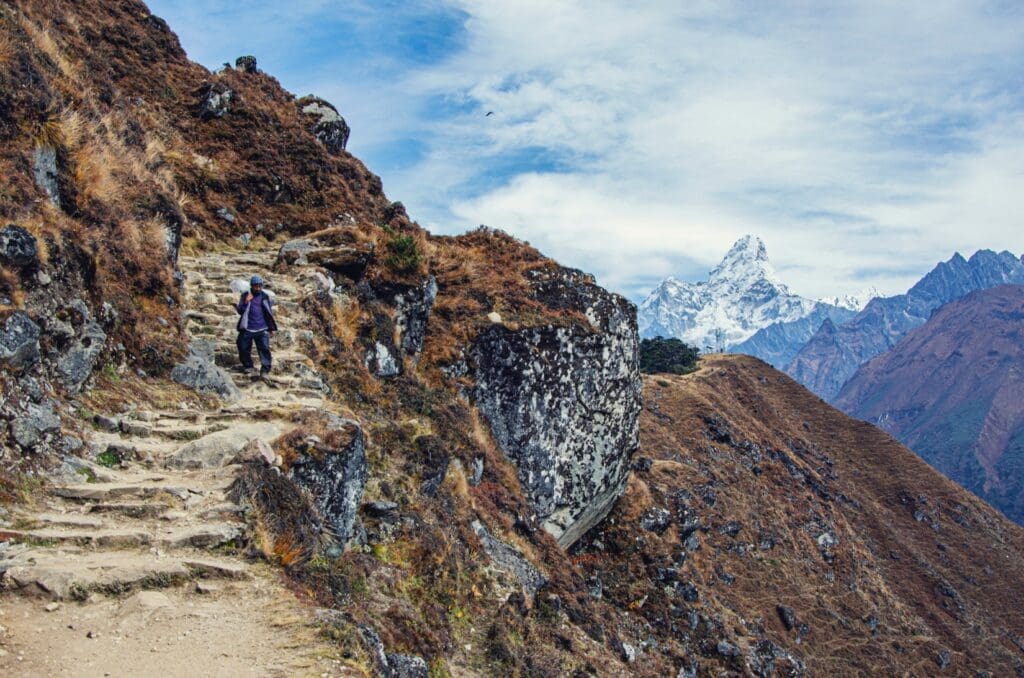
For me, Nepal is unlike any country I have visited. On my visit to this culturally rich and diverse nation I felt like I had entered into a new world. With the influences of both Buddhism and Hindi, the capital city of Kathmandu provides a window into the beautiful culture and history of the Nepalese people and bags you to explore more of this remarkable country.
## **What’s in this guide?**
1. [Who Should Do the Everest Base Camp Trek?](https://explorerspassage.com/chronicles/everest-base-camp-trek/#1)
2. [Where is Everest Base Camp (EBC)?](https://explorerspassage.com/chronicles/everest-base-camp-trek/#2)
3. [How long is the trek to EBC?](https://explorerspassage.com/chronicles/everest-base-camp-trek/#3)
4. [Is it worth it? Things to see & costs](https://explorerspassage.com/chronicles/everest-base-camp-trek/#4)
5. [Is the Everest Base Camp Trek Safe?](https://explorerspassage.com/chronicles/everest-base-camp-trek/#5)
6. [How hard is the trek? Terrain, elevation, and altitude](https://explorerspassage.com/chronicles/everest-base-camp-trek/#6)
7. [Food on the Everest Base Camp Trek](https://explorerspassage.com/chronicles/everest-base-camp-trek/#7)
8. [Accommodations on Everest Base Camp](https://explorerspassage.com/chronicles/everest-base-camp-trek/#8)
9. [When’s the best time to go? Temperatures & weather](https://explorerspassage.com/chronicles/everest-base-camp-trek/#9)
10. [What gear and equipment should I pack?](https://explorerspassage.com/chronicles/everest-base-camp-trek/#10)
11. [Should I use a porter service?](https://explorerspassage.com/chronicles/everest-base-camp-trek/#11)
12. [Travel visas and permits](https://explorerspassage.com/chronicles/everest-base-camp-trek/#12)
13. [A typical Everest Base Camp Trek itinerary](https://explorerspassage.com/chronicles/everest-base-camp-trek/#13)
14. [Other Variations of the EBC Trek](https://explorerspassage.com/chronicles/everest-base-camp-trek/#14)
15. [Everest Base Camp Trek FAQ](http://h-15-everest-base-camp-trek-faq/)
## 1\. Who Should Do the Everest Base Camp Trek?
This trek is ideal for:
- Experienced hikers
- Adventure travelers visiting Nepal
- Mountaineering enthusiasts
- Photographers and nature lovers
Not recommended for:
- Travelers with serious altitude sensitivity
- People without hiking experience
The Everest Base Camp Trek is well suited for travelers who are looking for a physically engaging journey without requiring technical climbing skills. It appeals to hikers who are comfortable walking for multiple hours per day over varied terrain. Individuals with a moderate fitness level and a willingness to adapt to high altitude conditions often find the trek achievable. It is also a strong choice for those interested in cultural experiences, as the route passes through Sherpa communities and historic sites. With proper preparation and realistic expectations, a wide range of travelers can successfully complete the trek.
## 2\. Where is Everest Base Camp (EBC)?
There are actually two base camps for the Everest trek: the North Base Camp in Tibet and the South Base Camp in Nepal. The Nepalese camp in the Khumbu region is the Everest Base Camp that most people talk about, and the endpoint of this legendary trek. It’s tucked away at the end of a long valley that carves through the Himalayas after splitting at the Sherpa village of Dingboche. The formidable [**Khumbu Icefall**](https://en.wikipedia.org/wiki/Khumbu_Icefall)– the first obstacle for those attempting a summit push to Everest – begins right on the doorstep of the camp, leading up to the Western Cwm (also known as the Valley of Silence) and the peaks of Lhotse and Nuptse.
### **Getting to Mount Everest**
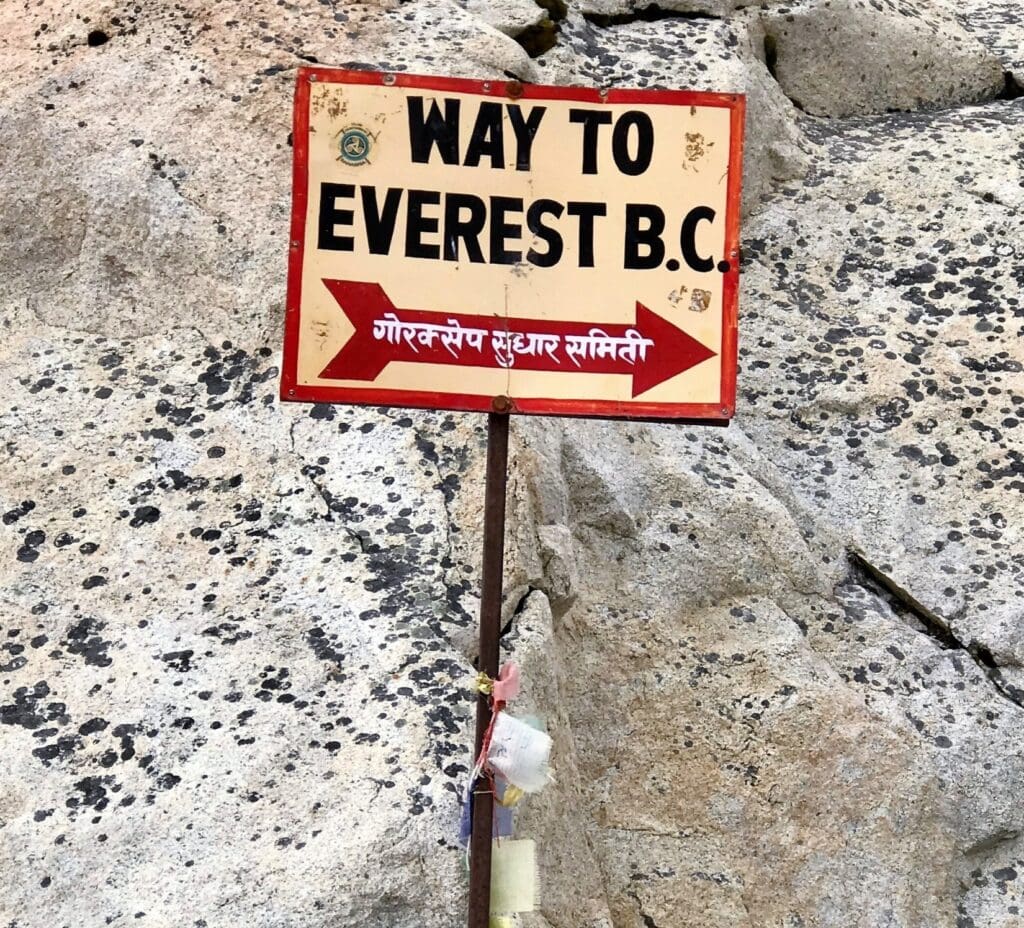
So now you know what this infamous excursion holds and you cannot wait another moment to go, how will you get there? The trip to the start of EBC is a journey in itself. You will first jet into Kathmandu, the heady, rickshaw rattling capital of Nepal. It is an amazing place, filled with UNESCO temples and the aromatic spices of Nepalese curry houses. We usually recommend that travelers arrive at least a couple of days before they are due to set off for the trek, not really to help with altitude acclimatization, as Kathmandu sits at a relatively modest 4,500 feet (1,372m), but more for cultural acclimatization.
Doing that means you’ll have time to score any last-minute gear you might have forgotten for the hike itself. Kathmandu has plenty of decent outfitters that offer good deals on key items like down sleeping bags and thermals. It also means you’ll get to see some of the great cultural treasures of the country, including the tower-topped temples of Durbar Square and the colossal Boudhanath Stupa, which is usually writhed in prayer flags dancing in the wind.
## **3\. How long is the trek to EBC?**
The Everest Base Camp Trek may be the single most famous trek in Asia, and arguably the world. Some say its booming popularity is the trek’s own worst enemy, and it’s true that the trail has suffered from overcrowding and some pollution in recent years. However, nothing can take away from the thrilling sense of adventure that comes with climbing towards the edge of the world’s highest peak. That reaches a fever pitch in the early days of your hike, when you’ll catch a jaw-dropping broadside of Mount Everest from a lookout on the south side of Ama Dablam.
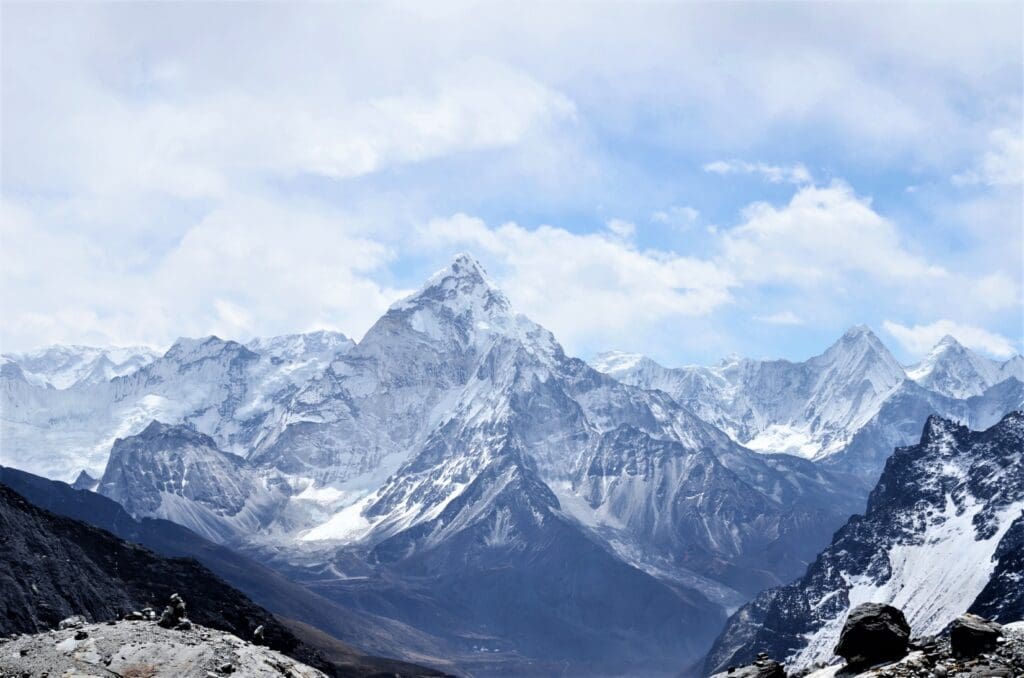
### **Distance**
The rewards of the trek don’t come so easily. EBC is a high-altitude path that requires considerable acclimatization over a good distance. You’ll typically need 12-14 days of full-on trekking (that’s right, your “rest days” involve walking too!) to complete the 80-mile (130km) roundtrip that starts from Lukla.
This distance is roughly divided into individual daily sections of 8-10 miles (13-16km), but the reason the whole adventure takes so many days is because it needs to be broken down into bite-sized chunks due to the altitude with acclimatization and rest days mixed in. Most itineraries will leave enough time to complete each leg on any given day at well below the average trekking pace.
| **Route Section** | **Distance** | **Typical Hiking Time** |
|---|---|---|
| Lukla → Phakding | ~8 km | 3–4 hours |
| Phakding → Namche Bazaar | ~11 km | 5–6 hours |
| Namche Bazaar → Tengboche | ~10 km | 5–6 hours |
| Tengboche → Dingboche | ~11 km | 5–6 hours |
| Dingboche → Lobuche | ~8 km | 4–5 hours |
| Lobuche → Everest Base Camp | ~15 km | 7–8 hours |
### **Walking times**
Most walkers find that they hike a maximum of 8 hours each day, though that can go up a little when you reach the higher altitude sections of the route – not just because of the physical challenge, but because you’ll be stopping often to take in all the breathtaking views.
Walking times on the Everest Base Camp Trek can vary depending on elevation and terrain, but the journey offers constant visual rewards. Hikers pass through forests, suspension bridges, and open valleys with views of towering peaks. As the trek progresses, the landscape becomes more rugged and expansive. Some days may feel long, especially at higher elevations, but the scenery continues to change and provide motivation. Staying focused on the surroundings can help hikers maintain a steady pace and enjoy the experience.
## **4\. Is the Everest Base Camp Trek Safe?**
The Everest Base Camp Trek is generally considered safe for well-prepared hikers, and thousands of travelers successfully complete the trek every year. However, like any high-altitude adventure, there are some risks that trekkers should understand before heading into the Himalayas.
The most significant challenge on the Everest Base Camp trek is altitude. The trail gradually climbs from Lukla at 2,860 meters (9,383 feet) to Everest Base Camp at 5,364 meters (17,598 feet). At these elevations, the air contains significantly less oxygen, which can lead to Altitude Sickness, also known as Acute Mountain Sickness (AMS). (I’ll talk more about this later in the blog post.) Symptoms may include headaches, dizziness, nausea, fatigue, and difficulty sleeping.
Fortunately, most Everest Base Camp itineraries are designed with proper acclimatization days built in, usually in Namche Bazaar and Dingboche. These rest days allow your body time to adjust to the altitude and significantly reduce the risk of serious altitude illness. Trekking slowly, staying hydrated, and listening to your body are the best ways to stay safe.
Aside from altitude, other factors to consider include weather conditions and the physical demands of the trek. Temperatures can drop well below freezing at higher elevations, particularly at night, and weather in the mountains can change quickly. Proper clothing, layering, and good trekking gear are essential for staying comfortable. (Again, I’ll dive deeper into this later in the blog.)
The trail itself is well-established and heavily traveled, with teahouses, lodges, and small villages located throughout the route. This makes the Everest Base Camp trek much safer than remote expeditions where infrastructure is limited. In addition, many trekkers choose to travel with experienced guides and porters, who can assist with navigation, logistics, and monitoring altitude symptoms.
Medical clinics are available in several villages along the trail, including Namche Bazaar and Pheriche, where the Himalayan Rescue Association operates a well-known altitude clinic. Helicopter evacuations are also possible in emergency situations if needed.
With proper preparation, a sensible trekking pace, and awareness of altitude symptoms, the Everest Base Camp trek is a safe and achievable adventure for most healthy hikers. Careful planning and respect for the mountain environment go a long way toward ensuring a rewarding and memorable journey in the Himalayas.
## **5\. Is it worth it? Everest Base Camp trip highlights & costs**
The joy is in the journey here, as you trek further up to gaze from the roof of the world. Some of the best sightings of the famous Everest arguably come during the Everest Base Camp Trek itself, from various lookout points along the way. These magnificent views combined with mystical monasteries and Sherpa villages offer a host of intriguing trip attractions en route. For me, the best highlights of the trek are:
- **Kala Patthar (Kalapathar)** – Roughly translates to “Black Rock”. Detour to this soaring lookout point that’s 18,208 feet (5,550m) up on the ridges above [**Gorak Shep**](https://en.wikipedia.org/wiki/Gorakshep). It’s a real challenge (think a 1,640-feet / 500-meter ascent in 2 hours) but is hailed by many as *the* best view over Everest, with the Khumbu Icefall crashing through the valley below.
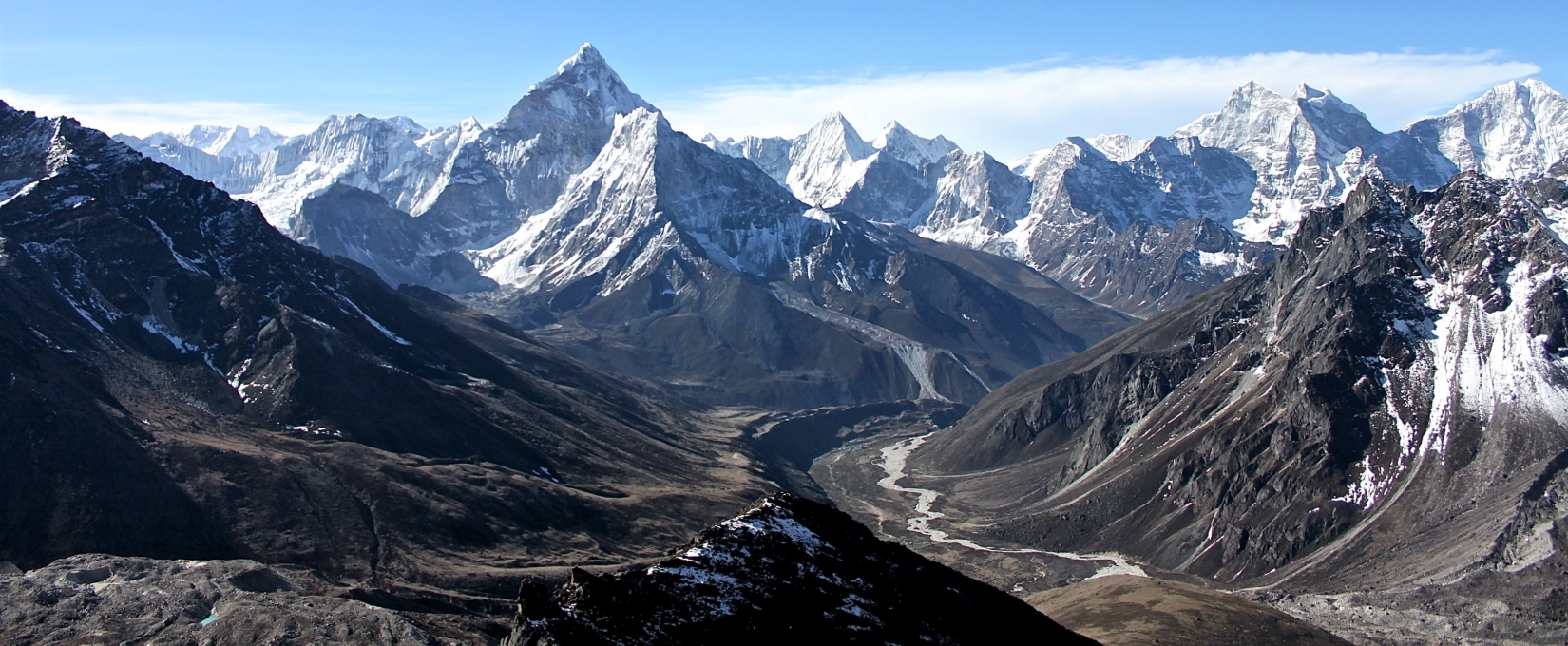
- **Gorak Shep (Gorakshep)** – A settlement that seems at the end of the world, this tiny town is the heartland of the Sherpa people and sits at the base of Kala Patthar.
- **Sagarmatha National Park Museum** – You’ll encounter this one very early on in the trek during your rest day in Namche Bazaar. It’s worth the climb to its perch above the village, mainly because the forecourt has incredible views of Everest and Nuptse – your first glimpse of the great mountain. Inside, you can learn all about the unique culture of the Khumbu [**Sherpa people**](https://www.britannica.com/topic/Sherpa-people).
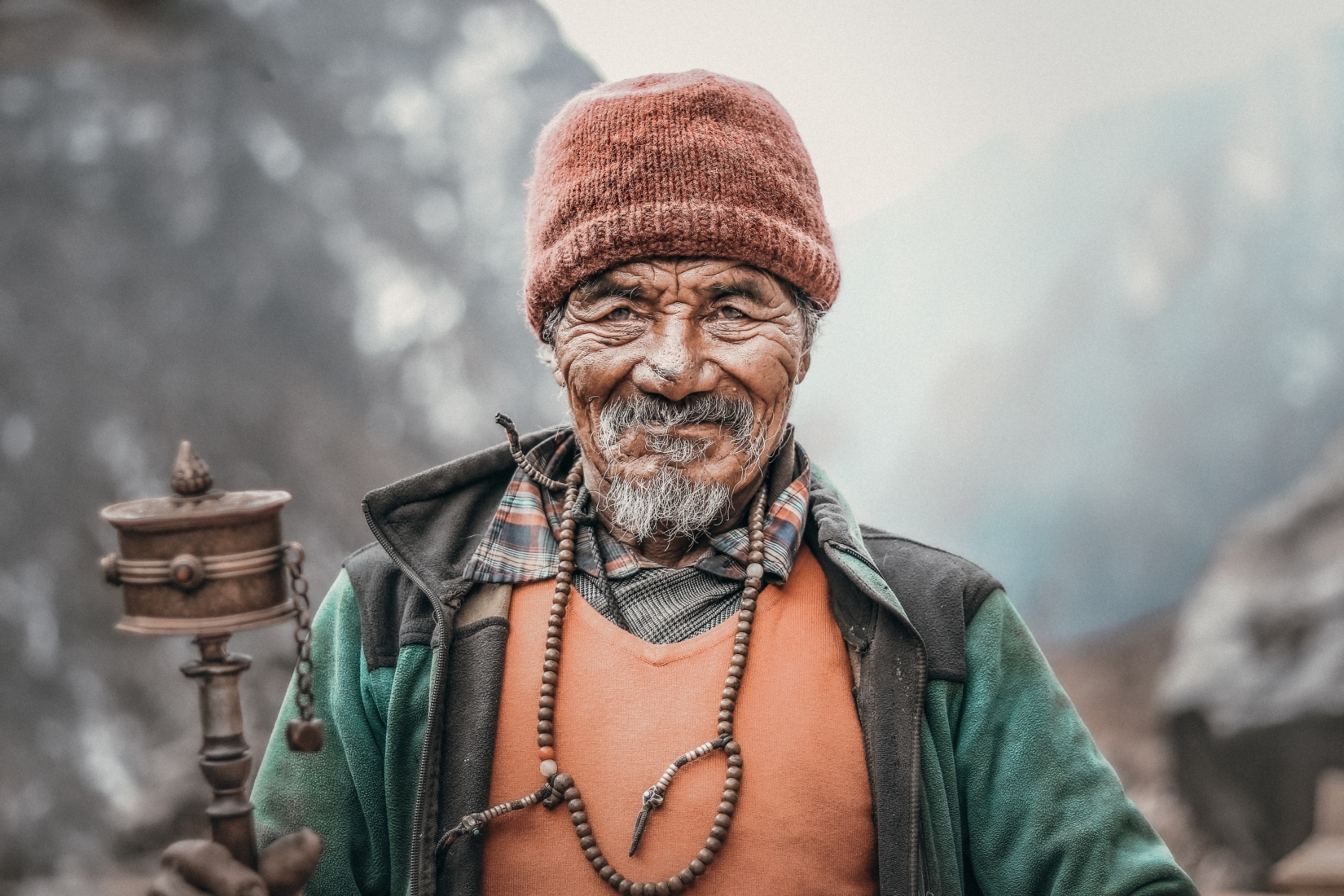
- **Tengboche Monastery (Thyangboche Monastery or Dawa Choling Gompa)** – The largest Buddhist [**gompa**](https://www.worldatlas.com/articles/what-is-a-gompa.html) in the valley of Everest, Tengboche Monastery is a pitstop for determined trekkers bound for the summit. They come to light candles and ask for blessings.
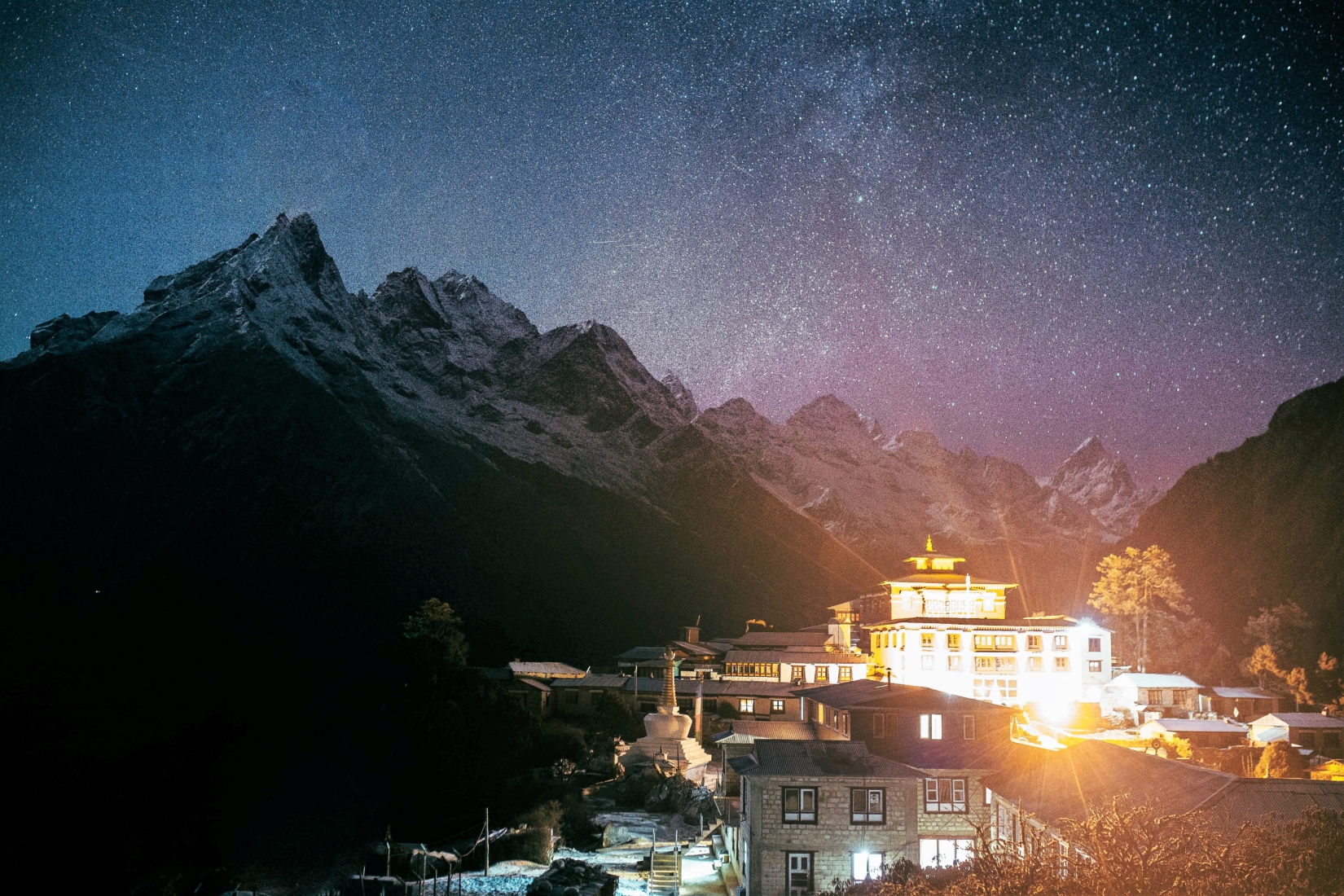
- **Nangkar Tsang / Dingboche Viewpoint** – Above the town of Dingboche, this detour off the main route is good acclimatization trekking and offers a panorama that takes in the Khumbu Glacier and the whole Imja Khola Valley.
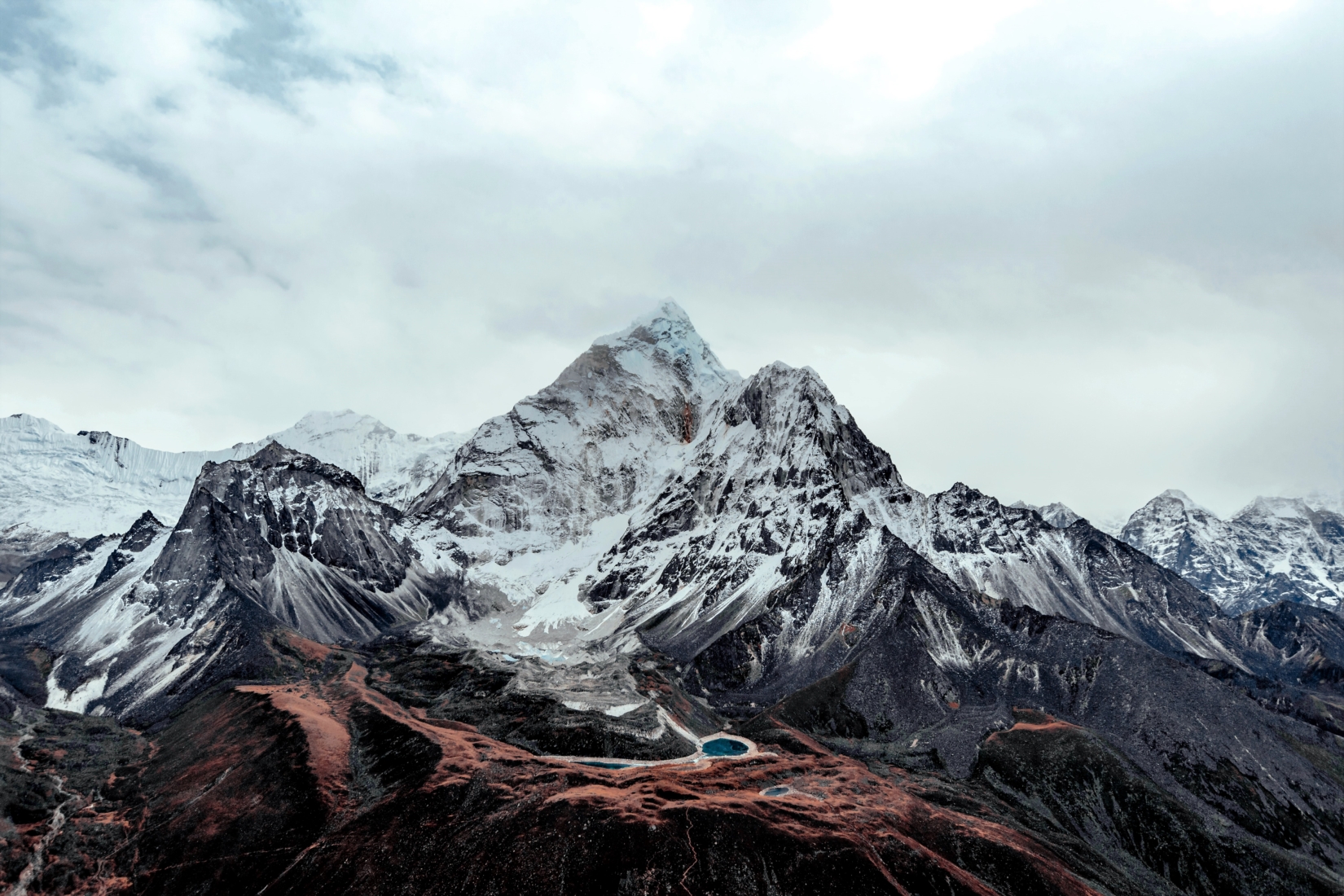
### **Pricing**
With so much natural beauty to be experienced, how much will it set you back? When it comes to pricing, costs of the Everest Base Camp Trek can range widely but [**the best all-inclusive tour packages start at around US\$4,295**](https://explorerspassage.com/mount-everest-base-camp/). If this number is giving you sticker shock, don’t let it deter you from the trip of a lifetime to Nepal, because my team at The Explorer’s Passage is always here to work with you and your preferences to [**craft a trip that fits your needs**](https://explorerspassage.com/private-travel/).
Another important cost factor isaltitude logistics and remoteness. The Everest region is only accessible by air or multi-day trekking routes, which means many supplies must be flown into Lukla or carried by porters and pack animals. As trekkers move higher into the mountains, food, fuel, and supplies become more expensive due to the difficulty of transporting goods to remote villages. This is why meals and accommodations typically cost more the farther you travel along the trail.
It’s also wise to budget for additional expenses that are often overlooked. These can include travel insurance that covers high-altitude trekking, gear rental or purchases, charging electronic devices at teahouses, hot showers, snacks, and tips for guides and porters. While these individual costs may seem small, they can add several hundred dollars to the total cost of the trip.
Despite these expenses, many travelers find that the Everest Base Camp trek offers excellent value for a once-in-a-lifetime adventure. The experience of walking through the Himalayas, visiting traditional Sherpa villages, and standing at the base of the world’s tallest mountain is truly unforgettable.
### **Ways to Save Money on the Everest Base Camp Trek**
The Everest Base Camp trek is often considered a once-in-a-lifetime adventure, but the good news is that there are several ways to reduce costs without sacrificing the experience. With careful planning and smart choices, trekkers can keep their budget manageable while still enjoying everything the Himalayas have to offer.
#### **Travel During the Shoulder Season**
Trekking during the shoulder seasons such as early spring (March) or late autumn (November) can also help reduce costs. During these periods, flights, accommodations, and trekking services may be slightly cheaper because there are fewer visitors compared to peak months like April and October. You will still enjoy great mountain views while avoiding the busiest crowds.
#### **Rent or Buy Gear in Kathmandu**
Instead of purchasing all your trekking equipment at home, consider renting or buying gear in Kathmandu. The Thamel district is filled with trekking shops offering affordable gear rentals, including sleeping bags, down jackets, and trekking poles. This can save hundreds of dollars compared to buying new equipment before your trip.
Porters can make the trek much easier, but they also add to the overall cost. If you are comfortable carrying your own gear, packing efficiently and keeping your load light can help reduce or eliminate porter expenses. Many trekkers aim to carry a daypack weighing around 5–7 kg (11–15 lbs) with essentials such as water, snacks, extra layers, and camera gear.
Finally, plan ahead for small costs that can add up during the trek. Items like charging electronics, hot showers, Wi-Fi access, snacks, and bottled water may require additional fees at teahouses. Bringing items like a reusable water bottle with purification tablets, a power bank, and personal snacks can help reduce these daily expenses.
With thoughtful planning and budgeting, it is entirely possible to complete the Everest Base Camp trek without spending a fortune while still enjoying one of the most extraordinary trekking experiences in the world.
## **6\. How hard is the trek? Terrain, elevation, and altitude**
So just how difficult is the trek to Everest Base Camp? To answer this, you’ll have to consider the terrain and heights of EBC. Your physical fitness also plays a factor in the perceived difficulty of this adventure. Based on our [**Trip Activity Level Guide**](https://explorerspassage.com/activity-guide/), we classify this trek as an advanced level, but you may be glad to know that no technical training or mountaineering experience is required.
Not sure if this Himalayan adventure is right for you? [**Contact us**](https://explorerspassage.com/contact/) and we’ll walk you through details on the physical demands, recommended training, and more so you can make an informed decision.
### **Terrain**
The Everest Base Camp hike graduates from the alpine surroundings at the south end of the [**Sagarmatha National Park**](https://whc.unesco.org/en/list/120/) to the scree-covered ridges of ancient moraines in the final push towards the trekking finish line. The first sections are easier in terms of terrain but more difficult because they are constantly steep. You’ll notice this in the ascent from Lukla to Namche Bazaar, and then again from Namche Bazaar to Tengboche. The path there is largely shaded by pine and ironwood forests, muddy when wet but also interspersed with rocks wedged into the ground. You’ll stroll across suspension bridges to cross most rivers.
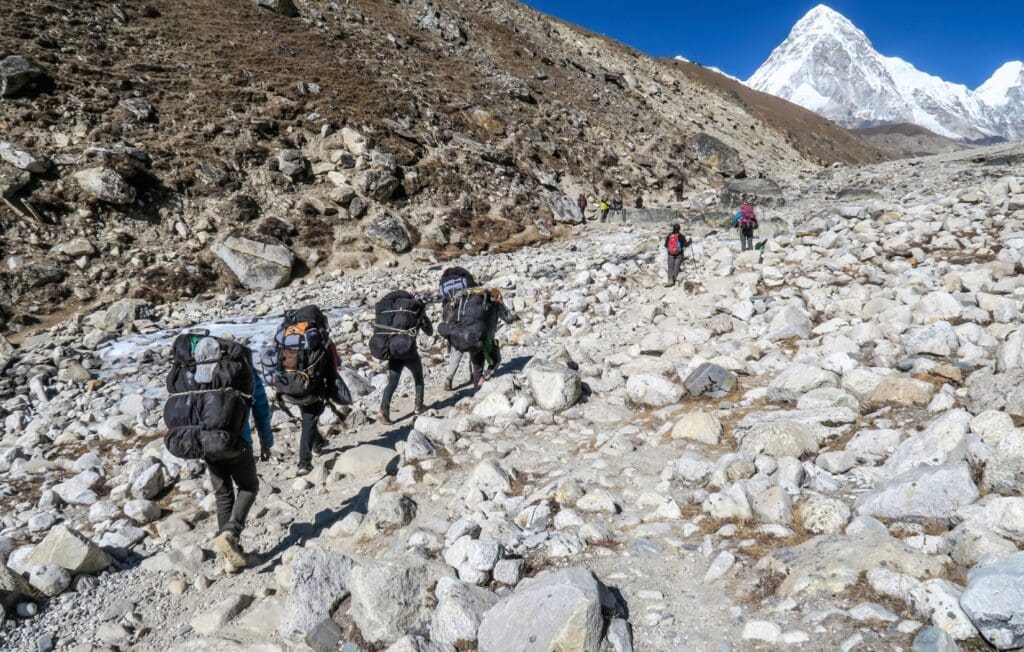
After the first few days of your trip, you’ll see that the trekking path levels a little as it skirts a wide, flat valley with the mighty Himalayas looming on all sides. This is where you lose the tree cover for good, so be sure to have the sunscreen handy. It’s rock and grit underfoot until you near Gorak Shep. There, the route sort of merges with the great pebble and rock moraine at the end of the Khumbu Icefall. It’s normal to find snow coverage in those parts, especially if you’re trekking between November and March.
The terrain along the Everest Base Camp trail changes with the seasons, so it’s important to know what to expect. During the dry season, the trail is generally clearer, with less mud to contend with. However, rocky sections can still be slippery, so tread carefully. In the winter months, snow and ice can make parts of the trail, especially near the Khumbu Icefall, much more challenging. By understanding how the conditions vary, you can make sure you’re ready for whatever nature throws your way.
### **Elevation and altitude**
How high is Everest Base Camp? Well, altitude is commonly travelers’ biggest challenge on this tall trek. As mentioned before, you’re going to have to clock up a hefty 17,598 feet (5,364m) above sea level. You’ll manage 9,400 feet (2,865m) at the EBC trailhead, which is taken care of by the flight from Kathmandu to Lukla. The rest is up to your legs. You’ll knock out about 1,800 feet (549m) by climbing to Namche Bazaar. After that, days on the trail (not including acclimatization days) average around 1,200-1,600 feet (366-488m) in elevation gain, though it’s on less-steep paths once you cross the tree line around Tengboche. Everest Base Camp elevation is no joke and can be difficult for some.
Acute Mountain Sickness (AMS) – the mildest form of altitude sickness – is certainly a risk here. It can affect anyone over altitudes of 8,000 feet (2,438m), but usually has severe impacts at higher levels. Since the EBC Trek reaches altitudes of more than double the height where AMS can possibly kick in, there are usually two full acclimatization days planned in – one in Namche Bazaar and the another in Dingboche or Lobuche. These days aren’t for resting but instead used to climb high and then descend to sleep at lower altitudes, a common practice that’s known to help the body acclimate to conditions at higher elevations.
Don’t be surprised if your Everest Base Camp Trek guide constantly reminds you to drink enough water as it’s another way to combat AMS. Once you hit the higher altitude parts of the path, you can typically expect your guide to be prepared with a supply of oxygen, should you need it. You might also want to consider packing an AMS medication like Diamox on your trip to Nepal.
Even seasoned alpinists find the trip a challenge and lots of climbers struggle with Acute Mountain Sickness. Just remember: no pain, no gain on this most incredible of trails! On this trip, you’ll see the sheer majesty of the Nepalese Himalayas up close and scale to viewpoints that are simply some of the best you’ll ever hike to.
### **How to Prepare for the Trek**
The Everest Base Camp Trek is not a technical climb, but it is physically demanding due to long hiking days, steep terrain, and high altitude. Most trekkers walk 6–8 hours per day while gradually ascending to 5,364 meters (17,598 feet).
Preparing with a structured training plan will make the trek safer, more enjoyable, and significantly increase your chances of reaching base camp.
### **How Fit Do You Need to Be for the Everest Base Camp Trek?**
You don’t need mountaineering experience to complete the trek, but you should have:
- Good cardiovascular fitness
- Strong legs for long uphill hikes
- Endurance for multi-day trekking
- Experience carrying a daypack
If you can comfortably hike 10–15 km (6–9 miles) in mountainous terrain, you’re on the right track.
#### **When Should You Start Training?**
Most trekkers should begin training at least 16–20 weeks before the trek.
Ideal preparation timeline:
- **4 months before trek:** Start cardio and strength training
- **3 months before trek:** Increase hiking distance and elevation gain
- **2 month before trek:** Practice long hikes with a backpack
#### **Everest Base Camp 16-Week Training Plan**
**Weeks 1–4: Build Your Fitness Base**
Focus on cardio and basic strength.
Training goals:
- Cardio workouts 1–2 times per week
- 30–45 minutes of activity
Recommended exercises:
- Hiking
- Stair climbing
- Running or jogging
- Cycling
- Swimming
Strength exercises:
- Squats
- Lunges
- Step-ups
- Core exercises (planks)
Weekend goal:
- One hike of **6–8 km (4–5 miles)**.
**Weeks 5–10: Increase Endurance**
Now start simulating trekking conditions.
Training goals:
- Cardio workouts 2–3 times per week
- 45–60 minutes per session
Add:
- Hills or stair workouts
- Longer hikes
Strength training:
- Weighted squats
- Step-ups with backpack
- Calf raises
- Core workouts
Weekend goal:
- Hikes of **10–12 km (6–8 miles)** with **300–600 m elevation gain**.
**Weeks 10–16: Simulate Trek Conditions**
This phase prepares your body for real trekking days.
Training goals:
- 2-3 workouts per week
- Carry a 5–7 kg (10–15 lb) backpack
Exercises:
- Long uphill hikes
- Stair climbs with backpack
- Interval cardio workouts
Weekend goal:
- 15 km (9 miles) hike
- Back-to-back hiking days if possible
This mimics multiple trekking days in the Himalayas.
#### **Best Exercises for Everest Base Camp Training**
**Stair Climbing**
One of the best ways to simulate trekking uphill.
Try:
- 20–40 minutes
- With a weighted backpack
**Hiking**
Real hiking is the best training.
Focus on:
- Elevation gain
- Long distances
- Carrying a daypack
**Strength Training**
Strong legs prevent fatigue and injury.
Key exercises:
- Squats
- Lunges
- Step-ups
- Deadlifts
- Core workouts
**Cardio Training**
Cardio improves endurance at high altitude.
Good options:
- Running
- Cycling
- Rowing
- Swimming
- Incline treadmill walking
**Training with a Backpack**
During the final weeks of training, hike with a backpack similar to what you’ll carry on the trek. Typically the weight of a daypack for a Everest Base Camp daypack hike is 5–7 kg (11–15 lbs) This will help your body adapt to carrying weight for long periods.
#### **Altitude Training Tips**
Altitude is the biggest challenge of the Everest Base Camp trek.
While you cannot fully simulate high altitude, you can improve endurance by:
- Increasing cardiovascular fitness
- Training on hills
- Staying well hydrated
- Learning proper pacing
Remember: slow and steady trekking wins the race and is key at high altitude.
#### **Mental Preparation for the Trek**
The Everest Base Camp trek is also a mental challenge so we must not forget that apart from being physically prepared, you need to be mentally prepared. Maintaining a positive mindset and steady pace makes a huge difference.
Prepare for:
- Cold weather
- Basic accommodations
- Long trekking days
- High altitude fatigue
**Signs You’re Ready for the Everest Base Camp Trek**
You’re well prepared if you can:
- Hike 15 km (9 miles) comfortably
- Walk 6–8 hours in a day
- Carry a backpack uphill
- Complete back-to-back hiking days
If you can do this, you’re likely ready for the trek.
## **7\. Food on the Everest Base Camp Trek**
All that trekking is going to work up a serious appetite, you can be sure of that. Thankfully, EBC teahouses tout some decent grub for when it’s time to refuel. Don’t be surprised to find that the menus are virtually identical the whole way along, even if the dishes themselves vary greatly with the whims of different chefs up and down the trip route.
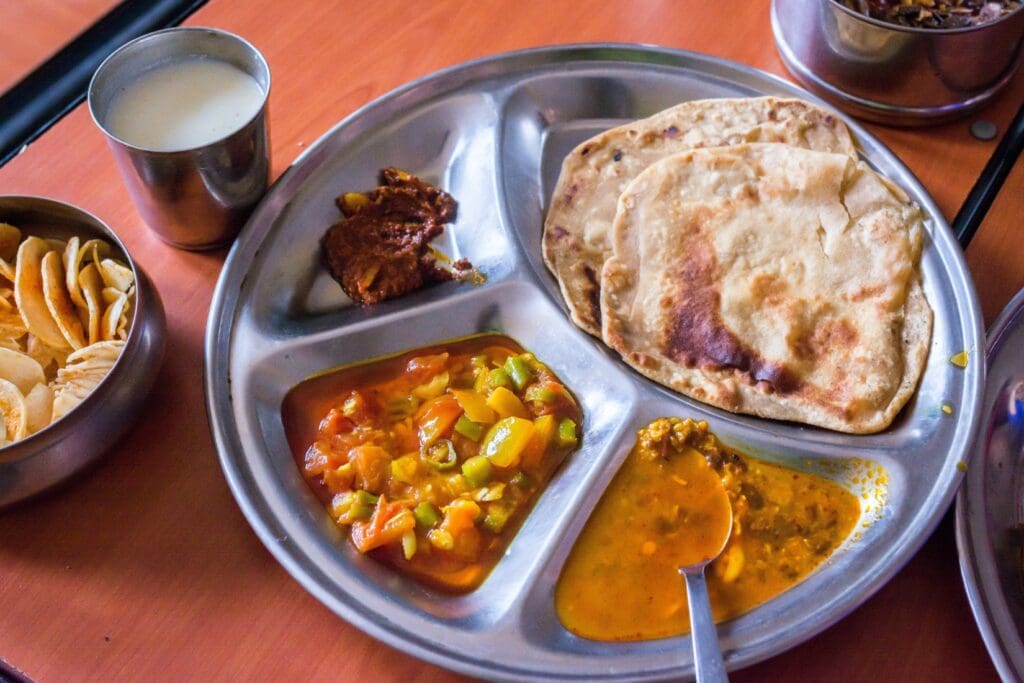
Common dishes include:
- **Dal bhat** – The most popular EBC meal of all. Every hiker who’s done the route has warmed up with this spicy lentil stew at least once. It’s usually served with rice and chapati flatbread.
- **Egg and fries** – A hearty option for those feeling really hungry, this one includes hand-cut, fried potatoes and a double-egg omelette.
- **Shyakpa** (**Sherpa stew**) – A classic favorite of sherpas in Nepal and a great vegetarian option that’s basically broth with cut potatoes, carrots, and other root vegetables.
- **Pizza** – Some teahouses try their hand at pizza. We’ll let you be the judge of whether or not the Italians would be proud.
Is your mouth watering yet? These dishes will surely give you the energy you need to power through the trek.
## **8\. Accommodations on Everest Base Camp**
Apart from the hotels in Kathmandu at the start and at the end of your quest, all of your accommodations on the Everest Base Camp Trek route are likely to be teahouses. Don’t let the name fool you – these aren’t just places to stop for a hot drink. They’re actually full-fledged bed and breakfast lodges purposely designed to host travelers.
EBC teahouse accommodations in Nepal are simple, clean, and comfortable. The general rule is that the quality is better towards the start of the trek, where the teahouses are both larger and better supplied. Rooms are usually minimally decorated. They have wood-paneled or plastered walls and, for the most part, a single window, along with low-rise beds with foam mattress pads. Some have in-room heating, while other teahouses are warmed by a central stove that’s kept alight in the evenings. Some places offer hot showers, but most only offer cold. Electrical charging of devices is on offer at most places, though that could come at an extra cost.
For more details on accommodations, check out our [**Everest Base Camp tour page**](https://explorerspassage.com/mount-everest-base-camp/).
## **9\. Best time to trek to Everest Base Camp**
There are **two main seasons** for trekking to Everest Base Camp in Nepal. The first is in the **spring (late March to May)** and the second comes in the **autumn (late September to November)**. Both high seasons essentially straddle the main monsoon season, offering more dryness and clearer skies without too much precipitation. Although, it’s important to note that zero rain can never be guaranteed this high up.
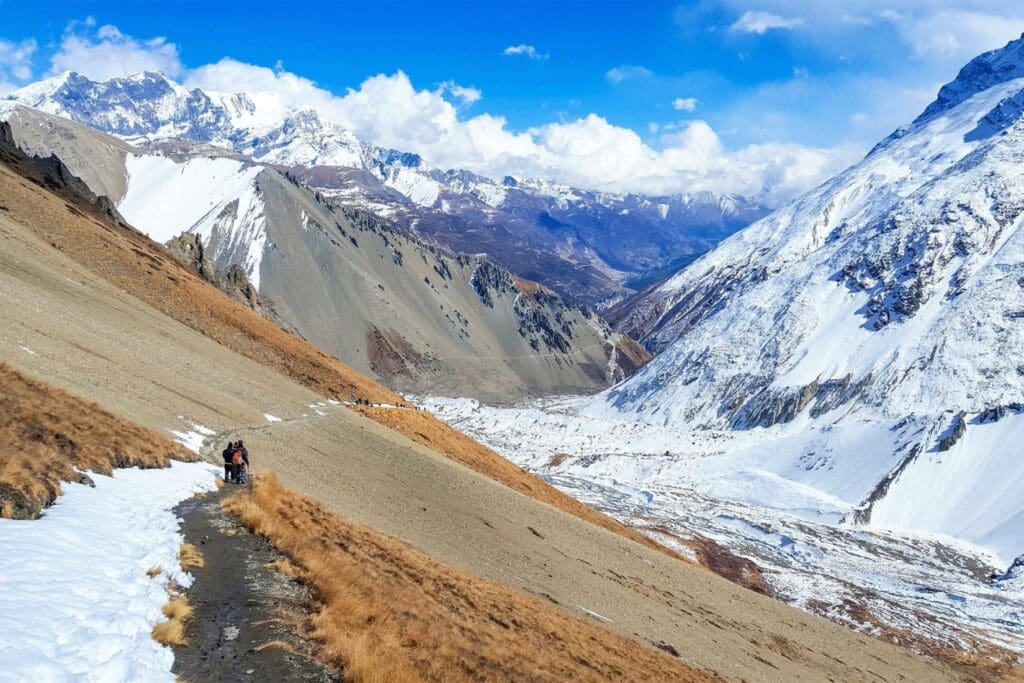
Here’s a breakdown of the best months to go:
- **March –** Marks the beginning of the trekking season proper but it’s not its peak. That means a good balance of smaller crowds, availability in teahouses and affordability. Most of the ground snow has melted by this point, but rising temperatures do mean there can be some heat haze to obscure the views.
- **April** – The busiest time of all on the Mount Everest Base Camp Trek, but for good reason: Clear skies abound, the views are wonderful, and temperatures are comfortable. You can also come in April if you’re keen to see the hardcore mountaineers prepping for a summit push up Mount Everest itself.
- **May** – The hottest month on the trail with less harsh conditions in the evening. Downsides include heat haze that can obstruct the views and the potential for some early-monsoon rains.
- **September** – The first month after the monsoon can see some rains stick around. However, that also means the lower-altitude parts of the trek between Lukla and Namche Bazaar are wonderfully lush with flower blooms and vivid greenery.
- **October** – Second only to April in terms of crowds of travelers. Lots of people hit the EBC trail at this time because there’s a great balance between comfortable temperatures and clear skies. In fact, I’d say that this is the clearest time of all, so it’s perfect for those wanting uninterrupted views of Everest.
- **November** – Cold winter conditions can start to set in by November. It’s not unusual to encounter snow at higher altitudes and you’ll need proper thermal gear to get through the nights. The payoff is super-clear skies and way fewer hikers on the trail.
**December to February is the low season** for one main reason: Snow. Temperatures during these colder days drop to an average of 25 degrees fahrenheit (-4℃) in the middle of the winter season, and that’s in Namche Bazaar, one of the lowest points on the trek. It’s not ideal for overnight hikes that rely on teahouses made of plywood walls. That said however, completing the EBC certainly isn’t impossible at this time, it just presents unique challenges. You’ll need way more thermal layering, special trekking equipment to handle the snowdrifts, and probably extra days to complete the trek. The upside is that winter days offer very clear skies and there’s rarely a big crowd on the trail.
## **10\. What gear and equipment should I pack?**
When considering what to pack for your trip, it’s good to know there are strict limits on the weight each passenger can take on that initial flight from Kathmandu to Lukla. What’s more, there are limits on the size and weight of bags that you can ask porters to shuttle up and back to EBC for you. Due to these limits, you’ll want to think very carefully about what to bring for this once-in-a-lifetime trek. As a general rule, it’s good to stick to about 22-33 pounds (10-15kg) in your main pack, with a small 30-litre day pack on the side to carry the things you’ll need on the trail.
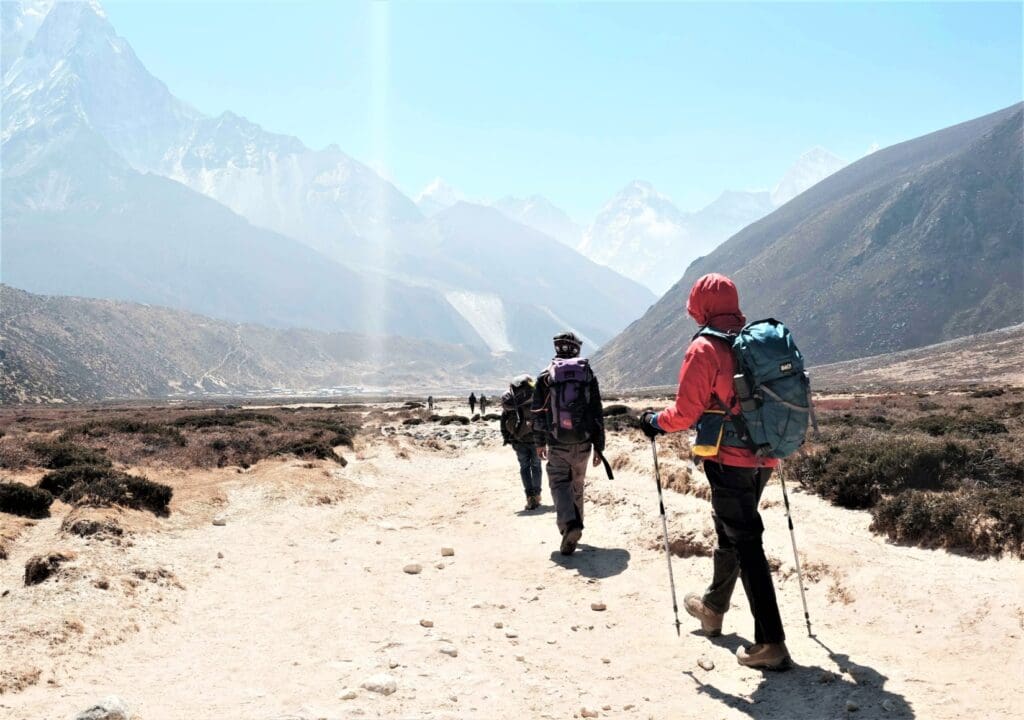
**Layers are always key** in the Nepalese mountains, as temperatures can warm up considerably during the day and drop suddenly at night. You’ll want to be able to add and remove fleeces and thermals on the upper body to match the fluctuating temperatures. For the lower body, I’d recommend bringing both shorts (mainly for the lower elevations of the trek where it can be positively balmy) and sturdy trekking pants (for higher elevations), backed up by good thermal-rated underlayers.
**Waterproofs are also essential** for your trip. Rain and snowfall can come without warning in the high Himalayas, and [**weather patterns on the EBC Trek**](https://www.timeanddate.com/weather/@1283416/ext) have little respect for the so-called high season, so inclement weather can happen any time of the year. Winter trekkers will need to plan a little more, though, in order to deal with all that ground ice and much colder conditions.
On top of that, you’ll need to think about all those hiking essentials. Good boots, a pair of hiking poles you feel comfortable with, both a wool hat and a sun hat, strong sweat-resistant sunscreen, headlamps, and a decent-capacity water bottle should all be on your packing list.
### **Essential Clothing for the Everest Base Camp Trek**
Layering is key for trekking in the Himalayas.
**Base Layers**
- Moisture-wicking thermal tops (2–3)
- Thermal leggings or long underwear (2 pairs)
- Lightweight trekking shirts (2–3)
**Mid Layers**
- Fleece jacket
- Lightweight insulated jacket
- Softshell hiking jacket
**Outer Layers**
- Waterproof jacket (Gore-Tex recommended)
- Waterproof pants
- Down jacket (essential for cold evenings)
**Trekking Bottoms**
- Trekking pants (2 pairs)
- Hiking shorts (1 pair)
- Warm hiking leggings
**Footwear**
Your boots are the most important piece of trekking gear.
- Broken-in trekking boots (waterproof)
- Camp shoes or sandals
- Hiking socks (4–5 pairs)
- Thermal socks (2 pairs)
- Gaiters (optional but useful in snow)
**Trekking Gear**
These items help with comfort and safety on the Everest Base Camp trail.
- Trekking poles
- 30–40L daypack
- Duffel bag for porter (if using one)
- Sleeping bag rated to -10°C to -20°C (14°F to -4°F)
- Headlamp with extra batteries
- Sunglasses with UV protection
- Water bottles or hydration bladder (2L capacity)
**Health and Safety Items**
Altitude and weather can be challenging at high elevations.
- Basic first aid kit
- Diamox (altitude sickness medication) – Speak to your doctor to see if this is a good option for you.
- Pain relievers
- Blister treatment
- Hand sanitizer
- Wet wipes
- Sunscreen SPF 50+
- Lip balm with SPF
- Personal medications
**Toiletries and Personal Items**
Teahouse accommodations along the trek are basic, so bring essentials.
- Toothbrush and toothpaste
- Small quick-dry towel
- Travel soap or body wash
- Shampoo
- Toilet paper
- Nail clippers
- Deodorant
**Electronics**
Electricity is available at some teahouses but charging may cost extra.
- Smartphone
- Camera
- Power bank
- Charging cables
- Universal travel adapter
**Documents and Travel Essentials**
Always keep these items in your daypack.
- Passport
- Nepal tourist visa
- Travel insurance documents
- Sagarmatha National Park permit
- Khumbu region permit
- Cash (Nepalese rupees)
**Optional but Helpful Items**
These can make the trek more comfortable.
- Neck gaiter or buff
- Ear plugs
- Playing cards or small game
- Journal
- Snacks or energy bars
- Reusable shopping bag
**What Not to Pack**
Avoid bringing unnecessary weight.
Do NOT bring:
- Too many clothes
- Heavy books
- Large electronics
- Excess toiletries
Remember: every kilogram matters at high altitude.
**Recommended Packing Weight**
Most Everest Base Camp trekkers carry:
- **Daypack:** 5–7 kg (11–15 lbs)
- **Duffel with porter:** 10–15 kg (22–33 lbs)
Keeping your pack light helps conserve energy during long trekking days.
That’s just scratching the surface, but The Explorer’s Passage will make sure you’re fully prepared for your chosen season on the EBC route when you plan with us – [**just ask us for a full packing list**](https://explorerspassage.com/contact/)\!
## **11\. Should I use a porter service?**
Put simply, porters are essential on the trek to Everest Base Camp. They’re very much the superheroes of the expedition, transporting the bulk of most trekkers’ gear and equipment from camp to camp outside of Lukla or Namche Bazaar. For larger groups of trekkers, some operators will utilize animal support for transport assistance. Porters will carry one standard rucksack or duffle bag per hiker. Usually, that’s limited to a weight of between 22-33 pounds (10-15kg) per person, though it can be lower or higher depending on the Everest Base Camp tour you pick. That leaves you to only carry what you need for the day. As mentioned above, a 30-litre pack typically works best, just enough for water, snacks, fleece and waterproof layers, your camera, and sunscreen.
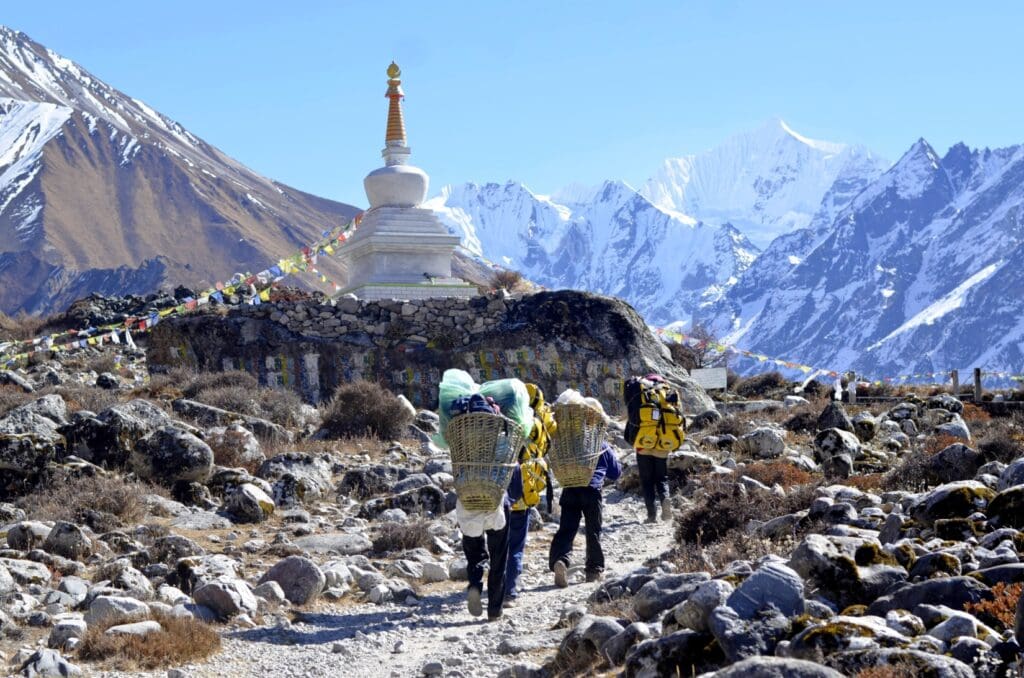
I do, occasionally, see people who choose not to engage a porter but that’s a tough task. Ultimately, when you’re deciding whether or not porter service is right for you, remember that the Mt. Everest Base Camp hike involves several days of walking at altitudes over 12,000 feet (3,658m) above sea level, on tricky terrain to boot. It’s a challenge even without 44 pounds (20kg) of gear strapped to your back\!
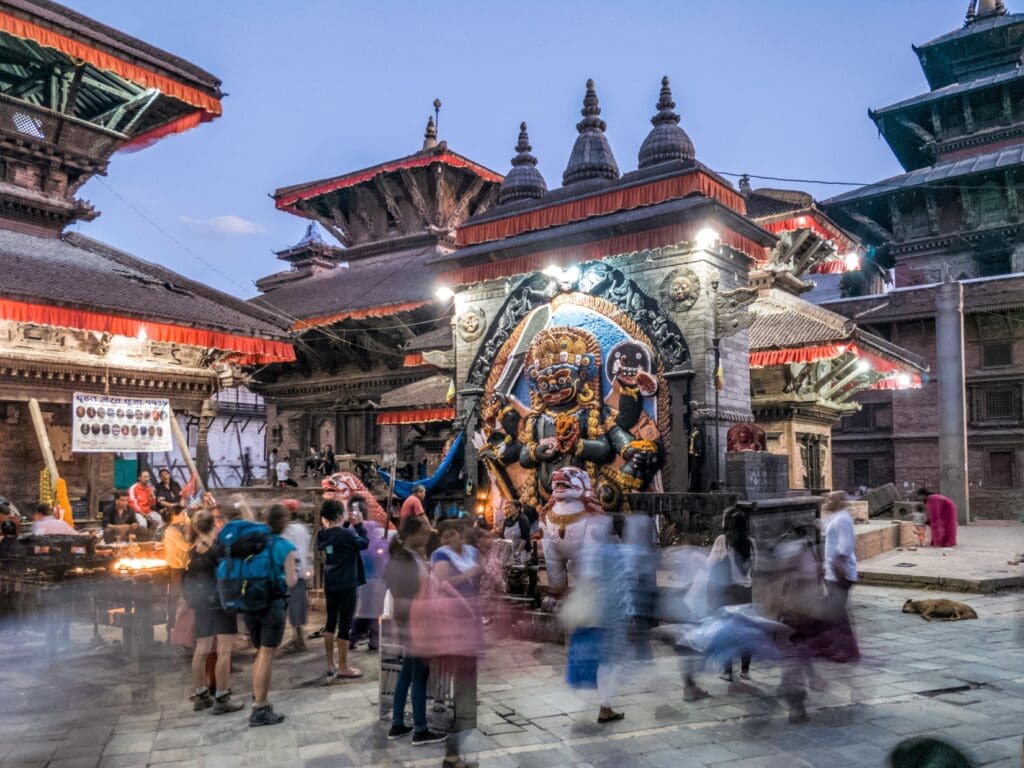
After Kathmandu, most flights to Lukla now depart from Ramechhap Airport, which requires an early morning drive of approximately 4 to 5 hours from the city. From there, you will board a short haul flight to Lukla, the gateway to the Everest Base Camp trek. The flight itself is relatively quick, about 20 minutes, and quite thrilling, especially as the landing strip in Lukla sits at approximately 9,300 feet (2,835 meters) above sea level on a steep mountain plateau. It is not a journey you will forget anytime soon.
## **12\. Travel visas and permits**
Some nationals of specific countries can enter Nepal without a visa, but most travelers will require one. For those who do, entry visas for tourists traveling into Nepal are generally available in advance or upon arrival at Tribhuvan International Airport and various land borders. If you’re unsure of which category you fall into, use this [**easy tool to double check your entry and health requirements**](https://cibtvisas.com/?login=tep).
When it comes to permits, there are no permits for the Everest Base Camp Trek itself, at least not like there are for the Inca Trail and some other bucket-list hikes elsewhere on the planet. However, there are limits to the number of guests teahouses can host (so it’s important to book early) and you will be passing through some regions and conservation areas that require visitors to obtain special passes, but no need to worry as The Explorer’s Passage will handle all of these details for you. Just make sure your [**travel documents and essentials**](https://explorerspassage.com/support/documents/) are still valid.
For the route to Everest Base Camp from Lukla, there are two key documents that we will secure for you:
- **Khumbu Pasang Lhamu Rural Municipality Entrance Permit** – This is a pass for access to the whole Khumbu region.
- **Sagarmatha National Park Entry Permit** – This is your pass to enter the national park that contains Mt. Everest.
It is important to note, those looking to do the longer, 20-day extension to the EBC Trek, going from Kathmandu by road and then onwards by foot from Jiri, will also need a pass for access to the Gaurishankar Conservation Area.
### **Why Do You Need Permits for the Everest Base Camp Trek?**
Trekkers must obtain several Everest Base Camp Trek permits before hiking in Nepal’s Khumbu region. These permits are required to protect the environment, support local communities, and ensure the safety of travelers exploring the Himalayas.
The Everest Base Camp trail passes through Sagarmatha National Park, a UNESCO World Heritage Site known for its fragile alpine ecosystem and rich Sherpa culture. To preserve this unique environment, the Nepalese government and local authorities require trekkers to carry official permits when entering the region.
Permits help regulate tourism and reduce environmental impact on the mountain trails. They also provide funding for conservation efforts, infrastructure improvements, and emergency services along the trekking route.
The permit system plays an important role in maintaining the sustainability of the Everest region. Key benefits include:
- Protecting Sagarmatha National Park’s ecosystem and wildlife
- Maintaining trekking trails and infrastructure throughout the Khumbu region
- Supporting Sherpa communities and local development projects
- Providing emergency rescue and safety services for trekkers
- Monitoring and managing the number of visitors on popular trekking routes
Permit fees collected from trekkers are reinvested directly into the region. This funding helps maintain trails, improve facilities in remote villages, and support conservation programs that protect the Himalayan environment.
By purchasing the required Everest Base Camp trekking permits, visitors contribute to preserving one of the world’s most famous trekking destinations while helping local communities thrive.
## **13\. A typical Everest Base Camp Trek itinerary**
The temple-topped, bazaar-busting city of Kathmandu is likely to be where you enter Nepal. You’ll definitely want to take some time out of your trip to explore this amazing city first. Then, it’s time to head northeast to start your Everest Base Camp hike. Most travelers do that with a flight to Lukla and then walk from there, but it’s also possible to trek all the way if you have the time. Still, most Everest Base Camp Trek itineraries officially start at Lukla airport.
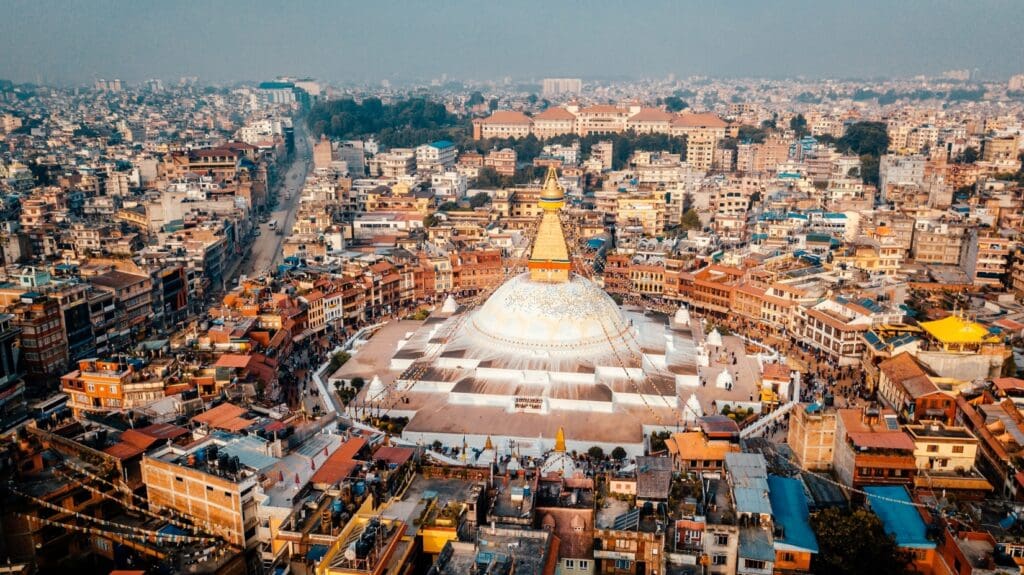
For a customized itinerary, [**connect with us**](https://explorerspassage.com/contact/) to craft your ideal trip.
- **Day 1:** Namaste and welcome to Kathmandu! Get ready to experience one of the most awe-inspiring journeys our planet has to offer. You’ll arrive in Kathmandu and explore the dynamism, scenery, and history the city has to offer.
- **Day 2:** Today will be filled with cultural immersion. Begin by exploring three UNESCO World Heritage Sites. The first is Boudhanath, one of the largest stupas in Nepal. Next is Pashupatinath, a sacred Hindu temple located on the banks of the Bagmati River. Finally, you’ll visit Durbar Square, which sits in front of the old royal palace. Finish your day with one of the most classic walks through the old narrow streets of Kathmandu. In the heart of this city, soak up the buzzing atmosphere of the local markets and stores, before heading back to the hotel.
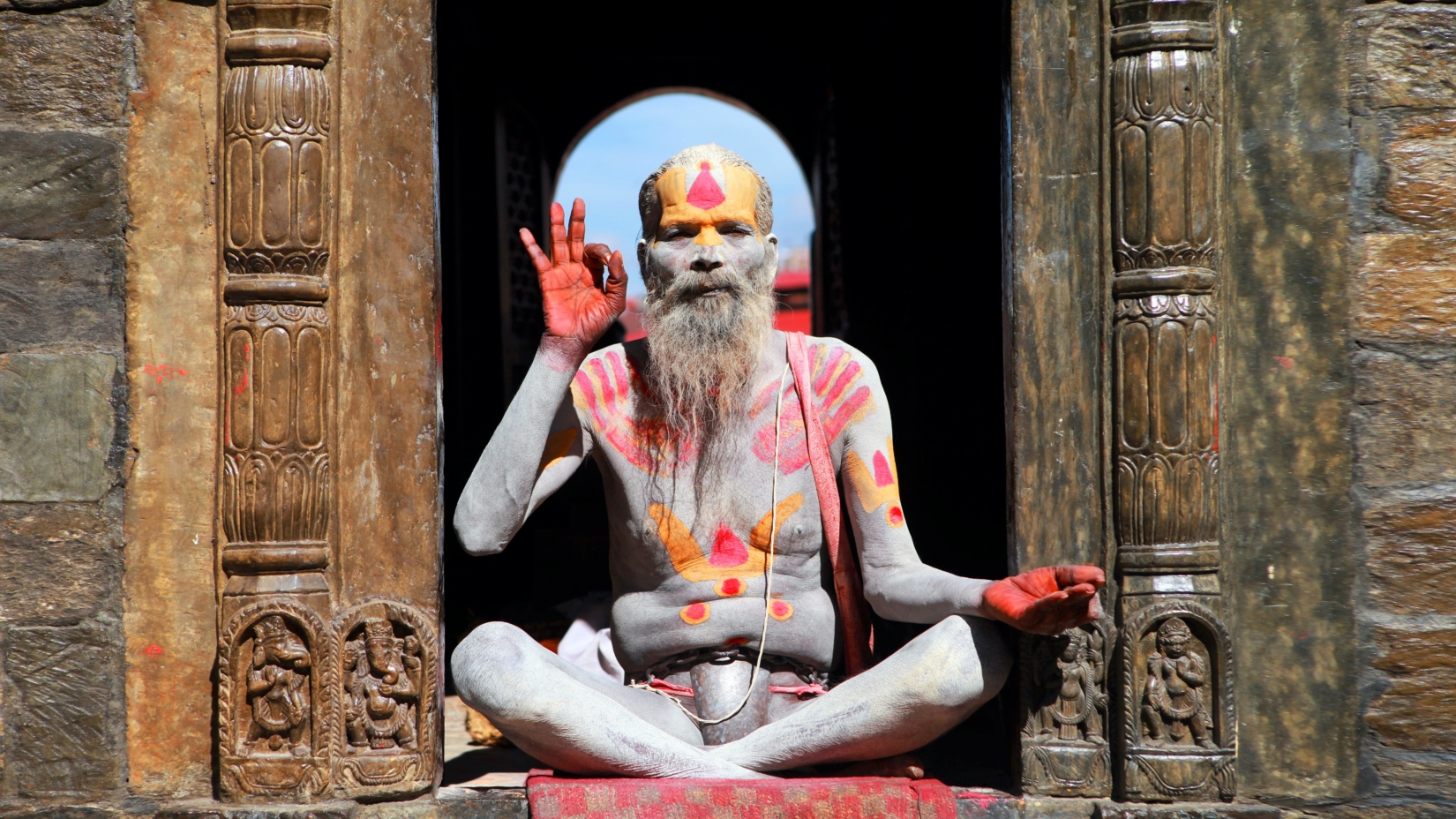
- **Day 3: Kathmandu to Phakding (8,562 ft / 2,610 m)** – After a short flight to Lukla, it’s a pleasant hike through dense pine forests and steep gorges traversed by swinging suspension bridges. There’s a real bustle about this part of the path, with oodles of hikers fresh onto the trail to chat to. It’s also the lushest part of the trail, with wildflowers and roaring riverways, more Alps than Himalaya.
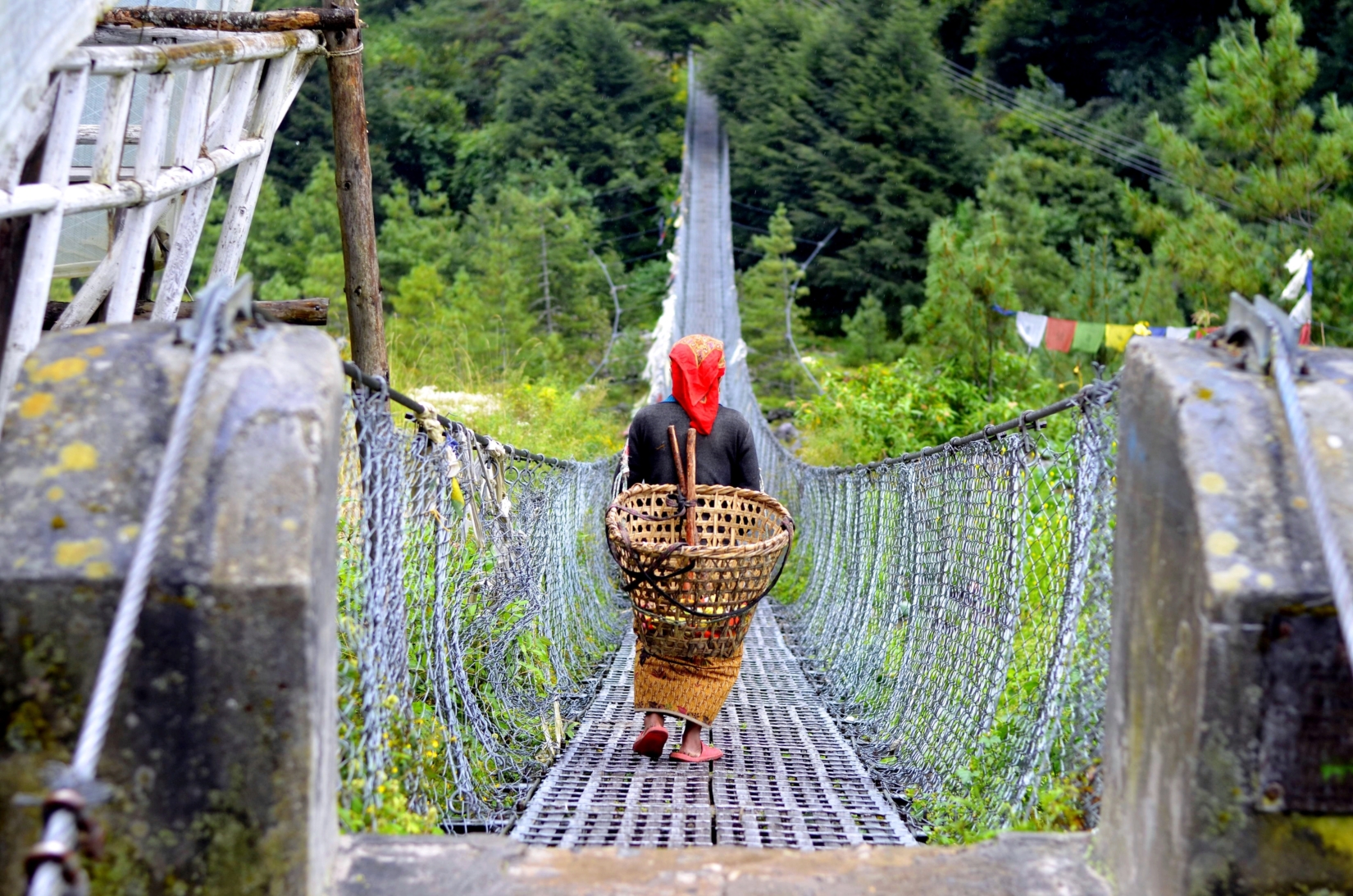
- **Day 4: Phakding to Namche Bazaar (11,286 ft / 3,440 m)** – Today you’ll go up to the main hub of EBC: Namche Bazaar. This is a good place to stock up on any essentials you may have forgotten to bring on your trip. Enjoy the town that’s abuzz with hiker cafes and lodges, and comes with stunning views of the jagged Mount Khumbu Yül-Lha (Khumbila), loosely translated as “God of Khumbu” peak, to the north.
- **Day 5: Namche Bazaar (11,286 ft / 3,440 m)** – This is your first official acclimatization day. The best way to prepare for the altitude is to hike high during the day and return to lower altitudes in the evening to sleep. The Khunde and Khumjung Loop is the perfect option for that, taking you to long-lost Sherpa villages with mystical Buddhist stupas.
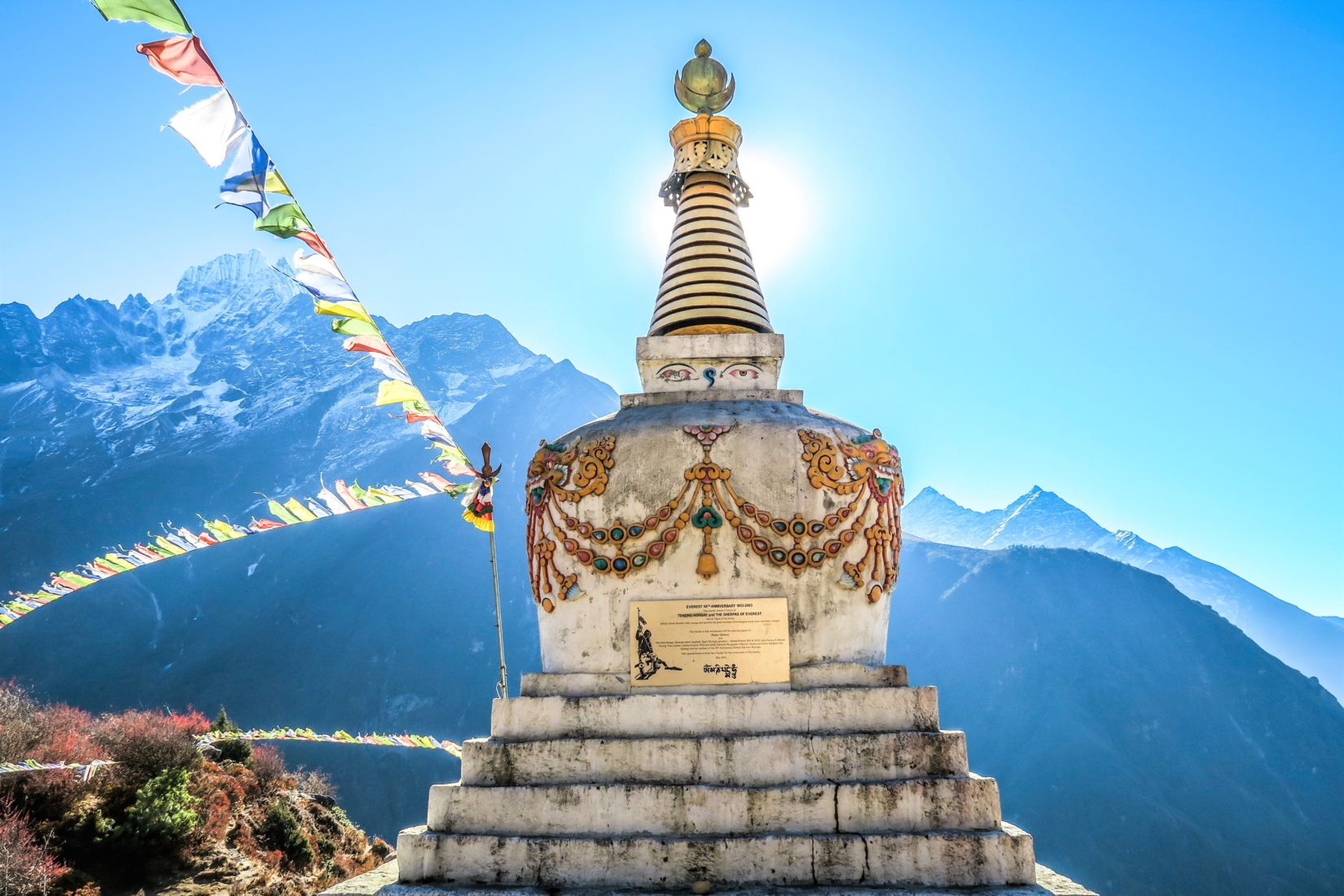
- **Day 6: Namche Bazaar to Tengboche (12,664 ft / 3,860 m)** – Your first steps on the Everest Base Camp Trek proper begin with a steep incline that takes you almost out of the treeline. The path levels and then emerges into a lunar-like world of big brown rocks where the Himalayas draw ever closer. The destination? The rhododendron forest, where you’ll stay for the evening.
- **Day 7: Tengboche to Dingboche (14,470 ft / 4,410 m)** – Expect exposed trekking except for some sections through high-altitude pine woods. Later in the day, the trail wiggles across the sides of Ama Dablam peak and you’ll get to appreciate the Everest massif in all its glory looming overhead.
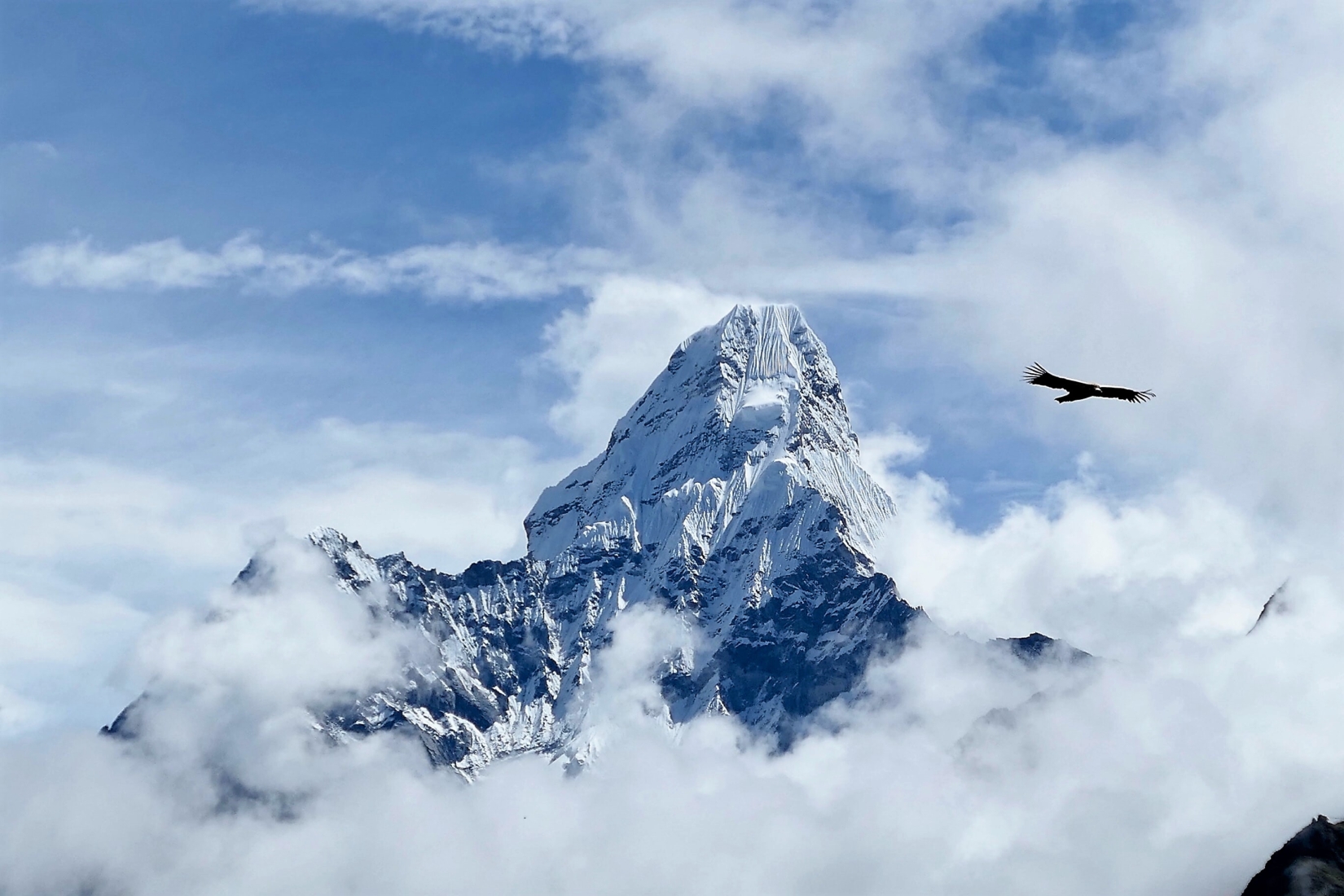
- **Day 8: Dingboche (14,470 ft / 4,410 m)** – A second acclimatization day is needed at this stage of the trip. Perhapstake some time to experience Chukhung (15,518 feet / 4,730 meters), a place traditionally used to raise yak. Lodges rise up amongst the peaks, making it a perfect spot for relaxation, observation and absorbing the scenery and local life.
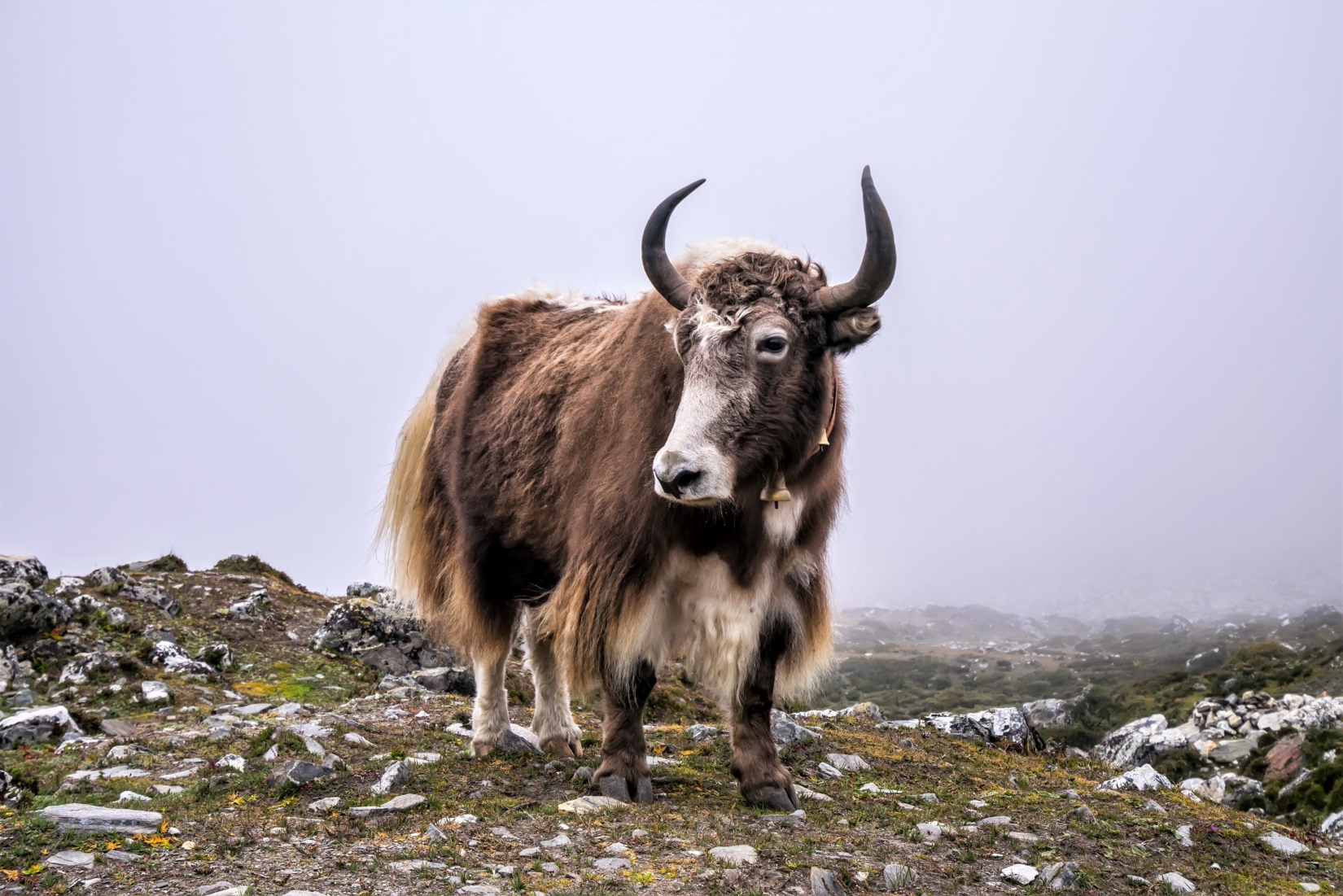
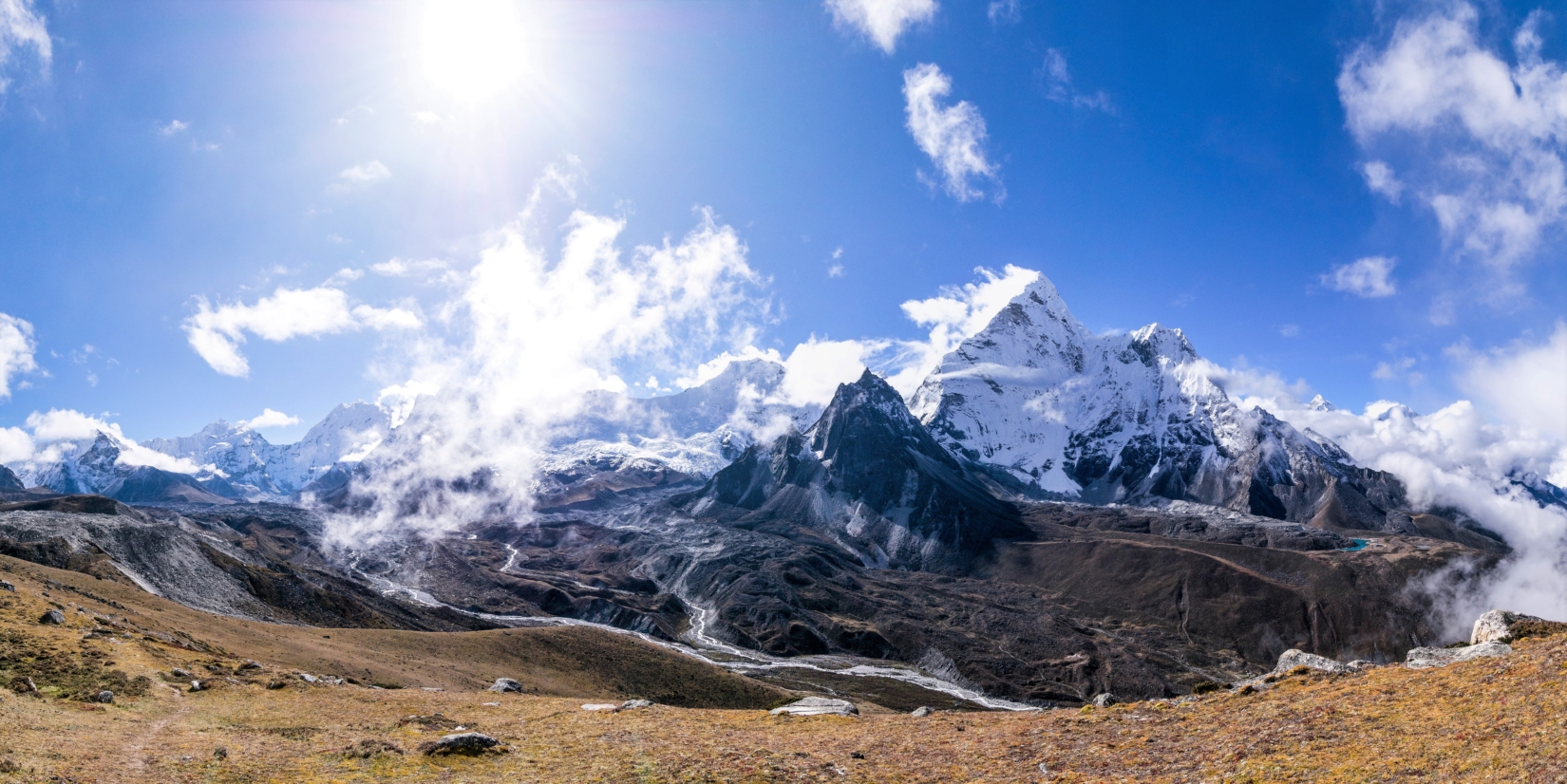
- **Day 9: Dingboche to Lobuche (16,210 ft / 4,941 m) –** You’re now onto the penultimate push towards Everest Base Camp. Welcome to the high Himalayas. Trees are long gone in this land of rugged rocks and the cascading tongues of glaciers. The day includes some amazing visions of the approaching Everest massif, especially the closer face of Nuptse.
- **Day 10: Lobuche to Everest Base Camp (17,598 ft / 5,364 m)** – The final part of the trail starts by weaving over rocky highland terrain and then passes through the Gorak Shep village, where a small trekking lodge clutches the edge of the Khumbu Icefall. There’s a chance of a small rest there, but not for long, because EBC is only another 1.5 hours up the valley\!
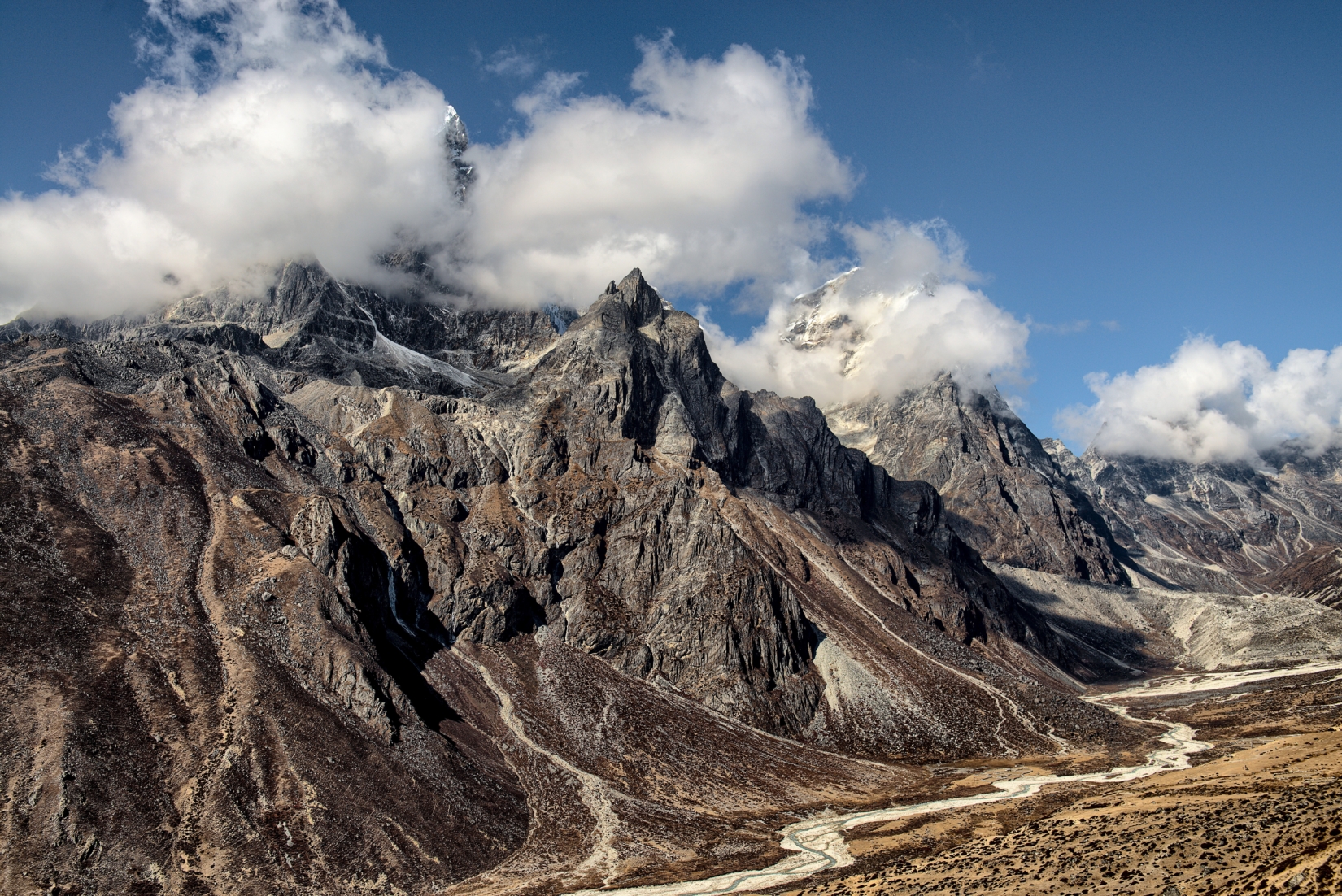
- **Day 11: Everest Base Camp to Pheriche (14,340 ft / 4,371 m)** – Today you’ll retrace your steps towards Pheriche, hiking first towards Kala Patthar. Oxygen begins to increase and much of this portion is downhill, and you’ll have the chance to take in the panoramic views with an easier trek.
- **Day 12: Pheriche to Debouche (12,533 ft / 3,820 m)** – You’ll work back via Deboche, passing the Old Nunnery. Follow the river back towards Debouche, a campsite, not far from the Tengboche Monastery.
- **Day 13: Debouche to Namche Bazaar (11,286 ft / 3,440 m)** – Today you’ll double back towards Namche Bazaar, the Sherpa village that is the hub of activity and local culture. Here you’ll see many porters like Norgay, who aid climbers and know this terrain better than anyone. Observe the local mountain life, as you continue on tomorrow towards Phakding.
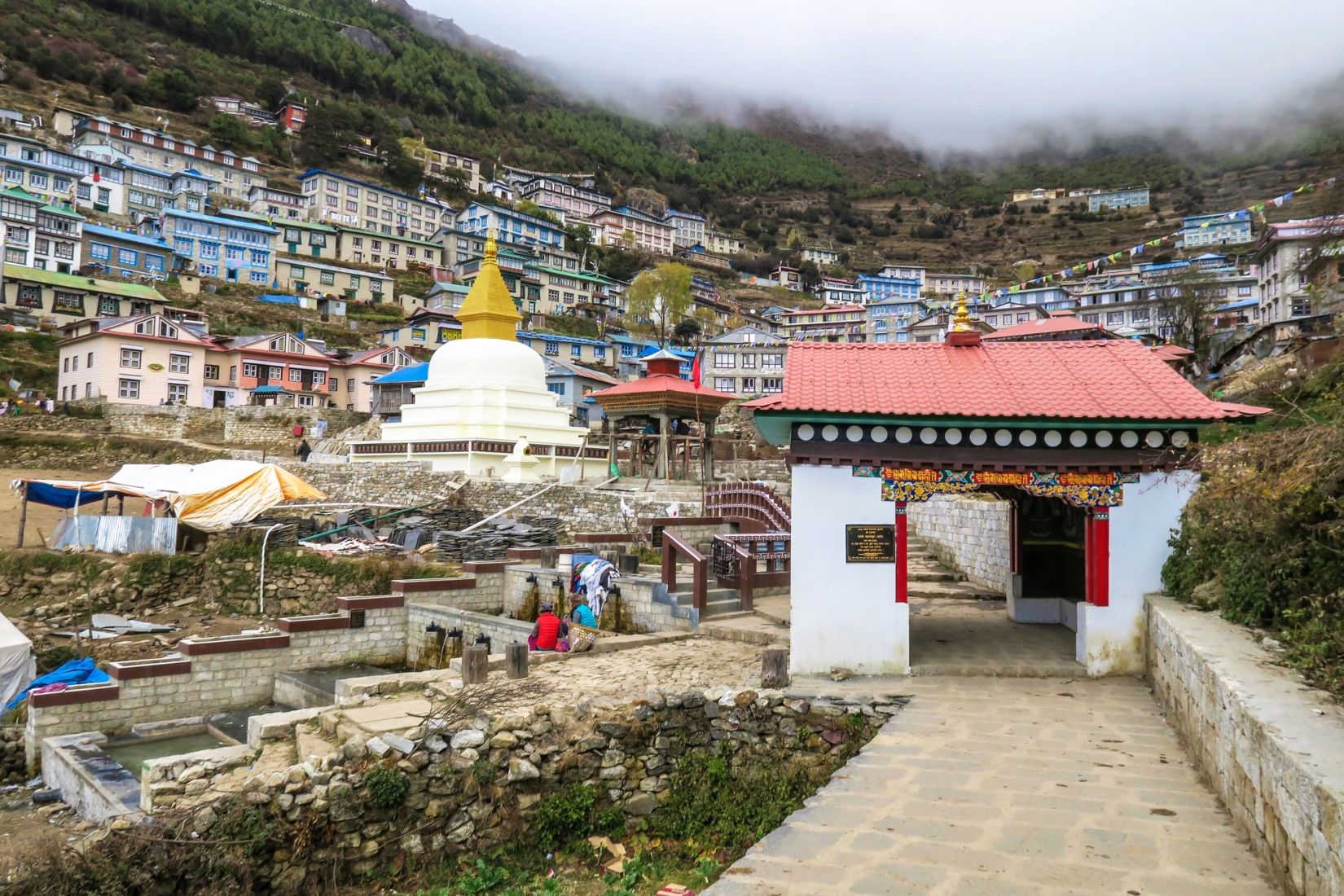
- **Day 14: Namche Bazaar to Phakding (8,562 ft / 2,610 m)** – As you continue downhill towards Phakding, observe the local agriculture and yak pastures as you pass by the majesty of the Himalayan peaks. You’ll spend the evening alongside the Dudh Kosi River, and take in the sights and sounds of the crystalline waters.
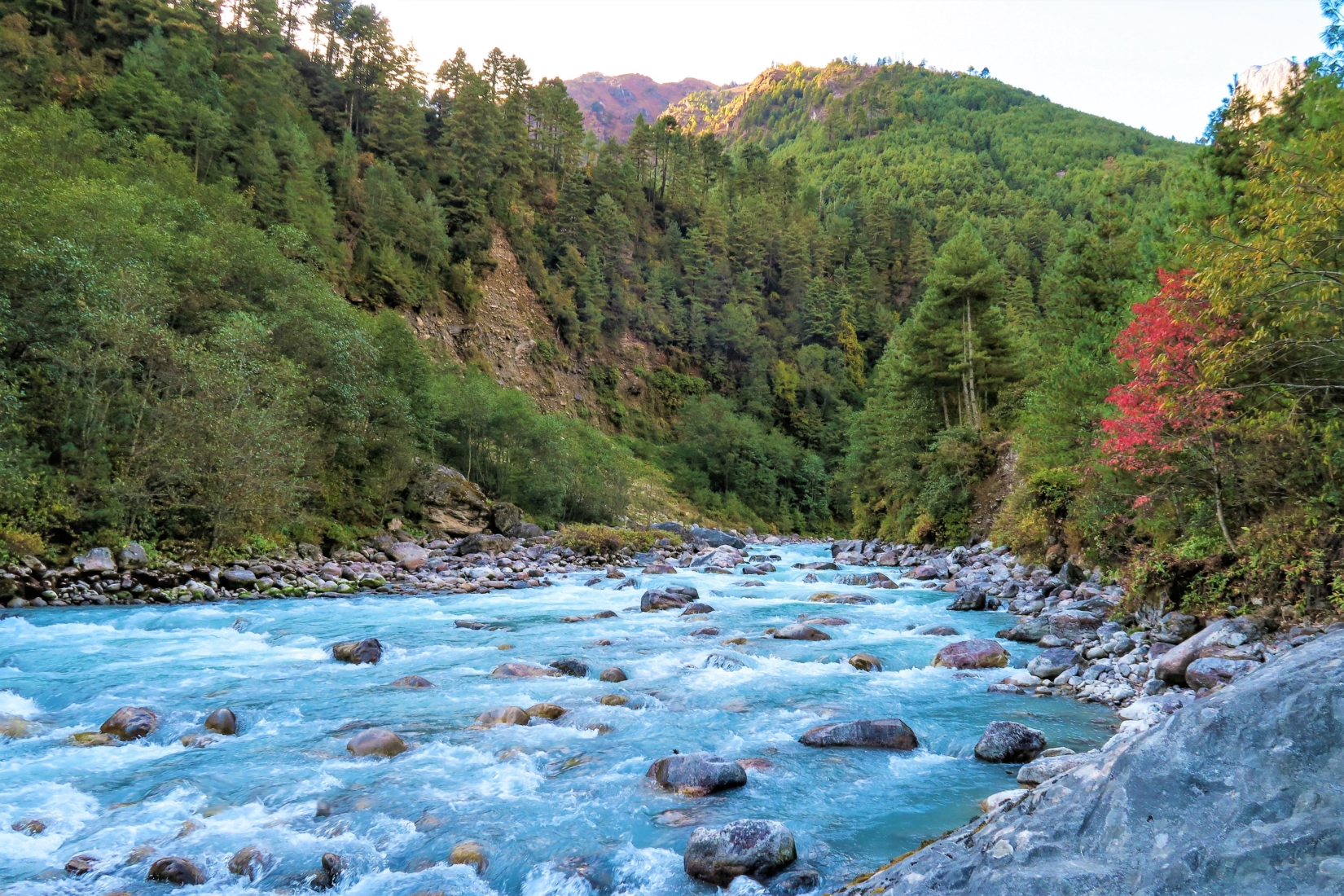
- **Day 15: Phakding to Lukla** – From Phakding, you’ll make our approach towards Lukla. Gather your new memories from the trip and enjoy your last days amongst unparalleled natural views in Nepal. You’ll stop for lunch in Lukla, with plenty of time to appreciate the clear landscape.
- **Day 16: Lukla to Kathmandu** – Returning to Kathmandu, you’ll have time and space to explore after having a chance to refresh and recuperate in your hotel. The Thamel district is a great place to wander with its many winding streets lined with souvenir shops, bars, restaurants, and more. There’s plenty to see and to try on the final day of your trip in Kathmandu. Soak up as much of the city’s offerings as you can as the end of our trip approaches.
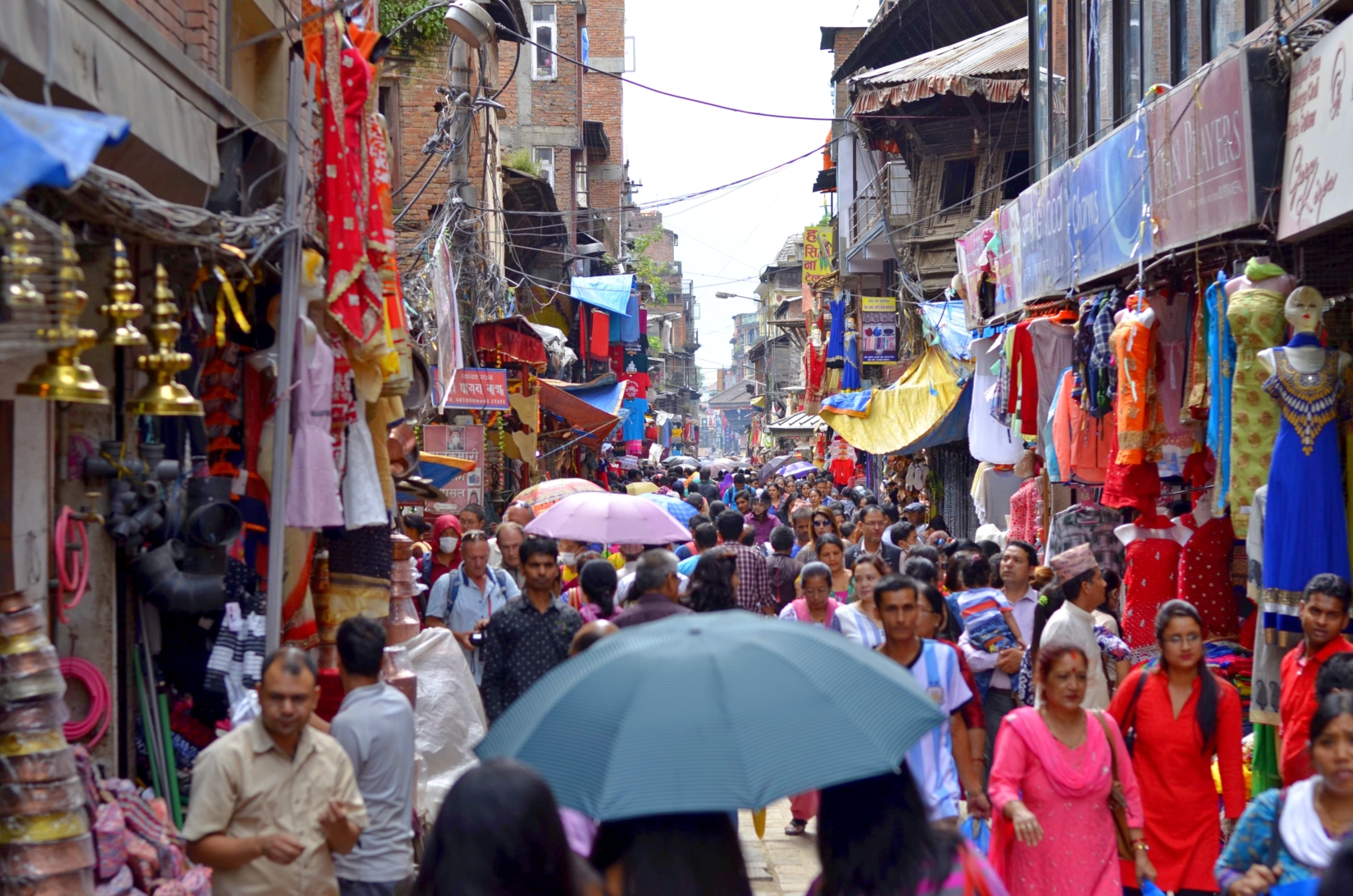
- **Day 17:** Today is your final day as an intrepid traveler exploring Nepal. You might have time to see some live music in Lazimpat or venture to Patan, which was originally known as Lalitpur, or the “City of Beauty”. Stop off at Newa Chen to add a visit to a 350-year-old Newari home, restored to its former glory and open to the public, to your trip. Be sure to experience as much of Kathmandu as you can, before you reluctantly head back home from this exhilarating adventure trip\!
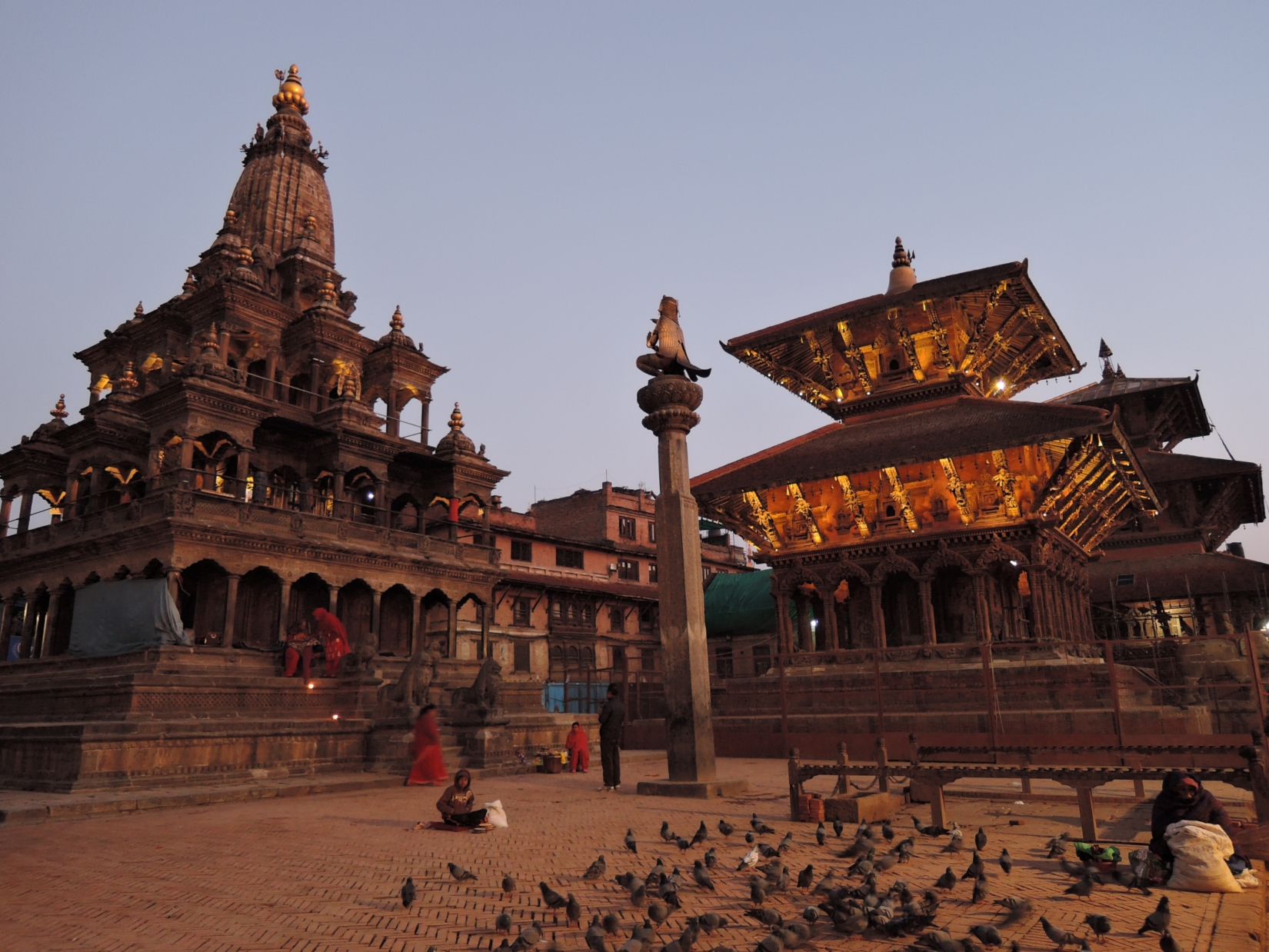
- **Day 18:** Depart from Kathmandu. Today you’ll return home having retraced many of Hillary and Norgay’s historic steps. You’re officially one of the lucky few who have witnessed the majesty of Everest up close\!
## 14\. **Other Variations of the EBC Trek**
The main up-and-back EBC Trek outlined above is by far the most popular route to the fabled camp on the slopes of Mount Everest, but there are also other options. Take the Three Passes Trek. It’s a circular romp that encompasses a trio of the highest traversable passes immediately around Everest itself, starting with Kongma La (18,175 feet) before pushing on through Cho La (17,782 feet) and then Renjo La (17,585 feet).
This is a considerably more challenging undertaking than the classic Everest Base Camp Trek, usually reserved for hikers with high-altitude experience. The reason? You spend multiple days walking at heights of over 16,400 feet. There’s also more chance you’ll have to contend with snowpacks – especially late and early in the main trekking seasons (April and November). The reward is a chance to explore all the nooks and crannies of the Khumbu Region, with visions of the gleaming Gokyo Lakes and remote Sherpa hill villages along the way.
Other variations include the dedicated Gokyo Lakes Trek, which involves portions of the Three Passes Trek at Cho La to offer a fuller visit of the Gokyo Valley before re-joining the route to base camp at Lobuche.
This trip guide is just a taste of what you should know before embarking on the remarkable trek to Everest Base Camp. **For more details on general trip costs, accommodations, and more, check out the specifics on our** [**Everest Base Camp tour page**](https://explorerspassage.com/mount-everest-base-camp/).
Better yet, if you have more questions on hiking to Everest Base Camp or need help planning your trip to the Himalayas, let’s connect! Our knowledgeable Adventure Consultants would love to hear from you so [**contact us and let us show you what’s possible**](https://explorerspassage.com/contact/).
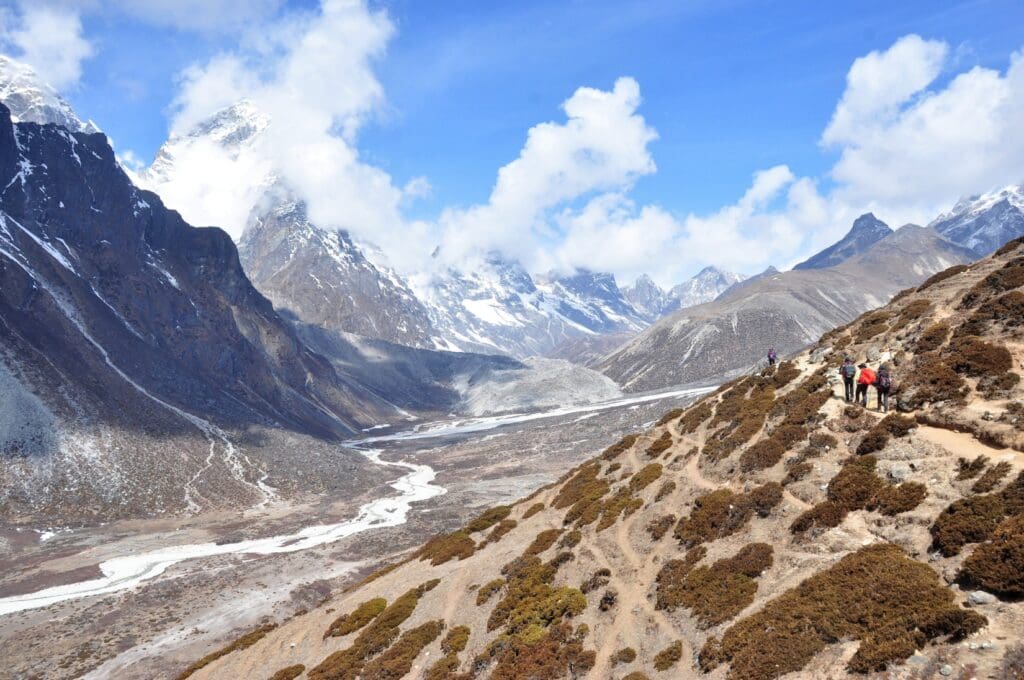
### **How difficult is the Everest Base Camp trek?**
The Everest Base Camp trek is considered **moderately difficult to challenging** due to the high altitude, long trekking days, and steep terrain. Trekkers typically walk **6–8 hours per day** over a period of **12–14 days**, reaching an altitude of **5,364 meters (17,598 feet)**. No technical climbing skills are required, but good physical fitness and endurance are important.
### **How long does the Everest Base Camp trek take?**
Most Everest Base Camp itineraries take 12–14 days of trekking, not including travel days to and from Nepal. The trek covers roughly 130 km (80 miles) round trip, starting from Lukla and passing through villages like Namche Bazaar, Tengboche, Dingboche, and Lobuche.
### **What is the altitude of Everest Base Camp?**
Everest Base Camp sits at 5,364 meters (17,598 feet) above sea level in Nepal’s Khumbu region inside [Sagarmatha National Park.](https://whc.unesco.org/en/list/120/) Many trekkers also hike to Kala Patthar (5,545 m / 18,192 ft) for the best panoramic views of Mount Everest.
### **What is the best time to trek to Everest Base Camp?**
The best seasons for trekking to Everest Base Camp are:
- **Spring:** March to May
- **Autumn:** September to November
These months offer clear skies, stable weather, and moderate temperatures, making them the most popular times to trek in the Himalayas.
### **How much does the Everest Base Camp trek cost?**
The cost of the Everest Base Camp trek varies depending on the type of trip and tour operator.
Typical costs include:
- **Budget trek:** \$2,000–\$3,000
- **Standard guided trek:** \$3,500–\$4,500
- **Luxury trek:** \$5,000+
Costs usually include guides, accommodations, permits, meals, and flights between Kathmandu and Lukla.
### **Do you need a guide for the Everest Base Camp trek?**
As of 2023, Nepal requires most foreign trekkers to hire a licensed guide for trekking in national parks and remote regions, including the Everest region. Hiring a guide also improves safety, navigation, and cultural insight during the trek.
### **What permits are required for the Everest Base Camp trek?**
Trekkers typically need two permits:
- Sagarmatha National Park Entry Permit
- Khumbu Pasang Lhamu Rural Municipality Permit
These permits allow access to the Everest region and help support conservation and local communities.
### **Can beginners do the Everest Base Camp trek?**
Yes, beginners can complete the Everest Base Camp trek if they have **good physical fitness and prepare properly**. The trek does not require technical climbing skills, but altitude and long trekking days make training and acclimatization important.
### **What is the biggest challenge of the Everest Base Camp trek?**
The biggest challenge is high altitude. As trekkers ascend above 4,000 meters, the risk of Acute Mountain Sickness (AMS) increases. Proper acclimatization days, hydration, and a slow trekking pace help reduce the risk.
### **Where does the Everest Base Camp trek start?**
Most Everest Base Camp treks start in Lukla, a small mountain town with an airport at 2,860 meters (9,383 feet). Trekkers typically fly from Kathmandu to Lukla before beginning the trek.
### **What accommodation is available on the trek?**
Most trekkers stay in teahouses, which are small lodges along the trekking route. Teahouses provide:
- Simple bedrooms
- Shared bathrooms
- Hot meals
- Common dining areas
Accommodations become more basic as you move higher in altitude.
### **Is the Everest Base Camp trek worth it?**
For many travelers, the Everest Base Camp trek is considered one of the greatest trekking adventures in the world, so the short answer is yes! The journey offers:
- Close views of Mount Everest
- Himalayan mountain landscapes
- Sherpa culture and monasteries
- High-altitude trekking experience
### **Why travel with The Explorer’s Passage?**
Experience the Everest Base Camp Trek with the best tour operator in Nepal. Our guides have been leading adventure trips in the Himalayas for over 30 years and are experts of trekking to Mount Everest Base Camp. They are also native to the Khumbu region of Nepal, the home of the Sherpa community, so you know you’ll enjoy an authentic experience.
We pride ourselves on delivering extraordinary tours based on travelers’ needs and are humbled by [**our guests’ testimonials**](https://explorerspassage.com/testimonials/). In fact, our dedication has earned us a [**5-star rating on Tripadvisor**](https://www.tripadvisor.com/Attraction_Review-g60763-d9851125-Reviews-The_Explorer_s_Passage-New_York_City_New_York.html), and awards by Travel+Leisure Magazine and Newsweek. Check us out and [**discover why so many travelers worldwide choose us**](https://explorerspassage.com/why-tep/). My team and I would love for you to join us on the trek to Everest Base Camp or any of [**our many other adventure trips**](https://explorerspassage.com/adventures/)\!
I hope to go exploring with you soon\!
Cheers,
*Jeff*
Jeff Bonaldi
Founder & CEO
The Explorer’s Passage
**About Jeff Bonaldi**
Jeff Bonaldi is the Founder and CEO of The Explorer’s Passage, a premier adventure travel company. His mission is to provide travelers with the opportunity to transform their lives and the planet through the power of adventure.
Learn more about Jeff’s story and his company **[HERE](https://explorerspassage.com/founder-jeff-bonaldi/)**.
**Share this amazing location\!** | |||||||||
| ML Classification | ||||||||||
| ML Categories |
Raw JSON{
"/Travel_and_Transportation": 935,
"/Travel_and_Transportation/Tourist_Destinations": 507,
"/Travel_and_Transportation/Tourist_Destinations/Mountain_and_Ski_Resorts": 486
} | |||||||||
| ML Page Types |
Raw JSON{
"/Article": 999,
"/Article/Tutorial_or_Guide": 905
} | |||||||||
| ML Intent Types |
Raw JSON{
"Informational": 992,
"Commercial": 106
} | |||||||||
| Content Metadata | ||||||||||
| Language | en-us | |||||||||
| Author | Jeff Bonaldi | |||||||||
| Publish Time | 2025-02-21 19:30:00 (1 year ago) | |||||||||
| Original Publish Time | 2021-12-07 21:45:49 (4 years ago) | |||||||||
| Republished | Yes | |||||||||
| Word Count (Total) | 10,266 | |||||||||
| Word Count (Content) | 9,159 | |||||||||
| Links | ||||||||||
| External Links | 21 | |||||||||
| Internal Links | 102 | |||||||||
| Technical SEO | ||||||||||
| Meta Nofollow | No | |||||||||
| Meta Noarchive | No | |||||||||
| JS Rendered | No | |||||||||
| Redirect Target | null | |||||||||
| Performance | ||||||||||
| Download Time (ms) | 710 | |||||||||
| TTFB (ms) | 564 | |||||||||
| Download Size (bytes) | 81,890 | |||||||||
| Shard | 183 (laksa) | |||||||||
| Root Hash | 638345763625615383 | |||||||||
| Unparsed URL | com,explorerspassage!/chronicles/everest-base-camp-trek/ s443 | |||||||||