ℹ️ Skipped - page is already crawled
| Filter | Status | Condition | Details |
|---|---|---|---|
| HTTP status | PASS | download_http_code = 200 | HTTP 200 |
| Age cutoff | PASS | download_stamp > now() - 6 MONTH | 0.2 months ago (distributed domain, exempt) |
| History drop | PASS | isNull(history_drop_reason) | No drop reason |
| Spam/ban | PASS | fh_dont_index != 1 AND ml_spam_score = 0 | ml_spam_score=0 |
| Canonical | PASS | meta_canonical IS NULL OR = '' OR = src_unparsed | Not set |
| Property | Value | |||||||||
|---|---|---|---|---|---|---|---|---|---|---|
| URL | https://en.wikipedia.org/wiki/Psychosis | |||||||||
| Last Crawled | 2026-04-21 06:28:10 (5 days ago) | |||||||||
| First Indexed | 2013-08-08 18:57:53 (12 years ago) | |||||||||
| HTTP Status Code | 200 | |||||||||
| Content | ||||||||||
| Meta Title | Psychosis - Wikipedia | |||||||||
| Meta Description | null | |||||||||
| Meta Canonical | null | |||||||||
| Boilerpipe Text | Psychosis
Other names
Psychotic break (
colloquial
), psychotic episode
Specialty
Neurology
,
psychiatry
,
emergency medicine
,
clinical psychology
Symptoms
Delusions
,
hallucinations
, incoherent speech and behavior
[
1
]
Complications
Self-harm
,
suicide
[
2
]
Causes
Mental illness
(
schizophrenia
,
bipolar disorder
),
trauma
,
sleep deprivation
, some medical conditions, certain
medications
, drugs (including
alcohol
,
caffeine
and
cannabis
)
[
1
]
Treatment
Antipsychotics
,
counselling
,
social support
[
2
]
Prognosis
Depends on cause
[
2
]
Frequency
3% of people at some point in their lives (U.S.)
[
1
]
In
psychopathology
,
psychosis
is the inability to distinguish what is or is not
real
.
[
3
]
Examples of psychotic symptoms are
delusions
,
hallucinations
, and disorganized or
incoherent thoughts
or speech.
[
3
]
Psychosis is a description of a person's state or symptoms, rather than a particular
mental illness
, and it is not related to
psychopathy
(a
personality
construct
[
4
]
[
5
]
characterized by impaired
empathy
and
remorse
, along with
bold
,
disinhibited
, and
egocentric
traits).
[
6
]
Common causes of
chronic
(i.e. ongoing or repeating) psychosis include
schizophrenia
or
schizoaffective disorder
,
bipolar disorder
, and
brain damage
(usually as a result of
alcoholism
).
[
7
]
[
8
]
Acute (temporary) psychosis can also be caused by
severe distress
,
sleep deprivation
,
sensory deprivation
,
[
9
]
some
medications
, and
drug use
(including
alcohol
,
cannabis
,
hallucinogens
, and
stimulants
).
[
10
]
Acute psychosis is termed primary if it results from a psychiatric condition and secondary if it is caused by another medical condition or drugs.
[
10
]
The diagnosis of a mental-health condition requires excluding other potential causes.
[
11
]
Tests can be done to check whether psychosis is caused by
central nervous system
diseases, toxins, or other health problems.
[
12
]
Treatment may include
antipsychotic medication
,
psychotherapy
, and
social support
.
[
1
]
[
2
]
Early treatment appears to improve outcomes.
[
1
]
Medications appear to have a moderate effect.
[
13
]
Outcomes depend on the underlying cause.
[
2
]
Psychosis is not well-understood at the
neurological
level, but
dopamine
(along with other
neurotransmitters
) is known to play an important role.
[
14
]
[
15
]
[
16
]
In the United States about 3% of people develop psychosis at some point in their lives.
[
1
]
Psychosis has been described as early as the 4th century BCE by
Hippocrates
and possibly as early as 1500 BCE in the
Ebers Papyrus
.
[
17
]
[
18
]
A
hallucination
is defined as a sensory perception in the absence of external stimuli.
[
19
]
Hallucinations are different from
illusions
and perceptual distortions, which are the misperception of external stimuli.
[
20
]
[
21
]
Hallucinations may occur in any of the senses and take on almost any form. They may consist of simple sensations (such as lights, colors, sounds, tastes, or smells) or more detailed experiences (such as seeing and interacting with animals and people,
hearing voices
, and having complex tactile sensations). Hallucinations are generally characterized as being vivid and uncontrollable.
[
19
]
[
22
]
Auditory hallucinations
, particularly experiences of hearing voices, are the most common and often prominent feature of psychosis.
[
citation needed
]
Up to 15% of the general population may experience auditory hallucinations (though not all are due to psychosis).
[
23
]
The prevalence of auditory hallucinations in patients with
schizophrenia
is generally put around 70%.
[
24
]
Reported prevalence in
bipolar disorder
ranges between 11% and 68%.
[
25
]
During the early 20th century, auditory hallucinations were second to
visual hallucinations
in frequency, but they are now the most common manifestation of schizophrenia, although rates vary between cultures and regions. Auditory hallucinations are most commonly intelligible voices. When voices are present, the average number has been estimated at three. Content, like frequency, differs significantly, especially across cultures and demographics. People who experience auditory hallucinations can frequently identify the loudness, location of origin, and may settle on identities for voices. Western cultures are associated with auditory experiences concerning religious content, frequently related to sin. Hallucinations may command a person to do something potentially dangerous when combined with delusions.
[
26
]
So-called "minor hallucinations", such as extracampine hallucinations, or false perceptions of people or movement occurring outside of one's visual field, frequently occur in neurocognitive disorders, such as Parkinson's disease.
[
27
]
Visual hallucinations occur in roughly a third of people with schizophrenia, although certain studies show rates higher than 60%, suggesting that the prevalence of visual hallucinations may be higher in certain samples than traditionally thought.
[
28
]
The reported prevalence in bipolar disorder is around 15%.
[
29
]
Content commonly involves animate objects, although perceptual abnormalities such as changes in lighting, shading, streaks, or lines may be seen. Visual abnormalities may conflict with
proprioceptive
information, and visions may include experiences such as the ground tilting.
Lilliputian hallucinations
are less common in schizophrenia, and are more common in various types of
encephalopathy
, such as
peduncular hallucinosis
.
[
26
]
[
30
]
A visceral hallucination, also called a cenesthetic hallucination, is characterized by visceral sensations in the absence of stimuli. Cenesthetic hallucinations may include sensations of burning, or re-arrangement of internal organs.
[
26
]
A
delusion
is a fixed, false,
idiosyncratic
belief, which does not change even when presented with incontrovertible evidence to the contrary.
[
31
]
[
32
]
[
33
]
Delusions are context- and culture-dependent: a belief that inhibits critical functioning and is widely considered delusional in one population may be common (and even adaptive) in another, or in the same population at a later time.
[
33
]
[
34
]
Since
normative
views may contradict available evidence, a belief need not contravene cultural standards in order to be considered delusional. However, the
DSM-5
considers a belief delusional only if it is not widely accepted within a cultural or subcultural context.
[
35
]
Prevalence of delusions in schizophrenia is generally considered around 80-90%, according to
Columbia University
.
[
36
]
A 2022 systematic review found a prevalence of around 70% in bipolar disorder.
[
37
]
The DSM-5 characterizes certain delusions as "bizarre" if they are clearly implausible, or are incompatible with the surrounding cultural context.
[
32
]
The concept of bizarre delusions has many criticisms, the most prominent being that judging their presence is not highly reliable even among trained individuals.
[
26
]
A delusion may involve diverse thematic content. The most common type is a
persecutory delusion
, in which a person believes that an entity seeks to harm them.
[
32
]
[
33
]
Others include
delusions of reference
(the belief that some element of one's experience represents a deliberate and specific act by or message from some other entity),
delusions of grandeur
(the belief that one possesses special power or influence beyond one's actual limits),
thought broadcasting
(the belief that one's thoughts are audible) and
thought insertion
(the belief that one's thoughts are not one's own).
[
33
]
A delusion may also involve
misidentification
of objects, persons, or environs that the afflicted should reasonably be able to recognize; such examples include
Cotard's syndrome
(the belief that oneself is partly or wholly
dead
) and
clinical lycanthropy
(the belief that oneself is or has transformed into an animal).
[
citation needed
]
The subject matter of delusions seems to reflect the current culture in a particular time and location. For example, in the early 1900s in the United States,
syphilis
was a common theme in delusions. During the Second World War, it was Germany. In the
Cold War
era, communists became a frequent focus. Now, in recent years, technology is a common subject matter of delusions.
[
38
]
Some psychologists, such as those who practice the
Open Dialogue
method, believe that the content of psychosis represents an underlying thought process, that may in part, be responsible for psychosis,
[
39
]
though the accepted medical position is that psychosis is due to a brain disorder.
[
40
]
Historically,
Karl Jaspers
classified psychotic delusions into
primary
and
secondary
types. Primary delusions are defined as arising suddenly and not being comprehensible in terms of normal mental processes, whereas secondary delusions are typically understood as being influenced by the person's background or current situation (e.g., ethnicity, religious, superstitious, or political beliefs).
[
41
]
Disorganized speech/thought and disorganized behavior
[
edit
]
Disorganization is categorized into either disorganized speech (disorganized speech stemming from disorganized thought), and grossly disorganized motor behavior. Disorganized speech or thought, also formally called
thought disorder
, is disorganization of thinking that is
inferred
from speech. Characteristics of disorganized speech include rapidly switching topics which is called
derailment
or loose
association
, switching to topics that are unrelated which is called
tangential thinking
, incomprehensible speech which is called incoherence and referred to as a
word salad
. Disorganized motor behavior includes repetitive, odd, or sometimes purposeless movement. Disorganized motor behavior rarely includes
catatonia
, and although it was a prominent symptom historically, it is rarely seen today. Whether this may be due to the use of historical treatments or the lack thereof is unknown.
[
26
]
[
22
]
Catatonia describes a profoundly agitated state in which the experience of reality is generally considered impaired. There are two primary manifestations of catatonic behavior. The classic presentation is a person who does not move or interact with the world in any way while awake. This type of catatonia presents with
waxy flexibility
. Waxy flexibility is when someone physically moves part of a catatonic person's body and the person stays in the position even if it is bizarre and otherwise nonfunctional (such as moving a person's arm straight up in the air and the arm staying there).
[
42
]
The other type of catatonia is more of an outward presentation of the profoundly agitated state described above. It involves excessive and purposeless motor behaviour, as well as an extreme mental preoccupation that prevents an intact experience of reality. An example is someone walking very fast in circles to the exclusion of anything else with a level of mental preoccupation (meaning not focused on anything relevant to the situation) that was not typical of the person prior to the symptom onset. In both types of catatonia, there is generally no reaction to anything that happens outside of them. It is important to distinguish catatonic agitation from severe bipolar mania, although someone could have both.
[
citation needed
]
Negative symptoms include
reduced emotional expression
,
decreased motivation
(
avolition
), and
reduced spontaneous speech
(poverty of speech,
alogia
). Individuals with this condition lack interest and spontaneity, and have the
inability to feel pleasure
(
anhedonia
).
[
43
]
Altered Behavioral Inhibition System functioning could possibly cause reduced sustained attention in psychosis and overall contribute to more negative reactions.
[
44
]
Psychosis in adolescents
[
edit
]
Psychosis is relatively rare in adolescents but not uncommon.
[
45
]
Young people who have psychosis may have trouble connecting with the world around them and may experience hallucinations or delusions.
[
46
]
Adolescents with psychosis may also have cognitive deficits that may make it harder for the youth to socialize and work.
[
46
]
Potential impairments include a reduced speed of mental processing, the lack of ability to focus without getting distracted (limited
attention span
), and deficits in
verbal memory
.
[
46
]
If an adolescent is experiencing psychosis, they most likely have comorbidity, meaning that they could have multiple mental illnesses.
[
47
]
Because of this, it may be difficult to determine whether it is psychosis or
autism
,
social
or
generalized anxiety disorder
, or
obsessive-compulsive disorder
.
[
47
]
The symptoms of psychosis may be caused by serious
psychiatric disorders
such as
schizophrenia
, a number of medical illnesses, and
trauma
. Psychosis may also be temporary or transient, and be caused by medications or
substance use disorder
(
substance-induced psychosis
).
[
citation needed
]
Brief hallucinations are not uncommon in those without any psychiatric disease, including healthy children. Causes or triggers include:
[
48
]
Falling asleep and waking:
hypnagogic
and
hypnopompic
hallucinations
[
49
]
Bereavement
, in which hallucinations of a deceased loved one are common
[
48
]
[
50
]
Severe
sleep deprivation
[
51
]
[
52
]
Extreme stress (see below)
[
53
]
Abnormal brainwaves
[
54
]
[
55
]
Abnormal brain networks
[
56
]
[
57
]
[
58
]
Traumatic brain injury
[
59
]
[
60
]
[
61
]
Traumatic life events have been linked with an elevated risk of developing psychotic symptoms.
[
62
]
Childhood trauma
has specifically been shown to be a predictor of adolescent and adult psychosis.
[
63
]
Individuals with psychotic symptoms are three times more likely to have experienced childhood trauma (e.g.,
physical
or
sexual abuse
, physical or emotional
neglect
) than those in the general population.
[
63
]
Increased individual vulnerability toward psychosis may interact with traumatic experiences promoting an onset of future psychotic symptoms, particularly during sensitive developmental periods.
[
63
]
Importantly, the relationship between traumatic life events and psychotic symptoms appears to be dose-dependent in which multiple traumatic life events accumulate, compounding symptom expression and severity.
[
62
]
[
63
]
However, acute, stressful events can also trigger brief psychotic episodes.
[
64
]
Trauma prevention and early intervention may be an important target for decreasing the incidence of psychotic disorders and ameliorating its effects.
[
62
]
A healthy person could become psychotic when inside an empty room with no light and sound. After about 15 minutes, psychosis can occur, this is a phenomenon known as
sensory deprivation
.
[
9
]
Neuroticism
, a personality trait associated with vulnerability to stressors, is an independent predictor of the development of psychosis.
[
65
]
Psychiatric disorders
[
edit
]
Traditionally psychotic disorders have been believed to have one of two roots: organic (physiological) or functional (mental). Organic disorders being those caused by physical conditions directly affecting the brain with psychosis as a secondary feature, and functional disorders being primary psychological or psychiatric disorders (disorders of the functioning of the mind) in the absence of physiological causes. Subtle physical abnormalities have been found in illnesses traditionally considered functional, such as
schizophrenia
. The
DSM-IV-TR
avoids the functional/organic distinction, and instead lists traditional psychotic illnesses, psychosis due to general medical conditions, and substance-induced psychosis.
[
citation needed
]
Primary psychiatric causes of psychosis include the following:
[
66
]
[
67
]
[
48
]
Primary psychotic disorders
Schizophrenia
Schizoaffective disorder
Schizophreniform disorder
Brief psychotic disorder
Delusional disorder
Mood disorders
Psychotic depression
, also known as
major depressive disorder
with psychotic features
Bipolar disorder
Bipolar I disorder
in
manic
and
mixed episodes
, as well as depressive episodes
Bipolar II disorder
in depressive episodes
Psychotic symptoms may also be seen in:
[
48
]
Certain
personality disorders
: such as
schizotypal personality disorder
,
paranoid personality disorder
, and
borderline personality disorder
Post-traumatic stress disorder
Obsessive–compulsive disorder
Dissociative identity disorder
Paraphrenia
Subtypes of psychosis include:
Postpartum psychosis
,
[
68
]
occurring shortly after
giving birth
, primarily associated with maternal
bipolar disorder
Monothematic delusions
Myxedematous psychosis
Stimulant psychosis
Tardive psychosis
Shared psychosis
Cycloid psychosis is typically an acute, self-limiting form of psychosis with psychotic and mood symptoms that progress from normal to full-blown, usually between a few hours to days, and not related to drug intake or
brain injury
.
[
69
]
While proposed as a distinct entity, clinically separate from schizophrenia and affective disorders, cycloid psychosis is not formally acknowledged by current ICD or DSM criteria.
[
69
]
Its unclear place in psychiatric nosology has likely contributed to the limited scientific investigation and literature on the topic.
[
70
]
Postpartum psychosis
[
edit
]
Postpartum psychosis
is a rare yet serious and debilitating form of psychosis.
[
71
]
Symptoms range from fluctuating moods and insomnia to mood-incongruent delusions related to the individual or the infant.
[
71
]
Women experiencing postpartum psychosis are at increased risk for suicide or infanticide. Many women who experience first-time psychosis from postpartum often have bipolar disorder, meaning they could experience an increase of psychotic episodes even after postpartum.
[
71
]
A very large number of medical conditions can cause psychosis, sometimes called
secondary psychosis
.
[
48
]
Examples include:
Disorders causing
delirium
(
toxic psychosis
), in which consciousness is disturbed
Neurodevelopmental disorders
and
chromosomal abnormalities
, including
velocardiofacial syndrome
Neurodegenerative disorders
, such as
Alzheimer's disease
,
dementia with Lewy bodies
, and
Parkinson's disease
[
72
]
Focal neurological disease, such as
stroke
,
brain tumors
,
[
73
]
multiple sclerosis
,
[
3
]
and some forms of
epilepsy
Malignancy
(typically via masses in the brain,
paraneoplastic syndromes
)
[
3
]
Infectious and postinfectious syndromes, including infections causing
delirium
,
viral encephalitis
,
HIV/AIDS
,
[
74
]
malaria
,
[
75
]
syphilis
[
74
]
Endocrine disease
, such as
hypothyroidism
,
hyperthyroidism
,
Cushing's syndrome
,
hypoparathyroidism
and
hyperparathyroidism
;
[
76
]
sex hormones also affect psychotic symptoms and sometimes giving birth can provoke psychosis, termed
postpartum psychosis
[
77
]
Inborn errors of metabolism, such as
Wilson's disease
,
porphyria
, and
homocysteinemia
[
78
]
Nutritional deficiency
, such as
vitamin B
12
deficiency
[
10
]
Other acquired
metabolic disorders
, including
electrolyte
disturbances such as
hypocalcemia
,
hypernatremia
,
hyponatremia
,
hypokalemia
,
hypomagnesemia
,
hypermagnesemia
,
hypercalcemia
, and
hypophosphatemia
, but also
hypoglycemia
,
hypoxia
, and failure of the
liver
or
kidneys
[
76
]
[
10
]
Autoimmune and related disorders
, such as
systemic lupus erythematosus
(lupus, SLE),
sarcoidosis
,
Hashimoto's encephalopathy
,
anti-NMDA-receptor encephalitis
, and
non-celiac gluten sensitivity
[
79
]
[
80
]
Poisoning
by a range of plants, fungi, metals, organic compounds, and a few animal toxins
[
48
]
Sleep disorders
, such as in
narcolepsy
(in which
REM sleep
intrudes into wakefulness)
[
48
]
Parasitic diseases
, such as
neurocysticercosis
Various
psychoactive substances
(both legal and illegal) have been implicated in causing, exacerbating, or precipitating psychotic states or disorders in users, with varying levels of evidence.
[
81
]
This may be upon intoxication for a more prolonged period after use, or upon
withdrawal
.
[
48
]
Individuals who experience substance-induced psychosis tend to have a greater awareness of their psychosis and tend to have higher levels of
suicidal thinking
compared to those who have a primary psychotic illness.
[
82
]
Drugs commonly alleged to induce psychotic symptoms include
alcohol
,
cannabis
,
cocaine
,
amphetamines
,
cathinones
,
psychedelic drugs
(such as
LSD
and
psilocybin
),
κ-opioid receptor
agonists
(such as
enadoline
and
salvinorin A
) and
NMDA receptor antagonists
(such as
phencyclidine
and
ketamine
).
[
48
]
[
83
]
Caffeine
may worsen symptoms in those with schizophrenia and cause psychosis at very high doses in people without the condition.
[
84
]
[
85
]
Cannabis and other illicit recreational drugs are often associated with psychosis in adolescents and cannabis use before 15 years old may increase the risk of psychosis in adulthood.
[
46
]
Approximately 3% of people with
alcoholism
experience psychosis during acute intoxication or withdrawal. Alcohol related psychosis may manifest itself through a
kindling mechanism
. The mechanism of alcohol-related psychosis is due to the
long-term effects of alcohol consumption
resulting in distortions to neuronal membranes,
gene expression
, as well as
thiamine
deficiency. It is possible that hazardous alcohol use via a kindling mechanism can cause the development of a chronic substance-induced psychotic disorder, i.e. schizophrenia. The effects of an alcohol-related psychosis include an increased risk of depression and suicide as well as causing psychosocial impairments.
[
86
]
Delirium tremens
, a symptom of chronic alcoholism that can appear in the acute withdrawal phase, shares many symptoms with alcohol-related psychosis suggesting a common mechanism.
[
87
]
According to current studies, cannabis use is associated with increased risk of psychotic disorders, and the more often cannabis is used the more likely a person is to develop a psychotic illness.
[
88
]
Furthermore, people with a history of cannabis use develop psychotic symptoms earlier than those who have never used cannabis.
[
88
]
Some debate exists regarding the causal relationship between cannabis use and psychosis with some studies suggesting that cannabis use hastens the onset of psychosis primarily in those with pre-existing vulnerability.
[
88
]
[
89
]
[
90
]
Indeed, cannabis use plays an important role in the development of psychosis in vulnerable individuals, and cannabis use in adolescence should be discouraged.
[
91
]
Some studies indicate that the effects of two active compounds in cannabis,
tetrahydrocannabinol
(THC) and
cannabidiol
(CBD), have opposite effects with respect to psychosis. While THC can induce psychotic symptoms in healthy individuals, limited evidence suggests that CBD may have antipsychotic effects.
[
92
]
Methamphetamine
induces a psychosis in 26%–46% of heavy users. Some of these people develop a long-lasting psychosis that can persist for longer than six months. Those who have had a short-lived psychosis from methamphetamine can have a relapse of the methamphetamine psychosis years later after a stressful event such as severe insomnia or a period of hazardous alcohol use despite not relapsing back to methamphetamine.
[
93
]
Individuals who have a long history of methamphetamine use and who have experienced psychosis in the past from methamphetamine use are highly likely to re-experience methamphetamine psychosis if drug use is recommenced.
[
citation needed
]
Methamphetamine-induced psychosis is likely gated by genetic vulnerability, which can produce long-term changes in brain neurochemistry following repetitive use.
[
94
]
Methamphetamine users with more
ADHD
-related behaviours in childhood experience methamphetamine-related psychosis more frequently.
[
95
]
A 2024 meta-analysis found an incidence of psychedelic-induced psychosis at 0.002% in population studies, 0.2% in uncontrolled clinical trials, and 0.6% in randomised controlled trials.
[
96
]
This meta-analysis found that in uncontrolled clinical trials involving only patients with schizophrenia, 3.8% developed prolonged psychotic reactions. A 2024 study found that
psychedelic
use was not generally associated with a change in the number of psychotic symptoms.
[
97
]
This study found that psychedelic use interacted with a family history of bipolar disorder, such that in those with a family history of bipolar disorder, psychedelic use was associated with an increase in the number of psychotic symptoms, while in those with a personal history of psychosis but no family history of psychotic disorders, psychedelic use was associated with a decrease in the number of psychotic symptoms. A 2023 study found an interaction between lifetime psychedelic use and family history of psychosis or bipolar disorder on psychotic symptoms over the past two weeks. Psychotic symptoms were highest among those with both a family history of psychosis or bipolar disorder and life-time psychedelic use, while they were lowest among those with life-time psychedelic use but no family history of these disorders.
[
98
]
Administration, or sometimes withdrawal, of a large number of medications may provoke psychotic symptoms.
[
48
]
Drugs that can induce psychosis experimentally or in a significant proportion of people include:
Stimulants, such as
amphetamine
and other
sympathomimetics
Dopamine
agonists
Ketamine
Corticosteroids
(often with mood changes in addition)
Some anticonvulsants such as
vigabatrin
[
99
]
[
100
]
[
101
]
The first brain image of an individual with psychosis was completed as far back as 1935 using a technique called
pneumoencephalography
[
102
]
(a painful and now obsolete procedure where
cerebrospinal fluid
is drained from around the brain and replaced with air to allow the structure of the brain to show up more clearly on an
X-ray
picture).
[
citation needed
]
Both
first episode psychosis
, and high risk status is associated with reductions in
grey matter
volume (GMV). First episode psychotic and high risk populations are associated with similar but distinct abnormalities in GMV. Reductions in the right
middle temporal gyrus
, right
superior temporal gyrus
(STG), right
parahippocampus
, right
hippocampus
, right
middle frontal gyrus
, and left
anterior cingulate cortex
(ACC) are observed in high risk populations. Reductions in first episode psychosis span a region from the right STG to the right insula, left insula, and
cerebellum
, and are more severe in the right ACC, right STG, insula and cerebellum.
[
103
]
[
104
]
Another meta analysis reported bilateral reductions in insula, operculum, STG, medial frontal cortex, and ACC, but also reported increased GMV in the right
lingual gyrus
and left
precentral gyrus
.
[
105
]
The
Kraepelinian dichotomy
is made questionable
[
clarification needed
]
by grey matter abnormalities in bipolar and schizophrenia; schizophrenia is distinguishable from bipolar in that regions of grey matter reduction are generally larger in magnitude, although adjusting for gender differences reduces the difference to the left
dorsomedial prefrontal cortex
(dmPFC), and right
dorsolateral prefrontal cortex
(dlPFC).
[
106
]
During attentional tasks, first episode psychosis is associated with hypoactivation in the right middle frontal gyrus, a region generally described as encompassing the dlPFC. Altered Behavioral Inhibition System functioning could possibly cause reduced sustained attention in psychosis and overall contribute to more negative reactions.
[
107
]
In congruence with studies on grey matter volume, hypoactivity in the right insula, and right inferior parietal lobe is also reported.
[
108
]
During cognitive tasks, hypoactivities in the right insula, dorsal anterior cingulate cortex, and the left
precuneus
, as well as reduced deactivations in the right
basal ganglia
, right
thalamus
, right
inferior frontal gyrus
and left
precentral gyrus
are observed. These results are highly consistent and replicable possibly except the abnormalities of the right inferior frontal gyrus.
[
109
]
Decreased grey matter volume in conjunction with bilateral hypoactivity is observed in anterior insula, dorsal medial frontal cortex, and dorsal anterior cingulate cortex. Decreased grey matter volume and bilateral hyperactivity is reported in posterior insula, ventral medial frontal cortex, and ventral anterior cingulate cortex.
[
110
]
Studies during acute experiences of hallucinations demonstrate increased activity in primary or secondary sensory cortices. As auditory hallucinations are most common in psychosis, most robust evidence exists for increased activity in the left
middle temporal gyrus
, left
superior temporal gyrus
, and left
inferior frontal gyrus
(i.e.
Broca's area
). Activity in the
ventral striatum
,
hippocampus
,
[
111
]
and ACC are related to the lucidity of hallucinations, and indicate that activation or involvement of emotional circuitry are key to the impact of abnormal activity in sensory cortices. Together, these findings indicate abnormal processing of internally generated sensory experiences, coupled with abnormal emotional processing, results in hallucinations. One proposed model involves a failure of feedforward networks from sensory cortices to the inferior frontal cortex, which normally cancel out sensory cortex activity during internally generated speech. The resulting disruption in expected and perceived speech is thought to produce lucid hallucinatory experiences.
[
112
]
The two-factor model of delusions posits that dysfunction in both belief formation systems and belief evaluation systems are necessary for delusions. Dysfunction in evaluations systems localized to the right lateral prefrontal cortex, regardless of delusion content, is supported by neuroimaging studies and is congruent with its role in conflict monitoring in healthy persons. Abnormal activation and reduced volume is seen in people with delusions, as well as in disorders associated with delusions such as
frontotemporal dementia
, psychosis and
Lewy body dementia
. Furthermore, lesions to this region are associated with "jumping to conclusions", damage to this region is associated with post-stroke delusions, and hypometabolism this region associated with caudate strokes presenting with delusions.
[
citation needed
]
The
aberrant salience model
suggests that delusions are a result of people assigning excessive importance to irrelevant stimuli. In support of this hypothesis, regions normally associated with the
salience network
demonstrate reduced grey matter in people with delusions, and the neurotransmitter
dopamine
, which is widely implicated in salience processing, is also widely implicated in psychotic disorders.
[
citation needed
]
Specific regions have been associated with specific types of delusions. The volume of the hippocampus and parahippocampus is related to paranoid delusions in
Alzheimer's disease
, and has been reported to be abnormal post mortem in one person with delusions.
Capgras delusions
have been associated with occipito-temporal damage, and may be related to failure to elicit normal emotions or memories in response to faces.
[
113
]
Psychosis is associated with the
ventral striatum
(VS), which is the part of the brain that is involved with the desire to naturally satisfy the body's needs.
[
114
]
When high reports of
negative symptoms
were recorded, there were significant irregularities in the left VS. Anhedonia, defined as the inability to feel joy or pleasure,
[
115
]
is a commonly reported symptom in psychosis; experiences with the condition are present in most people with schizophrenia.
[
116
]
Previous research has indicated that a deficiency in the
neural representation
in regards to goals and the motivation to achieve them, has demonstrated that when a reward is not present, a strong reaction is noted in the ventral striatum; reinforcement learning is intact when contingencies about stimulus-reward are implicit, but not when they require explicit neural processing; reward prediction errors are what the actual reward is versus what the reward was predicted to be.
[
117
]
In most cases positive prediction errors are considered an abnormal occurrence. A positive prediction error response occurs when there is an increased activation in a brain region, typically the
striatum
, in response to unexpected rewards. A negative prediction error response occurs when there is a decreased activation in a region when predicted rewards do not occur. The
anterior cingulate cortex
(ACC) response, taken as an indicator of effort allocation, does not increase with reward or reward probability increase, and is associated with negative symptoms; deficits in dorsolateral prefrontal cortex (dlPFC) activity and failure to improve performance on cognitive tasks when offered monetary incentives are present; and dopamine mediated functions are abnormal.
[
citation needed
]
Psychosis has been traditionally linked to the overactivity of the
neurotransmitter
dopamine
, in particular to its effect in the
mesolimbic pathway
, spanning from the
ventral tegmental area
to the ventral
striatum
. Additionally, recent evidence suggests a crucial involvement of the pathway spanning from the
substantia nigra
to the dorsal
striatum
.
[
118
]
The two major sources of evidence given to support this theory are that
dopamine receptor D
2
blocking drugs (i.e.,
antipsychotics
) tend to reduce the intensity of psychotic symptoms, and that drugs that accentuate dopamine release, or inhibit its reuptake (such as
amphetamines
and
cocaine
) can trigger psychosis in some people (see
stimulant psychosis
).
[
119
]
However, there is substantial evidence that dopaminergic overactivity does not fully explain psychosis, and that neurodegerative pathophysiology plays a significant role. This is evidenced by the fact that psychosis commonly occurs in neurodegenerative diseases of the dopaminergic nervous system, such as Parkinson's disease, which involved reduced, rather than increased, dopaminergic activity.
[
120
]
The
endocannabinoid system
is also implicated in psychosis. This is evidenced by the propensity of
CB
1
receptor
agonists such as
THC
to induce psychotic symptoms,
[
121
]
and the efficacy of
CB
1
receptor
antagonists such as
CBD
in ameliorating psychosis.
[
122
]
NMDA receptor dysfunction has been proposed as a mechanism in psychosis.
[
123
]
This theory is reinforced by the fact that
dissociative
NMDA receptor antagonists
such as
ketamine
,
PCP
and
dextromethorphan
(at large overdoses) induce a psychotic state. The symptoms of dissociative
intoxication
are also considered to mirror the symptoms of schizophrenia, including
negative symptoms
.
[
124
]
NMDA receptor antagonism, in addition to producing symptoms reminiscent of psychosis, mimics the neurophysiological aspects, such as reduction in the amplitude of
P50
,
P300
, and
MMN
evoked potentials
.
[
125
]
Hierarchical Bayesian neurocomputational models of sensory feedback, in agreement with neuroimaging literature, link NMDA receptor hypofunction to delusional or hallucinatory symptoms via proposing a failure of NMDA mediated top down predictions to adequately cancel out enhanced bottom up AMPA mediated predictions errors.
[
126
]
Excessive prediction errors in response to stimuli that would normally not produce such a response is thought to root from conferring excessive salience to otherwise mundane events.
[
127
]
Dysfunction higher up in the hierarchy, where representation is more abstract, could result in delusions.
[
128
]
The common finding of reduced
GAD67
expression in psychotic disorders may explain enhanced AMPA mediated signaling, caused by reduced GABAergic inhibition.
[
129
]
[
130
]
The connection between dopamine and psychosis is generally believed to be complex. While dopamine receptor D
2
suppresses
adenylate cyclase
activity, the
D
1
receptor increases it. If D
2
-blocking drugs are administered, the blocked dopamine spills over to the D
1
receptors. The increased adenylate cyclase activity affects
genetic expression
in the nerve cell, which takes time. Hence antipsychotic drugs take a week or two to reduce the symptoms of psychosis. Moreover, newer and equally effective antipsychotic drugs actually block slightly less dopamine in the brain than older drugs whilst also blocking 5-HT
2A
receptors, suggesting the 'dopamine hypothesis' may be oversimplified.
[
131
]
Soyka and colleagues found no evidence of dopaminergic dysfunction in people with alcohol-induced psychosis
[
132
]
and Zoldan et al. reported moderately successful use of
ondansetron
, a 5-HT
3
receptor antagonist, in the treatment of
levodopa
psychosis in
Parkinson's disease
patients.
[
133
]
A review found an association between a first-episode of psychosis and prediabetes.
[
134
]
Prolonged or high dose use of
psychostimulants
can alter normal functioning, making it similar to the manic phase of bipolar disorder.
[
135
]
NMDA antagonists replicate some of the so-called "negative" symptoms like
thought disorder
in subanesthetic doses (doses insufficient to induce
anesthesia
), and
catatonia
in high doses. Psychostimulants, especially in one already prone to psychotic thinking, can cause some "positive" symptoms, such as delusional beliefs, particularly those persecutory in nature.
[
citation needed
]
Cross-cultural studies into schizophrenia have found that individual experiences of psychosis and 'hearing voices' vary across cultures.
[
136
]
[
137
]
In countries such as the
United States
where there exists a predominantly biomedical understanding of the body, the mind and in turn, mental health, subjects were found to report their hallucinations as having 'violent content' and self-describing as 'crazy'.
[
136
]
This experience is at odds with the experiences of subjects in
Accra, Ghana
, who describe the voices they hear as having 'spiritual meaning' and are often reported as positive in nature; or subjects in
Chennai, India
, who describe their hallucinations as kin, family members or close friends, and offering guidance.
[
136
]
These differences are attributed to 'social kindling' or how one's social context shapes the way they interpret and experience sensations such as hallucinations. This concept aligns with preexisting cognitive theory such as reality modelling and is supported by recent research that demonstrates that individuals with psychosis can be taught to attend to their hallucinations differently, which in turn alters the hallucinations themselves.
[
138
]
Such research creates pathways for social or community-based treatment, such as reality monitoring, for individuals with schizophrenia and other psychotic disorders, providing alternatives to, or supplementing traditional pharmacologic management.
[
citation needed
]
Cross-cultural studies explore the way in which psychosis varies in different cultures, countries and religions. The cultural differences are based on the individual or shared illness narratives surrounding cultural meanings of illness experience.
[
139
]
In countries such as
India
,
Cambodia
and
Muslim
majority countries, they each share alternative epistemologies. These are known as knowledge systems that focus on the connections between mind, body, culture, nature and society.
[
140
]
Cultural perceptions of mental disorders such as psychosis or schizophrenia are believed to be caused by
jinn
(spirits) in Muslim majority countries.
[
141
]
Furthermore, those in
Arab
-Muslim societies perceive those who act differently than the social norm as "crazy" or as abnormal behaviour.
[
141
]
This differs from the experiences of individuals in India and how they attain their perspectives on mental health issues through a variety of spiritual and healing traditions.
[
142
]
In Cambodia, hallucinations are linked with spirit visitation, a term they call "cultural kindling".
[
143
]
These examples of differences are attributed to culture and the way it shapes conceptions of mental disorders.
[
141
]
These cultural differences can be useful in bridging the gap of cultural understanding and psychiatric signs and symptoms.
[
139
]
To make a diagnosis of a mental illness in someone with psychosis
other potential causes must be excluded
.
[
144
]
An initial assessment includes a comprehensive history and physical examination by a health care provider. Tests may be done to exclude substance use, medication, toxins, surgical complications, or other medical illnesses.
Delirium
should be ruled out, which can be distinguished by visual hallucinations, acute onset and fluctuating level of consciousness, indicating other underlying factors, including medical illnesses.
[
145
]
Excluding medical illnesses associated with psychosis is performed by using blood tests to measure:
Thyroid-stimulating hormone
to exclude
hypo-
or
hyperthyroidism
Vitamin B
12
serum and urinary
MMA
to role out
pernicious anemia
or
vitamin B
12
deficiency
Basic electrolytes
and
serum calcium
to rule out a metabolic disturbance
Full blood count
including
ESR
to rule out a systemic infection or chronic disease
Serology
to exclude
syphilis
or
HIV
infection.
Other investigations include:
EEG
to exclude
epilepsy
MRI
or
CT scan
of the head to exclude brain lesions
Because psychosis may be precipitated or exacerbated by common classes of medications, medication-induced psychosis should be
ruled out
, particularly for first-episode psychosis. Both substance- and medication-induced psychosis can be
excluded
to a high level of certainty, using toxicology screening.
[
citation needed
]
Because some
dietary supplements
may also induce psychosis or mania, but cannot be ruled out with laboratory tests, a psychotic individual's family, partner, or friends should be asked whether the patient is currently taking any dietary supplements.
[
146
]
Common mistakes made when diagnosing people who are psychotic include:
[
144
]
Not properly excluding
delirium
Not appreciating medical abnormalities (e.g.,
vital signs
)
Not obtaining a medical history and family history
Indiscriminate screening without an organizing framework
Missing a toxic psychosis by not screening for substances
and
medications
Not asking their families or others about dietary supplements
Premature diagnostic closure
Not revisiting or questioning the initial diagnostic impression of primary psychiatric disorder
Only after relevant and known causes of psychosis are excluded, a mental health clinician may make a psychiatric
differential diagnosis
using a person's family history, incorporating information from the person with psychosis, and information from family, friends or romantic partners.
[
citation needed
]
Types of psychosis in psychiatric disorders may be established by formal rating scales. The
Brief Psychiatric Rating Scale
(BPRS)
[
147
]
assesses the level of 18 symptom constructs of psychosis such as
hostility
,
suspicion
,
hallucination
, and
grandiosity
. It is based on the clinician's interview with the patient and observations of the patient's behavior over the previous 2–3 days. The patient's family can also answer questions on the behavior report. During the initial assessment and the follow-up, both positive and negative symptoms of psychosis can be assessed using the 30 item
Positive and Negative Syndrome Scale
(PANSS).
[
148
]
The
DSM-5
characterizes disorders as psychotic or on the schizophrenia spectrum if they involve hallucinations, delusions, disorganized thinking, grossly disorganized motor behavior, or negative symptoms.
[
22
]
The DSM-5 does not include psychosis as a definition in the glossary, although it defines "psychotic features", as well as "psychoticism" with respect to personality disorder. The
ICD-10
has no specific definition of psychosis.
[
149
]
The Psychosis Screening Questionnaire (PSQ) is the most common tool in detecting psychotic symptoms and it includes five root questions that assess the presence of PLE (mania, thought insertion, paranoia, strange experiences and perceptual disturbances)
[
150
]
The different tools used to assess symptom severity include the Revised Behavior and Symptom Identification Scale (BASIS-R), a 24-item self-report instrument with six scales: psychosis, depression/functioning, interpersonal problems, alcohol/drug use, self-harm, and emotional lability. The Symptom Checklist-90-Revised (SCL-90-R), a 90-item self assessment tool that measures psychoticism and paranoid ideation in addition to seven other symptom scales. Finally, the Brief Symptom Inventory (BSI), a 53-item self-administered scale developed from the SCL-90-R. The BSI has good psychometric properties and is an acceptable brief alternative to the SCL-90-R.
[
151
]
These seem to be the most accurate tools at the moment,
[
when?
]
but a research in 2007 that focused on quantifying self-reports of auditory verbal hallucinations (AVH) in persons with psychosis, suggest that The Hamilton Program for Schizophrenia Voices Questionnaire (HPSVQ) is also potentially a reliable and useful measure for specifically quantifying AVHs in relation to psychosis.
[
152
]
Factor analysis
of symptoms generally regarded as psychosis frequently yields a five factor solution, albeit five factors that are distinct from the five domains defined by the DSM-5 to encompass
psychotic
or schizophrenia spectrum disorders. The five factors are frequently labeled as hallucinations, delusions, disorganization, excitement, and emotional distress.
[
149
]
The DSM-5 emphasizes a
psychotic spectrum
, wherein the low end is characterized by schizoid personality disorder, and the high end is characterized by schizophrenia.
[
3
]
Gouzoulis-Mayfrank et al. said that the pleasant or emotionally positive experiences that are common in psychosis, particularly in the early stages, are more easily overlooked in clinical practice than the negative experiences.
[
153
]
Nev Jones and Mona Shattel wrote that there is less curiosity towards the complications, or towards the richness of the good things as well as the bad things.
[
153
]
The evidence for the effectiveness of early interventions to
prevent
psychosis appeared inconclusive.
[
154
]
But psychosis caused by drugs can be prevented.
[
155
]
Whilst early intervention in those with a psychotic episode might improve short-term outcomes, little benefit was seen from these measures after five years.
[
156
]
However, there is evidence that
cognitive behavioral therapy
(CBT) may reduce the risk of becoming psychotic in those at high risk,
[
157
]
and in 2014 the U.K.
National Institute for Health and Care Excellence
(NICE) recommended preventive CBT for people at risk of psychosis.
[
158
]
[
159
]
The treatment of psychosis depends on the specific diagnosis (such as schizophrenia, bipolar disorder or substance intoxication). The first-line treatment for many psychotic disorders is antipsychotic medication,
[
160
]
which can reduce the positive symptoms of psychosis in about 7 to 14 days. For youth or adolescents, treatment options include medications, psychological interventions, and social interventions.
[
46
]
The choice of which
antipsychotic
to use is based on benefits, risks, and costs.
[
156
]
It is debatable whether, as a class,
typical
or
atypical antipsychotics
are better.
[
161
]
[
162
]
Tentative evidence supports that
amisulpride
,
olanzapine
,
risperidone
and
clozapine
may be more effective for positive symptoms but result in more side effects.
[
163
]
Typical antipsychotics have equal drop-out and symptom relapse rates to atypicals when used at low to moderate dosages.
[
164
]
There is a good response in 40–50%, a partial response in 30–40%, and treatment resistance (failure of symptoms to respond satisfactorily after six weeks to two or three different antipsychotics) in 20% of people.
[
165
]
Clozapine is an effective treatment for those who respond poorly to other drugs ("treatment-resistant" or "refractory" schizophrenia),
[
166
]
but it has the potentially serious side effect of
agranulocytosis
(lowered
white blood cell
count) in less than 4% of people.
[
156
]
[
167
]
[
168
]
Most people on antipsychotics get side effects. People on typical antipsychotics tend to have a higher rate of
extrapyramidal side effects
while some atypicals are associated with considerable weight gain, diabetes and risk of
metabolic syndrome
; this is most pronounced with olanzapine, while risperidone and
quetiapine
are also associated with weight gain.
[
163
]
Risperidone has a similar rate of extrapyramidal symptoms to haloperidol.
[
163
]
Psychological treatments such as
acceptance and commitment therapy
(ACT) are possibly useful in the treatment of psychosis, helping people to focus more on what they can do in terms of valued life directions despite challenging symptomology.
[
169
]
Metacognitive training
(MCT) is associated with reduced
delusions
,
hallucinations
and
negative symptoms
as well as improved
self-esteem
and functioning in individuals with schizophrenia spectrum disorders.
[
170
]
There are many psychosocial interventions that seek to treat the symptoms of psychosis:
need adapted treatment
,
Open Dialogue
, psychoanalysis/psychodynamic psychotherapy,
major role therapy
,
soteria
, psychosocial outpatient and inpatient treatment,
milieu therapy
, and
cognitive behavioral therapy
(CBT). In relation to the success of CBT for psychosis, a randomized controlled trial for a web-based Cognitive Behavioral Therapy for Psychosis (CBT-P) skills program named Coping With Voices (CWV) suggest that the program has promise for increasing access to CBT-P It also associated benefits in the management of distressing psychotic symptoms and improved social functioning. When CBT and the other psychosocial interventions
[
171
]
these are used without antipsychotic medications, they may be somewhat effective for some people, especially for CBT, need-adapted treatment, and soteria.
[
172
]
Early intervention in psychosis
is based on the observation that identifying and treating someone in the early stages of a psychosis can improve his or her longer-term outcome.
[
173
]
This approach advocates the use of an intensive multi-disciplinary approach during what is known as the
critical period
, where intervention is the most effective, and prevents the long-term morbidity associated with chronic psychotic illness.
[
citation needed
]
The word
psychosis
was introduced to the psychiatric literature in 1841 by
Karl Friedrich Canstatt
in his work
Handbuch der Medizinischen Klinik
. He used it as a shorthand for 'psychic neurosis'. At that time neurosis meant any disease of the
nervous system
, and Canstatt was thus referring to what was considered a psychological manifestation of brain disease.
[
174
]
Ernst von Feuchtersleben
is also widely credited as introducing the term in 1845,
[
175
]
as an alternative to
insanity
and
mania
.
[
citation needed
]
The term stems from
Modern Latin
psychosis
, "a giving soul or life to, animating, quickening" and that from
Ancient Greek
ψυχή (
psyche
), "soul" and the suffix -ωσις (-
osis
), in this case "abnormal condition".
[
176
]
[
177
]
In its adjective form "psychotic", references to psychosis can be found in both clinical and non-clinical discussions. However, in a
non
-clinical context, "psychotic" is a nonspecific colloquialism used to mean "insane".
[
citation needed
]
The word was also used to distinguish a condition considered a disorder of the mind, as opposed to
neurosis
, which was considered a disorder of the nervous system.
[
178
]
The psychoses thus became the modern equivalent of the old notion of
madness
, and hence there was much debate on whether there was only one (
unitary
) or many forms of the new disease.
[
179
]
One type of broad usage would later be narrowed down by
Koch
in 1891 to the 'psychopathic inferiorities'—later renamed abnormal personalities by
Schneider
.
[
174
]
The division of the major psychoses into manic depressive illness (now called
bipolar disorder
) and dementia praecox (now called
schizophrenia
) was made by
Emil Kraepelin
, who attempted to create a synthesis of the various mental disorders identified by 19th-century
psychiatrists
, by grouping diseases together based on classification of common symptoms. Kraepelin used the term 'manic depressive insanity' to describe the whole spectrum of
mood disorders
, in a far wider sense than it is usually used today.
[
citation needed
]
In Kraepelin's classification this would include 'unipolar'
clinical depression
, as well as bipolar disorder and other mood disorders such as
cyclothymia
. These are characterised by problems with mood control and the psychotic episodes appear associated with disturbances in mood, and patients often have periods of normal functioning between psychotic episodes even without medication.
Schizophrenia
is characterized by psychotic episodes that appear unrelated to disturbances in mood, and most non-medicated patients show signs of disturbance between psychotic episodes.
[
citation needed
]
Written record of supernatural causes and resultant treatments can be traced back to the
New Testament
.
Mark 5
:8–13 describes a man displaying what would today be described as psychotic symptoms.
Christ
cured this "
demonic
madness" by casting out the demons and hurling them into a herd of swine. Exorcism is still utilized in some religious circles as a treatment for psychosis presumed to be demonic possession.
[
180
]
A research study of out-patients in psychiatric clinics found that 30% of religious patients attributed the cause of their psychotic symptoms to evil spirits. Many of these patients underwent exorcistic healing rituals that, though largely regarded as positive experiences by the patients, had no effect on symptomology. Results did however show a significant worsening of psychotic symptoms associated with exclusion of medical treatment for coercive forms of exorcism.
[
181
]
Bust of Hippocrates
The medical teachings of the fourth-century philosopher and physician
Hippocrates of Cos
proposed a natural, rather than supernatural, cause of human illness. In Hippocrates' work, the
Hippocratic corpus
, a holistic explanation for health and disease was developed to include madness and other "diseases of the mind". Hippocrates writes:
Men ought to know that from the brain, and from the brain only, arise our pleasures, joys, laughter, and jests, as well as our sorrows, pains, griefs and tears. Through it, in particular, we think, see, hear, and distinguish the ugly from the beautiful, the bad from the good, the pleasant from the unpleasant.... It is the same thing which makes us mad or delirious, inspires us with dread and fear, whether by night or by day, brings sleeplessness, inopportune mistakes, aimless anxieties, absentmindedness, and acts that are contrary to habit.
[
182
]
Hippocrates espoused a theory of
humoralism
wherein disease is resultant of a shifting balance in bodily fluids including
blood
,
phlegm
,
black bile
, and
yellow bile
.
[
183
]
According to humoralism, each fluid or "
humour
" has temperamental or behavioral correlates. In the case of psychosis, symptoms are thought to be caused by an excess of both blood and yellow bile. Thus, the proposed surgical intervention for psychotic or manic behavior was
bloodletting
.
[
184
]
18th-century physician, educator, and widely considered "founder of American psychiatry",
Benjamin Rush
, also prescribed bloodletting as a first-line treatment for psychosis. Although not a proponent of humoralism, Rush believed that active purging and bloodletting were efficacious corrections for disruptions in the circulatory system, a complication he believed was the primary cause of "insanity".
[
185
]
Although Rush's treatment modalities are now considered antiquated and brutish, his contributions to psychiatry, namely the biological underpinnings of psychiatric phenomenon including psychosis, have been invaluable to the field. In honor of such contributions, Benjamin Rush's image is in the official seal of the
American Psychiatric Association
.
[
citation needed
]
Early 20th-century treatments for severe and persisting psychosis were characterized by an emphasis on shocking the nervous system. Such therapies include
insulin shock therapy
,
cardiazol
shock therapy, and
electroconvulsive therapy
.
[
186
]
Despite considerable risk, shock therapy was considered highly efficacious in the treatment of psychosis including
schizophrenia
. The acceptance of high-risk treatments led to more invasive medical interventions including
psychosurgery
.
[
187
]
Gottlieb Burckhardt (1836–1907)
In 1888, Swiss psychiatrist
Gottlieb Burckhardt
performed the first medically sanctioned psychosurgery in which the
cerebral cortex
was excised. Although some patients showed improvement of symptoms and became more subdued, one patient died and several developed
aphasia
or seizure disorders. Burckhardt would go on to publish his clinical outcomes in a scholarly paper. This procedure was met with criticism from the medical community and his academic and surgical endeavors were largely ignored.
[
188
]
In the late 1930s,
Egas Moniz
conceived the
leucotomy
(AKA
prefrontal lobotomy
) in which the fibers connecting the
frontal lobes
to the rest of the brain were severed. Moniz's primary inspiration stemmed from a demonstration by neuroscientists John Fulton and Carlyle's 1935 experiment in which two chimpanzees were given leucotomies and pre- and post-surgical behavior was compared. Prior to the leucotomy, the chimps engaged in typical behavior including throwing feces and fighting. After the procedure, both chimps were pacified and less violent. During the Q&A, Moniz asked if such a procedure could be extended to human subjects, a question that Fulton admitted was quite startling.
[
189
]
Moniz would go on to extend the controversial practice to humans with various psychotic disorders, an endeavor for which he received a
Nobel Prize
in 1949.
[
190
]
Between the late 1930s and early 1970s, the leucotomy was a widely accepted practice, often performed in non-
sterile
environments such as small
outpatient
clinics and patient homes.
[
189
]
Psychosurgery remained standard practice until the discovery of antipsychotic pharmacology in the 1950s.
[
191
]
The first clinical trial of
antipsychotics
(also commonly known as neuroleptics) for the treatment of psychosis took place in 1952.
Chlorpromazine
(brand name: Thorazine) passed clinical trials and became the first antipsychotic medication approved for the treatment of both acute and chronic psychosis. Although the mechanism of action was not discovered until 1963, the administration of chlorpromazine marked the advent of the
dopamine antagonist
, or first generation antipsychotic.
[
192
]
While clinical trials showed a high response rate for both acute psychosis and disorders with psychotic features, the
side effects
were particularly harsh, which included high rates of often irreversible Parkinsonian symptoms such as
tardive dyskinesia
. With the advent of
atypical antipsychotics
(also known as second generation antipsychotics) came a dopamine antagonist with a comparable response rate but a far different, though still extensive, side-effect profile that included a lower risk of Parkinsonian symptoms but a higher risk of cardiovascular disease.
[
193
]
Atypical antipsychotics remain the first-line treatment for psychosis associated with various psychiatric and
neurological disorders
including schizophrenia,
bipolar disorder
,
major depressive disorder
,
anxiety disorders
,
dementia
, and some
autism spectrum
disorders.
[
194
]
Dopamine is now one of the primary neurotransmitters implicated in psychotic symptomology. Blocking dopamine receptors (namely, the dopamine D2 receptors) and decreasing dopaminergic activity continues to be an effective but highly unrefined effect of antipsychotics, which are commonly used to treat psychosis. Recent pharmacological research suggests that the decrease in dopaminergic activity does not eradicate psychotic
delusions
or
hallucinations
, but rather attenuates the reward mechanisms involved in the development of delusional thinking; that is, connecting or finding meaningful relationships between unrelated stimuli or ideas.
[
119
]
The author of this research paper acknowledges the importance of future investigation:
The model presented here is based on incomplete knowledge related to dopamine, schizophrenia, and antipsychotics—and as such will need to evolve as more is known about these.
— Shitij Kapur, From dopamine to salience to psychosis—linking biology, pharmacology and phenomenology of psychosis
Freud
's former student Wilhelm Reich explored independent insights into the physical effects of neurotic and traumatic upbringing, and published his holistic psychoanalytic treatment with a schizophrenic. With his incorporation of breathwork and insight with the patient, a young woman, she achieved sufficient self-management skills to end the therapy.
[
195
]
Lacan
extended Freud's ideas to create a psychoanalytic model of psychosis based upon the concept of "
foreclosure
", the rejection of the symbolic concept of the father.
[
citation needed
]
Psychiatrist
David Healy
has criticised pharmaceutical companies for promoting simplified biological theories of mental illness that seem to imply the primacy of pharmaceutical treatments while ignoring social and developmental factors that are known important influences in the etiology of psychosis.
[
196
]
Society and culture
[
edit
]
Symptoms of psychosis can also include visions or quasi-visual experiences, felt presences, alterations of time, alterations of space, or alterations of spatiotemporal qualities of objects and things.
[
153
]
While there are many overwhelmingly negative experiences of psychosis, some experiences of psychosis can be overwhelmingly positive and can be experienced as uplifting or as healing or as difficult but meaningful.
[
153
]
Jones and Shattell said that mutual dialogue in clinical practice would in theory allow the meaning and complexity of psychotic experiences to emerge.
[
153
]
The classification of psychosis as a
social disability
is a common occurrence.
Psychosis is considered to be among the top ten causes of social disability among adults in developed countries.
[
197
]
The traditional, negative narrative around disability has been shown to adversely influence employment and education for people experiencing psychosis.
[
198
]
Social disability by way of social disconnection is a significant public health concern and is associated with a broad range of negative outcomes, including premature mortality. Social disconnection refers to the ongoing absence of family or social relationships with marginal participation in social activities.
[
199
]
Research on psychosis found that reduced participation in social networks, not only negatively effects the individual on a physical and mental level, it has been shown that failure to be included in social networks influences the individual's ability to participate in the wider community through employment and education opportunities.
[
200
]
[
201
]
[
202
]
Equal opportunity to participate in meaningful relationships with friends, family and romantic partners, as well as engaging in social constructs such as employment, can provide significant physical and mental value to people's lives.
[
200
]
And how breaking the disability mind-set around people experiencing psychosis is imperative for their overall, long-term health and well-being as well as the contributions they are able to make to their immediate social connections and the wider community.
[
201
]
Further research in the form of randomized controlled trials is needed to determine the effectiveness of treatment approaches for helping
adolescents
with psychosis.
[
46
]
Through 10 randomized clinical trials, studies showed that Early Intervention Services (EIS) for patients with early-phase schizophrenia spectrum disorders have generated promising outcomes.
[
203
]
EIS are specifically intended to fulfill the needs of patients with early-phase psychosis.
[
203
]
In addition, one meta-analysis that consisted of four randomized clinical trials has examined and discovered the efficacy of EIS to Therapy as Usual (TAU) for early-phase psychosis, revealing that EIS techniques are superior to TAU.
[
203
]
A study suggests that combining cognitive behavioral therapy (CBT) with SlowMo, an application that helps notice their "unhelpful quick-thinking", might be more effective for treating paranoia in people with psychosis than CBT. alone.
[
204
]
[
205
]
^
a
b
c
d
e
f
"RAISE Questions and Answers"
.
NIMH
. Archived from
the original
on 8 October 2019
. Retrieved
23 January
2018
.
^
a
b
c
d
e
"Psychosis"
.
NHS
. 23 December 2016.
Archived
from the original on 15 October 2018
. Retrieved
24 January
2018
.
^
a
b
c
d
e
Arciniegas DB (June 2015).
"Psychosis"
.
Continuum
.
21
(3 Behavioral Neurology and Neuropsychiatry):
715–
736.
doi
:
10.1212/01.CON.0000466662.89908.e7
.
PMC
4455840
.
PMID
26039850
.
^
Blackburn, Ronald (2005).
"Psychopathy as a Personality Construct"
.
American Psychiatric Association
.
Archived
from the original on 5 September 2023
. Retrieved
12 June
2024
.
^
Driessen, Josi M. A.; van Baar, Jeroen M.; Sanfey, Alan G.; Glennon, Jeffrey C.; Brazil, Inti A. (July 2021). "Moral strategies and psychopathic traits".
Journal of Abnormal Psychology
.
130
(5):
550–
561.
doi
:
10.1037/abn0000675
.
hdl
:
2066/236779
.
ISSN
1939-1846
.
PMID
34472890
.
^
"Effects of Co-occurring Psychotic Experiences and Psychopathic"
(PDF)
.
livrepository.liverpool.ac.uk
. Archived from
the original
(PDF)
on 18 March 2026
. Retrieved
18 March
2026
.
^
Radua J, Ramella-Cravaro V, Ioannidis JP, Reichenberg A, Phiphopthatsanee N, Amir T, et al. (February 2018).
"What causes psychosis? An umbrella review of risk and protective factors"
.
World Psychiatry
.
17
(1):
49–
66.
doi
:
10.1002/wps.20490
.
PMC
5775150
.
PMID
29352556
.
^
"Korsakoff Psychosis – Special Subjects"
.
MSD Manual Professional Edition
. Retrieved
2024-04-10
.
^
a
b
Gelder, Michael G.; Gath, Dennis; Mayou, Richard (1983).
Oxford Textbook of Psychiatry
. Oxford University Press.
ISBN
978-0-19-261294-6
.
^
a
b
c
d
Griswold KS, Del Regno PA, Berger RC (June 2015).
"Recognition and Differential Diagnosis of Psychosis in Primary Care"
.
American Family Physician
.
91
(12):
856–
863.
PMID
26131945
.
Archived
from the original on 2021-02-22
. Retrieved
2021-12-06
.
^
Cardinal RN, Bullmore ET (2011).
The Diagnosis of Psychosis
. Cambridge University Press. p. 279.
ISBN
978-1-139-49790-9
.
Archived
from the original on 2020-08-06
. Retrieved
2020-06-25
.
^
Foster NL (2011).
The American Psychiatric Publishing Textbook of Geriatric Neuropsychiatry
. American Psychiatric Pub. p. 523.
ISBN
978-1-58562-952-7
.
Archived
from the original on 2020-08-19
. Retrieved
2020-06-25
.
^
Haddad PM, Correll CU (November 2018).
"The acute efficacy of antipsychotics in schizophrenia: a review of recent meta-analyses"
.
Therapeutic Advances in Psychopharmacology
.
8
(11):
303–
318.
doi
:
10.1177/2045125318781475
.
PMC
6180374
.
PMID
30344997
.
^
Stahl SM (June 2018).
"Beyond the dopamine hypothesis of schizophrenia to three neural networks of psychosis: dopamine, serotonin, and glutamate"
.
CNS Spectrums
.
23
(3):
187–
191.
doi
:
10.1017/S1092852918001013
.
PMID
29954475
.
S2CID
49599226
.
^
Grace AA (August 2016).
"Dysregulation of the dopamine system in the pathophysiology of schizophrenia and depression"
.
Nature Reviews. Neuroscience
.
17
(8):
524–
532.
doi
:
10.1038/nrn.2016.57
.
PMC
5166560
.
PMID
27256556
.
^
Leucht S, Leucht C, Huhn M, Chaimani A, Mavridis D, Helfer B, et al. (October 2017).
"Sixty Years of Placebo-Controlled Antipsychotic Drug Trials in Acute Schizophrenia: Systematic Review, Bayesian Meta-Analysis, and Meta-Regression of Efficacy Predictors"
.
The American Journal of Psychiatry
.
174
(10):
927–
942.
doi
:
10.1176/appi.ajp.2017.16121358
.
PMID
28541090
.
S2CID
27256686
.
^
Gibbs RS (2008).
Danforth's Obstetrics and Gynecology
. Lippincott Williams & Wilkins. p. 508.
ISBN
978-0-7817-6937-2
.
^
Giddens JF (2015).
Concepts for Nursing Practice – E-Book
. Elsevier Health Sciences. p. 348.
ISBN
978-0-323-38946-4
.
Archived
from the original on 2020-08-19
. Retrieved
2020-06-25
.
^
a
b
Zmigrod, Leor; Garrison, Jane R.; Carr, Joseph; Simons, Jon S. (2016-10-01).
"The neural mechanisms of hallucinations: A quantitative meta-analysis of neuroimaging studies"
.
Neuroscience & Biobehavioral Reviews
.
69
:
113–
123.
doi
:
10.1016/j.neubiorev.2016.05.037
.
ISSN
0149-7634
.
PMID
27473935
.
A hallucination has been formally defined as a "sensory experience which occurs in the absence of corresponding external stimulation of the relevant sensory organ, has a sufficient sense of reality to resemble a veridical perception, over which the subject does not feel they have direct and voluntary control, and which occurs in the awake state" (David, 2004).
^
Barodawala, S.; Mulley, G. P. (1997).
"Visual hallucinations"
.
Journal of the Royal College of Physicians of London
.
31
(1):
42–
48.
doi
:
10.1016/S0035-8819(25)00268-5
.
ISSN
0035-8819
.
PMC
5420857
.
PMID
9044197
.
^
Hyatt, Erica; Blom, Jan Dirk (2024).
"Perceptual distortions characteristic of Alice in Wonderland syndrome in contemporary figurative painting"
.
Frontiers in Psychiatry
.
15
1466666.
doi
:
10.3389/fpsyt.2024.1466666
.
ISSN
1664-0640
.
PMC
11652831
.
PMID
39698212
.
AIWS is a neurological condition characterized by phenomena known as perceptual distortions. These differ from hallucinations (where something is perceived that is not there) and illusions (where an existing object is perceived as something else) [...]
^
a
b
c
American Psychiatric Association (2013).
Diagnostic and statistical manual of mental disorders: DSM-5
(5th ed.). Washington, D.C.: American Psychiatric Association. p.
125
.
ISBN
978-0-89042-554-1
.
^
Linszen, Mascha M. J.; de Boer, Janna N.; Schutte, Maya J. L.; Begemann, Marieke J. H.; de Vries, Jacqueline; Koops, Sanne; Blom, Renske E.; Bohlken, Marc M.; Heringa, Sophie M.; Blom, Jan Dirk; Sommer, Iris E. C. (2022-04-23).
"Occurrence and phenomenology of hallucinations in the general population: A large online survey"
.
Schizophrenia (Heidelberg, Germany)
.
8
(1): 41.
doi
:
10.1038/s41537-022-00229-9
.
ISSN
2754-6993
.
PMC
9261095
.
PMID
35853871
.
^
Hugdahl, Kenneth; Løberg, Else-Marie; Specht, Karsten; Steen, Vidar M.; van Wageningen, Heidi; Jørgensen, Hugo A. (2007).
"Auditory hallucinations in schizophrenia: the role of cognitive, brain structural and genetic disturbances in the left temporal lobe"
.
Frontiers in Human Neuroscience
.
1
: 6.
doi
:
10.3389/neuro.09.006.2007
.
ISSN
1662-5161
.
PMC
2525988
.
PMID
18958220
.
Auditory hallucinations are among the most common symptoms in schizophrenia, affecting more than 70% of the patients.
^
Toh WL, Thomas N, Rossell SL (September 2015). "Auditory verbal hallucinations in bipolar disorder (BD) and major depressive disorder (MDD): A systematic review".
Journal of Affective Disorders
.
184
:
18–
28.
doi
:
10.1016/j.jad.2015.05.040
.
PMID
26066781
.
^
a
b
c
d
e
Lewis S, Escalona R, Keith S (2017). "Phenomenology of Schizophrenia". In Sadock V, Sadock B, Ruiz P (eds.).
Kaplan and Sadock's Comprehensive Textbook of Psychiatry
. Wolters Kluwer.
ISBN
978-1-45-110047-1
.
^
Lenka A, Pagonabarraga J, Pal PK, Bejr-Kasem H, Kulisvesky J (August 2019).
"Minor hallucinations in Parkinson disease: A subtle symptom with major clinical implications"
.
Neurology
.
93
(6):
259–
266.
doi
:
10.1212/WNL.0000000000007913
.
PMC
6709995
.
PMID
31289146
.
^
Silverstein, Steven M.; Lai, Adriann (2021).
"The Phenomenology and Neurobiology of Visual Distortions and Hallucinations in Schizophrenia: An Update"
.
Frontiers in Psychiatry
.
12
684720.
doi
:
10.3389/fpsyt.2021.684720
.
ISSN
1664-0640
.
PMC
8226016
.
PMID
34177665
.
^
Waters, Flavie; Collerton, Daniel; Ffytche, Dominic H.; Jardri, Renaud; Pins, Delphine; Dudley, Robert; Blom, Jan Dirk; Mosimann, Urs Peter; Eperjesi, Frank; Ford, Stephen; Larøi, Frank (July 2014).
"Visual hallucinations in the psychosis spectrum and comparative information from neurodegenerative disorders and eye disease"
.
Schizophrenia Bulletin
. 40 Suppl 4 (Suppl 4): S233–245.
doi
:
10.1093/schbul/sbu036
.
ISSN
1745-1701
.
PMC
4141306
.
PMID
24936084
.
Psychotic symptoms such as hallucinations and delusions are also a common feature of affective disorders including bipolar disorder. [...] the weighted mean frequency of VH is approximately 15%.
^
Blom JD (June 2021).
"Leroy's elusive little people: A systematic review on lilliputian hallucinations"
.
Neurosci Biobehav Rev
.
125
:
627–
636.
doi
:
10.1016/j.neubiorev.2021.03.002
.
hdl
:
11370/3b194f75-175e-4633-bc26-e93845ab7a33
.
PMID
33676962
.
^
Kiran, Chandra; Chaudhury, Suprakash (January 2009).
"Understanding delusions"
.
Industrial Psychiatry Journal
.
18
(1):
3–
18.
doi
:
10.4103/0972-6748.57851
.
ISSN
0972-6748
.
PMC
3016695
.
PMID
21234155
.
^
a
b
c
Collin, Sophie; Rowse, Georgina; Martinez, Anton P.; Bentall, Richard P. (2023-08-01).
"Delusions and the dilemmas of life: A systematic review and meta-analyses of the global literature on the prevalence of delusional themes in clinical groups"
.
Clinical Psychology Review
.
104
102303.
doi
:
10.1016/j.cpr.2023.102303
.
ISSN
0272-7358
.
PMID
37390804
.
^
a
b
c
d
Joseph, Shawn M.; Siddiqui, Waquar (2024). "Delusional Disorder".
StatPearls
. StatPearls Publishing.
PMID
30969677
. Retrieved
19 August
2024
.
^
Ashinoff, Brandon K.; Singletary, Nicholas M.; Baker, Seth C.; Horga, Guillermo (July 2022).
"Rethinking delusions: A selective review of delusion research through a computational lens"
.
Schizophrenia Research
.
245
:
23–
41.
doi
:
10.1016/j.schres.2021.01.023
.
PMC
8413395
.
PMID
33676820
.
^
"Schizophrenia Spectrum and Other Psychotic Disorders",
DSM-5® Clinical Cases
, American Psychiatric Publishing, 2013-08-11,
doi
:
10.1176/appi.books.9781585624836.jb02
,
ISBN
978-1-58562-463-8
{{
citation
}}
: CS1 maint: work parameter with ISBN (
link
)
^
"Delusions May Stem from Sticky Beliefs, Study Finds"
.
Columbia University Department of Psychiatry
. 2019-03-21
. Retrieved
2025-12-13
.
^
Chakrabarti, Subho; Singh, Navdeep (2022-09-19).
"Psychotic symptoms in bipolar disorder and their impact on the illness: A systematic review"
.
World Journal of Psychiatry
.
12
(9). Baishideng Publishing Group Inc.:
1204–
1232.
doi
:
10.5498/wjp.v12.i9.1204
.
ISSN
2220-3206
.
PMC
9521535
.
PMID
36186500
.
^
Cannon BJ, Kramer LM (May 2012). "Delusion content across the 20th century in an American psychiatric hospital".
The International Journal of Social Psychiatry
.
58
(3). SAGE Publications:
323–
327.
doi
:
10.1177/0020764010396413
.
PMID
21421637
.
S2CID
42421925
.
^
Seikkula J, Alakare B, Aaltonen J (2001). "Open Dialogue in Psychosis I: An Introduction and Case Illustration".
Journal of Constructivist Psychology
.
14
(4):
247–
265.
doi
:
10.1080/10720530125965
.
ISSN
1072-0537
.
S2CID
216136239
.
^
Saugstad, Letten F. (June 2008). "What is a psychosis and where is it located?".
European Archives of Psychiatry and Clinical Neuroscience
. 258 Suppl 2:
111–
117.
doi
:
10.1007/s00406-008-2014-1
.
ISSN
0940-1334
.
PMID
18516523
.
^
Jaspers K
(1997-11-27) [1963].
Allgemeine Psychopathologie
[
General Psychopathology
] (in German). Translated by Hoenig J, Hamilton M (Reprint ed.). Baltimore, Maryland: Johns Hopkins University Press.
ISBN
978-0-8018-5775-1
.
^
"Medical Definition of WAXY FLEXIBILITY"
.
www.merriam-webster.com
. Retrieved
2025-09-03
.
^
Lyne J, O'Donoghue B, Roche E, Renwick L, Cannon M, Clarke M (August 2018).
"Negative symptoms of psychosis: A life course approach and implications for prevention and treatment"
(PDF)
.
Early Intervention in Psychiatry
.
12
(4):
561–
571.
doi
:
10.1111/eip.12501
.
hdl
:
11343/293781
.
PMID
29076240
.
S2CID
38777906
.
^
Osborne, K. Juston; Zhang, Wendy; Gupta, Tina; Farrens, Jaclyn; Geiger, McKena; Kraus, Brian; Krugel, Chloe; Nusslock, Robin; Kappenman, Emily S.; Mittal, Vijay A. (November 2023).
"Clinical high risk for psychosis syndrome is associated with reduced neural responding to unpleasant images"
.
Journal of Psychopathology and Clinical Science
.
132
(8):
1060–
1071.
doi
:
10.1037/abn0000862
.
ISSN
2769-755X
.
PMC
11812458
.
PMID
37796541
.
S2CID
263669772
.
^
Kelleher, I.; Connor, D.; Clarke, M. C.; Devlin, N.; Harley, M.; Cannon, M. (2012).
"Prevalence of psychotic symptoms in childhood and adolescence: a systematic review and meta-analysis of population-based studies"
.
Psychological Medicine
.
42
(9):
1857–
1863.
doi
:
10.1017/S0033291711002960
.
ISSN
1469-8978
.
PMID
22225730
.
^
a
b
c
d
e
f
Datta SS, Daruvala R, Kumar A, et al. (Cochrane Schizophrenia Group) (July 2020).
"Psychological interventions for psychosis in adolescents"
.
The Cochrane Database of Systematic Reviews
.
7
(7) CD009533.
doi
:
10.1002/14651858.CD009533.pub2
.
PMC
7388907
.
PMID
32633858
.
^
a
b
Joyce EM (July 2018).
"Organic psychosis: The pathobiology and treatment of delusions"
.
CNS Neuroscience & Therapeutics
.
24
(7):
598–
603.
doi
:
10.1111/cns.12973
.
PMC
6489844
.
PMID
29766653
.
^
a
b
c
d
e
f
g
h
i
j
Cardinal RN, Bullmore, ET (2011).
The Diagnosis of Psychosis
. Cambridge University Press.
ISBN
978-0-521-16484-9
.
^
Waters F, Blom JD, Dang-Vu TT, Cheyne AJ, Alderson-Day B, Woodruff P, Collerton D (September 2016).
"What Is the Link Between Hallucinations, Dreams, and Hypnagogic–Hypnopompic Experiences?"
.
Schizophrenia Bulletin
.
42
(5):
1098–
1109.
doi
:
10.1093/schbul/sbw076
.
PMC
4988750
.
PMID
27358492
.
^
Elsaesser, Evelyn; Roe, Chris A.; Cooper, Callum E.; Lorimer, David (September 2021).
"The phenomenology and impact of hallucinations concerning the deceased"
.
BJPsych Open
.
7
(5): e148.
doi
:
10.1192/bjo.2021.960
.
ISSN
2056-4724
.
PMC
8388006
.
^
Waters F, Chiu V, Atkinson A, Blom JD (2018).
"Severe Sleep Deprivation Causes Hallucinations and a Gradual Progression Toward Psychosis With Increasing Time Awake"
.
Frontiers in Psychiatry
.
9
303.
doi
:
10.3389/fpsyt.2018.00303
.
PMC
6048360
.
PMID
30042701
.
^
Cosgrave J, Wulff K, Gehrman P (May 2018). "Sleep, circadian rhythms, and schizophrenia: where we are and where we need to go".
Current Opinion in Psychiatry
.
31
(3):
176–
182.
doi
:
10.1097/YCO.0000000000000419
.
PMID
29537983
.
S2CID
4414751
.
^
Pruessner M, Cullen AE, Aas M, Walker EF (February 2017).
"The neural diathesis-stress model of schizophrenia revisited: An update on recent findings considering illness stage and neurobiological and methodological complexities"
.
Neuroscience and Biobehavioral Reviews
.
73
:
191–
218.
doi
:
10.1016/j.neubiorev.2016.12.013
.
PMID
27993603
.
S2CID
3971965
.
Archived
from the original on 2022-06-30
. Retrieved
2022-05-05
.
^
Grent-'t-Jong, Tineke; Gajwani, Ruchika; Gross, Joachim; Gumley, Andrew I.; Krishnadas, Rajeev; Lawrie, Stephen M.; Schwannauer, Matthias; Schultze-Lutter, Frauke; Uhlhaas, Peter J. (2020-08-01).
"Association of Magnetoencephalographically Measured High-Frequency Oscillations in Visual Cortex With Circuit Dysfunctions in Local and Large-scale Networks During Emerging Psychosis"
.
JAMA Psychiatry
.
77
(8):
852–
862.
doi
:
10.1001/jamapsychiatry.2020.0284
.
ISSN
2168-622X
.
PMC
7097849
.
PMID
32211834
.
^
Supekar, Kaustubh; de los Angeles, Carlo; Ryali, Srikanth; Kushan, Leila; Schleifer, Charlie; Repetto, Gabriela; Crossley, Nicolas A.; Simon, Tony; Bearden, Carrie E.; Menon, Vinod (October 2024).
"Robust and replicable functional brain signatures of 22q11.2 deletion syndrome and associated psychosis: a deep neural network-based multi-cohort study"
.
Molecular Psychiatry
.
29
(10):
2951–
2966.
doi
:
10.1038/s41380-024-02495-8
.
ISSN
1476-5578
.
PMID
38605171
.
^
Ding, Ningning; Zhang, Entu; Liu, Yangyang; Zhang, Shuaiqi; Lu, Pei; Zhang, Haisan (2024-11-30).
"Network integration and segregation changes in schizophrenia: impact of electroconvulsive therapy"
.
BMC Psychiatry
.
24
(1): 862.
doi
:
10.1186/s12888-024-06331-9
.
ISSN
1471-244X
.
PMC
11607971
.
PMID
39616308
.
^
Li, Siyi; Hu, Na; Zhang, Wenjing; Tao, Bo; Dai, Jing; Gong, Yao; Tan, Youguo; Cai, Duanfang; Lui, Su (2019-07-12).
"Dysconnectivity of Multiple Brain Networks in Schizophrenia: A Meta-Analysis of Resting-State Functional Connectivity"
.
Frontiers in Psychiatry
.
10
482.
doi
:
10.3389/fpsyt.2019.00482
.
ISSN
1664-0640
.
PMC
6639431
.
PMID
31354545
.
^
Kinsey, Spencer; Kazimierczak, Katarzyna; Camazón, Pablo Andrés; Chen, Jiayu; Adali, Tülay; Kochunov, Peter; Adhikari, Bhim M.; Ford, Judith; van Erp, Theo G. M.; Dhamala, Mukesh; Calhoun, Vince D.; Iraji, Armin (2024-11-21).
"Networks extracted from nonlinear fMRI connectivity exhibit unique spatial variation and enhanced sensitivity to differences between individuals with schizophrenia and controls"
.
Nature Mental Health
.
2
(12):
1464–
1475.
doi
:
10.1038/s44220-024-00341-y
.
ISSN
2731-6076
.
PMC
11621020
.
PMID
39650801
.
^
Batty, Rachel A.; Rossell, Susan L.; Francis, Andrew J.P.; Ponsford, Jennie (May 2013).
"Psychosis Following Traumatic Brain Injury"
.
Brain Impairment
.
14
(1):
21–
41.
doi
:
10.1017/BrImp.2013.10
.
ISSN
1443-9646
.
^
David, A S (2005-03-01).
"Psychosis following head injury: a critical review"
.
Journal of Neurology, Neurosurgery & Psychiatry
.
76
(suppl_1):
i53–
i60.
doi
:
10.1136/jnnp.2004.060475
.
ISSN
0022-3050
.
PMC
1765686
.
PMID
15718223
.
^
Fujii, Daryl; Fujii, Daniel C. (July 2012).
"Psychotic Disorder Due to Traumatic Brain Injury: Analysis of Case Studies in the Literature"
.
The Journal of Neuropsychiatry and Clinical Neurosciences
.
24
(3):
278–
289.
doi
:
10.1176/appi.neuropsych.11070176
.
ISSN
0895-0172
.
PMID
23037642
.
^
a
b
c
Gibson LE, Alloy LB, Ellman LM (November 2016).
"Trauma and the psychosis spectrum: A review of symptom specificity and explanatory mechanisms"
.
Clinical Psychology Review
.
49
:
92–
105.
doi
:
10.1016/j.cpr.2016.08.003
.
PMC
5157832
.
PMID
27632064
.
^
a
b
c
d
Misiak B, Krefft M, Bielawski T, Moustafa AA, Sąsiadek MM, Frydecka D (April 2017). "Toward a unified theory of childhood trauma and psychosis: A comprehensive review of epidemiological, clinical, neuropsychological and biological findings".
Neuroscience and Biobehavioral Reviews
.
75
:
393–
406.
doi
:
10.1016/j.neubiorev.2017.02.015
.
PMID
28216171
.
S2CID
21614845
.
^
Diagnostic and statistical manual of mental disorders: DSM-5
. Arlington, VA : American Psychiatric Association. 2013.
ISBN
978-0-89042-554-1
.
^
Jeronimus BF, Kotov R, Riese H, Ormel J (October 2016).
"Neuroticism's prospective association with mental disorders halves after adjustment for baseline symptoms and psychiatric history, but the adjusted association hardly decays with time: a meta-analysis on 59 longitudinal/prospective studies with 443 313 participants"
.
Psychological Medicine
.
46
(14):
2883–
2906.
doi
:
10.1017/S0033291716001653
.
PMID
27523506
.
S2CID
23548727
.
Archived
from the original on 2019-07-24
. Retrieved
2019-07-03
.
^
World Health Organization
,
The ICD-10 Classification of Mental and Behavioural Disorders: Clinical descriptions and diagnostic guidelines (CDDG)
Archived
2004-10-17 at the
Wayback Machine
, 1992.
^
Diagnostic and statistical manual of mental disorders: DSM-5
. Arlington, VA : American Psychiatric Association. 2013.
ISBN
978-0-89042-554-1
– via Internet Archive.
^
Sharma, Verinder; Mazmanian, Dwight; Palagini, Laura; Bramante, Alessandra (2022-12-01).
"Postpartum psychosis: Revisiting the phenomenology, nosology, and treatment"
.
Journal of Affective Disorders Reports
.
10
100378.
doi
:
10.1016/j.jadr.2022.100378
.
ISSN
2666-9153
.
Due to the lack of specificity, a diagnosis of postpartum psychosis is not helpful for risk assessment because not all subtypes of psychosis carry the same degree of risk.
^
a
b
El-Mallakh RS, Furdek C (June 2018).
"Cycloid Psychosis"
.
The American Journal of Psychiatry
.
175
(6):
502–
505.
doi
:
10.1176/appi.ajp.2017.17030282
.
PMID
29869551
.
^
Pereira, S.; Almeida, A.; Pais, J. (June 2022).
"Cycloid psychosis - from the past to the future: based on a case report"
.
European Psychiatry
.
65
(S1):
S795–
S795.
doi
:
10.1192/j.eurpsy.2022.2055
.
ISSN
0924-9338
.
PMC
9568178
.
^
a
b
c
VanderKruik R, Barreix M, Chou D, Allen T, Say L, Cohen LS (July 2017).
"The global prevalence of postpartum psychosis: a systematic review"
.
BMC Psychiatry
.
17
(1) 272.
doi
:
10.1186/s12888-017-1427-7
.
PMC
5534064
.
PMID
28754094
.
^
Karameh WK, Murari G, Schweizer TA, Munoz DG, Fischer CE (March 2019). "Psychosis in neurodegenerative disorders: recent developments".
Current Opinion in Psychiatry
.
32
(2):
117–
122.
doi
:
10.1097/YCO.0000000000000476
.
PMID
30520740
.
S2CID
54560300
.
^
Lisanby SH, Kohler C, Swanson CL, Gur RE (January 1998). "Psychosis Secondary to Brain Tumor".
Seminars in Clinical Neuropsychiatry
.
3
(1):
12–
22.
PMID
10085187
.
^
a
b
Munjal S, Ferrando SJ, Freyberg Z (July 2017).
"Neuropsychiatric Aspects of Infectious Diseases: An Update"
.
Critical Care Clinics
.
33
(3):
681–
712.
doi
:
10.1016/j.ccc.2017.03.007
.
PMC
5771230
.
PMID
28601141
.
^
Nevin RL, Croft AM (June 2016).
"Psychiatric effects of malaria and anti-malarial drugs: historical and modern perspectives"
.
Malaria Journal
.
15
332.
doi
:
10.1186/s12936-016-1391-6
.
PMC
4918116
.
PMID
27335053
.
^
a
b
Skikic M, Arriola JA (January 2020). "First Episode Psychosis Medical Workup: Evidence-Informed Recommendations and Introduction to a Clinically Guided Approach".
Child and Adolescent Psychiatric Clinics of North America
.
29
(1):
15–
28.
doi
:
10.1016/j.chc.2019.08.010
.
PMID
31708044
.
S2CID
207965670
.
^
Davies W (June 2017).
"Understanding the pathophysiology of postpartum psychosis: Challenges and new approaches"
.
World Journal of Psychiatry
.
7
(2):
77–
88.
doi
:
10.5498/wjp.v7.i2.77
.
PMC
5491479
.
PMID
28713685
.
^
Turkel SB, Wong D, Randolph L (2020-09-01). "Psychiatric Symptoms Associated with Inborn Errors of Metabolism".
SN Comprehensive Clinical Medicine
.
2
(9):
1646–
1660.
doi
:
10.1007/s42399-020-00403-z
.
ISSN
2523-8973
.
S2CID
221130135
.
^
Losurdo G, Principi M, Iannone A, Amoruso A, Ierardi E, Di Leo A, Barone M (April 2018).
"Extra-intestinal manifestations of non-celiac gluten sensitivity: An expanding paradigm"
.
World Journal of Gastroenterology
(Review).
24
(14):
1521–
1530.
doi
:
10.3748/wjg.v24.i14.1521
.
PMC
5897856
.
PMID
29662290
.
^
Najjar S, Steiner J, Najjar A, Bechter K (February 2018).
"A clinical approach to new-onset psychosis associated with immune dysregulation: the concept of autoimmune psychosis"
.
Journal of Neuroinflammation
.
15
(1) 40.
doi
:
10.1186/s12974-018-1067-y
.
PMC
5809809
.
PMID
29433523
.
^
Baldaçara, Leonardo; Ramos, Artur; Castaldelli-Maia, João Maurício (2023). "Managing drug-induced psychosis".
International Review of Psychiatry
.
35
(
5–
6):
496–
502.
doi
:
10.1080/09540261.2023.2261544
.
ISSN
1369-1627
.
PMID
38299647
.
^
Grant KM, LeVan TD, Wells SM, Li M, Stoltenberg SF,
Gendelman HE
, et al. (March 2012).
"Methamphetamine-associated psychosis"
.
Journal of Neuroimmune Pharmacology
.
7
(1):
113–
139.
doi
:
10.1007/s11481-011-9288-1
.
PMC
3280383
.
PMID
21728034
.
^
Krebs TS, Johansen PØ (August 2013).
"Psychedelics and mental health: a population study"
.
PLOS ONE
.
8
(8) e63972.
Bibcode
:
2013PLoSO...863972K
.
doi
:
10.1371/journal.pone.0063972
.
PMC
3747247
.
PMID
23976938
.
^
Alasmari F (April 2020).
"Caffeine induces neurobehavioral effects through modulating neurotransmitters"
.
Saudi Pharmaceutical Journal
.
28
(4):
445–
451.
doi
:
10.1016/j.jsps.2020.02.005
.
PMC
7132598
.
PMID
32273803
.
^
Beauchamp G, Amaducci A, Cook M (2017-09-01). "Caffeine Toxicity: A Brief Review and Update".
Clinical Pediatric Emergency Medicine
. Toxicology.
18
(3):
197–
202.
doi
:
10.1016/j.cpem.2017.07.002
.
ISSN
1522-8401
.
^
Castillo-Carniglia A, Keyes KM, Hasin DS, Cerdá M (December 2019).
"Psychiatric comorbidities in alcohol use disorder"
.
The Lancet. Psychiatry
.
6
(12):
1068–
1080.
doi
:
10.1016/S2215-0366(19)30222-6
.
PMC
7006178
.
PMID
31630984
.
^
Jordaan GP, Emsley R (June 2014).
"Alcohol-induced psychotic disorder: a review"
.
Metabolic Brain Disease
.
29
(2):
231–
243.
doi
:
10.1007/s11011-013-9457-4
.
PMID
24307180
.
S2CID
17239167
.
Archived
from the original on 2021-10-18
. Retrieved
2021-01-20
.
^
a
b
c
Hasan A, von Keller R, Friemel CM, Hall W, Schneider M, Koethe D, et al. (June 2020). "Cannabis use and psychosis: a review of reviews".
European Archives of Psychiatry and Clinical Neuroscience
.
270
(4):
403–
412.
doi
:
10.1007/s00406-019-01068-z
.
PMID
31563981
.
S2CID
203567900
.
^
Ortiz-Medina MB, Perea M, Torales J, Ventriglio A, Vitrani G, Aguilar L, Roncero C (November 2018). "Cannabis consumption and psychosis or schizophrenia development".
The International Journal of Social Psychiatry
.
64
(7):
690–
704.
doi
:
10.1177/0020764018801690
.
hdl
:
10366/163120
.
PMID
30442059
.
S2CID
53563635
.
^
Hamilton I, Monaghan M (June 2019).
"Cannabis and Psychosis: Are We any Closer to Understanding the Relationship?"
.
Current Psychiatry Reports
.
21
(7) 48.
doi
:
10.1007/s11920-019-1044-x
.
PMC
6546656
.
PMID
31161275
.
^
van der Steur SJ, Batalla A, Bossong MG (February 2020).
"Factors Moderating the Association Between Cannabis Use and Psychosis Risk: A Systematic Review"
.
Brain Sciences
.
10
(2): 97.
doi
:
10.3390/brainsci10020097
.
PMC
7071602
.
PMID
32059350
.
^
Chesney E, Oliver D, McGuire P (July 2021).
"Cannabidiol (CBD) as a novel treatment in the early phases of psychosis"
.
Psychopharmacology
.
239
(5):
1179–
1190.
doi
:
10.1007/s00213-021-05905-9
.
PMC
9110455
.
PMID
34255100
.
S2CID
235807339
.
^
Shin EJ, Dang DK, Tran TV, Tran HQ, Jeong JH, Nah SY, et al. (April 2017). "Current understanding of methamphetamine-associated dopaminergic neurodegeneration and psychotoxic behaviors".
Archives of Pharmacal Research
.
40
(4):
403–
428.
doi
:
10.1007/s12272-017-0897-y
.
PMID
28243833
.
S2CID
22791168
.
^
Greening DW, Notaras M, Chen M, Xu R, Smith JD, Cheng L, et al. (August 2021).
"Chronic methamphetamine interacts with BDNF Val66Met to remodel psychosis pathways in the mesocorticolimbic proteome"
.
Molecular Psychiatry
.
26
(8):
4431–
4447.
doi
:
10.1038/s41380-019-0617-8
.
PMID
31822818
.
S2CID
209169489
.
Archived
from the original on 2020-08-06
. Retrieved
2020-01-05
.
^
Salo, Ruth; Fassbender, Catherine; Iosif, Ana-Maria; Ursu, Stefan; Leamon, Martin H; Carter, Cameron (2013-12-15).
"Predictors of methamphetamine psychosis: History of ADHD-relevant childhood behaviors and drug exposure"
.
Psychiatry Research
.
210
(2):
529–
535.
doi
:
10.1016/j.psychres.2013.06.030
.
ISSN
0165-1781
.
PMC
3818411
.
PMID
23896355
.
^
Sabé, Michel; Sulstarova, Adi; Glangetas, Alban; De Pieri, Marco; Mallet, Luc; Curtis, Logos; Richard-Lepouriel, Héléne; Penzenstadler, Louise; Seragnoli, Federico; Thorens, Gabriel; Zullino, Daniele; Preller, Katrin; Böge, Kerem; Leucht, Stefan; Correll, Christoph U. (November 2024).
"Reconsidering evidence for psychedelic-induced psychosis: an overview of reviews, a systematic review, and meta-analysis of human studies"
.
Molecular Psychiatry
.
30
(3):
1223–
1255.
doi
:
10.1038/s41380-024-02800-5
.
ISSN
1476-5578
.
PMC
11835720
.
PMID
39592825
.
^
Honk, Ludwig; Stenfors, Cecilia U. D.; Goldberg, Simon B.; Hendricks, Peter S.; Osika, Walter; Dourron, Haley Maria; Lebedev, Alexander; Petrovic, Predrag; Simonsson, Otto (2024-04-15).
"Longitudinal associations between psychedelic use and psychotic symptoms in the United States and the United Kingdom"
.
Journal of Affective Disorders
.
351
:
194–
201.
doi
:
10.1016/j.jad.2024.01.197
.
ISSN
0165-0327
.
PMC
10922895
.
PMID
38280572
.
^
Simonsson, Otto; Goldberg, Simon B.; Chambers, Richard; Osika, Walter; Simonsson, Charlotta; Hendricks, Peter S. (2023-10-24).
"Psychedelic use and psychiatric risks"
.
Psychopharmacology
.
242
(7):
1577–
1583.
doi
:
10.1007/s00213-023-06478-5
.
ISSN
1432-2072
.
PMC
11039563
.
PMID
37874345
.
^
Guadalupe MT, Páramo IA (2020-03-23). "Corticosteroid-induced psychosis: Case report and review of the literature".
European Psychiatry
.
41
(S1): s840.
doi
:
10.1016/j.eurpsy.2017.01.1659
.
ISSN
0924-9338
.
S2CID
232174454
.
^
Gray LA (2020-03-01). "Anticonvulsant toxicity".
Medicine
.
48
(3):
192–
193.
doi
:
10.1016/j.mpmed.2019.12.011
.
ISSN
1357-3039
.
S2CID
243053658
.
^
Ward K, Citrome L (February 2018). "Lisdexamfetamine: chemistry, pharmacodynamics, pharmacokinetics, and clinical efficacy, safety, and tolerability in the treatment of binge eating disorder".
Expert Opinion on Drug Metabolism & Toxicology
.
14
(2):
229–
238.
doi
:
10.1080/17425255.2018.1420163
.
PMID
29258368
.
S2CID
3494618
.
^
Moore MT, Nathan D, Elliott AR, Laubach C (1935). "Encephalographic studies in mental disease".
American Journal of Psychiatry
.
92
(1):
43–
67.
doi
:
10.1176/ajp.92.1.43
.
^
Fusar-Poli P, Radua J, McGuire P, Borgwardt S (November 2012).
"Neuroanatomical maps of psychosis onset: voxel-wise meta-analysis of antipsychotic-naive VBM studies"
.
Schizophrenia Bulletin
.
38
(6):
1297–
1307.
doi
:
10.1093/schbul/sbr134
.
PMC
3494061
.
PMID
22080494
.
^
Palaniyappan L, Balain V, Liddle PF (October 2012). "The neuroanatomy of psychotic diathesis: a meta-analytic review".
Journal of Psychiatric Research
.
46
(10):
1249–
1256.
doi
:
10.1016/j.jpsychires.2012.06.007
.
PMID
22790253
.
^
Radua J, Borgwardt S, Crescini A, Mataix-Cols D, Meyer-Lindenberg A, McGuire PK, Fusar-Poli P (November 2012).
"Multimodal meta-analysis of structural and functional brain changes in first episode psychosis and the effects of antipsychotic medication"
.
Neuroscience and Biobehavioral Reviews
.
36
(10):
2325–
2333.
doi
:
10.1016/j.neubiorev.2012.07.012
.
PMID
22910680
.
Patients with an FEP showed large and robust bilateral decreases of GMV in a peri-Sylvian cluster that included the insula, operculum and the superior temporal gyrus, and in the medial frontal and anterior cingulate cortices (MeF/ACC) (Fig. 2A and Supplementary Table S2). Patients had relatively greater GMV than controls in the right lingual gyrus and left precentral gyrus.
^
Bora E, Fornito A, Yücel M, Pantelis C (February 2012). "The effects of gender on grey matter abnormalities in major psychoses: a comparative voxelwise meta-analysis of schizophrenia and bipolar disorder".
Psychological Medicine
.
42
(2):
295–
307.
doi
:
10.1017/S0033291711001450
.
PMID
21835091
.
S2CID
206252132
.
^
Osborne, K. Juston; Zhang, Wendy; Gupta, Tina; Farrens, Jaclyn; Geiger, McKena; Kraus, Brian; Krugel, Chloe; Nusslock, Robin; Kappenman, Emily S.; Mittal, Vijay A. (November 2023).
"Clinical high risk for psychosis syndrome is associated with reduced neural responding to unpleasant images"
.
Journal of Psychopathology and Clinical Science
.
132
(8):
1060–
1071.
doi
:
10.1037/abn0000862
.
ISSN
2769-755X
.
PMC
11812458
.
PMID
37796541
.
^
Del Casale A, Kotzalidis GD, Rapinesi C, Sorice S, Girardi N, Ferracuti S, Girardi P (2016). "Functional Magnetic Resonance Imaging Correlates of First-Episode Psychoses during Attentional and Memory Task Performance".
Neuropsychobiology
.
74
(1):
22–
31.
doi
:
10.1159/000448620
.
PMID
27698323
.
S2CID
5806628
.
^
Radua et al. 2012
, 3.3. Changes in regional brain response to cognitive tasks. "In the anterior part of the right insula and in the dorsal ACC there was hypoactivation relative to controls, whereas in the right basal ganglia/thalamus extending to the posterior part of the insula and in the medial frontal cortex, there was a relative reduction in deactivation... Patients also showed reductions in deactivation in the right inferior frontal and left precentral gyri, as well as hypoactivation in left precuneus. ... The analyses of robustness showed that all these results were highly replicable, with the possible exception of the abnormalities in right inferior frontal gyrus..."
^
Radua et al. 2012
, 3.4. Multimodal analysis of grey matter volume and brain response. "Specifically, the anterior parts of the insulae and the dorsal part of the MeF/ACC showed hypoactivation, whereas the posterior parts of the insulae and the ventral part of the MeF/ACC showed reductions in deactivation (Fig. 3 and Table 1)."
^
Pines, Andrew R.; Frandsen, Summer B.; Drew, William; Meyer, Garance M.; Howard, Calvin; Palm, Stephan T.; Schaper, Frederic L. W. V. J.; Lin, Christopher; Butenko, Konstantin; Ferguson, Michael A.; Friedrich, Maximilian U.; Grafman, Jordan H.; Kappel, Ari D.; Neudorfer, Clemens; Rost, Natalia S.; Sanderson, Lauren L.; Taylor, Joseph J.; Wu, Ona; Kletenik, Isaiah; Vogel, Jacob W.; Cohen, Alexander L.; Horn, Andreas; Fox, Michael D.; Silbersweig, David; Siddiqi, Shan H. (12 February 2025).
"Mapping Lesions That Cause Psychosis to a Human Brain Circuit and Proposed Stimulation Target"
.
JAMA Psychiatry
.
82
(4):
368–
378.
doi
:
10.1001/jamapsychiatry.2024.4534
.
PMC
11822627
.
PMID
39937525
.
^
Brown G, Thompson W. "Functional Brain Imaging in Schizophrenia: Selected Results and Methods". In Swerdlow N (ed.).
Behavioral Neurobiology of Schizophrenia and its Treatment
. Springer. pp.
185–
189.
^
Naasan G. "The Anatomy of Delusions". In Lehner T, Miller B, State M (eds.).
Genomics, Circuits, and Pathways in Clinical Neuropsychiatry
. Elsevier Science. pp.
366–
369.
^
Jensen J, McIntosh AR, Crawley AP, Mikulis DJ, Remington G, Kapur S (December 2003).
"Direct activation of the ventral striatum in anticipation of aversive stimuli"
.
Neuron
.
40
(6):
1251–
1257.
doi
:
10.1016/S0896-6273(03)00724-4
.
PMID
14687557
.
S2CID
14691522
.
^
"Anhedonia"
.
Cleveland Clinic
. Retrieved
19 September
2025
.
^
Germans MK, Kring AM (April 2000).
"Hedonic deficit in anhedonia: support for the role of approach motivation"
.
Personality and Individual Differences
.
28
(4):
659–
672.
doi
:
10.1016/S0191-8869(99)00129-4
.
Archived
from the original on 2018-07-01
. Retrieved
2021-10-16
.
^
Schultz W (May 2017).
"Reward prediction error"
.
Current Biology
.
27
(10):
R369–
R371.
Bibcode
:
2017CBio...27.R369S
.
doi
:
10.1016/j.cub.2017.02.064
.
PMID
28535383
.
S2CID
29170534
.
^
Grimaldi, D-A; Patane', A; Cattarinussi, G; Sambataro, F (2 May 2025).
"Functional connectivity of the striatum in psychosis: Meta-analysis of functional magnetic resonance imaging studies and replication on an independent sample"
.
Neuroscience & Biobehavioral Reviews
.
174
106179.
doi
:
10.1016/j.neubiorev.2025.106179
.
hdl
:
11577/3572108
.
PMID
40288705
.
^
a
b
Kapur S, Mizrahi R, Li M (November 2005). "From dopamine to salience to psychosis—linking biology, pharmacology and phenomenology of psychosis".
Schizophrenia Research
.
79
(1):
59–
68.
doi
:
10.1016/j.schres.2005.01.003
.
PMID
16005191
.
S2CID
2654713
.
^
Fénelon, Gilles; Alves, Guido (2010-02-15).
"Epidemiology of psychosis in Parkinson's disease"
.
Journal of the Neurological Sciences
. Mental Dysfunction in Parkinson's Disease.
289
(1):
12–
17.
doi
:
10.1016/j.jns.2009.08.014
.
ISSN
0022-510X
.
PMID
19740486
.
^
D'Souza, Deepak Cyril (2007-01-01), "Cannabinoids and Psychosis",
Integrating the Neurobiology of Schizophrenia
, International Review of Neurobiology, vol. 78, Academic Press, pp.
289–
326,
doi
:
10.1016/S0074-7742(06)78010-2
,
ISBN
978-0-12-373737-3
,
PMID
17349865
, retrieved
2024-11-06
^
Chesney, Edward; Oliver, Dominic; McGuire, Philip (2022-05-01).
"Cannabidiol (CBD) as a novel treatment in the early phases of psychosis"
.
Psychopharmacology
.
239
(5):
1179–
1190.
doi
:
10.1007/s00213-021-05905-9
.
ISSN
1432-2072
.
PMC
9110455
.
PMID
34255100
.
^
Egerton A, Fusar-Poli P, Stone JM (2012). "Glutamate and psychosis risk".
Current Pharmaceutical Design
.
18
(4):
466–
478.
doi
:
10.2174/138161212799316244
.
PMID
22239577
.
^
Bergeron R, Coyle JT (2012).
"NAAG, NMDA receptor and psychosis"
.
Current Medicinal Chemistry
.
19
(9):
1360–
1364.
doi
:
10.2174/092986712799462685
.
PMC
3424071
.
PMID
22304714
.
^
Adams RA, Stephan KE, Brown HR, Frith CD, Friston KJ (2013).
"The computational anatomy of psychosis"
.
Frontiers in Psychiatry
.
4
: 47.
doi
:
10.3389/fpsyt.2013.00047
.
PMC
3667557
.
PMID
23750138
.
^
Corlett PR, Frith CD, Fletcher PC (November 2009).
"From drugs to deprivation: a Bayesian framework for understanding models of psychosis"
.
Psychopharmacology
.
206
(4):
515–
530.
doi
:
10.1007/s00213-009-1561-0
.
PMC
2755113
.
PMID
19475401
.
^
Corlett PR, Honey GD, Krystal JH, Fletcher PC (January 2011).
"Glutamatergic model psychoses: prediction error, learning, and inference"
.
Neuropsychopharmacology
.
36
(1):
294–
315.
doi
:
10.1038/npp.2010.163
.
PMC
3055519
.
PMID
20861831
.
^
Corlett PR, Taylor JR, Wang XJ, Fletcher PC, Krystal JH (November 2010).
"Toward a neurobiology of delusions"
.
Progress in Neurobiology
.
92
(3):
345–
369.
doi
:
10.1016/j.pneurobio.2010.06.007
.
PMC
3676875
.
PMID
20558235
.
^
Kalkman HO, Loetscher E (July 2003). "GAD(67): the link between the GABA-deficit hypothesis and the dopaminergic- and glutamatergic theories of psychosis".
Journal of Neural Transmission
.
110
(7):
803–
812.
doi
:
10.1007/s00702-003-0826-8
.
PMID
12811640
.
S2CID
31685339
.
^
Akbarian S, Huang HS (September 2006). "Molecular and cellular mechanisms of altered GAD1/GAD67 expression in schizophrenia and related disorders".
Brain Research Reviews
.
52
(2):
293–
304.
doi
:
10.1016/j.brainresrev.2006.04.001
.
PMID
16759710
.
S2CID
25771139
.
^
Jones HM, Pilowsky LS (October 2002).
"Dopamine and antipsychotic drug action revisited"
.
The British Journal of Psychiatry
.
181
(4):
271–
275.
doi
:
10.1192/bjp.181.4.271
.
PMID
12356650
.
^
Soyka M, Zetzsche T, Dresel S, Tatsch K (May 2000). "FDG-PET and IBZM-SPECT suggest reduced thalamic activity but no dopaminergic dysfunction in chronic alcohol hallucinosis".
The Journal of Neuropsychiatry and Clinical Neurosciences
.
12
(2):
287–
288.
doi
:
10.1176/appi.neuropsych.12.2.287
.
PMID
11001615
.
^
Zoldan J, Friedberg G, Livneh M, Melamed E (July 1995). "Psychosis in advanced Parkinson's disease: treatment with ondansetron, a 5-HT3 receptor antagonist".
Neurology
.
45
(7):
1305–
1308.
doi
:
10.1212/WNL.45.7.1305
.
PMID
7617188
.
S2CID
45540572
.
^
Perry BI, McIntosh G, Weich S, Singh S, Rees K (November 2016).
"The association between first-episode psychosis and abnormal glycaemic control: systematic review and meta-analysis"
(PDF)
.
The Lancet. Psychiatry
.
3
(11):
1049–
1058.
doi
:
10.1016/S2215-0366(16)30262-0
.
PMID
27720402
.
Archived
(PDF)
from the original on 2020-10-01
. Retrieved
2019-07-03
.
^
Curran C, Byrappa N, McBride A (September 2004).
"Stimulant psychosis: systematic review"
.
The British Journal of Psychiatry
.
185
(3):
196–
204.
doi
:
10.1192/bjp.185.3.196
.
PMID
15339823
.
^
a
b
c
Luhrmann TM, Padmavati R, Tharoor H, Osei A (October 2015).
"Hearing Voices in Different Cultures: A Social Kindling Hypothesis"
.
Topics in Cognitive Science
.
7
(4):
646–
663.
doi
:
10.1111/tops.12158
.
PMID
26349837
.
^
Luhrmann TM, Marrow J, eds. (2016-09-27).
Our Most Troubling Madness
. University of California Press.
doi
:
10.1525/california/9780520291089.001.0001
.
ISBN
978-0-520-29108-9
.
^
Jenner JA, van de Willige G, Wiersma D (November 1998).
"Effectiveness of cognitive therapy with coping training for persistent auditory hallucinations: a retrospective study of attenders of a psychiatric out-patient department"
.
Acta Psychiatrica Scandinavica
.
98
(5):
384–
389.
doi
:
10.1111/j.1600-0447.1998.tb10103.x
.
PMID
9845177
.
S2CID
39279836
.
Archived
from the original on 2021-08-26
. Retrieved
2021-08-26
.
^
a
b
Jenkins J (2018) 'Anthropology and Psychiatry: A contemporary convergence for global mental health', in Bhugra D and Bhui K (eds) Textbook of Cultural Psychiatry, 2nd edn, Cambridge University Press, London.
^
Scheper-Hughes N and Lock M (1987) 'The mindful body: a prolegomenon to future work in medical anthropology', Medical Anthropology Quarterly, 1(1):6–41
^
a
b
c
Valaitė, Dovilė; Berniūnas, Renatas (2024).
"Majnūn or Mental Disorders: Between Cultural Traditions and Western Psychology in Jordan"
.
Culture, Medicine, and Psychiatry
.
48
(1):
136–
157.
doi
:
10.1007/s11013-022-09787-0
.
PMID
35948861
.
^
Raghavan, Raghu; Brown, Brian; Horne, Francesca; Kamal, Sreedevi Ram; Parameswaran, Uma; Raghu, Ardra; Wilson, Amanda; Venkateswaran, Chitra; Svirydzenka, Nadia; Lakhanpaul, Monica; Dasan, Chandra (2023).
"Multiple Mental Health Literacies in a Traditional Temple Site in Kerala: The Intersection Between Beliefs, Spiritual and Healing Regimes"
.
Culture, Medicine, and Psychiatry
.
47
(3):
743–
765.
doi
:
10.1007/s11013-022-09800-6
.
hdl
:
2086/21950
.
PMID
35771306
.
^
Hinton, Devon E.; Reis, Ria; de Jong, Joop (2020).
"Ghost Encounters Among Traumatized Cambodian Refugees: Severity, Relationship to PTSD, and Phenomenology"
.
Culture, Medicine, and Psychiatry
.
44
(3):
333–
359.
doi
:
10.1007/s11013-019-09661-6
.
PMID
31701326
.
^
a
b
Freudenreich O (3 December 2012).
"Differential Diagnosis of Psychotic Symptoms: Medical "Mimics"
"
.
Psychiatric Times
. UBM Medica.
Archived
from the original on 4 June 2013
. Retrieved
16 March
2017
.
^
Nordqvist C (August 8, 2016).
"What Is Schizoaffective Disorder? What Causes Schizoaffective Disorder?"
.
Medical News Today
.
Archived
from the original on June 5, 2010
. Retrieved
March 16,
2017
.
^
Food Drug Administration, HHS
(February 2004).
"Final rule declaring dietary supplements containing ephedrine alkaloids adulterated because they present an unreasonable risk. Final rule"
.
Federal Register
.
69
(28):
6787–
6854.
PMID
14968803
.
Archived
from the original on 2021-08-29
. Retrieved
2014-09-29
.
(69
FR
6814
and 69
FR
6818
)
^
Overall JE, Gorham DR (1962). "The Brief Psychiatric Rating Scale".
Psychol. Rep
.
10
(3):
799–
812.
doi
:
10.2466/pr0.1962.10.3.799
.
S2CID
143531021
.
^
Kay SR, Fiszbein A, Opler LA (1987).
"The positive and negative syndrome scale (PANSS) for schizophrenia"
.
Schizophrenia Bulletin
.
13
(2):
261–
276.
doi
:
10.1093/schbul/13.2.261
.
PMID
3616518
.
^
a
b
Gaebel W, Zielasek J (March 2015).
"Focus on psychosis"
.
Dialogues in Clinical Neuroscience
.
17
(1):
9–
18.
doi
:
10.31887/DCNS.2015.17.1/wgaebel
.
PMC
4421906
.
PMID
25987859
.
^
Thungana, Yanga A.; Zingela, Zukiswa; Wyk, Stefan J. Van; Kim, Hannah H.; Ametaj, Amantia; Stevenson, Anne; Stroud, Rocky E.; Stein, Dan J.; Gelaye, Bizu (2023).
"Psychosis screening questionnaire: Exploring its factor structure among South African adults"
.
South African Journal of Psychiatry
.
29
: 7.
doi
:
10.4102/sajpsychiatry.v29i0.2051
.
PMC
10696556
.
PMID
38059200
.
^
U.S. Department of Veterans Affairs. (2024, February 15).
VA.gov | Veterans affairs
. MIRECC / CoE Home. https://www.mirecc.va.gov/visn22/Assessment_Tools_for_Measuring_Outcomes_in_Psychosis.asp#top
^
Van Lieshout, R. J., & Goldberg, J. O. (2007). Quantifying self-reports of auditory verbal hallucinations in persons with psychosis.
Canadian Journal of Behavioural Science/Revue Canadienne Des Sciences Du Comportement, 39
(1), 73–77. https://doi.org/10.1037/cjbs2007006
^
a
b
c
d
e
Friesen P. Psychosis and psychedelics: Historical entanglements and contemporary contrasts. Transcultural Psychiatry. 2022;59(5):592-609.
https://doi.org/10.1177/13634615221129116
^
Marshall M, Rathbone J (June 2011).
"Early intervention for psychosis"
.
The Cochrane Database of Systematic Reviews
(6) CD004718.
doi
:
10.1002/14651858.CD004718.pub3
.
PMC
4163966
.
PMID
21678345
.
^
NHS (2017-10-23).
"Psychosis – Prevention – NHS Choices"
.
www.nhs.uk
.
Archived
from the original on 2018-10-15
. Retrieved
2018-10-15
.
^
a
b
c
van Os J, Kapur S (August 2009). "Schizophrenia".
Lancet
.
374
(9690):
635–
645.
Bibcode
:
2009Lanc..374..635V
.
doi
:
10.1016/S0140-6736(09)60995-8
.
PMID
19700006
.
S2CID
208792724
.
^
Stafford MR, Jackson H, Mayo-Wilson E, Morrison AP, Kendall T (January 2013).
"Early interventions to prevent psychosis: systematic review and meta-analysis"
.
BMJ
.
346
: f185.
doi
:
10.1136/bmj.f185
.
PMC
3548617
.
PMID
23335473
.
^
"Offer talking therapies to people at risk of psychosis and schizophrenia"
. Nice.org.uk. 2014-02-12.
Archived
from the original on 2014-03-05
. Retrieved
2014-04-15
.
^
"Psychosis and schizophrenia in adults"
. Nice.org.uk. 2014-03-31.
Archived
from the original on 2014-03-05
. Retrieved
2014-04-15
.
^
National Collaborating Centre for Mental Health (12 February 2014).
"Schizophrenia: Full national clinical guideline on core interventions in primary and secondary care"
.
Archived
from the original on 1 September 2022
. Retrieved
21 September
2022
.
^
Kane JM, Correll CU (2010).
"Pharmacologic treatment of schizophrenia"
.
Dialogues in Clinical Neuroscience
.
12
(3):
345–
357.
doi
:
10.31887/DCNS.2010.12.3/jkane
.
PMC
3085113
.
PMID
20954430
.
^
Hartling L, Abou-Setta AM, Dursun S, Mousavi SS, Pasichnyk D, Newton AS (October 2012).
"Antipsychotics in adults with schizophrenia: comparative effectiveness of first-generation versus second-generation medications: a systematic review and meta-analysis"
.
Annals of Internal Medicine
.
157
(7):
498–
511.
doi
:
10.7326/0003-4819-157-7-201210020-00525
.
PMID
22893011
.
^
a
b
c
Barry SJ, Gaughan TM, Hunter R (June 2012).
"Schizophrenia"
.
BMJ Clinical Evidence
.
2012
.
PMC
3385413
.
PMID
23870705
.
{{
cite journal
}}
: CS1 maint: deprecated archival service (
link
)
^
Schultz SH, North SW, Shields CG (June 2007). "Schizophrenia: a review".
American Family Physician
.
75
(12):
1821–
1829.
PMID
17619525
.
^
Smith T, Weston C, Lieberman J (August 2010). "Schizophrenia (maintenance treatment)".
American Family Physician
.
82
(4):
338–
339.
PMID
20704164
.
^
Taylor DM, Duncan-McConnell D (2000). "Refractory schizophrenia and atypical antipsychotics".
Journal of Psychopharmacology
.
14
(4):
409–
418.
doi
:
10.1177/026988110001400411
.
PMID
11198061
.
S2CID
27270415
.
^
Picchioni MM, Murray RM (July 2007).
"Schizophrenia"
.
BMJ
.
335
(7610):
91–
95.
doi
:
10.1136/bmj.39227.616447.BE
.
PMC
1914490
.
PMID
17626963
.
^
Essali A, Al-Haj Haasan N, Li C, Rathbone J (January 2009).
"Clozapine versus typical neuroleptic medication for schizophrenia"
.
The Cochrane Database of Systematic Reviews
.
2009
(1) CD000059.
doi
:
10.1002/14651858.CD000059.pub2
.
PMC
7065592
.
PMID
19160174
.
^
Ost LG (October 2014). "The efficacy of Acceptance and Commitment Therapy: an updated systematic review and meta-analysis".
Behaviour Research and Therapy
.
61
:
105–
121.
doi
:
10.1016/j.brat.2014.07.018
.
PMID
25193001
.
^
Penney D, Sauvé G, Mendelson D, Thibaudeau É, Moritz S, Lepage M (March 2022).
"Immediate and Sustained Outcomes and Moderators Associated With Metacognitive Training for Psychosis: A Systematic Review and Meta-analysis"
.
JAMA Psychiatry
.
79
(5):
417–
429.
doi
:
10.1001/jamapsychiatry.2022.0277
.
PMC
8943641
.
PMID
35320347
.
^
Gottlieb, J. D., Gidugu, V., Maru, M., Tepper, M. C., Davis, M. J., Greenwold, J., Barron, R. A., Chiko, B. P., & Mueser, K. T. (2017). Randomized controlled trial of an internet cognitive behavioral skills-based program for auditory hallucinations in persons with psychosis.
Psychiatric Rehabilitation Journal, 40
(3), 283–292. https://doi.org/10.1037/prj0000258
^
Cooper RE, Laxhman N, Crellin N, Moncrieff J, Priebe S (November 2020).
"Psychosocial interventions for people with schizophrenia or psychosis on minimal or no antipsychotic medication: A systematic review"
.
Schizophrenia Research
.
225
:
15–
30.
doi
:
10.1016/j.schres.2019.05.020
.
PMID
31126806
.
S2CID
159040608
.
Archived
from the original on 2020-06-25
. Retrieved
2020-05-28
.
^
Birchwood M, Todd P, Jackson C (1998). "Early intervention in psychosis. The critical period hypothesis".
The British Journal of Psychiatry. Supplement
.
172
(33):
53–
59.
doi
:
10.1192/S0007125000297663
.
PMID
9764127
.
S2CID
32411917
.
^
a
b
Bürgy M (November 2008).
"The concept of psychosis: historical and phenomenological aspects"
.
Schizophrenia Bulletin
.
34
(6):
1200–
1210.
doi
:
10.1093/schbul/sbm136
.
PMC
2632489
.
PMID
18174608
.
^
Beer MD (June 1995). "Psychosis: from mental disorder to disease concept".
History of Psychiatry
.
6
(22 Pt 2):
177–
200.
doi
:
10.1177/0957154X9500602204
.
PMID
11639691
.
S2CID
36424931
.
^
"Psychosis, Henry George Liddell, Robert Scott,
A Greek-English Lexicon
, at Perseus"
. Perseus.tufts.edu.
Archived
from the original on 2021-10-18
. Retrieved
2011-06-11
.
^
"Online Etymology Dictionary"
. Douglas Harper. 2001.
Archived
from the original on 2007-10-11
. Retrieved
2006-08-19
.
^
Berrios GE (July 1987). "Historical aspects of psychoses: 19th century issues".
British Medical Bulletin
.
43
(3):
484–
498.
doi
:
10.1093/oxfordjournals.bmb.a072197
.
PMID
3322481
.
^
Berrios GE, Beer D (March 1994). "The notion of a unitary psychosis: a conceptual history".
History of Psychiatry
.
5
(17 Pt 1):
13–
36.
doi
:
10.1177/0957154X9400501702
.
PMID
11639278
.
S2CID
21417530
.
^
Vlachos IO, Beratis S, Hartocollis P (1997). "Magico-religious beliefs and psychosis".
Psychopathology
.
30
(2):
93–
99.
doi
:
10.1159/000285035
.
PMID
9168565
.
^
Pfeifer S (September 1994). "Belief in demons and exorcism in psychiatric patients in Switzerland".
The British Journal of Medical Psychology
.
67
(3):
247–
258.
doi
:
10.1111/j.2044-8341.1994.tb01794.x
.
PMID
7803317
.
^
Hippocratic corpus
^
Bennet S (2008). "Mind and Madness in Classical Antiquity".
History of Psychiatry and Medical Psychology
. pp.
175–
197.
doi
:
10.1007/978-0-387-34708-0_3
.
ISBN
978-0-387-34707-3
.
^
Spring B, Weinstein L, Lemon M, Haskell A (1991). "Schizophrenia from Hippocrates to Kraepelin".
Clinical Psychology
. pp.
259–
277.
doi
:
10.1007/978-1-4757-9715-2_10
.
ISBN
978-1-4757-9717-6
.
^
Rush B (1830).
Medical Inquiries and Observations upon Diseases of the Mind
. Philadelphia. pp.
98–
190.
ISBN
978-0-559-92167-4
.
^
Shorter E (1998).
A History of Psychiatry: From the Era of the Asylum to the Age of Prozac
. Hoboken, New Jersey: John Wiley & Sons.
ISBN
978-0-471-24531-5
.
^
Stone JL (March 2001). "Dr. Gottlieb Burckhardt—the pioneer of psychosurgery".
Journal of the History of the Neurosciences
.
10
(1):
79–
92.
doi
:
10.1076/jhin.10.1.79.5634
.
PMID
11446267
.
S2CID
29727830
.
^
Gross D, Schäfer G (February 2011).
"Egas Moniz (1874–1955) and the "invention" of modern psychosurgery: a historical and ethical reanalysis under special consideration of Portuguese original sources"
.
Neurosurgical Focus
.
30
(2): E8.
doi
:
10.3171/2010.10.FOCUS10214
.
PMID
21284454
.
S2CID
25332947
.
^
a
b
Pressman JD (1998).
Last Resort: Psychosurgery and the Limits of Medicine
. Cambridge Studies in the History of Medicine. Cambridge, UK: Cambridge University Press. pp.
18–
40.
ISBN
978-0-521-35371-7
.
OCLC
36729044
.
^
Berrios GE (March 1997). "The origins of psychosurgery: Shaw, Burckhardt and Moniz".
History of Psychiatry
.
8
(29 pt 1):
61–
81.
doi
:
10.1177/0957154X9700802905
.
PMID
11619209
.
S2CID
22225524
.
^
Mashour GA, Walker EE, Martuza RL (June 2005). "Psychosurgery: past, present, and future".
Brain Research. Brain Research Reviews
.
48
(3):
409–
419.
doi
:
10.1016/j.brainresrev.2004.09.002
.
PMID
15914249
.
S2CID
10303872
.
^
Stip E (May 2002).
"Happy birthday neuroleptics! 50 years later: la folie du doute"
.
European Psychiatry
.
17
(3):
115–
119.
doi
:
10.1016/S0924-9338(02)00639-9
.
PMID
12052571
.
S2CID
29883863
.
^
Crossley NA, Constante M, McGuire P, Power P (June 2010).
"Efficacy of atypical v. typical antipsychotics in the treatment of early psychosis: meta-analysis"
.
The British Journal of Psychiatry
.
196
(6):
434–
439.
doi
:
10.1192/bjp.bp.109.066217
.
PMC
2878818
.
PMID
20513851
.
^
Maher AR, Maglione M, Bagley S, Suttorp M, Hu JH, Ewing B, et al. (September 2011).
"Efficacy and comparative effectiveness of atypical antipsychotic medications for off-label uses in adults: a systematic review and meta-analysis"
.
JAMA
.
306
(12):
1359–
1369.
doi
:
10.1001/jama.2011.1360
.
PMID
21954480
.
^
Reich W (1980).
"The Schizophrenic Split"
. In Higgins M, Raphael CM (eds.).
Character Analysis
. Translated by Carfango VR. Macmillan. p. 437.
ISBN
978-1-4668-4687-6
.
Archived
from the original on 2022-04-29
. Retrieved
2022-04-29
.
^
Healy D
(2002).
The Creation of Psychopharmacology
. Cambridge: Harvard University Press.
ISBN
978-0-674-00619-5
.
^
Green MF, Horan WP, Lee J, McCleery A, Reddy LF, Wynn JK (February 2018).
"Social Disconnection in Schizophrenia and the General Community"
.
Schizophrenia Bulletin
.
44
(2):
242–
249.
doi
:
10.1093/schbul/sbx082
.
PMC
5814840
.
PMID
28637195
.
^
Blajeski S (September 2020). "Family support, forming careers, and breaking the disability mindset: implications for addressing structural barriers to employment pathways in coordinated specialty care for first-episode psychosis".
Social Work in Mental Health
.
18
(5):
461–
81.
doi
:
10.1080/15332985.2020.1785603
.
S2CID
221380722
.
^
Green, Michael F.; Lee, Junghee; Wynn, Jonathan K. (June 2020).
"Experimental approaches to social disconnection in the general community: can we learn from schizophrenia research?"
.
World Psychiatry
.
19
(2):
177–
178.
doi
:
10.1002/wps.20734
.
ISSN
1723-8617
.
PMC
7215060
.
PMID
32394575
.
^
a
b
Myers N (2019). "Beyond the "Crazy House": Mental/Moral Breakdowns and Moral Agency in First-Episode Psychosis".
Ethos
.
47
(1):
13–
34.
doi
:
10.1111/etho.12225
.
S2CID
151061439
.
^
a
b
Myers NA (May 2012). "Toward an Applied Neuroanthropology of Psychosis: the Interplay of Culture, Brains, and Experience".
Annals of Anthropological Practice
.
36
(1):
113–
130.
doi
:
10.1111/j.2153-9588.2012.01095.x
.
^
Brown JA (June 2011). "Talking about life after early psychosis: the impact on occupational performance".
Canadian Journal of Occupational Therapy
.
78
(3):
156–
163.
doi
:
10.2182/cjot.2011.78.3.3
.
PMID
21699009
.
S2CID
34151007
.
^
a
b
c
Correll CU, Galling B, Pawar A, Krivko A, Bonetto C, Ruggeri M, et al. (June 2018).
"Comparison of Early Intervention Services vs Treatment as Usual for Early-Phase Psychosis: A Systematic Review, Meta-analysis, and Meta-regression"
.
JAMA Psychiatry
.
75
(6):
555–
565.
doi
:
10.1001/jamapsychiatry.2018.0623
.
PMC
6137532
.
PMID
29800949
.
^
"Mobile app combined with face-to-face therapy helped people with psychosis"
.
NIHR Evidence
(Plain English summary). National Institute for Health and Care Research. 2022-05-19.
doi
:
10.3310/nihrevidence_50569
.
S2CID
249945572
.
^
Garety, Philippa; Ward, Thomas; Emsley, Richard; Greenwood, Kathryn; Freeman, Daniel; Fowler, David; Kuipers, Elizabeth; Bebbington, Paul; Dunn, Graham; Hardy, Amy (August 2021).
"Digitally supported CBT to reduce paranoia and improve reasoning for people with schizophrenia-spectrum psychosis: the SlowMo RCT"
.
Efficacy and Mechanism Evaluation
.
8
(11):
1–
90.
doi
:
10.3310/eme08110
.
ISSN
2050-4365
.
PMID
34398537
.
S2CID
238644547
.
Badcock JC, Paulik G, eds. (2019).
A Clinical Introduction to Psychosis: Foundations for Clinical Psychologists and Neuropsychologists
(1st ed.).
Cambridge, Massachusetts
:
Academic Press
, imprint of
Elsevier
.
doi
:
10.1016/C2017-0-01829-3
.
ISBN
978-0-12-815012-2
.
S2CID
243510002
.
Lewandowski KE, Moustafa A, eds. (2019).
Social Cognition in Psychosis
(1st ed.).
Cambridge, Massachusetts
:
Academic Press
, imprint of
Elsevier
.
doi
:
10.1016/C2017-0-03061-6
.
ISBN
978-0-12-815315-4
.
S2CID
239126550
.
Semple D, Smyth R (2019). "Schizophrenia and related psychoses". In Semple D, Smyth R (eds.).
Oxford Handbook of Psychiatry
(4th ed.).
Oxford
:
Oxford University Press
. pp.
179–
240.
doi
:
10.1093/med/9780198795551.003.0005
.
ISBN
978-0-19-879555-1
.
Tamminga CA, van Os J, Reininghaus U, Ivleva E, eds. (2020).
Psychotic Disorders: Comprehensive Conceptualization and Treatments
(1st ed.).
Oxford
:
Oxford University Press
.
doi
:
10.1093/med/9780190653279.001.0001
.
ISBN
978-0-19-065327-9
.
Thompson AD, Broome MR, eds. (2020).
Risk Factors for Psychosis: Paradigms, Mechanisms, and Prevention
(1st ed.).
Cambridge, Massachusetts
:
Academic Press
, imprint of
Elsevier
.
doi
:
10.1016/B978-0-12-813201-2.00001-6
.
ISBN
978-0-12-813201-2
.
S2CID
213499429
.
Program for Risk Evaluation and Prevention (PREP) Early Psychosis Clinic (2021).
"Psychosis Spectrum Disorders & Managing Stress during the COVID-19 Pandemic"
.
Psychiatry
.
Michigan Medicine
(
University of Michigan
).
Archived
from the original on 3 February 2021
. Retrieved
28 February
2021
.
Sims A (2002).
Symptoms in the mind: An introduction to descriptive psychopathology
(3rd ed.). Edinburgh: Elsevier Science Ltd.
ISBN
978-0-7020-2627-0
.
Murray ED, Buttner N, Price BH (April 2012). "Depression and Psychosis in Neurological Practice". In Bradley WG, Daroff RB, Fenichel GM, Jankovic J (eds.).
Neurology in Clinical Practice
(6th ed.). Butterworth Heinemann.
ISBN
978-1-4377-0434-1
.
Williams P (2012).
Rethinking Madness: Towards a Paradigm Shift In Our Understanding and Treatment of Psychosis
. Sky's Edge Publishing.
ISBN
978-0-9849867-0-5
.
Personal accounts
Dick PK
(1981).
VALIS
. London: Gollancz.
ISBN
978-0-679-73446-8
.
[Semi-autobiographical]
Jamison KR
(1995).
An Unquiet Mind: A Memoir of Moods and Madness
. London: Picador.
ISBN
978-0-679-76330-7
.
Schreber DP
(2000).
Memoirs of My Nervous Illness
. New York: New York Review of Books.
ISBN
978-0-940322-20-2
.
Hinshaw SP (2002).
The Years of Silence are Past: My Father's Life with Bipolar Disorder
. Cambridge: Cambridge University Press.
ISBN
978-0-521-81780-6
.
McLean R (2003).
Recovered Not Cured: A Journey Through Schizophrenia
. Australia: Allen & Unwin.
ISBN
978-1-86508-974-4
.
Saks ER
(2007).
The Center Cannot Hold – My Journey Through Madness
. New York: Hyperion.
ISBN
978-1-4013-0138-5
.
National Institute of Mental Health | |||||||||
| Markdown | [Jump to content](https://en.wikipedia.org/wiki/Psychosis#bodyContent)
Main menu
Main menu
move to sidebar
hide
Navigation
- [Main page](https://en.wikipedia.org/wiki/Main_Page "Visit the main page [z]")
- [Contents](https://en.wikipedia.org/wiki/Wikipedia:Contents "Guides to browsing Wikipedia")
- [Current events](https://en.wikipedia.org/wiki/Portal:Current_events "Articles related to current events")
- [Random article](https://en.wikipedia.org/wiki/Special:Random "Visit a randomly selected article [x]")
- [About Wikipedia](https://en.wikipedia.org/wiki/Wikipedia:About "Learn about Wikipedia and how it works")
- [Contact us](https://en.wikipedia.org/wiki/Wikipedia:Contact_us "How to contact Wikipedia")
Contribute
- [Help](https://en.wikipedia.org/wiki/Help:Contents "Guidance on how to use and edit Wikipedia")
- [Learn to edit](https://en.wikipedia.org/wiki/Help:Introduction "Learn how to edit Wikipedia")
- [Community portal](https://en.wikipedia.org/wiki/Wikipedia:Community_portal "The hub for editors")
- [Recent changes](https://en.wikipedia.org/wiki/Special:RecentChanges "A list of recent changes to Wikipedia [r]")
- [Upload file](https://en.wikipedia.org/wiki/Wikipedia:File_upload_wizard "Add images or other media for use on Wikipedia")
- [Special pages](https://en.wikipedia.org/wiki/Special:SpecialPages "A list of all special pages [q]")
[  ](https://en.wikipedia.org/wiki/Main_Page)
[Search](https://en.wikipedia.org/wiki/Special:Search "Search Wikipedia [f]")
Appearance
- [Donate](https://donate.wikimedia.org/?wmf_source=donate&wmf_medium=sidebar&wmf_campaign=en.wikipedia.org&uselang=en)
- [Create account](https://en.wikipedia.org/w/index.php?title=Special:CreateAccount&returnto=Psychosis "You are encouraged to create an account and log in; however, it is not mandatory")
- [Log in](https://en.wikipedia.org/w/index.php?title=Special:UserLogin&returnto=Psychosis "You're encouraged to log in; however, it's not mandatory. [o]")
Personal tools
- [Donate](https://donate.wikimedia.org/?wmf_source=donate&wmf_medium=sidebar&wmf_campaign=en.wikipedia.org&uselang=en)
- [Create account](https://en.wikipedia.org/w/index.php?title=Special:CreateAccount&returnto=Psychosis "You are encouraged to create an account and log in; however, it is not mandatory")
- [Log in](https://en.wikipedia.org/w/index.php?title=Special:UserLogin&returnto=Psychosis "You're encouraged to log in; however, it's not mandatory. [o]")
## Contents
move to sidebar
hide
- [(Top)](https://en.wikipedia.org/wiki/Psychosis)
- [1 Signs and symptoms](https://en.wikipedia.org/wiki/Psychosis#Signs_and_symptoms)
Toggle Signs and symptoms subsection
- [1\.1 Hallucinations](https://en.wikipedia.org/wiki/Psychosis#Hallucinations)
- [1\.2 Delusions](https://en.wikipedia.org/wiki/Psychosis#Delusions)
- [1\.3 Disorganized speech/thought and disorganized behavior](https://en.wikipedia.org/wiki/Psychosis#Disorganized_speech/thought_and_disorganized_behavior)
- [1\.4 Negative symptoms](https://en.wikipedia.org/wiki/Psychosis#Negative_symptoms)
- [1\.5 Psychosis in adolescents](https://en.wikipedia.org/wiki/Psychosis#Psychosis_in_adolescents)
- [2 Causes](https://en.wikipedia.org/wiki/Psychosis#Causes)
Toggle Causes subsection
- [2\.1 Normal states](https://en.wikipedia.org/wiki/Psychosis#Normal_states)
- [2\.2 Trauma and stress](https://en.wikipedia.org/wiki/Psychosis#Trauma_and_stress)
- [2\.3 Psychiatric disorders](https://en.wikipedia.org/wiki/Psychosis#Psychiatric_disorders)
- [2\.3.1 Subtypes](https://en.wikipedia.org/wiki/Psychosis#Subtypes)
- [2\.3.2 Cycloid psychosis](https://en.wikipedia.org/wiki/Psychosis#Cycloid_psychosis)
- [2\.3.3 Postpartum psychosis](https://en.wikipedia.org/wiki/Psychosis#Postpartum_psychosis)
- [2\.4 Medical conditions](https://en.wikipedia.org/wiki/Psychosis#Medical_conditions)
- [2\.5 Psychoactive drugs](https://en.wikipedia.org/wiki/Psychosis#Psychoactive_drugs)
- [2\.5.1 Alcohol](https://en.wikipedia.org/wiki/Psychosis#Alcohol)
- [2\.5.2 Cannabis](https://en.wikipedia.org/wiki/Psychosis#Cannabis)
- [2\.5.3 Methamphetamine](https://en.wikipedia.org/wiki/Psychosis#Methamphetamine)
- [2\.5.4 Psychedelics](https://en.wikipedia.org/wiki/Psychosis#Psychedelics)
- [2\.6 Medication](https://en.wikipedia.org/wiki/Psychosis#Medication)
- [3 Pathophysiology](https://en.wikipedia.org/wiki/Psychosis#Pathophysiology)
Toggle Pathophysiology subsection
- [3\.1 Neuroimaging](https://en.wikipedia.org/wiki/Psychosis#Neuroimaging)
- [3\.2 Hallucinations](https://en.wikipedia.org/wiki/Psychosis#Hallucinations_2)
- [3\.3 Delusions](https://en.wikipedia.org/wiki/Psychosis#Delusions_2)
- [3\.4 Negative symptoms](https://en.wikipedia.org/wiki/Psychosis#Negative_symptoms_2)
- [3\.5 Neurobiology](https://en.wikipedia.org/wiki/Psychosis#Neurobiology)
- [3\.6 Culture](https://en.wikipedia.org/wiki/Psychosis#Culture)
- [4 Diagnosis](https://en.wikipedia.org/wiki/Psychosis#Diagnosis)
- [5 Prevention](https://en.wikipedia.org/wiki/Psychosis#Prevention)
- [6 Treatment](https://en.wikipedia.org/wiki/Psychosis#Treatment)
Toggle Treatment subsection
- [6\.1 Medication](https://en.wikipedia.org/wiki/Psychosis#Medication_2)
- [6\.2 Psychotherapy](https://en.wikipedia.org/wiki/Psychosis#Psychotherapy)
- [6\.3 Early intervention](https://en.wikipedia.org/wiki/Psychosis#Early_intervention)
- [7 History](https://en.wikipedia.org/wiki/Psychosis#History)
Toggle History subsection
- [7\.1 Etymology](https://en.wikipedia.org/wiki/Psychosis#Etymology)
- [7\.2 Classification](https://en.wikipedia.org/wiki/Psychosis#Classification)
- [7\.3 Treatment](https://en.wikipedia.org/wiki/Psychosis#Treatment_2)
- [8 Society and culture](https://en.wikipedia.org/wiki/Psychosis#Society_and_culture)
Toggle Society and culture subsection
- [8\.1 Disability](https://en.wikipedia.org/wiki/Psychosis#Disability)
- [9 Research](https://en.wikipedia.org/wiki/Psychosis#Research)
- [10 References](https://en.wikipedia.org/wiki/Psychosis#References)
- [11 Bibliography](https://en.wikipedia.org/wiki/Psychosis#Bibliography)
- [12 Further reading](https://en.wikipedia.org/wiki/Psychosis#Further_reading)
- [13 External links](https://en.wikipedia.org/wiki/Psychosis#External_links)
Toggle the table of contents
# Psychosis
82 languages
- [Afrikaans](https://af.wikipedia.org/wiki/Psigose "Psigose – Afrikaans")
- [العربية](https://ar.wikipedia.org/wiki/%D8%B0%D9%87%D8%A7%D9%86 "ذهان – Arabic")
- [مصرى](https://arz.wikipedia.org/wiki/%D8%B3%D9%8A%D9%83%D9%88%D8%B2 "سيكوز – Egyptian Arabic")
- [Asturianu](https://ast.wikipedia.org/wiki/Sicosis "Sicosis – Asturian")
- [Azərbaycanca](https://az.wikipedia.org/wiki/Psixoz "Psixoz – Azerbaijani")
- [تۆرکجه](https://azb.wikipedia.org/wiki/%D8%B3%D8%A7%DB%8C%DA%A9%D9%88%D8%B3%DB%8C%D8%B3 "سایکوسیس – South Azerbaijani")
- [Basa Bali](https://ban.wikipedia.org/wiki/Psikosis "Psikosis – Balinese")
- [Беларуская (тарашкевіца)](https://be-tarask.wikipedia.org/wiki/%D0%9F%D1%81%D1%8B%D1%85%D0%BE%D0%B7 "Псыхоз – Belarusian (Taraškievica orthography)")
- [Беларуская](https://be.wikipedia.org/wiki/%D0%9F%D1%81%D1%96%D1%85%D0%BE%D0%B7 "Псіхоз – Belarusian")
- [Български](https://bg.wikipedia.org/wiki/%D0%9F%D1%81%D0%B8%D1%85%D0%BE%D0%B7%D0%B0 "Психоза – Bulgarian")
- [বাংলা](https://bn.wikipedia.org/wiki/%E0%A6%AE%E0%A6%A8%E0%A7%8B%E0%A6%AC%E0%A7%8D%E0%A6%AF%E0%A6%BE%E0%A6%A7%E0%A6%BF "মনোব্যাধি – Bangla")
- [Brezhoneg](https://br.wikipedia.org/wiki/Psikosis "Psikosis – Breton")
- [Català](https://ca.wikipedia.org/wiki/Psicosi "Psicosi – Catalan")
- [کوردی](https://ckb.wikipedia.org/wiki/%D8%B3%D8%A7%DB%8C%DA%A9%DB%86%D8%B3%D8%B2 "سایکۆسز – Central Kurdish")
- [Čeština](https://cs.wikipedia.org/wiki/Psych%C3%B3za "Psychóza – Czech")
- [Dansk](https://da.wikipedia.org/wiki/Psykose "Psykose – Danish")
- [Deutsch](https://de.wikipedia.org/wiki/Psychose "Psychose – German")
- [Ελληνικά](https://el.wikipedia.org/wiki/%CE%A8%CF%8D%CF%87%CF%89%CF%83%CE%B7 "Ψύχωση – Greek")
- [Esperanto](https://eo.wikipedia.org/wiki/Psikozo "Psikozo – Esperanto")
- [Español](https://es.wikipedia.org/wiki/Psicosis "Psicosis – Spanish")
- [Eesti](https://et.wikipedia.org/wiki/Ps%C3%BChhoos "Psühhoos – Estonian")
- [Euskara](https://eu.wikipedia.org/wiki/Psikosi "Psikosi – Basque")
- [فارسی](https://fa.wikipedia.org/wiki/%D8%B1%D9%88%D8%A7%D9%86%E2%80%8C%D9%BE%D8%B1%DB%8C%D8%B4%DB%8C "روانپریشی – Persian")
- [Suomi](https://fi.wikipedia.org/wiki/Psykoosi "Psykoosi – Finnish")
- [Français](https://fr.wikipedia.org/wiki/Psychose "Psychose – French")
- [Gaeilge](https://ga.wikipedia.org/wiki/S%C3%ADoc%C3%B3is "Síocóis – Irish")
- [Galego](https://gl.wikipedia.org/wiki/Psicose "Psicose – Galician")
- [Ghanaian Pidgin](https://gpe.wikipedia.org/wiki/Psychosis "Psychosis – Ghanaian Pidgin")
- [עברית](https://he.wikipedia.org/wiki/%D7%A4%D7%A1%D7%99%D7%9B%D7%95%D7%96%D7%94 "פסיכוזה – Hebrew")
- [हिन्दी](https://hi.wikipedia.org/wiki/%E0%A4%AE%E0%A4%A8%E0%A4%B8%E0%A5%8D%E0%A4%A4%E0%A4%BE%E0%A4%AA "मनस्ताप – Hindi")
- [Hrvatski](https://hr.wikipedia.org/wiki/Psihoza "Psihoza – Croatian")
- [Kreyòl ayisyen](https://ht.wikipedia.org/wiki/Sikoz "Sikoz – Haitian Creole")
- [Magyar](https://hu.wikipedia.org/wiki/Pszich%C3%B3zis "Pszichózis – Hungarian")
- [Հայերեն](https://hy.wikipedia.org/wiki/%D5%93%D5%BD%D5%AB%D5%AD%D5%B8%D5%A6 "Փսիխոզ – Armenian")
- [Bahasa Indonesia](https://id.wikipedia.org/wiki/Psikosis "Psikosis – Indonesian")
- [Ido](https://io.wikipedia.org/wiki/Psikoso "Psikoso – Ido")
- [Íslenska](https://is.wikipedia.org/wiki/Ge%C3%B0rof "Geðrof – Icelandic")
- [Italiano](https://it.wikipedia.org/wiki/Psicosi "Psicosi – Italian")
- [日本語](https://ja.wikipedia.org/wiki/%E7%B2%BE%E7%A5%9E%E7%97%85 "精神病 – Japanese")
- [ქართული](https://ka.wikipedia.org/wiki/%E1%83%A4%E1%83%A1%E1%83%98%E1%83%A5%E1%83%9D%E1%83%96%E1%83%98 "ფსიქოზი – Georgian")
- [Kabɩyɛ](https://kbp.wikipedia.org/wiki/Kpa%C5%8B "Kpaŋ – Kabiye")
- [Қазақша](https://kk.wikipedia.org/wiki/%D0%9F%D1%81%D0%B8%D1%85%D0%BE%D0%B7 "Психоз – Kazakh")
- [한국어](https://ko.wikipedia.org/wiki/%EC%A0%95%EC%8B%A0%EC%A6%9D "정신증 – Korean")
- [Перем коми](https://koi.wikipedia.org/wiki/Psikoz "Psikoz – Komi-Permyak")
- [Kurdî](https://ku.wikipedia.org/wiki/Ps%C3%AEkoz "Psîkoz – Kurdish")
- [Lietuvių](https://lt.wikipedia.org/wiki/Psichoz%C4%97 "Psichozė – Lithuanian")
- [Latviešu](https://lv.wikipedia.org/wiki/Psihoze "Psihoze – Latvian")
- [Madhurâ](https://mad.wikipedia.org/wiki/Psikosis "Psikosis – Madurese")
- [Македонски](https://mk.wikipedia.org/wiki/%D0%9F%D1%81%D0%B8%D1%85%D0%BE%D0%B7%D0%B0 "Психоза – Macedonian")
- [മലയാളം](https://ml.wikipedia.org/wiki/%E0%B4%9A%E0%B4%BF%E0%B4%A4%E0%B5%8D%E0%B4%A4%E0%B4%B5%E0%B4%BF%E0%B4%AD%E0%B5%8D%E0%B4%B0%E0%B4%BE%E0%B4%A8%E0%B5%8D%E0%B4%A4%E0%B4%BF "ചിത്തവിഭ്രാന്തി – Malayalam")
- [Bahasa Melayu](https://ms.wikipedia.org/wiki/Psikosis "Psikosis – Malay")
- [Mirandés](https://mwl.wikipedia.org/wiki/Psicose "Psicose – Mirandese")
- [नेपाली](https://ne.wikipedia.org/wiki/%E0%A4%AA%E0%A4%BE%E0%A4%97%E0%A4%B2%E0%A4%AA%E0%A4%A8 "पागलपन – Nepali")
- [नेपाल भाषा](https://new.wikipedia.org/wiki/%E0%A4%AE%E0%A4%A8%E0%A4%B8%E0%A5%8D%E0%A4%A4%E0%A4%BE%E0%A4%AA "मनस्ताप – Newari")
- [Nederlands](https://nl.wikipedia.org/wiki/Psychose "Psychose – Dutch")
- [Norsk nynorsk](https://nn.wikipedia.org/wiki/Psykose "Psykose – Norwegian Nynorsk")
- [Norsk bokmål](https://no.wikipedia.org/wiki/Psykose "Psykose – Norwegian Bokmål")
- [ଓଡ଼ିଆ](https://or.wikipedia.org/wiki/%E0%AC%B8%E0%AC%BE%E0%AC%87%E0%AC%95%E0%AD%8B%E0%AC%B8%E0%AC%BF%E0%AC%B8 "ସାଇକୋସିସ – Odia")
- [Papiamentu](https://pap.wikipedia.org/wiki/Psicosis "Psicosis – Papiamento")
- [Polski](https://pl.wikipedia.org/wiki/Psychoza "Psychoza – Polish")
- [Português](https://pt.wikipedia.org/wiki/Psicose "Psicose – Portuguese")
- [Română](https://ro.wikipedia.org/wiki/Psihoz%C4%83 "Psihoză – Romanian")
- [Русский](https://ru.wikipedia.org/wiki/%D0%9F%D1%81%D0%B8%D1%85%D0%BE%D0%B7 "Психоз – Russian")
- [Srpskohrvatski / српскохрватски](https://sh.wikipedia.org/wiki/Psihoza "Psihoza – Serbo-Croatian")
- [සිංහල](https://si.wikipedia.org/wiki/%E0%B7%83%E0%B6%BA%E0%B7%92%E0%B6%9A%E0%B7%9D%E0%B7%83%E0%B7%92%E0%B6%BA%E0%B7%8F%E0%B7%80 "සයිකෝසියාව – Sinhala")
- [Simple English](https://simple.wikipedia.org/wiki/Psychosis "Psychosis – Simple English")
- [Slovenčina](https://sk.wikipedia.org/wiki/Psych%C3%B3za "Psychóza – Slovak")
- [Shqip](https://sq.wikipedia.org/wiki/Psikoza "Psikoza – Albanian")
- [Српски / srpski](https://sr.wikipedia.org/wiki/%D0%9F%D1%81%D0%B8%D1%85%D0%BE%D0%B7%D0%B0 "Психоза – Serbian")
- [Svenska](https://sv.wikipedia.org/wiki/Psykos "Psykos – Swedish")
- [తెలుగు](https://te.wikipedia.org/wiki/%E0%B0%B8%E0%B1%88%E0%B0%95%E0%B1%8B%E0%B0%B8%E0%B0%BF%E0%B0%B8%E0%B1%8D "సైకోసిస్ – Telugu")
- [ไทย](https://th.wikipedia.org/wiki/%E0%B9%82%E0%B8%A3%E0%B8%84%E0%B8%88%E0%B8%B4%E0%B8%95 "โรคจิต – Thai")
- [Tagalog](https://tl.wikipedia.org/wiki/Sikosis "Sikosis – Tagalog")
- [Türkçe](https://tr.wikipedia.org/wiki/Psikoz "Psikoz – Turkish")
- [Українська](https://uk.wikipedia.org/wiki/%D0%9F%D1%81%D0%B8%D1%85%D0%BE%D0%B7 "Психоз – Ukrainian")
- [اردو](https://ur.wikipedia.org/wiki/%D8%B0%DA%BE%D8%A7%D9%86 "ذھان – Urdu")
- [Oʻzbekcha / ўзбекча](https://uz.wikipedia.org/wiki/Psixoz "Psixoz – Uzbek")
- [Tiếng Việt](https://vi.wikipedia.org/wiki/Lo%E1%BA%A1n_th%E1%BA%A7n "Loạn thần – Vietnamese")
- [吴语](https://wuu.wikipedia.org/wiki/%E7%B2%BE%E7%A5%9E%E9%94%99%E4%B9%B1 "精神错乱 – Wu")
- [ייִדיש](https://yi.wikipedia.org/wiki/%D7%A4%D7%A1%D7%99%D7%9B%D7%90%D7%96 "פסיכאז – Yiddish")
- [粵語](https://zh-yue.wikipedia.org/wiki/%E6%80%9D%E8%A6%BA%E5%A4%B1%E8%AA%BF "思覺失調 – Cantonese")
- [中文](https://zh.wikipedia.org/wiki/%E7%B2%BE%E7%A5%9E%E7%97%85_\(%E7%97%87%E7%8A%B6\) "精神病 (症状) – Chinese")
[Edit links](https://www.wikidata.org/wiki/Special:EntityPage/Q170082#sitelinks-wikipedia "Edit interlanguage links")
- [Article](https://en.wikipedia.org/wiki/Psychosis "View the content page [c]")
- [Talk](https://en.wikipedia.org/wiki/Talk:Psychosis "Discuss improvements to the content page [t]")
English
- [Read](https://en.wikipedia.org/wiki/Psychosis)
- [Edit](https://en.wikipedia.org/w/index.php?title=Psychosis&action=edit "Edit this page [e]")
- [View history](https://en.wikipedia.org/w/index.php?title=Psychosis&action=history "Past revisions of this page [h]")
Tools
Tools
move to sidebar
hide
Actions
- [Read](https://en.wikipedia.org/wiki/Psychosis)
- [Edit](https://en.wikipedia.org/w/index.php?title=Psychosis&action=edit "Edit this page [e]")
- [View history](https://en.wikipedia.org/w/index.php?title=Psychosis&action=history)
General
- [What links here](https://en.wikipedia.org/wiki/Special:WhatLinksHere/Psychosis "List of all English Wikipedia pages containing links to this page [j]")
- [Related changes](https://en.wikipedia.org/wiki/Special:RecentChangesLinked/Psychosis "Recent changes in pages linked from this page [k]")
- [Upload file](https://en.wikipedia.org/wiki/Wikipedia:File_Upload_Wizard "Upload files [u]")
- [Permanent link](https://en.wikipedia.org/w/index.php?title=Psychosis&oldid=1349943423 "Permanent link to this revision of this page")
- [Page information](https://en.wikipedia.org/w/index.php?title=Psychosis&action=info "More information about this page")
- [Cite this page](https://en.wikipedia.org/w/index.php?title=Special:CiteThisPage&page=Psychosis&id=1349943423&wpFormIdentifier=titleform "Information on how to cite this page")
- [Get shortened URL](https://en.wikipedia.org/w/index.php?title=Special:UrlShortener&url=https%3A%2F%2Fen.wikipedia.org%2Fwiki%2FPsychosis)
Print/export
- [Download as PDF](https://en.wikipedia.org/w/index.php?title=Special:DownloadAsPdf&page=Psychosis&action=show-download-screen "Download this page as a PDF file")
- [Printable version](https://en.wikipedia.org/w/index.php?title=Psychosis&printable=yes "Printable version of this page [p]")
In other projects
- [Wikimedia Commons](https://commons.wikimedia.org/wiki/Category:Psychosis)
- [Wikiquote](https://en.wikiquote.org/wiki/Psychosis)
- [Wikidata item](https://www.wikidata.org/wiki/Special:EntityPage/Q170082 "Structured data on this page hosted by Wikidata [g]")
Appearance
move to sidebar
hide
From Wikipedia, the free encyclopedia
Abnormal condition of the mind
For other uses, see [Psychosis (disambiguation)](https://en.wikipedia.org/wiki/Psychosis_\(disambiguation\) "Psychosis (disambiguation)").
Not to be confused with [Psychopathy](https://en.wikipedia.org/wiki/Psychopathy "Psychopathy"), [Sycosis](https://en.wikipedia.org/wiki/Sycosis "Sycosis"), or [Psykotic](https://en.wikipedia.org/wiki/Psykotic "Psykotic").
| | |
|---|---|
|  | This article **needs more [reliable medical references](https://en.wikipedia.org/wiki/Wikipedia:Identifying_reliable_sources_\(medicine\) "Wikipedia:Identifying reliable sources (medicine)") for [verification](https://en.wikipedia.org/wiki/Wikipedia:Verifiability "Wikipedia:Verifiability") or relies too heavily on [primary sources](https://en.wikipedia.org/wiki/Wikipedia:Primary_sources "Wikipedia:Primary sources")**. Please review the contents of the article and [add the appropriate references](https://en.wikipedia.org/w/index.php?title=Psychosis&action=edit) if you can. Unsourced or poorly sourced material may be challenged and [removed](https://en.wikipedia.org/wiki/Wikipedia:Verifiability#Burden_of_evidence "Wikipedia:Verifiability"). *Find sources:* ["Psychosis"](https://www.google.com/search?as_eq=wikipedia&q=%22Psychosis%22) – [news](https://www.google.com/search?tbm=nws&q=%22Psychosis%22+-wikipedia&tbs=ar:1) **·** [newspapers](https://www.google.com/search?&q=%22Psychosis%22&tbs=bkt:s&tbm=bks) **·** [books](https://www.google.com/search?tbs=bks:1&q=%22Psychosis%22+-wikipedia) **·** [scholar](https://scholar.google.com/scholar?q=%22Psychosis%22) **·** [JSTOR](https://www.jstor.org/action/doBasicSearch?Query=%22Psychosis%22&acc=on&wc=on) *(February 2021)* |
Medical condition
| Psychosis | |
|---|---|
| Other names | Psychotic break (*colloquial*), psychotic episode |
| [Specialty](https://en.wikipedia.org/wiki/Medical_specialty "Medical specialty") | [Neurology](https://en.wikipedia.org/wiki/Neurology "Neurology"), [psychiatry](https://en.wikipedia.org/wiki/Psychiatry "Psychiatry"), [emergency medicine](https://en.wikipedia.org/wiki/Emergency_medicine "Emergency medicine"), [clinical psychology](https://en.wikipedia.org/wiki/Clinical_psychology "Clinical psychology") |
| [Symptoms](https://en.wikipedia.org/wiki/Signs_and_symptoms "Signs and symptoms") | [Delusions](https://en.wikipedia.org/wiki/Delusion "Delusion"), [hallucinations](https://en.wikipedia.org/wiki/Hallucination "Hallucination"), incoherent speech and behavior[\[1\]](https://en.wikipedia.org/wiki/Psychosis#cite_note-NIH2018QA-1) |
| [Complications](https://en.wikipedia.org/wiki/Complication_\(medicine\) "Complication (medicine)") | [Self-harm](https://en.wikipedia.org/wiki/Self-harm "Self-harm"), [suicide](https://en.wikipedia.org/wiki/Suicide "Suicide")[\[2\]](https://en.wikipedia.org/wiki/Psychosis#cite_note-NHS2016-2) |
| [Causes](https://en.wikipedia.org/wiki/Cause_\(medicine\) "Cause (medicine)") | [Mental illness](https://en.wikipedia.org/wiki/Mental_illness "Mental illness") ([schizophrenia](https://en.wikipedia.org/wiki/Schizophrenia "Schizophrenia"), [bipolar disorder](https://en.wikipedia.org/wiki/Bipolar_disorder "Bipolar disorder")), [trauma](https://en.wikipedia.org/wiki/Psychological_trauma "Psychological trauma"), [sleep deprivation](https://en.wikipedia.org/wiki/Sleep_deprivation "Sleep deprivation"), some medical conditions, certain [medications](https://en.wikipedia.org/wiki/Medication "Medication"), drugs (including [alcohol](https://en.wikipedia.org/wiki/Alcohol_\(drug\) "Alcohol (drug)"), [caffeine](https://en.wikipedia.org/wiki/Caffeine "Caffeine") and [cannabis](https://en.wikipedia.org/wiki/Cannabis_\(drug\) "Cannabis (drug)"))[\[1\]](https://en.wikipedia.org/wiki/Psychosis#cite_note-NIH2018QA-1) |
| Treatment | [Antipsychotics](https://en.wikipedia.org/wiki/Antipsychotic "Antipsychotic"), [counselling](https://en.wikipedia.org/wiki/Counselling "Counselling"), [social support](https://en.wikipedia.org/wiki/Social_support "Social support")[\[2\]](https://en.wikipedia.org/wiki/Psychosis#cite_note-NHS2016-2) |
| [Prognosis](https://en.wikipedia.org/wiki/Prognosis "Prognosis") | Depends on cause[\[2\]](https://en.wikipedia.org/wiki/Psychosis#cite_note-NHS2016-2) |
| Frequency | 3% of people at some point in their lives (U.S.)[\[1\]](https://en.wikipedia.org/wiki/Psychosis#cite_note-NIH2018QA-1) |
In [psychopathology](https://en.wikipedia.org/wiki/Psychopathology "Psychopathology"), **psychosis** is the inability to distinguish what is or is not [real](https://en.wikipedia.org/wiki/Reality "Reality").[\[3\]](https://en.wikipedia.org/wiki/Psychosis#cite_note-Continuum-3) Examples of psychotic symptoms are [delusions](https://en.wikipedia.org/wiki/Delusion "Delusion"), [hallucinations](https://en.wikipedia.org/wiki/Hallucination "Hallucination"), and disorganized or [incoherent thoughts](https://en.wikipedia.org/wiki/Thought_disorder "Thought disorder") or speech.[\[3\]](https://en.wikipedia.org/wiki/Psychosis#cite_note-Continuum-3) Psychosis is a description of a person's state or symptoms, rather than a particular [mental illness](https://en.wikipedia.org/wiki/Mental_disorder "Mental disorder"), and it is not related to [psychopathy](https://en.wikipedia.org/wiki/Psychopathy "Psychopathy") (a [personality](https://en.wikipedia.org/wiki/Personality "Personality") [construct](https://en.wikipedia.org/wiki/Construct_\(psychology\) "Construct (psychology)")[\[4\]](https://en.wikipedia.org/wiki/Psychosis#cite_note-4)[\[5\]](https://en.wikipedia.org/wiki/Psychosis#cite_note-5) characterized by impaired [empathy](https://en.wikipedia.org/wiki/Empathy "Empathy") and [remorse](https://en.wikipedia.org/wiki/Remorse "Remorse"), along with [bold](https://en.wikipedia.org/wiki/Boldness "Boldness"), [disinhibited](https://en.wikipedia.org/wiki/Disinhibited "Disinhibited"), and [egocentric](https://en.wikipedia.org/wiki/Egocentrism "Egocentrism") traits).[\[6\]](https://en.wikipedia.org/wiki/Psychosis#cite_note-6)
Common causes of [chronic](https://en.wikipedia.org/wiki/Chronic_condition "Chronic condition") (i.e. ongoing or repeating) psychosis include [schizophrenia](https://en.wikipedia.org/wiki/Schizophrenia "Schizophrenia") or [schizoaffective disorder](https://en.wikipedia.org/wiki/Schizoaffective_disorder "Schizoaffective disorder"), [bipolar disorder](https://en.wikipedia.org/wiki/Bipolar_disorder "Bipolar disorder"), and [brain damage](https://en.wikipedia.org/wiki/Wernicke%E2%80%93Korsakoff_syndrome "Wernicke–Korsakoff syndrome") (usually as a result of [alcoholism](https://en.wikipedia.org/wiki/Alcoholism "Alcoholism")).[\[7\]](https://en.wikipedia.org/wiki/Psychosis#cite_note-7)[\[8\]](https://en.wikipedia.org/wiki/Psychosis#cite_note-8) Acute (temporary) psychosis can also be caused by [severe distress](https://en.wikipedia.org/wiki/Psychological_trauma "Psychological trauma"), [sleep deprivation](https://en.wikipedia.org/wiki/Sleep_deprivation "Sleep deprivation"), [sensory deprivation](https://en.wikipedia.org/wiki/Sensory_deprivation "Sensory deprivation"),[\[9\]](https://en.wikipedia.org/wiki/Psychosis#cite_note-Oxford_Textbook_of_Psychiatry-9) some [medications](https://en.wikipedia.org/wiki/Medication "Medication"), and [drug use](https://en.wikipedia.org/wiki/Drug "Drug") (including [alcohol](https://en.wikipedia.org/wiki/Alcohol_\(drug\) "Alcohol (drug)"), [cannabis](https://en.wikipedia.org/wiki/Cannabis_\(drug\) "Cannabis (drug)"), [hallucinogens](https://en.wikipedia.org/wiki/Hallucinogen "Hallucinogen"), and [stimulants](https://en.wikipedia.org/wiki/Stimulant "Stimulant")).[\[10\]](https://en.wikipedia.org/wiki/Psychosis#cite_note-Griswold-10) Acute psychosis is termed primary if it results from a psychiatric condition and secondary if it is caused by another medical condition or drugs.[\[10\]](https://en.wikipedia.org/wiki/Psychosis#cite_note-Griswold-10) The diagnosis of a mental-health condition requires excluding other potential causes.[\[11\]](https://en.wikipedia.org/wiki/Psychosis#cite_note-11) Tests can be done to check whether psychosis is caused by [central nervous system](https://en.wikipedia.org/wiki/Central_nervous_system "Central nervous system") diseases, toxins, or other health problems.[\[12\]](https://en.wikipedia.org/wiki/Psychosis#cite_note-12)
Treatment may include [antipsychotic medication](https://en.wikipedia.org/wiki/Antipsychotic_medication "Antipsychotic medication"), [psychotherapy](https://en.wikipedia.org/wiki/Psychotherapy "Psychotherapy"), and [social support](https://en.wikipedia.org/wiki/Social_support "Social support").[\[1\]](https://en.wikipedia.org/wiki/Psychosis#cite_note-NIH2018QA-1)[\[2\]](https://en.wikipedia.org/wiki/Psychosis#cite_note-NHS2016-2) Early treatment appears to improve outcomes.[\[1\]](https://en.wikipedia.org/wiki/Psychosis#cite_note-NIH2018QA-1) Medications appear to have a moderate effect.[\[13\]](https://en.wikipedia.org/wiki/Psychosis#cite_note-13) Outcomes depend on the underlying cause.[\[2\]](https://en.wikipedia.org/wiki/Psychosis#cite_note-NHS2016-2)
Psychosis is not well-understood at the [neurological](https://en.wikipedia.org/wiki/Neurological "Neurological") level, but [dopamine](https://en.wikipedia.org/wiki/Dopamine "Dopamine") (along with other [neurotransmitters](https://en.wikipedia.org/wiki/Neurotransmitter "Neurotransmitter")) is known to play an important role.[\[14\]](https://en.wikipedia.org/wiki/Psychosis#cite_note-14)[\[15\]](https://en.wikipedia.org/wiki/Psychosis#cite_note-15)[\[16\]](https://en.wikipedia.org/wiki/Psychosis#cite_note-16) In the United States about 3% of people develop psychosis at some point in their lives.[\[1\]](https://en.wikipedia.org/wiki/Psychosis#cite_note-NIH2018QA-1) Psychosis has been described as early as the 4th century BCE by [Hippocrates](https://en.wikipedia.org/wiki/Hippocrates "Hippocrates") and possibly as early as 1500 BCE in the [Ebers Papyrus](https://en.wikipedia.org/wiki/Ebers_Papyrus "Ebers Papyrus").[\[17\]](https://en.wikipedia.org/wiki/Psychosis#cite_note-17)[\[18\]](https://en.wikipedia.org/wiki/Psychosis#cite_note-18)
## Signs and symptoms
\[[edit](https://en.wikipedia.org/w/index.php?title=Psychosis&action=edit§ion=1 "Edit section: Signs and symptoms")\]
### Hallucinations
\[[edit](https://en.wikipedia.org/w/index.php?title=Psychosis&action=edit§ion=2 "Edit section: Hallucinations")\]
A [hallucination](https://en.wikipedia.org/wiki/Hallucination "Hallucination") is defined as a sensory perception in the absence of external stimuli.[\[19\]](https://en.wikipedia.org/wiki/Psychosis#cite_note-:9-19) Hallucinations are different from [illusions](https://en.wikipedia.org/wiki/Illusion "Illusion") and perceptual distortions, which are the misperception of external stimuli.[\[20\]](https://en.wikipedia.org/wiki/Psychosis#cite_note-20)[\[21\]](https://en.wikipedia.org/wiki/Psychosis#cite_note-21) Hallucinations may occur in any of the senses and take on almost any form. They may consist of simple sensations (such as lights, colors, sounds, tastes, or smells) or more detailed experiences (such as seeing and interacting with animals and people, [hearing voices](https://en.wikipedia.org/wiki/Auditory_verbal_hallucinations "Auditory verbal hallucinations"), and having complex tactile sensations). Hallucinations are generally characterized as being vivid and uncontrollable.[\[19\]](https://en.wikipedia.org/wiki/Psychosis#cite_note-:9-19)[\[22\]](https://en.wikipedia.org/wiki/Psychosis#cite_note-DSM-22) [Auditory hallucinations](https://en.wikipedia.org/wiki/Auditory_hallucination "Auditory hallucination"), particularly experiences of hearing voices, are the most common and often prominent feature of psychosis.\[*[citation needed](https://en.wikipedia.org/wiki/Wikipedia:Citation_needed "Wikipedia:Citation needed")*\]
Up to 15% of the general population may experience auditory hallucinations (though not all are due to psychosis).[\[23\]](https://en.wikipedia.org/wiki/Psychosis#cite_note-23) The prevalence of auditory hallucinations in patients with [schizophrenia](https://en.wikipedia.org/wiki/Schizophrenia "Schizophrenia") is generally put around 70%.[\[24\]](https://en.wikipedia.org/wiki/Psychosis#cite_note-24) Reported prevalence in [bipolar disorder](https://en.wikipedia.org/wiki/Bipolar_disorder "Bipolar disorder") ranges between 11% and 68%.[\[25\]](https://en.wikipedia.org/wiki/Psychosis#cite_note-Toh-25) During the early 20th century, auditory hallucinations were second to [visual hallucinations](https://en.wikipedia.org/wiki/Visual_hallucinations_in_psychosis "Visual hallucinations in psychosis") in frequency, but they are now the most common manifestation of schizophrenia, although rates vary between cultures and regions. Auditory hallucinations are most commonly intelligible voices. When voices are present, the average number has been estimated at three. Content, like frequency, differs significantly, especially across cultures and demographics. People who experience auditory hallucinations can frequently identify the loudness, location of origin, and may settle on identities for voices. Western cultures are associated with auditory experiences concerning religious content, frequently related to sin. Hallucinations may command a person to do something potentially dangerous when combined with delusions.[\[26\]](https://en.wikipedia.org/wiki/Psychosis#cite_note-Sadock_Psychosis-26)
So-called "minor hallucinations", such as extracampine hallucinations, or false perceptions of people or movement occurring outside of one's visual field, frequently occur in neurocognitive disorders, such as Parkinson's disease.[\[27\]](https://en.wikipedia.org/wiki/Psychosis#cite_note-27)
Visual hallucinations occur in roughly a third of people with schizophrenia, although certain studies show rates higher than 60%, suggesting that the prevalence of visual hallucinations may be higher in certain samples than traditionally thought.[\[28\]](https://en.wikipedia.org/wiki/Psychosis#cite_note-28) The reported prevalence in bipolar disorder is around 15%.[\[29\]](https://en.wikipedia.org/wiki/Psychosis#cite_note-29) Content commonly involves animate objects, although perceptual abnormalities such as changes in lighting, shading, streaks, or lines may be seen. Visual abnormalities may conflict with [proprioceptive](https://en.wikipedia.org/wiki/Proprioceptive "Proprioceptive") information, and visions may include experiences such as the ground tilting. [Lilliputian hallucinations](https://en.wikipedia.org/wiki/Lilliputian_hallucinations "Lilliputian hallucinations") are less common in schizophrenia, and are more common in various types of [encephalopathy](https://en.wikipedia.org/wiki/Encephalopathy "Encephalopathy"), such as [peduncular hallucinosis](https://en.wikipedia.org/wiki/Peduncular_hallucinosis "Peduncular hallucinosis").[\[26\]](https://en.wikipedia.org/wiki/Psychosis#cite_note-Sadock_Psychosis-26)[\[30\]](https://en.wikipedia.org/wiki/Psychosis#cite_note-Blom2021-30)
A visceral hallucination, also called a cenesthetic hallucination, is characterized by visceral sensations in the absence of stimuli. Cenesthetic hallucinations may include sensations of burning, or re-arrangement of internal organs.[\[26\]](https://en.wikipedia.org/wiki/Psychosis#cite_note-Sadock_Psychosis-26)
### Delusions
\[[edit](https://en.wikipedia.org/w/index.php?title=Psychosis&action=edit§ion=3 "Edit section: Delusions")\]
A [delusion](https://en.wikipedia.org/wiki/Delusion "Delusion") is a fixed, false, [idiosyncratic](https://en.wikipedia.org/wiki/Idiosyncrasy "Idiosyncrasy") belief, which does not change even when presented with incontrovertible evidence to the contrary.[\[31\]](https://en.wikipedia.org/wiki/Psychosis#cite_note-31)[\[32\]](https://en.wikipedia.org/wiki/Psychosis#cite_note-:13-32)[\[33\]](https://en.wikipedia.org/wiki/Psychosis#cite_note-:14-33) Delusions are context- and culture-dependent: a belief that inhibits critical functioning and is widely considered delusional in one population may be common (and even adaptive) in another, or in the same population at a later time.[\[33\]](https://en.wikipedia.org/wiki/Psychosis#cite_note-:14-33)[\[34\]](https://en.wikipedia.org/wiki/Psychosis#cite_note-34) Since [normative](https://en.wikipedia.org/wiki/Norm_\(philosophy\) "Norm (philosophy)") views may contradict available evidence, a belief need not contravene cultural standards in order to be considered delusional. However, the [DSM-5](https://en.wikipedia.org/wiki/DSM-5 "DSM-5") considers a belief delusional only if it is not widely accepted within a cultural or subcultural context.[\[35\]](https://en.wikipedia.org/wiki/Psychosis#cite_note-35)
Prevalence of delusions in schizophrenia is generally considered around 80-90%, according to [Columbia University](https://en.wikipedia.org/wiki/Columbia_University "Columbia University").[\[36\]](https://en.wikipedia.org/wiki/Psychosis#cite_note-36) A 2022 systematic review found a prevalence of around 70% in bipolar disorder.[\[37\]](https://en.wikipedia.org/wiki/Psychosis#cite_note-37)
The DSM-5 characterizes certain delusions as "bizarre" if they are clearly implausible, or are incompatible with the surrounding cultural context.[\[32\]](https://en.wikipedia.org/wiki/Psychosis#cite_note-:13-32) The concept of bizarre delusions has many criticisms, the most prominent being that judging their presence is not highly reliable even among trained individuals.[\[26\]](https://en.wikipedia.org/wiki/Psychosis#cite_note-Sadock_Psychosis-26)
A delusion may involve diverse thematic content. The most common type is a [persecutory delusion](https://en.wikipedia.org/wiki/Persecutory_delusion "Persecutory delusion"), in which a person believes that an entity seeks to harm them.[\[32\]](https://en.wikipedia.org/wiki/Psychosis#cite_note-:13-32)[\[33\]](https://en.wikipedia.org/wiki/Psychosis#cite_note-:14-33) Others include [delusions of reference](https://en.wikipedia.org/wiki/Delusions_of_reference "Delusions of reference") (the belief that some element of one's experience represents a deliberate and specific act by or message from some other entity), [delusions of grandeur](https://en.wikipedia.org/wiki/Delusions_of_grandeur "Delusions of grandeur") (the belief that one possesses special power or influence beyond one's actual limits), [thought broadcasting](https://en.wikipedia.org/wiki/Thought_broadcasting "Thought broadcasting") (the belief that one's thoughts are audible) and [thought insertion](https://en.wikipedia.org/wiki/Thought_insertion "Thought insertion") (the belief that one's thoughts are not one's own).[\[33\]](https://en.wikipedia.org/wiki/Psychosis#cite_note-:14-33) A delusion may also involve [misidentification](https://en.wikipedia.org/wiki/Delusional_misidentification_syndrome "Delusional misidentification syndrome") of objects, persons, or environs that the afflicted should reasonably be able to recognize; such examples include [Cotard's syndrome](https://en.wikipedia.org/wiki/Cotard%27s_syndrome "Cotard's syndrome") (the belief that oneself is partly or wholly [dead](https://en.wikipedia.org/wiki/Dead "Dead")) and [clinical lycanthropy](https://en.wikipedia.org/wiki/Clinical_lycanthropy "Clinical lycanthropy") (the belief that oneself is or has transformed into an animal).\[*[citation needed](https://en.wikipedia.org/wiki/Wikipedia:Citation_needed "Wikipedia:Citation needed")*\]
The subject matter of delusions seems to reflect the current culture in a particular time and location. For example, in the early 1900s in the United States, [syphilis](https://en.wikipedia.org/wiki/Syphilis "Syphilis") was a common theme in delusions. During the Second World War, it was Germany. In the [Cold War](https://en.wikipedia.org/wiki/Cold_War "Cold War") era, communists became a frequent focus. Now, in recent years, technology is a common subject matter of delusions.[\[38\]](https://en.wikipedia.org/wiki/Psychosis#cite_note-Cannon_Kramer_pp._323%E2%80%93327-38) Some psychologists, such as those who practice the [Open Dialogue](https://en.wikipedia.org/wiki/Open_Dialogue "Open Dialogue") method, believe that the content of psychosis represents an underlying thought process, that may in part, be responsible for psychosis,[\[39\]](https://en.wikipedia.org/wiki/Psychosis#cite_note-Seikkula,_Birgitta_Alakare,_Jukka_A_2001_pp._247%E2%80%93265-39) though the accepted medical position is that psychosis is due to a brain disorder.[\[40\]](https://en.wikipedia.org/wiki/Psychosis#cite_note-40)
Historically, [Karl Jaspers](https://en.wikipedia.org/wiki/Karl_Jaspers "Karl Jaspers") classified psychotic delusions into *primary* and *secondary* types. Primary delusions are defined as arising suddenly and not being comprehensible in terms of normal mental processes, whereas secondary delusions are typically understood as being influenced by the person's background or current situation (e.g., ethnicity, religious, superstitious, or political beliefs).[\[41\]](https://en.wikipedia.org/wiki/Psychosis#cite_note-Jaspers-41)
### Disorganized speech/thought and disorganized behavior
\[[edit](https://en.wikipedia.org/w/index.php?title=Psychosis&action=edit§ion=4 "Edit section: Disorganized speech/thought and disorganized behavior")\]
Disorganization is categorized into either disorganized speech (disorganized speech stemming from disorganized thought), and grossly disorganized motor behavior. Disorganized speech or thought, also formally called [thought disorder](https://en.wikipedia.org/wiki/Thought_disorder "Thought disorder"), is disorganization of thinking that is *inferred* from speech. Characteristics of disorganized speech include rapidly switching topics which is called [derailment](https://en.wikipedia.org/wiki/Derailment_\(thought_disorder\) "Derailment (thought disorder)") or loose [association](https://en.wikipedia.org/wiki/Association_\(psychology\) "Association (psychology)"), switching to topics that are unrelated which is called [tangential thinking](https://en.wikipedia.org/wiki/Tangential_speech "Tangential speech"), incomprehensible speech which is called incoherence and referred to as a [word salad](https://en.wikipedia.org/wiki/Word_salad "Word salad"). Disorganized motor behavior includes repetitive, odd, or sometimes purposeless movement. Disorganized motor behavior rarely includes [catatonia](https://en.wikipedia.org/wiki/Catatonia "Catatonia"), and although it was a prominent symptom historically, it is rarely seen today. Whether this may be due to the use of historical treatments or the lack thereof is unknown.[\[26\]](https://en.wikipedia.org/wiki/Psychosis#cite_note-Sadock_Psychosis-26)[\[22\]](https://en.wikipedia.org/wiki/Psychosis#cite_note-DSM-22)
Catatonia describes a profoundly agitated state in which the experience of reality is generally considered impaired. There are two primary manifestations of catatonic behavior. The classic presentation is a person who does not move or interact with the world in any way while awake. This type of catatonia presents with [waxy flexibility](https://en.wikipedia.org/wiki/Waxy_flexibility "Waxy flexibility"). Waxy flexibility is when someone physically moves part of a catatonic person's body and the person stays in the position even if it is bizarre and otherwise nonfunctional (such as moving a person's arm straight up in the air and the arm staying there).[\[42\]](https://en.wikipedia.org/wiki/Psychosis#cite_note-42)
The other type of catatonia is more of an outward presentation of the profoundly agitated state described above. It involves excessive and purposeless motor behaviour, as well as an extreme mental preoccupation that prevents an intact experience of reality. An example is someone walking very fast in circles to the exclusion of anything else with a level of mental preoccupation (meaning not focused on anything relevant to the situation) that was not typical of the person prior to the symptom onset. In both types of catatonia, there is generally no reaction to anything that happens outside of them. It is important to distinguish catatonic agitation from severe bipolar mania, although someone could have both.\[*[citation needed](https://en.wikipedia.org/wiki/Wikipedia:Citation_needed "Wikipedia:Citation needed")*\]
### Negative symptoms
\[[edit](https://en.wikipedia.org/w/index.php?title=Psychosis&action=edit§ion=5 "Edit section: Negative symptoms")\]
See also: [Clouding of consciousness](https://en.wikipedia.org/wiki/Clouding_of_consciousness "Clouding of consciousness") and [Depression (mood)](https://en.wikipedia.org/wiki/Depression_\(mood\) "Depression (mood)")
Negative symptoms include [reduced emotional expression](https://en.wikipedia.org/wiki/Reduced_affect_display "Reduced affect display"), [decreased motivation](https://en.wikipedia.org/wiki/Avolition "Avolition") ([avolition](https://en.wikipedia.org/wiki/Avolition "Avolition")), and [reduced spontaneous speech](https://en.wikipedia.org/wiki/Alogia "Alogia") (poverty of speech, [alogia](https://en.wikipedia.org/wiki/Alogia "Alogia")). Individuals with this condition lack interest and spontaneity, and have the [inability to feel pleasure](https://en.wikipedia.org/wiki/Anhedonia "Anhedonia") ([anhedonia](https://en.wikipedia.org/wiki/Anhedonia "Anhedonia")).[\[43\]](https://en.wikipedia.org/wiki/Psychosis#cite_note-43) Altered Behavioral Inhibition System functioning could possibly cause reduced sustained attention in psychosis and overall contribute to more negative reactions.[\[44\]](https://en.wikipedia.org/wiki/Psychosis#cite_note-44)
### Psychosis in adolescents
\[[edit](https://en.wikipedia.org/w/index.php?title=Psychosis&action=edit§ion=6 "Edit section: Psychosis in adolescents")\]
Psychosis is relatively rare in adolescents but not uncommon.[\[45\]](https://en.wikipedia.org/wiki/Psychosis#cite_note-45) Young people who have psychosis may have trouble connecting with the world around them and may experience hallucinations or delusions.[\[46\]](https://en.wikipedia.org/wiki/Psychosis#cite_note-:3-46) Adolescents with psychosis may also have cognitive deficits that may make it harder for the youth to socialize and work.[\[46\]](https://en.wikipedia.org/wiki/Psychosis#cite_note-:3-46) Potential impairments include a reduced speed of mental processing, the lack of ability to focus without getting distracted (limited [attention span](https://en.wikipedia.org/wiki/Attention_span "Attention span")), and deficits in [verbal memory](https://en.wikipedia.org/wiki/Verbal_memory "Verbal memory").[\[46\]](https://en.wikipedia.org/wiki/Psychosis#cite_note-:3-46) If an adolescent is experiencing psychosis, they most likely have comorbidity, meaning that they could have multiple mental illnesses.[\[47\]](https://en.wikipedia.org/wiki/Psychosis#cite_note-:11-47) Because of this, it may be difficult to determine whether it is psychosis or [autism](https://en.wikipedia.org/wiki/Autism "Autism"), [social](https://en.wikipedia.org/wiki/Social_anxiety_disorder "Social anxiety disorder") or [generalized anxiety disorder](https://en.wikipedia.org/wiki/Generalized_anxiety_disorder "Generalized anxiety disorder"), or [obsessive-compulsive disorder](https://en.wikipedia.org/wiki/Obsessive%E2%80%93compulsive_disorder "Obsessive–compulsive disorder").[\[47\]](https://en.wikipedia.org/wiki/Psychosis#cite_note-:11-47)
## Causes
\[[edit](https://en.wikipedia.org/w/index.php?title=Psychosis&action=edit§ion=7 "Edit section: Causes")\]
The symptoms of psychosis may be caused by serious [psychiatric disorders](https://en.wikipedia.org/wiki/Psychiatric_disorders "Psychiatric disorders") such as [schizophrenia](https://en.wikipedia.org/wiki/Schizophrenia "Schizophrenia"), a number of medical illnesses, and [trauma](https://en.wikipedia.org/wiki/Psychological_trauma "Psychological trauma"). Psychosis may also be temporary or transient, and be caused by medications or [substance use disorder](https://en.wikipedia.org/wiki/Substance_use_disorder "Substance use disorder") ([substance-induced psychosis](https://en.wikipedia.org/wiki/Substance-induced_psychosis "Substance-induced psychosis")).\[*[citation needed](https://en.wikipedia.org/wiki/Wikipedia:Citation_needed "Wikipedia:Citation needed")*\]
### Normal states
\[[edit](https://en.wikipedia.org/w/index.php?title=Psychosis&action=edit§ion=8 "Edit section: Normal states")\]
Brief hallucinations are not uncommon in those without any psychiatric disease, including healthy children. Causes or triggers include:[\[48\]](https://en.wikipedia.org/wiki/Psychosis#cite_note-Cardinal_2011_diagnosis_psychosis-48)
- Falling asleep and waking: [hypnagogic](https://en.wikipedia.org/wiki/Hypnagogic "Hypnagogic") and [hypnopompic](https://en.wikipedia.org/wiki/Hypnopompic "Hypnopompic") hallucinations[\[49\]](https://en.wikipedia.org/wiki/Psychosis#cite_note-49)
- [Bereavement](https://en.wikipedia.org/wiki/Bereavement "Bereavement"), in which hallucinations of a deceased loved one are common[\[48\]](https://en.wikipedia.org/wiki/Psychosis#cite_note-Cardinal_2011_diagnosis_psychosis-48)[\[50\]](https://en.wikipedia.org/wiki/Psychosis#cite_note-50)
- Severe [sleep deprivation](https://en.wikipedia.org/wiki/Sleep_deprivation "Sleep deprivation")[\[51\]](https://en.wikipedia.org/wiki/Psychosis#cite_note-51)[\[52\]](https://en.wikipedia.org/wiki/Psychosis#cite_note-52)
- Extreme stress (see below)[\[53\]](https://en.wikipedia.org/wiki/Psychosis#cite_note-53)
- Abnormal brainwaves[\[54\]](https://en.wikipedia.org/wiki/Psychosis#cite_note-54)[\[55\]](https://en.wikipedia.org/wiki/Psychosis#cite_note-55)
- Abnormal brain networks[\[56\]](https://en.wikipedia.org/wiki/Psychosis#cite_note-56)[\[57\]](https://en.wikipedia.org/wiki/Psychosis#cite_note-57)[\[58\]](https://en.wikipedia.org/wiki/Psychosis#cite_note-58)
- [Traumatic brain injury](https://en.wikipedia.org/wiki/Traumatic_brain_injury "Traumatic brain injury")[\[59\]](https://en.wikipedia.org/wiki/Psychosis#cite_note-59)[\[60\]](https://en.wikipedia.org/wiki/Psychosis#cite_note-60)[\[61\]](https://en.wikipedia.org/wiki/Psychosis#cite_note-61)
### Trauma and stress
\[[edit](https://en.wikipedia.org/w/index.php?title=Psychosis&action=edit§ion=9 "Edit section: Trauma and stress")\]
Traumatic life events have been linked with an elevated risk of developing psychotic symptoms.[\[62\]](https://en.wikipedia.org/wiki/Psychosis#cite_note-:1-62) [Childhood trauma](https://en.wikipedia.org/wiki/Childhood_trauma "Childhood trauma") has specifically been shown to be a predictor of adolescent and adult psychosis.[\[63\]](https://en.wikipedia.org/wiki/Psychosis#cite_note-:2-63) Individuals with psychotic symptoms are three times more likely to have experienced childhood trauma (e.g., [physical](https://en.wikipedia.org/wiki/Physical_abuse "Physical abuse") or [sexual abuse](https://en.wikipedia.org/wiki/Sexual_abuse#Children "Sexual abuse"), physical or emotional [neglect](https://en.wikipedia.org/wiki/Neglect#Child_neglect "Neglect")) than those in the general population.[\[63\]](https://en.wikipedia.org/wiki/Psychosis#cite_note-:2-63) Increased individual vulnerability toward psychosis may interact with traumatic experiences promoting an onset of future psychotic symptoms, particularly during sensitive developmental periods.[\[63\]](https://en.wikipedia.org/wiki/Psychosis#cite_note-:2-63) Importantly, the relationship between traumatic life events and psychotic symptoms appears to be dose-dependent in which multiple traumatic life events accumulate, compounding symptom expression and severity.[\[62\]](https://en.wikipedia.org/wiki/Psychosis#cite_note-:1-62)[\[63\]](https://en.wikipedia.org/wiki/Psychosis#cite_note-:2-63) However, acute, stressful events can also trigger brief psychotic episodes.[\[64\]](https://en.wikipedia.org/wiki/Psychosis#cite_note-64) Trauma prevention and early intervention may be an important target for decreasing the incidence of psychotic disorders and ameliorating its effects.[\[62\]](https://en.wikipedia.org/wiki/Psychosis#cite_note-:1-62) A healthy person could become psychotic when inside an empty room with no light and sound. After about 15 minutes, psychosis can occur, this is a phenomenon known as [sensory deprivation](https://en.wikipedia.org/wiki/Sensory_deprivation "Sensory deprivation").[\[9\]](https://en.wikipedia.org/wiki/Psychosis#cite_note-Oxford_Textbook_of_Psychiatry-9)
[Neuroticism](https://en.wikipedia.org/wiki/Neuroticism "Neuroticism"), a personality trait associated with vulnerability to stressors, is an independent predictor of the development of psychosis.[\[65\]](https://en.wikipedia.org/wiki/Psychosis#cite_note-NeuroticismMA-65)
### Psychiatric disorders
\[[edit](https://en.wikipedia.org/w/index.php?title=Psychosis&action=edit§ion=10 "Edit section: Psychiatric disorders")\]
Traditionally psychotic disorders have been believed to have one of two roots: organic (physiological) or functional (mental). Organic disorders being those caused by physical conditions directly affecting the brain with psychosis as a secondary feature, and functional disorders being primary psychological or psychiatric disorders (disorders of the functioning of the mind) in the absence of physiological causes. Subtle physical abnormalities have been found in illnesses traditionally considered functional, such as [schizophrenia](https://en.wikipedia.org/wiki/Schizophrenia "Schizophrenia"). The [DSM-IV-TR](https://en.wikipedia.org/wiki/DSM-IV-TR "DSM-IV-TR") avoids the functional/organic distinction, and instead lists traditional psychotic illnesses, psychosis due to general medical conditions, and substance-induced psychosis.\[*[citation needed](https://en.wikipedia.org/wiki/Wikipedia:Citation_needed "Wikipedia:Citation needed")*\]
Primary psychiatric causes of psychosis include the following:[\[66\]](https://en.wikipedia.org/wiki/Psychosis#cite_note-ICD-10-66)[\[67\]](https://en.wikipedia.org/wiki/Psychosis#cite_note-67)[\[48\]](https://en.wikipedia.org/wiki/Psychosis#cite_note-Cardinal_2011_diagnosis_psychosis-48)
- **Primary psychotic disorders**
- [Schizophrenia](https://en.wikipedia.org/wiki/Schizophrenia "Schizophrenia")
- [Schizoaffective disorder](https://en.wikipedia.org/wiki/Schizoaffective_disorder "Schizoaffective disorder")
- [Schizophreniform disorder](https://en.wikipedia.org/wiki/Schizophreniform_disorder "Schizophreniform disorder")
- [Brief psychotic disorder](https://en.wikipedia.org/wiki/Brief_psychotic_disorder "Brief psychotic disorder")
- [Delusional disorder](https://en.wikipedia.org/wiki/Delusional_disorder "Delusional disorder")
- [Mood disorders](https://en.wikipedia.org/wiki/Mood_disorders "Mood disorders")
- [Psychotic depression](https://en.wikipedia.org/wiki/Psychotic_depression "Psychotic depression"), also known as [major depressive disorder](https://en.wikipedia.org/wiki/Major_depressive_disorder "Major depressive disorder") with psychotic features
- [Bipolar disorder](https://en.wikipedia.org/wiki/Bipolar_disorder "Bipolar disorder")
- [Bipolar I disorder](https://en.wikipedia.org/wiki/Bipolar_I_disorder "Bipolar I disorder") in [manic](https://en.wikipedia.org/wiki/Mania "Mania") and [mixed episodes](https://en.wikipedia.org/wiki/Mixed_episode "Mixed episode"), as well as depressive episodes
- [Bipolar II disorder](https://en.wikipedia.org/wiki/Bipolar_II "Bipolar II") in depressive episodes
Psychotic symptoms may also be seen in:[\[48\]](https://en.wikipedia.org/wiki/Psychosis#cite_note-Cardinal_2011_diagnosis_psychosis-48)
- Certain [personality disorders](https://en.wikipedia.org/wiki/Personality_disorders "Personality disorders"): such as [schizotypal personality disorder](https://en.wikipedia.org/wiki/Schizotypal_personality_disorder "Schizotypal personality disorder"), [paranoid personality disorder](https://en.wikipedia.org/wiki/Paranoid_personality_disorder "Paranoid personality disorder"), and [borderline personality disorder](https://en.wikipedia.org/wiki/Borderline_personality_disorder "Borderline personality disorder")
- [Post-traumatic stress disorder](https://en.wikipedia.org/wiki/Post-traumatic_stress_disorder "Post-traumatic stress disorder")
- [Obsessive–compulsive disorder](https://en.wikipedia.org/wiki/Obsessive%E2%80%93compulsive_disorder "Obsessive–compulsive disorder")
- [Dissociative identity disorder](https://en.wikipedia.org/wiki/Dissociative_identity_disorder "Dissociative identity disorder")
- [Paraphrenia](https://en.wikipedia.org/wiki/Paraphrenia "Paraphrenia")
#### Subtypes
\[[edit](https://en.wikipedia.org/w/index.php?title=Psychosis&action=edit§ion=11 "Edit section: Subtypes")\]
Subtypes of psychosis include:
- [Postpartum psychosis](https://en.wikipedia.org/wiki/Postpartum_psychosis "Postpartum psychosis"),[\[68\]](https://en.wikipedia.org/wiki/Psychosis#cite_note-68) occurring shortly after [giving birth](https://en.wikipedia.org/wiki/Giving_birth "Giving birth"), primarily associated with maternal [bipolar disorder](https://en.wikipedia.org/wiki/Bipolar_disorder "Bipolar disorder")
- [Monothematic delusions](https://en.wikipedia.org/wiki/Monothematic_delusion "Monothematic delusion")
- [Myxedematous psychosis](https://en.wikipedia.org/wiki/Myxedematous_psychosis "Myxedematous psychosis")
- [Stimulant psychosis](https://en.wikipedia.org/wiki/Stimulant_psychosis "Stimulant psychosis")
- [Tardive psychosis](https://en.wikipedia.org/wiki/Tardive_psychosis "Tardive psychosis")
- [Shared psychosis](https://en.wikipedia.org/wiki/Shared_psychosis "Shared psychosis")
#### Cycloid psychosis
\[[edit](https://en.wikipedia.org/w/index.php?title=Psychosis&action=edit§ion=12 "Edit section: Cycloid psychosis")\]
Cycloid psychosis is typically an acute, self-limiting form of psychosis with psychotic and mood symptoms that progress from normal to full-blown, usually between a few hours to days, and not related to drug intake or [brain injury](https://en.wikipedia.org/wiki/Brain_injury "Brain injury").[\[69\]](https://en.wikipedia.org/wiki/Psychosis#cite_note-:0-69) While proposed as a distinct entity, clinically separate from schizophrenia and affective disorders, cycloid psychosis is not formally acknowledged by current ICD or DSM criteria.[\[69\]](https://en.wikipedia.org/wiki/Psychosis#cite_note-:0-69) Its unclear place in psychiatric nosology has likely contributed to the limited scientific investigation and literature on the topic.[\[70\]](https://en.wikipedia.org/wiki/Psychosis#cite_note-70)
#### Postpartum psychosis
\[[edit](https://en.wikipedia.org/w/index.php?title=Psychosis&action=edit§ion=13 "Edit section: Postpartum psychosis")\]
[Postpartum psychosis](https://en.wikipedia.org/wiki/Postpartum_psychosis "Postpartum psychosis") is a rare yet serious and debilitating form of psychosis.[\[71\]](https://en.wikipedia.org/wiki/Psychosis#cite_note-:10-71) Symptoms range from fluctuating moods and insomnia to mood-incongruent delusions related to the individual or the infant.[\[71\]](https://en.wikipedia.org/wiki/Psychosis#cite_note-:10-71) Women experiencing postpartum psychosis are at increased risk for suicide or infanticide. Many women who experience first-time psychosis from postpartum often have bipolar disorder, meaning they could experience an increase of psychotic episodes even after postpartum.[\[71\]](https://en.wikipedia.org/wiki/Psychosis#cite_note-:10-71)
### Medical conditions
\[[edit](https://en.wikipedia.org/w/index.php?title=Psychosis&action=edit§ion=14 "Edit section: Medical conditions")\]
A very large number of medical conditions can cause psychosis, sometimes called *secondary psychosis*.[\[48\]](https://en.wikipedia.org/wiki/Psychosis#cite_note-Cardinal_2011_diagnosis_psychosis-48) Examples include:
- Disorders causing *[delirium](https://en.wikipedia.org/wiki/Delirium "Delirium")* (*toxic psychosis*), in which consciousness is disturbed
- [Neurodevelopmental disorders](https://en.wikipedia.org/wiki/Neurodevelopmental_disorder "Neurodevelopmental disorder") and [chromosomal abnormalities](https://en.wikipedia.org/wiki/Chromosome_abnormality "Chromosome abnormality"), including [velocardiofacial syndrome](https://en.wikipedia.org/wiki/Velocardiofacial_syndrome "Velocardiofacial syndrome")
- [Neurodegenerative disorders](https://en.wikipedia.org/wiki/Neurodegenerative_disease "Neurodegenerative disease"), such as [Alzheimer's disease](https://en.wikipedia.org/wiki/Alzheimer%27s_disease "Alzheimer's disease"), [dementia with Lewy bodies](https://en.wikipedia.org/wiki/Dementia_with_Lewy_bodies "Dementia with Lewy bodies"), and [Parkinson's disease](https://en.wikipedia.org/wiki/Parkinson%27s_disease "Parkinson's disease")[\[72\]](https://en.wikipedia.org/wiki/Psychosis#cite_note-72)
- Focal neurological disease, such as [stroke](https://en.wikipedia.org/wiki/Stroke "Stroke"), [brain tumors](https://en.wikipedia.org/wiki/Brain_tumor "Brain tumor"),[\[73\]](https://en.wikipedia.org/wiki/Psychosis#cite_note-Brain_tumor-73) [multiple sclerosis](https://en.wikipedia.org/wiki/Multiple_sclerosis "Multiple sclerosis"),[\[3\]](https://en.wikipedia.org/wiki/Psychosis#cite_note-Continuum-3) and some forms of [epilepsy](https://en.wikipedia.org/wiki/Epilepsy "Epilepsy")
- [Malignancy](https://en.wikipedia.org/wiki/Malignancy "Malignancy") (typically via masses in the brain, [paraneoplastic syndromes](https://en.wikipedia.org/wiki/Paraneoplastic_syndrome "Paraneoplastic syndrome"))[\[3\]](https://en.wikipedia.org/wiki/Psychosis#cite_note-Continuum-3)
- Infectious and postinfectious syndromes, including infections causing [delirium](https://en.wikipedia.org/wiki/Delirium "Delirium"), [viral encephalitis](https://en.wikipedia.org/wiki/Viral_encephalitis "Viral encephalitis"), [HIV/AIDS](https://en.wikipedia.org/wiki/HIV/AIDS "HIV/AIDS"),[\[74\]](https://en.wikipedia.org/wiki/Psychosis#cite_note-Munjal_681%E2%80%93712-74) [malaria](https://en.wikipedia.org/wiki/Malaria "Malaria"),[\[75\]](https://en.wikipedia.org/wiki/Psychosis#cite_note-75) [syphilis](https://en.wikipedia.org/wiki/Syphilis "Syphilis")[\[74\]](https://en.wikipedia.org/wiki/Psychosis#cite_note-Munjal_681%E2%80%93712-74)
- [Endocrine disease](https://en.wikipedia.org/wiki/Endocrine_disease "Endocrine disease"), such as [hypothyroidism](https://en.wikipedia.org/wiki/Hypothyroidism "Hypothyroidism"), [hyperthyroidism](https://en.wikipedia.org/wiki/Hyperthyroidism "Hyperthyroidism"), [Cushing's syndrome](https://en.wikipedia.org/wiki/Cushing%27s_syndrome "Cushing's syndrome"), [hypoparathyroidism](https://en.wikipedia.org/wiki/Hypoparathyroidism "Hypoparathyroidism") and [hyperparathyroidism](https://en.wikipedia.org/wiki/Hyperparathyroidism "Hyperparathyroidism");[\[76\]](https://en.wikipedia.org/wiki/Psychosis#cite_note-:6-76) sex hormones also affect psychotic symptoms and sometimes giving birth can provoke psychosis, termed [postpartum psychosis](https://en.wikipedia.org/wiki/Postpartum_psychosis "Postpartum psychosis")[\[77\]](https://en.wikipedia.org/wiki/Psychosis#cite_note-:7-77)
- Inborn errors of metabolism, such as [Wilson's disease](https://en.wikipedia.org/wiki/Wilson%27s_disease "Wilson's disease"), [porphyria](https://en.wikipedia.org/wiki/Porphyria "Porphyria"), and [homocysteinemia](https://en.wikipedia.org/wiki/Homocysteinemia "Homocysteinemia")[\[78\]](https://en.wikipedia.org/wiki/Psychosis#cite_note-78)
- [Nutritional deficiency](https://en.wikipedia.org/wiki/Nutritional_deficiency "Nutritional deficiency"), such as [vitamin B12 deficiency](https://en.wikipedia.org/wiki/Vitamin_B12_deficiency "Vitamin B12 deficiency")[\[10\]](https://en.wikipedia.org/wiki/Psychosis#cite_note-Griswold-10)
- Other acquired [metabolic disorders](https://en.wikipedia.org/wiki/Metabolic_disorder "Metabolic disorder"), including [electrolyte](https://en.wikipedia.org/wiki/Electrolyte "Electrolyte") disturbances such as [hypocalcemia](https://en.wikipedia.org/wiki/Hypocalcemia "Hypocalcemia"), [hypernatremia](https://en.wikipedia.org/wiki/Hypernatremia "Hypernatremia"), [hyponatremia](https://en.wikipedia.org/wiki/Hyponatremia "Hyponatremia"), [hypokalemia](https://en.wikipedia.org/wiki/Hypokalemia "Hypokalemia"), [hypomagnesemia](https://en.wikipedia.org/wiki/Hypomagnesemia "Hypomagnesemia"), [hypermagnesemia](https://en.wikipedia.org/wiki/Hypermagnesemia "Hypermagnesemia"), [hypercalcemia](https://en.wikipedia.org/wiki/Hypercalcemia "Hypercalcemia"), and [hypophosphatemia](https://en.wikipedia.org/wiki/Hypophosphatemia "Hypophosphatemia"), but also [hypoglycemia](https://en.wikipedia.org/wiki/Hypoglycemia "Hypoglycemia"), [hypoxia](https://en.wikipedia.org/wiki/Hypoxia_\(medical\) "Hypoxia (medical)"), and failure of the [liver](https://en.wikipedia.org/wiki/Liver "Liver") or [kidneys](https://en.wikipedia.org/wiki/Kidney "Kidney")[\[76\]](https://en.wikipedia.org/wiki/Psychosis#cite_note-:6-76)[\[10\]](https://en.wikipedia.org/wiki/Psychosis#cite_note-Griswold-10)
- [Autoimmune and related disorders](https://en.wikipedia.org/wiki/Autoimmune_disease "Autoimmune disease") , such as [systemic lupus erythematosus](https://en.wikipedia.org/wiki/Systemic_lupus_erythematosus "Systemic lupus erythematosus") (lupus, SLE), [sarcoidosis](https://en.wikipedia.org/wiki/Sarcoidosis "Sarcoidosis"), [Hashimoto's encephalopathy](https://en.wikipedia.org/wiki/Hashimoto%27s_encephalopathy "Hashimoto's encephalopathy"), [anti-NMDA-receptor encephalitis](https://en.wikipedia.org/wiki/Anti-NMDA-receptor_encephalitis "Anti-NMDA-receptor encephalitis"), and [non-celiac gluten sensitivity](https://en.wikipedia.org/wiki/Non-celiac_gluten_sensitivity "Non-celiac gluten sensitivity")[\[79\]](https://en.wikipedia.org/wiki/Psychosis#cite_note-LosurdoPrincipi2018-79)[\[80\]](https://en.wikipedia.org/wiki/Psychosis#cite_note-80)
- [Poisoning](https://en.wikipedia.org/wiki/Poisoning "Poisoning") by a range of plants, fungi, metals, organic compounds, and a few animal toxins[\[48\]](https://en.wikipedia.org/wiki/Psychosis#cite_note-Cardinal_2011_diagnosis_psychosis-48)
- [Sleep disorders](https://en.wikipedia.org/wiki/Sleep_disorder "Sleep disorder"), such as in [narcolepsy](https://en.wikipedia.org/wiki/Narcolepsy "Narcolepsy") (in which [REM sleep](https://en.wikipedia.org/wiki/REM_sleep "REM sleep") intrudes into wakefulness)[\[48\]](https://en.wikipedia.org/wiki/Psychosis#cite_note-Cardinal_2011_diagnosis_psychosis-48)
- [Parasitic diseases](https://en.wikipedia.org/wiki/Parasitic_disease "Parasitic disease"), such as [neurocysticercosis](https://en.wikipedia.org/wiki/Neurocysticercosis "Neurocysticercosis")
### Psychoactive drugs
\[[edit](https://en.wikipedia.org/w/index.php?title=Psychosis&action=edit§ion=15 "Edit section: Psychoactive drugs")\]
Main article: [Substance-induced psychosis](https://en.wikipedia.org/wiki/Substance-induced_psychosis "Substance-induced psychosis")
Various [psychoactive substances](https://en.wikipedia.org/wiki/Psychoactive_substances "Psychoactive substances") (both legal and illegal) have been implicated in causing, exacerbating, or precipitating psychotic states or disorders in users, with varying levels of evidence.[\[81\]](https://en.wikipedia.org/wiki/Psychosis#cite_note-81) This may be upon intoxication for a more prolonged period after use, or upon [withdrawal](https://en.wikipedia.org/wiki/Drug_withdrawal "Drug withdrawal").[\[48\]](https://en.wikipedia.org/wiki/Psychosis#cite_note-Cardinal_2011_diagnosis_psychosis-48) Individuals who experience substance-induced psychosis tend to have a greater awareness of their psychosis and tend to have higher levels of [suicidal thinking](https://en.wikipedia.org/wiki/Suicidal_thinking "Suicidal thinking") compared to those who have a primary psychotic illness.[\[82\]](https://en.wikipedia.org/wiki/Psychosis#cite_note-pmid21728034-82) Drugs commonly alleged to induce psychotic symptoms include [alcohol](https://en.wikipedia.org/wiki/Alcohol_\(drug\) "Alcohol (drug)"), [cannabis](https://en.wikipedia.org/wiki/Cannabis_\(drug\) "Cannabis (drug)"), [cocaine](https://en.wikipedia.org/wiki/Cocaine "Cocaine"), [amphetamines](https://en.wikipedia.org/wiki/Amphetamine "Amphetamine"), [cathinones](https://en.wikipedia.org/wiki/Cathinone "Cathinone"), [psychedelic drugs](https://en.wikipedia.org/wiki/Psychedelic_drug "Psychedelic drug") (such as [LSD](https://en.wikipedia.org/wiki/LSD "LSD") and [psilocybin](https://en.wikipedia.org/wiki/Psilocybin "Psilocybin")), [κ-opioid receptor](https://en.wikipedia.org/wiki/%CE%9A-opioid_receptor "Κ-opioid receptor") [agonists](https://en.wikipedia.org/wiki/Agonist "Agonist") (such as [enadoline](https://en.wikipedia.org/wiki/Enadoline "Enadoline") and [salvinorin A](https://en.wikipedia.org/wiki/Salvinorin_A "Salvinorin A")) and [NMDA receptor antagonists](https://en.wikipedia.org/wiki/NMDA_receptor_antagonist "NMDA receptor antagonist") (such as [phencyclidine](https://en.wikipedia.org/wiki/Phencyclidine "Phencyclidine") and [ketamine](https://en.wikipedia.org/wiki/Ketamine "Ketamine")).[\[48\]](https://en.wikipedia.org/wiki/Psychosis#cite_note-Cardinal_2011_diagnosis_psychosis-48)[\[83\]](https://en.wikipedia.org/wiki/Psychosis#cite_note-83) [Caffeine](https://en.wikipedia.org/wiki/Caffeine "Caffeine") may worsen symptoms in those with schizophrenia and cause psychosis at very high doses in people without the condition.[\[84\]](https://en.wikipedia.org/wiki/Psychosis#cite_note-84)[\[85\]](https://en.wikipedia.org/wiki/Psychosis#cite_note-85) Cannabis and other illicit recreational drugs are often associated with psychosis in adolescents and cannabis use before 15 years old may increase the risk of psychosis in adulthood.[\[46\]](https://en.wikipedia.org/wiki/Psychosis#cite_note-:3-46)
#### Alcohol
\[[edit](https://en.wikipedia.org/w/index.php?title=Psychosis&action=edit§ion=16 "Edit section: Alcohol")\]
Further information: [Long-term effects of alcohol consumption § Mental health effects](https://en.wikipedia.org/wiki/Long-term_effects_of_alcohol_consumption#Mental_health_effects "Long-term effects of alcohol consumption")
Approximately 3% of people with [alcoholism](https://en.wikipedia.org/wiki/Alcoholism "Alcoholism") experience psychosis during acute intoxication or withdrawal. Alcohol related psychosis may manifest itself through a [kindling mechanism](https://en.wikipedia.org/wiki/Kindling_\(sedative-hypnotic_withdrawal\) "Kindling (sedative-hypnotic withdrawal)"). The mechanism of alcohol-related psychosis is due to the [long-term effects of alcohol consumption](https://en.wikipedia.org/wiki/Long-term_effects_of_alcohol_consumption "Long-term effects of alcohol consumption") resulting in distortions to neuronal membranes, [gene expression](https://en.wikipedia.org/wiki/Gene_expression "Gene expression"), as well as [thiamine](https://en.wikipedia.org/wiki/Thiamine "Thiamine") deficiency. It is possible that hazardous alcohol use via a kindling mechanism can cause the development of a chronic substance-induced psychotic disorder, i.e. schizophrenia. The effects of an alcohol-related psychosis include an increased risk of depression and suicide as well as causing psychosocial impairments.[\[86\]](https://en.wikipedia.org/wiki/Psychosis#cite_note-86) [Delirium tremens](https://en.wikipedia.org/wiki/Delirium_tremens "Delirium tremens"), a symptom of chronic alcoholism that can appear in the acute withdrawal phase, shares many symptoms with alcohol-related psychosis suggesting a common mechanism.[\[87\]](https://en.wikipedia.org/wiki/Psychosis#cite_note-87)
#### Cannabis
\[[edit](https://en.wikipedia.org/w/index.php?title=Psychosis&action=edit§ion=17 "Edit section: Cannabis")\]
Further information: [Causes of schizophrenia § Cannabis](https://en.wikipedia.org/wiki/Causes_of_schizophrenia#Cannabis "Causes of schizophrenia"), and [Long-term effects of cannabis § Chronic psychosis and schizophrenia spectrum disorders](https://en.wikipedia.org/wiki/Long-term_effects_of_cannabis#Chronic_psychosis_and_schizophrenia_spectrum_disorders "Long-term effects of cannabis")
According to current studies, cannabis use is associated with increased risk of psychotic disorders, and the more often cannabis is used the more likely a person is to develop a psychotic illness.[\[88\]](https://en.wikipedia.org/wiki/Psychosis#cite_note-:8-88) Furthermore, people with a history of cannabis use develop psychotic symptoms earlier than those who have never used cannabis.[\[88\]](https://en.wikipedia.org/wiki/Psychosis#cite_note-:8-88) Some debate exists regarding the causal relationship between cannabis use and psychosis with some studies suggesting that cannabis use hastens the onset of psychosis primarily in those with pre-existing vulnerability.[\[88\]](https://en.wikipedia.org/wiki/Psychosis#cite_note-:8-88)[\[89\]](https://en.wikipedia.org/wiki/Psychosis#cite_note-89)[\[90\]](https://en.wikipedia.org/wiki/Psychosis#cite_note-90) Indeed, cannabis use plays an important role in the development of psychosis in vulnerable individuals, and cannabis use in adolescence should be discouraged.[\[91\]](https://en.wikipedia.org/wiki/Psychosis#cite_note-91) Some studies indicate that the effects of two active compounds in cannabis, [tetrahydrocannabinol](https://en.wikipedia.org/wiki/Tetrahydrocannabinol "Tetrahydrocannabinol") (THC) and [cannabidiol](https://en.wikipedia.org/wiki/Cannabidiol "Cannabidiol") (CBD), have opposite effects with respect to psychosis. While THC can induce psychotic symptoms in healthy individuals, limited evidence suggests that CBD may have antipsychotic effects.[\[92\]](https://en.wikipedia.org/wiki/Psychosis#cite_note-92)
#### Methamphetamine
\[[edit](https://en.wikipedia.org/w/index.php?title=Psychosis&action=edit§ion=18 "Edit section: Methamphetamine")\]
Main article: [Stimulant psychosis](https://en.wikipedia.org/wiki/Stimulant_psychosis "Stimulant psychosis")
[Methamphetamine](https://en.wikipedia.org/wiki/Methamphetamine "Methamphetamine") induces a psychosis in 26%–46% of heavy users. Some of these people develop a long-lasting psychosis that can persist for longer than six months. Those who have had a short-lived psychosis from methamphetamine can have a relapse of the methamphetamine psychosis years later after a stressful event such as severe insomnia or a period of hazardous alcohol use despite not relapsing back to methamphetamine.[\[93\]](https://en.wikipedia.org/wiki/Psychosis#cite_note-93) Individuals who have a long history of methamphetamine use and who have experienced psychosis in the past from methamphetamine use are highly likely to re-experience methamphetamine psychosis if drug use is recommenced. \[*[citation needed](https://en.wikipedia.org/wiki/Wikipedia:Citation_needed "Wikipedia:Citation needed")*\] Methamphetamine-induced psychosis is likely gated by genetic vulnerability, which can produce long-term changes in brain neurochemistry following repetitive use.[\[94\]](https://en.wikipedia.org/wiki/Psychosis#cite_note-94) Methamphetamine users with more [ADHD](https://en.wikipedia.org/wiki/ADHD "ADHD")\-related behaviours in childhood experience methamphetamine-related psychosis more frequently.[\[95\]](https://en.wikipedia.org/wiki/Psychosis#cite_note-95)
#### Psychedelics
\[[edit](https://en.wikipedia.org/w/index.php?title=Psychosis&action=edit§ion=19 "Edit section: Psychedelics")\]
A 2024 meta-analysis found an incidence of psychedelic-induced psychosis at 0.002% in population studies, 0.2% in uncontrolled clinical trials, and 0.6% in randomised controlled trials.[\[96\]](https://en.wikipedia.org/wiki/Psychosis#cite_note-96) This meta-analysis found that in uncontrolled clinical trials involving only patients with schizophrenia, 3.8% developed prolonged psychotic reactions. A 2024 study found that [psychedelic](https://en.wikipedia.org/wiki/Psychedelic "Psychedelic") use was not generally associated with a change in the number of psychotic symptoms.[\[97\]](https://en.wikipedia.org/wiki/Psychosis#cite_note-97) This study found that psychedelic use interacted with a family history of bipolar disorder, such that in those with a family history of bipolar disorder, psychedelic use was associated with an increase in the number of psychotic symptoms, while in those with a personal history of psychosis but no family history of psychotic disorders, psychedelic use was associated with a decrease in the number of psychotic symptoms. A 2023 study found an interaction between lifetime psychedelic use and family history of psychosis or bipolar disorder on psychotic symptoms over the past two weeks. Psychotic symptoms were highest among those with both a family history of psychosis or bipolar disorder and life-time psychedelic use, while they were lowest among those with life-time psychedelic use but no family history of these disorders.[\[98\]](https://en.wikipedia.org/wiki/Psychosis#cite_note-98)
### Medication
\[[edit](https://en.wikipedia.org/w/index.php?title=Psychosis&action=edit§ion=20 "Edit section: Medication")\]
Administration, or sometimes withdrawal, of a large number of medications may provoke psychotic symptoms.[\[48\]](https://en.wikipedia.org/wiki/Psychosis#cite_note-Cardinal_2011_diagnosis_psychosis-48) Drugs that can induce psychosis experimentally or in a significant proportion of people include:
- Stimulants, such as [amphetamine](https://en.wikipedia.org/wiki/Amphetamine "Amphetamine") and other [sympathomimetics](https://en.wikipedia.org/wiki/Sympathomimetics "Sympathomimetics")
- [Dopamine](https://en.wikipedia.org/wiki/Dopamine "Dopamine") agonists
- [Ketamine](https://en.wikipedia.org/wiki/Ketamine "Ketamine")
- [Corticosteroids](https://en.wikipedia.org/wiki/Corticosteroid "Corticosteroid") (often with mood changes in addition)
- Some anticonvulsants such as [vigabatrin](https://en.wikipedia.org/wiki/Vigabatrin "Vigabatrin")[\[99\]](https://en.wikipedia.org/wiki/Psychosis#cite_note-99)[\[100\]](https://en.wikipedia.org/wiki/Psychosis#cite_note-100)[\[101\]](https://en.wikipedia.org/wiki/Psychosis#cite_note-101)
## Pathophysiology
\[[edit](https://en.wikipedia.org/w/index.php?title=Psychosis&action=edit§ion=21 "Edit section: Pathophysiology")\]
### Neuroimaging
\[[edit](https://en.wikipedia.org/w/index.php?title=Psychosis&action=edit§ion=22 "Edit section: Neuroimaging")\]
The first brain image of an individual with psychosis was completed as far back as 1935 using a technique called [pneumoencephalography](https://en.wikipedia.org/wiki/Pneumoencephalography "Pneumoencephalography")[\[102\]](https://en.wikipedia.org/wiki/Psychosis#cite_note-102) (a painful and now obsolete procedure where [cerebrospinal fluid](https://en.wikipedia.org/wiki/Cerebrospinal_fluid "Cerebrospinal fluid") is drained from around the brain and replaced with air to allow the structure of the brain to show up more clearly on an [X-ray](https://en.wikipedia.org/wiki/X-ray "X-ray") picture).\[*[citation needed](https://en.wikipedia.org/wiki/Wikipedia:Citation_needed "Wikipedia:Citation needed")*\]
Both [first episode psychosis](https://en.wikipedia.org/wiki/Antipsychotic#First_episode_psychosis "Antipsychotic"), and high risk status is associated with reductions in [grey matter](https://en.wikipedia.org/wiki/Grey_matter "Grey matter") volume (GMV). First episode psychotic and high risk populations are associated with similar but distinct abnormalities in GMV. Reductions in the right [middle temporal gyrus](https://en.wikipedia.org/wiki/Middle_temporal_gyrus "Middle temporal gyrus"), right [superior temporal gyrus](https://en.wikipedia.org/wiki/Superior_temporal_gyrus "Superior temporal gyrus") (STG), right [parahippocampus](https://en.wikipedia.org/wiki/Parahippocampus "Parahippocampus"), right [hippocampus](https://en.wikipedia.org/wiki/Hippocampus "Hippocampus"), right [middle frontal gyrus](https://en.wikipedia.org/wiki/Middle_frontal_gyrus "Middle frontal gyrus"), and left [anterior cingulate cortex](https://en.wikipedia.org/wiki/Anterior_cingulate_cortex "Anterior cingulate cortex") (ACC) are observed in high risk populations. Reductions in first episode psychosis span a region from the right STG to the right insula, left insula, and [cerebellum](https://en.wikipedia.org/wiki/Cerebellum "Cerebellum"), and are more severe in the right ACC, right STG, insula and cerebellum.[\[103\]](https://en.wikipedia.org/wiki/Psychosis#cite_note-103)[\[104\]](https://en.wikipedia.org/wiki/Psychosis#cite_note-104)
Another meta analysis reported bilateral reductions in insula, operculum, STG, medial frontal cortex, and ACC, but also reported increased GMV in the right [lingual gyrus](https://en.wikipedia.org/wiki/Lingual_gyrus "Lingual gyrus") and left [precentral gyrus](https://en.wikipedia.org/wiki/Precentral_gyrus "Precentral gyrus").[\[105\]](https://en.wikipedia.org/wiki/Psychosis#cite_note-Radua-105) The [Kraepelinian dichotomy](https://en.wikipedia.org/wiki/Kraepelinian_dichotomy "Kraepelinian dichotomy") is made questionable\[*[clarification needed](https://en.wikipedia.org/wiki/Wikipedia:Please_clarify "Wikipedia:Please clarify")*\] by grey matter abnormalities in bipolar and schizophrenia; schizophrenia is distinguishable from bipolar in that regions of grey matter reduction are generally larger in magnitude, although adjusting for gender differences reduces the difference to the left [dorsomedial prefrontal cortex](https://en.wikipedia.org/wiki/Dorsomedial_prefrontal_cortex "Dorsomedial prefrontal cortex") (dmPFC), and right [dorsolateral prefrontal cortex](https://en.wikipedia.org/wiki/Dorsolateral_prefrontal_cortex "Dorsolateral prefrontal cortex") (dlPFC).[\[106\]](https://en.wikipedia.org/wiki/Psychosis#cite_note-106)
During attentional tasks, first episode psychosis is associated with hypoactivation in the right middle frontal gyrus, a region generally described as encompassing the dlPFC. Altered Behavioral Inhibition System functioning could possibly cause reduced sustained attention in psychosis and overall contribute to more negative reactions.[\[107\]](https://en.wikipedia.org/wiki/Psychosis#cite_note-107) In congruence with studies on grey matter volume, hypoactivity in the right insula, and right inferior parietal lobe is also reported.[\[108\]](https://en.wikipedia.org/wiki/Psychosis#cite_note-108) During cognitive tasks, hypoactivities in the right insula, dorsal anterior cingulate cortex, and the left [precuneus](https://en.wikipedia.org/wiki/Precuneus "Precuneus"), as well as reduced deactivations in the right [basal ganglia](https://en.wikipedia.org/wiki/Basal_ganglia "Basal ganglia"), right [thalamus](https://en.wikipedia.org/wiki/Thalamus "Thalamus"), right [inferior frontal gyrus](https://en.wikipedia.org/wiki/Inferior_frontal_gyrus "Inferior frontal gyrus") and left [precentral gyrus](https://en.wikipedia.org/wiki/Precentral_gyrus "Precentral gyrus") are observed. These results are highly consistent and replicable possibly except the abnormalities of the right inferior frontal gyrus.[\[109\]](https://en.wikipedia.org/wiki/Psychosis#cite_note-109) Decreased grey matter volume in conjunction with bilateral hypoactivity is observed in anterior insula, dorsal medial frontal cortex, and dorsal anterior cingulate cortex. Decreased grey matter volume and bilateral hyperactivity is reported in posterior insula, ventral medial frontal cortex, and ventral anterior cingulate cortex.[\[110\]](https://en.wikipedia.org/wiki/Psychosis#cite_note-110)
### Hallucinations
\[[edit](https://en.wikipedia.org/w/index.php?title=Psychosis&action=edit§ion=23 "Edit section: Hallucinations")\]
Studies during acute experiences of hallucinations demonstrate increased activity in primary or secondary sensory cortices. As auditory hallucinations are most common in psychosis, most robust evidence exists for increased activity in the left [middle temporal gyrus](https://en.wikipedia.org/wiki/Middle_temporal_gyrus "Middle temporal gyrus"), left [superior temporal gyrus](https://en.wikipedia.org/wiki/Superior_temporal_gyrus "Superior temporal gyrus"), and left [inferior frontal gyrus](https://en.wikipedia.org/wiki/Inferior_frontal_gyrus "Inferior frontal gyrus") (i.e. [Broca's area](https://en.wikipedia.org/wiki/Broca%27s_area "Broca's area")). Activity in the [ventral striatum](https://en.wikipedia.org/wiki/Ventral_striatum "Ventral striatum"), [hippocampus](https://en.wikipedia.org/wiki/Hippocampus "Hippocampus"),[\[111\]](https://en.wikipedia.org/wiki/Psychosis#cite_note-111) and ACC are related to the lucidity of hallucinations, and indicate that activation or involvement of emotional circuitry are key to the impact of abnormal activity in sensory cortices. Together, these findings indicate abnormal processing of internally generated sensory experiences, coupled with abnormal emotional processing, results in hallucinations. One proposed model involves a failure of feedforward networks from sensory cortices to the inferior frontal cortex, which normally cancel out sensory cortex activity during internally generated speech. The resulting disruption in expected and perceived speech is thought to produce lucid hallucinatory experiences.[\[112\]](https://en.wikipedia.org/wiki/Psychosis#cite_note-112)
### Delusions
\[[edit](https://en.wikipedia.org/w/index.php?title=Psychosis&action=edit§ion=24 "Edit section: Delusions")\]
The two-factor model of delusions posits that dysfunction in both belief formation systems and belief evaluation systems are necessary for delusions. Dysfunction in evaluations systems localized to the right lateral prefrontal cortex, regardless of delusion content, is supported by neuroimaging studies and is congruent with its role in conflict monitoring in healthy persons. Abnormal activation and reduced volume is seen in people with delusions, as well as in disorders associated with delusions such as [frontotemporal dementia](https://en.wikipedia.org/wiki/Frontotemporal_dementia "Frontotemporal dementia"), psychosis and [Lewy body dementia](https://en.wikipedia.org/wiki/Lewy_body_dementia "Lewy body dementia"). Furthermore, lesions to this region are associated with "jumping to conclusions", damage to this region is associated with post-stroke delusions, and hypometabolism this region associated with caudate strokes presenting with delusions.\[*[citation needed](https://en.wikipedia.org/wiki/Wikipedia:Citation_needed "Wikipedia:Citation needed")*\]
The [aberrant salience model](https://en.wikipedia.org/wiki/Aberrant_salience "Aberrant salience") suggests that delusions are a result of people assigning excessive importance to irrelevant stimuli. In support of this hypothesis, regions normally associated with the [salience network](https://en.wikipedia.org/wiki/Salience_network "Salience network") demonstrate reduced grey matter in people with delusions, and the neurotransmitter [dopamine](https://en.wikipedia.org/wiki/Dopamine "Dopamine"), which is widely implicated in salience processing, is also widely implicated in psychotic disorders.\[*[citation needed](https://en.wikipedia.org/wiki/Wikipedia:Citation_needed "Wikipedia:Citation needed")*\]
Specific regions have been associated with specific types of delusions. The volume of the hippocampus and parahippocampus is related to paranoid delusions in [Alzheimer's disease](https://en.wikipedia.org/wiki/Alzheimer%27s_disease "Alzheimer's disease"), and has been reported to be abnormal post mortem in one person with delusions. [Capgras delusions](https://en.wikipedia.org/wiki/Capgras_delusion "Capgras delusion") have been associated with occipito-temporal damage, and may be related to failure to elicit normal emotions or memories in response to faces.[\[113\]](https://en.wikipedia.org/wiki/Psychosis#cite_note-113)
### Negative symptoms
\[[edit](https://en.wikipedia.org/w/index.php?title=Psychosis&action=edit§ion=25 "Edit section: Negative symptoms")\]
| | |
|---|---|
|  | This section **may be too technical for most readers to understand**. Please [help improve it](https://en.wikipedia.org/w/index.php?title=Psychosis&action=edit) to [make it understandable to non-experts](https://en.wikipedia.org/wiki/Wikipedia:Make_technical_articles_understandable "Wikipedia:Make technical articles understandable"), without removing the technical details. *(November 2019)* *([Learn how and when to remove this message](https://en.wikipedia.org/wiki/Help:Maintenance_template_removal "Help:Maintenance template removal"))* |
Psychosis is associated with the [ventral striatum](https://en.wikipedia.org/wiki/Ventral_striatum "Ventral striatum") (VS), which is the part of the brain that is involved with the desire to naturally satisfy the body's needs.[\[114\]](https://en.wikipedia.org/wiki/Psychosis#cite_note-:02-114) When high reports of [negative symptoms](https://en.wikipedia.org/wiki/Symptom#Negative_symptoms "Symptom") were recorded, there were significant irregularities in the left VS. Anhedonia, defined as the inability to feel joy or pleasure,[\[115\]](https://en.wikipedia.org/wiki/Psychosis#cite_note-115) is a commonly reported symptom in psychosis; experiences with the condition are present in most people with schizophrenia.[\[116\]](https://en.wikipedia.org/wiki/Psychosis#cite_note-:12-116) Previous research has indicated that a deficiency in the [neural representation](https://en.wikipedia.org/wiki/Neural_representation "Neural representation") in regards to goals and the motivation to achieve them, has demonstrated that when a reward is not present, a strong reaction is noted in the ventral striatum; reinforcement learning is intact when contingencies about stimulus-reward are implicit, but not when they require explicit neural processing; reward prediction errors are what the actual reward is versus what the reward was predicted to be.[\[117\]](https://en.wikipedia.org/wiki/Psychosis#cite_note-:22-117) In most cases positive prediction errors are considered an abnormal occurrence. A positive prediction error response occurs when there is an increased activation in a brain region, typically the [striatum](https://en.wikipedia.org/wiki/Striatum "Striatum"), in response to unexpected rewards. A negative prediction error response occurs when there is a decreased activation in a region when predicted rewards do not occur. The [anterior cingulate cortex](https://en.wikipedia.org/wiki/Anterior_cingulate_cortex "Anterior cingulate cortex") (ACC) response, taken as an indicator of effort allocation, does not increase with reward or reward probability increase, and is associated with negative symptoms; deficits in dorsolateral prefrontal cortex (dlPFC) activity and failure to improve performance on cognitive tasks when offered monetary incentives are present; and dopamine mediated functions are abnormal.\[*[citation needed](https://en.wikipedia.org/wiki/Wikipedia:Citation_needed "Wikipedia:Citation needed")*\]
### Neurobiology
\[[edit](https://en.wikipedia.org/w/index.php?title=Psychosis&action=edit§ion=26 "Edit section: Neurobiology")\]
Further information: [Dopamine hypothesis of schizophrenia](https://en.wikipedia.org/wiki/Dopamine_hypothesis_of_schizophrenia "Dopamine hypothesis of schizophrenia")
| | |
|---|---|
|  | This section **may be too technical for most readers to understand**. Please [help improve it](https://en.wikipedia.org/w/index.php?title=Psychosis&action=edit) to [make it understandable to non-experts](https://en.wikipedia.org/wiki/Wikipedia:Make_technical_articles_understandable "Wikipedia:Make technical articles understandable"), without removing the technical details. *(November 2019)* *([Learn how and when to remove this message](https://en.wikipedia.org/wiki/Help:Maintenance_template_removal "Help:Maintenance template removal"))* |
Psychosis has been traditionally linked to the overactivity of the [neurotransmitter](https://en.wikipedia.org/wiki/Neurotransmitter "Neurotransmitter") [dopamine](https://en.wikipedia.org/wiki/Dopamine "Dopamine"), in particular to its effect in the [mesolimbic pathway](https://en.wikipedia.org/wiki/Mesolimbic_pathway "Mesolimbic pathway"), spanning from the [ventral tegmental area](https://en.wikipedia.org/wiki/Ventral_tegmental_area "Ventral tegmental area") to the ventral [striatum](https://en.wikipedia.org/wiki/Striatum "Striatum"). Additionally, recent evidence suggests a crucial involvement of the pathway spanning from the [substantia nigra](https://en.wikipedia.org/wiki/Substantia_nigra "Substantia nigra") to the dorsal [striatum](https://en.wikipedia.org/wiki/Striatum "Striatum").[\[118\]](https://en.wikipedia.org/wiki/Psychosis#cite_note-118) The two major sources of evidence given to support this theory are that [dopamine receptor D2](https://en.wikipedia.org/wiki/Dopamine_receptor_D2 "Dopamine receptor D2") blocking drugs (i.e., [antipsychotics](https://en.wikipedia.org/wiki/Antipsychotic "Antipsychotic")) tend to reduce the intensity of psychotic symptoms, and that drugs that accentuate dopamine release, or inhibit its reuptake (such as [amphetamines](https://en.wikipedia.org/wiki/Amphetamine "Amphetamine") and [cocaine](https://en.wikipedia.org/wiki/Cocaine "Cocaine")) can trigger psychosis in some people (see [stimulant psychosis](https://en.wikipedia.org/wiki/Stimulant_psychosis "Stimulant psychosis")).[\[119\]](https://en.wikipedia.org/wiki/Psychosis#cite_note-Kapur-119) However, there is substantial evidence that dopaminergic overactivity does not fully explain psychosis, and that neurodegerative pathophysiology plays a significant role. This is evidenced by the fact that psychosis commonly occurs in neurodegenerative diseases of the dopaminergic nervous system, such as Parkinson's disease, which involved reduced, rather than increased, dopaminergic activity.[\[120\]](https://en.wikipedia.org/wiki/Psychosis#cite_note-120)
The [endocannabinoid system](https://en.wikipedia.org/wiki/Endocannabinoid_system "Endocannabinoid system") is also implicated in psychosis. This is evidenced by the propensity of [CB1 receptor](https://en.wikipedia.org/wiki/Cannabinoid_receptor_1 "Cannabinoid receptor 1") agonists such as [THC](https://en.wikipedia.org/wiki/THC "THC") to induce psychotic symptoms,[\[121\]](https://en.wikipedia.org/wiki/Psychosis#cite_note-121) and the efficacy of [CB1 receptor](https://en.wikipedia.org/wiki/Cannabinoid_receptor_1 "Cannabinoid receptor 1") antagonists such as [CBD](https://en.wikipedia.org/wiki/Cannabidiol "Cannabidiol") in ameliorating psychosis.[\[122\]](https://en.wikipedia.org/wiki/Psychosis#cite_note-122)
NMDA receptor dysfunction has been proposed as a mechanism in psychosis.[\[123\]](https://en.wikipedia.org/wiki/Psychosis#cite_note-123) This theory is reinforced by the fact that [dissociative](https://en.wikipedia.org/wiki/Dissociative "Dissociative") [NMDA receptor antagonists](https://en.wikipedia.org/wiki/NMDA_receptor_antagonist "NMDA receptor antagonist") such as [ketamine](https://en.wikipedia.org/wiki/Ketamine "Ketamine"), [PCP](https://en.wikipedia.org/wiki/Phencyclidine "Phencyclidine") and [dextromethorphan](https://en.wikipedia.org/wiki/Dextromethorphan "Dextromethorphan") (at large overdoses) induce a psychotic state. The symptoms of dissociative [intoxication](https://en.wikipedia.org/wiki/Substance_intoxication "Substance intoxication") are also considered to mirror the symptoms of schizophrenia, including [negative symptoms](https://en.wikipedia.org/wiki/Schizophrenia#Negative_symptoms "Schizophrenia").[\[124\]](https://en.wikipedia.org/wiki/Psychosis#cite_note-124) NMDA receptor antagonism, in addition to producing symptoms reminiscent of psychosis, mimics the neurophysiological aspects, such as reduction in the amplitude of [P50](https://en.wikipedia.org/wiki/P50_\(neuroscience\) "P50 (neuroscience)"), [P300](https://en.wikipedia.org/wiki/P300_\(neuroscience\) "P300 (neuroscience)"), and [MMN](https://en.wikipedia.org/wiki/Mismatch_negativity "Mismatch negativity") [evoked potentials](https://en.wikipedia.org/wiki/Evoked_potential "Evoked potential").[\[125\]](https://en.wikipedia.org/wiki/Psychosis#cite_note-125) Hierarchical Bayesian neurocomputational models of sensory feedback, in agreement with neuroimaging literature, link NMDA receptor hypofunction to delusional or hallucinatory symptoms via proposing a failure of NMDA mediated top down predictions to adequately cancel out enhanced bottom up AMPA mediated predictions errors.[\[126\]](https://en.wikipedia.org/wiki/Psychosis#cite_note-126) Excessive prediction errors in response to stimuli that would normally not produce such a response is thought to root from conferring excessive salience to otherwise mundane events.[\[127\]](https://en.wikipedia.org/wiki/Psychosis#cite_note-127) Dysfunction higher up in the hierarchy, where representation is more abstract, could result in delusions.[\[128\]](https://en.wikipedia.org/wiki/Psychosis#cite_note-128) The common finding of reduced [GAD67](https://en.wikipedia.org/wiki/GAD67 "GAD67") expression in psychotic disorders may explain enhanced AMPA mediated signaling, caused by reduced GABAergic inhibition.[\[129\]](https://en.wikipedia.org/wiki/Psychosis#cite_note-129)[\[130\]](https://en.wikipedia.org/wiki/Psychosis#cite_note-130)
The connection between dopamine and psychosis is generally believed to be complex. While dopamine receptor D2 suppresses [adenylate cyclase](https://en.wikipedia.org/wiki/Adenylate_cyclase "Adenylate cyclase") activity, the [D1](https://en.wikipedia.org/wiki/Dopamine_receptor_D1 "Dopamine receptor D1") receptor increases it. If D2\-blocking drugs are administered, the blocked dopamine spills over to the D1 receptors. The increased adenylate cyclase activity affects [genetic expression](https://en.wikipedia.org/wiki/Genetic_expression "Genetic expression") in the nerve cell, which takes time. Hence antipsychotic drugs take a week or two to reduce the symptoms of psychosis. Moreover, newer and equally effective antipsychotic drugs actually block slightly less dopamine in the brain than older drugs whilst also blocking 5-HT2A receptors, suggesting the 'dopamine hypothesis' may be oversimplified.[\[131\]](https://en.wikipedia.org/wiki/Psychosis#cite_note-131) Soyka and colleagues found no evidence of dopaminergic dysfunction in people with alcohol-induced psychosis[\[132\]](https://en.wikipedia.org/wiki/Psychosis#cite_note-132) and Zoldan et al. reported moderately successful use of [ondansetron](https://en.wikipedia.org/wiki/Ondansetron "Ondansetron"), a 5-HT3 receptor antagonist, in the treatment of [levodopa](https://en.wikipedia.org/wiki/Levodopa "Levodopa") psychosis in [Parkinson's disease](https://en.wikipedia.org/wiki/Parkinson%27s_disease "Parkinson's disease") patients.[\[133\]](https://en.wikipedia.org/wiki/Psychosis#cite_note-Zoldan_et_al_1995-133)
A review found an association between a first-episode of psychosis and prediabetes.[\[134\]](https://en.wikipedia.org/wiki/Psychosis#cite_note-134)
Prolonged or high dose use of [psychostimulants](https://en.wikipedia.org/wiki/Psychostimulants "Psychostimulants") can alter normal functioning, making it similar to the manic phase of bipolar disorder.[\[135\]](https://en.wikipedia.org/wiki/Psychosis#cite_note-135) NMDA antagonists replicate some of the so-called "negative" symptoms like [thought disorder](https://en.wikipedia.org/wiki/Thought_disorder "Thought disorder") in subanesthetic doses (doses insufficient to induce [anesthesia](https://en.wikipedia.org/wiki/Anesthesia "Anesthesia")), and [catatonia](https://en.wikipedia.org/wiki/Catatonia "Catatonia") in high doses. Psychostimulants, especially in one already prone to psychotic thinking, can cause some "positive" symptoms, such as delusional beliefs, particularly those persecutory in nature.\[*[citation needed](https://en.wikipedia.org/wiki/Wikipedia:Citation_needed "Wikipedia:Citation needed")*\]
### Culture
\[[edit](https://en.wikipedia.org/w/index.php?title=Psychosis&action=edit§ion=27 "Edit section: Culture")\]
Cross-cultural studies into schizophrenia have found that individual experiences of psychosis and 'hearing voices' vary across cultures.[\[136\]](https://en.wikipedia.org/wiki/Psychosis#cite_note-:5-136)[\[137\]](https://en.wikipedia.org/wiki/Psychosis#cite_note-137) In countries such as the [United States](https://en.wikipedia.org/wiki/United_States "United States") where there exists a predominantly biomedical understanding of the body, the mind and in turn, mental health, subjects were found to report their hallucinations as having 'violent content' and self-describing as 'crazy'.[\[136\]](https://en.wikipedia.org/wiki/Psychosis#cite_note-:5-136) This experience is at odds with the experiences of subjects in [Accra, Ghana](https://en.wikipedia.org/wiki/Accra,_Ghana "Accra, Ghana"), who describe the voices they hear as having 'spiritual meaning' and are often reported as positive in nature; or subjects in [Chennai, India](https://en.wikipedia.org/wiki/Chennai,_India "Chennai, India"), who describe their hallucinations as kin, family members or close friends, and offering guidance.[\[136\]](https://en.wikipedia.org/wiki/Psychosis#cite_note-:5-136)
These differences are attributed to 'social kindling' or how one's social context shapes the way they interpret and experience sensations such as hallucinations. This concept aligns with preexisting cognitive theory such as reality modelling and is supported by recent research that demonstrates that individuals with psychosis can be taught to attend to their hallucinations differently, which in turn alters the hallucinations themselves.[\[138\]](https://en.wikipedia.org/wiki/Psychosis#cite_note-138) Such research creates pathways for social or community-based treatment, such as reality monitoring, for individuals with schizophrenia and other psychotic disorders, providing alternatives to, or supplementing traditional pharmacologic management.\[*[citation needed](https://en.wikipedia.org/wiki/Wikipedia:Citation_needed "Wikipedia:Citation needed")*\]
Cross-cultural studies explore the way in which psychosis varies in different cultures, countries and religions. The cultural differences are based on the individual or shared illness narratives surrounding cultural meanings of illness experience.[\[139\]](https://en.wikipedia.org/wiki/Psychosis#cite_note-Jenkins_J_2018-139) In countries such as [India](https://en.wikipedia.org/wiki/India "India"), [Cambodia](https://en.wikipedia.org/wiki/Cambodia "Cambodia") and [Muslim](https://en.wikipedia.org/wiki/Muslim "Muslim") majority countries, they each share alternative epistemologies. These are known as knowledge systems that focus on the connections between mind, body, culture, nature and society.[\[140\]](https://en.wikipedia.org/wiki/Psychosis#cite_note-140) Cultural perceptions of mental disorders such as psychosis or schizophrenia are believed to be caused by [jinn](https://en.wikipedia.org/wiki/Jinn "Jinn") (spirits) in Muslim majority countries.[\[141\]](https://en.wikipedia.org/wiki/Psychosis#cite_note-doi.org-141) Furthermore, those in [Arab](https://en.wikipedia.org/wiki/Arab "Arab")\-Muslim societies perceive those who act differently than the social norm as "crazy" or as abnormal behaviour.[\[141\]](https://en.wikipedia.org/wiki/Psychosis#cite_note-doi.org-141) This differs from the experiences of individuals in India and how they attain their perspectives on mental health issues through a variety of spiritual and healing traditions.[\[142\]](https://en.wikipedia.org/wiki/Psychosis#cite_note-142) In Cambodia, hallucinations are linked with spirit visitation, a term they call "cultural kindling".[\[143\]](https://en.wikipedia.org/wiki/Psychosis#cite_note-143) These examples of differences are attributed to culture and the way it shapes conceptions of mental disorders.[\[141\]](https://en.wikipedia.org/wiki/Psychosis#cite_note-doi.org-141) These cultural differences can be useful in bridging the gap of cultural understanding and psychiatric signs and symptoms.[\[139\]](https://en.wikipedia.org/wiki/Psychosis#cite_note-Jenkins_J_2018-139)
## Diagnosis
\[[edit](https://en.wikipedia.org/w/index.php?title=Psychosis&action=edit§ion=28 "Edit section: Diagnosis")\]
To make a diagnosis of a mental illness in someone with psychosis [other potential causes must be excluded](https://en.wikipedia.org/wiki/Diagnosis_of_exclusion "Diagnosis of exclusion").[\[144\]](https://en.wikipedia.org/wiki/Psychosis#cite_note-Ol2012-144) An initial assessment includes a comprehensive history and physical examination by a health care provider. Tests may be done to exclude substance use, medication, toxins, surgical complications, or other medical illnesses.
[Delirium](https://en.wikipedia.org/wiki/Delirium "Delirium") should be ruled out, which can be distinguished by visual hallucinations, acute onset and fluctuating level of consciousness, indicating other underlying factors, including medical illnesses.[\[145\]](https://en.wikipedia.org/wiki/Psychosis#cite_note-Med_News-145) Excluding medical illnesses associated with psychosis is performed by using blood tests to measure:
- [Thyroid-stimulating hormone](https://en.wikipedia.org/wiki/Thyroid-stimulating_hormone "Thyroid-stimulating hormone") to exclude [hypo-](https://en.wikipedia.org/wiki/Hypothyroidism "Hypothyroidism") or [hyperthyroidism](https://en.wikipedia.org/wiki/Hyperthyroidism "Hyperthyroidism")
- [Vitamin B12](https://en.wikipedia.org/wiki/Vitamin_B12 "Vitamin B12") serum and urinary [MMA](https://en.wikipedia.org/wiki/Methylmalonic_acid "Methylmalonic acid") to role out [pernicious anemia](https://en.wikipedia.org/wiki/Pernicious_anemia "Pernicious anemia") or [vitamin B12 deficiency](https://en.wikipedia.org/wiki/Vitamin_B12_deficiency "Vitamin B12 deficiency")
- [Basic electrolytes](https://en.wikipedia.org/wiki/Blood_tests#Blood_chemistry_tests "Blood tests") and [serum calcium](https://en.wikipedia.org/wiki/Serum_calcium "Serum calcium") to rule out a metabolic disturbance
- [Full blood count](https://en.wikipedia.org/wiki/Full_blood_count "Full blood count") including [ESR](https://en.wikipedia.org/wiki/Erythrocyte_sedimentation_rate "Erythrocyte sedimentation rate") to rule out a systemic infection or chronic disease
- [Serology](https://en.wikipedia.org/wiki/Serology "Serology") to exclude [syphilis](https://en.wikipedia.org/wiki/Syphilis "Syphilis") or [HIV](https://en.wikipedia.org/wiki/HIV "HIV") infection.
Other investigations include:
- [EEG](https://en.wikipedia.org/wiki/EEG "EEG") to exclude [epilepsy](https://en.wikipedia.org/wiki/Epilepsy "Epilepsy")
- [MRI](https://en.wikipedia.org/wiki/MRI "MRI") or [CT scan](https://en.wikipedia.org/wiki/CT_scan "CT scan") of the head to exclude brain lesions
Because psychosis may be precipitated or exacerbated by common classes of medications, medication-induced psychosis should be [ruled out](https://en.wikipedia.org/wiki/Diagnosis_of_exclusion "Diagnosis of exclusion"), particularly for first-episode psychosis. Both substance- and medication-induced psychosis can be [excluded](https://en.wikipedia.org/wiki/Diagnosis_of_exclusion "Diagnosis of exclusion") to a high level of certainty, using toxicology screening.\[*[citation needed](https://en.wikipedia.org/wiki/Wikipedia:Citation_needed "Wikipedia:Citation needed")*\]
Because some [dietary supplements](https://en.wikipedia.org/wiki/Dietary_supplement "Dietary supplement") may also induce psychosis or mania, but cannot be ruled out with laboratory tests, a psychotic individual's family, partner, or friends should be asked whether the patient is currently taking any dietary supplements.[\[146\]](https://en.wikipedia.org/wiki/Psychosis#cite_note-146)
Common mistakes made when diagnosing people who are psychotic include:[\[144\]](https://en.wikipedia.org/wiki/Psychosis#cite_note-Ol2012-144)
- Not properly excluding [delirium](https://en.wikipedia.org/wiki/Delirium "Delirium")
- Not appreciating medical abnormalities (e.g., [vital signs](https://en.wikipedia.org/wiki/Vital_signs "Vital signs"))
- Not obtaining a medical history and family history
- Indiscriminate screening without an organizing framework
- Missing a toxic psychosis by not screening for substances *and* medications
- Not asking their families or others about dietary supplements
- Premature diagnostic closure
- Not revisiting or questioning the initial diagnostic impression of primary psychiatric disorder
Only after relevant and known causes of psychosis are excluded, a mental health clinician may make a psychiatric [differential diagnosis](https://en.wikipedia.org/wiki/Differential_diagnosis "Differential diagnosis") using a person's family history, incorporating information from the person with psychosis, and information from family, friends or romantic partners.\[*[citation needed](https://en.wikipedia.org/wiki/Wikipedia:Citation_needed "Wikipedia:Citation needed")*\]
Types of psychosis in psychiatric disorders may be established by formal rating scales. The [Brief Psychiatric Rating Scale](https://en.wikipedia.org/wiki/Brief_Psychiatric_Rating_Scale "Brief Psychiatric Rating Scale") (BPRS)[\[147\]](https://en.wikipedia.org/wiki/Psychosis#cite_note-147) assesses the level of 18 symptom constructs of psychosis such as [hostility](https://en.wikipedia.org/wiki/Hostility "Hostility"), [suspicion](https://en.wikipedia.org/wiki/Suspicion_\(emotion\) "Suspicion (emotion)"), [hallucination](https://en.wikipedia.org/wiki/Hallucination "Hallucination"), and [grandiosity](https://en.wikipedia.org/wiki/Grandiosity "Grandiosity"). It is based on the clinician's interview with the patient and observations of the patient's behavior over the previous 2–3 days. The patient's family can also answer questions on the behavior report. During the initial assessment and the follow-up, both positive and negative symptoms of psychosis can be assessed using the 30 item [Positive and Negative Syndrome Scale](https://en.wikipedia.org/wiki/Positive_and_Negative_Syndrome_Scale "Positive and Negative Syndrome Scale") (PANSS).[\[148\]](https://en.wikipedia.org/wiki/Psychosis#cite_note-148)
The [DSM-5](https://en.wikipedia.org/wiki/DSM-5 "DSM-5") characterizes disorders as psychotic or on the schizophrenia spectrum if they involve hallucinations, delusions, disorganized thinking, grossly disorganized motor behavior, or negative symptoms.[\[22\]](https://en.wikipedia.org/wiki/Psychosis#cite_note-DSM-22) The DSM-5 does not include psychosis as a definition in the glossary, although it defines "psychotic features", as well as "psychoticism" with respect to personality disorder. The [ICD-10](https://en.wikipedia.org/wiki/ICD-10 "ICD-10") has no specific definition of psychosis.[\[149\]](https://en.wikipedia.org/wiki/Psychosis#cite_note-Gaebel-149)
The Psychosis Screening Questionnaire (PSQ) is the most common tool in detecting psychotic symptoms and it includes five root questions that assess the presence of PLE (mania, thought insertion, paranoia, strange experiences and perceptual disturbances)[\[150\]](https://en.wikipedia.org/wiki/Psychosis#cite_note-150) The different tools used to assess symptom severity include the Revised Behavior and Symptom Identification Scale (BASIS-R), a 24-item self-report instrument with six scales: psychosis, depression/functioning, interpersonal problems, alcohol/drug use, self-harm, and emotional lability. The Symptom Checklist-90-Revised (SCL-90-R), a 90-item self assessment tool that measures psychoticism and paranoid ideation in addition to seven other symptom scales. Finally, the Brief Symptom Inventory (BSI), a 53-item self-administered scale developed from the SCL-90-R. The BSI has good psychometric properties and is an acceptable brief alternative to the SCL-90-R.[\[151\]](https://en.wikipedia.org/wiki/Psychosis#cite_note-151) These seem to be the most accurate tools at the moment,\[*[when?](https://en.wikipedia.org/wiki/Wikipedia:Manual_of_Style/Dates_and_numbers#Chronological_items "Wikipedia:Manual of Style/Dates and numbers")*\] but a research in 2007 that focused on quantifying self-reports of auditory verbal hallucinations (AVH) in persons with psychosis, suggest that The Hamilton Program for Schizophrenia Voices Questionnaire (HPSVQ) is also potentially a reliable and useful measure for specifically quantifying AVHs in relation to psychosis.[\[152\]](https://en.wikipedia.org/wiki/Psychosis#cite_note-152)
[Factor analysis](https://en.wikipedia.org/wiki/Factor_analysis "Factor analysis") of symptoms generally regarded as psychosis frequently yields a five factor solution, albeit five factors that are distinct from the five domains defined by the DSM-5 to encompass [psychotic](https://en.wikipedia.org/wiki/Psychotic "Psychotic") or schizophrenia spectrum disorders. The five factors are frequently labeled as hallucinations, delusions, disorganization, excitement, and emotional distress.[\[149\]](https://en.wikipedia.org/wiki/Psychosis#cite_note-Gaebel-149) The DSM-5 emphasizes a [psychotic spectrum](https://en.wikipedia.org/wiki/Psychotic_spectrum "Psychotic spectrum"), wherein the low end is characterized by schizoid personality disorder, and the high end is characterized by schizophrenia.[\[3\]](https://en.wikipedia.org/wiki/Psychosis#cite_note-Continuum-3)
Gouzoulis-Mayfrank et al. said that the pleasant or emotionally positive experiences that are common in psychosis, particularly in the early stages, are more easily overlooked in clinical practice than the negative experiences.[\[153\]](https://en.wikipedia.org/wiki/Psychosis#cite_note-ReferenceA-153) Nev Jones and Mona Shattel wrote that there is less curiosity towards the complications, or towards the richness of the good things as well as the bad things.[\[153\]](https://en.wikipedia.org/wiki/Psychosis#cite_note-ReferenceA-153)
## Prevention
\[[edit](https://en.wikipedia.org/w/index.php?title=Psychosis&action=edit§ion=29 "Edit section: Prevention")\]
The evidence for the effectiveness of early interventions to [prevent](https://en.wikipedia.org/wiki/Mental_disorder#Prevention "Mental disorder") psychosis appeared inconclusive.[\[154\]](https://en.wikipedia.org/wiki/Psychosis#cite_note-154) But psychosis caused by drugs can be prevented.[\[155\]](https://en.wikipedia.org/wiki/Psychosis#cite_note-155) Whilst early intervention in those with a psychotic episode might improve short-term outcomes, little benefit was seen from these measures after five years.[\[156\]](https://en.wikipedia.org/wiki/Psychosis#cite_note-Lancet09-156) However, there is evidence that [cognitive behavioral therapy](https://en.wikipedia.org/wiki/Cognitive_behavioral_therapy "Cognitive behavioral therapy") (CBT) may reduce the risk of becoming psychotic in those at high risk,[\[157\]](https://en.wikipedia.org/wiki/Psychosis#cite_note-157) and in 2014 the U.K. [National Institute for Health and Care Excellence](https://en.wikipedia.org/wiki/National_Institute_for_Health_and_Care_Excellence "National Institute for Health and Care Excellence") (NICE) recommended preventive CBT for people at risk of psychosis.[\[158\]](https://en.wikipedia.org/wiki/Psychosis#cite_note-158)[\[159\]](https://en.wikipedia.org/wiki/Psychosis#cite_note-159)
## Treatment
\[[edit](https://en.wikipedia.org/w/index.php?title=Psychosis&action=edit§ion=30 "Edit section: Treatment")\]
The treatment of psychosis depends on the specific diagnosis (such as schizophrenia, bipolar disorder or substance intoxication). The first-line treatment for many psychotic disorders is antipsychotic medication, [\[160\]](https://en.wikipedia.org/wiki/Psychosis#cite_note-fn_72-160) which can reduce the positive symptoms of psychosis in about 7 to 14 days. For youth or adolescents, treatment options include medications, psychological interventions, and social interventions.[\[46\]](https://en.wikipedia.org/wiki/Psychosis#cite_note-:3-46)
### Medication
\[[edit](https://en.wikipedia.org/w/index.php?title=Psychosis&action=edit§ion=31 "Edit section: Medication")\]
The choice of which [antipsychotic](https://en.wikipedia.org/wiki/Antipsychotic "Antipsychotic") to use is based on benefits, risks, and costs.[\[156\]](https://en.wikipedia.org/wiki/Psychosis#cite_note-Lancet09-156) It is debatable whether, as a class, [typical](https://en.wikipedia.org/wiki/Typical_antipsychotic "Typical antipsychotic") or [atypical antipsychotics](https://en.wikipedia.org/wiki/Atypical_antipsychotic "Atypical antipsychotic") are better.[\[161\]](https://en.wikipedia.org/wiki/Psychosis#cite_note-161)[\[162\]](https://en.wikipedia.org/wiki/Psychosis#cite_note-162) Tentative evidence supports that [amisulpride](https://en.wikipedia.org/wiki/Amisulpride "Amisulpride"), [olanzapine](https://en.wikipedia.org/wiki/Olanzapine "Olanzapine"), [risperidone](https://en.wikipedia.org/wiki/Risperidone "Risperidone") and [clozapine](https://en.wikipedia.org/wiki/Clozapine "Clozapine") may be more effective for positive symptoms but result in more side effects.[\[163\]](https://en.wikipedia.org/wiki/Psychosis#cite_note-barry_2012-163) Typical antipsychotics have equal drop-out and symptom relapse rates to atypicals when used at low to moderate dosages.[\[164\]](https://en.wikipedia.org/wiki/Psychosis#cite_note-AFP07-164) There is a good response in 40–50%, a partial response in 30–40%, and treatment resistance (failure of symptoms to respond satisfactorily after six weeks to two or three different antipsychotics) in 20% of people.[\[165\]](https://en.wikipedia.org/wiki/Psychosis#cite_note-AFP10-165) Clozapine is an effective treatment for those who respond poorly to other drugs ("treatment-resistant" or "refractory" schizophrenia),[\[166\]](https://en.wikipedia.org/wiki/Psychosis#cite_note-166) but it has the potentially serious side effect of [agranulocytosis](https://en.wikipedia.org/wiki/Agranulocytosis "Agranulocytosis") (lowered [white blood cell](https://en.wikipedia.org/wiki/White_blood_cell "White blood cell") count) in less than 4% of people.[\[156\]](https://en.wikipedia.org/wiki/Psychosis#cite_note-Lancet09-156)[\[167\]](https://en.wikipedia.org/wiki/Psychosis#cite_note-BMJ07-167)[\[168\]](https://en.wikipedia.org/wiki/Psychosis#cite_note-168)
Most people on antipsychotics get side effects. People on typical antipsychotics tend to have a higher rate of [extrapyramidal side effects](https://en.wikipedia.org/wiki/Extrapyramidal_side_effects "Extrapyramidal side effects") while some atypicals are associated with considerable weight gain, diabetes and risk of [metabolic syndrome](https://en.wikipedia.org/wiki/Metabolic_syndrome "Metabolic syndrome"); this is most pronounced with olanzapine, while risperidone and [quetiapine](https://en.wikipedia.org/wiki/Quetiapine "Quetiapine") are also associated with weight gain.[\[163\]](https://en.wikipedia.org/wiki/Psychosis#cite_note-barry_2012-163) Risperidone has a similar rate of extrapyramidal symptoms to haloperidol.[\[163\]](https://en.wikipedia.org/wiki/Psychosis#cite_note-barry_2012-163)
### Psychotherapy
\[[edit](https://en.wikipedia.org/w/index.php?title=Psychosis&action=edit§ion=32 "Edit section: Psychotherapy")\]
Psychological treatments such as [acceptance and commitment therapy](https://en.wikipedia.org/wiki/Acceptance_and_commitment_therapy "Acceptance and commitment therapy") (ACT) are possibly useful in the treatment of psychosis, helping people to focus more on what they can do in terms of valued life directions despite challenging symptomology.[\[169\]](https://en.wikipedia.org/wiki/Psychosis#cite_note-169) [Metacognitive training](https://en.wikipedia.org/wiki/Metacognitive_training "Metacognitive training") (MCT) is associated with reduced [delusions](https://en.wikipedia.org/wiki/Delusion "Delusion"), [hallucinations](https://en.wikipedia.org/wiki/Hallucination "Hallucination") and [negative symptoms](https://en.wikipedia.org/wiki/Negative_symptoms "Negative symptoms") as well as improved [self-esteem](https://en.wikipedia.org/wiki/Self-esteem "Self-esteem") and functioning in individuals with schizophrenia spectrum disorders.[\[170\]](https://en.wikipedia.org/wiki/Psychosis#cite_note-170)
There are many psychosocial interventions that seek to treat the symptoms of psychosis: [need adapted treatment](https://en.wikipedia.org/w/index.php?title=Need_adapted_treatment&action=edit&redlink=1 "Need adapted treatment (page does not exist)"), [Open Dialogue](https://en.wikipedia.org/wiki/Open_Dialogue "Open Dialogue"), psychoanalysis/psychodynamic psychotherapy, [major role therapy](https://en.wikipedia.org/w/index.php?title=Major_role_therapy&action=edit&redlink=1 "Major role therapy (page does not exist)"), [soteria](https://en.wikipedia.org/wiki/Soteria_\(psychiatric_treatment\) "Soteria (psychiatric treatment)"), psychosocial outpatient and inpatient treatment, [milieu therapy](https://en.wikipedia.org/wiki/Milieu_therapy "Milieu therapy"), and [cognitive behavioral therapy](https://en.wikipedia.org/wiki/Cognitive_behavioral_therapy "Cognitive behavioral therapy") (CBT). In relation to the success of CBT for psychosis, a randomized controlled trial for a web-based Cognitive Behavioral Therapy for Psychosis (CBT-P) skills program named Coping With Voices (CWV) suggest that the program has promise for increasing access to CBT-P It also associated benefits in the management of distressing psychotic symptoms and improved social functioning. When CBT and the other psychosocial interventions[\[171\]](https://en.wikipedia.org/wiki/Psychosis#cite_note-171) these are used without antipsychotic medications, they may be somewhat effective for some people, especially for CBT, need-adapted treatment, and soteria.[\[172\]](https://en.wikipedia.org/wiki/Psychosis#cite_note-Schizophrenia_Research_2019_p.-172)
### Early intervention
\[[edit](https://en.wikipedia.org/w/index.php?title=Psychosis&action=edit§ion=33 "Edit section: Early intervention")\]
Main article: [Early intervention in psychosis](https://en.wikipedia.org/wiki/Early_intervention_in_psychosis "Early intervention in psychosis")
[Early intervention in psychosis](https://en.wikipedia.org/wiki/Early_intervention_in_psychosis "Early intervention in psychosis") is based on the observation that identifying and treating someone in the early stages of a psychosis can improve his or her longer-term outcome.[\[173\]](https://en.wikipedia.org/wiki/Psychosis#cite_note-173) This approach advocates the use of an intensive multi-disciplinary approach during what is known as the [critical period](https://en.wikipedia.org/wiki/Critical_period "Critical period"), where intervention is the most effective, and prevents the long-term morbidity associated with chronic psychotic illness.\[*[citation needed](https://en.wikipedia.org/wiki/Wikipedia:Citation_needed "Wikipedia:Citation needed")*\]
## History
\[[edit](https://en.wikipedia.org/w/index.php?title=Psychosis&action=edit§ion=34 "Edit section: History")\]
### Etymology
\[[edit](https://en.wikipedia.org/w/index.php?title=Psychosis&action=edit§ion=35 "Edit section: Etymology")\]
The word *psychosis* was introduced to the psychiatric literature in 1841 by [Karl Friedrich Canstatt](https://en.wikipedia.org/wiki/Karl_Friedrich_Canstatt "Karl Friedrich Canstatt") in his work *Handbuch der Medizinischen Klinik*. He used it as a shorthand for 'psychic neurosis'. At that time neurosis meant any disease of the [nervous system](https://en.wikipedia.org/wiki/Nervous_system "Nervous system"), and Canstatt was thus referring to what was considered a psychological manifestation of brain disease.[\[174\]](https://en.wikipedia.org/wiki/Psychosis#cite_note-Burgy-174) [Ernst von Feuchtersleben](https://en.wikipedia.org/wiki/Ernst_von_Feuchtersleben "Ernst von Feuchtersleben") is also widely credited as introducing the term in 1845,[\[175\]](https://en.wikipedia.org/wiki/Psychosis#cite_note-175) as an alternative to [insanity](https://en.wikipedia.org/wiki/Insanity "Insanity") and [mania](https://en.wikipedia.org/wiki/Mania "Mania").\[*[citation needed](https://en.wikipedia.org/wiki/Wikipedia:Citation_needed "Wikipedia:Citation needed")*\]
The term stems from [Modern Latin](https://en.wikipedia.org/wiki/Modern_Latin "Modern Latin") *psychosis*, "a giving soul or life to, animating, quickening" and that from [Ancient Greek](https://en.wikipedia.org/wiki/Ancient_Greek "Ancient Greek") ψυχή (*psyche*), "soul" and the suffix -ωσις (-**osis**), in this case "abnormal condition".[\[176\]](https://en.wikipedia.org/wiki/Psychosis#cite_note-176)[\[177\]](https://en.wikipedia.org/wiki/Psychosis#cite_note-177)
In its adjective form "psychotic", references to psychosis can be found in both clinical and non-clinical discussions. However, in a *non*\-clinical context, "psychotic" is a nonspecific colloquialism used to mean "insane".\[*[citation needed](https://en.wikipedia.org/wiki/Wikipedia:Citation_needed "Wikipedia:Citation needed")*\]
### Classification
\[[edit](https://en.wikipedia.org/w/index.php?title=Psychosis&action=edit§ion=36 "Edit section: Classification")\]
The word was also used to distinguish a condition considered a disorder of the mind, as opposed to *[neurosis](https://en.wikipedia.org/wiki/Neurosis "Neurosis")*, which was considered a disorder of the nervous system.[\[178\]](https://en.wikipedia.org/wiki/Psychosis#cite_note-178) The psychoses thus became the modern equivalent of the old notion of [madness](https://en.wikipedia.org/wiki/Insanity "Insanity"), and hence there was much debate on whether there was only one ([unitary](https://en.wikipedia.org/wiki/Unitary_psychosis "Unitary psychosis")) or many forms of the new disease.[\[179\]](https://en.wikipedia.org/wiki/Psychosis#cite_note-179) One type of broad usage would later be narrowed down by [Koch](https://en.wikipedia.org/wiki/Julius_Ludwig_August_Koch "Julius Ludwig August Koch") in 1891 to the 'psychopathic inferiorities'—later renamed abnormal personalities by [Schneider](https://en.wikipedia.org/wiki/Kurt_Schneider "Kurt Schneider").[\[174\]](https://en.wikipedia.org/wiki/Psychosis#cite_note-Burgy-174)
The division of the major psychoses into manic depressive illness (now called [bipolar disorder](https://en.wikipedia.org/wiki/Bipolar_disorder "Bipolar disorder")) and dementia praecox (now called [schizophrenia](https://en.wikipedia.org/wiki/Schizophrenia "Schizophrenia")) was made by [Emil Kraepelin](https://en.wikipedia.org/wiki/Emil_Kraepelin "Emil Kraepelin"), who attempted to create a synthesis of the various mental disorders identified by 19th-century [psychiatrists](https://en.wikipedia.org/wiki/Psychiatry "Psychiatry"), by grouping diseases together based on classification of common symptoms. Kraepelin used the term 'manic depressive insanity' to describe the whole spectrum of [mood disorders](https://en.wikipedia.org/wiki/Mood_disorder "Mood disorder"), in a far wider sense than it is usually used today.\[*[citation needed](https://en.wikipedia.org/wiki/Wikipedia:Citation_needed "Wikipedia:Citation needed")*\]
In Kraepelin's classification this would include 'unipolar' [clinical depression](https://en.wikipedia.org/wiki/Clinical_depression "Clinical depression"), as well as bipolar disorder and other mood disorders such as [cyclothymia](https://en.wikipedia.org/wiki/Cyclothymia "Cyclothymia"). These are characterised by problems with mood control and the psychotic episodes appear associated with disturbances in mood, and patients often have periods of normal functioning between psychotic episodes even without medication. [Schizophrenia](https://en.wikipedia.org/wiki/Schizophrenia "Schizophrenia") is characterized by psychotic episodes that appear unrelated to disturbances in mood, and most non-medicated patients show signs of disturbance between psychotic episodes.\[*[citation needed](https://en.wikipedia.org/wiki/Wikipedia:Citation_needed "Wikipedia:Citation needed")*\]
### Treatment
\[[edit](https://en.wikipedia.org/w/index.php?title=Psychosis&action=edit§ion=37 "Edit section: Treatment")\]
Written record of supernatural causes and resultant treatments can be traced back to the [New Testament](https://en.wikipedia.org/wiki/New_Testament "New Testament"). [Mark 5](https://en.wikipedia.org/wiki/Mark_5 "Mark 5"):8–13 describes a man displaying what would today be described as psychotic symptoms. [Christ](https://en.wikipedia.org/wiki/Christ "Christ") cured this "[demonic](https://en.wikipedia.org/wiki/Demon "Demon") madness" by casting out the demons and hurling them into a herd of swine. Exorcism is still utilized in some religious circles as a treatment for psychosis presumed to be demonic possession.[\[180\]](https://en.wikipedia.org/wiki/Psychosis#cite_note-180) A research study of out-patients in psychiatric clinics found that 30% of religious patients attributed the cause of their psychotic symptoms to evil spirits. Many of these patients underwent exorcistic healing rituals that, though largely regarded as positive experiences by the patients, had no effect on symptomology. Results did however show a significant worsening of psychotic symptoms associated with exclusion of medical treatment for coercive forms of exorcism.[\[181\]](https://en.wikipedia.org/wiki/Psychosis#cite_note-181)
[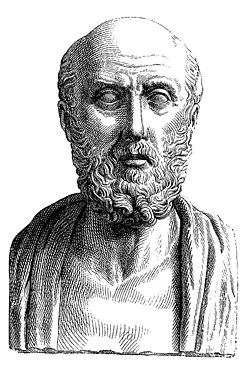](https://en.wikipedia.org/wiki/File:Hippocrates.jpg)
Bust of Hippocrates
The medical teachings of the fourth-century philosopher and physician [Hippocrates of Cos](https://en.wikipedia.org/wiki/Hippocrates_of_Cos "Hippocrates of Cos") proposed a natural, rather than supernatural, cause of human illness. In Hippocrates' work, the [Hippocratic corpus](https://en.wikipedia.org/wiki/Hippocratic_corpus "Hippocratic corpus"), a holistic explanation for health and disease was developed to include madness and other "diseases of the mind". Hippocrates writes:
> Men ought to know that from the brain, and from the brain only, arise our pleasures, joys, laughter, and jests, as well as our sorrows, pains, griefs and tears. Through it, in particular, we think, see, hear, and distinguish the ugly from the beautiful, the bad from the good, the pleasant from the unpleasant.... It is the same thing which makes us mad or delirious, inspires us with dread and fear, whether by night or by day, brings sleeplessness, inopportune mistakes, aimless anxieties, absentmindedness, and acts that are contrary to habit.[\[182\]](https://en.wikipedia.org/wiki/Psychosis#cite_note-182)
Hippocrates espoused a theory of [humoralism](https://en.wikipedia.org/wiki/Humoralism "Humoralism") wherein disease is resultant of a shifting balance in bodily fluids including [blood](https://en.wikipedia.org/wiki/Blood "Blood"), [phlegm](https://en.wikipedia.org/wiki/Phlegm "Phlegm"), [black bile](https://en.wikipedia.org/wiki/Black_bile "Black bile"), and [yellow bile](https://en.wikipedia.org/wiki/Yellow_bile "Yellow bile").[\[183\]](https://en.wikipedia.org/wiki/Psychosis#cite_note-183) According to humoralism, each fluid or "[humour](https://en.wikipedia.org/wiki/Humour "Humour")" has temperamental or behavioral correlates. In the case of psychosis, symptoms are thought to be caused by an excess of both blood and yellow bile. Thus, the proposed surgical intervention for psychotic or manic behavior was [bloodletting](https://en.wikipedia.org/wiki/Bloodletting "Bloodletting").[\[184\]](https://en.wikipedia.org/wiki/Psychosis#cite_note-184)
18th-century physician, educator, and widely considered "founder of American psychiatry", [Benjamin Rush](https://en.wikipedia.org/wiki/Benjamin_Rush "Benjamin Rush"), also prescribed bloodletting as a first-line treatment for psychosis. Although not a proponent of humoralism, Rush believed that active purging and bloodletting were efficacious corrections for disruptions in the circulatory system, a complication he believed was the primary cause of "insanity".[\[185\]](https://en.wikipedia.org/wiki/Psychosis#cite_note-185) Although Rush's treatment modalities are now considered antiquated and brutish, his contributions to psychiatry, namely the biological underpinnings of psychiatric phenomenon including psychosis, have been invaluable to the field. In honor of such contributions, Benjamin Rush's image is in the official seal of the [American Psychiatric Association](https://en.wikipedia.org/wiki/American_Psychiatric_Association "American Psychiatric Association").\[*[citation needed](https://en.wikipedia.org/wiki/Wikipedia:Citation_needed "Wikipedia:Citation needed")*\]
Early 20th-century treatments for severe and persisting psychosis were characterized by an emphasis on shocking the nervous system. Such therapies include [insulin shock therapy](https://en.wikipedia.org/wiki/Insulin_shock_therapy "Insulin shock therapy"), [cardiazol](https://en.wikipedia.org/wiki/Cardiazol "Cardiazol") shock therapy, and [electroconvulsive therapy](https://en.wikipedia.org/wiki/Electroconvulsive_therapy "Electroconvulsive therapy").[\[186\]](https://en.wikipedia.org/wiki/Psychosis#cite_note-186) Despite considerable risk, shock therapy was considered highly efficacious in the treatment of psychosis including [schizophrenia](https://en.wikipedia.org/wiki/Schizophrenia "Schizophrenia"). The acceptance of high-risk treatments led to more invasive medical interventions including [psychosurgery](https://en.wikipedia.org/wiki/Psychosurgery "Psychosurgery").[\[187\]](https://en.wikipedia.org/wiki/Psychosis#cite_note-187)
[](https://en.wikipedia.org/wiki/File:Gottlieb_Burckhardt_\(1836-1907\).jpg)
Gottlieb Burckhardt (1836–1907)
In 1888, Swiss psychiatrist [Gottlieb Burckhardt](https://en.wikipedia.org/wiki/Gottlieb_Burckhardt "Gottlieb Burckhardt") performed the first medically sanctioned psychosurgery in which the [cerebral cortex](https://en.wikipedia.org/wiki/Cerebral_cortex "Cerebral cortex") was excised. Although some patients showed improvement of symptoms and became more subdued, one patient died and several developed [aphasia](https://en.wikipedia.org/wiki/Aphasia "Aphasia") or seizure disorders. Burckhardt would go on to publish his clinical outcomes in a scholarly paper. This procedure was met with criticism from the medical community and his academic and surgical endeavors were largely ignored.[\[188\]](https://en.wikipedia.org/wiki/Psychosis#cite_note-188) In the late 1930s, [Egas Moniz](https://en.wikipedia.org/wiki/Egas_Moniz "Egas Moniz") conceived the [leucotomy](https://en.wikipedia.org/wiki/Leucotomy "Leucotomy") (AKA [prefrontal lobotomy](https://en.wikipedia.org/wiki/Prefrontal_lobotomy "Prefrontal lobotomy")) in which the fibers connecting the [frontal lobes](https://en.wikipedia.org/wiki/Frontal_lobe "Frontal lobe") to the rest of the brain were severed. Moniz's primary inspiration stemmed from a demonstration by neuroscientists John Fulton and Carlyle's 1935 experiment in which two chimpanzees were given leucotomies and pre- and post-surgical behavior was compared. Prior to the leucotomy, the chimps engaged in typical behavior including throwing feces and fighting. After the procedure, both chimps were pacified and less violent. During the Q\&A, Moniz asked if such a procedure could be extended to human subjects, a question that Fulton admitted was quite startling.[\[189\]](https://en.wikipedia.org/wiki/Psychosis#cite_note-Pressman1998-189) Moniz would go on to extend the controversial practice to humans with various psychotic disorders, an endeavor for which he received a [Nobel Prize](https://en.wikipedia.org/wiki/Nobel_Prize "Nobel Prize") in 1949.[\[190\]](https://en.wikipedia.org/wiki/Psychosis#cite_note-190) Between the late 1930s and early 1970s, the leucotomy was a widely accepted practice, often performed in non-[sterile](https://en.wikipedia.org/wiki/Sterilization_\(microbiology\) "Sterilization (microbiology)") environments such as small [outpatient](https://en.wikipedia.org/wiki/Outpatient "Outpatient") clinics and patient homes.[\[189\]](https://en.wikipedia.org/wiki/Psychosis#cite_note-Pressman1998-189) Psychosurgery remained standard practice until the discovery of antipsychotic pharmacology in the 1950s.[\[191\]](https://en.wikipedia.org/wiki/Psychosis#cite_note-191)
The first clinical trial of [antipsychotics](https://en.wikipedia.org/wiki/Antipsychotic "Antipsychotic") (also commonly known as neuroleptics) for the treatment of psychosis took place in 1952. [Chlorpromazine](https://en.wikipedia.org/wiki/Chlorpromazine "Chlorpromazine") (brand name: Thorazine) passed clinical trials and became the first antipsychotic medication approved for the treatment of both acute and chronic psychosis. Although the mechanism of action was not discovered until 1963, the administration of chlorpromazine marked the advent of the [dopamine antagonist](https://en.wikipedia.org/wiki/Dopamine_antagonist "Dopamine antagonist"), or first generation antipsychotic.[\[192\]](https://en.wikipedia.org/wiki/Psychosis#cite_note-192) While clinical trials showed a high response rate for both acute psychosis and disorders with psychotic features, the [side effects](https://en.wikipedia.org/wiki/Side_effect "Side effect") were particularly harsh, which included high rates of often irreversible Parkinsonian symptoms such as [tardive dyskinesia](https://en.wikipedia.org/wiki/Tardive_dyskinesia "Tardive dyskinesia"). With the advent of [atypical antipsychotics](https://en.wikipedia.org/wiki/Atypical_antipsychotic "Atypical antipsychotic") (also known as second generation antipsychotics) came a dopamine antagonist with a comparable response rate but a far different, though still extensive, side-effect profile that included a lower risk of Parkinsonian symptoms but a higher risk of cardiovascular disease.[\[193\]](https://en.wikipedia.org/wiki/Psychosis#cite_note-193) Atypical antipsychotics remain the first-line treatment for psychosis associated with various psychiatric and [neurological disorders](https://en.wikipedia.org/wiki/Neurological_disorder "Neurological disorder") including schizophrenia, [bipolar disorder](https://en.wikipedia.org/wiki/Bipolar_disorder "Bipolar disorder"), [major depressive disorder](https://en.wikipedia.org/wiki/Major_depressive_disorder "Major depressive disorder"), [anxiety disorders](https://en.wikipedia.org/wiki/Anxiety_disorder "Anxiety disorder"), [dementia](https://en.wikipedia.org/wiki/Dementia "Dementia"), and some [autism spectrum](https://en.wikipedia.org/wiki/Autism_spectrum "Autism spectrum") disorders.[\[194\]](https://en.wikipedia.org/wiki/Psychosis#cite_note-194)
Dopamine is now one of the primary neurotransmitters implicated in psychotic symptomology. Blocking dopamine receptors (namely, the dopamine D2 receptors) and decreasing dopaminergic activity continues to be an effective but highly unrefined effect of antipsychotics, which are commonly used to treat psychosis. Recent pharmacological research suggests that the decrease in dopaminergic activity does not eradicate psychotic [delusions](https://en.wikipedia.org/wiki/Delusion "Delusion") or [hallucinations](https://en.wikipedia.org/wiki/Hallucination "Hallucination"), but rather attenuates the reward mechanisms involved in the development of delusional thinking; that is, connecting or finding meaningful relationships between unrelated stimuli or ideas.[\[119\]](https://en.wikipedia.org/wiki/Psychosis#cite_note-Kapur-119) The author of this research paper acknowledges the importance of future investigation:
> The model presented here is based on incomplete knowledge related to dopamine, schizophrenia, and antipsychotics—and as such will need to evolve as more is known about these.
— Shitij Kapur, From dopamine to salience to psychosis—linking biology, pharmacology and phenomenology of psychosis
[Freud](https://en.wikipedia.org/wiki/Freud "Freud")'s former student Wilhelm Reich explored independent insights into the physical effects of neurotic and traumatic upbringing, and published his holistic psychoanalytic treatment with a schizophrenic. With his incorporation of breathwork and insight with the patient, a young woman, she achieved sufficient self-management skills to end the therapy.[\[195\]](https://en.wikipedia.org/wiki/Psychosis#cite_note-195)
[Lacan](https://en.wikipedia.org/wiki/Lacan "Lacan") extended Freud's ideas to create a psychoanalytic model of psychosis based upon the concept of "[foreclosure](https://en.wikipedia.org/wiki/Foreclosure_\(psychoanalysis\) "Foreclosure (psychoanalysis)")", the rejection of the symbolic concept of the father.\[*[citation needed](https://en.wikipedia.org/wiki/Wikipedia:Citation_needed "Wikipedia:Citation needed")*\]
Psychiatrist [David Healy](https://en.wikipedia.org/wiki/David_Healy_\(psychiatrist\) "David Healy (psychiatrist)") has criticised pharmaceutical companies for promoting simplified biological theories of mental illness that seem to imply the primacy of pharmaceutical treatments while ignoring social and developmental factors that are known important influences in the etiology of psychosis.[\[196\]](https://en.wikipedia.org/wiki/Psychosis#cite_note-196)
## Society and culture
\[[edit](https://en.wikipedia.org/w/index.php?title=Psychosis&action=edit§ion=38 "Edit section: Society and culture")\]
Symptoms of psychosis can also include visions or quasi-visual experiences, felt presences, alterations of time, alterations of space, or alterations of spatiotemporal qualities of objects and things.[\[153\]](https://en.wikipedia.org/wiki/Psychosis#cite_note-ReferenceA-153) While there are many overwhelmingly negative experiences of psychosis, some experiences of psychosis can be overwhelmingly positive and can be experienced as uplifting or as healing or as difficult but meaningful.[\[153\]](https://en.wikipedia.org/wiki/Psychosis#cite_note-ReferenceA-153) Jones and Shattell said that mutual dialogue in clinical practice would in theory allow the meaning and complexity of psychotic experiences to emerge.[\[153\]](https://en.wikipedia.org/wiki/Psychosis#cite_note-ReferenceA-153)
### Disability
\[[edit](https://en.wikipedia.org/w/index.php?title=Psychosis&action=edit§ion=39 "Edit section: Disability")\]
The classification of psychosis as a [social disability](https://en.wikipedia.org/wiki/Social_model_of_disability "Social model of disability") is a common occurrence.
Psychosis is considered to be among the top ten causes of social disability among adults in developed countries.[\[197\]](https://en.wikipedia.org/wiki/Psychosis#cite_note-197) The traditional, negative narrative around disability has been shown to adversely influence employment and education for people experiencing psychosis.[\[198\]](https://en.wikipedia.org/wiki/Psychosis#cite_note-198)
Social disability by way of social disconnection is a significant public health concern and is associated with a broad range of negative outcomes, including premature mortality. Social disconnection refers to the ongoing absence of family or social relationships with marginal participation in social activities.[\[199\]](https://en.wikipedia.org/wiki/Psychosis#cite_note-199)
Research on psychosis found that reduced participation in social networks, not only negatively effects the individual on a physical and mental level, it has been shown that failure to be included in social networks influences the individual's ability to participate in the wider community through employment and education opportunities.[\[200\]](https://en.wikipedia.org/wiki/Psychosis#cite_note-Myers_2019-200)[\[201\]](https://en.wikipedia.org/wiki/Psychosis#cite_note-Myers_2012-201)[\[202\]](https://en.wikipedia.org/wiki/Psychosis#cite_note-pmid21699009-202)
Equal opportunity to participate in meaningful relationships with friends, family and romantic partners, as well as engaging in social constructs such as employment, can provide significant physical and mental value to people's lives.[\[200\]](https://en.wikipedia.org/wiki/Psychosis#cite_note-Myers_2019-200) And how breaking the disability mind-set around people experiencing psychosis is imperative for their overall, long-term health and well-being as well as the contributions they are able to make to their immediate social connections and the wider community.[\[201\]](https://en.wikipedia.org/wiki/Psychosis#cite_note-Myers_2012-201)
## Research
\[[edit](https://en.wikipedia.org/w/index.php?title=Psychosis&action=edit§ion=40 "Edit section: Research")\]
See also: [List of investigational antipsychotics](https://en.wikipedia.org/wiki/List_of_investigational_antipsychotics "List of investigational antipsychotics")
Further research in the form of randomized controlled trials is needed to determine the effectiveness of treatment approaches for helping *adolescents* with psychosis.[\[46\]](https://en.wikipedia.org/wiki/Psychosis#cite_note-:3-46) Through 10 randomized clinical trials, studies showed that Early Intervention Services (EIS) for patients with early-phase schizophrenia spectrum disorders have generated promising outcomes.[\[203\]](https://en.wikipedia.org/wiki/Psychosis#cite_note-:05-203) EIS are specifically intended to fulfill the needs of patients with early-phase psychosis.[\[203\]](https://en.wikipedia.org/wiki/Psychosis#cite_note-:05-203) In addition, one meta-analysis that consisted of four randomized clinical trials has examined and discovered the efficacy of EIS to Therapy as Usual (TAU) for early-phase psychosis, revealing that EIS techniques are superior to TAU.[\[203\]](https://en.wikipedia.org/wiki/Psychosis#cite_note-:05-203)
A study suggests that combining cognitive behavioral therapy (CBT) with SlowMo, an application that helps notice their "unhelpful quick-thinking", might be more effective for treating paranoia in people with psychosis than CBT. alone.[\[204\]](https://en.wikipedia.org/wiki/Psychosis#cite_note-204)[\[205\]](https://en.wikipedia.org/wiki/Psychosis#cite_note-205)
## References
\[[edit](https://en.wikipedia.org/w/index.php?title=Psychosis&action=edit§ion=41 "Edit section: References")\]
1. ^ [***a***](https://en.wikipedia.org/wiki/Psychosis#cite_ref-NIH2018QA_1-0) [***b***](https://en.wikipedia.org/wiki/Psychosis#cite_ref-NIH2018QA_1-1) [***c***](https://en.wikipedia.org/wiki/Psychosis#cite_ref-NIH2018QA_1-2) [***d***](https://en.wikipedia.org/wiki/Psychosis#cite_ref-NIH2018QA_1-3) [***e***](https://en.wikipedia.org/wiki/Psychosis#cite_ref-NIH2018QA_1-4) [***f***](https://en.wikipedia.org/wiki/Psychosis#cite_ref-NIH2018QA_1-5)
["RAISE Questions and Answers"](https://web.archive.org/web/20191008203120/https://www.nimh.nih.gov/health/topics/schizophrenia/raise/raise-questions-and-answers.shtml). *NIMH*. Archived from [the original](https://www.nimh.nih.gov/health/topics/schizophrenia/raise/raise-questions-and-answers.shtml) on 8 October 2019. Retrieved 23 January 2018.
2. ^ [***a***](https://en.wikipedia.org/wiki/Psychosis#cite_ref-NHS2016_2-0) [***b***](https://en.wikipedia.org/wiki/Psychosis#cite_ref-NHS2016_2-1) [***c***](https://en.wikipedia.org/wiki/Psychosis#cite_ref-NHS2016_2-2) [***d***](https://en.wikipedia.org/wiki/Psychosis#cite_ref-NHS2016_2-3) [***e***](https://en.wikipedia.org/wiki/Psychosis#cite_ref-NHS2016_2-4)
["Psychosis"](https://www.nhs.uk/conditions/psychosis/). *NHS*. 23 December 2016. [Archived](https://web.archive.org/web/20181015043847/https://www.nhs.uk/Conditions/Psychosis/Pages/Prevention-OLD.aspx) from the original on 15 October 2018. Retrieved 24 January 2018.
3. ^ [***a***](https://en.wikipedia.org/wiki/Psychosis#cite_ref-Continuum_3-0) [***b***](https://en.wikipedia.org/wiki/Psychosis#cite_ref-Continuum_3-1) [***c***](https://en.wikipedia.org/wiki/Psychosis#cite_ref-Continuum_3-2) [***d***](https://en.wikipedia.org/wiki/Psychosis#cite_ref-Continuum_3-3) [***e***](https://en.wikipedia.org/wiki/Psychosis#cite_ref-Continuum_3-4)
Arciniegas DB (June 2015). ["Psychosis"](https://www.ncbi.nlm.nih.gov/pmc/articles/PMC4455840). *Continuum*. **21** (3 Behavioral Neurology and Neuropsychiatry): 715–736\. [doi](https://en.wikipedia.org/wiki/Doi_\(identifier\) "Doi (identifier)"):[10\.1212/01.CON.0000466662.89908.e7](https://doi.org/10.1212%2F01.CON.0000466662.89908.e7). [PMC](https://en.wikipedia.org/wiki/PMC_\(identifier\) "PMC (identifier)") [4455840](https://www.ncbi.nlm.nih.gov/pmc/articles/PMC4455840). [PMID](https://en.wikipedia.org/wiki/PMID_\(identifier\) "PMID (identifier)") [26039850](https://pubmed.ncbi.nlm.nih.gov/26039850).
4. **[^](https://en.wikipedia.org/wiki/Psychosis#cite_ref-4)**
Blackburn, Ronald (2005). ["Psychopathy as a Personality Construct"](https://psycnet.apa.org/record/2005-04993-015). *American Psychiatric Association*. [Archived](https://web.archive.org/web/20230905192012/https://psycnet.apa.org/record/2005-04993-015) from the original on 5 September 2023. Retrieved 12 June 2024.
5. **[^](https://en.wikipedia.org/wiki/Psychosis#cite_ref-5)**
Driessen, Josi M. A.; van Baar, Jeroen M.; Sanfey, Alan G.; Glennon, Jeffrey C.; Brazil, Inti A. (July 2021). "Moral strategies and psychopathic traits". *Journal of Abnormal Psychology*. **130** (5): 550–561\. [doi](https://en.wikipedia.org/wiki/Doi_\(identifier\) "Doi (identifier)"):[10\.1037/abn0000675](https://doi.org/10.1037%2Fabn0000675). [hdl](https://en.wikipedia.org/wiki/Hdl_\(identifier\) "Hdl (identifier)"):[2066/236779](https://hdl.handle.net/2066%2F236779). [ISSN](https://en.wikipedia.org/wiki/ISSN_\(identifier\) "ISSN (identifier)") [1939-1846](https://search.worldcat.org/issn/1939-1846). [PMID](https://en.wikipedia.org/wiki/PMID_\(identifier\) "PMID (identifier)") [34472890](https://pubmed.ncbi.nlm.nih.gov/34472890).
6. **[^](https://en.wikipedia.org/wiki/Psychosis#cite_ref-6)**
["Effects of Co-occurring Psychotic Experiences and Psychopathic"](https://web.archive.org/web/20260318230359/https://livrepository.liverpool.ac.uk/3194051/1/201454799_Jun2024.pdf) (PDF). *livrepository.liverpool.ac.uk*. Archived from [the original](https://livrepository.liverpool.ac.uk/3194051/1/201454799_Jun2024.pdf) (PDF) on 18 March 2026. Retrieved 18 March 2026.
7. **[^](https://en.wikipedia.org/wiki/Psychosis#cite_ref-7)**
Radua J, Ramella-Cravaro V, Ioannidis JP, Reichenberg A, Phiphopthatsanee N, Amir T, et al. (February 2018). ["What causes psychosis? An umbrella review of risk and protective factors"](https://www.ncbi.nlm.nih.gov/pmc/articles/PMC5775150). *World Psychiatry*. **17** (1): 49–66\. [doi](https://en.wikipedia.org/wiki/Doi_\(identifier\) "Doi (identifier)"):[10\.1002/wps.20490](https://doi.org/10.1002%2Fwps.20490). [PMC](https://en.wikipedia.org/wiki/PMC_\(identifier\) "PMC (identifier)") [5775150](https://www.ncbi.nlm.nih.gov/pmc/articles/PMC5775150). [PMID](https://en.wikipedia.org/wiki/PMID_\(identifier\) "PMID (identifier)") [29352556](https://pubmed.ncbi.nlm.nih.gov/29352556).
8. **[^](https://en.wikipedia.org/wiki/Psychosis#cite_ref-8)**
["Korsakoff Psychosis – Special Subjects"](https://www.msdmanuals.com/en-in/professional/special-subjects/illicit-drugs-and-intoxicants/korsakoff-psychosis). *MSD Manual Professional Edition*. Retrieved 2024-04-10.
9. ^ [***a***](https://en.wikipedia.org/wiki/Psychosis#cite_ref-Oxford_Textbook_of_Psychiatry_9-0) [***b***](https://en.wikipedia.org/wiki/Psychosis#cite_ref-Oxford_Textbook_of_Psychiatry_9-1)
Gelder, Michael G.; Gath, Dennis; Mayou, Richard (1983). [*Oxford Textbook of Psychiatry*](https://books.google.com/books?id=pN9rAAAAMAAJ). Oxford University Press. [ISBN](https://en.wikipedia.org/wiki/ISBN_\(identifier\) "ISBN (identifier)")
[978-0-19-261294-6](https://en.wikipedia.org/wiki/Special:BookSources/978-0-19-261294-6 "Special:BookSources/978-0-19-261294-6")
.
10. ^ [***a***](https://en.wikipedia.org/wiki/Psychosis#cite_ref-Griswold_10-0) [***b***](https://en.wikipedia.org/wiki/Psychosis#cite_ref-Griswold_10-1) [***c***](https://en.wikipedia.org/wiki/Psychosis#cite_ref-Griswold_10-2) [***d***](https://en.wikipedia.org/wiki/Psychosis#cite_ref-Griswold_10-3)
Griswold KS, Del Regno PA, Berger RC (June 2015). ["Recognition and Differential Diagnosis of Psychosis in Primary Care"](https://www.aafp.org/afp/2015/0615/p856.html). *American Family Physician*. **91** (12): 856–863\. [PMID](https://en.wikipedia.org/wiki/PMID_\(identifier\) "PMID (identifier)") [26131945](https://pubmed.ncbi.nlm.nih.gov/26131945). [Archived](https://web.archive.org/web/20210222162048/https://www.aafp.org/afp/2015/0615/p856.html) from the original on 2021-02-22. Retrieved 2021-12-06.
11. **[^](https://en.wikipedia.org/wiki/Psychosis#cite_ref-11)**
Cardinal RN, Bullmore ET (2011). [*The Diagnosis of Psychosis*](https://books.google.com/books?id=wE3FXgW9gDkC&pg=PA279). Cambridge University Press. p. 279. [ISBN](https://en.wikipedia.org/wiki/ISBN_\(identifier\) "ISBN (identifier)")
[978-1-139-49790-9](https://en.wikipedia.org/wiki/Special:BookSources/978-1-139-49790-9 "Special:BookSources/978-1-139-49790-9")
. [Archived](https://web.archive.org/web/20200806010504/https://books.google.com/books?id=wE3FXgW9gDkC&pg=PA279) from the original on 2020-08-06. Retrieved 2020-06-25.
12. **[^](https://en.wikipedia.org/wiki/Psychosis#cite_ref-12)**
Foster NL (2011). [*The American Psychiatric Publishing Textbook of Geriatric Neuropsychiatry*](https://books.google.com/books?id=c52vBAAAQBAJ&pg=PA523). American Psychiatric Pub. p. 523. [ISBN](https://en.wikipedia.org/wiki/ISBN_\(identifier\) "ISBN (identifier)")
[978-1-58562-952-7](https://en.wikipedia.org/wiki/Special:BookSources/978-1-58562-952-7 "Special:BookSources/978-1-58562-952-7")
. [Archived](https://web.archive.org/web/20200819021425/https://books.google.com/books?id=c52vBAAAQBAJ&pg=PA523) from the original on 2020-08-19. Retrieved 2020-06-25.
13. **[^](https://en.wikipedia.org/wiki/Psychosis#cite_ref-13)**
Haddad PM, Correll CU (November 2018). ["The acute efficacy of antipsychotics in schizophrenia: a review of recent meta-analyses"](https://www.ncbi.nlm.nih.gov/pmc/articles/PMC6180374). *Therapeutic Advances in Psychopharmacology*. **8** (11): 303–318\. [doi](https://en.wikipedia.org/wiki/Doi_\(identifier\) "Doi (identifier)"):[10\.1177/2045125318781475](https://doi.org/10.1177%2F2045125318781475). [PMC](https://en.wikipedia.org/wiki/PMC_\(identifier\) "PMC (identifier)") [6180374](https://www.ncbi.nlm.nih.gov/pmc/articles/PMC6180374). [PMID](https://en.wikipedia.org/wiki/PMID_\(identifier\) "PMID (identifier)") [30344997](https://pubmed.ncbi.nlm.nih.gov/30344997).
14. **[^](https://en.wikipedia.org/wiki/Psychosis#cite_ref-14)**
Stahl SM (June 2018). ["Beyond the dopamine hypothesis of schizophrenia to three neural networks of psychosis: dopamine, serotonin, and glutamate"](https://doi.org/10.1017%2FS1092852918001013). *CNS Spectrums*. **23** (3): 187–191\. [doi](https://en.wikipedia.org/wiki/Doi_\(identifier\) "Doi (identifier)"):[10\.1017/S1092852918001013](https://doi.org/10.1017%2FS1092852918001013). [PMID](https://en.wikipedia.org/wiki/PMID_\(identifier\) "PMID (identifier)") [29954475](https://pubmed.ncbi.nlm.nih.gov/29954475). [S2CID](https://en.wikipedia.org/wiki/S2CID_\(identifier\) "S2CID (identifier)") [49599226](https://api.semanticscholar.org/CorpusID:49599226).
15. **[^](https://en.wikipedia.org/wiki/Psychosis#cite_ref-15)**
Grace AA (August 2016). ["Dysregulation of the dopamine system in the pathophysiology of schizophrenia and depression"](https://www.ncbi.nlm.nih.gov/pmc/articles/PMC5166560). *Nature Reviews. Neuroscience*. **17** (8): 524–532\. [doi](https://en.wikipedia.org/wiki/Doi_\(identifier\) "Doi (identifier)"):[10\.1038/nrn.2016.57](https://doi.org/10.1038%2Fnrn.2016.57). [PMC](https://en.wikipedia.org/wiki/PMC_\(identifier\) "PMC (identifier)") [5166560](https://www.ncbi.nlm.nih.gov/pmc/articles/PMC5166560). [PMID](https://en.wikipedia.org/wiki/PMID_\(identifier\) "PMID (identifier)") [27256556](https://pubmed.ncbi.nlm.nih.gov/27256556).
16. **[^](https://en.wikipedia.org/wiki/Psychosis#cite_ref-16)**
Leucht S, Leucht C, Huhn M, Chaimani A, Mavridis D, Helfer B, et al. (October 2017). ["Sixty Years of Placebo-Controlled Antipsychotic Drug Trials in Acute Schizophrenia: Systematic Review, Bayesian Meta-Analysis, and Meta-Regression of Efficacy Predictors"](https://doi.org/10.1176%2Fappi.ajp.2017.16121358). *The American Journal of Psychiatry*. **174** (10): 927–942\. [doi](https://en.wikipedia.org/wiki/Doi_\(identifier\) "Doi (identifier)"):[10\.1176/appi.ajp.2017.16121358](https://doi.org/10.1176%2Fappi.ajp.2017.16121358). [PMID](https://en.wikipedia.org/wiki/PMID_\(identifier\) "PMID (identifier)") [28541090](https://pubmed.ncbi.nlm.nih.gov/28541090). [S2CID](https://en.wikipedia.org/wiki/S2CID_\(identifier\) "S2CID (identifier)") [27256686](https://api.semanticscholar.org/CorpusID:27256686).
17. **[^](https://en.wikipedia.org/wiki/Psychosis#cite_ref-17)**
Gibbs RS (2008). [*Danforth's Obstetrics and Gynecology*](https://books.google.com/books?id=v4krPhqFG8sC&pg=PA508). Lippincott Williams & Wilkins. p. 508. [ISBN](https://en.wikipedia.org/wiki/ISBN_\(identifier\) "ISBN (identifier)")
[978-0-7817-6937-2](https://en.wikipedia.org/wiki/Special:BookSources/978-0-7817-6937-2 "Special:BookSources/978-0-7817-6937-2")
.
18. **[^](https://en.wikipedia.org/wiki/Psychosis#cite_ref-18)**
Giddens JF (2015). [*Concepts for Nursing Practice – E-Book*](https://books.google.com/books?id=lB-KCwAAQBAJ&pg=PA348). Elsevier Health Sciences. p. 348. [ISBN](https://en.wikipedia.org/wiki/ISBN_\(identifier\) "ISBN (identifier)")
[978-0-323-38946-4](https://en.wikipedia.org/wiki/Special:BookSources/978-0-323-38946-4 "Special:BookSources/978-0-323-38946-4")
. [Archived](https://web.archive.org/web/20200819141258/https://books.google.com/books?id=lB-KCwAAQBAJ&pg=PA348) from the original on 2020-08-19. Retrieved 2020-06-25.
19. ^ [***a***](https://en.wikipedia.org/wiki/Psychosis#cite_ref-:9_19-0) [***b***](https://en.wikipedia.org/wiki/Psychosis#cite_ref-:9_19-1)
Zmigrod, Leor; Garrison, Jane R.; Carr, Joseph; Simons, Jon S. (2016-10-01). ["The neural mechanisms of hallucinations: A quantitative meta-analysis of neuroimaging studies"](https://www.sciencedirect.com/science/article/pii/S0149763415302669). *Neuroscience & Biobehavioral Reviews*. **69**: 113–123\. [doi](https://en.wikipedia.org/wiki/Doi_\(identifier\) "Doi (identifier)"):[10\.1016/j.neubiorev.2016.05.037](https://doi.org/10.1016%2Fj.neubiorev.2016.05.037). [ISSN](https://en.wikipedia.org/wiki/ISSN_\(identifier\) "ISSN (identifier)") [0149-7634](https://search.worldcat.org/issn/0149-7634). [PMID](https://en.wikipedia.org/wiki/PMID_\(identifier\) "PMID (identifier)") [27473935](https://pubmed.ncbi.nlm.nih.gov/27473935). "A hallucination has been formally defined as a "sensory experience which occurs in the absence of corresponding external stimulation of the relevant sensory organ, has a sufficient sense of reality to resemble a veridical perception, over which the subject does not feel they have direct and voluntary control, and which occurs in the awake state" (David, 2004)."
20. **[^](https://en.wikipedia.org/wiki/Psychosis#cite_ref-20)**
Barodawala, S.; Mulley, G. P. (1997). ["Visual hallucinations"](https://www.ncbi.nlm.nih.gov/pmc/articles/PMC5420857). *Journal of the Royal College of Physicians of London*. **31** (1): 42–48\. [doi](https://en.wikipedia.org/wiki/Doi_\(identifier\) "Doi (identifier)"):[10\.1016/S0035-8819(25)00268-5](https://doi.org/10.1016%2FS0035-8819%2825%2900268-5). [ISSN](https://en.wikipedia.org/wiki/ISSN_\(identifier\) "ISSN (identifier)") [0035-8819](https://search.worldcat.org/issn/0035-8819). [PMC](https://en.wikipedia.org/wiki/PMC_\(identifier\) "PMC (identifier)") [5420857](https://www.ncbi.nlm.nih.gov/pmc/articles/PMC5420857). [PMID](https://en.wikipedia.org/wiki/PMID_\(identifier\) "PMID (identifier)") [9044197](https://pubmed.ncbi.nlm.nih.gov/9044197).
21. **[^](https://en.wikipedia.org/wiki/Psychosis#cite_ref-21)**
Hyatt, Erica; Blom, Jan Dirk (2024). ["Perceptual distortions characteristic of Alice in Wonderland syndrome in contemporary figurative painting"](https://www.ncbi.nlm.nih.gov/pmc/articles/PMC11652831). *Frontiers in Psychiatry*. **15** 1466666. [doi](https://en.wikipedia.org/wiki/Doi_\(identifier\) "Doi (identifier)"):[10\.3389/fpsyt.2024.1466666](https://doi.org/10.3389%2Ffpsyt.2024.1466666). [ISSN](https://en.wikipedia.org/wiki/ISSN_\(identifier\) "ISSN (identifier)") [1664-0640](https://search.worldcat.org/issn/1664-0640). [PMC](https://en.wikipedia.org/wiki/PMC_\(identifier\) "PMC (identifier)") [11652831](https://www.ncbi.nlm.nih.gov/pmc/articles/PMC11652831). [PMID](https://en.wikipedia.org/wiki/PMID_\(identifier\) "PMID (identifier)") [39698212](https://pubmed.ncbi.nlm.nih.gov/39698212). "AIWS is a neurological condition characterized by phenomena known as perceptual distortions. These differ from hallucinations (where something is perceived that is not there) and illusions (where an existing object is perceived as something else) \[...\]"
22. ^ [***a***](https://en.wikipedia.org/wiki/Psychosis#cite_ref-DSM_22-0) [***b***](https://en.wikipedia.org/wiki/Psychosis#cite_ref-DSM_22-1) [***c***](https://en.wikipedia.org/wiki/Psychosis#cite_ref-DSM_22-2)
American Psychiatric Association (2013). [*Diagnostic and statistical manual of mental disorders: DSM-5*](https://archive.org/details/diagnosticstatis0005unse/page/125) (5th ed.). Washington, D.C.: American Psychiatric Association. p. [125](https://archive.org/details/diagnosticstatis0005unse/page/125). [ISBN](https://en.wikipedia.org/wiki/ISBN_\(identifier\) "ISBN (identifier)")
[978-0-89042-554-1](https://en.wikipedia.org/wiki/Special:BookSources/978-0-89042-554-1 "Special:BookSources/978-0-89042-554-1")
.
23. **[^](https://en.wikipedia.org/wiki/Psychosis#cite_ref-23)**
Linszen, Mascha M. J.; de Boer, Janna N.; Schutte, Maya J. L.; Begemann, Marieke J. H.; de Vries, Jacqueline; Koops, Sanne; Blom, Renske E.; Bohlken, Marc M.; Heringa, Sophie M.; Blom, Jan Dirk; Sommer, Iris E. C. (2022-04-23). ["Occurrence and phenomenology of hallucinations in the general population: A large online survey"](https://www.ncbi.nlm.nih.gov/pmc/articles/PMC9261095). *Schizophrenia (Heidelberg, Germany)*. **8** (1): 41. [doi](https://en.wikipedia.org/wiki/Doi_\(identifier\) "Doi (identifier)"):[10\.1038/s41537-022-00229-9](https://doi.org/10.1038%2Fs41537-022-00229-9). [ISSN](https://en.wikipedia.org/wiki/ISSN_\(identifier\) "ISSN (identifier)") [2754-6993](https://search.worldcat.org/issn/2754-6993). [PMC](https://en.wikipedia.org/wiki/PMC_\(identifier\) "PMC (identifier)") [9261095](https://www.ncbi.nlm.nih.gov/pmc/articles/PMC9261095). [PMID](https://en.wikipedia.org/wiki/PMID_\(identifier\) "PMID (identifier)") [35853871](https://pubmed.ncbi.nlm.nih.gov/35853871).
24. **[^](https://en.wikipedia.org/wiki/Psychosis#cite_ref-24)**
Hugdahl, Kenneth; Løberg, Else-Marie; Specht, Karsten; Steen, Vidar M.; van Wageningen, Heidi; Jørgensen, Hugo A. (2007). ["Auditory hallucinations in schizophrenia: the role of cognitive, brain structural and genetic disturbances in the left temporal lobe"](https://www.ncbi.nlm.nih.gov/pmc/articles/PMC2525988). *Frontiers in Human Neuroscience*. **1**: 6. [doi](https://en.wikipedia.org/wiki/Doi_\(identifier\) "Doi (identifier)"):[10\.3389/neuro.09.006.2007](https://doi.org/10.3389%2Fneuro.09.006.2007). [ISSN](https://en.wikipedia.org/wiki/ISSN_\(identifier\) "ISSN (identifier)") [1662-5161](https://search.worldcat.org/issn/1662-5161). [PMC](https://en.wikipedia.org/wiki/PMC_\(identifier\) "PMC (identifier)") [2525988](https://www.ncbi.nlm.nih.gov/pmc/articles/PMC2525988). [PMID](https://en.wikipedia.org/wiki/PMID_\(identifier\) "PMID (identifier)") [18958220](https://pubmed.ncbi.nlm.nih.gov/18958220). "Auditory hallucinations are among the most common symptoms in schizophrenia, affecting more than 70% of the patients."
25. **[^](https://en.wikipedia.org/wiki/Psychosis#cite_ref-Toh_25-0)**
Toh WL, Thomas N, Rossell SL (September 2015). "Auditory verbal hallucinations in bipolar disorder (BD) and major depressive disorder (MDD): A systematic review". *Journal of Affective Disorders*. **184**: 18–28\. [doi](https://en.wikipedia.org/wiki/Doi_\(identifier\) "Doi (identifier)"):[10\.1016/j.jad.2015.05.040](https://doi.org/10.1016%2Fj.jad.2015.05.040). [PMID](https://en.wikipedia.org/wiki/PMID_\(identifier\) "PMID (identifier)") [26066781](https://pubmed.ncbi.nlm.nih.gov/26066781).
26. ^ [***a***](https://en.wikipedia.org/wiki/Psychosis#cite_ref-Sadock_Psychosis_26-0) [***b***](https://en.wikipedia.org/wiki/Psychosis#cite_ref-Sadock_Psychosis_26-1) [***c***](https://en.wikipedia.org/wiki/Psychosis#cite_ref-Sadock_Psychosis_26-2) [***d***](https://en.wikipedia.org/wiki/Psychosis#cite_ref-Sadock_Psychosis_26-3) [***e***](https://en.wikipedia.org/wiki/Psychosis#cite_ref-Sadock_Psychosis_26-4)
Lewis S, Escalona R, Keith S (2017). "Phenomenology of Schizophrenia". In Sadock V, Sadock B, Ruiz P (eds.). *Kaplan and Sadock's Comprehensive Textbook of Psychiatry*. Wolters Kluwer. [ISBN](https://en.wikipedia.org/wiki/ISBN_\(identifier\) "ISBN (identifier)")
[978-1-45-110047-1](https://en.wikipedia.org/wiki/Special:BookSources/978-1-45-110047-1 "Special:BookSources/978-1-45-110047-1")
.
27. **[^](https://en.wikipedia.org/wiki/Psychosis#cite_ref-27)**
Lenka A, Pagonabarraga J, Pal PK, Bejr-Kasem H, Kulisvesky J (August 2019). ["Minor hallucinations in Parkinson disease: A subtle symptom with major clinical implications"](https://www.ncbi.nlm.nih.gov/pmc/articles/PMC6709995). *Neurology*. **93** (6): 259–266\. [doi](https://en.wikipedia.org/wiki/Doi_\(identifier\) "Doi (identifier)"):[10\.1212/WNL.0000000000007913](https://doi.org/10.1212%2FWNL.0000000000007913). [PMC](https://en.wikipedia.org/wiki/PMC_\(identifier\) "PMC (identifier)") [6709995](https://www.ncbi.nlm.nih.gov/pmc/articles/PMC6709995). [PMID](https://en.wikipedia.org/wiki/PMID_\(identifier\) "PMID (identifier)") [31289146](https://pubmed.ncbi.nlm.nih.gov/31289146).
28. **[^](https://en.wikipedia.org/wiki/Psychosis#cite_ref-28)**
Silverstein, Steven M.; Lai, Adriann (2021). ["The Phenomenology and Neurobiology of Visual Distortions and Hallucinations in Schizophrenia: An Update"](https://www.ncbi.nlm.nih.gov/pmc/articles/PMC8226016). *Frontiers in Psychiatry*. **12** 684720. [doi](https://en.wikipedia.org/wiki/Doi_\(identifier\) "Doi (identifier)"):[10\.3389/fpsyt.2021.684720](https://doi.org/10.3389%2Ffpsyt.2021.684720). [ISSN](https://en.wikipedia.org/wiki/ISSN_\(identifier\) "ISSN (identifier)") [1664-0640](https://search.worldcat.org/issn/1664-0640). [PMC](https://en.wikipedia.org/wiki/PMC_\(identifier\) "PMC (identifier)") [8226016](https://www.ncbi.nlm.nih.gov/pmc/articles/PMC8226016). [PMID](https://en.wikipedia.org/wiki/PMID_\(identifier\) "PMID (identifier)") [34177665](https://pubmed.ncbi.nlm.nih.gov/34177665).
29. **[^](https://en.wikipedia.org/wiki/Psychosis#cite_ref-29)**
Waters, Flavie; Collerton, Daniel; Ffytche, Dominic H.; Jardri, Renaud; Pins, Delphine; Dudley, Robert; Blom, Jan Dirk; Mosimann, Urs Peter; Eperjesi, Frank; Ford, Stephen; Larøi, Frank (July 2014). ["Visual hallucinations in the psychosis spectrum and comparative information from neurodegenerative disorders and eye disease"](https://www.ncbi.nlm.nih.gov/pmc/articles/PMC4141306). *Schizophrenia Bulletin*. 40 Suppl 4 (Suppl 4): S233–245. [doi](https://en.wikipedia.org/wiki/Doi_\(identifier\) "Doi (identifier)"):[10\.1093/schbul/sbu036](https://doi.org/10.1093%2Fschbul%2Fsbu036). [ISSN](https://en.wikipedia.org/wiki/ISSN_\(identifier\) "ISSN (identifier)") [1745-1701](https://search.worldcat.org/issn/1745-1701). [PMC](https://en.wikipedia.org/wiki/PMC_\(identifier\) "PMC (identifier)") [4141306](https://www.ncbi.nlm.nih.gov/pmc/articles/PMC4141306). [PMID](https://en.wikipedia.org/wiki/PMID_\(identifier\) "PMID (identifier)") [24936084](https://pubmed.ncbi.nlm.nih.gov/24936084). "Psychotic symptoms such as hallucinations and delusions are also a common feature of affective disorders including bipolar disorder. \[...\] the weighted mean frequency of VH is approximately 15%."
30. **[^](https://en.wikipedia.org/wiki/Psychosis#cite_ref-Blom2021_30-0)**
Blom JD (June 2021). ["Leroy's elusive little people: A systematic review on lilliputian hallucinations"](https://doi.org/10.1016%2Fj.neubiorev.2021.03.002). *Neurosci Biobehav Rev*. **125**: 627–636\. [doi](https://en.wikipedia.org/wiki/Doi_\(identifier\) "Doi (identifier)"):[10\.1016/j.neubiorev.2021.03.002](https://doi.org/10.1016%2Fj.neubiorev.2021.03.002). [hdl](https://en.wikipedia.org/wiki/Hdl_\(identifier\) "Hdl (identifier)"):[11370/3b194f75-175e-4633-bc26-e93845ab7a33](https://hdl.handle.net/11370%2F3b194f75-175e-4633-bc26-e93845ab7a33). [PMID](https://en.wikipedia.org/wiki/PMID_\(identifier\) "PMID (identifier)") [33676962](https://pubmed.ncbi.nlm.nih.gov/33676962).
31. **[^](https://en.wikipedia.org/wiki/Psychosis#cite_ref-31)**
Kiran, Chandra; Chaudhury, Suprakash (January 2009). ["Understanding delusions"](https://www.ncbi.nlm.nih.gov/pmc/articles/PMC3016695). *Industrial Psychiatry Journal*. **18** (1): 3–18\. [doi](https://en.wikipedia.org/wiki/Doi_\(identifier\) "Doi (identifier)"):[10\.4103/0972-6748.57851](https://doi.org/10.4103%2F0972-6748.57851). [ISSN](https://en.wikipedia.org/wiki/ISSN_\(identifier\) "ISSN (identifier)") [0972-6748](https://search.worldcat.org/issn/0972-6748). [PMC](https://en.wikipedia.org/wiki/PMC_\(identifier\) "PMC (identifier)") [3016695](https://www.ncbi.nlm.nih.gov/pmc/articles/PMC3016695). [PMID](https://en.wikipedia.org/wiki/PMID_\(identifier\) "PMID (identifier)") [21234155](https://pubmed.ncbi.nlm.nih.gov/21234155).
32. ^ [***a***](https://en.wikipedia.org/wiki/Psychosis#cite_ref-:13_32-0) [***b***](https://en.wikipedia.org/wiki/Psychosis#cite_ref-:13_32-1) [***c***](https://en.wikipedia.org/wiki/Psychosis#cite_ref-:13_32-2)
Collin, Sophie; Rowse, Georgina; Martinez, Anton P.; Bentall, Richard P. (2023-08-01). ["Delusions and the dilemmas of life: A systematic review and meta-analyses of the global literature on the prevalence of delusional themes in clinical groups"](https://www.sciencedirect.com/science/article/pii/S0272735823000612). *Clinical Psychology Review*. **104** 102303. [doi](https://en.wikipedia.org/wiki/Doi_\(identifier\) "Doi (identifier)"):[10\.1016/j.cpr.2023.102303](https://doi.org/10.1016%2Fj.cpr.2023.102303). [ISSN](https://en.wikipedia.org/wiki/ISSN_\(identifier\) "ISSN (identifier)") [0272-7358](https://search.worldcat.org/issn/0272-7358). [PMID](https://en.wikipedia.org/wiki/PMID_\(identifier\) "PMID (identifier)") [37390804](https://pubmed.ncbi.nlm.nih.gov/37390804).
33. ^ [***a***](https://en.wikipedia.org/wiki/Psychosis#cite_ref-:14_33-0) [***b***](https://en.wikipedia.org/wiki/Psychosis#cite_ref-:14_33-1) [***c***](https://en.wikipedia.org/wiki/Psychosis#cite_ref-:14_33-2) [***d***](https://en.wikipedia.org/wiki/Psychosis#cite_ref-:14_33-3)
Joseph, Shawn M.; Siddiqui, Waquar (2024). "Delusional Disorder". [*StatPearls*](https://www.ncbi.nlm.nih.gov/books/NBK539855/). StatPearls Publishing. [PMID](https://en.wikipedia.org/wiki/PMID_\(identifier\) "PMID (identifier)") [30969677](https://pubmed.ncbi.nlm.nih.gov/30969677). Retrieved 19 August 2024.
34. **[^](https://en.wikipedia.org/wiki/Psychosis#cite_ref-34)**
Ashinoff, Brandon K.; Singletary, Nicholas M.; Baker, Seth C.; Horga, Guillermo (July 2022). ["Rethinking delusions: A selective review of delusion research through a computational lens"](https://www.ncbi.nlm.nih.gov/pmc/articles/PMC8413395). *Schizophrenia Research*. **245**: 23–41\. [doi](https://en.wikipedia.org/wiki/Doi_\(identifier\) "Doi (identifier)"):[10\.1016/j.schres.2021.01.023](https://doi.org/10.1016%2Fj.schres.2021.01.023). [PMC](https://en.wikipedia.org/wiki/PMC_\(identifier\) "PMC (identifier)") [8413395](https://www.ncbi.nlm.nih.gov/pmc/articles/PMC8413395). [PMID](https://en.wikipedia.org/wiki/PMID_\(identifier\) "PMID (identifier)") [33676820](https://pubmed.ncbi.nlm.nih.gov/33676820).
35. **[^](https://en.wikipedia.org/wiki/Psychosis#cite_ref-35)**
"Schizophrenia Spectrum and Other Psychotic Disorders", *DSM-5® Clinical Cases*, American Psychiatric Publishing, 2013-08-11, [doi](https://en.wikipedia.org/wiki/Doi_\(identifier\) "Doi (identifier)"):[10\.1176/appi.books.9781585624836.jb02](https://doi.org/10.1176%2Fappi.books.9781585624836.jb02), [ISBN](https://en.wikipedia.org/wiki/ISBN_\(identifier\) "ISBN (identifier)")
[978-1-58562-463-8](https://en.wikipedia.org/wiki/Special:BookSources/978-1-58562-463-8 "Special:BookSources/978-1-58562-463-8")
`{{citation}}`: CS1 maint: work parameter with ISBN ([link](https://en.wikipedia.org/wiki/Category:CS1_maint:_work_parameter_with_ISBN "Category:CS1 maint: work parameter with ISBN"))
36. **[^](https://en.wikipedia.org/wiki/Psychosis#cite_ref-36)**
["Delusions May Stem from Sticky Beliefs, Study Finds"](https://www.columbiapsychiatry.org/news/delusions-may-stem-sticky-beliefs-study-finds). *Columbia University Department of Psychiatry*. 2019-03-21. Retrieved 2025-12-13.
37. **[^](https://en.wikipedia.org/wiki/Psychosis#cite_ref-37)**
Chakrabarti, Subho; Singh, Navdeep (2022-09-19). ["Psychotic symptoms in bipolar disorder and their impact on the illness: A systematic review"](https://www.ncbi.nlm.nih.gov/pmc/articles/PMC9521535). *World Journal of Psychiatry*. **12** (9). Baishideng Publishing Group Inc.: 1204–1232\. [doi](https://en.wikipedia.org/wiki/Doi_\(identifier\) "Doi (identifier)"):[10\.5498/wjp.v12.i9.1204](https://doi.org/10.5498%2Fwjp.v12.i9.1204). [ISSN](https://en.wikipedia.org/wiki/ISSN_\(identifier\) "ISSN (identifier)") [2220-3206](https://search.worldcat.org/issn/2220-3206). [PMC](https://en.wikipedia.org/wiki/PMC_\(identifier\) "PMC (identifier)") [9521535](https://www.ncbi.nlm.nih.gov/pmc/articles/PMC9521535). [PMID](https://en.wikipedia.org/wiki/PMID_\(identifier\) "PMID (identifier)") [36186500](https://pubmed.ncbi.nlm.nih.gov/36186500).
38. **[^](https://en.wikipedia.org/wiki/Psychosis#cite_ref-Cannon_Kramer_pp._323%E2%80%93327_38-0)**
Cannon BJ, Kramer LM (May 2012). "Delusion content across the 20th century in an American psychiatric hospital". *The International Journal of Social Psychiatry*. **58** (3). SAGE Publications: 323–327\. [doi](https://en.wikipedia.org/wiki/Doi_\(identifier\) "Doi (identifier)"):[10\.1177/0020764010396413](https://doi.org/10.1177%2F0020764010396413). [PMID](https://en.wikipedia.org/wiki/PMID_\(identifier\) "PMID (identifier)") [21421637](https://pubmed.ncbi.nlm.nih.gov/21421637). [S2CID](https://en.wikipedia.org/wiki/S2CID_\(identifier\) "S2CID (identifier)") [42421925](https://api.semanticscholar.org/CorpusID:42421925).
39. **[^](https://en.wikipedia.org/wiki/Psychosis#cite_ref-Seikkula,_Birgitta_Alakare,_Jukka_A_2001_pp._247%E2%80%93265_39-0)**
Seikkula J, Alakare B, Aaltonen J (2001). "Open Dialogue in Psychosis I: An Introduction and Case Illustration". *Journal of Constructivist Psychology*. **14** (4): 247–265\. [doi](https://en.wikipedia.org/wiki/Doi_\(identifier\) "Doi (identifier)"):[10\.1080/10720530125965](https://doi.org/10.1080%2F10720530125965). [ISSN](https://en.wikipedia.org/wiki/ISSN_\(identifier\) "ISSN (identifier)") [1072-0537](https://search.worldcat.org/issn/1072-0537). [S2CID](https://en.wikipedia.org/wiki/S2CID_\(identifier\) "S2CID (identifier)") [216136239](https://api.semanticscholar.org/CorpusID:216136239).
40. **[^](https://en.wikipedia.org/wiki/Psychosis#cite_ref-40)**
Saugstad, Letten F. (June 2008). "What is a psychosis and where is it located?". *European Archives of Psychiatry and Clinical Neuroscience*. 258 Suppl 2: 111–117\. [doi](https://en.wikipedia.org/wiki/Doi_\(identifier\) "Doi (identifier)"):[10\.1007/s00406-008-2014-1](https://doi.org/10.1007%2Fs00406-008-2014-1). [ISSN](https://en.wikipedia.org/wiki/ISSN_\(identifier\) "ISSN (identifier)") [0940-1334](https://search.worldcat.org/issn/0940-1334). [PMID](https://en.wikipedia.org/wiki/PMID_\(identifier\) "PMID (identifier)") [18516523](https://pubmed.ncbi.nlm.nih.gov/18516523).
41. **[^](https://en.wikipedia.org/wiki/Psychosis#cite_ref-Jaspers_41-0)**
[Jaspers K](https://en.wikipedia.org/wiki/Karl_Jaspers "Karl Jaspers") (1997-11-27) \[1963\]. *Allgemeine Psychopathologie* \[*General Psychopathology*\] (in German). Translated by Hoenig J, Hamilton M (Reprint ed.). Baltimore, Maryland: Johns Hopkins University Press. [ISBN](https://en.wikipedia.org/wiki/ISBN_\(identifier\) "ISBN (identifier)")
[978-0-8018-5775-1](https://en.wikipedia.org/wiki/Special:BookSources/978-0-8018-5775-1 "Special:BookSources/978-0-8018-5775-1")
.
42. **[^](https://en.wikipedia.org/wiki/Psychosis#cite_ref-42)**
["Medical Definition of WAXY FLEXIBILITY"](https://www.merriam-webster.com/medical/waxy+flexibility). *www.merriam-webster.com*. Retrieved 2025-09-03.
43. **[^](https://en.wikipedia.org/wiki/Psychosis#cite_ref-43)**
Lyne J, O'Donoghue B, Roche E, Renwick L, Cannon M, Clarke M (August 2018). ["Negative symptoms of psychosis: A life course approach and implications for prevention and treatment"](https://pure.manchester.ac.uk/ws/files/59921199/Negative_Symtpoms_Accepted_Revision.pdf) (PDF). *Early Intervention in Psychiatry*. **12** (4): 561–571\. [doi](https://en.wikipedia.org/wiki/Doi_\(identifier\) "Doi (identifier)"):[10\.1111/eip.12501](https://doi.org/10.1111%2Feip.12501). [hdl](https://en.wikipedia.org/wiki/Hdl_\(identifier\) "Hdl (identifier)"):[11343/293781](https://hdl.handle.net/11343%2F293781). [PMID](https://en.wikipedia.org/wiki/PMID_\(identifier\) "PMID (identifier)") [29076240](https://pubmed.ncbi.nlm.nih.gov/29076240). [S2CID](https://en.wikipedia.org/wiki/S2CID_\(identifier\) "S2CID (identifier)") [38777906](https://api.semanticscholar.org/CorpusID:38777906).
44. **[^](https://en.wikipedia.org/wiki/Psychosis#cite_ref-44)**
Osborne, K. Juston; Zhang, Wendy; Gupta, Tina; Farrens, Jaclyn; Geiger, McKena; Kraus, Brian; Krugel, Chloe; Nusslock, Robin; Kappenman, Emily S.; Mittal, Vijay A. (November 2023). ["Clinical high risk for psychosis syndrome is associated with reduced neural responding to unpleasant images"](https://www.ncbi.nlm.nih.gov/pmc/articles/PMC11812458). *Journal of Psychopathology and Clinical Science*. **132** (8): 1060–1071\. [doi](https://en.wikipedia.org/wiki/Doi_\(identifier\) "Doi (identifier)"):[10\.1037/abn0000862](https://doi.org/10.1037%2Fabn0000862). [ISSN](https://en.wikipedia.org/wiki/ISSN_\(identifier\) "ISSN (identifier)") [2769-755X](https://search.worldcat.org/issn/2769-755X). [PMC](https://en.wikipedia.org/wiki/PMC_\(identifier\) "PMC (identifier)") [11812458](https://www.ncbi.nlm.nih.gov/pmc/articles/PMC11812458). [PMID](https://en.wikipedia.org/wiki/PMID_\(identifier\) "PMID (identifier)") [37796541](https://pubmed.ncbi.nlm.nih.gov/37796541). [S2CID](https://en.wikipedia.org/wiki/S2CID_\(identifier\) "S2CID (identifier)") [263669772](https://api.semanticscholar.org/CorpusID:263669772).
45. **[^](https://en.wikipedia.org/wiki/Psychosis#cite_ref-45)**
Kelleher, I.; Connor, D.; Clarke, M. C.; Devlin, N.; Harley, M.; Cannon, M. (2012). ["Prevalence of psychotic symptoms in childhood and adolescence: a systematic review and meta-analysis of population-based studies"](https://www.cambridge.org/core/journals/psychological-medicine/article/abs/prevalence-of-psychotic-symptoms-in-childhood-and-adolescence-a-systematic-review-and-metaanalysis-of-populationbased-studies/D754B5216E027CE4BB51C1BDF5F0DBD0). *Psychological Medicine*. **42** (9): 1857–1863\. [doi](https://en.wikipedia.org/wiki/Doi_\(identifier\) "Doi (identifier)"):[10\.1017/S0033291711002960](https://doi.org/10.1017%2FS0033291711002960). [ISSN](https://en.wikipedia.org/wiki/ISSN_\(identifier\) "ISSN (identifier)") [1469-8978](https://search.worldcat.org/issn/1469-8978). [PMID](https://en.wikipedia.org/wiki/PMID_\(identifier\) "PMID (identifier)") [22225730](https://pubmed.ncbi.nlm.nih.gov/22225730).
46. ^ [***a***](https://en.wikipedia.org/wiki/Psychosis#cite_ref-:3_46-0) [***b***](https://en.wikipedia.org/wiki/Psychosis#cite_ref-:3_46-1) [***c***](https://en.wikipedia.org/wiki/Psychosis#cite_ref-:3_46-2) [***d***](https://en.wikipedia.org/wiki/Psychosis#cite_ref-:3_46-3) [***e***](https://en.wikipedia.org/wiki/Psychosis#cite_ref-:3_46-4) [***f***](https://en.wikipedia.org/wiki/Psychosis#cite_ref-:3_46-5)
Datta SS, Daruvala R, Kumar A, et al. (Cochrane Schizophrenia Group) (July 2020). ["Psychological interventions for psychosis in adolescents"](https://www.ncbi.nlm.nih.gov/pmc/articles/PMC7388907). *The Cochrane Database of Systematic Reviews*. **7** (7) CD009533. [doi](https://en.wikipedia.org/wiki/Doi_\(identifier\) "Doi (identifier)"):[10\.1002/14651858.CD009533.pub2](https://doi.org/10.1002%2F14651858.CD009533.pub2). [PMC](https://en.wikipedia.org/wiki/PMC_\(identifier\) "PMC (identifier)") [7388907](https://www.ncbi.nlm.nih.gov/pmc/articles/PMC7388907). [PMID](https://en.wikipedia.org/wiki/PMID_\(identifier\) "PMID (identifier)") [32633858](https://pubmed.ncbi.nlm.nih.gov/32633858).
47. ^ [***a***](https://en.wikipedia.org/wiki/Psychosis#cite_ref-:11_47-0) [***b***](https://en.wikipedia.org/wiki/Psychosis#cite_ref-:11_47-1)
Joyce EM (July 2018). ["Organic psychosis: The pathobiology and treatment of delusions"](https://www.ncbi.nlm.nih.gov/pmc/articles/PMC6489844). *CNS Neuroscience & Therapeutics*. **24** (7): 598–603\. [doi](https://en.wikipedia.org/wiki/Doi_\(identifier\) "Doi (identifier)"):[10\.1111/cns.12973](https://doi.org/10.1111%2Fcns.12973). [PMC](https://en.wikipedia.org/wiki/PMC_\(identifier\) "PMC (identifier)") [6489844](https://www.ncbi.nlm.nih.gov/pmc/articles/PMC6489844). [PMID](https://en.wikipedia.org/wiki/PMID_\(identifier\) "PMID (identifier)") [29766653](https://pubmed.ncbi.nlm.nih.gov/29766653).
48. ^ [***a***](https://en.wikipedia.org/wiki/Psychosis#cite_ref-Cardinal_2011_diagnosis_psychosis_48-0) [***b***](https://en.wikipedia.org/wiki/Psychosis#cite_ref-Cardinal_2011_diagnosis_psychosis_48-1) [***c***](https://en.wikipedia.org/wiki/Psychosis#cite_ref-Cardinal_2011_diagnosis_psychosis_48-2) [***d***](https://en.wikipedia.org/wiki/Psychosis#cite_ref-Cardinal_2011_diagnosis_psychosis_48-3) [***e***](https://en.wikipedia.org/wiki/Psychosis#cite_ref-Cardinal_2011_diagnosis_psychosis_48-4) [***f***](https://en.wikipedia.org/wiki/Psychosis#cite_ref-Cardinal_2011_diagnosis_psychosis_48-5) [***g***](https://en.wikipedia.org/wiki/Psychosis#cite_ref-Cardinal_2011_diagnosis_psychosis_48-6) [***h***](https://en.wikipedia.org/wiki/Psychosis#cite_ref-Cardinal_2011_diagnosis_psychosis_48-7) [***i***](https://en.wikipedia.org/wiki/Psychosis#cite_ref-Cardinal_2011_diagnosis_psychosis_48-8) [***j***](https://en.wikipedia.org/wiki/Psychosis#cite_ref-Cardinal_2011_diagnosis_psychosis_48-9)
Cardinal RN, Bullmore, ET (2011). *The Diagnosis of Psychosis*. Cambridge University Press. [ISBN](https://en.wikipedia.org/wiki/ISBN_\(identifier\) "ISBN (identifier)")
[978-0-521-16484-9](https://en.wikipedia.org/wiki/Special:BookSources/978-0-521-16484-9 "Special:BookSources/978-0-521-16484-9")
.
49. **[^](https://en.wikipedia.org/wiki/Psychosis#cite_ref-49)**
Waters F, Blom JD, Dang-Vu TT, Cheyne AJ, Alderson-Day B, Woodruff P, Collerton D (September 2016). ["What Is the Link Between Hallucinations, Dreams, and Hypnagogic–Hypnopompic Experiences?"](https://www.ncbi.nlm.nih.gov/pmc/articles/PMC4988750). *Schizophrenia Bulletin*. **42** (5): 1098–1109\. [doi](https://en.wikipedia.org/wiki/Doi_\(identifier\) "Doi (identifier)"):[10\.1093/schbul/sbw076](https://doi.org/10.1093%2Fschbul%2Fsbw076). [PMC](https://en.wikipedia.org/wiki/PMC_\(identifier\) "PMC (identifier)") [4988750](https://www.ncbi.nlm.nih.gov/pmc/articles/PMC4988750). [PMID](https://en.wikipedia.org/wiki/PMID_\(identifier\) "PMID (identifier)") [27358492](https://pubmed.ncbi.nlm.nih.gov/27358492).
50. **[^](https://en.wikipedia.org/wiki/Psychosis#cite_ref-50)**
Elsaesser, Evelyn; Roe, Chris A.; Cooper, Callum E.; Lorimer, David (September 2021). ["The phenomenology and impact of hallucinations concerning the deceased"](https://www.ncbi.nlm.nih.gov/pmc/articles/PMC8388006). *BJPsych Open*. **7** (5): e148. [doi](https://en.wikipedia.org/wiki/Doi_\(identifier\) "Doi (identifier)"):[10\.1192/bjo.2021.960](https://doi.org/10.1192%2Fbjo.2021.960). [ISSN](https://en.wikipedia.org/wiki/ISSN_\(identifier\) "ISSN (identifier)") [2056-4724](https://search.worldcat.org/issn/2056-4724). [PMC](https://en.wikipedia.org/wiki/PMC_\(identifier\) "PMC (identifier)") [8388006](https://www.ncbi.nlm.nih.gov/pmc/articles/PMC8388006).
51. **[^](https://en.wikipedia.org/wiki/Psychosis#cite_ref-51)**
Waters F, Chiu V, Atkinson A, Blom JD (2018). ["Severe Sleep Deprivation Causes Hallucinations and a Gradual Progression Toward Psychosis With Increasing Time Awake"](https://www.ncbi.nlm.nih.gov/pmc/articles/PMC6048360). *Frontiers in Psychiatry*. **9** 303. [doi](https://en.wikipedia.org/wiki/Doi_\(identifier\) "Doi (identifier)"):[10\.3389/fpsyt.2018.00303](https://doi.org/10.3389%2Ffpsyt.2018.00303). [PMC](https://en.wikipedia.org/wiki/PMC_\(identifier\) "PMC (identifier)") [6048360](https://www.ncbi.nlm.nih.gov/pmc/articles/PMC6048360). [PMID](https://en.wikipedia.org/wiki/PMID_\(identifier\) "PMID (identifier)") [30042701](https://pubmed.ncbi.nlm.nih.gov/30042701).
52. **[^](https://en.wikipedia.org/wiki/Psychosis#cite_ref-52)**
Cosgrave J, Wulff K, Gehrman P (May 2018). "Sleep, circadian rhythms, and schizophrenia: where we are and where we need to go". *Current Opinion in Psychiatry*. **31** (3): 176–182\. [doi](https://en.wikipedia.org/wiki/Doi_\(identifier\) "Doi (identifier)"):[10\.1097/YCO.0000000000000419](https://doi.org/10.1097%2FYCO.0000000000000419). [PMID](https://en.wikipedia.org/wiki/PMID_\(identifier\) "PMID (identifier)") [29537983](https://pubmed.ncbi.nlm.nih.gov/29537983). [S2CID](https://en.wikipedia.org/wiki/S2CID_\(identifier\) "S2CID (identifier)") [4414751](https://api.semanticscholar.org/CorpusID:4414751).
53. **[^](https://en.wikipedia.org/wiki/Psychosis#cite_ref-53)**
Pruessner M, Cullen AE, Aas M, Walker EF (February 2017). ["The neural diathesis-stress model of schizophrenia revisited: An update on recent findings considering illness stage and neurobiological and methodological complexities"](https://kclpure.kcl.ac.uk/portal/en/publications/the-neural-diathesisstress-model-of-schizophrenia-revisited\(e114c9df-04b9-4350-9ef3-acc58a2d336d\).html). *Neuroscience and Biobehavioral Reviews*. **73**: 191–218\. [doi](https://en.wikipedia.org/wiki/Doi_\(identifier\) "Doi (identifier)"):[10\.1016/j.neubiorev.2016.12.013](https://doi.org/10.1016%2Fj.neubiorev.2016.12.013). [PMID](https://en.wikipedia.org/wiki/PMID_\(identifier\) "PMID (identifier)") [27993603](https://pubmed.ncbi.nlm.nih.gov/27993603). [S2CID](https://en.wikipedia.org/wiki/S2CID_\(identifier\) "S2CID (identifier)") [3971965](https://api.semanticscholar.org/CorpusID:3971965). [Archived](https://web.archive.org/web/20220630153031/https://kclpure.kcl.ac.uk/portal/en/publications/the-neural-diathesisstress-model-of-schizophrenia-revisited\(e114c9df-04b9-4350-9ef3-acc58a2d336d\).html) from the original on 2022-06-30. Retrieved 2022-05-05.
54. **[^](https://en.wikipedia.org/wiki/Psychosis#cite_ref-54)**
Grent-'t-Jong, Tineke; Gajwani, Ruchika; Gross, Joachim; Gumley, Andrew I.; Krishnadas, Rajeev; Lawrie, Stephen M.; Schwannauer, Matthias; Schultze-Lutter, Frauke; Uhlhaas, Peter J. (2020-08-01). ["Association of Magnetoencephalographically Measured High-Frequency Oscillations in Visual Cortex With Circuit Dysfunctions in Local and Large-scale Networks During Emerging Psychosis"](https://www.ncbi.nlm.nih.gov/pmc/articles/PMC7097849). *JAMA Psychiatry*. **77** (8): 852–862\. [doi](https://en.wikipedia.org/wiki/Doi_\(identifier\) "Doi (identifier)"):[10\.1001/jamapsychiatry.2020.0284](https://doi.org/10.1001%2Fjamapsychiatry.2020.0284). [ISSN](https://en.wikipedia.org/wiki/ISSN_\(identifier\) "ISSN (identifier)") [2168-622X](https://search.worldcat.org/issn/2168-622X). [PMC](https://en.wikipedia.org/wiki/PMC_\(identifier\) "PMC (identifier)") [7097849](https://www.ncbi.nlm.nih.gov/pmc/articles/PMC7097849). [PMID](https://en.wikipedia.org/wiki/PMID_\(identifier\) "PMID (identifier)") [32211834](https://pubmed.ncbi.nlm.nih.gov/32211834).
55. **[^](https://en.wikipedia.org/wiki/Psychosis#cite_ref-55)**
Supekar, Kaustubh; de los Angeles, Carlo; Ryali, Srikanth; Kushan, Leila; Schleifer, Charlie; Repetto, Gabriela; Crossley, Nicolas A.; Simon, Tony; Bearden, Carrie E.; Menon, Vinod (October 2024). ["Robust and replicable functional brain signatures of 22q11.2 deletion syndrome and associated psychosis: a deep neural network-based multi-cohort study"](https://www.nature.com/articles/s41380-024-02495-8). *Molecular Psychiatry*. **29** (10): 2951–2966\. [doi](https://en.wikipedia.org/wiki/Doi_\(identifier\) "Doi (identifier)"):[10\.1038/s41380-024-02495-8](https://doi.org/10.1038%2Fs41380-024-02495-8). [ISSN](https://en.wikipedia.org/wiki/ISSN_\(identifier\) "ISSN (identifier)") [1476-5578](https://search.worldcat.org/issn/1476-5578). [PMID](https://en.wikipedia.org/wiki/PMID_\(identifier\) "PMID (identifier)") [38605171](https://pubmed.ncbi.nlm.nih.gov/38605171).
56. **[^](https://en.wikipedia.org/wiki/Psychosis#cite_ref-56)**
Ding, Ningning; Zhang, Entu; Liu, Yangyang; Zhang, Shuaiqi; Lu, Pei; Zhang, Haisan (2024-11-30). ["Network integration and segregation changes in schizophrenia: impact of electroconvulsive therapy"](https://www.ncbi.nlm.nih.gov/pmc/articles/PMC11607971). *BMC Psychiatry*. **24** (1): 862. [doi](https://en.wikipedia.org/wiki/Doi_\(identifier\) "Doi (identifier)"):[10\.1186/s12888-024-06331-9](https://doi.org/10.1186%2Fs12888-024-06331-9). [ISSN](https://en.wikipedia.org/wiki/ISSN_\(identifier\) "ISSN (identifier)") [1471-244X](https://search.worldcat.org/issn/1471-244X). [PMC](https://en.wikipedia.org/wiki/PMC_\(identifier\) "PMC (identifier)") [11607971](https://www.ncbi.nlm.nih.gov/pmc/articles/PMC11607971). [PMID](https://en.wikipedia.org/wiki/PMID_\(identifier\) "PMID (identifier)") [39616308](https://pubmed.ncbi.nlm.nih.gov/39616308).
57. **[^](https://en.wikipedia.org/wiki/Psychosis#cite_ref-57)**
Li, Siyi; Hu, Na; Zhang, Wenjing; Tao, Bo; Dai, Jing; Gong, Yao; Tan, Youguo; Cai, Duanfang; Lui, Su (2019-07-12). ["Dysconnectivity of Multiple Brain Networks in Schizophrenia: A Meta-Analysis of Resting-State Functional Connectivity"](https://www.ncbi.nlm.nih.gov/pmc/articles/PMC6639431). *Frontiers in Psychiatry*. **10** 482. [doi](https://en.wikipedia.org/wiki/Doi_\(identifier\) "Doi (identifier)"):[10\.3389/fpsyt.2019.00482](https://doi.org/10.3389%2Ffpsyt.2019.00482). [ISSN](https://en.wikipedia.org/wiki/ISSN_\(identifier\) "ISSN (identifier)") [1664-0640](https://search.worldcat.org/issn/1664-0640). [PMC](https://en.wikipedia.org/wiki/PMC_\(identifier\) "PMC (identifier)") [6639431](https://www.ncbi.nlm.nih.gov/pmc/articles/PMC6639431). [PMID](https://en.wikipedia.org/wiki/PMID_\(identifier\) "PMID (identifier)") [31354545](https://pubmed.ncbi.nlm.nih.gov/31354545).
58. **[^](https://en.wikipedia.org/wiki/Psychosis#cite_ref-58)**
Kinsey, Spencer; Kazimierczak, Katarzyna; Camazón, Pablo Andrés; Chen, Jiayu; Adali, Tülay; Kochunov, Peter; Adhikari, Bhim M.; Ford, Judith; van Erp, Theo G. M.; Dhamala, Mukesh; Calhoun, Vince D.; Iraji, Armin (2024-11-21). ["Networks extracted from nonlinear fMRI connectivity exhibit unique spatial variation and enhanced sensitivity to differences between individuals with schizophrenia and controls"](https://www.ncbi.nlm.nih.gov/pmc/articles/PMC11621020). *Nature Mental Health*. **2** (12): 1464–1475\. [doi](https://en.wikipedia.org/wiki/Doi_\(identifier\) "Doi (identifier)"):[10\.1038/s44220-024-00341-y](https://doi.org/10.1038%2Fs44220-024-00341-y). [ISSN](https://en.wikipedia.org/wiki/ISSN_\(identifier\) "ISSN (identifier)") [2731-6076](https://search.worldcat.org/issn/2731-6076). [PMC](https://en.wikipedia.org/wiki/PMC_\(identifier\) "PMC (identifier)") [11621020](https://www.ncbi.nlm.nih.gov/pmc/articles/PMC11621020). [PMID](https://en.wikipedia.org/wiki/PMID_\(identifier\) "PMID (identifier)") [39650801](https://pubmed.ncbi.nlm.nih.gov/39650801).
59. **[^](https://en.wikipedia.org/wiki/Psychosis#cite_ref-59)**
Batty, Rachel A.; Rossell, Susan L.; Francis, Andrew J.P.; Ponsford, Jennie (May 2013). ["Psychosis Following Traumatic Brain Injury"](https://www.cambridge.org/core/product/identifier/S1443964613000107/type/journal_article). *Brain Impairment*. **14** (1): 21–41\. [doi](https://en.wikipedia.org/wiki/Doi_\(identifier\) "Doi (identifier)"):[10\.1017/BrImp.2013.10](https://doi.org/10.1017%2FBrImp.2013.10). [ISSN](https://en.wikipedia.org/wiki/ISSN_\(identifier\) "ISSN (identifier)") [1443-9646](https://search.worldcat.org/issn/1443-9646).
60. **[^](https://en.wikipedia.org/wiki/Psychosis#cite_ref-60)**
David, A S (2005-03-01). ["Psychosis following head injury: a critical review"](https://www.ncbi.nlm.nih.gov/pmc/articles/PMC1765686). *Journal of Neurology, Neurosurgery & Psychiatry*. **76** (suppl\_1): i53–i60. [doi](https://en.wikipedia.org/wiki/Doi_\(identifier\) "Doi (identifier)"):[10\.1136/jnnp.2004.060475](https://doi.org/10.1136%2Fjnnp.2004.060475). [ISSN](https://en.wikipedia.org/wiki/ISSN_\(identifier\) "ISSN (identifier)") [0022-3050](https://search.worldcat.org/issn/0022-3050). [PMC](https://en.wikipedia.org/wiki/PMC_\(identifier\) "PMC (identifier)") [1765686](https://www.ncbi.nlm.nih.gov/pmc/articles/PMC1765686). [PMID](https://en.wikipedia.org/wiki/PMID_\(identifier\) "PMID (identifier)") [15718223](https://pubmed.ncbi.nlm.nih.gov/15718223).
61. **[^](https://en.wikipedia.org/wiki/Psychosis#cite_ref-61)**
Fujii, Daryl; Fujii, Daniel C. (July 2012). ["Psychotic Disorder Due to Traumatic Brain Injury: Analysis of Case Studies in the Literature"](https://psychiatryonline.org/doi/10.1176/appi.neuropsych.11070176). *The Journal of Neuropsychiatry and Clinical Neurosciences*. **24** (3): 278–289\. [doi](https://en.wikipedia.org/wiki/Doi_\(identifier\) "Doi (identifier)"):[10\.1176/appi.neuropsych.11070176](https://doi.org/10.1176%2Fappi.neuropsych.11070176). [ISSN](https://en.wikipedia.org/wiki/ISSN_\(identifier\) "ISSN (identifier)") [0895-0172](https://search.worldcat.org/issn/0895-0172). [PMID](https://en.wikipedia.org/wiki/PMID_\(identifier\) "PMID (identifier)") [23037642](https://pubmed.ncbi.nlm.nih.gov/23037642).
62. ^ [***a***](https://en.wikipedia.org/wiki/Psychosis#cite_ref-:1_62-0) [***b***](https://en.wikipedia.org/wiki/Psychosis#cite_ref-:1_62-1) [***c***](https://en.wikipedia.org/wiki/Psychosis#cite_ref-:1_62-2)
Gibson LE, Alloy LB, Ellman LM (November 2016). ["Trauma and the psychosis spectrum: A review of symptom specificity and explanatory mechanisms"](https://www.ncbi.nlm.nih.gov/pmc/articles/PMC5157832). *Clinical Psychology Review*. **49**: 92–105\. [doi](https://en.wikipedia.org/wiki/Doi_\(identifier\) "Doi (identifier)"):[10\.1016/j.cpr.2016.08.003](https://doi.org/10.1016%2Fj.cpr.2016.08.003). [PMC](https://en.wikipedia.org/wiki/PMC_\(identifier\) "PMC (identifier)") [5157832](https://www.ncbi.nlm.nih.gov/pmc/articles/PMC5157832). [PMID](https://en.wikipedia.org/wiki/PMID_\(identifier\) "PMID (identifier)") [27632064](https://pubmed.ncbi.nlm.nih.gov/27632064).
63. ^ [***a***](https://en.wikipedia.org/wiki/Psychosis#cite_ref-:2_63-0) [***b***](https://en.wikipedia.org/wiki/Psychosis#cite_ref-:2_63-1) [***c***](https://en.wikipedia.org/wiki/Psychosis#cite_ref-:2_63-2) [***d***](https://en.wikipedia.org/wiki/Psychosis#cite_ref-:2_63-3)
Misiak B, Krefft M, Bielawski T, Moustafa AA, Sąsiadek MM, Frydecka D (April 2017). "Toward a unified theory of childhood trauma and psychosis: A comprehensive review of epidemiological, clinical, neuropsychological and biological findings". *Neuroscience and Biobehavioral Reviews*. **75**: 393–406\. [doi](https://en.wikipedia.org/wiki/Doi_\(identifier\) "Doi (identifier)"):[10\.1016/j.neubiorev.2017.02.015](https://doi.org/10.1016%2Fj.neubiorev.2017.02.015). [PMID](https://en.wikipedia.org/wiki/PMID_\(identifier\) "PMID (identifier)") [28216171](https://pubmed.ncbi.nlm.nih.gov/28216171). [S2CID](https://en.wikipedia.org/wiki/S2CID_\(identifier\) "S2CID (identifier)") [21614845](https://api.semanticscholar.org/CorpusID:21614845).
64. **[^](https://en.wikipedia.org/wiki/Psychosis#cite_ref-64)**
[*Diagnostic and statistical manual of mental disorders: DSM-5*](http://archive.org/details/diagnosticstatis0005unse). Arlington, VA : American Psychiatric Association. 2013. [ISBN](https://en.wikipedia.org/wiki/ISBN_\(identifier\) "ISBN (identifier)")
[978-0-89042-554-1](https://en.wikipedia.org/wiki/Special:BookSources/978-0-89042-554-1 "Special:BookSources/978-0-89042-554-1")
.
65. **[^](https://en.wikipedia.org/wiki/Psychosis#cite_ref-NeuroticismMA_65-0)**
Jeronimus BF, Kotov R, Riese H, Ormel J (October 2016). ["Neuroticism's prospective association with mental disorders halves after adjustment for baseline symptoms and psychiatric history, but the adjusted association hardly decays with time: a meta-analysis on 59 longitudinal/prospective studies with 443 313 participants"](https://zenodo.org/record/895885). *Psychological Medicine*. **46** (14): 2883–2906\. [doi](https://en.wikipedia.org/wiki/Doi_\(identifier\) "Doi (identifier)"):[10\.1017/S0033291716001653](https://doi.org/10.1017%2FS0033291716001653). [PMID](https://en.wikipedia.org/wiki/PMID_\(identifier\) "PMID (identifier)") [27523506](https://pubmed.ncbi.nlm.nih.gov/27523506). [S2CID](https://en.wikipedia.org/wiki/S2CID_\(identifier\) "S2CID (identifier)") [23548727](https://api.semanticscholar.org/CorpusID:23548727). [Archived](https://web.archive.org/web/20190724213253/https://zenodo.org/record/895885) from the original on 2019-07-24. Retrieved 2019-07-03.
66. **[^](https://en.wikipedia.org/wiki/Psychosis#cite_ref-ICD-10_66-0)** [World Health Organization](https://en.wikipedia.org/wiki/World_Health_Organization "World Health Organization"), [*The ICD-10 Classification of Mental and Behavioural Disorders: Clinical descriptions and diagnostic guidelines (CDDG)*](https://www.who.int/entity/classifications/icd/en/bluebook.pdf) [Archived](https://web.archive.org/web/20041017011412/http://www.who.int/classifications/icd/en/bluebook.pdf) 2004-10-17 at the [Wayback Machine](https://en.wikipedia.org/wiki/Wayback_Machine "Wayback Machine"), 1992.
67. **[^](https://en.wikipedia.org/wiki/Psychosis#cite_ref-67)**
[*Diagnostic and statistical manual of mental disorders: DSM-5*](http://archive.org/details/diagnosticstatis0005unse). Arlington, VA : American Psychiatric Association. 2013. [ISBN](https://en.wikipedia.org/wiki/ISBN_\(identifier\) "ISBN (identifier)")
[978-0-89042-554-1](https://en.wikipedia.org/wiki/Special:BookSources/978-0-89042-554-1 "Special:BookSources/978-0-89042-554-1")
– via Internet Archive.
68. **[^](https://en.wikipedia.org/wiki/Psychosis#cite_ref-68)**
Sharma, Verinder; Mazmanian, Dwight; Palagini, Laura; Bramante, Alessandra (2022-12-01). ["Postpartum psychosis: Revisiting the phenomenology, nosology, and treatment"](https://www.sciencedirect.com/science/article/pii/S2666915322000713). *Journal of Affective Disorders Reports*. **10** 100378. [doi](https://en.wikipedia.org/wiki/Doi_\(identifier\) "Doi (identifier)"):[10\.1016/j.jadr.2022.100378](https://doi.org/10.1016%2Fj.jadr.2022.100378). [ISSN](https://en.wikipedia.org/wiki/ISSN_\(identifier\) "ISSN (identifier)") [2666-9153](https://search.worldcat.org/issn/2666-9153). "Due to the lack of specificity, a diagnosis of postpartum psychosis is not helpful for risk assessment because not all subtypes of psychosis carry the same degree of risk."
69. ^ [***a***](https://en.wikipedia.org/wiki/Psychosis#cite_ref-:0_69-0) [***b***](https://en.wikipedia.org/wiki/Psychosis#cite_ref-:0_69-1)
El-Mallakh RS, Furdek C (June 2018). ["Cycloid Psychosis"](https://doi.org/10.1176%2Fappi.ajp.2017.17030282). *The American Journal of Psychiatry*. **175** (6): 502–505\. [doi](https://en.wikipedia.org/wiki/Doi_\(identifier\) "Doi (identifier)"):[10\.1176/appi.ajp.2017.17030282](https://doi.org/10.1176%2Fappi.ajp.2017.17030282). [PMID](https://en.wikipedia.org/wiki/PMID_\(identifier\) "PMID (identifier)") [29869551](https://pubmed.ncbi.nlm.nih.gov/29869551).
70. **[^](https://en.wikipedia.org/wiki/Psychosis#cite_ref-70)**
Pereira, S.; Almeida, A.; Pais, J. (June 2022). ["Cycloid psychosis - from the past to the future: based on a case report"](https://www.cambridge.org/core/product/identifier/S0924933822020557/type/journal_article). *European Psychiatry*. **65** (S1): S795–S795. [doi](https://en.wikipedia.org/wiki/Doi_\(identifier\) "Doi (identifier)"):[10\.1192/j.eurpsy.2022.2055](https://doi.org/10.1192%2Fj.eurpsy.2022.2055). [ISSN](https://en.wikipedia.org/wiki/ISSN_\(identifier\) "ISSN (identifier)") [0924-9338](https://search.worldcat.org/issn/0924-9338). [PMC](https://en.wikipedia.org/wiki/PMC_\(identifier\) "PMC (identifier)") [9568178](https://www.ncbi.nlm.nih.gov/pmc/articles/PMC9568178).
71. ^ [***a***](https://en.wikipedia.org/wiki/Psychosis#cite_ref-:10_71-0) [***b***](https://en.wikipedia.org/wiki/Psychosis#cite_ref-:10_71-1) [***c***](https://en.wikipedia.org/wiki/Psychosis#cite_ref-:10_71-2)
VanderKruik R, Barreix M, Chou D, Allen T, Say L, Cohen LS (July 2017). ["The global prevalence of postpartum psychosis: a systematic review"](https://www.ncbi.nlm.nih.gov/pmc/articles/PMC5534064). *BMC Psychiatry*. **17** (1) 272. [doi](https://en.wikipedia.org/wiki/Doi_\(identifier\) "Doi (identifier)"):[10\.1186/s12888-017-1427-7](https://doi.org/10.1186%2Fs12888-017-1427-7). [PMC](https://en.wikipedia.org/wiki/PMC_\(identifier\) "PMC (identifier)") [5534064](https://www.ncbi.nlm.nih.gov/pmc/articles/PMC5534064). [PMID](https://en.wikipedia.org/wiki/PMID_\(identifier\) "PMID (identifier)") [28754094](https://pubmed.ncbi.nlm.nih.gov/28754094).
72. **[^](https://en.wikipedia.org/wiki/Psychosis#cite_ref-72)**
Karameh WK, Murari G, Schweizer TA, Munoz DG, Fischer CE (March 2019). "Psychosis in neurodegenerative disorders: recent developments". *Current Opinion in Psychiatry*. **32** (2): 117–122\. [doi](https://en.wikipedia.org/wiki/Doi_\(identifier\) "Doi (identifier)"):[10\.1097/YCO.0000000000000476](https://doi.org/10.1097%2FYCO.0000000000000476). [PMID](https://en.wikipedia.org/wiki/PMID_\(identifier\) "PMID (identifier)") [30520740](https://pubmed.ncbi.nlm.nih.gov/30520740). [S2CID](https://en.wikipedia.org/wiki/S2CID_\(identifier\) "S2CID (identifier)") [54560300](https://api.semanticscholar.org/CorpusID:54560300).
73. **[^](https://en.wikipedia.org/wiki/Psychosis#cite_ref-Brain_tumor_73-0)**
Lisanby SH, Kohler C, Swanson CL, Gur RE (January 1998). "Psychosis Secondary to Brain Tumor". *Seminars in Clinical Neuropsychiatry*. **3** (1): 12–22\. [PMID](https://en.wikipedia.org/wiki/PMID_\(identifier\) "PMID (identifier)") [10085187](https://pubmed.ncbi.nlm.nih.gov/10085187).
74. ^ [***a***](https://en.wikipedia.org/wiki/Psychosis#cite_ref-Munjal_681%E2%80%93712_74-0) [***b***](https://en.wikipedia.org/wiki/Psychosis#cite_ref-Munjal_681%E2%80%93712_74-1)
Munjal S, Ferrando SJ, Freyberg Z (July 2017). ["Neuropsychiatric Aspects of Infectious Diseases: An Update"](https://www.ncbi.nlm.nih.gov/pmc/articles/PMC5771230). *Critical Care Clinics*. **33** (3): 681–712\. [doi](https://en.wikipedia.org/wiki/Doi_\(identifier\) "Doi (identifier)"):[10\.1016/j.ccc.2017.03.007](https://doi.org/10.1016%2Fj.ccc.2017.03.007). [PMC](https://en.wikipedia.org/wiki/PMC_\(identifier\) "PMC (identifier)") [5771230](https://www.ncbi.nlm.nih.gov/pmc/articles/PMC5771230). [PMID](https://en.wikipedia.org/wiki/PMID_\(identifier\) "PMID (identifier)") [28601141](https://pubmed.ncbi.nlm.nih.gov/28601141).
75. **[^](https://en.wikipedia.org/wiki/Psychosis#cite_ref-75)**
Nevin RL, Croft AM (June 2016). ["Psychiatric effects of malaria and anti-malarial drugs: historical and modern perspectives"](https://www.ncbi.nlm.nih.gov/pmc/articles/PMC4918116). *Malaria Journal*. **15** 332. [doi](https://en.wikipedia.org/wiki/Doi_\(identifier\) "Doi (identifier)"):[10\.1186/s12936-016-1391-6](https://doi.org/10.1186%2Fs12936-016-1391-6). [PMC](https://en.wikipedia.org/wiki/PMC_\(identifier\) "PMC (identifier)") [4918116](https://www.ncbi.nlm.nih.gov/pmc/articles/PMC4918116). [PMID](https://en.wikipedia.org/wiki/PMID_\(identifier\) "PMID (identifier)") [27335053](https://pubmed.ncbi.nlm.nih.gov/27335053).
76. ^ [***a***](https://en.wikipedia.org/wiki/Psychosis#cite_ref-:6_76-0) [***b***](https://en.wikipedia.org/wiki/Psychosis#cite_ref-:6_76-1)
Skikic M, Arriola JA (January 2020). "First Episode Psychosis Medical Workup: Evidence-Informed Recommendations and Introduction to a Clinically Guided Approach". *Child and Adolescent Psychiatric Clinics of North America*. **29** (1): 15–28\. [doi](https://en.wikipedia.org/wiki/Doi_\(identifier\) "Doi (identifier)"):[10\.1016/j.chc.2019.08.010](https://doi.org/10.1016%2Fj.chc.2019.08.010). [PMID](https://en.wikipedia.org/wiki/PMID_\(identifier\) "PMID (identifier)") [31708044](https://pubmed.ncbi.nlm.nih.gov/31708044). [S2CID](https://en.wikipedia.org/wiki/S2CID_\(identifier\) "S2CID (identifier)") [207965670](https://api.semanticscholar.org/CorpusID:207965670).
77. **[^](https://en.wikipedia.org/wiki/Psychosis#cite_ref-:7_77-0)**
Davies W (June 2017). ["Understanding the pathophysiology of postpartum psychosis: Challenges and new approaches"](https://www.ncbi.nlm.nih.gov/pmc/articles/PMC5491479). *World Journal of Psychiatry*. **7** (2): 77–88\. [doi](https://en.wikipedia.org/wiki/Doi_\(identifier\) "Doi (identifier)"):[10\.5498/wjp.v7.i2.77](https://doi.org/10.5498%2Fwjp.v7.i2.77). [PMC](https://en.wikipedia.org/wiki/PMC_\(identifier\) "PMC (identifier)") [5491479](https://www.ncbi.nlm.nih.gov/pmc/articles/PMC5491479). [PMID](https://en.wikipedia.org/wiki/PMID_\(identifier\) "PMID (identifier)") [28713685](https://pubmed.ncbi.nlm.nih.gov/28713685).
78. **[^](https://en.wikipedia.org/wiki/Psychosis#cite_ref-78)**
Turkel SB, Wong D, Randolph L (2020-09-01). "Psychiatric Symptoms Associated with Inborn Errors of Metabolism". *SN Comprehensive Clinical Medicine*. **2** (9): 1646–1660\. [doi](https://en.wikipedia.org/wiki/Doi_\(identifier\) "Doi (identifier)"):[10\.1007/s42399-020-00403-z](https://doi.org/10.1007%2Fs42399-020-00403-z). [ISSN](https://en.wikipedia.org/wiki/ISSN_\(identifier\) "ISSN (identifier)") [2523-8973](https://search.worldcat.org/issn/2523-8973). [S2CID](https://en.wikipedia.org/wiki/S2CID_\(identifier\) "S2CID (identifier)") [221130135](https://api.semanticscholar.org/CorpusID:221130135).
79. **[^](https://en.wikipedia.org/wiki/Psychosis#cite_ref-LosurdoPrincipi2018_79-0)**
Losurdo G, Principi M, Iannone A, Amoruso A, Ierardi E, Di Leo A, Barone M (April 2018). ["Extra-intestinal manifestations of non-celiac gluten sensitivity: An expanding paradigm"](https://www.ncbi.nlm.nih.gov/pmc/articles/PMC5897856). *World Journal of Gastroenterology* (Review). **24** (14): 1521–1530\. [doi](https://en.wikipedia.org/wiki/Doi_\(identifier\) "Doi (identifier)"):[10\.3748/wjg.v24.i14.1521](https://doi.org/10.3748%2Fwjg.v24.i14.1521). [PMC](https://en.wikipedia.org/wiki/PMC_\(identifier\) "PMC (identifier)") [5897856](https://www.ncbi.nlm.nih.gov/pmc/articles/PMC5897856). [PMID](https://en.wikipedia.org/wiki/PMID_\(identifier\) "PMID (identifier)") [29662290](https://pubmed.ncbi.nlm.nih.gov/29662290).
80. **[^](https://en.wikipedia.org/wiki/Psychosis#cite_ref-80)**
Najjar S, Steiner J, Najjar A, Bechter K (February 2018). ["A clinical approach to new-onset psychosis associated with immune dysregulation: the concept of autoimmune psychosis"](https://www.ncbi.nlm.nih.gov/pmc/articles/PMC5809809). *Journal of Neuroinflammation*. **15** (1) 40. [doi](https://en.wikipedia.org/wiki/Doi_\(identifier\) "Doi (identifier)"):[10\.1186/s12974-018-1067-y](https://doi.org/10.1186%2Fs12974-018-1067-y). [PMC](https://en.wikipedia.org/wiki/PMC_\(identifier\) "PMC (identifier)") [5809809](https://www.ncbi.nlm.nih.gov/pmc/articles/PMC5809809). [PMID](https://en.wikipedia.org/wiki/PMID_\(identifier\) "PMID (identifier)") [29433523](https://pubmed.ncbi.nlm.nih.gov/29433523).
81. **[^](https://en.wikipedia.org/wiki/Psychosis#cite_ref-81)**
Baldaçara, Leonardo; Ramos, Artur; Castaldelli-Maia, João Maurício (2023). "Managing drug-induced psychosis". *International Review of Psychiatry*. **35** (5–6\): 496–502\. [doi](https://en.wikipedia.org/wiki/Doi_\(identifier\) "Doi (identifier)"):[10\.1080/09540261.2023.2261544](https://doi.org/10.1080%2F09540261.2023.2261544). [ISSN](https://en.wikipedia.org/wiki/ISSN_\(identifier\) "ISSN (identifier)") [1369-1627](https://search.worldcat.org/issn/1369-1627). [PMID](https://en.wikipedia.org/wiki/PMID_\(identifier\) "PMID (identifier)") [38299647](https://pubmed.ncbi.nlm.nih.gov/38299647).
82. **[^](https://en.wikipedia.org/wiki/Psychosis#cite_ref-pmid21728034_82-0)**
Grant KM, LeVan TD, Wells SM, Li M, Stoltenberg SF, [Gendelman HE](https://en.wikipedia.org/wiki/Howard_E._Gendelman "Howard E. Gendelman"), et al. (March 2012). ["Methamphetamine-associated psychosis"](https://www.ncbi.nlm.nih.gov/pmc/articles/PMC3280383). *Journal of Neuroimmune Pharmacology*. **7** (1): 113–139\. [doi](https://en.wikipedia.org/wiki/Doi_\(identifier\) "Doi (identifier)"):[10\.1007/s11481-011-9288-1](https://doi.org/10.1007%2Fs11481-011-9288-1). [PMC](https://en.wikipedia.org/wiki/PMC_\(identifier\) "PMC (identifier)") [3280383](https://www.ncbi.nlm.nih.gov/pmc/articles/PMC3280383). [PMID](https://en.wikipedia.org/wiki/PMID_\(identifier\) "PMID (identifier)") [21728034](https://pubmed.ncbi.nlm.nih.gov/21728034).
83. **[^](https://en.wikipedia.org/wiki/Psychosis#cite_ref-83)**
Krebs TS, Johansen PØ (August 2013). ["Psychedelics and mental health: a population study"](https://www.ncbi.nlm.nih.gov/pmc/articles/PMC3747247). *PLOS ONE*. **8** (8) e63972. [Bibcode](https://en.wikipedia.org/wiki/Bibcode_\(identifier\) "Bibcode (identifier)"):[2013PLoSO...863972K](https://ui.adsabs.harvard.edu/abs/2013PLoSO...863972K). [doi](https://en.wikipedia.org/wiki/Doi_\(identifier\) "Doi (identifier)"):[10\.1371/journal.pone.0063972](https://doi.org/10.1371%2Fjournal.pone.0063972). [PMC](https://en.wikipedia.org/wiki/PMC_\(identifier\) "PMC (identifier)") [3747247](https://www.ncbi.nlm.nih.gov/pmc/articles/PMC3747247). [PMID](https://en.wikipedia.org/wiki/PMID_\(identifier\) "PMID (identifier)") [23976938](https://pubmed.ncbi.nlm.nih.gov/23976938).
84. **[^](https://en.wikipedia.org/wiki/Psychosis#cite_ref-84)**
Alasmari F (April 2020). ["Caffeine induces neurobehavioral effects through modulating neurotransmitters"](https://www.ncbi.nlm.nih.gov/pmc/articles/PMC7132598). *Saudi Pharmaceutical Journal*. **28** (4): 445–451\. [doi](https://en.wikipedia.org/wiki/Doi_\(identifier\) "Doi (identifier)"):[10\.1016/j.jsps.2020.02.005](https://doi.org/10.1016%2Fj.jsps.2020.02.005). [PMC](https://en.wikipedia.org/wiki/PMC_\(identifier\) "PMC (identifier)") [7132598](https://www.ncbi.nlm.nih.gov/pmc/articles/PMC7132598). [PMID](https://en.wikipedia.org/wiki/PMID_\(identifier\) "PMID (identifier)") [32273803](https://pubmed.ncbi.nlm.nih.gov/32273803).
85. **[^](https://en.wikipedia.org/wiki/Psychosis#cite_ref-85)**
Beauchamp G, Amaducci A, Cook M (2017-09-01). "Caffeine Toxicity: A Brief Review and Update". *Clinical Pediatric Emergency Medicine*. Toxicology. **18** (3): 197–202\. [doi](https://en.wikipedia.org/wiki/Doi_\(identifier\) "Doi (identifier)"):[10\.1016/j.cpem.2017.07.002](https://doi.org/10.1016%2Fj.cpem.2017.07.002). [ISSN](https://en.wikipedia.org/wiki/ISSN_\(identifier\) "ISSN (identifier)") [1522-8401](https://search.worldcat.org/issn/1522-8401).
86. **[^](https://en.wikipedia.org/wiki/Psychosis#cite_ref-86)**
Castillo-Carniglia A, Keyes KM, Hasin DS, Cerdá M (December 2019). ["Psychiatric comorbidities in alcohol use disorder"](https://www.ncbi.nlm.nih.gov/pmc/articles/PMC7006178). *The Lancet. Psychiatry*. **6** (12): 1068–1080\. [doi](https://en.wikipedia.org/wiki/Doi_\(identifier\) "Doi (identifier)"):[10\.1016/S2215-0366(19)30222-6](https://doi.org/10.1016%2FS2215-0366%2819%2930222-6). [PMC](https://en.wikipedia.org/wiki/PMC_\(identifier\) "PMC (identifier)") [7006178](https://www.ncbi.nlm.nih.gov/pmc/articles/PMC7006178). [PMID](https://en.wikipedia.org/wiki/PMID_\(identifier\) "PMID (identifier)") [31630984](https://pubmed.ncbi.nlm.nih.gov/31630984).
87. **[^](https://en.wikipedia.org/wiki/Psychosis#cite_ref-87)**
Jordaan GP, Emsley R (June 2014). ["Alcohol-induced psychotic disorder: a review"](http://link.springer.com/10.1007/s11011-013-9457-4). *Metabolic Brain Disease*. **29** (2): 231–243\. [doi](https://en.wikipedia.org/wiki/Doi_\(identifier\) "Doi (identifier)"):[10\.1007/s11011-013-9457-4](https://doi.org/10.1007%2Fs11011-013-9457-4). [PMID](https://en.wikipedia.org/wiki/PMID_\(identifier\) "PMID (identifier)") [24307180](https://pubmed.ncbi.nlm.nih.gov/24307180). [S2CID](https://en.wikipedia.org/wiki/S2CID_\(identifier\) "S2CID (identifier)") [17239167](https://api.semanticscholar.org/CorpusID:17239167). [Archived](https://web.archive.org/web/20211018155817/https://link.springer.com/article/10.1007%2Fs11011-013-9457-4) from the original on 2021-10-18. Retrieved 2021-01-20.
88. ^ [***a***](https://en.wikipedia.org/wiki/Psychosis#cite_ref-:8_88-0) [***b***](https://en.wikipedia.org/wiki/Psychosis#cite_ref-:8_88-1) [***c***](https://en.wikipedia.org/wiki/Psychosis#cite_ref-:8_88-2)
Hasan A, von Keller R, Friemel CM, Hall W, Schneider M, Koethe D, et al. (June 2020). "Cannabis use and psychosis: a review of reviews". *European Archives of Psychiatry and Clinical Neuroscience*. **270** (4): 403–412\. [doi](https://en.wikipedia.org/wiki/Doi_\(identifier\) "Doi (identifier)"):[10\.1007/s00406-019-01068-z](https://doi.org/10.1007%2Fs00406-019-01068-z). [PMID](https://en.wikipedia.org/wiki/PMID_\(identifier\) "PMID (identifier)") [31563981](https://pubmed.ncbi.nlm.nih.gov/31563981). [S2CID](https://en.wikipedia.org/wiki/S2CID_\(identifier\) "S2CID (identifier)") [203567900](https://api.semanticscholar.org/CorpusID:203567900).
89. **[^](https://en.wikipedia.org/wiki/Psychosis#cite_ref-89)**
Ortiz-Medina MB, Perea M, Torales J, Ventriglio A, Vitrani G, Aguilar L, Roncero C (November 2018). "Cannabis consumption and psychosis or schizophrenia development". *The International Journal of Social Psychiatry*. **64** (7): 690–704\. [doi](https://en.wikipedia.org/wiki/Doi_\(identifier\) "Doi (identifier)"):[10\.1177/0020764018801690](https://doi.org/10.1177%2F0020764018801690). [hdl](https://en.wikipedia.org/wiki/Hdl_\(identifier\) "Hdl (identifier)"):[10366/163120](https://hdl.handle.net/10366%2F163120). [PMID](https://en.wikipedia.org/wiki/PMID_\(identifier\) "PMID (identifier)") [30442059](https://pubmed.ncbi.nlm.nih.gov/30442059). [S2CID](https://en.wikipedia.org/wiki/S2CID_\(identifier\) "S2CID (identifier)") [53563635](https://api.semanticscholar.org/CorpusID:53563635).
90. **[^](https://en.wikipedia.org/wiki/Psychosis#cite_ref-90)**
Hamilton I, Monaghan M (June 2019). ["Cannabis and Psychosis: Are We any Closer to Understanding the Relationship?"](https://www.ncbi.nlm.nih.gov/pmc/articles/PMC6546656). *Current Psychiatry Reports*. **21** (7) 48. [doi](https://en.wikipedia.org/wiki/Doi_\(identifier\) "Doi (identifier)"):[10\.1007/s11920-019-1044-x](https://doi.org/10.1007%2Fs11920-019-1044-x). [PMC](https://en.wikipedia.org/wiki/PMC_\(identifier\) "PMC (identifier)") [6546656](https://www.ncbi.nlm.nih.gov/pmc/articles/PMC6546656). [PMID](https://en.wikipedia.org/wiki/PMID_\(identifier\) "PMID (identifier)") [31161275](https://pubmed.ncbi.nlm.nih.gov/31161275).
91. **[^](https://en.wikipedia.org/wiki/Psychosis#cite_ref-91)**
van der Steur SJ, Batalla A, Bossong MG (February 2020). ["Factors Moderating the Association Between Cannabis Use and Psychosis Risk: A Systematic Review"](https://www.ncbi.nlm.nih.gov/pmc/articles/PMC7071602). *Brain Sciences*. **10** (2): 97. [doi](https://en.wikipedia.org/wiki/Doi_\(identifier\) "Doi (identifier)"):[10\.3390/brainsci10020097](https://doi.org/10.3390%2Fbrainsci10020097). [PMC](https://en.wikipedia.org/wiki/PMC_\(identifier\) "PMC (identifier)") [7071602](https://www.ncbi.nlm.nih.gov/pmc/articles/PMC7071602). [PMID](https://en.wikipedia.org/wiki/PMID_\(identifier\) "PMID (identifier)") [32059350](https://pubmed.ncbi.nlm.nih.gov/32059350).
92. **[^](https://en.wikipedia.org/wiki/Psychosis#cite_ref-92)**
Chesney E, Oliver D, McGuire P (July 2021). ["Cannabidiol (CBD) as a novel treatment in the early phases of psychosis"](https://www.ncbi.nlm.nih.gov/pmc/articles/PMC9110455). *Psychopharmacology*. **239** (5): 1179–1190\. [doi](https://en.wikipedia.org/wiki/Doi_\(identifier\) "Doi (identifier)"):[10\.1007/s00213-021-05905-9](https://doi.org/10.1007%2Fs00213-021-05905-9). [PMC](https://en.wikipedia.org/wiki/PMC_\(identifier\) "PMC (identifier)") [9110455](https://www.ncbi.nlm.nih.gov/pmc/articles/PMC9110455). [PMID](https://en.wikipedia.org/wiki/PMID_\(identifier\) "PMID (identifier)") [34255100](https://pubmed.ncbi.nlm.nih.gov/34255100). [S2CID](https://en.wikipedia.org/wiki/S2CID_\(identifier\) "S2CID (identifier)") [235807339](https://api.semanticscholar.org/CorpusID:235807339).
93. **[^](https://en.wikipedia.org/wiki/Psychosis#cite_ref-93)**
Shin EJ, Dang DK, Tran TV, Tran HQ, Jeong JH, Nah SY, et al. (April 2017). "Current understanding of methamphetamine-associated dopaminergic neurodegeneration and psychotoxic behaviors". *Archives of Pharmacal Research*. **40** (4): 403–428\. [doi](https://en.wikipedia.org/wiki/Doi_\(identifier\) "Doi (identifier)"):[10\.1007/s12272-017-0897-y](https://doi.org/10.1007%2Fs12272-017-0897-y). [PMID](https://en.wikipedia.org/wiki/PMID_\(identifier\) "PMID (identifier)") [28243833](https://pubmed.ncbi.nlm.nih.gov/28243833). [S2CID](https://en.wikipedia.org/wiki/S2CID_\(identifier\) "S2CID (identifier)") [22791168](https://api.semanticscholar.org/CorpusID:22791168).
94. **[^](https://en.wikipedia.org/wiki/Psychosis#cite_ref-94)**
Greening DW, Notaras M, Chen M, Xu R, Smith JD, Cheng L, et al. (August 2021). ["Chronic methamphetamine interacts with BDNF Val66Met to remodel psychosis pathways in the mesocorticolimbic proteome"](https://www.nature.com/articles/s41380-019-0617-8). *Molecular Psychiatry*. **26** (8): 4431–4447\. [doi](https://en.wikipedia.org/wiki/Doi_\(identifier\) "Doi (identifier)"):[10\.1038/s41380-019-0617-8](https://doi.org/10.1038%2Fs41380-019-0617-8). [PMID](https://en.wikipedia.org/wiki/PMID_\(identifier\) "PMID (identifier)") [31822818](https://pubmed.ncbi.nlm.nih.gov/31822818). [S2CID](https://en.wikipedia.org/wiki/S2CID_\(identifier\) "S2CID (identifier)") [209169489](https://api.semanticscholar.org/CorpusID:209169489). [Archived](https://web.archive.org/web/20200806232220/https://www.nature.com/articles/s41380-019-0617-8) from the original on 2020-08-06. Retrieved 2020-01-05.
95. **[^](https://en.wikipedia.org/wiki/Psychosis#cite_ref-95)**
Salo, Ruth; Fassbender, Catherine; Iosif, Ana-Maria; Ursu, Stefan; Leamon, Martin H; Carter, Cameron (2013-12-15). ["Predictors of methamphetamine psychosis: History of ADHD-relevant childhood behaviors and drug exposure"](https://www.ncbi.nlm.nih.gov/pmc/articles/PMC3818411). *Psychiatry Research*. **210** (2): 529–535\. [doi](https://en.wikipedia.org/wiki/Doi_\(identifier\) "Doi (identifier)"):[10\.1016/j.psychres.2013.06.030](https://doi.org/10.1016%2Fj.psychres.2013.06.030). [ISSN](https://en.wikipedia.org/wiki/ISSN_\(identifier\) "ISSN (identifier)") [0165-1781](https://search.worldcat.org/issn/0165-1781). [PMC](https://en.wikipedia.org/wiki/PMC_\(identifier\) "PMC (identifier)") [3818411](https://www.ncbi.nlm.nih.gov/pmc/articles/PMC3818411). [PMID](https://en.wikipedia.org/wiki/PMID_\(identifier\) "PMID (identifier)") [23896355](https://pubmed.ncbi.nlm.nih.gov/23896355).
96. **[^](https://en.wikipedia.org/wiki/Psychosis#cite_ref-96)**
Sabé, Michel; Sulstarova, Adi; Glangetas, Alban; De Pieri, Marco; Mallet, Luc; Curtis, Logos; Richard-Lepouriel, Héléne; Penzenstadler, Louise; Seragnoli, Federico; Thorens, Gabriel; Zullino, Daniele; Preller, Katrin; Böge, Kerem; Leucht, Stefan; Correll, Christoph U. (November 2024). ["Reconsidering evidence for psychedelic-induced psychosis: an overview of reviews, a systematic review, and meta-analysis of human studies"](https://www.ncbi.nlm.nih.gov/pmc/articles/PMC11835720). *Molecular Psychiatry*. **30** (3): 1223–1255\. [doi](https://en.wikipedia.org/wiki/Doi_\(identifier\) "Doi (identifier)"):[10\.1038/s41380-024-02800-5](https://doi.org/10.1038%2Fs41380-024-02800-5). [ISSN](https://en.wikipedia.org/wiki/ISSN_\(identifier\) "ISSN (identifier)") [1476-5578](https://search.worldcat.org/issn/1476-5578). [PMC](https://en.wikipedia.org/wiki/PMC_\(identifier\) "PMC (identifier)") [11835720](https://www.ncbi.nlm.nih.gov/pmc/articles/PMC11835720). [PMID](https://en.wikipedia.org/wiki/PMID_\(identifier\) "PMID (identifier)") [39592825](https://pubmed.ncbi.nlm.nih.gov/39592825).
97. **[^](https://en.wikipedia.org/wiki/Psychosis#cite_ref-97)**
Honk, Ludwig; Stenfors, Cecilia U. D.; Goldberg, Simon B.; Hendricks, Peter S.; Osika, Walter; Dourron, Haley Maria; Lebedev, Alexander; Petrovic, Predrag; Simonsson, Otto (2024-04-15). ["Longitudinal associations between psychedelic use and psychotic symptoms in the United States and the United Kingdom"](https://www.ncbi.nlm.nih.gov/pmc/articles/PMC10922895). *Journal of Affective Disorders*. **351**: 194–201\. [doi](https://en.wikipedia.org/wiki/Doi_\(identifier\) "Doi (identifier)"):[10\.1016/j.jad.2024.01.197](https://doi.org/10.1016%2Fj.jad.2024.01.197). [ISSN](https://en.wikipedia.org/wiki/ISSN_\(identifier\) "ISSN (identifier)") [0165-0327](https://search.worldcat.org/issn/0165-0327). [PMC](https://en.wikipedia.org/wiki/PMC_\(identifier\) "PMC (identifier)") [10922895](https://www.ncbi.nlm.nih.gov/pmc/articles/PMC10922895). [PMID](https://en.wikipedia.org/wiki/PMID_\(identifier\) "PMID (identifier)") [38280572](https://pubmed.ncbi.nlm.nih.gov/38280572).
98. **[^](https://en.wikipedia.org/wiki/Psychosis#cite_ref-98)**
Simonsson, Otto; Goldberg, Simon B.; Chambers, Richard; Osika, Walter; Simonsson, Charlotta; Hendricks, Peter S. (2023-10-24). ["Psychedelic use and psychiatric risks"](https://www.ncbi.nlm.nih.gov/pmc/articles/PMC11039563). *Psychopharmacology*. **242** (7): 1577–1583\. [doi](https://en.wikipedia.org/wiki/Doi_\(identifier\) "Doi (identifier)"):[10\.1007/s00213-023-06478-5](https://doi.org/10.1007%2Fs00213-023-06478-5). [ISSN](https://en.wikipedia.org/wiki/ISSN_\(identifier\) "ISSN (identifier)") [1432-2072](https://search.worldcat.org/issn/1432-2072). [PMC](https://en.wikipedia.org/wiki/PMC_\(identifier\) "PMC (identifier)") [11039563](https://www.ncbi.nlm.nih.gov/pmc/articles/PMC11039563). [PMID](https://en.wikipedia.org/wiki/PMID_\(identifier\) "PMID (identifier)") [37874345](https://pubmed.ncbi.nlm.nih.gov/37874345).
99. **[^](https://en.wikipedia.org/wiki/Psychosis#cite_ref-99)**
Guadalupe MT, Páramo IA (2020-03-23). "Corticosteroid-induced psychosis: Case report and review of the literature". *European Psychiatry*. **41** (S1): s840. [doi](https://en.wikipedia.org/wiki/Doi_\(identifier\) "Doi (identifier)"):[10\.1016/j.eurpsy.2017.01.1659](https://doi.org/10.1016%2Fj.eurpsy.2017.01.1659). [ISSN](https://en.wikipedia.org/wiki/ISSN_\(identifier\) "ISSN (identifier)") [0924-9338](https://search.worldcat.org/issn/0924-9338). [S2CID](https://en.wikipedia.org/wiki/S2CID_\(identifier\) "S2CID (identifier)") [232174454](https://api.semanticscholar.org/CorpusID:232174454).
100. **[^](https://en.wikipedia.org/wiki/Psychosis#cite_ref-100)**
Gray LA (2020-03-01). "Anticonvulsant toxicity". *Medicine*. **48** (3): 192–193\. [doi](https://en.wikipedia.org/wiki/Doi_\(identifier\) "Doi (identifier)"):[10\.1016/j.mpmed.2019.12.011](https://doi.org/10.1016%2Fj.mpmed.2019.12.011). [ISSN](https://en.wikipedia.org/wiki/ISSN_\(identifier\) "ISSN (identifier)") [1357-3039](https://search.worldcat.org/issn/1357-3039). [S2CID](https://en.wikipedia.org/wiki/S2CID_\(identifier\) "S2CID (identifier)") [243053658](https://api.semanticscholar.org/CorpusID:243053658).
101. **[^](https://en.wikipedia.org/wiki/Psychosis#cite_ref-101)**
Ward K, Citrome L (February 2018). "Lisdexamfetamine: chemistry, pharmacodynamics, pharmacokinetics, and clinical efficacy, safety, and tolerability in the treatment of binge eating disorder". *Expert Opinion on Drug Metabolism & Toxicology*. **14** (2): 229–238\. [doi](https://en.wikipedia.org/wiki/Doi_\(identifier\) "Doi (identifier)"):[10\.1080/17425255.2018.1420163](https://doi.org/10.1080%2F17425255.2018.1420163). [PMID](https://en.wikipedia.org/wiki/PMID_\(identifier\) "PMID (identifier)") [29258368](https://pubmed.ncbi.nlm.nih.gov/29258368). [S2CID](https://en.wikipedia.org/wiki/S2CID_\(identifier\) "S2CID (identifier)") [3494618](https://api.semanticscholar.org/CorpusID:3494618).
102. **[^](https://en.wikipedia.org/wiki/Psychosis#cite_ref-102)**
Moore MT, Nathan D, Elliott AR, Laubach C (1935). "Encephalographic studies in mental disease". *American Journal of Psychiatry*. **92** (1): 43–67\. [doi](https://en.wikipedia.org/wiki/Doi_\(identifier\) "Doi (identifier)"):[10\.1176/ajp.92.1.43](https://doi.org/10.1176%2Fajp.92.1.43).
103. **[^](https://en.wikipedia.org/wiki/Psychosis#cite_ref-103)**
Fusar-Poli P, Radua J, McGuire P, Borgwardt S (November 2012). ["Neuroanatomical maps of psychosis onset: voxel-wise meta-analysis of antipsychotic-naive VBM studies"](https://www.ncbi.nlm.nih.gov/pmc/articles/PMC3494061). *Schizophrenia Bulletin*. **38** (6): 1297–1307\. [doi](https://en.wikipedia.org/wiki/Doi_\(identifier\) "Doi (identifier)"):[10\.1093/schbul/sbr134](https://doi.org/10.1093%2Fschbul%2Fsbr134). [PMC](https://en.wikipedia.org/wiki/PMC_\(identifier\) "PMC (identifier)") [3494061](https://www.ncbi.nlm.nih.gov/pmc/articles/PMC3494061). [PMID](https://en.wikipedia.org/wiki/PMID_\(identifier\) "PMID (identifier)") [22080494](https://pubmed.ncbi.nlm.nih.gov/22080494).
104. **[^](https://en.wikipedia.org/wiki/Psychosis#cite_ref-104)**
Palaniyappan L, Balain V, Liddle PF (October 2012). "The neuroanatomy of psychotic diathesis: a meta-analytic review". *Journal of Psychiatric Research*. **46** (10): 1249–1256\. [doi](https://en.wikipedia.org/wiki/Doi_\(identifier\) "Doi (identifier)"):[10\.1016/j.jpsychires.2012.06.007](https://doi.org/10.1016%2Fj.jpsychires.2012.06.007). [PMID](https://en.wikipedia.org/wiki/PMID_\(identifier\) "PMID (identifier)") [22790253](https://pubmed.ncbi.nlm.nih.gov/22790253).
105. **[^](https://en.wikipedia.org/wiki/Psychosis#cite_ref-Radua_105-0)**
Radua J, Borgwardt S, Crescini A, Mataix-Cols D, Meyer-Lindenberg A, McGuire PK, Fusar-Poli P (November 2012). ["Multimodal meta-analysis of structural and functional brain changes in first episode psychosis and the effects of antipsychotic medication"](https://doi.org/10.1016%2Fj.neubiorev.2012.07.012). *Neuroscience and Biobehavioral Reviews*. **36** (10): 2325–2333\. [doi](https://en.wikipedia.org/wiki/Doi_\(identifier\) "Doi (identifier)"):[10\.1016/j.neubiorev.2012.07.012](https://doi.org/10.1016%2Fj.neubiorev.2012.07.012). [PMID](https://en.wikipedia.org/wiki/PMID_\(identifier\) "PMID (identifier)") [22910680](https://pubmed.ncbi.nlm.nih.gov/22910680). "Patients with an FEP showed large and robust bilateral decreases of GMV in a peri-Sylvian cluster that included the insula, operculum and the superior temporal gyrus, and in the medial frontal and anterior cingulate cortices (MeF/ACC) (Fig. 2A and Supplementary Table S2). Patients had relatively greater GMV than controls in the right lingual gyrus and left precentral gyrus."
106. **[^](https://en.wikipedia.org/wiki/Psychosis#cite_ref-106)**
Bora E, Fornito A, Yücel M, Pantelis C (February 2012). "The effects of gender on grey matter abnormalities in major psychoses: a comparative voxelwise meta-analysis of schizophrenia and bipolar disorder". *Psychological Medicine*. **42** (2): 295–307\. [doi](https://en.wikipedia.org/wiki/Doi_\(identifier\) "Doi (identifier)"):[10\.1017/S0033291711001450](https://doi.org/10.1017%2FS0033291711001450). [PMID](https://en.wikipedia.org/wiki/PMID_\(identifier\) "PMID (identifier)") [21835091](https://pubmed.ncbi.nlm.nih.gov/21835091). [S2CID](https://en.wikipedia.org/wiki/S2CID_\(identifier\) "S2CID (identifier)") [206252132](https://api.semanticscholar.org/CorpusID:206252132).
107. **[^](https://en.wikipedia.org/wiki/Psychosis#cite_ref-107)**
Osborne, K. Juston; Zhang, Wendy; Gupta, Tina; Farrens, Jaclyn; Geiger, McKena; Kraus, Brian; Krugel, Chloe; Nusslock, Robin; Kappenman, Emily S.; Mittal, Vijay A. (November 2023). ["Clinical high risk for psychosis syndrome is associated with reduced neural responding to unpleasant images"](https://www.ncbi.nlm.nih.gov/pmc/articles/PMC11812458). *Journal of Psychopathology and Clinical Science*. **132** (8): 1060–1071\. [doi](https://en.wikipedia.org/wiki/Doi_\(identifier\) "Doi (identifier)"):[10\.1037/abn0000862](https://doi.org/10.1037%2Fabn0000862). [ISSN](https://en.wikipedia.org/wiki/ISSN_\(identifier\) "ISSN (identifier)") [2769-755X](https://search.worldcat.org/issn/2769-755X). [PMC](https://en.wikipedia.org/wiki/PMC_\(identifier\) "PMC (identifier)") [11812458](https://www.ncbi.nlm.nih.gov/pmc/articles/PMC11812458). [PMID](https://en.wikipedia.org/wiki/PMID_\(identifier\) "PMID (identifier)") [37796541](https://pubmed.ncbi.nlm.nih.gov/37796541).
108. **[^](https://en.wikipedia.org/wiki/Psychosis#cite_ref-108)**
Del Casale A, Kotzalidis GD, Rapinesi C, Sorice S, Girardi N, Ferracuti S, Girardi P (2016). "Functional Magnetic Resonance Imaging Correlates of First-Episode Psychoses during Attentional and Memory Task Performance". *Neuropsychobiology*. **74** (1): 22–31\. [doi](https://en.wikipedia.org/wiki/Doi_\(identifier\) "Doi (identifier)"):[10\.1159/000448620](https://doi.org/10.1159%2F000448620). [PMID](https://en.wikipedia.org/wiki/PMID_\(identifier\) "PMID (identifier)") [27698323](https://pubmed.ncbi.nlm.nih.gov/27698323). [S2CID](https://en.wikipedia.org/wiki/S2CID_\(identifier\) "S2CID (identifier)") [5806628](https://api.semanticscholar.org/CorpusID:5806628).
109. **[^](https://en.wikipedia.org/wiki/Psychosis#cite_ref-109)** [Radua et al. 2012](https://en.wikipedia.org/wiki/Psychosis#CITEREFRaduaBorgwardtCresciniMataix-Cols2012), 3.3. Changes in regional brain response to cognitive tasks. "In the anterior part of the right insula and in the dorsal ACC there was hypoactivation relative to controls, whereas in the right basal ganglia/thalamus extending to the posterior part of the insula and in the medial frontal cortex, there was a relative reduction in deactivation... Patients also showed reductions in deactivation in the right inferior frontal and left precentral gyri, as well as hypoactivation in left precuneus. ... The analyses of robustness showed that all these results were highly replicable, with the possible exception of the abnormalities in right inferior frontal gyrus..."
110. **[^](https://en.wikipedia.org/wiki/Psychosis#cite_ref-110)** [Radua et al. 2012](https://en.wikipedia.org/wiki/Psychosis#CITEREFRaduaBorgwardtCresciniMataix-Cols2012), 3.4. Multimodal analysis of grey matter volume and brain response. "Specifically, the anterior parts of the insulae and the dorsal part of the MeF/ACC showed hypoactivation, whereas the posterior parts of the insulae and the ventral part of the MeF/ACC showed reductions in deactivation (Fig. 3 and Table 1)."
111. **[^](https://en.wikipedia.org/wiki/Psychosis#cite_ref-111)**
Pines, Andrew R.; Frandsen, Summer B.; Drew, William; Meyer, Garance M.; Howard, Calvin; Palm, Stephan T.; Schaper, Frederic L. W. V. J.; Lin, Christopher; Butenko, Konstantin; Ferguson, Michael A.; Friedrich, Maximilian U.; Grafman, Jordan H.; Kappel, Ari D.; Neudorfer, Clemens; Rost, Natalia S.; Sanderson, Lauren L.; Taylor, Joseph J.; Wu, Ona; Kletenik, Isaiah; Vogel, Jacob W.; Cohen, Alexander L.; Horn, Andreas; Fox, Michael D.; Silbersweig, David; Siddiqi, Shan H. (12 February 2025). ["Mapping Lesions That Cause Psychosis to a Human Brain Circuit and Proposed Stimulation Target"](https://www.ncbi.nlm.nih.gov/pmc/articles/PMC11822627). *JAMA Psychiatry*. **82** (4): 368–378\. [doi](https://en.wikipedia.org/wiki/Doi_\(identifier\) "Doi (identifier)"):[10\.1001/jamapsychiatry.2024.4534](https://doi.org/10.1001%2Fjamapsychiatry.2024.4534). [PMC](https://en.wikipedia.org/wiki/PMC_\(identifier\) "PMC (identifier)") [11822627](https://www.ncbi.nlm.nih.gov/pmc/articles/PMC11822627). [PMID](https://en.wikipedia.org/wiki/PMID_\(identifier\) "PMID (identifier)") [39937525](https://pubmed.ncbi.nlm.nih.gov/39937525).
112. **[^](https://en.wikipedia.org/wiki/Psychosis#cite_ref-112)**
Brown G, Thompson W. "Functional Brain Imaging in Schizophrenia: Selected Results and Methods". In Swerdlow N (ed.). *Behavioral Neurobiology of Schizophrenia and its Treatment*. Springer. pp. 185–189\.
113. **[^](https://en.wikipedia.org/wiki/Psychosis#cite_ref-113)**
Naasan G. "The Anatomy of Delusions". In Lehner T, Miller B, State M (eds.). *Genomics, Circuits, and Pathways in Clinical Neuropsychiatry*. Elsevier Science. pp. 366–369\.
114. **[^](https://en.wikipedia.org/wiki/Psychosis#cite_ref-:02_114-0)**
Jensen J, McIntosh AR, Crawley AP, Mikulis DJ, Remington G, Kapur S (December 2003). ["Direct activation of the ventral striatum in anticipation of aversive stimuli"](https://doi.org/10.1016%2FS0896-6273%2803%2900724-4). *Neuron*. **40** (6): 1251–1257\. [doi](https://en.wikipedia.org/wiki/Doi_\(identifier\) "Doi (identifier)"):[10\.1016/S0896-6273(03)00724-4](https://doi.org/10.1016%2FS0896-6273%2803%2900724-4). [PMID](https://en.wikipedia.org/wiki/PMID_\(identifier\) "PMID (identifier)") [14687557](https://pubmed.ncbi.nlm.nih.gov/14687557). [S2CID](https://en.wikipedia.org/wiki/S2CID_\(identifier\) "S2CID (identifier)") [14691522](https://api.semanticscholar.org/CorpusID:14691522).
115. **[^](https://en.wikipedia.org/wiki/Psychosis#cite_ref-115)**
["Anhedonia"](https://my.clevelandclinic.org/health/symptoms/25155-anhedonia). *Cleveland Clinic*. Retrieved 19 September 2025.
116. **[^](https://en.wikipedia.org/wiki/Psychosis#cite_ref-:12_116-0)**
Germans MK, Kring AM (April 2000). ["Hedonic deficit in anhedonia: support for the role of approach motivation"](https://linkinghub.elsevier.com/retrieve/pii/S0191886999001294). *Personality and Individual Differences*. **28** (4): 659–672\. [doi](https://en.wikipedia.org/wiki/Doi_\(identifier\) "Doi (identifier)"):[10\.1016/S0191-8869(99)00129-4](https://doi.org/10.1016%2FS0191-8869%2899%2900129-4). [Archived](https://web.archive.org/web/20180701042319/https://linkinghub.elsevier.com/retrieve/pii/S0191886999001294) from the original on 2018-07-01. Retrieved 2021-10-16.
117. **[^](https://en.wikipedia.org/wiki/Psychosis#cite_ref-:22_117-0)**
Schultz W (May 2017). ["Reward prediction error"](https://doi.org/10.1016%2Fj.cub.2017.02.064). *Current Biology*. **27** (10): R369–R371. [Bibcode](https://en.wikipedia.org/wiki/Bibcode_\(identifier\) "Bibcode (identifier)"):[2017CBio...27.R369S](https://ui.adsabs.harvard.edu/abs/2017CBio...27.R369S). [doi](https://en.wikipedia.org/wiki/Doi_\(identifier\) "Doi (identifier)"):[10\.1016/j.cub.2017.02.064](https://doi.org/10.1016%2Fj.cub.2017.02.064). [PMID](https://en.wikipedia.org/wiki/PMID_\(identifier\) "PMID (identifier)") [28535383](https://pubmed.ncbi.nlm.nih.gov/28535383). [S2CID](https://en.wikipedia.org/wiki/S2CID_\(identifier\) "S2CID (identifier)") [29170534](https://api.semanticscholar.org/CorpusID:29170534).
118. **[^](https://en.wikipedia.org/wiki/Psychosis#cite_ref-118)**
Grimaldi, D-A; Patane', A; Cattarinussi, G; Sambataro, F (2 May 2025). ["Functional connectivity of the striatum in psychosis: Meta-analysis of functional magnetic resonance imaging studies and replication on an independent sample"](https://kclpure.kcl.ac.uk/portal/en/publications/0ef853cb-265b-4b9d-91fa-b47e44695851). *Neuroscience & Biobehavioral Reviews*. **174** 106179. [doi](https://en.wikipedia.org/wiki/Doi_\(identifier\) "Doi (identifier)"):[10\.1016/j.neubiorev.2025.106179](https://doi.org/10.1016%2Fj.neubiorev.2025.106179). [hdl](https://en.wikipedia.org/wiki/Hdl_\(identifier\) "Hdl (identifier)"):[11577/3572108](https://hdl.handle.net/11577%2F3572108). [PMID](https://en.wikipedia.org/wiki/PMID_\(identifier\) "PMID (identifier)") [40288705](https://pubmed.ncbi.nlm.nih.gov/40288705).
119. ^ [***a***](https://en.wikipedia.org/wiki/Psychosis#cite_ref-Kapur_119-0) [***b***](https://en.wikipedia.org/wiki/Psychosis#cite_ref-Kapur_119-1)
Kapur S, Mizrahi R, Li M (November 2005). "From dopamine to salience to psychosis—linking biology, pharmacology and phenomenology of psychosis". *Schizophrenia Research*. **79** (1): 59–68\. [doi](https://en.wikipedia.org/wiki/Doi_\(identifier\) "Doi (identifier)"):[10\.1016/j.schres.2005.01.003](https://doi.org/10.1016%2Fj.schres.2005.01.003). [PMID](https://en.wikipedia.org/wiki/PMID_\(identifier\) "PMID (identifier)") [16005191](https://pubmed.ncbi.nlm.nih.gov/16005191). [S2CID](https://en.wikipedia.org/wiki/S2CID_\(identifier\) "S2CID (identifier)") [2654713](https://api.semanticscholar.org/CorpusID:2654713).
120. **[^](https://en.wikipedia.org/wiki/Psychosis#cite_ref-120)**
Fénelon, Gilles; Alves, Guido (2010-02-15). ["Epidemiology of psychosis in Parkinson's disease"](https://www.sciencedirect.com/science/article/abs/pii/S0022510X09007679). *Journal of the Neurological Sciences*. Mental Dysfunction in Parkinson's Disease. **289** (1): 12–17\. [doi](https://en.wikipedia.org/wiki/Doi_\(identifier\) "Doi (identifier)"):[10\.1016/j.jns.2009.08.014](https://doi.org/10.1016%2Fj.jns.2009.08.014). [ISSN](https://en.wikipedia.org/wiki/ISSN_\(identifier\) "ISSN (identifier)") [0022-510X](https://search.worldcat.org/issn/0022-510X). [PMID](https://en.wikipedia.org/wiki/PMID_\(identifier\) "PMID (identifier)") [19740486](https://pubmed.ncbi.nlm.nih.gov/19740486).
121. **[^](https://en.wikipedia.org/wiki/Psychosis#cite_ref-121)**
D'Souza, Deepak Cyril (2007-01-01), "Cannabinoids and Psychosis", [*Integrating the Neurobiology of Schizophrenia*](https://www.sciencedirect.com/science/article/abs/pii/S0074774206780102), International Review of Neurobiology, vol. 78, Academic Press, pp. 289–326, [doi](https://en.wikipedia.org/wiki/Doi_\(identifier\) "Doi (identifier)"):[10\.1016/S0074-7742(06)78010-2](https://doi.org/10.1016%2FS0074-7742%2806%2978010-2), [ISBN](https://en.wikipedia.org/wiki/ISBN_\(identifier\) "ISBN (identifier)")
[978-0-12-373737-3](https://en.wikipedia.org/wiki/Special:BookSources/978-0-12-373737-3 "Special:BookSources/978-0-12-373737-3")
, [PMID](https://en.wikipedia.org/wiki/PMID_\(identifier\) "PMID (identifier)") [17349865](https://pubmed.ncbi.nlm.nih.gov/17349865), retrieved 2024-11-06
122. **[^](https://en.wikipedia.org/wiki/Psychosis#cite_ref-122)**
Chesney, Edward; Oliver, Dominic; McGuire, Philip (2022-05-01). ["Cannabidiol (CBD) as a novel treatment in the early phases of psychosis"](https://www.ncbi.nlm.nih.gov/pmc/articles/PMC9110455). *Psychopharmacology*. **239** (5): 1179–1190\. [doi](https://en.wikipedia.org/wiki/Doi_\(identifier\) "Doi (identifier)"):[10\.1007/s00213-021-05905-9](https://doi.org/10.1007%2Fs00213-021-05905-9). [ISSN](https://en.wikipedia.org/wiki/ISSN_\(identifier\) "ISSN (identifier)") [1432-2072](https://search.worldcat.org/issn/1432-2072). [PMC](https://en.wikipedia.org/wiki/PMC_\(identifier\) "PMC (identifier)") [9110455](https://www.ncbi.nlm.nih.gov/pmc/articles/PMC9110455). [PMID](https://en.wikipedia.org/wiki/PMID_\(identifier\) "PMID (identifier)") [34255100](https://pubmed.ncbi.nlm.nih.gov/34255100).
123. **[^](https://en.wikipedia.org/wiki/Psychosis#cite_ref-123)**
Egerton A, Fusar-Poli P, Stone JM (2012). "Glutamate and psychosis risk". *Current Pharmaceutical Design*. **18** (4): 466–478\. [doi](https://en.wikipedia.org/wiki/Doi_\(identifier\) "Doi (identifier)"):[10\.2174/138161212799316244](https://doi.org/10.2174%2F138161212799316244). [PMID](https://en.wikipedia.org/wiki/PMID_\(identifier\) "PMID (identifier)") [22239577](https://pubmed.ncbi.nlm.nih.gov/22239577).
124. **[^](https://en.wikipedia.org/wiki/Psychosis#cite_ref-124)**
Bergeron R, Coyle JT (2012). ["NAAG, NMDA receptor and psychosis"](https://www.ncbi.nlm.nih.gov/pmc/articles/PMC3424071). *Current Medicinal Chemistry*. **19** (9): 1360–1364\. [doi](https://en.wikipedia.org/wiki/Doi_\(identifier\) "Doi (identifier)"):[10\.2174/092986712799462685](https://doi.org/10.2174%2F092986712799462685). [PMC](https://en.wikipedia.org/wiki/PMC_\(identifier\) "PMC (identifier)") [3424071](https://www.ncbi.nlm.nih.gov/pmc/articles/PMC3424071). [PMID](https://en.wikipedia.org/wiki/PMID_\(identifier\) "PMID (identifier)") [22304714](https://pubmed.ncbi.nlm.nih.gov/22304714).
125. **[^](https://en.wikipedia.org/wiki/Psychosis#cite_ref-125)**
Adams RA, Stephan KE, Brown HR, Frith CD, Friston KJ (2013). ["The computational anatomy of psychosis"](https://www.ncbi.nlm.nih.gov/pmc/articles/PMC3667557). *Frontiers in Psychiatry*. **4**: 47. [doi](https://en.wikipedia.org/wiki/Doi_\(identifier\) "Doi (identifier)"):[10\.3389/fpsyt.2013.00047](https://doi.org/10.3389%2Ffpsyt.2013.00047). [PMC](https://en.wikipedia.org/wiki/PMC_\(identifier\) "PMC (identifier)") [3667557](https://www.ncbi.nlm.nih.gov/pmc/articles/PMC3667557). [PMID](https://en.wikipedia.org/wiki/PMID_\(identifier\) "PMID (identifier)") [23750138](https://pubmed.ncbi.nlm.nih.gov/23750138).
126. **[^](https://en.wikipedia.org/wiki/Psychosis#cite_ref-126)**
Corlett PR, Frith CD, Fletcher PC (November 2009). ["From drugs to deprivation: a Bayesian framework for understanding models of psychosis"](https://www.ncbi.nlm.nih.gov/pmc/articles/PMC2755113). *Psychopharmacology*. **206** (4): 515–530\. [doi](https://en.wikipedia.org/wiki/Doi_\(identifier\) "Doi (identifier)"):[10\.1007/s00213-009-1561-0](https://doi.org/10.1007%2Fs00213-009-1561-0). [PMC](https://en.wikipedia.org/wiki/PMC_\(identifier\) "PMC (identifier)") [2755113](https://www.ncbi.nlm.nih.gov/pmc/articles/PMC2755113). [PMID](https://en.wikipedia.org/wiki/PMID_\(identifier\) "PMID (identifier)") [19475401](https://pubmed.ncbi.nlm.nih.gov/19475401).
127. **[^](https://en.wikipedia.org/wiki/Psychosis#cite_ref-127)**
Corlett PR, Honey GD, Krystal JH, Fletcher PC (January 2011). ["Glutamatergic model psychoses: prediction error, learning, and inference"](https://www.ncbi.nlm.nih.gov/pmc/articles/PMC3055519). *Neuropsychopharmacology*. **36** (1): 294–315\. [doi](https://en.wikipedia.org/wiki/Doi_\(identifier\) "Doi (identifier)"):[10\.1038/npp.2010.163](https://doi.org/10.1038%2Fnpp.2010.163). [PMC](https://en.wikipedia.org/wiki/PMC_\(identifier\) "PMC (identifier)") [3055519](https://www.ncbi.nlm.nih.gov/pmc/articles/PMC3055519). [PMID](https://en.wikipedia.org/wiki/PMID_\(identifier\) "PMID (identifier)") [20861831](https://pubmed.ncbi.nlm.nih.gov/20861831).
128. **[^](https://en.wikipedia.org/wiki/Psychosis#cite_ref-128)**
Corlett PR, Taylor JR, Wang XJ, Fletcher PC, Krystal JH (November 2010). ["Toward a neurobiology of delusions"](https://www.ncbi.nlm.nih.gov/pmc/articles/PMC3676875). *Progress in Neurobiology*. **92** (3): 345–369\. [doi](https://en.wikipedia.org/wiki/Doi_\(identifier\) "Doi (identifier)"):[10\.1016/j.pneurobio.2010.06.007](https://doi.org/10.1016%2Fj.pneurobio.2010.06.007). [PMC](https://en.wikipedia.org/wiki/PMC_\(identifier\) "PMC (identifier)") [3676875](https://www.ncbi.nlm.nih.gov/pmc/articles/PMC3676875). [PMID](https://en.wikipedia.org/wiki/PMID_\(identifier\) "PMID (identifier)") [20558235](https://pubmed.ncbi.nlm.nih.gov/20558235).
129. **[^](https://en.wikipedia.org/wiki/Psychosis#cite_ref-129)**
Kalkman HO, Loetscher E (July 2003). "GAD(67): the link between the GABA-deficit hypothesis and the dopaminergic- and glutamatergic theories of psychosis". *Journal of Neural Transmission*. **110** (7): 803–812\. [doi](https://en.wikipedia.org/wiki/Doi_\(identifier\) "Doi (identifier)"):[10\.1007/s00702-003-0826-8](https://doi.org/10.1007%2Fs00702-003-0826-8). [PMID](https://en.wikipedia.org/wiki/PMID_\(identifier\) "PMID (identifier)") [12811640](https://pubmed.ncbi.nlm.nih.gov/12811640). [S2CID](https://en.wikipedia.org/wiki/S2CID_\(identifier\) "S2CID (identifier)") [31685339](https://api.semanticscholar.org/CorpusID:31685339).
130. **[^](https://en.wikipedia.org/wiki/Psychosis#cite_ref-130)**
Akbarian S, Huang HS (September 2006). "Molecular and cellular mechanisms of altered GAD1/GAD67 expression in schizophrenia and related disorders". *Brain Research Reviews*. **52** (2): 293–304\. [doi](https://en.wikipedia.org/wiki/Doi_\(identifier\) "Doi (identifier)"):[10\.1016/j.brainresrev.2006.04.001](https://doi.org/10.1016%2Fj.brainresrev.2006.04.001). [PMID](https://en.wikipedia.org/wiki/PMID_\(identifier\) "PMID (identifier)") [16759710](https://pubmed.ncbi.nlm.nih.gov/16759710). [S2CID](https://en.wikipedia.org/wiki/S2CID_\(identifier\) "S2CID (identifier)") [25771139](https://api.semanticscholar.org/CorpusID:25771139).
131. **[^](https://en.wikipedia.org/wiki/Psychosis#cite_ref-131)**
Jones HM, Pilowsky LS (October 2002). ["Dopamine and antipsychotic drug action revisited"](https://doi.org/10.1192%2Fbjp.181.4.271). *The British Journal of Psychiatry*. **181** (4): 271–275\. [doi](https://en.wikipedia.org/wiki/Doi_\(identifier\) "Doi (identifier)"):[10\.1192/bjp.181.4.271](https://doi.org/10.1192%2Fbjp.181.4.271). [PMID](https://en.wikipedia.org/wiki/PMID_\(identifier\) "PMID (identifier)") [12356650](https://pubmed.ncbi.nlm.nih.gov/12356650).
132. **[^](https://en.wikipedia.org/wiki/Psychosis#cite_ref-132)**
Soyka M, Zetzsche T, Dresel S, Tatsch K (May 2000). "FDG-PET and IBZM-SPECT suggest reduced thalamic activity but no dopaminergic dysfunction in chronic alcohol hallucinosis". *The Journal of Neuropsychiatry and Clinical Neurosciences*. **12** (2): 287–288\. [doi](https://en.wikipedia.org/wiki/Doi_\(identifier\) "Doi (identifier)"):[10\.1176/appi.neuropsych.12.2.287](https://doi.org/10.1176%2Fappi.neuropsych.12.2.287). [PMID](https://en.wikipedia.org/wiki/PMID_\(identifier\) "PMID (identifier)") [11001615](https://pubmed.ncbi.nlm.nih.gov/11001615).
133. **[^](https://en.wikipedia.org/wiki/Psychosis#cite_ref-Zoldan_et_al_1995_133-0)**
Zoldan J, Friedberg G, Livneh M, Melamed E (July 1995). "Psychosis in advanced Parkinson's disease: treatment with ondansetron, a 5-HT3 receptor antagonist". *Neurology*. **45** (7): 1305–1308\. [doi](https://en.wikipedia.org/wiki/Doi_\(identifier\) "Doi (identifier)"):[10\.1212/WNL.45.7.1305](https://doi.org/10.1212%2FWNL.45.7.1305). [PMID](https://en.wikipedia.org/wiki/PMID_\(identifier\) "PMID (identifier)") [7617188](https://pubmed.ncbi.nlm.nih.gov/7617188). [S2CID](https://en.wikipedia.org/wiki/S2CID_\(identifier\) "S2CID (identifier)") [45540572](https://api.semanticscholar.org/CorpusID:45540572).
134. **[^](https://en.wikipedia.org/wiki/Psychosis#cite_ref-134)**
Perry BI, McIntosh G, Weich S, Singh S, Rees K (November 2016). ["The association between first-episode psychosis and abnormal glycaemic control: systematic review and meta-analysis"](http://wrap.warwick.ac.uk/84089/1/WRAP-association-episode-abnormal-review-Perry-2016.pdf) (PDF). *The Lancet. Psychiatry*. **3** (11): 1049–1058\. [doi](https://en.wikipedia.org/wiki/Doi_\(identifier\) "Doi (identifier)"):[10\.1016/S2215-0366(16)30262-0](https://doi.org/10.1016%2FS2215-0366%2816%2930262-0). [PMID](https://en.wikipedia.org/wiki/PMID_\(identifier\) "PMID (identifier)") [27720402](https://pubmed.ncbi.nlm.nih.gov/27720402). [Archived](https://web.archive.org/web/20201001200220/http://wrap.warwick.ac.uk/84089/1/WRAP-association-episode-abnormal-review-Perry-2016.pdf) (PDF) from the original on 2020-10-01. Retrieved 2019-07-03.
135. **[^](https://en.wikipedia.org/wiki/Psychosis#cite_ref-135)**
Curran C, Byrappa N, McBride A (September 2004). ["Stimulant psychosis: systematic review"](https://doi.org/10.1192%2Fbjp.185.3.196). *The British Journal of Psychiatry*. **185** (3): 196–204\. [doi](https://en.wikipedia.org/wiki/Doi_\(identifier\) "Doi (identifier)"):[10\.1192/bjp.185.3.196](https://doi.org/10.1192%2Fbjp.185.3.196). [PMID](https://en.wikipedia.org/wiki/PMID_\(identifier\) "PMID (identifier)") [15339823](https://pubmed.ncbi.nlm.nih.gov/15339823).
136. ^ [***a***](https://en.wikipedia.org/wiki/Psychosis#cite_ref-:5_136-0) [***b***](https://en.wikipedia.org/wiki/Psychosis#cite_ref-:5_136-1) [***c***](https://en.wikipedia.org/wiki/Psychosis#cite_ref-:5_136-2)
Luhrmann TM, Padmavati R, Tharoor H, Osei A (October 2015). ["Hearing Voices in Different Cultures: A Social Kindling Hypothesis"](https://doi.org/10.1111%2Ftops.12158). *Topics in Cognitive Science*. **7** (4): 646–663\. [doi](https://en.wikipedia.org/wiki/Doi_\(identifier\) "Doi (identifier)"):[10\.1111/tops.12158](https://doi.org/10.1111%2Ftops.12158). [PMID](https://en.wikipedia.org/wiki/PMID_\(identifier\) "PMID (identifier)") [26349837](https://pubmed.ncbi.nlm.nih.gov/26349837).
137. **[^](https://en.wikipedia.org/wiki/Psychosis#cite_ref-137)**
Luhrmann TM, Marrow J, eds. (2016-09-27). *Our Most Troubling Madness*. University of California Press. [doi](https://en.wikipedia.org/wiki/Doi_\(identifier\) "Doi (identifier)"):[10\.1525/california/9780520291089.001.0001](https://doi.org/10.1525%2Fcalifornia%2F9780520291089.001.0001). [ISBN](https://en.wikipedia.org/wiki/ISBN_\(identifier\) "ISBN (identifier)")
[978-0-520-29108-9](https://en.wikipedia.org/wiki/Special:BookSources/978-0-520-29108-9 "Special:BookSources/978-0-520-29108-9")
.
138. **[^](https://en.wikipedia.org/wiki/Psychosis#cite_ref-138)**
Jenner JA, van de Willige G, Wiersma D (November 1998). ["Effectiveness of cognitive therapy with coping training for persistent auditory hallucinations: a retrospective study of attenders of a psychiatric out-patient department"](https://onlinelibrary.wiley.com/doi/10.1111/j.1600-0447.1998.tb10103.x). *Acta Psychiatrica Scandinavica*. **98** (5): 384–389\. [doi](https://en.wikipedia.org/wiki/Doi_\(identifier\) "Doi (identifier)"):[10\.1111/j.1600-0447.1998.tb10103.x](https://doi.org/10.1111%2Fj.1600-0447.1998.tb10103.x). [PMID](https://en.wikipedia.org/wiki/PMID_\(identifier\) "PMID (identifier)") [9845177](https://pubmed.ncbi.nlm.nih.gov/9845177). [S2CID](https://en.wikipedia.org/wiki/S2CID_\(identifier\) "S2CID (identifier)") [39279836](https://api.semanticscholar.org/CorpusID:39279836). [Archived](https://web.archive.org/web/20210826024511/https://onlinelibrary.wiley.com/doi/10.1111/j.1600-0447.1998.tb10103.x) from the original on 2021-08-26. Retrieved 2021-08-26.
139. ^ [***a***](https://en.wikipedia.org/wiki/Psychosis#cite_ref-Jenkins_J_2018_139-0) [***b***](https://en.wikipedia.org/wiki/Psychosis#cite_ref-Jenkins_J_2018_139-1) Jenkins J (2018) 'Anthropology and Psychiatry: A contemporary convergence for global mental health', in Bhugra D and Bhui K (eds) Textbook of Cultural Psychiatry, 2nd edn, Cambridge University Press, London.
140. **[^](https://en.wikipedia.org/wiki/Psychosis#cite_ref-140)** Scheper-Hughes N and Lock M (1987) 'The mindful body: a prolegomenon to future work in medical anthropology', Medical Anthropology Quarterly, 1(1):6–41
141. ^ [***a***](https://en.wikipedia.org/wiki/Psychosis#cite_ref-doi.org_141-0) [***b***](https://en.wikipedia.org/wiki/Psychosis#cite_ref-doi.org_141-1) [***c***](https://en.wikipedia.org/wiki/Psychosis#cite_ref-doi.org_141-2)
Valaitė, Dovilė; Berniūnas, Renatas (2024). ["Majnūn or Mental Disorders: Between Cultural Traditions and Western Psychology in Jordan"](https://link.springer.com/article/10.1007/s11013-022-09787-0). *Culture, Medicine, and Psychiatry*. **48** (1): 136–157\. [doi](https://en.wikipedia.org/wiki/Doi_\(identifier\) "Doi (identifier)"):[10\.1007/s11013-022-09787-0](https://doi.org/10.1007%2Fs11013-022-09787-0). [PMID](https://en.wikipedia.org/wiki/PMID_\(identifier\) "PMID (identifier)") [35948861](https://pubmed.ncbi.nlm.nih.gov/35948861).
142. **[^](https://en.wikipedia.org/wiki/Psychosis#cite_ref-142)**
Raghavan, Raghu; Brown, Brian; Horne, Francesca; Kamal, Sreedevi Ram; Parameswaran, Uma; Raghu, Ardra; Wilson, Amanda; Venkateswaran, Chitra; Svirydzenka, Nadia; Lakhanpaul, Monica; Dasan, Chandra (2023). ["Multiple Mental Health Literacies in a Traditional Temple Site in Kerala: The Intersection Between Beliefs, Spiritual and Healing Regimes"](https://link.springer.com/article/10.1007/s11013-022-09800-6). *Culture, Medicine, and Psychiatry*. **47** (3): 743–765\. [doi](https://en.wikipedia.org/wiki/Doi_\(identifier\) "Doi (identifier)"):[10\.1007/s11013-022-09800-6](https://doi.org/10.1007%2Fs11013-022-09800-6). [hdl](https://en.wikipedia.org/wiki/Hdl_\(identifier\) "Hdl (identifier)"):[2086/21950](https://hdl.handle.net/2086%2F21950). [PMID](https://en.wikipedia.org/wiki/PMID_\(identifier\) "PMID (identifier)") [35771306](https://pubmed.ncbi.nlm.nih.gov/35771306).
143. **[^](https://en.wikipedia.org/wiki/Psychosis#cite_ref-143)**
Hinton, Devon E.; Reis, Ria; de Jong, Joop (2020). ["Ghost Encounters Among Traumatized Cambodian Refugees: Severity, Relationship to PTSD, and Phenomenology"](https://link.springer.com/article/10.1007/s11013-019-09661-6). *Culture, Medicine, and Psychiatry*. **44** (3): 333–359\. [doi](https://en.wikipedia.org/wiki/Doi_\(identifier\) "Doi (identifier)"):[10\.1007/s11013-019-09661-6](https://doi.org/10.1007%2Fs11013-019-09661-6). [PMID](https://en.wikipedia.org/wiki/PMID_\(identifier\) "PMID (identifier)") [31701326](https://pubmed.ncbi.nlm.nih.gov/31701326).
144. ^ [***a***](https://en.wikipedia.org/wiki/Psychosis#cite_ref-Ol2012_144-0) [***b***](https://en.wikipedia.org/wiki/Psychosis#cite_ref-Ol2012_144-1)
Freudenreich O (3 December 2012). ["Differential Diagnosis of Psychotic Symptoms: Medical "Mimics""](http://www.psychiatrictimes.com/forensic-psychiatry/differential-diagnosis-psychotic-symptoms-medical-%E2%80%9Cmimics%E2%80%9D). *Psychiatric Times*. UBM Medica. [Archived](https://web.archive.org/web/20130604094749/http://www.psychiatrictimes.com/forensic-psychiatry/differential-diagnosis-psychotic-symptoms-medical-%E2%80%9Cmimics%E2%80%9D) from the original on 4 June 2013. Retrieved 16 March 2017.
145. **[^](https://en.wikipedia.org/wiki/Psychosis#cite_ref-Med_News_145-0)**
Nordqvist C (August 8, 2016). ["What Is Schizoaffective Disorder? What Causes Schizoaffective Disorder?"](http://www.medicalnewstoday.com/articles/190678.php). *Medical News Today*. [Archived](https://web.archive.org/web/20100605080349/http://www.medicalnewstoday.com/articles/190678.php) from the original on June 5, 2010. Retrieved March 16, 2017.
146. **[^](https://en.wikipedia.org/wiki/Psychosis#cite_ref-146)**
[Food Drug Administration, HHS](https://en.wikipedia.org/wiki/Food_and_Drug_Administration "Food and Drug Administration") (February 2004). ["Final rule declaring dietary supplements containing ephedrine alkaloids adulterated because they present an unreasonable risk. Final rule"](https://www.federalregister.gov/a/04-2912/p-276). *Federal Register*. **69** (28): 6787–6854\. [PMID](https://en.wikipedia.org/wiki/PMID_\(identifier\) "PMID (identifier)") [14968803](https://pubmed.ncbi.nlm.nih.gov/14968803). [Archived](https://web.archive.org/web/20210829020131/https://www.federalregister.gov/documents/2004/02/11/04-2912/final-rule-declaring-dietary-supplements-containing-ephedrine-alkaloids-adulterated-because-they) from the original on 2021-08-29. Retrieved 2014-09-29.
(69 [FR](https://en.wikipedia.org/wiki/Federal_Register "Federal Register") [6814](https://www.federalregister.gov/citation/69-FR-6814) and 69 [FR](https://en.wikipedia.org/wiki/Federal_Register "Federal Register") [6818](https://www.federalregister.gov/citation/69-FR-6818))
147. **[^](https://en.wikipedia.org/wiki/Psychosis#cite_ref-147)**
Overall JE, Gorham DR (1962). "The Brief Psychiatric Rating Scale". *Psychol. Rep*. **10** (3): 799–812\. [doi](https://en.wikipedia.org/wiki/Doi_\(identifier\) "Doi (identifier)"):[10\.2466/pr0.1962.10.3.799](https://doi.org/10.2466%2Fpr0.1962.10.3.799). [S2CID](https://en.wikipedia.org/wiki/S2CID_\(identifier\) "S2CID (identifier)") [143531021](https://api.semanticscholar.org/CorpusID:143531021).
148. **[^](https://en.wikipedia.org/wiki/Psychosis#cite_ref-148)**
Kay SR, Fiszbein A, Opler LA (1987). ["The positive and negative syndrome scale (PANSS) for schizophrenia"](https://doi.org/10.1093%2Fschbul%2F13.2.261). *Schizophrenia Bulletin*. **13** (2): 261–276\. [doi](https://en.wikipedia.org/wiki/Doi_\(identifier\) "Doi (identifier)"):[10\.1093/schbul/13.2.261](https://doi.org/10.1093%2Fschbul%2F13.2.261). [PMID](https://en.wikipedia.org/wiki/PMID_\(identifier\) "PMID (identifier)") [3616518](https://pubmed.ncbi.nlm.nih.gov/3616518).
149. ^ [***a***](https://en.wikipedia.org/wiki/Psychosis#cite_ref-Gaebel_149-0) [***b***](https://en.wikipedia.org/wiki/Psychosis#cite_ref-Gaebel_149-1)
Gaebel W, Zielasek J (March 2015). ["Focus on psychosis"](https://www.ncbi.nlm.nih.gov/pmc/articles/PMC4421906). *Dialogues in Clinical Neuroscience*. **17** (1): 9–18\. [doi](https://en.wikipedia.org/wiki/Doi_\(identifier\) "Doi (identifier)"):[10\.31887/DCNS.2015.17.1/wgaebel](https://doi.org/10.31887%2FDCNS.2015.17.1%2Fwgaebel). [PMC](https://en.wikipedia.org/wiki/PMC_\(identifier\) "PMC (identifier)") [4421906](https://www.ncbi.nlm.nih.gov/pmc/articles/PMC4421906). [PMID](https://en.wikipedia.org/wiki/PMID_\(identifier\) "PMID (identifier)") [25987859](https://pubmed.ncbi.nlm.nih.gov/25987859).
150. **[^](https://en.wikipedia.org/wiki/Psychosis#cite_ref-150)**
Thungana, Yanga A.; Zingela, Zukiswa; Wyk, Stefan J. Van; Kim, Hannah H.; Ametaj, Amantia; Stevenson, Anne; Stroud, Rocky E.; Stein, Dan J.; Gelaye, Bizu (2023). ["Psychosis screening questionnaire: Exploring its factor structure among South African adults"](https://sajp.org.za/index.php/sajp/article/view/2051). *South African Journal of Psychiatry*. **29**: 7. [doi](https://en.wikipedia.org/wiki/Doi_\(identifier\) "Doi (identifier)"):[10\.4102/sajpsychiatry.v29i0.2051](https://doi.org/10.4102%2Fsajpsychiatry.v29i0.2051). [PMC](https://en.wikipedia.org/wiki/PMC_\(identifier\) "PMC (identifier)") [10696556](https://www.ncbi.nlm.nih.gov/pmc/articles/PMC10696556). [PMID](https://en.wikipedia.org/wiki/PMID_\(identifier\) "PMID (identifier)") [38059200](https://pubmed.ncbi.nlm.nih.gov/38059200).
151. **[^](https://en.wikipedia.org/wiki/Psychosis#cite_ref-151)** U.S. Department of Veterans Affairs. (2024, February 15). *VA.gov \| Veterans affairs*. MIRECC / CoE Home. https://www.mirecc.va.gov/visn22/Assessment\_Tools\_for\_Measuring\_Outcomes\_in\_Psychosis.asp\#top
152. **[^](https://en.wikipedia.org/wiki/Psychosis#cite_ref-152)** Van Lieshout, R. J., & Goldberg, J. O. (2007). Quantifying self-reports of auditory verbal hallucinations in persons with psychosis. *Canadian Journal of Behavioural Science/Revue Canadienne Des Sciences Du Comportement, 39*(1), 73–77. https://doi.org/10.1037/cjbs2007006
153. ^ [***a***](https://en.wikipedia.org/wiki/Psychosis#cite_ref-ReferenceA_153-0) [***b***](https://en.wikipedia.org/wiki/Psychosis#cite_ref-ReferenceA_153-1) [***c***](https://en.wikipedia.org/wiki/Psychosis#cite_ref-ReferenceA_153-2) [***d***](https://en.wikipedia.org/wiki/Psychosis#cite_ref-ReferenceA_153-3) [***e***](https://en.wikipedia.org/wiki/Psychosis#cite_ref-ReferenceA_153-4) Friesen P. Psychosis and psychedelics: Historical entanglements and contemporary contrasts. Transcultural Psychiatry. 2022;59(5):592-609. <https://doi.org/10.1177/13634615221129116>
154. **[^](https://en.wikipedia.org/wiki/Psychosis#cite_ref-154)**
Marshall M, Rathbone J (June 2011). ["Early intervention for psychosis"](https://www.ncbi.nlm.nih.gov/pmc/articles/PMC4163966). *The Cochrane Database of Systematic Reviews* (6) CD004718. [doi](https://en.wikipedia.org/wiki/Doi_\(identifier\) "Doi (identifier)"):[10\.1002/14651858.CD004718.pub3](https://doi.org/10.1002%2F14651858.CD004718.pub3). [PMC](https://en.wikipedia.org/wiki/PMC_\(identifier\) "PMC (identifier)") [4163966](https://www.ncbi.nlm.nih.gov/pmc/articles/PMC4163966). [PMID](https://en.wikipedia.org/wiki/PMID_\(identifier\) "PMID (identifier)") [21678345](https://pubmed.ncbi.nlm.nih.gov/21678345).
155. **[^](https://en.wikipedia.org/wiki/Psychosis#cite_ref-155)**
NHS (2017-10-23). ["Psychosis – Prevention – NHS Choices"](https://www.nhs.uk/Conditions/Psychosis/Pages/Prevention-OLD.aspx). *www.nhs.uk*. [Archived](https://web.archive.org/web/20181015043847/https://www.nhs.uk/Conditions/Psychosis/Pages/Prevention-OLD.aspx) from the original on 2018-10-15. Retrieved 2018-10-15.
156. ^ [***a***](https://en.wikipedia.org/wiki/Psychosis#cite_ref-Lancet09_156-0) [***b***](https://en.wikipedia.org/wiki/Psychosis#cite_ref-Lancet09_156-1) [***c***](https://en.wikipedia.org/wiki/Psychosis#cite_ref-Lancet09_156-2)
van Os J, Kapur S (August 2009). "Schizophrenia". *Lancet*. **374** (9690): 635–645\. [Bibcode](https://en.wikipedia.org/wiki/Bibcode_\(identifier\) "Bibcode (identifier)"):[2009Lanc..374..635V](https://ui.adsabs.harvard.edu/abs/2009Lanc..374..635V). [doi](https://en.wikipedia.org/wiki/Doi_\(identifier\) "Doi (identifier)"):[10\.1016/S0140-6736(09)60995-8](https://doi.org/10.1016%2FS0140-6736%2809%2960995-8). [PMID](https://en.wikipedia.org/wiki/PMID_\(identifier\) "PMID (identifier)") [19700006](https://pubmed.ncbi.nlm.nih.gov/19700006). [S2CID](https://en.wikipedia.org/wiki/S2CID_\(identifier\) "S2CID (identifier)") [208792724](https://api.semanticscholar.org/CorpusID:208792724).
157. **[^](https://en.wikipedia.org/wiki/Psychosis#cite_ref-157)**
Stafford MR, Jackson H, Mayo-Wilson E, Morrison AP, Kendall T (January 2013). ["Early interventions to prevent psychosis: systematic review and meta-analysis"](https://www.ncbi.nlm.nih.gov/pmc/articles/PMC3548617). *BMJ*. **346**: f185. [doi](https://en.wikipedia.org/wiki/Doi_\(identifier\) "Doi (identifier)"):[10\.1136/bmj.f185](https://doi.org/10.1136%2Fbmj.f185). [PMC](https://en.wikipedia.org/wiki/PMC_\(identifier\) "PMC (identifier)") [3548617](https://www.ncbi.nlm.nih.gov/pmc/articles/PMC3548617). [PMID](https://en.wikipedia.org/wiki/PMID_\(identifier\) "PMID (identifier)") [23335473](https://pubmed.ncbi.nlm.nih.gov/23335473).
158. **[^](https://en.wikipedia.org/wiki/Psychosis#cite_ref-158)**
["Offer talking therapies to people at risk of psychosis and schizophrenia"](http://www.nice.org.uk/newsroom/news/OfferTalkingTherapiesPeopleRiskPsychosisSchizophrenia.jsp). Nice.org.uk. 2014-02-12. [Archived](https://web.archive.org/web/20140305175232/http://www.nice.org.uk/newsroom/news/OfferTalkingTherapiesPeopleRiskPsychosisSchizophrenia.jsp) from the original on 2014-03-05. Retrieved 2014-04-15.
159. **[^](https://en.wikipedia.org/wiki/Psychosis#cite_ref-159)**
["Psychosis and schizophrenia in adults"](http://www.nice.org.uk/guidance/index.jsp?action=byID&o=14382). Nice.org.uk. 2014-03-31. [Archived](https://web.archive.org/web/20140305175149/http://www.nice.org.uk/guidance/index.jsp?action=byID&o=14382) from the original on 2014-03-05. Retrieved 2014-04-15.
160. **[^](https://en.wikipedia.org/wiki/Psychosis#cite_ref-fn_72_160-0)**
National Collaborating Centre for Mental Health (12 February 2014). ["Schizophrenia: Full national clinical guideline on core interventions in primary and secondary care"](https://www.nice.org.uk/guidance/cg178). [Archived](https://web.archive.org/web/20220901012650/https://www.nice.org.uk/guidance/cg178) from the original on 1 September 2022. Retrieved 21 September 2022.
161. **[^](https://en.wikipedia.org/wiki/Psychosis#cite_ref-161)**
Kane JM, Correll CU (2010). ["Pharmacologic treatment of schizophrenia"](https://www.ncbi.nlm.nih.gov/pmc/articles/PMC3085113). *Dialogues in Clinical Neuroscience*. **12** (3): 345–357\. [doi](https://en.wikipedia.org/wiki/Doi_\(identifier\) "Doi (identifier)"):[10\.31887/DCNS.2010.12.3/jkane](https://doi.org/10.31887%2FDCNS.2010.12.3%2Fjkane). [PMC](https://en.wikipedia.org/wiki/PMC_\(identifier\) "PMC (identifier)") [3085113](https://www.ncbi.nlm.nih.gov/pmc/articles/PMC3085113). [PMID](https://en.wikipedia.org/wiki/PMID_\(identifier\) "PMID (identifier)") [20954430](https://pubmed.ncbi.nlm.nih.gov/20954430).
162. **[^](https://en.wikipedia.org/wiki/Psychosis#cite_ref-162)**
Hartling L, Abou-Setta AM, Dursun S, Mousavi SS, Pasichnyk D, Newton AS (October 2012). ["Antipsychotics in adults with schizophrenia: comparative effectiveness of first-generation versus second-generation medications: a systematic review and meta-analysis"](https://doi.org/10.7326%2F0003-4819-157-7-201210020-00525). *Annals of Internal Medicine*. **157** (7): 498–511\. [doi](https://en.wikipedia.org/wiki/Doi_\(identifier\) "Doi (identifier)"):[10\.7326/0003-4819-157-7-201210020-00525](https://doi.org/10.7326%2F0003-4819-157-7-201210020-00525). [PMID](https://en.wikipedia.org/wiki/PMID_\(identifier\) "PMID (identifier)") [22893011](https://pubmed.ncbi.nlm.nih.gov/22893011).
163. ^ [***a***](https://en.wikipedia.org/wiki/Psychosis#cite_ref-barry_2012_163-0) [***b***](https://en.wikipedia.org/wiki/Psychosis#cite_ref-barry_2012_163-1) [***c***](https://en.wikipedia.org/wiki/Psychosis#cite_ref-barry_2012_163-2)
Barry SJ, Gaughan TM, Hunter R (June 2012). ["Schizophrenia"](http://www.clinicalevidence.bmj.com/x/systematic-review/1007/archive/06/2012.html). *BMJ Clinical Evidence*. **2012**. [PMC](https://en.wikipedia.org/wiki/PMC_\(identifier\) "PMC (identifier)") [3385413](https://www.ncbi.nlm.nih.gov/pmc/articles/PMC3385413). [PMID](https://en.wikipedia.org/wiki/PMID_\(identifier\) "PMID (identifier)") [23870705](https://pubmed.ncbi.nlm.nih.gov/23870705).
`{{cite journal}}`: CS1 maint: deprecated archival service ([link](https://en.wikipedia.org/wiki/Category:CS1_maint:_deprecated_archival_service "Category:CS1 maint: deprecated archival service"))
164. **[^](https://en.wikipedia.org/wiki/Psychosis#cite_ref-AFP07_164-0)**
Schultz SH, North SW, Shields CG (June 2007). "Schizophrenia: a review". *American Family Physician*. **75** (12): 1821–1829\. [PMID](https://en.wikipedia.org/wiki/PMID_\(identifier\) "PMID (identifier)") [17619525](https://pubmed.ncbi.nlm.nih.gov/17619525).
165. **[^](https://en.wikipedia.org/wiki/Psychosis#cite_ref-AFP10_165-0)**
Smith T, Weston C, Lieberman J (August 2010). "Schizophrenia (maintenance treatment)". *American Family Physician*. **82** (4): 338–339\. [PMID](https://en.wikipedia.org/wiki/PMID_\(identifier\) "PMID (identifier)") [20704164](https://pubmed.ncbi.nlm.nih.gov/20704164).
166. **[^](https://en.wikipedia.org/wiki/Psychosis#cite_ref-166)**
Taylor DM, Duncan-McConnell D (2000). "Refractory schizophrenia and atypical antipsychotics". *Journal of Psychopharmacology*. **14** (4): 409–418\. [doi](https://en.wikipedia.org/wiki/Doi_\(identifier\) "Doi (identifier)"):[10\.1177/026988110001400411](https://doi.org/10.1177%2F026988110001400411). [PMID](https://en.wikipedia.org/wiki/PMID_\(identifier\) "PMID (identifier)") [11198061](https://pubmed.ncbi.nlm.nih.gov/11198061). [S2CID](https://en.wikipedia.org/wiki/S2CID_\(identifier\) "S2CID (identifier)") [27270415](https://api.semanticscholar.org/CorpusID:27270415).
167. **[^](https://en.wikipedia.org/wiki/Psychosis#cite_ref-BMJ07_167-0)**
Picchioni MM, Murray RM (July 2007). ["Schizophrenia"](https://www.ncbi.nlm.nih.gov/pmc/articles/PMC1914490). *BMJ*. **335** (7610): 91–95\. [doi](https://en.wikipedia.org/wiki/Doi_\(identifier\) "Doi (identifier)"):[10\.1136/bmj.39227.616447.BE](https://doi.org/10.1136%2Fbmj.39227.616447.BE). [PMC](https://en.wikipedia.org/wiki/PMC_\(identifier\) "PMC (identifier)") [1914490](https://www.ncbi.nlm.nih.gov/pmc/articles/PMC1914490). [PMID](https://en.wikipedia.org/wiki/PMID_\(identifier\) "PMID (identifier)") [17626963](https://pubmed.ncbi.nlm.nih.gov/17626963).
168. **[^](https://en.wikipedia.org/wiki/Psychosis#cite_ref-168)**
Essali A, Al-Haj Haasan N, Li C, Rathbone J (January 2009). ["Clozapine versus typical neuroleptic medication for schizophrenia"](https://www.ncbi.nlm.nih.gov/pmc/articles/PMC7065592). *The Cochrane Database of Systematic Reviews*. **2009** (1) CD000059. [doi](https://en.wikipedia.org/wiki/Doi_\(identifier\) "Doi (identifier)"):[10\.1002/14651858.CD000059.pub2](https://doi.org/10.1002%2F14651858.CD000059.pub2). [PMC](https://en.wikipedia.org/wiki/PMC_\(identifier\) "PMC (identifier)") [7065592](https://www.ncbi.nlm.nih.gov/pmc/articles/PMC7065592). [PMID](https://en.wikipedia.org/wiki/PMID_\(identifier\) "PMID (identifier)") [19160174](https://pubmed.ncbi.nlm.nih.gov/19160174).
169. **[^](https://en.wikipedia.org/wiki/Psychosis#cite_ref-169)**
Ost LG (October 2014). "The efficacy of Acceptance and Commitment Therapy: an updated systematic review and meta-analysis". *Behaviour Research and Therapy*. **61**: 105–121\. [doi](https://en.wikipedia.org/wiki/Doi_\(identifier\) "Doi (identifier)"):[10\.1016/j.brat.2014.07.018](https://doi.org/10.1016%2Fj.brat.2014.07.018). [PMID](https://en.wikipedia.org/wiki/PMID_\(identifier\) "PMID (identifier)") [25193001](https://pubmed.ncbi.nlm.nih.gov/25193001).
170. **[^](https://en.wikipedia.org/wiki/Psychosis#cite_ref-170)**
Penney D, Sauvé G, Mendelson D, Thibaudeau É, Moritz S, Lepage M (March 2022). ["Immediate and Sustained Outcomes and Moderators Associated With Metacognitive Training for Psychosis: A Systematic Review and Meta-analysis"](https://www.ncbi.nlm.nih.gov/pmc/articles/PMC8943641). *JAMA Psychiatry*. **79** (5): 417–429\. [doi](https://en.wikipedia.org/wiki/Doi_\(identifier\) "Doi (identifier)"):[10\.1001/jamapsychiatry.2022.0277](https://doi.org/10.1001%2Fjamapsychiatry.2022.0277). [PMC](https://en.wikipedia.org/wiki/PMC_\(identifier\) "PMC (identifier)") [8943641](https://www.ncbi.nlm.nih.gov/pmc/articles/PMC8943641). [PMID](https://en.wikipedia.org/wiki/PMID_\(identifier\) "PMID (identifier)") [35320347](https://pubmed.ncbi.nlm.nih.gov/35320347).
171. **[^](https://en.wikipedia.org/wiki/Psychosis#cite_ref-171)** Gottlieb, J. D., Gidugu, V., Maru, M., Tepper, M. C., Davis, M. J., Greenwold, J., Barron, R. A., Chiko, B. P., & Mueser, K. T. (2017). Randomized controlled trial of an internet cognitive behavioral skills-based program for auditory hallucinations in persons with psychosis. *Psychiatric Rehabilitation Journal, 40*(3), 283–292. https://doi.org/10.1037/prj0000258
172. **[^](https://en.wikipedia.org/wiki/Psychosis#cite_ref-Schizophrenia_Research_2019_p._172-0)**
Cooper RE, Laxhman N, Crellin N, Moncrieff J, Priebe S (November 2020). ["Psychosocial interventions for people with schizophrenia or psychosis on minimal or no antipsychotic medication: A systematic review"](https://www.sciencedirect.com/science/article/abs/pii/S0920996419301823). *Schizophrenia Research*. **225**: 15–30\. [doi](https://en.wikipedia.org/wiki/Doi_\(identifier\) "Doi (identifier)"):[10\.1016/j.schres.2019.05.020](https://doi.org/10.1016%2Fj.schres.2019.05.020). [PMID](https://en.wikipedia.org/wiki/PMID_\(identifier\) "PMID (identifier)") [31126806](https://pubmed.ncbi.nlm.nih.gov/31126806). [S2CID](https://en.wikipedia.org/wiki/S2CID_\(identifier\) "S2CID (identifier)") [159040608](https://api.semanticscholar.org/CorpusID:159040608). [Archived](https://web.archive.org/web/20200625185822/https://www.sciencedirect.com/science/article/abs/pii/S0920996419301823) from the original on 2020-06-25. Retrieved 2020-05-28.
173. **[^](https://en.wikipedia.org/wiki/Psychosis#cite_ref-173)**
Birchwood M, Todd P, Jackson C (1998). "Early intervention in psychosis. The critical period hypothesis". *The British Journal of Psychiatry. Supplement*. **172** (33): 53–59\. [doi](https://en.wikipedia.org/wiki/Doi_\(identifier\) "Doi (identifier)"):[10\.1192/S0007125000297663](https://doi.org/10.1192%2FS0007125000297663). [PMID](https://en.wikipedia.org/wiki/PMID_\(identifier\) "PMID (identifier)") [9764127](https://pubmed.ncbi.nlm.nih.gov/9764127). [S2CID](https://en.wikipedia.org/wiki/S2CID_\(identifier\) "S2CID (identifier)") [32411917](https://api.semanticscholar.org/CorpusID:32411917).
174. ^ [***a***](https://en.wikipedia.org/wiki/Psychosis#cite_ref-Burgy_174-0) [***b***](https://en.wikipedia.org/wiki/Psychosis#cite_ref-Burgy_174-1)
Bürgy M (November 2008). ["The concept of psychosis: historical and phenomenological aspects"](https://www.ncbi.nlm.nih.gov/pmc/articles/PMC2632489). *Schizophrenia Bulletin*. **34** (6): 1200–1210\. [doi](https://en.wikipedia.org/wiki/Doi_\(identifier\) "Doi (identifier)"):[10\.1093/schbul/sbm136](https://doi.org/10.1093%2Fschbul%2Fsbm136). [PMC](https://en.wikipedia.org/wiki/PMC_\(identifier\) "PMC (identifier)") [2632489](https://www.ncbi.nlm.nih.gov/pmc/articles/PMC2632489). [PMID](https://en.wikipedia.org/wiki/PMID_\(identifier\) "PMID (identifier)") [18174608](https://pubmed.ncbi.nlm.nih.gov/18174608).
175. **[^](https://en.wikipedia.org/wiki/Psychosis#cite_ref-175)**
Beer MD (June 1995). "Psychosis: from mental disorder to disease concept". *History of Psychiatry*. **6** (22 Pt 2): 177–200\. [doi](https://en.wikipedia.org/wiki/Doi_\(identifier\) "Doi (identifier)"):[10\.1177/0957154X9500602204](https://doi.org/10.1177%2F0957154X9500602204). [PMID](https://en.wikipedia.org/wiki/PMID_\(identifier\) "PMID (identifier)") [11639691](https://pubmed.ncbi.nlm.nih.gov/11639691). [S2CID](https://en.wikipedia.org/wiki/S2CID_\(identifier\) "S2CID (identifier)") [36424931](https://api.semanticscholar.org/CorpusID:36424931).
176. **[^](https://en.wikipedia.org/wiki/Psychosis#cite_ref-176)**
["Psychosis, Henry George Liddell, Robert Scott, *A Greek-English Lexicon*, at Perseus"](https://www.perseus.tufts.edu/cgi-bin/ptext?doc=Perseus%3Atext%3A1999.04.0057%3Aentry%3D%23115982). Perseus.tufts.edu. [Archived](https://web.archive.org/web/20211018155816/http://www.perseus.tufts.edu/hopper/text?doc=Perseus%3Atext%3A1999.04.0057%3Aentry%3D%23115982&redirect=true) from the original on 2021-10-18. Retrieved 2011-06-11.
177. **[^](https://en.wikipedia.org/wiki/Psychosis#cite_ref-177)**
["Online Etymology Dictionary"](http://www.etymonline.com/index.php?search=psychosis&searchmode=none). Douglas Harper. 2001. [Archived](https://web.archive.org/web/20071011142745/http://etymonline.com/index.php?search=psychosis&searchmode=none) from the original on 2007-10-11. Retrieved 2006-08-19.
178. **[^](https://en.wikipedia.org/wiki/Psychosis#cite_ref-178)**
Berrios GE (July 1987). "Historical aspects of psychoses: 19th century issues". *British Medical Bulletin*. **43** (3): 484–498\. [doi](https://en.wikipedia.org/wiki/Doi_\(identifier\) "Doi (identifier)"):[10\.1093/oxfordjournals.bmb.a072197](https://doi.org/10.1093%2Foxfordjournals.bmb.a072197). [PMID](https://en.wikipedia.org/wiki/PMID_\(identifier\) "PMID (identifier)") [3322481](https://pubmed.ncbi.nlm.nih.gov/3322481).
179. **[^](https://en.wikipedia.org/wiki/Psychosis#cite_ref-179)**
Berrios GE, Beer D (March 1994). "The notion of a unitary psychosis: a conceptual history". *History of Psychiatry*. **5** (17 Pt 1): 13–36\. [doi](https://en.wikipedia.org/wiki/Doi_\(identifier\) "Doi (identifier)"):[10\.1177/0957154X9400501702](https://doi.org/10.1177%2F0957154X9400501702). [PMID](https://en.wikipedia.org/wiki/PMID_\(identifier\) "PMID (identifier)") [11639278](https://pubmed.ncbi.nlm.nih.gov/11639278). [S2CID](https://en.wikipedia.org/wiki/S2CID_\(identifier\) "S2CID (identifier)") [21417530](https://api.semanticscholar.org/CorpusID:21417530).
180. **[^](https://en.wikipedia.org/wiki/Psychosis#cite_ref-180)**
Vlachos IO, Beratis S, Hartocollis P (1997). "Magico-religious beliefs and psychosis". *Psychopathology*. **30** (2): 93–99\. [doi](https://en.wikipedia.org/wiki/Doi_\(identifier\) "Doi (identifier)"):[10\.1159/000285035](https://doi.org/10.1159%2F000285035). [PMID](https://en.wikipedia.org/wiki/PMID_\(identifier\) "PMID (identifier)") [9168565](https://pubmed.ncbi.nlm.nih.gov/9168565).
181. **[^](https://en.wikipedia.org/wiki/Psychosis#cite_ref-181)**
Pfeifer S (September 1994). "Belief in demons and exorcism in psychiatric patients in Switzerland". *The British Journal of Medical Psychology*. **67** (3): 247–258\. [doi](https://en.wikipedia.org/wiki/Doi_\(identifier\) "Doi (identifier)"):[10\.1111/j.2044-8341.1994.tb01794.x](https://doi.org/10.1111%2Fj.2044-8341.1994.tb01794.x). [PMID](https://en.wikipedia.org/wiki/PMID_\(identifier\) "PMID (identifier)") [7803317](https://pubmed.ncbi.nlm.nih.gov/7803317).
182. **[^](https://en.wikipedia.org/wiki/Psychosis#cite_ref-182)** [Hippocratic corpus](https://en.wikipedia.org/wiki/Hippocratic_corpus "Hippocratic corpus")
183. **[^](https://en.wikipedia.org/wiki/Psychosis#cite_ref-183)**
Bennet S (2008). "Mind and Madness in Classical Antiquity". *History of Psychiatry and Medical Psychology*. pp. 175–197\. [doi](https://en.wikipedia.org/wiki/Doi_\(identifier\) "Doi (identifier)"):[10\.1007/978-0-387-34708-0\_3](https://doi.org/10.1007%2F978-0-387-34708-0_3). [ISBN](https://en.wikipedia.org/wiki/ISBN_\(identifier\) "ISBN (identifier)")
[978-0-387-34707-3](https://en.wikipedia.org/wiki/Special:BookSources/978-0-387-34707-3 "Special:BookSources/978-0-387-34707-3")
.
184. **[^](https://en.wikipedia.org/wiki/Psychosis#cite_ref-184)**
Spring B, Weinstein L, Lemon M, Haskell A (1991). "Schizophrenia from Hippocrates to Kraepelin". *Clinical Psychology*. pp. 259–277\. [doi](https://en.wikipedia.org/wiki/Doi_\(identifier\) "Doi (identifier)"):[10\.1007/978-1-4757-9715-2\_10](https://doi.org/10.1007%2F978-1-4757-9715-2_10). [ISBN](https://en.wikipedia.org/wiki/ISBN_\(identifier\) "ISBN (identifier)")
[978-1-4757-9717-6](https://en.wikipedia.org/wiki/Special:BookSources/978-1-4757-9717-6 "Special:BookSources/978-1-4757-9717-6")
.
185. **[^](https://en.wikipedia.org/wiki/Psychosis#cite_ref-185)**
Rush B (1830). *Medical Inquiries and Observations upon Diseases of the Mind*. Philadelphia. pp. 98–190\. [ISBN](https://en.wikipedia.org/wiki/ISBN_\(identifier\) "ISBN (identifier)")
[978-0-559-92167-4](https://en.wikipedia.org/wiki/Special:BookSources/978-0-559-92167-4 "Special:BookSources/978-0-559-92167-4")
.
`{{cite book}}`: ISBN / Date incompatibility ([help](https://en.wikipedia.org/wiki/Help:CS1_errors#invalid_isbn_date "Help:CS1 errors"))
186. **[^](https://en.wikipedia.org/wiki/Psychosis#cite_ref-186)**
Shorter E (1998). *A History of Psychiatry: From the Era of the Asylum to the Age of Prozac*. Hoboken, New Jersey: John Wiley & Sons. [ISBN](https://en.wikipedia.org/wiki/ISBN_\(identifier\) "ISBN (identifier)")
[978-0-471-24531-5](https://en.wikipedia.org/wiki/Special:BookSources/978-0-471-24531-5 "Special:BookSources/978-0-471-24531-5")
.
187. **[^](https://en.wikipedia.org/wiki/Psychosis#cite_ref-187)**
Stone JL (March 2001). "Dr. Gottlieb Burckhardt—the pioneer of psychosurgery". *Journal of the History of the Neurosciences*. **10** (1): 79–92\. [doi](https://en.wikipedia.org/wiki/Doi_\(identifier\) "Doi (identifier)"):[10\.1076/jhin.10.1.79.5634](https://doi.org/10.1076%2Fjhin.10.1.79.5634). [PMID](https://en.wikipedia.org/wiki/PMID_\(identifier\) "PMID (identifier)") [11446267](https://pubmed.ncbi.nlm.nih.gov/11446267). [S2CID](https://en.wikipedia.org/wiki/S2CID_\(identifier\) "S2CID (identifier)") [29727830](https://api.semanticscholar.org/CorpusID:29727830).
188. **[^](https://en.wikipedia.org/wiki/Psychosis#cite_ref-188)**
Gross D, Schäfer G (February 2011). ["Egas Moniz (1874–1955) and the "invention" of modern psychosurgery: a historical and ethical reanalysis under special consideration of Portuguese original sources"](https://doi.org/10.3171%2F2010.10.FOCUS10214). *Neurosurgical Focus*. **30** (2): E8. [doi](https://en.wikipedia.org/wiki/Doi_\(identifier\) "Doi (identifier)"):[10\.3171/2010.10.FOCUS10214](https://doi.org/10.3171%2F2010.10.FOCUS10214). [PMID](https://en.wikipedia.org/wiki/PMID_\(identifier\) "PMID (identifier)") [21284454](https://pubmed.ncbi.nlm.nih.gov/21284454). [S2CID](https://en.wikipedia.org/wiki/S2CID_\(identifier\) "S2CID (identifier)") [25332947](https://api.semanticscholar.org/CorpusID:25332947).
189. ^ [***a***](https://en.wikipedia.org/wiki/Psychosis#cite_ref-Pressman1998_189-0) [***b***](https://en.wikipedia.org/wiki/Psychosis#cite_ref-Pressman1998_189-1)
Pressman JD (1998). *Last Resort: Psychosurgery and the Limits of Medicine*. Cambridge Studies in the History of Medicine. Cambridge, UK: Cambridge University Press. pp. 18–40\. [ISBN](https://en.wikipedia.org/wiki/ISBN_\(identifier\) "ISBN (identifier)")
[978-0-521-35371-7](https://en.wikipedia.org/wiki/Special:BookSources/978-0-521-35371-7 "Special:BookSources/978-0-521-35371-7")
. [OCLC](https://en.wikipedia.org/wiki/OCLC_\(identifier\) "OCLC (identifier)") [36729044](https://search.worldcat.org/oclc/36729044).
190. **[^](https://en.wikipedia.org/wiki/Psychosis#cite_ref-190)**
Berrios GE (March 1997). "The origins of psychosurgery: Shaw, Burckhardt and Moniz". *History of Psychiatry*. **8** (29 pt 1): 61–81\. [doi](https://en.wikipedia.org/wiki/Doi_\(identifier\) "Doi (identifier)"):[10\.1177/0957154X9700802905](https://doi.org/10.1177%2F0957154X9700802905). [PMID](https://en.wikipedia.org/wiki/PMID_\(identifier\) "PMID (identifier)") [11619209](https://pubmed.ncbi.nlm.nih.gov/11619209). [S2CID](https://en.wikipedia.org/wiki/S2CID_\(identifier\) "S2CID (identifier)") [22225524](https://api.semanticscholar.org/CorpusID:22225524).
191. **[^](https://en.wikipedia.org/wiki/Psychosis#cite_ref-191)**
Mashour GA, Walker EE, Martuza RL (June 2005). "Psychosurgery: past, present, and future". *Brain Research. Brain Research Reviews*. **48** (3): 409–419\. [doi](https://en.wikipedia.org/wiki/Doi_\(identifier\) "Doi (identifier)"):[10\.1016/j.brainresrev.2004.09.002](https://doi.org/10.1016%2Fj.brainresrev.2004.09.002). [PMID](https://en.wikipedia.org/wiki/PMID_\(identifier\) "PMID (identifier)") [15914249](https://pubmed.ncbi.nlm.nih.gov/15914249). [S2CID](https://en.wikipedia.org/wiki/S2CID_\(identifier\) "S2CID (identifier)") [10303872](https://api.semanticscholar.org/CorpusID:10303872).
192. **[^](https://en.wikipedia.org/wiki/Psychosis#cite_ref-192)**
Stip E (May 2002). ["Happy birthday neuroleptics! 50 years later: la folie du doute"](https://doi.org/10.1016%2FS0924-9338%2802%2900639-9). *European Psychiatry*. **17** (3): 115–119\. [doi](https://en.wikipedia.org/wiki/Doi_\(identifier\) "Doi (identifier)"):[10\.1016/S0924-9338(02)00639-9](https://doi.org/10.1016%2FS0924-9338%2802%2900639-9). [PMID](https://en.wikipedia.org/wiki/PMID_\(identifier\) "PMID (identifier)") [12052571](https://pubmed.ncbi.nlm.nih.gov/12052571). [S2CID](https://en.wikipedia.org/wiki/S2CID_\(identifier\) "S2CID (identifier)") [29883863](https://api.semanticscholar.org/CorpusID:29883863).
193. **[^](https://en.wikipedia.org/wiki/Psychosis#cite_ref-193)**
Crossley NA, Constante M, McGuire P, Power P (June 2010). ["Efficacy of atypical v. typical antipsychotics in the treatment of early psychosis: meta-analysis"](https://www.ncbi.nlm.nih.gov/pmc/articles/PMC2878818). *The British Journal of Psychiatry*. **196** (6): 434–439\. [doi](https://en.wikipedia.org/wiki/Doi_\(identifier\) "Doi (identifier)"):[10\.1192/bjp.bp.109.066217](https://doi.org/10.1192%2Fbjp.bp.109.066217). [PMC](https://en.wikipedia.org/wiki/PMC_\(identifier\) "PMC (identifier)") [2878818](https://www.ncbi.nlm.nih.gov/pmc/articles/PMC2878818). [PMID](https://en.wikipedia.org/wiki/PMID_\(identifier\) "PMID (identifier)") [20513851](https://pubmed.ncbi.nlm.nih.gov/20513851).
194. **[^](https://en.wikipedia.org/wiki/Psychosis#cite_ref-194)**
Maher AR, Maglione M, Bagley S, Suttorp M, Hu JH, Ewing B, et al. (September 2011). ["Efficacy and comparative effectiveness of atypical antipsychotic medications for off-label uses in adults: a systematic review and meta-analysis"](https://doi.org/10.1001%2Fjama.2011.1360). *JAMA*. **306** (12): 1359–1369\. [doi](https://en.wikipedia.org/wiki/Doi_\(identifier\) "Doi (identifier)"):[10\.1001/jama.2011.1360](https://doi.org/10.1001%2Fjama.2011.1360). [PMID](https://en.wikipedia.org/wiki/PMID_\(identifier\) "PMID (identifier)") [21954480](https://pubmed.ncbi.nlm.nih.gov/21954480).
195. **[^](https://en.wikipedia.org/wiki/Psychosis#cite_ref-195)**
Reich W (1980). ["The Schizophrenic Split"](https://books.google.com/books?id=ez7nNDjECOQC&pg=PA437). In Higgins M, Raphael CM (eds.). *Character Analysis*. Translated by Carfango VR. Macmillan. p. 437. [ISBN](https://en.wikipedia.org/wiki/ISBN_\(identifier\) "ISBN (identifier)")
[978-1-4668-4687-6](https://en.wikipedia.org/wiki/Special:BookSources/978-1-4668-4687-6 "Special:BookSources/978-1-4668-4687-6")
. [Archived](https://web.archive.org/web/20220429013530/https://books.google.com/books?id=ez7nNDjECOQC&pg=PA437) from the original on 2022-04-29. Retrieved 2022-04-29.
196. **[^](https://en.wikipedia.org/wiki/Psychosis#cite_ref-196)**
[Healy D](https://en.wikipedia.org/wiki/David_Healy_\(psychiatrist\) "David Healy (psychiatrist)") (2002). *The Creation of Psychopharmacology*. Cambridge: Harvard University Press. [ISBN](https://en.wikipedia.org/wiki/ISBN_\(identifier\) "ISBN (identifier)")
[978-0-674-00619-5](https://en.wikipedia.org/wiki/Special:BookSources/978-0-674-00619-5 "Special:BookSources/978-0-674-00619-5")
.
197. **[^](https://en.wikipedia.org/wiki/Psychosis#cite_ref-197)**
Green MF, Horan WP, Lee J, McCleery A, Reddy LF, Wynn JK (February 2018). ["Social Disconnection in Schizophrenia and the General Community"](https://www.ncbi.nlm.nih.gov/pmc/articles/PMC5814840). *Schizophrenia Bulletin*. **44** (2): 242–249\. [doi](https://en.wikipedia.org/wiki/Doi_\(identifier\) "Doi (identifier)"):[10\.1093/schbul/sbx082](https://doi.org/10.1093%2Fschbul%2Fsbx082). [PMC](https://en.wikipedia.org/wiki/PMC_\(identifier\) "PMC (identifier)") [5814840](https://www.ncbi.nlm.nih.gov/pmc/articles/PMC5814840). [PMID](https://en.wikipedia.org/wiki/PMID_\(identifier\) "PMID (identifier)") [28637195](https://pubmed.ncbi.nlm.nih.gov/28637195).
198. **[^](https://en.wikipedia.org/wiki/Psychosis#cite_ref-198)**
Blajeski S (September 2020). "Family support, forming careers, and breaking the disability mindset: implications for addressing structural barriers to employment pathways in coordinated specialty care for first-episode psychosis". *Social Work in Mental Health*. **18** (5): 461–81\. [doi](https://en.wikipedia.org/wiki/Doi_\(identifier\) "Doi (identifier)"):[10\.1080/15332985.2020.1785603](https://doi.org/10.1080%2F15332985.2020.1785603). [S2CID](https://en.wikipedia.org/wiki/S2CID_\(identifier\) "S2CID (identifier)") [221380722](https://api.semanticscholar.org/CorpusID:221380722).
199. **[^](https://en.wikipedia.org/wiki/Psychosis#cite_ref-199)**
Green, Michael F.; Lee, Junghee; Wynn, Jonathan K. (June 2020). ["Experimental approaches to social disconnection in the general community: can we learn from schizophrenia research?"](https://onlinelibrary.wiley.com/doi/10.1002/wps.20734). *World Psychiatry*. **19** (2): 177–178\. [doi](https://en.wikipedia.org/wiki/Doi_\(identifier\) "Doi (identifier)"):[10\.1002/wps.20734](https://doi.org/10.1002%2Fwps.20734). [ISSN](https://en.wikipedia.org/wiki/ISSN_\(identifier\) "ISSN (identifier)") [1723-8617](https://search.worldcat.org/issn/1723-8617). [PMC](https://en.wikipedia.org/wiki/PMC_\(identifier\) "PMC (identifier)") [7215060](https://www.ncbi.nlm.nih.gov/pmc/articles/PMC7215060). [PMID](https://en.wikipedia.org/wiki/PMID_\(identifier\) "PMID (identifier)") [32394575](https://pubmed.ncbi.nlm.nih.gov/32394575).
200. ^ [***a***](https://en.wikipedia.org/wiki/Psychosis#cite_ref-Myers_2019_200-0) [***b***](https://en.wikipedia.org/wiki/Psychosis#cite_ref-Myers_2019_200-1)
Myers N (2019). "Beyond the "Crazy House": Mental/Moral Breakdowns and Moral Agency in First-Episode Psychosis". *Ethos*. **47** (1): 13–34\. [doi](https://en.wikipedia.org/wiki/Doi_\(identifier\) "Doi (identifier)"):[10\.1111/etho.12225](https://doi.org/10.1111%2Fetho.12225). [S2CID](https://en.wikipedia.org/wiki/S2CID_\(identifier\) "S2CID (identifier)") [151061439](https://api.semanticscholar.org/CorpusID:151061439).
201. ^ [***a***](https://en.wikipedia.org/wiki/Psychosis#cite_ref-Myers_2012_201-0) [***b***](https://en.wikipedia.org/wiki/Psychosis#cite_ref-Myers_2012_201-1)
Myers NA (May 2012). "Toward an Applied Neuroanthropology of Psychosis: the Interplay of Culture, Brains, and Experience". *Annals of Anthropological Practice*. **36** (1): 113–130\. [doi](https://en.wikipedia.org/wiki/Doi_\(identifier\) "Doi (identifier)"):[10\.1111/j.2153-9588.2012.01095.x](https://doi.org/10.1111%2Fj.2153-9588.2012.01095.x).
202. **[^](https://en.wikipedia.org/wiki/Psychosis#cite_ref-pmid21699009_202-0)**
Brown JA (June 2011). "Talking about life after early psychosis: the impact on occupational performance". *Canadian Journal of Occupational Therapy*. **78** (3): 156–163\. [doi](https://en.wikipedia.org/wiki/Doi_\(identifier\) "Doi (identifier)"):[10\.2182/cjot.2011.78.3.3](https://doi.org/10.2182%2Fcjot.2011.78.3.3). [PMID](https://en.wikipedia.org/wiki/PMID_\(identifier\) "PMID (identifier)") [21699009](https://pubmed.ncbi.nlm.nih.gov/21699009). [S2CID](https://en.wikipedia.org/wiki/S2CID_\(identifier\) "S2CID (identifier)") [34151007](https://api.semanticscholar.org/CorpusID:34151007).
203. ^ [***a***](https://en.wikipedia.org/wiki/Psychosis#cite_ref-:05_203-0) [***b***](https://en.wikipedia.org/wiki/Psychosis#cite_ref-:05_203-1) [***c***](https://en.wikipedia.org/wiki/Psychosis#cite_ref-:05_203-2)
Correll CU, Galling B, Pawar A, Krivko A, Bonetto C, Ruggeri M, et al. (June 2018). ["Comparison of Early Intervention Services vs Treatment as Usual for Early-Phase Psychosis: A Systematic Review, Meta-analysis, and Meta-regression"](https://www.ncbi.nlm.nih.gov/pmc/articles/PMC6137532). *JAMA Psychiatry*. **75** (6): 555–565\. [doi](https://en.wikipedia.org/wiki/Doi_\(identifier\) "Doi (identifier)"):[10\.1001/jamapsychiatry.2018.0623](https://doi.org/10.1001%2Fjamapsychiatry.2018.0623). [PMC](https://en.wikipedia.org/wiki/PMC_\(identifier\) "PMC (identifier)") [6137532](https://www.ncbi.nlm.nih.gov/pmc/articles/PMC6137532). [PMID](https://en.wikipedia.org/wiki/PMID_\(identifier\) "PMID (identifier)") [29800949](https://pubmed.ncbi.nlm.nih.gov/29800949).
204. **[^](https://en.wikipedia.org/wiki/Psychosis#cite_ref-204)**
["Mobile app combined with face-to-face therapy helped people with psychosis"](https://evidence.nihr.ac.uk/alert/slowmo-app-reduced-paranoia-in-people-with-psychosis/). *NIHR Evidence* (Plain English summary). National Institute for Health and Care Research. 2022-05-19. [doi](https://en.wikipedia.org/wiki/Doi_\(identifier\) "Doi (identifier)"):[10\.3310/nihrevidence\_50569](https://doi.org/10.3310%2Fnihrevidence_50569). [S2CID](https://en.wikipedia.org/wiki/S2CID_\(identifier\) "S2CID (identifier)") [249945572](https://api.semanticscholar.org/CorpusID:249945572).
205. **[^](https://en.wikipedia.org/wiki/Psychosis#cite_ref-205)**
Garety, Philippa; Ward, Thomas; Emsley, Richard; Greenwood, Kathryn; Freeman, Daniel; Fowler, David; Kuipers, Elizabeth; Bebbington, Paul; Dunn, Graham; Hardy, Amy (August 2021). ["Digitally supported CBT to reduce paranoia and improve reasoning for people with schizophrenia-spectrum psychosis: the SlowMo RCT"](https://www.journalslibrary.nihr.ac.uk/eme/eme08110). *Efficacy and Mechanism Evaluation*. **8** (11): 1–90\. [doi](https://en.wikipedia.org/wiki/Doi_\(identifier\) "Doi (identifier)"):[10\.3310/eme08110](https://doi.org/10.3310%2Feme08110). [ISSN](https://en.wikipedia.org/wiki/ISSN_\(identifier\) "ISSN (identifier)") [2050-4365](https://search.worldcat.org/issn/2050-4365). [PMID](https://en.wikipedia.org/wiki/PMID_\(identifier\) "PMID (identifier)") [34398537](https://pubmed.ncbi.nlm.nih.gov/34398537). [S2CID](https://en.wikipedia.org/wiki/S2CID_\(identifier\) "S2CID (identifier)") [238644547](https://api.semanticscholar.org/CorpusID:238644547).
## Bibliography
\[[edit](https://en.wikipedia.org/w/index.php?title=Psychosis&action=edit§ion=42 "Edit section: Bibliography")\]
- Badcock JC, Paulik G, eds. (2019). *A Clinical Introduction to Psychosis: Foundations for Clinical Psychologists and Neuropsychologists* (1st ed.). [Cambridge, Massachusetts](https://en.wikipedia.org/wiki/Cambridge,_Massachusetts "Cambridge, Massachusetts"): [Academic Press](https://en.wikipedia.org/wiki/Academic_Press "Academic Press"), imprint of [Elsevier](https://en.wikipedia.org/wiki/Elsevier "Elsevier"). [doi](https://en.wikipedia.org/wiki/Doi_\(identifier\) "Doi (identifier)"):[10\.1016/C2017-0-01829-3](https://doi.org/10.1016%2FC2017-0-01829-3). [ISBN](https://en.wikipedia.org/wiki/ISBN_\(identifier\) "ISBN (identifier)")
[978-0-12-815012-2](https://en.wikipedia.org/wiki/Special:BookSources/978-0-12-815012-2 "Special:BookSources/978-0-12-815012-2")
. [S2CID](https://en.wikipedia.org/wiki/S2CID_\(identifier\) "S2CID (identifier)") [243510002](https://api.semanticscholar.org/CorpusID:243510002).
- Lewandowski KE, Moustafa A, eds. (2019). *Social Cognition in Psychosis* (1st ed.). [Cambridge, Massachusetts](https://en.wikipedia.org/wiki/Cambridge,_Massachusetts "Cambridge, Massachusetts"): [Academic Press](https://en.wikipedia.org/wiki/Academic_Press "Academic Press"), imprint of [Elsevier](https://en.wikipedia.org/wiki/Elsevier "Elsevier"). [doi](https://en.wikipedia.org/wiki/Doi_\(identifier\) "Doi (identifier)"):[10\.1016/C2017-0-03061-6](https://doi.org/10.1016%2FC2017-0-03061-6). [ISBN](https://en.wikipedia.org/wiki/ISBN_\(identifier\) "ISBN (identifier)")
[978-0-12-815315-4](https://en.wikipedia.org/wiki/Special:BookSources/978-0-12-815315-4 "Special:BookSources/978-0-12-815315-4")
. [S2CID](https://en.wikipedia.org/wiki/S2CID_\(identifier\) "S2CID (identifier)") [239126550](https://api.semanticscholar.org/CorpusID:239126550).
- Semple D, Smyth R (2019). "Schizophrenia and related psychoses". In Semple D, Smyth R (eds.). *Oxford Handbook of Psychiatry* (4th ed.). [Oxford](https://en.wikipedia.org/wiki/Oxford "Oxford"): [Oxford University Press](https://en.wikipedia.org/wiki/Oxford_University_Press "Oxford University Press"). pp. 179–240\. [doi](https://en.wikipedia.org/wiki/Doi_\(identifier\) "Doi (identifier)"):[10\.1093/med/9780198795551.003.0005](https://doi.org/10.1093%2Fmed%2F9780198795551.003.0005). [ISBN](https://en.wikipedia.org/wiki/ISBN_\(identifier\) "ISBN (identifier)")
[978-0-19-879555-1](https://en.wikipedia.org/wiki/Special:BookSources/978-0-19-879555-1 "Special:BookSources/978-0-19-879555-1")
.
- Tamminga CA, van Os J, Reininghaus U, Ivleva E, eds. (2020). *Psychotic Disorders: Comprehensive Conceptualization and Treatments* (1st ed.). [Oxford](https://en.wikipedia.org/wiki/Oxford "Oxford"): [Oxford University Press](https://en.wikipedia.org/wiki/Oxford_University_Press "Oxford University Press"). [doi](https://en.wikipedia.org/wiki/Doi_\(identifier\) "Doi (identifier)"):[10\.1093/med/9780190653279.001.0001](https://doi.org/10.1093%2Fmed%2F9780190653279.001.0001). [ISBN](https://en.wikipedia.org/wiki/ISBN_\(identifier\) "ISBN (identifier)")
[978-0-19-065327-9](https://en.wikipedia.org/wiki/Special:BookSources/978-0-19-065327-9 "Special:BookSources/978-0-19-065327-9")
.
- Thompson AD, Broome MR, eds. (2020). *Risk Factors for Psychosis: Paradigms, Mechanisms, and Prevention* (1st ed.). [Cambridge, Massachusetts](https://en.wikipedia.org/wiki/Cambridge,_Massachusetts "Cambridge, Massachusetts"): [Academic Press](https://en.wikipedia.org/wiki/Academic_Press "Academic Press"), imprint of [Elsevier](https://en.wikipedia.org/wiki/Elsevier "Elsevier"). [doi](https://en.wikipedia.org/wiki/Doi_\(identifier\) "Doi (identifier)"):[10\.1016/B978-0-12-813201-2.00001-6](https://doi.org/10.1016%2FB978-0-12-813201-2.00001-6). [ISBN](https://en.wikipedia.org/wiki/ISBN_\(identifier\) "ISBN (identifier)")
[978-0-12-813201-2](https://en.wikipedia.org/wiki/Special:BookSources/978-0-12-813201-2 "Special:BookSources/978-0-12-813201-2")
. [S2CID](https://en.wikipedia.org/wiki/S2CID_\(identifier\) "S2CID (identifier)") [213499429](https://api.semanticscholar.org/CorpusID:213499429).
## Further reading
\[[edit](https://en.wikipedia.org/w/index.php?title=Psychosis&action=edit§ion=43 "Edit section: Further reading")\]
- Program for Risk Evaluation and Prevention (PREP) Early Psychosis Clinic (2021). ["Psychosis Spectrum Disorders & Managing Stress during the COVID-19 Pandemic"](https://medicine.umich.edu/dept/psychiatry/michigan-psychiatry-resources-covid-19/specific-mental-health-conditions/psychosis-spectrum-disorders-managing-stress-during-covid-19-pandemic). *Psychiatry*. [Michigan Medicine](https://en.wikipedia.org/wiki/Michigan_Medicine "Michigan Medicine") ([University of Michigan](https://en.wikipedia.org/wiki/University_of_Michigan "University of Michigan")). [Archived](https://web.archive.org/web/20210203193215/https://medicine.umich.edu/dept/psychiatry/michigan-psychiatry-resources-covid-19/specific-mental-health-conditions/psychosis-spectrum-disorders-managing-stress-during-covid-19-pandemic) from the original on 3 February 2021. Retrieved 28 February 2021.
- Sims A (2002). *Symptoms in the mind: An introduction to descriptive psychopathology* (3rd ed.). Edinburgh: Elsevier Science Ltd. [ISBN](https://en.wikipedia.org/wiki/ISBN_\(identifier\) "ISBN (identifier)")
[978-0-7020-2627-0](https://en.wikipedia.org/wiki/Special:BookSources/978-0-7020-2627-0 "Special:BookSources/978-0-7020-2627-0")
.
- Murray ED, Buttner N, Price BH (April 2012). "Depression and Psychosis in Neurological Practice". In Bradley WG, Daroff RB, Fenichel GM, Jankovic J (eds.). *Neurology in Clinical Practice* (6th ed.). Butterworth Heinemann. [ISBN](https://en.wikipedia.org/wiki/ISBN_\(identifier\) "ISBN (identifier)")
[978-1-4377-0434-1](https://en.wikipedia.org/wiki/Special:BookSources/978-1-4377-0434-1 "Special:BookSources/978-1-4377-0434-1")
.
- Williams P (2012). *Rethinking Madness: Towards a Paradigm Shift In Our Understanding and Treatment of Psychosis*. Sky's Edge Publishing. [ISBN](https://en.wikipedia.org/wiki/ISBN_\(identifier\) "ISBN (identifier)")
[978-0-9849867-0-5](https://en.wikipedia.org/wiki/Special:BookSources/978-0-9849867-0-5 "Special:BookSources/978-0-9849867-0-5")
.
Personal accounts
- [Dick PK](https://en.wikipedia.org/wiki/Philip_K._Dick "Philip K. Dick") (1981). [*VALIS*](https://en.wikipedia.org/wiki/VALIS "VALIS"). London: Gollancz. [ISBN](https://en.wikipedia.org/wiki/ISBN_\(identifier\) "ISBN (identifier)")
[978-0-679-73446-8](https://en.wikipedia.org/wiki/Special:BookSources/978-0-679-73446-8 "Special:BookSources/978-0-679-73446-8")
.
\[Semi-autobiographical\]
- [Jamison KR](https://en.wikipedia.org/wiki/Kay_Redfield_Jamison "Kay Redfield Jamison") (1995). [*An Unquiet Mind: A Memoir of Moods and Madness*](https://archive.org/details/unquietmindmemoi00jami). London: Picador. [ISBN](https://en.wikipedia.org/wiki/ISBN_\(identifier\) "ISBN (identifier)")
[978-0-679-76330-7](https://en.wikipedia.org/wiki/Special:BookSources/978-0-679-76330-7 "Special:BookSources/978-0-679-76330-7")
.
- [Schreber DP](https://en.wikipedia.org/wiki/Daniel_Paul_Schreber "Daniel Paul Schreber") (2000). *Memoirs of My Nervous Illness*. New York: New York Review of Books. [ISBN](https://en.wikipedia.org/wiki/ISBN_\(identifier\) "ISBN (identifier)")
[978-0-940322-20-2](https://en.wikipedia.org/wiki/Special:BookSources/978-0-940322-20-2 "Special:BookSources/978-0-940322-20-2")
.
- Hinshaw SP (2002). [*The Years of Silence are Past: My Father's Life with Bipolar Disorder*](https://archive.org/details/yearsofsilencear00step). Cambridge: Cambridge University Press. [ISBN](https://en.wikipedia.org/wiki/ISBN_\(identifier\) "ISBN (identifier)")
[978-0-521-81780-6](https://en.wikipedia.org/wiki/Special:BookSources/978-0-521-81780-6 "Special:BookSources/978-0-521-81780-6")
.
- McLean R (2003). [*Recovered Not Cured: A Journey Through Schizophrenia*](https://archive.org/details/recoverednotcure00mcle_0). Australia: Allen & Unwin. [ISBN](https://en.wikipedia.org/wiki/ISBN_\(identifier\) "ISBN (identifier)")
[978-1-86508-974-4](https://en.wikipedia.org/wiki/Special:BookSources/978-1-86508-974-4 "Special:BookSources/978-1-86508-974-4")
.
- [Saks ER](https://en.wikipedia.org/wiki/Elyn_Saks "Elyn Saks") (2007). [*The Center Cannot Hold – My Journey Through Madness*](https://archive.org/details/centercannothold00saks_0). New York: Hyperion. [ISBN](https://en.wikipedia.org/wiki/ISBN_\(identifier\) "ISBN (identifier)")
[978-1-4013-0138-5](https://en.wikipedia.org/wiki/Special:BookSources/978-1-4013-0138-5 "Special:BookSources/978-1-4013-0138-5")
.
## External links
\[[edit](https://en.wikipedia.org/w/index.php?title=Psychosis&action=edit§ion=44 "Edit section: External links")\]
- [National Institute of Mental Health](https://web.archive.org/web/20151105074035/http://www.nimh.nih.gov/health/topics/schizophrenia/raise/what-is-psychosis.shtml)
**Psychosis** at Wikipedia's [sister projects](https://en.wikipedia.org/wiki/Wikipedia:Wikimedia_sister_projects "Wikipedia:Wikimedia sister projects"):
- [](https://en.wikipedia.org/wiki/File:Commons-logo.svg)[**Media**](https://commons.wikimedia.org/wiki/Category:Psychosis "c:Category:Psychosis") from Commons
- [**Quotations**](https://en.wikiquote.org/wiki/Psychosis "q:Psychosis") from Wikiquote
- [**Data**](https://www.wikidata.org/wiki/Q170082 "d:Q170082") from Wikidata
| | |
|---|---|
| Classification | [D](https://www.wikidata.org/wiki/Q170082 "d:Q170082") **[ICD](https://en.wikipedia.org/wiki/International_Statistical_Classification_of_Diseases_and_Related_Health_Problems "International Statistical Classification of Diseases and Related Health Problems")\-[11](https://en.wikipedia.org/wiki/ICD-11 "ICD-11")**: [6A25.0](https://icd.who.int/browse/latest-release/mms/en#521257551), [6A25.1](https://icd.who.int/browse/latest-release/mms/en#1893759206), [6A2Z](https://icd.who.int/browse/latest-release/mms/en#405565289%2Funspecified) **[ICD](https://en.wikipedia.org/wiki/International_Statistical_Classification_of_Diseases_and_Related_Health_Problems "International Statistical Classification of Diseases and Related Health Problems")\-[10](https://en.wikipedia.org/wiki/ICD-10 "ICD-10")**: [F20](https://icd.who.int/browse10/2019/en#/F20)\-[F29](https://icd.who.int/browse10/2019/en#/F29) **[ICD](https://en.wikipedia.org/wiki/International_Statistical_Classification_of_Diseases_and_Related_Health_Problems "International Statistical Classification of Diseases and Related Health Problems")\-[9-CM](https://en.wikipedia.org/wiki/List_of_ICD-9_codes "List of ICD-9 codes")**: [290](http://www.icd9data.com/getICD9Code.ashx?icd9=290)\-[299](http://www.icd9data.com/getICD9Code.ashx?icd9=299) **[OMIM](https://en.wikipedia.org/wiki/Online_Mendelian_Inheritance_in_Man "Online Mendelian Inheritance in Man")**: [603342](https://omim.org/entry/603342) |
| External resources | **[MedlinePlus](https://en.wikipedia.org/wiki/MedlinePlus "MedlinePlus")**: [001553](https://www.nlm.nih.gov/medlineplus/ency/article/001553.htm) |
| [v](https://en.wikipedia.org/wiki/Template:Psychiatry "Template:Psychiatry") [t](https://en.wikipedia.org/wiki/Template_talk:Psychiatry "Template talk:Psychiatry") [e](https://en.wikipedia.org/wiki/Special:EditPage/Template:Psychiatry "Special:EditPage/Template:Psychiatry")[Psychiatry](https://en.wikipedia.org/wiki/Psychiatry "Psychiatry") | |
|---|---|
| Subspecialties | [Addiction psychiatry](https://en.wikipedia.org/wiki/Addiction_psychiatry "Addiction psychiatry") [Biological psychiatry](https://en.wikipedia.org/wiki/Biological_psychiatry "Biological psychiatry") [Child and adolescent psychiatry](https://en.wikipedia.org/wiki/Child_and_adolescent_psychiatry "Child and adolescent psychiatry") [Cognitive neuropsychiatry](https://en.wikipedia.org/wiki/Cognitive_neuropsychiatry "Cognitive neuropsychiatry") [Cross-cultural psychiatry](https://en.wikipedia.org/wiki/Cross-cultural_psychiatry "Cross-cultural psychiatry") [Developmental disability](https://en.wikipedia.org/wiki/Developmental_disability "Developmental disability") [Descriptive psychiatry](https://en.wikipedia.org/wiki/Descriptive_psychiatry "Descriptive psychiatry") [Eating disorder](https://en.wikipedia.org/wiki/Eating_disorder "Eating disorder") [Emergency psychiatry](https://en.wikipedia.org/wiki/Emergency_psychiatry "Emergency psychiatry") [Forensic psychiatry](https://en.wikipedia.org/wiki/Forensic_psychiatry "Forensic psychiatry") [Geriatric psychiatry](https://en.wikipedia.org/wiki/Geriatric_psychiatry "Geriatric psychiatry") [Immuno-psychiatry](https://en.wikipedia.org/wiki/Immuno-psychiatry "Immuno-psychiatry") [Liaison psychiatry](https://en.wikipedia.org/wiki/Liaison_psychiatry "Liaison psychiatry") [Military psychiatry](https://en.wikipedia.org/wiki/Military_psychiatry "Military psychiatry") [Nutritional psychiatry](https://en.wikipedia.org/wiki/Nutritional_psychiatry "Nutritional psychiatry") [Narcology](https://en.wikipedia.org/wiki/Narcology "Narcology") [Neuropsychiatry](https://en.wikipedia.org/wiki/Neuropsychiatry "Neuropsychiatry") [Palliative medicine](https://en.wikipedia.org/wiki/Palliative_medicine "Palliative medicine") [Pain medicine](https://en.wikipedia.org/wiki/Pain_management "Pain management") [Psychotherapy](https://en.wikipedia.org/wiki/Psychotherapy "Psychotherapy") [Sleep medicine](https://en.wikipedia.org/wiki/Sleep_medicine "Sleep medicine") [Telepsychiatry](https://en.wikipedia.org/wiki/Telepsychiatry "Telepsychiatry") |
| Organizations | [American Academy of Child and Adolescent Psychiatry](https://en.wikipedia.org/wiki/American_Academy_of_Child_and_Adolescent_Psychiatry "American Academy of Child and Adolescent Psychiatry") [American Board of Psychiatry and Neurology](https://en.wikipedia.org/wiki/American_Board_of_Psychiatry_and_Neurology "American Board of Psychiatry and Neurology") [American Neuropsychiatric Association](https://en.wikipedia.org/wiki/American_Neuropsychiatric_Association "American Neuropsychiatric Association") [American Psychiatric Association](https://en.wikipedia.org/wiki/American_Psychiatric_Association "American Psychiatric Association") [British Neuropsychiatry Association](https://en.wikipedia.org/wiki/British_Neuropsychiatry_Association "British Neuropsychiatry Association") [Campaign Against Psychiatric Abuse](https://en.wikipedia.org/wiki/Campaign_Against_Psychiatric_Abuse "Campaign Against Psychiatric Abuse") [Chinese Society of Psychiatry](https://en.wikipedia.org/wiki/Chinese_Society_of_Psychiatry "Chinese Society of Psychiatry") [Democratic Psychiatry](https://en.wikipedia.org/wiki/Democratic_Psychiatry "Democratic Psychiatry") [European Psychiatric Association](https://en.wikipedia.org/wiki/European_Psychiatric_Association "European Psychiatric Association") [Global Initiative on Psychiatry](https://en.wikipedia.org/wiki/Global_Initiative_on_Psychiatry "Global Initiative on Psychiatry") [Hong Kong College of Psychiatrists](https://en.wikipedia.org/wiki/Hong_Kong_College_of_Psychiatrists "Hong Kong College of Psychiatrists") [Independent Psychiatric Association of Russia](https://en.wikipedia.org/wiki/Independent_Psychiatric_Association_of_Russia "Independent Psychiatric Association of Russia") [Indian Psychiatric Society](https://en.wikipedia.org/wiki/Indian_Psychiatric_Society "Indian Psychiatric Society") [National Institute of Mental Health](https://en.wikipedia.org/wiki/National_Institute_of_Mental_Health "National Institute of Mental Health") [Philadelphia Association](https://en.wikipedia.org/wiki/Philadelphia_Association "Philadelphia Association") [Royal Australian and New Zealand College of Psychiatrists](https://en.wikipedia.org/wiki/Royal_Australian_and_New_Zealand_College_of_Psychiatrists "Royal Australian and New Zealand College of Psychiatrists") [Royal College of Psychiatrists](https://en.wikipedia.org/wiki/Royal_College_of_Psychiatrists "Royal College of Psychiatrists") [Taiwanese Society of Child and Adolescent Psychiatry](https://en.wikipedia.org/wiki/Taiwanese_Society_of_Child_and_Adolescent_Psychiatry "Taiwanese Society of Child and Adolescent Psychiatry") [Working Commission to Investigate the Use of Psychiatry for Political Purposes](https://en.wikipedia.org/wiki/Working_Commission_to_Investigate_the_Use_of_Psychiatry_for_Political_Purposes "Working Commission to Investigate the Use of Psychiatry for Political Purposes") [World Psychiatric Association](https://en.wikipedia.org/wiki/World_Psychiatric_Association "World Psychiatric Association") |
| Related topics | [Behavioral medicine](https://en.wikipedia.org/wiki/Behavioral_medicine "Behavioral medicine") [Clinical neuroscience](https://en.wikipedia.org/wiki/Clinical_neuroscience "Clinical neuroscience") [Controversies about psychiatry](https://en.wikipedia.org/wiki/Controversies_about_psychiatry "Controversies about psychiatry") [Anti-psychiatry](https://en.wikipedia.org/wiki/Anti-psychiatry "Anti-psychiatry") [Biopsychiatry controversy](https://en.wikipedia.org/wiki/Biopsychiatry_controversy "Biopsychiatry controversy") [Electroconvulsive therapy](https://en.wikipedia.org/wiki/Electroconvulsive_therapy "Electroconvulsive therapy") [Insulin shock therapy](https://en.wikipedia.org/wiki/Insulin_shock_therapy "Insulin shock therapy") [Political abuse of psychiatry](https://en.wikipedia.org/wiki/Political_abuse_of_psychiatry "Political abuse of psychiatry") [Psychiatric survivors movement](https://en.wikipedia.org/wiki/Psychiatric_survivors_movement "Psychiatric survivors movement") [Imaging genetics](https://en.wikipedia.org/wiki/Imaging_genetics "Imaging genetics") [Neuroimaging](https://en.wikipedia.org/wiki/Neuroimaging "Neuroimaging") [Neurophysiology](https://en.wikipedia.org/wiki/Neurophysiology "Neurophysiology") [Pentylenetetrazol](https://en.wikipedia.org/wiki/Pentylenetetrazol "Pentylenetetrazol") [Philosophy of psychiatry](https://en.wikipedia.org/wiki/Philosophy_of_psychiatry "Philosophy of psychiatry") [Psychiatric epidemiology](https://en.wikipedia.org/wiki/Psychiatric_epidemiology "Psychiatric epidemiology") [Psychiatric genetics](https://en.wikipedia.org/wiki/Psychiatric_genetics "Psychiatric genetics") [Psychiatric hospital](https://en.wikipedia.org/wiki/Psychiatric_hospital "Psychiatric hospital") [Psychiatrist](https://en.wikipedia.org/wiki/Psychiatrist "Psychiatrist") [Psychoanalysis](https://en.wikipedia.org/wiki/Psychoanalysis "Psychoanalysis") [Psycho-oncology](https://en.wikipedia.org/wiki/Psycho-oncology "Psycho-oncology") [Psychopharmacology](https://en.wikipedia.org/wiki/Psychopharmacology "Psychopharmacology") [Psychosomatic medicine](https://en.wikipedia.org/wiki/Psychosomatic_medicine "Psychosomatic medicine") [Psychosurgery](https://en.wikipedia.org/wiki/Psychosurgery "Psychosurgery") |
| Lists | [Counseling topics](https://en.wikipedia.org/wiki/List_of_counseling_topics "List of counseling topics") [Neurological conditions and disorders](https://en.wikipedia.org/wiki/List_of_neurological_conditions_and_disorders "List of neurological conditions and disorders") [Psychiatric medications](https://en.wikipedia.org/wiki/List_of_psychiatric_medications "List of psychiatric medications") [by condition treated](https://en.wikipedia.org/wiki/List_of_psychiatric_medications_by_condition_treated "List of psychiatric medications by condition treated") [Psychiatric survivors movement](https://en.wikipedia.org/wiki/Outline_of_the_psychiatric_survivors_movement "Outline of the psychiatric survivors movement") [Psychiatrists](https://en.wikipedia.org/wiki/List_of_psychiatrists "List of psychiatrists") [Psychotherapies](https://en.wikipedia.org/wiki/List_of_psychotherapies "List of psychotherapies") |
| [](https://en.wikipedia.org/wiki/File:Symbol_portal_class.svg "Portal") [Portal](https://en.wikipedia.org/wiki/Portal:Psychiatry "Portal:Psychiatry")  [Outline](https://en.wikipedia.org/wiki/Outline_of_psychiatry "Outline of psychiatry") | |
| [v](https://en.wikipedia.org/wiki/Template:Mood_disorders "Template:Mood disorders") [t](https://en.wikipedia.org/wiki/Template_talk:Mood_disorders "Template talk:Mood disorders") [e](https://en.wikipedia.org/wiki/Special:EditPage/Template:Mood_disorders "Special:EditPage/Template:Mood disorders")[Mood disorder](https://en.wikipedia.org/wiki/Mood_disorder "Mood disorder") | |
|---|---|
| [Spectrum](https://en.wikipedia.org/wiki/Affective_spectrum "Affective spectrum") | |
| | |
| [Bipolar disorder](https://en.wikipedia.org/wiki/Bipolar_disorder "Bipolar disorder") | [Bipolar I](https://en.wikipedia.org/wiki/Bipolar_I_disorder "Bipolar I disorder") [Bipolar II](https://en.wikipedia.org/wiki/Bipolar_II_disorder "Bipolar II disorder") [Cyclothymia](https://en.wikipedia.org/wiki/Cyclothymia "Cyclothymia") [Bipolar NOS](https://en.wikipedia.org/wiki/Bipolar_disorder_not_otherwise_specified "Bipolar disorder not otherwise specified") [Childhood](https://en.wikipedia.org/wiki/Bipolar_disorder_in_children "Bipolar disorder in children") [Hypomania](https://en.wikipedia.org/wiki/Hypomania "Hypomania") [Mania](https://en.wikipedia.org/wiki/Mania "Mania") [Mixed affective state](https://en.wikipedia.org/wiki/Mixed_affective_state "Mixed affective state") [Rapid cycling](https://en.wikipedia.org/wiki/Rapid_cycling "Rapid cycling") |
| [Depression](https://en.wikipedia.org/wiki/Depression_\(mood\) "Depression (mood)") | [Major depressive disorder](https://en.wikipedia.org/wiki/Major_depressive_disorder "Major depressive disorder") [Dysthymia](https://en.wikipedia.org/wiki/Dysthymia "Dysthymia") [Seasonal affective disorder](https://en.wikipedia.org/wiki/Seasonal_affective_disorder "Seasonal affective disorder") [Atypical depression](https://en.wikipedia.org/wiki/Atypical_depression "Atypical depression") [Melancholic depression](https://en.wikipedia.org/wiki/Melancholic_depression "Melancholic depression") [Major depressive episode](https://en.wikipedia.org/wiki/Major_depressive_episode "Major depressive episode") [Depression in childhood and adolescence](https://en.wikipedia.org/wiki/Depression_in_childhood_and_adolescence "Depression in childhood and adolescence") |
| Comorbidities | [Schizoaffective disorder](https://en.wikipedia.org/wiki/Schizoaffective_disorder "Schizoaffective disorder") |
| [Symptoms](https://en.wikipedia.org/wiki/Symptom "Symptom") | [Delusion](https://en.wikipedia.org/wiki/Delusion "Delusion") [Depression (differential diagnoses)](https://en.wikipedia.org/wiki/Depression_\(differential_diagnoses\) "Depression (differential diagnoses)") [Emotional dysregulation](https://en.wikipedia.org/wiki/Emotional_dysregulation "Emotional dysregulation") [Anhedonia](https://en.wikipedia.org/wiki/Anhedonia "Anhedonia") [Dysphoria](https://en.wikipedia.org/wiki/Dysphoria "Dysphoria") [Suicidal ideation](https://en.wikipedia.org/wiki/Suicidal_ideation "Suicidal ideation") [Episodic memory](https://en.wikipedia.org/wiki/Episodic_memory "Episodic memory") [Hallucination](https://en.wikipedia.org/wiki/Hallucination "Hallucination") [Mood swing](https://en.wikipedia.org/wiki/Mood_swing "Mood swing") *[Sleep disorder](https://en.wikipedia.org/wiki/Sleep_disorder "Sleep disorder")* [Hypersomnia](https://en.wikipedia.org/wiki/Hypersomnia "Hypersomnia") [Insomnia](https://en.wikipedia.org/wiki/Insomnia "Insomnia") [Psychosis]() [Psychotic depression](https://en.wikipedia.org/wiki/Psychotic_depression "Psychotic depression") [Racing thoughts](https://en.wikipedia.org/wiki/Racing_thoughts "Racing thoughts") [Reduced affect display](https://en.wikipedia.org/wiki/Reduced_affect_display "Reduced affect display") |
| [Diagnosis](https://en.wikipedia.org/wiki/List_of_diagnostic_classification_and_rating_scales_used_in_psychiatry "List of diagnostic classification and rating scales used in psychiatry") | [Bipolar Spectrum Diagnostic Scale](https://en.wikipedia.org/wiki/Bipolar_Spectrum_Diagnostic_Scale "Bipolar Spectrum Diagnostic Scale") [Child Mania Rating Scale](https://en.wikipedia.org/wiki/Child_Mania_Rating_Scale "Child Mania Rating Scale") [General Behavior Inventory](https://en.wikipedia.org/wiki/General_Behavior_Inventory "General Behavior Inventory") [Hypomania Checklist](https://en.wikipedia.org/wiki/Hypomania_Checklist "Hypomania Checklist") [Mood Disorder Questionnaire](https://en.wikipedia.org/wiki/Mood_Disorder_Questionnaire "Mood Disorder Questionnaire") [Rating scales for depression](https://en.wikipedia.org/wiki/Rating_scales_for_depression "Rating scales for depression") [Young Mania Rating Scale](https://en.wikipedia.org/wiki/Young_Mania_Rating_Scale "Young Mania Rating Scale") |
| [Treatment](https://en.wikipedia.org/wiki/Treatment_of_bipolar_disorder "Treatment of bipolar disorder") | |
| | |
| [Anticonvulsants](https://en.wikipedia.org/wiki/Anticonvulsant "Anticonvulsant") | [Carbamazepine](https://en.wikipedia.org/wiki/Carbamazepine "Carbamazepine") [Lamotrigine](https://en.wikipedia.org/wiki/Lamotrigine "Lamotrigine") [Oxcarbazepine](https://en.wikipedia.org/wiki/Oxcarbazepine "Oxcarbazepine") [Valproate](https://en.wikipedia.org/wiki/Valproate "Valproate") [Sodium valproate](https://en.wikipedia.org/wiki/Sodium_valproate "Sodium valproate") [Valproate semisodium](https://en.wikipedia.org/wiki/Valproate_semisodium "Valproate semisodium") |
| [Sympathomimetics](https://en.wikipedia.org/wiki/Sympathomimetic_drug "Sympathomimetic drug"), [SSRIs](https://en.wikipedia.org/wiki/Selective_serotonin_reuptake_inhibitor "Selective serotonin reuptake inhibitor") and similar | [Bupropion](https://en.wikipedia.org/wiki/Bupropion "Bupropion") [Dextroamphetamine](https://en.wikipedia.org/wiki/Dextroamphetamine "Dextroamphetamine") [Escitalopram](https://en.wikipedia.org/wiki/Escitalopram "Escitalopram") [Fluoxetine](https://en.wikipedia.org/wiki/Fluoxetine "Fluoxetine") [Methylphenidate](https://en.wikipedia.org/wiki/Methylphenidate "Methylphenidate") [Sertraline](https://en.wikipedia.org/wiki/Sertraline "Sertraline") |
| Other [mood stabilizers](https://en.wikipedia.org/wiki/Mood_stabilizer "Mood stabilizer") | [Antipsychotics](https://en.wikipedia.org/wiki/Antipsychotic "Antipsychotic") [Atypical antipsychotics](https://en.wikipedia.org/wiki/Atypical_antipsychotic "Atypical antipsychotic") [Lithium](https://en.wikipedia.org/wiki/Lithium_\(medication\) "Lithium (medication)") [Lithium carbonate](https://en.wikipedia.org/wiki/Lithium_carbonate "Lithium carbonate") [Lithium citrate](https://en.wikipedia.org/wiki/Lithium_citrate "Lithium citrate") |
| Non-pharmaceutical | [Clinical psychology](https://en.wikipedia.org/wiki/Clinical_psychology "Clinical psychology") [Psychotherapy](https://en.wikipedia.org/wiki/Psychotherapy "Psychotherapy") [Cognitive behavioral therapy](https://en.wikipedia.org/wiki/Cognitive_behavioral_therapy "Cognitive behavioral therapy") [Dialectical behavior therapy](https://en.wikipedia.org/wiki/Dialectical_behavior_therapy "Dialectical behavior therapy") [Electroconvulsive therapy](https://en.wikipedia.org/wiki/Electroconvulsive_therapy "Electroconvulsive therapy") [Involuntary commitment](https://en.wikipedia.org/wiki/Involuntary_commitment "Involuntary commitment") [Light therapy](https://en.wikipedia.org/wiki/Light_therapy "Light therapy") [Transcranial magnetic stimulation](https://en.wikipedia.org/wiki/Transcranial_magnetic_stimulation "Transcranial magnetic stimulation") |
| [History](https://en.wikipedia.org/wiki/History_of_bipolar_disorder "History of bipolar disorder") | [Emil Kraepelin](https://en.wikipedia.org/wiki/Emil_Kraepelin "Emil Kraepelin") [Karl Leonhard](https://en.wikipedia.org/wiki/Karl_Leonhard "Karl Leonhard") [John Cade](https://en.wikipedia.org/wiki/John_Cade "John Cade") [Mogens Schou](https://en.wikipedia.org/wiki/Mogens_Schou "Mogens Schou") [Frederick K. Goodwin](https://en.wikipedia.org/wiki/Frederick_K._Goodwin "Frederick K. Goodwin") [Kay Redfield Jamison](https://en.wikipedia.org/wiki/Kay_Redfield_Jamison "Kay Redfield Jamison") [S. Nassir Ghaemi](https://en.wikipedia.org/wiki/S._Nassir_Ghaemi "S. Nassir Ghaemi") |
| [v](https://en.wikipedia.org/wiki/Template:Mental_disorders "Template:Mental disorders") [t](https://en.wikipedia.org/wiki/Template_talk:Mental_disorders "Template talk:Mental disorders") [e](https://en.wikipedia.org/wiki/Special:EditPage/Template:Mental_disorders "Special:EditPage/Template:Mental disorders")[Mental disorders](https://en.wikipedia.org/wiki/Mental_disorder "Mental disorder") ([Classification](https://en.wikipedia.org/wiki/Classification_of_mental_disorders "Classification of mental disorders")) | |
|---|---|
| Adult personality and behavior | |
| | |
| Sexual | [Ego-dystonic sexual orientation](https://en.wikipedia.org/wiki/Ego-dystonic_sexual_orientation "Ego-dystonic sexual orientation") [Paraphilia](https://en.wikipedia.org/wiki/Paraphilia "Paraphilia") [Fetishism](https://en.wikipedia.org/wiki/Sexual_fetishism "Sexual fetishism") [Voyeurism](https://en.wikipedia.org/wiki/Voyeurism "Voyeurism") [Sexual anhedonia](https://en.wikipedia.org/wiki/Sexual_anhedonia "Sexual anhedonia") [Sexual anorexia](https://en.wikipedia.org/wiki/Sexual_anorexia "Sexual anorexia") [Sexual maturation disorder](https://en.wikipedia.org/wiki/Sexual_maturation_disorder "Sexual maturation disorder") [Sexual relationship disorder](https://en.wikipedia.org/wiki/Sexual_relationship_disorder "Sexual relationship disorder") [Compulsive sexual behaviour disorder](https://en.wikipedia.org/wiki/Compulsive_sexual_behaviour_disorder "Compulsive sexual behaviour disorder") |
| Other | [Factitious disorder](https://en.wikipedia.org/wiki/Factitious_disorder "Factitious disorder") [Munchausen syndrome](https://en.wikipedia.org/wiki/Factitious_disorder_imposed_on_self "Factitious disorder imposed on self") [Fear of intimacy](https://en.wikipedia.org/wiki/Fear_of_intimacy "Fear of intimacy") [Gender dysphoria](https://en.wikipedia.org/wiki/Gender_dysphoria "Gender dysphoria") [Intermittent explosive disorder](https://en.wikipedia.org/wiki/Intermittent_explosive_disorder "Intermittent explosive disorder") [Dermatillomania](https://en.wikipedia.org/wiki/Excoriation_disorder "Excoriation disorder") [Kleptomania](https://en.wikipedia.org/wiki/Kleptomania "Kleptomania") [Pyromania](https://en.wikipedia.org/wiki/Pyromania "Pyromania") [Trichotillomania](https://en.wikipedia.org/wiki/Trichotillomania "Trichotillomania") [Personality disorder](https://en.wikipedia.org/wiki/Personality_disorder "Personality disorder") |
| [Childhood and learning](https://en.wikipedia.org/wiki/Mental_disorders_diagnosed_in_childhood "Mental disorders diagnosed in childhood") | |
| | |
| [Emotional and behavioral](https://en.wikipedia.org/wiki/Emotional_and_behavioral_disorders "Emotional and behavioral disorders") | [ADHD](https://en.wikipedia.org/wiki/Attention_deficit_hyperactivity_disorder "Attention deficit hyperactivity disorder") [Conduct disorder](https://en.wikipedia.org/wiki/Conduct_disorder "Conduct disorder") [ODD](https://en.wikipedia.org/wiki/Oppositional_defiant_disorder "Oppositional defiant disorder") [Emotional and behavioral disorders](https://en.wikipedia.org/wiki/Emotional_and_behavioral_disorders "Emotional and behavioral disorders") [Separation anxiety disorder](https://en.wikipedia.org/wiki/Separation_anxiety_disorder "Separation anxiety disorder") [Movement disorders](https://en.wikipedia.org/wiki/Movement_disorders "Movement disorders") [Stereotypic](https://en.wikipedia.org/wiki/Stereotypic_movement_disorder "Stereotypic movement disorder") Social functioning [DAD](https://en.wikipedia.org/wiki/Disinhibited_attachment_disorder "Disinhibited attachment disorder") [RAD](https://en.wikipedia.org/wiki/Reactive_attachment_disorder "Reactive attachment disorder") [Selective mutism](https://en.wikipedia.org/wiki/Selective_mutism "Selective mutism") [Speech](https://en.wikipedia.org/wiki/Speech_disorder "Speech disorder") [Cluttering](https://en.wikipedia.org/wiki/Cluttering "Cluttering") [Stuttering](https://en.wikipedia.org/wiki/Stuttering "Stuttering") [Tic disorder](https://en.wikipedia.org/wiki/Tic_disorder "Tic disorder") [Tourette syndrome](https://en.wikipedia.org/wiki/Tourette_syndrome "Tourette syndrome") |
| [Intellectual disability](https://en.wikipedia.org/wiki/Intellectual_disability "Intellectual disability") | [X-linked intellectual disability](https://en.wikipedia.org/wiki/X-linked_intellectual_disability "X-linked intellectual disability") [Lujan–Fryns syndrome](https://en.wikipedia.org/wiki/Lujan%E2%80%93Fryns_syndrome "Lujan–Fryns syndrome") |
| Psychological development ([developmental disabilities](https://en.wikipedia.org/wiki/Developmental_disability "Developmental disability")) | [Pervasive](https://en.wikipedia.org/wiki/Pervasive_developmental_disorder "Pervasive developmental disorder") [Specific](https://en.wikipedia.org/wiki/Specific_developmental_disorder "Specific developmental disorder") |
| [Mood](https://en.wikipedia.org/wiki/Mood_disorder "Mood disorder") (affective) | |
| [Bipolar](https://en.wikipedia.org/wiki/Bipolar_disorder "Bipolar disorder") [Bipolar I](https://en.wikipedia.org/wiki/Bipolar_I_disorder "Bipolar I disorder") [Bipolar II](https://en.wikipedia.org/wiki/Bipolar_II_disorder "Bipolar II disorder") [Bipolar NOS](https://en.wikipedia.org/wiki/Bipolar_disorder_not_otherwise_specified "Bipolar disorder not otherwise specified") [Cyclothymia](https://en.wikipedia.org/wiki/Cyclothymia "Cyclothymia") [Depression](https://en.wikipedia.org/wiki/Depression_\(mood\) "Depression (mood)") [Atypical depression](https://en.wikipedia.org/wiki/Atypical_depression "Atypical depression") [Dysthymia](https://en.wikipedia.org/wiki/Dysthymia "Dysthymia") [Major depressive disorder](https://en.wikipedia.org/wiki/Major_depressive_disorder "Major depressive disorder") [Melancholic depression](https://en.wikipedia.org/wiki/Melancholic_depression "Melancholic depression") [Seasonal affective disorder](https://en.wikipedia.org/wiki/Seasonal_affective_disorder "Seasonal affective disorder") [Mania](https://en.wikipedia.org/wiki/Mania "Mania") | |
| Neurological and symptomatic | |
| | |
| [Autism spectrum](https://en.wikipedia.org/wiki/Autism_spectrum "Autism spectrum") | [Autism](https://en.wikipedia.org/wiki/Autism "Autism") [Asperger syndrome](https://en.wikipedia.org/wiki/Asperger_syndrome "Asperger syndrome") [High-functioning autism](https://en.wikipedia.org/wiki/High-functioning_autism "High-functioning autism") [PDD-NOS](https://en.wikipedia.org/wiki/Pervasive_developmental_disorder_not_otherwise_specified "Pervasive developmental disorder not otherwise specified") [Savant syndrome](https://en.wikipedia.org/wiki/Savant_syndrome "Savant syndrome") |
| [Dementia](https://en.wikipedia.org/wiki/Dementia "Dementia") | [AIDS dementia complex](https://en.wikipedia.org/wiki/HIV-associated_neurocognitive_disorder "HIV-associated neurocognitive disorder") [Alzheimer's disease](https://en.wikipedia.org/wiki/Alzheimer%27s_disease "Alzheimer's disease") [Creutzfeldt–Jakob disease](https://en.wikipedia.org/wiki/Creutzfeldt%E2%80%93Jakob_disease "Creutzfeldt–Jakob disease") [Frontotemporal dementia](https://en.wikipedia.org/wiki/Frontotemporal_dementia "Frontotemporal dementia") [Huntington's disease](https://en.wikipedia.org/wiki/Huntington%27s_disease "Huntington's disease") [Mild cognitive impairment](https://en.wikipedia.org/wiki/Mild_cognitive_impairment "Mild cognitive impairment") [Parkinson's disease](https://en.wikipedia.org/wiki/Parkinson%27s_disease "Parkinson's disease") [Pick's disease](https://en.wikipedia.org/wiki/Pick%27s_disease "Pick's disease") [Sundowning](https://en.wikipedia.org/wiki/Sundowning "Sundowning") [Vascular dementia](https://en.wikipedia.org/wiki/Vascular_dementia "Vascular dementia") [Wandering](https://en.wikipedia.org/wiki/Wandering_\(dementia\) "Wandering (dementia)") |
| Other | [Delirium](https://en.wikipedia.org/wiki/Delirium "Delirium") [Organic brain syndrome](https://en.wikipedia.org/wiki/Organic_brain_syndrome "Organic brain syndrome") [Post-concussion syndrome](https://en.wikipedia.org/wiki/Post-concussion_syndrome "Post-concussion syndrome") |
| [Neurotic](https://en.wikipedia.org/wiki/Neurosis "Neurosis"), [stress](https://en.wikipedia.org/wiki/Stress_\(biology\) "Stress (biology)")\-related and [somatoform](https://en.wikipedia.org/wiki/Somatic_symptom_disorder "Somatic symptom disorder") | |
| | |
| [Adjustment](https://en.wikipedia.org/wiki/Adjustment_disorder "Adjustment disorder") | [Adjustment disorder](https://en.wikipedia.org/wiki/Adjustment_disorder "Adjustment disorder") with depressed mood |
| [Anxiety](https://en.wikipedia.org/wiki/Anxiety_disorder "Anxiety disorder") | |
| | |
| [Phobia](https://en.wikipedia.org/wiki/Phobia "Phobia") | [Agoraphobia](https://en.wikipedia.org/wiki/Agoraphobia "Agoraphobia") [Childhood phobia](https://en.wikipedia.org/wiki/Childhood_phobia "Childhood phobia") [Social anxiety](https://en.wikipedia.org/wiki/Social_anxiety "Social anxiety") [Social phobia](https://en.wikipedia.org/wiki/Social_anxiety_disorder "Social anxiety disorder") [Anthropophobia](https://en.wikipedia.org/wiki/Anthropophobia "Anthropophobia") [Specific social phobia](https://en.wikipedia.org/wiki/Specific_social_phobia "Specific social phobia") [Specific phobia](https://en.wikipedia.org/wiki/Specific_phobia "Specific phobia") [Claustrophobia](https://en.wikipedia.org/wiki/Claustrophobia "Claustrophobia") |
| Other | [Generalized anxiety disorder](https://en.wikipedia.org/wiki/Generalized_anxiety_disorder "Generalized anxiety disorder") [OCD](https://en.wikipedia.org/wiki/Obsessive%E2%80%93compulsive_disorder "Obsessive–compulsive disorder") [Panic attack](https://en.wikipedia.org/wiki/Panic_attack "Panic attack") [Panic disorder](https://en.wikipedia.org/wiki/Panic_disorder "Panic disorder") [Paranoia](https://en.wikipedia.org/wiki/Paranoia "Paranoia") [Stress](https://en.wikipedia.org/wiki/Psychological_stress "Psychological stress") [Acute stress reaction](https://en.wikipedia.org/wiki/Acute_stress_reaction "Acute stress reaction") [PTSD](https://en.wikipedia.org/wiki/Post-traumatic_stress_disorder "Post-traumatic stress disorder") |
| [Dissociative](https://en.wikipedia.org/wiki/Dissociative_disorder "Dissociative disorder") | [Depersonalization-derealization disorder](https://en.wikipedia.org/wiki/Depersonalization-derealization_disorder "Depersonalization-derealization disorder") [Dissociative identity disorder](https://en.wikipedia.org/wiki/Dissociative_identity_disorder "Dissociative identity disorder") [Dissociative amnesia](https://en.wikipedia.org/wiki/Dissociative_amnesia "Dissociative amnesia") [Dissociative fugue](https://en.wikipedia.org/wiki/Dissociative_fugue "Dissociative fugue") [Dissociative disorder not otherwise specified](https://en.wikipedia.org/wiki/Dissociative_disorder_not_otherwise_specified "Dissociative disorder not otherwise specified") [Other specified dissociative disorder](https://en.wikipedia.org/wiki/Other_specified_dissociative_disorder "Other specified dissociative disorder") |
| [Somatic symptom](https://en.wikipedia.org/wiki/Somatic_symptom_disorder "Somatic symptom disorder") | [Body dysmorphic disorder](https://en.wikipedia.org/wiki/Body_dysmorphic_disorder "Body dysmorphic disorder") [Conversion disorder](https://en.wikipedia.org/wiki/Conversion_disorder "Conversion disorder") [Ganser syndrome](https://en.wikipedia.org/wiki/Ganser_syndrome "Ganser syndrome") [Globus pharyngeus](https://en.wikipedia.org/wiki/Globus_pharyngeus "Globus pharyngeus") [Psychogenic non-epileptic seizures](https://en.wikipedia.org/wiki/Psychogenic_non-epileptic_seizure "Psychogenic non-epileptic seizure") [False pregnancy](https://en.wikipedia.org/wiki/False_pregnancy "False pregnancy") [Hypochondriasis](https://en.wikipedia.org/wiki/Hypochondriasis "Hypochondriasis") [Mass psychogenic illness](https://en.wikipedia.org/wiki/Mass_psychogenic_illness "Mass psychogenic illness") [Nosophobia](https://en.wikipedia.org/wiki/Nosophobia "Nosophobia") [Psychogenic pain](https://en.wikipedia.org/wiki/Psychogenic_pain "Psychogenic pain") |
| Physiological and physical behavior | |
| | |
| [Eating](https://en.wikipedia.org/wiki/Eating_disorder "Eating disorder") | [Anorexia nervosa](https://en.wikipedia.org/wiki/Anorexia_nervosa "Anorexia nervosa") [Bulimia nervosa](https://en.wikipedia.org/wiki/Bulimia_nervosa "Bulimia nervosa") [Binge eating disorder](https://en.wikipedia.org/wiki/Binge_eating_disorder "Binge eating disorder") [Avoidant/restrictive food intake disorder](https://en.wikipedia.org/wiki/Avoidant/restrictive_food_intake_disorder "Avoidant/restrictive food intake disorder") [Pica](https://en.wikipedia.org/wiki/Pica_\(disorder\) "Pica (disorder)") [Rumination syndrome](https://en.wikipedia.org/wiki/Rumination_syndrome "Rumination syndrome") [Other specified feeding or eating disorder](https://en.wikipedia.org/wiki/Other_specified_feeding_or_eating_disorder "Other specified feeding or eating disorder") |
| Nonorganic [sleep](https://en.wikipedia.org/wiki/Sleep_disorder "Sleep disorder") | [Hypersomnia](https://en.wikipedia.org/wiki/Hypersomnia "Hypersomnia") [Insomnia](https://en.wikipedia.org/wiki/Insomnia "Insomnia") [Parasomnia](https://en.wikipedia.org/wiki/Parasomnia "Parasomnia") [Night terror](https://en.wikipedia.org/wiki/Night_terror "Night terror") [Nightmare](https://en.wikipedia.org/wiki/Nightmare "Nightmare") [REM sleep behavior disorder](https://en.wikipedia.org/wiki/Rapid_eye_movement_sleep_behavior_disorder "Rapid eye movement sleep behavior disorder") |
| [Postnatal](https://en.wikipedia.org/wiki/Psychiatric_disorders_of_childbirth "Psychiatric disorders of childbirth") | [Postpartum depression](https://en.wikipedia.org/wiki/Postpartum_depression "Postpartum depression") [Postpartum psychosis](https://en.wikipedia.org/wiki/Postpartum_psychosis "Postpartum psychosis") |
| [Sexual desire](https://en.wikipedia.org/wiki/Sexual_dysfunction#Sexual_desire_disorders "Sexual dysfunction") | [Hypersexuality](https://en.wikipedia.org/wiki/Hypersexuality "Hypersexuality") [Hypoactive sexual desire disorder](https://en.wikipedia.org/wiki/Hypoactive_sexual_desire_disorder "Hypoactive sexual desire disorder") |
| [Psychoactive](https://en.wikipedia.org/wiki/Psychoactive_drug "Psychoactive drug") substances, [substance abuse](https://en.wikipedia.org/wiki/Substance_abuse "Substance abuse") and substance-related | |
| [Drug overdose](https://en.wikipedia.org/wiki/Drug_overdose "Drug overdose") [Hallucinogen persisting perception disorder](https://en.wikipedia.org/wiki/Hallucinogen_persisting_perception_disorder "Hallucinogen persisting perception disorder") [Intoxication](https://en.wikipedia.org/wiki/Substance_intoxication "Substance intoxication") [Physical dependence](https://en.wikipedia.org/wiki/Physical_dependence "Physical dependence") [Rebound effect](https://en.wikipedia.org/wiki/Rebound_effect "Rebound effect") [Stimulant psychosis](https://en.wikipedia.org/wiki/Stimulant_psychosis "Stimulant psychosis") [Substance dependence](https://en.wikipedia.org/wiki/Substance_dependence "Substance dependence") [Substance-induced psychosis](https://en.wikipedia.org/wiki/Substance-induced_psychosis "Substance-induced psychosis") [Withdrawal](https://en.wikipedia.org/wiki/Drug_withdrawal "Drug withdrawal") | |
| [Schizophrenia](https://en.wikipedia.org/wiki/Schizophrenia "Schizophrenia"), [schizotypal](https://en.wikipedia.org/wiki/Schizotypal_personality_disorder "Schizotypal personality disorder") and [delusional](https://en.wikipedia.org/wiki/Delusional_disorder "Delusional disorder") | |
| | |
| Delusional | [Delusional disorder](https://en.wikipedia.org/wiki/Delusional_disorder "Delusional disorder") [Folie à deux](https://en.wikipedia.org/wiki/Folie_%C3%A0_deux "Folie à deux") |
| [Psychosis]() and schizophrenia-like | [Brief reactive psychosis](https://en.wikipedia.org/wiki/Brief_reactive_psychosis "Brief reactive psychosis") [Schizoaffective disorder](https://en.wikipedia.org/wiki/Schizoaffective_disorder "Schizoaffective disorder") [Schizophreniform disorder](https://en.wikipedia.org/wiki/Schizophreniform_disorder "Schizophreniform disorder") |
| Schizophrenia | [Childhood schizophrenia](https://en.wikipedia.org/wiki/Childhood_schizophrenia "Childhood schizophrenia") [Disorganized (hebephrenic) schizophrenia](https://en.wikipedia.org/wiki/Disorganized_schizophrenia "Disorganized schizophrenia") [Pseudoneurotic schizophrenia](https://en.wikipedia.org/wiki/Pseudoneurotic_schizophrenia "Pseudoneurotic schizophrenia") [Simple-type schizophrenia](https://en.wikipedia.org/wiki/Simple-type_schizophrenia "Simple-type schizophrenia") |
| Other | [Catatonia](https://en.wikipedia.org/wiki/Catatonia "Catatonia") |
| Symptoms and uncategorized | |
| [Impulse-control disorder](https://en.wikipedia.org/wiki/Impulse-control_disorder "Impulse-control disorder") [Klüver–Bucy syndrome](https://en.wikipedia.org/wiki/Kl%C3%BCver%E2%80%93Bucy_syndrome "Klüver–Bucy syndrome") [Psychomotor agitation](https://en.wikipedia.org/wiki/Psychomotor_agitation "Psychomotor agitation") [Stereotypy](https://en.wikipedia.org/wiki/Stereotypy "Stereotypy") [Caregiver burden](https://en.wikipedia.org/wiki/Caregiver_burden "Caregiver burden") | |
|  [Category](https://en.wikipedia.org/wiki/Category:Mental_disorders "Category:Mental disorders") | |
| | |
|---|---|
| [Authority control databases](https://en.wikipedia.org/wiki/Help:Authority_control "Help:Authority control"): National [](https://www.wikidata.org/wiki/Q170082#identifiers "Edit this at Wikidata") | [Israel](https://www.nli.org.il/en/authorities/987007546286305171) |

Retrieved from "<https://en.wikipedia.org/w/index.php?title=Psychosis&oldid=1349943423>"
[Categories](https://en.wikipedia.org/wiki/Help:Category "Help:Category"):
- [Psychosis](https://en.wikipedia.org/wiki/Category:Psychosis "Category:Psychosis")
- [1840s neologisms](https://en.wikipedia.org/wiki/Category:1840s_neologisms "Category:1840s neologisms")
Hidden categories:
- [CS1: long volume value](https://en.wikipedia.org/wiki/Category:CS1:_long_volume_value "Category:CS1: long volume value")
- [CS1 maint: work parameter with ISBN](https://en.wikipedia.org/wiki/Category:CS1_maint:_work_parameter_with_ISBN "Category:CS1 maint: work parameter with ISBN")
- [CS1 German-language sources (de)](https://en.wikipedia.org/wiki/Category:CS1_German-language_sources_\(de\) "Category:CS1 German-language sources (de)")
- [Webarchive template wayback links](https://en.wikipedia.org/wiki/Category:Webarchive_template_wayback_links "Category:Webarchive template wayback links")
- [CS1 maint: deprecated archival service](https://en.wikipedia.org/wiki/Category:CS1_maint:_deprecated_archival_service "Category:CS1 maint: deprecated archival service")
- [CS1 errors: ISBN date](https://en.wikipedia.org/wiki/Category:CS1_errors:_ISBN_date "Category:CS1 errors: ISBN date")
- [Articles with short description](https://en.wikipedia.org/wiki/Category:Articles_with_short_description "Category:Articles with short description")
- [Short description is different from Wikidata](https://en.wikipedia.org/wiki/Category:Short_description_is_different_from_Wikidata "Category:Short description is different from Wikidata")
- [Articles needing additional medical references from February 2021](https://en.wikipedia.org/wiki/Category:Articles_needing_additional_medical_references_from_February_2021 "Category:Articles needing additional medical references from February 2021")
- [All articles needing additional references](https://en.wikipedia.org/wiki/Category:All_articles_needing_additional_references "Category:All articles needing additional references")
- [Articles requiring reliable medical sources](https://en.wikipedia.org/wiki/Category:Articles_requiring_reliable_medical_sources "Category:Articles requiring reliable medical sources")
- [All articles with unsourced statements](https://en.wikipedia.org/wiki/Category:All_articles_with_unsourced_statements "Category:All articles with unsourced statements")
- [Articles with unsourced statements from January 2026](https://en.wikipedia.org/wiki/Category:Articles_with_unsourced_statements_from_January_2026 "Category:Articles with unsourced statements from January 2026")
- [Articles with unsourced statements from September 2025](https://en.wikipedia.org/wiki/Category:Articles_with_unsourced_statements_from_September_2025 "Category:Articles with unsourced statements from September 2025")
- [Articles with unsourced statements from July 2025](https://en.wikipedia.org/wiki/Category:Articles_with_unsourced_statements_from_July_2025 "Category:Articles with unsourced statements from July 2025")
- [Articles with unsourced statements from March 2025](https://en.wikipedia.org/wiki/Category:Articles_with_unsourced_statements_from_March_2025 "Category:Articles with unsourced statements from March 2025")
- [Wikipedia articles needing clarification from November 2019](https://en.wikipedia.org/wiki/Category:Wikipedia_articles_needing_clarification_from_November_2019 "Category:Wikipedia articles needing clarification from November 2019")
- [Wikipedia articles that are too technical from November 2019](https://en.wikipedia.org/wiki/Category:Wikipedia_articles_that_are_too_technical_from_November_2019 "Category:Wikipedia articles that are too technical from November 2019")
- [All articles that are too technical](https://en.wikipedia.org/wiki/Category:All_articles_that_are_too_technical "Category:All articles that are too technical")
- [All articles with vague or ambiguous time](https://en.wikipedia.org/wiki/Category:All_articles_with_vague_or_ambiguous_time "Category:All articles with vague or ambiguous time")
- [Vague or ambiguous time from November 2025](https://en.wikipedia.org/wiki/Category:Vague_or_ambiguous_time_from_November_2025 "Category:Vague or ambiguous time from November 2025")
- [Articles containing Ancient Greek (to 1453)-language text](https://en.wikipedia.org/wiki/Category:Articles_containing_Ancient_Greek_\(to_1453\)-language_text "Category:Articles containing Ancient Greek (to 1453)-language text")
- [Pages using Sister project links with hidden wikidata](https://en.wikipedia.org/wiki/Category:Pages_using_Sister_project_links_with_hidden_wikidata "Category:Pages using Sister project links with hidden wikidata")
- [Wikipedia medicine articles ready to translate](https://en.wikipedia.org/wiki/Category:Wikipedia_medicine_articles_ready_to_translate "Category:Wikipedia medicine articles ready to translate")
- This page was last edited on 19 April 2026, at 15:56 (UTC).
- Text is available under the [Creative Commons Attribution-ShareAlike 4.0 License](https://en.wikipedia.org/wiki/Wikipedia:Text_of_the_Creative_Commons_Attribution-ShareAlike_4.0_International_License "Wikipedia:Text of the Creative Commons Attribution-ShareAlike 4.0 International License"); additional terms may apply. By using this site, you agree to the [Terms of Use](https://foundation.wikimedia.org/wiki/Special:MyLanguage/Policy:Terms_of_Use "foundation:Special:MyLanguage/Policy:Terms of Use") and [Privacy Policy](https://foundation.wikimedia.org/wiki/Special:MyLanguage/Policy:Privacy_policy "foundation:Special:MyLanguage/Policy:Privacy policy"). Wikipedia® is a registered trademark of the [Wikimedia Foundation, Inc.](https://wikimediafoundation.org/), a non-profit organization.
- [Privacy policy](https://foundation.wikimedia.org/wiki/Special:MyLanguage/Policy:Privacy_policy)
- [About Wikipedia](https://en.wikipedia.org/wiki/Wikipedia:About)
- [Disclaimers](https://en.wikipedia.org/wiki/Wikipedia:General_disclaimer)
- [Contact Wikipedia](https://en.wikipedia.org/wiki/Wikipedia:Contact_us)
- [Legal & safety contacts](https://foundation.wikimedia.org/wiki/Special:MyLanguage/Legal:Wikimedia_Foundation_Legal_and_Safety_Contact_Information)
- [Code of Conduct](https://foundation.wikimedia.org/wiki/Special:MyLanguage/Policy:Universal_Code_of_Conduct)
- [Developers](https://developer.wikimedia.org/)
- [Statistics](https://stats.wikimedia.org/#/en.wikipedia.org)
- [Cookie statement](https://foundation.wikimedia.org/wiki/Special:MyLanguage/Policy:Cookie_statement)
- [Mobile view](https://en.wikipedia.org/w/index.php?title=Psychosis&mobileaction=toggle_view_mobile)
- [](https://www.wikimedia.org/)
- [](https://www.mediawiki.org/)
Search
Toggle the table of contents
Psychosis
82 languages
[Add topic](https://en.wikipedia.org/wiki/Psychosis) | |||||||||
| Readable Markdown | | Psychosis | |
|---|---|
| Other names | Psychotic break (*colloquial*), psychotic episode |
| [Specialty](https://en.wikipedia.org/wiki/Medical_specialty "Medical specialty") | [Neurology](https://en.wikipedia.org/wiki/Neurology "Neurology"), [psychiatry](https://en.wikipedia.org/wiki/Psychiatry "Psychiatry"), [emergency medicine](https://en.wikipedia.org/wiki/Emergency_medicine "Emergency medicine"), [clinical psychology](https://en.wikipedia.org/wiki/Clinical_psychology "Clinical psychology") |
| [Symptoms](https://en.wikipedia.org/wiki/Signs_and_symptoms "Signs and symptoms") | [Delusions](https://en.wikipedia.org/wiki/Delusion "Delusion"), [hallucinations](https://en.wikipedia.org/wiki/Hallucination "Hallucination"), incoherent speech and behavior[\[1\]](https://en.wikipedia.org/wiki/Psychosis#cite_note-NIH2018QA-1) |
| [Complications](https://en.wikipedia.org/wiki/Complication_\(medicine\) "Complication (medicine)") | [Self-harm](https://en.wikipedia.org/wiki/Self-harm "Self-harm"), [suicide](https://en.wikipedia.org/wiki/Suicide "Suicide")[\[2\]](https://en.wikipedia.org/wiki/Psychosis#cite_note-NHS2016-2) |
| [Causes](https://en.wikipedia.org/wiki/Cause_\(medicine\) "Cause (medicine)") | [Mental illness](https://en.wikipedia.org/wiki/Mental_illness "Mental illness") ([schizophrenia](https://en.wikipedia.org/wiki/Schizophrenia "Schizophrenia"), [bipolar disorder](https://en.wikipedia.org/wiki/Bipolar_disorder "Bipolar disorder")), [trauma](https://en.wikipedia.org/wiki/Psychological_trauma "Psychological trauma"), [sleep deprivation](https://en.wikipedia.org/wiki/Sleep_deprivation "Sleep deprivation"), some medical conditions, certain [medications](https://en.wikipedia.org/wiki/Medication "Medication"), drugs (including [alcohol](https://en.wikipedia.org/wiki/Alcohol_\(drug\) "Alcohol (drug)"), [caffeine](https://en.wikipedia.org/wiki/Caffeine "Caffeine") and [cannabis](https://en.wikipedia.org/wiki/Cannabis_\(drug\) "Cannabis (drug)"))[\[1\]](https://en.wikipedia.org/wiki/Psychosis#cite_note-NIH2018QA-1) |
| Treatment | [Antipsychotics](https://en.wikipedia.org/wiki/Antipsychotic "Antipsychotic"), [counselling](https://en.wikipedia.org/wiki/Counselling "Counselling"), [social support](https://en.wikipedia.org/wiki/Social_support "Social support")[\[2\]](https://en.wikipedia.org/wiki/Psychosis#cite_note-NHS2016-2) |
| [Prognosis](https://en.wikipedia.org/wiki/Prognosis "Prognosis") | Depends on cause[\[2\]](https://en.wikipedia.org/wiki/Psychosis#cite_note-NHS2016-2) |
| Frequency | 3% of people at some point in their lives (U.S.)[\[1\]](https://en.wikipedia.org/wiki/Psychosis#cite_note-NIH2018QA-1) |
In [psychopathology](https://en.wikipedia.org/wiki/Psychopathology "Psychopathology"), **psychosis** is the inability to distinguish what is or is not [real](https://en.wikipedia.org/wiki/Reality "Reality").[\[3\]](https://en.wikipedia.org/wiki/Psychosis#cite_note-Continuum-3) Examples of psychotic symptoms are [delusions](https://en.wikipedia.org/wiki/Delusion "Delusion"), [hallucinations](https://en.wikipedia.org/wiki/Hallucination "Hallucination"), and disorganized or [incoherent thoughts](https://en.wikipedia.org/wiki/Thought_disorder "Thought disorder") or speech.[\[3\]](https://en.wikipedia.org/wiki/Psychosis#cite_note-Continuum-3) Psychosis is a description of a person's state or symptoms, rather than a particular [mental illness](https://en.wikipedia.org/wiki/Mental_disorder "Mental disorder"), and it is not related to [psychopathy](https://en.wikipedia.org/wiki/Psychopathy "Psychopathy") (a [personality](https://en.wikipedia.org/wiki/Personality "Personality") [construct](https://en.wikipedia.org/wiki/Construct_\(psychology\) "Construct (psychology)")[\[4\]](https://en.wikipedia.org/wiki/Psychosis#cite_note-4)[\[5\]](https://en.wikipedia.org/wiki/Psychosis#cite_note-5) characterized by impaired [empathy](https://en.wikipedia.org/wiki/Empathy "Empathy") and [remorse](https://en.wikipedia.org/wiki/Remorse "Remorse"), along with [bold](https://en.wikipedia.org/wiki/Boldness "Boldness"), [disinhibited](https://en.wikipedia.org/wiki/Disinhibited "Disinhibited"), and [egocentric](https://en.wikipedia.org/wiki/Egocentrism "Egocentrism") traits).[\[6\]](https://en.wikipedia.org/wiki/Psychosis#cite_note-6)
Common causes of [chronic](https://en.wikipedia.org/wiki/Chronic_condition "Chronic condition") (i.e. ongoing or repeating) psychosis include [schizophrenia](https://en.wikipedia.org/wiki/Schizophrenia "Schizophrenia") or [schizoaffective disorder](https://en.wikipedia.org/wiki/Schizoaffective_disorder "Schizoaffective disorder"), [bipolar disorder](https://en.wikipedia.org/wiki/Bipolar_disorder "Bipolar disorder"), and [brain damage](https://en.wikipedia.org/wiki/Wernicke%E2%80%93Korsakoff_syndrome "Wernicke–Korsakoff syndrome") (usually as a result of [alcoholism](https://en.wikipedia.org/wiki/Alcoholism "Alcoholism")).[\[7\]](https://en.wikipedia.org/wiki/Psychosis#cite_note-7)[\[8\]](https://en.wikipedia.org/wiki/Psychosis#cite_note-8) Acute (temporary) psychosis can also be caused by [severe distress](https://en.wikipedia.org/wiki/Psychological_trauma "Psychological trauma"), [sleep deprivation](https://en.wikipedia.org/wiki/Sleep_deprivation "Sleep deprivation"), [sensory deprivation](https://en.wikipedia.org/wiki/Sensory_deprivation "Sensory deprivation"),[\[9\]](https://en.wikipedia.org/wiki/Psychosis#cite_note-Oxford_Textbook_of_Psychiatry-9) some [medications](https://en.wikipedia.org/wiki/Medication "Medication"), and [drug use](https://en.wikipedia.org/wiki/Drug "Drug") (including [alcohol](https://en.wikipedia.org/wiki/Alcohol_\(drug\) "Alcohol (drug)"), [cannabis](https://en.wikipedia.org/wiki/Cannabis_\(drug\) "Cannabis (drug)"), [hallucinogens](https://en.wikipedia.org/wiki/Hallucinogen "Hallucinogen"), and [stimulants](https://en.wikipedia.org/wiki/Stimulant "Stimulant")).[\[10\]](https://en.wikipedia.org/wiki/Psychosis#cite_note-Griswold-10) Acute psychosis is termed primary if it results from a psychiatric condition and secondary if it is caused by another medical condition or drugs.[\[10\]](https://en.wikipedia.org/wiki/Psychosis#cite_note-Griswold-10) The diagnosis of a mental-health condition requires excluding other potential causes.[\[11\]](https://en.wikipedia.org/wiki/Psychosis#cite_note-11) Tests can be done to check whether psychosis is caused by [central nervous system](https://en.wikipedia.org/wiki/Central_nervous_system "Central nervous system") diseases, toxins, or other health problems.[\[12\]](https://en.wikipedia.org/wiki/Psychosis#cite_note-12)
Treatment may include [antipsychotic medication](https://en.wikipedia.org/wiki/Antipsychotic_medication "Antipsychotic medication"), [psychotherapy](https://en.wikipedia.org/wiki/Psychotherapy "Psychotherapy"), and [social support](https://en.wikipedia.org/wiki/Social_support "Social support").[\[1\]](https://en.wikipedia.org/wiki/Psychosis#cite_note-NIH2018QA-1)[\[2\]](https://en.wikipedia.org/wiki/Psychosis#cite_note-NHS2016-2) Early treatment appears to improve outcomes.[\[1\]](https://en.wikipedia.org/wiki/Psychosis#cite_note-NIH2018QA-1) Medications appear to have a moderate effect.[\[13\]](https://en.wikipedia.org/wiki/Psychosis#cite_note-13) Outcomes depend on the underlying cause.[\[2\]](https://en.wikipedia.org/wiki/Psychosis#cite_note-NHS2016-2)
Psychosis is not well-understood at the [neurological](https://en.wikipedia.org/wiki/Neurological "Neurological") level, but [dopamine](https://en.wikipedia.org/wiki/Dopamine "Dopamine") (along with other [neurotransmitters](https://en.wikipedia.org/wiki/Neurotransmitter "Neurotransmitter")) is known to play an important role.[\[14\]](https://en.wikipedia.org/wiki/Psychosis#cite_note-14)[\[15\]](https://en.wikipedia.org/wiki/Psychosis#cite_note-15)[\[16\]](https://en.wikipedia.org/wiki/Psychosis#cite_note-16) In the United States about 3% of people develop psychosis at some point in their lives.[\[1\]](https://en.wikipedia.org/wiki/Psychosis#cite_note-NIH2018QA-1) Psychosis has been described as early as the 4th century BCE by [Hippocrates](https://en.wikipedia.org/wiki/Hippocrates "Hippocrates") and possibly as early as 1500 BCE in the [Ebers Papyrus](https://en.wikipedia.org/wiki/Ebers_Papyrus "Ebers Papyrus").[\[17\]](https://en.wikipedia.org/wiki/Psychosis#cite_note-17)[\[18\]](https://en.wikipedia.org/wiki/Psychosis#cite_note-18)
A [hallucination](https://en.wikipedia.org/wiki/Hallucination "Hallucination") is defined as a sensory perception in the absence of external stimuli.[\[19\]](https://en.wikipedia.org/wiki/Psychosis#cite_note-:9-19) Hallucinations are different from [illusions](https://en.wikipedia.org/wiki/Illusion "Illusion") and perceptual distortions, which are the misperception of external stimuli.[\[20\]](https://en.wikipedia.org/wiki/Psychosis#cite_note-20)[\[21\]](https://en.wikipedia.org/wiki/Psychosis#cite_note-21) Hallucinations may occur in any of the senses and take on almost any form. They may consist of simple sensations (such as lights, colors, sounds, tastes, or smells) or more detailed experiences (such as seeing and interacting with animals and people, [hearing voices](https://en.wikipedia.org/wiki/Auditory_verbal_hallucinations "Auditory verbal hallucinations"), and having complex tactile sensations). Hallucinations are generally characterized as being vivid and uncontrollable.[\[19\]](https://en.wikipedia.org/wiki/Psychosis#cite_note-:9-19)[\[22\]](https://en.wikipedia.org/wiki/Psychosis#cite_note-DSM-22) [Auditory hallucinations](https://en.wikipedia.org/wiki/Auditory_hallucination "Auditory hallucination"), particularly experiences of hearing voices, are the most common and often prominent feature of psychosis.\[*[citation needed](https://en.wikipedia.org/wiki/Wikipedia:Citation_needed "Wikipedia:Citation needed")*\]
Up to 15% of the general population may experience auditory hallucinations (though not all are due to psychosis).[\[23\]](https://en.wikipedia.org/wiki/Psychosis#cite_note-23) The prevalence of auditory hallucinations in patients with [schizophrenia](https://en.wikipedia.org/wiki/Schizophrenia "Schizophrenia") is generally put around 70%.[\[24\]](https://en.wikipedia.org/wiki/Psychosis#cite_note-24) Reported prevalence in [bipolar disorder](https://en.wikipedia.org/wiki/Bipolar_disorder "Bipolar disorder") ranges between 11% and 68%.[\[25\]](https://en.wikipedia.org/wiki/Psychosis#cite_note-Toh-25) During the early 20th century, auditory hallucinations were second to [visual hallucinations](https://en.wikipedia.org/wiki/Visual_hallucinations_in_psychosis "Visual hallucinations in psychosis") in frequency, but they are now the most common manifestation of schizophrenia, although rates vary between cultures and regions. Auditory hallucinations are most commonly intelligible voices. When voices are present, the average number has been estimated at three. Content, like frequency, differs significantly, especially across cultures and demographics. People who experience auditory hallucinations can frequently identify the loudness, location of origin, and may settle on identities for voices. Western cultures are associated with auditory experiences concerning religious content, frequently related to sin. Hallucinations may command a person to do something potentially dangerous when combined with delusions.[\[26\]](https://en.wikipedia.org/wiki/Psychosis#cite_note-Sadock_Psychosis-26)
So-called "minor hallucinations", such as extracampine hallucinations, or false perceptions of people or movement occurring outside of one's visual field, frequently occur in neurocognitive disorders, such as Parkinson's disease.[\[27\]](https://en.wikipedia.org/wiki/Psychosis#cite_note-27)
Visual hallucinations occur in roughly a third of people with schizophrenia, although certain studies show rates higher than 60%, suggesting that the prevalence of visual hallucinations may be higher in certain samples than traditionally thought.[\[28\]](https://en.wikipedia.org/wiki/Psychosis#cite_note-28) The reported prevalence in bipolar disorder is around 15%.[\[29\]](https://en.wikipedia.org/wiki/Psychosis#cite_note-29) Content commonly involves animate objects, although perceptual abnormalities such as changes in lighting, shading, streaks, or lines may be seen. Visual abnormalities may conflict with [proprioceptive](https://en.wikipedia.org/wiki/Proprioceptive "Proprioceptive") information, and visions may include experiences such as the ground tilting. [Lilliputian hallucinations](https://en.wikipedia.org/wiki/Lilliputian_hallucinations "Lilliputian hallucinations") are less common in schizophrenia, and are more common in various types of [encephalopathy](https://en.wikipedia.org/wiki/Encephalopathy "Encephalopathy"), such as [peduncular hallucinosis](https://en.wikipedia.org/wiki/Peduncular_hallucinosis "Peduncular hallucinosis").[\[26\]](https://en.wikipedia.org/wiki/Psychosis#cite_note-Sadock_Psychosis-26)[\[30\]](https://en.wikipedia.org/wiki/Psychosis#cite_note-Blom2021-30)
A visceral hallucination, also called a cenesthetic hallucination, is characterized by visceral sensations in the absence of stimuli. Cenesthetic hallucinations may include sensations of burning, or re-arrangement of internal organs.[\[26\]](https://en.wikipedia.org/wiki/Psychosis#cite_note-Sadock_Psychosis-26)
A [delusion](https://en.wikipedia.org/wiki/Delusion "Delusion") is a fixed, false, [idiosyncratic](https://en.wikipedia.org/wiki/Idiosyncrasy "Idiosyncrasy") belief, which does not change even when presented with incontrovertible evidence to the contrary.[\[31\]](https://en.wikipedia.org/wiki/Psychosis#cite_note-31)[\[32\]](https://en.wikipedia.org/wiki/Psychosis#cite_note-:13-32)[\[33\]](https://en.wikipedia.org/wiki/Psychosis#cite_note-:14-33) Delusions are context- and culture-dependent: a belief that inhibits critical functioning and is widely considered delusional in one population may be common (and even adaptive) in another, or in the same population at a later time.[\[33\]](https://en.wikipedia.org/wiki/Psychosis#cite_note-:14-33)[\[34\]](https://en.wikipedia.org/wiki/Psychosis#cite_note-34) Since [normative](https://en.wikipedia.org/wiki/Norm_\(philosophy\) "Norm (philosophy)") views may contradict available evidence, a belief need not contravene cultural standards in order to be considered delusional. However, the [DSM-5](https://en.wikipedia.org/wiki/DSM-5 "DSM-5") considers a belief delusional only if it is not widely accepted within a cultural or subcultural context.[\[35\]](https://en.wikipedia.org/wiki/Psychosis#cite_note-35)
Prevalence of delusions in schizophrenia is generally considered around 80-90%, according to [Columbia University](https://en.wikipedia.org/wiki/Columbia_University "Columbia University").[\[36\]](https://en.wikipedia.org/wiki/Psychosis#cite_note-36) A 2022 systematic review found a prevalence of around 70% in bipolar disorder.[\[37\]](https://en.wikipedia.org/wiki/Psychosis#cite_note-37)
The DSM-5 characterizes certain delusions as "bizarre" if they are clearly implausible, or are incompatible with the surrounding cultural context.[\[32\]](https://en.wikipedia.org/wiki/Psychosis#cite_note-:13-32) The concept of bizarre delusions has many criticisms, the most prominent being that judging their presence is not highly reliable even among trained individuals.[\[26\]](https://en.wikipedia.org/wiki/Psychosis#cite_note-Sadock_Psychosis-26)
A delusion may involve diverse thematic content. The most common type is a [persecutory delusion](https://en.wikipedia.org/wiki/Persecutory_delusion "Persecutory delusion"), in which a person believes that an entity seeks to harm them.[\[32\]](https://en.wikipedia.org/wiki/Psychosis#cite_note-:13-32)[\[33\]](https://en.wikipedia.org/wiki/Psychosis#cite_note-:14-33) Others include [delusions of reference](https://en.wikipedia.org/wiki/Delusions_of_reference "Delusions of reference") (the belief that some element of one's experience represents a deliberate and specific act by or message from some other entity), [delusions of grandeur](https://en.wikipedia.org/wiki/Delusions_of_grandeur "Delusions of grandeur") (the belief that one possesses special power or influence beyond one's actual limits), [thought broadcasting](https://en.wikipedia.org/wiki/Thought_broadcasting "Thought broadcasting") (the belief that one's thoughts are audible) and [thought insertion](https://en.wikipedia.org/wiki/Thought_insertion "Thought insertion") (the belief that one's thoughts are not one's own).[\[33\]](https://en.wikipedia.org/wiki/Psychosis#cite_note-:14-33) A delusion may also involve [misidentification](https://en.wikipedia.org/wiki/Delusional_misidentification_syndrome "Delusional misidentification syndrome") of objects, persons, or environs that the afflicted should reasonably be able to recognize; such examples include [Cotard's syndrome](https://en.wikipedia.org/wiki/Cotard%27s_syndrome "Cotard's syndrome") (the belief that oneself is partly or wholly [dead](https://en.wikipedia.org/wiki/Dead "Dead")) and [clinical lycanthropy](https://en.wikipedia.org/wiki/Clinical_lycanthropy "Clinical lycanthropy") (the belief that oneself is or has transformed into an animal).\[*[citation needed](https://en.wikipedia.org/wiki/Wikipedia:Citation_needed "Wikipedia:Citation needed")*\]
The subject matter of delusions seems to reflect the current culture in a particular time and location. For example, in the early 1900s in the United States, [syphilis](https://en.wikipedia.org/wiki/Syphilis "Syphilis") was a common theme in delusions. During the Second World War, it was Germany. In the [Cold War](https://en.wikipedia.org/wiki/Cold_War "Cold War") era, communists became a frequent focus. Now, in recent years, technology is a common subject matter of delusions.[\[38\]](https://en.wikipedia.org/wiki/Psychosis#cite_note-Cannon_Kramer_pp._323%E2%80%93327-38) Some psychologists, such as those who practice the [Open Dialogue](https://en.wikipedia.org/wiki/Open_Dialogue "Open Dialogue") method, believe that the content of psychosis represents an underlying thought process, that may in part, be responsible for psychosis,[\[39\]](https://en.wikipedia.org/wiki/Psychosis#cite_note-Seikkula,_Birgitta_Alakare,_Jukka_A_2001_pp._247%E2%80%93265-39) though the accepted medical position is that psychosis is due to a brain disorder.[\[40\]](https://en.wikipedia.org/wiki/Psychosis#cite_note-40)
Historically, [Karl Jaspers](https://en.wikipedia.org/wiki/Karl_Jaspers "Karl Jaspers") classified psychotic delusions into *primary* and *secondary* types. Primary delusions are defined as arising suddenly and not being comprehensible in terms of normal mental processes, whereas secondary delusions are typically understood as being influenced by the person's background or current situation (e.g., ethnicity, religious, superstitious, or political beliefs).[\[41\]](https://en.wikipedia.org/wiki/Psychosis#cite_note-Jaspers-41)
### Disorganized speech/thought and disorganized behavior
\[[edit](https://en.wikipedia.org/w/index.php?title=Psychosis&action=edit§ion=4 "Edit section: Disorganized speech/thought and disorganized behavior")\]
Disorganization is categorized into either disorganized speech (disorganized speech stemming from disorganized thought), and grossly disorganized motor behavior. Disorganized speech or thought, also formally called [thought disorder](https://en.wikipedia.org/wiki/Thought_disorder "Thought disorder"), is disorganization of thinking that is *inferred* from speech. Characteristics of disorganized speech include rapidly switching topics which is called [derailment](https://en.wikipedia.org/wiki/Derailment_\(thought_disorder\) "Derailment (thought disorder)") or loose [association](https://en.wikipedia.org/wiki/Association_\(psychology\) "Association (psychology)"), switching to topics that are unrelated which is called [tangential thinking](https://en.wikipedia.org/wiki/Tangential_speech "Tangential speech"), incomprehensible speech which is called incoherence and referred to as a [word salad](https://en.wikipedia.org/wiki/Word_salad "Word salad"). Disorganized motor behavior includes repetitive, odd, or sometimes purposeless movement. Disorganized motor behavior rarely includes [catatonia](https://en.wikipedia.org/wiki/Catatonia "Catatonia"), and although it was a prominent symptom historically, it is rarely seen today. Whether this may be due to the use of historical treatments or the lack thereof is unknown.[\[26\]](https://en.wikipedia.org/wiki/Psychosis#cite_note-Sadock_Psychosis-26)[\[22\]](https://en.wikipedia.org/wiki/Psychosis#cite_note-DSM-22)
Catatonia describes a profoundly agitated state in which the experience of reality is generally considered impaired. There are two primary manifestations of catatonic behavior. The classic presentation is a person who does not move or interact with the world in any way while awake. This type of catatonia presents with [waxy flexibility](https://en.wikipedia.org/wiki/Waxy_flexibility "Waxy flexibility"). Waxy flexibility is when someone physically moves part of a catatonic person's body and the person stays in the position even if it is bizarre and otherwise nonfunctional (such as moving a person's arm straight up in the air and the arm staying there).[\[42\]](https://en.wikipedia.org/wiki/Psychosis#cite_note-42)
The other type of catatonia is more of an outward presentation of the profoundly agitated state described above. It involves excessive and purposeless motor behaviour, as well as an extreme mental preoccupation that prevents an intact experience of reality. An example is someone walking very fast in circles to the exclusion of anything else with a level of mental preoccupation (meaning not focused on anything relevant to the situation) that was not typical of the person prior to the symptom onset. In both types of catatonia, there is generally no reaction to anything that happens outside of them. It is important to distinguish catatonic agitation from severe bipolar mania, although someone could have both.\[*[citation needed](https://en.wikipedia.org/wiki/Wikipedia:Citation_needed "Wikipedia:Citation needed")*\]
Negative symptoms include [reduced emotional expression](https://en.wikipedia.org/wiki/Reduced_affect_display "Reduced affect display"), [decreased motivation](https://en.wikipedia.org/wiki/Avolition "Avolition") ([avolition](https://en.wikipedia.org/wiki/Avolition "Avolition")), and [reduced spontaneous speech](https://en.wikipedia.org/wiki/Alogia "Alogia") (poverty of speech, [alogia](https://en.wikipedia.org/wiki/Alogia "Alogia")). Individuals with this condition lack interest and spontaneity, and have the [inability to feel pleasure](https://en.wikipedia.org/wiki/Anhedonia "Anhedonia") ([anhedonia](https://en.wikipedia.org/wiki/Anhedonia "Anhedonia")).[\[43\]](https://en.wikipedia.org/wiki/Psychosis#cite_note-43) Altered Behavioral Inhibition System functioning could possibly cause reduced sustained attention in psychosis and overall contribute to more negative reactions.[\[44\]](https://en.wikipedia.org/wiki/Psychosis#cite_note-44)
### Psychosis in adolescents
\[[edit](https://en.wikipedia.org/w/index.php?title=Psychosis&action=edit§ion=6 "Edit section: Psychosis in adolescents")\]
Psychosis is relatively rare in adolescents but not uncommon.[\[45\]](https://en.wikipedia.org/wiki/Psychosis#cite_note-45) Young people who have psychosis may have trouble connecting with the world around them and may experience hallucinations or delusions.[\[46\]](https://en.wikipedia.org/wiki/Psychosis#cite_note-:3-46) Adolescents with psychosis may also have cognitive deficits that may make it harder for the youth to socialize and work.[\[46\]](https://en.wikipedia.org/wiki/Psychosis#cite_note-:3-46) Potential impairments include a reduced speed of mental processing, the lack of ability to focus without getting distracted (limited [attention span](https://en.wikipedia.org/wiki/Attention_span "Attention span")), and deficits in [verbal memory](https://en.wikipedia.org/wiki/Verbal_memory "Verbal memory").[\[46\]](https://en.wikipedia.org/wiki/Psychosis#cite_note-:3-46) If an adolescent is experiencing psychosis, they most likely have comorbidity, meaning that they could have multiple mental illnesses.[\[47\]](https://en.wikipedia.org/wiki/Psychosis#cite_note-:11-47) Because of this, it may be difficult to determine whether it is psychosis or [autism](https://en.wikipedia.org/wiki/Autism "Autism"), [social](https://en.wikipedia.org/wiki/Social_anxiety_disorder "Social anxiety disorder") or [generalized anxiety disorder](https://en.wikipedia.org/wiki/Generalized_anxiety_disorder "Generalized anxiety disorder"), or [obsessive-compulsive disorder](https://en.wikipedia.org/wiki/Obsessive%E2%80%93compulsive_disorder "Obsessive–compulsive disorder").[\[47\]](https://en.wikipedia.org/wiki/Psychosis#cite_note-:11-47)
The symptoms of psychosis may be caused by serious [psychiatric disorders](https://en.wikipedia.org/wiki/Psychiatric_disorders "Psychiatric disorders") such as [schizophrenia](https://en.wikipedia.org/wiki/Schizophrenia "Schizophrenia"), a number of medical illnesses, and [trauma](https://en.wikipedia.org/wiki/Psychological_trauma "Psychological trauma"). Psychosis may also be temporary or transient, and be caused by medications or [substance use disorder](https://en.wikipedia.org/wiki/Substance_use_disorder "Substance use disorder") ([substance-induced psychosis](https://en.wikipedia.org/wiki/Substance-induced_psychosis "Substance-induced psychosis")).\[*[citation needed](https://en.wikipedia.org/wiki/Wikipedia:Citation_needed "Wikipedia:Citation needed")*\]
Brief hallucinations are not uncommon in those without any psychiatric disease, including healthy children. Causes or triggers include:[\[48\]](https://en.wikipedia.org/wiki/Psychosis#cite_note-Cardinal_2011_diagnosis_psychosis-48)
- Falling asleep and waking: [hypnagogic](https://en.wikipedia.org/wiki/Hypnagogic "Hypnagogic") and [hypnopompic](https://en.wikipedia.org/wiki/Hypnopompic "Hypnopompic") hallucinations[\[49\]](https://en.wikipedia.org/wiki/Psychosis#cite_note-49)
- [Bereavement](https://en.wikipedia.org/wiki/Bereavement "Bereavement"), in which hallucinations of a deceased loved one are common[\[48\]](https://en.wikipedia.org/wiki/Psychosis#cite_note-Cardinal_2011_diagnosis_psychosis-48)[\[50\]](https://en.wikipedia.org/wiki/Psychosis#cite_note-50)
- Severe [sleep deprivation](https://en.wikipedia.org/wiki/Sleep_deprivation "Sleep deprivation")[\[51\]](https://en.wikipedia.org/wiki/Psychosis#cite_note-51)[\[52\]](https://en.wikipedia.org/wiki/Psychosis#cite_note-52)
- Extreme stress (see below)[\[53\]](https://en.wikipedia.org/wiki/Psychosis#cite_note-53)
- Abnormal brainwaves[\[54\]](https://en.wikipedia.org/wiki/Psychosis#cite_note-54)[\[55\]](https://en.wikipedia.org/wiki/Psychosis#cite_note-55)
- Abnormal brain networks[\[56\]](https://en.wikipedia.org/wiki/Psychosis#cite_note-56)[\[57\]](https://en.wikipedia.org/wiki/Psychosis#cite_note-57)[\[58\]](https://en.wikipedia.org/wiki/Psychosis#cite_note-58)
- [Traumatic brain injury](https://en.wikipedia.org/wiki/Traumatic_brain_injury "Traumatic brain injury")[\[59\]](https://en.wikipedia.org/wiki/Psychosis#cite_note-59)[\[60\]](https://en.wikipedia.org/wiki/Psychosis#cite_note-60)[\[61\]](https://en.wikipedia.org/wiki/Psychosis#cite_note-61)
Traumatic life events have been linked with an elevated risk of developing psychotic symptoms.[\[62\]](https://en.wikipedia.org/wiki/Psychosis#cite_note-:1-62) [Childhood trauma](https://en.wikipedia.org/wiki/Childhood_trauma "Childhood trauma") has specifically been shown to be a predictor of adolescent and adult psychosis.[\[63\]](https://en.wikipedia.org/wiki/Psychosis#cite_note-:2-63) Individuals with psychotic symptoms are three times more likely to have experienced childhood trauma (e.g., [physical](https://en.wikipedia.org/wiki/Physical_abuse "Physical abuse") or [sexual abuse](https://en.wikipedia.org/wiki/Sexual_abuse#Children "Sexual abuse"), physical or emotional [neglect](https://en.wikipedia.org/wiki/Neglect#Child_neglect "Neglect")) than those in the general population.[\[63\]](https://en.wikipedia.org/wiki/Psychosis#cite_note-:2-63) Increased individual vulnerability toward psychosis may interact with traumatic experiences promoting an onset of future psychotic symptoms, particularly during sensitive developmental periods.[\[63\]](https://en.wikipedia.org/wiki/Psychosis#cite_note-:2-63) Importantly, the relationship between traumatic life events and psychotic symptoms appears to be dose-dependent in which multiple traumatic life events accumulate, compounding symptom expression and severity.[\[62\]](https://en.wikipedia.org/wiki/Psychosis#cite_note-:1-62)[\[63\]](https://en.wikipedia.org/wiki/Psychosis#cite_note-:2-63) However, acute, stressful events can also trigger brief psychotic episodes.[\[64\]](https://en.wikipedia.org/wiki/Psychosis#cite_note-64) Trauma prevention and early intervention may be an important target for decreasing the incidence of psychotic disorders and ameliorating its effects.[\[62\]](https://en.wikipedia.org/wiki/Psychosis#cite_note-:1-62) A healthy person could become psychotic when inside an empty room with no light and sound. After about 15 minutes, psychosis can occur, this is a phenomenon known as [sensory deprivation](https://en.wikipedia.org/wiki/Sensory_deprivation "Sensory deprivation").[\[9\]](https://en.wikipedia.org/wiki/Psychosis#cite_note-Oxford_Textbook_of_Psychiatry-9)
[Neuroticism](https://en.wikipedia.org/wiki/Neuroticism "Neuroticism"), a personality trait associated with vulnerability to stressors, is an independent predictor of the development of psychosis.[\[65\]](https://en.wikipedia.org/wiki/Psychosis#cite_note-NeuroticismMA-65)
### Psychiatric disorders
\[[edit](https://en.wikipedia.org/w/index.php?title=Psychosis&action=edit§ion=10 "Edit section: Psychiatric disorders")\]
Traditionally psychotic disorders have been believed to have one of two roots: organic (physiological) or functional (mental). Organic disorders being those caused by physical conditions directly affecting the brain with psychosis as a secondary feature, and functional disorders being primary psychological or psychiatric disorders (disorders of the functioning of the mind) in the absence of physiological causes. Subtle physical abnormalities have been found in illnesses traditionally considered functional, such as [schizophrenia](https://en.wikipedia.org/wiki/Schizophrenia "Schizophrenia"). The [DSM-IV-TR](https://en.wikipedia.org/wiki/DSM-IV-TR "DSM-IV-TR") avoids the functional/organic distinction, and instead lists traditional psychotic illnesses, psychosis due to general medical conditions, and substance-induced psychosis.\[*[citation needed](https://en.wikipedia.org/wiki/Wikipedia:Citation_needed "Wikipedia:Citation needed")*\]
Primary psychiatric causes of psychosis include the following:[\[66\]](https://en.wikipedia.org/wiki/Psychosis#cite_note-ICD-10-66)[\[67\]](https://en.wikipedia.org/wiki/Psychosis#cite_note-67)[\[48\]](https://en.wikipedia.org/wiki/Psychosis#cite_note-Cardinal_2011_diagnosis_psychosis-48)
- **Primary psychotic disorders**
- [Schizophrenia](https://en.wikipedia.org/wiki/Schizophrenia "Schizophrenia")
- [Schizoaffective disorder](https://en.wikipedia.org/wiki/Schizoaffective_disorder "Schizoaffective disorder")
- [Schizophreniform disorder](https://en.wikipedia.org/wiki/Schizophreniform_disorder "Schizophreniform disorder")
- [Brief psychotic disorder](https://en.wikipedia.org/wiki/Brief_psychotic_disorder "Brief psychotic disorder")
- [Delusional disorder](https://en.wikipedia.org/wiki/Delusional_disorder "Delusional disorder")
- [Mood disorders](https://en.wikipedia.org/wiki/Mood_disorders "Mood disorders")
- [Psychotic depression](https://en.wikipedia.org/wiki/Psychotic_depression "Psychotic depression"), also known as [major depressive disorder](https://en.wikipedia.org/wiki/Major_depressive_disorder "Major depressive disorder") with psychotic features
- [Bipolar disorder](https://en.wikipedia.org/wiki/Bipolar_disorder "Bipolar disorder")
- [Bipolar I disorder](https://en.wikipedia.org/wiki/Bipolar_I_disorder "Bipolar I disorder") in [manic](https://en.wikipedia.org/wiki/Mania "Mania") and [mixed episodes](https://en.wikipedia.org/wiki/Mixed_episode "Mixed episode"), as well as depressive episodes
- [Bipolar II disorder](https://en.wikipedia.org/wiki/Bipolar_II "Bipolar II") in depressive episodes
Psychotic symptoms may also be seen in:[\[48\]](https://en.wikipedia.org/wiki/Psychosis#cite_note-Cardinal_2011_diagnosis_psychosis-48)
- Certain [personality disorders](https://en.wikipedia.org/wiki/Personality_disorders "Personality disorders"): such as [schizotypal personality disorder](https://en.wikipedia.org/wiki/Schizotypal_personality_disorder "Schizotypal personality disorder"), [paranoid personality disorder](https://en.wikipedia.org/wiki/Paranoid_personality_disorder "Paranoid personality disorder"), and [borderline personality disorder](https://en.wikipedia.org/wiki/Borderline_personality_disorder "Borderline personality disorder")
- [Post-traumatic stress disorder](https://en.wikipedia.org/wiki/Post-traumatic_stress_disorder "Post-traumatic stress disorder")
- [Obsessive–compulsive disorder](https://en.wikipedia.org/wiki/Obsessive%E2%80%93compulsive_disorder "Obsessive–compulsive disorder")
- [Dissociative identity disorder](https://en.wikipedia.org/wiki/Dissociative_identity_disorder "Dissociative identity disorder")
- [Paraphrenia](https://en.wikipedia.org/wiki/Paraphrenia "Paraphrenia")
Subtypes of psychosis include:
- [Postpartum psychosis](https://en.wikipedia.org/wiki/Postpartum_psychosis "Postpartum psychosis"),[\[68\]](https://en.wikipedia.org/wiki/Psychosis#cite_note-68) occurring shortly after [giving birth](https://en.wikipedia.org/wiki/Giving_birth "Giving birth"), primarily associated with maternal [bipolar disorder](https://en.wikipedia.org/wiki/Bipolar_disorder "Bipolar disorder")
- [Monothematic delusions](https://en.wikipedia.org/wiki/Monothematic_delusion "Monothematic delusion")
- [Myxedematous psychosis](https://en.wikipedia.org/wiki/Myxedematous_psychosis "Myxedematous psychosis")
- [Stimulant psychosis](https://en.wikipedia.org/wiki/Stimulant_psychosis "Stimulant psychosis")
- [Tardive psychosis](https://en.wikipedia.org/wiki/Tardive_psychosis "Tardive psychosis")
- [Shared psychosis](https://en.wikipedia.org/wiki/Shared_psychosis "Shared psychosis")
Cycloid psychosis is typically an acute, self-limiting form of psychosis with psychotic and mood symptoms that progress from normal to full-blown, usually between a few hours to days, and not related to drug intake or [brain injury](https://en.wikipedia.org/wiki/Brain_injury "Brain injury").[\[69\]](https://en.wikipedia.org/wiki/Psychosis#cite_note-:0-69) While proposed as a distinct entity, clinically separate from schizophrenia and affective disorders, cycloid psychosis is not formally acknowledged by current ICD or DSM criteria.[\[69\]](https://en.wikipedia.org/wiki/Psychosis#cite_note-:0-69) Its unclear place in psychiatric nosology has likely contributed to the limited scientific investigation and literature on the topic.[\[70\]](https://en.wikipedia.org/wiki/Psychosis#cite_note-70)
#### Postpartum psychosis
\[[edit](https://en.wikipedia.org/w/index.php?title=Psychosis&action=edit§ion=13 "Edit section: Postpartum psychosis")\]
[Postpartum psychosis](https://en.wikipedia.org/wiki/Postpartum_psychosis "Postpartum psychosis") is a rare yet serious and debilitating form of psychosis.[\[71\]](https://en.wikipedia.org/wiki/Psychosis#cite_note-:10-71) Symptoms range from fluctuating moods and insomnia to mood-incongruent delusions related to the individual or the infant.[\[71\]](https://en.wikipedia.org/wiki/Psychosis#cite_note-:10-71) Women experiencing postpartum psychosis are at increased risk for suicide or infanticide. Many women who experience first-time psychosis from postpartum often have bipolar disorder, meaning they could experience an increase of psychotic episodes even after postpartum.[\[71\]](https://en.wikipedia.org/wiki/Psychosis#cite_note-:10-71)
A very large number of medical conditions can cause psychosis, sometimes called *secondary psychosis*.[\[48\]](https://en.wikipedia.org/wiki/Psychosis#cite_note-Cardinal_2011_diagnosis_psychosis-48) Examples include:
- Disorders causing *[delirium](https://en.wikipedia.org/wiki/Delirium "Delirium")* (*toxic psychosis*), in which consciousness is disturbed
- [Neurodevelopmental disorders](https://en.wikipedia.org/wiki/Neurodevelopmental_disorder "Neurodevelopmental disorder") and [chromosomal abnormalities](https://en.wikipedia.org/wiki/Chromosome_abnormality "Chromosome abnormality"), including [velocardiofacial syndrome](https://en.wikipedia.org/wiki/Velocardiofacial_syndrome "Velocardiofacial syndrome")
- [Neurodegenerative disorders](https://en.wikipedia.org/wiki/Neurodegenerative_disease "Neurodegenerative disease"), such as [Alzheimer's disease](https://en.wikipedia.org/wiki/Alzheimer%27s_disease "Alzheimer's disease"), [dementia with Lewy bodies](https://en.wikipedia.org/wiki/Dementia_with_Lewy_bodies "Dementia with Lewy bodies"), and [Parkinson's disease](https://en.wikipedia.org/wiki/Parkinson%27s_disease "Parkinson's disease")[\[72\]](https://en.wikipedia.org/wiki/Psychosis#cite_note-72)
- Focal neurological disease, such as [stroke](https://en.wikipedia.org/wiki/Stroke "Stroke"), [brain tumors](https://en.wikipedia.org/wiki/Brain_tumor "Brain tumor"),[\[73\]](https://en.wikipedia.org/wiki/Psychosis#cite_note-Brain_tumor-73) [multiple sclerosis](https://en.wikipedia.org/wiki/Multiple_sclerosis "Multiple sclerosis"),[\[3\]](https://en.wikipedia.org/wiki/Psychosis#cite_note-Continuum-3) and some forms of [epilepsy](https://en.wikipedia.org/wiki/Epilepsy "Epilepsy")
- [Malignancy](https://en.wikipedia.org/wiki/Malignancy "Malignancy") (typically via masses in the brain, [paraneoplastic syndromes](https://en.wikipedia.org/wiki/Paraneoplastic_syndrome "Paraneoplastic syndrome"))[\[3\]](https://en.wikipedia.org/wiki/Psychosis#cite_note-Continuum-3)
- Infectious and postinfectious syndromes, including infections causing [delirium](https://en.wikipedia.org/wiki/Delirium "Delirium"), [viral encephalitis](https://en.wikipedia.org/wiki/Viral_encephalitis "Viral encephalitis"), [HIV/AIDS](https://en.wikipedia.org/wiki/HIV/AIDS "HIV/AIDS"),[\[74\]](https://en.wikipedia.org/wiki/Psychosis#cite_note-Munjal_681%E2%80%93712-74) [malaria](https://en.wikipedia.org/wiki/Malaria "Malaria"),[\[75\]](https://en.wikipedia.org/wiki/Psychosis#cite_note-75) [syphilis](https://en.wikipedia.org/wiki/Syphilis "Syphilis")[\[74\]](https://en.wikipedia.org/wiki/Psychosis#cite_note-Munjal_681%E2%80%93712-74)
- [Endocrine disease](https://en.wikipedia.org/wiki/Endocrine_disease "Endocrine disease"), such as [hypothyroidism](https://en.wikipedia.org/wiki/Hypothyroidism "Hypothyroidism"), [hyperthyroidism](https://en.wikipedia.org/wiki/Hyperthyroidism "Hyperthyroidism"), [Cushing's syndrome](https://en.wikipedia.org/wiki/Cushing%27s_syndrome "Cushing's syndrome"), [hypoparathyroidism](https://en.wikipedia.org/wiki/Hypoparathyroidism "Hypoparathyroidism") and [hyperparathyroidism](https://en.wikipedia.org/wiki/Hyperparathyroidism "Hyperparathyroidism");[\[76\]](https://en.wikipedia.org/wiki/Psychosis#cite_note-:6-76) sex hormones also affect psychotic symptoms and sometimes giving birth can provoke psychosis, termed [postpartum psychosis](https://en.wikipedia.org/wiki/Postpartum_psychosis "Postpartum psychosis")[\[77\]](https://en.wikipedia.org/wiki/Psychosis#cite_note-:7-77)
- Inborn errors of metabolism, such as [Wilson's disease](https://en.wikipedia.org/wiki/Wilson%27s_disease "Wilson's disease"), [porphyria](https://en.wikipedia.org/wiki/Porphyria "Porphyria"), and [homocysteinemia](https://en.wikipedia.org/wiki/Homocysteinemia "Homocysteinemia")[\[78\]](https://en.wikipedia.org/wiki/Psychosis#cite_note-78)
- [Nutritional deficiency](https://en.wikipedia.org/wiki/Nutritional_deficiency "Nutritional deficiency"), such as [vitamin B12 deficiency](https://en.wikipedia.org/wiki/Vitamin_B12_deficiency "Vitamin B12 deficiency")[\[10\]](https://en.wikipedia.org/wiki/Psychosis#cite_note-Griswold-10)
- Other acquired [metabolic disorders](https://en.wikipedia.org/wiki/Metabolic_disorder "Metabolic disorder"), including [electrolyte](https://en.wikipedia.org/wiki/Electrolyte "Electrolyte") disturbances such as [hypocalcemia](https://en.wikipedia.org/wiki/Hypocalcemia "Hypocalcemia"), [hypernatremia](https://en.wikipedia.org/wiki/Hypernatremia "Hypernatremia"), [hyponatremia](https://en.wikipedia.org/wiki/Hyponatremia "Hyponatremia"), [hypokalemia](https://en.wikipedia.org/wiki/Hypokalemia "Hypokalemia"), [hypomagnesemia](https://en.wikipedia.org/wiki/Hypomagnesemia "Hypomagnesemia"), [hypermagnesemia](https://en.wikipedia.org/wiki/Hypermagnesemia "Hypermagnesemia"), [hypercalcemia](https://en.wikipedia.org/wiki/Hypercalcemia "Hypercalcemia"), and [hypophosphatemia](https://en.wikipedia.org/wiki/Hypophosphatemia "Hypophosphatemia"), but also [hypoglycemia](https://en.wikipedia.org/wiki/Hypoglycemia "Hypoglycemia"), [hypoxia](https://en.wikipedia.org/wiki/Hypoxia_\(medical\) "Hypoxia (medical)"), and failure of the [liver](https://en.wikipedia.org/wiki/Liver "Liver") or [kidneys](https://en.wikipedia.org/wiki/Kidney "Kidney")[\[76\]](https://en.wikipedia.org/wiki/Psychosis#cite_note-:6-76)[\[10\]](https://en.wikipedia.org/wiki/Psychosis#cite_note-Griswold-10)
- [Autoimmune and related disorders](https://en.wikipedia.org/wiki/Autoimmune_disease "Autoimmune disease") , such as [systemic lupus erythematosus](https://en.wikipedia.org/wiki/Systemic_lupus_erythematosus "Systemic lupus erythematosus") (lupus, SLE), [sarcoidosis](https://en.wikipedia.org/wiki/Sarcoidosis "Sarcoidosis"), [Hashimoto's encephalopathy](https://en.wikipedia.org/wiki/Hashimoto%27s_encephalopathy "Hashimoto's encephalopathy"), [anti-NMDA-receptor encephalitis](https://en.wikipedia.org/wiki/Anti-NMDA-receptor_encephalitis "Anti-NMDA-receptor encephalitis"), and [non-celiac gluten sensitivity](https://en.wikipedia.org/wiki/Non-celiac_gluten_sensitivity "Non-celiac gluten sensitivity")[\[79\]](https://en.wikipedia.org/wiki/Psychosis#cite_note-LosurdoPrincipi2018-79)[\[80\]](https://en.wikipedia.org/wiki/Psychosis#cite_note-80)
- [Poisoning](https://en.wikipedia.org/wiki/Poisoning "Poisoning") by a range of plants, fungi, metals, organic compounds, and a few animal toxins[\[48\]](https://en.wikipedia.org/wiki/Psychosis#cite_note-Cardinal_2011_diagnosis_psychosis-48)
- [Sleep disorders](https://en.wikipedia.org/wiki/Sleep_disorder "Sleep disorder"), such as in [narcolepsy](https://en.wikipedia.org/wiki/Narcolepsy "Narcolepsy") (in which [REM sleep](https://en.wikipedia.org/wiki/REM_sleep "REM sleep") intrudes into wakefulness)[\[48\]](https://en.wikipedia.org/wiki/Psychosis#cite_note-Cardinal_2011_diagnosis_psychosis-48)
- [Parasitic diseases](https://en.wikipedia.org/wiki/Parasitic_disease "Parasitic disease"), such as [neurocysticercosis](https://en.wikipedia.org/wiki/Neurocysticercosis "Neurocysticercosis")
Various [psychoactive substances](https://en.wikipedia.org/wiki/Psychoactive_substances "Psychoactive substances") (both legal and illegal) have been implicated in causing, exacerbating, or precipitating psychotic states or disorders in users, with varying levels of evidence.[\[81\]](https://en.wikipedia.org/wiki/Psychosis#cite_note-81) This may be upon intoxication for a more prolonged period after use, or upon [withdrawal](https://en.wikipedia.org/wiki/Drug_withdrawal "Drug withdrawal").[\[48\]](https://en.wikipedia.org/wiki/Psychosis#cite_note-Cardinal_2011_diagnosis_psychosis-48) Individuals who experience substance-induced psychosis tend to have a greater awareness of their psychosis and tend to have higher levels of [suicidal thinking](https://en.wikipedia.org/wiki/Suicidal_thinking "Suicidal thinking") compared to those who have a primary psychotic illness.[\[82\]](https://en.wikipedia.org/wiki/Psychosis#cite_note-pmid21728034-82) Drugs commonly alleged to induce psychotic symptoms include [alcohol](https://en.wikipedia.org/wiki/Alcohol_\(drug\) "Alcohol (drug)"), [cannabis](https://en.wikipedia.org/wiki/Cannabis_\(drug\) "Cannabis (drug)"), [cocaine](https://en.wikipedia.org/wiki/Cocaine "Cocaine"), [amphetamines](https://en.wikipedia.org/wiki/Amphetamine "Amphetamine"), [cathinones](https://en.wikipedia.org/wiki/Cathinone "Cathinone"), [psychedelic drugs](https://en.wikipedia.org/wiki/Psychedelic_drug "Psychedelic drug") (such as [LSD](https://en.wikipedia.org/wiki/LSD "LSD") and [psilocybin](https://en.wikipedia.org/wiki/Psilocybin "Psilocybin")), [κ-opioid receptor](https://en.wikipedia.org/wiki/%CE%9A-opioid_receptor "Κ-opioid receptor") [agonists](https://en.wikipedia.org/wiki/Agonist "Agonist") (such as [enadoline](https://en.wikipedia.org/wiki/Enadoline "Enadoline") and [salvinorin A](https://en.wikipedia.org/wiki/Salvinorin_A "Salvinorin A")) and [NMDA receptor antagonists](https://en.wikipedia.org/wiki/NMDA_receptor_antagonist "NMDA receptor antagonist") (such as [phencyclidine](https://en.wikipedia.org/wiki/Phencyclidine "Phencyclidine") and [ketamine](https://en.wikipedia.org/wiki/Ketamine "Ketamine")).[\[48\]](https://en.wikipedia.org/wiki/Psychosis#cite_note-Cardinal_2011_diagnosis_psychosis-48)[\[83\]](https://en.wikipedia.org/wiki/Psychosis#cite_note-83) [Caffeine](https://en.wikipedia.org/wiki/Caffeine "Caffeine") may worsen symptoms in those with schizophrenia and cause psychosis at very high doses in people without the condition.[\[84\]](https://en.wikipedia.org/wiki/Psychosis#cite_note-84)[\[85\]](https://en.wikipedia.org/wiki/Psychosis#cite_note-85) Cannabis and other illicit recreational drugs are often associated with psychosis in adolescents and cannabis use before 15 years old may increase the risk of psychosis in adulthood.[\[46\]](https://en.wikipedia.org/wiki/Psychosis#cite_note-:3-46)
Approximately 3% of people with [alcoholism](https://en.wikipedia.org/wiki/Alcoholism "Alcoholism") experience psychosis during acute intoxication or withdrawal. Alcohol related psychosis may manifest itself through a [kindling mechanism](https://en.wikipedia.org/wiki/Kindling_\(sedative-hypnotic_withdrawal\) "Kindling (sedative-hypnotic withdrawal)"). The mechanism of alcohol-related psychosis is due to the [long-term effects of alcohol consumption](https://en.wikipedia.org/wiki/Long-term_effects_of_alcohol_consumption "Long-term effects of alcohol consumption") resulting in distortions to neuronal membranes, [gene expression](https://en.wikipedia.org/wiki/Gene_expression "Gene expression"), as well as [thiamine](https://en.wikipedia.org/wiki/Thiamine "Thiamine") deficiency. It is possible that hazardous alcohol use via a kindling mechanism can cause the development of a chronic substance-induced psychotic disorder, i.e. schizophrenia. The effects of an alcohol-related psychosis include an increased risk of depression and suicide as well as causing psychosocial impairments.[\[86\]](https://en.wikipedia.org/wiki/Psychosis#cite_note-86) [Delirium tremens](https://en.wikipedia.org/wiki/Delirium_tremens "Delirium tremens"), a symptom of chronic alcoholism that can appear in the acute withdrawal phase, shares many symptoms with alcohol-related psychosis suggesting a common mechanism.[\[87\]](https://en.wikipedia.org/wiki/Psychosis#cite_note-87)
According to current studies, cannabis use is associated with increased risk of psychotic disorders, and the more often cannabis is used the more likely a person is to develop a psychotic illness.[\[88\]](https://en.wikipedia.org/wiki/Psychosis#cite_note-:8-88) Furthermore, people with a history of cannabis use develop psychotic symptoms earlier than those who have never used cannabis.[\[88\]](https://en.wikipedia.org/wiki/Psychosis#cite_note-:8-88) Some debate exists regarding the causal relationship between cannabis use and psychosis with some studies suggesting that cannabis use hastens the onset of psychosis primarily in those with pre-existing vulnerability.[\[88\]](https://en.wikipedia.org/wiki/Psychosis#cite_note-:8-88)[\[89\]](https://en.wikipedia.org/wiki/Psychosis#cite_note-89)[\[90\]](https://en.wikipedia.org/wiki/Psychosis#cite_note-90) Indeed, cannabis use plays an important role in the development of psychosis in vulnerable individuals, and cannabis use in adolescence should be discouraged.[\[91\]](https://en.wikipedia.org/wiki/Psychosis#cite_note-91) Some studies indicate that the effects of two active compounds in cannabis, [tetrahydrocannabinol](https://en.wikipedia.org/wiki/Tetrahydrocannabinol "Tetrahydrocannabinol") (THC) and [cannabidiol](https://en.wikipedia.org/wiki/Cannabidiol "Cannabidiol") (CBD), have opposite effects with respect to psychosis. While THC can induce psychotic symptoms in healthy individuals, limited evidence suggests that CBD may have antipsychotic effects.[\[92\]](https://en.wikipedia.org/wiki/Psychosis#cite_note-92)
[Methamphetamine](https://en.wikipedia.org/wiki/Methamphetamine "Methamphetamine") induces a psychosis in 26%–46% of heavy users. Some of these people develop a long-lasting psychosis that can persist for longer than six months. Those who have had a short-lived psychosis from methamphetamine can have a relapse of the methamphetamine psychosis years later after a stressful event such as severe insomnia or a period of hazardous alcohol use despite not relapsing back to methamphetamine.[\[93\]](https://en.wikipedia.org/wiki/Psychosis#cite_note-93) Individuals who have a long history of methamphetamine use and who have experienced psychosis in the past from methamphetamine use are highly likely to re-experience methamphetamine psychosis if drug use is recommenced. \[*[citation needed](https://en.wikipedia.org/wiki/Wikipedia:Citation_needed "Wikipedia:Citation needed")*\] Methamphetamine-induced psychosis is likely gated by genetic vulnerability, which can produce long-term changes in brain neurochemistry following repetitive use.[\[94\]](https://en.wikipedia.org/wiki/Psychosis#cite_note-94) Methamphetamine users with more [ADHD](https://en.wikipedia.org/wiki/ADHD "ADHD")\-related behaviours in childhood experience methamphetamine-related psychosis more frequently.[\[95\]](https://en.wikipedia.org/wiki/Psychosis#cite_note-95)
A 2024 meta-analysis found an incidence of psychedelic-induced psychosis at 0.002% in population studies, 0.2% in uncontrolled clinical trials, and 0.6% in randomised controlled trials.[\[96\]](https://en.wikipedia.org/wiki/Psychosis#cite_note-96) This meta-analysis found that in uncontrolled clinical trials involving only patients with schizophrenia, 3.8% developed prolonged psychotic reactions. A 2024 study found that [psychedelic](https://en.wikipedia.org/wiki/Psychedelic "Psychedelic") use was not generally associated with a change in the number of psychotic symptoms.[\[97\]](https://en.wikipedia.org/wiki/Psychosis#cite_note-97) This study found that psychedelic use interacted with a family history of bipolar disorder, such that in those with a family history of bipolar disorder, psychedelic use was associated with an increase in the number of psychotic symptoms, while in those with a personal history of psychosis but no family history of psychotic disorders, psychedelic use was associated with a decrease in the number of psychotic symptoms. A 2023 study found an interaction between lifetime psychedelic use and family history of psychosis or bipolar disorder on psychotic symptoms over the past two weeks. Psychotic symptoms were highest among those with both a family history of psychosis or bipolar disorder and life-time psychedelic use, while they were lowest among those with life-time psychedelic use but no family history of these disorders.[\[98\]](https://en.wikipedia.org/wiki/Psychosis#cite_note-98)
Administration, or sometimes withdrawal, of a large number of medications may provoke psychotic symptoms.[\[48\]](https://en.wikipedia.org/wiki/Psychosis#cite_note-Cardinal_2011_diagnosis_psychosis-48) Drugs that can induce psychosis experimentally or in a significant proportion of people include:
- Stimulants, such as [amphetamine](https://en.wikipedia.org/wiki/Amphetamine "Amphetamine") and other [sympathomimetics](https://en.wikipedia.org/wiki/Sympathomimetics "Sympathomimetics")
- [Dopamine](https://en.wikipedia.org/wiki/Dopamine "Dopamine") agonists
- [Ketamine](https://en.wikipedia.org/wiki/Ketamine "Ketamine")
- [Corticosteroids](https://en.wikipedia.org/wiki/Corticosteroid "Corticosteroid") (often with mood changes in addition)
- Some anticonvulsants such as [vigabatrin](https://en.wikipedia.org/wiki/Vigabatrin "Vigabatrin")[\[99\]](https://en.wikipedia.org/wiki/Psychosis#cite_note-99)[\[100\]](https://en.wikipedia.org/wiki/Psychosis#cite_note-100)[\[101\]](https://en.wikipedia.org/wiki/Psychosis#cite_note-101)
The first brain image of an individual with psychosis was completed as far back as 1935 using a technique called [pneumoencephalography](https://en.wikipedia.org/wiki/Pneumoencephalography "Pneumoencephalography")[\[102\]](https://en.wikipedia.org/wiki/Psychosis#cite_note-102) (a painful and now obsolete procedure where [cerebrospinal fluid](https://en.wikipedia.org/wiki/Cerebrospinal_fluid "Cerebrospinal fluid") is drained from around the brain and replaced with air to allow the structure of the brain to show up more clearly on an [X-ray](https://en.wikipedia.org/wiki/X-ray "X-ray") picture).\[*[citation needed](https://en.wikipedia.org/wiki/Wikipedia:Citation_needed "Wikipedia:Citation needed")*\]
Both [first episode psychosis](https://en.wikipedia.org/wiki/Antipsychotic#First_episode_psychosis "Antipsychotic"), and high risk status is associated with reductions in [grey matter](https://en.wikipedia.org/wiki/Grey_matter "Grey matter") volume (GMV). First episode psychotic and high risk populations are associated with similar but distinct abnormalities in GMV. Reductions in the right [middle temporal gyrus](https://en.wikipedia.org/wiki/Middle_temporal_gyrus "Middle temporal gyrus"), right [superior temporal gyrus](https://en.wikipedia.org/wiki/Superior_temporal_gyrus "Superior temporal gyrus") (STG), right [parahippocampus](https://en.wikipedia.org/wiki/Parahippocampus "Parahippocampus"), right [hippocampus](https://en.wikipedia.org/wiki/Hippocampus "Hippocampus"), right [middle frontal gyrus](https://en.wikipedia.org/wiki/Middle_frontal_gyrus "Middle frontal gyrus"), and left [anterior cingulate cortex](https://en.wikipedia.org/wiki/Anterior_cingulate_cortex "Anterior cingulate cortex") (ACC) are observed in high risk populations. Reductions in first episode psychosis span a region from the right STG to the right insula, left insula, and [cerebellum](https://en.wikipedia.org/wiki/Cerebellum "Cerebellum"), and are more severe in the right ACC, right STG, insula and cerebellum.[\[103\]](https://en.wikipedia.org/wiki/Psychosis#cite_note-103)[\[104\]](https://en.wikipedia.org/wiki/Psychosis#cite_note-104)
Another meta analysis reported bilateral reductions in insula, operculum, STG, medial frontal cortex, and ACC, but also reported increased GMV in the right [lingual gyrus](https://en.wikipedia.org/wiki/Lingual_gyrus "Lingual gyrus") and left [precentral gyrus](https://en.wikipedia.org/wiki/Precentral_gyrus "Precentral gyrus").[\[105\]](https://en.wikipedia.org/wiki/Psychosis#cite_note-Radua-105) The [Kraepelinian dichotomy](https://en.wikipedia.org/wiki/Kraepelinian_dichotomy "Kraepelinian dichotomy") is made questionable\[*[clarification needed](https://en.wikipedia.org/wiki/Wikipedia:Please_clarify "Wikipedia:Please clarify")*\] by grey matter abnormalities in bipolar and schizophrenia; schizophrenia is distinguishable from bipolar in that regions of grey matter reduction are generally larger in magnitude, although adjusting for gender differences reduces the difference to the left [dorsomedial prefrontal cortex](https://en.wikipedia.org/wiki/Dorsomedial_prefrontal_cortex "Dorsomedial prefrontal cortex") (dmPFC), and right [dorsolateral prefrontal cortex](https://en.wikipedia.org/wiki/Dorsolateral_prefrontal_cortex "Dorsolateral prefrontal cortex") (dlPFC).[\[106\]](https://en.wikipedia.org/wiki/Psychosis#cite_note-106)
During attentional tasks, first episode psychosis is associated with hypoactivation in the right middle frontal gyrus, a region generally described as encompassing the dlPFC. Altered Behavioral Inhibition System functioning could possibly cause reduced sustained attention in psychosis and overall contribute to more negative reactions.[\[107\]](https://en.wikipedia.org/wiki/Psychosis#cite_note-107) In congruence with studies on grey matter volume, hypoactivity in the right insula, and right inferior parietal lobe is also reported.[\[108\]](https://en.wikipedia.org/wiki/Psychosis#cite_note-108) During cognitive tasks, hypoactivities in the right insula, dorsal anterior cingulate cortex, and the left [precuneus](https://en.wikipedia.org/wiki/Precuneus "Precuneus"), as well as reduced deactivations in the right [basal ganglia](https://en.wikipedia.org/wiki/Basal_ganglia "Basal ganglia"), right [thalamus](https://en.wikipedia.org/wiki/Thalamus "Thalamus"), right [inferior frontal gyrus](https://en.wikipedia.org/wiki/Inferior_frontal_gyrus "Inferior frontal gyrus") and left [precentral gyrus](https://en.wikipedia.org/wiki/Precentral_gyrus "Precentral gyrus") are observed. These results are highly consistent and replicable possibly except the abnormalities of the right inferior frontal gyrus.[\[109\]](https://en.wikipedia.org/wiki/Psychosis#cite_note-109) Decreased grey matter volume in conjunction with bilateral hypoactivity is observed in anterior insula, dorsal medial frontal cortex, and dorsal anterior cingulate cortex. Decreased grey matter volume and bilateral hyperactivity is reported in posterior insula, ventral medial frontal cortex, and ventral anterior cingulate cortex.[\[110\]](https://en.wikipedia.org/wiki/Psychosis#cite_note-110)
Studies during acute experiences of hallucinations demonstrate increased activity in primary or secondary sensory cortices. As auditory hallucinations are most common in psychosis, most robust evidence exists for increased activity in the left [middle temporal gyrus](https://en.wikipedia.org/wiki/Middle_temporal_gyrus "Middle temporal gyrus"), left [superior temporal gyrus](https://en.wikipedia.org/wiki/Superior_temporal_gyrus "Superior temporal gyrus"), and left [inferior frontal gyrus](https://en.wikipedia.org/wiki/Inferior_frontal_gyrus "Inferior frontal gyrus") (i.e. [Broca's area](https://en.wikipedia.org/wiki/Broca%27s_area "Broca's area")). Activity in the [ventral striatum](https://en.wikipedia.org/wiki/Ventral_striatum "Ventral striatum"), [hippocampus](https://en.wikipedia.org/wiki/Hippocampus "Hippocampus"),[\[111\]](https://en.wikipedia.org/wiki/Psychosis#cite_note-111) and ACC are related to the lucidity of hallucinations, and indicate that activation or involvement of emotional circuitry are key to the impact of abnormal activity in sensory cortices. Together, these findings indicate abnormal processing of internally generated sensory experiences, coupled with abnormal emotional processing, results in hallucinations. One proposed model involves a failure of feedforward networks from sensory cortices to the inferior frontal cortex, which normally cancel out sensory cortex activity during internally generated speech. The resulting disruption in expected and perceived speech is thought to produce lucid hallucinatory experiences.[\[112\]](https://en.wikipedia.org/wiki/Psychosis#cite_note-112)
The two-factor model of delusions posits that dysfunction in both belief formation systems and belief evaluation systems are necessary for delusions. Dysfunction in evaluations systems localized to the right lateral prefrontal cortex, regardless of delusion content, is supported by neuroimaging studies and is congruent with its role in conflict monitoring in healthy persons. Abnormal activation and reduced volume is seen in people with delusions, as well as in disorders associated with delusions such as [frontotemporal dementia](https://en.wikipedia.org/wiki/Frontotemporal_dementia "Frontotemporal dementia"), psychosis and [Lewy body dementia](https://en.wikipedia.org/wiki/Lewy_body_dementia "Lewy body dementia"). Furthermore, lesions to this region are associated with "jumping to conclusions", damage to this region is associated with post-stroke delusions, and hypometabolism this region associated with caudate strokes presenting with delusions.\[*[citation needed](https://en.wikipedia.org/wiki/Wikipedia:Citation_needed "Wikipedia:Citation needed")*\]
The [aberrant salience model](https://en.wikipedia.org/wiki/Aberrant_salience "Aberrant salience") suggests that delusions are a result of people assigning excessive importance to irrelevant stimuli. In support of this hypothesis, regions normally associated with the [salience network](https://en.wikipedia.org/wiki/Salience_network "Salience network") demonstrate reduced grey matter in people with delusions, and the neurotransmitter [dopamine](https://en.wikipedia.org/wiki/Dopamine "Dopamine"), which is widely implicated in salience processing, is also widely implicated in psychotic disorders.\[*[citation needed](https://en.wikipedia.org/wiki/Wikipedia:Citation_needed "Wikipedia:Citation needed")*\]
Specific regions have been associated with specific types of delusions. The volume of the hippocampus and parahippocampus is related to paranoid delusions in [Alzheimer's disease](https://en.wikipedia.org/wiki/Alzheimer%27s_disease "Alzheimer's disease"), and has been reported to be abnormal post mortem in one person with delusions. [Capgras delusions](https://en.wikipedia.org/wiki/Capgras_delusion "Capgras delusion") have been associated with occipito-temporal damage, and may be related to failure to elicit normal emotions or memories in response to faces.[\[113\]](https://en.wikipedia.org/wiki/Psychosis#cite_note-113)
Psychosis is associated with the [ventral striatum](https://en.wikipedia.org/wiki/Ventral_striatum "Ventral striatum") (VS), which is the part of the brain that is involved with the desire to naturally satisfy the body's needs.[\[114\]](https://en.wikipedia.org/wiki/Psychosis#cite_note-:02-114) When high reports of [negative symptoms](https://en.wikipedia.org/wiki/Symptom#Negative_symptoms "Symptom") were recorded, there were significant irregularities in the left VS. Anhedonia, defined as the inability to feel joy or pleasure,[\[115\]](https://en.wikipedia.org/wiki/Psychosis#cite_note-115) is a commonly reported symptom in psychosis; experiences with the condition are present in most people with schizophrenia.[\[116\]](https://en.wikipedia.org/wiki/Psychosis#cite_note-:12-116) Previous research has indicated that a deficiency in the [neural representation](https://en.wikipedia.org/wiki/Neural_representation "Neural representation") in regards to goals and the motivation to achieve them, has demonstrated that when a reward is not present, a strong reaction is noted in the ventral striatum; reinforcement learning is intact when contingencies about stimulus-reward are implicit, but not when they require explicit neural processing; reward prediction errors are what the actual reward is versus what the reward was predicted to be.[\[117\]](https://en.wikipedia.org/wiki/Psychosis#cite_note-:22-117) In most cases positive prediction errors are considered an abnormal occurrence. A positive prediction error response occurs when there is an increased activation in a brain region, typically the [striatum](https://en.wikipedia.org/wiki/Striatum "Striatum"), in response to unexpected rewards. A negative prediction error response occurs when there is a decreased activation in a region when predicted rewards do not occur. The [anterior cingulate cortex](https://en.wikipedia.org/wiki/Anterior_cingulate_cortex "Anterior cingulate cortex") (ACC) response, taken as an indicator of effort allocation, does not increase with reward or reward probability increase, and is associated with negative symptoms; deficits in dorsolateral prefrontal cortex (dlPFC) activity and failure to improve performance on cognitive tasks when offered monetary incentives are present; and dopamine mediated functions are abnormal.\[*[citation needed](https://en.wikipedia.org/wiki/Wikipedia:Citation_needed "Wikipedia:Citation needed")*\]
Psychosis has been traditionally linked to the overactivity of the [neurotransmitter](https://en.wikipedia.org/wiki/Neurotransmitter "Neurotransmitter") [dopamine](https://en.wikipedia.org/wiki/Dopamine "Dopamine"), in particular to its effect in the [mesolimbic pathway](https://en.wikipedia.org/wiki/Mesolimbic_pathway "Mesolimbic pathway"), spanning from the [ventral tegmental area](https://en.wikipedia.org/wiki/Ventral_tegmental_area "Ventral tegmental area") to the ventral [striatum](https://en.wikipedia.org/wiki/Striatum "Striatum"). Additionally, recent evidence suggests a crucial involvement of the pathway spanning from the [substantia nigra](https://en.wikipedia.org/wiki/Substantia_nigra "Substantia nigra") to the dorsal [striatum](https://en.wikipedia.org/wiki/Striatum "Striatum").[\[118\]](https://en.wikipedia.org/wiki/Psychosis#cite_note-118) The two major sources of evidence given to support this theory are that [dopamine receptor D2](https://en.wikipedia.org/wiki/Dopamine_receptor_D2 "Dopamine receptor D2") blocking drugs (i.e., [antipsychotics](https://en.wikipedia.org/wiki/Antipsychotic "Antipsychotic")) tend to reduce the intensity of psychotic symptoms, and that drugs that accentuate dopamine release, or inhibit its reuptake (such as [amphetamines](https://en.wikipedia.org/wiki/Amphetamine "Amphetamine") and [cocaine](https://en.wikipedia.org/wiki/Cocaine "Cocaine")) can trigger psychosis in some people (see [stimulant psychosis](https://en.wikipedia.org/wiki/Stimulant_psychosis "Stimulant psychosis")).[\[119\]](https://en.wikipedia.org/wiki/Psychosis#cite_note-Kapur-119) However, there is substantial evidence that dopaminergic overactivity does not fully explain psychosis, and that neurodegerative pathophysiology plays a significant role. This is evidenced by the fact that psychosis commonly occurs in neurodegenerative diseases of the dopaminergic nervous system, such as Parkinson's disease, which involved reduced, rather than increased, dopaminergic activity.[\[120\]](https://en.wikipedia.org/wiki/Psychosis#cite_note-120)
The [endocannabinoid system](https://en.wikipedia.org/wiki/Endocannabinoid_system "Endocannabinoid system") is also implicated in psychosis. This is evidenced by the propensity of [CB1 receptor](https://en.wikipedia.org/wiki/Cannabinoid_receptor_1 "Cannabinoid receptor 1") agonists such as [THC](https://en.wikipedia.org/wiki/THC "THC") to induce psychotic symptoms,[\[121\]](https://en.wikipedia.org/wiki/Psychosis#cite_note-121) and the efficacy of [CB1 receptor](https://en.wikipedia.org/wiki/Cannabinoid_receptor_1 "Cannabinoid receptor 1") antagonists such as [CBD](https://en.wikipedia.org/wiki/Cannabidiol "Cannabidiol") in ameliorating psychosis.[\[122\]](https://en.wikipedia.org/wiki/Psychosis#cite_note-122)
NMDA receptor dysfunction has been proposed as a mechanism in psychosis.[\[123\]](https://en.wikipedia.org/wiki/Psychosis#cite_note-123) This theory is reinforced by the fact that [dissociative](https://en.wikipedia.org/wiki/Dissociative "Dissociative") [NMDA receptor antagonists](https://en.wikipedia.org/wiki/NMDA_receptor_antagonist "NMDA receptor antagonist") such as [ketamine](https://en.wikipedia.org/wiki/Ketamine "Ketamine"), [PCP](https://en.wikipedia.org/wiki/Phencyclidine "Phencyclidine") and [dextromethorphan](https://en.wikipedia.org/wiki/Dextromethorphan "Dextromethorphan") (at large overdoses) induce a psychotic state. The symptoms of dissociative [intoxication](https://en.wikipedia.org/wiki/Substance_intoxication "Substance intoxication") are also considered to mirror the symptoms of schizophrenia, including [negative symptoms](https://en.wikipedia.org/wiki/Schizophrenia#Negative_symptoms "Schizophrenia").[\[124\]](https://en.wikipedia.org/wiki/Psychosis#cite_note-124) NMDA receptor antagonism, in addition to producing symptoms reminiscent of psychosis, mimics the neurophysiological aspects, such as reduction in the amplitude of [P50](https://en.wikipedia.org/wiki/P50_\(neuroscience\) "P50 (neuroscience)"), [P300](https://en.wikipedia.org/wiki/P300_\(neuroscience\) "P300 (neuroscience)"), and [MMN](https://en.wikipedia.org/wiki/Mismatch_negativity "Mismatch negativity") [evoked potentials](https://en.wikipedia.org/wiki/Evoked_potential "Evoked potential").[\[125\]](https://en.wikipedia.org/wiki/Psychosis#cite_note-125) Hierarchical Bayesian neurocomputational models of sensory feedback, in agreement with neuroimaging literature, link NMDA receptor hypofunction to delusional or hallucinatory symptoms via proposing a failure of NMDA mediated top down predictions to adequately cancel out enhanced bottom up AMPA mediated predictions errors.[\[126\]](https://en.wikipedia.org/wiki/Psychosis#cite_note-126) Excessive prediction errors in response to stimuli that would normally not produce such a response is thought to root from conferring excessive salience to otherwise mundane events.[\[127\]](https://en.wikipedia.org/wiki/Psychosis#cite_note-127) Dysfunction higher up in the hierarchy, where representation is more abstract, could result in delusions.[\[128\]](https://en.wikipedia.org/wiki/Psychosis#cite_note-128) The common finding of reduced [GAD67](https://en.wikipedia.org/wiki/GAD67 "GAD67") expression in psychotic disorders may explain enhanced AMPA mediated signaling, caused by reduced GABAergic inhibition.[\[129\]](https://en.wikipedia.org/wiki/Psychosis#cite_note-129)[\[130\]](https://en.wikipedia.org/wiki/Psychosis#cite_note-130)
The connection between dopamine and psychosis is generally believed to be complex. While dopamine receptor D2 suppresses [adenylate cyclase](https://en.wikipedia.org/wiki/Adenylate_cyclase "Adenylate cyclase") activity, the [D1](https://en.wikipedia.org/wiki/Dopamine_receptor_D1 "Dopamine receptor D1") receptor increases it. If D2\-blocking drugs are administered, the blocked dopamine spills over to the D1 receptors. The increased adenylate cyclase activity affects [genetic expression](https://en.wikipedia.org/wiki/Genetic_expression "Genetic expression") in the nerve cell, which takes time. Hence antipsychotic drugs take a week or two to reduce the symptoms of psychosis. Moreover, newer and equally effective antipsychotic drugs actually block slightly less dopamine in the brain than older drugs whilst also blocking 5-HT2A receptors, suggesting the 'dopamine hypothesis' may be oversimplified.[\[131\]](https://en.wikipedia.org/wiki/Psychosis#cite_note-131) Soyka and colleagues found no evidence of dopaminergic dysfunction in people with alcohol-induced psychosis[\[132\]](https://en.wikipedia.org/wiki/Psychosis#cite_note-132) and Zoldan et al. reported moderately successful use of [ondansetron](https://en.wikipedia.org/wiki/Ondansetron "Ondansetron"), a 5-HT3 receptor antagonist, in the treatment of [levodopa](https://en.wikipedia.org/wiki/Levodopa "Levodopa") psychosis in [Parkinson's disease](https://en.wikipedia.org/wiki/Parkinson%27s_disease "Parkinson's disease") patients.[\[133\]](https://en.wikipedia.org/wiki/Psychosis#cite_note-Zoldan_et_al_1995-133)
A review found an association between a first-episode of psychosis and prediabetes.[\[134\]](https://en.wikipedia.org/wiki/Psychosis#cite_note-134)
Prolonged or high dose use of [psychostimulants](https://en.wikipedia.org/wiki/Psychostimulants "Psychostimulants") can alter normal functioning, making it similar to the manic phase of bipolar disorder.[\[135\]](https://en.wikipedia.org/wiki/Psychosis#cite_note-135) NMDA antagonists replicate some of the so-called "negative" symptoms like [thought disorder](https://en.wikipedia.org/wiki/Thought_disorder "Thought disorder") in subanesthetic doses (doses insufficient to induce [anesthesia](https://en.wikipedia.org/wiki/Anesthesia "Anesthesia")), and [catatonia](https://en.wikipedia.org/wiki/Catatonia "Catatonia") in high doses. Psychostimulants, especially in one already prone to psychotic thinking, can cause some "positive" symptoms, such as delusional beliefs, particularly those persecutory in nature.\[*[citation needed](https://en.wikipedia.org/wiki/Wikipedia:Citation_needed "Wikipedia:Citation needed")*\]
Cross-cultural studies into schizophrenia have found that individual experiences of psychosis and 'hearing voices' vary across cultures.[\[136\]](https://en.wikipedia.org/wiki/Psychosis#cite_note-:5-136)[\[137\]](https://en.wikipedia.org/wiki/Psychosis#cite_note-137) In countries such as the [United States](https://en.wikipedia.org/wiki/United_States "United States") where there exists a predominantly biomedical understanding of the body, the mind and in turn, mental health, subjects were found to report their hallucinations as having 'violent content' and self-describing as 'crazy'.[\[136\]](https://en.wikipedia.org/wiki/Psychosis#cite_note-:5-136) This experience is at odds with the experiences of subjects in [Accra, Ghana](https://en.wikipedia.org/wiki/Accra,_Ghana "Accra, Ghana"), who describe the voices they hear as having 'spiritual meaning' and are often reported as positive in nature; or subjects in [Chennai, India](https://en.wikipedia.org/wiki/Chennai,_India "Chennai, India"), who describe their hallucinations as kin, family members or close friends, and offering guidance.[\[136\]](https://en.wikipedia.org/wiki/Psychosis#cite_note-:5-136)
These differences are attributed to 'social kindling' or how one's social context shapes the way they interpret and experience sensations such as hallucinations. This concept aligns with preexisting cognitive theory such as reality modelling and is supported by recent research that demonstrates that individuals with psychosis can be taught to attend to their hallucinations differently, which in turn alters the hallucinations themselves.[\[138\]](https://en.wikipedia.org/wiki/Psychosis#cite_note-138) Such research creates pathways for social or community-based treatment, such as reality monitoring, for individuals with schizophrenia and other psychotic disorders, providing alternatives to, or supplementing traditional pharmacologic management.\[*[citation needed](https://en.wikipedia.org/wiki/Wikipedia:Citation_needed "Wikipedia:Citation needed")*\]
Cross-cultural studies explore the way in which psychosis varies in different cultures, countries and religions. The cultural differences are based on the individual or shared illness narratives surrounding cultural meanings of illness experience.[\[139\]](https://en.wikipedia.org/wiki/Psychosis#cite_note-Jenkins_J_2018-139) In countries such as [India](https://en.wikipedia.org/wiki/India "India"), [Cambodia](https://en.wikipedia.org/wiki/Cambodia "Cambodia") and [Muslim](https://en.wikipedia.org/wiki/Muslim "Muslim") majority countries, they each share alternative epistemologies. These are known as knowledge systems that focus on the connections between mind, body, culture, nature and society.[\[140\]](https://en.wikipedia.org/wiki/Psychosis#cite_note-140) Cultural perceptions of mental disorders such as psychosis or schizophrenia are believed to be caused by [jinn](https://en.wikipedia.org/wiki/Jinn "Jinn") (spirits) in Muslim majority countries.[\[141\]](https://en.wikipedia.org/wiki/Psychosis#cite_note-doi.org-141) Furthermore, those in [Arab](https://en.wikipedia.org/wiki/Arab "Arab")\-Muslim societies perceive those who act differently than the social norm as "crazy" or as abnormal behaviour.[\[141\]](https://en.wikipedia.org/wiki/Psychosis#cite_note-doi.org-141) This differs from the experiences of individuals in India and how they attain their perspectives on mental health issues through a variety of spiritual and healing traditions.[\[142\]](https://en.wikipedia.org/wiki/Psychosis#cite_note-142) In Cambodia, hallucinations are linked with spirit visitation, a term they call "cultural kindling".[\[143\]](https://en.wikipedia.org/wiki/Psychosis#cite_note-143) These examples of differences are attributed to culture and the way it shapes conceptions of mental disorders.[\[141\]](https://en.wikipedia.org/wiki/Psychosis#cite_note-doi.org-141) These cultural differences can be useful in bridging the gap of cultural understanding and psychiatric signs and symptoms.[\[139\]](https://en.wikipedia.org/wiki/Psychosis#cite_note-Jenkins_J_2018-139)
To make a diagnosis of a mental illness in someone with psychosis [other potential causes must be excluded](https://en.wikipedia.org/wiki/Diagnosis_of_exclusion "Diagnosis of exclusion").[\[144\]](https://en.wikipedia.org/wiki/Psychosis#cite_note-Ol2012-144) An initial assessment includes a comprehensive history and physical examination by a health care provider. Tests may be done to exclude substance use, medication, toxins, surgical complications, or other medical illnesses.
[Delirium](https://en.wikipedia.org/wiki/Delirium "Delirium") should be ruled out, which can be distinguished by visual hallucinations, acute onset and fluctuating level of consciousness, indicating other underlying factors, including medical illnesses.[\[145\]](https://en.wikipedia.org/wiki/Psychosis#cite_note-Med_News-145) Excluding medical illnesses associated with psychosis is performed by using blood tests to measure:
- [Thyroid-stimulating hormone](https://en.wikipedia.org/wiki/Thyroid-stimulating_hormone "Thyroid-stimulating hormone") to exclude [hypo-](https://en.wikipedia.org/wiki/Hypothyroidism "Hypothyroidism") or [hyperthyroidism](https://en.wikipedia.org/wiki/Hyperthyroidism "Hyperthyroidism")
- [Vitamin B12](https://en.wikipedia.org/wiki/Vitamin_B12 "Vitamin B12") serum and urinary [MMA](https://en.wikipedia.org/wiki/Methylmalonic_acid "Methylmalonic acid") to role out [pernicious anemia](https://en.wikipedia.org/wiki/Pernicious_anemia "Pernicious anemia") or [vitamin B12 deficiency](https://en.wikipedia.org/wiki/Vitamin_B12_deficiency "Vitamin B12 deficiency")
- [Basic electrolytes](https://en.wikipedia.org/wiki/Blood_tests#Blood_chemistry_tests "Blood tests") and [serum calcium](https://en.wikipedia.org/wiki/Serum_calcium "Serum calcium") to rule out a metabolic disturbance
- [Full blood count](https://en.wikipedia.org/wiki/Full_blood_count "Full blood count") including [ESR](https://en.wikipedia.org/wiki/Erythrocyte_sedimentation_rate "Erythrocyte sedimentation rate") to rule out a systemic infection or chronic disease
- [Serology](https://en.wikipedia.org/wiki/Serology "Serology") to exclude [syphilis](https://en.wikipedia.org/wiki/Syphilis "Syphilis") or [HIV](https://en.wikipedia.org/wiki/HIV "HIV") infection.
Other investigations include:
- [EEG](https://en.wikipedia.org/wiki/EEG "EEG") to exclude [epilepsy](https://en.wikipedia.org/wiki/Epilepsy "Epilepsy")
- [MRI](https://en.wikipedia.org/wiki/MRI "MRI") or [CT scan](https://en.wikipedia.org/wiki/CT_scan "CT scan") of the head to exclude brain lesions
Because psychosis may be precipitated or exacerbated by common classes of medications, medication-induced psychosis should be [ruled out](https://en.wikipedia.org/wiki/Diagnosis_of_exclusion "Diagnosis of exclusion"), particularly for first-episode psychosis. Both substance- and medication-induced psychosis can be [excluded](https://en.wikipedia.org/wiki/Diagnosis_of_exclusion "Diagnosis of exclusion") to a high level of certainty, using toxicology screening.\[*[citation needed](https://en.wikipedia.org/wiki/Wikipedia:Citation_needed "Wikipedia:Citation needed")*\]
Because some [dietary supplements](https://en.wikipedia.org/wiki/Dietary_supplement "Dietary supplement") may also induce psychosis or mania, but cannot be ruled out with laboratory tests, a psychotic individual's family, partner, or friends should be asked whether the patient is currently taking any dietary supplements.[\[146\]](https://en.wikipedia.org/wiki/Psychosis#cite_note-146)
Common mistakes made when diagnosing people who are psychotic include:[\[144\]](https://en.wikipedia.org/wiki/Psychosis#cite_note-Ol2012-144)
- Not properly excluding [delirium](https://en.wikipedia.org/wiki/Delirium "Delirium")
- Not appreciating medical abnormalities (e.g., [vital signs](https://en.wikipedia.org/wiki/Vital_signs "Vital signs"))
- Not obtaining a medical history and family history
- Indiscriminate screening without an organizing framework
- Missing a toxic psychosis by not screening for substances *and* medications
- Not asking their families or others about dietary supplements
- Premature diagnostic closure
- Not revisiting or questioning the initial diagnostic impression of primary psychiatric disorder
Only after relevant and known causes of psychosis are excluded, a mental health clinician may make a psychiatric [differential diagnosis](https://en.wikipedia.org/wiki/Differential_diagnosis "Differential diagnosis") using a person's family history, incorporating information from the person with psychosis, and information from family, friends or romantic partners.\[*[citation needed](https://en.wikipedia.org/wiki/Wikipedia:Citation_needed "Wikipedia:Citation needed")*\]
Types of psychosis in psychiatric disorders may be established by formal rating scales. The [Brief Psychiatric Rating Scale](https://en.wikipedia.org/wiki/Brief_Psychiatric_Rating_Scale "Brief Psychiatric Rating Scale") (BPRS)[\[147\]](https://en.wikipedia.org/wiki/Psychosis#cite_note-147) assesses the level of 18 symptom constructs of psychosis such as [hostility](https://en.wikipedia.org/wiki/Hostility "Hostility"), [suspicion](https://en.wikipedia.org/wiki/Suspicion_\(emotion\) "Suspicion (emotion)"), [hallucination](https://en.wikipedia.org/wiki/Hallucination "Hallucination"), and [grandiosity](https://en.wikipedia.org/wiki/Grandiosity "Grandiosity"). It is based on the clinician's interview with the patient and observations of the patient's behavior over the previous 2–3 days. The patient's family can also answer questions on the behavior report. During the initial assessment and the follow-up, both positive and negative symptoms of psychosis can be assessed using the 30 item [Positive and Negative Syndrome Scale](https://en.wikipedia.org/wiki/Positive_and_Negative_Syndrome_Scale "Positive and Negative Syndrome Scale") (PANSS).[\[148\]](https://en.wikipedia.org/wiki/Psychosis#cite_note-148)
The [DSM-5](https://en.wikipedia.org/wiki/DSM-5 "DSM-5") characterizes disorders as psychotic or on the schizophrenia spectrum if they involve hallucinations, delusions, disorganized thinking, grossly disorganized motor behavior, or negative symptoms.[\[22\]](https://en.wikipedia.org/wiki/Psychosis#cite_note-DSM-22) The DSM-5 does not include psychosis as a definition in the glossary, although it defines "psychotic features", as well as "psychoticism" with respect to personality disorder. The [ICD-10](https://en.wikipedia.org/wiki/ICD-10 "ICD-10") has no specific definition of psychosis.[\[149\]](https://en.wikipedia.org/wiki/Psychosis#cite_note-Gaebel-149)
The Psychosis Screening Questionnaire (PSQ) is the most common tool in detecting psychotic symptoms and it includes five root questions that assess the presence of PLE (mania, thought insertion, paranoia, strange experiences and perceptual disturbances)[\[150\]](https://en.wikipedia.org/wiki/Psychosis#cite_note-150) The different tools used to assess symptom severity include the Revised Behavior and Symptom Identification Scale (BASIS-R), a 24-item self-report instrument with six scales: psychosis, depression/functioning, interpersonal problems, alcohol/drug use, self-harm, and emotional lability. The Symptom Checklist-90-Revised (SCL-90-R), a 90-item self assessment tool that measures psychoticism and paranoid ideation in addition to seven other symptom scales. Finally, the Brief Symptom Inventory (BSI), a 53-item self-administered scale developed from the SCL-90-R. The BSI has good psychometric properties and is an acceptable brief alternative to the SCL-90-R.[\[151\]](https://en.wikipedia.org/wiki/Psychosis#cite_note-151) These seem to be the most accurate tools at the moment,\[*[when?](https://en.wikipedia.org/wiki/Wikipedia:Manual_of_Style/Dates_and_numbers#Chronological_items "Wikipedia:Manual of Style/Dates and numbers")*\] but a research in 2007 that focused on quantifying self-reports of auditory verbal hallucinations (AVH) in persons with psychosis, suggest that The Hamilton Program for Schizophrenia Voices Questionnaire (HPSVQ) is also potentially a reliable and useful measure for specifically quantifying AVHs in relation to psychosis.[\[152\]](https://en.wikipedia.org/wiki/Psychosis#cite_note-152)
[Factor analysis](https://en.wikipedia.org/wiki/Factor_analysis "Factor analysis") of symptoms generally regarded as psychosis frequently yields a five factor solution, albeit five factors that are distinct from the five domains defined by the DSM-5 to encompass [psychotic](https://en.wikipedia.org/wiki/Psychotic "Psychotic") or schizophrenia spectrum disorders. The five factors are frequently labeled as hallucinations, delusions, disorganization, excitement, and emotional distress.[\[149\]](https://en.wikipedia.org/wiki/Psychosis#cite_note-Gaebel-149) The DSM-5 emphasizes a [psychotic spectrum](https://en.wikipedia.org/wiki/Psychotic_spectrum "Psychotic spectrum"), wherein the low end is characterized by schizoid personality disorder, and the high end is characterized by schizophrenia.[\[3\]](https://en.wikipedia.org/wiki/Psychosis#cite_note-Continuum-3)
Gouzoulis-Mayfrank et al. said that the pleasant or emotionally positive experiences that are common in psychosis, particularly in the early stages, are more easily overlooked in clinical practice than the negative experiences.[\[153\]](https://en.wikipedia.org/wiki/Psychosis#cite_note-ReferenceA-153) Nev Jones and Mona Shattel wrote that there is less curiosity towards the complications, or towards the richness of the good things as well as the bad things.[\[153\]](https://en.wikipedia.org/wiki/Psychosis#cite_note-ReferenceA-153)
The evidence for the effectiveness of early interventions to [prevent](https://en.wikipedia.org/wiki/Mental_disorder#Prevention "Mental disorder") psychosis appeared inconclusive.[\[154\]](https://en.wikipedia.org/wiki/Psychosis#cite_note-154) But psychosis caused by drugs can be prevented.[\[155\]](https://en.wikipedia.org/wiki/Psychosis#cite_note-155) Whilst early intervention in those with a psychotic episode might improve short-term outcomes, little benefit was seen from these measures after five years.[\[156\]](https://en.wikipedia.org/wiki/Psychosis#cite_note-Lancet09-156) However, there is evidence that [cognitive behavioral therapy](https://en.wikipedia.org/wiki/Cognitive_behavioral_therapy "Cognitive behavioral therapy") (CBT) may reduce the risk of becoming psychotic in those at high risk,[\[157\]](https://en.wikipedia.org/wiki/Psychosis#cite_note-157) and in 2014 the U.K. [National Institute for Health and Care Excellence](https://en.wikipedia.org/wiki/National_Institute_for_Health_and_Care_Excellence "National Institute for Health and Care Excellence") (NICE) recommended preventive CBT for people at risk of psychosis.[\[158\]](https://en.wikipedia.org/wiki/Psychosis#cite_note-158)[\[159\]](https://en.wikipedia.org/wiki/Psychosis#cite_note-159)
The treatment of psychosis depends on the specific diagnosis (such as schizophrenia, bipolar disorder or substance intoxication). The first-line treatment for many psychotic disorders is antipsychotic medication, [\[160\]](https://en.wikipedia.org/wiki/Psychosis#cite_note-fn_72-160) which can reduce the positive symptoms of psychosis in about 7 to 14 days. For youth or adolescents, treatment options include medications, psychological interventions, and social interventions.[\[46\]](https://en.wikipedia.org/wiki/Psychosis#cite_note-:3-46)
The choice of which [antipsychotic](https://en.wikipedia.org/wiki/Antipsychotic "Antipsychotic") to use is based on benefits, risks, and costs.[\[156\]](https://en.wikipedia.org/wiki/Psychosis#cite_note-Lancet09-156) It is debatable whether, as a class, [typical](https://en.wikipedia.org/wiki/Typical_antipsychotic "Typical antipsychotic") or [atypical antipsychotics](https://en.wikipedia.org/wiki/Atypical_antipsychotic "Atypical antipsychotic") are better.[\[161\]](https://en.wikipedia.org/wiki/Psychosis#cite_note-161)[\[162\]](https://en.wikipedia.org/wiki/Psychosis#cite_note-162) Tentative evidence supports that [amisulpride](https://en.wikipedia.org/wiki/Amisulpride "Amisulpride"), [olanzapine](https://en.wikipedia.org/wiki/Olanzapine "Olanzapine"), [risperidone](https://en.wikipedia.org/wiki/Risperidone "Risperidone") and [clozapine](https://en.wikipedia.org/wiki/Clozapine "Clozapine") may be more effective for positive symptoms but result in more side effects.[\[163\]](https://en.wikipedia.org/wiki/Psychosis#cite_note-barry_2012-163) Typical antipsychotics have equal drop-out and symptom relapse rates to atypicals when used at low to moderate dosages.[\[164\]](https://en.wikipedia.org/wiki/Psychosis#cite_note-AFP07-164) There is a good response in 40–50%, a partial response in 30–40%, and treatment resistance (failure of symptoms to respond satisfactorily after six weeks to two or three different antipsychotics) in 20% of people.[\[165\]](https://en.wikipedia.org/wiki/Psychosis#cite_note-AFP10-165) Clozapine is an effective treatment for those who respond poorly to other drugs ("treatment-resistant" or "refractory" schizophrenia),[\[166\]](https://en.wikipedia.org/wiki/Psychosis#cite_note-166) but it has the potentially serious side effect of [agranulocytosis](https://en.wikipedia.org/wiki/Agranulocytosis "Agranulocytosis") (lowered [white blood cell](https://en.wikipedia.org/wiki/White_blood_cell "White blood cell") count) in less than 4% of people.[\[156\]](https://en.wikipedia.org/wiki/Psychosis#cite_note-Lancet09-156)[\[167\]](https://en.wikipedia.org/wiki/Psychosis#cite_note-BMJ07-167)[\[168\]](https://en.wikipedia.org/wiki/Psychosis#cite_note-168)
Most people on antipsychotics get side effects. People on typical antipsychotics tend to have a higher rate of [extrapyramidal side effects](https://en.wikipedia.org/wiki/Extrapyramidal_side_effects "Extrapyramidal side effects") while some atypicals are associated with considerable weight gain, diabetes and risk of [metabolic syndrome](https://en.wikipedia.org/wiki/Metabolic_syndrome "Metabolic syndrome"); this is most pronounced with olanzapine, while risperidone and [quetiapine](https://en.wikipedia.org/wiki/Quetiapine "Quetiapine") are also associated with weight gain.[\[163\]](https://en.wikipedia.org/wiki/Psychosis#cite_note-barry_2012-163) Risperidone has a similar rate of extrapyramidal symptoms to haloperidol.[\[163\]](https://en.wikipedia.org/wiki/Psychosis#cite_note-barry_2012-163)
Psychological treatments such as [acceptance and commitment therapy](https://en.wikipedia.org/wiki/Acceptance_and_commitment_therapy "Acceptance and commitment therapy") (ACT) are possibly useful in the treatment of psychosis, helping people to focus more on what they can do in terms of valued life directions despite challenging symptomology.[\[169\]](https://en.wikipedia.org/wiki/Psychosis#cite_note-169) [Metacognitive training](https://en.wikipedia.org/wiki/Metacognitive_training "Metacognitive training") (MCT) is associated with reduced [delusions](https://en.wikipedia.org/wiki/Delusion "Delusion"), [hallucinations](https://en.wikipedia.org/wiki/Hallucination "Hallucination") and [negative symptoms](https://en.wikipedia.org/wiki/Negative_symptoms "Negative symptoms") as well as improved [self-esteem](https://en.wikipedia.org/wiki/Self-esteem "Self-esteem") and functioning in individuals with schizophrenia spectrum disorders.[\[170\]](https://en.wikipedia.org/wiki/Psychosis#cite_note-170)
There are many psychosocial interventions that seek to treat the symptoms of psychosis: [need adapted treatment](https://en.wikipedia.org/w/index.php?title=Need_adapted_treatment&action=edit&redlink=1 "Need adapted treatment (page does not exist)"), [Open Dialogue](https://en.wikipedia.org/wiki/Open_Dialogue "Open Dialogue"), psychoanalysis/psychodynamic psychotherapy, [major role therapy](https://en.wikipedia.org/w/index.php?title=Major_role_therapy&action=edit&redlink=1 "Major role therapy (page does not exist)"), [soteria](https://en.wikipedia.org/wiki/Soteria_\(psychiatric_treatment\) "Soteria (psychiatric treatment)"), psychosocial outpatient and inpatient treatment, [milieu therapy](https://en.wikipedia.org/wiki/Milieu_therapy "Milieu therapy"), and [cognitive behavioral therapy](https://en.wikipedia.org/wiki/Cognitive_behavioral_therapy "Cognitive behavioral therapy") (CBT). In relation to the success of CBT for psychosis, a randomized controlled trial for a web-based Cognitive Behavioral Therapy for Psychosis (CBT-P) skills program named Coping With Voices (CWV) suggest that the program has promise for increasing access to CBT-P It also associated benefits in the management of distressing psychotic symptoms and improved social functioning. When CBT and the other psychosocial interventions[\[171\]](https://en.wikipedia.org/wiki/Psychosis#cite_note-171) these are used without antipsychotic medications, they may be somewhat effective for some people, especially for CBT, need-adapted treatment, and soteria.[\[172\]](https://en.wikipedia.org/wiki/Psychosis#cite_note-Schizophrenia_Research_2019_p.-172)
[Early intervention in psychosis](https://en.wikipedia.org/wiki/Early_intervention_in_psychosis "Early intervention in psychosis") is based on the observation that identifying and treating someone in the early stages of a psychosis can improve his or her longer-term outcome.[\[173\]](https://en.wikipedia.org/wiki/Psychosis#cite_note-173) This approach advocates the use of an intensive multi-disciplinary approach during what is known as the [critical period](https://en.wikipedia.org/wiki/Critical_period "Critical period"), where intervention is the most effective, and prevents the long-term morbidity associated with chronic psychotic illness.\[*[citation needed](https://en.wikipedia.org/wiki/Wikipedia:Citation_needed "Wikipedia:Citation needed")*\]
The word *psychosis* was introduced to the psychiatric literature in 1841 by [Karl Friedrich Canstatt](https://en.wikipedia.org/wiki/Karl_Friedrich_Canstatt "Karl Friedrich Canstatt") in his work *Handbuch der Medizinischen Klinik*. He used it as a shorthand for 'psychic neurosis'. At that time neurosis meant any disease of the [nervous system](https://en.wikipedia.org/wiki/Nervous_system "Nervous system"), and Canstatt was thus referring to what was considered a psychological manifestation of brain disease.[\[174\]](https://en.wikipedia.org/wiki/Psychosis#cite_note-Burgy-174) [Ernst von Feuchtersleben](https://en.wikipedia.org/wiki/Ernst_von_Feuchtersleben "Ernst von Feuchtersleben") is also widely credited as introducing the term in 1845,[\[175\]](https://en.wikipedia.org/wiki/Psychosis#cite_note-175) as an alternative to [insanity](https://en.wikipedia.org/wiki/Insanity "Insanity") and [mania](https://en.wikipedia.org/wiki/Mania "Mania").\[*[citation needed](https://en.wikipedia.org/wiki/Wikipedia:Citation_needed "Wikipedia:Citation needed")*\]
The term stems from [Modern Latin](https://en.wikipedia.org/wiki/Modern_Latin "Modern Latin") *psychosis*, "a giving soul or life to, animating, quickening" and that from [Ancient Greek](https://en.wikipedia.org/wiki/Ancient_Greek "Ancient Greek") ψυχή (*psyche*), "soul" and the suffix -ωσις (-**osis**), in this case "abnormal condition".[\[176\]](https://en.wikipedia.org/wiki/Psychosis#cite_note-176)[\[177\]](https://en.wikipedia.org/wiki/Psychosis#cite_note-177)
In its adjective form "psychotic", references to psychosis can be found in both clinical and non-clinical discussions. However, in a *non*\-clinical context, "psychotic" is a nonspecific colloquialism used to mean "insane".\[*[citation needed](https://en.wikipedia.org/wiki/Wikipedia:Citation_needed "Wikipedia:Citation needed")*\]
The word was also used to distinguish a condition considered a disorder of the mind, as opposed to *[neurosis](https://en.wikipedia.org/wiki/Neurosis "Neurosis")*, which was considered a disorder of the nervous system.[\[178\]](https://en.wikipedia.org/wiki/Psychosis#cite_note-178) The psychoses thus became the modern equivalent of the old notion of [madness](https://en.wikipedia.org/wiki/Insanity "Insanity"), and hence there was much debate on whether there was only one ([unitary](https://en.wikipedia.org/wiki/Unitary_psychosis "Unitary psychosis")) or many forms of the new disease.[\[179\]](https://en.wikipedia.org/wiki/Psychosis#cite_note-179) One type of broad usage would later be narrowed down by [Koch](https://en.wikipedia.org/wiki/Julius_Ludwig_August_Koch "Julius Ludwig August Koch") in 1891 to the 'psychopathic inferiorities'—later renamed abnormal personalities by [Schneider](https://en.wikipedia.org/wiki/Kurt_Schneider "Kurt Schneider").[\[174\]](https://en.wikipedia.org/wiki/Psychosis#cite_note-Burgy-174)
The division of the major psychoses into manic depressive illness (now called [bipolar disorder](https://en.wikipedia.org/wiki/Bipolar_disorder "Bipolar disorder")) and dementia praecox (now called [schizophrenia](https://en.wikipedia.org/wiki/Schizophrenia "Schizophrenia")) was made by [Emil Kraepelin](https://en.wikipedia.org/wiki/Emil_Kraepelin "Emil Kraepelin"), who attempted to create a synthesis of the various mental disorders identified by 19th-century [psychiatrists](https://en.wikipedia.org/wiki/Psychiatry "Psychiatry"), by grouping diseases together based on classification of common symptoms. Kraepelin used the term 'manic depressive insanity' to describe the whole spectrum of [mood disorders](https://en.wikipedia.org/wiki/Mood_disorder "Mood disorder"), in a far wider sense than it is usually used today.\[*[citation needed](https://en.wikipedia.org/wiki/Wikipedia:Citation_needed "Wikipedia:Citation needed")*\]
In Kraepelin's classification this would include 'unipolar' [clinical depression](https://en.wikipedia.org/wiki/Clinical_depression "Clinical depression"), as well as bipolar disorder and other mood disorders such as [cyclothymia](https://en.wikipedia.org/wiki/Cyclothymia "Cyclothymia"). These are characterised by problems with mood control and the psychotic episodes appear associated with disturbances in mood, and patients often have periods of normal functioning between psychotic episodes even without medication. [Schizophrenia](https://en.wikipedia.org/wiki/Schizophrenia "Schizophrenia") is characterized by psychotic episodes that appear unrelated to disturbances in mood, and most non-medicated patients show signs of disturbance between psychotic episodes.\[*[citation needed](https://en.wikipedia.org/wiki/Wikipedia:Citation_needed "Wikipedia:Citation needed")*\]
Written record of supernatural causes and resultant treatments can be traced back to the [New Testament](https://en.wikipedia.org/wiki/New_Testament "New Testament"). [Mark 5](https://en.wikipedia.org/wiki/Mark_5 "Mark 5"):8–13 describes a man displaying what would today be described as psychotic symptoms. [Christ](https://en.wikipedia.org/wiki/Christ "Christ") cured this "[demonic](https://en.wikipedia.org/wiki/Demon "Demon") madness" by casting out the demons and hurling them into a herd of swine. Exorcism is still utilized in some religious circles as a treatment for psychosis presumed to be demonic possession.[\[180\]](https://en.wikipedia.org/wiki/Psychosis#cite_note-180) A research study of out-patients in psychiatric clinics found that 30% of religious patients attributed the cause of their psychotic symptoms to evil spirits. Many of these patients underwent exorcistic healing rituals that, though largely regarded as positive experiences by the patients, had no effect on symptomology. Results did however show a significant worsening of psychotic symptoms associated with exclusion of medical treatment for coercive forms of exorcism.[\[181\]](https://en.wikipedia.org/wiki/Psychosis#cite_note-181)
[](https://en.wikipedia.org/wiki/File:Hippocrates.jpg)
Bust of Hippocrates
The medical teachings of the fourth-century philosopher and physician [Hippocrates of Cos](https://en.wikipedia.org/wiki/Hippocrates_of_Cos "Hippocrates of Cos") proposed a natural, rather than supernatural, cause of human illness. In Hippocrates' work, the [Hippocratic corpus](https://en.wikipedia.org/wiki/Hippocratic_corpus "Hippocratic corpus"), a holistic explanation for health and disease was developed to include madness and other "diseases of the mind". Hippocrates writes:
> Men ought to know that from the brain, and from the brain only, arise our pleasures, joys, laughter, and jests, as well as our sorrows, pains, griefs and tears. Through it, in particular, we think, see, hear, and distinguish the ugly from the beautiful, the bad from the good, the pleasant from the unpleasant.... It is the same thing which makes us mad or delirious, inspires us with dread and fear, whether by night or by day, brings sleeplessness, inopportune mistakes, aimless anxieties, absentmindedness, and acts that are contrary to habit.[\[182\]](https://en.wikipedia.org/wiki/Psychosis#cite_note-182)
Hippocrates espoused a theory of [humoralism](https://en.wikipedia.org/wiki/Humoralism "Humoralism") wherein disease is resultant of a shifting balance in bodily fluids including [blood](https://en.wikipedia.org/wiki/Blood "Blood"), [phlegm](https://en.wikipedia.org/wiki/Phlegm "Phlegm"), [black bile](https://en.wikipedia.org/wiki/Black_bile "Black bile"), and [yellow bile](https://en.wikipedia.org/wiki/Yellow_bile "Yellow bile").[\[183\]](https://en.wikipedia.org/wiki/Psychosis#cite_note-183) According to humoralism, each fluid or "[humour](https://en.wikipedia.org/wiki/Humour "Humour")" has temperamental or behavioral correlates. In the case of psychosis, symptoms are thought to be caused by an excess of both blood and yellow bile. Thus, the proposed surgical intervention for psychotic or manic behavior was [bloodletting](https://en.wikipedia.org/wiki/Bloodletting "Bloodletting").[\[184\]](https://en.wikipedia.org/wiki/Psychosis#cite_note-184)
18th-century physician, educator, and widely considered "founder of American psychiatry", [Benjamin Rush](https://en.wikipedia.org/wiki/Benjamin_Rush "Benjamin Rush"), also prescribed bloodletting as a first-line treatment for psychosis. Although not a proponent of humoralism, Rush believed that active purging and bloodletting were efficacious corrections for disruptions in the circulatory system, a complication he believed was the primary cause of "insanity".[\[185\]](https://en.wikipedia.org/wiki/Psychosis#cite_note-185) Although Rush's treatment modalities are now considered antiquated and brutish, his contributions to psychiatry, namely the biological underpinnings of psychiatric phenomenon including psychosis, have been invaluable to the field. In honor of such contributions, Benjamin Rush's image is in the official seal of the [American Psychiatric Association](https://en.wikipedia.org/wiki/American_Psychiatric_Association "American Psychiatric Association").\[*[citation needed](https://en.wikipedia.org/wiki/Wikipedia:Citation_needed "Wikipedia:Citation needed")*\]
Early 20th-century treatments for severe and persisting psychosis were characterized by an emphasis on shocking the nervous system. Such therapies include [insulin shock therapy](https://en.wikipedia.org/wiki/Insulin_shock_therapy "Insulin shock therapy"), [cardiazol](https://en.wikipedia.org/wiki/Cardiazol "Cardiazol") shock therapy, and [electroconvulsive therapy](https://en.wikipedia.org/wiki/Electroconvulsive_therapy "Electroconvulsive therapy").[\[186\]](https://en.wikipedia.org/wiki/Psychosis#cite_note-186) Despite considerable risk, shock therapy was considered highly efficacious in the treatment of psychosis including [schizophrenia](https://en.wikipedia.org/wiki/Schizophrenia "Schizophrenia"). The acceptance of high-risk treatments led to more invasive medical interventions including [psychosurgery](https://en.wikipedia.org/wiki/Psychosurgery "Psychosurgery").[\[187\]](https://en.wikipedia.org/wiki/Psychosis#cite_note-187)
[](https://en.wikipedia.org/wiki/File:Gottlieb_Burckhardt_\(1836-1907\).jpg)
Gottlieb Burckhardt (1836–1907)
In 1888, Swiss psychiatrist [Gottlieb Burckhardt](https://en.wikipedia.org/wiki/Gottlieb_Burckhardt "Gottlieb Burckhardt") performed the first medically sanctioned psychosurgery in which the [cerebral cortex](https://en.wikipedia.org/wiki/Cerebral_cortex "Cerebral cortex") was excised. Although some patients showed improvement of symptoms and became more subdued, one patient died and several developed [aphasia](https://en.wikipedia.org/wiki/Aphasia "Aphasia") or seizure disorders. Burckhardt would go on to publish his clinical outcomes in a scholarly paper. This procedure was met with criticism from the medical community and his academic and surgical endeavors were largely ignored.[\[188\]](https://en.wikipedia.org/wiki/Psychosis#cite_note-188) In the late 1930s, [Egas Moniz](https://en.wikipedia.org/wiki/Egas_Moniz "Egas Moniz") conceived the [leucotomy](https://en.wikipedia.org/wiki/Leucotomy "Leucotomy") (AKA [prefrontal lobotomy](https://en.wikipedia.org/wiki/Prefrontal_lobotomy "Prefrontal lobotomy")) in which the fibers connecting the [frontal lobes](https://en.wikipedia.org/wiki/Frontal_lobe "Frontal lobe") to the rest of the brain were severed. Moniz's primary inspiration stemmed from a demonstration by neuroscientists John Fulton and Carlyle's 1935 experiment in which two chimpanzees were given leucotomies and pre- and post-surgical behavior was compared. Prior to the leucotomy, the chimps engaged in typical behavior including throwing feces and fighting. After the procedure, both chimps were pacified and less violent. During the Q\&A, Moniz asked if such a procedure could be extended to human subjects, a question that Fulton admitted was quite startling.[\[189\]](https://en.wikipedia.org/wiki/Psychosis#cite_note-Pressman1998-189) Moniz would go on to extend the controversial practice to humans with various psychotic disorders, an endeavor for which he received a [Nobel Prize](https://en.wikipedia.org/wiki/Nobel_Prize "Nobel Prize") in 1949.[\[190\]](https://en.wikipedia.org/wiki/Psychosis#cite_note-190) Between the late 1930s and early 1970s, the leucotomy was a widely accepted practice, often performed in non-[sterile](https://en.wikipedia.org/wiki/Sterilization_\(microbiology\) "Sterilization (microbiology)") environments such as small [outpatient](https://en.wikipedia.org/wiki/Outpatient "Outpatient") clinics and patient homes.[\[189\]](https://en.wikipedia.org/wiki/Psychosis#cite_note-Pressman1998-189) Psychosurgery remained standard practice until the discovery of antipsychotic pharmacology in the 1950s.[\[191\]](https://en.wikipedia.org/wiki/Psychosis#cite_note-191)
The first clinical trial of [antipsychotics](https://en.wikipedia.org/wiki/Antipsychotic "Antipsychotic") (also commonly known as neuroleptics) for the treatment of psychosis took place in 1952. [Chlorpromazine](https://en.wikipedia.org/wiki/Chlorpromazine "Chlorpromazine") (brand name: Thorazine) passed clinical trials and became the first antipsychotic medication approved for the treatment of both acute and chronic psychosis. Although the mechanism of action was not discovered until 1963, the administration of chlorpromazine marked the advent of the [dopamine antagonist](https://en.wikipedia.org/wiki/Dopamine_antagonist "Dopamine antagonist"), or first generation antipsychotic.[\[192\]](https://en.wikipedia.org/wiki/Psychosis#cite_note-192) While clinical trials showed a high response rate for both acute psychosis and disorders with psychotic features, the [side effects](https://en.wikipedia.org/wiki/Side_effect "Side effect") were particularly harsh, which included high rates of often irreversible Parkinsonian symptoms such as [tardive dyskinesia](https://en.wikipedia.org/wiki/Tardive_dyskinesia "Tardive dyskinesia"). With the advent of [atypical antipsychotics](https://en.wikipedia.org/wiki/Atypical_antipsychotic "Atypical antipsychotic") (also known as second generation antipsychotics) came a dopamine antagonist with a comparable response rate but a far different, though still extensive, side-effect profile that included a lower risk of Parkinsonian symptoms but a higher risk of cardiovascular disease.[\[193\]](https://en.wikipedia.org/wiki/Psychosis#cite_note-193) Atypical antipsychotics remain the first-line treatment for psychosis associated with various psychiatric and [neurological disorders](https://en.wikipedia.org/wiki/Neurological_disorder "Neurological disorder") including schizophrenia, [bipolar disorder](https://en.wikipedia.org/wiki/Bipolar_disorder "Bipolar disorder"), [major depressive disorder](https://en.wikipedia.org/wiki/Major_depressive_disorder "Major depressive disorder"), [anxiety disorders](https://en.wikipedia.org/wiki/Anxiety_disorder "Anxiety disorder"), [dementia](https://en.wikipedia.org/wiki/Dementia "Dementia"), and some [autism spectrum](https://en.wikipedia.org/wiki/Autism_spectrum "Autism spectrum") disorders.[\[194\]](https://en.wikipedia.org/wiki/Psychosis#cite_note-194)
Dopamine is now one of the primary neurotransmitters implicated in psychotic symptomology. Blocking dopamine receptors (namely, the dopamine D2 receptors) and decreasing dopaminergic activity continues to be an effective but highly unrefined effect of antipsychotics, which are commonly used to treat psychosis. Recent pharmacological research suggests that the decrease in dopaminergic activity does not eradicate psychotic [delusions](https://en.wikipedia.org/wiki/Delusion "Delusion") or [hallucinations](https://en.wikipedia.org/wiki/Hallucination "Hallucination"), but rather attenuates the reward mechanisms involved in the development of delusional thinking; that is, connecting or finding meaningful relationships between unrelated stimuli or ideas.[\[119\]](https://en.wikipedia.org/wiki/Psychosis#cite_note-Kapur-119) The author of this research paper acknowledges the importance of future investigation:
> The model presented here is based on incomplete knowledge related to dopamine, schizophrenia, and antipsychotics—and as such will need to evolve as more is known about these.
— Shitij Kapur, From dopamine to salience to psychosis—linking biology, pharmacology and phenomenology of psychosis
[Freud](https://en.wikipedia.org/wiki/Freud "Freud")'s former student Wilhelm Reich explored independent insights into the physical effects of neurotic and traumatic upbringing, and published his holistic psychoanalytic treatment with a schizophrenic. With his incorporation of breathwork and insight with the patient, a young woman, she achieved sufficient self-management skills to end the therapy.[\[195\]](https://en.wikipedia.org/wiki/Psychosis#cite_note-195)
[Lacan](https://en.wikipedia.org/wiki/Lacan "Lacan") extended Freud's ideas to create a psychoanalytic model of psychosis based upon the concept of "[foreclosure](https://en.wikipedia.org/wiki/Foreclosure_\(psychoanalysis\) "Foreclosure (psychoanalysis)")", the rejection of the symbolic concept of the father.\[*[citation needed](https://en.wikipedia.org/wiki/Wikipedia:Citation_needed "Wikipedia:Citation needed")*\]
Psychiatrist [David Healy](https://en.wikipedia.org/wiki/David_Healy_\(psychiatrist\) "David Healy (psychiatrist)") has criticised pharmaceutical companies for promoting simplified biological theories of mental illness that seem to imply the primacy of pharmaceutical treatments while ignoring social and developmental factors that are known important influences in the etiology of psychosis.[\[196\]](https://en.wikipedia.org/wiki/Psychosis#cite_note-196)
## Society and culture
\[[edit](https://en.wikipedia.org/w/index.php?title=Psychosis&action=edit§ion=38 "Edit section: Society and culture")\]
Symptoms of psychosis can also include visions or quasi-visual experiences, felt presences, alterations of time, alterations of space, or alterations of spatiotemporal qualities of objects and things.[\[153\]](https://en.wikipedia.org/wiki/Psychosis#cite_note-ReferenceA-153) While there are many overwhelmingly negative experiences of psychosis, some experiences of psychosis can be overwhelmingly positive and can be experienced as uplifting or as healing or as difficult but meaningful.[\[153\]](https://en.wikipedia.org/wiki/Psychosis#cite_note-ReferenceA-153) Jones and Shattell said that mutual dialogue in clinical practice would in theory allow the meaning and complexity of psychotic experiences to emerge.[\[153\]](https://en.wikipedia.org/wiki/Psychosis#cite_note-ReferenceA-153)
The classification of psychosis as a [social disability](https://en.wikipedia.org/wiki/Social_model_of_disability "Social model of disability") is a common occurrence.
Psychosis is considered to be among the top ten causes of social disability among adults in developed countries.[\[197\]](https://en.wikipedia.org/wiki/Psychosis#cite_note-197) The traditional, negative narrative around disability has been shown to adversely influence employment and education for people experiencing psychosis.[\[198\]](https://en.wikipedia.org/wiki/Psychosis#cite_note-198)
Social disability by way of social disconnection is a significant public health concern and is associated with a broad range of negative outcomes, including premature mortality. Social disconnection refers to the ongoing absence of family or social relationships with marginal participation in social activities.[\[199\]](https://en.wikipedia.org/wiki/Psychosis#cite_note-199)
Research on psychosis found that reduced participation in social networks, not only negatively effects the individual on a physical and mental level, it has been shown that failure to be included in social networks influences the individual's ability to participate in the wider community through employment and education opportunities.[\[200\]](https://en.wikipedia.org/wiki/Psychosis#cite_note-Myers_2019-200)[\[201\]](https://en.wikipedia.org/wiki/Psychosis#cite_note-Myers_2012-201)[\[202\]](https://en.wikipedia.org/wiki/Psychosis#cite_note-pmid21699009-202)
Equal opportunity to participate in meaningful relationships with friends, family and romantic partners, as well as engaging in social constructs such as employment, can provide significant physical and mental value to people's lives.[\[200\]](https://en.wikipedia.org/wiki/Psychosis#cite_note-Myers_2019-200) And how breaking the disability mind-set around people experiencing psychosis is imperative for their overall, long-term health and well-being as well as the contributions they are able to make to their immediate social connections and the wider community.[\[201\]](https://en.wikipedia.org/wiki/Psychosis#cite_note-Myers_2012-201)
Further research in the form of randomized controlled trials is needed to determine the effectiveness of treatment approaches for helping *adolescents* with psychosis.[\[46\]](https://en.wikipedia.org/wiki/Psychosis#cite_note-:3-46) Through 10 randomized clinical trials, studies showed that Early Intervention Services (EIS) for patients with early-phase schizophrenia spectrum disorders have generated promising outcomes.[\[203\]](https://en.wikipedia.org/wiki/Psychosis#cite_note-:05-203) EIS are specifically intended to fulfill the needs of patients with early-phase psychosis.[\[203\]](https://en.wikipedia.org/wiki/Psychosis#cite_note-:05-203) In addition, one meta-analysis that consisted of four randomized clinical trials has examined and discovered the efficacy of EIS to Therapy as Usual (TAU) for early-phase psychosis, revealing that EIS techniques are superior to TAU.[\[203\]](https://en.wikipedia.org/wiki/Psychosis#cite_note-:05-203)
A study suggests that combining cognitive behavioral therapy (CBT) with SlowMo, an application that helps notice their "unhelpful quick-thinking", might be more effective for treating paranoia in people with psychosis than CBT. alone.[\[204\]](https://en.wikipedia.org/wiki/Psychosis#cite_note-204)[\[205\]](https://en.wikipedia.org/wiki/Psychosis#cite_note-205)
1. ^ [***a***](https://en.wikipedia.org/wiki/Psychosis#cite_ref-NIH2018QA_1-0) [***b***](https://en.wikipedia.org/wiki/Psychosis#cite_ref-NIH2018QA_1-1) [***c***](https://en.wikipedia.org/wiki/Psychosis#cite_ref-NIH2018QA_1-2) [***d***](https://en.wikipedia.org/wiki/Psychosis#cite_ref-NIH2018QA_1-3) [***e***](https://en.wikipedia.org/wiki/Psychosis#cite_ref-NIH2018QA_1-4) [***f***](https://en.wikipedia.org/wiki/Psychosis#cite_ref-NIH2018QA_1-5)
["RAISE Questions and Answers"](https://web.archive.org/web/20191008203120/https://www.nimh.nih.gov/health/topics/schizophrenia/raise/raise-questions-and-answers.shtml). *NIMH*. Archived from [the original](https://www.nimh.nih.gov/health/topics/schizophrenia/raise/raise-questions-and-answers.shtml) on 8 October 2019. Retrieved 23 January 2018.
2. ^ [***a***](https://en.wikipedia.org/wiki/Psychosis#cite_ref-NHS2016_2-0) [***b***](https://en.wikipedia.org/wiki/Psychosis#cite_ref-NHS2016_2-1) [***c***](https://en.wikipedia.org/wiki/Psychosis#cite_ref-NHS2016_2-2) [***d***](https://en.wikipedia.org/wiki/Psychosis#cite_ref-NHS2016_2-3) [***e***](https://en.wikipedia.org/wiki/Psychosis#cite_ref-NHS2016_2-4)
["Psychosis"](https://www.nhs.uk/conditions/psychosis/). *NHS*. 23 December 2016. [Archived](https://web.archive.org/web/20181015043847/https://www.nhs.uk/Conditions/Psychosis/Pages/Prevention-OLD.aspx) from the original on 15 October 2018. Retrieved 24 January 2018.
3. ^ [***a***](https://en.wikipedia.org/wiki/Psychosis#cite_ref-Continuum_3-0) [***b***](https://en.wikipedia.org/wiki/Psychosis#cite_ref-Continuum_3-1) [***c***](https://en.wikipedia.org/wiki/Psychosis#cite_ref-Continuum_3-2) [***d***](https://en.wikipedia.org/wiki/Psychosis#cite_ref-Continuum_3-3) [***e***](https://en.wikipedia.org/wiki/Psychosis#cite_ref-Continuum_3-4)
Arciniegas DB (June 2015). ["Psychosis"](https://www.ncbi.nlm.nih.gov/pmc/articles/PMC4455840). *Continuum*. **21** (3 Behavioral Neurology and Neuropsychiatry): 715–736\. [doi](https://en.wikipedia.org/wiki/Doi_\(identifier\) "Doi (identifier)"):[10\.1212/01.CON.0000466662.89908.e7](https://doi.org/10.1212%2F01.CON.0000466662.89908.e7). [PMC](https://en.wikipedia.org/wiki/PMC_\(identifier\) "PMC (identifier)") [4455840](https://www.ncbi.nlm.nih.gov/pmc/articles/PMC4455840). [PMID](https://en.wikipedia.org/wiki/PMID_\(identifier\) "PMID (identifier)") [26039850](https://pubmed.ncbi.nlm.nih.gov/26039850).
4. **[^](https://en.wikipedia.org/wiki/Psychosis#cite_ref-4)**
Blackburn, Ronald (2005). ["Psychopathy as a Personality Construct"](https://psycnet.apa.org/record/2005-04993-015). *American Psychiatric Association*. [Archived](https://web.archive.org/web/20230905192012/https://psycnet.apa.org/record/2005-04993-015) from the original on 5 September 2023. Retrieved 12 June 2024.
5. **[^](https://en.wikipedia.org/wiki/Psychosis#cite_ref-5)**
Driessen, Josi M. A.; van Baar, Jeroen M.; Sanfey, Alan G.; Glennon, Jeffrey C.; Brazil, Inti A. (July 2021). "Moral strategies and psychopathic traits". *Journal of Abnormal Psychology*. **130** (5): 550–561\. [doi](https://en.wikipedia.org/wiki/Doi_\(identifier\) "Doi (identifier)"):[10\.1037/abn0000675](https://doi.org/10.1037%2Fabn0000675). [hdl](https://en.wikipedia.org/wiki/Hdl_\(identifier\) "Hdl (identifier)"):[2066/236779](https://hdl.handle.net/2066%2F236779). [ISSN](https://en.wikipedia.org/wiki/ISSN_\(identifier\) "ISSN (identifier)") [1939-1846](https://search.worldcat.org/issn/1939-1846). [PMID](https://en.wikipedia.org/wiki/PMID_\(identifier\) "PMID (identifier)") [34472890](https://pubmed.ncbi.nlm.nih.gov/34472890).
6. **[^](https://en.wikipedia.org/wiki/Psychosis#cite_ref-6)**
["Effects of Co-occurring Psychotic Experiences and Psychopathic"](https://web.archive.org/web/20260318230359/https://livrepository.liverpool.ac.uk/3194051/1/201454799_Jun2024.pdf) (PDF). *livrepository.liverpool.ac.uk*. Archived from [the original](https://livrepository.liverpool.ac.uk/3194051/1/201454799_Jun2024.pdf) (PDF) on 18 March 2026. Retrieved 18 March 2026.
7. **[^](https://en.wikipedia.org/wiki/Psychosis#cite_ref-7)**
Radua J, Ramella-Cravaro V, Ioannidis JP, Reichenberg A, Phiphopthatsanee N, Amir T, et al. (February 2018). ["What causes psychosis? An umbrella review of risk and protective factors"](https://www.ncbi.nlm.nih.gov/pmc/articles/PMC5775150). *World Psychiatry*. **17** (1): 49–66\. [doi](https://en.wikipedia.org/wiki/Doi_\(identifier\) "Doi (identifier)"):[10\.1002/wps.20490](https://doi.org/10.1002%2Fwps.20490). [PMC](https://en.wikipedia.org/wiki/PMC_\(identifier\) "PMC (identifier)") [5775150](https://www.ncbi.nlm.nih.gov/pmc/articles/PMC5775150). [PMID](https://en.wikipedia.org/wiki/PMID_\(identifier\) "PMID (identifier)") [29352556](https://pubmed.ncbi.nlm.nih.gov/29352556).
8. **[^](https://en.wikipedia.org/wiki/Psychosis#cite_ref-8)**
["Korsakoff Psychosis – Special Subjects"](https://www.msdmanuals.com/en-in/professional/special-subjects/illicit-drugs-and-intoxicants/korsakoff-psychosis). *MSD Manual Professional Edition*. Retrieved 2024-04-10.
9. ^ [***a***](https://en.wikipedia.org/wiki/Psychosis#cite_ref-Oxford_Textbook_of_Psychiatry_9-0) [***b***](https://en.wikipedia.org/wiki/Psychosis#cite_ref-Oxford_Textbook_of_Psychiatry_9-1)
Gelder, Michael G.; Gath, Dennis; Mayou, Richard (1983). [*Oxford Textbook of Psychiatry*](https://books.google.com/books?id=pN9rAAAAMAAJ). Oxford University Press. [ISBN](https://en.wikipedia.org/wiki/ISBN_\(identifier\) "ISBN (identifier)")
[978-0-19-261294-6](https://en.wikipedia.org/wiki/Special:BookSources/978-0-19-261294-6 "Special:BookSources/978-0-19-261294-6")
.
10. ^ [***a***](https://en.wikipedia.org/wiki/Psychosis#cite_ref-Griswold_10-0) [***b***](https://en.wikipedia.org/wiki/Psychosis#cite_ref-Griswold_10-1) [***c***](https://en.wikipedia.org/wiki/Psychosis#cite_ref-Griswold_10-2) [***d***](https://en.wikipedia.org/wiki/Psychosis#cite_ref-Griswold_10-3)
Griswold KS, Del Regno PA, Berger RC (June 2015). ["Recognition and Differential Diagnosis of Psychosis in Primary Care"](https://www.aafp.org/afp/2015/0615/p856.html). *American Family Physician*. **91** (12): 856–863\. [PMID](https://en.wikipedia.org/wiki/PMID_\(identifier\) "PMID (identifier)") [26131945](https://pubmed.ncbi.nlm.nih.gov/26131945). [Archived](https://web.archive.org/web/20210222162048/https://www.aafp.org/afp/2015/0615/p856.html) from the original on 2021-02-22. Retrieved 2021-12-06.
11. **[^](https://en.wikipedia.org/wiki/Psychosis#cite_ref-11)**
Cardinal RN, Bullmore ET (2011). [*The Diagnosis of Psychosis*](https://books.google.com/books?id=wE3FXgW9gDkC&pg=PA279). Cambridge University Press. p. 279. [ISBN](https://en.wikipedia.org/wiki/ISBN_\(identifier\) "ISBN (identifier)")
[978-1-139-49790-9](https://en.wikipedia.org/wiki/Special:BookSources/978-1-139-49790-9 "Special:BookSources/978-1-139-49790-9")
. [Archived](https://web.archive.org/web/20200806010504/https://books.google.com/books?id=wE3FXgW9gDkC&pg=PA279) from the original on 2020-08-06. Retrieved 2020-06-25.
12. **[^](https://en.wikipedia.org/wiki/Psychosis#cite_ref-12)**
Foster NL (2011). [*The American Psychiatric Publishing Textbook of Geriatric Neuropsychiatry*](https://books.google.com/books?id=c52vBAAAQBAJ&pg=PA523). American Psychiatric Pub. p. 523. [ISBN](https://en.wikipedia.org/wiki/ISBN_\(identifier\) "ISBN (identifier)")
[978-1-58562-952-7](https://en.wikipedia.org/wiki/Special:BookSources/978-1-58562-952-7 "Special:BookSources/978-1-58562-952-7")
. [Archived](https://web.archive.org/web/20200819021425/https://books.google.com/books?id=c52vBAAAQBAJ&pg=PA523) from the original on 2020-08-19. Retrieved 2020-06-25.
13. **[^](https://en.wikipedia.org/wiki/Psychosis#cite_ref-13)**
Haddad PM, Correll CU (November 2018). ["The acute efficacy of antipsychotics in schizophrenia: a review of recent meta-analyses"](https://www.ncbi.nlm.nih.gov/pmc/articles/PMC6180374). *Therapeutic Advances in Psychopharmacology*. **8** (11): 303–318\. [doi](https://en.wikipedia.org/wiki/Doi_\(identifier\) "Doi (identifier)"):[10\.1177/2045125318781475](https://doi.org/10.1177%2F2045125318781475). [PMC](https://en.wikipedia.org/wiki/PMC_\(identifier\) "PMC (identifier)") [6180374](https://www.ncbi.nlm.nih.gov/pmc/articles/PMC6180374). [PMID](https://en.wikipedia.org/wiki/PMID_\(identifier\) "PMID (identifier)") [30344997](https://pubmed.ncbi.nlm.nih.gov/30344997).
14. **[^](https://en.wikipedia.org/wiki/Psychosis#cite_ref-14)**
Stahl SM (June 2018). ["Beyond the dopamine hypothesis of schizophrenia to three neural networks of psychosis: dopamine, serotonin, and glutamate"](https://doi.org/10.1017%2FS1092852918001013). *CNS Spectrums*. **23** (3): 187–191\. [doi](https://en.wikipedia.org/wiki/Doi_\(identifier\) "Doi (identifier)"):[10\.1017/S1092852918001013](https://doi.org/10.1017%2FS1092852918001013). [PMID](https://en.wikipedia.org/wiki/PMID_\(identifier\) "PMID (identifier)") [29954475](https://pubmed.ncbi.nlm.nih.gov/29954475). [S2CID](https://en.wikipedia.org/wiki/S2CID_\(identifier\) "S2CID (identifier)") [49599226](https://api.semanticscholar.org/CorpusID:49599226).
15. **[^](https://en.wikipedia.org/wiki/Psychosis#cite_ref-15)**
Grace AA (August 2016). ["Dysregulation of the dopamine system in the pathophysiology of schizophrenia and depression"](https://www.ncbi.nlm.nih.gov/pmc/articles/PMC5166560). *Nature Reviews. Neuroscience*. **17** (8): 524–532\. [doi](https://en.wikipedia.org/wiki/Doi_\(identifier\) "Doi (identifier)"):[10\.1038/nrn.2016.57](https://doi.org/10.1038%2Fnrn.2016.57). [PMC](https://en.wikipedia.org/wiki/PMC_\(identifier\) "PMC (identifier)") [5166560](https://www.ncbi.nlm.nih.gov/pmc/articles/PMC5166560). [PMID](https://en.wikipedia.org/wiki/PMID_\(identifier\) "PMID (identifier)") [27256556](https://pubmed.ncbi.nlm.nih.gov/27256556).
16. **[^](https://en.wikipedia.org/wiki/Psychosis#cite_ref-16)**
Leucht S, Leucht C, Huhn M, Chaimani A, Mavridis D, Helfer B, et al. (October 2017). ["Sixty Years of Placebo-Controlled Antipsychotic Drug Trials in Acute Schizophrenia: Systematic Review, Bayesian Meta-Analysis, and Meta-Regression of Efficacy Predictors"](https://doi.org/10.1176%2Fappi.ajp.2017.16121358). *The American Journal of Psychiatry*. **174** (10): 927–942\. [doi](https://en.wikipedia.org/wiki/Doi_\(identifier\) "Doi (identifier)"):[10\.1176/appi.ajp.2017.16121358](https://doi.org/10.1176%2Fappi.ajp.2017.16121358). [PMID](https://en.wikipedia.org/wiki/PMID_\(identifier\) "PMID (identifier)") [28541090](https://pubmed.ncbi.nlm.nih.gov/28541090). [S2CID](https://en.wikipedia.org/wiki/S2CID_\(identifier\) "S2CID (identifier)") [27256686](https://api.semanticscholar.org/CorpusID:27256686).
17. **[^](https://en.wikipedia.org/wiki/Psychosis#cite_ref-17)**
Gibbs RS (2008). [*Danforth's Obstetrics and Gynecology*](https://books.google.com/books?id=v4krPhqFG8sC&pg=PA508). Lippincott Williams & Wilkins. p. 508. [ISBN](https://en.wikipedia.org/wiki/ISBN_\(identifier\) "ISBN (identifier)")
[978-0-7817-6937-2](https://en.wikipedia.org/wiki/Special:BookSources/978-0-7817-6937-2 "Special:BookSources/978-0-7817-6937-2")
.
18. **[^](https://en.wikipedia.org/wiki/Psychosis#cite_ref-18)**
Giddens JF (2015). [*Concepts for Nursing Practice – E-Book*](https://books.google.com/books?id=lB-KCwAAQBAJ&pg=PA348). Elsevier Health Sciences. p. 348. [ISBN](https://en.wikipedia.org/wiki/ISBN_\(identifier\) "ISBN (identifier)")
[978-0-323-38946-4](https://en.wikipedia.org/wiki/Special:BookSources/978-0-323-38946-4 "Special:BookSources/978-0-323-38946-4")
. [Archived](https://web.archive.org/web/20200819141258/https://books.google.com/books?id=lB-KCwAAQBAJ&pg=PA348) from the original on 2020-08-19. Retrieved 2020-06-25.
19. ^ [***a***](https://en.wikipedia.org/wiki/Psychosis#cite_ref-:9_19-0) [***b***](https://en.wikipedia.org/wiki/Psychosis#cite_ref-:9_19-1)
Zmigrod, Leor; Garrison, Jane R.; Carr, Joseph; Simons, Jon S. (2016-10-01). ["The neural mechanisms of hallucinations: A quantitative meta-analysis of neuroimaging studies"](https://www.sciencedirect.com/science/article/pii/S0149763415302669). *Neuroscience & Biobehavioral Reviews*. **69**: 113–123\. [doi](https://en.wikipedia.org/wiki/Doi_\(identifier\) "Doi (identifier)"):[10\.1016/j.neubiorev.2016.05.037](https://doi.org/10.1016%2Fj.neubiorev.2016.05.037). [ISSN](https://en.wikipedia.org/wiki/ISSN_\(identifier\) "ISSN (identifier)") [0149-7634](https://search.worldcat.org/issn/0149-7634). [PMID](https://en.wikipedia.org/wiki/PMID_\(identifier\) "PMID (identifier)") [27473935](https://pubmed.ncbi.nlm.nih.gov/27473935). "A hallucination has been formally defined as a "sensory experience which occurs in the absence of corresponding external stimulation of the relevant sensory organ, has a sufficient sense of reality to resemble a veridical perception, over which the subject does not feel they have direct and voluntary control, and which occurs in the awake state" (David, 2004)."
20. **[^](https://en.wikipedia.org/wiki/Psychosis#cite_ref-20)**
Barodawala, S.; Mulley, G. P. (1997). ["Visual hallucinations"](https://www.ncbi.nlm.nih.gov/pmc/articles/PMC5420857). *Journal of the Royal College of Physicians of London*. **31** (1): 42–48\. [doi](https://en.wikipedia.org/wiki/Doi_\(identifier\) "Doi (identifier)"):[10\.1016/S0035-8819(25)00268-5](https://doi.org/10.1016%2FS0035-8819%2825%2900268-5). [ISSN](https://en.wikipedia.org/wiki/ISSN_\(identifier\) "ISSN (identifier)") [0035-8819](https://search.worldcat.org/issn/0035-8819). [PMC](https://en.wikipedia.org/wiki/PMC_\(identifier\) "PMC (identifier)") [5420857](https://www.ncbi.nlm.nih.gov/pmc/articles/PMC5420857). [PMID](https://en.wikipedia.org/wiki/PMID_\(identifier\) "PMID (identifier)") [9044197](https://pubmed.ncbi.nlm.nih.gov/9044197).
21. **[^](https://en.wikipedia.org/wiki/Psychosis#cite_ref-21)**
Hyatt, Erica; Blom, Jan Dirk (2024). ["Perceptual distortions characteristic of Alice in Wonderland syndrome in contemporary figurative painting"](https://www.ncbi.nlm.nih.gov/pmc/articles/PMC11652831). *Frontiers in Psychiatry*. **15** 1466666. [doi](https://en.wikipedia.org/wiki/Doi_\(identifier\) "Doi (identifier)"):[10\.3389/fpsyt.2024.1466666](https://doi.org/10.3389%2Ffpsyt.2024.1466666). [ISSN](https://en.wikipedia.org/wiki/ISSN_\(identifier\) "ISSN (identifier)") [1664-0640](https://search.worldcat.org/issn/1664-0640). [PMC](https://en.wikipedia.org/wiki/PMC_\(identifier\) "PMC (identifier)") [11652831](https://www.ncbi.nlm.nih.gov/pmc/articles/PMC11652831). [PMID](https://en.wikipedia.org/wiki/PMID_\(identifier\) "PMID (identifier)") [39698212](https://pubmed.ncbi.nlm.nih.gov/39698212). "AIWS is a neurological condition characterized by phenomena known as perceptual distortions. These differ from hallucinations (where something is perceived that is not there) and illusions (where an existing object is perceived as something else) \[...\]"
22. ^ [***a***](https://en.wikipedia.org/wiki/Psychosis#cite_ref-DSM_22-0) [***b***](https://en.wikipedia.org/wiki/Psychosis#cite_ref-DSM_22-1) [***c***](https://en.wikipedia.org/wiki/Psychosis#cite_ref-DSM_22-2)
American Psychiatric Association (2013). [*Diagnostic and statistical manual of mental disorders: DSM-5*](https://archive.org/details/diagnosticstatis0005unse/page/125) (5th ed.). Washington, D.C.: American Psychiatric Association. p. [125](https://archive.org/details/diagnosticstatis0005unse/page/125). [ISBN](https://en.wikipedia.org/wiki/ISBN_\(identifier\) "ISBN (identifier)")
[978-0-89042-554-1](https://en.wikipedia.org/wiki/Special:BookSources/978-0-89042-554-1 "Special:BookSources/978-0-89042-554-1")
.
23. **[^](https://en.wikipedia.org/wiki/Psychosis#cite_ref-23)**
Linszen, Mascha M. J.; de Boer, Janna N.; Schutte, Maya J. L.; Begemann, Marieke J. H.; de Vries, Jacqueline; Koops, Sanne; Blom, Renske E.; Bohlken, Marc M.; Heringa, Sophie M.; Blom, Jan Dirk; Sommer, Iris E. C. (2022-04-23). ["Occurrence and phenomenology of hallucinations in the general population: A large online survey"](https://www.ncbi.nlm.nih.gov/pmc/articles/PMC9261095). *Schizophrenia (Heidelberg, Germany)*. **8** (1): 41. [doi](https://en.wikipedia.org/wiki/Doi_\(identifier\) "Doi (identifier)"):[10\.1038/s41537-022-00229-9](https://doi.org/10.1038%2Fs41537-022-00229-9). [ISSN](https://en.wikipedia.org/wiki/ISSN_\(identifier\) "ISSN (identifier)") [2754-6993](https://search.worldcat.org/issn/2754-6993). [PMC](https://en.wikipedia.org/wiki/PMC_\(identifier\) "PMC (identifier)") [9261095](https://www.ncbi.nlm.nih.gov/pmc/articles/PMC9261095). [PMID](https://en.wikipedia.org/wiki/PMID_\(identifier\) "PMID (identifier)") [35853871](https://pubmed.ncbi.nlm.nih.gov/35853871).
24. **[^](https://en.wikipedia.org/wiki/Psychosis#cite_ref-24)**
Hugdahl, Kenneth; Løberg, Else-Marie; Specht, Karsten; Steen, Vidar M.; van Wageningen, Heidi; Jørgensen, Hugo A. (2007). ["Auditory hallucinations in schizophrenia: the role of cognitive, brain structural and genetic disturbances in the left temporal lobe"](https://www.ncbi.nlm.nih.gov/pmc/articles/PMC2525988). *Frontiers in Human Neuroscience*. **1**: 6. [doi](https://en.wikipedia.org/wiki/Doi_\(identifier\) "Doi (identifier)"):[10\.3389/neuro.09.006.2007](https://doi.org/10.3389%2Fneuro.09.006.2007). [ISSN](https://en.wikipedia.org/wiki/ISSN_\(identifier\) "ISSN (identifier)") [1662-5161](https://search.worldcat.org/issn/1662-5161). [PMC](https://en.wikipedia.org/wiki/PMC_\(identifier\) "PMC (identifier)") [2525988](https://www.ncbi.nlm.nih.gov/pmc/articles/PMC2525988). [PMID](https://en.wikipedia.org/wiki/PMID_\(identifier\) "PMID (identifier)") [18958220](https://pubmed.ncbi.nlm.nih.gov/18958220). "Auditory hallucinations are among the most common symptoms in schizophrenia, affecting more than 70% of the patients."
25. **[^](https://en.wikipedia.org/wiki/Psychosis#cite_ref-Toh_25-0)**
Toh WL, Thomas N, Rossell SL (September 2015). "Auditory verbal hallucinations in bipolar disorder (BD) and major depressive disorder (MDD): A systematic review". *Journal of Affective Disorders*. **184**: 18–28\. [doi](https://en.wikipedia.org/wiki/Doi_\(identifier\) "Doi (identifier)"):[10\.1016/j.jad.2015.05.040](https://doi.org/10.1016%2Fj.jad.2015.05.040). [PMID](https://en.wikipedia.org/wiki/PMID_\(identifier\) "PMID (identifier)") [26066781](https://pubmed.ncbi.nlm.nih.gov/26066781).
26. ^ [***a***](https://en.wikipedia.org/wiki/Psychosis#cite_ref-Sadock_Psychosis_26-0) [***b***](https://en.wikipedia.org/wiki/Psychosis#cite_ref-Sadock_Psychosis_26-1) [***c***](https://en.wikipedia.org/wiki/Psychosis#cite_ref-Sadock_Psychosis_26-2) [***d***](https://en.wikipedia.org/wiki/Psychosis#cite_ref-Sadock_Psychosis_26-3) [***e***](https://en.wikipedia.org/wiki/Psychosis#cite_ref-Sadock_Psychosis_26-4)
Lewis S, Escalona R, Keith S (2017). "Phenomenology of Schizophrenia". In Sadock V, Sadock B, Ruiz P (eds.). *Kaplan and Sadock's Comprehensive Textbook of Psychiatry*. Wolters Kluwer. [ISBN](https://en.wikipedia.org/wiki/ISBN_\(identifier\) "ISBN (identifier)")
[978-1-45-110047-1](https://en.wikipedia.org/wiki/Special:BookSources/978-1-45-110047-1 "Special:BookSources/978-1-45-110047-1")
.
27. **[^](https://en.wikipedia.org/wiki/Psychosis#cite_ref-27)**
Lenka A, Pagonabarraga J, Pal PK, Bejr-Kasem H, Kulisvesky J (August 2019). ["Minor hallucinations in Parkinson disease: A subtle symptom with major clinical implications"](https://www.ncbi.nlm.nih.gov/pmc/articles/PMC6709995). *Neurology*. **93** (6): 259–266\. [doi](https://en.wikipedia.org/wiki/Doi_\(identifier\) "Doi (identifier)"):[10\.1212/WNL.0000000000007913](https://doi.org/10.1212%2FWNL.0000000000007913). [PMC](https://en.wikipedia.org/wiki/PMC_\(identifier\) "PMC (identifier)") [6709995](https://www.ncbi.nlm.nih.gov/pmc/articles/PMC6709995). [PMID](https://en.wikipedia.org/wiki/PMID_\(identifier\) "PMID (identifier)") [31289146](https://pubmed.ncbi.nlm.nih.gov/31289146).
28. **[^](https://en.wikipedia.org/wiki/Psychosis#cite_ref-28)**
Silverstein, Steven M.; Lai, Adriann (2021). ["The Phenomenology and Neurobiology of Visual Distortions and Hallucinations in Schizophrenia: An Update"](https://www.ncbi.nlm.nih.gov/pmc/articles/PMC8226016). *Frontiers in Psychiatry*. **12** 684720. [doi](https://en.wikipedia.org/wiki/Doi_\(identifier\) "Doi (identifier)"):[10\.3389/fpsyt.2021.684720](https://doi.org/10.3389%2Ffpsyt.2021.684720). [ISSN](https://en.wikipedia.org/wiki/ISSN_\(identifier\) "ISSN (identifier)") [1664-0640](https://search.worldcat.org/issn/1664-0640). [PMC](https://en.wikipedia.org/wiki/PMC_\(identifier\) "PMC (identifier)") [8226016](https://www.ncbi.nlm.nih.gov/pmc/articles/PMC8226016). [PMID](https://en.wikipedia.org/wiki/PMID_\(identifier\) "PMID (identifier)") [34177665](https://pubmed.ncbi.nlm.nih.gov/34177665).
29. **[^](https://en.wikipedia.org/wiki/Psychosis#cite_ref-29)**
Waters, Flavie; Collerton, Daniel; Ffytche, Dominic H.; Jardri, Renaud; Pins, Delphine; Dudley, Robert; Blom, Jan Dirk; Mosimann, Urs Peter; Eperjesi, Frank; Ford, Stephen; Larøi, Frank (July 2014). ["Visual hallucinations in the psychosis spectrum and comparative information from neurodegenerative disorders and eye disease"](https://www.ncbi.nlm.nih.gov/pmc/articles/PMC4141306). *Schizophrenia Bulletin*. 40 Suppl 4 (Suppl 4): S233–245. [doi](https://en.wikipedia.org/wiki/Doi_\(identifier\) "Doi (identifier)"):[10\.1093/schbul/sbu036](https://doi.org/10.1093%2Fschbul%2Fsbu036). [ISSN](https://en.wikipedia.org/wiki/ISSN_\(identifier\) "ISSN (identifier)") [1745-1701](https://search.worldcat.org/issn/1745-1701). [PMC](https://en.wikipedia.org/wiki/PMC_\(identifier\) "PMC (identifier)") [4141306](https://www.ncbi.nlm.nih.gov/pmc/articles/PMC4141306). [PMID](https://en.wikipedia.org/wiki/PMID_\(identifier\) "PMID (identifier)") [24936084](https://pubmed.ncbi.nlm.nih.gov/24936084). "Psychotic symptoms such as hallucinations and delusions are also a common feature of affective disorders including bipolar disorder. \[...\] the weighted mean frequency of VH is approximately 15%."
30. **[^](https://en.wikipedia.org/wiki/Psychosis#cite_ref-Blom2021_30-0)**
Blom JD (June 2021). ["Leroy's elusive little people: A systematic review on lilliputian hallucinations"](https://doi.org/10.1016%2Fj.neubiorev.2021.03.002). *Neurosci Biobehav Rev*. **125**: 627–636\. [doi](https://en.wikipedia.org/wiki/Doi_\(identifier\) "Doi (identifier)"):[10\.1016/j.neubiorev.2021.03.002](https://doi.org/10.1016%2Fj.neubiorev.2021.03.002). [hdl](https://en.wikipedia.org/wiki/Hdl_\(identifier\) "Hdl (identifier)"):[11370/3b194f75-175e-4633-bc26-e93845ab7a33](https://hdl.handle.net/11370%2F3b194f75-175e-4633-bc26-e93845ab7a33). [PMID](https://en.wikipedia.org/wiki/PMID_\(identifier\) "PMID (identifier)") [33676962](https://pubmed.ncbi.nlm.nih.gov/33676962).
31. **[^](https://en.wikipedia.org/wiki/Psychosis#cite_ref-31)**
Kiran, Chandra; Chaudhury, Suprakash (January 2009). ["Understanding delusions"](https://www.ncbi.nlm.nih.gov/pmc/articles/PMC3016695). *Industrial Psychiatry Journal*. **18** (1): 3–18\. [doi](https://en.wikipedia.org/wiki/Doi_\(identifier\) "Doi (identifier)"):[10\.4103/0972-6748.57851](https://doi.org/10.4103%2F0972-6748.57851). [ISSN](https://en.wikipedia.org/wiki/ISSN_\(identifier\) "ISSN (identifier)") [0972-6748](https://search.worldcat.org/issn/0972-6748). [PMC](https://en.wikipedia.org/wiki/PMC_\(identifier\) "PMC (identifier)") [3016695](https://www.ncbi.nlm.nih.gov/pmc/articles/PMC3016695). [PMID](https://en.wikipedia.org/wiki/PMID_\(identifier\) "PMID (identifier)") [21234155](https://pubmed.ncbi.nlm.nih.gov/21234155).
32. ^ [***a***](https://en.wikipedia.org/wiki/Psychosis#cite_ref-:13_32-0) [***b***](https://en.wikipedia.org/wiki/Psychosis#cite_ref-:13_32-1) [***c***](https://en.wikipedia.org/wiki/Psychosis#cite_ref-:13_32-2)
Collin, Sophie; Rowse, Georgina; Martinez, Anton P.; Bentall, Richard P. (2023-08-01). ["Delusions and the dilemmas of life: A systematic review and meta-analyses of the global literature on the prevalence of delusional themes in clinical groups"](https://www.sciencedirect.com/science/article/pii/S0272735823000612). *Clinical Psychology Review*. **104** 102303. [doi](https://en.wikipedia.org/wiki/Doi_\(identifier\) "Doi (identifier)"):[10\.1016/j.cpr.2023.102303](https://doi.org/10.1016%2Fj.cpr.2023.102303). [ISSN](https://en.wikipedia.org/wiki/ISSN_\(identifier\) "ISSN (identifier)") [0272-7358](https://search.worldcat.org/issn/0272-7358). [PMID](https://en.wikipedia.org/wiki/PMID_\(identifier\) "PMID (identifier)") [37390804](https://pubmed.ncbi.nlm.nih.gov/37390804).
33. ^ [***a***](https://en.wikipedia.org/wiki/Psychosis#cite_ref-:14_33-0) [***b***](https://en.wikipedia.org/wiki/Psychosis#cite_ref-:14_33-1) [***c***](https://en.wikipedia.org/wiki/Psychosis#cite_ref-:14_33-2) [***d***](https://en.wikipedia.org/wiki/Psychosis#cite_ref-:14_33-3)
Joseph, Shawn M.; Siddiqui, Waquar (2024). "Delusional Disorder". [*StatPearls*](https://www.ncbi.nlm.nih.gov/books/NBK539855/). StatPearls Publishing. [PMID](https://en.wikipedia.org/wiki/PMID_\(identifier\) "PMID (identifier)") [30969677](https://pubmed.ncbi.nlm.nih.gov/30969677). Retrieved 19 August 2024.
34. **[^](https://en.wikipedia.org/wiki/Psychosis#cite_ref-34)**
Ashinoff, Brandon K.; Singletary, Nicholas M.; Baker, Seth C.; Horga, Guillermo (July 2022). ["Rethinking delusions: A selective review of delusion research through a computational lens"](https://www.ncbi.nlm.nih.gov/pmc/articles/PMC8413395). *Schizophrenia Research*. **245**: 23–41\. [doi](https://en.wikipedia.org/wiki/Doi_\(identifier\) "Doi (identifier)"):[10\.1016/j.schres.2021.01.023](https://doi.org/10.1016%2Fj.schres.2021.01.023). [PMC](https://en.wikipedia.org/wiki/PMC_\(identifier\) "PMC (identifier)") [8413395](https://www.ncbi.nlm.nih.gov/pmc/articles/PMC8413395). [PMID](https://en.wikipedia.org/wiki/PMID_\(identifier\) "PMID (identifier)") [33676820](https://pubmed.ncbi.nlm.nih.gov/33676820).
35. **[^](https://en.wikipedia.org/wiki/Psychosis#cite_ref-35)**
"Schizophrenia Spectrum and Other Psychotic Disorders", *DSM-5® Clinical Cases*, American Psychiatric Publishing, 2013-08-11, [doi](https://en.wikipedia.org/wiki/Doi_\(identifier\) "Doi (identifier)"):[10\.1176/appi.books.9781585624836.jb02](https://doi.org/10.1176%2Fappi.books.9781585624836.jb02), [ISBN](https://en.wikipedia.org/wiki/ISBN_\(identifier\) "ISBN (identifier)")
[978-1-58562-463-8](https://en.wikipedia.org/wiki/Special:BookSources/978-1-58562-463-8 "Special:BookSources/978-1-58562-463-8")
`{{citation}}`: CS1 maint: work parameter with ISBN ([link](https://en.wikipedia.org/wiki/Category:CS1_maint:_work_parameter_with_ISBN "Category:CS1 maint: work parameter with ISBN"))
36. **[^](https://en.wikipedia.org/wiki/Psychosis#cite_ref-36)**
["Delusions May Stem from Sticky Beliefs, Study Finds"](https://www.columbiapsychiatry.org/news/delusions-may-stem-sticky-beliefs-study-finds). *Columbia University Department of Psychiatry*. 2019-03-21. Retrieved 2025-12-13.
37. **[^](https://en.wikipedia.org/wiki/Psychosis#cite_ref-37)**
Chakrabarti, Subho; Singh, Navdeep (2022-09-19). ["Psychotic symptoms in bipolar disorder and their impact on the illness: A systematic review"](https://www.ncbi.nlm.nih.gov/pmc/articles/PMC9521535). *World Journal of Psychiatry*. **12** (9). Baishideng Publishing Group Inc.: 1204–1232\. [doi](https://en.wikipedia.org/wiki/Doi_\(identifier\) "Doi (identifier)"):[10\.5498/wjp.v12.i9.1204](https://doi.org/10.5498%2Fwjp.v12.i9.1204). [ISSN](https://en.wikipedia.org/wiki/ISSN_\(identifier\) "ISSN (identifier)") [2220-3206](https://search.worldcat.org/issn/2220-3206). [PMC](https://en.wikipedia.org/wiki/PMC_\(identifier\) "PMC (identifier)") [9521535](https://www.ncbi.nlm.nih.gov/pmc/articles/PMC9521535). [PMID](https://en.wikipedia.org/wiki/PMID_\(identifier\) "PMID (identifier)") [36186500](https://pubmed.ncbi.nlm.nih.gov/36186500).
38. **[^](https://en.wikipedia.org/wiki/Psychosis#cite_ref-Cannon_Kramer_pp._323%E2%80%93327_38-0)**
Cannon BJ, Kramer LM (May 2012). "Delusion content across the 20th century in an American psychiatric hospital". *The International Journal of Social Psychiatry*. **58** (3). SAGE Publications: 323–327\. [doi](https://en.wikipedia.org/wiki/Doi_\(identifier\) "Doi (identifier)"):[10\.1177/0020764010396413](https://doi.org/10.1177%2F0020764010396413). [PMID](https://en.wikipedia.org/wiki/PMID_\(identifier\) "PMID (identifier)") [21421637](https://pubmed.ncbi.nlm.nih.gov/21421637). [S2CID](https://en.wikipedia.org/wiki/S2CID_\(identifier\) "S2CID (identifier)") [42421925](https://api.semanticscholar.org/CorpusID:42421925).
39. **[^](https://en.wikipedia.org/wiki/Psychosis#cite_ref-Seikkula,_Birgitta_Alakare,_Jukka_A_2001_pp._247%E2%80%93265_39-0)**
Seikkula J, Alakare B, Aaltonen J (2001). "Open Dialogue in Psychosis I: An Introduction and Case Illustration". *Journal of Constructivist Psychology*. **14** (4): 247–265\. [doi](https://en.wikipedia.org/wiki/Doi_\(identifier\) "Doi (identifier)"):[10\.1080/10720530125965](https://doi.org/10.1080%2F10720530125965). [ISSN](https://en.wikipedia.org/wiki/ISSN_\(identifier\) "ISSN (identifier)") [1072-0537](https://search.worldcat.org/issn/1072-0537). [S2CID](https://en.wikipedia.org/wiki/S2CID_\(identifier\) "S2CID (identifier)") [216136239](https://api.semanticscholar.org/CorpusID:216136239).
40. **[^](https://en.wikipedia.org/wiki/Psychosis#cite_ref-40)**
Saugstad, Letten F. (June 2008). "What is a psychosis and where is it located?". *European Archives of Psychiatry and Clinical Neuroscience*. 258 Suppl 2: 111–117\. [doi](https://en.wikipedia.org/wiki/Doi_\(identifier\) "Doi (identifier)"):[10\.1007/s00406-008-2014-1](https://doi.org/10.1007%2Fs00406-008-2014-1). [ISSN](https://en.wikipedia.org/wiki/ISSN_\(identifier\) "ISSN (identifier)") [0940-1334](https://search.worldcat.org/issn/0940-1334). [PMID](https://en.wikipedia.org/wiki/PMID_\(identifier\) "PMID (identifier)") [18516523](https://pubmed.ncbi.nlm.nih.gov/18516523).
41. **[^](https://en.wikipedia.org/wiki/Psychosis#cite_ref-Jaspers_41-0)**
[Jaspers K](https://en.wikipedia.org/wiki/Karl_Jaspers "Karl Jaspers") (1997-11-27) \[1963\]. *Allgemeine Psychopathologie* \[*General Psychopathology*\] (in German). Translated by Hoenig J, Hamilton M (Reprint ed.). Baltimore, Maryland: Johns Hopkins University Press. [ISBN](https://en.wikipedia.org/wiki/ISBN_\(identifier\) "ISBN (identifier)")
[978-0-8018-5775-1](https://en.wikipedia.org/wiki/Special:BookSources/978-0-8018-5775-1 "Special:BookSources/978-0-8018-5775-1")
.
42. **[^](https://en.wikipedia.org/wiki/Psychosis#cite_ref-42)**
["Medical Definition of WAXY FLEXIBILITY"](https://www.merriam-webster.com/medical/waxy+flexibility). *www.merriam-webster.com*. Retrieved 2025-09-03.
43. **[^](https://en.wikipedia.org/wiki/Psychosis#cite_ref-43)**
Lyne J, O'Donoghue B, Roche E, Renwick L, Cannon M, Clarke M (August 2018). ["Negative symptoms of psychosis: A life course approach and implications for prevention and treatment"](https://pure.manchester.ac.uk/ws/files/59921199/Negative_Symtpoms_Accepted_Revision.pdf) (PDF). *Early Intervention in Psychiatry*. **12** (4): 561–571\. [doi](https://en.wikipedia.org/wiki/Doi_\(identifier\) "Doi (identifier)"):[10\.1111/eip.12501](https://doi.org/10.1111%2Feip.12501). [hdl](https://en.wikipedia.org/wiki/Hdl_\(identifier\) "Hdl (identifier)"):[11343/293781](https://hdl.handle.net/11343%2F293781). [PMID](https://en.wikipedia.org/wiki/PMID_\(identifier\) "PMID (identifier)") [29076240](https://pubmed.ncbi.nlm.nih.gov/29076240). [S2CID](https://en.wikipedia.org/wiki/S2CID_\(identifier\) "S2CID (identifier)") [38777906](https://api.semanticscholar.org/CorpusID:38777906).
44. **[^](https://en.wikipedia.org/wiki/Psychosis#cite_ref-44)**
Osborne, K. Juston; Zhang, Wendy; Gupta, Tina; Farrens, Jaclyn; Geiger, McKena; Kraus, Brian; Krugel, Chloe; Nusslock, Robin; Kappenman, Emily S.; Mittal, Vijay A. (November 2023). ["Clinical high risk for psychosis syndrome is associated with reduced neural responding to unpleasant images"](https://www.ncbi.nlm.nih.gov/pmc/articles/PMC11812458). *Journal of Psychopathology and Clinical Science*. **132** (8): 1060–1071\. [doi](https://en.wikipedia.org/wiki/Doi_\(identifier\) "Doi (identifier)"):[10\.1037/abn0000862](https://doi.org/10.1037%2Fabn0000862). [ISSN](https://en.wikipedia.org/wiki/ISSN_\(identifier\) "ISSN (identifier)") [2769-755X](https://search.worldcat.org/issn/2769-755X). [PMC](https://en.wikipedia.org/wiki/PMC_\(identifier\) "PMC (identifier)") [11812458](https://www.ncbi.nlm.nih.gov/pmc/articles/PMC11812458). [PMID](https://en.wikipedia.org/wiki/PMID_\(identifier\) "PMID (identifier)") [37796541](https://pubmed.ncbi.nlm.nih.gov/37796541). [S2CID](https://en.wikipedia.org/wiki/S2CID_\(identifier\) "S2CID (identifier)") [263669772](https://api.semanticscholar.org/CorpusID:263669772).
45. **[^](https://en.wikipedia.org/wiki/Psychosis#cite_ref-45)**
Kelleher, I.; Connor, D.; Clarke, M. C.; Devlin, N.; Harley, M.; Cannon, M. (2012). ["Prevalence of psychotic symptoms in childhood and adolescence: a systematic review and meta-analysis of population-based studies"](https://www.cambridge.org/core/journals/psychological-medicine/article/abs/prevalence-of-psychotic-symptoms-in-childhood-and-adolescence-a-systematic-review-and-metaanalysis-of-populationbased-studies/D754B5216E027CE4BB51C1BDF5F0DBD0). *Psychological Medicine*. **42** (9): 1857–1863\. [doi](https://en.wikipedia.org/wiki/Doi_\(identifier\) "Doi (identifier)"):[10\.1017/S0033291711002960](https://doi.org/10.1017%2FS0033291711002960). [ISSN](https://en.wikipedia.org/wiki/ISSN_\(identifier\) "ISSN (identifier)") [1469-8978](https://search.worldcat.org/issn/1469-8978). [PMID](https://en.wikipedia.org/wiki/PMID_\(identifier\) "PMID (identifier)") [22225730](https://pubmed.ncbi.nlm.nih.gov/22225730).
46. ^ [***a***](https://en.wikipedia.org/wiki/Psychosis#cite_ref-:3_46-0) [***b***](https://en.wikipedia.org/wiki/Psychosis#cite_ref-:3_46-1) [***c***](https://en.wikipedia.org/wiki/Psychosis#cite_ref-:3_46-2) [***d***](https://en.wikipedia.org/wiki/Psychosis#cite_ref-:3_46-3) [***e***](https://en.wikipedia.org/wiki/Psychosis#cite_ref-:3_46-4) [***f***](https://en.wikipedia.org/wiki/Psychosis#cite_ref-:3_46-5)
Datta SS, Daruvala R, Kumar A, et al. (Cochrane Schizophrenia Group) (July 2020). ["Psychological interventions for psychosis in adolescents"](https://www.ncbi.nlm.nih.gov/pmc/articles/PMC7388907). *The Cochrane Database of Systematic Reviews*. **7** (7) CD009533. [doi](https://en.wikipedia.org/wiki/Doi_\(identifier\) "Doi (identifier)"):[10\.1002/14651858.CD009533.pub2](https://doi.org/10.1002%2F14651858.CD009533.pub2). [PMC](https://en.wikipedia.org/wiki/PMC_\(identifier\) "PMC (identifier)") [7388907](https://www.ncbi.nlm.nih.gov/pmc/articles/PMC7388907). [PMID](https://en.wikipedia.org/wiki/PMID_\(identifier\) "PMID (identifier)") [32633858](https://pubmed.ncbi.nlm.nih.gov/32633858).
47. ^ [***a***](https://en.wikipedia.org/wiki/Psychosis#cite_ref-:11_47-0) [***b***](https://en.wikipedia.org/wiki/Psychosis#cite_ref-:11_47-1)
Joyce EM (July 2018). ["Organic psychosis: The pathobiology and treatment of delusions"](https://www.ncbi.nlm.nih.gov/pmc/articles/PMC6489844). *CNS Neuroscience & Therapeutics*. **24** (7): 598–603\. [doi](https://en.wikipedia.org/wiki/Doi_\(identifier\) "Doi (identifier)"):[10\.1111/cns.12973](https://doi.org/10.1111%2Fcns.12973). [PMC](https://en.wikipedia.org/wiki/PMC_\(identifier\) "PMC (identifier)") [6489844](https://www.ncbi.nlm.nih.gov/pmc/articles/PMC6489844). [PMID](https://en.wikipedia.org/wiki/PMID_\(identifier\) "PMID (identifier)") [29766653](https://pubmed.ncbi.nlm.nih.gov/29766653).
48. ^ [***a***](https://en.wikipedia.org/wiki/Psychosis#cite_ref-Cardinal_2011_diagnosis_psychosis_48-0) [***b***](https://en.wikipedia.org/wiki/Psychosis#cite_ref-Cardinal_2011_diagnosis_psychosis_48-1) [***c***](https://en.wikipedia.org/wiki/Psychosis#cite_ref-Cardinal_2011_diagnosis_psychosis_48-2) [***d***](https://en.wikipedia.org/wiki/Psychosis#cite_ref-Cardinal_2011_diagnosis_psychosis_48-3) [***e***](https://en.wikipedia.org/wiki/Psychosis#cite_ref-Cardinal_2011_diagnosis_psychosis_48-4) [***f***](https://en.wikipedia.org/wiki/Psychosis#cite_ref-Cardinal_2011_diagnosis_psychosis_48-5) [***g***](https://en.wikipedia.org/wiki/Psychosis#cite_ref-Cardinal_2011_diagnosis_psychosis_48-6) [***h***](https://en.wikipedia.org/wiki/Psychosis#cite_ref-Cardinal_2011_diagnosis_psychosis_48-7) [***i***](https://en.wikipedia.org/wiki/Psychosis#cite_ref-Cardinal_2011_diagnosis_psychosis_48-8) [***j***](https://en.wikipedia.org/wiki/Psychosis#cite_ref-Cardinal_2011_diagnosis_psychosis_48-9)
Cardinal RN, Bullmore, ET (2011). *The Diagnosis of Psychosis*. Cambridge University Press. [ISBN](https://en.wikipedia.org/wiki/ISBN_\(identifier\) "ISBN (identifier)")
[978-0-521-16484-9](https://en.wikipedia.org/wiki/Special:BookSources/978-0-521-16484-9 "Special:BookSources/978-0-521-16484-9")
.
49. **[^](https://en.wikipedia.org/wiki/Psychosis#cite_ref-49)**
Waters F, Blom JD, Dang-Vu TT, Cheyne AJ, Alderson-Day B, Woodruff P, Collerton D (September 2016). ["What Is the Link Between Hallucinations, Dreams, and Hypnagogic–Hypnopompic Experiences?"](https://www.ncbi.nlm.nih.gov/pmc/articles/PMC4988750). *Schizophrenia Bulletin*. **42** (5): 1098–1109\. [doi](https://en.wikipedia.org/wiki/Doi_\(identifier\) "Doi (identifier)"):[10\.1093/schbul/sbw076](https://doi.org/10.1093%2Fschbul%2Fsbw076). [PMC](https://en.wikipedia.org/wiki/PMC_\(identifier\) "PMC (identifier)") [4988750](https://www.ncbi.nlm.nih.gov/pmc/articles/PMC4988750). [PMID](https://en.wikipedia.org/wiki/PMID_\(identifier\) "PMID (identifier)") [27358492](https://pubmed.ncbi.nlm.nih.gov/27358492).
50. **[^](https://en.wikipedia.org/wiki/Psychosis#cite_ref-50)**
Elsaesser, Evelyn; Roe, Chris A.; Cooper, Callum E.; Lorimer, David (September 2021). ["The phenomenology and impact of hallucinations concerning the deceased"](https://www.ncbi.nlm.nih.gov/pmc/articles/PMC8388006). *BJPsych Open*. **7** (5): e148. [doi](https://en.wikipedia.org/wiki/Doi_\(identifier\) "Doi (identifier)"):[10\.1192/bjo.2021.960](https://doi.org/10.1192%2Fbjo.2021.960). [ISSN](https://en.wikipedia.org/wiki/ISSN_\(identifier\) "ISSN (identifier)") [2056-4724](https://search.worldcat.org/issn/2056-4724). [PMC](https://en.wikipedia.org/wiki/PMC_\(identifier\) "PMC (identifier)") [8388006](https://www.ncbi.nlm.nih.gov/pmc/articles/PMC8388006).
51. **[^](https://en.wikipedia.org/wiki/Psychosis#cite_ref-51)**
Waters F, Chiu V, Atkinson A, Blom JD (2018). ["Severe Sleep Deprivation Causes Hallucinations and a Gradual Progression Toward Psychosis With Increasing Time Awake"](https://www.ncbi.nlm.nih.gov/pmc/articles/PMC6048360). *Frontiers in Psychiatry*. **9** 303. [doi](https://en.wikipedia.org/wiki/Doi_\(identifier\) "Doi (identifier)"):[10\.3389/fpsyt.2018.00303](https://doi.org/10.3389%2Ffpsyt.2018.00303). [PMC](https://en.wikipedia.org/wiki/PMC_\(identifier\) "PMC (identifier)") [6048360](https://www.ncbi.nlm.nih.gov/pmc/articles/PMC6048360). [PMID](https://en.wikipedia.org/wiki/PMID_\(identifier\) "PMID (identifier)") [30042701](https://pubmed.ncbi.nlm.nih.gov/30042701).
52. **[^](https://en.wikipedia.org/wiki/Psychosis#cite_ref-52)**
Cosgrave J, Wulff K, Gehrman P (May 2018). "Sleep, circadian rhythms, and schizophrenia: where we are and where we need to go". *Current Opinion in Psychiatry*. **31** (3): 176–182\. [doi](https://en.wikipedia.org/wiki/Doi_\(identifier\) "Doi (identifier)"):[10\.1097/YCO.0000000000000419](https://doi.org/10.1097%2FYCO.0000000000000419). [PMID](https://en.wikipedia.org/wiki/PMID_\(identifier\) "PMID (identifier)") [29537983](https://pubmed.ncbi.nlm.nih.gov/29537983). [S2CID](https://en.wikipedia.org/wiki/S2CID_\(identifier\) "S2CID (identifier)") [4414751](https://api.semanticscholar.org/CorpusID:4414751).
53. **[^](https://en.wikipedia.org/wiki/Psychosis#cite_ref-53)**
Pruessner M, Cullen AE, Aas M, Walker EF (February 2017). ["The neural diathesis-stress model of schizophrenia revisited: An update on recent findings considering illness stage and neurobiological and methodological complexities"](https://kclpure.kcl.ac.uk/portal/en/publications/the-neural-diathesisstress-model-of-schizophrenia-revisited\(e114c9df-04b9-4350-9ef3-acc58a2d336d\).html). *Neuroscience and Biobehavioral Reviews*. **73**: 191–218\. [doi](https://en.wikipedia.org/wiki/Doi_\(identifier\) "Doi (identifier)"):[10\.1016/j.neubiorev.2016.12.013](https://doi.org/10.1016%2Fj.neubiorev.2016.12.013). [PMID](https://en.wikipedia.org/wiki/PMID_\(identifier\) "PMID (identifier)") [27993603](https://pubmed.ncbi.nlm.nih.gov/27993603). [S2CID](https://en.wikipedia.org/wiki/S2CID_\(identifier\) "S2CID (identifier)") [3971965](https://api.semanticscholar.org/CorpusID:3971965). [Archived](https://web.archive.org/web/20220630153031/https://kclpure.kcl.ac.uk/portal/en/publications/the-neural-diathesisstress-model-of-schizophrenia-revisited\(e114c9df-04b9-4350-9ef3-acc58a2d336d\).html) from the original on 2022-06-30. Retrieved 2022-05-05.
54. **[^](https://en.wikipedia.org/wiki/Psychosis#cite_ref-54)**
Grent-'t-Jong, Tineke; Gajwani, Ruchika; Gross, Joachim; Gumley, Andrew I.; Krishnadas, Rajeev; Lawrie, Stephen M.; Schwannauer, Matthias; Schultze-Lutter, Frauke; Uhlhaas, Peter J. (2020-08-01). ["Association of Magnetoencephalographically Measured High-Frequency Oscillations in Visual Cortex With Circuit Dysfunctions in Local and Large-scale Networks During Emerging Psychosis"](https://www.ncbi.nlm.nih.gov/pmc/articles/PMC7097849). *JAMA Psychiatry*. **77** (8): 852–862\. [doi](https://en.wikipedia.org/wiki/Doi_\(identifier\) "Doi (identifier)"):[10\.1001/jamapsychiatry.2020.0284](https://doi.org/10.1001%2Fjamapsychiatry.2020.0284). [ISSN](https://en.wikipedia.org/wiki/ISSN_\(identifier\) "ISSN (identifier)") [2168-622X](https://search.worldcat.org/issn/2168-622X). [PMC](https://en.wikipedia.org/wiki/PMC_\(identifier\) "PMC (identifier)") [7097849](https://www.ncbi.nlm.nih.gov/pmc/articles/PMC7097849). [PMID](https://en.wikipedia.org/wiki/PMID_\(identifier\) "PMID (identifier)") [32211834](https://pubmed.ncbi.nlm.nih.gov/32211834).
55. **[^](https://en.wikipedia.org/wiki/Psychosis#cite_ref-55)**
Supekar, Kaustubh; de los Angeles, Carlo; Ryali, Srikanth; Kushan, Leila; Schleifer, Charlie; Repetto, Gabriela; Crossley, Nicolas A.; Simon, Tony; Bearden, Carrie E.; Menon, Vinod (October 2024). ["Robust and replicable functional brain signatures of 22q11.2 deletion syndrome and associated psychosis: a deep neural network-based multi-cohort study"](https://www.nature.com/articles/s41380-024-02495-8). *Molecular Psychiatry*. **29** (10): 2951–2966\. [doi](https://en.wikipedia.org/wiki/Doi_\(identifier\) "Doi (identifier)"):[10\.1038/s41380-024-02495-8](https://doi.org/10.1038%2Fs41380-024-02495-8). [ISSN](https://en.wikipedia.org/wiki/ISSN_\(identifier\) "ISSN (identifier)") [1476-5578](https://search.worldcat.org/issn/1476-5578). [PMID](https://en.wikipedia.org/wiki/PMID_\(identifier\) "PMID (identifier)") [38605171](https://pubmed.ncbi.nlm.nih.gov/38605171).
56. **[^](https://en.wikipedia.org/wiki/Psychosis#cite_ref-56)**
Ding, Ningning; Zhang, Entu; Liu, Yangyang; Zhang, Shuaiqi; Lu, Pei; Zhang, Haisan (2024-11-30). ["Network integration and segregation changes in schizophrenia: impact of electroconvulsive therapy"](https://www.ncbi.nlm.nih.gov/pmc/articles/PMC11607971). *BMC Psychiatry*. **24** (1): 862. [doi](https://en.wikipedia.org/wiki/Doi_\(identifier\) "Doi (identifier)"):[10\.1186/s12888-024-06331-9](https://doi.org/10.1186%2Fs12888-024-06331-9). [ISSN](https://en.wikipedia.org/wiki/ISSN_\(identifier\) "ISSN (identifier)") [1471-244X](https://search.worldcat.org/issn/1471-244X). [PMC](https://en.wikipedia.org/wiki/PMC_\(identifier\) "PMC (identifier)") [11607971](https://www.ncbi.nlm.nih.gov/pmc/articles/PMC11607971). [PMID](https://en.wikipedia.org/wiki/PMID_\(identifier\) "PMID (identifier)") [39616308](https://pubmed.ncbi.nlm.nih.gov/39616308).
57. **[^](https://en.wikipedia.org/wiki/Psychosis#cite_ref-57)**
Li, Siyi; Hu, Na; Zhang, Wenjing; Tao, Bo; Dai, Jing; Gong, Yao; Tan, Youguo; Cai, Duanfang; Lui, Su (2019-07-12). ["Dysconnectivity of Multiple Brain Networks in Schizophrenia: A Meta-Analysis of Resting-State Functional Connectivity"](https://www.ncbi.nlm.nih.gov/pmc/articles/PMC6639431). *Frontiers in Psychiatry*. **10** 482. [doi](https://en.wikipedia.org/wiki/Doi_\(identifier\) "Doi (identifier)"):[10\.3389/fpsyt.2019.00482](https://doi.org/10.3389%2Ffpsyt.2019.00482). [ISSN](https://en.wikipedia.org/wiki/ISSN_\(identifier\) "ISSN (identifier)") [1664-0640](https://search.worldcat.org/issn/1664-0640). [PMC](https://en.wikipedia.org/wiki/PMC_\(identifier\) "PMC (identifier)") [6639431](https://www.ncbi.nlm.nih.gov/pmc/articles/PMC6639431). [PMID](https://en.wikipedia.org/wiki/PMID_\(identifier\) "PMID (identifier)") [31354545](https://pubmed.ncbi.nlm.nih.gov/31354545).
58. **[^](https://en.wikipedia.org/wiki/Psychosis#cite_ref-58)**
Kinsey, Spencer; Kazimierczak, Katarzyna; Camazón, Pablo Andrés; Chen, Jiayu; Adali, Tülay; Kochunov, Peter; Adhikari, Bhim M.; Ford, Judith; van Erp, Theo G. M.; Dhamala, Mukesh; Calhoun, Vince D.; Iraji, Armin (2024-11-21). ["Networks extracted from nonlinear fMRI connectivity exhibit unique spatial variation and enhanced sensitivity to differences between individuals with schizophrenia and controls"](https://www.ncbi.nlm.nih.gov/pmc/articles/PMC11621020). *Nature Mental Health*. **2** (12): 1464–1475\. [doi](https://en.wikipedia.org/wiki/Doi_\(identifier\) "Doi (identifier)"):[10\.1038/s44220-024-00341-y](https://doi.org/10.1038%2Fs44220-024-00341-y). [ISSN](https://en.wikipedia.org/wiki/ISSN_\(identifier\) "ISSN (identifier)") [2731-6076](https://search.worldcat.org/issn/2731-6076). [PMC](https://en.wikipedia.org/wiki/PMC_\(identifier\) "PMC (identifier)") [11621020](https://www.ncbi.nlm.nih.gov/pmc/articles/PMC11621020). [PMID](https://en.wikipedia.org/wiki/PMID_\(identifier\) "PMID (identifier)") [39650801](https://pubmed.ncbi.nlm.nih.gov/39650801).
59. **[^](https://en.wikipedia.org/wiki/Psychosis#cite_ref-59)**
Batty, Rachel A.; Rossell, Susan L.; Francis, Andrew J.P.; Ponsford, Jennie (May 2013). ["Psychosis Following Traumatic Brain Injury"](https://www.cambridge.org/core/product/identifier/S1443964613000107/type/journal_article). *Brain Impairment*. **14** (1): 21–41\. [doi](https://en.wikipedia.org/wiki/Doi_\(identifier\) "Doi (identifier)"):[10\.1017/BrImp.2013.10](https://doi.org/10.1017%2FBrImp.2013.10). [ISSN](https://en.wikipedia.org/wiki/ISSN_\(identifier\) "ISSN (identifier)") [1443-9646](https://search.worldcat.org/issn/1443-9646).
60. **[^](https://en.wikipedia.org/wiki/Psychosis#cite_ref-60)**
David, A S (2005-03-01). ["Psychosis following head injury: a critical review"](https://www.ncbi.nlm.nih.gov/pmc/articles/PMC1765686). *Journal of Neurology, Neurosurgery & Psychiatry*. **76** (suppl\_1): i53–i60. [doi](https://en.wikipedia.org/wiki/Doi_\(identifier\) "Doi (identifier)"):[10\.1136/jnnp.2004.060475](https://doi.org/10.1136%2Fjnnp.2004.060475). [ISSN](https://en.wikipedia.org/wiki/ISSN_\(identifier\) "ISSN (identifier)") [0022-3050](https://search.worldcat.org/issn/0022-3050). [PMC](https://en.wikipedia.org/wiki/PMC_\(identifier\) "PMC (identifier)") [1765686](https://www.ncbi.nlm.nih.gov/pmc/articles/PMC1765686). [PMID](https://en.wikipedia.org/wiki/PMID_\(identifier\) "PMID (identifier)") [15718223](https://pubmed.ncbi.nlm.nih.gov/15718223).
61. **[^](https://en.wikipedia.org/wiki/Psychosis#cite_ref-61)**
Fujii, Daryl; Fujii, Daniel C. (July 2012). ["Psychotic Disorder Due to Traumatic Brain Injury: Analysis of Case Studies in the Literature"](https://psychiatryonline.org/doi/10.1176/appi.neuropsych.11070176). *The Journal of Neuropsychiatry and Clinical Neurosciences*. **24** (3): 278–289\. [doi](https://en.wikipedia.org/wiki/Doi_\(identifier\) "Doi (identifier)"):[10\.1176/appi.neuropsych.11070176](https://doi.org/10.1176%2Fappi.neuropsych.11070176). [ISSN](https://en.wikipedia.org/wiki/ISSN_\(identifier\) "ISSN (identifier)") [0895-0172](https://search.worldcat.org/issn/0895-0172). [PMID](https://en.wikipedia.org/wiki/PMID_\(identifier\) "PMID (identifier)") [23037642](https://pubmed.ncbi.nlm.nih.gov/23037642).
62. ^ [***a***](https://en.wikipedia.org/wiki/Psychosis#cite_ref-:1_62-0) [***b***](https://en.wikipedia.org/wiki/Psychosis#cite_ref-:1_62-1) [***c***](https://en.wikipedia.org/wiki/Psychosis#cite_ref-:1_62-2)
Gibson LE, Alloy LB, Ellman LM (November 2016). ["Trauma and the psychosis spectrum: A review of symptom specificity and explanatory mechanisms"](https://www.ncbi.nlm.nih.gov/pmc/articles/PMC5157832). *Clinical Psychology Review*. **49**: 92–105\. [doi](https://en.wikipedia.org/wiki/Doi_\(identifier\) "Doi (identifier)"):[10\.1016/j.cpr.2016.08.003](https://doi.org/10.1016%2Fj.cpr.2016.08.003). [PMC](https://en.wikipedia.org/wiki/PMC_\(identifier\) "PMC (identifier)") [5157832](https://www.ncbi.nlm.nih.gov/pmc/articles/PMC5157832). [PMID](https://en.wikipedia.org/wiki/PMID_\(identifier\) "PMID (identifier)") [27632064](https://pubmed.ncbi.nlm.nih.gov/27632064).
63. ^ [***a***](https://en.wikipedia.org/wiki/Psychosis#cite_ref-:2_63-0) [***b***](https://en.wikipedia.org/wiki/Psychosis#cite_ref-:2_63-1) [***c***](https://en.wikipedia.org/wiki/Psychosis#cite_ref-:2_63-2) [***d***](https://en.wikipedia.org/wiki/Psychosis#cite_ref-:2_63-3)
Misiak B, Krefft M, Bielawski T, Moustafa AA, Sąsiadek MM, Frydecka D (April 2017). "Toward a unified theory of childhood trauma and psychosis: A comprehensive review of epidemiological, clinical, neuropsychological and biological findings". *Neuroscience and Biobehavioral Reviews*. **75**: 393–406\. [doi](https://en.wikipedia.org/wiki/Doi_\(identifier\) "Doi (identifier)"):[10\.1016/j.neubiorev.2017.02.015](https://doi.org/10.1016%2Fj.neubiorev.2017.02.015). [PMID](https://en.wikipedia.org/wiki/PMID_\(identifier\) "PMID (identifier)") [28216171](https://pubmed.ncbi.nlm.nih.gov/28216171). [S2CID](https://en.wikipedia.org/wiki/S2CID_\(identifier\) "S2CID (identifier)") [21614845](https://api.semanticscholar.org/CorpusID:21614845).
64. **[^](https://en.wikipedia.org/wiki/Psychosis#cite_ref-64)**
[*Diagnostic and statistical manual of mental disorders: DSM-5*](http://archive.org/details/diagnosticstatis0005unse). Arlington, VA : American Psychiatric Association. 2013. [ISBN](https://en.wikipedia.org/wiki/ISBN_\(identifier\) "ISBN (identifier)")
[978-0-89042-554-1](https://en.wikipedia.org/wiki/Special:BookSources/978-0-89042-554-1 "Special:BookSources/978-0-89042-554-1")
.
65. **[^](https://en.wikipedia.org/wiki/Psychosis#cite_ref-NeuroticismMA_65-0)**
Jeronimus BF, Kotov R, Riese H, Ormel J (October 2016). ["Neuroticism's prospective association with mental disorders halves after adjustment for baseline symptoms and psychiatric history, but the adjusted association hardly decays with time: a meta-analysis on 59 longitudinal/prospective studies with 443 313 participants"](https://zenodo.org/record/895885). *Psychological Medicine*. **46** (14): 2883–2906\. [doi](https://en.wikipedia.org/wiki/Doi_\(identifier\) "Doi (identifier)"):[10\.1017/S0033291716001653](https://doi.org/10.1017%2FS0033291716001653). [PMID](https://en.wikipedia.org/wiki/PMID_\(identifier\) "PMID (identifier)") [27523506](https://pubmed.ncbi.nlm.nih.gov/27523506). [S2CID](https://en.wikipedia.org/wiki/S2CID_\(identifier\) "S2CID (identifier)") [23548727](https://api.semanticscholar.org/CorpusID:23548727). [Archived](https://web.archive.org/web/20190724213253/https://zenodo.org/record/895885) from the original on 2019-07-24. Retrieved 2019-07-03.
66. **[^](https://en.wikipedia.org/wiki/Psychosis#cite_ref-ICD-10_66-0)** [World Health Organization](https://en.wikipedia.org/wiki/World_Health_Organization "World Health Organization"), [*The ICD-10 Classification of Mental and Behavioural Disorders: Clinical descriptions and diagnostic guidelines (CDDG)*](https://www.who.int/entity/classifications/icd/en/bluebook.pdf) [Archived](https://web.archive.org/web/20041017011412/http://www.who.int/classifications/icd/en/bluebook.pdf) 2004-10-17 at the [Wayback Machine](https://en.wikipedia.org/wiki/Wayback_Machine "Wayback Machine"), 1992.
67. **[^](https://en.wikipedia.org/wiki/Psychosis#cite_ref-67)**
[*Diagnostic and statistical manual of mental disorders: DSM-5*](http://archive.org/details/diagnosticstatis0005unse). Arlington, VA : American Psychiatric Association. 2013. [ISBN](https://en.wikipedia.org/wiki/ISBN_\(identifier\) "ISBN (identifier)")
[978-0-89042-554-1](https://en.wikipedia.org/wiki/Special:BookSources/978-0-89042-554-1 "Special:BookSources/978-0-89042-554-1")
– via Internet Archive.
68. **[^](https://en.wikipedia.org/wiki/Psychosis#cite_ref-68)**
Sharma, Verinder; Mazmanian, Dwight; Palagini, Laura; Bramante, Alessandra (2022-12-01). ["Postpartum psychosis: Revisiting the phenomenology, nosology, and treatment"](https://www.sciencedirect.com/science/article/pii/S2666915322000713). *Journal of Affective Disorders Reports*. **10** 100378. [doi](https://en.wikipedia.org/wiki/Doi_\(identifier\) "Doi (identifier)"):[10\.1016/j.jadr.2022.100378](https://doi.org/10.1016%2Fj.jadr.2022.100378). [ISSN](https://en.wikipedia.org/wiki/ISSN_\(identifier\) "ISSN (identifier)") [2666-9153](https://search.worldcat.org/issn/2666-9153). "Due to the lack of specificity, a diagnosis of postpartum psychosis is not helpful for risk assessment because not all subtypes of psychosis carry the same degree of risk."
69. ^ [***a***](https://en.wikipedia.org/wiki/Psychosis#cite_ref-:0_69-0) [***b***](https://en.wikipedia.org/wiki/Psychosis#cite_ref-:0_69-1)
El-Mallakh RS, Furdek C (June 2018). ["Cycloid Psychosis"](https://doi.org/10.1176%2Fappi.ajp.2017.17030282). *The American Journal of Psychiatry*. **175** (6): 502–505\. [doi](https://en.wikipedia.org/wiki/Doi_\(identifier\) "Doi (identifier)"):[10\.1176/appi.ajp.2017.17030282](https://doi.org/10.1176%2Fappi.ajp.2017.17030282). [PMID](https://en.wikipedia.org/wiki/PMID_\(identifier\) "PMID (identifier)") [29869551](https://pubmed.ncbi.nlm.nih.gov/29869551).
70. **[^](https://en.wikipedia.org/wiki/Psychosis#cite_ref-70)**
Pereira, S.; Almeida, A.; Pais, J. (June 2022). ["Cycloid psychosis - from the past to the future: based on a case report"](https://www.cambridge.org/core/product/identifier/S0924933822020557/type/journal_article). *European Psychiatry*. **65** (S1): S795–S795. [doi](https://en.wikipedia.org/wiki/Doi_\(identifier\) "Doi (identifier)"):[10\.1192/j.eurpsy.2022.2055](https://doi.org/10.1192%2Fj.eurpsy.2022.2055). [ISSN](https://en.wikipedia.org/wiki/ISSN_\(identifier\) "ISSN (identifier)") [0924-9338](https://search.worldcat.org/issn/0924-9338). [PMC](https://en.wikipedia.org/wiki/PMC_\(identifier\) "PMC (identifier)") [9568178](https://www.ncbi.nlm.nih.gov/pmc/articles/PMC9568178).
71. ^ [***a***](https://en.wikipedia.org/wiki/Psychosis#cite_ref-:10_71-0) [***b***](https://en.wikipedia.org/wiki/Psychosis#cite_ref-:10_71-1) [***c***](https://en.wikipedia.org/wiki/Psychosis#cite_ref-:10_71-2)
VanderKruik R, Barreix M, Chou D, Allen T, Say L, Cohen LS (July 2017). ["The global prevalence of postpartum psychosis: a systematic review"](https://www.ncbi.nlm.nih.gov/pmc/articles/PMC5534064). *BMC Psychiatry*. **17** (1) 272. [doi](https://en.wikipedia.org/wiki/Doi_\(identifier\) "Doi (identifier)"):[10\.1186/s12888-017-1427-7](https://doi.org/10.1186%2Fs12888-017-1427-7). [PMC](https://en.wikipedia.org/wiki/PMC_\(identifier\) "PMC (identifier)") [5534064](https://www.ncbi.nlm.nih.gov/pmc/articles/PMC5534064). [PMID](https://en.wikipedia.org/wiki/PMID_\(identifier\) "PMID (identifier)") [28754094](https://pubmed.ncbi.nlm.nih.gov/28754094).
72. **[^](https://en.wikipedia.org/wiki/Psychosis#cite_ref-72)**
Karameh WK, Murari G, Schweizer TA, Munoz DG, Fischer CE (March 2019). "Psychosis in neurodegenerative disorders: recent developments". *Current Opinion in Psychiatry*. **32** (2): 117–122\. [doi](https://en.wikipedia.org/wiki/Doi_\(identifier\) "Doi (identifier)"):[10\.1097/YCO.0000000000000476](https://doi.org/10.1097%2FYCO.0000000000000476). [PMID](https://en.wikipedia.org/wiki/PMID_\(identifier\) "PMID (identifier)") [30520740](https://pubmed.ncbi.nlm.nih.gov/30520740). [S2CID](https://en.wikipedia.org/wiki/S2CID_\(identifier\) "S2CID (identifier)") [54560300](https://api.semanticscholar.org/CorpusID:54560300).
73. **[^](https://en.wikipedia.org/wiki/Psychosis#cite_ref-Brain_tumor_73-0)**
Lisanby SH, Kohler C, Swanson CL, Gur RE (January 1998). "Psychosis Secondary to Brain Tumor". *Seminars in Clinical Neuropsychiatry*. **3** (1): 12–22\. [PMID](https://en.wikipedia.org/wiki/PMID_\(identifier\) "PMID (identifier)") [10085187](https://pubmed.ncbi.nlm.nih.gov/10085187).
74. ^ [***a***](https://en.wikipedia.org/wiki/Psychosis#cite_ref-Munjal_681%E2%80%93712_74-0) [***b***](https://en.wikipedia.org/wiki/Psychosis#cite_ref-Munjal_681%E2%80%93712_74-1)
Munjal S, Ferrando SJ, Freyberg Z (July 2017). ["Neuropsychiatric Aspects of Infectious Diseases: An Update"](https://www.ncbi.nlm.nih.gov/pmc/articles/PMC5771230). *Critical Care Clinics*. **33** (3): 681–712\. [doi](https://en.wikipedia.org/wiki/Doi_\(identifier\) "Doi (identifier)"):[10\.1016/j.ccc.2017.03.007](https://doi.org/10.1016%2Fj.ccc.2017.03.007). [PMC](https://en.wikipedia.org/wiki/PMC_\(identifier\) "PMC (identifier)") [5771230](https://www.ncbi.nlm.nih.gov/pmc/articles/PMC5771230). [PMID](https://en.wikipedia.org/wiki/PMID_\(identifier\) "PMID (identifier)") [28601141](https://pubmed.ncbi.nlm.nih.gov/28601141).
75. **[^](https://en.wikipedia.org/wiki/Psychosis#cite_ref-75)**
Nevin RL, Croft AM (June 2016). ["Psychiatric effects of malaria and anti-malarial drugs: historical and modern perspectives"](https://www.ncbi.nlm.nih.gov/pmc/articles/PMC4918116). *Malaria Journal*. **15** 332. [doi](https://en.wikipedia.org/wiki/Doi_\(identifier\) "Doi (identifier)"):[10\.1186/s12936-016-1391-6](https://doi.org/10.1186%2Fs12936-016-1391-6). [PMC](https://en.wikipedia.org/wiki/PMC_\(identifier\) "PMC (identifier)") [4918116](https://www.ncbi.nlm.nih.gov/pmc/articles/PMC4918116). [PMID](https://en.wikipedia.org/wiki/PMID_\(identifier\) "PMID (identifier)") [27335053](https://pubmed.ncbi.nlm.nih.gov/27335053).
76. ^ [***a***](https://en.wikipedia.org/wiki/Psychosis#cite_ref-:6_76-0) [***b***](https://en.wikipedia.org/wiki/Psychosis#cite_ref-:6_76-1)
Skikic M, Arriola JA (January 2020). "First Episode Psychosis Medical Workup: Evidence-Informed Recommendations and Introduction to a Clinically Guided Approach". *Child and Adolescent Psychiatric Clinics of North America*. **29** (1): 15–28\. [doi](https://en.wikipedia.org/wiki/Doi_\(identifier\) "Doi (identifier)"):[10\.1016/j.chc.2019.08.010](https://doi.org/10.1016%2Fj.chc.2019.08.010). [PMID](https://en.wikipedia.org/wiki/PMID_\(identifier\) "PMID (identifier)") [31708044](https://pubmed.ncbi.nlm.nih.gov/31708044). [S2CID](https://en.wikipedia.org/wiki/S2CID_\(identifier\) "S2CID (identifier)") [207965670](https://api.semanticscholar.org/CorpusID:207965670).
77. **[^](https://en.wikipedia.org/wiki/Psychosis#cite_ref-:7_77-0)**
Davies W (June 2017). ["Understanding the pathophysiology of postpartum psychosis: Challenges and new approaches"](https://www.ncbi.nlm.nih.gov/pmc/articles/PMC5491479). *World Journal of Psychiatry*. **7** (2): 77–88\. [doi](https://en.wikipedia.org/wiki/Doi_\(identifier\) "Doi (identifier)"):[10\.5498/wjp.v7.i2.77](https://doi.org/10.5498%2Fwjp.v7.i2.77). [PMC](https://en.wikipedia.org/wiki/PMC_\(identifier\) "PMC (identifier)") [5491479](https://www.ncbi.nlm.nih.gov/pmc/articles/PMC5491479). [PMID](https://en.wikipedia.org/wiki/PMID_\(identifier\) "PMID (identifier)") [28713685](https://pubmed.ncbi.nlm.nih.gov/28713685).
78. **[^](https://en.wikipedia.org/wiki/Psychosis#cite_ref-78)**
Turkel SB, Wong D, Randolph L (2020-09-01). "Psychiatric Symptoms Associated with Inborn Errors of Metabolism". *SN Comprehensive Clinical Medicine*. **2** (9): 1646–1660\. [doi](https://en.wikipedia.org/wiki/Doi_\(identifier\) "Doi (identifier)"):[10\.1007/s42399-020-00403-z](https://doi.org/10.1007%2Fs42399-020-00403-z). [ISSN](https://en.wikipedia.org/wiki/ISSN_\(identifier\) "ISSN (identifier)") [2523-8973](https://search.worldcat.org/issn/2523-8973). [S2CID](https://en.wikipedia.org/wiki/S2CID_\(identifier\) "S2CID (identifier)") [221130135](https://api.semanticscholar.org/CorpusID:221130135).
79. **[^](https://en.wikipedia.org/wiki/Psychosis#cite_ref-LosurdoPrincipi2018_79-0)**
Losurdo G, Principi M, Iannone A, Amoruso A, Ierardi E, Di Leo A, Barone M (April 2018). ["Extra-intestinal manifestations of non-celiac gluten sensitivity: An expanding paradigm"](https://www.ncbi.nlm.nih.gov/pmc/articles/PMC5897856). *World Journal of Gastroenterology* (Review). **24** (14): 1521–1530\. [doi](https://en.wikipedia.org/wiki/Doi_\(identifier\) "Doi (identifier)"):[10\.3748/wjg.v24.i14.1521](https://doi.org/10.3748%2Fwjg.v24.i14.1521). [PMC](https://en.wikipedia.org/wiki/PMC_\(identifier\) "PMC (identifier)") [5897856](https://www.ncbi.nlm.nih.gov/pmc/articles/PMC5897856). [PMID](https://en.wikipedia.org/wiki/PMID_\(identifier\) "PMID (identifier)") [29662290](https://pubmed.ncbi.nlm.nih.gov/29662290).
80. **[^](https://en.wikipedia.org/wiki/Psychosis#cite_ref-80)**
Najjar S, Steiner J, Najjar A, Bechter K (February 2018). ["A clinical approach to new-onset psychosis associated with immune dysregulation: the concept of autoimmune psychosis"](https://www.ncbi.nlm.nih.gov/pmc/articles/PMC5809809). *Journal of Neuroinflammation*. **15** (1) 40. [doi](https://en.wikipedia.org/wiki/Doi_\(identifier\) "Doi (identifier)"):[10\.1186/s12974-018-1067-y](https://doi.org/10.1186%2Fs12974-018-1067-y). [PMC](https://en.wikipedia.org/wiki/PMC_\(identifier\) "PMC (identifier)") [5809809](https://www.ncbi.nlm.nih.gov/pmc/articles/PMC5809809). [PMID](https://en.wikipedia.org/wiki/PMID_\(identifier\) "PMID (identifier)") [29433523](https://pubmed.ncbi.nlm.nih.gov/29433523).
81. **[^](https://en.wikipedia.org/wiki/Psychosis#cite_ref-81)**
Baldaçara, Leonardo; Ramos, Artur; Castaldelli-Maia, João Maurício (2023). "Managing drug-induced psychosis". *International Review of Psychiatry*. **35** (5–6\): 496–502\. [doi](https://en.wikipedia.org/wiki/Doi_\(identifier\) "Doi (identifier)"):[10\.1080/09540261.2023.2261544](https://doi.org/10.1080%2F09540261.2023.2261544). [ISSN](https://en.wikipedia.org/wiki/ISSN_\(identifier\) "ISSN (identifier)") [1369-1627](https://search.worldcat.org/issn/1369-1627). [PMID](https://en.wikipedia.org/wiki/PMID_\(identifier\) "PMID (identifier)") [38299647](https://pubmed.ncbi.nlm.nih.gov/38299647).
82. **[^](https://en.wikipedia.org/wiki/Psychosis#cite_ref-pmid21728034_82-0)**
Grant KM, LeVan TD, Wells SM, Li M, Stoltenberg SF, [Gendelman HE](https://en.wikipedia.org/wiki/Howard_E._Gendelman "Howard E. Gendelman"), et al. (March 2012). ["Methamphetamine-associated psychosis"](https://www.ncbi.nlm.nih.gov/pmc/articles/PMC3280383). *Journal of Neuroimmune Pharmacology*. **7** (1): 113–139\. [doi](https://en.wikipedia.org/wiki/Doi_\(identifier\) "Doi (identifier)"):[10\.1007/s11481-011-9288-1](https://doi.org/10.1007%2Fs11481-011-9288-1). [PMC](https://en.wikipedia.org/wiki/PMC_\(identifier\) "PMC (identifier)") [3280383](https://www.ncbi.nlm.nih.gov/pmc/articles/PMC3280383). [PMID](https://en.wikipedia.org/wiki/PMID_\(identifier\) "PMID (identifier)") [21728034](https://pubmed.ncbi.nlm.nih.gov/21728034).
83. **[^](https://en.wikipedia.org/wiki/Psychosis#cite_ref-83)**
Krebs TS, Johansen PØ (August 2013). ["Psychedelics and mental health: a population study"](https://www.ncbi.nlm.nih.gov/pmc/articles/PMC3747247). *PLOS ONE*. **8** (8) e63972. [Bibcode](https://en.wikipedia.org/wiki/Bibcode_\(identifier\) "Bibcode (identifier)"):[2013PLoSO...863972K](https://ui.adsabs.harvard.edu/abs/2013PLoSO...863972K). [doi](https://en.wikipedia.org/wiki/Doi_\(identifier\) "Doi (identifier)"):[10\.1371/journal.pone.0063972](https://doi.org/10.1371%2Fjournal.pone.0063972). [PMC](https://en.wikipedia.org/wiki/PMC_\(identifier\) "PMC (identifier)") [3747247](https://www.ncbi.nlm.nih.gov/pmc/articles/PMC3747247). [PMID](https://en.wikipedia.org/wiki/PMID_\(identifier\) "PMID (identifier)") [23976938](https://pubmed.ncbi.nlm.nih.gov/23976938).
84. **[^](https://en.wikipedia.org/wiki/Psychosis#cite_ref-84)**
Alasmari F (April 2020). ["Caffeine induces neurobehavioral effects through modulating neurotransmitters"](https://www.ncbi.nlm.nih.gov/pmc/articles/PMC7132598). *Saudi Pharmaceutical Journal*. **28** (4): 445–451\. [doi](https://en.wikipedia.org/wiki/Doi_\(identifier\) "Doi (identifier)"):[10\.1016/j.jsps.2020.02.005](https://doi.org/10.1016%2Fj.jsps.2020.02.005). [PMC](https://en.wikipedia.org/wiki/PMC_\(identifier\) "PMC (identifier)") [7132598](https://www.ncbi.nlm.nih.gov/pmc/articles/PMC7132598). [PMID](https://en.wikipedia.org/wiki/PMID_\(identifier\) "PMID (identifier)") [32273803](https://pubmed.ncbi.nlm.nih.gov/32273803).
85. **[^](https://en.wikipedia.org/wiki/Psychosis#cite_ref-85)**
Beauchamp G, Amaducci A, Cook M (2017-09-01). "Caffeine Toxicity: A Brief Review and Update". *Clinical Pediatric Emergency Medicine*. Toxicology. **18** (3): 197–202\. [doi](https://en.wikipedia.org/wiki/Doi_\(identifier\) "Doi (identifier)"):[10\.1016/j.cpem.2017.07.002](https://doi.org/10.1016%2Fj.cpem.2017.07.002). [ISSN](https://en.wikipedia.org/wiki/ISSN_\(identifier\) "ISSN (identifier)") [1522-8401](https://search.worldcat.org/issn/1522-8401).
86. **[^](https://en.wikipedia.org/wiki/Psychosis#cite_ref-86)**
Castillo-Carniglia A, Keyes KM, Hasin DS, Cerdá M (December 2019). ["Psychiatric comorbidities in alcohol use disorder"](https://www.ncbi.nlm.nih.gov/pmc/articles/PMC7006178). *The Lancet. Psychiatry*. **6** (12): 1068–1080\. [doi](https://en.wikipedia.org/wiki/Doi_\(identifier\) "Doi (identifier)"):[10\.1016/S2215-0366(19)30222-6](https://doi.org/10.1016%2FS2215-0366%2819%2930222-6). [PMC](https://en.wikipedia.org/wiki/PMC_\(identifier\) "PMC (identifier)") [7006178](https://www.ncbi.nlm.nih.gov/pmc/articles/PMC7006178). [PMID](https://en.wikipedia.org/wiki/PMID_\(identifier\) "PMID (identifier)") [31630984](https://pubmed.ncbi.nlm.nih.gov/31630984).
87. **[^](https://en.wikipedia.org/wiki/Psychosis#cite_ref-87)**
Jordaan GP, Emsley R (June 2014). ["Alcohol-induced psychotic disorder: a review"](http://link.springer.com/10.1007/s11011-013-9457-4). *Metabolic Brain Disease*. **29** (2): 231–243\. [doi](https://en.wikipedia.org/wiki/Doi_\(identifier\) "Doi (identifier)"):[10\.1007/s11011-013-9457-4](https://doi.org/10.1007%2Fs11011-013-9457-4). [PMID](https://en.wikipedia.org/wiki/PMID_\(identifier\) "PMID (identifier)") [24307180](https://pubmed.ncbi.nlm.nih.gov/24307180). [S2CID](https://en.wikipedia.org/wiki/S2CID_\(identifier\) "S2CID (identifier)") [17239167](https://api.semanticscholar.org/CorpusID:17239167). [Archived](https://web.archive.org/web/20211018155817/https://link.springer.com/article/10.1007%2Fs11011-013-9457-4) from the original on 2021-10-18. Retrieved 2021-01-20.
88. ^ [***a***](https://en.wikipedia.org/wiki/Psychosis#cite_ref-:8_88-0) [***b***](https://en.wikipedia.org/wiki/Psychosis#cite_ref-:8_88-1) [***c***](https://en.wikipedia.org/wiki/Psychosis#cite_ref-:8_88-2)
Hasan A, von Keller R, Friemel CM, Hall W, Schneider M, Koethe D, et al. (June 2020). "Cannabis use and psychosis: a review of reviews". *European Archives of Psychiatry and Clinical Neuroscience*. **270** (4): 403–412\. [doi](https://en.wikipedia.org/wiki/Doi_\(identifier\) "Doi (identifier)"):[10\.1007/s00406-019-01068-z](https://doi.org/10.1007%2Fs00406-019-01068-z). [PMID](https://en.wikipedia.org/wiki/PMID_\(identifier\) "PMID (identifier)") [31563981](https://pubmed.ncbi.nlm.nih.gov/31563981). [S2CID](https://en.wikipedia.org/wiki/S2CID_\(identifier\) "S2CID (identifier)") [203567900](https://api.semanticscholar.org/CorpusID:203567900).
89. **[^](https://en.wikipedia.org/wiki/Psychosis#cite_ref-89)**
Ortiz-Medina MB, Perea M, Torales J, Ventriglio A, Vitrani G, Aguilar L, Roncero C (November 2018). "Cannabis consumption and psychosis or schizophrenia development". *The International Journal of Social Psychiatry*. **64** (7): 690–704\. [doi](https://en.wikipedia.org/wiki/Doi_\(identifier\) "Doi (identifier)"):[10\.1177/0020764018801690](https://doi.org/10.1177%2F0020764018801690). [hdl](https://en.wikipedia.org/wiki/Hdl_\(identifier\) "Hdl (identifier)"):[10366/163120](https://hdl.handle.net/10366%2F163120). [PMID](https://en.wikipedia.org/wiki/PMID_\(identifier\) "PMID (identifier)") [30442059](https://pubmed.ncbi.nlm.nih.gov/30442059). [S2CID](https://en.wikipedia.org/wiki/S2CID_\(identifier\) "S2CID (identifier)") [53563635](https://api.semanticscholar.org/CorpusID:53563635).
90. **[^](https://en.wikipedia.org/wiki/Psychosis#cite_ref-90)**
Hamilton I, Monaghan M (June 2019). ["Cannabis and Psychosis: Are We any Closer to Understanding the Relationship?"](https://www.ncbi.nlm.nih.gov/pmc/articles/PMC6546656). *Current Psychiatry Reports*. **21** (7) 48. [doi](https://en.wikipedia.org/wiki/Doi_\(identifier\) "Doi (identifier)"):[10\.1007/s11920-019-1044-x](https://doi.org/10.1007%2Fs11920-019-1044-x). [PMC](https://en.wikipedia.org/wiki/PMC_\(identifier\) "PMC (identifier)") [6546656](https://www.ncbi.nlm.nih.gov/pmc/articles/PMC6546656). [PMID](https://en.wikipedia.org/wiki/PMID_\(identifier\) "PMID (identifier)") [31161275](https://pubmed.ncbi.nlm.nih.gov/31161275).
91. **[^](https://en.wikipedia.org/wiki/Psychosis#cite_ref-91)**
van der Steur SJ, Batalla A, Bossong MG (February 2020). ["Factors Moderating the Association Between Cannabis Use and Psychosis Risk: A Systematic Review"](https://www.ncbi.nlm.nih.gov/pmc/articles/PMC7071602). *Brain Sciences*. **10** (2): 97. [doi](https://en.wikipedia.org/wiki/Doi_\(identifier\) "Doi (identifier)"):[10\.3390/brainsci10020097](https://doi.org/10.3390%2Fbrainsci10020097). [PMC](https://en.wikipedia.org/wiki/PMC_\(identifier\) "PMC (identifier)") [7071602](https://www.ncbi.nlm.nih.gov/pmc/articles/PMC7071602). [PMID](https://en.wikipedia.org/wiki/PMID_\(identifier\) "PMID (identifier)") [32059350](https://pubmed.ncbi.nlm.nih.gov/32059350).
92. **[^](https://en.wikipedia.org/wiki/Psychosis#cite_ref-92)**
Chesney E, Oliver D, McGuire P (July 2021). ["Cannabidiol (CBD) as a novel treatment in the early phases of psychosis"](https://www.ncbi.nlm.nih.gov/pmc/articles/PMC9110455). *Psychopharmacology*. **239** (5): 1179–1190\. [doi](https://en.wikipedia.org/wiki/Doi_\(identifier\) "Doi (identifier)"):[10\.1007/s00213-021-05905-9](https://doi.org/10.1007%2Fs00213-021-05905-9). [PMC](https://en.wikipedia.org/wiki/PMC_\(identifier\) "PMC (identifier)") [9110455](https://www.ncbi.nlm.nih.gov/pmc/articles/PMC9110455). [PMID](https://en.wikipedia.org/wiki/PMID_\(identifier\) "PMID (identifier)") [34255100](https://pubmed.ncbi.nlm.nih.gov/34255100). [S2CID](https://en.wikipedia.org/wiki/S2CID_\(identifier\) "S2CID (identifier)") [235807339](https://api.semanticscholar.org/CorpusID:235807339).
93. **[^](https://en.wikipedia.org/wiki/Psychosis#cite_ref-93)**
Shin EJ, Dang DK, Tran TV, Tran HQ, Jeong JH, Nah SY, et al. (April 2017). "Current understanding of methamphetamine-associated dopaminergic neurodegeneration and psychotoxic behaviors". *Archives of Pharmacal Research*. **40** (4): 403–428\. [doi](https://en.wikipedia.org/wiki/Doi_\(identifier\) "Doi (identifier)"):[10\.1007/s12272-017-0897-y](https://doi.org/10.1007%2Fs12272-017-0897-y). [PMID](https://en.wikipedia.org/wiki/PMID_\(identifier\) "PMID (identifier)") [28243833](https://pubmed.ncbi.nlm.nih.gov/28243833). [S2CID](https://en.wikipedia.org/wiki/S2CID_\(identifier\) "S2CID (identifier)") [22791168](https://api.semanticscholar.org/CorpusID:22791168).
94. **[^](https://en.wikipedia.org/wiki/Psychosis#cite_ref-94)**
Greening DW, Notaras M, Chen M, Xu R, Smith JD, Cheng L, et al. (August 2021). ["Chronic methamphetamine interacts with BDNF Val66Met to remodel psychosis pathways in the mesocorticolimbic proteome"](https://www.nature.com/articles/s41380-019-0617-8). *Molecular Psychiatry*. **26** (8): 4431–4447\. [doi](https://en.wikipedia.org/wiki/Doi_\(identifier\) "Doi (identifier)"):[10\.1038/s41380-019-0617-8](https://doi.org/10.1038%2Fs41380-019-0617-8). [PMID](https://en.wikipedia.org/wiki/PMID_\(identifier\) "PMID (identifier)") [31822818](https://pubmed.ncbi.nlm.nih.gov/31822818). [S2CID](https://en.wikipedia.org/wiki/S2CID_\(identifier\) "S2CID (identifier)") [209169489](https://api.semanticscholar.org/CorpusID:209169489). [Archived](https://web.archive.org/web/20200806232220/https://www.nature.com/articles/s41380-019-0617-8) from the original on 2020-08-06. Retrieved 2020-01-05.
95. **[^](https://en.wikipedia.org/wiki/Psychosis#cite_ref-95)**
Salo, Ruth; Fassbender, Catherine; Iosif, Ana-Maria; Ursu, Stefan; Leamon, Martin H; Carter, Cameron (2013-12-15). ["Predictors of methamphetamine psychosis: History of ADHD-relevant childhood behaviors and drug exposure"](https://www.ncbi.nlm.nih.gov/pmc/articles/PMC3818411). *Psychiatry Research*. **210** (2): 529–535\. [doi](https://en.wikipedia.org/wiki/Doi_\(identifier\) "Doi (identifier)"):[10\.1016/j.psychres.2013.06.030](https://doi.org/10.1016%2Fj.psychres.2013.06.030). [ISSN](https://en.wikipedia.org/wiki/ISSN_\(identifier\) "ISSN (identifier)") [0165-1781](https://search.worldcat.org/issn/0165-1781). [PMC](https://en.wikipedia.org/wiki/PMC_\(identifier\) "PMC (identifier)") [3818411](https://www.ncbi.nlm.nih.gov/pmc/articles/PMC3818411). [PMID](https://en.wikipedia.org/wiki/PMID_\(identifier\) "PMID (identifier)") [23896355](https://pubmed.ncbi.nlm.nih.gov/23896355).
96. **[^](https://en.wikipedia.org/wiki/Psychosis#cite_ref-96)**
Sabé, Michel; Sulstarova, Adi; Glangetas, Alban; De Pieri, Marco; Mallet, Luc; Curtis, Logos; Richard-Lepouriel, Héléne; Penzenstadler, Louise; Seragnoli, Federico; Thorens, Gabriel; Zullino, Daniele; Preller, Katrin; Böge, Kerem; Leucht, Stefan; Correll, Christoph U. (November 2024). ["Reconsidering evidence for psychedelic-induced psychosis: an overview of reviews, a systematic review, and meta-analysis of human studies"](https://www.ncbi.nlm.nih.gov/pmc/articles/PMC11835720). *Molecular Psychiatry*. **30** (3): 1223–1255\. [doi](https://en.wikipedia.org/wiki/Doi_\(identifier\) "Doi (identifier)"):[10\.1038/s41380-024-02800-5](https://doi.org/10.1038%2Fs41380-024-02800-5). [ISSN](https://en.wikipedia.org/wiki/ISSN_\(identifier\) "ISSN (identifier)") [1476-5578](https://search.worldcat.org/issn/1476-5578). [PMC](https://en.wikipedia.org/wiki/PMC_\(identifier\) "PMC (identifier)") [11835720](https://www.ncbi.nlm.nih.gov/pmc/articles/PMC11835720). [PMID](https://en.wikipedia.org/wiki/PMID_\(identifier\) "PMID (identifier)") [39592825](https://pubmed.ncbi.nlm.nih.gov/39592825).
97. **[^](https://en.wikipedia.org/wiki/Psychosis#cite_ref-97)**
Honk, Ludwig; Stenfors, Cecilia U. D.; Goldberg, Simon B.; Hendricks, Peter S.; Osika, Walter; Dourron, Haley Maria; Lebedev, Alexander; Petrovic, Predrag; Simonsson, Otto (2024-04-15). ["Longitudinal associations between psychedelic use and psychotic symptoms in the United States and the United Kingdom"](https://www.ncbi.nlm.nih.gov/pmc/articles/PMC10922895). *Journal of Affective Disorders*. **351**: 194–201\. [doi](https://en.wikipedia.org/wiki/Doi_\(identifier\) "Doi (identifier)"):[10\.1016/j.jad.2024.01.197](https://doi.org/10.1016%2Fj.jad.2024.01.197). [ISSN](https://en.wikipedia.org/wiki/ISSN_\(identifier\) "ISSN (identifier)") [0165-0327](https://search.worldcat.org/issn/0165-0327). [PMC](https://en.wikipedia.org/wiki/PMC_\(identifier\) "PMC (identifier)") [10922895](https://www.ncbi.nlm.nih.gov/pmc/articles/PMC10922895). [PMID](https://en.wikipedia.org/wiki/PMID_\(identifier\) "PMID (identifier)") [38280572](https://pubmed.ncbi.nlm.nih.gov/38280572).
98. **[^](https://en.wikipedia.org/wiki/Psychosis#cite_ref-98)**
Simonsson, Otto; Goldberg, Simon B.; Chambers, Richard; Osika, Walter; Simonsson, Charlotta; Hendricks, Peter S. (2023-10-24). ["Psychedelic use and psychiatric risks"](https://www.ncbi.nlm.nih.gov/pmc/articles/PMC11039563). *Psychopharmacology*. **242** (7): 1577–1583\. [doi](https://en.wikipedia.org/wiki/Doi_\(identifier\) "Doi (identifier)"):[10\.1007/s00213-023-06478-5](https://doi.org/10.1007%2Fs00213-023-06478-5). [ISSN](https://en.wikipedia.org/wiki/ISSN_\(identifier\) "ISSN (identifier)") [1432-2072](https://search.worldcat.org/issn/1432-2072). [PMC](https://en.wikipedia.org/wiki/PMC_\(identifier\) "PMC (identifier)") [11039563](https://www.ncbi.nlm.nih.gov/pmc/articles/PMC11039563). [PMID](https://en.wikipedia.org/wiki/PMID_\(identifier\) "PMID (identifier)") [37874345](https://pubmed.ncbi.nlm.nih.gov/37874345).
99. **[^](https://en.wikipedia.org/wiki/Psychosis#cite_ref-99)**
Guadalupe MT, Páramo IA (2020-03-23). "Corticosteroid-induced psychosis: Case report and review of the literature". *European Psychiatry*. **41** (S1): s840. [doi](https://en.wikipedia.org/wiki/Doi_\(identifier\) "Doi (identifier)"):[10\.1016/j.eurpsy.2017.01.1659](https://doi.org/10.1016%2Fj.eurpsy.2017.01.1659). [ISSN](https://en.wikipedia.org/wiki/ISSN_\(identifier\) "ISSN (identifier)") [0924-9338](https://search.worldcat.org/issn/0924-9338). [S2CID](https://en.wikipedia.org/wiki/S2CID_\(identifier\) "S2CID (identifier)") [232174454](https://api.semanticscholar.org/CorpusID:232174454).
100. **[^](https://en.wikipedia.org/wiki/Psychosis#cite_ref-100)**
Gray LA (2020-03-01). "Anticonvulsant toxicity". *Medicine*. **48** (3): 192–193\. [doi](https://en.wikipedia.org/wiki/Doi_\(identifier\) "Doi (identifier)"):[10\.1016/j.mpmed.2019.12.011](https://doi.org/10.1016%2Fj.mpmed.2019.12.011). [ISSN](https://en.wikipedia.org/wiki/ISSN_\(identifier\) "ISSN (identifier)") [1357-3039](https://search.worldcat.org/issn/1357-3039). [S2CID](https://en.wikipedia.org/wiki/S2CID_\(identifier\) "S2CID (identifier)") [243053658](https://api.semanticscholar.org/CorpusID:243053658).
101. **[^](https://en.wikipedia.org/wiki/Psychosis#cite_ref-101)**
Ward K, Citrome L (February 2018). "Lisdexamfetamine: chemistry, pharmacodynamics, pharmacokinetics, and clinical efficacy, safety, and tolerability in the treatment of binge eating disorder". *Expert Opinion on Drug Metabolism & Toxicology*. **14** (2): 229–238\. [doi](https://en.wikipedia.org/wiki/Doi_\(identifier\) "Doi (identifier)"):[10\.1080/17425255.2018.1420163](https://doi.org/10.1080%2F17425255.2018.1420163). [PMID](https://en.wikipedia.org/wiki/PMID_\(identifier\) "PMID (identifier)") [29258368](https://pubmed.ncbi.nlm.nih.gov/29258368). [S2CID](https://en.wikipedia.org/wiki/S2CID_\(identifier\) "S2CID (identifier)") [3494618](https://api.semanticscholar.org/CorpusID:3494618).
102. **[^](https://en.wikipedia.org/wiki/Psychosis#cite_ref-102)**
Moore MT, Nathan D, Elliott AR, Laubach C (1935). "Encephalographic studies in mental disease". *American Journal of Psychiatry*. **92** (1): 43–67\. [doi](https://en.wikipedia.org/wiki/Doi_\(identifier\) "Doi (identifier)"):[10\.1176/ajp.92.1.43](https://doi.org/10.1176%2Fajp.92.1.43).
103. **[^](https://en.wikipedia.org/wiki/Psychosis#cite_ref-103)**
Fusar-Poli P, Radua J, McGuire P, Borgwardt S (November 2012). ["Neuroanatomical maps of psychosis onset: voxel-wise meta-analysis of antipsychotic-naive VBM studies"](https://www.ncbi.nlm.nih.gov/pmc/articles/PMC3494061). *Schizophrenia Bulletin*. **38** (6): 1297–1307\. [doi](https://en.wikipedia.org/wiki/Doi_\(identifier\) "Doi (identifier)"):[10\.1093/schbul/sbr134](https://doi.org/10.1093%2Fschbul%2Fsbr134). [PMC](https://en.wikipedia.org/wiki/PMC_\(identifier\) "PMC (identifier)") [3494061](https://www.ncbi.nlm.nih.gov/pmc/articles/PMC3494061). [PMID](https://en.wikipedia.org/wiki/PMID_\(identifier\) "PMID (identifier)") [22080494](https://pubmed.ncbi.nlm.nih.gov/22080494).
104. **[^](https://en.wikipedia.org/wiki/Psychosis#cite_ref-104)**
Palaniyappan L, Balain V, Liddle PF (October 2012). "The neuroanatomy of psychotic diathesis: a meta-analytic review". *Journal of Psychiatric Research*. **46** (10): 1249–1256\. [doi](https://en.wikipedia.org/wiki/Doi_\(identifier\) "Doi (identifier)"):[10\.1016/j.jpsychires.2012.06.007](https://doi.org/10.1016%2Fj.jpsychires.2012.06.007). [PMID](https://en.wikipedia.org/wiki/PMID_\(identifier\) "PMID (identifier)") [22790253](https://pubmed.ncbi.nlm.nih.gov/22790253).
105. **[^](https://en.wikipedia.org/wiki/Psychosis#cite_ref-Radua_105-0)**
Radua J, Borgwardt S, Crescini A, Mataix-Cols D, Meyer-Lindenberg A, McGuire PK, Fusar-Poli P (November 2012). ["Multimodal meta-analysis of structural and functional brain changes in first episode psychosis and the effects of antipsychotic medication"](https://doi.org/10.1016%2Fj.neubiorev.2012.07.012). *Neuroscience and Biobehavioral Reviews*. **36** (10): 2325–2333\. [doi](https://en.wikipedia.org/wiki/Doi_\(identifier\) "Doi (identifier)"):[10\.1016/j.neubiorev.2012.07.012](https://doi.org/10.1016%2Fj.neubiorev.2012.07.012). [PMID](https://en.wikipedia.org/wiki/PMID_\(identifier\) "PMID (identifier)") [22910680](https://pubmed.ncbi.nlm.nih.gov/22910680). "Patients with an FEP showed large and robust bilateral decreases of GMV in a peri-Sylvian cluster that included the insula, operculum and the superior temporal gyrus, and in the medial frontal and anterior cingulate cortices (MeF/ACC) (Fig. 2A and Supplementary Table S2). Patients had relatively greater GMV than controls in the right lingual gyrus and left precentral gyrus."
106. **[^](https://en.wikipedia.org/wiki/Psychosis#cite_ref-106)**
Bora E, Fornito A, Yücel M, Pantelis C (February 2012). "The effects of gender on grey matter abnormalities in major psychoses: a comparative voxelwise meta-analysis of schizophrenia and bipolar disorder". *Psychological Medicine*. **42** (2): 295–307\. [doi](https://en.wikipedia.org/wiki/Doi_\(identifier\) "Doi (identifier)"):[10\.1017/S0033291711001450](https://doi.org/10.1017%2FS0033291711001450). [PMID](https://en.wikipedia.org/wiki/PMID_\(identifier\) "PMID (identifier)") [21835091](https://pubmed.ncbi.nlm.nih.gov/21835091). [S2CID](https://en.wikipedia.org/wiki/S2CID_\(identifier\) "S2CID (identifier)") [206252132](https://api.semanticscholar.org/CorpusID:206252132).
107. **[^](https://en.wikipedia.org/wiki/Psychosis#cite_ref-107)**
Osborne, K. Juston; Zhang, Wendy; Gupta, Tina; Farrens, Jaclyn; Geiger, McKena; Kraus, Brian; Krugel, Chloe; Nusslock, Robin; Kappenman, Emily S.; Mittal, Vijay A. (November 2023). ["Clinical high risk for psychosis syndrome is associated with reduced neural responding to unpleasant images"](https://www.ncbi.nlm.nih.gov/pmc/articles/PMC11812458). *Journal of Psychopathology and Clinical Science*. **132** (8): 1060–1071\. [doi](https://en.wikipedia.org/wiki/Doi_\(identifier\) "Doi (identifier)"):[10\.1037/abn0000862](https://doi.org/10.1037%2Fabn0000862). [ISSN](https://en.wikipedia.org/wiki/ISSN_\(identifier\) "ISSN (identifier)") [2769-755X](https://search.worldcat.org/issn/2769-755X). [PMC](https://en.wikipedia.org/wiki/PMC_\(identifier\) "PMC (identifier)") [11812458](https://www.ncbi.nlm.nih.gov/pmc/articles/PMC11812458). [PMID](https://en.wikipedia.org/wiki/PMID_\(identifier\) "PMID (identifier)") [37796541](https://pubmed.ncbi.nlm.nih.gov/37796541).
108. **[^](https://en.wikipedia.org/wiki/Psychosis#cite_ref-108)**
Del Casale A, Kotzalidis GD, Rapinesi C, Sorice S, Girardi N, Ferracuti S, Girardi P (2016). "Functional Magnetic Resonance Imaging Correlates of First-Episode Psychoses during Attentional and Memory Task Performance". *Neuropsychobiology*. **74** (1): 22–31\. [doi](https://en.wikipedia.org/wiki/Doi_\(identifier\) "Doi (identifier)"):[10\.1159/000448620](https://doi.org/10.1159%2F000448620). [PMID](https://en.wikipedia.org/wiki/PMID_\(identifier\) "PMID (identifier)") [27698323](https://pubmed.ncbi.nlm.nih.gov/27698323). [S2CID](https://en.wikipedia.org/wiki/S2CID_\(identifier\) "S2CID (identifier)") [5806628](https://api.semanticscholar.org/CorpusID:5806628).
109. **[^](https://en.wikipedia.org/wiki/Psychosis#cite_ref-109)** [Radua et al. 2012](https://en.wikipedia.org/wiki/Psychosis#CITEREFRaduaBorgwardtCresciniMataix-Cols2012), 3.3. Changes in regional brain response to cognitive tasks. "In the anterior part of the right insula and in the dorsal ACC there was hypoactivation relative to controls, whereas in the right basal ganglia/thalamus extending to the posterior part of the insula and in the medial frontal cortex, there was a relative reduction in deactivation... Patients also showed reductions in deactivation in the right inferior frontal and left precentral gyri, as well as hypoactivation in left precuneus. ... The analyses of robustness showed that all these results were highly replicable, with the possible exception of the abnormalities in right inferior frontal gyrus..."
110. **[^](https://en.wikipedia.org/wiki/Psychosis#cite_ref-110)** [Radua et al. 2012](https://en.wikipedia.org/wiki/Psychosis#CITEREFRaduaBorgwardtCresciniMataix-Cols2012), 3.4. Multimodal analysis of grey matter volume and brain response. "Specifically, the anterior parts of the insulae and the dorsal part of the MeF/ACC showed hypoactivation, whereas the posterior parts of the insulae and the ventral part of the MeF/ACC showed reductions in deactivation (Fig. 3 and Table 1)."
111. **[^](https://en.wikipedia.org/wiki/Psychosis#cite_ref-111)**
Pines, Andrew R.; Frandsen, Summer B.; Drew, William; Meyer, Garance M.; Howard, Calvin; Palm, Stephan T.; Schaper, Frederic L. W. V. J.; Lin, Christopher; Butenko, Konstantin; Ferguson, Michael A.; Friedrich, Maximilian U.; Grafman, Jordan H.; Kappel, Ari D.; Neudorfer, Clemens; Rost, Natalia S.; Sanderson, Lauren L.; Taylor, Joseph J.; Wu, Ona; Kletenik, Isaiah; Vogel, Jacob W.; Cohen, Alexander L.; Horn, Andreas; Fox, Michael D.; Silbersweig, David; Siddiqi, Shan H. (12 February 2025). ["Mapping Lesions That Cause Psychosis to a Human Brain Circuit and Proposed Stimulation Target"](https://www.ncbi.nlm.nih.gov/pmc/articles/PMC11822627). *JAMA Psychiatry*. **82** (4): 368–378\. [doi](https://en.wikipedia.org/wiki/Doi_\(identifier\) "Doi (identifier)"):[10\.1001/jamapsychiatry.2024.4534](https://doi.org/10.1001%2Fjamapsychiatry.2024.4534). [PMC](https://en.wikipedia.org/wiki/PMC_\(identifier\) "PMC (identifier)") [11822627](https://www.ncbi.nlm.nih.gov/pmc/articles/PMC11822627). [PMID](https://en.wikipedia.org/wiki/PMID_\(identifier\) "PMID (identifier)") [39937525](https://pubmed.ncbi.nlm.nih.gov/39937525).
112. **[^](https://en.wikipedia.org/wiki/Psychosis#cite_ref-112)**
Brown G, Thompson W. "Functional Brain Imaging in Schizophrenia: Selected Results and Methods". In Swerdlow N (ed.). *Behavioral Neurobiology of Schizophrenia and its Treatment*. Springer. pp. 185–189\.
113. **[^](https://en.wikipedia.org/wiki/Psychosis#cite_ref-113)**
Naasan G. "The Anatomy of Delusions". In Lehner T, Miller B, State M (eds.). *Genomics, Circuits, and Pathways in Clinical Neuropsychiatry*. Elsevier Science. pp. 366–369\.
114. **[^](https://en.wikipedia.org/wiki/Psychosis#cite_ref-:02_114-0)**
Jensen J, McIntosh AR, Crawley AP, Mikulis DJ, Remington G, Kapur S (December 2003). ["Direct activation of the ventral striatum in anticipation of aversive stimuli"](https://doi.org/10.1016%2FS0896-6273%2803%2900724-4). *Neuron*. **40** (6): 1251–1257\. [doi](https://en.wikipedia.org/wiki/Doi_\(identifier\) "Doi (identifier)"):[10\.1016/S0896-6273(03)00724-4](https://doi.org/10.1016%2FS0896-6273%2803%2900724-4). [PMID](https://en.wikipedia.org/wiki/PMID_\(identifier\) "PMID (identifier)") [14687557](https://pubmed.ncbi.nlm.nih.gov/14687557). [S2CID](https://en.wikipedia.org/wiki/S2CID_\(identifier\) "S2CID (identifier)") [14691522](https://api.semanticscholar.org/CorpusID:14691522).
115. **[^](https://en.wikipedia.org/wiki/Psychosis#cite_ref-115)**
["Anhedonia"](https://my.clevelandclinic.org/health/symptoms/25155-anhedonia). *Cleveland Clinic*. Retrieved 19 September 2025.
116. **[^](https://en.wikipedia.org/wiki/Psychosis#cite_ref-:12_116-0)**
Germans MK, Kring AM (April 2000). ["Hedonic deficit in anhedonia: support for the role of approach motivation"](https://linkinghub.elsevier.com/retrieve/pii/S0191886999001294). *Personality and Individual Differences*. **28** (4): 659–672\. [doi](https://en.wikipedia.org/wiki/Doi_\(identifier\) "Doi (identifier)"):[10\.1016/S0191-8869(99)00129-4](https://doi.org/10.1016%2FS0191-8869%2899%2900129-4). [Archived](https://web.archive.org/web/20180701042319/https://linkinghub.elsevier.com/retrieve/pii/S0191886999001294) from the original on 2018-07-01. Retrieved 2021-10-16.
117. **[^](https://en.wikipedia.org/wiki/Psychosis#cite_ref-:22_117-0)**
Schultz W (May 2017). ["Reward prediction error"](https://doi.org/10.1016%2Fj.cub.2017.02.064). *Current Biology*. **27** (10): R369–R371. [Bibcode](https://en.wikipedia.org/wiki/Bibcode_\(identifier\) "Bibcode (identifier)"):[2017CBio...27.R369S](https://ui.adsabs.harvard.edu/abs/2017CBio...27.R369S). [doi](https://en.wikipedia.org/wiki/Doi_\(identifier\) "Doi (identifier)"):[10\.1016/j.cub.2017.02.064](https://doi.org/10.1016%2Fj.cub.2017.02.064). [PMID](https://en.wikipedia.org/wiki/PMID_\(identifier\) "PMID (identifier)") [28535383](https://pubmed.ncbi.nlm.nih.gov/28535383). [S2CID](https://en.wikipedia.org/wiki/S2CID_\(identifier\) "S2CID (identifier)") [29170534](https://api.semanticscholar.org/CorpusID:29170534).
118. **[^](https://en.wikipedia.org/wiki/Psychosis#cite_ref-118)**
Grimaldi, D-A; Patane', A; Cattarinussi, G; Sambataro, F (2 May 2025). ["Functional connectivity of the striatum in psychosis: Meta-analysis of functional magnetic resonance imaging studies and replication on an independent sample"](https://kclpure.kcl.ac.uk/portal/en/publications/0ef853cb-265b-4b9d-91fa-b47e44695851). *Neuroscience & Biobehavioral Reviews*. **174** 106179. [doi](https://en.wikipedia.org/wiki/Doi_\(identifier\) "Doi (identifier)"):[10\.1016/j.neubiorev.2025.106179](https://doi.org/10.1016%2Fj.neubiorev.2025.106179). [hdl](https://en.wikipedia.org/wiki/Hdl_\(identifier\) "Hdl (identifier)"):[11577/3572108](https://hdl.handle.net/11577%2F3572108). [PMID](https://en.wikipedia.org/wiki/PMID_\(identifier\) "PMID (identifier)") [40288705](https://pubmed.ncbi.nlm.nih.gov/40288705).
119. ^ [***a***](https://en.wikipedia.org/wiki/Psychosis#cite_ref-Kapur_119-0) [***b***](https://en.wikipedia.org/wiki/Psychosis#cite_ref-Kapur_119-1)
Kapur S, Mizrahi R, Li M (November 2005). "From dopamine to salience to psychosis—linking biology, pharmacology and phenomenology of psychosis". *Schizophrenia Research*. **79** (1): 59–68\. [doi](https://en.wikipedia.org/wiki/Doi_\(identifier\) "Doi (identifier)"):[10\.1016/j.schres.2005.01.003](https://doi.org/10.1016%2Fj.schres.2005.01.003). [PMID](https://en.wikipedia.org/wiki/PMID_\(identifier\) "PMID (identifier)") [16005191](https://pubmed.ncbi.nlm.nih.gov/16005191). [S2CID](https://en.wikipedia.org/wiki/S2CID_\(identifier\) "S2CID (identifier)") [2654713](https://api.semanticscholar.org/CorpusID:2654713).
120. **[^](https://en.wikipedia.org/wiki/Psychosis#cite_ref-120)**
Fénelon, Gilles; Alves, Guido (2010-02-15). ["Epidemiology of psychosis in Parkinson's disease"](https://www.sciencedirect.com/science/article/abs/pii/S0022510X09007679). *Journal of the Neurological Sciences*. Mental Dysfunction in Parkinson's Disease. **289** (1): 12–17\. [doi](https://en.wikipedia.org/wiki/Doi_\(identifier\) "Doi (identifier)"):[10\.1016/j.jns.2009.08.014](https://doi.org/10.1016%2Fj.jns.2009.08.014). [ISSN](https://en.wikipedia.org/wiki/ISSN_\(identifier\) "ISSN (identifier)") [0022-510X](https://search.worldcat.org/issn/0022-510X). [PMID](https://en.wikipedia.org/wiki/PMID_\(identifier\) "PMID (identifier)") [19740486](https://pubmed.ncbi.nlm.nih.gov/19740486).
121. **[^](https://en.wikipedia.org/wiki/Psychosis#cite_ref-121)**
D'Souza, Deepak Cyril (2007-01-01), "Cannabinoids and Psychosis", [*Integrating the Neurobiology of Schizophrenia*](https://www.sciencedirect.com/science/article/abs/pii/S0074774206780102), International Review of Neurobiology, vol. 78, Academic Press, pp. 289–326, [doi](https://en.wikipedia.org/wiki/Doi_\(identifier\) "Doi (identifier)"):[10\.1016/S0074-7742(06)78010-2](https://doi.org/10.1016%2FS0074-7742%2806%2978010-2), [ISBN](https://en.wikipedia.org/wiki/ISBN_\(identifier\) "ISBN (identifier)")
[978-0-12-373737-3](https://en.wikipedia.org/wiki/Special:BookSources/978-0-12-373737-3 "Special:BookSources/978-0-12-373737-3")
, [PMID](https://en.wikipedia.org/wiki/PMID_\(identifier\) "PMID (identifier)") [17349865](https://pubmed.ncbi.nlm.nih.gov/17349865), retrieved 2024-11-06
122. **[^](https://en.wikipedia.org/wiki/Psychosis#cite_ref-122)**
Chesney, Edward; Oliver, Dominic; McGuire, Philip (2022-05-01). ["Cannabidiol (CBD) as a novel treatment in the early phases of psychosis"](https://www.ncbi.nlm.nih.gov/pmc/articles/PMC9110455). *Psychopharmacology*. **239** (5): 1179–1190\. [doi](https://en.wikipedia.org/wiki/Doi_\(identifier\) "Doi (identifier)"):[10\.1007/s00213-021-05905-9](https://doi.org/10.1007%2Fs00213-021-05905-9). [ISSN](https://en.wikipedia.org/wiki/ISSN_\(identifier\) "ISSN (identifier)") [1432-2072](https://search.worldcat.org/issn/1432-2072). [PMC](https://en.wikipedia.org/wiki/PMC_\(identifier\) "PMC (identifier)") [9110455](https://www.ncbi.nlm.nih.gov/pmc/articles/PMC9110455). [PMID](https://en.wikipedia.org/wiki/PMID_\(identifier\) "PMID (identifier)") [34255100](https://pubmed.ncbi.nlm.nih.gov/34255100).
123. **[^](https://en.wikipedia.org/wiki/Psychosis#cite_ref-123)**
Egerton A, Fusar-Poli P, Stone JM (2012). "Glutamate and psychosis risk". *Current Pharmaceutical Design*. **18** (4): 466–478\. [doi](https://en.wikipedia.org/wiki/Doi_\(identifier\) "Doi (identifier)"):[10\.2174/138161212799316244](https://doi.org/10.2174%2F138161212799316244). [PMID](https://en.wikipedia.org/wiki/PMID_\(identifier\) "PMID (identifier)") [22239577](https://pubmed.ncbi.nlm.nih.gov/22239577).
124. **[^](https://en.wikipedia.org/wiki/Psychosis#cite_ref-124)**
Bergeron R, Coyle JT (2012). ["NAAG, NMDA receptor and psychosis"](https://www.ncbi.nlm.nih.gov/pmc/articles/PMC3424071). *Current Medicinal Chemistry*. **19** (9): 1360–1364\. [doi](https://en.wikipedia.org/wiki/Doi_\(identifier\) "Doi (identifier)"):[10\.2174/092986712799462685](https://doi.org/10.2174%2F092986712799462685). [PMC](https://en.wikipedia.org/wiki/PMC_\(identifier\) "PMC (identifier)") [3424071](https://www.ncbi.nlm.nih.gov/pmc/articles/PMC3424071). [PMID](https://en.wikipedia.org/wiki/PMID_\(identifier\) "PMID (identifier)") [22304714](https://pubmed.ncbi.nlm.nih.gov/22304714).
125. **[^](https://en.wikipedia.org/wiki/Psychosis#cite_ref-125)**
Adams RA, Stephan KE, Brown HR, Frith CD, Friston KJ (2013). ["The computational anatomy of psychosis"](https://www.ncbi.nlm.nih.gov/pmc/articles/PMC3667557). *Frontiers in Psychiatry*. **4**: 47. [doi](https://en.wikipedia.org/wiki/Doi_\(identifier\) "Doi (identifier)"):[10\.3389/fpsyt.2013.00047](https://doi.org/10.3389%2Ffpsyt.2013.00047). [PMC](https://en.wikipedia.org/wiki/PMC_\(identifier\) "PMC (identifier)") [3667557](https://www.ncbi.nlm.nih.gov/pmc/articles/PMC3667557). [PMID](https://en.wikipedia.org/wiki/PMID_\(identifier\) "PMID (identifier)") [23750138](https://pubmed.ncbi.nlm.nih.gov/23750138).
126. **[^](https://en.wikipedia.org/wiki/Psychosis#cite_ref-126)**
Corlett PR, Frith CD, Fletcher PC (November 2009). ["From drugs to deprivation: a Bayesian framework for understanding models of psychosis"](https://www.ncbi.nlm.nih.gov/pmc/articles/PMC2755113). *Psychopharmacology*. **206** (4): 515–530\. [doi](https://en.wikipedia.org/wiki/Doi_\(identifier\) "Doi (identifier)"):[10\.1007/s00213-009-1561-0](https://doi.org/10.1007%2Fs00213-009-1561-0). [PMC](https://en.wikipedia.org/wiki/PMC_\(identifier\) "PMC (identifier)") [2755113](https://www.ncbi.nlm.nih.gov/pmc/articles/PMC2755113). [PMID](https://en.wikipedia.org/wiki/PMID_\(identifier\) "PMID (identifier)") [19475401](https://pubmed.ncbi.nlm.nih.gov/19475401).
127. **[^](https://en.wikipedia.org/wiki/Psychosis#cite_ref-127)**
Corlett PR, Honey GD, Krystal JH, Fletcher PC (January 2011). ["Glutamatergic model psychoses: prediction error, learning, and inference"](https://www.ncbi.nlm.nih.gov/pmc/articles/PMC3055519). *Neuropsychopharmacology*. **36** (1): 294–315\. [doi](https://en.wikipedia.org/wiki/Doi_\(identifier\) "Doi (identifier)"):[10\.1038/npp.2010.163](https://doi.org/10.1038%2Fnpp.2010.163). [PMC](https://en.wikipedia.org/wiki/PMC_\(identifier\) "PMC (identifier)") [3055519](https://www.ncbi.nlm.nih.gov/pmc/articles/PMC3055519). [PMID](https://en.wikipedia.org/wiki/PMID_\(identifier\) "PMID (identifier)") [20861831](https://pubmed.ncbi.nlm.nih.gov/20861831).
128. **[^](https://en.wikipedia.org/wiki/Psychosis#cite_ref-128)**
Corlett PR, Taylor JR, Wang XJ, Fletcher PC, Krystal JH (November 2010). ["Toward a neurobiology of delusions"](https://www.ncbi.nlm.nih.gov/pmc/articles/PMC3676875). *Progress in Neurobiology*. **92** (3): 345–369\. [doi](https://en.wikipedia.org/wiki/Doi_\(identifier\) "Doi (identifier)"):[10\.1016/j.pneurobio.2010.06.007](https://doi.org/10.1016%2Fj.pneurobio.2010.06.007). [PMC](https://en.wikipedia.org/wiki/PMC_\(identifier\) "PMC (identifier)") [3676875](https://www.ncbi.nlm.nih.gov/pmc/articles/PMC3676875). [PMID](https://en.wikipedia.org/wiki/PMID_\(identifier\) "PMID (identifier)") [20558235](https://pubmed.ncbi.nlm.nih.gov/20558235).
129. **[^](https://en.wikipedia.org/wiki/Psychosis#cite_ref-129)**
Kalkman HO, Loetscher E (July 2003). "GAD(67): the link between the GABA-deficit hypothesis and the dopaminergic- and glutamatergic theories of psychosis". *Journal of Neural Transmission*. **110** (7): 803–812\. [doi](https://en.wikipedia.org/wiki/Doi_\(identifier\) "Doi (identifier)"):[10\.1007/s00702-003-0826-8](https://doi.org/10.1007%2Fs00702-003-0826-8). [PMID](https://en.wikipedia.org/wiki/PMID_\(identifier\) "PMID (identifier)") [12811640](https://pubmed.ncbi.nlm.nih.gov/12811640). [S2CID](https://en.wikipedia.org/wiki/S2CID_\(identifier\) "S2CID (identifier)") [31685339](https://api.semanticscholar.org/CorpusID:31685339).
130. **[^](https://en.wikipedia.org/wiki/Psychosis#cite_ref-130)**
Akbarian S, Huang HS (September 2006). "Molecular and cellular mechanisms of altered GAD1/GAD67 expression in schizophrenia and related disorders". *Brain Research Reviews*. **52** (2): 293–304\. [doi](https://en.wikipedia.org/wiki/Doi_\(identifier\) "Doi (identifier)"):[10\.1016/j.brainresrev.2006.04.001](https://doi.org/10.1016%2Fj.brainresrev.2006.04.001). [PMID](https://en.wikipedia.org/wiki/PMID_\(identifier\) "PMID (identifier)") [16759710](https://pubmed.ncbi.nlm.nih.gov/16759710). [S2CID](https://en.wikipedia.org/wiki/S2CID_\(identifier\) "S2CID (identifier)") [25771139](https://api.semanticscholar.org/CorpusID:25771139).
131. **[^](https://en.wikipedia.org/wiki/Psychosis#cite_ref-131)**
Jones HM, Pilowsky LS (October 2002). ["Dopamine and antipsychotic drug action revisited"](https://doi.org/10.1192%2Fbjp.181.4.271). *The British Journal of Psychiatry*. **181** (4): 271–275\. [doi](https://en.wikipedia.org/wiki/Doi_\(identifier\) "Doi (identifier)"):[10\.1192/bjp.181.4.271](https://doi.org/10.1192%2Fbjp.181.4.271). [PMID](https://en.wikipedia.org/wiki/PMID_\(identifier\) "PMID (identifier)") [12356650](https://pubmed.ncbi.nlm.nih.gov/12356650).
132. **[^](https://en.wikipedia.org/wiki/Psychosis#cite_ref-132)**
Soyka M, Zetzsche T, Dresel S, Tatsch K (May 2000). "FDG-PET and IBZM-SPECT suggest reduced thalamic activity but no dopaminergic dysfunction in chronic alcohol hallucinosis". *The Journal of Neuropsychiatry and Clinical Neurosciences*. **12** (2): 287–288\. [doi](https://en.wikipedia.org/wiki/Doi_\(identifier\) "Doi (identifier)"):[10\.1176/appi.neuropsych.12.2.287](https://doi.org/10.1176%2Fappi.neuropsych.12.2.287). [PMID](https://en.wikipedia.org/wiki/PMID_\(identifier\) "PMID (identifier)") [11001615](https://pubmed.ncbi.nlm.nih.gov/11001615).
133. **[^](https://en.wikipedia.org/wiki/Psychosis#cite_ref-Zoldan_et_al_1995_133-0)**
Zoldan J, Friedberg G, Livneh M, Melamed E (July 1995). "Psychosis in advanced Parkinson's disease: treatment with ondansetron, a 5-HT3 receptor antagonist". *Neurology*. **45** (7): 1305–1308\. [doi](https://en.wikipedia.org/wiki/Doi_\(identifier\) "Doi (identifier)"):[10\.1212/WNL.45.7.1305](https://doi.org/10.1212%2FWNL.45.7.1305). [PMID](https://en.wikipedia.org/wiki/PMID_\(identifier\) "PMID (identifier)") [7617188](https://pubmed.ncbi.nlm.nih.gov/7617188). [S2CID](https://en.wikipedia.org/wiki/S2CID_\(identifier\) "S2CID (identifier)") [45540572](https://api.semanticscholar.org/CorpusID:45540572).
134. **[^](https://en.wikipedia.org/wiki/Psychosis#cite_ref-134)**
Perry BI, McIntosh G, Weich S, Singh S, Rees K (November 2016). ["The association between first-episode psychosis and abnormal glycaemic control: systematic review and meta-analysis"](http://wrap.warwick.ac.uk/84089/1/WRAP-association-episode-abnormal-review-Perry-2016.pdf) (PDF). *The Lancet. Psychiatry*. **3** (11): 1049–1058\. [doi](https://en.wikipedia.org/wiki/Doi_\(identifier\) "Doi (identifier)"):[10\.1016/S2215-0366(16)30262-0](https://doi.org/10.1016%2FS2215-0366%2816%2930262-0). [PMID](https://en.wikipedia.org/wiki/PMID_\(identifier\) "PMID (identifier)") [27720402](https://pubmed.ncbi.nlm.nih.gov/27720402). [Archived](https://web.archive.org/web/20201001200220/http://wrap.warwick.ac.uk/84089/1/WRAP-association-episode-abnormal-review-Perry-2016.pdf) (PDF) from the original on 2020-10-01. Retrieved 2019-07-03.
135. **[^](https://en.wikipedia.org/wiki/Psychosis#cite_ref-135)**
Curran C, Byrappa N, McBride A (September 2004). ["Stimulant psychosis: systematic review"](https://doi.org/10.1192%2Fbjp.185.3.196). *The British Journal of Psychiatry*. **185** (3): 196–204\. [doi](https://en.wikipedia.org/wiki/Doi_\(identifier\) "Doi (identifier)"):[10\.1192/bjp.185.3.196](https://doi.org/10.1192%2Fbjp.185.3.196). [PMID](https://en.wikipedia.org/wiki/PMID_\(identifier\) "PMID (identifier)") [15339823](https://pubmed.ncbi.nlm.nih.gov/15339823).
136. ^ [***a***](https://en.wikipedia.org/wiki/Psychosis#cite_ref-:5_136-0) [***b***](https://en.wikipedia.org/wiki/Psychosis#cite_ref-:5_136-1) [***c***](https://en.wikipedia.org/wiki/Psychosis#cite_ref-:5_136-2)
Luhrmann TM, Padmavati R, Tharoor H, Osei A (October 2015). ["Hearing Voices in Different Cultures: A Social Kindling Hypothesis"](https://doi.org/10.1111%2Ftops.12158). *Topics in Cognitive Science*. **7** (4): 646–663\. [doi](https://en.wikipedia.org/wiki/Doi_\(identifier\) "Doi (identifier)"):[10\.1111/tops.12158](https://doi.org/10.1111%2Ftops.12158). [PMID](https://en.wikipedia.org/wiki/PMID_\(identifier\) "PMID (identifier)") [26349837](https://pubmed.ncbi.nlm.nih.gov/26349837).
137. **[^](https://en.wikipedia.org/wiki/Psychosis#cite_ref-137)**
Luhrmann TM, Marrow J, eds. (2016-09-27). *Our Most Troubling Madness*. University of California Press. [doi](https://en.wikipedia.org/wiki/Doi_\(identifier\) "Doi (identifier)"):[10\.1525/california/9780520291089.001.0001](https://doi.org/10.1525%2Fcalifornia%2F9780520291089.001.0001). [ISBN](https://en.wikipedia.org/wiki/ISBN_\(identifier\) "ISBN (identifier)")
[978-0-520-29108-9](https://en.wikipedia.org/wiki/Special:BookSources/978-0-520-29108-9 "Special:BookSources/978-0-520-29108-9")
.
138. **[^](https://en.wikipedia.org/wiki/Psychosis#cite_ref-138)**
Jenner JA, van de Willige G, Wiersma D (November 1998). ["Effectiveness of cognitive therapy with coping training for persistent auditory hallucinations: a retrospective study of attenders of a psychiatric out-patient department"](https://onlinelibrary.wiley.com/doi/10.1111/j.1600-0447.1998.tb10103.x). *Acta Psychiatrica Scandinavica*. **98** (5): 384–389\. [doi](https://en.wikipedia.org/wiki/Doi_\(identifier\) "Doi (identifier)"):[10\.1111/j.1600-0447.1998.tb10103.x](https://doi.org/10.1111%2Fj.1600-0447.1998.tb10103.x). [PMID](https://en.wikipedia.org/wiki/PMID_\(identifier\) "PMID (identifier)") [9845177](https://pubmed.ncbi.nlm.nih.gov/9845177). [S2CID](https://en.wikipedia.org/wiki/S2CID_\(identifier\) "S2CID (identifier)") [39279836](https://api.semanticscholar.org/CorpusID:39279836). [Archived](https://web.archive.org/web/20210826024511/https://onlinelibrary.wiley.com/doi/10.1111/j.1600-0447.1998.tb10103.x) from the original on 2021-08-26. Retrieved 2021-08-26.
139. ^ [***a***](https://en.wikipedia.org/wiki/Psychosis#cite_ref-Jenkins_J_2018_139-0) [***b***](https://en.wikipedia.org/wiki/Psychosis#cite_ref-Jenkins_J_2018_139-1) Jenkins J (2018) 'Anthropology and Psychiatry: A contemporary convergence for global mental health', in Bhugra D and Bhui K (eds) Textbook of Cultural Psychiatry, 2nd edn, Cambridge University Press, London.
140. **[^](https://en.wikipedia.org/wiki/Psychosis#cite_ref-140)** Scheper-Hughes N and Lock M (1987) 'The mindful body: a prolegomenon to future work in medical anthropology', Medical Anthropology Quarterly, 1(1):6–41
141. ^ [***a***](https://en.wikipedia.org/wiki/Psychosis#cite_ref-doi.org_141-0) [***b***](https://en.wikipedia.org/wiki/Psychosis#cite_ref-doi.org_141-1) [***c***](https://en.wikipedia.org/wiki/Psychosis#cite_ref-doi.org_141-2)
Valaitė, Dovilė; Berniūnas, Renatas (2024). ["Majnūn or Mental Disorders: Between Cultural Traditions and Western Psychology in Jordan"](https://link.springer.com/article/10.1007/s11013-022-09787-0). *Culture, Medicine, and Psychiatry*. **48** (1): 136–157\. [doi](https://en.wikipedia.org/wiki/Doi_\(identifier\) "Doi (identifier)"):[10\.1007/s11013-022-09787-0](https://doi.org/10.1007%2Fs11013-022-09787-0). [PMID](https://en.wikipedia.org/wiki/PMID_\(identifier\) "PMID (identifier)") [35948861](https://pubmed.ncbi.nlm.nih.gov/35948861).
142. **[^](https://en.wikipedia.org/wiki/Psychosis#cite_ref-142)**
Raghavan, Raghu; Brown, Brian; Horne, Francesca; Kamal, Sreedevi Ram; Parameswaran, Uma; Raghu, Ardra; Wilson, Amanda; Venkateswaran, Chitra; Svirydzenka, Nadia; Lakhanpaul, Monica; Dasan, Chandra (2023). ["Multiple Mental Health Literacies in a Traditional Temple Site in Kerala: The Intersection Between Beliefs, Spiritual and Healing Regimes"](https://link.springer.com/article/10.1007/s11013-022-09800-6). *Culture, Medicine, and Psychiatry*. **47** (3): 743–765\. [doi](https://en.wikipedia.org/wiki/Doi_\(identifier\) "Doi (identifier)"):[10\.1007/s11013-022-09800-6](https://doi.org/10.1007%2Fs11013-022-09800-6). [hdl](https://en.wikipedia.org/wiki/Hdl_\(identifier\) "Hdl (identifier)"):[2086/21950](https://hdl.handle.net/2086%2F21950). [PMID](https://en.wikipedia.org/wiki/PMID_\(identifier\) "PMID (identifier)") [35771306](https://pubmed.ncbi.nlm.nih.gov/35771306).
143. **[^](https://en.wikipedia.org/wiki/Psychosis#cite_ref-143)**
Hinton, Devon E.; Reis, Ria; de Jong, Joop (2020). ["Ghost Encounters Among Traumatized Cambodian Refugees: Severity, Relationship to PTSD, and Phenomenology"](https://link.springer.com/article/10.1007/s11013-019-09661-6). *Culture, Medicine, and Psychiatry*. **44** (3): 333–359\. [doi](https://en.wikipedia.org/wiki/Doi_\(identifier\) "Doi (identifier)"):[10\.1007/s11013-019-09661-6](https://doi.org/10.1007%2Fs11013-019-09661-6). [PMID](https://en.wikipedia.org/wiki/PMID_\(identifier\) "PMID (identifier)") [31701326](https://pubmed.ncbi.nlm.nih.gov/31701326).
144. ^ [***a***](https://en.wikipedia.org/wiki/Psychosis#cite_ref-Ol2012_144-0) [***b***](https://en.wikipedia.org/wiki/Psychosis#cite_ref-Ol2012_144-1)
Freudenreich O (3 December 2012). ["Differential Diagnosis of Psychotic Symptoms: Medical "Mimics""](http://www.psychiatrictimes.com/forensic-psychiatry/differential-diagnosis-psychotic-symptoms-medical-%E2%80%9Cmimics%E2%80%9D). *Psychiatric Times*. UBM Medica. [Archived](https://web.archive.org/web/20130604094749/http://www.psychiatrictimes.com/forensic-psychiatry/differential-diagnosis-psychotic-symptoms-medical-%E2%80%9Cmimics%E2%80%9D) from the original on 4 June 2013. Retrieved 16 March 2017.
145. **[^](https://en.wikipedia.org/wiki/Psychosis#cite_ref-Med_News_145-0)**
Nordqvist C (August 8, 2016). ["What Is Schizoaffective Disorder? What Causes Schizoaffective Disorder?"](http://www.medicalnewstoday.com/articles/190678.php). *Medical News Today*. [Archived](https://web.archive.org/web/20100605080349/http://www.medicalnewstoday.com/articles/190678.php) from the original on June 5, 2010. Retrieved March 16, 2017.
146. **[^](https://en.wikipedia.org/wiki/Psychosis#cite_ref-146)**
[Food Drug Administration, HHS](https://en.wikipedia.org/wiki/Food_and_Drug_Administration "Food and Drug Administration") (February 2004). ["Final rule declaring dietary supplements containing ephedrine alkaloids adulterated because they present an unreasonable risk. Final rule"](https://www.federalregister.gov/a/04-2912/p-276). *Federal Register*. **69** (28): 6787–6854\. [PMID](https://en.wikipedia.org/wiki/PMID_\(identifier\) "PMID (identifier)") [14968803](https://pubmed.ncbi.nlm.nih.gov/14968803). [Archived](https://web.archive.org/web/20210829020131/https://www.federalregister.gov/documents/2004/02/11/04-2912/final-rule-declaring-dietary-supplements-containing-ephedrine-alkaloids-adulterated-because-they) from the original on 2021-08-29. Retrieved 2014-09-29.
(69 [FR](https://en.wikipedia.org/wiki/Federal_Register "Federal Register") [6814](https://www.federalregister.gov/citation/69-FR-6814) and 69 [FR](https://en.wikipedia.org/wiki/Federal_Register "Federal Register") [6818](https://www.federalregister.gov/citation/69-FR-6818))
147. **[^](https://en.wikipedia.org/wiki/Psychosis#cite_ref-147)**
Overall JE, Gorham DR (1962). "The Brief Psychiatric Rating Scale". *Psychol. Rep*. **10** (3): 799–812\. [doi](https://en.wikipedia.org/wiki/Doi_\(identifier\) "Doi (identifier)"):[10\.2466/pr0.1962.10.3.799](https://doi.org/10.2466%2Fpr0.1962.10.3.799). [S2CID](https://en.wikipedia.org/wiki/S2CID_\(identifier\) "S2CID (identifier)") [143531021](https://api.semanticscholar.org/CorpusID:143531021).
148. **[^](https://en.wikipedia.org/wiki/Psychosis#cite_ref-148)**
Kay SR, Fiszbein A, Opler LA (1987). ["The positive and negative syndrome scale (PANSS) for schizophrenia"](https://doi.org/10.1093%2Fschbul%2F13.2.261). *Schizophrenia Bulletin*. **13** (2): 261–276\. [doi](https://en.wikipedia.org/wiki/Doi_\(identifier\) "Doi (identifier)"):[10\.1093/schbul/13.2.261](https://doi.org/10.1093%2Fschbul%2F13.2.261). [PMID](https://en.wikipedia.org/wiki/PMID_\(identifier\) "PMID (identifier)") [3616518](https://pubmed.ncbi.nlm.nih.gov/3616518).
149. ^ [***a***](https://en.wikipedia.org/wiki/Psychosis#cite_ref-Gaebel_149-0) [***b***](https://en.wikipedia.org/wiki/Psychosis#cite_ref-Gaebel_149-1)
Gaebel W, Zielasek J (March 2015). ["Focus on psychosis"](https://www.ncbi.nlm.nih.gov/pmc/articles/PMC4421906). *Dialogues in Clinical Neuroscience*. **17** (1): 9–18\. [doi](https://en.wikipedia.org/wiki/Doi_\(identifier\) "Doi (identifier)"):[10\.31887/DCNS.2015.17.1/wgaebel](https://doi.org/10.31887%2FDCNS.2015.17.1%2Fwgaebel). [PMC](https://en.wikipedia.org/wiki/PMC_\(identifier\) "PMC (identifier)") [4421906](https://www.ncbi.nlm.nih.gov/pmc/articles/PMC4421906). [PMID](https://en.wikipedia.org/wiki/PMID_\(identifier\) "PMID (identifier)") [25987859](https://pubmed.ncbi.nlm.nih.gov/25987859).
150. **[^](https://en.wikipedia.org/wiki/Psychosis#cite_ref-150)**
Thungana, Yanga A.; Zingela, Zukiswa; Wyk, Stefan J. Van; Kim, Hannah H.; Ametaj, Amantia; Stevenson, Anne; Stroud, Rocky E.; Stein, Dan J.; Gelaye, Bizu (2023). ["Psychosis screening questionnaire: Exploring its factor structure among South African adults"](https://sajp.org.za/index.php/sajp/article/view/2051). *South African Journal of Psychiatry*. **29**: 7. [doi](https://en.wikipedia.org/wiki/Doi_\(identifier\) "Doi (identifier)"):[10\.4102/sajpsychiatry.v29i0.2051](https://doi.org/10.4102%2Fsajpsychiatry.v29i0.2051). [PMC](https://en.wikipedia.org/wiki/PMC_\(identifier\) "PMC (identifier)") [10696556](https://www.ncbi.nlm.nih.gov/pmc/articles/PMC10696556). [PMID](https://en.wikipedia.org/wiki/PMID_\(identifier\) "PMID (identifier)") [38059200](https://pubmed.ncbi.nlm.nih.gov/38059200).
151. **[^](https://en.wikipedia.org/wiki/Psychosis#cite_ref-151)** U.S. Department of Veterans Affairs. (2024, February 15). *VA.gov \| Veterans affairs*. MIRECC / CoE Home. https://www.mirecc.va.gov/visn22/Assessment\_Tools\_for\_Measuring\_Outcomes\_in\_Psychosis.asp\#top
152. **[^](https://en.wikipedia.org/wiki/Psychosis#cite_ref-152)** Van Lieshout, R. J., & Goldberg, J. O. (2007). Quantifying self-reports of auditory verbal hallucinations in persons with psychosis. *Canadian Journal of Behavioural Science/Revue Canadienne Des Sciences Du Comportement, 39*(1), 73–77. https://doi.org/10.1037/cjbs2007006
153. ^ [***a***](https://en.wikipedia.org/wiki/Psychosis#cite_ref-ReferenceA_153-0) [***b***](https://en.wikipedia.org/wiki/Psychosis#cite_ref-ReferenceA_153-1) [***c***](https://en.wikipedia.org/wiki/Psychosis#cite_ref-ReferenceA_153-2) [***d***](https://en.wikipedia.org/wiki/Psychosis#cite_ref-ReferenceA_153-3) [***e***](https://en.wikipedia.org/wiki/Psychosis#cite_ref-ReferenceA_153-4) Friesen P. Psychosis and psychedelics: Historical entanglements and contemporary contrasts. Transcultural Psychiatry. 2022;59(5):592-609. <https://doi.org/10.1177/13634615221129116>
154. **[^](https://en.wikipedia.org/wiki/Psychosis#cite_ref-154)**
Marshall M, Rathbone J (June 2011). ["Early intervention for psychosis"](https://www.ncbi.nlm.nih.gov/pmc/articles/PMC4163966). *The Cochrane Database of Systematic Reviews* (6) CD004718. [doi](https://en.wikipedia.org/wiki/Doi_\(identifier\) "Doi (identifier)"):[10\.1002/14651858.CD004718.pub3](https://doi.org/10.1002%2F14651858.CD004718.pub3). [PMC](https://en.wikipedia.org/wiki/PMC_\(identifier\) "PMC (identifier)") [4163966](https://www.ncbi.nlm.nih.gov/pmc/articles/PMC4163966). [PMID](https://en.wikipedia.org/wiki/PMID_\(identifier\) "PMID (identifier)") [21678345](https://pubmed.ncbi.nlm.nih.gov/21678345).
155. **[^](https://en.wikipedia.org/wiki/Psychosis#cite_ref-155)**
NHS (2017-10-23). ["Psychosis – Prevention – NHS Choices"](https://www.nhs.uk/Conditions/Psychosis/Pages/Prevention-OLD.aspx). *www.nhs.uk*. [Archived](https://web.archive.org/web/20181015043847/https://www.nhs.uk/Conditions/Psychosis/Pages/Prevention-OLD.aspx) from the original on 2018-10-15. Retrieved 2018-10-15.
156. ^ [***a***](https://en.wikipedia.org/wiki/Psychosis#cite_ref-Lancet09_156-0) [***b***](https://en.wikipedia.org/wiki/Psychosis#cite_ref-Lancet09_156-1) [***c***](https://en.wikipedia.org/wiki/Psychosis#cite_ref-Lancet09_156-2)
van Os J, Kapur S (August 2009). "Schizophrenia". *Lancet*. **374** (9690): 635–645\. [Bibcode](https://en.wikipedia.org/wiki/Bibcode_\(identifier\) "Bibcode (identifier)"):[2009Lanc..374..635V](https://ui.adsabs.harvard.edu/abs/2009Lanc..374..635V). [doi](https://en.wikipedia.org/wiki/Doi_\(identifier\) "Doi (identifier)"):[10\.1016/S0140-6736(09)60995-8](https://doi.org/10.1016%2FS0140-6736%2809%2960995-8). [PMID](https://en.wikipedia.org/wiki/PMID_\(identifier\) "PMID (identifier)") [19700006](https://pubmed.ncbi.nlm.nih.gov/19700006). [S2CID](https://en.wikipedia.org/wiki/S2CID_\(identifier\) "S2CID (identifier)") [208792724](https://api.semanticscholar.org/CorpusID:208792724).
157. **[^](https://en.wikipedia.org/wiki/Psychosis#cite_ref-157)**
Stafford MR, Jackson H, Mayo-Wilson E, Morrison AP, Kendall T (January 2013). ["Early interventions to prevent psychosis: systematic review and meta-analysis"](https://www.ncbi.nlm.nih.gov/pmc/articles/PMC3548617). *BMJ*. **346**: f185. [doi](https://en.wikipedia.org/wiki/Doi_\(identifier\) "Doi (identifier)"):[10\.1136/bmj.f185](https://doi.org/10.1136%2Fbmj.f185). [PMC](https://en.wikipedia.org/wiki/PMC_\(identifier\) "PMC (identifier)") [3548617](https://www.ncbi.nlm.nih.gov/pmc/articles/PMC3548617). [PMID](https://en.wikipedia.org/wiki/PMID_\(identifier\) "PMID (identifier)") [23335473](https://pubmed.ncbi.nlm.nih.gov/23335473).
158. **[^](https://en.wikipedia.org/wiki/Psychosis#cite_ref-158)**
["Offer talking therapies to people at risk of psychosis and schizophrenia"](http://www.nice.org.uk/newsroom/news/OfferTalkingTherapiesPeopleRiskPsychosisSchizophrenia.jsp). Nice.org.uk. 2014-02-12. [Archived](https://web.archive.org/web/20140305175232/http://www.nice.org.uk/newsroom/news/OfferTalkingTherapiesPeopleRiskPsychosisSchizophrenia.jsp) from the original on 2014-03-05. Retrieved 2014-04-15.
159. **[^](https://en.wikipedia.org/wiki/Psychosis#cite_ref-159)**
["Psychosis and schizophrenia in adults"](http://www.nice.org.uk/guidance/index.jsp?action=byID&o=14382). Nice.org.uk. 2014-03-31. [Archived](https://web.archive.org/web/20140305175149/http://www.nice.org.uk/guidance/index.jsp?action=byID&o=14382) from the original on 2014-03-05. Retrieved 2014-04-15.
160. **[^](https://en.wikipedia.org/wiki/Psychosis#cite_ref-fn_72_160-0)**
National Collaborating Centre for Mental Health (12 February 2014). ["Schizophrenia: Full national clinical guideline on core interventions in primary and secondary care"](https://www.nice.org.uk/guidance/cg178). [Archived](https://web.archive.org/web/20220901012650/https://www.nice.org.uk/guidance/cg178) from the original on 1 September 2022. Retrieved 21 September 2022.
161. **[^](https://en.wikipedia.org/wiki/Psychosis#cite_ref-161)**
Kane JM, Correll CU (2010). ["Pharmacologic treatment of schizophrenia"](https://www.ncbi.nlm.nih.gov/pmc/articles/PMC3085113). *Dialogues in Clinical Neuroscience*. **12** (3): 345–357\. [doi](https://en.wikipedia.org/wiki/Doi_\(identifier\) "Doi (identifier)"):[10\.31887/DCNS.2010.12.3/jkane](https://doi.org/10.31887%2FDCNS.2010.12.3%2Fjkane). [PMC](https://en.wikipedia.org/wiki/PMC_\(identifier\) "PMC (identifier)") [3085113](https://www.ncbi.nlm.nih.gov/pmc/articles/PMC3085113). [PMID](https://en.wikipedia.org/wiki/PMID_\(identifier\) "PMID (identifier)") [20954430](https://pubmed.ncbi.nlm.nih.gov/20954430).
162. **[^](https://en.wikipedia.org/wiki/Psychosis#cite_ref-162)**
Hartling L, Abou-Setta AM, Dursun S, Mousavi SS, Pasichnyk D, Newton AS (October 2012). ["Antipsychotics in adults with schizophrenia: comparative effectiveness of first-generation versus second-generation medications: a systematic review and meta-analysis"](https://doi.org/10.7326%2F0003-4819-157-7-201210020-00525). *Annals of Internal Medicine*. **157** (7): 498–511\. [doi](https://en.wikipedia.org/wiki/Doi_\(identifier\) "Doi (identifier)"):[10\.7326/0003-4819-157-7-201210020-00525](https://doi.org/10.7326%2F0003-4819-157-7-201210020-00525). [PMID](https://en.wikipedia.org/wiki/PMID_\(identifier\) "PMID (identifier)") [22893011](https://pubmed.ncbi.nlm.nih.gov/22893011).
163. ^ [***a***](https://en.wikipedia.org/wiki/Psychosis#cite_ref-barry_2012_163-0) [***b***](https://en.wikipedia.org/wiki/Psychosis#cite_ref-barry_2012_163-1) [***c***](https://en.wikipedia.org/wiki/Psychosis#cite_ref-barry_2012_163-2)
Barry SJ, Gaughan TM, Hunter R (June 2012). ["Schizophrenia"](http://www.clinicalevidence.bmj.com/x/systematic-review/1007/archive/06/2012.html). *BMJ Clinical Evidence*. **2012**. [PMC](https://en.wikipedia.org/wiki/PMC_\(identifier\) "PMC (identifier)") [3385413](https://www.ncbi.nlm.nih.gov/pmc/articles/PMC3385413). [PMID](https://en.wikipedia.org/wiki/PMID_\(identifier\) "PMID (identifier)") [23870705](https://pubmed.ncbi.nlm.nih.gov/23870705).
`{{cite journal}}`: CS1 maint: deprecated archival service ([link](https://en.wikipedia.org/wiki/Category:CS1_maint:_deprecated_archival_service "Category:CS1 maint: deprecated archival service"))
164. **[^](https://en.wikipedia.org/wiki/Psychosis#cite_ref-AFP07_164-0)**
Schultz SH, North SW, Shields CG (June 2007). "Schizophrenia: a review". *American Family Physician*. **75** (12): 1821–1829\. [PMID](https://en.wikipedia.org/wiki/PMID_\(identifier\) "PMID (identifier)") [17619525](https://pubmed.ncbi.nlm.nih.gov/17619525).
165. **[^](https://en.wikipedia.org/wiki/Psychosis#cite_ref-AFP10_165-0)**
Smith T, Weston C, Lieberman J (August 2010). "Schizophrenia (maintenance treatment)". *American Family Physician*. **82** (4): 338–339\. [PMID](https://en.wikipedia.org/wiki/PMID_\(identifier\) "PMID (identifier)") [20704164](https://pubmed.ncbi.nlm.nih.gov/20704164).
166. **[^](https://en.wikipedia.org/wiki/Psychosis#cite_ref-166)**
Taylor DM, Duncan-McConnell D (2000). "Refractory schizophrenia and atypical antipsychotics". *Journal of Psychopharmacology*. **14** (4): 409–418\. [doi](https://en.wikipedia.org/wiki/Doi_\(identifier\) "Doi (identifier)"):[10\.1177/026988110001400411](https://doi.org/10.1177%2F026988110001400411). [PMID](https://en.wikipedia.org/wiki/PMID_\(identifier\) "PMID (identifier)") [11198061](https://pubmed.ncbi.nlm.nih.gov/11198061). [S2CID](https://en.wikipedia.org/wiki/S2CID_\(identifier\) "S2CID (identifier)") [27270415](https://api.semanticscholar.org/CorpusID:27270415).
167. **[^](https://en.wikipedia.org/wiki/Psychosis#cite_ref-BMJ07_167-0)**
Picchioni MM, Murray RM (July 2007). ["Schizophrenia"](https://www.ncbi.nlm.nih.gov/pmc/articles/PMC1914490). *BMJ*. **335** (7610): 91–95\. [doi](https://en.wikipedia.org/wiki/Doi_\(identifier\) "Doi (identifier)"):[10\.1136/bmj.39227.616447.BE](https://doi.org/10.1136%2Fbmj.39227.616447.BE). [PMC](https://en.wikipedia.org/wiki/PMC_\(identifier\) "PMC (identifier)") [1914490](https://www.ncbi.nlm.nih.gov/pmc/articles/PMC1914490). [PMID](https://en.wikipedia.org/wiki/PMID_\(identifier\) "PMID (identifier)") [17626963](https://pubmed.ncbi.nlm.nih.gov/17626963).
168. **[^](https://en.wikipedia.org/wiki/Psychosis#cite_ref-168)**
Essali A, Al-Haj Haasan N, Li C, Rathbone J (January 2009). ["Clozapine versus typical neuroleptic medication for schizophrenia"](https://www.ncbi.nlm.nih.gov/pmc/articles/PMC7065592). *The Cochrane Database of Systematic Reviews*. **2009** (1) CD000059. [doi](https://en.wikipedia.org/wiki/Doi_\(identifier\) "Doi (identifier)"):[10\.1002/14651858.CD000059.pub2](https://doi.org/10.1002%2F14651858.CD000059.pub2). [PMC](https://en.wikipedia.org/wiki/PMC_\(identifier\) "PMC (identifier)") [7065592](https://www.ncbi.nlm.nih.gov/pmc/articles/PMC7065592). [PMID](https://en.wikipedia.org/wiki/PMID_\(identifier\) "PMID (identifier)") [19160174](https://pubmed.ncbi.nlm.nih.gov/19160174).
169. **[^](https://en.wikipedia.org/wiki/Psychosis#cite_ref-169)**
Ost LG (October 2014). "The efficacy of Acceptance and Commitment Therapy: an updated systematic review and meta-analysis". *Behaviour Research and Therapy*. **61**: 105–121\. [doi](https://en.wikipedia.org/wiki/Doi_\(identifier\) "Doi (identifier)"):[10\.1016/j.brat.2014.07.018](https://doi.org/10.1016%2Fj.brat.2014.07.018). [PMID](https://en.wikipedia.org/wiki/PMID_\(identifier\) "PMID (identifier)") [25193001](https://pubmed.ncbi.nlm.nih.gov/25193001).
170. **[^](https://en.wikipedia.org/wiki/Psychosis#cite_ref-170)**
Penney D, Sauvé G, Mendelson D, Thibaudeau É, Moritz S, Lepage M (March 2022). ["Immediate and Sustained Outcomes and Moderators Associated With Metacognitive Training for Psychosis: A Systematic Review and Meta-analysis"](https://www.ncbi.nlm.nih.gov/pmc/articles/PMC8943641). *JAMA Psychiatry*. **79** (5): 417–429\. [doi](https://en.wikipedia.org/wiki/Doi_\(identifier\) "Doi (identifier)"):[10\.1001/jamapsychiatry.2022.0277](https://doi.org/10.1001%2Fjamapsychiatry.2022.0277). [PMC](https://en.wikipedia.org/wiki/PMC_\(identifier\) "PMC (identifier)") [8943641](https://www.ncbi.nlm.nih.gov/pmc/articles/PMC8943641). [PMID](https://en.wikipedia.org/wiki/PMID_\(identifier\) "PMID (identifier)") [35320347](https://pubmed.ncbi.nlm.nih.gov/35320347).
171. **[^](https://en.wikipedia.org/wiki/Psychosis#cite_ref-171)** Gottlieb, J. D., Gidugu, V., Maru, M., Tepper, M. C., Davis, M. J., Greenwold, J., Barron, R. A., Chiko, B. P., & Mueser, K. T. (2017). Randomized controlled trial of an internet cognitive behavioral skills-based program for auditory hallucinations in persons with psychosis. *Psychiatric Rehabilitation Journal, 40*(3), 283–292. https://doi.org/10.1037/prj0000258
172. **[^](https://en.wikipedia.org/wiki/Psychosis#cite_ref-Schizophrenia_Research_2019_p._172-0)**
Cooper RE, Laxhman N, Crellin N, Moncrieff J, Priebe S (November 2020). ["Psychosocial interventions for people with schizophrenia or psychosis on minimal or no antipsychotic medication: A systematic review"](https://www.sciencedirect.com/science/article/abs/pii/S0920996419301823). *Schizophrenia Research*. **225**: 15–30\. [doi](https://en.wikipedia.org/wiki/Doi_\(identifier\) "Doi (identifier)"):[10\.1016/j.schres.2019.05.020](https://doi.org/10.1016%2Fj.schres.2019.05.020). [PMID](https://en.wikipedia.org/wiki/PMID_\(identifier\) "PMID (identifier)") [31126806](https://pubmed.ncbi.nlm.nih.gov/31126806). [S2CID](https://en.wikipedia.org/wiki/S2CID_\(identifier\) "S2CID (identifier)") [159040608](https://api.semanticscholar.org/CorpusID:159040608). [Archived](https://web.archive.org/web/20200625185822/https://www.sciencedirect.com/science/article/abs/pii/S0920996419301823) from the original on 2020-06-25. Retrieved 2020-05-28.
173. **[^](https://en.wikipedia.org/wiki/Psychosis#cite_ref-173)**
Birchwood M, Todd P, Jackson C (1998). "Early intervention in psychosis. The critical period hypothesis". *The British Journal of Psychiatry. Supplement*. **172** (33): 53–59\. [doi](https://en.wikipedia.org/wiki/Doi_\(identifier\) "Doi (identifier)"):[10\.1192/S0007125000297663](https://doi.org/10.1192%2FS0007125000297663). [PMID](https://en.wikipedia.org/wiki/PMID_\(identifier\) "PMID (identifier)") [9764127](https://pubmed.ncbi.nlm.nih.gov/9764127). [S2CID](https://en.wikipedia.org/wiki/S2CID_\(identifier\) "S2CID (identifier)") [32411917](https://api.semanticscholar.org/CorpusID:32411917).
174. ^ [***a***](https://en.wikipedia.org/wiki/Psychosis#cite_ref-Burgy_174-0) [***b***](https://en.wikipedia.org/wiki/Psychosis#cite_ref-Burgy_174-1)
Bürgy M (November 2008). ["The concept of psychosis: historical and phenomenological aspects"](https://www.ncbi.nlm.nih.gov/pmc/articles/PMC2632489). *Schizophrenia Bulletin*. **34** (6): 1200–1210\. [doi](https://en.wikipedia.org/wiki/Doi_\(identifier\) "Doi (identifier)"):[10\.1093/schbul/sbm136](https://doi.org/10.1093%2Fschbul%2Fsbm136). [PMC](https://en.wikipedia.org/wiki/PMC_\(identifier\) "PMC (identifier)") [2632489](https://www.ncbi.nlm.nih.gov/pmc/articles/PMC2632489). [PMID](https://en.wikipedia.org/wiki/PMID_\(identifier\) "PMID (identifier)") [18174608](https://pubmed.ncbi.nlm.nih.gov/18174608).
175. **[^](https://en.wikipedia.org/wiki/Psychosis#cite_ref-175)**
Beer MD (June 1995). "Psychosis: from mental disorder to disease concept". *History of Psychiatry*. **6** (22 Pt 2): 177–200\. [doi](https://en.wikipedia.org/wiki/Doi_\(identifier\) "Doi (identifier)"):[10\.1177/0957154X9500602204](https://doi.org/10.1177%2F0957154X9500602204). [PMID](https://en.wikipedia.org/wiki/PMID_\(identifier\) "PMID (identifier)") [11639691](https://pubmed.ncbi.nlm.nih.gov/11639691). [S2CID](https://en.wikipedia.org/wiki/S2CID_\(identifier\) "S2CID (identifier)") [36424931](https://api.semanticscholar.org/CorpusID:36424931).
176. **[^](https://en.wikipedia.org/wiki/Psychosis#cite_ref-176)**
["Psychosis, Henry George Liddell, Robert Scott, *A Greek-English Lexicon*, at Perseus"](https://www.perseus.tufts.edu/cgi-bin/ptext?doc=Perseus%3Atext%3A1999.04.0057%3Aentry%3D%23115982). Perseus.tufts.edu. [Archived](https://web.archive.org/web/20211018155816/http://www.perseus.tufts.edu/hopper/text?doc=Perseus%3Atext%3A1999.04.0057%3Aentry%3D%23115982&redirect=true) from the original on 2021-10-18. Retrieved 2011-06-11.
177. **[^](https://en.wikipedia.org/wiki/Psychosis#cite_ref-177)**
["Online Etymology Dictionary"](http://www.etymonline.com/index.php?search=psychosis&searchmode=none). Douglas Harper. 2001. [Archived](https://web.archive.org/web/20071011142745/http://etymonline.com/index.php?search=psychosis&searchmode=none) from the original on 2007-10-11. Retrieved 2006-08-19.
178. **[^](https://en.wikipedia.org/wiki/Psychosis#cite_ref-178)**
Berrios GE (July 1987). "Historical aspects of psychoses: 19th century issues". *British Medical Bulletin*. **43** (3): 484–498\. [doi](https://en.wikipedia.org/wiki/Doi_\(identifier\) "Doi (identifier)"):[10\.1093/oxfordjournals.bmb.a072197](https://doi.org/10.1093%2Foxfordjournals.bmb.a072197). [PMID](https://en.wikipedia.org/wiki/PMID_\(identifier\) "PMID (identifier)") [3322481](https://pubmed.ncbi.nlm.nih.gov/3322481).
179. **[^](https://en.wikipedia.org/wiki/Psychosis#cite_ref-179)**
Berrios GE, Beer D (March 1994). "The notion of a unitary psychosis: a conceptual history". *History of Psychiatry*. **5** (17 Pt 1): 13–36\. [doi](https://en.wikipedia.org/wiki/Doi_\(identifier\) "Doi (identifier)"):[10\.1177/0957154X9400501702](https://doi.org/10.1177%2F0957154X9400501702). [PMID](https://en.wikipedia.org/wiki/PMID_\(identifier\) "PMID (identifier)") [11639278](https://pubmed.ncbi.nlm.nih.gov/11639278). [S2CID](https://en.wikipedia.org/wiki/S2CID_\(identifier\) "S2CID (identifier)") [21417530](https://api.semanticscholar.org/CorpusID:21417530).
180. **[^](https://en.wikipedia.org/wiki/Psychosis#cite_ref-180)**
Vlachos IO, Beratis S, Hartocollis P (1997). "Magico-religious beliefs and psychosis". *Psychopathology*. **30** (2): 93–99\. [doi](https://en.wikipedia.org/wiki/Doi_\(identifier\) "Doi (identifier)"):[10\.1159/000285035](https://doi.org/10.1159%2F000285035). [PMID](https://en.wikipedia.org/wiki/PMID_\(identifier\) "PMID (identifier)") [9168565](https://pubmed.ncbi.nlm.nih.gov/9168565).
181. **[^](https://en.wikipedia.org/wiki/Psychosis#cite_ref-181)**
Pfeifer S (September 1994). "Belief in demons and exorcism in psychiatric patients in Switzerland". *The British Journal of Medical Psychology*. **67** (3): 247–258\. [doi](https://en.wikipedia.org/wiki/Doi_\(identifier\) "Doi (identifier)"):[10\.1111/j.2044-8341.1994.tb01794.x](https://doi.org/10.1111%2Fj.2044-8341.1994.tb01794.x). [PMID](https://en.wikipedia.org/wiki/PMID_\(identifier\) "PMID (identifier)") [7803317](https://pubmed.ncbi.nlm.nih.gov/7803317).
182. **[^](https://en.wikipedia.org/wiki/Psychosis#cite_ref-182)** [Hippocratic corpus](https://en.wikipedia.org/wiki/Hippocratic_corpus "Hippocratic corpus")
183. **[^](https://en.wikipedia.org/wiki/Psychosis#cite_ref-183)**
Bennet S (2008). "Mind and Madness in Classical Antiquity". *History of Psychiatry and Medical Psychology*. pp. 175–197\. [doi](https://en.wikipedia.org/wiki/Doi_\(identifier\) "Doi (identifier)"):[10\.1007/978-0-387-34708-0\_3](https://doi.org/10.1007%2F978-0-387-34708-0_3). [ISBN](https://en.wikipedia.org/wiki/ISBN_\(identifier\) "ISBN (identifier)")
[978-0-387-34707-3](https://en.wikipedia.org/wiki/Special:BookSources/978-0-387-34707-3 "Special:BookSources/978-0-387-34707-3")
.
184. **[^](https://en.wikipedia.org/wiki/Psychosis#cite_ref-184)**
Spring B, Weinstein L, Lemon M, Haskell A (1991). "Schizophrenia from Hippocrates to Kraepelin". *Clinical Psychology*. pp. 259–277\. [doi](https://en.wikipedia.org/wiki/Doi_\(identifier\) "Doi (identifier)"):[10\.1007/978-1-4757-9715-2\_10](https://doi.org/10.1007%2F978-1-4757-9715-2_10). [ISBN](https://en.wikipedia.org/wiki/ISBN_\(identifier\) "ISBN (identifier)")
[978-1-4757-9717-6](https://en.wikipedia.org/wiki/Special:BookSources/978-1-4757-9717-6 "Special:BookSources/978-1-4757-9717-6")
.
185. **[^](https://en.wikipedia.org/wiki/Psychosis#cite_ref-185)**
Rush B (1830). *Medical Inquiries and Observations upon Diseases of the Mind*. Philadelphia. pp. 98–190\. [ISBN](https://en.wikipedia.org/wiki/ISBN_\(identifier\) "ISBN (identifier)")
[978-0-559-92167-4](https://en.wikipedia.org/wiki/Special:BookSources/978-0-559-92167-4 "Special:BookSources/978-0-559-92167-4")
.
186. **[^](https://en.wikipedia.org/wiki/Psychosis#cite_ref-186)**
Shorter E (1998). *A History of Psychiatry: From the Era of the Asylum to the Age of Prozac*. Hoboken, New Jersey: John Wiley & Sons. [ISBN](https://en.wikipedia.org/wiki/ISBN_\(identifier\) "ISBN (identifier)")
[978-0-471-24531-5](https://en.wikipedia.org/wiki/Special:BookSources/978-0-471-24531-5 "Special:BookSources/978-0-471-24531-5")
.
187. **[^](https://en.wikipedia.org/wiki/Psychosis#cite_ref-187)**
Stone JL (March 2001). "Dr. Gottlieb Burckhardt—the pioneer of psychosurgery". *Journal of the History of the Neurosciences*. **10** (1): 79–92\. [doi](https://en.wikipedia.org/wiki/Doi_\(identifier\) "Doi (identifier)"):[10\.1076/jhin.10.1.79.5634](https://doi.org/10.1076%2Fjhin.10.1.79.5634). [PMID](https://en.wikipedia.org/wiki/PMID_\(identifier\) "PMID (identifier)") [11446267](https://pubmed.ncbi.nlm.nih.gov/11446267). [S2CID](https://en.wikipedia.org/wiki/S2CID_\(identifier\) "S2CID (identifier)") [29727830](https://api.semanticscholar.org/CorpusID:29727830).
188. **[^](https://en.wikipedia.org/wiki/Psychosis#cite_ref-188)**
Gross D, Schäfer G (February 2011). ["Egas Moniz (1874–1955) and the "invention" of modern psychosurgery: a historical and ethical reanalysis under special consideration of Portuguese original sources"](https://doi.org/10.3171%2F2010.10.FOCUS10214). *Neurosurgical Focus*. **30** (2): E8. [doi](https://en.wikipedia.org/wiki/Doi_\(identifier\) "Doi (identifier)"):[10\.3171/2010.10.FOCUS10214](https://doi.org/10.3171%2F2010.10.FOCUS10214). [PMID](https://en.wikipedia.org/wiki/PMID_\(identifier\) "PMID (identifier)") [21284454](https://pubmed.ncbi.nlm.nih.gov/21284454). [S2CID](https://en.wikipedia.org/wiki/S2CID_\(identifier\) "S2CID (identifier)") [25332947](https://api.semanticscholar.org/CorpusID:25332947).
189. ^ [***a***](https://en.wikipedia.org/wiki/Psychosis#cite_ref-Pressman1998_189-0) [***b***](https://en.wikipedia.org/wiki/Psychosis#cite_ref-Pressman1998_189-1)
Pressman JD (1998). *Last Resort: Psychosurgery and the Limits of Medicine*. Cambridge Studies in the History of Medicine. Cambridge, UK: Cambridge University Press. pp. 18–40\. [ISBN](https://en.wikipedia.org/wiki/ISBN_\(identifier\) "ISBN (identifier)")
[978-0-521-35371-7](https://en.wikipedia.org/wiki/Special:BookSources/978-0-521-35371-7 "Special:BookSources/978-0-521-35371-7")
. [OCLC](https://en.wikipedia.org/wiki/OCLC_\(identifier\) "OCLC (identifier)") [36729044](https://search.worldcat.org/oclc/36729044).
190. **[^](https://en.wikipedia.org/wiki/Psychosis#cite_ref-190)**
Berrios GE (March 1997). "The origins of psychosurgery: Shaw, Burckhardt and Moniz". *History of Psychiatry*. **8** (29 pt 1): 61–81\. [doi](https://en.wikipedia.org/wiki/Doi_\(identifier\) "Doi (identifier)"):[10\.1177/0957154X9700802905](https://doi.org/10.1177%2F0957154X9700802905). [PMID](https://en.wikipedia.org/wiki/PMID_\(identifier\) "PMID (identifier)") [11619209](https://pubmed.ncbi.nlm.nih.gov/11619209). [S2CID](https://en.wikipedia.org/wiki/S2CID_\(identifier\) "S2CID (identifier)") [22225524](https://api.semanticscholar.org/CorpusID:22225524).
191. **[^](https://en.wikipedia.org/wiki/Psychosis#cite_ref-191)**
Mashour GA, Walker EE, Martuza RL (June 2005). "Psychosurgery: past, present, and future". *Brain Research. Brain Research Reviews*. **48** (3): 409–419\. [doi](https://en.wikipedia.org/wiki/Doi_\(identifier\) "Doi (identifier)"):[10\.1016/j.brainresrev.2004.09.002](https://doi.org/10.1016%2Fj.brainresrev.2004.09.002). [PMID](https://en.wikipedia.org/wiki/PMID_\(identifier\) "PMID (identifier)") [15914249](https://pubmed.ncbi.nlm.nih.gov/15914249). [S2CID](https://en.wikipedia.org/wiki/S2CID_\(identifier\) "S2CID (identifier)") [10303872](https://api.semanticscholar.org/CorpusID:10303872).
192. **[^](https://en.wikipedia.org/wiki/Psychosis#cite_ref-192)**
Stip E (May 2002). ["Happy birthday neuroleptics! 50 years later: la folie du doute"](https://doi.org/10.1016%2FS0924-9338%2802%2900639-9). *European Psychiatry*. **17** (3): 115–119\. [doi](https://en.wikipedia.org/wiki/Doi_\(identifier\) "Doi (identifier)"):[10\.1016/S0924-9338(02)00639-9](https://doi.org/10.1016%2FS0924-9338%2802%2900639-9). [PMID](https://en.wikipedia.org/wiki/PMID_\(identifier\) "PMID (identifier)") [12052571](https://pubmed.ncbi.nlm.nih.gov/12052571). [S2CID](https://en.wikipedia.org/wiki/S2CID_\(identifier\) "S2CID (identifier)") [29883863](https://api.semanticscholar.org/CorpusID:29883863).
193. **[^](https://en.wikipedia.org/wiki/Psychosis#cite_ref-193)**
Crossley NA, Constante M, McGuire P, Power P (June 2010). ["Efficacy of atypical v. typical antipsychotics in the treatment of early psychosis: meta-analysis"](https://www.ncbi.nlm.nih.gov/pmc/articles/PMC2878818). *The British Journal of Psychiatry*. **196** (6): 434–439\. [doi](https://en.wikipedia.org/wiki/Doi_\(identifier\) "Doi (identifier)"):[10\.1192/bjp.bp.109.066217](https://doi.org/10.1192%2Fbjp.bp.109.066217). [PMC](https://en.wikipedia.org/wiki/PMC_\(identifier\) "PMC (identifier)") [2878818](https://www.ncbi.nlm.nih.gov/pmc/articles/PMC2878818). [PMID](https://en.wikipedia.org/wiki/PMID_\(identifier\) "PMID (identifier)") [20513851](https://pubmed.ncbi.nlm.nih.gov/20513851).
194. **[^](https://en.wikipedia.org/wiki/Psychosis#cite_ref-194)**
Maher AR, Maglione M, Bagley S, Suttorp M, Hu JH, Ewing B, et al. (September 2011). ["Efficacy and comparative effectiveness of atypical antipsychotic medications for off-label uses in adults: a systematic review and meta-analysis"](https://doi.org/10.1001%2Fjama.2011.1360). *JAMA*. **306** (12): 1359–1369\. [doi](https://en.wikipedia.org/wiki/Doi_\(identifier\) "Doi (identifier)"):[10\.1001/jama.2011.1360](https://doi.org/10.1001%2Fjama.2011.1360). [PMID](https://en.wikipedia.org/wiki/PMID_\(identifier\) "PMID (identifier)") [21954480](https://pubmed.ncbi.nlm.nih.gov/21954480).
195. **[^](https://en.wikipedia.org/wiki/Psychosis#cite_ref-195)**
Reich W (1980). ["The Schizophrenic Split"](https://books.google.com/books?id=ez7nNDjECOQC&pg=PA437). In Higgins M, Raphael CM (eds.). *Character Analysis*. Translated by Carfango VR. Macmillan. p. 437. [ISBN](https://en.wikipedia.org/wiki/ISBN_\(identifier\) "ISBN (identifier)")
[978-1-4668-4687-6](https://en.wikipedia.org/wiki/Special:BookSources/978-1-4668-4687-6 "Special:BookSources/978-1-4668-4687-6")
. [Archived](https://web.archive.org/web/20220429013530/https://books.google.com/books?id=ez7nNDjECOQC&pg=PA437) from the original on 2022-04-29. Retrieved 2022-04-29.
196. **[^](https://en.wikipedia.org/wiki/Psychosis#cite_ref-196)**
[Healy D](https://en.wikipedia.org/wiki/David_Healy_\(psychiatrist\) "David Healy (psychiatrist)") (2002). *The Creation of Psychopharmacology*. Cambridge: Harvard University Press. [ISBN](https://en.wikipedia.org/wiki/ISBN_\(identifier\) "ISBN (identifier)")
[978-0-674-00619-5](https://en.wikipedia.org/wiki/Special:BookSources/978-0-674-00619-5 "Special:BookSources/978-0-674-00619-5")
.
197. **[^](https://en.wikipedia.org/wiki/Psychosis#cite_ref-197)**
Green MF, Horan WP, Lee J, McCleery A, Reddy LF, Wynn JK (February 2018). ["Social Disconnection in Schizophrenia and the General Community"](https://www.ncbi.nlm.nih.gov/pmc/articles/PMC5814840). *Schizophrenia Bulletin*. **44** (2): 242–249\. [doi](https://en.wikipedia.org/wiki/Doi_\(identifier\) "Doi (identifier)"):[10\.1093/schbul/sbx082](https://doi.org/10.1093%2Fschbul%2Fsbx082). [PMC](https://en.wikipedia.org/wiki/PMC_\(identifier\) "PMC (identifier)") [5814840](https://www.ncbi.nlm.nih.gov/pmc/articles/PMC5814840). [PMID](https://en.wikipedia.org/wiki/PMID_\(identifier\) "PMID (identifier)") [28637195](https://pubmed.ncbi.nlm.nih.gov/28637195).
198. **[^](https://en.wikipedia.org/wiki/Psychosis#cite_ref-198)**
Blajeski S (September 2020). "Family support, forming careers, and breaking the disability mindset: implications for addressing structural barriers to employment pathways in coordinated specialty care for first-episode psychosis". *Social Work in Mental Health*. **18** (5): 461–81\. [doi](https://en.wikipedia.org/wiki/Doi_\(identifier\) "Doi (identifier)"):[10\.1080/15332985.2020.1785603](https://doi.org/10.1080%2F15332985.2020.1785603). [S2CID](https://en.wikipedia.org/wiki/S2CID_\(identifier\) "S2CID (identifier)") [221380722](https://api.semanticscholar.org/CorpusID:221380722).
199. **[^](https://en.wikipedia.org/wiki/Psychosis#cite_ref-199)**
Green, Michael F.; Lee, Junghee; Wynn, Jonathan K. (June 2020). ["Experimental approaches to social disconnection in the general community: can we learn from schizophrenia research?"](https://onlinelibrary.wiley.com/doi/10.1002/wps.20734). *World Psychiatry*. **19** (2): 177–178\. [doi](https://en.wikipedia.org/wiki/Doi_\(identifier\) "Doi (identifier)"):[10\.1002/wps.20734](https://doi.org/10.1002%2Fwps.20734). [ISSN](https://en.wikipedia.org/wiki/ISSN_\(identifier\) "ISSN (identifier)") [1723-8617](https://search.worldcat.org/issn/1723-8617). [PMC](https://en.wikipedia.org/wiki/PMC_\(identifier\) "PMC (identifier)") [7215060](https://www.ncbi.nlm.nih.gov/pmc/articles/PMC7215060). [PMID](https://en.wikipedia.org/wiki/PMID_\(identifier\) "PMID (identifier)") [32394575](https://pubmed.ncbi.nlm.nih.gov/32394575).
200. ^ [***a***](https://en.wikipedia.org/wiki/Psychosis#cite_ref-Myers_2019_200-0) [***b***](https://en.wikipedia.org/wiki/Psychosis#cite_ref-Myers_2019_200-1)
Myers N (2019). "Beyond the "Crazy House": Mental/Moral Breakdowns and Moral Agency in First-Episode Psychosis". *Ethos*. **47** (1): 13–34\. [doi](https://en.wikipedia.org/wiki/Doi_\(identifier\) "Doi (identifier)"):[10\.1111/etho.12225](https://doi.org/10.1111%2Fetho.12225). [S2CID](https://en.wikipedia.org/wiki/S2CID_\(identifier\) "S2CID (identifier)") [151061439](https://api.semanticscholar.org/CorpusID:151061439).
201. ^ [***a***](https://en.wikipedia.org/wiki/Psychosis#cite_ref-Myers_2012_201-0) [***b***](https://en.wikipedia.org/wiki/Psychosis#cite_ref-Myers_2012_201-1)
Myers NA (May 2012). "Toward an Applied Neuroanthropology of Psychosis: the Interplay of Culture, Brains, and Experience". *Annals of Anthropological Practice*. **36** (1): 113–130\. [doi](https://en.wikipedia.org/wiki/Doi_\(identifier\) "Doi (identifier)"):[10\.1111/j.2153-9588.2012.01095.x](https://doi.org/10.1111%2Fj.2153-9588.2012.01095.x).
202. **[^](https://en.wikipedia.org/wiki/Psychosis#cite_ref-pmid21699009_202-0)**
Brown JA (June 2011). "Talking about life after early psychosis: the impact on occupational performance". *Canadian Journal of Occupational Therapy*. **78** (3): 156–163\. [doi](https://en.wikipedia.org/wiki/Doi_\(identifier\) "Doi (identifier)"):[10\.2182/cjot.2011.78.3.3](https://doi.org/10.2182%2Fcjot.2011.78.3.3). [PMID](https://en.wikipedia.org/wiki/PMID_\(identifier\) "PMID (identifier)") [21699009](https://pubmed.ncbi.nlm.nih.gov/21699009). [S2CID](https://en.wikipedia.org/wiki/S2CID_\(identifier\) "S2CID (identifier)") [34151007](https://api.semanticscholar.org/CorpusID:34151007).
203. ^ [***a***](https://en.wikipedia.org/wiki/Psychosis#cite_ref-:05_203-0) [***b***](https://en.wikipedia.org/wiki/Psychosis#cite_ref-:05_203-1) [***c***](https://en.wikipedia.org/wiki/Psychosis#cite_ref-:05_203-2)
Correll CU, Galling B, Pawar A, Krivko A, Bonetto C, Ruggeri M, et al. (June 2018). ["Comparison of Early Intervention Services vs Treatment as Usual for Early-Phase Psychosis: A Systematic Review, Meta-analysis, and Meta-regression"](https://www.ncbi.nlm.nih.gov/pmc/articles/PMC6137532). *JAMA Psychiatry*. **75** (6): 555–565\. [doi](https://en.wikipedia.org/wiki/Doi_\(identifier\) "Doi (identifier)"):[10\.1001/jamapsychiatry.2018.0623](https://doi.org/10.1001%2Fjamapsychiatry.2018.0623). [PMC](https://en.wikipedia.org/wiki/PMC_\(identifier\) "PMC (identifier)") [6137532](https://www.ncbi.nlm.nih.gov/pmc/articles/PMC6137532). [PMID](https://en.wikipedia.org/wiki/PMID_\(identifier\) "PMID (identifier)") [29800949](https://pubmed.ncbi.nlm.nih.gov/29800949).
204. **[^](https://en.wikipedia.org/wiki/Psychosis#cite_ref-204)**
["Mobile app combined with face-to-face therapy helped people with psychosis"](https://evidence.nihr.ac.uk/alert/slowmo-app-reduced-paranoia-in-people-with-psychosis/). *NIHR Evidence* (Plain English summary). National Institute for Health and Care Research. 2022-05-19. [doi](https://en.wikipedia.org/wiki/Doi_\(identifier\) "Doi (identifier)"):[10\.3310/nihrevidence\_50569](https://doi.org/10.3310%2Fnihrevidence_50569). [S2CID](https://en.wikipedia.org/wiki/S2CID_\(identifier\) "S2CID (identifier)") [249945572](https://api.semanticscholar.org/CorpusID:249945572).
205. **[^](https://en.wikipedia.org/wiki/Psychosis#cite_ref-205)**
Garety, Philippa; Ward, Thomas; Emsley, Richard; Greenwood, Kathryn; Freeman, Daniel; Fowler, David; Kuipers, Elizabeth; Bebbington, Paul; Dunn, Graham; Hardy, Amy (August 2021). ["Digitally supported CBT to reduce paranoia and improve reasoning for people with schizophrenia-spectrum psychosis: the SlowMo RCT"](https://www.journalslibrary.nihr.ac.uk/eme/eme08110). *Efficacy and Mechanism Evaluation*. **8** (11): 1–90\. [doi](https://en.wikipedia.org/wiki/Doi_\(identifier\) "Doi (identifier)"):[10\.3310/eme08110](https://doi.org/10.3310%2Feme08110). [ISSN](https://en.wikipedia.org/wiki/ISSN_\(identifier\) "ISSN (identifier)") [2050-4365](https://search.worldcat.org/issn/2050-4365). [PMID](https://en.wikipedia.org/wiki/PMID_\(identifier\) "PMID (identifier)") [34398537](https://pubmed.ncbi.nlm.nih.gov/34398537). [S2CID](https://en.wikipedia.org/wiki/S2CID_\(identifier\) "S2CID (identifier)") [238644547](https://api.semanticscholar.org/CorpusID:238644547).
- Badcock JC, Paulik G, eds. (2019). *A Clinical Introduction to Psychosis: Foundations for Clinical Psychologists and Neuropsychologists* (1st ed.). [Cambridge, Massachusetts](https://en.wikipedia.org/wiki/Cambridge,_Massachusetts "Cambridge, Massachusetts"): [Academic Press](https://en.wikipedia.org/wiki/Academic_Press "Academic Press"), imprint of [Elsevier](https://en.wikipedia.org/wiki/Elsevier "Elsevier"). [doi](https://en.wikipedia.org/wiki/Doi_\(identifier\) "Doi (identifier)"):[10\.1016/C2017-0-01829-3](https://doi.org/10.1016%2FC2017-0-01829-3). [ISBN](https://en.wikipedia.org/wiki/ISBN_\(identifier\) "ISBN (identifier)")
[978-0-12-815012-2](https://en.wikipedia.org/wiki/Special:BookSources/978-0-12-815012-2 "Special:BookSources/978-0-12-815012-2")
. [S2CID](https://en.wikipedia.org/wiki/S2CID_\(identifier\) "S2CID (identifier)") [243510002](https://api.semanticscholar.org/CorpusID:243510002).
- Lewandowski KE, Moustafa A, eds. (2019). *Social Cognition in Psychosis* (1st ed.). [Cambridge, Massachusetts](https://en.wikipedia.org/wiki/Cambridge,_Massachusetts "Cambridge, Massachusetts"): [Academic Press](https://en.wikipedia.org/wiki/Academic_Press "Academic Press"), imprint of [Elsevier](https://en.wikipedia.org/wiki/Elsevier "Elsevier"). [doi](https://en.wikipedia.org/wiki/Doi_\(identifier\) "Doi (identifier)"):[10\.1016/C2017-0-03061-6](https://doi.org/10.1016%2FC2017-0-03061-6). [ISBN](https://en.wikipedia.org/wiki/ISBN_\(identifier\) "ISBN (identifier)")
[978-0-12-815315-4](https://en.wikipedia.org/wiki/Special:BookSources/978-0-12-815315-4 "Special:BookSources/978-0-12-815315-4")
. [S2CID](https://en.wikipedia.org/wiki/S2CID_\(identifier\) "S2CID (identifier)") [239126550](https://api.semanticscholar.org/CorpusID:239126550).
- Semple D, Smyth R (2019). "Schizophrenia and related psychoses". In Semple D, Smyth R (eds.). *Oxford Handbook of Psychiatry* (4th ed.). [Oxford](https://en.wikipedia.org/wiki/Oxford "Oxford"): [Oxford University Press](https://en.wikipedia.org/wiki/Oxford_University_Press "Oxford University Press"). pp. 179–240\. [doi](https://en.wikipedia.org/wiki/Doi_\(identifier\) "Doi (identifier)"):[10\.1093/med/9780198795551.003.0005](https://doi.org/10.1093%2Fmed%2F9780198795551.003.0005). [ISBN](https://en.wikipedia.org/wiki/ISBN_\(identifier\) "ISBN (identifier)")
[978-0-19-879555-1](https://en.wikipedia.org/wiki/Special:BookSources/978-0-19-879555-1 "Special:BookSources/978-0-19-879555-1")
.
- Tamminga CA, van Os J, Reininghaus U, Ivleva E, eds. (2020). *Psychotic Disorders: Comprehensive Conceptualization and Treatments* (1st ed.). [Oxford](https://en.wikipedia.org/wiki/Oxford "Oxford"): [Oxford University Press](https://en.wikipedia.org/wiki/Oxford_University_Press "Oxford University Press"). [doi](https://en.wikipedia.org/wiki/Doi_\(identifier\) "Doi (identifier)"):[10\.1093/med/9780190653279.001.0001](https://doi.org/10.1093%2Fmed%2F9780190653279.001.0001). [ISBN](https://en.wikipedia.org/wiki/ISBN_\(identifier\) "ISBN (identifier)")
[978-0-19-065327-9](https://en.wikipedia.org/wiki/Special:BookSources/978-0-19-065327-9 "Special:BookSources/978-0-19-065327-9")
.
- Thompson AD, Broome MR, eds. (2020). *Risk Factors for Psychosis: Paradigms, Mechanisms, and Prevention* (1st ed.). [Cambridge, Massachusetts](https://en.wikipedia.org/wiki/Cambridge,_Massachusetts "Cambridge, Massachusetts"): [Academic Press](https://en.wikipedia.org/wiki/Academic_Press "Academic Press"), imprint of [Elsevier](https://en.wikipedia.org/wiki/Elsevier "Elsevier"). [doi](https://en.wikipedia.org/wiki/Doi_\(identifier\) "Doi (identifier)"):[10\.1016/B978-0-12-813201-2.00001-6](https://doi.org/10.1016%2FB978-0-12-813201-2.00001-6). [ISBN](https://en.wikipedia.org/wiki/ISBN_\(identifier\) "ISBN (identifier)")
[978-0-12-813201-2](https://en.wikipedia.org/wiki/Special:BookSources/978-0-12-813201-2 "Special:BookSources/978-0-12-813201-2")
. [S2CID](https://en.wikipedia.org/wiki/S2CID_\(identifier\) "S2CID (identifier)") [213499429](https://api.semanticscholar.org/CorpusID:213499429).
- Program for Risk Evaluation and Prevention (PREP) Early Psychosis Clinic (2021). ["Psychosis Spectrum Disorders & Managing Stress during the COVID-19 Pandemic"](https://medicine.umich.edu/dept/psychiatry/michigan-psychiatry-resources-covid-19/specific-mental-health-conditions/psychosis-spectrum-disorders-managing-stress-during-covid-19-pandemic). *Psychiatry*. [Michigan Medicine](https://en.wikipedia.org/wiki/Michigan_Medicine "Michigan Medicine") ([University of Michigan](https://en.wikipedia.org/wiki/University_of_Michigan "University of Michigan")). [Archived](https://web.archive.org/web/20210203193215/https://medicine.umich.edu/dept/psychiatry/michigan-psychiatry-resources-covid-19/specific-mental-health-conditions/psychosis-spectrum-disorders-managing-stress-during-covid-19-pandemic) from the original on 3 February 2021. Retrieved 28 February 2021.
- Sims A (2002). *Symptoms in the mind: An introduction to descriptive psychopathology* (3rd ed.). Edinburgh: Elsevier Science Ltd. [ISBN](https://en.wikipedia.org/wiki/ISBN_\(identifier\) "ISBN (identifier)")
[978-0-7020-2627-0](https://en.wikipedia.org/wiki/Special:BookSources/978-0-7020-2627-0 "Special:BookSources/978-0-7020-2627-0")
.
- Murray ED, Buttner N, Price BH (April 2012). "Depression and Psychosis in Neurological Practice". In Bradley WG, Daroff RB, Fenichel GM, Jankovic J (eds.). *Neurology in Clinical Practice* (6th ed.). Butterworth Heinemann. [ISBN](https://en.wikipedia.org/wiki/ISBN_\(identifier\) "ISBN (identifier)")
[978-1-4377-0434-1](https://en.wikipedia.org/wiki/Special:BookSources/978-1-4377-0434-1 "Special:BookSources/978-1-4377-0434-1")
.
- Williams P (2012). *Rethinking Madness: Towards a Paradigm Shift In Our Understanding and Treatment of Psychosis*. Sky's Edge Publishing. [ISBN](https://en.wikipedia.org/wiki/ISBN_\(identifier\) "ISBN (identifier)")
[978-0-9849867-0-5](https://en.wikipedia.org/wiki/Special:BookSources/978-0-9849867-0-5 "Special:BookSources/978-0-9849867-0-5")
.
Personal accounts
- [Dick PK](https://en.wikipedia.org/wiki/Philip_K._Dick "Philip K. Dick") (1981). [*VALIS*](https://en.wikipedia.org/wiki/VALIS "VALIS"). London: Gollancz. [ISBN](https://en.wikipedia.org/wiki/ISBN_\(identifier\) "ISBN (identifier)")
[978-0-679-73446-8](https://en.wikipedia.org/wiki/Special:BookSources/978-0-679-73446-8 "Special:BookSources/978-0-679-73446-8")
.
\[Semi-autobiographical\]
- [Jamison KR](https://en.wikipedia.org/wiki/Kay_Redfield_Jamison "Kay Redfield Jamison") (1995). [*An Unquiet Mind: A Memoir of Moods and Madness*](https://archive.org/details/unquietmindmemoi00jami). London: Picador. [ISBN](https://en.wikipedia.org/wiki/ISBN_\(identifier\) "ISBN (identifier)")
[978-0-679-76330-7](https://en.wikipedia.org/wiki/Special:BookSources/978-0-679-76330-7 "Special:BookSources/978-0-679-76330-7")
.
- [Schreber DP](https://en.wikipedia.org/wiki/Daniel_Paul_Schreber "Daniel Paul Schreber") (2000). *Memoirs of My Nervous Illness*. New York: New York Review of Books. [ISBN](https://en.wikipedia.org/wiki/ISBN_\(identifier\) "ISBN (identifier)")
[978-0-940322-20-2](https://en.wikipedia.org/wiki/Special:BookSources/978-0-940322-20-2 "Special:BookSources/978-0-940322-20-2")
.
- Hinshaw SP (2002). [*The Years of Silence are Past: My Father's Life with Bipolar Disorder*](https://archive.org/details/yearsofsilencear00step). Cambridge: Cambridge University Press. [ISBN](https://en.wikipedia.org/wiki/ISBN_\(identifier\) "ISBN (identifier)")
[978-0-521-81780-6](https://en.wikipedia.org/wiki/Special:BookSources/978-0-521-81780-6 "Special:BookSources/978-0-521-81780-6")
.
- McLean R (2003). [*Recovered Not Cured: A Journey Through Schizophrenia*](https://archive.org/details/recoverednotcure00mcle_0). Australia: Allen & Unwin. [ISBN](https://en.wikipedia.org/wiki/ISBN_\(identifier\) "ISBN (identifier)")
[978-1-86508-974-4](https://en.wikipedia.org/wiki/Special:BookSources/978-1-86508-974-4 "Special:BookSources/978-1-86508-974-4")
.
- [Saks ER](https://en.wikipedia.org/wiki/Elyn_Saks "Elyn Saks") (2007). [*The Center Cannot Hold – My Journey Through Madness*](https://archive.org/details/centercannothold00saks_0). New York: Hyperion. [ISBN](https://en.wikipedia.org/wiki/ISBN_\(identifier\) "ISBN (identifier)")
[978-1-4013-0138-5](https://en.wikipedia.org/wiki/Special:BookSources/978-1-4013-0138-5 "Special:BookSources/978-1-4013-0138-5")
.
- [National Institute of Mental Health](https://web.archive.org/web/20151105074035/http://www.nimh.nih.gov/health/topics/schizophrenia/raise/what-is-psychosis.shtml) | |||||||||
| ML Classification | ||||||||||
| ML Categories |
Raw JSON{
"/Health": 954,
"/Health/Mental_Health": 938,
"/Health/Mental_Health/Other": 685
} | |||||||||
| ML Page Types |
Raw JSON{
"/Article": 999,
"/Article/Wiki": 934
} | |||||||||
| ML Intent Types |
Raw JSON{
"Informational": 999
} | |||||||||
| Content Metadata | ||||||||||
| Language | en | |||||||||
| Author | null | |||||||||
| Publish Time | not set | |||||||||
| Original Publish Time | 2013-08-08 18:57:53 (12 years ago) | |||||||||
| Republished | No | |||||||||
| Word Count (Total) | 20,717 | |||||||||
| Word Count (Content) | 18,586 | |||||||||
| Links | ||||||||||
| External Links | 1,045 | |||||||||
| Internal Links | 965 | |||||||||
| Technical SEO | ||||||||||
| Meta Nofollow | No | |||||||||
| Meta Noarchive | No | |||||||||
| JS Rendered | No | |||||||||
| Redirect Target | null | |||||||||
| Performance | ||||||||||
| Download Time (ms) | 206 | |||||||||
| TTFB (ms) | 118 | |||||||||
| Download Size (bytes) | 137,619 | |||||||||
| Shard | 152 (laksa) | |||||||||
| Root Hash | 17790707453426894952 | |||||||||
| Unparsed URL | org,wikipedia!en,/wiki/Psychosis s443 | |||||||||