ℹ️ Skipped - page is already crawled
| Filter | Status | Condition | Details |
|---|---|---|---|
| HTTP status | PASS | download_http_code = 200 | HTTP 200 |
| Age cutoff | PASS | download_stamp > now() - 6 MONTH | 0.1 months ago |
| History drop | PASS | isNull(history_drop_reason) | No drop reason |
| Spam/ban | PASS | fh_dont_index != 1 AND ml_spam_score = 0 | ml_spam_score=0 |
| Canonical | PASS | meta_canonical IS NULL OR = '' OR = src_unparsed | Not set |
| Property | Value |
|---|---|
| URL | https://deconstructingyourself.com/best-meditation-books.html |
| Last Crawled | 2026-04-16 08:07:39 (2 days ago) |
| First Indexed | 2025-10-27 16:22:28 (5 months ago) |
| HTTP Status Code | 200 |
| Meta Title | Best Meditation Books - Deconstructing Yourself |
| Meta Description | There are zillions of books on meditation, but there are very few I would recommend, especially for somebody just starting out. Below you’ll find just the books I feel are the most helpful and clear; the best meditation books in 2019. |
| Meta Canonical | null |
| Boilerpipe Text | by Michael W. Taft
There are zillions of books on meditation, but there are very few I would recommend, especially for somebody just starting out. Below you’ll find just the books I feel are the most helpful and clear; the best meditation books in 2020. Some of the books here have reviews, and some of them are simply in recommendation lists. If there is a particular book on this page you’d like reviewed, please let me know.
Mindfulness Meditation Books
Seeing That Frees
I have been reading
Seeing That Frees
for several years now, after talking with Rob Burbea on the Deconstructing Yourself podcast. It’s taken me that long to feel like I’ve engaged the text deeply enough to both be able to summarize it, and to be able to assess its value. It was clear from the start that it is an extraordinary book, but I now place it at the coveted number one place on this page. It is the best meditation instruction book, by far, available in 2020. (It was published in 2014.)
This is the sort of book that has
single chapters that you will read and re-read many times over. You will
underline passages, make notes in the margins, and later go back and make other
notes in different colors. You will need a separate notebook for your experiments
with the techniques. It will engage you in a deep practice dialog that you will
find rewarding and even liberating.
The somewhat idiosyncratic title refers
to the core idea of the book, which refutes the usual “seeing things as they
really are” teaching concept so prevalent in vipassana these days. The job of
the meditator, according to Burbea, is to learn new ways of looking at things.
New ways (plural) of looking that bring relief from suffering. To learn, as it
were, ways of seeing that free.
Although the book makes an attempt to begin at the beginning, I suspect that all but the very first few chapters will be incomprehensible to anybody who hasn’t at least had some glimpses of the sorts of deeper meditation experiences that Burbea is describing in the book. While doing his very best to describe such experiences clearly and simply, certain revelations of emptiness are just too subtle, weird, unfathomable, or even too mundane sounding to relate to. If, on the other hand, you have begun to sink into the slightly deeper practice of vipassana, and can relate to some of the experiences Burbea discusses,
Seeing That Frees
becomes an invaluable and perhaps singular guidebook to the territory you are exploring.
You will learn many ways of seeing;
ways of meditating; ways of thinking. The theory and praxis of each method is
clearly elucidated. Burbea spends a lot of time exploring the finer issues and
questions that may arise in the practice he describes. It’s clear that the material
in the book has been honed through years of working with students and responding
to their difficulties.
Overarchingly, Burbea uses the
experience of emptiness to tie the book together. From early contact with
impermanence, nonself, and dukkha, to more obvious expressions of emptiness,
and to the very deepest sorts of meditative experiences, emptiness is the key
to the unfolding of the path. He even re-imagines the practice of the jhanas as
a progression of ever-greater emptiness, leading to cessation.
As helpful and interesting as this
all is—and it is both of those things, in spades—it’s possible that the most
unusual characteristic of the book is Burbea’s perspective. As a jazz musician,
poet, and artist who has taught at Gaia House in England for years, Burbea
writes of meditation as a playful exploration, an activity of increasing
subtlety and gentleness, a joyous expression of ever-deepening freedom that is
quite different in tone from the mechanical, instrumental, and
concentration-obsessed books of so many other teachers.
Highest possible recommendation—with the caveat that it’s not for beginners.
Here is an interview I did with Rob Burbea:
Emptiness, Liberation, and Beauty
The Mind Illuminated
A past winner for best book for learning to meditate is
The Mind Illuminated
, by Culadasa
(John Yates). This massive tome takes you one step at a time through a system of 10 stages—completely dedicated to deepening your level of concentration. Technically, this isn’t a book about vipassana, but rather almost completely only about shamatha. The main method used in the book is focusing on the breath at the nose.
Note: the author of this book was recently involved in a major scandal involving sexual misconduct, which he didn’t deny. Nevertheless, the book offers excellent meditation advice.
Do not read the endorsement of the book as tacit endorsement of the author’s misbehavior.
This book also offers an entire brain-based theory of meditation—catnip for the neuroscience junkies among us (although it’s also problematic as theory) —as well as expert advice on deeper levels of meditation, many additional meditation techniques, and a method of analytical meditation.
Furthermore, Culadasa has a whole appendix section that makes sense of the “jhana wars” (my term, not his) by adding a dimension of depth to the usual dimension of the jhana numbers. This is a huge step forward, and something I haven’t seen unpacked in depth in any other text.
An added bonus is that there is a huge and thriving practice community based on the book, as well as programs with Culadasa, teacher trainings, and much more.
The Mind Illuminated
subreddit
is a great place to start.
Here are some interviews I did with Culadasa:
Awareness, Attention, and the Great Adventure
Are More People Achieving Stream Entry These Days?
Meditation and Therapy
Mindfulness in Plain English
Mindfulness in Plain English
, by Bhante Gunaratana
This book is an utter classic on the basics of mindfulness meditation. “Bhante,” as he is affectionately known (which is just a polite term of address for a monk, something like “venerable sir”), has been a Theravada monk almost his entire life. Born in Sri Lanka, he has been teaching Vipassana in the United States since the late 1960s.
The text covers the why of mindfulness meditation, delves into the how of doing the sitting practice, and also has several sections on what to do when problems inevitably crop up.
Best of all there’s a
free (early) version of the book you can read online here
.
The Science of Enlightenment
and
Break Through Pain
, by Shinzen Young
(Just for the record, I was involved with the creation of both of these books, so I’m far from unbiased.)
Shinzen Young has been my main meditation teacher for over 20 years
now. I first began working with him when I was editing an audio program
called
The Science of Enlightenment
in the mid 1990s. I was
stunned by his erudition, his knowledge of world religions (not just
Buddhism), his mastery of many of the original languages of Buddhism,
and his ability to clarify otherwise very difficult points in the
dharma.
Somewhere in the 2000s, I was asked to create a book version of the program, which we all thought might take a few months.
Twelve years, and a lot of laughter and tears later, it was released.
The Science of Enlightenment
is not an unusual book because
it was created based on Shinzen’s dharma talks and lectures—that is very
common for meditation teachers, who basically give talks for a living.
It is unusual because it starts out with the basics of meditation and
with each progressive chapter, takes you deeper and deeper into the
profundity of spiritual insight. Along the way, you learn many ways to
practice, including working with impermanence, no-self, and nonduality.
This is not a practice manual, but more of a transmission of the
spirit of meditation. (If you want to dig deeply into the meditation
system invented by Shinzen Young, here is an enormous, comprehensive,
and highly technical—and totally free of charge—PDF file, entitled
The Five Ways to Know Yourself
. This is an epic practice manual that is quite complete.
Notice that in Shinzen’s way of working (which is heavily influenced by Zen and Vajrayana), there is no sense of levels, or stages, or getting anywhere. Awakening is always and everywhere.
Breakthrough Pain
, also by Shinzen, is an unusual text. It concentrates on how to use mindfulness meditation to cope with intractable physical pain.
Shinzen uses examples from Japanese meditation tradition, the
“marathon monks of Mt. Hiei,” as well as his personal experience in
Native American sundances, to demonstrate methods of working with pain.
These techniques are not easy, nor are they for beginners. However,
if you have a serious pain problem, and cannot find relief in any
standard medical method, then this book is worth experimenting with. The
methods work for many, but not all people, to a greater or lesser
degree. But if they help you to find relief, the input of time will be
more than worth it. Comes with audio guided meditations by Shinzen.
Mastering the Core Teachings of the Buddha
, by Daniel Ingram
Surely one of the most unusual meditation books ever published, this book, (called simply “MCTB” by its adherents) started a revolution in western Buddhist practice. Less a meditation manual than a feverish practice diary, MCTB tore the lid off the “mushroom factory” model of meditation—i.e. feed them shit and keep them in the dark—that had been in vogue for decades, and inaugurated a new era of unusual openness, clarity, and sharing in the dharmic world, as well as unleashing a firestorm of criticism upon the author.
Upon release this book seemed to break every rule of the typical Buddhist center in the West, and to have something to piss off absolutely everyone. Meditators are supposed to let go of all striving? Well, let’s aim directly for stream entry, presented as a clear goal. Meditators are supposed to patiently sit for decades with no discernable improvement or even change in their practice? Fuck that, any reasonably motivated person can hit first path within a few years of dedicated effort. Most details about how to judge the level of someone’s attainment must be kept absolutely secret? Nah, we’re just going to publish them right here in excruciating detail, and use them to rank each other’s practice. No one should ever discuss their spiritual attainments? The author calls himself an arahant (arhat) on the cover of the book.
While it undoubtedly seems less revolutionary today, that is only because the reaction to the book has been so great in so short a time. Even while heaping opprobrium upon the author, the Buddhist world has sprinted to catch up in the dialog around the details of practice and attainment put forth in the text.
Some of the highlights include a lot of material on jhana practice, practical use of the Progress of Insight model, deconstructing unhelpful models of awakening, and a lot of very good material on the Dark Night (more properly referred to as the d
ukkha ñanas
).
That said, as a very personal book, MCTB doesn’t always give the best advice and sometimes is overly pedantic or too black-and-white in its presentation. You may also be put off by the massive amount of the book dedicated to gaining
siddhis
or magickal powers. Nevertheless, it’s an important book to read and understand, so just get it (
free here
) and read it.
And I have to add in my own book:
The Mindful Geek
, by Michael W. Taft
This is not the best mindfulness meditation manual for beginners in
the world. It is, however, the best mindfulness meditation manual for
beginners who are geeks allergic to Woo, folklore, and mysticism in the
world.
If you love science fiction, are comfortable with code, like flow
charts, and appreciate research paper citations, this book is definitely
for you. It will get you started with your sitting practice in a fun,
smart, and pain-free manner. You can always get a free e-copy of the
book (in several formats) by
signing up here.
More Mindfulness Books to Check out:
Lovingkindness
, by Sharon Salzberg
Mindfulness: A Practical Guide to Awakening
, by Joseph Goldstein
The Miracle of Mindfulness
, by Thich Nhat Hanh
Mindfulness for Beginners
, by Jon Kabat-Zinn
Books on Jhana Practice
Understanding how to practice jhanas is its own gigantic and controversial topic. Here are a few excellent books which, of course, disagree about the method, depth, and definition of jhanas, but which together will give you a very good idea of the spectrum of possibilities. Leigh Brasington’s book is the most accessible and also the easiest to practice—I highly recommend it.
As I mentioned above,
The Mind Illuminated
also contains very good instructions on the jhanas, and is the only text which attempts to unify the methods described in the following books:
Right Concentration
, by Leigh Brasington
Beyond Mindfulness in Plain English
, by Bhante Gunaratana
Focused and Fearless
, by Shaila Catherine
Mindfulness, Bliss, and Beyond
, by Ajahn Brahm
Zen Mind, Beginner’s Mind
, by Shunryu Suzuki
A
Zen classic from the San Francisco-based Japanese Roshi Shunryu Suzuki.
This book affected me deeply when I first began meditating. I still
remember reading the electrifying words, “Life is like stepping onto a
boat which is about to sail out to sea and sink.”
Now more than 40 years of practice later, I still find it powerful and illuminating.
(more Zen books coming)
Vajrayana Meditation Books
I’ve been digging deep into Vajrayana books lately, and am happy to add a few new ones in here. First is the excellent
Wake Up to Your Life
,
by Ken McLeod
. You may have heard my
interview with Ken on the Deconstructing Yourself podcast
recently. If you did, you realize the breadth and depth of Ken’s teaching and understanding of the Vajrayana. Unfortunately, he’s not teaching anymore, so books like this one (and the many free recordings on the
Unfettered Mind website
) are even more precious and interesting.
What makes
Wake Up to Your Life
particularly interesting is that there is zero fluff. This is a headlong dive into the deep end of meditation with no holds barred. There are a ton of specific practices, clearly explained and with detailed commentary on exactly how to do them correctly. Starting from the very beginning, through some extremely interesting and usual variations, Ken’s brings the reader all the way to the highest-level dzogchen practices.
Along the way, you learn about elemental transformations—the ways that certain mind states or energies (metaphorically referred to as “elements” here)—predictably change over time, and the dakini visualization meditations that can help to catalyze and smooth out these transitions.
There are also a host of traditional mind training or “
lojong
slogans,” as well as
tonglen
and other compassion practices. Ken also includes a large section on working with difficult emotions, depotentiating reactive patterns, and overcoming psychological blind spots.
Finally, he digs into meditations on awareness itself, the nature of mind, nonduality, and more.
Ken learned all these practices from the universally acclaimed masters of Tibetan Buddhism (such as Kalu Rinpoche), and does a very good job of removing them from their original cultural matrix and transposing them into a more accessible modality. Highly recommended.
Roaring Silence
, by Ngakpa Chögyam and Khandro Déchen
An approachable and very interesting introduction to dzogchen teachings.
In dzogchen we look at the nature of mind, directly perceiving the primordial freedom of the natural state.
This book contains several simple, powerful meditation exercises and practices, as well as quite bit of (to me, somewhat boring) question and answers. It presents the meditation methods known as the “four naljors” which include shamatha, vipassana, and several nondual practices.
Very interesting and useful.
(Note to pedants: Yes, I know that dzogchen is considered by many to be distinct from tantra. Deal with it.)
S
pectrum of Ecstasy: Embracing the Five Wisdom Emotions of Vajrayana Buddhism
by Ngakpa Chögyam
One
of the most important differences between early Buddhism (think
Vipassana) and later Buddhism, in my opinion, is the differing treatment
of emotions in the two traditions. Theravada casts “negative” emotions
as something to be annihilated completely, going so far as to picture a
fully enlightened person as having only positive, wholesome emotions.
In the later formulations of Buddhism, on the other hand, all
emotions are considered to have potential qualities of awakening. By
learning to work with difficult emotions skillfully, we can realize
their uplifting and ultimately liberating qualities.
Advaita/Nondual Meditation Books
The End of Your World
, by Adyashanti
—
I highly recommend this text for anyone with advanced experience in meditation. The audio version is also excellent. In this text Adyashanti deals with the deeper blockages to awakening which can arise, and also some of the difficulties that arise after awakening.
Shift into Freedom
, by Loch Kelly
This
is a unusual book, written in a idiosyncratic language. Loch Kelly
takes the nondual teachings of Mahamudra and translates them into
simple, often strange-sounding language.
The payoff is that the techniques allow even beginners access to some of the more esoteric states and understandings of nondual awareness. Totally worth checking out.
Effortless Mindfulness
, by Loch Kelly.
(review to come)
I Am That
, by Nisargadatta Maharaj
– A full review coming on this. Certainly a spiritual classic for all the ages.
Meditation Books on Special Topics
When Things Fall Apart
,
by Pema Chödrön
Simply
put, if you are going through a difficult time, then this book will
help you to get through it. I love that this is not some kind of
rainbows-and-unicorns feel good text.
Instead, it fiercely looks reality in the face, as in this this
typical quote: “Rather than letting our negativity get the better of us,
we could acknowledge that right now we feel like a piece of shit and
not be squeamish about taking a good look.”
While this can sound harsh or unhelpful, there is something truly
comforting and even uplifting in her unstintingly no-nonsense outlook.
The subtitle describes the work accurately:
Heart Advice for Difficult Times
. This book has been a bestseller in spiritual circles for over 20 years, which is testimony to its power and efficacy.
To be fully alive, fully human,
and completely awake is to be continually thrown out of the nest. To
live fully is to be always in no-man’s-land, to experience each moment
as completely new and fresh. To live is to be willing to die over and
over again.
~ Pema Chödrön
Good Sex: Getting Off without Checking Out
,
by Jessica Graham
Jessica Graham, a major contributor of articles to the
Deconstructing Yourself
website, is a fantastic writer. When she began writing articles about mindfulness as it relates to sexuality, people noticed. Her groundbreaking series on
Mindful Sex, originally published here
, became the inspiration for a book on the topic, entitled
Good Sex
.
The book is unusual for several reasons. Firstly, Jessica is a powerful meditation teacher and practitioner, and she brings her own experience of working with mindfulness of sex directly into the material presented in the book. It is fresh, unexpectedly engaging, and different from anything you will read anywhere else on the topic.
Secondly, and most importantly, Jessica is characterlogicially incapable and unwilling to fit into the boring and tame model of the typical mindfulness of sex book. You know, the completely unsexy, uninteresting, straight/cis normative, and frankly sex-negative view of most consensus Buddhist practitioners in the West. Yeah, not in this book.
Instead you get, as the description promises:
Not only a tool kit for creating a rich and deeply satisfying sex life, this playful, explicit, and transformative book conveys the deeper message of how combining meditation with sex can bring about profound spiritual awakenings. Graham discusses everything from open-eyed orgasms to threesomes to how to deal with a partner with a low sex drive. From a sex-positive and nontraditional stance Good Sex explores nonmonogamy, the benefits of pornography, sexual trauma, consent, and much more.
Highly recommended, and not for the faint of heart.
Cutting through Spiritual Materialism
, by Chögyam Trungpa
The Making of Buddhist Modernism
, by David McMahon
Why I Am Not a Buddhist
, by Evan Thompson |
| Markdown | [Skip to content](https://deconstructingyourself.com/best-meditation-books.html#content)
[Deconstructing Yourself](https://deconstructingyourself.com/)
- [Home](https://deconstructingyourself.com/)
- [About](https://deconstructingyourself.com/about)
- [Podcast](https://deconstructingyourself.com/deconstructing-yourself-podcast)
- [Blog](https://deconstructingyourself.com/all-articles)
- [Meditations](https://deconstructingyourself.com/meditations)
- [Meditations at The Alembic](https://deconstructingyourself.com/nondual-meditations-at-the-alembic-by-michael-taft)
- [At Home Meditations](https://deconstructingyourself.com/remote-guided-meditations-by-michael-taft)
- [Meditations at SFDC](https://deconstructingyourself.com/guided-meditations-at-sfdc-by-michael-taft)
- [Resources](https://deconstructingyourself.com/resources)
- [Best Meditation Books](https://deconstructingyourself.com/best-meditation-books.html)
- [Guided Sleep Meditation – Relaxation](https://deconstructingyourself.com/guided-sleep-meditation.html)
- [Learn Mindfulness Meditation](https://deconstructingyourself.com/learn-mindfulness)
- [What Is Nonduality?](https://deconstructingyourself.com/nonduality)
- [Latest Nondual Guided Meditations by Michael Taft](https://deconstructingyourself.com/latest-nondual-guided-meditations-by-michael-taft)
- [Mindful Dying](https://deconstructingyourself.com/category/mindful-dying)
- [Feedback](https://deconstructingyourself.com/resources/feedback)
- [Michael](https://deconstructingyourself.com/michael-w-taft)
- [1:1 Coaching with Michael Taft](https://deconstructingyourself.com/learn-mindfulness-with-michael-taft)
- [All Michael’s Articles](https://deconstructingyourself.com/author/mwt)
- [What People Are Saying about Michael](https://deconstructingyourself.com/what-people-are-saying-about-michael)
- [Books Written by Michael W. Taft](https://deconstructingyourself.com/books-michael-w-taft)
- [Give Michael Anonymous Feedback](https://deconstructingyourself.com/give-michael-anonymous-feedback)
- [Events](https://deconstructingyourself.com/events)
- [Donate](https://deconstructingyourself.com/donate)
[Deconstructing Yourself](https://deconstructingyourself.com/)
Navigation Menu
Navigation Menu
- [Home](https://deconstructingyourself.com/)
- [About](https://deconstructingyourself.com/about)
- [Podcast](https://deconstructingyourself.com/deconstructing-yourself-podcast)
- [Blog](https://deconstructingyourself.com/all-articles)
- [Meditations](https://deconstructingyourself.com/meditations)
- [Meditations at The Alembic](https://deconstructingyourself.com/nondual-meditations-at-the-alembic-by-michael-taft)
- [At Home Meditations](https://deconstructingyourself.com/remote-guided-meditations-by-michael-taft)
- [Meditations at SFDC](https://deconstructingyourself.com/guided-meditations-at-sfdc-by-michael-taft)
- [Resources](https://deconstructingyourself.com/resources)
- [Best Meditation Books](https://deconstructingyourself.com/best-meditation-books.html)
- [Guided Sleep Meditation – Relaxation](https://deconstructingyourself.com/guided-sleep-meditation.html)
- [Learn Mindfulness Meditation](https://deconstructingyourself.com/learn-mindfulness)
- [What Is Nonduality?](https://deconstructingyourself.com/nonduality)
- [Latest Nondual Guided Meditations by Michael Taft](https://deconstructingyourself.com/latest-nondual-guided-meditations-by-michael-taft)
- [Mindful Dying](https://deconstructingyourself.com/category/mindful-dying)
- [Feedback](https://deconstructingyourself.com/resources/feedback)
- [Michael](https://deconstructingyourself.com/michael-w-taft)
- [1:1 Coaching with Michael Taft](https://deconstructingyourself.com/learn-mindfulness-with-michael-taft)
- [All Michael’s Articles](https://deconstructingyourself.com/author/mwt)
- [What People Are Saying about Michael](https://deconstructingyourself.com/what-people-are-saying-about-michael)
- [Books Written by Michael W. Taft](https://deconstructingyourself.com/books-michael-w-taft)
- [Give Michael Anonymous Feedback](https://deconstructingyourself.com/give-michael-anonymous-feedback)
- [Events](https://deconstructingyourself.com/events)
- [Donate](https://deconstructingyourself.com/donate)
# Best Meditation Books
- by [Michael W. Taft](https://deconstructingyourself.com/author/mwt "Posts by Michael W. Taft")
- June 26, 2019
October 27, 2025
- [45 Comments](https://deconstructingyourself.com/best-meditation-books.html#comments)

by Michael W. Taft
There are zillions of books on meditation, but there are very few I would recommend, especially for somebody just starting out. Below you’ll find just the books I feel are the most helpful and clear; the best meditation books in 2020. Some of the books here have reviews, and some of them are simply in recommendation lists. If there is a particular book on this page you’d like reviewed, please let me know.
## Mindfulness Meditation Books
### *Seeing That Frees*
[](https://deconstructingyourself.com/wp-content/uploads/2020/03/seeing-that-frees.jpg)
I have been reading *[Seeing That Frees](https://www.amazon.com/Seeing-That-Frees-Robert-Burbea/dp/0992848911)* for several years now, after talking with Rob Burbea on the Deconstructing Yourself podcast. It’s taken me that long to feel like I’ve engaged the text deeply enough to both be able to summarize it, and to be able to assess its value. It was clear from the start that it is an extraordinary book, but I now place it at the coveted number one place on this page. It is the best meditation instruction book, by far, available in 2020. (It was published in 2014.)
This is the sort of book that has single chapters that you will read and re-read many times over. You will underline passages, make notes in the margins, and later go back and make other notes in different colors. You will need a separate notebook for your experiments with the techniques. It will engage you in a deep practice dialog that you will find rewarding and even liberating.
The somewhat idiosyncratic title refers to the core idea of the book, which refutes the usual “seeing things as they really are” teaching concept so prevalent in vipassana these days. The job of the meditator, according to Burbea, is to learn new ways of looking at things. New ways (plural) of looking that bring relief from suffering. To learn, as it were, ways of seeing that free.
Although the book makes an attempt to begin at the beginning, I suspect that all but the very first few chapters will be incomprehensible to anybody who hasn’t at least had some glimpses of the sorts of deeper meditation experiences that Burbea is describing in the book. While doing his very best to describe such experiences clearly and simply, certain revelations of emptiness are just too subtle, weird, unfathomable, or even too mundane sounding to relate to. If, on the other hand, you have begun to sink into the slightly deeper practice of vipassana, and can relate to some of the experiences Burbea discusses, *Seeing That Frees* becomes an invaluable and perhaps singular guidebook to the territory you are exploring.
You will learn many ways of seeing; ways of meditating; ways of thinking. The theory and praxis of each method is clearly elucidated. Burbea spends a lot of time exploring the finer issues and questions that may arise in the practice he describes. It’s clear that the material in the book has been honed through years of working with students and responding to their difficulties.
Overarchingly, Burbea uses the experience of emptiness to tie the book together. From early contact with impermanence, nonself, and dukkha, to more obvious expressions of emptiness, and to the very deepest sorts of meditative experiences, emptiness is the key to the unfolding of the path. He even re-imagines the practice of the jhanas as a progression of ever-greater emptiness, leading to cessation.
As helpful and interesting as this all is—and it is both of those things, in spades—it’s possible that the most unusual characteristic of the book is Burbea’s perspective. As a jazz musician, poet, and artist who has taught at Gaia House in England for years, Burbea writes of meditation as a playful exploration, an activity of increasing subtlety and gentleness, a joyous expression of ever-deepening freedom that is quite different in tone from the mechanical, instrumental, and concentration-obsessed books of so many other teachers.
Highest possible recommendation—with the caveat that it’s not for beginners.
**Here is an interview I did with Rob Burbea:** [Emptiness, Liberation, and Beauty](https://deconstructingyourself.com/dy-025-emptiness-liberation-and-beauty-with-guest-rob-burbea.html)
***
### *The Mind Illuminated*

A past winner for best book for learning to meditate is ***[The Mind Illuminated](https://www.amazon.com/Mind-Illuminated-Meditation-Integrating-Mindfulness/dp/1501156985)*, by Culadasa** (John Yates). This massive tome takes you one step at a time through a system of 10 stages—completely dedicated to deepening your level of concentration. Technically, this isn’t a book about vipassana, but rather almost completely only about shamatha. The main method used in the book is focusing on the breath at the nose.
*Note: the author of this book was recently involved in a major scandal involving sexual misconduct, which he didn’t deny. Nevertheless, the book offers excellent meditation advice.* *Do not read the endorsement of the book as tacit endorsement of the author’s misbehavior.*
This book also offers an entire brain-based theory of meditation—catnip for the neuroscience junkies among us (although it’s also problematic as theory) —as well as expert advice on deeper levels of meditation, many additional meditation techniques, and a method of analytical meditation.
Furthermore, Culadasa has a whole appendix section that makes sense of the “jhana wars” (my term, not his) by adding a dimension of depth to the usual dimension of the jhana numbers. This is a huge step forward, and something I haven’t seen unpacked in depth in any other text.
An added bonus is that there is a huge and thriving practice community based on the book, as well as programs with Culadasa, teacher trainings, and much more. [*The Mind Illuminated* subreddit](http://reddit.com/r/themindilluminated) is a great place to start.
**Here are some interviews I did with Culadasa:**
[Awareness, Attention, and the Great Adventure](https://deconstructingyourself.com/dy-010-attention-awareness-and-the-great-adventure-with-guest-culadasa.html)
[Are More People Achieving Stream Entry These Days?](https://deconstructingyourself.com/dy-022-stream-entry-with-guest-culadasa.html)
[Meditation and Therapy](https://deconstructingyourself.com/culadasa-on-meditation-and-therapy.html)
***
### *Mindfulness in Plain English*
[](http://www.amazon.com/gp/product/0861719069/ref=as_li_qf_sp_asin_il_tl?ie=UTF8&camp=1789&creative=9325&creativeASIN=0861719069&linkCode=as2&tag=deconstructing-20&linkId=6DOEWKT3GZRXY3NZ)
**[*Mindfulness in Plain English*](http://www.amazon.com/gp/product/0861719069/ref=as_li_qf_sp_asin_il_tl?ie=UTF8&camp=1789&creative=9325&creativeASIN=0861719069&linkCode=as2&tag=deconstructing-20&linkId=6DOEWKT3GZRXY3NZ), by Bhante Gunaratana**
This book is an utter classic on the basics of mindfulness meditation. “Bhante,” as he is affectionately known (which is just a polite term of address for a monk, something like “venerable sir”), has been a Theravada monk almost his entire life. Born in Sri Lanka, he has been teaching Vipassana in the United States since the late 1960s.
The text covers the why of mindfulness meditation, delves into the how of doing the sitting practice, and also has several sections on what to do when problems inevitably crop up.
Best of all there’s a [free (early) version of the book you can read online here](http://www.vipassana.com/meditation/mindfulness_in_plain_english.php).
***
**[*The Science of Enlightenment*](http://a.co/d/dbDpxvL) and *[Break Through Pain](https://www.amazon.com/gp/product/1591791995)*, by Shinzen Young**
*(Just for the record, I was involved with the creation of both of these books, so I’m far from unbiased.)*

Shinzen Young has been my main meditation teacher for over 20 years now. I first began working with him when I was editing an audio program called *The Science of Enlightenment* in the mid 1990s. I was stunned by his erudition, his knowledge of world religions (not just Buddhism), his mastery of many of the original languages of Buddhism, and his ability to clarify otherwise very difficult points in the dharma.
Somewhere in the 2000s, I was asked to create a book version of the program, which we all thought might take a few months.
Twelve years, and a lot of laughter and tears later, it was released.
*The Science of Enlightenment* is not an unusual book because it was created based on Shinzen’s dharma talks and lectures—that is very common for meditation teachers, who basically give talks for a living. It is unusual because it starts out with the basics of meditation and with each progressive chapter, takes you deeper and deeper into the profundity of spiritual insight. Along the way, you learn many ways to practice, including working with impermanence, no-self, and nonduality.
This is not a practice manual, but more of a transmission of the spirit of meditation. (If you want to dig deeply into the meditation system invented by Shinzen Young, here is an enormous, comprehensive, and highly technical—and totally free of charge—PDF file, entitled [The Five Ways to Know Yourself](http://www.shinzen.org/wp-content/uploads/2016/08/FiveWaystoKnowYourself_ver1.6.pdf). This is an epic practice manual that is quite complete.
Notice that in Shinzen’s way of working (which is heavily influenced by Zen and Vajrayana), there is no sense of levels, or stages, or getting anywhere. Awakening is always and everywhere.
[](https://www.amazon.com/gp/product/1591791995)
*Breakthrough Pain*, also by Shinzen, is an unusual text. It concentrates on how to use mindfulness meditation to cope with intractable physical pain.
Shinzen uses examples from Japanese meditation tradition, the “marathon monks of Mt. Hiei,” as well as his personal experience in Native American sundances, to demonstrate methods of working with pain.
These techniques are not easy, nor are they for beginners. However, if you have a serious pain problem, and cannot find relief in any standard medical method, then this book is worth experimenting with. The methods work for many, but not all people, to a greater or lesser degree. But if they help you to find relief, the input of time will be more than worth it. Comes with audio guided meditations by Shinzen.
***
[](https://deconstructingyourself.com/wp-content/uploads/2019/06/mctb.jpg)
***Mastering the Core Teachings of the Buddha*****, by Daniel Ingram**
Surely one of the most unusual meditation books ever published, this book, (called simply “MCTB” by its adherents) started a revolution in western Buddhist practice. Less a meditation manual than a feverish practice diary, MCTB tore the lid off the “mushroom factory” model of meditation—i.e. feed them shit and keep them in the dark—that had been in vogue for decades, and inaugurated a new era of unusual openness, clarity, and sharing in the dharmic world, as well as unleashing a firestorm of criticism upon the author.
Upon release this book seemed to break every rule of the typical Buddhist center in the West, and to have something to piss off absolutely everyone. Meditators are supposed to let go of all striving? Well, let’s aim directly for stream entry, presented as a clear goal. Meditators are supposed to patiently sit for decades with no discernable improvement or even change in their practice? Fuck that, any reasonably motivated person can hit first path within a few years of dedicated effort. Most details about how to judge the level of someone’s attainment must be kept absolutely secret? Nah, we’re just going to publish them right here in excruciating detail, and use them to rank each other’s practice. No one should ever discuss their spiritual attainments? The author calls himself an arahant (arhat) on the cover of the book.
While it undoubtedly seems less revolutionary today, that is only because the reaction to the book has been so great in so short a time. Even while heaping opprobrium upon the author, the Buddhist world has sprinted to catch up in the dialog around the details of practice and attainment put forth in the text.
Some of the highlights include a lot of material on jhana practice, practical use of the Progress of Insight model, deconstructing unhelpful models of awakening, and a lot of very good material on the Dark Night (more properly referred to as the d*ukkha ñanas*).
That said, as a very personal book, MCTB doesn’t always give the best advice and sometimes is overly pedantic or too black-and-white in its presentation. You may also be put off by the massive amount of the book dedicated to gaining *siddhis* or magickal powers. Nevertheless, it’s an important book to read and understand, so just get it ([free here](http://www.mctb.org/)) and read it.
***

And I have to add in my own book:
***[The Mindful Geek](http://amzn.to/2mBHTmG)*, by Michael W. Taft**
This is not the best mindfulness meditation manual for beginners in the world. It is, however, the best mindfulness meditation manual for beginners who are geeks allergic to Woo, folklore, and mysticism in the world.
If you love science fiction, are comfortable with code, like flow charts, and appreciate research paper citations, this book is definitely for you. It will get you started with your sitting practice in a fun, smart, and pain-free manner. You can always get a free e-copy of the book (in several formats) by [signing up here.](https://deconstructingyourself.com/list)
***
#### More Mindfulness Books to Check out:
- ***[Lovingkindness](https://www.amazon.com/Lovingkindness-Revolutionary-Happiness-Shambhala-Library/dp/1611806240)*****, by Sharon Salzberg**
- ***[Mindfulness: A Practical Guide to Awakening](https://www.amazon.com/Mindfulness-Practical-Awakening-Joseph-Goldstein/dp/1622036050)*****, by Joseph Goldstein**
- ***[The Miracle of Mindfulness](https://www.amazon.com/Miracle-Mindfulness-Introduction-Practice-Meditation/dp/0807012394)*****, by Thich Nhat Hanh**
- ***[Mindfulness for Beginners](https://www.amazon.com/Mindfulness-Beginners-Reclaiming-Present-Moment/dp/1622036670)*****, by Jon Kabat-Zinn**
***
## Books on Jhana Practice
Understanding how to practice jhanas is its own gigantic and controversial topic. Here are a few excellent books which, of course, disagree about the method, depth, and definition of jhanas, but which together will give you a very good idea of the spectrum of possibilities. Leigh Brasington’s book is the most accessible and also the easiest to practice—I highly recommend it.
As I mentioned above, *The Mind Illuminated* also contains very good instructions on the jhanas, and is the only text which attempts to unify the methods described in the following books:
[*Right Concentration*](https://www.amazon.com/Right-Concentration-Practical-Guide-Jhanas/dp/1611802695), by Leigh Brasington
*[Beyond Mindfulness in Plain English](https://www.amazon.com/Beyond-Mindfulness-Plain-English-Introductory/dp/0861715292)*, by Bhante Gunaratana
*[Focused and Fearless](https://www.amazon.com/Focused-Fearless-Meditators-States-Clarity/dp/0861715608)*, by Shaila Catherine
*[Mindfulness, Bliss, and Beyond](https://www.amazon.com/Mindfulness-Bliss-Beyond-Meditators-Handbook/dp/0861712757)*, by Ajahn Brahm
***
## Zen Meditation Books
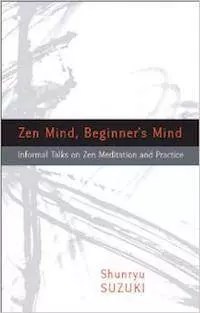
***[Zen Mind, Beginner’s Mind](http://www.amazon.com/gp/product/1590308492/ref=as_li_qf_sp_asin_il_tl?ie=UTF8&camp=1789&creative=9325&creativeASIN=1590308492&linkCode=as2&tag=deconstructing-20&linkId=TH5SIN3PDO72AYGQ)*, by Shunryu Suzuki**
A Zen classic from the San Francisco-based Japanese Roshi Shunryu Suzuki. This book affected me deeply when I first began meditating. I still remember reading the electrifying words, “Life is like stepping onto a boat which is about to sail out to sea and sink.”
Now more than 40 years of practice later, I still find it powerful and illuminating.
*(more Zen books coming)*
***
## Vajrayana Meditation Books

I’ve been digging deep into Vajrayana books lately, and am happy to add a few new ones in here. First is the excellent [Wake Up to Your Life](https://www.amazon.com/Wake-Your-Life-Discovering-Attention/dp/0062516817), **by Ken McLeod**. You may have heard my [interview with Ken on the Deconstructing Yourself podcast](https://deconstructingyourself.com/vajrayana-compassion-and-the-importance-of-the-teacher-with-ken-mcleod.html) recently. If you did, you realize the breadth and depth of Ken’s teaching and understanding of the Vajrayana. Unfortunately, he’s not teaching anymore, so books like this one (and the many free recordings on the [Unfettered Mind website](https://unfetteredmind.org/)) are even more precious and interesting.
What makes *Wake Up to Your Life* particularly interesting is that there is zero fluff. This is a headlong dive into the deep end of meditation with no holds barred. There are a ton of specific practices, clearly explained and with detailed commentary on exactly how to do them correctly. Starting from the very beginning, through some extremely interesting and usual variations, Ken’s brings the reader all the way to the highest-level dzogchen practices.
Along the way, you learn about elemental transformations—the ways that certain mind states or energies (metaphorically referred to as “elements” here)—predictably change over time, and the dakini visualization meditations that can help to catalyze and smooth out these transitions.
There are also a host of traditional mind training or “*lojong* slogans,” as well as *tonglen* and other compassion practices. Ken also includes a large section on working with difficult emotions, depotentiating reactive patterns, and overcoming psychological blind spots.
Finally, he digs into meditations on awareness itself, the nature of mind, nonduality, and more.
Ken learned all these practices from the universally acclaimed masters of Tibetan Buddhism (such as Kalu Rinpoche), and does a very good job of removing them from their original cultural matrix and transposing them into a more accessible modality. Highly recommended.
***

***[Roaring Silence](https://www.amazon.com/Roaring-Silence-Discovering-Mind-Dzogchen/dp/1570629447)*, by Ngakpa Chögyam and Khandro Déchen**
An approachable and very interesting introduction to dzogchen teachings.
In dzogchen we look at the nature of mind, directly perceiving the primordial freedom of the natural state.
This book contains several simple, powerful meditation exercises and practices, as well as quite bit of (to me, somewhat boring) question and answers. It presents the meditation methods known as the “four naljors” which include shamatha, vipassana, and several nondual practices.
Very interesting and useful.
*(Note to pedants: Yes, I know that dzogchen is considered by many to be distinct from tantra. Deal with it.)*
***

[**S*pectrum of Ecstasy: Embracing the Five Wisdom Emotions of Vajrayana Buddhism***](https://www.amazon.com/Spectrum-Ecstasy-Embracing-Emotions-Vajrayana/dp/1590300610) **by Ngakpa Chögyam**
One of the most important differences between early Buddhism (think Vipassana) and later Buddhism, in my opinion, is the differing treatment of emotions in the two traditions. Theravada casts “negative” emotions as something to be annihilated completely, going so far as to picture a fully enlightened person as having only positive, wholesome emotions.
In the later formulations of Buddhism, on the other hand, all emotions are considered to have potential qualities of awakening. By learning to work with difficult emotions skillfully, we can realize their uplifting and ultimately liberating qualities.
***
## Advaita/Nondual Meditation Books
[](http://www.amazon.com/gp/product/1591797799/ref=as_li_tl?ie=UTF8&camp=1789&creative=9325&creativeASIN=1591797799&linkCode=as2&tag=deconstructing-20&linkId=FFENILK2GO4YALMU)
***[The End of Your World](http://www.amazon.com/gp/product/1591797799/ref=as_li_tl?ie=UTF8&camp=1789&creative=9325&creativeASIN=1591797799&linkCode=as2&tag=deconstructing-20&linkId=FFENILK2GO4YALMU)*, by Adyashanti** —
I highly recommend this text for anyone with advanced experience in meditation. The audio version is also excellent. In this text Adyashanti deals with the deeper blockages to awakening which can arise, and also some of the difficulties that arise after awakening.
***

***[Shift into Freedom](https://www.amazon.com/Shift-into-Freedom-Open-Hearted-Awareness/dp/1622033507)*****, by Loch Kelly**
This is a unusual book, written in a idiosyncratic language. Loch Kelly takes the nondual teachings of Mahamudra and translates them into simple, often strange-sounding language.
The payoff is that the techniques allow even beginners access to some of the more esoteric states and understandings of nondual awareness. Totally worth checking out.

***[Effortless Mindfulness](https://www.amazon.com/Way-Effortless-Mindfulness-Revolutionary-Awakened/dp/1683642325)*, by Loch Kelly.**
(review to come)
***
[](https://deconstructingyourself.com/wp-content/uploads/2019/06/i-am-that-cover.jpg)
***I Am That*****, by Nisargadatta Maharaj**
– A full review coming on this. Certainly a spiritual classic for all the ages.
***
## Meditation Books on Special Topics

***[When Things Fall Apart](https://www.amazon.com/When-Things-Fall-Apart-Difficult/dp/1611803438),* by Pema Chödrön**
Simply put, if you are going through a difficult time, then this book will help you to get through it. I love that this is not some kind of rainbows-and-unicorns feel good text.
Instead, it fiercely looks reality in the face, as in this this typical quote: “Rather than letting our negativity get the better of us, we could acknowledge that right now we feel like a piece of shit and not be squeamish about taking a good look.”
While this can sound harsh or unhelpful, there is something truly comforting and even uplifting in her unstintingly no-nonsense outlook. The subtitle describes the work accurately: *Heart Advice for Difficult Times*. This book has been a bestseller in spiritual circles for over 20 years, which is testimony to its power and efficacy.
> To be fully alive, fully human, and completely awake is to be continually thrown out of the nest. To live fully is to be always in no-man’s-land, to experience each moment as completely new and fresh. To live is to be willing to die over and over again.
>
> ~ Pema Chödrön
***

***[Good Sex: Getting Off without Checking Out](https://www.amazon.com/Good-Sex-Getting-without-Checking/dp/1623172349),* by Jessica Graham**
Jessica Graham, a major contributor of articles to the *Deconstructing Yourself* website, is a fantastic writer. When she began writing articles about mindfulness as it relates to sexuality, people noticed. Her groundbreaking series on [Mindful Sex, originally published here](https://deconstructingyourself.com/mindful-sex), became the inspiration for a book on the topic, entitled *Good Sex*.
The book is unusual for several reasons. Firstly, Jessica is a powerful meditation teacher and practitioner, and she brings her own experience of working with mindfulness of sex directly into the material presented in the book. It is fresh, unexpectedly engaging, and different from anything you will read anywhere else on the topic.
Secondly, and most importantly, Jessica is characterlogicially incapable and unwilling to fit into the boring and tame model of the typical mindfulness of sex book. You know, the completely unsexy, uninteresting, straight/cis normative, and frankly sex-negative view of most consensus Buddhist practitioners in the West. Yeah, not in this book.
Instead you get, as the description promises: *Not only a tool kit for creating a rich and deeply satisfying sex life, this playful, explicit, and transformative book conveys the deeper message of how combining meditation with sex can bring about profound spiritual awakenings. Graham discusses everything from open-eyed orgasms to threesomes to how to deal with a partner with a low sex drive. From a sex-positive and nontraditional stance Good Sex explores nonmonogamy, the benefits of pornography, sexual trauma, consent, and much more.*
Highly recommended, and not for the faint of heart.
***
***Cutting through Spiritual Materialism*, by Chögyam Trungpa**
***The Making of Buddhist Modernism*, by David McMahon**
***Why I Am Not a Buddhist*, by Evan Thompson**
### *Related*
Tags:[dzogchen](https://deconstructingyourself.com/tag/dzogchen "dzogchen")[mahayana](https://deconstructingyourself.com/tag/mahayana "mahayana")[nonduality](https://deconstructingyourself.com/tag/nonduality "nonduality")[vajrayana](https://deconstructingyourself.com/tag/vajrayana "vajrayana")[vipassana](https://deconstructingyourself.com/tag/vipassana "vipassana")
## 45 thoughts on “Best Meditation Books”
1. 
[GARY G GACH](http://garygach.com/)
[June 26, 2019 at 8:46 am](https://deconstructingyourself.com/best-meditation-books.html#comment-426379)
[Reply](https://deconstructingyourself.com/best-meditation-books.html#comment-426379)
Your familiarity & command of the range is inspiring. I’ve read maybe 10th of the books you have, if that. I especially appreciate your sage annotations\!
If my suggested additions might enhance —
To update your selection by Thich Nhat Hanh, I’d recommend HAPPINESS, which compiles many of the practices he & his community has evolved in the 40 years since MIRACLE OF MINDFULNESS.
To update Suzuki Roshi’s classic, Norman Fischer & Sue Moon’s WHAT IS ZEN? is a sturdy introduction from a 2nd or 3rd generation of his lineage.
For Vajrayana, I’m fond of Kathleen MacDonald’s HOW TO MEDITATE – A Practical Guide. It came out relatively early in the emergence of Vajrayana in the West, and offers a wide range of practices within what’s, I believe, a traditional framework. Even today, the amplitude of concrete practices seems at a high level.
How about Audio Books?
( Here’s where I’ll insert my shameless self-promotion: PAUSE BREATHE SMILE – Awakening Mindfulness When Meditation Is Not Enough is available as of March, from Tantor Audio; the paper edition has been out 6 months ). When I began it, 5 years ago, the mindfulness space was starting to get crowded. So the aim was/is to present the complete traditional course of mindfulness practice for ordinary readers, making mindfulness 24/7; a way, rather than a technique. For newbies and adepts alike. Distilling what I’ve learned from Thich Nhat Hanh, & my own practice. )
I’m also a big fan of blank journals, artist sketchbooks, pocket note pads, etc.
2. 1. 
[MWT](https://deconstructingyourself.com/)
[June 26, 2019 at 10:30 am](https://deconstructingyourself.com/best-meditation-books.html#comment-426382)
[Reply](https://deconstructingyourself.com/best-meditation-books.html#comment-426382)
Thanks, Gary. I’ll check into some of those. Much appreciated.
3. 
Antonio
[June 26, 2019 at 9:59 am](https://deconstructingyourself.com/best-meditation-books.html#comment-426380)
[Reply](https://deconstructingyourself.com/best-meditation-books.html#comment-426380)
Hey, pedantry alert. I think you meant “opprobium”, not “approbation”, when describing MCTB as “Even while heaping approbation upon the author, the Buddhist world has sprinted to catch up in the dialog around the details of practice and attainment.” Approbation is positive.
4. 1. 
[MWT](https://deconstructingyourself.com/)
[June 26, 2019 at 10:28 am](https://deconstructingyourself.com/best-meditation-books.html#comment-426381)
[Reply](https://deconstructingyourself.com/best-meditation-books.html#comment-426381)
Thanks, Antonio. Fixed. Pedantry appreciated.
5. 
[Ferdi](http://gravatar.com/ferdiade)
[June 30, 2019 at 12:01 am](https://deconstructingyourself.com/best-meditation-books.html#comment-426386)
[Reply](https://deconstructingyourself.com/best-meditation-books.html#comment-426386)
Hey Michael,
that’s a great list, thanks for sharing! Also for the great meditations you put up, they feel like an adventure 
Are you aware of “Wake up to your Life”? I’m reading it right now and am amazed by its clarity and depth.
Ferdi
6. 1. 
[MWT](https://deconstructingyourself.com/)
[June 30, 2019 at 6:44 am](https://deconstructingyourself.com/best-meditation-books.html#comment-426387)
[Reply](https://deconstructingyourself.com/best-meditation-books.html#comment-426387)
Thanks, Ferdi! Yes, I have it.
7. 
[Ian](http://gravatar.com/iwelsh2016)
[June 30, 2019 at 11:44 pm](https://deconstructingyourself.com/best-meditation-books.html#comment-426388)
[Reply](https://deconstructingyourself.com/best-meditation-books.html#comment-426388)
Seeing that frees, which is on your list but with no commentary is one of the most extraordinary books on meditation I’ve read. Very detailed in a useful way. I’d put it in my top 4 along with “I am that”, “The Mind Illuminated” and “The Essence of Enlightenment.” (the last is a VERY Hindu book.)
8. 1. 
[MWT](https://deconstructingyourself.com/)
[July 1, 2019 at 7:19 am](https://deconstructingyourself.com/best-meditation-books.html#comment-426389)
[Reply](https://deconstructingyourself.com/best-meditation-books.html#comment-426389)
Yes, *Seeing that Frees* is excellent and will get commentary eventually. Thanks, Ian\!
9. 
Andy
[July 2, 2019 at 2:27 pm](https://deconstructingyourself.com/best-meditation-books.html#comment-426391)
[Reply](https://deconstructingyourself.com/best-meditation-books.html#comment-426391)
Michael, nice to see a couple of Ngakpa Chögyam’s books here, any plans to have him on the podcast?
10. 1. 
[MWT](https://deconstructingyourself.com/)
[July 2, 2019 at 2:31 pm](https://deconstructingyourself.com/best-meditation-books.html#comment-426392)
[Reply](https://deconstructingyourself.com/best-meditation-books.html#comment-426392)
Put me in touch with him. 
2. 1. 
Andy
[July 2, 2019 at 2:40 pm](https://deconstructingyourself.com/best-meditation-books.html#comment-426393)
[Reply](https://deconstructingyourself.com/best-meditation-books.html#comment-426393)
Try [queries@arobuddhism.org](mailto:queries@arobuddhism.org). There’s a great video interview with him here: <https://www.youtube.com/watch?v=V0XvhnsXWxw> (BTW I don’t have any affiliation to this youtube channel or to Ngakpa Chögyam)
2. 1. 
[MWT](https://deconstructingyourself.com/)
[July 2, 2019 at 2:44 pm](https://deconstructingyourself.com/best-meditation-books.html#comment-426394)
[Reply](https://deconstructingyourself.com/best-meditation-books.html#comment-426394)
Thank you\!
11. 
[Glenn Goossens](http://gravatar.com/glenngoossens)
[July 3, 2019 at 2:30 am](https://deconstructingyourself.com/best-meditation-books.html#comment-426395)
[Reply](https://deconstructingyourself.com/best-meditation-books.html#comment-426395)
Are you familiar with Reggie Ray’s book Touching Enlightenment? I’d be curious to hear your thoughts on that one
12. 1. 
[MWT](https://deconstructingyourself.com/)
[July 3, 2019 at 5:53 am](https://deconstructingyourself.com/best-meditation-books.html#comment-426396)
[Reply](https://deconstructingyourself.com/best-meditation-books.html#comment-426396)
The thing that I really, deeply appreciate from Reggie Ray is the *Mahamudra for the Modern World* audio learning series. Unfortunately, it’s not a book, so doesn’t go on this list.
2. 1. 
[Glenn Goossens](http://gravatar.com/glenngoossens)
[July 3, 2019 at 6:14 am](https://deconstructingyourself.com/best-meditation-books.html#comment-426397)
[Reply](https://deconstructingyourself.com/best-meditation-books.html#comment-426397)
It’ll probably still take quite a bit of practice before I’ll tackle that one 
2. 1. 
[MWT](https://deconstructingyourself.com/)
[July 3, 2019 at 6:17 am](https://deconstructingyourself.com/best-meditation-books.html#comment-426398)
[Reply](https://deconstructingyourself.com/best-meditation-books.html#comment-426398)
It’s very worth it.
13. 
Elan Frenkel
[July 8, 2019 at 2:44 pm](https://deconstructingyourself.com/best-meditation-books.html#comment-426405)
[Reply](https://deconstructingyourself.com/best-meditation-books.html#comment-426405)
Allan B Wallace’s The Attention Revolution is one of the best books I have read on concentration (and completely ignores the whole jhana mess) : <https://www.amazon.com/gp/product/B003WJR60I/ref=dbs_a_def_rwt_hsch_vapi_tkin_p1_i2>
Its from the Tibetan side of things. Its pure Samatha practice ( If I recall correctly it has a 10 stage model) . He gives a choice of working with the breath , “mind” , or awareness itself as the object of concentration. There is emphasis about the importance balance between relaxation and alertness– the metaphor the book uses is its like tuning an instrument . There is a lengthy but interesting diatribe on the etymology of the word mindfulness. All in all it had a bunch of practical instruction and is a very inspiring read. It pairs nicely with the Mind Illuminated .
14. 
Lana
[September 11, 2019 at 5:43 pm](https://deconstructingyourself.com/best-meditation-books.html#comment-426461)
[Reply](https://deconstructingyourself.com/best-meditation-books.html#comment-426461)
What do you think of “waking up” by Sam Harris?
15. 1. 
[Michael W. Taft](https://deconstructingyourself.com/)
[September 12, 2019 at 1:58 pm](https://deconstructingyourself.com/best-meditation-books.html#comment-426462)
[Reply](https://deconstructingyourself.com/best-meditation-books.html#comment-426462)
Interesting in many ways, off base in others, IMO.
2. 1. 
Lana
[October 20, 2019 at 6:46 am](https://deconstructingyourself.com/best-meditation-books.html#comment-426502)
[Reply](https://deconstructingyourself.com/best-meditation-books.html#comment-426502)
That’s really interesting! If you don’t mind me asking which parts in particular do you tend to disagree with? I have read your book The Mindful Geek (which was one of the best books I’ve read on meditation!) and I am reading Waking Up now since he also seemed to take a secular, or rather, personal experience based approach to spirituality (although I suppose it’s not a comparison as meditation is only one of the things he talks about). I think his ideas and thoughts are interesting in itself as his own “opinions” but I also have some reservations about his views as well.
2. 1. 
[Michael W. Taft](https://deconstructingyourself.com/)
[October 20, 2019 at 8:55 am](https://deconstructingyourself.com/best-meditation-books.html#comment-426503)
[Reply](https://deconstructingyourself.com/best-meditation-books.html#comment-426503)
If you read carefully, he is saying that consciousness is not physically produced, but is something special outside of the material world. I expected him to take a more scientific view of the matter. I am open to that view—I mean, no one can explain consciousness—but I wouldn’t put it forward as truth.
16. 
David
[September 24, 2019 at 1:07 pm](https://deconstructingyourself.com/best-meditation-books.html#comment-426471)
[Reply](https://deconstructingyourself.com/best-meditation-books.html#comment-426471)
Breakthrough Pain approach doesn’t have any updates since it was published?New refinements,new techniques etc?
17. 1. 
[Michael W. Taft](https://deconstructingyourself.com/)
[September 24, 2019 at 4:01 pm](https://deconstructingyourself.com/best-meditation-books.html#comment-426472)
[Reply](https://deconstructingyourself.com/best-meditation-books.html#comment-426472)
There are plenty of refinements, etc., but they’re not published anywhere that I know of.
2. 1. 
David
[September 25, 2019 at 9:16 am](https://deconstructingyourself.com/best-meditation-books.html#comment-426473)
[Reply](https://deconstructingyourself.com/best-meditation-books.html#comment-426473)
And how can i learn everything about only that exact topic that Sinzen has developed?
2. 1. 
[Michael W. Taft](https://deconstructingyourself.com/)
[September 25, 2019 at 10:15 am](https://deconstructingyourself.com/best-meditation-books.html#comment-426474)
[Reply](https://deconstructingyourself.com/best-meditation-books.html#comment-426474)
Which exact topic?
2. 1. 
David
[September 26, 2019 at 2:07 pm](https://deconstructingyourself.com/best-meditation-books.html#comment-426479)
Trauma release and releasing physical pain.
2. 
[Michael W. Taft](https://deconstructingyourself.com/)
[September 26, 2019 at 10:31 pm](https://deconstructingyourself.com/best-meditation-books.html#comment-426481)
Going to a Shinzen retreat is probably the only way to get an update on that material.
18. 
David
[September 29, 2019 at 3:28 am](https://deconstructingyourself.com/best-meditation-books.html#comment-426485)
[Reply](https://deconstructingyourself.com/best-meditation-books.html#comment-426485)
I do plan on learning Shinzen’s Unified Mindfulness systems soon as i have gathered more funds.Regarding subtle body training.Is Unified Mindfulness system truly enough for that? Who is the “Shinzen Young” of energy work training?
19. 
Enda
[March 12, 2020 at 9:02 am](https://deconstructingyourself.com/best-meditation-books.html#comment-426609)
[Reply](https://deconstructingyourself.com/best-meditation-books.html#comment-426609)
I started on this list about a year ago and have read or attempted to read most of the books on here and I have to agree that Seeing That Frees is the standout of the bunch. I found TMI to be probably more accessible in the beginning but in the end the maps became a hindrance as I became preoccupied with figuring out which stage I was in. Thanks so much Michael for introducing so much wonderful work through the podcast and the blog. BTW – The Mindful Geek was a great read too.
20. 1. 
[Michael W. Taft](https://deconstructingyourself.com/)
[March 12, 2020 at 5:57 pm](https://deconstructingyourself.com/best-meditation-books.html#comment-426610)
[Reply](https://deconstructingyourself.com/best-meditation-books.html#comment-426610)
Thank you, Enda\!
21. 
Benjamin Saubolle-Camacho
[February 26, 2021 at 3:57 pm](https://deconstructingyourself.com/best-meditation-books.html#comment-426774)
[Reply](https://deconstructingyourself.com/best-meditation-books.html#comment-426774)
I just picked up a copy of “Seeing That Frees” after listening to your podcast w/Rob and stumbling on this list–so thank you! A quick comment on “The Making of Buddhist Modernism”: It was a weird, (very necessary) bubble-bursting experience for me. His outline of Buddhism’s movement in the West over the past 150 years is brilliant. Taking that academic look at my practice really forced me to acknowledge all of the cultural and historical influences that I was ignoring.
22. 
EmptinessIsForm
[October 16, 2021 at 9:40 am](https://deconstructingyourself.com/best-meditation-books.html#comment-426858)
[Reply](https://deconstructingyourself.com/best-meditation-books.html#comment-426858)
That book also has a bit of scholarship I’ve found really helpful, which is that the term for open moment by moment concentration in early Buddhism is vijnana kasina, in other words using awareness (vijnana) as a meditation object (kasina).
This cuts through a lot of the sectarian posturing that gets in the way of seeing how much continuity there is between techniques across a lot of different transmissions.
23. 
David
[January 20, 2022 at 11:26 pm](https://deconstructingyourself.com/best-meditation-books.html#comment-426885)
[Reply](https://deconstructingyourself.com/best-meditation-books.html#comment-426885)
The Seeing that Frees is indeed an excellent meditation manual with a profound and unusual aoproach to emptiness. Thank you for the great podcast interview with Rob Burbea (whom I got to know a little on my various retreats at Gaia House.)
I do wonder though, Michael Taft, how you integrate some of his teachings given your broad “perennial” view of non duality which resonates with mine but which doesn’t necessarilly fit with Rob’s teachings. You seem to view emptiness as the “via negativa” pointer to the same experience as the advaita “you are that” realisation. However for Rob (if i’ve understood him correctly) emptiness is the emptiness of any experience independent of a way of looking – it is the realisation of the interdependent nature and codependent arising of any experience, of the way in which experience is fabricated by ways of looking, including those concepts like time, space, and consciousnesss. Emptiness is not in this sense “the space or the ground in which all arises”. Moreover Rob goes on to deconstruct the views that everything is space or consciousness (or”you are consciousness”) as these are dependently arising and impermanent. He also argues that there is no such thing as “bare attention” or “just being” because there is always a way of looking and some fabrication involved… For me, despite my deep appreciation for Rob’s teachings, these notions have been somewhat confusing as the notions of bare attention and just being have been immensely helpful in my practice, and my deep meditative experience has led me to think of awareness as the empty unchanging permanent ground of all things, not as something that is impermanent and dependently arising as Rob seems to point out. I would be very curious of your views on the subject and how you integrate some of Rob’s teachings in your wider non dual approach….
24. 1. 
[Michael W. Taft](https://deconstructingyourself.com/)
[January 21, 2022 at 8:21 am](https://deconstructingyourself.com/best-meditation-books.html#comment-426886)
[Reply](https://deconstructingyourself.com/best-meditation-books.html#comment-426886)
I can like a lot about Rob’s book, without necessarily agreeing with everything that he writes. You have zeroed in on one difference, and maybe philosophically it’s a big deal (whether awareness is empty or not is one of the defining ideas of different sects), but I wonder how much difference that makes in one’s actual experience. After all, it’s just an idea about awareness… and maybe one has different experiences of it at different times. I recommend not landing on a fixed position about it.
25. 
David
[January 27, 2022 at 10:33 am](https://deconstructingyourself.com/best-meditation-books.html#comment-426889)
[Reply](https://deconstructingyourself.com/best-meditation-books.html#comment-426889)
Thanks for your reply Michael. Indeed it’s wise not to hold onto a position about it. And actually if one were to apply much of what Rob writes about, the important aspect is to play around with different ways of seeing and how they liberate and deconstruct one’s experience. So one can experiment equally with the idea of awareness as unchanging or with the idea of awareness as impermanent and dependently arising. In my own practice I find the former way of looking more freeing and powerful….
26. 
Erich Singhal
[February 21, 2022 at 10:02 am](https://deconstructingyourself.com/best-meditation-books.html#comment-426897)
[Reply](https://deconstructingyourself.com/best-meditation-books.html#comment-426897)
Antonio, pedantry alert part II. I think you meant “opprobrium” not “opprobium”. 
27. 1. 
[Michael W. Taft](https://deconstructingyourself.com/)
[February 22, 2022 at 8:47 am](https://deconstructingyourself.com/best-meditation-books.html#comment-426898)
[Reply](https://deconstructingyourself.com/best-meditation-books.html#comment-426898)
I see it spelled correctly on the page. Hmmm…
28. 
Lawrence Borok
[March 16, 2022 at 4:34 pm](https://deconstructingyourself.com/best-meditation-books.html#comment-426904)
[Reply](https://deconstructingyourself.com/best-meditation-books.html#comment-426904)
Given your focus on meditation, I thought you’d be interested in a new book I wrote about Rama-Dr. Frederick Lenz (1950-1998), entitled “Rama Speaks.” He was a Tantric Buddhist teacher who emphasized that meditation was the pathway to enlightenment. I was a student of his for many years, and wrote the book to consolidate the material in 120 audio tapes he recorded for his students into a single book. There are six different meditation techniques in the book, with in-depth explanations and detailed instruction. Meditation is the main theme running through the entire book, which organizes material from the recorded talks that clarify and interrelate many spiritual topics topics, and includes many extended excerpts. It can be found on Amazon at: <https://www.amazon.com/Rama-Speaks-Teachings-Rama-Dr-Frederick/dp/B09LGSH4YC>
Thank you.
29. 
Clay
[June 2, 2023 at 6:55 am](https://deconstructingyourself.com/best-meditation-books.html#comment-426979)
[Reply](https://deconstructingyourself.com/best-meditation-books.html#comment-426979)
I’m just curious why some titles are crossed out? What is that implying? Thanks
30. 1. 
[Michael W. Taft](https://deconstructingyourself.com/)
[June 2, 2023 at 1:12 pm](https://deconstructingyourself.com/best-meditation-books.html#comment-426980)
[Reply](https://deconstructingyourself.com/best-meditation-books.html#comment-426980)
There are no crossed-out titles. This is a problem with your display.
31. 
Rick
[June 19, 2023 at 5:25 am](https://deconstructingyourself.com/best-meditation-books.html#comment-426982)
[Reply](https://deconstructingyourself.com/best-meditation-books.html#comment-426982)
Actually, there are some titles displaying as crossed out. I’m experiencing this too. Lovingkindness, Spectrum, When Things Fall Apart, namely. There is no problem with my display; it looks like a WordPress formatting error.
32. 
Sandy
[October 23, 2023 at 8:04 pm](https://deconstructingyourself.com/best-meditation-books.html#comment-427042)
[Reply](https://deconstructingyourself.com/best-meditation-books.html#comment-427042)
Ditto the crossed out lines and a number is other snafus navigating the website using mobile chrome.
33. 1. 
[Michael W. Taft](https://deconstructingyourself.com/)
[October 24, 2023 at 9:10 am](https://deconstructingyourself.com/best-meditation-books.html#comment-427043)
[Reply](https://deconstructingyourself.com/best-meditation-books.html#comment-427043)
OK. Thank you.
34. 
Rosalind
[June 24, 2025 at 2:39 pm](https://deconstructingyourself.com/best-meditation-books.html#comment-427350)
[Reply](https://deconstructingyourself.com/best-meditation-books.html#comment-427350)
I recently bought “Seeing That Frees”, based on Michael’s review here. It has been a kind of spiritual lifesaver for me, so I want to thank Michael and also write a few words in case what I write can be of use to anyone else.
For the last few years I’ve been unable to shake some deep-seated fears that Buddhism is nihilistic; that recognising emptiness may leave me disconnected from reality; or feeling that life is meaningless or bland etc., etc. I’ve tried really hard to change those beliefs, believing in the Dharma as I do, but have been unable to.
Rob dedicates Part One of the book to thoroughly addressing these types of concerns, showing great empathy and spending time correcting misunderstandings. For the first time in a long time I feel utterly optimistic and reassured about the path. I also love the way Rob urges you to go on the journey gently, and to have fun!\!
I know not everyone gets these types of fears about Buddhism/non-duality, but I know they are common enough that I wanted to say that if you ever feel like this, please try Rob’s book.
This book is like a BIG WARM HUG 
35. 
Josh Clement
[November 26, 2025 at 6:55 pm](https://deconstructingyourself.com/best-meditation-books.html#comment-427372)
[Reply](https://deconstructingyourself.com/best-meditation-books.html#comment-427372)
Is there a review coming for “I AM THAT?”
### Let us know what you think[Cancel reply](https://deconstructingyourself.com/best-meditation-books.html#respond)
Copyright © 2011-2026 \| Michael W. Taft
Copyright © 2011-2026 \| Michael W. Taft |
| Readable Markdown | by Michael W. Taft
There are zillions of books on meditation, but there are very few I would recommend, especially for somebody just starting out. Below you’ll find just the books I feel are the most helpful and clear; the best meditation books in 2020. Some of the books here have reviews, and some of them are simply in recommendation lists. If there is a particular book on this page you’d like reviewed, please let me know.
## Mindfulness Meditation Books
### *Seeing That Frees*
[](https://deconstructingyourself.com/wp-content/uploads/2020/03/seeing-that-frees.jpg)
I have been reading *[Seeing That Frees](https://www.amazon.com/Seeing-That-Frees-Robert-Burbea/dp/0992848911)* for several years now, after talking with Rob Burbea on the Deconstructing Yourself podcast. It’s taken me that long to feel like I’ve engaged the text deeply enough to both be able to summarize it, and to be able to assess its value. It was clear from the start that it is an extraordinary book, but I now place it at the coveted number one place on this page. It is the best meditation instruction book, by far, available in 2020. (It was published in 2014.)
This is the sort of book that has single chapters that you will read and re-read many times over. You will underline passages, make notes in the margins, and later go back and make other notes in different colors. You will need a separate notebook for your experiments with the techniques. It will engage you in a deep practice dialog that you will find rewarding and even liberating.
The somewhat idiosyncratic title refers to the core idea of the book, which refutes the usual “seeing things as they really are” teaching concept so prevalent in vipassana these days. The job of the meditator, according to Burbea, is to learn new ways of looking at things. New ways (plural) of looking that bring relief from suffering. To learn, as it were, ways of seeing that free.
Although the book makes an attempt to begin at the beginning, I suspect that all but the very first few chapters will be incomprehensible to anybody who hasn’t at least had some glimpses of the sorts of deeper meditation experiences that Burbea is describing in the book. While doing his very best to describe such experiences clearly and simply, certain revelations of emptiness are just too subtle, weird, unfathomable, or even too mundane sounding to relate to. If, on the other hand, you have begun to sink into the slightly deeper practice of vipassana, and can relate to some of the experiences Burbea discusses, *Seeing That Frees* becomes an invaluable and perhaps singular guidebook to the territory you are exploring.
You will learn many ways of seeing; ways of meditating; ways of thinking. The theory and praxis of each method is clearly elucidated. Burbea spends a lot of time exploring the finer issues and questions that may arise in the practice he describes. It’s clear that the material in the book has been honed through years of working with students and responding to their difficulties.
Overarchingly, Burbea uses the experience of emptiness to tie the book together. From early contact with impermanence, nonself, and dukkha, to more obvious expressions of emptiness, and to the very deepest sorts of meditative experiences, emptiness is the key to the unfolding of the path. He even re-imagines the practice of the jhanas as a progression of ever-greater emptiness, leading to cessation.
As helpful and interesting as this all is—and it is both of those things, in spades—it’s possible that the most unusual characteristic of the book is Burbea’s perspective. As a jazz musician, poet, and artist who has taught at Gaia House in England for years, Burbea writes of meditation as a playful exploration, an activity of increasing subtlety and gentleness, a joyous expression of ever-deepening freedom that is quite different in tone from the mechanical, instrumental, and concentration-obsessed books of so many other teachers.
Highest possible recommendation—with the caveat that it’s not for beginners.
**Here is an interview I did with Rob Burbea:** [Emptiness, Liberation, and Beauty](https://deconstructingyourself.com/dy-025-emptiness-liberation-and-beauty-with-guest-rob-burbea.html)
***
### *The Mind Illuminated*

A past winner for best book for learning to meditate is ***[The Mind Illuminated](https://www.amazon.com/Mind-Illuminated-Meditation-Integrating-Mindfulness/dp/1501156985)*, by Culadasa** (John Yates). This massive tome takes you one step at a time through a system of 10 stages—completely dedicated to deepening your level of concentration. Technically, this isn’t a book about vipassana, but rather almost completely only about shamatha. The main method used in the book is focusing on the breath at the nose.
*Note: the author of this book was recently involved in a major scandal involving sexual misconduct, which he didn’t deny. Nevertheless, the book offers excellent meditation advice.* *Do not read the endorsement of the book as tacit endorsement of the author’s misbehavior.*
This book also offers an entire brain-based theory of meditation—catnip for the neuroscience junkies among us (although it’s also problematic as theory) —as well as expert advice on deeper levels of meditation, many additional meditation techniques, and a method of analytical meditation.
Furthermore, Culadasa has a whole appendix section that makes sense of the “jhana wars” (my term, not his) by adding a dimension of depth to the usual dimension of the jhana numbers. This is a huge step forward, and something I haven’t seen unpacked in depth in any other text.
An added bonus is that there is a huge and thriving practice community based on the book, as well as programs with Culadasa, teacher trainings, and much more. [*The Mind Illuminated* subreddit](http://reddit.com/r/themindilluminated) is a great place to start.
**Here are some interviews I did with Culadasa:**
[Awareness, Attention, and the Great Adventure](https://deconstructingyourself.com/dy-010-attention-awareness-and-the-great-adventure-with-guest-culadasa.html)
[Are More People Achieving Stream Entry These Days?](https://deconstructingyourself.com/dy-022-stream-entry-with-guest-culadasa.html)
[Meditation and Therapy](https://deconstructingyourself.com/culadasa-on-meditation-and-therapy.html)
***
### *Mindfulness in Plain English*
[](http://www.amazon.com/gp/product/0861719069/ref=as_li_qf_sp_asin_il_tl?ie=UTF8&camp=1789&creative=9325&creativeASIN=0861719069&linkCode=as2&tag=deconstructing-20&linkId=6DOEWKT3GZRXY3NZ)
**[*Mindfulness in Plain English*](http://www.amazon.com/gp/product/0861719069/ref=as_li_qf_sp_asin_il_tl?ie=UTF8&camp=1789&creative=9325&creativeASIN=0861719069&linkCode=as2&tag=deconstructing-20&linkId=6DOEWKT3GZRXY3NZ), by Bhante Gunaratana**
This book is an utter classic on the basics of mindfulness meditation. “Bhante,” as he is affectionately known (which is just a polite term of address for a monk, something like “venerable sir”), has been a Theravada monk almost his entire life. Born in Sri Lanka, he has been teaching Vipassana in the United States since the late 1960s.
The text covers the why of mindfulness meditation, delves into the how of doing the sitting practice, and also has several sections on what to do when problems inevitably crop up.
Best of all there’s a [free (early) version of the book you can read online here](http://www.vipassana.com/meditation/mindfulness_in_plain_english.php).
***
**[*The Science of Enlightenment*](http://a.co/d/dbDpxvL) and *[Break Through Pain](https://www.amazon.com/gp/product/1591791995)*, by Shinzen Young**
*(Just for the record, I was involved with the creation of both of these books, so I’m far from unbiased.)*

Shinzen Young has been my main meditation teacher for over 20 years now. I first began working with him when I was editing an audio program called *The Science of Enlightenment* in the mid 1990s. I was stunned by his erudition, his knowledge of world religions (not just Buddhism), his mastery of many of the original languages of Buddhism, and his ability to clarify otherwise very difficult points in the dharma.
Somewhere in the 2000s, I was asked to create a book version of the program, which we all thought might take a few months.
Twelve years, and a lot of laughter and tears later, it was released.
*The Science of Enlightenment* is not an unusual book because it was created based on Shinzen’s dharma talks and lectures—that is very common for meditation teachers, who basically give talks for a living. It is unusual because it starts out with the basics of meditation and with each progressive chapter, takes you deeper and deeper into the profundity of spiritual insight. Along the way, you learn many ways to practice, including working with impermanence, no-self, and nonduality.
This is not a practice manual, but more of a transmission of the spirit of meditation. (If you want to dig deeply into the meditation system invented by Shinzen Young, here is an enormous, comprehensive, and highly technical—and totally free of charge—PDF file, entitled [The Five Ways to Know Yourself](http://www.shinzen.org/wp-content/uploads/2016/08/FiveWaystoKnowYourself_ver1.6.pdf). This is an epic practice manual that is quite complete.
Notice that in Shinzen’s way of working (which is heavily influenced by Zen and Vajrayana), there is no sense of levels, or stages, or getting anywhere. Awakening is always and everywhere.
[](https://www.amazon.com/gp/product/1591791995)
*Breakthrough Pain*, also by Shinzen, is an unusual text. It concentrates on how to use mindfulness meditation to cope with intractable physical pain.
Shinzen uses examples from Japanese meditation tradition, the “marathon monks of Mt. Hiei,” as well as his personal experience in Native American sundances, to demonstrate methods of working with pain.
These techniques are not easy, nor are they for beginners. However, if you have a serious pain problem, and cannot find relief in any standard medical method, then this book is worth experimenting with. The methods work for many, but not all people, to a greater or lesser degree. But if they help you to find relief, the input of time will be more than worth it. Comes with audio guided meditations by Shinzen.
***
[](https://deconstructingyourself.com/wp-content/uploads/2019/06/mctb.jpg)
***Mastering the Core Teachings of the Buddha*****, by Daniel Ingram**
Surely one of the most unusual meditation books ever published, this book, (called simply “MCTB” by its adherents) started a revolution in western Buddhist practice. Less a meditation manual than a feverish practice diary, MCTB tore the lid off the “mushroom factory” model of meditation—i.e. feed them shit and keep them in the dark—that had been in vogue for decades, and inaugurated a new era of unusual openness, clarity, and sharing in the dharmic world, as well as unleashing a firestorm of criticism upon the author.
Upon release this book seemed to break every rule of the typical Buddhist center in the West, and to have something to piss off absolutely everyone. Meditators are supposed to let go of all striving? Well, let’s aim directly for stream entry, presented as a clear goal. Meditators are supposed to patiently sit for decades with no discernable improvement or even change in their practice? Fuck that, any reasonably motivated person can hit first path within a few years of dedicated effort. Most details about how to judge the level of someone’s attainment must be kept absolutely secret? Nah, we’re just going to publish them right here in excruciating detail, and use them to rank each other’s practice. No one should ever discuss their spiritual attainments? The author calls himself an arahant (arhat) on the cover of the book.
While it undoubtedly seems less revolutionary today, that is only because the reaction to the book has been so great in so short a time. Even while heaping opprobrium upon the author, the Buddhist world has sprinted to catch up in the dialog around the details of practice and attainment put forth in the text.
Some of the highlights include a lot of material on jhana practice, practical use of the Progress of Insight model, deconstructing unhelpful models of awakening, and a lot of very good material on the Dark Night (more properly referred to as the d*ukkha ñanas*).
That said, as a very personal book, MCTB doesn’t always give the best advice and sometimes is overly pedantic or too black-and-white in its presentation. You may also be put off by the massive amount of the book dedicated to gaining *siddhis* or magickal powers. Nevertheless, it’s an important book to read and understand, so just get it ([free here](http://www.mctb.org/)) and read it.
***

And I have to add in my own book:
***[The Mindful Geek](http://amzn.to/2mBHTmG)*, by Michael W. Taft**
This is not the best mindfulness meditation manual for beginners in the world. It is, however, the best mindfulness meditation manual for beginners who are geeks allergic to Woo, folklore, and mysticism in the world.
If you love science fiction, are comfortable with code, like flow charts, and appreciate research paper citations, this book is definitely for you. It will get you started with your sitting practice in a fun, smart, and pain-free manner. You can always get a free e-copy of the book (in several formats) by [signing up here.](https://deconstructingyourself.com/list)
***
#### More Mindfulness Books to Check out:
- ***[Lovingkindness](https://www.amazon.com/Lovingkindness-Revolutionary-Happiness-Shambhala-Library/dp/1611806240)*****, by Sharon Salzberg**
- ***[Mindfulness: A Practical Guide to Awakening](https://www.amazon.com/Mindfulness-Practical-Awakening-Joseph-Goldstein/dp/1622036050)*****, by Joseph Goldstein**
- ***[The Miracle of Mindfulness](https://www.amazon.com/Miracle-Mindfulness-Introduction-Practice-Meditation/dp/0807012394)*****, by Thich Nhat Hanh**
- ***[Mindfulness for Beginners](https://www.amazon.com/Mindfulness-Beginners-Reclaiming-Present-Moment/dp/1622036670)*****, by Jon Kabat-Zinn**
***
## Books on Jhana Practice
Understanding how to practice jhanas is its own gigantic and controversial topic. Here are a few excellent books which, of course, disagree about the method, depth, and definition of jhanas, but which together will give you a very good idea of the spectrum of possibilities. Leigh Brasington’s book is the most accessible and also the easiest to practice—I highly recommend it.
As I mentioned above, *The Mind Illuminated* also contains very good instructions on the jhanas, and is the only text which attempts to unify the methods described in the following books:
[*Right Concentration*](https://www.amazon.com/Right-Concentration-Practical-Guide-Jhanas/dp/1611802695), by Leigh Brasington
*[Beyond Mindfulness in Plain English](https://www.amazon.com/Beyond-Mindfulness-Plain-English-Introductory/dp/0861715292)*, by Bhante Gunaratana
*[Focused and Fearless](https://www.amazon.com/Focused-Fearless-Meditators-States-Clarity/dp/0861715608)*, by Shaila Catherine
*[Mindfulness, Bliss, and Beyond](https://www.amazon.com/Mindfulness-Bliss-Beyond-Meditators-Handbook/dp/0861712757)*, by Ajahn Brahm
***

***[Zen Mind, Beginner’s Mind](http://www.amazon.com/gp/product/1590308492/ref=as_li_qf_sp_asin_il_tl?ie=UTF8&camp=1789&creative=9325&creativeASIN=1590308492&linkCode=as2&tag=deconstructing-20&linkId=TH5SIN3PDO72AYGQ)*, by Shunryu Suzuki**
A Zen classic from the San Francisco-based Japanese Roshi Shunryu Suzuki. This book affected me deeply when I first began meditating. I still remember reading the electrifying words, “Life is like stepping onto a boat which is about to sail out to sea and sink.”
Now more than 40 years of practice later, I still find it powerful and illuminating.
*(more Zen books coming)*
***
## Vajrayana Meditation Books

I’ve been digging deep into Vajrayana books lately, and am happy to add a few new ones in here. First is the excellent [Wake Up to Your Life](https://www.amazon.com/Wake-Your-Life-Discovering-Attention/dp/0062516817), **by Ken McLeod**. You may have heard my [interview with Ken on the Deconstructing Yourself podcast](https://deconstructingyourself.com/vajrayana-compassion-and-the-importance-of-the-teacher-with-ken-mcleod.html) recently. If you did, you realize the breadth and depth of Ken’s teaching and understanding of the Vajrayana. Unfortunately, he’s not teaching anymore, so books like this one (and the many free recordings on the [Unfettered Mind website](https://unfetteredmind.org/)) are even more precious and interesting.
What makes *Wake Up to Your Life* particularly interesting is that there is zero fluff. This is a headlong dive into the deep end of meditation with no holds barred. There are a ton of specific practices, clearly explained and with detailed commentary on exactly how to do them correctly. Starting from the very beginning, through some extremely interesting and usual variations, Ken’s brings the reader all the way to the highest-level dzogchen practices.
Along the way, you learn about elemental transformations—the ways that certain mind states or energies (metaphorically referred to as “elements” here)—predictably change over time, and the dakini visualization meditations that can help to catalyze and smooth out these transitions.
There are also a host of traditional mind training or “*lojong* slogans,” as well as *tonglen* and other compassion practices. Ken also includes a large section on working with difficult emotions, depotentiating reactive patterns, and overcoming psychological blind spots.
Finally, he digs into meditations on awareness itself, the nature of mind, nonduality, and more.
Ken learned all these practices from the universally acclaimed masters of Tibetan Buddhism (such as Kalu Rinpoche), and does a very good job of removing them from their original cultural matrix and transposing them into a more accessible modality. Highly recommended.
***

***[Roaring Silence](https://www.amazon.com/Roaring-Silence-Discovering-Mind-Dzogchen/dp/1570629447)*, by Ngakpa Chögyam and Khandro Déchen**
An approachable and very interesting introduction to dzogchen teachings.
In dzogchen we look at the nature of mind, directly perceiving the primordial freedom of the natural state.
This book contains several simple, powerful meditation exercises and practices, as well as quite bit of (to me, somewhat boring) question and answers. It presents the meditation methods known as the “four naljors” which include shamatha, vipassana, and several nondual practices.
Very interesting and useful.
*(Note to pedants: Yes, I know that dzogchen is considered by many to be distinct from tantra. Deal with it.)*
***

[**S*pectrum of Ecstasy: Embracing the Five Wisdom Emotions of Vajrayana Buddhism***](https://www.amazon.com/Spectrum-Ecstasy-Embracing-Emotions-Vajrayana/dp/1590300610) **by Ngakpa Chögyam**
One of the most important differences between early Buddhism (think Vipassana) and later Buddhism, in my opinion, is the differing treatment of emotions in the two traditions. Theravada casts “negative” emotions as something to be annihilated completely, going so far as to picture a fully enlightened person as having only positive, wholesome emotions.
In the later formulations of Buddhism, on the other hand, all emotions are considered to have potential qualities of awakening. By learning to work with difficult emotions skillfully, we can realize their uplifting and ultimately liberating qualities.
***
## Advaita/Nondual Meditation Books
[](http://www.amazon.com/gp/product/1591797799/ref=as_li_tl?ie=UTF8&camp=1789&creative=9325&creativeASIN=1591797799&linkCode=as2&tag=deconstructing-20&linkId=FFENILK2GO4YALMU)
***[The End of Your World](http://www.amazon.com/gp/product/1591797799/ref=as_li_tl?ie=UTF8&camp=1789&creative=9325&creativeASIN=1591797799&linkCode=as2&tag=deconstructing-20&linkId=FFENILK2GO4YALMU)*, by Adyashanti** —
I highly recommend this text for anyone with advanced experience in meditation. The audio version is also excellent. In this text Adyashanti deals with the deeper blockages to awakening which can arise, and also some of the difficulties that arise after awakening.
***

***[Shift into Freedom](https://www.amazon.com/Shift-into-Freedom-Open-Hearted-Awareness/dp/1622033507)*****, by Loch Kelly**
This is a unusual book, written in a idiosyncratic language. Loch Kelly takes the nondual teachings of Mahamudra and translates them into simple, often strange-sounding language.
The payoff is that the techniques allow even beginners access to some of the more esoteric states and understandings of nondual awareness. Totally worth checking out.

***[Effortless Mindfulness](https://www.amazon.com/Way-Effortless-Mindfulness-Revolutionary-Awakened/dp/1683642325)*, by Loch Kelly.**
(review to come)
***
[](https://deconstructingyourself.com/wp-content/uploads/2019/06/i-am-that-cover.jpg)
***I Am That*****, by Nisargadatta Maharaj**
– A full review coming on this. Certainly a spiritual classic for all the ages.
***
## Meditation Books on Special Topics

***[When Things Fall Apart](https://www.amazon.com/When-Things-Fall-Apart-Difficult/dp/1611803438),* by Pema Chödrön**
Simply put, if you are going through a difficult time, then this book will help you to get through it. I love that this is not some kind of rainbows-and-unicorns feel good text.
Instead, it fiercely looks reality in the face, as in this this typical quote: “Rather than letting our negativity get the better of us, we could acknowledge that right now we feel like a piece of shit and not be squeamish about taking a good look.”
While this can sound harsh or unhelpful, there is something truly comforting and even uplifting in her unstintingly no-nonsense outlook. The subtitle describes the work accurately: *Heart Advice for Difficult Times*. This book has been a bestseller in spiritual circles for over 20 years, which is testimony to its power and efficacy.
> To be fully alive, fully human, and completely awake is to be continually thrown out of the nest. To live fully is to be always in no-man’s-land, to experience each moment as completely new and fresh. To live is to be willing to die over and over again.
>
> ~ Pema Chödrön
***

***[Good Sex: Getting Off without Checking Out](https://www.amazon.com/Good-Sex-Getting-without-Checking/dp/1623172349),* by Jessica Graham**
Jessica Graham, a major contributor of articles to the *Deconstructing Yourself* website, is a fantastic writer. When she began writing articles about mindfulness as it relates to sexuality, people noticed. Her groundbreaking series on [Mindful Sex, originally published here](https://deconstructingyourself.com/mindful-sex), became the inspiration for a book on the topic, entitled *Good Sex*.
The book is unusual for several reasons. Firstly, Jessica is a powerful meditation teacher and practitioner, and she brings her own experience of working with mindfulness of sex directly into the material presented in the book. It is fresh, unexpectedly engaging, and different from anything you will read anywhere else on the topic.
Secondly, and most importantly, Jessica is characterlogicially incapable and unwilling to fit into the boring and tame model of the typical mindfulness of sex book. You know, the completely unsexy, uninteresting, straight/cis normative, and frankly sex-negative view of most consensus Buddhist practitioners in the West. Yeah, not in this book.
Instead you get, as the description promises: *Not only a tool kit for creating a rich and deeply satisfying sex life, this playful, explicit, and transformative book conveys the deeper message of how combining meditation with sex can bring about profound spiritual awakenings. Graham discusses everything from open-eyed orgasms to threesomes to how to deal with a partner with a low sex drive. From a sex-positive and nontraditional stance Good Sex explores nonmonogamy, the benefits of pornography, sexual trauma, consent, and much more.*
Highly recommended, and not for the faint of heart.
***
***Cutting through Spiritual Materialism*, by Chögyam Trungpa**
***The Making of Buddhist Modernism*, by David McMahon**
***Why I Am Not a Buddhist*, by Evan Thompson** |
| Shard | 57 (laksa) |
| Root Hash | 16165152620471224257 |
| Unparsed URL | com,deconstructingyourself!/best-meditation-books.html s443 |