ℹ️ Skipped - page is already crawled
| Filter | Status | Condition | Details |
|---|---|---|---|
| HTTP status | PASS | download_http_code = 200 | HTTP 200 |
| Age cutoff | PASS | download_stamp > now() - 6 MONTH | 0.5 months ago |
| History drop | PASS | isNull(history_drop_reason) | No drop reason |
| Spam/ban | PASS | fh_dont_index != 1 AND ml_spam_score = 0 | ml_spam_score=0 |
| Canonical | PASS | meta_canonical IS NULL OR = '' OR = src_unparsed | Not set |
| Property | Value | |||||||||
|---|---|---|---|---|---|---|---|---|---|---|
| URL | https://culturesforhealth.com/blogs/learn/kombucha-how-to-make-kombucha | |||||||||
| Last Crawled | 2026-04-10 09:40:02 (15 days ago) | |||||||||
| First Indexed | 2022-06-25 10:29:53 (3 years ago) | |||||||||
| HTTP Status Code | 200 | |||||||||
| Content | ||||||||||
| Meta Title | Kombucha Recipe | Learn How to Make Homemade Kombucha from a SCOBY - Cultures For Health | |||||||||
| Meta Description | Learn how to make homemade kombucha! Whether new or an expert, try our easy-to-follow kombucha tea recipe and how-to video. | |||||||||
| Meta Canonical | null | |||||||||
| Boilerpipe Text | Rated 3.5 stars by 156 users
Kombucha
- it's that effervescent, tangy fermented drink that seems to be ever-growing in popularity. But keeping up with the latest fermented foods trends and probiotic benefits can come at a hefty price.
Why shell out $3 to $4 a bottle when you can learn how to make kombucha from a humble kombucha scoby? We'll show you how to make up to a gallon of kombucha (that's 8 bottles) for a fraction of the cost of commercial brands with an easy homemade kombucha recipe.
60 minutes
144 hours
8
INGREDIENTS AND EQUIPMENT AVAILABLE AT CULTURES FOR HEALTH
Live Black Tea Kombucha Starter Kit
Live Black Tea Kombucha Starter Kit
$37.99
New to brewing your own Kombucha? No problem! Our starter kit gets you going in the right direction of making delicious kombucha right at home.
Included in the kit is our Live Black Tea Kombucha Starter Culture, which allows you to immediately start brewing your own Kombucha. Also included are our hand-picked ingredients and equipment to help you successfully start brewing.
Making Kombucha at home is not only a great way to save money, but it also allows you to control the ingredients and make a healthier, great-tasting tea.
Equipment in the kit may appear different than pictured.
Live Black Tea Kombucha Starter Culture
Endless Live Black Tea Kombucha Starter Culture
$21.99
Start brewing your own Kombucha immediately with the Live Black Tea Kombucha Starter Culture.
Simply add our live starter culture (the SCOBY) to sweet black tea and ferment away to make a healthy, soda-like kombucha with all the tart zing you desire.
Making Kombucha at home is not only a great way to save money, but it also allows you to control the ingredients and make a healthier, delicious tea.
Kombucha Starter Culture
Kombucha Starter Culture
$19.99
Our Dehydrated Kombucha Starter is the perfect way to experience Kombucha fermentation at home.
Certified USDA Organic
The live cultures are shipped in a dehydrated state, so it can stay on your shelf until you are ready to get started!
After rehydrating the SCOBY, simply add the kombucha starter to sweet tea and ferment away to make a healthy, soda-like kombucha with all the tart zing you want.
Making Kombucha at home is not only a great way to save money, but it also allows you to control the ingredients and make a healthier tea!
Jump to a DIY Kombucha Section:
Getting a SCOBY
How to Make Kombucha
Kombucha Recipe
Flavoring Your Homemade Kombucha
Troubleshooting Your Kombucha Recipe
Continuous Brewing Kombucha
How to Make Kombucha Summary
HOW TO MAKE KOMBUCHA AT HOME?
Homemade kombucha is a real treat, but making kombucha is actually an interesting entry into culturing live, probiotic foods at home. Kombucha is a fermented tea made by allowing a safe, healthy culture of bacteria and yeast to consume the sugar in tea. The resulting drink is tangy and nuanced, but can only be made with a healthy culture that comes from a symbiotic culture of bacteria and yeast, also known as a SCOBY.
Click to download our Kombucha Recipe Book
today to start making homemade kombucha which helps you save money; plus, it's easy to do once you know how.
EXPLORING THE SCOBY
If you're familiar with kombucha, you're probably also familiar with that leathery, pancake-like blob called a SCOBY. The acronym stands for
symbiotic colony of bacteria and yeast
. Due to its appearance, it is sometimes referred to as a "mushroom," although it is not technically a mushroom. Rather, it is the mother culture required to make kombucha tea.
Not all kombucha mother scobys contain the exact same strains of bacteria and yeasts, but they all generally do the same work.
Before we delve into how to make kombucha with SCOBY, it's important to understand the role of temperature in the kombucha fermentation process. The optimal temperature range for kombucha fermentation is between 75 and 85 degrees Fahrenheit. Keeping your brewing kombucha in this temperature range can help the SCOBY ferment the tea properly, and avoid the development of mold or harmful bacteria. There are a variety of ways to maintain this temperature, including using a heat mat or a warm spot in your home.
PREPARING TO BREW YOUR HOMEMADE KOMBUCHA
To get started brewing at home, you will need a
Kombucha SCOBY
(also known as a
kombucha starter
, mother, or mushroom) plus some ingredients and equipment.
If you are just doing some research, browse this page along with our expert advice on making homemade kombucha tea.
While your SCOBY is the core of your kombucha recipe, it's equally important to focus on the type and quality of tea you use. When choosing your tea, it's best to use organic tea whenever possible. This ensures there are no chemicals or pesticides that could harm your SCOBY or alter the taste of your kombucha. You can use black, green, oolong, or white tea, but avoid flavored teas as they can interfere with the fermentation process.
HOW TO OBTAIN A SCOBY FOR MAKING KOMBUCHA
1.) PURCHASE A SCOBY
We may be biased, but buying a
kombucha scoby
is a good place to get started. When you purchase a scoby you can know that you're getting a healthy, well-balanced scoby grown in an environment optimized for its health.
Cultures for Health sells
kombucha tea starter cultures (SCOBYs)
on their own or as part of their
Kombucha Tea Starter Kit
. These starter cultures can be shipped in a dehydrated state or as a
fresh, ready-to-go kombucha scoby
and you have the benefit of knowing that they have been pathogen-tested for your safety.
We grow our scobys in-house using our own fermentation team with years of experience to make sure that each scoby we send out is perfectly balanced and ready to perform.
We also include
complete instructions
for activating and making kombucha fermented tea at home with the
starter culture
, plus you'll have access to our library of kombucha how-to videos.
If you have purchased a dehydrated
Kombucha Starter
, please visit our video on
Activating a Dehydrated Kombucha SCOBY
to get started. After activating our dehydrated SCOBY, please follow the enclosed homemade kombucha
instructions for making your first batch of kombucha
. The instructions in this video and article are for making kombucha regularly, using a fully activated kombucha SCOBY.
2.) GET A KOMBUCHA SCOBY FROM AN ACQUAINTANCE
Anyone who is regularly making kombucha tea usually has one to share. Ask around, or check for fermenting groups in your area. When you find a good source, ask for a
Kombucha SCOBY
and
at least 1/2 cup starter tea
, enough to make your first-quart batch.
Just do your best to make sure that the kombucha that this acquaintance is producing is well balanced and healthy, with a pleasant, tart smell and good flavor. While you can recover imbalanced scobys, it's not a pleasant start to kombucha making.
When you are ready, let us help you make your first batch of delicious kombucha, with our complete instructions and helpful how-to video.
3.) GROW A SCOBY FROM KOMBUCHA TEA
Many grocery stores now carry bottled kombucha tea. If you are up for a little experimenting and have a lot of patience, growing your own SCOBY from a bottle of raw kombucha is another option. It takes a little trial and error and it will be a little longer before you're producing your own kombucha, but if you're up for it, here's how you try it.
Purchase a bottle of raw, unflavored kombucha and pour it into a glass jar.
Make a couple of cups of sweet with the ratio of 1-2 tablespoons of sugar for each cup of tea. Add the cooled tea to the raw kombucha.
Cover the jar with a tight-weave dish towel or a paper coffee filter. Secure the covering with a tight rubber band and ferment the tea in a warm spot, 68-85ºF, out of direct sunlight, for about 7 days.
After a week, you may start to see a baby SCOBY developing across the surface of the liquid. A new SCOBY starts off as a clear film or blob and then slowly become less translucent, more white, and thicker as time goes on. If no signs of SCOBY development appear after 3 weeks, discard the batch and start over. We recommend waiting until the SCOBY is at least ¼-inch thick before using it to brew the first batch of kombucha tea. Reaching that thickness may take up to 30 days.
NOTE: Be keep a careful eye out for mold as your SCOBY grows. This initial stage of growing a SCOBY is the most likely time for your culture to be overtaken by mold. If you see any signs of mold, throw out the entire mixture and start over with fresh kombucha.
Retain the kombucha tea and the new SCOBY for making your first batch of kombucha and then follow our instructions on kombucha tea at home.
Equipment you Need for Making Kombucha
Making kombucha tea at home is easy, and it only requires a few pieces of equipment to get started. You can learn more about
choosing the best kombucha supplies in this article
, but in short, you will need:
Quart-Size Glass Jar
Thermometer
Butter Muslin
or Paper Coffee Filter
Something to secure the cover to the jar (rubber band or canning jar rings work well)
Plastic Mesh Strainer
Measuring Cups
In addition to these basic supplies, some homebrewers find it useful to have a pH meter or test strips. These tools can help you ensure your kombucha is fermenting properly and that the pH is at the right level. A pH of around 3.0 is ideal for kombucha, as this level of acidity prevents harmful bacteria from growing.
Most of the supplies you need can also be found in one of our
DIY Kombucha Kits
. These kits make getting started easy. All you supply is a glass jar and a few kitchen staples. Everything else from a SCOBY and tea to bottles, and flavorings are included.
INGREDIENTS FOR MAKING DIY KOMBUCHA
Below is a list of ingredients needed for making kombucha, most of which can be found in the
Kombucha Tea Starter Kit
. To explore more options for each, check out our tutorial:
Choosing Ingredients for Making Kombucha
.
3 cups Water free of chlorine and fluoride (bottled spring water works well)
¼ cup white or plain organic cane sugar
2 Tea Bags or 1 ½ teaspoon Loose Tea
½ cup Starter Tea or Distilled White Vinegar
Active
Kombucha SCOBY
These amounts will yield
one quart of kombucha
. If you’d like to make larger batches,
refer to the ratio chart below
. If you have just started making kombucha, we also recommend slowly working up to larger batch sizes to help maintain proper ingredients ratios and to avoid stressing the SCOBY.
While it may be tempting to experiment with different types of vinegar, it's very important to
always use distilled white vinegar
to ensure an appropriately acidic environment. Apple cider vinegar and rice vinegar are
not
appropriate for making kombucha tea.
SIMPLE HOMEMADE KOMBUCHA RECIPE
Combine
hot water and sugar in a glass jar.
Stir
until the sugar dissolves. The water should be hot enough to steep the tea but does not have to be boiling.
Place
the tea or tea bags in the sugar water to steep.
NOTE:
Using a
metal tea ball
to contain loose tea for making kombucha is acceptable. The tea ball should be removed before adding the SCOBY and starter tea, so the tea ball will not come into contact with the SCOBY.
Cool
the mixture to 68-85ºF. The tea may be left in the liquid as it cools or removed after the first 10-15 minutes. The longer the tea is left in the liquid, the stronger the tea will be.
Remove
the tea bags or completely strain the loose tea leaves from the liquid.
Add starter tea
from a previous batch to the liquid. If you do not have starter tea, distilled white vinegar may be substituted.
Add
an active kombucha SCOBY.
Cover
the jar with a tight-weave towel or coffee filter and
secure
it with a rubber band.
Allow
the mixture to sit undisturbed at 68-85°F, out of direct sunlight, for 7-30 days, or to taste. The longer the kombucha ferments, the less sweet and more vinegary it will taste.
Pour
kombucha off the top of the jar for consumption.
Retain
the SCOBY and enough liquid from the bottom of the jar to use as starter tea for the next batch.
The finished kombucha can be flavored and bottled if desired or enjoyed plain.
KOMBUCHA RECIPE INGREDIENT RATIOS
One-Quart Batch:
1½ teaspoon loose tea
OR
2 tea bags
¼ cup sugar
2-3 cups water
½ cup starter tea or vinegar
Half-Gallon Batch:
1 tablespoon loose tea
OR
4 tea bags
½ cup sugar
6-7 cups water
1 cup starter tea or vinegar
Gallon Batch:
2 tablespoons loose tea
OR
8 tea bags
1 cup sugar
13-14 cups water
2 cups starter tea or vinegar
ADDING FLAVOR TO YOUR HOMEMADE KOMBUCHA
Once the kombucha has finished culturing, remove the SCOBY and enjoy it plain or add flavoring. There is no limit to the flavoring possibilities. For a fizzy fermented tea, try bottling it in a
Grolsch-style bottle
or another tightly-sealed container.
DIY KOMBUCHA RECIPE TROUBLESHOOTING
Starting a new project can be tricky at times, but with our tips and resources, we are confident that you'll be successful.
Maybe you're wondering
what a healthy SCOBY looks like
or perhaps you're not sure if your SCOBY
was properly activated
.
Whatever the case, browse our
troubleshooting FAQ
and you'll be in good shape to make the best homemade kombucha possible!
It's important to remember that the pH of your kombucha should ideally be between 2.5 and 4.5. This helps prevent harmful bacteria from contaminating your brew. If you're unsure about the pH level of your kombucha, you can easily test it with pH strips. It's a simple yet crucial step that ensures the safety and success of your homemade kombucha.
MAKING KOMBUCHA WITH SCOBY MADE EASY
At Cultures for Health we believe that anyone--on any diet and at any skill level--can make and enjoy the
kombucha benefits
and other traditional fermented foods.
Through our product offering, recipes, tutorials, and how-to videos, we'll give you the tools you need to nourish your family and live healthily.
You Can Do This.
Find everything you need to get started with one of our
DIY kombucha Kits
.
CONTINUOUS BREW DIY KOMBUCHA FROM THE SAME SCOBY
Once you've been brewing kombucha for a while, you may find it more convenient to set up a
kombucha continuous brewing system
.
Rather than changing brewing containers for every batch, this method allows you to make larger batches, one after the other in the same container.
Not only does this create a nice little fermentation ecosystem, but a kombucha continuous brew system also is low maintenance and provides a healthy environment for your SCOBY.
MORE WAYS TO USE KOMBUCHA
Don't forget, kombucha is good for more than just drinking! Because a new culture is created with nearly every new batch of kombucha, it is easy to quickly become overrun with SCOBYs. Some people use new SCOBYs for making extra batches of kombucha. However, at some point, most people find they are overrun with extra SCOBYs. If the
SCOBY hotel
fills up, try these ideas for using up the extras.
Share!
The best way to use extra kombucha SCOBYs is to help others start their own kombucha brew.
Experiment
. Try making a batch with a different sweetener, tea, or juice. Since the SCOBY is extra, it can be discarded once the batch is finished culturing.
Add to a Smoothie
. Add a piece of SCOBY to a smoothie or other blended food.
Make Jerky
. Marinate the SCOBY in your favorite sauce for 24 hours before drying, if desired, for extra flavor. Lay SCOBYs flat on a piece of unbleached parchment paper and dry at 80°-90°F until they reach the consistency of jerky. Cover with a cloth to keep pests away. Consume as a treat or cut up and add to a salad, trail mix, etc.
Make Candy
. There are a few ways to make
kombucha SCOBY candy
. Choose one that works for you, using your sweetener of choice.
Substitute for Raw Fish in Sushi
. With a texture similar to squid, kombucha SCOBYs can be cut up and eaten along with the nori, rice, vegetables, etc.
Use as a Face Mask
. Kombucha SCOBYs can be used as a face mask, either whole or ground up.
Use As a Bandage
. SCOBYs can be used as a live bandage, or under a bandage. It will sting a little. The acidity is believed to help support healing.
Feed to Pets
. Kombucha SCOBYs can be fed to pets either fresh or using the same process for making kombucha jerky to make a dried pet treat.
Add to Chicken Feed
. Many chicken owners find their chickens really appreciate a fresh SCOBY as a treat.
Compost
. SCOBYs can be added whole to the compost pile or ground up and added directly to the soil of plants.
Make Crafts
. Kombucha SCOBYs can be dried until they are stiff but flexible. Use as a replacement for leather in toy drums, shoes, or other craft items.
Make Jun Tea
.
Jun Tea
is another ancient fermented drink. You can make it at home by slowly converting a kombucha SCOBY to feed on green tea and honey. This experimentation works best with backup SCOBYs so trying out this delightful drink is another way to use up extra SCOBYs.
Check out more
ideas for using kombucha
as well as our collection of
kombucha recipes
, like our
kombucha coffee recipe
.
Interested in trying your hand at brewing Kombucha? Download our free Kombucha Guide and Recipe Book today!
STORING YOUR HOMEMADE KOMBUCHA SCOBY
Working with live cultures like a SCOBY means they need the proper care and attention. While SCOBYs can give you an endless supply of kombucha tea, there may be times when you need to take a break from brewing kombucha. Learn more about how to do this in our tutorial:
How to Take a Break from Making Kombucha
.
JUST THE GIST: MAKING HOMEMADE KOMBUCHA
What You’ll Need:
Active
Kombucha SCOBY
, water, sugar, tea, distilled white vinegar or starter tea, glass jar, cover, and warm spot out of direct sunlight.
Instructions:
Dissolve sugar in water, steep tea, let it cool, remove tea bags, add vinegar or starter tea, and SCOBY, cover, and culture for 7-30 days at room temperature (68-85°F) out of direct sunlight. Retain tea and SCOBY for the next batch. Repeat.
Fermentation Temperature & Time:
70-80º F is the ideal culturing temperature. Warmer temperatures speed up fermentation, cooler temperatures slow it down. The longer you let your kombucha culture the less sweet and more vinegary it will become.
Signs of Fermentation
: Flavor becomes less sweet more vinegary, SCOBY thickens, stringy brown yeast particle present, haze or new baby SCOBY at top of the liquid, tea has lightened in color.
Bottling & Flavoring:
Flavor finished kombucha or bottle it to give is extra carbonation.
HOW-TO VIDEO:
Flavoring & Bottling Kombucha Tea
.
Continuous Brew Kombucha:
A more advanced brewing method for making larger batches -
learn more kombucha continuous brewing system
!
Troubleshooting
: Try our
Kombucha Troubleshooting FAQ
for answers to most common issues.
Storing Kombucha
: Learn how to make
SCOBY Hotel
to store kombucha or take brewing breaks.
Find everything you need to get started at the Cultures for Health shop!
Now that you know exactly how to make kombucha, it's time to gather everything you need and the best place to do that is here with Cultures for Health!
We have everything you need to start brewing kombucha at home today including,
SCOBYs
,
kombucha scoby
tools
, and our personal favorite - the
Kombucha Starter Kit
.
One of the fascinating parts about making kombucha at home is watching the fermentation process happen right before your eyes. As the days go by, you may notice the SCOBY changing its position in the jar. Sometimes it might float at the top, sometimes it might sink, or it might even hang out in the middle. These are all normal behaviors of a healthy SCOBY. In addition, you'll also see new layers forming on the SCOBY, indicating a successful fermentation process.
This kit has everything you need to brew kombucha at home all in a
convenient kombucha kit all-in-one package
.
SHOP THE KOMBUCHA SCOBY COLLECTION NOW
Ready to Learn More?
The Complete Kombucha Brewing Glossary: Baby SCOBYs to Second Fermentation
What Does a Healthy SCOBY Look Like?
Making Jun Tea: How to Brew Jun with a Kombucha SCOBY | |||||||||
| Markdown | 🚚 FREE US SHIPPING OVER \$50 - Plus Free Cookbook Over \$70 🎁
.
[![]() ](https://culturesforhealth.com/ "Cultures For Health")
[Cultures](https://culturesforhealth.com/collections/cultures)
[Kits](https://culturesforhealth.com/collections/kits)
[Equipment](https://culturesforhealth.com/collections/equipment-fermentation)
[Learn](https://culturesforhealth.com/blogs/learn)
[About](https://culturesforhealth.com/pages/about-us)
[Search]()
[Login](https://culturesforhealth.com/account/login)
[0 Cart](https://culturesforhealth.com/cart)
- [Cultures](https://culturesforhealth.com/collections/cultures)
- [Kits](https://culturesforhealth.com/collections/kits)
- [Equipment](https://culturesforhealth.com/collections/equipment-fermentation)
- [Learn](https://culturesforhealth.com/blogs/learn)
- [About](https://culturesforhealth.com/pages/about-us)
- [Login](https://culturesforhealth.com/account/login)
[![]() ](https://culturesforhealth.com/ "Cultures For Health")
[Search]()
[0 Cart](https://culturesforhealth.com/cart)
SEARCH
Featured Cultures
- [Bundle & Save 15% on Cultures](https://culturesforhealth.com/pages/create-your-culture-kit)
- [Best Starter Cultures for Beginners](https://culturesforhealth.com/collections/cultured-favorites)
- [Best Selling Cultures](https://culturesforhealth.com/collections/best-sellers)
- [Live Starter Cultures](https://culturesforhealth.com/collections/live-starter-cultures)
- [Gift Cards](https://culturesforhealth.com/products/gift-card)
Cultures
- [Sourdough](https://culturesforhealth.com/collections/sourdough)
- [Kombucha](https://culturesforhealth.com/collections/kombucha)
- [Yogurt](https://culturesforhealth.com/collections/yogurt)
- [Kefir](https://culturesforhealth.com/collections/kefir)
- [Cheese](https://culturesforhealth.com/collections/cheese)
- [Tempeh & Soy](https://culturesforhealth.com/collections/tempeh-soy)
- [Sprouting Seeds](https://culturesforhealth.com/collections/sprouting-wheatgrass)
- [View All Cultures](https://culturesforhealth.com/collections/cultures)
[![Buy Sourdough San Francisco Style Sourdough Starter]() ](https://culturesforhealth.com/products/san-francisco-sourdough-starter)
[Sourdough Starter Culture: San Francisco Style](https://culturesforhealth.com/products/san-francisco-sourdough-starter)
\$13.99
[![Yogurt Greek Yogurt Starter Culture]() ](https://culturesforhealth.com/products/greek-yogurt-starter)
[Greek Yogurt Starter Culture](https://culturesforhealth.com/products/greek-yogurt-starter)
\$14.99
[![Milk Kefir-Starter Grains]() ](https://culturesforhealth.com/products/milk-kefir-grains)
[Milk Kefir Grains](https://culturesforhealth.com/products/milk-kefir-grains)
\$26.99
Featured Kits
- [Best Kits for Beginners](https://culturesforhealth.com/collections/diy-kits-fermentation)
- [Best Selling Kits](https://culturesforhealth.com/collections/best-selling-kits)
- [Flavor Kits](https://culturesforhealth.com/collections/flavor-kits)
- [Gift Cards](https://culturesforhealth.com/products/gift-card)
Kits
- [Sourdough Kits](https://culturesforhealth.com/collections/sourdough-kits)
- [Kombucha Kits](https://culturesforhealth.com/collections/kombucha-kits)
- [Yogurt Kits](https://culturesforhealth.com/collections/yogurt-kits)
- [Kefir Kits](https://culturesforhealth.com/collections/kefir-kits)
- [Cheese Kits](https://culturesforhealth.com/collections/cheese-making-kits)
- [Fermented Vegetables Kits](https://culturesforhealth.com/collections/fermented-vegetable-kits)
- [View All Kits](https://culturesforhealth.com/collections/kits)
[![Sourdough Artisan Sourdough Bread Kit]() ](https://culturesforhealth.com/products/artisan-sourdough-baking-kit)
[Artisan Sourdough Bread Kit](https://culturesforhealth.com/products/artisan-sourdough-baking-kit)
\$50.99
[![Cheese Mozzarella and Ricotta Cheese Making Kit]() ](https://culturesforhealth.com/products/mozzarella-ricotta-cheese-making-kit)
[Mozzarella and Ricotta Cheese Making Kit](https://culturesforhealth.com/products/mozzarella-ricotta-cheese-making-kit)
\$36.99
Featured Equipment
- [Best Selling Equipment](https://culturesforhealth.com/collections/best-selling-equipment)
- [Gift Cards](https://culturesforhealth.com/products/gift-card)
Equipment
- [Sourdough Equipment](https://culturesforhealth.com/collections/sourdough-equipment)
- [Kombucha Equipment](https://culturesforhealth.com/collections/kombucha-equipment)
- [Yogurt Equipment](https://culturesforhealth.com/collections/yogurt-equipment)
- [Kefir Equipment](https://culturesforhealth.com/collections/kefir-equipment)
- [Cheesemaking Equipment](https://culturesforhealth.com/collections/cheese-equipment)
- [Tempeh & Soy Equipment](https://culturesforhealth.com/collections/tempeh-equipment)
- [Sprouting Seed Equipment](https://culturesforhealth.com/collections/sprouting-wheatgrass)
- [Fermented Vegetable Equipment](https://culturesforhealth.com/collections/vegetables)
- [Fermentation Books](https://culturesforhealth.com/collections/fermentation-books)
- [View All Equipment](https://culturesforhealth.com/collections/food-equipment-accessories)
[![Continuous Brewing Jar]() ](https://culturesforhealth.com/products/continuous-kombucha-brewing-jar)
[Continuous Kombucha Brewing Jar](https://culturesforhealth.com/products/continuous-kombucha-brewing-jar)
\$34.99
[![3L Ceramic Fermentation Crock]() ](https://culturesforhealth.com/products/3l-ceramic-fermentation-crock)
[3L Ceramic Fermentation Crock](https://culturesforhealth.com/products/3l-ceramic-fermentation-crock)
\$59.99
[![Sourdough Silicone Proofing Basket Set]() ](https://culturesforhealth.com/products/silicone-proofing-basket-set)
[Silicone Proofing Basket Set](https://culturesforhealth.com/products/silicone-proofing-basket-set)
\$24.99
[![Cheese, Kefir, Kombucha, Other, Sourdough, Tempeh & Soy, Vegetables, Yogurt, gift card Gift Card]() ](https://culturesforhealth.com/products/gift-card)
[Gift Card](https://culturesforhealth.com/products/gift-card)
*from*
\$10.00
[![Cheese, Kefir, Kombucha, Sourdough, Tempeh & Soy, Vegetables, Yogurt The Art of Fermentation]() ](https://culturesforhealth.com/products/the-art-of-fermentation-sandor-katz)
[The Art of Fermentation](https://culturesforhealth.com/products/the-art-of-fermentation-sandor-katz)
\$39.95
[![Elderflower Cordial Water Kefir Flavor Kit]() ](https://culturesforhealth.com/products/elderflower-cordial-water-kefir-flavor-kit)
[Elderflower Flavoring Kit](https://culturesforhealth.com/products/elderflower-cordial-water-kefir-flavor-kit)
\$15.99
Learn
- [FAQ](https://culturesforhealth.com/pages/faq)
- [Sandor Katz Series](https://culturesforhealth.com/pages/sandor-katz)
- [Instructions](https://culturesforhealth.com/pages/instructions)
- [Troubleshooting](https://culturesforhealth.com/blogs/troubleshooting)
[Recipes](https://culturesforhealth.com/blogs/recipes)
- [Sourdough](https://culturesforhealth.com/blogs/recipes/sourdough-recipes)
- [Gluten Free Sourdough](https://culturesforhealth.com/blogs/recipes/gf-sourdough-recipes)
- [Kombucha](https://culturesforhealth.com/blogs/recipes/kombucha-recipes)
- [Yogurt](https://culturesforhealth.com/blogs/recipes/yogurt-recipes)
- [Water Kefir](https://culturesforhealth.com/blogs/recipes/water-kefir-recipes)
- [Milk Kefir](https://culturesforhealth.com/blogs/recipes/milk-kefir-recipes)
- [Cheese and Dairy](https://culturesforhealth.com/blogs/recipes/cheese-recipes)
- [Tempeh, Tofu and Soy](https://culturesforhealth.com/blogs/recipes/soy-recipes)
- [Sprouting Seeds](https://culturesforhealth.com/blogs/recipes/sprouting-recipes)
- [Fermented Fruits and Vegetables](https://culturesforhealth.com/blogs/recipes/lacto-fermentation-recipes)
- [All Recipes](https://culturesforhealth.com/blogs/recipes)
[Learn More About](https://culturesforhealth.com/blogs/learn)
- [Sourdough](https://culturesforhealth.com/blogs/learn/sourdough)
- [Gluten-Free Sourdough](https://culturesforhealth.com/blogs/learn/gf-sourdough)
- [Kombucha](https://culturesforhealth.com/blogs/learn/kombucha)
- [Yogurt](https://culturesforhealth.com/blogs/learn/yogurt)
- [Water Kefir](https://culturesforhealth.com/blogs/learn/water-kefir)
- [Milk Kefir](https://culturesforhealth.com/blogs/learn/milk-kefir)
- [Cheese](https://culturesforhealth.com/blogs/learn/cheese)
- [Tempeh & Soy](https://culturesforhealth.com/blogs/learn/soy)
- [Sprouting Seeds](https://culturesforhealth.com/blogs/learn/sprouting)
- [Fermented Vegetables](https://culturesforhealth.com/blogs/learn/natural-fermentation)
- [View All](https://culturesforhealth.com/blogs/learn)
[![]() ](https://culturesforhealth.com/blogs/recipes)
Check out tons of awesome recipes on our blog\!
[Read Now](https://culturesforhealth.com/blogs/recipes)
[![]() ](https://culturesforhealth.com/blogs/learn)
Getting Started Tips
[Read Now](https://culturesforhealth.com/blogs/learn)
About Us
- [Our Story](https://culturesforhealth.com/pages/about-us)
- [In the News](https://culturesforhealth.com/pages/news)
Contact Us
- [Contact Us](https://culturesforhealth.com/pages/contact-us)
- [Home](https://culturesforhealth.com/ "Cultures For Health")
- [Learn](https://culturesforhealth.com/blogs/learn "Learn")
[Previous](https://culturesforhealth.com/blogs/learn/yogurt-raw-milk-yogurt "Previous") \| [Next](https://culturesforhealth.com/blogs/learn/milk-kefir-how-to-find-milk-kefir-grains "Next")
# HOMEMADE KOMBUCHA RECIPE
- [by CFH Admin](https://culturesforhealth.com/search?type=author&q=CFH%20Admin)
- June 19, 2023
- 12 min read
Rated 3.5 stars by 156 users
[Kombucha](https://culturesforhealth.com/collections/kombucha) - it's that effervescent, tangy fermented drink that seems to be ever-growing in popularity. But keeping up with the latest fermented foods trends and probiotic benefits can come at a hefty price.
Why shell out \$3 to \$4 a bottle when you can learn how to make kombucha from a humble kombucha scoby? We'll show you how to make up to a gallon of kombucha (that's 8 bottles) for a fraction of the cost of commercial brands with an easy homemade kombucha recipe.
PRINT

60 minutes

144 hours

8
INGREDIENTS AND EQUIPMENT AVAILABLE AT CULTURES FOR HEALTH
[Live Black Tea Kombucha Starter Kit]()

[Live Black Tea Kombucha Starter Kit](https://culturesforhealth.com/products/live-black-tea-kombucha-starter-kit-new)
\$37.99
New to brewing your own Kombucha? No problem! Our starter kit gets you going in the right direction of making delicious kombucha right at home.
Included in the kit is our Live Black Tea Kombucha Starter Culture, which allows you to immediately start brewing your own Kombucha. Also included are our hand-picked ingredients and equipment to help you successfully start brewing.
Making Kombucha at home is not only a great way to save money, but it also allows you to control the ingredients and make a healthier, great-tasting tea.
*Equipment in the kit may appear different than pictured.*
[Live Black Tea Kombucha Starter Culture]()
[Endless Live Black Tea Kombucha Starter Culture](https://culturesforhealth.com/products/live-black-tea-kombucha-starter-culture)
\$21.99
Start brewing your own Kombucha immediately with the Live Black Tea Kombucha Starter Culture.
Simply add our live starter culture (the SCOBY) to sweet black tea and ferment away to make a healthy, soda-like kombucha with all the tart zing you desire.
Making Kombucha at home is not only a great way to save money, but it also allows you to control the ingredients and make a healthier, delicious tea.
[Kombucha Starter Culture]()

[Kombucha Starter Culture](https://culturesforhealth.com/products/kombucha-tea-starter-culture)
\$19.99
Our Dehydrated Kombucha Starter is the perfect way to experience Kombucha fermentation at home.
**Certified USDA Organic**
The live cultures are shipped in a dehydrated state, so it can stay on your shelf until you are ready to get started\!
After rehydrating the SCOBY, simply add the kombucha starter to sweet tea and ferment away to make a healthy, soda-like kombucha with all the tart zing you want.
Making Kombucha at home is not only a great way to save money, but it also allows you to control the ingredients and make a healthier tea\!
###
### Jump to a DIY Kombucha Section:
- [Getting a SCOBY](https://culturesforhealth.com/blogs/learn/kombucha-how-to-make-kombucha#scoby)
- [How to Make Kombucha](https://culturesforhealth.com/blogs/learn/kombucha-how-to-make-kombucha#howto)
- [Kombucha Recipe](https://culturesforhealth.com/blogs/learn/kombucha-how-to-make-kombucha#recipe)
- [Flavoring Your Homemade Kombucha](https://culturesforhealth.com/blogs/learn/kombucha-how-to-make-kombucha#flavor)
- [Troubleshooting Your Kombucha Recipe](https://culturesforhealth.com/blogs/learn/kombucha-how-to-make-kombucha#trouble)
- [Continuous Brewing Kombucha](https://culturesforhealth.com/blogs/learn/kombucha-how-to-make-kombucha#continuous)
- [How to Make Kombucha Summary](https://culturesforhealth.com/blogs/learn/kombucha-how-to-make-kombucha#tldr)
## **HOW TO MAKE KOMBUCHA AT HOME?**
Homemade kombucha is a real treat, but making kombucha is actually an interesting entry into culturing live, probiotic foods at home. Kombucha is a fermented tea made by allowing a safe, healthy culture of bacteria and yeast to consume the sugar in tea. The resulting drink is tangy and nuanced, but can only be made with a healthy culture that comes from a symbiotic culture of bacteria and yeast, also known as a SCOBY.
**[Click to download our Kombucha Recipe Book](https://culturesforhealth.com/pages/ebook-signup)** today to start making homemade kombucha which helps you save money; plus, it's easy to do once you know how.
## **EXPLORING THE SCOBY**
If you're familiar with kombucha, you're probably also familiar with that leathery, pancake-like blob called a SCOBY. The acronym stands for **symbiotic colony of bacteria and yeast**. Due to its appearance, it is sometimes referred to as a "mushroom," although it is not technically a mushroom. Rather, it is the mother culture required to make kombucha tea.
Not all kombucha mother scobys contain the exact same strains of bacteria and yeasts, but they all generally do the same work.
Before we delve into how to make kombucha with SCOBY, it's important to understand the role of temperature in the kombucha fermentation process. The optimal temperature range for kombucha fermentation is between 75 and 85 degrees Fahrenheit. Keeping your brewing kombucha in this temperature range can help the SCOBY ferment the tea properly, and avoid the development of mold or harmful bacteria. There are a variety of ways to maintain this temperature, including using a heat mat or a warm spot in your home.

### **PREPARING TO BREW YOUR HOMEMADE KOMBUCHA**
To get started brewing at home, you will need a [Kombucha SCOBY](https://culturesforhealth.com/collections/kombucha) (also known as a [kombucha starter](https://culturesforhealth.com/products/kombucha-tea-starter-culture), mother, or mushroom) plus some ingredients and equipment.
If you are just doing some research, browse this page along with our expert advice on making homemade kombucha tea.
While your SCOBY is the core of your kombucha recipe, it's equally important to focus on the type and quality of tea you use. When choosing your tea, it's best to use organic tea whenever possible. This ensures there are no chemicals or pesticides that could harm your SCOBY or alter the taste of your kombucha. You can use black, green, oolong, or white tea, but avoid flavored teas as they can interfere with the fermentation process.
##
[**HOW TO OBTAIN A SCOBY FOR MAKING KOMBUCHA**]()
#### **1\.) PURCHASE A SCOBY**
We may be biased, but buying a [kombucha scoby](https://culturesforhealth.com/collections/kombucha) is a good place to get started. When you purchase a scoby you can know that you're getting a healthy, well-balanced scoby grown in an environment optimized for its health.
Cultures for Health sells [kombucha tea starter cultures (SCOBYs)](https://culturesforhealth.com/collections/kombucha) on their own or as part of their [Kombucha Tea Starter Kit](https://culturesforhealth.com/products/live-black-tea-kombucha-starter-kit). These starter cultures can be shipped in a dehydrated state or as a [fresh, ready-to-go kombucha scoby](https://culturesforhealth.com/collections/kombucha) and you have the benefit of knowing that they have been pathogen-tested for your safety.
We grow our scobys in-house using our own fermentation team with years of experience to make sure that each scoby we send out is perfectly balanced and ready to perform.
We also include [complete instructions](https://cdn.shopify.com/s/files/1/0077/0759/0720/files/Kombucha_Instructions_Updated_102219.pdf?3766) for activating and making kombucha fermented tea at home with the [starter culture](https://culturesforhealth.com/collections/cultured-favorites), plus you'll have access to our library of kombucha how-to videos.
If you have purchased a dehydrated [Kombucha Starter](https://culturesforhealth.com/products/kombucha-tea-starter-culture), please visit our video on [Activating a Dehydrated Kombucha SCOBY](https://culturesforhealth.com/blogs/learn/kombucha-activating-dehydrated-kombucha-scoby-video) to get started. After activating our dehydrated SCOBY, please follow the enclosed homemade kombucha **instructions for making your first batch of kombucha**. The instructions in this video and article are for making kombucha regularly, using a fully activated kombucha SCOBY.

#### **2\.) GET A KOMBUCHA SCOBY FROM AN ACQUAINTANCE**
Anyone who is regularly making kombucha tea usually has one to share. Ask around, or check for fermenting groups in your area. When you find a good source, ask for a [Kombucha SCOBY](https://culturesforhealth.com/collections/kombucha) and **at least 1/2 cup starter tea**, enough to make your first-quart batch.
Just do your best to make sure that the kombucha that this acquaintance is producing is well balanced and healthy, with a pleasant, tart smell and good flavor. While you can recover imbalanced scobys, it's not a pleasant start to kombucha making.
When you are ready, let us help you make your first batch of delicious kombucha, with our complete instructions and helpful how-to video.
#### **3\.) GROW A SCOBY FROM KOMBUCHA TEA**
Many grocery stores now carry bottled kombucha tea. If you are up for a little experimenting and have a lot of patience, growing your own SCOBY from a bottle of raw kombucha is another option. It takes a little trial and error and it will be a little longer before you're producing your own kombucha, but if you're up for it, here's how you try it.
1. Purchase a bottle of raw, unflavored kombucha and pour it into a glass jar.
2. Make a couple of cups of sweet with the ratio of 1-2 tablespoons of sugar for each cup of tea. Add the cooled tea to the raw kombucha.
3. Cover the jar with a tight-weave dish towel or a paper coffee filter. Secure the covering with a tight rubber band and ferment the tea in a warm spot, 68-85ºF, out of direct sunlight, for about 7 days.
4. After a week, you may start to see a baby SCOBY developing across the surface of the liquid. A new SCOBY starts off as a clear film or blob and then slowly become less translucent, more white, and thicker as time goes on. If no signs of SCOBY development appear after 3 weeks, discard the batch and start over. We recommend waiting until the SCOBY is at least ¼-inch thick before using it to brew the first batch of kombucha tea. Reaching that thickness may take up to 30 days.
NOTE: Be keep a careful eye out for mold as your SCOBY grows. This initial stage of growing a SCOBY is the most likely time for your culture to be overtaken by mold. If you see any signs of mold, throw out the entire mixture and start over with fresh kombucha.
5. Retain the kombucha tea and the new SCOBY for making your first batch of kombucha and then follow our instructions on kombucha tea at home.
[**HOW TO MAKE KOMBUCHA**]()
### Equipment you Need for Making Kombucha
Making kombucha tea at home is easy, and it only requires a few pieces of equipment to get started. You can learn more about [choosing the best kombucha supplies in this article](https://culturesforhealth.com/blogs/learn/kombucha-kombucha-equipment), but in short, you will need:
- [Quart-Size Glass Jar](https://culturesforhealth.com/products/32-ounce-mason-jar)
- [Thermometer](https://culturesforhealth.com/products/digi-temp-thermometer)
- [Butter Muslin](https://culturesforhealth.com/products/butter-muslin) or Paper Coffee Filter
- Something to secure the cover to the jar (rubber band or canning jar rings work well)
- [Plastic Mesh Strainer](https://culturesforhealth.com/products/2-5-plastic-strainer)
- Measuring Cups
In addition to these basic supplies, some homebrewers find it useful to have a pH meter or test strips. These tools can help you ensure your kombucha is fermenting properly and that the pH is at the right level. A pH of around 3.0 is ideal for kombucha, as this level of acidity prevents harmful bacteria from growing.
Most of the supplies you need can also be found in one of our [DIY Kombucha Kits](https://culturesforhealth.com/products/live-black-tea-kombucha-starter-kit). These kits make getting started easy. All you supply is a glass jar and a few kitchen staples. Everything else from a SCOBY and tea to bottles, and flavorings are included.
### **INGREDIENTS FOR MAKING DIY KOMBUCHA**
Below is a list of ingredients needed for making kombucha, most of which can be found in the [Kombucha Tea Starter Kit](https://culturesforhealth.com/products/live-black-tea-kombucha-starter-kit). To explore more options for each, check out our tutorial: [Choosing Ingredients for Making Kombucha](https://culturesforhealth.com/blogs/learn/kombucha-kombucha-ingredients).
1. 3 cups Water free of chlorine and fluoride (bottled spring water works well)
2. ¼ cup white or plain organic cane sugar
3. 2 Tea Bags or 1 ½ teaspoon Loose Tea
4. ½ cup Starter Tea or Distilled White Vinegar
5. Active [Kombucha SCOBY](https://culturesforhealth.com/products/live-black-tea-kombucha-starter-culture)
These amounts will yield **one quart of kombucha**. If you’d like to make larger batches, [**refer to the ratio chart below**](https://culturesforhealth.com/blogs/learn/kombucha-how-to-make-kombucha#ratios). If you have just started making kombucha, we also recommend slowly working up to larger batch sizes to help maintain proper ingredients ratios and to avoid stressing the SCOBY.
While it may be tempting to experiment with different types of vinegar, it's very important to **always use distilled white vinegar** to ensure an appropriately acidic environment. Apple cider vinegar and rice vinegar are **not** appropriate for making kombucha tea.

## **SIMPLE HOMEMADE KOMBUCHA RECIPE**
1. **Combine** hot water and sugar in a glass jar. **Stir** until the sugar dissolves. The water should be hot enough to steep the tea but does not have to be boiling.
2. **Place** the tea or tea bags in the sugar water to steep.
**NOTE:** Using a **metal tea ball** to contain loose tea for making kombucha is acceptable. The tea ball should be removed before adding the SCOBY and starter tea, so the tea ball will not come into contact with the SCOBY.
3. **Cool** the mixture to 68-85ºF. The tea may be left in the liquid as it cools or removed after the first 10-15 minutes. The longer the tea is left in the liquid, the stronger the tea will be.
4. **Remove** the tea bags or completely strain the loose tea leaves from the liquid.
5. **Add starter tea** from a previous batch to the liquid. If you do not have starter tea, distilled white vinegar may be substituted.
6. **Add** an active kombucha SCOBY.
7. **Cover** the jar with a tight-weave towel or coffee filter and **secure** it with a rubber band.
8. **Allow** the mixture to sit undisturbed at 68-85°F, out of direct sunlight, for 7-30 days, or to taste. The longer the kombucha ferments, the less sweet and more vinegary it will taste.
9. **Pour** kombucha off the top of the jar for consumption. **Retain** the SCOBY and enough liquid from the bottom of the jar to use as starter tea for the next batch.
10. The finished kombucha can be flavored and bottled if desired or enjoyed plain.
### **KOMBUCHA RECIPE INGREDIENT RATIOS**
#### One-Quart Batch:
- 1½ teaspoon loose tea **OR** 2 tea bags
- ¼ cup sugar
- 2-3 cups water
- ½ cup starter tea or vinegar
#### Half-Gallon Batch:
- 1 tablespoon loose tea **OR**4 tea bags
- ½ cup sugar
- 6-7 cups water
- 1 cup starter tea or vinegar
#### Gallon Batch:
- 2 tablespoons loose tea **OR** 8 tea bags
- 1 cup sugar
- 13-14 cups water
- 2 cups starter tea or vinegar
[**ADDING FLAVOR TO YOUR HOMEMADE KOMBUCHA**]()
Once the kombucha has finished culturing, remove the SCOBY and enjoy it plain or add flavoring. There is no limit to the flavoring possibilities. For a fizzy fermented tea, try bottling it in a [Grolsch-style bottle](https://culturesforhealth.com/products/grolsch-style-flip-top-bottles-500-ml-single) or another tightly-sealed container.
Check out our video and article on [Flavoring and Bottling Kombucha](https://culturesforhealth.com/blogs/learn/kombucha-flavoring-bottling-kombucha) for more information or one of our [kombucha flavor kits](https://culturesforhealth.com/collections/flavor-kits) for flavoring ideas.

[**DIY KOMBUCHA RECIPE TROUBLESHOOTING**]()
Starting a new project can be tricky at times, but with our tips and resources, we are confident that you'll be successful.
Maybe you're wondering [what a healthy SCOBY looks like](https://culturesforhealth.com/blogs/learn/kombucha-what-healthy-scoby-look-like-kombucha) or perhaps you're not sure if your SCOBY [was properly activated](https://culturesforhealth.com/blogs/learn/kombucha-kombucha-scoby-activation-troubleshooting-faq).
Whatever the case, browse our [troubleshooting FAQ](https://culturesforhealth.com/blogs/learn/kombucha-kombucha-troubleshooting-frequently-asked-questions-faq) and you'll be in good shape to make the best homemade kombucha possible\!
It's important to remember that the pH of your kombucha should ideally be between 2.5 and 4.5. This helps prevent harmful bacteria from contaminating your brew. If you're unsure about the pH level of your kombucha, you can easily test it with pH strips. It's a simple yet crucial step that ensures the safety and success of your homemade kombucha.
### **MAKING KOMBUCHA WITH SCOBY MADE EASY**
At Cultures for Health we believe that anyone--on any diet and at any skill level--can make and enjoy the [kombucha benefits](https://culturesforhealth.com/blogs/learn/how-often-should-you-drink-kombucha) and other traditional fermented foods. Through our product offering, recipes, tutorials, and how-to videos, we'll give you the tools you need to nourish your family and live healthily.
**You Can Do This.**
Find everything you need to get started with one of our [DIY kombucha Kits](https://culturesforhealth.com/products/live-black-tea-kombucha-starter-kit).
[**CONTINUOUS BREW DIY KOMBUCHA FROM THE SAME SCOBY**]()
Once you've been brewing kombucha for a while, you may find it more convenient to set up a [kombucha continuous brewing system](https://culturesforhealth.com/blogs/learn/kombucha-kombucha-continuous-brewing-system).
Rather than changing brewing containers for every batch, this method allows you to make larger batches, one after the other in the same container.
Not only does this create a nice little fermentation ecosystem, but a kombucha continuous brew system also is low maintenance and provides a healthy environment for your SCOBY.
## MORE WAYS TO USE KOMBUCHA

Don't forget, kombucha is good for more than just drinking! Because a new culture is created with nearly every new batch of kombucha, it is easy to quickly become overrun with SCOBYs. Some people use new SCOBYs for making extra batches of kombucha. However, at some point, most people find they are overrun with extra SCOBYs. If the [SCOBY hotel](https://culturesforhealth.com/blogs/learn/making-a-scoby-hotel-to-store-your-scoby) fills up, try these ideas for using up the extras.
1. **Share\!** The best way to use extra kombucha SCOBYs is to help others start their own kombucha brew.
2. **Experiment**. Try making a batch with a different sweetener, tea, or juice. Since the SCOBY is extra, it can be discarded once the batch is finished culturing.
3. **Add to a Smoothie**. Add a piece of SCOBY to a smoothie or other blended food.
4. **Make Jerky**. Marinate the SCOBY in your favorite sauce for 24 hours before drying, if desired, for extra flavor. Lay SCOBYs flat on a piece of unbleached parchment paper and dry at 80°-90°F until they reach the consistency of jerky. Cover with a cloth to keep pests away. Consume as a treat or cut up and add to a salad, trail mix, etc.
5. **Make Candy**. There are a few ways to make [kombucha SCOBY candy](https://culturesforhealth.com/blogs/recipes/kombucha-recipe-kombucha-scoby-candy). Choose one that works for you, using your sweetener of choice.
6. **Substitute for Raw Fish in Sushi**. With a texture similar to squid, kombucha SCOBYs can be cut up and eaten along with the nori, rice, vegetables, etc.
7. **Use as a Face Mask**. Kombucha SCOBYs can be used as a face mask, either whole or ground up.
8. **Use As a Bandage**. SCOBYs can be used as a live bandage, or under a bandage. It will sting a little. The acidity is believed to help support healing.
9. **Feed to Pets**. Kombucha SCOBYs can be fed to pets either fresh or using the same process for making kombucha jerky to make a dried pet treat.
10. **Add to Chicken Feed**. Many chicken owners find their chickens really appreciate a fresh SCOBY as a treat.
11. **Compost**. SCOBYs can be added whole to the compost pile or ground up and added directly to the soil of plants.
12. **Make Crafts**. Kombucha SCOBYs can be dried until they are stiff but flexible. Use as a replacement for leather in toy drums, shoes, or other craft items.
13. **Make Jun Tea**. [Jun Tea](https://culturesforhealth.com/blogs/learn/kombucha-making-jun-tea) is another ancient fermented drink. You can make it at home by slowly converting a kombucha SCOBY to feed on green tea and honey. This experimentation works best with backup SCOBYs so trying out this delightful drink is another way to use up extra SCOBYs.
Check out more [ideas for using kombucha](https://culturesforhealth.com/blogs/learn/kombucha-kombucha-uses) as well as our collection of [kombucha recipes](https://culturesforhealth.com/blogs/recipes/kombucha-recipes/), like our [kombucha coffee recipe](https://culturesforhealth.com/blogs/recipes/kombucha-recipe-kombucha-coffee).
## **Interested in trying your hand at brewing Kombucha? Download our free Kombucha Guide and Recipe Book today\!**
[****](https://culturesforhealth.com/pages/ebook-signup)
##
## **STORING YOUR HOMEMADE KOMBUCHA SCOBY**
Working with live cultures like a SCOBY means they need the proper care and attention. While SCOBYs can give you an endless supply of kombucha tea, there may be times when you need to take a break from brewing kombucha. Learn more about how to do this in our tutorial: [How to Take a Break from Making Kombucha](https://culturesforhealth.com/blogs/learn/kombucha-how-to-take-break-making-kombucha-tea).
[JUST THE GIST: MAKING HOMEMADE KOMBUCHA]()
- **What You’ll Need:** Active [Kombucha SCOBY](https://culturesforhealth.com/collections/kombucha), water, sugar, tea, distilled white vinegar or starter tea, glass jar, cover, and warm spot out of direct sunlight.
- **Instructions:** Dissolve sugar in water, steep tea, let it cool, remove tea bags, add vinegar or starter tea, and SCOBY, cover, and culture for 7-30 days at room temperature (68-85°F) out of direct sunlight. Retain tea and SCOBY for the next batch. Repeat.
- **Fermentation Temperature & Time:** 70-80º F is the ideal culturing temperature. Warmer temperatures speed up fermentation, cooler temperatures slow it down. The longer you let your kombucha culture the less sweet and more vinegary it will become.
- **Signs of Fermentation**: Flavor becomes less sweet more vinegary, SCOBY thickens, stringy brown yeast particle present, haze or new baby SCOBY at top of the liquid, tea has lightened in color.
- **Bottling & Flavoring:** Flavor finished kombucha or bottle it to give is extra carbonation. **HOW-TO VIDEO:** [Flavoring & Bottling Kombucha Tea](https://culturesforhealth.com/blogs/learn/kombucha-flavoring-bottling-kombucha).
- **Continuous Brew Kombucha:** A more advanced brewing method for making larger batches - [learn more kombucha continuous brewing system](https://culturesforhealth.com/blogs/learn/kombucha-kombucha-continuous-brewing-system)\!
- **Troubleshooting**: Try our [Kombucha Troubleshooting FAQ](https://culturesforhealth.com/blogs/learn/kombucha-kombucha-troubleshooting-frequently-asked-questions-faq) for answers to most common issues.
- **Storing Kombucha**: Learn how to make [SCOBY Hotel](https://culturesforhealth.com/blogs/learn/kombucha-how-to-take-break-making-kombucha-tea) to store kombucha or take brewing breaks.
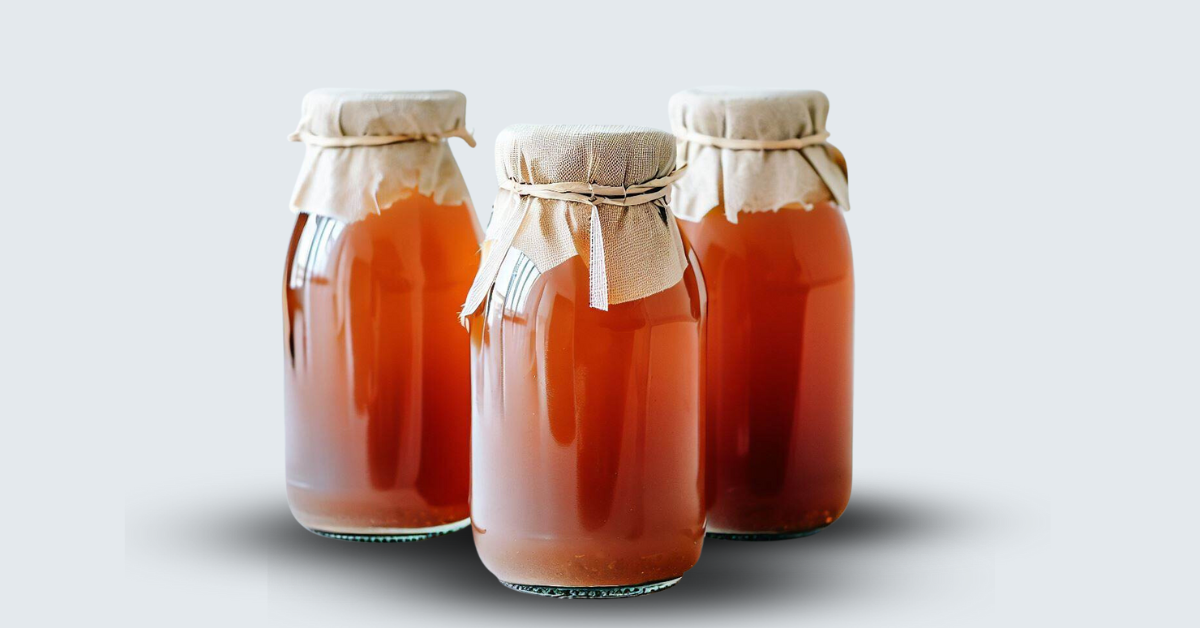
**Find everything you need to get started at the Cultures for Health shop\!**
Now that you know exactly how to make kombucha, it's time to gather everything you need and the best place to do that is here with Cultures for Health\!
We have everything you need to start brewing kombucha at home today including, [SCOBYs](https://culturesforhealth.com/collections/kombucha), [kombucha scoby tools](https://culturesforhealth.com/collections/kombucha), and our personal favorite - the [Kombucha Starter Kit](https://culturesforhealth.com/products/live-black-tea-kombucha-starter-kit).
One of the fascinating parts about making kombucha at home is watching the fermentation process happen right before your eyes. As the days go by, you may notice the SCOBY changing its position in the jar. Sometimes it might float at the top, sometimes it might sink, or it might even hang out in the middle. These are all normal behaviors of a healthy SCOBY. In addition, you'll also see new layers forming on the SCOBY, indicating a successful fermentation process.
This kit has everything you need to brew kombucha at home all in a [convenient kombucha kit all-in-one package](https://culturesforhealth.com/products/live-black-tea-kombucha-starter-kit).
[SHOP THE KOMBUCHA SCOBY COLLECTION NOW](https://culturesforhealth.com/collections/kombucha)
Ready to Learn More?
- [The Complete Kombucha Brewing Glossary: Baby SCOBYs to Second Fermentation](https://culturesforhealth.com/blogs/learn/kombucha-a-complete-list-of-kombucha-terminology)
- [What Does a Healthy SCOBY Look Like?](https://culturesforhealth.com/blogs/learn/kombucha-what-healthy-scoby-look-like-kombucha)
- [Making Jun Tea: How to Brew Jun with a Kombucha SCOBY](https://culturesforhealth.com/blogs/learn/kombucha-making-jun-tea)
RELATED BLOG POSTS
[![The Best Yogurts for Probiotics: Store-Bought and Homemade Probiotic Yogurt Options]() ](https://culturesforhealth.com/blogs/learn/best-probiotic-yogurts-live-cultures "The Best Yogurts for Probiotics: Store-Bought and Homemade Probiotic Yogurt Options")
[The Best Yogurts for Probiotics: Store-Bought and Homemade Probiotic Yogurt Options](https://culturesforhealth.com/blogs/learn/best-probiotic-yogurts-live-cultures "THE BEST YOGURTS FOR PROBIOTICS: STORE-BOUGHT AND HOMEMADE PROBIOTIC YOGURT OPTIONS")
[![Buttermilk Yogurt Substitute: Can You Use Yogurt In Place of Buttermilk?]() ](https://culturesforhealth.com/blogs/learn/substitute-yogurt-for-buttermilk "Buttermilk Yogurt Substitute: Can You Use Yogurt In Place of Buttermilk?")
[Buttermilk Yogurt Substitute: Can You Use Yogurt In Place of Buttermilk?](https://culturesforhealth.com/blogs/learn/substitute-yogurt-for-buttermilk "BUTTERMILK YOGURT SUBSTITUTE: CAN YOU USE YOGURT IN PLACE OF BUTTERMILK?")
[![Kombucha On Keto: Can You Enjoy Kombucha on a Keto Diet]() ](https://culturesforhealth.com/blogs/learn/is-kombucha-keto-low-carb "Kombucha On Keto: Can You Enjoy Kombucha on a Keto Diet")
[Kombucha On Keto: Can You Enjoy Kombucha on a Keto Diet](https://culturesforhealth.com/blogs/learn/is-kombucha-keto-low-carb "KOMBUCHA ON KETO: CAN YOU ENJOY KOMBUCHA ON A KETO DIET")
Company Info
- [About Us](https://culturesforhealth.com/pages/about-us)
- [Shipping](https://culturesforhealth.com/pages/shipping)
- [Returns & Replacements](https://culturesforhealth.com/pages/returns-and-replacements)
- [Contact Us](https://culturesforhealth.com/pages/contact-us)
- [Terms of Use](https://culturesforhealth.com/policies/terms-of-service)
- [Privacy Notice](https://culturesforhealth.com/policies/privacy-policy)
- [Do Not Sell or Share My Personal Data](https://culturesforhealth.com/pages/do-not-sell-notice)
- [Subscriptions](https://culturesforhealth.com/pages/subscription-policy)
- [Accessibility Statement](https://culturesforhealth.com/pages/accessibility-statement)
- [Accessibility Widget](https://culturesforhealth.com/blogs/learn/kombucha-how-to-make-kombucha#accessibly-trigger)
Getting Started
- [How-To Videos](https://culturesforhealth.com/blogs/learn/how-to-videos/)
- [FAQs](https://culturesforhealth.com/pages/faq)
- [Activation Instructions](https://culturesforhealth.com/pages/instructions)
- [Help Center](https://culturesforhealth.com/pages/help-center)
Discover
- [What is Lacto-Fermentation?](https://culturesforhealth.com/blogs/learn/natural-fermentation-what-is-lacto-fermentation)
- [Benefits of Preparing Cultured Foods](https://culturesforhealth.com/blogs/learn/general-many-benefits-preparing-cultured-foods)
- [3 Easiest Cultures to Get You Started](https://culturesforhealth.com/blogs/learn/general-three-easiest-cultured-foods-beginner)
- [5 Ways to Eat More Cultured Foods](https://culturesforhealth.com/blogs/learn/general-5-ways-to-eat-more-cultured-foods)
- [5 Cultures You Can Use to Ferment Almost Anything](https://culturesforhealth.com/blogs/learn/general-five-culture-you-can-use-ferment-almost-anything)
- [Free e-Books: Making Cultured & Fermented Foods](https://culturesforhealth.com/blogs/learn/free-ebooks)
Learn More
- [CFH Facebook Group](https://www.facebook.com/groups/868138110412457?_rdc=4&_rdr)
- [Podcast](https://culturesforhealth.com/blogs/podcast)
- [Affiliate Sign up](https://af.uppromote.com/cultures-for-health/register)
- [Advice Articles](https://culturesforhealth.com/blogs/learn)
- [How To Videos](https://culturesforhealth.com/blogs/learn/how-to-videos/)
- [Recipes](https://culturesforhealth.com/blogs/recipes/)
- [Instructions](https://culturesforhealth.com/pages/instructions)
Wholesale
- [Wholesale Application](https://culturesforhealth.com/pages/wholesale-application)
- [Wholesale Customers](https://wholesale.culturesforhealth.com/pages/cultures-for-health)
© 2026 [Cultures For Health](https://culturesforhealth.com/).

Need help?
Send
{"themeColor":"\#7892a4","iconColor":"\#7892a4","showLogo":false,"topBottomPosition":10,"rightLeftPosition":10,"iconSize":"large","iconCustomSize":64,"position":"top-left"} | |||||||||
| Readable Markdown | Rated 3.5 stars by 156 users
[Kombucha](https://culturesforhealth.com/collections/kombucha) - it's that effervescent, tangy fermented drink that seems to be ever-growing in popularity. But keeping up with the latest fermented foods trends and probiotic benefits can come at a hefty price.
Why shell out \$3 to \$4 a bottle when you can learn how to make kombucha from a humble kombucha scoby? We'll show you how to make up to a gallon of kombucha (that's 8 bottles) for a fraction of the cost of commercial brands with an easy homemade kombucha recipe.

60 minutes

144 hours

8
INGREDIENTS AND EQUIPMENT AVAILABLE AT CULTURES FOR HEALTH
[Live Black Tea Kombucha Starter Kit]()

[Live Black Tea Kombucha Starter Kit](https://culturesforhealth.com/products/live-black-tea-kombucha-starter-kit-new)
\$37.99
New to brewing your own Kombucha? No problem! Our starter kit gets you going in the right direction of making delicious kombucha right at home.
Included in the kit is our Live Black Tea Kombucha Starter Culture, which allows you to immediately start brewing your own Kombucha. Also included are our hand-picked ingredients and equipment to help you successfully start brewing.
Making Kombucha at home is not only a great way to save money, but it also allows you to control the ingredients and make a healthier, great-tasting tea.
*Equipment in the kit may appear different than pictured.*
[Live Black Tea Kombucha Starter Culture]()

[Endless Live Black Tea Kombucha Starter Culture](https://culturesforhealth.com/products/live-black-tea-kombucha-starter-culture)
\$21.99
Start brewing your own Kombucha immediately with the Live Black Tea Kombucha Starter Culture.
Simply add our live starter culture (the SCOBY) to sweet black tea and ferment away to make a healthy, soda-like kombucha with all the tart zing you desire.
Making Kombucha at home is not only a great way to save money, but it also allows you to control the ingredients and make a healthier, delicious tea.
[Kombucha Starter Culture]()

[Kombucha Starter Culture](https://culturesforhealth.com/products/kombucha-tea-starter-culture)
\$19.99
Our Dehydrated Kombucha Starter is the perfect way to experience Kombucha fermentation at home.
**Certified USDA Organic**
The live cultures are shipped in a dehydrated state, so it can stay on your shelf until you are ready to get started\!
After rehydrating the SCOBY, simply add the kombucha starter to sweet tea and ferment away to make a healthy, soda-like kombucha with all the tart zing you want.
Making Kombucha at home is not only a great way to save money, but it also allows you to control the ingredients and make a healthier tea\!
### Jump to a DIY Kombucha Section:
- [Getting a SCOBY](https://culturesforhealth.com/blogs/learn/kombucha-how-to-make-kombucha#scoby)
- [How to Make Kombucha](https://culturesforhealth.com/blogs/learn/kombucha-how-to-make-kombucha#howto)
- [Kombucha Recipe](https://culturesforhealth.com/blogs/learn/kombucha-how-to-make-kombucha#recipe)
- [Flavoring Your Homemade Kombucha](https://culturesforhealth.com/blogs/learn/kombucha-how-to-make-kombucha#flavor)
- [Troubleshooting Your Kombucha Recipe](https://culturesforhealth.com/blogs/learn/kombucha-how-to-make-kombucha#trouble)
- [Continuous Brewing Kombucha](https://culturesforhealth.com/blogs/learn/kombucha-how-to-make-kombucha#continuous)
- [How to Make Kombucha Summary](https://culturesforhealth.com/blogs/learn/kombucha-how-to-make-kombucha#tldr)
## **HOW TO MAKE KOMBUCHA AT HOME?**
Homemade kombucha is a real treat, but making kombucha is actually an interesting entry into culturing live, probiotic foods at home. Kombucha is a fermented tea made by allowing a safe, healthy culture of bacteria and yeast to consume the sugar in tea. The resulting drink is tangy and nuanced, but can only be made with a healthy culture that comes from a symbiotic culture of bacteria and yeast, also known as a SCOBY.
**[Click to download our Kombucha Recipe Book](https://culturesforhealth.com/pages/ebook-signup)** today to start making homemade kombucha which helps you save money; plus, it's easy to do once you know how.
## **EXPLORING THE SCOBY**
If you're familiar with kombucha, you're probably also familiar with that leathery, pancake-like blob called a SCOBY. The acronym stands for **symbiotic colony of bacteria and yeast**. Due to its appearance, it is sometimes referred to as a "mushroom," although it is not technically a mushroom. Rather, it is the mother culture required to make kombucha tea.
Not all kombucha mother scobys contain the exact same strains of bacteria and yeasts, but they all generally do the same work.
Before we delve into how to make kombucha with SCOBY, it's important to understand the role of temperature in the kombucha fermentation process. The optimal temperature range for kombucha fermentation is between 75 and 85 degrees Fahrenheit. Keeping your brewing kombucha in this temperature range can help the SCOBY ferment the tea properly, and avoid the development of mold or harmful bacteria. There are a variety of ways to maintain this temperature, including using a heat mat or a warm spot in your home.

### **PREPARING TO BREW YOUR HOMEMADE KOMBUCHA**
To get started brewing at home, you will need a [Kombucha SCOBY](https://culturesforhealth.com/collections/kombucha) (also known as a [kombucha starter](https://culturesforhealth.com/products/kombucha-tea-starter-culture), mother, or mushroom) plus some ingredients and equipment.
If you are just doing some research, browse this page along with our expert advice on making homemade kombucha tea.
While your SCOBY is the core of your kombucha recipe, it's equally important to focus on the type and quality of tea you use. When choosing your tea, it's best to use organic tea whenever possible. This ensures there are no chemicals or pesticides that could harm your SCOBY or alter the taste of your kombucha. You can use black, green, oolong, or white tea, but avoid flavored teas as they can interfere with the fermentation process.
[**HOW TO OBTAIN A SCOBY FOR MAKING KOMBUCHA**]()
#### **1\.) PURCHASE A SCOBY**
We may be biased, but buying a [kombucha scoby](https://culturesforhealth.com/collections/kombucha) is a good place to get started. When you purchase a scoby you can know that you're getting a healthy, well-balanced scoby grown in an environment optimized for its health.
Cultures for Health sells [kombucha tea starter cultures (SCOBYs)](https://culturesforhealth.com/collections/kombucha) on their own or as part of their [Kombucha Tea Starter Kit](https://culturesforhealth.com/products/live-black-tea-kombucha-starter-kit). These starter cultures can be shipped in a dehydrated state or as a [fresh, ready-to-go kombucha scoby](https://culturesforhealth.com/collections/kombucha) and you have the benefit of knowing that they have been pathogen-tested for your safety.
We grow our scobys in-house using our own fermentation team with years of experience to make sure that each scoby we send out is perfectly balanced and ready to perform.
We also include [complete instructions](https://cdn.shopify.com/s/files/1/0077/0759/0720/files/Kombucha_Instructions_Updated_102219.pdf?3766) for activating and making kombucha fermented tea at home with the [starter culture](https://culturesforhealth.com/collections/cultured-favorites), plus you'll have access to our library of kombucha how-to videos.
If you have purchased a dehydrated [Kombucha Starter](https://culturesforhealth.com/products/kombucha-tea-starter-culture), please visit our video on [Activating a Dehydrated Kombucha SCOBY](https://culturesforhealth.com/blogs/learn/kombucha-activating-dehydrated-kombucha-scoby-video) to get started. After activating our dehydrated SCOBY, please follow the enclosed homemade kombucha **instructions for making your first batch of kombucha**. The instructions in this video and article are for making kombucha regularly, using a fully activated kombucha SCOBY.

#### **2\.) GET A KOMBUCHA SCOBY FROM AN ACQUAINTANCE**
Anyone who is regularly making kombucha tea usually has one to share. Ask around, or check for fermenting groups in your area. When you find a good source, ask for a [Kombucha SCOBY](https://culturesforhealth.com/collections/kombucha) and **at least 1/2 cup starter tea**, enough to make your first-quart batch.
Just do your best to make sure that the kombucha that this acquaintance is producing is well balanced and healthy, with a pleasant, tart smell and good flavor. While you can recover imbalanced scobys, it's not a pleasant start to kombucha making.
When you are ready, let us help you make your first batch of delicious kombucha, with our complete instructions and helpful how-to video.
#### **3\.) GROW A SCOBY FROM KOMBUCHA TEA**
Many grocery stores now carry bottled kombucha tea. If you are up for a little experimenting and have a lot of patience, growing your own SCOBY from a bottle of raw kombucha is another option. It takes a little trial and error and it will be a little longer before you're producing your own kombucha, but if you're up for it, here's how you try it.
1. Purchase a bottle of raw, unflavored kombucha and pour it into a glass jar.
2. Make a couple of cups of sweet with the ratio of 1-2 tablespoons of sugar for each cup of tea. Add the cooled tea to the raw kombucha.
3. Cover the jar with a tight-weave dish towel or a paper coffee filter. Secure the covering with a tight rubber band and ferment the tea in a warm spot, 68-85ºF, out of direct sunlight, for about 7 days.
4. After a week, you may start to see a baby SCOBY developing across the surface of the liquid. A new SCOBY starts off as a clear film or blob and then slowly become less translucent, more white, and thicker as time goes on. If no signs of SCOBY development appear after 3 weeks, discard the batch and start over. We recommend waiting until the SCOBY is at least ¼-inch thick before using it to brew the first batch of kombucha tea. Reaching that thickness may take up to 30 days.
NOTE: Be keep a careful eye out for mold as your SCOBY grows. This initial stage of growing a SCOBY is the most likely time for your culture to be overtaken by mold. If you see any signs of mold, throw out the entire mixture and start over with fresh kombucha.
5. Retain the kombucha tea and the new SCOBY for making your first batch of kombucha and then follow our instructions on kombucha tea at home.
### Equipment you Need for Making Kombucha
Making kombucha tea at home is easy, and it only requires a few pieces of equipment to get started. You can learn more about [choosing the best kombucha supplies in this article](https://culturesforhealth.com/blogs/learn/kombucha-kombucha-equipment), but in short, you will need:
- [Quart-Size Glass Jar](https://culturesforhealth.com/products/32-ounce-mason-jar)
- [Thermometer](https://culturesforhealth.com/products/digi-temp-thermometer)
- [Butter Muslin](https://culturesforhealth.com/products/butter-muslin) or Paper Coffee Filter
- Something to secure the cover to the jar (rubber band or canning jar rings work well)
- [Plastic Mesh Strainer](https://culturesforhealth.com/products/2-5-plastic-strainer)
- Measuring Cups
In addition to these basic supplies, some homebrewers find it useful to have a pH meter or test strips. These tools can help you ensure your kombucha is fermenting properly and that the pH is at the right level. A pH of around 3.0 is ideal for kombucha, as this level of acidity prevents harmful bacteria from growing.
Most of the supplies you need can also be found in one of our [DIY Kombucha Kits](https://culturesforhealth.com/products/live-black-tea-kombucha-starter-kit). These kits make getting started easy. All you supply is a glass jar and a few kitchen staples. Everything else from a SCOBY and tea to bottles, and flavorings are included.
### **INGREDIENTS FOR MAKING DIY KOMBUCHA**
Below is a list of ingredients needed for making kombucha, most of which can be found in the [Kombucha Tea Starter Kit](https://culturesforhealth.com/products/live-black-tea-kombucha-starter-kit). To explore more options for each, check out our tutorial: [Choosing Ingredients for Making Kombucha](https://culturesforhealth.com/blogs/learn/kombucha-kombucha-ingredients).
1. 3 cups Water free of chlorine and fluoride (bottled spring water works well)
2. ¼ cup white or plain organic cane sugar
3. 2 Tea Bags or 1 ½ teaspoon Loose Tea
4. ½ cup Starter Tea or Distilled White Vinegar
5. Active [Kombucha SCOBY](https://culturesforhealth.com/products/live-black-tea-kombucha-starter-culture)
These amounts will yield **one quart of kombucha**. If you’d like to make larger batches, [**refer to the ratio chart below**](https://culturesforhealth.com/blogs/learn/kombucha-how-to-make-kombucha#ratios). If you have just started making kombucha, we also recommend slowly working up to larger batch sizes to help maintain proper ingredients ratios and to avoid stressing the SCOBY.
While it may be tempting to experiment with different types of vinegar, it's very important to **always use distilled white vinegar** to ensure an appropriately acidic environment. Apple cider vinegar and rice vinegar are **not** appropriate for making kombucha tea.

## **SIMPLE HOMEMADE KOMBUCHA RECIPE**
1. **Combine** hot water and sugar in a glass jar. **Stir** until the sugar dissolves. The water should be hot enough to steep the tea but does not have to be boiling.
2. **Place** the tea or tea bags in the sugar water to steep.
**NOTE:** Using a **metal tea ball** to contain loose tea for making kombucha is acceptable. The tea ball should be removed before adding the SCOBY and starter tea, so the tea ball will not come into contact with the SCOBY.
3. **Cool** the mixture to 68-85ºF. The tea may be left in the liquid as it cools or removed after the first 10-15 minutes. The longer the tea is left in the liquid, the stronger the tea will be.
4. **Remove** the tea bags or completely strain the loose tea leaves from the liquid.
5. **Add starter tea** from a previous batch to the liquid. If you do not have starter tea, distilled white vinegar may be substituted.
6. **Add** an active kombucha SCOBY.
7. **Cover** the jar with a tight-weave towel or coffee filter and **secure** it with a rubber band.
8. **Allow** the mixture to sit undisturbed at 68-85°F, out of direct sunlight, for 7-30 days, or to taste. The longer the kombucha ferments, the less sweet and more vinegary it will taste.
9. **Pour** kombucha off the top of the jar for consumption. **Retain** the SCOBY and enough liquid from the bottom of the jar to use as starter tea for the next batch.
10. The finished kombucha can be flavored and bottled if desired or enjoyed plain.
### **KOMBUCHA RECIPE INGREDIENT RATIOS**
#### One-Quart Batch:
- 1½ teaspoon loose tea **OR** 2 tea bags
- ¼ cup sugar
- 2-3 cups water
- ½ cup starter tea or vinegar
#### Half-Gallon Batch:
- 1 tablespoon loose tea **OR**4 tea bags
- ½ cup sugar
- 6-7 cups water
- 1 cup starter tea or vinegar
#### Gallon Batch:
- 2 tablespoons loose tea **OR** 8 tea bags
- 1 cup sugar
- 13-14 cups water
- 2 cups starter tea or vinegar
[**ADDING FLAVOR TO YOUR HOMEMADE KOMBUCHA**]()
Once the kombucha has finished culturing, remove the SCOBY and enjoy it plain or add flavoring. There is no limit to the flavoring possibilities. For a fizzy fermented tea, try bottling it in a [Grolsch-style bottle](https://culturesforhealth.com/products/grolsch-style-flip-top-bottles-500-ml-single) or another tightly-sealed container.

[**DIY KOMBUCHA RECIPE TROUBLESHOOTING**]()
Starting a new project can be tricky at times, but with our tips and resources, we are confident that you'll be successful.
Maybe you're wondering [what a healthy SCOBY looks like](https://culturesforhealth.com/blogs/learn/kombucha-what-healthy-scoby-look-like-kombucha) or perhaps you're not sure if your SCOBY [was properly activated](https://culturesforhealth.com/blogs/learn/kombucha-kombucha-scoby-activation-troubleshooting-faq).
Whatever the case, browse our [troubleshooting FAQ](https://culturesforhealth.com/blogs/learn/kombucha-kombucha-troubleshooting-frequently-asked-questions-faq) and you'll be in good shape to make the best homemade kombucha possible\!
It's important to remember that the pH of your kombucha should ideally be between 2.5 and 4.5. This helps prevent harmful bacteria from contaminating your brew. If you're unsure about the pH level of your kombucha, you can easily test it with pH strips. It's a simple yet crucial step that ensures the safety and success of your homemade kombucha.
### **MAKING KOMBUCHA WITH SCOBY MADE EASY**
At Cultures for Health we believe that anyone--on any diet and at any skill level--can make and enjoy the [kombucha benefits](https://culturesforhealth.com/blogs/learn/how-often-should-you-drink-kombucha) and other traditional fermented foods. Through our product offering, recipes, tutorials, and how-to videos, we'll give you the tools you need to nourish your family and live healthily.
**You Can Do This.**
Find everything you need to get started with one of our [DIY kombucha Kits](https://culturesforhealth.com/products/live-black-tea-kombucha-starter-kit).
[**CONTINUOUS BREW DIY KOMBUCHA FROM THE SAME SCOBY**]()
Once you've been brewing kombucha for a while, you may find it more convenient to set up a [kombucha continuous brewing system](https://culturesforhealth.com/blogs/learn/kombucha-kombucha-continuous-brewing-system).
Rather than changing brewing containers for every batch, this method allows you to make larger batches, one after the other in the same container.
Not only does this create a nice little fermentation ecosystem, but a kombucha continuous brew system also is low maintenance and provides a healthy environment for your SCOBY.
## MORE WAYS TO USE KOMBUCHA

Don't forget, kombucha is good for more than just drinking! Because a new culture is created with nearly every new batch of kombucha, it is easy to quickly become overrun with SCOBYs. Some people use new SCOBYs for making extra batches of kombucha. However, at some point, most people find they are overrun with extra SCOBYs. If the [SCOBY hotel](https://culturesforhealth.com/blogs/learn/making-a-scoby-hotel-to-store-your-scoby) fills up, try these ideas for using up the extras.
1. **Share\!** The best way to use extra kombucha SCOBYs is to help others start their own kombucha brew.
2. **Experiment**. Try making a batch with a different sweetener, tea, or juice. Since the SCOBY is extra, it can be discarded once the batch is finished culturing.
3. **Add to a Smoothie**. Add a piece of SCOBY to a smoothie or other blended food.
4. **Make Jerky**. Marinate the SCOBY in your favorite sauce for 24 hours before drying, if desired, for extra flavor. Lay SCOBYs flat on a piece of unbleached parchment paper and dry at 80°-90°F until they reach the consistency of jerky. Cover with a cloth to keep pests away. Consume as a treat or cut up and add to a salad, trail mix, etc.
5. **Make Candy**. There are a few ways to make [kombucha SCOBY candy](https://culturesforhealth.com/blogs/recipes/kombucha-recipe-kombucha-scoby-candy). Choose one that works for you, using your sweetener of choice.
6. **Substitute for Raw Fish in Sushi**. With a texture similar to squid, kombucha SCOBYs can be cut up and eaten along with the nori, rice, vegetables, etc.
7. **Use as a Face Mask**. Kombucha SCOBYs can be used as a face mask, either whole or ground up.
8. **Use As a Bandage**. SCOBYs can be used as a live bandage, or under a bandage. It will sting a little. The acidity is believed to help support healing.
9. **Feed to Pets**. Kombucha SCOBYs can be fed to pets either fresh or using the same process for making kombucha jerky to make a dried pet treat.
10. **Add to Chicken Feed**. Many chicken owners find their chickens really appreciate a fresh SCOBY as a treat.
11. **Compost**. SCOBYs can be added whole to the compost pile or ground up and added directly to the soil of plants.
12. **Make Crafts**. Kombucha SCOBYs can be dried until they are stiff but flexible. Use as a replacement for leather in toy drums, shoes, or other craft items.
13. **Make Jun Tea**. [Jun Tea](https://culturesforhealth.com/blogs/learn/kombucha-making-jun-tea) is another ancient fermented drink. You can make it at home by slowly converting a kombucha SCOBY to feed on green tea and honey. This experimentation works best with backup SCOBYs so trying out this delightful drink is another way to use up extra SCOBYs.
Check out more [ideas for using kombucha](https://culturesforhealth.com/blogs/learn/kombucha-kombucha-uses) as well as our collection of [kombucha recipes](https://culturesforhealth.com/blogs/recipes/kombucha-recipes/), like our [kombucha coffee recipe](https://culturesforhealth.com/blogs/recipes/kombucha-recipe-kombucha-coffee).
## **Interested in trying your hand at brewing Kombucha? Download our free Kombucha Guide and Recipe Book today\!**
[****](https://culturesforhealth.com/pages/ebook-signup)
## **STORING YOUR HOMEMADE KOMBUCHA SCOBY**
Working with live cultures like a SCOBY means they need the proper care and attention. While SCOBYs can give you an endless supply of kombucha tea, there may be times when you need to take a break from brewing kombucha. Learn more about how to do this in our tutorial: [How to Take a Break from Making Kombucha](https://culturesforhealth.com/blogs/learn/kombucha-how-to-take-break-making-kombucha-tea).
[JUST THE GIST: MAKING HOMEMADE KOMBUCHA]()
- **What You’ll Need:** Active [Kombucha SCOBY](https://culturesforhealth.com/collections/kombucha), water, sugar, tea, distilled white vinegar or starter tea, glass jar, cover, and warm spot out of direct sunlight.
- **Instructions:** Dissolve sugar in water, steep tea, let it cool, remove tea bags, add vinegar or starter tea, and SCOBY, cover, and culture for 7-30 days at room temperature (68-85°F) out of direct sunlight. Retain tea and SCOBY for the next batch. Repeat.
- **Fermentation Temperature & Time:** 70-80º F is the ideal culturing temperature. Warmer temperatures speed up fermentation, cooler temperatures slow it down. The longer you let your kombucha culture the less sweet and more vinegary it will become.
- **Signs of Fermentation**: Flavor becomes less sweet more vinegary, SCOBY thickens, stringy brown yeast particle present, haze or new baby SCOBY at top of the liquid, tea has lightened in color.
- **Bottling & Flavoring:** Flavor finished kombucha or bottle it to give is extra carbonation. **HOW-TO VIDEO:** [Flavoring & Bottling Kombucha Tea](https://culturesforhealth.com/blogs/learn/kombucha-flavoring-bottling-kombucha).
- **Continuous Brew Kombucha:** A more advanced brewing method for making larger batches - [learn more kombucha continuous brewing system](https://culturesforhealth.com/blogs/learn/kombucha-kombucha-continuous-brewing-system)\!
- **Troubleshooting**: Try our [Kombucha Troubleshooting FAQ](https://culturesforhealth.com/blogs/learn/kombucha-kombucha-troubleshooting-frequently-asked-questions-faq) for answers to most common issues.
- **Storing Kombucha**: Learn how to make [SCOBY Hotel](https://culturesforhealth.com/blogs/learn/kombucha-how-to-take-break-making-kombucha-tea) to store kombucha or take brewing breaks.

**Find everything you need to get started at the Cultures for Health shop\!**
Now that you know exactly how to make kombucha, it's time to gather everything you need and the best place to do that is here with Cultures for Health\!
We have everything you need to start brewing kombucha at home today including, [SCOBYs](https://culturesforhealth.com/collections/kombucha), [kombucha scoby tools](https://culturesforhealth.com/collections/kombucha), and our personal favorite - the [Kombucha Starter Kit](https://culturesforhealth.com/products/live-black-tea-kombucha-starter-kit).
One of the fascinating parts about making kombucha at home is watching the fermentation process happen right before your eyes. As the days go by, you may notice the SCOBY changing its position in the jar. Sometimes it might float at the top, sometimes it might sink, or it might even hang out in the middle. These are all normal behaviors of a healthy SCOBY. In addition, you'll also see new layers forming on the SCOBY, indicating a successful fermentation process.
This kit has everything you need to brew kombucha at home all in a [convenient kombucha kit all-in-one package](https://culturesforhealth.com/products/live-black-tea-kombucha-starter-kit).
[SHOP THE KOMBUCHA SCOBY COLLECTION NOW](https://culturesforhealth.com/collections/kombucha)
Ready to Learn More?
- [The Complete Kombucha Brewing Glossary: Baby SCOBYs to Second Fermentation](https://culturesforhealth.com/blogs/learn/kombucha-a-complete-list-of-kombucha-terminology)
- [What Does a Healthy SCOBY Look Like?](https://culturesforhealth.com/blogs/learn/kombucha-what-healthy-scoby-look-like-kombucha)
- [Making Jun Tea: How to Brew Jun with a Kombucha SCOBY](https://culturesforhealth.com/blogs/learn/kombucha-making-jun-tea) | |||||||||
| ML Classification | ||||||||||
| ML Categories |
Raw JSON{
"/Food_and_Drink": 973,
"/Food_and_Drink/Beverages": 890,
"/Food_and_Drink/Beverages/Coffee_and_Tea": 302
} | |||||||||
| ML Page Types |
Raw JSON{
"/Article": 976,
"/Article/Recipe": 595
} | |||||||||
| ML Intent Types |
Raw JSON{
"Informational": 923,
"Commercial": 349
} | |||||||||
| Content Metadata | ||||||||||
| Language | en | |||||||||
| Author | null | |||||||||
| Publish Time | 2023-06-19 05:00:00 (2 years ago) | |||||||||
| Original Publish Time | 2022-06-25 10:29:53 (3 years ago) | |||||||||
| Republished | Yes | |||||||||
| Word Count (Total) | 4,047 | |||||||||
| Word Count (Content) | 3,508 | |||||||||
| Links | ||||||||||
| External Links | 4 | |||||||||
| Internal Links | 134 | |||||||||
| Technical SEO | ||||||||||
| Meta Nofollow | No | |||||||||
| Meta Noarchive | No | |||||||||
| JS Rendered | No | |||||||||
| Redirect Target | null | |||||||||
| Performance | ||||||||||
| Download Time (ms) | 401 | |||||||||
| TTFB (ms) | 392 | |||||||||
| Download Size (bytes) | 65,001 | |||||||||
| Shard | 3 (laksa) | |||||||||
| Root Hash | 6567369382434691203 | |||||||||
| Unparsed URL | com,culturesforhealth!/blogs/learn/kombucha-how-to-make-kombucha s443 | |||||||||