ℹ️ Skipped - page is already crawled
| Filter | Status | Condition | Details |
|---|---|---|---|
| HTTP status | PASS | download_http_code = 200 | HTTP 200 |
| Age cutoff | PASS | download_stamp > now() - 6 MONTH | 0.2 months ago |
| History drop | PASS | isNull(history_drop_reason) | No drop reason |
| Spam/ban | PASS | fh_dont_index != 1 AND ml_spam_score = 0 | ml_spam_score=0 |
| Canonical | PASS | meta_canonical IS NULL OR = '' OR = src_unparsed | Not set |
| Property | Value | |||||||||
|---|---|---|---|---|---|---|---|---|---|---|
| URL | https://corporatefinanceinstitute.com/resources/economics/2008-2009-global-financial-crisis/ | |||||||||
| Last Crawled | 2026-04-16 08:21:56 (7 days ago) | |||||||||
| First Indexed | 2022-11-05 23:31:49 (3 years ago) | |||||||||
| HTTP Status Code | 200 | |||||||||
| Content | ||||||||||
| Meta Title | 2008-2009 Global Financial Crisis - Overview, Market Bubble, Aftermath | |||||||||
| Meta Description | The Global Financial Crisis of 2008-2009 refers to the massive financial crisis the world faced from 2008 to 2009. The financial crisis took its toll on individuals | |||||||||
| Meta Canonical | null | |||||||||
| Boilerpipe Text | "The Great Recession"
Published
January 11, 2020
Read Time
3
minutes
Over 2.8 million + professionals use CFI to learn accounting, financial analysis, modeling and more. Unlock the essentials of corporate finance with our free resources and get an exclusive sneak peek at the first module of each course.
Start Free
What is the Global Financial Crisis of 2008-2009?
The Global Financial Crisis of 2008-2009 refers to the massive financial crisis the world faced from 2008 to 2009. The financial crisis took its toll on individuals and institutions around the globe, with millions of American being deeply impacted. Financial institutions started to sink, many were absorbed by larger entities, and the US Government was forced to offer bailouts to keep many institutions afloat.
The crisis, often referred to as “The Great Recession,” didn’t happen overnight. There were many factors present leading up to the crisis, and their effects linger to this day. Let’s take a look at a brief outline of the Global Financial Crisis of 2009-2009.
Summary
The Global Financial Crisis of 2008-2009 is widely referred to as “The Great Recession.”
It began with the housing market bubble, created by an overwhelming load of mortgage-backed securities that bundled high-risk loans.
Reckless lending led to unprecedented numbers of loans in default; bundled together, the losses led many financial institutions to fail and require a governmental bailout.
Efforts to revive the economy were made through the American Recovering and Reinvestment Act of 2009.
The Housing Market Bubble
The foundation of the global financial crisis was built on the back of the housing market bubble that began to form in 2007. Banks and lending institutions offered low interest rates on mortgages and encouraged many homeowners to take out loans that they couldn’t afford.
With all the mortgages flooding in, lenders created new financial instruments called
mortgage-backed securities (MBS)
, which were essentially mortgages bundled together that could then be sold as securities with minimal risk load due to the fact that they were backed by
credit default swaps (CDS)
. Lenders could then easily pass along the mortgages – and all the risk.
Outdated regulations that weren’t rigorously enforced allowed lenders to get sloppy with
underwriting
, meaning the actual value of the securities couldn’t be established or guaranteed.
The Bubble Bursts
Banks began to lend recklessly to families and individuals without true means to follow through on the mortgages they’d been granted. Such high-risk (subprime) loans were then inevitably bundled together and passed down the line.
As the subprime mortgage bundles grew in number to an overwhelming degree, with a large percentage moving into default, lending institutions began to face financial difficulties. It led to the dismal financial conditions around the world during the 2008-2009 period and continued for years to come.
The Aftermath of the Global Financial Crisis of 2008-2009
Many who took out subprime mortgages eventually defaulted. When they could not pay, financial institutions took major hits. The government, however, stepped in to bail out banks.
The housing market was deeply impacted by the crisis. Evictions and
foreclosures
began within months. The stock market, in response, began to plummet and major businesses worldwide began to fail, losing millions. This, of course, resulted in widespread layoffs and extended periods of unemployment worldwide. Declining credit availability and failing confidence in financial stability led to fewer and more cautious investments, and international trade slowed to a crawl.
Eventually, the United States responded to the crisis by passing the
American Recovery and Reinvestment Act of 2009
, which used an expansionary monetary policy, facilitated bank bailouts and mergers, and worked towards stimulating economic growth.
Additional Resources
Thank you for reading CFI’s guide to the Global Financial Crisis 2008-2009. To keep learning and advancing your career, the following CFI resources will be helpful:
Economic Depression
Quantitative Easing
Securities and Exchange Commission (SEC)
Top Accounting Scandals
See all economics resources
See all capital markets resources | |||||||||
| Markdown | [Corporate Finance Institute](https://corporatefinanceinstitute.com/)
Menu
- [Certifications](https://corporatefinanceinstitute.com/certifications/)
- [Courses](https://corporatefinanceinstitute.com/collections/)
- [Resources](https://corporatefinanceinstitute.com/resources/)
- [About](https://corporatefinanceinstitute.com/about-cfi/)
- [Pricing](https://corporatefinanceinstitute.com/pricing/)
- [Teams](https://corporatefinanceinstitute.com/cfi-for-teams/)
[My Dashboard](https://learn.corporatefinanceinstitute.com/dashboard)
[Log In](https://learn.corporatefinanceinstitute.com/auth/login)
[Start Free](https://learn.corporatefinanceinstitute.com/auth/registration)
- [Certifications](https://corporatefinanceinstitute.com/certifications/)
- [Courses](https://corporatefinanceinstitute.com/collections/)
- [About CFI](https://corporatefinanceinstitute.com/about-cfi/)
- [Pricing](https://corporatefinanceinstitute.com/pricing/)
- [CFI For Teams](https://corporatefinanceinstitute.com/cfi-for-teams/)
- [Resources](https://corporatefinanceinstitute.com/resources/)
[My Dashboard](https://learn.corporatefinanceinstitute.com/dashboard)
[Log In](https://learn.corporatefinanceinstitute.com/auth/login)
[Start Free](https://learn.corporatefinanceinstitute.com/auth/registration)
[Home](https://corporatefinanceinstitute.com/ "Go to Corporate Finance Institute.")
›
[Resources](https://corporatefinanceinstitute.com/resources/ "Go to Resources.")
›
[Economics](https://corporatefinanceinstitute.com/topic/economics/ "Go to the Economics Resource Type archives.")
›
2008-2009 Global Financial Crisis
# 2008-2009 Global Financial Crisis
"The Great Recession"
Written by [Andrew Loo](https://corporatefinanceinstitute.com/author/andrew-loo/)
Published January 11, 2020
Read Time 3 minutes
Over 2.8 million + professionals use CFI to learn accounting, financial analysis, modeling and more. Unlock the essentials of corporate finance with our free resources and get an exclusive sneak peek at the first module of each course. [Start Free](https://learn.corporatefinanceinstitute.com/auth/registration)
## What is the Global Financial Crisis of 2008-2009?
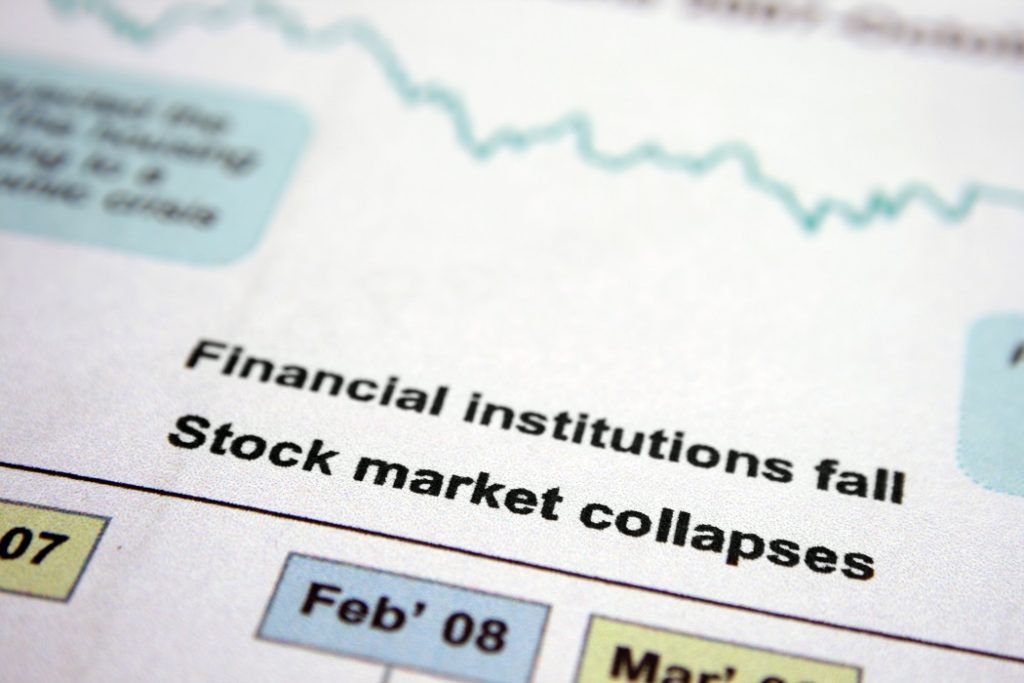
The Global Financial Crisis of 2008-2009 refers to the massive financial crisis the world faced from 2008 to 2009. The financial crisis took its toll on individuals and institutions around the globe, with millions of American being deeply impacted. Financial institutions started to sink, many were absorbed by larger entities, and the US Government was forced to offer bailouts to keep many institutions afloat.
The crisis, often referred to as “The Great Recession,” didn’t happen overnight. There were many factors present leading up to the crisis, and their effects linger to this day. Let’s take a look at a brief outline of the Global Financial Crisis of 2009-2009.
![Global Financial Crisis 2008-2009 - Image with headlines about the financial collapse]()
### **Summary**
- **The Global Financial Crisis of 2008-2009 is widely referred to as “The Great Recession.”**
- **It began with the housing market bubble, created by an overwhelming load of mortgage-backed securities that bundled high-risk loans.**
- **Reckless lending led to unprecedented numbers of loans in default; bundled together, the losses led many financial institutions to fail and require a governmental bailout.**
- **Efforts to revive the economy were made through the American Recovering and Reinvestment Act of 2009.**
### The Housing Market Bubble
The foundation of the global financial crisis was built on the back of the housing market bubble that began to form in 2007. Banks and lending institutions offered low interest rates on mortgages and encouraged many homeowners to take out loans that they couldn’t afford.
With all the mortgages flooding in, lenders created new financial instruments called [mortgage-backed securities (MBS)](https://corporatefinanceinstitute.com/resources/fixed-income/mortgage-backed-security-mbs/), which were essentially mortgages bundled together that could then be sold as securities with minimal risk load due to the fact that they were backed by [credit default swaps (CDS)](https://corporatefinanceinstitute.com/resources/derivatives/credit-default-swap-cds/). Lenders could then easily pass along the mortgages – and all the risk.
Outdated regulations that weren’t rigorously enforced allowed lenders to get sloppy with [underwriting](https://corporatefinanceinstitute.com/resources/career-map/sell-side/capital-markets/underwriting-overview/), meaning the actual value of the securities couldn’t be established or guaranteed.
### The Bubble Bursts
Banks began to lend recklessly to families and individuals without true means to follow through on the mortgages they’d been granted. Such high-risk (subprime) loans were then inevitably bundled together and passed down the line.
As the subprime mortgage bundles grew in number to an overwhelming degree, with a large percentage moving into default, lending institutions began to face financial difficulties. It led to the dismal financial conditions around the world during the 2008-2009 period and continued for years to come.
### The Aftermath of the Global Financial Crisis of 2008-2009
Many who took out subprime mortgages eventually defaulted. When they could not pay, financial institutions took major hits. The government, however, stepped in to bail out banks.
The housing market was deeply impacted by the crisis. Evictions and [foreclosures](https://corporatefinanceinstitute.com/resources/commercial-real-estate/foreclosure/) began within months. The stock market, in response, began to plummet and major businesses worldwide began to fail, losing millions. This, of course, resulted in widespread layoffs and extended periods of unemployment worldwide. Declining credit availability and failing confidence in financial stability led to fewer and more cautious investments, and international trade slowed to a crawl.
Eventually, the United States responded to the crisis by passing the [American Recovery and Reinvestment Act of 2009](https://www.congress.gov/bill/111th-congress/house-bill/1/text), which used an expansionary monetary policy, facilitated bank bailouts and mergers, and worked towards stimulating economic growth.
### Additional Resources
Thank you for reading CFI’s guide to the Global Financial Crisis 2008-2009. To keep learning and advancing your career, the following CFI resources will be helpful:
- [Economic Depression](https://corporatefinanceinstitute.com/resources/economics/economic-depression/)
- [Quantitative Easing](https://corporatefinanceinstitute.com/resources/economics/quantitative-easing/)
- [Securities and Exchange Commission (SEC)](https://corporatefinanceinstitute.com/resources/career-map/sell-side/capital-markets/securities-and-exchange-commission-sec/)
- [Top Accounting Scandals](https://corporatefinanceinstitute.com/resources/accounting/top-accounting-scandals/)
- **[See all economics resources](https://corporatefinanceinstitute.com/topic/economics/)**
- **[See all capital markets resources](https://corporatefinanceinstitute.com/topic/capital-markets/)**
Get Certified for Capital Markets (CMSA®)
From equities and fixed income to derivatives, the CMSA certification bridges the gap from where you are now to where you want to be — a world-class capital markets analyst.
[Learn More](https://corporatefinanceinstitute.com/certifications/capital-markets-securities-analyst-cmsa/)
- Share this article
- [![Share on LinkedIn]()](http://www.linkedin.com/shareArticle?mini=true&url=https%3A%2F%2Fcorporatefinanceinstitute.com%2Fresources%2Feconomics%2F2008-2009-global-financial-crisis%2F&summary=2008-2009+Global+Financial+Crisis "Share on LinkedIn")
- [![Share on Facebook]()](https://www.facebook.com/sharer/sharer.php?u=https%3A%2F%2Fcorporatefinanceinstitute.com%2Fresources%2Feconomics%2F2008-2009-global-financial-crisis%2F "Share on Facebook")
- [![Share on Twitter]()](https://twitter.com/intent/tweet?text=2008-2009+Global+Financial+Crisis&url=https%3A%2F%2Fcorporatefinanceinstitute.com%2Fresources%2Feconomics%2F2008-2009-global-financial-crisis%2F "Share on Twitter")
- [![Share on WhatsApp]()](https://wa.me/?text=https%3A%2F%2Fcorporatefinanceinstitute.com%2Fresources%2Feconomics%2F2008-2009-global-financial-crisis%2F&summary=2008-2009+Global+Financial+Crisis "Share on WhatsApp")
- [![Copy link]()](https://corporatefinanceinstitute.com/resources/economics/2008-2009-global-financial-crisis/ "Copy link")
- [About CFI](https://corporatefinanceinstitute.com/about-cfi/)
- [Overview](https://corporatefinanceinstitute.com/about-cfi/)
- [Instructors](https://corporatefinanceinstitute.com/about-cfi/instructors/)
- [Team](https://corporatefinanceinstitute.com/about-cfi/faculty-team/)
- [Careers at CFI](https://corporatefinanceinstitute.com/about-cfi/careers-at-cfi/)
- [Editorial Standards](https://corporatefinanceinstitute.com/about-cfi/editorial-standards/)
- [CFI for Students](https://corporatefinanceinstitute.com/finance-certifications-for-students/)
- [CPE Credits](https://corporatefinanceinstitute.com/about-cfi/cpe-credits-online/)
- [Learner Reviews](https://corporatefinanceinstitute.com/learner-reviews/)
- [Partnerships](https://corporatefinanceinstitute.com/partnerships/)
- [Affiliates](https://corporatefinanceinstitute.com/affiliates/)
- [Newsroom](https://corporatefinanceinstitute.com/resources/newsroom/)
- [Certifications](https://corporatefinanceinstitute.com/certifications/)
- [FMVA®](https://corporatefinanceinstitute.com/certifications/financial-modeling-valuation-analyst-fmva-program/)
- [FPAP™](https://corporatefinanceinstitute.com/certifications/financial-planning-analysis-professional-fpap/)
- [CMSA®](https://corporatefinanceinstitute.com/certifications/capital-markets-securities-analyst-cmsa/)
- [CBCA®](https://corporatefinanceinstitute.com/certifications/commercial-banking-credit-analyst-certification-cbca/)
- [BIDA®](https://corporatefinanceinstitute.com/certifications/business-intelligence-data-analyst-bida/)
- [FPWMP®](https://corporatefinanceinstitute.com/certifications/financial-planning-and-wealth-management-fpwm-program/)
- [FTIP®](https://corporatefinanceinstitute.com/certifications/fintech-industry-professional/)
- [All Certifications](https://corporatefinanceinstitute.com/certifications/)
- [Compare Certifications](https://corporatefinanceinstitute.com/certifications/compare-certifications/)
- [Topics](https://corporatefinanceinstitute.com/topics/)
- [Specializations](https://corporatefinanceinstitute.com/specializations/)
- [Courses](https://corporatefinanceinstitute.com/collections/?tab=courses)
- [Pricing](https://corporatefinanceinstitute.com/pricing/)
- [For Individuals](https://corporatefinanceinstitute.com/pricing/)
- [For Students](https://corporatefinanceinstitute.com/finance-certifications-for-students/)
- [For Teams](https://corporatefinanceinstitute.com/cfi-for-teams/pricing-plans/)
- [CFI For Teams](https://corporatefinanceinstitute.com/cfi-for-teams/)
- [Financial Services](https://corporatefinanceinstitute.com/cfi-for-teams/for-financial-services/)
- [Corporate Finance](https://corporatefinanceinstitute.com/cfi-for-teams/for-finance-teams/)
- [Professional Services](https://corporatefinanceinstitute.com/cfi-for-teams/for-professional-services/)
- [For Employers](https://corporatefinanceinstitute.com/for-employers/)
- [Teams](https://corporatefinanceinstitute.com/cfi-for-teams/)
- [For Universities](https://corporatefinanceinstitute.com/cfi-for-teams/for-universities/)
- [Careers & Roles](https://corporatefinanceinstitute.com/careers/)
- [FP\&A](https://corporatefinanceinstitute.com/careers/financial-planning-and-analysis/)
- [Investment Banking](https://corporatefinanceinstitute.com/careers/investment-banking/)
- [Capital Markets](https://corporatefinanceinstitute.com/careers/capital-markets/)
- [Commercial Lending](https://corporatefinanceinstitute.com/careers/commercial-lending/)
- [Risk Management](https://corporatefinanceinstitute.com/careers/risk-management/)
- [Asset Management](https://corporatefinanceinstitute.com/careers/asset-management/)
- [Hedge Funds](https://corporatefinanceinstitute.com/careers/hedge-funds/)
- [Private Equity](https://corporatefinanceinstitute.com/careers/private-equity/)
- [Wealth Management](https://corporatefinanceinstitute.com/careers/wealth-management/)
- [Support](https://help.corporatefinanceinstitute.com/)
- [Help \| FAQ](https://help.corporatefinanceinstitute.com/)
- [Legal](https://corporatefinanceinstitute.com/about-cfi/legal/)
- [Community](https://corporatefinanceinstitute.com/resources/economics/2008-2009-global-financial-crisis/)
- [Member Community](https://corporatefinanceinstitute.com/member-community/)
- [What’s New](https://corporatefinanceinstitute.com/whats-new/)
- [Resources](https://corporatefinanceinstitute.com/resources/)
- [Podcast](https://corporatefinanceinstitute.com/resources/finpod/)
[![Corporate Finance Institute (CFI) A+ BBB Business Review]()](https://www.bbb.org/ca/bc/vancouver/profile/online-education/corporate-finance-institute-cfi-0037-2405665/#sealclick)
![SOC for Service Organizations]()
[Trustpilot](https://www.trustpilot.com/review/corporatefinanceinstitute.com)
[Logo ![CFI on App Store]()](https://apps.apple.com/us/app/corporate-finance-institute/id6599859785)
[Logo ![CFI on Google Play]()](https://play.google.com/store/apps/details?id=lms.corporatefinanceinstitute.com)
© 2015 to 2026 CFI Education Inc.
[Follow us on LinkedIn](https://www.linkedin.com/school/corporate-finance-institute-cfi/ "Follow us on LinkedIn") [Follow us on Instagram](https://www.instagram.com/corporatefinanceinstitute/ "Follow us on Instagram") [Follow us on Facebook](https://www.facebook.com/corporatefinanceinstitute.CFI/ "Follow us on Facebook") [Follow us on YouTube](https://www.youtube.com/c/Corporatefinanceinstitute-CFI "Follow us on YouTube")
- [Privacy Policy](https://corporatefinanceinstitute.com/about-cfi/privacy-policy/)
- [Terms of Use](https://corporatefinanceinstitute.com/about-cfi/website-terms-of-use/)
- [Terms of Service](https://corporatefinanceinstitute.com/about-cfi/cfi-terms-of-service/)
- [Legal](https://corporatefinanceinstitute.com/about-cfi/legal/)
[Corporate Finance Institute](https://corporatefinanceinstitute.com/)
[Back to Website](https://corporatefinanceinstitute.com/)
0 search results for ‘’
People also search for: excel power bi esg accounting balance sheet fmva real estate
Explore Our Certifications
[Financial Modeling & Valuation Analyst (FMVA)®](https://corporatefinanceinstitute.com/certifications/financial-modeling-valuation-analyst-fmva-program/)
[Commercial Banking & Credit Analyst (CBCA)®](https://corporatefinanceinstitute.com/certifications/commercial-banking-credit-analyst-certification-cbca/)
[Capital Markets & Securities Analyst (CMSA)®](https://corporatefinanceinstitute.com/certifications/capital-markets-securities-analyst-cmsa/)
[Certified Business Intelligence & Data Analyst (BIDA)®](https://corporatefinanceinstitute.com/certifications/business-intelligence-data-analyst-bida/)
[Financial Planning & Wealth Management Professional (FPWMP)®](https://corporatefinanceinstitute.com/certifications/financial-planning-and-wealth-management-fpwm-program/)
[FinTech Industry Professional (FTIP)®](https://corporatefinanceinstitute.com/certifications/fintech-industry-professional/)
Resources
[Mastering Excel Shortcuts for PC and Mac Work Smarter in Excel with Keyboard Shortcuts If you're still reaching for the mouse every few seconds, it's time to level up. The best Excel keyboard...](https://corporatefinanceinstitute.com/resources/excel/excel-shortcuts-pc-mac/)
[Financial Modeling Guidelines CFI’s free Financial Modeling Guidelines is a thorough and complete resource covering model design, model building blocks, and common tips, tricks,...](https://corporatefinanceinstitute.com/resources/financial-modeling/free-financial-modeling-guide/)
[SQL Data Types What are SQL Data Types? The Structured Query Language (SQL) comprises several different data types that allow it to store different types of information...](https://corporatefinanceinstitute.com/resources/data-science/sql-data-types/)
[Structured Query Language (SQL) What is Structured Query Language (SQL)? Structured Query Language (known as SQL) is a programming language used to interact with a database....](https://corporatefinanceinstitute.com/resources/data-science/structured-query-language-sql/)
[See All Resources See All](https://corporatefinanceinstitute.com/resources/)
Popular Courses
[![Excel Fundamentals - Formulas for Finance]() BIDA Prep Course 2h 14min Excel Fundamentals - Formulas for Finance](https://corporatefinanceinstitute.com/course/excel-fundamentals-formulas-for-finance/)
[![3-Statement Modeling]() FMVA Required 3h 15min 3-Statement Modeling](https://corporatefinanceinstitute.com/course/3-statement-modeling/)
[![Introduction to Business Valuation]() FMVA Required 3h 9min Introduction to Business Valuation](https://corporatefinanceinstitute.com/course/intro-business-valuation/)
[![Scenario & Sensitivity Analysis in Excel]() FMVA Required 48min Scenario & Sensitivity Analysis in Excel](https://corporatefinanceinstitute.com/course/sensitivity-analysis-financial-modeling/)
[![Excel Data Visualization and Dashboards]() FMVA Required 1h 30min Excel Data Visualization and Dashboards](https://corporatefinanceinstitute.com/course/dashboards-and-data-visualization/)
[![Leveraged Buyout (LBO) Modeling]() 4h 33min Leveraged Buyout (LBO) Modeling](https://corporatefinanceinstitute.com/course/leveraged-buyout-lbo-modeling/)
[See All Courses See All](https://corporatefinanceinstitute.com/collections/)
Recent Searches
Suggestions
[Excel Courses](https://corporatefinanceinstitute.com/topic/excel/) [Financial Modeling & Valuation Analyst (FMVA)®](https://corporatefinanceinstitute.com/certifications/financial-modeling-valuation-analyst-fmva-program/)
×
### Create a free account to unlock this Template
Access and download collection of free Templates to help power your productivity and performance.
[Create a Free Account](https://corporatefinanceinstitute.com/resources/economics/2008-2009-global-financial-crisis/)
Already have an account? [Log in](https://corporatefinanceinstitute.com/resources/economics/2008-2009-global-financial-crisis/)
×
### Supercharge your skills with Premium Templates
Take your learning and productivity to the next level with our Premium Templates.
Upgrading to a paid membership gives you access to our extensive collection of plug-and-play Templates designed to power your performance—as well as CFI's full course catalog and accredited Certification Programs.
[Discover Paid Memberships](https://corporatefinanceinstitute.com/pricing/)
Already have a Self-Study or Full-Immersion membership? [Log in](https://corporatefinanceinstitute.com/resources/economics/2008-2009-global-financial-crisis/)
×
### Access Exclusive Templates
Gain unlimited access to more than 250 productivity Templates, CFI's full course catalog and accredited Certification Programs, hundreds of resources, expert reviews and support, the chance to work with real-world finance and research tools, and more.
[Discover Full-Immersion Membership](https://corporatefinanceinstitute.com/pricing/)
Already have a Full-Immersion membership? [Log in](https://corporatefinanceinstitute.com/resources/economics/2008-2009-global-financial-crisis/) | |||||||||
| Readable Markdown | "The Great Recession"
Published January 11, 2020
Read Time 3 minutes
Over 2.8 million + professionals use CFI to learn accounting, financial analysis, modeling and more. Unlock the essentials of corporate finance with our free resources and get an exclusive sneak peek at the first module of each course. [Start Free](https://learn.corporatefinanceinstitute.com/auth/registration)
## What is the Global Financial Crisis of 2008-2009?
The Global Financial Crisis of 2008-2009 refers to the massive financial crisis the world faced from 2008 to 2009. The financial crisis took its toll on individuals and institutions around the globe, with millions of American being deeply impacted. Financial institutions started to sink, many were absorbed by larger entities, and the US Government was forced to offer bailouts to keep many institutions afloat.
The crisis, often referred to as “The Great Recession,” didn’t happen overnight. There were many factors present leading up to the crisis, and their effects linger to this day. Let’s take a look at a brief outline of the Global Financial Crisis of 2009-2009.
### **Summary**
- **The Global Financial Crisis of 2008-2009 is widely referred to as “The Great Recession.”**
- **It began with the housing market bubble, created by an overwhelming load of mortgage-backed securities that bundled high-risk loans.**
- **Reckless lending led to unprecedented numbers of loans in default; bundled together, the losses led many financial institutions to fail and require a governmental bailout.**
- **Efforts to revive the economy were made through the American Recovering and Reinvestment Act of 2009.**
### The Housing Market Bubble
The foundation of the global financial crisis was built on the back of the housing market bubble that began to form in 2007. Banks and lending institutions offered low interest rates on mortgages and encouraged many homeowners to take out loans that they couldn’t afford.
With all the mortgages flooding in, lenders created new financial instruments called [mortgage-backed securities (MBS)](https://corporatefinanceinstitute.com/resources/fixed-income/mortgage-backed-security-mbs/), which were essentially mortgages bundled together that could then be sold as securities with minimal risk load due to the fact that they were backed by [credit default swaps (CDS)](https://corporatefinanceinstitute.com/resources/derivatives/credit-default-swap-cds/). Lenders could then easily pass along the mortgages – and all the risk.
Outdated regulations that weren’t rigorously enforced allowed lenders to get sloppy with [underwriting](https://corporatefinanceinstitute.com/resources/career-map/sell-side/capital-markets/underwriting-overview/), meaning the actual value of the securities couldn’t be established or guaranteed.
### The Bubble Bursts
Banks began to lend recklessly to families and individuals without true means to follow through on the mortgages they’d been granted. Such high-risk (subprime) loans were then inevitably bundled together and passed down the line.
As the subprime mortgage bundles grew in number to an overwhelming degree, with a large percentage moving into default, lending institutions began to face financial difficulties. It led to the dismal financial conditions around the world during the 2008-2009 period and continued for years to come.
### The Aftermath of the Global Financial Crisis of 2008-2009
Many who took out subprime mortgages eventually defaulted. When they could not pay, financial institutions took major hits. The government, however, stepped in to bail out banks.
The housing market was deeply impacted by the crisis. Evictions and [foreclosures](https://corporatefinanceinstitute.com/resources/commercial-real-estate/foreclosure/) began within months. The stock market, in response, began to plummet and major businesses worldwide began to fail, losing millions. This, of course, resulted in widespread layoffs and extended periods of unemployment worldwide. Declining credit availability and failing confidence in financial stability led to fewer and more cautious investments, and international trade slowed to a crawl.
Eventually, the United States responded to the crisis by passing the [American Recovery and Reinvestment Act of 2009](https://www.congress.gov/bill/111th-congress/house-bill/1/text), which used an expansionary monetary policy, facilitated bank bailouts and mergers, and worked towards stimulating economic growth.
### Additional Resources
Thank you for reading CFI’s guide to the Global Financial Crisis 2008-2009. To keep learning and advancing your career, the following CFI resources will be helpful:
- [Economic Depression](https://corporatefinanceinstitute.com/resources/economics/economic-depression/)
- [Quantitative Easing](https://corporatefinanceinstitute.com/resources/economics/quantitative-easing/)
- [Securities and Exchange Commission (SEC)](https://corporatefinanceinstitute.com/resources/career-map/sell-side/capital-markets/securities-and-exchange-commission-sec/)
- [Top Accounting Scandals](https://corporatefinanceinstitute.com/resources/accounting/top-accounting-scandals/)
- **[See all economics resources](https://corporatefinanceinstitute.com/topic/economics/)**
- **[See all capital markets resources](https://corporatefinanceinstitute.com/topic/capital-markets/)** | |||||||||
| ML Classification | ||||||||||
| ML Categories |
Raw JSON{
"/Finance": 983,
"/Finance/Financial_Planning_and_Management": 703,
"/Finance/Financial_Planning_and_Management/Asset_and_Portfolio_Management": 421
} | |||||||||
| ML Page Types |
Raw JSON{
"/Article": 997,
"/Article/News_Update": 405
} | |||||||||
| ML Intent Types |
Raw JSON{
"Informational": 999
} | |||||||||
| Content Metadata | ||||||||||
| Language | en-us | |||||||||
| Author | Andrew Loo | |||||||||
| Publish Time | 2023-11-22 18:07:16 (2 years ago) | |||||||||
| Original Publish Time | 2022-11-05 23:31:49 (3 years ago) | |||||||||
| Republished | Yes | |||||||||
| Word Count (Total) | 1,278 | |||||||||
| Word Count (Content) | 650 | |||||||||
| Links | ||||||||||
| External Links | 13 | |||||||||
| Internal Links | 80 | |||||||||
| Technical SEO | ||||||||||
| Meta Nofollow | No | |||||||||
| Meta Noarchive | No | |||||||||
| JS Rendered | No | |||||||||
| Redirect Target | null | |||||||||
| Performance | ||||||||||
| Download Time (ms) | 802 | |||||||||
| TTFB (ms) | 743 | |||||||||
| Download Size (bytes) | 53,219 | |||||||||
| Shard | 68 (laksa) | |||||||||
| Root Hash | 407738686562150068 | |||||||||
| Unparsed URL | com,corporatefinanceinstitute!/resources/economics/2008-2009-global-financial-crisis/ s443 | |||||||||